SFBG Blogs

Live Shots: Jessie Ware at the Rickshaw Stop

0

It’s only a matter of time before British R&B-pop sensation Jessie Ware outgrows the small, cozy Rickshaw Stops of the music world. Last Thursday, at her first-ever SF show, Ware’s commanding, poised performance showed massive potential, more befitting of a full-on diva for the 21st century than a blog-popster du jour.

While her stateside popularity hasn’t yet caught up to her reputation across the pond, Ware captured the full attention of the indie-music press with her debut LP, Devotion, released last year. Influenced by her earlier work with producers like SBTRKT, the album demonstrated a level of artfulness and musical nuance, atypical of your average vocal pop album. Much like Katy B and AlunaGeorge, Ware has raised eyebrows by integrating big, upfront, Sade-esque vocals into the music-first world of bloggy electronica.

The integrity of Ware’s productions calls for a solid touring band to bring them to life onstage, which her live ensemble delivered in full. With real drums, guitars, and bass added to her synth-dominated textures, live renditions of “Still Love Me” and “Devotion” were noticeably groovier, funkier, and harder-hitting than their studio counterparts. Vigorous cuts like “Running” and “No to Love” lent themselves perfectly to the live treatment, with robust drum kicks, bass slaps, and guitar stabs punctuating Ware’s soaring vocals to great effect.

“Wildest Moments” and “If You’re Never Gonna Move” (titled “110%” before a recent legal dispute) were slightly less successful, if only due to their live interpretations not deviating much from the originals. Still, they were the biggest crowd-pleasers of the night, working the sold-out crowd into a frenzy.

A cover of Bobby Caldwell’s soul ballad “What You Won’t Do For Love” came about halfway through the set, performed solely by Ware and her guitarist, while Marvin Gaye’s “I Want You” made an appearance, right smack in the middle of her own “No to Love.” Though her hour-long set was never in danger of going stale, these little surprises and dynamic shifts made it all the more engaging.

Despite the steely professionalism of her musical output, and the elegance of her public image, Ware’s stage presence was completely disarming. She seemed awestruck by her success, approaching the audience with endearing modesty and self-deprecation, while never failing to make a compelling case for her talent.

Ware’s vocal delivery was impressive and magnetic, but not the least bit showy, revealing a level of restraint and refinement beyond her years. This, coupled with her engaging persona, and her backing band’s cool competence, resulted in a wholly captivating hour of music, which left little room for criticism or deduction.

It’s quite amazing that Ware has arrived on the scene so fully formed, and with such a righteous vision of pop music’s potential. She is clearly going places, and on Thursday night, 350 lucky fans likely witnessed the start of something big.

Ed Lee’s State of the City: What evictions? What displacement?

196

Mayor Ed Lee punctuated his State of the City speech with a nice little quip: “Every San Franciscan deserves a clean, safe place to call home.” I agree.

So why, in a speech lasting more than an hour, did the mayor not once mention that thousands of San Franciscans are facing the loss of their homes — and will be forced out of the city — because of the same policies that he’s proudly promoting?

These things are always self-congratualtory and full of the requisite bullshit. But Lee’s description of the State of the City was nothing more than a fantasy to the two-thirds of San Franciscans who live in rental housing, many of whom are living with an unacceptable level of insecurity. Much of the city’s rental stock — and the effectiveness of rent control — is at risk at speculators are buying up properties, tossing the tenants out with the Ellis Act, and converting them to tenancies in common. This is a massive civic crisis, brought on in part by the boom in tech jobs and the consequent boom in high-paid young people who want to live in a city that has virtually no vacant housing.

We saw this before, under Mayor Willie Brown; we called it the Economic Cleansing of San Francisco. It was awful, and it’s happening again.

But you wouldn’t know that to hear the mayor completely ignore the issue.

Oh, Lee gave it a toss-off line; gee, the rent is too high, but we can’t ignore the laws of supply and demand. Gee, we’re going to build 45,000 new housing units, and that will fix everything.

But Lee, of all people, ought to know that housing in San Francisco has never followed the laws of supply and demand. This is a highly irregular market, because demand is essentially unlimited. Housing fills us as fast as you build it. And none of the new housing that’s currently under construction or in the pipeline will be affordable to current SF residents who live in rent-controlled units and are at risk for eviction.

When you’re evicted under the Ellis Act in San Francisco today, to make room for someone with more money, you wind up having to leave the city. That’s the bottom line. And everywhere you turn, tenants are facing that ugly prospect.

The mayor spent much of his time talking about jobs. That’s fine; he’s proud that the unemployment rate in the city has fallen to 6.5 percent, but he insists he won’t rest until everyone has a job. Actually, most economists would say that’s impossible; capitalism, by its nature, exists with a structural unemployment rate that rarely falls below 4 percent. In fact, 4 percent is generally considered “full employment.”

More important, the overall rate is 6.5 percent, but it’s way higher for people without college degrees, for youth, and for African Americans. (It’s above 50 percent for transgender people.) The tech boom isn’t providing jobs for all of the unemployed current San Francisco residents; a lot of the jobs are going to people who don’t live here and are moving here for employment. They are putting pressure on the existing housing stock. That always leads to displacement.

None of this is to say that tech jobs are bad or that we shouldn’t have companies that pay high wages locate in San Francisco. What it means is that the city first has to protect its existing vulnerable populations — and that’s not happening.

I would encourage Mayor Lee to talk to the Housing Rights Committee, or the Tenderloin Housing Clinic, or any of the other tenant lawyers who are fighting desperately every day to state off evictions. He’d get a very different picture of the state of the city.

Gavin Newsom, author

16

Oh My Freakin God, the Gavster has a book and it’s called “Citizenville.” And it’s all about how government isn’t  a vending machine and we should look to the private sector to do everything much better with a lot of technology. I suspect there’s not a lot in the book about homelss policy or poverty or income inequality, since those can’t be solved with an app. Check out the trailer. Gack.


Poet laureate inauguration, Feb. 27

21

San Francisco’s new poet laureate, who also happens to be a Guardian columnist, gets officially inaugurated Jan. 27 — and while I have no idea what he’s going to say, I expect it will be lively. Murguia’s a political poet and has a lot to say about what’s happening and what’s happened to the Mission and the Latino community. He’s also, of course, an awesome writer, so expect a lyrical presentation. 1 pm to 3 pm, Koret Auditorium, SF public library.

Fairy tales, Noir City, insane drummers, and more! Yep, it’s movie time

0

An odd week of new releases, this: three disposible genre flicks (ensemble comedy Movie 43; Jason Statham ass-whupper Parker; and Jeremy-Renner-what-is-going-on-with-your-career-dude? puzzler Hansel & Gretel: Witch Hunters) — plus old-folks comedy Quartet (read Dennis Harvey’s take here, probably the only Quartet review on the planet to compare it to 1979’s Roller Boogie).

Your best bets are the two films reviewed after the jump (music doc Beware of Mr. Baker and South Korean import In Another Country), or buying a sheaf of tickets to the always-quality Noir City (now in its 11th year; runs through Feb.3 at the Castro).

Beware of Mr. Baker This mesmerizing bio-doc about volatile, wildly talented drummer Ginger Baker (Cream, Blind Faith) begins with the 70-something musician clocking director Jay Bulger in the face. After this opening, Bulger — who also wrote a deeply compelling article about Baker for Rolling Stone last year — wisely pulls himself out of the narrative, instead turning to a wealth of new interviews (with Baker, his trademark red locks faded to gray, and many of his musical and personal partners, including Eric Clapton and multiple ex-Mrs. Bakers), vintage performance footage, and artful animation to weave his tale. Baker’s colorfully-lived, improbably long life has been literally all over the map; he overcame a hardscrabble British childhood to find jazz and rock stardom, and along the way jammed with Fela Kuti in Nigeria (where he picked up his fierce love of polo), broke many hearts (his own kids’ among them) and lost multiple fortunes, spent a stint in the US, and eventually landed at his current farm in South Africa. Two constants: his musical genius, and his frustratingly jerky behavior — the consequence of a naturally prickly personality exacerbated by copious drug use and bitterness. A must-see for musicians and those who love them. (1:30) Roxie. (Cheryl Eddy)

http://www.youtube.com/watch?v=EA7H8NjNhC0

In Another Country This latest bit of gamesmanship from South Korea’s Hong Sang-soo (2000’s Virgin Stripped Bare by Her Bachelors) has Isabelle Huppert playing three Frenchwomen named Anne visiting the same Korean beachside community under different circumstances in three separate but wryly overlapping stories. In the first, she’s a film director whose presence induces inapt overtures from both her married colleague-host and a strapping young lifeguard. In the more farcical second, she’s a horny spouse herself, married to an absent Korean man; in the third, a woman whose husband has run away with a Korean woman. The same actors as well as variations on the same characters and situations appear in each section, their rejiggered intersections poking fun at Koreans’ attitudes toward foreigners, among other topics. Airy and amusing, In Another Country is a playful divertissement that’s shiny as a bubble, and leaves about as much of a permanent impression. (1:39) (Dennis Harvey)

Norman Solomon: Dear progressives

21

A Letter I Wish Progressive Groups Would Send to Their Members

By Norman Solomon

Norman Solomon is co-founder of RootsAction.org and founding director of the Institute for Public Accuracy. He co-chairs the Healthcare Not Warfare campaign organized by Progressive Democrats of America. His books include “War Made Easy: How Presidents and Pundits Keep Spinning Us to Death.” He writes the Political Culture 2013 column. b3

Dear Progressives,

With President Obama’s second term underway and huge decisions looming on Capitol Hill, consider this statement from Howard Zinn: “When a social movement adopts the compromises of legislators, it has forgotten its role, which is to push and challenge the politicians, not to fall in meekly behind them.”

With so much at stake, we can’t afford to forget our role. For starters, it must include public clarity.

Let’s face it: despite often nice-sounding rhetoric from the president, this administration has continued with a wide range of policies antithetical to progressive values.

Corporate power, climate change and perpetual war are running amok while civil liberties and economic fairness take a beating. President Obama has even put Social Security and Medicare on the table for cuts.

Last fall, the vast majority of progressives voted for Obama to prevent the presidency from going to a Republican Party replete with racism, misogyny, anti-gay bigotry and xenophobia. Defeating the right wing was cause for celebration. And now is the time to fight for genuine progressive policies.

But let’s be real about our current situation. Obama has led the Democratic Party — including, at the end of the legislative day, almost every Democrat on Capitol Hill — deeper into an abyss of corporate-driven austerity, huge military outlays, normalization of civil-liberties abuses and absence of significant action on climate change. Leverage from the Oval Office is acting as a brake on many — in Congress and in progressive constituency groups — who would prefer to be moving legislation in a progressive direction.

Hopefully we’ve learned by now that progressive oratory is no substitute for progressive policies. The soaring rhetoric in Obama’s inaugural address this week offered inspiring words about a compassionate society where everyone is respected and we look out for each other. Unfortunately and routinely, the president’s lofty words have allowed him to slide by many progressives despite policies that often amount to a modern version of “social liberalism, fiscal conservatism.”

The New York Times headline over its front-page coverage, “Obama Offers a Liberal Vision in Inaugural Address,” served up the current presidential recipe: a spoonful of rhetorical sugar to help the worsening austerity go down. But no amount of verbal sweetness can make up for assorted policies aligned with Wall Street and the wealthy at the expense of the rest of us.

“At their inaugurals,” independent journalist I.F. Stone noted long ago, our presidents “make us the dupes of our hopes.”

Unlike four years ago, Obama has a presidential record — and its contrasts with Monday’s oratorical performance are stark. A president seeking minimally fair economic policies, for instance, would not compound the disaster of four years of Timothy Geithner as Secretary of the Treasury by replacing him with Jack Lew — arguably even more of a corporate flack.

On foreign policy, it was notably disingenuous for Obama to proclaim in his second inaugural speech that “enduring security and lasting peace do not require perpetual war” — minutes after completing a first term when his administration launched more than 20,000 air strikes, sharply escalated the use of weaponized drones and did so much else to make war perpetual.

Meanwhile, the media hype on the inaugural speech’s passage about climate change has lacked any indication that the White House is ready to push for steps commensurate with the magnitude of the real climate crisis.

The founder of the Sustainable Energy and Economy Network, Daphne Wysham, points out that the inaugural words “will be meaningless unless a) the Obama administration rejects the Keystone XL tar sands pipeline; b) Obama selects a new EPA administrator who is willing to take action under the Clean Air Act to rein in CO2 emissions from all sources; c) he stops pushing for dangerous energy development deep offshore in the Gulf, in the Arctic and via continued fracking for oil and gas; d) he pursues a renewable energy standard for the entire country; and e) he directs our publicly financed development banks and export credit agencies to get out of fossil fuels entirely.”

The leadership we need is certainly not coming from the White House or Congress. “A genuine leader is not a searcher for consensus but a molder of consensus,” Martin Luther King Jr. observed. The leadership we need has to come, first and foremost, from us.

Some members of Congress — maybe dozens — have shown commitment to a progressive agenda, and a larger number claim a progressive mantle. In any event, their role is not our role. They adhere to dotted lines that we should cross. They engage in Hill-speak euphemisms that we should bypass. Routinely, they decline to directly confront wrong-headed Obama administration policies. And we must confront those policies.

If certain members of Congress resent being pushed by progressives to challenge the White House, they lack an appreciation for the crucial potential of grassroots social movements. On the other hand, those in Congress who “get” progressive social change will appreciate our efforts to push them and their colleagues to stand progressive ground.

When we’re mere supplicants to members of Congress, the doors that open on Capitol Hill won’t lead very much of anywhere. Superficial “access” has scant impact. The kind of empowered access we need will come from mobilizing grassroots power.

We need to show that we’ll back up members of Congress who are intrepid for our values — and we can defeat others, including self-described “progressives,” who aren’t. Building electoral muscle should be part of building a progressive movement.

We’re in this for the long haul, but we’re not willing to mimic the verbiage or echo the silences from members of Congress who fail to challenge egregious realities of this administration’s policies. As Howard Zinn said, our role is to challenge, not fall in line.

Norman Solomon is co-founder of RootsAction.org and founding director of the Institute for Public Accuracy.  He co-chairs the Healthcare Not Warfare campaign organized by Progressive Democrats of America. His books include “War Made Easy: How Presidents and Pundits Keep Spinning Us to Death.” He writes the Political Culture 2013 column. b3


________________________________________


Sandra Fluke’s in town! As are the pro-life crazies! Your week in sexy events

63

40 years ago, a historic ruling gave us control over our own reproductive health. This week, a female state representative in New Mexico proposed banning abortions after rape to preserve police evidence. Shiver. Feel like a protest?

You’re in luck because this weekend, various groups all claiming to represent the best in women’s interests will be marking Roe vs. Wade’s historic judgement. But wait, will you attend the pro-choice carnival, the pro-choice flash mob, the anti-choice rally and march, or the pro-choice, anti-porn counter-demonstration? They are all happening this Saturday morning and early afternoon in Justin Herman Plaza. (Rebecca Bowe broke this story on our site over at the Politics blog, BTW.) We suggest being there, at least to watch the drama unfold. Happily, at least for the moment, choice is alive and well when it comes to weekend activism! 

Here’s the breakdown: 

Women, Life, and Liberty rally and celebration

Cuteness personified. This family-friendly gathering organized by 25 Bay Area women’s and reproductive rights groups will feature balloon artists, face-painting — and an address by Sandra Fluke, the Georgetown University grad student who stared woman-hating Republican assholes in their beady eyes and emerged victorious, with the President on her side and a nation of newly-galvanized feminists sharpening their talons on her behalf. Rose Aguilar of KALW Radio will emcee. Come out, show up for your rights.  

Sat/26, 10am-noon, free. Justin Herman Plaza, SF. www.oursilverribbon.org

Her Rising Flash Mob

Of course there’s a flash mob — Magalie Bonneau-Marcil, director of Oakland’s Dancing Without Borders told Bowe that she expects 400-500 dancers for the event, part of a worldwide call for women to speak out against violence against them on this particular day. Practices are already over, but the mass of bodies in motion should be a gorgeous sight, one that will steel you for the next item on our list… 

Sat/26, 11:30am, free. Justin Herman Plaza, SF. www.herrising.org

Walk For Life rally and march/Stop Patriarchy counter protest

Shiver. For the ninth year, San Francisco pro-lifers are organizing so that busloads of social conservatives from all over the West Coast and Mid-West will be converging on San Francisco. This from the Walk For Life website: “We are thrilled and honored to be able to announce that Archbishop Carlo Maria Viganò, the Apostolic Nuncio to the United States will be attending the Walk for Life West Coast on January 26 and reading a message from Pope Benedict XVI!”

Bay area group Stop Patriarchy is organizing a counter-protest, but big-ass asterisk on that one because that group, which does fight against attacks on abortion rights, includes the existence of pornography in its definition of the war on women and we are obvs not down with that characterization. Porn and reproductive agency for all! 

Sat/26, rally 12:30-1:30pm, walk 1:30pm, free. Justin Herman Plaza, SF. www.walkforlifewc.com 

And yes! There are other, sexier sex events happening this week too! 

Kinky Speed Dating 

Sponsored by the all-knowledgable BDSM education group Society of Janus, this session still has space for female bottoms who are looking to pair up with a male top (it’s part of an SOJ series that focuses on different genders and orientations during different sessions.) You’ll have the opportunity to meet 15 potential playmates, and receive the FetLife handle of those who are interested in you at the end of the speed rounds of sexy chit-chat. Conversation starters will be provided for those not well-versed in pervy small talk. 

Sat/26, 3-5pm, $10-15. Center for Sex and Culture, 1349 Mission, SF. www.sexandculture.org

“Pleasure Yoga For Women” workshop/Naked Yoga at Eros

It’s all about the breathe — during yoga, obviously, but perhaps proper respiration is the key to healthy sensuality as well? The concept is explored at this one-off seminar for women, meant to promote sexual confidence and the ability to recognize what turns you on and fulfills you for real. Men folk, we don’t mean to leave you all tense and unflexible on this one: males of all sexual orientations are invited every Tuesday to Castro sex club Eros for naked yoga class — the class isn’t supposed to be a place to cruise, but rather a place for the menfolk to connect on another level of sexual health. 

Workshop: Sun/27, 2-6pm, $65. Center for Sex and Culture, 1349 Mission, SF. www.sexandculture.org. Naked Yoga For Men: every Tuesday, 6pm, suggested donation. Eros, 2051 Castro, SF. www.erossf.com

Dirty Talk and Roleplay with Chloe Camilla

I just went to see the drag production of Sex and the City currently playing at Rebel. In it, the voluptous Lady Bear presents a Miranda that is momentarily bewildered by a lover who demands she talk dirty in bed. After chatting it over with the girls she gives it a go. Lo and behold! Miranda finds that sensual verbosity is a huge turn-on, and that she’s really good at it. You just have to take the plunge, which is exactly what the pervy-adorable Chloe Camilla will be aiding and abetting at her Kink.com workshop next week. Look, discuss with Carrie over lunch and give it a go. 

Jan. 31, 7:30pm, $35. SF Armory, 1800 Mission, SF. tickets.armorystudios.com

Bratton controversy divides Oakland community as council approves contract 7-1

Following a highly attended and closely watched meeting on Tuesday, Oakland City Council voted 7-1 to approve a $250,000 contract to hire a team of police consultants which includes controversial stop-and-frisk advocate Bill Bratton. During an eight-hour meeting that went until 2 a.m., hundreds of residents crammed into the council chambers to weigh in, some voicing concerns about what Bratton would mean for Oakland and others offering support for bringing him on to advise the Oakland Police Department (OPD) on combating crime.

While several council members voiced reservations about Bratton’s association with the controversial stop-and-frisk policy, only District 6 Councilmember Desley Brooks voted against the contract. Brooks stressed that any effort to fight crime in Oakland would require more than aggressive policing, and must address the root causes of criminal activity.

“A vote against this contract tonight is not about not being serious about crime,” she said. “It’s about [how] we need to do the real work. The real work to address crime in this community.”

Speaking to the SF Bay Guardian after the meeting, District 3 Councilmember Lynette Gibson McElhaney echoed many of Brook’s concerns. “Of course we have deal with poverty and access to education,” she said. “But that isn’t going to stop the bleeding now.” But in the end, McElhaney deferred to Jordan. “It’s about supporting the police chief who says he needs new resources to get the job done,” she said.

African American clergymen Bishop Bob Jackson, Bishop Frank Pincard and Reverend Gregory Payton voiced support for the contract. Jackson, who leads the 7,500-member Acts Full of Gospel Church in East Oakland, lamented a wave of violent crime that claimed more than 130 lives in 2012. “It’s gotten way out of control,” he said. “If Bratton can help stop the bloodshed, then I am for Bratton.”

Yet opponents of the contract expressed concern that Bratton’s support for stop-and-frisk policing would further exacerbate tensions between OPD and the community. “Stop-and-frisk will blow up in our face,” said Adam Blueford, whose teenage son Alan Blueford was fatally shot by Oakland police last May.

This clip was originally posted to Vimeo by Daniel Arauz.

George Holland, president of the Oakland branch of the NAACP, echoed these concerns, saying the NAACP opposes stop-and-frisk because “it invariably leads to racial profiling.”

In a presentation outlining the details of the $250,000 contract, Jordan stated that despite Bratton’s support for stop-and-frisk, there were no plans to implement the controversial tactic in Oakland.  “I do not support stop-and-frisk, I will not condone it, and we will practice constitutional policing,” the police chief assured the crowd.

But the practice, which was deemed unconstitutional earlier this month by a federal court ruling on its use in the Bronx in New York, is central to Bratton’s philosophy on policing. In a recent interview, Bratton told CBS San Francisco, “For any city to say they don’t do ‘stop-and-frisk’…I’m sorry, they don’t know what the hell they’re talking about … Any police department in America that tries to function without some form of ‘stop-and-frisk,’ or whatever terminology they use, is doomed to failure. It’s that simple.”

Do brew: Coffee class with the author of ‘Left Coast Roast’

5

Hanna Neuschwander loves coffee. She adores it so much, that she’s written a whole book about coffee roasters called Left Coast Roast. On a chilly evening this week, she had a small crowd of equally excited coffee aficionados join her for a home brew coffee class at 18 Reasons in the Mission.

The class started with a brain-teasing aroma sensory test that included sniffing little jars of unknown aromatics. The ones I felt were most difficult to identify, oddly enough, turned out to be the most straight-forward flavors, like apple and vanilla. Once the test was over, our senses were ready to take on the even more complex scent of coffee. We tasted coffee from Guatemala and Kenya and then learned the proper way to make coffee at home using a French press, the pour-over method, and the trendy AeroPress — which supposedly has quite a following, but requires brewing hot coffee in plastic. Hmmm.

It was impressive to hear Hanna’s daily coffee routine (which usually starts at 5am before work). She measures, in grams, coffee beans on a kitchen scale, grinds them in a burr grinder — which usually produces a more even grind than your normal blade grinder — brings her water up to 195 to 205 degrees Farenheit, and then slowly and methodically pours the water over her grounds to make the perfect cup.

That is some serious coffee making, not to mention attention to detail in the weeeee hours of the morning! What I found most interesting about the class was learning about the two methods for cleaning the cherry fruit off the coffee bean, called wet and dry processing. Wet means taking the cherry off first using a machine, then waiting a few days for the mucilage around the coffee bean to loosen, before rushing water over it to clean the bean. It sounded rather water-intensive and wasteful. Dry process means letting the fruit dry in the sun, sometimes on raised netted beds, which seemed much more environmentally friendly, and also gives the beans more of a chance to develop and absorb more sugars from the fruit, while they bask in the sunshine.

Apparently, many coffee shops consider the dry-processed beans dirty because of the possibility for fermentation and mold to occur while the coffee cherries dry, favoring the “cleaner” taste of wet-processed beans. Just another factor to consider the next time you’re out for a new bag of beans.

While some elected to spit, I finished all my coffee, and left the class at 9pm, walking home with a happy coffee buzz while I hoped fervently I would be able to get some sleep.

Our freak of a governor

17

We all know this, but I have to say it again: Jerry Brown is one strange agent.

His State of the State address was blessedly short: Jer doesn’t waste a lot of time. In fact, a few minutes in, the crowd in the state Assembly chambers was applauding for the second or third time, and he told them to stop; “this is my longest speech and we’re not going to get out of here.” I clocked it, applause and all, at about 16 minutes.

But lordy, lordy, what a crazy amalgam of stuff he packed in. From Montaigne to the Little Engine that Could, the Ten Commandments to Pharoh’s dream about the seven cows, Franklin Roosevelt to Gaspar Portola … all over the map would be a gentle way of describing it.

And that was the political message, too: We can do great things, spend billions on a massive underground peripheral canal and high-speed rail — but we can’t backfill the cuts that are leaving tens of thousands in poverty because we have to live within our means. The mandate for renewable energy is great, but we shouldn’t just keep on passing laws:

Constantly expanding the coercive power of government by adding each year so many minute prescriptions to our already detailed and turgid legal system overshadows other aspects of public service. Individual creativity and direct leadership must also play a part. We do this, not by commanding thou shalt or thou shalt not through a new law but by tapping into the persuasive power that can inspire and organize people. Lay the Ten Commandments next to the California Education code and you will see how far we have diverged in approach and in content from that which forms the basis of our legal system.

Serious, Guv? “Constantly expanding the coervice power of government?” That’s channelling your inner Ronald Reagan, no? Oh, and weren’t you the mayor of Oakland who let the cops do pretty much anything they wanted in the name of public safety — and who is the darling and best pal of the prison guards union? Talk about the coercive power of government. And one of the bills you’ve never supported is Assemblymember Tom Ammiano’s effort to legalize marijuana — eliminating a particularly troubling “coercive power of government” — because you’re worried that we can’t compete with China if everybody’s stoned.

I like high-speed rail, and investing in education, and I agree that there’s too much emphasis on one-size-fits-all standardized tests and measurement tools in the public school system. The school funding formula is, generally, a good idea. And I am utterly on the side of our tightwad leader in the battle to keep tuition from rising at CSU and UC.

So on some of the substance, Brown’s speech made sense. But I’ve been a Jerry watcher for many, many years, and he never ceases to baffle me. I supose that’s part of his point.

Let’s remember: Brown grew up in a wealthy patrician family, and he’s never had to worry about working for a living or finding an affordable place to live. He’s way out of touch with what millions of Californians face every day — and that’s why it’s easy for him to sit up in Sacramento and talk about “living within our means.”

Why Mission Bay isn’t a train wreck

55

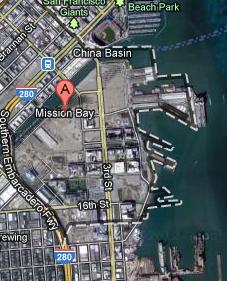
Now that the city planning director is comparing neighborhood activists to war mongers and meanies, it’s worth a moment to look back at how the city wound up with what the Chron is now calling a vibrant success of a medical-tech development at Mission Bay.

That site used to be a Southern Pacific railroad yard, but in the early 1980s, the old robber barons realized that a lot of their property had more value as real estate than as railroads. So SP decided to develop Mission Bay, eventually spinning off Catellus Corp. as the developer. The first plan was a disaster, a mix of highrise office buildings, hotels and a little bit of housing. Then-Mayor Art Agnos got it toned down a little, but the proposal he and Catellus put forward in the late 1980s was still a mess — more office space than housing, nowhere near enough in the way of community amenities, something an old-school builder with no concern for public process might have gotten away with in another city, but it wasn’t going to fly here. Of course, Catellus and the mayor both argued that this was the best deal the city could possibly get; more housing or different uses just wouldn’t pencil out.

Those same darn crazy activists that the planning director hates forced a public vote on the plan — and it was overwhelmingly rejected.The next day, Catellus came back to the table — and offered dramatic improvements in housing and amenities. In the end, UC decided to move into the site, building what I consider a hideously ugly campus with not a single decent piece of architecture — but without giant highrises and with at least some open space and community facilities. There’s actually a chance that this could become a viable neighborhood — thanks not to the developer, the mayor, or city planning, but to meddlesome neighborhood people.

Funny how that works.


Proposal to raze I-280 linked to train and real estate deals

61

It’s a bold idea, discussed for years behind closed doors and recently announced in a strangely understated and pro-growth way: Tear down the last mile of Interstate 280 and replace it with an wide boulevard – reminiscent of the removal of the Central and Embarcadero freeways – in order to facilitate the extension of electrified Caltrain and high-speed rail tracks into the Transbay Terminal.

For almost three years, city planners have been discussing the idea and drawing up closely guarded plans to tear down the freeway, discussions sparked by the state’s Environmental Impact Reports on electrifying the Caltrain tracks and bringing high-speed trains into town. With an increasing number of trains traveling those tracks, access to the rapidly growing Mission Bay area from the west on 16th Street would turn into a traffic nightmare, either with long waits for an at-grade train crossing or the creation of ugly and uninviting underpasses for cars and bikes.

Mayor Ed Lee and other top politicians have long sought to bring those trains downtown in Transbay Terminal through a still-unfunded tunnel, rather than having them stop at the existing Caltrain station at 4th and King streets. But the existence of the I-280 pilings made it structurally impossible to send the train underground before it got to 16th street.

So the idea was raised to raze the elevated 280 freeway and better integrate Mission Bay and the Potrero Hill/Showplace Square area, where Kaiser plans to build a huge new medical facility, creating a bike- and pedestrian-friendly corridor without the shadow of an antiquated freeway overhead.

“If you get the freeway out of the way, it’s a ton of space,” said Greg Riessen, the city planner who developed and studied the idea. “The whole corridor of the freeway is blocking the ability to do anything else.”

But it wasn’t until the political class and their capitalist partners also realized the enormous development potential of the idea – raising money that could be used to fund the train tunnel – that it was finally floated as a public trial balloon for the first time this week. The Chron’s Matier & Ross led their Sunday column with a short item on the idea, apparently tipped off to its quiet debut a couple weeks earlier.

The city’s Transportation Policy Director Gillian Gillett unveiled the idea in a Jan. 7 letter to the Municipal Transportation Commission, repeating it Jan. 10 at a forum on high-speed rail held at the San Francisco Planning and Urban Research Association. The letter was a response to the MTC’s request for information on “San Francisco’s policy goals and objectives regarding the much-needed electrification of Caltrain.”

Yet rather than deal directly with that issue, the letter said the answer “must be broadened to address the need for growth in the downtown and South of Market areas,” which it said requires funding to bring the trains into Transbay Terminal and to then let developers have at the 21 acres of land surrounding the existing Caltrain station, where transportation officials planned to store the trains.

“We need to create a faster and cheaper DTX [Downtown Extension project] alignment, realize the full value of the 4th & King Streets Railyard site, and eliminate the intrusiveness of I-280 in Mission Bay by terminating it at 16th Street and replacing it with a boulevard, based on the lessons learned from the removal of the Embarcadero Freeway to create a new Rincon Hill neighborhood, and the Central Freeway to create the new Market-Octavia neighborhood. Reenvisioning Caltrain electrification and the DTX could increase ridership, reduce costs considerably and create additional real estate value that would, in turn, provide for both more jobs to create revenue for both Caltrain and DTX and attract investment,” Gillett wrote.

She calls current plans to electrify Caltrain “shortsighted because it reduces the City’s ability to meet its regional job growth allocations, because more than 20 acres are covered with trains, and it eliminates an important opportunity to create real estate value which can be used to fund transit and Caltrain investments,” she wrote.

The letter doesn’t address where the increasing number of trains coming into San Francisco would be stored if the railyard is turned into luxury condos and commercial spaces, which has long been a goal of SPUR and other pro-development cheerleaders. High-speed rail officials have suggested Brisbane, but sources say city officials there have balked at the idea. Although Gillett hasn’t returned our calls with follow-up questions, the Mayor’s Office seems to see such logistical questions as secondary to this cash-cow idea.

So a staff-level proposal to solve a transportation challenge with an elegant multi-modal solution that follows in the city’s tradition of tearing down freeways has morphed into a real estate deal. Quentin Kopp, the father of high-speed rail in California, has already derided the Transbay Terminal project (which is funded by the sale of state land surrounding the site to office tower developers) as little more than a real estate deal, and now the city is apparently seeking to extend that deal further into Mission Bay.

Former Mayor Art Agnos, who worked on both the Embarcadero and Central freeway tear-downs, told us, “In general, I really support the concept of demolishing freeways that bisect the city.”

Yet he said there are many key details and questions that need to be addressed, particularly given the Mayor’s Office support for the new Warriors arena on the Central Waterfront, a project whose unaddressed traffic impacts would be exacerbated by an intensification of development at the Caltrain station, into Mission Bay, and further south.

“It could drown the city, this tsunami of cars, particularly with all the development planned all the way down to Hunters Point,” Agnos said. “I like the idea, but we need a serious discussion of the details, particularly with all these development proposals.”


Planning director insults neighborhood activists

153

John Rahaim, the director of city planning, is the featured speaker at a SPUR forum Jan. 29, and he’s got a very special title for his talk. It’s called “The Meanies and the War Mongers: Recent planning lessons from SF.” Here’s the description:

Land use planning in San Francisco is sometimes called a blood sport. John Rahaim, planning director, will discuss the last five years of planning in San Francisco during his tenure, and why that phrase is too weak. Rahaim will look at the accomplishments of planning in the city, the impacts from the last decade of neighborhood plans and the lessons from the war that will guide the Planning Department into the next decade.

Holy shit: Sounds to me like this guy, who gets very well compensated off the taxpayers’ dime, has just directly insulted generations of activists who have fought some really dumb development ideas and made this a more livable city. “War mongers?” “Meanies?”Is that the term he uses for people who try to get involved in the planning process? Here’s what he told me:

The purpose of the title was to be provocative.  I find it curious that you would make that assumption.  For now I will say that in my experience in SF, there are people on all sides of the development debates who would fit these descriptions.  Other than that, I invite you to the talk.

Okay, provocative is good, but seriously: He’s sounding as if these aren’t real issues that affect people’s lives, that land-use planning isn’t central to what we are as a city, and that people who don’t just shut up and go along with what he wants are troublemakers. Or as former Sup. Aaron Peskin, who has spent years as a neighborhood activists, notes: “He doesn’t want to admit that the best planning in this city is done by those neighborhood organizations and those activists who
challenge and shape literally every piece of planning that comes out of his office.”

Rahaim is supposed to be the guy who balances the various interest groups and tries to create acceptable solutions. “Whoever he’s referring to, it’s demeaning and unprofessional,” Peskin notes.

You can show up and ask Mr. Rahaim what he was talking about Tuesday, Jan. 29 at 6pm at the SPUR Center, 654 Mission. It’s free for SPUR members and costs $10 for everyone else. Worth every penny of it.


Party Radar: Red Bull Thre3style hypes up the Bay

0

Every year, the musical magi at Red Bull scoop up a gaggle of disparately-styled local DJs and feed them into the hype machine, spitting out a DJ battle blast, surprisingly full of fun and Bay Area pride. Although compared to years past, the upcoming 2013 SF Red Bull Thre3style (Thu/24, 8pm at The Independent, $15) has been scaled back somewhat — only five competitors this year, instead of the usual eight, and all of them are hip-hop/electro heavy dudes — it’s still gonna be a hair-raising time, and a chance to check out some talent outside your micro-niched nightlife comfort zone. 

Plus, the competition is kinda tricky!

Here’s the gimmick: This year’s competitors — D-Sharp, J Espinosa, Dstrukt, Richie Panic, Mei-Lwun — have to include at least three genres in their 15 minute sets (mashups don’t count!), while keeping the crowd pleased. I have seen this go seriously awry in years past, which is part of the general craziness. (The winner gets to travel around and win something big, I forget what.)

Another fun 3style thing — the DJs usually ham it up (and if I know Richie Panic, which I do, mentally intimately, he will realllly turn up the ham), which makes you appreciate how self-effacing a lot of the DJ scene here usually is, despite the oft-bombastic music.

Anyway, I usually balk at branded events, but Red Bull really invested early in local nightlife scenes and brings out actual talent — this ain’t no Rock Star EDM crap, Red Bull gives you wings and standards. Just don’t OD on all the fun, k?

Here are some of my favorite sets from years past =– including one of the final appearances of DJ Solomon, RIP


SF Sketchfest founders reminisce (and look ahead) on the eve of their 12th event

0

The first SF Sketchfest, in 2002, was a good excuse to find a stage and some quality time for its organizers’ own sketch comedy troupe, Totally False People, but it has since become an annual comedy conclave of the first order. SF Sketchfest founders David Owen, Cole Stratton, and Janet Varney talk about the growth and philosophy of their annual comedy extravaganza and the humble beginnings that gave it rise.

San Francisco Bay Guardian Is SF Sketchfest a full time job by now?

David Owen Yeah, I think it is. It definitely gets more intense a few months out, but we’re always working on it, we’re always percolating ideas, as well as trying to do events throughout the year. We had a presence at Outside Lands this past year. We’re always trying to do stuff. But this time of year especially, from fall on, is beyond full-time for us.

SFBG Has it had to change a lot structurally as it has grown, or are you still pretty much running it as you always have?

Janet Varney We earned some pretty simple lessons along the way, including Cole, Dave, and I not driving every single headliner to and from the airport, and sell tickets at the box office, and sell our concessions, which is what we were doing the first few years.

DO The growth has been gradual. Over 12 years it’s been a little bit like a snowball, each year we add a little bit more. There are more performers, more shows, there’s more logistics, more general stuff to deal with. Twelve years in, it’s grown to a place none of us ever imagined. We never imagined we’d even get to the second or third year and have one Kid in the Hall, let alone have all the Kids in the Hall and all these comedy legends, who are our heroes. You said humble beginnings, that’s absolutely right. It was a local festival, just for us to perform at, and 12 years later we’re still surprised that it’s so many shows, with so many people that we like.

SFBG Have you gained a new perspective on comedy that you didn’t have before?

DO When we started, we were just fresh out of college and we wanted to write our stuff and perform it. Cole is still performing, he can speak to that, but from my point of view, just seeing it as a producer now, I think our first couple of years we thought, “Oh, there might be an audience in the Bay Area for this kind of comedy.” And now it’s clear that there is. There’s a big appetite for it, because we keep adding shows and people keep coming.

We’ve learned that laughter is important, that people really want to get out of the house, and in the dead of winter, to come to a comedy club or a theater and experience something with a group of people where they’re all laughing. There’s nothing else like that. I have to say that I’ve really learned that getting out and laughing is important for people. It’s a fun thing that people like to do. Hopefully we’re providing something that’s unique and different from other festivals or other shows.

JV We’re so proud of San Francisco and the way San Francisco receives the comedy we bring to the table. Cole and I live in Los Angeles now, Dave is still in the city, but we all have this fierce love of San Francisco. It’s such a wonderful way for us to interact with the people in the city that we love. We feel like they back us up every year by being the most savvy, enthusiastic, great, smart audiences. That’s why performers come back here year after year as well, they love performing for San Francisco audiences. The festival couldn’t be what it is if we didn’t have those kind of people, as Dave said, showing up to laugh together.

Cole Stratton What made our festival a little different form the start was, you know, we started as performers, we came at it from that vantage point — it’s about the comedy; it’s about making it as artist and performer friendly as we can. I think why a lot of people embraced it early on was that it wasn’t about doing work that there’s a lot of pressure on. It was come have fun with each other, try some stuff — let’s have fun and really celebrate comedy.

The audiences in the Bay Area totally get that too. There’s been this tremendous energy at all our shows. Everyone feels a part of something that’s really fun, unique, and different. That’s been the spirit of the festival year after year.
 
SFBG Is the social or political significance of comedy something you guys think about?

JV Absolutely. I think the three of us respond to comedians who are brave in that way. Who are willing to hold a mirror up, to what happens to us in society and what happens to us as humans, but who are willing to get really personal. We love silly comedy, comedy that isn’t necessarily about anything; we love the absurd, we love lighthearted, sort of childlike comedy. But we also respond really strongly to people who are unafraid to say, hey, this is me, are you like this? This is ridiculous.

Obviously those comedians become beloved because they are humbling themselves and they’re also reminding everybody in the audience that it’s ok to be a human being.

DO It can be cathartic, to come away from a show where someone has talked about mortality or heartbreak or environmental problems in the world — and all the things that trouble us — it can be cathartic to come from a comedy show and you’ve laughed about it, you’ve thought about it, you’ve learned a little bit about it. But I want to add that in our programming there isn’t an agenda — like, ok, we need to have ten socially conscious comedians, and we need to have five absurd ones.

Our only agenda is: Does it make the three of us laugh? That’s how we decide what’s going to be in the festival. We don’t spend a whole lot of time thinking about what’s going to make the most number of people laugh? We just hope people like our taste. Our taste, as Janet said, it really runs the gamut from infantile, silly, ridiculous stuff, stupid stuff, all the way up to really smart, socially aware, critical comedy. We like all of that stuff. As long as it’s funny. That’s what matters.

SFBG Are people approaching you more than the other way around at this point?

JV It’s still both. We’re very lucky because we’ve had wonderful experiences with people we sort of chased down and invited in the beginning. We have a lot of returning guests year after year that we’re still excited to welcome back, and audiences are excited about. People like David Wain, who want to come here year after year and are always thinking ahead as to what kind of new, interesting show they can bring to the table so that they’re keeping it fresh but still returning to the festival multiple times.

We still have our wish list. We still have our people that we like to chase down, and cross our fingers and hope for the best. The comedy community, luckily it can be kind of close. We’re really lucky in that we have this amazing pool of references. But we still write letters with our fingers crossed, and hope for the best, as much as people reach out to us and ask to come back, or we have agents calling us whereas before we might not get our phone calls returned.

SFBG The podcast has really become a major new platform for comedy, as the lineup this year reflects. Are you searching out new outlets as well as new shows?

DO The three of us all spend a lot of time scouting and looking around and trying to keep our finger on the pulse, just seeing as much as we can, whether it’s in person or online. We try to stay clicked in to what’s going on out there. But we’re also looking for something that’s new. What can we do that is a totally new format? We love standup and sketch and improv and film stuff, but we also like doing things like game shows, or live talk shows.

This year we have a walking tour of the Asian Art Museum led by Canadians, or we have a show that mixes comedians and musicians, or Reggie Watts with a dance troupe. We try to see how we can do something at this festival that you’re really not going to see anywhere else. Not just something that’s on tour or that you’ve seen on TV. What can we debut at the festival, premiere as a brand new idea or a brand new concept or format? Those are things we think about and try to pursue.

SFBG Is the tour of the Asian Art Museum by Canadians an example of an original idea?

DO That one, no. That was a show that existed in New York. They did it at the Metropolitan. They’re going to be doing it in San Francisco for the first time, but that specific show was not our idea. We do come up with concepts that we think might be good for somebody, and we’ll pitch them, and if the artist is into it then it might come to fruition.

[For example,] we’re doing a show called Yacht Rock Heroes. Mustache Harbor is this amazing San Francisco band that does covers of ’70s and ’80s soft rock classics, Toto and Hall & Oates and those kinds of things. We thought it would be fun to have comedians come out and cover the song with the band as kind of a mash up. Mustache Harbor liked the idea, and we found comedians who were into it, so we kind of put it together from there.

SFBG How did you all first meet?

DO Cole and I were in the same floor in the dorms at SF State as freshmen. He was on one side and I was on the other. Everyone else on the floor was either a jock or a party animal…

JV [Laughing] That’s the first time I’ve heard someone say “party animal” in a serious way. I just love that that happened.

DO Yeah. There was a nerd on one side, and a nerd on the other. We were both into comedy and movies and music. And everyone else was into, like, swimming.

CS I lived in the dorms for like a year or whatever. I remember it was time to push on when — there was one communal restroom and I had to walk all the way down to it in the middle of the night, and there was a party going on, and I looked down. Someone had thrown a starfish into the hall. Like pulled it out of an aquarium and threw it into the hall. I was like, “Ok, someone just murdered a starfish on my floor. I think it’s time to go anywhere else.”

DO And then we became roommates, and we were working at the same video store and were roommates for, god, how many years? Three or four years. Five maybe. And then Janet — Janet, where did we first meet, at the Castro Theatre?

JV Yeah, I think we met at the Talking Heads show, Stop Making Sense. It was the anniversary screening. Actually, we love this story because Dave and I met and  — Cole, you were there too, yeah? I don’t know why I only remember Dave. Cole, we met before this interview, right? We all went to an anniversary screening of Stop Making Sense with David Byrne in attendance. He actually was sitting right in front of us. We love that everything came full circle, and that we ended up doing a screening of True Stories at the Castro Theatre with David Byrne.

DO Cole and I had a mutual friend — this didn’t happen right away but not long after we all met, this guy wanted to start a sketch comedy group. We were all theater and film majors, and we were putting on plays or making little films. And this guy wanted to start in comedy. We were all into it. There was about maybe six or seven of us who started meeting up, trying to write sketches. One by one people sort of fell away, and then there was four, the three of us and Gabriel Diani. And that’s how Totally False People started.

SFBG Where was your first gig? Where would you perform at the beginning?

JV We started doing shorts at a couple of the comedy clubs, and I think, was Rooster T. Feathers the first gig?
 
CS That was the very first show, Rooster T. Feathers in, Sunnyvale? Yeah. Our thinking was let’s make sure we’re at least 45 minutes outside the city limits if it doesn’t go well.
 
JV We went up on a stand-up, kind of a showcase night. We did a few different shows there. On one occasion someone called and left a voicemail after we performed saying that they didn’t enjoy our, quote, play-acting. We were trying to do sketch on this standup comedy stage and apparently people did not know what to do with us. We were going up there with like costumes and wigs…

DO That was our first review: “Did not enjoy the play-acting.”

CS And we thought, let’s start a festival!
 
SF Sketchfest: The San Francisco Comedy Festival
Jan 24-Feb 10, prices vary
Various venues, SF
www.sfsketchfest.com


The roots of crime

31

The Chron has figured out how to solve Oakland’s crime problem, in one sentence.

Here it is:

Critics said police don’t address the roots of crime, which can be solved with greater social services and educational opportunities.

That is a thing of beauty, right there.

Reminds me of an old college friend who went and got himself a Ph.D in criminology, and when he was passing through town, we had drinks, and I asked him: What does a doctor of criminology do? His response: We study the causes of crime.

So I requested that he enlighten me with his academic wisdom; what, I said, are the causes of crime? He paused for a moment to gather his thoughts, then said:

“Poverty.”

That’s a lot of book-learning there. And now “critics” say that crime can be addressed by social services and educational opportunities. Remarkable.

An overwhelming majority of the Oakland City Council approved the deal to hire a consulting firm that will bring on William Bratton to help the cops get a handle on the horrible violent crime problem in the city. It’s worth noting, for the record, that Bratton got his fame (and, given his price tag, his apparent fortune) with programs like Stop and Frisk, which is still going on in New York even thought a judge agrees it’s unconstitutional. Oakland isn’t implementing Stop and Frisk, at least not now. but this sort of aggressive policing is Bratton’s M.O., so I don’t think the debate over the proper role of cops in the community is over.

And if you think Stop and Frisk is a dandy way to fight crime, check out this stunning video of what it’s done in New York:

Pinback delights fans at annual Bimbo’s show

10

The audience at Pinback’s sold-out show this Saturday night filled Bimbo’s with a pleasant air of mellow enthusiasm. The eclectic (albeit extremely white) crowd was excited without being obnoxious, and its quiet, genuine appreciation was the perfect match for Pinback’s own casual expertise.

Those coming for theatrics and bombast were most likely disappointed, but anyone looking for a laid-back display of musicianship and no-frills indie rock certainly got what they came for, and then some.

The duo at the core of Pinback, Rob Crow and Zach Smith, has been making music together for 15 years, and its seasoned comfort shines through an unassuming yet commanding stage presence. The pair plowed through a 23-song set, only pausing to briefly address the audience exactly one time each.

Smith maintained somber focus throughout the concert while his fingers glided across his bass guitar, slinging slick fingerpicking with stunning ease. Crow, who has a well-used beer holder affixed to his mic stand, threw back a great number of Newcastles during the set, often emptying an entire bottle in one incredible pull, and using half-full bottles to tap at the strings of his Les Paul.

The first half of the setlist was composed of soft, pretty ballads and down-tempo cuts off the band’s new album. Smith’s falsetto and Crow’s nasal croon blend into a honeyed harmony that hasn’t tarnished a bit over the years. Their most recent single, “True North” was executed beautifully, accompanied by two cellists.

The duo surprisingly sandwiched its two longtime fan-favorites, “Penelope” and “Fortress” into the middle of the set. “Penelope” was considerably sped up from its original tempo, giving new life to the love song that the fans have all listened to a thousand times to help ease the pain of every crush and breakup.

For “Fortress,” the Pinback song that everyone knows without knowing they know it, Crow did away with his mic stand and guitar and busted out some dance moves, including an remarkably successful worm, despite his prodigious beer belly.

The audience, thrilled with the band’s surge in energy, roared as Crow jumped off the stage and into the crowd, letting excited fans sing the chorus —“Stop, it’s too late!/ I’m feeling frustrated!” — into the microphone.

Post-“Fortress,” the setlist continued to steadily build energy as Pinback jammed its way through a more rock’n’roll repertoire, transforming the formerly stoic audience into an amiable dance party. At the end of the night, when soft-spoken Crow called out, “Thank you guys so fucking much!” there was no question that he really meant it.


Roe v. Wade anniversary inspires flash mob, pro-choice rally, and pro-life march in SF

Remember when a dance revolution broke out in Justin Herman Plaza during Occupy San Francisco? This coming Saturday, the same choreographers behind that flash mob for economic justice plan to reignite the public square, this time with a flash mob organized in collaboration with the Silver Ribbon Campaign to commemorate the 40th Anniversary of Roe v. Wade.

“Roe v. Wade is an invitation to really celebrate women, women’s rights and women’s reproductive rights,” says Magalie Bonneau-Marcil, director of Oakland nonprofit Dancing without Borders, who will direct the Jan. 26 flash mob. She expects between 400 and 500 dancers to descend upon the plaza.

The performance is part of a larger event, Women Life & Liberty, organized to commemorate the landmark Supreme Court decision that made abortion legal in the United States. The Trust Women Silver Ribbon Campaign is organizing the free celebration in tandem with the National Organization for Women and a coalition of more than 20 local partners.

“Our sense was, it’s an opportunity to claim and reclaim, and revive our activism around the issues that this event is about,” Silver Ribbon Campaign Director Ellen Shaffer told the Guardian. The rally is part of a national effort that has also launched an “online march” for reproductive rights.

Birth control champion Sandra Fluke, who became the center of a firestorm after being lambasted by Rush Limbaugh for testifying before Congress on the need for access to birth control, will speak at the rally.  Other speakers will include filmmaker and Webby Awards Founder Tiffany Shlain, and San Francisco Supes Malia Cohen, David Campos, David Chiu and Eric Mar, who joined the board in adopting a December resolution commemorating the 40th anniversary of Roe v. Wade.

Meanwhile, an international campaign to end violence against women will also play a role in this weekend’s events. Upon returning to the Bay Area after a dance festival in Europe, Bonneau-Marcil says she saw Eve Ensler’s music video promoting VDay’s 1 Billion Rising Campaign, created to spark a global movement to end violence against women. “I was so moved,” she says.

Inspired, she began making preparations for the Jan. 26 performance and an upcoming Feb. 14 flash mob, to be staged in front of San Francisco City Hall in league with VDay’s global movement.

With recent outrage fueled by the rape and fatal attack in India, the public performances are timely. Bonneau-Marcil describes the public dance gatherings as a way for participants to “share a prayer to create a world free of violence and sexual oppression.” 

But there’s likely to be drama, as the Women Life & Liberty celebration is one of two dueling events. Walk for Life West, essentially the polar opposite of the Trust Women Silver Ribbon Campaign, is being spearheaded by San Francisco pro-lifers Dolores Meehan and Eva Muntean. Now in its ninth year, the annual event will bring hordes of anti-abortion activists to San Francisco, wielding dead fetus photos. They’ll travel from as far away as Nevada, Canada and “all over the Midwest,” according to Muntean. “We have 200 buses coming from all over the West Coast,” she said.

The anti-abortion rally will feature speakers such as Rev. Clenard Childress, who has built a career out of telling right wing Christians that the pro-choice movement is racist. (Seems Childress also spends his spare time penning inflammatory columns suggesting that acceptance of LGBT rights is “a sign of the end times.”)

The pro-life rally will converge at Civic Center Plaza and progress to – where else? – Justin Herman Plaza. There, according to the event page, revelers from the transformative flash mob may still be celebrating. Expect an awkward buzz kill.

This being San Francisco, plans are already being hatched to counter-protest the anti-abortion event. (Muntean emphasized that Walk for Life West should not be interpreted as counter-protest to the Women Life & Liberty event, by the way.)

Stop Patriarchy, made of up activists who are pro-choice, anti-Democratic party, and even anti-pornography since they deem it to be part of the war on women, plans to stage “boisterous and confrontational political protests throughout the week, taking on the Pro-Lifers who will be in San Francisco,” according to a press release. They’ll be there counter-protesting the Walk for Life with banners and signs declaring, “Abortion On Demand and Without Apology!”

Bonneau-Marcil, the flash mob director, says she’s trying to stay out of any back-and-forth that may come from warring factions. “We’re not pointing fingers,” she says. Instead, she’s on a mission to help dancers move in harmony to “access a place where, it’s not about opinions. It’s just about remembering who we are as human beings.”

The Women, Life & Liberty rally will be held at Justin Herman Plaza from 10 a.m. to noon. The Dancing Without Borders flash mob performance will take place at 11:30. Anyone can join the flash mob after attending two rehearsals: more info here. The Walk for Life West rally will converge at 12:30 at Civic Center Plaza and begin the procession to Justin Herman at 1:30. More info here, here and here.

The Performant: Manic pixies

4

‘Manic Pixie Dream Girl’ and ‘The Witch House’ roil with fantastickal energies

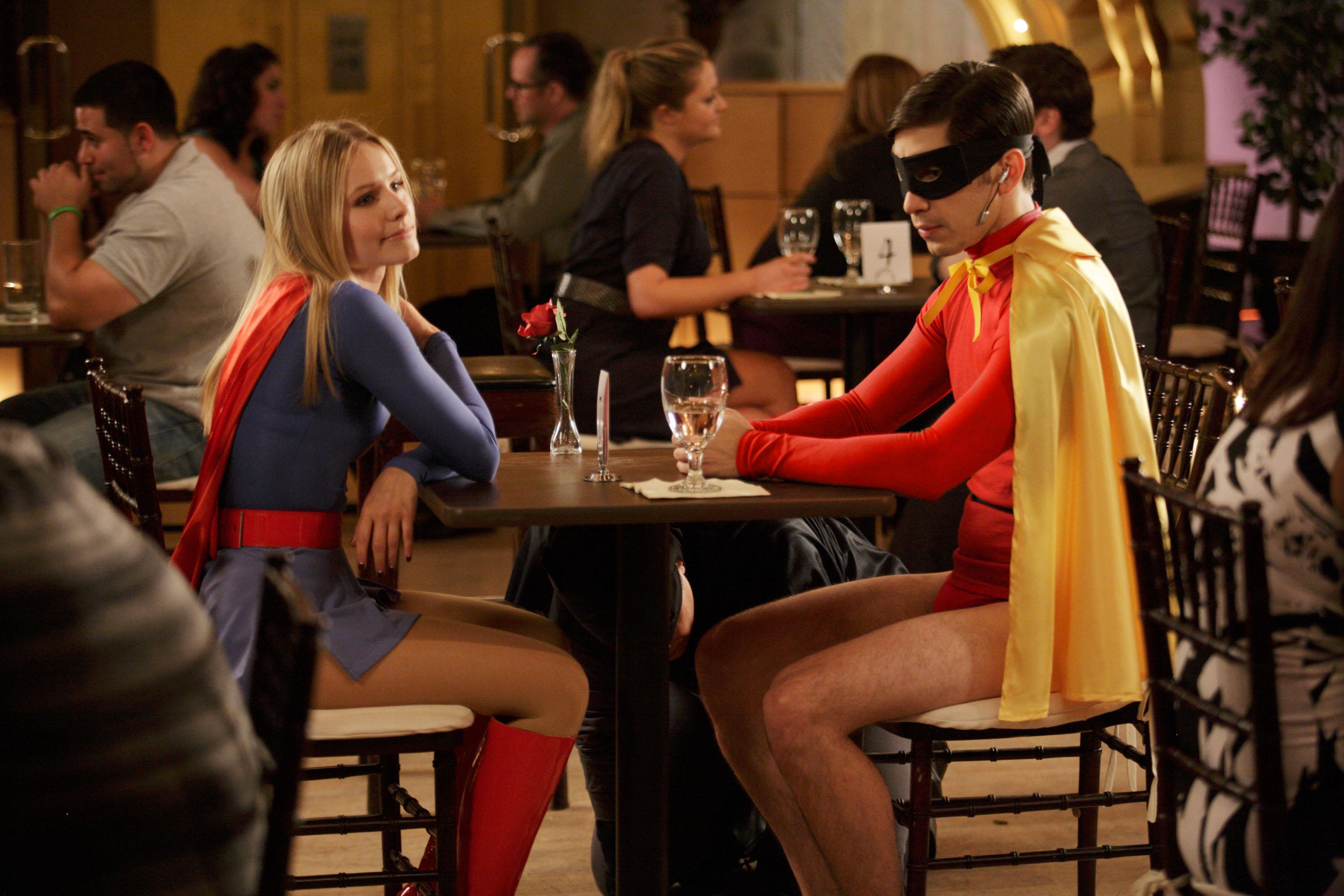
It was only a matter of time before the familiar genre of the comic book movie migrated to the stage. But don’t expect any muscle-bound jocks in colorful spandex roaming the aisles of A.C.T.’s intimate mid-Market venue, The Costume Shop. Not only is the titular “Manic Pixie Dream Girl,” of their current production not a superhero with mutant powers bestowed upon her by a quirk of DNA or gamma rays, but in a twist, the comic book involved actually originates from the play — not the other way around.

The play centers mainly around a youthfully shiftless, struggling painter Tallman (Joshua Roberts), whose dire straits and afternoon drinking habits lead to a chance encounter with one of cinematic fiction’s most enduring tropes, the Nathan Rabin-dubbed MPDG Lilly (Lyndsy Kail), a woman who “exists solely in the fevered imaginations of sensitive writer-directors to teach broodingly soulful young men to embrace life and its infinite mysteries and adventure.”

It’s a problematic relationship model on so many levels it’s hard to even know where to begin. Lilly is conveniently mute so she never has to share her feelings, or even her last name, but somehow, within an afternoon of their meeting, she’s moved into Tallman’s hovel, from which he is about to be evicted (by his ex-girlfriend’s new lover, smarmy real estate agent Rick [Lucas Hatton] no less). She never expresses a desire for anything beyond colorful scarves and starburst candy, and Tallman, in the middle of a painting frenzy, is so self-absorbed he can’t bring himself to question his “luck.” Even his sympathetic-to-a-point best friend Porter (Michael Barrett Austin) becomes disgusted with his lack of awareness. “Liking the way someone makes you feel is not the same as liking an actual person,” he observes astutely before abandoning Tallman to his fate.

The comic book, or rather, graphic novel, is represented as a series of projections which serve as backdrop and counterpoint to the live action unfolding onstage. Drawn by local actor and graphic artist Rob Dario, the panels form a silent but urgent backdrop to the narrative, adding visual heft to the bare bones set of stools, a humble futon, and primer-splotched countertop/bar. Or rather, presumably they do. Due to technical glitches, many of the images refused to project when cued, and the promise of a wholly symbiotic graphic-novel-play was under-realized the evening I went to see it.

But the images that did make it through, deceptively simple black-and-white line drawings somewhat reminiscent of the art of Brian Wood, gave Tallman’s inner struggles an external medium to be expressed through as his mysterious affair unfolded. Doubtlessly constrained by budget and time considerations, what the company failed to produce (but should have) was a companion comic as takeaway. I could have filed it next to my oft-referenced Transmetropolitan collection.

Meanwhile, up the road a ways at The Garage, Morgan Bassichis’ “The Witch House” involves a whole panoply of characters who are not quite pixies, but certainly manic. A pair of pre-adolescent boys dabbling in witchcraft set off for Salem in order to cast a spell for a third youth, and all three find themselves possessed by the restless spirits of witch trial accusers Abigail Williams, Ann Putnam Jr., and Mary Walcott.

A fairly oblique examination of gender roles and the justice system, what “The Witch House,” does offer is a wealth of intriguing visuals mainly provided by the largish cast of “bees” (also shades of the accused) who writhe and dance across the stage, simulating the emotional storms brewing thereon. Also, the company has designed a series of original “playing cards” to give away, with art by Lis Goldschmidt and a poetic speech penned by Bassichis, a savvy promotional tactic that even PlayGround (who coproduced “Manic Pixie Dream Girl”) can learn from.

The battle of Brotherhood Way

24

Brotherhood Way is a creature of another era. Tucked between the San Francisco Golf Club and ParkMerced, it was long known as Stanley Way. But in 1958, under Mayor George Christopher, the city, which owned all of the land on the south side of the street, turned that property over to a long list of religious institutions and renamed the street to reflect its role as a place for houses of worship. It’s now home to six churches or synagogues and nine religious schools. It has its own (religious) neighborhood association.

And this quiet little corner of the city has been the scene of a pitched battle over a plan to build 182 housing units on an empty patch of land on the north side of the street.

Opponents of the project say the area was set aside for educational and religious uses, not housing — and they argue that the expansion of ParkMerced will add too much congestion to the area. Supporters say the west side of town needs to acept more housing and more density.

It’s gotten ugly: At one point, the Archbishop himself ordered the pastor of St. Thomas More Catholic Church to quit agitating against the development. Sean Elsbernd, who represented the district for eight years, infuriated neighbors when he supported the project, and later apologized for his insensitivity to their concerns.

And seven years after the Planning Commission and the supervisors gave the project a green light, it still hasn’t broken ground.
Now the developers are ready to go — and the churches, aided by retired Judge Quentin Kopp, are trying once again to shut it down.

Kopp’s been arguing for some time now that the project needs to go back for a new permit because too much time has passed and nothing has happened. But he’s got another argument, too, and he brought it to the Board of Appeals Jan. 9. See, the original deal had a problem with transit access, since there isn’t enough Muni capacity along Brotherhood to handle 300 or so new residents. So the developer agreed to build two pedestrian walkways from the project up to Font Blvd. in Park Merced. But according to Kopp’s appeal, ParkMerced management never agreed to the easements that would be necessary to build a path through its property.

Instead, in 2008, Zoning Administrator Larry Badiner unilaterally changed the requirement, allowing for one footpath to the edge of Park Merced — with some vague agreement that later there might be an extension to the Muni stop. That, Kopp argues, should have triggered a new Conditional Use application and a new hearing. Oh, and in the meantime, ParkMerced has just moved to greatly expand the size of its complex, so maybe that should be considered, too.

The Board of Appeals rejected Kopp’s arguments, but he’s petitioning for a rehearing, in part because the board chair wasn’t present for meeting. Kopp argues that this is a quasi-judicial board — “and you don’t go before the Supreme Court with only eight of the nine members present.” Under city rules, though, four out of five is a quorum and able to hear the matter.

Kopp has another argument, too — one that’s unusual, perhaps unique: He claims none of the board members actually read his original appeal brief.

Kopp, see, asked during the hearing if all of the members had read the papers he submitted, and none of them responded affirmatively. “It is appearent and inferable that no members of the short-handed Board of Appeals had read Appelants’ brief before the hearing, or at all,” the motion for rehearing states. “The manifest failure of the four members present to real Appellants’ carefully-prepared brief constitute extraordinary circumstances and injustice.”

I’ve been able to reach two of the board members, Frank Fung and Darryl Honda, and both insist they read the brief. “I read every case in its entirely,” Fung said, “and so does everyone on this panel.” Honda, who is new to the board, also said he read the documents. “I bust out the highlighter pen and go through all of the briefs in every case,” he said.

So why didn’t they answer Kopp’s question? Well, Fung says, it took them all by surprise: “I don’t think any one has every asked that before.”

I’ll let you know if the petition for rehearing is accepted.

Bloombastic: It’s magnolia season at the SF Botanical Garden

0

As we speak there are budding booms in Golden Gate Park that will have even the greenest of thumbs tickled pink. Yes, it is magnolia season, and the San Francisco Botanical Garden is a fantastic place to check out the flowers’ arrival — the Garden is home to nearly 100 rare and historic magnolias, all erupting in aromatic array. In fact, the collection is the most comprehensive and long-standing one of its kind outside of China. We’re talking 51 species and 33 cultivars, all assembled by the Garden in the name of varietal preservation.

The star of the year’s show is undoubtedly the cup and saucer magnolia, or the Magnolia campbellii. Nicknamed for its distinctive shape, it first bloomed in the United States in 1940, born from a transplanted cutting from a tree in the Lloyd Botanic Garden of Darjeeling, India. The cup and saucer is considered the flagship flower in the SF Botanical Garden due to its size, shape, and vivid coloration.

“Magnolias have long been the signature flower of San Francisco Botanical Garden,” says Don Mahoney, the garden’s curator. “Everyone loves them. They are an unforgettable sight of great beauty, and it turns out that the mild and foggy climate in San Francisco is the perfect environment for Asian magnolias, so we’ve been extremely successful cultivating them here.” His Garden’s collection was born in 1939, when director Eric Walther planted the first bloom.

To commemorate this signature flower’s peak season, the Botanical Garden is assembling a full bouquet of special programs dedicated to the occasion. There will be moonlit docent-led tours highlighting the evening beauty of the flowers, bloom-inspired drawing classes, . The magnolias will also star in the Garden’s celebration of the Lunar New Year — tai chi and lion dance performances will twirl through the weekend of Feb. 16-17 at the Garden, and you’ll be able to make a plant lantern from the petals of the fair blooms.

And like any decent event series, there’s a mixology course scheduled: on January 31 you can join Elixir owner H. Joseph Ehrmann for a hands-on craft cocktail class inspired by the Garden’s magnolias. You’ll be using herbs and spices picked from the Garden itself to make drinks, an intoxicating lead-in to spring. 

Magnolias by Moonlight tour

Fri/25, 6pm, $15

Magnolia Mixology

Thu/31, 5pm, $125

Family Lunar New Year celebration

Feb. 16, 11am-3pm; Feb. 17, 9:30-11am, free

San Francisco Botanical Gardens

1199 Ninth Ave., SF

(415) 661-1316

www.sfbotanicalgarden.org

Sea-level rise and development in SF

25

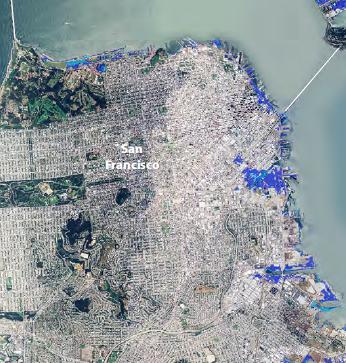
It’s good the Chronicle is taking on climate chance and sea-level rise. It’s good that Carolyn Lochhead is writing about the reality that storms like Hurricane Sandy are part of our future and that all types of coastal development are now at risk. It’s scary:

Naval bases, power plants, ports, highways – trillions of dollars of investment – sit on U.S. coasts because it once made sense to put them there. As people flocked to the shores, tiny beach towns became cities. Congress is hardly maintaining roads and bridges; its appetite for giant new sea walls around New York Harbor has yet to be tested. “You may be able to have the government rebuild New Orleans, and maybe you could have the government rebuild from Sandy,” said John Englander, author of “High Tide on Main Street,” a book on how rising seas will affect the coasts. “But as sea level rises and reclaims shoreline all around the United States and all over the world, governments can’t afford to reimburse that. It’s not just Miami, it’s Charleston, it’s downtown Seattle, it’s Sacramento, it’s every coastal city and city on rivers.”

 Oh yes — and it’s San Francisco, where sea-level rise doesn’t seem to be an issue in the city’s plan for massive real-estate development on the waterfront.

 The Chron has a map of what the Bay Area might look like after a two-foot increase in sea levels and a six-foot increase. It looks like this.

Of course, it might be okay because we can build super-tech levee that will create artificial waterfalls and protect us all from living on islands.

(You could argue that climate change isn’t about new technology, but that would be no fun — and would require actual political leadership.)

Anyway, here’s the problem with the Chron’s map: It makes San Francisco look just fine. The entire city is in white, safe from that pesky inundation that will ruin lesser parts of the bay.

Thing is, the Bay Conservation and Development Commission has spent a ton of time on sea-level rise, and has its own map, that’s a bit more accurate, or at least more detailed — and that shows some major-league problems for this city.

Check out the areas in blue: It’s most of the northen and eastern waterfront. That includes not only Mission Bay, where the city is pinning its hopes for a biotech boom, but also the site of the Warriors Arena, 8 Washington, and 75 Howard. In other words, the plan to make the waterfront into a heavily developed entertainment and residential neighborhood isn’t going to work for very long — unless everyone gives up his or her car and buys a boat. Or unless we, the taxpayers of San Francisco, spend billions protecting all this development that doesn’t make sense in the first place.

Oh, Treasure Island’s going to be a much smaller island, too.

It’s entirely possible — and likely — that state, federal, and local tax money will go to protect some essential, vulnerable coastal areas. It makes no sense to try to move both the San Francisco and Oakland airports; we’re going to build barriers to protect them. But how are we going to protect an arena that’s built out over the water when the water starts to lap up to the doors? Who’s paying for that?

The Chron has done a good job asking the questions at the national level — but, just as we so often see with economic inequality and tax policy, nobody wants to bring the message home.