SFBG Blogs

More unregulated cabs on the street

17

So the state regulators have decided that it’s just fine for companies that pretend not to be taxi operators to operate taxis in San Francisco. That means Lyft and Uber can keep picking up passengers, charging them a “recommended donation” and avoiding the regulations that San Francisco wisely put in place to protect the public.

But the fact that the state thinks this is just fine and dandy, for now anyway, doesn’t mean San Francisco has to do the same. This city has the right to put rules in place for people conveying passengers within its 49 square miles — and those rules ought to apply to Lyft and Uber and Sidecar, too.

Cabs have to carry medallions, or permits. There are a limited number, and they can’t be owned by corporations, only by active cab drivers. You can buy one now — for about $200,000 — or you can get in line and wait, for about 15 years. If the city wants more cabs on the streets and likes the Lyft model, fine: The Municipal Transportation Agency can issue more permits, and if the venture capitalists backing Lyft want to pay for them, they can do so.

I’m not against Lyft or anyone else who has a good idea to serve the public in a way that isn’t being offered now, and I agree that this is the kick in the pants a slow-moving industry needs to develop (fairly simple) apps that allow people to figure out where the nearest cab is and when it’s coming.

But right now, we have an unregulated industry operating in competition with a heavily regulated industry, and it’s not fair. The City Attorney’s Office ought to look into this; the supervisors ought to investigate and force the newcomers to follow the rules. Sure: Lyft. But not this way.

‘United in Anger’ reveals ACT-UP’s surprising intricacies

0

In the end, it was the women who saved us — and we, in turn, helped save them.

As a gay man, this was one of the lessons I took from Jim Hubbard and Sarah Schulman’s brilliant, sometimes harrowing film, United in Anger: A History of ACT-UP, which I caught yesterday at the GLBT History Museum in the Castro, and which screens again tonight Fri/1 at 6pm at the San Francisco Art Institute. The 93-minute movie, bristling with mindblowing archival footage, swiftly but effectively traces the AIDS Coalition to Unleash Power movement from its rambunctious beginnings in 1987 in New York, through its major actions like the die-in inside St. Patrick’s Cathedral and the storming of the NIH headquarters in Maryland, to its eventual, sad dissipation under the weight of endless death in the mid-1990s. There is a lot of great retro fashion in this, btw.

But what sets United in Anger apart from other AIDS-related documentaries is its special attention to the broader sociological implications of a movement that united not just middle-class white gay men looking to save themselves (a commonly held view of ACT-UP that is specifically addressed throughout the film) but also lesbians, people of color, the poor, the homeless, trans people, and straight men and women people in general. Still, as firm as it is in its convictions, it’s never strident, letting the facts and footage carry the case in incredibly moving and sometimes, frankly, aesthetically beautiful ways. 

http://www.youtube.com/watch?v=X4ZacAyc4b8  

One particularly effective narrative thread is that of how many women were involved in ACT-UP, who have basically vanished from the common telling of the story. (Another excellent AIDS doc, the SF-centric We Were Here, also directly addresses this point, but not as broadly).

Those women knew this would happen, of course. They even called themselves “Invisible Women.” In United in Anger these women are not just given a voice, in effect the whole movie is turned over to them, fantastically, as it documents not just the early movement when hundreds of lesbians and straight women (mothers, sisters, lovers) joined ACT-UP, but the grueling, four-year struggle to get the Centers for Disease Control to redefine the meaning of AIDS to include the related diseases that women with HIV were experiencing, thus granting those women disability and social security benefits, along with better access to treatment. It’s worth it to remember that for years women died of HIV, but not officially AIDS — mostly because AIDS was then considered a white gay man’s disease, and “womens’ symptoms” were anathema to that stereotype.

This successful attempt at redefinition, which many devoted their last days to making, had huge implications for the fight for universal healthcare (indeed, footage shows some ACT-UP descendants rallying for it in 2007, with an unspoken glance towards Obamacare) and is firmly set in the lineage of women’s rights and the fight for abortion access.  

Another revelation for many will be the conscious inclusion of people of different backgrounds and means in ACT-UP — Asians, African-Americans, the poor, the homeless, the freaks — who are not just highlighted in the film, but shown to be, in the end, ACT-UP’s major impetus. United in Anger doesn’t shy of implying that ACT-UP was an expression of the great liberal impulse to fight for equality and visibility, linking it not just to the Civil Rghts movement (from which ACT-UP explicity borrowed such effective strategies as affinity groups and canny press manipulation) but the epic historical battle to wrest power away from the wealthy yet ignorant and award it back to the people. And ACT-UP did have its practical personal triumphs. As one interviewee says, “I wouldn’t be here — the medicines I take now to stay alive wouldn’t be here if we hadn’t been dragged screaming across the street by police 20 years ago.”

The best part of the movie, for me, was that it takes the time to give every activist it shows a name — and (its own suspense) a set of birth-to-death dates appears all too frequently beneath that name. But beyond immortalizing its players, United in Anger shows ACT-UP to be a classic and inspiring convulsion of the liberal spirit, brought on by tragedy, eventually fading away like a cloud of human ashes, yet living on as an example of what can happen when people join together out of anger and compassion. And it ain’t preachy about it, either.  


Activists slam hollow report on SFPD-FBI spying

108

UPDATE: SUHR APOLOGIZES FOR REPORT The San Francisco Police Department continues to resist meaningful oversight of its partnership with the FBI’s Joint Terrorism Task Force. After last year pressuring Mayor Ed Lee into vetoing a strong oversight measure and signing a weaker version, the SFPD last week issued a required report that activists are slamming as “grossly inadequate.”

The Coalition for a Safe San Francisco – which includes civil libertarians and members of Muslim groups and other targets of racial and religious profiling by the FBI – last May stood with Police Chief Greg Suhr and sponsoring Sup. Jane Kim as Lee signed what they called this “historic civil rights legislation.”

But at the time, the activists told the Guardian that the value of the watered-down legislation depended entirely on how it was implemented, particularly in the annual reports on SFPD-FBI operations that it required. To ensure they were specific enough to be meaningful, the coalition says it communicated with Suhr several times asking him to include the number of joint investigations undertaken, how many times FBI requests were denied by the SFPD, and possible violations of department policy and how they were handled.

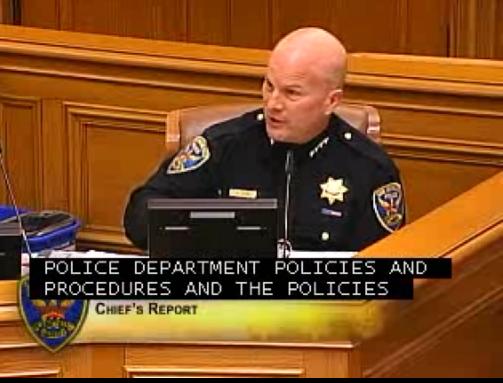
Instead, when Deputy Chief John Loftus gave the first of these annual reports to the Police Commission on Jan. 23, he spoke for only a couple minutes and said the SFPD was in “full compliance” with the ordinance and a Suhr general order banning surveillance of law-abiding citizens, offering no further details.

“We were very clear with the chief about what we expected to see,” Nadia Kayyali of the Bill of Rights Defense Committee, a coalition member, told the Guardian. She also said the report “was slipped on the agenda at the last minute,” despite assurances that the coalition would be notified and given a chance to respond. “It does show a lack of regard for the ordinance and the work that went into it.”

The activists say that Suhr broke his promise to them to include the more specific information that they sought, even after they recently followed up with messages reminding him about that assurance. “I was in the meeting where he said he would,” Nasrina Bargzie with the Asian Law Caucus, another coalition member, told us. Bargzie said she was disappointed and dismayed by what the report included, “but we’re going to keep pushing on it.”

The controversy surrounding possible SFPD-FBI spying on people who haven’t violated any laws – which is illegal under local and state law – broke almost two years ago when the American Civil Liberties Union obtained a secret 2007 SFPD-FBI memorandum of understanding placing SFPD officers under FBI command. It seemed to bypass local restrictions adopted after past SFPD scandals involving police spying on political groups.

Suhr tried to quell the controversy by issuing a general order banning officers from participating in surveillance that violates local rules or the state constitution’s privacy protections, but activists pushed for a stronger assurance. The Board of Supervisors then voted 6-5 to codify those protections into city law, but Suhr objected and Lee vetoed the measure. A weaker version calling for annual reports and Police Commission reviews of future SFPD-FBI MOUs was approved unanimously by the board.

Now, it appears the SFPD has done little to soften the “trust us” stance that it has taken from the beginning, frustrating activists who had pushed for more, here and in other cities that do domestic surveillance with the FBI.

“These policies are explicit and unequivocal. San Francisco Police Department members and their Joint Terrorism Task Force supervisors are aware of and familiar with these policies,” Loftus told the commission, explaining that the SFPD did its required quarterly reviews in November and two weeks ago, finding nothing to report.

Police Commissioner Suzy Loftus asked if he could “explain a bit more” and Suhr – who was at the stand giving his report as Deputy Chief Loftus (no relation) gave his from the lectern – answered: “All San Francisco police officers are held to the San Francisco Police Department policies and procedures and the policies and laws of San Francisco, whichever is more strict. So depending on wherever they are, their fallback, if you will, is whatever the policies, procedures, laws, ordinances, and all of San Francisco.”

Suhr’s answer seemed to satisfy the commission, which defended the SFPD’s secretive approach rather than asking any more questions.

“Our officers will not participate in any investigation unless there is a predicate offense that is a violation of the California Penal Code or the United States code, so they will not be involved in random surveillance or random assessments or talking to people,” Commission President Thomas Mazzucco said.

Commissioner Joe Marshall also said he trusts Suhr and we all should too: “I want the public to feel reassured that when the chief says that’s going to be the way it is, that’s the way it is.”

But the coalition, which includes 79 organizations, was less than satisfied with that answer. In a statement issued today, it wrote, “Deputy Chief Loftus’ report completely failed to provide the information required to ensure the accountability and transparency required under the Safe San Francisco Civil Rights Ordinance. The Coalition calls on the Chief of Police to promptly issue a public written report containing the information he promised he would provide.”

Neither Kim – who sponsored both the original legislation and weaker alternative – nor the SFPD have returned Guardian calls for comment yet, but I’ll update this post if and when they do. You can watch the hearing yourself here, with that item beginning at the 48:20 mark.


Sunday parking, free — for some

84

If you drive your car Sunday morning to a restaurant for breakfast, or if you go to a Yoga class, or if you’re going to work or shopping, you have to plug the meters now, or you’ll get a pricey ticket. Almost 1,800 people got caught up in the new crackdown on Sunday parking.

Which is fine with me; I think people who drive should pay to park, and as long as you can stay a couple of hours, most of the meters in the city are a bargain.

But for some people, there are no Sunday meters, and no tickets. Those are the ones who don’t bother with the meters and just park in the middle of the street while they’re going to church.

I’ve been complaining about this for a long time, and nothing seems to change:

If you go to see the (secular) Mime Troupe in Dolores Park and you stick your car in the middle of the street, you get a ticket. If you drink at a (secular) bar or eat at a (secular) restaurant and you leave your car in the Valencia Street median, you get cited. You can’t double park while you run in for a (secular) cup of coffee at Muddy Waters.

And now everyone engaging in secular activities has to pay to park, and the people who go to church get to park in the middle of the street, illegally, free of charge, and with full impunity.

I called Paul Rose, the MTA spokesperson, and asked if this harsh crackdown on Sunday meters would also include a crackdown on people who park illegally in the middle of Valencia Street, but he hasn’t gotten back to me. I’ll let you know if he does.

Don’t just stand there — squat!

59

You know I love this story. I love it so much I am going to be following it for weeks, and I hope for years. A homeless guy takes over a $2 million mansion in Florida, which was sitting empty while Bank of America dicked around and never sold or rented it, and now the bank is going to have a tough time getting rid of him.

Did I say I love this story?

Check it out:

It only gets more complicated. By invoking an obscure but never rescinded nor revised Florida law, Barbosa is using “adverse possession” to justify his claim in the house, as it allows a person to move in and claim title of a property “if they can stay there seven years.” Florida has suffered more than one similar case. The Sun Sentinel makes reference to a “handful” of adverse possession claims making their way through the Palm Beach County Property Appraiser’s Office, but Barbosa’s stands out because the house he’s possessing (adversely) is so valuable. And though Barbosa is certainly eccentric, posting a sign that he is the “living beneficiary to the Divine Estate being superior of commerce and usury” on the front of the home, he isn’t stupid. He even contacted the Appraiser’s Office to alert them that his tenancy had begun, presumably as he intends to stay for the required seven years.

We haven’t had any good high-profile public squats like this in San Francisco in years. Back in the day, my old friend Paul Kangas and his brother John were the kings of squats; Paul found an empty house in the Sunset in the late 1970s, with the paint peeling and the shutters hanging off the windows, moved into it, fixed it up, had the water and power turned on in his name and lived there for years. He didn’t operate in secret or the middle of the night; he got the lock re-keyed, moved all his stuff in, and acted like he owned the place. He fixed it up nicely, took care of the yard — and the neighbors loved him. An empty eyesore was now a clean, inhabited house.

Paul was no fool; he had researched the place and found out that the owner had died without leaving direct descendants or a clear will, and for a long time, nobody in the city or the legal system could figure out who actually did own it. Paul needed a place to live; this one was going to be empty for a long time. Why not use it?

John did the same thing with an abandoned house in the Mission, except that to open the door, he had to climb in a window. Somebody saw him, called the cops …. and he was arrested for burglary (for taking the front door knob, which he was going to replace.) He took the case to trial, and it was spectacular: His lawyer, Jonathan McCurdy, called a bunch of city officials and asked them who John had stolen the door knob from; “who,” he kept asking, “actually owns this property?” The title was unclear; nobody could answer the question.

Then John took the stand and said he wasn’t a burglar at all; he was a squatter, who was planning to take over, fix up, and live in an abandoned house.

The jury took about an hour to come back with a verdict of not guilty.

There are plenty of pieces of property around the Bay Area that are owned by banks and sitting vacant. Some of them are becoming eyesores. Somebody ought to be living there.

As we used to say, Don’t just stand there — squat!


Guerrero gallery bites Zero Graffiti convention

2

“The difference between art and vandalism is permission.” So said Dwight Waldo, retired San Bernadino cop, at the Zero Graffiti convention earlier this month in San Francisco. The event drew law enforcement officials from multiple countries, convening them for lectures on graffiti prevention, on street art’s connection to gangs and hate speech, and on ways to apprehend graffiti artists (“the Internet” figured prominently here, judging from the talks I managed to catch during the convention’s public portion.) In his talk, Waldo prided himself on shutting down a graffiti-inspired legal art show because it was being organized by an illegal graffiti artist. 

But it would appear that the art community isn’t satisfied with allowing those that hold the anti-graffiti wipes to be the arbiters of taste. The folks at Guerrero Gallery have branded their show opening Sat/2 with Zero Graffiti’s imagery to put scrutiny on San Francisco and other cities’ efforts to repress graffiti.

As for stopping graffiti… we should nourish it,” wrote gallery owner Andres Guerrero to me in an email. “The city’s effort to rid us of graffiti is a concern but graffiti will always be around. It’s an inspiring form of creativity that all demographics have accepted and have supported. It’s a growing culture that should be embraced and developed with the help of local communities. It’s a leading contemporary movement.”

The convention’s program, including ad for “spraycan sensor” that SF DPW officials confirmed have been purchased by the city. It’s been announced that next year’s conference will take place in Phoenix

The exhibit’s artists, Tim Diet and Remio, are both established gallery artists who got their start doing illegal graffiti. “It’s an exciting show for all of us at the gallery and they also represent a progressive intelligent community,” wrote Guerrero.

Given the dire state of arts education in the San Francisco Unified School District, perhaps city officials should start looking at graffiti artists in a different light. After all, if young people can’t find canvases elsewhere, why shouldn’t they make their mark on their neighborhood?

Project One opens “Project One Walls,” an indoor mural show, on Feb. 7. It’ll feature the work of current and former street artists and looks real cool. 

Here’s the Guerrero Sat/2 opening’s featured artists, both of whom started developing their art on the street: 

Norweigan-born artist Remio’s cluster faces still drip — but they’re emblematic of his transition from street work to showing in galleries

Bay Area artist Tim Diet’s “Sorry I Party” still embodies the chaos of work born in public space

“Man In Transition” and “This is Me”: Remio and Tim Diet

Through Feb. 23

Opening reception: Sat/2, 7-11pm, free

Guerrero Gallery

(415) 400-5168

www.guerrerogallery.com

The Performant: Sexcapades, no ice

0

“SPANK!” and “Sex and the City: Live!” heat things up a little

The Regency Ballroom is awash in estrogen and vodka martinis, overrun by neatly-coifed former sorority sisters sheathed in tasteful rayon suits and drop earrings. The few men in attendance fall into two distinct camps—balding bruisers wrestled into button-down shirts, and fidgety-looking younger men who know they have just been dragged into the theatrical equivalent of a chick flick. One only hopes that a reciprocal arrangement involving the Super Bowl or some racy bedroom activity was reached earlier on, the latter being the most appropriate to the occasion — an evening of E.L. James-inspired comedy, “SPANK! The Fifty Shades parody.”

Apparently not to be confused with “50 Shades! The Musical,” nor “Fifty Shades of Grey: a XXX Adaptation,” “Spank!” bills itself as a musical review, and features just three performers as writer E.B. Janet (Amanda Barker), “smoldering” anti-hero Hugh Hanson (Drew Moerlein) and the painfully two-dimensional ingénue Tasha Woode (Michelle Vezilj).

As Soft Cell blares from the Regency’s imposing bank of speakers stage fog begins to drift across the stage and Moerlein bursts through the giant red curtains, gyrating to the music with the practiced wink-and-nudge finesse of a Chippendale. Eventually the two others join him, Vezilj dancing, and Barker drinking Chardonnay from a giant wineglass, her constant companion. Barker is our narrator and guide into the world of grey we are about to descend into.

She’s also about the best thing in the play — with a flirty dirty attitude and brazen laugh, she controls the stage far better than the supposedly dominant Moerlein, whose “dark” character is likened multiple times to that of Batman, but whose goofy antics including a pitch-perfect Gilbert and Sullivan song, instead bring the Tick to mind. He does get a moment where he strips all the way down to his Wonderoos, by far the raciest vignette in the otherwise bare-bones, vanilla-beige show, which still appears to satisfy its target oddience, who laugh at all the appropriate moments and even inject their own humor into the event during the potentially-awkward participatory bits, ring-led by Vezilj. And isn’t it the potentially-awkward participatory bits what we remember most in life? In love?

Speaking of bits, fan favorite, live action glamour-com “Sex and the City: Live!” is staging a revival down at Rebel, with all-new episodes and plenty of costume changes for all you drag-fashionistas. Dragonistas.

Starring the redoubtable Heklina as Carrie, Lady Bear as Miranda, Trixie Carr as Charlotte, and D’Arcy Drollinger as the best-known cougar since Mrs. Robinson, Samantha, the “Sex” crew promises to be as racy and raucous (if not more so) as the televised version. “Airing” on hump day Wednesdays, at both 7 and 9 p.m. each performance features two episodes, highlighting themes of promiscuity, dirty talk, romantical quandaries, and expensive shoes, a campy cocktail of fun escapism to get you through the week. And for the risk-adverse, fear not, the only participation the “Sex” ladies demand of you is laughter. Now that’s hot!

Sex and the City: Live!, open-ended run
7 p.m. and 9 p.m.
Rebel
1760 Market, SF
$20
www.trannyshack.com

America’s new Progressive Era?

13

By Jeffrey D. Sachs
Jeffrey D. Sachs is Professor of Sustainable Development, Professor of Health Policy and Management, and Director of the Earth Institute at Columbia University. He is also Special Adviser to the United Nations Secretary-General on the Millennium Development Goals.

NEW YORK – In 1981, US President Ronald Reagan came to office famously declaring that, “Government is not the solution to our problem. Government is the problem.” Thirty-two years and four presidents later, Barack Obama’s recent inaugural address, with its ringing endorsement of a larger role for government in addressing America’s – and the world’s – most urgent challenges, looks like it may bring down the curtain on that era.

Reagan’s statement in 1981 was extraordinary. It signaled that America’s new president was less interested in using government to solve society’s problems than he was in cutting taxes, mainly for the benefit of the wealthy. More important, his presidency began a “revolution” from the political right – against the poor, the environment, and science and technology – that lasted for three decades, its tenets upheld, more or less, by all who followed him: George H. W. Bush, Bill Clinton, George W. Bush, and, in some respects, by Obama in his first term.

The “Reagan Revolution” had four main components: tax cuts for the rich; spending cuts on education, infrastructure, energy, climate change, and job training; massive growth in the defense budget; and economic deregulation, including privatization of core government functions, like operating military bases and prisons. Billed as a “free-market” revolution, because it promised to reduce the role of government, in practice it was the beginning of an assault on the middle class and the poor by wealthy special interests.

These special interests included Wall Street, Big Oil, the big health insurers, and arms manufacturers. They demanded tax cuts, and got them; they demanded a rollback of environmental protection, and got it; they demanded, and received, the right to attack unions; and they demanded lucrative government contracts, even for paramilitary operations, and got those, too.

For more than three decades, no one really challenged the consequences of turning political power over to the highest bidders. In the meantime, America went from being a middle-class society to one increasingly divided between rich and poor. CEOs who were once paid around 30 times what their average workers earned now make around 230 times that amount. Once a world leader in the fight against environmental degradation, America was the last major economy to acknowledge the reality of climate change. Financial deregulation enriched Wall Street, but ended up creating a global economic crisis through fraud, excessive risk-taking, incompetence, and insider dealing.

Maybe, just maybe, Obama’s recent address marks not only the end of this destructive agenda, but also the start of a new era. Indeed, he devoted almost the entire speech to the positive role of government in providing education, fighting climate change, rebuilding infrastructure, taking care of the poor and disabled, and generally investing in the future. It was the first inaugural address of its kind since Reagan turned America away from government in 1981.

If Obama’s speech turns out to mark the start of a new era of progressive politics in America, it would fit a pattern explored by one of America’s great historians, Arthur Schlesinger, Jr., who documented roughly 30-year intervals between periods of what he called “private interest” and “public purpose.”

In the late 1800’s, America had its Gilded Age, with the creation of large new industries by the era’s “robber barons” accompanied by massive inequality and corruption. The subsequent Progressive Era was followed by a temporary return to plutocracy in the 1920’s.

Then came the Great Depression, Franklin Roosevelt’s New Deal, and another 30 years of progressive politics, from the 1930’s to the 1960’s. The 1970’s were a transition period to the Age of Reagan – 30 years of conservative politics led by powerful corporate interests.

It is certainly time for a rebirth of public purpose and government leadership in the US to fight climate change, help the poor, promote sustainable technologies, and modernize America’s infrastructure. If America realizes these bold steps through purposeful public policies, as Obama outlined, the innovative science, new technology, and powerful demonstration effects that result will benefit countries around the world.

It is certainly too early to declare a new Progressive Era in America. Vested interests remain powerful, certainly in Congress – and even within the White House. These wealthy groups and individuals gave billions of dollars to the candidates in the recent election campaign, and they expect their contributions to yield benefits. Moreover, 30 years of tax cutting has left the US government without the financial resources needed to carry out effective programs in key areas such as the transition to low-carbon energy.

Still, Obama has wisely thrown down the gauntlet, calling for a new era of government activism. He is right to do so, because many of today’s crucial challenges – saving the planet from our own excesses; ensuring that technological advances benefit all members of society; and building the new infrastructure that we need nationally and globally for a sustainable future – demand collective solutions.

Implementation of public policy is just as important to good governance as the vision that underlies it. So the next task is to design wise, innovative, and cost-effective programs to address these challenges. Unfortunately, when it comes to bold and innovative programs to meet critical human needs, America is out of practice. It is time to begin anew, and Obama’s full-throated defense of a progressive vision points the US in the right direction.


Jeffrey D. Sachs is Professor of Sustainable Development, Professor of Health Policy and Management, and Director of the Earth Institute at Columbia University. He is also Special Adviser to the United Nations Secretary-General on the Millennium Development Goals.

Copyright: Project Syndicate, 2013.
www.project-syndicate.org

Developer hypes art; screws artists

It’s late afternoon in Building 101 of the Hunters Point Shipyard artists’ colony, and Richard Bolingbroke has his forehead in his hands. The studio complex, which began as a squat in the 1970s, has been an artists’ sanctuary for decades, drawing flocks of curious visitors and housing internationally acclaimed residents. Bolingbroke has been there 17 years. “It’s like a sacred space,” he says.

But now, he and 15 other artists have been snagged in a minor wrinkle of the massive Hunters Point Shipyard redevelopment project—and they’re being told they’ll have to vacate. 

Lennar, the project developer, is using the artists’ presence as a selling point to market homes in the new neighborhood. Billboards touting art line the entrance to the site, where construction is expected to begin soon.

Lennar is obligated to relocate Eclectic Cookery, a commercial kitchen housed in a different shipyard building that’s slated for demolition. Under a scheme that caught many by surprise, the developer intends to demolish artist studios in one wing of Building 101 to make way for the kitchen.

Representatives of Lennar, the project developer, said at a Jan. 23 meeting that displacing 16 of the 150 artists now situated in Building 101 is the only workable solution.

Iconic poet and painter Lawrence Ferlinghetti has a studio there. He won’t be impacted, but he emailed fellow artists expressing disapproval. “As a 32-year resident in Building 101, I am shocked by the way the city and Lennar are evidently willing to break their promise that 101 will be maintained solely as artists’ studios,” he wrote. “Allowing any commercial business to move into 101 opens the flood-gates to further evictions of artists. I hope this is not really the city’s long-range plan!”

The artists have been promised temporary spaces with subsidized rent, and eventual accommodations in newly constructed studios. But their rents are expected to increase in the long term. Beyond their tenancies, the move would trigger a permanent loss of affordable, highly sought-after studio space in Building 101.

Some have had studios in the World-War-II era complex for more than two decades, allowing them to continue practicing their craft in ever-pricier San Francisco.

“If I don’t leave this space, my rent won’t change,” said Travis Somerville, who was preparing for a show at the Crocker Art Museum when the Guardian stopped by his studio. Somerville has been there since 1989, and he’s dedicated himself to making art full-time. Lennar’s proposed arrangement “would not only force me off the shipyard,” he said. “It would force me out of San Francisco.”

At the Jan. 23 meeting, Lennar joined representatives of the San Francisco Redevelopment Agency in hashing out the unpopular plan.

Company representative Jack Robertson broke it down in economic terms. “We’re a profit-motivated company here,” he said. “The city negotiated, very shrewdly, to require us to spend a whole lot of money up front for a whole bunch of community benefits. … We’re not getting anything out of that at all. And we’re not trying to. What we’re trying to do is make it work.”

Stacey Carter, an artist whose work is on display in Sup. Malia Cohen’s City Hall office, alerted Cohen to the issue, since her district includes the shipyard.

“The artists have been at the table, in the discussions, for a very long time. They’re an asset to the community,” Cohen told the Guardian. “We have been in touch with them, and my staff is very aware of their concerns.”

The multi-billion dollar redevelopment project will transform the landscape with 20,000 new homes, parking, and shopping amenities. It’s being financed in part with a $1.7 billion loan from a Chinese bank. Plans to accommodate the artists and the kitchen have been in the works for years, but Lennar realized only recently that its original plan for relocating Eclectic Cookery was unrealistic.

Scott Madison, who runs the commercial kitchen, is a longtime ally of the artists. He serves small businesses that can’t afford their own industrial kitchens, such as a client who cranks out 1,200 empanadas a day.

“We really want to stay on the shipyard,” Madison told the Guardian. “It has been known for a good many years now that Eclectic Cookery would likely need to be relocated. But it seems to be the nature of Lennar’s process that they don’t consider something until it’s right in front of their face.”

When Lennar first approached him about Building 101, Madison said, “We told them that this was not our first choice, because we definitely did not want to [cause] anybody to lose their studio.”

Lennar has indicated that any other option would either be too costly, or would disrupt the construction schedule. Delays translate to lower profitability.

Bolingbroke views the whole snafu as a culture clash between businesspeople and artists, and links it to a broader problem facing San Francisco. “It’s a bit like a tree,” he said. “Artists are like the roots. You can’t see them — but if you cut the roots off, the tree will wither and die.”

Bay Area fashion set celebrates release of Liz Caruana’s photo book

1

Photographer Liz Caruana has put Bay Area fashion designers on the other side of the lens – and they look pretty damn good. Select photographs Caruana shot for her new book, The Bay: Creators of Style were unveiled last Friday at the book launch and opening reception for her solo exhibit at Valencia Street’s Carte Blanche Gallery, on display through Feb. 13.

Caruana’s new book is a beautifully curated collection of 61 intimate black-and-white portraits of Bay Area designers. In true San Francisco fashion, the photographs capture some distinct personas. An eye-catching image of Olivia Griffin of Paul’s Hat Works has immortalized a hand brushing up against her face, a perfectly tilted hat, a mysterious woman who is far off in thought. To her left, Paulina Berczynski of FluffyCo is pictured looking shy, covering up most of her face with an old arts and crafts book. The biggest and perhaps most memorable portrait in the gallery is an image of Gangs of San Francisco‘s Laureano Faedi ­– the book’s cover model. Faedi looks like he is up to no good, gifting the camera a mischievous smirk.

In addition to the striking portraits, The Bay: Creators of Style features short bios about each designer and their company. You will also find words from select designers on their influences, their inspiration, and their thoughts on what the phrase “Made in America” means to style mavens today.

Some of the city’s most stylish arrived to pick up their copy of the book Friday night — you can get yours at Carte Blanche, or through Caruana’s website — eagerly flipping through the pages to search for their spread. Caruana was greeted with a congratulatory hugs from those featured. 

All the portraits have an air of ease and about them, but as Caruana explained to the Guardian, shooting people who are usually on the other side of the lens can be a challenge.

“Some people were incredibly shy, like this woman here, [milliner] Jasmine Zorlu. She was the most shy but I feel like her image is so welcoming and open – that it is nothing like what it was when she [entered the studio.] I allotted two hours for everyone but we spent an hour and a half talking and only a half-hour shooting.”

The photographer eventually quieted down the crowd for some thank you’s and reflections on her experience creating the book. Between glances at her notes she boldly told her guests, “We [the Bay Area fashion community] do not try to design to impress other cities. We design to impress ourselves. We have a different climate, a different mood, and a different culture. This difference is what has created our community in fashion design. The designers I chose to be apart of this project are the ones I feel best represent the Bay Area. They are the ones that have been around the longest and that represent haute couture to ready-to-wear.” 

Today in gun deaths

28

I have friends in the Gun Left, and even a few in the Gun Right, who firmly believe that they have to have a large collection of dangerous weapons so that when the Forces of Repression or the International Socialist Order come marching up to their doors to lock them up in concentration camps, they can fight back for their freedom. Like this, I guess.

Only: The dozen or so rifles in your closet won’t do much good up against the US Army, if that’s who you fear — and if you fear the International Socialist Order, relax: You’ll get free health care.

But in the meantime, all these guns are doing an awful lot of killing. Teenage inauguration performer shot in Chicago. Five people shot at an office building in Phoenix. Urologist shot in California.

Of course, we all know that the only thing stopping a bad guy with a gun is a good guy with a gun, so: We need armed guards in every office building, and in every urologist’s office, and on the streets of Chicago. Wait — we already have cops in Chicago. And in Oakland. And still.


Nina Hartley mash notes, PETA gets naked, crafty vibes: Your week in sex events

0

Everyone survive the bused-in loads of pro-lifers prancing down Market Street last Saturday? Good. FYI, the Pope’s real happy with San Francisco right about now, so if you need to ask him for anything (to borrow clothes?) do it.

Real Talk forum: “Open Relationships”

Real talk: being happy in a polyamorous relationship doesn’t mean you don’t ever get jealous. Real Talk: a series of panel discussions organized by the San Francisco AIDS Foundation that explores the issues related to gay men having happy and healthy sexual lives. The last discussion focused on serosorting — this one’s for those interested in strengthening their open relationship by examining what makes us jealous, and how to work through the emotion. 

Wed/30, 6-8pm, free. LGBT Community Center, 1800 Market, SF. www.sfaf.org

American Apparel casting call/”Shop It Like It’s Hot”

Look pretty, sullen, and emaciated at this mega discount shopping event — in addition to slashed sales prices on lewks from Crossroads Trading Co., RoyalMint, Covet Boutique, Meggie, Violet Boutique, Thrifted and Modern, Alyssa Nicole, and Acrimony, American Apparel will be hawking their solid color essentials and looking for models. Enter IMCHICSF in when you buy your online ticket and you’ll get $10 off. Also: there will be a food cart.

Wed/30, 6-9pm, $20. 111 Minna, SF. www.111minnagallery.com

PETA jumps on Nude-In train

Really, the cwazy vegans over at PETA need little excuse to get naked, but we are glad that they chose this one: the cwazy nudiest are protesting cwazy Scott Weiner’s impending nudity ban (again), and they’re doing it on the steps of City Hall again, and PETA will be there drawing the correlation to the fur trade by hoisting protest signs in the buff. Of course! Insert some tounge-clicky, chuckling “only in San Francisco” condescension — then take your clothes off and join fray.  

Thu/31, noon, free. Outside City Hall, SF. www.peta.org

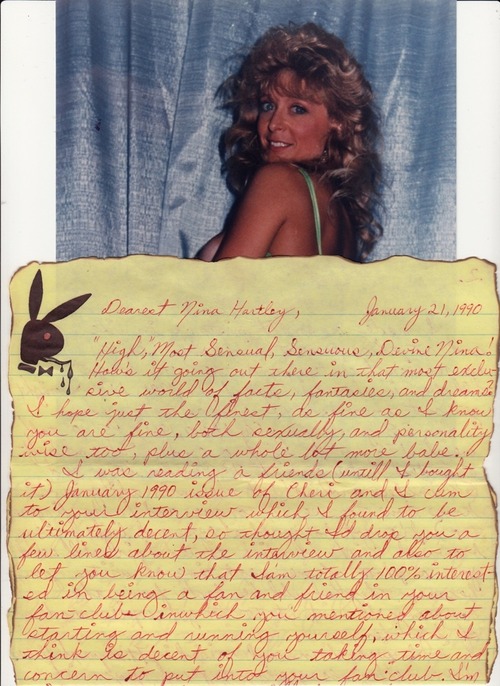
“Letters to a Porn Star: Nina Hartley Fan Mail”

First off, the Center for Sex and Culture has a Nina Hartley collection and that’s really exciting. Secondly, selections from said collection will be on display, in all their fawning/questioning/pervy glory, at the Center until mid-March. Tonight, take in the letters, gifts, and trinkets sent to the classically amazing pioneer feminist porn star — and check out a talk by Ingrid Olsen, a CSC fellow who has been elbow-deep in Nina land. 

Through March 18. Opening reception and talk: Fri/1, 7-10pm, free. Center for Sex and Culture, 1349 Mission, SF. www.sexandculture.org

Feelmore Fresh Fridays

Every last Friday, downtown Oakland adult store and sex culture hub Feelmore510 hosts an evening of naughty film at the recently-opened New Parkway. We guess tonight’s showing could be sexy, but in a deeply disturbing way: the film is 2010’s Venus Noire, a bio-pic of Saartjes Baartman, a woman from Southern Africa who was trotted about imperialist Britain billed as a Hottentot. Scientists examined her anatomy and proclaimed her the missing link between humans and apes, and she wound up dying from STDs and pnuemonia at 27. A valuble lesson about psuedo-science and sex, but you’ll probably be using that tissue to wipe away tears rather than any other bodily fluid.

Fri/25, 11:30pm, $10. New Parkway Theater, 474 24th St., Oakl. www.thenewparkway.com

Good Vibes vibrator bling contest

You’ve gotta buy a Good Vibes vibe to play the game (not end of world), but then with a little peacock feather, ornamental zipper, and g-l-i-t-t-e-r you can enter this Good Vibes sex toy crafting contest. The fancified vibrators will be on display at the Polk Street sex shop location during March, and winners of the competition will win gift certificates for the store. Deadline to enter your little friend (we assume they want them to be unused, but don’t let us impose our Puritanical values on your creativity)

Deadline to enter Feb. 28. Deliver by hand or mail to Good Vibrations, 1620 Polk, SF. www.goodvibes.com

Live Shots: Wovenhand at Bottom of the Hill

0

Although the notoriously devout David Eugene Edwards would probably be appalled to hear it, attending his shows is about as close to a religious experience as I ever get.

The ferociously intense frontperson of Wovenhand (as well as the former 16 Horsepower), Edwards was instrumental in the foundation of the hyper-localized alt-Americana/gothic-folk genre known as the Denver Sound, a category filled with moody ballads of shaken faith and raucous, C&W-tinged fire-and-brimstone.

And there’s just something about the sheer unapologetic bombast of his live presence that makes me want to don sackcloth and ashes on the spot and follow the path of the righteous — a feeling which lasts at least until I manage to break away from his sermon on the mount (or any rate, the Bottom of the Hill) to stumble home, still a sinner.

Clearly I’m not the only heathen who feels this way, as evidenced by a cluster of audience members at Saturday’s show clad earnestly in t-shirts proclaiming pagan-esque affinities (“Keep Thor in Thursday” is my favorite) bobbing their heads solemnly like everyone else to Edwards’ unmistakably Christian lyrics; music our common sacrament.

Watching Edwards onstage is not unlike watching the charismatic theatre of a revival-meeting minister, from his unwavering focus, to his fearless exhortations for repentance and mercy. Himself the grandson of a traveling preacher man on one side of the family, and a nomadic Native American entertainer who traveled (it’s said) from town to town with a trained bear, Edwards always appears to be equally influenced by both.

At one point speaking in tongues, eyes rolled back, at another whooping into the mic as Ordy Garrison on drums pounds out a tribal rhythm seemingly pulled from the very bones of the continent. In various incarnations, Edwards has displayed facility with all kinds of instruments, but for Saturday’s show he limited himself to three — two guitars and his signature hybrid mandolin-banjo built in the late 1800s, which gives off an almost ethereal twang from four nylon strings.

A word about Garrison. A Wovenhand collaborator for every album since ‘03’s Blush Music, he may well be the unsung driving force behind the evolution of the music, which grows heavier and more deeply layered with every progressive album. His timing is impeccable and he clearly sits in a position of power, directing much of the ebb and flow from his upstage perch.

A much newer recruit, Sir Charles French, who played guitar on Wovenhand’s latest album The Laughing Stalk (Sounds Familyre, 2012), but bass for the show, gave off a less anchored aura, perhaps due to less familiarity with the instrument in his hands, perhaps for other reasons, but fortunately with Wovenhand there are few fancy bass lines to worry about — a throbbing pulse sufficed quite well, pairing neatly with an undercurrent of pre-recorded drone — another Edwards signature.

The set-list, comprised in large part with tracks from The Laughing Stalk included representatives from almost every album since Consider the Birds — including a melancholy old favorite, “Swedish Purse,” an introspective “Kingdom of Ice,” and a bone-shaking “Long Horn”. 

But ultimately with Wovenhand, it’s rarely the precise setlist that gets remembered, so much as the overall effect of spending a solid hour communing with the band. You could almost liken the experience to a midnight mass for lost souls in search of redemption in song — we the flock, and Wovenhand the guiding light.

On a street where no buses burn: Where to hide from the Super Bowl

9

It was my fault for working on my laptop behind the plate glass window of a 24th Street cafe when the Niners won… whatever game that was, last Sunday. But it is entirely your fault for spitting at my face through the plate glass window, you sad little hag of a Mission District twenty-something (sup George, remember when I interviewed you about your art a few years ago?) after screaming “DIE YUPPIES” or whatever in the door of said cafe. 

So yeah, I’m not so stoked on Super Bowl (or as my friend Kelly Lovemonster put it, “the football game during the Beyonce concert.”) The amount of aggression generated by even a victory for our home team is mind-blowing. Don’t get me wrong, I’m pumped for the Niners and for adorable, positive football fans — like novelty rapper and six-year old Sarah Redden — but I’m not trying to catch a burning bus about it. If you’re not either, come hide with me here: 

Smell the magnolias at the SF Botanical Garden

Bury yourself in these in-season pink-and-white blooms, sure solace for the streets of shoulder-checking outside the park. Check out the Garden’s daily, free 1:30pm docent-led tour, or just wander about the gorgeous vegetation, liberated from half-time hullabaloo and lines at the bar. Check out the Garden’s full line up of magnolia-themed entertainment for other things that will make you happy. 

Open 9am-5pm (last entry 4pm), free. Ninth Ave. and Lincoln, SF. www.sfbotanicalgarden.org

Swell with pride for your city in a non-sports-related way with our new poet laureate

We love San Francisco’s sixth poet laureate Alejandro Murguia more than many things — we even gave him a Guardian column! — so we’re stoked for his inaugural address this week. He plans to address the state of the Latino community in San Francisco, lyrically no doubt. 

Sun/27, 1-3pm, free. Main Library, 100 Larkin, SF. www.sfpl.org

Drift away with young East Bay classical musicians

As far as you can get, perhaps from the Tracy Morgan Kraft ad (or the teaser of said ad, that’s a thing now) — the 75 young players of the Oakland Youth Orchestra will take you away on the wings of their percussion, wind, and brass steeds. Get your Dimitri Shostakovich, Pyotr Ilyich Tchaikovsky, and Sergei Rachmaninov fix here, at the group’s winter concert.

Sun/27, 3pm, free. Holy Names University, 3500 Mountain, Oakl. www.oyo.org

Cry, laugh, drink with the queens

In the middle of it all — the red and gold beach towels, the cops pouring out champagne into the gutters on 16th Street — you will feel sad. Luckily, doorperson-like-you-wouldn’t-believe Dee Dean Leitner has assembled a passel of drag divas to belt out the shittiest odes to amore tonight at the Stud for a show lovingly dubbed “Worst. Song. Ever.” It starts early for drag, so you will be able to go more or less directly from whatever hole you’ve been hiding from, long before the last rowdies have hopped home on CalTrain.

Sun/27, 7-10pm, $5. The Stud, 399 Ninth St., SF. www.studsf.com

Stay in bed with cats

Win or lose, fireworks, and the pussies may be scared. You can help.

Every day, all the time, your rent. thekittencovers.tumblr.com


Norman Solomon: Verbal tics and political routines

1

By Norman Solomon

Norman Solomon is co-founder of RootsAction.org and founding director of the Institute for Public Accuracy. His books include “War Made Easy: How Presidents and Pundits Keep Spinning Us to Death.” He writes the Political Culture 2013 column.

A lot of what we say and do becomes habit-forming. Groundhog Day 2013 could serve as a reminder that some political habits should be kicked. Here are a few:

**  “Defense budget

No, it’s not a defense budget. It’s a military budget.

But countless people and organizations keep saying they want to cut “the defense budget” or reduce “defense spending.”

Anyone who wants to challenge the warfare state should dispense with this misnomer. We don’t object to “defense” — what we do oppose, vehemently, is military spending that has nothing to do with real defense and everything to do with killing people, enforcing geopolitical control and making vast profits for military contractors. And no, they’re not “defense contractors.”

President Eisenhower’s farewell address didn’t warn against a “defense-industrial complex.”

The fact that there’s something officially called the Department of Defense — formerly the Department of War, until 1947 — doesn’t make its huge budget a “defense budget,” any more than renaming the Bureau of Prisons “the Bureau of Love” would mean we should talk about wanting to cut the “love budget.”

**  “Pro-life”

Last week, midway through a heated debate on the PBS “NewsHour,” the president of NARAL Pro-Choice America said that some politicians get elected while hiding their extreme anti-abortion positions — but would be rejected at the ballot box “if they ran on their pro-life values.”

“Pro-life” values? Not a label that abortion-rights advocates should use for opponents of a woman’s right to choose an abortion. One of the main reasons those opponents keep calling themselves “pro-life” is they want to imply that supporters of abortion rights are anti-life. Why help?

**  “Globalization”

In many realms, globalization can be positive, even essential. For instance, wonderful results flow from globalizing solidarity among workers around the world. Likewise, the planetary spread of awareness and cooperation among people taking action to protect the environment, stop human-rights abuses and end war.

Corporate globalization is another matter. Its destructive effects are lashing every continent with voracious commercialization along with exploitive races to the bottom for cheap labor, extraction of raw materials, privatization, flattening of protective tariffs, overriding of national laws that protect workers and replacement of democratic possibilities with the rule of big money.

Putting “corporate” before “globalization” may seem cumbersome, but it’s worth another three syllables. There’s a world of difference between globalization for human cooperation and corporate globalization. Blurring it all together misses the chance to clarify the distinct possibilities.

**  “Moderates”

Fifty-five years ago, in his book “The Causes of World War Three,” sociologist C. Wright Mills wrote about what he called “crackpot realism” — policy nostrums widely touted by mass media outlets and other powerful institutions as wisely reasonable, yet actually disastrous.

In a similar groove, these days, we hear about how certain elected officials are “moderates.” And we might refer to them that way ourselves. But the grim results of crackpot moderation — climate change and environmental degradation, incessant warfare, more poverty, widening economic inequities, abuse of civil liberties and so much more — are all around us. So-called “moderates” fuel the infernos of catastrophe.

What’s moderate about the extreme injustices and destructiveness of the status quo?

**  Skimming the headlines

We all do it sometimes — glancing at headlines and scarcely reading the stories — one of the reasons why, all too often, what we think we know actually isn’t so.

Case in point: a headline at the top of the New York Times front page days ago, no doubt leaving many quick readers with the belief that President Obama is getting tough on Wall Street.

Well, that’s what the headline conveyed. “SIGNAL TO STREET IN OBAMA’S PICK FOR REGULATORS,” it began, followed by an elaboration in big type just below: “A Renewed Resolve to Hold Financial Firms Accountable.”

Mostly focusing on the appointment of Mary Jo White to chair the Securities and Exchange Commission, the article offered a fleeting indication in its eighth paragraph that the “renewed resolve” might actually be wobbly. “While Ms. White is best known as an aggressive prosecutor,” the article noted, “she also built a lucrative legal practice defending Wall Street executives, a potential concern for consumer advocates.”

The basis for that potential concern, however, did not gain any further elucidation until the article’s twenty-sixth paragraph, which provided the other mention of why consumer advocates might be concerned: “Ms. White could face additional questions about her career, a revolving door in and out of government. In private practice, she defended some of Wall Street’s biggest names, including Kenneth D. Lewis, a former chief of Bank of America. As the head of litigation at Debevoise & Plimpton, she also represented JPMorgan Chase and the board of Morgan Stanley.”

So much for headlines

Norman Solomon is co-founder of RootsAction.org and founding director of the Institute for Public Accuracy. His books include “War Made Easy: How Presidents and Pundits Keep Spinning Us to Death.” He writes the Political Culture 2013 column.

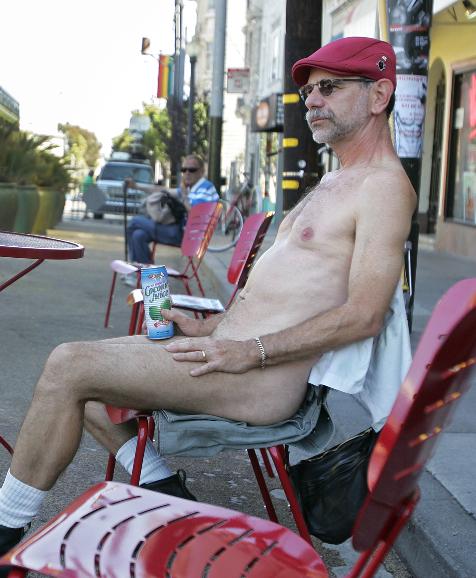
Nudity ban upheld, found to be stupid

27

The City Attorney’s Office just announced that a federal court has upheld San Francisco’s ban on public nudity. From the press release:

The court found that the nudism advocates’ challenge to the ordinance based on the First Amendment lacked merit because “public nudity alone is not expression protected by the First Amendment,” and because the ordinance was “not substantially overbroad.”  Judge [Edward] Chen additionally rejected plaintiffs’ arguments that exemptions for such permitted events such as Bay to Breakers and the Folsom Street Fair violated constitutional Equal Protection guarantees, holding that plaintiffs failed to demonstrate that the exceptions lacked a rational basis.  Though the nudism advocates’ facial challenge to the ordinance was dismissed without leave to amend, the court left the door open for nudism advocates to amend their pleading with subsequent “as-applied” claims, provided they were able to do so.

So maybe this isn’t over yet.

The news comes just as the Atlantic chimed in on the city’s nudity ban, calling it pretty dumb:

In San Francisco next week, it will remain perfectly legal for a 50-year-old man to seduce an 18-year-old, impregnate her, ridicule her physical appearance until she is brought to tears, walk out on her, seek out her mother, seduce that mother for no other reason than to further hurt the jilted daughter, draw a graphic novel of the whole sordid chain of events, and publish in on the Internet. But it’ll be illegal for him to be naked outside. Does anyone think the resulting moral signal is desirable?

There’s a long discussion of Judeo-Christian values, the Bible, Adam and Eve, etc. But the conclusion really makes the point:

Americans are bombarded with images of semi-clothed people all the time. It just happens that they’re all beautiful actors and actresses, magazine cover girls, television underwear models, and porn stars. The average person sees lots of naked bodies, but very little real variety. While that may be more aesthetically pleasant, it skewers our notion of what a normal human body looks like. In an age of Victoria’s Secret in the mall, substantial nudity on primetime television, and ubiquitous YouPorn, a ban on nonsexual street nudity begins to seem absurd. Society needs some relatively unattractive people to be naked in public now more than ever before.

So there you have it. Legal, stupid.


Boning and binding spines (the old-fashioned way) at SF Center for the Book

1

When was the last time you sat down and made a book? You know what I’m talking about — those beautiful bound things that are filled with words and pictures.

They’re pretty awesome, in my opinion, and they are seriously celebrated and loved at the SF Center for the Book. For years I had been wanting to take a class from them and last week the opportunity arose to join in on an intro to bookbinding class, taught by Nina Eve Zeininger-Byrne. It was fun to hear, after a few quick introductions, that most students in the class had also had an inkling to take a class at the SFCB for years and were finally taking the leap.

So off we went for three hours, starting with some library lingo like “folio” and “signature” (that’s right, we’re all going to sound hella cool at our next dinner party), then some tips on proper tool use: the boning tool is your best friend — hehe — is it bad that I’m smirking as I write this? Finally we dove into some actual binding (more silly smiles).

We learned several techniques, with super sweet names like the accordion book, single-section pamphlet stitch, combined concertina, and Japanese stab. My favorite was the combined concertina, which is a book with three sections, the perfect writing vessel for those of us with too many things on our mind. It was wonderful to take an art class and leave with a new skill that is actually very useful and taught me to make pretty things for my friends.

If you want to make pretty things for your friends, take a class at the SFCB or check out Nina’s Etsy shop here.

Heads Up: 7 must-see concerts this week

2

This week holds big, anticipated-return shows like Local Natives at the Fox and Cody ChesnuTT at the Independent, new pairings like Adam Green and Binki Shapiro at the Chapel, an anniversary celebration at BAGel Radio’s locally curated Bottom of the Hill night with Mister Loveless and CHURCHES, legendary Malian offspring Vieux Farka Touré at Yoshi’s, and a possible faux listing (Jackie-O Motherfucker is supposedly playing Casa Sanchez).

Only time will tell. Go out, Bay Area music lovers, into the chilly night, and report back to us.

Here are your must-see Bay Area concerts this week/end:

Cody ChesnuTT
The soul troubadour returns. Aside from his debut double-album, The Headphone Masterpiece (Ready Set Go), Roots collaboration, and brief 2010 EP Black Skin No Value (Vibration Vineyard), singer-songwriter Cody ChesnuTT just hasn’t been on the radar enough, given his powerful pipes. He brought it all back in late 2012, releasing socially-conscious soul gem, Landing on a Hundred (Redeye Label), which he’s touring on now.
Tue/29, 8pm, $15
Independent, 628 Divisadero, SF
www.theindependentsf.com
https://www.youtube.com/watch?v=CAlAmbewaZo

Local Natives
“Local Natives stole our collective hearts in 2009 with their self-funded debut Gorilla Manor, an irresistible slice of unearthly folk rock, before cruelly fading into the background. Finally, four years later, they’ve resurfaced with a sophomore effort, Hummingbird. Though the Orange Country-bred group recorded the album in Brooklyn, the California sunshine still shines through its meandering, ethereal soundscapes. The band’s songs draw heavily from indie peers Grizzly Bear and Fleet Foxes, but manage to add a refreshing, summery glow to the reverb-heavy pop murk. The album, which was produced by Aaron Dessner of the National, promises to translate well to a live format, keeping the band’s trademarked harmonies in place while also allowing vocalist Kelcey Ayer’s dreamy falsetto to soar.” — Haley Zaremba
With Superhumanoids
Wed/30, 8pm, $25
Fox Theater
1807 Telegraph, Oakland
(510) 302-2250
www.thefoxoakland.com
https://www.youtube.com/watch?v=L1dFjloBZYo

Jackie-O Motherfucker
[Disclaimer: I’ve found this show on two different punk listservs, yet nowhere else thus far. Got a call in to the shop.] Experimental, ’90s-born Portland act Jackie-O Motherfucker live at Mexican restaurant, Casa Sanchez, where I can also eat chips and salsa during the set? That’ll do just fine, thank you.
With You Nori, Cuttle Buttle, Baus.
Thu/31, 7:30pm, free
Casa Sanchez
2778 24 St, SF.
www.casasanchezfood.com

Brass Menažeri
The 12-year-old Balkan dance party band bids farewell at this final concert, with two live sets. Check this week’s issue (Wed/30) for more on the group’s demise.
Fri/1, 9pm, $15
New Parish
579 18th St., Oakl.
www.thenewparish.com
https://www.youtube.com/watch?v=twGgff89eno

BAGel Radio Anniversary Show

Ted Leibowitz has been doing Internet radio far longer than the majority of your favorite podcast hosts. His indie rock-oriented Internet radio station, BAGel Radio, is turning 10 this year. So the station founder-music director is throwing this show with local rock bands including Pixies-honoring Mister Loveless, angsty Churches, tender Birdmonster. A lineup worth showing up early for.
Fri/1, 9:30pm, $12
Bottom of the Hill,
1233 17th St., SF
www.bottomofthehill.com.
https://www.youtube.com/watch?v=n990CcF_uuA

Adam Green and Binki Shapiro
“Opposites do attract. Adam Green is a so-called “anti-folk” Manhattanite with an extensive catalog of foul-mouthed, tongue-in-cheek ballads and admirably humble beginnings as Kimya Dawson’s counterpart in the Moldy Peaches. Binki Shapiro hails from LA, is a retro fashion icon and former member of Brazilian-American supergroup Little Joy, along with her ex-boyfriend and Strokes drummer Fabrizio Moretti. The duo’s vastly different backgrounds and musical leanings don’t seem compatible at first glance, but in practice they blend beautifully. During the writing of the record, both Green and Shapiro were going through romantic rough patches, which ultimately pushed the musicians to help write each other’s breakup albums, creating a finished product rife with earnestness and vulnerability.” — Haley Zaremba
With the Range of Light Wilderness
Sat/2, 9pm, $18
The Chapel
777 Valencia, SF
(415) 551-5157
www.thechapelsf.com
https://www.youtube.com/watch?v=WrbeDDiU92g

Vieux Farka Touré
“It should be enough to say that Vieux Farka Touré follows the footsteps of his father, the late, Grammy-winning Ali, or that he’s known as “the Hendrix of the Sahara.” But not quite. In “Gido (featuring John Scofield)” — yes, of jazz-rock fame — an acoustic guitar expertly noodles in a Malian scale, a bend on an electric cues bass and drums, then the two guitars continue to converse. It’s tempting to fashion this into some metaphor about the melding of African music and Western rock, and though this wouldn’t be misplaced, the main takeaway from “Gido” and the whole album, The Secret (2011), is that it sounds great. As Yoshi’s will prove, Touré creates his own breed of music, and he does it well.” — Laura Kerry
With Markus James
Sun/3, 7pm, $25
Yoshi’s
1330 Fillmore, SF
(415) 655-5600
www.yoshis.com
https://www.youtube.com/watch?v=YMI46WhdjRE

Life after the death penalty

18

Tell me: Does any sane person really believe that the world would be a better and safer place if Rick Stevens had been executed by the state of California?

The guy was all fucked up on drugs when he shot three men. Horrible crime. He spent most of his adult life in prison. And now, at 72, he’s out on the streets — where the odds that he will ever hurt anyone again are infintessimally small.

Instead of spending millions and millions of dollars to kill him, the state gave him a life sentence, with the possibility of parole, which was finally granted. It’s hard to argue that justice wasn’t done.

This was the legacy of the Rose Bird Court, the most progressive Supreme Court in California history, from back when Jerry Brown was a young governor. Bird and her colleagues didn’t like the death penalty, and ultimately ruled that the state’s executiion process was unconstitutional. So people like Stevens got a second chance.

Not saying he should have gone free; nobody says that. But the state saved money, and saved a life, by failing to carry out the ultimate punishment. And I think we’re all better off for it.

Condo conversion legislation on hold for now

Following a contentious five-hour hearing, a committee of the Board of Supervisors postponed voting on a controversial housing proposal, and agreed to revisit the issue on Feb. 25. Over the next few weeks, opposing sides are expected to negotiate a possible alternative.

Authored by Sups. Scott Wiener and Mark Farrell, the proposed condo conversion impact fee would have allowed as many as 2,000 tenancy-in-common (TIC) units to be immediately converted to condos for a fee, allowing owners to bypass a housing lottery system that places an annual cap on conversions.

While TIC owners voiced frustration about the backlogged lottery system, tenants expressed fears that the legislation could give rise to a wave of Ellis Act evictions if landlords or speculators interpreted it as a signal that lucrative condo conversion would be easier to achieve.

Prior to the hearing, a group of tenants gathered in front of City Hall in a show of opposition to the condo-conversion legislation, waving signs that read, “Stop the Attack on Rent Control.”

“The reality is, if this legislation passes, there will be more evictions in San Francisco,” said Tommi Avicolli Mecca of the Housing Rights Committee, who spoke at the rally.

Tenant advocates worry that the legislation would result in a permanent loss of affordable, rent-controlled units from the city’s housing stock, at a time when rents are soaring. When landlords rent out their condos or TICs in San Francisco, there’s a key difference: TICs are covered by rent control, but condos are exempt.

“I’ve been evicted three times,” one woman said while addressing members of the Land Use & Economic Development Committee. “I know so many people who have gotten evicted. I don’t know anyone who’s won their case against eviction.”

During the hearing, Farrell adopted a defensive tone against critics who’d described the proposal as an attack on rent control. “The tactics that these opponents have deployed is out of line,” he said. To assuage concerns, he noted that he and Wiener had included a provision guaranteeing lifetime leases for existing tenants in units that qualified for condo conversion under the program.

But Sup. Jane Kim drilled down on this detail, questioning whether such an agreement would be legally enforceable in the long run. In response, a representative from the City Attorney’s office said he thought the provision was on solid legal ground, but noted that the specific matter “has not been litigated before,” meaning there is still a question as to whether it could withstand a court challenge. When Kim asked if any funding was set aside to enforce these lifetime leases, the response was “no.”

Board President David Chiu proposed holding off on a vote for several weeks. “I do not support the legislation in its current form,” he said. If the current generation of TIC owners were allowed to convert this time, he explained, the next generation’s frustrations with the housing lottery would only “lead us back to an identical debate in a short period of time.”

Kim echoed this point. “My concern was that … folks were looking at this legislation as an ice-break for more condo conversion,” she said just after a public comment session that lasted several hours. And she acknowledged that there is a larger problem to consider. “It’s very tragic that we have set up a situation where [TICs and renters] are pitted against one another,” she said.

Herrera steps up his crackdown on surcharge fraud by restaurants

46

City Attorney Dennis Herrera has stepped up his efforts to ensure San Francisco restaurants aren’t committing consumer fraud with their healthcare surcharges – by pocketing money collected from diners ostensibly to cover their city obligation to provide health coverage to employees – offering an amnesty period for following city law.

At a City Hall press conference on Friday – flanked by Sups. David Campos and David Chiu, Assembly member Tom Ammiano, and local restaurant employees – Herrera announced an investigation and enforcement effort targeting dozens of local business who have reported spending less on employee health care than they collect from customers for that purpose. They will receive letters this week urging voluntarily compliance during an amnesty period, after which they could be hit with lawsuits and civil penalties.

“The enforcement program we’re launching today isn’t simply to protect employees and consumers from surcharge fraud – it’s also to protect the vast majority of competing restaurants that follow the law and provide health care benefits to their workers,” said Herrera. “We San Franciscans take great pride in a vibrant local restaurant scene that enriches our neighborhoods, employs thousands of our residents, and serves millions of tourists each year. And it’s unfortunate that the illegal business practices of a relative handful of bad actors require the creation of this enforcement initiative.”

The City Attorney’s Office is refusing to release the list of restaurants that will receive the letters, calling it an ongoing investigation that exempts the list from public disclosure. But the office did furnish reporters who asked with a spreadsheet from the city’s Office of Labor Standards Enforcement, which ensures compliance with the landmark Health Care Security Ordinance that Ammiano authored as a supervisor, going into effect in 2008 and creating the Healthy San Francisco program.

That list includes many well-known restaurants. Topping the list is Mina Group LLC (which includes restaurants Michael Mina, RN74, Bourbon Steak, and Clock Bar) collecting $539,806 and spending $211,809, Wayfare Tavern collecting $303,207 and spending $68,018, Layers LLC (owners of Paxti’s Pizza, which Herrera’s reached a settlement with two weeks ago), Squat & Gobble collecting $160, 498 and spending nothing on employee health care. Others on the list include Cheesecake Factory, Max’s Opera Cafe, Asia SF, Burgermeister, Folsom Pie, Cafe Bellini, and One Market Restaurant.

Golden Gate Restaurant Association Executive Director Rob Black lashed out at Herrera’s office for releasing that list and media outlets for publishing it, claiming that he’s talked to many of those restaurateurs and that they had filled out the forms wrong or that they simply hadn’t yet spent the surcharges collected even though the funds may be set aside for employee health care.

“They aren’t committing fraud, which is the accusation by the city attorney, just because of errors in filling out a form,” Black said, urging the public to reserve judgment until the investigation is complete.

But it’s hard to feel too bad for GGRA or the member restaurants that aggressively contested and then sued the city over the health care law, appealing it all the way to the Supreme Court, then turned around when they lost and used deceptive (and sometime fraudulent) surcharges to single out those costs for customers.

According to a press release put out by Herrera’s office:

“The City Attorney’s target letter outlined conditions worst-offender restaurants must take steps to meet by a deadline of April 10, 2013 to come into legal compliance, and avoid civil litigation by Herrera’s office for pocketing customer surcharge money intended to fund employee health care benefits.  
* Worst-offenders must provide an accounting to City Attorney investigators for all health care surcharges collected during the period from 2009 to 2011, along with health care expenditures pursuant to the Health Care Security Ordinance, or HCSO, for that time period.
* Worst-offenders must distribute 50 percent of unallocated health care surcharge funds  to employees who worked for the company during the time surcharges were imposed on customers, covering the years 2009 to 2011, in accordance with City Attorney instructions.
* Worst-offenders must remit amounts unredeemed by their eligible employees to the San Francisco City Attorney’s Office for the purpose of funding future enforcement of the HCSO and other consumer protection laws.
* Worst-offenders must attest that they will refrain from committing further consumer fraud and remain in full compliance in good faith with the HCSO going forward, in accordance with City Attorney instructions.”

In his press conference, Herrera emphasized the “relative handful” of restaurants targeted by his office, just a few dozen in a city with thousands of restaurants. But he also said that his office is aware of restaurants that use the surcharge without even reporting to the OLSE as required, so both the amnesty program and his investigation goes beyond just the restaurants who get letters.

“I’m tremendously gratified by this very statesmanlike and generous gesture by the City Attorney’s Office, Mr. Herrera in particular,” Ammiano said. “I feel somewhat parental toward this program, the Health San Francisco program. It was a hard fight to get it and it’s been successful, so any attempts to sully it, minimize it, or water it down get my dander up.”

Can Obama really unravel Reagan?

36

I like Robert Reich; he’s one of the smartest economic thinkers in the country and can explain everything that’s wrong with the economy in two minutes. And I really want to believe that he’s correct in his latest essay, and that President Obama really is poised to under the Reagan Revolution (or at least, the Reagan Republican Coalition).

I get it: The GOP is a fractured collection of groups that often have little in common (although the Democratic Party has some of the same problems). And the Reich message is hopeful:

Obama’s focus in his second inaugural — and, by inference, in his second term — on equal opportunity is hardly a radical agenda. But it aggravates all the tensions inside the GOP. And it leaves the GOP without an overriding target to maintain its fragile coalition. In hammering home the need for the rich to contribute a fair share in order to ensure equal opportunity, and for anyone in America — be they poor, black, gay, immigrant, women, or average working person — to be able to make the most of themselves, Obama advances the founding ideals of America in such way that the Republican Party is incapable of opposing yet also incapable of uniting behind.

All of that may be true — but it’s hard to understate the damage that Reagan did to America — and the amount of work and leadership it’s going to take to get us back to where we were as a nation before he and his ilk declared war on social programs, cities, and non-military government spending.

Before the Reagan Era, even Republicans accepted the concept that the very rich should be taxed at high rates; the marginal rates under Richard Nixon were at 70 percent. In the 1960s and 1970s, the federal government spent huge sums of money on cities. Before Reagan, economic equality was a value in this country. Now it’s not even on the agenda.

Obama’s second inaugural touched all the right notes. But he needs to do more than tinker around the edges of policy if he wants to have a Reagan-style impact on the country. And I don’t know if he’s up for it.