SFBG Blogs

Fanboy ruminations on the new My Bloody Valentine

3

Here I am, listening to m b v for the umpteenth time since Saturday night, and I still can’t believe it exists. Up until last week, I had grown used to “the Loveless follow-up” as a punchline in hipster water-cooler conversation, a tall tale in the canon of guitar-rock mythology. But now, after two decades of broken promises, My Bloody Valentine’s fabled third LP is here. And I can dance to it. And it shows up on iTunes like everything else. This can’t be happening.

After he nearly bankrupted his label, striving to recreate the reverberacious sounds swirling around in his head, MBV’s guitarist and production mastermind Kevin Shields exited the studio with 1991’s seminal Loveless, an album that re-imagined the textural possibilities of guitars and vocals within the pop framework. The effect was equally seductive and menacing: a record swarming with haze and fuzz, yet with an undercurrent of Pet Sounds pop purity cutting straight down the middle. This ethereal, borderline-electronic approach to guitar-rock, and its use of androgynous, vaguely intelligible vocals as a background instrument, has spawned a thousand imitators, but no worthy successor, resulting in one of the modern era’s few truly legendary recordings.

That said, it’s hard to overstate the cultural baggage attached to m b v from the get-go. Seriously, if you’re Shields, how do you move on from what everyone from Brian Eno to Phish has embraced as the the greatest musical achievement of the ‘90s? The band’s third full-length presents several answers to that question, with a mixed bag of laid-back meanderings, abrasive left-field experiments, and a handful of vintage MBV anthems to feed that long-neglected Loveless fix.

Although it continues to open up and reveal itself with each listen, here are some observations from my first weekend with this incredibly unlikely album.

“she found now”
My Bloody Valentine’s first statement of the new millennium is a quiet, low-key one, without drums, that leaves Shields’ fuzzy, undulating guitars to support his and Bilinda Butcher’s entangled, hushed vocals. First time around, I was underwhelmed. Comebacks should start with a bang, right? After a few listens, though, it all made sense; this is the sound of Shields and Co. waking up after a two-decade hibernation, collecting their bearings, and taking a moment to reflect before getting on with the show. A poignant gesture, after 22 years of silence.

“only tomorrow”
And we’re rolling. I can’t remember the last time the band sounded this funky. Shields’ guitar has an earthly, familiar crunch to it, paring down from the otherworldly pink-noise that defined Loveless, and Colm Ó Cíosóig’s shuffly drums sound fuller, boomier, and more dynamic than ever before. Yet, it’s unmistakably MBV, from the complex, angular chord changes, to the sound of Butcher’s vocals succumbing to Shields’ towers of distortion.

http://www.youtube.com/watch?v=UUc5y1NljXI
“who sees you”
This is the jewel of the album, the track that delivers on all the expectations I had convinced myself were unreasonable. All of Loveless’ trademark qualities are right upfront, from the emphasis on heady, impressionistic texture, to the inextricable pop DNA at its core. The chord changes are as seductive as ever, and Shields’ guitars haven’t skipped a beat since ‘91. Most amazingly, though: we’re finally hearing a Loveless-caliber MBV song, approached with a muscular, dynamic, 21st century production sensibility. This is too good to be true.

“is this and yes”
Loveless’ brief, Final Fantasy-esque intro, “Touched” suggested an alternate direction for the band, which “is this and yes” explores in depth for the first time. Guitars are absent, and drums are minimal; the wispy synth tones coalesce with Butcher’s soft vocals to resemble the relaxed, samba-ish lilt of a Stereolab ballad. Simple and repetitive, but always engaging and never tedious, it offers a new perspective on MBV’s crafty songwriting abilities, and a nice moment of calm between thick slabs of pop/noise.

“if i am”
Relatively open and uncluttered by MBV standards, yet permeated by the band’s signature vertigo, “if i am” is a nice reminder that Shields’ aesthetic isn’t all smoke and mirrors, distortion, layering, and plain old big noises. If the two previous pop songs felt a bit formulaic and deconstructable, this track emphasizes the mystery and vagueness of MBV’s squirmy, seasick sound. Also, Shields on a wah-pedal is a nice surprise.

http://www.youtube.com/watch?v=VpoOjoiYcWY
“new you”
The most melodic, bubbly, and downright fun song MBV has ever committed to tape, “new you” is like a window into an alternate universe, where MBV revved back up in ’96 and took the charts by storm. Recalling the work of Garbage, Chapterhouse, and other bands who carried the shoegaze-baton in more populist directions in the post-Loveless wake, it’s essentially a vintage MBV song, with all the noise peeled away. From the upfront vocals, to that irresistible synth melody, to the generous low-end that practically dares you not to dance like a fool… it’s a real treat.

“in another way”
While the first two-thirds of m b v, and all of Loveless, are largely held together by a strong harmonic undertow, “in another way” finds the band ripping that foundation out from under our feet, and playing with colder, spikier textures. The harsh, punky guitar squalls, and discordant vocals, resemble Isn’t Anything at its crudest, while the skipping, hopping drums and weirdly anthemic synths feel like an extension of their foray into dance territory on “Soon.” It’s a compelling experiment, and it’s neat to hear MBV hinting at new directions for their second act, but the lack of harmonic warmth keeps me from embracing it entirely.

“nothing is”
Ever repeat a word over and over, until it becomes a meaningless mishmash of sound? “nothing is” achieves the same sort of minor transcendence through repetition, looping a one-second stab of guitars and drums up and down a sine wave for over three minutes. It’s an easy space to get lost in, and fairly un-tedious, despite the odds. Similarly to “in another way”, though, I’m not finding a visceral connection to this one. I like it; it’s captivating; but love? Not quite.

“wonder 2”
Given the number of rock-band reunions defined by a disappointing sense of by-the-numbers conservatism, m b v’s final third sounds especially brave. “wonder 2” is the album’s boldest experiment: an uninhibited, atonal blur of a semi-pop song, laid atop a reverb-soaked drum and bass beat, and set inside that metaphorical “jet engine” that MBV fans are always talking about. Like most of their songs, it combines dissonance with pop structure. Yet, unlike the “great” ones (“Only Shallow,”“When You Sleep,” “Honey Power,” etc.), the pop warmth is missing. This one might take awhile to sink in though, as new layers of metallic noise continue to reveal themselves upon each listen.

In the long-run, m b v’s reputation will likely depend on where Shields and Co. choose to go from here. If they call it quits again, experiments like “nothing is” could ultimately be seen as vaguely disappointing, in their failure to completely justify a 22-year wait. Yet, if the band continues to create and explore, m b v’s third act in particular might wind up as another signpost on their weird, wonderful journey as an ensemble, leading to bigger rewards down the stretch.

If this is indeed the band’s closing statement, we’re incredibly fortunate to have a new handful of vintage MBV songs, like “who sees you” and “new you,” to live and love by for decades to come. At this point, m b v sounds too scattered and impulsive to compete head-to-head with Loveless’ obsessive commitment to pink noise, but were we really expecting that? The fact that in 2013, a new My Bloody Valentine album manages to reach those glorious heights, even on occasion, leaves us with so much to be thankful for.
Ten years after Powell’s U.N. speech, old hands are ready for more blood

1

By Norman Solomon

Norman Solomon is the author of “War Made Easy: How Presidents and Pundits Keep Spinning Us to Death.” He is the founding director of the Institute for Public Accuracy and co-founder of RootsAction.org.

When Secretary of State Colin Powell spoke to the U.N. Security Council on February 5, 2003, countless journalists in the United States extolled him for a masterful performance — making the case that Saddam Hussein’s Iraq had weapons of mass destruction. The fact that the speech later became notorious should not obscure how easily truth becomes irrelevant in the process of going to war.

Ten years later — with Powell’s speech a historic testament of shameless deception leading to vast carnage — we may not remember the extent of the fervent accolades. At the time, fawning praise was profuse across the USA’s mainline media spectrum, including the nation’s reputedly great newspapers.

The New York Times editorialized that Powell “was all the more convincing because he dispensed with apocalyptic invocations of a struggle of good and evil and focused on shaping a sober, factual case against Mr. Hussein’s regime.” The Washington Post was more war-crazed, headlining its editorial “Irrefutable” and declaring that after Powell’s U.N. presentation “it is hard to imagine how anyone could doubt that Iraq possesses weapons of mass destruction.”

Yet basic flaws in Powell’s U.N. speech were abundant. Slanted translations of phone intercepts rendered them sinister. Interpretations of unclear surveillance photos stretched to concoct the worst. Summaries of cherry-picked intelligence detoured around evidence that Iraq no longer had WMDs. Ballyhooed documents about an Iraqi quest for uranium were forgeries.

Assumptions about U.S. prerogatives also went largely unquestioned. In response to Powell’s warning that the U.N. Security Council would place itself “in danger of irrelevance” by failing to endorse a U.S.-led invasion of Iraq, the adulation from U.S. media embraced the notion that the United Nations could only be “relevant” by bending to Washington’s wishes. A combination of cooked intelligence and geopolitical arrogance, served up to rapturous reviews at home, set the stage for what was to come.

The invasion began six weeks after Powell’s tour de force at the United Nations. Soon, a search for Iraqi weapons of mass destruction was in full swing. None turned up. In January 2004 — 11 months after Powell’s U.N. speech — the Carnegie Endowment for International Peace released a report concluding that top officials in the Bush administration “systematically misrepresented the threat from Iraq’s WMD and ballistic missile programs.”

Left twisting in the wind was Powell’s speech to the U.N. Security Council, where he’d issued a “conservative estimate” that Iraq “has a stockpile of between 100 and 500 tons of chemical weapons agent.” The secretary of state had declared: “There can be no doubt that Saddam Hussein has biological weapons and the capability to rapidly produce more, many more.”

Nineteen months after the speech, in mid-September 2004, Powell made a terse public acknowledgment. “I think it’s unlikely that we will find any stockpiles,” he said. But no gingerly climb-down could mitigate the bloodshed that continued in Iraq.

A decade ago,  Powell played a starring role in a recurring type of political dramaturgy. Scripts vary, while similar dramas play out on a variety of scales. Behind a gauzy curtain, top officials engage in decision-making on war that gives democracy short shrift. For the public, crucial information that bears on the wisdom of warfare remains opaque or out of sight.

Among the powerful and not-so-powerful, in mass media and on Capitol Hill, the default position is still to defer to presidential momentum for war. Public candor and policy introspection remain in short supply.

The new secretary of state, John Kerry — like the one he just replaced, Hillary Clinton — voted for the Iraq war resolution in the Senate, nearly four months before Powell went to the U.N. Security Council. During the crucial lead-up months, Senator Kerry was at pains to show his avid support for an invasion. In early October 2002, appearing for an hour on MSNBC’s “Hardball” program live from The Citadel as an audience of young cadets filled the screen, Kerry said: “I’m prepared to go. I think people understand that Saddam Hussein is a danger.”

Since then, Kerry has publicly said that he would have voted for the war resolution even if he’d known that Iraq actually had no weapons of mass destruction. But on the Senate floor, Kerry prefaced his vote for war by rhetorically demanding to know why Saddam Hussein was “attempting to develop nuclear weapons when most nations don’t even try.” The senator emphasized that “according to intelligence, Iraq has chemical and biological weapons.”

Months later, when Powell trumpeted that theme at the United Nations, the landslide of testimonials included this one from a future U.S. ambassador to the U.N., Susan Rice: “I think he has proved that Iraq has these weapons and is hiding them, and I don’t think many informed people doubted that.”

Meanwhile, the Washington Post edition with the editorial headlined “Irrefutable” also included unanimous agreement from each of the opinion columns on the facing page.

Longtime Post columnist Richard Cohen attested to Powell’s unquestionable veracity with these words: “The evidence he presented to the United Nations — some of it circumstantial, some of it absolutely bone-chilling in its detail — had to prove to anyone that Iraq not only hasn’t accounted for its weapons of mass destruction but without a doubt still retains them. Only a fool — or possibly a Frenchman – could conclude otherwise.”

Inches away, another venerable pundit held forth. Powell managed to “present the world with a convincing and detailed X-ray of Iraq’s secret weapons and terrorism programs yesterday,” wrote Jim Hoagland, a Post foreign-policy specialist. He concluded: “To continue to say that the Bush administration has not made its case, you must now believe that Colin Powell lied in the most serious statement he will ever make, or was taken in by manufactured evidence. I don’t believe that. Today, neither should you.”

Fast forward to the current era. What are Richard Cohen and Jim Hoagland writing — about Iran?

On February 6, 2012, exactly nine years after proclaiming that “only a fool” could doubt Iraq had weapons of mass destruction, Cohen’s column declared flatly: “The ultimate remedy is Iranian regime change.” Four months ago, Cohen wrapped up a column by observing “there is still time for Iran to back down before President Obama’s red line — no nuclear weapon — is crossed. This is a war whose time has not yet come.” Not yet.

Hoagland — a decade after telling readers they should put their trust in Colin Powell’s “convincing and detailed X-ray of Iraq’s secret weapons” — is now making clear that his patience with Iran is wearing thin. “Until recently,” Hoagland wrote five weeks ago, “I had been relatively comfortable with Obama’s assertions that there is time to reach a peaceful resolution with Iran.” Hoagland’s column went on to say that military strikes on Iran “threaten disastrous political and economic consequences for the world,” so diplomatic efforts should try to avert the need for such strikes — before they become necessary.

So goes the dominant spectrum of opinionating and policymaking for war, from eagerness to reluctance. Propaganda lead-ups to warfare are as varied as wars themselves; and yet every style of such propaganda relies on deception, and every war is unspeakable horror.

After jumping onto ghastly bandwagons for one war after another, the nation’s media establishment is available to do it again. So is the current U.S. ambassador to the United Nations. So is the new secretary of state. They’re old hands, dripping with blood. They have not had enough.

Norman Solomon is the author of “War Made Easy: How Presidents and Pundits Keep Spinning Us to Death.” He is the founding director of the Institute for Public Accuracy and co-founder of RootsAction.org.

The shape of stage to come, part two

0

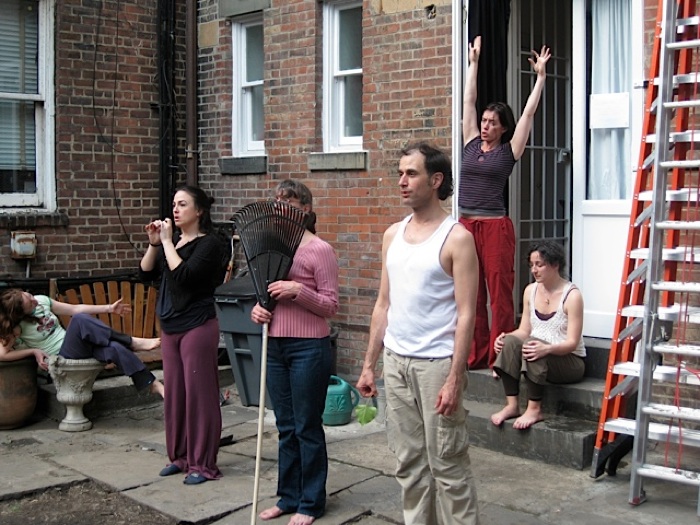
Training with foolsFURY for the stage and for life

A couple of weeks ago I wrote a round-up of some of the theatre companies in the Bay Area who offer classes and actor trainings for professionals and non-professionals alike, but since there are far more companies than I had word count with which to cover them, I could only feature a representative few, and therefore focused mainly on smaller, more underground companies specializing in one or two specific disciplines or techniques.

One company I regretted not having space for was foolsFURY, whose devotion to training their own actors has given rise to an extensive schedule of workshops open to the public since 2006. I finally caught up with associate artistic director Debórah Eliezer to get the details.

SFBG: What is foolsFURY’s main goal in offering actor trainings?

Debórah Eliezer: Our trainings offer a window into the world of ensemble-theater creation, which is very process-oriented and specific to those in the room. It’s our hope that the general public and artists alike gain skills they can take away to create their own life as a work of art, back to their own profession to influence team building.

SFBG: How closely do the classes you offer resemble the rehearsal/creation process foosFURY uses in creating its own works?

DE: All the workshops we offer are a “way in” to our signature training process. That is to say that everything we teach we use as a platform for making work. Our Vital Act two-week intensive (June 2013) remains our signature program of foundation skills and includes a compositional element to give students a taste of what it’s like to create work as we do in ensemble.

In rehearsal for a play, foolsFURY will always use the Viewpoints to massage our understanding of character relationships, location, and text, or just plain blow off some steam and get together as a group. We’ve found the Suzuki method to be the single quickest way for actors to get present and focused. It’s also a constant reminder of the theatrical potency of rigorously challenging oneself. We always incorporate vocal training and improvisational circle singing even if there is no singing in the production.

Some by-products of our training reflected in our work would be characterized as very clear body awareness. To us, theater, voice, and dance are very closely connected. By the time we bring a show to production, we’ve made deliberate choreographic choices about our bodies in time and space — what the audience sees is a distilled “best of” our process spent weeks and sometimes years in rehearsal.

SFBG: You mentioned earlier that you felt that performing arts training was “training for life” not just for art. Care to expand on that?

DE: I teach and personally follow the belief that theater training informs how I live my life and, life informs my theater training. The same principles of space, time relationships, and creative strategy are applicable and translatable for both making compelling theatrical experiences and having a rich, satisfying life.

SFBG: Care to hazard a guess as to how many students in total have taken at least one foolsFURY training/workshop?

DE: Our adult programs serve 125-200 students per year, depending on if we’re also teaching workshops outside of SF and if we’re offering a festival that year. That number includes our internship program, which serves about 10-15 young artists per year. Swivel Arts, our youth spring and summer camp program, which ran from 1998-2010, offered two-to-six weeks of camp per year and served about 150 elementary and teen kids each year. In total, over the years? This would have to be well over 2000 students!


Sundance (and Slamdance) 2013: ‘Dirties’ talk

22

Festival veteran Jesse Hawthorne Ficks files his second report from the 2013 Sundance and Slamdance Film Festivals. Check out his first report here.

The most controversial and inspired film amid this year’s Utah fests actually screened at the Slamdance Film Festival, where it won the Grand Jury Sparky Award for a Narrative Feature. The Dirties, by 28-year-old Canadian writer-director-star Matthew Johnson, is an utterly brilliant, unstoppably hilarious found footage entry that follows two high school cinephiles as they try and make a documentary about “bullying,” while they themselves continue to get uncomfortably bullied at their own school.

Both characters use their real names in the film and have bedrooms filled to the brim with movie posters, comic books, and Magic: The Gathering cards. Johnson and co-star Owen Williams are such self-aware and self-referential movie geeks that you might feel as if you are watching a documentary about your own high-school experiences.

While I could tag the film nicely as Dawson’s Creek meets Man Bites Dog (1992), I’m betting Johnson’s already thought of that one. So what I want to stress is the level of honesty, originality, and terrifyingly timely subject matter this filmmaker brings to this incredibly contemporary story. His 10-episode Canadian web series, Nirvana: The Band The Show (2008), showed his knack for frenetically exposing a teenage boy’s passion. The Dirties digs a whole lot darker and deeper. Could he be the male counterpart to Lena Dunham? Make sure to watch the Red Band teaser trailer (above); it’s as chilling and funny as the film itself.

An Ellis Act boycott list

34

Jeremy Mykaels, who is featured in our story this week on Ellis Act evictions, is fighting back with his reseach and web-developer skills: He’s put together a site, ellishurtsseniors.org, that details not only his story and the overall plight of tenants but lists every Ellis Act eviction involving seniors or disabled people, the address, the name and contact info. for the landlord — and a call for potential TIC buyers to avoid those properties.

I hope this gets circulately widely — and that people buying property consider the human costs of eviction.

Is City College’s main critic out of control?

28

The oversight board that’s demanding big, often unpopular changes at City College carries the name of the Accrediting Commission for Community and Junior Colleges of the Western Association of Schools and Colleges, and it’s approval is essential for any school that wants to get taken seriously. Without accreditation, there’s no state funding, students can’t get loans, diplomas don’t count for much — in other words, losing the ACCJA seal of approval is a death sentence.

You’d think a board so important and powerful would have a lot of oversight, be the subject of news stories, get monitored. But that’s not the case with ACCJC; nobody seems to know much about it, except that its board is a fairly obscure group of academics and administrators and its president used to run Berkeley City College and it’s stirred up a bit of anger in past years. The boss, Barbara Beno, seems to like chancellors and presidents a lot more than she likes governing boards — and, from the situation at City College, it’s clear that she’s a big fan of top-down decision-making and doesn’t approve of shared governance.

But there’s a fascinating report done by the former president of the California Federation of Teachers that looks at how ACCJC compares to regional accreditation boards in other parts of the country. Martin Hittelman, an emeritus professor of Mathematics, did a numerical analysis that suggests that ACCJC is a whole lot harsher on schools than its counterparts. Check out the chart below:


As Hittelman notes:

The vast majority of reasons dealt with the adequacy of procedures, reviews of programs, services, and operations as well as whether the college adequately used assessment tools such as student learning outcomes in the evaluation of faculty. Sanctions were rarely, if ever, based on the
actual quality and adequacy of instruction received by students.

He notes:

The ACCJC Commissioners are not representative of the diversity in the California community colleges. The large urban districts such as Los Angeles, San Francisco, San Diego, San Jose – Evergreen, and Long Beach are not represented on the Commission whereas Riverside City College
has two member of the Commission. The faculty of the California Community Colleges are represented by only four of the members of the Commission. The Commission also includes a number of members who were not well respected as administrators at their home campus

For example:

Dr. Sherrill Amador | Chair
Dr. Amador serves as a public member of the Commission. Dr. Amador began her service on the Commission July 1, 2004. She was a very unpopular college president at Palomar College where she received several votes of non-confidence.

Much of the report is academic (not surprisingly), but what I got out of it was that this particular agency, at this particular time, is demanding more from desperately underfunded schools than is normal, and is leaning distinctly toward the side of academia and politics that wants simple tests and hard data to quantify educational outcomes that aren’t always easy to quantify.

Not saying for one second that City College is free of problems. But it’s worth thinking about who the critics are and where they come from.

BTW, I contacted ACCJC for comment on the report, but haven’t heard back.


Feds continue war on California’s medical marijuana industry

12

San Francisco medical marijuana dispensaries may be bouncing back from last year’s crackdown by the federal government, but the industry statewide continues to be besieged by the federal authorities, winning some battles but losing others.

Oakland-based Harborside Health Center, the nation’s largest not-for-profit model medical cannabis dispensary, experienced a big victory last month when a judge refused a federal motion for injunctive relief that would have shut down the club and enforce a forfeiture action and a 30-day notice to evacuate that the feds filed in July 2012.  

The City of Oakland decided to file its own motion against the U.S. attorneys, banks, and landlords that were all trying to evict Harborside, one of the top two tax-payers in Oakland, a first for city to officially back one of its clubs against the feds. But the judge also denied a city motion to dismiss the case, so it continues to work its way toward trial.

Hopes that the November votes in Washington and Colorado to legalize even recreational weed smoking would cause the feds to back off in California haven’t materialized. Aaron Sandusky, a dispensary operator from Southern California, was sentenced to 10 years of federal prison last month for conspiracy and possession with the intent to distribute marijuana. The feds claim the charges were so high because he had upwards of 1,000 plants.

Stockton resident Matthew Davies owned various dispensaries (keepmattfree.org), but they were shuttered after the feds, which charged him with two counts of manufacturing marijuana. U.S. Attorney Benjamin Wagner is offering Davies a plea bargain for a minimum of five years, and threatening 10 years in prison if he doesn’t comply. A recent Politco article makes the point that this case probably won’t be the one to turn over federal law, as it is unclear whether Davies was in compliance with California state law on marijuana.

These harsh examples are just a couple of dozens of dispensaries being shut down across the state. Just last month, in a case filed by Americans for Safe Access, the U.S. Court of Appeals in Washington DC ruled that marijuana has no proven medical value and should still classified as a Schedule I substance. ASA plans to appeal the ruling, hoping the US Supreme Court will take up the issue.

People across the country are signing online petitions and vocalizing their opposition to the contradictory stance on the legality of pot. Joining in on this public debate, Morgan Spurlock, director and star of Supersize Me, is the host of a new CNN documentary series, “Inside Man”, in which Spurlock investigates various issues in American life. In one episode, Spurlock focuses on the state of medical marijuana in California, and the ongoing struggle between federal and state lawmakers. He will feature both the Harborside and the Davies case.

For now, marijuana advocates are waiting on the court decisions on these various cases and if they will affect changes regarding the federal law. The City of Oakland had a hearing last week but no ruling was made. Harborside will continue to remain open and serving patients until its case goes to trial, a date that is uncertain at the moment.


Exploratorium Explainers educate while the city waits for new Pier 15 location

1

The Exploratorium is in the middle of an epic move to its new home at Pier 15 — its new location is set to open April 17th at 330,000 square feet, five times the size of its former digs at the Palace of Fine Arts. But while staff is busy nesting the Explainersthe museum’s science-savvy youth docents, have been hard at work. The volunteers have been hosting pop-up exhibits around the city. Needing a science fix, I stopped by their event last week at the Tenderloin National Forest.

There are two kinds of Explainers: the diverse group of high school Explainers, the museum’s youngest paid employees who engage visitors at exhibits, lead demonstrations, and help run various museum operations. Field trip Explainers perform the same tasks, but as experienced young educators, take more leadership roles.

Both were present on the afternoon of Jan. 31, when I enter the Tenderloin National Forest. I’m greeted to the slice of urban wilderness by the familiar Exploratorium logo printed on black flags, and by lots of friendly folks in orange vests — the Explainers themselves, who had transformed this pocket of urban wilderness into a wonderland of interactive science exhibits. 

The first thing that catches my eye was a fruit and flower dissection demonstration, meant to teach about the various parts of a plant. Senior field trip explainer Kat Stiff asks the students, “does anyone know what a flower is made out of?” One boy in the back proudly shouts, “Cauliflower?” 

Most of the students seem more interested in the giant magnifying glasses on the table than the lesson. As I watch Stiff’s demonstration, a girl with a magnifying glass comes up to me and starts to sift through my hair with her newfound tool. I ask her if she spots anything and to which she responds, “yes. Hair.”

Across from the plant dissection workshop is the outdoor cart – which has gone with the Explainers to most of their recent events. The cart bears a poster illustrating different clouds, and a plastic soda bottle that helps you create your own cumulus formations. Before I can get started on my own personal sky, high school Explainers Zakiya Percy and Terrance Gee quiz me on my cloud knowledge.

What is a cloud made of? I should definitely know this… I know that water is involved… After I fail to pick up on their hints for the other two ingredients, they reveal that a change in pressure and the inclusion of dust particles is also necessary.

Gee does a demonstration for me. With about a half-cup of water at the bottom of the plastic liter soda bottle, he lights a match, blows it out, and places it upside-down over the opening of the bottle. He does this, he says, to add dust particles to the water. Gee caps the bottle, and I help by pumping air into it until it’s about to pop. He takes the cap off, and dollhouse-sized clouds float out. I am then quizzed again on what type of cloud we just made. The answer: fog, because of our low elevation.

As I head towards the back of the forest, Phanna Phay, a high school Explainer supervisor, is sitting down doing card tricks. Smack dab in the middle of the space is a brick oven where Explainers are helping kids heat up pizza donated by Inner Sunset favorite Arizmendi Bakery. All the way in the back, kids paint wooden veggie cut-outs, which will to be used to decorate the nearby Hotel Senator’s rooftop garden.

These pop-up Explainer exhibits have appeared at the Ferry Building and Civic Center farmer’s markets, and even aboard a ferry bound for Jack London Square.

Senior field trip explainer Lia Frantti tells me about these previous events. “We were doing our fruit and flower dissection [at the farmer’s market], so that people who are shopping for those fruits and vegetables can stop and think about where they are coming from and how they are growing. We were on the ferry boat talking about navigation and finding north.” 

When I ask Frantti about the benefits these pop-up exhibits have brought to the Exploratorium she explains, “it’s been really nice because people often put us in this hole of a children’s museum – which we’re not. Adults and children can definitely have an equally amazing experience at the Exploratorium. At some of the other spots we’ve been at, we have had more adults stopping by. So that has been a little bit different to have less youth and more adults spending time with us.”

Looking forward to the museum’s new digs? When it re-opens, the Exploratorium will have triple the exhibition space, and double the number of classrooms. Acclaimed San Francisco chef Loretta Keller of Bon Appétit will head a sidewalk café on the west side of the pier, and there will be a waterfront café on the east side. The event in the Tenderloin was the last full scale Explainer exhibit until the Exploratorium settles into its new space. But the group will be holding outdoor events featuring the plant dissection table, mainly along the Embarcadero.

Adam Green and Binki Shapiro pair up at the Chapel

1

Adam Green and Binki Shapiro make an odd couple.

Green is a Manhattanite and acoustic singer-songwriter whose extensive lyrical topics center around black humor, blue language, and one Miss Jessica Simpson. He is best known for his role as half of the Moldy Peaches alongside Kimya Dawson. Shapiro, formerly of Echo Park’s American-Brazilian rockers Little Joy, is a retro-fashion icon in LA. She is perhaps best known for dating rock stars.

So what happens when east meets west and the social elite meets the man who once wrote a song called “Choke on a Cock?” An unexpectedly tender album of heartbroken duets and breakup ballads in a unique style, something we jaded listeners have yet to hear. Green’s humble baritone and Shapiro’s silky timbre blend beautifully, and in the recordings their joined voices soar to poignant, vulnerable heights.

On stage at the Chapel this Saturday, duets like Green’s “Getting Led” were every bit as heart-achingly harmonious. Green’s deep voice was the perfect compliment as Shapiro’s vocals, smooth and warm, carried these quiet moments with ease. As soon as the tempo picked up, however, the pair’s vast differences became readily apparent.

Green’s onstage antics were every bit as playful as one might expect. After touting the merits of Arnold Palmer Lites, he announced his intention to name his band Binki, Adam, and the Turds. Green’s humor, as well as his ill-fitting clothes and screwball dancing, were endearing and suitable for a musician whose tongue is firmly planted in cheek, but gave Shapiro’s juxtaposed stoicism an air of aloofness.

The duo’s stone-faced backup band also didn’t help the situation. As Green danced literal circles around them, bunny hopping and flapping chicken wings, the band trudged on, seemingly disengaged. The Turds indeed.

Shapiro, who is certainly not lacking in stage presence or poise, has a quiet earnestness that should not be mistaken or misrepresented as disinterest. But for all her elegant charm (plus one adorable mid-song burp), she was simply outshined and overshadowed by Green.

If the duo can manage to find the sort of compromise and cohesion in its performance styles that it so successfully established in the studio, it will be a force to be reckoned with. Until then, I recommend buying the album and saving money on the concert tickets.

Sundance 2013: Viva Silva!

0

Festival veteran Jesse Hawthorne Ficks files his first report from the 2013 Sundance and Slamdance Film Festivals.

This year’s Sundance and Slamdance Film Festivals were both outstanding, so I did my best to pack my schedule as full as humanly possible (sacrificing sleep in the process). With close to 50 programs achieved, I can assure you it’s gonna be one helluva year for cinema. Make sure to mark some of these titles down for 2013.

Filmmaker Sebastián Silva brought two new entries to Sundance, and they both happened to be two of my most cherished experiences. Crystal Fairy and Magic Magic were filmed in Chile at the same time, and showcase the almighty Michael Cera — who learned Spanish just for these projects. If you are able to avoid the countless spoiler-heavy reviews (this isn’t one of them) and enter these films at your own risk, you will be treated to Silva’s masterful, even transcendental, slow burn.

As he did in The Maid (2009) and Old Cats (2010), Silva allows his “unlikable” characters to reach some surprising conclusions — meaning audiences should leave any snap judgments at the door. Delivering a pair of typically charismatic performances, Cera is the ideal choice to guide viewers into Silva’s bold and often profound terrain. (Audiences who continue to dismiss Cera as playing the same character over and over need to get over themselves. Should we also ridicule Charlie Chaplin, Gary Cooper, and Woody Allen for not being Daniel Day-Lewis caliber? Cera knows how to use his strengths, and perhaps is even able to use them against us.)

Cera’s co-stars are also worthy of note: Gaby Hoffman (in Crystal Fairy) and Juno Temple (in Magic Magic). Both give stunning and heartfelt performances that may downright mystify many modern misanthropic maniacs. Crystal Fairy, in particular, perfectly explores the side effects of the modern drug scene, though quite a few critics around me seemed to misunderstand the protagonists’ motives. These responses baffled me, since both movies feel like updated versions of late 1960s counterculture flicks like Monte Hellman’s Two-Lane Blacktop (1971) and Dennis Hopper’s Easy Rider (1969).

Yep, you read that right: Jesse saw nearly 50 programs this year. Stay tuned for his next report!

Avalos to call on SF retirement system to divest from fossil fuels

San Francisco’s city pension fund may have as much as $1 billion tied up in companies that control fossil fuel reserves, such as Exxon, BP, Shell and Chevron. At the Board of Supervisor’s meeting this afternoon, Sup. John Avalos plans to introduce a resolution calling on the San Francisco Employees Retirement System (SFERS) to divest from leading fossil fuel giants. 

The resolution, which urges the San Francisco Retirement Board to stop investing in stocks and and mutual funds with shares in coal, oil and gas companies, was created with input from nationwide environmental organization 350.org. Last year, 350.org launched a campaign calling on universities to divest from 200 targeted fossil fuel companies as a way to tackle global climate change.

“They’re the companies that own the vast majority of the world’s fossil fuel reserves – who actually own the carbon that’s sitting in the ground,” explains Jamie Henn, cofounder and communications director of 350.org. When these fossil fuel reserves are extracted and burned to generate power, they’ll emit greenhouse gases such as carbon dioxide, worsening the impact of global climate change.

Scientists have calculated that from here on out, a total of 565 gigatons of carbon dioxide can be emitted into the atmosphere before the planet’s global average temperature increases by two degrees Celsius. Despite widespread international consensus that crossing this threshold would bring unacceptable consequences, says Henn, the 200 targeted companies can access enough oil and gas reserves to eventually emit five times as much CO2 into the atmosphere.

“Their share prices are based on their ability to burn those reserves,” Henn said. “The only way we can tackle climate change in this country is if we weaken the fossil fuel industry.”

To that end, Avalos is acting locally.

“San Francisco has aggressive goals to address climate change,” the District 11 supervisor noted. “It’s important that we apply these same values when we decide how to invest our funds, so we can limit our financial contributions to fossil fuels and instead promote renewable alternatives.”

Supervisors do not have control over the investment decisions of the San Francisco Retirement Board, which controls the city’s $16 billion pension fund, so Avalos’ resolution would not impose a legal obligation to divest. Yet a Budget & Finance Committee hearing about the proposed resolution could help raise awareness of the issue, noted Jeremy Pollock, a legislative aide to Avalos. The idea is to start a conversation about “what our social investment policy is, with regard to retirement funding,”  he explained.

If Avalos’ resolution to divest in fossil fuels is ultimately approved by the full board, San Francisco would become the second city in the nation to take such a step. Seattle Mayor Mike McGinn called on city retirement funds to abandon stocks in coal, oil and gas companies last December.

In addition to the resolution calling for divestment from fossil fuels, Avalos also plans to introduce a resolution urging the San Francisco Retirement Board to divest from publicly traded manufacturers of firearms and ammunition.

SF’s Cocktails shout ‘Hey Winnie’

4

I’m loving this video by newish San Francisco power-pop (or “power-slop”) band Cocktails for “Hey Winnie,” off the group’s debut self-titled EP.

The video has the playful vibe of 1990s alternative spots (when power-pop was king), and looks to be set in Tenderloin store, Vacation actually was filmed at the No Shop in the Mission.

Released a week from today (Feb. 12) on local Father/Daughter Records, the seven-inch was recorded at Fuzz City Studio with Matthew Melton, of Warm Soda and Bare Wires fame. Cocktails’ next show is Feb. 23 at the Night Light, 311 Broadway, Oak. www.thenightlightoakland.com.

City considers making building owners do seismic upgrades

84

City Hall sources have confirmed the basic details of a San Francisco Public Press report from Friday afternoon that the Board of Supervisors will consider requiring the owners of soft-story buildings of three stories or more to seismically retrofit them by 2020 – at the expense of building owners, something sure to rouse controversy.

The legislation was developed and introduced by the Mayor’s Office and it’s being sponsored by the board’s two most prolific and effective supervisors, Board President David Chiu and Sup. Scott Wiener, which is probably a signal that city officials know this one is going to be “challenging,” as one source told us.

Details are still being hammered out before the measure is introduced at tomorrow’s board meeting, including some of the financing options that would be open to property owners. But after voters in 2010 narrowly rejected Measure A, a bond that would have provided low-cost loans for the seismic retrofits, property owners could be forced to dig deep to ensure their buildings don’t collapse in an earthquake.

Wiener confirmed that the legislation would be mandate on building owners without public money attached: “It would be a mandate that they within a certain time frame do an earthquake retrofit,” Wiener told the Guardian.

As the Public Press reported, the legislation would apply to all wood-framed buildings of three stories or more built before 1978, with smaller buildings and single-family homes exempted. In the most recent print edition of the Public Press, extensive coverage of the city’s earthquake vulnerabilities estimated that about 58,000 San Franciscans live in the nearly 3,000 soft-story buildings deemed dangerous places to be when the next big earthquake hits.

Wiener said city officials have been deeply involved with negotiations with various effected groups, including building owners and their tenants, who could face displacement as the work is done or higher rents if landlords pass through those costs. Wiener said the legislation is bound to evolve as talks and hearings continue: “There are a lot of variables and the introduction is really just a preliminary step.”

Supes call for stronger SRO safety measures

It’s no secret that tenants living in single room occupancy hotels (SROs) often grapple with health and safety issues, from bedbug infestations to plumbing problems.

At a committee hearing this afternoon, members of the Board of Supervisors will consider legislation [PDF] introduced by Sup. Eric Mar that would amend the housing code to require owners of SROs to install grab bars in common-area bathrooms, and to provide working phone jacks in each SRO unit.

These measures may seem relatively small, but Tony Robles of the Senior & Disability Action Housing Collaborative says installing grab bars can go a long way toward preventing falls, a leading cause of injury deaths for people older than 65.

In SROs, “there’s a lot of folks who have mobility problems,” Robles explains. “Many are disabled, or elders.” He said knows an elderly woman living in an SRO who recently fell and now faces hip surgery.

“This legislation is about safety, and it’s about quality of life,” Robles said. “It’s not just affluent folks who deserve to live in reasonably habitable conditions.”

Last June, advocates with Senior Action Network and several SRO collaboratives published detailed findings [PDF] from an in-depth survey of 151 SRO residents living in Chinatown, the Mission, SoMa and the Tenderloin. Most respondents were older than 55, and 62 percent identified as having a disability.

The in-depth study found that safety issues topped the list of residents’ concerns. Many respondents said they feared falling on the stairs or in the shower, and less than half reported having grab bars in their bathrooms.

The legislation, which was co-sponsored by Supervisors Jane Kim, David Campos and David Chiu, would also require SRO operators to install working phone jacks in residents’ rooms, which can be critical for tenants who need a way to communicate in case of an emergency.

According to the study findings, these low-income tenants face a host of other issues too:

“About one-third or more of survey respondents said their hotel had a problem with bedbugs, other infestations, visitor policy violations, electrical problems, unsanitary bathrooms, and harassment/ disrespect. One-fifth of respondents also cited problems with heat, plumbing, personal safety, fire safety, and maintenance and repairs. 
More than half (53%) had no access to a kitchen in their building, and 18% of respondents said they skip meals due to lack of resources or facilities.”

San Francisco has more than 500 residential hotels, according to city records, with more than 19,000 units. An estimated 8,000 seniors and adults with disabilities live in SROs.

Robles remarked that it took courage for the SRO residents to speak up in hopes of improving their living conditions. “Tenants in theses SROs oftentimes are intimidated to say anything,” he said. “Some folks might have feared reprisal.”

Trail to historic gay Boy Scouts vote started in the Bay Area

23

This Wednesday, the Boy Scouts of America’s (BSA) Executive Board will consider removing the controversial ban on gay members and allow each individual troop to adopt its own policy on gay scouts. The board publicly reaffirmed the anti-gay policy just last summer, but recent pressure from gay rights groups, corporate sponsors, and Bay Area troops has forced the governing body to revisit the blanket prohibition on gay members.  

Opposition to the Boy Scout’s ban first surfaced in Northern California in the late 1980s when Tim Curran, an Eagle Scout and aspiring scoutmaster, sued the Mount Diablo Boy Scout Council for discrimination after being denied the position. Curran took the suit to the Supreme Court and lost. The court’s landmark decision in Curran v. Mount Diablo Council of the Boy Scouts of America continues to provide the legal justification for the BSA’s anti-gay policies.

Since the ruling, the San Francisco Bay Area has emerged as a key battleground in the struggle for gay membership in the scouts. Local troops often clash with the national organization over the ban and many local scout leaders publicly denounce the policy as discriminatory and hateful.

In October, openly gay East Bay scout Ryan Andresen was denied his Eagle Scout badge by the Mt. Diablo-Silverado Council due to his sexual orientation. Although officials with the council voiced reservations about denying Andresen, they are bound by BSA national policy that has long maintained homosexuality is inconsistent with the scouts oath to be “morally straight.”  

Andresen’s father resigned his position as an assistant scoutmaster, and Andresen’s mother organized an online petition which collected nearly half a million signatures protesting her son’s expulsion. The incident is sparking a widespread public debate about the Scout’s discrimination policy. Andresen appeared on national TV, and his petition garnered high profile support from California politicians like Lt. Gov. Gavin Newsom and US Sen. Barbara Boxer.

Andresen’s national profile and the publicity surrounding his case inspired outrage among local scouts and adult leaders. Steve Tennant, committee chair of Palo Alto Troop 57, said the parents and volunteers in his troop felt compelled to act. “We were all outraged and we immediately started thinking about how we could go about changing this policy,” he told the Guardian.

The controversy quickly galvanized parents and scouts throughout the Bay Area to more openly challenge the gay ban. From San Francisco to Palo Alto, parents and scouts penned public letters of protest decrying the policy and and urging the local Mt. Diablo-Silverado Council to reconsider Andresen.

Parents in Tennant’s Troop 57, located just a few miles from Andresen’s troop, unanimously adopted a non-discrimination policy both to voice solidarity with Anderson and to avoid potential discrimination in their own troop.

“It was just a matter of time until a kid in our troop faced the same situation as Ryan. I would rather resign my position than kick a kid out of the Scouts for being gay,” Tennant, whose two sons are currently scouts, told the Guardian. “Seeing the reaction of our parents and seeing the support for Ryan convinced me personally to stay involved with the Scouts,” he added.  

Eagle Scouts from Andresen’s district also mobilized against the ban. Trevor Wallace, an Eagle Scout from the nearby Troop 57, helped to organize meetings to pressure the Mt. Diablo-Silverado Council to allow Andresen to earn his badge. “My troop has been completely outraged by what happened to Ryan,” Wallace told the Guardian. “I got my Eagle Scout badge the same time Ryan was supposed to get his… discriminating against him like this is old fashioned and wrong.”

Michael and Andrew Dotson, a father-son scoutmaster duo who lead San Francisco’s Troop 88, echoed the concerns of Wallace and Tennant. “I want the boys to feel safe and be able to be open,” Michael Dotson told the Guardian. “Troop 88 would be very accepting of gay members once the ban is removed. And I hope it is.”

Andrew Dotson, a recent Eagle Scout who now works as his father’s assistant scoutmaster also opposes the ban. Growing up in San Francisco, he encountered plenty of gay scouts. But because of the national policy, the boys in his troop had to stay formally in the closet or risk expulsion. “I just don’t think that’s right,” he told the Guardian. “Scouting should be open to everybody.

Andresen’s case and the outpouring of support from other Bay Area scouts drew the attention of Zack Wahls, founder of Scouts for Equality, a national organization founded last summer to pressure the BSA Executive Board d to revisit the gay-ban.  

Wahls credits Andresen and his supporters with providing the necessary grassroots pressure to potentially change the national policy.

“It’s important to remember that only seven months ago, the Scouts were adamant that this policy was not going to change,” Wahls told the Guardian. “What happened in those seven months was that we harnessed online tools and worked with people like Ryan to highlight the negative impact this ban has on the local level.”

Wahl and Boy Scouts for Equality also targeted corporations and sympathetic members of the BSA board.  Over the summer, board members Randall Stephenson, CEO of AT&T, and James Turley, CEO of Ernst & Young, announced publicly their opposition to the ban. Since September, several major corporate sponsors, including Intel and UPS, announced that they would rescind financial support for the BSA until the national organization lifted the ban.  

Ahead of the board meeting, BSA officials reiterated that lifting the ban would not force any individual troops to change their own membership policies. “The Boy Scouts would not, under any circumstances, dictate a position to units, members, or parents,” BSA spokesperson Deron Smith told the New York Times. “This would mean there would no longer be any national policy regarding sexual orientation.

For many scouts in the Bay Area, however, removing the national ban is just the beginning. The end goal is the adoption of a national non-discrimination policy. But given the Boy Scouts history of strident opposition to gay rights, reconsidering the ban is significant development. “I think a national policy will take time,” reflected Michael Dotson of Troop 88, “but this is a good first step.”


Salute new Hi Fructose boxed set at free YBCA party tomorrow

21

You could practically hear the sharpening of claws in the Guardian office when the Last Gasp-published Hi Fructose Collected 3 boxed set arrived on our proverbial doorstep. For fans of quirky, dark arts, this was the motherload: a tidal wave of a book stuffed with visual artists from around the world, all accompanied by a sweet bear (sheep? I say sheep. There was debate) mask by Mark Ryden, ready to be fastened on one’s face with a lightly-colored ribbon. There was a velvet-flocked triptych by Martin Ontiveros, Skinner, and Junko Mizuno. A fantasy city on a poster. Stickers. All of it.Count on us then, to be lined up to have our copy signed at YBCA tomorrow (Tue/5) during the museum’s free day. Our fave freaky Bay Area cake artist Scott Hove and a host of others whose work is in this magical bundle will be signing books, all while Swiftumz plays a DJ set. We caught up with Collected 3‘s editors to gush and ask stupid questions.

Behold, the answers by Hi Fructose’s Annie Owens and Attaboy. And some pretty art thangs you’ll find in the boxed set.

Fuco Ueda

SFBG: I wonder what kind of language you use to describe the work Hi Fructose profiles? I know I’m seeing something distinctive, but dammit if I could put a genre on it. 

Annie Owens: ‘New contemporary’ seems to be a good catch-all umbrella for most things under the high art radar, but even high-art is a line we cross sometimes. 

Scott Hove

SFBG: Draw some lines for me — who are some artists who would never appear in Hi Fructose? Someone who you’ve never worked with that would be a fantastic inclusion. Living, dead, mythic beasts are all acceptable answers.

Attaboy: We’ve got some mythic folks lined up for the coming year, don’t want to ruin the surprise.

AO: Never say never. Even Thomas Kinkade has his appeal! [Artists we’d like to work with include] Hieronymus Bosch, Charles Addams. As for live ones, we’ve had the pleasure to have some of our favorite art legends, who we won’t mention here, say yes to an upcoming project so there’s that!

Gabriels

SFBG: Please recommend a usage for the mask enclosed in box set.

A: On someone’s else’s face. So you can poke fun of them.

Hi-Fructose Collected 3 launch party

Tue/5,5:30-7:30, free

Yerba Buena Center for the Arts

701 Mission, SF

www.ybca.org


Suhr apologizes for sparse spying report, pledges more info

0

Police Chief Greg Suhr has issued an apology for the sparse report on joint SFPD-FBI surveillance activities that his department gave last week, pledging to work with the activists who had criticized it as failing to comply with a city law adopted last year. But it remains to be seen whether the two sides will agree on the level of detail that would constitute meaningful civilian oversight of sensitive domestic spying operations.

“The report was accurate and complied with the ordinance, but briefer than what he had hoped for,” SFPD Sgt. Michael Andraychak told the Guardian this afternoon. “Chief Suhr has ensured compliance with the ordinance but did not have an opportunity to review the report prior to the presentation to the commission. The chief personally apologizes to those who attended the commission meeting for the brevity of the report and promised to have future reports more developed. The Chief’s Office is in the process of scheduling meetings with Nasrina Bargzie [of the Asian Law Caucus] to develop a report with more detail so those concerned and the public can be as informed as possible. Chief Suhr is committed to remain in compliance with the ordinance.”

While Bargzie said she welcomes the apology and pledge to be more forthcoming, “We disagree that the report that was issued was in compliance with the ordinance.” While that watered down version of a stronger ordinance that Mayor Ed Lee had vetoed was vague, Bargzie said that, “It does require that the commission be given enough information to provide oversight.”

In correspondence between Bargzie and Suhr over the last year, the Coalition insisted that the report include details on the number of investigations or assessments requested by the FBI, how many requests SFPD personnel refused, how disputes were resolved, and other information, which she said Suhr told her last year that he would provide.

But he seemed to dispute that in a Jan. 23 letter to her, writing, “I assured you that the Department’s JTTF report would include all public information required by the ordinance. I did not commit to provide all information requested in your letter dated June 8, 2012.”

Sup. Jane Kim, who sponsored both the stronger original legislation that Lee vetoed and the compromise measure that followed, expressed hope Suhr and the Coalition will find common ground. “The chief himself met with me and apologized for it,” she told us. “He acknowledged that it was not a good report and said he would work with the Coalition on this.”

She acknowledged that the ordinance itself doesn’t spell out the specificity that the Coalition is seeking. “In order for us to get the compromise, we had to work with the Mayor’s Office. It was watered down,” she said. Yet Kim said meaningful oversight is still what she expects to see: “We need a lot more specificity and the details the Coalition would like to see.”

Police gear up for round two on Tasers

On February 4, the San Francisco Police Commission will hold the second of three planned community meetings to gauge support for a pilot program to arm 100 SFPD officers with Tasers. The controversial proposal pits police Chief Greg Suhr, a proponent, against civil liberties organizations and homeless advocates who are mobilizing public opposition to the Taser initiative. 

Shortly after being appointed police chief in 2011, Suhr said arming the SFPD with Tasers would not be a top priority. But following the police shooting of a mentally ill man last July, Suhr has pushed the Police Commission to allow members of the cities Crisis Intervention Team (CIT)—who receive special training to deal with the mentally ill—to carry Tasers.

Since the shooting, Suhr has repeatedly argued that Tasers would help save lives and reduce instances of gun use. “You do have to have as many tools in the tool box before you go to guns,” he said at the first community forum.

The ACLU and local homeless advocates disagree.

“Every time there is an officer-involved shooting, the department uses it as an excuse to outfit officers with Tasers,” ACLU attorney Micaela Davis told the Guardian. “We continue to believe that Tasers are not a good alternative to firearms and we fear that officers run the risk of going to Tasers too early in a confrontation instead of using de-escalation techniques.”

Equipping CIT officers with Tasers would inject the controversial stun guns into already tense confrontations between the mentally ill and the SFPD.

Lisa Marie Alatorre, an organizer with the San Francisco Homelessness Coalition, argues Tasers could have a devastating effect on the city’s homeless population. “The CIT typically deals with people in crisis, people who are mentally ill, and people who are currently destitute and have nowhere to live,” she told the Guardian. “The use of Tasers in the midst of a crisis will cause severe trauma and could inflict significant psychological damage.”

Both the Coalition on Homelessness and the ACLU charge that the SFPD has dragged its feet in implementing the nonviolent components of the CIT program. Less than 75 officers have been trained in nonviolent confrontational strategies since the program’s adoption last summer, and Alatorre charges SFPD has yet to implement protocols that would bring the program to fruition.

Police Commissioner Angela Chan, a longtime proponent of the CIT program, echoed these concerns. “We need to improve our de-escalation tactics with regards to crisis intervention. Many of the steps to train and implement CIT have not yet been implemented and that’s where we need to focus our energies,” she told the Guardian.

Despite strong local opposition to Tasers, they are becoming standard equipment for police departments across the nation. SFPD officers are hopeful that public opposition does not kill this pilot program, like similar attempts before it.

Sgt. Michael Andraychak, a spokesperson with the SFPD, argued that equipping CIT officers with Tasers would give police more flexibility to use force without engaging their firearms.

“On the street, not every situation can be managed in a nonviolent fashion,” he told the Guardian. “CIT is a great program, and the implementation of Tasers would give those officers an additional tool to use before they have to escalate to deadly force.”

Police commissioners will make a final decision about Tasers after the third community meeting, which is scheduled for Feb. 11 at the Bayview Opera House.

The next community forum on the SFPD Taser pilot program will be held on Feb. 4 from 6-8pm at the Scottish Rite Center, 2850 19th Ave, in SF.  

American Idol, Steven Tyler in Drag edition

0

This shit’s getting so strange that you start to wonder if singing alone is enough to keep the Idol franchise going. In Oklahoma City, (thankfully) the last stop before the real action begins in Hollywood, Nicki Minaj is wearing weird leggings, Mariah Carey has some sort of diamond suit on, and Steven Tyler has a dress and a wig.

Yeah, Steven’s back — not as a judge, but as a contestant, in a carefully staged hoax, in drag, wearing red lipstick and an outfit that your grandmother might have worn, and identifying himself as “Pepper.” He refused to sing. Nobody bought it. He flashed his ass at the judges as he left. Highlight of the auditions so far.

Here’s Viv’s recap: A young woman named Haley came with a dog puppet named Oscar. Oscar howled and yodeled. Haley sang in a kind of duet. The dog was a bit freaky; the judges liked her and sent her on to The Show. A crazy girl named Zoanette sang the national anthem and hit the notes so high that Keith fell off his chair. A 16-year-old named Kayden has cystic fibrosis and has to be on an oxygen machine but still managed to sing well enough to make it to Hollywood.

At some point, as the great Simon Cowell used to say, the people have to realize this is a singing contest. We shall see.  

Stallone, Walken, zombies, Oscar shorts, and more: new movies!

0

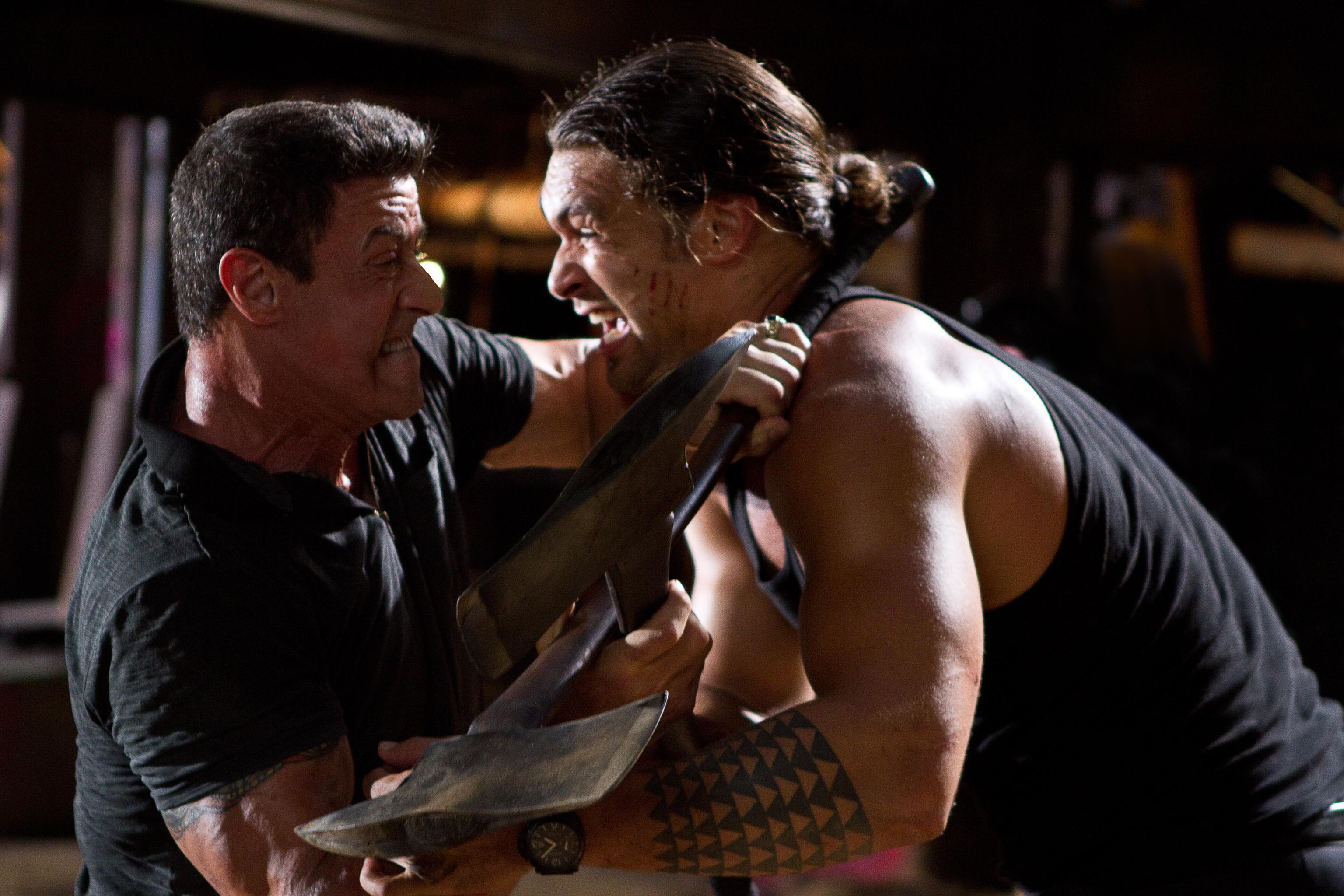
Yes you can find time to see a movie this otherwise football-y weekend. The ongoing Noir City and Sketchfest still have a lot of great upcoming programming, Sly Stallone is back in evocatively-titled action flick Bullet to the Head, a zombie finds love in Warm Bodies (review below), and all the Academy Award-nominated shorts are now available for big-screen viewing, for anyone who takes winning the office Oscar pool as seriously as … the Superbowl.

And speaking of the big game, the Roxie will be hosting its annual “Men in Tights” viewing party, a benefit for the theater and the upcoming SF IndieFest. So you can have your pigskin, and eat your popcorn too. GO NINERS!


“Oscar Nominated Short Films 2013: Animated” If you caught Wreck-It Ralph, nominated in the Best Animated Feature category, you’ve already seen John Kahrs’ Paperman, about a junior Mad Men type who bumbles through his pursuit of a lovely fellow office drone he spots on his commute. Or, if you saw Ice Age: Continental Drift, you’ve seen Maggie Simpson in The Longest Daycare, starring Homer and Marge’s wee one as she grapples with the social order at the Ayn Rand School for Tots. Among the stand-alones, Minkyu Lee’s Adam and Dog features a quick appearance by Eve, too, but the star is really the scrappy canine who gallops through prehistory playing the world’s first game of fetch with his hairy master. Two minutes is all PES (nom de screen of Adam Pesapane) needs to make Fresh Guacamole — which depicts grenades, dice, and other random objects as most unusual ingredients. The only non-US entry, UK director Timothy Reckart’s Head Over Heels, is about an elderly married couple whose relationship has deteriorated to the point where they (literally) no longer see eye to eye on anything. The program is rounded out by three more non-Oscar-nominated animated shorts: Britain’s The Gruffalo’s Child, featuring the voices of Helena Bonham Carter and Robbie Coltrane; French art-thief caper Dripped; and New Zealand’s sci-fi tale Abiogenesis. (1:28) (Cheryl Eddy)

http://www.youtube.com/watch?v=Z8SbmPhavhs

“Oscar Nominated Short Films 2013: Documentary” Selections include San Francisco filmmaker Sari Gilman’s poignant study of a Florida retirement community, Kings Point; Cynthia Wade’s Mondays at Racine, about a beauty salon that provides free services for women who have lost their hair to cancer treatments; Sean Fine and Andrea Nix’s Inocente, a profile of a young, homeless, aspiring artist; Redemption, Jon Alpert and Matthew O’Neill’s take on New York dumpster divers; and Open Heart, Keif Davidson’s look at Rwandan children who travel to Sudan for high-risk surgery. (3:29)

“Oscar Nominated Short Films 2013: Live Action” Selections include Bryan Buckley’s Asad, about a Somali boy who must choose between fishing and piracy; Sam French’s Buzkashi Boys, about two young friends coming of age in war-torn Kabul, Afghanistan; Shawn Christensen’s babysitting yarn Curfew; Tom Van Avermaet’s supernatural love story Death of a Shadow; and another (sort-of) love story, Canadian Yan England’s Henry. (1:54)

Sound City Dave Grohl adds “documentary director” to his ever-lengthening resume with this tribute to the SoCal recording studio, where the grimy, funky décor was offset by a row of platinum records lining its hallway, marking in-house triumphs by Fleetwood Mac, Tom Petty, Cheap Trick, Neil Young, and others (even, yep, Rick Springfield). Top acts and producers (many of whom appear in the doc to dish and reminisce) were lured in by a unique recording console, installed in the early 1970s, whose legend grew with every new hit it helped engineer. Despite its reputation as a hit factory — and the attraction of its laid-back vibe and staff — old-school Sound City began to struggle once the highly-polished sound of digital technology overtook the music industry. That is, until Grohl and Nirvana recorded Nevermind there, keeping the studio alive until the unstoppable march of Pro Tools hammered the final nails in. Or did it? Sound City‘s final third follows Grohl’s purchase of the studio’s iconic console (“A piece of rock ‘n’ roll history,” he proclaims, though he installs it in a swanky refurbished space) and the recording of an album featuring luminaries from the studio’s past … plus Paul McCartney. The resulting doc is nostalgic, sure, but insider-y enough to entertain fans of classic rock, or at least anyone who’s ever sneered at a drum machine. (1:46) Roxie. (Cheryl Eddy)

Stand Up Guys Call it oldster pop, call it geriatricore, just don’t call it late for its meds. With the oncoming boomer elder explosion, we can Depends — har-dee-har-har — on the fact that action-crime thrillers-slash-comedies like 2010’s Red, 2012’s Robot and Frank, and now Stand Up Guys are just the vanguard of an imminent barrage of grumpy old pros locking and loading, grousing about their angina, and delivering wisdom with a dose of hard-won levity. As handled by onetime teen-comedy character actor Fisher Stevens, Stand Up Guys is a warm, worthy addition to that soon-to-be-well-populated pantheon. It grows on you as you spend time with it — much like the two aging reprobates at its core, Val (Al Pacino) and Doc (Christopher Walken). Val, the proverbial stand-up guy who took the fall for the rest of his gang, has just completed a 25-year-plus stint in the pen. There to meet him is his only pal, and former partner in crime, Doc, who has been leading a humble life but has one last hit to commit for their old boss Claphands (Mark Margolis), who’s inexplicably named after a Tom Waits song. Sex, drugs, and some Viagra commercial-esque bluesy guitars are in order, but first Val and Doc must find their drive, in the form of their old driver buddy Hirsch (Alan Arkin), who they break out of a rest home, and, perhaps, their moral compass, which arrives with the discovery of a victim (Vanessa Ferlito) of baddies much less couth than themselves. The pleasure comes with following these stand-up guys as they make that leap from craven self-preservation to heroism, which might seem implausible to some. But to the cast’s, and Stevens’s, credit, they make it work — and even give the sentiment-washed finale a swashbuckling buddy-movie romanticism, the kind that a young Tarantino might dislike and an older Tarantino would be loathe to begrudge his lovable louses. (1:34) (Kimberly Chun)

http://www.youtube.com/watch?v=1FVyUL1Q06M

Warm Bodies A decade and a half of torrid, tormented vampire-human entanglements has left us accustomed to rooting for romances involving the undead and the still-alive. Some might argue, however, that no amount of pop-cultural prepping could be sufficient to get us behind a human-zombie love story for the ages. Is guzzling human blood really measurably less gross than making a meal of someone’s brains and other body parts? Somehow, yes. Recognizing this perceptual hurdle, writer-director Jonathan Levine (2011’s 50/50, 2008’s The Wackness) secures our sympathies at the outset of Warm Bodies by situating us inside the surprisingly active brain of the film’s zombie protagonist. Zombies, it turns out, have internal monologues. R (Nicholas Hoult) can only remember the first letter of his former name, but as he shambles and shuffles and slumps his way through the terminals of a postapocalyptic airport overrun by his fellow corpses (as they’re called by the film’s human population), he fills us in as best he can on the global catastrophe that’s occurred and his own ensuing existential crisis. By the time he meets not-so-cute with Julie (Teresa Palmer), a young woman whose father (John Malkovich) is commander-in-chief of the human survivors living in a walled-off city center, we’ve learned that he collects vinyl, that he has a zombie best friend, and that he doesn’t want to be like this. We may still be flinching at the thought of his and Julie’s first kiss, but we’re also kind of rooting for him. The plot gapes in places, where a tenuous logic gets trampled and gives way, but Levine’s script, adapted from a novel by Isaac Marion, is full of funny riffs on the zombie condition, which Hoult invests with a comic sweetness as his character staggers toward the land of the living. (1:37) (Lynn Rapoport)

Harvey Milk and Cesar Chavez

32

The Chron continues its jihad against Harvey Milk Airport today, arguing that the price tag airport administrators came up with — $4 million — makes the plan too expensive. Not that $4 million is a trivial amount of money, but please: Compared to the tax breaks, upzonings, and other giveaways the the city routinely hands over to big corporations, this is birdseed. That’s if we can trust the folks at SFO, who are opposed to the name change. And there’s no reason all that money has to be spent at once, the first day; change the name, then implement all the signage changes over a couple of years or so. Not really a big deal.

Assemblymember Tom Ammiano called this morning to remind us of a similar battle in 1994 over renaming Army Street after Cesar Chavez. The costs were wildly inflated. The Chron kept raising all sorts of problems. “It was like, ‘oh we should honor him, but we can’t change a name,’ Amminano said. “The same tired bullshit we’re hearing now.”

And the truth is, changing Army Street to Cesar Chavez Street was an appropriate step, no big deal — and in the end, everyone came around. Ten years from now, they’ll feel the same way about Harvey Milk International Airport.

PS: The issue here isn’t really renaming the airport against leaving it as SFO. I guarantee if this fails, at some point someone’s going to try to name it after Dianne Feinstein or Willie Brown — and the Chron probably won’t have the same issues. If the question is whether to name an airport after Brown (terrible mayor) Feinstein (terrible mayor) or Milk (international civil-rights icon) … well, that’s a no-brainer.

PS2: The B.A.R. came out against the name change in an odd editorial that suggested the battle would be divisive and “turn our friends against us.” That, as a sharp letter from Ammiano, Bevan Dufty, Carole Migden, Jose Cisneros, and Anne Kronenberg ponts out, is the same argument that the more conservative elements of the gay community used to try to talk Milk out of running for office.


http://www.ebar.com/openforum/letters/letter.php?sec=letters&id=372