Got a fascinating letter from a local lawyer named Richard Hurlburt, who has some thoughts on the TIC-condo conversion legislation sponsored by Sups. Scott Wiener and Mark Farrell. He writes:
I’m a tenant’s rights lawyer and real estate broker. Whenever possible I help tenants facing eviction buy their TIC units. I also own and reside in a TIC unit. My building has twelve units and would not be affected by the proposed law.
I just read the actual text of the legislation sponsored by Sups. Farrell & Wiener and I’m against it.
TIC financing isn’t that difficult anymore. Fractional loans are the norm and not that much more expensive than condominium loans. It does cost a little more to finance a TIC, but the units cost less to begin with. So I don’t really see a hardship on the part of TIC owners who generally have smaller mortgages because they paid less for their units to start with.
The supposed $20,000 per unit condo conversion impact fee to benefit low-income housing is largely illusory. The proposed law contains a reduction for each year the building has participated in the lottery, so a building that participated in the lottery for five years, which is the majority, would get an 80% reduction and pay only $4,000.
Although the law would provide lifetime leases for the few tenants occupying converted units, this benefit is seriously disproportionate. For the tenants getting lifetime leases, good for them but that is a huge windfall for a very few lucky individuals. For tenants generally the legislation is actually quite bad. Once any of the affected units becomes vacant, all future tenants would be exempt from the rent increase protections of the Rent Ordinance. And allowing certain owners to bypass the condo lottery will only encourage more Ellis-TIC conversions.
Gov. Jerry Brown has finally done what the state Legislature refused for six years to do: He’s eliminating the requirement that household furniture and children’s cribs, car seats, and strollers be treated with toxic flame-retardant chemicals.
State Sen. Mark Leno has been working on this since 2006, and has introduced four different bills that were aimed at the chemicals that are known to cause serious health problems and are prevalent in coaches, chairs and other furniture. At one point, he simply sought to protect kids; he later gave up on banning the chemicals and sought simply to allow manufacturers to use other, less toxic forms of fire retardants. But the chemical industry launched a high-powered lobbying effort to protect the mandates, and all of his bills were defeated.
The standards that California uses were written 40 years ago, when state officials were worried about the danger of furniture fires, primarily started by smokers leaving lit cigarettes on a coach or chair. They’ve become a de facto national standard, since nobody wants to build furniture that can’t be sold in the nation’s biggest market.
But there’s now abundant evidence that the chlorinated and brominated chemicals used to treat polyurethane foam, which is prevalent in upholstery, are linked to cancer, reproductive problems and learning disabilities.
Alternatives to those chemicals are available — and, along with the emergence of self-extinguishing cigarettes and the widespread use of smoke detectors, the old rules have become obsolete.
Now Brown’s Department of Consumer Affairs has rewritten the regulations, allowing for a more effective standard that can be met without dangerous chemicals. The new regs are complicated (try reading this and making sense of it) but what they say, in essence, is that products designed for children no longer have to meet the old standards — and adult furnishing can meet a more modern standard that doesn’t require the use of chlorides and bromides.
“This is a landmark day,” Leno told us. “This will not only change the way California deals with fire safety; it will impact the rest of the country.”
Leno said that as soon as the new rules take effect, he will try to get the Legislature to adopt them as law, so a future governor can’t go backward.
The chemical industry tried to derail the governor’s effort, too — and enlisted the help of Leno’s colleague, state Sen. Leland Yee.
A Jan. 9th letter signed by 20 state Legislators urges Brown not to change the existing standards. Reading like a handout from the chemical industry, it refers to the “alleged chemical risks” and suggests that the governor instead have those chemicals further studied — a process that could delay any changes for some time.
That’s crazy: “Endless scientific studies (including a recently released report that makes a connection between exposure to flame retardants and reduced IQ and higher rates of autism) and every environmental advocacy group that these chemicals are known to be toxic and harmful to human health and development,” Leno said.
Yee is among the mostly conservative, pro-industry signatories.
We contacted Yee for comment more than a week ago, but he hasn’t called. His chief of staff, Adam Keigwin, told us the letter “it is consistent with his position that all chemicals should go through Green Chemistry Council to leave the conflicting science to the experts rather than politicians. In addition, it is consistent with the position of the all the major burn centers and doctors, including those in San Francisco, who believe this fire retardant is necessary to save lives.”
Actually, the science isn’t “conflicting” at all; it’s entirely consistent. And the state regulators have concluded that alternatives to toxic substances can provide even greater fire safety.
In fact, Andrew McGuire, one of the pre-eminent burn specialists in the country, told us Yee’s statement was off the mark. “I know that’s not what the doctors at San Francisco General think, and that’s where my office is,” he said. “The top burn doctors belong to the American Burn Association, and that group’s position is not in support of toxic flame retardants.”
I pictured writing a different sort of response to last Friday’s Oakland Art Murmur and accompanying street festival. The fatal shooting of an 18-year-old, however, taints the memory of the evening and retroactively adds a hint of menace to the crowded streets.
In OAM’s responding statement, what begins as condolence, transitions into a reaffirmation of the monthly festival’s aims: “The Oakland Art Murmur and the First Friday Street Festival are the products of communities coming together to showcase the best of what people create together.” As questions surround the future of the event — most pressingly, can it continue as before? — it is important to remember this.
The mood on the streets before the shooting was celebratory. In the stretch of street closed to traffic, random pockets of activity testified to the joyful and creative possibilities contained within a diverse crowd of thousands.
On Telegraph Avenue, I saw an eclectic group dancing in front of a DJ booth; a block later, a man banged on his bike with drumsticks to accompany a small drum circle (whose members found it as strange as the onlookers did); and a pint-sized child rapped along to music on the back of truck that had been converted into a stage. Another wonderful surprise came in the form of the best pork bun I’ve ever tasted from the food truck, The Chairman (apparently I’m behind on food truck culture). The music, food, and general merriment on the streets occupied much of my time. And it was a great time.
But before I stray too far from the event’s original purpose seven years ago, I should mention that I also saw some compelling art and visited some intriguing spaces. My favorite stop of the evening was the antithesis to the raucousness between 19th and 27th Streets, the store and gallery Umami Mart on Broadway and 8th. Started by high school friends from Cupertino, Yoko Kumano and Kayoko Akabari, the pop-up shop (and hopefully soon-to-be mainstay) exhibits art and sells kitchen-themed goods that all reflect the stark elegance of the Japanese aesthetic.
Brother-sister duo Aya and Sylvan Brackett added to the warmth of the space. Raised in Nevada City, Calif. in a traditional Japanese home, the siblings each filter elements of their background into different arts in the Bay Area — Sylvan through food and his catering business, Peko-Peko, and Aya through her photography. Umami Mart showcased samples of both arts with udon noodles meticulously prepared from scratch at a stand in the corner, and striking photos on the wall surrounding the heading, “Home is Oakland; Home is Japan.”
The familial atmosphere in a store whose every surface revealed a delightful intersection of California and Japanese culture amounted to an excellent example of “the best of people create together.” So did the food trucks, the spontaneous dancing, and the different music flooding the street every half block. After last week’s event, the future of the Oakland Art Murmur raises complicated concerns. But I hope that it will continue to allow more positive examples to arise in the future.
First things first: the San Francisco Independent Film Festival kicked off last night and runs through Feb. 21 at various venues (mostly the Roxie). Check out my interviews with local shorts directors here, and some top picks throughout the festival here.
Also this week: cult director Don Coscarelli’s John Dies at the End (my chat with Mr. Bubba Ho-Tephere), Amy Berg’s West Memphis Three doc, West of Memphis (check out Nicole Gluckstern’s review here), and the Vortex Room’s love-ly new series (Dennis Harvey’s take here).
What’s more, 1986 action classic Top Gun gets the 3D IMAX re-release treatment (because any list of things that are better when they’re bigger, louder, and more in-yo-face include Soviet MiGs, Tom Cruise’s teeth, and Kenny Loggins jams). Reviews of comedies Identity Thief and Shanghai Calling, plus Steven Soderbergh’s maybe-swan song Side Effects, below the jump.
Identity Thief America is made up of asshole winners and nice guy losers — or at least that’s the thesis of Identity Thief, a comedy about a crying-clown credit card bandit (Melissa McCarthy) and the sweet sucker (Jason Bateman) she lures into her web of chaos. Bateman plays Sandy, a typical middle-class dude with a wife, two kids, and a third on the way. He’s always struggling to break even and just when it seems like his ship’s come in, Diana (McCarthy) jacks his identity — a crime that requires just five minutes in a dark room with Sandy’s social security number. Suddenly, his good name is contaminated with her prior arrests, drug-dealer entanglements, and mounting debt; it’s like the capitalist version of VD. But as the “kind of person who has no friends,” Diana is as tragic as she is comic, providing McCarthy an acting opportunity no one saw coming when she was dispensing romantic advice on Gilmore Girls. Director Seth Gordon (2011’s Horrible Bosses) treats this comedy like an action movie — as breakneck as slapstick gets — and he relies so heavily on discomfort humor that the film doesn’t just prompt laughs, it pokes you in the ribs until you laugh, man, LAUGH! While Identity Thief has a few complex moments about how defeating “sticking it to the man” can be (mostly because only middle men get hurt), it’s mostly as subtle as a pratfall and just as (un-)rewarding. (1:25) (Sara Maria Vizcarrondo)
Shanghai Calling Hotshot lawyer Sam Chao (Daniel Henney) is his NYC firm’s top choice to be their man in Shanghai — much to his chagrin, since he puts the American in Chinese American. But off to the bustling, rapidly-expanding city he goes, knowing exactly only one word of Chinese (“fart”), and a classic fish-out-of-water comedy follows. His first day on the job, he bungles a billion-dollar deal, and spends the rest of the movie trying to set things right for his prickly client (Alan Ruck) — with the help of his ambitious assistant (Zhu Zhu), a perky relocation expert (Eliza Coupe), a fried-chicken mogul who runs an American-style bar (Bill Paxton), and a reporter who goes by the improbable moniker of “Awesome Wang” (Geng Le). Along the way, of course, he does some personal soul-searching, realizing there’s more to life than fancy-restaurant reservations and a high-stakes career. Writer-director Daniel Hsia’s Shanghai Calling doesn’t break any new ground, but it’s an undeniably entertaining tale of culture clash, backed up by an appealing cast to boot. (1:40) (Cheryl Eddy)
http://www.youtube.com/watch?v=QGe2ZE0prGg
Side Effects Though on the surface Channing Tatum appears to be his current muse, Steven Soderbergh seems to have gotten his smart, topical groove back, the one that spurred him to kick off his feature filmmaking career with the on-point Sex, Lies, and Videotape (1989) and went missing with the fun, featherweight Ocean’s franchise. (Alas, he’s been making claims that Side Effects will be his last feature film.) Here, trendy designer antidepressants are the draw — mixed with the heady intoxicants of a murder mystery with a nice hard twist that would have intrigued either Hitchcock or Chabrol. As Side Effects opens, the waifish Emily Taylor (Rooney Mara), whose inside-trading hubby (Tatum) has just been released from prison, looks like a big-eyed little basket of nerves ready to combust — internally, it seems, when she drives her car into a wall. Therapist Jonathan Banks (Jude Law), who begins to treat her after her hospital stay, seems to care about her, but nevertheless reflexively prescribes the latest anti-anxiety med of the day, on the advice of her former doctor (Catherine Zeta-Jones). Where does his responsibility for Emily’s subsequent actions begin and end? Soderbergh and his very able cast fill out the issues admirably, with the urgency that was missing from the more clinical Contagion (2011) and the, ahem, meaty intelligence that was lacking in all but the more ingenious strip scenes of last year’s Magic Mike. (1:30) (Kimberly Chun)
The BART Board of Directors will next week consider rival private development proposals for property it owns adjacent to BART’s Millbrae station, the latest step in a long and potentially lucrative process that has been highly politicized and marred by accusations of unethical behavior.
As we reported in November, BART Director James Fang was criticized for his close ties to developer Lawrence Lui and his Justin Development Corp., whose hotel and office building proposal for the site Fang had lobbied the Millbrae City Council to support without fully disclosing his relationship with Lui or the existence of another proposal for the site that BART is still considering.
The rival proposal by Republic Urban Properties is a housing and office project with some high-profile backers, including BART Director Joel Keller, that have been leading an aggressive legal and public relations effort coordinated by Singer Associates, which is insisting that the board’s discussion of the item on Feb. 14 be done in open session.
“We think an open session is vital to the transparency of this project given its history,” Singer’s Adam Alberti told the Guardian. He claims the Republic Urban proposal is a “transit-oriented project” that is best suited to the site and more lucrative to BART than the hotel-based proposal. “We hope they consider the project on its merits.”
Because the project involves real estate negotiations, the board is allowed under state law to consider the matter in closed session, and it has been placed on the agenda in both open and closed session. Board President Tom Radulovich told us, “At least some part of it will be open, and there is an interest in having as much of it open as possible.”
Keller also said that he will push for a full open discussion of the project merits. “I think the discussion of the proposal should be done in public, in open session, and there’s nothing that requires it to be in closed session,” Keller told us, adding that while he has long-supported Republican Urban project, he is keeping an open mind. “Whichever way the discussion goes, the public will be well-served.”
BART staff hasn’t prepared recommendations or a staff report for the board to consider, and part of the problem so far is that they have been too deferential to Fang and Keller, both longtime directors. Radulovich is critical of how BART staff has handled this project.
“Staff did everything they could to make this as political and non-fact-based as possible,” Radulovich said. “It’s just a really corrupt process and the people who are going to lose on this is the public….They’ve turned this into a lobbying contest because BART let them do that.”
While Republic Urban may have the inside track on that lobbying contest with the BART board, Lui’s team might have recently pulled ahead with the Millbrae City Council, which would ultimately have to approve any project at the site.
In a Jan. 30 letter to Radulovich signed by four of the five council members, including Mayor Gina Papan, Millbrae officials say they want a hotel and retail outlets at the site. “In moving forward, the Council agrees that the most beneficial use of BART Sites 5 and 6 is a mixed-use development which includes a hotel element. This type of project is ideal for this location and our city,” they wrote, noting that it is a key transportation hub. “A mixed-use development including hotel will bring much needed revenue to our city and BART, and establish Millbrae as a destination to do business, eat, shop, recreate, or stay and sleep. This is an exciting opportunity for everyone.”
Yet the letter also reiterates the city’s position that it is not willing to share transient occupancy tax revenues with BART, which Fang and Lui had previous said was a possibility and which could be key to making that project pencil out for BART, which uses long-term leases of its properties to subsidize it operating revenues.
Neither Fang — who previously told us he’s done nothing wrong and blamed Urban Republic for politicizing the process — nor a BART spokesperson returned our calls for comment. Keller said that the Republic Urban project seems to be better for BART, but he said, “If I can be persuaded the hotel project is better for BART, I’m open to it.”
The Millbrae BART station connects with Caltrain and other San Mateo County public transit systems, and it could become an even more important station once the California High-Speed Rail Project gets built, making Millbrae station the first access point to the greater Bay Area via BART for riders coming from Southern California.
Got an interesting email invite: A group of the most pro-downtown, pro-landlord, conservative folks in town is holding a fundraiser for Sup. London Breed, who represents the most progressive district in the city.
Oh, and none of the members of the Host Committee lives in or has any direct connections to District Five.
Also on the list: Ron Conway and Anne Moeller Caen, who is a terrible, pro-PG&E member of the SFPUC.
Oddly, powerhouse lawyer Joe Cochette is on the invite, as is 49ers tight end (and generally cool guy) Vernon Davis.
Oh, and Mayor Ed Lee, who, I’m told, can’t stand Wade Randlett. Which puts him in good company.
I called Sup. Breed and asked her about the event, and she told me she met Randlett working on the first Obama campaign, “and he volunteered to do this.” She said she needed the money for office essentials like extra computer screens and a couch, and she has to pay off her inaugural celebration.
As she normally does, Breed went out of her way to say that her votes are not for sale, and that she won’t do the bidding of the people who give her money. “If you want to hold a fundraiser for me, I’d be happy to take your money too,” she said. As for a host committee that might be offensive to the majoirty of her constituents, she said “it is what it is.”
In the end, of course, Breed will be — and should be — judged by her votes, not by her associates, and we’ll have an excellent indication of where she’s headed when Sup. Scott Wiener’s TIC legislation comes before the board. But in the meantime, the reason this is all relevant (other than the fun of watching Ed Lee and Wade Randlett try to get along) is that it indicates that some very bad actors think (rightly or wrongly) that Breed is their ally.
This month, you can observe Black History Month by attending a filmmaking discussion, a childrens dance class, by going to a lecture at USF — check out this and this event rundown for inspiration. And given how food-oriented we are as a region, it was only natural that eventually you’d be able to eat and drink while celebrating African American heritage, not to mention the black culinary geniuses that add to it here in the Bay.
Sample wines poured by the Sterlings of Esterlina Vineyards (top) and bites made by Michele Wilson of Gussie’s Chicken & Waffles at sf|noir’s Feb. 23 gala
The organization that is sponsoring the four-day extravaganza was born one afternoon at North Beach Jazz Festival, the nine-day affair that Herve Ernest organized for eight years. He realized that the crowd in attendance was really, really white.
“There was an African American band on stage, but I could count on two hands the amount of black faces I saw,” he tells me in a phone interview. He realized that if African American culture was going to remain a presence in a city where black people were being rapidly displaced, concerted efforts would have to be made.
“That’s when the conceptual idea for what became sf|noir started happening,” Ernest continues. He started the organization, which sponsors read-ins, dance, and concerts, not only to get superlative cultural programming to black audiences, but also to “ensure the presentation of black arts and culture in San Francisco” — a city whose black population has dropped from 12 to less than three percent in the 19 years since Ernest first settled here.
This year, his group is offering days of events that highlight some of the area’s most successful black food entrepreneurs. “It’s something that is very relevant here,” says Ernest. “It’s a foodie town, food events happen all the time. We thought it was high time to create a food and wine event that looks at African American cuisine.”
Three mixologists — including Otis bartenders Phil Shell and Damon White — present cocktails found throughout the African diaspora. Entry is free, you have to pay for your own drinks though.
Feb. 21, 6-9pm, free. Otis, 25 Maiden Lane, SF
Wine tasting with Omar White
After 15 years at Chez Panisse, believe that wine consultant White has some knowledge about local vinos. He’s lent his expertise to Pizzaolo and the East Bay’s Hibiscus and is here today to teach about the in’s and out’s of the wine tasting process. Register in advance for this one — participation is limited to 25 thirsty souls.
Feb. 22, 6-9pm, $20. 18 Reasons, 3674 18th St., SF
Food from nine restaurants well-versed in African American cuisine (Farmerbrown, Cedar Hill, and tomorrow’s brunch host Miss Ollie’s for starters), 20 local and international winemakers, and two dessert specialists — The Brown Sugar Lady and PieTisserie — are all serving up at this four-hour dinner party.
Feb. 23, 7-11pm, $60. The Atrium, 101 Mission, SF
Oakland Jazz Brunch
Hibiscus’ chef Sarah Minton has a new project in this Old Oakland corner restaurant. She’ll be offering up the place’s Carribean-toned menu for brunch today, while the Marcus Shelby Trio helps you finish the sf|noir series strong.
Feb. 24, 11am-3pm, free entrance, a la carte menu. Miss Ollie’s, 901 Washington, Oakl.
Oh hey, gung hay fat choy. It’s time for Chinese New Year, underground-style, as the impeccably funky RainDance crew — with special guests Ooah from Glitch Mob, Philly dub master Starkey, and my secret bass boyfriend Justin Martin — get wet and wild for the Year of the Snake. With white crane lion dancers, a midnight parade, snake dancers, more.
Been following these kooky tech house cats from Leeds (um, they re-mixed “Cruel Summer“) since they dropped my jaw with a neat Soul Clap podcast from 2010— been waiting for them to come our way again since they’ve been blowing up — and growing a bit more somber. Should be solid tunes.
Fri/8, 9:30pm-3am, $5-$15. Monarch, 101 Sixth St., SF. www.monarchsf.com
>>Blick’s Mix
Peter Blick from Public Works is a stand up guy when it comes to promoting his nifty club — but he’s also an ace DJ with an easygoing ear and burner-tinged sensibility. ENTER HIS WORLD, I say, of house and techno wonder, as he plays alongside the yummy As You Like It crew’s Brian Bejarano.
Fr/8, 9:30-3am, free before 11pm, $5 after with RSVP on facebook page. Public Works, 161 Erie, SF. www.publicsf.com
>>LA Vampires
The amazingness of Amanda Brown, head of the Fun not Fun and 100% Silk labels which basically took over the world of hipness the past two years, finds its own expression in her LA Vampires project, bringing that sweet-darkling retro feeling to ultra-contemporary, diffusely-colored sensibilities. (Tidbit: She was in Pocahaunted with Bethany Cosentino before Cosentino found eternal hipster fame as Best Coast, major cat lady.) Brown will perform at teh ever-awesome Push the Feeling party, which actually does push the feeling.
Wowee zoweeee — I’ve been yearning for this mindblowing, psychewonderful UK duo to come here for a while, with their magik boxes of rare ’70s gems and brain-twisting, nostalgia-evoking re-edits. Let’s just say they re-introduced me to this and change my life. With Anthony Mansfield (happy bday!), Mike Bee, and M3.
https://www.youtube.com/watch?v=r6FUV6x3kmY
Sat/9, 9pm-3am, $10-$15. Monarch, 101 Sixth St., SF. www.monarchsf.com
After last year’s big Burning Man ticket freakout, it’s strangely quiet this year during the brief registration window now underway to buy tickets to this year’s event. The lion’s share of 40,000 tickets will be sold on Feb. 13 to those who register between yesterday and this Sunday. That follows the fairly smooth offering of 10,000 tickets that were made available through core theme camps and art crews on Jan. 30.
Contrast that with last year’s controversial ticket lottery system, created in reaction to the event selling out for the first time the year before, when everybody was freaking out about now. That was because initial demand for tickets far exceeded supply, the result of some combination of increased popularity, ticket scalpers, hoarding, and people simply being worried about not getting a ticket.
This year, the core members got first dibs, unlike last year’s on-the-fly changes in the ticket system to ensure the infrastructure and art of Black Rock City got built. And the new ticket system this year also required pre-registration and makes another 1,000 tickets available shortly before the event in August, both designed to undermine scalpers and ease people’s fears.
“I think we’ve hit on a process that will reset the button on people’s perception of the ticket scarcity issue,” Black Rock City LLC board member Marian Goodell told me. And it was just a perception given that even last year, there were plenty of tickets that became available for face value in August.
And as much as veteran burners like to complain about this and that aspect of Burning Man, and to fantasize about all the things they might otherwise do with that time and money, the prospect of getting shut out of this beloved event still seemed to freak people out.
“People were forced to imagine they might not be able to go to Burning Man,” Goodell said.
She wouldn’t say whether all 10,000 offered tickets got bought on Jan. 30, but she did say, “The group sale went really well. We’re happy and the participants are happy.” Also helping ease the anxiety over buying tickets is the fact that Burning Man ditched the tiered pricing system, making all tickets $380. So, right or wrong, the widespread perception is that anyone who has the dough can make it to the playa this year without worrying about finding a ticket.
Bay Guardian columnist Dick Meister, former labor editor of the SF Chronicle and KQED-TV Newsroom, has covered labor and politics for more than a half-century. Contact him through his website, www.dickmeister.com, which includes more than 350 of his columns.
It’s Black History Month, a good time to honor the Brotherhood of Sleeping Car Porters, one of the most important yet too often overlooked leaders in the long struggle for racial equality and union rights.
The union, the first to be founded by African Americans, was involved deeply in political as well as economic activity, joining with the NAACP to serve as the major political vehicle of African Americans from the late 1930s through the 1950s.
Together, the two organizations led the drives in those years against racial discrimination in employment, housing, education and other areas that laid the groundwork for the civil rights movement of the1960s.
The need for a porters’ union was painfully obvious. Porters commonly worked 12 or more hours a day on the Pullman Company’s sleeping car coaches for less than $100 a month. And out of that, they had to pay for their meals, uniforms, even the polish they used to shine passengers’ shoes. And they got no fringe benefits.
In order to meet their basic living expenses, most porters had to draw on the equally meager earnings of their wives, who were almost invariably employed as domestics.
It was a marginal and humiliating experience for porters. They were rightly proud of their work, a pride that showed in their smiling, dignified bearing. But porters knew that no matter how well they performed, they would never be promoted to higher-paying conductors’ jobs. Those jobs were reserved for white men.
Porters knew most of all that their white passengers and white employers controlled everything. It was they alone who decided what the porters must do and what they’d get for doing it.
When a passenger pulled the bell cord, porters were to answer swiftly and cheerfully. Just do what the passengers asked – or demanded. Shine their shoes, fetch them drinks, make their beds, empty their cuspidors, and more. No questions, no complaints, no protests. No rights. Nothing better epitomized the vast distance between black and white in American society.
Hundreds of porters who challenged the status quo by daring to engage in union activity or other concerted action were fired. But finally, the administration of President Franklin D. Roosevelt granted workers, black and white, the legal right to unionize. And finally, in 1937 the Brotherhood of Sleeping Car Porters won a union contract from Pullman.
The contract was signed exactly 12 years after union president and founder A. Philip Randolph had called the union’s first organizing meeting in New York City. It was a long arduous struggle, but it brought the porters out of poverty. It won them pay at least equal to that of unionized workers in many other fields, a standard workweek, a full range of employer financed benefits. Most important, porters won the right to continue to bargain collectively with Pullman on those and other vital matters.
Union President Randolph and Vice President C.L. Dellums, who succeeded Randolph in 1968, led the drive that pressured President Roosevelt into several key actions against discrimination. That included creation of a Fair Employment practices Commission in housing as well as employment.
FDR agreed to set up the commission – a model for several state commissions – and take other anti-discrimination steps only after Randolph and Dellums threatened to lead a march on Washington by more than 100,000 black workers and others who were demanding federal action against racial discrimination.
Randolph and Dellums struggled as hard against discrimination inside the labor movement . . . particularly against the practice of unions setting up segregated locals, one for white members, one for black members.
Randolph, elected in 1957 as the AFL-CIO’s first African–American vice president, long was known as the civil rights conscience of the labor movement, often prodding federation President George Meany and other conservative AFL-CIO leaders to take firm stands against racial discrimination.
The sleeping car coaches that once were the height of travel luxury have long since disappeared. And there are very few sleeping car porters in this era of less-than-luxurious train travel. The Brotherhood of Sleeping Car Porters is gone, too. But before the union disappeared, it had reached goals as important as any ever sought by an American union or any other organization.
Bay Guardian columnist Dick Meister, former labor editor of the SF Chronicle and KQED-TV Newsroom, has covered labor and politics for more than a half-century. Contact him through his website, www.dickmeister.com, which includes more than 350 of his columns.
The fate of 8 Washington, a luxury high-rise project planned for San Francisco’s northern waterfront, remains uncertain after landing at the center of a political firestorm last year. Yet a whopping $42 million, invested by the California State Teachers Retirement System (CalSTRS), is currently tied up in the project.
Months from now, in the November 2013 election, San Franciscans will vote on a building height-limit variance crafted for this particular development. If the variance goes down, the luxury development – in spite of winning entitlements last June with an 8-3 vote of the Board of Supervisors – will be toast. That outcome could jeopardize CalSTRS’ $42 million contribution, and some retired teachers are beginning to ask questions.
“We have been watching with particular concern what appears to be an incredibly risky investment by CalSTRS,” four retired CalSTRS members from San Francisco wrote in a letter to the pension fund’s investment committee last October, requesting information about how project developer Pacific Waterfront Partners had made use of the funds.
Investment amount increased
In response to the teachers’ request for information, CalSTRS indicated that the investment committee had actually increased its contribution up from $31.7 million last March, when final project approval seemed imminent.
The CalSTRS investment committee added the project to its investment portfolio in 2006 with an initial $26.7 million commitment. Prior to that, the pension fund had partnered with Pacific Waterfront Partners in a different venture to refurbish San Francisco Piers 1 ½, 3 and 5. That development was well received by the community, and since CalSTRS earned a healthy return on investment, the 8 Washington project seemed like a safe bet at the time.
But now that it’s frozen for months and faces possible reversal, pressure is mounting on the CalSTRS investment committee.
Earlier this week, a Change.org petition created to ask the CalSTRS board to reconsider its investment garnered 150 online signatures in the first 24 hours. The online petition website lists the initiator as “Lorraine Honig, Retired Teacher,” but could just as easily read No Wall on the Waterfront, the name of the opposition campaign created last year to amass signatures for a voter referendum on 8 Washington. Honig and several retired teachers initially queried the pension fund’s investment committee in league with Jon Golinger, a key driver behind No Wall on the Waterfront and chairman of the Telegraph Hill Dwellers, a neighborhood organization.
Honig, who is actually a retired social worker, explained that she used to be a member of the Golden Gateway Tennis and Swim Club, a community fitness center that would be razed to make way for 8 Washington. She’s since moved away from the neighborhood, but feels the planned 8 Washington waterfront housing complex is the wrong kind of development for San Francisco.
“The thing I object to is, it’s high end luxury housing,” she said. “There’s nothing that’s going to cost under a million. A lot of it is going to be absentee owners.” As for the CalSTRS investment, Honig said she felt worried: “I’m concerned that our money will be used to influence the voting.”
Funding used to counter signature gathering campaign
CalSTRS’ response letter also revealed that project developer Pacific Waterfront Partners had used nearly $31,000 to counter No Wall on the Waterfront’s efforts to gather enough signatures to qualify for a referendum. An expense roster showed that funds were used to cover graphic design, flyer printing, legal and compliance advice and “outreach personnel” costs.
A flurry of news reports from last July, however, indicated that some “outreach personnel” did no more than stand on the streets and physically block signature gatherers from asking passersby to sign the petition against 8 Washington. According to one account, when a signature gatherer approached project principal Simon Snellgrove to complain about this behavior, he responded: “That’s their job.”
At the end of the day, Pacific Waterfront Partners’ $31,000 expenditure to try and derail No Wall on the Waterfront’s bid for the ballot is decimal dust compared with the full investment in a building that has not been constructed, and may never be.
CalSTRS spokesperson Michael Sicilia declined to offer comment to the Guardian, instead pointing to the CalSTRS letter of response to its members. That letter stated in part: “CalSTRS is optimistic that the successful development of the underutilized space along the San Francisco waterfront will provide benefits to CalSTRS members in the form of investment income, as well as many direct benefits to the neighboring community and the city.”
So far, CalSTRS has not provided documents in response to a public records request submitted by the Guardian seeking more information about the investment. And neither CalSTRS nor Pacific Waterfront Partners has answered questions about just what would become of that significant investment if the project were ultimately killed. When we put this question Pacific Waterfront Partners spokesperson PJ Johnston, he responded: “I certainly would not speculate on what happens after the outcome of the election.”
How is the money being spent?
All of this leaves some open questions. Will that investment be washed away if voters effectively reject the project? Is the rest of the money still sitting in Pacific Waterfront Partners’ accounts, or was it eaten up by pre-construction costs? Is Snellgrove’s firm biding its time until November, when some of the funding can be tapped as a war chest to respond to No Wall on the Waterfront’s ballot referendum with an oppositional blitzkrieg?
“I don’t have a breakdown of their investment costs,” Johnston told the Guardian when posed with questions about how the funds had been used. “All pre-development phases require funding,” he added, referencing environmental impact studies, permitting, and other pre-construction hurdles that major developments must clear. “This process was drawn out over a number of years.”
Johnston also criticized the No Wall on the Waterfront campaign, saying, “A small band of corporate and really, really rich neighbors have put this on the ballot.”
And the project opponents who have deep pockets know a thing or two about investment, Golinger suggested in a letter to CalSTRS. He wrote, “The supporters of No Wall on the Waterfront who have experience with institutional investing warn that some money managers resist learning from their mistakes and, instead, double down on them, trying to prove they were right all along. The beneficiaries of the funds with which you are entrusted are sensitive to warning signs … that may be happening here.”
CalSTRS is the nation’s second largest pension fund and a source of financial support for retired educators throughout the state. About 70 percent of the money used to provide benefits is derived from investment income, and the $152.1 billion pension fund had $21.8 billion invested in real estate as of July 2, 2012. The Sacramento Bee reported earlier this week that the pension fund faces a $64 billion deficit, and would need $4.5 billion per year to become fully solvent.
Uncertain outlook
With the fate of 8 Washington now hitched to the unpredictable forces of San Francisco politics and voter sentiment, this luxury high-rise investment looks far riskier than it likely did when Pacific Waterfront Partners approached CalSTRS’ investment committee years ago.
On a broader scale, there are signs that higher-risk investments are becoming problematic for pension funds across the board. An academic study released by researchers from Yale University and Maastricht Univeristy in the Netherlands tracked public pension systems in the U.S. and elsewhere, and determined that major U.S. funds like CalSTRS are trending toward higher risk investments.
“Gradually, U.S. public funds have become the biggest risk-takers among pension funds around the globe,” the authors concluded. “A major worry is that their increased risk-taking is reckless and could lead to substantial future costs to taxpayers or public entities if their more volatile risky investments fail to meet the expected rates of return.”
At this stage of the game, it’s too soon to say whether CalSTRS’ investment in 8 Washington will ultimately become a statistic backing up that worrisome finding. Early polling results from David Binder Research showed that voters would likely reject the height-limit increase by 56 percent. But November is still many months away.
More than 300 of City College of San Francisco’s students and faculty piled into a meeting hall at the school’s Mission campus last night, Feb.7, all waiting to hear the answer to one question: What can we do to save City College?
CCSF failed to meet a list of six requirements to improve the school that the Accrediting Commission of Community and Junior Colleges gave it to complete in 2006, notably in measuring student learning outcomes and in managing its finances. Failing to meet those deadlines, the ACCJC told City College last June that it had until March 15, 2013 to fix their school, or it would face losing its accreditation — which means the college would lose state funding, and the degrees it offered from that point on would be almost worthless.
Concerned for the future of their college, a coalition of students, faculty and community members started “Save CCSF,” the group that organized the teach-in at Mission campus.
Students occupied every chair, standing shoulder-to-shoulder in the back of the hall. The meeting was about education, the first speaker announced, meant to inform students about the crisis. How did CCSF come under threat of closure? Who is the accreditation body that posed the threat? The answers were complicated, and filled with accusations against the ACCJC, and the school’s own Board of Trustees.
“We do accept there are deficiencies at City College,” student Inder Grewal, 20, said to the crowd. “But the administration is making change at a pace that is hurting faculty and students at our school.”
Notable speakers came out to show their support for the diverse students at City College. Wisconsin State Senator Spencer Coggs, one of the “Wisconsin 14” who fled the state to deny Governor Scott Walker quorum in the senate over his union-busting legislation, spoke in his support of City College’s labor force.
“We believe in justice for workers rights, correct?” he said to the crowd, to cheers. “You in California supported us in Wisconsin, we in Wisconsin support you in California.”
State Assemblyman Tom Ammiano, who represents San Francisco, sent a representative to show his support for the Save CCSF coalition. “We have been working on this issue,” Kimberly Alvarenga, Ammiano’s district director, said to the coalition supporters. “Last week we had a meeting with Assemblymember Ting, labor, and a rep from the [California Community College] state chancellor’s office to get a conversation started. We’re in solidarity with you.”
Just today, Ting held a press conference to support City College. Notably, CCSF faculty union leader Alisa Messer, staff union head Athena Steff, and SF Labor Council head Tim Paulson spoke as well, perhaps signaling Ting’s support of labor at the college.
At the press conference, college spokesperson Larry Kamer acknowledged the disagreements within the college, and offered to find middle ground.
“There’s a lot we don’t agree on,” he said. “But one thing we do agree on is we want City College to remain accredited, we want people to recognize the work that’s been done, we want them to appreciate what we still have to do. But the headline today is we want people to enroll.”
Above, video of the press conference courtesy of The Guardsman, the newspaper of City College of San Francisco
The makeup of the crowd of currently enrolled students at the coalition meeting last night was a good indicator of exactly who stands to lose in City College’s shakeup. Easily half the room was filled with Latino students of every age and stripe, and many of them answered that they were English as Second Language students worried about their future.
“I was a dishwasher, a janitor, everything,” said a man who wanted to be identified only as Jose because he is an undocumented student. Jose emigrated from El Salvador 10 years ago, and decided to take ESL classes at City College so he could get a new lease on life. He hasn’t decided on his major yet, maybe natural sciences, creative writing, or social science. The world is open to him, he said, because of his ESL classes.
“If I hadn’t taken classes at City College, I couldn’t be talking to you now.”
He and other students were there for answers, and the answers they got were alarming.
Changes for the worse
The Save CCSF coalition urged the hundreds of students and faculty in attendance to bring anyone they could to rally at City Hall on March 14 — the day before City College is set to deliver its “show cause report” to the ACCJC. The report is a detailed report of the progress the college has made to address the ACCJC’s requirements for change. You can read the draft here.
In order to meet the ACCJC’s requirements, the board of trustees and administration have been making stark changes to the college, ones that the people in the meeting that night said were harming students.
“Who’s been to the Bayview district?” Shanell Williams, associated students president, asked the crowd. Easily 30 hands went up. “There was a van students were using to get to their campus without getting shot, that the college cut out of the budget. It’s about access.”
The college is cutting funds wherever it can, and the private bus that shuttled students across gang lines in the Bayview was only the first of many changes. The Save CCSF coalition also told the crowd that they were fighting to restore the jobs of the over 30 classified staff and 50 faculty that weren’t rehired for this school year — essentially let go.
“Use the Proposition A funds as promised,” Tarik Farrar, chair of African American studies said. He was referring to the language in Prop. A that went before San Francisco voters last November saying the $14 million parcel tax would be used to stop faculty layoffs at City College. “It’s explicit, not vague. The interim chancellor and special trustee does not have the right to use the money as they choose.”
Protecting labor isn’t strictly about protecting teachers because ultimately, the loss of faculty shrinks class offerings and class sizes.
Farrar was especially concerned that the belt tightening at the school would shrink the population it sets out to serve, something the college has already put into writing, by rewriting its mission statement.
“If you turn CCSF into a school of 20,000 students it will not be accessible,” he said. “The students that will be hurt disproportionately by this school will be the students I teach, people who look like this room, mostly.”
It is important to note that City College is still open, and is still accredited. The school is currently under-enrolled to the tune of about 3,000 students. The loss of that many students could possibly result in the state withdrawing funds for the school to the tune of at least $5 million, according to school officials in public meetings.
“SO TIRED OF PEOPLE DOING RECORDS AND EVEN WHOLE EPS BASED ON VOGUE WHEN ALL THEY KNOW IS PARIS IS BURNING AND HAVE NEVER EVEN BEEN TO A BALL,” awesome new-generation vogue beats pioneer MikeQ (appearing with Big Freedia Fri/8 at the Lights Down Low party at Mezzanine) recently posted on his Facebook. And it’s true: vogueing culture and its music has been choppin, mopping, and dropping to the fore of dance music lately — a joyful salute the the glorious pioneers of underground black gay nightlife culture, but also, unfortunately, the latest peg of “authenticity” for producers wanting to get some trendy attention.
MikeQ would know from all of that — he’s not only deeply rooted in New Jersey and NYC’s ballroom scene (and regularly featured at Jack Mizrahi’s party Vogue Knights), he and his Qween Beat production company have been at the forefront of a new generation of vogue beats pioneers that exploded in the past few years with their own styles. (I interviewed him about it in 2011). As new and affordable technology makes it possible for bedroom producers to create, emulate, and transform the traditional “Ha” slam beat that drives vogueing battles, the “Ha” has taken on new life. Now it’s the “Ha” heard ’round the world. Ummmm….
And MikeQ’s at the center of it all, with his ace mixing skills and his ear for cunty beats. I emailed him about his feelings regarding the latest voguesplosion, his future plans, and his upcoming recording session with Azaelia Banks.
SFBGCan you elaborate a little on how you feel about so many people jumping on the vogue beats bandwagon? Is it reaching criminal levels? And what do you think is being lost or gained in the spread of “vogue” as a style rather than a culture?
MIKEQ Well. Like I always say, it’s nothing wrong with other people making ballroom and showing love and whatnot, whether you have been to a ball or not. But people are starting to just go a little more than they should in my opinion. EPs and entire projects based off ballroom. People always try to oppose what I say, saying things like. “It happens to all music” and “It’s not my music or my choice what happens with it.” And me being one of the forefront people of this sound I feel like I have to protect it from being “overused,” “misused,” and “exploited.”
For one, money was made from Paris Is Burning, and it wasn’t given back to the ballroom culture. And I don’t want it to be my fault for not putting up a fight if the same thing happens with the music. Not only that, I see what’s happening today in the world of dance music and I see that everybody producer/DJ jumps on these trends and completely kills them into being hated and forgotten about only for them to move on to the next. In the scene people put a great deal of time and money into being a part of this culture only for some outsiders to come in, rip it apart for the moment, and then on to the next. That’s my issue.
https://www.youtube.com/watch?v=1iPtg0VDyt4
SFBG Are you still in with the (NYC foreward-thinking bass label) Fade to Mind crew? I talked to Kingdom a little bit back and he talked about how much he admired what you were doing. Are there any upcoming releases from you on that label — or anything else upcoming from you? And are you really going into the studio with Azaelia Banks?
MIKEQ Yes I am now and god-willing will always be apart if Fade To Mind, that is my family, not just a label for me. I do have an upcoming EP series with fellow Jersey producer DJ Sliink, as well as I will be officially launching my own label this year, my Mad Decent EP Debut and plenty of remixes and other releases here and there. And yes I will be in studio with Azealia this week. I don’t know what it will be like, I just know we are going to turn it for the cunts. Lol (can I say that?)
https://www.youtube.com/watch?v=SSFMWEUcV-M
SFBG Oh yes you can! And you’re playing Sydney Mardi Gras too? Have you been doing a lot of international? What’s the reception?
MIKEQ Yes, I will be in Sydney in less than a month actually. I traveled this world end of November 2011, the entire 2012 and getting ready to do it again this year. The reception is good, not many people know who I am or what ballroom is so the music is just regular good dance music to them, but there are always a handful of people who do know and are always just as excited as I am for any overseas shows.
https://www.youtube.com/watch?v=iGAZh4MEHIA
SFBGThis is your third or fourth appearance in SF in the past couple years, yes? Do you feel like your music is reaching the right audience here (or other places you perform outside the ballroom)?
MIKEQ Yes, SF is like another home to me. Like I said above about the reception to my music internationally. Sometimes it does [reaches the ballroom audience], sometimes it doesn’t. I’m not really trying to say “come vogue and learn about ballroom” at my shows. But it’s always different depending where I am. It’s easier to get non-ballroom people to my shows than it is with the people actually in the scene.
So get on the floor Friday night, people! I know you know some ballroom and can bring it for MikeQ’s amazingness.
LIGHTS DOWN LOW: MARDI GRAS TWERK ACTION WITH MIKEQ AND BIG FREEDIA
Festival veteran Jesse Hawthorne Ficks files his third report from the 2013 Sundance and Slamdance Film Festivals.Read his first two reports here and here.
British filmmaker Sean Ellis’ Philippines-set Metro Manila took home the Audience Award: World Cinema Dramatic at Sundance. It’s a gritty, neo-realist journey into Manila’s Catch 22‘d slums that’s every bit as shocking as it is hypnotic. When I saw it, the entire audience (myself included) was left gasping for air while wiping their tears — it’s ruthlessly realistic, insanely inspired, and a taut thriller to boot.
Metro Manila is a perfect precursor to Anurag Kashyap’s Gangs of Wasseypur, a 320-minute exploration of 70 years of corruption in the small town of Wasseypur — the coal capital of India — that has to be one of the most monumental political action films ever made. I’ve now seen it twice, and its attention to detail is so precise that in certain scenes, if you can recognize the Hindi movie posters on the alley walls, you’ll be able to pinpoint what month and year the film has splintered into.
Given Gangs‘ brutal violence and slang-filled dialogue, Kashyap admitted he was surprised that it was not banned in India, since his previous films had been. (More props for the director: he showed up for a 1am festival Q&A.) This towering achievement will no doubt excite fans of Ram Gopal Varma’s gangster films; it’s a jaw-dropping, Godfather-esque odyssey that’s both historical allegory and unstoppable action flick.
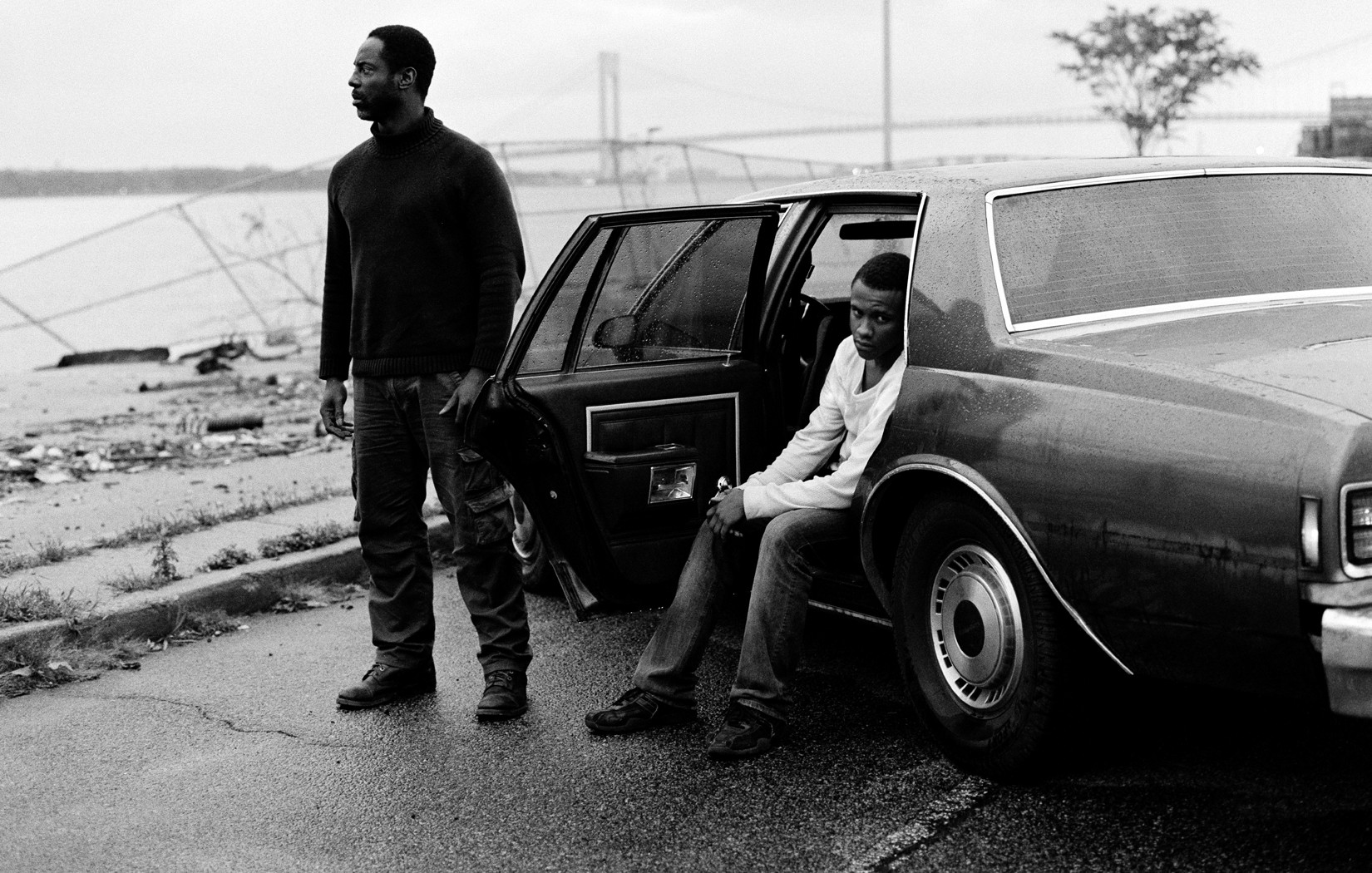
Shifting focus to urban America: Alexandre Moors’ Blue Caprice (part of Sundance’s NEXT programming, highlighting “impactful” indies screening out of competition; more on the NEXT films in an upcoming post) is inspired by Washington DC’s 2002 sniper attacks, specifically focusing on the two shooters as they meet, diabolically prepare, and eventually execute their plan. The first post-film question, vehemently asked, was “Why didn’t you make a film about the victims?” But its point of view is what makes Blue Caprice so profound; it encourages the audience to attempt to understand the attackers, much like Fritz Lang’s classic murder tale M (1931).
http://www.youtube.com/watch?v=L5tIVbZTgEg
Director Moors and lead actor Isaiah Washington (as John Allen Muhammad) do an astounding job leading us through an absolutely terrifying story, and they are able to do so without resorting to broad strokes. Interestingly, with both the US Grand Jury Prize: Dramatic and the Audience Award: US Dramatic going to Oakland filmmaker Ryan Coogler’s wonderfully executed yet disappointingly one-dimensional Fruitvale, it seems that many audiences are not prepared for such a brave and complex film as Blue Caprice. It’s a film based on a real-life tragedy that asks a lot of questions, pushes a lot of buttons, and offers no answers.
Interesting letter to sfist, which typically loves the new rideshare companies like Lyft and Sidecar. The writer, apparently a cab driver, makes clear why these unlicensed cabs are a problem:
Taxi drivers are professional drivers with hundreds of thousands of city miles under their belts, intensive knowledge of city streets and each vehicle is inspected twice a year by the government of San Francisco and the SFO Airport Authority. These inspections insure that the three GPS tracking units, full motion video cameras, radios and other safety equipment is functioning and that the car is in compliance with DOT rules and regulations.
Yes, some cabbies are assholes, and yes, some cabbies don’t know their way to certain places in the city, and of course some cabbies drive like crazed maniacs. Sadly though the more Lyft and Sidecar operate and undercut the legitimate transportation services the more often this will happen. How would you feel if you had spent countless dollars and hours getting to do your job for crappy pay and to be treated like shit, only to have someone come in that didn’t do what you had to to get your job and do essentially the same thing for less money… making it so you couldn’t feed your kids, or pay your rent
Lyft and Sidecar are very dangerous for the city and the traveling public by putting un-licensed, uninsured, untrained, amateur drivers on the streets.
TIme to call these what they are — taxis — and make them get permits like every other taxi in the city.
The state Senate Business, Professions, and Economic Development Committee was slated to hold a hearing Feb. 11 on Assemblymember Tom Ammiano’s efforts to create a regulatory framework for medical marijuana. That’s a fairly common practice when a new set of professional regulations is proposed; it’s called a “sunrise” hearing, and the idea is to get all the players in the room and see what kinds of concerns they have. A bill Ammiano introduced last year, AB 2312, would have put the authority to set state regs under the Department of Consumer Affairs; it died in the state Senate, but it will come back in some form or another.
So the committee chair, Sen. Curren D. Price, a Los Angeles Democrat, set the hearing, and committee staff went about rounding up witnesses — and then five days before the gavel dropped, the whole thing was called off.
And all of those people should have been part of the regulatory discussion, except that somehow, they couldn’t quite make it to the hearing. “We had difficulty getting representatives of the administration and the attorney general to come,” Committee Consultant G. V. Ayers told me.
Then there’s the fact that Price is running for Los Angeles City Council (funny — in San Francisco, the supervisors want to be in the state Legislature. In LA, the state legislators want to be on the City Council. Possibly because there are no term limits, and there’s a huge city budget). And the election is in March. And anything Price (who has supported medical marijuana in the past) said or did that suggested he loves loco weed might get slung at him in the waning days of a long, expensive campaign.
So in 2013, everyone’s still afraid of pot. “What’s up with marijuana?” Ammiano asked me. “You can’t even have a hearing?”
The Gavster, the Lite Guv, our former mayor, has a new book out, and while I eagerly await my review copy of “Citizenville,” I got to hear some of its themes on Forum. Here’s what the honorable Lieutenant Governor Newsom has to say:
You’ve got to “lean into it.”
Oh, and you need to “get into their heads.”
He can talk a lot about the millenial generation and technology, and he made some valid points about how government, particularly voting, is still way too analog (young people vote all day long, with likes on Facebook, and they vote for American Idol contestants, but not for local government offices). And he’s still hugely, overly enamoured of the notion that technology (operating through the private sector) can solve all of our problems.
But mostly: Platitudes. Astonishing, amazing gushers of platitudes. It got really hard to listen after a while; it’s as if the guy has taken ever bad cliche of the past decade and burned it so deeply into his brain that he doesn’t even realize he’s spewing them back out.
I hope the book’s a little better. Meanwhile, Gav: Get a grip.
Has your cat spit fire recently? Exhibited fluency in multiple languages simultaneously? Levitated? Flown? If so, your furry feline may be experiencing the troublesome symptoms of housing a demon. And fire can really do a number on those expensive drapes.
Luckily for you, occult expert Paul Koudounaris is coming to SF this Friday, and as part of David Normal’s “Crazyology” art exhibit will be shedding light on the dark world of demonry in his lecture series, looking at both historical and modern accounts of devilish domestics.
Koudounaris stumbled upon this cryptic world of bedeviled kitties during research for his upcoming book Heavenly Bodies. Initially seeking evidence of angelic cat spirits, like the fluffy white Swiss apparition rumored to protect both the town Bürglen and the remains of St. Maximus, Koudounaris realized that the wealth of information on supernatural kitties was located on the dark side.
Even the goddess Bast, one of the most enduring Egyptian cat figureheads, was revered for her dark side. According to records from Herodotus, Koudouanris explains in an email interview with the Guardian. “Debauchery was part of the celebration of Bast. One source I found indicated that rapes and assaults were totally acceptable during the celebration of Bast, because it was believe that the spirit of Bast had taken over the perpetrators during the festival. ”
While the how’s and why’s of cats becoming possessed remain unexplained, accounts of these Luciferian faring felines are centuries-old.
And given the responses to Koudounaris’ lectures, still relevant today. “I started doing this lecture as a kind of series” he says, “People who had not been to it would come to me and say, ‘oh, you should talk about my roommate’s cat, that thing is a total demon.’ But [they didn’t] mean bad kitty, [they meant] possessed by demons, or at least suspected of it.” Throughout his research Koudounaris has seen enough bones that he doesn’t spook at just any apparition.
After completing his Ph.D. in art history at UCLA in 2004, Koudounaris was left waiting for some kind of otherworldly inspiration to direct and supplement his extensive training. Inspiration struck in 2006, in the seedy lobby of a Czech hostel.
“I had spent a day in Melnik , where I visited an extraordinary charnel house in the crypt under the Church of Sts. Peter and Paul,” wrote Koudounaris on his website, “It was gritty and dirty — decidedly not sanitized for tourists — but the arrangements of the bones showed genius, not just in formal artistic principles, but also in their understanding of philosophy and theology.”
For the next four years, his interest in the bizarre left him mausoleum-bound and underground, photo-documenting his journey into innumerable holes, crypts, and churches around Europe.
The Empire of Death, his recently-released book, documents this journey in rich color printed photographs, visually raising from the dead the largely forgotten history of ossuaries.
While he’s by no means a bone collector, Koudounaris, is certainly an archaeologist of sorts, exhuming the forgotten, the unbelievable, and even the seemingly bizarre. His work breathes new life into forgotten chapters of history, like that of devil cats.
One such chapter belongs to the United States, and a cat that haunts the Presidential homestead.
D.C., short for the District of Columbia (but also Demon Cat) has been purportedly haunting the White House since the Civil War days. Legend has it that General Nathan Bedford Forest, who was also the Grand Wizard of the Ku Klux Klan, was responsible for invoking this common cat with demonic duties. D.C. was “initially related to the death of Lincoln,” says Koudounaris, “hence the suspicion that the confederacy was involved, apparently as an attempt to undermine the Union through a decidedly guerrilla tactic of sending in a demonically-possessed cat.”
D.C.’s historic haunting’s have even garnered him his own Wikipedia page. According to Koudounaris, D.C. “has a tendency to reappear and presage national disasters — the last account of it was right before the 9/11 attacks. It also appeared before Pearl Harbor and the Kennedy assassination, when it appeared and told JFK to “go fuck off.”
Koudounaris muses, “Do you think they have to brief every new president? ‘Sir, now that you have taken the Oath of Office, there is something we must tell you. If you happen to see a black cat that metamorphs, disappears, and speaks to you in tongues, it’s a demon, sir.'”
Humor is clearly unfiltered when one deals with darkness daily.
A cat owner himself, he notes that chances of actually encountering a demonically-possessed cat is rather rare, but rogue demons have been known to take form in even the most docile of kitties. ‘I don’t consider this something most of us should be worried about. But if your cat starts spitting fire–well, get the hell away from it.”
It’s not a surprise that the California Republican Party is, ahem, a bit out of step with the mainstream of the state (you see a lot of Repubs holding statewide office right now? I don’t.) And of course a San Francisco woman of color who isn’t a complete right-wing loon is going to have trouble running for a state party office. But what made the Chron’s story on Harmeet Dhillon so amazing was this:
“This is not a personal attack against Harmeet,” Celeste Greig, president of the California Republican Assembly, said Tuesday. “The ACLU is a communist organization. Do we want somebody who is a member of a communist organization that has sued religious organizations numerous times because they don’t like the cross and the Menorah” displayed on public property, Greig said, in explaining why she considers the ACLU – which has no official political affiliation – to be communist.
Gawd, we don’t get to see that kind of red-baiting much any more. I used to get called a commie all the time; back in the 1980s, there really were some communists around, too. You’d see the RCP at rallies and events, and the CPUSA was still marginally functional, and there were Trots and Maoists and it was all very interesting, sorting them all out.
But outside of Cuba, there really aren’t a lot of old-fashioned commies left. I miss them; nobody could give a four-hour stemwinder of a rhetorical speech like a commie leader. In the old days of the RCP, if you got accused of violating party discipline, you were sentenced to re-read “Combatting Liberalism,” which was kind of like having a Catholic priest sentence you to saying ten Hail Marys for masturbating.
There aren’t any communists at the ALCU; maybe once upon a time, but the left in America has moved way beyond that (oh, and the real commies never liked the ACLU — they were never big on freedom of speech or the press.) Now we’ve got ten brands of anarchists, and a wide range of socialist types, and Greens, and progressives, and a whole lot of others with various ranges of economic critiques and analyses and social platforms, many of which I heartily endorse. But the commies have largely faded away. You’d think the GOP folks would know their enemies a little better.
Quit using Bang With Friends (hold up — is that really what poking means, Forbes?) to solicit Facebook for a minute because Valentine’s Day is coming. That means that sexy IRL opportunities abound over the next week as SF scrambles to find a date, or to forget that Valentine’s Day exists in favor of a Ciara music video marathon.
But first, a quick rant. We had dispatched Guardian Nola correspondent/bounce DJ king Rusty Lazer to Playboy’s Super Bowl party, where he was to report in this very column on made-up/not made-up sex trafficking cataclysm that the football game unleashed on the Big Easy and get one of the 20-plus Bunnies slated to be in attendance to comment on homosexuality in NFL lockerrooms BUT he was denied access, surely the first time for Mr. Lazer, if not for our intrepid band of Guardian reporters.
We caught up with him a few days after the aborted attempt to infiltrate mainstream sex culture, as he was en route to buy the makings of a no-doubt tawdry Mardi Gras costume.
“It was a real stuffed shirt party,” Lazer reflected. “I didn’t see anyone come out that looked cool.” Besides David Arquette, who apparently left the party to vouch for his favorite bounce DJ — to no avail! Why? Perhaps it had to do with a wig that was too small.
“We didn’t look right.” Apparently, said Lazer, his crew was en route from a mock-pageant party and one of their number’s fake hair did not cover his real hair, was wearing a shirt scandalously unbuttoned, and was covered in lipstick.
Why this should matter for a Playboy party we don’t know. All we know is, C.W. Nevius made it in and all he could talk about was how tall everyone was and how good Train was. On to some sex news you can use:
Be a Public Disgrace extra
Shoutout to our frenz at Kink.com, who are now alerting the Guardian when they have a casting need for their dark, nasty, highly-professional BDSM shoots. (We told them we knew where the freaks are.) Your first opportunity to come via this collaboration: tomorrow’s shoot with the director-to-die-for and two-time advice columnist Princess Donna. Open bar, a chance to don formal wear, a chance to doff formal wear — your level of participation on camera is up to you, but lemme tell you some extras get involved with goings-on.
Come to this group show, which features work from 20 artists — all photographers this year, a departure from previous “On the Edge” curation — for spectacle. Not only do the works on the walls range from the sweetly sensual to the out-and-out raunchy, but each day is marked by a different kind of live, kinky presentation. On Friday there’s a leather runway show, pole dancing, and rope show; Saturday attendees can enjoy a kink fashion presentation, more ropes, and more poles; and on Sunday, admission is free (freaky!) Expect zebra-girl, rhinestone-dong weirdness, and expect to be entertained.
Fri/8, 4-10pm; Sat/9, 1-10pm; Sun/10, noon-5pm, $5. Free on Sun/10. 863 Mission, SF. www.eroticartevents.com
My Perverted Sucky Valentine Puts Out
Perverts Put Out is one of our city’s beloved regular XXX reading series (Naked Girls Reading and Bawdy Storytelling — more of a show ‘n’ tell act, really — are two other examples). You’re all but promised that this evening will be silly, sexy, bizarre, and biting. Charlie Jane Anders, M. Christian, Daphne Gottlieb, Philip Huang, Allison Moon, Lori Selke and horehound stillpoint star, Carol Queen and Thomas Roche host.
Sat/9, 8pm, $10-25 sliding scale. Center for Sex and Culture, 1349 Mission, SF. www.sexandculture.org
Body Heat Queer Femme Porn Tour
There’s been a lot of talk recently about the so-called “femme privilege,” and sexism within the queer community, so the sixth incarnation of this Atlanta-born showcase of fierce femme artists will come as a breath of fresh air. Burlesque dancers, drag performers, and the Bay Area’s author of Femmes Guide to the Universe Shar Rednour will all be featured.
We sent Guardian intern Ali Lane to this pants-free gathering last year (what?) and she had a love moment about it. Basically, if you are a straight-ish person without many opportunities to mingle with your peers without pesky layers of clothing, you’ll want to hit up the Knockout for this one.
Feb. 14, 10pm-2am, $5 (free without pants before 11pm). The Knockout, 3223 Mission, SF. www.theknockoutsf.com
Not to go all gloomy on a day when it’s finally not cold and the sun is out and San Francisco was just named the happiest city in America, (based on things like the number of shopping centers and cultural events), but really: Let’s not all jump up and down and celebrate. This is a very happy city for people who have money; it’s becoming a very anxiety-filled city for everyone else.
I’ve gotten quite a few comments and emails from friends on our cover story this week, and most of them go something like this:
“Great story. Really scary. I hope they don’t Ellis Act my building or I won’t be able to stay here, either.”
If you’re a renter in San Francisco, and you’ve been here a while, and you’re under rent control, chances are you’re nervous about your future. Because if you get evicted, you’re almost certainly leaving town. Maybe you can find a place in Oakland that’s smaller than what you currently have at twice the price, or maybe you can’t.
This is a city under immense pressure, and while the economically secure can happily go to shopping centers and see the Opera, I would say a majority of the current residents of San Francisco are more stressed about their future than they have been in years. And that doesn’t seem to be addressed in the happiness calculus.
It’s February—feeling a little love in your heart? Srutih Asher Colbert’s been feeling the love all year long. She’s a Bay Area yoga teacher (and hairdresser) who raised $24,000 in one year through grassroots fundraising to fight sex trafficking in India, where she’ll be going next week to volunteer her time to the cause.
Om Front talked to her about how, and why, she undertook the challenge.
SFBGWow. You raised $24,000 in one year. Tell us about the organization you raised the money for.
COLBERT Off The Mat and Into the World is a yoga-based organization [founded by internationally-acclaimed yoga teacher/activist Seane Corn]. It initiates different projects around the world to create sustainable change. The idea is that people take their yoga practice “off the mat and into the world” to become leaders in their community and use that leadership to make a difference. Every year, Off the Mat conducts something called the Seva Challenge, in which people everywhere are challenged to raise at least $20,000 for a particular cause. If you can raise the money, you are invited to go on a trip with Off the Mat to volunteer your time to that cause.
SFBG What inspired you to do the 2012 Seva Challenge?
COLBERT The cause this year is to stop sex trafficking in India. Sex trafficking is happening all over the world, but there are over 3 million girls in India alone that are being held prisoner and being raped on a daily basis. Some of them have been tricked by being promised a job in the factory and then they end up in a brothel. Some of them have been sold by their own parents. There are so many ways they can be coerced. I have two daughters and it hit close to home to think that my eight year old daughter could be trafficked for sex. I wanted to see if I could help stop that kind of action. I didn’t think I’d be able to raise $20,000 but I thought I would try!
SFBGSo, how did you do it?
COLBERT I reached out to everyone in my yoga community, students and teachers, and planned all of these events. I don’t know how I did it, but it all added up in the end. Some of the events I held were a benefit Kirtan [chanting event] with Ananda Rasa and Prajna Vieira at the Sivananda Yoga Center; a yoga-DJ-dance party at Equinox in Palo Alto, where I teach; and a Thanksgiving benefit class at Namaste Yoga in Oakland with Vickie Russell Bell. I sold Stop Slavery Now tee-shirts, and held a cocktail party and a silent auction. Also, [legendary kirtan singer] Krishna Das did an amazing fundraiser in NYC on the Bhajan Boat and he donated his whole portion to me for the cause. It was incredible.
Thanksgiving benefit class at Namaste Yoga in Oakland with Vickie Russell Bell
SFBGWhat was the biggest fundraiser?
COLBERT It was actually at my hair salon, Monica Foster Salon, in Palo Alto. I got everyone to work on a Monday when we’re usually closed, and they all donated their proceeds, over $4000 altogether, to Off the Mat.
SFBG So you’re going to India then?
COLBERT Yes! I’ve never been to India and I am so thrilled that I get this opportunity. We leave on February 17 for 10 days in Kolkata. We’ll be working every day with the local charities that are partnered with Off the Mat to help rescue girls, and teach them trades like jewelry-making. We’ll also be helping to build a new room onto a dance-and-yoga therapy center that helps these girls transition back into society.
It’s an interesting time to be going to India to do this work. After the recent gang rape in India, there’s been an uprising of women banding together saying we’re not going to stand for this anymore. It feels really good that we can be part of that timing and affect some social change.
SFBG Is your fundraising effort over?
COLBERT Technically, yes, but people are still giving me cash and writing me checks! We’re asked to bring a donation bag over with us filled with first aid supplies, art supplies, and things to draw with, that we can give to the different charities—so I’ve been using the additional funds for that. Once that bag is full, I’ll give the remaining money to Off the Mat.
Colbert with yoga teacher Vickie Russell Bell (left) at Namaste Yoga
SFBGWhat has this year of fundraising taught you?
COLBERT That I am not in control of anything. Every fundraiser, I would think it would go this way or that way—and it was never like that. I would think there would be 75 people there and in walked 12. Or I thought a person was going to give me $5 and he gave me $500. I had to learn to not try to control things, and to just be in the present moment with what is.
SFBGYou’re leaving on February 17. Nice timing for Valentine’s Day, eh?
COLBERT Yes, but every day should be Valentine’s Day! Every day we should all be giving each other as much love as we can, helping each other and holding each other up.
Karen Macklin is a writer and yoga teacher in San Francisco — her On the Om Front column appears biweekly here on SFBG.com.
It’s All About Love Yoga and Spirituality Listings by Joanne Greenstein Seven Month Chakra Awakening Intensive with Anodea Judith Open your heart through the chakras. Award winning author and internationally renowned teacher Anodea Judith is coming to the Bay Area to lead a series of seven workshops on the seven chakras over seven months. Each month will focus on one of the chakras, offering asana practice, bioenergetic exercises, breathing techniques, guided trance journeys, chanting, art, music and more to clear blockages and active chakra energy. Workshops will be supplemented by weekly emails. Sat 2/9 – Sat 2/13, 1:00 – 5:45 PM, Yoga Kula SF, 3030A 16th, SF with 2 sessions at Yoga Kula Berkeley, 1700 Shattuck, Berkeley, $90/workshop or $560 for all 7. Livestream also available at $45/sessionor $285 for all sessions. yogakula.com/chakra-awakening
Valentine’s Day Contact Yoga Class with Alok Rocheleau and Anjuli Mahendra Open your heart through touch. Connect physically, emotionally and spiritually through partner yoga, contact improvisation and Thai massage. Thurs/14, 7:30 – 10:00 PM, Mindful Body, 2876 California, SF, $70 per couple in advance/$80 at the door. www.themindfulbody.com/main/workshopsevents.htm
Celebration of Heart with Deborah Lee Open your heart through movement. Flow through a series of poses designed to help you release tension, improve your posture and connect to your heart. Sun/10, 2:00 – 4:15 PM, Yogaworks, 1823 Divisadero, SF, $20 in advance/$30 at the door. More info here.
Kirtan with David Newman (Durga Das) Open your heart through song. David and his wife Mira will lead a fun, joyous evening of call-and-response chanting letting you access your heart space. Fri/15, 8:00 – 10:00 PM, Urban Flow, 1543 Mission, SF, $20 in advance/$25 at the door. www.urbanflowyoga.com/workshop.html
Tantra & Massage Valentine’s Workshop with Dee Dussault Open your heart through connection. Explore and deepen your relationship through these workshops for couples. On day one, learn tantric practices to enhance the intimacy, energy, communication and sensuality in your relationship. On day two, improve your love-making through tantric massage, breathing and visualization. Day two is clothing optional, with a non-genital focus. Tantra Workshop: Expanding Erotic Energy Sat/16, 1:30 – 4:30 PM, 548 Fillmore, SF, $45 Sensual Massage: Conscious Intimate Touch Sun/17, 2:00 – 5:00 PM, 548 Fillmore, SF, $45 More info here.
Wandering around Polk Street before the Super Bowl on Sunday, I was seeing red — but not from stray elbows or overserved sports boors. Team-inspired fashion is usually a pretty simple affair: a hat, a T-shirt with a logo, maybe a jacket. But this is San Francisco, where we don’t do common and the Niners’ presence in the Super Bowl was one more excuse for residents to show off their flair for dramatic costuming.
But though I was out looking for the over-the-top, the Niners gear I did managed to capture ended up being mainly on the tasteful side of things. I spotted a woman and pup in matching red gear, a cute couple subtly sporting Niners colors without sacrificing J. Crew-crispness.
That aside, my favorite was a man in a gigantic red and gold poncho. As I began to introduce myself, the gentleman spotted my camera and tipsily exclaimed, “you don’t even have to ask!” He grabbed his buddies and struck a pose. I’m betting he was probably pretty upset after the game. But least he was already wearing his security blanket. Not to mention, swathed in love for his hometown, win or lose.
The media and blogosphere have given us plenty to chew on lately as columnists, subversive Tweeters, and mischievous YouTube producers take to the Internet to examine issues of tech, race, class and gentrification in the Bay Area. To wit:
Chronicle muttering about Oakland Art Murmur San Francisco Chronicle columnist Chip Johnson is making noise about clamping down on the Oakland Art Murmur, saying Oakland is “asking for trouble” if it doesn’t rein in the popular, freewheeling monthly street festival that draws young creative types to the city center for art, food truck delights, street dance parties and the occasional African drum circle or impromptu magic show. “The street fair should be pared down to a manageable size,” Johnson proclaimed, pointing to a shooting that occurred at the last one to argue his point. It’s sad that an act of violence marred the latest Art Murmur, but we hope Johnson’s column isn’t a harbinger of some forthcoming campaign to sanitize the wildly successful, organically flourishing event. And for some reason, Johnson’s latest diatribe reminds us of this hilarious video we found on the Internet.
Using technology to examine issues of race and technology Jamelle Bouie, a journalist and blogger for The Nation, started a conversation about race and Silicon Valley in a thought-provoking article for The Magazine, revving up the Twittersphere by wondering out loud: “Why is tech writing so white?” Which promptly set off an online debate between Bouie, Silicon Valley entrepreneur Jason Calacanis, and a host of others who piled on to voice their own strong opinions on Silicon Valley and racial diversity. That exchange, in turn, was Storified by Buzz Feed staff writer Matt Buchanan, who also blogged it. Here’s how Buchanan distills the digital debate: “One of the side effects of the Valley’s belief in its own progressiveness is an occasional blindness to the gap between its belief and its reality. Spanning that disconnect for some is a myth that the Valley is a total meritocracy that isn’t subject to wider systematic problems of racism and sexism; that it is, in some ways, a truly hermetically sealed bubble.”
“Anti capitalist comrades” headed to court Remember when San Francisco prosecutors subpoenaed the Twitter account information of two activists who attended a Columbus Day protest that led to an ugly clash when the police showed up? The request for Twitter account information was abandoned after a host of civil liberties organizations challenged it on First Amendment grounds, but the protesters are still scheduled for a Feb. 8 court appearance on charges ranging from unlawful assembly to battery on a uniformed officer. On a website set up in support of the ACAC19 (the 19 arrestees identify as “anti-colonial, anti-capitalist comrades”), organizers say prosecutors’ demand for Twitter records should be regarded as “evidence that the SFPD is using the case to map and surveil radical political networks in the Bay area.” We don’t know the extent to which San Francisco cops are engaging in such surveillance, but if Twitter’s transparency report is any indication, police have shown a growing interest in social media interactions across the board. To Twitter’s credit, the company logs all law enforcement information requests and tallies them in regular reports. The most recent data shows that law enforcement agencies have filed 1,858 user information requests with the San Francisco-based tech company since Jan. 1, 2012. During the second half of last year alone, U.S. law enforcement agencies filed 815 user information requests.
Google Bus invasion As we mentioned in this week’s cover story, San Francisco author Rebecca Solnit’s 3,900-word meditation on the Google Bus as it relates to San Francisco’s housing affordability crisis is a must-read.
“Creative class” expert: Service workers should get paid more Today’s Morning Edition on NPR featured an interview with Richard Florida, an urban scholar who has studied the rise of the “creative class” in cities like London, Sydney and, yes, San Francisco. Apparently, Florida has arrived at the groundbreaking conclusion that in order to maintain healthy economic balance, cities ought to find ways to boost the pay of service workers. Here’s an excerpt:
“A city or a metro region is much better off – if it has a large share of knowledge workers, of innovators, entrepreneurs, artists, professionals that make up the creative class, the wages and income of that city go up. The problem is that others have said this has a trickle-down effect, that these wages benefit everyone. And I’ve been skeptical of that from the beginning … I’ve pointed out that places that have large creative class concentrations have a greater level of inequality.
“We actually looked at the amount of wages and salaries people have left after housing. If you do that, the creative class, they do better … but everybody else does worse. The point I’m trying to make with all this is that you’re better off with more knowledge workers, but sooner or later, we’re going to have to develop strategies in our country to boost the wages and salaries of the more than 60 million workers who deliver our services, who prepare our food, take care of our homes, wait on us in stores. We’re going to have to make their wages higher if everyone’s going to prosper.”