SFBG Blogs

I’m so free: RIP Lou Reed

16

Everyone had their essential Lou Reed. Whether it was a Velvet Underground record, a solo track, or a collaborative piece, there was a musical treat for everyone created by the rock’n’roll poet.
 
The world lost its avant-garde art rock king this weekend when Reed died on Sunday at age 71. He’s survived by his wife and sometime creative partner, the brilliant experimental musician Laurie Anderson.

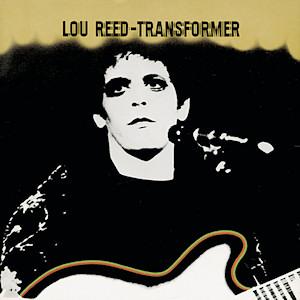
Personally, my entryway to Reed was through Transformer (RCA, 1972), a (ahem) transformative solo record that bridged the gap in my teenage mind between punk and rock, between wild freedom and thoughtful indulgence, between Velvet Underground and Reed’s future.

I still remember buying the vinyl version at Record Surplus in LA, driving down sun-bleached highways and returning home to suburbia to put the needle on moody, moving “Perfect Day,” hit “Walk on the Wild Side,” and liberating “I’m So Free.” I probably wept that first time I listened to it on vinyl, as I have many times since, as I did hearing the news yesterday of his passing.

http://www.youtube.com/watch?v=Uc26EFI1_nw

We all mourn in different ways, but musicians do it with tributes. And a great many artists were inspired by the work of Reed over the decades. Last night, My Morning Jacket covered VU’s “Oh! Sweet Nuthin” with Neil Young, Elvis Costello, and Jenny Lewis at the Bridge School Benefit Concert at the Shoreline Amphitheatre in Mountain View.

http://www.youtube.com/watch?v=IFaTN9V833o

OK, and here’s a few older Reed videos to check out:

http://www.youtube.com/watch?v=nz6nq4AhFZE

http://www.youtube.com/watch?v=dHmb8q3mThI

RIP Lou Reed (1942-2013)

Meister: The Legislature shows Congress how

3

Guardian columnist Dick Meister has covered labor and political affairs for more than a half-century as a reporter, editor, author and commentator. Contact him through his website, www.dickmeister.com, which contains several hundred of his columns.

Forget for a moment what’s happened ­­ or not happened  ­- in Congress. Concentrate instead on what’s meanwhile gone on in the State Legislature, much of it for the benefit of California’s working people.

 The State AFL-CIO cites, for instance, the Legislature’s passage this year of more than a dozen decidedly worker-friendly bills sponsored by the labor
federation and strongly backed by the federation’s Democratic Party allies in Sacramento.

The most important of the bills will raise the state’s minimum wage from $7.25 an hour to $10 an hour by January of 2016. Other key laws:

*Require overtime pay for domestic workers, who are currently excluded from
most labor laws.

*Will make it easier for immigrant workers to get drivers’ licenses and
protect them from retaliation when they speak out about poor pay and working
conditions.

*Should make it easier for workers with criminal records who are denied jobs
despite their rehabilitation.

*Give corporate tax breaks to employers who create jobs.

*Increase the legal protections for the state’s notably exploited farm
workers and car wash employees.

*Strengthen current laws that require builders holding state contracts to
pay their crews the prevailing wage for construction work in their areas.

*Encourage Employers and workers “to identify and minimize the risk of
workplace violence.”

*Expand the law granting paid family sick leaves to workers caring for ill
parents and children to also include work time lost while caring for sick
parents-in-law, siblings, grandparents  and grandchildren.

*Ease the unjust impact of current immigration law enforcement on workers
and families by limiting the state’s cooperation with the federal “Secure
Communities” program.

Art Pulaski, the State AFL-CIO’s chief officer, rightly claims that with
passage of the laws, California undoubtedly has become “the national leader
in sporting workers and their families.”

What’s more, says Pulaski, passage of the laws marked a crucial start of
“the essential work of rebuilding the state’s middle class.”

If only we could expect even a fraction of such important work from our
squabbling federal legislators.

Copyright 2013 Dick Meister

Guardian columnist Dick Meister has covered labor and political affairs for
more than a half-century as a reporter, editor, author and commentator.
Contact him through his website, www.dickmeister.com, which contains several
hundred of his columns.

New movies! Including a few scary ones (no thanks to Hollywood)!

0

Incredibly, Hollywood is allowing this hallowed weekend to pass without releasing a single horror movie. (Unless you count Jackass Presents: Bad Grandpa, which I don’t.) Frights galore exist in local rep houses, however (right this way for a calendar), and for those who’d simply like turn off the lights, pretend nobody’s home, and eat all the Fun Size Snickers themselves, there’s some non-seasonal fare worth checking out (plus, two of those rep-house chillers!) in the below reviews.

All Is Lost As other reviewers have pointed out, All is Lost‘s nearly dialogue-free script (OK, there is one really, really well-placed “Fuuuuuck!”) is about as far from J.C. Chandor’s Oscar-nominated script  for 2011’s Margin Call as possible. Props to the filmmaker, then, for crafting as much pulse-pounding magic out of austerity as he did with that multi-character gabfest. Here, Robert Redford plays “Our Man,” a solo sailor whose race to survive begins along with the film, as his boat collides with a hunk of Indian Ocean detritus. Before long, he’s completely adrift, yet determined to outwit the forces of nature that seem intent on bringing him down. The 77-year-old Redford turns in a surprisingly physical performance that’s sure to be remembered as a late-career highlight. (1:46) (Cheryl Eddy)

http://www.youtube.com/watch?v=6ML50I0mVHY

The Counselor Ridley Scott directs Cormac McCarthy’s script about a lawyer (Michael Fassbender) who gets involved in the drug underground. The supporting cast includes Javier Bardem, Cameron Diaz, and Brad Pitt. (1:57)

http://www.youtube.com/watch?v=C_O2OATk97k

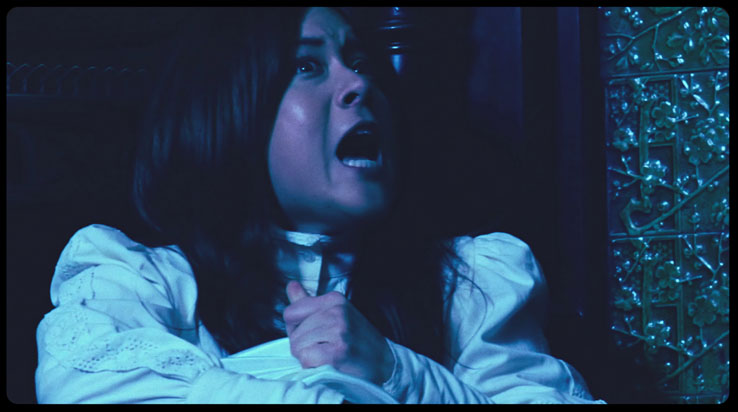
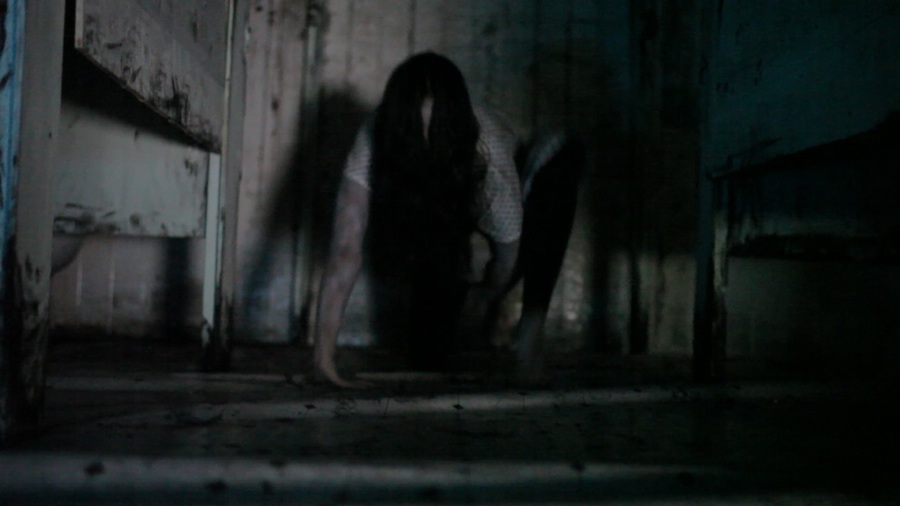
I Am a Ghost In local director H.P. Mendoza’s latest, a young woman named Emily (Anna Ishida) wanders the claustrophobic corridors of a sumptuously decorated Victorian house, repeating her actions in each room in a perfunctory loop: frying eggs, flipping through old photographs, dusting the furniture, stretching in bed. Besides herself, the place initially appears to be uninhabited, until the house begins to creak and groan restlessly around her, and a disembodied voice begins to address her by name. It doesn’t give too much away to reveal at this point that Emily is a ghost, and the voice purportedly that of a professional medium (Jeannie Barroga) who has been hired to assist her out of the house and “into the light.” Unraveling who Emily is and what is keeping her from ascending to the next level takes up most of the rest of the film, and the eerie tension that builds as Emily’s memories return, filling in the unpleasant blanks, explodes at the end with a brutal chaos only otherwise hinted at in earlier scenes. Ishida’s Emily is full of complexity and confusion, and much of the movie’s real “horror” stems from her own sense of powerlessness and realization that the world that she’s inhabiting doesn’t appear to be one rooted in reality, or at least in other people’s realities. Experimental musician and Fringe Festival performer Rick Burkhardt makes a terrifying cameo as the presumed source of Emily’s inability to move on — and speaking of experimental music, the movie’s score, penned by Mendoza, does a lot to create the sense of creeping unease that characterizes most of the film. (1:14) Castro. (Nicole Gluckstern)

http://www.youtube.com/watch?v=sTlnlam8ZYM

Informant Local filmmaker Jamie Meltzer’s complex, compelling Informant makes its theatrical bow at the Roxie a year and a half after it premiered at the 2012 San Francisco International Film Festival (it’s been playing festivals nearly nonstop since). The doc explores the strange life of Brandon Darby, a lefty activist turned FBI informant turned Tea Party operator who helped send two 2008 Republican National Convention protestors to jail. He’s a polarizing guy, but the film, which is anchored by an extensive interview with Darby, invites the audience to draw their own conclusions. (Side note: if you conclude that you want to yell at the screen and give Darby a piece of your mind, chances are you won’t be alone.) (1:21) Roxie. (Cheryl Eddy)

http://www.youtube.com/watch?v=_MSrAwfagG4

Jackass Presents: Bad Grandpa Hidden-camera pranks with Jeff Tremaine, Johnny Knoxville, and other Jackass alums. (1:32)

Space Battleship Yamato The year is 2199, five years after mysterious aliens began bombarding Earth with radiation. The scrappy humans who’ve managed to survive by living underground are rapidly dying out — so a crew assembles for a deep-space “journey of hope” to a planet where a “radiation elimination device” might be acquired. Based on a 1974 Japanese anime series (it aired in the US under the name Star Blazers), this live-action adventure contains plenty of CG-enhanced battles and a cast stuffed with stock characters: the gifted, brash young pilot who’s haunted by a dark past (Takuya Kimura, whose flowing locks betray his teen-idol origins); the tough chick who gradually softens (Meisa Kuroki); the grizzled, wise captain (Tsutomu Yamazaki of 2009’s Departures), etc. Fans of the original series may gobble this up, but the casual viewer might find there’s not much to distinguish the overlong Space Battleship Yamato — saddled with a score that vacillates between bombastic and sentimental — from space operas (particularly Battlestar Galactica) that’ve come before. (2:18) Four Star. (Cheryl Eddy)

http://www.youtube.com/watch?v=xg5nvnUMbbg

Spine Tingler! The William Castle Story Other Cinema anticipates Halloween in vintage style with Jeffrey Schwarz’s 2007 documentary about the late, beloved Hollywood schlockmeister. After a mostly undistinguished early career in programmer mysteries, Westerns, and 3D features, William Castle found his métier in the late 1950s making horror thrillers with B budgets (and C scripts) but A-plus marketing gimmicks. Macabre (1958) offered life insurance policies to patrons who might die of fright; the next year’s The Tingler infamously gave patrons in select theater seats slight electric shocks; the same year’s House on Haunted Hill had ushers yank a plastic skeleton over the audience’s heads; Mr. Sardonicus (1961) gave ticket buyers a chance to vote on its title character’s fate. (It was so predictable that they’d vote for mortal punishment, an alternative “happy ending” never actually existed.) Straight-Jacket (1964) had Joan Crawford as a battle-ax axe murderess, a concept that could sell itself. Castle’s perpetual hopes to gain respect and make a “serious” picture were somewhat rewarded by Rosemary’s Baby, even if he wound up merely producing that 1968 smash. (He’d hoped to direct, but was smart enough to realize Roman Polanski was the more inspired choice.) This fond portrait includes input from various Castle collaborators, admirers and family members, as well as plenty of priceless clips. Guest host Christian Divine will offer additional retro horror goodies during this evening of cheap thrills. (1:22) Other Cinema at Artists’ Television Access. (Dennis Harvey)

http://www.youtube.com/watch?v=MjyJI2YTOm4

Torn An explosion at a mall throws two families into turmoil in this locally-shot drama from director Jeremiah Birnbaum and scenarist Michael Richter. Maryam (Mahnoor Baloch) and Ali (Faran Tahir) are Pakistani-émigré professionals, Lea (Dendrie Taylor) a working-class single mother. Their paths cross in the wake of tragedy as both their teenage sons are killed in a shopping center blast that at first appears to have been caused by a gas-main accident. But then authorities begin to suspect a bombing, and worse, the principals’ dead offspring — one as a possible Islamic terrorist, another for perhaps plotting retaliation against school bullies. As the parents suffer stressful media scrutiny in addition to grief and doubt, they begin to take their frustrations out on each other. An earnest small-scale treatment of some large, timely issues, the well-acted Torn holds interest as far as it goes. But it proves less than fully satisfying, ending on a note that’s somewhat admirable, but also renders much of the preceding narrative one big red herring. (1:20) Opera Plaza, Shattuck. (Dennis Harvey)

http://www.youtube.com/watch?v=XF_jh3_p_gw

The Trials of Muhammad Ali If you’ve seen an Ali doc before (or even the 2001 biopic), a lot of the material in The Trials of Muhammad Ali will feel familiar. But Bill Siegel’s lively investigation, which offers interviews with Louis Farrakhan and Ali’s former wife Khalilah, among others, does well to narrow its focus onto one specific — albeit complicated and controversial — aspect of Ali’s life: the boxing champ’s Nation of Islam conversion, name change, and refusal to fight in Vietnam. And as always, the young, firebrand Ali is so charismatic that even well-known footage makes for entertaining viewing. (1:26) (Cheryl Eddy)

Developer-funded 8 Washington campaign spends $1.8 million pushing Props. B&C

100

The developer of the 8 Washington waterfront luxury condo project and his allies have spent more $1.8 million this year pushing Propositions B and C, according to new campaign finance filings with the San Francisco Ethics Commission.

San Franciscans for Parks, Jobs and Housing spent nearly $1 million in the latest Sept. 22 to Oct. 19 period, while raising $687,006 — bringing its year-to-date totals to $1.4 million raised and $1.8 million spent — and leaving the Yes on B&C committee $562,029 in debt.

But that “debt” is actually more like an investment considering developer Simon Snellgrove and his Pacific Waterfront Partners have contributed the lion’s share to this campaign, $1.1 million and counting, which is probably a pittance compared to the profits he plans to make on 134 condos that will go for around $5 million each.

By contrast, the opposition campaign, No Wall on the Northeast Waterfront, has raised $587,625 so far this year (almost half of that in the latest filing period) and spent $511,703 ($333,589 since Sept. 22), leaving the campaign with $88,553 in the bank as of Oct. 19.

Unlike the developer-funded campaign, whose only other significant financial support came from project contractor Cahill Construction, the opposition campaign was funded mostly by dozens of small contributions ranging from less than $100 up to a few $5,000 donations. Its only sizable checks came from Richard and Barbara Stewart of Stewart Economics, who live next door to the site and would have their bay views blocked by the 136-foot condo towers, which the couple has jointly kicked in $278,000 to try and stop.

For more information on 8 Washington and Props. B & C, read the Guardian’s endorsements (No on C; and No, no, no! on B) or listen to the interesting debate that KQED’s Forum hosted this morning. And don’t forget to vote. 

Air District considers long-term action on climate change

A committee of the Bay Area Air Quality Management District approved a resolution on Oct. 23 that could shape the region’s approach to tackling climate change until 2050.

The proposal is to enact a regional climate protection program, geared toward reducing greenhouse gas emissions to 80 percent below 1990 levels by 2050.

The idea of creating a policy framework lasting nearly four decades originated with 350.org, an environmental organization focused on climate change. Advocates with 350.org and the Sierra Club worked in collaboration with San Francisco Sup. John Avalos, who chairs the BAAQMD Climate Protection Committee, to formulate a resolution complementing climate change planning already underway at the Air District.

“The resolution did start from outside of the community, but I’m adopting it as a member of the Air District,” Avalos said at the Oct. 23 meeting, “and it’s something I’d like to see members of this body support.”

The resolution creates the emissions reduction target, launches a strategic planning process, and commits to developing a work plan that would guide the district’s activities in coming years. Implementing the plan would entail gathering more data about ambient greenhouse gas emissions and finding ways to reduce the pollutants, which are linked to climate change.

The full BAAQMD board will vote on the plan at its Nov. 4 meeting. The Air District is governed by a 22-member body composed of locally elected officials from nine Bay Area counties.

In 2006, the California Legislature enacted AB 32, the Global Warming Solutions Act, which established a goal of reducing emissions to 1990 levels by 2020. That’s now only about six years away, so a Scoping Plan process is in the works to figure out how to meet a new goal of reducing statewide greenhouse gas emissions to 80 percent below 1990 levels by 2050. Enacting a regional plan at this juncture would position the Bay Area as a leader on addressing climate change, said Henry Hilken, director of the Air District’s Planning, Research and Rules Division.

Avalos emphasized the need to focus on metrics and to stay abreast of the region’s progress on meeting emissions reduction targets over time. Assuming the climate action plan is approved by the full board, he said, the next step is to hold a focused session “to put some meat on the bones to talk about how we will work toward achieving actionable items.” 

And after it has secured the approval of the full board, a work program would be drafted to include increased staffing levels, noted Jeremy Pollock, Avalos’ legislative aide. That would require increasing the fees that are extracted from the region’s major greenhouse gas emitters – primarily oil refineries.

Live Shots: Street Joy, the She’s, the Tambo Rays at Milk Bar

0

Wednesday night, three young, up-and-coming bands gathered at the Milk Bar, an intimate venue on the western edge of Haight Street, to lay down fun, unseasonably warm beats – a welcome contrast to the decidedly autumnal weather.
 
Street Joy, a LA-based rock trio comprised of Jason DeMayo (vocals, guitar), Scott Zimmerman (drums), and Mike Coleman (bass), kicked off the show with upbeat pop and punkish tunes. These musicians, who organized into a formal band in 2012, describe their songwriting as “that of the cassettes a dad would show his son on car rides to baseball practice.” Sigh, nostalgia.
 
The highlight was their spirited cover of “Hold Me Tight” — a Beatles release circa 1963 — and the dynamic on-stage rapport between Zimmerman and DeMayo kept me enthralled throughout their set.
 
The She’s — a teenage girl group whose crooning, feminine, summery sound is inspired by ‘60s girl groups and pop acts like the Beach Boys — followed. While many of their songs sound very similar (at times their set felt like a contagious throw-back daze), their multipart harmonies, which are the crux of their songwriting, felt expert. In addition to playing catchy tracks off of their 2011 release (Then It Starts To Feel Like Summer) such as “Jimmy” and “Fabian,” they played some newer songs, including “Anywhere But Here,” which is somewhat dark and subdued – at least in the She’s universe.
 
Bassist Sami Perez, guitarists Hannah Valente, and Eva Treadway, and drummer Sinclair Riley (they all sing) have been best friends since kindergarten, and it shows. On stage, they are incredibly in-sync; they even managed to all crouch down and grab their plastic water cups at once point in a synchronized sweep. Yes, their water cups — no booze yet.
 
By the time the Tambo Rays took the stage at 11:15pm, I was starting to feel pretty exhausted, but Sara DaMert’s spirit and spunk picked me right back up. The group’s alternative percussionist extraordinare, Sara, who at any given moment was either playing keys, drums, cymbals, tambo, or a combination of the four, was the heart of the “chill pop” foursome’s performance. Sara’s brother, Brian DaMert, perhaps the slightly subtler member of the family, laid down entrancing guitar riffs, engulfing the waning audience in a beautiful wall of sound.
 
The Tambo Rays showcased a surfy rock’n’roll (occasionally hippie-laced) sound onstage; their set was fluid and kept my attention. The highlight of their performance was “Take That,” whose enthused delivery, distinctly summery feel, and sardonic lyrics about Georgia the chicken instantly made me smile.

Tenant groups propose sweeping package to ease the “eviction epidemic”

317

Tenant advocates today proposed a sweeping set of legislative proposals to address what they’re calling the “eviction epidemic” that has hit San Francisco, seeking to slow the rapid displacement of tenants by real estate speculators with changes to land use, building, rent control, and other city codes.

“In essence, it’s a comprehensive agenda to restrict the speculation on rental units,” Chinatown Community Development Center Policy Director Gen Fujioka told the Guardian. “We can’t directly regulate the Ellis Act [the state law allowing property owners to evict tenants and take their apartments off the rental market], but we’re asking the city to do everything but that.”

The package was announced this morning on the steps of City Hall by representatives of CCDC, San Francisco Tenants Union, Housing Rights Committee of SF, Causa Justa-Just Cause, Tenderloin Housing Clinic, UNITE HERE Local 2, Community Tenants Association, and Asian Americans Advancing Justice.

“San Francisco is falling into one of the deepest and most severe eviction crises in 40 years,” SFTU Director Ted Gullicksen said. “It is bad now and is going to get worse unless the city acts.”

The package includes: require those converting rental units into tenancies-in-common to get a conditional use permit and bring the building into compliance with current codes (to discourage speculation and flipping buildings); regulate TIC agreements to discourage Ellis Act abuse; increase required payments to evicted tenants and improve city assistance to those displaced by eviction; require more reporting on the status of units cleared with the Ellis Act by their owners; investigate and prosecute Ellis Act fraud (units are often secretly re-rented at market rates after supposedly being removed from the market); increase inspections of construction on buildings with tenants (to prevent landlords from pressuring them to move); prohibit the demolition, mergers, or conversions of rental units that have been cleared of tenants using no-fault evictions in the last 10 years (Sup. John Avalos has already introduced this legislation).

“The evidence is clear. We are facing not only an eviction crisis but also a crisis associated with the loss of affordable rental housing across the city. Speculative investments in housing has resulted in the loss of thousands affordable apartments through conversions and demolitions. And the trend points to the situation becoming much worse,” the coalition wrote in a public statement proposing the reforms.

Evictions have reached their high level since the height of the last dot-com boom in 1999-2000, with 1,934 evictions filed in San Francisco in fiscal year 2012-13, and the rate has picked up since then. The Sheriff’s Department sometimes does three evictions per day, last year carrying out 998 court-ordered evictions, Sheriff Ross Mirkarimi told us, arguing for an expansion of city services to the displaced.

At “Housing for Whom?” a community forum the Guardian hosted last night in the LGBT Center, panelists and audience member talked about the urgent need to protect and expand affordable housing in the city. They say the current eviction epidemic is being compounded by buyouts, demolitions, and the failure of developers to build below-market-rate units.  

“We’re bleeding affordable housing units now,” Fred Sherburn-Zimmer of Housing Right Committee said last night, noting the steadily declining percentage of housing in the city that is affordable to current city residents since rent control was approved by voters in 1979. “We took out more housing than we’ve built since then.”

Peter Cohen of the Council of Community Housing Organizations actually quantified the problem, citing studies showing that only 15 percent of San Franciscans can afford the rents and home prices of new housing units coming online. He said the housing isn’t being built for current city residents: “It’s a demand derived from a market calculation.”

Cohen said the city’s inclusionary housing laws that he helped write more than a decade ago were intended to encourage developers to actually build below-market-rate units in their projects, but almost all of them choose to pay the in-lieu fee instead, letting the city find ways to build the housing and thereby delaying construction by years.

“It was not about writing checks,” Cohen said. “It was about building affordable units.”

Last night’s discussion began with a debate about the waterfront luxury condo project proposed for 8 Washington Street, which either Props. B or C would allow the developer to build. Project opponent Jon Golinger squared off against proponent Tim Colen, who argued that the $11 million that the developer is contributing to the city’s afforable housing fund is an acceptable tradeoff.

But Sherburn-Zimmer said the developer should be held to a far higher standard given the obscence profits that he’ll be making from waterfront property that includes a city-owned seawall lot. “Public land needs to be used for the public good.”

Longtime progressive activist Ernestine Weiss sat in the front row during the forum, blasting Colen and his Prop. B as a deceptive land grab and arguing that San Francisco’s much ballyhooed rent control law was a loophole-ridden compromise that should be strengthened to prevent rents from jumping to market rate when a master tenant moves out, and to limit rent increases that exceed wage increases (rent can now rise 1.9 percent annually on rent controlled apartment.

“That’s baloney that it’s rent control!” she told the crowd.


Yeezus stares down yetis, climbs volcanoes, is born again at the Oracle Arena

2

Kanye West is at an enviable place in his career. Everyone knows who he is. He’s reached near iconic, almost mythic status. The problem is, everyone knows who Kanye West is, even if they don’t listen to his music. I’m fairly certain there are people I’m related to who are only familiar with him largely because he impregnated and proposed to a beautiful woman with a large, rich family, sextape, hard-working publicist, and contract with an unscrupulous cable TV network (in roughly that order). They likely also know him as an egotistical and crazy loudmouth, for reasons too long to detail here.

In sum, Mr. West’s celebrity has threatened to obscure and confuse his accomplishments. Luckily, his newest stage production, Yeezus, represents the history of Kanye West, according to Kanye West.

Stage production may not be the best term, but Yeezus is not a typical concert. Unless you want to consider it a prog-rock concert. Which it may be, in terms of elaborate structuring and an overwhelming amount of obvious symbolism. Also, it has a large mountain on stage. A sort of small-scale Matterhorn, which alternates as an iceberg and a volcano, depending on how it is video mapped, and if flash pots are going off.

Shot from the right angle (please see the photo here provided by West’s people) it was positively expressionistic. Otherwise ignore the rigging showing out the sides, or the crew members placing a box near the top for West to complete his summit, which he did, triumphantly, at points throughout.

http://www.youtube.com/watch?v=ar-sduhNbi4

Yeezus, the character Mr. West plays, a masked figure drawn out of obscurity by a group of cult-like robed women at the outset, reached a spotlight at the end of a long stage. Thus began the journey, which went through five distinct stages. They were easy to follow, listed on screen above the mountain: Fighting, Rising, Falling, Searching, Finding. The songs that followed were not a chronology, but rather represented his career in retrospect. For instance, the highlight of the Fighting section was  “New Slave,” the first single off  West’s current Yeezus album, but in this context a reflection on his entry into the music business, and a struggle to maintain freedom from corporations that attempt to control artists.

Rising began with the phrase “pride always preludes the crash…the bigger the ego the harder the fall.” Did you catch those references? If so, please mark another two boxes on your Yeezus Biblical Allusion Scorecard. You already marked one for Yeezus, right? Keep it handy because more followed, when Yeezus came down from the top of the mountain, appearing shirtless to the prog rock sounds of King Crimson’s “20th Century Schizoid Man.”

This was “Power” and Yeezus had it, confirmed moments later during the Foreigner-sampling “Cold,” when a girl in the audience gleefully showed her breasts to Yeezus not once, but twice. Given the black mask, there was little reaction from Yeezus. But in any case Tony Montana was right, and a song or two later the cultish women from the beginning returned in nude body-suits. Yeezus was literally swarmed by women.

For obvious reasons “I Am a God” has been one of the more controversial tracks on Yeezus and at first the performance of it was expectedly problematic, with Yeezus’s harem kneeling down before him. It was a criticism-baiting moment, until the menagerie awkwardly lifted him into the air as he screamed. It was the first sign of things going wrong for the play’s ‘hero’, and when he performed “Can’t Tell Me Nothing” from Graduation, the singer finally started to project a little emotion, mask and all; the catwalk in the middle of the crowd — despite the weight of the lyrics “To whom much is given, much is tested” — began to raise, as Yeezus was increasingly insulated from the world around him.

After a long dramatic pause (Yeezus took arguably way too many over the course of the evening, sometimes leaning against the mount, sometimes reclining in mock exhaustion) he stopped to speak and connect for the first time, detailing that the next song, “Coldest Winter” was written after his mother died, describing a crisis of faith, and a life that was “spiraling.” Fake snow falls from the ceiling of the Oracle Center. Depending on your sympathies, it could be the most touching moment of the night.

I found it short lived because it segued into the Falling section, which if meant to be bad, succeeded. By then the metaphors and imagery were so in my face that I feared the opening lines, “Who will give me wings, I ask, wings of a dove?” would actually cue West, er, Yeezus donning angel wings and flying around the room on wires. Instead, a red-eyed yeti simply crouched on one side of the mountain, until Yeezus stared it down and it retreated. There was a storm on the stage and some truly awful guitar shredding on “Hold My Liquor,” and I basically started tuning out.

http://www.youtube.com/watch?v=Co0tTeuUVhU

After staring down the yeti a second time and singing “Heartless,” it seemed like the sun was rising. Until then it had all been so rehearsed that when a mic suddenly crackled and Yeezus retreated back stage to fix the issue, all I could think was, “hey, we’re off our regularly scheduled programming, maybe something exciting will happen.”

But instead Yeezus returned to jump on the spring loaded part of the catwalk, triggering explosions and turning the mountain into a volcano. This was relatively restrained, compared to a few songs later, when the mountain cracked open for the Searching section, and a church procession of women emerged, bearing smoking thuribles, candles, the Virgin Mary, and motherfucking Jesus on the cross.

And Yeezus, now wearing a bulky trench and a white jeweled balaclava, was in pastor mode. Which he could do since he totally had the crowd eating out of the palm of his hand. Playing a single key on a controller lead to rapturous applause. (Never had a performer received so much applause for doing so little.) He paused to soak it in and repeated to the same effect. Twice, before leading into the celebratory and douche-shaming “Runaway.”

This lead to the wonkiest part of the night, with Yeezus on the pulpit running through a list of issues with misquotations and the media, which I won’t, for obvious reasons, attempt to summarize. I will say that at one point he asked people to put their hands in the air if they believe they could do anything, and if you are the kind of person who would have their hand up, you probably would have dug it.

The point is anything is possible through the power of prayer, and Yeezus prayed for his fiance. (Apparently she was at the show, or her mother, or Pharrell from N.E.R.D. In an embarrassing moment, the crowd got overly excited when they thought they recognized one of the three between sets.)

The audience went through some emotional transformatory Campbell-esque hero’s journey. (Made particularly intense for me by the guy two seats over trying to get his girl to not breakup with him during the entire show.)

We came to the final part, Finding, and the words “God arrives at the right time…” Yeezus performed “Harder” and the crowd was magically re-energized, probably in part by the lasers reflecting off his disco ball balaclava. Yeezus talked about how he feels like he got a second chance in life, and sings “Through the Wire,” the breakout song from The College Dropout. On cue…

…Jesus appeared.

And our Lord walked up to Yeezus, who exclaimed, “White Jesus!”

As if sensing something was amiss in this sudden display of humor, Jesus pulled off Yeezus’s mask to reveal that it was Kanye West all along. He went full circle, the nightmare was over, the trauma was over, etc.

http://www.youtube.com/watch?v=MYF7H_fpc-g

Obviously they played “Jesus Walks” and a whole slew of jams. West went on a spiritual discovery, stripping off all the bullshit and pretense, returning to a simpler era. (You couldn’t see his face because it was covered with opulent jewels, get it? It was symbolism.)

Presumably his next tour will be back to basics. Just a flat stage and a mic. In a sense, he’s born again, and all it took was the power of prayer, love, and a good woman. May they live happily ever after.

But, if they divorce then future albums will probably be better. And then he’ll perform “Gold Digger” again.

###

Opener: Kendrick Lamar

Pictured as a bat hanging upside down from a streetlamp was probably the perfect visual for opener Kendrick Lamar, the latest champion of West Coast hip-hop, who borrows the extraterrestrial imagination of ATLiens era Outkast and Lil’ Weezy’s, uh, wheeze. Already established with two solid albums, Lamar recently leapt in profile for a single enormous, lung bursting verse on Big Sean’s “Control.”

http://www.youtube.com/watch?v=SaMreUKk5Fk

As if the technicality alone wasn’t impressive, he also had the gall to mention that he’d like to kill all but about half a dozen other rappers, which upset more than that. On the Yeezus tour, Lamar also seems to be working on some myth building of his own, visualizing a Compton that’s as much a fantasy as the Oakland in “California Love,” that’s more Terence Malick than George Miller: horses riding down the city streets, living room floors practically covered with spent liquor bottles, slo-mo drumlines, foxy women hitting speed bags/traipsing down railroad tracks, and flashes of gun violence.

Backed up by a full band, Lamar was aggressive and energetic in a way that West only occasionally let himself reach, all the way from “Money Trees” off his exactly one year old album good kid, m.A.A.d city through to the end. Lamar seems to see himself as a successor to Tupac, particular in dread-filled terms, as an air of gun violence pervades a lot of his songs, augmented by the sound of shots. But midway through the set, after ripping ASAP Rocky’s “Fuckin’ Problem” he launched into the a signature track saying, “As long as I’m representing the West Coast, nobody — nobody — will kill the fuckin’ vibe.” We hope so.


Lee family quietly leaves home as activists pledge to push reforms

210

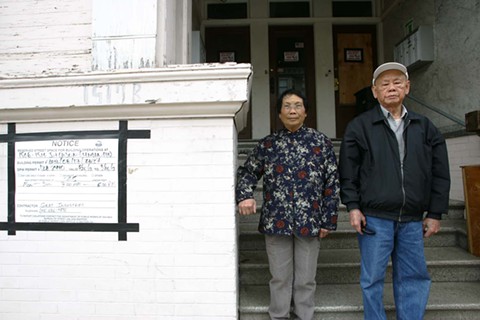
Members of Lee family quietly moved out of their longtime home in Chinatown last night, a day before their latest scheduled Ellis Act eviction, which had been postponed twice before thanks to headline-grabbing progressive activism that turned away deputies and persuaded the Mayor’s Office to intervene with the landlord.

But this time, the Mayor’s Office has been mum about the case (officials haven’t responded to our requests for comment) after failing to find a solution to the Lees – an elderly couple using Social Security to care their disabled 48-year-old daughter – still unresolved situation. With help from the Asian Law Caucus and Chinatown Community Development Center, the Lees moved their belongings into storage while they are staying in a hotel.

“The family is staying at a hotel in the city for the next few days as they try to finalize on a couple of potential rental units here. They’ll be paying over twice the amount that they had been paying for their rent-controlled unit. Their SSI won’t be enough to make ends meet, and so they will be spending down their relocation compensation, which may be depleted in the next several months,” Asian Law Caucus attorney Omar Calimbas told us. “Hopefully, the family will be able to find subsidized housing by then, or they will be in a precarious state of affairs again.”

Sheriff Ross Mirkarimi told us yesterday that he’s been waiting for word from the Mayor’s Office and hoping to avoid this evicting the family. “We’re duty bound. It’s a court order,” Mirkarimi said of his eviction obligation. “The eviction is on the books, but we’ve been expecting an alternative plan by the Mayor’s Office after he intervened in this case.”

The San Francisco Examiner, which had earlier given splashy credit to Mayor Ed Lee for stalling the Lee family’s eviction – to the irritation of some activists that probably deserve more credit than anyone in the Mayor’s Office – had the only journalist on the scene with the Lees last night, but the paper didn’t have any comments or updates from the Mayor’s Office.

Weeks before Mayor’s Lee’s headline-grabbing Sept. 25 intervention in the Lee case, Mirkarimi had his Eviction Assistance Unit contact the Lees and try to help them avoid being turned out with no place to go. But in a city where his office performs around 1,000 evictions per year – it executed 998 court-ordered evictions last year — the single full-time staffer in that office is overwhelmed.

“We need more staff to assist when it gets to this point,” Mirkarimi told us. But his budget request last year to add another position to the unit was denied by the Mayor’s Office and Board of Supervisors, a request that Mirkarimi renewed in a Sept. 30 letter to Mayor Lee.

“When there is a determination, our EAU attempts to support individuals and families facing eviction, not just Ellis Act evictions, but all evictions. This unit is comprised of one full time deputy sheriff and the partial time of another deputy.  Based on [the current eviction] trend, our EAU staffing is insufficient and ill-equipped to assist qualified individuals and families who may be at risk of becoming homeless,” Mirkarimi wrote. “With renewed focus on the consequences of evictions in San Francisco, I return to our FY 2013-2014 budget request to enhance our EAU with one full time clinical outreach worker.”

Meanwhile, the activists say they won’t wait for the next budget cycle or rely on the Sheriff’s Department for help with imminent evictions. They say that they plan to propose a package of reforms for dealing with the eviction crisis as soon as this week.

“Overall, the several weeks of reprieve from the eviction that were won after an incredible display of community solidarity with the Lees were very important in giving them time to find a temporary fix,” Calimbas told us. “Stay tuned in the next day or so for the next move by a growing coalition of community organizations, housing advocates and labor in pushing for a comprehensive package of legislative reform to curb the outbreak of displacement-based speculation.”

Guardian Staff Writer Joe Fitzgerald Rodriguez contributed to this report.


Celebrities tell NSA to stop spying as digital privacy advocates head to D.C.

Thousands of privacy and civil liberties activists are bound for Washington, D.C. for an Oct. 26 rally calling for surveillance legislation reform, in response to National Security Agency spying programs.

It’s being organized by more than 100 groups that have joined together as part of the Stop Watching Us coalition. The group has launched an online petition opposing NSA spying, and plans to deliver about 500,000 signatures to Congress on Sat/26. Many of the key drivers behind Stop Watching Us, from the Electronic Frontier Foundation to Mozilla, are based in San Francisco.

In advance of the rally, Stop Watching Us also released a video featuring celebrities who, like millions of Americans, happen to like corresponding via email and text messages. It features appearances from Phil Donahue, John Cusack, Maggie Gyllenhaal, Congressional Rep. John Conyers, NSA whistleblower Thomas Drake, Pentagon Papers whistleblower Daniel Ellsberg, and others.

Since Edward Snowden leaked the NSA spying documents earlier this year, the Bay Area has been host to a number of protests organized in response. This past July, some college kids who met on reddit organized a march against NSA spying, called Restore the Fourth (referring to Fourth Amendment privacy rights), and paraded through downtown San Francisco. Meanwhile, the first-ever clues that the NSA was running a domestic spying program were picked up at AT&T’s Folsom Street facility in San Francisco by whistleblower Mark Klein, who exposed the operations in technical documents that subsequently spurred a lawsuit and mainstream news coverage in 2006.

As The Atlantic Wire pointed out not too long ago, the Stop Watching Us coalition is unique in that it straddles ordinary political boundaries:

“It comprises perhaps the most diverse collection of groups in the modern history of American politics. Among the groups and businesses that are signatories to it are: 4Chan, Freedomworks, BoingBoing, CREDO Mobile, Greenpeace USA, Mozilla, reddit, Sunlight Foundation, Taxpayers Protection Alliance, and California’s The Utility Reform Network. You can see the thread that ties these organizations together, but it’s a thin one.” 

Is the growing digital privacy movement at all worrisome to Sen. Dianne Feinstein, who is chair of the Senate Intelligence Committee and a former San Francisco mayor? So far, she doesn’t seem to be showing any signs of backing down. Feinstein defended the spying program in a recent USA Today editorial, writing that she believes the program should continue and even stating that “the call-records program is not surveillance.”

Guardian forum examines who San Francisco is building housing for

218

Our original intention for “Housing for Whom?” — a Bay Guardian community forum tomorrrow night (Wed/23) at the LGBT Center — was to look at the hottest items on an otherwise lackluster fall election: Propositions B and C, which would allow a controversial waterfront luxury condo project to be build at 8 Washington St.

So we booked key proponents on the each side the measure: Jon Golinger, president of the Telegraph Hill Dwellers and a key opponent of the project; and Tim Colen of the Housing Action Coalition, one of three proponents of Prop. B. We’re excited to hear what they have to say and to discuss the measures.

But in the weeks since then, there’s been explosion of public concern over the related issues of gentrification and evictions, accompanied by a renewal of progressive activism that has scored some notable victories, all of its set against a skylight of construction cranes building a glut of high-end housing in Upper Market and other areas.

So we’ve decided to broaden our discussion to look at the implications of the city’s current housing and economic development policies, examining what the San Francisco of the the future will look like if we continue on our current course and what can be done to control our destiny.

To help guide that discussion, our panel will also include Fred Sherburn-Zimmer, an activist with the Housing Rights Committee who recently went through her own personal eviction battle; and Peter Cohen of the Council of Community Housing Organization, who will offer an overview of the housing now being built and the challenges in meeting the needs of current city residents.

We’ll also be turning to you, Guardian readers, for your input and observations. And to help with that, the crowd will include veterans of the successful recent campaign to prevent high-ending clothing chain Jack Spade from opening a store in the Mission and the struggles to prevent the Lee family eviction and a mass eviction on Market Street that would be the biggest single eviction since the I Hotel.

Moderating the discussion will be yours truly, Editor Steven T. Jones, and News Editor Rebecca Bowe. So come join us from 6-8pm at on the fourth floor of the LGBT Center, 1800 Market St.   

Supes approve funding request for jail construction

“A Costco warehouse with metal bunk beds” is how Matt Freeman of the San Francisco Sheriff’s Department described one of the county’s outmoded jail facilities, speaking at a meeting in City Hall today (Tue/22). At its meeting, San Francisco Board of Supervisors cleared the way for the Sheriff and the Department of Public Works to request $80 million in state funding to be put toward the construction of a modernized jail.

The new facility would replace seismically vulnerable 1950s era jails that are slated for demolition as part of a larger Hall of Justice overhaul. However, some supervisors voiced reservations about the plan.

As the Guardian recently reported, plans for the $290 million jail rebuild have drawn criticism from community advocates who question the use of resources that could be spent on programs to help people stay out of the criminal justice system.

Sup. Eric Mar, who refused to endorse the grant application at a recent Budget & Finance Committee meeting, piped up at the beginning of this meeting to say he’d had a change of heart. Evidently, Sheriff Ross Mirkarimi and some others from the Sheriff’s Department took him on a tour of the San Bruno jail, the county’s most modern facility, to show him the difference between an outmoded jail and one designed with rehabilitative programming in mind.

“I see now that the need is really critical, for safety for inmates but also … a seismically safe and modern jail,” Mar said. “I’m convinced now that it’s really about … supporting anti-recidivism and rehabilitation programs. I really appreciate the sheriff and his staff for opening my eyes.”

But Sup. David Campos was not yet entirely sold on the need for a new jail. “I am not in a position to say that I support the building of this facility,” he said, but said he could be open the possibility after studying the details. “I do acknowledge that I have a bias – I would rather spend less money building a jail than building other things that I think are better investments for our city. That’s not to say I don’t want the jail population to be taken care of. I clearly do.” His office has requested a hearing on this topic, which will be held in early December.

Sup. John Avalos said he too had found it “difficult to support a jail altogether,” but noted that a debate on that decision would come at a later time. “This is just making sure that we have an opportunity to receive state funding if we decide to rebuild,” he said.

In the end, the request to submit an $80 million grant application for state funding was approved without opposition. But the preliminary discussion suggests that a broader debate over San Francisco’s jail rebuild is on the horizon, and it’s an issue where typical political allies won’t necessarily see eye-to-eye. At the same time, it’s a big financial commitment. According to City Controller Ben Rosenfield, the total cost could be in excess of $500 million after financing is factored in.

Sister looks explode: Project Nunway V kicks fashion into “Dissident Futures”

0

You want looks? Here’s looks.

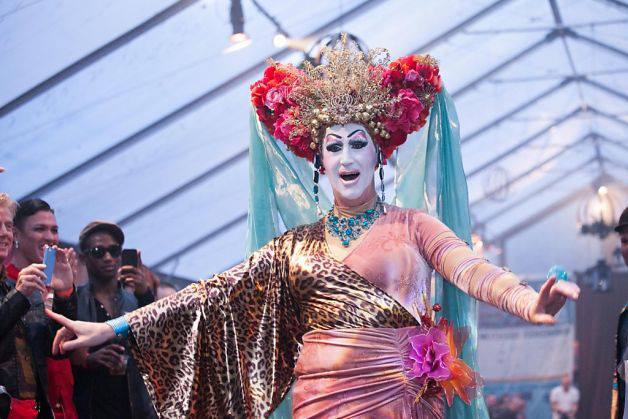
For the fifth year, Sister Baba Ganesh and the Sisters of Perpetual Indulgence will put on their eye-popping, charitable fashion show Project Nunway — an extravaganza seriously not to be missed if you want some only-in-SF flavor. Or, as head sis Sister Roma puts it: “In my 25-plus years of being a sister this is one of the most amazing, jawdroppingly beautiful events we’ve ever produced.”

On Nov. 2 at YBCA, the big Sisters event will delve into the realm of Big Brother, with the theme “Dissident Futures.” Expect chills!Here are a couple behind the scenes looks at the preparations, with press release below.

San Francisco’s preeminent Order of irreverently irreligious nuns returns to YBCA for a spectacular extravaganza of the haute-est couture. Project Nunway V: Dissident Futures brings the Sisters of Perpetual Indulgence’s annual gala back to the place of its glorious birth in the grandest fashion, featuring mistresses of ceremonies Jane Wiedlin of The Go-Gos, and Sister Roma, the Grand Marshal of San Francisco Pride 2012 and guest judge, Pandora Boxx of RuPaul’s Drag Race. Bay Area funketeers, Planet Booty, Honey Mahogany, and SpacEKrafT will provide the soundtrack as the Sisters turn out their best sashay and shantay, bedecked in original high-fashion (and high-concept) looks created from recycled materials in collaboration with local designers. Futuristic fierceness is the new black this year, so bring your Big Brother because it will be a night of glamour, drama—and, of course, cocktails—that you won’t want to miss.

Project Nunway V: Dissident Futures

Sat, Nov 2, 7pm

YBCA Forum

701 Mission, SF

www.ybca.org/project-nunway

The Performant: Cheers for fears

0

If you consume the news at all you’ll find a lot to be afraid of that seems endemic to the modern age: swine flu, restless leg syndrome, Ellis Act evictions, terrorist sleeper cells, compromised data privacy, zombie attacks. But despite its almost constant presence in our lives, this kind of fear merely creates a continuous low-grade malaise, an emotional state which appears to benefit only the evolution of pharmaceutical companies and the self-help book publishing trade.

So it’s no wonder that in our search for “real” sensation, we often turn towards a more primal state of fear. The sort of fear that compels us to skydive out of airplanes, ride roller coasters, and surf giant waves, activities designed to trigger that survivalist fight or flight instinct that we then harness for our own adrenaline-generating, sensation-seeking purposes. The kind of fear that compels us to visit that most seasonal of attractions: the haunted house.

There are haunted houses designed to make you laugh and haunted houses designed to make you scream, and ideally a bit of each, a giddy state of being which San Leandro’s Fear Overload makes a considered effort to provide.

Conveniently located just steps away from the Bayfair BART, in an innocuously suburban shopping center, the R-rated Fear Overload contains two separate labyrinths for its patrons to struggle through: “Ward 9” (a supposed asylum for the criminally insane), and the macabre Abusement Park. Both are equally blood-drenched and disorienting, and are welcome throwbacks to the glory days of haunted houses where the highest-tech prop on display was a guillotine, and the real scares came from the all-too human element lurking in the shadows ready to pounce. Let’s just say ironic detachment won’t get you very far in Fear Overload, and thank goodness for that.

At the door to Ward 9, my companion T and I are handed an almost completely useless flashlight and bid a hearty farewell, the door slamming behind us like a butcher’s cleaver. To navigate the dark and claustrophobically narrow corridors with a pencil-thin beam of intermittent light proves both unnerving and hilarious, and as each twist of the path leads to room after room of blood-splattered furniture, swinging doors and rattling cupboards, rotting corpses with dramatically gory headwounds and severed limbs, dungeon walls lined with bodies in straitjackets, oh, and living monsters who delight in leaping out of random corners our anticipation grows into a kind of delightful dread.

I’ve chosen the right partner for this foray into fear. T’s suspension of disbelief is willing and open, her cool quotient, like mine, hovers close to zero, and she is more than happy to let me hold the flashlight, which I figure could at least serve as a makeshift bludgeon should it come to that. In the FAQ comes the promise that the actors won’t touch you, at least not intentionally, but there’s no promise that won’t get in your face, and we wind up getting pretty close and personal with a lot of great makeup jobs and mask designs. Their timing, I have to say, is mostly impeccable. We scream every time.

From a theatrical standpoint, both haunted “houses” are a scenic designer’s wet dream, full of intricately-conceptualized nooks and crannies filled with scenes of extreme splatter gore. In Ward 9 we find the disturbingly shambolic nursery and the “morgue” inhabited by a double-jointed creature that slithers as much as crawls into our path to be especially evocative, and in the Abusement Park, our theatre-geek hearts are filled with admiration for the atmospheric boiler room and the horrifyingly stark and bloody women’s room, which also proves the hardest room to find our way out of (tip: ask a monster for help).

Sure, there’s not a lot of character development per se, or at least not enough to compel us to stick around and hunt for backstory, but as the protagonists of our own survival story, we make it through to the final xit relatively intact, which is really the only storyline that matters when confronting fear as a means of accessing fun.

Through Nov. 2, $19.50-35

Fear Overload Scream Park

Bayfair Center

15555 East 14th St., San Leandro

(510) 730-2221

www.fearoverload.com

Heads Up: 7 must-see concerts this week

2

Well lookie here — seems like SF really is for lovers. We’ve got hoards of young folks intermingling on OkCupid, Grindr, and Tindr. And yes, the penultimate event: Kimye got engaged at AT&T Park last night. Kanye West rented out the whole park to propose to Kim K., which seems…lavish and kinda lonely? Although, I hear there was a 50-piece orchestra, so those people he hired were there at least.

Anyway, that sprinkly-gooey-sweet stuff (ahem, love) extends to the bands you should be checking this week: tender Nanna Øland Fabricius (otherwise known as Oh Land), boy-girl duo Kisses, balmy Warm Soda, and um, Bobby Joe Ebola and the Children MacNuggits.

Plus, there are plenty more acts popping in. There’s even an orchestra event that should put Kanye’s small-ish offering to shame:  Lisa Bielawa’s large-scale sound event in Crissy Field with more than a thousand musicians. See below for more on that and all the others.

Here are your must-see shows: 

The Garden
“This Burger Records up-and-comer is an identical twin duo hailing from Orange, Calif. The 19-year-old Shears brothers specialize in melancholy snippets (most of their songs barely pass the one-minute mark) of post-punk drum ‘n’ bass, androgynous style that would make Boy George jealous, teen angst, and getting reblogged on Tumblr. Their songs are haunting and beautifully executed, though rarely understandable. The lyrics are drawn from inside jokes and twin-speak (the Shears have a secret language, for those occasions when they even need to communicate verbally) and the vocals are often drowned in feedback and reverb. But the words don’t seem to matter. Whatever they’re doing or saying, they’re doing and saying it unlike anyone else.” — Haley Zaremba
With Lovely Bad Things, Bicycle Day
Tue/22, 9pm, $10
Brick and Mortar Music Hall
1710 Mission, SF
www.brickandmortarmusic.com
http://www.youtube.com/watch?v=VFIuZ3C7IJM

Oh Land
Danish musician Nanna Øland Fabricius (otherwise known as Oh Land) is a Renaissance woman. She’s a producer, a singer-songwriter, a former student of the Royal Danish and Royal Swedish Ballet schools (before an injury nudged her toward music-making). And this is perhaps why “Renaissance Girls,” the first single from her newest full-length Wish Bone (Federal Prism/Tusk Or Tooth) works so well. Like much of Oh Land’s output, it’s musically all over the place, with beats and piano, quick-dropped lyrical phrases and twee girlish high notes. And the video both harkens back to her early dancerly ways and provides a hard/soft dichotomy with interpretative choreography performed by Fabricius herself in Hello Kitty-pink overalls set to the backdrop of a dusty, cement-filled construction site and urban alleyways.
With Sun Rai.
Wed/23, 8pm, $15
Independent
628 Divisadero, SF
www.theindependentsf.com
http://www.youtube.com/watch?v=zFCYo3XocIM

Kisses
“Boy-girl duo Kisses is some kind of weird fun. Its poppy sound incorporating analog keyboards, simple percussion, and pleasant harmonies is easy listening at its finest. But the pair isn’t afraid to employ negative space in its tracks, and often places simple beats next to minimal lyrics, creating a sound that falls somewhere between pop and a ’70s tribute group. The dream pop enthusiasts released their second full-length album Kids in LA this past September and have been touring the US with the Blow since the beginning of October. Singer Jesse Kivel embodies a somber nostalgic romantic behind the mic, and keyboard-soundboards Zizi Edmundson, tinkering nonchalantly and occasionally oozing vocally into the mic, makes apathy cool again.” — Hillary Smith
With the Blow and the Ian Fays
Fri/25, 9:30pm, $16
Bottom of the Hill
1233 17th St, SF
(415) 626-4455
www.bottomofthehill.com
http://www.youtube.com/watch?v=vfzUlwXVcIU

Deer Tick

“In 2013 Deer Tick is proving that the only constant is change. The Providence alt-country outfit has always been reliable and consistent in its consistent touring, heavy drinking, and all-around debauchery. But that was before frontperson and primary songwriter John McCauley dealt with an imploded engagement, a father gone to prison, and the realization that maybe it was time to start drinking responsibly. Deer Tick has scaled back its usual 200+ shows per year schedule, and its penchant for escapism, focusing instead on showmanship and honest, personal songwriting. Negativity, its newest studio album, is almost entirely autobiographical. But don’t worry, it’s still Deer Tick — the shows will still be a riotous, sweaty mix of originals and covers, and despite the band’s clean-up act, audience drunkenness and hooliganism is still highly encouraged. “ Zaremba
With Robert Ellis
Fri/25, 9pm, $21
Slim’s
333 11th St, SF
(415) 255-0333
www.slimspresents.com
http://www.youtube.com/watch?v=fNG6aK81ZAk

Clarion Alley Block Party with Bobby Joe Ebola and the Children MacNuggits
There are a few new things you should know about long-running “goofballs of the East Bay punk scene” Bobby Joe Ebola and the Children MacNuggits. The ’95-born act has two new books out through Microcosm Publishing, a comic listen-along book (Meal Deal with the Devil) and a complete discography songbook (The Bobby Joe Ebola Songbook). Both are oddball hilarity at its finest. The Bobby Joe Ebola Songbook contains song lyrics and guitar chords — play along at home! — witty how-to band/life advice, tour anecdotes, and “other bizarre detritus.” Secondly, the band is playing the annual Clarion Alley Block Party this weekend and that should be wall-to-muraled-wall fun. Support DIY punk and an important SF artist-community institution with a full day of live music.
With Apogee Sound Club, CCR Headcleaner, Quite Polite, Devotionals, and more.
Sat/26, 11am-10pm, free
Clarion Alley
Mission Street, SF
Facebook: Clarion Alley Block Party
http://www.youtube.com/watch?v=XCp_oBuWUQw

Airfield Broadcasts
For this large-scale event, composer Lisa Bielawa will turn Chrissy Field into a giant “musical canvas” in which listeners can interact with broad sounds floating through the area with the help of nearly a thousand professional and student musicians including orchestras, choruses, bands, and experimental new groups. The musicians will begin in the center of the field then slowly move outwards, playing Bielawa’s original score.
Sat/26, 10 am and 4pm; Sun/27, noon, free
Crissy Field, SF
www.airfieldbroadcasts.org
http://www.youtube.com/watch?v=YYz1ohOWdLo

Warm Soda
The fizzy, ‘70s glam-aping, powerpop local rockers of Warm Soda are welcome anytime in Heads Up, but this is an extra-special Warm Soda happening. It’s a rare acoustic set by the rock’n’roll band, presented by music mag Radio Silence. Prepare for an intimate evening with one of the Bay Area’s burgeoning acts.
With A Carnival of Hours
Sat/27, 7:30pm, $8
Make-Out Room
3225 22nd St, SF
www.makeoutroom.com
http://www.youtube.com/watch?v=seK8t41objc

BART reaches tentative deal with unions, ending the strike

79

The BART strike ended this morning — the second four-day strike of the current labor contract impasse, both of which hobbled the  Bay Area’s transportation system — after the district reached a tentative contract with its three unions late last night.

The agreement was spurred by the tragic deaths of two BART employees on Saturday and by yesterday’s National Transportation Safety Board revelation that the train that struck the workers was being used by the district to train drivers, presumably in preparation for offered limited public service during the strike.

“We are pleased to announce that we have reached a tentative agreement with union leadership that will bring the trains back into service, starting tomorrow, while union members consider the agreement and vote on it,” BART General Manager Grace Crunican said in a public statement issued at 10pm last night, withholding details of the deal. “This is a good package for our union members while still allowing the District to make the necessary investments in our infrastructure. That investment is critical to the future of the Bay Area.”

Union sources tell the Guardian that Saturday’s tragedy definitely created the conditions to reach an agreement, with the district softening its hardline insistence on its “last, best, and final offer” and the unions agreeing to some work rule changes, which they say the district and media had mischaracterized their position on. Technological modernizing will go through, but the unions retained authority over safety and other working conditions. 

For more on the breakdowns that led to the strike, the circumstances surrounding Saturday’s accident, and the aftermath of that tragedy, read tomorrow’s Guardian print edition, which goes on line this evening. 

‘Long Shot’ doc follows Bay Area hoops star Kevin Laue

0

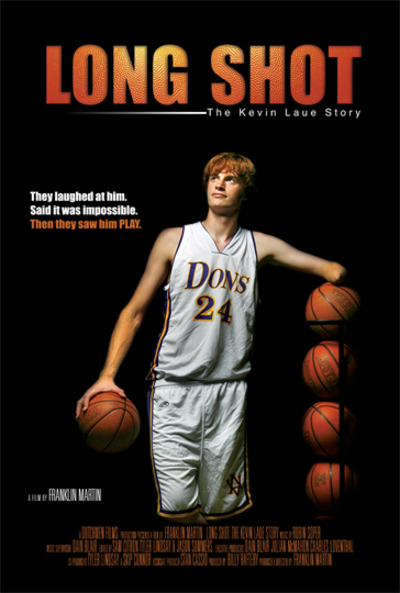
Perfectly timed to coincide with the start of basketball season: the release of Franklin Martin’s Long Shot: The Kevin Laue Story, billed as “Hoop Dreams meets Murderball,” with a healthy shot of Linsanity (now playing) to boot.

Martin spent four years following the Pleasanton-raised Laue, who was born with a left arm that ends just below his elbow. We see the budding hoops star — an honor student at Amador Valley High School as the film begins — mature from tousle-haired teen standout to Division I hopeful, refining his skills at a tough Virginia military academy along the way.

Laue is commandingly tall (nearly seven feet) and naturally gifted (despite, as all his coaches agree, also being naturally left-handed). He’s also appealingly self-deprecating, which makes him an ideal doc subject. But college scouts are hesitant to take a chance on a kid with just one hand — even though game footage makes it clear that Laue’s disability has no bearing on his ability to block shots and capture rebounds.

It’s frustrating, to put it mildly, especially for a kid whose entire life seems to revolve around basketball, but Laue is (for the most part; military school’s strict rules do inspire a few rebellions) willing to work harder than any other kid to keep up with the competition. He’s driven not just by his own dreams, but also nagging regrets over not saying a proper good-bye to his father, who passed away from cancer when Laue was 10. It’s clear he views his athletic success as a tribute to his dad.

Long Shot could have benefitted from interviewing more of Laue’s teammates — what’s it like to play with someone with just one hand, whose abilities are underestimated by nearly every opponent? — or even some of his friends. We see him attend one post-high school beer bash and hear a few offhand comments from his classmates. But beyond that, Long Shot focuses on Laue, his family, and his coaches (all of whom seem to be cut from the same gruff-yet-secretly-kind cloth).

Still, sports stories don’t come more inspirational than this, and locals who recall Laue’s rise to national prominence — including coverage in Sports Illustrated which attracted the attention of then-President Bush — will especially enjoy this inside peek at his hard-won success.

Oct 25-Nov 1
Vine Cinema
1722 First St, Livermore
www.thekevinlauestory.com

Live Shots: Treasure Island Music Festival 2013

0

Maybe people just don’t know how to party anymore, but I didn’t come across vomit once at the Treasure Island Music Festival. The crowd’s vibe was more or less well-behaved all weekend — pretty chill considering how many people were clustered on the island for the fests’ seventh successful installment.

The organizers rely on big names, the unique setting, a variety of vendors, and plenty of distracting flash (including the nearly iconic 60-foot Ferris wheel you can ride at $5 a pop) in order to keep this thing a destination. 

It was my first TIMF experience and I’ll admit the lineup wasn’t exactly the selling point for me. I thought at least I could get nostalgic over Beck, while Detroit-duo ADULT. still holds a degree of allure. I figured I’d spend most of my time milling around (highly recommended for optimal people watching; plenty of fur) and hoped to stuff my face with tons of good food (the mac and cheese hit the spot, the fish and chips got too cold too fast, but the chicken and shrimp paella was a winner).

Kudos to the show’s producers, Another Planet Entertainment and Noise Pop Industries, in their efforts at keeping this ship running tight on many levels. It’s often noted that concertgoers won’t experience any scheduling conflicts between the two stages at this event (Outside Lands, you’ve been one-upped in this category). Plus the purchase of your ticket, which could have cost up to $150 for two-day general admission or $275 for VIP (depending on how you roll) entitled you to a free ride on their massive fleet of shuttle buses that ran back and forth from the island to the Bill Graham Civic Auditorium drop off/pick-up point.

Even the Porta-Potty situation wasn’t anything near the bladder-punishing clusterfuck I’ve experienced at the free Hardly Strictly Bluegrass Festival in Golden Gate Park (that’s free vs. a couple hundred bucks for ya). Entire sections of what resembled fairgrounds were dedicated to ample, underused, and very clean johns. So clean I didn’t think twice about picking up a wadded $20 bill that had another inside of it!

That may sound questionable, but I was too busy enjoying the warmth of my makeshift shelter since the temperature seemed to drop by more than 20 degrees on the island during Night One. Thom Yorke complained during his Atoms for Peace headlining set when he mentioned how he came to the Cali sun to get away from the British cold and gloom. No such luck for the rock star. The winds were relentless. Sunday seemed to grow even colder, and the winds whipped up even earlier than the day before. 

From a curator’s standpoint, the musical difference between days one and two were notable. Saturday was much heavier on the electronic and hip-hop side. That day’s lineup included a ridiculous hype-filled set by duo Major Lazer, which passed out party whistles as soon as it hit the stage, shot t-shirts from a handheld air cannon, and at one point, a member (maybe Diplo?) ran on top of the crowd inside a giant-inflatable ball that resembled a hamster’s toy. It all seemed like an over-budgeted high-school pep rally, but the crowd ate it up. Indeed, it was an impressive spectacle.

Sunday seemed less druggy (the day before, the same man somehow managed to ask me twice at different locations of the largely anonymous-feeling fest, where he could get some “MDMA”) less attended, and more laid back in tone. Children and adults alike ran through a trippy bubble display put on by a carnie-type vendor. Acts like Japandroids, Sleigh Bells, and Animal Collective provided respective returns to rock, power pop, and instrumental intensive sets with a global flare.

Beck’s set relied heavily on post-Midnite Vultures material, but I was happy to hear him sing about those old “hotwax residues.” He brought Sleigh Bells’ Alexis Krauss on stage with him just as I was heading back to the shuttle busses. Apparently I missed the cover of MJ’s “Billie Jean.”  Instead, I rode in luxury through a thick wall of fog to the mainland where a treasure of a local music scene lies waiting, markedly untapped this year. 

Train that struck and killed two BART workers was operated by trainee

103

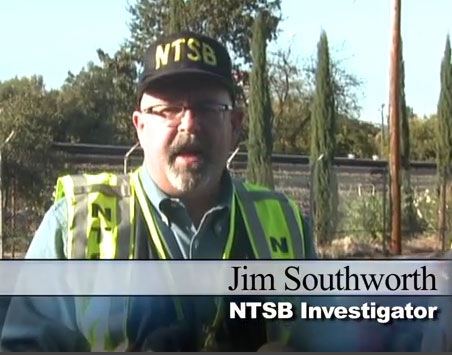
National Transportation Safety Board investigator James Southworth confirmed at a press conference on the afternoon of Oct. 21 that the train that struck two BART workers was “in operation for training and maintenance purposes,” and that the operator at the time of the fatal crash was a trainee. He said two of the six people on board were trainees.

The NTSB conducted interviews for 8-10 hours with the train operator, the operator’s supervisor and someone from the dispatch office. 

Asked whether the driver had received safety certification, he said, “the training is part of the certification process.” 

When asked if the driver was previously certified, Southworth said “that is information I don’t have.” It’s unclear if the driver was a new trainee or if his certification had lapsed.  

He said the train was going 60-70 miles per hour at the time, and there was an emergency stop. The train was driven by computer under “Automatic Train Operation” and was not in manual mode.

The district’s decision to run the trains without experienced operators would come against the safety advice of the three striking unions, one of whom — Amalgamated Transit Union Local 1555 — even filed a lawsuit earlier this month seeking to prevent BART from doing so. The case is pending, the union’s lawyers told the Guardian. 

“The use of uncertified training personnel to provide uncertified managers with a crash course in how to operate BART trains also presents a public safety issue,” the unions wrote in the suit. 

BART workers undergo 15 weeks of safety training every three years, they wrote, training that saves lives. 

For more on the concerns around safety training and certification for track inspection workers, read our interview with BART safety trainer Saul Almanza.

Brown takes heat on fracking

On Thursday Oct. 17, more than fifty people gathered in front of the Parc 55 Wyndham Hotel in downtown San Francisco to protest Governor Jerry Brown’s reception of an environmental award. 

Every year, the BlueGreen Alliance hosts its Right Stuff Awards dinner to honor prominent individuals promoting a sustainable environment and economy. This year, they selected Governor Jerry Brown as a winner in the government category. The choice enraged environmentalists, who congregated where the awards dinner was being held to voice their indignation.

Brought together by several collaborating organizations, including Idle No More and Gathering Tribes, the protesters blocked the entrance to Parc 55 as they awaited the governor’s arrival. Bearing signs with messages such as “Jerry Brown is Not BLUE or GREEN,” they yelled to drivers who honked horns in support as they sailed past.

They were upset by Brown’s support for Senate Bill 4, which he signed into law in September. SB-4 is California’s first legislation regulating hydraulic fracturing, more commonly known as fracking, which involves shooting massive amounts of water and toxic chemicals deep into the earth to crack rock formations and release otherwise trapped oil and natural gas deposits.

Widely viewed as flawed legislation that is far from what environmentalists had in mind when they called for the practice to be regulated in California, the bill allows fracking permits to be approved as long as oil and gas companies publicly disclose which chemicals are used in the process. The legislation also requires groundwater and air quality monitoring before operations begin. Environmentalists fear that SB-4 will lead to a dramatic expansion of fracking in California, by allowing access to the state’s vast Monterey Shale deposit, estimated to hold 15.4 billion barrels of recoverable oil.

“This award from BlueGreen is a travesty,” declared protester Steve Ongerth, after a flash mob of young people danced to the song “Toxic” by Brittney Spears, dressed in shirts spelling out TOXIC while donning surgical masks.

In the past several years, Governor Brown has accepted at least $2.49 million in financial donations from oil and natural gas interests. Environmentalists point to these donations as an explanation of Brown’s refusal to impose a moratorium or an outright ban on fracking, despite pressure from a statewide coalition of organizations calling for such protective measures.

They also blame him for the changes made to SB-4 in the final week before the bill was voted on, which followed intense lobbying by oil and gas interests. The amendments substantially weakened restrictions on fracking by removing some of the bill’s tougher regulations and diluting language intended to ensure that new wells go through adequate environmental review.

“Jerry Brown has sold out the California public for his own self-serving interests. He made a deal with the devil,” said protester Pamela Zuppo of 350 Bay Area. “This is a fracking bill gone wrong. It is referred to as a regulation bill, but it is not. It is an institutionalization of fracking bill and it’s the destruction of our democracy.”

When he signed SB-4, Brown said it “establishes strong environmental protections and transparency requirements,” but added that he plans to seek additional changes next year to clarify the new requirements. So far, details remain sketchy on what areas of the bill will actually be addressed.

At the last minute, activists learned that Brown would not be attending the event to accept his award in person. When this was announced, the crowd of protesters let out a cheer.

But environmentalists who remain concerned about fracking are keeping the pressure on. On Saturday, Oct. 19, activists from 350.org, Food & Water Watch and the Center for Biological Diversity held a march and rally in downtown Oakland to call on Brown to ban fracking.

“Over the past year, Governor Brown has gone against the wishes and best interests of Californians — the majority of which oppose fracking — and has clearly stated his support for the dangerous drilling process, said Food & Water Watch Northern California Organizer Tia Lebherz.

“By doing this he is embarrassing himself and putting his legacy and our state’s future at risk.”

Sweet ‘n’ local: chocolate-making with Dandelion at the SF Botanical Garden

45

“My name is Kaylen, and I’m a chocoholic,” I announced at the Mesoamerican cloud forest at the San Francisco Botanical Garden Society (SFBGS), where users like me met for a recent course taught by Dandelion Chocolate. But what else is there to know about chocolate, apart from learning how to quit?

A whole botanical and cultural history, as it turns out, including tribal trading spats, terroir to make a oenophile envious, and ancient medicinal remedies — so don’t stop drinking just yet. (Sound enticing? Sign up for SFBGS’s upcoming class with Dandelion Chocolate and Four Barrel Coffee on Nov. 9; more Dandelion events here.) Here’s the report.

Cacao and the cloud forest
The cacao plant thrives in Mesoamerican cloud forests, 6,000 to 10,000 feet above sea level and only 10 degrees north or south of the equator. This explains why San Francisco’s climate doesn’t agree with the picky pod. Mesoamerican botanist Dr. Joseph Barbaccia, leading the class on a tour through the cloud forest, explained, “We can grow the trees, but we can’t approximate the environmental factors.”

Nevertheless, many transplants from Mesoamerican cloud forests flourish here in the bay fog instead of down south, where cloud forest cutting has ravaged the flora and fauna. Among the high-scaling daisy trees, oaks, and pines, plants called out to Barbaccia like old friends, and he couldn’t help stopping every few feet.

“Aha! The pièce de résistance!” he said, pointing at yellow and pink flowers hanging from the Deppea splendens in overturned bouquets, shivering like limp fingers. Dr. Dennis Breedlove, the botanist who collected the initial seeds for SFBGS’s cloud forest, took seeds from this stunning, macabre flower while hiking through southern Mexico. Returning 13 years later, that plant had gone extinct in the wild … but before straying too far down this mossy tangent, it’s time to head to the classroom.

A brief history of chocolate
Dandelion chocolate makers Alice, Joey and Cynthia — not to be confused with chocolatiers, who make confections from pre-made chocolate — led the class. Joey began with a quick history lesson.

The pre-Columbian natives consumed cacao in a sludgy, half-wet, half-ground gruel of sorts. Sound appetizing? Actually, most of their meals had this consistency, and began on a stone, or metate, where Mesoamerican mamas ground maize, chilies, pumpkin seeds, and cacao. (Every household had one, like your modern KitchenAid wedding present.) Once the cocoa beans released oils, the paste was combined with herbs, honey, vanilla, spices, even dyes, as well as maize and hot water.

We ground our beans on a metate but skipped the corn meal and went straight for hot water. Traditionally, someone poured the boiling drink from one terra cotta bowl at shoulder height into another on the floor, back and forth until the drink foamed, but these chocolate makers didn’t care to get dirty. They used a whisk. “You probably don’t want to taste this,” cautioned Alice.

I took a hesitant sip. Despite her warning, I found something mildly pleasing in the thin drink. It tasted oddly like coffee — sort of beany, without the disguise of milk, sugar, and added fats. It had me thinking, does our exhaustively artisanal coffee-culture have room for a new style of mocha, made from ground cacao bean instead of overly artificial sauce?

Bean to bar
Back in 2010, Dandelion Chocolates began experimenting with chocolate-making in a garage using hair dryers and blenders, before moving their factory to Valencia Street. The open space resembles the interior of a barn, if a barn were made of glass and the animals wore aprons.

While most mass producing chocolate companies source from a variety of plantations and over-roast their beans to achieve a uniform “chocolate” flavor in every square, Dandelion makes each bar from a single bean variety, playing around with roasting and mixing until finding a sweet spot, so to speak. Ultimately, they’ve created a broad collection of bars that rival a Napa winery’s selection of pinots, cabs, and malbecs.

Nibbling, melting, slurping
I’ve saved the best for last, so let’s cut to the chase, and taste.

The first samples foiled three of Dandelion’s 70 percent darks, emphasizing the variety in beans — the boom without the frills. Joey called the Patanemo, Venezuela bar “platonic,” since it wasn’t too sweet, nor floral, citrusy, intense or bitter. So what is it? Round, warm, and buttery. It tasted of chocolate at its most classic.

The bean from Mantuano, Venezuela was grown on a women’s co-op farm, just a valley and forest away from the Patanemo bar, yet this one arched and changed on the tongue, beginning sweetly, sliding to citrus, and biting, bitterly, just before the swallow.

The Ambanja, Madagascar bar began with a deep, earthly flavor like wet, ripe fruit, rose to an acidic high, and finished “like a raisin,” said Joey, though I thought of pomegranate. If chocolate tasted like colors, this one was red.

The same Madagascar bean made up Francois Pralus’ 100 percent bar, but a different process and darker roast deafened the subtle harmonies, creating one tone. Still delicious, less interesting. Ritual’s southern Belize bar, which processes wet beans together, immediately pleased my taste buds, skipping the tang and going straight for sweet indulgence. The gritty, unrefined texture of TAZA’s bar tasted of slowly cooling desert sand and S’mores. The only milk chocolate sampled, San Francisco’s TCHO 55 percent, made for an anticlimactic, diluted finish.

Before heading back into the bracing chill, the chocolate makers passed out small cups of their Mission Hot Chocolate. It went down frothing and thick, the pasilla chili nipping at the back of my throat. Oddly, the drink lingered even longer, like an oddly pleasant after-aftertaste in my belly. It pleased and purified the same way a spicy curry cures you of the blues on a rainy day. No wonder the Mesoamericans believed in cacao divine.