SFBG Blogs

Go vote! And then go party!

23

It’s been quiet at the polls for today’s election with just a few more hours until they close. Although the Department of Elections predicted a 35 percent turnout, it’s possible that San Francisco could vie for the historic low turnout of just under 23 percent.

If you’re still heading to the polls and don’t know how to vote, read our endorsements, and then check back here later tonight to see what happened. The only real drama tonight is surrounding Props. B&C, which would authorize the 8 Washington waterfront luxury condo project.

I’ll be reporting from the No on B&C campaign party being held at 443 Broadway (formerly Club 443), Rebecca Bowe will covering the Yes on B&C party at Coqueta on Pier 5, and our resident tech geek Joe Fitzgerald Rodriguez will be at Guardian HQ compiling our tweets (@sfbg) and others here on the Guardian Politics blog and making it look all pretty for y’all.

The pickings are a little slim for our usual list of election night parties, but the others that we know about are Treasurer Jose Cisneros, who will be at Beaux (2344 Market) from 6-9pm, and the Yes on D party at the 03 Bistro & Lounge, which will supposedly be packed with politicos supporting cheaper drugs. Yay cheap drugs! 

UPDATED: Board narrowly approves closing city parks at night

44

The San Francisco Board of Supervisors today narrowly approved Sup. Scott Wiener’s legislation to close parks and large plazas from midnight to 5am, a measure that Wiener said was about preventing vandalism but which progressive activists called an attack on the homeless.

The vote was 6-5, with Sups. John Avalos, London Breed, David Campos, Jane Kim, and Eric Mar voting against the proposal. The key swing votes in the decision were Breed — who wrote an op-ed for this week’s Guardian (posting soon) explaining her position — and Sup. Norman Yee, who was elected last year in Dist. 7 with progressive support.

To address the homeless issue, Kim asked for an amendment to make an exception for sleeping in the parks. Without the amendment, “we are criminalizing poverty and issuing fines people will never pay, and not getting the results we wanted,” she said. 

Hundreds of homeless lay their heads to rest in the parks of San Francisco every night as the city struggles to meet housing demand, which is already illegal under city law. Kim’s amendment says those sleeping in parks are to be cited under previously existing codes against sleeping in parks and not double-fined under this ordinance. Wiener supported the amendment and it was inserted into the legislation, although that didn’t end the debate over the legislation or win over its main opponents.

As the legislation was first introduced, Wiener made the argument he’s made many times before. Closing the parks at night is about vandalism, he said. 

“We need to establish a clear baseline that establishes hours for the park to combat vandalism and dumping,” Sup. Scott Wiener told the board. He made the case that most major cities in the U.S. have laws closing their parks and playgrounds at night, and that even New York City had them on the books.

Wiener also directly and flatly denied that his legislation was an attack on the homeless. 

“If the police wanted to remove people sleeping and camping in parks, they already have the tools to do that. This legislation does not give them those tools beyond what they have,” he said. 

But opponents of the measure, who have been organizing against it for weeks, said it will target the homeless and be selectively enforced. As Mar said at the hearing, “I think this is a really mean-spirited ordinance.”

And that’s when the avalanche of arguments began. Campos, Mar, Avalos, and Kim all  passionately defended the homeless that sleep in the parks. But no one brought more facts to the argument than Breed.

“We have 1,339 shelter beds and 6,000 people in San Francisco with nowhere to sleep,” she said. “I’ve been told again and again this will not target the homeless. But if it doesn’t target the homeless or the investment banker or the firefighter, who will this law target? Suspicious looking people in hoods? Teenagers?” 

The room took on a chill as she evoked echoes of Trayvon Martin and others who have been selectively targeted in the name of justice. Enforcement was her next bone of contention. There are only a handful of park police, often only two, that patrol over 220 parks in San Francisco, she said. 

If the ordinance is supposed to combat vandalism, it doesn’t even do that effectively, she said to the board: “We don’t have a legislative problem, we have an enforcement problem.”

To that end, Yee amended Wiener’s proposal to identify more funding for the park police. Everyone on all sides of the argument acknowledged that two to three officers to cover over 4,000 acres of San Francisco parks was woefully inadequate. 

It’s still unclear where that funding will come from, and how much it will be. 

After the meeting the Guardian asked Police Chief Greg Suhr, who was present for the meeting, if the homeless would be targeted under the ordinance.

“We’re not that Police Department,” he said. But he also said the controversial Sit/Lie Ordinance doesn’t target homeless people either, a claim that homeless advocates would dispute. “We’re a reasonable suspicion detention department.” 

An audio interview with Police Chief Greg Suhr just after the park closure legislation passed, where we asked Suhr, “Will the homeless be targeted?”

Tom Temprano, president of the Harvey Milk LGBT Democratic Club, disagreed. 

“I think that anyone who tells you the homeless will not be targeted in legislation that closes our parks at night are lying to you. There’s no other way to read this legislation,” he said. Temprano was one of the lead organizers of the sleep-in protest of the ordinance, which we previously covered.

When we asked if the ordinance would spur increased law enforcement in the parks, Suhr referred us elsewhere. 

“I leave the deployments to the station captains… certainly [the captains] have a pulse on what’s going on in the parks,” he said. 

So we called Captain Greg Corrales at Park Station, which oversees one of the most populous sections of Golden Gate Park, filled to the brim with campers. Corrales told us he didn’t imagine this ordinance would spur him to increase patrols or enforcement.

“There will not be more officers. The hours of the park have been posted on signs in the park, and past closing time people were cited for failure to abide by the signs,” he said. 

They cite 10-20 people for sleeping in the park per night, he said. As Kim noted, often these don’t lead to any prosecutions at all. 

But as for vandalism, Corrales said that there was recently a vandal throwing rocks through the windows of the Conservatory of Flowers and McLaren Lodge in Golden Gate Park. Would the ordinance help curb people from that kind of behavior?

“We’re already enforcing park closure,” he said. “It really doesn’t have much impact on us.” 


Heads Up: 7 must-see concerts this week

0

The Queen of Rockabilly (who once dated Elvis), a ‘90s shoegaze icon, a legendary SF math rock crew, and a brand new haunted surf-garage quartet. This week’s must-sees stretch beyond space and time, genre and generation. Wanda Jackson, Mazzy Star, A Minor Forest, La Luz — they’re all here now.

Plus, there are two major anniversary events: 10 years for Women’s Audio Mission; 20 years for grimy hardcore label Six Weeks Records.

Here are your must-see shows:

Cold Beat

That voice. Those eerie, singular vocals that are somehow both alien and intimately familiar. They sound like electric Tesla coils wrapped in whipped silk. San Francisco’s Hannah Lew is most often heard harmonizing by three with her striking post-punk trio Grass Widow. With newer project Cold Beat, it’s her vocals alone above the needling guitars and anxious synths of a different band. [Here’s the full feature]
Tue/5, 9pm, $6
Night Light
311 Broadway, Oakl.
www.thenightlightoakland.com
http://vimeo.com/78308330

Mazzy Star
“Santa Monica’s Mazzy Star has been teasing its fans with promises of a fourth album since 2000 — and even then the album was long overdue. Nearly two decades after its last album, Among My Swan, Mazzy Star has really, truly, finally dropped its long-fabled follow-up, Seasons of Your Day. Mazzy Star was seminally important to ’90s shoegaze, and its dark influence is still audible in bands like the Dum Dum Girls and Beach House. The best part about its new album is that while other bands have taken Mazzy Star’s sound and retrofitted it, the band itself has not changed a bit. Seasons of Your Day seamlessly picks up where the band left off in 1996. Hope Sandoval’s haunting voice is still as achingly gorgeous as ever, and you don’t want to miss your chance to hear it in person tonight.” — Haley Zaremba
With the Entrance Band, Mariee Sioux
Wed/6, 8pm, $35
Warfield
982 Market, SF
www.thewarfieldtheatre.com
http://www.youtube.com/watch?v=ImKY6TZEyrI

Wanda Jackson
“When Wanda Jackson first went on tour in 1955, she shared the bill with a young man who quickly became a major musical influence and (for Jackson, at least) a romantic partner. This guitar-slinging fella, named Elvis Presley, helped her transition from country music to a newer, faster, more raucous genre later described as rockabilly. Jackson pioneered the genre, earning her the title of the Queen of Rockabilly and an induction into the Rock and Roll Hall of Fame as an “Early Influence.” Now well into her 70s, the Queen still reigns supreme. While Jackson can’t hit all of the high notes anymore, she’s still full of enough piss and vinegar to put performers more than half her age to shame.” — Zaremba
With the Swinging Doors
Thu/7, 9pm, $28
Chapel
777 Valencia, SF
(415) 551-5157
www.thechapelsf.com
http://www.youtube.com/watch?v=pzJ3hiqsi0U

La Luz [Ed. note: The band was in a car accident last night and totaled its van. To help, donate through Paypal using the email laluzdonate@gmail.com]
Sometimes the unexpected can rip you apart. And sometimes, those rare unanticipated moments can inspire you anew. All the hurt and bewilderment and dark emotions reconfigure and morph into a project, such as an album. La Luz guitarist-vocalist Shana Cleveland felt this molten wave firsthand and the end result is a striking, blackened surf rock album with four-way doo-wop melodies and churling riffs smacking against the seawall. It’s the full-length debut from the Seattle all-lady quartet: It’s Alive (Hardly Art). The group tours to SF this week, opening for of Montreal. [See this week’s paper for the feature]
With Cool Ghouls (Fri/8), Painted Palms (Sat/9)

Fri/8-Sat/9, 9pm, $21
Great American Music Hall
859 O’Farrell, SF
www.slimspresents.com
http://www.youtube.com/watch?v=5cahFMKorqM

Six Weeks Records 20th Anniversary
Two decades is a long lifeline for a DIY record label — especially one known for such short songs. Six Weeks Records, founded in ’92 by Athena Kautsch and Jeff Robinson, has distributed dozens of grimy grindcore, breakneck punk, and loud-as-hell hardcore albums from bands around the world. Clearly dedicated to the art of deafening music, the label also publishes the Short, Fast & Loud fanzine. This two-night anniversary fest features acts of the Six Weeks Records family including LA powerviolence legends Despise You, Tokyo’s Slight Slappers, NY’s Magrudergrind, Capitalist Casualties, Backslider, Coke Bust, P.L.F, and more.
Fri/8-Sat/9, 7pm, $17 each ($30 two-day pass)
Oakland Metro
630 Third St, Oakl.
www.oaklandmetro.org
http://www.youtube.com/watch?v=I29MwZmX24E

Women’s Audio Mission 10th Anniversary Party

Let’s survey the breadth of bands playing this here anniversary party: There’s surfy teenage quartet the She’s, Mariachi Femenil Orgullo Mexicano (the Bay Area’s only all-female mariachi crew), soulful East Bay post-punk trio Little Sister, and DJ Sep, the founder and main resident of Dub Mission, one of the longest-running dub and reggae parties in the US. What do they have in common? They’re all led by powerful musicians and singers of the female persuasion. And the lineup is fitting, as this diverse sonic spectacular is for Women’s Audio Mission, a music production and recording organization geared toward helping women realize their full potential in the music world. Celebrate the org, the ladies, and the scene tonight at WAM’s big party at El Rio.
Sat/9, 3-8pm, $10 donation
El Rio
3158 Mission, SF
www.elrio.com
http://www.youtube.com/watch?v=QjjsL1gdpIc

A Minor Forest
“With noisy and jam-packed intricate time signatures and musical arrangements, A Minor Forest (AMF) stuck out in the Bay Area music scene years ago, taking on a post-rock sound in a community with a simplistic punk tradition. And on Sat/9, the band is reuniting to play its first show in 15 years — at Bottom of the Hill with Barn Owl, fellow labelmate of Chicago’s much-loved Thrill Jockey Records.” [See this week’s paper for the feature] — Erin Dage
With Barn Owl
Sat/9, 9:30pm, $15
Bottom of the Hill
1233 17th St, SF
(415) 626-4455
www.bottomofthehill.com
http://www.youtube.com/watch?v=ab8u3dwkmPc

The Performant: This is Halloween

0

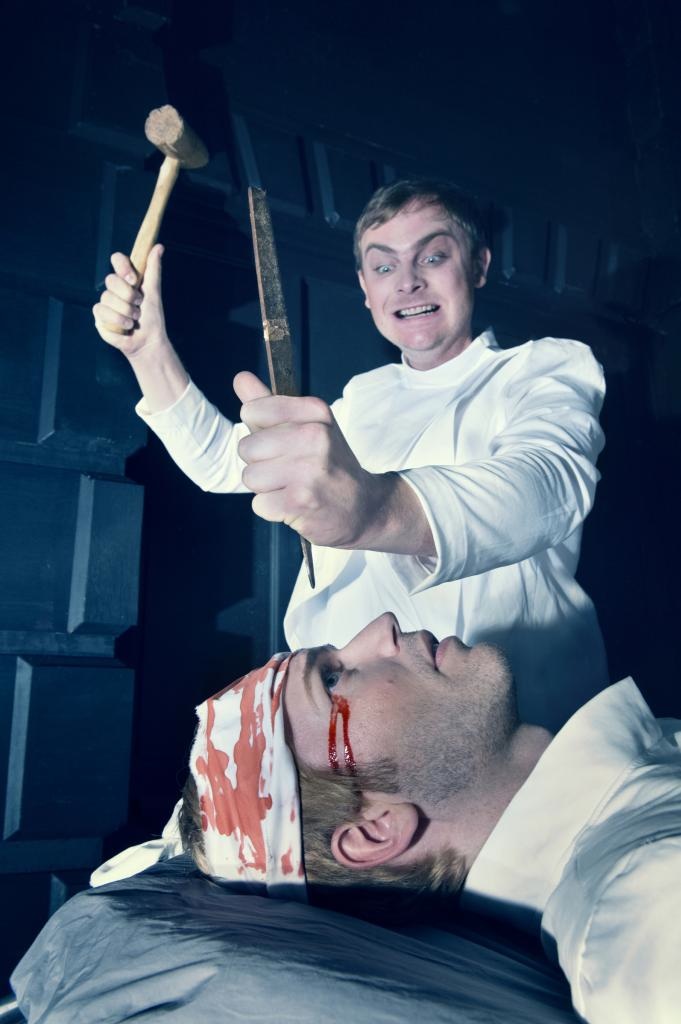
Nothing quite says “Happy Halloween” like an evening full of splatter gore and general mayhem, and this year there were several options to choose from, including an interactive zombie apocalypse battle royale at Chez Poulet and a multi-level haunted house extravaganza at the Old Mint which promised similarly to let patrons “live the horror movie,” hopefully sans actual evisceration of ticket-holders, but these are dangerous times we’re living in. On the theatrical front we had the Thrillpeddlers strutting their creepy stuff onstage at the Hypnodrome (through Nov. 23), buckets of blood and teen angst at Ray of Light’s Carrie: The Musical, and a brief, yet enGROSSing run of the thematically-appropriate Grand Guignol, co-produced by Pianofight.

Not the straightforward revivalism practiced by the Thrillpeddlers, this Grand Guignol is both a play about, as well as a direct descendent of, the form. Penned by Kneehigh Theatre’s Carl Grose, the play centers mainly on one of the most prolific playwrights of the Théâtre du Grand Guinol’s heyday, André de Lorde (Christopher Sugarman) and his sometime collaborator, psychologist Alfred Binet (Thaddeus Bing). Plot points and diversions from several of de Lorde’s best known plays, including The System of Doctor Tarr and Professor Fether, Crime in a Madhouse, and The Laboratory of Hallucinations are woven throughout the piece, and the rogue’s gallery of characters are mostly pulled from the actual pages of history — such as Max Maurey (Brian Trybom), the theater’s tireless proprietor and promoter, inventive propsmaster Paul Ratineau (Raymond Hobbs), and actress Paula Maxa (Christy Crowley) “the most-assassinated woman in the world” and original “Queen of Scream”.

Opening with a scene set in a mental institution, the play pulls the oddience quickly into the exaggerated aesthetic of the Grand Guignol, as it becomes quickly apparent that the inmates are running the asylum, and blood-drenched violence ensues until an excitable patron runs up onto the stage and faints with shock, an act that heartens the small company as they think he is a critic who will give their play a rave (perhaps raving) review. Instead it turns out he is Binet, and the seeds for his future artistic collaboration with de Lorde are thus sown.

Bing as Binet bubbles over with nervous tension, while Sugerman’s de Lorde is so pale and withdrawn he appears a specter haunting the corners of his own life, though in truth it is the ghost of Edgar Allen Poe (Cooper Carlson) who comes to haunt him more frequently, a pushy creative partner offering his own work up for adaptation (such as the aforementioned Doctor Tarr). Pianofight regular Christy Crowley inhabits the body and reputation of Maxa with devilish relish, dying dramatically on demand, while Andy Strong rounds out the capable cast as actor George Paulais, whose ego is only exceeded by his extreme self-interest. A side-plot involving the identity of a real-life serial killer who stalks Montmartre results in the play’s most gleefully gross-out moment, and Binet’s unlikely collaboration with de Lorde results in perhaps the messiest artistic divorce since, well, ever.

Messy is a byword of the Grand Guignol, and a segregated splatter zone surrounds the stage, crammed with patrons who have paid extra for the privilege of being randomly drenched by stage blood. It’s a bit of an awkward set-up, the gap between the zone and the rest of the seating is so large it’s almost as if one were perched in the balcony, or in the back of an art-house movie theater, a little too far removed from the up-close and too-personal proximity that really amplifies the Grand Guignol experience. Thankfully Pamila Z. Gray’s lighting, Hannah Birch Carl’s sound design, and Pandora FX helped amp up the bawdy, bloody atmosphere, and as far as All Hallows’ Eve experiences go, an evening at Grand Guignol was a worthy treat.

Mayor Ed Lee’s committee gives $10,000 that it doesn’t have to the 8 Washington project UPDATED

186

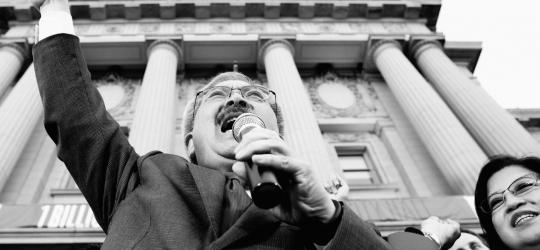
Mayor Ed Lee presents himself as a model of fiscal responsibility, but the Mayor Ed Lee for San Francisco Committee that he controls has recently been spending big money that it doesn’t have, including more than $10,000 that it has recently given to the Yes on Propositions B&C campaign, according to campaign finance filings.

The Mayor Ed Lee for San Francisco Committee, a general purpose committee that Lee and its Treasurer Kevin Heneghan are jointly responsible for, made late contributions of $8,666.66 on Oct. 29 and $1,667 on Oct. 30 to San Franciscans for Parks, Jobs and Housing, Yes on Props. B&C, which supports the 8 Washington project. Lee’s committee also made a $4,333.34 contribution to the Yes on A campaign on Oct. 29.

The Lee committee’s contributions are actually small potatoes for the Yes on B&C campaign, which is spending more than $2 million to have voters green-light the project, most of it coming from the developer, Pacific Waterfront Partners, which kicked in late contributions of $450,000 on Oct. 28 and $250,000 on Oct. 24, bringing its total to about $1.8 million.

But what’s interesting about the Lee committee’s donations is that the final pre-election statement that it filed on Oct. 24 showed that it had just $1,208 in the bank and $26,886 in outstanding debts — most of that to Oakland-based EMC Research for polling it conducted during the Sept. 22-Oct. 19 period.

Neither Heneghan nor Lee responded to our calls for comment, and Lee doesn’t have any public events scheduled between now and election day on Tuesday, so details on this intriguing bit of deficit spending and what kind of polling work the mayor’s committee was doing remain a mystery. [UPDATE 11/5: Lee’s office deferred to Heneghan, who just emailed us this response: “As you know, political committee report filings are a snapshot in time. The Mayor Ed Lee for San Francisco ballot measure committee has received additional contributions since the most recent report that will be appropriately reported. All activity through the committee in support of ballot measures endorsed by Mayor Lee will continue to be appropriately reported as well.” We asked Heneghan whether he would disclose the donors, and we’re waiting to hear back.]

The Mayor Ed Lee for San Francisco Committee hasn’t reported raising any money this year, unlike last year when it raised about $400,000 from some of the city’s biggest establishment players, including Lennar Homes ($35,000), Committee on Jobs ($30,000), San Francisco Alliance for Jobs and Sustainable Growth ($25,000 in basically a pass-through from venture capitalist Ron Conway), San Francisco Association of Realtors ($20,000), and the city’s police and firefighters’ unions ($10,000 each).

But how exactly could the Mayor Ed Lee for San Francisco Committee give $10,000 to the Yes on Props. B&C campaign if it didn’t actually have the money to cover the checks?

When we asked a source at San Francisco Ethics Commission about it, at first he was puzzled, and then he told us that while the committee is required to report late expenditures that it makes before the election, it isn’t required to report late contributions that it receives. That we won’t find out until its Form 460s are due Jan. 31, 2014.

So who really paid for Lee’s contributions to the Yes on B&C campaign, as well as more than $20,000 in polling work that Lee’s committee paid for? And what will our mayor do in return for the people who are digging his committee out of its debts?  


A big Oscar contender opens! Plus: two politically charged docs, ‘Diana,’ and more new movies

1

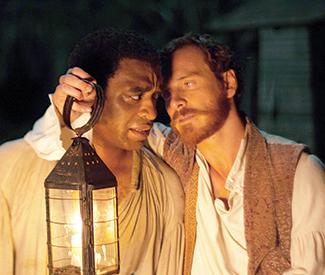
The movie you need to see this weekend, ASAP, is 12 Years a Slave — one of the most important releases of the year, and a likely contender for all possible awards, including Best Actor and Best Picture. (Review here.) Also new to theaters is the Cannes-winning, controversy-stirring Blue is the Warmest Color. (Review here.)

Read on for more short takes on today’s new releases, plus a 1979 cult classic that’s ripe for rediscovery.

http://www.youtube.com/watch?v=Q2Ir5LsraA4

About Time Richard Curtis, the man behind 2003’s Love Actually, must be enjoying his days in England, rolling in large piles of money. Coinciding with the 10-year anniversary of that twee cinematic love fest comes Curtis’ latest ode to joy, About Time. The film begins in Cornwall at an idyllic stone beach house, as Tim (Domhnall Gleeson) describes his family members (Bill Nighy is dad; Richard Cordery is the crazy uncle) and their pleasures (rituals (tea on the beach, ping pong). Despite beachside bliss, Tim is lovelorn and ready to begin a career as a barrister (which feels as out of the blue as the coming first act break). Oh! And as it happens, the men in Tim’s family can travel back in time. There are no clear rules, though births and deaths are like no-trespass signs on the imaginary timeline. When he meets Mary (Rachel McAdams), he falls in love, but if he paves over his own evening by bouncing back and spending that night elsewhere, he loses the path he’s worn into the map and has to fix it. Again and again. Despite potential repetition, About Time moves smoothly, sweetly, slowly along, giving its audience time enough to feel for the characters, and then feel for the characters again, and then keep crying just because the ball’s already in motion. It’s the most nest-like catharsis any British film ever built. (2:03) (Sara Maria Vizcarrondo)

http://www.youtube.com/watch?v=8oOG3vUkKUM

A.K.A. Doc Pomus “All greatness comes from pain.” The simple statement comes from Raoul Felder, brother of legendary R&B songwriter Doc Pomus, in the beautiful, crushing mediation on his brother’s life, A.K.A. Doc Pomus, opening theatrically this week after serving as the closing-night film of the 2012 San Francisco Jewish Film Festival. Doc wrote some of the greatest music of a generation: R&B and early rock’n’roll standards such as “This Magic Moment,” “A Teenager in Love,” “Save the Last Dance For Me,” and “Viva Las Vegas” — songs made famous by the likes of Dion, the Drifters, and Elvis Presley. Jewish, debilitated by polio, and vastly overweight, Doc defied expectations while struggling with a lifetime of outsider status and physical pain. William Hechter and Peter Miller’s doc offers a revealing look at his remarkable life. (1:38) Vogue. (Emily Savage)

http://www.youtube.com/watch?v=axLcfpj7xeU

Diana The final years of Diana, Princess of Wales are explored in what’s essentially a classed-up Lifetime drama, delving into the on-off romance between “the most famous woman in the world” (Naomi Watts) and heart surgeon Hasnat Khan (Naveen Andrews). Relationship roadblocks (his Muslim family, back home in Pakistan, is hesistant to accept a divorced, Christian Brit as their son’s partner) are further complicated by extraordinary circumstances (Diana’s fame, which leads to paparazzi intrusions on the very private doctor’s life), but there’s real love between the two, which keeps them returning to each other again and again. By the third or fourth tearful breakup — followed by a passionate reunion — Diana’s story becomes repetitive as it marches toward its inevitable tragic end. Still, director Oliver Hirschbiegel (2004’s Downfall, another last-days-in-the-life biopic, albeit of a slightly different nature) includes some light-hearted moments, as when a giggling Diana smuggles Hasnat through the palace gates (past guards who know exactly what she’s up to). As you’d expect, Watts is the best thing here, bringing warmth and complexity to a performance that strives to reach beyond imitation. (1:52) (Cheryl Eddy)

http://www.youtube.com/watch?v=2UNWLgY-wuo

Ender’s Game Asa Butterfield (star of 2011’s Hugo), Harrison Ford, and Ben Kingsley appear in this adaptation of Orson Scott Card’s sci-fi novel. (1:54)

http://www.youtube.com/watch?v=mueIglaVYDk

Free Birds Owen Wilson and Woody Harrelson lend their voices to this animated turkey tale. (1:31)

http://www.youtube.com/watch?v=m3_hKv4pEM4

God Loves Uganda Most contemporary Americans don’t know much about Uganda — that is, beyond Forest Whitaker’s Oscar-winning performance as Idi Amin in 2006’s The Last King of Scotland. Though that film took some liberties with the truth, it did effectively convey the grotesque terrors of the dictator’s 1970s reign. But even decades post-Amin, the East African nation has somehow retained its horrific human-rights record. For example: what extremist force was behind the country’s Anti-Homosexuality Bill, which proposed the death penalty as punishment for gayness? The answer might surprise you, or not. As the gripping, fury-fomenting doc God Loves Uganda reveals, America’s own Christian Right has been exporting hate under the guise of missionary work for some time. Taking advantage of Uganda’s social fragility — by building schools and medical clinics, passing out food, etc. — evangelical mega churches, particularly the Kansas City, Mo.-based, breakfast-invoking International House of Prayer, have converted large swaths of the population to their ultra-conservative beliefs. Filmmaker Roger Ross Williams, an Oscar winner for 2010 short Music by Prudence, follows naive “prayer warriors” as they journey to Uganda for the first time; his apparent all-access relationship with the group shows that they aren’t outwardly evil people — but neither do they comprehend the very real consequences of their actions. His other sources, including two Ugandan clergymen who’ve seen their country change for the worse and an LGBT activist who lives every day in peril, offer a more harrowing perspective. Evocative and disturbing, God Loves Uganda seems likely to earn Williams more Oscar attention. (1:23) Roxie. (Cheryl Eddy)

http://www.youtube.com/watch?v=AxGgkEHmHHg

Kill Your Darlings Relieved to escape his Jersey home, dominated by the miseries of an oft-institutionalized mother (Jennifer Jason Leigh) and long-suffering father (David Cross), Allen Ginsberg (Daniel Radcliffe) enters Columbia University in 1944 as a freshman already interested in the new and avant-garde. He’s thus immediately enchanted by bad-boy fellow student Lucien Carr (Dane DeHaan), a veteran of numerous prestigious schools and well on the road to getting kicked out of this one. Charismatic and reckless, Carr has a circle of fellow eccentrics buzzing around him, including dyspeptic William S. Burroughs (Ben Foster) and merchant marine wild child Jack Kerouac (Jack Huston). Variably included in or ostracized from this training ground for future Beat luminaries is the older David Kammerer (Michael C. Hall), a disgraced former academic who’d known Carr since the latter was 14, and followed him around with pathetic, enamored devotion. It’s this last figure’s apparent murder by Carr that provides the bookending crux of John Krokidas’ impressive first feature, a tragedy whose motivations and means remain disputed. Partly blessed by being about a (comparatively) lesser-known chapter in an overexposed, much-mythologized history, Kill Your Darlings is easily one of the best dramatizations yet of Beat lore, with excellent performances all around. (Yes, Harry Potter actually does pass quite well as a somewhat cuter junior Ginsberg.) It’s sad if somewhat inevitable that the most intriguing figure here — Hall’s hapless, lovelorn stalker-slash-victim — is the one that remains least knowable to both the film and to the ages. (1:40) (Dennis Harvey)

http://www.youtube.com/watch?v=IMnr-R7BkkU

Last Vegas This buddy film may look like a Bucket List-Hangover hybrid, but it’s got a lot more Spring Breakers in it than you’d expect — who beats Vegas for most bikinis per capita? Four old friends reunite for a wedding in Vegas, where they drink, gamble, and are confused for legendary men. Morgan Freeman sneaks out of his son’s house to go. Kevin Kline’s wife gave him a hall pass to regain his lost sense of fun. Kline and Freeman trick Robert De Niro into going — he’s got a grudge against Michael Douglas, so why celebrate that jerk’s nuptials to a 30-year-old? The conflicts are mostly safe and insubstantial, but the in-joke here is that all of these acting legends are confused for legends by their accidentally obtained VIP host (Romany Malco). These guys have earned their stature, so what gives? When De Niro flings fists you shudder inside remembering Jake LaMotta. Kline’s velvety comic delivery is just as swaggery as it was during his ’80s-era collaborations with Lawrence Kasdan. Douglas is “not as charming as he thinks he is,” yet again, and voice-of-God Freeman faces a conflict specific to paternal protective urges. Yes, Last Vegas jokes about the ravages of age and prescribes tenacity for all that ails us, but I want a cast this great celebrated at least as obviously as The Expendables films. Confuse these guys for better? Show me who. (1:44) (Sara Maria Vizcarrondo)

http://www.youtube.com/watch?v=-v5ZXAxTGHg

Let the Fire Burn In 1985 a long-simmering conflict between Philadelphia police and the local black liberation group MOVE came to a catastrophic conclusion. Ordered to leave their West Philly building after numerous neighborhood complaints about unsanitary conditions, incessant noise, child endangerment and more, the commune refused. An armed standoff came to a halt when a helicopter dropped two FBI-supplied water gel bombs on the roof, killing 11 MOVE members (including five kids) and creating an uncontrollable fire that destroyed some 60 nearby homes. It’s hard to deny after watching Jason Osder’s powerful documentary that MOVE then looked like one crazy cult — its representatives spouting extreme, paranoid rhetoric in and out of court; its child residents (their malnutrition-bloated stomachs nonsensically explained as being due to “eating so much”) in visibly poor health; its charismatic leader John Africa questionably stable. But whatever hazards they posed to themselves and the surrounding community, it’s also almost undeniable here that city law enforcement drastically overreacted, possibly in deliberate retaliation for an officer’s shootout death seven years earlier. The filmed and amply media-reported trials that ensued raised strong suspicions that the police even shot unarmed MOVE members trying to escape the blaze. This outrageous saga, with numerous key questions and injustices still dangling, is an American history chapter that should not be forgotten. Let the Fire Burn is an invaluable reminder. (1:35) (Dennis Harvey)

http://www.youtube.com/watch?v=HIKQCZDYfEI

Man of Tai Chi Keanu Reeves directs and plays a supporting role in this contemporary Beijing-set martial-arts drama. (1:45)

http://www.youtube.com/watch?v=N6lImifpiZM

The Pin Canadian film about a romance between two Eastern European youths, in hiding during World War II. (1:23)

The Visitor Directed by “Michael J. Paradise” (aka Giulio Paradisi), this 1979 Italian-US. co-production is belatedly starting to acquire a cult following. Joanne Nail is Barbara, mother of Katy (Paige Conner), a seemingly normal little girl with a disconcerting tendency to swear like a longshoreman when out of ma’s earshot. Also unbeknownst to mom is that her boyfriend (Lance Henriksen, no less), as well as characters played by Mel Ferrer, Glenn Ford, John Huston, Sam Peckinpah, and the inimitable Shelley Winters are all very interested — on the good and the evil side — in Katy, a “miracle of nature” with “immense powers.” Those powers apparently include making Kareem Abdul-Jabbar’s basketball explode at the hoop, and sending teenage boys through plate glass at an ice rink. Some of the adults nosing around Katy really, really want Barbara to give her a similarly gifted baby brother, others do not. It all involves some kind of interplanetary conspiracy to … well, beats me, frankly. Its utter senselessness part of the charm, The Visitor includes any number of bizarre moments, including Winters’ evident enjoyment of slapping some sense into Katy (the child thesp later confirmed that the Oscar winner went a little too Method in that scene), and crusty old Huston intoning the line “I’m, uh, the babysitter.” This glossy sci-fi horror mess. which the Roxie is showing in a new digital transfer, borrows elements freely from 1977’s Exorcist II: The Heretic (a fiasco that inspired very little imitation), 1976’s The Omen (or rather 1978’s Damien: Omen II) and, strangely, Orson Welles’ 1947 The Lady from Shanghai (directly ripping off its famous hall of mirrors scene). Yet there’s a certain undeniable originality to its incoherence. (1:48) Roxie. (Dennis Harvey)

Angered by senior evictions, Filipino American activists decline award

The board members of a local Filipino heritage organization, with ties to a high-profile eviction defense battle at San Francisco’s International Hotel in the late 1970s, have declined to an accept an award that San Francisco Mayor Ed Lee had planned to extend to them as part of a Filipino American History celebration because they are angry about a growing trend of senior evictions.

In a written statement sent to media by board member Tony Robles, the Manilatown Heritage Foundation explained that it couldn’t accept the award as long as “elders are being preyed upon, evicted and given a de facto death sentence thereof.”

The Manilatown Heritage Foundation board members were informed by Board of Supervisors President David Chiu that Lee had planned to recognize the I-Hotel as part of an annual cultural history celebration at City Hall, the statement noted. “Part of the occasion was to honor the I-Hotel and its many tenants and activists for its contribution to Filipino American history,” board members explained.

In 1976, the I-Hotel was targeted for demolition, prompting an historic eviction defense battle led by housing activists who rallied to the defense of the impacted tenants. A significant fixture in what was once a predominantly Filipino neighborhood known as Manilatown, the I-Hotel housed 196 tenants, predominantly low-income Filipino immigrants. 

“The I-Hotel fight was for dignity and it lived by the premise that housing is a human right,” Manilatown Heritage Foundation members explained in the written statement. “The fight for the I-Hotel galvanized the community around the fight for affordable housing, particularly for seniors—who sacrificed much and on whose shoulders we stand. The fight included tenants, elders, activists, artists and students who recognized that the real estate developers and financial interests were out of control—power unchecked.” 

The fight dragged on, at one point more than two thousand people surrounded the building to blockade the doors in an effort to prevent an eviction from going forward. The battle over the I-Hotel also brought on a famous San Francisco episode in which then-Sheriff Richard Hongisto served five days in his own jail for refusing to carry out the eviction order. In the end, the tenants were finally ousted. But the epic battle ultimately helped to produce a different outcome, many years later: The property became the site of low-cost senior housing, complete with a commemorative display in the interior documenting the dramatic I-Hotel fight.

As a young attorney who worked with the Asian Law Caucus, San Francisco Mayor Ed Lee was involved in that fight – as an activist defending tenants’ rights to stay. He frequently referred to this chapter of his personal history while running for mayor in 2011, to demonstrate his sensitivity to concerns about affordable housing.

But now that Lee is well into his mayoral term, a surge of evictions of low-income seniors is worsening on his watch. Tenant defense organizations such as Eviction Free San Francisco are showing up outside landlords’ homes and offices to protest eviction notices that threaten to push low-income seniors with few options out of the city. Some evictions have caught the attention of mainstream media, such as the ouster of elderly Chinatown couple Gum Gee Lee and Poor Heung Lee and their disabled daughter, Shiuman Lee.

Some advocates have proposed legislative solutions; meanwhile, the situation has evidently become so criticial that even city’s Human Services Agency is seeking outside assistance to provide eviction prevention services for elderly and disabled tenants facing Ellis Act evictions.

And today, the board of the Manilatown Heritage Foundation drew a line in the sand to send Lee a clear message by refusing to accept the honor of recognition in the current housing climate. So far, mayoral spokesperson Christine Falvey has not responded to the Bay Guardian’s request for comment in response to the Manilatown Heritage Foundation’s statement.

“Given the current state of San Francisco housing by forces out to make a killing by killing our communities, we as the torch bearers of the I-Hotel struggle and in the memory of its displaced elders and advocates Al Robles, Bill Sorro, Felix Ayson, Wahat Tampao and others, cannot, in good consciousness, accept any honor or award while elders are being preyed upon, evicted and given a de facto death sentence thereof. And it doesn’t matter if the honor is bestowed by Mayor Lee, President Obama or the pope. We have to say no.”

Here’s the full statement from the Manilatown Heritage Foundation. Here’s an historical essay about the I-Hotel from Shaping San Francisco’s digital archive at FoundSF.org.

Zombies to attack City Hall! UPDATED

50

We in the Bay Guardian newsroom have just received word of an impending zombie attack on City Hall. I repeat: Zombies are planning to attack City Hall this afternoon! [Updated coverage from the scene below]

Oh, wait, it looks like it’s actually going to be City College of San Francisco students and supporters — dressed as zombies and other Halloween creatures — that will be descending on City Hall around 4pm today (Thurs/31). Okay, maybe this isn’t as big a deal as an actual zombie attack, but it’s still newsworthy.

The faux-zombies came to see Mayor Ed Lee to demand that he stop supporting the state takeover of CCSF and that he stand up for local control over this important, low-cost educational institution. The San Francisco-elected college’s board of trustees’ powers were given to Special Trustee Bob Agrella, who was in turn appointed by the California Community College Chancellor Brice Harris.

At the rally Alisa Messer, CCSF’s local faculty union president, called for Lee to push for the board’s reinstatement.

“We’re calling on Mayor Lee to ask the state chancellor to restore democracy at City College,” Messer said, “We want our board restored next year. Not two years from now, not three years from now, next year!” 

She also called on the mayor to demand that Accrediting Commission for Community and Junior Colleges restore CCSF’s accreditation immediately.

Christine Falvey, the mayor’s spokesperson, wrote in an email to the Guardian that the mayor supports efforts to save CCSF — but only the ones he thinks will work.

“The mayor has said these are difficult times for the college, but that this is the time to commit to true reforms,” she wrote. “The mayor wants to focus his efforts on activities that will ultimately help the college stay open.” 

When asked if the mayor supported City Attorney Dennis Herrera’s lawsuit against the ACCJC meant to stop the closure of CCSF, she responded that the lawsuit may “go up and beyond” critical deadlines to save the college. The mayor has so far shown no support for any of the efforts to combat the ACCJC, despite multiple lawsuits against the accreditors as well as condemnation from the U.S. Department of Education of their practices.

The zombie march will began at 3:30pm, at the CCSF Downtown Campus, 750 Eddy Street, and hundreds of protesters arrived at City Hall around 4pm — to see if there’s anyone in City Hall with any brains.


Bleached offers up Halloween ‘Love Spells’

0

Just in time for Halloween: LA beach-punk sister duo Bleached released a graveyard and zombie-filled video for the track “Love Spells.” Stick it on your playlist for the ghoulish parties this weekend.

The song is off this spring’s Ride Your Heart, which we discussed with Bleached earlier this year.

Halloween 1951 and the good old days in Rock Rapids, Iowa

0

The tale of what really happened on Halloween Eve in 1951 in Rock Rapids, Iowa.  (Updated by popular demand.)

By Bruce B. Brugmann

Back where I come from,  Halloween was one of the most culturally advanced holidays of our era.  We had some fast times and created some enduring smalltown legends on Halloween. This was in my hometown of Rock Rapids, a small farming community nestled along the Rock River in northwest Iowa just five miles south of  the Minnesota state line.  I can speak for a generation or two back in the early 1950s when Halloween was the one night of the year when we could raise a little hell and and hope to stay one step ahead of the cops.

Or, in the case of Rock Rapids, the one and only cop, who happened to be Elmer “Shinny” Sheneberger. Shinny had the unenviable job of trying to keep some semblance of law and order during an evening when the Hermie Casjens gang was on the loose and genial mayhem was on the agenda.  Somehow through the years, nobody remembered exactly when, the tradition was born that the little kids would go house to house trick and treating but the older boys could roam the town looking to make trouble and pull off some pranks.

It was all quite civilized.

The Casjens gang would gather (no girls allowed) and set out about our evening’s business, being careful to stay away from the houses of watchful parents and Shinny on patrol. Dave Dietz and I specialized in finding cars with keys in the ignition and driving them to the other end of town and just leaving them. We tipped over an outhouse or two, the small town cliche, but one time we thought there was someone inside. We never hung around to find out. There was some mischief with fences and shrubs and lawn sprinklers and potted plants on porches.

After an evening of such lusty adventures, we would go home about 11 p.m. and tell our parents what we had been up to and how we evaded Shinny the whole evening and they would (generally) be relieved. Shinny would just drive around in his patrol car and shine his lights here and there when he saw trouble brewing  and do some honking. But somehow he never caught anybody, made no arrests nor did any  followup investigations.  And the targets of our pranks never seemed to make police complaints. I once asked Paul Smith, the editor of the celebrated Lyon County Reporter, why he never wrote up this bit of zesty small town lore. “Bruce,” he said, “I don’t want things to get out of hand.” During my era, they never did. As a Rock Rapids reporter on special assignment, I feel an obligation to retell this story on Halloween and bring some Rock Rapids values to San Francisco.

Nonetheless, the city elders decided to keep Halloween devastation to a minimum and scheduled a dance in the Community Building, with the misbegotten idea the pranksters would give up their errant ways and come to the dance. The Casjens Gang would have none of this. In fact it was the year of the dance diversion that we made our most culturally significant contribution to Halloween lore in Rock Rapids. We happened upon a boxcar, loaded with coal, parked on a siding a block or so from Main Street, which also served as a busy main arterial highway for cars coming across northwest Iowa.

It is not clear to this day who came up with the idea of rolling the boxcar across Main Street and blocking all traffic coming from both directions. We massed behind the car and pushed and pushed but it wouldn’t budge. Then Bob Babl came up with a brilliant idea:  to use a special lever his dad used to move boxcars full of lumber from the  nearby Babl  lumberyard. Bob slipped through a fence behind the yard and somehow managed to find the lever in the dark. He soon came forth, triumphantly holding the lever.

We massed again, now some 20 or so strong, behind the railroad  car and waited for the signal to push. Willie Ver Meer climbed to the top of the car and wrenched the wheel that loosened the brakes. We heaved in unison and the car moved slowly on the tracks until it reached the middle of Main Street. Willie gave a mighty heave and ground the car to a dead stop, bang, squarely in the middle of the street. Almost immediately, the cars started lining up on both sides of the car, honking away. Grace under pressure. An historic event. Man, were we proud.

We slipped away and from a safe distance watched the fruits of our labor unfold. Shinny, the ever resourceful police chief, soon came upon the scene. He strode into the dance in the nearby Community Building and commandeered the dancers to come out and help him move the car back onto its siding. We bided our time, waited till the dancers started dancing again and then went back and pushed the car once again into the middle of the street. Jerry Prahl added a nice touch by rolling out a batch of Firestone tires onto the street from his Dad’s nearby store. Suddenly, Main Street was a boxcar- blocked, tire-ridden mess. Again, the cars started lining up, honking away. Then we fled, figuring we were now wanted pranksters and needed to be on the lam for the duration.

The Casjens gang and groupies have retold the story through the years at our regular get togethers at the Sportsmen’s Club bar at Heritage Days in Rock Rapids and at our all-Rock Rapids Cocktail Party and Beer Kegger held for years in a Long Beach park and then in the back lawn of the Mary Rose Babl Hindt house in Cupertino. We would jokingly say that the statute of limitations never runs out in Rock Rapids and so we needed to be careful what we said and ought not to disclose fully the involvement of Dave Dietz, Hermie Casjens, Ted Fisch, Ken Roach, Jerry Prahl, Bob Babl, Romain Hahn, Willie Ver Meer, and lots of others, some who were there working in peril, others who declared they were there safely after the fact.

A few years ago, just before Halloween, I was invited back to Rock Rapids to speak to a fund-raising event for the local high school. It was a a crisp clear night just like the night of Halloween in l95l and a perfect setting to tell the story publicly in town for the first time. The event was at the new community building, on Main Street, just a block or so from the old Community Building, and a block or so from the siding where we found the boxcar. I told the audience that Shinny had assured me the statute of limitations had run out in Rock Rapids and that I could now,  five decades later, tell the boxcar- across -Main -Street caper with no fear of prosecution. And so I did, with relish.

Chuck Telford was in the audience and I recalled that he had driven up to us that night, as part of a civilian patrol, and inquired as to what we were doing. When he could see what we were doing, he just quietly drove off. “Very civilized behavior,” I told the audience.  Afterward, I told Chuck I would back him for mayor, on the basis of that enlightened response alone. Craig Vinson, then the Iowa  highway patrolman for the area, came up to me and said he remembered the incident vividly because he was on duty that night and came upon the boxcar blocking the highway with long lines of honking cars. “I got ahold of Shinny that night and told him it was his job to move the boxcar and get it off the highway,” he said. Others in attendance said they had gotten a whiff of the story but were never able to pin it down and were glad to get the real story.  The high school principal and superintendent didn’t say much and, I suspect, were worried my tale might lead to the Rock Rapids version of the movie “Ferris Buhler Takes A Day Off.”

For years, I said in my talk, I didn’t think that Shinny ever knew exactly what happened or who was involved in the caper or how we pulled it off, twice, almost before his very eyes. Shinny retired in Rock Rapids and I saw him twice a year when I came back to visit my parents. But I never said anything and he never said anything but I finally found the right moment and cautiously filled him in. He chuckled and said, “Let’s drink to it.”  And we did,  for years.

At the 55th reunion of the famous Dream Class of l953, I invited Shinny to sit in with us. He was still going strong at 89. He assured us once again that the statute of limitations had run out and we could speak openly about the Halloween caper in his presence and in front of witnesses. So Dave Dietz and I retold the story with expansiveness and gusto. Shinny supplied some key missing details. For example, he said that he didn’t get his troops out of the dance but out of the nearby movie theater with the threat that he would arrest them if they didn’t help him move the boxcar. However, Dave and I didn’t pin down some key details, such as how Shinny got someone nimble and brave enough to undo the work of Willie Ver Meer, climb to the top of the boxcar, twice, and wrench loose the brake. The boxcar would not budge until that brake was undone. That would have required some  expertise with boxcars, plus some physical skills, and would have been quite a feat to do at night with a gallery of a crowd and honking cars.  And then there was the issue of the second boxcar blocking and how he could rally his troops twice in one might. Thus, there are some tantalizing questions that may never get answered.

So there we were, five decades later, working to make the fast times even faster on Halloween in Rock Rapids. Did Shinny  ever arrest anybody on Halloween? “No,” he said. “I would just shine my car lights and honk my horn and everybody would run.” Any hard feelings? Shinny chuckled. “Naw,” he replied. “Let’s drink to Halloween in the good old days.”

And so we did. Shinny often called me at my office in San Francisco and he always told  the receptionist, “Tell Bruce, it’s Shinny. I’m his parole officer in Rock Rapids.”  I”m glad that we were able to confess properly to the top cop of Rock Rapids in l951 and to hear Shinny’s side of the story. 

Alas, Shinny had died by the time of our 60th class reunion last summer. But in the curious way that news gets around Rock Rapids, Delores Ockenga Berg  reported at the reunion that there was some major news about Shinny. She said the source for the news was a relative of hers who was the camp director at Camp Foster, a YMCA camp on East Lake Okiboji where Dave Dietz, Alan Lyng, and I from our class and many other boys from Rock Rapids and northwest Iowa towns spent many happy summers. Among other things, we learned to swim, because our town had no swimming pool, and we learned to row boats and paddle canoes, because we had no lake and only a shallow river. 

Shinny, Delores said, had willed his farm to Camp Foster. The camp had sold the farm and used the money to build a large lodge in his honor. Delores said the lodge was named Sheneberger Hall and that it  was a splendid addition to the camp. Shinny didn’t say much before he died about his plans for this unusual bequest. Most people didn’t even know he owned a farm. But he confided in me in his later years and explained  that he wanted to do something special for Camp Foster. The reason, he said, was because the boys who went to Foster had all turned out so well and he wanted to do his bit to see that this trend continued.  

And so we toasted Shinny as a philanthropist for young boys and an enlightened small town police officer whose career was symbolized by the way he handled things on Halloweens in Rock Rapids: he turned on his patrol lights and honked his horn but never made any arrests.

Those were the days, my friends. The days of fast times and enduring legends of Halloweens in Rock Rapids, Iowa. Let’s hope they never end.  B3

P.S.: Ted Fisch, a key conspirator, and I talk regularly about Rock Rapids. He was the center and I was the left-handed quarterback on our almost  famous 195l football  team. He became a colonel in the Air Force and loved to say that he was the only field grade officer he knew of who was a solid Democrat. He lives in Redondo Beach and we talk often on the phone and discuss such things as why there are so few Democrats in Rock Rapids. and why our congressional district must live with Rep Steve King, a tea party politician before there was a tea party. In one conversation, he said, “Bruce, a friend of mine googled my name the other day and found that I was mentioned in your Halloween story. How could that be? Does that mean I am up there forever? Does that mean the boxcar story will be up there forever?” Somehow, the news made me feel good.

STOP THE DIGITAL PRESSES:  Then I realized as I was finishing  this blog that Ted has a good and timely point. So I just now googled Dave Dietz and Hermie Casjens and Jerry Prahl  for starters and found that they, too, and probably all other named co-conspirators, have been outed in my world-wide blog, Thank God the statute of limitations has run out in Rock Rapids.




The Guardian’s voter Clip-Out Guide

88

So we’ve heard a little confusion — and even some amusing conspiracy theories — about why the Guardian’s regular voter Clip-Out Guide isn’t on our cover like it usually is in the issue before the election. Rest assured, loyal Guardian readers (and haters), it’s right there, along the bottom.

With only eight items on the ballot, and fairly minimal interest in all but two of those items, we didn’t think it made sense to devote our entire cover to the election (but check out our cool Death Issue instead). Besides, it was only a month ago that we did devote the whole cover to the hottest items on the ballot, Props. B&C.

But in the interests of tradition, let me reinforce, here and now, how the Guardian thinks you should be voting on Tuesday: Yes on Prop. A; No, no, no! on Prop. B; No on Prop. C; Yes on Prop. D; Dennis Herrera for City Attorney; Jose Cisneros for Treasurer; Katy Tang for D4 Supervisor; and Carmen Chu for Assessor.   

If you want longer explanations of our reasoning, read our full endorsements. And check back here on election night for some live blogging and tweeting of the results — that may also be in a more abbreviated form than in years’ past, but blame this lackluster election and not anything going on over here at the good ole Bay Guardian.


Media misses connection between BART tragedy and settlement

23

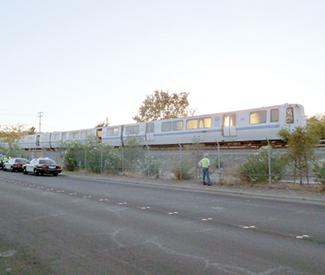
BART continues to stonewall important questions about whether it was training scab drivers to break the recent strike by its unions when its trainee-driven train killed two workers on Oct. 19 — a stance made possible by the failure of the mainstream media to connect the dots or correct the anti-union bias that characterized its coverage of this long labor impasse.

The failure of local journalists to highlight the connection between that tragedy and the subsequent decision by the district to suddenly soften its stance and sweeten its offer — within hours of the National Transportation Safety Board revealing that a trainee was driving and that BART’s “maintenance run” story was a deception — is as myopic as it is appalling.

After all, the daily newpapers, television stations, and wire services did finally, dutifully report that a trainee was driving, even as they failed to point out to readers and viewers the significance of that disclosure or ask the district, “Why were you training drivers during a strike? Were you planning to offer service during the strike?”

We have asked those questions of the district, and when we got misleading obfuscations, we asked again and again, and our questions are still being largely ignored (actually, we just got a limited but important response, see below). And here’s why they matter: Because if the district was planning to run trains during the strike, it reinforces the unions’ contention that the district was hard-bargaining to force a strike that it was preparing to break, a plan that became untenable when two people died, just as the unions warned might happen if the district ran trains without experienced drivers.

This should be a huge scandal, the kind of thing that might force General Manager Grace Crunican to resign and BART directors to lose their seats — except for the fact that the media is ignoring this simple, obvious narrative and failing to do its job.

The East Bay Express, which today published an excellent article on how the San Francisco Chronicle and Bay Area News Group (which includes the Oakland Tribune, Contra Costa Times, and San Jose Mercury News) mislead the public about the BART standoff, is the only other media outlet in the region to join the Bay Guardian in highlighting the relevant facts in this story.

Not only have these newspapers written some truly atrociously anti-worker editorials, but even the supposedly objective news stories have been clearly biased in their emphasis and omissions. Why else would they repeatedly emphasize a proposal by an obscure Republican member of the Orinda City Council to prohibit future BART strikes — a bit of election-related grandstanding that has no chance of passing in Democrat-controlled Sacramento — while failing to analyze why BART suddenly sweetened its offer beyond what Crunican said the district could afford?

But this could be a situation that backfires on local media managers considering that the truth will probably come out eventually, even if it’s long after the media spotlight has moved on. NTSB investigations can take up to a year, but they are remarkably thorough and it will probably eventually discuss why these drivers were being trained.

The Assembly Committee on Labor and Employment announced yesterday that it will also hold a hearing to “get to the bottom” of the tragedy, and one can only hope that someone on that committee will grill the district about its intentions in running that ill-fated train and conducting new driver training just one day into the latest strike.

UPDATE: As I was posting this story, I finally heard back from BART spokesperson Alicia Trost, who made it sound like preparations to break the strike weren’t news — even though it may be news to most newspaper readers.

“The District has publicly acknowledged, dating back to a September 13, 2013 Metropolitan Transportation Commission subcommitee meeting, that BART has been training some non-union employees to operate limited passenger train service in the event of an extended strike if so authorized by the Board of Director. The Board was never requested to authorize revenue service during the strike,” she wrote by email.

Yet those public aknowledgements don’t appear to have made it to the public. And when the Chronicle’s Matier & Ross did run an anonymously sourced item breaking the news that BART may be training replacement drivers, BART refused to comment, the duo soft-peddled the scoop, and the relevation failed to make it into the larger narratives the newspaper offered about BART.

And even now, Trost followed up her admission by minimizing its importance, saying that the ill-fated train was also being run for maintenance purposes, which the NTSB had also reported.

“BART has to ‘exercise the system’ by running trains on the tracks to prevent rust build up. Rust can build up quickly and will interfere with train service. BART continued to run inspection trains throughout the entire strike just as it did during the July strike,” she wrote.

But the real issue is whether the district deliberately triggered two strikes that the heavily impacted public angrily blamed on workers, thanks largely to how the standoff had been cast by the mainstream media and the district. After all, BART chose a notoriously anti-union labor consultant as its lead negotiator, a decision that even Willie Brown criticized in his Sunday column, although Brown cast the district as just dumb instead of intentionally forcing a strike.

I’m still waiting for Trost to answer my follow-up questions, and I’ll update this post if and when I hear back. I’m also still waiting to hear from BART Board President Tom Radulovich, whose progressive credibility has been tarnished in the eyes of some for playing such a lead role in BART’s media strategy.

Thankfully, the divisive standoff between BART and its unions seems to be over, but the questions about what really drove it and how its conclusion came about are still relevant and largely unanswered. And that says a great deal about the state of journalism today.

Latest NSA spying news features emoticons and Google engineers exploding with profanity

More revelations on spying by the National Security Agency were published in the Washington Post today. Thanks again to whistleblower Edward Snowden (whose actions gave this cartoonist pause with a “Post-Snowden moment”) we now know that the NSA is capturing massive amounts of communications data flowing between data centers maintained by Google and Yahoo.

According to the Post, digital information produced by Google and Yahoo account holders – texts, emails, documents, videos and yes, that does include content – is being copied by the NSA and sent to its Fort Meade headquarters, where some but not all is retained by the agency.

It’s known that the NSA is intercepting Google and Yahoo user account information as moves between data centers, but the exact collection points remain a mystery. While some of that information evidently belongs to Americans, there doesn’t seem to be detailed information about how much of it originates in the U.S. versus foreign nations. The main tool for capturing this data is a project called MUSCULAR, operated in collaboration with British intelligence agency GCHQ. 

A smiley face inserted into a hand-drawn sketch from a top-secret file was enough to cause a couple Google engineers to “explode in profanity,” the Post reporters noted. That drawing demonstrated how encryption, a security measure meant to shield data from third parties, is “added and removed here,” at an intersection between the public Internet and Google’s internal cloud servers.

Seeing as how Google is a ubiquitous presence in our lives and a key player in Silicon Valley’s tech industry, it’ll be interesting to see how native San Franciscan Sen. Dianne Feinstein responds to the news that the NSA has apparently been intercepting the tech giant’s data without its knowledge. Feinstein is uniquely positioned to weigh in on this activity in her capacity as chair of the Senate Intelligence Committee.

Since Snowden’s first leak, Feinstein has kept up the drumbeat that NSA’s spying program is good for national security.

On Oct. 2, at a Judiciary Committee hearing on oversight of the Foreign Intelligence Surveillance Act, she delivered the following statement:

“Our great strength today, ladies and gentlemen, in protecting this homeland, is to be able to have the kind of technology that’s able to piece together data while protecting rights. I listened to this program being described as a surveillance program. It is not. There is no content collected by the NSA. There are bits of data—location, telephone numbers—that can be queried when there is reasonable, articulable suspicion. … I will do everything I can to prevent this program from being cancelled out. To destroy it is to make this nation more vulnerable. I just wanted to say that. I had to say it.” 

Speaking earlier this year, at a Sept. 26 Senate Intelligence Committee hearing on FISA, Feinstein delivered a reminder of what happened on Sept. 11, 2001 and sought to offer reassurance on the data collection program, saying:

“This committee as well as the Judiciary Committee have reviewed the legality of these programs, been briefed on their operation, and been notified of problems with their implementation. Further, this committee has previously informed all senators of additional classified information regarding these programs available for their review prior to Senate consideration of these measures. 

It is my opinion that the surveillance activities conducted under FISA, and other programs operated by the National Security Agency, are lawful, they are effective, and they are conducted under careful oversight.”

But more recently, following revelations of spying on foreign leaders, Feinstein changed her tune. In an Oct. 28 statement, she said the Senate Intelligence Community was “not satisfactorily informed.”

Suddenly, rather than being notified and informed, the committee members were seemingly kept in the dark while the NSA ran wild. “It is abundantly clear that a total review of all intelligence programs is necessary so that members of the Senate Intelligence Committee are fully informed as to what is actually being carried out by the intelligence community,” she said.

Seems the members of the Senate Intelligence Committee could start by reading Washington Post articles detailing the contents of Snowden’s leaks. There’s plenty of information in there.

Red herring or not, park closure vote delayed while supes seek police input

26

There is only one police chief in this town, and no law regarding the usage of public parks shall pass without him. Or so they said yesterday when Sup. Scott Wiener continued for a week consideration by the Board of Supervisors of his controversial proposal to close the city’s parks and plazas at night.

Wiener – champion of the legislation that homeless advocates say specifically target the City’s homeless population — motioned for continuance on the hotly contested agenda item after Police Chief Greg Suhr was unavailable to discuss how the measure might be enforced. The motion was seconded by Sup. Malia Cohen and passed without objection. 

But the continuance request means that Wiener will have to deal with what he calls an “epidemic of vandalism” for another week as well. The legislation would amend the “Park Code to establish hours of operation for City parks from 5am to midnight, with certain exceptions; and make environmental findings.” 

“It’s long been illegal to sleep or camp in parks,” said Sup. Wiener. “[Police] don’t need another law.” 

“This. Is. About. Vandalism,” Recreation and Parks Department General Manager Phil Ginsburg told the Guardian. “The homeless won’t be thrown out. The laws are already on the books, man.”

And while Wiener and those in the RPD have continued their insistence that that the legislation was written explicitly to target late-night vandalism, illegal dumping, and other nefarious activities not related to homelessness, opposition to the legislation say it’s “red herring” legislation that, on its face, claims to combat vandalism, but underneath is actually a bill targeting the homeless.

Wiener disagrees with this stance, however, and actually called the argument made by the legislation’s opposition — that the bill is a “red herring” ostensibly aimed at vandalism, but that really targets the homeless — a “red herring” as well. A red herring, historically, is a distraction. It’s a Trojan Horse, a magician’s assistant, a tool designed to confuse and obfuscate actual information or intent. 

It is a term that first found a foothold in the hunting world, but made it’s transcendental leap into the world of politics. Politicians have employed the use of “red herrings” in the past. But why would a group called the Coalition on Homelessness actually support vandalism, as the supervisor’s “red herring” comments would suggest?

When this fact was pointed out, Wiener told the Guardian that he “wasn’t going to speculate.” (And neither will we, at least as to why the supervisor chose to use the phrase “red herring” to describe the COH’s argument in the first place.)

But regardless of rhetoric, next week’s vote promises to be close. COH Executive Director Jennifer Friedenbach told the Guardian last week that she had the support of the four most progressive supervisors — John Avalos, Jane Kim, David Campos and Eric Mar — and needed just two of the three swing votes to shoot down the legislation. Those three undecided votes rest in the hands of Sups. London Breed, Katy Tang and Norman Yee.

“This is going to be a close vote,” said Wiener.

But a vote that will have to wait a week.


Haunted! Halloween and Day of the Dead events and parties

4

Oh hi, spooky. It’s the Bay Area’s favorite time of year, with both candy and muerte on our minds. here’s a handy guide to what’s going down on Hallow’s Eve and boo-weekend.

THURSDAY 31

Afrolicious Super Fly Halloween Elbo Room, 647 Valencia, SF; www.elbo.com. 9:30pm-2am, $10-15. Get retro-spooky with the Latin funk and super-groovy sounds of the Afrolicious party crew. Style out in ’70s-inspired costumes and get down: the live Afrolicious house band will be covering legendary Blaxploitation masterwork soundtrack Super Fly by Curtis Mayfield in its entirety. Far out!

All Hallows’ Eve DNA Lounge, 375 11th St, SF; www.dnalounge.com. 9pm, $13 advance. The annual party at the DNA Lounge is a showcase of its party talent, with DJs from club nights Bootie, Meat, Death Guild, New Wave City, Fringe, 120 Minutes, and more spinning goth and New Wave dance favorites and mashups. Plus an airborne performance by the high-flying Vau de Vire Society. 

Back2Back Halloween Project One, 251 Rhode Island, SF; www.p1sf.com. 8pm-2am, $10. Beloved Wicked crew DJs Jeno and Garth celebrate nine years of their Back2Back party with some psychedelic house gems.

Black Mammoth Mighty. 119 Utah, SF; www.mighty119.com. 9pm-3am, $13-15. Buoyant Burning Man juggernaut Pink Mammoth gets dark for another one of its enormous blowouts, with DJs Galen, Kramer, Miguel Solari, Tyrel Williams, Gravity, and more.

“Creatures of the NightLife” California Academy of Sciences, 55 Music Concourse, Golden Gate Park, SF; www.calacademy.org. 6-10pm, $12. NightLife teams up with the Bay Area Science Festival for this spooky night hosted by Peaches Christ. Highlights include tips on how to survive a zombie attack, the latest on bioengineering (for any aspiring Dr. Frankensteins out there), monster make-up application, and more.

The Flaming Lips’ Halloween Blood Bath Bill Graham Civic Auditorium, 99 Grove, SF, www.apeconcerts.com. Retiring elements that came close to being trademarks. (No space bubble, kids. Go see Diplo, who ripped it off, as he does every gimmick.) With their latest, The Terror, Oklahoma City psych rockers the Flaming Lips seem to be on their own private dark side of the moon, and the current tour promises to be a different kind of spectacle.

“Hacienda Halloween” Peralta House Museum of History and Community, 2465 34th Ave, Oakl; www.peraltahacienda.org. 5-7pm, free. Visit the Peralta Hacienda Historical House for a unique Halloween party, with stories of California’s early years, autumn vegetables, and maybe even an East Bay spirit or two.

Halloween at the Chapel The Chapel, 777 Valencia, SF; www.thechapelsf.com. 9pm-2am, $15. Bobb Saggeth, the female-fronted Black Sabbath tribute band, headlines this black mass with Haight Breeders (covering Misfits songs, natch).

Honey Soundsystem + No Way Back Halloween F8, 1192 Folsom, SF; www.eventbrite.com. 9pm-4am, $15. Two of SF’s sharpest DJ collectives combine forces to bring in the dark-edged house of NYC DJ Willie Burns and Split Secs. Should draw a great mixed crowd ready to dance.

House of Babes Halloween Holy Cow, 1535 Folsom, SF; www.thehouseofbabes.com. 9pm-2am, $10-$13. A young, fun shindig featuring a queer rainbow of hip-hop flavors from DJs Rapidfire, Pink Lightning, Dav-O, Boyfriend, and Jenna Riot, plus drag performances Amo A Nia, Rheal’Tea, and Vain Hein. Proceeds go to St. James Infirmary.

Lights Down Low Halloween Mezzanine, 444 Jessie, SF; www.mezzaninesf.com. 9pm-late, $30. Two amazing house headliners: The Magician, from France, who truly has a magic touch, and Germany’s Tensnake, genius of disco-tinged tunes. Should be bonkers stuff from the ever-reliable Lights Down Low party crew.

Minus Monster Mash Public Works, 161 Erie, SF; www.publicsf.com. 9pm-3am, $18. A spooky showcase of classic techno label M-nus, now based in Berlin, with gaiser and matador performing live and DJ Hobo warming up.

Monarch Monster Mash Monarch, 101 Sixth St, SF; www.monarchsf.com. 9pm-3am, $20. The Green Gorilla party DJs celebrate 18 years of Gorillaness with awesome house DJ Heidi from the UK.

The Monster Show The Edge, 4149 18th St, SF; qbarsf.com/EDGE. 9pm-2am, $5. Loveable drag queen Cookie Dough’s weekly drag show takes a killer turn, with blood-soaked performances by Mutha Chicka, Sugah Betes, Sue Casa, and more. Music by MC2. Will Cookie do her infamous Carrie number?

My Boo 111 Minna Gallery, SF. www.111minnagallery.com. 9pm-2am, $10. “The illest Halloween party” — well that’s to be expected from downtown hip-space 111. This costume party includes hip-hoppy DJs Shortkut and Neil Armstrong, plus a ton of cool, arty giveaways.

Nerd-O-Ween Churchill, 198 Church, SF; www.eventbrite.com. 8pm-2am, $20. It’s a nerd party, duh! Dress up as your favorite Poindexter and join the Motown on Mondays and San Franpsycho crews for some soulful hits and coke-bottle glasses.

SFJazz Halloween SFJazz, 201 Franklin, SF; www.sfjazz.org. 7:30pm, $35-55. Join jazz wiz Maceo Parker and his band for an upbeat concert, followed by a dance party with DJ Dancy Pants and a costume contest presented by drag dears Lil Miss Hot Mess and VivvyAnne ForeverMore.

Total Trash Halloween Bash Stork Club, 2330 Telegraph, Oakl; www.totaltrashfest.com. 9pm, $5-10. NoBunny as Bo Diddley! Shannon and the Clams as The Saicos! Monster Women as the Go-Gos! Yogurt Brain as Weezer! The fantastic annual four-day garage-rock Total Trash Fest kicks off this year with a great concept: rockers as other rockers.

Tubesteak Connection Halloween Aunt Charlie’s Lounge, 133 Turk, SF; www.auntcharlieslounge.com. 10pm-2am, $7. DJ Bus Station John’s great gay weekly party pays tribute to the bathhouse disco parties of the past. And the naughty spirits of those days will rise again on Halloween, with a $100 midnight costume contest hosted by the gorgeous Miss Donna Persona and a full dance floor of horribly cute boys.

FRIDAY 1

“Resurrect Sex Workers Fundraiser Day of the Dead Celebration” Fireside, 1453 Webster, Alameda; www.esplerp.org. 9pm, $15 single, $25 couple. All proceeds from this burlesque show benefit the Erotic Service Provider Legal, Educational and Research Project’s legal battles.

SATURDAY 2

“La Llorona: Weeping for the Life and Death of the Mission District” Mission Cultural Center for Latino Arts, 2868 Mission, SF; www.missionculturalcenter.org. The Mission Cultural Center for Latino Arts’ 36th Day of the Dead exhibit. Surrounding the Day of the Dead celebration and exhibit, the center is hosting a series of workshops and events including a gala reception Sat/2 at 6pm ($6), a Dia De Los Muertos “Moda y Ofrendas” Fashion Show also Sat/2 at 9:30pm ($5), and a “Mole to Die For” tasting contest Nov. 13.

San Francisco Day of the Dead/Dia de los Muertos Celebration Procession begins 7pm at 22nd St and Bryant, SF, ends at Garfield park for alter viewing. www.dayofthedeadsf.org. SF’s beloved marking of this Mexicn holiday includes music and a huge parade to Garfield Park, where eye-popping altars and offerings to dead loved ones are on display. A can’t-miss cultural event.


Meister: A Halloween invasion from Mars

0

Guardian columnist Dick Meister is a longtime Bay Area journalist.

“2X2L calling CQ … 2X2L calling CQ, New York … Isn’t there anyone on the
air? Isn’t there anyone on the air? Isn’t there anyone?”

Millions of Americans — panic-stricken, many of them — waited anxiously
for a response to the message, delivered over the CBS radio network in slow,
flat, mournful tones on the crisp Halloween eve of Oct. 30, 1938.

“Isn’t … there … anyone?”

There wasn’t. Listeners heard only the slapping sounds of the Hudson River.

Many of New York’s residents were dead. The others had fled in panic from
“five great machines,” as tall as the tallest of the city’s skyscrapers,
that the radio announcer at CQ, New York, had described in the last words he
would ever utter. The metallic monsters had crossed the Hudson “like a man
wading a brook,” destroying all who stood in their way.

“Our army is wiped out, artillery, air force — everything wiped out,”
gasped the radio announcer.

It was the War of the Worlds, Mars versus Earth, and the Martians were
winning with horrifying ease. Their giant machines had landed in the New
Jersey village of Grovers Mill, and soon they would be coming to your town,
too … and yours … and yours. Nothing could stop them.

The War of the Worlds had sprung with frightening clarity from the extremely
fertile imagination of Orson Welles and the other young members of the
Mercury Theater of the Air who adopted Wells’ novel and dramatized it so
brilliantly — and believably — from the CBS radio studios on that long ago
Halloween eve.

Their use of realistic sounding bulletins and other tools of radio news
departments made it sound as if Martian machines truly were everywhere, and
everywhere invincible.

Studies done at the time show that at least one million of the program’s
estimated six million listeners panicked.

“People all over the United States were praying, crying, fleeing frantically
to escape death from the Martians,” noted Hadley Cantril, an actual
Princeton professor who directed the most detailed study of the panic that
was caused in part by the pronouncements of “Richard Pierson,” a bogus
Princeton professor played by Welles.

“Some ran to rescue loved ones. Others telephoned farewells or warnings,
hurried to inform neighbors … summoned ambulances and police cars … For
weeks after the broadcast, newspapers carried human interest stories
relating the shock and terror of local citizens.”

“When the Martians started coming north from Trenton we really got scared,”
a New Jerseyian told one of Professor Cantril’s interviewers. “They would
soon be in our town. I drove right through Newberg and never even knew I
went through it … I was going eighty miles an hour most of the way. I
remember not giving a damn, as what difference did it make which way I’d get
killed.”

Those who didn’t join the streams of cars that clogged the highways clogged
the phone lines or huddled in cellars and living rooms to await the end,
some with pitchfork, shotgun or Bible in hand.

“I knew it was something terrible and I was frightened,” a woman recalled.
“When they told us what road to take, and to get up over the hills, and the
children began to cry, the family decided to go. We took blankets and my
granddaughter wanted to take the cat and the canary.”

It was an extremely rare occurrence., as Cantril noted: “Probably never
before have so many people in all walks of life and in all parts of the
country become so suddenly and so intensely disturbed …”

And never since then has the country experienced such deep and widespread
fear and anxiety. Not even after Japan’s surprise attack on Pearl Harbor
three years later. Not even in the wake of the terrorist attacks of Sept.
11, 2001.

It was a unique display of widespread panic. Many people actually believed
their very world was coming to an end and there was nothing anyone could do
to stop it.

Welles had made clear at the start that the presentation was fictional. But
radio listeners generally paid little attention to opening announcements,
and many Sunday night listeners commonly turned first to the very popular
Edgar Bergen-Charley McCarthy show that was broadcast over another network
in the same 8 p.m. time slot, turning to the Mercury Theater out of
curiosity only later.

What they heard that Sunday were primarily news reports and commentaries
ingeniously patterned on the real reports and commentaries that were
constantly interrupting programs to report the aggressive actions of Nazi
Germany and other events that would shortly lead to the outbreak of World
War II.

People expected to hear the worst. Most also expected that what they heard
would be accurate, radio having supplanted newspapers as the most trusted
and relied upon of the mass media.

It helped, too, that much of the information was presented by “experts” …
Welles and other make-believe professors from universities around the world,
supposed astronomers, army officers and Red Cross officials, even the
otherwise unidentified “secretary of the interior.”

“I believed the broadcast as soon as I heard the professor from Princeton
and the officials in Washington,” as one listener recalled.

Even relatively sophisticated and well-informed listeners were fooled by
what Cantril cited as the program’s “sheer dramatic excellence.”

Events developed slowly, starting with the relatively credible — brief news
bulletins calmly reporting some “atmospheric disturbances,” later some
“explosions of incandescent gas,” and finally the discovery of what appeared
to be a large meteorite. Only then came the incredible — the discovery that
the “meteorite” was a Martian spaceship, reported in a halting, incredulous
manner by the “reporter” supposedly broadcasting live from Grovers Mill.

The police, the New Jersey State Guard, the army — none could subdue the
invaders. Finally, the “secretary of the interior” announced that man could
do no more, that the only hope for deliverance from the Martians was to
“place our faith in God.”

Few listeners were in a position to make independent judgements about
matters Martian. Few knew astronomy, and what standards does one use to
judge an invasion from Mars anyway?

Listeners could easily have turned to other radio networks for the truth, of
course, but many were too caught up in the masterful drama of the CBS
program to think of that.

Even some people who lived near the alleged invasion site were fooled. “I
looked out the window and everything was the same as usual,” said one, “so I
thought it hadn’t reached our section yet.”

The second half of the hour-long broadcast, with “Professor Pierson”
wandering dazedly through the deserted and ravaged streets of New York,
should have made it obvious to even the most gullible that they had been
listening to drama rather than news. Welles, shocked and shaken by the
listener response, followed that quickly with an ad-libbed assurance that it
had all been make-believe.

But by then, many people had left their radios. They had other ways in which
to spend their last hours on earth.

Copyright © 2013 Dick Meister
Guardian columnist Dick Meister is a longtime Bay Area journalist
.

The Performant: Alley up!

1

Clarion Alley Block Party still standing strong

It’s an age-old paradox of urban living that no matter how much there is to do and see it’s a) impossible to experience it all and b) so easy to take it all for granted. And it’s really not such a stretch to figure out that the more we take for granted the more chance there is that one day those things we love will disappear.

Of course a certain amount of flux is healthy, and part of what makes a city vibrant is that it’s a place where new ideas and new energies take root and flourish far more readily than in more insular, more homogenous spaces. And for every street corner band that’s moved indoors, every homey café long gone, every poetry brawl, punk rock peepshow, robot sex symposium, marching band parade, and nomadic dance party that have dropped off the radar, there’s bound to be a new crew of upstart art-agonists rising up to fill the empty spaces, it’s just finding the will or time to seek them out that can be daunting. They’re worth the effort. But sometimes we don’t want to have to put in so much effort.

Like comfort food for the underground, some perennial events are still staking out the remnants of, if not the long-distant past, at least the 90s, where the foundations for much of what is now taken for granted were formed. The Clarion Alley Block Party is one such remnant, and still going strong, as Saturday’s event proved.

Blessed by mild weather and a musically diverse lineup of beloved local bands, attending the annual celebration and fundraiser for CAMP (Clarion Alley Mural Project) was a bit like attending the reunion party that more reunion parties should aspire to be like, full of familiar faces and a distinct lack of hubris.

 A couple of new murals glowed from the colorful walls which have been evolving since 1992, a who’s-who of notable works including Chuy Campusano’s homage to Picasso’s Guernica; Jet Martinez’ fantastical, Tomi De Paola-esque landscape Lo Llevas por Dentro; and a venerable, twitchy elephant by Andrew Schoultz, crowded into a much too confined space. Of the newer works, a comic strip detailing the adventures of modern-day, anti-overdose superheroine, Narcania, by Erin Amelia Ruch and Mike Reger (of Mission Mini-Comix infame); an image of busy cartoon ants working over the pale blue corpse of a gadget-toting, tech-type by Mats Stromberg; and Megan Wilson’s playfully anti-capitalist Tax the Rich (with its bed of smiling flowers that carpet the sidewalk) are perhaps the most eye-catching, and provocatively relevant to some of the abiding concerns of the neighborhood.
 
Of course it wouldn’t be a proper block party without bands, and Clarion Alley always manages to put together a creative and raucous all-day show on its twin stages. Highlights for me this year included a bombastically sludgy set from three-piece doom metal outfit HORNSS; a noisy, drone-y, industrial meets hardcore set from masked musical marauders Death Cheetah; and a sweaty, climactic apotheosis of sound from the last band of the evening, old school rabble-rousers, Apogee Sound Club.

The smell of cigarettes, dope, cheap beer, and tamales mingled in the still evening air, revelers in their Halloween costumes bobbed their heads in time to the tunes, and the only real sign of the times was the occasional ipad lifted aloft for photo-taking, which, given the casual nature of the event, didn’t even seem that intrusive. Proving, at least in the moment, that art and innovation can coexist if we let them.