SFBG Blogs

Small number enroll in health insurance exchange

Covered California, the state-run health insurance exchange established under the Affordable Care Act, released its first set of enrollment data today (Wed/13), providing an initial glimpse of how the program commonly known as Obamacare is working in practice in California.

From Oct. 1 until yesterday (Tue/12), a total of 59,000 enrollees completed applications and enrolled in health insurance plans under Covered California.

As a report in the Sacramento Bee pointed out, that number pales in comparison with the estimated 2.3 million Californians who are expected to enroll for coverage by 2017.

Still, a larger number have begun the process, which entails submitting an application and clearing eligibility criteria before selecting a plan and enrolling. Californians initiated a total of 203,904 applications online, according to state data, reflecting an estimated 370,000 individuals.

Of those, 85,960 individuals were determined to be eligible for Covered California, the state-run marketplace that offers coverage at more affordable rates than conventional insurance plans. Another 72,000 were determined to be eligible for Medi-Cal, a program for low-income residents that was expanded under the Affordable Care Act.  

Despite the low initial enrollment, representatives from the Greenlining Institute and the California Pan-Ethnic Health Network welcomed the initial figures as a positive development.

“It’s a great start – and that’s what it is, it’s a start,” said Ellen Wu, executive director of the California Pan-Ethnic Health Network. “There was this pent-up demand,” she added. “The majority of people who enrolled are people who don’t qualify for government subsidies but are seeking health insurance because they’ve been turned away or charged an arm and a leg” when seeking coverage elsewhere. “What you’re going to see, come November and December, is people for whom it might not be top-of-mind priority.”

Covered California began accepting applicants on Oct. 1, but the program will not take effect until Jan. 1, 2014. Californians who are eligible for coverage will have until the end of March to enroll.

Carla Saporta, Health Policy Director for the Greenlining Institute, emphasized the challenge of reaching out to diverse communities in multiple languages to inform people of their options under the new program. 

“I’m disappointed that they have yet to release enrollment data by demographic,” she noted. “I am particularly interested in knowing the breakdown by region, race and primary language because knowing this information will help with targeting outreach efforts.”

According to a report released by the Department of Health and Human Services, California has spent $94 million on outreach to help community groups, local health clinics, and labor unions to make residents aware of their options and sign them up for coverage. 

Calvin Trillin: JP Morgan cops a $13 billion plea

1

They touted securities they knew were trash.

The government’s case plainly shows

They’re willing to profit from bucket-shop scams,

Although they wear much nicer clothes.

Calvin Trillin: Deadline Poet: The Nation

Solomon: We met Edward Snowden in Moscow: Please defend his right to travel

5

(B3 note: Norman Solomon sent out the following message from Roots.org. The message was signed by four Americans who recently  visited Snowden in Moscow: Thomas Drake, Ray McGovern, Jesselyn Raddack, and Coleen Rowley.)

Most Americans probably take the right to travel for granted until this right is lost or curtailed. Passports are, of course, required for most international travel. When our group (Jesselyn Radack, Thomas Drake, Ray McGovern and Coleen Rowley) recently traveled to Moscow to meet with Edward Snowden and present him with the Sam Adams Award for Integrity in Intelligence, we depended upon our fundamental right to travel.

The intelligence whistleblower whose integrity we honored, however, has been deprived of that right. Vindictive U.S. officials revoked the passport of Snowden, whose disclosures have informed and educated the people of the United States and the world about secret surveillance and massive data-gathering that the NSA and other government agencies are engaged in within the U.S. and around the world.

If you’ve already signed the RootsAction petition urging that Snowden’s passport be restored, please forward this email to people you know and urge them to do the same. If you haven’t yet signed the petition, you can add your name by clicking here.

Proposals for serious reforms that will enhance security as well as preserve constitutional rights are now being studied and debated in Congress as a result of the disclosures. Snowden made it clear in our conversation with him that achieving debate and reform of the unethical, illegal and counter-productive massive data collection was his sole motivation and remains his focus. He hopes to play a continuing role in that debate, even if it’s at long-distance from Russia where he was granted temporary asylum.

The least we can do in recognition of Snowden’s personal sacrifices on behalf of all of our civil liberties and human rights is to sign and share this petition urging Secretary of State John Kerry to restore the NSA whistleblower’s passport.

To send an email now to Secretary of State Kerry, click here.

Please forward this link to like-minded friends:
http://SupportEdwardSnowden.org

Thank you!

Best wishes,
Thomas Drake
Ray McGovern
Jesselyn Radack
Coleen Rowley

Background:
Ray McGovern: Snowden Accepts Whistleblower Award

www.RootsAction.org

Vegan idol Isa Chandra Moskowitz brings ‘Isa Does It’ to SF, reveals restaurant name

3

The first thing you need to know about Isa Chandra Moskowitz is that she’s a punky legend in the global vegan community. She started the DIY Post Punk Kitchen public access show in Brooklyn and (perhaps more importantly) created the vegan hub website of the same name exactly 10 years ago.

While maintaining PPK she has authored or co-authored eight popular cookbooks, right up to this fall’s unfussy workday vegan cookbook, Isa Does It: Amazingly Easy, Wildly Delicious Vegan Recipes for Every Day of the Week (320 pps, Little Brown, $30). (She’s on a book tour that brings her to SF this Wed/13 at Book Passage in the Ferry Building, and there will be rosemary chocolate chip cookies there to share.)

The second thing you need to know is that many people mispronounce her name (it’s “EE-sah” not “EYE -sah”), though it doesn’t seem to bother her much. I find myself profusely apologizing for flubbing her name when she picks up the phone — especially since I’ve been following her work, and making her delicious dishes, for the better part of a decade. I should know better.

http://www.youtube.com/watch?v=L4DOf4btp34

From a hotel room in Minneapolis while on her book tour, the soft-spoken Omaha-based chef shrugs off the faux pas and we quickly get to work pinpointing her favorite recipes from Isa Does It: anything that’s creamy cashew cheese-based like the alfredo and the mac‘n’cheese, along with the lentil-quinoa stew with kale, which she describes as the “classic vegan recipe” that she makes herself more than once a week, mixing up the spices as she goes.

She spouts an important note about preparation, something which is thoroughly dissected in the early sections of Isa Does It, with tofu butchery, and handy pantry tips for making cooking after work more streamlined: “I always have kale in the fridge; I always have lentils and quinoa in the pantry.”

There’s also the recipes from Isa Does It that are featured in her newest video series with production company Zero Point Zero, Make It Vegan, which has Moskowitz whipping up the Meaty Bean Chili and Cornbread, and the Nirvana Enchilada Casserole (“I like a lot of onions in this, and a lot of jalapeno; a lot of everything, really”) to the tune of “Salt” by Kelley Deal. The casserole is part of the “Sunday Night Supper” section of the book — a few more ambitious recipes, like many from her previous cookbooks such as Veganomicon (a must-have for any vegan), Appetite for Reduction, or Vegan Brunch.

That enchilada casserole is next on my list of Isa Does It dishes to tackle. I’ve so far tried the flavorful Tempeh Giardino, Kale Salad with Butternut Squash and Lentils, and the Cast Iron Stir-Fry With Avocado, Basil & Peanuts, which is a light yet super filling weekday stir fry. The avocado really gives it a fresh kick. I’m also now officially obsessed with cashew cheese, and have cashews soaking at all times, just like the author.

Moskowitz has been working on this particular cookbook for the past two years, concocting recipes in her Omaha home — the Brooklyn native moved there three years ago, mainly because she wanted a garden but also thanks to the local music scene. Her inspirations come from her pantry — “I have Brussels sprouts and sweet potatoes, what can I make with that?” — and sometimes she’s inspired to veganize something she saw on the Food Network. “Like, there might be some secret Guy Fieri recipes in there that I veganized.”

Like her previous cookbooks, each of the recipes went through a rigorous testing process. “I have like, 30 testers. One of the biggest things for people was ‘would you make this on a week night?’” Moskowitz explains. She asks each tester to make the meal and answers a series of questions. For this particular book, she wanted everything to be accessible as possible, so another important question was: were any of the ingredients hard to find?

“I live in Omaha now — I’m in the middle of the country — and that really changed my views on what people have access to. So I just wanted it to be really accessible ingredients,” she says. “Another reason I wanted to write this book is because I was cooking more than ever because there were not that many places to go out to eat.”

It’s another world away from Brooklyn, where meat-free restaurants and offerings dot the streets, and markets have aisles full of items clearly marked “vegan.”

While there are meat-and-dairy free offerings at local sushi spots and coffee shops (and Whole Foods markets) there’s no dedicated vegan restaurant in Omaha — yet.

When we spoke, Moskowitz had recently been handed the keys to her first ever restaurant, which will open in spring 2014. Attached to a bar owned by the members of Saddle Creek band Cursive, Moskowitz’s spot will serve a revolving menu of vegan comfort foods, all made from scratch. “All the mayo is from scratch, I’m going to make my own cheese, [there will] even be house-made sodas, and kombucha on tap.”

Although there have been some rumblings about Moskowitz’s restaurant for some time, she gives the Bay Guardian an exclusive: the name of that new restaurant will be Modern Love.

Isa Chandra Moskowitz
Wed/13, 6pm, free
Book Passage
1 Ferry Building, SF
www.bookpassage.com

How San Francisco should really be helping the Philippines

49

There were a couple good stories in today’s San Francisco Chronicle related to concerns the Guardian and its readers have sounded in recent months: Mayoral appointees blocking CleanPowerSF against the will of the elected Board of Supervisors, and the massive scale of the proposed Warriors Arena, which is now getting slightly downsized.

It was getting a little lonely beating the drum over the anti-democratic actions of the Mayor Ed Lee and his minions to undermine the only plan San Francisco has to substantially decrease its greenhouse gas emissions and meet its own ambitious goals for addressing climate change. Glad to see the Chronicle turn up the heat, at least in its news section (unlike the neocon neanderthals that write the paper’s editorials).

While the mainstream media sometimes does good work, it usually fails to connect the dots, which is an important journalistic function. So if I would find fault with the otherwise solid and long overdue story by reporters Marisa Lagos and David R. Baker, it would be with its failure to note that CleanPowerSF is really the only plan for seriously addressing climate change, which is one of the biggest and most impactful challenges we face.

This morning on KQED’s Forum, while discussing the devastating typhoon that struck the Philippines — one of the strongest ever recorded — they did connect the dots between the severity of that storm and the warming oceans of the world, albeit in fairly detached and non-urgent way.

So please allow me to connect another dot.

“Our hearts go out to all of those who have suffered in the Philippines from possibly the world’s strongest storm. The people of the Philippines are in our thoughts and prayers today, and we will continue to support them in the days and months ahead as we learn the true impact caused by Typhoon Haiyan,” Mayor Lee said Friday in a prepared statement sent to the media. “San Francisco stands ready to aid in the rebuilding and recovery efforts. The work of rebuilding communities begins immediately, and San Francisco understands how important a sustained, vigorous recovery effort is. Our City stands ready with the Bay Area Filipino-American community to assist today and into the future to help in the rebuilding efforts in the Philippines.”

What he didn’t mention was climate change. While it’s great that San Franciscans stand ready to address the effects of this and other natural disasters — which all the global warming models show will become stronger and more frequent — why aren’t we willing to show more leadership in addressing the root cause of this problem?

Instead of collaborating with developers on ever more ambitious schemes to build expensive buildings on a waterfront that will already be challenged by rising seas, the Mayor’s Office should be channeling its energies into making San Francisco a role model for other 21st century cities to follow.

The real challenges that we and other cities around the world face now are how to address poverty, the energy and transportation needs of a growing population, and a planet in peril; instead, this Mayor’s Office is focused on poaching Oakland’s basketball team and building more housing for the 1 percent.

If Mayor Lee is serious about the sympathies he’s expressing for vulnerable populations in the developing world, then he and allies should do more than send care packages when they are devastated by the byproducts of the wasteful and overly consumptive economic policies that they are promoting.  

The Performant: Games people play

1

Ask any gamer, or specialist in pedagogy, and they’ll say the same thing: games are as important to human development as any the rest of our skill-building activities. There’s evidence of game-playing in almost every culture dating all the way back to ancient Sumeria and Egypt. They also offer an entrance point into other cultures, whether by playing a familiar game like chess and seeing how it translates in an unfamiliar environment, or by learning a game representative of a particular place — Xiangqi (Chinese chess), say, or Ghanaian Oware.
 
But while some games have been around for literally thousands of years, other games seem to drop off the radar almost as quickly as they appear. What essential component gives games like Go, hide-and-go-seek, poker, Monopoly, and Super Mario Brothers such staying power over some of their, perhaps best forgotten peers? This is a question the game designers of San Francisco’s annual Come Out and Play Festival must ask themselves each year, as they present their latest inventions in the hopes of capturing the imaginations, and just maybe the funds, to bring their games to the public at large.

Since the festival itself is free, it’s always fun to drop by for a few hours to see what’s being played. Attending Saturday, myself and my buddy in game, P., stopped to peek at the Mime Boxing tournament, a rowdy free-for-all of imaginary walls and temporary alliances, and play a round of the tabletop Thrown Into Chaos, before assuming our roles as Prohibition-era booze smugglers in Rumrunners, a two hour-long treasure hunt and commodities exchange scenario.

Sent out into the world with a packet of money and a series of orders, we purchase “booze” from a pair of nattily dressed mobsters standing on the street corner, and then hurry to our first drop off point, in order to make more money, in order to buy more booze. We split up in order to make it more confusing for the “agents” who pop out of the shadows occasionally, clipboards in hand, and try to shake us down for the booze we fortunately never have on us when they ask, though one tries to run off with a $500 bill at one point which we protest vigorously.

We come in fifth out of 10 teams, thanks to a pair of particularly persistent agents who stake out one of the drop-off points for at least 20 minutes, forcing us to circle the same block again and again until they leave.
 
Transitioning into the hide-and-chase game Witness Protection Plan, we draw cards with our characters printed on them: Witness, Detective, Suicide Bomber, Assassin, Handler, Civilian, etc. The “Witness” hurries off to hide, and then the rest of the players spread out through the neighborhood to find them. One-third of the players have to find the witness and hide with them before any assassins or traitors find them first, and each round lasts just 10 minutes, which makes for a tenser, more physically demanding game than Rumrunners.

As far as involved and demanding goes, the centerpiece game of the festival, the annual Journey to the End of the Night can be both, an epic, miles-long scavenger hunt replete with checkpoints, chasers, safe zones, and an outdoor after-party in a unique setting (this year, Corona Heights Park). P. is “game” for it, but I’ve neglected to pre-register so I head off, but before I do we play a few rounds of Stranger Danger, an ice-breaker game clearly aimed for the teen-to-20-something demographic (sample question: “What color describes how horny you are right now?” Answer from stranger: “That’s an awkward question to ask me in front of my 13-year-old brother”).

Whoops, well, still a few bugs in that system, but keep it up friends. Someday you might come up with the next Twister! Now there’s a game with staying power.

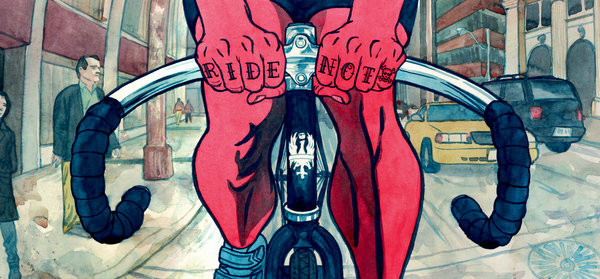
NYT asks, “Is it okay to kill cyclists?”

157

It was great to read the provocative opinion piece about cycling in San Francisco in yesterday’s The New York Times’ Sunday Review (“Is It O.K. to Kill Cyclists?”), which amplified recent reporting and editorial messages from the Bay Guardian.

Kudos especially to the writer of that headline, which crystallizes the issue beautifully. San Francisco and other cities have essentially sanctioned violence against cyclists by refusing to issue citations against negligent motorists who kill and seriously injure cyclists. (It’s a sadly similar story with pedestrians, as a Bay Citizen investigation found last year).

“There is something undeniably screwy about a justice system that makes it de facto legal to kill people, even when it is clearly your fault, as long you’re driving a car and the victim is on a bike and you’re not obviously drunk and don’t flee the scene,” wrote Daniel Duane, a San Franciscan who now says he’s too scared to ride local roadways.

San Francisco will never get anywhere close to its official goal of having 20 percent of all vehicle trips being by bicycle by 2020 if the San Francisco Police Department focuses more on harassing cyclists running stop signs than it does on citing motorists that are actually responsible for most car versus cyclist collisions (according to a study cited in the article).

The reasoning for going easy on drivers who kill cyclists and pedestrians has been the assumption that juries won’t convict because “accidents happen” and we all need to keep driving, right? But that societal attitude causes problems ranging for needless death to global warming, and it only begins to change with good think-pieces like the New York Times piece.    

Chocolate + ‘The Hunger Games: Catching Fire’ = irony that tastes gooooood

0

When I got to work Friday morning, I found the Arts and Culture editors, along with our publisher, huddled outside a cubicle, mouths agape. I joined them. A large rectangular box sat on the desk. Reminiscent of the strange stone tablet from 2001: A Space Odyssey (1968), it rose up from the desk, black, and ominous, only this one gleamed with golden letters, spelling out “Catching Fire.” Inside, I found chocolate.

(Here’s a quick rule of thumb in the newsroom: You will get promotional gifts. Another one: rarely will a promo grab your attention. But my favorite is: Do not let thy promo go to waste.)

I did what any food writer would do. I tasted each and every last chocolate bar — a total of 12, one for each “District” inside the post-apocalyptic world of Suzanne Collins’ trilogy The Hunger Games. (The timing of this delivery, of course, is to whet one’s appetite for The Hunger Games: Catching Fire, out Nov 22). Crafted by chocolate makers Vosges through their American farmer-sourced Wild Ophelia line, each chocolate bar incorporated aspects of American geography, on which Panem, the segregated, classist country where heroine Katniss lives, was based.

“Luxury,” a milk chocolate cashew bar, tasted mild, nutty, and easy — suspiciously easy, much like the rich, well-off citizens of District One. “Masonry” contained little grains of pecans and the liquid-gold caramel, reminding me of molten metals forged in District Two. “Technology” combined Arabica coffee, crystal salt, and dark chocolate, for a brittle texture, a deep byte — I mean bite, and a dangerous, snappy quality that the digital users of District Three would find addictive.

“Fishing” brought out the District Four ocean through sea salt and coconut. I savored it in a guilty way, as one enjoys the perplexity of vegemite or guzzles too much wine at church. “Power,” though immediately pleasing, contained caramel corn, and I conceded, like the disappointed citizens of District Five, that sometimes power is but spun sugar and air. “Transportation” contained runner peanuts, and carried a comfortable, nostalgic taste of peanut butter sandwiches that District Six children would have nibbled on the ride home from school.

(At this point in my tasting, I began to feel a strange sense of urgency — not unlike the adrenaline-filled fear Katniss experienced during the 60 second countdown to the start of the Games — as office colleagues walked past my desk and doubled back, eyes trained on the sleek packaging.)

“Lumber” tasted bad-ass, with a bright chipotle at the beginning and a spark of chili at the end. The dudes of District Seven, if they looked anything like this chocolate tasted, would be the rugged, outdoorsy, smooth-talking types. “Textiles” contained crispy rice, and could be left in the box; much like the cotton clothing District Eight citizens wear, once put on it was easy to forget. “Grain” played with the palate, as milled oats, vanilla and hemp seeds competed for my attention. I predicted this one, District Nine, would win the next Games, if their representative was as complex, intelligent, and earthy as its chocolate counterpart.

(By now, like the last remaining competitors in the Games, I became territorial. “This is an assignment, not a free-for-all! You can eat some soon — hey! Come back here with that caramel!”)

“Livestock,” tasted of smooth chocolate before the beef jerky hit, leaving behind a few puffs of smoke, like empty cattle fields after a roundup in District Ten. “Agriculture” tasted naïve, hiding harvest cherries among the dark chocolate like the lost fairy children of District 11. “Mining,” a classic, charming milk chocolate flecked with edgy salt, tasted like Katniss herself: simultaneously brave, bold, and nondescript; the every-girl we all inhabit when we read the books and watch the movies.

Some may question the chocolate’s relevancy to the The Hunger Games: Catching Fire. I suppose the characters are, for the most part, hungry. Yet I contend that the sensorial emotions each flavor presented when I took a bite reflect the same thrills, joys, and anxieties I hope to experience in the darkened theater.

http://www.youtube.com/watch?v=MkvUNfySGQU

(Take note, promotional gift senders: I do not believe chocolate is exclusively relevant to The Hunger Games, either.)

Live Shots: Wanda Jackson at the Chapel

0

“Well hello, San Fran!” shouted Wanda Jackson to an almost-full Chapel on Thursday night. “You already know I love you. You should know that by now.”

Jackson, still touring at age 76, looks to be about five feet tall — if you include her carefully teased hair. She needs help getting on and off the stage. She talks openly about her “senior moments.” And she’s an absolute rock star. Her age and petite stature seem merely to add to her massive stage presence. After finishing her rollicking first song, “Riot in Cell Block Number 9,” she beamed at the crowd, asking, “Isn’t it wonderful, the energy?”

Wonderful is exactly the word I would use to describe it. The audience responded to Jackson’s razor-sharp wit, fascinating anecdotes, and serious vocal chops (she can yodel!) with fever-pitch enthusiasm. After a 60-year career, Jackson has an incredible body of work under her belt, and the set list, which bounced around from era to era of her career, didn’t have a single low point. But people weren’t really there for the songs.

We were there for Wanda. The Queen of Rockabilly truly is royalty — just being in her presence is a joyful experience. Though she can’t hit all the high notes anymore, Jackson’s talent hasn’t faded a bit since her heyday in the 1950s and ‘60s. Her voice is still incredible, her stamina is inspiring, and her humbleness is astonishing. Few people could name-drop Elvis Presley and Jack White in the same sentence and seem all the more charming for it.

Jackson, who is inevitably paired with Elvis in any description of her life or music, didn’t shy away from the topic on stage as she often does in interviews. In what felt like a very intimate moment, the crowd was enraptured as they watched her reminisce about her old friend. “Elvis was a true gentleman,” she told us. “He truly was.” She spoke about how her father would only let her go out with Elvis, “nobody else.” He would take her out for lunches and matinees — whatever he could afford. “He was a poor boy then.” After waxing about her short-lived romance, Jackson transitioned into one of the night’s highlights — a soulful rendition of “Heartbreak Hotel.”

Most of the songs Jackson played were preceded by a mini history lesson — the year they were recorded, what she was up to at the time, who was involved. Speaking about her evolution from a country singer touring with her father to a rockabilly singer touring with Elvis (who encouraged her to play this “new music”) Jackson paused for clarity — “We call it rockabilly now, but it was actually rock and roll.”

Jackson is still rock and roll. She playfully threw water on her fans, splashing the monitors (“I could have been electrocuted…you too!”) and played through a setlist of almost 20 songs without stopping for breath. “Whatever!” she shouted in response to her jet lag. “Isn’t that what they say today? Whatever?” By the time the night ended with “Let’s Have a Party,” no song could have been more appropriate.

Hunky Vikings! Crusading Texans! And more new movies!

1

Two big ‘uns this week: blockbuster-to-be Thor: The Dark World (review below), and the very fine drama Dallas Buyers Club, featuring standout performances by Matthew McConaughey and Jared Leto (Dennis Harvey’s review here). If you seek a respite from Hollywood, check out San Francisco’s own South Asian International Film Festival (some recommendations from me, here), or read on for more short takes on this week’s new offerings.

The Motel Life Brothers (Stephen Dorff, Emile Hirsch) go on the run after a tragic accident. Kris Kristofferson and Dakota Fanning co-star. (1:25) Roxie.

http://www.youtube.com/watch?v=kfGYqdTAxEk

Running From Crazy Can one ever escape one’s toxic genetic legacy, especially when one’s makeup, and even one’s genius, is so entangled with mental illness, the shadow of substance abuse, and a kind of burden of history? Actor, author, healthy-living proponent, and now suicide prevention activist Mariel Hemingway seems cut out to try, as, eh, earnestly as she can, to offer up hope. Part of that involves opening the door to documentarian Barbara Kopple, in this look at the 20th century’s most infamous literary suicide, Mariel’s grandfather Ernest Hemingway, and just one of his familial threads, one full of lives cut deliberately short. For Running From Crazy, Kopple generally keeps the focus on Mariel, who displays all the disarming groundedness and humility of the youngest care-taking, “good” child. Her father, Ernest’s eldest son, Jack, regularly indulged in “wine time” with his ailing wife and, according to Mariel, had a pitch-black side of his own. But we don’t look to closely at him as the filmmaker favors the present, preferring to watch Mariel mountain climb and bicker with her stuntman boyfriend, meet up with her eldest sister Muffet, and ‘fess up about the depression that runs through the Hemingway line to her own daughters. Little is made of Mariel’s own artistic contributions in acting, though Kopple’s work is aided immeasurably by the footage Mariel’s rival middle sister Margaux shot for a documentary she planned to do on Ernest. Once the highest paid model in the world, Margaux leaves the viewer with a vivid impression of her brash, raw, eccentric, and endearingly goofy spirit — she’s courageous in her own way as she sips vino with her parents and older sister and tears up during a Spanish bull fight. Are these just first world problems for scions who never hesitated to trade on their name? Kopple is more interested in the humans behind the gloss of fame, spectacle and sensation — the women left in the wake of a literary patriarch’s monumental brand of masculinity and misogyny. And you feel like you get that here, plainly and honestly, in a way that even Papa might appreciate. (1:40) (Kimberly Chun)

http://www.youtube.com/watch?v=PPHaLkd4J28

Spinning Plates Joseph Levy’s enjoyable documentary contrasts life at three widely disparate U.S. restaurants: the Martinez family’s modest enterprise La Cocina de Gabby, a Tucson showcase for a wife and mother’s Mexican cooking; Breitbach’s Country Dining in rural Iowa, a 151-year-old purveyor of all-American comfort food; and superstar chef Grant Achatz’s Chicago Alinea, where a 24-course meal of culinary art/science experiments can set you back $800 (yes, that’s for one diner). The latter is a global destination for serious foodies, acclaimed by the industry’s most prestigious observers. (Its nearly 24/7 supply deliveries are also a noisy nightmare for someone I know whose apartment is next door.) The teensy town that’s grown up around Breitbach’s has a population of 70; on a busy weekend, the business attracts up to 2,000, many driving long distances to get there. Yet the people we get to know the best here, the émigré Martinezes, illustrate another side of restaurant life — the side in which a majority of new eateries fail within three years, despite (as seemingly is the case at Gabby’s) all palate-pleasing, reasonable pricing and tireless labor. Tying together these three stories is … well, nothing, really, beyond some vague notion that good food is something that breeds “community.” (Yet high-ticket Alinea can hardly be said to reflect that, while Levy doesn’t actually bother interviewing any patrons to let us know whether the other two establishments’ food is anything special.) Still, and despite some rather bogus dramatic chronology-manipulation of events that happened several years ago, Spinning Plates is an entertaining sampler plate of a movie. And the Martinez family’s story lends it a bit of real gravitas. (1:32) (Dennis Harvey)

http://www.youtube.com/watch?v=npvJ9FTgZbM

Thor: The Dark World Since any tentacle of Marvel’s Avengers universe now comes equipped with its own money-printing factory, it’s likely we’ll keep seeing sequels and spin-offs for approximately the next 100 years. With its by-the-numbers plot and “Yeah, seen that before” 3D effects, Thor: The Dark World is forced to rely heavily on the charisma of its leads — Chris Hemsworth as the titular hammer-swinger; Tom Hiddleston as his brooding brother Loki — to hold audience interest. Fortunately, these two (along with Anthony Hopkins, Natalie Portman, Idris Elba, and the rest of the supporting cast, most of whom return from the first film) appear to be having a blast under the direction of Alan Taylor, a TV veteran whose credits include multiple Game of Thrones eps. Not that any Avengers flick carries much heft, but especially here, jokey asides far outweigh any moments of actual drama (the plot, about an alien race led by Christopher Eccleston in “dark elf” drag intent on capturing an ancient weapon with the power to destroy all the realms, etc. etc., matters very little). Fanboys and -girls, this one’s for you … and only you. (2:00) (Cheryl Eddy)

BART’s safety culture slammed at Assembly hearing

7

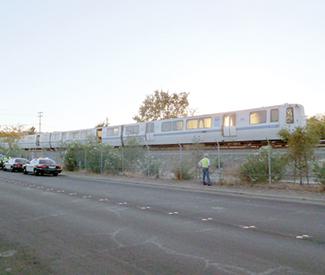
BART was slammed by legislators and its workers today for refusing to make a key worker safety improvement demanded by state regulators since a 2008 fatality, instead choosing to aggressively defend the “simple approval” process that contributed to two more fatalities on Oct. 19, after which the district finally made the change.

The Assembly Committee on Labor and Employment had already planned today’s San Francisco hearing into why BART spent years appealing rulings by the California Occupational Safety and Health Administrations before the recent tragedy, but that incident sharpened criticism of the district for valuing efficiency over safety.

“The culture of safety at BART must change,” said BART train operator Jesse Hunt, who gave dramatic testimony about the callous culture at BART that led to the Oct. 19 tragedy. “It’s not a single incident, it’s a pattern of disregard for safety.”

The hearing also delved into why BART had an uncertified trainee at the helm of the train that killed Christopher Sheppard and Laurence Daniels on Oct. 19, despite warnings by its unions that district preparations to run limited service during the strike would be unsafe.

“Simple approval” made employees doing work on the tracks responsible to avoid being hit by trains moving silently at up to 80mph. When BART exhausted its administrative appeals of Cal-OSHA’s rulings in June, it filed a lawsuit in Alameda County Superior Court and continued to defend the practice, which its unions had long sought to end. 

“BART challenged that citation and continues to do so to this day,” Chair Roger Hernandez (D-West Covina) said in his opening remarks, noting that it took two recent fatalities for BART to drop its stance. “I’m deeply troubled this decision wasn’t made much earlier.”

For BART, the hearing only went downhill from there as state regulators testified to the district’s litigious refusal to adopt important safety precautions, employees painted a picture of a district hostile to them and their safety concerns, and legislators chastised BART managers for not having reasonable answers to their questions.

In response, BART Assistant General Manager of Operations Paul Oversier denied the district undervalues safety and said that it defended the simple approval process because it had been used tens of thousand of times and, “We had a track record in mind of a procedure that was working well.”

Asked whether he continues to defend it after the Oct. 19 incident, Oversier said, “Irrespective of what our opinion might be, we suspended the simple approval process,” a decision that he said could disrupt service, increase costs, and “that may cause us to look at what our hours of operation are.”

That suggestion drew murmurs of outrage from the union members that packed the hearing, including those who had just testified about how the district refuses to work collaboratively with its workers, who even had to learn of the district’s decision to end simple approval from evening news reports rather than directly.

“Shifting the burden from people in the field to the control center is not a long term solution,” testified Sal Cruz, a BART train controller of 15 years who was on the contract bargaining team. “Time and time again, we’re never really involved in these decision-making processes.”

Christine Baker, director of the Department of Industrial Relations, and Juliann Sum, acting director of its Division of Occupational Safety and Health (better known as Cal-OSHA), testified as to their agency’s long, trying history of getting BART to comply with its rulings, with Baker calling the resistance to reform “clearly an issue of grave concern.”

Legislators probed why that might be the case, asking whether abating the problems might be seen as an admission of liability to either the agency and a victim and whether it was the norm for those cited. Baker said no to both questions: “It is not an admission of guilt if they abate…Many employers abate as soon as there is a citation.”

So why is it standard practice at BART to avoid correcting the 40 violations it received from Cal-OSHA in the last 12 years?

“In most cases, the district has acted in good faith to try to abate the citations,” Oversier testified, but he said that BART often disagreed with Cal-OSHA’s findings and that “the investigation doesn’t really start until you appeal.” He said BART has paid just 22 percent of what it has intially been fined by OSHA, casting that as smart stewardship of ratepayer money and saying, “It’s the appeal process that brings closure to the process.”

Meanwhile, Baker, Sum, and Cal-OSHA attorney Amy Martin said they are currently investigating the Oct. 19 incident for both civil violations and penalties and the possibility of criminal prosecution of BART officials if “they intentionally took the action that led to the fatality,” Martin said.

The hearing was called by Assemblymember Phil Ting, D-SF, who said in his opening remarks, “I was very concerned to read many of the OSHA findings, that it found BART was in violation of California state law,” which prohibits employers from making workers responsible for their own safety in dangerous situations. 

Later, Ting questioned BART Chief Safety Officer Jeff Lau — whose testimony came almost entirely from prepared statements he read, in a way that didn’t inspire much confidence in the material — about how many of OSHA’s safety violations it had taken steps to correct versus how many it continues to resist. Lau said that he couldn’t answer the question, even though Ting noted that he first called this hearing back in June and Lau should have been prepared to answer that central question.

“I’m extraordinarily disappointed in your response,” Ting told Lau, demanding that he prepare a detailed written response to the questions and submit it to the committee, which plans to revisit the issue once more details emerge from the NTSA investigation of the Oct. 19 incident.

Most of the panel criticized BART’s foot dragging and called for reforms.

“This latest accident, a terrible tragedy, could have been avoided,” said Assemblymember Bob Wieckowski (D-Fremont), decrying Gov. Jerry Brown’s recent veto of Assembly Bill 1165 by Assemblymember Nancy Skinner (D-Oakland), which would have expedited Cal-OSHA appeals and perhaps required BART to fix the problems pending its appeal.

Assemblymember Tom Ammiano (S-SF) recounted his own history of difficult dealings with intransigent BART officials, from trying to improve station safety when he was a supervisor starting in the mid-‘90s to his work as a legislator trying to provide some oversight of the BART Police after the Oscar Grant shooting.

“I feel like it still has a long way to go. Transparency and accountability will be very important around this issue,” Ammiano said.

Later, Ammiano asked Cruz whether the ill-fated Oct. 19 train should have been traveling slower than 60-70mph, and Cruz responded, “With knowledge of people being wayside [a term that means on the tracks], you would think that.”

The most scathing and dramatic testimony came from the nine workers called to testify at the hearing, three from each of BART’s three unions, all of which had made safety reforms a big part of their recent contract negotiations, with varying degrees of success.

“We are dealing with a culture at BART that doesn’t take workers seriously or the safety of workers seriously,” began AFSCME District Council 57 Executive Director George Popyack. “Our objective today is to make BART a better and safer place to work.”

Several workers said the district’s main imperatives are to cut costs and keep the trains on time, which causes safety compromises on an almost daily basis. “We’re so pushed to keep that schedule sometimes we push on the edge,” said train controller Ken Perez. 

While BART officials refused to discuss details of the Oct. 19 incident, as per a gag order from the NTSB, union members that testified said it’s clear that the district’s disregard for safety and its desire to break the strike are what led to the tragedy.

“BART was planning to run a limited service with people not trained to run those trains and that was connected to this accident,” ATU Local 1555 President Antonette Bryant testified.

“The train that hit the workers was a manager being trained to run the train in the event of an extended strike,” Poyyack said, noting how irresponsible it was to be running a train at what the NTSB said was 60-70mph on the one line where there were workers on the track. He and others said there was no good reason for the district to do so, calling it an example of the district’s flagrant disregard for safety.

“The culture of BART is a significant contributor to the incident,” said BART train operator Jesse Hunt. “The culture is one of gambling with worker and rider safety.”

Hunt said BART’s safety culture directly caused the Oct. 19 tragedy: “There was no reason for a trainee train to be operated or for employees to be on the ground.”

John Arantes, president of the BART Professional Chapter of SEIU Local 1021, said the district took an extremely aggressive posture in labor negotiations — “a scorched earth strategy encouraged by directors like Zachary Mallet,” the newest elected member and one critical of unions in the press — forcing the strike and the unnecessary Oct. 19 tragedy.

And he posed a question that remains unanswered, despite the hearing and the Guardian’s attempts to get an answer: “Who authorized the training exercise and to what extent were the BART directors involved?”

Barbie gets a makeover, San Francisco-style

36

Last Wednesday, Shotwell 50 Studio launched its 11th annual San Francisco AlteredBarbie Exhibition, “The Doll That Has It All!” The show features the doll that dominated so many of our childhoods as she has never appeared before. Statues, dioramas, paintings, and photographs created by dozens of artists test the limits of the familiar figure in this unusual creative reuse exhibit. “To alter Barbie is almost a religious thing,” states Julie Andersen, who curates the exhibit each year. “It’s very blasphemous. That’s how strong the icon is.”

Whether you revere Barbie’s beauty and envy her abundance of accessories, or you despise the provocative hussy’s unearthly perfection and ravenous consumerism, these pieces are sure to fascinate viewers. At the entrance of the gallery, Beyond the Web of Illusion features a partially-nude Barbie trapped in a spider’s web. The doll’s honor is preserved by the cover that the giant tarantula devouring her provides.

In the far corner, Ghost Barbie stands looking like a gothic showgirl, adorned in a skimpy outfit and eerily opaque head mask made of over 1,000 Swarovski crystals. All-Barbie Centaur Dance Ensemble is placed in the center of the space, a collection of six-limbed, two-headed creatures with animal-print bodies made from pairs of Barbie dolls. Framed photographs from a Barbie show that a Dutch artist mounted inside a cathedral capture such scenes as a Princess Barbie under attack by a group of dirty, naked Barbies in chains (The Last Barbie Part One); and a statue of the Virgin Mary with the Baby Jesus sitting beside a Princess Barbie in a matching dress with her own baby doll on her lap (Two Madonnas).

Here, Barbie lies under the blade of a guillotine. There, a picture of her and Ken on their wedding day shows their skin melting to bone. Near the door, two skeletons dressed for the prom stand in a box with the words “Memento Mori” above their heads and “Barbie + Ken” at their feet. At some points humorous, at others haunting, the profusion of works featured in this year’s exhibition nearly overwhelms the small space.

Collectors, take note: all of the pieces featured in the AlteredBarbie Exhibition are for sale. On Nov. 17, the public is invited to meet the artists from 3-10pm at the closing reception. The event will feature live music, cabaret, and a drag performance by the Ethel Merman Experience.

Through Nov. 17, free

Shotwell 50 Studio

50 Shotwell, SF

www.alteredbarbie.com

Hearing to probe safety at BART and issues related to recent tragedy

10

The Assembly Committee on Labor and Employment will hold a hearing in San Francisco tomorrow (Thu/7 at 10am) looking at workplace safety issues in the BART system, one initially prompted by the district’s record of unaddressed safety violations, but which took on special resonance when two BART workers were killed on the tracks on Oct. 19.

Assemblymember Phil Ting called for the hearing back in June, but he postponed it until the district resolved a protracted contract impasse with its three unions that resulted in two four-day strikes this year, with an agreement finally reached two days after the tragedy — and at least partially prompted by it.

Ting told the Guardian that he was motivated by dozens of violations from the California Occupational Safety and Health Administration that the district has received since its last fatality in 2008 — which were highlighted by the unions and reported by us — and the fact that “BART ended up appealing them instead of going to fix them.”

“It’s so unfortunate that we have this tragedy, which will create a greater sense of urgency on this issue,” Ting said, noting that he wants to focus on, “How do we move forward and fix these problems?”

Beyond those safety issues lurk another important issue that we at the Guardian have been raising, but which most journalists have ignored and the district has tried to avoided addressing: Was the district ignoring safety concerns by its unions to train replacement drivers on that ill-fated train, and did its preparations to run limited service during a strike harden its negotiating stance and force the strikes and ultimately the tragedy?

It may be many months before the National Transportation Safety Board investigation arrives at conclusions about what caused the fatalities, but it has already said that a trainee was at the helm at the time. Although the NTSB has told the district not to publicly discuss the accident, that doesn’t cover the labor negotiations that led up to it, and the Guardian has finally been able to get some responses from the district to our questions (below, you can find an extended exchange between me and BART spokesperson Alicia Trost), but key questions remain unanswered.

Will tomorrow’s hearing illuminate the connection between the labor impasse and the tragedy? “We’ll have to touch on some of it,” Ting told us. “But I’m not sure what they’ll say.”

BART Board President Tom Radulovich discussed the issues with the Guardian, and he cautioned about any rush to judgement about the cause of the Oct. 19 accident and whether it was connected to preparations that the district was making to possibly offer replacement service, which the board would have had to approve.

Although he said the board was briefed by district officials about the possibility of offering service, Radulovich said he didn’t consider the idea feasible and that “a lot of directors had misgivings about even the possibility of running replacement service.”

Radulovich also defended the eventual deal as resulting from compromises on both sides and not simply the district sweetening its offer and dropping some of its work rule demands — which the unions had blamed for the Oct. 17 breakdown in negotiations — and “I don’t think [limited replacement service] would have broken a strike.”

But SEIU Local 1021 Political Director Chris Daly, who was part of the union’s negotiating team, said the district was “bargaining toward a strike” all year and that the threat of running replacement service was taken seriously by the unions, all of whom warned the district it would be unsafe.

“We would have lost this fight if they had put limited service on,” Daly told us, noting how that would have allowed the district to weather a strike long enough to break the will of union members.

Daly also disputes the district’s characterization that relaxed work rules demands by the unions settled the impasse, telling us, “In the end, the deal was a little more compromise on substance, but not as much as that would have occurred in the binding arbitration that we proposed before the strikes.”

The district rejected that offer, setting the stage for the latest strike, and Daly said the only reason why BART softened its stance was because the tragedy made BART realize its plan to run replacement service was not longer a viable option: “There is not question in anyone’s mind that was the breakthrough.”

Both Radulovich and district officials insist there were no active plans to run replacement service, although BART spokesperson Alicia Trost made clear that the district had publicly raised that possibility and that training to that end was already underway at the time the tragedy.

Radulovich insists that the district wasn’t bargained toward a strike and that “we just wanted a balanced package.” But he also wasn’t at the bargaining table, and he says that he’s not aware of how much driver training had been done and whether it was being done on the ill-fated train in preparation for replacement service.

“I still have a lot of questions and I do want to see the facts,” Radulovich told us.    

We at the Guardian also still have a lot of questions, which Trost was dodging until just a few days ago, when my last blog post on the topic finally prompted a substantial response. So here’s our most recent email exchange:


SFBG: Who at the district proposed training replacement drivers and did the board approve that training?
Did the district discuss warnings from the unions that such training would be unsafe? Why was the decision made to go ahead with the training anyway?
Why did it take days for BART to admit a trainee was driving the train that killed those men? And wasn’t casting that train as solely on a maintenance run deceptive?
Does the district regret the decision to train replacement drivers?
What role did the tragedy play in BART’s decision to sweeten its final offer and end the strike?
Did anyone at the district discuss with Tom Hocke how running replacement service could help break a strike? Do you deny that running limited service would help to break a strike?
Did the possibility of running replacement service allow the district to take a tougher stance at the bargaining table? And did this tragedy help the district conclude that running such service wasn’t a viable option?
Can you characterize what you meant by an “extended strike” and explain why training took place immediately at the onset if the strike?


BART: The District wanted a plan in place to run limited train service in the event of a prolonged strike.  The intent was never to replace workers, as our workers would be welcomed back once a strike ended, but to provide some limited congestion relief if the Bay Area was faced with a long, crippling and economically devastating strike. 

If the district was going to provide this limited service for the public it would need more certified managers which is why we were training. At the same time we were negotiating in good faith and trying to prevent a strike from happening in the first place. Our priority was always to get to a deal and avoid an unnecessary strike.  Once the unions went on strike for the second time we continued to negotiate and leave the door open for a deal. Which is exactly what happened. A deal came together and BART never needed to go to the board with a limited train service plan. Safety is always our top priority and is always the first, second and third consideration in everything we do. 

The NTSB immediately put a gag order on BART officials just hours after the tragic deaths, which remains in place today. Only the NTSB can provide information surrounding the incident. The NTSB announced the train was being used for both maintenance and training purposes. Under the gag order, BART is allowed to site what the NTSB has reported to date. 

The tragedy certainly redoubled everyone’s efforts to get to a deal.   The breakthrough came when the unions presented language on Beneficial Past Practice on Sunday night. This opened the door to continue to work off the progress that had been made on the economic components with the mediators just days before and resolve the remaining issues. 


SFBG: Thanks for finally getting back to me, but I don’t think you directly answered any of the questions that I posed.


BART: Did BART management consider the warnings (include one in the form of a

lawsuit) that running that service was unsafe?  Safety is always our top priority and is always the first, second and third consideration in everything we do.

And did the tragedy reinforce that safety question and signal to the district that running trains during a strike was probably unwise and that the district should sweeten its contract offer?

We have to run trains during a strike to exercise the system (details sent in a earlier email.) If you are talking about running passenger service, we never needed to move forward with such a plan as we were not faced with a prolonged strike.  The tragedy certainly redoubled everyone’s efforts to get to a deal.   The breakthrough came when the unions presented language on Beneficial Past Practice on Sunday night. This opened the door to continue to work off the progress that had been made on the economic components with the mediators just days before and resolve the remaining issues.

Who at the district proposed training replacement drivers and did the board approve that training?

The Operations Department was conducting the training as publically discussed by Paul Oversier to the MTC and to the media.  The board does not need to approve training.  (on background: I do not know if or who officially “proposed it.”  The first I learned of the concept was the MTC meeting.)

Did the district discuss warnings from the unions that such training would be unsafe? Why was the decision made to go ahead with the training anyway?

Safety is always our top priority and is always the first, second and third consideration in everything we do. The District wanted a plan in place to run limited train service in the event of a prolonged strike.

Why did it take days for BART to admit a trainee was driving the train that killed those men? And wasn’t casting that train as solely on a maintenance run deceptive?   

During the press conference immediately following the accident, a reporter asked where the train was going.  Mr. Oversier explained the train had just dropped off the graffiti train and was headed back to Concord.  He said he didn’t know who was driving the train as he had just arrived to the scene. The NTSB immediately put a gag order on BART

officials just hours after the tragic deaths, which remains in place today. Only the NTSB can provide information surrounding the incident. The NTSB announced the train was being used for both maintenance and training purposes. Under the gag order, BART is allowed to site what the NTSB has reported to date, which is why we can now point out the fact the train was both a training train and a maintenance/inspection trains we routinely run during strikes to exercise the system and deploy staff to assignments.
Does the district regret the decision to train replacement drivers?

This is a difficult question to answer without a summary of findings from the NTSB.
What role did the tragedy play in BART’s decision to sweeten its final

offer and end the strike?

The tragedy certainly redoubled everyone’s efforts to get to a deal.   The breakthrough came when the unions presented language on Beneficial Past Practice on Sunday night. This opened the door to continue to work off the progress that had been made on the economic components with the mediators just days before and resolve the remaining
issues.

Did anyone at the district discuss with Tom Hocke how running replacement

service could help break a strike?

No, the intent was to provide some contingencies for the travelling public being adversely impacted by the unions decision to strike.  

Do you deny that running limited service would help to break a strike?

The intent was never to replace workers, as our workers would be welcomed back once a strike ended, but to provide some limited congestion relief if the Bay Area was faced with a long, crippling and economically devastating strike.  Skeletal service would never be able to replace BART’s normal operation but it could provide a tiny bit of
congestion relief to the public.  BART’s bargaining team was always focused
on getting a deal with union leadership- one that would be approved by the
workers as well.

Did the possibility of running replacement service allow the district to take a tougher stance at the bargaining table? And did this tragedy help the district conclude that running such service wasn’t a viable option?

Our priority was always to get to a deal and avoid an unnecessary strike. Once the unions went on strike for the second time we continued to negotiate in good faith and leave the door open for a deal. Which is exactly what happened. A deal came together and BART never needed to go to the board with a limited train service plan.

Can you characterize what you meant by an “extended strike” and explain why training took place immediately at the onset if the strike?

There was never an exact time period placed on what an “extended strike” would be, but
union leadership indicated publically they were prepared for a month long strike which would be the “longest and bloodiest strike” we’ve ever seen. We began initial training weeks before the strike- as widely covered by the media.  If the district was going to provide limited service for the public it would need more certified managers than we had.




Meister: OK, Nike, pay up!

4


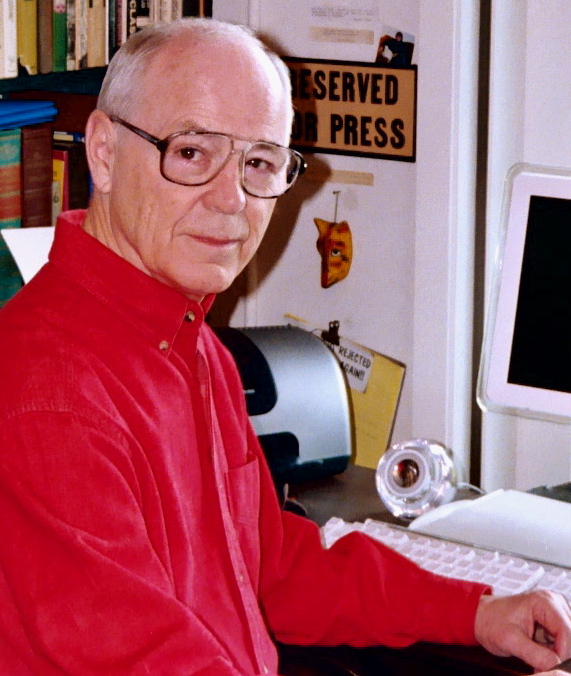
By Dick Meister

Guardian columnist Dick Meister is a longtime Bay Area journalist. He can be
reached at www.dickmeister.com, which includes several hundred of his
columns.

OK Nike, pay up! You owe me big. Exactly how much, I can’t say, since I
don’t know the going rate for athletes and others who act as human
billboards for you. You know, those whose team uniforms, workout gear and
other garments display your swoosh brand symbol prominently.

I assume the swoosh-marked college athletes are not paid openly, lest they
lose their amateur status, although their colleges, while profiting from the
athletes’ play and display of the swoosh and other brand symbols, of course
face no penalties for doing so.

My days as an athlete are long gone and, sad to say, there were no swoosh
contracts back in those days. But now, I think, it’s time for me to collect
a little.  You see, I was recently quite ill, and on leaving the hospital
was under strict orders to go easy and, among other things, to wear light,
loose fitting clothing.  No tight jeans and such.

But sweatpants, they’d be perfect. So I popped into by favorite clothing
establishment and grabbed a pair of sweatpants off the rack without
bothering to check anything but the size. Didn’t even try them on.

Oh, but when I got the pants home. The shock! the shock! There it was on the
side of the left leg, the dreaded swoosh for all the world to see on my
daily doctor-prescribed walks and other sweatpants-clad forays into the
community. I had become a walking billboard for Nike.

So where’s my endorsement money, Nike? My pay. I’m working for you, after
all. Do I have to bring in a union to get me what I ‘m owed? I’m not asking
for much, just whatever you’re paying other human billboards. I’m not
exactly a celebrity, but I am known rather well . . . and highly regarded, I
like to believe, in some parts of my community. Seeing me wearing the swoosh
might influence some of my neighbors to rush out and buy their own Nike
gear. Naturally.

But realistically, I must tell you it’s not likely I’ll get paid for my
valuable work on behalf of Nike. Big time athletes are paid, and paid well
for wearing and endorsing the swoosh. But not us plain folks who wear the
Nike brand.  We need a union to demand decent pay . . . to demand decent
treatment.

That’s it, a union to demand decent treatment for all who wear the Nike
brand . . . plus the money they should be owed by Nike for doing so. There
are, of course, unions of professional athletes. But their concern, as I
guess it should be, is for their members. We need to form a union of our own
to also get the big bucks for wearing the swoosh.

And while we’re at it, we could use the leverage of our union to effectively
demand much better treatment for the workers in Nike sweatshops in poor
countries who produce most of the swoosh brand stuff.  Nor should we forget
the celebrity athletes whose huge pay for endorsement of Nike products
drives up the price we ordinary folks have to pay for sweatpants and other
gear that the celebrities endorse only because they are paid to endorse
them.

It’s highly doubtful that any of our spoiled, hugely paid athletes would
readily agree to share their endorsement money with lesser-paid citizens.
But with a union, who knows? Professional athletes have their own powerful
unions, so why don’t their unions take up the cause of unpaid Nike
endorsers?

That’s one of the basic principles of unionism, unions seeing that their
members get a fair share and helping members of other unions get their fair
share. You know, solidarity and all that.

So, swoosh wearers, unite! Unionize! We have nothing to lose but our
swooshes!

Guardian columnist Dick Meister is a longtime Bay Area journalist. He can be
reached at www.dickmeister.com, which includes several hundred of his
columns.

Seattle surf rock band La Luz in severe car accident

16

Some terrible news about a band featured in this week’s issue: La Luz. The haunted surf rock quartet from Seattle was in an awful-sounding car accident last night.

The ladies of La Luz were supposed to play two shows in SF this weekend, opening for of Montréal. However the rest of their tour is now cancelled. Below is a statement from their label, Hardly Art, and info on how to help:

“Last night on their way back to their native Seattle from a show at Boise’s Korah Shrine, rising surf band La Luz were in a severe accident that totaled their van, destroyed their gear, and incurred injuries to the band members.

As a result, they’ve been forced to bow out of their remaining tour dates with of Montreal, starting with tonight’s performance at Neumos. For those who feel compelled to help the band get back on their feet, we’ve set up a Paypal account for laluzdonate@gmail.com; 100% of the donations will go the band as they seek to pay medical bills and purchase a new van, new equipment, and new merch.”

UPDATE from the band: “Last night was probably the most terrifying experience of any of our lives. But we’re ok! Thanks for the love and well wishes everyone. We lost a lot of things (pretty much everything we had) and got pretty banged up when we were hit by a semi on our way to Seattle last night, but we’re just awfully glad to be alive and we’ll be back on our feet in no time. For those of you who want to help out financially, Hardly Art set up this paypal to help us pay for some stuff and money we lost. Love to you all!”