SFBG Blogs

Where I was on the day President Kennedy was shot

5

By Bruce B. Brugmann

On Nov. 22, 1963, I was a reporter for the Milwaukee Journal, a famous MIlwaukee daily newspaper always rated among the top ten U.S. newspapers.

I was packing with my wife Jean and two kids, Katrina and Dan, to go to San Francisco with the idea of starting a newspaper, which three years later became the San Francico Bay Guardian.  But I was still on duty in the Journal newsroom on the  Friday morning of the assassination. 

Early in the morning I got a call from the publicist of the Moscow Circus, which was finishing up its highly successful run in town. I had covered the circus as part of my show business beat and had rated it highly as the splendid show it was. The publicist, a good guy and competent at his job, wanted me and the Journal’s music critic, Walter Monfried, to go with him to lunch at a nearby German restaurant called Mader’s.

“I will buy the lunch,” he said, ‘”and you won’t have to write a thing.  You will be doing me a big favor.  I have lots of money left over on my expense account and I need to get it spent.  I want to spend it on the two of you.” And he repeated the point  for emphasis, “You will be doing me a big favor.”

And so Walter and I, after our noon deadlines on the afternoon paper, headed out for Mader’s,  planning for a big meal and lots of drinks.

We had a couple of drinks and ordered some German specialties of the house and settled in for a long lunch. Word of Kennedy’s death came to Milwaukee at 12:49 p.m. on Nov. 22, but Walter and I got the news by special messenger. Suddenly, Gus Mader, the proprietor, broke the lunch decorum by running around the room carrying a little sign.  “Kennedy’s been shot, Kennedy’s been shot,” he said in an excited voice.”Kennedy’s been shot.” Ane he kept running around the restaurant with the message.

I looked at Walter and said, “Walter, you know Gus. Can he be believed?”   Walter replied, “Yes, he can.  Kennedy’s been shot.”

We quickly finished our meals and did what newspeople do in the news business when disaster and a big story breaks.  We immediately went  back to the Journal newsroom.

It was pandemonium but functional pandemonium. The staff had only minutes to make the final deadline on the afternoon edition. Someone called downstairs to the press room,  nobody knows who, to yell “stop the presses” All the wires were pumping out copy relentessly,  AP, UPI, sports, regional wires, all of them. Our ace reporters had already been dispatched to the scenes, Bob Wells to Dallas and Harry Pease to Washington. Editors were conferring with reporters. Reporters were on the phones or typing furiously on their typewriters. Ruth Wilson was handling the mountains of material streaming in from the wires. The city desk was organzing local coverage and reaction followups and coverage from our Washington bureau. Things were tense and the air crackled but I was amazed at how efficiently and professionally the paper moved along.

The assassination was of particular moment for the Journal and its talented staff. They liked Kennedy and his politics and had a special personal and political affection for him. J. Donald Ferguson, the Journal editor sitting on the Pulitzer Prize board  in 1957, was responsible for the choice of Kenendy’s book, “Profiles in Courage,” to be given a Pulitzer for the best biography.  “The book had not been considered by the other judges until Ferguson won them over, telling the board he had read it aloud to a 12-year-old relative, “‘and the boy was absolutely fascinated,'” according to a Journal history.

Kennedy had visited the Journal newsroom during the crucial 1960 Wisconsin primary and was friendly with many of its reporters and editors and his administration hired some Journal staffers, including Ed Bayley, former star political reporter  and later founding Dean of the UC-Berkeley Graduate School of Journalism  The  Journal warmly endorsed him during the primary and general elections. Kennedy was a welcome change after the Journal’s famous battles during the 1950s with its native son Joe McCarthy and the national scourge of  McCarthyism.

The story made the final edition and then there were other extras, with huge “EXTRA ! EXTRA !” at the top of the front page. When the first of l00,000 copies of an extra rolled off the presses with more details, the Journal lobby was jammed with people waiting to buy papers.

The  Journal rose to the occasion magnificently, put out a special edition on deadline, and produced some of the nation’s best coverage of the assassination and funeral of any paper in the country.  We were all sad about Kennedy but very proud of our newspaper. . b3



Civil rights attorney John Burris to sue SFPD over alleged Valencia Gardens profiling

164

Prominent civil rights lawyer John Burris will sue the SFPD on behalf of the family of D’Paris “DJ” Williams, after a neighborhood brawl involving police at the Valencia Gardens housing project that Burris called “outrageous.” 

Last Friday, 20 year old D’Paris Williams was bicycling to his cousins’ house from the Batkid festivities downtown when plainclothes police officers from the Violence Reduction Team, a narcotics and firearms reduction squad, attempted to detain him for riding his bike on the sidewalk. In the confusion, a brawl broke out with the police, Williams, and three neighbors. Video was recorded of the incident, which quickly went viral. 

After seeing a bloody and beaten Williams carried to a squad car by police in the video clip, his family and the residents of Valencia Gardens have posed the question: why? 

Why did plainclothes officers tasked with the mission of seizing guns stop a young man coasting on his bike on a sidewalk for a few feet? The family said they believe Williams was targeted because he was a young man of color visiting a housing project.

“When young people are brutally assaulted by the police, there must be accountability,” Burris told the Guardian.

Williams’ step-father, Frank Williams, an ex-offender who now works with the Center on Juvenile and Criminal Justice, was shaken when he first heard what happened to his son, DJ. “I know there are some good cops, some are my friends,” he said.  “But there are some bad cops. What ran through my mind was how he got profiled like that, just because. I don’t like how it happened, and how they justified it.”

The SFPD was unavailable for comment at press time. All they found on DJ Williams was juice and a cupcake. 

A protest defending D’Paris Williams and the three other men hurt and detained in the brawl marched in the Mission Tuesday, and another protest is planned for tonight at 5pm at 15th and Guerrero. 

Click here for our previous coverage of the Valencia Gardens incident

Who dares challenge Katniss for box-office supremacy? New movies!

2

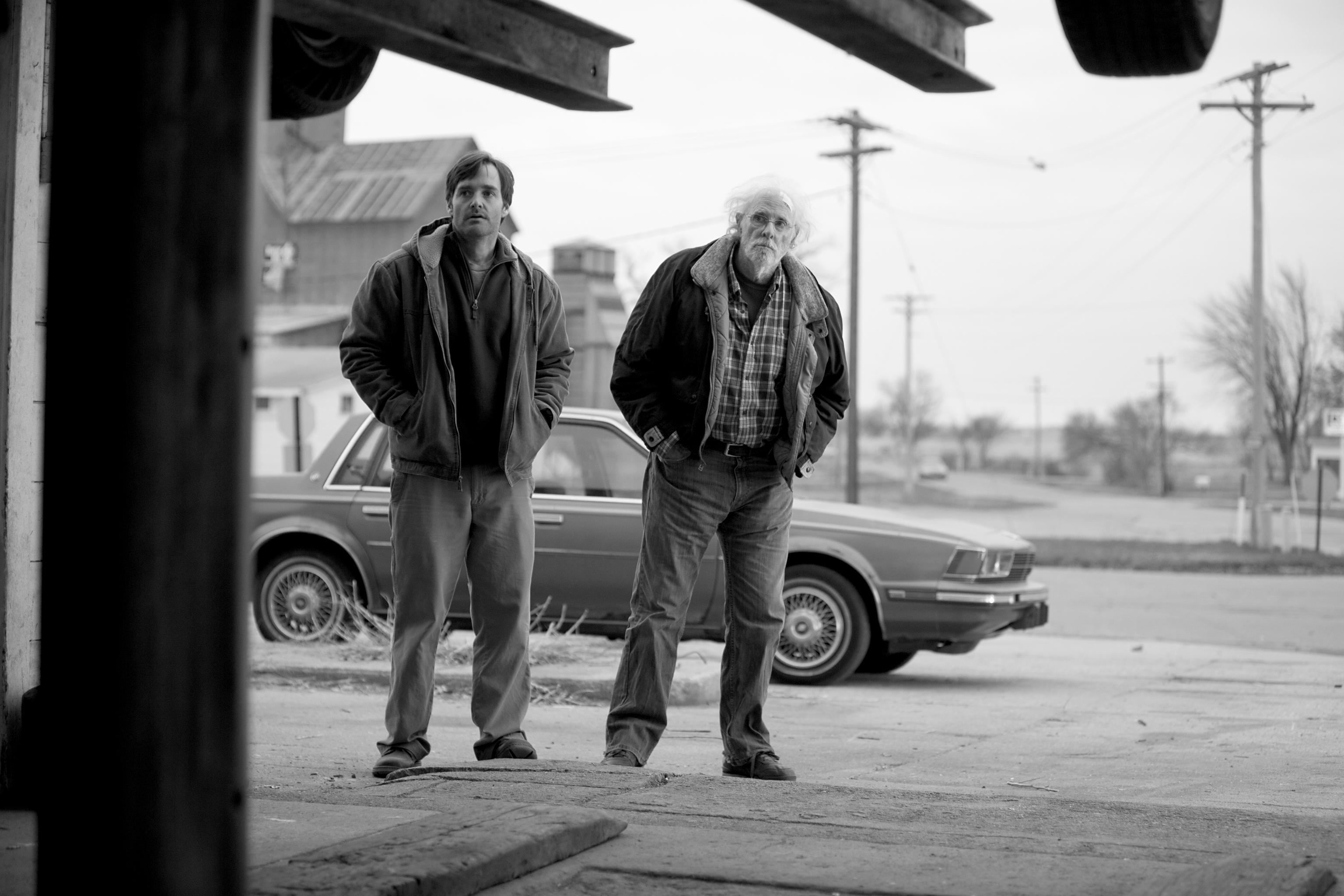
This week, The Hunger Games: Catching Fire stands poised to crush all who dare step to it, but there are some alternatives out there. There’s the San Francsico Film Society’s weekend-long Cinema By the Bay festival (my overview here), as well as the latest from acclaimed director Alexander Payne, the small-scale but still very moving Nebraska (Dennis Harvey’s review here.)

Plus: a festival favorite from Belgium, and Vince Vaughn’s sperm-bank comedy. Reviews for both (plus guaranteed big kahuna Catching Fire) below.

http://www.youtube.com/watch?v=3a50DJkCxqw

Broken Circle Breakdown This Belgian movie by director Felix Van Groeningen arrives bearing major awards (from the Berlin and Tribeca festivals) and promising to nab plenty more of them. Why, you ask? I haven’t the faintest idea. Didier (Johan Heldenbergh) is leader of a bluegrass group; Elise (Veerle Baetens) is a tattoo artist until she meets him, they get together, and it’s discovered that when she opens her mouth Alison Krauss falls out. They have a child, Maybelle (Nell Cattrysse), who develops cancer at age six or so, and whose prospects are grim. So far, so ordinary — Once (2007) meets Lorenzo’s Oil (1992), a tearjerker in which people sing high lonesome American roots music (in English, too) well enough, but not so well that you ever stop wondering “Why are these Belgians doing this?” The expected tragedy hits halfway through, and that’s when the movie really gets into trouble. Its protagonists fall apart, understandably, but in irksome ways — mostly picking on each other — with particularly annoying sequences occurring in both past and present tense. It’s hard to tell which one is worse, the arch flashback wedding scene, her deciding to rename herself “Alabama,” his endless onstage outburst about Yahweh, the climactic psychedelic flashback crisis montage, or the wholly gratuitous final … well, never mind. This was originally a stage play, and in the usual way that seeing musicians act and actors play instruments live is exciting, it probably worked well in that medium. But on film it seems like a contrived pileup of ill-matched ideas and plot devices. Don’t take my word for it, though: From Seattle to Osaka, apparently there’s been nary a dry eye in the house. So knock yerself out. (1:50) (Dennis Harvey)

http://www.youtube.com/watch?v=ocMnYUSzniU

Delivery Man Twenty years ago David Wozniak (Vince Vaughn) “put love in a cup” 600-plus times to finance a family trip to Italy. His mother was sick, his father couldn’t afford it, and with time running out, David embarked on a harebrained scheme to make (a lot of) “it” happen. The sperm bank that paid him $23K for his “seed” overused it, and 18 years later he has 533 kids, 143 of which are on a hunt to find their biological father, “Starbuck.” (This also the name of the 2011 Canadian comedy on which Delivery Man is based.) With a premise this quirky you’ll have a hard time finding something to hate, even if this is technically a film about runaway jizz. This heartwarming Thanksgiving release isn’t really appropriate for youngsters (unless you’re been trying to find a entrée to explain sperm banks) but the way Delivery Man deals with the seemingly limitless generosity contained in each of us is both touching and inspiring. Maybe David’s contribution to “Starbuck’s Kids” doesn’t obligate him to reveal his identity, but he’s desperately attached, and goes embarrassingly far outside his comfort zone to interact. The kids’ emotional stake in this is murky, but the way their search for identity finds a voice in tune with the current tech-confident yet socially-confused younger generation could make Delivery Man relevant to more generations than X or Y. (1:45) (Sara Maria Vizcarrondo)

The Hunger Games: Catching Fire Before succumbing to the hot and heavy action inside the arena (intensely directed by Francis Lawrence), The Hunger Games: Catching Fire force-feeds you a world of heinous concept fashions that’d make Lady Gaga laugh. But that’s ok, because the second film about one girl’s epic struggle to change the world of Panem may be even more exciting than the first. Suzanne Collins’ YA novel The Hunger Games was an over-literal metaphor for junior high social survival and the glory of Catching Fire is that it depicts what comes after you reach the cool kids’ table. Katniss (Jennifer Lawrence) inspired so much hope among the 12 districts she now faces pressures from President Snow (a portentous Donald Sutherland) and the fanatical press of Capital City (Stanley Tucci with big teeth and Toby Jones with big hair). After she’s forced to fake a romance with Peeta (Josh Hutcherson), the two watch with horror as they’re faced with a new Hunger Game: for returning victors, many of whom are too old to run. Amanda Plummer and Jeffrey Wright are fun as brainy wackjobs and Jena Malone is hilariously Amazonian as a serial axe grinder still screaming like an eighth grader. Inside the arena, alliances and rivalries shift but the winner’s circle could survive to see another revolution; to save this city, they may have to burn it down. (2:26) (Sara Maria Vizcarrondo)

Presidio Trust critical of museum proposals

4

The three museum proposals for a hotly contested Presidio site need significant revisions, the Presidio Trust announced today.

Teams with three museum proposals are vying for a Presidio space just behind Crissy Field (See The Presidio Strikes Back, this week’s cover story): A museum on sustainability, a museum celebrating the history of the Presidio, and a tech and popular art museum holding the personal collection of filmmaker George Lucas, the creator of Star Wars. The trust had this to say about the proposals: 

On The Bridge/Sustainability Institute

“We are concerned, however, about the institutional capacity of the team to … deliver and sustain the project financially. We encourage the … team to bring more clarity to the question of who might fund the building and early programming, and what institution will be created to operate and sustain the Bridge. While the building is ‘light on the land,’ it is also too large and we urge some consolidation of the building program.” 

On the Lucas Cultural Arts Museum

“The Trust is particularly excited about the potential of exceptional educational programming to draw diverse audiences to the museum and the greater Presidio. Despite this, we have significant issues with the proposed building – its massing and height, and its architectural style – and believe it should be redesigned to be more compatible with the Presidio.” 

On the Presidio Exchange (PX)

“The Presidio … is replete with examples of the Conservancy’s good work and of its ethos of partnership in the public interest. The Conservancy’s approach to programming … intended to be varied, flexible, and relevant over time to park audiences – is fascinating. Yet, these attributes also make it harder to understand what the PX is truly striving for programmatically. What is the master narrative? Is there an overall theme or focus that can be better articulated?”

Lucas museum spokesperson David Perry did not offer a detailed response when contacted by the Guardian, saying only that his team would comply with the Trust’s Jan. 3 deadline to submit additional information.

SF General reduces psychiatric care

A 22-bed psychiatric unit at San Francisco General Hospital will be taken out of service, and re-opened only if the facility experiences a high caseload of patients exhibiting the worst signs of psychiatric crisis, the Bay Guardian has learned.

As of Nov. 19, five patients were receiving care in that unit, 7B, according to spokesperson Rachael Kagan. None had symptoms that rose to the level of requiring acute care. Instead, they were classified as sub-acute patients, a distinction that essentially means they didn’t present an immediate threat to themselves or others.

But under a new policy that will take effect after they have been released, all 22 beds in 7B will be closed – unless they are needed for acute patients who do reach that critical threshold. The unit will be staffed only if patients can’t be accommodated in the hospital’s other acute psych unit, which has 21 beds.

The decision was made in response to a changing financial picture under federal health care reform, Kagan explained.

“There is a big push … to ensure hospitals are only providing acute care,” Kagan said, and this trend is driving efforts to reduce sub-acute patients. “It fiscally makes more sense,” she added, because insurers pay higher rates for acute care than for lower levels of treatment.

Yet some hospital staff members are nervous about the implications of this shift, because it means fewer patients will be able to access psychiatric care at SF General until they represent a danger to themselves and/or the general public – at a time when demand for these services is on the rise.

“To us, it’s a matter of priority for the city,” said Brenda Barros, an employee at SF General who is active with hospital union SEIU 1021. “Do you want to take care of these people, or don’t you?” 

Some staff members are doubtful that 7B will reopen. An internal SF General memo issued Nov. 18 informed 7B staff: “Our census will be gradually reduced until we won’t have any more patients. Then 7B will be closed.” The memo added, “this came from [SF General CEO] Sue Currin due to budgetary constraints.”

However, a second internal memo went out the following day, to “clarify” the first one. In that message, Nursing Director Kathy Ballou wrote: “We are not closing psych beds or any beds.” Instead, beds in 7B would be closed unless “we get acute patients needing that level of care,” she wrote. “As in other hospitals, we are accountable to our operating budget.”

Further complicating matters, said Barros, is that patients can fluctuate rapidly between needing acute care and a lower level of attention. “They absolutely can swing back and forth.” She added that patients initially requiring a lower level of care could experience worsening conditions if they’re unable to secure an appointment in time to get help, and delays are very common.

Kagan emphasized that the unit wasn’t being closed down, but did confirm that sub-acute patients would no longer be able to receive treatment in 7B. Instead, those patients will be placed with various service providers throughout the city, she said. “The goal is to move the patients to their appropriate placement.”

Meanwhile, this shift coincides with an overall rise in citywide demand for psychiatric services. According to a report delivered to the Police Commission earlier this year, SF General had 6,293 patient admissions for psychiatric holds in 2012, a sharp increase from 5,837 in 2009.

While there were deep cuts to the city’s Department of Public Health during the economic downturn, Mayor Ed Lee has recently trumpeted a boost to city coffers thanks to growing economic activity. But if the city’s financial health has improved, it seems odd that its flagship safety-net hospital would be put into the position of reducing psych care due to budgetary pressures when that kind of care is sorely needed.

For Barros, it’s a matter of whether or not city officials will decide to allocate more funding for mental health services. “If they don’t have enough money in Public Health,” she said, “then they need to put more into Public Health.”

BART board approves labor contract, minus the district’s “mistake” UPDATED

36

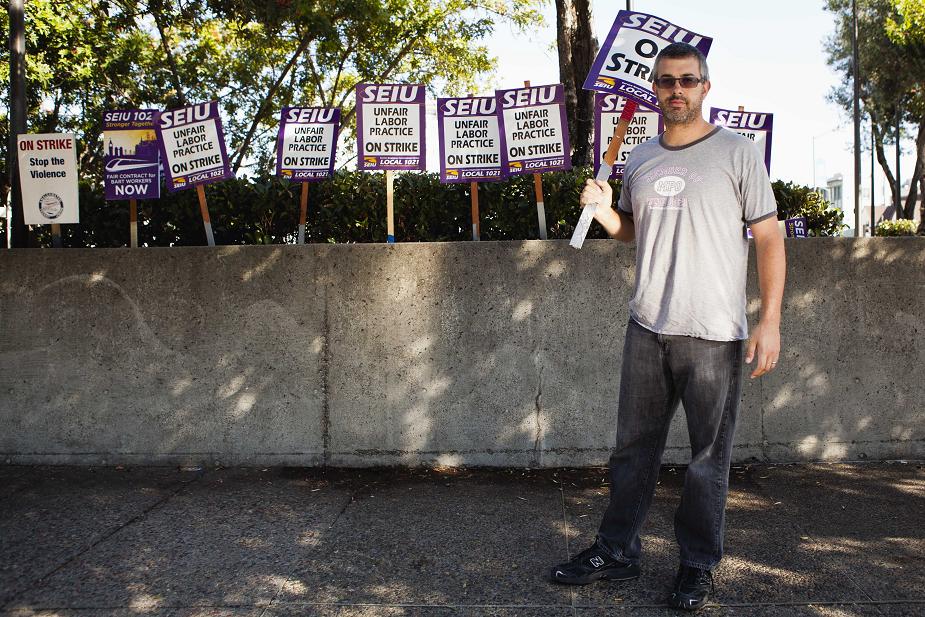
The BART Board of Directors has voted 8-1, with conservative young Director Zakhary Mallett in dissent, to approve a hard-won contract with its unions, after removing Section 4.8, the paid family leave section that the district says was inserted by mistake. The motion also directed management to negotiate a settlement over that issue with its unions, which have already approved the contracts and now must decide whether they are willing to do so again without that provision or whether the possibility of another BART strikes is once again looming.

Shortly after the meeting, SEIU Local 1021 Executive Director Pete Castelli issued the statement saying, “We’re disappointed that the BART Board of Directors had decided not to fulfill their commitment to the workers and the riders by approving contracts without the provision on family medical leave. The unions have voted on and ratified these contracts in their entirety.”

He accused the district of over-inflating the cost estimates of the family leave provision and said the unions were willing to discuss it, but the district instead chose “to prolong the process and hold the fate of the riders, the workers, and the Bay Area in the balance.”

“Right now we are considering all options, meeting with workers who have ratified this contract, and working to find a way to reach a resolution to BART management’s alleged mistake in the agreement it made with its workers,” he said.

After meeting in closed session for about two hours this morning, the BART board opened the meeting up around 11:45am to discuss and vote on the contract. Vice President Joel Keller opened with a motion to remove Section 4.8 from the contract, approve the rest, and direct management to negotiate with the unions.

Mallett, the 25-year-old newbie who lives in unincorporated West Contra Costa County but whose Dist. 7 includes part of San Francisco, spoke first: “Even before this hiccup, I was not in the position to support this contract. I find it too costly.”

But he was the only one to take that stance, with the rest of the directors calling the underlying contract a fair compromise, even if all said they couldn’t support the paid family leave provision that would add anywhere between $4 million and $44 million to a contract that was already going to cost the district an additional $67 million.

Director Gail Murray even chided Mallett’s certitude given his age and inexperience, noting that the union had given up raises for years when BART had budget deficits, and now that the district is running surpluses, it’s reasonable to give workers raises that amount to about 2 percent per year for four years, particularly given the union also gave on their benefit packages.

“Our employees kept the system going…They’re the reason why we keep 40-year-old cars still running,” Murray said, later adding, “To say this contract is not a good contract is wrong.”

The rest of the board agreed, even why acknowledging it is more than they hoped to pay given the district capital needs and aggressive expansion plans.

“We’re probably paying more for this than we anticipated we would pay, and labor is probably going up more than they want to, but that’s the nature of collective bargaining,” Keller said, who also began what turned into a chorus of criticism for how district negotiators signed off on a provision the board never agreed to.

“We ended on a sloppy note and that’s regretable,” Keller said, pledging that if he’s elected president next month — an ascension that is customary for the vice president — he plans to lauch a full investigation into what happened.

“I’m pained that we put ourselves in such adversarial positions with each other and that we lost the lives of two employees,” Director John McPartland said of the protracted labor negotiations and the fatalities that occurred while the unions were on strike Oct. 19. He called the contract “more than fair and equitible.”

Director James Fang, who represents western San Francisco, sounded the strongest criticisms of BART management and negotiators. “Yes, it was a mistake, but nobody has come forward and said ‘there was a mistake and I’m responsible,” Fang said, later adding, “The ones who signed this must be held to account.”

Fang then went further, albeit without specifics, when he said, “Every bit of management advice we’ve received has not worked out to the district’s best interests.” Given the looming investigations by the California Legislature and National Transportation Safety Board of BART culpability in the Oct. 19 deaths — the result of management preparing to break the strike by training replacement drivers and contesting longstanding demands by state regulators to make safety improvements that likely would have prevented the tragedy — Fang’s comment could ultimately prove to be a huge understatement.

Director Robert Raburn echoed Fang’s calls for accountability: “I’m still not clear on how that [contract provision] arrived and it hasn’t been accounted for by anyone at the district who said ‘I am responsible.’”

But he also said that the provision was clearly an error and not something arrived at through the negotiations: “Both parties agreed on a $67 million package and we should keep that intact because it’s fair.”

Reached by the Guardian this afternoon while union leadership was conferring to plan next steps, SEIU Local 1021 Political Director Chris Daly told us, “We are about as up in the air as we’ll ever been.”

As a first step, he said the unions are consulting with their attorneys on the legality of today’s vote. “We think the action might be an unfair labor practice and illegal under labor law,” Daly said.

He also called it “unlikely” that union leadership would simply submit the board-revised contract to an up-or-down vote by union membership, saying that he doesn’t think it would be approved.

And Daly echoed the concerns expressed by several BART directors about how this mistake happened and why nobody has taken responsibility or been held accountable: “If I were on that board, I’d have the general manager’s head, there’s no two ways about it.”  

UPDATE 11/22: Today BART’s largest unions, SEIU 1021 and ATU 1555, issued the following joint statement on the BART Board’s recent vote regarding whether to ratify the labor contracts:

“We consider the Board’s actions to be unprecedented and illegitimate, and we’re considering our next steps, including possible legal action.

“The BART Board of Directors has disregarded the vote of more than two thousand BART workers and has chosen to subvert the collective bargaining process, and we take their actions seriously.”

We will survive! Annalee Newitz’s ‘Scatter, Adapt, and Remember’

3

Spoiler alert: Humans survive at the end of the world.

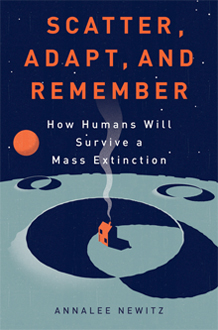
It’s a bit more complicated than that, of course, but it’s good to start on a note of hope. It’s a hope we can afford to have, as Annalee Newitz (editor of science and culture site io9.com, and a former Guardian contributor) discovered in the research that yielded her book Scatter, Adapt, and Remember: How Humans Will Survive a Mass Extinction (Doubleday, 320 pp., $26.95). She’s among the participants in tonight’s “Last Things”-themed InsideStoryTime at North Beach’s Glass Door Gallery.

Fascinated with the possibility of future disasters, Newitz set out to learn all there is to learn about the history of mass extinctions on Earth. From megavolcanoes to meteor strikes, the common thread of disaster on this planet is that something has always survived. An impressive amount of work is being done to make it possible for us to continue this streak of survival, and we all possess some tools of survival already.

Given my vague and largely unexplored interest in science and my undying obsession with Pacific Rim and the idea that humans could come together and build giant robots to fight giant monsters, Scatter was the book I didn’t know I needed until it was already in my hands. That’s not to say Newitz proposes that we focus our resources to build Jaegers in preparation of a kaiju apocalypse. But the message of world unity in the face of the threat of extinction that shines through in films like these shouldn’t be taken for granted. As Newitz writes, “We can only meet the challenges of surviving whatever the natural world throws at us by working together as a species in small and large ways.”

Perhaps you’re skeptical of humanity’s ability to get along on that great of a scale. I know I am. But in the face of something as dire as mass extinction, our instincts should kick in. As the title suggests, some of the strategies that may save us are to scatter – diaspora has resulted in the survival of groups of people over generations – adapt – to change our ways for a more sustainable future – and remember – passing on the knowledge that will advance us through the years. The latter is particularly important, because while we’re not all scientists, we’re all capable of telling our stories and doing our part.

But that’s not all we can do. Newitz proposes reshaping cities as we know them, and guess what city is said to be a great template for the “mutated metropolis”? That’s right, our very own City by the Bay. Historically considered a “wide-open city,” meaning that it’s a city “prepared to tolerate,” San Francisco is an ideal site for the types of change that could ultimately save us. So maybe we should be building a Jaeger, since San Francisco is the first city to be destroyed by a kaiju attack. Sorry, did I mention I really loved Pacific Rim?

But in all seriousness, the things we should be thinking about combating are climate change and pandemics. Newitz discusses the work we need to do to regulate the space around us and cool down the planet. And if you haven’t already dismissed anti-vaccination discussions, consider this: biomedical model expert Brian Coburn and his colleagues have found that “vaccinating 80% of children (less than 19 years old) would be almost as effective as vaccinating 80% of the entire population.” Meaning we should really consider how we can vaccinate globally.

But though we should be thinking about terraforming Earth to make it more sustainable, in the long run, we should be looking to the stars and considering terraforming other planets. Did anyone else first learn the word “terraforming” from Firefly? Because I sure did, and to think that Captain Malcolm Reynolds’ opening commentary on the show about the Earth getting used up and having to terraform other planets might actually be nonfiction one day is fascinating. And the space elevators that could make day trips off Earth possible are in the works!

Scatter, Adapt, and Remember is part cautionary tale, part how-to guide, and part super cool and nerdy science. Taken to heart, it’ll leave you more knowledgeable and hopeful for our continued existence, and possibly inspire more great minds to take action to ensure our survival.

InsideStoryTime: Last Things

With Annalee Newitz, Lucy Corin, Ransom Stephens, Guy Benjamin Brookshire, and Angelica Oung, with MC James Warner

Thu/21, 7-9pm, free

Glass Door Gallery

245 Columbus, SF

www.insidestorytime.com

Chef Michael Anthony talks ‘The Gramercy Tavern Cookbook’

2

The Gramercy Tavern Cookbook (Clarkson Potter, 352 pp., $50) takes you on a restaurant tour, beginning with Danny Meyer’s initial conception of opening this New York establishment, continuing past the chief steward and his wheelbarrow of fresh spring produce from the Greenmarket, around the harvest table where the floral designer pairs yellow sprays of sunflowers with splayed summer squash, into the kitchen during the staff’s family meal, past the pastry station where Nancy Olson creates her autumn peanut butter semifreddo, and ending at the dining table with a winter dish of guinea hen prepared by James Beard Award-winning chef Michael Anthony.

By the time you’ve read through this serious and seriously exquisite cookbook, ogled the colorful photos, and closed the enormous, masculine-elegant back cover, you’ve spent a whole year eating inside the Tavern. Your appreciation for the minute mechanics that run a restaurant will have widened, and your list of must-try recipes? Exploded. (I’ve already checked off the curious “Cauliflower with Quinoa, Prunes, and Peanuts” with happy results). Chef Anthony, making his first trip to San Francisco in December, spoke to me about his vision behind the book.

SF Bay Guardian Who did you write this cookbook for?

Michael Anthony For the fans of Gramercy Tavern who’ve eaten at the restaurant and have fallen in love with it over the years. Or, eventually, people who have not yet discovered it, who have heard of the name and want to become insiders. We wrote this book to translate the rich history of the last seven years — the time that I’ve been in the restaurant — to share those recipes with home cooks.

SFBG What do you mean by “translate”?

MA A professional cook uses jargon, a technical language that’s not familiar to most people who have never worked in a professional kitchen. So, we reevaluated the kinds of tools that one would use at home, the way in which I described how to execute a dish, and took into consideration the careful way I cook at home. I have three daughters, so I cook a lot at home.

SFBG Do your girls have a favorite recipe that you make at home?

MA My three daughters are 14, 11, and three and a half. The mushroom lasagna is a particular favorite of the eldest. The zucchini soup is a favorite of Colette, the 11-year-old. And Adeline eats everything [laughs].

In the book I mention this one silly scenario where I’ll wear my Japanese chef outfit and set up an open kitchen, write out the menu, and I serve [my girls] à la carte vegetable sushi at our open window.

SFBG What’s your trick to having a restaurant and a family at the same time?

MA We make an enormous amount of sacrifices to be a part of this business. The great news is there’s an amazing team at Gramercy Tavern, which allows us all to take days off, including me. And during that time at home I enjoy being home, cooking, and shopping at the Greenmarket. It’s a regular part of our lives.

SFBG You pay a lot of attention to vegetables. Where does this influence come from?

MA We have a fascination with vegetables. They’re a way for us to literally stay connected to the changing seasons and the growers. And for our guests, who, in a big city like this, can feel insulated from the changing seasons.

We’d all be a little better off if we allow ourselves to be seduced by the role that vegetables play in our dishes. It’s not about self-deprivation, not veganism, not vegetarianism — I’m not promoting that particular alternative. I’m just saying that when the vegetable component of the dish preoccupies the creative process, and the protein plays a slightly different role in the story, we eat a healthier variety.

SFBG Do you have a favorite vegetable?

MA It’s always changing. We’re just coming out of our first week of very cool, cold weather, so it’s shifted our salads to include things like roasted winter squash. Our soups are made from potatoes and parsnips and turnips. We’re serving things like sunchokes and salsify.

SFBG Tell me about the “harmonious scatter.”

MA It describes the way in which we plate food with intent. It’s not as simple as, say, Alice Waters saying that food is simply beautiful so just put it on the plate, but it’s not as forced as trying to over-manipulate the food. It’s somewhere in between. Sometimes the imperfections of seeing the cook’s hand in the dish lets you know that it’s handmade.

SFBG How does seasonality affect Gramercy Tavern?

MA When it gets warm in the spring it’s the perfect place to go for a carefully seasoned salad. Summertime when it’s sticky and hot, it’s a great place to come for a lightly grilled fish dish with a chilled cucumber garnish. In the wintertime, it’s an impressive use of the Greenmarket. It doesn’t mean the food is boring or dull, through the winter months, it just means that we have to be more creative with it.

SFBG I was drawn to the book’s Winter chapter the most, actually.

MA It’s a time when we can really draw a distinction between the way you guys [in the Bay Area] would be eating. People are always saying, “If only we had a growing season like in California.” But we don’t. So ultimately those are the times when we can really say that our food is the most distinctively different.

SFBG It’s like that moment where you think you think your fridge is empty, but you end up making something even tastier than you imagined for dinner.

MA I’m with you. Have you read Tamar Adler’s book, An Everlasting Meal?

SFBG I love that book.

MA Tamar’s a good friend, and she’s translated the notion that a meal is a continuation of a story, not the sum of a bunch of recipes. It’s how one meal forms the next. One season forms the next.

SFBG Can you interpret your term “American cooking”?

MA So, I think French food is all about harmony; there’s a very gentle feel, like looking at a wave. No sharp turns. Japanese food is actually more a state of mind. Like their language, there’s no intonation. It’s all about nature, the natural flavor with a very hidden hand of the chef.

American food is all about a lot of highs and lows. We use acidity, we use heat, as ways to make it exciting. In the same vein, we’re not bound by a lot of the traditions and rules that we learn, though we take great interest in them. We have a sense of freedom and openness to cooking … especially in a restaurant like Gramercy Tavern, anything and everything is permissible, in terms of sources of inspiration.

SFBG And American cooking at home?

MA I’ve demonstrated in the book how folks can take pleasure in cooking at home, without feeling trapped. “Oh, I can’t find that particular variety,” or “I don’t shop at the Greenmarket so I can’t do these recipes” — that’s not the case. The overriding message is cooking shouldn’t be a spectator sport. If you visit Gramercy Tavern and you like the dishes that we’re cooking, you can certainly easily find those ingredients at home.

SFBG What is the restaurant doing for Thanksgiving?

MA Well, Gramercy Tavern is closed for Thanksgiving, and that’s what we’re doing [laughs]. Everybody gets to go home and enjoy one of the few culinary holidays that we have in our culture. 

SFBG What are you doing?

MA I’m in charge of the turkey. I’m going to do one traditional slow-roasted bird, and I’ll serve that with a Swiss chard and mushroom stuffing. The other one is a spice-wrapped and apple-wood smoked turkey. With that one there’s never any leftovers. Just demolished. This year, since my in-laws are Jewish, it becomes Thanksgivingukkah. We’re including latkes, and the butternut squash soup with Brussels sprouts from The Gramercy Tavern Cookbook.

Chef Michael Anthony signs The Gramercy Tavern Cookbook Dec. 1, 11am-1pm, Blue Bottle Café, 300 Webster, Oakl; Dec. 2, he collaborates with Quince chef Michael Tusk on a special six-course dinner. For reservations call (415) 775-8500 or visit www.quincerestaurant.com/events.

Charges dropped in police-resident brawl at Valencia Gardens

285

After spending the weekend and Monday in jail, D’Paris “DJ” Williams’s was released this morning (Tue/19) at 2am. Williams was initially charged with felony counts of assault with a deadly weapon in a widely publicized brawl between police and residents of Valencia Gardens on Friday, but the case was discharged pending further investigation, according to the District Attorney’s office.

It was Friday afternoon, and 20-year-old Williams was having a very good day. As his cousin Dave (last name withheld due to his fear of retaliation) tells it , Williams had just finished applying for a job at Goodwill, and spent the afternoon enjoying the Batkid festivities along with thousands of his fellow San Franciscans. On his way to visit his cousin in the Valencia Gardens housing complex in the Mission, plainclothes officers spotted Williams riding his bicycle on the sidewalk.

That’s when all hell broke loose.

According to the SFPD, the plainclothes officers identified themselves as police, displayed their badges, and when Williams “failed to comply” with their orders to stop, they caught up to him and attempted to detain him. As they struggled to put Williams on the ground, nearby neighbors came out to defend him.

“He became combative, resisted arrest, and multiple subjects came out of that residence and formed a hostile crowd around the officers,” Gordon Shyy, a spokesperson for SFPD, told the Guardian.

In layperson’s terms, a brawl broke out.

Someone allegedly threw a cane that nearly hit an officer. An officer let loose haymaker punches towards a backpedaling neighbor, as a crowd shouted them down. By the end, Williams and three of his cousins’ neighbors were bloodied and bruised as they were taken into custody.  

Williams was charged with felony assault with a deadly weapon, which Shyy said was for biting an officer. Shyy maintains that the officers pulled him aside for a traffic infraction of riding a bicycle on a sidewalk, and the officers decided to detain Williams because he ignored their calls to stop and continued toward the residence.

But just why they decided to pull Williams over is questionable.

The officers were undercover, plainclothes narcotics and gun seizure agents called the “Violence Reduction Team,” Shyy said. Why such specialized officers would leave their vehicle only to make a traffic citation is still unclear, and the SFPD declined to answer that question.

“What were these guys doing stopping DJ for a traffic violation?” Jensen said, incredulous, to the Guardian.

When asked how the officers justified their use of force, Shyy read directly from the police report: “Williams continued to resist by pushing his upper body against the sidewalk and tried to get to his feet. Williams was unhandcuffed and unsearched at this point. From my knowledge and experience I know this is a high crime area and people in this area often carry weapons. I believed if Williams were able to free himself from us, he may attempt to access a weapon.”

Not long after, Williams’ friend Travis Jensen, a local photographer who was teaching Williams the trade, took to Instagram to sound the horn, describing it as police misconduct.

“This isn’t the DJ I know,” Jensen said of the SFPD’s characterization of how Williams reacted. None of the men involved have criminal records, as far as Jensen knows, and were just concerned about their friend.

Video of the incident widely circulated around the internet, riding the wave of Batkid publicity. All were taken to SF General Hospital, according to the SFPD.

The cops, having no other information except that Williams was riding his bike on the sidewalk, were afraid Williams would have a weapon. In the end, all he had on him was a Capri Sun and a cupcake.

Now that the case is discharged, does Williams have to wait in fear? Not likely, Public Defender Jeff Adachi told the Guardian.

“The reason you discharge cases is you can’t prove them,” Adachi said. Though this shouldn’t be taken as sacrosanct, he clarified, it’s likely Williams can leave the incident behind him. “If I was advising him I would say the case was discharged, and they’re not going to file. Generally speaking if they could, they would file it now.”

A protest is planned for tonight at 5pm in front of SFPD’s Mission station, which Williams’ cousin Dave said was a “peaceful protest. I’ll make sure of that.”

All in: author and activist Julia Serano talks ‘Excluded’

7

When we talk about feminist and queer exclusion, we aren’t just dealing with gendered pay gaps and marriage rights. In her new book Excluded: Making Feminist and Queer Movements More Inclusive, Oakland-based author and activist Julia Serano delves into the types of exclusion that she and many others have faced within the very spaces that are supposed to make us feel safe and supported.

Often in “LGBT” activism, it feels like the “B” and the “T” are just for show. Serano, a bisexual femme-tomboy transsexual woman, challenges preconceived notions and debunks myths about gender and sexual identities that our own queer and feminist movements often don’t appear to deem worthy of fighting for. Utilizing her experience as an activist, and often sharing personal accounts of exclusion from queer and women’s spaces, she encourages us to reevaluate some of the mantras of our activism.

“People tend to like memes and sound-bites because they make things sound simple and straightforward,” explained Serano. “This is certainly true within certain queer and feminist settings, where people often say things like ‘bisexuals reinforce the gender binary,’ or ‘all gender is performance,’ or ‘gender is just a construct.’ Sometimes people accept these memes without ever investigating them or fully thinking them through. So I tried to more thoroughly consider these ideas in the book — to point out how they are flawed or over-simplified.”

Excluded is a great read for both the most enthusiastic advocates for queer and feminist causes and anyone making their first foray into this type of activism. Often, material discussing issues of gender, sex, and sexuality are dense and full of jargon that makes it inaccessible to wider audiences.

“When I first became involved in feminism and queer activism, people often suggested that I read Judith Butler, Michel Foucault, and other academic writers on these subjects,” said Serano. “To be honest, I found such books to be impenetrable at first, mostly because they were constantly referencing other theorists and concepts that I was not aware of at the time. Nowadays, I can read their works with no problem. But there was a steep learning curve for me to be able to fully understand what they were trying to communicate.”

That’s not to say that she has anything against academics – after all, she is one herself. But because gender, sexuality, sexism, and marginalization affect everyone, she writes on these topics in a way that is accessible, rather than for a strictly academic audience. As a women and gender studies minor myself, I found this refreshing. Given a dense text, I might only come away with a few of these sound-bites Serano speaks of. And when you’ve spent semesters reading about these concepts and writing papers on them, beginning to unlearn them can be startling.

“If one more person tells me that ‘all gender is performance,’ I think I am going to strangle them,” Serano writes at the beginning of “Performance Piece” on page 105. If you only have a minute to flip through Excluded, spend it reading this piece, which was originally written for Fresh Meat, and became a catalyst for writing this book.

I first heard “Performance Piece” late last year when Serano did a reading at the Women’s Building, and the last words of it echoed through my head long after I left that night: “…my gender is a work of non-fiction.” It’s a reminder that when we dismiss gender as “just” anything – just performance, just socially constructed, just biological – we are oversimplifying a something complex and dismissing the person in favor of a concept. In order to truly advocate for queer rights, we must think more critically about even those ideas that queer movements treat as gospel.

“At the end of Excluded, I discuss working to foster intentionally intersectional movements that work to challenge sexism and marginalization more generally rather than favoring the issues faced by people of particular identities, bodies, genders, or sexualities,” said Serano. “Admittedly, this takes us out of our comfort zone and forces us to listen as well as speak, and to acknowledge other people’s differences and needs in addition to our own. But it has the advantage of creating broader and more powerful coalitions.”

Albany Bulb squatters lose in court and turn to direct action to resist evictions

4

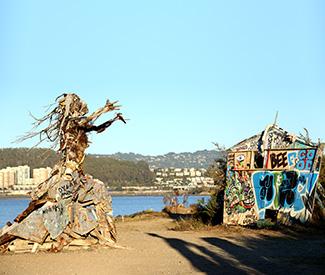
Yesterday marked a big day for Albany Bulb residents. The Bulb, a closed landfill turned homeless encampment, has been under the threat of eviction by the Albany City Council for the last month. 

After an afternoon in a San Francisco courtroom, Judge Charles Breyer of the US District Court for the Northern District of California denied a stay away order filed by the residents’ attorneys seeking to prevent an imminent eviction by the City of Albany. Later that day, after an Alban City Council meeting, residents and activists marched to the Bulb and set up a permanent occupation in protest of the impending eviction.

The stay away order was filed last week in order to prevent eviction during the winter. Osha Neumann, one of the residents’ attorneys and a longtime artist whose work is represented at the Bulb, said that it was unusually cruel to make the residents, some with severe disabilities and mental health issues, move off the Bulb without any homeless shelters or temporary housing available in Albany.

“They haven’t said what is the urgency or need to do it in the middle of winter,” Neumann said of the city, “It’s nonsense.”

Albany Housing Advocates was also a plaintiff, along with 10 of the Bulb residents in the lawsuit.  Julie Winklestein, the president of the AHA was in the court audience, said she hoped that the stay away order would be given: “We decided for a temporary restraining order to keep the conversation going.”

And while that conversation was put to a halt, another has started.

According to a press release issued by area activists and Bulb residents sent early this morning, “activists say they will be participating in trainings, hosting workshops, and planning more actions targeting the City of Albany, as well as the Sierra Club and Citizens for East Shore Parks, recreationalist organizations that are sponsoring the eviction.”

Based on information obtained in court documents, $570,000 was allocated to remove the Bulb residents, based on an Albany City Council decision made on October 21, with $171,000 spent on the cleanup of the campsites and the remainder spent on two portable trailers with bunk beds to serve as transitional housing for six months.

 Many of the campers, such as six-year resident Amber Lynn Whitson, believe that the transitional housing isn’t responsive enough for disabled people, as they believe it would not be open during the day.

“It’s ridiculous that they say they don’t know of any specific disabilities,” said Whitson about the city’s attempt provide transitional housing.

“If I’m not back there, I’m on the streets,” Kris Sullivan, an 18-month Bulb resident said about the encampment. “We’re safe back there.” 

Richmond resident saved from deportation at the last moment

7

Felipe Valdes has lived and worked in the United States for 23 years. Two weeks ago, he received a letter ordering his deportation. Valdes reported to the Immigration and Customs Enforcement (ICE) office in downtown San Francisco yesterday (Mon/18) morning as he instructed and prepared to say his final goodbyes to his family before boarding one of ICE’s deportation buses at noon. Instead, he was released after five hours and allowed to return to his home in Richmond.

“It’s one in a million,” stated Marie Vincent, Valdes’ attorney. She had filed a stay of removal on her client’s behalf to delay his deportation, but such claims rarely get reviewed quickly. Vincent believes Valdes was awarded additional time in the US at the last moment because of media attention he received in recent weeks.

“His case was very compelling,” she explained. “He’s been here so long, and he has contributed greatly to the United States. He’s worked the whole time, he’s active at his church, his children are here. This is his country.”

While Valdes met with ICE officers inside, more than 50 local faith leaders, community members and reporters assembled on the street outside the office, with supporters there to protest the deportation. According to Vincent, this pressure was critical in influencing ICE’s decision to approve Valdes for a one-year work permit, temporarily halting his deportation.

That year may prove to be enough time for the currently pending residency visa application that Valdes recently submitted to be reviewed. His application is the latest in a long history of attempts to become a legal resident of the U.S. stretching back to 1997, seven years after he immigrated here from Mexico with his wife, their baby son, and their unborn daughter. Now, Vincent thinks he finally has a strong case that will earn him legal status in the US.

If Valdes is forced to return to Mexico, it could result in major consequences for his family. His wife, their three children, and their granddaughter all depend upon his wages as a plumber to survive.

“We would have really struggled just to buy food or make rent,” his daughter, Mayra Valdes, reflected after the family received the news that Valdes would not be deported that day.

Mayra’s younger brother suffers from severe scoliosis. The family does not have medical insurance and without Valdes’ earnings, they would be unable to afford the specialized chiropractic and medical care that he needs. With his father gone and no one to pay for his costly weekly treatments, there would be weeks when the boy would not even have been able to walk.

The family depends on Valdes for more than his income too.

“He really pushes me and my siblings to keep going to school,” says Mayra, a Contra Costa Community College student. Her older brother is at the University of California at Davis, and her younger brother is a senior at Richmond High School. With a four-year-old daughter and a second child on the way, Mayra relies on her father to babysit after he gets off work so that she can attend classes.

Valdes’ victory on Monday was a bright note in the sad story of deportation in this country. His single case may not mean much in the broader fight for immigration reform, but for his family, it has meant the world.

“I wanted today to disappear from the calendar,” Mayra recalls, “but now I feel like it was the happiest day of my life. My father was able to come home today—it’s the best present I’ve ever received.”

The Performant: Louder, faster, more!

4

When a friend of a friend held his 33 1/3rd birthday party, he filled the rooms of his apartment with turntables and stacks of LPs for his guests to play themselves. It was basically the best party ever, and a good argument for propagating the tradition of celebrating that particular milestone. And of course what better milestone to celebrate if you’re in the music business, like long-time independent label Alternative Tentacles? Particularly in a business climate unkind to independent anything, to be able to celebrate three-plus decades of sticking it to the establishment at all is some cause for jubilee.

Of course there are pitfalls to growing older, which I only discovered when I got to the Alternative Tentacles blowout anniversary show at Slims at the perfectly respectable club-going hour of 11pm, to discover that I had missed most of the show. Well, I never! Not only had a missed out the rare opportunity to see one of my personal musical heroes, Mojo Nixon, tear it up in his indomitable, breakneck way, but I didn’t really get a chance to soak in the atmosphere building up to the main event: headliners Jello Biafra and the Guantanamo School of Medicine.

Fortunately even if my flow was off, the band’s was not, and the fast and furious set punctuated by politicized bon-mots and observations was classic JB. Jello Biafra, of course, is the founder and overlord of Alternative Tentacles, former frontman of the Dead Kennedys, spoken-word raconteur extraordinaire, and occasional political candidate, and while he was sporting the unlikely trimmed beard and mustache combo of “The Most Interesting Man in the World,” his voice was still the strident, yodel of days of yore, and his stage persona full of ham.

Humor and politics have always been the hallmarks of Jello’s work, which songs like “Burgers of Wrath,” “Pets Eat Their Master,” and “Kill the Poor,” perfectly encapsulate, and except for an awkward stagedive that didn’t quite go anywhere, Biafra’s stage performance was as energetic as ever, thankfully proving that aging doesn’t have to be about being graceful, and a punk show that ends at midnight can still rock.

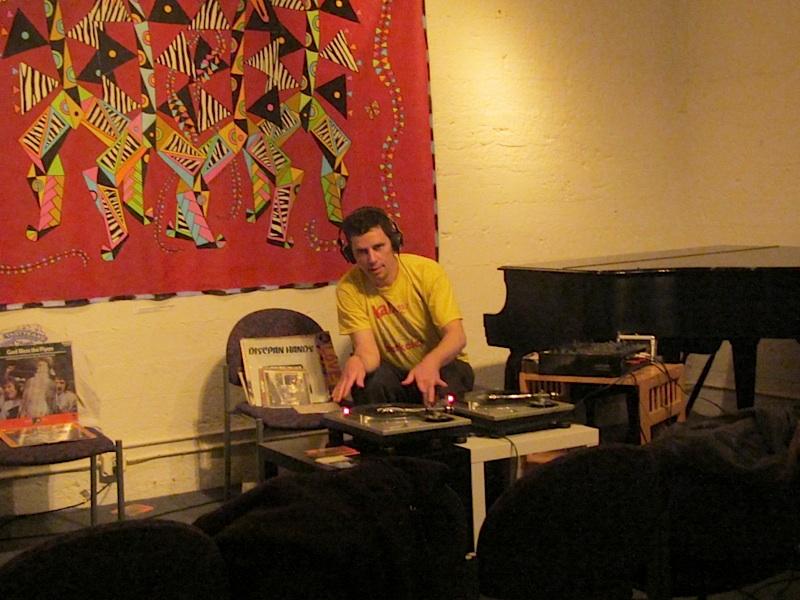
Meanwhile on the other side of the city, an unexpected Alternative Tentacles connection represented at the Emerald Tablet, where Philadelphian Joseph Gervasi held a screening of his Philly punk-scene archive project, Loud! Fast! Philly!, and his co-host/co-organizer turned out to be Jesse “Luscious” Townley, formerly of the Philly scene, and general manager of Alternative Tentacles, who DJ’d an eclectic set before the show.

Originally compiled in the earlier part of the year, Loud! Fast! Philly! was originally shown at the Cinedelphia Film Festival as an “interactive” audio-visual presentation combining old home movie-style footage of various Philly punk bands with live commentary from members in attendance. But in compiling the project, Gervasi realized it was the stories behind the videos he really wanted people to have access to. Thus began the second arm of the project: an audio archive of interviews with a variety of old school Philly punks, which lives in perpetuity online.

Truthfully the archive is probably the most fascinating part of the project. The video clips, while offering a fascinating peek at a particular time and place (and substandard quality of recording devices), don’t offer nearly the same breadth and depth of history as do the interviews. That said, rare footage of bands like More Fiends, Flag of Democracy, Dead Milkmen, and R.A.M.B.O. were unique and frankly humorous enough to transcend their shaky amateur quality and insider appeal, and provided a weirdly cohesive portrait of an ever-morphing scene, from the 80s to the present.

SF General will lose much of its federal subsidy under Obamacare

137

As President Obama’s Affordable Care Act is phased in over the next couple years, San Francisco General Hospital will lose at least 25 percent of the $123 million it receives from the federal government to offset costs of caring for the uninsured, but hopefully that will be offset by its expansion of those who will have health insurance.

General Hospital receives those funds for being a so-called “safety-net hospital,” a place where those without insurance can still get quality healthcare. Even though the need for such safety nets is supposed to diminish under Obamacare, SF General will remain a critically important safety-net hospital.

Many San Franciscans – including non-U.S. citizens who won’t qualify for coverage under the Affordable Care Act, as well as homeless individuals – will continue to rely on the hospital when in need of medical care.

Yet here and nationwide, concern is brewing about whether funding for safety-net hospitals could be impacted if enrollment in the new state health exchanges doesn’t reach anticipated levels.

“The financial question every state is asking is: What are the newly eligible patients going to do? What plan will they enroll in? Will they enroll?” Greg Wagner, CFO of the San Francisco Department of Public Health, told the Guardian, referring to the health insurance marketplaces created under the Affordable Care Act.

Most safety-net hospitals in the country are bolstered with federal subsidies, and are especially reliant on funds known as disproportionate share hospital payments, or DSH. However, those subsidies are about to be slashed with machete-like strokes.

All told, as much as $18 billion nationwide could be siphoned away from safety-net hospitals by 2020. Compounding that is another $22 billion that could be cut from Medicare subsidies, depending on the number of insured.

There’s an expectation that the looming safety-net budget cut will be offset by the burgeoning population of insured residents who would flock to state health exchanges. It makes sense: Instead of absorbing the entire cost of an uninsured patient, hospitals would be getting money from newly active insurance policies, and no money would be lost.

The New York Times recently ran a story detailing how low-income patients in Georgia may be put in a precarious position under federal healthcare reform because safety-net hospitals in Georgia might not be able to make up for lost funding once DSH payments evaporate.

California isn’t likely to experience this problem to the same degree, Wagner said, because the state chose to expand Medi-Cal, the state version of Medicaid, to include all low-income residents and not just those who previously qualified under a narrow set of criteria. Georgia had the same option to expand, but chose to keep its Medicaid qualifications in place, like many states led by Republicans looking to tweak President Obama.

As things stand, enrollment in Covered California – the state’s health insurance marketplace under the Affordable Care Act – remains low. Until enrollment closes at the end of March, it’s an open question whether it will reach the necessary levels to make up for pending cutbacks.

So far, 59,000 Californians had completed applications and enrolled in health insurance plans within the new marketplace as of Nov. 13. That’s a drop in the bucket, considering that 2.3 million are eventually expected to enroll. According to state data, 203,904 applications had been started online (reflecting an estimated 370,000 individuals). In addition to those applying for Covered California plans, another 72,000 people were determined eligible for Medi-Cal. 

“SF General operates on a huge amount of federal money,” Wagner explained. “Some comes directly from the federal government, and some comes from DSH.” He said the hospital received $123 million in DSH funds last year, “and not all of that will go away” once cuts go into effect.

“Healthy SF will still be around after March 31,” said Wagner. “We’re still retaining the program for anybody not eligible for Medi-Cal, and through Healthy SF those people can still access primary healthcare.”
He even said that under extreme circumstances, like the delivery of a child, for instance, some undocumented immigrants will have the opportunity to enroll in Medi-Cal. 
And it’s not all gloom-and-doom on the subsidy front, either. There is a safety-valve for the safety-net hospitals: If everyone who is expected to enroll in Covered California actually does so, the funding will be available without the need to rely on federal aid. 
But in order to achieve that idyllic plateau, a serious push is needed on the enrollment level. Granted, those enrollment figures should rise. But what if they don’t? 
“If people don’t enroll in the new programs, it will be a big problem,” said Wagner. “If we have a significantly lower enrollment number than we initially predicted, we will have some major financial issues. There’s still some uncertainty.”

He added, “We’ll still provide care for the uninsured at SF General. The money will decrease, but it won’t disappear. By no means will all of the money go away. The hope is that the newly enrolled will offset the decreasing number of uninsured, then the federal government could take the DSH payment and redirect it to the providers.” 

That being said, “we still have lots of optimism moving forward,” Wagner said. “We think people will enroll.”

[Correction: We corrected the amount of the reduction from 50 percent down to 25 percent].


Parents under pressure

In recent weeks, the San Francisco Unified School District has held a series of community forums to ask parents what they think kids need in order to thrive in school. The meetings were held as part of a policymaking process leading up to next year’s renewal of two important funds – the Children’s Fund and the Public Education Enrichment Fund, which account for some $100 million in funding combined.

There were huge turnouts – a Chinatown forum, where Mayor Ed Lee was reportedly in attendance, attracted more than 180 participants, while a Nov. 14 meeting at Cesar Chavez Elementary in the Mission District drew a crowd of between 80 and 90.

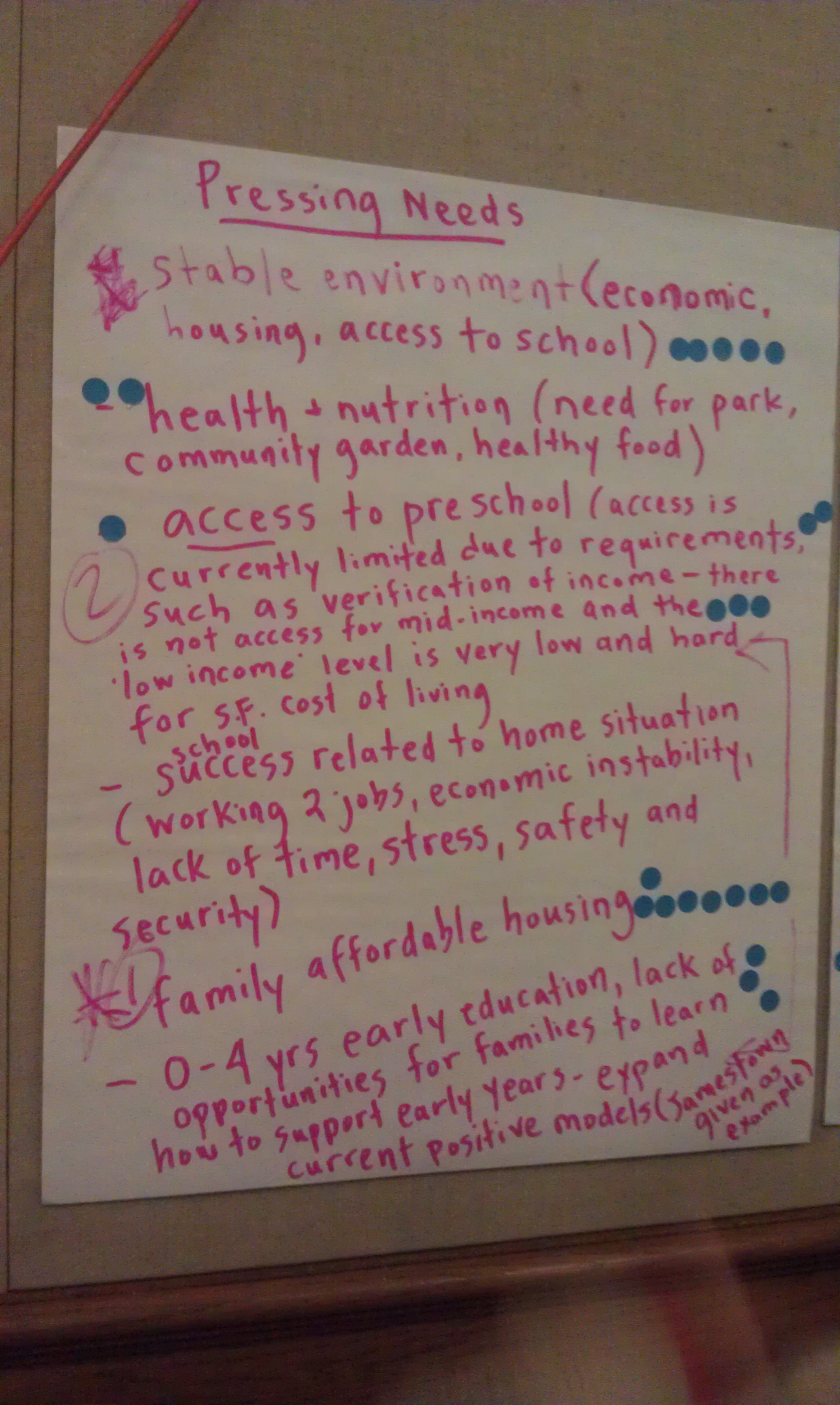
The parents weren’t exactly asking for more museum field trips for their kids. During breakout sessions where facilitators wrote group members’ concerns on flip pads, a few recurring themes emerged. “Job security for parents,” one read. “Affordable housing,” another stated. “It’s a shame to have to talk about lack of funds given wealth and corporations in SF,” more parent feedback stated.

Maria Su, director of the San Francisco Department of Children, Youth and their Families, thanked parents for coming and told them, “We know how hard it is and how challenging it is to survive in the city. But that doesn’t mean we should give up.”

The event provided a glimpse into just how tough it is for families to get by in a city where a hefty cost of living amounts to serious pressure. “The sacrifices they make is, their children will have access to resources you can’t get anywhere else,” said Mario Paz with the Good Samaritan Family Resource Center, who works with a lot of Latino immigrant families.

A report digesting the findings of stakeholder focus groups distilled the pressures facing families. “Many participants commented on … the extraordinarily high cost of living in San Francisco,” it noted, which “contributes to both financial and emotional strain on the part of our many working class and lower income residents.”

New movies: a great week for docs

1

This week, doc lovers are in luck: not only is Chris Marker’s seminal 1962 Le Joli Mai making a return to theaters (Sam Stander’s take here), but Oscar-winning director Alex Gibney delves into cycling’s greatest scandal in The Armstrong Lie (my review here).

Plus! The moving American Promise, filmed over 13 years; the latest from Lynne Sachs, Your Day Is My Night; and more, after the jump.

http://www.youtube.com/watch?v=knFReWtLkgc

American Promise This remarkable look at race, education, parenting, and coming-of-age in contemporary America is the result of 13 years spent following African American youths Seun and Idris (the latter the son of filmmakers Joe Brewster and Michèle Stephenson). At the beginning, the Brooklyn pals are both starting at the exclusive Dalton School, where most of their classmates are rich white kids. This translates into culture-clash experiences both comical (a 13-year-old Idris estimates he’s been to 20 bar mitzvahs) and distressing, as both boys struggle socially and academically for reasons that seem to have a lot to do with their minority status at the school. Culled from hundreds of hours of footage — a mix of interviews and cinéma vérité — Brewster and Stephenson’s film captures honest moments both mundane and monumental, sometimes simultaneously, as when Seun’s mother, driving the kids to school, discusses her battle with cancer as his younger siblings trill a Journey song in the back seat. (And even this seemingly light-hearted aside takes on heft later in the film.) Extra props to Brewster and Stephenson, who clearly made a conscious choice not to edit out any of their own foibles — for the most part, they’re caring, involved parents, but be warned: strident homework nagging is a recurrent theme. (2:20) Roxie. (Eddy)

The Best Man Holiday Taye Diggs and Sanaa Lathan lead an ensemble cast in this seasonal sequel to 1999 hit The Best Man. (2:00)

http://www.youtube.com/watch?v=0sPr4snZqcM

The Book Thief One of those novels that seems to have been categorized as “young adult” more for reasons of marketing than anything else, Markus Zusak’s international best seller gets an effective screen adaptation from director Brian Percival and scenarist Michael Petroni. Liesl (Sophie Nelisse) is an illiterate orphan — for all practical purposes, that is, given the likely fate of her left-leaning parents in a just-pre-World War II Nazi Germany — deposited by authorities on the doorstep of the middle-aged, childless Hubermanns in 1938. Rosa (Emily Watson) is a ceaseless nag and worrywart, even if her bark is worse than her bite; kindly housepainter Hans (Geoffrey Rush), who’s lost work by refusing to join “the Party,” makes a game of teacher Liesl how to read. Her subsequent fascination with books attracts the notice of the local Burgermeister’s wife (Barbara Auer), who under the nose of her stern husband lets the girl peruse tomes from her manse’s extensive library. But that secret is trivial compared to the Hubermanns’ hiding of Max Vandenburg (Ben Schnetzer), son of Jewish comrade who’d saved Hans’ life in the prior world war. When war breaks out anew, this harboring of a fugitive becomes even more dangerous, something Liesl can’t share even with her best friend Rudy (Nico Liersch). While some of the book’s subplots and secondary characters are sacrificed for the sake of expediency, the filmmakers have crafted a potent, intelligent drama whose judicious understatement extends to the subtlest (and first non-Spielberg) score John Williams has written in years. Rush, Watson, and newcomer Schnetzer are particularly good in the well-chosen cast. (2:11) (Dennis Harvey)

How I Live Now As 16-year-old Daisy (Saoirse Ronan) arrives to spend the summer with cousins she’s never met, England is on the brink of war with an unnamed adversary. Daisy wants nothing to do with her new family and their idyllic countryside home — she’s too caught up in self-loathing image and diet obsessions, which manifest in the movie as overwhelming voiceover chatter. Her eldest cousin, Eddie (George MacKay), begins to draw her out of her shell, but everything changes when a nuclear explosion hits the country. At first, the cousins’ post-apocalyptic life is a charming bucolic, soundtracked by British folk-rock. But the horrors of war soon find them, and the movie’s latter half takes on a quite different tone. Adapted from Meg Rosoff’s YA novel, How I Live Now is almost eager to tackle the ugliest aspects of wartime existence — mass graves, prisoner abuse, work camps — and this unflinching approach is compelling, despite some flaws in the acting and character development. (1:41) (Sam Stander)

Your Day Is My Night Multidisciplinary artist Lynne Sachs returns to SF with this feature set in the world of NYC’s Chinatown “shift bed” apartments — ones whose crowded tenants take turns using sleeping space, a phenomenon that exists in many US cities and immigrant communities. An experimental mix of documentary and staged narrative, Day’s cohabiting protagonists are primarily older émigrés from China with diverse current jobs and divergent memories of life back home — from fond family reminiscences to the horrors of the Cultural Revolution. The individual stories told here are related not just in verbiage (both scripted and improvised), but song, dance, theater, poetical imagery, and composer-sound designer Stephen Vitiello’s collage soundtrack. At Other Cinema, Sachs will also present several of her short film works, including 2006’s Three Cheers for the Whale, a collaboration with the late Chris Marker that revised his 1972 Viva la Baleine, which was co-directed with Mario Ruspoli. In addition to its ATA screening Sat/16, Your Day Is My Night also plays the Pacific Film Archive Nov 20. (1:03) Artists’ Television Access. (Dennis Harvey)

BART “mistake” threatens its contract agreement with workers UPDATED

35

Just when it appeared the ugly contract impasse between BART management and workers was over — a divisive struggle that resulted in two debilitating four-day strikes and the Oct. 19 death of two workers struck by a train being used to train possible replacement drivers — BART management is threatening to scuttle the deal over a provision it says was mistakenly added to the contract.

At issue is a contract provision where BART workers from SEIU Local 1021 and ATU Local 1555 who go on leave under the federal Family and Medical Leave Act will be paid for six of the 12 weeks the law allows them to take unpaid, BART spokesperson Luna Salaver told the Guardian.

While BART management and its negotiators — including Assistant General Manager of Operations Paul Oversier and Thomas Hock, a contractor who the district paid $400,000 to lead its negotiations — signed off on the provision back in July and again when the final deal was reached last month, Salaver said BART didn’t mean to include it.

“It was a mistake that a provision rejected twice by BART management ended up in the stack of approved documents,” Salaver said, noting that it was caught this week as the district prepared to give the contract final approval on Nov. 21. It has already been approved by the two unions.

“We were never confused as to the status of the Family and Medical Leave Act agreement,” Local 1021 Political Director Chris Daly told the Guardian, calling the provision a reasonable benefit similar to one that he sponsored for city employees when he was on the San Francisco Board of Supervisors.

But Salaver said it could add tens of millions of dollars in costs (the district still isn’t sure how much) to a contact that will already cost the district an additional $67 million, so management is convening a special session of BART’s Board of Directors this afternoon (Fri/15) to discuss the issue, saying that management isn’t yet recommending the contract be rejected, as some had reported. [UPDATE: The BART board told administrators to re-open negotiations with the unions, but the unions are resisting a return to the bargaining table and urge the board to approve the contract on Thursday].

“There is an erroneous report that BART management is going to tell the BART board to reject the contract,” Salaver told us, inside calling the closed-session discussion a “fact-finding session.”

But Daly said BART management had told the unions that it would recommend rejection of the contract, and that it is now backpedaling because some directors are unhappy with the snafu. It also has a serious public relations problem on its hands, finding itself in a position to reignite the battle with workers while also contending with angry state legislators and an ongoing NTSB investigation into its culpability in the worker deaths.   


The complete prepared statement issued last night from SEIU 1021 Executive Director Pete Castelli follows:  

“BART Management has been in contact regarding the tentative agreement they reached with SEIU 1021 and ATU 1555 on October 21st and which our members unanimously ratified. We’ve been informed that they’ve scheduled a special meeting with the BART Board of Directors to discuss the terms of the contract and to clarify details regarding certain provisions for tomorrowafternoon.

“In July, BART Management and its unions reached a tentative agreement on family medical leave, which was signed by BART Management and their chief negotiator. During a thorough review of the final settlement last month, BART Management and their attorneys did not raise any concerns about how this tentative agreement or other provisions in the final settlement would prevent them from recommending the contract to the Board for approval.

“It’s disappointing to hear BART Management would recommend that the BART Board reject this agreement—a contract they negotiated with their workers for more than five months, signed, and praised in the public as a fair compromise.

“We expect the BART Board of Directors to vote on and approve this fair and reasonable contract.”

Young and talented: SFSU’s 26th Stillwell Student Exhibition

0

The Stillwell Student Exhibition is San Francisco State University’s annual showcase of undergraduate and second-year MFA artwork celebrated in the name of Leo D. Stillwell, an amateur artist who died at the young age of 22 in 1947.

But a Google search doesn’t even yield that small bit of information about Stillwell. So who was he, and why has SF State honored him for 26 years?

Mark Johnson, director of the Fine Arts Gallery at SF State, explained that the generosity of Stillwell’s mother, Josephine, created opportunities for student artists all in loving memory of her son.

“When Josephine herself was elderly and aware that her days were short, she contacted San Francisco State University to offer us the collection of about 500 works of her son that she had saved 40 years after his death,” said Johnson. “In 1988, the whole collection came to the university, and she bequeathed her house. It was sold in 1988 for $250,000, and that money endowed a scholarship.”

In return, Josephine asked that her son’s work be showcased every year. Stillwell had struggled with health issues and ultimately died of hypertension, but Josephine believed that had he had the chance to attend college, he likely would have chosen SF State. Thus, the student exhibition was named for him, and a small selection of his work is featured every year.

It’s fitting; Johnson said that because Stillwell died so young, his collection is essentially the work of a student. The four pieces displayed this year are watercolors depicting Roman gods, which Johnson feels are some of Stillwell’s strongest works. His entire collection ranges from family portraits to exploration of modernist iconography of surrealism. He was also the co-founder of the short-lived Antinous Gallery.

“Antinous is the name of the boy who the emperor Hadrian loved, so there is a sense that this was a code space for a gay art gallery,” Johnson explained. “For something like that to happen in the mid-1940s is certainly unusual and interesting.”

It is known that Stillwell’s lover was Russell Hartley, the founding collector of the Museum of Performance + Design, then the San Francisco Performing Arts Library and Museum. Recently, a website was discovered that contained letters between Stillwell and Hartley.

“We contacted that person and the site was taken down immediately, but we’re in the process of trying to get access to the letters, because it’s such an important social document of two young gay men interested in the arts from this very early historical period,” said Johnson.

Johnson’s exhibition design students all have this history in mind while organizing the annual show. And while it may be Stillwell’s name in the title, the exhibition very much belongs to the students, who provide the bulk of the work on display and put the gallery together. It’s a difficult, but rewarding experience, and among the bustle of preparing the show, there is a sense of excitement for what the students have to show.

“Different years, different things come to the surface,” said Johnson. “This year, we have, I would say, a number of very strong, large textile works.”

These colorful textiles, as well as stunning prints, paintings, and photography, sculptures, and so much more – all of them are the works of students, many of whom are young, rising artists like Stillwell had been, and they appreciate what it is to be in that position and have a place to display their art.

“[Stillwell’s] work is very cool. It’s visually appealing, it has a message. He was so young, and he could have had a lot more years,” said Karna Southall, a junior who researched Stillwell and put a video about him together for the class. “I think that it’s great that his mother took this unhappy thing that happened to her, and made it a positive experience for students. That’s admirable.”

Junior Lorraine Campos, whose art is displayed in the exhibit for the first time this year, feels that Stillwell remains a great inspiration to SF State’s great variety of talented art students.

“I think it’s an example of how you can be a young artist but still have a legacy,” said Campos. “By taking [exhibition design] class, I learned a lot more about Stillwell and how he was very diverse in his interests, and I think that’s like almost every student at State.”

26th Annual Stillwell Student Exhibition

Through Dec 5

Wed-Sat, 11am-4pm, free (gallery closed Nov 27-30)

Fine Arts Building, Rm 238

SF State University

1600 Holloway, SF

http://gallery.sfsu.edu

Hundreds attend hearing to call for action on evictions

Tenants, organizers and residents impacted by Ellis Act evictions packed the Board of Supervisors Chambers at San Francisco City Hall today, Thu/14, for a hearing called by Sup. David Campos on eviction and displacement in San Francisco.

“It seems to me that we have a tale of two cities,” Campos said at the outset of the hearing, which was held by the Board of Supervisors Neighborhood Services and Safety Committee. “The vast majority of individuals are struggling to stay in San Francisco. We must act urgently to address this crisis, which I believe is a crisis.” He added, “We are fighting, I think, for the soul of San Francisco.”

Tony Robles of Senior and Disability Action, who showed up at the hearing wearing a black hooded sweatshirt with pobre (the Spanish word for “poor”) printed across the front, expressed his frustration with the surge of evictions taking place in the booming economic climate. “We have been overlooked – the workers, communities of color … it’s almost as if we are an afterthought,” he said.

Fred Brousseau of the San Francisco Budget and Legislative Analyst’s office delivered a report on his recent analysis of eviction and displacement trends across the city.

Overall evictions in San Francisco rose from 1,242 in 2010 to 1,716 in 2013, reflecting an increase of 38.2 percent, according to San Francisco Rent Board Data highlighted in Brousseau’s report. 

Ellis Act evictions in particular increased by 169.8 percent in that same time frame, he said, with the most recent data showing a total of 162 Ellis Act evictions over the twelve months ending in September 2013. That number reflects units evicted, not how many tenants were impacted.

Ted Gullicksen of the San Francisco Tenants Union emphasized that tenant buyouts, frequently offered in lieu of an eviction, are also driving displacement even though these transactions aren’t reflected in city records.

“We need to get in control of these buyouts,” he said. “There are about three of them for every Ellis Act eviction. When you consider them in combination with Ellis, the numbers are very dramatic.”

Brousseau also showed a slide profiling the people who’ve been impacted by evictions citywide. Almost 42 percent had some form of disability, the data revealed, while 49 percent had incomes at or below the federal poverty level.

On the whole, Brousseau said, a total of nearly 43 percent of San Francisco households are “rent-burdened,” a term that officially means devoting more than 30 percent of household income to monthly rental payments.

Throughout the afternoon, tenants shared their stories and fears about getting frozen out of San Francisco by eviction. “I’m looking at shopping carts, and I’m terrified,” one woman told supervisors during public comment. “You have to do something. It might not be enough for me right now, but you can’t do this to any more people.”

Hene Kelly noted that elderly tenants are being disproportionately impacted by Ellis Act evictions. “They don’t have the reserves, they don’t have the jobs, and they don’t have the money to be able to move if they are evicted,” she said. Referencing landlords and speculators who are driving displacement, she added, “It makes me think of cabaret. Money, money, money, money, money makes the world go round.”

Campos noted that he is working with Assembly Member Tom Ammiano on a proposal to grant San Francisco the authority to place a moratorium on Ellis Act evictions.

He’s also working toward legislation that would create a mechanism at the San Francisco Rent Board allowing tenants to register complaints of harassment or other forms of pressure from landlords seeking to drive them out.

His proposal also envisions doubling the amount of relocation assistance that landlords would have to provide to tenants, in the case of no-fault evictions. He also mentioned the possibility of regulating buyouts, by requiring landlords to record these transactions with the rent board, and possibly prohibiting property owners from charging market-rate rent directly after completing a tenant buyout.

Meanwhile, Mayor Ed Lee recently announced that he is working with Sen. Mark Leno on legislation that is meant to reduce Ellis Act evictions. That proposal would require additional permits or hearings before an Ellis Act eviction could go forward, and place more stringent regulations on the sale and resale of properties where tenants have been evicted under the state law.

Just a couple weeks ago, a coalition of housing advocates proposed a sweeping package to turn the tide on evictions.

At the end of the day, it’s clear that housing advocates are gaining momentum as the spike in tenant ousters continues in pricey San Francisco, where rents are the highest in the nation.

“We’ve never been late on our rent,” noted Beverly Upton, executive director of the San Francisco Domestic Violence Consortium, who is battling an Ellis Act eviction. “We’ve paid for every improvement ever done in 25 years. And now we have to leave.” She appealed for legislators to take action for the sake of the city’s future, asking, “Once the advocates and the organizers and the people who care are gone, who will be left in our city?”

Get raucous with Los Rakas

4

One of our favorite local acts is Panamanian hip-hop duo Los Rakas, based in Oakland, who consistently tear it up. Bounce with them this Saturday at the New Parish — and try to get “Soy Raka” out of your head.

O+ Festival trades health care for music and art performances

0

Artists struggle for their art, but they shouldn’t also have to also sacrifice their health. That’s the basic premise behind this weekend’s three-day O+ Festival in San Francisco, where musicians and other artists will perform in exchange for medical, dental, and wellness services at a pop-up clinic at The Center SF art space on Fillmore Street and other offices around town.

“Bartering the art of medicine for the medicine of art,” is the tagline for a festival that is making its debut outside of New York, where it began. The lineup includes local folk rockers Papa Bear & Friends, soulful singer Quinn DeVeaux, mashup DJ Zack Darling, and many more, performing in venues that include Inner Mission and the Make-Out Room.

The festival began in 2010 in Kingston, NY, when painter Joe Concra had a dentist friend who had the idea of bringing a band he liked up from Brooklyn and paying them in free dental services. The idea resonated with Concra, who knew well how much New York’s artists struggled to make ends meet.

“Artists are not only being pushed out, but they’re not able to get the healing they deserve,” Concra told the Guardian, saying the first festival was such a hit that it took on a life of its own. “Once we do it, once people go, then they really get it. And it goes back to the age-old idea of trade.”

Long before modern health insurance debacles, doctors and dentists were members of their communities, and people would pay them with whatever they had to offer. But today, larger and larger companies providing care in collaboration with insurance companies, even the basic community clinic is becoming a thing of the past.

“We’re breaking down that access to care barrier, because some many people don’t know where to start,” Concra said, saying he was surprised at the flood gates opened by his simple idea. “Now, we’re at the point where we have 220 bands applies for 40 spots…We were not prepared for the amount of need in the artist community.”

Concra had started thinking about where to expand the festival when he was contacted by Deborah Gatiss, San Francisco-based artist and event coordinator, who had heard about the concept from a friend in the Burning Man Project.  

“It goes back to May of last year, and I was lamenting the fact that I have no health care, because I had a really bad toothache. I was talking with a friend of mine and we were discussing things people could do for health care when they have no dental insurance and this was one of the things that came up,” she told us.

Concra was already talking about a Bay Area event with Aimee Gardner, who he knew from an art gallery in Kingston before she moved to California, and Gardner and Gatiss ended up spearheading the creation of O+ Festival-San Francisco.

“Coming from New York, I feel like San Francisco is going a similar direction,” Gardner said of artists who can’t afford to live here. “I think it’s a really revolutionary idea. It’s activism in a very thoughtful way.”

The pair managed to line up sponsors and a list of volunteer health practioners from a variety of disciplines, people that Concra called “the real rock stars of this event.” So while the performers get free health care, those who buy the $25 tickets get three days of free music and art, discounted drinks at various venues, and even free yoga classes at Yoga Tree’s new Potrero Hill studio.

The festival opens tomorrow (Fri/15) at 6:15 at The Center SF, 548 Fillmore, with a health care panel discussion featuring Concra, Artist Xavi Panneton, Dan Kitowski of the Actors Fund, and me, Guardian Editor Steven T. Jones.

Gatiss said it’s been a challenge to pull together such an ambtious festival and she hopes that Bay Area residents — who love art and music and are accustomed to gift and barter economies through things like Burning Man — will turn out to show their support.

“I thought that people were used to that mindset, so they’d be up for the idea of bartering their musical talents for health care and vice versa,” Gatiss told us. “It’s been harder than I thought. But it’s been fulfilling and magical and I’m glad that I did it, and I think Aimee would say the same thing.”