SFBG Blogs

Double standard for the role of voters in SF waterfront development?

4

As our article on San Francisco waterfront development was hitting the presses last week, California State Lands Commission Chief Counsel Mark Meier made public a letter questioning the legality of a local initiative in circulation that would submit waterfront projects that break height limits to a vote of the people.

Meier argued that such “public trust lands” are managed locally for statewide benefit, and therefore voters can’t meddle with the decisions made in City Hall or the Port of San Francisco offices: “The land use and management decisions that the City makes regarding these public trust land cannot be overriden by the local initiative process…”

State Lands Commission must sign off on most waterfront developments, along with the San Francisco Bay Conservation and Development Commission, so this Jan. 13 letter to the City Attorney’s Office is significant. It’s unlikely to keep the measure off the June ballot if the campaign gets enough qualifying signatures by Feb. 3, but it could be used in later challenges. 

Campaign Manager Jon Golinger said he wasn’t surprised or worried by the threat, calling Meier’s argument flawed. “Our attorneys have already analyzed this and we feel pretty confident,” he told us, summarizing his side’s legal argument as, “Anything that the people’s representatives can do, the people are also allowed to do.”

Golinger also noted a perverse aspect to Meier’s arguments, noting that the initiative seeks to strengthen existing protections of the waterfront, which is exactly what the Burton Act encouraged when transfering authority to the city. And most of the caselaw that Meier relies on for his arguments involved judges ruling against initiatives that sought to weaken local authority and protections.

Golinger also noted the glaring contradiction between the position between taken now by the State Lands Commission, of which Lieutenant Governor Gavin Newsom is one of three elected members, and the Prop. C initiative campaign funded last year by the 8 Washington project developers that was overtly supported by Newsom.

“If this is of question legally, why didn’t Commissioner Newsom raise this last year?” Golinger asked.  

In fact, that initiative would have been a far more glaring violation of the sanctity of local government control considering it would have not only green-lighted the 8 Washington project and all of its variances from local codes, but it would have prohibited “discretionary review” of the project by professional city planners.

We called both Meier and Newsom’s office with questions about the letter, its arguments and contradictions, and the role that Newsom had in ordering, preparing, or reviewing the letter. We never heard back from either of them, but we’ll update this post if and when we do.   


New, final Presidio museum proposals are in

9

The final round of project proposals for the Crissy Field Presidio site are in, and boy do they sure look… almost exactly the same as the last round. 

The Presidio Trust was fairly critical of each of the three finalists for the current site of the Sports Basement, which will soon lose its prime real estate. The Bridge Institute, the Golden Gate National Parks Conservancy’s Presidio Exchange, and Star Wars creator George Lucas’ personal pop art collection are all duking it out for a little patch of green (which is worth a lot of green) by the Golden Gate Bridge. 

Everyone in San Francisco has an opinion on who should win the spot: Mayor Ed Lee and tech venture capitalist Ron Conway want George Lucas’ museum to win (as do most tech folks with money), every environmental group out there wants the Presidio Exchange to get the space (including the Sierra Club), and the Chronicle’s design writer John King just wants Lucas to use the old Palace of Fine Arts site, dammit.

The Presidio Trust, a presidentially appointed entity, has the final say. And what it said last time was this: give us new proposals.

The Lucas proposal was too big, and the Trust felt it needed to be “redesigned to be more compatible with the Presidio.” The Presidio Exchange, it said, struggled to find a theme programatically. It lacked focus. As for the Bridge Institute? The Trust was worried it didn’t have the money to build with at all. 

Now everyone is back with new plans, in force.

George Lucas responded to the critique that his museum was just too darn big:
“Relative to the issue of ‘ensuring the building’s compatibility with the Presidio’ we are submitting two new design concepts for your consideration that we believe address the issues of massing and height. We have worked diligently the past few weeks with our architects at Urban Design Group and other members of our team to develop a new design that we believe will meet the criteria outlined by the Trust while providing the best home for the collection and its diverse cultural and educational programs. We are submitting two designs for your consideration, with the intent that if the Lucas Cultural Arts Museum is chosen for the Crissy Field site, you will identify the design you would like to see further developed.”

So it’s the same beast, just you know, smaller.

The Presidio Exchange folks, on the other hand, decided that since their programs lacked clarity, they’d make a flow chart. It’s good to know that they strive for consistency.

pdxgraph

pdxfinal

The final conceptual image of the PDX.

And as for funding the Bridge Institute? It wants to put a member of the Presidio Trust to work helping it raise money.

“The trust and Trust Board would make its network of contacts available to the BRIDGE fundraising team, and assist in making positive contacts with those contacts as part of the fundraising efforts of the organization,” it wrote. In other words, Presidio Trust, help us raise the dough, please. Presidio Trust President Nancy Hellman Bechtle is wealthy, but there’s no telling if she’d tap her wealthy friends to help the Bridge Institute. 

“We appreciate the effort each team has made to further develop its proposal for the Mid-Crissy Field site,” Becthle said, in a press release. “In the weeks ahead we will evaluate the revised proposals, weigh the wide range of public comments, and make a decision that will stand the test of time. This is a remarkable opportunity for the Presidio and San Francisco and we look forward to the public’s continued engagement.”

Love the designs or hate them, the public’s last chance to comment will be at the Public Board  of Directors Meeting to be held on Monday, Jan. 27, 6:30 pm in Herbst at the Presidio.

You can read all the museum proposals for yourself, here.

And while you’re at it, check out our front page story covering the founding of the Presidio, and how that history shaped the museum proposals.


State of the City speech filled with unsupported promises

178

It was maddening to watch Mayor Ed Lee deliver his annual State of the City address this morning. This was pure politics, from the staged backdrop of housing construction at Hunters Point Shipyard to the use of “regular people” props to the slate of vague and contradictory promises he made.

“This place, the shipyard, links our proud past to an even more promising future,” was how Lee began his hour-plus, invite-only address.

Later, he touted the housing construction being done there by Lennar Urban as emblematic of both his promise to bring 30,000 new housing units online by 2020 — the cornerstone to what he called his “affordability agenda” — and the opposition to unfettered development that he is pledging to overcome.

“A great example is the place we’re standing right now. This took us too long,” Lee said after decrying the “easy slogans and scapegoating” by progressive activists who place demands on developers.

But that implication was complete bullshit. As we and others have reported, progressive and community activists have long encouraged Lennar Urban (which has a close relationship to Lee) to speed up development on this public land that it was given almost a decade ago, particularly the long-promised affordable housing, rather than waiting for the real estate market to heat up.

That was just one of many examples of misleading and unsupported claims in a speech that might have sounded good to the uninformed listener, but which greatly misrepresented the current realities and challenges in San Francisco.

For example, Lee called for greater investments in the public transit system while acknowledging that his proposal to ask voters this November to increase the vehicle license fee isn’t polling well. And yet even before that vote takes place, Lee wants to extend free Muni for youth and repeal the policy of charging for parking meters on Sundays without explaining how he’ll pay for that $10 million per year proposal.

“Nobody likes it, not parents, not our neighborhood businesses, not me,” Lee said of Sunday meters, ignoring a study last month by the San Francisco Muncipal Transportation Agency showing the program was working well and accomplishing its goals of increasing parking turnover near businesses and bringing in needed revenue.

Lee also glossed over the fact that he hasn’t provided funding for the SFMTA’s severely underfunded bicycle or pedestrian safety programs, yet he still said, “I support the goals of Vision Zero to eliminate traffic deaths in our city.”

Again, nice sentiment, but one that is totally disconnected from how he’s choosing to spend taxpayer money and use city resources. And if Lee can somehow achieve his huge new housing development push, Muni and other critical infrastructure will only be pushed to the breaking point faster.  

Lee acknowledges that many people are being left out of this city’s economic recovery and are being displaced. “Jobs and confidence are back, but our economic recovery has still left thousands behind,” he said, pledging that, “We must confront these challenges directly in the San Francisco way.”

And that “way” appears to be by making wishful statements without substantial support and then letting developers and venture capitalists — such as Ron Conway, the tech and mayoral funder seated in the second row — continue calling the shots.

Even with his call to increase the city’s minimum wage — something that “will lift thousands of people out of poverty” — he shied away from his previous suggestion that $15 per hour would be appropriate and said that he needed to consult with the business community first.

“We’ll seek consensus around a significant minimum wage increase,” he said, comparing it to the 2012 ballot measures that reformed the business tax and created an Affordable Housing Fund (the tradeoff for which was to actually reduce the on-site affordable housing requirements for developers).

But Mayor Lee wants you to focus on his words more than his actions, including his identication with renters who “worry that speculators looking to make a buck in a hot market will force them out.”

Yet there’s little in his agenda to protect those vulnerable renters, except for his vague promise to try to do so, and to go lobby in Sacramento for reforms to the Ellis Act. While in Sacramento, he says he’ll also somehow get help for City College of San Francisco, whose takeover by the state and usurpation of local control he supported.   

“City College is on the mend and already on the path to full recovery,” Lee said, an astoundingly out-of-touch statement that belies the school’s plummeting enrollment and the efforts by City Attorney Dennis Herrera and others to push back on the revocation of its accreditation.

Lee also had the audacity to note the “bone dry winter” we’re having and how, “It reminds us that the threat of climate change is real.” Yet none of the programs he mentions for addressing that challenge — green building standards, more electric vehicle infrastructure, the GoSolar program — would be as effective at reducing greenhouse gas emmisions as the CleanPowerSF program that Lee and his appointees are blocking, while offering no other plan for building renewable energy capacity.

Far from trying to beef up local public sector resources that vulnerable city residents increasingly need, or with doing environmental protection, Lee instead seemed to pledge more of the tax cutting that he’s used to subsidize the overheating local economy.

“Affordability is also about having a city government taxpayers can afford,” Lee said. “We must be sure we’re only investing in staffing and services we can afford over the long term.”

How that squares with his pledges to put more resources into public transit, affordable housing development, addressing climate change, and other urgent needs that Lee gives lip service to addressing is anybody’s guess.  

RIP Gary Arlington, underground comix hero (UPDATED)

5

UPDATE: This just in from Ron Turner: “Hello Friends.  There will be a memorial for Gary this coming Tuesday at 11 AM at 225 Berry St. off 4th, very near the Giants ballpark and the Cal Train station.  Hope to see you there.  It is a modern Senior Center where Gary made his home. Bring stories and memories to share.”

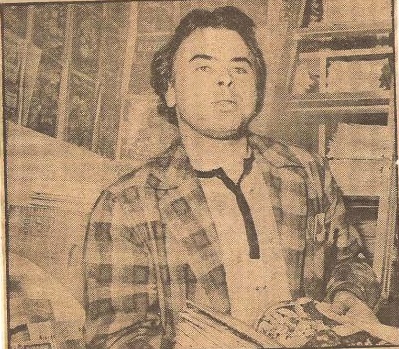
Just got word from Last Gasp Press founder Ron Turner that comics legend Gary Edson Arlington has passed away at age 75. In 1968, he opened what is considered the first comic book store in the United States, San Francisco Comic Book Company, which galvanized the hotbed Bay Area underground comix scene (and helped house his enormous collection, too).

As Art Spiegelman told the Chronicle in 2012, on the occasion of the publication of “I Am Not of this Planet,” a book of Arlington’s colorful artwork published by Last Gasp:

“San Francisco was the capitol of comix culture in the ’60s and early ’70s; and Gary Arlington’s hole-in-the-wall shop was, for me, the capitol of San Francisco.”

He was truly a fascinating character who supported local comics and art until the end, and influenced pop culture exponentially. 

Turner wrote:

“Gary died last night in San Francisco.  He had been living on his own in a nice subsidized  apartment near the ball park.  He had a motorized wheel chair and was out and about in SF.  He had heart and circulatory problems that led to several hospital stays during the last decade.  The comic community will remember Gary as founding the first comic book store in America, on 23rd st. in the Mission. I bought my first underground comic there in 1968.  It was a hangout for all the early underground comic artists and fans.  Services have not been announced as yet.”

We’ll update this post when we find out about services. Meanwhile, go out to your nearest comics bookstore and buy a bunch of indies in his honor!

Photo by Gabriela Hasbun:


One of Gary’s celebrated comics anthologies from 1983:

Clippings and artwork sourced from Larry Rippee and Molly Rea Art.

Welcome to San Francisco, “Welcome to Night Vale”

0

Hello, listeners. Brilliant breakout podcast “Welcome to Night Vale” has gained a rabid (yet adorably introspective) fanbase since it launched in June 2012. The twice-monthly, 20-minute-long show, created by Joseph Fink and Jeffrey Cranor, takes the form of a surreal newscast, coming to us from “somewhere in the Southwestern United States” by way of Twin Peaks.

Describing a community of indelible characters, it’s a twisted take on Lake Wobegone that vacillates cunningly from whimsical to chilling, often veering into outright poetry. “Night Vale” also recalls the golden age of radio plays: even though it lacks sound effects and depends mostly on the deep, hypnotic voice of narrator Cecil, it summons the entrancing atmosphere of such classics as “The Shadow.”

And now it’s coming to the Victoria Theater for a big live show-reading on Tue/21. Expect seismic things, tiered heavens, off-limits dog parks, magic lightbulbs, hovering livestock, public service koans, and the heirarchy of angels.

Also expect: cosplay — something a radio-like show can carve out extra imaginative room for.

I asked Cecil about coming to San Francisco (he really does sound like that in real life!). He enthused about visiting us:

“San Francisco has been an amazing city for ‘Welcome to Night Vale.’ Last September, we did a live reading at The Booksmith in Haight-Ashbury and it was so much fun — the fans were super-excited, lots of really creative cosplay. One person walking by the bookstore asked, ‘are they giving out free weed in there?’

“This time we are performing at the Victoria Theatre in the Mission for a larger audience and I can’t wait to see who (or what) the fans come dressed as. I think there’s a special relationship between Night Vale and San Francisco. The people of the Bay Area are exceptionally smart, creative and techno-savy: it’s a great combination!”

And now we interrupt this broadcast for a special bulletin: Look to the north. Keep looking. There’s nothing coming from the south.


Of course Beyoncé is a feminist: On gender equality and women in entertainment

6

A specific corner of the Internet was abuzz this week with the news that Beyoncé, fresh off inciting think-piece warfare about whether or not her new visual album amounted to a feminist manifesto of sorts (“The record both drips with sexuality and samples the Nigerian writer Chimamanda Ngozi Adichie’s TED talk about women’s rights — are you allowed to do that?!”) had penned an essay for Maria Shriver’s nonprofit media initiative, the Shriver Report, titled “Gender Equality Is a Myth!” See here:

We need to stop buying into the myth about gender equality. It isn’t a reality yet. Today, women make up half of the U.S. workforce, but the average working woman earns only 77 percent of what the average working man makes. But unless women and men both say this is unacceptable, things will not change. Men have to demand that their wives, daughters, mothers, and sisters earn more—commensurate with their qualifications and not their gender. Equality will be achieved when men and women are granted equal pay and equal respect.

Among the generally positive reactions to the essay, there was an unmistakable ripple of surprise — a silent agreement that this was somehow starkly out of character — that caught my attention. What are we surprised about, exactly? That a mainstream star who plays so squarely into our notions of traditional femininity would align herself with the hairy-legged caricatures of politicized feminists we see in pop culture? That a woman who named her most recent international tour after her husband would speak out against gender inequality? Or that one of the richest artists in the world would give two shits about the Equal Pay Act?

For what it’s worth, I’ve been a Beyoncé fan since the halcyon days of the late ’90s, when she was posing on furniture with three (then two) other ladies who made a point of color-coordinating their outfits with their interior design while singing about how dudes who borrowed their cars needed to man up and pay some automobills. It has at times been a guilty and/or critical fandom — has anyone written their Master’s thesis yet on themes of independence vs. marriage as property ownership in “Single Ladies (Put a Ring On It)“? I would like to read, please — but it’s been consistent nonetheless. I will venture that said loyalty is beside the point, however. No, I wasn’t surprised about Beyonce’s awareness of gender inequality — but not because I’ve been following her career closely. I wasn’t surprised because she’s a woman working in an industry that’s historically steeped in gender inequality.

I’m behind the times on this one, but I just started reading Out of the Vinyl Deeps, a collection of excellent rock music criticism by the late, great Ellen Willis. In particular, I keep coming back to Willis’ essay on Janis Joplin in the ’60s, with passages like:

[Janis] once crowed, “They’re paying me $50,000 a year to be like me.” But the truth was that they were paying her to be a personality, and the relation of public personality to private self — something every popular artist has to work out — is especially problematic for a woman. Men are used to playing roles and projecting images in order to compete and succeed. Male celebrities tend to identify with their mask making, to see it as creative and — more or less — to control it. In contrast, women need images simply to survive. A woman is usually aware, on some level, that men do not allow her to be her “real self,” and worse, that the acceptable masks represent men’s fantasies, not her own. She can choose the most interesting image available, present it dramatically, individualize it with small elaborations, undercut it with irony. But ultimately she must serve some male fantasy to be loved — and then it will be only the fantasy that is loved anyway.

Willis wrote that in 1980, about the 1960s. But it could have been written last week, about, um, any female pop star who did anything last week. Pick your packaging! Miley, Rihanna, Katy, Ke$ha, Taylor. Did you want good girl gone bad? Edgy and “exotic” gone S&M-lite? This has nothing to do with talented or not talented. A staggering majority of high-ranking music executives are men. Do we think any of these pop stars doesn’t know she’s a product, doesn’t understand exactly what game she’s a part of? None of them would be where they are right now if they hadn’t been playing it correctly, painstakingly, in some cases, from the day they were born. Whether or not they’re writing essays for Maria Shriver about it, I have a feeling most women in entertainment understand something about living in a patriarchal society.

As for Bey: Her new album, which I unabashedly love, is nothing if not a study in “acceptable masks.” In one video she’s the hot, pissed-off wife; another, the hot older girl at the roller rink; by the record’s end she’s found redemption as a (hot) mother, deriving her most genuine-sounding joy from an ode to her cooing baby daughter. Of course, she also pulls the classic, socially responsible, conventionally-beautiful-sex-symbol-decrying-sexist-beauty-standards thing. She does it all. She is every single thing a woman is supposed to be and more, and she looks fucking fabulous while doing it. She’s on top of the world right now for a reason, and — delightful feminist speech samples aside — I don’t think it’s as a reward for being her “real self.”

So yeah, go ahead and celebrate the pop star who suddenly cares about equal pay in the workplace. But give her a little credit. And maybe try to tamp down your surprise that a lady who’s been competing in pageants of some kind since she was old enough to walk might know a thing or two about sexism, inequality, where women have power, and where it stops.

SFUSD backs supervisors’ sugary beverage tax, with concerns

8

A San Francisco ballot initiative to levy a tax on sugary beverages got a boost last night as the San Francisco Unified School District Board of Education voted 5-2 to endorse it.

“The school district has done amazing work around nutrition for kids,” said Supervisor Scott Wiener, one of the initiative’s authors, shortly after the meeting. “This is a big win.” 

The initiative is proposed by Supervisors Mar, Wiener, Cohen and Avalos, and is estimated to generate up to $31 million annually, according to data from the supervisors, but its main aim is to curb the consumption of beverages they believe contributes to obesity in San Franciscans. The supervisors will be introducing a final, unified measure at the Board of Supervisors in the coming weeks, they said. 

Advocates at the meeting said sugary drinks contribute to a crisis in children’s health. “Our community suffers some of the highest rates of diabetes and hospitalizations from diabetes,” said Roberto Vargas, a Bayview resident and Mission high graduate of 1989. “I ask you to support these policies for San Francisco’s children, and San Francisco’s families.”

The resolution to support the tax initiative passed, but not easily. The ensuing argument may even have given a peek inside the mayor’s insecurities around the upcoming November ballot.

Commissioner Hydra Mendoza McDonald, who works in the Mayor’s Office as his education advisor, thought backing the “soda tax” could put a ballot initiative regarding SFUSD funding in jeopardy. 

“I don’t have a political or personal agenda, but I think we’d be remiss if we didn’t think this would be a political fight,” Mendoza McDonald said. “I have a tremendous amount of respect for Supervisor Wiener… but I have to say my priority right now is the public education enrichment fund, and that’s it.”

She’s referring to the city’s supplemental funding to the school district, PEEF, which the SFUSD depends on to pay for over 50 librarians, 200 PE coaches and more. That fund is about to sunset in 2015 — meaning no more money for the SFUSD from the city. In the 2013-2014 fiscal year, the city is set to provide the SFUSD over $50 million.

A ballot initiative is slated for November that would renew the PEEF funding agreement. That’s a lot of money at stake. 

Mendoza McDonald expressed fear that support of the soda tax would put the SFUSD in the crosshairs of Wiener and Mar’s deep-pocketed opponents, the beverage industry. 

“It makes me nervous,” she said. “It’s in everyone’s mind a slam dunk to pass the (PEEF funding initiative)…People have voted time and time again for children’s issues. But in every single measure, we’ve cleared the field and made sure we haven’t had any opposition, and that’s what makes us successful. I’m worried if the people who have historically supported us would do so again knowing there’s a bigger pot of money going against us.”

This 13 minute audio recording features some of the main arguments made against backing the sugary beverages tax initative. 

The board then asked Wiener to respond.

“If I could be blunt, the arguments that I’m hearing from people not comfortable supporting this are going to be the same in June as they are today,” Wiener said. “The idea that this would generate a campaign against the Children’s Fund and PEEF, has no basis, with respect. This is about the sugary beverage industry.”

“In San Francisco we don’t shy away from big business trying to threaten us,” he added.

Ultimately the board voted to back the sugary beverage tax initiative. Its reasons were many. Some commissioners described the early onset of puberty children are facing due to the effects of sugary drinks, others brought up the growing rates of obesity in children. 

They all echoed the sentiment that the benefits of supporting the resolution outweighed the risks. Commissioner Rachel Norton probably echoed their myriad positions most succinctly. 

“I have no idea whether this legislation will ultimately pass at the ballot box, but I think what’s important is that we support this resolution,” she said. “This is the right thing to do, and be fearless about.”

Lee panders to motorists and undermines SFMTA with Sunday metering repeal

36

First Mayor Ed Lee ignores the rising cost of living in San Francisco (fueled partly by his own corporate welfare for the tech industry and commercial landlords), and now he’s using his sudden concern about gentrification as an excuse to make parking meters free again on Sundays, a blatant bit of political pandering that blows a $6 million annual hole in Muni’s budget.

Maybe it’s understandable that a politician worried about his reelection prospects with restive voters would take a page from the playbook of former Gov. Arnold Schwarzenegger, who slashed the state’s vehicle license fee to win that office. But what makes this move stink even more is it’s being supported by the San Francisco Municipal Transportation Agency, a supposedly independent (yet mayoral appointed) body whose top officials methodically and courageously have made a strong case for Sunday metering.

“We’re just willing to partner with the mayor to address affordability,” SFMTA spokesperson Paul Rose told us, admitting the agency hasn’t yet identified a funding source to fill that gap if Sunday metering is repealed on July 1 as proposed. Sunday meters were budgeted for $1 million in revenue, but they actually brought in $6 million in the last year because of more tickets than expected, feeding the outrage of motorists who feel entitled to use public roads for free. 

We’re waiting for calls back from SFMTA Executive Director Ed Reiskin and Chairman Tom Nolan to find out whether they no longer stand by the arguments they’ve been making for Sunday metering, claiming it helps the local economy by making parking spaces available in neighborhood commercial districts and that it’s consistent with the city’s official transit-first policy.

“What does this say about the city’s commitment to the policy of promoting transit first?” San Francisco Bicycle Coalition Executive Director Leah Shahum said, saying she was shocked by the announcement given how underfunded the SFMTA’s transit, bicycle, and pedestrian improvement programs all are. “Why in the world are we even talking about this?”

Lee claims this is about affordability, telling the Chronicle “it was just nickel-and-diming people to death,” yet his own plans call for asking voters to approve more than $6.3 billion in taxes to fund Muni’s needs over the next 15 years, including a proposal to increase the sales tax in 2016, a regressive tax that will hit those already struggling harder than Sunday metering does to the 70 percent of San Francisco households that have an automobile.

Lee has also proposed ballot measures for this November that would increase the vehicle license fee and issue a $500 million general obligation bond, paid for on the property taxes of all city households. His own polls show the measures could be difficult sells to voters, and it’s not clear why he won’t wait for those results before ending Sunday metering.

When we asked mayoral Press Secretary Christine Falvey about all this, she selectively answered our questions with the following response: “The mayor believes a comprehensive funding strategy to not just maintain, but improve Muni performance, pedestrian and bike safety and the condition of our roads is what will finally turn the corner on improving San Francisco’s Transportation System. That’s why he has spent the better part of a year with the Transportation 2030 Taskforce, that recommended several ways to support these goals, including a $500 million general obligation bond, which the mayor supports. Because of a strong economy, the mayor believes it’s time to eliminate parking fees for six hours on Sundays and permanently fund Free Muni for low income youth to help working families in San Francisco and ease the affordability issues he hears about from families across the City.”

But at this point, that’s just political rhetoric, and Lee’s “comprehensive funding strategy” remains a vague and distant dream — one that will soon be $6 million a year tougher to make a reality. 

A first glance at ‘Looking’

20

Imagine a place where all the gay men are masculine, well-built, physically unselfconscious, and fashionably tousled; where young male artists and young male people of color mingle with young white male techies (yet are still happily banished to Oakland or work the door at Esta Noche); where having a “lazy eye” or being “slightly portly” renders you disqualified for relationships; where HIV, addiction, and politics barely exist; and where everyone is drenched in soft-spoken sophistication, vague existential ennui, and puppy-eyed cuteness.

This isn’t quite San Francisco (yet), but it is the San Francisco of gorgeously produced, play-it-safe-so-far gay-themed HBO series Looking (it begins airing Jan. 19) — at least the first two episodes, which previewed tonight at the Castro Theater. It’s too early of course to pass any kind of judgment on the entire series, which in many ways may be an accurate reflection of current gay culture, and I maintain very high hopes, especially with such good actors, writers, and attention to detail involved.

But let me tell you: I have never wished more for a stereotypically sassy drag queen to stomp onscreen and break some shit in my life.

The dramatic comedy series so far is so polite, well-crafted, and unassuming that even though you gotta applaud the desire to produce a mainstream gay program whose mission is to avoid gay stereotypes — no flaming creatures here — the end result seems to be a warm apple pie with no teen dick stuck in it, let alone a Cockette. And while Looking is more representative when it comes to ethnicity than initially feared (two Latinos!), it doesn’t seem too keen on taking any risks when it comes to social issues or body types. There is nothing remotely “queer” about Looking so far. Sad trombone!

Hopefully, Looking isn’t shooting itself in the expensive workboots with its own good intentions: to present gay men as basically “normal.” Trouble is, normal gay men at this point on our yellow brick road toward complete assimilation are basically just straight people with an extra hot dog between them. It’s simply not enough anymore to have gay men do normal things — like experience typical relationship problems or worry about getting older — and consider it interesting just because they’re gay. There have to actually be interesting things. And so far the most interesting thing here, besides the yummy SF-centric particulars, might be the characters’ varying degrees of facial hair. (Is contemporary gay exceptionalism hiding behind its own beard?)

http://www.youtube.com/watch?v=wnGwmP8qg2c

Here are the dilemmas the three hunks we’re following on Looking face so far: the young, cute videogame designer keeps flubbing dates by saying the not-quite-right thing; the beautiful artist and his beautiful boyfriend just moved in together and one’s worried they’re not going out enough; and the smokin’ hot late-30ish career waiter is having mild symptoms of a midlife crisis and ambient ex-in-the-picture anxieties. Except for the primly presented three-way, a fumbling public hand job, and a brief Grindr hookup, we might as well be inside a Cathy cartoon. Seriously: one of the characters even ends up guiltily diving into a late-night bowl of naughty starch to eat his problems away. ACK.    

To be sure: this show is also in many ways a scruffy dream date, all scrubbed up for dinner at farmerbrown. Hot Chip and Hercules and Love Affair replace Britney and Rihanna at Castro bars. Characters who surely have never seen a real backroom before wave around coffee mugs from The Cock in NYC and other super-insidery gay culture totems. There has been no gym scene. And some of the lines are pretty funny, especially from the requisite saucy gal pal. San Francisco looks absolutely perfect, and well-wrought local details abound. The Brit director is Andrew Haigh, whose dreamy, oh-so-indie “gay boys on fixies” romance Weekend (2011) was like a cool, refreshing splash of the Smiths — or more like the Sundays, or, for the young’uns, James Blake — onto an overheated gay film scene that seemed skewed more towards Katy Perry.  

But transplanted to TV mode, the yearning hipster mumblecore aesthetic isn’t casting quite the same spell yet. 

Maybe I’m jaded/spoiled, but I remember the feeling of the top of my head being ripped off during the first episodes of the British Queer as Folk (still the high water mark of guilty-pleasure gay television) and parts of The L Word and Six Feet Under — that wondrous sense of audacity that fully dimensional queer people with epic faults, uncanny similarities, and infuriating differences were being flaunted in plain sight. Even the severely problematic American Queer As Folk and Will and Grace, with their flaming stereotypes and frustrating pop culture naivety, at least gave us some fascinating characters. I hated the fact that Middle America probably thought all gay men were like Jack, but I really couldn’t wait to hear what outrageous zinger would come flying out of his mouth next. 

There isn’t much of that so far on Looking, although it’s still holding my curiosity. (An after-screening Q&A with writer Michael Lannan indicated that there would be lesbian and trans characters as the series progressed, as well as some actual male nudity finally — come on, HBO). I realize that the show owes as much verisimilitude to the actual San Francisco gay scene as Queer as Folk USA owed to Pittsburgh. But for goddess’s sake, someone protest a condo eviction, somebody get blocked on Grindr for being too fem, someone eat a whole burrito drunk on a unicycle, somebody be nude or pagan or Asian, hopefully all three!

Again, this is just the start of a show whose initial demographic may quite possibly be a swath of gay men hoping for nothing more than to look hip and fit in. But if fitting in means blanding out, we might want to start Looking for something different.        

Solomon: Why the Washington Post’s new ties to the CIA are so ominous

1

American journalism has entered highly dangerous terrain.

A tip-off is that the Washington Post refuses to face up to a conflict of interest involving Jeff Bezos — who’s now the sole owner of the powerful newspaper at the same time he remains Amazon’s CEO and main stakeholder.

The Post is supposed to expose CIA secrets. But Amazon is under contract to keep them. Amazon has a new $600 million “cloud” computing deal with the CIA.

The situation is unprecedented. But in an email exchange early this month, Washington Post executive editor Martin Baron told me that the newspaper doesn’t need to routinely inform readers of the CIA-Amazon-Bezos ties when reporting on the CIA. He wrote that such in-story acknowledgment would be “far outside the norm of disclosures about potential conflicts of interest at media organizations.”

But there isn’t anything normal about the new situation. As I wrote to Baron, “few journalists could have anticipated ownership of the paper by a multibillionaire whose outside company would be so closely tied to the CIA.”<–break->

The Washington Post’s refusal to provide readers with minimal disclosure in coverage of the CIA is important on its own. But it’s also a marker for an ominous pattern — combining denial with accommodation to raw financial and governmental power — a synergy of media leverage, corporate digital muscle and secretive agencies implementing policies of mass surveillance, covert action and ongoing warfare.

Digital prowess at collecting global data and keeping secrets is crucial to the missions of Amazon and the CIA. The two institutions have only begun to explore how to work together more effectively.

For the CIA, the emerging newspaper role of Mr. Amazon is value added to any working relationship with him. The CIA’s zeal to increase its leverage over major American media outlets is longstanding.  

After creation of the CIA in 1947, it enjoyed direct collaboration with many U.S. news organizations. But the agency faced a major challenge in October 1977, when — soon after leaving the Washington Post — famed Watergate reporter Carl Bernstein provided an extensive expose in Rolling Stone.

Citing CIA documents, Bernstein wrote that during the previous 25 years “more than 400 American journalists … have secretly carried out assignments for the Central Intelligence Agency.” He added: “The history of the CIA’s involvement with the American press continues to be shrouded by an official policy of obfuscation and deception.”

Bernstein’s story tarnished the reputations of many journalists and media institutions, including the Washington Post and New York Times. While the CIA’s mission was widely assumed to involve “obfuscation and deception,” the mission of the nation’s finest newspapers was ostensibly the opposite.

During the last few decades, as far as we know, the extent of extreme media cohabitation with the CIA has declined sharply. At the same time, as the run-up to the U.S. invasion of Iraq attests, many prominent U.S. journalists and media outlets have continued to regurgitate, for public consumption, what’s fed to them by the CIA and other official “national security” sources.

The recent purchase of the Washington Post by Jeff Bezos has poured some high-finance concrete for a new structural bridge between the media industry and the surveillance/warfare state. The development puts the CIA in closer institutionalized proximity to the Post, arguably the most important political media outlet in the United States.

At this point, about 30,000 people have signed a petition (launched by RootsAction.org) with a minimal request: “The Washington Post’s coverage of the CIA should include full disclosure that the sole owner of the Post is also the main owner of Amazon — and Amazon is now gaining huge profits directly from the CIA.” On behalf of the petition’s signers, I’m scheduled to deliver it to the Washington Post headquarters on January 15. The petition is an opening salvo in a long-term battle.

By its own account, Amazon — which has yielded Jeff Bezos personal wealth of around $25 billion so far — is eager to widen its services to the CIA beyond the initial $600 million deal. “We look forward to a successful relationship with the CIA,” a statement from Amazon said two months ago. As Bezos continues to gain even more wealth from Amazon, how likely is that goal to affect his newspaper’s coverage of the CIA?

________________________________________

Norman Solomon is co-founder of RootsAction.org and founding director of the Institute for Public Accuracy. His books include “War Made Easy: How Presidents and Pundits Keep Spinning Us to Death.” Information about the documentary based on the book is at www.WarMadeEasyTheMovie.org. 

(The Bruce blog is written and edited by Bruce B. Brugmann, editor at large of the Bay Guardian.  Bruce is the former editor and co-publisher of the Bay Guardian with his wife Jean from 1966-2013.) 

SFUSD students may get new police protections

0

Students who run afoul of the police may gain new protections under an agreement between the San Francisco Police Department and San Francisco Unified School District up for vote at tomorrow’s Board of Education meeting

The new agreement explicitly calls for parents to be notified when their children are taken into the custody of police, or are questioned as a victim or a witness. The agreement also introduces graduated steps that increase the burden on school administrators and the police to exhaust all other options before arresting a student.

“What we’re outlining in this policy is that the school system has the first responsibility to ensure discipline and safety, but we don’t want to overreact or push students toward the criminal justice system unless it’s absolutely necessary,” Board of Education Commissioner Matt Haney told the Guardian.

Under the current rules, police officers have been known to discipline kindergartners in San Francisco public schools at the behest of school administrators.

The Guardian touched on this issue briefly in our coverage of suspension reform (“Suspending Judgement,” Vol. 48, Issue 10, Dec. 4): 

He was five years old, and as kindergartners sometimes do, he threw a temper tantrum. In the school’s desperation to contain him, officials called the SFPD.

‘The police only came one time,’ Desamuel, now seven, told the Guardian. Sitting in his San Francisco home with his uncle Lionel, Desamuel sounded ashamed. ‘But I didn’t go to jail because they only put kids in jail for being bad, like kids taking guns to school.’

(Desamuel’s uncle and guardian) Lionel struggled with the school’s administration, and asked them to try less punitive ways of handling his nephew. ‘I told them to just hug the boy. Their response was ‘it’s hard to hug someone swinging at you.’

But it wasn’t just that the police were called in to handle his five year old nephew that set off Desamuel’s uncle and guardian, Lionel Hill. It was that they were brought in without his knowledge. 

If the new agreement passes a vote by the board, parents and guardians will be in the disciplinary process with police from the beginning. The disciplinary process itself may change too.

Before the police can bring students into the juvenile justice system, the new rules would allow them a series of graduated offenses. A first offense would bring an official warning notice, a second offense allows the officer to recommend the student into a diversion program, and only on the third offense can an officer bring that student to juvenile probation. 

Since 2009, over 50 students aged 12 or younger have been arrested at school, according to SFPD data compiled by Huckleberry Youth Services. 

United Educators of San Francisco President Dennis Kelley praised the potential for better communication among all involved. “You don’t want things going on with kids that are isolated from the parents,” he told us. “I think having coordination between the board, parents, and police is a positive step.” 

Coleman Advocates, an education and social justice group in San Francisco, was a driving force behind the new changes. 

“We’re putting the responsibility for student behavior back where it belongs, with educators, students, and parents, not with police,” said Karn Saetang, director of Student Organizing at Coleman Advocates. “When police get involved in school discipline, it sends all the wrong messages to students and makes it more likely they will fall behind, fail to graduate, or get involved in the juvenile justice system.” 

These changes come on the heels of new disciplinary reforms tasking the SFUSD with implementing new “restorative practice” interventions in lieu of suspensions, ending zero tolerance discipline that is falling out of favor nationally, according to a recent editorial by the New York Times

It looks like better days are ahead for students in the SFUSD. 

Article overlooks key findings and new academic research

43

By Corey Cook

I am writing in regard to Reed Nelson’s story “’Poll’ showing 73 percent approval for Mayor Lee was flawed.” As one of the two authors of the survey, I am deeply disappointed in the many insinuations in the article and the author’s cavalier abandonment of evidence or reason in order to make his politically expedient, but otherwise inane, point.

In fact, the author is so quick to dismiss the findings of the study, which is based upon accepted methodology, and which had nothing to do with mayoral approval scores, that he actually misses the entire thrust of the study – that voters in San Francisco are deeply ambivalent about the current environment, concerned about the affordability crisis, and not trusting of local government to come up with a solution.

You’d think the Bay Guardian might find that an interesting subject. Under a previous editor I have little doubt it would have. Instead, the author mind numbingly asserts that the mayor’s approval rate – a largely irrelevant number – is clearly overinflated and the survey must then be “bogus” (meaning fake or phony). While other scholars might find the popular characterization of their work as “fake” somewhat amusing. I do not.

The author relies on two main sources to claim that an on-line panel survey is “bogus”, the New York Times “style guide” and the “website publication” of Southeast Missouri State University Political Scientist Russell D. Renka, who is neither a survey researcher nor a political methodologist, and who does not seem to have published anything in this field (or even in political science based on his on-line vita), but who does seem to have a fairly robust home page that includes cute photos of his grandkids.

It’s not the kind of “source” that I would utilize to deride another academic’s work as “bogus”, and I could suggest some other (actual) publications to consider, including Harvard political scientist Stephen Ansolabehere’s peer reviewed article in Political Analysis titled “Does Survey Mode Still Matter?” from 2011 that compares national surveys fielded at the same time over the Internet (using an opt-in Internet panel), by telephone with live interviews (using a national RDD sample of landlines and cell phones), and by mail (using a national sample of residential addresses).

The authors of that study conclude that “comparing the findings from the modes to each other and the validated benchmarks, we demonstrate that a carefully executed opt-in Internet panel produces estimates that are as accurate as a telephone survey and that the two modes differ little in their estimates of other political indicators and their correlates.” But unfortunately that peer reviewed publication by a Harvard political scientist seems to contradict the simple assertion that a survey result the author doesn’t like must be phony.

Let me say that I don’t considered this issue “settled” in the scholarly community, but it is far from the case that serious on-line panel surveys ought to be derided as “bogus.” My preference would be to do a 1,200 person phone survey. If the Bay Guardian would like to commission such a survey, I would enjoy working with you on that project. But given the various cost limitations that preclude such a robust research design, this is not an altogether bad alternative.

That said, feel free to poke at the methodology and suggest that the numbers for Lee might not reflect that of the overall population because of the timing of the survey or because it was only conducted in English (though I’d disagree with you there – that likely holds down his numbers), or frankly just that surveys do often get it wrong. Even the best random sample is outside the margin of error one time out of 20 according to basic probability theory.

But the other thing I’d like to draw your attention to is that you’ve missed the entire point of the survey. Why do you focus on mayoral approval when it’s a survey about attitudes towards affordability and tech? In fact the article notes that “(i)nterestingly, the USF “poll” also found that 86 percent of respondants (sic) said that lack of affordability was a major issue in the city, while 49.6 percent of that same group considered housing developers to be most at fault for the astronomical real estate prices.” So apparently that part of the survey wasn’t bogus.

Here were our four findings:

* San Franciscans are of two minds: a clear majority of respondents say the city is going in the right direction, yet affordability is seen as a significant, and newly exacerbated problem.

* Most respondents see the tech boom as most strongly helping tech executives and workers. Though there is little sense that respondents and their families benefit from the tech boom, a clear majority say that tech is also good for other white collar workers and the city overall.

* The public strongly supports the idea that the city government ought to enact policies to preserve affordability but were skeptical of public officials’ ability to deal with these issues.

* Despite these concerns, there was little interest in making it harder for tech companies to come to San Francisco. For now, keeping the economy strong appears to be the priority, and we expect that feelings about the economy will likely stave off a substantial political “backlash” at least at the present time.

While Ed Lee has high approval scores, they are tepid – much more “good” than “excellent”. And those numbers erode on affordability, what the voters regard as the city’s most important issue. And we found that people don’t articulate a high degree of trust in mayor in dealing with affordability. Yes, they trust him more than they do others (like developers, or the Board of Supervisors), but not much. This survey help me understand what happened on the 8 Washington vote. Voters like the mayor, as they do Newsom incidentally, but don’t buy their argument that the development would address housing affordability. His popularity didn’t have coattails on this issue.

It strikes me as a real missed opportunity for your journalists to trash the poll, based on really flimsy grounds, rather than address it’s important, and yes, ambivalent findings.

Sincerely,


Corey Cook, Ph.D.

Gimme 5: Must-see shows this week

1

Happy Monday, kids! If you’re feeling the comedown from a solid week of shows celebrating the Rickshaw Stop’s 10th anniversary (read our feature on it here), quit yer whining. Here are a handful of rad upcoming shows to get you out of the house. It’s winter, you’re pale, you need to. 

Tues/14
Black Cobra Vipers

Black Cobra Vipers are an SF-based art-rock trio in which two of three members were jazz majors (bassist Julian Borrego and drummer Rob Mills), a fact which announces itself both through the band’s technical abilities, and through its (mostly) controlled chaos. There are slowed-down funk numbers here; there are nods to ’70s psyche masters; there’s hard-driving, danceable rock and roll, with singer/guitarist Gregory DeMartino’s howls at the helm. Weird enough to keep you guessing, but just poppy enough to get their riffs stuck in  your head, the guys are a quarter of the way through a monthlong residency at the Chapel, so you have three more chances to become a fan.
With French Cassettes, The Netherfriends
The Chapel
777 Valencia, SF
www.thechapelsf.com

http://www.youtube.com/watch?v=3ZTGhgtaW2U

Wed/15

Connan Mockasin
Listening to Connan Mockasin’s “Forever Dolphin Love” (in particular the post-climax/comedown attuned “Rework” by Erol Alkan) for the first time gave me a strange sense of primed nostalgia: it wasn’t that I’d heard the song a hundred times in the past, but the instant recognition that I would be listening to it for the inevitable future. A couple of years later I certainly have, along with the album it came off of and Mockasin’s latest platter of psych pop, Caramel, a Moebius strip of a concept album (based around the concept of what an album entitled “Caramel” would sound like.) But the New Zealand weirdo musician/Ariel Pink doppelganger is only now popping up on a US tour, seemingly having been on an extended European engagement supporting Charlotte Gainsbourg following his underrated guitar work on her Stage Whisper album.   (Ryan Prendiville)
With Disappearing People, Faux Canada
9pm, $10-12
Bottom of the Hill
1233 17th St, SF
www.bottomofthehill.com

Thurs/16

Parquet Courts
Though the band may reside in NYC, the lyric “there’s billionaire buses on my unlit street” should hit close enough to home (if not right on the nose) to remind that Brooklyn isn’t that far away. Full of riffs both frenetically punk and spaciously melodic, Parquet Courts’s Light Up Gold is one of last year’s best. A deceptively effortless mix of slacked out rock songs, it’s a witty blend, with thankfully enough cleverness to know when to be dumb (while doing the inevitable references to Messrs. Reed, Richman, and Malkmus justice.) “Stoned and Starving” has got all the necessary hooks to deliver on a subject that needs no further explanation, but it’s “N. Dakota,” a probably unnecessary but totally enjoyable state-wide diss (with lines like “in Manitoba they call it boring / at night we hum to Canada snoring”) that’s still on replay. (Ryan Prendiville)
With White Fence (co-headliner), CCR Headcleaner
8pm, $16
Great American Music Hall
859 O’Farrell, SF
www.slimspresents.com

http://www.youtube.com/watch?v=iWAdh4YIpd8

Fri/17
Bad News
Replicant Presents’ electronic and experimental noise reaches into Oakland again with a dose of “weird core,” industrial and straight-up sounds out of a horror-film soundtrack. BR-OOKS will have the home-court advantage and push the boundaries of any genre, then the more palpable Names will bring a dancier, more rhythmic approach, while maintaining roots in the realm of noise. But the true industrial strength will be heard when Bad News takes over. This commanding SF/LA guitar and synth duo, comprised of Sarah Bernat and Alex Lukas, should whip you into shape with sounds of precision and perfection. But before they totally slay you, you’ll reflect on any angst past or present and why it feels so right. Look for their new material in 2014! (Andre Torrez)
With Names and BR-OOKS
9pm, $7
The Night Light
311 Broadway, Oakland
www.thenightlightoakland.com
Sun/19
Queer/Trans* Night
Celebrate being queer in the New Year with Gilman’s first Queer/Trans* Night of 2014, when MC Per Sia hosts a night of hard-hitting punk from some of the coolest queers in Bay Area music. The show features masked trio Moira Scar, San Cha, DADDIE$ PLA$TIC, Oakland punks Didisdead, post-punk duo Bestfriend Grrlfriend, and Alice Cunt all the way from LA. Show goers can also look forward to DJ Johnny Rose and a video booth by Lovewarz. This is a safe and sober show, so leave the booze and drugs at home, as well as any racism, misogyny, transphobia, or homophobia. (Kirstie Haruta)
5pm, $5 + $2 membership
924 Gilman St.
924 Gilman, Berkeley
www.924gilman.org


“Poll” showing 73 percent approval for Mayor Lee was flawed

78

There was a poll conducted in late November by the University of San Francisco, the results of which were released in conjunction with the San Francisco Chronicle, claiming that 73 percent of San Franciscans approve of Mayor Ed Lee’s performance.

It didn’t take long for Lee’s supporters to begin touting the figure as fact; soon after the poll appeared on SFGate.com on Dec. 9, the results wallpapered the comment section of the Guardian’s website as the answer to any criticism of Mayor Lee, his policies, or the city’s eviction and gentrification crises. 

After all, it was a big number that seems to suggest widespread support. But closer analysis shows this “online poll” wasn’t really a credible poll, and that number is almost certainly way over-inflated. [Editor’s update 1/13: The authors of this survey contest the conclusions of this article, and we have changed the word “bogus” in the original headline to “flawed.” The issue of the reliability of opt-in online surveys is an evolving one, so while we stand by our conclusions in this article that the 73 percent approval figure is misleading and difficult to support, we urge you to read Professor Corey Cook’s response here and our discussion of this issue in this week’s Guardian.]

The problems with the USF “poll” are numerous, but the most glaring of those issues has to do with its lack of random selection. According to the New York Times Style Guide, a poll holds value in what’s called a “probability sample,” or the notion that it represents the beliefs of the larger citizenry.

The USF poll registered responses from 553 San Franciscans. That number itself isn’t the issue, or it wouldn’t be if those 553 individuals were procured through a random process. But they weren’t, and it wasn’t even close.

The survey participants were obtained via an “opt-in” list that, according to David Latterman — a USF professor, co-conductor of the poll, and downtown-friendly political consultant — meaning that anyone who participated in this particular poll had previously stated they were willing to participate in a poll. This phenomenon is known as self-selecting.

“We work with a rather large national firm and they have a whole series of opt-in panels,” Latterman told the Guardian. “So they’ve got lists of thousands of people who have basically said, ‘Yes, we’ll take a poll.’ And the blasts go out to these groups of people.”

That means that even prior to conducting the poll, results had already been tailored toward a certain set of citizens and away from anything that could be classified as “random.” And even the Chronicle acknowledged in the small type that “Poll respondents were more likely to be homeowners,” further narrowing the field down to one-third of city residents, and generally its most affuent third.

Even if pollsters could match the demographics of the polled with the “true demographics” as Latterman called them, it still wouldn’t address the issue of self-selection. But that’s not all: The list of “opt-in” participants, which was acquired through a third party vendor, according to Latterman, only contained English-speaking registered voters. And anyone contacted was contacted via email, another red flag in the world of accurate of polling data.

Interestingly, the USF “poll” also found that 86 percent of respondants said that lack of affordability was a major issue in the city, while 49.6 percent of that same group considered housing developers to be most at fault for the astronomical real estate prices. So, to recap: This poll, touted by many people as gospel in the comment section of this site, found that while the City is totally unaffordable, the man in charge of the City is barely culpable for that situation, and he remains incredibly popular.

According to the NYT Style Guide, “Any survey that relies on the ability and/or availability of respondents to access the Web and choose whether to participate is not representative and therefore not reliable.” 

Uh oh. 

Russell D. Renka, professor of Political Science at Southeast Missouri State, conveyed far stronger feelings on the matter in his paper “The Good, the Bad, and the Ugly of Public Opinion Polling,” saying that a self-selected sample “trashes the principle of random selection… A proper medical experiment never permits someone to choose whether to receive a medication rather than the placebo.”

Strike two.

He then writes, “Any self-selected sample is basically worthless as a source of information about the population beyond itself.”

Strike three.

So then why were such frowned-upon methods used in this poll?

Latterman attributes the tactics to many things, but mostly to the rapidly changing technological landscape of San Francisco, coupled with the high costs of alternative methods and a large renters market. 

“San Francisco is a more difficult model,” Latterman said. “So Internet polling has to get better, because phone polling has gotten really expensive.”

But even if Internet polling needs to improve, it is still important to prominently note that in original source material, lest you give folks the wrong ideas. Or even just misinformed ones. Unless what you’re trying to present is less about polling that trying to sell San Franciscans on the idea that Mayor Lee enjoys widespread support.


Solomon: The CIA, Amazon, Bezo, and the Washington Post: An exchange with Executive Editor Martin Baron

0


By Norman Solomon 

(B3 note: This exchange between Norman Solomon and the Washington Post executive editor Martin Baron followed a Solomon column that dramatized the ethical issues involving the Post and its new owner Jeff Bezos, founder and CE0 of  Amazon. Solomon noted that Amazon has landed a $600 million contract with the Central Intelligence Agency.  He wrote that “news media should illuminate conflicts of interest, not embody them” and that Bezo is now doing “big business” with the CIA “while readers of the newspaper’s  CIA coverage are left in the dark.”) 

 
To: Martin Baron, Executive Editor, and Kevin Merida, Managing Editor, The Washington Post
 
Dear Mr. Baron and Mr. Merida:

On behalf of more than 25,000 signers of a petition to The Washington Post, I’m writing this letter to request a brief meeting to present the petition at a time that would be convenient for you on Jan. 14 or 15.


Here is the text of the petition, launched by RootsAction.org:

“A basic principle of journalism is to acknowledge when the owner of a media outlet has a major financial relationship with the subject of coverage. We strongly urge the Washington Post to be fully candid with its readers about the fact that the newspaper’s new owner, Jeff Bezos, is the founder and CEO of Amazon which recently landed a $600 million contract with the CIA. The Washington Post’s coverage of the CIA should include full disclosure that the sole owner of the Post is also the main owner of Amazon — and Amazon is now gaining huge profits directly from the CIA.”

The petition includes cogent comments by many of the people who signed it.

I hope that you can set aside perhaps 10 minutes on Jan. 14or 15 for the purpose of receiving the petition and hearing a summary of its signers’ concerns.

For confirmation of an appointment, I can be reached on my cell phone…

Thank you.

Sincerely,
Norman Solomon
Director and Cofounder, RootsAction.org
 
[January 2, 2014]

********************

Dear Mr. Solomon:
 
Thank you for your note. I was able to read the petition on the RootsAction.org site and to see the list of those who signed it. I certainly would be happy to review any additional information you might send.
 
The Post has among the strictest ethics policies in the field of journalism, and we vigorously enforce it. We have routinely disclosed corporate conflicts when they were directly relevant to our coverage. We reported on Amazon’s pursuit of CIA contracts in our coverage of plans by Jeff Bezos to purchase The Washington Post.
 
We also have been very aggressive in our coverage of the intelligence community, including the CIA, NSA, and other agencies, as you should know. The Post was at the leading edge of disclosures about the NSA in 2013. Most recently, it reported on the CIA’s hidden involvement in Colombia’s fight against FARC rebels, including a fatal missile attack across the border in Ecuador. You can be sure neither the NSA nor the CIA has been pleased with publication of their secrets.
 
Neither Amazon nor Jeff Bezos was involved, nor ever will be involved, in our coverage of the intelligence community.
 
The petition’s request for disclosure of Amazon’s CIA contract in every story we write about the CIA is well outside the norm of conflict-of-interest disclosures at media companies. The Post is a personal investment by Jeff Bezos, whose stake in Amazon is large but well less than a majority. The CIA’s multi-year contract with Amazon is a small fraction of company revenues that have been estimated at roughly $75 billion in 2013. Amazon maintains no corporate connection to The Post.
 
Even so, we have been careful to disclose Jeff Bezos’ connection to The Post and Amazon when directly relevant to our coverage, and we will continue to do so. For example, such disclosures would be called for in coverage circumstances such as the following:  CIA contracting practices, the CIA’s use of cloud services,  big-data initiatives at the CIA, Amazon’s pursuit of cloud services as a line of business, and Amazon corporate matters in general.
 
We take ethics very seriously here at The Post. One of our policies is that we seek comment from the subjects of our stories prior to publishing them and that we make a genuine effort to hear and absorb their point of view. By contrast, I am unaware of any effort to hear us out prior to the launch of this petition drive. A personal meeting now does not seem necessary or useful.
 
I hope this note explains our perspective. And again, if you wish to send additional information that you feel might be helpful to us, we will review it closely.
 
Sincerely,
Martin Baron
Executive Editor
The Washington Post
 
[January 2, 2014]

********************

Dear Mr. Baron:

Thank you for your letter.

Whatever the Post’s guidelines and record on ethical standards, few journalists could have anticipated ownership of the paper by a multibillionaire whose outside company would be so closely tied to the CIA. Updating of the standards is now appropriate.

You write that The Washington Post has “routinely disclosed corporate conflicts when they were directly relevant to our coverage.” But the RootsAction.org petition is urging the Post to provide readers of its CIA coverage with full disclosure that would adequately address — and meaningfully inform readers about — relevant circumstances of the current ownership.

Those circumstances are not adequately met by a narrow definition of “corporate conflicts.” A reality is that the Post is now solely owned by someone who is by far the largest stakeholder in a world-spanning corporate giant that has close business ties — and is seeking more extensive deals than its current $600 million contract — with the CIA, an agency which the newspaper reports on regularly.

The petition requests that The Washington Post adopt a full disclosure policy that is commensurate with this situation. The gist of the request is recognition that, as the saying goes, sunshine is the best disinfectant for any potential conflict of interest.

When you write that the Post has a policy of routinely disclosing corporate conflicts when “directly relevant to our coverage,” a key question comes to the fore:  What is “directly relevant”? Given that few agencies are more secretive than the CIA — and even the most enterprising reporters are challenged to pry loose even a small fraction of its secrets — how do we know which CIA stories are “directly relevant” to the fact that Amazon is providing cloud computing services to the CIA?

Amazon’s contract with the CIA is based on an assessment that Amazon Web Services can provide the agency with digital-data computing security that is second to none. We can assume that a vast amount of information about CIA activities is to be safeguarded by Amazon. With what assurance can we say which stories on CIA activities are not “directly relevant” to Jeff Bezos’s dual role as sole owner of the Post and largest stakeholder in Amazon?

We actually don’t know what sort of data is involved in what your letter calls “the CIA’s use of cloud services.” The disclosure/non-disclosure policy that you’ve outlined seems to presume that, for instance, there would be no direct relevance of the cloud services contract to coverage of such matters as CIA involvement in rendition of prisoners to regimes for torture; or in targeting for drone strikes; or in data aggregation for counterinsurgency. Are you assuming that the Post’s coverage of such topics is not “directly relevant” to the Bezos/Amazon ties with the CIA and therefore should not include disclosure of the financial ties that bind the Post’s owner to the CIA?

Readers of a Post story on the CIA — whether about drones or a still-secret torture report, to name just two topics — should be informed of the Post/Bezos/Amazon/CIA financial ties. In the absence of such in-story disclosure, there is every reason to believe that many readers will be unaware that the Post’s owner is someone with a major financial stake in an Amazon-CIA deal worth hundreds of millions of dollars.

If Amazon’s $600 million multiyear cloud contract with the CIA is a small fraction of the company’s revenue, there is clear intent for it to grow larger. And $600 million is, by itself, hardly insignificant; let’s remember that Mr. Bezos bought the Post for less than half that amount.

“We look forward to a successful relationship with the CIA,” a statement from Amazon said two months ago. In public statements, Mr. Bezos and Amazon have made clear that they view this as a growing part of Amazon’s business: a feather in the corporate cap of the company in its drive to increase market share of such business operations. This is intended as a major and expansive income source for Amazon and for its CEO, Mr. Bezos, whose personal wealth of $25 billion is a consequence of Amazon’s financial gains.

Why not provide a sentence in the Post’s substantive coverage of CIA activities, to the effect that “The Post’s owner Jeff Bezos is the largest stakeholder in Amazon, which has a $600 million contract with the CIA”?

By declining to provide such disclosure, the Post is failing the transparency test when coverage of the CIA falls outside of the circumscribed areas where your letter says Post policy now provides for disclosure (“CIA contracting practices, the CIA’s use of cloud services, big-data initiatives at the CIA, Amazon’s pursuit of cloud services as a line of business, and Amazon corporate matters in general”).

Such concerns are among the reasons why tens of thousands of people, including many Post readers, have signed the petition to The Washington Post that I will be delivering onJanuary 15. While it’s unfortunate that you don’t want to have a meeting for a few minutes on that day, I hope that you will mull over the concerns that are propelling this petition forward.

Sincerely,
Norman Solomon
RootsAction.org

[January 4, 2014]

********************

Dear Mr. Solomon:
 
Thank you for expanding upon your views.
 
Just to reiterate, The Post has among the strictest ethics policies in the field of journalism. Those policies are sufficiently expansive, comprehensive, and current to take into account The Post’s acquisition by Jeff Bezos. The policies are strictly enforced. However, as I explained in detail in my previous note, your proposal is far outside the norm of disclosures about potential conflicts of interest at media organizations.
 
Meantime, as plain evidence of our independence, we will continue our aggressive coverage of the intelligence community, including the CIA. I hope you’ve noticed it. The CIA has, and it’s not happy.
 
Sincerely,
Martin Baron
Executive Editor
The Washington Post
 
[January 4, 2014]

______________________________________________

Norman Solomon is co-founder of RootsAction.org and founding director of the Institute for Public Accuracy. His books include “War Made Easy: How Presidents and Pundits Keep Spinning Us to Death.”


Here’s what the new FCC chairman heard when he came to Oakland

Last night (Thu/9), the newly appointed chairman of the Federal Communications Commission, Tom Wheeler, visited Oakland’s Preservation Park for a town hall meeting.

It was the first time in more than five years that the head of the FCC engaged in this kind of face-to-face community dialogue in Oakland, Chancellar Williams of Free Press said at the start of the meeting. The event was hosted by the Free Press, the Center for Media Justice, the National Hispanic Media Coalition and the Voices for Internet Freedom Coalition.

Social justice advocates from Oakland and San Francisco greeted Wheeler with a wide variety of concerns, asking him to help close the digital divide and improve access to basic phone and Internet service for low income people.

Some spoke out about media consolidation, which Williams said has given rise to cost barriers resulting in abysmally low representation of broadcast station ownership by people of color. Others asked Wheeler to address the high cost of telephone calls in immigration detention.

Before people started lining up to share their thoughts with Wheeler, Malkia Cyril, founder and executive director of the Center for Media Justice, captured everyone’s attention by delivering an impassioned speech on issues of media ownership, democracy, and racial inequality. Here’s a sample of what she said:

Gods and mom-sters: the week’s new films

0

This week: August: Osage County (bumped from its previously-scheduled opening last week) unleashes 2014’s first bolt of LOOK AT ME I’M ACTING! Other choices you have while you count down to the Golden Globes (Sunday night) and the Oscar nominations (next Thursday) include Ralph Fiennes’ latest actor-director turn in Charles Dickens tale The Invisible Woman; Mark Wahlberg’s Navy SEALs drama Lone Survivor; and Renny Harlin’s CG’d-up action-tacular The Legend of Hercules.

http://www.youtube.com/watch?v=9Hd_uO72h1s

August: Osage County Considering the relative infrequency of theater-to-film translations today, it’s a bit of a surprise that Tracy Letts had two movies made from his plays before he even got to Broadway. Bug and Killer Joe proved a snug fit for director William Friedkin (in 2006 and 2011, respectively), but both plays were too outré for the kind of mainstream success accorded 2007’s August: Osage County, which won the Pulitzer, ran 18 months on Broadway, and toured the nation. As a result, August was destined — perhaps doomed — to be a big movie, the kind that shoehorns a distracting array of stars into an ensemble piece, playing jes’ plain folk. But what seemed bracingly rude as well as somewhat traditional under the proscenium lights just looks like a lot of reheated Country Gothic hash, and the possibility of profundity you might’ve been willing to consider before is now completely off the menu. If you haven’t seen August before (or even if you have), there may be sufficient fun watching stellar actors chew the scenery with varying degrees of panache — Meryl Streep (who else) as gorgon matriarch Violet Weston; Sam Shepard as her long-suffering spouse; Julia Roberts as pissed-off prodigal daughter Barbara (Julia Roberts), etc. You know the beats: Late-night confessions, drunken hijinks, disastrous dinners, secrets (infidelity, etc.) spilling out everywhere like loose change from moth-eaten trousers. The film’s success story, I suppose, is Roberts: She seems very comfortable with her character’s bitter anger, and the four-letter words tumble past those jumbo lips like familiar friends. On the downside, there’s Streep, who’s a wizard and a wonder as usual yet also in that mode supporting the naysayers’ view that such conspicuous technique prevents our getting lost in her characters. If Streep can do anything, then logic decrees that includes being miscast. (2:10) (Dennis Harvey)

The Invisible Woman See “A Tale of Two.” (1:51)

The Legend of Hercules Renny Harlin rises from the dead to direct Twilight series hunk Kellan Lutz in this 3D, CG-laden retelling of you know which myth. (1:38)

http://www.youtube.com/watch?v=NDVCuSY7PEk

Lone Survivor Peter Berg (2012’s Battleship, 2007’s The Kingdom) may officially be structuring his directing career around muscular tails of bad-assery. This true story follows a team of Navy SEALs on a mission to find a Taliban group leader in an Afghani mountain village. Before we meet the actors playing our real-life action heroes we see training footage of actual SEALs being put through their paces; it’s physical hardship structured to separate the tourists from the lifers. The only proven action star in the group is Mark Wahlberg — as Marcus Luttrell, who wrote the film’s source-material book. His funky bunch is made of heartthrobs and sensitive types: Taylor Kitsch (TV’s Friday Night Lights); Ben Foster, who last portrayed William S. Burroughs in 2013’s Kill Your Darlings but made his name as an officer breaking bad news gently to war widows in 2009’s The Messenger; and Emile Hirsch, who wandered into the wilderness in 2007’s Into the Wild. We know from the outset who the lone survivors won’t be, but the film still manages to convey tension and suspense, and its relentlessness is stunning. Foster throws himself off a cliff, bounces off rocks, and gets caught in a tree — then runs to his also-bloody brothers to report, “That sucked.” (Yesterday I got a paper cut and tweeted about it.) But the takeaway from this brutal battle between the Taliban and America’s Real Heroes is that the man who lived to tell the tale also offers an olive branch to the other side — this survivor had help from the non-Taliban locals, a last-act detail that makes Lone Survivor this Oscar season’s nugget of political kumbaya. (2:01) (Sara Maria Vizcarrondo)

Liv and Ingmar You wouldn’t expect anything less than soul-scorching intimacy from a documentary on the relationship of acting icon Liv Ullmann and moviemaking maestro Ingmar Bergman. And Dheeraj Akolkar satisfies with the help of plentiful clips from Bergman’s filmography, disarmingly frank interviews with Ullmann, behind-the-scenes footage, and grainy images of and excerpts from letters and memoirs by Bergman. Ullmann was the unforgettable face and inspiration for Persona (1966) and other Bergman classics; he was her director, mentor, and teacher; and they were brought together by film and remained drawn to each other despite the scandal of their respective spouses. Their at-first-happy then increasingly jealously-filled and isolated life is translated into intensely personal, searing visions like Shame (1968), which sparks at least one close-to-the-bone anecdote from Ullmann. She shows Akolkar photos of a bundled-up Bergman in a boat beside a vessel carrying an underdressed, freezing Ullman and Max Von Sydow. “He was really angry that day,” she recounts. “You ask if he was ever cruel to me. This time, he was really cruel. I hated him so much and I was planning to leave him.” Some might criticize Akolkar for his loose hand with the couple’s story and his heavy reliance on invaluable Bergman works like 1973’s Scenes From a Marriage — no dates or clues to the films or productions used are given until the credits roll — but more irksome are the sentimental montages, “reenactments,” and score: one can picture Bergman convulsed in the beyond during the most saccharine moments. Liv and Ingmar’s strength is the woman at its center. Revealing mementos from her “dearest Pingmar,” as well as unguarded glimpses into her heart, the almost achingly sincere Ullmann gets the last word here, as befits a survivor and an actress who never hesitated to let the camera see every emotion flitting across her lush features — making this doc less about Ingmar and the specifics of his career, and more about Liv and her still living, breathing emotional life. (1:23) (Kimberly Chun)

Dan Siegel announces candidacy for Oakland mayor

Oakland attorney Dan Siegel, known for a long history of involvement in Bay Area social justice movements, joined a group of more than 150 supporters in front of Oakland City Hall this morning to announce his candidacy for mayor.

In a speech emphasizing his campaign ideals of social and economic justice, Siegel called for shutting down Oakland’s recently approved Domain Awareness Center, raising the city’s minimum wage to $15 an hour, making improvements in public education “to level the playing field between children from affluent backgrounds and children from poor backgrounds,” and shifting the city’s approach to policing by reorganizing the police department to foster deeper community engagement. We caught a few moments from his speech here:

Guardian video by Rebecca Bowe

Siegel’s campaign co-chair is Walter Reilly, a prominent attorney affiliated with the National Lawyers Guild who said he has a long history of involvement with civil rights and social justice movements. “This is a continuation of that struggle,” he said, adding that Siegel’s affiliation with “a progressive and class-conscious movement” is sorely needed in Oakland.

Left Coast Communications was tapped as Siegel’s campaign consultant. Siegel’s communications director is Cat Brooks, who was previously an organizer and sometimes spokesperson for Occupy Oakland.

In 2011, when the Occupy Oakland encampment sprung up in front of Oakland City Hall, Siegel resigned as a legal advisor to Mayor Jean Quan over a difference in opinion about her handling of the protest movement. Police crackdowns on Occupy, which resulted in violence and the serious injury of veteran Scott Olsen, made national headlines that year. 

Olga Miranda, an organizer with San Francisco janitors union, SEIU Local 87, also spoke on Siegel’s behalf. “San Francisco has become for the rich, and we understand that,” she said. “But at the same time, Oakland isn’t even taking care of its own.” Referencing gentrification, a term that seemed to be everyone’s lips, she added, “Dan understands that if you live in Oakland, you should be able to stay in Oakland.”

Asked why he’d decided to run, Siegel told the Bay Guardian, “I feel that not only in Oakland but across the country, things are really ripe for change. When you have a city like Oakland where so many people are in poverty or on the edge of poverty, or don’t have jobs or face evictions … it’s no wonder that the social contract falls apart. It seems to me that what government should do is elevate the circumstances of all people, and particularly people who are poor and disadvantaged.”

Voter Approval to Waterfront Development campaign officially underway

25

The campaign to subject big projects proposed for San Francisco’s waterfront to popular approval is officially underway, with the City Attorney’s Office today issuing the ballot title and summary for what is now officially known as the Voter Approval to Waterfront Development Height Increases initiative.

The effort, which grew out of the successful No Wall on the Waterfront campaign that stopped the 8 Washington luxury condo towers in November, must collect at least 9,702 signatures by Feb. 3. Those interested in signing or circulating petitions can start at noon this Saturday with a launch event at 15 Columbus Avenue, the same campaign headquarters as the fall campaign.

“The idea was to have a public process around what we’re going to do with the waterfront,” campaign consultant Jim Stearns told the Guardian.

The trio of high-profile projects that would be most directly affected by the initiative are the proposed Warriors Arena, hotel, and condos at Piers 30-32, a large housing and retail project proposed by the San Francisco Giants at Pier 48, and a sprawling office, residential, and retail project that Forest City wants to build at Pier 70.

For a complete rundown of those projects, this initiative, its chances of success, and its larger political implications, pick up a copy of next week’s Bay Guardian.   

Got pests? Open data project reveals housing code violation data

Thanks to a handy new online platform created by the city’s Department of Public Health, in collaboration with the Mayor’s Office of Civic Innovation and Code for America, you can now determine whether the rental you’re eyeing is moldy, pest-ridden, or otherwise hazardous to your health – before signing a lease.

Investigating a potential landlord’s track record is just one application for the House Facts data set, an open data tool rolled out six months ago that instantly provides building owners’ names, code violation data, property assessment information and other relevant information associated with San Francisco addresses, all in one place.

Let’s say, for example, you were contemplating paying $1,650 a month to inhabit a 300-square-foot studio, right in the center of the Tenderloin. Now there’s a bargain in a red hot housing market! 

But before you get all excited and drain your bank account to plunk down a security deposit, surf on over to HouseFacts and punch in the building address. With this simple search, you might discover that this building has undergone inspection by city agencies a grand total of 73 times, most recently 11 months ago, with a total of 23 violations recorded.

Skim the list of violations and you’ll notice the words “rodents,” “insects,” “unsanitary conditions,” and even (big red flag here!) “biohazards (human feces).”

As they say, knowledge is power.

To be fair, some of those violations were recorded practically an eternity ago, and things could well have been cleaned up since – but having instant access to these track records could prove to be a check against negligent landlords.


A map of housing inspection data prepared by DPH.

The initiative to develop a uniform format and open platform for San Francisco housing inspection data was spearheaded under the environmental health division of the Department of Public Health in collaboration with city government’s growing tech innovation wing, and it’s now being emulated by several other cities nationwide.

DPH’s former Environmental Health Director, Dr. Rajiv Bhatia – who recently resigned after being targeted with a mysterious investigation that resulted in no findings of misconduct – was instrumental in advancing the open-data project under the Program on Health, Equity and Sustainability.

“We decided releasing this data would have the potential to improve government regulation,” notes Cyndy Comerford, manager of planning and fiscal policy in the environmental health division, who’s continued to move it forward since Bhatia’s departure. “Within San Francisco, there are many people who live in dilapidated and poor housing.” 

Residences plagued with rodents, cockroach infestations, lead, or mold present higher risks for health afflictions, such as allergies, respiratory conditions or cancer.

The enhanced transparency can strengthen code compliance and lead to an overall reduction in medical costs for preventable conditions, Comerford said.

Slumlords, beware: The tool has also been implemented at a time when the city is signaling that more aggressive code enforcement is on the horizon.

At the Jan. 7 Board of Supervisors meeting, Sups. Scott Wiener and Malia Cohen called for a hearing to get a better handle on building code enforcement.

“There’s not really any clear procedure for when these cases are closed, or how they’re closed,” said Jeff Cretan, a legislative aide for Sup. Scott Wiener.

“Our complicated code inspection system lacks sufficient coordination and communication among the different departments,” Wiener noted in a statement. “In addition, departments sometimes appear to be reluctant to pursue enforcement due to budget concerns.”

While the health department’s actions seem geared toward preventing ailments arising from poor housing conditions, the supervisors’ effort seems to stem from a quality-of-life concern. Cretan said his office regularly receives complaints from “really wired-in, aggressive Noe Valley neighbors.” He added, “People will call because they’re worried about hoarders.”