

Today’s Look: Nicole, Dolores Park
Tell us about your look: “Be unique”

Today’s Look: Nicole, Dolores Park
Tell us about your look: “Be unique”
Some folks are so mad about D. 10 candidate Steve Moss that they have put together a website titled The Real Steve Moss that pulls together public records and poses a series of questions in an effort to make Moss provide concrete answers about his residency and his handling of tax-payer dollars before the November election rolls around.
“If Mr. Moss believes that he is such a great candidate, we suggest he answer critics instead of hiding out and just dodging the questions,” The Real Steve Moss website states. “Anyone who won’t answer direct questions while running, certainly won’t in office.”
The website challenges Moss to provide more details about his residency, including the exact date he moved back to D10, the identity and move-in date of the person(s) currently living in his Dolores Park home in D8, along with copies of his utility, internet, cable and telephone bills and records from his D8 Dolores Park home and the place he is currently renting in 18th Street to prove Moss’ residency claims.
“If your Dolores home wasn’t occupied till August 2010, did you maintain services such as Internet, cable and telephone, and if so why?” the website asks.
The Real Steve Moss also drills into questions about the $1.5 million that the Department of the Environment paid to Moss’ private company, M-Cubed.
Last week, the Department of Environment confirmed to the Guardian that a grant was awarded to M-Cubed sometime between 2000 and 2001.
“The total amount of the agreement was $1.5 million and the purpose of the agreement was to set up an energy cooperative in Bayview Hunter’s Point,” the Department told us.
Yet, 990 forms filed by Moss’s SF Community Power Cooperative and his parallel SF Community Power non-profit in 2002 and 2003 do not reflect large infusions of tax payer dollars that the City reportedly paid to Moss’ private company M.Cubed to set up an energy cooperative.
As “The Real Steve Moss” notes, “information easily obtained from Mr.Moss’ for profit, non-profit, and campaign websites do not appear to match records obtained from the City, State or the IRS.”
And while the Guardian waits for the Department of the Environment to respond to our request for more information about this grant, The Real Steve Moss drills into other questions about Moss’ money flow.
“What exactly did you do with the $4m plus in mostly public and private funding that you stated was to create a newswire and help Bayview Hunters Point residents?” The Real Steve Moss asks, presumably referring to, amongst other donations, a series of $50,000 grants that the Goldman Fund, where Moss’ wife works, paid to Moss’ SF Community Power.
“Exactly how many paid jobs did you create and for how long? Why is your non-profit paying such a lot of rent and for what? Why is your non-profit’s communications bills so high? How much money did you pay yourself from your non-profit and for profit companies funded in majority by taxpayer funds?”
Hopefully, Moss will respond to these and other questions posed at The Real Steve Moss with concrete evidence. And soon. So, stay tuned.
http://www.sfbg.com/politics/2010/09/21/plan-c-endorses-sweet-and-moss-d10

The new Forbes 400 list of the richest Americans is out, and guess what? Sixteen of them live in San Francisco. That’s a lot of very rich people. Some new ones on the list this year, too. And that doesn’t count all the very, very rich who didn’t quite make the cut (Warren Hellman, for example, isn’t quite rich enough for this list.)
It’s another reminder: This is a wealthy city, folks. And some of the people who live here, who have done exceptionally well with the Bush tax cuts (and despite the recession) can well afford to pay more local taxes.
So next time a political candidate tells you we can’t raise taxes in a recession, tell them to check out the Forbes 400 and our own 16 billionaires.

Today we ask some questions: With Whitman behind in the polls, is there any chance she could win? And why did the state just spend more than $800,000 building a new death chamber? Listen after the jump.

Nataha Hoehn got her start in public education teaching junior high English in the South Bronx, and she’s now working for an education nonprofit. She chairs the After School for All Committee, and is a big fan of community schools for every kid.
Hoehn also wants to see more local control over education spending. The SFUSD, she pointed out to us, has to apply for state funds in 136 categories — textbooks, transportations, etc. “It ought to be a block grant,” she said.
She supports the new school assignment system, including the middle-school feeder; she argues that “moving students in cohorts is an important model.”
Hoehn doesn’t oppose charter schools, but questions the need for many of them, and suggests that the total be capped at 5-7 percent of the district. You can listen to our full interview here:
hoehn by endorsements2010
By Landon Moblad
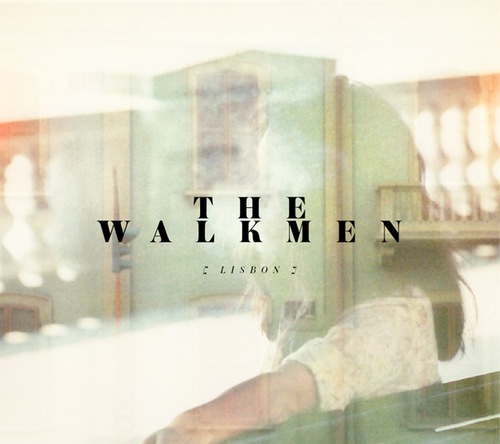
THE WALKMEN
Lisbon
(Fat Possum)
You & Me, the Walkmen’s excellent 2008 album, showcased how strong the band could be while working within a mellower, more plaintive framework. Not that they’d ever been entirely void of it before, but that album’s wistful horns and lyrics dripped with melancholy that hardly let up. Early publicity about its follow-up, Lisbon, hinted at the group’s desire to revisit some of the more raucous material they toyed with on earlier albums and then fully succumbed to on 2006’s track-by-track cover of the Harry Nilsson/John Lennon album, Pussycats.
Inspired by the Memphis Sun Studio sound of the ’50s, Lisbon was written off-and-on during various trips to the Portuguese title city and then recorded in Philadelphia and New York City. The final product is an album of 11 songs (whittled down from a whopping 28 they recorded) that confirm the Walkmen’s status as one of the most consistent rock bands working today. To think these guys were initially lumped in with the wave of awful one-off bands ripping the Strokes in the early part of last decade is laughable now.
But is Lisbon the overhaul in style that advance word suggested? Well, yes and no. Standout “Angela Surf City” alone rocks harder than pretty much the entirety of You & Me. It also gives drummer Matt Barrick—the band’s secret weapon, in my opinion—a chance to attack his kit with a ferocity not heard since “The Rat” from 2004’s Bows + Arrows. Elsewhere, “Woe Is Me” is the Walkmen at their breezy up-tempo best, while “Follow the Leader” makes a lot of racket but unfortunately doesn’t really serve much of a purpose.
Ultimately, however, the sweeping, dreamy tracks again carry the majority of Lisbon. The appropriately titled “Torch Song” is a beautiful vessel for Hamilton Leithauser’s voice—a bourbon-soaked lovechild of Spoon’s Britt Daniel and early Rod Stewart. With its lullaby-like verses and old-fashioned backup harmonies, it’s also the most glaring example of the inspiration pulled out of those early Sun albums from the likes of Elvis Presley and Roy Orbison.
Lisbon probably won’t be remembered as many fans’ favorite Walkmen album—it’s not as flashy as earlier recordings and it’s not quite as unified as You & Me. But when a band has created a catalog as front-to-back strong as theirs has become, picking favorites starts to feel a little ridiculous anyway.
By Emmaly Wiederholt
Recently I’ve been volunteering with an older blind woman. During our last volunteer session I mentioned I was attending Flyaway Productions’ Singing Praises: Centennial Dances for The Women’s Building (Sept. 10-18) and asked if she had heard of The Woman’s Building. She practically laughed out loud, and I was surprised to learn she was very familiar with it as an active member of the second-wave feminist movement during the ’70s and ’80s. She described the struggle against sexual and gender inequality in the workplace, in the family, and in reproductive rights.
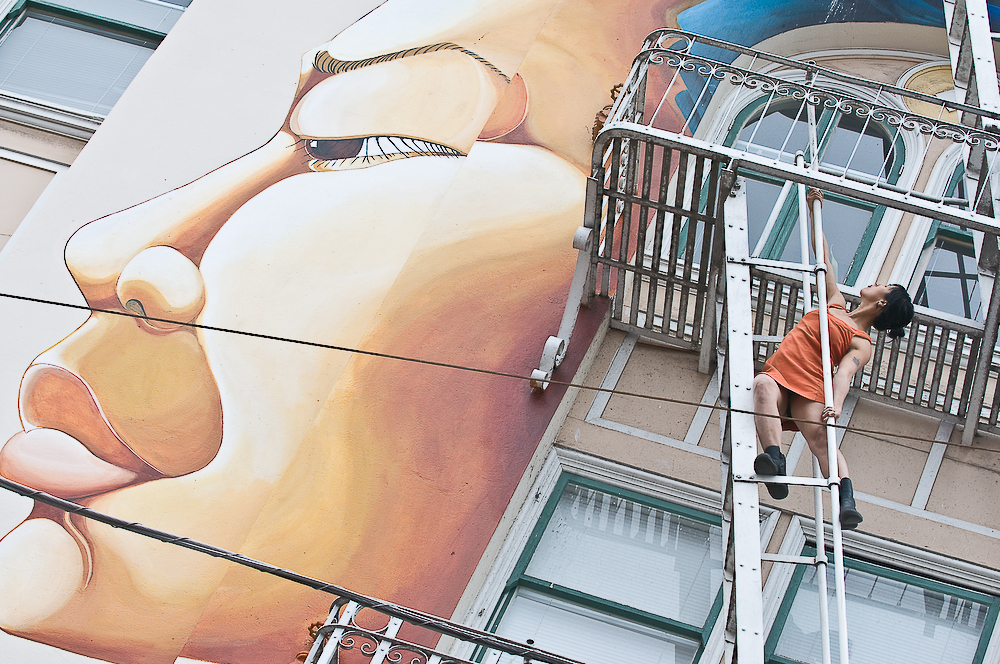
That night as I stared at the brilliantly lit murals of The Women’s Building with aerial dance artists scaling the walls and windows, I thought again of my blind friend’s activism and pondered what it meant to be a woman watching this particular dance performance. So many of the values I cherish about being a woman were present in the bold women flying above.
These women were strong. While dance requires a certain amount of brawn in itself, aerial dance requires much more abdominal and upper body strength than in most dance forms. This may seem self-evident, but in the context of the piece it was particularly telling that these were women with musculature. These women took risks. Hanging suspended over asphalt by a harness requires a certain amount of fearlessness. The risks inherent in this type of dance lent to the thrill audiences felt as dancers swung upside down or sideways high above the ground. These women challenged each other. Much of Jo Kreiter’s choreography consisted in the dancers pushing and pulling at one another, not as antagonists, but as competitors, driving each other to new physical heights. And finally, these women were intuitive. Dance in unison is difficult. Three women, each positioned on a different flight of stairs on the fire escape, danced in tandem though they could hardly see each other. Rather, they had to feel one another’s energy, a feat that takes sensitivity and practice to perfect.
Aside from the lovely testament to women inherent in the dancing, I also enjoyed how unassumingly the performance garnered an audience. Passersby stopped and looked up in wonder. Cars slowed. Buses full of people crammed to look out the window and see what was going on. The performance ran about one half hour in length and by the end quite a crowd had accrued. This rapt community of onlookers, some there by chance and others by premeditation, were yet another demonstration of the role The Women’s Building plays in bringing people together.
Nearing the end of the performance, a dancer stood on the corner of the colorful four story building, her body illuminated in white light, her clothing and hair billowing frantically in the wind. She looked seven feet tall and practically biblical in effect. Looking around, I noticed the now sizeable crowd, their faces upturned towards the Amazonian woman atop the poignantly muraled walls, a veritable bastion of womanhood in the sky.
Dick Meister, former labor editor of the SF Chronicle and KQED-TV Newsroom, has covered labor and politics for a half-century. Contact him through his website, www.dickmeister.com, which includes more than 250 of his columns.
A new AFL-CIO report shows that more than 13,000 of the truly heroic firefighters, police and other rescuers who were the first to rush to the scene of the attacks on the World Trade Center in New York City on Sept. 11, 2001 are still being treated for the serious injuries they received.
They were exposed to a highly toxic mix of chemicals, jet fuel, asbestos, lead, glass fragments and other debris that caused a wide range of respiratory, intestinal and mental health problems. Also exposed were nearly 53,000 other first responders who are being monitored for signs of 9/11 related illness. Yet another 71,000 are being watched closely because they also were exposed to the extremely harmful toxins while helping clear debris.
The number of reported victims continues to grow. For example, another new study, from the Mount Sinai Medical Center, shows that some 70 percent of the 10,000 workers involved in the cleanup who were tested between 2000 and 2004, now say they have new or more serious respiratory illnesses.
In addition to firefighters and police, the victims include construction workers, residents of the area and school children, among others. The new report, by the AFL-CIO’s James Parks and Mike Hall, focuses in part on one of the first to reach Ground Zero — Vito Friscia, a Brooklyn homicide detective. He was only a block away when the second of the Twin Towers fell. He rushed to the site through a dense cloud of toxins to seek – and to rescue – survivors. Friscia spent a week helping with the rescue efforts.
Today, Detective Friscia has a deep cough that won’t go away, chronic sinus problems and shortness of breath.
“But I’m no hero,” he insists. “I was just doing my job.” Many others involved in the rescue efforts say pretty much the same thing – that they were just doing their jobs as police officers, firefighters or as other public service employees.
Frisia’s sister-in-law, Maria Pusteri, has produced a documentary film, “Vito After,” which takes a detailed look at what the detective has endured since his rescue efforts. The film, first released in 2005, recently made its international debut in London.
What’s needed now, the AFL-CIO says, is to provide long-term medical care and careful monitoring of the tens of thousands of rescue and recovery workers and community members whose health remains at serious risk because of their exposure to contaminated materials.
The AFL-CIO rightly blames part of the problem on Republican opposition. For instance, the Bush administration refused to create or support a permanent research, monitoring and health care program for Ground Zero workers. And the administration also cut funding for health care related to the 9/11 cleanup.
Just before the congressional recess in August, House Republicans managed to block a bill – the 9/11 Health and Compensation Act – that would provide $7.5 billion for long-term monitoring and health care of victims.
This prompted another of the ailing first responders, Greg Staub, to complain that “they told us if we did our job, they’d take care of us. We did our job. Now we’re sick and they don’t remember who we are anymore.” Staub was forced to retire from the New York City Fire Department last year because of chronic lung problems stemming from his rescue efforts.
The odds, however, are that the House Republicans will not be able to block passage of the proposed Health and Compensation Act when comes up for a second vote, which is expected soon.
Those who rushed to Ground Zero to help the 9/11 victims clearly need – and certainly deserve – lots of help, probably at least as much as provided by the bill. As one of those treating the 9/11 victims noted, “Our patients are sick, and they will need ongoing care for the rest of their lives.”
Providing that care is the very least we can do.
Dick Meister, former labor editor of the SF Chronicle and KQED-TV Newsroom, has covered labor and politics for a half-century. Contact him through his website, www.dickmeister.com, which includes more than 250 of his columns.
Sup. Sean Elsbernd came by to talk to us about Prop. G, his ballot initiative to change Muni workers’ pay, and threw in a pitch for Prop. F, a fairly minor change in the way the Health Service Board is elected.
His central argument on Prop. G: Muni workers are the only city employees with a salary guarantee in the City Charter. The law says the drivers have to be paid at the level of the second-highest-paying comparable urban transit district. It’s not that they make too much money, Elsbernd says; it that the Charter requirement puts the city in a bad place during contract negotiations and gives Muni management “zero leverage to make any changes in the egregious work rules.”
Interestingly, the drivers don’t seem to oppose the idea of taking their salaries out of the Charter and negotiating like other city employees. They’re upset about another provision of the Elsbernd measure — a binding arbitration rule. The city has binding arbitration for all labor negotiations, but under Prop. G, if the Muni unions and the city are at an impasse over work rules, the burden of proof would be on the union to demonstrate that its proposals won’t impact service.
“Fixing this,” Elsbernd says, “is central to fixing Muni.”
You can listen to the interview here.
elsbernd by endorsements2010
Sex blogger Fleur De Lis SF is the friend whose gossip makes you weak in the knees. We published excerpts of an interview with her in this week’s Hot Sluts! Sex Issue, but the full text frontal was so juicy, we giving it to you (hard), as well as some salacious shots from her first domantrix session with the magnetic Lady Ripplee Severin. Fleur is your girl who recounts (to your squeals) stories of meeting men at the grocery store salad bar, only to be ravished by them that night after a day of dirty emails exchanged at the office. The one who is up for any sexual frisson, pleasure, situation, from Craig’s List Casual Encounters to BDSM clubs. What – you don’t have one of those? Well lucky you, Fleur Di Lis SF likes to share. The mysterious online personality — who professes to be a white collar wage slave during the day — is posting her illustrated voyages throughout the city’s sexual underground on the regular.
San Francisco Bay Guardian: How long have you been writing the blog and what inspired you to start it?
Fleur De Lis SF: I posted my first blog on August 6, 2010, a Friday. The inspiration came from this glorious sexy city. I went to a sex club and realized that SF has a huge sexual subculture. So, I just started to explore every aspect of it. It evolved into a collection of true stories. It is all non-fiction and yes it all really happened. In essence SF inspired me and so Fleur De Lis SF was created.
SFBG: Can you give me a brief description of yourself and how you got involved in sex writing?
FDLSF: I did not ever intend to write about sex. I sort of stumbled upon it in a way. I am an educated, funny, smart and sexual woman I have always had an active sex life and I used to entertain my friends with my sexcapade stories. I am a story teller and so I started to write them down just the way I would tell them aloud. I realized that my stories would probably entertain more people than just my friends. Mainly, I want to educate people to embrace sex and sexuality. I want people to accept who they are and who are we are sexually is a huge part of who we are as people.
SFBG: Do you think there are a lot of misconceptions about women and sex?
FDLSF: Yes, because I think the misconception is that women don’t want to have sex as much as men. Women are just as sexual as men and they should own it.
SFBG: Do you feel that, by talking about sex so openly, you’re making a statement?
FDLSF: I talk about sex openly because it’s nothing to be ashamed of. Our society does not give people a platform to talk about sex. Sex stories are always a secret, a taboo, something you hide. Women should be proud about being sexual that is my statement there is nothing wrong with being an independent, smart, sexual woman.
SFBG: What are some of your favorite sexy things in the Bay Area right now?
FDLSF: That would encompass a lot of things. To me SF is sexy in general. The people, the vibration, the art and the sexual current that burns brightly throughout it. SF welcomes every walk of life to be sexual and it provides you with a variety of venues to choose from.
SFBG: As an observer of the local sex scene, what do you think overall? Is this a really sexy place to be right now?
FDLSF: I think San Francisco is by far one of the sexiest cities in the world. SF makes it ok for people to be different and doesn’t judge them along the way. I think it is my great privilege to live in this beautiful city. I have just scratched the sexual surface of San Francisco and I can’t wait to see more.
Walk San Francisco, a longtime pedestrian advocacy organization in San Francisco, wants us all on our feet and in the streets. This week, the organization welcomed Elizabeth Stampe to their nonprofit team as executive director — its first executive director in four years – just as the city of San Francisco has made it official policy to promote walking over other transportation options.
With the help of Stampe, who spent eight years as communications director for the Greenbelt Alliance, Walk SF plans to improve overall street safety and increase pedestrian activity throughout the City. However, with Stampe’s plans to make San Francisco “the most walkable city in America,” there also comes a fair share of speed bumps to take into consideration. For one thing, the desire to keep all pedestrians in a large metropolis safe is about as simple as keeping Tiger Woods celibate — the issue may never be completely resolved.
Walk SF, although welcomes Stampe with whole heartedness, will need to step up their game funding-wise now that they have officially gone pro. “We’re looking for all of the funding we can find right now,” Stampe said. “Especially right now funding is not a sure thing”
Getting San Franciscans walking instead of driving may be an arduous task, but it is a task Stampe is ready to take on. She said organizing and promoting street events is “a way of showing that we can use streets in a different way,” other than solely attempting to exterminate the notion of an unsafe road. “That’s something we really want to build here.”
Walk SF’s number one goal is to safeguard pedestrians and make walking fun again. However even though walking provides fabulous oxygen circulation as well as exercise, being a pedestrian can sometimes become a high risk activity. In a report released in 2009 by Transportation for America, studies showed that 27 percent of all traffic deaths in the San Francisco region —which includes Oakland and Fremont — were pedestrians.
The study also reported that there were 72 pedestrian fatalities in the SF region in 2008, which rose from 64 in 2007. Transportation for America also refers to potentially hazardous roads as “dangerous by design roadways,” which Stampe describes as any type of road that encourages fast driving.
“Pedestrians also have the right to speak up for safety,” Stampe said. “There are [dangerous by design roadways] in San Francisco, where there’s very little to influence cars to slow down.”
While San Francisco’s hilly streets make for a thrilling car ride, the amount of pedestrian-vehicle collisions that take place in this city alone are enough to shoot down any race car driver dreams of careening down Nob Hill.
Stampe mentioned well-known streets such as 19th Avenue, Masonic Avenue, and Monterey Boulevard as some of the most prominent dangerous by design roadways, listing several priorities in promoting pedestrianism.
“The first thing is for there to be more equity in how funding is distributed,” Stampe said. “Right now much more money goes towards funding for cars than sidewalks.”
A way in which this may soon change can be found in Proposition AA, which is on the ballot for this November’s elections. Walk SF Board President Manish Champsee explained how Prop AA will help strengthen sidewalk safety and promote more walking.
“It is a vehicle registration fee, projected to bring about $5 million a year,” Champsee said. “It costs $10 every time you register your car.”
If passed, 50 percent of Prop AA funding will go to road resurfacing, 25 percent will go towards transit reliability improvements, and another 25 percent for pedestrian safety. Champsee tells us about what his organization calls “walkability,” which makes places inviting to walk through and deflects local street crime.
“There should be active ground floor uses,” Champsee said. “At street level,you should have retail, eyes on the street.”
After traveling the world, Stampe feels inspired by street culture abroad and hopes to bring that same environment to San Francisco. She explained that in places like India and other Asian countries, “what you realize is that people are paying much more attention there,” regardless of the J-walking cows and street vendors blocking the road.
Champsee’s street-life inspiration lies in bicycle communities like Amsterdam and sidewalk café culture in Paris. Community events such as Sunday Streets, in which San Francisco city streets are temporarily closed and completely open to pedestrians, are what members of Walk SF hope to see more of.
Walk SF’s own event, Peak to Peak, will take place Oct. 16, and hundreds of walkers will make the trek from one side of the city to the other. “There are 10 different peaks,” Chamsee said. “You see parts of the city that not many have seen before.”
From advocating the reduction of car use to asserting local speed limits, Walk SF clearly has a lot in store for our city. And when asked if we can expect anything like Bay to Breakers from Peak to Peak, Stampe replied, “Probably, but with fewer naked people.”

The press coverage of the new execution chamber at San Quentin has been astonishing. Check out Kevn Fagan in the Chron:
The spacious $853,000 center has three brightly lit witness viewing rooms, and each gives a considerably better view than the cramped gas chamber’s lone, poorly illuminated viewing room.
It’s like a damn real-estate review. A bright, well-lit place with a great view. And in Marin County, no less. A bargain at the $800,000 the taxpayers coughed up for this construction job.
KTVU news last night wasn’t much better. Scott Shafer on KQED was a little more reasonable; at least he noted that “On some level it’s hard to imagine an execution being humane.”
Folks, please: This is a room where people are going to be killed. Human beings. Strapped to a gurney, hooked up to an IV line and injected with poison. It’s ghastly, it’s disgraceful, it’s something that puts the United States far out of synch with the rest of the civilized world.
It’s also, by the way, insanely expensive; California pays more than $100 million a year to keep its death row operating, and according to the L.A. Times, it costs $250 million every time we kill someone.
It would have been nice to see a little perspective when the California Department of Corrections does a dog and pony show to present its latest killing machine.
You’ve read about them in this week’s Sex Issue cover story, now see what our favorite sleaziest, easiest, and just plain deliciously sexy people, places, and things look like in the slideshow above.

Today’s Look: Inci, 24th Street and Church
Tell us about your look: “I like unusual combos. My style is color avant-garde.”
Ways to have fun while giving back this week
Friday, Sept. 24
Art for AIDS
Attend this charity art auction featuring paintings, sculpture, photography, and jewelry along with food and drink from Bay Area restaurants, caterers, wineries, and breweries. There will also be live music and an auction for travel and adventure prizes. Proceeds to benefit the UCSF AIDS Health Project.
5:30 p.m., $100
The Galleria
101 Henry Adams, SF
www.artforaids.org
Bollywood Disco Ball
If you need an excuse to wear a flashy disco outfit, head to this fundraiser featuring a night of Bollywood disco music video mash ups, live performances, live art, Indian food, and more. Proceeds to benefit Project Ahimsa, a global effort to empower youth through music that distributes music education grants in 14 countries, including programs in the Bay Area.
9 p.m., $125
111 Minna Gallery
111 Minna, SF
www.projectahimsa.org
Concert for Pakistan
Join classical music lovers and others interested in helping victims of this summer’s flood in Pakistan for a night of classical chamber music performed by the San Francisco Academy Orchestra, the Calvary Presbyterian Church chior, and other Bay Area musicans. All donations given during the concert will go to Presbyterian Disaster Assistance: Pakistan.
8 p.m., donations encouraged
Calvary Presbyterian Church
2515 Fillmore, SF
(415) 346-3832
Sunday, Sept. 26
Race for the Cure
The Susan G. Komen Race for the Cure® Series is one of the largest 5K run and fitness walk in the world, raising funds and awareness for the fight against breast cancer, celebrating breast cancer survivors, and honoring those who have lost their battle with the disease. Participate by running, walking, or just donating and help provide breast health research, diagnostics, screening, treatment, services and education for uninsured or underinsured women
9 a.m., $10+
Start and finish at Ferry Building
Embarcadero at Market, SF
www.komensf.org
Support the Red Vic
Join Surfpulse.com for a benefit for the Red Vic, a worker owned and operated movie house since 1980, featuring free food, surf films, DVDs for sale, and a $5 raffle for a Las Olas surfboard and other prizes. $1 from all Sierra Nevada beer sales and a portion of the bar and tips will all be donated to the Red Vic.
6 p.m., free
Joxer Daly’s Irish Pub
46 West Portal, SF
www.surfpulse.com

Literary readings, book tours, and talks this week
Jonathan Safran Foer, Mattilda Bernstein Sycamore, Radar Lab Showcase, The Architecture of Timothy Pflueger and more.
Wednesday, Sept. 22
Radar Lab Showcase
Featuring authors Ali Liebegott, Annie Sprinkle, Beth Stephens, Justin Chin, Kat Marie Yoas, Deez Nutsian, Rose Tully, Elyssa Joy Kilman, and Michelle Tea.
7 p.m., $10
The Luggage Store
1007 Market, SF
(415) 255-5971
Jonathan Safran Foer
Hear the author of Eating Animals, Extremely Lound and Incredibly Close, and Everything is Illuminated discuss vegetarianism, argue for humane agricultural methods, and examine the cultural meaning of food.
8 p.m., $20
Herbst Theater
401 Van Ness, SF
www.cityboxoffice.com
T.J. Stiles
The award-winning author of The First Tycoon: The Epic Life of Cornelius Vanderbilt will give a talk titled, “The Significance of One Life: The Individual’s Role in History, and Biography’s Place in the Digital Age,” where he will discuss the importance of the individual in the course of human events, how to reflect on life with the short attention span of the digital age, and other current challenges to writing biography.
6 p.m., $12
Mechanics’ Institute
57 Post, SF
(415) 393-0100
Thursday, Sept. 23
“The Architecture of Timothy Pflueger”
Theresa Poletti, author of Art Deco San Francisco, will lead this lecture about Pflueger, who shaped the skyline of San Francisco with his mastery of the Art Deco style.
6 p.m., $12
Bayside Conference Room
Pier 1
Embarcadero, SF
www.sfheritage.org
City of Stairways
Attend this reading with the young authors of WritersCorps of their new book of poetry, photography, artwork, maps, and tips titled, City of Stairways: A Poet’s Field Guide to San Francisco.
7 p.m., $5-$10
Red Poppy Art House
2698 Folsom, SF
(415) 826-2402
Guillermo Del Toro
Del Toro returns with his second novel, The Strain, the second in The Strain series, about a vampiric infection spreading across America. Del Toro is best known for his films, including Cronos, Blade II, Hellboy I and II, and Pan’s Labyrinth among others.
7:30 p.m., $12
Kabuki Sundance Theater
1881 Post, SF
www.booksmith.com
Monday, Sept. 27
Michael Lewis
Hear this journalist and author of Money Ball and The Blind Side discuss his latest book, The Big Short, describing the build up of the housing credit bubble that led to the financial crisis of 2007-2008.
8 p.m., $20
Herbst Theater
401 Van Ness, SF
www.cityboxoffice.com
Tuesday, Sept. 28
The End of San Francisco
Get a special preview reading of writer and activist Mattilda Bernstein Sycamore’s memoir in progress about the past two decades she spent in San Francisco, full of the political, literary, and artistic. Refreshments and discussion to follow.
6:30 p.m., free
Modern Times Bookstore
888 Valencia, SF
www.mtbs.com
Nothing Left for the Dead
Local author M. Cazadores will read and discuss his first novel, a piece of non-existential literature that touches on themes of indentured servitude, technology, American corporate plutocracy, racims, sheep, sex, love, music, drugs, and time. Accompanying music will be provided by David and Joanna.
7 p.m., free
Vesuvio
255 Columbus, SF
(415) 362-3370
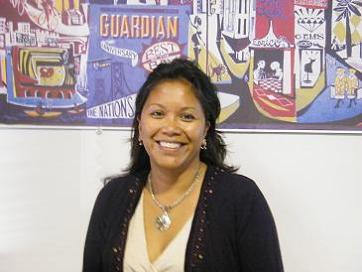
Hydra Mendoza is running for a second term on the school board, and she told us that four years wasn’t enough time to get done all the work that she’s taken on. She’s pushing for the “career to college” program and for citywide preschool.
Mendoza supports the new enrollment process, saying it offers some certainty to parents. She’s a friend of Arne Duncan, the Obama Administration’s education secretary, whose policies have infuriated progressive educators, but she says he’s in a tough job: “It’s ahrd to set national education policy when you have states that are failures for kids.”
She supports the charter schools that the district currently has, although she argues that “I’ve yet to see a charter school that offers something we can’t do ourselves.”
You can listen to our full interview here:
Mendoza by endorsements2010
Jane Kim’s top issues are economic development and jobs. She told us she wants to encourage small business in the district, starting with an “empty storefronts” campaign. She’s pushing local-first hiring for construction and development.
Kim said she wants the city to index affordable housing to market-rate housing and try to keep the ratio from getting too far unbalanced. She’s calling for a new affordable housing bond.
She recognizes that the city needs substantial new sources of revenue, and supports a transit fee on downtown businesses, a transfer tax hike for properties selling for more than $825,000, and would explore a city income tax. She said she’s open to congestion pricing for downtown drivers.
Kim supports the City Place project, saying that a lot of the residents of the Tenderloin want discount retail in the area.
She’s a fairly new arrival to the district, having moved in about a year and a half ago, but she told us: “D6 is a district you can run in without having lived there a long time.”
Listen to the full interview here:
janekim by endorsements2010
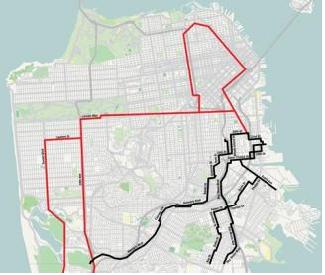
PG&E has been hiding the map of where its high-pressure pipes run under San Francisco, but we’ve got it. Or most of it. Using existing public records and open-source mapping software, we’ve pieced together a pretty complete map of where the hazardous 30-inch pipes are buried. Check it out here.
“When people tell someone a history it’s always one side of it. What I know is a little darker.” Assemblyman Tom Ammiano had seen our post on this weekend’s Other Cafe reunion (Sat/25), and had a bone to pick with our description of the defunct Haight-Ashbury stand up club’s progressive approach to comedy. Namely, the Other’s attitude when it came to gay comics during its 1980s heyday – a view which club founder Bob Ayres vehemently disputes.
Ammiano should know – in addition to his early career as a special education teacher and current one as the political voice of the 13th Assembly District, he was a gay stand up comedian in a city that has been hollered at as the modern day creche of homo wisecracking. He founded the gay comedy night Valencia Rose Cabaret in 1980, thereby earning himself the grand distinction of “Mother of Gay Comedy.”
But he couldn’t get work just everywhere. “The interesting thing is that this was San Francisco – I can’t really think of a gayer city than that,” he told me on the phone today. “When we tried entry to the Other Cafe and Punchline [another club open to this day], we were denied access.” Ammiano said that club schedulers would tell them that due to the AIDS crisis, audiences weren’t comfortable with “gay material.” Or else that audiences just didn’t like listening to gay jokes, or they would be less direct but still firm on the fact that no gigs with them would be forthcoming. “It was really a bummer. We had our audiences and everything, but [club owners and schedulers] were homophobic.”
Ayres’ comments on the matter implies a bit of sour grapes on the part of Assemblyman Ammiano. Quoth he:
“At the height of the comedy boom it was tough for many comedians to get gigs there. We were able to pick from among the very brightest of acts from around the country. It was the hardest thing about owning a high profile comedy room, saying no to deserving comics. The charge that we closeted comics or disallowed gay material is blatantly untrue nor is it supported by the facts. We had many gay comedians play and even headline the club. Must we list them? Tom as a beginning comedian back then may have felt he deserved more stage time and maybe he knows others that feel that way. But there are also hundreds of straight comedians who feel they deserved more gigs there. We simply tried to bring the funniest comedians we could find to our club every night. Their sexual preference was of no concern to us ever. It still isn’t. We would never have survived nor prospered as a comedy club had we told comedians what material to do.”
When I read Ammiano a list that Ayres had sent me of gay comedians that had performed at the club, Ammiano said that most of the names were people that had performed there “in the ’90s” (note: the club had already closed by then), or had performed closeted, or hadn’t done explicitly “gay material.”
Which is not to negate all of Ammiano’s respect for the Other’s comedic legacy. “It was just amazing. People got their careers started, we had a lot of heavyweights get their start here, they’re absolutly right that way,” he said.
EDITORIAL If you’re worried about the safety of the natural gas mains running below San Francisco — and you should be — you might take a look at a city on the Peninsula, one about 22 miles south of the site of the gas explosion in San Bruno. Since 1927, the city of Palo Alto has been running its own gas and electric utility — and instead of worrying about pipelines blowing up, the city recently won an award for safety.
Palo Alto workers inspected every inch of every gas pipe in 2009, and the steel pipes are replaced every 37 years — well ahead of the rated lifetime of the material. Oh, and by the way: gas and electricity are way cheaper in Palo Alto.
Pacific Gas and Electric Co., the private utility that operates most of the pipelines underneath northern California, has a different approach. In the past, the company has been nailed for diverting ratepayer money from public safety and maintenance into executive salaries and profits. And the backlog of deferred pipeline maintenance (despite the fact that the company has been given rate hikes to pay for replacing old pipes) suggests that the pattern may be continuing.
That’s yet another in the long line of reasons why San Francisco needs to replace the incompetent, bloated private company with a public utility system.
It’s also the reason the city needs to be moving on every front to find out exactly where all of PG&E’s hazardous infrastructure is.
PG&E, as we report in this issue, doesn’t want anyone to know where the dangerous, aging gas mains run. Even the San Francisco Fire Department doesn’t have the map. So if a fire breaks out a few feet away from a gas line that could explode at any minute, the first responders have no way to know. That’s just crazy.
We’ve managed to piece together, from existing public records, a pretty good approximation of the secret PG&E map (see here), and it shows that some of the gas mains run right below densely populated urban neighborhoods. The company acknowledges that more than 200 miles of pipes in the city are due for replacement — but won’t release the maintenance schedule or any information about when the various pipes are in line for upgrades.
That’s an issue of basic public safety — and city officials shouldn’t tolerate it for another moment.
PG&E says it’s concerned about threats to the pipelines — but the real threat is to the public. If the residents of San Bruno who had been smelling gas — and San Bruno police and firefighters — knew that there was a 50-year-old pipeline carrying gas at 200 pounds per square inch underneath the residential area, they might have ordered an evacuation. That would have saved lives.
The California Public Utilities Commission can probably order PG&E to release its maps of all of its gas mains in the state, but the CPUC has never been terrribly good at regulating the utility and can’t be counted on here. So the San Francisco mayor, Board of Supervisors, and city attorney need to act.
The board should, of course, pass Sup. Ross Mirkarimi’s resolution calling on PG&E to cooperate with city officials on timely disclosure of the information. But the supervisors should be prepared to go further. They have the legal right to issue subpoenas, and if PG&E doesn’t at least give the relevant maps to the Fire Department, the board should demand that PG&E’s chief executive, Peter Darbee, show up at a public hearing and produce it. City Attorney Dennis Herrera also has the power, under limited circumstances, to issue subpoenas — and this certainly seems to qualify.
Meanwhile, the board should begin to hold hearings on the larger issue — could San Francisco run its own electric utility and a natural gas system too? Or should we just trust our safety to a company that can’t seem to find a gas leak that blew up an entire neighborhood?

Plan C, a group that promotes condo conversions and rails against tenant protections, claims to be working hard to elect “moderate candidates” to the Board this fall.
And now the group has invited its members to meet Plan C’s “endorsed candidates” on October 4 at St. Mary’s Cathedral on Gough Street.
The winners, according to Plan C’s website, are Mark Farrell in D2, Theresa Sparks in D6, Scott Wiener in D8 –and Lynette Sweet & Steve Moss in D10.
No big surprises here.
But candidates in the district elections might want to note that Plan C’s slate met with limited success in 2008: the group endorsed Sue Lee in D1, Joe Alioto Jr in D3, Eva Royale in D 9 and Ahsha Safai in D11, and none of these “moderate” political hopefuls made it into office.
In fact, the only folks on Plan C’s 2008 slate who actually won were incumbent supervisors: D4’s Carmen Chu and D7’s Sean Elsbernd.
Hey, maybe that explains why Sweet is trying to act like the incumbent in D10 and refusing to give interviews before she’s even been elected…
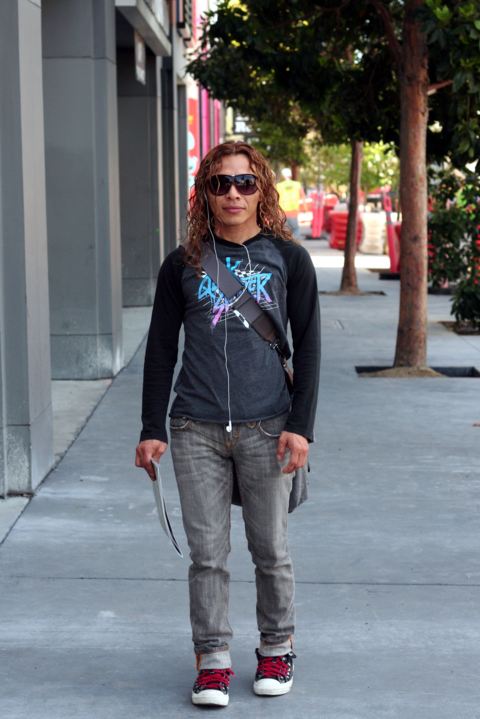
Today’s Look: Carlos, 17th Street and Valencia
Tell us about your look: “Trying to be fresh and mix textures.”