SFBG Blogs

Holding corporations accountable for job creation claims

0

Amid the ongoing state budget impasse and an election season dominated by scapegoating public employee unions for public sector fiscal problems, Sen. Leland Yee (D-SF) today introduced legislation to hold corporations that receive tax breaks accountable for the jobs they claim to create, a bill that was quietly killed earlier this year after being approved by both houses of the Legislature.

Opposition to the bill by corporate interests should puncture the oft-repeated myth that tax breaks spur job creation rather than simply increased corporate profits, a myth that leads everyone from SF Mayor Gavin Newsom to Gov. Arnold Schwarzenegger to push business tax breaks that have hobbled the ability of governments to effectively function.

After intense lobbying against the measure by banks and the California Chamber of Commerce, SB 1391 fell one vote short on the concurrence approval it needed on the last night the Legislature’s regular session after some Southern California legislators who had originally voted for it decided to let it die. So Yee has reintroduced the bill as SBx6 20 for consideration during the upcoming special session that the governor called to deal with tax reform, which begins when legislators return to vote on the state budget as soon as this week.

The measure would require corporations that claim job creation tax credits to annually file information with the Franchise Tax Board listing how many full-time positions they offer. If the number of jobs at the company drops over a three-year period – a common occurrence in this era of outsourcing and downsizing – the corporations would be required to pay back taxpayers for their tax breaks.

“It is wrong for California to provide upwards of $14 billion in corporate tax credits without transparency and accountability,” Yee said in a public statement, also adding, “A working mother on CalWORKS or disabled senior receiving in-home supportive services has to jump through numerous bureaucratic hoops to receive minimal life-sustaining benefits, but if you are a Wall Street bank or big corporation looking for scarce tax credits, no one asks any questions.”

Numerous studies and books such as the Great American Jobs Scam have shown how the pervasive argument that cutting business taxes promotes job growth just isn’t true, even though it is taken as an article of faith by corporation and business-friendly politicians. But one need only consider the current jobless economic recovery – in which corporate profits have rebounded while unemployment remains stubbornly high – to doubt the Chamber of Commerce messaging.

Yee’s Chief of Staff Adam Keigwin tells the Guardian the measure simply makes sense, particularly in the context of a discussion about tax reform: “Here we have found a majority vote solution to a revenue issue and a fairness issue,” he told us. “If we’re going to give these tax breaks, fine, but make sure there’s accountability.”

Trash war hits Chamber of Commerce lunch

3

The San Francisco Chamber of Commerce is hosting a lunch with Recology today in an apparent effort to push a garbage transportation/disposal contract that the Board of Supervisors hasn’t yet approved.

The Guardian wrote about this ongoing landfill disposal contract dispute between Recology and Waste Management earlier this year, and to date, the Board has not voted on the matter.

But judging from the tone of the following press release, the Chamber, whose incoming chair elect is Recology Vice President John Legnitto, has already made its decision:

“Please join us for a lunch with Recology to learn about the San Francisco’s garbage by Green Rail to Ostrom Road project,” the Chamber states, noting that until the city’s goal of zero waste is reached, “some material will still need to be sent to landfill.”
“A panel of city officials from San Francisco and Oakland chose Recology Ostrom Road Landfill to receive garbage from San Francisco after the city’s current landfill agreement ends in 2015,” the Chamber continues, without bothering to note that this plan involves hauling the city’s waste all the way to Yuba County, which is three times further away than San Francisco’s current waste disposal contract with Waste Management at the Altamont Landfill, near Livermore.

“Officials say the plan to ship San Francisco’s garbage by Green Rail to Ostrom Road is the most cost-effective and environmental option for transporting waste,” the Chamber continues.  “Rail haul is at least three times more efficient than trucking, takes trucks off the road, and cuts fuel consumption and air emissions.” And it encourages folks to learn more about the plan to ship the city’s garbage to Ostrom Road, by visiting Recology’s Ostrom Road site:

Not to be outdone, Waste Management, Inc.has put together a video clip that features on-the-street interviews in downtown San Francisco with local residents–including an amazing “Statue Man” in Justin Herman Plaza– about its competing plan to convert San Francisco’s garbage into liquid natural gas that would then fuels its garbage trucks.

Meanwhile, the Sierra Club has asked the Board of Supervisors to schedule a public hearing. In a September 17 email, sent to Board President David Chiu and the rest of the Board, Rebecca Evans, chair of the Sierra Club’s San Francisco Group, requested that the Board hold a public information hearing on the current status of the City’s contract for landfill operations, starting in 2015.  

“Some months ago, the Department of the Environment ‘selected’ Recology’s proposal to transport San Francisco’s waste to Yuba County,” Evans notes. “A contract was to be released in June 2010.  We understand the confidential nature of contract negotiations but it is September and no further information has been made public.”

“To be clear, the San Francisco Bay Chapter has no policy position on the plan to move landfill operations from the current Waste Management Alameda County Altamont site to Recology’s Ostrom Road destination,” Evans clarifies. “However our chapter and the Club’s Mother Lode Chapter have strong interests in the proposal and how it might be carried out. We ask you to hold a hearing in the near future so that the public can have a fuller understanding of this important issue.”


SFBG Radio: The recession’s not over

2

Today Johnny and Tim talk about the fact that only 5 percent of the people who lost their jobs in the recession have found new jobs. The receession’s over? My ass. Listen after the jump.

sfbgradio9/21/2010 by endorsements2010

Texas hotels more progressive than San Francisco’s?

5

Prop. J would increase San Francisco’s hotel tax of 14 percent – which is lower than such big cities as Seattle, Chicago, and New York — by 2 percent. Opponents of the measure, such as District 8 supervisorial candidate Scott Wiener, say they are concerned that San Francisco would have the highest such tax in the country and that tourism could suffer as a result.

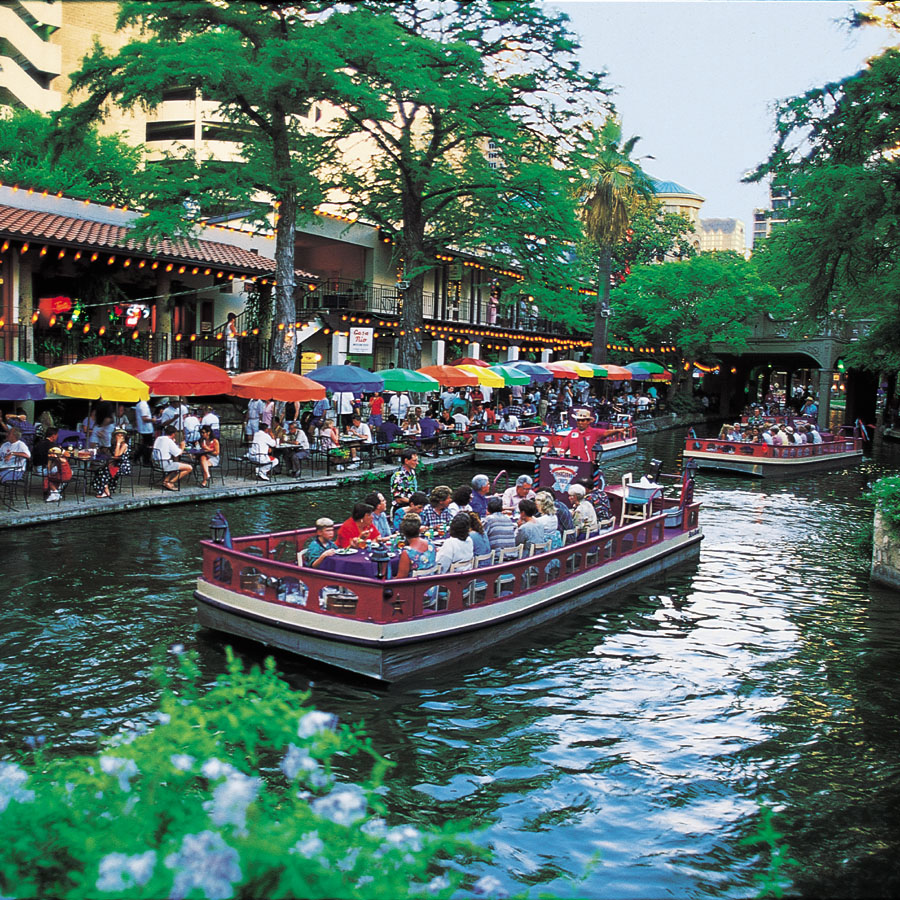
Yet in the city that actually has the highest hotel tax, San Antonio, Texas – where the 16.75 percent rate would still be higher than San Francisco’s even if Prop. J passes – representatives of the hotels have been among the bigger supporters of the tax, unlike in San Francisco where hotels are leading the campaign to defeat Prop. J with help of Mayor Gavin Newsom.

Dee Dee Poteete, the director of communications at the San Antonio Convention and Visitors Bureau, told the Guardian there are more than 25 million people that visit that city each year, a number that held steady even after the tax was put in place in 1999. The tax rate was reauthorized two years ago, with the hotels in support.

“Our city provides a very full and rich vacation or meeting experience that is an extremely good investment for [visitors],” Poteete said when asked about how tourism in San Antonio is affected by the tax, revenue from which is currently used to help support and promote tourism. And like San Antonio, San Francisco is a rich destination with a large tourism industry. Supporters of the tax believe the tax will also help keep San Francisco attractive to tourists.

“Money will go back into the general fund, but tourists use the same city services such as Muni and the parks so the money is also going back to them,” Gabriel Haaland with SEIU Local 1021, which helped gathered signatures to qualify the measure for the ballot, told us. “City services have been so dramatically cut that it would undermine the tourism industry if the city degraded and that’s what would deter tourists more than the $3 a night [that the measure would add to the average hotel bill].”

San Francisco Controller Ben Rosenfield has estimated that the revenue generated by the tax would be $38 million annually.

Russian twink porn or kick-ass Transformers tribute?

0

Our friends at Boing Boing just posted this awesome amateur clip — but really, who else thought these guys were gonna start making out before playing with their toys?

Spoof “Civil Sidewalks” site takes a swipe at Prop L

5

Voters seeking information about The Civil Sidewalks Coalition, the group backing Proposition L to establish a new San Francisco law against sitting and lying down on city sidewalks, might’ve gotten a shock if they visited CivilSidewalks.org instead of CivilSidewalks.com. The imposter web page was designed to look just like the official Civil Sidewalks campaign website, but includes a scathing description of the coalition as “NIMBYs, commuters, wealthy moguls, business associations and politicians” who “think it is our duty to rid San Francisco of poor people, the homeless and fun.”

Here’s the description from the real Civil Sidewalks page:
Welcome to Civil Sidewalks.  We are a grassroots group of families, residents and small merchants who believe that sidewalks should be a safe place for our children, elderly and disabled.
Unfortunately the people who encamp on city sidewalks are becoming increasing intolerant of people who are merely trying to walk by. This had led to threats, violence, and physical retaliation.

Here’s how the spoof site interpreted it:
Welcome to Civil Sidewalks. We are an astroturf group led by suburbanites, political consultants and wealthy business interests who believe that sidewalks should be a safe place for enjoyment of the few.
Fortunately some well-off people who walk on city sidewalks have had enough and are becoming increasing intolerant of poor people who are merely trying to take a break. We have taken to threats, fear-mongering, and distorting facts to promote our cause.

The guerrilla campaign tactic brings to mind pranks pulled by The Yes Men, who’ve ruined many a corporate executive’s day by issuing fake press releases and occasionally impersonating company representatives at highly publicized events. If there’s a moral to this story, it’s this: Buy up domain names that are similar to your organization’s web address, especially if it’s election season and you’re up against a cadre of crafty progressives with web-design skills.

The Other kind of SF comedy makes a comeback

0

“The stage used to be right here.” Bob Ayres, founding partner of the classic Haight-Ashbury stand up comedy club, The Other Café, is sitting in his old yuckster stomping grounds, now a neighborhood crepery. He’s gesturing to the corner of the restaurant, roughly where we’re sitting, and where his small stage used to host everyone from Robin Williams to Jerry Seinfeld. Now in its place it’s just me and Bob and a guy eating a sandwich two tables down. Could a desire for resurrection be driving Ayres’ Other Café reunion show this weekend (Sat/25)?

Ayres, fresh back from living in Nevada City (“I missed my peeps”) is now rocking an impressive Jew ‘fro and a distinctive pendant under a partially unbuttoned shirt.  Over a bottle of mineral water and a cup of coffee we chat about just what San Francisco misses about the scene at The Other, which he opened with partner Steve Zamek in 1977. It was initially a place for bluegrass shows as well as the comedy it eventually chose to specialize in. 

Located in a neighborhood known for its progressive values – “the Haight was ground zero for that,” Ayres tells me — the club gained a reputation for comedians that avoided berating their audience and using swear words or “take my wife” jokes as a cheap crutch for laughs. Eschewing liquor sales and smoking inside the club doors (perhaps the first venue in California to do so), the team cultivated an environment that was less a meat market, bar-like ambience, and more a place where people came to hear consistently good jokes. 

A generation of comedians with sitcoms built around their act would come up from L.A. to play the cafe, agents sent up their big name clients to practice their material for the Tonight Show in front of an audience that could appreciate clean jokes. When the club first opened, the glut of comedy now available on cable was merely a glimmer in the distance, long before the 1990 merger of the Ha! Channel and Comedy Central that brought stand up into living rooms from San Francisco to San Antonio. Clubs like these were where comedy lovers came to see everyone who was new and hot. “It became the hottest thing around for three to four years,” says Ayres.

A young Jay Leno holds the mic to his chin at the Other, circa 1980

With an official crowd capacity of 49, the Other would regularly squeeze in 180 comedy fans for local favorites like Dana Carvey, who pioneered his “Church Lady” character right where I’m sipping my cup of soy milk and medium roast. “Our doorman was always on the lookout for the fire marshall,” Ayres tells me. So you could squeeze everyone out the back door real quick if he came? “We didn’t have a back door. That was another problem,” he laughs.

A community of sorts formed around the Other, whose staff was dedicated to promoting unique, non-repetitive shows that they themselves would watch. Some employees were more passionate about punchlines than others – Paula Poundstone washed dishes in the Other Café’s kitchen before she made the leap to the stage, knowing the neighborhood well enough to even time comments about the perennially empty 10 p.m. #37 Corbett Muni bus, which would thunder past the club each evening when the headliner was onstage. 

One such night, Poundstone stopped her set, strode out the door and boarded the bus, leaving club staff to cover the mid-set interruption. Slightly uncomfortable for those left behind, yes, but indicative of a place where comedians felt comfortable experimenting with their act. “That was a time when it was more funny to tell the story later,” Ayres tells me. That said, he relished those moments when the stars would go off script into moments of improv. “That’s usually when they were the best.”

I ask him what makes good comedy, and he answers with a story about his “hero,” Steve Martin. Before shows, Ayres says, Martin would stuff baloney into his shoes “so if he didn’t get laughs he could always think of the baloney.” The point being that if you can make yourself laugh, you stand a good chance of making your audience laugh as well. “I think that plays out in every part of life,” Ayres counsels me.

So what does he miss most about the days of fire code violations and impromptu sets? “Knowing there’s a great comedian in your club that night, and inviting all your friends and family. After you see a good comedy show you are happy.” Ayres remembers standing at the front door on Cole and Carl after such a night’s performance, watching smiling faces leave the club. “Then you’re high. You’re, like, doing something good for the people.”

But when I ask Ayres what young comedians he recommends for a night on the town like the ones he’s reminiscing about, he demurs to name a single one, telling me that he’s not well enough acquainted with the scene today. Look for that coyness to change: Ayres is setting up young comedian showcases in Boston, Chicago, and New York over the next year. He says he’ll be checking out possible acts for upcoming shows he’ll be putting together in the Bay Area. 

“It’s clear to me that we have a following: an older crowd who wants a more focused, comfortable setting,” he tells me with an air of a man who knows that he knows what he knows. Look to his reunion show this weekend, then, not just for a look at once was, but possibly what will be for San Francisco comedy.

The Other Café reunion show

Sat/25 7:30 p.m., $70

Palace of Fine Arts

3601 Lyon, SF

(415) 563-6504

www.theothercafe.com


The Asylum: an appreciation

1

By Landon Moblad

The fine art of creating shitty movies can be divided into two camps — intentional and unintentional. And while I have to admit, I’m much more a fan of the latter (Troll 2, The Room and the Blair Witch sequel all come to mind), I really love what the folks at the Asylum are up to. Any film studio with the balls to release a movie called Titanic II (“Looks like history is repeating itself”) is just fine in my book.

Based out of Burbank, CA, the Asylum produces truly awful rip-offs of major Hollywood blockbusters, which they’ve dubbed “mockbusters.” These straight-to-video travesties are hastily thrown together (the studio makes a movie a month) with a mix of embarrassing CGI, surreal casting decisions (Debbie Gibson, the scientist!) and insulting plots. They’re then promptly thrown into stores to coincide with the theatrical releases of the films they’re capitalizing on. Transformers becomes Transmorphers. I Am Legend turns into I Am Omega. And Snakes on a Plane is now Snakes on a Train (a spoof of a spoof — so meta!) But here’s the thing. These films are supposed to be bad and the guys calling the shots wouldn’t have it any other way. In fact, they think it’s hilarious.

“There’s a part of me that thinks that anyone who walks into a store, sees Transmorphers on the shelf and thinks that it’s the Michael Bay film on the same day that it’s entered into the theater, to a certain extent deserves to be fooled,” said Asylum partner, Paul Bales during this YouTube interview.

The self-awareness the studio employs in making these films and the fact that a lot of the audience is in on the joke leads to some opportunities to push the limits of what defines a bad movie. Sure, a lot of films have wooden acting, grade-school level writing and hilarious plot holes. But do they have a giant shark leaping out of the water and attacking a plane at full elevation, like in Mega-Shark vs. Giant Octopus? Nope. They don’t.

I also love how much the Asylum seems to revel in its shamelessness. You called your movie, Indiana Jones and the Kingdom of the Crystal Skull? Well, ours is called Allan Quatermain and the Temple of Skulls. Deal with it.

Really though, there’s something wonderful about consciously creating trash. Especially in the world of film, where we’ve grown accustomed to movies being synonymous with insane budgets, top-notch special effects, and elaborate scores. To turn that all on its head and make something terrible in the interest of just allowing people to laugh and be entertained is pretty awesome.

And to the sourpusses who find this all to be offensive or harmful to the Hollywood system, Asylum partner David Rimawi has offered up this advice: “If you want this to stop, you’ve gotta stop watching these movies.” Love ‘em or hate ‘em, that’s going to be easier said than done.

Street Threads: Look of the Day

0

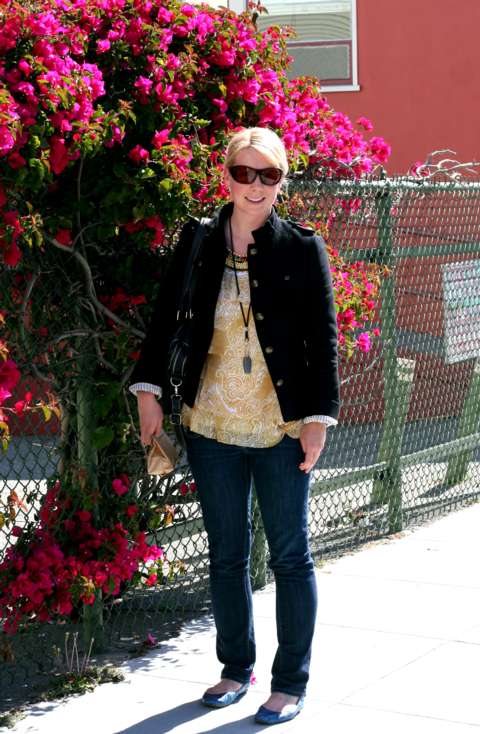
Today’s Look: Brigitte, 24th Street and Dolores

Tell us about your look: “I work for a local designer called Weston Wear, so that’s what I’m wearing.”

Endorsement interviews: Scott Wiener

70

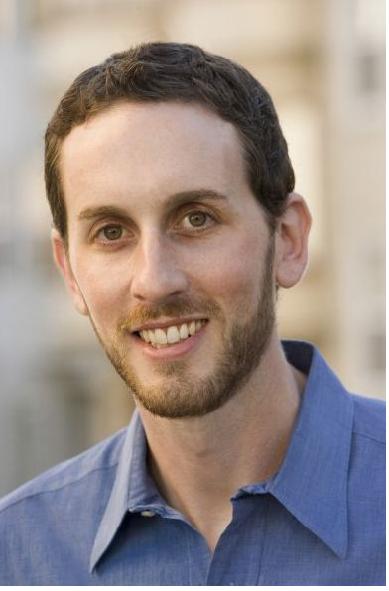
Scott Weiner has a long record in District 8. He helped build the LGBT Center, was the president of the Eureka Valley Improvement Association, co-founded Castro Community On Patrol, was co-chair of the Alice B. Toklas LGBT Club and chaired the San Francisco Democratic Party between 2006 and 2008.


He’s very much the political moderate; he told us he doesn’t want to see the city go into the retail electricity business with a full public-power system. He supports the sit-lie law (and opposes the ballot measure calling for community policing and foot patrols). He says he takes a “case by case” approach to taxes, and support the vehicle license fee, but doesn’t support the hotel tax increase. He’s got the support of the Small Property Owners, perhaps the most anti-tenant group in the city. He doesn’t think the city should go any further to stop Ellis Act evictions.


In fact, overall, Wiener thinks the city ought to address its financial problems with cuts and service reductions. “We have to live within our means …. Until the state gets its house in order, we can’t tax our way out of it,” he said.
You can listen to our interview here:


Wiener by endorsements2010

SFBG Radio: Poverty rising and the price of despair

11

Today we talk about the new data that shows one in seven Americans now live in poverty — and why the rich ought to be willing to pay more taxes. You can listen after the jump.

sfbgradio9.17.2010 by endorsements2010

Adachi crosses the line

87

Former Mayor Willie Brown and Public Defender Jeff Adachi – author of Prop. B, which would require city employees to pay more for their pension and health care costs – yesterday crossed a union picket line at Le Méridien, which is being boycotted by hotel workers with Unite-Here Local 2, to attend a fundraiser for the measure.

http://www.youtube.com/watch?v=J6K8FkTt7pM

San Francisco Labor Council President Tim Paulson called it “such an outrageous thing in San Francisco.” Even Sup. Sean Elsbernd, perhaps the most conservative member of the Board of Supervisor, was shocked today when told of Adachi’s crossing the line, saying he would have never done so. Local 2 spokesperson Riddhi Mehta told us, “It shows their true colors. By no means are they for working families.”

Adachi has been public enemy number one of local labor leaders since he authored the measure with little input from unions or other public officials, and Paulson said this action was emblematic of Adachi’s hostility to unions, adding that it was even more surprising to see Brown, a longtime ally of unions, supporting the measure and crossing the line.

“It was not unexpected for Jeff Adachi, with the way he’s been acting lately, not caring about labor, but it was a little surprising for Willie Brown considering his career and record,” Paulson said.

Adachi told the Guardian that he was unaware at the time that it was a Local 2 picket line. “The honest truth is that when I got there, I thought it was a protest against Prop. B,” Adachi said. Yet he also that even if he had know, “I still would have went to the event.”

“I completely support the workers’ right to strike, but at the same time, I am on a mission to save the city $120 million a year,” Adachi told us. “The resources that the opponents are pouring into this are completely unreal.”

La Merdien has been on the Local 2 boycott list for several months, and both Paulson and Mehta said the picket was independent of Prop. B, although some SEIU members did show up with signs criticizing the measure. As for scheduling future fundraisers at other boycotted hotels, Adachi told us, “I’ll be more mindful of that.”

For sale: Panhandle Bandshell

1

If you’re an environmentally minded lover of the arts who wants to start hosting cool gatherings on your property, have we got a centerpiece for you! Remember the Panhandle Bandshell? That was the temporary performance venue that a group of local artists built from old car hoods and other recycled materials back in 2007. And now, for the right price, it can be yours.

“It’s a classic bandshell and the ideal use is for community to gather and performers to do their things,” says Will Chase of Finch Mob, which collaborated on the project with Rebar and CMG Landscape Architecture. “If people are interested in recycling and reuse, this is a great example of that in action.”

After its initial (slightly controversial) run on the Panhandle in the summer of 2007, where it hosted regular performances, the bandshell has been more recently been on display at Fort Mason, from where it must be removed by Oct. 8.

Its artist-owners have the opportunity now to move it out to Treasure Island, either for storage or display, but first they wanted to see whether a private party would want to give it a more permanent home. They’re hoping to pull down around $30,000 for the piece, which they’ll pour into other projects, so make them an offer if you’re interested. Contact info and details on the piece can be found on their website.

SFBG Radio: The $119 million question

5

In today’s episode, Johnny and Tim ask the $119 million question: How come after Meg Whitman has spent a fortune on advertising, she still isn’t ahead? And nobody knows who exactly is going to vote in November, either. Listen after the jump.

sfbgradio9162010 by endorsements2010

Ships and whales don’t mix

3

Earlier this year, the Guardian reported on ongoing efforts to address threats to whales posed by huge shipping vessels in and around the San Francisco Bay. In addition to fatally striking the marine mammals – many of which are already on the decline under strain from myriad environmental pressures – cargo ships may inhibit whales’ ability to locate food, mates, or their young by masking the sounds they rely upon for those behaviors.

So it was especially sad to read the news on Sept. 16 that a whale carcass was found on the bow of a container ship coming into the Port of Oakland, especially if biologists determine that it was indeed an endangered blue whale. According to a researcher from Scripps Institution of Oceanography who we interviewed for the story, there are so few blue whales left that if even two die from ship strikes every few years, the entire species could be imperiled.

We received this statement from Jackie Dragon, marine sanctuaries program director for Pacific Environment:

“Another dead whale on the bow of a ship is a reminder that ships and whales don’t mix. Yet with the ever increasing number of ships calling on the busy Port of Oakland, and the fact that all ships must drive through the vital whale-rich marine sanctuary waters just beyond the Golden Gate – we need to step up our efforts to find ways to keep whales and ships apart.”

Ednorsement interviews: Bus drivers on Prop. G

3

Advocates for Muni drivers came to the Guardian this week to make the case for voters to reject Proposition G, which would remove their pay guarantees from the city charter, and to argue that the union has been unfairly demonized by Mayor Gavin Newsom, Sup. Sean Elsbernd and other city officials in an effort to deflect blame for problems with the troubled transit system.


The group included top Transport Workers Union Local 250A officials Irwin Lum and Rafael Cabrera, Bob Planthold with Senior Action Network, and Frank Lara with More Public Transit Coalition (which was spearheaded by the ANSWER Coalition). “Muni is broken and needs drastic change. It needs to be changed from the top to the bottom,” Lum began.


Yet he said targeting Muni drivers, most of whom are people of color doing a difficult job in one of the country’s most complex systems, doesn’t solve a problem that goes far beyond work rules and salaries. The problem lies with lack of resources and the political will to pursue them, they said, which is why the union supported proposals to reform the Municipal Transportation Authority governing structure and pursue significant revenue options, which were discussed but ultimately abandoned by the Board of Supervisors earlier this year.


“Too many people at City Hall are looking to cover their political rear ends,”said Planthold, who advocates for the rights of those with disabilities and has studied transit systems around the country.


Newsom has repeatedly singled out TWU as the one public employee union that didn’t agree to givebacks to help close the city’s budget deficit, and even some progressives have told the Guardian that the union hasn’t done itself any favors with its intransigent stance. But Lum said union leaders were prepared try to sell their members on a deal that included forgoing raises and accepting unpaid furlough days but that Newsom was too quick to leak news of the deal to the media for political reasons, causing TWU members to dig in and reject the deal before that education process could begin.


While the city and MTA may save $10 million through the measure, they said that was small change compared to the system’s real needs, which they estimated to be around $125 million, much of which could be brought in by creating transit assessment districts to charge big employers whose workers rely on Muni.


Click below to read the complete interview.


TWU by endorsements2010


The news that didn’t make the news in SF

0

Every year, the Guardian features the Top 10 Project Censored stories presented by the Sonoma State University project that spends all year analyzing which stories the mainstream media missed. But which stories did not find their way into the mainstream press here in the San Francisco Bay Area?

News outlets other than the Guardian typically ignore Project Censored (unless you count SF Weekly’s snark), so you might say that even Censored tends to be censored. Other than that, we note that issues not hand-delivered via press release or PR campaign might receive less attention than those obvious stories. Using a rather unscientific process of surfing alternative news sites online to find out which stories didn’t get a lot of play in the mainstream, we’ve come up with an assortment of Local Censored stories – though this is by no means a comprehensive list. What other news didn’t make the news?

Local Censored stories:

* What we didn’t hear about when PG&E was pushing Prop 16

Speaking at an informational hearing in Sacramento in February 2010 about Pacific Gas & Electric Co.’s ballot initiative, Proposition 16, former California Energy Commissioner John Geesman noted that the state’s most powerful utility company was using customer money to finance a bid to change the state constitution for its own purposes. Prop 16, which earned a thumbs-down from voters in the June election, would have created a two-thirds majority vote requirement before municipalities could set up electricity services separate from PG&E. While there was no shortage of reporting about the astounding sums of cash that PG&E sank into Prop. 16, hardly anyone aside from Geesman picked up on the more salient point of what PG&E was not spending its money on.

“California’s investor-owned utilities face a Himalayan task in modernizing our electricity system and building the infrastructure necessary to serve a growing economy,” Geesman wrote on his blog, titled PG&E Ballot Initiative Fact Sheet. “They ought to focus on that, rather than manipulating the electorate to kneecap their few competitors.” It is now abundantly clear that PG&E’s aging gas pipelines in San Bruno were badly in need of replacement – and the utility’s neglect opened the door the catastrophic explosion that occurred Sept. 9, resulting in tragic loss of life and destroying homes. “The current leadership at PG&E has lost its way. Nobody is minding the ship,” senator Mark Leno told the Guardian shortly after the blast. “Enough with the self-initiated, self-serving political campaigns. … How about focusing on the current mission — to provide gas and electricity safely, without death and destruction?”

PG&E Ballot Initiative Fact Sheet: http://pgandeballotinitiativefactsheet.blogspot.com/
Huffington Post: http://www.huffingtonpost.com/christine-pelosi/deadly-priorities-why-did_b_713800.html

* What you might not have read about Johannes Mehserle’s murder trial
 
If you looked to Colorlines.com, Blockreportradio.com, the San Francisco Bay View, or Indybay.org for coverage of Johannes Meherle’s murder trial for the fatal shooting of Oscar Grant, then you got a different picture from the one offered by mainstream Bay Area news outlets. There may well be plenty of details about the trial that didn’t make the cut for mainstream news, but one particular point caught our eye as something that should’ve warranted more prominent coverage, or at very least sparked deeper questions from mainstream press. According to the witness testimony of Jackie Bryson, who was with Grant on the train platform the night of the shooting, Grant’s friends immediately urged BART police to call an ambulance after Grant had been shot, but police didn’t do it right away.

Here’s the report from Block Report Radio: “Jack Bryson said he yelled at Oscar after he was shot to stay awake and to the police to call the ambulance. The unidentified officer who was on Bryson declared, ‘We’ll call the ambulance when you shut the fuck up!’ Bryson went on to say that he was never searched on the Fruitvale platform or at the Lake Merritt BART police station, which seems ridiculous if you consider the earlier testimony of former BART police officers Dominici and Pirone, who were involved in the murder and who testified last week that they had felt threatened by Oscar Grant and his friends.” So, if it’s true that Grant’s friends were told to “shut the fuck up” when they were urging BART cops to call an ambulance, and that the supposedly threatening parties weren’t ever searched, why didn’t these points receive as much attention in the media as, say, the claim that years earlier, Grant may have resisted arrest? After witnessing the death of his friend, Bryson said in his testimony, he was detained for hours while wearing handcuffs pulled so tight that his wrists hurt, only to be told afterward that since he had not been read his Miranda rights, he was not under arrest. To be fair, the detail about calling the ambulance did make it into the Chronicle, near the bottom of a blog post, under the subhead, “Friend’s claim.”

Block Report Radio: http://www.blockreportradio.com/news-mainmenu-26/894-jack-bryson-hits-the-stand.html
Colorlines: http://colorlines.com/archives/2010/06/defense_opens_with_gripping_testimony.html

* Homelessness on the rise in San Francisco

The controversy surrounding Prop L, a proposed ordinance to ban sitting and lying down on the sidewalk, has been widely reported on — but there’s a more pressing issue related to homelessness that hasn’t gotten nearly as much ink. An article in New America Media, “Shelters predict homeless count to skyrocket,” highlighted a perceived surge in San Francisco’s homeless population, evidenced by overwhelmed service providers who can hardly keep up with demand. “We’re serving 200,000 more meals per year than two years ago, but we haven’t had the capacity to add staff,” the chief executive officer of the Glide Foundation noted in the article. The drop-in center, she added, no longer had enough seats to accommodate those in need. According to a fact sheet issued by the Coalition on Homelessness in July of 2009, 45 percent of respondents to a COH survey were experiencing homelessness for the first time. The overwhelming majority of respondents, 78 percent, became homeless while living in San Francisco.

New America Media: http://newamericamedia.org/2010/04/shelters-predict-homeless-count-to-skyrocket.php
Coalition on Homelessness: http://www.cohsf.org/en/

* The long wait for Section 8

It isn’t easy for a tenant with a Section 8 voucher to find housing in the San Francisco Bay Area. In San Francisco, there’s a barrier to getting the voucher in the first place, since the waitlist is currently closed. Those who have vouchers are often passed over by landlords, and the string of denials can drive people to unstable housing situations such as extended hotel stays. An article in POOR Magazine features the story of Linda William, a woman who left a San Francisco public housing project with a Section 8 voucher in hand only to embark on a wild goose chase, ultimately winding up in a low-end motel outside Vallejo. “Well whaddya know,” William told the POOR magazine reporter, “I found closed wait lists on almost all the low-income housing units in all of those places and all the rest of the landlords wouldn’t even return my calls when I told them I had section 8.” An article by Dean Preston of Tenants Together that appeared in BeyondChron, meanwhile, spotlights the issue of landlord discrimination against Section 8 tenants.  “In the Section 8 voucher program, participating tenants pay 30 percent of their rent and the Housing Authority pays the balance to the landlord,” Preston writes. “It takes years for eligible tenants to be able to participate in the program. Once tenants get off the wait list, the landlord must sign a payment contract with the housing authority in order to receive the portion of the rent paid by the government. By refusing to sign onto the program, some landlords seek to force rent controlled tenants into situations where they cannot pay their rent.”
POOR Magazine: http://www.poormagazine.org/node/3277
BeyondChron: http://www.beyondchron.org/news/index.php?itemid=8012

* San Francisco’s trashy secret

Despite being thought of as a beacon of sustainability, San Francisco’s not-so-green waste stream is something that didn’t make the front page of many papers – except, of course, this one. Sarah Phelan’s “Tale of Two Landfills,” a Guardian cover story this past June, examined San Francisco’s decidedly unenlightened policy of transporting waste far outside of the city despite a goal of reducing waste to zero in the next 10 years. Here’s an excerpt: “It’s a reminder of a fact most San Franciscans don’t think much about: The city exports mountains of garbage into somebody else’s backyard. While residents have gone a long way to reduce the waste stream as city officials pursue an ambitious strategy of zero waste by 2020, we’re still trucking 1,800 tons of garbage out of San Francisco every day. And now we’re preparing to triple the distance that trash travels. ‘The mayor of San Francisco is encouraging us to be a green city by growing veggies, raising wonderful urban gardens, composting green waste and food and restaurant scraps,’ Irene Creps, a San Franciscan who owns a ranch in Wheatland, told us. ‘So why is he trying to dump San Francisco’s trash in a beautiful rural area?’”

SFBG: http://www.sfbg.com/2010/06/15/tale-two-landfills

* The real unemployment rate

The Bureau of Labor Statistics makes a distinction between so-called “discouraged workers” who have stopped looking for jobs, and the jobless who are actively seeking employment, so the official unemployment rate (9.7 percent in San Francisco, according to the most recent data) may be much lower than the actual unemployment rate.

We haven’t seen any brilliant local reporting on this issue, but the problem is summed up nicely in this YouTube video produced by a personal finance software firm.

http://www.youtube.com/watch?v=Ulu3SCAmeBA&feature=player_embedded

Lynette Sweet, the “no comment” candidate

24

Lynette Sweet, who is running for D. 10 Supervisor, has already declined to give the Guardian an endorsement interview. And earlier this year, when Sweet sat down for a brief interview as part of our kick-off coverage of the D. 10 race, her campaign manager Shane Meyer kept trying to answer our questions before Sweet could even open her mouth.
But yesterday Meyer took the campaign’s habit of non-communicating to a new level, making us wonder just how much access or information anyone will be able to get out of Sweet, in the event that she actually gets elected, given how she is behaving as a candidate.

“We make no comments to the Guardian,” Meyer told us, when we called to ask if Sweet knew that workers with her campaign had stuck her campaign signs on the doors of the tenants association building in the Sunnydale public housing projects

Now, aside from the fact that Sweet is running a truly off-putting campaign by refusing to communicate on even the most straighforward issues, she might want to make sure her campaign staff are properly trained.

That’s because, as John St. Croix, executive director of the city’s Ethics Commission, told us, “It’s generally illegal to post any sign on public property.”

“All political signs can only be posted on utility poles and lamp posts,” St. Croix added, noting that the Department of Public Works regulates such activity and these regulations are clearly laid out in the Elections Department’s candidate guide.

That guide also states that local law prohibits the posting of signs in excess of 8-1/2 x 11” on all street poles—and that there is a total prohibition on historic lampposts, traffic signals (duh!) and poles with directional signage.

The guide lists common violations of the law regulating outdoor political advertising, which include posting more than one sign on the same pole, and failure to remove signs after Election Day.

“Candidates are strongly advised to become familiar with all applicable laws to avoid such violations,” the guide states.

Quick Lit: Sept 15-Sept 21

0

Literary readings, book tours, and talks this week

Jonathan Safran Foer, Rebecca Solnit, How to Grow a School Garden, digital art collecting, and more.

Thursday, Sept 16

Stephen Breyer
Supreme Court Justice Stephen Breyer will discuss his new book, Making Our Democracy Work.
8 p.m., $20
Herbst Theater
401 Van Ness, SF
www.cityboxoffice.com

East Eats West: Writing in Two Hemispheres
Hear author Andrew Lam in conversation with Richard Rodriguez about his new collection of essays about the unexpected consequences of the Vietnamese diaspora.
6 p.m., $12
Mechanics’ Institute
57 Post, SF
(415) 393-0100

How to Grow a School Garden
Author Arden Bucklin-Sporer will discuss How to Grow a School Garden: A Complete Guide for Parents and Teachers, which offers parents, teachers, and school administrators tips and advice on how to build school gardens and how to develop the programs that support them. 
7 p.m., free
BookShop West Portal
80 West Portal, SF
(415) 564-8080

Rebecca Solnit
Hear one of San Francisco’s most provocative writers discuss her past book, which include Wanderlust, A Paradise Built in Hell, and A Field Guide to Getting Lost, and her upcoming book, Infinite City: A San Francisco Atlas.
7 p.m., $10-$20
JCCSF
3200 California, SF
(415) 292-1233

Saturday, Sept 18

Diane K. Martin, Lisa Gluskin, and Melissa Stein
Attend this poetry reading with recently published poets Diane K. Martin, author of Conjugated Visits, Lisa Gluskin, author of Tulips, Water, Ash, and Melissa Stein, author of Rough Honey.
7:30 p.m., free
Pegasus Books Downtown
2349 Shattuck, Berk.
(510) 649-1320

Sunday, Sept 19 

“Collecting the Impossible”
Prominent collectors, critics, and artists will discuss the historical dynamics or collecting digital art and building an art market for challenging work. Panel participants will include Richard Rinehart, Digital Media Director & Adjunct Curator of the Berkeley Art Museum and Pacific Film Archive, collectors Dennis Scholl and Jeff Dauber, Katie Clark from the Catharine Clark Gallery in San Francisco, Chief U.S. Correspondent for The Art Newspaper Jason Kaufman, and artist Lynn Hershman Leeson.
2 p.m., $12
Yerba Buena Center for the Arts
701 Mission, SF
(415) 978-2787

Tuesday, Sept 21

Jonathan Safran Foer
Join Foer, author of Everything is Illuminated and Eating Animals, as he talks about our dining habits, insatiable appetites, and the cultural meaning of food. He will explore the ethical, environmental, and health risks behind commercial fishing and factory farming.
7 p.m., $18
Shultz Cultural Hall
Oshman Family JCC
3921 Fabian, Palo Alto
www.tickets.commonwealthclub.org

Words for Empty and Words for Full
Poet Bob Hicok will read from his new collection.
7 p.m., free
BookShop West Portal
80 West Portal, SF
(415) 564-8080

Chron endorsement dishonestly attacks marijuana measure

5

Once again proving itself to be an corporate-run embarrassment to a city that has been at the forefront of progressive reform – including the movement to legalize medical marijuana – the San Francisco Chronicle this morning recommended that voters reject Prop. 19, which would allow cities and counties to legalize marijuana use by adults. And it did so with tortured logic and a cowardly, disingenuous claim to support legalizing marijuana.

As a journalist who has covered the medical marijuana industry in the Bay Area, I didn’t recognize the chaos that Chron editorial writers say resulted from the landmark 1996 measure Prop. 215, the medical marijuana measure written right here in San Francisco, home to a well-regulated, professional network of cannabis dispensaries, thanks to the city proactively setting guidelines. The cities cited in the Chron all did nothing to set standards for medical marijuana dispensaries, whereas in cities like San Francisco that did, an increasingly important sector of the local economy flourished with few problems.

Prop. 19 would similarly allow cities and counties to create systems for regulating marijuana for recreational use – or to not allow it if they so chooses. Yet the Chron takes issue with this localized approach, writing, “The measure establishes no state controls over distribution and product standards; it does nothing to help cure the state’s budget deficit.”

Both statements simply aren’t true. The measure explicitly gives the state authority to tax and regulate marijuana, Assembly member Tom Ammiano already has proposed legislation to do so if the Prop. 19 passes, and the California Legislative Analyst’s Office has estimated it could bring in more than $1.5 billion annually into state coffers.

Although the Chron claims “that the ‘war on drugs’ – especially as it applies to marijuana – has been an abject failure,” it bemoans a provision in the measure that prevent employers from firing employees simply for having marijuana in their systems, as it would be if someone smoked a joint three weeks ago, despite having no impact on job performance. “Pre-employment testing would be banned,” the Chron writes, as if that were a bad thing. The editorial also complains that people would be allowed to grow small plots of marijuana in their backyards. Again, and the problem with that is what exactly?

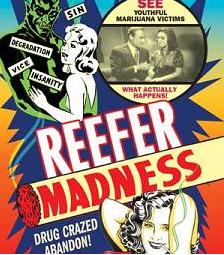
Bottom line: Chron editorial writers fall into the same old tired reefer madness stereotypes that have driven the drug war’s “abject failure,” but they just aren’t honest enough to admit the contradiction with their stated claim that “if this were simple a referendum on the status quo, and the ability of a 21-or-older Californian to possess an ounce or less for personal use, it might be an easy ‘yes’ vote.”

Because the reality is that’s what this measure does, simply lift the prohibition on pot, while also including language supporting local control and basic civil rights. There are some valid arguments against Prop. 19 – such as it lets jurisdictions tax or regulate pot too much – but those honest disagreements weren’t raised by the newspaper.

Instead, the paper made it sound like measure would fill the roads with stoned drivers and every neighborhood with the stench of marijuana, which is laughably alarmist. San Francisco’s experience with medical marijuana should serve as an indicator. This city has been the most accepting and legitimizing of marijuana for decades. It’s part of our culture. But drug surveys from our school district and others show that the rate of marijuana use among young people here is lower than the state average, and we have been at the forefront of world-renowned technological innovation and academic research, so clearly the normalization of marijuana hasn’t corrupted our youth or turned us all into menacing zombies.

The Chronicle’s presentation of the issue, and its recommendation on this measure, are anachronistic throwbacks to another era and should be tossed into the dustbin of history where they belong.

Endorsement interviews: Bert Hill

2

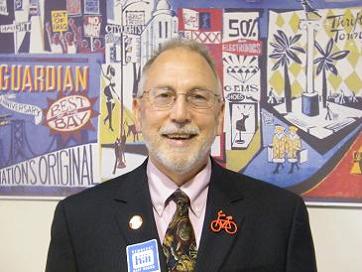
Bert Hill is running to represent western San Francisco on BART’s Board of Director, taking on incumbent James Fang, the city’s only Republican elected official. But even though Hill has the support of Democratic Party and a wide variety of progressive organizations, voters won’t see their party affiliation in this nonpartisan race. Instead, the race could be a referendum on an agency that Hill says isn’t responsive enough to the needs and experiences of riders.

“It’s important to figure out what are human needs on the trains,” Hill told us, citing the need to better accommodate passengers with bicycles and lots of luggage, the lack on working bathrooms and elevators in most stations, extending service beyond midnight on weekends, and the need for better station labels so passenger easily know when to get off.

Hill said BART is in need of major reforms in its financial planning (calling for the agency to build reserves during good times to avoid service cuts during recessions), its police force (saying the board should consider disbanding the BART Police and contracting out to local law enforcement agencies), and its transparency and accountability (telling a funny story about his own experience just trying to get permission to take a campaign photo by a BART train).

Listen to Hill full endorsement interview below. Fang has not responded to Guardian requests for an endorsement interview.

hill by endorsements2010

The Performant: What, me Fringe?

0

Unfortunately for me, I’ll be unable to attend a whole plethora of sure-to-be-intriguing shows this weekend such as Right Brain Performancelab’s “The Elephant in the Room,” The 11th Hour Ensemble’s “Alice,” and The Offcenter’s “Waiting for Godot.” But fortunately for me, it’s because I will be holed-up in the booth of the newest addition to the Exit Theatreplex — The Studio — where I’ve been running lights for a whole plethora of shows ranging from confessional monologues to sketch comedy to a whacked-out whodunit set in Super-Duper Mega-Marine Coaster World. Is that a bowl of free pretzels in my hand? It must be Fringe Festival season again in San Francisco.

SF Fringe is uncurated and uncensored, it’s fair to say that not every show is road-tested and audience-approved. Caveat Emptor, ticket-holders. But fans of local theatre companies past and present such as Art Street Theatre, Black Box Theatre, Lunatique Fantastique, Thrillpeddlers, Killing My Lobster, Thunderbird Theatre, Cutting Ball, Crowded Fire, Mugwumpin’, Banana Bag and Bodice, Foolsfury, Ripe Theatre, Performers Under Stress, Pi  Clowns, SF Buffoons, Dark Porch Theatre, Boxcar Theatre (and many more!) should know that all of the above have been featured at the San Francisco Fringe — and in fact, more than half of these companies debuted at the Fringe. By providing an anything-goes, low-cost production crucible for local, national, and even a few international performers, the San Francisco Fringe Festival makes it possible for previously unknown companies with a clear artistic vision to get a boost up to the next stage (pardon the pun) of their development. Armed with buzz, some of these companies go on to solid artistic success. Some disappear without a whimper. Regardless, everyone gets a fair shake.

True, a 10-year veteran of the SF Fringe, I’d had no idea there were such things as honest-to-god Fringe Festival rock stars until I went to Edinburgh and to Montreal and saw them for myself—performers who tour the Fringe circuit every year, and actually make a living at it, or at least build a solid international reputation. The San Francisco Fringe is a lot more self-contained, but in terms of getting in on the ground floor of the next big thing in Bay Area theatre, the festival will always be your best bet to be able to say “I saw them when.”

One thing our Fringe has been somewhat remiss with in the past has been providing interim entertainment for patrons and performers with down time. The EXIT (Fringe homebase) is addressing that very issue with a rotating roster of three separate showcases in the theatre’s café. An evening of Fringe singer-songwriters (Thu/16 @ 8:30 p.m.), the “Fringe Potpourri” of jugglers, magicians, and their ilk, on Saturday and Sunday afternoons from 3 p.m.-5 p.m., and most exciting of all, a late-night improv talk show “Last Call” hosted by Cora Values (Sean Owens), which features Fringe performers such as Fred Blanco (aka Cesar Chavez) and Megan Liley (“Grafitti Highway”) this past weekend. (See Cora again this weekend: (Fri17, Sat/18 @ 10:30 p.m.) Secrets are revealed, banter exchanged, and juicy fringe gossip is plundered for its levity factor. Cora is both sweet and savvy—like apple pie with an attendant wedge of Wisconsin-sharp, and her show already feels like a festival tradition. Just like the free pretzels, but saltier, and fresher.

Party Radar: Men, Kele, Kaos

1

Ah, yes — the fleeting maybe yes/ maybe no of San Francisco summer has (possibly) arrived. And even if the weather doesn’t quite cooperate, at least we all feel our spirits lift and our clothing constrict. Fortunately, there are many, many parties to rip it all off at! Not literally, but why not? Besides some of the parties listed in this week’s Super Ego clubs column, here’s a few more at which you can run wild and free and hot.

MEN

The topical and too-catchy indie electro group Men, which includes super-sexy JD Samson of Le Tigre fame, is taking over the SFMOMA this evening as part of the Thursday Now Playing series. (“Radical dance music” in a big museum? Me like.)

Cool queers and friends of all stripes will get into a screening of a new project by the Ridykeulous project at 7pm and then a live performance in the Haas Atrium by Men at 9pm.

Thu/16, 6pm-9:45pm, free with admission to museum. SFMOMA, 151 Third St., SF. www.sfmoma.org


KELE

The Bloc Party leader — and out queer dream — is bringing his solo show to Mezzanine in support of new album The Boxer, and it seems he’s focussing on getting the crowd dancing. That’s alright with me! Does It Offend You, Yeah?, who put on a great show a couple years ago at Slim’s (even though everyone was at Coachella) open up with some baggy Madchester-referencing gonzo electro. 

Sat/18, 9pm, $20. Mezzanine, 444 Jessie, SF. www.mezzaninesf.com


DJ KAOS

Toothy grin for this one. Honey Soundsystem‘s great weekly Honey Sundays party has been homeless since Paradise Lounge shut its doors. Until the Honey boys find a new space, they’ve been a-roving — and it’s a great indication of how open our scene is that they’re arty-fab queer crowd is being welcomed by intelligent techno-head hosts. This week, Honey pairs with Bionic, the weekly Sunday at 222 Hyde that’s seen its fair share of roving itself, to bring in Berlin ‘s DJ Kaos, whose been pumping out quality, eclectic techno and house releases since 1991, yeesh. I can’t wait to see how this whole experiment coalesces.

Sun/19, 10pm, $5. 222 Hyde, SF. www.222hyde.com