SFBG Blogs

Music to cross the globe for

0

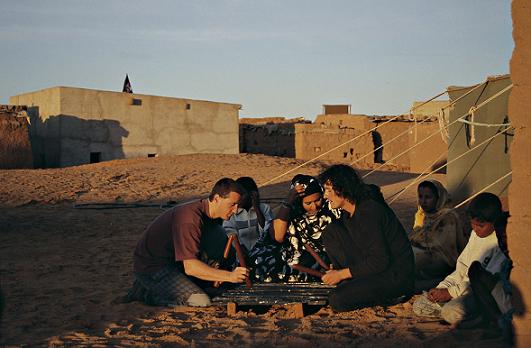
If you hoisted up a park bench, cut the back off of it, removed the legs, placed it on top of cushion on a saw stand, and commenced to thrum on it with headless croquet mallets with a dear friend, you’d have created a bootleg version of the txalaparta, a traditional instrument from the Basque region of Spain. Two of the area’s most renowned musicians took this contraption on a trip to play with indigenous nomadic musicians the world over, creating Nomadak TX, a music documentary where notes are exchanged in culture-to-culture melodies.

Igor Otxoa is a member of the group, Oreka TX, that embarked on the project that took them to India, Mongolia, Lapland, and the Sahara. Days away from the group’s launch of their North American tour –and in the midst of a visa kerfuffle that threatened to derail the whole thing — Otxoa (who is staying in Spain while band members Mikel Ugarte and Harkaitz Martinez de San Vicente man the txalaparta in the States) answered our questions via email from San Sebastian. His group will be in town next week (Thurs/23) at the Basque Cultural Center for a live performance of the music in Nomadak TX.

Oh you say you like guttural rhythm? Do we have the trailer for you… 

San Francisco Bay Guardian: Why do you play the txalaparta? 

Igor Otxoa: I saw it played in my neighborhood fiesta and I loved it. “Percussion and related to Basque culture, that’s for me!” I told myself. After that I saw it again at school played by the Artze brothers, some of the ones that brought back the instrument. After that, I started looking for somewhere I could learn it.


SFBG: The txalaparta almost disappeared at one point in the 20th century. Is there a well-documented tradition of how to play it, or have you developed your approach independently?

IO: The way to play it that we received was the one that the last of the old txalaparta players left to us. In the ’60s there were only two txalaparta player couples, the Zuaznabar brothers and the Goikoetxea brothers, and they left us the way of playing that they learned from their grandfathers. But after that there was a process in which the Beltran brothers and the Artze brothers started to develop the instrument in a more musical way. We are from the next generation — we learned from the Beltrans, and we developed the instrument in our own way.


SFBG: Why is it important that it be a two person instrument? 

IO: It was related to the work on the farms, and as in many percussion instrument that come from a tradition of work, it became an instrument. For us the txalaparta it is not the physical instrument itself — it is the way of playing it, sharing the rhythm between two people. That is why we don’t understand the txalaparta without two players. It’s its peculiarity, what makes it unique in the world, this way of sharing the rhythm between two players.


SFBG: Tell us about the motivation behind the film Nomadak TX. Why nomadic peoples?

IO: We choose the countries and peoples we wanted to meet for different reasons. One was the level of nomadity that they had. Another reason was the music of those cultures. We were very interested in the Khoomi singing in Mongolia. And the Bereber women´s singing. And the Indian rhythms. Another reason was the materials that condition the way of living in those parts of the world. The ice and snow that takes up many months in Saapmi, the sand and stones of in the Sahara dessert, the wood in India, and the air in Mongolia. We wanted to play txalaparta with those materials. And we got to!


SFBG: How did you locate the musicians that would be in the movie?

IO: Sometimes we made the arrangements before traveling. The musicians, we contacted them by different ways — the Internet helped a lot. Other times we didn’t contact any of them and it was just who we found on the trip. We think that like in music, on the trips the improvisation was the most interesting as we never knew what we would find. We had unforgettable musical surprises on all the trips. For us it had the same value: the music of a professional musician in a studio or old men singing in a yurt in the Mongolian steppe. 


SFBG: In Nomadak TX you make txalapartas out of everything from ice to stone — why the multi-media?

IO: That was one of the most marvelous moments of the project. We never expected to do a txalaparta with ice. Our idea was that we were going to play with the txalaparta of wood and the Terje Isungset “Iceman” in Saapmi would play with ice. But we tried it, and it was so nice to work with the ice. If you cut too much we would throw water on it and in few seconds it was frozen and the note was changed!


SFBG: Now that you’re doing the North America tour, inquiring minds want to know — when’s the Oreka TX hip hop remix coming out?

IO: Good question! I hope that during the USA Tour we will be able to contact good hip-hop musicians that can work on it. It is not our music style, so if we want to have a quality result, better if someone from USA makes it!


Oreka TX’s Nomadak TX live concert

Thurs/23 8 p.m., free

SF Basque Cultural Center

599 Railroad, SF
www.sfbcc.us


Street Threads: Look of the Day

0

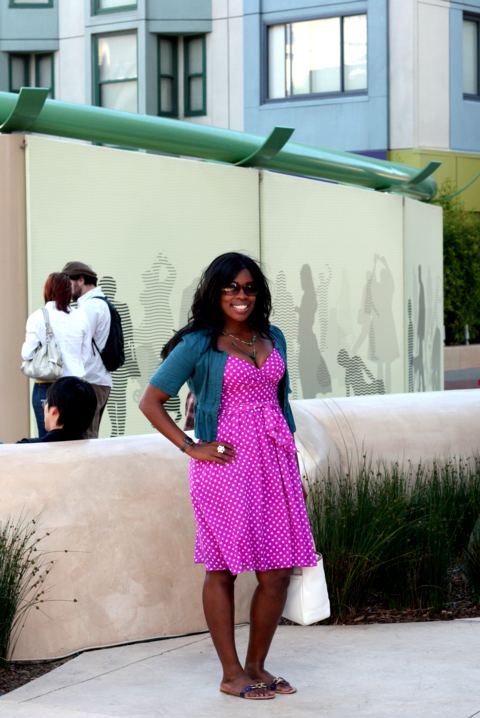
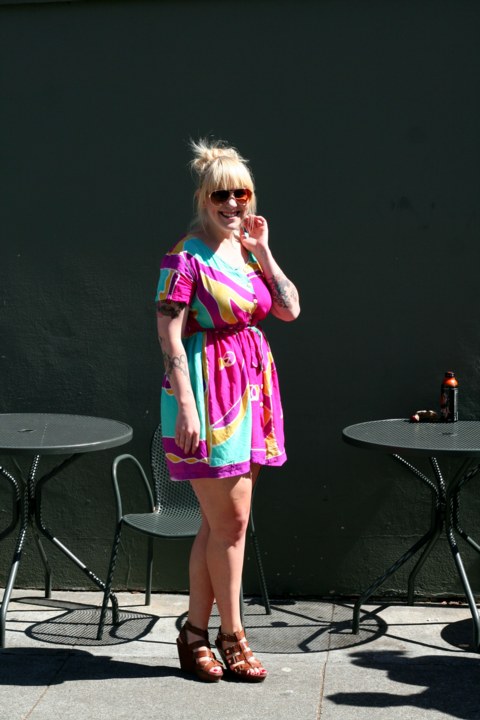
Today’s Look: Kimberly, Fillmore and Sacramento

Tell us about your look: “I mostly buy things from thrift stores and alter them.”

Snap Sounds: The Books

0

By Landon Moblad

THE BOOKS
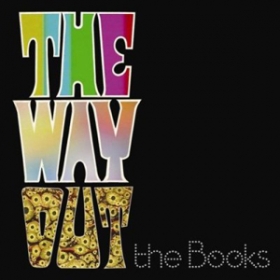
The Way Out
(Temporary Residence)

During the far too long half-decade wait between albums, it became easy to wonder if maybe Nick Zammuto and Paul de Jong, together known as The Books, had lost some of their creative juices. Luckily, one listen to The Way Out proves the wait was well worth it. If anything, this is an album so meticulously thought out and crafted that the two years (they officialy began recording in 2008) it took to create makes complete sense. It’s clear now that it wasn’t a lack of ideas, but rather a surplus of them to work through that caused the delay. And the final product, 15 tracks spread over nearly 55 minutes, is some of the finest work of their career.

For those uninitiated, The Books create a sort of cut-and-paste mix of cello, guitar, found sounds, male and female vocals and manipulated samples. The seamless blend of acoustic, electric and plain bizarre elements is unlike anything you’ve ever heard before, yet somehow instantly accessible. And at the core, underneath all the technical prowess and headphone trickery, lies the two things that separate The Books from their peers—a sense of humor and an ability to conjure up a broad range of emotions through their use of samples. Both are wonderfully intact on The Way Out.
Drawing inspiration this time around from self-help and hypnotherapy tapes, The Way Out is full of samples of new age mantras and cheesy therapists. Opener “Group Autogenics I” floats along on a base of sparse guitar and piano plunks while hypnosis instructions snake in and out. At one point a man says, “You may just possibly detect from my voice that I am Irish. And now, I leap forward in time.” As the last line is delivered, his voice echoes off into the distance and a tacky sci-fi whirl pops up. It’s small moments like this throughout that serve as the nudge and the wink to remind you that The Books aren’t taking any of this too seriously, and neither should you.
One of several highlights comes early on in the form of “A Cold Freezin’ Night.” The story goes that Zammuto and de Jong found an old Talkboy (the Walkman/tape recorder used by Macaulay Culkin in Home Alone 2) at a thrift store with a tape still inside. The content of the tape was a hilariously twisted conversation between what seems to be an older brother and his little sister. The frantic, quick pulse of music The Books created for it meshes perfectly while never drawing too much attention away from the strange source material. “I could kill you with a rifle, a shotgun, any way I want to,” the brother taunts. “Probably by cutting your toes off and working my way up. Towards your brain!” His sister replies with a defeated, “I wish I was a boy.”

Elsewhere, “I Didn’t Know That” is a lively piece of Books’ style slice-and-dice funk and a reminder that these guys can craft awesome grooves. Tracks like “Beautiful People” and “Free Translator” prove that Zammuto has harnessed his limited vocal range to impact the lyric-driven songs in a positive manner, which is something he struggled to do on 2005’s Lost and Safe
But what makes The Books distinct in a genre that can often seem cold or detached is their respect for — and ability to extract emotional elements from — samples. Take the recorded announcement of a pregnancy at a group dinner followed by celebratory applause on “All Our Base are Belong to Them” from their 2002 debut Thought For Food. Or the Japan Airlines flight attendant samples that lace “Tokyo” from 2003’s The Lemon of Pink. Coupled with music, these samples conjure up emotional responses and a vivid sense of time and place in a manner similar to similar a film.
The Way Out has several of these vivid moments, but the best is probably “Thirty Incoming.” The song’s title refers to a series of messages from a man left on a woman’s answering machine. “Hello Mary. Called to wish you good evening. And, uh, wish you good rest. And tell you how much I enjoyed your company last evening. And, uh, it really felt good to lie down next to you. I didn’t realize how much I’d missed that feeling.” Several more snippets of messages are played as the track shifts from distorted dial tone samples, to tribal drum breaks and swelling tremolo strings. It’s one of the most beautiful tracks the group has ever made.
The Way Out is another spectacular release from a group that continues to set its own personal bar higher and higher. And even though we may have had to wait a little longer than we’d have liked for new material, it’s hard to argue with the results. You could tell me the follow-up won’t come out for ten years next time around and I wouldn’t be upset or wonder why. I’d just patiently start counting down the days.

Hot sexy events Sept 15-21

1

Enough of the silicon and studio lighting! Sex in San Francisco just isn’t that scripted – or is it? Good Vibrations put its yearly call out to amateur filmmakers to turn in their own seven minutes and under blue films. Straight, gay, perverted, vanilla, the rainbow of oohs and aahs will show you what’s really going on in your neighbor’s bedrooms (the hots ones, obviously). But wait, that’s next week. This week, you can attend the IXFF kick off party at El Rio, where clips of queer hipster porn will be showing and burlesque babies will shimmy and shake for your viewing pleasure. Look at it this way, if you’re going to be squirming in anticipation, you might as well have a cheap Pabst Blue Ribbon in hand.


Bawdy Storytelling: Cheapskate Sex & Cut-rate Coitus

He made you pay 25 cents for the bathroom vending machine condom? Jesus! Sometimes the sex is so cheap, you roll off the mattress and feel the urge to decry your date’s tightwad tentacles to the world at large. Oh girl. Lucky you, because monthly series Bawdy Storytelling is featuring nothing but the least-fine and dine at this week’s installation. Contact host Dixie De La Tour and wax on your tale of woe, she’ll grab you your moment in the spotlight.

Weds/15 8 p.m., $10

The Blue Macaw

2565 Mission, SF

(415) 920-0577

www.bawdystorytelling.com


Rough Sex

Wanna wrassle? Carol Queen and Robert Morgan Lawrence guide you through the times when you wanna reach out and choke someone (lovingly, and with consent). This females-only workshop will cover rape fantasies, ravishing, and unstylized BDSM play.

Fri/17 8-10 p.m., $10

The Women’s Building

3543 18th St., SF

(415) 431-1180

www.theexiles.org


Master’s Den: Casino

Female submissives and male dominants are invited to pony up to the table at this blackjack and Texas Hold ‘Em event, where subs can work on their service-providing skills and doms have the chance to up their “Den Dollar” holdings. The night is part of a trio of events leading up to sex power couple Stefanos and Chey’s “Auction” night. 

Fri/17 7:15 p.m.- 1 a.m., $25-35

SF Citadel

1277 Mission, SF

(415) 626-1746

www.sfcitadel.org


Hubba Hubba Revue Four Year Anniversary

Four years of one of SF’s hottest troupe of betassled performers, monkey men, and wisecracks galore? My, they’re aging well. Celebrate Hubba Hubba’s commitment to sexy, strippy excellence by attending the show they’re purporting to be their biggest ever, starring all the sparkling sequins we’ve grown so fond of: Honey Lawless, Bunny Pistol, Alotta Boutte, and so, so much more. 

Fri/17 9 p.m.- 2 a.m., $12-15

DNA Lounge

375 11th St., SF

(415) 626-1409

www.hubbahubbarevue.com


Hot Rods and Lube Jobs

Rev your engines, ladies and gentlemen. This fundraiser for the Center of Sex and Culture capitalizes on all the fantasies generated by those well greased photos in auto magazines – you know, the ones with boobies up on the hood and whatnot. Pole dancing performances by Kitty Me-OW, and an appearance by Jiz Lee are featured. Exhibitionists encouraged to drop the top and cruise through.

Sat/18 8 p.m.- 1 a.m., $40-50

Marty’s Motors

10929 San Pablo, El Cerrito

(415) 246-5477

www.sexandculture.org


Indie Erotic Film Festival Kick Off Party

Because you can’t just bam, start off with the main event! No, some one needs to ease you into it, give you some hipster queer porn as a tease, perhaps a couple of burlesque dancers stripping down to their pasties. Next week will be the actual IXFF, patience child. 

Sat/18 9 p.m., $7

El Rio

3158 Mission, SF

(415) 282-3325

www.gv-ixff.org


Eating Jonathan Safran Foer’s words

12

Well, hell, I thought, shutting Jonathan Safran Foer’s book Eating Animals after reading its last page. There goes that. I have been a vegetarian (careful omnivore, pescatarian) off and on for fifteen years now. But having read the author of Everything is Illuminated and Extremely Loud and Incredibly Close‘s latest offering, Safran Foer’s exploration of the horrific world and consequences of our current addiction to factory farming, I realized I could no straddle the fence. There would be, I realized, no more salmon on my plate, or “cage-free” eggs, or cheddar cheese. Why? Well besides the whole institutionalized torture thing in most slaughterhouses-dairy farms-egg factories today, here’s a fact to chew on: omnivores generate seven times more carbon emissions than vegan. And I can live without eggs and bacon. Call me Natalie Portman if you must. I chatted with Safran Foer over the phone about his lyrical horror story in anticipation of his SF appearances next week, including a benefit for 826 Valencia (Weds/22). He’s no activist, but I like him.


San Francisco Bay Guardian: This book made me reconsider the way I eat in a major way. But I felt like a lot of the arguments could be extended past meat to dairy products and eggs as well. Are you a vegan?

Jonathan Safran Foer: No, not exactly. I’m pretty close. I try to eat as little as possible and also only from sources that I know. I’m not by definition a vegan. I don’t think there’s any one line, I think that this is an important thing to acknowledge. There are certain things that come down to instincts that we have, how we were raised. There are people in this country that don’t have access to anything but fast food, not even a supermarket. The line for me will been shifting for the next couple years. I won’t eat meat, that’s a line that I’ve drawn.


SFBG: What do you think was the hardest part about quitting meat?

JSF: It’s a habit, it tastes good and you’re used to doing it. Habits are hard to change, especially since they’re so fundamental to your lifestyle. Anything you do twice a day is hard to change, especially when they’re so tied to your culture. 


SFBG: So what’s the good word for people that are considering going cold turkey [or rather, cold no-turkey]?

JSF: Be forgiving of yourself. If you slip up, it doesn’t have to signify the end of your experiment. I recommend to people that they phase it in. If I had done that from the beginning I would have had a much easier time with it. 


SFBG: The book has, understandably stirred up some healthy debate. Do you read your critics? Has anyone offered criticism that’s caused you to revisit your findings?

JSF: Not exactly. I was surprised by the responses, mostly that they were very generous. When I was writing the book, I couldn’t envision the person that would defend factory farming. Whenever I do a reading I always say that if you have a defense that I haven’t heard of, please, share it. I guess I’ve been surprised by the strange consensus on the subject. Obviously there are a lot of people that think eating meat is a fine thing to do. But I’ve never met the person that, once exposed to factory farming, thinks that factory farming is a good thing to do.


SFBG: The scenes you describe in the factory farms you visit, as well as their environmental impact that you describe, are horrifying. How is it that the facts about this topic aren’t more well-known?

JSF: For one thing, there are incentives for it not to be. We would just as soon not think about it. It makes our lives easier not to think about. Also the meat lobby is incredibly strong, incredibly powerful, and good at keeping information from consumers. Finally, we don’t have much exposure to what farming is really like. Most of the exposure that we have is stories that are told to us from the industry, labeling on packages. They encourage us to think of farms as places wheres there’s animals on the grass. For a lot of people, the problem is that there’s a distance between what we hold in our mind and the reality. And it’s hard to close that distance. 


SFBG: You say the impetus for writing Eating Animals was to figure out whether or not you should serve your newborn son meat. The book focuses mainly on animal welfare though, with a smattering of environmental concern. Were there other books you could have written on this subject focusing on labor issues or nutritional concerns, say?

JSF: I don’t think of the book as being about animal welfare, actually. It’s not comprehensive but it is as comprehensive as I could be in a book thats only 300 pages. 


SFBG: How many farms did you visit throughout the course of your research?

JSF: A lot. It depends on what you mean by visits. Some you could drive up and see by the side of the road, some I had to go to in the middle of the night. I don’t know – a dozen?


SFBG: You talk a lot in this book about the importance of meat in “table fellowship.” You focus, in particular on eating turkey at Thanksgiving. How should one approach the subject of vegetarianism with family that eats meat in those types of situations?

JSF: I think one of the most important things is to feel out the answer that the person wants. Some people are genuinely curious, some are just asking out of politeness. It can be a kind of vanity that makes you feel good to say it, but it’s not helping anything. I have found actually that conversations about this don’t really work. I don’t really try to persuade people in person, I mostly go about my business and do my thing. I think we’ve made a mistake, the people who care about this thinking that argument will win. I think conversation will. We have to be more humble. 


SFBG: Do you consider yourself an animal rights activist?

JSF: No. I don’t even think about animal rights. I think about animal welfare. It’s a piece of a puzzle.


SFBG: What’s the next project? Will your next book be back to fiction?

JSF: Yeah it is.


SFBG: Was it a strange process researching a non-fiction book?

JSF: It was very strange and at times difficult. I don’t know if I would do it again


SFBG: Why not?

JSF: I found it frustrating. The thing I value most about fiction is freedom, being able to pursue my imagination. Basically having nowhere to go is what I like about writing fiction, there is no referring to anything. But in this book, I’m referring to the world. I found it at times very difficult.


Jonathan Safran Foer’s upcoming SF appearances:


Q&A and Book Signing

Tues/21 1 p.m., free

Rosa Parks Room, Student Center

San Francisco State University

1600 Holloway, SF

(415) 338-1111

www.sfsu.edu


In conversation with Vendela Vida

City Arts & Lectures Fall Literary Series

Weds/22 8 p.m., $20

Herbst Theater

401 Van Ness, SF

www.cityarts.net


Endorsement interviews: Theresa Sparks

40

Theresa Sparks says her first priority is jobs and public safety. She wants to more agressively pursue clean technology, with tax breaks if necessary. She wants more development in the district (but “smart development.”) She argues that the city should do an “incubator,” to really focus on new technologies.


She’s also not a big fan of taxes — she supports the real-estate transfer tax, but not the hotel tax (“next year could be a great convention year,” she said, arguing that higher taxes would put that at risk.) She didn’t like Sup. David Chiu’s business tax reforms beause, she said, she thought it would replace private-sector jobs with public-sector jobs. And she said she thinks there’s more at City Hall to cut, particularly in the nonprofits that get city contracts.


She says she supports full staffing for the Police Department, wants to repair the “broken disciplinary” system — and supports sit-lie.  You can listen to our entire interview here:


Sparks by endorsements2010

PG&E’s deadly failures

2

The CPUC should investigate how PG&E has been spending the money it collects from ratepayers for maintenance and system upgrades

EDITORIAL In 1994, a fire raged through the tiny community of Rough and Ready in Nevada County. The inferno destroyed a dozen homes and caused $2 million in damage. The cause: tree limbs that Pacific Gas and Electric Co. should have trimmed brushed against high-voltage power lines.

A furious local district attorney filed criminal charges — and in a dramatic trial, evidence emerged that PG&E had intentionally taken $80 million in ratepayer money designated for tree trimming and diverted it into executive salaries and profits.

After a natural gas line that was installed in 1948 burst last week in San Bruno, killing five and devastating a community, local and state officials should be asking if the company is still taking money that should be spent upgrading and maintaining its system and spending it elsewhere.

There’s certainly evidence that the company’s safety record is shoddy. In 2003, a fire at a Mission District substation caused 100,000 people to lose power — and the CPUC chided PG&E for failing to follow its own rules and for general procedural laziness. In 2005, an underground explosion at Kearny and Post streets caused a fire that seriously injured a pedestrian on the sidewalk above. In June 2009, a fire at a PG&E vault at O’Farrell and Polk streets caused an explosion that roared up through a manhole and cut power to 8,600 customers.

In San Bruno, neighbors reported smelling gas in the days before the explosion. PG&E trucks had come to the scene and left without repairing the problem.

In the Rough and Ready fire, PG&E was found guilty of criminal negligence — and the San Mateo County D.A., James P. Fox, should immediately start looking into the possibility of filing charges against the company. In the meantime, San Francisco ought to be taking a long, hard look at the state of the private utility’s infrastructure in the city — and how much of it is vulnerable to deadly failure.

The mayor, the supervisors, and the city attorney should demand that PG&E produce a map of every gas line, power line, transformer, and substation in the city — with details about age, condition, and maintenance history. The city should hire an independent auditor to investigate how much of what PG&E has under and above the city streets is old, crumbing, poorly maintained, and likely to fail. The results should be made public — and the city should take whatever legal action is necessary to ensure that the company’s equipment doesn’t pose an imminent risk to local residents and businesses.

State Sen. Mark Leno is calling for a hearing, and PG&E officials should be forced to discuss, in public, how this disaster was allowed to happen. City officials, and the local Legislative delegation, should also be pushing the California Public Utilities Commission to investigate how PG&E has been spending the money it collects from ratepayers for maintenance and system upgrades. It’s clear that company profits were healthy enough for PG&E to spend $46 million on a failed ballot initiative that would have blocked public power in the state; why wasn’t that money used to replace the ancient natural gas pipes in San Bruno? Where else is the company skimping on facilities? How much of the company’s system needs immediate upgrades, and what’s PG&E’s budget and schedule for that work?

There’s a larger point here: none of the public power systems in Northern California have had this type of accident. None of the publicly run utilities have been found guilty of diverting maintenance money to executive salaries and profits. San Francisco’s first modest moves toward public power will come with the establishment of a community choice aggregation system — but that system will still rely on PG&E’s grid. The sooner the city can move to get rid of that private monopoly and build its own power system, block by block and neighborhood by neighborhood if necessary, the less likely it will be that a San Bruno-type catastrophe will happen here.

CityPlace, USA — and why Newsom wants developers involved in district elections

18

Speaking at the San Francisco Mariott Hotel today, Sept. 14, to a room packed full of developers, land-use attorneys, building owners and managers, members of the San Francisco Convention & Visitor’s Bureau, and others who had gathered for a San Francisco Business Times event, Mayor Gavin Newsom championed a retail development project proposed for San Francisco’s mid-Market area that is being opposed by Livable Cities and the San Francisco Bicycle Coalition. The project will come under consideration at today’s Board of Supervisors meeting.

“CityPlace will be an anchor of revitalization” in mid-Market between Fifth and Sixth streets, Newsom said. Members of the Board of Supervisors may try to block it, he added, but “we can’t afford to let that happen. It’s a quarter of a million square feet, and it connects right up from Nordstrom’s.”
“CityPlace is critical,” he added. Marcia Smolens of public relations firm HMS Associates is representing Urban Realty, the developer of CityPlace, according to a file included in the Board of Supervisors meeting packet. Smolens contributed $2,500 to Newsom’s run for Lieutenant Governor. An architect with a partnering firm on the project, Gensler, plunked down $1,000 for Newsom’s campaign.

The mid-Market area has long faced issues of blight and crime. Newsom put forth a vision for its revitalized future that would include “more cops” (the development would connect with a police officers’ substation planned near Sixth and Market streets, Newsom noted), a creative bent thanks to partnerships with artists, and an area “a little less crowded with folks panhandling.”

The proposed development is essentially a large glass box with a shopping mall inside. According to the project website, Urban Realty has not yet engaged potential tenants, but appears geared toward attracting low-end retail chains. “We intend to bring affordable, value-based retail tenants to the area and expand the shopping choices available to make this section of Market Street a shopping destination that truly caters to San Francisco’s diverse demographic,” the website notes. Our guess is that they aren’t talking about unique, independently owned thrift stores that offer affordable used items and encourage shoppers to support small business, but something more along the lines of TJ Maxx.

The project would also include 188 parking spaces in an underground garage. In contrast, the Westfield mall near Fourth and Market streets was built with no new parking.

Livable Cities has filed an appeal of the Environmental Impact Report (EIR) for CityPlace on the grounds that transportation issues weren’t adequately dealt with, and the board will vote on the appeal today after opening the item up for public comment. Livable Cities executive director Tom Radulovich noted that the project would demolish the St. Francis Theater, a 1910 building that some had envisioned as a structure that could be rehabbed as part of a revived theater district in that area. He also felt the development was out of character for the neighborhood. “They’ve been given a lot of bonuses, like surplus parking and an excess floor,” Radulovich noted. “We feel like the Planning Department gave them a lot more value — millions of dollars worth. The public should get something out of it.” Partly out of a desire to improve the area, he said, mid-Market amounted to a sort of “Wild West in terms of planning. That’s been the story is that the only way to move forward is to throw away our rules.”

The developer estimates that the project would create up to 250 union jobs during construction, and 760 new permanent retail positions (that is, non-union, low-wage jobs with high rates of turnover — but at least it’s something). This could present a quandary for supervisors who might otherwise hold their nose at the idea of approving a big-box mall in the heart of San Francisco. Construction workers are in dire straits right now, and unemployment in the city is nearing 10 percent — and even higher in communities of color such as the Bayview.

Meanwhile, Newsom urged the crowd of downtown real-estate big shots to get involved in disctrict elections for the Board of Supervisors, lest “you wake up and things get worse quickly.”

The mayor issued a strong warning that “ideology is too strong in this town,” and then referenced the Guardian, speaking to some dangerous influence wielded by “these people who write these blogs.”

“You are the only thing standing between a dramatic shift off course in this town,” he told the crowd. “But our opportunities are limitless as long as we have stable leadership. Please take the time to learn about these candidates. Get involved – even in the districts you don’t reside in.”

At the end of Newsom’s speech, everyone applauded and then turned their attention to a short, flashy video about America’s Cup.

Forrest Day: their drag needs help, but boy can they play

0

“Last time I played a show with no shoes I had to get stitches between my little toe and the next big toe. It sucked.” And so commenced Forrest Day‘s show at Slim’s last Thursday Sept. 9, the group’s frontman (also named Forrest Day) clad in two mismatched gym socks for safety. He was also wearing a dress that most likely resulted from a trip to the big Goodwill on South Van Ness – a flowy number with an attached denim faux vest that Grandma had a hard time parting with after she lost all that weight. So there he was, head shaven, straight outta San Leandro, a man that hardly needs a dress to stand out musically. Oh, and the music? How about that music…


“So Forrest, how do you classify your music?” I ask. We’re on the other side of the weekend from the Slim’s show, and Day has fallen ill, answering my questions via phone from the comfort of bed. “I don’t,” he tells me. Or rather, he does: on a song to song basis. 

One is tempted to squeeze Day in under the “hip-hop plus” umbrella that is already occupied in the Bay Area by groups like Shotgun Wedding Quintet (who opened for Day at the show I saw) and on a national level by the Roots. All three groups are headed by charismatic frontmen eager to rap faster than you can say boo, sing, and occasionally cede the floor to a supporting cast of talented bass, drums, guitar, brass, etcetera, etcetera, to mammothly danceable effect. But the parallel minimizes the diverse influences all draw on, and in the case of Forrest Day, barely encompasses their show at all.

Because how many hip-hop artists bust out on the ska-rock tip? There are songs during the set at Slim’s that resemble hip-hop about as much as the Roots resemble the Mighty Mighty Bosstones. Day throws his girth about in that dress like some sort of crazed Big Momma as his six-piece ensemble (comprised of sax, keyboard, drums, bass, violin, guitar). 

Forrest Day guitarist Terrel Liedstrand rawks. Photo by Erik Anderson 

And the crowd? Well it goes wild, duh. And then Day picks up a sax, and launches into some sort of psychedelic jam session, if such things can include saxes. Didn’t you know he got his start as a high school saxophonist, back before he was producing beats for backpack rappers and fronting rock-ska groups? 

It’s kind of an awesome thing to watch. And I found myself bobbing my head next to a guy that, though a bit older than the rest of the early-to-mid twenties crowd singing the words around, was clearly enjoying the show. He leans over. “Hey, I just wanted to tell you, I like the way you’re groovin’.” It’s Day’s dad. I ask him how he’s enjoying the show, and he tells me it’s great, and that he doesn’t get to see his son in a dress every day of the week.

So the dress isn’t part of the deal? Says Day, that was the first time he’s performed in a dress… in this current band configuration. He likes dress up, particularly in muu-muus. For comfort or style factor? “It’s both,” sayeth he. “They put me in a funny mood. It’s nice to have all the air circulation between my legs.”

And Shotgun Wedding Quintet, were they copping fashion tips before the show? And how! “Yeah,” says Day. “They’re my friends. They all seemed very attracted to me. Let’s just say I got some action. Backstage was super hot that night.” Offstage and on, it would seem.


Forrest Day’s got no scheduled upcoming shows in the Bay, but its eponymous first album came out earlier this year, if you’re so inclined.


Endorsement interviews: Emily Murase

0

Emily Murase has a lot on her plate. The mother of two daughters in the San Francisco public school system, she is also the executive director of the San Francisco Department on the Status of Women, a member of the Rosa Parks School Site Council, the Japanese Bilingual Bicultural Program Parent Teacher Community Council, and the Lowell Alumni Association Board of Directors; she also sits on the boards of the Lakeshore Acres Improvement Club, the San Francisco Girl Scouts, and Democratic Women in Action.

As if that weren’t enough, she’s running for school board, and has earned the endorsements of California Senators Mark Leno and Leland Yee, Mayor Gavin Newsom, five members of the Board of Supervisors, and United Educators.

When she met with the Guardian, Murase spoke about tackling the budget deficit, addressing the opportunity gap for African American, Latino, and Pacific Islander students, and fighting truancy. She said she’s in favor of reforming Prop. 13 to promote adequate funding for education, but in the short-term she envisions setting up a system to solicit ideas from people working within the school system to identify opportunities for savings.

Murase said she supports a parcel tax to generate more funding for schools. She’s also in favor of developing a formal system for evaluating teacher performance. Murase said she supported JROTC in the past, but would be interested in forging more robust partnerships between public schools and skilled trades in order to create a broader array of career pathways for students. School lunches should be prepared locally, she added, and this could also translate into a learning opportunity for kids.

Listen to the entire interview below.


murase by endorsements2010

SFBG Radio: PG&E and 9/11

1

In today’s episode, Tim talks about how PG&E blew up San Bruno — and Johnny complains about 9/11 symbolism. You can listen after the jump.

sfbgradio9132010 by endorsements2010

PG&E’s tragically misplaced priorities challenged

0

Throughout the spring political season, we at the Guardian argued there were more important things on which Pacific Gas & Electric could be spending $45 million – the amount it spent on Prop. 16, its losing effort to kill public power programs in California – such as infrastructure maintenance, lowering its high rates, or adding more renewable projects to its dirty energy portfolio.


Now that the deadly gas explosion in San Bruno has been linked to internal company warnings that PG&E’s 52-year-old line was dangerously in need of replacement and that it failed to heed customer complaints about smelling gas in the air for weeks before the explosion, it appears that the company could finally be called to account for its misplaced priorities.


State Sen. Mark Leno is calling a joint hearing into the matter before the Public Safety Committee, which he chairs, and the Utilities Committee. “The current leadership at PG&E has lost its way. Nobody is minding the ship,” Leno told the Guardian. He said that he’s furious about the explosion and PG&E’s shoddy safety record.
“Enough with the self-initiated, self-serving, self-funded political campaigns,” he told us. “Enough with the illegal attempts to interfere with community choice aggregation in Marin. Enough with the mad rush to smart meters. How about focusing on the current mission — to provide gas and electricity safely reliably and affordably, without death and destruction?”


Ironically, it’s possible that PG&E’s efforts to prevent a greater public role into how energy is provided to Californians could end up resulting in far more public oversight over a utility that has put more energy into regular political campaigns – from this year’s statewide campaign to similarly over-the-top spending to kill public power proposals recently in San Francisco, Yolo, and Sacramento counties – than the energy business. Leno told us the model of the private regulated utility no longer works. “This hybrid creation of sort of public, kind of private, state regulated but not really is a creation that no longer functions.”


Meanwhile, while the PG&E-friendly San Francisco Chronicle has yet to really connect the dots on this disaster, other mainstream San Francisco voices are. For example, Christine Pelosi – daughter of Speaker of the House Nancy Pelosi – yesterday penned a piece for the Huffington Post that explicitly connects the Prop. 16 campaign to the deadly explosion, entitled. “Deadly Priorities: Why Did PG&E Spend Millions on Politics, Instead of Pipelines?”


She closes the piece with an apt question, one that Leno’s committee will hopefully answer: “The San Bruno tragedy is a clarion call to rebuild America and insist on ratepayer say on utility pay. I think most taxpayers would reject deadly priorities that put politics over pipelines and choose repairs to the ground literally crumbling beneath our feet, and most ratepayers would choose crumbling infrastructure repairs over political campaigns. Wouldn’t you?”


Yes, we would.

Street Threads: Look of the Day

0

Today’s Look: Glory, O’Farrell and Fillmore

Tell us about your look: “Purple is the color. I’ve worn it every day for the past 10 years.”

Steve Moss responds

55

Editor’s note: On Sept. 10, we posted a story called “Steve Moss, carpetbagger,” explaining how a leading candidate for District 10 had had filed his intent to run for office while he still lived in another district. Moss sent us a response, which we’re posting below (and our response to him follows that).


 There are many things you could say about me.  You could say that you hope
someone else wins the race for Supervisor in District 10.  You could say that
you don’t like my politics.  You could say you think that if I were Supervisor,
the city would fall into the ocean (although that seems a bit extreme).
But to suggest that I’m not really in the district, as your reporter did in a
story on 9/10 – what’s up with that?


 If you really wonder whether I live in District 10, you could send a reporter
over to my house on Potrero Hill.  You’ll see a home lived in by a family (and a
very large mutt), my family…not a Potemkin village.  Or come by my office at the
Potrero View.  Or talk to the folks at Farley’s or Goat Hill Pizza or The Good
Life Grocery.  I’m not saying that I’m known to everyone, but I’m hardly a
stranger.


 Three years ago, after living in the district for years, I moved to Mission
Dolores so we could walk our daughter to her new school (Alvarado).  When she
switched schools, and I decided to run for Supervisor, we moved back.  That was
last winter.


 That’s not a secret.  There’s no secret life, no secret pied a’ terre, no
secret, period.   I completed all the paper work the city and state asks of a
candidate, using my office address for mailing purposes and my home address on
the appropriate forms.  I’m a resident of District 10.  My daughter was born in
District 10.  I work in District 10.  I have history in District 10.
If you want to say that you don’t like what I think about development in the
district, schools, or post-modern theater – by all means, let’s have that
debate.  But surely, even in San Francisco, we can find a way to disagree with
one another politically without resorting to something like this.


 P.S.  Regarding Form 501 referenced in your article, see the official FPPC
instructions on page 38 in this link, which states that using a
business address is fine.


 Tim Redmond responds:


 For the record, we never stated that Moss is “not really in the district.” He says he lives in D-10 now, and we have no reason to doubt him. What we said was that he didn’t live in the district when he launched his campaign by filing his statement of intent to run for supervisor. We reported that he had moved out of the district, and apparently — according to an email from his wife — moved back specifically to enter this race. I quote the July 8, 2009 email Debbie Findling, Moss’s wife, sent to friends:


 “Steven has decided to run for City Supervisor in District 10!!! (Sophie Maxwell’s term ends in November 2010) so we’ll be moving back to the Hill in early spring! If you hear of any lovely rentals let us know. Or—I know it’s a crazy idea—but if you’re interested in swapping houses with us for a year as an even trade—you can move into our place on Dolores Park! (We’re hedging our bets in case he doesn’t win we’d be moving back to Dolores Park after the elections- If he does win, we’ll find a long-term place to live…).”


 Here’s the key: “We’re hedging our bets in case he doesn’t win we’d be moving back to Dolores Park after the elections.” And, from his comment above: “When … I decided to run for supervisor, we moved back.”


 That sounds like someone moving into a district just to run for office.


 Now, Moss is singing a slightly different tune today. When I asked him if he intended to stay past the election, he said:


 “We love our home on 18th and vermont street, and very much hope to stay here (its a rental). If I don’t win I’m thinking of launching a southside newspaper, to serve the neighborhoods of district 10.”


 Good for him; we need more neighborhood newspapers.


 Still, our point remains: Moss wasn’t living in the district when he started his campaign for D-10 supervisor.


 It’s not illegal to move into a district to run for supervisor. You just have to live there 30 days prior to filing. But I still think it’s wrong. The law ought to mandate at least a year’s residency prior to filing an intent to run. And since Moss’s residency in D-10 seems based at least in part on his desire for a job at City Hall, that’s something the voters ought to know.  

Chron badly scooped on PG&E blast

3

The San Francisco Chronicle used gigantic type on its front page two days in a row, and put out an entire special Sunday supplement on the San Bruno fire. The daily is struggling, but still has substantial staff, and this is a perfect daily-paper story — a dramatic explosion, events unfolding quickly, compelling visuals, dozens of story angles.


And the new, much smaller online Bay Citizen is making the Chron look weak.


The Bay Citizen got the real scoop that the Chron missed — area residents have been complaining about gas leaks for weeks, and PG&E more or less ignored them. And PG&E’s own internal reports said that the pipeline was dangerous and needed to be fixed.


Once news outlets have reported on the basic facts of an incident like this — how many dead, how many houses burned — they need to start looking immediately at why it happened — and that’s where the Chron has fallen down. None of this was all that hard to find — all the Bay Citizen reporters did was talk to people in the neighborhood about PG&E, then get a copy of a public report.


And with all the talented staff of reporters at the Chron, they couldn’t manage to take on PG&E.

The interview in which cute saves the world

0

You are perhaps in the market for an accessory statement that mimics pink plastic unicorns jumping through your ears? Maybe a connected  tube top-tutu smattered with a happy orgy of babydolls and hair-bows in the shape of a heart? Fret not, little cream-puff – your kawaii savior, Sebastian Masuda of Harajuku brand 6% DOKIDOKI (it’s name is an onomatopoeia of a beating heart) will be making an appearance at New People’s J-Pop Summit (Weds/15) for a lecture on Tokyo’s “cute culture,” a fashion show featuring members of his store’s famously, fabulously saccharine staff, and a glitz-tastic 6%DOKIDOKI pop-up store. The brand’s focus on wide-eyed adorable and the shockingly juvenile has been termed “happy anarchy” by people that know about these things, so we shot Masuda some questions via email about what the hell he’s up to. His answers were vague — but they include the possibility of world salvation, so you might wanna check them out.


San Francisco Bay Guardian: Sebastian, your shop is in the Harajuku district of Tokyo. What kind of influence does the neighborhood [famed for its innovative-freaky youth street culture] have on the 6% DOKIDOKI brand?

Sebastian Masuda: The girls of Harajuku girls have a sense of freedom, and they are challenging tradition or [sic] rules. That kind of attitude influenced 6% DOKIDOKI to become the store we are today.


Furry hats got nothing on the cuteness cataclysm Sebastian Masuda’s unleashed on this earth


SFBG: For our readers that are unfamiliar, what is kawaii culture? And is it true you once said “kawaii can save the world?”

SM: Kawaii makes happy, no matter what. One form of happiness. By “kawaii can save the world” I mean, and also hope, that the sense of “kawaii” makes people more happy and feel connected and this feeling will save the world from the grim and dark things that are happening right now. A lot of people are aware of such situations, and I have observed this from our world tour, Harajuku Kawaii Experience 2010. To this day, I strongly believe that “kawaii can save the world.” 


SFBG: How have your products sold in the United States? What is the response like that you get here?

SM: We are getting great response, usually because our items are really unique, and people see others wearing the items and ask “where did you get that?” The response is “oh, I got it in Harajuku”, so people are aware that our items came from Harajuku.


J-Pop Summit 2010: 6%DOKIDOKI Harajuku Kawaii Experience

Weds/15 7 p.m., $20 for lecture and fashion show

New People

1746 Post, SF

(415) 525-8630

www.newpeopleworld.com


PG&E’s history of blowups

4

By Noah Arroyo

We don’t yet know if the San Bruno fire is a horrific accident or an equally horrific mistake. But Pacific Gas and Electric Company, which owns and operates the gas line that ruptured, has a history of incidents that look a lot like this one. Some of these incidents have caused power outages. Others have blown things up, or injured people.

The company also has a history taking money that ought to go to maintenance and diverting it into fat corporate profits.

In December of 2003, a cable fire at the Mission Substation of the Golden Gate Control Center caused a more than 100,000 people to lose power. The California Public Utilities Commission inspected the incident and found that PG&E suffered from general procedural laziness, and that “PG&E failed to follow three recommendations made in its 1996 Root Cause Analysis Report following [a] 1996 fire.”


At the time, San Francisco City Attorney Dennis Herrera noted: “The evidence is clear that PG&E knew about problems that endangered public safety and threatened to cost San Francisco businesses millions—and yet did nothing to fix them.”

Then, in August 2005, something exploded underground the intersection of Kearny and Post. A manhole cover shot into the air and the escaping fire severely burned a passer by. The event’s catalyst was a failed transformer, owned and operated by PG&E.

In June last year, a fire peeked and then roared from a manhole with enough force to resemble an explosion to onlookers. The electrical fire, at O’Farrell and Polk, was coming from a PG&E vault. The impact? 8,600 customers lost power. This, like Thursday’s fire at San Bruno, was a fire bigger and more resilient than what emergency responders at first assumed. At least in 2009, nobody died.

Another difference: In 2009, leading up to the explosion, PG&E didn’t know about the problem beforehand.

Why hadn’t PG&E replaced this natural gas pipe (the San Bruno fire’s origin) since its installation in 1948? Was the problem one of cost? If so, would replacing such a pipe cost more than the $46 million the company spent trying to push Proposition 16 in June’s election?

Or could this be a replay of the Rough and Ready fire of 1994?

That year, an inferno raged through the small Nevada County town, destroying a dozen homes and causing $2 million in damage. The cause of the fire? Tree limbs that PG&E was supposed to trim brushing against the company’s power lines.

The local district attorney sued, and during the trial, evidence came to light that PG&E had taken $80 million from ratepayers — money that was supposed to be used for tree trimming — and diverted it to executive salaries and to pad the bottom line.

The company was found guilty of criminal negligence and fined $2 million.

So if PG&E in fact failed to maintain its facilities, at great cost to the public, it wouldn’t be the first time.


Steve Moss, carpetbagger

73

UPDATE: Read Steve Moss’s response to this story here.

Steve Moss portrays himself as a District 10 candidate who has spent the last decade raising his family on Potrero Hill, working as a non-profit energy guy and publisher and editor of the Potrero View.

But in fact, during 2008 and 2009, Moss wasn’t living on Potrero Hill at all. When he filed his intent to run in the D. 10 race in 2009, he was living near Dolores Park, in a 4-floor 4-unit $1.6 million building he owns, and sending his daughter to Brandeis Hillel Day School, a private establishment near Daly City.

And shortly before he filed his intent to seek office, his wife told friends that the family was only moving to District 10 so Moss could run for supervisor, and that if he lost, they would be moving back to the Dolores Park area.

In his declaration of intent to run, a legal document he signed under penalty of perjury Aug. 4, 2009, Moss listed his address as 2325 Third Street, with a 94107 zip code. That address is where the View and Moss’s nonprofit San Francisco Community Power have their offices, along with M.Cubed, a private company that Moss and two other people founded.
In other words, the building is not where Moss was living with his family.

In fact, evidence that came to light in a lawsuit between Moss and his wife, Debbie Findling, and a couple who co-own the property where Moss used to reside on Kansas Street, indicate that he was living at 296 Liberty St, in District 8, until February 2010.

In a July 8, 2009 email to friends, filed in court as evidence in the lawsuit Moss’s wife noted:

“Steven has decided to run for City Supervisor in District 10!!! (Sophie Maxwell’s term ends in November 2010) so we’ll be moving back to the Hill in early spring! If you hear of any lovely rentals let us know. Or—I know it’s a crazy idea—but if you’re interested in swapping houses with us for a year as an even trade—you can move into our place on Dolores Park! (We’re hedging our bets in case he doesn’t win we’d be moving back to Dolores Park after the elections- If he does win, we’ll find a long-term place to live…).”

A three-day notice to cure or quit that Moss and Findling filed against one of their tenants at the Liberty Street address, which is also listed on public records as 841-849 Church Street, shows that between January 2008 and April 2009, Moss and his wife lived at the Dolores Park address.

For instance, Moss and Findling’s nuisance notice against this tenant notes that on “April 8, 2009, 7:10 a.m.—you pounded on the ceiling of your bedroom for several minutes and cursed repeatedly, “Shut the fuck up!”, severely annoying your landlords and scaring their daughter.”

Moss’s wife subsequently sent out a email in February 2010, alerting folks that the couple had moved from Liberty Street to their current address at 2145 18th Street, SF, CA 94107.

Reached by phone, Moss told us that it was only his candidate intention statement — a form that allows a candidate to start to raise money — that he filed while living at Liberty St. in 2009, not his official declaration of candidacy form. The language on the two forms is slightly different; the intent form only asks for a “street address,” where as the actual declaration of candidacy asks for a “residence” address.

Moss said he filed his declaration of candidacy a few days before the deadline, this summer. That form requires that candidates must have resided in the district for which they are running, for not less than 30 days immediately preceding the date they file. Under city law, candidates must continue to reside, if elected, in the district during their incumbency.
“I’m planning to win,” Moss told us. “And we’re very much enjoying the house on Potrero Hill and hoping to stay there.”
He added: “I have lived, worked and raised my family on Potrero Hill consistently for the last ten years.”

Pressed, Moss acknowledged that he owns an apartment building near Dolores Park. But he said he did not actually evict the nuisance tenant and has since rented out his own family’s apartment in the building.

‘We have not occupied it recently, we have a tenant there,” Moss said. Asked where he is living now, Moss said he’s renting at 18th and Vermont.

Moss confirmed that Andrew Zacks, an Ellis Act eviction specialist, is his attorney in the court case against the co-owners of the Kansas Street property and in the notice to cure that he filed on May 13, 2009.

When we called the city’s Ethics Department, a spokesperson said that they can’t comment on a specific race.
“But if someone signs a candidate form under penalty of perjury and they give an incorrect address, where they do not reside, that would add up to perjury,” the spokesperson, Mabel Ng, said.

Golden age remix: Bay graff gets its props

0

Nate1’s business card is totally dope. It’s front depicts a Kry-lon paint can, the brand most used  for graffiti in the days he was coming up as a street writer in 1980s San Francisco. “Back then we used to have to make art with automotive paint,” he tells me at 1AM gallery, where his new show on the golden age of Bay tagging, “The Classics” opens today (Fri/10). “We’re talking about paint to paint red wagons and doors,” he remembers, smiling like a man that didn’t mind too much.

The card is striking because it evokes the sentiment behind this artist and the show he’s thrown up. “The Classics” is about those icons of SF’s early days on the graffiti scene, back before anyone with a few bucks could buy specialized Mammoth paint from 1AM’s retail section, cans specially designed for low pressure artistic liberty – but it’s also about where that art form stands today. 

1AM owner Anna says that before he came up with the inkling for this particular showing, Nate1 would bring around scrapbooks to street art openings, forcing heads to remember the days when. Finally, they hit upon the idea to base a show on these old masterpieces. On the gallery’s walls are seldom-seen photographs of the “Psycho City” wall in SoMa, the only place where young taggers could work on their art in public, in peace from police presence and neighborhood complaint. UB40’s ubiquitous-at-the-time scrawl is present, as is shots of trains painted by King 157, and Rigel’s game-changing robot piece. 

But the show’s no time capsule. What Nate1 wanted to do was pull these works into the present, juxtapose San Francisco relatively (to New York’s) unsung heroes with the realities of today. The artists are adults now, grown community members – Nate1, an original member of the graf crew Masterpiece Creators, has two kids, teaches graffiti art history at 1AM, and owns a clothing company – but they’ve still got skills. Most of the pieces at his show are not classics at all, but mature artists’ reimaginings of the culturally mega works they sprayed onto the sides of buildings and MUNI buses when they were in their teens. The show’s a celebration of where the art form’s been, but also how far it’s come.

“This show was put together by a writer, for a writer.” Nate1 is now addressing a crowd who has assembled the night for a sneak peek tour through the artwork that through months of searching and finding, he has deemed “The Classics.” In the audience are no small amount of writers from the ’80s scene: Rise is here, and Mike Bam. They’re among the artists Nate1 called on to create new pieces for the show. Throughout his tour, they pick up on Nate1’s more obscure points and chime in with clarifications, added bits of information.

“So dope!” Nate1 gets stoked on an original piece at his show “The Classics”

Some of the artists on display, like Rigel with his robot, re-imagined classic works from days of old and put them on canvass to grand affect. Others expanded on long dormant skills with new technology. Nate1 stops in front of a piece by Vogue entitled “Teenage Love.” It’s a painted closeup of Kry-lon cans, the glint of the metal popping in the bright, happy colors of everybody’s youth. “He did that with spray paint,” Nate1 announces to the assembled crowd, staggering backwards as if blown away by the technical mastery involved in this act. “Jesus!”

Still others made pieces of art that reflect the change in their lives, in everybody’s lives since those days of fat laces and “bus hopping” (which Nate1, in his best art history professor’s voice helpfully defines as when a graf artist boards a bus solo or en masse and “you take a tool of your choice to mark the surface”). Rise is called to the front when the corner that houses his work is introduced. A father himself, he has struggled with the “spiritual blackout” of alcoholism, only to finally see the light in a world with strange issues that dwarf running from the cops and fingers covered in aerosol paint. His intricate painting “Heaven Only Knows” shows a rising figure in Masonic imagery, surrounded by social ills, the seven deadly sins inscribed on paint cans, labyrinthine, interlocking words describing the scene, all of it framed by his son’s small hands on a video game controller. He talks about seeing names of military consultants in the credits of his offspring’s game manuals, explaining to his sons that though the games are fun to play, they’re still a tool of social conditioning. “Something that frustrates me is the condition of how things are going,” says Rise, a self-identified conspiracy theory enthusiast.

What may draw street art aficionados to “The Classics” is the promise of a look at the old school “OGs,” as Nate1 puts it. And that’s here: James Prigoff’s vast compendium of snapshots from 1980s taggers and their art has been selectively drawn from by Nate1. There’s a classic framed photo that shows a group of kids falling out the windows of a bus, adrenaline pumping in the aftermath of a writer’s party at the Mission Cultural Center for Latino Arts in honor of the first San Francisco book of street art. The shots serve as a tangible reminder of a time that wasn’t captured in graff mags, not endlessly cataloged on the Internet.

But what one walks away from “The Classics” with is the postmodern riffing images created for the show. It’s the fact that our local street art scene has become a school worthy of imitation, analysis, and homage that impresses. ’80s street artists – those night-crawling, fence-jumping, anti-social social crusaders, have finally and fully been embraced into the world of “art.” And they’ve got the business cards to prove it.


“The Classics”

Through Oct. 16

1AM gallery

1000 Howard, SF

(415) 861-5089

www.1amsf.com

SFBG Radio: Korans, small business, and the next gov

1

In today’s episode, Johnny and Tim talk about the news of the day — the Florida Koran burning, the Senate and Obama’s small business bill, and the state of the next head of the state. You can listen after the jump.

sfbgradio9/9/2010 by endorsements2010

Court denies SF Weekly’s request for rehearing

0

The state Court of Appeal denied Sept 9th a request by SF Weekly and its chain parent for a rehearing in the Bay Guardian’s lawsuit. That allows the appelate decision affirming the Guardian’s trial court victory  to stand.

The court issued a few minor amendment to footnotes in the case, but denied the Weekly’s request that the evidence be reconsidered. That means the decision remains as precedent-setting case law in California.

The court decision was a major victory not just for the Bay Guardian but for small businesses across the state who are facing predatory chains that sell below cost with the goal of harming competition.


DCCC endorsements — how the hell did this happen?

35

Everyone knew that the DCCC, the endorsing arm of the San Francisco Democratic Party, would have trouble choosing candidates in the heavily contested D. 10 race. After all, the member decided at the August endorsement meeting to punt the D. 10 decision for four weeks.

But the DCCC’s September 8 endorsement of civil rights attorney Dewitt Lacy, former Newsom staffer Malia Cohen, and biodiesel activist Eric Smith, in that order, was somewhat mind-boggling. It left the San Francisco Democratic Party in the position of endorsing a candidate who is utterly unreliable on tenant issues and passing over perhaps the most progressive contender in the race.


D. 10 candidate Tony Kelly, who has a long history of progressive involvement in the district and who thought he had strong support on the DCCC, felt as if he’d been thrown under the endorsement bus. And it left fellow progressive Chris Jackson feeling that the DCCC endorsement process didn’t take the community’s wishes into consideration.

It’s common knowledge that DCCC members felt they had to endorse an African American in this district, since it contains the city’s largest remaining black community, and since it’s unlikely that a black candidate will get elected from any other district this fall, potentially leaving the board with no African American representation.

But that does not explain why the DCCC, after giving Lacy its first place endorsement, gave its second slot to Cohen, a moderate who told the Guardian in a recent endorsement interview that she doesn’t support further controls on evictions and condo conversions because that would infringe on property owners’ rights.


And in the end, you have to wonder: Does this end up helping Steve Moss, the candidate most progressives on the DCCC most fear?

Insiders point to two hidden plays that worked against Kelly, and for Cohen, in terms of getting the DCCC’s nod.

The first was a push by downtown interests to have their representatives on the DCCC make no endorsements in the race. The idea was to keep Kelly off the slate, so that downtown’s preferred D. 10 candidate Steve Moss would have a better chance of sewing up the vote on Potrero Hill, where Kelly is expected to do well.

The other play was a push among some DCCC members to put a black woman on the slate. This made Cohen, despite her moderate stance on some progressive issues, their choice, since she was born and raised in the district and has raised enough money to run a competitive campaign.

DCCC chair Aaron Peskin told the Guardian that he wanted Kelly to get one of the slots.


“My failure to do so proves that the DCCC isn’t a machine,” Peskin said. “I wanted Tony on there somewhere, and for a while it was looking like he might get second or third place.”

Kelly told the Guardian that he was surprised not to get the DCCC endorsement—and that he has received 8 phone calls from DCCC members apologizing for what happened.


“Nobody wanted those three candidates, except perhaps Scott Wiener,” Kelly said.


“At the same time, there have been so many gyrations around this in the last week. I’ve had more than half of the DCCC members tell me directly, ‘You’ll make the best supervisor—and I’m supporting someone else.’ But now they don’t even have three progressives in the slate.”

Kelly added: “This is a weak moment for the Democratic Party. This is not a machine, it’s not something that has strength or relevance to the district. This is the most clueless endorsement possible.”


Jackson believes that what happened last night was purely politics.


“This was a very political process and they made a political decision,” Jackson said. “But ultimately, it’ll be up to the neighborhoods and community to make their own choice.”

 “Unbelievable,” is how Smith described the DCCC’s D. 10 slate. “Right before this vote started, Eric Quezada told me, no matter what happens, there are better things in life than this. But now I feel great. It’s given my campaign a big boost.”

“I’m close to Tony Kelly, I consider him as a friend,” Smith added. “But in some ridiculous karmic way, the stars aligned, and I’m one lucky bro.”

Lacy for his part was clearly elated at getting the DCCC’s top slot.


“I’m really excited,” Lacy said.  “I believe this means D. 10 has a strong opportunity to get its fair share of good things and the Democratic Party will take part in making that happen.”


It also means Lacy — whose campaign has been a little slow and underfunded — is really going to have to ramp up his efforts in the next few weeks to take advantage of the DCCC nod. And it means Moss will get a boost, since Kelly could take Potrero Hill votes away from him. Kelly’s the only candidate who got the Potrero Hill Democratic Club endorsement.


Michael Franti’s bare feet

0

Entering into its twelfth year of existence this weekend, Michael Franti’s Power to the Peaceful music and yoga festival doesn’t appear to pack quite the big name punch on (recycled, written on with hemp ink) paper – the Talib Kwelis and String Cheese Incidents that shared the bill with Franti in years past have been cycled out for Rupa and the April Fishes, SambaDa, and other relatively little known acts. But we caught up with Franti a few weeks ago to talk about this weekend’s (Fri/10-Sun/12) life-loving festivities while he was driving through the Nevadan desert, and he says there’s a method to the grooviness.

“It’s like being in a western movie out here,” Franti tells me after our call is dropped for lack of service. Reconnected, I ask: Michael, how’d you choose your supporting lineup for the concert you created to free Mumia, spread love, and perpetuate peace in Speedway Meadows?

“Last year we had Alanis Morrissette, lots of groups that we brought in from afar. This year we wanted to highlight Bay Area music,” says Franti, a Hunter’s Point resident himself. He took me through the lineup, which truth be told will probably make for a far more fun crowd than that of the year I had to throw bows to make it through the Indigo Girls crush. 

The patchouli-heavy roster includes the Santa Cruz capoeira crew SambaDa, bringing in a high-energy sound straight from the beach. All the acts involved have some smattering of multi-culturalism, including the Rupa and the April Fishes, of whose front lady Franti tells me “her family is Indian, but she grew up in America and sings in French and Spanish. She’s a M.D. half the year, and tours the other half of the year. I’ve always thought she was an amazing person.” We’ve got Rebelution to look forward to, surf-reggae boys from Santa Barbara, local emcee Sellassie, and… American Idol‘s Crystal Bowersox? She’s from Ohio, but hey she’s got dreadlocks – she’s in!

Most of the acts on the roster share the distinction for explicitly progressive social thinking, pretty key for a concert that Franti says he started to raise awareness of the fight to free Mumia Abu-Jamal, the Black Panther sentenced to Death Row for his alleged murder of a Philadelphia police officer. Tied to the concert, which focuses on promoting peace on an institutional and personal level, will be a 9 a.m. “1,000 Yogis for Peace” mass sun salutation (Sat/10), and a variety of paid shows meant to raise funds for future PTTP events. Though the Saturday Golden Gate shows will be the only free events of the weekend, the Fillmore Theater will also play host to Franti’s vibe, starting on Friday night when he’ll perform his new album, The Sound of Sunshine, continuing with a Talking Heads tribute Saturday night, and yoga-Brazilian dance workshops during the day on Sunday.

But before I hung up with Franti we had another hard-soled issue to discuss. That being, his lack of them. Franti threw off the shackles of tounges and laces a decade ago – kinda. “It comes up quite regularly that I go into a restaurant or store and they’ll ask me to wear shoes. So I put on flip-flops.” Damn the man! Oh, and he wears them running as well. 

Must we ask why? We must. Franti tells me through the savannah-induced static that he had been playing a lot of shows in developing countries, and the kids there thought his fragile, callus-free feet hilarious. Once back in SF, he decided to go unshod for three days, and the rest is history. Ironically, he’s been pretty involved in getting those things back on the feet of people that need them – donations are being collected at the concert for one of his favorite charities, Souls 4 Souls. That group will join over 100 social justice organizations at the concert on Saturday, where they will be offering information on everything from environmental issues to gang intervention. So wait, we’re listening to propaganda here? “The idea is to plug people into serving,” Franti says. 


As a willing member of the liberal media, I’ll be at Power to the Peaceful all weekend, and how! Check out my take on the downward dogs and loosely cinched fisherman’s pants in next week’s print edition of the SFBG


Power to the Peaceful 

main concert: Sat/11  9 a.m.-5 p.m., $5 suggested donation

Speedway Meadows

Golden Gate Park, SF

other live events: Fri/10-Sun/11, times and prices vary

Fillmore Theater

1805 Geary, SF

www.powertothepeaceful.org

Showtime for Miss Cass!

0

It seems like forever since gloriously booby SF transsexual performer Cassandra Cass was handing out out-dated calendars of herself at drag shows for the elderly. Now she has a show on Showtime, premiering tonite. And it makes me love America again.