

Despite chilly breezes and outrageously high ticket prices ($500 was cheap), PBF&W, April 12-15, was a bustling, fun-filled weekend, with celebrity chefs, after (and after-after) parties, copious amounts of caviar, champagne and white Burgundy sipped overlooking the waves from the Inn at Spanish Bay fire pits, and a helicopter ride with sommeliers(!) to Carmel Road’s vineyards.
SFBG Blogs
Live Shots: Lulacruza at Red Poppy Art House
After Latin American duo Lulacruza finished playing their opening piece last Saturday, the entire, sardine-packed Red Poppy Art House fell totally silent. It wasn’t that the audience didn’t like the music, it was that everyone was in a trance. Seriously, in some sort of hypnotized bliss.
That’s what happens when you hear Lulacruza live, as they mixes traditional South American instruments, electro-beats, and nature sounds, in songs that sometimes last more than six minutes, to create mesmerizing music.
The musicians, Alejandra and Luis, also made the space sacred before they performed, “washing” themselves clean in burning sage and dangling feathers from their microphones. Their ability to combine electronic drum machines and the Colombian cuatro is enchanting — and downright sexy.
Fixie freaks, this weekend’s for you
If riding fixed gear bikes on BMX-style ramps and structures sounds like something you’d think up after a half-case of energy drink, take heart oh palpitation pal — it was in fact dreamed up by Red Bull. Also, you’ll be able to check out the absolute chaos on Thu/26 and Sat/28 sans worries of smashing your own over-caffinated brain box all over the asphalt.
Oh yes, this is the Red Bull Ride + Style event, the second year of the taurine queen’s atypical sport biking event. I checked it out last year and was blown away not only by the fact that competitors were catching air on their fixed gears, but also by the art — the main event’s structures were tricked out by some of SF’s finest illustrators. This year, Apex, Jet Martinez, Chor Boogie, and Max Ehrman will try their hand at beautifying the madness.
One thing that’s different about this year’s festivities is that it would appear that a year has stoked the interest of more riders — 2012 will feature a qualifying event on Thu/26 at Mezzanine that will serve as gauntlet for those looking to flip about Justin Herman Plaza on Saturday.
Track qualifying heats
Thu/26 7pm-midnight, free
Mezzanine
444 Jessie, SF
Red Bull Ride + Style
Sat/28 noon-6pm, free
Justin Herman Plaza
Market and Embarcadero, SF
A Guardian announcement

After 45 years of “printing the news and raising hell” — and contributing significantly to the cultural and political vibrancy of the Bay Area — Bay Guardian co-publishers Bruce Brugmann and Jean Dibble are stepping down from day-to-day operations at the paper.
Under their leadership, the paper – which started in 1966 as a 12-page “fortnightly journal of news, analysis and opinion” – has grown to be one of the premier alternative newsweeklies in the nation and an undeniable part of San Francisco.
This transition is connected to ongoing exclusive negotiations with a subsidiary of The SF Newspaper Company LLC to purchase all assets related to the the Guardian publishing operations. SFN also owns and publishes the San Francisco Examiner. Both parties are optimistic that a final contract will be signed shortly, most likely in May.
There are no plans to change the editorial content or positions of the Guardian, which will remain the voice of progressive politics and alternative culture in San Francisco. Executive Editor Tim Redmond will stay on in the expanded role of executive editor and publisher.
Bruce and Jean will remain involved in the paper in a consulting role. The famous “Bruce Blog” will continue uninterrupted.
Todd Vogt, president and publisher of the Examiner, said he was proud to be able to help a community institution continue with its mission. “Bruce and Jean have created a legendary publication, and we are happy to be able to give it a new home and the chance to continue its mission.” He said that the two papers will remain separate and distinct in most ways, although “the potential synergies will be beneficial to readers and advertisers.”
SFN bought the Examiner in December, 2011.
Redmond said: “Todd Vogt is a San Francisco resident who believes in and cares about newspapers, and we’re thrilled to be working with him to preserve and build on the Guardian’s legacy.”
3 Kings of House come to Mighty
This Sat/28, three actually legendary house music DJs and producers — Li’l Louie Vega, David Morales, and Tony Humphries — will combine to melt the floor at Mighty. Here’s footage from them last month at Miami’s Winter Music Conference. If you’re a head like me, you start shouting in your cubicle right at 1:24.
Uzi Rash lets it bleed at Bender’s
The stars aligned in a sinful sort of way this past weekend when warm weather coincided with the 4/20 holiday. I spent the evening at Bender’s for a night billed as: KUSF-in-Exile’s Blown Out, Blowout Benefit show.
And yes, someone’s old “magic” cookies found their way out of a deep freeze and made the rounds. But no cookie could steal the spotlight from any of the bands Friday night, especially Uzi Rash.
Cool Ghouls went second after Chen Santa Maria and seemed to pack in a younger crowd than maybe this Mission bar is used to. Mid-performance the power briefly went out, but they handled it quite professionally, even obliging an audience member’s request for a drum solo. Their set was solidly psych and they passed out a three-song sneak peak of their upcoming debut album. After the kids cleared out, Uzi Rash took to the stage as the headlining act.
For the most part, I was swept away by their driving beat, both pulsating and deafening. Cody Blanchard (of Shannon and the Clams) stood his ground, nonchalantly strumming his guitar. Not to say he was simply going through the motions; his demeanor just gave the impression of stage confidence. The drummer worked up a frenzy, flailing his arms with sticks in hands. But the showmanship was about to kick up a notch.
At one point, I looked towards the floor at my red, mucked-up Chuck Taylor’s, bopping my head blissfully. When I raised my glance out of release, I noticed that front person Max Nordlie now had blood dripping from his forehead.
I was too busy grooving and had missed the moment of impact. I’d seen Nordlie do this at least once before, where he takes the mic and punishes himself with it. I’ve seen portrayals of demonic possession, or perhaps this is his catharsis, but that’s what it resembles when his body contorts from his expressive face, down to the sea-green painted toenails.
Of course he’s belting it out pretty good the whole time riffing on Dylan songs with the Maggie’s Farm-sounding “I Don’t Wanna,” off Uzi Rash’s latest LP Whyte Rash Time. Aforementioned cookie ingested, things kind of blurred as the night wore on, but if memory serves me right, I do believe he also attempted to hammer a shoe to the wall.
The set was swift and severe and the looks on the faces of those who stuck around when the blood started to flow was priceless. It was sort of somewhere between pro-wrestling and East Bay rock’n’roll. I guess if it’s not worth bleeding for, you might as well go home.
Activists demonstrate, spend the night outside Wells Fargo
About 50 gathered for a demonstration April 23 outside the west coast Wells Fargo headquarters on Montgomery and California- and 20 stayed the night- in a plan to “Occupy Wells Fargo” for the bank’s shareholder meeting April 24.
Several organizers from non-profits and community groups aired their complaints about Wells Fargo, including their role in the foreclosure crisis as well as investments in the private prison and coal industries.
Wells Fargo is a substantial investor in GEO Group, whose “operations include the management and/or ownership of 114 correctional, detention and residential treatment facilities encompassing approximately 80,000 beds,” according to its website.
Amanda Starbuck of Rainforest Action Network decried Wells Fargo’s investments in the coal industry, especially mountaintop removal mining– a mining technique in which the top of a mountain is blown up, to attain access to coal. Many environmentalists oppose the practice, which leaves mountains flattened and barren, while allowing for the flow of sediment and mining chemicals into rivers and streams.
“These projects would not be able to happen if banks like Wells Fargo didn’t invest in them,” said Starbuck to the group.
After the events ended around 10pm, protesters remained, serving food to passers-by and preparing for today’s events. One woman projected the word “shame” in glowing letters beneath Wells Fargo’s sign.
“So John Stumpf [CEO of Wells Fargo] said, that’s a moral hazard to give principal reduction to people who are getting foreclosed on, but it’s not a moral hazard for Fannie Mae to buy up all these crap mortgages from us, and put the taxpayers on the hook,” Jane Smith, a longtime Occupy San Francisco organizer, explained enthusiastically to a small group of other protesters sitting on the sidewalk taking notes.
Organizers say they expect at least 1,000 people to protest outside the company’s shareholder meeting.
20 remained over night outside the bank, about 16 lined up in sleeping bags. Police stood by throughout the night- there were no conflicts.
Protesters plan to meet at Justin Herman Plaza at 10am for a march to the shareholder meeting.
Ethics Commission opens the long and complex case against Mirkarimi
Tonight’s first Ethics Commission hearing on the procedures and standards that will govern the official misconduct proceedings against suspended Sheriff Ross Mirkarimi showed just how complex, contentious, and drawn out this unprecedented process will be.
The commission made no decisions other than setting a schedule for both sides to submit a series of legal briefs and responses over the next five weeks, on which the five-member appointed body will begin making procedural decisions during a hearing set for May 29.
Deputy City Attorney Peter Keith, who is representing Mayor Ed Lee and leading the city’s prosecution, took an aggressive tack in criticizing Mirkarimi for refusing to be deposed by him and announcing Lee’s intention to add that unwillingness to cooperate to the formal charges against Mirkarimi.
But Mirkarimi’s attorney Shepherd Kopp called that threat “beyond the pale. We have a legitimate legal question we need straightened out and we won’t be bullied.” That issue involves what rights and obligations Mirkarimi has in this process, which the commission has yet to establish.
Kopp complained that the mayor and City Attorney’s Office are usurping the commission’s charter-mandated role as the investigative body in official misconduct cases by issuing subpoenas for evidence and witnesses before the rules for the hearings have even been set or Mirkarimi has been presented with the evidence against him.
“Until we understand what the mayor’s evidence is, we have no way of preparing a defense,” Kopp said, adding that, “The charges were brought before the evidence was in the mayor’s possession.”
He called for the commission to take control of the investigation and establish discovery rules rather than letting the Mayor’s Office act on its own. “We feel like we have one hand tied behind our backs,” he said. “Whatever the rules are, they ought to apply to both sides.”
There’s very little that Kopp and Keith agree on at this point. Kopp wants the Ethics Commission vote to be unanimous if it recommends removal, as with juries on criminal cases, but Keith argues that a simple majority will do. The Board of Supervisors will make the final decision, with nine of 11 supervisors required to remove an official. Kopp says the standard of guilt should be “beyond a reasonable doubt,” but the city will likely argue for a lower standard, such as preponderance of evidence.
Kopp wants the commission to establish the standard that official misconduct must be related to the sheriff’s official duties and have occurred while he is in office, but Keith indicated that the events of Jan. 4, when the police began to investigate the domestic violence incident and before Mirkarimi was sworn in as sheriff, are an important part of their case.
Keith noted that Mirkarimi could demand a closed door hearing, as the courts have agreed that law enforcement officers are entitled to, but Kopp told the commission, “We do not intend to insist these hearings should be private. We want them to be public.”
There were even internal differences within the city. Ethics Commission Executive Director John St. Croix last week wrote a memo recommending that testimony from witnesses be in written form, but the City Attorney’s Office today wrote a last-minute memo arguing the need for live testimony and cross-examination of witnesses.
“A live hearing is going to better serve the goals of the commission,” Keith argued, calling for it to be “something of a mini-trial.” Kopp agreed with that characterization, calling it “akin to a criminal proceeding,” and with the need to allow live testimony: “I think it will be unavoidable for at least a couple witnesses.”
Commission members asked a number of questions to both sides, but with such a broad range of issues still to be decided, they seemed to be only tentatively scratching the surface and unsure how to proceed. But there were a couple questions from Chair Benedict Hur that were illuminating.
“Does the mayor dispute that he has the burden of proof here?” Hur asked Keith, who replied, “No.”
Keith cited Mirkarimi and his wife, Eliana Lopez, as two witnesses who will likely be the subject of live testimony and vigorous cross-examination. But when Hur asked Kopp whether he would object to the commission compelling testimony from Lopez, he said that’s connected to a variety of outstanding procedural issues and he wouldn’t be able to answer “for quite some time.”
Indeed, both sides have indicated that they would need at least 30 days to prepare their cases once all the procedural and evidentiary issues are resolved, pushing the hearing back until at least July, although all sides say they want the matter resolved as quickly as possible.
“The longer this drags out, the person being most prejudiced is the sheriff,” said Commissioner Paul Renne, who was appointed by District Attorney George Gascon in February and who opened the hearing by admitting having given a $100 campaign donation to Chris Cunnie, who ran against Mirkarimi. Ironically, it was Renne who seemed most taken aback by Keith’s threat to add Mirkarimi’s refusal to cooperate with the city’s prosecution to the charges against him.
But Kopp said Mirkarimi will be happy to offer his testimony and comply with requests for documents once the commission establishes the rules and procedures and exerts its authority over the proceedings: “If you think he’s got to cooperate and turn it over, we’ll do it.”
The first city brief is due April 30, but the most illuminating deadline will likely be May 7 when the Mayor’s Office must submit its proposed list of witnesses and a summary of their expected testimony, which should be an early indicator of the strength of their case against Mirkarimi.
Willie Brown’s “friends” at airbnb
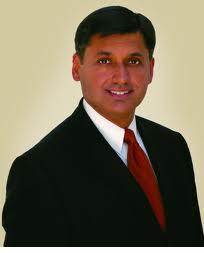
San Francisco’s treasurer, Jose Cisneros, usually operates out of the limelight, and he likes it that way. Most of what he does is about making sure the city’s money comes in propertly and doesn’t go out where it isn’t supposed to. But now he’s in the middle of a political battle not of his making, and he’s taking some undeserved hits, including from the Mayor’s Office.
The issue is whether a company financed by Mayor Ed Lee’s buddy Ron Conway should have to pay hotel taxes. It seems pretty simple on the surface: Airbnb, which mediates arrangements where San Francisco residents rent out their homes to tourists as an alternative to hotel rooms, doesn’t want to be responsible for paying the 14 percent tax that all the hotels in town have to cough up. Cisneros, following the law, says the company isn’t exempt and has to pay taxes just like anyone else in the hotel industry.
But airbnb is closely connected to Lee and his idea of the “sharing economy,” and the Mayor’s Office has gone so far as to say in public that Cisneros is abusing his discretion and should let the tax bill slide.
That’s crazy — tax enforcement is not under the “discretion” of the treasurer. It’s a policy matter for the mayor and the supervisors. And if the mayor wants to ask the supes to exempt a billionaire’s pet startup from taxes, go ahead: Find someone to introduce that legislation. But Cisneros is only doing his job — and that includes forcing even hip young startups to pay taxes.
Oh, but it gets jucier. Willie Brown, who like Lee has close ties to Conway, is now tweaking Cisneros in his Chronicle column:
While we’re at it, an alert to city Treasurer Jose Cisneros: Former Mayor Art Agnos threw an air mattress on the floor for Ross Mirkarimi when a judge barred the suspended sheriff from being with his family. Mr. Treasurer, equal protection under the law says you should send Agnos a notice if you’re going after all these other people.
I think there’s a difference between letting an old friend sleep in your place (or even renting him a room for a few months) and running a business that portrays itself as a service for tourists. And I wonder: Does Brown represent airbnb, or is he invested in the startup? No way to tell — he has complete freedom to hype anyone or trash anyone, despite even clear conflicts of interest that would get any other columnist at the Chron fired. I called him to ask if he has any connections to the company, but as usual, he hasn’t called back.
Heads Up: 6 must-see concerts this week

Is it mundane to still be talking about the weather? What if we’re reminiscing about fickle San Francisco, and a rejuvenating weekend full of beaming hot sun, melted sundaes, and stretches of eternity park lounging with thousands of your closest compatriots?
What if that much-needed industrial shot of Vitamin D super charged our brains for the week ahead? Why can’t we believe in the goodness of the occasional bright weekend to dismiss week in, week out monotony?
What else drags our tired souls from the pits of a dull routine? Why, the ebb and flow of musical intake, of course. That jolt of bass, the kick of drums, the oom-pah of brass, the buzzing expanse of synth: it kick-starts our brains with a correspondingly industrial shot of adrenaline, rolling fog or shine.
Here are your must-see Bay Area concerts this week/end:
The She’s
The melodic teenage rock’n’roll group seems to be living the garage pop dream right about now. The local quartet has a sparkly newish album making serious waves, has opened for dream-show Girls, and recently played Noise Pop before Surfer Blood to a sold-out crowd. While yes, a tad bit jealous, we must admit, it’s deserved: the She’s talent – bassist Samantha Perez has been playing since she was 7, and the others started around then too – and, their surfy fun vibes keep us coming back for more.
With Bilinda Butchers, Trails and Ways
Wed/25, 8pm, $10.
Rickshaw Stop
155 Fell, SF
(415) 861-2011
www.rickshawstop.com
http://www.youtube.com/watch?v=8KhxRuEf5ho&feature=relmfu
The Touré-Raichel Collective
Both wildly popular in their home states, Malian guitarist Vieux Farka Touré and Israeli pianist Idan Raichel came together for the languid, subtly gorgeous joint album The Tel Aviv Session – mixing in respective cultures of music through gentle plucking and steady drum beats – and bring that magic tonight to the Herbst.
Thu/26, 8pm, $25-$85
Herbst Theatre
401 Van Ness, SF
(415) 621-6600
www.sfwmpac.org
http://www.youtube.com/watch?v=gmfHid85XoM
Opeth and Mastodon
A doomy double bill of Swedish heavy metal and Southern-fried sludge. Both acts are epic in their own special way.
Fri/27, 8pm, $32.50
Fox Theater
1807 Telegraph, Oakl.
(510) 302-2250
www.thefoxoakland.com
http://www.youtube.com/watch?v=5VUm1jzqth4
Public Access: Hype Williams
Hype is indeed the word. The Xanax-slow atmospheric pop duo from London, named after the filmmaker, is making a name — and sound — all its own. Once shrouded in wobbly synth mystery, as these things usually are at the start, Hype Williams keeps the buzz a-growing. With openers Gatekeeper, Teengirl Fantasy, and Zebra Katz, it’s going to be a trippy goth pop carnival of a night.
Fri/27, 9pm, $15.
Public Works
161 Eerie, SF
(415) 932-0955
www.publicsf.com
http://www.youtube.com/watch?v=FeZsad3s3hk
Tragedy
The crust punk band, born of the early Aughts, is three parts His Hero Is Gone (depths-of-hell growling vocalist- guitarist Todd Burdette, guitarist Yannick Lorrain, and drummer Paul Burdette) and three parts Death Threat (overlapping others, plus bassist Billy Davis), and all parts blistering, head-banging, good times. Playing twice in the Bay Area this weekend.
With Talk is Poison, Hunting Party, Replica, Negative Standards
Fri/27, 7pm, $10
Oakland Metro
630 Third St., Oakl.
www.oaklandmetro.org
With Needles, Sete Star Sept, Permanent Ruin, Stressors
Sat/28, 9pm, $10
Thee Parkside
1660 17th St., SF
(415) 252-1330
www.theeparkside.com
http://www.youtube.com/watch?v=JgtXLWxDlvg
Sonya Cotton
Sonya Cotton is a folk force, an endearing vocalist and musician (known to swing a delicate uke) with church of nature-like calm; it’s not difficult to picture Cotton tearfully cradling a fallen deer in a lush forest, singing with woeful empathy of its journey. See below. Note that it’s difficult to watch, but her tone brings significance to the sadness.
As part of the Power of Song Series
With Conspiracy of Venus
Sun/29, 9-11pm
Brava Theater Center
2781 24th St, SF
www.songbirdfestival.org
http://www.youtube.com/watch?v=udDyGA1vInE
Dufty fights Mayor Lee’s dehumanization of homeless people

I’ve had some pretty sharp disagreements with Bevan Dufty, but in this case, he’s on the right track: Mayor Lee’s idea of launching an ad campaign to discourage contributions to panhandlanders is ugly, dehumanizing, and a civic disgrace.
Homeless people are people. They’re not animals at Yosemite (“please don’t feed the bears.”) They’re not some sort of public-relations problem for downtown hotels. They’re San Franciscans who for one reason or another have lost the ability to pay rent. That’s not a crime and it shouldn’t be the end of their humanity.
You want to stop agressive panhandling? It’s relatively easy. Increase general assistance grants and make sure that everyone in the city has enough money to eat and get a place to sleep. Oh, but that involves raising taxes — and it also requires a dramatic change in attitude at City Hall. A guaranteed minimum income wasn’t always considered a crazy radical idea; 40 years ago, it was part of the mainstream of American political thought. Now, anybody who isn’t working — for whatever reason — is considered drunk, lazy, a freeloader, a drag on all of the rest of us. Except that a lot of the rest of us are one paycheck away from the same fate.
I always give to panhandlers. I know some of them take the money and buy booze or drugs; I spend part of my money on such things, too, and I don’t even live on the street. If I did, I suspect the beer-and-bourbon portion of my net spending would increase significantly. I know some have substance-abuse problems; I suspect that the buck or two I hand over isn’t going to make that any better or worse, but it might very well keep someone in need of a drink or a fix decide it’s not necessary to rob a passer-by or break a car window to get the money.
Even the “agressive” panhandlers I encounter tend to calm down if you treat them politely. If I have no cash, I look them in the eye, say I’m sorry and would love to help but I can’t do it right now. In more than 30 years walking the streets of San Francisco, treating panhandlers like the human beings they are, I’ve never once had a problem. And I don’t expect to.
Let’s do an ad campaign to discouarge residents and tourists from continuing to allow their tax money to go for loopholes and benefits for large corporations. Don’t feed the rich; they’re already too fat. How about it, Ed?
On the scene: SFIFF, week one!

Guardian film critic Sam Stander was among the crowds this past weekend as the 55th San Francisco International Film Festival kicked off its programming. The festival continues through May 3 at the Castro Theatre, 429 Castro, SF; Pacific Film Archive, 2575 Bancroft, Berk.; SF Film Society Cinema, 1746 Post, SF; and Sundance Kabuki Cinema, 1881 Post, SF. Check out additional Guardian coverage here, here, here, and here. Remaining festival playdates (and additional screening info) are noted after each review below.
The Day He Arrives (Hong Sang-soo, South Korea, 2011) Perhaps the seed was planted by the festival programmer who introduced the screening with a mention of Woody Allen, but this latest black & white film from the South Korean auteur feels akin to Stardust Memories (1980) and 8 1/2 (1963), a cleverly convoluted exploration of an artist’s anxieties. When lapsed filmmaker Sungjoon returns to Seoul to visit a friend, his encounters with compatriots and lovers old and new spiral into repetition and absurdity; the truth of any given situation is essentially inaccessible, leading to often uproarious contradictions, especially with a sympathetic audience like that at the Kabuki Fri/20. This is what one might call a movie-movie, a trip through deception of self and others through the medium of cinematic expression. Mon/23, 9:30pm, Kabuki; April 25, 9pm, PFA. Also plays SF Film Society Cinema May 4-10.
Bonsái (Cristián Jiménez, Chile/France/Argentina/Portugal, 2011) Adapted from Alejandro Zambra’s acclaimed novella, this cleverly structured and sweetly sad film positively wallows in literary allusions. Julio is supposed to transcribe the newest work by novelist Gazmuri, but when he’s passed over for someone cheaper, Julio writes his own manuscript and tells his girlfriend it’s Gazmuri’s. The film flips back and forth between Julio’s college years (the grist for his novel) and his present life, full of anxiety and ennui. He and his lost love, Emilia, used to read every night before bed, and a running joke about Proust serves as a charming framing device. The bonsai tree of the title plays a relatively small role, more a metaphor than a filmic image, but Jiménez’s presentation of how one man tries to shape his own story like a bonsai is touching, if sometimes emotionally simplistic. Tue/24, 6:30pm, PFA.
Oslo, August 31 (Joachim Trier, Norway, 2011) Heroin movies are rarely much fun, and Oslo is no exception, though here the stress lies not in grisly realism but visceral emotional honesty. Following an abortive, Virginia Woolf-esque suicide attempt during evening leave from his rehab center, recovering addict Anders visits Oslo for a job interview. He reconnects bittersweetly with an old friend, tries and fails to meet up with his sister, and eventually submerges himself in the nightlife that once fueled his self-destruction. Expressionistic editing conveys Anders’ sense of detachment and urge for release, with scenes and sounds intercut achronologically and striking sound design which homes in on stray conversations. A late intellectual milieu is signified throughout, quite humorously, by serious discussions of popular television dramas, presumably an update of similar concerns addressed in Pierre Drieu La Rochelle’s 1931 novel Le Feu follet, on which the film is based. April 27, 9:15pm, FSC.
The Source (Jodi Wille and Maria Demopolous, USA, 2012) Remembered for its health food restaurant and musical recordings, the early-’70s cult known as the Source Family was at once an archetypal utopian post-hippy community and a bizarre, unique twist on the notorious subcultures of that era. Charismatic leader Jim Baker, a.k.a. Father Yod, experimented with various branches of mysticism and philosophy, and surrounded himself with over 100 followers at the society’s peak. Eventually casting himself as a god on earth, Yod’s relationship with his “family” became increasingly complex and problematic, but some of his followers still subscribe to his teachings. Among them is family historian Isis Aquarian, whose photos and footage provide the backbone of this engrossing documentary, along with the images taken by other family members. The filmmakers successfully present Yod as an exceptionally powerful personality without valorizing him unduly – a great feat, presenting a not-too-worshipful biography of a self-proclaimed deity. April 27, 3pm, Kabuki; April 29, 6:15pm, FSC.
The Queen of Versailles (Lauren Greenfield, USA/Denmark, 2012) Photographer Lauren Greenfield set out to document the life of the Siegel family, a timeshare dynasty in the process of building the biggest house in America, a palatial edifice inspired by Versailles. But what she stumbled upon was a much richer story, as Westgate Resorts founder David Siegel and his wife, former computer engineer and beauty queen Jackie Siegel, fell on hard times when the economy crashed in 2008. Their maddeningly luxurious lifestyle has suddenly become a strain on their resources; the lives of their seven children and one niece, as well as their domestic staff, change drastically as they struggle to adjust. David’s financial turmoil over the megalithic PH Towers in Las Vegas provides a backdrop to their tumultuous family life, but what emerges is a mix of ironic humor and biting tragedy, and a surprisingly persistent familial bond. Theatrical release, summer 2012.
GUEST OPINION: The Mirkarimi case — is this justice?
I appreciate that everyone is doing his or her best to dialogue on the very complicated, nuanced and difficult issue of domestic violence in a context where the press and politicians are doing their best to use the issue for their own agenda and making it a very polarizing issue in the media.
I know that many of us confront this issue at work, and most encounter it in our own personal lives, so it is a very emotionally charged issue. My heart goes out to Eliana Lopez, their son Theo, and yes, Ross. As a practicing Buddhist, I find that people are often unwilling to forgive others, like Ross, because they are unwilling to forgive themselves for their own challenging impulses.
We live in an emotionally and physically violent world, and demonizing Ross only externalizes the story, externalizes our own pain, denies our own impulses. Anyone who thinks that he or she is perfect or above this seriously needs a mirror. Bringing mindfulness to that is all that we can do and hope that we can have compassion for ourselves. Truly, our inability to have compassion for him only exposes our inability to have compassion for ourselves.
Myrna Melgar, a survivor of domestic violence, wrote a very thoughtful piece for the SF Bay Guardian on restorative justice as an alternative to the criminal justice response to domestic violence, and if you get a chance, take a moment to read it.
http://www.sfbg.com/bruce/2012/03/27/guardian-op-ed-domestic-violence-latina-feminist-perspective
For me, the main question she poses is: “How did it come to be that a system that was intended to empower women has evolved into a system that disempowers them so completely?” In short, when Ross grabbed her arm, it became a media/political frenzy that destroyed Eliana’s life. Myrna posits that the increased criminalization on low-level, first offenses of domestic violence on this one immigrant woman, Eliana Lopez, meant that a long list of mostly men spent the next few months making decisions on her behalf without her input as she was treated as incompetent to make decisions.
Eliana never had a chance ever to find justice, to regain her power, and Ross never really had the opportunity to take 100 percent responsibility for his actions, which is the goal of restorative justice. For Ross to take 100 percent responsibility means not defending, not explaining, not evading. Simply taking responsibility. I haven’t seen Ross do this — but to be fair, he never had a chance.
I am a survivor of domestic violence as a child, and it has been painful to me to observe people using a family’s pain for their own political agendas and missing this opportunity to do things differently, There could have been a path where the powers that be could have acted with integrity towards this family, our city, and to all the survivors of domestic violence. Instead, the whole situation was manipulated from beginning to end.
Honestly, no “side” has been perfect. Those that are loyal to Ross seem unwilling to hear anything beyond how people are out to “get” him, and those that are against him, well, most of the resources against Ross are from a “side” that has all the social capital, resources, media, and political power at their disposal which leaves me frustrated with those who are supposedly holding him accountable.
It’s a disservice to survivors of domestic violence to be used a political pawns, and it’s a disservice to survivors of domestic violence for the media and governmental powers to be misused like this.
As it relates to Ross being sheriff, it’s clear that the system for accountability has also broken down and no one trusts what is happening in the courts. And as one observer has written, “Are we considering the public punishment that has already been heaped on both Ross and Eliana? Was Mirkarimi’s act so vile that we don’t allow him a chance to attend domestic violence treatment and redeem himself before ruining his life? I’m not defending domestic violence in any way, shape or form, but I do believe this situation has been badly politicized.”
It’s unfortunate. It leaves me with little hope that justice will be served. I have long been a proponent of restorative justice, and now more than ever in my life, I see the power of taking full responsibility for my actions, for our actions. I’m so sorry the road to healing and restoration was not taken in this case.
Shanti.
Gabriel Haaland is a survivor of domestic violence, and a queer, transfeminist man who sits on the San Francisco Democratic County Central Committee.
Jeffrey Sachs: A world adrift
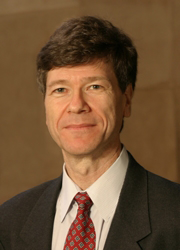
By Jeffrey D. Sachs
Jeffrey D. Sachs is Professor of Economics and Director of the Earth Institute at Columbia University. He is also Special Adviser to United Nations Secretary-General on the Millennium Development Goals
NEW YORK – The annual spring meetings of the International Monetary Fund and the World Bank have provided a window onto two fundamental trends driving global politics and the world economy. Geopolitics is moving decisively away from a world dominated by Europe and the United States to one with many regional powers but no global leader. And a new era of economic instability is at hand, owing as much to physical limits to growth as to financial turmoil.
Europe’s economic crisis dominated this year’s IMF/World Bank meetings. The Fund is seeking to create an emergency rescue mechanism in case the weak European economies need another financial bailout, and has turned to major emerging economies – Brazil, China, India, the Gulf oil exporters, and others – to help provide the necessary resources. Their answer is clear: yes, but only in exchange for more power and votes at the IMF. As Europe wants an international financial backstop, it will have to agree.
Of course, the emerging economies’ demand for more power is a well-known story. In 2010, when the IMF last increased its financial resources, the emerging economies agreed to the deal only if their voting share within the IMF was increased by around 6%, with Europe losing around 4%. Now emerging markets are demanding an even greater share of power.
The underlying reason is not difficult to see. According to the IMF’s own data, the European Union’s current members accounted for 31% of the world economy in 1980 (measured by each country’s GDP, adjusted for purchasing power). By 2011, the EU share slid to 20%, and the Fund projects that it will decline further, to 17%, by 2017.
This decline reflects Europe’s slow growth in terms of both population and output per person. On the other side of the ledger, the global GDP share of the Asian developing countries, including China and India, has soared, from around 8% in 1980 to 25% in 2011, and is expected to reach 31% by 2017.
The US, characteristically these days, insists that it will not join any new IMF bailout fund. The US Congress has increasingly embraced isolationist economic policies, especially regarding financial help for others. This, too, reflects the long-term wane of US power. The US share of global GDP, around 25% in 1980, declined to 19% in 2011, and is expected to slip to 18% in 2017, by which point the IMF expects that China will have overtaken the US economy in absolute size (adjusted for purchasing power).
But the shift of global power is more complicated than the decline of the North Atlantic (EU and US) and the rise of the emerging economies, especially the BRICS (Brazil, Russia, India, China, and South Africa). We are also shifting from a unipolar world, led mainly by the US, to a truly multipolar world, in which the US, the EU, the BRICS, and smaller powers (such as Nigeria and Turkey) carry regional weight but are reticent to assume global leadership, especially its financial burdens. The issue is not just that there are five or six major powers now; it is also that all of them want a free ride at the others’ expense.
The shift to such a multipolar world has the advantage that no single country or small bloc can dominate the others. Each region can end up with room for maneuver and some space to find its own path. Yet a multipolar world also carries great risks, notably that major global challenges will go unmet, because no single country or region is able or willing to coordinate a global response, or even to participate in one.
The US has shifted rapidly from global leadership to that kind of free riding, seeming to bypass the stage of global cooperation. Thus, the US currently excuses itself from global cooperation on climate change, IMF financial-bailout packages, global development-assistance targets, and other aspects of international collaboration in the provision of global public goods.
The weaknesses of global policy cooperation are especially worrisome in view of the gravity of the challenges that must be met. Of course, the ongoing global financial turmoil comes to mind immediately, but other challenges are even more significant.
Indeed, the IMF/World Bank meetings also grappled with a second fundamental change in the world economy: high and volatile primary commodity prices are now a major threat to global economic stability and growth.
Since around 2005, the prices of most major commodities have soared. Prices for oil, coal, copper, gold, wheat, maize, iron ore, and many other commodities have doubled, tripled, or risen even more. Fuels, food grains, and minerals have all been affected. Some have attributed the rise to bubbles in commodities prices, owing to low interest rates and easy access to credit for commodity speculation. Yet the most compelling explanation is almost certainly more fundamental.
Growing world demand for primary commodities, especially in China, is pushing hard against the physical supplies of global resources. Yes, more oil or copper can be produced, but only at much higher marginal production costs.
But the problem goes beyond supply constraints. Global economic growth is also causing a burgeoning environmental crisis. Food prices are high today partly because food-growing regions around the world are experiencing the adverse effects of human-induced climate change (such as more droughts and extreme storms), and of water scarcity caused by excessive use of freshwater from rivers and aquifers.
In short, the global economy is experiencing a sustainability crisis, in which resource constraints and environmental pressures are causing large price shocks and ecological instability. Economic development rapidly needs to become sustainable development, by adopting technologies and lifestyles that reduce the dangerous pressures on the Earth’s ecosystems. This, too, will require a level of global cooperation that remains nowhere to be seen.
The IMF/World Bank meetings remind us of an overarching truth: our highly interconnected and crowded world has become a highly complicated vessel. If we are to move forward, we must start pulling in the same direction, even without a single captain at the helm.
Jeffrey D. Sachs is Professor of Economics and Director of the Earth Institute at Columbia University. He is also Special Adviser to United Nations Secretary-General on the Millennium Development Goals.
Copyright: Project Syndicate, 2012.
www.project-syndicate.org
Live Shots: Childish Gambino and Danny Brown at the Fox
It can be hard to take comedians and comic actors seriously as musicians. Particularly when you consider the questions posed by earlier models. Did Eddie Murphy’s girl really want to party all the time? (And if so, why didn’t he?)
In his last few albums as Childish Gambino, Donald Glover, the writer-actor best known for portraying lovable goof Troy Barnes on NBC’s cult sitcom Community, has combated the typical skepticism with a self-aware, post-Kanye confessional style of hip-hop. His show at the Fox in Oakland last Thursday made it clear that no matter how funny Childish Gambino’s lyrics are, as a performer, he’s serious.
Glover’s opener for the night was Detroit’s Danny Brown, whose latest release on Fool’s Gold Records, XXX, has been billed as an obscene concept album. It’s not the most thought-out idea, though, and lacking the inventiveness of concepts like Deltron 3030, Madvillainy, or Dr. Octagonecologyst, it seems more of an excuse to revive a 2 Live Crew Style of hedonism. (A common topic for Brown is eating pussy, and the MC, amusingly, has a habit of sticking his tongue out for emphasis.)
There’s definitely a perverse humor at work, but with lyrics like “Fuck bitches like AIDS don’t exist, I’m a young ruthless nigga on some Eazy-E shit,” your mileage may vary.
As with OFWGKTA, it can be hard to tell where the joke begins and ends, and as Brown’s DJ repeatedly played a “Swag!” vocal sample, I couldn’t help but wonder if it was done ironically. But Brown’s voice – like a strange hybrid of Dr. Octagon and Larry Blackmon – has a unique trill to it and an appealing cadence, and from the start of his set there were noticeably quite a few people in the front row mouthing along and shaking the floor boards like they didn’t give a fuck.*
Brown finished his set noticeably tired, which is understandable, since the Fox is a large venue for a solo rapper to energize. At one point I had the same concern with Childish Gambino, but Glover was backed by an impressive band.**
It wasn’t a surprise, as my expectation had been primed from videos of the first week of Coachella, where Glover gave a lively, physical performance despite wearing a large black boot on one leg, stemming from a fractured foot that caused him to cancel performances earlier in the year.
At the Fox there was no boot in sight, and Glover appeared entirely unburdened, bounding around the stage, breaking out a silly step between verses, and generally hyping the crowd up as he split his time performing tracks mainly from last year’s Camp and 2010’s Cul-de-sac, with a confidence that seemed well beyond the few tours he had under his belt.
Combined with a slick stage production – consisting of some minimal pup-tent/tree decorations and well timed, follow-along visuals – Glover seemed entirely in control of the show, which managed to come off as intimate and sincere. If it is a joke, I get it.
Setlist:
-Outside
-Fire Fly
-Freaks and Geeks
-Do Ya Like
-Backpackers
-I’m On It
-I Be On That
-Rolling in the Deep (Adele cover/John Legend version)
-All The Shine
-LES
-Heartbeat
-You See Me
-Bonfire
-Sunrise
Encore
(Freestyles)
-That Power
-Lights Turned On
*Although, one of the guys that seemed to know all the lyrics was also wearing a Davy Crockett coonskin cap. So there’s that.
**One of the members – alternating between keys, guitar, and violin – looked particularly familiar, until I recognized him as the impressively talented Ray Suen, who performed with the Flaming Lips at Bimbo’s.
Action Girl leaves Black Rock City LLC
This week’s resignation of Andie Grace (aka Action Girl) – who has been the face and voice of Burning Man and its Jack Rabbit Speaks newsletter for most of her 13 years working for Black Rock City LLC (aka the Borg) – is the latest blow to an organization and culture going through a difficult transition period.
She insists that her departure is “not a big boat-rocking controversy,” it’s been something she’s been thinking about for years, and the timing is coincidental. “It has a lot more to do with where Andie Grace is now,” she said, than with what the organization is going through at this point.
I’ve known Grace for years; I believe her and I wish her the very best as she figures out what she wants to do next. She’s got a bit of a cushion now that her husband – Tom Price, another longtime burner who started Burners Without Borders and Black Rock Solar before leaving the Borg last year to work for an environmental firm – is doing well professionally.
But I think it’s a shame that the Borg is letting Grace go rather than elevating her, Price, and their generation of Burning Man innovators (including Will Chase, the current voice of JRS) into a position of leading the Borg and this culture, which would entail the six board members giving up some control and trusting others to shepherd this culture forward.
I’ve written critically of the manner in which the Borg will be transitioning Burning Man to nonprofit control over the next five years. They launched the nonprofit Burning Man Project last year, but with hand-picked board members serving one-year terms rather than something more democratic or collaborative.
And even then, the six board members retain full control over when and if the transfer takes place, determining their own continuing roles in the organization as well as the secret payouts they’ll be receiving for dissolving their ownership of the Burning Man brand.
Grace, Price, and a long list of others like them have embodied the soul of Burning Man for many years, keeping it cool while extending its tentacles off into a variety of intriguing and promising new directions. They are also more in touch with the large burner world than their bosses, which Grace demonstrated during this year’s ticket debacle with a blog post that defused much of the mounting criticism.
As Burning Man wrestles with its growing popularity and the population, logistic, and philosophical issues that raises, it balances on a precarious tipping point. If the Borg behaves like a corporation and treats its brand like a commodity, this whole grand experiment could quickly unravel.
Maybe it was just time for Grace to go and I’m making too much of this moment. But I also think it’s time for these six board members – most of whom are reaching retirement age anyway – to trust this community with the future of an event and culture that we all created together.
Steven T. Jones, aka Scribe, is the author of The Tribes of Burning Man: How an Experimental City in the Desert is Shaping the New American Counterculture. He’ll be doing a reading and leading a discussion on the state of Burning Man, Tribes in Transition, from 6-7:30 pm on April 25 at the Bay Guardian office, 135 Mississippi St., SF.
Dick Meister: Fair Trade: Not With Columbia
By Dick Meister
Dick Meister, former labor editor of the SF Chronicle and KQED-TV Newsroom, has covered labor and politics for more than a half century. Contact him through his website, www.dickmeister.net, which includes more than 350 of his columns.
By all accounts, Colombia is one of the world’s worst abusers of workers and their unions. Yet President Obama has just signed a Free Trade Agreement with Columbian President Juan Manuel Santos.
The agreement, set to go into effect May 15, will align the United States with a nation in which working people have very few of the basic labor rights long granted U.S. workers.
In fact, trying to exercise those rights in Colombia can be fatal. Two-dozen Colombian labor leaders and organizers were killed during the past year.
The U.S.-Colombia trade agreement was supposed to implement an “Action Plan on Labor Rights” that the two nations agreed to in 2011. The plan was designed to “protect internationally recognized labor rights, prevent violence against labor leaders, and prosecute the perpetrators of such violence” in Colombia.
Violence continues, however, as does the anti-union actions of the Colombian government and Colombian employers. Colombian union leaders noted in a joint statement that though the action plan calls for some badly needed reforms, it does not address many others also needed. That includes combating the serious violations of labor and human rights that continue to plague Colombia.
Many workers, for example, are prevented from exercising the two most important of all labor rights – the right to collective bargaining and to free association. The labor leaders said the government has done very little to prosecute the employers who deny those rights and other fundamental rights of workers.
“Labor activists and other human rights defenders remain subject to threats and violence, including murder, when they stand up to fight for their rights,” the leaders concluded.
As now written, the leaders said, the Colombia Free Trade Agreement “perpetuates a destructive economic model that expands the rights and privileges of big business and multinational corporations at the expense of workers, consumers and the environment.”
Other trade agreements that have followed that basic model have “historically benefitted a small minority of business interests, while leaving workers, families and communities behind.”
Key U.S. labor leaders also have denounced the U.S.-Colombia trade agreement, even though it was championed by President Obama, who generally gets high marks from labor’s establishment, as he should.
AFL-CIO President Richard Trumka saw Obama’s signing of the agreement as “deeply disappointing and troubling. We regret that the administration has placed commercial interests above the interests of workers and their trade unions.”
That is, the administration thinks the returns U.S. businesses and the economy generally gain from trading with Colombia are more important than protecting Colombian workers from exploitation by rejecting deals with businesses that violate the workers’ rights.
Trumka and the Colombian union leaders want a new trade agreement with lofty but reachable goals of creating jobs on a widespread scale, boosting economic development and raising the standard of living in both the United States and Colombia.
Workers would be guaranteed stronger protections. But more than that, Trumka and the Colombian leaders would add provisions “to ensure a healthy environment, safe food and production, and the ability to regulate financial and other markets to avoid crises like that of 2008.”
That would be fair trade as well as free trade – a vital, necessary fair and free trade agreement that would benefit millions of people on both sides of the agreement.
Dick Meister, former labor editor of the SF Chronicle and KQED-TV Newsroom, has covered labor and politics for more than a half century. Contact him through his website, www.dickmeister.net, which includes more than 350 of his columns.
Even more from the tUnE-yArDs interview

Despite a relentless touring schedule, and an intense side-project, scoring the upcoming SFIFF-presented evening of Buster Keaton shorts at the Castro Theatre with Oakland-based guitar virtuoso Ava Mendoza, Merrill Garbus, the artist otherwise known as tUnE-yArDs, gave us a great interview, and not all of it could fit in this week’s print feature on Garbus and St. Vincent.
While currently living in Oakland, Garbus hails from the East Coast, and has also lived in Kenya and Montreal, a combination of influences that allows her and her singular, quixotic music to avoid falling into a trap of regionalism or simple categorization. Catch tUnE-yArDs with Ava Mendoza at the Castro on April 23, and at the Fox Theater April 24, in concert with St. Vincent.
SFBG: You spent time studying music in Kenya, what elements of your current musical style do you attribute directly to that experience? What are some of your other influences?
Merrill Garbus: I mostly was very humbled in my study of music there. I studied taarabu (Taarab music) and I was a pretty weak student at the harmonium. So much of that music is based on the Swahili poetry, which was so complex linguistically that I hardly understood it.
But studying any music is a way of absorbing it, as well as a way of practicing those basics of musicianship: playing by ear, repetition on an instrument, playing with other people.
It was also the experience of listening to the popular music in Kenya at that time that really influenced me, specifically pop music from Congo, which they called Lingala in Kenya. I had never heard music like that, and especially that kind of music that compelled a person to dance so instantaneously.
SFBG: What made you decide to use the uke as your primary instrument instead of the fiddle or guitar or something more “traditional” as a lead?
MG: The ukulele is so unassuming; it sounds nice when you’re not even trying – it even has a charm when it’s really out of tune, I think. It makes a space for itself. As a guitar player one has to really prove themselves, to stand out among all the other guitar players of the world and of the past. The ukulele made the songs the focal point, instead of putting pressure on me to be particularly virtuosic on an instrument.
SFBG: Tell me a little about your previous vocal training.
MG: I studied a bit of classical singing in high school, and sang with a madrigal group which taught me a lot about blending with other voices. I sang in a college a cappella group which was great performance training and is more about belting and volume, which has certainly helped me; and I took some opera lessons when I wrote a puppet opera.
Theater training gave me a lot of vocal skills, too, particularly studying with members of the Roy Hart Theater and doing work with Viewpoints and Suzuki (Theater Suzuki, different than the musical training.) Through the theater work, I learned to expand the palette of vocal sounds that were accessible to me.
SFBG: I’d love to hear a little more about your theatrical background, and how you think it influences your approach to staging.
MG: I think it’s more than staging, although recently we’ve been talking about stage props and lighting and all of these other things that bring me right back to undergraduate theater studies…I know a lot of bands who struggle with live performance because it’s a secondary thing to writing songs, and for me I’m realizing how primary it is to consider the performance. Even in the studio, even in front of my computer doing busy-work editing, it’s a kind of performance, an improvisation of sorts, following my instinct in the moment.
SFBG: You have a fondness for creative spelling, not just with alternating caps, but also with dropping the “r”’s at the end, adding “z”’s, etc. What’s your intention there?
MG: I like to play with spelling because poor spelling is, most of the time, associated with ignorance and being wrong, but as we learn from Black culture, misspelling and screwing around with language is often an intentional reappropriation, to turn the language of the over-powering forces into a language of one’s own.
In Swahili, there are certain words, like “taksi,” which are Swahili spellings of things that didn’t exist before the language of the colonizers appeared, so what’s left is a British/Western idea, a British/Western word, with an African spelling.
I tend to use spelling and pronunciation as a humbling force, for instance, people feel slightly stupid every time they say, “Pow-a.” It makes people uncomfortable, and there’s a sense the friction: they have to make a choice. Do I say, “Pow-er” or “Pow-a?” Which makes me look like less of the asshole?
SFBG: You take a playful approach towards video-making, especially in regards to face-paint/costuming. But are you ever afraid people will misinterpret your style as some sort of cultural appropriation? Do you think worries about “cultural appropriation” are even still relevant in this hyper-connected, global-mashup day-and-age?
MG: There have been instances where tUnE-yArDs was associated with a kind of cultural appropriation that I wasn’t cool with, such as when an artist used a Native American-style headdress on a poster for one of our shows. It wasn’t my decision, and I didn’t see the poster before it went out, but of course, there’s my band’s name on the poster, and the well-intentioned artist who didn’t think hard enough about that particular choice, and a whole bunch of offended people. However, I try to concern myself less with being politically correct and not stepping on anyone’s cultural toes, and more with righting things, in the limited ways I have to do that…
(But) yes “cultural appropriation” is an important thing to consider carefully for an artist like me…I, as a white woman with a college education and access to the world of pop music and all of its resources, have a lot of power. I can rip off not only the style but the note-for-note music of another culture, and get away quite easily without having to justify or explain that. It’s really up to me: will I use these tense moments of cultural appropriation, which I believe are inevitable in this time we live in, to draw attention to those with less power and less of a voice, or will I skirt the issue completely?
SFBG: Who are some of your favorite Oakland/Bay Area-based artists at the moment?
MG: Beep Trio is my favorite Oakland band. It is but one example of the brilliant, creative, avant-garde, jazz-influenced bands in the area. Dominique Leone and Ava Mendoza are a couple of others. Mwahaha and Kapowski are great friends of ours and great up-and-coming bands, more on the pop end of things. And V-Nasty.
Judge denies Mirkarimi motions; city process begins Monday

Superior Court Judge Harold Kahn today denied all motions by Sheriff Ross Mirkarimi’s legal team challenging his suspension without pay, city procedures, and the constitutionality of the city’s official misconduct charter language, saying it’s premature to conclude Mirkarimi isn’t being treated fairly.
“But the courthouse door remains open,” Kahn concluded, inviting Mirkarimi to return after the Ethics Commission establishes rules of procedure and evidence, which it will begin doing on Monday. Today’s rulings, and another yesterday, in which Kahn ruled against a motion to disqualify the City Attorney’s Office from overseeing the proceedings, clears the way for the Ethics Commission to consider recommending to the Board of Supervisors that Mirkarimi be removed from office.
Kahn also seemed to agree with Mirkarimi’s team that Mayor Ed Lee didn’t give him a fair hearing before suspending him or that he made an argument for suspending him without pay. But Kahn sided with the city on the legal question of whether Mirkarimi has a “property interest” in his salary, which would have triggered the right to a hearing before being suspended, making such procedural questions moot.
“If there was a property right, what the mayor stated would not be adequate due process,” Kahn said, referring to Lee’s affidavit describing their March 19 meeting, where Lee told Mirkarimi to resign or be suspended. Lee claims he gave Mirkarimi the opportunity to tell his side of the story, which Mirkarimi denies, saying the mayor had made up his mind and wasn’t interested in the real story. On the salary question, Deputy City Attorney Sherri Kaiser said Mirkarimi would be entitled to full back pay from his suspension period if the supervisors vote to keep him in office, arguing that he isn’t being harmed.
Mirkarimi was suspended based on language in the city charter that was adopted in 1996 – banning “conduct that falls below the standard of decency, good faith and right action impliedly required of all public officers” – that has never been reviewed by the courts and which Mirkarimi attorney David Waggoner contends is unconstitutionally vague.
But Kahn didn’t agree, saying, “The charter is not so clearly outside the bounds of California law that I should preempt the processes.”
Waggoner complained that the city procedures didn’t set rules of evidence or procedure or standards of guilt, making it difficult to prepare a defense, a point to which Kahn seemed sympathetic, noting the variety of legal standards for different types of cases, from “beyond reasonable doubt” to “a preponderance of evidence.”
“We don’t know which of any of those is going to apply here. Is that a problem?” Kahn asked Kaiser.
She said no, that Mirkarimi and his legal team could return to court for help “if the commissioners really mess up” in the work they’ll begin on Monday. “That summarizes my view. It is hypothetical to say the procedures are going to be unfair,” Kahn agreed.
Addressing reporters after the hearing, Kaiser praised the judge’s rulings and offered a small window into what will likely transpire in the coming months: “Certainly, the sheriff is going to have to testify under oath and not just to the media.” (Waggoner told reporters “no comment” when asked whether Mirkarimi will indeed testify under oath).
Kaiser’s apparent dig at the various media interviews that Mirkarimi has just started to grant this week echoes statements that have come from District Attorney George Gascón, who has criticized Mirkarimi’s characterization of his guilty plea and the behaviors that constituted false imprisonment, calling the media accounts “disturbing and telling.”
But Mirkarimi shot back at Gascón today, noting that the two men “have had some very high-profile disagreements” when Gascón was police chief and Mirkarimi chaired the Board of Supervisors Public Safety Committee. They had high-profile clashes over requiring police to do foot patrols, the crime lab controversy, budget issues (including Mirkarimi’s unsuccessful efforts to find out how much Mayor Gavin Newsom’s police security detail was costing the city as he ran for governor), and Gascón’s controversial public statement equating people of Middle Eastern descent (such as Mirkarimi, who is Persian) with terrorists.
“It sometimes bubbles up in the course of these proceedings,” Mirkarimi said of Gascón’s alleged personal or political animosity toward him.
Asked for a response, District Attorney’s Office spokeperson Stephanie Ong Stillman wrote, ““It is the duty of the San Francisco District Attorney to uphold the law,
regardless of who violates it and without political motivation. Ross Mirkarimi was afforded the same rights as any defendant. We treated his case no differently than any of the 776 domestic violence cases our office charged and reviewed last year.”
Appetite: An elegant line of tequilas

Tequila Avión has gained a sort of cult status from a (unsolicited) mention in the show Entourage, but I’m glad to say this tequila holds enough quality to stand on its own. Produced in the Jalisco highlands, in the town of Jesus Maria at the highest elevation of any tequila producer (7000 feet), brings a naturally higher sugar content to the agave plants. Their process is to roast the agave plants at very low temperatures and let them cool naturally which retains more juices and makes the plants less fibrous when crushed.
In meeting with Tequila Avión’s lovely president, Jenna Fagnan, I learned that they use 60% more agave to make a bottle of Avión than the average tequila. It’s intriguing to note that they went to the town itself to find their distiller: Alejandro Lopez is a young distiller from a fifth generation family of agave farmers and distillers right there in Jesus Maria.
Launched only a year and a half ago, Avión is now available in 48 states and Canada. Growing rapidly, Fagnan says, “We’ll grow as fast as the quality allows us to,” emphasizing that they won’t be taking shortcuts to meet the demand. Though in a joint venture with behemoth spirits supplier Pernod Ricard, Fagnan says they retain full control over production and the recipes they began with.
All three are smooth, elegant, flavorful expressions, and generally affordable – even the anejo is reasonably priced around $50. As is typical, I like the blanco and reposado best, the blanco bright and silky, the reposado subtle with spice and toast. The anejo (aged 2 years in light char bourbon barrels) is not much darker than the reposado, a natural color vs. having any color added. It manages to retain herbaceous, agave properties alongside barrel notes of vanilla and caramel.
Sample Avión at Colibri Mexican Bistro downtown or purchase at K&L.
–Subscribe to Virgina’s twice-monthly newsletter, The Perfect Spot, www.theperfectspotsf.com
Party Radar, 4/20 special: Doc Martin and J-Boogie, Joey Negro, South Rakkas Crew, Fix Your Hair

What’s more emotionally hair-raising than tonight’s “appearance” by DJ Pauly D at the Sound Factory? The pic accompanying this post of the scrubbed and painted Eagle Tavern that surfaced on the Internet this week — I saw it via drag queen politico Anna Conda. The Eagle closed last year — it was an actually legendary hangout for leather biker queers, and straight scruffy friends, into amazing rock music courtesy of DJ Don Bard at Sunday beer busts and a passel of live bands on Thursdays. It closed amid controversy, confusion, and stalled protest efforts, but now It does indeed look, in the words of one commenter, like, “My memories have been raped by a poorly designed condo kitchen.” (I hate rape jokes, unless they’re hilarious.)
But as another astute commenter commented, “While the physical space that was the Eagle is no longer, the people that made the atmosphere, the experience, the adventure, and the tradition are still with us. Let’s focus on the people and look for new space.” Amen. The monthly Eagle in Exile beer bust at El Rio is doing great, and although we’ve yet to achieve something weekly, I kind of think a little break for my liver on Sunday afternoons (and a chance to explore some other venues) has been a good thing. But I do miss hanging with my manly-man, non-gym queen homies, getting turned on to musical gems like this — and this pic brought on a lot of memories, as well as Crate and Barrel nightmares.
Enough of that, let’s 4/20 party! Of course you are going to the Guardian’s Stoned Soul Picnic party this afternoon-evening at El Rio, followed by a Red Hots Burlesque marijuana tribute night right? Here are some other goodies for later (and read about even more parties in this week’s Super Ego column and even more in our Herbwise column):
>> DOC MARTIN + J-BOOGIE
Cali’s most beloved rave legend DJ Doc Martin, whose sets can encompass classic house woo-woo, intricate techno, and deep funk (he’s been on fire in the past couple years especially) will join SF’s multitalented jazzy-funk producer J-Boogie’s live band Dubtronic Science at Yoshi’s Fillmore to “combine electronic dance music with live instrumentation, progressing the tradition of jazz improvisation in the Fillmore.” This sounds really cool. Below is one of J-Boogie’s smooth recent joints that’s been popping up everywhere lately. What might Doc Martin do with it?
http://www.youtube.com/watch?v=cSfWEOh6uxw
Fri/20, 10pm-1am, $15-$25. Yoshi’s Fillmore, 1330 Filmore, SF. Facebook invite here
>> FIX YOUR HAIR
Giant neon queer fun with scene favorites DJs Jenna Riot and Andre, performers Manicure Versace and Terry T, the Vogue and Tone Crew, and more wet and wild friends. Tease it out, grrrlz.
http://www.youtube.com/watch?v=xhiIVyHhq_E
Fri/20, 9pm, $5. Elbo Room, 647 Valencia, SF. Facebook invite here
>> JOEY NEGRO
The UK dance hero, also known as Dave Lee, ruled much of the late 80s to early 00s: he was one of the first to infuse overt disco samples into house, and his productions and remixes like the below really did save my life on numerous occasions. Classic, classic, classic.
http://www.youtube.com/watch?v=rR4BJdaM-ZU
http://www.youtube.com/watch?v=5R1XHs7239U
http://www.youtube.com/watch?v=gdWTQ-6D4Q4
Fri/20, 9pm-3:30am, $10-15. Public Works, 161 Erie, SF. www.publicsf.com
>> SOUTH RAKKAS CREW
SOM Bar is gonna be keeee-razy on 4/20 with a ton of booming’ future-dancehall and global bass music from this Mad Decent crew, plus incredibly diverse supporting players Kush Arora (perfect for today!), DJ Sep, Daneekah, Bootyklap, and the always slayin’ it Slayer’s Club players. Light up and get low.
http://www.youtube.com/watch?v=TUrqxf2Hq_I
Fri/20, 9pm-3am, $5 before 10:30, $10 after. SOM, 2925 16th St., SF. Facebook invite here
Vinyl party: Record Store Day is almost here
Records nerds take heed: limited record releases from the Flaming Lips, Neon Indian, Jack White, Mark Sultan, Xiu Xiu with Dirty Beaches, and more await thee. If you’re a lover/supporter of independent music, you’ll be celebrating Record Store Day this weekend with the rest of us. Err…that is, buying up some new vinyl.
And why not? The US-wide event, which began in 2007, keeps getting bigger and better, with even more releases, and even weirder vinyl variations (liquid, colored, etched, can Laffy Taffy grooves be that far away?).
And, as often noted, the Record Store Day releases are available only at physical, independent shops. Real, brick and mortar stores lined with dusty squares. Stay offline all day.
And, as many of the Record Story Day releases are limited, it’s important to keep in mind that all stores may not order all release. It’s first come, first serve, and all that. Show up early, support your local vendor.
Bay Area participating stores include Recycled Records, Groove Merchant Records, Amoeba Music in San Francisco and Berkeley, Black Pancake Records, Streetlight Records, Grooves, aQuarius recOrds, the Explorist International, The Music Store, Creative Music Emporium, MusicESP, Fats Music, Mill Valley Music, Donnie’s Records, 1-2-3-4 Go! Records, Down Home Music, Down Home Music Store, Rasputin Music and DVDs, Mod Lang, Red Devil Records, Bedrock Music & Video.
Here’s just a small sampling of the audio-treats available to you this Saturday, April 21 (walk in to local stores for availability):
The Flaming Lips, The Flaming Lips and Heady Fwends. The exclusive Record Store Day release will be pressed on two multi-color vinyl discs in separate custom art jackets and poly bagged together. No two discs will look exactly alike. Once it’s gone, it will not be repressed again making. It includes musical contributions from Yoko Ono, Nick Cave, Chris Martin of Coldplay, Bon Iver, Ke$ha and more.
Mastodon /Feist, A Commotion/Black Tongue seven-inch. A RSD exclusive featuring Mastodon covering Feist’s song “A Commotion,” and Feist covering Mastodon’s “Black Tongue.”
Mark Sultan, The War On Rock’n’Roll. A live, one-take album put out on In the Red Records.
Jack White, Sixteen Saltines. A 12-inch single of Jack White’s “Sixteen Saltines” featuring a playable etching of the Third Man logo in its B-side. “The grooves of the record play through the image, making it the world’s first-ever playable etched record ®.” There’s an even more limited version of the Sixteen Saltines etched 12-inch that’s pressed on clear vinyl and filled with psychedelic blue liquid.
Xiu Xiu/Dirty Beaches split seven-inch. Limited to 200 copies, Side A is Xiu Xiu covering Erasure’s “Always”, Side B is Dirty Beaches covering Francoise Hardy’s “Tu Ne Dis Rien.”
David Lynch Foundation, Music That Changes the World. A deluxe, four-volume vinyl collection featuring 34 exclusive tracks by artists such as Donovan & Iggy Pop, Peter Gabriel, Moby, Maroon 5, and Ozomatli and several others. The collection also includes a previously unreleased bonus track from The Ghost of Saber Tooth Tiger along with a download code for a bonus digital track from Julio Iglesias Jr.
of Montreal/Deerhoof, Stygian x} Bisection. It’s an exclusive RSD seven-inch on Polyvinyl. The seven-inch features “A Filthy Fifth” on the A-side, of Montreal’s cover of Deerhoof’s song “Secret Mobilization.” The B-side is the first studio recording released of “Feminine Effects.”
The Mynabirds, Generals seven-inch single. From their upcoming album Generals, to be released June 5, the Record Store Day seven-inch includes one non-album track “Fallen Doves” and features silk screens covers, hand stray painted and numbered by band leader Laura Burhenn. Limited to 1,000 copies on black vinyl.
Battles, Dross Glop 4. RSD limited run. Final 12-inch of the Dross Glop series. Features remixes from Gang Gang Dance, Hudson Mohawke, Patrick Mahoney (LCD Soundsystem), Dennis McNany.
Neon Indian, Hex Girlfriend 10-inch. An exclusive RSD release, with the album version of the track on Side A, and a Twin Shadow remix on Side B. It’s limited to 500 copies and will only be available April 21. 200 of those will be pressed on translucent green vinyl, and 200 will have an opaque blue swirl.
Again, remember that these are independent stores and not every Bay Area record shop will sell every RSD release. Plan accordingly.
Record Store Day
Sat/21, business hours
Independent record shops, Bay Area and beyond
www.recordstoreday.com
Appetite: Exploring 3 wineries in Niagara-on-the-Lake, Ontario
Call it dessert wine if you will, icewine (eiswein in German) is definitely sweet. But winemakers prefer to call it “rich and concentrated,” an apt icewine description, which, when produced well, retains enough acidity to keep it from being cloying.
Icewine’s intensity comes from frozen grapes, allowing greater flavor concentration. Unlike in Sauternes, Bordeaux, icewine is not sweet from botrytis (noble rot), rather from frozen, concentrated juice. Canada and Germany are the largest icewine producers in the world, with most of Canada’s icewine vineyards in Ontario, which I recently visited. Besides attending the annual Niagara Icewine Festival, I spent time with three wineries and tasted winning salumi and cheeses made locally.
INNISKILLIN WINERY
On a clear winter night, I arrived in Niagara-on-the-Lake, an idyllic, sleepy town on Lake Ontario, a short distance from Niagara Falls. By morning, a gentle but steady snowfall covered the woods and stately homes in a blanket of white.
Legendary Inniskillin winery, which put Canadian icewine on the map in the ’80′s, was my home base. A flat expanse of vines and shimmering, frosty grapes surround the warm, modern Inniskillin buildings, including one that is a restored 1920′s barn.
Austrian native Karl Kaiser started Inniskillin in the 1970′s with Donald Ziraldo to fill a need for premium Canadian table wine, getting into icewine in the 1980′s. Kaiser was Inniskillin’s first winemaker, while Nicholson got into wine in Niagara in the 1980′s, quickly moving up the ranks to winemaker at Jackson Trigg’s Okanagan winery in British Columbia. He returned to the East Coast and became Inniskillin’s winemaker in 2007, his wines having won over 1400 awards internationally. Terroir-driven as a winemaker, Nicholson states: “You don’t try to emulate someone else’s style because the terroir will dictate the wine you make.”
Due to icewine’s labor-intensive process, including picking in the middle of the night at lowest temperatures, the best icewine is expensive. And being as good as it gets, Inniskillin wines can be pricey.
Nicholson says for it to be icewine, they cannot legally pick until temperatures reach -8 Celsius (17.6 °F), a lower temp than required in Germany (-7 °C), but he typically prefers -10 °C or below. He calls that: “the sweet spot for balance of acidity and sweet.”
Inniskillin produces far more than icewine with Burgundian influenced Pinot Noir, Chardonnay and the like. I was impressed with numerous wines like an acidic, floral Riesling icewine. I particularly love their sweet but earthier Vidal icewines, from a balanced, bright 2008 Vidal to a 2008 Gold Vidal, uber sweet with marmalade and candied brown sugar balanced by crisp acidity and funky earth notes. Another standout is a red icewine, 2007 Cabernet Franc, robust, rosy, tasting more like strawberry conserves vs. fresh strawberries. If you’re at the winery tasting room in winter, ask for a hot chocolate made with icewine. You won’t regret it.
JACKSON-TRIGGS WINERY
A sister winery to Inniskillin, Jackson-Triggs impressed with dramatic high ceilings, a modern barn-like feel, giant, roaring fireplace, and state-of-the-art production facilities.
We met with head winemaker Marco Piccoli, who is from Friuli, Italy. He brings a European aesthetic to the wines, married to New World vision, having also worked in Argentina. He was long ago fascinated by icewine and how it single-handedly put Canada on the wine map, though he produces everything from a peach blossom-redolent 2010 Sauvignon Blanc to an acidic, sandalwood-inflected 2007 Cab Franc. I enjoyed a unique 2007 Entourage Sparkling Merlot, but my favorite was their buttery yet citrus-laden Silver Series Chardonnay, which unfortunately we do not yet have available in the state.
LE CLOS JORDANNE
I met with young winemaker Sébastien Jacquey from Burgundy who creates Burgundian-style, single vineyard Pinots at Le Clos Jordanne. I wasn’t as taken with Pinots as with best wines at Inniskillin or Jackson-Triggs, but enjoyed a mint and plum-accented 2009 Pinot Noir Le Grand Clos and a dusty, earthy 2009 Talon Ridge Vineyard Pinot.
WINERY MEALS
Eating well was not a problem at the wineries. Great Estates of Niagara chef David Penny (who worked at Four Seasons Hawaii) cooked Inniskillin meals with a couple key highlights.
He smoked a luscious slab of pork belly on a smoker behind the winery. Braving the snow and wind, Penny cooked the fatty belly, slicing it on toasts with an onion jam. A superb breakfast. Penny also created an Inniskillin poutine, topping warm fries with duck confit, Niagara Gold cheese, and red wine gravy.
On a freezing cold night, I was warmed by a moveable feast all over the Jackson-Triggs winery, starting with a spread of excellent Pingue charcuterie. The meal was prepared by pastry chef Anna Olson, a Food Network star in Canada, and culinary instructor/chef husband Michael Olson. Favorite eats from the night were a mini-tureen of choucroute garnie, a favorite Alsatian sausage and sauerkraut dish of mine, and mushrooms in Chardonnay thyme cream sauce with potato cheddar focaccia. No surprise: a round of Anna’s desserts was the perfect ending, each rich and flavorful, from raisin butter tarts to cranberry gingerbread upside down cake.
Subscribe to Virgina’s twice-monthly newsletter, The Perfect Spot, www.theperfectspotsf.com