SFBG Blogs

Mayor Lee signs watered-down limits on SFPD spying

6

Flanked by members of Coalition for a Safe San Francisco, Police Chief Greg Suhr, and Sup. Jane Kim, Mayor Ed Lee today signed legislation that calls for San Francisco Police officers working with the FBI’s Joint Terrorism Task Force to respect privacy rights in the California Constitution and local laws and calling for annual reports on SFPD-FBI activities.

Coalition members trumpeted what they called “historic civil rights legislation,” but this watered-down version of legislation that Lee vetoed last month doesn’t offer the same guarantees and codification of privacy principles as the previous version, which was approved on a 6-5 vote of the Board of Supervisors, whereas this new version won unanimous approval.

Its endorsement by the most conservative supervisors – those most deferential to the SFPD, politicians who routinely vote against even the most innocuous progressive legislation – is a sure indicator that the legislation doesn’t really do much to clips the wings of the SFPD, which initiated this controversy with a secret 2007 agreement with the FBI that federalized local officers.

That was precisely the objection to the initial legislation that were offered by Lee and Suhr, that it codified local privacy protections with specific limits on SFPD officers engaging in surveillance on citizens who had broken no laws, and that it subjected any future agreements with the FBI to approval by the Police Commission. The new legislation is far more vague.

“It is a step in the right direction, there’s no doubt it’s progress, but whether it’s real progress depends on the implementation,” says John Crew, an expert on police practices with the American Civil Liberties Union-Northern California, which unearthed the 2007 secret memo.

Crew has worked on this issue for years and has been troubled by the FBI’s claims that local laws don’t apply to federalized agents, with the SFPD’s resistance to allowing specific limits to be codified in local law, and with the deferential position Lee has taken to the SFPD. Crew said the strongest part of the new ordinance is the explicit statement that local officers can’t ignore local and state laws, but the details of how that’s applied weren’t really addressed in this new version.

“The question now is will there be a vigilant, meaningful, and sustained effort to implement this law and will there be sufficient transparency,” Crew said.

Two of the strongest advocates for the new law, Nasrina Bargzie of the Asian Law Caucus and Zahra Billoo of CAIR-SFBA, say the compromise version addressed their main issues and is worth celebrating, but they agree with Crew that its strength will ultimately depend on how it is implemented.

“We don’t see this as the end. We need to make sure it is implemented properly,” Billoo said, calling it a “watered down version” of the stronger and more specific initial legislation.

For example, the legislation calls for annual reports on FBI-SFPD activities, but it doesn’t go into much detail on what those reports will include.

“Part of what we’re going to do is communicate with the stakeholders about what we expect those reports to look like,” said Nasrina Bargzie, a coalition member from the Asian Law Caucus, noting that they would like to base them on the work that has been done in Portland, Ore., which has been a leader on the issue. “It’s going to require us to watch those trouble spots during implementation.”

While the vetoed legislation would have given the Police Commission more authority over future SFPD-FBI agreements, the signed version simply calls for public hearing before the Police Commission when there are new agreements. “Ultimately, it will come down to political will at the Police Commission” to enforce privacy protections, Crew said.

He called San Francisco “one of the strongest communities of concern about civil rights in the country,” and as long as that remains the case then this legislation could be an important vehicle for protecting civil rights. But the real question is what happens when there’s another terrorist scare and the JTTP decides civil liberties are secondary to beliefs that the police state and its surveillance efforts needs to be beefed up. Or when the police state decides to simply refuse to disclose is activities.


Upcoming movies: noir and more (moir?)

0

What to watch? Johnny Depp going goth (agaaaain) for director Tim Burton? Indeed, the camp-stalgia Dark Shadows is the big-ticket opening this week (i.e., has the most billboards around town). But, as always, rich rewards await those moviegoers willing to dig just a li’l below the surface.

Hit the Roxie for another edition of noir series “I Wake Up Dreaming” (and read Max Goldberg’s take on the programming here); and the Yerba Buena Center for the Arts for week two of Andrzej Zulawski insanity (read Dennis Harvey’s take here).

But wait. There’s more! To start, docs about tiny dancers and the world’s impending water crisis:

http://www.youtube.com/watch?v=g74maS8Wfjs&feature=player_embedded

First Position Bess Kargman’s documentary follows a handful of exceptional young ballet dancers, ranging in age from 10 to 17, over the course of a year as they prepare for the Youth America Grand Prix, the world’s largest ballet scholarship competition. Those who make it from the semifinals (in which some 5,000 dancers aged 9 to 19 perform in 15 cities around the world) to the finals (which bring some 300 contestants to New York City) compete for scholarships to prestigious ballet schools, dance-company contracts, and general notice by both the judges and the company directors in the audience. The film’s subjects come from varied backgrounds — 16-year-old Joan Sebastian lives and studies in NYC, far from his family in Colombia; 14-year-old Michaela was born in civil war-torn Sierra Leone and adopted from an orphanage by an American couple in Philadelphia; 11-year-old Aran, an American, lives in Italy with his mother while his father serves in Kuwait. The common threads in their stories are the daily sacrifices made by them as well as their families, whose energies and other resources are largely poured into these children’s single-minded pursuit. We get a vague sense of the difficult world they are driving themselves, in nearly every waking hour, to enter. But the film largely keeps its focus on the challenges of preparing for the competition, offering us many magnificent shots of the dancers pushing their bodies to mesmerizing physical extremes both on- and offstage. (1:34) Embarcadero, Piedmont, Shattuck, Smith Rafael. (Lynn Rapoport)

http://www.youtube.com/watch?v=4EtVA8b-lzw&feature=player_embedded

Last Call at the Oasis  If you like drinking water, or eating food, or using mass-produced physical objects, and you also enjoy not being poisoned by virulent chemicals such as hexavalent chromium and atrazine, you probably want to see — but most likely won’t much enjoy — Jessica Yu’s latest documentary, about the impending global water crisis. Or rather, the crisis, the film makes clear, that has already arrived in many parts of the world and — in the sense that it’s about a shortage of safe drinking water — in many parts of the United States. The Academy Award-winning Yu, whose previous films include the 2004 Henry Darger documentary In the Realms of the Unreal, invites various experts to lay out the alarming facts for us, as we sit in the theater clutching our bottles of Dasani. Last Call’s talking heads include UC Irvine professor Jay Famiglietti, the Pacific Institute’s Peter Gleick (who, regardless of February’s firestorm over an ethical lapse, speaks eloquently here), journalist Alex Prud’homme, whose book The Ripple Effect the documentary is based on, and Erin Brockovich. An unexpected appearance by Jack Black in the role of potential future spokesperson for potable recycled water (one name under consideration: Porcelain Springs) adds levity to a film that is short on silver linings, as well as solutions. The title conveys the sort of gallows humor occasionally displayed by Yu’s subjects — one of whom ponders for a moment the situation he’s just described and then offers this succinct summary: “We’re screwed.” (1:45) Embarcadero, Shattuck. (Rapoport)

And for weirder, stranger tastes, the latest from Police Academy alumni-turned-filmmaker Bobcat Goldthwait, and a mega-creepy import from Austria, land of schnitzel and Fritzl.

http://www.youtube.com/watch?v=yruArw21EGA

God Bless America Middle-aged office drone Frank (Joel Murray) is not having a good day-week-month-year-life. His ex-wife is about to happily remarry; his only child is a world-class brat who finds father-daughter time “boring;” his neighbors are a young couple who only get more loudly obnoxious when politely asked to keep the noise down. When that and insistent migraines keep Frank awake night after night, the parade of pundit and reality stupidities on TV only turn his insomnia into wide awake fury. Then he’s fired from his job for unjust reasons — on the same day he gets a diagnosis of brain cancer. Mad as hell, not-gonna-take-it-anymore, he impulsively decides to make a “statement” by assassinating a viral-video poster child for “entitlement.” This attracts admiring attention from extremely pushy, snarky teen Roxy (Tara Lynne Barr), who appoints herself Bonnie to his reluctant Clyde. They drive around the country bestowing “big dirt naps” on other exemplars of what’s wrong with America today, including religious hate mongers, rude moviegoers, and the purveyors of American Idol-type idiotainment. Comedian Bobcat Goldthwait’s latest feature as writer-director has its head in the right place, and so many good ideas, that it’s a pity this gonzo satire-rant runs out of steam so quickly. Aiming splattering paintball gun at the broadest possible targets, it covers them with disdainful goo but not as much wit as one would like. Plus, Barr’s hyper precocious smart mouth is yet another annoying Juno (2007) knockoff — never mind that she counts Diablo Cody among her (many) pet peeves. If God Bless winds up closer to Uwe Boll’s Postal (2007) than, say, Network (1976) in scattershot impact, it nonetheless almost makes it on sheer outré audacity and will alone. A movie that hates everything you hate should not be sneezed at; if only it hated them with more parodic snap, thematic depth and narrative structure. (1:44) Bridge, Shattuck. (Dennis Harvey)

http://www.youtube.com/watch?v=sXe35bV8Owg

Michael Michael follows a few months in the lives of a pedophile (Michael Fulth) and his captive (David Rauchenberger). It is no surprise that Austrian director Markus Schleinzer previously worked for Michael Haneke: the film’s cold, inanimate aesthetic is the means for psychological torture, on the part of both Michael’s prisoner, and the audience. Michael, a sociopath who works in an office by day, keeps the boy, a pensive 10-year-old named Wolfgang, in a basement behind a bolted door. He visits him nightly, and allows the boy to dine with him. As master and slave go about their mundane routine their level of comfort with one another is just as unsettling as the off-screen sex. Equally disturbing is how Michael manages to maintain such a normal life on the surface. After the older man tries to bring a new victim home and fails, Wolfgang starts to find ways to push his captor’s buttons. In spite of the loud subject, rarely has such formal reticence registered as this horrifying. (1:36) SF Film Society Cinema. (Ryan Lattanzio)

Housing for the rich moves forward — fast

39

A proposal to build the most expensive condos in San Francisco history will come before the Board of Supervisors May 15 — and then before the Port Commission May 16, and then before the Board’s Finance Committee May 16, a jumble of hearings and votes that may make it more difficult for critics to be heard.

The 8 Washington project will be one of the most critical votes the board will face in 2012 and will make a lasting statement about the city’s housing policy. And it’s on an odd fast track.

At the board’s May 15 meeting, the supervisors will consider an appeal to the certification of the project’s environmental impact report, and will vote on approving the conditional use authorization for the building complex. If either of those is rejected — that is, if project sponsor Simon Snellgrove can’t line up six votes to approve the EIR and the CU — then the whole thing goes down in flames. The project would still exist in theory, but in practice it would be another two years before it could come back again.

If both of those approvals get through, then the actual development agreement and the financial documents for the project come before the Port Commission the next day — May 16 — at a highly unusual special hearing set for 9am. That’s a tough time to get people to come out and speak against a project, but the Port says it’s necessary, and here’s why:

One hour later, at 10am, the board’s Budget and Finance Committee will consider the same thing. And the Port wants this to get through Budget and Finance before that panel is entirely consumed with the next city budget.

So there will be two nearly simultaneous hearings, both at City Hall, on the same topic, early in the morning. A little difficult for people who want to testify at both. What if the Port hearing goes on until, say, 11:30 or noon (there have been plenty of three-hour hearings on contentious land-use issues in this city)? What if the Budget Committee starts discussion on the item before the Port is through with it?

Brad Benson, the Port’s special projects director, told me that his agency was “in touch with the chair of the Budget Committee. We get the point that people can’t be in two places at the same time.” 

But still, it all seems awfully rushed — particularly since, according to project opponent Sue Hestor, the state Lands Commission also has to sign off on this, and that won’t happen until July.


Localized Appreesh: Glitter Wizard

1

Localized Appreesh is our weekly thank-you column to the musicians that make the Bay. To be considered, contact emilysavage@sfbg.com.

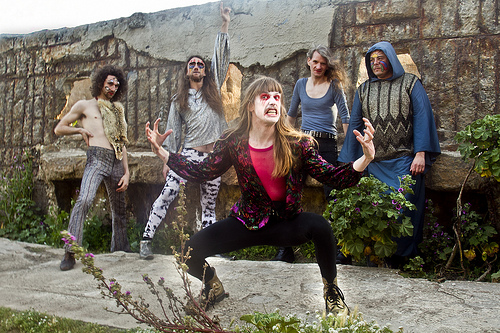
I’ve been wanting to get Glitter Wizard in Localized Appreesh for some time. It’s based in the Bay Area, plays local haunts often, and I appreciate what it’s putting out there. Fronted by Wendy Stonehenge, the hair-shaking, psychedelic glam rock band is at once wildly individual and comfortingly throwback.

That vintage guitar sound and the fringed frocks that adorn Glitter Wizard recall tripping San Francisco musicians of yore; and yet, there really aren’t many other bands doing it up quite like this now, in the modern day Bay. We’re dying for the long-hairs, the rock’n’roll dramatics, the all-out performance of Glitter Wizard, sonically Hawkwind, aesthetically Bowie.

The band’s next releases aren’t out ’till summer (read: real soon), but you can catch the act live this weekend opening for another band with a penchant for glittering spectacle and glammy make-up, White Hills. Before all that, Stonehenge fills in the blanks:

http://www.youtube.com/watch?v=drbGNEqZlbI

Year and location of origin: Glitter Wizard was originally birthed in Santa Cruz sometime around 2006. The Bay Area version came together in 2008.

Band name origin: I just felt that the name was a perfect amalgamation of our glammy stage show and our heavy rock sound.

Band motto: Turn up the guitar!

Description of sound in 10 words or less: Gypsyhawk said it best: “You guys sound like Uriah Heep played by punks!”

Instrumentation: Wendy Stonehenge on vocals, Doug Graves on keys and synths, Fancee Cymballs on drums, Lorfin Terrafor on Guitar, Kandi Moon on bass.

Most recent release: Our last release was our first LP, Solar Hits, but we have a new seven-inch and full-length coming out this summer.

Best part about life as a Bay Area band: We’ve probably got more good bands here than any other city in the country, if not the world.

Worst part about life as a Bay Area band: You have to book shows at least three months in advance.

First album ever purchased: New Kids on the Block — Hangin’ Tough (how embarrassing).

Most recent album purchased/downloaded: Def Leppard — High ‘n’ Dry (only slightly less embarrassing)

Favorite local eatery and dish: Lorfin and Kandi just introduced me to the beef brisket at Tommy’s Joynt. So good!

Glitter Wizard
With White Hills, Disappearing People
Sun/13, 9pm, $12
Bottom of the Hill
1233 17th St., SF
(415) 621-4455
www.bottomofthehill.com

A brief transgender punk heroes primer

16

The web is all abuzz — rightly — about the bravery of Against Me! singer Tom Gabel “coming out” to Rolling Stone as transgender and beginning to live her life as Laura Jane Grace (while remaining legally married to her wife and raising their child. Take that, North Carolina!). ‘Tis a wonderful thing indeed, and most of the commentary on the high school hearthrob band’s website has been positive.

As much as it pains me to call any band that came after Fugazi “punk,” Against Me! wasn’t half bad to soundtrack your 2000s teenage mall rebellion, carrying on the legacy of punks through the ages. And Grace’s transformation carries on another legacy as well — that of famous transgender rockers.

I’ve lately been rereading one of my favorite books, Please Kill Me: The Uncensored Oral History of Punk — if ever there was a book to make your life seem utterly boring shite, that’s it. It’s full of hyperenergetic boys donning frocks, from punk founders the Dead Boys and the New York Dolls to the glam heroes that punk was meant to take down, like David Bowie and Gary Glitter. And of course many fierce women of the early scene were shaving their heads and kitting out in “mens’ clothes.” (There was actually a time when Robert Mapplethorpe’s cover shot for Patti Smith’s Horses was a scandal, really.)

But all that was mere transgression, welcome as it may have been to the oppressed queers of the day — and now for that matter. Being transgender is something different, having the courage to reconcile your physicality with the mental and emotional image you carry of yourself inside. And then to rock the fuck out? Cool. Here are some of my transgender punk heroes:


>>Jayne County

She became famous in the late ’70s, kicking against the pricks in London as Wayne County (with band the Electric Chairs) — but was an NYC underground mainstay before then, taking part in the 1969 Stonewall Riots, hanging with the Warhol crew, and starting one of the first punk-like bands Queen Elizabeth in 1972. (“God Save the Queen” indeed.). She soon rechristened herself Jayne County, performing unabashedly before punk audiences as a transgender woman. As an actress, she starred in seminal underground queer films like Derek Jarman’s Jubilee and Rosa von Praunheim’s City of Lost Souls. She’s still raging.    

http://www.youtube.com/watch?v=tiih9H29pDM


>>Genesis P-Orridge

The outrageous and outrageously talented founder of ’70s experimental industrial-noise-punk-electronic outifts Psychic TV and Throbbing Gristle, Genesis approaches gender in an experimental vein as well. Already well into his own gender recalibration, he and his wife Lady Jayne Breyer P-Orridge began an odyssey of physical transformation in the 2000s to become a single pandrogynous entity to be called “Breyer P-Orridge.” Sadly, Lady Jayne died in 2007 of stomach cancer, but Genesis continues to challenge gender expectations, as the recent release of lauded doc The Ballad of Genesis and Lady Jaye attests to.

http://www.youtube.com/watch?v=GPpet98Hick


>>Lynn Breedlove

The indispensable local trans man was instrumental in the punk revival of the ’90s with his insane dyke outfit Tribe 8, and now helps keep queers safe on the streets of SF with his Homobiles on-call transportion service. He’s also an accomplished author and performer in his own right. Queers fight (and write) back!!


UPDATE: In the comments below, readers below have pointed out two very important transgender punks: Sarah Kirsch, formerly Mike Kirsch, guitarist and vocalist seminal East Bay outfit Pinhead Gunpowder, Fuel, and a ton more including Fuel and Sawhorse (and who is currently recovering from cancer). I couldn’t find a good vid of Sarah in her current incarnation, but here’s a recent one of Pinhead Gunpowder at 924 Gilman. 

PLUS the incredible Ginger Coyote of the White Trash Debutantes, who was pretty essential to the Mabuhay Gardens punk scene here.

And of course, there is a thriving, vibrant, now-decades-old underground of scrappy queer and transgender punk rock bands — and wonderful local trans musicians like Christine Beatty and Justin Bond and even lounge singer Veronica Klaus who keep the proud and outspoken transgender musical flame alight. In the immortal words of Jayne County, “If you don’t want a piece of the action, take a walk!”


Editorial: The Mirkarimi case is an abomination

97

Editor’s note: And so the man who became interim  mayor on a false pretext and then lied his way through an election for a full term amid a sleazy mass of campaign irregularities and violations, has suspended Sheriff Ross Mirkarimi without pay and is now using the full power of the city attorney’s office to continue the Mirkarimi crucifixion. Without pay? The usual City Hall/cop practice is to suspend or put a city official on administrative leave with pay. Even Willie Brown, former mayor, Chronicle columnist and PG@ES lobbyist, says Mirkarimi should not have been suspended without pay. B3

EDITORIAL There’s only one way to say this: The official misconduct case against Sheriff Ross Mirkarimi has become a one-sided star-chamber proceeding that violates all the basic rules of fairness, decency, and due process.

Over the past few weeks, Mayor Ed Lee, acting through the City Attorney’s Office, has been collecting evidence and issuing subpoenas to force witnesses (including some who have only a peripheral involvement in the matter) to give testimony. The mayor is acting as if he’s prosecuting a murder case instead of conducting a hearing on whether an elected official should be thrown out of office for a misdemeanor.

And Mirkarimi and his lawyers have absolutely no ability to respond.

That’s right: The mayor and the city attorney have subpoena power. The defense in this case doesn’t.

If this were a criminal proceeding, in a real court, Mirkarimi would have the same ability to compel testimony as the mayor. And under the rules of discovery, he’d have the right to see all of the evidence compiled against him.

But because this in front of an Ethics Commission that hasn’t even adopted evidentiary rules, one side has all the rights, and the other side has none. That puts Mirkarimi at a terribly unfair disadvantage. You can argue all day about Mirkarimi’s conduct, but people charged with the worst horrific crimes have more legal protections than he does.

The Ethics Commission needs to immediately adopt rules that level the playing field — and the city attorney should insist on it. If there are going to be witnesses — and clearly the mayor is planning to present them — then Mirkarimi’s lawyers must be allowed to review those statements in advance, as they would in any trial. All evidence against the sheriff should be turned over to the defense, well in advance of the hearing. Until that happens, the mayor and the city attorney should put the inquiry on hold.

Because right now, the process is an abomination.

We had a big fashion party at the museum, and it rocked

0

Last month, our “Beautiful Rebels” Jean Paul Gaultier fashion show-party with Peaches Christ at the de Young Museum rivaled the Gaultier opening gala itself. Check out these beautiful rebel shots by Robbie Sweeny.

Spacey new Seventeen Evergreen video

0

Check out the star-dusted new video for Seventeen Evergreen‘s “Burn the Fruit (Pegasus),” off the newly released full-length, Steady On, Scientist! Directed by Brian Ziffer, the space-inspired mini movie came from an interest in NASA’s Voyager and the Golden Record. You may recall Seventeen Evergreen as part of this year’s On the Rise elite class.

GUEST OPINION: The politics of retribution

122

By Debra Walker and Krissy Keefer

We have been shocked and saddened by the perpetual attack on Ross Mikarimi and his family.

To Ross’s credit, he took responsibility in the criminal case he faced, and accepted a plea bargain to a non-domestic-violence misdemeanor that the district attorney concluded served the interests of justice.

He and his wife, Eliana Lopez, had resolved their dispute before the betrayed disclosure to the police and the media by the trained but unlicensed attorney that began the criminal case. The plea bargain was vetted and all legal ethicists consulted concluded that the plea bargain could not be the basis of any action against Ross for the now infamous term “official misconduct.” Ross was ordered into counseling.

Since the criminal case ended we have watched the mayor, domestic-violence advocates, and the majority of the print media, collectively pass judgment without connection to reality, with devastating consequences to Ross Mirkarimi, his family and the people of San Francisco.

Mayor Ed Lee suspended Ross without a hearing and without pay. In other words, the mayor acted against Ross without due process. City Attorney Dennis Herrera has merely repeated all of the unsubstantiated allegations from a newspaper opinion piece in the form of a pleading — and actually submitted this as fact, further embarrassing our city.

Barring further intervention by the courts, the Board of Supervisors and the Ethics Commission will now be forced to publicly weigh in on the concluded criminal case that occurred before Ross was in office.

Was the punishment laid out by the courts not enough? Are we going to all sit back and watch as San Francisco engages in a public political assassination of a progressive elected official? At what point does it stop? 

Clearly it hasn’t stopped with Ross. Now the mayor and the city attorney have begun the attack on his campaign manager and well-known City Hall aide Linette Peralta-Hayes. Who is next? It could be any of us, of you.

As close friends of Ross and Eliana, we can attest to the fact that this family has paid dearly for their now very public fight and we all should hope for a healing. It does not bring justice to any women’s issues to have such a public display of retribution and revenge. Blowing this out of proportion like this has been only sets the stage for the continued backlash against women’s real issues.

If there were not a complete attack on women’s rights at this time in our country, this might be easier to stomach. Not one thing about this has advanced the rights of women or the understanding of domestic violence. Instead, the criminal justice system has been manipulated to further a political agenda of removing an elected official from office.

We all make mistakes in life. There have been several recent occasions involving officials actually in office where their behavior was questioned.  One issues involved sexual contact with a subordinate, another involved domestic violence and others involved substance abuse. In not one of these instances has the person been removed office.

To remove Ross from office is political and nothing else.

People are purportedly so outraged on behalf of abused women everywhere. But where is the outrage about the coordinated attack on choice in our country or about the documented inhumanities perpetrated against women throughout the world, even today?  Or equal pay, or adequate healthcare? What about the families losing their homes to greedy banks? Nothing of substance gets done on these issues. Instead, attention is focused away from the important issues to the personal shortcomings of the politicians seeking to address those issues.

From the impeachment efforts against Clinton to the allegations against the Wikileaks activist, there are over-amped attacks aimed to politically destroy the target in the press.  “Due process” and “innocent until proven guilty” are essentially thrown out the pressroom window. 
In the name of domestic violence, the mayor and the city attorney have removed an elected official from office. Domestic violence advocates are being used to further an agenda that is hypocritical and ultimately will undermine and dis-empower us all.

Ross Mikirimi was the only progressive elected in the last election. Ross has always been an ideological feminist. The established power brokers in City Hall did not want Ross to be sheriff. They do not want someone who advocates for diversity. They do not want someone who supports the rights of the people to implement the Compassionate Use Act and maintain cannabis dispensaries. They do not want a sheriff who will stand up to the federal government.  They do not want a sheriff who will stand with the 99 percent.

San Francisco is a great city not because of intolerance but because of tolerance. The strength of the city came about because of respect for diversity and encouragement of diversity. Ross stands for those principles.

Ross made a mistake in his personal relationship. Eliana Lopez, his wife, has clearly forgiven him. Each of us should do the same. To do otherwise is to disrespect Lopez.

Are we going to trust City Hall to be the arbitrators of conduct?  And are we really going to sit by and watch as they systematically throw untrue, unfounded, unsubstantiated accusations at whomever they want? Really?

To use this incident as the basis for this coup is without precedent. City Hall’s actions are without basis in fact and without foundation in law.

We believe that the mayor, among others, is doing what he wants to under the guise of women’s rights. We do not want to be used in that way.

There is something very wrong with what is happening — and sadly if this public political assassination can happen to Ross and his family, it can and will happen to anyone of us. Ask Linette Peralta Hayes.
 
Krissy Keefer is artist director, Dance Mission Theater. Debra Walker, an artist, is political development chair of the California Democratic Party Women’s Caucus.

Bucky lives! More from SFIFF 2012

1

Read Sam Stander’s earlier San Francisco International Film Festival report here.

Sam Green’s The Love Song of R. Buckminster Fuller, which he performed twice on Tuesday, May 1, with live accompaniment from Yo La Tengo, is technically a documentary. But it’s a sort of gonzo documentary, a piece of performance art that emphasizes Green’s enthusiasm for his subject, the bespectacled architect-prophet Bucky Fuller.

On Tue/1, Green stood at the bottom left of the screen with a microphone; the three-piece band was opposite him. This format, which Green developed for his previous “live documentary” Utopia in Four Movements, allows for him to interact in the moment with his audience as well as his footage. In one particularly fun moment, while introducing a filmed interview segment, Green timed his commentary so that the onscreen figure’s face seemed to respond to his words, drawing big laughs.

Yo La Tengo’s score was often unobtrusive, rolling beneath the surface of the recorded sound of video clips to add atmosphere. But at key moments it burst into action, as with the clip of Fuller’s demonstration of his Dymaxion Car, where percussive rumbles highlighted the explosive potential of the invention while also foreshadowing its equally drastic end (the car would crash, killing its test-driver, at a later demonstration). In a Q&A following the performance, the band indicated that Green’s temporary score for the work featured a lot of its recorded music, giving it a sense for what sounds to use in the final live version.

One of the most exciting aspects of the “live documentary” format is the focus it places on Green as storyteller and explorer. He’s infectiously enamored of Fuller’s utopian ideas – something that came across abundantly in my interview with him before the San Francisco International Film Festival, but which might get lost in a static documentary striving to convey objective facts. With Green on the stage, emoting and expressing his thoughts, the inherent subjectivity of any documentary effort is liberated, allowing him to be the voice of Fuller’s ideas in an inspiring twist on the medium.

Bay Area local Green has expressed a desire to continue developing and performing the piece, so catch it if you can.

Killers, brothers, and the just plain weird: SFIFF recap!

0

The 2012 San Francisco International Film Festival wrapped up last week, but we’re still basking in the glow of cinema overload. Festival correspondent Jesse Hawthorne Ficks chimes in with part one of his fest impressions. (And if you’re feeling post-SFIFF withdrawal, fear not: Frameline is just around the corner!)

Alps (Yorgos Lanthimos, Greece, 2011) This follow-up to 2010’s beyond-disturbing Dogtooth falls right in line with director Yorgos Lanthimos’ motifs: young teens following the demands of off-kilter adults, resulting in utterly confusing and deeply disturbing scenarios. Some audience members left feeling mystified (“That’s it?! That movie was a complete waste of time. I hate this festival!”) but oddly enough, I was hypnotized by every left-of-center shot, each non-sequitur cut, and all of the character’s desperate decisions. This world is a dark and troubling place, and I can’t wait for Lanthimos’ next film.

Bernie (Richard Linklater, US, 2012) “This is my Jack Black black-comedy!”  So sayeth Texas-based indie pioneer Richard Linklater in his introduction, and indeed, this deceptively disturbing true story showcases some of Black’s most impressive work to date, playing the nicest, most accommodating mortician in all of East Texas. Linklater layers his Black cake with some of the most genuine fast-talking, small-town Texans ever put to celluloid; just as John Waters has represented Baltimore with his own twisted point of view (or Gus Van Sant has for Portland, Ore.), Linklater continues to find love in all the right corners of the Lone Star State. While Bernie is small in scale, it’s an American film that’s not to be missed. Plus, Black yet again delivers some truly memorable songs. This time it’s hymns! Note: Bernie comes out theatrically in the Bay Area May 18.

http://www.youtube.com/watch?v=F7VSAFvPq7c

The Do-Deca-Pentathalon (Jay Duplass and Mark Duplass, US, 2012) Following up their surprise existential classic Jeff, Who Lives at Home (2011), the Duplass Brothers are doing what they do best … writing what they know. Like Cyrus (2010), Baghead (2008), and The Puffy Chair (2005), these mumblecore creators find beauty in our modern era’s simplicities. This time, it’s two brothers’ life-long competition, which has led them to a mid-thirty something standstill. This film — most definitely the BFF of Adam McKay’s Step Brothers (2006) — enables these two schlemiels to tackle not only each other but some pretty serious subject matter. Future generations will point to the Duplass Brothers’ morality tales as this decade’s most neo-realist entries.

The Exchange (Eran Kolirin, Israel/Germany, 2011) It is not often that a movie can evoke the response, “That film changed the way I saw the world for days after.” But Eran Kolirin’s The Exchange is that rare kind of film that if you stick with it (a handful of people walked out during a 9:15pm Sunday screening) the astoundingly visionary concept will truly reinvent how you see the world, and perhaps give you new direction on how to live your life. And as many brought up in the surprisingly aggressive post-film Q&A, these might not be pleasant realizations! Minimalist, abstract, hilarious, and revolutionary all at the same time, Kolirin has crafted a transcendental film that will be a genuine cult classic. Keep your eyes open for any post-fest opportunity to see it on a big screen: it’s the stuff movie theaters were made for.

Street Threads: Sunday Streets Edition

0

Valencia Street launched its monthly Sunday Streets pilot program this past weekend — several blocks of the street will be blocked off on the first Sunday of the month for the next four months, in order to see if similar programs might work across the city. Photographer Ariel Soto-Suver of Street Threads photo (and book!) fame was on the scene to snap the looks. We’ll be presenting her selections here all week. 

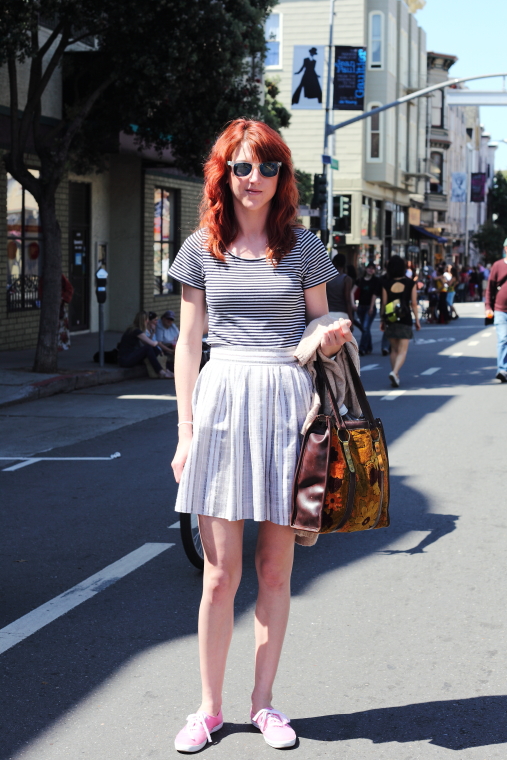
Today’s Look: Jonieann, Mission Sunday Streets

Tell us about your look: “I wear whatever is cheap at thrift stores.”

Calvin Trillin: Ron Paul, still standing

0

Ron Paul, Stll Standing

 Mitt’s opposite number is still in the race.

Paul has his supporters; he has his own base.

He has his own style, which is folksy, not canned.

Religion? He’s got one. His prophet’s Ayn Rand.

By Rand’s wacko theories he’s fervently gripped,

So he  won’t do the flip-flops. He long ago flipped.

Calvin Trillin, The Naton (5/14/2012


Low taxes are bad for business

29

The teachers at San Francisco’s public schools are talking about going on strike. The contracts talks with the district are at an impasse. Things look bleak.

Well, they don’t look as bleak as things in Philadelphia, but that’s not really much in the way of good news.

Part of the issue: The district wants the teachers to accept up to nine furlough days next year. Even if the governor’s tax measure passes, four furlough days are still on the schedule.

The teachers are complaining — with good reason — that the forced days off and other concessions cost them money, as much as $5,000 a year. But there’s another issue here: Furlough days are horrible for working parents — and for the businesses that employ them.

Ron Leuty has a nice column on this in the San Francisco Business Times, which doesn’t let you read all the stories unless you subscribe, but here’s the gist:

For parents, SFUSD parents who already have barely managed through four furlough days each of the past two school years, nine each year becomes intolerable. That totals up to nearly two school weeks for which we must find some sort of childcare or one-day mini-camps — and it’s cash out of our pocket. Or it means time off. For businesses, that means lost productivity, down work time and employees who are paying more for — and worrying more about — childcare.

For low-income parents who have to miss a day’s work and a day’s pay every time the kids are out of school, it’s a serious economic issue. And the local businesses, particularly small businesses which aren’t equipped to deal with excess employee absenteeism, it’s a nightmare.

Leuty doesn’t place any blame or explain how we got to this situation, so I will: Prop. 13 (and later, Prop. 218) made it really hard to raise local taxes, and a handful of Republicans are making it hard to raise state taxes, so there’s not enough money for the schools. Americans today, particularly wealthy Americans and corporations, are taxed far less than they were for most of the century, certainly the post-War era.

Local business leaders love to talk about the value of public schools. I don’t think many serious people who have looked at the finances believe that the SFUSD is fat, bloated, or wasting a lot of money; these days, even the anti-government folks have to admit it’s a pretty lean operation.

So why won’t those business folks (and, for the matter, the Business Times) start campaigning for changes in Prop. 13 to allow communities to fund the schools and avoid these debilitating furlough days? What, is this problem supposed to get fixed by magic?


Wiener goes after historic preservation

40


Sup. Scott Wiener is pushing a bill that would make it more difficult to create historic districts in San Francisco, and it’s already cleared the Land Use and Economic Development Committee.

UPDATE: Milk Club calls on Sup. Olague to drop her support for the bill.

The measure hasn’t received a lot of news media attention, but it could have a far-reaching effect on development in San Francisco.

In essence, the Wiener bill amends two parts of the city planning code to tighten the requirements for designating a part of the city as a protected historic area — a designation that makes it harder to demolish or substantially alter buildings.
Developers and some property owners dislike the historic designation. Perservationists see it as a way to prevent the destruction of buildings and neigbhorhoods that are a part of the city’s heritage.

Classic example: In the 1980s, members of the Residential Builders Association were tearing down vintage Victorians in the Richmond district and replacing them with boxy, multi-unit apartments that were worth more money than a single-family home. The builders made a lot of quick cash; the city lost some elegant old houses that can never be replaced.

They couldn’t do that as easily in Alamo Square, which is a historic district.

On the other hand, the owners of those stately well-protected houses in these special districts have to go through increased Planning Department scrutiny any time they want to make any substantial alteration in the structure.

Context: Less than 1 percent of the developed part of San Francisco is currently in a historic district. It’s not a huge deal, and most people don’t pay any attention to this stuff.

But it’s important, and here’s why: One, this city doesn’t care enough about its past — but more important, preservation is a tool that can be used to prevent very bad things from happening.

If we’d had good historic preservation laws in the 1970s, the International Hotel could have been designated an historic structure and wouldn’t have been demolished. Same, possibly, for the Goodman Building. Preservation laws could have been used to fight some of the horrors of redevelopment, which mowed down African American and Filipino neighborhoods in the 1960s and 1970s.

Some of Wiener’s suggestions are relatively benign. He wants to exempt affordable housing units from the laws that apply to historic districts, and Sup. Christina Olague, his co-sponsor, wants an economic hardship exemption so that the owners of buildings, particularly in communities of color, can avoid expensive battles over minor repairs and alterations.

I’m fine with all of that. I’m all for it. Good idea. Although it’s not fair to say that this process was driven by a concern for affordable housing; I spoke to Peter Cohen, at the Council of Community Housing Organizations, and he told me that the idea didn’t come from his crew. Not one affordable housing activist showed up at the Land Use hearing to support the Wiener bill.

But the measure also adds more burdens to the process of designating an historic district. It mandates a written survey of all property owners and occupants in an area proposed for historic designation — an expensive and cumbersome thing that isn’t required for commercial development, demolitions, zoning changes, massive market-rate housing projects, full-on gentrification, or anything else that screws up neighborhoods.
It requires the Planning Commission to consider whether historic preservation conflicts with “the provision of housing to meet the city’s regional housing needs allocation,” which is odd because the commission didn’t consider that when it approved 8 Washington, which directly conflicts with the city’s housing needs allocation, or when it’s allowed 20,000 units of mostly high-end housing over the past decade without any provision for the proper corresponding amount of affordable housing.

In short, it gives opponents of historic preservation more ways to stop new protections. That’s going to make developers very happy.

I asked Wiener why he decided to do this, what the problem was that this law is meant to solve. His answer: There are lots of potential new historic districts (including where he lives, in the Duboce Park and Dolores Street areas) and he wants to be sure that there’s a “robust community process.” Excuse me, Supervisor: There’s a robust community process every time anyone does anything in this town, and designating a historic district is no different.

Also: “A lot of people believe that in some situations, historic preservation can be taken to the extremes. This is a real hot topic for the city.”

Now here’s where it gets interesting (and even more complicated). There’s a neighborhood group called the Mission Dolores Neighborhood Association that’s been trying for almost seven years to get the area between Market and 20, Valencia and Sanchez designated a historic district. Peter Lewis, a musician who has been leading the battle, told me that he got involved because developers were tearing down some important old buildings (a Willis Polk building on Dolores and 15th came down a few years ago) and he wanted to halt it.
The group’s got sophistication and resources — MDNA has raised $80,000 for the necessary studies and has been working the the Planning Department and the Historic Preservation Commission.

Wiener is opposed to the idea — particularly the concept of including the Dolores Street median (designed by John Mclaren, he of Golden Gate Park fame) and Dolores Park in the district. The median’s already a state landmark.

“He’s been very polite to us, but he’s made it clear he doesn’t want to see streets or parks included in any historic designation,” Lewis told me.
Why? Well, for one thing, the Planning Department is talking about building bulb-outs on Dolores as a traffic-calming measure. Historic designation for the median might make that more difficult. And Lewis opposes the bulb-outs for all the wrong reasons: “They just want to get people out of their cars,” he said, dismissively.

But really: Is this all worth pushing a measure that could undermine preservation and encourage demolitions and bad development all over the city? Is the current system really all that bad? Didn’t a measure to strengthen historic preservation (placed on the ballot with an 11-0 vote on the Board of Supervisors) just pass overwhelmingly two years ago?

Because it seems to me that this is a solution in search of a problem.


Sunday Streets coming to — and staying in — the Mission

2

Sunday Streets – the once-controversial closure of streets to automobiles so they can be fully used by pedestrians, cyclists, and skaters, temporarily expanding the amount of open space in San Francisco – has become a popular monthly event and it rotates among neighborhoods around the city. And as the organizers prepare for this Sunday’s event in the Mission, where its biggest and best incarnations are held, city officials today announced an expansion of the program: the Mission will now host Sunday Streets on the first weekend of each month through the summer.

“Sunday Streets really comes to life and realizes its full potential when it’s in the Mission,” Ed Reiskin, executive director of the San Francisco Municipal Transportation Agency, said this morning at a press conference on the steps of City Hall.

The business community initially resisted the idea when it was proposed five years ago by Mayor Gavin Newsom and its chief sponsor, the nonprofit Livable City, concerned that customers would have a hard time getting to stores. But just the opposite has proven true as the popular events fill the streets with thousands of people.

“When Sunday Streets started, I know there was a little apprehension, we even felt it in the Mission,” Sup. David Campos, who represents the Mission. “But the neighborhood has come together to embrace the project.”

Mayor Ed Lee called the expansion of Sunday Streets “a great pilot program for San Francisco” and said that it represents “our openness to learning to use our streets differently.”

San Francisco was the third city in the country to hold these street closures – known as cicolvias in Bogota, Columbia, which pioneered the concept – following Portland, Ore. (the first, and one that we covered) and New York City. This Sunday’s event runs from 11 am to 4 pm, mostly along Valencia and 24th streets.

Little City Gardens in bloom

1

Photos by Bowerbird Photography

“This is a secret magic place in the city,” said Bonnie, a volunteer at Little City Gardens. She crouched over a bed of orange and yellow marigolds, lovingly forming them into golden bouquets.

After tromping around the one acre farm, made up of several city lots and surrounded by family homes, Sam Love and I could tell that, yes, this was a magic place. There were watchful birds, gigantic bees, plump artichokes, and baby chives growing under tents shaped by old bike tire frames.

I got the owners of the garden, Brooke and Caitlyn, to stop in front of their adorable handcrafted greenhouse for a portrait together before they hurried off to continue snipping salad greens. It was a busy day at the garden because they had to finish harvesting in time for that evening’s farmers’ market in the Mission. Can’t get fresher than that!

In addition to selling produce at the market, the Little City Garden distributes CSA boxes and supplies local restaurants with incredibly local greens. Brooke and Caitlyn describe what they’re doing as an agriculture experiment to see if it’s possible for two people to eke a living off a little farm in the big city. Transforming a vacant lot into a thriving vegetable garden takes time, ingenuity and lots of hard work (not to mention a green thumb), but when the result is the thriving and vibrant Little City Gardens, it seems well worth the effort. Imagine if every city block had its own urban garden and all your neighbors could get their salad greens from just around the corner. A beautiful dream that Little City Gardens will hopefully make just a little more possible for all of us.

Listen to Meklit Hadero and the sounds of Copperwire

0

In this week’s issue, we talk to Bay favorite musician Meklit Hadero about her latest project, Copperwire — a hip-hop space opera coming to the Rickshaw Stop on Sat/5. Hadero is joined in the project by two Ethiopian-American emcees, Gabriel Teodros and Burntface. Go more indepth (and outerspace) with Hadero about the project below.


Only real change can avert more conflict

44

This week’s May Day events brought together immigrant groups, labor unions, and activists with the Occupy movement to confront gross inequities in our economic and political systems. That’s a healthy democratic exercise, even if it sometimes provokes tense standoffs with police and property interests. But the day was marred by violence that didn’t need to happen, and that’s a dangerous situation that could only get worse.

The Oakland Police Department debuted new crowd control policies to manage marches of several thousand people, and there were some improvements over its previous “military-type responses” that have placed the OPD under the oversight of federal courts. For example, when the decision was made to clear Frank Ogawa Plaza around 8:30 p.m., police allowed escape routes (instead of using dangerous kettle-and-arrest tactics), clearly visible public information officers were available to answer questions, and people were allowed to return shortly thereafter.

“We’re not attempting to permanently clear the plaza, we just want things to settle down,” OPD spokesperson Robyn Clark told me at the scene.

But the OPD continues to provoke conflicts and mistrust with its confrontational tactics, even as it argues that such tactics are actually intended to improve its approach to handling large demonstrations. “Today’s strategy focused on swiftly addressing any criminal behavior that would damage property or jeopardize public or officer safety. Officers were able to identify specific individuals in the crowd committing unlawful acts and quickly arrest them so the demonstration could continue peacefully,” OPD wrote in press release late Tuesday night.

That sounds nice, but it’s only partially true, and the entire situation is a lot more complicated and volatile than that. Clark and witnesses told me at the scene that the dispersal order came after police charged into a crowd of several hundred, perhaps more than 1,000, to arrest someone with a stay-away order and were met with an angry reaction from the crowd.

What did they expect? The city decided to seek stay-away orders against many Occupy Oakland protesters – a barely constitutional act that only fans divisions between the city and protesters – and then to execute them at a time when elements of both sides were itching for a fight anyway. Perceptions become reality in a scene like that, which can quickly escalate out of control (which is what happened – almost all the property damage in Oakland occurred after the plaza was cleared by police).

“These pigs can’t wait to come in here and bust us up,” speaker Robbie Donohoe told the crowd shortly before the sound permit ended at 8 pm, warning people to leave soon is they didn’t want to assume the risk of a violent confrontation with police.

It wasn’t an unreasonable expectation after watching police decked out in riot gear, loaded down with tear gas canisters, and gathered around an armored vehicle with military-style LRAD sound weapon since mid-afternoon. Donohoe wasn’t advocating violence, but an important revolutionary and constitutional principle: the right to assemble and seek redress of our grievances.

“They didn’t have a permit in Egypt, they didn’t have a permit in Tunisia, and we don’t need a permit here! If you want to stay, you stay!” he said.

Many Americans share that viewpoint, and they’re frustrated that political corruption and economic exploitation have continued unabated since the Occupy Wall Street movement began almost eight months ago. And many young people – particularly the Black Bloc kids who show up with shields and weapons, ready to fight – are prepared to take those frustrations out in aggressive ways, as we saw Monday night during their rampage through the Mission District.

Witnesses and victims of that car- and storefront-smashing spree are understandably frustrated both with the perpetrators and the San Francisco Police Department, whose officers watched it happen and did nothing to stop it or apprehend those who did it. SFPD spokesperson Daryl Fong told us it just happened too quickly, with less than 20 officers on hand to deal with more than 150 vandals.

“Obviously, you have people with hammers, crowbars, and pipes engaged in this kind of act, with the number of officers involved, it was challenging and difficult to control,” he told us.

In both Oakland and San Francisco, the reasons for the escalation of violence were the same: police officer safety. That’s why OPD asserts the right to use overwhelming force against even the slightest provocation, and it’s why the SFPD says they could do nothing even when the Mission Police Station came under attack.

Now, I’m not going to second-guess these decisions by police, even though we should theoretically have more control over their actions than any of us do those of angry Black Bloc kids, although I do think both of these sides are looking for trouble and invested in the paradigm of violent conflict.

Rather, I think it’s time for our elected leaders, from Mayor Ed Lee to President Barack Obama, to stop giving lip service to supporting the goals and ideals of the Occupy movement and start taking concrete actions that will benefit the 99 percent and diffuse some of these tensions. This is dangerous game we’re all planning, and we’re teetering on the edge of real chaos that will be difficult to reel back in once it begins.

“We are not criminals. We are workers, we pay rent, we own homes,” Alicia Stanio, an immigrant and labor organizer for the Pacific Steel Casting Company, told a crowd of thousands that had gathered in San Antonio Park in Oakland, where three marches converged on their way to City Hall, carefully monitored by a phalanx of cops.

She and thousands like her didn’t march or speak or risk violence on May Day just because they like being in the streets. They’re desperate for change, real change, and it’s time that our leaders begin to deliver it before things really get out of hand in this country.


Shawn Gaynor contributed to this report.

Appetite: More Upper highs and Valley loves

0

In this week’s Appetite column in the paper, I ran down my picks for the best spots to eat a quality meal (without the expense of other areas) in the Upper Haight and Cole Valley region. Below are more of my favorites from my home ‘hood, including picks for coffee, brunch, and cocktails — including delicious sangria, a cheese gem, and a woeful tale of a hot dog scramble to avoid.

COFFEE: Coffee has long been rough in the Haight. Until Haight Street Market opened a Blue Bottle kiosk in their store, one couldn’t get a proper cup. While appealing cafes like Reverie boast a welcome back patio, and the La Boulange chain on Cole serves substantial pastries, none offers a cappuccino or espresso to satisfy coffee snobs. But just in the last week or so, there’s a quiet coffee revolution afoot with two new cafes. Flywheel Coffee Roasters looks like a hipster Mission coffee spot with a handful of laptops and industrial-stark interior. Though they aren’t going the foam art/microfoam route at this point and they have not begun roasting their own beans in-house as they plan to, initial cups are promising. The other new spot is Stanza in the Coco Luxe space. They’ll be doing coffee cuppings on the first Thursday of each month (7pm) and have their coffee roasted by Augies in Southern California. They DO have foam art and proper cappuccinos. A welcome neighborhood addition.

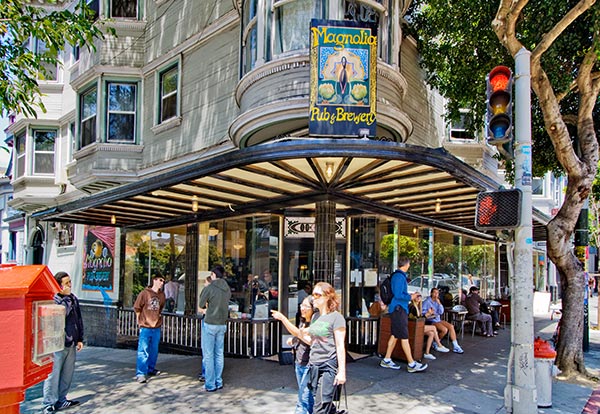
BRUNCH: I’ve never gotten Zazie‘s endless brunch waits. Sure, it’s a charming, little Parisian space, though I’ve had better luck with non-brunch meals. But for 1-2 hour waits (they do have a nice system now that alerts you when your table is ready), it’s amazingly mediocre. Personally, I wouldn’t wait any amount of time for mediocre. There are so many delicious brunches in the city, I am flummoxed as to why, after all these years, this remains many locals’ favorite. The original Pork Store Cafe likewise has waits (though not as painful as Zazie’s) which I likewise don’t find worth it. I once had a “sausage” scramble here that was hot dog slices. What it does have is quirky, old school diner charm and clientele. My brunch recommend in the ‘hood, though, is always Magnolia. Arriving before noon, I’ve never had a wait and the food is quality (plus there’s Blue Bottle coffee and beers).

FOOD: Kezar Bar (the one on Cole, not the pub on Stanyan) can occasionally surprise with above-average bar food, like giant potato pancakes with Andouille sausage, applesauce, sour cream – in a cozy, pub atmosphere. Despite the crowds and its faded glory, there’s still something appealing about the original Cha Cha Cha. Maybe it’s Mother Mary presiding over the bar, plants surrounding tables for that tropical effect, the festive atmosphere, plantains and black beans, or that damn tasty sangria. Citrus Club‘s food is pretty hit and miss – downright average, really (who has time for that in this city?) – but many adore it because it’s cheap and easy Asian “fusion” (they mix and match Asian cuisines with abandon).

For burgers, if you’re not eating Magnolia’s fab burger, local chain Burgermeister is the best bet as Burger Urge just doesn’t cut it. Since the ’70s, Say Cheese is a tiny Cole Valley gem of a market. Their small selection of cheeses, meats, wines, chocolates, is well curated, the staff are responsive and they make worthy deli sandwiches (like Cajun turkey, creole mustard, pepperoncini, pepper havarti), ideal to take to nearby parks.

DRINK: Us spirits and cocktail lovers have a soft spot for Aub Zam Zam. This is not cutting edge cocktails. It’s a slice of SF history, with a strong spirits selection and older, seasoned bartenders who are knowledgeable and sweet (since lovably cantankerous Bruno passed away, God rest his soul, there’s no kicking people out on a whim anymore). They make a mean gin martini, boozy and bright. The space evokes the Art Deco era with an exotic, Moroccan slant. Divey and dingy, it’s a classic I hope we’ll never lose.

Subscribe to Virgina’s twice-monthly newsletter, The Perfect Spot, www.theperfectspotsf.com

The Performant: This shit is bananas

0

BOA strikes again

As the banal, chart-topping strains of Taio Cruz fill the theatre, a whirlwind of pink sportswear and bared teeth commandeers the stage. This is a moment in the evening survivors of BOA X, last year’s edition of the Bay One Acts Festival, have been waiting for.

Onstage, the “dumplings” Sarah Moser, Molly Holcomb, and Megan Trout throw their hands in the air and stomp with menacing playfulness, as their wimpy Daddy (Myron Freedman), grips his magic remote control like a drowning man. A standalone sequel to last year’s “A Three Little Dumpling’s Adventure”, Megan Cohen’s “Three Little Dumplings go Bananas,” is a worthy successor, building disturbingly on themes brought up in the previous incarnation: the perils of pop culture, most particularly in regards to television, the search for self (to the dulcet tones of Gwen Stefani crooning “this shit is bananas”), the horrors of sibling rivalry, and the feral joys of cannibalism all make a protracted reprise.

As disarmingly cute as they are blood-curdlingly vicious, the dumplings somehow manage to agree to band together—just in time to find themselves forced out into the real world, setting the stage for yet another sequel, which I suspect Cohen will happily provide in the future.

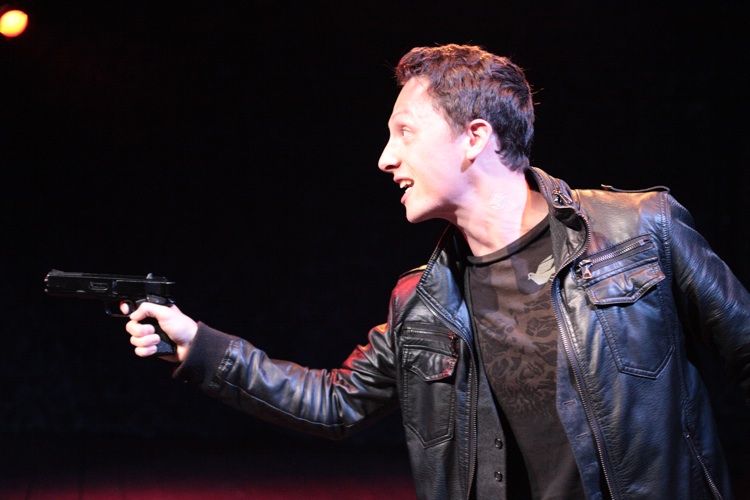
Dumplings included, the festival’s offerings can be likened to those of a dim sum cart, piled high with goodies. Split into two separate programs which run on alternating nights, the festival includes vignettes as short as ten minutes, and others inching closer to thirty (I regret I didn’t keep exact times), as thematically and theatrically diverse as the companies producing them. A fanciful, hyper-kinetic flight into Anton Chekhov’s “Seagull,” exuberantly deconstructed by The 11th Hour Ensemble, bursts on the palate like a plate of dry-fried chicken wings, while Stuart Bousel’s darkly comedic “Brainkill,” featuring one of the most hilariously horrifying arguments in favor of embarking on a conscience-less killing spree, nestles somewhere closer to the scallion pancake zone — light yet substantial, addictive and best devoured immediately without questioning its contents too rigorously. Ken Slattery’s sweet and savory “Death to the Audience,” is a good solid pork bun of a short play, full of clever lines and the enjoyable swagger of Andrew Calabrese as Mars, whereas Erin Bregman’s “I.S.O. Explosive Possibility” and Amy Sass’ “Maybe Baby,” stand in for the ambiguously jellied confections, silky and wriggling, playful and unusual.

Founded in 2001, BOA has become one of the premiere forums in the Bay Area for forging connections between small, independent theatre companies and their talent pool, and it’s not unusual to see combinations of actors, directors, and technicians banding together again in one or another full-length production later in the year. It’s also an excellent tasting platter for their prospective audiences who get to sample a bit of what each company and playwright is about, before committing to a full-length repast. Food metaphors aside, it’s also a good way to get a few top-40 hits that should-never-have-been stuck in your head, at least whenever the three little dumplings are onstage (thanks guys!), but given the context, it’s a forgivable peccadillo.

BOA X continues through May 12, more details here.