SFBG Blogs

The really bad news about the state budget

24

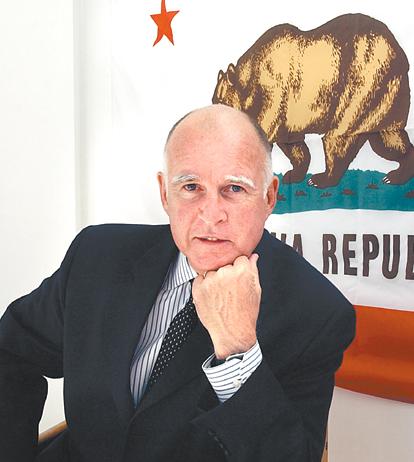
There’s no way to put a good spin on the new budget figures released by the Guv. No matter what happens in November, people who need help are going to get screwed in this state. Public schools will lose money. Health-care for the poor will be near collapse. Cities and counties will struggle to preserve the local safety nets. It’s just a disaster, and there’s no other way to look at it.

Of course, if we don’t approve Jerry’s tax plan in November, it will all be much, much worse. And he seems to be doing the right thing to promote the idea, making it clear just how deep the cuts will be and where they will hit.

But the tax plan is nowhere near enough, not even enough to keep the state at its current austerity level, much less to repair some of the damage and replace the funding that’s already been eliminated. And while the notion of cutting state workers back to a four-day week, or of mandatory furloughs, may sound better than cutting specific services, think about what it means:

First, all that money that the state workers give up will instantly disappear from the economy. Most of these folks aren’t wealthy, and they spend what they earn. That’s a hit to already-depressed demand. Then there’s the impact on the rest of us. Try getting an appointment at the DMV. (You think it’s bad now? Take away 20 percent of the employees.) Try getting a court date if you’ve been injured. (Oh, but if you’re a landlord, don’t worry — evictions won’t be slowed down at all.) This is going to be awful.

Here’s what I would say to Jerry: Push not only for your tax measure but to elect enough Democrats to pass taxes without going to the ballot. There’s no reason this current measure needs a vote of the public; the Legislature has every legal ability to pass all of those taxes. And if it weren’t for a handful of Republicans who drink the no-tax Kool Aide, it would be happening.

Closing a few corporate loopholes and instituting an oil-severance tax would solve much of the remaining deficit. Reinstating Schwarzenneger’s cuts to the vehicle license fee would solve the rest. And all of that can be done without a ballot fight.

The moderate Democrats in Sacto annoy me as much as the Republicans sometimes, but if Brown and Legistlative leaders make it clear that they’re helping candidates in swing districts, but that they expect them not to be obstructionist on taxes, there could be much better news in the years ahead.


Live Shots: The Drums and Craft Spells at Great American Music Hall

0

“Let’s just have a good time tonight,” said Jonny Pierce, the singer of the Drums, one song into a sold-out show at the Great American Music Hall on Saturday. He paused briefly to let the applause fill an appropriate amount of space and added, “This next song is about a dead person.”

There may have been some intentional, practiced irony at play, but the space between those two statements is the key to everything that is great about the Drums. Sure, Pierce has one of the most perfect, near angelic voices in pop music – witness enraptured fans, hands out toward the stage, looking for a hold – but more importantly, he also has one of the best deadpans.

When he’s performing, his facial expressions vary more in intensity than emotion. If you catch him smiling, it’s inward. Happy? Sad? Blah. When the band is playing bright, uptempo, yet often melancholic music, and the lyrics send conflicting cues on how to feel, the singer seems careful to pivot just right, not tip his hand.

After singing “Book of Revelation” off of the recent album Portamento, which includes the lines “I’ve seen the world and there’s no Heaven and no Hell” and “I believe when we die we die, so let me love you tonight,” Pierce said, “That last song was really important to me, so to hear you guys singing that…thank you.”

On stage, The Drums* won’t tell you how to feel about typical pop topics like love and heartbreak anymore than less typical ones like, say, being an atheist and having an existential crisis, but Pierce is seemingly happy to show what you can do in the mean time, as he’s otherwise constantly moving about the stage, calmly dancing with his own confusion.

Openers: Part Time recalled a less drugged out (or just more doobied) version of Ariel Pink, but that may have just been the lead singer’s technicolor dream coat. Also on the style watch, the drummer looked like one of Biff’s lackeys in Back to the Future (but that may have just been the glasses.)

Craft Spells’ Justin Paul Vallesteros gave a shout out to Stockton, where he started the band before relocating to Seattle. Someone in the crowd said he’d “discovered the band last year, and it turned out to be the perfect summer soundtrack.” Based on the way that the intro to “After the Moment” – from last year’s “Idle Labor” – was recognized with cheers, he wasn’t the only one that feeling that way. And given how well new tracks “Warmth” and “Still Left With Me” were live, it could be the soundtrack for this summer as well.

*Truth is the whole band has deadpan solidarity, particularly co-founder Jacob Graham who, whether playing keys or conducting a bank of analog synth – as he did for the encore opener “Searching for Heaven” – has an ever-present, captivating stillness.

Heads Up: 7 must-see concerts this week

0

This week, musicians come from far and wide, from broad plains on the other side of the spinning globe, plucked from different coasts of varying notoriety, and from our very own backyards to entertain us. It’s a veritable Google Earth of sonic endeavors.

Far: exquisite Malian vocalist Khaira Arby. Around the corner: Thee Oh Sees with new Oakland act Warm Soda. Not quite as far as West Africa: Brooklyn’s Light Asylum, and Manhattan’s Emily Wells (different nights). Out of this word: Carletta Sue Kay. Now that’s entertainment. Let’s globe trot together from the comfort of our own venues, shall we?

Here are your must-see Bay Area concerts this week/end:

Light Asylum
Supernatural goth-pop duo Light Asylum is back, this time celebrating the release of its self-titled debut full-length, out now on Mexican Summer. Both gritty and ethereal, the record is a study in straddled extremes. Light Asylum also plays Amoeba at 5pm Monday.
Mon/14, 9pm, $12-$15
Public Works
161 Erie, SF
(415) 932-0955
www.publicworks.com
http://www.youtube.com/watch?v=TTk3R–Heug

Khaira Arby
She’s been hailed as “Mali’s reigning queen of song,” and is revered outside of Timbuktu by fellow world acts, including the Sway Machinery, which asked her to join it on tour a few years back. She writes and sings in indigenous languages of the Sahara desert and in those, her voice has a husky, powerful draw.
Wed/16, 9pm, $10-$15
New Parish
579 18th St., Oakl.
(510) 444-7474
www.thenewparish.com
http://www.youtube.com/watch?v=1UDecjaj4ek

Warm Soda and Thee Oh Sees
The name brings to mind cola burps. But it’s actually a brand new pop band put together by Oakland’s Matthew Melton, formerly of Bare Wires. And this will be your first chance to catch it live. And of course, fellow locals/headliners Thee Oh Sees routinely shred. And that goes for the rest of the lineup as well.
With the Mallard, Burnt Ones
Wed/16, 9pm, $12
Brick and Mortar Music Hall
1710 Mission, SF
(415) 800-8782
www.brickandmortarmusic.com

http://www.youtube.com/watch?v=vSZTJsUWqXA

Emily Wells
Her variable voice is intoxicating, as are her live-looping violin skills. Sure, the video below is old and the multi-instrumentalist/”one-woman orchestra” has a brand album (Mama, Partisan Records) that’s full of endless layers and vigor. But this song’s called “Take It Easy, San Francisco,” and so we will.
With Portland Cello Project
Thu/17, 8pm, $15
Swedish American Hall
2174 Market, SF
(415) 431-7578
www.swedishamericanhall.com
http://www.youtube.com/watch?v=d6e2wOt1E2Y

Alright, here’s one off Mama
http://www.youtube.com/watch?v=7tnMlQcWcsI

Suckers
Riding a sunny art-pop rainbow of sticky, digitally-enhanced highs on newly released sophomore record Candy Salad (French Kiss), Suckers – whom you may know from previous single “It Gets Your Body Movin’”  –  journey to our coast this week from their adopted-home base of Brooklyn. Collective thanks again, Brooklyn, these Suckers are stuck in our heads.
With Young Man, Vanaprasta
Thu/17, 9pm, $12
Bottom of the Hill
1233 17 St., SF
(415) 621-4455
www.bottomofthehill.com
http://www.youtube.com/watch?v=5ZjfpBO_n2w

Carletta Sue Kay
Carletta Sue Kay vocalist Randy Walker has a fancy new (and if you can believe it, debut) album out this week – Incongruent (Kitten Charmer, May 15) – but is already something of a local legend, having opened for the likes of Kurt Vile, Ariel Pink’s Haunted Graffiti, Girls, the Fresh & Onlys, and Kelley Stoltz. Oh, and recently got a damn profile in the New York Times. Go, hear that silky, bluesy four octave vocal range once more, and rightfully fete the singer-songwriter. Carletta Sue Kay also plays Amoeba at 6pm Thu/17.
With Avengers, Erase Errata
Fri/18, 8pm, $15
Cafe Du Nord
2170 Market, SF
(415) 861-5016
www.cafedunord.com
http://www.youtube.com/watch?v=324m9sDQQl8

Black Sabbath’s Paranoid
The next round in a creative ongoing series from UnderCover Presents, “Black Sabbath’s Paranoid” pits more than 50 Bay Area musicians against one monumental heavy metal record. Each band covers one song, then on to the next. Note: there will be heavy metal-themed sandwiches sold outside, courtesy of Brass Knuckles.
With Extra Action Marching Band, Uriah Duffy with the Memorials, Sabbaticus Rex & the Axe-Wielders of Chaos, Tiger Honey Pot with Max Baloian, and more
Sat/19, 9pm, $20 (includes cover CD)
Independent
628 Divisadero, SF
(415) 771-1421
www.theindependentsf.com

Live Shots: Black Moth Super Rainbow, Lumerians, Gramatik at 1015 Folsom

0

Fans of intentionally reclusive rock group Black Moth Super Rainbow had the opportunity to catch the Pittsburgh, Pa.-based band at 1015 Folsom on Friday. The code-named members initially struggled in the performance, partly distracted by projector technical difficulties, but also trying to overcome an awkward lineup.

The best shows I’ve seen at at 1015 and conjoined sister club 103 Harriet have made good use of the main room’s set-up, alternating between the stage on one side of the room and the DJ booth on the other, keeping the wait time between acts to a minimum. That sort of seamless club flow is pretty essential for jockeys and electronic acts, but not always possible with bands. Since the lineup for the night was mixed and the booth may have been needed for sound engineers, a little lag for set-up was forgivable.*

But what wasn’t so forgivable, was the placement of Zackey Force Funk. Splitting time between tuning up tracks on his laptop and emcee-ing, ZFF’s performance went down like sitting on a friend’s couch while they share their latest iTunes downloads – Flying Lotus, Lazer Sword, Jonwanye – and proceed to mime along and drink Heineken.

If it has a place, it’s as an extremely chill warm-up or as part of a larger group, but not following two bands like Pictorials and Lumerians. Especially since the latter – with a percussive kineticism and vibrant psych tint – could have been a fine lead in to the main act.

As its set progressed, BMSR, with a somewhat lackadaisical air, built gradually into a rhythm. It never strayed too far from subdued, vocoded vocals against consistent, slow crashing beats, peaking on the oddly inviting “Sun Lips” from Dandelion Gum.

It seemed to do the job for the crowd, manifesting in extremely calm mosh pits and a few stage divers, one of whom – ouch – went straight to the floor. (Remember to look before you leap.)

I’d been curious what Gramatik would do to close out the night. The producer’s latest EP on Pretty Lights Music, #digitalfreedom, features an expansive sound, complete with forays into Bassnectar-like ADHD beats, but nothing that I imagined gelling with BMSR.

There was little sense of urgency, but Gramatik, accompanied by a guitarist, seemed to essentially disregard what came before, getting into a hard set that was light on overused drops and heavy on soul hooks. It was probably the best plan. The crowd had thinned between sets, and the bar was closed by that point, but as the set went on, the dancers, who may have been waiting all along, trickled back into the main room.

*No machine is 100% efficient, but some of the heat, otherwise lost, can still be used to do work.

Dick Meister: Union rights are civil rights

15

By Dick Meister

Dick Meister, former labor editor of the SF Chronicle and KQED-TV Newsroom, has covered labor and politics for more than a half-century. Contact him through his website, www.dickmeister.com, which includes more than 350 of his columns.

The right of U.S. workers to organize and bargain collectively with their employers unhindered by employer or government interference has been a legal right since the 1930s. Yet there are workers who are unaware of that, and employers who aim to keep them unaware, meanwhile doing their utmost to keep them from exercising what is a basic civil right.

Many employers often claim working people are in any case not much interested in unionization, noting that less than 15 percent of workers currently belong to unions.

But as anyone who has looked beneath the employer claims has discovered, it’s the illegal opposition of employers and the failure of government regulatory agencies to curtail the opposition that’s the basic cause of the low rate of unionization.

If most workers do indeed oppose unionization, then what of the recent polls decisively showing otherwise? And why do so many employers go to the considerable trouble and expense of waging major campaigns against unionization ? Why do they take such illegal actions as firing or otherwise penalizing union supporters?

Could it be that union campaigners might be able to persuade workers to vote for unionization, despite what their employers might have to say? Or despite employer threats to punish them for voting union?

Some employers have now taken the outrageous step of trying to keep employees from even knowing of their legal right to unionization.

Under a National Labor Relations Board ruling last August, employers were to be required as of this April to post notices at their workplaces telling employees of their union rights.

The ruling stemmed from the labor board’s finding that young workers, recent immigrants and workers in non-union workplaces were generally unaware of the labor laws’ guarantees and protections – including, of course, the basic right of workers to unionize.

As the New York Times observed, “the backlash was furious.” The notoriously anti-union National Association of Manufacturers and U.S. Chamber of Commerce filed suits in two federal courts, claiming the law does not expressly permit the NLRB to require employers to post such notices. An appeals court has postponed the effective date of the rule pending further appeals.

The Times noted that the case involves more than “the legality of having to hang a poster in the coffee room. It’s about industry’s attempt to delay rules whenever it cannot derail them outright. It is about preventing workers from gaining knowledge and support to help them press their concerns.”

So unless and until a court rules otherwise, workers will have the right to protections from the labor laws, but not the right to be informed of that through workplace notices and otherwise. Bizarre, certainly, is the word for that.

What workers need above all, even above the right to know their legal rights, is a firm strengthening of those rights. Why not add the right of unionization specifically to the Civil Rights Act? It is, after all, on a par with other basic civil rights such as the right to an education free of discrimination.

The Civil Rights Act, which makes it illegal to discriminate against workers on the basis of their race, ethnicity, gender, religion or national origin, should be expanded to include a specific prohibition of discrimination against pro-union workers.

No less a civil rights champion than Martin Luther King Jr. would agree to that. He knew that the right to unionization is one of the most important civil rights. Virtually his last act was in support of that. For he was slain by an assassin’s bullet in 1968 as he was preparing to lead yet another of the many demonstrations he had led in behalf of striking black sanitation workers in Memphis who were demanding union recognition.

That was but one of many examples of King’s support for workers seeking union recognition as their civil right – a right guaranteed not only by the 77-year-old National Labor Relations Act but also by the Constitution’s First Amendment guarantee of freedom of association.

King declared that the needs of all Americans “are identical with labor’s needs: Decent wages, fair working conditions, livable housing, old-age security, health and welfare measures, conditions in which families can grow, have education for their children, and respect in the community.”

There could be no civil right greater than the right of working people to try to meet such paramount needs, as well as to be clearly informed of their right to

do so through unionization.

Dick Meister, former labor editor of the SF Chronicle and KQED-TV Newsroom, has covered labor and politics for more than a half-century. Contact him through his website, www.dickmeister.com, which includes more than 350 of his columns.

Live Shots: Avital tours Mission District food hotspots

0

Photos by: Bowerbird Photography

It was 11:30am on a Saturday morning, and we were tipping back salty oysters and chasing them down with sweet pink rhubarb cocktail, and then, just because pig meat tastes so good, ate some wonderfully cured, sliced Southern ham. The day was off to a great start and just kept getting tastier as our little posse made its way through the Mission, led by our knowledgeable and ebullient guide, Avital of Avital Tours.

She described her name as sounding like “Advil” and “Tylenol” mixed together, perhaps also hinting of the hangover and pharmaceutical cure we might need unless we paced ourselves on the drinks. Avital organizes food and wine tours in San Francisco, and specializes in discovering special local eateries that may be off an SF local’s radar.

There was a little of everything on the tour: local cuisine, history, talks by the chefs or restaurant owners, and even a little hands-on cooking stuffing mini meat pastries. Avital is an expert at pairing foods and balancing the tasting options. A super-energizing coffee sampling came at a perfect time, providing a needed lift after the morning cocktail and a delicious beer and cheese adventure.

As we meandered through the streets, Avital narrated our journey with interesting anecdotes about the history of the neighborhoods and murals that decorate the Mission, giving even me, a native San Franciscan, some insight into the neighborhood. The tour ended with ice cream sandwiches on the steps of Mission High, looking out over the Cinco de Mayo celebrations in Dolores Park.

We climbed to the top of those steps after our three-hour culinary adventure, and felt a sense of accomplishment not unlike how hikers feel after reaching the summit of a mountain. Eating and drinking ourselves silly takes work, and we felt perfectly contented to just sit there, loosen our belts, and soak in the sunbeams. What a nommy day!


Open Walls Baltimore: What the murals said, how the streets responded

1

Most of you will know the neighborhood I was walking that early evening in from The Wire. In fact, the school where season four was shot was a few blocks away. That TV show is an eternal point of reference for Baltimore’s Greenmount West neighborhood, which Open Walls, the town’s first street art festival which I was in the hood to cover, was hoping to combat. The festival, going since March, will conclude with a closing party on May 25.

“Hey! I have a question for you!” Sometimes when you’re walking through half-vacant blocks at dusk you don’t turn around when people yell at you from across the street (you know white people), but this time the Argentines and I turned. A woman was walking towards us and pointing up at Jetsonorama’s massive, half-finished wheatpaste of a man’s face hovering in the dark above our heads.

>>RELATED READ: CAITLIN DONOHUE’S INTERVIEW WITH GAIA, THE 23-YEAR OLD STREET ARTIST-ORGANIZER OF OPEN WALLS

“What are you guys doing with that wall? Is that Mr. Tony?”

It should be noted that I have little to nothing to do with Open Walls, though I managed to secure a spot sleeping on a half-inflated mattress in 23-year street artist and festival organizer Gaia‘s cavernous live-work space for a week to watch the haphazard business of trucking half-cans of paint and open containers of paste across town in various station wagons by underpaid, incredibily dedicated staff and volunteers.

But even though – alongside season four’s Primary School No. 42 – hundreds of young artists lived in a massive ex-cork factory just a few blocks from where we had our exchange, it struck me the woman that evening saw us (some white and Latino scruffy-types) as a big enough anomaly on her block that she knew we had to be associated with the steet art festival.  

“You know Mr. Tony?” I asked. “Yeah,” she replied, with something that sounded like worry in her voice. “Why is he up on the wall?” “You’ll have to ask the artist,” I said. “Do you like it?” “Oh yeah, it’s really nice,” she told us, walking away, back into the night.

Around the corner in an alleyway, I’d seen Jetsonorama’s mirror-image pasting on either side of the narrow corrdor; a black kid on his bike. It seemed like he was reflecting the neighborhood back at itself, in stark contrast with the neon triangles and backwards wording of Baltimore artist Josh Van Horn’ previously-completed building-sized piece or even Argentine Jaz‘s corner park, which he’d lined with regal, painterly drawings of big cats. 

So that night, back at Gaia’s paint-covered live-work circus, Jetsonorama and I found a quiet place to talk about street art. Of course, I set my Android up wrong and none of the video footage of our epic, enlightening interview recorded, so I’ll steal his quotes from an epic and enlightening blog post he later wrote on his trip to Bmore. 

Jetsonorama, a.k.a. 50-something family physician Chip Thomas, lives on a northeastern Arizona Navajo reservation. He initially came for a four-year engagement to pay back his medical school loans, but, he tells me, “I loved the land, loved the people. So I decided to stay on.” His street art career began in 2009 on a trip to Brazil where he was struck by the sense of community that had arisen among the street artists he met there. 

And so upon his return to the rez, he began printing and posting images from photos he’d taken of people and animals there in the community. Jetsonorama saw them as an expression of the hip-hop culture he’d grown up in, love letters to the beleagured reservation he adored. He called the series Big. His next project was the Painted Desert Project, started with a friend. The work started earning props from those omnipresent street art blogs, and Jetsonorama began an online correspondence with Gaia, another artist who does “site-specific” (often a code word for “something the neighborhood will like”) wheatpastes.

The decision of what to paint is a defining aspect of street artists. Many of the artists at Open Walls like Rome’s Sten and Lex, Argentina’s Jaz, and Capetown’s Freddy Sam, create works that follow a specific artistic canon — like gallery painters, their inspiration can be culled from all over. Others, like Gaia, Jetsonorama, Chris Stain — even the New York artist LNY who dropped through Baltimore for a night to put up his wheatpaste of a boy astride a halo-ed horse — will often choose themes that reflect the geographic location of their work. This approach can often lead to a sense that a piece was created for neighborhood residents, avoiding the fate of pieces like Swoon’s Open Walls wheatpaste of an ancient woman (an Aborigine elder she met in Australia, though that fact was apparent in the finished piece.) The neighborhood, it was said around among the street artists, didn’t really get that piece, found it “creepy.”

Freddy Sam comments on his wall’s reception in Baltimore

To date, Jetsonorama is the only African American artist that is part of the Open Walls, which made his exchanges with neighborhood residents particularly meaningful. 

Indeed, they shaped his time in Baltimore. When Jetsonorama’s first attempt at pasting up Mr. Tony — a neighborhood legend, by the way, known for raising pigeons and wearing quarters in the stretched holes in his earlobes, which Tony will tell you is his change for the payphone — failed on an unprepped wall, he tried again. As he and street artist-festival organizer Nanook worked into the wee hours of the morning on the first draft, the block turned out to support them, telling them how much they liked the piece. So when the wheatpaste refused to stick to the wall, Jetsonorama extended his eight-day trip, eventually staying for two weeks and turning out a second version of Tony and a few other pieces. 

Open Walls Baltimore was all about balancing art and neighborhood – an apt reflection of the city’s plan for those blocks, given that Greenmount West and adjoining Charles North are both parts of the planned Station North arts district. In addition to the half-vacant blocks, Greenmount West is marked by old factories that have been filled with hundreds of working artists. Artists plus low-income renters: an age-old recipe for gentrification.

Those involved with Open Walls are well aware that their project may be a harbinger of higher rents in the neighborhood. “There’s a latent fear of this being one aspect of a changing neighborhood,” festival organizer and 23-year old wheatpaste artist Gaia told me when I interviewed him in his live-work studio space, the chaotic center of Open Walls. 

“Not all developers are totally evil, despite what people may say,” says Ben Stone, executive director of Station North, the area’s arts advocacy organization that is playing a large role in the implementation of Open Walls. Our interview took place at a sidewalk cafe in front of Cafe Bohemian on Charles Street, the bustling center of the North Charles neighborhood that was once the commercial center of the city in addition to being its geographic hub (the bus and train station is a few blocks away.) Stone told me that neighborhood associations envision a future for the area that includes the same number of low income units – but no more. That means that all the infill of those abandoned buildings can be more expensive housing, even “30-story buildings,” Stone says.

Stone tells me that the aim behind Open Walls is to attract real estate developers to the area so more of the empty properties can be turned into housing and other businesses. It also looks to make visible the art scene that is going on in Greenmount West behind the doors like those of the famous Copy Cat, an ex-factory megalith of artist housing. Doing murals out on the street inspires conversation between the street artists and the other residents of Greenmount West. 

Jetsonorama certainly found that to be true. He tells me a handful of stories of neighbors taking pride in the fact that a black man was participating in an endeavor that was seen as being controlled by forces outside the neighborhood. He recounts an exchange that happened while putting up a piece for Open Walls in the Station Village area. A woman stopped at a light, rolled down her car window, and yelled at him the following: 

“That’s nice! I like that. Thank you for sharing your art with us. Be sure to put your name on it when you’re done because if you don’t, the white man will come along and say he did it.”  

Community college students convene to unite against cuts, state legislation

7

Students and staff from community colleges throughout California gathered at the City College of San Francisco (CCSF) Mission campus May 12 to discuss legislation, particularly the Student Success Act, that organizers feel threatens community college students.

The conference “was the first time that students from community colleges across California came together like this,” said Everic Dupuy, a student at CCSF. 

Dupuy participated in a panel with fellow students and teachers explaining the Student Success Act. The act would implement six recommendations made by the Student Success Task Force, a body created in January 2011 to investigate policy changes to increase graduation rates at community colleges.

Students have vehemently opposed the recommendations that the task force made. A December issue of the Guardsman, CCSF’s newspaper, was devoted to that opposition. 

The Student Success Act act includes policies that would prioritize class placement for newer students. Students who have been enrolled in community college for more than two years would find it more difficult to get into classes they need. The act would also create a system-wide standardized test to assess student success. 

“The task force’s recommendations will benefit higher-income students more, while students who attend part-time and work while attending school will be hit the hardest,” an editorial written collectively by students across the state claimed.

Members of the task force said that encouraging students to complete their coursework in a streamlined two years is necessary as community colleges have faced budget cuts. “Hundreds of thousands of first-time students, recent graduates of California’s high schools, have been turned away because they could not register for a single course,” said Peter MacDougall, chair of the Student Success Task Force, in an editorial.

But Dupuy says prioritizing new students is unacceptable. “It pits newer students against older students in a race for classes. It basically creates a situation where education is being rationed,” he told the Guardian. 

Teachers, staff and administrators at CCSF have also come out against the Student Success Task Force. At a rally in November, faculty and members of the CCSF board of trustees came out against the recommendations in the report published by the task force, saying they insert the state into local policies and reward students who study full-time and declare majors early at the expense of others.  

“The California Master Plan for Higher Education said education should be free and accessible to everyone,” said Dupuy. The plan, written in 1960, did “reaffirm the long established principle that state colleges and the University of California shall be tuition free to all residents of the state.”

It has since been altered several times, and in 1985, community colleges began charging fees for courses. In recent years those fees have rapidly increased, and will be increased by $10 this summer, when students will begin paying $46 per unit fees. 

Other sessions at the conference included presentations from students who organized with student movements in Chile and Canada.  Students in Quebec are revolting against college tuition hikes in a strike that has now lasted 13 weeks.  

Students from Santa Monica College also presented at an Occupy-style general assembly meeting that ended the conference. They proposed the formation of a statewide student union, and will be hosting another statewide conference to plan the student union May 19. Santa Monica College has been a site of conflict recently, as students protesting the implementation of a program that would have increased fees for more popular summer courses were pepper sprayed at a hearing on the program. Their campaign worked, and the college delayed the program for further examination. 

Organizers say the student union would play a role that existing student government structures can’t. “Our student governments are mostly administrating us instead of fighting for us in our districts” said Mikhail Pronilover, a Santa Monica College student. 

“The Student Success Act is a perfect example of why we need a statewide student union. Organizing in our districts isn’t enough- if we can’t come together, we won’t be able to defeat it,” said Claire Keating, an incoming student at UCLA. Keating is involved with the Southern California Education Organizing Coalition, formed recently to address the SSA and other perceived attacks on students. A similar group, Occupy Education Northern California, has also formed in recent months- students hope to continue the coalition-building trend across the state.

A massive student march on Sacramento has become a tradition in recent years. But students are ramping up efforts to keep year-long pressure on legislators.

Organizers hope Saturday’s conference, with reprsentatives from throughout the nation’s largest public education system, will prove an important step in that direction.

A fair deal for the city’s nurses

12

For San Francisco’s public-sector registered nurses, this year’s Nurse’s Week was a paradox. On May 10, nurses from throughout the city gathered in the cafeteria of San Francisco General Hospital to celebrate Florence Nightingale’s birthday by bestowing gratitude and appreciation on nurses selected by their colleagues. Martha Hawthorne, long-time Castro-Mission Health Center public health nurse, was one of those honored. 

Upon acceptance of the award, Martha said that city nurses would be most appropriately honored by getting a fair contract. The next day a smaller gathering of nurses, including Martha, was back across the bargaining table from city negotiators who have proposed  significant financial and working condition concessions. Decreased compensation threatens the future of nursing in the public sector by impairing recruitment and retention of highly-skilled registered nurses. Working conditions concessions are even more broadly harmful and unacceptable; it is both risky for the nurses and increases the likelihood of adverse outcomes for those we care for.

San Francisco DPH nurses care for the city, quite literally, and with great pride. We are also proud of San Francisco’s historically progressive record on public health. Immigrant pregnant mothers are not interrogated by immigration authorities before giving birth. Public health nurses don’t require insurance company pre-authorized visits before teaching self-care to elderly residents of downtown SROs. The quality of care given by Jail Health nurses is no less than that given to someone living in a nice house by the city’s home health nurses of Health-at-Home. Laguna Honda, one of the last municipal long-term care centers, has a beautiful new campus and San Francisco General Hospital is being noisily rebuilt thanks to voter-approved bond measures. But nice buildings and well-conceived health programs don’t care for the ill and injured, nurses do.

Nurses are professionally pragmatic; we don’t offer false hope. Patient advocacy requires great patience. This is especially true in the public sector, where the population we serve is likely to suffer from intractable extreme poverty and social marginalization. The poor don’t require less health care than wealthy individuals, in fact they require more. It’s not always pretty, but we know that if we are given the human resources to do so we will continue to deliver excellent patient care.

The complexity and intensity of patient care seems to be rising far faster than inflation. Aside from the issues of fairness and quality care, nurses simply don’t have enough hours in the day to do the repair our over-burdened fractured health system requires. Activist nurses are needed to save lives by preserving and expanding health care access. While universal single-payer health-care is elusive nationally, California nurses are optimistic we can do better here. Women’s health is under attack nationally by fanatics who would deny cancer screening and care for rape survivors.

Nurse’s Week is over and we have a lot to do, let’s start with a fair deal for DPH nurses. It’s not to much to ask for and we will all benefit.

Sasha Cuttler, RN, is a San Francisco public health nurse.

Nicholas Perez drives Robotics Team 1717 to the No. 1 position in the world

0

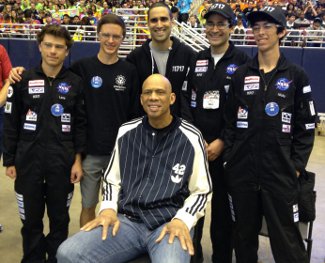
Well, my addiction to robotics continues as the fabled Dos Pueblos Robotics Team 1717, led by my grandson Nicholas Perez as the ace driver,  has been ranked number one in the world out of 2,332 robots. The team is from Dos Pueblos High School in Goleta, California.

It was a splendid finale to a bittersweet season for the team.Team 1717 had breezed through the regionals and competed flawlessly in the early rounds in the national competition in St. Louis, but encountered mysterious communication problems in the final rounds and never made it to the championship round. The DP spokesman said, “clearly there’s a difference between winning the competition and being number one in the world.”

The team won a spectacular series of awards in the most sophisticated robotics competition in the world.  First place in the Los Angeles and Central Valley regional competitions. Innovation control award in the Central Valley regional. Zerox creativity award and Number l robot in the St. Louis world championship competition. Number l robot out of the 2,221 first robots as named by the Chief Delphi Offensive Power Ranking, the official authority for FIRST robotics rankings.

This was a remarkable year for the Dos Pueblos robotics team under Coach Abo-Shaeer.  It helped dramatize “the new cool” and how high school robotics is coming up fast behind football, basketball, and soccer as a major high school sport.  A past 1717 team and Coach Abo-Shaeer were featured in a book “The New Cool” by Neal Bascomb.

The robot is named Lindsay Rose after a classmate who died in a freak surfing accident in Goleta in her freshman year. She would have been a senior this year.  The rallying cry of the team was “Lindsay Rosebot, show us what you’ve got.” Her parents attended the championship competition in St. Louis.

The Dos Pueblos video was filmed by Emily Thomopson and Yibing Zhangand and put together by Mariel Bildstein, Phillip Hampton, and Jacob Moghtader.

The photo above shows Team 1717 with basketball star Kareem Abdul Jabbar  (from left to right): Lane Fuller (co-driver), Nick De Heras (Human player), Jami Abo-Shaeer (mentor), Amir Abo-Shaeer (coach), Nicholas Perez (driver).

Read more about the competition here and view a video of all the action below.


Claymation! Fashion! Digital Sound! An afterschool arts revival

0

If you believe the children are our future, then you may soon agree — contrary to rumors of its ongoing extiction — that the future arts scene of San Francisco is actually looking bright.

While arts classes fall off the curriculum in public schools nationwide, a collaboration between the San Francisco Recreation and Parks Department’s (SFRPD) Cultural Arts Division and its Community Services Division (which runs afterschool programs citywide) keeps the creative spark alive via the ongoing Arts Afterschool program.

Just a year and a half old, the Arts Afterschool program will host its first-ever live showcase, the Arts Afterschool Spring Gala at the Harvey Milk Center for the Arts on Sat/12. The gala will feature the artwork of 400 kids from virtually every neighborhood in San Francisco. The event showcases work from the program’s fall, winter and spring sessions.


Arts Afterschool is the brainchild of Jenny Rodgers, supervisor for the Cultural Arts Department of SFRPD.

“Jenny did it because it’s an opportunity for us to bring really, really quality instructors to the entire city, and reach kids that wont actually come into contact with that kind of work in their own schools right now, because there are so many cuts going on with arts programs in schools,” says Clove Galilee, program coordinator for the Cultural Arts Division of Recreation and Parks.

Lively paintings dapple the walls of the Harvey Milk Center and stretch up the stairwell. Sculptures of many shapes and colors dot the building. Downstairs in the gallery sit two computers, one with a looping slideshow of kids’s works.

“The other part of this, which is really exciting, is a whole series of interviews,” says Galilee. “We actually went to each site and interviewed instructors teaching arts classes there, talked to the kids, and did these little three-minute videos of what kids were doing. And those are amazing. Amazing.”

If kids attending the event are inspired by the exhibitions, they can make artwork of their own at arts and crafts tables, as you (the adult you) peruse the room and munch on provided refreshments.
The late afternoon treats gala visitors to live performances in the ballroom, as dancers, musicians, thespians, filmmakers, fashionistas, hip-hoppers, and digital sound virtuosos take the stage.
   
As part of the live performance section, one-of-a-kind kid-designed fashions will strut across the runway and hip-hop dance groups from Ocean View and Ingleside will perform a choreographed routine. And youngsters from Bay View’s Joseph Lee Playground will perform African drumming and dance, which Galilee says is “pretty amazing.” “They created a whole little performance and it’s awfully cute,” she says. “We really try to be up with what kids really want to learn.”

While the main age group in the program is 7 to 12 years, teenaged participants designed digital sound performances.  “We’re excited to listen to their digital sound stuff,” says Galilee. “And kids from all over the city compiled claymation videos. They actually make the clay figures, and then they create the story. They narrate the story, they film it all, and they learn to edit it.”

How do these talented tykes come to master so many mediums? Professional instructors from across the arts were recruited and paid for by a three-year grant through the Department of Children, Youth and Families. “What’s unique about our program is [SFRPD] already has a thriving afterschool program that really helps parents and is very affordable,” says Galilee. “These kids go to these programs everyday after school and they get homework help, they learn how to cook, get to play games and spend time with highly qualified recreation leaders.”
Then, on Tuesdays and Thursdays the art specialists arrive.

“They expose the kids to all sorts of those things they may not come in contact with otherwise,” says Galilee. “And [Arts Afterschool] is actually free because the kids have already paid to be part of the regular afterschool program.”

Arts Afterschool Spring Gala
Sat/12, 1pm-4:30pm, free
Performances begin at 3pm
Harvey Milk Center for the Arts
50 Scott, SF
(415) 554-8742

What are “old-fashioned” SF values?

12

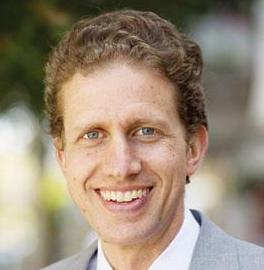
Michael Breyer, who has never held elective office in San Francisco and is running for state Assembly, is getting a fair amount of press — and although he has nowhere near the visibility of Assessor-Recorder Phil Ting, he has the support of Sen. Dianne Feinstein and may throw a boatload of money into the race. He’s already sent out one flier that features very little about him but a lot about his (more famous) family — his father, Steven Breyer, is a justice of the U.S. Supreme Court and his uncle, Charles Breyer, is a federal judge.

But here’s what intrigued me about the mail piece: It says that

“Sacramento needs a fresh perspective. It needs old-fashioned San Francisco values.”

What, exactly, are “old-fashioned San Francisco values?” One could certainly argue that the message harkens back to a day when the city was less diverse, less progressive, less open to the sometimes-radical ideas (remember this one?) that have changed the nation and the world. Of course, exploiting the workers and destroying the environment in the name of extracting riches was a famous SF value during the Gold Rush era; so was the Chinese Exclusion Act. On the other hand, resisting the Red Scare was a great traditional SF value in the 1950s, as were civil-rights sit-ins. Free love, free drugs and free lunch were vintage SF values a decade or so later. Labor struggles against capital are also a great San Francisco value.

So what, exactly, is Mr. Breyer talking about?

I called his campaign manager, Michael Terris, who wrote the piece, and asked him if Breyer was longing for a more conservative, less diverse era. “Not at all,” he said. “Old-fashioned values mean family, schools, neighborhoods, quality-of-life issues. Those are shared by the many diverse communities in the 19th District.” He added: “The West Side sees things a little differently.”

And while one of Breyer’s main issues is education, the great San Francisco value of taxing the wealthy to provide public services isn’t part of his platform. Although he does support Gov. Brown’s tax plan for November, he does not support amending Prop. 13 to shift the burden of taxation back to commercial property. He has the strong support of the Building Owners and Managers Association, which is all about keeping taxes low on huge commercial properties owned by vastly rich outfits.

So he clearly doesn’t share my old-fashioned San Francisco values. What about yours?

UPDATE: My mistake — Feinstein hasn’t endorsed Breyer. She supported him for D5 supervisor but is staying out of this race.


Sketching Sixth Street: In new show, Joel Phillips renders the unseen

0

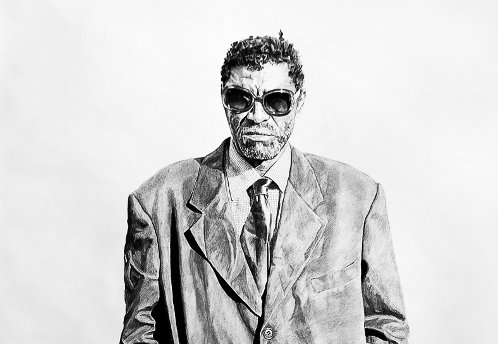
“I’m really interested in the idea of anonymity within a dense urban environment and how the denser an urban population is, the easier it is to be overlooked,” Joel Phillips says over a glass of red wine on a far too windy night in the Mission. His show, “No Regrets in Life,” opens tonight at Satellite66 and will feature seven charcoal and graphite drawings of men and women he’s met on the corner of Sixth St. and Mission.
 
Phillips, a few months shy of 23, has spent significant chunks of time in Seattle, Santa Barbara, San Francisco, and New York. While he was living in New York, he started thinking more about the social dynamics of cities and how some people tend to get lost in the mix. “In New York no one really looks you in the eye, everyone brushes past you and moves past you,” Phillips says.

In an effort to counter this surplus of vacuous interactions, Phillips started asking one in every ten people he met on the streets of Manhattan if he could take their photo. “The response [was] overwhelmingly negative,” Phillips recalls. “Probably 85 percent of the people said ‘Fuck off, leave me alone, get out of my way, what the hell do you want my picture for?’”

But the ones who willingly posed in front of Phillips lens “were a very particular subset of the population — people who had time and were looking for interactions.” Phillips recalls conversing with Richard, a homeless man who became the subject of his first life size drawing, for three hours before taking his photo. “He had the most amazing story. He had been everything from a horserace photographer to a foot soldier in WWII in General Patton’s division.”

After graduating with an art degree from Westmont College, Phillips moved to San Francisco for a graphic design position; and for the city’s rich imagery and artistic potential. “Part of the reason I fell in love with San Francisco was its amazing diversity of people and how you can look at all these people on the street and really see stories, particularly in their eyes and the lines on their faces.”

Phillips fortuitously fell into an artist homeshare-studio space on the corner of Sixth and Mission — a massive building with high ceilings, large windows, and not much insulation. “I hadn’t really done my research on the corner,” Phillips says. “There’s a lot of homelessness and drug dealing, [and] I didn’t know until I moved there that it was one of the most crime-ridden corners in the city. But it’s a very communal corner in a strange way.”

Since moving to Sixth and Mission less than a year ago, Phillips has rapped with, photographed, and drawn a number of people on his corner.

Phillips says Spaceman OT, a man he approached and decided to draw, was “one of the most lively people I’ve ever met.” Spaceman “wears a life vest at all times in case of a flood, a bicycle helmet, and snowboard goggles. He bargained me into buying him lunch in exchange for a picture, so we hung out and he was just the most fun person — he was dancing around on the sidewalk, sweeping up things, he has these lightsaber battles with his broom — he pretends he’s Darth Vader.”

I’m really interested in “taking people we don’t know how to interact with on a day-to-day basis, particularly people who may be homeless, they might not be homeless, but don’t seem like they’re easy to approach, whether they’re talking to themselves or whether their coat has a hole in it, . . . out of that dark unlit area they’ve fallen into socially and bring[ing] them into a spotlight by obsessively rendering them.”

Phillips’ passion for people comes through within the span of a short (or in our case very long) conversation. “I’m not necessarily trying to make a statement about homelessness in general. I’m really just trying to take my own artistic process and apply it to these kind of people I find really interesting and amazing,” he says.

No Regrets in Life
Opening reception 5/11, 7-11pm
Through June 4
Satellite66 Gallery
66 Sixth St., SF.
www.satellite66.org
www.joeldanielphillips.com

Toward the fun: The return of Wavy Gravy

0

And so Wavy Gravy, a cultural icon of the 1960s and ever after, returns to the Bay Area and the Freight & Salvage Coffee House in Berkeley on May 22 for a benefit concert to fund his Camp Winnarainbow in Mendocino County.

Gravy sums up his camp in his classic style: “At Camp Winnairainbow we are not trying to create little stars (although it does happen). What we are trying to create are universal human beings that can deal with anything that comes down the pike with timing, balance, humor, and compassion which i call surviving in the  21st century or how to duck with a sense of humor.”  Headlining the show will be Jonathan Richman, the Barry Melton band and special guest Nick Gravenites.  Lee Houskeeper reports:

TOWARD THE FUN
A BENEFIT FOR CAMP WINNARAINBOW
TUESDAY MAY 22ND FREIGHT & SALVAGE COFFEE HOUSE

Media Note: Please call Wavy Gravy directly for interviews at (510) 325-5829 or (510) 525-1407

Cultural icon Wavy Gravy will host a benefit concert on Tuesday May 22nd at Freight & Salvage Coffee House in Berkeley to raise funds for his Camp Winnarainbow.  Headlining the show will be Jonathan Richman, Barry Melton Band and special guest Nick Gravenites.

For 35 years Camp Winnarainbow has been well renowned circus and performing arts camp directed by Wavy Gravy and his wife Jahanara Romney.  Located at Black Oak Ranch in Mendocino County, Camp Winnarainbow provides an opportunity for children and adults to discover new realms of personal achievement, communion with nature and group spirit.

In addition to the basic circus skills that include juggling, unicycle, trapeze, tall stilts, and gymnastics, Camp Winnarainbow even has a theatre department that teaches Shakespeare to Improv and a dance department where kids learn everything from Hip Hop to West African and Swing.

Through its Grace & Joy scholarship program, Camp Winnarinbow is able to impact the lives of thousands of economically disadvantaged children by offering them the opportunity to experience the richness of what camp has to offer. 

Camp Winnarainbow graduates over the years have included the children of the Grateful Dead’s Mickey Hart, Jerry Garcia and Bob Weir, Country Joe McDonald, Jackson Browne, Tom Waits, the Gravy kids and John Madden’s grandchildren.

At Camp Winnarainbow we are not trying to create little stars (although it does happen) what we are trying to create is universal human beings that can deal with anything that comes down the pike with timing, balance, humor and compassion which I call surviving in the 21st century or how to duck with a sense of humor.

Wavy Gravy
May 7th, 2012

WHAT: Toward The Fun-A Benefit for Camp Winnarainbow

WHO: Wavy Gravy, Jonathan Richman, Barry Melton Band and special guest Nick Gravenites.

WHEN: 8:00 pm-Tuesday, May 22nd
6:00 -7:30 pm-VIP Tickets and Reception

WHERE: The Freight & Salvage
2020 Addison Street, Berkeley, CA 94704

Tickets for the benefit are $30 and are available at the Freight & Salvage box office – www.thefreight.org 510-644-2020.
VIP Tickets are $75 and are available at Camp Winnarainbow – www.campwinnarainbow.org 510-525-4304.

For more information about the benefit and Camp Winnarainbow, please visit www.campwinnarainbow.org

Lindsey Buckingham sows his own seeds

0

For nearly 45 years, Lindsey Buckingham has been writing and performing songs with an indelible impact on rock’n’roll; and several of those tracks are nearly universally considered to be among the pillars of the classic rock pantheon.

Perhaps best known for his work with Fleetwood Mac, Buckingham wrote or co-wrote tunes such as “Go Your Own Way” and “The Chain” with the band, and his guitar work and vocals propelled the songs to the hit single and anthem status they eventually achieved.

In addition to his work with Fleetwood Mac, the Bay Area-born and raised musician has recorded several excellent solo records, and contributed a host of tracks to well-known film soundtracks, including “Holiday Road” for National Lampoon’s Vacation.

In recent years, Buckingham has become the subject of a running gag on Saturday Night Live, with comedian Bill Hader doing a impersonation of Buckingham on the faux talk show “What Up With That” where the host (played by Kenan Thompson) always introduces Hader’s Buckingham as his final guest, but never actually lets him speak, cutting him off for ridiculous dance numbers and other outrageous situations to end the show.

Hader does his best serious and pouting expression, leading the host to plead with him not to be mad, ultimately causing the perpetually leather jacket and v-neck t-shirt clad Hader to smile, but still, never talk.

A highlight of the May 2011 “episode” of “What Up With That” was the surprise appearance of the real Buckingham himself, playing guitar and speaking up for his impersonator, resulting in the one of the funniest sketches in SNL in some time.

Buckingham’s ever-evolving musical talents are no joke, however, as the powerhouse guitarist and singer released his latest solo album Seeds We Sow last year. He comes to the Bay for a special one man show at the Fillmore, which promises to touch on both his solo efforts, and a variety of Fleetwood Mac classics.

Lindsey Buckingham
Mon/14, 8pm, $39.50
Fillmore
1805 Geary, SF
(415) 346-6000
www.thefillmore.com

The Performant: Tender is the ‘Loin

0

Cutting Ball Theater’s “Tenderloin” hits a sensitive zone.

Against a towering backdrop of junked furniture, which looks as if someone had collapsed the “Defenestration” building on itself and dragged it into the EXIT on Taylor, Michael Uy Kelly as Captain Gary Jimenez extols the virtues of an oft-maligned district. “The Tenderloin is the best part of the gut,” he grabs his own to demonstrate, “and it’s the best part of the city. It could be.”

Jimenez was one of 40-plus neighborhood fixtures to have been interviewed by a group of actors involved in The Cutting Ball Theater’s latest work, a documentary-style play called “Tenderloin,” and like most of the voices who made it into the play, his is sympathetic to his surroundings. Kelly, who also plays a trans bartender, an elderly gentleman named “Nappy Chin,” and a former Vietnamese “boat person,” is similarly sympathetic to his subjects, imbuing each with a quiet dignity and an almost stoic streak of optimism.

Located as it is in the tenderest parts of the ‘loin, an expedition to the EXIT Theatre on Eddy Street, and its sister outpost on Taylor, where resides The Cutting Ball, can be somewhat disconcerting for those unaccustomed to San Francisco’s meanest streets. But though the district is home to a large percentage of the city’s theatres, it’s the theatre verite featuring its other residents that most characterizes the neighborhood. Or, as resident amateur historian and self-taught documentary photographer Mark Ellinger puts it in his interview (performed by actor David Sinaiko), there’s “a lot of human drama that has taken place in these buildings.”

>>Read SFBG theater critic Robert Avila’s take on “Tenderloin” here.

Said buildings, an imposing bank of Beaux Arts architecture, somewhat camouflaged from public admiration by a veneer of city grime, house the densest population in the city, and one of the most diverse, a diversity reflected in the characters performed by an ensemble cast of six, each with a compelling story — and a different perspective on what it means to be in, and of, the Tenderloin.

“I wouldn’t live anywhere else,” says Kelly as barmaid Collette Ashton.

“I’m trying…to get the F@#% out,” growls Tristan Cunningham as street cleaner (and ex-con) Shomari Kenyatta.

All told, “Tenderloin” (which plays through June 3), is an ambitious amalgam of oral history, social commentary, and reality check. In certain ways, it hearkens to Marcus Gardley’s “Love is a Dream House in Lorin,” commissioned by the Shotgun Players as an ode to the working-class neighborhood where they’ve been located since 2004. But while Gardley’s lushly sprawling storyline compressed hundreds of years of history into its community-based theatrical tribute using interview material as a jumping off point rather than as the entire script, “Tenderloin” is more tightly focused on the present day and on word-for-word enactment of the interview material. Documentary rather than docudrama.

The other major difference between the two productions lies in the sensitive zone of community engagement. While Shotgun was able to utilize members of their community as cast and crew and filled the theatre seats with their families, Cutting Ball limits its acting pool to a cadre of (very!) capable professionals, none of whom actually hail from the Tenderloin, and while they’re offering a limited number of pay-what-you-can “neighborhood tickets” to Tenderloin residents, the crowd on the day I attended appeared to be mostly comprised of Cutting Ball subscribers (to be fair, it was a Saturday matinee). Despite this layer of missed opportunity, however, “Tenderloin” is a multi-faceted, mostly unsentimental snapshot of one of San Francisco’s most unique terrains, and is well worth the visit, not just as a play, but as a home.

“Tenderloin”
Through June 3
EXIT on Taylor
277 Taylor, SF
$10-$50
(415) 525-1205
www.cuttingball.com

What the preservation vote says about the 2012 supervisors

64

UPDATE: Important update at the end of this story

What does it mean that a historic preservation law favored by developers and promoted by Sup. Scott Wiener passed the Board of Supervisors 8-3? Maybe nothing. Historic preservation is a strange poliltical issue, favored by some of the wealthy white homeowner types who love pretty buildings (and aren’t so good on other issues), and this thing was sold as a way to help low-income people and affordable housing. But the reality is that the Wiener measure will make it harder to declare historic districts, and thus will take away a tool that the left can use to stop uncontrolled commercial development. And remember: The affordable housing community wasn’t pushing this bill, and, for the most part, hasn’t had problems with historic preservation. The most progressive political club in the city, the Harvey Milk LGBT Democratic Club, came out strongly against the measure and urged Sup. Christina Olague, a co-sponsor, to oppose it:

We are extremely troubled that you appear to be buying into the flawed, bogus and self-serving arguments by SPUR and other supporters of this legislation that historic preservation is classist and leads to gentrification, interferes with the production of affordable housing and is a tool of San Francisco’s elite.  Nothing could be further from the truth.

There was a way to address the issues of low-income people in historic districts without making it harder to block inappropropriate development, but Wiener’s bill went much further. And while I respect Scott Wiener and find him accessible and straightforward, and I agree with him on some issues, he isn’t someone whose basic agenda promotes the interests of tenants or low-income people. His supporters are much more among the landlord class and the downtown folks. The San Francisco Chronicle, which is a conservative paper on economic and development issues, loved the legislation.

So what happened when this got to the Board? Only three people — the ones the Chron calls “the stalwart left flank of the Board” — voted no.

John Avalos, David Campos and Eric Mar. They are now the solid left flank, the ones who can be counted on to do the right thing on almost every issue. Once upon a time, there were six solid left votes. Now there are three.

What does this mean for the other key issues coming up, including CPMC, 8 Washington, and the city budget? Maybe nothing. As I say, this issue is complicated. Olague told me, for example, that she’s really worried about working-class people who can’t afford to comply with the increased regulations that come with historic districts. Her vote doesn’t mean she’s dropped out of the progressive camp, or that she (or Sups. Jane Kim and David Chiu) can’t be counted on in the future. I really want to believe that this was just an aberration, a vote where I’ll look back in the fall and say: Okay, we disagreed on that one, but nobody’s perfect

Still, it’s kind of depressing: The dependable progressive vote is down to three.

UPDATE/CORRECTION: I didn’t know when I posted this that Olague had spoken to the Milk Club leadership after the club’s statement went out and the club has since issued a correction:

Due to a misunderstanding, Supervisor Christine Olague’s position on the Historic Preservation Commission’s critical role in the life of San Franicsco was misrepresented in our weekly newsletter. Supervisor Olague is looking into ways to help continue Historic District status for the Queer community, the Filipino community in the South of Market area, and the Japantown area. She is specifically looking for wording that would help these plans remain viable and welcomes any questions on her position and on her plan. Our apologies to the Supervisor for this unfortunate mistake.

SEIU reps pleased with tentative contract

46

After heated negotiations, the city has come to a tentative two-year contract agreement with SEIU Local 1021. 

The union, which represents 12,000 city workers, has staged large protests in recent weeks while negotiators worked on the contract. The union was opposed to pay cuts and increases in health care costs that the city originally proposed.

With the new agreement, city workers will get a three percent pay increase, to kick in next year.

The arbitrator of the negotiations also ruled in favor of the union on the issue of temporary workers, who mostly don’t currently enjoy benefits or job security. Now, temporary city workers who have worked 1500 hours over the past three years will be prioritized for permanent jobs.

The SEIU did compromise on some parts of the deal. The new contract won’t include travel pay previously provided to people who commute outside the city for work. There will also be new restrictions placed on union organizing, as union stewards will need to be “escorted” into what the city deems “confidential areas,” restricting union access to work environments.

Larry Bradshaw, 1021 Vice President, has been at the table since negotiations began in February. “I’m very happy with the results,” said Bradshaw. “Its the first agreement since 2009 where the city is not going to balance the budget on the back of working families.”

In the years since 2009, city workers have had deferred pay wages, wage concessions, and increased health care costs. Bradshaw says the new contract will put base wages back at 2009 levels.

“I think in the first years of the recession our members were willing to sacrifice,” said Bradshaw. “But then year after year, they don’t want to keep doing that when the city is not going after corporations. They’re just sitting on wealth and the city is not taxing that wealth.”

http://vimeo.com/39869973

That sentiment has led to the SEIU’s call for increased taxes on some corporations in the city. That’s the issue they address in the above video, which may become a TV commercial for what may become a ballot measure in November that would restructure the business tax code.

SEIU Local 1021 members are currently in the process of voting to ratify the contract. The vote will be done by Monday evening, just in time for the Board of Supervisors to ratify the agreement at their May 15 meeting.

Bank’s offer to fund vandalism repairs draws activist backlash

55

After young anarchists vandalized cars and businesses during a brief but destructive rampage through the Mission District last week, Wells Fargo was quick to offer $25,000 in grants to repair the damage, which the bank publicized in a press release as “building upon its history of supporting local communities.”

Yet this is the same Wells Fargo that has been targeted by housing rights, labor, and other progressive activists in recent months for its aggressive foreclosure tactics and investments in mountaintop removal coal mining and other heinous activities, culminating in a major standoff between protesters and the company during its annual shareholders meeting in San Francisco on April 24.

The grant money was supposed to be administered mostly by the Valencia Corridor Merchants Association, but the group got an earful from activists during its meeting on Monday night and now its leaders are figuring out how they can extricate themselves from this thorny situation. Among those putting pressure on the group is Sara Shortt, executive director of the Housing Rights Committee of San Francisco, who says the bank is trying to buy allies that it desperately needs right now.

“Wells is trying to divide a wedge between activists who have been working to highlight their irresponsible practices in the community and the businesses we shop at,” Shortt told us. “As a Valencia Street resident, I resent that they are hoping to use my community merchants as a tool for them to gain positive PR, by taking advantage of their desperation after the attacks.”

Bank spokesperson Holly Rockwood emphasized Wells Fargo’s “long history of corporate philanthropy” when I asked her about the donation, and she denied that the corporation was trying to burnish its tarnished image less than week after thousands of activists disrupted the bank’s annual meeting, resulting in 20 arrests. “The timing was simply in response to the wave of vandalism,” Rockwood said.

Nonetheless, merchants association President Deena Davenport said the group is now “backing away from this” to avoid getting in the middle of this fight. “The people with the Housing Rights Committee gave us a lot of good reasons why shouldn’t accept this money,” she said, adding that the association will make a final decision at its meeting this Monday.

While she said that she appreciates the bank’s offer and doesn’t begrudge anyone who wants to accept the money, “we are looking at ways to raise the money ourselves,” including reaching out to local credit unions to see if they would match the Wells Fargo offer, making the same money available but without the heavy political baggage.

SFIFF 2012: gone but not forgotten

1

It’s been a week since the San Francisco International Film Festival ended, but after 15 days largely spent sitting in the dark at the Kabuki, submerged in a flood of cinematic storytelling, the afterimages are still taking up considerable space in my brain.

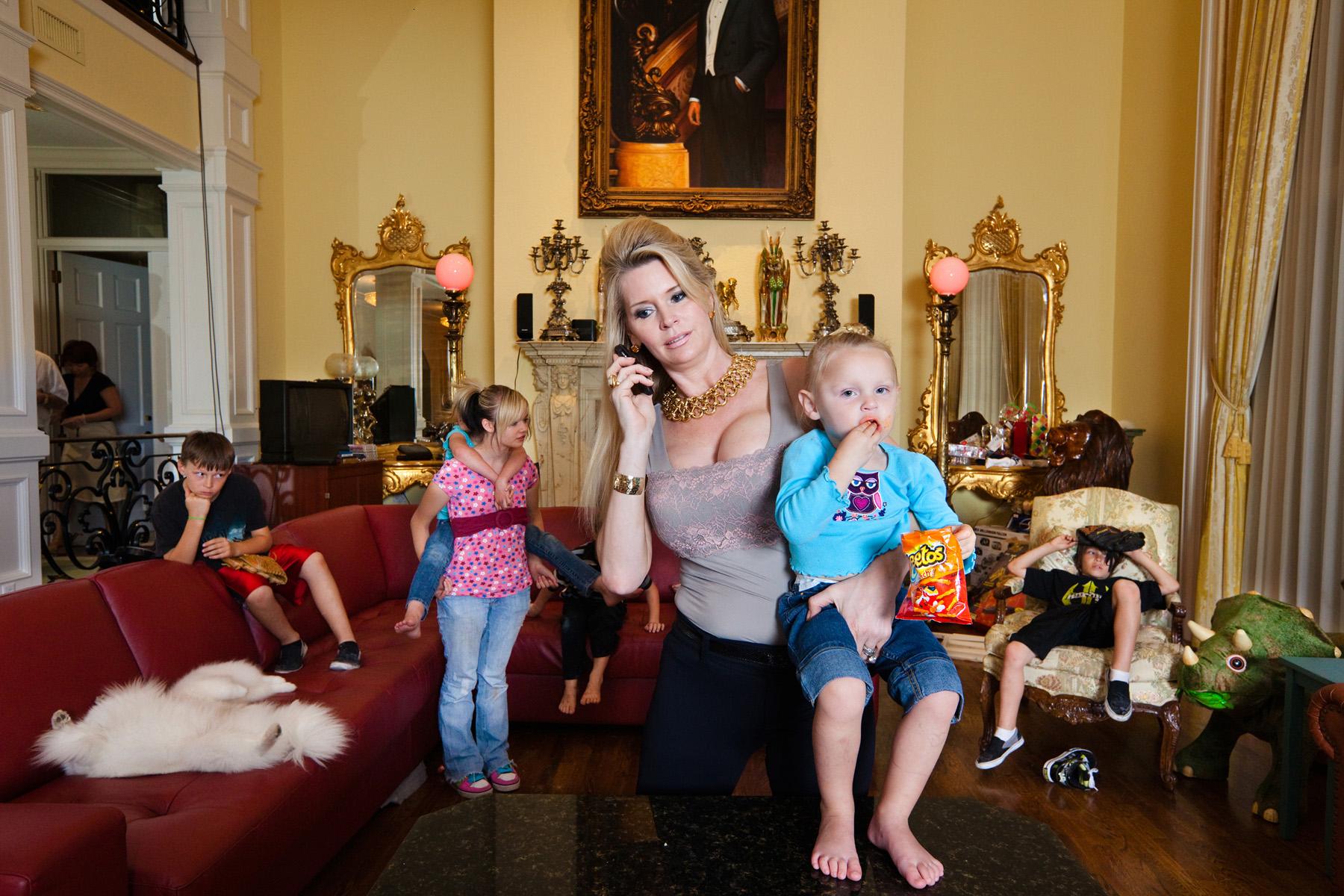
And questions remain, like: Why didn’t anyone from Lauren Greenfield’s crew on the documentary The Queen of Versailles report time-share mogul David Siegel or his wife, Jackie, to the Orlando-area SPCA for casually sitting down to brunch and letting their family’s pet python roam unchaperoned through a house filled with fluffy white purse dogs?

And what was going through moderator Audrey Chang’s head when a post-screening Q&A for Maria Demopoulos and Jodi Wille’s cult doc The Source devolved into a noisy, chaotic processing session for an audience filled with former cult members? And did other audience members exit the theater after watching Jessica Yu’s Last Call at the Oasis feeling paralyzingly hyperaware of their gigantic, sloshing waterprint, knowing that any one action they might be about to take — be it using the Sundance Kabuki Cinemas restroom, riding the 22 Fillmore home, or going out for a much-needed cocktail to take the edge off incipient doom — likely represented dozens of gallons’ worth of heedless water use?
 
And a last pressing question: Will anyone see to it that Mosquita y Mari, written and directed by Aurora Guerrero, reaches more-disparate theater screens after it finishes its festival circuit? (In the wake of its January Sundance screening, it did get picked up for DVD and VOD distribution by Wolfe Releasing.)

First-time feature director Guerrero has set her sweet and sorrowful, semiautobiographical coming-of-age film in LA’s Huntington Park neighborhood, where Latina teenagers Yolanda (aka Mosquita; played by Fenessa Pineda) and Mari (Venecia Troncoso) form an unlikely friendship that drifts silently and slowly toward a more ambiguous state. Beautifully shot and scripted, using young local nonprofessionals for much of the cast, Mosquita y Mari tells a small, poignant tale exceedingly well, carefully weaving its tenuous love story into the larger settings of neighborhood and school and two immigrant households whose younger generations find themselves struggling to navigate the track laid down by their parents.

Like many of its cohorts in this year’s SFIFF program, the film demonstrates the benefits of living amid the Bay Area’s small galaxy of annual festivals — and richly deserves to travel farther afield.

Obama’s evolution

58

Other than a few Mitt Romney supporters, most of us view evolution as a wonderful biological mechanism to which we owe our supposed higher intelligence. So Obama’s “evolution” from a foe to a supporter of same-sex marriage deserves tremendous praise. But before we go all ga-ga over the president, let’s remember:

He didn’t evolve on his own. In this case, the evolution needed a push, from generations of LGBT activists and supporters, who put the issue in front of the world, made it a basic matter of civil and human rights, and forced Obama to realize that he could no longer duck and had to take a stand.

Remember FRD’s famous statement to activists? “Now you have to make me do it.” That’s what happened here. Obama made the political calculation, of course, and it’s a good one — energizing his base is more important than angering a bunch of people who weren’t going to vote for him anyway. But there’s more to it, and I think Paul Hogarth has the right line:

Biden’s statement may have been the final trigger, but the LGBT movement deserves the credit – despite the odds – to hold firm on getting the President to take this historic stance. And it’s a lesson that other progressive constituencies should take heart in, as we strive to make Barack Obama the President we hoped he would be.

Let’s also remember that this really started in San Francisco, with an act of what I like to call civic disobedience. At the time, a lot of critics said that Mayor Gavin Newsom was hurting the Democratic Party by making a move before the rest of the nation was ready for it. But what he did eight years ago was force the rest of the nation to get ready for it — and the subsequent legalization of gay unions in a growing number of states has shown America what the Boston Phoenix referred to as “the utter, mundane normality” of same-sex marriage.

We all knew this moment was coming. The demographics can’t be denied. Almost everyone younger than 30, and most people younger than 40, supports same-sex marriage. The country is changing — in this case, in a very positive way — and Obama was risking being on the wrong side of history. Even the Republicans seem to get that — they’re running away from this issue as fast as they can.

So now it’s likely that L.A. Mayor Antonio Villaraigosa will have his way and the Democratic Party platform will have a same-sex marriage component. Romney will be on the defensive on a key social issue – a huge change from the past. The Supreme Court will be more likely to uphold Judge Vaughn Walker’s decision on Prop. 8 (yes, the high court is political and changes with the norms of society, sometimes slowly, but the president’s statement will have a clear impact.)

So this is huge — not just because of the impact but because of what it says about the power of progressive movements. Now let’s make the president raise taxes on the rich.