SFBG Blogs

Walker winning in Wisconsin — the fallout

30

AP is callling the Wisconsin election for Scott Walker, although the results will no doubt tighten up as the night goes on.  But this is a wake-up call — for all of us. It’s one of the first clear tests of what happens when you have unlimited corporate money flowing into an election (Walker outspent his opponent about 8-1) and it’s a sign of how bad things can get under Citizens United.

It’s also going to dampen the enthusiasm of labor activists for the Obama re-election. Already, commenters on DailyKos are calling for progressives not to support the Democratic Party this fall — and while that’s common and people mostly get over it, Obama has to start moving now to shore up labor support. We’re all for gay marraige, and that was a strong and much-needed (if also much-delayed) stand, but it’s not going to be enough.

There’s going to have to be a concerted effort to end the demonization of public-sector workers. This election just shows how it’s gotten out of control.


Turnout light in SF; eyes on Wisconsin

0

My usual limited polling sample — my precinct in Bernal Heights — suggests what everyone pretty much knew: Turnout in San Francisco will be very low. Control of the local Democratic Party, and its endorsements, will be determined by a small fraction of the eligible voters.

On the national front, since the presidential primaries are long over and California has long been irrelevant, everyone’s looking at Wisconsin, where the battle to recall Gov. Scott Walker will have national implications. Walker’s trying to survive by blaming public employees for the state’s economic woes; since he ended collective bargaining, he said today, the state budget is running a surplus and property taxes are down.

If by some chance he’s thrown out of office — and it doesn’t look good right now — labor will have one of its greatest victories in years. If he becomes the first governor in US history to survive a recall, he’ll portray it as a confirmation that the public supports his attack on unions. The right-wing types have poured millions into this race — and if they get their way, a lot of labor folks are going to be asking why President Obama (who will be in San Francisco to raise money at Clint Reilly’s office building June 6) didn’t make an appearance in Wisconsin.

Labor came in big for the president in 2008, and this one is hugely important — and the White House has been entirely missing in action. And he may have to answer for it if Walker survives and GOP governors across the country take up the call and attack public-sector unions as the start of a larger attack on organized labor.

In California, I don’t care how much money the tobacco companies spent — Prop. 29, the cigarette tax, is going to win. And I think the term-limits measure squeaks through, too. Locally, we all know that Prop. A will lose under a barrage of Recology money; I hope Prop. B survives the strange last-minute money blitz.

We may not know for days how the Democratic County Central Committee races are shaking out. If it’s close, and control of the panel hangs on a couple of tight races, the absentee votes that get counted over the next few days will make the difference.

We’ll be posting updates all evening.

Summer of Peace events kick off in Oakland

6

By Natalie Orenstein

Oakland has garnered more attention in the last year for police violence than it has for peace, but a group of activists is hoping to highlight the city’s nonviolence initiatives and traditions later this month during the kickoff for the three-month global Summer of Peace celebration, starting June 22-23 at Oakland’s Scottish Rite Center.

The Summer of Peace was designed as an “effort to create a critical mass of consciousness,” said Jane Elin, the event manager for the Oakland festival.

A few “anchor events” will be sponsored by the Shift Network, a global peace organization based in Petaluma, but international activists and organizations will hold corresponding celebrations throughout the summer, said Production Manager Bill McCarthy. Soon, with hosts able to post events online.

The Voices for Peace festival, about a year in the making, will kick off with a benefit concert on June 22 from 7:30pm to 10:30pm, featuring Maria Muldaur and Friends, Country Joe McDonald, the Vukani Mawethu Choir, and a slew of other performers. At a conference starting at 9am the next day, speakers including peace advocates Marianne Williamson, Barbara Marx Hubbard, and James O’Dea will address peace-building efforts in a variety of spheres. 

More practical components of the conference, such as a seminar on nonviolent communication, “offer tools and awareness – something you can walk away and use,” Elin said. But the general goal of the summer-long effort is to find ways to connect activists, and to keep peace-building in the global consciousness, she said.

“One of the things we’re doing is having people make a pledge during the summer,” McCarthy said. Participants will decide how many “acts of peace” they will commit to on a weekly basis, then share them online.

If all this sounds a bit vague, that actually part of the intention. One goal of the project is to highlight the diverse range of “pathways” one might take to finding personal peace or advocating for peace locally or abroad, said Philip Hellmich, “director of peace” with the Shift Network..

“We’re using ‘peace’ in multiple contexts,” Hellmich said. “We want to acknowledge and celebrate, as well as accelerate, the ways it’s happening.”
Hellmich pointed to a recent study that found more lawyers now do yoga than play golf as an example of people searching for inner peace, an “essential component” of working toward peace on a larger scale, he said.

“There’s been an exponential growth in peace-building. In 1985, only a handful of colleges had peace and conflict resolution programs, and now there are hundreds,” Hellmich said. “This isn’t your parents’ protest movement. It’s about all the different ways emerging to create a culture of peace. We want to move away from the typical polarization that happens: us versus them, Democrats versus Republicans, hawks versus doves. It’s a more sophisticated and nuanced approach.”

Those who want to participate without leaving the house can tune in to a series of interviews on a webcast throughout the summer, and call in with thoughts and questions. Each week of this “telesummit” will focus on a different theme: forgiveness, education, the science of peace, arts and culture, business and economics, and even peace in the military. There are big names on the program for this as well, from Alice Walker to Olympic gold medalists.

All profits from the ticket sales at Voices for Peace will go to Urban Peace Movement, an Oakland organization that aims to combat conditions that lead to violence in the city. The suggestion to hold the opening celebration in Oakland came from one of the Shift Network’s 27 Peace Ambassadors, and the event coordinators quickly warmed to the idea.

“Obviously, the city of Oakland has had its share of having to deal with conflict and violence,” McCarthy said.
“This will highlight peace-building activities and organizations in the city, and let the city shine,” Elin said. “It’s a place that needs more support.”

The morning before the concert, Oakland Mayor Jean Quan, United Nations Association of the East Bay President Jerry Weber, and Shift Network representatives will gather in Willie Wilkins Park to install a Peace Pole. “May Peace Prevail on Earth” will be written in several languages on the handcrafted Peace Pole, a tradition that began in mid-century Japan.

The permanent monument – and the entire weekend’s festivities – will “designate the city as a place of peace,” McCarthy said.

Never grow up, Little Danny Brown

0

Infectious Detroit rapper Danny Brown released the video for his song “Grown Up” today, but the real star, clearly, is Little Danny Brown — the kid on the bike who loses his two front teeth (just like Big Danny did), and rides around his neighborhood causing a gleeful stir. Mess it up Lil’ Danny.

O, queso! Delectable slices of Spain and Portugal

0

“Don’t. Eat. The. Cheese.”

I kept telling myself this as I stared down at my plate during the Cheeses of Spain and Portugal Class at the Cheese School on May 23. Nine slices of sweating, salty, pungent wonderfulness looked back at me, taunting. Thankfully, there were endless glasses of delicious white wine to drink before the class started.

Juliana Uruburu (imagine this name pronounced with a beautiful Spanish accent) was our teacher for the evening, guiding us through the diverse and tremendous flavors of Spanish cheese. “Cheese chose me,” exclaimed Uruburu, who has been working in cheese for decades and is an obvious fanatic from the way she talks about it. How can you not be a fanatic when you spend your days doting over wheels of cheese like majon — a sheep cheese with cajones! — and visiting Paris every year for the Salon du Fromage, the equivalent of the World’s Fair of cheeses.

Eventually we were able to eat the cheese… but first we had to smell it first, then break it in half, before tasting the creamy subtle center and slowly sampling outwards to the funky rind. Uruburu explained that Spain is one of the most innovative and exciting places when it comes to food. This year at the Salon in Paris, Spain presented over 50 new varieties of cheese. Así que mucha innovación! So much innovation!

Uruburu taught us a bunch of geeky tidbits about cheese-making and tasting. For example, those little crunchy crystals in some cheeses like Manchego aren’t made from salt, but a protein called tyrosine that develops in certain curds. Another fact for gluten-conscious eaters: blue cheese may contain wheat gluten because the culture is often made with moldy bread. Who knew? After devouring a large plate of cheese (and several glasses of wine), there was one queso that stood out the most to me. Cadi urgelia. Soft but stinky.

Four couples in the room had trips planned to Spain, thinking it would be a fun idea to get a little cheese primer first. For me, I was able to satisfy some of my travel lust through this class by letting my palate transport me back to Spain, with their countless tapas bars, colorful flamenco music, and beautiful mid-day siestas.

The Cheese School hosts a variety of fun cheese classes and events, including cheese-making classes with the SF Milk Maid.

Street Threads: Look of the Day

3

SFBG street fashion photog Ariel Soto-Suver was on the scene at Bayview Opera House’s Saturday summer concert series. The al fresco community fete was packed with rows of organic kale and college prep tutors — but also fashion. Read on for fresh ‘fits.

Look of the day: Elwood, Third Street and Palou

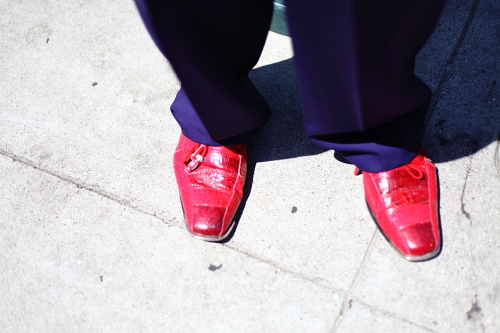
Tell us about your look: “I’m 62. I dress like this everyday.”

Key lime hair with a side of porno: the Brande Baugh story

3

“My job is really weird. I think about that all the time.”

The Mission is a neighborhood accustomed to eccentric individuals. One would think Brande Baugh’s key lime hair and vintage Misfits t-shirt would make her fit right in. Yet her presence in a neighborhood cafe still elicited several stares when she walked in — with her perfectly-curated face, pastel pink lipstick, and evenly-powdered face, Baugh looked like one of Warhol’s Marlyn Monroe silkscreens. Though Baugh stays pretty busy living and working in Los Angeles, she also has regular gigs at Kink, a San Francisco-based pornography website that specializes in bondage and BDSM

I’ve often imagined what it would be like to be a fly on the wall at Kink, so my talk with Baugh was particularly illuminating. Sample quote: “I’m about five inches away from a person’s face. People start to break down their barriers and tell me things. And when you work with people in the sex industry all bets are off. People just say anything.”   

San Francisco Bay Guardian: How did you start doing makeup at Kink?

Brande Baugh: It started off as a fluke. I did makeup for Pink and White’s first episode of the Crash Pad Series. A talent on that production was starting to work at Kink. The talent identified more with a butch aesthetic and needed to do a femme look for her shoot. So she asked me to do her makeup. After the shoot, Princess Donna, a director at Kink, asked who did the talent’s makeup. The next thing you know, they were calling me in for an interview.

For my interview I did Princess Donna’s makeup. She told me to go all out, so I made her look like a drag queen. Donna said she loved it. It’s really funny in retrospect because I would never do someone in porn’s face like that now. I’m sure Donna in part really liked me. In her mind I was hired, and I could have probably done anything.  

SFBG: What is it like doing makeup for porn stars?

Brandy’s girls: Kink.com looks by Baugh

BB: There are simple differences in doing makeup for a porn production as opposed to a mainstream movie. A lot of the porn shoots I do are gonzo. I don’t have to stay on set all day, and it’s ok for people to see the makeup degrade over time. It seems like people feel like that’s more real. Also, I have to be really conscious about the makeup products I use. I have to use gloss lipstick and things that wear for a long time. I couldn’t use red lipstick. You have to keep in mind where this person’s lips are going to go. My job is really weird. I think about that all the time. 

I have found people in the sex industry to be very open and non-judgemental. I can say whatever I want while I’m at work. We can talk about the type of sex we like, our sexuality, and our gender freely. There is so much less ego in porn. That’s not to say there aren’t some divas. There are a wide range of people who work in porn. Some of the people go to school, some are moms, some are teachers. I’m doing makeup to make them look like they are all the same type of person, but they are all very different. Porn stars are producing something that there is an audience and a large market for, and it’s crazy how much shit they take for doing that.

SFBG: Where does sexuality and makeup intersect?

BB: As a makeup artist I’m creating characters who play out fantasies. Several of the people who work in porn are not the characters they portray. So I have to help transform themdon’t think most people would recognize porn stars if they saw them in the grocery store. There is a certain safety and anonymity behind having people wear this mask of makeup, and there are some porn stars who actually do look like porn stars. There are a lot of ways everyday people use makeup to express their sexuality as well. Sometimes you have to throw on a little red lipstick because it makes you feel sexy.

SFBG: Are you currently working on any other projects?

BB: Yeah, I’m working on a television show called Hollywood Nailz. It’s a show about my friend, a hair stylist, and I, and our interactions with all the people we meet in the beauty industry. We will finish filming at the end of June. I’m really excited.


Hollywood Nails: A different shade of Brandy.


SFBG: How do you identify with your gender?

BB: Well I’m a girl. I’m a lady. I’m a real butchy femme. I feel like I can be anything — I mean I’m a makeup artist, and I also went to school to be a mechanic. I like that dynamic quality. 

SFBG: What does creating a sex-positive space mean for you?

BB: For me, it’s a place where you can be whomever and not feel judged. People in a sex-positive space are interested in being progressively more open and aware. It’s about educating one another, but never in a negative way.

The Performant: All you can eat

0

Wild Food Walks and Bal Littéraire satisfy imaginative appetites.

“First, the bad news,” says our guide and frequent forager Kevin Feinstein. “Foraging in the Bay Area is illegal.”

Well, swell, I guess it’s a good thing that I packed snacks. “If the land is private, and you have permission from the owners, you can forage,” Feinstein amends, which still doesn’t help me in planning my lunch, but good to know for future reference. I’m attending one of ForageSF’s “Wild Food Walks,” along with about 15 others, hoping to graze upon that freest of foodstuffs, the weeds in our backyards — and yours.

The tour kicks off on the perimeter of Golden Gate Park, and without even taking a step, we’re summarily introduced to common mallow, miner’s lettuce, and stinging nettles. After another reminder about the illegality of *picking* the plants in the park, Feinstein exhaustively details each plant’s properties — their nutritional content, the edible parts of each, identification and preparation tips. Mallow is mucilaginous and anti-inflammatory, and the seed pods or “cheese wheels” can be eaten as well as the leaves, stalks, and everything else. Miner’s lettuce, which looks a bit like a land-locked lily-pad, is native to California, high in Omega-3s, and never gets bitter, even when older. Nettles do sting (which one curious child found out the hard way), but not when crushed or cooked. Extremely high in various minerals and vitamins, nettles are also easily cultivated, making them a good bet for amateur urban farmers as well as foragers.

“One five-gallon nursery pot grows more nettle than one person can handle,” promises Feinstein as visions of pestos and cream soups begin to creep into our collective consciousness.

Two hours and a dozen plants later, we’re all a little overwhelmed, but there’s excitement in it, like people are going to go home immediately and weed the garden, not for the usual reasons, but to make a salad. It almost makes one want to trade one’s wallet for a foraging basket, until reminded that urban foraging has its share of downsides — legal issues, contaminated soil, plant misidentification. Even so, I’m betting that hardly anyone in that group will be able to pass by a big clump of hilltop-dwelling nasturtiums or wild radish without checking for their crunchy, spicy seed pods, or slipping a few leaves in their bag for later.

Another new taste I was introduced to over the weekend was San Francisco’s first ever “Bal Littéraire,” a Parisian concept imported over as part of the French-American translation exchange, the Des Voix Festival. Though I’d been given an idea of the concept ahead of time — an ephemeral, collaborative work created by six playwrights, using pop songs to tie the scenes together and turning the floor into a giant dance party — nothing could have prepared me for the high-spirited spectacle it became.

Seeing a “typical” Bay Area theatre crowd getting down and dirty to hyphy hit “Fast (Like a Nascar)” in the middle of a French-accented, surrealistic serial romantic comedy featuring Liz Duffy Adams as a tough-talking, Jackie-of-all-trades stalking a middle-aged French divorcee, and Marcus Gardley as an octogenarian in drag, was a taste of contemporary France mixed with a Bay Area spice that titillated a cosmic palate, and won’t soon be forgotten. Here’s hoping that either Playwrights Foundation or the Consulate General of France find a way to keep this new theatrical tradition going in SF for years to come.

The funny money against Prop. B

19

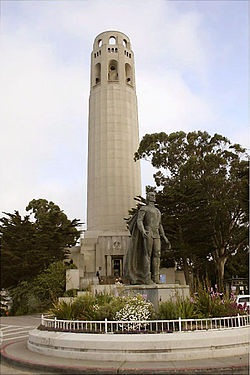
Credit where it’s due: My competitor and sometimes journalistic adversary Joe Eskenazi has a nice little piece on the weird money behind the campaign against Prop. B, a policy statement about the privatization of Coit Tower. He points out that such varied groups as the California Dental Association and the San Manuel Band of Mission Indians have coughed up money to protect the right of San Francisco officials to close Coit Tower to the public and rent it out for fancy corporate parties.

And how exactly did that happen?

Well, Eskenazi manages to tie Willie Brown into it. (He also calls this “Nimby against the Swells,” which isn’t quite fair — I don’t think the supporters of Prop. B are trying to keep anything out of their back yards. If anything, they want more noisy tourists and fewer quiet, subdued rich-people events. And I don’t think the “swells” are against it as much as the mayor, his Rec-Park director and big businesses that generally back the privatization of public resources.)

But there’s another interesting twist: I’m not sure the folks who gave to the Golden State Leadership Fund Political Action Committee, which is running a No on B independent expenditure, had any clue where their money was going.

Sure, the Chamber of Commerce and BOMA know what’s up, and it’s pretty clear why they like the idea of raising money for the parks by holding exclusive private events instead of by raising taxes. But the Indians? And the dentists? By what possible stretch do they care about a San Francisco ballot measure that has nothing to do with Native American rights or oral health?

Eskenazi may be right — maybe Brown called the Indians and asked, and they threw the money his way to help his buddy the mayor (while keeping the mayor’s fingers out of this particular political pie). But the Golden State Leadership PAC, through which all this money flowed, has been around for years and gives money to candidates all over the state. (It’s definately something of a slush fund for local races — files in the Secretary of State’s office show that in 2008, money from Pacific Gas and Electric Co. flowed in and out of the PAC as it ran a campaign against the San Francisco public-power measure, Prop. H. PAC money went to David Chiu, Phil Ting and Ed Lee for mayor.) It’s based in West Hollywood and the treasurer is a guy named William Molina.

I called the San Manuel Band of Mission Indians and the California Dental Association and asked them why there were helping fund a campaign against Prop. B in San Francisco. The press person at the dental group apparently had no idea what I was talking about and asked for more details about the contribution. I gave her the date and the PAC and I haven’t heard back.

The Indians didn’t seem to clear on Prop. B, either. Kenneth Shoji, a spokesperson for the group, told me by email:

The San Manuel Band of Mission Indians made a contribution of $25,000 to the Golden State Leadership Fund PAC with the expectation of helping to support candidate(s) for public office in the 2012 elections.  We do not control where or how the PAC might extend its support beyond that.

In other words: This Coit tower thing is news to us.

UPDATE: I got essentially the same message from the dentists. Alicia Malaby at the CDA writes:

 When an organization such as CalDPAC contributes to an independent expenditure committee, that committee may spend money on races and issues that CalDPAC supports, but may also spend money on other campaigns. CalDPAC does not control how those committees spend money, and in this case, CalDPAC has no interest in and no position on Proposition B.

UPDATE TWO: Ron Cottingham at PORAC just called me and said his group has no position on or interest in Prop. B. The money that went to the PAC was earmarked to support Rob Bonta for Assembly in the East Bay. Presumably the PAC folks keep track of such things.

Maybe not. Maybe Willie or someone else made a call. It happens all the time.  I mean, somebody clearly was raising money for this PAC, which right now isn’t doing a hell of a lot besides No on B in San Francisco. (Oh, I called Brown, too. He hasn’t called back. He never does. I still always try.)

Either way, it’s a classic San Francisco political story — and it reflects how muddy and corrupt local politics can still be, even in an era of electronic disclosure and ethics laws. Why, if the dentists and Indians don’t like Prop. B, didn’t they (or any of the others in the PAC) create a No on B committee, disclose who was behind it and let the voters know a little more about the real money trail? Why funnel all this cash through a little-known Southern California PAC?

And for that matter, why is there a sudden influx of late money in this race? Has the mayor and the Chamber types suddenly discovered that Prop. B might pass — and might set a precedent against future privatization efforts?

June 5 is Election Day. Vote early and often.


Save Adobe Books?

2

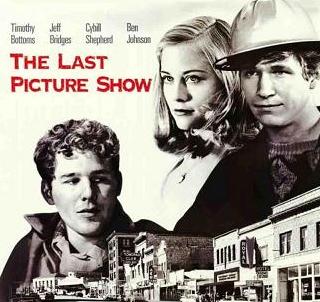
Adobe Books owner Andrew McKinley didn’t have to think long when I asked him the corniest question of our interview, occasioned by the announcement that his store was in serious danger of having to close. Question: if you had to choose one book to describe your situation, what would it be? “It reminds me of The Last Picture Show by Larry McMurty,” McKinley gamely responded. “It’s about a movie theater in a small Texas town that’s dying out.”

But! ask Mission District bibliophiles. Can Adobe Books be saved? The answer, according to McKinley, lies in whether you have a buddy with $60,000 to save the future of SF books — or better yet, $3 million.

McKinley has owned the store for the past 24 years, originally with a business partner. “I always dreamed of having a store filled with artists, poets, and writers,” he told me. “Meeting people who want to be artists has been the best part.” For decades, that’s what he did — he even opened a gallery space in the back that hosted near-monthly art openings. But times, they are a’changin’ — and rising real estate costs in the area have made it impossible for the bookstore to continue to exist in its prime location astride Valencia and 16th Streets. Granted, this isn’t the first time the alarm has been sounded, but McKinley forsees having to close his doors for good at some point over the next few months. 

Unless… and on this point he’s almost reluctant to give us hope. Unless some “angel” descends from heaven (or the hills south of Dolores Park perhaps) to pluck Adobe from its doom. With $60,000, McKinley reckons he could keep the shop open for three more years — that amount is approximately a year’s rent on the space. With $3 million, said “golden angel” could buy the building and ensure that the inner Mission continues to have a place to buy dog-eared paperbacks and browse well-curated banks of sweet, sweet literature. 

But. “I don’t want to be a charity,” says McKinley. “I feel that closure might be the best solution if no one can step into save it.” The bookshopkeep allows that he hasn’t exactly bent over backwards to adjust our times of Amazon.com and 140-character attention spans. He could have added a cafe to augment the business, he posits. Maybe started selling new and remaindered volumes. 

But. There it is, he didn’t, and now we’re faced with losing yet another Mission bookstore to the march of time. (Granted, it’s not all bad news for bookworms — Modern Times Bookstore Collective was able to relocate to a gorgeous new location on 24th Street and the Dog-Eared Books family recently had a new baby not too far away in the form of Phoenix Books.) 

Unless. McKinley says the notion of re-starting Adobe as a member-based collective has been thrown around by some of the shop’s super fans. But that could be just the well-wishing of the community members he’s held so dear over the years. 

Just remember. “The knowledge in books is not as important to get by in this modern world,” says McKinley. “People don’t put together large collections of books as much. It is funny, more books have been created in the last few decades and more people can read than ever before.” We read you, sir.

P.S., massive sale going on right now at Adobe Books. 

Adobe Books

3166 16th St., SF

(415) 864-3936

adobebooksbackroomgallery.blogspot.com

Trolls rejoice! Comments are back

17

We appear to have fixed the comments problem that was bedeviling us and frustrating all the great folks who are part of our blog community (and those trolls who just try to annoy everyone else). So come on back — the comments work, you can start calling me names again, and let the fun being anew!

Snap Sounds: Lone

0

Lone
Galaxy Garden
(R&S)

Matt Cutler’s back catalogue as Lone is the sonic equivalent of cotton candy: lush and ethereal to the point of cheapness, with little in the way of tension or dynamic range to keep it in check. While this aesthetic has yielded some (insanely) enjoyable results, one couldn’t help but long for something more substantial from the British beatmaker. Lone addresses that concern substantially on his fourth LP, Galaxy Garden, which finds him developing his brand of electronica like never before.

“As a Child” and “Cthulhu”, the two collaborations with NYC’s Machinedrum, indicate just how far Lone has come since 2010’s Emerald Fantasy Tracks. The sparse, offbeat, J Dilla-ish drum loops are swapped out for generously layered, and frantically syncopated percussion; the addition of vocals (namely on closing track “Spirals”) gives the songs an increased sense of propulsion; the bright, glossy synth melodies, while front-and-center as ever, are tinted with a sense of melancholy, lending them a satisfying weight.

While Lone’s previous work amounted to little more than pleasant fluff, Galaxy Garden gives the listener something to chew on.

Oaxacan surrealism hits the SF Mexican consulate

2

Approximately 500 people pass through SoMa’s Mexican consulate building each day, processing visas and civil registration, generally making it possible for themselves to live in the United States legally. The consulate’s cultural affairs attache Marimar Suárez Peñalva sees these moments of bureaucracy as an opportunity. She wants expats to connect to their nationality not only through signatures and stamps, but by reacquainting themselves with its brushstrokes and creative underpinnings.

Hence, this art lesson. “The Zapotec origin is really relevant in surrealism,” Peñalva tells me on the Friday afternoon that I visit her carefully-curated gallery, located on the second floor of the Folsom Street consulate.We’re surrounded by canvases of floating watermelon, a reclining woman with a fish tail, vividly colored fish, and a bright red woman’s skirt. Peñalva explains that the current exhibit is based around two seminal artists from the Mexican state of Oaxaca: Rufino Tamayo and Francisco Toledo.

Francisco Toledo’s aquatint etching “Self Portrait” 

The two pioneered the art of mixography, a style of painting that uses molded paper and mixed media to create a textural appearance. Peñalva points to the artists’ ceremonial use of animals as one sign of their pre-Colombian heritage. The Zapotec identity, she says, is one of the unifiers of the exhibit, which contains the works of not only Tamayo and Toledo but also artists who were inspired by their work like Justina Fuentes Zárate, she of the reclining mermaid and arresting red dress. Perhaps the works don’t look similar, but they represent the diversity and breadth of the work to come out of the surrealist Zapotec tradition in Oaxaca.

Last year Peñalva filled this space with the work of contemporary Latina artists. Though “Numina Feminina” was critically acclaimed — a gallery patron who perused while we chatted interrupted us to tell Peñalva how compelling he’d found the show — she says that the Oaxacan surrealism exhibit has done a better job of enthralling the Mexicans who come to process paperwork one floor down. Since the show’s opening on Thursday, she says there’s been a constant stream of visitors coming upstairs to check out the gallery.

“Birth of Spring” by Jorge Lopez Garan

Maybe this work is more immediately identifiable as Mexican than that of the modern female show. But whatever the reason, she’s glad that it resonates. That’s the reason why the gallery is up here, after all.

“We want to make art available and show people what’s happening in Mexico. Art people, they always come to shows like this, but our daily public is harder to get upstairs.” The surrealist works were donated by Bay Area collecters Gina Bray and Russell Herrman.

Do you feel the magic? The consulate is screening El Informe Toledo July 26, a documentary made by Diego Luna and Gael Garcia Bernal’s production companay based on the life of the mixography master. 

 “The Magic Surrealists of Oaxaca”

Through Aug. 9, free

Gallery open Mon.-Fri. 10am-6pm; Sat.-Sun., 10am-3pm


El Informe Toledo screening 

July 26 6pm-8pm, free

Consulate General of Mexico

532 Folsom, SF

www.mexicoinsf.com

Vote yes on Prop A for competitive bidding for garbage and against Recology monopoly

12

As a reporter for the old Redwood City Tribune in 1965 or so, I got a call one day from the late  Luman Drake, then an indefatigable environmental activist in Brisbane.  “Bruce,” he said, “you are good at exposing scandals on the Peninsula, but you have missed the biggest scandal of them all. Garbage, garbage in the Bay off Brisbane, garbage alongside the Bay Shore going into San Francisco.”

He then outlined for me, his voice rising in anger, how the scavengers of an early era had muscled through a longtime contract to dump San Francisco’s garbage into the bay alongside the Bay Shore freeway.  And, he said, they are still doing it. Why can’t you fight it? I asked naively.

“Fight it, fight it,” he replied. “The scavengers are the most powerful political force in San Francisco and there’s not a goddamn thing we can do about it.” I checked out his story, then and through the years, and he was right.  Everyone driving in and out of San Francisco could watch with horror  for years as the scavengers kept dumping San Francisco garbage into a big chunk of the bay.  (Note the oral history from Drake and then Mayor Paul Goercke and others who fought the losing fight for years to kick out the scavengers from Brisbane.) http://legendarymarketingenius.com/oralhistorySBMW.html)

Five decades later, the scavengers are still a preeminent political power in San Francisco. The scavengers (now Recology) have operated since 1932 without competitive bidding, without regulation of its high residential and commercial rates, without a franchise fee, and without any real oversight. Finally, after all these years as king of the hill, Recology’s monopoly is being challenged by Proposition A, an initiative aimed at forcing Recology for the first time to undergo competitive bidding and thereby save city residents and businesses millions of dollars  in rates and service.

Let me say up front that I salute former State Senator and retired Judge Quentin Kopp and Tony Kelly, president of the Potrero Hill Boosters and the Guardian’s candidate for District l0 election (Potrero Hill/BayView/Hunters Point). They have taken this measure on when nobody else would, without much money or resources, and up against  a $l.5 million campaign by Recology and enormous, nasty political pressure.  I also salute those who publicly signed on to their brochure: Coalition for San Francisco Neighborhoods, San Francisco Tomorrow, SF Human Services Network, David Bisho,Walter Farrell, George Wooding, Irene Creps, Alexa Vuksich, the San Francisco Examiner, SF Appeal.com, and the Guardian. 

I was delighted to get a Yes on A brochure at my house in West Portal and find that Kopp and Kelly et al had money enough to make a strong statement in a strong  campaign mailer.  Kopp and Kelly persuasively summarized the key points for A and against more galloping  Recology monopoly in the brochure.  Meanwhile, the  Recology forces have been  using  gobs of money, a massive mail campaign, robot calls, and deploying the kind of political muscle their predecessors used to keep dumping garbage in the bay off Brisbane for decades. Since the Yes on A camp has trouble cutting through the cannonading and the flak, let me lay out the A  arguments verbatim from its brochure.

Question in the brochure:  “Why is Recology spending millions to buy this election? Recology has contributed $l,580,292.70 against Prop A. (Form 460 SF Ethics Commission.” Answer in the brochure;  “So they can raise your garbage rates after the election! ‘San Francisco Prepares For Recology to Raise Garbage Rates’ (Contract is Proof Recology Plans to Hike Garbage Rates Following Election’”) Then they laid out l0 reasons to vote Yes on A.

1. “71 Bay Area cities have competitive bidding or franchise agreements for garbage services. Because San Francisco doesn’t, residential trash collection rates have increased 136% in the last 11 years, with another massive increase coming after the election! We pay more than twice as much for garbage and recycling as San Jose, a city with twice the land and about 400,000 more people.

2. “The garbage collection/recycling monopoly now grosses about $220 million per year from the city’s residents and businesses, without any regulation of commercial rates.

3. “How did we end up paying so much? In 2001 the monopoly requested a 52% rate increase, Department of Public Works staff recommended 20% and the then DPW director (now Mayor) Ed Lee granted a 44 %rate increase. That’s why the Examiner said: ‘no-bid contracts generally make for dirty public policy, and this includes…The City’s garbage collection monopoly…’

4. “Don’t believe the monopoly’s 78% recycling rate claim backed only by its puppet city department. A former Recology recycling manager has testified under oath that fraudulent reporting, excessive state reimbursements and even kickbacks to and from Recology employees are behind this bogus claim.  Another ‘whistleblower’ has revealed that even sand removal from the Great Highway was included in this 78%.

5. “With a far smaller population, Oakland receives $24 million each year as a franchise fee, which supports city services and prevents other tax and fee increases.  San Francisco receives zilch from the monopoly holder in franchise fees for our General Fund.

6. “Proposition A is on the ballot through citizen/ratepayer time and effort, in the face of intimidation and harassment by the monopoly’s agents and its multi-million dollar campaign against it.

7. “Proposition A is simple: it authorizes the Director of Public Works and the Board of Supervisors’ Budget Analyst to prepare competitive bidding regulations for residential and commercial collection, recycling, and disposal, by modifying an outdated 1932 ordinance.

8. “Like all other competitive-bid city contracts, the winning garbage service bid will be ratified by the Board of Supervisors without any political tinkering.  The winning bid will contain the best deal for city ratepayers.

9. “If the monopoly is truly the corporation portrayed in its expensive campaign to defeat Prop A, it would easily win every bid.  As the Examiner stated last year, ‘…contracts won by competitive bidding are always better for the public in the long run.’

10. And then the list of endorsers ‘and tens of thousands of other ratepayers.’”

Kopp and Kelly et al are providing a major public service by challenging an arrogant monopoly of an essential public service and keeping alive the concept of competitive bidding on city contracts in San Francisco.   I drink to them from a pitcher of Potrero Hill martinis. Vote early and often for Prop A.  B3

Dick Meister: Two big tests for labor

1

By Dick Meister

 Dick Meister, former labor editor of the SF Chronicle and KQED-TV Newsroom, has covered labor and politics for more than a half-century. Contact him through his website, www.dickmeister.com, which includes more than 350 of his columns.

Helping get President Obama re-elected tops organized labor’s political agenda. But for now, unions are rightly focusing on special elections this month in Wisconsin and Arizona, where other labor-friendly Democrats are being challenged by labor foes.

Coming up first, on June 5, is the Wisconsin election to recall Republican Gov. Scott Walker, who’s been labor’s public enemy No. 1 for his blatant anti-union policies. He’s been acclaimed by anti-labor forces nationwide and as widely attacked by labor.

Both sides see the election as highly symbolic, a possible guide for those seeking to limit the union rights of public employees and other workers or, conversely, for those attempting to halt the spread of Walker-like attacks on collective bargaining in private and public employment alike.

There are many reasons for replacing Walker with his recall election opponent, Democratic Mayor Thomas Barrett of Milwaukee. The AFL-CIO has come up with about a dozen reasons, headed by Walker’s severe limiting of the bargaining  rights of Wisconsin’s 380,000 public employees – a key action that helped trigger what Obama has described as a national “assault on unions.”

The AFL-CIO also complains that Walker has:

*”Led Wisconsin to last place in the nation in job creation.”

*”Disenfranchised tens of thousands of young voters, senior citizens and minority voters with voter suppression and voter ID laws.”

*”Put the health care coverage of 17,000 people at risk with unfair budget cuts.”

*”Allowed the extremist, corporate-backed American Legislative Council to exercise extraordinary influence.”

*”Made wage discrimination easier by repealing Wisconsin’s Equal Pay enforcement law.”

*”Attacked public workers’ retirement security.”

*”Blocked the path of young workers to middle class jobs by repealing rules on state apprenticeship programs.”

*”Killed the creation of more than 15,000 jobs when he rejected $810 million in federal  funds to construct a passenger rail system between Milwaukee and Madison.”

*”Sponsored new tax breaks for the wealthy and corporations that will cost the state $2.4 billion over the next 10 years.”

*”Proposed cuts to the state’s earned income tax credit that will raise taxes on 145,000 low-income families with children.”

Despite all that – and more – polls show the recall vote could go either way, with lots of campaign funding for Walker flooding in from  corporations and other union opponents across the country.

Unions have lots of tough campaigning ahead, as they do in Arizona. There, on June 12, a special election will determine who will serve in the Congressional seat held for three terms by Democrat Gabrielle Giffords. She resigned in mid-term this year while still recovering from the serious wounds she suffered during a 2011 shooting in Tucson in which six people were killed.

Ron Barber, a Giffords’ staffer who was wounded in the Tucson attack, will challenge Republican Jesse Kelly in the race to elect a representative to serve the rest of Giffords’ term. Kelly, who ran a close losing race against Giffords in 2010 , opposes  much of what the AFL-CIO supports.

The labor federation is especially unhappy with Kelly’s support for GOP proposals in Congress “which would turn Medicare into a voucher system,” and for getting $68 million in federal stimulus funds for his family’s construction firm while at the same time attacking Obama for creating the stimulus program.

Apparently, says the AFL-CIO, “Kelly lining his own pockets with stimulus dollars is proper. Everything else is socialism.” The AFL-CIO is likewise unhappy with Kelly’s endorsement by organizations considered “extremist and racist” by civil rights groups.

Like labor, Barber is a strong supporter of Social Security and Medicare. But Kelly says that Social Security is a “giant Ponzi scheme” and that Medicare recipients are “on the public dole.”

He’s said health care is a “privilege” and so presumably should not be a government-guaranteed right, and claimed that “the highest quality and lowest cost can only be delivered without the government.”

Kelly wants to reduce the Federal Drug Administration “as much as humanly possible.” He’s also advocated an end to government food safety inspections, leaving individuals to do their own inspections rather than rely on “the nanny state” to do it for them.

No wonder labor is mounting major campaigns against Kelly in Arizona and Walker in Wisconsin. Labor victories are needed there to help protect unions, their members and many others from attempts to weaken the rights, protections and other essential aid provided through government.

Dick Meister, former labor editor of the SF Chronicle and KQED-TV Newsroom, has covered labor and politics for more than a half-century. Contact him through his website, www.dickmeister.com, which includes more than 350 of his columns.

Why is a NY real estate developer targeting Prop. 28?

5

Why is a New York real estate developer putting up more than half a million dollars to try to crush California’s term-limits reform initiative?

Seriously: Howard Rich and his family and associated companies have poured $654,880 into preventing state legislators from serving 12 years in one house. It’s a relatively modest change in the law, which now allows three terms in the Assembly and two in the Senate. Total amount of time as an elected legislator is actually reduced (since many Assembly members set their sights on the Senate almost as soon as they’re elected).

And 12 years is enough time to learn how the system works, to encourage longer-term thinking on the budget — and to reduce the role that paid lobbyists play in setting the legislative agenda.

Which may be why Mr. Rich, a libertarian and private-property-rights nut  who doesn’t like the “radical agenda of the left” and runs Americans for Limited Government, is willing to put up a relatively huge sum of cash for an election that’s happening on the other side of the country.

But it ought to give Californians pause — a guy like this is trying to dominate a low-turnout election in the interest of keeping Sacramento safe for big business. One more reason to get out and vote June 5.

Election turnout expected to be less than 40 percent

2

If they held an election and nobody noticed, would it still count? Because that’s what this Tuesday’s presidential primary election is starting to feel like: the election that everyone ignored.

Okay, okay, not everyone is ignoring this election. San Francisco Elections Director John Arnst tells us that his department has received about 55,000 mail-in ballots so far out of the nearly 217,000 they sent out, a turnout of about 25 percent. And 1,110 voters have cast their ballots in person during early voting at City Hall as of this afternoon, a level lower than the 2010 or 2008 primaries “by quite a bit,” Arnst said.

That’s not really surprising given that both major political parties have already chosen their presidential candidates, there are no other offices being seriously contested, and the rest of the ballot consists of the Democratic County Central Committee (and its Green and Republican parties counterparts) races and a pair each of ho-hum statewide and local ballot measures. The most interesting one is Proposition A, which seeks to break Recology’s waste collection monopoly in San Francisco by requiring competitive bidding.

“If the garbage issue is the most exciting issue on the ballot, you know it’s the most boring election ever,” says Tony Kelly, who is leading the campaign for Prop. A.

With the exception of a press conference that Kelly and other Prop. A supporters held last week to accuse Recology of being complicit in an alleged recycling kickback scheme by some of its employees, there’s been little to indicate Prop. A has much chance of success given that almost every endorsing group (except the Guardian) opposes the measure.

“Goliath doesn’t lose very often, and we’re being outspent 100 to one,” Kelly said, expressing hopes that the measure can at least garner 35-40 percent of the vote to send a message that Recology should work with the city to allow competitive bidding on some of its contracts.

But with turnout expected to be low, Recology isn’t taking any chances. Its political consultant, Eric Potashner, says the campaign has been assembling up to a couple hundred volunteers and its SoMa headquarters each weekend and “we’re doing the full grassroots outreach.” He expressed confidence that the measure will be defeated: “Folks have been well educated on this issue.”

Arnst estimates that this will be a historically low turnout election: “Top end right now, comparing the last three presidential primaries, I’m looking at 40 percent as the top turnout possible.”

But you know what that means, right? Your vote could be more decisive than ever, particularly for the 24 members of the DCCC, the outcome of which could move the ideological center of that body before its important endorsements in the fall Board of Supervisors races. So click here to take a look at the Guardian’s endorsements and don’t forget to vote.

Just when you thought it was safe to go back in the theater: new movies!

0

Admit it: you’ve already searched showtimes for Piranha 3DD (I totally did). It wasn’t screened for critics (duh). There’s plenty more to report on in the world o’cinema, however, including buzzed-about indie The Color Wheel at the Roxie and Smith Rafael (check out Ryan Lattanzio’s review/interview here) and the latest from Wes Anderson, Moonrise Kingdom (Michelle Devereaux has mixed feelings here).

By dint of its cast (which includes an Oscar winner, a vampire baby mama, a superhero, and a cocksucker), Snow White and the Huntsman will probably rake in the most of any new movie. But is it worth seeing?

Snow White and the Huntsman It’s unclear why the zeitgeist has blessed us this year with two warring iterations of the Snow White fairy tale, one broadly comedic (April’s Mirror Mirror), one starkly emo. But it was only natural that Kristen Stewart would land in the latter rendering, breaking open the hearts of swamp beasts and swordsmen alike with the chaste glory of her mien. As Snow White flees the henchmen and hired killers dispatched by her seriously evil stepmother, Queen Ravenna (Charlize Theron), and traverses a blasted, virulent forest populated with hallucinogenic vapors and other life-threatening obstacles, Stewart need not act so much as radiate a dazzling benignity, weeping the tears of a martyr rather than a frightened young girl. (Unfortunately, when required to deliver a rallying declaration of war, she sounds as if she’s speaking in tongues after a heavy hit on the crack pipe.) It’s slightly uncomfortable to be asked, alongside a grieving, drunken huntsman (The Avengers‘ Chris Hemsworth), a handful of dwarfs (including Ian McShane and Toby Jones), and the kingdom’s other suffering citizenry, to fall worshipfully in line behind such a creature. But first-time director Rupert Sanders’s film keeps pace with its lovely heroine visually, constructing a gorgeous world in which armies of black glass shatter on battlefields, white stags dissolve into hosts of butterflies, and a fairy sanctuary within the blighted kingdom is an eye-popping fantasia verging on the hysterical. Theron’s Ravenna, equipped in modernist fashion with a backstory for her sociopathic tendencies, is credible and captivating as an unhinged slayer of men, thief of youth, destroyer of kingdoms, and consumer of the hearts of tiny birds. (2:07) (Lynn Rapoport)

Also among this week’s top offerings: an Oscar-nominated animated film, a touching coming-out story, and the latest fractured-childhood tale from Japanese director Hirokazu Kore-eda.

A Cat in Paris This year’s Best Animated Film nominees: big-budget entries Kung Fu Panda 2, Puss in Boots, and eventual winner Rango, plus Chico and Rita, which opened just before Oscar night, and French mega-dark-horse A Cat in Paris. Sure, Jean-Loup Felicioli and Alain Gagnol’s film failed to cash in on 2011’s Paris craze, but it’s still a charming if featherweight noir caper, being released stateside in an English version that features the voices of Marcia Gay Harden and Anjelica Huston. A streetwise kitty named Dino spends his days hanging with Zoey, a little girl who’s gone mute since the death of her father — a cop killed in the line of duty. Zoey’s mother (Harden), also a cop, is hellbent on catching the murderer, a notorious crook named Costa who runs his criminal empire with Reservoir Dogs-style imprecision. At night, Dino sneaks out and accompanies an affable burglar on his prowlings. When Zoey falls into Costa’s clutches, her mom, the thief, and (natch) the feisty feline join forces to rescue her, in a series of rooftop chase scenes that climax atop Notre Dame. At just over an hour, A Cat in Paris is sweetly old-fashioned and suitable for audiences of all ages, though staunch dog lovers may raise an objection or two. (1:07) (Cheryl Eddy)

http://www.youtube.com/watch?v=j-v4K8pRQ74

Chely Wright: Wish Me Away Grab a jumbo-sized box of tissues for this doc, which follows country singer Chely Wright as she counts down the days until her very public coming-out — via full-court-press media blitz. In candid interviews (which feel more like therapy sessions) and some extremely emotional, self-shot home video footage, a fragile Wright recounts the reasons why she stayed closeted for so long: her troubled upbringing in small-town Kansas, a steely determination to make it in a biz not known for open-mindedness, and her own deeply-held religious beliefs. Hiding who she was led to years of personal agony, even as her career took off (her biggest hit: 1999 number-one “Single White Female”). With this level of honest, raw build-up, Wright’s decision to come out feels like a full-scale personal revolution. It’s an inspiring tale. (1:36) Elmwood. (Eddy)

I Wish It’s tempting to hold Hirokazu Kore-eda’s I Wish up to that other kids adventure story in the theaters, Wes Anderson’s Moonrise Kingdom, but that’s a disservice to Anderson: his arch look back at an age of innocence comes off as loftily contrived in contrast to this gently empathetic, ground-level view of children’s dreams and desires, one that falls well short of preciousness, thanks to Kore-eda’s acute eye for a changing Japan. Brothers Koichi and Ryunosuke (real-life sibs Koki and Ohshiro Maeda) are living apart like their two parents: the former bunks with his mother (Nene Otsuka) and grandparents in Kagoshima, where he plots to get his parents together again and frets over the ash-spewing still-active volcano; the latter is busy enabling his laid-back guitar-playing father (Jo Odagiri of 2003’s Bright Future) on the other side of the island, where he grows fava beans, eats takeout, and hangs out with pals like budding actress Megumi (Kara Uchida). These offspring of Peter Pan-like parents, who have had a tough time growing up and fulfilling their own dreams, have been forced to grow up fast — but Koichi is pinning his hopes on something faster: the new bullet train line that will link his town with his brother’s. He gets it in his mind that if a wish is made when the first trains pass each other, a miracle, like his bickering parents’ reunion, will occur. The kids conspire to grab to that magical moment, by hook or crook, and a little help from an elderly couple that might have stepped out of an older, more gracious Japan, as rhapsodized by Yasujiro Ozu. And as with his devastating portrait of abandoned kids eking out a living on their own, Nobody Knows (2004), Kore-eda effortlessly coaxes great performances out of his child actors. Like Nobody Knows’s Akira, Koichi and Ryunosuke are determined to persevere, post-familial meltdown, through all personal Armageddons, be they triggered by volcano, tsunami, or heartbreak. (2:08)(Kimberly Chun)

Dick Meister: Make it a truly happy graduation day

0

By Dick Meister


Dick Meister, former labor editor of the SF Chronicle and KQED-TV Newsroom, has covered labor and politics for more than a half-century. Contact him through his website, www.dickmeister.com, which includes more than 350 of his columns.

It’s that grand time of the year for high school and college seniors. Time for graduation. Time for them to enter the world of full-time work.  Conventional wisdom insists their education will enable them to find good job opportunities and financial rewards.

 A new report by the Economic Policy Institute (EPI) shows, however, that recent graduates are generally having far more problems with the job market than conventional wisdom would  suggest.

 The basic economic facts make that all too clear. Consider these EPI findings :

*About one-third of high school graduates aged 17 to 20 are unemployed and more than half are underemployed – involuntarily working only part time or holding jobs that don’t require skills they’ve learned in school. The rates for African-American and Latino graduates are particularly high.

*As for college graduates, about 10 percent of them are jobless, about one-fifth of them underemployed.

College and high school graduates alike may find that their lack of on-the-job experience will cause employers to bypass them, regardless of their academic background.

Even if they do manage to find full-time jobs, graduates’ lack of seniority, as the EPI studies note, “makes them likely candidates for being laid off when the firm falls on hard times.”

Graduates aren’t the only young workers unable to find secure jobs. The unemployment rate for workers under 25, whether graduates or not, has remained at about 16 percent, or twice the rate for workers generally. That’s higher than it has been in nearly 30 years.

Unemployment is but one of the serious economic problems facing graduates. Wages for the jobs that are available to them have been steadily declining to barely adequate levels. For instance: In 2011 wages paid college graduates aged 21 to 24 averaged only about $17 an hour or roughly $35,000 for the year.

Between 2000 and 2011, college graduates’ pay dropped an average of more than 5 percent, less than 2 percent for men, 8.5 percent for women. High school graduates’ pay overall dropped by about 11 percent.

There are state and federal assistance programs that could help poorly paid graduates. But the programs often don’t cover young workers because the workers do not meet such eligibility requirements as having previously had significant work experience.

Many of the college graduates have the added burden of trying to pay back college loans. As the EPI report notes, “The cost of higher education has grown far more than median family income, leaving students with little choice but to take out loans” which they may spend years trying to repay.

What’s needed above all – and needed quickly – are government policies that, as EPI economist Heidi Shierholz says, are new policies “that will generate strong job growth overall, such as fiscal relief to states, substantial additional investment in infrastructure, expanded safety net measures, and direct job creation programs in communities particularly affected by unemployment.”

She’s right. Such government action will be essential if the promise of their education is to be fully realized by the young people who are about to graduate from America’s high schools and colleges, if all young Americans are to reach their full potential, and if the nation is to reach true prosperity.

Dick Meister, former labor editor of the SF Chronicle and KQED-TV Newsroom, has covered labor and politics for more than a half-century. Contact him through his website, www.dickmeister.com, which includes more than 350 of his columns.

Chevron meets amid angry shareholders, liability, and environmental disasters

3

About 40 gathered outside Chevron’s San Francisco offices yesterday to mark its annual shareholder meeting. The demonstration was organized by OccupySF’s environmental justice working group, and used art and street theater to criticize Chevron’s involvement in hydraulic fracturing, a natural gas extraction process that may threaten parts of California’s water supply.

The afternoon protest came after a larger group showed up to Chevron’s world headquarters in San Ramon for the shareholder meeting that morning. According to Ginger Cassady of Rainforest Action Network (RAN), who helped organize the protest, it was a “big, colorful demonstration” with “over 100” in attendance.

Groups like the True Cost of Chevron and RAN’s Change Chevron campaign have been pressuring the company for years on a variety of issues. This year, workers and residents in areas where Chevron operates from Ecuador, Brazil, Angola and Nigeria travelled to San Ramon to voice their concerns. These ranged from oil-contaminated land in the Ecuadorian Amazon to an explosion on an oil rig off the shore of Nigeria in January. In that explosion, two workers were killed and more than 100 local people left the city for fear of contamination and other health risks caused by a fire that burned for months before going out on its own, despite Chevron’s efforts to contain the flames.

About 30 activists from around the world entered the meeting with proxy votes, according to Cassady. None interrupted the meeting, instead waiting their turn to speak. There were no arrests.

Some people with proxy votes, however, were not allowed access to the meeting. João Antonio de Moraes, national coordinator of Brazil’s United Federation of Oil Workers (FUP), was not allowed access, along with two representatives from United Steel Workers. Another worker, at the meeting to present in support of a resolution for worker safety, was initially blocked from entering but allowed access after a dispute, but had his presentation notes confiscated.

At the meeting, Chevron CEO John Watson announced “tremendous performance momentum” for the company, with “earnings of $26.9 billion” in the past year, according to a press release.

“Watson reinforced Chevron’s long-standing culture of safety and environmental stewardship, and resulting industry-leading performance,” the press release states. “He also highlighted Chevron’s commitment to partnerships that address health, education and economic development issues in the communities where the company operates, and Chevron’s global social investments of approximately $1 billion over the past six years.”

But Chevron is also suffering financially due to liability following oil spills, explosions, and contamination, a concern protest organizers say Watson failed to address. Representatives from Chevron did not return calls for comment.

The company recently settled with plaintiffs in Ecuador after an appeals court there ordered that they pay $18 billion in fines for spilling and deliberately dumping a total of 345 million gallons of crude oil in the Amazon rainforest of northeastern Ecuador.

Stockholders in attendance voted on eleven proposals, including seven submitted by shareholders, at the meeting. All of the votes went with the recommendation of the Board of Directors- including a proposal to reform the Board of Directors itself. That proposal asked that the Board of Directors find an independent Chair to head it up, as the current Chair is Chevron’s CEO, John Watson. The Board of Directors has the authority to incentivize and, if necessary, fire CEOs.

“We believe this presents a conflict of interest that can result in excessive management influence on the board of weaken the board’s management oversight,” read the proposal.

The proposal, along with several others, mentioned the Ecuador lawsuit, saying “we believe that independent board leadership is key at Chevron, given the questions raised about the oversight by the board of the CEO’s management and disclosure to shareholders of the financial and operational risks to the company from the $18 billion dollar judgment in the Ecuadorian courts in 2011.”

“With all these major legal liabilities that Chevron is facing a lot of people are concerned,” said Cassady.  “Chevron is profitable at the expense of worker safety, the environment, human rights and our economy.”

Other stockholder proposals dealt with safety, transparency, and the environmental impacts of Chevron’s international operations. A proposal asking Chevron to disclose money spent on lobbying received approximately 23 percent of votes, a proposal asking for a report on what the company has done to reduce the risk of accidents like the Niger Delta explosion received only eight percent of the vote, and a proposal that Chevron nominate a new board member with environmental expertise failed as well with 23 percent of votes cast.

Shareholders also voted on a proposal that Chevron release a report on the financial, environmental, and community impacts of hydraulic fracturing, the focus of the afternoon protest in San Francisco. The proposal received about 27 percent of the vote.

Hydraulic fracturing, or fracking, is the process of extracting natural gas by injecting dense underground rock formations with a pressurized mixture of water, sand and chemicals. It has been hailed as an environmentally friendly alternative to oil drilling, as natural gas burns cleaner than oil.

But protest movements have coalesced around fracking practices in the Appalachian mountains region and above the Marcellus Shale, as residents report toxic chemicals in their water supplies, endangering drinking water as well as water used for raising livestock and growing food.

The 2010 documentary Gasland included now notorious footage of residents near a Pennsylvania fracking operations whose tap water bursts into flames.

Fracking operations in California are less well known. The protest outside of Chevron’s San Francisco offices yesterday drew attention to this issue- and the extensive list of chemicals present in fracking solution.

“It’s happening in California, but it’s not really talked about” said Ellen Osuna. Osuna now lives in San Francisco, but moved from New York, where she says she worried about her water supply since it comes from aquifers near the Marcellus Shale.

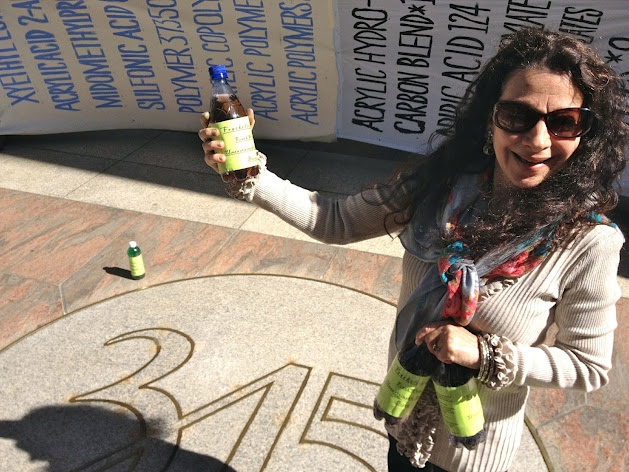
The protest featured an 180-foot banner, painted by artist Ruthie Sakheim. The banner listed more than 70 chemicals found in fracking fluid, in alphabetical order.

“It’s not even halfway through the A’s” said Sakheim.

She also handed out bottles of water oil-colored water labeled “Frackelicious Frackwater Unsustainable Energy Drink.” The label listed some of the more toxic chemicals involved in the process under “ingredients” along with “no preservatives, no artificial flavors, 100 percent poison.”
 
According to a report released by the Congressional Committee on Energy and Commerce, fracking fluid contains 750 chemicals, which “ranged from generally harmless and common substances, such as salt and citric acid, to extremely toxic substances, such as benzene and lead” as well as many carcinogens, according to the report.

These chemicals, along with gas itself, can enter water supplies when the casing on wells cracks or when wastewater containers spill.

The Safe Drinking Water Act of 2005 specifically exempts hydraulic fracturing, a lack of regulation known as the Halliburton Loophole.

Fracking currently takes place in nine California counties, including Sacramento, Los Angeles, Santa Barbara and Monterey.  But the extent of hydraulic fracturing in California isn’t well known, and yesterday, the California Senate rejected SB1054, which would have required energy companies to notify landowners before using hydraulic fracturing on or near their land.

In between chants of  “ban fracking now!” Sakheim told me that she spent several months painting the banner, and plans to continue the project of listing the chemicals involved in fracking in artistic form.

“I have three kids,” said Sakheim. “I really worry about what will happen to them with these corporations having so much control to influence government.”


Comments are coming, because we know you miss them

1

[[UPDATE 6/4 : COMMENTS ARE WORKING AGAIN, SO LET’R RIP, TROLLERATI]] We at the Bay Guardian moved in with the San Francisco Examiner this week and things are going great so far, with the only exception being a few technical difficulties, including the fact that our blog comments aren’t working yet. But we’re aware of the issue, we’re working on it, and we hope to have the problem fixed as soon as tomorrow. Thanks for your patience.