SFBG Blogs

High on Fire drops off (escapes?) the Rockstar Energy Drink Mayhem Festival Tour

0

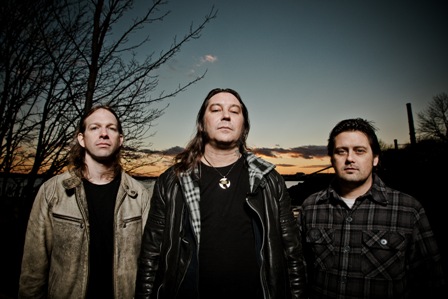
Disappointing news for High on Fire fans today — a press release from the veteran Oakland metal trio’s PR firm announces that the band will be dropping out of this summer’s Rockstar Energy Drink Mayhem Festival.

Here’s the deets from the release:

“High on Fire has announced that it will be forced to miss this summer’s Rockstar Energy Drink Mayhem Festival as front man and guitarist Matt Pike enters treatment for alcohol rehabilitation.  The award winning power trio (also featuring drummer Des Kensel and bassist Jeff Matz) will put its scheduled touring plans on hold indefinitely as Pike takes the necessary steps towards regaining his health.”

And remarks from the band, also from the release:

“High on Fire would like to thank everyone involved with the Rockstar Energy Drink Mayhem Festival for the opportunity to be a part of this year’s tour,” said the band in a statement. “We regretfully will have to bow out as our friend and bandmate begins his recovery, but very much appreciate having been asked to be a part of this summer’s festival run.”

It’s good to hear Pike, a thunderous presence beloved not just for HOF but also his role in stoner-metal titans Sleep (which just played Oakland Tues/5), is tending to his health. And in a sense, this break — though it comes soon after the April release of De Vermis Mysteriis, the band’s, pardon me, fucking awesome new album — could be the best thing in the long run. Think about it: without the lure of HOF pounding off riffs old and new, the Mayhem fest has just a handful of acts worth a trip all the way to Mountain View (July 1) to see. Slayer, yes. Motorhead, yes. Anthrax…ok, sure.

But as these sprawling mega-concerts tend to go, the rest of the lineup — with Slipknot at the top of the bill — is honestly one bit of bad news (The Devil Wears Prada; for hilarious guffaws, check out the Wikipedia entry explaining, oh-so-earnestly, how the band came by its oddly familiar name) after another (never heard of “I the Breather” until moments ago, but “I the making a value judgment based on the name and the crap YouTube vid I just watched”).

Anyway, my point is, once Pike recovers and is back in brutal-rock-god mode, maybe High on Fire will play some headlining gigs (yay!) in non-suburban settings (double-yay!) without bands like I the Breather crapping breakdowns all over the lawn. Get well soon, Matt Pike: heshers of the world need you more than ever these days.

Demand and ye shall receive: Wolfe enters the realm of VOD

0

Good news for fans of the watch-movies-at-home lifestyle (stay tuned for tomorrow’s post aimed at new-movies-in-the-theater junkies): just in time for Pride season (and just a week ahead of Frameline 36, the San Francisco International LGBT Film Festival), Wolfe — “the largest exclusive distributor of gay and lesbian films” — launched a worldwide video-on-demand service.

Zip on over to Wolfeondemand.com to check out the 30 titles available for instant streaming (kind of like Netflix, you “rent” the film for viewing via home computer, iPad, iPhone, or even iPodTouch). The company plans to have its entire library of features and docs available eventually, but for now, check out films like Tomboy, which spent just a brief time in Bay Area theaters last year but was among Guardian critic Lynn Rapoport’s top three of 2011 (read her review here).

http://www.youtube.com/watch?v=Jb-Oys-IcWE

In her blog on the Huffington Post, Wolfe founder Kathy Wolfe (speaking of Frameline, she and her groundbreaking company won the Frameline Award in 2010; check out my interview with her here), explained her motivation for starting the VOD service:

“Our goal all along has been to provide LGBT audiences with access to films that reflect their lives, but in reality, that’s not as simple as it sounds. There are certain territorial and language barriers that can complicate matters. As online distribution options have evolved, we’ve made it a priority to find ways Wolfe could provide our audiences unprecedented, timely access to our films, while at the same time discouraging the illegal ‘sharing’ of our films.”

Also among the current selections at Wolfe On Demand: critically acclaimed 2010 Peruvian import Undertow; read Dennis Harvey’s review here.

8 Washington isn’t getting much better

30

When the Board of Supervisors approved the environmental impact report for the most expensive condos in San Francisco history, several members of the board said they weren’t entirely happy with the project. Supervisors Christina Olague and Eric Mar both complained about the height and bulk and Olague said she wanted a parking fee.

So now the project is back, and just won approval at the Budget and Finance Commitee — with only a few minor changes. There’s no adjustment to the height and bulk, although the parking has been cut from 255 spaces to 200 and a 50-cent parking surcharge has been added. Sup. Jane Kim wants to be sure that the pool built in the new facility will be open to low-income youth.

But the city’s not getting a dime more than the $11 million in affordable housing money that developer Simon Snellgrove has already offered — despite the fact that the available financial evidence suggests Snellgrove and his partners will make more than $250 million on the deal. Sup John Avalos made clear that the city’s not getting enough out of this project.

So now it goes to the full board June 12 — and if things go according to the normal San Francisco pattern, the developer will get what he wants and the city will get screwed.

See, when you give developers the opening, they take advantage of it. When you let them over the first hurdle with and 8-3 vote, they get pretty confident that they’re going to win. So why would they compromise on more than few details? Why cut the height and bulk when you know you have the votes?

I respect what Eric Mar, Jane Kim and Christina Olague said about their votes on the EIR — but imagine if it had been a 6-5 vote? Snellgrove might have gotten the message that this wouldn’t be easy. He might be calling Olague and Mar and saying: How much less height? How much less bulk? How much more affordable housing? We might have wound up with a much better deal.

Every time — every single time — a developer presents what is supposed to be the last, best deal it’s a scam. Every time the city has said No, the developer has come back and sweetened the pot. That would have happened here, too.

But no. I predict no height and bulk adjustments, no additional affordable housing money — nothing more than what Budget and Finance already got. Which isn’t enough.

Oh, and by the way: Everyone here already knows that I oppose this project because it’s too much housing for rich people, which we don’t need in this city, and puts the city’s housing balance further out of whack. But if we’re going to sell off the waterfront for all the wrong reasons, we should at least get the best deal we can.

Lusty for the Ladies? Worker-owned strip club still open, but needs your help

18

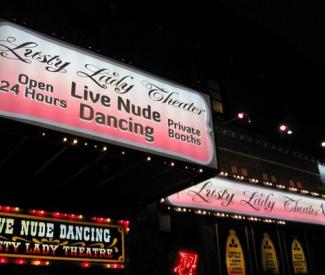
I have to apologize for not frothing up the waters with my own account of everyone’s favorite (and only) worker-owned strip club the Lusty Lady being in peril of having to shut its doors. I was gallivanting about on a world tour — find my list of illegal places in Berlin to trespass on here — and re-emerged on this side of the bridge to hysterical accounts that the classic, unionized titty joint was going under.

It’s no secret that the Guardian has a tawdry, longstanding affair with the Lusty — so I made a quick call to long-time Lusty Lorelei. Upshot: the club is kind-of safe for the moment, but it’s ready to grind it out for your singles.

“We would like to keep going, we would like to improve the business,” Lorelei told me. “We are looking for investors, but if that doesn’t work we’ll have to look for buyers.” Anyone willing to support their local, female-empowering, size-positive, all-inclusive adult club?

Here’s what happened: the Lusty has been struggling with finances for awhile. “It’s been funky and we just weren’t doing that great,” said Lorelei. The club has struggled, she continued, with perceptions that the private peep show booths were unclean, staff was unfriendly, and that dancers just weren’t working it out enough. “You can’t just go up there in your Payless heels and no makeup. Customers would come in and it would be like, sad trombone.” 

So when a company called Millenium Group offered $25,000 for the beleagured club, some staffers thought their ship had come in. Not Lorelei. “$25,000? That’s insulting. Really? We could come up with that!”

Nonetheless, a hasty employee vote was convened over email one weekend, side-stepping (Lorelei says) the informal co-op protocol that such matters necessitate a couple weeks for employee-owners to think them over. The Lusties decided against selling, and in the decisive moment many of the staff members who had been in favor of the sale split. 

Previous press accounts that reported that the employee-owners would be held financially liable if the club went bankrupt are erroneous, says Lorelei, who actually sees this moment of high drama as an opportunity. The mediocre service and hygiene reflected a complacency that a passel of new hires, she hopes the club has left behind. “The girls are hot, the theater is clean,” she laughs. 

The club is looking into starting up webcam shows, and has already started offering lapdances at specified times. Some of the dancers have started up a radio show Wednesdays from 9pm to midnight on 107.7 The Bone called Ask a Hot Chick, a great customer interaction tactic. Check out the Lusty Lady’s Indie Go Go page (side note: Kickstarter is not down with “adult” causes) to donate towards the club’s continued existence — the campaign will be active for the next day or so.

Or here’s a better plan: head down to the club this weekend for the club’s brand-new lapdance parties. You know the drill — see you a sex-positive, well-proportioned hottie and let her take you for a spin in a booth. 

Lusty Lady lapdance parties

Fridays and Saturdays, 9pm-2am

The Lusty Lady

1033 Kearny, SF

(415) 391-3991

www.lustyladysf.com


A range of rage at Obama visit

0

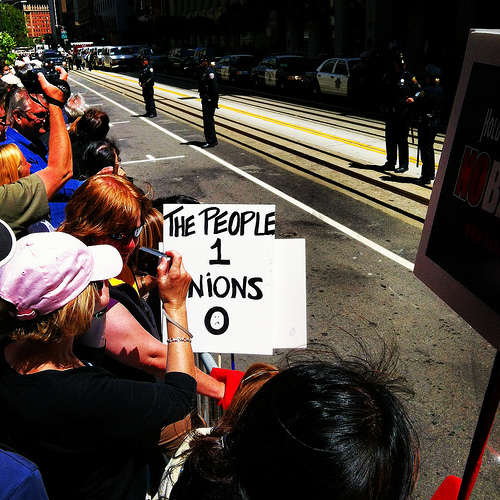
Hundreds gathered in the financial district today as President Obama came through San Francisco for a brief visit, consisting of a high-priced fundraising lunch and no public events. A mostly silent crowd waited patiently to watch the president’s motorcade drive by this afternoon, first at 1 Market St and then at 456 California, before he went off to SFO. On the crowd’s sidelines, handfuls of dissenters from various groups held signs and spoke up with a diverse range of reasons for protesting the president.

On Market, the motorcade went past the Occupy SF campsite at 101 Market St, where a dozen protesters had gathered. Their signs and chants focused on the National Defense Authorization Act. Sections 1021 and 1022 of the act, which the president signed Dec. 31 2011, have been interpreted as allowing for indefinite detention of terrorism suspects in the United States without charge or trial.

National groups Code Pink and World Can’t Wait brought attention to what they called Obama’s war crimes. 

“Code Pink is asking Obama to kill the kill list,” said Nancy Mancias, an organizer with the womens’ peace organization, referring to a list of terror suspects targeted for US attacks that Obama personally oversees. “We want more transparency in the CIA drone program, and victim compensation to the families of those who have been killed in drone strikes.”

World Can’t Wait demonstrators emphasized that Guantanamo Bay detention facility is still open and housing almost 200 prisoners, despite President Obama signing an executive order to close it days after taking office.

For demonstrators from the Center for Biological Diversity and Greenpeace, it’s imperative that the president stop oil drilling in the Arctic.

“There are a couple small permits they still need to get, but Shell is ready to drill in the Arctic in July,” said Miyoko Sakashita, an attorney at the Center for Biological Diversity. 

Sakashita said that drilling there could be dangerous for residents of the region, as well as polar bears, walruses and seals. 

“The conditions are terrible for drilling,” said Sakashita, citing low visibility and icy terrain. “If they can’t stop an oil spill in the gulf of Mexico, how will they stop it in the Arctic?” 

If these conditons do indeed lead to a disastrous oil spill, Greenpeace volunteers will be there first hand to witness it, as the group plans to send vessels of their own to monitor the operations.

Tea party protesters and Ron Paul supporters also came out to see the president. 

“It’s an issue of competence,” said Charles Cagnon, a protester who held a sign calling President Obama a “bad hire.”

“A president is our employee, not a king.”

But Cognan wasn’t too pleased with the competition either. 

“I was a Ron Paul kind of guy,” he said, “but I’ll take Romney. He’s level-headed and competent, and he likes arithmetic.”

“Obama doesn’t like arithmetic,” he continued, as evidenced, according to Cagnon, by the senate rejection of Obama’s budget May 16.

“Bush was terrible,” Cagnon added. “Romney is uninspiring.”

Cagnon and his group sported “Nobama” gear, Code Pink protesters came with signature pink clothing and signs, and a Greenpeace volunteer was dressed as “Frostpaw the polar bear.” Focused for the day on a common enemy of sorts, no conflicts arose between the divergent protest groups. For his part, Cagnon added that despite his right leanings, he loves KPFA radio, and that he believes the tea party has a distrust of government in common with Occupy.

“I’m just glad there’s people out there dissenting,” he said. “We need people like that.”

Bike advocates have made real progress, but there’s still a long way to go

51

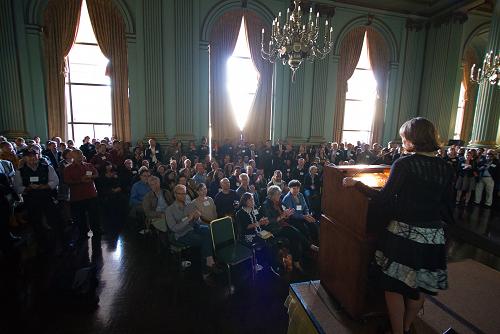
San Francisco Bicycle Coalition Executive Director Leah Shahum mused on how far this influential advocacy group has come during its 20th Annual Golden Wheels Awards last night, noting that the first such award recognized the commercial landlord at 555 Montgomery Street for installing indoor bike parking.

“Back then, that would get you a Golden Wheel Award,” she said, noting that this year’s award to the Building Owners and Managers Association of San Francisco (BOMA) was for its support of legislation requiring all commercial buildings in San Francisco to provide indoor bike parking. “We’ve come a long way in 20 years, clearly.”

In addition to the majority of the Board of Supervisors who showed up to offer their support, Shahum ticked off a long list of other city and regional officials who ride bikes and understand their potential as an increasingly important transportation option during the era of peak oil, traffic gridlock, and public health problems.

“Regularly, we have these top leaders in the city who are biking because they love it, biking because they’ve always biked,” Shahum said, citing the Sunday Streets road closures and the school district going from discouraging cycling to facilitating it as signs of the pro-bike mindset that has taken hold of San Francisco.

The fact that SFBC recognized BOMA – a powerful downtown player that has progressed from seeing cyclists as enemies to embracing them as allies – was telling of the mainstream embrace of bikes.

“We get it, we’re learning,” Meade Boutwell, president of BOMA’s board, told the crowd as he accepted the award, going on to say that “less cars are good for all of us.”

It was a lovely if ungrammatical sentiment and a sign of just how far the business community has come in accepting the imperative of promoting alternatives to the automobile. But there’s still a bit of a disconnect in San Francisco about the role that bikes play in the world’s great pro-cycling cities, evidenced partly by Boutwell’s opening comment, “Under this polyester suit is lycra.”

Keynote speaker Gil Peñalosa – executive director of 8-80 Cities, a nonprofit that promotes creation of cycling infrastructure that is safe and inviting from those 8-80-years-old – mocked the MAMILs (Middle-Aged Men In Lycra) and the notion that people should be athletic or wear special equipment to be able to cycle in cities.

“We dress normally, we act normal, and so on,” Peñalosa said, later arguing that, “Cycling is for everybody.”

In Boutwell’s defense, much of mainstream San Francisco still has a hard time accepting cycling as a normal, safe option. When the San Francisco Chronicle covered Pealosa’s visit to Sunday Streets last weekend – our version of the car-free ciclovias that Peñalosa pioneered as a city official in Bogota, Columbia more than a decade ago – reporter Sam Whiting was jarred by the guest’s casual approach.

“They had come from overseas and were riding in jeans and without helmets, both rookie mistakes,” he wrote of Peñalosa and his wife (“Sunday Streets welcomes its source of inspiration,” 6/4).

But Peñalosa argues that the real mistake is when cities cater primarily to automobiles at the expense of the safety and livability of their neighborhoods, and treat cycling as a dangerous fringe activity. He argues that cities should be built primarily around pedestrians, “but very close to the pedestrians is the cyclists…I think that cycling is just a more efficient way of walking.”

Public transit is important and should be robust, he said, but it’s just not as efficient, user-friendly, economical, or environmentally beneficial as bikes. “We need to walk and bike as a part of everyday life and then we’ll be much healthier,” he said.

Peñalosa urged the crowd to be politically active and push the city to prioritize bikes over automobiles, noting that even in wealthy neighborhoods, only about a third of residents drive cars. And from a design perspective, he said city officials must choose between “Streets for cars or streets for people.”

Once we make the latter choice, Peñalosa laid out an agenda for achieving that goal, starting with slowing vehicle speeds to no more than 20 mph in residential areas.

He cited statistics showing that only about 5 percent of pedestrians hit by cars driving 20 mph will die, whereas the fatality rate shoots up to 80 percent when the vehicles are traveling 40 mph. And for streets in which cars are traveling faster than 20 mph, he said it’s imperative to have bike lanes that are separated from cars by physical barriers, rather than just lines painted on the street.

He noted that Seville, Spain drastically increased its cycling rate in just a few years by committing to building bike infrastructure, and that Chicago Mayor Rahm Emanuel installed that city’s first physically separated bikeway within his first 30 days in office and has perhaps the US’s most ambitious program for installing new bikeways. “San Francisco should not be any less than Chicago,” he said.

In Cogenhagen, which already boasts some of the world’s highest rates of urban bicycle use, Peñalosa said the city has sought to capture more long-distance riders by building 200 miles of “cycle superhighways” – which includes two lanes in each direction to facilitate both fast and slow riders – all for the price it costs to build about a half-mile of subway.

The goal, he said, is to make cycling as “easy, fast, and convenient” as possible, and to apply the political pressure to make that a priority because “if you aren’t doing those things then someone else is and someone else is setting the agenda.”

Free Berlin: 3 city summer destinations for when you’re broke and German

0

It was 2pm by the time I stumbled out of Berghain and rode my bike home along the Spree-side still-standing section of the Berlin Wall, veering between the tourists snapping away at its murals. Hopefully they got a good shot of the bleary-eyed girl in the see-through dress. (Tag me!) Luckily, once you’ve steered clear of the hordes there is plenty of fun to be had in Berlin that had nothing to do with techno church and tawdry dark rooms. Here’s four of my favorite free spots in the city to check out when the clubs close, from naked lakes to repurposed airport tarmacs and abandoned Ferris wheels.

TARMAC TIME

Close by Berlin’s Schöneberg neighborhood (where one can stride amidst blocks of leather stores and spendy gay bars — it’s the Castro’s sister swisher), a venerable European airport wades into a new era. Tempelhof Airport is one forboding arc of concrete, so feel free to lose yourself in its defunct fascist embrace and bizarro history. But then turn around, because the tarmac now serves as park land. It’s vast grassy fields are perfect for getting lost, its runways are currently being used by bicyclists and breakneck windsurfers, and over a dozen public art projects are being developed in various corners. These include an incredible DIY community garden where one can sit placidly atop a hammered-together lifeguard’s chair, surrounded by sprouting greens. The sun can get a little intense at times, but to the side under a few leafy trees stands a perfectly German beer garden where you can take a load off. 

NAKED LAKES

“This is where all the Grimm Brothers fairytales took place.” Quite an introduction to the forest that will soon see your naked ass — it’s lake time! Lake Teufelsee, that is, which you can easily reach with a nice walk from the metro stop. Teufelsee is one of the shady dells in which Berliners take advantage of Freikörperkultur, or the area’s longstanding tradition of free body culture. On our recent visit to Teufelsee, we posted up next to a multi-generational family of nakeds — grandpa, kids, parents, tossing a ball around and generally feeling good about not having tanlines. No one wears clothes. Bonus: looming over the Grunewald Forest surrounding the lake are the Epcot Center-like remains of an abandoned Soviet spy tower. Follow your nose up the hill to them for good old-fashioned Berlin pastime of exploring falling-down beautiful structures. 

CRIME SPREE

… Speaking of, how about an abandoned amusement park? Amid whirling rumors of cocaine trafficking and out-of-control debt, Spreepark closed in 2001, leaving such tantalizing treasurs as a brackish moat-encircled Ferris wheel, Viking ships, and tunnels shaped like roaring rainbow lion’s mouths. It is easy as pie to hop over the fence (walk to Spreepark from the Treptower Park metro stop), and when we visited any fears of being apprehended by the guard that is supposed to be patrolling the area were quickly alleviated by the shrieking Germans attempting to sway the rickety Ferris wheel. If beheaded dinosaur statues and belligerant graffiti (“Who cares? Be poor”) is your thing, you need to come check out this ruin-kitsch wonder. Americans recently bought the property to start up a multidisciplinary community art project — so go quickly while it’s still deviant. If you’re on your way out there, you might want to swing by the revisionist history explosion that is the stately Soviet War Memorial. A 39-foot tall statue of a blonde Soviet soldier cradling a lost German child and crushing a swatiska beneath his feet presides over the complex. 

It’s the money, stupid

10

If you want to know what American politics looks like in a post-Citizens United world, check out the June 5 elections.

It’s not that this specific court case played a role in all of the key races — the tobacco industry could have spent $47 million to defeat a cigarette tax with or without Citizens United — but around the country, you saw the role that big money played in literally altering the political landscape.

Take Wisconsin. The national news media twist on this will call it a test of Obama’s field campaign and a referendum on labor, but it was really all about money. Walker and his big-biz allies raised $30 million, a lot of it through barely-regulated super PACs, and outspent Tom Barrett by more than 7-1.

In California, Prop. 29, which would have put a $1 tax on each pack of cigarettes to pay for cancer research, was way ahead in the polls, and I was pretty sure it was going to win handily — how can you vote against a tax on a product that kills people to fund a cure for the disease it causes? Prop. 29 had a 30-point lead a couple of months ago.

Then came the blitz — $47 million in TV ads, funded by a couple of big tobacco companies. The ads were classics of the type — misdirection and confusion aimed at getting people to vote No. And it worked: Prop. 29 is going down to a narrow defeat.

In San Francisco, Prop A, with little money and not much of a campaign, never had a serious chance. But the flood of Recology money made sure it never got even 25 percent of the vote (although if you asked people, outside of the campaign, whether the garbage contract should be put out to bid, most of them would say yes).

I think Recology money had an impact on the Democratic County Central Commitee, too; Recology paid for a lot of slate cards that promoted a lot of more moderate candidates. The company also paid for progressive slate cards (the Milk Club etc.), and I haven’t counted them all, but in the end, slate cards matter in the DCCC and they may have made the difference.

The local election was so low-turnout that it’s hard to draw any serious conclusions from it. But overall, money carried the day June 5 — and that’s a scary message.


Localized Appreesh: Still Flyin’

0

Localized Appreesh is our weekly thank-you column to the musicians that make the Bay. To be considered, contact emilysavage@sfbg.com.

Tireless indie pop supergroup Still Flyin’ is back, with a follow-up to 2009’s superfun Never Gonna Touch the Ground.

The expansive SF band’s sophomore album – On A Bedroom Wall – is varied, it’s a grand mishmosh of styles, influences, and instruments (like any good party record). It has a synthy ’80s shoulder-shaking influence throughout, peppered with funk and reggae rhythms, cut through with earnest pop melodies; picture a funkier, modern Adam and the Ants, and maybe throw ’em in an underground, all-night dance club in a beachy locale. And hand over that fruity cocktail while you’re at it.

On the release of said second record, the spirited act hits Rickshaw Stop this Friday – and really, Still Flyin’ is known first and foremost as a great live band. Leading up to the big show, bandleader/pied piper Sean Rawls reflects on first records, favorites dishes, and the worst part of San Francisco’s seamless seasons.

Year and location of origin: 2004, San Francisco.

Band name origin: I wrote a joke reggae song for a band with my buds from college called Je Suis France.  When I moved to San Francisco from Athens, GA I was so obsessed with my reggae song that I decided to make a band based on it. The band name is from the chorus of that song.

Band motto: They gave us a chance and now we are going to take it from them.

Description of sound in 10 words or less: Smooth wild unhinged mechanical soft bombastic happy melancholy popular unpopular.

Instrumentation: 1. Guitar/synth/vocals; 2. Synth/vocals; 3. Vibraphone/guitar/synth/sax/vocals; 4. Percussion/guitar/vocals; 5. Bass; 6. Drums

Most recent release: On A Bedroom Wall (May 22 via Ernest Jenning)

Best part about life as a Bay Area band: No problem getting rained on for half the year.

Worst part about life as a Bay Area band: Jacket in July.

First album ever purchased: Back to the Future soundtrack.

Most recent album purchased/downloaded: Cleaners From Venus box set

Favorite Bay Area eatery and dish: Pretty much any torta at La Torta Gorda.

Still Flyin’
With Tambo Rays, Trails and Ways
Sun/10, 7pm, $10
Rickshaw Stop
155 Fell, SF
(415) 861-2011
www.rickshawstop.com

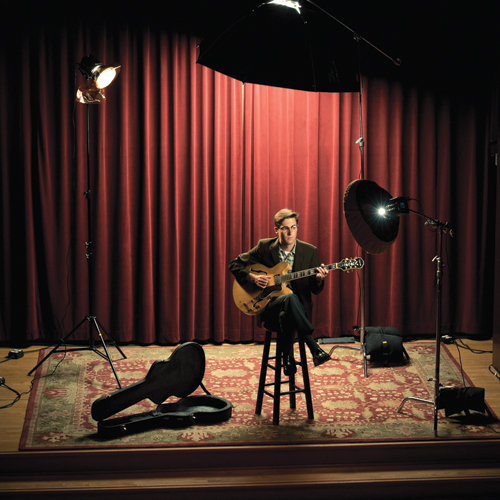
Behind the scenes at Nick Waterhouse’s cover shoot

0

In this week’s issue Landon Moblad profiles retro rock purveyor Nick Waterhouse. Here are a few audio clips from Nick’s shoot at the Swedish American Hall with photographer Matthew Reamer. Nick talks about why he’s excited to play San Francisco’s Verdi Club (tonight), and sums up how he’s usually summed up by the press.


Additionally we had to scramble at the last minute to find a guitar for the shoot because Nick’s bandmates had taken his with them in their tour van. Finding the right guitar for someone with such a specific style was no small task but fortunately Nick knew where to look… just one block down 15th Street to Peacock Music. The small 37 year old guitar store is in the process of moving to Bernal Heights and we had the chance to chat with its owner Noah Peacock about the shop’s history and what’s coming up. Have a listen:

Wage theft task force approved

24

The Board of Supervisors June 5 voted unanimously to create a wage theft task force. The task force will make recommendations to city departments concerning the prevention and correction of wage theft in the city.

Wage theft refers to employers paying less than their employees are due, and can include not paying extra for overtime, not allowing breaks, confiscating tips, and paying less than minimum wage. A 2010 study of labor conditions in Chinatown restaurants conducted by the Chinese Progressive Association (CPA) found that some 76 percent of employees did not receive overtime pay when they worked more than 40 hours in a week, and roughly half were not being paid San Francisco’s minimum wage.

The industries where wage theft is prominent range from restaurants and retail to domestic work. 

Approval of the task force is a step forward for groups like CPA that have been working to combat wage theft for years. It builds on the wage theft prevention ordiance, passed last July. The ordinance doubled the fine for employers who retaliate against workers that seek recourse for wage theft, and enhanced the power of the cit’s Office of Labor Standards and Enforcement (OLSE).

The Progressive Workers Alliance- a coalition of CPA, Young Workers United, the Filipino Community Center and others- advocated for the task force and helped bring in dozens of supporters to the meeting. 

Workers who suspect that their employers have violated local labor laws often come to these groups for help. Between the OLSA and advocacy groups, the people following up with these claims see a widespread problem. According to Shaw San Liu of the CPA, there are “probably hundreds if not thousands coming forward every year, and there are many more who don’t.” 

“There have been experiments in coordinating with the City Attorney and with the health department to revoke food permits,” said Liu. 

She hopes “the task force will build off these successful examples and see how we can expand them to a more comprehensive strategy.”


Welcome back to SF President Obama! Now, say Supevisors, give us our marijuana

4

Not that it’s ever a good idea, but avoid driving downtown today like the plague — President Obama’s in town! And, (as reported by SFGate), SF supervisors want him to take a stance on pot. Sup. Christina Olague has penned a letter co-signed by Sups. David Campos, and Scott Weiner that is a solid finger-wag at the current federal administrations actions against the medical marijuana industry. Here’s the meat of it:


We believe strongly in addressing medical cannabis as a public health issue, and we will strive to fully implement state law by protecting not only our patients, but our property owners and dispensary operators as well. We want to work with President Obama on a public health solution for medical cannabis at the federal level, once he wins a second term. In the meantime, the Department of Justice must respect our laws and honor the President’s commitment on this issue. Honoring this commitment can start by taking no further action against the nine landlords of City-permitted facilities here in San Francisco.


Those “nine landlords” refer to the property owners of the five SF cannabis dispensaries that have already closed, and the additional four that are set to close this month. The federal government has sent threatening letters to dispensary landlords that posit extensive jail time and civil forfeiture for those landlords that continue to allow federally-illegal drug trafficking on their property. 

Kudos to the new Sup. Olague for taking a stand. Of course, the letter’s premise is that the Sups. are staunch supporters of Obama’s re-election, they’re just asking him to improve on this particular issue. It begs the question: why would he make capitulations to win support that is already in pocket?

Tickets are sold out for his lunch at the Julia Morgan Ballroom (465 California, between Montgomery and Sansome Streets), although his campaign website encourages you to get on the waiting list — be careful, general admission tickets start at $5,000. The President’s only other scheduled stop, says SFGate, is at a “small roundtable” at One Market Plaza. 

Afterwards, the President will head south to Los Angeles to attend the annual fundraising gala for the LGBT Leadership Council, where he will no doubt be greeted affectionately for his “I support gay marriage”isms of last month. 

After an adorable election, free drinks at El Rio

2

The mood was relaxed at El Rio tonight as the League of Young Voters held their post-elections party. There wasn’t much to today’s ballot- as the League put it in the intro to their Pissed Off Voter Guide, “Aw, what a cute little election!”

The League endorsed a yes vote on Propositions 28, 29 and B, and a no vote on Prop A, and it seems the results all went with these endorsements. 

Jeremy Pollock, a member of the steering committee of the League of Pissed Off Voters’ San Francisco chapter, said that he was especially pleased about Prop B’s passing. The measure will prioritize money for upkeep of Coit Tower and the surrounding Pioneer Park and limit private events in the iconic tower.

For Pollock, the fight over Prop B was like “David and Goliath,” especially when tens of thousands of dollars got poured into the anti-Prop B campaign at the last minute.

“It’s a statement against the privatization of Rec and Parks,” said Pollock.

Pollock was also pleased to see Wendy Aragon and Peter Laterbourn doing well in the DCCC assembly District 19 race.

But mostly, the attendants at the party were pleased to get a free drink for showing their “I voted” sticker. If you paid for a drink in San Francisco today, then you’re not a true lover of democracy.


Supervisors dominate DCCC race, but key newbies join them

5

“I just stopped by on my way to finish campaigning,” Sup. David  Campos told me at the Bike Coalition’s 20th Annual Golden Wheel Awards (more on that tomorrow), the first in more than a majority of the Board of Supervisors at the event.

Campos was campaigning for reelection to the Democratic Party County Central Committee (DCCC) and the polls were still going to be open for almost two more hours. Perhaps he could still reach the one in four registered SF voters who bothered to weigh in on this lackluster election.

“There was nothing really on the ballot that excited voters,” Campos said. “Hopefully November will be different.”

Tonight’s returns — for leadership of a local Democratic Party that hopes for more  voter engagement in the fall races — showed that Campos and fellow supervisors David Chiu, John Avalos, and Scott Wiener expectedly topped the pack, with Bevan Dufty, who moved from the board to the Mayor’s Office this year, in fifth place. And longtime former legislator Carole Migden’s sixth place fininish in the 14-seat eastside DCCC race helped show that it was mostly about name recognition.

But there were a couple of first-time candidates in the winning field: Matt Dorsey and Zoe Dunning, who finished 8th and 12th respectively. Both played key roles in recent LGBT politics: Dorsey as the City Attorney’s Office spokesperson during the same-sex marriage saga of the last eight years, Dunning as a poster lesbian in ending the US military’s “don’t ask, don’t tell” policy.

“I think Zoe and Matt are the ones to watch,” DCCC member Alix Rosenthal told me at the Buck Tavern as she celebrated her reelection, after campaigning hard for both the progressive and women’s slates.     

Unprompted, Dorsey returned the recognition when I stopped by his party down the street at Churchill. “Alix and Rafael [Mandelman, who organized the progressive slate and finished 10th, right after Sup. Malia Cohen] ran other things, so it’s apples and oranges,” Dorsey humbly said of the two former Dist. 8 supervisorial candidates he bested, when I asked about his strong finish.

Dorsey ran an aggressive campaign, targeting high-turnout precincts and working hard to get the full spectrum of political endorsements (and posting all his answers to each group online), what he called “Moneyball politics.” And it translated into an impressive finish for a freshman candidate but longtime politico.  

“Right now, I’m looking to get back to the gym after a year and a half of campaigning,” said Dorsey, the spokesperson for the mayoral campaign of City Attorney Dennis Herrera, who was at the party, along with District Attorney George Gascon. 

Dorsey and his fellow Guardian/progressive slate members did better in Eastside Dist. 17 than Westside Dist. 19, taking 10 of 14 seats compared to four of 10, leaving a near-equal balance with the moderate Democrats once the seats of elected officials are factored in.

But if the spirits count for anything, Dorsey told me he ran especially hard to earn the seat that outgoing DCCC Chair Aaron Peskin appointed him to when long progressive activist Michael Goldstein died last year.

“Knowing that it was his seat,” Dorsey said, “motivated me to work harder.”

Tobacco tax: It’s going to be way too close

19

About 25 percent of the vote in. 50.6 Yes, 49.4 No. Trending the wrong way. This is going to be very close.

I didn’t believe that the tobacco companies could beat this thing, and I thought the results from LA would push the Yes vote, but in LA county, Prop. 29 is losing. Odd to see the absentees more liberal than the election-day votes, but let’s remember: As the polls showed this getting closer, Big Tobacco threw more and more money into the strategic areas, and that’s clearly had an impact.

Wow. This could actually go down.

And if Californians aren’t going to tax cigarettes, which only about 12 percent of Californians even smoke, what does that say about the impact a big-money campaign could have against Gov. Brown’s tax measures in the fall?

Reading Ed Lee’s mind

15

Political reporters love to believe we can read politician’s minds; it makes us feel important. (And Lord knows, these days we need something to make us feel important.) So let me go way out on a limb here and tell you what Mayor Lee is thinking right now:

1. Gotta minimize Prop. B. It was an aberration, a bunch of rich Nimbys from Telegraph Hill, nothing more to see here. Certainly not a public referendum on my Rec-Park director, Phil Ginsburg, and his efforts to make money by renting out city parks for private events. No no no, just ignore it and maybe it will go away.

2. We won back the Democratic Party. Good move to take a page from Aaron Peskin’s book and run a bunch of elected officials and former elected officials with high name recognition in a low-turnout election. Bevan Dufty, who happens to work for me, would make an excellent chair; should be easy to make that happen.

3. What if we look at the DCCC race in the 17th District as a first-pass primary for the 2014 Assembly seat when Tom Ammiano — who’s just way too independent and won’t get with my program — is termed out? Hmmm … David Chiu, who I can mostly deal with, is in first place — but John Avalos and David Campos are more popular than my pal Scott Wiener. And if the progressives get behind Campos, he’ll be tough to beat. Hmmm….

4. That oddball Michael Breyer ran for Assembly pretending he was me. He even put out a mailer with my mustache on the front suggesting that he’ll be just like I am (except that he’s white and has no experience and no credible program and isn’t going to win). But he got a lot of votes with the Ed Lee card and I could totally control him. Can’t support him over Phil Ting, of course, but maybe I can get him some help behind the scenes.

5. This was an unusual election with radically low turnout. I know I can’t read too much into it. If the DCCC were on the ballot in November, or if there were a real presidential primary to bring people out to vote, the results would be very different. But still: All that new housing for rich people that my mentor Willie Brown and my friend Gavin Newsom got started seems to be having an impact. The city’s getting more conservative. Let’s just keep that one going and I’m home free.

6. What’s up with Lincecum? Damn those Padres.

Nah — the mayor’s too nice a guy to be thinking like that. Right?


Tobacco money showing its power

1

The tobacco companies spent very, very heavily in Southern California to defeat Prop. 29, and as more results come in, it’s clear that the tens of millions of dollars worth of misleading TV ads had an impact. The numbers are now very, very close. With 15 percent of the vote in, it’s 50.3 Yes, 49.7 No. Still mostly conservative areas; LA and San Francisco aren’t in the mix yet, and only half of Sacramento’s been counted. Still: This is way, way closer than I thought it would be.

80 percent reporting: You can take (most of) this to the bank

6

WIth 80 percent reporting, you can take this much to the bank:

Prop A is dead. Prop. B has won. The left will no longer control the local Democratic Party.

Phil Ting will have an actual race in November (although he won more votes than the conservative Dem and the Republican combined and will almost certainly win the seat).

The Padres beat the Giants, 6-5, with a walk-off home run in the ninth.

Hell of a night.

40 percent reporting: Not a lot of change

0

Witrh 40 percent of the precincts reporting, there’s been very little change in the results, which is surprising: Typically the absentees don’t reflect the election-day turnout. But Prop. A is still going down by huge margins, Prop. B is still winning (and at this point, that one’s probably in the bag, striking a blow against the privatization of public resources and offering a vote of no-confidence in the direction of the city’s Rec-Park department).

It appears likely that there will be an expensive November race for Assembly in D19, with the downtown-funded (but otherwise unknown) Democrat Michael Breyer who ran an almost-Republican campaign heading for a second-place finish against Assessor Phil Ting.

And there’s no change in the results for the DCCC.

I’m a little surprised (and disappointed) that Gabriel Haaland, a longtime incumbent, isn’t making the cut this time, and I’m surprised (and pleased) that newcomer Justin Morgan, a public-health physician, is still in the top 14 on the East Side. Zoe Dunning and Matt Dorsey, two very visible LGBT leaders (she on DADT, he on same-sex marriage) are running strong; Dorsey’s in the progressive camp, and Dunning, a former military officer, is more conservative. School Board member Hyrda Mendoza isn’t making the cut, either, which is odd for a citywide elected official.

At this point, it appears that theSF Democratic Party will be a more conservative organization than we’ve been used to over the past four years. At most, the progressives will have 14 or 15 votes out of 32 (24 elected and eight ex-officio). There are plenty of reasons for that, among them the retirement of some longtime progressive members (Aaron Peskin, Jane Morrison, Milton Marks); the redistricting that created a West Side district very few progressives could compete in — and the move by the more conservative elements of the party to run a slate that included Dufty and Cohen.

Things could still change; I could be wrong. But I don’t think I am.

Tobacco tax tightens up

0

Whoa — with 10 percent of the state reporting, the tobacco tax, Prop. 29, is tightening up. It’s now 51.3 yes, 48.7 no. But I’ve checked the counties that have reported in, and they’re mostly the no-tax conservative areas. Only 5 percent of Los Angeles is in, and San Francisco hasn’t even reported to the state yet. So not time to worry yet.

In CD2, Norman Solomon has pulled to within 2.5 points of the Republican in the race for second place and a slot on the November ballot. I think he’s going to pull it off.

Early SF results: No on A, Yes on B

5

The first results just got posted, and it’s a fairly large number of votes. More than 60,000 people voted by mail, and there’s enough to draw a few conclusions.

Prop. A, the measure that would have required competitive bidding for the city’s garbage contracts, is dead, losing in the early absentees 77-23. No surprise that it’s losing; getting 23 percent of the vote with no campaign to speak of up against the full might of Recology’s money and political connections is actually pretty impressive.

Prop. B, the Coit Tower measure, is winning, 55-45, which is a good place to be at this stage. I’d say it’s time for the Yes on B camp to start celebrating.

The DCCC early returns show a lot of what we expected — the elected officials and incumbents are doing well. David Chiu is in first, beating Scott Wiener, who is beating John Avalos. For what it’s worth.

After that, it’s Bevan Dufty, David Campos, former Sup. Leslie Katz and former state Sen. Carole Migden.

Interestingly, Matt Dorsey, an appointed incumbent facing the electorate for the first time, is ahead of Sup Malia Cohen. Rafael Mandleman, Zoe Dunning, Alix Rosenthal, Petra DeJesus, and Justin Morgan finish out the top 14 on the East Side.

Those are the early absentees, and the difference between Morgan and incumbent Gabriel Haaland, now in 18th place, is just 800 votes. So it will change.

Right now, the progressives have 9 of the 14 seats on the East Side, but only 4 of the 10 on the West Side, which won’t be enough to elect a progressive chair and ensure good endorsements in the fall. But the margins are so thin and it’s so early we can’t call it yet.

On the West Side of town, Assessor Phil Ting is comfortably in the lead for the 19th Assembly District, but newcomer Michael Breyer, a conservative Democrat who spent a ton of money, is edging Republican Matthew Del Carlo by two points, setting up the possibility that Ting will have to raise money and face off against Breyer in November.

Statewide results: Tobacco tax close, term-limits change leading

0

The statewide results are very early, very limited and most likely very conservative, because they represent only absentees that have come from the few counties already reporting. Here’s what I can draw from them: The change in term limits, Prop. 28 — promoted by opponents of the current term-limits law but described as reducing the amount of time a legislator can serve — is going to win handily. It’s ahead 66-34. It doens’t mean voters are turning against term limits (sadly); there wasn’t a huge campaign on either side, so it’s mostly about the actual ballot language, and the sponsors were careful to say it “limits legislators terms in office.” Still, it’s good news for people like San Francisco Assessor Phil Ting, who is likely to head up to Sacramento for the first time and will be eligible to serve in the Assembly for 12 years.

The cigarette tax is also winning, despite about $40 million in spending by the tobacco companies. That one’s closer — 53-47 — but since absentees are usually more conservative than election-day votes, that’s a good sign. If things hold up the way they normally do, the gap will widen and both measures will win handily.

In the Congressional D2 race, Jared Huffman is, as expected, well in the lead with more than 40 percent of the vote. The second-place Dem is Norman Solomon, but he’s trailing the top Republican, Daniel Roberts, by three points. If Solomon does well with today’s voters, he may wind up in the November final.


Two things to watch for in CA

1

There are two things that could be really significant around the state tonight (and no, I’m not talking about which liberal, balding Jewish man wins the primary in the San Fernando Valley, which will almost certainly be replayed in the fall). There’s a real chance that, thanks to redistricting, the Democrats could pick up enough seats to win a super-majority in the state Senate — meaning they could pass new taxes despite GOP recalcitrance. And while it’s unlikely that the Dems will get a two-thirds majority in the Assembly, there are a few Republicans out there who are starting to question the Grover Norquist line.

So what happens if, say, both houses approve an oil-severance tax or a restoration of the vehicle license fee? Will the Guv, who insisted in his campaign that he’d accept “no new taxes without a vote of the people” going to veto it? Seriously — is Jerry Brown going to veto an oil-severance tax?

Then there’s the Second Congressional District, where corporate Dem Jared Huffman is almost certainly going to come in first — but Norman Solomon, who is way closer politically to outgoing Rep. Lynn Woolsey, has a good chance of coming in second and making it to the November election. In which case the North Coast will see a classic fight between the left and the center of the Democratic Party, in one of the most progressive districts in the country — and it will attract national attention.

By the way: I’ve been checking out so many blogs tonight that I can’t remember where I saw this, but: The huge turnout in Wisconsin indicates that sharp political distinctions, clear-cut lines and hard fights, improve voter turnout. These cautious, don’t-take-risks pols shouldn’t be surprised that hardly anyone wants to vote for them.