SFBG Blogs

Crucial Noise: Stern Grove kickoff, Ty Segall tour, Emily Jane White album, and more

3

Important bits and pieces, odds and ends of Bay Area music news. Or, what’s in my inbox?

Return to the misty grove with Anita Baker

The Stern Grove Festival kicks off its 75th season in less than two weeks (Sunday, June 24) with a free Anita Baker, Family Stone, and Glide Ensemble concert at 2pm. How lucky, that we have both the free Hardly Strictly Bluegrass Fest and (unrelated, but akin in spirit) Stern Grove; that combination helps with sailing gracefully through the cruel, cruel summer and into the likewise gray fall.

The Stern Grove Festival has racked up more than six million visitors over these past seven decades, checking out a total of 750 live acts (including the favorable yearly appearances by the San Francisco Ballet, Opera, and Symphony).

Upcoming Stern Grove Fest concerts (always free, always outdoors and picnic-friendly, but bring a heavy jacket ’cause it gets mighty chilly out there):

July 1: Preservation Hall Jazz Band and the Stone Foxes
July 8: San Francisco Symphony
July 15: Nitin Sawhney and Meshell Ndegeocello
July 22: The E Family featuring Pete, Sheila E, Juan and Peter Michael Escovedo
July 29: San Francisco Ballet
Aug. 5: Ozomotli and SMOD
Aug. 12: Al Jarreau and the George Duke Trio, Mara Hruby
Aug. 19: San Francisco Opera
Aug. 26: OK Go and the Family Crest

All concerts begin at 2pm at Sigmund Stern Grove, 19th Avenue and Sloat Boulevard, SF.

http://www.youtube.com/watch?v=A-7cykntxsw

Vociferous hometown heroes
Today local garage-punk golden boy Ty Segall announced a co-headlining tour with everyone’s favorite SF psych-monsters, Thee Oh Sees.

The prolific Segall, known for an abundance of releases and relentless touring (in 2012 thus far he has already released Hair, a split with White Fence, and is about to drop Slaughterhouse with the Ty Segall Band, plus played the epic Bruise Cruise), also debuted today his “Drag City Limits” video:

http://www.youtube.com/watch?v=VliWkE7HW34

Only issue here – there don’t seem to be any Bay Area shows on that list of co-headling dates yet. There’s got to be one coming up though, right?

Ode to joy
Finger-picking Bay Area singer-songwriter-guitarist Emily Jane White‘s latest album Ode To Sentience is out today on Antenna Farm Records. As with her previous work, the haunting Victorian America, this dark-folk LP is inspired by the America of yore, literature, and stories referencing past eras of this weird country, along with all the gossamer visions of our own ghostly past, specifically, “Depression-era blues…Toni Morrison’s Beloved and Charlotte Perkins Gilman’s [1892 short feminist work] The Yellow Wallpaper.”

http://www.youtube.com/watch?v=G-fJcO52LFw

She celebrates the release with a show tonight at Brick and Mortar Music Hall, and another Sunday at Amoeba in Berkeley.

Tue/12, 9pm, $5-$8
Brick and Mortar Music Hall
1710 Mission, SF
(415) 800-8782
www.brickandmortarmusic.com

Sun/17, 4pm, free
Amoeba Music
2455 Telegraph, Berk.
(510) 549-1125
www.amoeba.com

Damn the man
Former KUSF music director, and current Save KUSF spokesperson Irwin Swirnoff sent out an informal update today regarding the state of the station sale, and the need to continue fighting for its rights.

In the email, Swirnoff explained the FCC media bureau’s ruling last week:

“On one hand, they fined USFand CPRN $50,000 – yet in a private back door meeting a month ago with those parties they reached an agreement to approve the sale. Once again the public’s airwaves were being silenced and sold off behind closed doors with no public input or transparency.”

Swirnoff added that those working to save KUSF are forging ahead with an appeal, despite these setbacks.

“This issue is bigger than KUSF –  this is a national crisis of universities selling off the public’s airwaves to the highest bidders. The players who are buying these stations are doing so to create a media monopoly on the left side of the dial, and strictly using their place on the public’s airwaves as a means to raise money for private institutions, often using classical music as a way to reach the wealthiest donors.”

In the conclusion of the letter, he included another compelling reason why the sale of KUSF is important to the rest of San Francisco, beyond fervent listeners.

“We are losing true diverse, local, cultural programming that really reflects the vibrancy of our city.  This is about the commodification of the non-commercial side of the dial.  As the public’s access to true, non-commercial, and free media becomes less and less, it’s so important to protect the last vestiges of true community media/culture.”


Street Threads: Look of the Day

0


Ariel Soto-Suver was strolling Sunday Streets in the Mission — its home every first Sunday this summer, did you hear? — when she happened across some perfect examples of SF summer weekend chic.

Today’s look: Crystal and Libby, 24th Street and Dolores

Tell us about your look: Says Crystal, “I like color, preppy and simple.” Libby followed with: “My style is unique, artistic and locally made.”

Appetite: Whiskies of the World tastes and gin tales

1

A better than ever year aboard the SF Belle at Whiskies of the World last month meant some fine, global pours of whisk(e)y from Scotland to Australia. Here were some highlights:

On the fun and interesting tip, Lark Distillery distills single malt whisky in Tasmania, an Australian island – and it’s surprisingly solid. Distilled in copper pot stills, it’s smooth with a modicum of peat, aged five years, yet with a bit of complexity. I appreciated returning to 10-year-old old Masterson’s Straight Rye Whiskey. Aged in charred white oak barrels, this Canadian rye evokes whispers of pepper, vanilla, spice, and a soft sweetness.

Count me smitten with Glenmorangie’s new Artein ($79.50), an elegant whisky of stone fruit, mint, even chocolate and lemon zest, matured in Super Tuscan wine casks. It’s sexy, evening wear without being sweet or dessert-y. Speaking of Glenmorangie, Chef Tyler Stone brought a memorable touch to the evening making boozy, liquid nitrogen bowl after bowl of Glenmorangie’s Nectar D’Or whisky served in a mini-glass with egg white lime foam on top. Brilliant.

Funny enough, my favorite taste of the night, the one I couldn’t get out of my mind (and wanted to linger on my taste buds) was not even a whisk(e)y. It’s a a rare brandy (only 220 bottles out there) of Germain-Robin Small Blend No. 1, blended from a 1990 Austin Ranch Pinot (south of Ukiah), ’94 custom Clos du Val Pinot, ’83 Hildreth Ranch Colombard, and small amount of ’87 Colombard brandy. If you can get your hands on it, it’s a stunner.

GIN TALES

Every time I turn around there’s a new gin. Though not on par with some of the best American gins already out there (Junipero, Death’s Door, St. George’s gins, 209, etc…), these new gins offer yet another gin route for those wanting sweeter gins or to try something new from small producers who care. Here’s two new American gins, and a rare Dutch gin that sells for more than almost any gin in the world.

Greenhook Ginsmiths ($31.99) – As one myself, I value stories of career-changers – Steven DeAngelo left a finance career to launch his own gin, just out in February. Dubbed “ginsmith”, his master distiller is Ed Tiedge who uses very low temperatures, nearly 40 degrees below typical gin distillation temps (approx. 132ºF ) for intense and solidified flavors. It’s non-traditional, with heavy floral, chamomile, coriander, elderflower, orange blossom and ginger notes – a little too sweet for me, but bold and  bright. They’re releasing the first of its kind, a Beach Plum Gin Liqueur http://greenhookgin.com/plum.html soon, a variation of an English sloe gin with plums sourced locally from a beachfront Hamptons’ farm.

Small’s American Dry Gin plays a little more like a London Dry with American roots, made from an 1850’s recipe. Created by the Local Wine & Spirits http://www.localwineandspirits.com/ crew in Oregon who produced Ransom Old Tom Gin and Whipper Snapper Oregon Whiskey, this “American Dry” uses US-grown grains, a mid-19th century recipe and pot-distilled methods. It’s juniper-heavy, a little sweet as well but also sharply herbaceous, with elegant, Colonial-spirited label and convenient screwcap.

NOLET’S Silver Gin is unique gin with botanicals including Turkish rose, peach, raspberry… they recently hosted a private dinner with Carl H.J. Nolet, Jr., who owns the distillery with his father, Carolus and brother, Bob. We dined at one of San Francisco’s best new restaurants in SF, AQ, complete with cocktails from AQ’s stellar bartending crew, like the Contemporarian, mixing NOLET, chamomile peach tea, citric acid and simple syrup.

In a nod to The Aviary in Chicago, they set up a boiler emitting chamomile into the air, rounding out our experience with intense aromas.

A floral Heirloom Rose cocktail (NOLET, simple syrup, lime, rose water) elevated the interplay of botanicals with food alongside Mark Liberman’s gorgeous white tuna cured in beets, hibiscus, and juniper. Best of all, we finished with Carolus Nolet, Sr.’s (a 10th generation distiller who launched Ketel One in the 1980’s) NOLET’S Reserve Dry Gin. Typically selling for over $600 a bottle (K&L has it for $550), this extremely allocated, small production gin is a complex, spicy, verbena-laden imbibement that lingered with me long after dinner was through.

Subscribe to Virgina’s twice-monthly newsletter, The Perfect Spot, www.theperfectspotsf.com

Burning Man population cap set at 60,900, way more than ever

64

Burning Man is more popular than ever, judging by a demand for tickets that far exceeded supply this year, after selling out last year for the first time in its 26-year history — and now this year’s event will be far bigger than ever.

The Bureau of Land Management, which manages the Nevada desert where burners build Black Rock City every August, has set a population cap for Burning Man at 60,900, an increase of more than 10,000 over previous events.

For Black Rock City LLC, the San Francisco-based company that stages Burning Man, there was mixed news in BLM’s June 12 permit decision. BRC was denied the multi-year event permit it sought, but as it struggles to meet demand for this increasingly popular countercultural institution, BLM honored BRC’s late request for more people than the 58,000 it had sought for this year.

“After further discussions, there were requests for a bit more,” Cory Roegner, who oversees the event from BLM’s district office in Winnemucca, told us. Asked why BRC sought the population bump, he said, “The more people they can have, the better.”

BLM has been processing BRC’s lengthy environment assessment and its request for a five-year permit that would allow the event to grow steadily from 58,000 to 70,000 people in 2016. The cap for this year could have been set as low as 50,000, creating some drama around this announcement, but the agency instead issued a single-year permit with a population cap of 60,900.

BRC was placed on probation last fall after violating its 50,000-person cap by a few thousand people each on Sept. 2 and 3, and BLM rules limit groups on probation to a single-year permit. BRC has appealed the status to the Interior Board of Land Appeals, which has not yet acted on it or answered Guardian inquiries.

“Unless we do hear back from them, Black Rock City would be precluded from a multi-year permit,” Roegner told us.

He also said that if BRC violates the population cap for a second year in a row, it could be barred from holding future events, although the high population cap should mean that won’t be a big problem this year, clearing the way for Burning Man’s steady growth through at least 2016.

“Based on the evaluation [of this year’s event], we will consider a multi-year permit going to 2016,” Roegner told us.

BRC has already sold 57,000 tickets and will give away thousands more to art collectives, staff, and VIPs. But the cap is based on a daily population count and BRC board member Marian Goodell said the event never has all attendees there at once.

She said staying below the cap this year shouldn’t be a problem given that many of those who build the city and work on the major art pieces leave before the final weekend when the eponymous Man burns. “Usually at least 6,000 leave before we hit the peak. Sometimes more on dusty, wet, or cold years,” she told us.

It could have been a lot more difficult. BLM officials had told the Guardian in April that they were considering keeping last year’s population cap of 50,000, which could have presented BRC with a logistical nightmare and/or ticket-holder backlash in trying to stay under the cap.

“The issue between us and the BLM continues to be the population cap,” Burning Man founder Larry Harvey told the Guardian.

Harvey, Goodell, and others with BRC took a lobbying trip to Washington DC in late April trying to shore up political support for the event and its culture, arguing that it has become important for artistic and technical innovation and community building rather than just a big party.

Harvey told us he believes that Burning Man could grow to 100,000 participants, although he conceded that would need further study and creative solutions to key problems such as getting people to and from the isolated location accessed only by one highway lane in each direction.

“We think we could go to 100,000 if it was measured growth, carefully planned,” Harvey said.

On the transportation question, he said, “it’s a question of flow.” Right now, participants arriving or leaving on peak days often wait in lines that can take four hours or more.

“We’ve talked to engineers that have proposed solutions to that,” Harvey said of the transportation issue, although he wouldn’t discuss possible solutions except to say, “You could exit in a more phased fashion.”

Roegner said that was one of the big issues identified in the EA. “We are taking a closer look at a couple items this year, traffic being one,” he said. Another one is the use of decomposed granite, which is placed under flaming artworks to prevent burn scars on the playa, and making sure it is properly cleaned up each year.

BRC was facing a bit of a crisis in confidence after this year’s ticket debacle, when a new lottery-based ticket distribution system and higher than expected demand left up to two-thirds of burner veterans without tickets. The resulting furor caused BRC to abandon plans for a secondary sale and instead sell the final 10,000 tickets through established theme camps, art collectives, and volunteers groups.

“It’s pretty obvious that we’ll do something like that again because we don’t expect demand to go down,” Harvey said of that direct distribution of tickets, which was criticized in some burner circles as promoting favoritism and undermining the event’s stated principle of inclusivity.

Now that BRC has received a high population cap, it could conceivably sell more tickets to this year’s event, something Goodell said the board will consider, weighing that against the imperative of staying under the population cap this year. “The board needs to talk about what the ramifications of that are. There is a lot of demand out there,” Goodell told us.

Harvey emphasized that much of Burning Man’s growth is occurring off the playa — in cities and at regional events around the world. “All of this is by way of dealing with the capacity problem. I don’t know how much we can grow in the Black Rock Desert,” he said.

Another realm full of both possibilities and perils — depending on one’s perspective — is the ongoing development of The Burning Man Project, a nonprofit that BRC created last year to gradually take on new initiatives, followed by taking over staging of the event, and eventually (probably in five years) full control of Burning Man and its brand and trademarks.

“God knows, we have a lot of opportunities before us,” Harvey said, adding that BMP is now focused on fundraising. “It is the objective before we transfer the event to start transferring the regional events, and that will take more money and staff.”

After that, he sees unlimited potential to grow the culture, not just Black Rock City. “We’ve got to focus on the people. We’re becoming less event-centric,” he said. “We think of this as a cultural movement.”

Guardian City Editor Steven T. Jones is the author of The Tribes of Burning Man: How an Experimental City in the Desert is Shaping the New American Counterculture.

Another reason corporate shuttles are a problem

54

They’re huge, and they block Muni stops, and they crowd into narrow streets. And now there’s another reason the city needs to get into the businesses of regulating private corporate shuttles:

The buses can get stuck on the hills.

Uptown Almanac has a great item, with excellent photos and a video, of a Google shuttle getting caught in Noe Valley, beached like a whale at 23rd and Chattanooga. A pickup truck tries in vain to haul the monster away.

Folks: The streets of SF’s neighborhoods weren’t designed for 50-foot luxury coaches. Someone’s got to write some rules about where these private shuttles can go — and where they can’t. 

Why I hope Sup. Farrell is wrong about condos

213

So Sup. Mark Farrell thinks the Board of Supervisors is ready to turn its back on the tenants movement and vote for legislation that would increase evictions, eliminate rental housing and undermine one of the most important pieces of tenant legislation to come out of City Hall in decades?

Gawd, I hope he’s wrong.

From the Examiner:

Similar proposals have gone nowhere at City Hall. Farrell acknowledged it has been a “third rail,” but he suggested the political climate has shifted. “This is a different Board of Supervisors and this is a different time,” Farrell said.

Yeah, it’s a different Board of Supervisors. Five years ago, the 8 Washington project would never have been approved in its current form. Five years ago, Ed Lee wouldn’t have been elected mayor.

But I don’t think this board is ready to abandon the tenant vote.

Making condo conversions easier is a huge deal. When San Francisco put a limit on condo conversions more than 20 years ago, it was a landmark law that put the preservation of affordable, rent-controlled housing over the needs of speculators. Over the past decade, the single greatest threat to tenants in this city is Ellis-Act evictions done to create tenancies in common. And the only check on more of that happening is the disincentive posed by the limits on condo conversions.

If Farrell gets his way, and TIC owners can bypass the conversion lottery, tenant organizations will be furious. There are, at best, five reliable pro-landlord votes on the board, so It’s not going to happen without either David Chiu, Christina Olague or Jane Kim siding with Farrell. A lot of things suprise me in local politics, but that would be a shocker.


Street Threads: Look of the Day

0

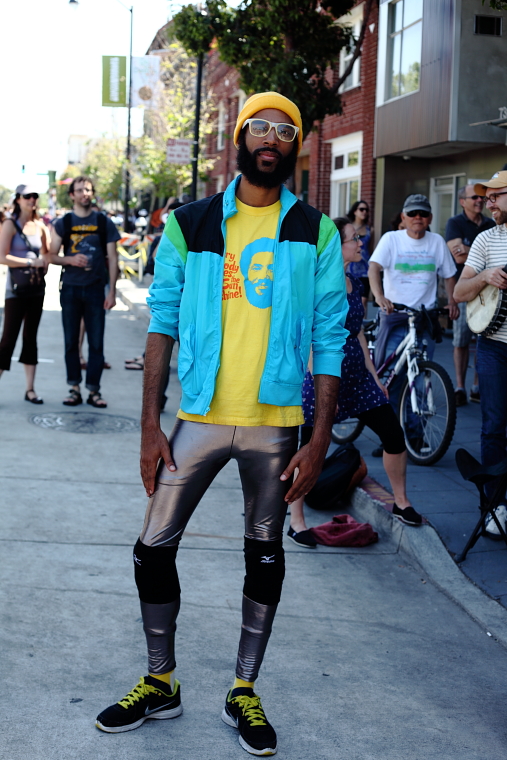
Ariel Soto-Suver was strolling Sunday Streets in the Mission — its home every first Sunday this summer, did you hear? — when she happened across some perfect examples of SF summer weekend chic.

Today’s look: Ed, Mission Sunday Streets

Tell us about your look: “This is my costume for a flash mob I did this morning with my yoga studio.”

Heads Up: 6 must-see concerts this week

0

How can a week go wrong with a Big Freedia show on the horizon? Knock on wood. Especially since this is a makeup show (she had to cancel her Noise Pop appearance due to an emergency surgery). The return alone would be cause for celebration. And yet, this week there’s also a night of gritty Canadian punk, an exotic R&B dream, and some club time with Brooklyn’s Day-Glo neo-gothsters.

You can only hope for such a fun and messy variety, perhaps in some sort of hand-picked exquisite corpse of a show: you draw the sexy rounded hips, vintage Fender, and luxurious shiny-pony hesh hair; I’ll add the shredded T-shirt revealing glittery star pasties and some Joan Crawford brows.

Enjoy these sublimely sunny afternoons sucking down ice cold beverages on outdoor decks (hey there Zeitgeist, Thee Parkside, Dr. Teeth, and the rest of you) and these naturally cooled down evenings inside venues with your favorite music-makers. Go, start prepping for the exquisite chaos soon to arrive.

Here are your must-see Bay Area concerts this week/end:

White Lung
Vancouver, BC bred post-punk act White Lung boasts rapid, heart-pumping energy lead by driving guitars, smashing drums, and screaming melodic vocals casually reminiscent of Pretty Girls Make Graves. The band just dropped brutal sophomore LP Sorry (Deranged) last month. With hooky Oakland badass punks Wax Idols in the lineup as well, your ears should bleed by night’s end.
With Wax Idols, CCR Headcleaner
Mon/11, 10pm, $6
Knockout
3223 Mission, SF
(415) 550-6994
www.theknockoutsf.com
http://www.youtube.com/watch?v=8PoQhaNiXvg&feature=youtu.be
http://www.youtube.com/watch?v=Xrrg_XTVMdI

Buffalo Tooth
The local garage rockers, who described their sound as “Blue Cheer/Black Flag, basically bands with colors in their names,” this week finally celebrate the release of their psychedelic new seven-inch. The self-titled release was recorded by rock’n’roll renaissance man Matthew Melton (formerly of Bare Wires, currently of Warm Soda). They share this show with sister band Poor Sons, and party-punks Uzi Rash and Parmesans.
Wed/13, 9pm, $5
Elbo Room
647 Valencia, SF
(415) 552-7788
www.elbo.com

Big Freedia
Finally. New Orleans’ queen diva of sissy bounce is back in the Bay to make up for her unfortunately canceled Noise Pop show early this year. But let’s not dwell on the past, Ms. Azz Everyone is here now (presented by Noise Pop and Hard French with Future | Perfect DJs) and ready to shake it. Wear your best Crayola pastel short-shorts for the IRL booty battle.
With Hard French DJs Brown Amy and Carnita, and Future | Perfect DJs S4NtA Mu3rTE, Water Borders, Vin Sol, 5kinAndbone5, Richie Panic
Thu/14, 9pm, $16
Public Works
161 Erie, SF
(415) 932-0955
www.publicsf.com
http://www.youtube.com/watch?v=A-cT6SwFIHA

RØSENKØPF
Brooklyn’s Day-Glo neo-gothster crew RØSENKØPF comes to our coast in support of its debut self-titled album, out this month on Wierd Records. Along the way the band has gathered comparisons to the following acts: Nine Inch Nails, Depeche Mode, Massive Attack, early Black Dice, Hawkwind (hmm), Birthday Party, and…Bats Day at Disneyland? Full disclosure: that last one was me.
Fri/15, 8pm, $6
Retox Lounge
628 20th St., SF
(415) 626-7386
www.retoxsf.com
http://www.youtube.com/watch?v=U_J20Vmwzt4

How to Dress Well
“[Experimental pop producer How to Dress Well] is able to translate dreams into signature ethereal compositions full of dark emotions and R&B passions.” – Julia B. Chan
With Babe Rainbow, Finally Boys
Fri/15, 9pm, $14
Rickshaw Stop
155 Fell, SF
(415) 861-2011
www.rickshawstop.com
http://www.youtube.com/watch?v=VbdeacVXbik

Japanther
So you missed out on purchasing tickets to the now-sold out Japandroids show at the Independent earlier in the week (check out our interview with that act in this week’s print issue); no mind, the similarly punny yet elder Japanther – kindred in name and vibe mostly – is here this week too, and it should be just as riotous, perhaps a bit scrappier. The early Aughts-formed art-punk band is know for its spazzy parties of live shows, screaming through a modified telephone, and the like. 
With Pharmacy
Sun/17, 9:30pm, $7
Hemlock Tavern
1131 Polk, SF
(415) 923-0923
www.hemlocktavern.com
http://www.youtube.com/watch?v=MJmn59mizGQ

Why does the mayor appoint supervisors?

16

The Alameda County Board of Supervisors just found a replacement for Nadia Lockyer, who resigned in April (“amidst a drug and sex scandal,” the Chronicle notes, and you know how much journalists love to use that phrase). The four remaining members of the board deadlocked for a while, then settled on Union City Council member Richard Valle.

All of which makes me wonder, as I often do: Why does the Mayor of San Francisco get to fill vacancies on the Board of Supervisors?

Other county boards fill the vacancies themselves — and if you don’t think the SFBOS can handle that, remember that every two years the 11 contentious folks choose a president, and it doesn’t take more than a few hours, and not that long ago, they chose a mayor.

I don’t know any other situation where the executive gets to choose legislators. The governor doesn’t fill seats in the state Assembly. The president doesn’t fill vacancies in Congress. There’s an important balance of powers issue here, and it has played out to the detriment of democracy in the past. At one point, more than half of the sitting supervisors had been appointed by Mayor Willie Brown. There was no balance; the mayor called all the shots.

Imagine if, instead of the mayor secretly huddling with advisors and choosing a new supe, the Rules Committee took applications and nominations and then the full board, in open session, debated and discussed and voted. The outcome would reflect the much broader perspectives of 10 district supervisors — and the person chosen would owe a debt to all of his or her colleagues, not to the mayor.

You can make a good case that the mayor ought to fill vancancies in other elected offices (sheriff, city attorney, public defender etc.); those are, at least arguably, executive offices. Although I could also make the case that the 11 district-elected supervisors should make those calls.

But that’s a different issue. The clear and obvious anomaly here is that San Francisco’s chief executive gets to choose his own legislators in the event of a vacancy — and that’s just wrong.

Now, in Alameda if they can’t reach a decision, the governor steps in. In San Francisco, with 10 voting supes, it seems highly unlikely that we’d ever see a long-term deadlock, but the mayor could step in the break the tie in that case — or some other city official could, or you could come up with a dozen other solutions. The bottom line is that most of the time, as in Alameda, the board would come to if not a consensus, then a majority vote.

Who’s up for some Charter reform?


The Mirkarimi case: Did the city want to settle?

132

The real news in the Ross Mirkarimi case isn’t the sheriff attempting to get the city to pay his legal fees; that’s just something he had to try but it was a long shot at best. The story that’s come out in bits and pieces since we broke it is far more interesting:

City Attorney Dennis Herrera, with or without the knowledge of his client the mayor, offered to begin discussions with Mirkarimi around settling the case — and the conflicting accounts of what went on show haw harsh this legal proceding has become.

Whatever you think about Mirkarimi’s actions on New Year’s Eve — and I’ve said many times that what he did was unacceptable — the intensity of the prosecution, particularly in the removal proceding, is unprecedented.

Some of the political fallout is clearly Mirkarimi’s fault. He bruised his wife, got bad advice early on, said the wrong things, and didn’t do enough to repair the damage. But now Mirkarimi’s lawyer is charging that the city attorney used a nasty legal gambit to try to convince the embattled sheriff to resign.

David Waggoner, in a TV interview with KGO’s Dan Noyes, and later in discussions with me, said that City Attorney Dennis Herrera offered to look for a way to keep the video of Mirkarimi’s wife out of the public eye — if Mirkarimi would take a financial settlement and resign from his elected position.

Mirkarimi told me the offer he heard from his lawyer put him in a terrible bind: Franky, the video contains nothing that hasn’t already been out, and won’t be the defining issue in the official misconduct case now before the Ethics Commission. But his wife, Eliana Lopez, was adamant that she didn’t want the 45-second clip on the Internet, where she — and more important, their three-year-old son — will have to live with it forever.

“They were using the needs of my family to pressure me,” Mirkarimi said.

Waggoner was pretty specific about his recollection of the settlement discussions. He said that after Herrera contacted him to say that he was willing to discuss settling the case, Waggoner made it clear that keeping the video sealed had to be part of any deal.

“We hung up, and then he called me back five minutes later to say that his government team was working on it, and he thought they could keep the video under seal,” Waggoner said. “The mayor and the city attorney were using the video as leverage.”

Hererra confirmed that he reached out to Waggoner to see if Mirkarimi’s legal team was interested in settlement discussions. But told me that Waggoner’s story was “absolutely, categorically untrue.” He insisted that he had no choice but to release the video, since several media outlets had requested it under the San Francisco Sunshine Ordinance.

In a statement issued June 8, Hererra attacked not only Mirkarimi but his attorneys:

“Everyone involved in this case was well aware of the City’s legal obligations under the Sunshine Ordinance (which Ross Mirkarimi himself had a hand in drafting).  The City invoked the maximum allowable two-week extension after receiving Sunshine requests for the video, to allow other parties to seek a protective order.  But opposing counsel dropped the ball.  They didn’t get a protective order.  They didn’t seek Supreme Court review.  They didn’t raise the issue at the Ethics Commission hearing.  And as far as I know, [Lopez’s counsel Paula] Canny didn’t even bother to show up at the hearing.  So, I think it’s a little absurd now to be playing martyr.  These are lawyers representing a former lawmaker.  They have no excuse for not knowing the law.”

Wow. Sounds like the usually level-headed Herrera is one pissed-off attorney.

Interestingly, Mayor Lee told Noyes that he didn’t know anything about any settlement discussions. Either that’s false (the mayor could have been instructed by Herrera not to say anything) or Herrera was going ahead without the mayor’s knowledge or permission.

So let’s set aside for the moment the back-and-forth about who’s telling the truth and what was really involved in the negotiations. Here’s what’s not in any serious dispute:

Herrera, representing the mayor, was sufficiently motivated to settle the case before it got to the Ethics Commission that he personally called Mirkarimi’s attorney to see if there was any possibility of finding a way out. Again: Attorneys in the most bitter lawsuits are advised to seek settlement. But this isn’t in court, and no judge mandated a settlement conference.

Which suggests that the city attorney and possibly the mayor would be a lot happier if this case just went away. Maybe Lee doesn’t like the drama. Maybe Herrera thinks it would be best for Mirkarimi and the city to put this in the past and move on.

Or maybe they aren’t sure this case is such a slam-dunk winner.

There’s another interesting twist, too: Mirkarimi told me that he asked the Probation Department for permission to fly to Venezuala to see his son. There were no conditions on his guilty plea barring him from travelling outside of the country (what — they think he won’t come back? That he has run through all of his money and put himself heavily in debt to fight a case that he’s now going to run away from?) But when he made a formal request, it was denied.
That’s right — probation officials refused to let him go visit his son. Forget Mirkarimi — that’s not fair to the three-year-old kid who did nothing wrong at all and is suffering for it.

Mayor Lee’s business tax reform will include new revenue

30

Mayor Ed Lee has acquiesced to labor’s demand that the business tax reform measure being negotiated for the November ballot raise tens of millions of dollars in new revenue, rather than being revenue-neutral as Lee and business leaders had previously insisted, according to Guardian sources in both the business and progressive communities who are involved in the ongoing negotiations.

As we previously reported, SEIU Local 1021 had demanded that the measure – which must be submitted to the Board of Supervisors by Tuesday – raise $30-50 million in additional revenue to prevent cuts to city services and to recapture money the city lost when the largest downtown corporations sued the city in 2001 to invalidate its gross receipts tax. If not, the union threatened to qualify a competing ballot measure that would raise the money, something neither side wants.

Sources say the Mayor’s Office has agreed to structure the tax to raise at least $25 million in new revenue, and some believe they will settle on $30 million, which is being supported by the big technology companies and is probably enough for labor to sign onto the deal.

But a complicating factor is the fact that Lee’s representatives are simultaneously negotiating another ballot measure to create an Affordable Housing Trust Fund that will also need to generate revenue, most likely through an increase in the real estate transfer tax, something the commercial landlords are opposing.

The business community has opposed any tax increases, but it is split between the big technology companies who helped elect Lee and more traditional businesses, including the FIRE (Finance, Insurance, and Real Estate) companies that all observers say are likely to get hit with a higher tax burden whatever the outcome of the current negotiations.

There is an urgency to get this deal done now because of the fast-approaching deadline to introduce ballot measures to the board, and the fact that under state law revenue measure can be passed with only a simple majority of voters only in presidential election years.


Big (Robot) Brother is watching you on Muni

20

So I’m not usually the paranoid type (I said usually), but this one is a little creepy: According to Fast Company, Muni is going to deploy a camera system that can detect criminal or potential terrorist behavior — without a human being.

Not clear what happens when the cameras find something suspicious (and anyone who rides Muni knows that “anomalous behavior” is pretty standard fare). But I sense this could cause some trouble when over-anxious cops hyped on terror-watching charge into the tunnel to grab some guy who’s pissing on the wall.

Unless the cameras decide that’s “normal.”


Live Shots: Advance Base at Cafe Du Nord

0

For a smallish setup with little fuss, few musicians, and a minimalist sound, there was a lot to take in last night at Advance Base’s Cafe Du Nord appearance; a night otherwise known as Owen Ashworth’s (Casiotone for the Painfully Alone) first time playing SF in this new incarnation as Advance Base, since he essentially broke up with himself. And no, he would not be playing CFTPA songs.

Vintage instruments were packed neatly on the stage: Ashworth’s boxy 1970s-era Rhodes 54 electric piano, an Omnichord, an autoharp, a sampler, various pedals and twisty lit-up knobs and buttons. And then there was Ashworth himself, his bespectacled face and tall slumping shoulders, a decade’s worth of songwriting weighing down on them as he hunched over the Rhodes. His set began with that anticipation, his years of performances as another act behind him, a question of where it would begin.

At first, he sat alone, as he did as Casiotone (though didn’t he normally stand back then? No matter), and opened with springy, sample-driven, “Summer Music,” which actually is more of a breakup song, with a knife-twisting nostalgic pull in the repeated lyrics “The sound of music from the kitchen boombox” – like nothing changes yet everything ends with that old stereo continually pumping out sounds in another room, just out of sight. You’re gone and I’m still here.

“Summer Music” is also the first track off Advance Base’s newly released debut LP  A Shut-Ins Prayer. It felt like there was a sigh of relief from the crowd after that intro – phew – our own tense shoulders lowered. He hasn’t changed, too much (we collectively thought this, right?)

On the next song, “New Gospel” –  and through much of the set – he invited his fellow Chicagoan Jody Weinmann and touring opener Nick Krgovich up on stage to join him in song, on backup vocals and autoharp/keyboard respectively. Krgovich had proved himself a worthy musical companion during his own set; he’s a strong performer (who also used the Rhodes) with a powerful, jazz-inflected singing voice – and he chose great cover songs, originals by ’70s folk singer John Martin and Neil Young, to anchor his time. The crowd was too sparse during Krgovich’s earlier set, a shame really.

He also told the story of meeting Ashworth for the first time a decade ago in Krgovich’s native Vancouver. He said, “hi, I’m Owen.” Krgovich said “that’s the loneliest name in the world.” They’ve been stage-sharing pals ever since. Ashworth repeated the story during his set.

As a trio at Du Nord, Krgovich, Ashworth, and Weinmann turned nearly country fair folk, and moved onward to “The Sister You Never Had,” an elegant waltz, followed by “Christmas in Oakland.” The crowd made a light whooping sound at the mention of Oakland and Ashworth deadpanned, “Oh, you guys know Oakland?”

Much of the set was filled with the tracks off A Shut-Ins Prayer, but Advance Base also dropped in new songs like “Christmas in Milwaukee” and another that told the twee-cute story about a lost cat.

That song supposedly told the story of Ashworth’s cat back home in Chicago, how it ran away and they covered the neighborhood with “Lost Cat” posters, which totally bummed out his friends. He sang of idiot well-wishers who promised the cat would simply return on its own, and of checking the local SPCA religiously. Straining to hear the end of the sung story, we smiled as we learned the once-forlorn cat had been found, and was home safe.

Ashworth ended the set by asking the crowd if they had any questions (favorite color is blue, favorite baseball team is the Giants), and telling a joke about kids getting nutty when parents are out of town, all this before profusely thanking us for being there with him on this weirdly nostalgic evening for a brand new act.

Meister: Walker won in Wisconsin, but so did labor

15

By Dick Meister

Dick Meister, former labor editor of the SF Chronicle and KQED-TV Newsroom, has covered labor and politics for more than a half-century. Contact him through his website, www.dickmeister.com.

Yes, labor lost its attempt to recall Wisconsin Gov. Scott Walker, one of the most virulent labor opponents anywhere.  But as AFL-CIO President Richard Trumka declared, the heated election campaign was “not the end of the story, but just the beginning.”

The campaign, triggered by Walker all but eliminating the collective bargaining rights of most of Wisconsin’s 380,000 public employees, showed that labor is quite capable of mounting major drives against anti-labor politicians, a lesson that won’t be lost on unions or their opponents.

And labor’s political enemies, while perhaps emboldened by labor’s failure in Wisconsin, undoubtedly will hesitate, lest they be confronted with similarly heavy union opposition in their attempts to restrict the bargaining rights of public employees.

Think of it: Labor was outspent hugely by outside corporate interests that funneled $50 million into Walker’s campaign, outspending labor seven-to-one. Yet labor managed to capture nationwide attention and support, and though losing the gubernatorial race, managed to wrest control of Wisconsin’s State Senate from Walker’s Republican allies.

Trumka was rightly awed by “the tremendous outpouring of solidarity and energy from Wisconsin’s working families, against overwhelming odds. Whether it was standing in the snow, sleeping in the Capitol, knocking on doors or simply casting a vote, we admire the heart and soul everyone poured into this effort” in response to “a gargantuan challenge” to labor.

The Senate victory was almost as important as recall of Walker would be. It gave Democrats a one-seat majority in the 33-seat Senate, which will make it much harder for Walker and his Republican allies to enact his anti-labor agenda.

Trumka says he believes  “the new model that Wisconsin’s working families have built won’t go away after one election – it will only grow.” The election, he adds, was “an important moment, and an important message has been sent: Politicians will be held to account by working people.”

Walker, as Trumka says, was forced “to answer for his efforts to divide the state and punish hard-working people.” Trumka optimistically believes that inspired working people elsewhere, union and non-union alike, will follow the lead of the anti-Walker forces and “forge a new path forward.”

Trumka concludes that the challenge to labor and its allies in Wisconsin and everywhere else is “to create an economy that celebrates hard work over partisan agendas.” He said the recall election moved that goal closer.

Of course Richard Trumka is highly partisan, as he should be. But that doesn’t necessarily lessen his credibility. Facts are facts. Although not victorious, labor waged an extraordinary campaign that laid the groundwork for future campaigns that could result in important labor victories.

That would at the least increase the strength of the nation’s working people and diminish the strength of those who, like Scott Walker, would weaken the vital rights of workers and their unions.

Dick Meister, former labor editor of the SF Chronicle and KQED-TV Newsroom, has covered labor and politics for more than a half-century. Contact him through his website, www.dickmeister.com.

Street Threads: Look of the Day

0

Ariel Soto-Suver was strolling Sunday Streets in the Mission — its home every first Sunday this summer, did you hear? — when she happened across some perfect examples of SF summer weekend chic.

Today’s look: Farnoosh, Mission Sunday Streets

Tell us about your look: “I got this dress in NYC with a gift certificate from my boyfriend’s mom.”

Snap Sounds: Carletta Sue Kay

1

Carletta Sue Kay
Incongruent
(Kitten Charmer)

Carletta Sue Kay is the female alter-ego of SF musician Randy Walker, and this identity shift pushes his art in some astonishing directions. (Walker’s previous band Mon Cousin Belge was notorious for its onstage performance art antics). Androgynous to its core, and loaded with overtones, his vocal delivery as Carletta Sue Kay can recall Annie Lennox, Gene Ween, and Joanna Newsom, all in the same breath. Normally, a voice this powerful is cultivated over years of recording, so it’s hard to believe that Incongruent is this former Amoeba employee’s debut full-length.

While the album certainly has its moments (namely the Pete Townshend homage “Joy Division”, and the floaty jazziness of “For the Birds”) Walker’s voice sets an impossibly high standard for the music to live up to. “Just Another Beautiful Boy” leans a bit heavily on rock-meets-showtunes schtick, and “Sloppy Kisses” flaunts its tweeness to the point of contrivance. But overall, Incongruent marks the emergence of an artist with serious potential. Equally commanding and vulnerable, Walker’s voice is sure to devastate anyone who gives it a chance.

http://www.youtube.com/watch?v=Rt91UXRV2oM

Sutter’s CPMC deal isn’t healthy

28

At 10am on Friday, June 15, at the main chambers of the Board of Supervisors, the first of a series of public hearings will be held on specific aspects of the  development agreement governing the $1.9 billion Sutter Health/California Pacific Medical Center proposal to expand and centralize the giant health-care outfit’s health center by building a new 555 bed hospital at Geary and Van Ness. The deal involves demolishing the existing 220-bed hospital at St. Luke’s at Mission and Cesar Chavez and rebuilding a new 80-bed facility, expanding the Ralph K. Davies hospital at Duboce and Noe and closing down the old Children’s Hospital in Laurel Heights.

The hearing will be the first before the Board of Supervisors. Thus far, the project has been before only the executive branch: the Planning Commission and the mayor. After a brief introduction on the overall project the hearing will focus on the issue of jobs.

This is the largest project to be negotiated by the Lee administration — and although the mayor introduced it to the board in May, not one supervisor has yet joined him to sponsor the legislation. That’s an an odd situation given the importance of the project – and the fact that Mayor Lee can usually count on an automatic four votes from the conservative faction of the board. But not this time.

The hearing was requested by a coalition of more than 60 community, neighborhood, labor, and environmental organizations — San Franciscans for Healthcare, Housing, Jobs and Justice (SFHHJJ) — which has been closely following the project for the last two years.  Members of the coalition have already appealed the project’s environmental impact report, passed last month by the Planning Commission, and SFHHJJ has developed a series of amendments to the agreement that it has been pressing on the Board of Supervisors.  Board President David Chiu agreed to set a series of hearings on the project before it voted on, along with the determination of the appeal of the EIR, in  late July.  SGHHJJ hopes to use the hearings to get across the serious shortcoming of the agreement.  In addition, depending upon the appeal of the EIR,  a law suit may well be filed by some members of the Coalition.

In short, what starts next Friday is a big deal.

Not only is it a big deal in the development war that is at the heart of San Francisco politics, but it also is a big deal given what may well be done by the Supreme Court in deciding the constitutionality of all or part of the Affordable Health Care Act. If Obama’s health reform is struck down by the court, in all or in part, which seems almost certain, Sutter/CPMC’s plan will most definitely take on even more importance for the future of health care and its costs in San Francisco.

Sutter currently controls about a third of the market for health care in San Francisco.  With the construction of this project, it will control about 40 percent — a portion most knowledgable observers feel will give it market dominance  and an ability to actually set health care costs in San Francisco. Sutter’s business model — as shown in Berkeley when it took over Alta Bates and elsewhere in the state – demonstrates that  with a dominate market position, it jacks up prices.

As the San Francisco Chronicle noted in 2010: “…Sutter Health Co. has market power that commands prices 40 to 70 percent higher than its rivals per typical procedure — and pacts with insurers that keep those prices secret”.

A US Supreme Court that weakens or strikes down health care reform will simply re-establish the status-quo ante, a situation in which Sutter will thrive.

And that’s why the board’s conservative members are not supporting Mayor Lee’s deal: it simply does not protect the city — itself a major health care consumer for both its workforce and Healthy San Francisco — from Sutter’s history of turning market power into high health care charges.

SFHHJJ want the development agreement amended to place a cap on the costs charged to the city, allowing Sutter no more than 115 percent of the average charged  by  San Francisco’s other private, nonprofit hospitals.  It also wants Sutter/CPMC low charity care payments pegged at an average of what other nonprofit hospitals contribute, and it is calling for rebuilding St. Luke’s in San Francisco medically underserved south east to 180 beds, not the sure-to-fail size of 80 beds.

But there’s even more to deplore about the proposed deal.

In housing, although the EIR showed that a demand would be created for some 1,500 new two-bedroom homes, Sutter/CPMC agreed to only provide funds to build about 90 such homes. Such a massive shortfall will boost housing prices all other San Franciscans will pay.

The project’s impact on public transit at the Geary / Van Ness intersection will be large and ongoing. More than 20,000 new car trips will be generated at that intersection by the new hospital. Plans for a Bus Rapid Transit raised roadway for the 38 Geary — the most used bus line in the city — will have to be altered at an unknown price since the project calls for all auto traffic to enter the site on the Geary Avenue side.

Again, San Francisco taxpayers will be on the hook to pay for these new costs.

But it is the jobs aspect of the deal that is the most distressing. Sutter/CPMC has a long history of labor disputes with its workforce. Last year it replaced nurses who took a day off to protest their working conditions, and a replacement nurse hired by Sutter accidentally killed a patient. Sutter/CPMC refuses to agree to hire all of its 6,000 current employees for the new facilities. It’s requiring them all to apply as new workers, losing all of their seniority, with a real prospect that many currently employed San Francisco residents will lose their jobs once the new facility opens. All that Sutter/CPMC has agreed to do is hire 50 residents a year for four years – 200 new local jobs, total.

The  June 15 hearing will focus on the jobs issue and public comment is sure to be hot on this laughable “commitment” agreed to by the “jobs” administration.

Calvin Welch is a longtime community organizer living in San Francisco. He currently teachs a course in the development history of San Francisco at San Francisco State University and the University of San Francisco.

Street Threads, doggie style at The Whole Enchihuahua

0

As a street fashion photographer responsible for capturing the Bay’s best looks in the Guardian’s Street Threads feature (and photo book), I’m always on the lookout for well-dressed San Franciscans. Imagine my delight when Sam Love and I stopped by the SFSPCA’s Whole Enchihuahua at Dolores Park on June 2 and encountered a mega-litter of fashion-forward pooches. It was Street Threads, doggie style!

There was flair from Paris, tie-dyed hippie outfits, a pup in a piñata, and even some quirky balloon ensembles. Although the event was dubbed a chihuahua affair in true SF spirit all variety of dogs, from poodles to bulldogs, were included. In turn, all the canines seemed equally accommodating, patiently putting up with their owners’ ridiculous costume fetishes. For what it’s worth, they looked adorable, converting this cat lover into a dog fanatic (for the day.)

Zombies are so last week. This week: ALIENS RULE!

0

Prometheus, fuck yeah! Finally, after way too many spoiler-y trailers, Ridley Scott’s new sci-fi epic reaches theaters. My review below, along with a few others this week worth seeing, if aliens and such don’t float your boat. (But seriously, Prometheus! Worth seeing, even if aliens don’t float your boat.)

Also worth checking out: the Pacific Film Archive’s series highlighting local experimental talent Nathaniel Dorsky (Max Goldberg’s write-up here) and the Yerba Buena Center for the Arts’ exciting “New Filipino Cinema” programming (Dennis Harvey reports here, with a bonus midnight-movie DVD recommendation here).

Elena The opening, almost still image of breaking dawn amid bare trees — the twigs in the foreground almost imperceptibly developing definition and the sky gradually growing ever lighter and pinker in the corners of the frame — beautifully exemplifies the crux of this well-wrought, refined noir, which spins slowly on the streams of dog-eat-dog survival that rush beneath even the most moneyed echelons of Moscow. Sixtyish former nurse Elena (Nadezhda Markina) is still little more than a live-in caretaker for Vladimir (Andrey Smirnov), her affluent husband of almost 10 years. She sleeps in a separate bed in their modernist-chic condo and dutifully funnels money to her beloved layabout son and his family. Vladimir has less of a relationship with his rebellious bad-seed daughter (Yelena Lyadova), who may be too smart and hedonistic for her own good. When a certain unlikely reunion threatens Elena’s survival — and what she perceives as the survival of her own spawn — a kind of deadly dawn breaks over the seemingly obedient hausfrau, and she’s driven to desperate ends. Bathing his scenes in chilled blue light and velvety dark shadows, filmmaker Andrey Zvyagintsev (2003’s The Return) keeps a detached but close eye on the proceedings while displaying an uncanny talent for plucking the telling detail out of the wash of daily routine and coaxing magnetic performances from his performers. (1:49) (Kimberly Chun)

Peace, Love and Misunderstanding How is that even as a bona fide senior, Jane Fonda continues to embody this country’s ambivalence toward women? I suspect it’s a testament to her actorly prowess and sheer charisma that she’s played such a part in defining several eras’ archetypes — from sex kitten to counterculture-heavy Hanoi Jane to dressed-for-success feminist icon to aerobics queen to trophy wife. Here, among the talents in Bruce Beresford’s intergenerational chick-flick-gone-indie as a loud, proud, and larger-than-life hippie earth mama, she threatens to eclipse her paler, less colorful offspring, women like Catherine Keener and Elizabeth Olsen, who ordinarily shine brighter than those that surround them. It’s ostensibly the tale of high-powered lawyer Diane (Keener): her husband (Kyle MacLachlan) has asked for a divorce, so in a not-quite-explicable tailspin, she packs her kids, Zoe (Olsen) and Jake (Nat Wolff), into the car and heads to Woodstock to see her artist mom Grace (Fonda) for the first time in two decades. Grace is beyond overjoyed — dying to introduce the grandchildren to her protests, outdoor concerts, and own personal growhouse — while urbanite Diane and her kids find attractive, natch, diversions in the country, in the form of Jude (Jeffrey Dean Morgan), Cole (Chace Crawford), and Tara (Marissa O’Donnell). Yet there’s a lot of troubled water for the mother and daughter to cross, in order to truly come together. Despite some strong characterization and dialogue, Peace doesn’t quite fly — or make much sense at its close — due to the some patchy storytelling: the schematic rom-com arch fails to provide adequate scaffolding to support the required leaps of faith. But that’s not to deny the charm of the highly identifiable, generous-spirited Grace, a familiar Bay Area archetype if there ever was one, who Fonda charges with the joy and sadness of fallible parent who was making up the rules as she went along. (1:36) (Chun)

[No trailer on purpose. Spoilers, y’all.]

Prometheus Ridley Scott’s return to outer space — after an extended stay in Russell Crowe-landia — is most welcome. Some may complain Prometheus too closely resembles Scott’s Alien (1979), for which it serves as a prequel of sorts. Prometheus also resembles, among others, The Thing (1982), 2001: A Space Odyssey (1968), and Event Horizon (1997). But I love those movies (yes, even Event Horizon), and I am totally fine with the guy who made Alien borrowing from all of them and making the classiest, most gorgeous sci-fi B-movie in years. Sure, some of the science is wonky, and the themes of faith and creation can get a bit woo-woo, but Prometheus is deep-space discombobulation at its finest, with only a miscast Logan Marshall-Green (apparently, cocky dude-bros are still in effect at the turn of the next millennium) marring an otherwise killer cast: Noomi Rapace as a dreamy (yet awesomely tough) scientist; Idris Elba as Prometheus‘ wisecracking captain; Charlize Theron as the Weyland Corportation’s icy overseer; and Michael Fassbender, giving his finest performance to date as the ship’s Lawrence of Arabia-obsessed android. (2:03) (Cheryl Eddy)

Sure cure for election burnout? Watch this video of activist kids summer camp

12

So what if the most popular adjective to describe this week’s election was “adorable”? By all accounts, we have a generation on the up with the vigor and verve to right all the atrocities ours has committed in regards to social justice, sustainable food systems, fossil fuel dependence, etc. At least, such is the impression given by the promo video sent to us by Youth Empowered Action Camps, a project started by activist Nora Kramer in the hopes of providing a safe, fun place for kids to find their cause. Wanna see hope, encapsulated? Keep going for the video and more info on raddest summer camp ever.

Last year, we interviewed Kramer about her motivation for starting the YEA camps, which will take place this summer in Portland, Northern California and — new for 2012! — New Jersey. Said Kramer:

Sometimes kids who care or speak up about environmental or other issues are made fun of or criticized and get discouraged. I feel like our world is facing so many challenges, and we need to bring youth together with like-minded peers and adults to support them in taking action so they can bring about the world they want to see. If there can be successful summer camps for kids who like volleyball or theater or play the violin, why not for youth who want to make the world a better place?

YEA kids get to hang out with other conscientious young ones (ages 12 to 17), snack on delicious vegan foods, and develop action plans to take into the school year. What kind of action plans, you ask? Past campers have created anti-bullying and recycling programs in their schools, held birthday fundraisers for Planned Parenthood — even started a bakery that sells animal product-free wedding cakes

Scholarships are available for low-income youth. Spaces are still open for summer 2012, so grab the nearest rad teenager and sign them up.

Youth Empowered Action Camp (Northern California)

July 21-28, $950

Venture Retreat Center

Pescadero, Calif.

www.yeacamp.org

Occupy Caravan takes off to the National Gathering

12

This looks familiar!

Jan. 17, we proposed Occupy Nation, an idea that those energized and organized by Occupy come together on July 4, 2012 for a national gathering to get some planning done. We also proposed that the journey across the US be a part of the action, and that people get together in vans for a freedom-ride inspired experience. Well, it’s happening- although, of course, it wasn’t all our idea. But they are using our cover art!

The Occupy Caravan is an ever-expanding crew of people getting together for a two-week journey across the US. There are two starting points, Los Angeles and San Francisco- and the San Francisco caravan is taking off June 11. The caravans will stop at Occupy sites along the way for protests, education and entertainment, before arriving in Philadelphia for the June 30 Occupy National Gathering.

The poster declares, “bring tents!” But according to an Occupy Caravan organizer known as Buddy, sleeping arrangements that won’t risk police meddling are planned at every stop.

“We have a bunch of secure and fun locations- there’s a slumber party at one, a march and then staying at a church at another, a supporter’s camp ground where we can park the RVs,” said Buddy.

“We’re not risking people getting arrested,” he said. “Everything is legal and nonviolent.”

In theory, anyone who wants to can show up, on foot or with a vehicle, and join the caravan. But if you want to secure a spot, according to Buddy, it’s best to sign up online beforehand.

“We’re getting 30 to 50 calls and emails a day about rides,” Buddy told me of the last chaotic week before the trip launches.

The National Gathering isn’t the only nationwide Occupy plan for this summer. It isn’t the only one in Philadelphia either. Or for the July 4 weekend. There’s also the 99 Percent Declaration, billed as a “Continental Congress 2.0”

It looks like these big get-togethers are part of the form Occupy will take this summer. What with a big and chaotic May Day, an even more tumultuous anti-Nato convergence in Chicago, and continuing home defenses, occupations of public spaces, and innumerable local actions across the country, the Occupy movement is in a very different state than it was in the winter when the Gathering and the Caravan were in their beginning planning stages.

“The movement has grown,” Buddy told me. “It’s less than a year old. It was an infant early on, and grew very quickly, but its getting stronger. We’re going back to the simply core message of economic equality and justice.”

After the National Gathering, the caravan will join the Occupy Guitarmy for its “99 Mile March” to New York. The Guitarmy is a travelling group of musicians that bills itself as “the world’s first open source band,” best known for its march on May 1 in New York City, led by Tom Morello of Rage Against the Machine.

As we said in the Occupy America proposal: “The important thing is to let this genie out of the bottle, to move Occupy into the next level of politics, to use a convention, rally, and national event to reassert the power of the people to control our political and economic institutions — and to change or abolish them as we see fit.” One thing is clear: Occupy hasn’t given up yet.

Street Threads: Look of the Day

0

Guardian street fashion photog Ariel Soto-Suver was on the scene at Bayview Opera House’s Saturday summer concert series. The al fresco community fete was packed with rows of organic kale and college prep tutors — but also fashion. Read on for braided Renee’s style philosophy — and check out Soto-Suver’s shots of Elwood from earlier this week. 

Today’s look: Renee, Third Street and Palou

Tell us about your look: “I love to dress and I love designer clothes.”

The Performant: Border crossings

0

Los Jaichackers take SFMOMA on a magical mystery tour of Pan-American culture

What first strikes the eye about the ongoing “Photography in Mexico” exhibit at the SFMOMA (through July 8th) is the variety. With photos dating as far back as the 1800s, and as recently as last year, the exhibit doesn’t focus on any one aspect of Mexico or any one era, but rather its timeless complexities. Elegantly barren landscapes collide with jostling humanscapes, desert isolation contrasts with urban density, photojournalism and surrealism join forces, capturing the espíritu of time and place over a period of about 150 years.

Underscoring the depth and diversity one might expect from a thoroughly modern land with a population well over 100 million people, Thursday’s “Double Grooves and Dirty Menudo” Now Playing event, whimsically curated by art duo Los Jaichackers, focused on artistic mashups inspired stylistically by both sides of the border, for an evening that defied easy stereotyping of either.

Los Jaichackers are Eamon Ore-Giron and Julio Cesar Morales, both with deep roots in the SF arts community. Their own piece of the evening was a 24-minute remix of Juan Ibez’ 1980s crime drama A Fuego Lento and an electronic exploration of music by Cuban bandleader Dámaso Pérez Prado, “King of the Mambo.” The result was something weirder than even a Alejandro Jodorowsky flick — a psychedelic swirl of images culminating in violence, the deconstructed mambo melodies punctuated by Prado’s distinctive, James Brown-esque, “huh”’s and an array of heavy electro beats.

In the Haas Atrium beneath an installation of lights and moving images by Jim Campbell (“Exploded Views”), Oakland-based “conscious disco” duo ChuCha Santamaria, live-recorded a series of cover tunes, refurbished and reworked into Spanish. Kicking off with a Pet Shop Boys tune (“El Baile del Domino”), bandmates Sofía Córdova and Matt Kirkland powered through several retakes, just as if they were in any recording studio, albeit a recording studio that could hold a hundred or so spectators, (and if they recorded all of their songs wearing dramatic facepaint and surrounded by lit candles). The tracks are slated to appear on their album in progress, so keep an ear out.

But when it comes to reimagining English-language pop songs into anthems for Spanish-speaking youth, it would seem that Los Master Plus, a “cumbiatrónica “ duo from Guadalajara have got a real lock on the technique. Their tongue-in-cheek, nu-cumbia-flavored reinterpretations of Daft Punk, No Doubt, Radiohead, Kings of Leon, and The Bee Gees were “mami”-centric and eminently danceable, and they exuded a certain goofy charm that transcended all language barriers. 

www.youtube.com/watch?v=rWdNjfJtKbw

Hipster haters take note, “hipster” fashion is now officially a cross-cultural phenomenon, as the skinny jean-wearing, handlebar-mustached El Comanche and Larry Mon as well as enthusiastically costumed fanboys Adrian Manzo and Mario Mejia easily proved, and The Bee Gees “Stayin’ Alive” will forever be the kickoff melody for a good dance party, igual the context.

Mecke joins crowded District 5 supervisorial race

26

Progressive activist Quintin Mecke jumped into the District 5 supervisorial race today, echoing gentrification concerns raised this week by the Guardian and The New York Times and promising to be an independent representative of one of the city’s most progressive districts, a subtle dig at Sup. Christina Olague’s appointment by Mayor Ed Lee.

“The City is at an economic crossroads. As a 15 year resident of District 5, I cannot sit idly by while our City’s policies force out our residents and small businesses, recklessly pursuing profits for big business at whatever cost,” he began a letter to supporters announcing his candidacy, going on to cite the NYT article on the new tech boom that I wrote about earlier this week.

“What we do next will define the future of San Francisco; the city is always changing but what is important is how we choose to manage the change. One path leads to exponential rent increases, national corporate chain store proliferation, and conversion of rent-controlled housing. The other path leads to controlled and equitable growth, where the fruits of economic development are shared to promote and preserve what is great about this City and our district,” Mecke wrote.

Mecke came in second to Gavin Newsom in the 2007 mayor’s race and then served as the press secretary to Assembly member Tom Ammiano before leaving that post last week to run for office. Mecke joins Julian Davis and John Rizzo in challenging Olague from her left, while London Breed and Thea Selby are the leading moderates in a race that has 10 candidates so far, the largest field in the fall races.

Although he never mentioned Olague by name, Mecke closed his message by repeatedly noting his integrity and independence, a theme that is likely to be a strong one in this race as Olague balances her progressive history and her alliance with the fiscally conservative mayor who appointed her.

“Politics is nothing without principles; and it’s time now to put my own principles into action in this race,” Mecke wrote. “District 5 needs a strong, independent Supervisor. I am entering this race to fight for the values that I believe in and to fight to preserve what is great about District 5 and the city. I have brought principled independence to every issue I’ve worked on and that’s what I’ll continue to bring to City Hall.”

In an interview with the Guardian, Mecke said he sees the campaign as a “five-month organizing project” to reach both regular voters and residents of the district who haven’t been politically engaged, including those in the tech sector. He’d like to see the perspective of workers represented in discussions about technology, not simply the narrow view of venture capitalist Ron Conway that Mayor Lee has been relying on.

“Local politics needs new blood,” Mecke said, “it needs to hear from these people.”