SFBG Blogs

Calvin Trillin: The Bain of Mitt Romney’s Existence

0

He’s running on all of his triumphs at Bain,

But some say the Democrats refrain

From saying Bain’s gain was at times inhumane

(Because of its strategy aiming to drain

A company’s treasure, no matter what pain

Is caused to the workers whom it won’t retain).

Yes, Bain did some good, its defenders explain:

Some pension funds shared in its capital gain.

So vulture’s a label for Mitt they disdain–

Though buzzard’s OK, and is just as germane.

Calvin Trillin, Deadline Poet, The Nation June 18, 2012


Bringing the heat

9

On June 13, more than 400 people, mainly from law enforcement and non-profits, gathered for a conference in downtown Oakland’s Marriott Hotel. Outside, a group of angry protesters gave impassioned speeches before trying to enter the hotel. The complex set of issues involved? The conference was organized to discuss tactics for arresting and charging child sex traffickers, but the protesters said that the conference would do nothing but further the state’s harmful impact on the lives of sex workers.

I wasn’t able to attend the conference itself; the Alameda County District Attorney’s office decided at the last minute that press would not be permitted inside. But from the conference’s description and a talk with Casey Bates, head of DA’s Human Exploitation and Trafficking Unit (HEAT), it seemed that the conference was mostly focused on improving efforts to by law enforcement to find people underage people who are having sex for money and prosecute their “traffickers,” a designation not much different than “pimps.”

According to Bates, the HEAT unit has focused on people selling sex on the street and online, and most are from California or nearby states, although he hopes the efforts can expand to people who are trafficked in from other countries.

Under the law, anyone selling sex under 18 years of age is classified as a CSEC- commercially sexually exploited child.

As DA Nancy O’Malley emphasizes on the HEAT unit website, “We have been fighting to shatter the perception of children as prostitutes and criminals undeserving of protection.  These young people are victims of child abuse.”

The sex workers rights movement, organized by people in the sex industry who see their work as legitimate, has largely called for decriminalization of prostitution and other forms of sex work since the movement off in the 1960s, with new concerns in the 21st century. Many groups have argued that police increase the violence in the lives of prostitutes, harassing and arresting them while not taking violence against sex workers seriously. The much older anti-trafficking movement, (or, as it was called at the beginning of the 20th century, anti- “white slavery,”) has many proponents who disagree, saying all prostitution involves some form of coercion. The two movements have a long history of conflict, and on June 13, this dynamic was thrust into the public eye.

Policing the problem

This conference was described as “comprehensive event designed to enhance the capacity of law enforcement and practitioners to combat commercial sex trafficking of children (CSEC).” 

“Of course we support refuges, housing, and other services for these children,” said Rachel West, an organizer with US Prostitutes Collective. “Why aren’t the police focused on that instead of spending hours on the net looking for women, or going out on the street doing street sweeps?”

But US Prostitutes Collective, part of the International Prostitutes Collective, which has been campaigning for decriminalization of prostitution since 1975, didn’t organize last week’s protest. This time it was Occupy Patriarchy, an Occupy Oakland affiliated group.

Occupy Oakland has not been shy about calling out police behaviors, from infamous incidents like the tear gas-heavy offensive on the Occupy Oakland camp last fall to shootings of local teenagers. The HEAT Conference, which was organized by the DA’s office and played host to law enforcement from across the country, was no exception.

“Whose inside this conference?” said one demonstrator who spoke during a 20-minute speak-out in front of the hotel that afternoon. “61 official speakers are law enforcement agents, DA workers, or politicians with anti-sex worker reputations. 39 speakers are individuals or representatives of non-profits. The vast majority of these work directly with law enforcement or politicians to criminalize sex workers. Where is the voice of the sex workers?” 

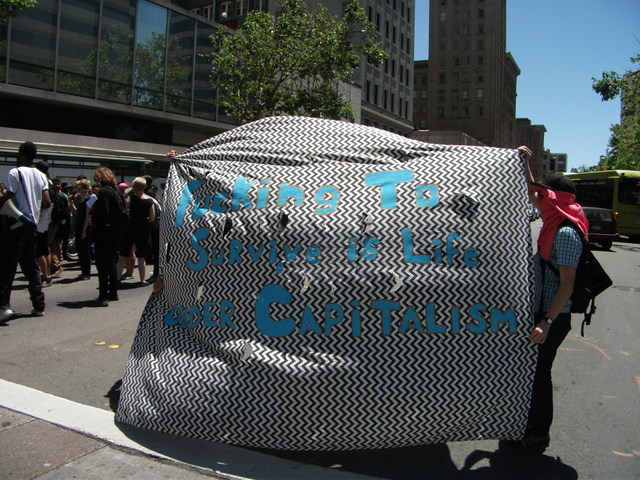
“What we find disturbing as anti-capitalists and anti-authoritarians is these police who, to sex workers, are oppressing us,” Clarissa McFaye, one of the demonstrators, told me in an interview. “We know that police are a very violent, fearsome presence in the lives of all sex workers, and we feel the only way that we can abolish child trafficking and exploitative forms of labor, which is all labor in actuality, is to abolish the police state.”

“They think working to enforce criminalization isn’t going to help child victims of sexual slavery. We know they exist, but we don’t feel this is a solution. We don’t think enhancing the ability to arrest people is a solution,” said McFaye.

“We really appreciate a lot of the effort that some of the non profits are doing,” McFaye continued, “We want to talk to them and form a sense of camaraderie with them and tell them that we don’t need the cops. We don’t want them. They’re bad for us.” 

Sex workers rights groups have long spoken out about police treatment of prostitutes. Stories of police harassing sex workers, going through with sexual acts while undercover before making prostitution arrests, and demanding sex in exchange for letting an arrest slide are fairly common. As McFaye told me, “they’re condoning child trafficking because they make deals with pimps.”

“Not to mention that hella cops are tricks,” she added.

Pimps and traffickers, children and minors

The HEAT Unit’s website lists 237 charges and 160 convictions made by the unit between 2006 and 2011. The statistics include trafficking as defined by California Penal Code Section 236.1, California’s Human Trafficking Statute. But they also include charges and convictions for pimping and pandering, sexual assault, kidnapping, and burglary, and the website specifies that “these statistics do not differentiate between child and adult victims, though the majority of HEAT victims are minors.”

The anti-trafficking statute defines a human trafficker as “Any person who deprives or violates the personal liberty of another with the intent to effect or maintain a felony violation of ” one of several anti-pimping, pandering, and solicitation Penal Code violations.

This includes Penal Code section 266 which defines a pimp as someone who, knowing another person has commercial sex, “lives or derives support or maintenance in whole or in part from the earnings or proceeds of the person’s prostitution.” 

But for Bates, “The way a pimp-prostitute relationship works is the pimp takes 100 percent of the cash.”

I brought up the pimp question with Cyd Nova, harm reduction services coordinator at San Francisco’s for sex workers-by sex workers health clinic, the St. James Infirmary.

“I know a lot of street-based sex workers who are totally independent,” said Nova. “Some do split their money with pimps or managers.”

Nova also said pimping’s legal definition can often have questionable consequences. “Legally that would be most peoples partners, children, friends.”

“I have met sex workers who have had their partners charged under pimping codes, which was not their relationship with that person,” Nova told me.

Many “pimping” relationships fall somewhere in between “peoples partners, children, and friends” and “the pimp takes 100 percent of the cash.” Sex workers, a criminalized class, often experience violence from both pimps and clients- but fear for their own consequenes if they report the crimes. I asked Bates his opinion on granting immunity from prostitution charges or a person who comes forward to report all too common violations committed against sex workers like rape, assault and theft.

“We do this all the time in the context of other types of crime that we work with. If it’s a murder, we may be willing to negotiate with our witness to determine whether or not is appropriate to give immunity for the person to testify against this other person, in exchange they won’t be prosecuted for the crime that they committed.”

But Nova said that striking that deal can be a major problem.

“One thing that is an issue for people forced into the industry is they are unable to receive services until they agree to testify against their trafficker. This doesn’t work for the majority of people, and it’s a major issue when you’re talking about services for trafficking victims,” he said.

At the St. James Infirmary, “We have people who have been in situations where they feel that they wanted to leave, but are not willing to bring criminal charges against the person,” he continued.

Nova also described a distinction between the terms “child” and “minor.”

“People have choices in how they use their bodies, and that includes youth. We are living in a world where sometimes people have to choose options that are not ideal,” he said. 

McFaye painted a similar picture, saying that “sex work is a form of work that all genders do sex work can make a lot more money than other options.”

“It allows me to do my political work as well as work a few times a week, instead of working at McDonalds. When I was 17 years old I tried to get a job, couldn’t find anything but shitty house cleaning jobs. Then some sex workers I knew showed me the ropes, and my life’s been a lot better ever since,” she said.

I described a similar situation, in which a minor chooses prostitution to make desperately needed money or escape an abusive situation, to Bates. “There are going to be people that make that claim,” he responded. “There’s no doubt about it. Part of the phenomenon is that a lot of people that are being abused, when they’re being abused, don’t even realize that they’re being abused. That’s a big issue,” said Bates. “People have made the claim, they did what they had to do in a difficult circumstance, and they don’t really see themselves as being a victim of crime. And what I’m suggesting is, that’s not uncommon, it’s part of the victimology actually.” 

He added, “I’m speaking specifically to people that are being trafficked. What you described doesn’t sound as much like a trafficking situation.”

But the law doesn’t allow for that kind of nuance. 

“That is a clear distinction that we want to draw. This is focused on commercial sexual exploitation of children,” Bates said. “When you become 18, you’re given a set of rights and you’re treated differently under the law.”

Solutions

The HEAT Unit’s model is unique, and if the conference has its intended consequences, it may be replicated throughout the country.

For minors that the HEAT unit identifies as CSEC, “The goal is to try to stabilize them, to figure out what services they need, what situation they came from and figure out how we can get that child back on track,” Bates told me.

“Sometimes, that requires that we detain them for a period of time so we can figure out what services are necessary. That’s somewhat controversial, because some people say that’s not appropriate. We believe that it’s in the interest of these girls initially, to figure out what’s necessary. That to turn them back on the street means to turn your back on them, period.”

Many sex workers’ rights groups, however, argue for antoher solution entirely- decriminalization of prostitution. Part of the argument for decriminalization is that sex workers would feel more comfortable coming to police with reports that they are their colleagues had been victims of crimes like rape, assault or theft. 

As Nova said, “California is currently using anti-trafficking federal funds to target all sex workers. They say, if we arrest a bunch of sex workers, some of them are going to be trafficked. This has not proven to be very effective, whereas decriminalization would result in people, who are in coercive work situations, feeling more comfortable coming forward and asking for help.

“They need an evaluation of what kind of practices are going on and what results they’re turning out,” Nova said. “A study where they have conversations with people who have been arrested and detained and talk about what their life was like, what was detrimental and what was beneficial.”

For some of the more anarchist-leaning protesters, however, the police should play no role in the solution.

“What we think would help is if we as sex workers come together is if we come together and combat this exploitation,” McFaye told me.

I asked if there was anything the police could do.

“No,” said McFaye. “They can turn in their badges. That’s what they could do.” 

When the sex workers’ rights movement took off in the ’60s, they joined the debate that had been going on surrounding prostitution and policing for a century. The movement continues- and on Wednesday, a distinctly anti-capitalist side of it made noise. These groups may be piping up more, as the Californians Against Sexual Exploitation (CASE) Act, which would increase funding and resources for policing sex traffickers, goes to the ballot this November.


Free Muni for kids: Tough slog at the MTC

15

There are plenty of reasons I like the David Campos free Muni for youth plan. Anything that gets the next generation used to seeing Muni as the primary form of transportation in town is a good idea. It’s a great benefit for low-income kids (and around SF these days, the only ones who we’re giving any benefits to are businesses that get tax breaks, and those breaks are worth far more than the modest cost of the Campos plan). But it’s particularly important this year, because the school district is in serious financial straights and is probably going to eliminate most school-bus transportation next year. So poor kids and kids whose parents don’t have cars will have a harder time getting to school.

The supervisors approved this, and the mayor signed off on it — but some of the money is supposed to come from the Metropolitan Transportation Commission, made up of regional representatives, and Campos is having a tough battle.

The MTC staff recommended that SF get $4 million in regional transit money for the idea, but not all, or even most, of the 16 members of the panel want to see one city get money for something all of them would love to do.

But: Someone has to try this as a pilot project, and SF, with the highest per-capita transit ridership, is a good place to start.

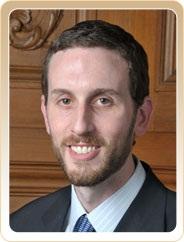
Sup. Scott Wiener is also on the MTC, representing San Francisco, and he’s totally against the free Muni for youth plan. And when it come up at an MTC committee, he was willing to vote for it — “I realize I lost that battle, and at the MTC I’m representing San Francisco,” he said — but only if MTC stipulated that no additional city money would go to the program.

And that kind of screws the whole thing up, since it will be hard to do with just the $4 million.

Ugh. Such a great idea, for a fraction of the money we’re handing out like hot dogs to everyone who asks for a tax break. Why don’t the poor kids get a break for once?

Bevan Dufty’s all wet and woofy

20

I’ve had issues with Bevan Dufty. Oh, lord, I’ve had issues. He so often voted the wrong way on the Board of Supervisors and was the only major candidate running for mayor who answered No to the affordable housing question at the Guardian mayoral forum.

But I have to say, he’s doing quite the creative job as the mayor’s homeless coordinator. I’ve always liked the idea of the “wet house” — a place where alcoholics can drink in safety. It’s basic harm reduction, something that sometimes conflicts with the prevailing wisdom on sobriety but will almost certainly save lives. He’s taking the right line on panhandling — the other day, he told me, he spoke in front of the Interfaith Council and complained about the notion of refusing to give money to panhandlers because they might use it for drugs and alcohol.

“Well,” he said, “there are people in this room who generate money for drugs and alcohol. What if that principle applied to your paycheck?”

(I always give money to panhandlers. I also spend part of my paycheck on Bud Light and bourbon. Deal with it.)

And now he’s got the puppy plan.

You can laugh at this all you want, and a lot of people will, but I think it’s a fabulous idea. It won’t solve homelessness, and I know that these little side trips can divert attention from the massive social problem that is housing costs and homelessness in this city, but still:

There are dogs that need to be adopted. There are lonely people who are in SROs who can adopt those dogs. It might keep some of them from panhandling. It will certainly make a number of canine and human creatures a lot more happy.

Remember PAWS? (One of my favorite groups.) These folks figured out in the worst days of the AIDS pandemic that having companion animals around made people’s lives better, and they worked to help people with AIDS keep their pets. Now they work with seniors and low-income people, providing support and services.

The dogs don’t care if their owners are living in an SRO; they’re happy to have a home. The people who might be isolated and stressed living alone and with very little money have a bit of light in their lives. Although a lot of SROs don’t take pets (and I get it — pit bulls on crack and fleas and shit), the Community Housing Partnership is working with Dufty on a pilot program, and if it works he cann push it further.

And that’s not the end. Under Sup. Scott Wiener’s recent legislation, dog walkers (thousand of ’em) are supposed to have some basic dog-training skills, and there aren’t that many places that offer those classes — but Dufty tells me he thinks maybe some low-income SRO residents can learn to teach dog training classes and make some money that way.

Again: Little stuff. I still want to tax the rich to provide housing as a human right for all. But things are not good on the streets of San Francisco, and every little bit helps.


In case you have time between Frameline screenings: new movies!

1

This week: Frameline, Frameline, Frameline! Our coverage here. Ticket and schedule info here.

Hollywood’s two big releases are the Adam Sandler-Andy Samberg arrested-development yukfest That’s My Boy, and the Tom Cruise hair metal musical Rock of Ages. If you’re excited about either, you probably aren’t the type of person who gives two shits what movie critics say. Just a guess. So, enjoy. As you were.

Also of note for movie fans: the San Francisco Museum and Historical Society opens “The Stuff That Dreams Are Made Of: San Francisco and the Movies” this weekend. It features work by Madeleine Ellster herself, Kim Novak, plus:

“The exhibition paints a picture of the amazing breadth of the Bay Area’s film history and filmmaking community, using educational text panels, photographs, posters, vintage cameras, movie props and other objects. Slide shows, lectures, book signings, oral history recordings, screenings, and multimedia will also be part of the exhibition.”

(I can’t confirm there will be a Harry Callahan street shootin’ simulator, but that would be pretty awesome, no?)

But back to the movie theater:

This weekend, it’s a Duplass-a-thon, as Dennis Harvey reviews mumblecore’s first sex symbol in Safety Not Guaranteed and Your Sister’s Sister. Below, you’ll find our takes on another mumblecore overachiever, Greta Gerwig, who less success with the wee-bit-twee Lola Versus; handcuffed-together-at-a-music-festival (don’t ya hate when that happens?) rom-rom Tonight You’re Mine, featuring Natalie Tena (Osha for all my fellow Game of Thrones devotees also going through withdrawals); delightful coming-of-age Norwegian import Turn Me On, Dammit!; and The Woman in the Fifth, the latest movie to remind us that yes, Kristin Scott Thomas can totally speak French! And maybe the first to let us know that Ethan Hawke can, too.

http://www.youtube.com/watch?v=b5hYBMZft9w

Lola Versus Greta Gerwig’s embattled late-twentysomething, the titular Lola, apologetically invokes the Saturn return to explain the chaos that enters her life when her emotionally underdeveloped boyfriend proposes, panics, and dumps her. Workaday elements of the industry-standard romantic comedy surface, lightly revised: a crass, loopy BFF (co-writer Zoe Lister Jones) who can’t find true love and says things like “I have to go wash my vagina”; a vaguely soulful male friend (Hamish Linklater, 2011’s The Future) who’s secretly harboring nonplatonic feelings (or maybe just an opportunistic streak); wacky yet vaguely successful Age of Aquarius parents (a somewhat toneless Debra Winger and a nicely gone-to-seed Bill Pullman). One can see why it would be tempting to blame a planet’s galactic travels for the solipsistic meandering that Lola engages in, bemusedly lurching, often under chemical influences, from one bout of poor decision-making to the next. She claims to be searching for a path out of the chaos into some calmer place (fittingly, she’s a comp lit Ph.D. candidate who’s writing her dissertation on silence), but as the movie transports us mercilessly from one scene of turmoil to the next, we have little reason to believe her. The script has funny moments, and Gerwig sometimes succeeds in making Lola feel like a charming disaster, but her personal discoveries, while certainly valuable, feel false and forced. (1:26) (Lynn Rapoport)

Tonight You’re Mine Ah, the old chained-together gimmick, so effective in creating conflict in movies like 1973 women-in-prison classic Black Mama, White Mama. Alas, Tonight You’re Mine contains zero escaped cons, and is instead a pretty contrived love story about two rockers who’re inexplicably handcuffed together, mid-argument, by a mysterious man prowling the grounds at Scotland’s massive T in the Park music festival. Whether or not Adam (Luke Treadaway, last seen getting very stoned mid-alien invasion in 2011’s Attack the Block) and Morello (Game of Thrones‘ Natalie Tena) will ditch their clearly-wrong-for-them partners and fall for each other is hardly up for debate. What saves Tonight You’re Mine is its authentic rock-festival atmosphere; director David Mackenzie filmed amid the actual chaos of the 2010 T in the Park fest, so there’s plenty of mud, inebriated extras, and background music swirling around the budding romance. Also, though her character is underdeveloped here, Tena has a punky appeal that suggests a star on the rise. (1:20) (Cheryl Eddy)

http://www.youtube.com/watch?v=eySFZRVcHYM

Turn Me On, Dammit! The 15-year-old heroine of writer-director Jannicke Systad Jacobsen’s Turn Me On, Dammit! is first heard in voice-over, flatly cataloging the over familiar elements of the small town in rural Norway where she lives — and first seen lying on the kitchen floor of her house sharing an intimate moment with a phone sex operator named Stig (Per Kjerstad). Largely ruled by her hormones and longing to get it on with someone other than herself and the disembodied Stig, Alma (Helene Bergsholm) spends large segments of her life unspooling sexual fantasies starring Artur (Matias Myren), the boy she has a crush on, and Sebjorn (Jon Bleiklie Devik), who runs the grocery store where she works and is the father of her two closest friends: burgeoning political activist Sara (Malin Bjorhovde) and full-fledged mean girl Ingrid (Beate Stofring). Back in real life, a strange and awkward physical interaction with Artur leads Alma, excited and confused, to describe the experience to her friends, a mistake that precipitously leads to total social ostracism among her peers. With the possible exception of some unnecessary dog reaction shots during the aforementioned opening scene, documentary maker Jacobsen’s first narrative feature film is an engaging and impressive debut, presenting a sympathetic and uncoy depiction of a young girl’s sexuality and exploiting the rich contrast between Alma’s gauzier fantasies and the realities of her waking world to poignantly comic effect. (1:16) (Rapoport)

The Woman in the Fifth A rumpled American writer with a hinted-at dark past (Ethan Hawke) shows up in Paris, to the horror of his French ex-wife and confused delight of his six-year-old daughter. An ill-advised nap on public transportation results in all of his bags being stolen; broke and out of sorts, he takes a grimy room above a café and a gig monitoring the surveillance-cam feed at what’s obviously some kind of illegal enterprise. During the day he stalks his daughter and romances both sophisticated Margit (Kristen Scott Thomas) and nubile Ania (Joanna Kulig); he also dodges his hostile neighbor (Mamadou Minte) and shady boss (Samir Guesmi). Based on Douglas Kennedy’s novel, the latest from Pawel Pawlikowski (2004’s My Summer of Love), offers some third-act twists (gory, distressing ones) that suggest Hawke’s character (and, by extension, the viewer) may not be perceiving reality with 100 percent accuracy. Moody, melancholy, not-entirely-satisfying stuff. (1:23) SF Film Society Cinema. (Eddy)

Compassion and fervor in Berkeley Rep’s ‘Black n Blue Boys/Broken Men’

0

“I want them to look at me, to look me in the eyes,” states Dael Orlandersmith, using a British accent to portray one of at least ten different characters she plays in her tour de force solo show Black n Blue Boys/Broken Men, at Berkeley Rep through June 23.
 
After 90 minutes, the audience was definitely squirming in its seats. Orlandersmith tackles a barrage of characters, each of whom related in some degree to the subjects of mental, physical, and sexual abuse of boys and men. But despite the challenging material, I do not think many viewers would have wanted the play to be any shorter. (“There was hope in it,” I heard an audience member say as we walked out of the theater.)

Orlandersmith, a Pulitzer finalist for her 2002 Yellowman, embodies a variety of people tied to the many facets of violence: onlookers, perpetrators, victims — and those who are perpetrators and victims. She represents a range of ages and ethnicities: children, a Latino father and mother, an African American hustler (aged 13), Irish parents. Her elocution is impeccable.

 Dressed in plain clothing, she remains onstage for the duration, signaling scene changes by turning and walking from the back to the front of the stage — where she resumes with completely different mannerisms. The stage looks a bit like a large ship plank or the abandoned foundation of a small apartment, very broken around the edges.
 
Huge, industrial-looking lights evoke the prisons, foster homes, crack dens, and seedy spots for sex solicitation that background her stories; they raise and lower for different monologues. Character names are projected along the wall after the first few appear, to help the audience keep track when they are revisited.

One character — a boy taunted in the school yard for being a “trick-baby,” a child of a prostitute  — escapes his abusive family life and becomes a writer (a character that Orlandersmith may have been able to draw most from her own experience as a writer who works to give voice to those who are oppressed by violent circumstances). As an adult, the writer works in foster homes, trying to break the cycle of violence and help children in a way he was never assisted in his darkest days.

But even though he understands why these children act out so badly, they still test his patience and he finds out one of the many corruptions in the foster care system — he does not get in trouble for hitting the child because they are allowed to spank children “who are bad.” When he learns about this rule, the character realizes his mistake; his awareness of his own actions and his need to challenge the system and make positive change inspires hope.

In the playbill, Berkeley Rep artistic director Tony Taccone speaks about Orlandersmith’s grace and understanding in approaching such a dark and seemingly impossible subject. He explains she shows us hope amid desperation and brutality. Although certain characters were much harder to handle than others, each one certainly gave the audience much to consider. Orlandersmith shows us how abuse is cyclical, it is a vicious cycle that is hard to break. Hard, but certainly possible.
 
Black n Blue Boys/Broken Men also addresses bureaucratic problems  — compounded by stereotypes and ignorance — that stand in the way of breaking this cycle of violence. A Latino boy growing up in the Brooklyn projects with his mentally ill, sexually abusive mother and in-denial father meets with a social worker, who tells him “It says here in your case file that you were molested by your mother. But you must be mistaken. Men molest men, women, girls, and boys. Women are mothers, mothers do not molest children — women do not molest their sons.”
 
With this example, Orlandersmith shows we still have some fundamental archetypes that need to be broken down, and double standards between the sexes is one of them. Both men and women can be aggressors. Although her play points out this harsh reality (and the frequent denial of it in our society), she also explores how characters break from their abusive pasts.

Thankfully, Orlandersmith provides enough balance in the play to keep the material from getting too uncomfortable and depressing. My personal favorite character was the “unofficial mayor of Central Park,” whose New York accent and physicality was hilarious and completely likeable.
 
I applaud Orlandersmith for her bravery in tackling this subject, and for her ability to explore her characters so deeply. Black n Blue Boys doesn’t engage in finger-pointing; instead, it presents each character openly. Although she knew certain details might cause revulsion, anger, and shock, this talented writer-performer encourages viewers to draw their own conclusions in the end. It is a truthful, compassionate look at a challenging topic, which, in the words of her final character, “doesn’t have to be all black and blue.”

Black n Blue Boys/Broken Men
Through June 23, $14.50-73
Berkeley Repertory Theatre
Thrust Stage, 2025 Addison, Berk.
www.berkeleyrep.org

Guardian voices: The zombie condo converters

28

What is the shelf life of  a really bad public policy concerning housing in  San Francisco?

When it comes to condo conversions of existing rent controlled apartments, the answer is that there is no limit on how many times this bad idea is taken off the shelf. Like a bad summer zombie movie, this undead keeps  walking, no matter what San Franciscans say.

A little history.  In 1982 Supervisor Willie Kennedy, not a bomb-throwing tenant advocate by any stretch, sponsored legislation that limited the  conversion of existing apartments to condos to no more than 200 a year. The measure did not touch new constriction, allowing unlimited condominium construction. Indeed, from 1983 to 2000, some 12,200 new condos were built, an average of some 680 units a year. Since 2000, nearly 100 percent of all new residential constriction is built as condos; there is no limit on renting a condo, but an annual limit in converting an existing apartment. Clearly, condos are a tenure type of housing that is dramatically expanding.

The reason Kennedy and the at-large elected Board of Supervisors voted for the annual limit was to protect rent-controlled apartments, a type of housingthat can’t be expanded. San Francisco’s 1978  rent control ordinance exempted all new construction from being under rent control. So rent-controlled apartments were a fixed number — all apartments built before 1978 — banned by law from ever being expanded. 

Yet those apartments are the largest number of affordable housing units available to moderate and middle income households. Thus, there’s a rational desire to preserve them by a public policy that limits their conversion to condos because they are declining in numbers.

And San Francisco voters understand and support this very rational policy.

In 1989, realtors and speculators tried to overturn the annual limit, proposing a measure that said if 51 percent of a building’s existing tenants voted for a conversion, then the building could be converted with no annual limit. This proposal laid out a future of a Hobbesian society here in San Francisco with one set of well-to-do tenants fighting another set of less-well-off tenants, building by building. San Francisco voters defeated the measure 63-37.

But in the land of the living dead condo converters, no is never the answer.
 
In 2002, Gavin Newsom, Tony Hall and Leland Yee, Plan C, and the Chamber of Commerce placed another measure on the ballot to repeal the annual limit. It too, was  rejected: 60 percent voted no, and 40 percent yes. The measure was defeated in all of the supervisorial districts except  Newsom’s D2, Tony Hall’s D7, and Leland Yee’s D4.

Tenant and affordable housing advocates were not unmoved by the desire of tenants, especially in privately owner rental housing facing Ellis Act and TIC evictions, to seek the protection of home ownership. In 2008 they supported an amendment to the Subdivision Code carving out from the annual limit conversions of apartments by nonprofit, limited equity housing
co-ops.

Now were are confronted again by a desire to allow more conversions of rent controlled units by private buyers who bought into the TIC dodge around the annual condo conversion limit.

Since TIC’s do not require a sub-division map, creating legally recognized separate units, they became “grey market” condos. With hot mortgage money flowing during the bubble, TIC owners could get financing. Now, banks are actually following some laws and will not lend to buy a legally grey TIC.  Thus the move to get them converted to legal condos.
 
This is, in its most basic form, yet another bailout caused by speculative capitalism. We seem to no longer believe in the market as an economic system, in which bad economic decisions result in economic loss for the folks involved. We now seem to believe in the “market society” — in which those with money get to keep it no matter what bad decisions they make.

What this is all about is not really homeownership but about home sales. After all, if you have a TIC you already have a home. You want to convert it to a condo not to live in, but to sell. To make it easier to sell TICs would make it harder to sell the thousands of already approved but stalled new condos.

Mayor Lee administration want to stimulate these stalled condo developments, claiming they will create constriction jobs. The Farrell and Wiener condo conversion plan undercuts these efforts and, of course, will create no jobs for anyone but realtors and moving companies.

This is called a “contradiction of capitalism,” when one set of capitalists seek, to the disadvantage of another group of capitalists, to get the government to intervene on their behalf.  But it does prove once again that Lenin was right when he said that one could count on one set of capitalists to compete with each other to sell rope to hang another set.

It’s really bad economic policy, and even worse housing policy.

Too dope to be free

0

But it is! No ticket price required, but you might want to show up early for the wildly popular Queeriosity. 

It’s Youth Speaks’ annual queer poetry slam. The mostly high school age poets who will lay their stunningly well-worded wisdom upon you will be having fun tomorrow night, but they are not messing around. 

Neither is Youth Speaks. The national San Francisco-based organization works with 30,000 Bay Area youth per year, from school assembly performances to free after school poetry workshops to slams. Veteran Youth Speaks poet Milani Pelley will be co-hosting this year’s Queeriostiy show. Although a raging fire prevented me from meeting up with Pelley in Berkeley today, she told me over the phone about life, art, politics, and the aweomeness that Queeriosity attendees can expect. 

Pelley wrote her first poem at age 12.

“Actually a young lady who also was with Youth Speaks, she got me into writing,” Pelley told me. “In the 7th grade we were kind of tom boys, we were hanging out on the basketball courts and she said hey, want to hear a poem?  And she was little, like five feet,” Pelley laughed. 

“And everyone stopped what they were doing and listened. And after that, I went home and wrote a poem.  Because I said, this is how you get people to listen to you? I want to try it!”

She never stopped. Pelley went to Youth Speaks workshops at age 15, and later served on their Youth Board. She now makes it as an artist, working for Youth Speaks as a Poet Mentor and making jewelry on the side.

Pelley said that poetry sustained her through difficult times. “Once I was able to write down everything that I was going through and work out my pain and sadness I was able to see the bigger picture and really find a solution of how I was going to heal” she told me.

“It was basically me being my own therapist. Because you know how they take notes on you? I was taking notes on myself.”

I asked if Pelley sees her poetry as political.

“I talk about race, or I talk about sexuality, I talk about police brutality. These are regular things in my life,” said Pelley. “But people think it’s political or controversial. And some people think I should be considered pro-woman. People think it’s political because it’s a feminist perspective but I think Its just women being powerful as they should be.”

For one example of the personal-is-political-is-ridiculously-awesome Queeriosity experience, here’s a take on SF Pride from Yosimar Reyes at the 2010 Queeriosity slam. http://www.youtube.com/watch?v=XdZpRiOsdS8

If that doesn’t convince you, let Pelley: “I definitely think this is going to be an amazing show. It’s free, its way too dope to be free. Personally I think, they should be paying these youths because they’re very courageous, they’re very talented and what is going to be shown tomorrow shouldn’t be missed.”

15th Annual Queeriosity

Fri/15, 7pm

LGBT Center

1800 Market, SF

www.youthspeaks.org

Dick Meister: Dolores Huerta merits our highest honor

0

By Dick Meister

Dick Meister, former labor editor of the SF Chronicle and KQED-TV Newsroom, is co-author of “A Long Time Coming: The Struggle To Unionize America’s Farm Workers” (Macmillan). Contact him through his website, www.dickmeiste.com, which includes more than 350 of his columns.

How fitting it is that Dolores Huerta has been awarded the Presidential Medal of Freedom.  Her many years of hard and invaluable work for union rights and civil rights generally deserve no less than the country’s highest civilian honor, bestowed on her May 30 by President Obama.

Huerta, now a vibrant 80 years old, has had a remarkable career spanning more than a half-century. She’s probably best known for her work with Cesar Chavez in the founding and operations of the United Farm Workers union. But that’s been just part of her lifelong and extraordinarily successful and courageous fight for economic and social justice.

Huerta, five-foot-two, 110 pounds, hardly looks the part. What’s more, she’s had 11 children to raise along the way, much of the time as a single mother. She’s traveled the country, speaking out and joining demonstrations in behalf of a wide variety of causes.

She’s lobbied legislators to win important gains for Latino immigrants and others.  She was a leader in the worldwide grape boycott that forced growers to agree in 1970 to the country’s first farm union contracts. Which she negotiated despite her utter lack of experience in negotiating. She remains a leading Latina, feminist, labor and anti-war activist, and a key role model for women everywhere.

Huerta started out as an elementary school teacher in Stockton, California, in 1955. But she quickly tired of “seeing little children come to school hungry and without shoes.”

That, and her anger at “the injustices that happened to farm workers” in the area, led Huerta to quit teaching to join the Community Services Organization, the CSO, which helped local Chicanos wage voter registration drives and take other actions to win a political and economic voice.

Cesar Chavez, who was general director of the 22-chapter CSO, stressed above all what he called “grass roots organizing with a vengeance.” Huerta agreed, and generally agreed with Chavez on tactics as well. That included an unwavering commitment to non-violence.

But where Chavez was shy, she was bold and outspoken. She had to be if she was to assume the leadership to which her commitment had drawn her. Mexican-American men did not easily grant leadership to women, most certainly not to small, attractive women like Huerta.

She was assigned to the State Capitol in Sacramento as the CSO’s full-time lobbyist. It was an unfamiliar task, but during two years at the capitol, Huerta pushed through an impressive array of legislation, including bills that extended social insurance coverage to farm workers and immigrants and liberalized welfare benefits.

Huerta soon realized, however, that legislation could not solve the real problems of the poor she represented. What they needed was not government aid passed down from above to try to ease their poverty, but some way to escape the poverty.  The way out, Huerta concluded, was farm labor organizing.

Chavez agreed. And in 1962, when the other CSO leaders and members rejected his plans for organizing farm workers, he quit the CSO to start organizing on his own. Huerta soon followed, helping create the organizations that evolved into the United Farm Workers, the United Farm Workers with Chavez as president and Huerta as vice president and chief negotiator, later as secretary-treasurer. She, like Chavez, was paid but five dollars a week plus essential expenses.

Chavez quarreled frequently with Huerta. That was inevitable, given Huerta’s excitable temperament and the harsh discipline Chavez imposed on himself and his close associates. But they were always headed in the same direction. And though Chavez was not entirely immune to the Mexican ideal of male supremacy, he was not the traditional macho leader by any means, He marveled at Huerta for being “physically, spiritually and psychologically fearless – absolutely.”

Like Chavez, she believed fervently in getting people to organize themselves, to get them to set their own goals and decide for themselves how to reach them. Huerta directed the message particularly to the many women among the farm workers.

She joined their picket lines outside struck fields, defying growers, sheriff’s deputies and other sometimes violent opponents.  As one picket said, “Dolores was our example of something different. We could see one of our leaders was a woman, and she was always out in front, and she would talk back.”

Huerta paid a heavy physical price for her militancy. She nearly died in 1988 after being clubbed by a policeman while demonstrating with about 1,000 others outside a fundraiser for the presidential campaign of then Vice President George H.W. Bush, who had ridiculed the UFW and the grape boycott. Huerta’s spleen was ruptured and had to be removed, leading to a near fatal loss of blood.

She was operated on for other serious problems in 2000.  Huerta stepped down as a UAW officer that year to join Democrat Al Gore’s presidential campaign, and has remained active in UFW and Democratic Party affairs, notably by lobbying for immigrant rights, helping train a new generation of organizers and joining campaigns to improve the lot of janitors, nursing home employees and other highly exploited workers.

Dolores Huerta has shown us, beyond doubt, that injustice can be overcome if we confront it forcefully, if we heed the demand she has been known to shout in urging passers-by to join picket lines and other demonstrations: “Don’t be a marshmallow! Stop being vegetables! Work for justice!”

Dick Meister, former labor editor of the SF Chronicle and KQED-TV Newsroom, is co-author of “A Long Time Coming: The Struggle To Unionize America’s Farm Workers” (Macmillan). Contact him through his website, www.dickmeiste.com, which includes more than 350 of his columns.


Is the killer cyclist more negligent because of past actions?

106

Today’s announcement by District Attorney George Gascón that he filed felony vehicular manslaughter charges against Chris Bucchere, the bicyclist who hit and killed a pedestrian at the intersection of Market and Castro streets on March 29, won’t be a surprise or source of outrage to many people.

As I reported shortly thereafter, data from the cyclist training website Strava indicated that Bucchere was traveling at around 35 mph as he entered the crowded intersection on a yellow or red light. And the callous comments he made afterward to an online forum, which I also quoted, certainly cast him in an unsympathetic light.

But there is an aspect to the case that Gascon is bringing that I find vaguely unsettling: “’This tragic death caused by a bicyclist illustrates the worst case scenario when traffic laws are not obeyed,’ said District Attorney Gascón. He explained that Bucchere displayed gross negligence in operating his bicycle warranting a felony vehicular manslaughter charge. His office intends to prove that there was a pattern of traffic laws being broken by Bucchere leading up to the accident.”

If he ran a couple red lights without incident before this one, does that make him more criminally liable for the bad decision he made at this intersection? Shouldn’t the question of whether Bucchere was criminally negligent in causing 71-year-old Sutchi Hui’s death be about his decision to plow through this intersection when it wasn’t safe to do so?

Perhaps it’s an issue that helps shore up the case that he was behaving in a reckless way. But this is going to be an emotional case and one likely to be trumpeted by the handful of cyclist-haters out there for whom our tendency to roll stop signs is the source of real anger and condemnation, with many blog commenters in the past wishing me a violent death for doing so, threatening to carry out the deed themselves, and saying they would feel only pride in doing so.

If one of these crazies plows into me when I’m riding legally, will I be blamed because I ran a red light a few intersections ago? Will they cite my admission in the Guardian that I often break traffic laws and say I had it coming? Would the decision that Bucchere made as he was screaming down Castro toward that fateful intersection be less negligent if he had stopped at previous intersections?

With the bitter resentments that some San Franciscans feel toward cyclists so palpable and potentially dangerous, it will be easy to lose perspective on this case and make Bucchere emblematic of all cyclists, as dishonest as that may be. And I think it’s incumbent upon Gascón to try to prevent that from happening.

This is an isolated and unusual case of a young man making a tragic mistake for which he will pay a heavy price, no more and no less.

Local jazz, blues behind bars, and backing-band memories: new music docs

0

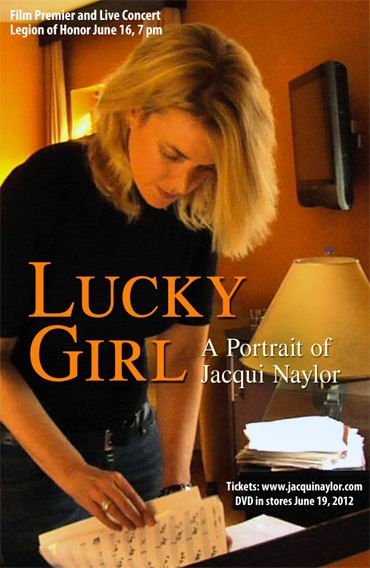
Jazz singer Jacqui Naylor — Buddhist, Hayes Valley resident, mash-up innovator — premieres her new doc, Lucky Girl: A Portrait of Jacqui Naylor, with a live concert at the Palace of Fine Arts Sat/16 (the DVD will be available in stores Tue/19).

The film, produced by the Bay Area’s ARTiDOCs, is about as far from Behind the Music-style tell-all as you could get; Naylor seems blissfully happy with her life, being completely creatively and personally fulfilled (see also: the film’s title, named for her 2011 CD). No scandals or dark secrets revealed here; this is a straightforward look at a working artist, briefly touching on her career beginnings (at the suggestion of teachers at American Conservatory Theater, she chose music over acting) and including mini-profiles on the artists she collaborates with, including husband Art Khu.

http://www.youtube.com/watch?v=DiBY1U4b8oI&feature=player_embedded

Fans (whom she prizes highly — and takes their suggestions seriously) will enjoy the film’s many musical interludes, which showcase snippets and entire songs of Naylor performing and rehearsing in the Bay Area, Seattle, and Istanbul. Her repertoire includes original songs, pop and jazz standards, and standards freshened up with her signature “acoustic smashing” — singing the lyrics to “My Funny Valentine” over the instrumentation for AC/DC’s “Back in Black,” for example. Will this versatile performer dust off more heavy-metal flair for Saturday’s show? It could totally happen. She’s taking requests: jacqui@jacquinaylor.com.

Lucky Girl: A Portrait of Jacqui Naylor (with reception and concert)
Sat/16, 7pm, $35
Florence Gould Theater
Legion of Honor
100 34th Ave., SF
www.jacquinaylor.com

**

Coming to the Kabuki and Smith Rafael this weekend is Music from the Big House, a soulful doc from filmmaker Bruce McDonald (2008’s Pontypool) about fellow Canadian Rita Chiarelli‘s experiences working with musician-inmates at Louisiana’s Angola Prison.

Angola Prison — earlier the subject of an acclaimed short documentary about its famous rodeo — has a well-known, rich musical history; in the 30s, John and Alan Lomax recorded Leadbelly while he was serving time there. Chiarelli, a blues superstar in her native country, says she initially traveled to the American South a decade ago to “visit the birthplace of the blues” — a journey that included a stop at America’s largest maximum security prison (5,000 inmates), where she discovered a thriving musical culture. Inspired (“the trueness totally moved me”), a planned concert for the prisoners became a concert with the men, including groups playing good ol’ boy country, gospel, Stevie Wonder jams, and Chiarelli’s own brand of raw, rootsy blues.

Gorgeously filmed in black and white, and crisply edited, McDonald’s film emphasizes the joy and feelings of freedom the men have achieved through their musical pursuits. But it also acknowledges its inescapable setting, filming the dorm-style cell blocks, a visiting day filled with seldom-seen wives and children, the barbed wire encircling the years. “When you’re playing music it’s easy to forget where you are,” the husky-voiced Chiarelli reflects. “But they’re still in prison and that’s rough.”

Though most of the featured men don’t directly address their crimes (their various offenses, including rape and murder, are addressed in the film’s sobering end credits), themes of deep regret and redemption run throughout the film. Kind of like the blues.

Music From the Big House
June 15-21, 2:15, 4:10, 7, and 9:20pm (with live performance by Rita Chiarelli Sat/16, 7pm)
Sundance Kabuki Cinema
1881 Post, SF
www.sundancecinemas.com

Also Sun/17, 7pm, $12 (with live performance by Chiarelli)
Christopher B. Smith Rafael Film Center
1118 Fourth St., San Rafael
(415) 454-1222
www.cafilm.org

**

And next weekend, get a sneak peek at an as-yet-unreleased (and not on DVD) documentary about acclaimed session musicians the Wrecking Crew, presented by the San Francisco Chapter of the Audio Engineering Society.

http://www.youtube.com/watch?v=-xs2kJn6PBE&feature=plcp

The film sounds kind of similar to the excellent 2002 doc Standing in the Shadows of Motown, about Motown’s legendary Funk Brothers: the Wrecking Crew was hugely active in 1960s Los Angeles, adding their musicianship to hits by the Beach Boys, Frank and Nancy Sinatra, the Monkees, the Mamas and the Papas, and more. (The film contains so many songs that its release has been held up over music-rights issues).

Producer-director Danny Tedesco — son of Wrecking Crew guitarist Tommy Tedesco — will be on hand to discuss the film, which he’s been working on for over 15 years, after each screening.

The Wrecking Crew
June 23, 2:30 and 7pm, $20
Auctions By the Bay Theater
2700 Saratoga, Alameda
www.brownpapertickets.com

PG&E’s latest fire problem

6

Sup. David Campos was at the fire on San Bruno Ave — the one that burned for two hours before PG&E crews managed to shut off a gas pipeline, and he told me the situation was a disaster. “PG&E had apparently done some work on the pipe but hadn’t documented it,” he said. “Nobody was there when we needed to shut it off. Two hours — that’s unacceptable.”

You’d think that after what happened in San Bruno, PG&E would have figured out how to respond to gas fires a little more quickly. You’d think someone in charge of that utterly screwed-up company would have made fire safety a priority. But no: Now PG&E has the normally quiet San Francisco fire chief pissed, has Campos calling for hearings on local gas pipeline safety and is on the proverbial hot seat again.

It’s as if nobody over there cares. What’s going to happen? The CPUC will impose a little fine? The city will demand some changes? So what? The monopoly utility can just ignore it all. The senior execs will still get their huge salaries and bonuses, any additional costs will be passed on to the ratepayers — and one of these days, another pipe will blow up and kill a bunch of people, and PG&E will say: Ooh, sorry about that.

And the next time PG&E throws a couple of dollars at some civic project, the mayor will forgive all the past problems and talk about what a great company it is.

Why do we put up with this?

Restore Hetch Hetchy conjures corporate boogiemen

75

The campaign for a ballot measure that seeks to create a plan for tearing down the O’Shaughnessy Dam – San Francisco’s main source of clean water and power – and turning the Hetch Hetchy Valley into a tourist destination must be having a hard time collecting the 9,702 signatures it needs by July 9 because it is resorting to conjuring up unlikely boogiemen to win public sympathy.

Restore Hetch Hetchy just sent out a press release accusing opponents of the measure of preparing a “tobacco industry-style negative ad blitz” funded by venture capitalist Ron Conway and other corporate evildoers.

“Just like the tobacco industry’s big money confused so many people into opposing the Prop. 29 tobacco tax they initially supported, now we’re seeing corporate money flowing like a dirty river right into the coffers of what promises to be yet another nasty negative campaign,” said Mike Marshall, campaign director for the Yosemite Restoration Campaign, which his Restore Hetch Hetchy group is sponsoring.

It cites a statement made by the Bay Area Council – which they helpfully remind us includes “PG&E, Chevron, and Mitt Romney’s former company Bain & Co.” – that Conway has pledged $25,000 to the opposition campaign.

Where do I even begin to unravel this ridiculously hyperbolic and misleading appeal? Let’s start with the fact this has nothing to do with Big Tobacco, Big Oil, Big Capitalists, or Big Utilities. It isn’t corporations that are standing in the way of spending billions of dollars to tear down the dam and replace the lost power and water – it is just about every elected official in the region, from across the political spectrum, and any San Franciscan who has at least as much reason and sentimentality. As for PG&E, I’m sure the utility would just love to see San Francisco’s main source of electricity torn down, which would only expand its monopolistic control of our energy system.

Frankly, the misleading release reeks of desperation, and when I asked campaign consultant Jon Golinger whether the campaign is in trouble, he responded, “We are certainly quite clear this is a David versus Goliath situation, or whatever analogy you want to make.”

Okay, how about a Fantasy versus Reality situation? Or a Past versus Present situation? Or San Franciscans versus Dan Lungren, the right wing member of Congress who has been pushing to remove the dam supposedly because he loves Yosemite Valley so much and wants to create another one (or, more likely, because he wants to tweak the San Francisco liberals and get us fighting among ourselves over something pointless and distracting).

I’m sorry, but I just can’t get my head around the appeal of this idea, which the Sacramento Bee editorial writers actually won a Pulitzer Prize for conjuring up in 2004, certainly another sign of the modern decline in journalism standards. I get that legendary conservationist John Muir was right and this dam probably shouldn’t have been built, and that it might be kinda cool to have another beautiful valley to hike in once the sludge dries up over a few decades.

But when we can’t even find adequate funding for public transit, renewable energy sources, and the multitude of other things that really would help the environment – not to mention while we’re heading into an era when water supplies in the Sierras could be depleted by climate change – do we really want to spend billions of dollars to fetishize one valley and destroy the engineering marvel that is one of the best and most energy-efficient sources of urban water in the country?

Or am I just shilling for Big Tobacco and Mitt Romney because that’s how I see it?

Beach daze with buzzing brother act Wildlife Control

0

What would it be like if a day of your life was filmed then released into the wilds of the web? Better yet, what if you and your brother were musicians, and you produced, directed, and released your first big, innovative music video – shot over a full day at Ocean Beach in San Francisco – and it ended up going viral on Youtube, before the release of a full-length album?

Well, your band Wildlife Control would be a rather buzzed about act. And it would leave the people wanting even more (debut EP Spin was released this March). Brothers Neil and Sumul Shah, hailing from a rural Pennsylvania town – now based in Brooklyn and San Francisco respectively – spent a day in early February filming said music video for their new single “Analog or Digital” on a windswept beach, using a unique combination of time-lapse and stop-motion techniques.

In the video, it appears that the background is moving faster than real time, while the band’s movements are stagnant, choppy, like a slow-moving slideshow; it creates an effect that looks their feet are closely hovering over the sand.

This effect was created by a series of more than 3,000 individual photographs. The process was tiring for the brothers, holding the poses for such a long stretch of time, “We got really stiff” laughed Sumul during a conversation at Cafe Mediterranean in Berkeley.

Wildlife Control’s sound is far from rigid, it’s based in breezy pop – poppy enough to appeal to mainstream audiences – and layered with rock’n’roll riffs, and some jazz influences. There are layers to peel back with each listen, more depth than initially meets the ear.

http://www.youtube.com/watch?v=boGyFAYomBo

“We grew up in a whole family of musicians, Sumul reflected. “Our parents both imparted the importance of music from an early age. They wanted us to dive deep into it. Our dad is a trained classical Indian musician.” In fact, he plays Tabla on their future full-length release. “Music was all around, all the time; from an early age we always heard good music.”

Sumul added that – along with that family of musicians – he was also inspired by teachers, other artists, and inspirational folk with a clarity of vision, ticking off a list that included Steve Jobs, the Beatles, and Johann Sebastian Bach.

“When we would go with our friends in their parents’ minivan, I didn’t get what they listened to. The cheesy kids’ music was just not what we were exposed to in our family,” he laughed. “There is a necessity to some extent to have music appropriate for kids, but I don’t believe they should need their own weird kids’ music. A child can appreciate music like the Beatles.”

While the brothers grew up surrounded by music and have been playing together for some time, they’ve just barely dipped their toes in the modern world of viral music videos. With the “Analog or Digital” video, they made a concerted effort to capture their personalities.

“We thought, what better way to do it then to film an entire day to ourselves, and then compress that down into the three minutes of the song,” Sumul said. “Certain aspects of it were very planned out, but otherwise we just wanted to have fun and be ourselves.”

The song is anchored by a steady drum line, and the story-telling of the lyrics instantly create a potential for nostalgia; the musical bridge adds a dramatic flair that makes the song all the more memorable.

“It’s interesting that it went viral; all we really want is to make music for anyone who wants to hear it and be exposed to it.”  Sumul said. “To live in an age where we can get so much fan response amazes us,” adding, “we totally live in the future and we love that.”

Wildlife Control
With Coast Jumper
Mon/18, 8pm, $13
Brick and Mortar Music Hall
1710 Mission, SF
(415) 800-8782
www.brickandmortarmusic.com

The 8 Washington embarrassment

16

I wasn’t shocked by the vote on 8 Washington. I knew it was happening; I knew we’d lost when the EIR went through. I knew we couldn’t count on a solid progressive bloc any more. I knew that the lobbying was intense.

But I have to say, at the end of the day I was embarrassed. Because the supervisors sold the city cheap.

In the earlier board discussions, Sup. Christina Olague and Sup. Eric Mar mentioned their concerns about the heigh and bulk of the project and said they would work with the developer, Simon Snellgrove, on changes. But the final project was exactly the same size.

Olague and Sup. Jane Kim were concerned about the amount of parking; the developer agreed to cut 50 spaces. But the actual size of the garage won’t be reduced at all; the only promise: There won’t be valet parking, so maybe not so many cars will fit.

Yes, Snellgrove agreed to set aside some scholarships for low-income kids to swim in the pool, which is a great thing and I fully support it. For a project that, according to available figures, will net the developer $200 million in profit — according to Sup. David Chiu’s analysis, a 72 percent rate of return — the scholarship money is peanuts.

There’s an additional 50 cent parking levy to pay for surface improvements in the area.

But as Chiu asked at the June 12 meeting, “Is the city getting an appropriate level of benefits based on Snellgrove’s profits?” Project foe Brad Paul — a veteran of more than 30 years of the city’s development wars — doesn’t think so. “They got nothing,” he told me.

Here’s how it went down:

Chiu started off by introducing the board’s budget analyis, Harvey Rose. Rose said he’d reviewed the finances of the project, and concluded that the city would get $50 million less out of the project than the developer or the Port of San Francisco, which owns some of the land and is a primary proponent, had originally claimed. Chiu also noted that not all the documents were in the file, but nobody else seemed to care.

In fact, through most of the discussion — limited discussion — and final votes, it was pretty clear that nobody was swayed by any of the facts that Chiu put forward. This deal was done long before the board members took their seats.

Chiu offered a series of amendments, none of them terribly radical. He pointed out that the deal requires the city to pay the developer $5 million for open-space improvements. “That’s an anomaly,” Chiu said, and moved that it be removed.

Kim, who throughout the meeting was the strongest supporter of the project, argued that the city often reimburses developers for open space. More, she said, compared to what the city has asked other major residential developers to give, this project is just dandy. “I would not say this is not a fair deal for the city,” she told her colleagues.

The vote on the $5 million giveaway? Developer 6, SF 5. Siding with Snellgrove: Christina Olague, Scott Wiener, Carmen Chu, Sean Elsbernd, Mark Farrell, and Jane Kim. Siding with Chiu and project opponents: John Avalos, David Campos, Malia Cohen, and Eric Mar. It’s an odd lineup — Cohen doesn’t always vote with the progressives, and I have to say it’s strange to see Kim and Olague siding with the four most conservative supervisors.

Chius’s second proposal: Since the city’s benefits were $50 million less than advertised, why not add $14 million to the affordable housing fee?
Developer: 7. Affordable housing: 4. Voting for the developer: Olague, Wiener, Chu, Elsbernd, Farrell, Kim and Mar.

Okay, one last try. Chiu suggested maybe just $2 million more for affordable housing. Wiener, as is he way, went off on his usual complaint that too much of the affordable housing money is for poor people and not enough for the middle class. The final vote:

Developer: 6. Affordable housing: 5. Voting for the developer: Olague, Wiener, Chu, Elsbernd, Farrell, Kim.

Kim, again, took the lead in promoting the deal on the final vote, saying that a parking lot and a private club were not a good use for the space and that “we are achieving here is a higher and better use for the land.” That’s what every developer talks about, by the way — higher and better use.

She also talked about One Rincon, that hideous tower next to the Bay Bridge that was approved after then-Sup. Chris Daly cut a deal with the developer that the San Francisco Chronicle denounced as a “shakedown.

Kim said that, considering the much-smaller size of the Snellgrove project, the benefits were richer than the Rincon deal.

I never liked the Rincon deal — that tower’s a disaster, an ugly scar on the skyline, and there was nowhere near enough affordable housing money. That’s because I think that the city should be building six affordable units for every four market-rate units, that there’s no need for more housing for the very rich and that our current housing policy is a disaster. (The Guardian wrote an editorial at the time that said it was good that Daly had gotten that much money, but was dubious about the whole project. In retrospect, we were too kind.)

I think all my readers at this point know that. So does Daly.

But I asked the former supervisor anyway to comment on the difference between 8 Washington and One Rincon. His thoughts:

1. The Rincon Hill agreement was negotiated by the district Supervisor working together with the communities most impacted by the development. 8 Washington was opposed by the district Supervisor and many nearby residents.
2. Most people in the South of Market were not diametrically opposed to highrise development in that location. The Planning Department had been working on a Rincon Hill neighborhood plan and was recommending upzoning for the area.
3. Rincon Hill had no waterfront trust issues.
4. The Rincon HIll development impact fee was $25 per square foot (over and above the required inclusionary affordable housing fee even though the Mayor’s Office contended that over $20 per square foot would kill the deal.) According to Kim’s release, her 8 Washington deal netted an additional $2 million for affordable housing and a $.50 parking surcharge. This even though development in Rincon Hill is not as valuable as the northern waterfront.

Folks: I think the city got taken to the cleaners here. I’ll stipulate that I’m against this project for much broader reasons. And maybe I’m just an old commie who thinks that the richer you are, the more you should give back, that the affordable housing fees on the most expensive condos in San Francisco should be higher than normal, that if Snellgrove nets $200 million, then the city by definition left too much on the table.

But I don’t think I’m alone in believing that if you’re going to approve something that will make a developer this rich, and let him use public land to do it, on the waterfront, you ought to get your fair share. And that didn’t happen.

Embarrassing.

Your love: Open SF conference teaches, showcases polyamorous community

14

“I have a partner that I live with, two girlfriends, and a number of lovers” 

In my San Francisco, it’s not uncommon to know someone who identifies as polyamorous, or who participates in multiple loving and intimate relationships. 

In fact when I talked to Pepper Mint, conference organizer for OpenSF, he told me that the non-monagamous community in the Bay Area has finally reached a critical mass. His reasoning? Over the weekend of June 8, Open SF was attended by over 500 of the poly-curious and practicing. 

As his community expands, Mint thinks it is necessary to recognize the multitude of voices that compose polyamorous San Francisco. “I feel it is important to highlight our similarities while acknowledging our differences,” he told me as we sat on the floor outside of one of the many conference rooms at the Holiday Inn where OpenSF was in full swing around us. 

The weekend started with the Pink play party at Mission Control. There was a keynote address from trans-identified sex educator Ignacio Rivera and trans-gendered health educator and social justice activist Yoseñio V. Lewis. The two also hosted a lecture entitled “Kink, Race, and Class.”

The lecture sought to inspire dialogue about how race, racism, and class appear in the world of kink. It was one of many unique talks over the weekend that both celebrated and critiqued the diversity and spread of the polyamorous community.  Other offerings available to OpenSF attendees included “Sex Work and Non-Monagamy,”  “Fat Sluts, Hungry Virgins,” and “Trans-Queering Your Sex.” 

In another hallway that weekend, Sonya Brewer — who facilitated the “Cultivating Healthy Boundaries” lecture on Sunday — suggested the conference was well attended due to Mint’s effort to include a diversity of individuals, including sexual minorities and other oppressed groups on the planning committee. Brewer, a somatic psychotherapist and queer woman of color, has been a practicing polyamorist for 15 years. 

“It’s about finding out where your yes’ and no’s are to really connect with other people,” said Brewer. “In our culture we get taught not to listen to our bodies. It’s about teaching people their forgotten skills of connecting to themselves.”

Mint described himself to be a straight-leaning bisexual with some gender variance. I watched him push back his shoulder-length purple hair to kiss one of his female lovers hello as he confidently navigated our interview and managed the conference. 

When I asked him to describe his poly structure Mint said, “I have a partner that I live with, two girlfriends, and a number of lovers.” He was raised in a polyamorous home, and talked openly about how his childhood environment help him grow into a healthy, sex-positive community leader. “When creating a sex-positive polyamorous space there is an importance to two things; skills — communication and transparency — and building community connections. People who participate in community usually succeed in polyamory.”

For my own itinerary, I settled on two lectures: Kathy Labriola’s “Unmasking the Green-Eyed Monster: Managing Jealousy in Open Relationships” and “Second Generation Poly,” a panel featuring porn couple Maggie and Ned Mayhem and members of their family. 

Labriola’s hour-long talk examined jealousy from an anthropological perspective, highlighting it as a universal experience that manifests itself depending on one’s cultural upbringing. Her bad news? Jealousy is unavoidable. Her good news? It’s a learned behavior, and you can learn to manage it. During the lecture, she provided us with a handy checklist to use in determining whether insecurities are based in fact or freak-out. 

“Identify a situation that makes you jealous and ask the questions,” Labriola said, breaking down the checklist. “Number one, [do] I have a resource I value very much and I’m fearful of losing? Number two, [does] another person want that resource? Number three, [do] you believe you are in direct competition for something you want? Number four, [do] you believe if push comes to shove you will lose out?”

This list was one of the practical tools Labriola gave the auienced to manage their jealousy. She also discussed guided imagery, treating jealousy as a phobia, and boundary setting. The audience had several questions for Labriola once the lecture was over. My personal favorite was when an audience member asked how to deal with a jealous partner. Labriola simply replied, “Just  shut up and listen.” 

Maggie Mayhem — dressed in a fluorescent orange space suit, a representation of her “out-of-this-world situation” — sat on a panel with partner Ned, his father, and his father’s “second partner” (a non-hierarchical term, Maggie clarified for me later.) They discussed negotiating boundaries at sex parties, raising children with more than two parents, and the stigma many parents of sex-positive children can encounter. Mayhem encouraged the audience to, “Be the author to your own happily ever after.”

I left OpenSF feeling newly inspired, and informed about the diverse landscape of the Bay Area’s poly community. The conference encouraged its participants to create doctrines of love while keeping a critical and open perspective. And it provided a place for the polyamorous to come together. “People who try to create their own non-monogamy usually fail,” said Mint. “People who participate in community usually succeed. Being a part of non-monogamous community greatly increases the chance of being successful with non-monogamy, because the skills required are simply not provided by mainstream culture.” 

The Performant: Interpreting Iraq

0

Aftermath at Stagewerx attempts to humanize recent refugee experience.

An austere set greets the assembled theater-goers in the black box arena of Stagewerx: a projection of a shop-lined street in the Middle East, a few chairs, an aerial photograph of Iraq perched on an easel, an incongruous television, and a pair of shoes.

A lone figure in a headscarf and wide trousers, Rafidain (Yara Badday), approaches the centerstage and begins to speak in Arabic, offering chai, looking anxiously over her shoulder for her interpreter, Shahid (Mohamed Chakmahchi). In Theatre Period’s ongoing production of Aftermath, the year is 2008, the location is Jordan, and all of the characters are Iraqi refugees, their stories gleaned from a series of interviews conducted by Jessica Blank and Erik Jensen on the subject of the 2003 US invasion and occupation of Iraq, and its ongoing repercussions. 

Throughout the course of the play, the individual character traits of the interviewees reveal themselves through text and minimal movement. The independent fierceness of Rafidian, a pharmacist; the brash materialism of action-film aficionado and dermatologist Yassar (Shoresh Alaudini); the righteous anger of Imam Abdul-Aliyy (Munaf Alsafi); the only partially-subdued optimism of a pair of exiled theater artists played by Andrea Ali and Hassan Alnawar.

Facing reality: a scene from Aftermath. Guardian photo by Nicole Gluckstern

A familiar ritual accompanies each introduction, as each character offers tea, coffee, baklava, a peek at the family photo album or a proud pair of diplomas — acts of culturally-ingrained hospitality reminiscent of similar scenes in Joe Sacco’s documentary graphic novel, Palestine.  

Since most of the text is in English, the role of the “interpreter,” a composite character created by Blank and Jensen, spends much of his stage time interpreting not language, but rather the timeline and the historical role of tribalism in Iraq for audience edification.

As for the other characters, their discourse is scripted directly from interview material: a Christian woman, Basmina (Jasmin Kimberley Ali) describing the sound of falling bombs, a young couple (Dolfakar Mardan and Susu Attar) struggling with painful nostalgia for the home they built themselves and then had to leave behind, the dignified Abdul-Aliyy elucidating the tortures he survived during his unwarranted incarceration at Abu Ghraib. The play focuses not so much on creating a linear narrative, but on creating awareness that each character is not mere statistical data to collect — they are full-fledged, multifaceted members of the human race. 

The production is not without its awkwardness. The material is intense, often discomfiting, and unadorned, mirrored by the minimal staging, stark lighting, and the stilted bearing of a few of the actors, (some of whom have never performed in a play before).

The scenes play out mostly like a televised eyewitness documentary, populated primarily by static talking heads, any intricacies of decor (save the television) left to the audience to visualize on their own. But ultimately with a play like this, the less that detracts from the simple honesty of the stories being told the better. There’s simply no need to dress this production up with stagecraft, the stories are compelling enough on their own.

Aftermath

Through June 30, $25

Stagewerx

446 Valencia, SF

www.stagewerx.org

www.theatreperiod.com


Street Threads: Look of the Day

0

Today’s look: Zea, Mission Sunday Streets

Tell us about your look: “My fashion is inspired by the people of Santa Cruz.”

‘Block Reportin’ 101′ and more at the San Francisco Black Film Festival

0

Frameline is hitting screens tomorrow (our coverage here, here, and here), but this weekend also unspools another local festival worth your filmgoing time: the San Francisco Black Film Festival, which kicks off Fri/15 with Robert Townsend’s latest, based-on-a-true-story drama In the Hive. It’s about a group of at-risk teens struggling to continue their educations (with the help of tough-love administrators played by Loretta Devine and Michael Clarke Duncan).

http://www.youtube.com/watch?v=sFARWl3Q92A

The rest of the fest includes a “Focus on Fathers Family Day” featuring a new short doc by Kevin Epps; a games and animation-focused program topped off by a panel with Leo Sullivan (Fat Albert) and Morrie Turner (Wee Pals); and, of course, a huge slate of features and shorts, on a wide-cast net of subjects: pick-up basketball, hip-hop in Ghana, “good hair,” and more. Don’t miss mockumentary Thugs, The Musical — SF comedian Kevin Avery’s show biz satire in the vein of Townsend’s 1987 Hollywood Shuffle.

Of particular local interest is the Sat/16 screening of Block Reportin’ 101, S. “C-ya” Samura’s documentary about community activist and journalist J.R. Valray, “People’s Minister of Information,” and his work at the Bay Area’s own Block Report Radio. Check out the trailer below, and Valray’s own radio report on the SFBFF here.

Fri/15-Sun/17, $5-$50
Various venues, SF
www.sfbff.org

Localized Appreesh: Hooray for Everything

0

Localized Appreesh is our weekly thank-you column to the musicians that make the Bay. To be considered, contact emilysavage@sfbg.com.

What if the glory days of 1990s MTV beyond-video programming never faded into preggers teens and a never-ending onslaught of reality blech?  Those days, the dial – and we still had dials then kids –  remained fixed on the televised revolution when Liquid Television, Beavis and Butthead, and even Daria ruled space between vids.

While those animated programs may have appeared to be about something else entirely (moody teens, raunchy twits, oddball freaks) they were surreptitiously still steeped in the music we loved: lots of reverb, wild guitar riffs, noise, pain, Gen X angst.

Oakland trio Hooray for Everything, a band name as misleading as it is accurate (also taken from ’90s animation, remember Bart vs Thanksgiving?), has some of that awesomely weird post-punk spark.

Blue-hawked bassist Matt Peterson and singer-guitarist Faith Gardner, with flaming pink hair and punk-driven Kill Rock Stars-ish vocals, could easily have been friends with Daria and Jane, while drummer Jamie Sanitate, a long-hair with heavy hits, wouldn’t be out of place couch-surfing alongside metalheads of the Beavis and Butthead variety, though the DIY sound veers closer to angular Submission Hold than Metallica. So yes, Hooray for Everything  – hooray for loud parties and best friends and beer cups full of cigarette butts. And may this feeling never fade away.

http://www.youtube.com/watch?v=2c1f8TfrSL0

Year and location of origin: 2007, East Bay

Band name origin: The Simpsons

Band motto: Hooray.

Description of sound in 10 words or less: Loud, high energy, female-fronted punk rock’n’roll.

Instrumentation: Faith: guitar/vox, Matt: bass, Jamie: drums

Most recent release: 2012 For Pete’s Sake! Demo

Best part about life as a Bay Area band: Playing with other great Bay Area bands

Worst part about life as a Bay Area band: There are too many Bay Area bands!

First album ever purchased: Jamie: Kriss Kross, Totally Krossed Out, Faith: Paula Abdul, Forever Your Girl, Matt: Cypress Hill, S/T.

Most recent album purchased/downloaded: Jamie: Frumpy-2, Faith: SHARKPACT, Ditches, Matt: Boogie Nazis, No Coast.

Favorite local eatery and dish: 
Jamie: Taco Trucks/Tacos de carne asada, Faith: Troy Greek Cuisine in Berkeley, Falafel , Matt: Arinell, PIZZA!!!

Hooray for Everything
Sat/16, 9:30pm, $6
Hemlock Tavern
1131 Polk, SF
(415) 923-0923
www.hemlocktavern.com

Guardian Voices: On losing

80

I’m turning 43 today and feeling glad to be alive. I would love to be writing about the joy of raising children and the mysteries of the universe. But instead, today I’m thinking about last week’s elections, about losing and the nature of long-term struggle. I’m thinking about being born black in 1969, and how, in fact, our side has been losing my whole life. And while this sobering reality about the balance of forces in the nation could make a sane person completely despondent, today I’m considering it a challenge to radically rethink the way we progressives try to change the world. 

The truth is that despite historic victories and truly incredible grassroots organizing over the last several decades, we’ve been getting our asses kicked for a long, long time. Since the right and the state got together to crush people’s movements of the 1960s. Since the Republicans built this rightwing coalition, began pushing wedge politics, winning the hearts and minds of white working people, and winning elections all over the country. And since capitalism shifted gears in the 1970s – we call it neoliberalism now — and the war on poverty was pushed aside to make way for the war on poor people specifically and working people generally. Since then, our cities have lost good jobs, union members, safety net services, and in San Francisco, more than half of the entire black population.

Thanks to Fox News, billionaire Republicans, and fragmentation on the left, conservative ideas about government, about individual vs. institutional responsibility, and about the supposed virtues of free markets have taken a powerful hold over the thinking of most Americans. One result: Last week in Wisconsin, despite the truly historic mobilization against the right’s Scott Walker, labor and social justice forces lost a big one. And here in San Francisco, in the heart of the “left coast,” progressives lost control of the Democratic Party to that special brand of “moderate” big-business Democrats who are socially liberal but have been making me embarrassed to be a registered Democrat since – well, since Bill Clinton was in the White House.

Clinton’s “ending welfare as we know it” third-way politics made it ok to talk about ending poverty while at the same time helping people get rich at the expense of poor people all over the world. Gavin Newsom was our local version – more socially liberal, and therefore successfully confusing to a lot of people, but he was nonetheless made of the same cloth.

Are you ready for the good news? Well, not quite yet. I didn’t mention the economic crisis.

If this were a boxing match, I don’t think the referees would have trouble judging this one. The current economic crisis was indeed once a crisis for capitalists — some financial institutions were forced to close shop, other lost billions and Wall Street seemed for a while to be in complete disarray. At one point, one third of Americans supported the Occupy movement and thought socialism was something to consider.

But even taking the ongoing Eurozone crisis into account, the US corporate elites in 2012 are more like a dazed prize fighter momentarily wobbly on his feet than a boxer who’s down for the count. Now, four years after the financial crash, the crisis is primarily a crisis for the rest of us, and our suffering is real. Even the middle class has taken serious punches, and our communities are badly bruised.

Good political spin will not change these real conditions. And the problem is not that organizers and activists, here in the Bay and around the country, aren’t brave and brilliant and working just remarkably hard. And even creating new forms of activism and alliances for the 21st century. But we have to think differently about how we do politics.

Most fundamentally, after so many years of losing in one way or another, too many social justice activists have lost hope of ever winning a truly more just society. Too many of us have settled for short-term gains, defensive fights, and building organizational power.

Don’t get me wrong – I’m deeply committed to local organizing that builds leadership and political power and win’s concrete improvements in people’s lives. But we will certainly never see the society we hold in our dreams without a bold, audacious belief that we can in fact win and govern our city, our state, and the entire country. Like the right – which was, objectively speaking, once weak and playing defense — progressive forces have to share a common belief that we too can build a majority, that we can govern the entire country based on values of racial justice, equity, sustainability and the collective good.  There’s a big difference between losing and feeling, en masse, like losers.

There is so much already in motion to build upon, so much potential to seize the opportunities that this historic moment provides. Inspired by Arab Spring, we too can be bold and audacious in our visions of what’s possible. After we rally against what’s wrong, let’s make plans for how we are really going to solve the crises of the 21st century and make the world a better place. Local political battles are essential opportunities to build new leadership (especially in communities of color), to change everyday people’s consciousness, and defend the ground we’ve already won. Across the nation, more organizations should take lessons from efforts like the National Domestic Workers Alliance, San Francisco Rising, CA Calls, and the national Unity Alliance that are breaking the fragmentation of progressive forces, moving beyond organizational ego, and consolidating people power. But above all, we have to let go of the idea that it’s someone else’s role to run the world or that having power is just for self-serving politicians. Unafraid of power and determined to slug it out, let’s make my next forty years about how we turned it around, had the Right on the run, built a movement and a society that we are proud to leave our children.

We are not down for the count. We are still in the ring swinging. Our opponent is powerful, and we’re already weak from a long fight, but we have the capacity to regroup, take advantage of our opponent’s weaknesses and make the most of our strengths, plot a new offensive strategy, and win — and win decisively. Losing is part of political struggle, it’s part of history, but there are more rounds to go. And what’s even better, unlike boxing, in the real world of building a movement for social justice, we engage in the struggle together. What happens next is up for grabs, and history is ours to make.

N’Tanya Lee was formerly the director of Coleman Advocates and one of the founding members of San Francisco Rising. She’s a veteran organizer with racial justice and LGBT and youth movement struggles in New York City, Michigan and the Bay. She now works on national movement building projects, advises local social justice leaders and is raising a son with her wife in Southeastern San Francisco.

Live Shots: Patrick Watson at Great American Music Hall

0

The Great American Music Hall was at about half capacity for Patrick Watson’s Sunday night performance, but what the audience lacked in numbers they made up in energy. Before the Montreal-based singer even walked onto the stage, there was a buzz of excitement in the small crowd.

At first, the eagerness of the audience seemed at odds with the band’s quiet, dreamy folk songs. But with every song it played, the band picked up energy and volume, at times building from its lullaby-like melodies into cymbal crashing jam sessions with backing gang vocals reminiscent of Arcade Fire.

The beginning of the set focused on Watson’s airy vocals paired with simple piano riffs. As the night continued, the songs became more and more eclectic, oscillating between genres too fast to even identify the Latin roots of one chorus before they had already played a bluesy bridge into a folk refrain.

Even more varied than the band’s influences was the multitude of instruments used in each song. Odd-looking percussion tools were scattered around the stage. The drummer played not just the standard drum kit, but also many obscure and homemade instruments that I simply could not identify. He held a bow to nearly anything that could have noise conjured out of it, including a saw and, at one point, what appeared to be a soccer trophy.

Watson interspersed the patchwork of tunes with anecdotes relating to the origins of the songs, most pertaining to transient adventures or quiet, bucolic moments. His tone with the audience was charmingly conversational. At points he upheld dialogues with fans that shouted out to him, telling stories about his two children and his small house in Quebec.

Much of the band’s charm lies in the air of camaraderie that hangs heavily around them. A self-described “big traveling family” Patrick Watson and his band radiate affection for each other and for their music. Even in the moments that the style-switches were not seamless and the energy dipped, the sincerity of Watson’s smile outshone it all.

No deal yet on business tax reform as competing measure are introduced

21

Mayor Ed Lee and his business community allies failed to reach an agreement with labor and progressives by today’s deadline for submitting fall ballot measures to the Board of Supervisors, leading progressive Sup. John Avalos to introduce a business tax reform measure that would compete with Lee’s proposal.

The Avalos measure would raise $40 million in new General Fund revenue to restore recent cuts to city services while Lee’s would essentially be revenue-neutral, although Lee did tweak the formulas to raise about $13 million in new revenue that would be dedicated to a new Affordable Housing Trust Fund, which would be created by another ballot measure that Lee was having a hard time funding in the face of business community opposition.

“I don’t believe trickle down economics works, except for the 1 percent,” Avalos told the Guardian, arguing the importance of recovering revenue that the city lost when the biggest downtown corporations sued the city in 2001 to invalidate a gross receipts tax. Both the Lee and Avalos measures would gradually convert the current payroll tax into a new version of the gross receipts tax, which is preferred by most of the business community.

So, will voters in the fall be faced with competing ballot measures? Probably not, according to the same sources from the business and progressive sides of the negotiations who told us last week that it appeared a deal was in the offing, something they still believe.

“This is the beginning of the negotiations,” said the business community source, noting that both measures won’t be approved until next month, with discussions about merging them ongoing. “I’m sure this is part of the process and they will agree on a number.”

Our labor source agreed, predicting the two sides will come to an agreement because neither side wants competing ballot measure, but noting that Lee appears to be trying to create divisions between the progressive revenue coalition and the affordable housing advocates. “That’s just positioning on their part, but it doesn’t feel like good faith bargaining,” the source said.

Mayoral Press Secretary Christine Falvey seemed to leave the door open for compromise, telling the Guardian, “The Mayor believes that to be successful, we should continue building consensus around business tax reform and that it’s important that the business community continue to be key partners in that effort.”

Lee is trying to placate an emboldened business community, which has taken a hard line position on opposing new taxes even while seeking ever more tax breaks and public subsidies. In fact, Sup. Mark Farrell had another business tax cut on today’s board agenda, cutting the payroll tax for small businesses at a cost of more than $2 million to city finances.

“I believe we need to do all we can to incentivize job growth in our small business community,” Farrell said.

Avalos said he agrees with helping small businesses – which is why both his and Lee’s business tax reform measure shifts more of the tax burden to the large corporations that have been so profitable in recent years – but that “we should not be putting a hole in the city’s budget to do so.”

In a sign of just how strong the business community has become at City Hall compared to the progressive movement that had a board majority just two years ago, the tax cuts were approved on a 10-1 vote, with only Avalos opposed.

The perfect pre-Pride toast: Bayview vino at El Rio

3

It’s best (they say) to treat Pride as the proverbial marathon in place of sprint — despite the fact that there is about one thousand openings-parties-dog walks happening this year that you’ll no doubt be careening between. May we recommend a darling divey wine happy hour as your own personal kick-off for this year of queer festivities? El Rio‘s semi-weekly Mugsy Wine Bar on Fri/15 would fit the bill nicely — and will give you the chance to try local pours made by local queers, people of color, and families that will be perfect for your larder as you traipse ever-closer to Gay Christmas.

“El Rio is a lot more gay-friendly than cabernet-friendly,” Granate Sosnoff, Mugsy’s organizer, told me over the phone yesterday. Sosnoff, whose girlfriend works behind the bar at the Outer Mission dive, was sick of El Rio’s wine selection being somewhat of an afterthought (let’s be real, order the margarita.) But the space had potential — you’d be hard-pressed to find a better spot for a casual glass. Picture the scene: El Rio’s standard Friday afternoon batch of free oysters (deployed on the tranquil patio at 5:30pm, swoop them while they last), La Piada Randagia serving Italian piadina, or flatbread sandwiches, and of course, the well-curated wines. 

This Friday, Mugsy will feature pours from Gratta Wines, Barbara Gratta’s mini-winery that the queer vintner started in her Bayview basement. Gratta’s 2010 Dry Creek cabernet — of which only a barrel was made — will be on offer, as will the entrepreneur herself, for queries and comments on the fruits of her fermentation.  

Looking for something from farther afield? Mugsy will also be offering a pinot noir from Stomping Girl Wines, a multi-generational endeavor out of Russian River and Sonoma that first started pressing in a Berkeley basement. Not to mention wine from African American family-owned Brown Estate

“High and low is the best, right?” said Sosnoff. “Especially in these troubling times.” D’accord. Cheers! 

Mugsy Wine Bar pop-up happy hour

Fri/15 5-8pm, $5-$10 per glass of wine

El Rio

3158 Mission, SF

(415) 282-3325

mugsywinebar.tumblr.com

www.elriosf.com