• No categories

Politics Blog

Eliana Lopez is a victim, but of whom?

237

It’s been an eventful visit to San Francisco this week for Venezuelan actress Eliana Lopez, who spent the last two evenings on the witness stand testifying before the Ethics Commission as it considers removing her husband, Sheriff Ross Mirkarimi, from office for official misconduct for grabbing her arm on Dec. 31. And then today in court, she helped persuade Judge Garrett Wong to lift the stay-away order that has barred the couple from having any contact with each other since January, allowing this battle-weary couple to finally share an much-needed embrace.

Lopez didn’t want any of this – not the police and prosecutors going after her husband and getting an order to keep her family apart, not Mayor Ed Lee suspending Mirkarimi and taking away the salary the family needed now more than ever (compounding his failure to ask Lopez what really happened by refusing to allow the city to pay for her plane fare back from Venezuela, where she’s been staying with family and looking for acting jobs, to testify in his proceedings), not the hypocritical statements of concern that she’s been victimized, made by people who she considers to be the real abusers of her and her family.

Her perspective on this whole sordid affair became crystal clear while spending more than three hours on the stand being grilled by Deputy City Attorney Peter Keith and the commissioners, where she said that she’s never been scared of Mirkarimi but that San Francisco has become a scary place to her after being betrayed and victimized by the people entrusted to help her.

“At this point, I think he’s safer in Venezuela than San Francisco,” Lopez said of her three-year-old son when Keith condescendingly asked about how he’s doing in her home country. Keith’s belittling tone toward this supposed crime victim prompted Mirkarimi attorney Shepherd Kopp to tell reporters, “The questioning of Ms. Lopez, so far, I think is just offensive.”

Clearly, some of Lopez’s decisions helped create this mess. She said on the stand that she regrets telling her neighbors Callie Williams and Ivory Madison what happened on Dec. 31, even if she believes they should have kept her confidence as they promised. And there are good legal reasons why domestic violence victims shouldn’t be able to stop the prosecutions of their abusers, who they may still be scared to offend.

But none of that excuses the complete disregard for Lopez, her perspective, and her interests that has been shown by San Francisco’s law enforcement, political, and domestic violence advocacy communities – a point that Mirkarimi supporters have repeatedly made throughout the proceedings, emphasizing that they believe and support Lopez.

“I didn’t expect that my lawyer could call the police on her own,” Lopez said of Madison, whom she said had represented herself as a legal adviser who was helping her create evidence for a child custody case if her marital problems ended in divorce. “I thought that was my decision.”

Once Madison took a more aggressive posture in urging Lopez to go the police, including “calling Ross’s political enemies” to help her bring him down, Lopez testified, “I realized that I couldn’t trust her.” But it was too late. As soon as Lopez clearly said that she didn’t want police involvement, that was when Madison called them.

“I told her, ‘you don’t have my permission to do this. I trusted you,’” Lopez said she told Madison after being told the police were on the way, sending Lopez into a panic. “When I left Ivory Madison’s house, I was so shaking I couldn’t find my car…I was feeling betrayed and I was so angry.”

Toward the end of her testimony, she said, “After Ivory Madison called the police, I felt betrayed, I felt like I had betrayed Ross.”

Anyone who knows Lopez or watched her on the stand understands that this is a strong woman who is used to taking care of herself, not a shattered domestic violence victim incapable of acting on her own behalf.

“I said we have to think, Ross, we have to do something,” Lopez testified, explaining her reaction to the police involvement and her text message to “use your power” to do something, which Mirkarimi replied to by saying there was nothing he could do at that point, despite unproven accusations that he tried to dissuade witnesses and thwart the investigation. “It was me who was pushing him.”

Even after the controversy went public and threatened his career, Lopez said it her who told him not to resign and to fight for his job. “I told him, ‘you won the election, stay strong, we can win this,” she testified.

Nobody wants to minimize domestic violence, but let’s keep some perspective on what happened here. Lee may or may not really believe that Mirkarimi “beats his wife,” as he told reporters in justifying his overreaction, but the evidence that has emerged doesn’t dispute the consistent contention by Mirkarimi and Lopez that he grabbed her arm one time, for one moment, and that was the full extend of the abuse.

“I bruise really easily,” Lopez testified. “Just Theo playing with me, I get bruised.”

Some people do. And while that doesn’t excuse what Mirkarimi did – getting physical with a partner is never okay, as he said on the stand, accepting his fate – it does indicate that perhaps Mirkarimi’s critics have lost their perspective, sense of proportion, and realization that domestic violence laws are supposed to be about helping and protecting the victim.

Does anyone even want to try to make an argument that’s what’s happened in this case?

Killing of suspect with box cutter may have been legal. But was it necessary?

12

Police officers have dangerous jobs, and when confronted with subjects who may threaten their lives, they have to think fast under stress. When a subject has something classified as a “deadly weapon,” police are justified by law in shooting to stop the threat.

As SFPD spokesperson Carlos Manfredi explained to me for an article in this week’s paper, the official policy isn’t “shoot to kill.” But subjects are often killed, since officers are trained at the police academy to aim for the body’s center mass and to shoot until any threat to their life is neutralized.

It seems many tools and common items can fall under the “deadly weapon” category. The SFPD’s third fatal officer-involved shooting this year occurred July 18 when Pralith Pralourng apparently lunged at an officer. His deadly weapon? A box cutter.
 
In January 2011, Raheim Brown Jr. was shot by Oakland School Police. He was allegedly wielding a screw driver. Last July, Charles Hill was shot by BART police. He was drunk, lying on the ground, and hurled a pocketknife at police, missing them by 10 feet.

When used just right, a box cutter, a screwdriver, or a pocket knife can certainly be deadly weapons. But when a subject is exhibiting likely mental disability, drunk and lying on the ground, or 20 years old and in a car, isn’t there any other type of combat police could use to neutralize the threat?

At a press conference today Police Chief Greg Suhr said that police do take defensive tactical training, which trains officers in using less than lethal weapons. But the July 18 situation warranted the use of lethal weapons, Suhr said.

“The officer was facing a life or death situation. She had to do what she could to protect herself.,” Suhr said.

Suhr explained that the officer had been on the force 20 years, during which time she had received multiple trainings in crisis intervention training, which he called the “most progressive in the country.”

That training deals with psychology and teaches how to deescalate situations in which a subject is a “danger to himself,” Suhr said. But, since the subject had already allegedly attacked a co-worker, the the officer’s life was considered in danger.

Meanwhile, Occupy San Francisco activists who still protest and sleep outside the Federal Reserve on Market Street attained video and audio of people who claim to be witnesses who contradict the police story. One says that “he was on his back, then [paramedics from] the ambulance turned him facing downwards…they but a bag over his body and his head. Next thing, when everybody started looking at they got nervous and they started acting like they were doing CPR even though the guy was gone. It took the ambulance 20 minutes to get there.”

In a video that has been viewed more than 17,000 times on youtube, another man who claims to be a witness says “they had him in cuffs, and they shot him.” In another video shot by the same man, Robert Benson, another man says “he was in handcuffs and they shot him twice in the chest…I saw it.”

The Bay Guardian has not been able to confirm these accounts.

Pralourng’s death was likely legal. He could likely have injured an officer with the six-inch box cutter he carried, although it may have been difficult to kill her. But his crime did not merit the death penalty, and he now joins the ranks of Hill, Brown and others who’s small blades and screwdriver were considered weapons deadly enough to justify their deaths by the SFPD, BART Police, Oakland School Police respectively. It’s hard not to ask—did Pralourng have to die?

You know I have to talk about guns now

31

My son is 13. He and a friend went to the movies the other afternoon, at the San Francisco Metreon. I was at work; I wasn’t a bit worried. They’re good kids, city kids, they travel around on Muni and BART, hang out with their friends after school … and what’s safer than a movie theater?

Jesus fucking Christ.

It’s apparently random, and the guy who killed at least 12 people in Colorado is probably crazy, and you can’t decide to keep your kids locked up in a bulletproof room all day just because a nutcase 2,000 miles away went crazy at a Batman show. People get killed riding bikes, too, and Michael rides everywhere.

But I’m not the only one who thinks that this massacre could have been prevented — or at least, the severity of it could have been prevented — if it wasn’t so easy to get high-powered assault-style weapons in this country. Here’s a press release from state Sen. Leland Yee:

My thoughts and prayers go out to the victims of this horrific tragedy and their families. These events are shocking to all of us and sadly remind us of the carnage that is possible when assault weapons get into the wrong hands. It is imperative that we take every step possible to eliminate the types of senseless killings witnessed in Aurora, Colorado. We must limit access to weapons that can carry massive rounds of bullets or that can be easily reloaded. SB 249 is a step in that direction and should be approved by the Legislature as soon as possible.

Here’s US Senator Dianne Feinstein (who knows a thing or two about gun violence):

Today is a time for grieving but my hope is the country will also reflect on the roots of gun violence that has again visited terror on an American community, claiming the lives of more innocents.

Here’s LA Times columnist Paul Whitefield:

We don’t need to disarm Americans.  But neither do we need to arm Americans with assault rifles.  We can respect the 2nd Amendment — and respect the right of young people to go to a theater without having to survive a fusillade normally reserved for the battlefield.

And here’s me:

Nobody needs a AK 47. Nobody needs to be able to carry around a weapon that has the kind of firepower that it takes to create this level of terror and carnage. And for those people who want to argue that an armed populace would prevent this kind of thing, imagine if half a dozen pistol-packing civilians started firing through smoke grenades at a guy wearing body armor in a crowded theater. You want the body count any higher?

This, my friend and trolls and gun lovers, is just insane.

UPDATE: Damn, those federal regulations make it hard for an honest citizen to buy a gun.

I have a Gander Mountain gift card in my wallet. Seriously. Wonder what I should do with it.


8 Washington’s going on the ballot

63

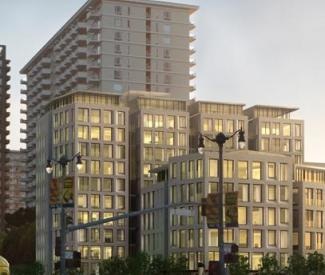
San Franciscans are going to get a chance to vote on the most expensive condos in the city’s history and the future of development on the waterfront as soon as this November.

Opponents of the 8 Washington project turned in 31,721 signatures to the Department of Elections July 19, and since only about 19,000 have to be valid, it’s a safe bet the referendum will qualify.

That means no work can be done on the development until after the election — and since the deadlines are tight and it’s possible the DOE won’t get its counting and verifying done in time for November, 2012, the whole thing could be on hold until 2013.

It’s going to be a bitter and expensive campaign: Developer Simon Snellgrove tried to keep this off the ballot — and, since he has about $200 million riding on the outcome, he’s going to spend what it takes to win. The Stop the Wall on the Waterfront folks aren’t going to be able to match Snellgrove by any stretch, but they’ve raised some money and they’ll be able to run an effective campaign.

And we can have an important public debate: Should the city continue to build housing for the very rich when it can’t keep up with its existing affordable-housing requirements? And what will happen to San Francisco if the people who work here can’t afford to live here and the people who live here don’t work here (or in many cases, don’t work at all because they’re stinking rich)?

Is $11 million in affordable housing money enough for a project that will make a $200 million profit?

Gonna be a good one.

Guardian Voices: There’s something happening here

25

There are distinct signs of the rebirth of a grassroots  balanced-growth  movement in San Francisco, and some small indication that it’s even beginning to shift, ever so slightly,  the politics of the Board of Supervisors.  This is very good news for the vast majority of San Franciscans.

First, a little history.

Land use and the approval of major development projects lie at the very heart of San Francisco politics. Developers and their allies (the building trades, contractors, bankers, architects, land-use lawyers, consultants, and  permit expeditors) are the primary source of political money for candidates for local office. Since the freeway and urban renewal fights of the 1960s, the very definition of  progressive  politics in San Francisco has been the attempt to build a political base of  residents to resist that money.  So-called moderates are simply the political extension of the pro-development lobby using its money to consolidate developer control of the public approval process.

In most cities, land-use issues — zoning, permits, urban design — is left to elites. Not so in San Francisco. Here, land use is talked about at neighborhood meetings and on street corners. The heart the reason is our compact size: 46.7 square miles, and the prohibition of filling in any more of the Bay to create new land. There is no vacant land in San Francisco. Any new major development almost always displaces something already there.  Development is a zero sum game, with winner and losers.  And the losers  leave town.

Land-use politics is about staying here — and that creates real interest among San Francisco residents.

The funding for major development in San Francisco has dramatically changed in the 45 years since the freeway and anti-urban-renewal fights of the mid-1960s. Back then, it was public sector money that fueled development. Yet, with that money, due to the actions of  progressive politicians like Phil and John Burton and George Moscone, came its own remedy: votes to not accept the public money for freeways (Moscone) and votes creating either laws that either prohibited displacement or funded legal assistance to the poor, empowering  them to stop government agencies through litigation (the Burtons at both the state and federal level).

Since the money for freeways and urban renewal was from the government, the focus of the early balanced growth  forces was on government itself, through massive lobbying campaigns to affect officials’ votes (the freeway fight), or the use of government-funded lawyers  to protect poor people’s  interests ( the WACO and TOOR lawsuits against redevelopment).

All of that changed starting in the 1970s, when Richard Nixon and later Ronald Reagan deregulated oversight of urban development by creating a system of  block grants and ended funding for legal assistance for the poor.  Large-scale development was effectively privatized, moving it from being designed, funded, and approved at public meetings by government officials following regulations to being designed and funded in private — and having a Kabuki-play-like public approval process with little real oversight. With the passage of Prop 13 in 1978, which limited the main source of local government revenue — property taxes — local governments became even more reliant on private developer money to create new revenue.

The popular response to this change in the development process in San Francisco was the emergence of a politics that relied on the old progressive-era reforms of the initiative, referendum, and recall. Through a series of initiatives, the community sought to impose regulations on the development process, culminating in the 1986 Proposition M, which actually limited the amount of high-rise office space developers could build, completely imposing the popular will over a supine set of local officials and politicians. Indeed, ten years earlier, again through the initiative processes, the very nature of the Board of Supervisors was changed from a developer-friendly at-large system to a district-election system. Hotly opposed by real estate and development interests, district elections in its brief three years of existence (repealed in the wake of the Moscone-Milk assassinations, even though they were both strong supporters of the system and their assassin opposed it…ironies abound in San Francisco politics) saw limits placed on condo conversions and the passage of rent control.

In each of these multi-year efforts, a citywide coalition was formed, including an ever-expanding set of communities and neighborhoods.  Common interests were defined that cut across race, class, and geography and issues of community (neighborhood) control and funding for essential services like Muni, affordable housing, childcare, and employment training were placed on the table – and developers had to address them if they wanted projects approved.

The point is that balanced growth came from community-based political forces, not elected officials.  Broad movements were built — in the end, encompassing elements of labor. These were victories won not by elected officials but by a popular movement.

In 2000, in the wake of  the dot-com bust, another balanced-growth measure, Prop. L, aimed at cutting then-Mayor Willie Brown’s power over development, was paired with the new district election system — and a broad coalition of forces including labor, community and neighborhood organizations won a major progressive victory.

Every candidate for supervisor who supported the balanced-growth measure won. Every candidate who opposed it and supported Brown lost. While Prop L narrowly lost, its policies and objectives were passed as ordinances by the new Board of Supervisors (banning live-work lofts, closing loopholes in the planning code, requiring neighborhood-based plans for the Mission, SOMA, and Potrero Hill).

But as is so often the case, the victory of 2000 led to the slow dissolution of the coalition that created it. Folks had won. Our supervisors could handle all these issues; we no longer had to. By the end of the term of the supervisors elected as the class of 2000, very little of that citywide coalition existed any more.

With the Great Recession of 2008, advances were rolled back.  Fees on local developers for affordable housing, childcare and transit were deferred in order to stimulate development.  A new era of “moderation” was announced by elected officials, led by Mayor Gavin Newsom. Desires to “attract and retain”  business saw new tax concessions in the name of “jobs” and a new willingness to use open space and public facilities for “private/public partnerships” was announced.

By 2012 any concept of balanced growth had been replaced with a new era of “cooperation” between city officials and developers.

Until recently, that is.

It should be clear to all that for the last four years, City Hall has been eager to approve any scheme presented by private developers — from the America’s Cup nonsense to highrise luxury condos on the waterfront. The siren song of the developers — more revenue if you approve our project — has been proven false again and again, as the revenue never really matches the real costs of these projects. The city’s essential services continue to shrink. Transit fees are too low to pay for the actual new costs of Muni. The affordable housing  fees are too little to actually meet the affordable housing needs of the new, poorly-paid workers employed in the retail and service industry that is always a part of these projects.

More and more of our parks and public open spaces are made available to private users, while few if any new public parks or open spaces are being created.  Indeed, the Department of Parks and Recreation often opposes new public parks — because it can’t maintain what it has.

So it is with fondness that these old eyes see the stirring of what appears to be the awakening political  giant of a new controlled-growth movement.

Here’s how it’s happening: The formation of a multi-neighborhood coalition to oppose fee increases at the Arboretum leads to a bigger coalition to oppose artificial turf  fields in western Golden Gate Park, which leads to an even-bigger coalition placing a policy statement against the privatization of Coit Tower on the ballot and winning.

These are important indications of a broad dissatisfaction with the endless private-public-partnership ( in which all the costs are public and all the profits are private) babble from Rec and Park.

The submission by a broad based coalition of more than 30,000 signatures to place the 8 Washington on the ballot — the first land-use referendum in decades — is an incredibly important achievement, and shows the popular sentiment against much of the City Hall happy talk about development on the waterfront.

But it was the unanimous ( yes, unanimous) vote by the Board of Supervisors last Tuesday to hold California Pacific Medical Center accountable for its constant shape shifting  on its massive project at Geary and Van Ness that shows, perhaps, the outline of the potential future of the balanced-growth movement in San Francisco.

Six supervisors stated their willingness to turn down the environmental impact report on the project unless Sutter/CPMC committed to a project that addressed not only the promise to keep St. Luke’s open for at least 20 years but also hired more San Franciscans, corrected the traffic nightmare predicted for Geary and Van Ness, provided more affordable housing for its own low-income new workforce, and committed  to cap the city’s health care costs as a result of CPMC’s market control the new project would create.

There is always the possibility that the two-week delay will go nowhere, but this kind of talk from this Board of Supervisors to a huge private developer simply has not occurred in the recent past.  No one from Room 200 showed up to twist supervisors’ arms in favor of Sutter.  Sutter was on its own and got rolled.

The coalition that fought Sutter to a standstill at the board, that defined the inadequacies of  the project listed by the supervisors, was a multi-neighborhood, multi-issues organization composed of community, neighborhoods, and labor. Middle class “Baja” Pacific Heights residents and low income seniors from Bernal Heights, non-profit affordable housing advocates and trade unionists, tenant organizers from the Tenderloin and Sierra Club members from the Haight-Ashbury; single moms from the Bayview and Filipino youth from the South of Market.

It was a San Francisco coalition, one that has been working together for nearly three years, blending issues, making concessions to one another and staying together.  A group like this with a set of demands such as these has not prevailed at City Hall for nearly a decade.  It still may not, indeed the chances are slim that its full demands will be achieved.

But this group moved the Board of Supervisors in a way not seen in years.  If the folks mobilized about our parks and the folks mobilized about our waterfront and the folks mobilized about CPMC get together, we have something very big happening. And it might be just in time to make a real difference.
It reminds me of an old saying: “ The people alone are the makers of world history.”

Oh, please

8

A “lewd act?” Isn’t that what you’re supposed to do in porn theaters? Why else would you go?

And why are the LA police conducting routine inspections of wank-houses and arresting people who wank?

Your tax dollars at work.


The future of St. Luke’s Hospital

8

The CPMC hospital-rebuild deal is on life support — and some say, to use the harsh medical code, it’s CTD. Stands for Circling the Drain.

IF the arrogant leadership at CPMC and Sutter Health comes back in two weeks with a radically improved plan, and IF community groups get behind it, and IF the supervisors can trust Sutter enought to even consider it, then there’s a chance this creature can be electroshocked back into the land of the living. But that’s a lot of ifs. It’s entirely possible at this point that the city and CPMC are so far away from agreement that the billion-dollar proposal for a fancy spankin new hospital on Van Ness will never happen.

We’re all hopeful. As Emily Lee, an organizer with the Chinese Progressive Association, put it, “we’re hearing a very different tone than they took before.” CPMC is in something of a bind: Its existing main hospital on California St. doesn’t meet state seismic standards, and has to be replaced or upgraded by 2015. And this isn’t a typical business that can just pack up and move out of the city — CPMC would lose far too many patients and too much money. So the crew there has to do business with San Francisco.

But it also has leverage over the city. Everyone in San Francisco agrees that St. Luke’s Hospital in the Mission is a critical part of the city’s health-care infrastucture. Everyone agrees that it has to remain open as a full-service hospital with emergency and acute-care facilities. And everyone agrees that it also has to be rebuilt (at a cost of about $250 million) and that it loses money every year.

Oh, and CPMC owns it. And threatens to close it down if the city won’t move on the Van Ness palace.

 So Sup. David Campos has authored a resolution calling on city officials to start looking into Plan B: What do we do to save St. Luke’s if CPMC won’t put up the money to rebuild and operate it?

It’s a tough question. CPMC, owned by Sutter Health, is a private nonprofit. The city could, in theory, seize the facility under eminent domain, and float a bond to pay for the rebuild and come up with $25 million a year in General Fund money to cover its operating loses, but that seems a stretch, particularly since the taxpayers have already approved a much bigger bond to rebuild SF General.

There are other health-care providers in the city, though — and some argue that St. Luke’s is only a money-loser because CPMC keeps shrinking its operations. “It’s become too small to survive without a subsidy,” Chuck Idelson, from the California Nurses Association, told me. And in theory, Dignity Health or even Kaiser could decide it was worth the investment to assume operations, particularly if the city joined in some sort of partnership to help. UCSF runs a big ol’ hospital on Parnassus Heights, and already helps staff SF General with attending physicians and residents; maybe St. Luke’s could be integrated into the university’s medical training program.

“We need to explore what it would be like if St. Luke’s was operated by someone who cared about the hospital for itself,” Lee said. Unlike CPMC, which seems to care about it largely as a bargaining chip.

Joanne Jung, also with CNA, told me that “there has to be a St. Luke’s. It’s just too important to the city.” And if CPMC doesn’t want to keep it going, “clearly there has to be another operator., someone who has some decency and respect for the community St. Luke’s serves.”

Of course, nobody can force CPMC to sell the hospital or give it to another (competing) provider (although I suspect CPMC would be glad to get rid of it) — and nobody can force Dignity or Kaiser to take it on.

The wildest idea I’ve heard is for the city to use bond money for the rebuild — then let the health-care unions run it. A hospital run by hospital workers. Hospitals used to be run by doctors. But Idelson says CNA doesn’t have anywhere near the kind of money that would be needed to upgrade and expand services — and managing a hospital is a huge undertaking.

Chinese Hospital has its own nonprofit; maybe one gets created for St. Luke’s.

But something has to happen, and we have to start thinking about it now. Otherwise, CPMC can continue to hold the city hostage.


Lopez steals the show as the city’s case against Mirkarimi falters

117

This afternoon’s must-watch television is on the city’s SFGTV starting at 5pm when Venezuelan actress Eliana Lopez returns to the witness stand as the Ethics Commission considers Mayor Ed Lee’s effort to remove her husband, Sheriff Ross Mirkarimi, from office on official misconduct charges. Because after last night’s hearings, the city’s case has been severely weakened, making the standoff between a charming Lopez and flailing Deputy City Attorney Peter Keith even more pivotal.

For those with the patience and stomach to sit through these sordid and often tedious hearings – including a press gallery that has packed each hearing – there is a growing sense that the city is in trouble and getting desperate, largely because Keith and Deputy City Attorney Sherri Kaiser have been unable to support their speculative central charges, nonetheless grinding away at them, thus highlighting that lack of support.

That seemed especially true last night during Kaiser’s disastrous cross-examination of Mirkarimi campaign manager Linnette Peralta Haynes, a figure who was central to the city’s allegation that Mirkarimi dissuaded witnesses and sought to thwart a police investigation into a Dec. 31 incident in which he grabbed Lopez’s arm and left a bruise.

Haynes had communicated with Lopez and Mirkarimi via phone and text message throughout the day on Jan. 4, when neighbor and Lopez confidante Ivory Madison reported the incident to police, even briefly speaking to Madison that day when Lopez suddenly handed the phone to her. The city’s apparent theory was that Haynes acted as Mirkarimi’s agent in trying to cover up the incident and do damage control, including coaching Lopez on what to say to Madison and another neighbor, Callie Williams, as Lopez desperately tried to prevent the situation from spinning out of control.

But the city has never had any evidence to support its theory, and this was its first chance to question Haynes, who had been at the end of a high-risk pregnancy and resisted cooperating with the investigation, which seemed to only feed the city’s conviction that she had incriminating information that Kaiser would be able to pry loose on the witness stand.

Yet that didn’t happen, despite Kaiser and commissioners grilling Haynes for more than three hours, twice as long as she had told the commission that she would need. Whereas Haynes seemed calm and consistent as she described giving Lopez emotional support and probing to ensure that she wasn’t in danger, Kaiser fumbled through technical difficulties and maintained an accusatory and belittling tone even as the answers she was receiving seemed to destroy her line of questioning.

“I think the house of cards that mayor has been trying to establish about witness dissuasion was demolished by Linnette Peralta Haynes, who was absolutely credible,” Mirkarimi attorney Shepherd Kopp told reporters after the hearing.

But the star of last night’s show was Lopez, who had just returned from Venezuela, where she and her son have been staying with family since March because Lee stripped Mirkarimi of his salary and because the couple is barred from seeing one another by a restraining order they didn’t seek, but which has been extended by these proceedings.

Keith’s first line of questioning tried to use that separation against them, implying that Lopez was supporting Mirkarimi – which she has done since the beginning, claiming that he’s not abusive and that they are working on their problems – only so that he would continue to sign off in family court on his son remaining in Venezuela.

“Ms. Lopez has a thriving life in Venezuela and she wouldn’t want to do anything to upset the sheriff,” Keith proffered to a skeptical commission to justify his line of questioning about Lopez, who begins a 20-day film shoot on Monday.

But he seemed to score few points in that realm as Lopez – who was alternately resolute and playfully charming, sparking some of the only moments of levity and laughter during hearings that have dragged on for months – laid the blame for her family plight on Madison (“my nutty neighbor,” she Lopez once described her) and the investigators and prosecutors that she believes have misinterpreted her words and intentions and blown the incident out of proportion.

Keith also tried to find support for another key allegation against Mirkarimi – that he claimed to be a “powerful man” who could use his office to keep custody of their son in the event of a divorce – but he also seemed to hit a brick wall there. Based on statements by Madison – most of whose hyperbolic and unsupported written testimony has been disallowed by the commission – Keith tried to tie Lopez’s custody concerns to his status as sheriff, driving at that point with many questions.

But Lopez said her concern was that California family courts would favor Mirkarimi simply because he’s an American and she’s from a country that has bad relations with the US. “In this country, I think he’s in a better position than me,” she said. After he again tried to make it about his official position, she said, “As a sheriff, no; as an American, yes.”

It was that concern over custody that prompted Lopez to consult with Madison and make a tearful video of the bruise on her arm, something Lopez said Madison coached her through and promised would remain confidential, something Lopez believed because Madison had attended law school and presented herself as a lawyer.

When Keith confronted Lopez with a prior written statement that she was worried about Mirkarimi’s power as “an American and politician,” Lopez said that it was Madison who planted that idea in her head, not Mirkarimi. “After our conversation, she made me feel even more scared. She said it was an all boys network and they would protect themselves so you need evidence,” Lopez said.

But she denied the claim by the city and Madison that it was Mirkarimi who sought to improperly use his position, a key element of removing him for official misconduct. Lopez said her conclusions about Mirkarimi’s advantages in a potential custody battle were the result of conversation that happened much earlier.

“That conversation happened in March 2011. He wasn’t even thinking about running for sheriff at that point,” she said, denying that Mirkarimi ever raised his official position in their custody conversations and claiming the concerns about his power were her own. “He never said that, that was my conclusion of our conversations. He never said, ‘I am a powerful man.’”

Because the interrogation of Haynes dragged on so long, it was nearly 9pm when Lopez took the stand, and she only got through about 40 minutes of testimony before the hearing adjourned. Keith estimated that she would be on the stand for about two and a half hours – and so far, the city’s attorneys have underestimated how long they would question each witness – so there’s probably much more to come this afternoon.

Governor signs high-speed rail funding bill at Transbay Terminal

8

The mood was jubilant at the Transbay Terminal construction site in downtown San Francisco this afternoon as political leaders gathered to watch Gov. Jerry Brown sign Senate Bill 1029, the hard-won recent authorization for selling the first $4.7 billion in state bonds to fund the California High-Speed Rail Project.

That money – part of the $10 billion that voters approved for the project in 2008 – and $7.9 billion in federal matching funds will go mostly to build the first high-speed rail section linking Merced to the San Fernando Valley. But it also includes money for related projects in the Bay Area, including $820 million to electrify and improve the Caltrain tracks that the project will share, $145 million for BART replacement cars and track improvements, and $61 million for SF’s Central Subway project.

The fact that Brown chose Transbay Terminal – the northern terminus for trains expected to travel at up to 220 mph between there and Los Angeles’ Union Station in less than three hours by the year 2027 – was an indicator of his focus on the long-term benefits of the project rather than its immediate impacts, a theme he emphasized in his speech.

“What this is about is investing in the future,” he said, pointing to the high-rises around him and noting how they were also the products of people with long-term vision. “The buildings that are up here didn’t come out of fear, they came from bold risk-taking.”

High-speed rail has been under increasing criticism from conservatives who complain about its cost (the total project cost is estimated at about $68 billion) and SB 1029 squeaked through the Legislation, with not a vote to spare in the Senate, where President Pro Tem Darrell Steinberg and other political leaders had to twist arms to get it done.

“The people know we can cut, the people know we can patch and mend, but the skeptics wonder whether we have the will to build,” Steinberg said at the event, which he said answered that question. “This is about economic vitality.”

Mayor Ed Lee praised state leaders for moving the project forward and said, “This project means more than just celebrating a great transit system, which high-speed rail is,” noting that the overall Transbay Terminal project will also include about 40,000 new residential units being built on a dozen surrounding buildings, including what will be the tallest on the West Coast.

But that project has its critics, including Quentin Kopp, the retired judge and former legislator who sponsored the bill that created the California High-Speed Rail Project and was the first chair of the California High-Speed Rail Authority. He has derided Transbay Terminal as simply a “real estate deal,” noting that the tunnel from there to the Caltrain station is too expensive, still unfunded, and shouldn’t be built.

Asked about that $1 billion-plus funding shortfall, Brown replied, “Let’s see the first phase, then the second phase, then we’ll figure out how to get it here.” He criticized the “NIMBYs and fearful men” and emphasized the long view of the project: “I signed my first high-speed rail bill 30 years ago. It’s taken some time to get this going.”

Several speakers cast the project as an obligation to future generations. Deputy US Secretary of Transportation John D. Porcari said most of the country’s most important infrastructure we enjoy today was built by past generations, and he asked, “Are we doing right by the next generation? Are we paying it forward?”

Dicks on the cover

29

So SFist likes our cover this week. I haven’t heard any complaints yet, but we’ll get some. And they’ll be utterly predictable: Why are there penises on the front page, right out there (as my mother used to say) in front of God and everyone?

Here’s the thing: I’ve been doing this a long time, and we’ve put a lot of naked people on the cover (nude beaches, sex issue, random stories about public nakedness) — and when it’s just women, nobody peeps. Full frontal, whatever — it seems in our society that it’s perfectly okay to show the unclothed female body. But not a dick. God, not a dick.

I’ve often wondered why a movie that shows tits and (female) asses can get away with a PG-13 rating and even full-frontal female, and lots of it, only gets you an R. But a single glimpse of a male organ, even in its unaroused state, automatically turns a movie into NC-17.

What, are penises really that scary? Or are most of the censors guys who have, you know, issues?’

>>See the full cover in our Nude Beaches Guide 2012

High noon for CPMC

7

CPMC, the health-care giant owned by Sutter Health, has two weeks to convince some very reluctant city officials that its plan to build a flashy new hospital on Van Ness Avenue is at least marginally acceptable.

It might not be possible.

CPMC and Mayor Ed Lee had a deal back in June — a bad deal for the city, but one that the mayor was ready to push. Then internal documents showed that the hospital folks weren’t telling the truth and were looking for ways to shut down St. Luke’s, which provides care to the underserved population in the southeast part of the city.

The actual deal is in some kind of suspension now, since CPMC and the mayor aren’t anywhere near close to agreement — but the environmental impact report on the development came up on appeal to the supervisors, and it was clear that there weren’t enough votes to approve the document. Rejecting it would have set the project back at least 18 months, probably two years — and that would spell doom. CPMC is under a state mandate to upgrade the seismic safety of its facilities by 2015, and this Van Ness super-hospital is supposed to replace that aging California St. campus, which doesn’t meet state codes.

At the end of a seven-hour hearing, the supes agreed to continue the matter for two weeks after Michael Duncheon, Sutter’s general counsel, promised to maybe, sorta, kinda try to reopen talks with the city:

“In the intervening two weeks, CPMC commits to work with the mayor’s office and with you. … CPMC is ready to talk about a structure for future discussions as we all put our heads together.”

I other words, we’re ready to consider the shape of the bargaining table.

That doesn’t go very far, particularly since CEO Warren Browner has been a complete asshole throughout this process. He acts as if he’s entitled to do anything he wants with this project and he dismisses community benefits as nonsense. Oh, and guess what? He’s not even around right now. He’s on vacation.

Sup. Jane Kim made a good point in her remarks:

“The fundamental issue in certifying this EIR, in my humble opinion, is the elephant in the room, which is that there is no proposed project.  The only sponsor of this project, has himself stated that there is currently no project without greater assurance and agreement to stronger language from project sponsor on a commitment to the operation of St. Luke’s.”

And she said that if the matter hadn’t been continued, she would have voted not to certify the EIR. Sup. David Campos told me that he agreed: “We sent a very clear message that we can kill this thing if we want to,” he said.

So now we wait two weeks to see if Browner and his crew will come to their senses. “There’s hope,” Campos said, “but who knows?” And if CPMC doesn’t come back very quickly with a much-better plan, it will be time to start thinking about other options for saving St. Luke’s.

Feeling the heat, Olague kills RCV repeal for now

74

After reviving a controversial effort to repeal the city’s ranked-choice voting (RCV) system and paying a political price for her shifting stands on the issue, Sup. Christina Olague today made the motion to send all three competing reform proposals back to the Board of Supervisors Rules Committee, effectively killing efforts to place them on the November ballot.

“The public would benefit from more public discussion on the issue,” Olague said, adding that she doesn’t think the measures should be on the crowded fall ballot competing with other important priorities.

Olague had been torn between supporting the desires of Mayor Ed Lee (who appointed her to the seat) and downtown interests to repeal RCV and those of her longtime allies in the progressive community who sought to defend it from total repeal – and she hadn’t been returning calls or indicating where she now stood before today’s Board of Supervisors meeting.

But after hearing more than 30 minutes of impassioned public comments on both sides of the issue, she made the motion to end the controversy for now, which was unanimously approved by the board. Olague also addressed the heat she felt indirectly, saying RCV “should not be a litmus test for whether someone is progressive” and “sadly, the discussion had degenerated to be about personalities.”

Her colleagues seemed happy to be done with this fight for now as well. Sup. Mark Farrell, who sponsored the measure to repeal RCV for all citywide offices, said it would be a “huge mistake” to have competing voting system measures on the fall ballot. Olague had previously offered an alternative to repeal RCV for just the mayor’s race, like Farrell’s measure using a September primary election and November runoff. Board President David Chiu responded to the RCV repeal effort by proposing another alternative, that one using RCV in the November election but having a December runoff between the top two mayoral finishers.

Chiu said he was happy to delay his proposal, saying, “I have thought the system we have is working quite well.”

Black Young Democrats rally against stop and frisk

14

A group organized by the San Francisco Black Young Democrats rallied at City Hall today. Their message: no to stop and frisk.

Members of the group, as well as the ACLU and the Asian Law Caucus, said the policy would violate the civil rights of San Franciscans.

Supervisors Malia Cohen, along with Avalos, Campos, and Mar also attended the rally and expressed their support. They co-sponsored a non-binding resolution, introduced by Cohen,  that condemned the idea of implementing stop and frisk in San Francisco.

Mayor Ed Lee said he was considering implementing the controversial policy a few weeks ago.

Under a stop and frisk policy, police have the leeway to stop and search people that they consider suspicious. On average, 85 percent of those stopped in New York City are young African American and Latino men.

Opponents say racial profiling is inevitably involved and that, for people who may be carrying minor contraband but no dangerous weapons, this racial profiling leads to selective enforcement of laws. About 87 percent of those stopped in New York were completely innocent, according to numbers compiled by the New York Civil Liberties Union.

Lee said he suggested the idea after a spike of gun violence in June. But it has generated a backlash, and at today’s rally about 75 showed up to present a petition signed by more than 2,000 asking the mayor not to implement the policy.

Joaquin Torres, director of that office, accepted it on Lee’s behalf.

Lee himself didn’t engage with the protesters, but he did issue a statement not an hour after they left City Hall “clarifying his position” on stop and frisk.

“I want to be clear that I have not considered implementing a policy in San Francisco that would violate anyone’s constitutional rights or that would result in racial profiling,” the statement reads.

Ellington said the statement was not enough. “We want Mayor Ed Lee to say that he will not implement stop and frisk in San Francisco, nor any policies that are like stop and frisk. No policies that infringe upon our civil liberties,” Ellington told the Guardian.

“These are predatory policing practices that we don’t want in our city,” he said.

Developer hires crew to block signature gathering

82

The developer of 8 Washington has taken an unusual if not unprecedented step to prevent a referendum on his waterfront condo project from succeeding: He’s hired a crew of people to surround signature-gatherers and try to drive away anyone who might sign a petition to put the project before voters.

[UPDATE: Sup. Sean Elsbernd called to let me know that this isn’t unprecedented — he says opponents of his Muni reform initiative, including bus drivers, also tried to discourage people from signing petitions. ]

The pro-condo team, whose members were paid a reported $20 an hour, were visible July 14, 15 and 16 at Fort Mason Center, at the Safeway on Church and Market, at Dolores Park, at Duboce Park and elsewhere in the city, according to accounts from signature gatherers and from Guardian staffers.

The team, usually made up of several people, typically surrounds the signature gatherer, waves signs talking about jobs and parks, and loudly seeks to disuade passers-by from signing the referendum petition.

There is, of course, nothing illegal about two sides of a political debate expressing their First Amendment rights on the sidewalk. Some of the people gathering signatures for the referendum are getting paid, too.

But I can’t think of another time when crews were hired to convince people not to sign a petition.

It’s gotten serious enough the Simon Snellgrove, the developer behind 8 Washington, was out himself. He appeared in Dolores Park after the Mime Troupe performance, where Brad Paul, a foe of the project, saw him debate with a signature gatherer who was leaving the area. He was also at Fort Mason, where, according to one account, a person gathering signatures confronted him and complained that his workers were harassing her.

“That’s their job,” Snellgrove reportedly said.

I couldn’t reach Snellgrove at his office. But Jon Golinger, the campaign manager for the stop 8 Washington effort, said the tactic was a sign of desperation. “They are worried about a public vote on this,” Golinger told me.


Guest opinion: RCV is good for progressives

52

Since San Francisco began using ranked choice voting in 2004 and public financing of campaigns in 2002, the city has been a leader in the types of political reform badly needed at state and national levels. People of color today have an unprecedented degree of representation and progressives are a dominant presence in city government. Elections are being decided in November, when turnout usually is highest, and the combination of public financing and deciding races in one election minimizes the impact of independent expenditures and Super PACs .

Yet progressive stalwart Calvin Welch, whose work we have long admired, recently authored a Bay Guardian oped against RCV. His charges against RCV are as wrong today as they were when he first made them 10 years ago when he opposed RCV on the ballot. And given the horrible Supreme Court ruling known as Citizens United, which has opened the floodgates on corporate campaign spending and did not exist when San Francisco last used separate runoff elections, returning to two elections is a direct threat to the future of San Francisco progressivism. 

The most serious of his claims is that RCV favors “moderate to conservative candidates” because “left-liberals do very well in run-off elections” since “in low-turnout elections, left-liberals vote more heavily than do conservatives.” He cites the 2000 supervisorial races and 2001 city attorney race, in which “the more liberal candidate for City Attorney, Dennis Herrera” bested “Chamber of Commerce functionary Jim Lazarus.” He asserts “that’s a verifiable San Francisco political fact.”

But San Francisco State University professor Richard DeLeon, author of the acclaimed book of Left Coast City about San Francisco politics, debunked that claim with real election data in his 2002 paper, “Do December runoffs help or hurt progressives?”

He found that in the November 2001 city attorney election, for every 100 voters who turned out in progressive precincts, 107 turned out in conservative precincts. But in the December 2001 runoff, for every 100 voters who turned out in the progressive precincts, 126 turned out in the conservative precincts, an 18 percent increase. Wrote DeLeon, “This dramatic increase in the ratio of conservative to progressive voters occurred despite (or perhaps because of) the 44 percent drop in voter turnout citywide between November and December.”

He continued: “If San Francisco had used [ranked choice voting] in November, Herrera most likely would have won by an even greater margin. In November, the liberal/progressive candidates for city attorney won a combined 60 percent of the vote…In the December runoff, however, Herrera won with only 52 percent of the vote. Thus, due to the proportionally greater decline in progressive voter turnout, Herrera probably lost approximately 8 percent of his potential vote, making the election close.”

DeLeon also rebutted Welch’s citation of the supervisorial races in 2000 as ones that demonstrated a progressive advantage in low-turnout runoffs, writing:

 “Progressive success that year was NOT due solely to a one-time surge in turnout among progressive voters…Many powerful forces converged in that election, not least the anti-Willie Brown backlash, the cresting of the dot-com invasion, and the return to district elections, which forced despised incumbents to stand trial before angry neighborhood electorates.”

DeLeon concluded:  “Based on the evidence presented, I conclude that December runoffs have hurt progressive voters, candidates and causes in the past and (absent same-day runoffs) will continue to do so in the future, even under district elections.”The Bay Guardian cited Professor DeLeon’s study in March 2002 (see  and scroll down to “A is OK”), and Mr. Welch is ignoring these results today just as he did then.

Certainly progressives haven’t won 100% of RCV elections — should any political perspective? — but they have done well nonetheless, electing  Bay Guardian-endorsed candidates like John Avalos, David Campos, Eric Mar, David Chiu and Ross Mirkarimi, despite those candidates not being incumbents. Other progressive incumbents first elected before RCV elections, like Aaron Peskin, Chris Daly, and others, were re-elected under RCV. And Mirkarimi was elected citywide in the sheriff’s race. On  the flip side, progressive Eileen Hansen most certainly would have beaten moderate Bevan Dufty in a November RCV contest for D8 supervisor; instead she lost in December after finishing first in November.

What’s actually at stake here is how we define progressivism. Since we began using RCV in 2004, 8 of the eleven members of the Board of Supervisors come from communities of color, a DOUBLING from pre-RCV days. At the citywide level, all seven officials elected by RCV come from communities of color. So out of the 18 elected officials in San Francisco, a whopping 15 out of 18 come from communities of color, the highest percentage for a major city in the United States.

The proposed repeal amendment would launch low-turnout September elections in San Francisco. In fact, the December 2001 city attorney race in which Welch cites as exemplary had a turnout of 15 percent of registered voters, the lowest in San Francisco’s history. New York City’s last September mayoral primary had a turnout of 11.4 percent. In Charlotte NC (population 750,000, similar to San Francisco) its last mayoral primary had a turnout of only 4.3 percent. Cincinnati had a September turnout of 15 percent, and Boston and Baltimore had September mayoral primaries with turnout in the low 20s. Many cities in Minnesota have September primaries with extremely low turnout; the two largest cities, Minneapolis and St. Paul, have switched to RCV largely to eliminate September primaries.

Research has demonstrated that voters in low turnout elections are disproportionately more conservative, whiter, older, and more affluent; those who don’t participate are people of color, young people, poor people — and progressives. So having a mayoral race in a low turnout September election has real consequences not only on voter turnout but on the demographics of the electorate.

While we share the priorities of Welch’s progressive economics, we believe progressivism must be more inclusive, especially if it wants to enjoy the support of these burgeoning demographics. While disappointed by the lack of progressive achievements of President Barack Obama, we still view the election of the first African American as president as a major progressive achievement.

Finally, we would assert that the ranked ballots used in RCV have been important for San Francisco democracy. Just look at the recent “top two” primary on June 5, and you can see the defects of the methods proposed to replace RCV. In many races across the state – including in the Marin County congressional race where progressive Democrat Norman Solomon lost by 0.2 percent — too many spoiler candidates split the field and candidates got into the top two with extremely low vote percentages, some as low as 15 percent of the vote. In one race where there was a Latino majority and a solid Democratic district, the Democrats ran so many candidates that the Democratic vote split and two white Republicans made the runoff with low vote percentages.

San Francisco risks such elections if we get rid of RCV. Think of the last mayoral election, and the choice for Asian voters if we used single-shot plurality voting instead of RCV. Which Asian candidate would they vote for with their single-shot vote — Lee, Chiu, Yee, Ting, Adachi? What kind of vote split might have occurred? And to avoid that, what kind of backroom dealing would have occurred BEFORE the election to keep that many candidates out of the race to prevent that vote-splitting?  We saw such vote splitting in the 2003 mayoral election as well, with various progressive candidates running and splitting the progressive vote. Going back to plurality elections would be damaging for constituencies that often run multiple candidates, such as the Asian and progressive communities.

RCV has been good for San Francisco, and we should keep it. For those who would like to see a runoff in mayoral races, Board president David Chiu has proposed a compromise that, while increasing the costs of running for mayor, is far better than the repeal measure for September elections. Chiu’s proposal would keep RCV to elect the mayor, but with a December runoff if no mayoral candidate won a majority of first rankings in November. The 2011 mayoral election would have gone to a runoff, with John Avalos as Ed Lee’s opponent.

San Francisco progressives should embrace a view of progressivism that is inclusive, promotes higher turnout and is based on a politics that is looking forward instead of backward to some golden age that never existed. Ranked choice voting and public financing are two parts of the puzzle for ensuring a vibrant progressivism.

Steven Hill led the campaign for ranked choice voting in San Francisco, and Matt Gonzalez was President of the Board of Supervisors and legislative author of the RCV charter amendment. See www.SFBetterElections.org for more information


Gonzalez withdraws his endorsement of Olague

57

Matt Gonzalez – the attorney and former president of the Board of Supervisors whose 2003 run for mayor galvanized the city’s progressive movement – has withdrawn his endorsement of Sup. Christina Olague for his old District 5 supervisorial seat, citing her positions on the 8 Washington project and replacing ranked-choice (RCV) voting with a September mayoral primary election.

It is perhaps the biggest political blow that Olague has suffered since being appointed to her first elective office by Mayor Ed Lee in January, and a sign that she may be siding more solidly with Lee and his pro-development allies than with the progressive political community she has long identified with – and that could complicate her race in one of the city’s most progressive districts.

Gonzalez, who helped launch Olague’s political career by appointing her to the Planning Commission in 2004, confirmed his decision and the reasons for it, but he told the Guardian that he didn’t want to make a formal public statement yet. That could come later in the week, possibly coupled with a new endorsement in the race.

But he did say that he’s been frustrated with Olague’s actions on both 8 Washington – a housing project for the super-rich on the Embarcadero – and with her recent antics on RCV. In both cases, it wasn’t just the votes, but the way they were made that have raised doubts about Olague with Gonzalez and other progressives.

Olague and Sup. Jane Kim (another former Gonzalez protege who has disappointed many of her one-time progressive supporters on several high-profile issues) not only voted for the 8 Washington project, but also for a series of amendments that made the already lucrative project even more profitable for the developers and costly to the city.

On RCV, as I reported on Friday, Olague surprised progressives by giving new life to efforts by the most conservative supervisors to repeal the system, then has made a shifting series of statements and pledges on the issue, in the end supporting a system that will repeal RCV only for the mayor and create a September election.

The fear is that election would be extremely low turnout, and Lee could win it outright with at least 65 percent of the vote and avoid the normal November election, and Olague has been unwilling to fully explain her position or address concerns that she is simply doing Lee’s bidding. Olague hasn’t returned our calls on that issue or for her reaction to Gonzalez’s decision to withdraw his endorsement.

Morning Muni shutdown commemorates death of Kenneth Harding, Jr.

34

More than 50 protesters disrupted Muni service for about an hour this morning before peacefully leaving to march down Market, in commemoration of the death of Kenneth Harding, Jr., on July 16, 2011.

After gathering at 14th and Market, the group marched to the intersection of Duboce and Church, where Muni trains headed outbound exit the tunnel. Soon, at least four outbound trains and two inbound trains were backed up.

Buses replaced their service.

Some passengers were angered, while most took literature from protesters on their way to catch another train. A few joined in the picket line. Drivers, meanwhile, were mostly nonchalant. “I’m just enjoying the show,” said one driver.

“They shoot us down, we shut it down,” protesters chanted. They also mentioned the names of Raheim Brown Jr., Derrick Gaines, Oscar Grant, and other young African American Bay Area men killed by police.

As a police line closed in, one protester shouted at cops, “you are all complicit!” The group left the intersection around 7:30 without much confrontation with police.

Denika Chatman, Harding’s mother, has been organizing a movement demanding that the police who shot him be charged with murder since his death.

Harding, 19, was stopped by police last year as part of a ticket check while exiting the T train at third and Palou. He ran, and police shot at him. He fell and bled for about thirty minutes, while police surrounded him, before he was taken to a hospital.

Police say Harding pulled a gun out as he ran and shot at them, and that the fatal bullet in his neck was his own. They say that, since the bullet that killed him was from a .380-caliber handgun and police carry .40 caliber guns, Harding shot himself. No gun was found on Harding, but police acquired a gun a week after the shooting that they believe Harding used.

Police have pointed to a video which they say shows a man picking up the gun at the scene, while Harding’s family members and supporters say the object is a cell phone.

By no accounts did police know Harding’s identity before shooting.

Officers Richard Hastings and Matthew Lopez have recieved medals of valor for their handling of the incident.

Dorian Maxwell, a whistleblower former Muni driver who refused to operate his bus and made noise about unsafe conditions on Muni, attended the protest as well. He said Labor Black and Brown, one of the organizations who planned the protest, supported him after he risked his job.

“Your life is in danger if you’re riding the Muni,” Maxwell told the crowd, pointing out what he identified as partially flat tires on a nearby 22 Fillmore.

“We wanted to combine the brutality of the police with the workers getting victimized,” said protest organizer Charles Du Bois.

Chatman has also connected her demonstrations to the movement for free Muni tickets for youth.

“I wanted to organize a Muni shutdown, and it just started growing from there,” Chatman said. It was in honor of Kenny, and to unite the community as well. Because a lot of them witness these horrible murders and I wanted to do something to give back to a community that has supported me since this happened.”

After marching down Market stopping traffic every few blocks, the group ended with a speak-out in front of SFMTA headquarters. There were no arrests. A vigil is planned for 5pm at Third and Palou, in Mendell Plaza, the spot when Harding died. Supporters call the plaza Kenny’s Plaza in Harding’s honor.

Guardian Voices: The case against RCV

88

“The Cure for the Ills of Democracy is More Democracy”
                                 — old Progressive Party slogan

My friends here at the Guardian have elevated support for ranked choice voting to a defining requirement for being considered a progressive. This is not only historically incorrect,  it is actually politically silly. There are many progressive reasons to oppose RCV — not the least of which is the undeniable fact that it overwhelmingly favors incumbents, has failed to deliver on the 2002 ballot promises, and now poses real threats to progressive political advancement in key supervisor districts. 

First, a little history. 

The two greatest national political victorys  of the Progressive Era were the 1913 adoption of the 17th Amendment of the US Constitution, which required direct elections of US Senators, and, at the tail end of the era,  the 1920 passage of the 19th Amendment, which gave women the right to vote. Both expanded people power in elections, curing the ills of democracy by more democracy.

Historically, to be a Progressive is to favor MORE elections, MORE political opportunities for more people at the local level.  How can it be that it is now progressive to favor FEWER elections at the local level?

In the March, 2002 Voters Handbook, ballot arguments against RCV were authored by several progressive activists (Sue Bierman, Jane Morrison, David Looman, Larry Griffin, David Spiro and me, to name a few). We argued then that replacing local elections with a mathematical formula that few understand and even fewer could explain was political foolishness. While were outvoted, I think we were right a decade ago.

Left-liberals do very well in run-off elections in San Francisco — from 1975, when Moscone beat Bargbagalata in a December run-off, to the run-off victory of the more liberal candidate for City Attorney, Dennis Herrera, over Chamber of Commerce functionary Jim Lazarus in 2001. The reason is that in low-turnout elections, left-liberals vote more heavily that do conservatives, and that’s a verifiable San Francisco political fact.

But it was the 2000  supervisors races that showed just how well left-liberal forces did in run-off elections at the district level: Jake McGoldrick, Aaron Peskin, Matt Gonzales, Chris Daly, Sophie Maxwell, and Gerardo Sandoval, the very heart of the progressive majority, were elected in December run-off elections.

In 2002, three arguments were made for RCV: first, that it would reduce negative campaigning; second, that it would increase turnout in local elections and third, it would reduce costs by eliminating the run off election. Of the three  arguments only the last has been met, a dubious achievement in that even more such savings could be made by eliminating ALL elections.

Can anyone actually claim that last year’s mayoral election, the first contested one conducted under RCV, was anything but a negative free-for-all? Or, how about the 2010 D6 race between Debra Walker and Jane Kim, or the D8 race between Mandelman and Weiner? Or the 2002 D4 Ron Dudum – Ed Jew race? RCV did not end negative campaigns.

How about turnout?  Last year’s mayoral race had the lowest turnout in a contested race for mayor in the modern history of San Francisco. Every supervisorial race in 2008 had a lower turnout than  the citywide average. Turnout in 2010 was below citywide levels in the RCV supervisor races in D4, D6 and D10.

No, the record is clear RCV has not resulted in higher turnout, either.

RCV creates a political system in which candidates make deals with other candidates, behind closed doors, before the voters vote.  Runoff elections result in a system in which voters make deals with candidates AFTER they vote in the polling booth. What’s wrong with giving voters two choices in two elections instead of three choices in one election? Oh, that’s right, we save money by giving voters fewer elections.

Left-liberals tend to field fewer candidates for races than do moderates and conservatives because, especially in San Francisco, left-liberals simply don’t know how to raise political money, while moderates and conservatives do. RCV elections reward multiple candidates of the same political persuasion as these candidate can agree to appeal to their similar voters to vote for them as a block.  Thus, RCV will always favor, in an open contest in which there is no incumbent, moderate to conservative candidates because there are  usually more of them running.

That’s what happened to Avalos in last years mayoral election: he picked up nothing as the moderate candidates’ second and third votes went to the moderate Lee. The same happened in D10 two years ago: moderates voted for multiple moderate candidates and the only real left-liberal in the race did not pick up any of these votes and lost — although he outpolled the eventual, moderate winner.

RCV favors incumbents, and that’s why at least two of the Class of 2000 progressive supervisors told me they voted for it. Lets see how well it works to defeat Sup. Scott Wiener, who is far to the right of the average voter in D8, or Supervisor Malia Cohen in D10 who was supported by less than 30 percent of the election day vote.

What seems to be going on here is an incredibly silly political association game.  Because repealing RCV is supported by conservative supervisors and the Chamber of Commerce we should be opposed since they are for it. Haven’t we seen this year conservative Republicans make one self defeating political move after another?  When your enemy is threatening to shoot himself in the heard why are we trying to pull the gun away? It time to pull the trigger on RCV.

Olague’s antics on RCV alarm her progressive supporters

61

As Sup. Christina Olague was being appointed to the District 5 seat on the Board of Supervisors by Mayor Ed Lee in January, we noted how difficult it might be to balance loyalty to the moderate mayor with her history as a progressive and someone running for office in one of the city’s most progressive districts.

By most indications, Olague doesn’t seem to be handling that balancing act — or the pressure that goes along with it — very well at all, to the increasing frustration of her longtime political allies. And that’s never been more clear than on the issue of repealing the city’s ranked choice voting (RCV) system.

As you may recall, earlier this year the board narrowly rejected an effort by its five most conservative, pro-downtown supervisors to place a measure repealing RCV on the June ballot. So chief sponsor Sup. Mark Farrell tried again in March with a ballot measure for November, this time just for citywide offices, and Olague surprised progressives by immediately co-sponsoring the measure, giving it the sixth vote it needed.

Since then, she’s offered shifting and evasive explanations for her actions, telling RCV supporters that she would withdraw her support then going back on her word. Sources close to Olague say that she’s been taking her marching orders on the issue directly from the Mayor’s Office, even as she tries to appease her progressive supporters.

Even trying to get a straight answer out of her is difficult. Two weeks ago, as the Farrell measure was coming to the board for a vote, I called her on her cell phone to ask whether she still supported the measure, and she angrily complained about why people care about this issue and said “you’re going to write what you want anyway” before abruptly hanging up on me.

I left her a message noting that it was her support for repealing RCV that had raised the issue again, that I was merely trying to find where she now stood, and that we expect accountability from elected officials. She called back an hour later to say she was still deciding and she denied hanging up on me, claiming that she had just run into someone that she needed to talk to.

At that week’s board meeting, she offered an amended version of Farrell’s proposal – which would replace RCV with a primary election in September and runoff in November for citywide offices – repealing RCV only for the mayor’s race. She has not directly addressed the question of why she supports a September election, which is expected to have even lower voter turnout than the old December runoff elections that RCV replaced.

So RCV supporters worked with Board President David Chiu to fashion an third option, this one maintaining the ranked-choice election for all offices in November, but having a December runoff between the top two mayoral finishers.

Going into this week’s board meeting on the issue, nobody was quite sure where Olague stood on that proposal or the overall issue, again because she’s been making different statements to different constituencies. And as the issue came up and various supervisors stated their positions, Olague stayed silent, as she has remained since then, refusing to return our calls or messages on the issue.

But because of technical changes to the three measures requested by the City Attorney’s Office – which Farrell made to Olague’s option, which he said he would support if his is defeated – consideration was delayed by a week to this coming Tuesday.

RCV supporters and Olague’s progressive allies didn’t want to speak on the record given that she is still the swing vote on the issue, but privately they’re fuming about Olague’s squirrely temperament, lack of integrity, and how she’s handling this issue (as well as her bad votes on the 8 Washington high-end housing project and her role in the Lee perjury scandal).

But rival supervisorial candidates like Julian Davis – who came to the hearing at City Hall Tuesday and proclaimed his unqualified support for RCV – are less reticent.

“Silence or avoidance are not acceptable, so we’re calling for her to explain why a low-turnout, plurality election in September is good for San Francisco. Help us understand,” he said, noting that such a election especially hurts minority groups and other progressive constituencies that don’t vote as reliably as conservatives. “Why should Christina Olague have anything to do with it? You and the rest of San Francisco deserve an answer.”

Meanwhile, Davis recently won the endorsement of local Democratic Party Chair Aaron Peskin, while fellow progressive candidate John Rizzo announced his endorsement by Assembly member Tom Ammiano. And there are rumors that some prominent progressives who have already endorsed Olague are considering withdrawing their endorsements because of her recent behavior.

All of which make for some interesting dramas going into Tuesday’s RCV vote.

Burning Man takes anti-scalper and traffic control measures as tickets arrive

64

Most physical tickets to Burning Man were mailed out last week and, as many expected after a controversial ticket lottery with higher-than-expected demand, ticket scalpers were offering hundreds of tickets for more than double face value on websites such as eBay and StubHub. But Black Rock City LLC, the SF-based company that stages the event, over the weekend introduced some counter-measures to combat the scalpers and reiterated its request for burners to heed the culture’s decommodification ethos and refuse to pay more than face value for tickets.

“I don’t think any burner should buy a ticket for above face value,” Marian Goodell, the BRC board member who handles communications, told the Guardian. She said they’ve worked through the crisis of veteran burners – those who build much of Black Rock City’s infrastructure each year – not getting tickets.

“It’s sorting itself out, so I don’t think people need to go to the StubHubs out there. They can ignore the scalpers,” she said.

BRC already canceled a secondary open sale of what was to be the final 10,000 tickets, instead selling them through established theme camps and art collectives, fairly effectively getting them out to most burners who wanted them. Then, in the wake of getting federal permits for a higher than expected population cap of 60,900 this year, BRC on Sunday announced the release of an extra 2,000 tickets this year.

Half of those were dumped into the Secure Ticket Exchange Program (STEP) system that BRC created for people who unsuccessfully sought tickets during the main sale of 40,000 tickets in January. To further deter scalpers, those who hadn’t registered for that main sale – who are barred from buying through STEP – can try to snag one of the 1,000 tickets that BRC will offer during an online sale on Aug. 3, which requires registration on Aug. 1.

“We think the 1,000 tickets we put into the open sale will help pull the rug out from under the scalpers,” event founder Larry Harvey, who chairs the board, told us.

Harvey and Goodell also say BRC has been hard at work solving related issues as well, including concerns that the biggest ever population for this massive, isolated, temporary city in Nevada’s Black Rock Desert – where waits to get on or off the playa during peak hours can be four hours or longer – will create traffic nightmares.

“More lanes will be open more often,” Goodell said, explaining they will beef up the number of volunteers helping to get people in and out, as well as those working the lines at Will Call, which all the STEP ticket buyers were forced to use as another anti-scalper measure.

The event traditionally opens at midnight on the Sunday night before Labor Day weekend (Aug. 26 this year), but those in the know have known it was actually possible to get in a few hours early during the last couple years. This year, BRC will formalize that arrangement to help with traffic ingress, officially opening the gates to all attendees at 6pm.

Goodell said BRC will also be coordinating with big art projects and doing communications efforts with all attendees encouraging people to stagger entrance and departure times as much as possible to spread out the peak and lessen wait times. “We really want participants to educate themselves and think about their expectations,” she said.

As an additional measure, BRC will be moving up the final official event of the week – the burning of the Temple on the last Sunday night (Sept. 2) – from 9 pm to dusk to facilitate more people hitting the road that night.

Both Goodell and Harvey acknowledged that it’s been difficult to sort through the problems created by the huge demand for tickets this year, but they say that most of those who want tickets will have them and this should be a banner year in terms of the art and other offerings in this strange and bountiful experimental city.

“There were fears there would be less art this year, but there’s going to be more art than ever before,” Harvey said. Asked which piece he’s most excited to see this year, he said Yoga Robot by Colorado artist Scott Harris. To peruse some of the other art installations this year, click here to see check out art projects that got grants from BRC, which is only a small part of what attendees will see on the playa this year.

Oakland councilperson responds to Harborside Health Center targeting by feds

19

Have you heard the news about our most Hollywood dispensary getting put on notice by the feds? Harborside Health Center staff, stars of everyone’s favorite marijuana reality show Weed Wars, arrived to work July 9 to a letter from US Attorney Melinda Haag.

She’s no one’s favorite pen pal in the medical cannabis industry these days. (xoxo) In the letter, she filed civil forfeiture actions against Harborside, despite the fact that unlike most of her office’s previous targets, the two Harborside dispensaries are not within 1,000 feet of a school or park. After the federal raid of educational institution Oaksterdam University in April it seems that now, all dispensaries are fair game for federal targeting. This could be curtains for patients’ safe and easy access to cannabis. 

Haag explained her office’s reasoning in a statement released yesterday.

This office has used its limited resources to address those marijuana dispensaries that operate close to schools, parks and playgrounds. As I have said in the past, this is a non-exclusive list of factors relevant to whether we should commence civil forfeiture actions against marijuana properties, and circumstances may require us to address other situations. 

I now find the need to consider actions regarding marijuana superstores such as Harborside. The larger the operation, the greater the likelihood that there will be abuse of the state’s medical marijuana laws, and marijuana in the hands of individuals who do not have a demonstrated medical need.

The filing of the civil forfeiture complaints against the two Harborside properties is part of our measured effort to address the proliferation of illegal marijuana businesses in the Northern District of California.

Basically, no rationale for targeting Harborside besides the fact that it’s a big operation (probably the largest in California.) The situation echoes the recent federal raid of cannabis educational institution Oaksterdam University. Harborside has struggled in the past with castigating audits by the IRS, which declared that the collective was unable to claim simple business expenses on its taxes. 

Oakland city councilperson Rebecca Kaplan recently released a statement in response. Here is the full text:

We are disappointed to learn that yet another licensed, legal and locally regulated medical cannabis facility has come under federal attack.

The last time that the federal government used its resources to go after a permitted facility with no history of crime or violence, there was a school shooting taking place across town while federal agents tagged and bagged medical marijuana plants.

We can’t let this happen again.

The Justice Department has said in the past that it wouldn’t target medical marijuana.

They went back on their word – starting to target medical cannabis facilities allowed under California law.  Then, the U.S. Attorney’s Office said they are specifically targeting cannabis facilities located within 1,000 feet of parks and schools.

Let’s be clear: Harborside Health Center is in compliance with our democratically-enacted laws – and is not near either a park or a school.

During the raid on Oaksterdam University, the federal government used cops – this time they’re using lawyers.

If federal prosecutors have extra time available, I ask – on behalf of my constituents all across the city – that they instead prosecute the illegal gun dealers who are the source of death and violence in Oakland.

Federal agents have worked successfully with local law enforcement this year to go after guns and violence – and we are deeply thankful and appreciative of that help.

That’s what we need more of.

If there are federal resources available, we need them directed against the violent perpetrators and co-conspirators of the senseless gun violence on our streets. 

Local news media reported recently that, on the day of the federal raid and the school shooting, local law enforcement said the federal raid against Oaksterdam University ‘drained the vast majority of [the department’s] west-end staffing thus resulting in several priority calls being stacked — something that might have [been] prevented.

Wasting resources going after legal, licensed and locally regulated medical marijuana facilities is not only inappropriate, but directly harms our ability to fight crime and respond to violence in our city.

We respectfully ask the Justice Department to devote any available resources to fight gun crime and stop the interstate flow of illegal guns into our city.

Thank you.

Guardian Voices: My San Francisco

29

I’ve spent the last 12 years learning to love and sometimes hate San Francisco, and I’ve made it my home. A few months after my 31st birthday, I drove out here from the midwest to contribute to social change in a place where I could be Black, LGBT, and a community organizer – and not be forced to have my dyke identity matter quite so much. (More on that history somewhere else…) While doing grassroots community work in this city, I found love, made life-long friends, started a family and developed an incredible multi-ethnic community that has deeply enriched my life. Over the years, we’ve shared moments of tragedy and the sweetness of victory, and all of it together has defined a “San Francisco experience” quite different from what I expected. And quite different from what the tour guides sell.

Over these years, I developed an analysis of the political, economic and cultural life of this incredibly contradictory city. I’ve come to understand the structural roots of gentrification, the nature of corporate elite rule in a supposedly progressive town, and the challenges white activists face dealing with the complexities of politics in a “majority minority” city. But most of all, it’s the people in my particular San Francisco who I’ve come to love, and I’m now carrying all of their stories with me as I move in new directions. 

My San Francisco is the people rarely quoted in the local media and most often mentioned only in the context of one social problem or another. They are the mostly poor and working-class families of color I’ve been learning from all these years, people whose daily suffering goes mostly unnoticed, whose political leadership is rarely respected, and whose view of San Francisco is rarely taken into account. This is the San Francisco largely off the political and geographic map, where neither tour buses nor politicians tend to go.

My San Francisco has been in the southeast quarter, the Frisco where people work hard and do whatever is necessary to feed their families, have loud family BBQs in the park, and rock their Giants gear as much and as often as possible. The folks getting evicted, foreclosed on, and displaced by being priced out. They are Black and Latino folks who’ve joined grassroots organizations — mostly women — who make incredible daily sacrifices to change the world. They are volunteer community organizers, who might go to school or take care of other people’s children during the day, and organize for change one meeting at a time, at night. They face the threat of deportations, police harassment, and stressful low-wage work. When they join a membership-based organization, they get a community with shared values and support, but they don’t get money, status or personal power. The Frisco families I know and love don’t identify as “moderate” or “progressive,” but they know that rich people don’t have the right to rule the world, that public education and decent housing should be basic human rights, and that it makes no sense, in the middle of such deep unemployment, to raise bus fares and make it more expensive to take the bus to work. They have compassion, common-sense, critical thinking, and courage. They should be running the city.

The grassroots leaders, activists and organizers who’ve become such an intimate part of my life and whose stories now make up “my San Francisco” don’t align nicely with most dominant ideas about this place. They are not cool, cosmopolitan and carefree. But neither are they simply victims of downtown’s political power. Their leadership is the only hope for this city that I have.

It’s the young Black women with heartbreaking stories of brothers and cousins lost through gun violence, and with less public but equally horrifying private horrors of sexual violence and abuse that have traumatized them to their core.  But they are proud to be born and raised in this city and are leading community meetings, developing campaign strategies, educating their peers about Prop. 13 and their right to quality education. I have their tears, their youthful giggles, and their dreams for the future, all here in my head. 

I have the stories of undocumented Latina immigrant women, who too suffered sexual abuse when crossing the border, but now here in the US take incredible risks and do practically everything in their power to ensure their children have a better life than their own. I have the sound of their laughter together, often in Spanish —  of  these mamas, as they make plans to call 100 people for the next meeting, and the shaking in their voice when they rise to speak out in public against the racism they witness in our public schools. These women in my San Francisco have knocked on thousands of doors, talked to tens of thousands of people about the pressing issues of our times. But they are ignored on the streets of our city and in the halls of power, invisible to so many middle class, often white, professionals and activists who just don’t know, understand, or appreciate this ‘other’ San Francisco.

I love this San Francisco, and my hope is that this column can lift up these stories in coming weeks and months. San Francisco will never, ever, become the city of our dreams until the people doing the hard, often invisible work of grassroots organizing in the communities most impacted by city’s contradictions, play a more central role in defining the city’s politics. There is new leadership emerging in communities of color, and the future of San Francisco lies in their power.

We can stop 8 Washington

19

There’s a week left to stop the sale of San Francisco’s waterfront to the 1 percent.

The Board of Supervisors approved the 8 Washington project, and a coalition that (for various reasons) opposes this giant pile of housing for the very, very rich is trying to put the issue on the ballot. That takes a lot of signatures, and there’s only one week left to collect them.

I could tell you the story of why this project sucks, or you could just read it here. In my mind, it’s simple: If we are using public land to build housing for the richest people in the country, allowing a developer to clear a couple hundred million dollars while offering the city only $11 million for affordable housing — nowhere near enought to equalize the housing imbalance inherent in this deal — then we’re losing the city’s future.

But there’s still time. If you want to help, go here. Stop by 15 Columbus Ave or call 415-894-7008.

Hell, I’m willing to have a discussion this fall about the really, really dumb idea of tearing down the Hetch Hetchy dam. Let’s at least give the voters a chance to look at the future of the city’s housing policy.


Caught in the FBI’s net: the extended interview

15

From June 20 through June 23, the FBI and local police departments and district attorney’s offices throughout the United States were engaged in Operation Cross Country, three days of stings targeting pimps for arrest.

According to the FBI, the mission was successful. “Nationwide, 79 children were rescued and 104 pimps were arrested for various state and local charges,” a press statement released the following week reads.

In the Bay Area, the operation resulted in “the recovery of six children, who were being victimized through prostitution, and the arrest of seven individuals, commonly referred to as pimps.”

Also caught up in the Bay Area sweep: 61 adult prostitutes — ten consensual sex workers for every underage victim.

The Guardian caught up with one such consensual sex worker swept up in Operation Cross Country. “Maya,” 22, an escort in Richmond, was targeted because officers believed she looked under 18 in her ads.

This is an extended version of the interivew with “Maya” published in this week’s paper.

Bay Guardian: Tell me about the arrest.

Maya: I got a phone call. All he said to me was that he was nervous and had never done this before, and that he was looking for somebody to party with. So I never said anything sexual, and he didn’t either. There was absolutely no premise.

So I went to the hotel room. I walked in the door and I said, I’m glad that I found the right room. I put my bag down. I turned to the side and there was another man standing there, and my immediate thought was that I was going to get taken advantage of by another person. But then- I can’t even, I don’t know how many officers it was. Some came out of the bathroom, and they said Richmond PD, you’re under arrest, put your hands behind your back. They arrested me.
They had me in handcuffs, they questioned me for a while. Then they took me back to a different place where they read me my rights and questioned me, then they took me to a different police station to get booked. So all in all, I was in custody for about six hours. So I guess the way that it works with that is, the phone call is initiation and showing up to the hotel room is an act in furtherance. Entrapment is legal for that in California.

BG: What was the questioning like?

M: You know, I’ve been through a lot of things in my life. Family tragedies. Just like a lot of people. But that was definitely hands down, probably top five most traumatic events in my life.  I’ve never felt so degraded. Because of the questioning, because they really badgered me and broke me down. And I’ve always been such a strong person that I think that was the hardest part of it, they really took advantage of me and put me in a very vulnerable space. Because they were very, very adamant about, basically getting me to say that I have sex for money.

They didn’t read me my rights until about an hour and a half after I was in custody. And they were sitting there asking me, why do you have condoms in your bag? I had a vibrator, I had lube, and I had condoms with me. So they just sat there and asked me about it.

There were four men and one woman in the room, and they were all sitting there making jokes. One of the officers was very adamant about telling me that he would never pay me that much for my services.

BG: You’ve said they lied to you, what did they lie to you about?

M: They told me that that day they had caught an underage girl, but then I read the newspaper article about the sting about it, and they said the youngest girl that they got that day was 20. So they were trying to make it seem like they were helping all these women, helping all these girls get away from this lifestyle, when in reality they’re just busting girls like me. Who totally- this has made my life infinitely worse.

They looked through my phone and looked through my pictures, and questioned me about every picture in my phone. They were like, is this your pimp? They read my text messages, they listened to voice mails from my family. They don’t care.

BG: Did you tell them that you didn’t have a pimp?

M: Yes.

BG: And they didn’t believe you?

M: Well, not at first. Because when I got arrested- my boyfriend is my safety call. I call him after I get into the room to let him know that I’m OK, and then I call him when I’m leaving . And if I don’t call him and let him know that I’m OK, that means that there’s a problem. So I knew that he was going to call and I didn’t want him to have a heart attack worrying that I was hurt or something like that. So I had to tell them that he was going to call, and they assumed he was my pimp because of that. But after they talked to him and all that, they realized that he wasn’t. Like, I’m saying they- you know, they’re trying to deal with these girls who are completely not in the realm of who I work with and what I do. Whatsoever.

BG: Have you experienced an arrest before?

M: No, never been arrested before.

BG: The sting was for underage people being trafficked.  Do you think that’s a big problem? What do you think about that issue?

I do think that it’s a problem, absolutely. But this is the very unfortunate thing about what I do for work. Whether you want to call it prostitution or you want to call it escorting. So I do think absolutely it’s a problem, but it’s very important for people to know that it’s not the same thing, it’s really, really not.

I love my job, it’s unfortunate that this happened. I went to school for psychology, my main interest in human sexuality, and I was sort of doing this as a way to get into the field, essentially. I would absolutely consider it a form of therapy. Absolutely. Because I genuinely care. That’s why it’s the girlfriend experience. So yes, human trafficking is absolutely a problem. It’s not in my realm. I don’t support it, of course not. But there’s nothing that I can do about that unfortunately.

BG: Do you have any thoughts on how police could better track down trafficking in a way that doesn’t put you and other people who are in a totally different line of work in danger?

M: Yeah, I think that they need to not go after the girls, they need to go after the pimps. That’s it, period. It’s not fair to prosecute us…When it comes down to it, they say that they’re really trying to go after the pimps, but it sure doesn’t seem like it.

For me, for instance, I’m probably going to get two years’ probation, up to 60 days in jail and hundreds of dollars in fines. Now I’m out of work, can’t get a job, and I have prostitution on my record. You know, it’s just- it doesn’t help anybody.

BG: You’re out of work?

M: I can’t put ads up. I don’t have another job right now. So of course I can find work in the future, but it’s- it was abrupt. Basically everything that I’ve worked for. Because I’ve been doing sex work since I was 18. So people might not look at it this way, but its sales. It’s marketing. I’ve built my little empire with that. I’ve built the reviews, and I’ve built the experience, and essentially they just swiped it all away from me.

People I’m sure will read this article and either be completely unsympathetic or, if they take the time to really think about it, it’s a service, like any other service. This is the oldest profession in the world. If you, I’m a good and caring person. People give it such a bad name. Like the police, they think that us girls are just hustlers and pieces of shits and we’re just trying to make money and we don’t care. Which is absolutely not the case. Three quarters of the reason I do this job is because I care.

BG: It strikes me what you were saying about the police officer saying I wouldn’t pay that much. Were there other degrading things said?

M: In total I probably talked to about 10 different officers. Every single one of them, their first question was, how old are you? And when I said 22, they got this look of disgust, and they were like, oh, you’re so young. I had multiple officers tell me, you’re a victim and you don’t even know it. Just trying to break me down.

I don’t care if they’re officers, I don’t care what they do for a living. They’re still men.  And when you come in and you’re a prostitute, they look you up and down. And they’re thinking about that. And I had the officer asking me questions like oh, how do you clean your vibrator. Just unnecessary questions, where obviously they’re getting some sort of gratification out of it. My interest is human sexuality and psychology, and I know, also because of this job, I know how to read a man and how to read what they’re thinking. And like I said, when you get booked as a prostitute you just get treated like a piece of meat and they all look at you like one. They’re just completely unsympathetic, I had to sit in a jail cell in Richmond, there was blood on the walls and there’s MS-13 tags everywhere…. And they keep telling me, you did this to yourself, you put yourself in this position, and it’s your fault you’re here. And they kept telling me, you need to get out of this life.

They all just joked, they were all laughing and joking. I had an officer, I was telling them why I have condoms and he said “I call bullshit!” and they all fucking laughed at me. I was a joke to them. They were all just sitting around laughing the whole time. And they’re sitting there watching the A’s game, I’m just sitting in handcuffs in the corner crying.

It was bad enough that it took me about a week before I could even see people again. It was, yeah.  I couldn’t see anybody, I couldn’t tell anybody about it. Pretty much cried all the time.

BG: I was wondering if you could talk more about pimping, because people have told me that the definition of pimping has led to peoples boyfriends getting busted for pimping. Could you talk about pimping in general, what it means, what falls under it?

M: I can only tell you so much because I don’t have a pimp. But for the standard they use to evaluate if someone’s a pimp or not, I know they were asking my boyfriend if he set up dates for me. So I think it’s the setting you- I imagine if he had driven me to my appointment, he probably would have gotten in trouble also. So it’s the driving them, being the driver, setting up appointments. And I know they asked me a lot, and I heard them asking another girl who got arrested around the same time as me, they kept asking her if she gave him money for anything. So I think that’s it, if you give them money, if they drive you, if they set up your dates. They asked me, because my boyfriend got surgery recently and I’ve been helping him out with that. And they kept prying, asking if I gave him money for groceries, if I gave him money for anything. They try to trick you. But other than that I don’t have any thoughts on pimping, other than its terrible.

BG: Have you ever met people who were forced into what they’re doing?

M: No…I mean, we’ve all done things for money. You know, desperate times. Whether it’s working some shit job- I mean, I look at it as a job. So in the past when I was younger yeah, you know, trying to make rent. You know, maybe I’ll do something that I wouldn’t want to do as much, or not get paid as much for it. But it’s like shit, beats working at Taco Bell. You know, that’s the way you look at it. I’d rather have one appointment with a guy instead of making the same amount of money working 20 hours that week. Its’ just the way you look at. It takes a certain kind of person to do this kind of work, its now- people sometimes think it’s easy money. It’s not easy money. It takes a certain person, it takes an emotionally stable and sexually stable person to do this work sustainably. It’s definitely tolling. It’s tolling because its therapy. It’s tolling because I listen to people’s problems, it’s not tolling because of the sexual aspect at all. You know, that’s anatomy. It’s not the way that people think. People always concentrate on the physical attributes, when realistically there’s so many more psychological attributes that go into this kind of work.

BG: Have you gotten any help from sex workers rights organizations?

M: I did have a therapist that’s sex-worker friendly offer me free sessions. I might take him up on that, but- you know, the event was traumatizing. I’m not traumatized by my work. I can tell the story and that’s pretty much enough for me. I don’t really need therapy for being a sex worker. I love my job. It makes me happy, its great.

BG: What do you love about it?

M: I love meeting different people, I love the psychological aspects. I just have so many fantastic stories, and amazing people that I’ve met. I saw a guy recently who, after our session he was telling me that his wife had died about six months previous that he had married to for 42 years, and he started crying. And my mother passed away when I was younger, and so we were able to relate on that. And I gave him my lessons on how I dealt with it, and he had never really had somebody tell him that, and he was very touched. And I know that he will take those lessons that I taught him and use them for his grieving process.

So it’s things like that. People don’t realize how much therapy it really is, how many of these people just want some intimacy…we’re human beings, we need sexual outlets. That’s just the way that we are.

“Maya” invites anyone who has been in a similar situation or wants to talk to contact her at mayaarticle8719@yahoo.com.