• No categories

Politics Blog

Guest opinion: Pinochet, the Pope and good priests

9

By Fernando Andrés Torres

I still remember when I was removed from solitary confinement into the general inmate population of Tres Alamos — one of the infamous concentration camps of Chilean dictator Augusto Pinochet -– and the special welcome given to us 30 or so freshly arrived detainees by the commander of the camp, Conrado Pacheco.

He was dressed in his best military attire. I will never forget the clattering of his black shiny boots, his watery eyes, his mouth salivating like a predator before a feast. The bloody military rule was in full swing. It was the end of 1975, a time when one of the fiercest repressions was unleashed against the left, the supporters of the ousted Salvador Allende’s government — and the progressive wing of the Catholic church, lead mostly by Jesuit priests.

There were workers, teachers, artists and students. Like my father, I was an agnostic just finishing high school and very much involved with the underground resistance movement when I was taken at gunpoint from the school.

Next to me was a tall dirty man with a somber yet authoritative look behind his glasses. A bold lawyer who later became president of Amnesty International, Jose Zalaquett’s unclenched look made Conrado Pacheco uneasy. The curas buenos — the good priests Patricio Gajardo and US citizen Daniel Panchot —  were also standing in the line in a cold sweat.

The welcoming was special because among the prisoners, these roughed up lawyers and priests from the Comité Pro Paz, stood out.
Created a few months after the military coup of 1973 the Comité Pro Paz, Committee for Peace, was the only organization that under the protection of a sector of the Catholic Church was defending and giving sanctuary to the thousands of victims of human rights violations. It was closed down by Pinochet himself in November of 1975. But three months later Cardinal Silva Henríquez created a similar organization named Vicarship of the Solidarity.

Beside the insults, the welcoming speech of the commander waxed Nazi-like verbose about nationalism, order, communist evil, Che Guevara, and sarcastic references about God. “Mister lawyer here,” I remember him saying while looking at Zalaquett, “since he should be outside and not inside … I’m not sure what he can do to defend you all.” And pointing at the priests, the scoundrel said, “since we have two distinguished representatives of God, you all now know where to go in case you have some pending debts with the Lord, you all fucking sinners!”

All these memories flooded back to me when I learned about the ascent of Jorge Mario Bergoglio as Pope Francis I, and the stories dripping out of Argentina about his collusion with the military during the guerra sucia, dirty war, his pending trials and his alleged complicit silence.

There is nothing new here: During those harsh years, the church was divided amongst those priests who stood up to defend Christ’s children and those who retreated to silence. Every military garrison had its chaplain, every piece of military equipment was baptized, and there were priests who were victims of torture and even killed (Miguel Woodward in Chile) as well as priests who were in concomitance with the torturers (Christian Federico von Wernich, now serving a life sentence in Argentina).

Horacio Verbinsky, an Argentinean investigative journalist who has written extensively about the church and the military, wrote in his 1995 book, The Silence, that Bergoglio gave information to the Argentinean secret police, known as the death squads, about the activities of the Jesuits priests Francisco Jalics and Orlando Yorio, after they refused to stop working with the poor in Buenos Aires’ shanty towns. Bergoglio dropped their protection, a sort of immunity offered to the Jesuit society by the military, which eventually lead to their arrest. Both were brutally tortured and dumped drugged and naked on a wasteland. A lawsuit filed in 2005 accused Bergoglio in the abductions.

Bergoglio also befriended General Emilio Massera, a member of the Argentinean military junta, who was later accused of crimes against humanity and of stealing the babies of disappeared political prisoners to be raised by military families.

As columnist Cristian Joel Sánchez recently wrote from Chile, Bergoglio is “morally accused for his complicit silence in the abduction of babies … as in the case of the founder of the Grandmothers of Plaza de Mayo, Alice de la Cuadra’s granddaughter … But in the end, many of the leaders of the Latin American     churches have their history and the responsibility of which, according to their beliefs, must be answered to their God.”

Jalics, Yorio, and those two fathers I befriended in prison, Gajardo and Panchot, were among those priests who followed to the letter the teachings of Christ to protect the helpless, to feed and be with the needy and did not capitulate in silence.

The Vatican has recognized that Bergoglio was indeed “questioned by an Argentinian court as someone aware of the situation but never as a defendant,” and that he promoted “a request for forgiveness of the Church in Argentina for not having done enough at the time of the dictatorship …” But the statement, read by Vatican spokesman Father Federico Lombardi March 15, falls short in answering the abundant details of Bergoglio’s behavior and actions during the dirty war.

The Sumo Pontífice, the Pope Francis l, the one who will lead more than 1.1 billion people, must come clean and respond to all the testimony that is fogging his character. He must side with truth and justice; the only door that can lead us to reconciliation. After all, forgiveness, after the truth comes out, has always been an option in the Catholic Church.

Spare change, Larry?

Tensions flared over the America’s Cup last week as critics called for billionaire yacht owner Larry Ellison to cover the looming city deficit out of his own deep pockets.

It’s evidently a popular idea: A petition asking Ellison to pony up had collected 1,663 signatures as of Wednesday morning.

The language in the petition, started by former Sup. Aaron Peskin, cuts straight to the point: “Your net worth is $43 billion,” it states. “Covering the America’s Cup debt would be equivalent to a person who has $40,000 donating $13.95. Is that too much to ask?”

At a hearing March 13, Sup. John Avalos asked why the city’s General Fund was on the hook to help cover costs for the yachting event, despite earlier assurances that the city would be reimbursed for tournament-related expenses.

The prestigious international yacht race will be held on the San Francisco Bay starting in July. A host and venue agreement hashed out between the city and race organizers provided that the America’s Cup Organizing Committee, the tournament’s fundraising arm, would “endeavor” to solicit donations from private donors to reimburse the city for expenses incurred, originally pegged at $32 million. Total city costs are now estimated to hover around $22 million, but so far ACOC has sent less than $7 million in reimbursement, city agency representatives reported at the hearing.

The fundraising committee has mostly come up dry on the rest — and now Avalos is irked because the city agency that negotiated the deal appears to be “moving the buoys,” as he characterized it, by counting a projected tax revenue boost instead of actual reimbursement dollars as adequate compensation for city spending.

Mike Martin, tasked with leading the city’s involvement in the America’s Cup under the Office of Economic and Workforce Development, showed a slide at the hearing suggesting that ACOC’s “remaining fundraising need” was just $2.6 million, since a projected $13 million in increased tax revenues would bring the city to a break-even point. That projection was based on expected increases in sales, payroll and hotel taxes during the yachting event.

The presentation seemed to reframe the premise that the city would be made whole for tournament-related expenditures, as well as reap the benefits of a tax boost, in exchange for agreeing to host the sailing events. Yet Martin called this notion a “mischaracterization” in a phone interview.

“I don’t disagree that there are people who think that this is not what they understood to be the deal,” Martin said, clearly reacting to Avalos. But “this was part of the policy dialogue at all steps of the conversation.”

Reached by phone after the hearing, Avalos did not sound satisfied with the responses he’d heard. “It seems that the commitments that were made to the Board in 2010 … are not being taken seriously,” he said. “Now that they’re coming up short on fundraising efforts, they’re trying to say the General Fund should be subsidizing the cost of the race.”

Martin pointed to a report prepared by Budget and Legislative Analyst Harvey Rose in December of 2010, before the contract between the city and race organizers was finalized. The report included a break-even analysis that factored in tax revenues, and Martin stressed that this consideration had been part of the dialogue since the outset.

But that same report also contained a key recommendation: Rose advised the supervisors to amend the proposed agreement to “require that the America’s Cup Organizing Committee pay the City and County of San Francisco $32 million, or final estimated city costs.”

No such ironclad requirement was ever included; instead, the fine print in the final agreement wound up containing watered-down language: “The Authority and the City acknowledge and agree that they are not relying in any manner on any current or future commitment … or any statements, representation, or actions of, any … agent of [ACOC].”

Nick Magel, who works for Causes.com, told us that Peskin’s online petition calling on Ellison to cover the fundraising shortfall was gaining more momentum than most online campaigns taken up via the website. “The campaign is performing well, considering it’s less than a day old,” he said March 15. “The most impressive indicator is that over 95 percent of the signatories are from the Bay Area. Seems the campaign is striking a chord with local residents.”

Hectic days in SFPD’s officer-involved shooting unit

Apparently, the one San Francisco Police Department sergeant tasked with investigating officer-involved shootings has been busy. Yesterday morning, the Guardian received an email from SFPD Media Relations officer Albie Esparza, who apologized for taking almost a month to respond to a Guardian request for information.

“It’s simply been very busy with the multiple officer involved shootings we’ve been having in SF recently,” Esparza explained. “The ONE Sergeant who works in the Internal Affairs Officer Involved Shooting unit is aware of your questions and is trying to research that, as well as investigate the three OIS incidents we’ve had recently.” 

Reached by phone, Esparza said he actually meant to say there were four officer-involved shooting investigations; one involves a Daly City officer who fired upon a person in San Francisco city limits in early March. And whoops, as of yesterday, make that five – an officer shot and killed a pit-bull yesterday in Golden Gate Park.

The three shootings Esparza initally referred to include a March 15 officer-involved shooting in the Richmond District; another one on March 5 in Bayview Hunters Point, and a third one on Feb. 15 in the Tenderloin. Only the March 5 shooting resulted in an individual being struck; he wasn’t killed. Police later held a town hall meeting about that incident, which transpired after a high-speed chase that ended in a cul-de-sac. The suspect drove into two police cars and hit an officer, according to the police department’s account, before officers shot at him. Esparza said he did not have information about whether the incident involving the Daly City officer resulted in a fatal gunshot wound.

The Guardian’s original questions, meanwhile, remain unanswered. We submitted a query regarding a fatal officer-involved shooting that killed Pralith Pralourng last July. The 32-year-old Oakland resident had a history of mental illness, and was killed outside a chocolate factory in San Francisco after brandishing a box cutter. Police Chief Greg Suhr has pointed to this case as a prime example for why police ought to be equipped with Tasers. But the SFPD launched a specialized crisis intervention training (CIT) program over the last several years specifically to help officers better respond to calls involving mentally ill individuals. Local advocates weighing in at recent public hearings convened by SFPD said they feared the department could lose sight of CIT de-escalation tactics if the Tasers plan moves forward. 

The Guardian submitted questions to SFPD in late February asking whether the officer who shot and killed Pralourng had been trained under CIT; if any CIT officers were dispatched to the scene, since the call involved a mentally ill individual; and whether CIT de-escalation techniques were attempted prior to the shooting.

After nearly a month, Esparza finally sent a response from SFPD internal affairs. “We were told that because it’s open and active, the file is exempt from disclosure,” he said. Basically, we hit a dead end and were told to try again later. When things aren’t so busy.

The lies of war

111

I was listening to Democracy Now this morning, and the introduction to a segment on the tenth anniversary of the Iraq War started out with such an honest, accurate, straightforward statement that I didn’t even think about it until later:

It was 10 years ago today that the U.S. invaded Iraq on the false pretext that Saddam Hussein was hiding weapons of mass destruction. The attack came despite worldwide protest and a lack of authorization from the U.N. Security Council.

Those are facts. That’s about as clean and well-documented a lead as you can put on a news story. It took me a while to realize that a show I listen to because of it’s outfront progressive politics was simply saying what should have been on the front page of the New York Times and every other “objective” news media outlet in the country.

Let’s just parse those 40 words for a second.

Yes, it was 10 years ago. Yes, the U.S. invaded Iraq. Yes, Bush knew that Saddam had no weapons of mass destruction, making that claim by definition a “false pretext.” Yes, there was well-documented worldwide protest. Yes, the U.N. Security Council refused to sanction the invasion.

That’s not liberal bias. It’s demonstrable historical fact.

Let’s compare that to what the New York Times said:

Ten years ago this week, on March 20, 2003, the United States invaded Iraq.

Also true — but inaccurate. Inaccurate because it’s incomplete. And that matters, a lot.

I go to Paul Krugman, the NYT columnist who (unlike his bosses) was right about the war from the start. Here’s his lead:

Ten years ago, America invaded Iraq; somehow, our political class decided that we should respond to a terrorist attack by making war on a regime that, however vile, had nothing to do with that attack.

That’s 100 percent accurate and a lot more complete than the “news stories.” He continues:

There were, it turned out, no weapons of mass destruction; it was obvious in retrospect that the Bush administration deliberately misled the nation into war. And the war — having cost thousands of American lives and scores of thousands of Iraqi lives, having imposed financial costs vastly higher than the war’s boosters predicted — left America weaker, not stronger, and ended up creating an Iraqi regime that is closer to Tehran than it is to Washington.So did our political elite and our news media learn from this experience? It sure doesn’t look like it.

And here’s why it matters: We’re doing the same thing again, in a different forum, with the discussion of budget deficits and the need for cuts in spending:

What we should have learned from the Iraq debacle was that you should always be skeptical and that you should never rely on supposed authority. If you hear that “everyone” supports a policy, whether it’s a war of choice or fiscal austerity, you should ask whether “everyone” has been defined to exclude anyone expressing a different opinion

Here’s my lead for the next story on the “sequester:”

House Republicans and the Obama administration met again this week to discuss a problem that doesn’t exist, offer solutions that won’t work, and drive the nation further into poverty, inequality, and debt.

Accurate. Complete. Factual. I can’t wait to see it on the front page of the Times.


Last gasp ends the sordid Mirkarimi saga

167

A San Francisco judge has dismissed a defamation lawsuit against Sheriff Ross Mirkarimi and his wife, Eliana Lopez, which is likely to be the last step in an ugly and protracted political, legal, and administrative battle stemming from Mirkarimi grabbing Lopez’s arm during an argument on Dec. 31, 2011.

The couple’s neighbors, attorney Abraham Mertens and his wife, Ivory Madison, reported the grabbing incident to police over the objections of Lopez, who had sought advice from Madison and allowed her to film a short but emotional video displaying a bruise on her arm, which became the main evidence against Mirkarimi.

That exploded into a high-profile drama in which Mirkarimi was vilified by the media, charged with domestic violence and witness dissuasion, pleaded guilty to misdemeanor false imprisonment, suspended without pay for six months by Mayor Ed Lee, and finally reinstated to office by the Board of Supervisors in October.

Along the way, the two couples – who are still neighbors, despite Mirkarimi’s efforts to sell his house and move – became increasingly bitter public rivals. Lopez consistently denied being abused and implied to reporters that Mertens and Madison had political motives for breaking her confidence and reporting the incident to police. Mertens and Madison maintained that Mirkarimi tried to dissuade their cooperation with police – an allegation that the long investigation failed to substantiate – and blasted Mirkarimi and Lopez in a San Francisco Chronicle op-ed.

Other than that, Madison and Mertens refused to talk to the press as the saga unfolded – a stance they maintained today, with a man who answered the phone at the Red Room website business they run immediately telling us, “They’re not interested in talking.”

But Madison, who went to law school before becoming a fantasy writer, did let loose in June when she submitted a wild, incredible 22-page declaration to the Ethics Commission as part of the city’s effort to permanently remove Mirkarimi on official misconduct charges, purporting to describe the tyrannical way the Mirkarimi ran the household, as Madison claimed she was told by Lopez (which she disputes).

The commission criticized and gutted the declaration, finding that it was prejudicial and contained little usable evidence. Commissioner Paul Renne even dressed down the deputy city attorneys for submitting it, calling it “clearly hearsay, clearly having the intention of poisoning the well of this hearing,” causing Deputy City Attorney Peter Keith to apologize and explain they had little to do with the declaration because Madison had hired a private attorney who helped her prepare it.

The couple and their attorney have threatened to sue Mirkarimi and Lopez for more than a year, and they finally filed the defamation case in January, and it has now been quickly dismissed. Domestic violence advocates and allies of Mayor Lee also threatened a recall election against Mirkarimi, but that also seemed to wither late last year – meaning this is probably the last we’ll hear about this case, at least until Mirkarimi runs for reelection in two years, if he decides to do so.

Asked to comment on the lawsuit’s dismissal, Mirkarimi told the Guardian, “My family and I are very happy and have moved forward, and I hope they are too.” His attorney, David Waggoner, told us, “Hopefully, the dismissal represents the end of what has been a long and painful experience for everyone involved.”

Pizza delivery drones?

Well, this is intriguing. According to an event announcement for an upcoming talk this Wednesday, there are some bizarre new developments on the “innovation in San Francisco” front. “New plans are being launched to help entrepreneurs launch their dreams,” the San Francisco Technology Democrats informs us, “from mobile apps to making pizza delivery drones available.”

Drones? For pizza delivery? Shouldn’t someone warn the American Civil Liberties Union?

In any case, the talk aims to give curious techies, policy wonks, activists and others an opportunity to pose questions to Board of Supervisors President David Chiu and Chief Innovation Officer Jay Nath concerning San Francisco’s Open Data Portal, proposed revisions to Open Data laws, and similar topics of interest. It will be held Wed/20 from 6:30 to 9:30 p.m. at the Marine’s Memorial Club Fireplace Room, 609 Sutter, in San Francisco.

Reports of new director appointment at SF arts museums follow critical NYT piece

A report in the New York Times this past weekend highlighted troubles at the Fine Arts Museums of San Francisco (FAMSF), which were also outlined in twin reports in the Guardian two weeks ago. On the heels of that critical news story, reports are surfacing that the museums may be poised to announce the appointment of a new director after a 15-month gap in leadership.

The New York Times piece highlighted internal museum tensions, which staff members say have persisted since former director John Buchanan passed away at the end of 2011:

“For 15 months, since the death of John Buchanan, their last director, the museums have been without a leader. Longtime staff members have been ousted. Unhappy employees have leaked internal e-mails to embarrass management … Several trustees, major donors, former board members and staff members blame the powerful board president, Diane B. Wilsey, an art collector, philanthropist and a hub of San Francisco society, for creating some of the problems.”

This last point was underscored with a quote from trustee Denise B. Fitch, who told the New York Times “one person is in control.” 

In a new twist, the museums may now be on the verge of naming a new director. Journalist and cultural commentator Lee Rosenbaum issued this report in a March 17 blog post:

“Someone with strong ties to the Fine Arts Museums of San Francisco told me today that he had it on good authority that Colin Bailey, who is deputy director and curator at the Frick Collection, New York, is soon to be officially named as director of the Fine Arts Museums of San Francisco. I have tonight confirmed this with an unimpeachably reliable art professional (not from the Frick or FAMSF), who has knowledge of the imminent appointment. As you may remember, I had been told last month by an inside source at FAMSF that the museum was then in negotiations with its leading candidate. It is now thought to be on the verge of making that announcement.”

Ken Garcia, spokesperson for the museums, could not immediately be reached by phone. The Guardian left a voice message with Bailey seeking comment, and soon heard back from a representative of the Frick Collection press office, who said she had no information about it.

The New York Times piece also included an interview with Wilsey herself. (The San Francisco philanthropist did not respond to Guardian requests for comment.)

“No one person has authority to do anything,” Wilsey told the New York Times. “I serve at the will of the board, and all decisions are made through the staff. We are a public institution and we are totally transparent.” She added: “I almost have to give 72 hours of public notice if I want to gain weight.”

Should bars be open until 4 am?

44

State Sen. Mark Leno is introducing a bill that would allow (not require, allow) cities to designate areas where bars could stay open and serve alcohol until 4 am. It’s not going to lead to a rampage of all-night drinking — the bill calls for a three-stage approval system that would allow public input at every step. But it might allow a handful of clubs in the city to stay open later — something that works just fine in a lot of other places, including most of New York State.

I grew up in a small town north of New York City (it was called North Tarrytown then, Sleepy Hollow now) and all the bars were open until 4. No big deal; even the hard-core people usually left well before that.

Then I went to college in Middletown, Connecticut, where people think it’s still 18th Century Puritan New England and all bars have to close at 1 am. At about 12:30, everyone would hear last call, chug as much as they could, and spill out onto the streets, and the cops never had an easy time of it.

That’s why, when Seattle considered this, the police department was all in favor.

But already, there’s opposition, some of it from people who just think everyone should drink less — and some of it from Bruce Lee Livingston at Alcohol Justice, whoi usually spends his time trying to tax drinks to pay for the costs of treating alcohol problems.

I didn’t get why Livingston was fighting this, so I called him up — and after we talked about whether the later hours at a small number of clubs in a few parts of the city will lead to more drinking and more problems (he thinks so, citing this; I disagree), he started talking about how dense San Francisco has become and how late-night clubs could harm residents who live near them. “San Francisco is becoming a daytime city,” he said. Sunday Streets, hiking, healthy lifestyles … all of those things conflict for Livingston with the notion of late-night drinking. Between 2 am and 4 am, he said, people “are trying to get some rest.”

Which is an argument against having active nightlife in an area where there are also residences, a major battle for years in San Francisco. But I have to say: The clubs in Soma moved into that area long before there was much of any residential use, and the condos came later — and I’m sorry, but when you move into a place next to a nightclub, you can’t expect silence at night.

I think with all of the tech workers who work unusual and long hours, this is becoming MORE of a late-night town. I hope so. We’ll see.


CPMC deal gets warm welcome despite some shortcomings

9

Even though the Board of Supervisors unanimously approved the term sheet for the California Pacific Medical Center’s hospital deal this week, comments from the supervisors and the general public indicated there are still a few outstanding issues before the project returns to the board for final approval, probably in July.

As the Guardian recently reported, CPMC’s longstanding contract impasse with the California Nurses Association remains the biggest sticking point even for many labor-community coalition members who helped hammer out the deal that was announced last week. James Tracy of the Community Housing Partnership told the supervisors that he was almost ready to uncork the champagne and celebrate, “but I’m holding off until there is labor peace with the nurses.”

New District 5 Sup. London Breed went on extended tirade ripping into the hard-won compromise plan, voicing support for the nurses, wanting more specifics on how affordable housing money will be used, calling for more money for job training to support the plan’s local hiring standards (“I need to know how this is going to transfer into support for Western Addition residents,” and concluding that she’s generally supportive of the deal but “I will reserve final judgment.”

Calvin Welch of the Council of Community Housing Organizations echoed Breed’s concern that the $36.5 million in affordable housing funds will be paid into the Mayor’s Office of Housing’s general pot rather than be set aside for specific projects. “We are very concerned with how this multi-faceted program will unfold,” Welch said, asking that COCHO be included in decisions about how the money from CPMC gets used.

Sup. Scott Wiener decried how the new deal’s $14 million in transportation impact fees is 30 percent less than the ill-fated previous deal – the result of a significantly smaller footprint of the Cathedral Hill Hospital – saying, “Once again transit comes out on the short end.”

The change called for by more supervisors than any other is an increase in job training funds to support the guarantee that 30 percent of construction jobs and 40 percent of permanent entry level jobs go to San Franciscans. Even though job training funds were doubled to $4 million under the new agreement, some supervisors and activists say that’s not enough.

“That’s a big improvement, but it’s still not enough, given the type of training needed for low-income San Franciscans to be able to work in the hospitals,” Gordon Mar of San Franciscans For Healthcare, Housing, Jobs and Justice told the Guardian.

Yet even with all these gripes and picking of nits, which will play out as the development agreement is prepared and goes through the Planning Commission approval process starting in May, the consensus across the ideological spectrum seems to be that this is a good deal for the city that is likely to be approved if CPMC can reach a contract with CNA

And all hailed it as a vast improvement over the deal CPMC cut last year with the Mayor’s Office, offering a lesson for city officials who are now negotiating other big deals, such as the Warriors Arena proposal. As Sup. John Avalos said at the hearing, “I remember a statement form the Mayor’s Office last year that this is the best we can get. I think we always need to challenge that.”

MUNI switchbacks disproportionately affect low-income and outlying areas

MUNI switchbacks may be on the decline overall, but when you zero in on who bears the brunt of these annoying service disruptions, it becomes clear that not all transit passengers are created equal. In fact, the vast majority of these annoying service disruptions were concentrated in just three locations this past January, according to San Francisco Municipal Transportation Agency (SFMTA) data.

A “switchback” is SFMTA jargon for ejecting passengers from a train before their destination, leaving them with little choice but to sit tight until the next one arrives. The trains are then rerouted to provide service elsewhere. Switchbacks can happen in foul weather, and at night. They can impact elderly transit riders with few other transportation options. For weary MUNI customers headed to the outskirts of the city after a long workday, a switchback can be the proverbial last straw.

The top three affected stations in January were the T Third stop at Third Street and Carroll Avenue; the N Judah stop at Judah Street and Sunset Boulevard; and the J Church stop at Glen Park Station, in that order. While the January data provides only a snapshot, annual figures show an average of 36 switchbacks on the T and J lines per month since February of 2012, and an average of 49 per month on the N.

For more information, click on the stations plotted below, created by the Guardian using Google Maps.


View MUNI Switchbacks in a larger map

The SFMTA data was included in a February memo to Sup. Carmen Chu, predecessor to newly minted District 4 Sup. Katy Tang, who has taken up switchbacks as a cause. Tang did not return Guardian calls seeking comment.

Whether passengers are bound for the Outer Sunset, Glen Park, or the Bayview, the passengers disproportionately impacted by these disruptions are those traveling furthest from the city’s urban hubs.

Some regard switchbacks as a social justice issue. In the case of riders traveling to the end of the T line in the Bayview, the disruptions disproportionately affect riders who face longer trips to begin with – it takes 40 minutes to get from Van Ness Station to the end of the T line during normal weekday hours, compared with 28 minutes to the end of the N line and 26 minutes to the end of the J line. And those traveling to the city’s lower income, southeastern neighborhoods are less likely to have alternative means of transportation.

The 39 switchbacks that left southbound passengers waiting at the T Third Carroll stop, near Armstrong Ave, accounted for almost a third of all switchbacks recorded in January. Since they’re concentrated during “off-peak” hours, passengers are more likely to be left standing out on the platforms at night, when there are longer gaps between train arrivals. Police Department data accessed on San Francisco’s Open Data Portal shows multiple car break-ins, a robbery with force, and a meth possession charge all occurring nearby that train station in the past three months, suggesting that there could be safety concerns as well. 

According to the SFMTA memo, “Vehicle maintenance issues and automatic train control system issues accounted for most delays in which switchbacks were used to rebalance and restore scheduled service.” There were more service disruptions on the K/T and N lines, Transit Director John Haley wrote, because they are “longer than the other lines and, as a result, have more opportunity to fall behind schedule.” The memo added that upgrades are underway to improve reliability and reduce breakdowns.

“SFMTA needs to prioritize providing reliable transit service to all San Franciscans,” Sup. Malia Cohen, who represents the Bayview, told the Guardian. “While I understand that systems need to be flexible to adjust to accidents or other issues, the data tells us that there is a pattern of these switchbacks in our outer neighborhoods in District 10 and District 4, disproportionately impacting low income transit riders, seniors and families. I will be working with Supervisor Tang and SFMTA to develop strategies to limit these switchbacks so we can provide reliable transit service to all corners of our city.”

San Francisco’s Transit First policy, which appears in the City Charter, states: “The primary objective of the transportation system must be the safe and efficient movement of people and goods.” SFMTA data shows switchbacks disrupt travel for three specific groups of passengers, even though they have the farthest to go. They’re left out on the platforms, sometimes after dark, when there are longer wait times. Does anyone actually believe this practice is safe and efficient?

The FBI and Occupy

36

A federal judge will decide March 15 whether to dismiss a lawsuit by the ACLU and the Bay Guardian seeking access to FBI records showing the agency’s involvement with the Occupy movement.

As if often the case, the FBI’s legal motions tell an interesting story that sheds light on what some of the still-unreleased documents might show.
The filings make it clear that the FBI was not only spying on the Occupy movement but was sharing data with local law-enforcement agencies — and at some point may have classified some part of the Occupy movement as international terrorists.

The Guardian and the ACLU have been fighting for more than a year to get the agency to release its complete files on Occupy. After a March 8, 2012 Freedom of Information Act request yielded only a few pages, and the FBI claimed it had no more documents, the ACLU filed suit.

In a declaration dated March 15, 2013, David M. Hardy, chief of the FBI’s Information Section, confirms that the agency was sharing information on Occupy with other police agencies. He states that “The mention of the FBI sharing intelligence with another agency doesn’t mean that the document becomes and intelligence or planning document. It is simply documenting that information was shared.”

Among the documents that the feds did release is a Nov. 2, 2011 memo discussing the FBI’s contact with the Port of Stockton Police Department to “share intelligence about Occupy protesters targetting the Port of Oakland.”

And of course, the fact that the FBI is sharing intelligence means that it was gathering intelligence as well.

By law, the FBI can only investigate when there are federal crimes or federal statutes involved, and the vast majority, if not all, of the Occupy actions in cities all over the country were local in nature. Occupy was a famously diverse group of community-based organizations that had no national structure or leadership. In the few instances were Occupy protesters were charged with crimes — mostly in cases of civil disobedience or minor vandalism — there were no federal laws even remotely involved.

In his declaration, however, Hardy defends the FBI’s refusal to release some documents by saying that “the FBI’s general investigative authority … and its general authority to collect records …. provides the statutory basis for the FBI’s role in providing services and support to state and local law enforcement agencies in investigating crimes and terrorism related to the enforcement of federal laws. The FBI is also assigned the lead role in investigating terrorism and in the collection of terrorism threat information within the United States.”

The case is before Judge Susan Illston.

SEIU 1021 employees authorize strike as its clash with the city goes to arbitration

40

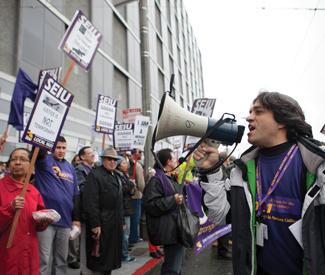
[UPDATE: The two sides reportedly reached a tenative agreement over the weekend]. Service Employees International Union Local 1021, which represents most city employees in San Francisco, continues to fight both internal and external challenges, with its own staff employees overwhelmingly authorizing a strike just as the union battles the city over pay equity issues.

As we reported last month, SEIU Local 1021 organizers, researchers, negotiators, and other professional staff, represented by Communication Workers of America Local 9404, have been without a contract since last fall and they’re resisting concessions to their pensions and health care benefits that President Roxanne Sanchez and her leadership team are seeking.

After several cancelled negotiating sessions between the two sides (which haven’t met since our story was published), CWA last week called for a strike authorization vote that was approved by 94 percent of voting members. CWA Area Director Libby Sayre and Nick Peraino, a CWA shop steward at Local 1021, say the vote repudiates Sanchez’s characterization that it is a small but vocal group that is unhappy with management.

“We’re very much united in our position and our willingness to do what it takes to get a decent contract,” Peraino told us. Sayre told the Guardian, “There is widespread sentiment they’re being low-balled by management.”

The two sides are scheduled to meet tomorrow (Fri/15), and Sayre told us the likelihood of a strike “depends on what management’s attitude is tomorrow.”

Sanchez and her core leadership team, including Vice President of Politics Alysabeth Alexander (both she and Sanchez are on leave from their jobs at Tenderloin Housing Clinic) and Larry Bradshaw, the vice president for the San Francisco region, last week won decisive re-election victories, indicating they have strong support from members.

Sanchez didn’t return a phone call seeking comment, but Local 1021 Political Director Chris Daly told us that he expects the dispute with employees to be resolved without a strike. “We have reason to believe it’s a tactic before they come to settle,” he said. He also questioned how many people voted in the election, and Sayre hasn’t returned our call with that follow-up question.

Meanwhile, Sup. John Avalos last week held a hearing before the Land Use and Economic Development Committee on Local 1021’s dispute with the city over a proposal by the Department of Human Resources to unilaterally lower the salaries on new hires in 43 job categories. Such changes were allowed in hard-won contract that the union negotiated with the city last year.

City officials say the salaries are too high based on a survey of similar positions in other Bay Area cities and counties, but the union has cast it as a pay equity issue, noting that the jobs are disproportionally held by women and minorities and they were deliberately increased in the ’80s and ’90s to offset historical institutional sexism and racism.

But pay equity provisions were removed from the City Charter during its 1997 revision, and Avalos has indicated he may sponsor legislation to address the issue. But in the meantime, Daly said appeals to Mayor Ed Lee to weigh in have been ignored and DHR officially submitted its pay reduction proposal to the arbitrator in the dispute on Monday.

So stay tuned, folks, San Francisco’s biggest labor union has a lot of the table right now and we’ll let you know how it turns out.

Those infuriating private buses

154

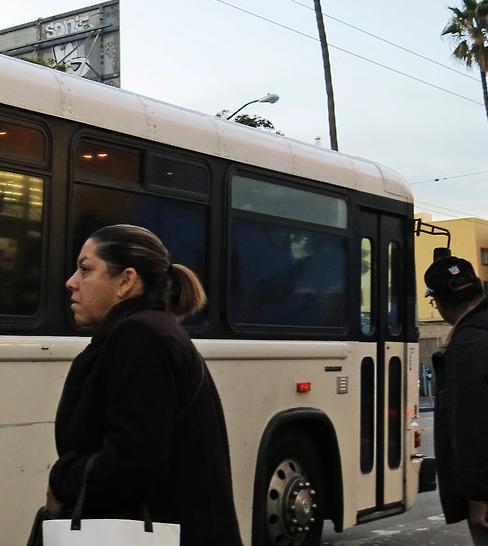
People in the Mission continue to get more and more angry with the private tech-company buses clogging streets and filling up Muni stops; here’s a great photo of two of the behemoths forcing Muni passengers to walk out into the street to catch the bus that is supposed to be at the stop.

There’s a way to put an end to this, of course. Any other outfit that blocked Muni stops that regularly, with that much of an impact, would not only get repeated $250 tickets (as if Google cares about $250) but would eventually get a cease-and-desist order from the city. I know it’s not an earth-shattering problem, but it drives a lot of us nuts — and at some point, the city attorney needs to make it clear that violating city bus zones on a daily basis is not acceptable.


Tough questions asked on America’s Cup fundraising shortfall

At a March 13 subcommittee hearing called by Sup. John Avalos, representatives from the city’s Office of Economic and Workforce Development (OEWD), the America’s Cup Organizing Committee (ACOC) and others were called upon to explain why coordinators of the prestigious yacht race have failed to reach projected fundraising targets to defray city costs. If the fundraising goals aren’t reached, the city’s General Fund could weather a $13 million hit to cover costs for the sailing event.

San Francisco struck an agreement to host the sailing competition in 2010, following negotiations initiated under former Mayor Gavin Newsom with entities associated with Oracle Racing Team, owned by billionaire Larry Ellison. The events will culminate with a sailing match on the San Francisco Bay this coming summer.

Mark Buell, who chairs the board of ACOC, told supervisors original projections had pegged total event revenue at $300 million, with eight to twelve vessels competing in the race. Those projections have decreased dramatically, with only a handful of teams entering and other “unknowns” amounting to the fact that “revenues are not what we had hoped,” Buell explained. Yet he tried to put a good face on it, saying, “All told, I believe that the city will come out whole.”

Kyri McClellan, who became CEO of ACOC just after helping negotiate the deal to bring the America’s Cup to San Francisco at her previous job with OEWD, told supervisors that ACOC had hired a fundraising expert and launched an initiative called ONESF to kick up the fundraising efforts.

She added that Mayor Ed Lee was helping to secure funding commitments for the race, by “holding breakfasts with CEOs” and asking them to commit funding. Lee is “putting in an incredible amount of energy behind this,” McClellan said, “and people are responding.” She said Sen. Dianne Feinstein had also been involved in helping to secure funding for the sailing competition.

San Francisco Controller Ben Rosenfield provided a breakdown of the funding shortfall so far. An economic analysis conducted a year ago found that ACOC had $12 million cash in hand, he said, less than half the $32 million initially projected as what was needed to defray city costs. Only $13.9 million in pledges and documented cash can be accounted for thus far, Rosenfield added, and the committee has raised around $10 million less than it originally planned for at this stage of the game. “We found they’ve fallen short,” he explained. 

McClellan reported that an additional $1.1 million would be coming in, “from donors and pledges, between now and January of 2014.”

Mike Martin, tasked with leading the city’s involvement in the America’s Cup on behalf of OEWD, displayed a slide that seemed to paint a much rosier picture of the fundraising shortfall than the $20 million cited in recent media reports.

The total city budget projection for covering costs of the race is actually closer to $22 million, lower than the initially projected $32 million, according to his slide. So far the city has been reimbursed for $6.8 million of that, he said. But the next line on Martin’s slide subtracted “projected event-related tax revenues” pegged at around $13 million, apparently suggesting that the city would be made whole by increased tax revenue rather than by receiving an actual reimbursement payment to defray city costs. According to OEWD’s calculation, that makes the “remaining fundraising need” only about $2.67 million, according to Martin’s presentation.

“I don’t think it’s been the intent to say, let’s stop there,” Martin explained. “We have a few months to capitalize on the growing awareness and excitement about the event.”

Reached after the hearing, Sup. Avalos did not sound very excited by what he had heard in response to his inquiries. “It seems that the commitments that were made to the board in 2010 … are not being taken seriously,” Avalos said. “Now that they’re coming up short on fundraising efforts, they’re trying to say the General Fund should be subsidizing the cost of the race.”

Supervisors approve Western SoMa Plan, rejecting expanded office development

145

The Board of Supervisors today approved the Western South of Market Community Plan, the first step to ending a development moratorium that has been in place since the citizen-based planning process that developed the plan began in 2005, but not before some supervisors made a last-ditch effort to allow more office development and nightlife.

“I have real concerns over the plan,” Sup. Scott Wiener said as the plan came before the full board for the first time, continuing an effort to modify the plan that he began a few weeks ago when it was before the Land Use and Economic Development Committee.

While some of Wiener’s colleagues echoed his concerns and those raised by the business and entertainment communities, most decided to defer to the area’s Sup. Jane Kim and the Western SoMa Task Force that developed the plan. It was approved on a 10-1 vote, with Wiener in dissent. It will guide development and set land use rules for the Western SoMa area after being approved on second reading by the board next week.

Wiener led the critique of the plan’s restrictions on office development in most of the plan area, particularly around the transit hub of 4th and King streets, concerns that were echoed by Sups. London Breed and Malia Cohen, likely indicating that the business community has been lobbying supervisors on the issue.

But Kim said she is concerned about the area’s artists, nonprofits, and light industrial businesses – dubbed Production Distribution and Repair (PDR) in the city planning code – being squeezed out if the area is opened up to more office development.

“Office space is hot right now and it’s pushing out PDR uses,” Kim said. “Zoning is an importance tool, otherwise everything will turn into offices in South of Market.”

Wiener, Breed, and other supervisors also sounded their support for the entertainment community that has lobbied for changes in the plan, winning greater protections for nightlife at earlier hearings – including a ban on residential development on the raucous 300 block of 11th Street and persuading owners of “the purple building” to switch from residential to office – pushing for removal of more of the plan’s restrictions on attaining limited live music permits.

“I also have some real concerns with how the plan treats nightlife and entertainment,” Wiener said, while Breed said, “As a big supporter of the arts, I’m concerned there are limited live performances in the plan.”

Kim noted that the plan tried to strike a balance in the conflict between nightlife and housing, and she said that expanding the ability business in areas zoned Regional Commercial District (RCD) shouldn’t be done in just in a part of town where there conflicts have often been difficult to resolve.

“If you’re going to permit it in the RCD areas, it should be citywide rather than just in Western SoMa,” Kim said, noting that she’s open to futher discussions after the plan is approved.

Sup. David Campos and other supervisors urged their colleagues not to tinker with the compromises and hard-won balance in the plan. “I’m not 100 percent happy with every aspect of the plan, but I do think some deference should be given to the district supervisor,” Campos said.

Wiener agreed that deference to the desires of district supervisors is an important consideration, “but there are times when this board does not vote the same as their supervisors,” citing as an example the board’s approval of the controversial 8 Washington luxury condo project over the objections of Board President David Chiu.

Afterward, Terrence Alan of the California Music and Culture Association, which had lobbied for expanded protections of nightlife, told us, “Entertainment as a whole fared well.” But he said that they would continue pushing for greater citywide nightlife protections, including supporting Wiener’s proposal to expand the limited live music permits to include DJs.

The 8 Washington shit show

9

The latest problem with the 8 Washington condo project emerged March 12 when the Chron reported on a new study that shows construction of the most pricey condos in San Francisco history could threaten a major sewer line that serves a quarter of the city. That report, which is pretty scathing, came the same day the SF Public Utilities Commission voted to sign off on environmental approvals and sewage easements that would allow the developer to move forward with preliminary design work — even though the project will be the subject of a voter referendum in November.

The engineering report says, among other things, that construction on the project (involving significant excavation and the driving of 100-foot pilings) could cause the ground around a main sewer pipe to shift by as much as 5 1/2 inches, when “the normally accepted limit for tolerable ground movement is less than an inch.” That’s kind of a problem, since the North Force sewer pipe handles an awful lot of shit, and would be very expensive to repair.

There’s also an underground sewage vault that could be damaged by the construction work.

And the developer isn’t helping much. As Brian Henderson, chief engineer for the PUC, told the commissioners, “we’ve agreed to disagree about these issues.”

In other words, the 8 Washington folks are giving the city a big FU — and still asking for approval to begin work on a project that more than 30,000 voters insisted go on the ballot first.

That ought to be enough reason for the commission to put this whole thing on hold, wait until some more studies are completed (and the PUC engineering staff is satisfied that the developer won’t shatter a sewage main). After all, no construction work can begin until after November anyway; what’s the rush?

Well, Commissioner Francesca Vietor asked that very question: What happens if we say no? General Manager Harlan Kelly hemmed and hawed. Assistant General Manager Mike Carlin said the developer “would have no incentive” to work on a better design. And all of the PUC senior staff said there’s no reason to worry, since this would all come back again once negotiations with the developer are completed.

Oh, and by the way, they said, the Port of San Francisco has asked for this. (Actually, no: According to Sup. David Chiu, Port officials have said they do not intend to push for any preliminary approvals for 8 Washington until after November.)

Carlin insisted that there was no reason to be concenred about the data in the report that the city had commissioned and spent more than $100,000 on. “We are very diligent about protecting our infrastructure,” he said, adding that existing building codes protected the city’s interests anyway. See, if your neighbor digs a new foundation and screws up your foundation, your neighbor has to pay to fix it.

So no worries; about 200,000 San Franciscans might be unable to flush the toilet for a while, but in the end, the developer (a limited liability company controlled by Simon Snellgrove) will be on the hook for the repairs, after the lawyers are all done fighting it out.

In fact, the very concept that the commission might not go along with this deal seemed foreign to Carlin, who from the beginning talked about “what you will be approving today” — as if the votes were already lined up and his job was just to instruct the puppets so they understand what they’re supposed to be doing.

Among the items the commission “would be approving:” a change in the environmental findings related to design changes that, by the way, might make the sewage problem worse. The PUC staff found that the changes would have no impact on the environment; that finding came two days before the sewage report arrived.

And, of course, as land-use lawyer Sue Hestor noted, the environmental documents alone are 125 pages. “When did you get them, and when did you get a chance to read them,” she asked. None of the commissioners answered.

In the end, there were no surprises — Commissioner Ann Moller Caen made the motion to approve, Commissioner Anson Moran seconded, and on a voice vote, the deal was approved.

Now let me predict what’s going to happen. Kelly and the PUC staff will negotiate with Snellgrove and come back and tell the commissioners that they still don’t have the assurances they need, not really, but there’s no choice any more because the PUC already voted to approve the environmental findings and the easements, and the developer has spent millions on design changes, and now it’s too late to go back.

That’s how things work in this city.

And when, as I predict, the voters kill this whole thing in November, the PUC is going to look foolish.


From the Rocketship to Bay Lights, “temporary” is the key that unlocked public art in SF

11

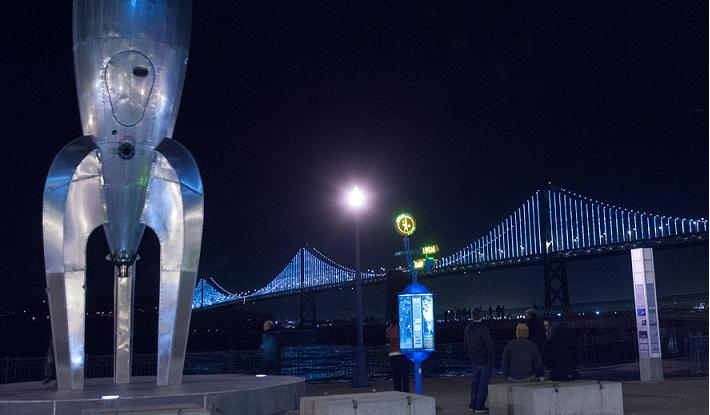
In the wake of The Bay Lights coming on to rave reviews and mesmerized gazes last week, next weekend the Raygun Gothic Rocketship will be taken down from the Pier 14 launch pad it’s occupied since 2010, the latest transitions in San Francisco’s trend of using temporary public art placements to bypass the protracted, emotional, and expensive battles that once defined the siting of sculptures on public lands in San Francisco.

By partnering with private arts organizations and calling the pieces “temporary” – even though almost all of them have been extended past their initial removal deadlines, sometimes by years – the San Francisco Arts Commission, the Port of San Francisco, and other local entities have allowed public art to flourish in the City.

The commission’s longtime public art director Jill Manton told us that temporary public art placements go back to the early ’90s, usually involving smaller pieces while big, years-long controversies continued to rage on over bigger pieces such as “the foot” that never went in on the Embarcadero, the Cupid’s Span piece that Don Fisher did finally place on the waterfront (and which many critics wish had been only a temporary placement), and a big, ill-fated peace sign in Golden Gate Park.

“It’s not as threatening to the public, not as imposing, so it doesn’t seem like a life-or-death decision,” Manton said of the trend toward temporary placements.

But the real turning point came in 2005 when then-Mayor Gavin Newsom, Manton, and other city officials began to embrace the Burning Man art world by bringing a David Best temple into Patricia Green in Hayes Valley, Michael Christian’s Flock into Civic Center Plaza, and Passage by Karen Cusolito and Dan Das Mann onto Pier 14 (a transition point that I chronicle in my book, The Tribes of Burning Man).

Each piece was well-received and had its initial removal deadlines extended. Since then, temporary placements of both original art and pieces that returned from the playa – including Cusolito’s dandelion in UN Plaza, the rocketship, Kate Raudenbush’s Future’s Past in Hayes Valley, and Marco Cochrane’s Bliss Dance on Treasure Island, which is now undergoing a renovation to better protect it against the elements during its longer-than-expected and now open-ended run – have enlivened The City.

“They get to rotate art and people get excited about what’s next,” said Tomas McCabe, director of the Black Rock Arts Foundation, a Burning Man offshoot organization that has helped with fundraising and logistics for most of the burner-built placements.

We spoke by phone on the afternoon of March 8 as he was working with Christian to install The Bike Bridge – a sculpture using recycled bicycle parts that local at-risk teens helped Christian build thanks to a grant from the National Endowment for the Arts – at the intersection of Telegraph and 19th in Oakland as a temporary placement.

The Bike Bridge will officially be unveiled on April 5 during the increasingly popular monthly Art Murmur, and the party will get extra pep from a conference of Burning Man regional representatives that is being held just down the block that day.

McCabe said the connection between Burning Man and the temporary art trend doesn’t just derive from the fact that Bay Area warehouses are filled with cool artwork built for the playa that is now just sitting in storage. It’s also about an artistic style and sensibility that burners have helped to foster.

“We try to help the art pieces have a life after Burning Man, but it’s more the style of community-based art that we promote,” McCabe said, noting that BRAF also helps with fundraising and other tasks needed to support these local art collectives. “We like to see the artists get paid for their work, we’re funny like that.”

Manton said there are currently discussions underway with San Francisco Grants for the Arts (which is funded by the city’s hotel tax) and other parties to put several large pieces built for Burning Man on display in either UN Plaza or Civic Center Plaza, a proposal Manton called UN Playa. “We bring the best of Burning Man to the city,” she said.

Most of the art placements in San Francisco have been labors of love more than anything, and a chance to win over new audiences. When the Five-Ton Crane crew and other artists placed the Raygun Gothic Rocketship on the waterfront in 2010, they had permission from the Port to be there for a year. Then it got extended for another year, and then another six months, and it will finally come down this weekend.

There will be final reception for the Rocketship this Friday evening (with music from the fellow burners in the Space Cowboys’ Unimog) and then the crane will come up on Sunday morning to remove it, in case any Earthlings want to come say hello-goodbye.

“The Rocketship and its crew have had a fantastic 2.5 years on display at Pier 14. Maintenance days were always a pleasure, giving us a chance to talk to people – and see the smiles and joy people got from the installation,” one of its artists, David Shulman, told us. “We’ve had tremendous support from, and would like to thank, the people of San Francisco, the Port of San Francisco, and the Black Rock Arts Foundation. But Pier 14 is intended for rotating displays, and we’re excited to see what comes next.”

Dan Hodapp, a senior waterfront planner for the Port district, said they don’t currently have plans for the site, although he said it will include more temporary art in the future. “The Port Commission and the public are supportive of public art at that location,” Hodapp told us. “But right now, we’re just reveling in the new Bay Lights and we’re not in a hurry to replace the Rocketship.”

Manton said The Bay Lights – the Bay Bridge light sculpture by art Leo Villareal that began what is supposed to be a two-year run (but which Mayor Ed Lee is already publicly talking about extending) on March 5 – has already received overwhelming international media attention and is expected to draw 55 million visitors and $97 million of additional revenue to the city annually.

“It is public art as spectacle. It’s amazing,” Manton said of the piece, which the commission and BRAF played only a small roles in bringing about. “It’s so good for the field of public art.”

She that the success of recent temporary art placements and the role that private foundations have played in funding them have not only caused San Franciscans to finally, truly embrace public art, but it has ended the divisive old debates about whether particular artworks were worth the tradeoff with other city needs and expenditures. And it has allowed the Hayes Valley Neighborhood Association and other neighborhood organizations to curate the art in their public parks.

Meanwhile, even as the Port gives Pier 14 a rest, Hodapp said another temporary artwork will be going up this fall at Pier 92, where old grain silos will be transformed into visual artworks, and that Pier 27 will be turned into a spot for a rotating series of temporary artworks once the Port regains possession of the spot from the America’s Cup in November.

As he told us, “The public really enjoys art on the waterfront, and they’re most supportive when we do temporary art, so there’s a freshness to it.”

Next, the Treasure Island sellout

82

Now that he’s done such a bang-up job negotiating a deal for the CMPC hospital, leaving the supervisors to clean up the mess, does anyone think that the hurry-up-and-finish-in-time-for-a-China-trip talks with Rose Pak and Willie Brown (who has his own interests here, too) will have a good outcome for San Francisco?

Because I don’t.

Nothing the mayor has directly negotiated with private interests has been anything but a disaster for the city. America’s Cup, the Warriors arena, CPMC … the guy just can’t seem to say No. And you really don’t want someone who gives away the story to be representing the city when there are billions of dollars and the future of a huge new neighborhood (on a sinking island in the middle of a rising bay) at stake.

I still don’t see how intense residential and commercial development works on TI, when there’s only one overcrowded artery on and off the island. In New York, people who live on Staten Island are used to using the (free, heavily subsidized)  ferry — 60,000 a day take the boats into Manhattan. That’s going to be a huge stretch for people who live on TI, where there will be limited shopping (even for things like groceries) — and at this point, I don’t see the developer, or the city, purchasing and paying for enough cheap ferry service to make it an effective form of transportation.

That said, if we can make it work as a transit-first community, I have no problem with developing Treasure Island — but I don’t see Lee getting the level of civic benefits out of Lennar and the China Development Corporation that San Francisco needs to make this pencil out. Hasn’t happened yet. 


Labor activist urges “innovation” in workers’ rights organizing

Even as renowned labor activist Bill Fletcher Jr. geared up for a talk last Thursday to describe the dire situation he believes the labor movement is facing, local organizers had victories to celebrate.

Fletcher joined organizers from the Filipino Community Center, OUR Walmart, PODER and POWER for a March 7 forum hosted by San Francisco Jobs With Justice, called “Labor at the Crossroads.”

Prior to the discussion, Fletcher told the Guardian he believes the national labor movement is witnessing a “final offensive” from big business and right-wing interests, and “an attempt to destroy unions altogether.” He also criticized a reluctance among national labor leaders to openly recognize the gravity of the situation. Fletcher’s latest book, published last August, is titled They’re Bankrupting Us, and 20 Other Myths About Unions.

Fletcher said he believes labor should place less emphasis on “being invited to this or that social occasion,” and more on reaching out to community-based organizations to foster movement building. He said he thought there was a need for “innovation” by organized labor, such as forging alliances with the unemployed, or reaching out to under-employed workers earning low wages in retail positions. “The labor movement grew by being audacious … by making the comfortable uncomfortable,” he said.

Despite Fletcher’s bleak portrait and the generally discouraging trends of the day, such as the impacts of the sequester, an international move toward austerity and stubbornly high unemployment in the United States, representatives from San Francisco Jobs with Justice nevertheless were able to point to some recent worker victories.

Many San Franciscans who gathered for “Labor at the Crossroads” were encouraged by successful negotiations that resulted in what they viewed as a much-improved deal for the San Francisco CPMC hospital project, which included stronger local hiring requirements and other items labor and community organizers had fought for.

Organizers also applauded last month’s Chinese Progressive Association victory against Dick Lee Pastry on behalf of workers subjected to wage-theft violations. The San Francisco Chinatown restaurant was forced to pay a whopping $525,000 in back wages and penalties.

At the state level, the California Domestic Workers’ Coalition kicked off its mobilization last week in Los Angeles urging passage of the Domestic Workers’ Bill of Rights, authored by Assembly Member Tom Ammiano. The legislation would extend basic labor protections to housekeepers, childcare workers and caregivers, who collectively represent a primarily immigrant workforce. At the national level, momentum is starting to build around the Fair Minimum Wage Act, with supporters calling on lawmakers to raise the minimum wage to $10.10 an hour.

“The union movement should be helping unemployed workers get organized, fight back and fight for jobs,” Fletcher said. “There is no significant organization of the unemployed – no significant force that has taken up this issue and said, we need to build a mass movement around jobs.”

He urged local organizers to identify priorities. “We have to go forward with, what is the vision?” he said. “What do the people of Oakland and San Francisco need?”

Nurses still waiting for CPMC to fully embrace San Francisco

25

Labor and community activists cheered this week’s news of a much-improved deal between the city and California Pacific Medical Center to build two new hospitals in San Francisco, and there are hopeful signs that frosty local relations with this sometimes-stubborn corporate behemoth may improve. But they also say they are withholding full support for the deal until CPMC reaches a contract agreement with the California Nurses Association.

CPMC and its parent, Sutter Health, have had a nasty running battle with CNA over the six years since their last contract expired that has included strikes, lockouts, lawsuits, harsh union-busting tactics, and the pooling of bad blood on both sides. But CPMC announced a labor agreement with its other major union, National Union of Healthcare Workers, on the day after the hospital deal was announced and there are signs that a deal with CNA could also be imminent.

“We’ve made some progress and we have the makings of a settlement on the table, but we’re not there yet. Yet now is the time,” Fernando Losada, CNA’s collective bargaining director for California.

It was CNA and other labor groups that effectively partnered with community organizations and progressive members of the Board of Supervisors last year to kill the hospital deal that CPMC cut with the Mayor’s Office and to force the much-improved agreement that was announced on Tuesday. “It’s all about necessity and their being able to implement their plans,” Losada said of CPMC’s designs on San Francisco. “Obviously, the full of implementation of their plans were thwarted with the help of some good community organizing.”

And Losada said he expects that labor-community coalition to stand firm on expecting CPMC to reach a fair agreement with the nurses, who are seeking more job security and benefit concessions than CPMC has been willing to make so far.

“The successful community organizing that we played an active role in putting together has had a lot to do with them being more forthcoming at the bargaining table,” Losada said. “We like where this has ended up, particularly on the St. Luke’s [Hospital] issue [guaranteeing a larger and more viable new hospital than originally proposed]. But we can’t support this wholeheartedly and we won’t if our nurses are left out in the cold.”

Gordon Mar of San Franciscans for Healthcare, Housing, Jobs, and Justice, which formed up around the CPMC negotiations with the city, said that most community groups will also insist on CPMC reaching an agreement with CNA before the project moves forward.

“A contract for CNA is the last remaining big issue the coalition would like to see resolved,” Mar, who also works with the labor group Jobs With Justice, told us. “We at Jobs With Justice would not support the deal unless the CNA dispute is resolved.”

Paul Kumar, a consultant with NUHW who represented the coalition during the negotiations between CPMC and the city, as represented mostly by Sups. David Campos, David Chiu, and Mark Farrell, said he was happy to see CPMC reach agreements with the city and NUHW, but that it’s too soon to conclude the corporate has turned over a new leaf.

“I think it’s premature because relationships take a long time to transform themselves, but there are transformative moments, and it’s our duty to make the best of them. This may be one of them,” Kumar told us. “They’re obviously now trying to pursue their business interests in alignment with their community instead of without regard to their community, which has characterized their behavior in the past.”

Kumar said the coalition that overcame last year’s aggressive and uncompromising effort by CPMC to push through a deal that was bad for the city has learned a lot from that fight and evened out the playing field. “It’s up to us to try to build on their breakthrough,” Kumar said.

CPMC spokesperson Dean Fryer was unable to put the Guardian on contact with Sutter officials that our sources say may be responsible for the softening of CPMC’s tough negotiating stance in San Francisco, or to offer a comment on the changing dynamics in the company.

He stressed that CPMC has “a lot of interface with various communities in San Francisco” and said the company “does more charity care than anyone in San Francisco.” But he’s only been with CPMC for a few months and was unaware of studies last year showing CPMC actually does the least per-capita charity care of any hospital in San Francisco, a major point of controversy that resulted in improved charity care commitments in the latest agreement.

As for the prospects of an agreement with its nurses, “I can’t address CNA, that has been ongoing and it’s something I can’t comment on.”

NUHW – which represents medical technicians, administrative staff, and hospital workers other than nurses and doctors – announced that it reached a deal with CPMC at 12:30am on Tuesday that includes no labor concessions, retroactive wage increases, job security provisions, fully employer-paid health coverage, an improved pension, and maintenance of retiree health coverage.

Losada said he was happy to see the CPMC agreement with the city include strong local hiring requirements for construction workers, a predominantly male workforce, and now it’s time for CPMC to do right by its nurses, “an overwhelmingly female workforce.”

“As it stands, they have no protections and no guarantees they’ll be hired in the new facilities,” he said, noting how frustrating it’s been to get any assurances from CPMC as it has pursued this hospital deal over many years. “It’s always been about issues of job security, and affordable health care, ironically.”