

Today’s Look: Daniella, Pierce and Ellis
Tell us about your look: “Anything goes!”

Today’s Look: Daniella, Pierce and Ellis
Tell us about your look: “Anything goes!”
Whoever said a cable car couldn’t be operated on woman power alone clearly had never met the steam engine on this grandmother. Fannie Mae Barnes of Oakland, California was the first woman ever to operate a cable car grip – not because it was a higher paying position, or an easier gig, but because she was told that women didn’t have the strength to do the job right.
Barnes started pumping iron, passed the 25-day grip operator training program notorious for its 80 percent drop out rate, and became a source of civic pride. She even drove the Olympic torch up the Hyde Street hill en route to the 2002 Winter Olympics. A documentary about her achievement, “Getting a Grip,” will be shown tonight at Lunafest, a traveling film festival that screens movies made by and about women to benefit the Breast Cancer Fund. We caught up with Barnes for a phone interview about knocking down one of the city’s diehard gender divisions of labor.
San Francisco Bay Guardian: What made you want to be a cable car operator?
Fannie Mae Barnes: It wasn’t about being a conductor, it was the grip up front, which is totally different from the conductor. In ’98 I went up front and became the first female ever to be certified as a grip.
SFBG: What’s the difference?
FMB: The difference is this: on the cable car it takes two people to operate, you have the person in the rear that does the back break at any given time it’s needed and collect the fares. Up front you have the gripman that controls the cable car. There’s a huge device that weighs about 375 pounds and it’s called the grip and it grips the cable that’s underneath the ground that’s moving at nine and a half miles per cable speed. It’s a ITAL job. It’s very different from conducting.
SFBG: So you’re lifting a 375 pound weight to operate the cable car?
FMB: As far as pulling back, yeah. The cable car itself weighs eight tons, empty. It’s a miniature train. A lot of guys will try to muscle the grip, but it’s really more a finesse thing – you have to leverage it with your body weight.
SFBG: How did you become the first woman to operate the grip?
FMB: Well they had said that they always need gripmen because it’s a difficult job. They had mentioned that it was a job that woman could not do because we lacked the upper body strength. So I said hey, come on now, you know, there’s absolutely nothing a woman can’t do. I mean if you can take care of a family, I mean, come on. This was in ’97 that this article came out. So in ’97 I decided I had to step up to the plate and be that woman, so I did it. I worked out extensively for six months to a year. I couldn’t let the year 2000 come into existence without a woman up front. So I did it, February 14th, 1997.
SFBG: What were you doing before you started working at the cable cars?
FMB: I was driving buses. I drove buses for 11 years. Some of my friends who had drove buses had left and were over in the cable cars division, so that’s what I did. And once I started working there I loved it. It’s a totally different scene, you know, you have a lot of tourists and they just want to ride and have fun.
SFBG: What kind of reaction did you get from the other cable car grips?
FMB: Well a lot of the guys were betting money against me that I would not make it. But then I had positive input too from some guys, so I went with the positive side. I knew that I was going to make it because I was training hard for it and it was something that I felt that I could do, and anytime you really apply yourself and it’s something that you want to do, you can do it.
SFBG: What gave you that conviction to know you could be that first woman? Is that something your family taught you?
FMB: Yeah, more or less. My mom always taught me growing up that whatever you want to do hon, you can do it, you just have to set your mind to it and go for it.
SFBG: So what are you doing with your golden years of retirement?
FMB: I work with an organization, Ghana Women and Children of North America. We’ve only been existence for a year, we do non-profit work with organizations in Africa. We put electricity in a primary and secondary school, we bought them two computers, a printer, and we opened up the Internet for them.
Lunafest
Featuring films Getting a Grip, Top Spin, and Tightly Knit
Thur/30 6 p.m., $20
Herbst Theater
401 Van Ness, SF
(415) 392-4400
Throughout the course of writing my feature story about the Tenderloin this week, which looks at the role art is playing in the gradually changing neighborhood, a couple of questions kept cycling back into the forefront of my mind. What should be the role of art in community-building? What kinds of art benefit the residents of a neighborhood? It’s tough to categorically define the answers, but Rick Darnell and the North of Market Community Benefit District‘s plans for a TL art lending library come damn close to a perfect score.
The Tenderloin Art Lending Library (TALL)’s planned role in the community is double-fold: one, it will provide a boost to “outsider” artists in the Tenderloin, people who have never had their art displayed in a studio and may lack the career know how to make that happen, and two, their pieces wind up in the homes of people who otherwise would have few touches of beauty there — at least not original works by creative minds. “A lot of artists never get discovered,” Darnell tells me, sitting in the basement room that the NOM-CBD has allocated to housing the library. Donated paintings lean against the walls around us, and a table is stacked with interesting metal sculptures behind my chair.
His goal is to get this art into the homes of the Tenderloin’s recently housed residents. The neighborhood is well known as a drop-off spot for released convicts, Darnell tells me, and has a high percentae of residents on parole and probation. Between the recently incarcerated and the participants of the City’s “Care Not Cash” transitional housing program, you have a lot of people who need help making their new rooms homey.

Paintings for and by the community line the walls at the Tenderloin Art Lending Library
Every three months TALL participants will be allowed to take a different piece of art for their space. Not everyone’s used to having nice things though. Darnell anticipates the challenges that this will entail, and tells me that those hurdles are kind of the point.
“It’s based on trust and sharing and a celebration of those two things,” he says. He’s got a system worked out for participants that mess up their given canvass or sculpture: six months probation from the library if they sold it or destroyed it, but leniency if the damage was due to carelessness or misfortune. “If it’s something like the dog eats it, we’ll work with them to find another place in their house that would be better for the painting,” he says, adding that program volunteers will be prepared to make house visits to make this happen, or to involve less mobile residents. “We want to make this a good experience for them.”
Some of the pieces around us, Darnell tells me, were done by artists afraid to leave their own house, elderly artists, recovering addicts, current addicts. Many artists have volunteered their art – he shows me one small canvass covered in dynamic swooshes of primary colors that came from an artist in Colombia that saw his call for admissions online – but he gives priority to Tenderloin artists, who seem to be the ones that are most connected to the mission anyway. “The people who have the least to give, I’ve found, are the most generous,” he says.

Rick P. Lion’s fantastical creations will soon be sitting in the living room of a recently housed, newly initiated art connoisseur
Darnell knows what helps people get better: in addition to his years spent working with society’s forgotten communities, he’s been a part of them himself. “I’ve dealt with addiction, I’ve dealt with being homeless,” he tells me straight-forwardly.
He’s got no issue with recounting his story. An MFA recipient in dance and design from the integrative learning-based Bennington College, he traveled the country after graduation dancing with a troupe that performed in non-traditional venues and focused on social issues in their productions.
But he fell into drug use, and in1989 tested positive for HIV. He moved directly into the Tenderloin when he got to San Francisco and hasn’t left since, finding the expansive gay community “astounding.” He’s been clean for years, and seems inordinately enthused for a guy that’s been through a lot. “I’m just really happy to be here and doing this.”
Perhaps it was a no-brainer that someday Darnell connect his love of helping others in a tight spot with his love of art, given the role that it plays in his own mental clarity. “I draw something everyday,” he says. “I’ve drawn thousands of bullets, thousands of popper bottles. The shapes are really calming to me.”
Until recently a long time employee of the Hospitality House, a resource center for homeless individuals around the corner from the NOM CBD that includes a drop-in arts studio, employment help, and a men’s shelter, Darnell was hired at the Community Benefit District initially as a janitor. But the organization invested $15,000 in seed money so that he could flesh out his vision of a community enhancing arts program. Now he’s in charge of outreach and general operations of the project.
“It seems frivolous, like maybe I should be doing a food drive – but these are all sides of a well rounded person,” he reflects. Darnell initially considered starting a tool lending library, but changed his mind when he considered that the art exchange would give TL artists a chance to work on their craft, as well as gain some valuable artistic experience – pieces will be displayed in the gallery that gracefully inhabits the current lobby and front hallway of the NOM CBD.

Community through art: Rick Darnell in front of the frame that will constitute an altar he and some veteran friends are completing for SomARTS Cultural Center’s Dia de los Muertos exhibit
He envisions the library as a place where people can come and connect using the language of art. “You might come to have a salon community,” he suggests regarding residents’ use of the future space. It’ll be open Fridays and Saturdays from 12-3 p.m., starting with a kick-off party on Oct. 30.
We chat briefly about some of the other recent arts development in the neighborhood. I first met Darnell at a fairly informal meeting of TL art types convened by the Tenderloin Economic Development Project’s Elvin Padilla. In addition to the Darnell’s presentation of his library, a representative of a well known theater discussed plans for expansion, possibly in the Tenderloin. Another performing arts organization announced they were looking for a TL address, and various art galleries discussed openings and future collaborations with each other.
“A lot of people put endeavors in the Tenderloin because rent is cheap, and it’s slowly changing the area,” Darnell tells me of people he refers to as “carpet baggers.” We talk about a comment he overheard from a gallery owner in the area after Rick announced his plans for the lending library to the group. The individual had muttered “I’d never lend anything to anyone in the Tenderloin.” “For good reason,” Rick continues “people are wary of homeless folk.”
But Darnell doesn’t seem to be wary of the recently homeless folk he’s passing out TALL fliers to and still collecting donations of art for. In fact, he seems stoked on his continuing role in their lives, and stoked for the day the library’s circulation begins at the end of next month, when they’ll eat light snacks and start making connections through art.
“If there’s anyplace that’s open to this stuff,” he tell me “it’s the Tenderloin.”
Tenderloin Art Lending Library Kick-Off Party
Oct. 30, 12-3 p.m., free
North of Market Community Benefit District
134A Golden Gate, SF
tenderloincommunityartprojects@gmail.com
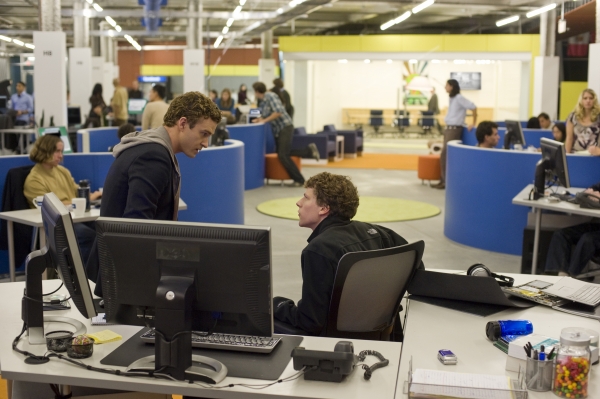
Based on the founding of Facebook and Ben Mezrich’s book The Accidental Billionaires, The Social Network has already received rave reviews from critics. I offer no dissent: the film is unquestionably one of the year’s best. I recently spoke to three of its lead actors — Jesse Eisenberg, Andrew Garfield, and Armie Hammer — and screenwriter Aaron Sorkin.
We’re all Facebook friends now. (Lie.)
Being Mark Zuckerberg
Mark Zuckerberg may not be the villain he’s often made out to be.
“I don’t think he necessarily neglects social interaction,” Jesse Eisenberg, who plays Zuckerberg, explained. “I just think he feels alienated by it … He feels kind of uncomfortable interacting in the way he sees everyone else interacting.” But then, that’s not Zuckerberg the person: it’s Zuckerberg the character in The Social Network. In order to play the world’s youngest billionaire, Eisenberg put himself into the mindset of Sorkin’s creation. But he also did his fair share of research on the real Zuckerberg — not to imitate him, but to get a better handle on who he is.
“I read everything I could find about Mark,” Eisenberg said. “I took fencing lessons, because he’s a fencer. I had every video of him converted to mp3, so I could have him on my iPod. This was all to help me focus.”
It also helped that Eisenberg could relate to Zuckerberg, a notoriously awkward public speaker: there’s video of the Facebook founder stammering, sweating bullets, generally not making a great case for himself. For Eisenberg, a character’s neuroses are what make him worth playing.
“I assume that everybody is neurotic in some way, or everybody interesting is neurotic,” he reflected. “It seems to me, why would you want to play anyone else? What other layers would there be besides neuroses?”
In writing his version of the real-life person, Sorkin grew to care about Zuckerberg. The end result is a character who isn’t always pleasant or charming, but who does inspire sympathy. In a way, that’s how Sorkin feels about his non-fictional counterpart.
“[Zuckerberg] is awkward in public,” Sorkin said. “He knows it, because he’s been told it so many times. He doesn’t care that much about money, so I don’t think that his billions of dollars are making things that much easier for him. So I actually feel affection and respect and empathy for him.”
The Mark-Eduardo bromance
The Social Network may be about the founding of Facebook, but at its heart, it’s also the story of a friendship betrayed. As in real life, Mark Zuckerberg turns his back on his best friend and co-founder Eduardo Saverin (Andrew Garfield).
“Obviously, there’s a massive betrayal, and within that betrayal [Eduardo] loses his innocence and realizes that you never know someone,” Garfield said. “You never fully know someone. The only person you’ll ever know is yourself and even then, you won’t really know yourself.”
There’s no hint that Zuckerberg and Saverin were ever more than friends — though that would make for an interesting movie, too. At the same time, Garfield likened the betrayal his character experiences to a break-up. During the interview, he reflected on a time he’d been dumped out of the blue — and the pain that followed. “You know that confusion you have when you’re broken up with, and you have no idea why?” he asked. “You haven’t been told clearly why, because that person’s protecting you.”
Garfield was reluctant to identify his character as “too trusting,” because he views trust as a positive quality. But Eduardo does have an honor system and moral code that make Mark’s betrayal all the more hurtful. “To me, it wasn’t about the money,” Garfield said, referring to Saverin’s $600 million lawsuit against Zuckerberg. “It was about teaching Mark a lesson.”
In fact, the desired outcome Garfield imagines his character wanted is a bromantic ideal. If Mark were to realize the error of ways, perhaps he’d apologize to Eduardo, and they could repair their friendship. It might not make for a gripping ending to the film, but it would be a happier conclusion for Saverin. “I think with Mark, up until the end, [Eduardo]’s hoping at some point Mark’s going to go, ‘Look, I’m really, really sorry, man. I really messed up. I love you so much, and I just was jealous of you for this. And I acted out like this. Can we be friends again? I’ll give you back as much money as you want. Let’s move in together and we’ll play basketball every day, and we’ll cuddle at night and watch reality TV.’ Part of Eduardo in those depositions is just waiting for that moment.”
Isn’t it bromantic?
Taking sides
It was important for Sorkin that his script not take a side. Instead, it presents the story of Facebook’s founding from three different perspectives: those of Zuckerberg, Saverin, and the also-involved-at-square-one Winklevoss twins. Meanwhile, director David Fincher made sure that all the actors believed their characters: they all tell what they believe to be the truth. “Every time we did a scene, even if it was part of Eduardo’s telling of the story, David Fincher would come up to me between each take and say, ‘You know you’re right in this scene. You’re the right one,’” Eisenberg reflected. “And then he’d go up to Andrew Garfield, and say, ‘You’re right in this scene.’ So we all thought we were right.”
Playing twins Cameron and Tyler Winklevoss (with help from body double Josh Pence), Armie Hammer had to maintain sympathy for both and project that to the audience. “With these twins, when you look at them on paper, they’re tall, athletic, good-looking guys who go to Harvard,” he noted. “They have a lot of things going for them that would make a lot of people in the audience go, ‘I don’t like these guys. They suck.’”
But Hammer planted himself firmly in their mindset. As is the case with Saverin, the Winklevosses aren’t necessarily interested in the money they’d receive from their lawsuit against Zuckerberg — it’s really about principle. These are characters of honor, and they were wronged. No matter how wealthy or dashing they are, Hammer insisted to himself that they deserved justice. “When we shot this, I had to side completely with them, just to bring truth to it,” he explained. “I had to say, yes, these guys did invent Facebook, and yes, Mark Zuckerberg stole it from them.”
Sorkin’s script is purposely ambiguous. While he was researching the story behind Facebook’s founding — along with The Accidental Billionaires author Mezrich — he discovered conflicting versions of the truth. His solution? Show it all, and let the audience decide for themselves.
“What we came away with was three very different versions of a story,” Sorkin said. “So instead of picking one and deciding, ‘Well, I think that’s the truth. That’s the story I’ll tell.’ Or picking one and deciding, ‘I think that’s the juiciest. That’s the story I’ll tell.’ What I liked was that there were three different versions of the story.”
In Hammer’s mind, the authorial choice to leave it up in the air creates more of a challenge for the audience. “You are responsible for siding with the people that you recognize the most, or recognize yourself in the most,” he said.
Sorkinspeak
Those familiar with Sorkin’s work (The West Wing, Sports Night) know that his dialogue has a distinct sound. He considers himself a playwright, which might explain the fast-paced back-and-forth that dominates his scripts. The Social Network had a Sorkin sound that Eisenberg immediately clung to.
“When I had the audition for the movie, I made a little tape to send to them in Los Angeles,” he recalled. “They said, ‘This scene is ten pages but please try to do it in five.’ ‘Cause I guess what they were getting were these kind of indulgent moments that people are used to doing in movies, whereas it was immediately evident to me how it should be read.”
All the actors I interviewed gushed over Sorkin’s novel-length script. For Garfield, it was essential to treat the script as the Bible — though that’s not the case for every film. He worked hard to get into character as Eduardo, adopting characteristics that were foreign to him. That it was a matter of letting the script work its magic. “The rhythm of Sorkinian language — you just don’t get in the way of it,” he noted. “An actor wants to put his own mark on something, but that’s your ego and you don’t need that. So you just try to not get in the way of these beautiful sequences of thoughts that have been expressed so deftly and seeped with subtext.”
Sorkin wasn’t quite so effusive about his own work, but he was willing to talk about his process. As he said, creating a fictional version of Mark Zuckerberg helped Sorkin find affection for the real person. But even before that, he knew it was important not to make him too black-and-white.
“When you’re writing an antihero, what I try to do with a character like that, is write it as if they are making their case to God why they should be allowed into heaven,” Sorkin said. He made the comparison to Jack Nicholson’s iconic “you can’t handle the truth!” speech from the Sorkin-penned A Few Good Men (1992).
“You can’t have them twirl their mustache,” he continued. “You can’t think they’re a bad guy — you just have to put obstacles in front of them.”
As for the rhythm of the dialogue — “Sorkinian language,” as Garfield calls it, or “Sorkinspeak” — the writer admits a heavy theatrical influence. He said it began at a young age when his parents took him to plays that were above his age level, like Who’s Afraid of Virginia Woolf? “I wouldn’t understand the story that was going on, but I loved the sound of the dialogue,” Sorkin remembered. “It sounded like music to me, and I really wanted to imitate that sound — just words crashing into each other, and speeches. It follows the same patterns as the movements of a symphony.”
In replicating that sound, Sorkin’s script carried the actors where they needed to go. “It’s all there in the script,” Garfield said. “All you have to do is be truthful in that situation and allow the thoughts to turn into words, and the words to turn into an action.”
The Facebook
The Social Network has been widely referred to as “the Facebook movie,” but its cast and crew insist that such a designation is misleading. “Sports Night wasn’t about sports,” Sorkin said. “[The Social Network] isn’t about people friending and poking people and falling in love on the internet. Maybe I just give things the wrong title.”
We did speak about Facebook extensively during our interviews. How could we not? With 500 million users, the site has become a part of daily life. It’s hard to know how we functioned before it. Even Eisenberg, who is not on Facebook himself, understands the sentiment. “In the movie, [Mark] kind of sees this void online,” he noted. “We look at Facebook now in retrospect, like, ‘How could this not have existed?’ That’s how Mark viewed it.”
Sorkin isn’t on Facebook either, though he and Eisenberg both set up accounts while they were filming. While he acknowledged that part of his hesitation comes from a generational divide, Sorkin was upfront about his negative perception of the site. And no, it has nothing to do with Zuckerberg himself. “For a device that’s supposed to make us better connected and bring us closer together, I feel like it’s doing the opposite,” Sorkin opined. “I feel like social networking is to socializing what reality TV is to reality. In a way we’re performing for each other.”
Hammer shared a similar point of view. He mentioned negative experiences on Facebook in the past, though he was smart enough not to elaborate. “The dark side of Facebook is it turns these people into voyeurs,” he said. “And if not voyeurs, then even worse, it turns them into narcissists, where they think that they’ve put themselves on the cover of their own Rolling Stone.”
Or even worse than that: compulsive pokers.
The Social Network opens in Fri/1 in Bay Area theaters.

Today’s Look: Yoko, Fillmore and Clay
Tell us about your look: “I like colorful textiles.”
Documentaries that “tell” the Holocaust tend to employ archival footage generically as a kind of historical flavoring. It’s rare that we are asked to contemplate either the provenance of the images or the individual lives depicted. Yael Hersonski’s A Film Unfinished simultaneously confronts both of these gaps with a taut historiography of several reels of Nazi propaganda footage. Even in the German film’s inchoate form, we easily apprehend the propagandistic moves to further manipulate an already constructed reality (the Warsaw Ghetto) for objective “proof” of the necessity of Hitler’s Final Solution. And yet here before us, flowing at the speed of life, are the faces and places that would be destroyed within months of the filming.
Hersonski attempts to extricate the documentary value of this footage using frame-speed manipulations and edits which call attention to telling movements. She also films elderly survivors watching the footage alone in a darkened theater. In their capacity for recognition and incredulousness, they unravel the German point-of-view. By weaving these live responses with diary entries of those consigned to the ghetto along with the deposition of a German cameraman, Hersonski draws a fragmentary, highly specific account of the Holocaust’s crisis of representation. We discussed the film in a recent email exchange.
San Francisco Bay Guardian: The question of how to use archival footage responsibly is one that haunts the great Holocaust-themed films — Night and Fog (1955), Shoah (1985), and the films of Péter Forgács all find very different solutions. Can you describe the way your own attitudes regarding the appropriation of this archive developed during the time you worked on A Film Unfinished?
Yael Hersonski: During the last decade I became more and more preoccupied with the thought of the near future, when no Holocaust survivors will be left to remember — the time when the archives will be the only source of witness. I’ve tried to examine the possibilities of exploring the image like an archaeologist analyses a palimpsest, and to excavate, by cinematic means, new layers of reality from beneath the known imagery. I admit that [at one] time I felt that Night and Fog and Shoah were all that a filmmaker could express facing such an inconceivable, unprecedented event. For [Shoah director Claude] Lanzmann, the Holocaust lies firmly outside the archive as the ultimately Other, a black hole which threatens to swallow every visual witness, and thus resists the film archive and its raptures.
Forgács faces the impossibility of bearing witness exactly by confronting the contemporary viewer (who knows how it all ended) with private documentation which was abruptly stopped when the photographer himself was no longer capable of documenting, nor his dear ones of being documented. Forgács’ films introduce me again and again to the immense capacity of footage to reveal, in the form of a private history, the traces of an inconceivable past.
My aim in showing the Warsaw Ghetto footage (for the first time in its entire length) and confronting the images with many points of view about the filmmaking itself was not to tell “the true story” of the Warsaw Ghetto, nor to expose the evil of Nazi propaganda (which was obvious even to the German filmmaker who discovered the reels in 1954), but to make the viewers question the way they see these images and through them perceive the past.
SFBG: Did you set out to interrogate the decontextualization of these images in more conventional visual histories of the Holocaust and Warsaw Ghetto? The logic of many Holocaust documentaries, wittingly or not, is that the content of these images can be separated from the context in which they were made — that what we see speaks for itself. Your film challenges this assumption in many ways.
YH: I’ve always felt that the images from the Holocaust were mainly used the same way: as illustrations for many different stories, as visual background between interviews. We see the same images over and over again, [both] because the quantity of footage is finite (only 10 percent from what the Nazis documented on film survived the war), [but also] because of sheer laziness of filmmakers who find it more comfortable to use what’s [familiar]. The superficial use of an image enables it to show almost nothing — or merely repeats the humiliation of the victims that were captured on film as an anonymous helpless crowd. I emphasize a moment [by slowing it down] in which a woman is protesting against the humiliation caused by filming merely by means of her gaze and her body language. When I know this woman was probably murdered a short time after her image was taken, and when I hear at the same time the cameraman who was filming her speaking about how he could not even imagine what was going on, I feel closer to the reality of that image than I did before.
SFBG: How did you come to the idea of having the survivors respond to the archival footage in place of a more traditional question-and-answer interview? As viewers separated from these events, we’re able to treat these archival images as content — whereas I imagine for the person who was there, it’s inescapable that the footage literally represents how they were seen by the Germans. Were you concerned that you might be putting your subjects through a kind of secondary trauma by having them view the footage in such a way that they didn’t have their hands on the controls?
YH: I was looking not only for survivors from the Warsaw Ghetto, but for those who could actually recall the event of the filming in May 1942. I was quite amazed to locate more than the five survivors I interviewed for the film, because obviously the filming was a negligible event compared with the unimaginable horrors that went on there. When speaking with the survivors, I explained to them in detail how the filming would be done — that they would watch the whole film, alone, on the big screen, that it contained atrocious scenes (I described these), and that obviously it would be a difficult experience. Some of the survivors indeed refused to watch it, and some hesitated. Only those who felt it was their personal obligation to [speak to] the silent images, those who told me that the worst horrors exist not in any footage but in their own memories, [those who thought] it important to add their own point of view to the Nazi perspective — only these people were invited to be filmed. Still, I stopped the screening every time a reel was over and asked if they wished to continue. All of them asked to watch to the very end and felt a great relief after doing so.
The decision to film [the survivors] inside a cinema hall and to show the footage in 35mm stemmed from three [priorities]. First of all, I wanted to intensify the experience of the screening as much as I could, for I knew I would not — not in any case — film these survivors again. After they had given me their approval, I knew I had only one chance. I was also aware that the time of interview would be short, since all of them are physically too fragile to sit for more than two hours in such an intense emotional state. If there was a chance someone could recognize a person in the film or add any other important historical information about the footage, the only way to help them remember was to isolate them from their domestic surroundings and show them the film on the big screen.
The second reason relates to the character of the survivors as witnesses. Roughly [speaking], we can say that there are those survivors who won’t talk about the past, who remain silent merely to be able to live…and there are those who ceaselessly tell their stories, who give lectures and interviews, write books, and so on. They find witnessing [to be] their very vocation and destiny. The survivors who were filmed belong to the group who speaks. They have told their stories many times, and because they can’t tell it all any one time, their memory [often narrows] to [a] single narrative. Other details have remained in a less accessible memory. By changing the traditional scenery of the interview and creating a new interactive space [in which] the survivors were not just storytellers but also viewers and witnesses who comment, I hoped to help them to release some of the memories which [remained unspoken] by them.
The third reason was aesthetic: it was important for me to maintain [every aspect] of the film in relation to the archival documents and documentation itself. My initial idea, even before watching the footage for the first time, was to think of these archives as if they were a brain, with memories and even a subconscious. The labyrinth of the archive, with its knowns and unknowns, the desire to restore and remember, which is simultaneously the impulse to destroy and forget, can be used as a metaphor for our own memories and forgetfulness.
SFBG: Given your film’s deliberate consideration of the way the Nazi footage represents a constructed, stage-managed view of the Jews in the ghetto, I think many viewers might be curious why you choose to visually recreate the interview with Willy Wist. Why is this transcript recreated visually, while the various diary entries are only read?
YH: First of all, the diaries were written, [whereas] the preliminary interrogation with the cameraman was recorded on audio reels (the audio reels were recycled for the next interrogation, and therefore only the paper protocols survived). I insisted on emphasizing the various manners of documentation. Until we found the interrogation’s protocol, the only fact we knew about the cameraman was his name. When I first read the protocols, I was amazed to [discover] what a rare witness I was faced with. These images that we were educated to see in bits and pieces, as if they were some kind of an “objective” anonymous documentation of past events — suddenly there was a specific gaze of a cameraman, with his own impressions, speculations, inner monologues and so on, and he describes himself shooting scenes we can actually see in the footage. [It] enabled me to see the footage not merely as a sequence of images but as a real trace of reality, and as the atrociously painful (for the viewer) medium between the perpetrators and their victims. I knew I’d have to create the cameraman’s witness with different tools to distinguish it from other kinds of testimony, to emphasize the presence of a single gaze behind a single camera.
There is another crucial reason for delivering the texts from the protocols visually. After watching the footage for the first time, I felt there was no way to show it all without having any visual breaks between the different reels. At a certain point, our psychological mechanism of self-defense [prevents us from] absorbing more images, and we find ourselves looking yet not seeing. My goal here was quite the opposite: I was trying to figure out a way to enable the viewer to keep his gaze constantly fresh and involved. My solution was to produce visual breaks which would allow the viewer to dive into these dark waters again and again. Delivering the cameraman’s protocols in a visual way was something that helped me do this. But I was very strict in not changing even a single word from the protocols, not dramatizing it in any way, not working with the actors to establish an imaginary character of a cameraman, not interpreting his words, and most of all, not judging him in any way.
http://www.youtube.com/watch?v=Khut0kKn-c8
A Film Unfinished opens Fri/1 in Bay Area theaters.
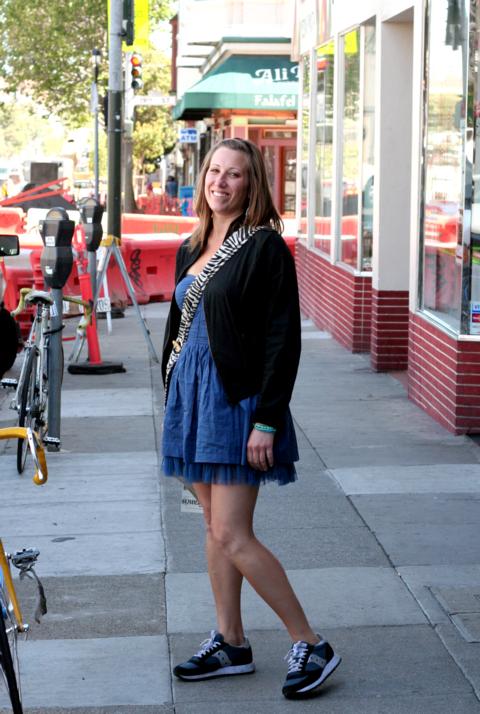
Today’s Look: Jessica, 19th Street and Valencia
Tell us about your look: “This dress is from a store on Haight Street.”
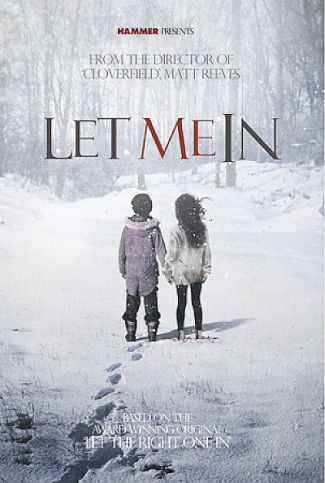
When Let Me In — the film which dares an Americanized do-over of 2008 Swedish import Let the Right One In — was first announced, fans of the original film let rip synchronized screeches of “Whyyyyy?”, shortly followed by angry, ten-point arguments as to why Hollywood is really sucking balls lately. Consensus was that Let the Right One In, which picked up armloads of festival and critical awards (including the San Francisco Film Critics’ Circle’s Best Foreign Language Film honors), was not a film that deserved to be put through the remake machine. Sure, it only made a couple of million bucks stateside, but maybe it wasn’t the kind of film (unlike 2008’s similarly vampire-themed Twilight) that the masses were supposed to gobble up. After all, it had subtitles. Such a drag.
Matt Reeves, he of Cloverfield (2008) and Felicity fame, is aware of the fanboy-hater contingent that awaits his latest release. His Let Me In is a largely faithful retread, with some recognizable kid actors — Kodi Smit-McPhee (stronger here than he was in last year’s The Road) and tween It Girl Chloë Grace Moretz (Kick Ass) — and the lure of legendary British horror house Hammer (back in the producing biz after decades) helping him attract audiences. I suspect many people who’ll go see Let Me In may not have seen Let the Right One In — either because the original’s release wasn’t wide or lengthy enough, or because of that whole foreign-film bias. (Also, diehard fans of the first film may boycott the new version, just on principle. Hey, I did it with the recent A Nightmare on Elm Street, which in my mind NEVER HAPPENED).
Gotta say, though, Let Me In could have been worse than “faithful,” which is way better than “redundant” or “totally offensive.” Reeves, who penned the script from John Ajvide Lingqvist’s novel (Lindqvist himself wrote the script for the 2008 film) stays true to the material, shifting the action to the snowy New Mexico mountains and injecting some Cold War and new wave flair into the 80s setting. I spoke with him recently, just after the film’s screening at Austin, TX’s Fantastic Fest — coincidentally the very festival where Let the Right One In won the Jury Prize for Best Horror Feature in 2008. He kindly put up with my many remake-themed queries.
San Francisco Bay Guardian: How was Fantastic Fest?
Matt Reeves: It was great. It’s been fantastic (laughs). It’s really cool that they chose Let Me In to open the festival, because this is one of the places that Let the Right One In was incredibly well-received. I knew that there’d be a passionate audience for Lindqvist’s story here, and that also we’d have to past the test of being watched by people who really have a passionate love for Tomas Alfredson’s [2008] film. I thought, if we’re embraced here, and if we pass that test, then that will be a really big hurdle, and the screening went really, really well. It was very exciting.
SFBG: I didn’t realize until I was watching the movie that it was a Hammer Films production. How’d you get hooked up with them?
MR: Well, they got the rights to the film. I think that the Swedish producers met with lots of different places, and I think maybe they were drawn to the idea of being the first Hammer vampire film in over 30 years. But they were the ones who got the rights, is the answer. It’s interesting because I think a lot of people, in terms of their concern about this movie being a remake — there’s a lot of question about it being, “Oh, well, Hollywood comes in with a lot of money and ups the effects, and does all this stuff,” but Hammer is an independent company. And we didn’t have a lot of resources. It was a pretty small film, actually. It was definitely a labor of love, and one that we made in this kind of passionate way.
I think it’s pretty cool to be part of the relaunching of Hammer, especially since as a kid these are the kind of movies that terrified me (laughs). All of the Christopher Lee vampire films, I watched. But I was so afraid of them that my biggest memory of Hammer is actually watching them from behind a chair, late at night on local television. They’d show these Hammer films, and I’d come across them, and there’d be some kind of garish blood or lurid scene. I found them very disturbing! And there’s something ironic about the idea that, after they invaded my nightmares, now I’m somehow part of the relaunching. It’s cool but also kind of ironic.
SFBG: Why do you think vampires are such a consistently popular film subject, especially today?
MR: In the best genre films, you’re able to smuggle in something under the surface that you exploit through the metaphor. In this case, I think Lindqvist was really telling a story about the pain of adolescence and coming of age. But I think it really says something about the vampire myth that all of these vampire stories are so different: True Blood is different from Twilight, which is different from Let Me In. And it really does say something about what an incredibly durable myth that is, that you can translate it into so many different contexts. It can be about so many different things, even though on the surface they seem like they’re about the same subject. I don’t think those three versions of the story could be any more different, and that is very interesting, I think.
It’s always about what you use that metaphor for, and I think what attracted me to this one was that it was such a different way of presenting actually a very realistic story. It seems kind of contradictory to say, but it isn’t. He’s using this horror story, this vampire story, to describe how growing up, being bullied and having that difficulty, essentially feels like a horror story. It’s talking specifically about that kind of trauma, of growing up in that way and it feeling like a nightmare.
SFBG: You mentioned that the audience in Austin embraced the movie, but I feel like there’s been a lot of people, especially on the internet, who’ve been horrified by the idea of remaking Let the Right One In. What’s your response to that reaction?
MR: When I first got involved, it was almost a year before the movie was even released, and nobody had ever heard of it. When they showed it to me — I was trying to get a passion project of mine made, and they felt that it didn’t have an overt genre to it. It was more of kind of an independent character piece. And they said, “You know, right now it’s a challenging time to make this. We really love the writing, but we’re not going to make this. But we’d love to work with you, and we want to remake this film. We’re trying to get the rights to it.” After I watched it, I literally called them up the next day and said, “I don’t know if you should remake this movie. It’s great.” And they said, “Yeah, but we think there’s a way to bring it to an audience that won’t necessarily see a subtitled film, and we love this story. Think about it.”
The thing about it is, I so connected to that coming-of-age story, and then I found out it was based on a book. So I read Lindqvist’s book, and he had actually written the screenplay for Alfredson’s film. He did a very faithful adaptation of his book. And I kind of fell in love with the story even more. I ended up writing to Lindqvist, because I kind of saw this opportunity to take that story and translate it into an American context. He grew up in the 80s, I’m about his age, and he’s talking about this coming-of-age in Sweden. And I started thinking about that kind of story in the 80s America that I remember, the Reagan era. I thought that might be very interesting, and would be a film that essentially would be another interpretation of this story, as opposed to being anything that is trying to step on the toes of this beautiful film.
I entered it with that in mind: I wanted to find a way to do something that was personal and yet still faithful to this story. The level at which I was daunted at that point was just that I felt a responsibility that it had to be done in this way that was very personal, because I didn’t want in any way to seem to be, I don’t know, dissing that movie. I thought it was remarkable. And then when the movie came out, it earned such acclaim. I wasn’t surprised, because I thought, “Well, the movie’s a masterpiece. So of course it’s gonna get that kind of reaction.” But then I was sort of like, “Uh-oh. What did I do?” Because by that point I’d already written the screenplay and I was deeply committed to it. I thought, “Wow, I wonder if people will even give this film a chance.”
On the outside, I totally get it, because most remakes are horrendous, and they’re usually one of two approaches: there’s the soulless retread, where somebody goes through the motions but none of the passions or emotions come through, or the kind of run-roughshod bastardization version of the story, where you kind of use some piece of the story, but you kill all original intentions. I think those are both very dispiriting approaches, and they’re what people are used to from a lot of Hollywood remakes. When people were having that response, I couldn’t even say that I was like, “What’s the matter with them?” I put myself in their shoes and thought, “You know, I would think the same thing.” But I knew I was making it really as a labor of love, and it was a story I cared about. And I thought, well, we’ll see what happens. I know that I’m a fan. So if I’m a fan I feel, not the responsibility to the fans, I feel the responsibility as a fan. And so I was just trying to do as personal and committed version of the film as I could, and I knew the rest would have to take care of itself.
SFBG: Why do you think horror is the genre that’s been remade the most?
MR: That’s a good point. I think because the stories are incredibly visual, and people see a chance to take that kind of story —
SFBG: And make it 3D.
MR: I don’t know about making it 3D. It’ll be interesting to see if there’s more of that. Although now, I see that there is this feeling that adding 3D to something as a magic formula does not necessarily work either. I think [remakes happen] because horror movies are very cinematic, visual storytelling that works at a universal level, but there’s still this sense that, to reach a wider, English-speaking audience, that they could be [remade] in English. [Like the Japanese Ring movies, for example.] I think that people who see those movies, producers and studios, they see how that translation might work, because they see a visual medium, and they see those stories being told, and they think, “Oh, well we know that story works, and it’s not just about language.” I’m gonna guess that’s why, but to be honest with you, I have no idea.
SFBG: Do you think all of the horror ideas are used up? Why can’t people come up with original scripts?
MR: Oh, people can come up with original scripts. We should throw in the towel now if somebody can’t come up with an original script that isn’t a remake.
SFBG: Are there more remakes than there used to be?
MR: There have been remakes always in the history of Hollywood. But I will say, at the same time that there are probably just as many remakes, there are also fewer movies that were ever made than there were in the past. I think, percentage-wise, the amount of remakes is much higher. And it is dispiriting because you do want to see original ideas coming through. Part of me thinks and hopes that it’s cyclical. I know there will always be remakes, but I think that there are some great ones: I love John Carpenter’s The Thing. There are lots of remakes that I think are tremendous.
It comes down to, you understand why a studio or a producer is interested in remaking. You hope that they fall in love with the story first, but they certainly see an opportunity to sell a story to another audience. But it comes down to the intention of the filmmakers and their personal commitment, and if they are connected in a way that you can see their passion, and that there’s something expressed there that’s worthwhile, then that’s totally valid. I think that movies like that are great. And obviously that’s what I tried to do. But I’m totally with you: it’d be horrible if the only thing that happened was that we only saw things that were being remade. The thing is, though, if you’re not seeing a remake, you’re still oftentimes seeing movies are the same movie [as one that came before], with a different title, but the same story, the same plot. It is dispiriting. You want to see some vitality and risk-taking.
As ironic as it sounds, that was what I loved about this story: yes, it’s a remake, but it’s a very risky story. It’s a story on the shoulders of two 12-year olds. It’s an adult story with mixtures of tones. It’s got tremendously dark, adult things with really, really tender childlike stuff. That juxtaposition is quite powerful, and it’s certainly not an easy sell by any means. Who knows how we’ll even do. But I loved Lindqvist’s story, and I connected to it on a personal level. My druthers in life is not to go out and [do remakes]. In fact, I resisted even this one when it was first presented to me. But it was an opportunity to do something, ironically, that felt personal to me.
Let Me In opens Fri/1 in Bay Area theaters.

Every time a new Woody Allen film arrives (a near-annual event since 1969) the same old, lazy complaints (“It’s not one of his best”) arrive faster than you can say “pontificate.” Yet 10 or 20 years later it seems that somehow many of those uncelebrated films seem to become “one of his best.” See Broadway Danny Rose (1984), Husbands and Wives (1992), or Sweet and Lowdown (1999).
With his latest entry, You Will Meet a Tall Dark Stranger (opening locally Fri/1), Allen delivers another pitch-perfect mini-guide to the hilarious horrors of growing old … something Allen (according to the director himself, speaking at his Toronto International Film Festival press conference) wouldn’t wish on anyone. What looks and feels like a whimsical rom-com about aging is, in fact, a sobering and even paralyzing blueprint of what exists in most relationships or marriages. Don’t let the fun and breezy vibe of quirky narration deter you. Not only is there more of a bittersweet edge to Allen’s familiar archetypes, but the UK-produced film works as a perfect counterpart to Mike Leigh’s latest monument Another Year (2010). I wouldn’t be surprised if Stranger‘s Gemma Jones earns an Oscar nomination for her performance in what will surely be one of the year’s most truthful films.
After talking to a handful of critics at the TIFF this year about their unimpressed or indifferent reactions to Woody Allen’s latest, I feel it’s important to take a moment to revisit exactly what Allen has made over this past decade of films. Wrapping up his fourth full decade of prolific filmmaking, he has somehow stayed surprisingly strong in such a bipolar industry.
Here’s a quick guide to the brilliance of Woody Allen during the Y2Ks.
1. Vicky Cristina Barcelona (2008) While it’s wonderful to see directors like Noah Baumbach, David O. Russell, and Wes Anderson making cinema inspired by Allen, he can still beat all of them at his own game. Showcasing defining roles for Rebecca Hall and Scarlet Johansson as well as juicy parts for Javier Bardem and Penélope Cruz, the film also features gorgeous cinematography by Javier Aguirresarobe (of Pedro Almodóvar fame) that punctuates this realistic-romance to transcendental heights. Woody + Almodóvar = blissful chronic dissatisfaction.
2. Match Point (2005) and Cassandra’s Dream (2007) Who would have ever guessed that making films in the UK would reawaken Allen’s serious side? Of course, there were hints; see also: Interiors (1978) and Another Woman (1988). While Match Point was perhaps overly hyped and Cassandra’s Dream utterly dismissed, both of these morality tales contain profound character studies, hauntingly performed by Jonathan Rhys Meyer, Colin Farrell, and Ewan McGregor. Both are well worth revisiting. Who says people aren’t making movies about the new Depression?
3. Melinda and Melinda (2004) While this masterful deconstruction may have left audiences cold the first time around, what shines so brightly about this gem is how deftly the same story being told both from a comedic and tragic perspective slowly starts to blend into one. Radha Mitchell was robbed of an Oscar nod here and Will Ferrell delivers one of the all time best Woody impersonations.
4. Small Time Crooks (2000) When Woody Allen’s character in the 1980 masterpiece Stardust Memories, Sandy Bates, is approached by his fans, they often make the comment “I love your work … especially the earlier, funny ones.” Well, if you wanna talk about one of Allen’s funniest films, it’s right here. Not only do Tracey Ullman, Jon Lovitz, and Michael Rapaport deliver laugh-out-loud performances, nothing will prepare you for Allen’s girlfriend in the film — she’s played by Elaine May, director of The Heartbreak Kid (1972) and Ishtar (1986). The two of them together light up the screen.
5. Anything Else (2003) Rounding out the top five is this overlooked treasure championing both Christina Ricci as a neurotic 20-something and Stockard Channing as her newly reenergized single mother. While it could be said that Jason Biggs is a bit too awkward, both Danny DeVito and Allen shine in what even Quentin Tarantino ranked as one of the best films of the decade.
Throw in the hilarious little rainy day ditties such as the match made in heaven Whatever Works (2009) with Larry David and the ScarJo-starring, surprisingly sweet if not a bit silly Scoop (2006) and you’ve got one helluva great decade. I understand that sometimes it’s easier to move on from your favorite artists of the past to find the hot new Hollywood or Sundance sensation. But to paraphrase Preston Sturges’ Sullivan’s Travels (1941): don’t forget about the clowns and buffoons who attempt to lighten our burden a little with laughs while putting a mirror up to the society around us. All that … plus a little sex too, of course.
Jesse Hawthorne Ficks is the Film History Coordinator at the Academy of Art University and programs Midnites for Maniacs, a monthly series at the Castro Movie Theatre that celebrates dismissed, underrated, and overlooked cinema.
Ah! The sun! Would that I weren’t typing this in a cafe with an excessive amount of windows. Or that I was in one of San Francisco’s last stalwart salons to eschew the wired world. That’s right, there are still cafes out there that don’t have wireless Internet. Spots where you can sit your sweet self down and feel absolutely no urge to chain-check your Facebook newsfeed.
These are places where you’re still keeping up with your double soy latte joneses, but are forced to devote your attention to finishing (continuing, starting, rueing) your multi-dimensional wade through Gravity’s Rainbow. Or to eavesdropping on your neighbors’ conversation about the recent spate of cats on leashes sightings. Or even – gasp! – have a conversation of your own. And should all the actual reality get to be to much don’t fret, I don’t believe these places are confiscating iPhones. Yet.
Four Barrel Coffee
Four Barrel’s got no wireless because to be on your computer would mean taking your eyes off the see and be seen parade that treks back and forth beneath the behemoth sailor’s rope and lightbulbs sculpture that hangs like a blunt sword of Damocles above the entryway. Should the beautiful people parade wear through the surface, turn your gaze to the back of the cafe, where lithe coffee crafters roast the brand’s beans on site.
375 Valencia, SF
(415) 252-0800
Delancey Street Crossroads Cafe
Winner of this year’s “Best Al Fresco Feel Good,” Delancey Street Foundation’s Crossroads Cafe not only provides on-the-job training for adults in transition, but also had one of the most comfortable, indoor-outdoor cafe seating in which you can’t log on. To supplant this digi-dearth, its got more than enough diversion: a bookstore, ice cream cones, waffles, and the prettiest little garden patio from which to spy on Giants fan stadium processionals.
699 Delancey, SF
(415) 836-5624
www.delanceystreetfoundation.org/entercafe
Borderlands
“A nice place to sit, read, and converse,” reads the motto of this charming space. In the thick brush of the Mission’s most dense latte land, Borderlands is one of the only cafes where you will find people that look as though they could be working on the next great American novel, not that the next great American hashtag doesn’t have its charms as well. Pop next door to pat the thought-provoking skin of the hairless kitty cat in the sci-fi bookstore of the same name for that extra smack of the real real.
870 Valencia, SF
(415) 970-6998
Momi Toby’s Revolution Cafe and Art Bar
Say you want a revolution? Would you settle for a cafe where you can sit indoor and out, segueing effortlessly between caffeine and alcohol as afternoon thickens to dusk? Fab, here’s your flophouse. Momi Toby’s shoots and scores with the Parisian round table and wooden chair look. With beers on tap, a reputable food menu that can include bagels to pizettas, and candles produced when darkness falls outside the streetside windows, it’s easy to see why they’re not concerned with the remote access crowd. This place is for lounging and contemplation, not hyperlinks and trackbacks. Bonus points for not having a website.
528 Laguna, SF
(415) 626-1508
Under the benevolent neon rainbow of Twin Peaks Tavern, a bearded man with a battered trunk strolls up and addresses a group of people seated at café tables in the little plaza tucked beside the F-Market turnaround at Castro and 17’th. It’s the sort of thing that happens a lot in San Francisco, the difference in this case being that the figure is none other than Walt Whitman (robustly channeled by No Nude Men’s Ryan Hayes), and the assembled crowd a diverse group of Fringe Festival patrons,
Castro habitués, and curious bystanders sucked in by the moment. Average of build yet bold of purpose, this is not the “Old Father Graybeard” of Allen Ginsberg’s “A Supermarket in California”—but rather a younger, lustier Whitman, who perambulates easily about the crowd and speaks desire to the bustle of passerby and impatient streetcars.
This site-specific piece entitled “Boys Together Clinging: the Gay Poetry of Walt Whitman” brings to vibrant life the “Calamus” poem-cluster, contained within Whitman’s definitive tome Leaves of Grass. Written 150 years ago, the “Calamus” poems speak frankly of “manly attachment,” “athletic love,” and a multitude of “comrades”.

Walt speaks! Ryan Hayes channels in the Castro
Insinuating himself into his audience, the present-day incarnation of the poet grasped hands, caressed shoulders, chased after a hottie in a hoodie, a “passing stranger,” calling out after him: “I slept with you”. He is gentle, candid, sweetly-frustrated, threatening to drop allegiance to his poetry for his unnamed love. “I am indifferent to my own songs,” he confesses, but “determined to unbare this broad breast of mine, I have long enough stifled and choked.” His confession come to an end, he hoists his trunk once more, his burden, and prepares to follow the F-Market, and his desires, to the end of the line.
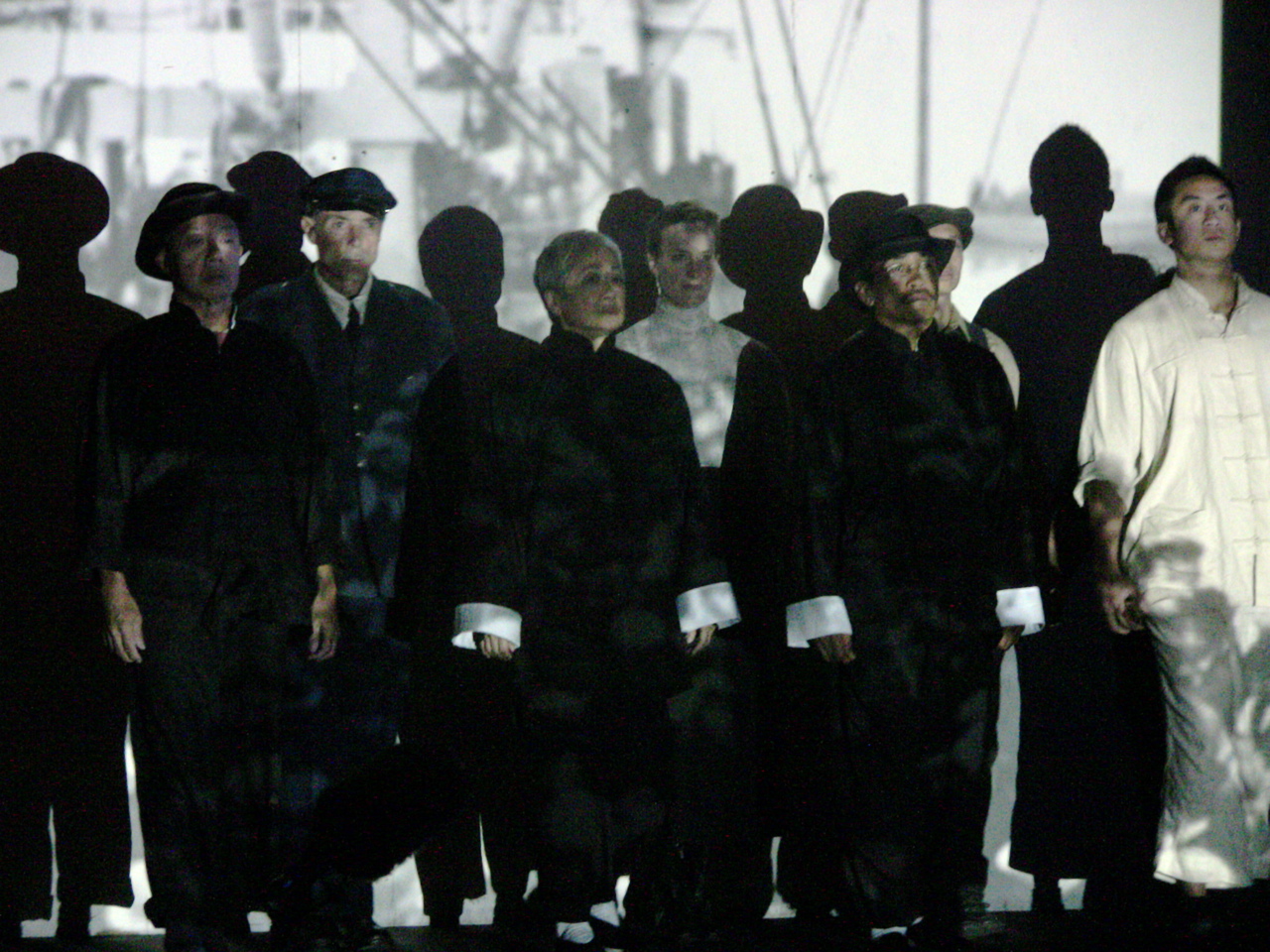
On the opposite side of town, another site-specific piece was also airing out some secrets. Genny Lim’s “Paper Angels” might have been written in 1980, and set in 1915, but the politics of the still-controversial 14th Amendment regarding birthright citizenship which permeate it are uncomfortably close to the present moment.
Set on Angel Island, (though performed more accessibly at Portsmouth Square, on the edge of Chinatown) “Paper Angels” follows the detention of seven Chinese immigrants, awaiting their release, or deportation. Because of the Chinese Exclusion act of 1882, many Chinese immigrants could expect to be turned back before ever setting foot past the Immigration Station, but thanks to a curious loophole—the fact that all of San Francisco’s birth and immigration records had been destroyed in the fires of 1906—a wave of “paper sons” were able to claim birthright citizenship by changing their identities to match those of families who had already been granted citizenship.
It’s a complex and painful history, told by NYC’s Direct Arts through a kaleidoscopic series of short vignettes against a backdrop of projections of the over-crowded barracks and anguished poetry carved into the walls by the incarcerated detainees. Though much more robust in terms of production values than “Boys Together,” both pieces shared a deliberate resonance with their chosen sites, the heartache of secrecy, the resolute power of poetry, and the transcendence of release.
Not all of us are brave enough to face up to a future of robots farming vast high rises of our fruits and veggies. But Tim Donohue is. And not only does he have the same last name as me, but he’s also started a think tank called Key4Hope, which is mainly comprised of friends and family and examines just how we can solve all these bothersome social-environment-economic-psychological kerfuffles we find ourselves in these days.
Yes indeed – and you can see the surprisingly technical (Donohue has a master’s in international relations from San Francisco State) results of these down home solutions on the group’s website. Fancy a close-knit cabal from Mountain View solving such quandries! Of course this interview is not to endorse what they’ve come up with. But the point is that they’re talking about change. And as Donohue told us in a recent phone interview, it’s really more about getting the conversation started.
San Francisco Bay Guardian: So tell me about starting your think tank.
Tim Donohue: Well, Key4Hope went online in June. This is a long story but I’ll make it short. I kind of organized it. What we do is that I’ve gotten members thorugh Facebook, Craig’s List, we send ideas back and forth. There’s no scientists, we’re just average people. We tweak the ideas and then we put them up on the website. We don’t have titles, we’re trying to keep it low key.
SFBG: What was your motivation behind starting the think tank?
TD: I have a masters degree in international relations from San Francisco State. I’ve been writing and putting things together since I was 15 – I’m now 55. I’ve done a lot of traveling and seen a lot of things and I think there’s a lot of problems out there. I guess we’re trying to do something positive.
[Here we side track to our names, as we are clearly of the same Celtic clan. Donohue gets us back on course, concluding “but I could talk about that for hours.”]
SFBG: So let’s focus on one of your theories. Robot farmers? Tell me about that one in your own words.
TD: I was in the Phillipines for nine months, I’ve been to Mexico, I’ve seen a lot of poverty. The thing about robot farmers is that they can produce more food. Robot farmers, I’ve never heard of them anywhere else. What we’re trying to do is mechanize farming as much as possible. What we’re trying to do is produce enough food, we need to increase arable land. 27,000 people starve to death every day. If we can increase food production more lives can be saved. There’s always the question of who will pay for it, I think that’s the best place for foreign aid.
SFBG: Are you familiar with the arguments some have that the further mechanization of farming that’s taken place over the past hundred years has actually hurt the environment?
TD: Oh yes. I used to be a member of the Sierra Club and one of the problems is that farming takes up a lot of land, a lot of rainforests are being cut down. But we have to find a happy mix of saving the environment. We are also in favor of vertical farming, which means sky scraper farming.

Skyscraper farming. Drawing courtesy of Key4Hope
SFBG: But I believe that factory farming and the like brings us farther from the earth’s natural cycles.
TD: I think the environment page is something you should look at because youre obviously an environmentalist. What were advocating is that in the next four eyars robots will go out and survey the land, we may need more pine trees. I think that will counterbalance the loss of land from farming. We’re obviously not always right, we’re throwing ideas out there so people can talk about them.
SFBG: Would the robot farmers cause issues with labor?
TD: No doubt that it will cause problems with labor. But it will lead to new jobs in terms of people making the robots. My conjuncture is that robot problems in conjuncture with vertical farming will increase the amount of food. As progress goes on, you can always see that labor has changed.
SFBG: Is any one developing this idea of robot farmers now?
TD: Not to my knowledge, but I wouldn’t be surprised if somebody was. We’re looking forty years down the road in some of these cases, and that’s pretty far down the road in terms of progress. [we subsequently found some chit-chat on the subject]
SFBG: So this think tank, is part of its use to stimulate discussion among the family and friends that are a part of it?
TD: Yes that’s definitely part of it.
SFBG: What kind of response have you been getting from the website?
TD: This went on in June and we’ve gotten some people on Facebook and Craig’s List to respond, but we really haven’t gotten any media publicity yet. Getting it organized has been really humungous for me. We hope to get publicity and get this off the ground.
SFBG: Are the ideas your own original solutions, or are there certain sources you cull them from?
TD: A lot of the ideas are my original ideas and some are ones Ive borrowed and enhanced. For example, with vertical farming, there’s been environmental reclamation in the Everglades and Florida.
SFBG: What is your end goal for Key4Hope?
TD: To inspire people to work harder to make the world a better place. 27,000 people are starving to death every day and the rainforest is losing acres and acres and there’s war everywhere. We’re hoping these ideas will spark… I don’t want to say a movement because that’s a little drastic, I mean we’re real small, we only have 17 members. But spark discussion and get the ideas accepted out there somewhere. I went to Catholic grammar school from first to eighth grade, you might say I’m religious (chuckles).

Today’s Look: Nicole, Dolores Park
Tell us about your look: “Be unique”
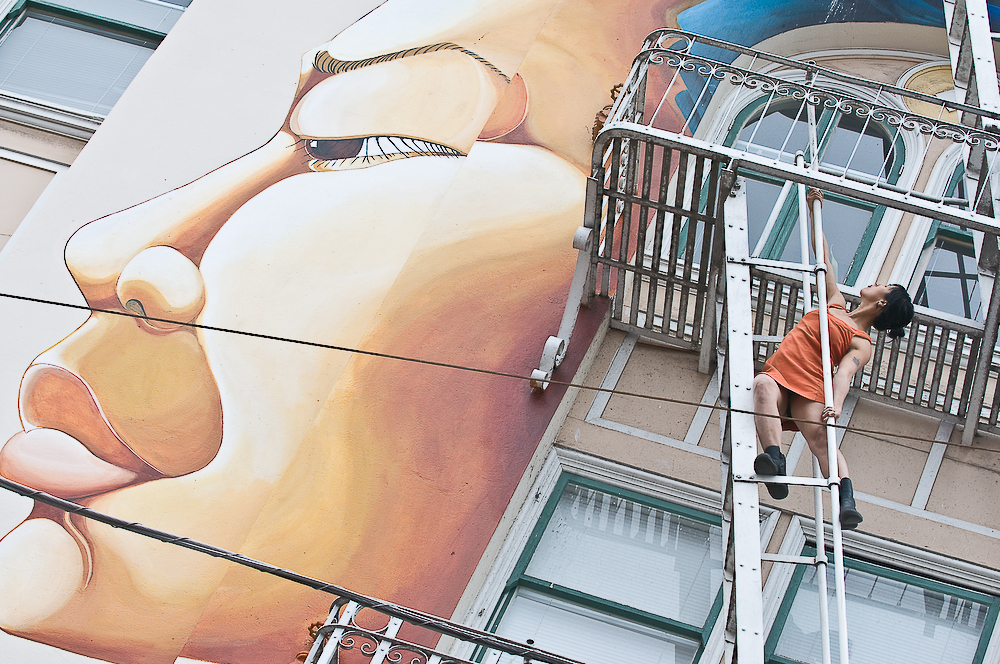
By Emmaly Wiederholt
Recently I’ve been volunteering with an older blind woman. During our last volunteer session I mentioned I was attending Flyaway Productions’ Singing Praises: Centennial Dances for The Women’s Building (Sept. 10-18) and asked if she had heard of The Woman’s Building. She practically laughed out loud, and I was surprised to learn she was very familiar with it as an active member of the second-wave feminist movement during the ’70s and ’80s. She described the struggle against sexual and gender inequality in the workplace, in the family, and in reproductive rights.
That night as I stared at the brilliantly lit murals of The Women’s Building with aerial dance artists scaling the walls and windows, I thought again of my blind friend’s activism and pondered what it meant to be a woman watching this particular dance performance. So many of the values I cherish about being a woman were present in the bold women flying above.
These women were strong. While dance requires a certain amount of brawn in itself, aerial dance requires much more abdominal and upper body strength than in most dance forms. This may seem self-evident, but in the context of the piece it was particularly telling that these were women with musculature. These women took risks. Hanging suspended over asphalt by a harness requires a certain amount of fearlessness. The risks inherent in this type of dance lent to the thrill audiences felt as dancers swung upside down or sideways high above the ground. These women challenged each other. Much of Jo Kreiter’s choreography consisted in the dancers pushing and pulling at one another, not as antagonists, but as competitors, driving each other to new physical heights. And finally, these women were intuitive. Dance in unison is difficult. Three women, each positioned on a different flight of stairs on the fire escape, danced in tandem though they could hardly see each other. Rather, they had to feel one another’s energy, a feat that takes sensitivity and practice to perfect.
Aside from the lovely testament to women inherent in the dancing, I also enjoyed how unassumingly the performance garnered an audience. Passersby stopped and looked up in wonder. Cars slowed. Buses full of people crammed to look out the window and see what was going on. The performance ran about one half hour in length and by the end quite a crowd had accrued. This rapt community of onlookers, some there by chance and others by premeditation, were yet another demonstration of the role The Women’s Building plays in bringing people together.
Nearing the end of the performance, a dancer stood on the corner of the colorful four story building, her body illuminated in white light, her clothing and hair billowing frantically in the wind. She looked seven feet tall and practically biblical in effect. Looking around, I noticed the now sizeable crowd, their faces upturned towards the Amazonian woman atop the poignantly muraled walls, a veritable bastion of womanhood in the sky.
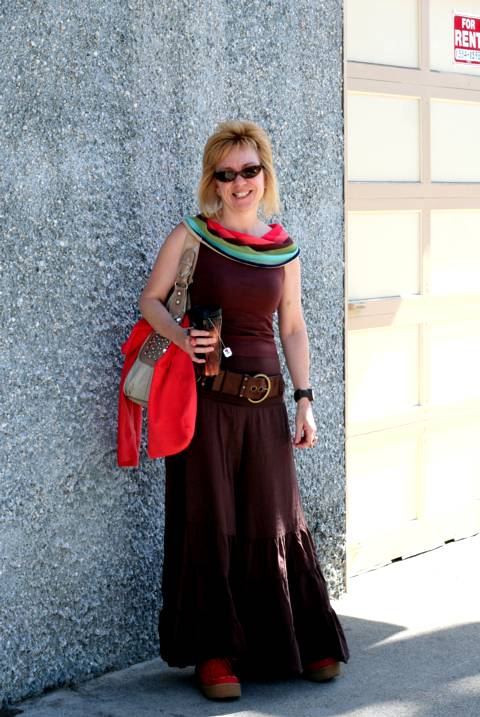
Today’s Look: Inci, 24th Street and Church
Tell us about your look: “I like unusual combos. My style is color avant-garde.”
Ways to have fun while giving back this week
Friday, Sept. 24
Art for AIDS
Attend this charity art auction featuring paintings, sculpture, photography, and jewelry along with food and drink from Bay Area restaurants, caterers, wineries, and breweries. There will also be live music and an auction for travel and adventure prizes. Proceeds to benefit the UCSF AIDS Health Project.
5:30 p.m., $100
The Galleria
101 Henry Adams, SF
www.artforaids.org
Bollywood Disco Ball
If you need an excuse to wear a flashy disco outfit, head to this fundraiser featuring a night of Bollywood disco music video mash ups, live performances, live art, Indian food, and more. Proceeds to benefit Project Ahimsa, a global effort to empower youth through music that distributes music education grants in 14 countries, including programs in the Bay Area.
9 p.m., $125
111 Minna Gallery
111 Minna, SF
www.projectahimsa.org
Concert for Pakistan
Join classical music lovers and others interested in helping victims of this summer’s flood in Pakistan for a night of classical chamber music performed by the San Francisco Academy Orchestra, the Calvary Presbyterian Church chior, and other Bay Area musicans. All donations given during the concert will go to Presbyterian Disaster Assistance: Pakistan.
8 p.m., donations encouraged
Calvary Presbyterian Church
2515 Fillmore, SF
(415) 346-3832
Sunday, Sept. 26
Race for the Cure
The Susan G. Komen Race for the Cure® Series is one of the largest 5K run and fitness walk in the world, raising funds and awareness for the fight against breast cancer, celebrating breast cancer survivors, and honoring those who have lost their battle with the disease. Participate by running, walking, or just donating and help provide breast health research, diagnostics, screening, treatment, services and education for uninsured or underinsured women
9 a.m., $10+
Start and finish at Ferry Building
Embarcadero at Market, SF
www.komensf.org
Support the Red Vic
Join Surfpulse.com for a benefit for the Red Vic, a worker owned and operated movie house since 1980, featuring free food, surf films, DVDs for sale, and a $5 raffle for a Las Olas surfboard and other prizes. $1 from all Sierra Nevada beer sales and a portion of the bar and tips will all be donated to the Red Vic.
6 p.m., free
Joxer Daly’s Irish Pub
46 West Portal, SF
www.surfpulse.com
Literary readings, book tours, and talks this week
Jonathan Safran Foer, Mattilda Bernstein Sycamore, Radar Lab Showcase, The Architecture of Timothy Pflueger and more.
Wednesday, Sept. 22
Radar Lab Showcase
Featuring authors Ali Liebegott, Annie Sprinkle, Beth Stephens, Justin Chin, Kat Marie Yoas, Deez Nutsian, Rose Tully, Elyssa Joy Kilman, and Michelle Tea.
7 p.m., $10
The Luggage Store
1007 Market, SF
(415) 255-5971
Jonathan Safran Foer
Hear the author of Eating Animals, Extremely Lound and Incredibly Close, and Everything is Illuminated discuss vegetarianism, argue for humane agricultural methods, and examine the cultural meaning of food.
8 p.m., $20
Herbst Theater
401 Van Ness, SF
www.cityboxoffice.com
T.J. Stiles
The award-winning author of The First Tycoon: The Epic Life of Cornelius Vanderbilt will give a talk titled, “The Significance of One Life: The Individual’s Role in History, and Biography’s Place in the Digital Age,” where he will discuss the importance of the individual in the course of human events, how to reflect on life with the short attention span of the digital age, and other current challenges to writing biography.
6 p.m., $12
Mechanics’ Institute
57 Post, SF
(415) 393-0100
Thursday, Sept. 23
“The Architecture of Timothy Pflueger”
Theresa Poletti, author of Art Deco San Francisco, will lead this lecture about Pflueger, who shaped the skyline of San Francisco with his mastery of the Art Deco style.
6 p.m., $12
Bayside Conference Room
Pier 1
Embarcadero, SF
www.sfheritage.org
City of Stairways
Attend this reading with the young authors of WritersCorps of their new book of poetry, photography, artwork, maps, and tips titled, City of Stairways: A Poet’s Field Guide to San Francisco.
7 p.m., $5-$10
Red Poppy Art House
2698 Folsom, SF
(415) 826-2402
Guillermo Del Toro
Del Toro returns with his second novel, The Strain, the second in The Strain series, about a vampiric infection spreading across America. Del Toro is best known for his films, including Cronos, Blade II, Hellboy I and II, and Pan’s Labyrinth among others.
7:30 p.m., $12
Kabuki Sundance Theater
1881 Post, SF
www.booksmith.com
Monday, Sept. 27
Michael Lewis
Hear this journalist and author of Money Ball and The Blind Side discuss his latest book, The Big Short, describing the build up of the housing credit bubble that led to the financial crisis of 2007-2008.
8 p.m., $20
Herbst Theater
401 Van Ness, SF
www.cityboxoffice.com
Tuesday, Sept. 28
The End of San Francisco
Get a special preview reading of writer and activist Mattilda Bernstein Sycamore’s memoir in progress about the past two decades she spent in San Francisco, full of the political, literary, and artistic. Refreshments and discussion to follow.
6:30 p.m., free
Modern Times Bookstore
888 Valencia, SF
www.mtbs.com
Nothing Left for the Dead
Local author M. Cazadores will read and discuss his first novel, a piece of non-existential literature that touches on themes of indentured servitude, technology, American corporate plutocracy, racims, sheep, sex, love, music, drugs, and time. Accompanying music will be provided by David and Joanna.
7 p.m., free
Vesuvio
255 Columbus, SF
(415) 362-3370
“When people tell someone a history it’s always one side of it. What I know is a little darker.” Assemblyman Tom Ammiano had seen our post on this weekend’s Other Cafe reunion (Sat/25), and had a bone to pick with our description of the defunct Haight-Ashbury stand up club’s progressive approach to comedy. Namely, the Other’s attitude when it came to gay comics during its 1980s heyday – a view which club founder Bob Ayres vehemently disputes.
Ammiano should know – in addition to his early career as a special education teacher and current one as the political voice of the 13th Assembly District, he was a gay stand up comedian in a city that has been hollered at as the modern day creche of homo wisecracking. He founded the gay comedy night Valencia Rose Cabaret in 1980, thereby earning himself the grand distinction of “Mother of Gay Comedy.”
But he couldn’t get work just everywhere. “The interesting thing is that this was San Francisco – I can’t really think of a gayer city than that,” he told me on the phone today. “When we tried entry to the Other Cafe and Punchline [another club open to this day], we were denied access.” Ammiano said that club schedulers would tell them that due to the AIDS crisis, audiences weren’t comfortable with “gay material.” Or else that audiences just didn’t like listening to gay jokes, or they would be less direct but still firm on the fact that no gigs with them would be forthcoming. “It was really a bummer. We had our audiences and everything, but [club owners and schedulers] were homophobic.”
Ayres’ comments on the matter implies a bit of sour grapes on the part of Assemblyman Ammiano. Quoth he:
“At the height of the comedy boom it was tough for many comedians to get gigs there. We were able to pick from among the very brightest of acts from around the country. It was the hardest thing about owning a high profile comedy room, saying no to deserving comics. The charge that we closeted comics or disallowed gay material is blatantly untrue nor is it supported by the facts. We had many gay comedians play and even headline the club. Must we list them? Tom as a beginning comedian back then may have felt he deserved more stage time and maybe he knows others that feel that way. But there are also hundreds of straight comedians who feel they deserved more gigs there. We simply tried to bring the funniest comedians we could find to our club every night. Their sexual preference was of no concern to us ever. It still isn’t. We would never have survived nor prospered as a comedy club had we told comedians what material to do.”
When I read Ammiano a list that Ayres had sent me of gay comedians that had performed at the club, Ammiano said that most of the names were people that had performed there “in the ’90s” (note: the club had already closed by then), or had performed closeted, or hadn’t done explicitly “gay material.”
Which is not to negate all of Ammiano’s respect for the Other’s comedic legacy. “It was just amazing. People got their careers started, we had a lot of heavyweights get their start here, they’re absolutly right that way,” he said.
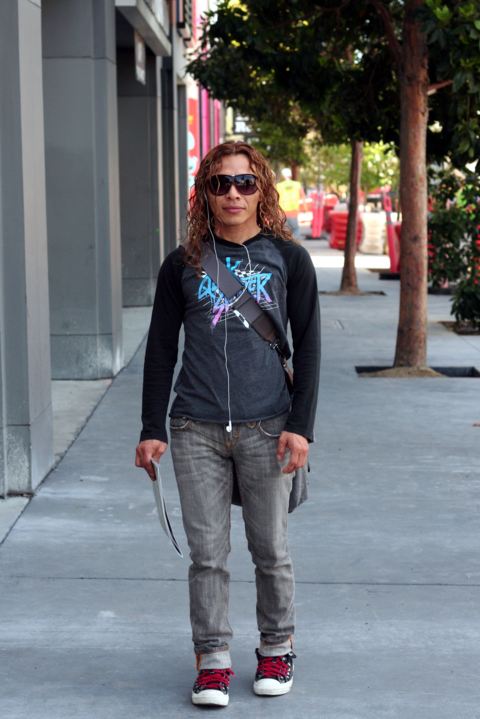
Today’s Look: Carlos, 17th Street and Valencia
Tell us about your look: “Trying to be fresh and mix textures.”
“The stage used to be right here.” Bob Ayres, founding partner of the classic Haight-Ashbury stand up comedy club, The Other Café, is sitting in his old yuckster stomping grounds, now a neighborhood crepery. He’s gesturing to the corner of the restaurant, roughly where we’re sitting, and where his small stage used to host everyone from Robin Williams to Jerry Seinfeld. Now in its place it’s just me and Bob and a guy eating a sandwich two tables down. Could a desire for resurrection be driving Ayres’ Other Café reunion show this weekend (Sat/25)?
Ayres, fresh back from living in Nevada City (“I missed my peeps”) is now rocking an impressive Jew ‘fro and a distinctive pendant under a partially unbuttoned shirt. Over a bottle of mineral water and a cup of coffee we chat about just what San Francisco misses about the scene at The Other, which he opened with partner Steve Zamek in 1977. It was initially a place for bluegrass shows as well as the comedy it eventually chose to specialize in.
Located in a neighborhood known for its progressive values – “the Haight was ground zero for that,” Ayres tells me — the club gained a reputation for comedians that avoided berating their audience and using swear words or “take my wife” jokes as a cheap crutch for laughs. Eschewing liquor sales and smoking inside the club doors (perhaps the first venue in California to do so), the team cultivated an environment that was less a meat market, bar-like ambience, and more a place where people came to hear consistently good jokes.
A generation of comedians with sitcoms built around their act would come up from L.A. to play the cafe, agents sent up their big name clients to practice their material for the Tonight Show in front of an audience that could appreciate clean jokes. When the club first opened, the glut of comedy now available on cable was merely a glimmer in the distance, long before the 1990 merger of the Ha! Channel and Comedy Central that brought stand up into living rooms from San Francisco to San Antonio. Clubs like these were where comedy lovers came to see everyone who was new and hot. “It became the hottest thing around for three to four years,” says Ayres.

A young Jay Leno holds the mic to his chin at the Other, circa 1980
With an official crowd capacity of 49, the Other would regularly squeeze in 180 comedy fans for local favorites like Dana Carvey, who pioneered his “Church Lady” character right where I’m sipping my cup of soy milk and medium roast. “Our doorman was always on the lookout for the fire marshall,” Ayres tells me. So you could squeeze everyone out the back door real quick if he came? “We didn’t have a back door. That was another problem,” he laughs.
A community of sorts formed around the Other, whose staff was dedicated to promoting unique, non-repetitive shows that they themselves would watch. Some employees were more passionate about punchlines than others – Paula Poundstone washed dishes in the Other Café’s kitchen before she made the leap to the stage, knowing the neighborhood well enough to even time comments about the perennially empty 10 p.m. #37 Corbett Muni bus, which would thunder past the club each evening when the headliner was onstage.
One such night, Poundstone stopped her set, strode out the door and boarded the bus, leaving club staff to cover the mid-set interruption. Slightly uncomfortable for those left behind, yes, but indicative of a place where comedians felt comfortable experimenting with their act. “That was a time when it was more funny to tell the story later,” Ayres tells me. That said, he relished those moments when the stars would go off script into moments of improv. “That’s usually when they were the best.”
I ask him what makes good comedy, and he answers with a story about his “hero,” Steve Martin. Before shows, Ayres says, Martin would stuff baloney into his shoes “so if he didn’t get laughs he could always think of the baloney.” The point being that if you can make yourself laugh, you stand a good chance of making your audience laugh as well. “I think that plays out in every part of life,” Ayres counsels me.
So what does he miss most about the days of fire code violations and impromptu sets? “Knowing there’s a great comedian in your club that night, and inviting all your friends and family. After you see a good comedy show you are happy.” Ayres remembers standing at the front door on Cole and Carl after such a night’s performance, watching smiling faces leave the club. “Then you’re high. You’re, like, doing something good for the people.”
But when I ask Ayres what young comedians he recommends for a night on the town like the ones he’s reminiscing about, he demurs to name a single one, telling me that he’s not well enough acquainted with the scene today. Look for that coyness to change: Ayres is setting up young comedian showcases in Boston, Chicago, and New York over the next year. He says he’ll be checking out possible acts for upcoming shows he’ll be putting together in the Bay Area.
“It’s clear to me that we have a following: an older crowd who wants a more focused, comfortable setting,” he tells me with an air of a man who knows that he knows what he knows. Look to his reunion show this weekend, then, not just for a look at once was, but possibly what will be for San Francisco comedy.
The Other Café reunion show
Sat/25 7:30 p.m., $70
Palace of Fine Arts
3601 Lyon, SF
(415) 563-6504
By Landon Moblad
The fine art of creating shitty movies can be divided into two camps — intentional and unintentional. And while I have to admit, I’m much more a fan of the latter (Troll 2, The Room and the Blair Witch sequel all come to mind), I really love what the folks at the Asylum are up to. Any film studio with the balls to release a movie called Titanic II (“Looks like history is repeating itself”) is just fine in my book.
Based out of Burbank, CA, the Asylum produces truly awful rip-offs of major Hollywood blockbusters, which they’ve dubbed “mockbusters.” These straight-to-video travesties are hastily thrown together (the studio makes a movie a month) with a mix of embarrassing CGI, surreal casting decisions (Debbie Gibson, the scientist!) and insulting plots. They’re then promptly thrown into stores to coincide with the theatrical releases of the films they’re capitalizing on. Transformers becomes Transmorphers. I Am Legend turns into I Am Omega. And Snakes on a Plane is now Snakes on a Train (a spoof of a spoof — so meta!) But here’s the thing. These films are supposed to be bad and the guys calling the shots wouldn’t have it any other way. In fact, they think it’s hilarious.
“There’s a part of me that thinks that anyone who walks into a store, sees Transmorphers on the shelf and thinks that it’s the Michael Bay film on the same day that it’s entered into the theater, to a certain extent deserves to be fooled,” said Asylum partner, Paul Bales during this YouTube interview.
The self-awareness the studio employs in making these films and the fact that a lot of the audience is in on the joke leads to some opportunities to push the limits of what defines a bad movie. Sure, a lot of films have wooden acting, grade-school level writing and hilarious plot holes. But do they have a giant shark leaping out of the water and attacking a plane at full elevation, like in Mega-Shark vs. Giant Octopus? Nope. They don’t.
I also love how much the Asylum seems to revel in its shamelessness. You called your movie, Indiana Jones and the Kingdom of the Crystal Skull? Well, ours is called Allan Quatermain and the Temple of Skulls. Deal with it.
Really though, there’s something wonderful about consciously creating trash. Especially in the world of film, where we’ve grown accustomed to movies being synonymous with insane budgets, top-notch special effects, and elaborate scores. To turn that all on its head and make something terrible in the interest of just allowing people to laugh and be entertained is pretty awesome.
And to the sourpusses who find this all to be offensive or harmful to the Hollywood system, Asylum partner David Rimawi has offered up this advice: “If you want this to stop, you’ve gotta stop watching these movies.” Love ‘em or hate ‘em, that’s going to be easier said than done.
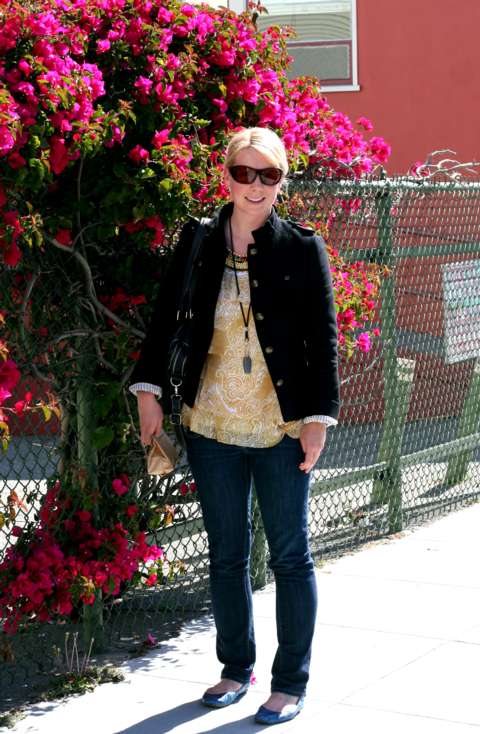
Today’s Look: Brigitte, 24th Street and Dolores
Tell us about your look: “I work for a local designer called Weston Wear, so that’s what I’m wearing.”

If you’re an environmentally minded lover of the arts who wants to start hosting cool gatherings on your property, have we got a centerpiece for you! Remember the Panhandle Bandshell? That was the temporary performance venue that a group of local artists built from old car hoods and other recycled materials back in 2007. And now, for the right price, it can be yours.
“It’s a classic bandshell and the ideal use is for community to gather and performers to do their things,” says Will Chase of Finch Mob, which collaborated on the project with Rebar and CMG Landscape Architecture. “If people are interested in recycling and reuse, this is a great example of that in action.”
After its initial (slightly controversial) run on the Panhandle in the summer of 2007, where it hosted regular performances, the bandshell has been more recently been on display at Fort Mason, from where it must be removed by Oct. 8.
Its artist-owners have the opportunity now to move it out to Treasure Island, either for storage or display, but first they wanted to see whether a private party would want to give it a more permanent home. They’re hoping to pull down around $30,000 for the piece, which they’ll pour into other projects, so make them an offer if you’re interested. Contact info and details on the piece can be found on their website.
Literary readings, book tours, and talks this week
Jonathan Safran Foer, Rebecca Solnit, How to Grow a School Garden, digital art collecting, and more.
Thursday, Sept 16
Stephen Breyer
Supreme Court Justice Stephen Breyer will discuss his new book, Making Our Democracy Work.
8 p.m., $20
Herbst Theater
401 Van Ness, SF
www.cityboxoffice.com
East Eats West: Writing in Two Hemispheres
Hear author Andrew Lam in conversation with Richard Rodriguez about his new collection of essays about the unexpected consequences of the Vietnamese diaspora.
6 p.m., $12
Mechanics’ Institute
57 Post, SF
(415) 393-0100
How to Grow a School Garden
Author Arden Bucklin-Sporer will discuss How to Grow a School Garden: A Complete Guide for Parents and Teachers, which offers parents, teachers, and school administrators tips and advice on how to build school gardens and how to develop the programs that support them.
7 p.m., free
BookShop West Portal
80 West Portal, SF
(415) 564-8080
Rebecca Solnit
Hear one of San Francisco’s most provocative writers discuss her past book, which include Wanderlust, A Paradise Built in Hell, and A Field Guide to Getting Lost, and her upcoming book, Infinite City: A San Francisco Atlas.
7 p.m., $10-$20
JCCSF
3200 California, SF
(415) 292-1233
Saturday, Sept 18
Diane K. Martin, Lisa Gluskin, and Melissa Stein
Attend this poetry reading with recently published poets Diane K. Martin, author of Conjugated Visits, Lisa Gluskin, author of Tulips, Water, Ash, and Melissa Stein, author of Rough Honey.
7:30 p.m., free
Pegasus Books Downtown
2349 Shattuck, Berk.
(510) 649-1320
Sunday, Sept 19
“Collecting the Impossible”
Prominent collectors, critics, and artists will discuss the historical dynamics or collecting digital art and building an art market for challenging work. Panel participants will include Richard Rinehart, Digital Media Director & Adjunct Curator of the Berkeley Art Museum and Pacific Film Archive, collectors Dennis Scholl and Jeff Dauber, Katie Clark from the Catharine Clark Gallery in San Francisco, Chief U.S. Correspondent for The Art Newspaper Jason Kaufman, and artist Lynn Hershman Leeson.
2 p.m., $12
Yerba Buena Center for the Arts
701 Mission, SF
(415) 978-2787
Tuesday, Sept 21
Jonathan Safran Foer
Join Foer, author of Everything is Illuminated and Eating Animals, as he talks about our dining habits, insatiable appetites, and the cultural meaning of food. He will explore the ethical, environmental, and health risks behind commercial fishing and factory farming.
7 p.m., $18
Shultz Cultural Hall
Oshman Family JCC
3921 Fabian, Palo Alto
www.tickets.commonwealthclub.org
Words for Empty and Words for Full
Poet Bob Hicok will read from his new collection.
7 p.m., free
BookShop West Portal
80 West Portal, SF
(415) 564-8080