• No categories

Pixel Vision

The Performant: What, me Fringe?

0

Unfortunately for me, I’ll be unable to attend a whole plethora of sure-to-be-intriguing shows this weekend such as Right Brain Performancelab’s “The Elephant in the Room,” The 11th Hour Ensemble’s “Alice,” and The Offcenter’s “Waiting for Godot.” But fortunately for me, it’s because I will be holed-up in the booth of the newest addition to the Exit Theatreplex — The Studio — where I’ve been running lights for a whole plethora of shows ranging from confessional monologues to sketch comedy to a whacked-out whodunit set in Super-Duper Mega-Marine Coaster World. Is that a bowl of free pretzels in my hand? It must be Fringe Festival season again in San Francisco.

SF Fringe is uncurated and uncensored, it’s fair to say that not every show is road-tested and audience-approved. Caveat Emptor, ticket-holders. But fans of local theatre companies past and present such as Art Street Theatre, Black Box Theatre, Lunatique Fantastique, Thrillpeddlers, Killing My Lobster, Thunderbird Theatre, Cutting Ball, Crowded Fire, Mugwumpin’, Banana Bag and Bodice, Foolsfury, Ripe Theatre, Performers Under Stress, Pi  Clowns, SF Buffoons, Dark Porch Theatre, Boxcar Theatre (and many more!) should know that all of the above have been featured at the San Francisco Fringe — and in fact, more than half of these companies debuted at the Fringe. By providing an anything-goes, low-cost production crucible for local, national, and even a few international performers, the San Francisco Fringe Festival makes it possible for previously unknown companies with a clear artistic vision to get a boost up to the next stage (pardon the pun) of their development. Armed with buzz, some of these companies go on to solid artistic success. Some disappear without a whimper. Regardless, everyone gets a fair shake.

True, a 10-year veteran of the SF Fringe, I’d had no idea there were such things as honest-to-god Fringe Festival rock stars until I went to Edinburgh and to Montreal and saw them for myself—performers who tour the Fringe circuit every year, and actually make a living at it, or at least build a solid international reputation. The San Francisco Fringe is a lot more self-contained, but in terms of getting in on the ground floor of the next big thing in Bay Area theatre, the festival will always be your best bet to be able to say “I saw them when.”

One thing our Fringe has been somewhat remiss with in the past has been providing interim entertainment for patrons and performers with down time. The EXIT (Fringe homebase) is addressing that very issue with a rotating roster of three separate showcases in the theatre’s café. An evening of Fringe singer-songwriters (Thu/16 @ 8:30 p.m.), the “Fringe Potpourri” of jugglers, magicians, and their ilk, on Saturday and Sunday afternoons from 3 p.m.-5 p.m., and most exciting of all, a late-night improv talk show “Last Call” hosted by Cora Values (Sean Owens), which features Fringe performers such as Fred Blanco (aka Cesar Chavez) and Megan Liley (“Grafitti Highway”) this past weekend. (See Cora again this weekend: (Fri17, Sat/18 @ 10:30 p.m.) Secrets are revealed, banter exchanged, and juicy fringe gossip is plundered for its levity factor. Cora is both sweet and savvy—like apple pie with an attendant wedge of Wisconsin-sharp, and her show already feels like a festival tradition. Just like the free pretzels, but saltier, and fresher.

Street Threads: Look of the Day

0

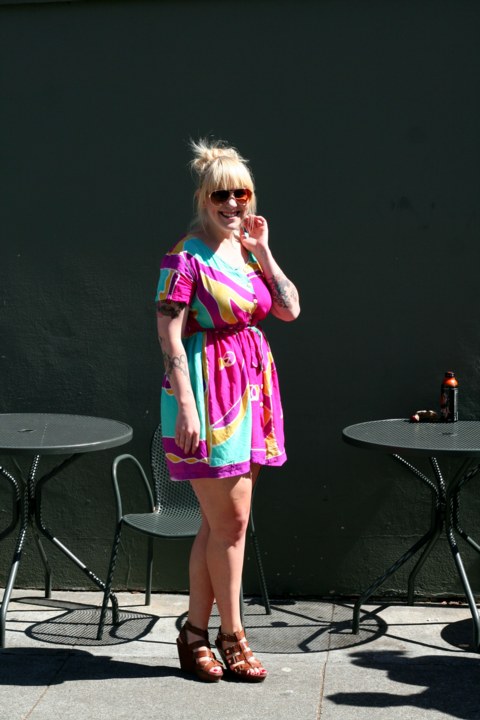
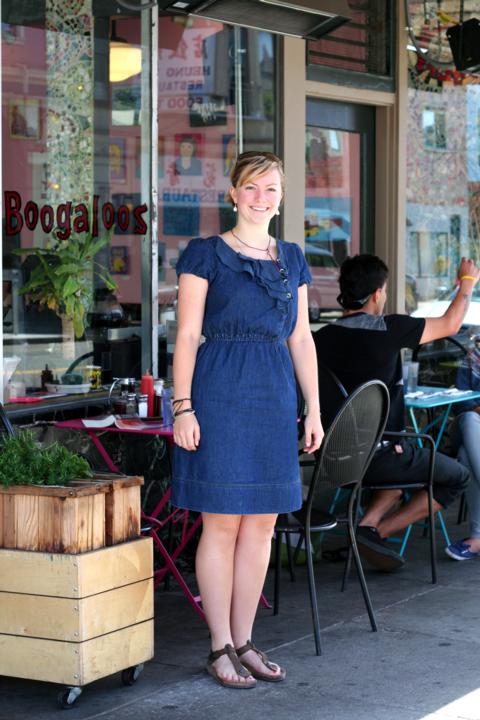
Today’s Look: Kimberly, Fillmore and Sacramento

Tell us about your look: “I mostly buy things from thrift stores and alter them.”

Eating Jonathan Safran Foer’s words

12

Well, hell, I thought, shutting Jonathan Safran Foer’s book Eating Animals after reading its last page. There goes that. I have been a vegetarian (careful omnivore, pescatarian) off and on for fifteen years now. But having read the author of Everything is Illuminated and Extremely Loud and Incredibly Close‘s latest offering, Safran Foer’s exploration of the horrific world and consequences of our current addiction to factory farming, I realized I could no straddle the fence. There would be, I realized, no more salmon on my plate, or “cage-free” eggs, or cheddar cheese. Why? Well besides the whole institutionalized torture thing in most slaughterhouses-dairy farms-egg factories today, here’s a fact to chew on: omnivores generate seven times more carbon emissions than vegan. And I can live without eggs and bacon. Call me Natalie Portman if you must. I chatted with Safran Foer over the phone about his lyrical horror story in anticipation of his SF appearances next week, including a benefit for 826 Valencia (Weds/22). He’s no activist, but I like him.


San Francisco Bay Guardian: This book made me reconsider the way I eat in a major way. But I felt like a lot of the arguments could be extended past meat to dairy products and eggs as well. Are you a vegan?

Jonathan Safran Foer: No, not exactly. I’m pretty close. I try to eat as little as possible and also only from sources that I know. I’m not by definition a vegan. I don’t think there’s any one line, I think that this is an important thing to acknowledge. There are certain things that come down to instincts that we have, how we were raised. There are people in this country that don’t have access to anything but fast food, not even a supermarket. The line for me will been shifting for the next couple years. I won’t eat meat, that’s a line that I’ve drawn.


SFBG: What do you think was the hardest part about quitting meat?

JSF: It’s a habit, it tastes good and you’re used to doing it. Habits are hard to change, especially since they’re so fundamental to your lifestyle. Anything you do twice a day is hard to change, especially when they’re so tied to your culture. 


SFBG: So what’s the good word for people that are considering going cold turkey [or rather, cold no-turkey]?

JSF: Be forgiving of yourself. If you slip up, it doesn’t have to signify the end of your experiment. I recommend to people that they phase it in. If I had done that from the beginning I would have had a much easier time with it. 


SFBG: The book has, understandably stirred up some healthy debate. Do you read your critics? Has anyone offered criticism that’s caused you to revisit your findings?

JSF: Not exactly. I was surprised by the responses, mostly that they were very generous. When I was writing the book, I couldn’t envision the person that would defend factory farming. Whenever I do a reading I always say that if you have a defense that I haven’t heard of, please, share it. I guess I’ve been surprised by the strange consensus on the subject. Obviously there are a lot of people that think eating meat is a fine thing to do. But I’ve never met the person that, once exposed to factory farming, thinks that factory farming is a good thing to do.


SFBG: The scenes you describe in the factory farms you visit, as well as their environmental impact that you describe, are horrifying. How is it that the facts about this topic aren’t more well-known?

JSF: For one thing, there are incentives for it not to be. We would just as soon not think about it. It makes our lives easier not to think about. Also the meat lobby is incredibly strong, incredibly powerful, and good at keeping information from consumers. Finally, we don’t have much exposure to what farming is really like. Most of the exposure that we have is stories that are told to us from the industry, labeling on packages. They encourage us to think of farms as places wheres there’s animals on the grass. For a lot of people, the problem is that there’s a distance between what we hold in our mind and the reality. And it’s hard to close that distance. 


SFBG: You say the impetus for writing Eating Animals was to figure out whether or not you should serve your newborn son meat. The book focuses mainly on animal welfare though, with a smattering of environmental concern. Were there other books you could have written on this subject focusing on labor issues or nutritional concerns, say?

JSF: I don’t think of the book as being about animal welfare, actually. It’s not comprehensive but it is as comprehensive as I could be in a book thats only 300 pages. 


SFBG: How many farms did you visit throughout the course of your research?

JSF: A lot. It depends on what you mean by visits. Some you could drive up and see by the side of the road, some I had to go to in the middle of the night. I don’t know – a dozen?


SFBG: You talk a lot in this book about the importance of meat in “table fellowship.” You focus, in particular on eating turkey at Thanksgiving. How should one approach the subject of vegetarianism with family that eats meat in those types of situations?

JSF: I think one of the most important things is to feel out the answer that the person wants. Some people are genuinely curious, some are just asking out of politeness. It can be a kind of vanity that makes you feel good to say it, but it’s not helping anything. I have found actually that conversations about this don’t really work. I don’t really try to persuade people in person, I mostly go about my business and do my thing. I think we’ve made a mistake, the people who care about this thinking that argument will win. I think conversation will. We have to be more humble. 


SFBG: Do you consider yourself an animal rights activist?

JSF: No. I don’t even think about animal rights. I think about animal welfare. It’s a piece of a puzzle.


SFBG: What’s the next project? Will your next book be back to fiction?

JSF: Yeah it is.


SFBG: Was it a strange process researching a non-fiction book?

JSF: It was very strange and at times difficult. I don’t know if I would do it again


SFBG: Why not?

JSF: I found it frustrating. The thing I value most about fiction is freedom, being able to pursue my imagination. Basically having nowhere to go is what I like about writing fiction, there is no referring to anything. But in this book, I’m referring to the world. I found it at times very difficult.


Jonathan Safran Foer’s upcoming SF appearances:


Q&A and Book Signing

Tues/21 1 p.m., free

Rosa Parks Room, Student Center

San Francisco State University

1600 Holloway, SF

(415) 338-1111

www.sfsu.edu


In conversation with Vendela Vida

City Arts & Lectures Fall Literary Series

Weds/22 8 p.m., $20

Herbst Theater

401 Van Ness, SF

www.cityarts.net


Street Threads: Look of the Day

0

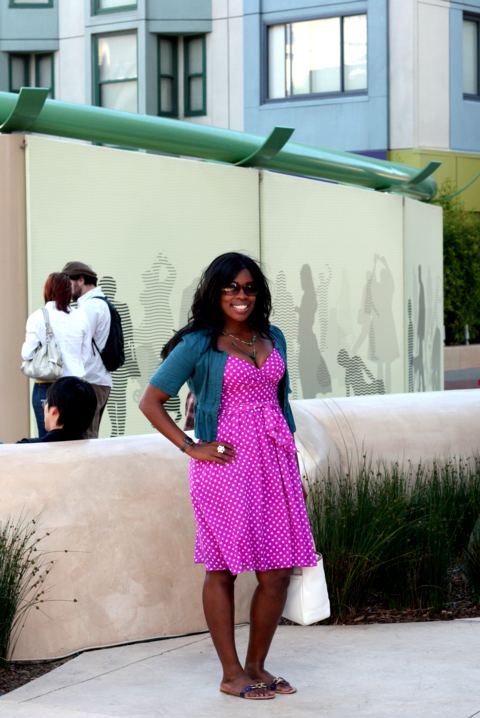
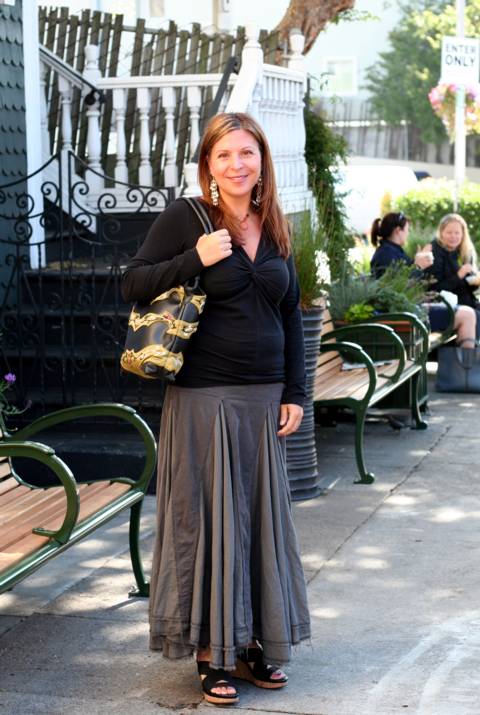
Today’s Look: Glory, O’Farrell and Fillmore

Tell us about your look: “Purple is the color. I’ve worn it every day for the past 10 years.”

The interview in which cute saves the world

0

You are perhaps in the market for an accessory statement that mimics pink plastic unicorns jumping through your ears? Maybe a connected  tube top-tutu smattered with a happy orgy of babydolls and hair-bows in the shape of a heart? Fret not, little cream-puff – your kawaii savior, Sebastian Masuda of Harajuku brand 6% DOKIDOKI (it’s name is an onomatopoeia of a beating heart) will be making an appearance at New People’s J-Pop Summit (Weds/15) for a lecture on Tokyo’s “cute culture,” a fashion show featuring members of his store’s famously, fabulously saccharine staff, and a glitz-tastic 6%DOKIDOKI pop-up store. The brand’s focus on wide-eyed adorable and the shockingly juvenile has been termed “happy anarchy” by people that know about these things, so we shot Masuda some questions via email about what the hell he’s up to. His answers were vague — but they include the possibility of world salvation, so you might wanna check them out.


San Francisco Bay Guardian: Sebastian, your shop is in the Harajuku district of Tokyo. What kind of influence does the neighborhood [famed for its innovative-freaky youth street culture] have on the 6% DOKIDOKI brand?

Sebastian Masuda: The girls of Harajuku girls have a sense of freedom, and they are challenging tradition or [sic] rules. That kind of attitude influenced 6% DOKIDOKI to become the store we are today.


Furry hats got nothing on the cuteness cataclysm Sebastian Masuda’s unleashed on this earth


SFBG: For our readers that are unfamiliar, what is kawaii culture? And is it true you once said “kawaii can save the world?”

SM: Kawaii makes happy, no matter what. One form of happiness. By “kawaii can save the world” I mean, and also hope, that the sense of “kawaii” makes people more happy and feel connected and this feeling will save the world from the grim and dark things that are happening right now. A lot of people are aware of such situations, and I have observed this from our world tour, Harajuku Kawaii Experience 2010. To this day, I strongly believe that “kawaii can save the world.” 


SFBG: How have your products sold in the United States? What is the response like that you get here?

SM: We are getting great response, usually because our items are really unique, and people see others wearing the items and ask “where did you get that?” The response is “oh, I got it in Harajuku”, so people are aware that our items came from Harajuku.


J-Pop Summit 2010: 6%DOKIDOKI Harajuku Kawaii Experience

Weds/15 7 p.m., $20 for lecture and fashion show

New People

1746 Post, SF

(415) 525-8630

www.newpeopleworld.com


Golden age remix: Bay graff gets its props

0

Nate1’s business card is totally dope. It’s front depicts a Kry-lon paint can, the brand most used  for graffiti in the days he was coming up as a street writer in 1980s San Francisco. “Back then we used to have to make art with automotive paint,” he tells me at 1AM gallery, where his new show on the golden age of Bay tagging, “The Classics” opens today (Fri/10). “We’re talking about paint to paint red wagons and doors,” he remembers, smiling like a man that didn’t mind too much.

The card is striking because it evokes the sentiment behind this artist and the show he’s thrown up. “The Classics” is about those icons of SF’s early days on the graffiti scene, back before anyone with a few bucks could buy specialized Mammoth paint from 1AM’s retail section, cans specially designed for low pressure artistic liberty – but it’s also about where that art form stands today. 

1AM owner Anna says that before he came up with the inkling for this particular showing, Nate1 would bring around scrapbooks to street art openings, forcing heads to remember the days when. Finally, they hit upon the idea to base a show on these old masterpieces. On the gallery’s walls are seldom-seen photographs of the “Psycho City” wall in SoMa, the only place where young taggers could work on their art in public, in peace from police presence and neighborhood complaint. UB40’s ubiquitous-at-the-time scrawl is present, as is shots of trains painted by King 157, and Rigel’s game-changing robot piece. 

But the show’s no time capsule. What Nate1 wanted to do was pull these works into the present, juxtapose San Francisco relatively (to New York’s) unsung heroes with the realities of today. The artists are adults now, grown community members – Nate1, an original member of the graf crew Masterpiece Creators, has two kids, teaches graffiti art history at 1AM, and owns a clothing company – but they’ve still got skills. Most of the pieces at his show are not classics at all, but mature artists’ reimaginings of the culturally mega works they sprayed onto the sides of buildings and MUNI buses when they were in their teens. The show’s a celebration of where the art form’s been, but also how far it’s come.

“This show was put together by a writer, for a writer.” Nate1 is now addressing a crowd who has assembled the night for a sneak peek tour through the artwork that through months of searching and finding, he has deemed “The Classics.” In the audience are no small amount of writers from the ’80s scene: Rise is here, and Mike Bam. They’re among the artists Nate1 called on to create new pieces for the show. Throughout his tour, they pick up on Nate1’s more obscure points and chime in with clarifications, added bits of information.

“So dope!” Nate1 gets stoked on an original piece at his show “The Classics”

Some of the artists on display, like Rigel with his robot, re-imagined classic works from days of old and put them on canvass to grand affect. Others expanded on long dormant skills with new technology. Nate1 stops in front of a piece by Vogue entitled “Teenage Love.” It’s a painted closeup of Kry-lon cans, the glint of the metal popping in the bright, happy colors of everybody’s youth. “He did that with spray paint,” Nate1 announces to the assembled crowd, staggering backwards as if blown away by the technical mastery involved in this act. “Jesus!”

Still others made pieces of art that reflect the change in their lives, in everybody’s lives since those days of fat laces and “bus hopping” (which Nate1, in his best art history professor’s voice helpfully defines as when a graf artist boards a bus solo or en masse and “you take a tool of your choice to mark the surface”). Rise is called to the front when the corner that houses his work is introduced. A father himself, he has struggled with the “spiritual blackout” of alcoholism, only to finally see the light in a world with strange issues that dwarf running from the cops and fingers covered in aerosol paint. His intricate painting “Heaven Only Knows” shows a rising figure in Masonic imagery, surrounded by social ills, the seven deadly sins inscribed on paint cans, labyrinthine, interlocking words describing the scene, all of it framed by his son’s small hands on a video game controller. He talks about seeing names of military consultants in the credits of his offspring’s game manuals, explaining to his sons that though the games are fun to play, they’re still a tool of social conditioning. “Something that frustrates me is the condition of how things are going,” says Rise, a self-identified conspiracy theory enthusiast.

What may draw street art aficionados to “The Classics” is the promise of a look at the old school “OGs,” as Nate1 puts it. And that’s here: James Prigoff’s vast compendium of snapshots from 1980s taggers and their art has been selectively drawn from by Nate1. There’s a classic framed photo that shows a group of kids falling out the windows of a bus, adrenaline pumping in the aftermath of a writer’s party at the Mission Cultural Center for Latino Arts in honor of the first San Francisco book of street art. The shots serve as a tangible reminder of a time that wasn’t captured in graff mags, not endlessly cataloged on the Internet.

But what one walks away from “The Classics” with is the postmodern riffing images created for the show. It’s the fact that our local street art scene has become a school worthy of imitation, analysis, and homage that impresses. ’80s street artists – those night-crawling, fence-jumping, anti-social social crusaders, have finally and fully been embraced into the world of “art.” And they’ve got the business cards to prove it.


“The Classics”

Through Oct. 16

1AM gallery

1000 Howard, SF

(415) 861-5089

www.1amsf.com

The Performant: Weird like me

0

Radical self-expression takes a staycation with Zinefest and On Land …

It was another Burning Man, er, Labor Day weekend, and like every year of the past dozen or so, those of us who stayed in the City spent it cracking wise about all the extra elbow room on MUNI and burner-free “Dolores Beach” real estate we get to ourselves through Tuesday morning. It’s becoming an old joke, a chestnut even, but it still manages to elicit a few wry chuckles from those of us committed to radically self-expressing without hauling it to Nevada in the back of a day-glo Winnebago.

Burning Man might have taken the time to write up a manifesto of its intentions (the Ten Principles), but almost any artistically-inclined community is going to find itself aligned with most of the same basic tenets. Take radical inclusion for example. It’s hard to imagine any scene more relentlessly inclusive than Zine Fest, which celebrated its ninth year down at the County Fair building last Saturday. From aging punks to black-lipsticked teenagers, political activists to true crime chroniclers, mini-comic compilers to mail-art aficionados, Zine Fest sets a place at the table for all comers — even novelists and hipster t-shirt vendors.

In addition to inclusion, on prominent display were principles of radical self-reliance (zinesters are notorious for their DIY ethos) and participation (attendees got a chance to attend hands-on workshops in book-binding and screen-printing). And while it’s true that public speaking is not necessarily the forte of those who turn to publishing as a means to communicate, punk tabloid pioneers John Gullak and V Vale (Another Room Magazine and Search and Destroy, respectively) good-naturedly reminisced about the good (and bad) old days while an archival treasure trove of their early work hung on display in the reading room for all to see (you can catch it through October 31 at Goteblud). Inclusion.
 
Meanwhile, the On Land Festival of incredibly strange music took the communal effort principle and ran with it all the way to the stages at the Swedish American Hall and Cafe Du Nord, where a rotating roster of experimental noise musicians backed up each others’ sets, at least on Saturday night when I was there. Trevor Montgomery’s turn on bass with East Bay drone duo Date Palms added a necessary grounding layer to the eastern-tinged instrumental throb, their signature sound.

A looped tanpura riff and Marielle Jakobson’s plaintive strings seemed destined to wind up on the soundtrack of an art film set in the Saharadesert, ala Waiting for Happiness. Montgomery also ended up playing with the Alps (featuring Root Strata’s Jefre Cantu-Ledesma) while a laptop-centric set performed by Xela featured drummer Mike Weis of Zelionople, and the Zelionople set featured Xela’s solo mastermind, John Twells. This collaborative mixing-and-matching gave evidence of a final manifestoed principle—immediacy. Not one person in the oddience seemed to be mourning an opportunity wasted out on the playa, but rather reveling in the unexpected moments as they unfolded onstage: a little bit bizarre, a whole lot communal, and ultimately as much about radical expression as any other kind of collaborative artistic endeavor, with or without a checklist.

Street Threads: Look of the Day

0

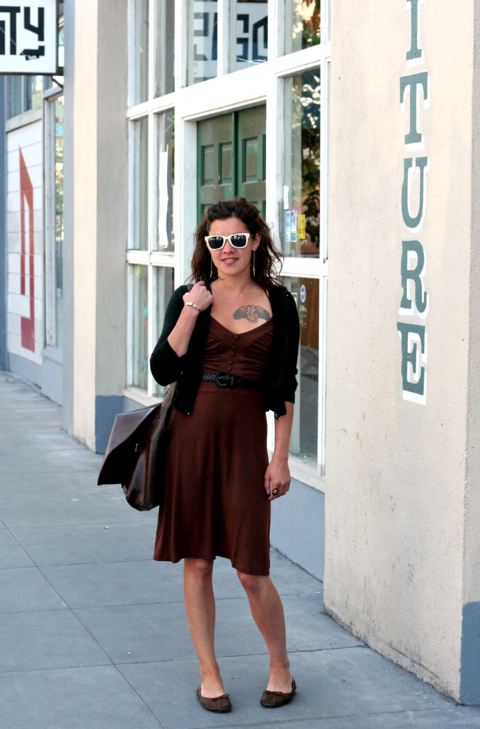
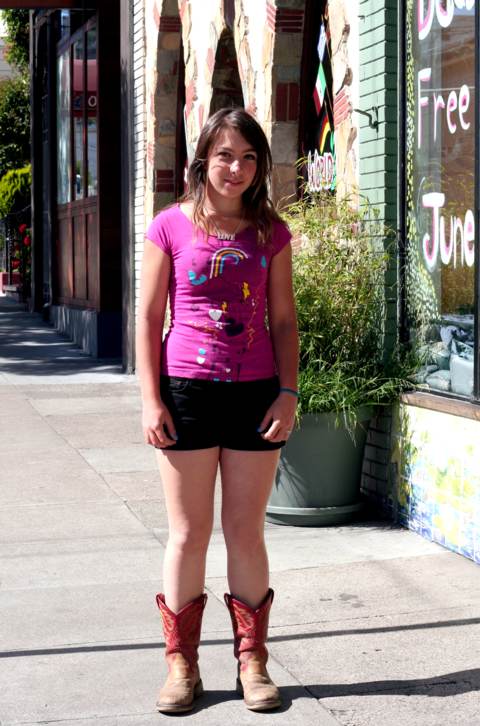
Today’s Look: Stephany, 17th Street and Valencia

Tell us about your look: “Cheap and comfortable. A little bit country and a little bit city.”

Benefits: Sept 8-Sept 14

0

Ways to have fun while giving back this week


Thursday, Sept. 9

Coalition on Homelessness Auction
Attend this live and silent art auction featuring works by Bay Area artists, live music by Perranosperous, food by the California Culinary Academy, desserts from Kingdom Cake, and a raffle. Proceeds to benefit the Coalition on Homelessness.
5:30 p.m., $25
SOMArts
934 Brannan, SF
(415) 346-3740, ext. 307


Faubourg Tremé

Watch this documentary film about the history of the radical roots of one New Orleans community, where during slavery, Black people could earn their freedom and purchase a house. The film, fully titled Faubourg Tremé: The Untold Story of Black New Orleans, concludes with new challenges facing the Black community after the Katrina disaster.
7:30 p.m., $6 donation
ATA Theater
992 Valencia, SF
(415) 821-6545

Free Community Health Programs
Support two free community health programs at this benefit concert featuring Embers, Speed of Darkness, Somnolence, and Crucifixion. One of the programs, the Street Level Health Project, offers medical screenings, a lunch program, mental health support, herbal medicine and nutrition, and more services for urban immigrant communities in the Bay Area. The other program, Casa Besu, aims to bring alternative, holistic treatments to the people of the Navajo Nation in New Mexico.
8 p.m., $5-$10
El Rio
3158 Mission, SF
(510) 533-9906

Saturday, Sept. 11


A’s Firefighter Appreciation Night

Local firefighters from around the Bay Area and Northern California will be honored at the Oakland A’s vs. Red Socks game. A portion of the ticket proceeds will be donated to charitable organizations that support burn foundations, fire safety, educational programs, and other community organizations when you buy them through the webpage oaklandathletics.com/firefighters, passcode: HERO.
6:05pm
Oakland Coliseum
7000 Coliseum, Oakl.
(510) 563-2336
www.oaklandathletics.com/firefighters

Ghirardelli Square Chocolate Festival
Enjoy San Francisco’s signature chocolate delicacies, sip wine, and take part in family activities. Proceeds benefit Project Open Hand.
Sat. – Sun. Noon-5 p.m., $20 for 15 samples
Ghirardelli Square
900 North Point, SF
www.ghirardellisq.com


Sunday, Sept. 12


True Blood Party

Watch the Season 3 finale of HBO’s True Blood series and enjoy a night of entertainment with host comic Marcella Arguello, a live blues performance by I See Read, a lesbian firedancer show, live tattooing with SkinFiend, a look-a-like contest, Creole food, and more. Proceeds to benefit the Red Cross.
6 p.m., $25-$50
The New Parish
579 18th St., Oakl.
www.thenewparish.com

Wild Salmon BBQ
Enjoy a BBQ dinner featuring sustainably harvested wild Alaskan salmon, fine California wine, live music by the Bay, and a silent auction in celebration of the sustainable marine life of Pacific Rim and the work of Pacific Environment. Proceeds to support Pacific Environment. Vegetarian and vegan options available.
3 p.m., $60
Olympic Circle Sailing Club
1 Spinnaker, Berk.
(415) 388-8850, ext. 309

Quick Lit: Sept 8-Sept 14

0

Literary readings, book tours, and talks this week

The first installment of Dog Park Club, Melissa Stein, Healing Walks for Hard Times, “Why There Are Words,”and more

Wednesday, Sept 8  

Women and Family in Contemporary Japan
Hear author Susan Holloway read and discuss her new book.
5:30 p.m., free
University Press Books
2430 Bancroft, Berk.
(510) 548-0585

Thursday, Sept 9

Bodies in the Bog

Author Karen Sanders will read and discuss her new book, Bodies in the Bog and the Archaeological Imagination.
5:30 p.m., free
University Press Books
2430 Bancroft, Berk.
(510) 548-0585

Citrus County
Author John Brandon will read from his new novel about a teen named Shelby Register who moves with her single father to Citrus County, Fl. only to find rednecks instead of surfers.
7:30 p.m., free
Pegasus Books Downtown
2349 Shattuck, Berk.
(510) 649-1320

Dog Park Club
Author Cynthia Robinson presents the first in a new series featureing an opera singer as the unlikely protagonist.
7 p.m., free
Books Inc.
601 Van Ness, SF
(415) 776-1111

“Why There Are Words”
This monthly literary event features local published authors reading their original works on the theme of “body language.” Featured authors are Elaine Beale, Katie Crouch, Rachel Howard, Junse Kim, Elizabeth Rosner, and K.M. Weaver.
7 p.m., $5
Studio 333
333 Caledonia, Sausalito
(415) 331-8272

Friday, Sept 10

Anshu: Dark Sorrow
Author Juliet S. Kono’s first novel, Anshu is based on historical events about human triumph over adversity spanning from the cane fields of Hawaii to the devestation in Hiroshima.
6:30 p.m., free
Eastwind Books of Berkeley
2066 University, Berk.
(510) 548-2350

“Last Word Reading Series”
Attend this poetry reading with Diane Frank, Andrena Zawinski, and Stewart Florsheim accompanied by Erik Levins on cello. Open mic to follow.
7 p.m., free
Nefeli Café
1854 Euclid, SF
(510) 841-6374

Sunday, Sept 12 

Healing Walks for Hard Times
Author, journalist, competitive race walker, and cancer survivor Carolyn Scott Kortage will discuss her new book that advocates the mental and physical healing power of a regular walking regimen in dealing with stressful situations that are out of your control.
2 p.m., free
Book Passage
51 Tamal Vista, Corte Madera
(415) 927-0960

Rough Honey
Attend the release party for Melissa Stein’s new poetry collection, which won the 2010 APR/Honickman First Book Prize.
4 p.m., free
The Booksmith
1644 Haight, SF
(415) 863-8688

Monday, Sept 13

Freedom
Jonathan Franzen discusses his forthcoming novel at this fundraiser for the 826 Valencia College Scholarship program.
8 p.m., $20
Herbst Theater
401 Van Ness, SF
www.cityboxoffice.com

Tuesday, Sept 14

Private K-8 Schools
Betsy Little and Paula Molligan talk about the private K-8 schools of San Francisco.
7 p.m., free
Books Inc.
601 Van Ness, SF 
(415) 776-1111

“Spotlight on Survivorship”
In this lecture series installment, author Sandy Boucher discusses her new book, Hidden Spring: A Buddhist Woman Confronts Cancer, and her place in the world as a teacher, Buddhist, and cancer survivor.
6 p.m., free
Jewish Community Center
3200 California, SF
(415) 476-0276 for reservations


Street Threads: Look of the Day

0

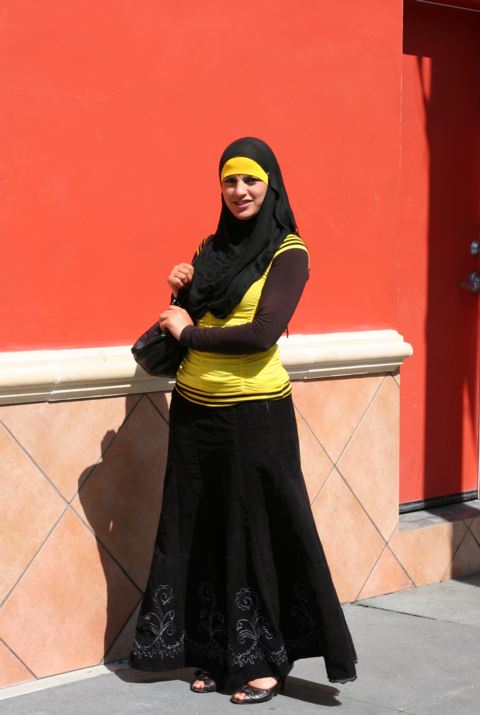
Today’s Look: Rasha, 17th Street and Valencia

Tell us about your look: “I’m going to work.”

Street Threads: Look of the Day

0

Today’s Look: Liza, 22nd Street and Valencia

Tell us about your look: “I like to keep it simple with a little flair.”

Street Threads: Look of the Day

0

Today’s Look: Cari, 24th Street and Noe

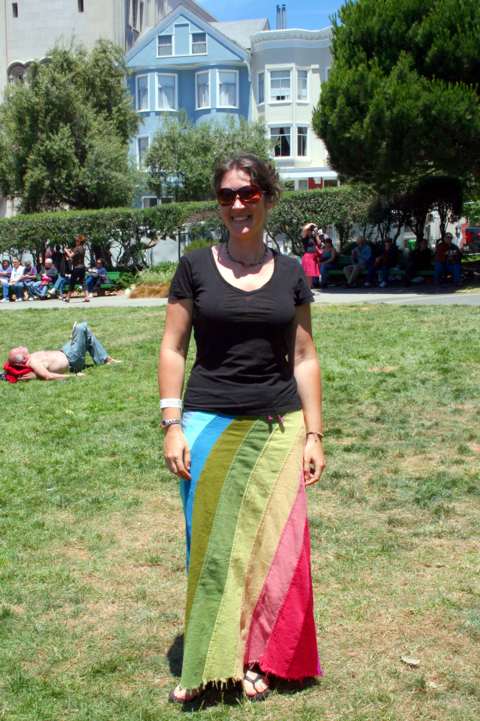
Tell us about your look: “This skirt is Hard tail that I borrowed from my best friend.”

Street Threads: Look of the Day

1

Today’s Look: Charlotte, 24th Street and Castro

Tell us about your look: “I ride, so I’ve been wearing these boots all week.”

The Performant: Final Frontiers with “Sigh-Fi” and W. Kamau Bell

0

Scoping out the local arts and culture scene …

So much fascinating shit is rooted in science — from the way things work to the way they fall apart — that it seems passing strange that more performance pieces aren’t written using scientific law as a unifying theme. Not that you’ll find a whole lot in your physics texts about Saturnade a spoofed drink mix with a long list of dire side-effects that belongs more properly in the frame of a John Kricfalusi cartoon. You probably won’t find mention in your astronomy handbooks about alien surveyors with invasion viability agendas either, but why split atoms over it?

In “Sigh-Fi: An Evening of Science-fiction Themed Comedic Shorts” debuting at the Darkroom Theatre, fictions may trump facts, but the undercurrent is endearingly nerdy. Written by Philadelphia Fringe Festival veteran Shawn O’Shea, “Sigh-Fi” includes what is probably his best-known (and fully realized) work, “Starlight Supply,” which stars Jim Fourniadis as thoroughly under-socialized uber-dweeb William William Williams, and Craig Souza as an uptight insurance agent from Universal Business Insurance sent to deny him a $20 million claim for his registered star which has vanished from the night skies.

Other sketches of note include “Dinner Guest,” a Guess Who’s Coming to Dinner spoof involving an affable yet menacing extra-terrestrial Bob (Phil Ristaino) and “Hail to the Queen” in which a planet ruled by women accidentally hijacks a Freddie Mercury lookalike BJ (Richie Lillard) whose initials no longer describe his occupation, in order to force him to impregnate them all. Too bad for these galactic gals William Shatner is no longer traveling around the universe in spandex, because fancy-pants BJ only has eyes for the yummy male slaves in leather tunics—giving the appropriate measure of stage time to the social sciences as well in addition to the natural and applied strains.  

Meanwhile, in a galaxy not too far away, W. Kamau Bell has been trying to “end racism in about an hour”….for over three years. And for a split second there, it looked like he’d succeeded. You remember that split second—it occurred somewhere between November 4th and 5th, 2008. But here it is, 2010, and post-racial has become post-post-racial, and all in all, it’s been a frustrating time for a comedian who’s somewhat unwillingly become the spokesperson for comics-concerned-about-entrenched-racism to be that. Hence the title of Kamau’s new show-in-progress: “Aaaaaarrrrrrrrgh: A Solo Comedy about how Frustrating Frustration can be” (which he performed as part of the Solo Performance Workshop Festival at Stage Werx on Saturday).

It’s such a universal emotion: I could imagine Alien Bob getting stuck at the credit union while they tried to work out how to cash his check from Betelgeuse, or BJ the intergalactic love-slut trying to avoid old cranky critics who want to give unsolicited “feedback,” or cops cracking down on the illegal consumption of Saturnade on the beach. These are the things that happen to all of us—but only Bell has had the foresight to try and work it all into a narrative that tries to make sense of the myriad situations that defy reason and provoke ulcers all across the universe.

The Performant: Nerds vs. Geeks and other four-letter words

0

Scoping out the local arts and culture scene …

Are you a nerd, or are you a geek? A geek, or a nerd? I like to think of myself as a word nerd. Doctor Popular claims to be a super nerd. The organizers of the next San Francisco-based BarCamp claim to be geeks — though they do allow that one can “geek out” about almost anything, including peanut butter and jelly sandwiches.

Yet both nerds and geeks presenting at Noisebridge’s monthly “5 Minutes of Fame,” to a crowd composed of nearly 100 folks who mainly, though not exclusively, could be categorized as either, or possibly both. The premise of 5MoF is short (very) and sweet: in five minutes or less each presenter gives a talk, makes a pitch, or demonstrates a work in progress to the general public who may then in turn offer assistance or appreciation.

Topics this week included why dumb is good (‘cause Socrates said so), music you can make on your iPhone, how to combat global ignorance with a video game, the creation of a new Tenderloin performance space dedicated to “cutting-edge vintage,” the demise of the fourth estate, and what the heck is in my kombucha anyway? Best of all, during the post-show mingling, people who’d asked for assistance with projects were almost all approached by people equipped to do just that. Maybe that’s the vital ingredient in what makes a nerd a nerd or a geek a geek — that an entire social event can be built around the moral equivalent of helping people out with their trig homework. Journalist Quinn Norton inadvertently summed up the collaborative spirit of the event by promising in her talk “Manufacturing Dissent” to stop “only writing about the shit that geeks break, but writing about the shit that geeks build.”

What else do geeks build? Well, while some geeks are building pathways to newer computers, others are building pathways out of old ones. The Sculpture Garden at the San Francisco Dump has an entire walkway made of cement slabs with embedded ephemera — computer chips, silverware, random tools, colored glass. But it’s the sculptures lining the walkway that really dazzle. A dragonfly made of a propeller, a fence made of bicycle wheels, a double archway decorated with a dazzling mosaic of tiles and glass, nesting balls of webbed wires. Free tours of the garden, the facility, and the Artist-in-residence studios take place every third Saturday of the month, inspiring not a small dose of waste stream envy.

Wrapping up my dork-tastic journey a couple weekends ago was the They Might Be Giants concert in Stern Grove, where myself and all my pasty brethren were treated to an afternoon of unseasonal sunshine and a 25-song set stuffed with maths, geography, the periodic table, space ships, the alphabet, shriners, and drum-playing worms. Since TMBG has been crossing over into the kid market since 2002, there were lots of little’uns jumping up and down to the geek groove, but not nearly as many as there were awkwardly-limbed adults trying to frug to “Upside Down Frown”. Which in many ways proved just as entertaining to watch as the band — another one of my favorite four-letter words.

Portland’s Macro BrewFest cheers the chug

0

“Are you noting the hints of coriander in your Rolling Rock?” my buddy wants to know. On a late summer afternoon, the couples and regulars scattered around us throughout a southeast Portland, Oregon neighborhood dive are taking a break from the microbrews their city is known for. For them, it was all about the tall cans. And for a damn good reason – the proud beginning of what may well be the world’s first Macro BrewFest, which went down this past weekend.

Not that Glen Wallace, owner of festival host O’Malley’s Saloon and Grill, isn’t into fancy suds. Wallace, who moved to Portland from his native Boston nine years ago, came up with the idea while at one of Beervana’s (as Portland, site of a national record 30 in-city craft breweries, has been colloquially termed) many micro brew fests. 

“Me and my buddy were sitting there with our little plastic cups and our beer nickels,” Wallace, an affable chap, tells us as we drink to his new festival’s health at one of O’Malley’s streetside picnic tables, the Southeast Foster Road traffic whizzing by a few feet from our bench seats. The two friends were reflecting on the bum hand that cheap beers are dealt in a town that often prizes hops over national ad campaigns. “The macro and domestic beers really seem to get shunned a little bit,” Wallace says, whose own draft pulls are evenly split between local stars like Eugene’s Ninkasi Brewery, and old school pulls of Coors and Pabst Blue Ribbon. “And I tend to think in contrarian terms.”

O’Malley’s Saloon and Grill owner Glen Wallace and his macros

Credit to this oppositional nature his next move: Wallace placed an order for an obscene amount of 16 different kinds of suds, the beers that we all drink, but aren’t necessarily stomping at the bit to stand up for. I take a break from sampling wares so that he can proudly escorts me into his walk-in refrigerator, which at the three day festival’s start was piled with cases of Coors Banquet, Steel Reserve, Olympia, Old German, and Natural Ice. “We were going to stock Iron City too, but they had a canning problem in Pennsylvania or something like that,” he reflects.

To truly give the much maligned macrobrew it’s due, Wallace went big with the concept: a bluegrass night, a comedy night that with the help of a stand-up connected staffer attracted sign-ups from 34 amateur yucksters. He sold “beer passes” for five bucks, which got you four tall cans of the Americana elixir of your choice, and in this manner got rid of 800 beers in three days – a big event for a small dive bar. To get people invested in the concept he offered a bonus feature: ballots to vote on O’Malley’s new house beer. His “dark horse” favorite, the white and red cans of Rainier, took home top honors from his discerning patrons, which he seemed to be happy about. “I’ve had a few long nights with Rainier,” he told me.

And such was the world’s first Macro BrewFest – which, judging from the way Wallace was talking, may not be the world’s last. He’s looking into trademarking the event’s name. After all, he says, people are beginning to return to their old standbys in these economic hard times. Miller High Life will always be there for its fans, an important fact in a Beervana where unemployment is currently standing at 10.2%. Chug! 


Street Threads: Look of the Day

0

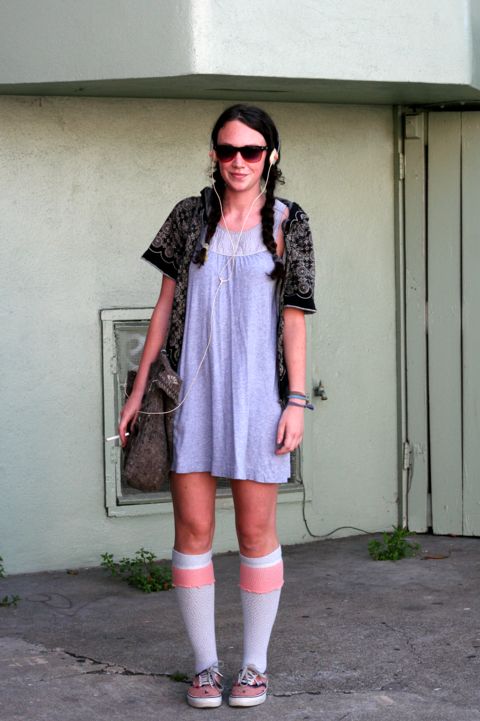
Today’s Look: Bailey, 23rd and Valencia

Tell us about your look: “These are bleached Vans, and the purse is from Mexico.”

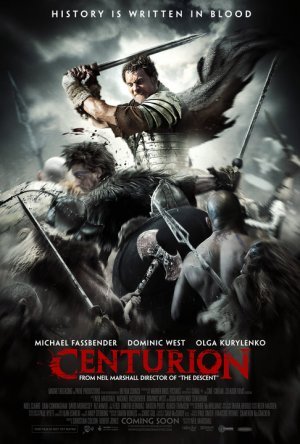
The “Roman Wild West”: chatting with “Centurion” director Neil Marshall

0

Genre junkies, rejoice! Neil Marshall — 2002 werewolf thriller Dog Soldiers, 2005 cave-monster chiller The Descent, and 2008 post-apocalyptic actioner Doomsday — has a brand-new film: Centurion. The latest from the man some call “the new John Carpenter” is getting a release with actual fanfare (however humble in comparision to, say, The Expendables or whatever), though you’d best hustle to the theater if you care to see Centurion, about a Roman soldier doing battle with tribal Picts in what’s now Scotland, on the big screen. (It’s also now available On Demand, but c’mon: the big screen is always better.) Evident in Marshall’s films is the fact that he himself is a movie fan, which makes him all the more pleasurable to talk to. [Spoiler warning: there are some. Just so you know.]

San Francisco Bay Guardian: Centurion takes a documented event, the building of Hadrian’s Wall, and creatively fills in some of the history surrounding it. Why did you write the story this way?

Neil Marshall: It was kind of a case of compacting a couple of dates, which weren’t that far apart anyway. The myth of the Ninth Legion is based around 117 AD, which is when the film is set. That was when the entire Ninth Legion marched into Scotland and supposedly vanished without a trace. Historians have since been spoilsports and disproved that, and proved that they were attacked but they didn’t get massacred, they were dispersed, and such like. But then, in 122 AD, Hadrian’s Wall started being built. And I just thought, “Well, couldn’t I tie the two in together somehow, that logically, what happened to the Ninth Legion could have been part of the reason for Hadrian to build the wall in the first place?” So, yeah, it was a question of kind of condensing that slightly.

In terms of the Ninth Legion legend, I kind of went with that old adage: when the legend becomes fact, print the legend. Because it’s far more interesting! But the story was kind of book ended: yes, my Ninth Legion goes into Scotland, and at the end of it, it becomes a cover-up by the Romans. Which is kind of what happened in truth, that they disbanded the legion to avoid the embarrassment of having lost so many people to the Picts. So I was playing around to a degree, and I know that to a large extent the story is a fiction, a hypothesis of what might have happened to them based on the legend, but I tried to make that within the most authentic world I could create.

SFBG: The historical setting is new for you. Had you been wanting to do a period film?

NM: I’d been itching to do a historical movie. I love those kind of movies. I love watching those kind of movies. What guy wouldn’t want to make a movie about Romans and Picts, and ancient history, and battles, and stuff like that? It’s great fun! I’d grown up with all that history as well. In Newcastle, it’s one end of Hadrian’s Wall. So I was surrounded by Roman history — ruins of forts, Roman roads, and all sorts of stuff. You can’t avoid it if you grow up in that part of the world. We used to go on school trips to these places, and my dad’s a big history buff, and all that kind of stuff. I think it was kind of in my blood that I would want to make a movie about this stuff, one day or another.

SFBG: Unlike your previous films, Centurion doesn’t have a supernatural element. Did you decide that ahead of time, on purpose?

NM: It was very tempting. When I first came up with the story, I’d just made Dog Soldiers. And when I heard about the entire legion vanishing without a trace, initially I went down a supernatural path. I was thinking, was it gonna be some monsters? An alien abduction? Were they eaten by the Loch Ness Monster or something? And then I quickly thought, “I don’t want to immediately repeat myself. What might have actually happened to them? Who are these Picts?” I mean, these Picts sound pretty scary, because the Romans built this 60-mile wall to keep them out. So I figured maybe I didn’t need to go down a supernatural path to find a terrifying opponent or enemy. And that’s when I kind of based it more in reality, I guess.

SFBG: Something else that’s new is Centurion‘s romantic subplot. It softens the tone of the film somewhat. Why did you decide to include that?

NM: Yes, it’s new for me. Um, I don’t know. It just felt right. I thought, maybe it’s time I do have a bit of a romance in one of my films. It’s a long way from suddenly going down the route of turning to romantic comedies, but a little bit of a love story going on seemed like, I don’t know, a step for me. Getting older, maybe maturing as a writer. I didn’t really think about it that much. It just naturally fell into place.

The other thing is that, in the original draft of the script, there was more to [Imogen Poots’] character [Arianne] than just being a love interest. In the original ending of the film, it’s revealed that she’s half-sister to [Olga Kurylenko’s character] Etain, and it was Etain who in fact gave her the cut on the face, and there’s this really kind of issue between the two of them. Originally, Etain survived until the end of the film, when it was Arianne who killed her and not Quintus. When I was writing the film, it seemed like less of just a love story and more of an integral part of the plot.

SFBG: Why did you change it?

NM: It was under producer pressure. I don’t know why they wanted to change it, but they kind of pressured me into changing it. Those are the perils. Even in a low-budget film like this, the idea that I have absolute control is a myth. [Laughs.]

SFBG: Even with a low budget, it seems like you got a good cast together.

NM: We were incredibly lucky with timing. When we cast Michael [Fassbender, who plays Quintus], I hadn’t seen Hunger (2008), and Inglourious Basterds (2009) hadn’t been released yet. But we knew that he’d done this stuff. I’d actually auditioned both him and Dominic [West, who plays Virilus] for Doomsday. Due to scheduling difficulties I wasn’t able to get either of them in that movie but I still wanted to work with them. So when the opportunities came to have them in this movie, I just jumped at the chance. So that just fell into place perfectly. The rest of was just getting the best caliber of actors that we could in those roles. We were very lucky. Somebody like David Morrissey — I never figured he would take what is essentially a supporting role, but he was just really itching to do an action movie, and, you know, play a Roman soldier and hack people to bits with swords. So, he jumped at the chance. Same with everybody else, really.

SFBG: Were you a fan of [Dominic West’s TV show] The Wire?

NM: Oh yeah. I’m a huge fan of Dominic. Amazing work in The Wire. Really phenomenal stuff. So phenomenal, I think, that many people forget that he’s an English guy. [Laughs] He’s such a larger-than-life presence as well, and it was perfect for the role of Virilus.

SFBG: When I talked to you about The Descent, we discussed how the movie was incredibly physical though it was shot mostly on sets. With Centurion, it seems like you actually went out and shot it in the elements. Did that present any particular challenges?

NM: The first day of filming, we were 3,000 feet up a mountain in a blizzard, and it was minus 18 degrees. That set the standard for the rest of the shoot. I deliberately went out to get the most miserable, hard conditions that we could find. My ethos in this film was to kind of do the anti-300. It was never gonna be on a soundstage. It was never gonna be green-screen, and all kind of in slo-mo. This was gonna be in the rain, in the mud, in the snow, and it was gonna be tough, very very tough for everyone involved. And everybody embraced that. The crew, the cast. I warned everybody beforehand: “You know, this isn’t going to be easy. This is gonna be tough.” And everybody signed up for it, and nobody ever complained because they were just 100 percent for it.

SFBG: You said that there were four films that influenced you when making The Descent: Deliverance (1972), The Shining (1980), Alien (1979), and The Texas Chain Saw Massacre (1974). Did you have any touchstones like that when making Centurion? Braveheart (1995) or Gladiator (2000) …

NM: Actually, I tried to put Braveheart and Gladiator to the back of my mind as much as possible. With this one, it was like The Warriors (1979), She Wore a Yellow Ribbon (1949), Fort Apache (1948), Last of the Mohicans (1992). Stuff like that. I actually saw a lot of Westerns, and not many Roman movies at all. Chase movies, things like Figures in a Landscape (1970) which is a kind of obscure movie about people running across mountaintops.

SFBG: What elements of the Western do you think you brought to Centurion?

NM: I see this as a Western in two ways. Historically, it’s a Western, because this frontier, ancient Britain, was the equivalent of the Roman’s Wild West. It was their furthest Western frontier. It was lawless, it was violent. They were battling the natives. So it was their Wild West. As a film, I consider it to be akin to John Ford’s cavalry movies. The Romans are the cavalry, the Picts are the Comanches, and the landscape is absolutely integral to everything. I kind of had that in the back of my mind all the time. And also from the point of view that, if Ford was trying to make those movies today, they’d be seen as incredibly un-PC, because you’re telling them from the point of view of the invading army. Which is exactly what I’m doing here, telling it from the Roman point of view. I was never saying the Roman point of view was right. I was just saying, that’s what it was.

SFBG: The main Roman character has a change of heart from beginning to end.

NM: Absolutely. It’s primarily about the individuals. I’m not asking the audience to sympathize with the Romans. I am asking the audience to sympathize with Quintus and his band of brothers as it were, because they kind of get left in the lurch and are disillusioned by the whole system. They basically just want to get home.

SFBG: There’s also a more contemporary subtext within the film, since the invading-army story mirrors the current Iraq war in some ways. Did you set out to make that parallel?

NM: I didn’t write it with that in mind, but it became really obvious when I was writing it that there is a subtext there. Things are happening today that were happening 2,000 years ago. This is about a superpower marching into a country and being held back by a guerrilla fighting style. The comparisons are screamingly obvious. But, once I recognized that fact, I made a conscious decision not to turn it into a political allegory, to ram it down the audience’s throat, or make that kind of movie. It had to be seen first and foremost as a historical action-adventure movie. And if people read that into it, if people see that, that’s fantastic. It’s certainly there. But it shouldn’t distract from the story.

SFBG: What’s next for you?

NM: I’m producing a film called The Ghost of Slaughterford, that’s being directed by my wife, Axelle Carolyn [who plays a supporting role in Centurion]. For myself, I’m attached to a project that Sam Raimi’s producing, called Burst. It’s gonna be a horror movie, it’s in 3D, and it’s all about people exploding.

SFBG: Ah, I was going to ask you what you thought of the 3D trend. Obviously you’re in favor!

NM: I’m gonna give it a go. I’m dubious about the 3D trend. I’m worried that it’s going to be applied to anything and everything, when it should be very specialized. But it’s a great tool, and I want to have a go at seeing what I can do with it.

http://www.youtube.com/watch?v=yiQCofKrYAI

Centurion opens Fri/27 in Bay Area theaters.
Street Threads: Look of the Day

0

Today’s Look: Alexandra, 24th Street and Church

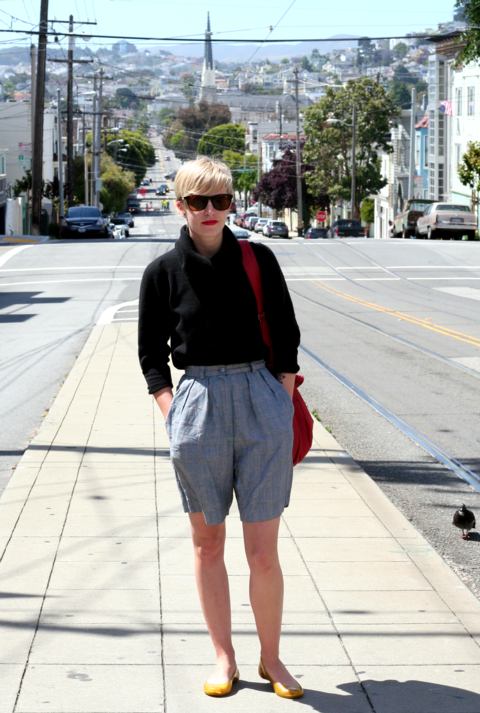
Tell us about your look: “I wear a lot of black, but I like to keep it simple with a splash of red.”

The Performant: The Witching Hour — Puritan girls gone wild and midnight museum marauders

0

Checking out the local arts and culture scene …

There’s no doubt about it—San Franciscans love a rock opera. From the faux-real heavy metal anthems of “Live Evil” to the afterlife explorations of “Exit Sign,” the suicide art movement of “Thanatics” to the human sacrifices of “Wicker Man,” we like our rock operas loud, messy, and tinged with darkness and humor both. So an original rock opera about the Salem Witch Trials seems an obvious pairing between our love of the darkside plus power chords. Appropriately held at the Temple nightclub on Howard, “Abigail the Rock Opera” straddles the SF rock opera line between serious and silly.

There’s some damn fine singing, particularly from Alexis Lane Jensen who plays Betty Parris, and Daniel Knop, who plays her father Samuel Parris as well as a curiously fey Giles Corey in a silver mop-top/Andy Warhol wig and every 60’s British Invasion mannerism to ever make it onto the Ed Sullivan show. There’s some really solid rocking out thanks to the band, particularly guitarist Kurt Brown (who not coincidentally co-wrote the music with Knop). Plus there are dead babies, bloody aprons, moonlit excursions in the woods, goth-y girls in leather corsets and modest bonnets, and angry men wearing glittery facepaint, Thanksgiving pageant hats, and smug patriarchal entitlement.

There are some downsides too—namely over-reliance on video projection, hard-to-follow lyrics, and not enough campy abandon. I’d have liked to see the goth angle played up more as well as the glam. Perhaps a Klaus Nomi or Gary Numan homage tucked in between the standard rock anthems, or even a little synthesized EBM and some serious stomping. But for now they’ll be performing every Thursday at 9 p.m. through September, and one hopes they’ll make it at least to Halloween, with or without a darkwave makeover.

Meanwhile, it may have been midnight, but the YBCA was far from dark during the DIYbca party last Saturday. People dressed in hand-crafted costumes floated through the hallways of the museum like so many neon-colored moths, drawn to the flames of creative crowd-sourcing and hi tech/lo brow design hacks. In the Forum, reality television was getting a send-up with the Drinking and Dancing competition featuring fun-guy trio Adonisaurus, while in the gallery, old-school industrial noisemakers Kwisp jammed on bicycle parts, metal sheets and springs, and bits of old electronics before leading a hands-on, build-your-own thumb piano workshop (the best use for bobby pins and cigar boxes ever!).

A stencil workshop with queer street artist Jeremy Novy, creative cobbling with Mrs. Vera and SCRAP, a Puma shoe design competition, and a create your own techno music lab hosted by LoveTech rounded out the midnight hour, blurring the line between performer and participant to its most malleable degree. In other words, even the fun was being crowd-sourced, and pretty successfully so. Party promoters take note. You can hire all the big brand bands and fog machines and light-show designers you want, but for a really memorable event, you might want to consider adding a crafting circle to your lineup. Just saying. [Editor’s Note for craft aficionados — there is a wild Haute Gloo craft table every Friday night at the Stud‘s Some Thing drag party! And it totally works.]

Street Threads: Look of the Day

0

Today’s Look: Nookkie, Bannan and Green

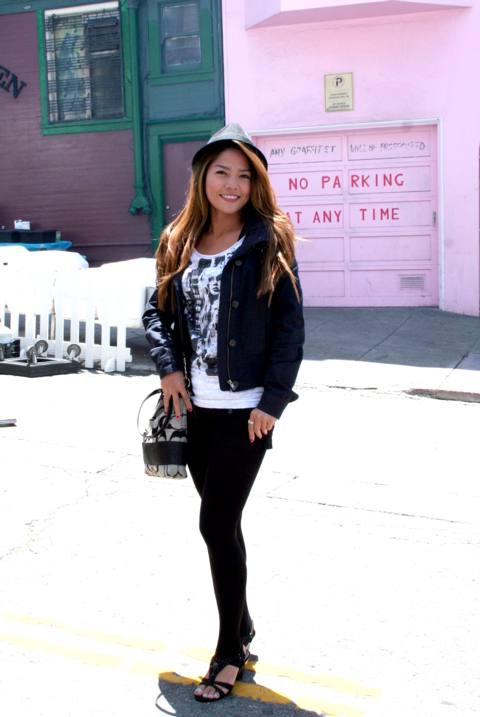
Tell us about your look: “I got this hat from a festival in San Francisco. I’m from Thailand.”

Street Threads: Look of the Day

0

Today’s look: Shan, Washington Square Park

Tell us about your look: “I got this skirt at a street fair in Chiang Mai, Thailand, and it always comes out on special occasions.”