• No categories

Pixel Vision

The Performant: The accidental tourist

0

Intrepid travelers always get a bit of a bee in their bonnet when you mistake them for tourists, but tourism doesn’t have to be a dirty word. All it really means is the act of traveling for recreational purposes and as such, can be applied to even the smallest of pleasurable jaunts. Saturday morning, I went on a tour—replete with guides, maps, wristbands, a short jaunt by MUNI train, and a chaos (as opposed to a gaggle or a horde) of dancers. Yes, it was the 7th annual San Francisco Trolley Dances, and this year’s chosen line was the N-Judah.

There’s nothing affected about the workaday N, the busiest line of the Metro system, and you wouldn’t normally find a whole embarrassment (as opposed to a herd or a murder) of art-loving tourists hanging out on it, but there we were. Chatty, consolidated, in motion: heading chummily from Duboce Park to Golden Gate.

At the Harvey Milk Recreational Arts Center, the pink and blue garments of the celestially-clad Sunset Recreation Center Chinese Folk Dance Group, the cotton-candyesque pouffs of pink afro wigs worn by the Joe Goode Performance Group, and the shiny red bullseye of a large round suitcase passed around by the performers of Christine Bonansea’s 2 x 3 project, all caught the eye, while the dexterity of the dancers further held the attention.

After hopping the N-Judah and trundling en masse to 9’th and Irving, our tour guide, Mike, promised us some wildlife—and there she was, behind the display window of Osso and Co, a lady (Phaedra Ana Jones) dressed like a leopard, dancing fluidly with an acrylic “crystal” ball.

Arriving at the Botanical Garden, we trooped through the gate to watch pieces choreographed by Sara Shelton Mann, and Japanese folk dance troupe, Ensohza Minyoshu. But the pièce de résistance was Epiphany Production’s contribution “Sonic Dance Theatre”, whose grand yet playful vision took over an entire meadow with Hank Williams songs and gospel lullabies, taffeta skirts, masked wildlife, a didgeridoo, a bride, a ballerina, and an make-believe picnic.

If you’re traveling for work but your work is a pleasure, does that make you a tourist? I wish I’d thought to ask Lynda Barry that when I chatted her up at APE after her spirited presentation of her brand-new Drawn and Quarterly book: Picture This, The Near-sighted Monkey Book. Comics scribes are often fairly introverted individuals (go figure) and their presentations can be rather stilted affairs, but Barry is a natural bon vivant, and her anecdote about trying to pick up cute guys at the Uffizi Gallery in Florence by weeping in front of Botticelli’s Birth of Venus had us in stitches.

The Near-Sighted Monkey Book (sub-subtitle: Learn How to Art) is a guide to creating visual art—a sequel of sorts to What It Is (Drawn and Quarterly, 2008) which was about writing. If all goes well, maybe in the future we can expect a third book on public speaking, because on that particular subject, Barry has plenty to teach.


Street Threads: Look of the Day

0

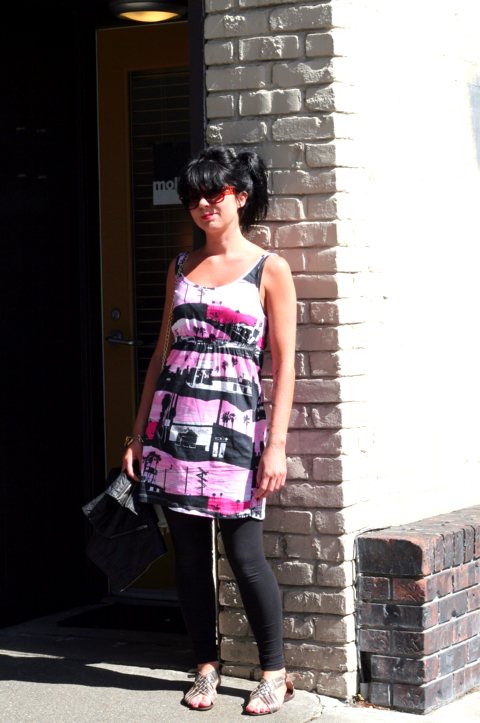
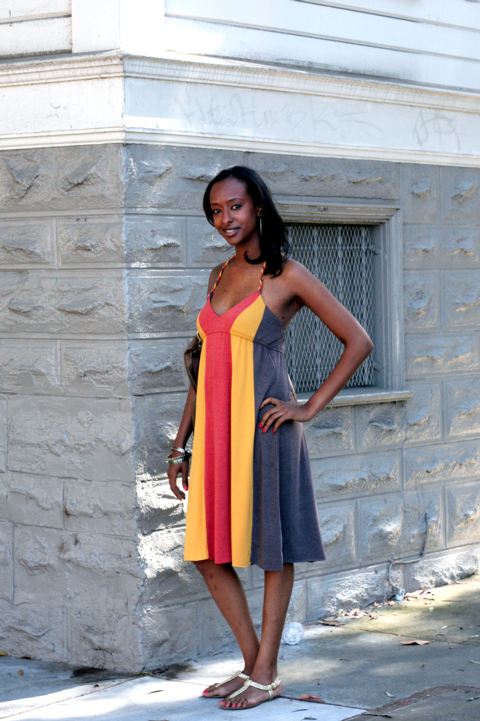
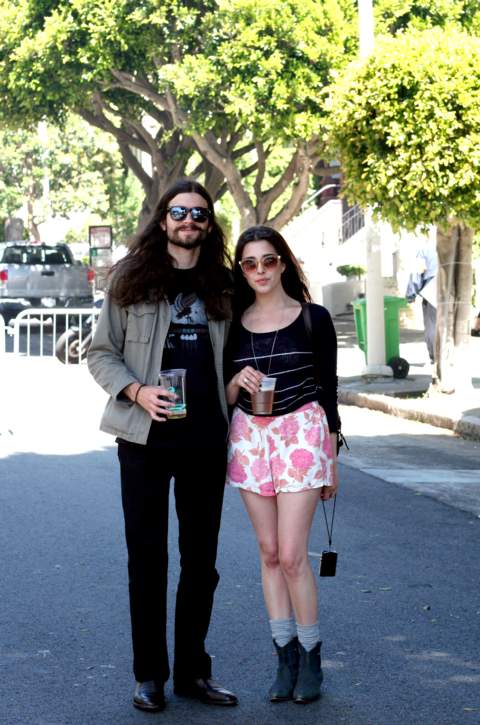
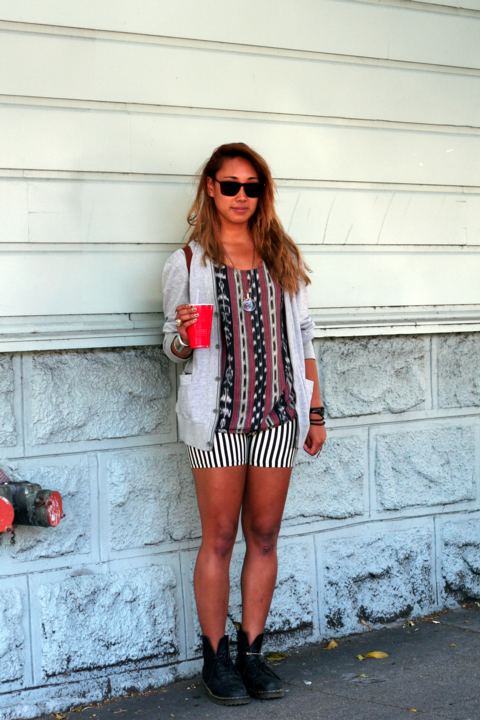
Today’s look: Jodi, Fillmore and Sacramento

Tell us about your look: “Whatever I feel good in, I wear.”

The Western is back! Final thoughts on TIFF ’10

0

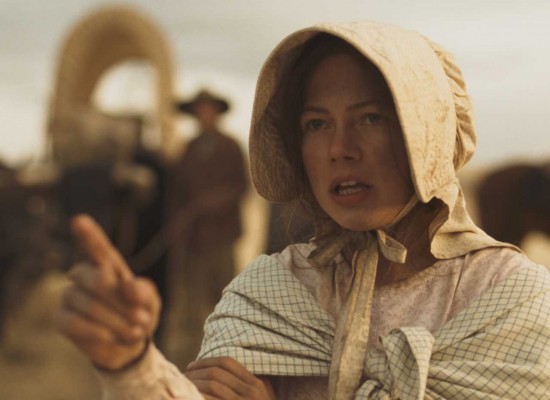
When I interviewed director Kelly Reichardt at the 2008 Toronto Film Festival about her gut-wrenching masterpiece Wendy & Lucy (2008), she spoke of watching many old Westerns in preparation for her next project. She delivered the exquisite Meek’s Cutoff at the 2010 Toronto Film Festival. The film follows three families as they make their trek along the Oregon Trail circa 1845. As they follow their hired mountain man through the Cascade Mountains they start to question if their leader really knows where he is leading them. And when they come across a Cayuse American Indian, the emigrants are forced to question who to trust. While Wendy & Lucy seemed inspired by the Italian Neo-Realists Vittorio De Sica and Roberto Rossellini, Meek’s Cutoff draws upon cinema’s earliest documentaries, like Robert Flaherty’s Nanook of the North (1922).

Collaborator Jon Raymond, who also wrote Reichardt’s Old Joy (2006) and Wendy & Lucy, uncovered the infamous story of Meek’s Cutoff while doing local research in Oregon. The tale seems perfect for Reichardt’s distinctive visual storytelling by exploring humble characters who are confronting everyday troubles while taking a journey outside of their natural habitat. The striking style strips down her character’s actions and allows the viewer to feel the weight of each procedure. Since Reichardt emphasizes her camera over dialogue, the solitary result can culminate in a truly transcendental experience for a viewer, while for others (like at the press screening in Toronto) a long nap. Somehow the fact that a film can evoke such extreme yet internal reactions conjures up the cinema of Yasujiro Ozu and most recently, Claire Denis.
With the rare exception of William Wellman’s brutal epic Westward the Women (1951), based on a story by Frank Capra, Meek’s Cutoff offers one of few female points of view towards the migration of early pioneers. While researching for the film, Reichardt read many old diaries, which women mainly wrote during the time period. These diaries uncovered the immense loneliness that women felt, one of which found a wife writing she was keeping a diary in case her husband should ever want to know her. Michelle Williams (actress of the year with her combined profound performances in Derek Cianfrance’s Blue Valentine, Martin Scorsese’s Shutter Island, and now Meek’s Cutoff) leads the way even with very subtle and minimal interactions.

While Meek’s Cutoff contextualizes the misrepresentation of women in the Western, it also confronts how the American Indian has been misunderstood on the silver screen with a beautifully nuanced debut performance by Rod Rondeaux, whose prior credits are 35 films working as a stuntman in films like James Mangold’s 3:10 To Yuma (2007) and Chris Eyre’s Skins (2002). Yet, much like Wellman’s Westward the Women, the dynamics between characters feels very contrary to most other Westerns. Screenwriter Raymond explained at Toronto, “Instead of being clearly centered on the individual, the community is the main character, with all the tensions and contradictions inherent in any community.”  

The Western genre seems to have been overlooked this past couple of decades by younger audiences, in the mainstream as well as the art crowd. Yet with David Milch’s HBO series Deadwood (2004), John Hillcoat’s The Proposition (2005), Andrew Dominik’s The Assassination of Jesse James by the Coward Robert Ford (2007) and the Coen Brothers’ upcoming remake of True Grit (2010) hot on their heels of their Oscar-winning No Country For Old Men (2007), there seems to be something more complex in these revisionist films that attempt to revise any previous re-visioning. (Neo-Revisionism?) Are they allegories exposing our country’s 250 year confusion with “illegal” border crossings? Are they dissecting our current political transitions between administrations? Or are they just giving us a more realistic look at the individual pioneers who helped “settle” the Wild, Wild West? However you view it, Kelly Reichardt’s quiet, unassuming journey does so by being the best film of 2010. (The Pacific Film Archive is showcasing Kelly Reichardt with a retrospective November 11-13; Reichardt will appear in person.)

Top Eleven Films from The 2010 Toronto Film Festival

1. Meek’s Cutoff – Kelly Reichardt (USA)

2. Another Year – Mike Leigh (UK)

3. Hell Roaring Creek – Lucien Castaing-Taylor (USA)

4. A Useful Life – Federico Veiroj (Spain/Uruguay)

5. Boxing Gym – Frederick Wiseman (USA)

6. Leap Year – Michael Rowe (Mexico)

7. Kaboom! – Gregg Araki (USA)

8. The Illusionist – Sylvain Chomet (based on a Jacques Tati screenplay) (UK/France)

9. You Will Meet A Tall Dark Stranger – Woody Allen (UK)

10. Black Swan – Darren Aronofsky – (USA)

11. Essential Killing – Jerzy Skolimowski – (Poland)

Jesse Hawthorne Ficks is the Film History Coordinator at the Academy of Art University and programs MiDNiTES FOR MANiACS, a monthly series at the Castro Theatre that celebrates dismissed, underrated, and overlooked cinema.

Street Threads: Look of the Day

0

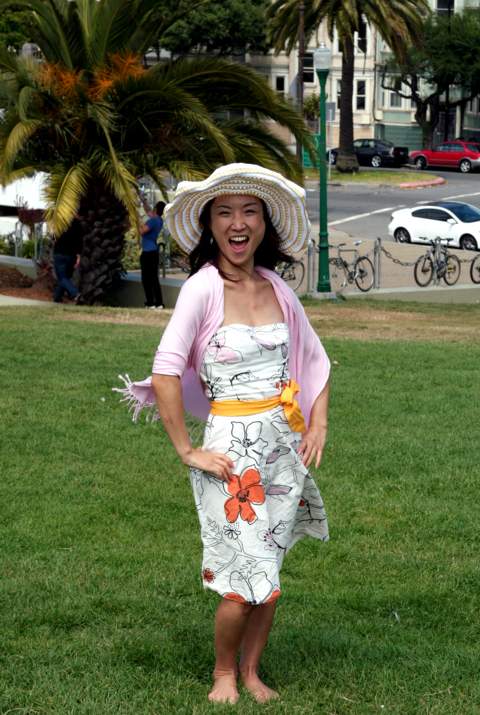
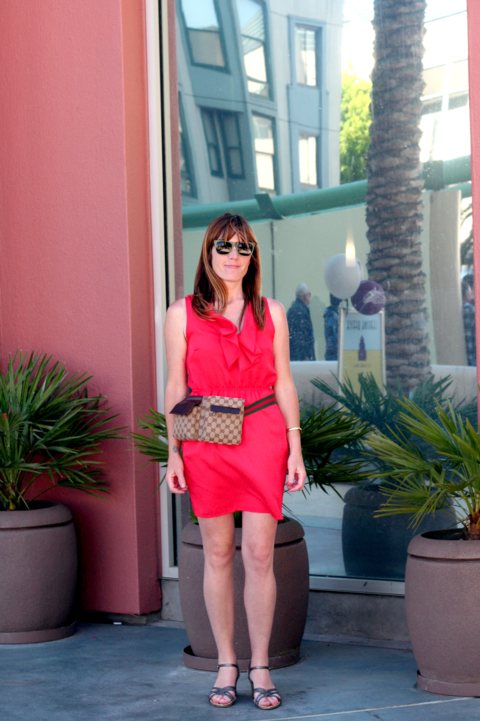
Today’s look: Elle, Dolores Park


Tell us about your look: “I made my dress. I like something feminine. I like something that fits me and is actually my size.”


Street Threads: Look of the Day

0

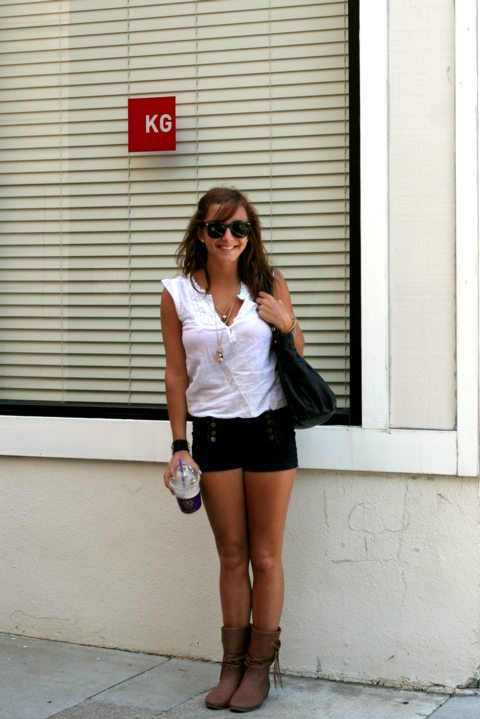
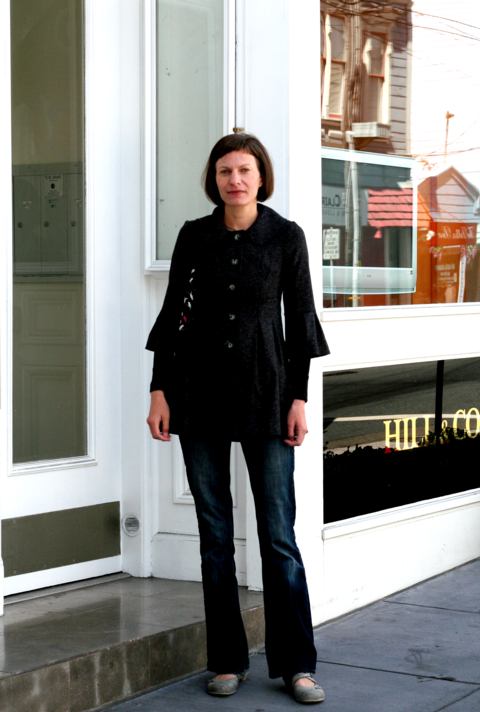
Today’s Look: Ashley, Fillmore and Sacramento

Tell us about your look: “Mix and match and see what works.”

Beating chest for APE

0

I used to live in a town where the alternative-alternative (holler!) weekly had a comics page. Paging to the back of said volume each seven days I’d look for Tony Millionaire’s joint, Maakies. Millionaire’s rounding out a phalanx of guest speakers at this weekend’s APE (Sat/16 and Sun/17), so I’m thinking back to the days when his preciously drawn little derelicts marked my Wednesdays.

The motivation behind my penchant remains slightly cloudy – for why did I seek out these troublemakers? The Maakies are a band of animals and multilated pirate-types (maybe they’re all animals, come to think of it, just horribly alcoholic, crass animals who enjoy tweezing their own belly button hair). A perennial reader favorite, Drinky Crow does little more than you’d think he would – a standard DC portrayal captures a moment in time when some unidentified bottle of hooch hangs suspended in the air, supported only by the gullet into which it is pouring. His eyes are mainly x’s. He does not wear a hat, but his monkey (?) friend Gabby does. They do foul things involving body functions and emotional pathology.

The Maakies occupy a world known by most faves of alternative comics — a dark world, yes, one that is stacked against the protagonists, but none the less a world in which fun can be had. Not the least of which is that fun that is perpetuated by the comic characters against those around them. Can’t deal? Drink yourself into a stupor! End frame. See you next week.

APE artists self-portraiture (clockwise from top left): Lynda Barry, Daniel Clowes, Megan Kelso, Tony Millionaire, Tommy Kovac, and Rich Koslowski 

This is the sort of comic made possible by the alterna-crowd, the alterna-paper, the alterna-comic – all of which will be celebrated and feted as is their due at this year’s Alternative Press Expo. It is part of the juggernaut that is Wonder Con-Comic Con, although attendees at APE assume much less widely known personas in their Lycra and face paint.

This year features the usual reams of special guests. Lynda Barry lends her star power, a maker of ‘zine style comics about horribly awkward, dastardly endearing adolescent girls. Also present will be Ghost World penner Daniel Clowes, Megan Kelso, and Renée French. Most of these writer-illustrators have a solid decade or more under their belt of paneling for society’s disenfranchised.

And new to the APE stage is an innovative new style of meet and greet, always an informal function at these mega-events. Writers and artists will get a chance to speed date at the Comics Collaboration Connection, shopping for creative partners in a dance of I-like-you-do-you-like-me furtiveness. Drop your card in the designated envelope if you want to make a graphic novel! Of course, there will be aisles upon aisles of purveyors of already-collaborated-on comics to inspire you, as well.

Anyways, Tony Millionaire will be there, which is exciting. Sources tell me he’ll be the gentleman wearing a tux in the artist spotlight from 5-6 p.m. on Saturday. Get ready for some inquiries into zero gravity bottle support, Mr. Millionaire – I’ll have what Drinky’s having. 

Alternative Press Expo (APE) 2010

Sat/16 and Sun/17 11 a.m.-6 p.m., $10-$20

Concourse Exhibition Center

635 Eighth St., SF

www.comic-con.org


Street Threads: Look of the Day

0

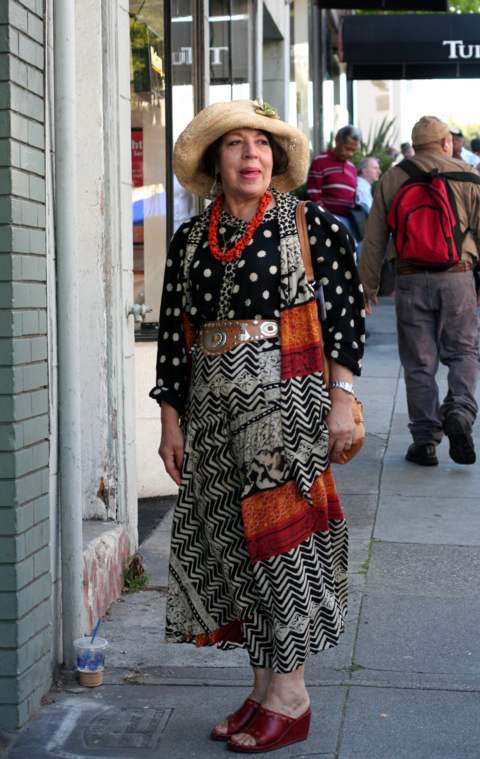
Today’s Look: Lele, Pierce and Ellis

Tell us about your look: “Rock what looks good on you/”

Dance performance: “Keep Her Safe, Please!”

1

Many traditional dancers are no longer content with merely preserving a valuable heritage; they want to put their own stamp on it. So now there’s a new kind of dance, already conveniently labeled “ethno-contemporary.” Taiwanese-born, Indonesia-raised, and additionally US-trained Wan-Chao is at the forefront of this promising new genre. She dedicated Keep Her Safe, Please! Jakarta 1998 (Sat/16-Sun/17 at the Cowell Theater) to the victims of the anti-Chinese pogrom that included particularly vicious attacks against women.

The thoroughly contemporary work draws on both Chinese and Indonesian music and dance. Sharing the program will be Gadung Kasturi Balinese Music and Dance in three works. One of their dancers, Rotrease Regan Yates — ten years with Gamelan Sekar Jaya — has a whole encyclopedia of dance in her body: ballet, modern, Polish, Russian, Javanese, Cambodian, and of course, Balinese. 

Keep Her Safe, Please! Jakarta 1998

Sat/16, 8 p.m.; Sun/17, 1 p.m., $12-$20

Cowell Theater

Fort Mason Center

Marina at Laguna, SF

 (415) 345-7575

www.fortmason.org


Street Threads: Look of the Day

0

Today’s look: Allison and Jasmine, Fillmore and California

Tell us about your look: (Allison) “I like to wear anything that’s flattering and tailored pieces.”

The Performant: The fortress of solitude and “Hamlet” on Alcatraz

0

I notice them first on the ferry, two young men in suspenders and ties deep in conversation. One wears a beanie and designer sunglasses. Nothing special. The view of the approaching island etched against the uncharacteristically clear sky is more enticing. But when they burst onto the main deck amidst the passengers, and speak loudly of their journey to Elsinore, it’s clear that the play’s the thing. To be precise, the We Players‘ experiential performance-thing of “Hamlet” now being staged on Alcatraz.

Hustled out onto the landing dock after the ferry ride, the oddience is soon surrounded by the unfolding action. There, running along the narrow walkways girding the abandoned barracks of Building 64, is Barnardo (Kevin Singer) with his unsettling news. Here, a group of black-clad musicians heralds the eerie appearance of not just one, but five apparitions of the deceased king, whose masked face materializes ominously from behind bushes and stairwells. The new king, Hamlet’s uncle Claudius (Scott D. Phillips), holds court before a tangle of brush and chainlink fencing, while Hamlet (Andrus Nichols) denounces his deeds in front of same.

Upon being moved upon, we surge forward in hot pursuit of Hamlet as he races in hot pursuit of the ghost, his father. Pursuit is a theme well-examined within Shakespeare’s “Hamlet”. Hamlet pursues revenge and Ophelia’s (Misti Boettiger) affections both, while Claudius’ pursuit of power, Rosencrantz and Guildenstern’s (Kevin Singer and Ross Travis) pursuit of reward, and Laertes’ (Benjamin Stowe) pursuit of ambition abroad drive them to purpose if not to sensibility. Isolation too plays a role: Hamlet gradually isolates himself from the good graces of everyone save his loyal Horatio (Nicholas Trengove) and then there’s Elsinore itself, surrounded by water and the stultified air of provincial familiarity, equally isolated from the rest of Denmark — indeed, Europe.

This melancholy undercurrent of isolation is what makes Alcatraz such an ideal location for the staging of this classic ghost story. A distinctive, craggy presence in a deceptively tame-looking bay, Alcatraz has guarded its shores and mostly unwilling inhabitants for centuries, with icy currents and unfriendly rock. Haunted (at least metaphorically) by the ghosts of incarcerated prisoners of war, assimilation-resisting American Indians, conscientious objectors, and bank robbers, its stony paths and gloomy corridors bear uncanny resemblance to the equally dismal wreckage of any old European fortress gone to seed.

Indeed, the setting is so central to this nimbly-executed, three-hour performance, you could almost list Alcatraz as a cast member rather than a staging ground. Whether supporting a wily troupe of traveling players in the line-crossed palm of what was once a parade ground, or cradling the disintegrating remains of Ophelia’s sanity within its crumbling walls, the fortress, like Hamlet, yields no quarter, though unlike Hamlet, it’s still left standing after the bloodbath of the final act. Gathered once more on the parade ground, ringed with fire, lanterns, and stars, we watch the treacherous killing of Hamlet, and the swift justice inadvertently meted out to his murderers, while the roving eye of the lighthouse above us glances not unsympathetically at such frail human antics. The rest is silence. 

Hamlet

Saturdays and Sundays, times vary, by donation

Alcatraz Island, SF

(415) 547-0189

we-alcatraz.blogspot.com


Street Threads: Look of the Day

0

Today’s Look: Tara, O’Farrell and Fillmore

Tell us about your look: “Do what you want to do.”

Whiskeyfest whispers

0

What words could be more beautiful to hear upon entrance into the skyscraper-y, shiny den of downtown’s Marriot Marquis? From the mouth of a woman in a blazer and matching knee-length skirt: “It smells like a frat house on a Saturday morning!” Ah, last Friday’s Whiskeyfest, you came to conquer my liver, but you left after conquering my heart.

To the tune of 250 whiskies, no less! Once ensconced in the hotel’s basement ballroom and properly attired with our souvenir tote and tasting glass, naught could be seen but opportunities to drink myself into an unproductive Saturday of cowering from the Blue Angels. Row upon row of the finest whiskies – the even finer ones available only for the special VIP tasting hour, whose $150 price tag may have seemed a little step were one not aware of the general admission’s $110 bar tab.


And who, pray tell, is buying these steeply priced passes into madness? Well, from the looks of Whiskeyfest SF, mainly older white men. Shocking. But more interestingly, also a secret cabal of rumor-mongers and shit-stirrers! Indeed. SFBG received this mind-blowing scoop (along with a pair of hefty pours of the 23-year aged malt) from Old Rip Van Winkle‘s crown prince of marketing management, J. Preston Van Winkle. 

See, Old Rip’s got little to prove in this big old world of bourbon. Our SFBG resident spirits expert, Virginia Miller (who will know doubt be sniffing and sipping through a slightly more sophisticated, taste and mouth feel-oriented version of this coverage later this week) pointed me towards their table right off the bat, so we knew it would be good and smooth beyond measure. 

Their brand has been starting fights and making horses kick since the days before Prohibition, and its Pappy Van Winkle’s Family Reserve is the highest rated bourbon whiskey in the world. In. The. World. Thank you, Kentucky. Preston tells me that at this stage, there’s not too much marketing to be done. “It’s more like relationship management now,” he tells me, standing next to dad Julian the Third at their pouring table. 

So why the devil would one pay the reported price of $1,200 to have a Whiskeyfest booth and suffer the badgering of alternative newspaper reporters? Preston says there’s more at stake here than mere sales figures. And now we’re talking honor – or at least the Internet’s perception of it. “There’s a whole subculture of whiskey people,” he begins, not sounding too much like he cottons to this particular set of website forum-frequenting deviants. “There’s an active rumor mill. As soon as we don’t show up, there’s ‘a hostile takeover,’ we’re ‘shutting the doors.’ ”

“Yep, we’re still here pops. Get used to it.” Preston Van Winkle (left, navy polo) deflects the haters at Whiskeyfest 2010. Photo by Paula Connelly

The message board freaks seem to have won this round. “It’s easier just to come to [Whiskeyfest] and suffer the consequences and generate buzz that we don’t need. That and John Hansell has been good to us,” he smiles, a twinkle appearing at the mention of the kingpin behind the Fest-editor of sponsoring rag Malt Advocate, a twinkle which hopefully eclipsed the pain he must endure by unhelpfully-generated buzz. 

So rapt was I held by these revelations from the junior Van Winkle, I began to venture further into his whiskey wonderland. It gets weirder. Turns out, his family didn’t start their eponymous whiskey brand. Pappy Van Winkle actually brought the brand from another bloke after Prohibition. What is truly nutty is that Pappy had been making whiskey all along, just not with his last name as the brand (he sold his original three brand names in favor of reinvigorating the Van Winkle label). Preston and I surmise that the original owners were playing on the fairytale story of the man who sleeps for twenty years after escaping his nagging woman and drinking some booze belonging to ghosts partial to lawn bowling. Good whiskey being that which knocks you out so long you miss your harpy wife’s death.

Preston, when did you start drinking whiskey yourself? Answer: one year old. “My parents didn’t believe in store bought cough syrup,” he tells me in a slight Louisville drawl. 

The Van Winkle wares having been thoroughly sampled, our cadre moved on, threading amidst the refrigerator-shaped men in blazers and kilts through the tables of un-aged Koval white whiskey, of Japanese whiskey, of ryes, bourbons, scotchs, and a host of non-whiskey related items like Crop’s Bloody Mary-ready organic tomato vodka and Quelque Chose, a beer from the Unibroue brewery of Quebec that is meant to be boiled in its own bottle, then served hot at the temperature at which its foam emerges. Like mulled wine it was, a perfect antidote to the October pre-anxiety over Christmas commercials and family visits.

We emerged at the other side predictably weary, having missed all 12 of the expert seminars (who were we, really, to attend?), but done our darnedest to sample what we could of the high rolling whiskey lifestyle – as well as having reinforced the notion that the high rolling whiskey lifestyle is an elixir best meant to be sipped, and preferably not at a level of motion characterized by the lurch to the next nearest table of sampling whiskies. Also, even men in suits get fresh after too many fancy scotches. Whiskeyfest, til we meet again. 


Open Studios spotlight: Calixto Robles

1

Because Open Studios is about more than just the free wine and occasional sushi board score. Really! The annual organized voyeurism of creative space in the city will showcase artists’ studios in different neighborhoods each weekend this month. In gleeful anticipation, we visited screen-printer and long time Mission visual artist Calixto Robles, who is helping to throw open the doors to his Life Art Studios (151 Potrero, SF) this weekend.


“Meeting new people, that’s the best thing.” Robles is sitting in his studio of six years, surrounded by shelf upon shelf of his lucid dream style paintings, screen printed posters, and a new project that will be on sale at this weekend’s Open Studios: T-shirts covered in iconic prints from the world’s religions, their overlapping designs forming a riotous invocation of peace.

Get inside Calixto’s mind… or at least his print shop

The T-shirts designs are echoes of similar schemas on canvasses that sit on the ground near Robles’ desk area. The Virgin of Guadalupe (herself a figure with one foot in Catholic lore and another in indigenous Mexican faith), Buddha, and Hindu gods, the word “peace” thrown in at intervals for good measure. The brightly colored collages are a favorite of Carlos Santana, who is a good friend of Robles. In fact, the canvasses by Robles’ feet represent different options for Santana to peruse for his family Christmas card this year. 

The beauty of Open Studios is the ability to sample divergent snippets of San Francisco artistic life. In addition to Life Art’s neighborhood in the corner of the Mission that abuts SoMa and Potrero Hill, this weekend’s event will feature open doors in Bernal Heights, Castro, Duboce, Eureka Valley, Glen Park, Mission, Noe Valley, and Portola. Art Span, the organization of artists that coordinates the event, does so to connect artists with budding art aficionados in the hopes of connection at the point of inspiration.

Robles, a longtime Mission resident from Oaxaca who was part of the art movement that erupted in opposition to the dot com evictions of the late ’90s, has participated in for “fix or six years” in Open Studios. He’s exhibited his art for visitors in both group studios and in his home on Guerrero Street, relishing the opportunity to let passers-by into his private creating space. 

Lotus hearts, community art at Open Studios 2010

He’s famous for his screen prints. Wife and fellow artist Alexandra Blum and he bought an ancient printing press from UC Berkeley years ago. It now sits in the center of his studio, an aluminum print  on top of it featuring a “Justicia” banner that a friend drew for Calixto to print. One wall of the lobby gallery of Life Art is still covered in handmade Mexican propaganda posters that Robles and friends displayed in a recent exhibition of political art. 

The beauty of Open Studios, Robles says, is not always the financial bottom line. Rather, it’s the chance to share art with those around us, people with whom you’d never otherwise find yourself discussing artistic vision. 

This weekend will be the first time that Life Art hosts a group show — exciting for that particular artist community, whose artist produce disparate works from Calixto’s peace prints to massive canvasses covered with a mixture of adhesive and table salt. The artists hope to benefit from the foot traffic of people strolling between SOMAarts Cultural Center and Art Explosion, the massive warren of studios that both sit a block from Life Art and will also be participating in this weekend’s Open Studios. 

Some people, Robles tells me, pass through quickly after scanning the works on the wall – but other art fans will go for the more interactive experience. Chill with the guy who makes Carlos Santana’s Christmas cards? It’s a good reason to hit the studio circuit. 


Open Studios: Bernal Heights, Castro, Duboce, Eureka Valley, Glen Park, Mission, Noe Valley, Portola

Sat/9 and Sun/10 11 a.m.-6 p.m., free

151 Potrero, SF

www.artspan.org


The Performant: Dies Arses have it

0

Local Arts: Arse Elektronika weekend and arses up at Dodgyfest III

Couldn’t make it out to the “Oscars of computer art” at the Ars Electronica Center in Linz, Austria? Me neither, but thanks to Viennese techno-prankster collective monochrom, I could stay in San Francisco and experience a slightly more warped version at the 4th annual Arse Elektronika instead. An exploration of sex, tech, and space — inner and outer — Friday evening’s lineup of lectures and presentations turned the Center for Sex and Culture into a grown-up game of show-and-tell.

First up was “Spaceman” Sam Coniglio of the Space Tourism Society presenting on one of his favorite topics: “Sex in Space”. Unfortunately, as Coniglio notes, this is not NASA’s first priority as a research topic and the jury is out on whether or not anyone has ever successfully joined the 217-mile club or not. (If so, “they’re not telling.”) But such lack of information hasn’t stopped the hopeful from designing prototypes of gear that might assist in future feats of space sex. With the help of volunteers, Coniglio showed off his own favorite, a plushy “snuggle tunnel”—like a giant slinky covered in velveteen.

Jason Brown’s extremely entertaining talk, “The Endosymbiotic Cha-Cha” took the concept of sex in space from the outside in, beginning with the premise that humans may fantasize about boinking a reasonably attractive, bipedal extraterrestrial race, but in reality, scale might be the real barrier. Perhaps alien life forms already live among us (or in us!) at a microscopic level. Are multiplying viruses getting it on while we suffer the side effects of their fevered touch? Wrapping up the evening was Heather Kelley, aka moboid, presenting an iPhone app she designed called Body Heat which allows the user to manipulate the speeds of a vibrator using a touchscreen. She showed off its incidental percussive potential along with Jordan Gray, or starPause, who accompanied her with electronic blips and sampled bits.

Such sexoterica was good food for thought, but I was feeling the need to get down and dirty. Luckily, Dodgyfest III was there for me. Ostensibly a birthday celebration for prolific rock photographer Mr Dodgy (Neil Motteram), Dodgyfest featured cake, t-shirts, and hi-octane rocking. Girls with Guns! Meat Sluts! La Plebe! It’s pretty hard to think of a feistier lineup, but just for kicks, Neil threw in a few extra tunes as frontman for the (very) occasional Bloody Hells. Taking a tongue-in-cheek page out of the Ramones’ rock-and-roll high school primer, the pseudononymous Meat Sluts (SFBG-recognized “Sluttiest Rockers”)  bear monikers best suited for the bbq stand (Scarlet Spamchop anyone?) and their set list was equal parts carnivorous and lascivious — man-meat featuring large in the lyrics. Turning up the heat was the ever-smokin’ La Plebe, who rather wholesomely avoid overtly sexual themes in their lyrics, though they always throw in “Dirty Old Town” for the punters. But their overriding message of personal liberty is always an aphrodisiac to the spirit, and their skintight ska-inflected riffs would make Buzz Aldrin wanna mosh. Space-sex fetishists take heed, sometimes the most fun you can have is with your clothes on after all.

Street Threads: Look of the Day

0

Today’s Look: Izzy, 24th Street and Sanchez

Tell us about your look: “I’m a mom so I like to wear what’s comfortable and practical.”

The family Yañez and their evolving altars

0

To hear father and son artistic team Rene and Rio Yañez talk about San Francisco’s Day of the Dead celebration is to realize how much the holiday has taken on its own light here in the city. “It’s about personal experience, but also politics,” Rene says. The duo have crafted another year of homage to the dead around us — and in so doing also reflect a shifting scene in San Francisco art.

No art event in the city reflects evolving tradition more than the Yañezs’ yearly exhibit of Dia de los Muertos altars at SOMArts Cultural Center (opening Fri/8). As the three of us sit in Rene’s office at SOMArts next to the cow brain in a mason jar on top of which the elder Yañez — the center’s director of special projects — has stacked a pair of headphones and a plush Taco Bell chihuahua, Rene tells his son and myself about the first public Day of the Dead celebration in San Francisco.

Rene, a seminal figure in the Mission art scene, held the first year of the altar installations in the early ’70s at his neighborhood community art hub from that time, Galería de la Raza. In an area full of Central and South American activists who had lost their home due to oppressive regimes and political exile, he and other artists figured it was time to start acknowledging the Mexican holiday of death, parody, and remembrance in their new community. 

In Mexico, Dia de los Muertos is celebrated by the gathering of family, of processions to the cemetery to mark loved ones’ graves with ofrendas of marigolds, sugar skulls, and refreshments. In the Mission, that feeling of community and import was to be replicated with a distinctly San Franciscan twist. “We talked about creating a ritual, ceremonial exhibit,” Rene says.

In those early days, it was mainly the Latinos that lived in the neighborhood that came to see the altars that Yañez and fellow artists created in the Galería. But soon, word of the popular exhibit spread, and it became a teaching moment for those outside the culture. School groups would come by for a field trip, occasions for which the Galeria printed out Day of the Dead lesson plans. 

Still, not every one immediately understood the holiday’s significance. “It’s not really a morbid holiday,” Rene tells me. “People use it to make fun of death, some people make political statements, some people use humor.” That approach “made some people preoccupied,” Rene says, a smile flickering over his face. “They were seeing skulls and things like that.” “It’s about celebrating death as a part of life,” Rio supplies.

Of course, things have changed over the last forty years. Nowadays, the esoteric procession that began in the Mission in the ’80s to mark the holiday has grown into a 15,000 person yearly event, and has been jokingly termed “Day of the Dead Gringos” and “Gringos Gone Wild” by some local blogs for the Burning Man-style theatrical costumes, stilting, and concept artwork contributed by those with nary a drop of Latino blood in their body.

Which, Rio Yañez says, is just fine. Rio – who dad Rene jokingly calls “a cholo hipster” – was born and raised in the Mission, watching his family stave off eviction notices during the dot com boom and beyond during times when rent prices in his neighborhood have soared. Unlike many of his childhood friends, he has chosen to remain in the Mission, and having graduated from CalArts, now partners with his father at SOMArts. 

In the Day of the Dead celebration’s cultural inclusivity, Rio finds a positive benefit for the city’s diverse tribes. “It’s a way of sharing culture – even with all the drunk hipsters just having a good time marching there’s still a community spirit.” When I ask him whether the Mission Latino community can still claim ownership of the procession, he replies diplomatically. “The neighborhood has changed so much — the parade is a reflection of that.”

Rene concurs. “I haven’t experienced a neighborhood that hasn’t changed,” he tells me.

That kind of cultural shift is reflected in the Yañez-curated SOMArts exhibition. Past years’ exhibits have paid homage to deceased family members, to the victims of disasters like Hurricane Katrina, and even to the artists themselves – last year one contributor passed away during the altar’s run at SOMArts, and her installation was augmented by fellow mourners to reflect the snuffing of a creative life. Although the papel picado and traditional iconography remain a part of the vast labyrinth of artists’ contributions at SOMArts, the things mourned and celebrated ring universal, hurts and hopes accessible to everyone present in the melting pot of the city.

This year, the Day of the Dead artists come from all over, and hail from all age groups. Some, like CJ Grossman, Susan Matthews, and Jos Sances have been working with Rene on the exhibit since the late ’80s. Others, like photographer Amanda Lopez, have been brought in by Rio, who is aiding in the transition to online culture, contributing his own photographic skills to the effort, and scouts talent from the younger artistic circles he runs in.

Which isn’t to say that Rene hasn’t taken advantage of some of today’s most cutting edge art technologies, including the Avatar-inspired mania for 3D. Before I leave SOMArts, he produces a sheaf of 3D renderings he’s created on the computer and a flashy pair of red and blue-lensed glasses – far more impressive than anything that I’ve been handed en route to Toy Story 3

I put them on, and a galaxy of Mexican masked wrestlers, women, and designs pop up at varying levels in front of my eyes. The images, Rene tells me, will be projected on the walls of the Day of the Dead exhibit to create a saturated visual experience. More evidence of tradition – and the family Yañez – gathering no moss in the name of art. 


Dia de los Muertos Exhibition: Honoring Revolution With Visions of Healing

(through Nov. 6)

Opening reception: Fri/8 6- 9 p.m., $5-10 sliding scale

SOMArts Cultural Center

934 Brannan, SF

(415) 863-1414

www.somarts.org


Quick Lit: Oct. 6-Oct. 12

0

Literary readings, book tours, and talks this week

Litquake 2010 goes out with a bang featuring novelists, scientists, poets, comedians, sexy storytellers, and more, culminating in this year’s not-to-be-missed Lit Crawl.


Wednesday, Oct. 6

“The Art of Narrative Nonfiction”
Much is said about how to write fiction, but what about non-fiction? This panel moderated by best-selling author David Ewing Duncan will discuss the techniques for turning a biography into a National Book Award Winner. Featuring Tamim Ansary, Frances Dinkelspiel, Richard Rhodes, and T.J. Stiles.
6 p.m., free
San Francisco Main Library
100 Larkin, SF
www.litquake.org

Bawdy Storytelling
Hear real people sharing their bona fide sexual exploits in ten minutes or less. Storytellers are an eclectic mix of authors, poets, comedians, actors, and regular people, including Tim Barsky, Stephen Elliot, Johnny Funcheap, Jow Klocek, Joe Kukura, and Morgan.
7 p.m., $10
Blue Macaw
2565 Mission, SF
www.litquake.org

“The Complex Societies of Ants and Honeybees”
Join Litquake and the California Academy of Sciences for a discussion led by two leading experts, Mark W. Moffett and Dr. Thomas D. Seeley, on our planet’s smallest and most complex social organizations. Co-sponsored by KQED, and moderated by KQED’s QUEST TV series producer Amy Miller.
7 p.m., $15
Morrison Planetarium
California Academy of Sciences
55 Music Concourse
Golden Gate Park, SF
www.litquake.org


“Dance, Intergenerational Trauma, and the Diaspora”
Learn about the Katherine Dunham Technique at this lecture featuring Eyla Moore, teacher at ODC, Dance Commons, Hip Line, and Dance Fitness Studio, and Aliyah Dunn Salahuddin, dancer and tutor in City College of San Francisco’s African American Scholastic Program.
3 p.m., free
City College of San Francisco
Ocean Campus
Rosenberg Library, Room 305
50 Phelan, SF
(415) 239-3854

Flight of Poets
Internationally renowned sommelier Christopher Sawyer pairs six talented local poets with six great wines carefully selected to illuminate their work. Featuring Camille T. Dungy, Robin Ekiss, Paul Hoover, Ada Limón, Zachary Mason, Christopher Sawyer, and Matthew Siegel.
7 p.m., $15 includes wine flight 
Hotel Rex
562 Sutter, SF
www.litquake.org

The Funny Side of Sex
Join Daily Show correspondent Kristen Schaal as she celebrates her first book, The Sexy Book of Sexy Sex, along with Scott Jacobson, co-author of the new book Sex: Our Bodies Our Junk, illustrator Michael Kupperman, and actor and writer Ted Travelstead. This evening of live and uncensored sex-humor unfolds at San Francisco’s legendary Cobb’s Comedy Club. Co-sponsored by Chronicle Books.
8 p.m., $15
Cobbs Comedy Club
915 Columbus, SF
www.litquake.org

Lit on the Lake
Celebrate East Bay writers at this litquake event featuring acclaimed novelists including Melanie Abrams, Elaine Beale Lucy Jane Bledsoe, Jacqueline Luckett, Lisa Braver Moss, and Kristin McCloy.
6 p.m., $5-$10 donation
Gondola Room
Lake Chalet
1520 Lakeside, Oakl.
www.litquake.org

100th Literary Death Match
Celebrate the kickoff of a worldwide Literary Death Match tour where judges, W. Kamau Bell, Mark Fiore, and Jane Smiley, will pass centurial judgment on a must-see lineup featuring readers Jason Bayani, David Corbett, Kari Kiernan, and Joel Selvin. Hosted by Todd Zuniga, Elissa Bassist, Alia Volz, and M.G. Martin.
7 p.m., $15
Elbo Room
647 Valencia, SF
www.litquake.org

Radar Reading Series: Litquake Edition
This monthly literary series brings in first-time novelists, playwrights, shoplifting poets, and riot girl historians for readings, followed by a Q&A session hosted by Michelle Tea. Featuring Chinaka Hodge, Tao Lin, Sara Marcus, and Beth Pickens.
6 p.m., free
Latino Reading Room
San Francisco Main Library
100 Larkin, SF
www.litquake.org

Thursday, Oct. 7

Booksmith Bookswap
Bring a book you passionately love but can part with and learn about dozens of new, fantastic books. Ticket price includes two drinks, appetizers, and a 20% discount card to purchase books after the event.
6:30 p.m., $25
Booksmith
1644 Haight, SF
www.litquake.org

Feminine Wiles
Hear witty women read from their most recent books, featuring Elif Batuman, Marisa Crawford, Katie Crouch, Thaisa Frank, Joyce Maynard, Kaya Oakes, and Shawna Yang Ryan.
7 p.m., free
Noe Valley Recreational Center
295 Day, SF
www.litquake.org

The International Homosexual Conspiracy
Author Larry-bob Roberts offers humorous insights into the absurdities of modern life and queer culture, from contemporary topics like mistaken first impressions, to sustainable yet unaffordable pants, and critiques of bourgeois mindsets.
7 p.m., free
Modern Times Bookstore
888 Valencia, SF
www.mtbs.com

Litquake Bites
Local food and books, two of San Francisco’s favorite pastimes, converge at this delicious and informative lunchtime event featuring presentations and tastings by four innovative food purveyors and authors including Sarah Billingsley, Gordon Edgar, Steve Sando, and Amy Treadwell.
Noon, free
Book Passage
1 Ferry Building, SF
www.litquake.org


Stories on the Stage
Hear short fiction stories about love lost, love never found, and love perpetually out of touch with authors Daniel Handler, Daniel Alarcón, and Yiyun Li. Directed by Sean San José, co-founder of Campo Santo, the award-winning resident theater company of San Francisco’s Intersection for the Arts.
7:30 p.m., $25
Roda Theater
Berkeley Repertory Theatre
2025 Addison, Berk.
www.litquake.org

Friday, Oct. 8

All-Memoir Women’s Night
From finding love in foreign lands to struggling with poverty, from being in the sandwich generation to making the perfect brownie, women are fearless when it comes to exploring life and its myriad joys and challenges. Hear authors Zoe Fitzgerald Carter, Katherine Ellison, Laura Fraser, Frances Lefkowitz, Meredith Maran, Kate Moses, Janice Cooke Newman turn inward to provide us with stories that delight, dismay, and entertain. Emceed by Litquake co-director Jane Ganahl.
6:30 p.m., $5-$10 donation
Paris Ballroom
501 Geary, SF
www.litquake.org


“How to Write and Sell Erotica”

Join a panel of editors, anthologists, and published authors as they offer practical tips and personal insights about how to write and sell all forms of erotica. Find out what magazines, websites, anthologies, and book publishers you can sell your work to, as well as  tips on how to write more marketable erotica.
7:30 p.m., $5-$15 donation
Center for Sex and Culture
1519 Mission, SF
www.sexandculture.org

“It’s All Over But the Crying”
Enjoy a night of author talks on the world of sports, from the infinite variations of major-league baseball to the international phenomenon of the World Cup, with Alan Black, Howard Bryant, Dan Epstein, Dan Fost, David Henry Sterry, Jason Turbow, and Michael Zagaris. Special multimedia presentation by Bay Area sports photographer Michael “Z Man” Zagaris. Emceed by Litquake co-director Jack Boulware.
7 p.m., $10
Hemlock Tavern
1131 Polk, SF
www.litquake.org

Jonathan Lethem
Novelist, essayist, and short story writer Jonathan Lethem will discuss his latest novel, Chronic City. Co-presented by Litquake and San Francisco’s Jewish Community Center.
11 a.m., $20
Jewish Community Center of San Francisco
3200 California, SF
www.litquake.org


Litquake at the Bikestore

In the late 19th century, an accountant named Frank Lenz quit his job to cycle around the world. Two years later he mysteriously disappeared during the final leg of the journey. Hear author David V. Herlihy discuss this mystery and his new book The Lost Cyclist. In conjunction with Green Apple Books.
7 p.m., free
Public Bikes
123 South Park, SF
www.litquake.org

Saturday, Oct. 9

Lit Crawl
Get your fill of literary entertainment at galleries and bars across the Mission, where each phase offers crawlers a choice of attending readings happening simultaneously at over a dozen venues. With best-selling authors, poets, professors, bawdy story-tellers, amateurs, and professionals, it’ll be tough to choose three.
Phase I 6pm-7pm, Phase II 7:15pm-8:15pm, Phase III 8:30pm-9:30pm; free
Various venues along the Valencia Street Corridor
Mission District, SF
www.litquake.org

Sunday, Oct. 10

Social Justice with Claudette Colvin
Attend this social justice event featuring a conversation between Enid Lee and Civil Rights legend Claudette Colvin, who refused to give up her seat to a white person on a Montgomery bus in 1955 and was the star witness in the federal case Browder v. Gayle, which desegregated the Montgomery buses. Also featuring a performance piece by Awele Makeba and a performance by poet, activist, and spoken word artist Bryonn Bain.
1:30 p.m., free
San Francisco Main Library
100 Larkin, SF
www.litquake.org

Tuesday, Oct. 12

Bill Bryson
Hear the author of At Home in conversation with Roy Eisenhardt.
8 p.m., $20
Herbst Theater
401 Van Ness, SF
www.cityboxoffice.com

Left in the Dark
Authors R.A. McBride and Julie Lindow celebrate twentieth century movie theatres and movie going in this book titled, Left in the Dark: Portraits of San Francisco Movie Theatres, a collection of personal essays and fine art photographs that casts the theatres as characters within the city’s cultural landscape.
7 p.m., free
City Lights Bookstore
261 Columbus, SF
www.litquake.org

Joseph O’ Neill
The award-winning novelist of Netherland will be discussing his new family memoir, Blood-Dark Track.
7 p.m., $20
Jewish Community Center of San Francisco
3200 California, SF
(415) 292-1200


Street Threads: Look of the Day

0

Today’s Look: Lydia, Fillmore and Jackson

Tell us about your look: “”This is an outfit I like to take out and wear for summer fairs. I feel like a gypsy in it.””


Street Threads: Look of the Day

0

Today’s Look: Lisa and Evan, Washington and Fillmore

Tell us about your look: 

Lisa: “I like to mix vintage and new indie designers.”

Quick Lit: Oct. 1-Oct. 5

0

Literary readings, book tours, and talks this week

Litquake is back from Oct. 1-9 with more than 550 authors and events. Find out how to catch some this week after the jump.

Friday, Oct. 1

Litquake 2010 kickoff
Grab you litquake program and enjoy music by “Diva Deluxe” Suzy Williams and Brad Kay as they perform songs based on the work of well-known authors Kurt Vonnegut, Raymond Chandler, and more. You can also sip cocktails while browsing the gallery’s latest exhibit “Everyday,” showcasing new works by California tattoo artists. Litquake programming through Oct. 9.
5 p.m., free
111 Minna Gallery
111 Minna, SF
www.litquake.org

Saturday, Oct. 2

Off the Richter Scale
From poetry to comics to dad lit, this Litquake opening weekend event will feature literary tweeters, bloggers, illustrators, mystery writers, fathers, poets, historians, and more.
Noon – 4 p.m., free
Variety Preview Room Theatre
582 Market, SF
www.litquake.org

 
Watershed Environmental Poetry Festival
Enjoy a stellar line-up of poets and environmental writers including Brenda Hillman, Robert Haas, Allison Hawthorne Deming, Al Young, David Meltzer, Camille T. Dungy, and more. Also featuring a poem installation by Arthur Okamura, live music, environmental updates and information, and more.
Noon-4:30 p.m., free
Civic Center Park
Martin Luther King, Jr. at Center, Berk.
www.poetryflash.org

Sunday, Oct. 3

Barely Published Authors
Readings by up-and-coming masters of prose from the Bay Area including Jeremy Hatch, Mimi Lok, Caitlin Myer, Andre Perry, Paul Spinrad, Ian Tuttle, Alia Volz, and Olga Zilberbourg. Emceed by Ransom Stephens.
7 p.m., free
Make-Out Room
3225 22nd St., SF
www.litquake.org

“CLA All-Stars: 25 Years of San Jose’s Center for Literary Arts”
Join best-selling authors Maxine Hong Kingston (The Woman Warrior, Tripmaster Monkey), Mary Roach (Packing for Mars, Stiff, Spook, Bonk), Daniel Alarcon (Lost City Radio), and Andrew Sean Greer (The Story of a Marriage) as they read from their latest works. This program was developed in collaboration with the San Jose Center for Literary Arts and Litquake.
6:30 p.m., $10
The California Historical Society Museum
678 Mission, SF
(415) 357-1848

Ein Zweigabend: A Zweig Evening
Enjoy this literary and musical eveing dedicated to the works and memory of Austrian writer Stefan Zweig, featuring violinist Gregory Sykes, pianist Ian Scarfe, and vocalist Patrick Marks playing some of Zweig’s favorite music. Wine, champagne, and hors d’oeuvres.
7 p.m., $20 suggested donation
Green Arcade
1680 Market, SF
(415) 431-6800

North Beach Literary Tour
Learn more about the literary tradition of North Beach, from the Gold Rush, to the Beats, and into the modern era. The one mile tour concludes at Focus Gallery on 1534 Grant with readings by political satirists, socially savvy novelists, outlaw poets, and cultural historians Phil Bronstein, Will Durst, Ben Fong-Torres, Alan Kaufman, Ellen Sussman, and Jody Weiner.
5:30 p.m., free
Meet at The Beat Museum
540 Broadway, SF
www.litquake.org

Off the Richter Scale, Day Two
Day Two of Off the Richter Scale features panel discussions on alternative publishing and literature in translation and readings by Hedgebrook Alums and writers on California and San Francisco.
Noon – 4 p.m., free
Variety Preview Room Theatre
582 Market, SF
www.litquake.org

Monday, Oct. 4

Final Flight
Join author Peter Stekel for a reading and discussion of his new book, Final Flight: The Mystery of a WWII Plane Crash and the Frozen Airmen in the High Sierra.
6 p.m., free
University Press Books
2430 Bancroft, Berk.
(510) 548-0585


Tao Lin

Tao Lin takes his trademark minimalism in a different direction as he ponders the meaning of illicit sex for a generation with no rules in his new book, Richard Yates, named after the real-life writer. In Richard Yates, Lin narrates a tale about a young man dealing with the consequences of an affair with an underage, self-destructive girl.
7:30 p.m., free
The Booksmith
1644 Haight, SF
(415) 863-8688

“Original Shorts: Bottom’s Up”
Join this year’s esteemed scribblers as they reveal their original takes on the theme “Bottoms Up,” with Dodie Bellamy, Elizabeth Bernstein, Joshua Braff, Anne Finger, Shanthi Sekaran, Namwali Serpell, and James Warner.
7 p.m., free
Heart Wine Bar
1270 Valencia, SF
www.litquake.org

“Words and Waves”
A night of surf lit with Krista Comer and Elizabeth Pepin, Doug Dorst, Daniel Duane, Thomas Farber, Steven Kotler, emcee Mark Massara, Michael Scott Moore, Matt Warshaw, and Jaimal Yogis.
6:30 p.m., $5-$10 donation entitles you to order of the happy hour menu all night
Park Chalet
1000 Great Hwy, SF
www.litquake.org


Tuesday, Oct. 5


“Dave Cooper Gets Bent”

Award-winning cartoonist and illustrator Dave Cooper will sign his new book, Bent, and discuss his career in comics.
7 p.m., $5
Cartoon Art Museum
655 Mission, SF
www.cartoonart.org

I Live in the Future and Here’s How It Works
Hear New York Times technology writer Nick Bilton explain why social networks, the openness of the Internet, and all the handy new gadgets are becoming the foundation for “anchoring communities” that tame information overload and help us to determine what is important at this reading of his new book, I Live in the Future and Here’s How It Works: Why Your World, Work, and Brain are Being Creatively Disrupted. Part of Litquake.
7:30 p.m., free
The Booksmith
1644 Haight, SF
www.booksmith.com

“Tales of Hollywood Hell”
Litquake and Porchlight Storytelling collaborate for a special one-night show of true stories from inside the world’s entertainment machine. Book options, screenplays, adaptations, celebrity, and just plain Hollywood weirdness, explained without notes or memorization, featuring Exene Cervenka, Michael Tolkin, Martin Cruz Smith, Kristen Tracy, Jack Boulware, Joyce Maynard, and Jill Soloway. Hosted by Porchlight’s Arline Klatte and Beth Lisick.
8 p.m., $15
Herbst Theater
401 Van Ness, SF
www.litquake.org

“Virtual Reality: The Effect of Fiction on Your Mind”
Attend this Litquake panel discussion that looks into the readers’ interaction with the characters they meet in works of fiction, whether or not it’s healthy to visit imaginary worlds, and how well the authors themselves know their own characters. Featuring Robert Burton, M.D., former Chief of Neurology, Mt. Zion-UCSF Hospital, Elaine Petrocelli, President of Book Passage, Michelle Richmond, author of The Year of Fog and No One You Know, Blakey Vermeule, Ph.D., Associate Professor of English, Stanford University, and Mark Vonnegut, M.D., pediatrician, memoirist, and son of the late Kurt Vonnegut.
6:30 p.m., $12
Mechanic’s Institute
57 Post, SF
(415) 393-0100

Street Threads: Look of the Day

0

Today’s Look: Katrina, Fillmore and Bush

Tell us about your look: “Very eclectic, very spontaneous, and I love black and white.”

The Performant: Singing the Body Eclectic

0

Local Arts: “Bodies in Space(s)” and Project Bandaloop float beneath and soar above

Because words so often fail in the realm of the everyday, it’s not surprising that some performers prefer to eschew them altogether, crafting their manifestoes with the indelible inks of pure action. Of course just as the written or spoken word can be misinterpreted, the language of the body can also be misunderstood.

How, for example, to interpret the Mad Maxian figure duct-taped to the pillar in front of Madrone Art Bar with his eyes wrapped shut with cord and a tiny television under his arm (Daniel Blomquist)? Or the spectacle of watching another get wrapped up in strips of calligraphied bandages and papier-mâché (Justin Hoover)? Sure, you could read a florid artist’s statement about the impetus behind such actions, but those often only underscore the inadequacy of words to convey the immediate. Allowing oneself to be simply drawn in should be a surrender more frequently employed when confronted with the emphatically unfamiliar.

At “Bodies in Space(s)” at Madrone, a circle of onlookers watched in silence as Terrance Graven, a pale, drawn figure in a strikingly white suit and tie, opened a series of gold-capped bottles covered with waxy lumps of what looked like melting flesh, drinking from each in turn and dribbling the colorful contents (various medicinal syrups and milk of magnesia) down his shirtfront. The patter of the drops hitting the butcher paper beneath Graven’s feet sounded of rain, and perhaps to chase away the storm he lit a fire in the covered incense burner on the ground.

One by one, labeled containers of urine, perched on a pair of side tables, were poured into a shotglass and downed―the last one heated first in the dancing flames. Now there’re a hundred ways I could interpret that sequence of events, and there are just as many ways for Graven to explain it, but what it made me think of was experimenting with watercolors, missing the gentle inevitability of summer rain (the kind we don’t generally get here in Ess Eff), and how both urine and fire can be used to treat wounds in survivalist-style emergencies. Can I say for certain that these contextual free associations were among Graven’s intended message? Of course not, but allowing myself the freedom to go along with the moment instead of deconstructing it to death did create a very personalized resonance out of the potentially alienating material.

Some performing bodies transcend even the language of free association. Take Project Bandaloop for example. Extreme arielists, the Bandaloops soar literally from mountaintops, skyscrapers, and iconic structures such as the Space Needle, with all the gravity-defying graces of a flock of elegant cranes. Helping to inaugurate the brand-new 24 Days of Central Market Arts festival, a tight-knit trio dangled and swooped over the Mint Plaza to the jaunty gypsy-strains of Caravan Palace. Dancing sideways, parallel to the ground, their feet against the smooth 10-story walls of 4 Mint Plaza or scraping the blue sky as they leapt, seemingly fearless, into thin air. There are no words to adequately describe the rush of vicarious adrenaline such a performance provides. But the body understands the language of it very well.

Oscar-winning director Davis Guggenheim talks “Waiting for ‘Superman'”

2

Where do you go from global warming?

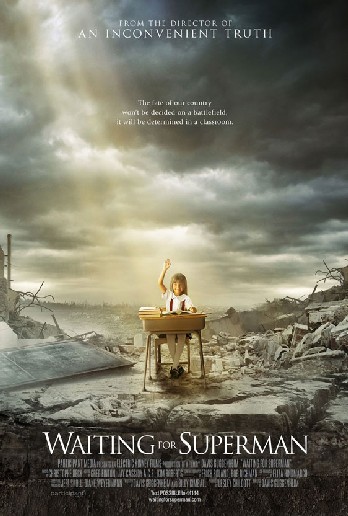
Director Davis Guggenheim won an Academy Award for 2006’s An Inconvenient Truth. His latest film, Waiting for “Superman”, takes on the United States’ failing public education system. In some ways, the documentary represents a return to Guggenheim’s first subject. “The very first documentary I made followed first-year teachers, because I believed that teachers were the answer to our schools,” he says. “And I still believe that. Now I wanted to talk about the kids and their families, and what’s at stake for them.”

The kids and families in question are the subjects of Waiting for “Superman”, which follows five young people in search of a better education. While the scope of the film is large — covering the history and bureaucracy that has created this national epidemic — Guggenheim is careful never to stray far from the victims of the crisis.

“The really hard part about it is how complicated this issue is, and it’s hard to simplify it,” he explains. “And I wanted it to be understandable to everybody. Whenever I got lost, I would always bring it back to the kids. It’s a very simple story: five kids, all they want is to go to a great school.”

In the film, Guggenheim looks at the complex situation from several different angles. Some of his targets are predictable — budget cuts and lack of accountability. But he also focuses on areas that might be less familiar to audiences, such as the detrimental effect teacher’s unions can have on schools. While Guggenheim asserts that he is a pro-union liberal, he suggests that teacher’s unions create contracts that make it difficult to deal with many of the problems public schools face today.

“I’m a member of the Directors Guild of America,” he says. “They make sure I get paid properly. They make sure my rights are taken care of. But they don’t tell Hollywood how to make movies, and they don’t protect bad directors.” Guggenheim’s analogy is apt. These unions push for tenure, which most teachers receive automatically after two years. Once they have tenure, it’s very hard for them to be let go — even if they are performing poorly at their jobs.

“I think teachers should get even stronger and demand more pay,” Guggenheim continues. “But they should not have these contracts that keep reform from happening.” Some of the fixes Guggenheim proposes seem like no-brainers. As he points out, the drive behind Waiting for “Superman” is one most people can relate to, whether they’re parents of students directly affected by the situation, or simply compassionate people.

“What’s amazing about public education is that everyone wants great schools,” Guggenheim notes. “It’s not like you’re going to argue that. With global warming, maybe you could argue about whether it’s real or not. But in America, everyone believes in great schools.” On the other hand, we’ve become cynical. We see president after president enter the White House with the promise of education reform. And yet, as Waiting for “Superman” documents, for the most part we’re no better off than we were before. In some areas, we’re worse.

“The problem is, people over time, they give up, because they feel like it’s too complicated, or it’s impossible to fix,” Guggenheim reflects. “And I tried to make a movie to get people to start to care again, and to believe that it’s possible, and to fight so that every kid can get a great education.” Guggenheim sincerely believes in his cause — he sees the documentary as just a jumping-off point for a larger movement. And while it’s easy to feel daunted by the magnitude of the problems our nation faces, he’s confident that things can get better, provided we have the motivation.

“Change can happen really fast,” Guggenheim says. “Before World War II, we could only make a couple planes a year. When we all got excited and committed, we made a thousand planes a year.”  He hopes that Waiting for “Superman” will inspire that desire for change. Guggenheim believes that it’s something we all feel, and that education may simply be something we’ve ignored for too long.

“We’ve been not wanting to deal with our schools,” he says, “and I think we could jump right in. The solutions are there.” But he’s also clear about what it takes: “We’re not gonna fix our schools unless everyone is outraged, and everyone demands that all of our schools work.”

Waiting for “Superman” opens Fri/1 in Bay Area theaters.