

That’s right y’all, the news is gigante: the Giants won the World Series! And last night San Francisco lost no time in straightening their beards, assuming their best Freddy Sanchez expression, and vaulting over ignited mattresses. Streets were shut down around the city — Polk, Civic Center, and Castro had some particularly wild parties — but for our money, the Mission mayhem had ’em beat. SFBG photog Charles Russo was in the thick of the madness. Now one more time, all together: OOOOOOOO! RIBE! See you in the ticker tape.
- No categories
Pixel Vision
Live from the lower east side: Bayview’s best eats
Bayview and Dogpatch rarely surface on short lists of culinarily acclaimed ‘hoods in the city. Which is a shame, because one doesn’t head out to the waterside neighborhoods to splash about in the waves of see-and-be-seen, but you can have a damn tasty time on Third Street and its surrounds.
Spotted lately: neighborhood staple soul food from a variety of cultures, tucked away industrial district gems that stay open through the witching hours — not to mention the odd new hip endeavors by foodies hungry for the low cost overhead that the changing neighborhoods afford. Like the community that lives on their blocks, Bayview and Dogpatch’s cuisines are far enough away from the city’s hurricane of openings, closings, and established scenes that it can do its own thing. Which we like just fine.
Old Clamhouse
The old standard. The OCH has been around since 1861, when its rough and tumble block really did have a bay view – the neighborhood, originally a salt marsh, was filled in and built over during the second half of the 1800s. The Clamhouse maintains that salty brine of authenticity, though. Belly up with the rest of the regulars for ridiculously delicious seafood and an Anchor Steam from the bar. Oh, and don’t leave without a plate of the Bruce Brugmann favorite, the joint’s addictive fried clams.
299 Bayshore, SF
(415) 826-4880
J&V Cafe
Four stars for schedule: J&V Cafe is located in the nutritious embrace of SF’s wholesale produce market, whose denizens start their day in the wee hours –and god damn it, need a plate of chilaquiles on their break! J&V is more than happy to provide and will throw quite reasonably priced Americana breakfasts in the mix as well. Find yourself out amidst the warehouses after 1am and you can pick up anything a cup of creamy potato soup to a marinated rotisserie chicken in its cheerful dining room.
2020 Jerrold, SF
(415) 821-7786
Mr. and Mrs. Miscellaneous
Mr. and Mrs. Miscellaneous is the newest of the tsunami of gourmet cone spots that swept the city via Slocombe and Bi-Rite. Husband and wife couple Annabelle Topacio and Ian Flores make ‘cream good enough to hold its own with the rest of the waffles cones. Just to get you going: past flavor boards have included chicory coffee, bergamot, lemon-verbena, Fernet-Branca, and ginger glacé.
699 22nd St., SF
(415) 970-0750
Las Isletas
A Nicaraguan cafe somehow relocated to the edge of the city of San Francisco, Las Isletas mimics not only the tone and tenor of Nicaraguan everyday food – a plato vegetariano with gallo pinto, plantains, tortillas, queso fresco, and a side salad tasted of the kind of Central American authentic that you can forget exists in this burrito town. Of course, that means that meat eaters have their day in the sun here. Massive, steaming bowls of soup can be had on the cheap, and nacatamales (large tamales) and bailiadas (thick tortilla sandwiches) are winners as well.
4508 3rd St., SF
(415) 643-4436
Auntie April’s Chicken and Waffles
Auntie April’s has a couchy waiting area to the left of the door that is presumably for to-go orders, although I may start hanging out there in my free time. This is that perfect soul food spot you’ve been looking for, with low prices, all the usual customers (oxtail dinners, what?), and a neighborhood feel that makes you want to order seconds, if only you could squeeze them into your belly. I was partial to the nomenclature on the breakfast menu, whose #2 special was dubbed “The Jive Turkey”: two eggs, three turkey sausages, four turkey bacon strips, grits, and hash browns. Vegetarians, you can make a damn good meal off the sides – just don’t expect any props from the wait staff for doing so.
4618 3rd St., SF
(415) 643-4983
Hard Knox
Another good for your soul food spot. Hard Knox is tiny (maybe that’s why they opened up their second location in the Richmond) but don’t let that stop you from heading down to their Third Street spot. We’re talking conviviality over comfort here, folks – and the food ain’t bad either. Catfish sandwiches get our vote of glory.
2526 3rd St., SF
(415) 648-3770
Frisco Fried
Frisco Fried is the neighborhoods’ newest entrant to the chicken and fixin’s game, and has already attracted quite a following with its unapologetically artery-clogging eats. They keep a tally going on the window so that passer-bys can see that a. they have a burger dog on offer and b. that others before have tried the darn thing – to the tune of a few thousands, in fact.
5176 3rd St., SF
(415) 822-1517
Just For You
A break from the Southern food, you say? You got it – back to the corner of Third and 22nd withya, where Just For You packs in the throngs for lunch and breakfast. Hangover recommendation (unless you’re like me and the thought of fish and dairy together stirs up an unholy alliance the morning after): the Hangtown fry, an egg, bacon, onion, and oyster scramble. Finish it off with a plate of beignets? Oh mys.
732 22nd St., SF
(415) 647-3033
Piccino
Our pick of the Bayview brunch bunch: Piccino. Pair your French press with a nice cazuela of baked eggs or a fruit bruschetta – bread made in-house topped with honey butter, roasted fruits, crème fraiche and a bit of basil. The comfy, classy décor inside also plays host to lunches and dinners to write home about. Specialties of the house includes crispy, crusty pizzas and nom-nom antipasti.
801 22nd St., SF
(415) 824-4224
Junior Barbecue
Yes, that’s right: Brazilian burgers. We’re not convinced that the burgers that Junior sells from his traveling truck will go all that well with your Sao Paolo bikini, but there are those that would give up quite a lot for one of these mammoth meat mountains. Chose your poison by electing for one of three burger “levels.” Number three features a hot dog, ham, egg, corn, cheese, pineapple, bacon, and yeah, the burger. You’ve been warned. Check Junior out on weeknights til about midnight.
Napoleon and Evans, SF
Street Threads: Look of the Day
Traveling SFBG photog Ariel Soto recently hit the streets of Taiwan to find out what the kids were wearing overseas. Due to the language barrier, she and her subjects weren’t able to talk style philosophy — but hey, looks like these speak for themselves.
Today’s look: Luo Chu Ye, Taipei, Taiwan
Street Threads: Look of the Day

Today’s look: Oby, Fillmore and Sacramento
Tell us about your look: “I made this necklace. I try to dress uniquely.”
Appetite: David Wondrich on Punch
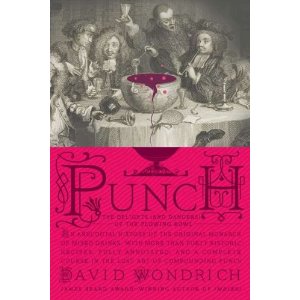
When cocktail historian and Esquire columnist David Wondrich speaks about drink, you listen — or read, as the case may be. His latest book Punch, debuts Nov. 2, the first of its kind on the glories and history of the punch bowl. I had the privilege of speaking with Dave over the phone from his New York home. The question at hand: why punch? Or to quote from the book, what makes punch “necessary”?
Wondrich stands by his punch bowl. He tells me it’s “the greatest social beverage of all time,” that “now more than ever we need beverages that promote friendship.” He calls punch “more gentle than cocktails”, its preparation “easy and utterly pleasurable.” The punch bowl is communal, ideal for a group or festive gathering, less laborious than individual cocktails, and a hell of a lot more fun. As Dave states in the book’s preface: “most of punch’s stories are of warm fellowship, and conviviality, and high-spirited gatherings afloat on oceans of witty talk” — not to mention a few “battles and brawls.”
We’re not talking about “frat juice” here. We’re talking honest-to-God punch: boozy yet delicious, layered with citrus, raw sugar, and varying spirits. The book starts with a comprehensive history — who drank punch and where. Wondrich says the book started as a big chunk cut out of his first book Imbibe.
The convivial punch houses of antiquity that feature in Punch sound so appealing that I ask Dave if he envisions their return. “I certainly hope so,” he replies. Besides Rickhouse here in SF, some of his favorite bars for punch around the globe include Hix in London, Brooklyn’s Clover Club (which lies a dangerously close distance from his present location), and Manhattan’s Death & Co. He’s also a fan of Savoy Cocktail Night at SF’s own Alembic (hear, hear!)
Like most classic concoctions, the name of punch’s first mixologist has been lost to the sands of time — though there are countless early references to the drink. One of Wondrich’s strongest sources is Google Books, where he digs up old newspapers, pamphlets, and rare books before he cross references them in the libraries of New York and London. Another research source? “I am trained as an academic so I have a lot of 1600s books,” he says. “I start with a lot of blank space and start to fill that in using every kind of source possible… I’ll track down the original source, and don’t settle for first mention.”
I asked if he’d ever write the book he wishes existed, a dream mentioned on page six of Punch, which is a detailed source on distilling, the drink’s origins, its history, and importance. He says it’s a project “too big for any one person to bite off, unless they have all the time in the world and know multiple languages.” Wondrich says he “could tackle parts of it.” He estimates that it would take at least three co-writers: someone fluent in Dutch, German, Chinese, and Indian.
What we’re more likely to see Wondrich write about next is how the American style of drinking — particularly our contributions in cocktails and spirits — went global. He’s already done “tons of research” for past presentations on the subject. Spots of particular interest for him include our country’s legendary World’s Fair cocktail showcases and the way the techniques they highlighted spread across the rest of the globe.
Wondrich expects the section called Book II of his recently released Punch will be limited to “total mixology geeks.” But I found Book II a useful, necessary account of the ingredients, tools, and proper measurements needed for the drink, particularly his recommendations for spirits in the “Ingredients” chapter.
A good half of Punch is recipes, ranging from Milk Punch to American Fancy Punch. When asked which ones he makes the most, Wondrich named the bracing Chatham Artillery punch on page 248 (a Savannah original, a poorly-crafted version of which I’ve imbibed whilst walking down the city’s streets). Back in the day, a local paper described this punch thusly: “as a vanquisher of men its equal has never been found.” Dave says the recipe in this book (there’s yet another included in Imbibe!) “claims to be the original, and very well might be,” though when it comes to traditional recipes “they get passed down like a game of telephone,” each iteration evolving from the last.
One of his biggest crowd-pleasers — which he says people consume in “shocking amounts” — is his own recipe of Royal Hibernian punch (p. 269):
Prepare an oleo-saccharum with the peel of three lemons and six ounces of white sugar. Add six ounces strained lemon juice and stir until the sugar has dissolved. Add to this 12 ounces Sandeman Rainwater Madeira, stir and pour the Madeira shrub into a clean 750-milliliter bottle. Add enough water to the bottle to fill it, seal and refrigerate. Fill another clean 750-milliliter bottle with filtered water and refrigerate that too.
To serve, pour the bottle of the shrub, the bottle of water, and one 750-milliliter bottle of Jameson 12 or Redbreast Irish whiskey into a gallon Punch bowl, add a 1 1/2 quart block of ice and grate nutmeg over the top.
Yield: 9 1/2 cups.
Subscribe to Virgina’s twice monthly newsletter, The Perfect Spot
Alex Cox goes “Straight to Hell” (and to the Roxie)
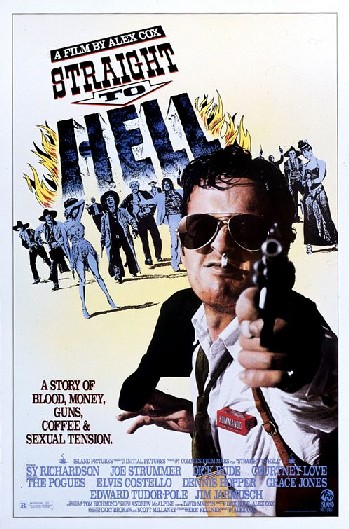
If you’re looking for a Halloween film fix outside of the usual slasher movies and traditional fright night fare, the Roxie’s got you covered.
Starting Fri/29 and running all weekend, the theater has a series of cult picks lined up. Friday night brings old-school sci-fi flicksThe Creature with the Atom Brain (1955) and The Man From Planet X (1951) to the screen in 35mm archival prints. Sat/30, check out the UK gore-fest Corruption (1968) or The Brood (1979), one of David Cronenberg’s first films. And on Sun/31, there will be a double Halloween dose of director Alex Cox, with Straight to Hell Returns (2010) and Searchers 2.0 (2007), complete with an appearance from Cox himself.
A cult favorite due to his work directing Repo Man (1984) and Sid and Nancy (1986), Cox originally released Straight to Hell in 1987. This updated version includes technical touchups in both sound and color design, and also features deleted scenes with “enhanced violence and cruelty.” A surreal cast with the likes of Joe Strummer, Elvis Costello, Dennis Hopper, Courtney Love, and Jim Jarmusch populates this bizarre, darkly comic mash-up of crime and spaghetti Western genres. The film follows a group of criminals who take cover in what they believe to be a deserted ghost town after robbing a bank. Instead, they soon find the town full of seedy shopkeepers, violent punk rock banditos, and jittery locals with a coffee obsession.
Strummer is probably the best of the “non-actor” bunch, pulling off his role as one of the crooks in believable enough fashion. Courtney Love on the other hand puts in an obnoxious performance that may have been Roseanne Barr’s National Anthem inspiration at the 1990 Super Bowl. Irish-punk band the Pogues (who also co-star) provide a strong score full of mariachi-style flourishes, which sets the scene for the film’s send-ups of shootouts and tough guy bravura.
Straight to Hell’s plot is scattered at best and often doesn’t make a lick of sense, but that’s not where its appeal lies anyway. The film’s charm is in the loose, DIY-style of its creation. It also seems to have been a huge inspiration on Quentin Tarantino, who must have lifted his ideas for Samuel L. Jackson’s character in Pulp Fiction straight from Sy Richardson’s performance as Norwood. It all isn’t quite as fun to watch as it must’ve been to make, but fans of freewheeling filmmaking will still find a lot to enjoy.
“Halloween Spooktacular”
Fri/29-Sun/31
Roxie
3117 17th St, SF
(415) 863-1087
Street Threads: Look of the Day

Today’s look: Tonaka, Fillmore and California
Tell us about your look: “Bend the rules, most of the time.”
The Performant: Extreme Theatre Sports at “The Great Game” Marathon
This weekend, despite the rain, I attended a marathon. Fortunately for my running shoes, it was a marathon of theatre indoors at the Berkeley Rep — an epic play cycle of 19 vignettes set in Afghanistan, entitled “The Great Game”. Ever been to a theater marathon? Like any test of physical endurance, it’s not for the faint of heart. You have to prepare for it. Hydrate well. Wear comfortable clothing. And above all, pack plenty of snacks.
Zero Hour: Like most marathons, this one starts with a gunshot. But unlike most marathons, the knot of men running onto the stage are wearing long robes and carrying their own guns, and their goal is no trophy, but a mural painter, Mohammad Mashal (Vincent Ebrahim), whom they drag away, presumably to be punished for his artistic endeavors.
First Lap: A scene of buglers, standing watch over the gates of Jalalabad in 1842. A feisty shepherdess, Malalai (Shereen Martineau) urges on a battalion with a poetic battle cry: “young love, if you do not fall in the battle of Maiwand, someone is saving you as a symbol of shame”. The “birth” of Afghanistan — or rather the birth of a butchered border, “Durand’s Line,” still a contested demarcation to this day. Of the first batch of plays, this vignette penned by Ron Hutchinson, was the most fascinating to me, and the most instructive.
Intermission: time for a nice stretch. Deep knee bends and some arm rotations.
Second Lap: A series of talking heads. A closed-door fishing session for sensitive information in “Campaign”. A king, Amanullah Khan (Daniel Rabin), becomes an unwilling exile in Joy Wilkinson’s “Now is the Time”.
Sprint: A meal break on the run, time for some major carb-packing. Hustle around the corner to the October Feast Bakery for a Bavarian-style soft pretzel. Zum Wohl!
Still going strong, the third and fourth laps pass relatively quickly — a humorous interlude with a Russian mine-sweeper (Rick Warden), a melodramatic moment involving a hungry lion at the Kabul Zoo. Weirdly, my feet begin to hurt. Well, it is a marathon after all! Fortunately it’s nothing a pair of ibuprofen and some chocolate-coved espresso beans can’t cure.
Sprint two: A brisk stroll around the neighborhood, up Allston, back down Bancroft. Here’s to you Mrs. Robinson! On Spaulding I stop to smell the sweetest rose. But there’s no rest for the weary yet. Alas, the show must go on! And it does…
Last laps: The final series of six shorts is set primarily in the nineties and “oughts”, and therefore feels the most familiar in terms of scope and territory. More talking heads, poppy farmers, disgruntled NGO’s, and a shell-shocked soldier who can’t readjust to the civilian life. From a theatre-goer’s point-of-view, you hope the evening won’t end on this anti-climactic note, but it does. From a theatre-marathoner’s point-of-view, almost any ending after seven hours of performance is fine. And from an over-extended reader of the news’ point of view, catching up on Afghanistan now seems more of a priority than ever before.
The Great Game: Afghanistan
Through Nov. 7, $34-$54 per act
Berkeley Repertory Theater
2025 Addison, Berk.
(510) 647-2949
French Cinema Now! Two to see — and one to avoid

The San Francisco Film Society’s “French Cinema Now” kicks off Thurs/28 with a week of spankin’ new Gallic films. Not sure which flick to choose, budding Cahiers du Cinéma contributor? Read on for a batch of brief reviews.
Copacabana (dir. Marc Fitoussi) It feels strange to call Copacabana subtle, especially when the film’s main character Babou (Isabelle Huppert) is consistently over-the-top. But this is a slight comedy, a character study to showcase Huppert’s considerable talent. Not that there’s anything wrong with that. Copacabana depends on its strong lead, and there are few stronger than Huppert, one of the most dynamic and adaptive French actors working today. Babou is aloof and frustrating but also warm and well-intentioned. The film follows her struggle to start a new career and prove herself to her daughter Esmeralda, played by Huppert’s real-life offspring Lolita Chammah. The plot is a bit unfocused, as Babou ventures off to Belgium to sell timeshares for a suspect company. But Huppert keeps Copacabana grounded, creating an experience that’s richly rewarding albeit unconventional. While the film doesn’t delve deeply into her fraught relationship with Esmeralda, we know enough to care. Babou may be one of Huppert’s lighter characters, but that doesn’t make her any less captivating. Thurs/28, 6:45 p.m.; Fri/29, 9:30 p.m.
Rapt (dir. Lucas Belvaux) At first glance, Rapt is your traditional kidnapping drama, with wealthy industrialist Stanislas Graff (Yvan Attal) held captive for a hefty ransom — 50 million euro, to be precise. The relationship between Stan and his brutal kidnappers is interesting, but Rapt’s most engaging scenes focus on the way Stan’s family and business partners respond to his plight. This isn’t the average high-stakes crime thriller, in which the loyal wife will go to any means necessary to get her husband back. Instead, the family argues over how much to pay — they haggle for Stan’s life. And in his absence, he’s revealed to be a philanderer, a gambler, and kind of a jerk. Attal is well cast as Stan — at times, he is both sympathetic and reprehensible. But those left behind command more attention: his all-too-understanding wife Francoise (Anne Consigny) and his ambitious assistant Andre (Andre Marcon). Rapt is an impressive addition to the genre, using kidnapping to tell a story more original than what one might expect. Thurs/28, 9:30 p.m.; Mon/1, 9:15 p.m.
Irene (dir. Alain Cavalier) Irene is the definition of passion project, an incredibly personal film about director Alain Cavalier’s deceased wife. It’s a tough movie to criticize, in that Cavalier clearly poured his heart and soul into it. But Irene is, frankly, a self-indulgent mess, the kind of movie no filmmaker should be allowed to make. Cavalier talks incessantly, adopting a throaty whisper that might be intended to give him gravitas but mostly ends up grating. His love for his subject is apparent throughout, but the navel-gazing is completely unbearable. For over 80 minutes, Cavalier reads through excerpts from his diary, relives the day his wife died (nearly 40 years in the past), and obsesses over peculiar minutiae. In one of Irene’s strangest scenes, Cavalier reenacts his birth using an egg and a watermelon. The whole enterprise plays out like a French art film cliché. It’s masturbatory, yes, but far worse than that — it’s boring. Fri/29, 5 p.m.; Sat/30, 1:45 p.m.
“French Cinema Now”
Oct 28-Nov. 3, $12.50
Embarcadero Center Cinema
One Embarcadero Center, Promenade Level, SF
Street Threads: Look of the Day
Today’s look: Elain and Joelen, Fillmore and Clay
Tell us about your look: Elain: “I like thrift shops.” Joelen: “I like necklaces.”
Appetite: Director Jean-Luc Naret dishes on SF Michelin Guide 2011
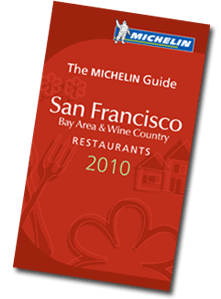
Hubbub‘s the word in the food world this week surrounding the release of the 2011 Michelin Guide San Francisco, the restaurant ranking organization’s fifth Bay Area edition. The venerable food institution is entering into its 111th year, having gained a strong following in New York and San Francisco and anticipating an upcoming launch in Chicago (next time, LA).
Hot topics around the champagne cooler? Chez Panisse losing its star and The Restaurant at Meadowood achieving the rare feat of gaining three stars (making it and French Laundry the only Bay Area ‘straunts to make the grade). Read on for Michelin Jean Luc Naret’s reflections and a list of the Bay’s Michelin-honored restaurants for 2011.
I chatted with Naret — a charming Frenchman based in Paris who generally spends three weeks out of every month traveling around the globe — over espresso at the Slanted Door yesterday. On an idyllic October day, the nostalgic glow on the Bay was befitting — Naret is departing Michelin in January after seven years with the company, though he’ll stay tied to its future in a consulting role.
Naret describes San Francisco as “one of the finest culinary regions in the world… I love this place. It’s a region where I spend a lot of time”. He hints that he’s considering getting a place in Marin, maybe Tiburon, laughingly adding, “So, if anyone is listening?”
What does the arbiter of taste see as our unique contribution in the food realm? Naret names categories where the Bay Area excels: technique (“You don’t burn anything anymore” he jokes, I think) and produce. He claims the general culinary mindset changed here in large part due to the “willingness of chefs” to grow or source every kind of produce locally, not to mention the development of talent that was necessary “to make it perfect”.
“Fifteen years ago in France we never heard the word ‘organic'”, Naret says. “That came from here. [The Bay Area] has a big influence — similar to Japan — where seasonality is also very important”.
Successfully launching Michelin in America was one of Naret’s key accomplishment during his years as director, so what does he see as the US’ greatest culinary strength? In one word: “Diversity”. He mentions the myriad of cuisines available. “You can get anything in New York,” he says, adding that the breadth of food culture in our great cities enriches the dining world.
Looking back on the last seven years, Naret shared that his biggest surprise came when he joined Michelin from the outside, one of only six directors to do so since 1900. He pushed boundaries in the company by asking questions like: “Why not go to the States? To Asia?”
He’s delighted to see that seven years later — he planned on acting in the post for no longer than five — he’s managed to leave a legacy that feels complete. “Everything we said we’d do, we’ve done. We’ve reached new territories.” He says the future of Michelin includes the ranking system’s continued expansion to other cities — along with growth in technology output like the global spread of Michelin iPhone apps already common in Europe.
All signs show that the world is ready. Heads of state and people from Michelin-less countries — Singapore among them — have contacted Naret him to ask when their cities will be getting their own guides. In Tokyo (which now stands as the city with the most three star restaurants in the world) the area’s first Michelin guide sold 150,000 copies in a shocking 24 hours. It would appear that the massive influence Michelin has long held in Europe has a firm grasp on epicures around the world.
Naret keeps mum about the mysterious business venture he’ll launch promptly after leaving Michelin after a mere two weeks vacation. On this October day, he’s in reflection mode: “I’m very happy to leave a beautiful legacy”.
The 2011 SF Michelin Guide officially releases today. Michelin Guide New York 2011 debuted Oct. 6 and the very first Chicago guide will be released November 17. Subscribe to Virgina’s twice monthly newsletter, The Perfect Spot.
*****
Bay Area restaurants awarded coveted Michelin stars in its 2011 edition
(N = new to this year’s guide)
THREE STARS: Exceptional cuisine, worth a special journey
The French Laundry
The Restaurant at Meadowood (N)
TWO STARS: Excellent cuisine, worth a detour
Coi
Cyrus
Manresa
ONE STAR: A very good restaurant in its category
Acquerello
Alexander’s Steakhouse (N)
Ame
Applewood (N)
Auberge de Soleil
Aziza
Baumé (N)
Bouchon
Boulevard
Campton Place (N)
Chez TJ
Commis
The Dining Room at the Ritz Carlton
Dio Deka (N)
étoile
Farmhouse Inn & Restaurant
Fleur de Lys
Frances (N)
Gary Danko
La Folie
La Toque
Luce
Madera (N)
Madrona Manor
Masa’s
Mirepoix (N)
Murray Circle
One Market
Plumed Horse
Quince
Redd
Saison (N)
Santé
Solbar
Spruce (N)
Terra
Ubuntu
The Village Pub
Wakuriya (N)
Street Threads: Look of the Day

Today’s look: Haley, 24th and Castro
Tell us about your look: “I like old things. I’ve had this skirt for a really long time.”
For the grace of Ralph Lemon

Ralph Lemon, the acclaimed choreographer/visual artist, recently presented How Can You Stay in the House All Day and Not Go Anywhere? (October 7-10) at the Yerba Buena Center for the Arts. After the Fri/8 show, Angela Mattox, the space’s Performing Arts Curator, led a question-and- answer session with Lemon and the performers. One audience member asked about a section where video images of animals walked across a screen. First came a dog, then Lemon clad in a rabbit suit, then a flamingo, continuing with an assortment of animals including a giraffe and a walrus. The question pertained to the motivation of the scene. Jim Findlay, the video designer, responded that Lemon’s only direction had been to create grace. At this point Mattox, the curator, began to cry, touched deeply that an artist would strive for grace. The event was moving to witness, but I left with a nagging question: what exactly is grace?
Grace carries a variety of connotations. Lithe ballet dancers are described as graceful. Many religious denominations seek God’s grace. A grace period is an extension of a due date. But grace also seems to be something less tangible, a mixture of elegance, good favor, moral stamina, and honor. I don’t know exactly what grace is. I don’t know what it means to create grace, especially in a dance context. I don’t know if Ralph Lemon’s show achieved grace.
How Can You Stay in the House All Day and Not Go Anywhere? featured both a film with live narration by Lemon and a performance with dancers. In the film, Lemon talked about his eight-year collaboration with centenarian Walter Carter and his wife Edna of Bentonia, MS. Mirroring Russian filmmaker Andrei Tarkovksy’s 1972 sci-fi romance Solaris, feeble and wobbly Walter and Edna reenacted some of the scenes in their mundane Mississippi home. In conjunction with Solaris’ romance between a cosmonaut and his dead wife and Walter and Edna’s enfeebled restaging, Lemon also spoke of the loss of his partner Asako Takami to cancer. The result was a meditation on love, loss, and reflections at the end of a lifetime.
The performance component consisted of four distinct sections. The first was a grueling tortuous dance that lasted 20 minutes. The dancers frenetically pushed themselves to exhaustion, endlessly throwing themselves through space with no seeming order. Succeeding that, performer Okwui Okpokwasili sobbed uncontrollably for eight minutes, her back convulsing as she faced away from the audience. This was followed by the above described animal video attempting grace. The show concluded with a contemplative sparse duet with Lemon and Okpokwasili. These four performance parts departed dramatically from the explicit film section, leaving the audience a performance section of perplexing bare minimalism.
http://www.youtube.com/watch?v=KS1PVIMpwLo
Did this all add up to grace? What struck me more than such aspirations was the sheer courage involved in presenting this material. It wasn’t created to be liked. It was created as a challenge, not to the audience, but to art itself. Can a twenty-minute dance with no form that pushes the limits of exhaustion be sustained? Is it watchable? People walked out of the performance. It takes great courage to present work that is not innately likeable.
The piece was also filled with humility. Particularly in the film section, it was as if Lemon had laid down on a table before strangers, sharing his intimate experience with loss, and Walter and Edna’s lifelong voyage together. Not only does it take guts to present that kind of subject matter and make oneself vulnerable, it also demands humility.
I suspect it is near impossible to create work embodying grace, love, courage, or any of those revered and venerated noble themes. But to paraphrase another point by Lemon in the question-and-answer session, it’s the struggle that’s important, more so than whether or not we succeed.
What not to wear
Predictably, I have no idea what I will be wearing for Halloween. The predicament of an anti-brand costume shopper is a dire one in today’s Halloweenie world — we are forced down one of two routes when celebrating everyone’s favorite not-for-kids-anymore holiday. You can (a) do the decent thing and spend hours rummaging through every Goodwill in the city for high five kudos at the house party this weekend or you can (b) drop a cool fifty on a prepackaged ‘stume everyone’s going to “get” immediately. All this is to say I flirted with Spirit, that perennial pop-up store. Enclosed, please find my safari shots.
Street Threads: Look of the Day
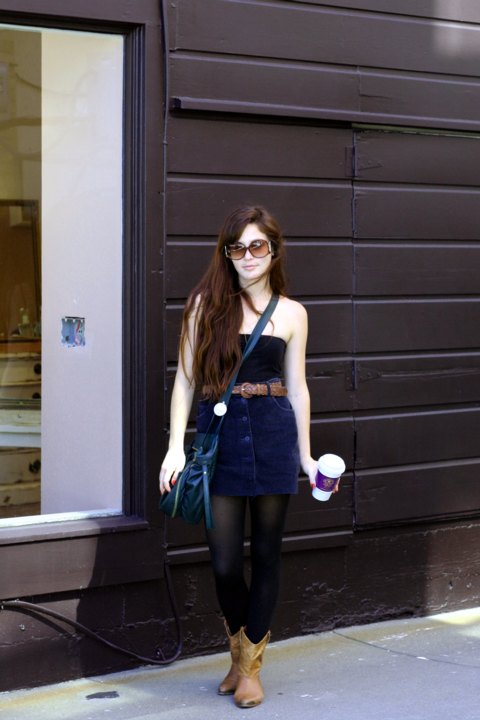
Today’s look: Mirissa, Fillmore and Sacramento
Tell us about your look: “Bargain hunting. Simple chic.”
The cheapest seats
Of course the Guardian staff didn’t have the dough for tickets to Game Five of the Giants and Phillies battale royale for the National League crown. But hey, the real party was outside the park — so Caitlin Donohue (by land) and Rebecca Bowe (by sea) staked out where the real fans were hangin’ — and caught a little animalistic behavior and political fracas in the bargain. What more could you ask of a ball game? Game Six is on Sat/23 at 4:57 p.m.
Appetite: Del Maguey and the glories of mezcal
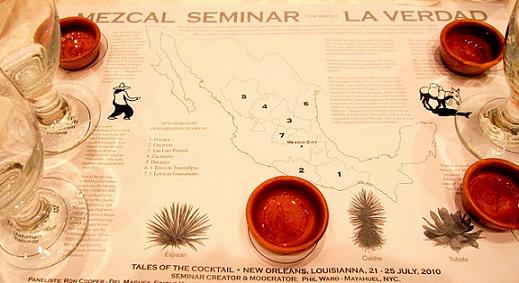
There’s mezcal and there’s Del Maguey. You may have heard me talk about Del Maguey mezcals and the line’s founder, Ron Cooper, in the past. A session with the gentle yet passionate Ron (like his mezcal seminar at 2010 Tales of the Cocktail) is an experience you’re not likely to soon forget. Even the way he describes fermentation stays with you: “wild creatures eating sugar, farting carbon dioxide, pissing alcohol!”
I’m leaving for Mexico next week, so sipping Del Maguey was getting me in the south of the border mood — even though I’m going to Tequila vs. Oaxaca, where most mezcal is produced. For the unfamiliar, mezcal is a spirit made from the heart (piña) of the maguey, an agave plant native to Mexico. Piñas are roasted underground, giving mezcal its distinctive smoky properties. Mezcal is the peaty scotch of tequila, which by definition is a mezcal made specifically from blue agave in Tequila, Mexico.
One thing I learned in Ron’s seminar is that traditionally, mezcal was rarely oak-aged for any length of time — more aged mezcals are being produced purely to gain in competing markets. Similar to tequila, mezcal styles include joven (literally “young,” and in this case referring to a silver liquor); blanco (white), which must be bottled within 2 months; reposado (rested), which ages 2-12 months in oak; anejo (mellow), aged a minimum of 1 year in oak; and the rare Pechuga (chicken breast), which can be triple-distilled with everything from fruits, nuts, white rice, to, yes, chicken.
Mezcal is usually drunk neat and you’ll find many in the Del Maguey line available by the shot at Nopalito. Places like Oakland’s Tamarindo Antojeria, with their new tequila bar, Miel, serve cocktails like the Mezcalito – ($12) with Del Maguey’s Creme de Mezcal, fresh orange and volcanic salt rim.
I’ve had the privilege of tasting most Del Maguey mezcals, each one a revelation. Here’s a few recommendations (available locally at Cask and K&L Wine Merchants):
Chichicapa, ($69.99) – After multiple tastings, this may be my favorite for all-around balance. It marries the best elements of smooth smokiness with citrus. Despite a surprisingly light nose, there’s spice, chocolate, even mint on the finish. It reminds me of a fine coffee mole: succulent, spiced, earthy.
Crema de Mezcal ($39.99) – One of the more affordable in the line, this single village mezcal is made from unfermented agave syrup collected during roasting and exhibits a smoky, earthy sweetness with creamy texture. Works as a great introduction to mezcal for the uninitiated.
Mezcal Vida ($38.99) – Newer in the line, the Vida is another fine intro to mezcal: a pure, straightforward expression. Produced according to 400-year tradition with nothing but the agave heart and water, it’s bright with notes of fruit and sweet grass.
Tobala ($119.99) – Tobalá is a sophisticated level of mezcal, taking around eight Tobala piñas (hearts) to equal one piña from the most common maguey plants. Though fruity on the nose, the taste is elemental… smoke intermingles with tropical fruits and dusty cinnamon, with a long, smooth finish.
Minero ($69.99) – From the tiny village of Santa Catarina Minas, this mezcal is double-distilled, giving it greater smoothness with a floral essence tasting of warm honey and fig.
Santo Domingo Albarradas ($69.99) – Citrus and roasted pear combine with wood for a clean, dry mouth feel.
San Luis del Rio ($79.99) – Spice, fruit and ubiquitous smoke hit you on the nose, but there’s mineral citrus and volcanic earth inherent in this recent release produced two hours south of Oaxaca.
Pechuga ($200.00) – Pechuga starts with a double-distilled Minero base, to which 25 pounds of wild mountain apples, plums, red plantain bananas, pineapples, almonds and a few pounds of uncooked white rice are added to each 75 liters of mezcal for distillation round three. Though there is no taste of chicken, a whole chicken breast (minus the skin) has its excess oil removed while cleaned in water, then is hung over the still for a day while spirituous vapors condense into a clear liquid that drips from the bird into the mezcal. With intense citrus on the nose, this fruity spirit evokes earth but is a bright counterpart to the smoky, rocky soil of other mezcals. All that fruit imparts a robust fall glow by way of a gentle spring.
Subscribe to Virgina’s twice-monthly newsletter on SF’s hottest tastes and tipples, The Perfect Spot
Hold onto yer Wiggs, change comin’ to Western Addy

Morgan Fitzgibbons isn’t thinking small when it comes to goals for his Western Addition sustainability group, the Wigg Party. “We want to make our community a leader in the transformation in resilience,” he tells me during our coffee date to discuss the group’s upcoming anti-boycott “carrotmob” at Matching Half Cafe (Sat/23).
It’s no coincidence that his language sounds a little new age-y. The basis for Fitzgibbons’ vision for the Wigglers seems grounded in the PhD of Philosopy, Cosmology, and Consciousness he received at California Institute for Integral Studies. “We’re these sacred beings,” he tells me earnestly of his San Francisco community. “This is a sacred movement – I want people to look back in a hundred years and see that.”
Woo-woo? Well yeah, but hold your jaded mutterings until you hear what the guy’s done with his convictions in “cosmological evolution,” as he puts it. Fitzgibbons has assembled a core group of Western Addition residents who operate in four different arenas of turning the area around SF’s “Wiggle” (the well-trafficked bike route through the Panhandle and between the hills in Lower Haight and Duboce Triangle) into a leader in scaled-back, neighborhood-focused living.

Bicycling barristers: Morgan Fitzgibbons and Wigger Dave Bryson on a city-wide urban farms bike tour. Photo by Jenny Sherman
Their areas of attack, you ask? There’s a sustainable business group, who works on incentives for local outfits that find ways of greening their ways. For example, this Saturday’s carrotmob (you can read more about the nationally recognized concept here) is a concentrated effort to storm Matching Half’s doors with business in support of their pledge to buy a bike trailer to transport farmer’s market-purchased goods, switch to organic milk, and chuck the plastic wrap for reusable food containers.
There’s also a local food group who works with local markets to freecycle unpurchased produce at the neighborhood’s Hayes Valley Farm, a “rescaling” group focusing on ways to limit commercial consumption, and the Wiggle Transformers, who are collaborating with the SF Bike Coalition on the Wiggle portion of their Connecting the City Initiative, a comprehensive plan to improve bike passage throughout San Francisco.
Like I said, comprehensive. And most of the core group – which Fitzgibbons pegs at around 20 party members – are under 30 years old. Which is neat-o, and most likely made possible by the group’s party ethos when it comes to fighting for what they believe. I mean, I say fighting but I think I really mean loving, or something equally hippie. A bunch of them live in a place called the Sunshine Castle, for god’s sakes, where they throw “shenanigans” (according to Fitzgibbons) after-parties for their events, like the recent 10/10/10 day of action that saw the Wigglers conduct a 50-60 person bike tour of the city’s urban farms and a coordinated garden plant in collaboration with Kitchen Garden SF.
In the works are plans for a Bernal Bucks-esque local currency, which the group hopes will inspire Western Addition residents to patronize more heavily the wealth of small businesses along the Divisadero Corridor and surrounding areas (holler, happy hour at Bean Bag).
Fitzgibbons says the hyper-localism of the Wigg Party is perfectly suited for the history and relative youth of the Western Addition neighborhood.
The Wiggle itself provides a apt symbol for the group. The Wiggle Transformers’ work is making bike traffic better for everybody, but also a physical passage that Fitzgibbons hopes will say “you’re stepping into a different place now” to bikers entering the Western Addition.
“San Francisco has always been a seed of revolution,” he reflects. “Of the younger neighborhoods – the Mission and Western Addition – Western Addition is a lot less nihilistic. With University of San Francisco near the area, there’s always going to be a lot of young people living out here, and that’s who our message resonates with. It’s such a new community.”
This last comment raises a red flag in my mind. The parties, the bike tours, it all sounds grand, but given that all this is coming from a twenty-something guy with a complicated mullet and a hoody, how much does the Wigg Party truly represent the Western Addition, an area that’s been wracked by recurring waves of gentrification and is subject, like everywhere else in the city these days, to ever-increasing rent prices and displacement of long time residents? Despite the free food at Hayes Valley, are we being sustainable, or are we being hipster-sustainable?
“To be a truly successful movement, we’ll have to organize everybody,” Fitzgibbons says, who himself has lived in the neighborhood for three years. Among those that regularly attend Wigg meetings, there is but one long-time resident, he tells me, who plays an active role advising on how to better integrate with the neighborhood’s ongoing goals and activities. Past that, “there’s tacit support among the long-term residents, and we get a lot of family participation in our Wiggle events,” Fitzgibbons tells me.
But I trust that he’s learning as he goes. After all, in explaining his philosophy on activism to me, Fitzgibbons appropriates that sustainability champion himself: Socrates. “The only thing I know is I don’t know everything,” he smiles. “We don’t have to have all the t’s crossed and i’s dotted, but we can whip up excitement and hopefully inspire people to do this in their communities. Create that showcase.” And if figuring it all out looks like a party in the streets, sayeth the Wigglers, so be it.
Wigg Party Carrotmob
Matching Half Cafe
Sat/23 3-6 p.m., free
1799 McAllister, SF
Appetite: Three beef sandwiches that get it right
In today’s Appetite installation, Virginia Miller ranged near and far (in a fabulous pair of vintage pumps, as is her wont) in search of the meatiest hunk of sandwich available for hungry city souls. Sink your teeth into one while watching your — cross your fingers — new league champion baseball team. Go Gigantes!
1. Deli Board’s Boca
You’ll do a double take when arriving at the address given for SoMa’s Deli Board. The window is lined with butcher paper, giving the place an under-construction look. Per building owner’s rules, you can’t even step inside the entrance of the building but must wait on the sidewalk to get your sandwich, soup, or salad. But once you do, Deli Board’s friendly staff ensures that you get a sandwich hot off the grill, freshly made within the last few minutes. Their Boca sandwich ($9) is a triple beef threat with brisket, corned beef, pastrami, delicately sliced in a sweet French roll with Muenster cheese, pickles and brown mustard. Though I could have used more of their “board sauce”, the beef is perfection, melting warm in my mouth: feathery light, yet dense and meaty with a radiant, multi-color meat ranging from pink to brown.
1080 Howard Street, SF
(415) 552-7687

Deli Board’s three-beef bomb, the Boca Source. Photo by Virginia Miller
2. Refuge’s roast brisket of beef
The famed pastrami sandwich at San Carlos Belgian beer bar and sandwich-burger joint, The Refuge, deserves the accolades. But equally worthy is their roast brisket of beef ($12). The beef is layered on warm bread in tangy sweet Carolina-style sauce with a lather of horseradish cream to give the already addictive beef even more lusciousness.
963 Laurel Street, San Carlos
(650) 598-981
3. Sycamore’s roast beef sandwich
Sycamore is a cozy little cafe on Mission Street, the kind of neighborhood joint where quality beers, wines, happy hour prices and sliders (I like the BLT slider) keep you coming back. But the real highlight is Sycamore’s famous roast beef sandwich ($8) on grocery store-reminiscent sesame buns with BBQ sauce and mayo, a sandwich that pays tribute to the roots of native Bostonian owners. The beef is pink, thinly sliced, soft but hearty, and dissolves in your mouth. Eating it makes me feel like a kid again.
2140 Mission, SF
(415) 252-7704
Inside Iran: journalist Houshang Asadi reads in Berkeley tonight

Iran’s authoritarian regime still gets away with locking up artists and intellectuals for their opinions. (The renowned Iranian filmmaker Jafar Panahi spent three months in prison this year for speaking his mind in public.) The contours of this system of political persecution come to the fore in the most personal and riveting of terms as longtime Iranian dissident, journalist, and author Houshang Asadi talks about (and reads from) his new memoir, Letters to My Torturer: Love, Revolution, and Imprisonment in Iran, in conversation with journalist and author Jonathan Curiel (Al’ America: Travels Through America’s Arab and Islamic Roots) at Berkeley Arts and Letters. The event is co-sponsored by the National Iranian American Council, Amnesty International, the Center for Middle Eastern Studies, and the Graduate School of Journalism at UC Berkeley.
Asadi, who as a committed journalist had faced arrest and repression under the Shah, was arrested in 1983 under the then-new Islamic Republic in a wave of repression against opposing political parties and speech. He spent a harrowing and deeply scarring six years in prison, two of those in solitary confinement. His eye-opening and moving memoir, detailing conditions inside Iran’s penal and justice systems for himself and other political prisoners, chronicles a crucial period in recent Iranian history with inescapable relevance for today. Told in epistolary form, the memoir highlights the perverse relationship with Asadi’s torturer while in prison, “Brother Hamid,” now an ambassador for Iran.
Asadi, who among much else was for a time the editor of leading Iranian film magazine Gozaresh-e-Film (Film Report), has lived in exile in France since 2003. You can find more information about the new book at his website.
Thurs/21
7:30 p.m., $6-15
Hillside Club
2286 Cedar, Berk
1-800-838-3006
Street Threads: Look of the Day
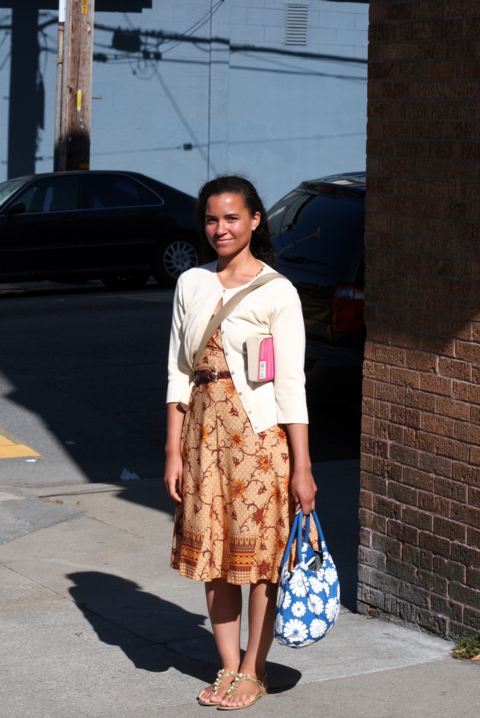
Today’s look: Sarah, Turk and Scott
Tell us about your look: “Buy used Goodwill and Thrift Town.”
Right back atcha, Big Brother
I’ve been dabbling in dystopia of late. A little Year of the Flood by Margaret Atwood, a little Brazil (1985) and bam! I’m up to my ears in fears of bureaucracy and government subterfuge and omnipresence – as if that’s a new thing.
But on the real, it is a bit discomfiting, the similarities between our culture’s visions of the fall. This discomfort sharpens with “black sites” researcher Trevor Paglen‘s monograph Invisible: Covert Operations and Classified Landscapes (Aperture), an eerie book of photos and artifacts that acts like a show-and-tell of why we can’t trust The Man to level with us. Paglen will be presenting it at City Lights – those anarchos, of course! – Thurs/21.
“There are many kinds of invisibility. There is the invisibility of what is so taken for granted that few see it, the custom of the country, the water in which the fish swim. Thus to perceive that the U.S. is an empire on a permanent wartime basis is to be alien to, or become alienated from, the mainstream.”
So says writer Rebecca Solnit in her introduction to Invisible, which happens to be an excellent sourcebook for those wishing to be party to this alienation themselves. The book is a product of years of research on the part of Paglen, and is mainly comprised of photos he managed to take of things we are not supposed to see, like massive bunkers in the desert and streaking surveillance objects in the night sky. Though the photos – some taken from miles away, using high grade camera surveillance equipment – that Paglen has assembled of classified military compounds in the deserts of Southwestern United States are disturbing, what really got to me in his monograph were the badges.

What in the god damn god damn? From left, military patches from an unknown mission, the Desert Prowler program, and the 1990s launch of an intelligent spacecraft. From Trevor Paglen’s Invisible: Covert Operations and Classified Landscapes
A freaky-weird Illuminati eye shooting lightning bolts. A dragon wrapping its scaly body around a globe. Inexplicable star patterns. These are the images created for the insignia patches worn by personnel of our government’s top secret missions. Sure, we know a little bit about them – a woman’s golden umbrella is explained by Paglen to be a symbol for the gold plate satellite systems that a particular mission helped to install – but for the main part they seem to use American English to speak a language that the rest of us aren’t aware of.
A world supported by taxpayers, yet not seen by them. It’s for our safety, right? Again, Solnit: “If war is an act of violence to compel others to do our will, you can speculate on how the American people have been essentially subjugated by the war economy to keep paying for it.”
Seen in this way, the research that Paglen does seems to be a form of liberation. Hours spent in libraries (some with SFBG contributor A.C. Thompson at his side) have yielded passports that show people that are not people – CIA operatives, in fact, charged with the disappearance of terror suspects.
There are long exposure photos of classified satellites tearing through the sky. Some of these are quite lovely, a craggy, water-surrounded peak in one under a phalanx of light diagonal streaks in the sky above. There’s nothing lovely though, about the fact that amateur astronomer network The Other Night Sky (of which Paglen is a part) has identified almost two hundred secretly-purposed objects in our atmosphere, placed there by our government for reasons that surely have to do with eminent safety matters. Right?
This was the dillemma presented by Invisible. Meaning: if these things are indeed so ubiquitous and codified – water and war, in Solnit’s example — are they normal? Should we be worried? Should we all take to the hills of Nevada with a backpack full of digital cameras and squint mightily past lines of no-entry?
Maybe we’ll depend on Paglen to do it for the moment. And, of course, look at his photo books.
Trevor Paglen: Invisible: Covert Operations and Classified Landscapes
Thur/21 7 p.m., free
City Lights Bookstore
261 Columbus, SF
(415) 362-8193
Street Threads: Look of the Day
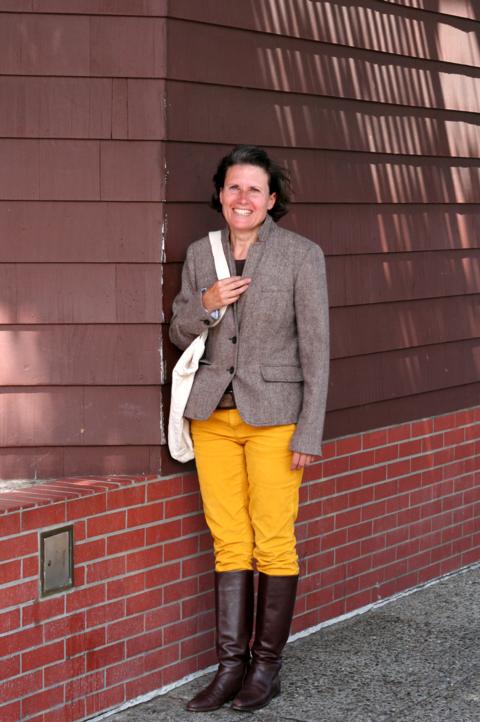
Today’s look: Wilma, 24th St. and Noe
Tell us about your look: “I’m European. The boots are Italian. These are cheap Gap pants.”