• No categories

Pixel Vision

Cynthia Hopkins brings success/failure to YBCA

0

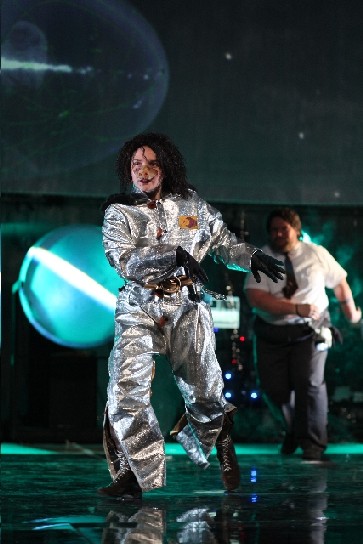
A rare flying object has been spotted this weekend at Yerba Buena Center for the Arts, namely Cynthia Hopkins, as intergalactic space pilot Ruom Yes Noremac, a post-human “Druoc” in a floppy silver space suit hovering high above the stage of the Novellus Theatre. She’s returning from the far distant future to, what?, “save the earth, of course.”

The Success of Failure (Or, the Failure of Success), making its Bay Area premiere tonight and tomorrow, makes up part three of the wildly inventive Accidental Trilogy developed by New York–based artist-musician Hopkins and company Accinosco. I caught it last night, and while a full review will have to wait until next week, I can say that the sight of her twirling there before a sprawling spacescape projected across an enormous screen — in a comical operetta musing on “the pros and cons of evolution,” above a stage aglow and twinkling with arch sci-fi phantasmagoria, and in an all-pervading atmosphere of nostalgia and regret — seemed indeed to defy a certain gravity through the power of deft spectacle and ethereal song.

The real high-wire act, however, lays ahead, in the second half of the piece, after the conclusion of the wacky and yearning sci-fi bedtime story narrated from a billion years hence by a silvery flashing orb to her smaller, highly inquisitive offspring. Now the stage empties itself of all pretense and everything but the barest of effects, leaving just the 38-year-old artist, Cynthia Hopkins, and her story. Surrounded by a clutter of musical instruments and backed by a hand-drawn star-chart of personal crisis and loss, Hopkins here manages a feat of confessional theater characterized by uncommon, at times unnerving frankness and poise, as we watch the planetary grief and trepidation resolve into a hauntingly brazen concern with saving herself.

This is a close encounter you want to have.

http://www.youtube.com/watch?v=pOJCgs1px2A

THE SUCCESS OF FAILURE (OR, THE FAILURE OF SUCCESS)
Fri/19-Sat/20, 8 p.m., $25
Yerba Buena Center for the Arts
Novellus Theater, 700 Howard, SF
(415) 978-2787
www.ybca.org

Broadway cabaret with Pascal and Rapp!

0

The Fairmont Hotel’s storied Venetian Room, a.k.a. the San Francisco club where Tony Bennett first left his heart, has recently re-opened its doors to live music, courtesy of Marilyn Levinson’s Bay Area Cabaret series. Chita Rivera wowed them earlier this month, and this weekend Adam Pascal and Anthony Rapp do their thing, some of which you may have caught last year when they appeared in the touring revival of Rent at the Curran, in the roles they originated of Mark and Roger.

Expect some songs from that Broadway show, as well as Spring Awakening, Aida, Cabaret, and Chess, among other musical offerings in “The Rent Guys – Live.”

“The Rent Guys – Live”

Sun/21, 7 p.m., $20-$75

Venetian Room of the Fairmont San Francisco

950 Mason St, SF

www.bayareacabaret.org

Lust for justice, Tony Serra style

0

“So Paulette Frankl, why did you want to write a book about Tony Serra?” It seems like a reasonable question. After all, the “long hair” woman before me spent a good 17 years of work on her biography of San Francisco’s most famous counter culture lawyer (book release party at Fort Mason Sat/20, btw). Her answer was a bit surprising. 

“I didn’t want to write a book about him! I wanted to be his artist!”

The inability (or lack of desire) to shape her own involvement in his life speaks to the abject admiration and connection to Serra that has been borne over the last few decades by Frankl. It’s a pull that led her to accompany the lawyer to hearings, speeches, client meetings, and quiet afternoons in Bolinas in the pursuit to capture his inner essence. It’s a pull that seems to baffle even her. 

She’s right when she says she didn’t set out to be a biographer. While living in a planned community (read: commune) outside the city, Frankl agreed to drive a friend to a three-day exam the friend was taking in San Francisco. While she was there, Frankl, a long time painter and sketcher, decided to follow up on a vague interest she’d had to get into court illustration. 

“I thought the lawyers always had money – the worse things get, the more money they get!” In Lust For Justice, her recently completed Serra biography, she tells the story of the first case she saw. A young woman apprehended in a drug bust was being pumped for the names of the dealers involved. In Lust for Justice, Frankl writes that woman said “if I rat they’ll kill me. I’ll be out of prison sooner than I’ll get out of the grave.” 

The pathos in the room was palpable, and it got her creative fruits juiced. Frankl was hooked on the court scene. But when she saw Serra, an SF native given to wearing thrift store finds in the court room and who makes a career of defending those against whom society’s odds were stacked – high profile cases like Huey Newton, Bear Lincoln, minorities facing racist institutions – she was no longer interested in drawing the cross-examination of any other defense counsel. 

Feel like a hung jury yet? Frankl captures the high Serra in Lust for Justice

“I sensed his energy,” she remembers. “I got him on an emotional basis.” Serra is prone to stalking like a lion in court rooms, using his whole body to put on courtroom theater that strikes past juries’ preconceptions to get to understanding on some archetypal level. Frankl shouldered her notepad and resolved to become his traveling court illustrator. “If I can ever capture this man and express him, I will have arrived as an artist,” she recalls thinking.

Serra eventually assented to her demands, and during the Ellie Nestler case – in which a mother from a small town in the Sierra Nevadas shot and killed her six year old son’s molester at the man’s preliminary hearing  –  she realized there was a larger story there, that of Serra’s unflinching dedication to repairing society’s inequities. 

“I said Tony, where’s the book about you? Let’s do it – my art, your words.” They drew up an informal contract on the hood of the car and away they went.

Only, not. Because the very reason Frankl was writing the book about him inevitably became the reason why she’d never have a co-collaborator on the project. “He just always in trial,” she sighed. Forget writing his autobiography, she soon found herself lucky if she could get an hour of his time to talk about the parts of his life she couldn’t see: his childhood, his underlying motivations. 

Many, faced with such apparent disinterest in their project, would have stepped back a bit, but speaking with Frankl it becomes clear that she saw this as no option at all. So enraptured of the man was she that to render his evocative court appearances she devised a new, impressionistic style of court illustration. One drawing (they are neatly captured throughout the self-published Lust for Justice) shows Serra’s hand extended in the closing arguments of the 1997 trial of a Native American charged with a cop killing. A bear crouches over Serra, an animal spirit that Frankl saw vividly during the trial itself.

Trippy? Well, yeah. Frankl’s ethos is firmly grounded in the LSD mind expansion of the ’60s. One chapter attributes Serra’s ability to transcend in his lawyerly duties, to whit: “he willed himself to align his body, mind, and soul with the highest calling of the law: the cause of justice.” The emotional connection she feels with Serra informs the book, which borders on the overly effusive praise of a disciple. But not a disciple that can’t get pissed off at their savior. “I don’t think I overglorify him,” Frankl told me, perhaps prepping for this inevitable assessment of her work. “I mean, he can be a real pain to be around! I wanted this to be my experience of him, though – and I do think of him as a great defense lawyer.”

As he is. And though perhaps Frankl isn’t a master wordsmith (to be fair, she doesn’t claim to be for a moment), but Serra’s story deserves to be available in book form. It’s is a story of a man who doesn’t compromise on anything – from courtroom theatrics to lost cause cases to getting high and/or performing Natvie American protective rites before court sessions. And he’s had some amazing legal victories for defendants against whom the odds were stacked, in a system that oftentimes seems as though it was designed to prevent that from happening.

Told by a woman who was there for much of the story, Lust for Justice certainly lives up to its red-blooded title. To check out the man himself, you can either start hanging out with in judge land, a la Frankl, or hit up her book release party tomorrow, where Tony Serra will be in attendance, no doubt holding court. 

Lust for Justice book release party

Sat/20 5-8 p.m., free

Room C-370

Fort Mason, SF

www.lustforjustice.net


also:

Lust for Justice book reading

Sun/21 1 p.m., free

Modern Times Bookstore

888 Valencia, SF

(415) 282-9246

www.mtbs.com


Hey, gay men: Are you “Between Sizes”?

0

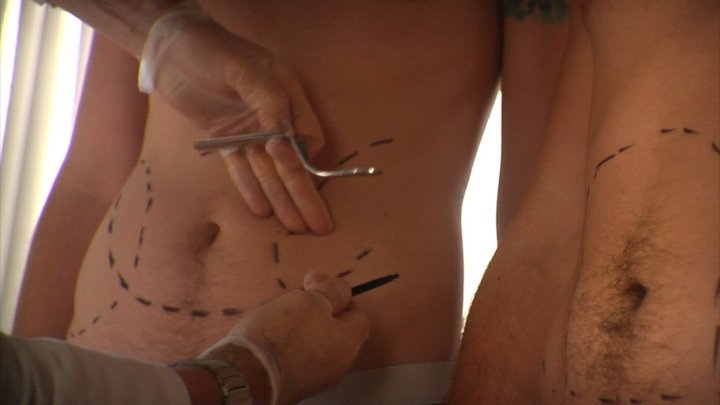
It may be a mainstream cliche that gay men are obsessed with their weight and appearance, but — hey presto! — it’s also pretty true. It’s also something not much discussed aloud in the gay community, although the bear movement of the 1990s managed to at least squeeze an entire subculture out of the topic. This Saturday evening, Andy Bydalek, director of last year’s Frameline festival fave, Skinnyfat! The Movie (which dealt with the plight of two characters panicked over the loss of their six packs — neither of whom would qualify for “The Biggest Loser” anytime soon), is organizing an important, local-luminary-studded panel at the LGBT Community Center called “Between Sizes” to address the issues of body image in the gay community after a screening of the director’s cut of Skinnyfat! Lose your issues, not your tissue. Trailer and info after the jump.

Following its sold‐out premiere at Frameline 2010 and packed festival screenings in Austin, Seattle, New Mexico, Oslo (Norway) and more, director Andy Bydalek’s comic short Skinnyfat returns to San Francisco for a one‐time encore presentation paired with special group discussion on gay body image with local luminaries!

Army of Lovers, QCC, Comfort & Joy and Frameline proudly present: “Between Sizes: An Evening with Skinnyfat!” Saturday, Nov. 20, 7pm at the LGBT Center.

In addition to the hilarious film about two skinny gay guys who are convinced they’re overweight, the program includes the world premiere of a sexy companion film, a Q&A with the director and stars, and a group discussion on gay body image with comedian Philip Huang, large‐community advocate Dan Taylor, psychologist James Guay, clinical nurse and The Adonis Factor star Derek Brocklehurst, and androgynous performance artist Phatima Rude.

This special event will be hosted by drag star Martha T. Lipton (The Failed Actress), and like the film itself, it’s sure to be a lively and thought‐provoking affair!

Between Sizes: An Evening with “Skinnyfat”

Sat/20, doors and reception, 6:30pm, screening 7pm

$10 Advance tickets at BrownPaperTickets.com. (Or very limited tickets at the door on night of event.)

San Francisco LGBT Community Center

1800 Market, SF


The Performant: We want the airwaves

0

Aeriel Art Soars at Theatre Artaud and Teatro Zinzanni

Do you dream of the day when you finally learn how to fly? For aerielists, that future is now, and that dream an everyday reality. It’s a career choice not for the faint of heart — right up there, I’d say, with driving a fire truck or sailing around the world on a catamaran made of plastic bottles. But I imagine the psychic rewards to be tremendous. Life on the edge. Teasing gravity, tempting fate. To soar—perchance to jetstream.

During “Burning Libraries: Stories from the New Ellis Island” at Theatre Artaud, the oral histories of children take flight with the help of four dancers, two of whom (Susan M. Voyticky and Kerri Kresinski) spend considerable time in the air—elevating the simple text to reverent heights. Swooping from moonbeams made of aerial silks, Voyticky escapes from the segregated south, and later in the production, Voyticky and Kresinski dance in the sky, side by side, as fireworks (projection provided by Ian Winters) explode around them.

They collect eggs from the “tops of trees” and, in a wrenching history about the Port Chicago disaster, they go up in flames, and then form, with their earthbound companions, a monument to their own memories, shrouded behind the silks, frozen in time. The entire performance reminds somewhat of Blixa Bargeld’s “The Execution of Precious Memories” enacted on the same stage two years ago, right down to some of the same flaws (nagging paucity of cohesion and character depth) but the sheer pleasure of watching the unencumbered flights of the aerialists cannot be understated.

There’s something about watching an aerial performance unfolding genteelly on a stage, and quite another thing again about watching it swooping right over the dinner table (“Oh waiter! There’s a ‘flyer’ in my soup!”). You probably won’t regret it for the rest of your life if you happen to miss attending the latest Teatro Zinzanni  production “License to Kiss II, a Sweet Conspiracy” but if you’ve got some well-heeled relatives hanging around for the holidays, then what the heck.

Get them to take you and hang on to your soup spoon when sensuous Seattlite Kari Podgorski eats some magic love cherries and takes to the air in racy red lace lingerie. Beautifully framed by the antique swoop of the one-hundred year-old Speigeltent, her aphrodisiac acrobatics are a sweet treat. Twice as nice, the dynamic husband-and-wife Vertical Tango team (Sam Payne and Sandra Feusi), play out a passionate courtship in the air, spinning sinuously along the length of an impressively girthed stripper pole.

And just for the nervously giggling patrons inevitably seated in the font rows of tables, an interlude with a giant teddy bear on a tightrope will make the familiar pull of gravity seem curiously comforting—once he’s well out of pointblank crashdive range, that is.

Live Shots: Amy Sedaris, Herbst Theater, 11/15/2010

0

“You gotta come see this!” called my roommate Melbell from her bedroom. It was my junior year in college and Melbell and her beau Goose were curled up on her futon, their eyes glued to her laptop.

A crazy lady with buck teeth and caked on purple eye shadow was dancing around on the screen, wearing mom pants and a turtleneck. For the next half hour I watched in horror and joy as Jerri Blank ran through the halls of Flatpoint High School, in what was my virgin experience of watching “Strangers with Candy” and the incredibly funny Amy Sedaris. Sedaris is on tour for her new fantastic how-to book, titled Simple Times: Crafts for Poor People.

She explained at her evening appearance at Herbst Theater that the book has been a collaboration between friends, family, and little children, and that most of the crafts in the book do not exceed the ability of a five year old. Some of the chapters include coconut crafts, potholders (her favorite) and also “The Ten Commandments of Crafting”. During the show she also showed off her new felt phone, on which she received several calls and had to excuse herself to the host while she answered them. Sedaris’ ability to make anything funny, including a felt phone, is why so many people love her. I’m sure everyone left the theater that night with sore cheeks from laughing for hours on end and a pocket full of handy ideas on how to get uber-crafty this holiday season.


People’s history: the writing’s on the wall… and now, in a book

0

A thousand pox upon the head of traditional history books. Leaving aside all matters of sexism, classism, imperialism, and plain old fact suppression, they’re usually a pretty boring read on top of it all. But the writing’s on the wall: Celebrate People’s History is releasing its own version of “how we got here”’s greatest hits — and the book release party is Sat/20.

Josh MacPhee has been making unsung history the writing on the wall since 1998. Though technically he sees himself as an anarchist, MacPhee is the putative head of the poster collective CPH, having commissioned over 100 original radical history posters over the years. Those prints have made their way around the world, to classrooms and street corners. The signs join a legacy that MacPhee identifies — in Celebrate People’s History‘s introduction — as having begun with Cuba’s Organization in Solidarity with the People’s of Africa, Asia, and Latin America (OSPAAAL)’s work during the ’60s, and which stretches to include the pieces done locally by artists of the Mission School and the Billboard Liberation Front. 

What’s special about the CPH pieces among this line of populist propaganda are a proactive focus on history’s shining moments, those points in time where people came together and resistence against hegemony held. MacPhee’s book includes posters of Harriet Tubman’s historic crossing of 750 escaping slaves over the Combahee River in South Carolina in 1863 (with the aide of Union troops, the only female-led military action in the history of the country) and the 2003 city shutdown of San Francisco in response to the bombing of Baghdad.

This is how the book looks. Right page: duo-tone poster. Left page: typed-out version of its text. The codification on the pages make the triumphs seem more real, somehow — like most things do when they are written down. 

MacPhee writes that he felt the need to bind the posters together to make visible the “broader sweeps of the past,” and the evolution of radical social movement. The end product may be a lot less exciting than seeing a CPH poster on your corner’s electrical box, but it is a gas to see them neatly placed on pages, next to their message codified into uniform typeface. 

In the wake of sit-lie’s triumphant refutation of the freedom of public space and in a time where some are questioning poor people’s right to even live in this city, I think the questions below, posed by MacPhee in his introduction to the book, is pretty pertinent:

Can our streets become active galleries of ideas and information we can use to understand who we are and where we come from? Can these galleries evolve and change, instead of calcifying, fading, and cracking, and make room for new ideas, images, and conversations?

Here’s hopin’… 


Celebrate People’s History book release

Sat/20 7 p.m., free

Center for Political Education 

522 Valencia, SF 

(415) 431-1918

www.politicaleducation.org


Radical diplomacy: an interview with Guillermo Gómez-Peña

3

“It welcomes hipsters, but advocates for a more intelligent hipsterism.”

Performance artist Guillermo Gómez-Peña is sitting in his unexpectedly luxurious Outer Mission live-work space, surrounded by walls of fake masonry, stacks of props for his work, and velvet paintings of lucha libre wrestlers, police officers, and John Wayne that have accumulated in the 16 years that Gómez-Peña has rent-controlled the place. In anticipation of his upcoming performance at Galeria de la Raza‘s 40th anniversary gala (Sun/21), we’re trying to figure out a few minor details about life in 21st century America.

On the table is our two shot glasses of cachacha (he’s recently returned from a performance in Brazil) immigration politics, the fate of artistic San Francisco, the role of current events in art – just the sort of small talk one always embarks upon when meeting a stranger best known to you for crucifying himself on Ocean Beach and spending time in traditional indigenous Amerindian garb, trapped in a cage stationed in the lobbies of fine art museums’. Gómez-Peña is letting me hold his chihuahua Babalú while he (Gómez-Peña, that is) chain smokes, wearing a black cowboy shirt, bolo tie, and traces of kohl smudged along his lower eyelids.

His hipster comment is about la Galeria. Gómez-Peña has been involved there for 26 years, ever since moving up from Mexico City via Los Angeles. He had heard San Francisco was good for artists, and in Galeria de la Raza, he found spiritual resonance.

“It is one of the most original Chicano-American spaces in the country,” he tells me. Gómez-Peña, whose wife, Carolina Ponce de León, is now the executive director of the gallery, says that he feels a “sentimental connection” with the place. Ever since 1984, when then-director Rene Yañez invited his Border Arts Workshop to stage their first performance in the gallery, he has made a point to bring some version of each of his projects at la Galeria. 

“The Chicano Vampire” shreds border politics, Sun/21

It’s the space’s anti-nationalist viewpoint that draws him. Gómez-Peña, a native of Mexico City, is a man who has made his life on the border, examining the border, erasing the border. In the mid ’90s, the fake masonry that now dominates his ruby-red living room formed a part of “Temple of Confessions,” for which the artist, attired in tribal splendor, and a man dressed as a cholo gang member, sat ensconsed in Plexi-glass – end of the century saints incarnate. They encouraged visitors to approach their “confessionals” and divulge their secret thoughts about Mexico, Mexicans, race, nation.  

I ask him what secrets they told him, how he thinks those secrets would be different now, in the age of SB 1040 and yet another peak of anti-immigrant hysteria. “At that time,” he begins, drawing on his Marlboro, “the pop culture views about Mexico were much more varied. Nowadays the dominant opinion is one of a country of ingovernability, a potential trampoline for drug smugglers and terrorists. There are no longer any redeeming mythologies.”

Gómez-Peña tells me that he thinks that in the age of strife in the Middle East and grave problems within both their interiors, the United States and Mexico are no longer looking at each other. “There is a lot of silence, indifference at the border,” says the man who has staged elaborate stunts at the nations’ fracture point, including a “border wedding” in which the bride and groom stood on either sides of the wall separating us from our neighbors to the south. He says people can’t – or don’t – tell the difference between narco traficantes and migrant workers.

It’s this miasma which makes the art done at Galeria de la Raza all the more important. The space has always been a place where cultures mixed, and where Latinos found ways to enter the psyche of the American zeitgeist. Gómez-Peña says the Chicano spoken word movement got its start there on the corner of 24th Street and Bryant, as did Frida Kahlo-mania. 

But things have been changing, even for this stalwart of the San Francisco neighborhood art scene. For one thing, it’s not so neighborhood anymore. The Mission has transformed into what Gómez-Peña calls, in his typically luminous style, “a bohemian theme park.” Many of the young Chicano artists that “inform the Galeria’s aesthetics” have hightailed it out of here for the easel space and relatively easy rent checks of the East Bay and beyond. 

Obama has disappointed Gómez-Peña. In the wake of a campaign that everyone believed in, wanted to believe in, the arts funding promised hasn’t been delivered. Nowadays, the artist sees fellow creatives having to work two times as hard for their paycheck, even a brain drain of people leaving for the more affordably fertile soils of Buenos Aires and Lisbon. It’s one of the subjects of his performance piece on Sunday, which he calls Strange Democracy. The program will also honor Yañez, House on Mango Street author Sandra Cisneros, and Tomas Ybarra-Frausto, the acclaimed Chicano Studies professor.

But through the slings and arrows of political misfortune, Gómez-Peña has found ways to be proactive. His Pocha Nostra group is one way, a program that hosts artists in both Tempe, Arizona and Oaxaca in forming multi-cultural, politically striking performance pieces – and, as he riffs, contributes to the “trafficking of artists across the border – we’re intellectual coyotes!” 

And on Sunday, he can contribute his unique style to that of Galeria — a place where he says there is “radical cultural diplomacy, a place for different cultures to meet in a time in which the whole country is becoming divided ideologically and when Latinos are being demonized.” A place where we can all meet and talk in the kingdom of confessions, cachaca, and Babalú.


“40 Years Adelante!”: Galeria de la Raza benefit performance and awards ceremony

Sun/21 4-9 p.m., $40-65

Brava Theatre Center

2781 24th St., SF

(415) 826-8009

www.galeriadelaraza.org

 

SF local artist’s purpose within reach

0

“I wanted to teach people, tell them how to do it. I always dream about taking back the city through art.” Reynaldo Cayetano Jr. is showing me his photographic prints in a Lower Haight coffee shop. He’s explaining to me how a guy who grew up in San Francisco came to be on the brink of his third art show in San Francisco (Purpose: Beyond Reach, coming up on Sat/20 at Rancho Parnassus).

Is it weird that this trajectory needs explaining? Common sense says that growing up in a world-class art city would give you a leg up on an career amidst darkrooms and gallery openings. But that’s not the case in cities, really. Local kids get the boot for all kinds of reasons in today’s 21st century – especially creative types who aren’t ready to divest their days to the rat race necessary to stay and live in our great urban spaces.

Maybe to look for real, SF-grown artists you have to see beyond the standard downtown gallery scene. Cayetano’s art shows take place at non-traditional venues – the most recent of which was Bayanihan Community Center on Sixth Street, in the neighborhood that Cayetano grew up. The 23 year old populates the shows half with friends he grew up with and half simpatico souls he meets around the city (full disclosure: my boyfriend falls into this category for the upcoming Sat/20 show). 

Cayetano (Rey to friends) says he’s always been “a spectator of art.” He began sketching as a teen, copying his older brothers who liked to draw. “But soon I was getting better than they were,” he tells me, smiling over coffee and a pastry at the round table we’re sitting at with fellow Inks of Truth artist, photographer Chris Beale (whose shots illustrate this article). 

We’re passing around the portfolio of the two men, who met in a City College photojournalism class and bonded over being the only ones working with film in a digital world (“making it, like, twice as hard on ourselves,” they tell me, clearly relishing the challenge). Cayetano’s folder of prints shows street scenes from his recent trip to the Phillipines — a journey he’s made only twice since his father, mother, two brother, and he moved to California in 1993. 

Real talk: Reynaldo Cayetano and a new friend downtown. Photo by Chris Beale

I turn the page and there is a black and white closeup of his uncle’s knotted hands, then photos from his life in SF: friends, protesters at immigration rallies, corners and streets he’s walked for years. Beale, a long time SF resident originally hailing from Baltimore, has crisply developed shots of Rey in his own book, a dissenter giving the finger to City Hall’s golden cupola, an image of the two’s friend – and emcee who’ll be playing his new album at Saturday’s event – Patience the Virtuous, gazing into the MUNI bus yards. 

Rey started curating his group shows — which display the work of a loosely bound collective called Inks of Truth — to fight ignorance in the SF community. Ignorance of pedestrians, that is. Spurred by a good friend’s death on the Alemany and San Jose S-curve (the young woman for whose 21st birthday present the camera he shoots with was intended), he brought together creative acquaintances for an event that “was supposed to be an art show, but leaned towards awareness.”

Photos from that show and Rey’s second depict a crowd of young people enjoying themselves amidst the physical evidence of their collective creativity, at one point clearing the floor for some b-boys to get in on the show and tell. It’s hardly the scene you see at many wine and cheese receptions that mark the debut of an artist’s work at other places around the city.

The events’ orchestration were big moves for a guy that has trouble seeing himself as a professional artist. “As soon as I call myself that, it comes with… I don’t want to say baggage, but it implies a lot of knowledge,” Rey tells me. “At first I thought that I shouldn’t have a show because I’m not a photographer, but then I thought no – that’s why I should do it.” When I ask him whether he sees a lot of the peers he grew up with in the Sixth Street neighborhood getting in on the SF art scene, he’s hesitant to make sweeping statements. “I feel like it’s lagging, but it’s not to the point where it’s hopeless.”

Perhaps this lag is what gives Cayetano the motivation for his inclusive shows. Saturday’s will feature works by sixteen artists in a variety of mediums. Cayetano is hungry to give others the adrenaline rush and fufillment that comes from finally, seeing one’s work on the wall. 

But it’s not always easy. In the midst of his own worry over producing events without professional guidance, Rey’s dealing with the varying levels of commitment of artists showing their beloved creative mindsprings for the first time. But overall, the process is one he seems to take inspiration in. “It’s great to give them that kind of anxiety, it’s a good stress. If you’re not stressing in the process, it’s not explosive,” he reasons.

In addition to bringing a taste of artistic involvement to the talented around him, the upcoming Purpose: Beyond Reach show at the Sixth Street cafe has another, even more salient community connection. It’s a food drive for Martin de Porres House of Hospitality, a place that Beale says is the soup kitchen of choice for many of the homeless people he’s spoken with. 

Cayetano elected Martin de Porres as the beneficee for its relatively small capacity. After speaking with representatives from larger shelters like Glide, he discovered “even if you raise a lot of cans, for a big shelter it will be gone within a meal.” Art show attendees are expected to load down their backpacks for entrance: those over the age of 21 are expected to donate at least five cans of food. 

For Cayetano, it was important that his third show reflect the entirety of the community where he was raised.  “It’s a testament of growing up on Sixth Street. The people out on the street now are the same ones that were there when I was growing up.” All the better to reflect the real community of San Francisco — if not that, then what are we painting for?


“Purpose: Beyond Reach”

Sat/20 4-10:30 p.m., free with can donation (21 and up, five to seven; 20 and younger three to five) 

Rancho Parnassus

132 Sixth St., SF

(415) 503-0700

www.wix.com/purposebeyondreach/inksoftruth


Live Shots: Dance Brigade, 11/12/2010

0

They are part bird and part woman — the dancers in the all-female dance company Dance Brigade, in a current program entitled “Manifest!val for Social Change: Like Oil and Water, from Gaza to the Gulf,” moved between flight and rest.

Their dance tells the story of women in the Middle East, their movements hinting to a tragic ballet and the music being a version of the classic score from The Dying Swan. The dancers ability to combine pure grace and total frenzy was incredible, creating both an image of beauty and struggle in the same instant. Through Nov. 20, Dance Mission Theater will host fifteen different dance groups, as part of Dance Brigade’s Manifest!val for Social Change, which is a great opportunity for anyone to see some amazing local dancers, but also a chance to promote social awareness and community.

For more information about this weekend’s program, click here.

PS — and check out this preview video for Dance Brigade’s next program, “The Great Liberation Upon Hearing” coming in July 2011

Red-eyed and happy at the Cannabis Competition

9

All photos by Erik Anderson

Somewhere amidst the marijuana energy drinks and exuberantly filled bags of Volcano vapor at yesterday’s fourth annual Cannabis Competition, a young lady named Lacey was making a name for herself. 

“Sales have been excellent – we’ve cornered it! I think the best sellers have been the shortbread cookies. You can have them alone or we also make them into filled sandwiches,” said the fetching entrepreneur of Laced Cakes, who sat with her girl friends behind stacks of individually packaged marijuana edibles, all attired in vintage approximations of boho homemakers.

The trio joined proud purveyors of marijuana energy drinks, handmade color-changing coffee mugs, and raw organic hemp rolling papers — not to mention the more urban, less crunchy beats than Competitions past by Bayonics, Manicato, and Mystic Roots — in a celebration of gourmand greens. Set in Terra’s be-succulented patio and indoor space, the Competition was a happy, if slow moving refutation of the fact that pot heads can’t party.

Lesson of the day? There is life post-Prop 19. Even while plagued with last-minute venue kerfuffle and copyright blowback from the OG cannabis cuppers, High Times, the Cannabis Competition hit it big with SF indian summer weather to die for and an enthusiastic crowd. “It was an extremely successful event in terms of people having fun,” said Kevin Reed, CEO of the Green Cross, the pot delivery service that sponsored the event. 

“I think that [the venue change] probably did keep a lot of people home – anything that has to do with the police department will do that – but it did get us some mentions in the press,” Reed continued. He said that a few vendors also backed out at last minute for fear of conflict with the law. 

But the trepidation of the competition suited Lacey (real name: Courtney, she didn’t want her surname in the press) just fine. Laced Cakes has been around since 2007, but lack of consistency with her inventory – “you know how that happens,” she smiles – led to Lacey losing her regular selling gig at the Green Door, a SoMa dispensary. 

Six days before the Competition, the buyer at the Green Door mentioned there was an empty vendor booth still available – would Laced Cakes like an expo debut? Lacey sprung into action and baked up some product, even learning a recipe for caramel that looked like a success from where I was standing and admiring her cakes. Her other offerings? Zucchini bread, vegan butter, take and bake cookies with their own little tubs of frosting – all “medicated,” all preciously packaged and ready for action. 

Which was kind of a shame, because by the time I ran across her booth, I was in no shape to eat any more weed. In fact, by the end of the eight hours of Cannabis Comp, it was fair to say that not many were – particularly the judges of the Patient’s Choice contest itself. I spoke with one judge, who paid $250 for the privilege of weighing in on the Bay’s best buds. The Green Cross mails these brave arbiters 43 strains of weed (a gram of each), 17 kinds of weed edibles, and eight weed concentrates. 

Ahem, a mere 10 days before the competition. Clear your schedule! Reed says some patients – you have to have your medical marijuana card to participate – hosted tasting parties with their similarly-carded friends to help share the burden of the position. 

I got a chance to check out the tiny microscopes included in the judge’s package of fun (the Green Cross hands them out to all its patients who place orders with them). Equipped with a button to turn regular or black light on your bud of choice, the ‘scope revealed a tiny new land of purples and greens and complex crystal formations. The whole thing looked a lot like some dendrite-heavy sea creature. An pungent anemone, maybe. Or maybe I was just stoned.  

Makes you think differently about marijuana – the intent, surely, of a peaceful party packed with pot. Maybe the rest of the state’s not ready for legalizing the dro, but it would seem that for San Francisco, a lot of the victory would be a symbolic one. Symbols, man. 


2010 Cannabis Competition Patient’s Choice award winners (congrats!)

Best Edibles: First place – Scott Van Rixel’s Bang Dark Chocolate

Second place – (tie) Auntie Dolores’ chili-lime peanuts, The Green Door’s Buddies peanut butter pucks

Third place – Sean Polly’s Hash on the Mountaintop 


Best Concentrates: First place – (tie) The Green Cross’ Frosty Oil, The Vapor Room Co-operative’s Blue Moonrocks

Second place – The Green Door’s G18

Third place – The Green Cross’ Sour diesel keef 


Best Cannabis: First place – Boss’ OG Kush

Second place – (tie) Allen Wrench’s Island in the Sky, The Green Door’s Granddaddy, The Green Cross’ Kryptonite

Third place (tie) – Earth Green Cali Farm’s Jack Hare, Dutch Treat by San Francisco Medical Cannabis Garden


Do you love a Giants fan?

0

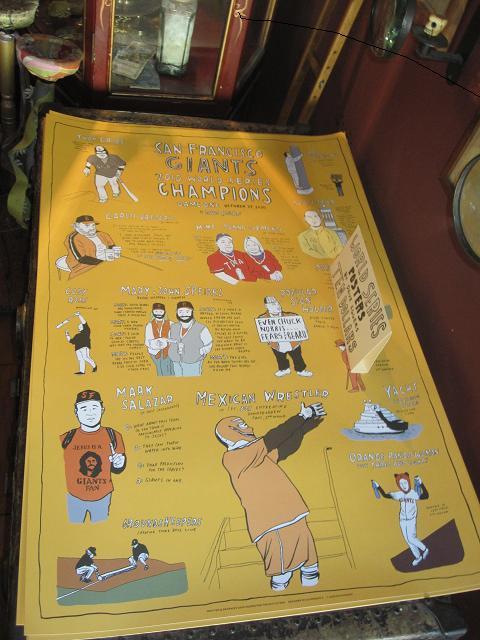
Aficionado de los Gigantes in your life? You’ll want to get them this: a limited edition Dave Eggers SF Giants World Series Championship… poster. Ten dollars.

The print shows all the characters you’ll never want to forget from the days that SF went ballistic over balls. The orange panda lady with three beers? The Mexican wrestler in section 305? All there. The woman at the cashier told me that the stack of which I took the photo is 826 Valencia‘s only supply, so slide into home. Go! Go!

Street Threads: Look of the Day

0

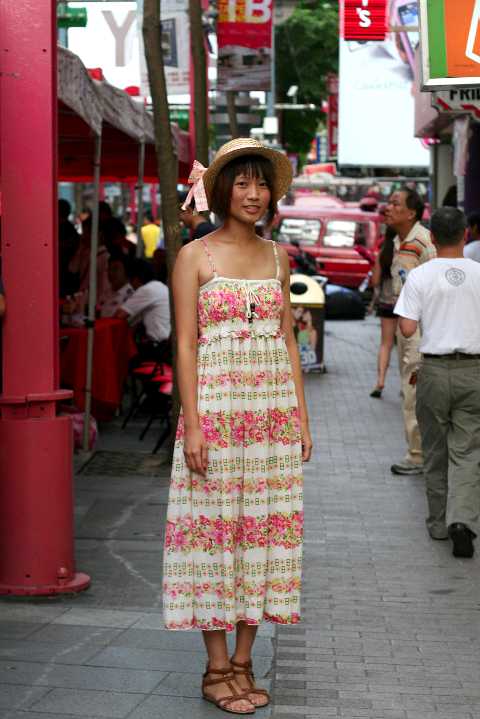
Traveling SFBG photog Ariel Soto recently hit the streets of Taiwan to find out what the kids were wearing overseas. Due to the language barrier, she and her subjects weren’t able to talk style philosophy — but hey, looks like these speak for themselves.

Today’s look: Shao Le, Taipei, Taiwan


The Performant: Cheers for fears

0

Scoping out “After Dark” at the Exploratorium and a Mark Growden singalong

“The oldest and strongest emotion of mankind is fear.” –H.P. Lovecraft

Bolshephobia is the fear of Bolsheviks. Sesquipedalophobia is the fear of long words, which does rather beg the question, how do people with that particular fear express it without using the eight-syllable word that defines it? At this month’s After Dark event at the Exploratorium, fear was the theme explored, and confronting one’s fears directly, in the spirit of scientific inquiry, strongly encouraged.


We’ve learned to accept fear as an instinct of self-preservation, yet on the surface, so many fears seem downright petty, even ridiculous. Take, for example, the “phobia trading cards” we were urged to grab on our way in. Mine: fear of vomiting (emetophobia). Theresa’s: fear of men (androphobia). Once inside, we made a beeline for the joint San Francisco Bay Area Tarantula Society/East Bay Vivarium,. What is it about creepy-crawlies that make the skin crawl? All around us, giant cockroaches, scorpions, and spiders were adorning outstretched palms, and snakes were slithering up forearms and around the necks of museum patrons.

I opted to handle a relatively user-friendly duo, a Chilean Rose Tarantula and a sleepy Pacific Gopher Snake. Theresa would not hold a snake, but she got to watch me flinch soon enough at the Pendulum of Truth. Placed behind safety shields, facing each other, we were urged to swing a bowling ball on a chain at each other’s faces. Being bashed by a flying bowling ball is not something I expect to happen to me regularly, but when confronted with one, I can attest, yes, it’s a very real fear. Less frightening was being locked in the Utica Crib, a reproduction of a nineteenth-century restraining device used primarily at the New York State Lunatic Asylum, though I suspect I’d weary of it soon enough after a few hours—or days.

There were people practicing tightrope-walking, watching dentistry demonstrations, and confronting the pitch black interior of the Tactile Dome as we headed over to the McBean Theatre for a presentation on Nightmares by dream expert Dr. Alan Siegel. Ever had that one dream where all your teeth crumble and fall out at once? Dr. Siegel can tell you why.

One fear shared by entirely too many people is the fear of singing in public. At least that’s a fear that has a cure—practice practice practice. Happily, it didn’t seem like fear was the driving force behind people’s decisions to attend the Mark Growden Sing-along at a.Muse Gallery Saturday night.
Part grade-school music class, part hootenanny, we warmed up our vocal chords with some scales and some tongue-twisting folk tunes before tackling the Mark Growden repertoire, mostly songs from Saint Judas (Porto Franco Records, 2009). Unlike the forced make-or-break centerstage experience of a karaoke bar, a sing-along’s success lies in its collaborative nature, from each according to their abilities. The informal, free-for-all atmosphere of the evening brought the old adage “if you can talk, you can sing,” to convivial life, and whatever fear was up to that evening, it most certainly wasn’t hanging out with us.

Hallelujah! Giants parade pics, part 1

0

Let it rain, let it rain — compostable ticker tape, that is, as the Giants trundled up Market to the cheers of what must have been a million fans. This week rocked! 

Appetite: 3 escaped-from-New York egg creams

0

Sipping an egg cream soda is an all-American, very New York pastime, but nowadays the nostalgic sodas are popping up in increasing numbers in our fair city. I rounded up a trifecta of perfect SF spots to get your cream on, but first a historical rundown.

Though the identity of the creator of the original egg cream is somewhat debated, many credit Louis Auster, a Brooklyn candy store owner in the late 1800s. In his well-researched tome on the history of soda fountains, Fix the Pumps, Art of the Drink‘s Darcy S. O’Neil says the New York egg cream evolved as a variation on the original milkshakes served at soda fountains in the late 19th century.

The classic recipe, which contains no egg whatsoever, traditionally consists of milk (or cream, for added richness), chocolate syrup, and soda water, making for a gently effervescent imbibement. It has a creamy, chocolate-y tinge, and a pleasurable hint of sour from the soda. The best creations have a foamy, seltzer “head” and are reminiscent of an ice cream soda sans ice cream. Some claim the original recipe included actual egg, which was replaced when they became expensive and harder to procure during World War II.

Speculations aside, I find egg creams a delightful reminder of my high school years on the East Coast, when I sipped at diners in Manhattan, Brooklyn, and Jersey. To this day, I can’t be in proximity of Katz Deli in the Lower East Side without ordering one to go. 

The recent proliferation of egg creams in San Francisco is a welcome trend. Though I can never seem to track down the Egg Cream Cart, which was launched earlier this year by a mysterious “Madame Bubbles” (and serves egg creams and Jewish treats like rugelach), there are a few more easy-to-find places to wash down a soda, whether you go for the original Brooklyn recipe with chocolate syrup, New York style with vanilla, or even a San Francisco egg cream made with both chocolate and hazelnut syrups. 


Grand Coffee

Months back, I wrote about the new Grand Coffee on Mission Street, a humble little counter-window service  that pumped out expertly prepared Four Barrel coffee, creative jam sodas, layered iced coffees, and yes, egg creams. Owner Nabeel Silmi makes a Brooklyn egg cream ($2.75), for which he first drizzles the glass with Brooklyn-made Fox’s U-bet chocolate syrup, then douses it with milk and seltzer water, ultimately handing you a freshly frothy drink.

2663 Mission, SF

(415) 206-1238


Tony’s Coal-Fired Pizza & Slice House

The new take-out shop next to Tony’s Pizza Napoletana is just what North Beach needed: addictive Neapolitan and East Coast pizzas, ordered by the pie or the slice (cheese, pepperoni and daily specials). Eat in at one of the couple of tables in the joint or trot across the street to Washington Square Park with pizza or giant Italian beef sandwich in hand. The deal is sweetened with three egg cream options: New York, Brooklyn, and SF versions. The downside? They’re a whopping five dollars each. But the balance is right and kudos to Tony for offering all the classic egg creams. 

1556 Stockton Street, SF

(415) 835-9888


Cowgirl Creamery’s Sidekick

Cowgirl Creamery‘s brand new Ferry Building cafe, Sidekick, is a take-out venue for all things cheese, from challah rolls filled with the stuff to a fresh mozzarella bar where you can choose which mozza type you’d like to heap over salad. Sidekick starts with a San Francisco egg cream (chocolate and hazelnut syrups for four dollars), then offers three non-traditional versions: raspberry, coffee cream, and caramel cream ($3.75). The SF soda enhances that light, chocolate-drenched froth with a whisper of nuttiness. Consider it egg cream with a California twist. 

1 Ferry Building, SF

(415) 362-9354

www.cowgirlcreamery.com


Subscribe to Virgina’s twice monthly newsletter, The Perfect Spot


The Performant: Rite of autumn

0

It might have been unannounced, but there’s a ritual aspect to all this the Giants-Halloween-Dia de los Muertos mayhem all the same. And like any great autumnal rite, the cathartic frenzy implies a greater narrative — one last big harvest before the little death of winter, the rebirth of spring. How appropriate to the season then, was the Ragged Wing production “Persephone’s Roots” a site-specific re-imagining of the Persephone myth at Berkeley’s Cordornices Park. 

Persephone — as you might remember — is the daughter of Demeter, and traditionally the story told is that she was kidnapped into the underworld by Hades, which caused Demeter to neglect the Earth while she searched for her, bringing barren winter to the land. Ragged Wing’s Persephone was a far more willful curator of her own destiny. 

As an oddience, we followed her self-propelled journey into the underworld past a three-headed Hecate at the crossroads, around a despairing Sisyphus and Tantalus, through a spiral maze (Hecate’s Temple) where we wrote down our shadow thoughts and cast them into a basket to be burned later on during the climactic reunion scene. Then to the Fates picnic, where Persephone defiantly ate of an onion, and the three weird sisters snipped her thread. 

No victim, this Persephone was a willing Queen of the Underworld, and when Demeter found her at last, beside the bonfires of the “hearth of the triple goddess” (Hecate again) their agreement that Persephone would spend the spring months above ground was hard won. The wooded paths, trickling waterways, and rapidly descending nightfall made the journey feel very otherworldly and the park seem downright mysterious. 

Speaking of mysterious, I will never look at the Shakespeare Garden in Golden Gate Park in quite the same way now that I’ve seen it in the neon of glowsticks at midnight, the end station of the interactive, city-wide Journey to the End of the Night.  

Beginning at Justin Hermann plaza at 8 p.m., the game spread out over much of the city—from Chinatown, to SoMa, to the Mission, to Haight, to Golden Gate Park. The goal was to get through to each checkpoint via public transportation and collect a signature after performing some minor task (most involved was probably the “Change of Face” station in Dore Alley, where we had to exchange parts of our costumes with strangers in the back room of Lennon Studios

The challenge was getting to each checkpoint without being caught by a “chaser” since, like zombies, their powers of evil would then corrupt you and you would become one of them. Indeed, by the end of the night, chasers almost outnumbered survivors, and my group of three survivors were congratulated heartily on our triumph at the entrance to the garden. 

The light at the end of the tunnel was a dreamy, participatory performance by nerd arcana swashbucklers Corpus Callosum, who exhorted us to “drink to the ghosts of the night”, a ritual appropriate for any season. 


Live Shots: Dia de los Muertos 2010

0

OK somewhere between Giants madness and the election frenzy, this happened: one of our favorite, uniquely SF civic holidays went down in the Mission. Photographer Charlie Russo was there to capture all the morbid beauty, serene remembrance, and ghoulish fun.

Giants win the World Series! Again!

0

What’s better than watching the Giants win the World Series? How about watching them win the World Series for the second time?

Not too many people can lay claim to the distinction, but somewhere betwixt sneaking into an at-capacity Polk Street pub and watching the fireworks on Valencia explode with gigantic glory last night, I ran into Elliott Isenberg, who was all of nine years old when the New York Giants took home the World Series trophy in 1954.

“There was a lot of celebration in my house,” Isenberg — who is a therapist during the day when not causing trouble in the streets — told me the next morning, after the euphoria of last night’s win (and the Anchor Steam coursing through my veins) had sufficiently dissipated to allow journalistic endeavor. Back in ’54, they were getting crazy with it. “My grandfather danced on the table and they gave me a glass of wine. I had only had wine before at Passover. I didn’t go downtown — I heard there were huge celebrations in Manhattan, in the Bronx, but I was a nine year old boy!”

Well he certainly made it to the show last night. When I stumbled into him, Isenberg was wearing a neon pink and yellow windbreaker below his shock of grey hair, a garment that had granted him a sort of inadvertent celebrity earlier that night when he walked down from his home of 32 years on 24th Street and San Jose to partake of the late night street celebrations sweeping the Mission. He was eager to tell me the story of his night.

After watching their team trounce the Texas Rangers 3-1, beard-clad festivators were filling the streets from Polk to Castro to City Hall — but the parties in the Mission were the big ones. Undeterred by the throngs of champagne-popping Giants fans, flat bed trucks full of waving people were chugging resolutely down the middle of Valencia between 16th and 17th Streets. SF – like you didn’t know this already – loves a good street party.

And then they started burning the mattress. Which is awesome. Isenberg took the opportunity to show the crowd what he’s got, which sounds like a nice vertical. “I did, I actually jumped over it. I got a little bit singed though.” He says people were approaching him the rest of the evening to congratulate him on the leap. My guess is they got an earful about the grandfather on the table, the wine, the wonder, as well.

“For a few hours, it was the people’s territory, no cops,” Isenberg recalls. But the cheerful anarchy amidst the taquerias and bike lanes wasn’t to last forever. He reports that at some point after midnight, cops linked arms to form a phalanx and advanced on the revelers. “I ducked into a recessed window — most people were smart enough to move, but those that were too drunk or had an attitude got hit by the police officers’ clubs. Not a murderous hit, just to get them going.” He says after the phalanx cleared the crowd around the boudoir bonfire, a fire truck arrived to douse the flames and the crowd never regained its full insanity levels.

Still, Isenberg was in high spirits on his walk home, high fiving like a madman. After all, it’s not so often that his baseball team wins the World Series. And after living in the Mission as long as he has, he’s not easily rattled by rowdy crowds. Even if this one was special. When asked if he’d ever seen anything like the celebratory mayhem that had ensued, he said “it was a little more wild than I’ve seen before. It was one level up from Halloween.”


Street Threads: Look of the Day

0


Traveling SFBG photog Ariel Soto recently hit the streets of Taiwan to find out what the kids were wearing overseas. Due to the language barrier, she and her subjects weren’t able to talk style philosophy — but hey, looks like these speak for themselves.

Today’s look: Ivy, Taipei, Taiwan