• No categories

Pixel Vision

Gamer: does the dismal “Homefront” have a silver lining?

19

Can Homefront’s failures inspire change in the game industry?

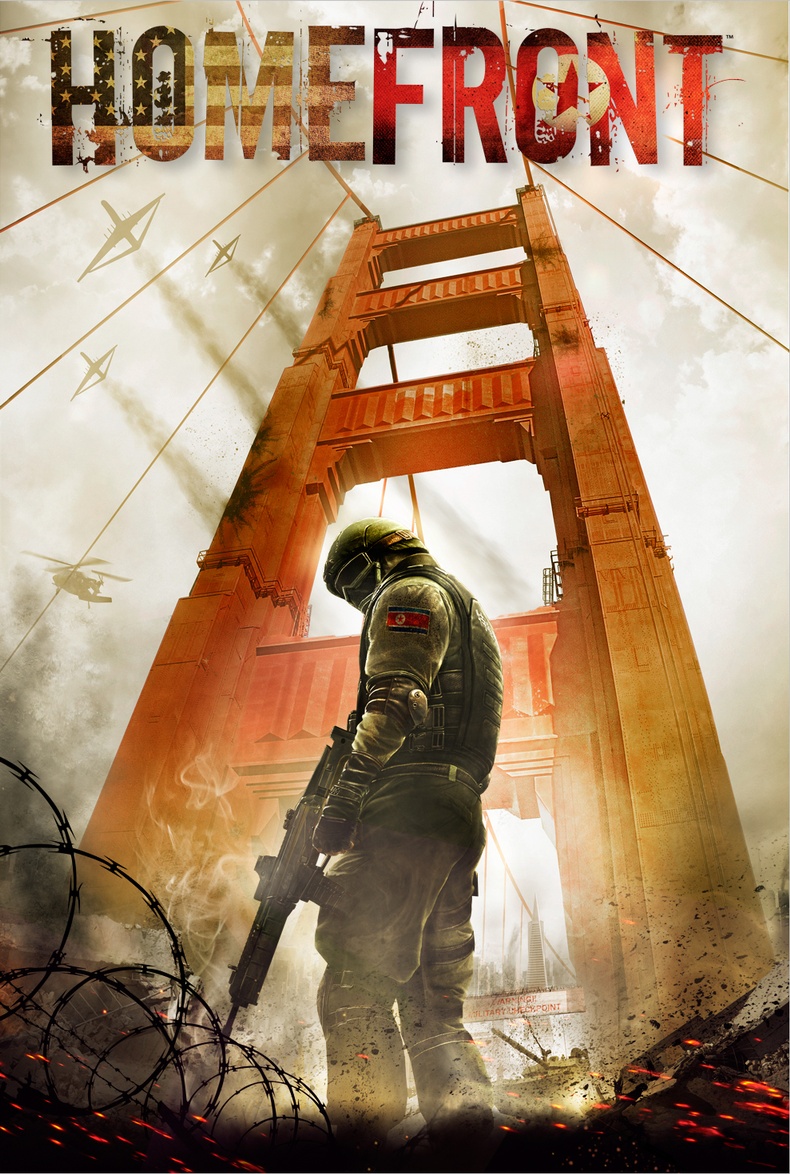
I’m almost reluctant to add to the media blitz that first-person shooter Homefront (now available) was and is getting. Even with low scores and plummeting stocks, the game managed to sell 300,000 copies on its first day, so to a degree it would seem the publicity has paid off. But, after being personally subjected to an overwhelming number of posters and billboards, hundreds of balloons, an anti-Korean rally, and a long schoolbus ride to a barbed-wire-laden warehouse, I was disappointed to find that behind this velvet curtain was a pretty flimsy product. Maybe Homefront will be the game that gets the ball rolling on an important issue that has been brewing for a while: game pricing.

Kaos Studios was smart to attach itself to a wholly original idea, implausible or not, and putting the power of Academy Award-nominated screenwriter John Milius (1979’s Apocalypse Now) behind it doesn’t hurt. But the premise is wasted on such an impossibly underdeveloped campaign; it’s almost like Milius wrote “North Korea invades U.S.” on a napkin and called it a day.

Kaos’ shooter isn’t the first game to re-neg on its promises (see the ever-fresh wound of the Molyneux/Fable debacle for proof of that) but this burn was unique in that it was a title that appealed to a game audience that is largely overlooked. Alternate history, as a genre, has ardent supporters but aside from Fallout and Singularity its ranks haven’t been stocked particularly well. In that light, Homefront’s undelivered promise only intensifies the sting that results from its brevity.

Sixty bucks and all I get is a three-hour campaign?

http://www.youtube.com/watch?v=a9hWdAN6guw&feature=related
You don’t hype a three hour tour.

Homefront’s single-player is surely not worthy of its price tag, so what else is in the box? The game includes a multiplayer mode and it’s light years more focused than the campaign, but multiplayer-only experiences like Battlefield 1943 run around $15. If the studio had released a multiplayer-only title, they would have been welcomed to the table differently. Instead, we’re left wondering how much developer weight was actually put behind the single-player campaign, and why the quality seems so inconsistent with the seemingly-great weight the publicity team put into hyping the mode over the past year.

Now that a sharp divide has evolved in the value of game content, making every game the same price not only hurts the consumer, it also directs the development process towards creating a viable product rather than a singular experience. As more and more players purchase titles purely for their multiplayer components, I might go so far as to suggest completely separating single player and multiplayer experiences through independent purchases.

No matter how it is sold, it seems clear that the value of each mode is rarely analogous to the amount of time developers invest in them. Call of Duty campaigns are five to six hours long, and no one bats an eye because they know the multiplayer will afford them hundreds of hours in entertainment. At the same time, enormous resources are spent on creating multiplayer for games like Bioshock while all anyone wants is to be told a cohesive story. Instead of feeling obligated to deliver both, why don’t developers make a greater effort to give players what they came for?

Perhaps there’s something to be learned from the casual games market. While many console gurus malign the low pricing of iOS games, at least games are variably priced based on their worth. What’s the answer? Publishers would be smart to figure it out before all games go digital, because I expect that flat rate of $60 is going to feel a whole lot heavier without a physical product in hand.

5 Things: March 17, 2011

0

>>THREE VEILS TO THE WIND You’re probably already green around your St. Patrick’s Day gills — maybe it’s the perfect time to rustle up a bridal gown, and a wee bit more liver to damage, for this Saturday’s Brides of March dash around the city. The raucous, open-to-all annual event is the Santarchy of hetero privilege, so let’s get sloppy-ironic and “WOOOOO” like a bachelorette.

And if you’re feeling extra classy, may we suggest a stop by North Beach’s fabulous Glamour Closet which traffics in scrumptious, perfectly Daddy’s Little Girly recycled designer wedding gowns?     

Wooooo!

>>AND SUDDENLY, TSA SHIRTS ARE ALL THE RAGE AT THE LOOKOUT If only Castro street club flyers looked like this.

>>FAKE THAT FLOW ON SIXTH STREET You got no dough, but still wanna impress your crew? At TL cafe-third space Rancho Parnassus on Sixth and Minna you can rent out the dining room (complete with nautical trappings and the occasional fly art show on the walls) for FREE any day after 7 p.m. as long as you bring at least 15 friends in tow. It’s a win-win situation for the affordably-priced cafe — they need the business, and you — you and your buds get your pick of its Mendocino wine list, North Coast beer and full menu.

Rancho’s riches can be yours for free. Photo by Hannah Tepper

>>EVER WONDERED WHAT EL FAROLITO LOOKED LIKE IN 1951? The main library’s galleries in the basement (Jewett) and on the sixth floor (Skylight) are hosting “San Francisco EATS,” a smorgasbord of SF restaurant paraphernalia and photos from all time, but only on display through Sunday, March 20. Included in the bounty: hilarious food porn (flauta plate for $2.50? Ohhhh, 1951), racist menus from not long-enough-ago, peeks into culinary luxury from various eras, and brief historical rundowns of the city’s four most famous food districts. 

>>THOSE SOUTHERN BOYS… Carolina-bred band Fist Fam has relocated to the Bay, and in honor of the move they set their “SF Bay” spit to the chase scene from a seventies SF flick — which would make it worth watching even if the Fam’s laid-back Southern twang didn’t already have us stoked for the group’s April 8 show at Rasselas.

http://www.youtube.com/watch?v=SL00ezneBc4


Lit: A Slow Death: 83 Days of Radiation Sickness

3

This review originally appeared in the Jan. 7-13, 2009 issue of the Bay Guardian:

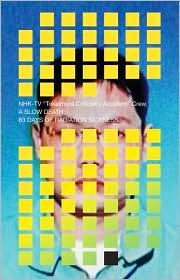
John Gall’s art for A Slow Death: 83 Days of Radiation Sickness (Vertical 160 pages $19.95) is unique in a gaze-snatching fashion. It combines hues of yellow and green, block patterns, and a news photo backdrop into an attractive, enigmatic, and faintly disturbing image that makes a browser wonder, “What exactly is inside this book?”

The answer is an account of a nuclear plant worker’s gradual demise after he was accidentally exposed to 20,000 times the maximum tolerable amount of neutron beam radiation. As some alleged environmentalists (including figureheads such as Al Gore) have begun touting the benefits of “non-carbon sources” of energy — an evasive way of saying “atomic power” — Hisashi Ouchi’s death comes across as an extreme cautionary tale.

Credited to NHK-TV “Tokaimura Criticality Accident Crew” and constructed from a television documentary about the nuclear accident, A Slow Death bluntly but compassionately renders Ouchi’s physical symptoms, which included massive skin loss, and the emotional impact his plight had on the doctors and nurses who treated him. The last extraordinary aspect of Ouchi’s story involves his heart, which persevered and remained relatively healthy while the rest of him demonstrated the impact of radiation. As the book puts it, “it continued living amidst the destruction of virtually every other cell in his body.” 

Thornfield calling! Director and star discuss the new “Jane Eyre”

0

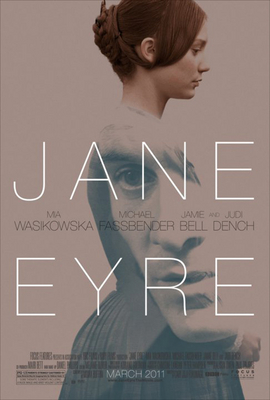
It’s not exactly the oldest story in the book, but with an 1847 publication date and dozens of adaptations, Jane Eyre has been done before. That presented director Cary Fukunaga, an Oakland native, with a unique challenge — making his 2011 film version of Jane Eyre (out Fri/18) different from what had been done in the past. But after his last movie, 2009’s critically acclaimed Sin Nombre, it was a project he was eager to take on.

“[Jane Eyre] was a story I knew as a kid,” he said in a recent roundtable interview. “The ’44 version Bob Stevens directed was one of my favorites. After spending six years on my last film, I really wanted to do something different in terms of scenery and style and location and even time period.”

But despite Jane Eyre’s status as 19th Century Gothic romance, Fukunaga felt it worked for a modern audience. Mia Wasikowska, who stars in the titular role, was inclined to agree.

“It kind of doesn’t need reinterpreting,” she reflected. “The popularity, as a character and a story, it hasn’t died down — it’s continued to grow, and people continue to connect to her story. If you took away all the costumes and the setting, at the heart of it is a story about a young girl trying to find love and a family, and that’s so, so much a part of what happens every day here.”

For Fukunaga, it was important to adhere closely to the novel, whose tone he believed had often been muddled in film adaptations. His Jane Eyre is consistently dark, with elements of mystery and suspense that remain even for those who know the story well.

“I wasn’t trying to make it more gothic than the novel,” he explained. “It was more that other adaptations had stayed more in the period drama sort of realm, and whenever you had elements of the story that seemed gothic or suspenseful, they seemed tonally out of the film you were watching.”

Fukunaga also split the story up in a non-linear fashion, a more modern conceit that adds to Jane Eyre’s tension and helps speed the classic romance along. With flashbacks throughout, the film reveals itself over time while engaging its viewers in a complex mystery.

“The structure was a way to turn the story into a modern tale,” Fukunaga said. “Typically these days you want to lure an audience into a story with just bits of information. Especially with our attention spans the way they are now, you don’t want to … start with just a chronological tale.”

Of course, it helps that Jane is such a timeless, relatable character. She’s more assertive than some of her literary counterparts, making independent choices that were uncommon among her contemporary women. Wasikowska fell in love with Jane when she was reading the novel for the first time, to the extent that she asked her agent to look for any upcoming Jane Eyre projects before Fukunaga’s adaptation was announced.

“What I love about her is that she has such a strong sense of self and a strong sense of who she is and what’s right and what’s wrong by her,” Wasikowska offered. “She’s not going to compromise herself for somebody else, and that’s the best thing. She’s going to make sure that before she commits herself to somebody, she’s a fulfilled individual and that she’s done everything she could to be that.”

While Fukunaga and Wasikowska reflected positively on the filming experience, it had its share of ups and downs. The tight schedule forced a lot of work in a short period of time. Meanwhile, Wasikowska had to contend with a different kind of tightness, squeezing into a corset for period realism.

“Painful. Awful. Everyone says corsets are hell, and I understand that, but until you’re really in there, it’s like a whole other thing,” she said. “They’re really helpful physically for the character. You really get a sense of the repression and the restriction.”

Fukunaga elaborated. “It basically takes your guts and squeezes them in half, and some of the guts go down and some of the guts go up,” he explained. “It’s really unhealthy.”

But the pain was worthwhile — Wasikowska’s portrayal of Jane Eyre is certain to be celebrated. Fukunaga’s interpretation as a whole is one of the story’s best cinematic adaptations. Perhaps some of the success comes from the deep understanding the director and actor had for the original novel.

When Fukunaga was asked about his interest in Jane Eyre, he rejected the common perception and offered his own analysis instead.

“For me, it’s not the bodice-ripping,” he said. “It’s more, I think, probably this kid’s journey and the person she became … Love can be all-consuming, and too often people compromise what they are in order to achieve it. And it’s the rare individual who can not do that.”

Jane Eyre opens Fri/18 in Bay Area theaters.

5 Things: March 15, 2011

0

>>1. (PARTY) HELP FOR JAPAN SF’s nightlife community is already pulling out the fundraiser stops for Japan. First up: Thursday night’s Good Foot party at SOM, a rad hip-hop and funk-soul affair with special superstar guests Lyrics Born and Trackademics. They’re donating a dollar for everyone who comes, so bring your crew and dancing shoes.

>>2. YUM, BUT NO SCRUBDOWN Around Union Square, it’s hard to find upscale dining that isn’t aimed at the hordes of hungry tourists. But for authentic Italian, Fino really is fine – no need to navigate the North Beach girly bars for excellent alfredo or crisp, light veal piccata. The restaurant is in an old Turkish bathhouse – waiters argue over where the pool was, with most agreeing on the kitchen – and the crème brulee is to die for.

>>3. ALL THINGS GREEN (AND VEGAN) In and of itself a halfway admissable reason to have a break in your veganism: your Guinness contains animal products, probably. (Thank fur-stroking Paddy, then, for Jameson.) But to assuage your grief and make sticking to the critter-free lifestyle easier, PETA has assembled a lovely list of recipes for vegan, Irish-inspired savories for St. Patrick’s Day – as well as contributions to the fine American tradition of adding green dye to every damn thing.

>>4. ON THE UP AND UP A Bay Area classic that everyone should check out, Stairway Walks in San Francisco, has been updated and just rereleased. 670 stairways? That’s a lot of bun-firming.

>>5. FEELIN’ SAXY and whisperin’ careless!

Eating green, gay crow

10

Well it looks like our St. Patrick’s Day coverage included more disreprencies than just last week’s nomenclature kerfuffle. As Rob Blackwell, president of the Lesbian and Gay Band Association informed us via email yesterday, the Key West, Queens, and San Francisco St. Paddy’s promenades are not, as we reported in the March 8 “March to the rainbow” article, the only shamrock shuffles in this country that welcome the participation of the LGBT community. In fact, writes Blackwell: 

This year and every year, several member organizations from the Lesbian and Gay Band Association march in similar events across the United States.

For the past 27 years, the Mile High Freedom Band has been participating in the Denver St. Patrick’s Day Parade. The band’s participation is one of the highlights of their annual calendar and a long-standing tradition in Colorado.

In Kansas City, the Mid America Freedom Band participates in the annual Brookside St. Patrick’s Day Parade. And while not included in their hometown parade, the Freedom Trail Band of Boston has marched on several past occasions in the Cambridge St. Patrick’s Day Parade.

While we are proud of the San Francisco Lesbian/Gay Freedom Band and their participation in your local St. Patrick’s Day Parade, your omission of these other important contributions lessens the important work our organization is doing to propagate music, visibility and pride in our national community.

So consider us corrected. In a good way – we’re all for truthiness in the Guardian, but addendums that prove social justice is high-stepping along quicker than we thought really twirl our green bowties. 


Looky-loos and show ponies: A day in the life at the BNP Paribas Open

0

On one side of the main stadium at the Indian Wells Tennis Garden, white picket fences separate the players, their entourages, and assorted tour types from the fans. There’s a small plot of green grass near the practice courts, where the athletes jog after matches, or – like Scotland’s Andy and Jamie Murray – kick a soccer ball around to pass the time. The setup has a looky-loo and show pony quality, like a human version of horses being led around before a race, though in truth, the BNP Paribas Open presents one of the most free and easy atmospheres in terms of player-fan interaction, with many of the pros walking through the complex amongst the general public.

In the cafeteria, a young Belgian female player and a French former doubles and current serve-and-volley specialist wait for pressed sandwiches from a discombobulated culinary institute intern. At tables, the players fraternize with one another, sometimes across national lines, while an older women’s champion and a famous trainer sit alone. The one moment that even some pros dispassionately turn to stare is when Rafael Nadal ducks in to grab a quick bite before his first-round singles match, dropping his ID card as his transaction is rung up by a girl with Snooki- or Adele-like mascara.

Out in the practice area, some members of the Spanish Armada – Tommy Robredo, David Ferrer, and Ferrer’s coach, Javier Piles – hang out in the sole shady corner of a court in the early afternoon, then Robredo gets up and hits serves. To sunscreen or not to sunscreen? The question is moot these days for health reasons, yet there’s still a contrast between the hordes, mostly players, who look healthily tanned, and the smaller contingent, primarily older male coaches, who have taken on a leathery appearance. For the latter, this facet conveys experience and a certain kind of hardened masculinity, like that of a war admiral’s.

The French players Richard Gasquet and Gilles Simon rally and volley in the piercing sun, their styles a study in contrasts. Gasquet, once heralded as Federer’s heir apparent, has compact, classical strokes and a bullish physique, while the gangly Simon, who has outperformed expectations, is all looping limbs in comparison.

The largest crowd is gathered for Roger Federer’s practice session with compatriot and doubles partner Stanislas Wawrinka. A giant Swiss flag with ‘Rogelio’ and a jeweled crown on it is unfurled on the fence of one side of the court. Federer’s posture and gestures are of a different sort than the other athletes here, if not kingly then debonair and large, like an old-time matinee idol, whether he’s sitting with legs crossed or outstretching an arm near Wawrinka’s chair.

At night, as two junior players make up for their short stature with loud grunts on the next court, Croatia’s Marin Cilic gets in a practice session under the eye of his coach, Bob Brett. After a promising beginning, Cilic’s 2010 was a bit of a disaster, but he’s gradually been regaining confidence, and is assured on court, winning almost all of the practice points he plays.

A lithe Ana Ivanovic, fit and focused in a way that should prove interesting in the coming months – particularly clay season — has a playful warm up with ESPN’s and Adidas’s Darren Cahill overseeing on one of the main practice courts. Her round of hitting begins with an amazingly long rally, and a few minutes later, she chases down a lob and hits a ‘tweener shot to the crowd’s approval. Her opponent that night, Kimiko Date-Krumm, practices on the furthest corner court to a much smaller gathering of onlookers, one day after an earthquake and tsunami have wreaked devastation in her home country. Date-Krumm is the oldest player on the WTA tour, and her flat-hitting technique, catching the ball early on the rise, is of an entirely different era.

At the end of the evening, the rising young ATP player Adrian Mannarino has a clowning session with a hitting partner on an another obscure side court. The pair begin each rally by placing the ball atop the net, then they gently nudge it back and forth within the service lines in a manner that combines slapstick physicality with characteristic French finesse. Next to no one is watching them, they’re simply enjoying the game.

>>MORE: The net: Young victory and top-ranked tennis musings at the BNP Paribas Open

Do the leprechaun swing

0

Does the standard set of St. Patrick’s Day festivities leaving you feeling a little bit like boiled cabbage? We rounded up a shamrock patch full of St. Paddy’s events this year, but you might also try celebrating the Celts with a bit more steam — punk, that is. Get hep with San Fran swingers (dance, you filthies!) Swing Goth at the third annual Steam Punktrick’s Day. The event will feature Nathanial Johnstone, intrepid violinist from steampunk band Abney Park, donning his fiddler’s cap with his side project, the Nathanial Johnstone Band.

So if you like mixing your corned beef with corsets and bagpipes with balboa, then break out your fishnets and mini-kilts and head on over to 50 Mason Social House, the TL’s newest wine and beer bar that provides solace from the bright lights and overpriced pints of Union Square’s tourist traps, as well as nightly line ups of live music.

No swing experience necessary for Steam Punktrick’s — those already familiar with Swing Goth will know that no music is too punk to partner dance to, and for newbies, a dance lesson will be offered from 8:30 to 9:30 p.m.


Third annual Steam Punktrick’s Day Featuring the Nathanial Johnstone Band

With Heavy Sugar and Standfire Collective

9:30 p.m., lesson at 8:30 p.m., $12

50 Mason Social House

50 Mason, SF

(415) 433-5050

www.brownpapertickets.com


The craziest local tsunami video you’re likely to see

2

So that duffel bag you packed at five this morning when your aunt from Maryland woke you up heaving with the news from Japan ended up staying in your vestibule. Man, does San Francisco love a good tsunami warning – so much so that we drop everything and head to the beach to watch for chance of impending watery doom! But things did get a little crazy around the Santa Cruz marina, and lucky for us rubber neckers video artist Allen David was there to catch the mast slammery (what’s up with the piano trill at 1:16, AD?):

Sorry ’bout your boat man

5 Things: March 11, 2011

0

>>SHE WANTS TO BE WHERE THE PEOPLE ARE For years Ariel Soto has been documenting her fashion finds found while hitting the streets of San Francisco on sfbg.com. She’s finally compiled her satorial spreads into a book, and will be giving sneak peaks of it to the lucky trendoids that find their way to her photo show at Density tomorrow, from 7-9 p.m. We’ll be in attendance to see if our off-shoulder velour onesie made it into her best-of pics – and of course, to check for Herald and Biko.

>>LEND A HAND Now that your East Coast relatives have been assured you’re not washed out to sea floating on nothing but your bedroom door and trusty, humanized volleyball, you can turn your thoughts to the next item of business re: the Japanese tsunami disaster. That being how to help the earthquake and ensuing waves’ survivors. Here’s a good place to get started.

>>WITHOUT APPS WE’D BE RUNNING AROUND NAKED The proliferation of completely uneccesary apps – well to be calling it a problem would be giving excess technology too much creedence, so let’s just saying it’s fucking irritating. But seriously, this one is growing on us: swackett, which has taken the head scratching out of our daily what-do-I-wear conundrum.

Seesaw: sleek and stain-resistant

>>LARGE COFFEE WITH ROOM FOR CHILDREN We’re tickled pink by some of the new cafes opening up around town (including Tell Tale Preserve Co.‘s pop-up pastry-and-coffee-stop in Big Daddy’s Antiques, Tell Tale Trunk Show). But then, we’re old enough to walk into any patisserie in town and no one’s gonna groan and roll their eyes. Not so for those under the age of eight! And so it for youngster’s rights that we welcome the arrival of Seesaw, a stark Hayes Valley joint recently opened by a child psychologist that incorporates an airy, engaging play space into the cafe’s floor plan. Parents (and those that don’t mind youngsters dashing about during laptop time) can order a tasty sandwich and a cuppa from the joint’s impressive tea menu and chill while their youngster attends one of Seesaw’s convivial “brunches,” which focus on developing social awareness, grace, and friendship-building skills.

>>SHAKE IT, DWIGHT This Yello song from 1980 has been following us around to a bunch of different clubs lately — from alternative hip-hop, to minimal techno, to soulful house, to new school vogue. Could it be the dance music version of “The Office,” embodying a weird nostalgia for a faceless manufacturing and processing sector in a recession and outsource culture that’s all but decimated it? Maybe, but it’s still a jam.

The Performant: Lady in Red

0

Cirque Noveau and Carletta Sue Kay blaze and seduce 

Even though nothing I saw over the weekend had anything remotely to do with Mardi Gras (Sunday’s Motown Parade in the Fillmore, was on the radar, but I melt in the rain), subtle little visuals kept it very much on my mind. In fact, as I type this, it nags me that I’m missing out on another Rosenmontag, Rose Monday, which is being celebrated all across Germany, a blowout which rivals the best Carnival celebrations from around the world, packed with parades, costumed revelry, and oceans of bier. I’m trying to compensate with a Rammstein CD and a 21st Amendment IPA, but really, it isn’t the same. Let “next year in Cologne” be the rallying cry! There are so many ways to dream.

Despite there not being any roses in my Montag, rose red colored my weekend. First found swirling in the startling tsunami of stage blood spilled by Impact Theatre in their Russian-mafia-meets-Romeo-and-Juliet adaptation, it also glowed wickedly, stretched across the muscled torsos of the performers of Cirque Noveau, in a production that closed last weekend entitled Devil Fish

Somewhat hampered by a plot line as thin as a contortionist’s body-stocking, the Circus improved immensely whenever they dropped the narrative and amped up the acrobatics. The sultry “Devil’s Advocate” Haley Vilora, in glittering red tiger stripes, contorted her body across the stage and through the air, a mesmerizing, gelatinous ooze. Peruvian performer (and show director) Angelo Rodriguez strutted across the stage as the Devil, and also took to the air with his signature cube. And Calvin Kai Ku entertained as a lovelorn clownfish with the hots for aerialist Morgaine Rosenthal, who floated on a set of straps with partner Ryan Webb, her red dress fluttering in the spotlight, a victory banner. 

Something tells me that recondite crooner Carletta Sue Kay knows a little about victory. I first encountered the beau-dazzling alter ego of Randy Walker in a whorehouse off the Carquinez Straits, singing longingly as if to an empty room of heartbreak, male beauty, and candy canes. Part torch singer, part small-town librarian with a knack for Karaoke show-stoppers, Carletta Sue’s enviable pipes turn often hilarious lyrics into rough gems of wisdom such as “is there a lot of dog shit in Paris?/I don’t know why I never noticed it before/Until you said goodbye to me in Paris/it’s just not the same to me anymore.” 

At Sunday’s show at the Makeout room (with the Suicide Dragons and the Sandwitches), the stage was lit red as always, which took the frump out of an embroidered sweater and peasant skirt combo and infused CSK with outlaw glamour, especially when she wailed into the mic like a soul train diva. The crowning moment of the show was definitely the stirring rendition of “If I Was Your Woman,” a song that Carletta promised would fuck her up. I don’t know how she sounds today, rasping through Rosenmontag like some film noir private eye, but on Sunday, her voice was a banner, bathed in red. 


Stories for big kids: Tales hit the stage with Paul Flores, the Living Word Project, Campo Santo, and Word for Word

0

Stories aren’t just for youngsters who read The Very Hungry Caterpillar before bed or tell scary tales around a campfire. The big kids need stories too, and lucky for San Francisco, the city boasts dynamic performers enacting mature and human stories on stage. Feeding complex chronicles to the souls of grown up audience members, Paul Flores, Living Word Project, Campo Santo and Word for Word do their parts to prove stories for big kids rule.

In You’re Gonna Cry, a one-man show about the effects of Mission District gentrification performed in February at Dance Mission Theater, Flores embodied about a dozen neighborhood characters. Ranging from a Latino bohemian, a pink-haired DJ, and an elderly dumpster-diving immigrant, to a salsa-dancing old timer, a drug dealer, and a well-meaning business man, the personalities illuminated his story from diverse perspectives.

With versions of each character walking the streets in real life, You’re Gonna Cry‘s tales resonated. “The project is not meant to be consumed passively, but to move people to respond and take action,” Flores wrote in the program notes, revealing his intention to employ art for social change. The call to action: empathy, respect, and support for one’s neighbors, and acknowledgment of the cultural nuances in the Mission District. For Flores, hip-hop theater and storytelling helped to put a human face on the issue. 

A Def Poet, playwright, novelist, and spoken-word artist, Flores continues to make a huge impact on teens as a co-founder of Youth Speaks, which implements programs connecting poetry, spoken word, youth development, and civic engagement. The resident theater company of Youth Speaks, the Living Word Project extends the reach of  personal narratives, emphasizing spoken storytelling to communicate important social issues and current movements. Living Word Project Artistic Director Marc Bamuthi Joseph, also a former Def Poet, works closely with a select group of writers and performers, whose ages span from 19 to 25, for the productions.

Trailer for the Living Word Project’s ‘Word Becomes Flesh’:

Excerpts from the Living Word Project’s Word Becomes Flesh appeared in December of last year at YBCA’s Left Coast Leaning festival, co-curated by Joseph. There, committed performers enacted letters to an unborn son, with electrifying physicality and rapid-fire wordplay. The work presented a counter-narrative to the narrow frame of current commercial hip-hop, breaking stereotypes. Through performance, the group focused on the oral transfer of a story, directly confessing personal thoughts and emotions to make connections. Watch for them with Campo Santo at Intersection for the Arts this November in Tree City Legends, written by Dennis Kim of Denizen Kane and directed by Joseph.

Campo Santo, the resident theater company at Intersection for the Arts led by Sean San Jose, plays a major role in theatrical storytelling, linking writers to the stage. “Campo Santo is Spanish for sacred ground,” the group’s artist statement declares. “Like the roots of our name, we are taking the sacred form of storytelling and using it as a tool to bond community through socially relevant plays.”

In May, Campo Santo performs for the first time in Intersection for the Arts’ new home at the San Francisco Chronicle Building, presenting Nobody Move, based on the book by Denis Johnson. Adapted by San Jose, the performance offers a noir psychic picture of the United States from an outsider’s seat. In September, Campo Santo continues its work with Pulitzer Prize-winning author Junot Diaz when it presents The Pura Principle, created from Diaz’s recent short stories and original writings. Also expect storytelling to be part of this year’s Bay Area Now Triennial at Yerba Buena Center for the Arts, where San Jose is one of several curators for performances during the final months of 2011.

Another group breathing life into short stories is the Word for Word Performing Arts Company, operating at Z Space. Founded by Susan Harloe and JoAnne Winter, Word for Word is known for staging performances of classic and contemporary fiction, enabling the company to tell literary stories with theatricality. Word for Word’s last show was extended due to its popularity and positive critical reception. This week, The Islanders opens at Z Space, telling about the bonds of friendship – as two women reunite for a trip to Ireland — by bestselling author Andrew Sean Greer, directed by Sheila Balter. 

While some degree of storytelling already exists in most narrative theater work, the outward expression of a story onstage shifts the performances of Flores, the Living Word Project, Campo Santo, and Word for Word into distinct territory. By combining narrative and literature with powerful theatricality, these San Francisco performers make clear that stories are for people of all ages.

THE ISLANDERS
Wed./9-Fri./11, 8 p.m.; Sat./12, 3 and 7 p.m.; $15-$40
Z Space
450 Florida, SF
www.zspace.org

5 Things: March 8, 2011

0

>>1. PETA HOPS We had no idea that Anchor Steam is vegan. Now we can throw back a case and pet our potbellied pig, Sir Skrumpkins, guilt- and irony-free. (Apparently many beers use animal gelatins for filtration.)

>>2. FAREWELL SKRUMPKINS And here is how to safely dispose of your dearly beloved, earthly departed pet potbellied pig in Northern California.

>>3. ONE-TWO PUNCH Speaking of drinking, one of the oldest bars in  SF, Elixir in the Mission, is also one of the most forward-thinking. The joint’s hand-crafted, organic cocktails are out of this world. Under the stewardship of owner H., Elixir’s just redone its menu. Olde Sydney-Town punch, honey kumquat caipirinha, Meyer lemon cucumber collins — these are just three of the mouthwatering new concoctions. (When we start to use phrases like “mouthwatering concoctions,” you know we need a drink.) Bonus: patrons receive a complimentary pisco punch while waiting for their cocktail. And no, it’s not like a Hawaiian punch, we checked.

>>4. GUNS AND BUTTER Overheard at the new Whole Foods in the Haight, much ado about the new scientifically validated checkout line system (also experienced at the SoMa branch). First introduced in New York City, the system uses a single line, or two, that feed into a passel of registers, all controlled by a single, cute, traffic cop. Although there are already reports of doofuses stepping out of turn, the system reportedly shrinks wait time to less than two minutes. Not so much of a hit, though, are armed security guards, apparently ready to draw their weapons on yogurt-stealers. “That’s what we pay for at Whole Foods, right?” commented one dude in the bakery line. “The wholesome experience.” (Please support your local, possibly unarmed grocer.)

>>5.THIS IS PARADISE Take a risk. Wear it inside the club. Now is the time to see ‘Shades,’ a new video by SF’s David Enos and Mishell Stimson.

http://www.youtube.com/watch?v=NCUD8UEBaSQ

5 Things: March 4, 2011

0

Each day, our staff picks five (or so) things we think might interest you

>>MONKEY MAN We can count on one hand the email newsletters we get that are an actual thrill to see sitting unopened in our inbox, and Kirk Lombard‘s is one of them. Lombard knows every. Thing. There is to know about Bay Area fishes (he’s a world champion monkeyface eel fisherman and runs urban angling classes outta ForageSF that are an absolute gas to attend): identifying them, catching them sustainably, eating them, respecting their majesty. He’s got a dope blog, but his recent March newsletter clued us into these aquatic happenings: the spirinchus starski is jumpin’, California halibut season is starting (rent a kayak, Lombard says, for optimal fishing of these guys), and a list of items you might not guess would make servicible monkeyface eel fishing poles: a paint-roller extender or golf course flag.

Guanajuato: let the tequila take you

>>DEJA THAT AGAVE If you’ve harbored a mad hankering for Guanajuatan food — washed down with well over 150 tequilas — then head to Tres, formerly known as Tres Agaves, which reopened March 3. The joint’s been redone to make it a little cozier for diners, who used to jostle with drinkers. The menu’s getting a remodel, too — chef Kelvin Ott is expanding beyond Jalisco, to explore the cuisines of Michoacan, Guanajuato, Nayarit and Tamaulipas. Bonus: Happy hour prices are running at all hours of operation through Tues/8: $5 fresh lime margaritas, $3 Mexican draft beers, and $2 chicken, pork al pastor, or rajas tacos. Did we mention tequila?

>>PILLOW TALK Last chance to snuggle up to needlepoint pillows depicting JFK’s assassination and convenience store holdups, on view at Jack Fischer Gallery through Sat/5. Are they more inappropriate than the dirty pillows by Kevin L. Muth or Ethan Maxx  — “The extra X means fun!” — in the window of Chi Chi LaRue’s West Hollywood vanity shop? You decide.

>>HELLA BOOKS, HELLA CHEAP That’s what they’re calling it, and it says it all. Get hella books hella cheap at the Adobe Books sidewalk sale, Sat/5, 11am-2pm. There will be snacks, and records will be played. Score some fresh spring reading — hopefully fresher than “hella.”

>>NO BONES ABOUT IT Back in 2007, we talked about contemporary art and pop culture’s love of skulls, and the cranial passion has carried on, thanks to the likes of Technicolor Skull, Kenneth Anger’s band (!) with Brian Butler, featuring the octogenarian filmmaker on theremin. Instead of a Technicolor skull, the cover art for the debut album by Swedish noise attackers Black Bug — created by San Francisco musician and designer Nathan Berlinguette  — presents a Necco-tinted one. Sweet!

The Performant: Pop up the jam

0

Appear and disappear at Noise Pop with Nobunny and Battlehooch

There’s a pop-up explosion going on out there, and it’s insidiously cornering the market on all our fun. It’s become well nigh impossible to stumble down the street without coming across a pop-up “gallery boutique ramen restaurant poodle salon performance space” and even more impossible to not want to avail oneself immediately of its fleeting charms. It’s the precarious ephemerality of pop-up ventures that makes them so enticing—the knowledge that at any moment the ability to tap into this particular experience will be gone forever. Granted, if you examine any particular moment in time closely, you’ll come to a similar conclusion, but sometimes it’s best to just go with the spontaneous flow, even if it’s a little bit manufactured.


How appropriately ingenious it was for Noise Pop to insert some pop-up action on the side of purveying the other kind of pop, as in music, as in the full-on winter blues-buster the festival has become, joining Indiefest as the other best reason to bundle up and brave the frosty February chill. There was the month long operation of the “Noise Pop Pop-up Shop” (say that five times fast) with Upper Playground as well as the weekend pop-up-culture extravaganza that was the “Culture Club” at Public Works. A genial mish-mash of all the popular arts—to gawk at, to buy, to make, and to listen to—Noise Pop’s pop-up experiments definitely ratcheted up their cool quotient and added a new dimension to their overall poppiness.

Of course it wouldn’t be Noise Pop without the noise, plenty of which was to be had at the venerable Bottom of the Hill, a festival mainstay. A double-header bill of Nobunny and Battlehooch (with the Exrays and The Downer Party) brought the werewolf-masked, face-painted bunny-hoppers out in force, freak flags flying proudly. And while it always inspires a certain awe to watch a man in furry dishabille pogo wildly and exhort the crowd to “Do the Fuck” themselves, the boys of Battlehooch closed the show with a satisfying bang. Less swashbuckling and more math rock than their moniker might suggest, Battlehooch’s sound bounces gleefully between influences, part Mother’s of Invention, part Devo: a solid guitar foundation swooping into psychedelic dissonance (AJ McKinley), a completely non-ironic synth (Ben Judovalkis), vocal modulations set on a channel somewhere between “Peter Murphy” and “Ivan Doroschuk “ (Pat Smith), a kickass one-man woodwind section (Thomas Hurlbut), and lyrics featuring baby sharks. Plus facepaint and a video montage of urban decay. Honesty, at this point, any band that gets hipsters to mosh like it’s 1989 gets my vote, and on that score alone, Battlehooch delivers the goods, and brings the noise. Pop.

5 Things: March 3, 2011

0

Each day, our staff picks five (or so) things we think might interest you

>>1. SUSHI FROM SPACE “U. F. T Ume Fried Tai: fried red snapper in u.f.o shaped sushi served with balsamic raspberry sauce

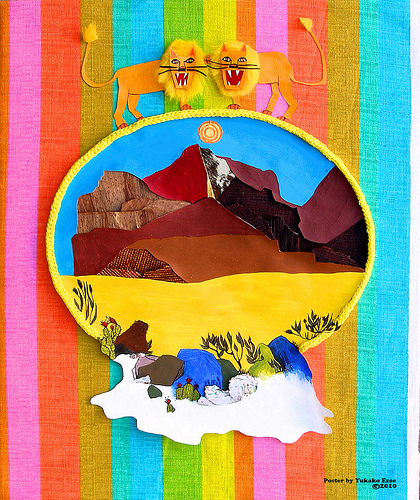
>>2. HOP TO IT Bahama Kangaroo. That’s the ace sometime-moniker of Yukako Ezoe, along with her husband, Naoki Onodera. It’s also the title of Ezoe’s new art show, opening tonight at Kokoro Studio at 682 Geary St, SF. The fact that two of Ezoe’s main influences are John Audobon and animation and color master Yokoo Tadanori is enough to convey her uniqueness, but it only hints at her playful deployment of fabric, paint, and even metal (she also makes jewelry). Ezoe is one of those rare people who can party hearty in the most fun ways at night, help the likes of Larkin Street Youth Services and Precita Eyes during the day, and still find time to do her own work. She’s a wonder, and her opening — for a series of self-portraits that are a definite change in terms of in subject matter — should be a blast.

Yukako Ezoe at work on a children’s mural in 2006

>>3. ZION I LOVE YOU Oh Zion I, dreamiest hip hop group in the Bay Area: you’ve already organized your fans into mass meditation sessions, released seven albums of beats so good you almost forget the lyrics laid over them are uplifting as well, and you’re really hot. Now you’re donating ticketing fees to a community circus arts program? The group’s upcoming Fillmore show with the Grouch (Sat/19) benefits the Inner Sunset’s Acrosports  program, teaching 18-monthers through adults how to tumble with grace. Word on the street is the school’s capoeira squad will take the stage at the Fillmore between songs from the crew’s dope new album, Heroes in the Healing of the Nation. We’re listening to our press copy right now, and “I Used to be a Vegan,” plus the tracks featuring Los Rakas, Brother Ali, and Silk E … ah, sogood. (Check the new sound with the Grouch here.)

>>4. HOMESTEAD SWEET HOMESTEAD Did you know that that the phrase Urban Homesteading™ has been copyrighted? (It’s kind of a big scandal). Ploughing those trademarks aside, why not indulge in the spit-and-polish DIY ethics of How-to Homestead’s “11 in 11 Tour”? Each month, the resourceful website is visiting one of SF’s neighborhoods — there are apparently 11! — and thrwing a gaggle of workshops in handicrafts, mending, urban agriculture, and more — plus potlucks and occasional squaredancing! On Sat/5 they’ll be near the Castro at the Harvey Milk recreation Center in Duboce Park, where surely we hope there’s a live demo of this important Castro-related information:

>>5. LES VAGUES BLANCHES Bay Area producer extraordinaire Jason Quever trades slackness for varied arrangements and sings expressively on this lovely moment from the new Papercuts LP:

As close to the lens as possible: A (too brief) Q&A with David Weissman

0

One of the strongest aspects of the film We Were Here is the intimacy and depth of its interviews (read our review here), so it’s with embarrassment and regret that I’m presenting this relatively casual Q&A with director David Weissman with the caveat that it’s been marred by a snafu. While transcribing, I discovered that the ‘Rec’ button on my ancient tape recorder had been triggered when it was in my carrying bag, and a sizable portion of the talk – including passages about archives, filmmaking, community, San Francisco, the cultural influence of The Cockettes, and a younger generation’s view of AIDS – had been replaced by the muffled sound of footsteps and traffic. The conversation is lost, but the story isn’t: We We Here is screening at the Castro Theatre through Thurs/3. Here’s some of what Weissman and I discussed.

SFBG What was the response to We Were Here like at Sundance?
David Weissman Sundance was great. We’d had a sneak preview at the Castro, and an even earlier one in Portland at the festival [the Portland Gay and Lesbian Film Festival] that I curate with Russ Gage up there, but Sundance was the first really mixed audience. The Salt Lake City screening was particularly fantastic.

SFBG How so?
DW You can feel the energy in the room, and people cry a lot at this movie. But I think that people cry in a way that by the end of the movie they feel good. That was one of the most important things to me – I didn’t want to make a movie that would just be devastating. It was important to me that it be inspiring. In almost every review and every response, people talk about it being uplifting.

Trailer for We Were Here:

SFBG In some ways We Were Here continues a tradition in San Francisco of oral history in documentary. I wanted to ask about your methodology in terms of doing interviews, because spoken interview accounts are a fundamental, powerful part of the film. You really devote time to the people whose stories you tell, or to flip it, those who tell their stories.
DW The only person I knew I was going to interview at the beginning was Ed [Wolf] and that’s because we’d known each other through doing HIV work, and I knew he had a passion about this story being told, and there was enough existing personal trust between us that I knew he would be an easy person to experiment with.
Right before I interviewed him, I woke up in the middle of the night with a start and thought, “Oh my god, I’ve done no research and have no notes. What am I thinking?” On The Cockettes [2002] we’d done tremendous research before each interview. Then I quickly calmed down and realized, “This is my story. This is my history. I lived through this entire thing.”
The interviews were totally unplanned and they went where they went. Rather than being conventional subject-object interviews, they were deep, mutually therapeutic conversations between people who shared a painful history.

SFBG How did you find and choose the film’s subjects?
DW It was completely intuitive. Other than Ed, the only way any of these people wound up in the film is that I bumped into them somewhere. In the course of conversation, I’d think, “Oh, you’d be good,” and [from] their unambiguous [affirmative] response, I’d decide to go with it. To some degree, their willingness to be interviewed is reflective of their generosity during the years of the epidemic. They clearly got a lot out of being interviewed personally. Having that kind of focus on such an intense part of one’s life for the first time is a powerful experience. But each of them really did it for the community and for the world.

SFBG Some of the answers are obvious, but how was making this film different from making The Cockettes, as an experience?
DW In many ways, the two films are very similar. The experience was different emotionally simply because there was so much pain involved in revisiting [We Were Here‘s] history. But both ultimately wound up being films in which a very large historical moment is evoked by a very small number of people, without a lot of extenuating materials to contextualize the times. The idea was to have the times emerge from the storytellers. There’s a great similarity in that choice.
The intention of the two films is also similar. In describing my intention with The Cockettes over the years, I’d say it had a twofold purpose, in validating the complexity and beauty of a period of time for the people who lived through it, and illuminating it in a rich and complex way for people who didn’t know anything about it. I’d use the exact same language for We Were Here.
The emotional aspect was much different. This film was much less celebratory and more wrenching. But there was something gratifying about being strong enough to engage with the material. The working experience with [co-director] Bill [Weber], the shared quality, was profoundly beautiful and extraordinary.

SFBG In making this film, I’d think any tasks or parts of the process you did on your own would be difficult.
DW When I see other documentaries and look at the credits, there’s name after name, but basically, it’s me and Bill. Each of us wears multiple hats. There’s also the production crew, Marsha [Kahm] and Loretta [Mollitor], who were incredible, and we had some archival help, too. But the big tasks of the movie belonged to me and Bill.

SFBG How did the film structure and approach of the film develop? Was it an intuitive process, as you suggested earlier?
DW The Cockettes had a clear narrative arc that Bill and I [as co-directors] agreed on from the beginning, and it didn’t have the burden of an entire community of people who had a stake in the story being told. The burden of how people would respond to We Were Here was a huge one that I worried about every day.
I don’t think Bill initially trusted that we could do [We Were Here] with this few people. From my vantage point, it was the fewer the better. And the less music the better. I came into it at the beginning saying, “No music at all.” Bill said, “You’re insane, we’re going to need some,” and I decided, “When we get there, let’s deal with it, but I want to start from zero.”

We evolved together, and Bill’s an enormously sensitive editor, both visually and with music. We were a good team. Bill said he kept having to unlearn his normal way of doing things, because some of what we were doing was so contrary – people are on screen for a long time, and they breathe, and they pause, and they make mistakes, and there is no augmentation of sentiment through music.

Sundance Film Festival: David Weissman:

SFBG Did you both do the film’s interviews?
DW I did all the interviews. With The Cockettes, we were co-directors. With We Were Here, I’m the producer and director, and Bill is the editor, and he got a co-director credit because his editorial role was so important.

SFBG Were there points while looking at archival material or doing interviews where you encountered anything that changed your ideas about what you were making?
DW Yes. One of the more conventional beliefs when making a film about recent events is that filmmakers generally prefer to use moving images instead of archival and still images. At a certain point, we shifted away from that, particularly when covering the pre-epidemic period in San Francisco. We focused on faces, and almost all of  the faces are looking directly into the lens. That sense of personal intimacy is central to how the whole film works.

SFBG There’s a counterbalance that works well in direct relation to that decision – you move from those still images to the footage of people in clinics.
DW Some of that footage came from Tina Di Feliciantonio’s Living With AIDS [1987], and from Marc Huestis’s Chuck Solomon film [Chuck Solomon: Coming of Age, 1987]. I don’t know if we got any clinic footage from Ellen Seidler’s Fighting For Our Lives [1987], but we got a lot of footage from it. All of those films were made between 1985 and 1986. And there’s the footage from Silverlake Life [1993]. I still can’t bring myself to watch Silverlake Life all the way through. Bill did, and he chose the footage.
When I’m interviewing – and this is also true with The Cockettes – I sit with my ear literally on the camera. I want people looking as close to the lens as possible.


Hasan Elahi’s surveillance protest art

0

Hasan Elahi seems awfully jocular for a guy who is under constant surveillance. We’re standing in a room lined with 64 monitors, on which flash photos of his personal life from over the past seven years. “There’s gas stations, all the beds I’ve slept in,” the artist narrates as the slideshows progress. Rutgers, Brooklyn, Santa Fe, Philly, an unidentified toilet. “All the toilets I’ve ever done anything in,” he grins, checking to see if we get the joke.

Nowadays, Elahi is the one instigating his own surveillance. But the Bangladeshi American, an associate professor at the University of Maryland, was once detained at the Detroit airport by INS, who then turned him over to the FBI for six months of “interviews” regarding his international travel habits. His project of comprehensive self-documentation, now on display for an exhibition at the Intersection of the Arts (and opens today, Weds/2), grew out of this “terrifying” experience.

But the terror of the interrogation room seems far away at the moment as Elahi and I sit amidst gallery staff sawing wood and arranging wiring in preparation for the opening of “Hiding in Plain Sight.”

“After it was all over,” Elahi remembers of his detainment and subsequent investigation, as he lounges in a dark windbreaker, broken-in black pants, and neon green flip-flops “I asked the agents, can I get a memo saying I’m okay? But not ever having been formally charged, it’s a little bit of a problem to get formally exonerated. See, it’s all extra-judicial, there’s no law. But they did give me some numbers to call for when I was going to leave the country, and I called them! And pretty soon the phone calls got longer, you know, ‘there’s a really nice beach where I am right now, you should check it out.’ And then they turned into emails. I’m a very sharing guy.”

He smiles widely at his subversion of the process, shrugging his shoulders and raising his hands up like an overgrown Dennis the Menace. It’s hard to imagine anyone suspecting the man of terrorist activity.

“But it was such an unbalanced relationship! All I ever got back from the agent was ‘thank you, be safe.’ And I thought, why is he the only one who gets to know all this?”

So it started as a prank. Elahi wrote some “really clunky code” for his phone that tracked his geographical whereabouts, and started taking endless photos of the meals he ate, the view out of his condo window, the police van in his brother’s backyard, and posted them all to an “intentionally user-unfriendly” website – simultaneously pinging the FBI agent all the while. His website, Tracking Transience, now houses over 40,000 images, give or take.

Which seems like it helped him heal — he’s certainly stoked to talk about it now. In fact, so stoked I can barely get a word in edgewise over Professor Elahi’s lectures on the notion of camoflauge (“do you know why soldiers these days wear that pixelated camo? We don’t fight in nature anymore, it’s so that they appear to blend in with the machinery through night vision goggles!”) and externalized memory. 

So he’s gotta be doing something right.

Finally I interrupt. “But wasn’t it, you know, scary to be getting interrogated by the FBI? Does all this–” I swung my arm around at an image of a dinner from Elahi’s past at an East Bay hot plate restaurant. “Help to deal with that violation?”

Elahi pauses, but for just a moment. “It was truly terrifying. I knew who had the upper hand, the power – you know right away. You go into survival mode. In my case, that meant cooperate. Tell them every detail of everything.” He says he felt the proximity of incarceration, the planned ambivalence of interrogation questions intended to trip up incautious suspects. “The last thing on my mind was an art project.”

But being an artist, he eventually concocted a creative work to better understand what he went through. He says the deluge of information (you can’t, for example, use Elahi’s website to see where he was yesterday or right now, you have to sift through thousands of randomly-generated images at once) creates a role reversal, throwing the viewer into the role of intelligence officers grasping for clues of wrongdoing from a lifetime worth of information.

The irony is that in the endless self-documentation that qualified as bizarre in 2004 is now a part of everyday second life. That “clunky code,” Elahi tried to sell it to cell phone companies, but they laughed at him and asked who on earth would ever want to track their own every movement. But nowadays, I have a dozen friends who track themselves far more comprehensively for the world’s enjoyment than Elahi ever did. Not to mention New York artist Wafaa Bilal, who took surveillance protest art to a new level when he had a camera surgically implanted in his head last month. 

“Yeah, the project’s obsolete,” Elahi chuckles, back to the easy assurance of a man far removed from the dangers of the Patriot Act. He reminds me that the information share goes beyond, even, what we put in our status updates and foursquare check-ins. “Even times when you think you’re not being monitored — PG&E knows when you’re home when your utilities usage goes up.”

Which throws “Hiding in Plain Sight” into a different sort of light: from the prank on the FBI that it seems at first blush to that of a man accepting that he’s — that we’re all — being watched, and attempting to control what of the information is seen. After all, Elahi’s photos are taken from his perspective – his face and those of his companions never appear.

“The information that the FBI has on me has no value because you already have it,” he says. “I actually live a very anonymous life.”


Hasan Elahi: “Hiding in Plain Sight”

Through April 23

Opening reception: Weds/2 7-9 p.m., free

Intersection for the Arts

925 Mission, SF

(415) 626-2787

www.theintersection.org