• No categories

Pixel Vision

Roller derby: the San Francisco treat

4

Drizzly March was a slow time for San Fran sports fans — the last Super Bowl Sunday pig-in-a-blanket put to bed a month before, the NBA trade deadline past and playoffs a distant dream; and today’s April 1 major league baseball opening games an agonizing countdown away. Short of swimming through the dreary rains to San Jose’s Shark Tank, what’s a rowdy, rooting beer-guzzler to do?

Heading to Golden Gate Park to cheer on some equally rowdy rollers might not be the first thought that comes to mind, but it’s exactly what thousands of die-hard derby-goers did on March 19, when the storied San Francisco Bay Bombers elbowed past the Brooklyn Red Devils in the American Roller Skating Derby league’s world championship game.

Some may not consider a wet night in a packed Kezar Pavilion to be a legit answer to the pro-sports dry spell. But the Bay Area-based ARSD league is serious about its professional status, taking pride in everything from the team uniforms to the traditional banked track – a far cry, if you please, from the fishnets and flat floors of newer leagues

Bombers’ general manager Jim Fitzpatrick, who skated for the team from 1977 to 1987, has now delivered his third straight league title since rejoining as GM in 2007 (the ARSD doesn’t hold its championship game every year). For his efforts, he’s received three straight general manager of the year awards. But for him, the real thrill is keeping banked track derby – and its SF history – alive. 

“As a little kid growing up in San Francisco roller derby was huge,” Fitzpatrick said. “Everyone watched the Bombers on TV, everyone knew them. I dreamed about playing for them in Kezar. Now, I want to honor the tradition of the old derby.”

The venerable “old derby” is rooted in19th century roller marathons that lasted for days, sometimes caused deaths, and, on the whole, managed to acquire a reputation as less-than-legitimate. The sport was popularized as a Depression-era divertissement by Chicagoan Leo Seltzer, who in 1935 built a banked track and took it on the road, dubbing it the Transcontinental Roller Derby. At each stop, skaters would circle the wooden ring as many as 57,000 times, simulating a days-long journey from New York to California, with lit-up placeholders marking teams’ make-believe progress across a billboard-sized map of the U.S.. 

Derby historians credit crowds’ hunger for blood (not that 57,000 laps would be tedious otherwise, Nascar notwithstanding) with the spectacle’s increasing focus on physical contact and frightening pile-ups. The endurance element gave way to a derby more similar to that of today, where a “jammer” on each team gains points by bumping, jumping and jostling past opposing teams’ “blockers.” 

In 1949, Seltzer created the National Roller Derby League to showcase the scintillating sport, which was poised to become a television sensation. Echoing his earlier pilgrim’s progress, he packed up the whole shebang and moved it first to Los Angeles and then to the Bay, where the 1954 formation of the San Francisco Bay Bombers created a lasting sports legacy with some of the game’s most enduring stars. (Bomber Joanie Weston was even reputed to be the era’s highest-paid female athlete.) 

The iconic Bombers were the epitome of the banked track derby that aficionados like Fitzpatrick remember watching on their family room TV sets as youths. Dozens of games a year were taped in Kezar Pavilion, adjacent to then-home of both the Oakland Raiders and the San Francisco 49ers. From there, KTVU broadcast Bombers’ games to hundreds of cities nationwide, making roller derby the Rice-a-Roni of sports, synonymous with San Francisco. 

Seltzer eventually transferred ownership to his son, Jerry, who would later recall the glory of San Francisco’s skating days, when Kezar regularly sold out. And just for an added taste of legitimacy: the Bombers shared locker rooms with their NFL stadium-mates. 

“There were no dressing rooms in Kezar Stadium,” the younger Seltzer wrote in a blog he kept, “so when the 49ers played a home game they used the tacky dressing rooms in the Pavilion. Sometimes there was virtually no overlap between the time the players left and our teams arrived, to really scummy and wet dressing rooms.” 

Fitzpatrick affirmed that the dressing rooms still exist today, though Kezar Stadium has been knocked down and rebuilt. Under the parking lot, connected to a tunnel that once funneled the teams out to a roaring crowd, the rooms are a kind of shrine to days-gone-by – days when the 49ers and the Raiders would lace up roller skates and join the Bombers on the banked track, sometimes indulging in a bit of competitive action off the football field.

“Of course,” Fitzpatrick said, “That was before the NFL took off and salaries skyrocketed.  Once that happened, the guys couldn’t afford to be fooling around.”

Though their fun ended, there was still plenty of thrill left on the banked track. The ‘60s marked the height of television popularity for the Bombers who, across the nation, were considered the team to beat.

Seltzer’s league folded in 1973, a disaster attributed to everything from the rising cost of fuel to the diversification of televised sports and events. Since then, leagues have appeared, disappeared, fractured and gone defunct, the sport’s popularity waxing and waning, the focus shifting between skill and sensation. 

“Other games and jams have come along,” Fitzpatrick explained, applying the term “silly stuff,” to a whole array of roller sports, from L.A.-based Roller Games to CBS’ over the top show Roller Jam. Fitzpatrick even alluded to “midgets on skates” – and while that might be happening somewhere out there, it doesn’t take tiny rollers to get folks to think of derby as sports entertainment: the WWE on wheels, with sexpot women in the starring roles. 

Mixed-gender for-profit leagues like the Bombers’ league ARSD leave off the false eyelashes, but fans still debate whether the scores – and punches – are fake.

According Fitzpatrick, the Bombers’ aggression is all real.

“It’s a competitive sport,” he said, “based on contact and maneuverability. It’s like when someone cuts you off on the road – like road rage, tempers flare.”

Fitzpatrick’s sincerity never falters, and it’s clear he’s proud of his skaters when he describes how player coach Richard Brown scored the last point of the 43-40 game despite sweltering heat, or when he hails rookie Crista Chua as the female standout who learned under fire and performed under pressure, despite the championship being only her second real game.

And for their part, the players are just as serious. Chua said she trains hard for the team, staying in shape with running, weights, extra skating practices, and yoga sessions to stay flexible. 

Despite the sensationalism, Fitzpatrick’s goal is to keep roller derby on track – and so far, his efforts have resulting in a sterling record. Will it ever be as good as lacing up the ol’ skates for a game of his own? According to Fitzpatrick, it’s even better.

“To see something completely disappear, and then to be able to carry on – I’m that much more grateful,” he said.

As for the future: “I want to keep on the path, looking ahead to great skating and great ability. There’s always going to be showmanship in every sport, but I want to honor the athleticism.”
 

Get some perspective: CounterPulse’s resident artists rearrange a theater

0

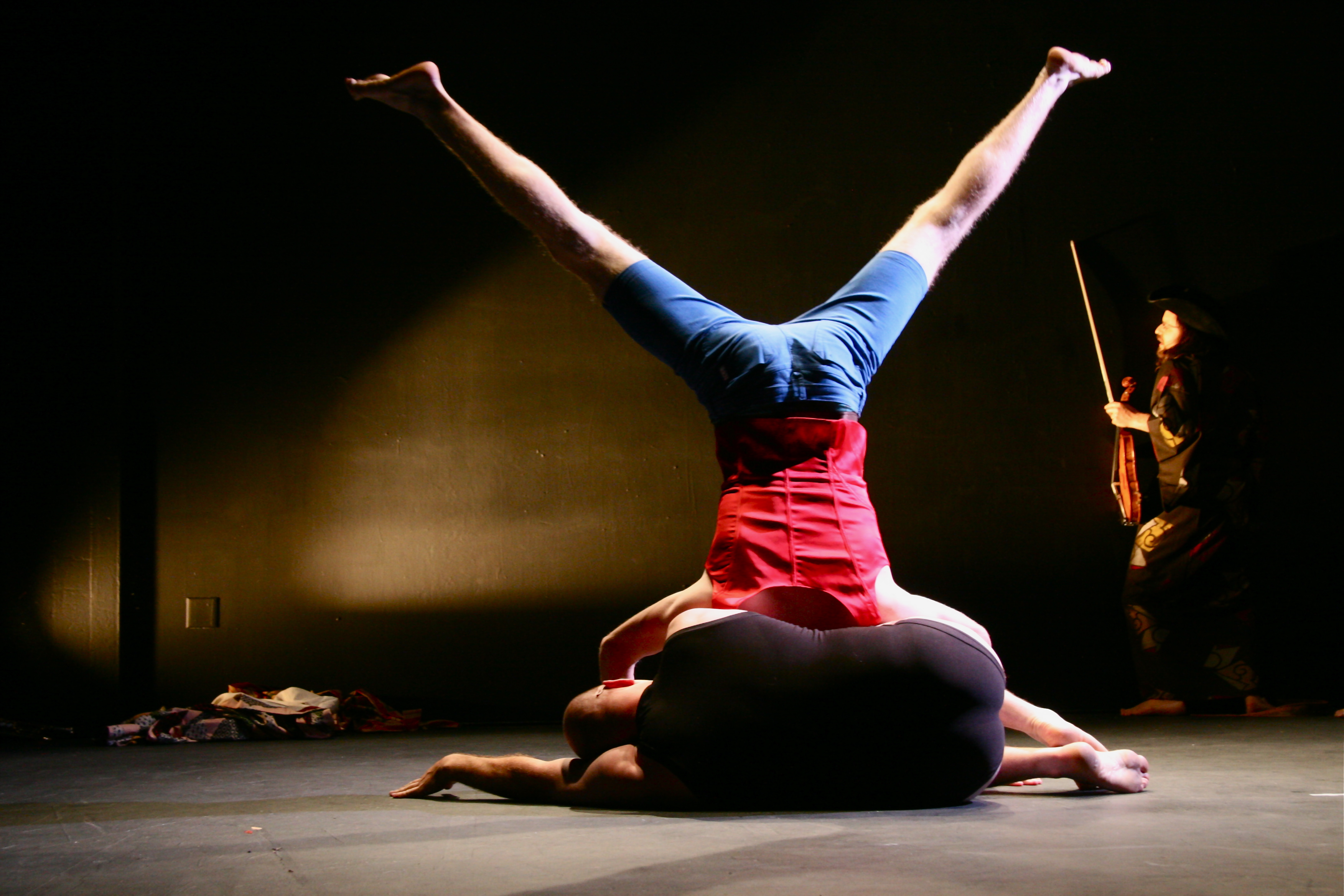
People who have never performed in their life can take the stage this week at CounterPulse. While artists-in-residence Kegan Marling and Eric Kupers spent the past few months creating new work to premiere this week, they also re-envisioned the black box theater space, turning platforms, nooks, and crannies into performance areas, and situating audience seats to surround the action and also exist smack in the middle of the stage.  
Based on a March 12 work-in-progress preview, the resulting performance will likely offer an up close and personal program of narrative dance theater works linked by each artist’s unusual use of the space and the intimate perspectives created. The open presentation and arrangement makes the resident artist performance series double as a creative venue remix. 

Prior to the shared residency at CounterPulse, Marling and Kupers crossed artistic paths at U.C. Davis and while performing in the Bay Area. Though Marling’s new work Jump Ship Midway is thematically distinct from Kupers’s Friend, the creations compliment one another, employing fragmented storytelling and allowing close proximity to performers for a cohesive shared evening. For Marling, the re-imagined space begins as a club concert environment with an elevated area and three small platforms in the center of the stage. Along with James Graham, Mica Sigourney, and Nol Simonse, Marling dances on and between these elevated areas with highly physical and character-nuanced movement passages. Through spoken word, they deliver anecdotes, memories, and reflections about life transitions navigated by gay men. One’s placement in the rearranged space and proximity to the performers determines which sections become amplified, overriding the usual cues of lighting which draw attention in proscenium theater based on a particular vantage point.

Friend, performed by Kupers’s Dandelion Dancetheater, relies on a certain degree of darkness. Since dim surroundings augment the impact of sound, the audience’s auditory senses perk up in this environment. Instruments played from different areas of the theater and the hand-clapping of performers direct one’s gaze. Projections surround the audience from all directions with images of brain scans, providing an unusual set for certain scenes. Friend honors a close friend of Kupers who passed away recently, and also mines the nature of friendship. 

The joint performance of Marling and Kupers/Dandelion Dancetheater showcases CounterPulse like you’ve never seen it. Don’t be afraid to get close.


COUNTERPULSE ARTISTS IN RESIDENCE KEGAN MARLING AND DANDELION DANCETHEATER

Thur/31- Sat/2, 8 p.m. also Sun/3, 7 p.m., $12-$17

CounterPulse

1310 Mission, SF

(800) 838-3006 

www.counterpulse.org


Hot diggity, old school dog training

6

Under the towering eucalyptus trees of Temescal Creek Park, a sturdy wood-planked fence frames a curve in the pavement. Every day, joggers and dog-walkers shuffle alongside, crossing the border of North Oakland and Emeryville. But the ones who turn their heads at just the right moment catch a scene flickering through the slits between boards – as if from an old-fashioned zoetrope – that transports them to another world entirely.

Here, there the dogs and people form a different scene: smoke roils from the chimney of a squat plastered building with ornate round windows. A rooster crows. A bark echoes. A man proportioned like Popeye’s archnemesis Bluto stumbles around kicking a barrel. Suddenly, a streak of muscle and fur launches toward the figure and sinks its teeth into his calf, shaking him from head to toe.

This is St. Roch’s, named for the Christian patron of pestilential illness, the falsely imprisoned, and dog trainers. The real Rocco was born in Montpellier, contracted plague in Rome, retreated to a sylvan cave where a dog licked his wounds and brought him bread, and finally died in a French prison in 1327. But the man who lives here, Francis Metcalf, is alive and well and has a 65-pound Belgian Malinois attached to the leg of his padded Bluto suit.

Metcalf, along with his wife, Norma, created Friends of the Family – a dog club modeled after traditional French and Belgian dog training guilds. They fashioned St. Roch’s as their headquarters, built from one part antique canine memorabilia, one part Westminster-Dog-Show-style paraphernalia, and three parts European pub.

“In the United States, dog trainers follow a doctor’s office model,” Metcalf says. St. Roch’s – which includes gardens, dog runs, an agility course, a chicken coop, sculptures, and a small fountain – is his remedy the problem-focused and service-based approach.

“I wanted to created a community center, a resource hub,” Metcalf says of the property. “In France, there are no professional dog trainers. It’s just part of the culture.”

Indeed, France is where Metcalf learned many of his tricks. He is steeped in the art of French and Belgian ring sport, or mondioring, which grew from training techniques of the 19th century – a time when dogs were still widely used for work and protection. Mondioring tests a dog’s obedience and agility. At the highest level, it involves protection and attack drills, where handlers teach dogs to guard, bite, and release on verbal command.

Though Metcalf is a pioneering competitor and has won several international titles, he believes in the value of mondioring as a foundation for a broader relationship with dogs  – one that seamlessly blends work, sport, and simply good company. 

After working with French ring-sport greats like Dan Maison (a ‘68er who told him “Americans know nothing. They think dog training is like Vietman), Metcalf dreamt of emulating European clubs he says grew “organically.” Where playgrounds for children and women cooking dinner accompany the “young bucks running around with the dogs,” Metcalf explains, competition and expertise yield to a sense of camaraderie.

“With dog sports in America, it’s intense and hard and you have to be completely dedicated.  I wanted to change that – to take care of myself and other people, and the dogs, too.” And for that, Metcalf says he needed to build himself “a temple, a castle.”

Castle Roch

Some of St. Roch’s guests are less than polite about the building’s fine furnishings.  Logan, a 155-pound giant Alaskan malamute, can’t stop slobbering on the bearskin rug. But that’s all right with Metcalf, because he and Logan’s owners, Angie and Maggie Kim, are schooling him for the AKC’s Canine Good Citizen test, and – luckily – drooling is allowed.

In a private training session, Metcalf runs Logan through a battery of exercises, from rolling over to wearing a muzzle to staying put while his owners disappear.  Most of the exercises involve repetitive drills followed by treats doled out from the hotdog holster Metcalf keeps buckled around his waist.

Metcalf is serious, but that doesn’t mean his methods have to be. He alternates balancing a muzzle on Logan’s snout with offering him a big red Dubé juggling ball –with which Metcalf has some skills of his own. Logan is learning to balance the ball at the same time as the muzzle, which associates muzzling (an activity that can cause dogs the feeling of extreme helplessness) with a fun game – and provides his owners an opportunity to show him off.

Whether it’s training dogs for the Alameda police department’s K-9 unit or teaching a blind Akita to play the piano, Metcalf believes training and tricks are all part-and-parcel of a dog’s public relations strategy. For some dogs, PR management is a necessity (“It’s because he’s so big, and we’re so small,” says petite Maggie Kim), but it can enrich any animal relationship.

“People would never believe what their dogs are capable of,” Metcalf says. “But it’s worth finding out.”

Love bites

Clients like Bill Smoot agree.  He and his shepherd-mix, Athena, have been training in mondioring with Metcalf for nearly a year, though Smoot doesn’t intend to ever compete. 

“She’s just really smart,” he says of Athena, “so we thought we should educate her. It was either this or ballet lessons.”  

Metcalf, dressed in the $1,500 silk and linen costume d’attaque that bulks him up to super hero-sized proportions, plays the part of the decoy – the “bad guy” whom dogs are trained to attack. On Smoot’s command, Athena lunges at Metcalf, growling as Metcalf goads her on.   

Though the display is a fearsome one, Metcalf points out that, to Athena, it’s all in good fun.

“Decoying is all about losing to the dog, making the dog feel confident. When you’re playing the decoy, you’re like a walking tennis ball. Protection work taps into the core of who a dog is as a creature. I’m interested in honoring that,” Metcalf says. 

He adds that “ring sport is called ring sport for the same reason you refer to a circus ring: it’s a place to show your skills.”

To that end, Metcalf plays his part well. With muttonchops, rosy cheeks, and a handlebar mustache, he’s the very image of a clown. Barrels, chairs, extra people and even pet chickens become all the props he needs to put dogs through their paces. He says his impromptu style is guided by a sense of the animals need in each moment and – more importantly – a love for what he does.

Metcalf is in the process of opening St. Roch’s to more easily foster that love and understanding in others. By creating additional classes and group sessions in everything from mondioring to circus arts, he hopes to make his pad a place where anyone, from amateurs to professionals, can have a (preferably Belgian) beer and see the dogs.

“The root of the word ‘amateur,’” he notes, “isn’t based on money or status. It’s based on love.”

For Metcalf, training is not just about good behavior. Whether it’s a dog, a chicken, or a fish (and Francis has trained them all), the goal is to reawaken people’s ability to dream, and to imagine what animals may be capable of.

For more information, please visit the Metcalfs’ dog-training website


The Performant: The Empire has no clothes

0

Adventures in Naked Empire’s bouffonery

An evening spent in the presence of the Naked Empire Bouffon Company is always an unsettling experience. It can be difficult sometimes to assess who is actually performing for whom, as bouffons are wickedly adept at reading individuals and pulling them however briefly into the spotlight not as props, but as human beings with something to hide.

Unlike clowns, who often devise situations during which the oddience may laugh at them, bouffons laugh at the oddience from a position of almost comically aggressive power. It can be as simple as an offhand observation (“recently dyed,” one bouffon sniffed at a blonde streak) or a direct poke at a cultural or time-sensitive taboo (“surely it’s still too early to be referencing radiation in Japan”), but once they’ve got you in the crosshairs of their uniquely confrontational form of physical theatre, a bouffon shoots straight from the hip.

“As a citizen I am consistently impressed by how much of the “unsayable” the bouffon is allowed to say and by how well people hear it,” writes Naked Empire artistic director Nathaniel Justiniano. Justiniano first experienced the art form at the Dell’Arte International School of Physical Theatre and was immediately attracted to its audacious commitment to the truth.

“(It’s) a corkscrew type of energy…boring into the audience and sniffing out the muck we try to hide.” But despite the element of improv, Bouffon performance is also tightly scripted, allowing the performers a tightly structured framework to work within, and break out from when it becomes relevant to do so.

Performing as part of the Home Theatre festival in an artist’s warehouse dubbed the Main Street Theatre, Justiniano and company member Ross Travis performed two solo shows starring their Bouffon alter egos: Zooka Splat and Cousin Cruelty. 

Nathanial Justiniano’s Cousin Cruelty addresses his audience. Photo by Ross Travis 

Ross as Zooka burst into the room, screaming a war cry and dressed in tattered camouflage. He circled the crowd knowingly, leaping on the backs of the sofas they sat in, leering at their shock. Like a one-man Mad Max, he ably deconstructed the post-apocalypse genre of action films and doomsayer surrender in a series of vignettes that mapped out the bizarre terrains of alien abduction, zombie uprisings, nuclear holocaust, and macho bullshit. 

Justiniano’s Cousin Cruelty, a lewd giggling juggernaut of murderous impulse and fart jokes bounded out, shopping bag in hand, looking for trouble. Trouble came in the form of an orgy of mimed bloodshed — until from the shopping bag, a querulous puppet demanded to be released. 

Between the puppet’s script – a passionate, twelve-minute long speech denouncing the death penalty, delivered by Orson Welles in the 1959 film “Compulsion”— and Cousin Cruelty’s gleefully chaotic depictions of the origins and implications of violence, the oddience would have been pushed out of their “theatre-going” comfort zone even without the addition of the personal attentions bestowed on them by puppet and puppet-master alike. 

The laughter these twisted creatures provoked was genuine, but with an edge of unease, which is exactly the effect Justiniano is looking for.

“This laughter is uncomfortable….(It’s) the laughter that humans tend to find comforting when the silence or truth is too heavy.”

Intrigued by buffoonery? Check Naked Empire’s website for upcoming classes in this uncomfortable art


5 Things: March 29, 2011

3

>>EYES OUT FOR LIL’ ONES What does a San Francisco look like where everyone is safe to ride their bikes? Well, a lot like next Thursday, April 7, we hope. That’s the day that 3,000 (at least) schoolkiddos will be hopping their two-wheelers to over 40 different schools. The San Francisco Safe Routes to School program is still looking for volunteer bike chaperones and mechanics to help families for the day, who wants to put on their teacher’s hat?


Betabrand’s Greed Pants: but one of many ways to support your local manufacturers

>>MADE YOU LOOK What do a Dogpatch bike bag factory, a fancy men’s shirt maker, SF’s biggest beer brand, and a socially-conscious print shop have in common? They’re all members of SFMade, a business association comprised of companies that manufacture their goodies inside city limits. Need to know more? The NYT gave them a sterling writeup in the op-ed section this past Sunday. 

>>SKOOL SOMEBODY East Bay Free Skool‘s starting a newsletter for adherents to its circus skill-sharing-Spanish learning-urban studying sessions for the shallow-pocketed, yet deserving-of-education masses. And the skool longs for your voice to be represented within its Xeroxed reams! Holler at eastbayfs@gmail.com if you’ve got a tale to tell from a class you’ve gone to/taught at, submissions due by Friday, April 1. 

>>LISTEN UP SLACKERS SF’s own Jenny Blake, a Career Development Program Manager at Google – something like an internal cheerleader and guidance counselor for the Google masses – launches her book today, Life After College: The Complete Guide to Getting What You Want. Check out her blog to glower at the hundreds of pics in which Blake looks consistently clean and well-fed (something many of us post-collegiate-types still strive for), or simply check out her promo video – it’s filmed in front of the Bay Bridge, and there are some nice birds in the background. 

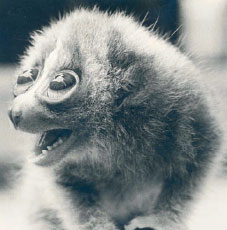
>>GETTING STOKED FOR TOMORROW’S PET ISSUE After our slow loris scare yesterday we’re all on edge of the abuse of animals in adorable videos, but this one seems okay:

Dogboarding from DANIELS on Vimeo.

Tennis’s top three switch positions: A final look at the BNP Paribas Open

2

“For me, you are the greatest player ever.” So said Novak Djokovic to Rafael Nadal after defeating him in the final of the BNP Paribas Open. Djokovic’s compliment is sharp in a number of ways. On one hand, it can be interpreted as a diss on Roger Federer, a player often touted as the greatest ever, with whom Djokovic has at times had a testy competitive relationship. On the other hand, it can also be seen as Djokovic giving Nadal a taste of his own medicine: how many times has Nadal called Federer the “greatest” after notching another win during his dominance of their rivalry?

Ultimately, it’s only a matter of words, though thanks to the media, words have a way of traveling as often and far as the players on tour. And they do have the potential for instigating psychological gamesmanship. After his semifinal loss to Djokovic, Federer was asked about a comment late in 2011 by past champion Martina Navratilova that he will likely never reach the number one spot again, and his response ricocheted from catty (“Maybe she was somewhere else climbing Kilimanjaro,” a reference to a recent failed expedition by Navratilova) to uncharacteristically affectionate (“I love her”). One thing’s clear, the top three men’s players are doing a bit of role-playing at the moment.

Of the trio, the formerly impersonation-prone Djokovic is the most adept at role-playing, and his current roles suit him fine. In winning the BNP Paribas Open, he usurped Federer as the number two player in the world, and confirmed his status as the best player of 2011, remaining undefeated and triumphing over current number one Nadal in their first encounter this year.

Within the second of my four posts about this tournament, I remarked on Djokovic’s improved maturity and sense of solidity, and he’s backing up that observation. Technically his game lacks the grand flourishes of Federer and Nadal, but it’s more solid overall, especially when — like now — his forehand and hard-to-read serve are not just under control but in weapon mode. His speed is at its apex, allowing for excellent footwork. He’s long been the most bendable of players, and he’s bringing that unmatched torso flexibility to his well-planted groundstrokes with maximum results. Simply put, he is currently the best athlete on tour, with the strongest technique and mental resolve.

Lodged at number one without a tournament win in over five months, Nadal finds himself in the familiar position of entering the upcoming clay and grass court seasons with his ranking on the line. His play at Indian Wells offered signs of promise and worry. No physical issues seem apparent or imminent; in 2009, when he was also at number one during this time of year, he soon ground himself down and paid a steep price for it. As with Federer and Djokovic, his racquet head speed while executing shots is observably a flight above the rest of the of the tour. But his focus and intensity appear different than in earlier years, more muted.

The major worry spot for Nadal at Indian Wells was his serve. Early in the tournament he seemed displeased with it during warmup sessions, and he double-faulted twice in a row to lose a set during his and Marc Lopez’s doubles defeat by Federer and Stanislas Wawrinka. He double-faulted on the first point of his semifinal against Juan Martin Del Potro, a pressure-filled encounter because their previous match at the 2008 U.S. Open was perhaps the worst drubbing of Nadal’s career.

Eventually, Nadal used his superior variety as well as well-disguised down-the-line forehands to wrest control of the match from Del Potro, who is still regaining form. But in the final against Djokovic, double-faults crept back into Nadal’s game and his first-serve percentage was woeful, especially by his standards. While Nadal’s serve has never matched his ranking, a high first-serve percentage – usually in the 60s or 70s – has been fundamental to his success. He has to regain control of the shot, but is fortunate the tour is about to swing to clay, the surface where big first serves are least important.

As for Federer, he finds himself partly in the most humble position he’s been in for some time, now ranked third in the world, without an active slam title to his name. Of course, having won more major single titles than any other men’s player in the open era, he can occupy any ranking from a position of absolute mastery. But his defeats to Djokovic are becoming more frequent. In claiming the second set of their semifinal, he snapped a streak of six successive sets that Djokovic had won against him. Back in 2007 or 2008, Djokovic’s wins over Federer were often defensive ones, as defined by Federer’s errors as Djokovic’s persistence. Today, Djokovic is often dominant during their baseline exchanges. One of Eric Lynch’s photos above, of a worried-looking Federer racing to execute a backhand against Djokovic, perfectly illustrates the Swiss champion’s current situation.

The greatest tennis player ever may be Roger Federer. It may be Martina Navratilova. It may be Rafael Nadal, one day. But such decisions are subjective. The best tennis player in the world at the moment is Novak Djokovic. He has yet to lose a match in 2011, and unlike in 2008, the other year in which he ruled  the early months, he’s carrying his form over to Miami, the final hard court stop on the spring tour. We’ll soon find out how well clay rhymes with Nole.

5 Things: March 28, 2011

0

>>AS IF WE WEREN’T ALREADY DISTURBED BY THE TIME WE SPEND WATCHING ANIMAL VIDEOS News broke last week that the slow loris is being poorly served indeed by its onslaught of Youtube celebrity. The poor little guys, native to Southeast and South Asia, are being illegally trafficked due to their increasing popularity as pets, leading to infection-causing teeth removals and other forms of abuse. Sickeningly enough, some of the web’s fave videos (like this one and this one) are actually shown to be footage of hurt animals. Ugh.

>>GETTING CHASED Divisadero neighbors and anti-bankists (or at least anti-other people’s bankists)  are still down on the idea of Chase Bank locating a branch at the corner of Divisadero and Oak streets. Banktivists showed up at an Appeals Board meeting March 16 to air their gripes, along with a contingent of neighbors and others who would rather see a bank branch than the grubby-window eyesore that has reined since Martini Cleaners vacated almost four years ago.  The two businesses everyone liked – Country Cheese and Five Star Truffles (now in the Castro) – are already gone, which leaves one looming question about what Chase will bring: will the Wells Fargo ATM at the back of the building have to go, or do financiers of a feather flock together? 

>>GOT PLANS TOMORROW NIGHT? You can meet us at the Lex for penny shots (yes, that means shots of liquor for one red cent) from 8:45-9 p.m., just like every other Tuesday. From 9-10 p.m. it’s two-for-one beers and mixed drinks. Penny shots: the perfect time to get wasted and talk about Abe Lincoln.

>>BARGAIN UP P-Kok on Haight Street is closing. But wait — P-Kok on Haight Street is not closing. And — P-Kok on Haight Street is opening! All true truths. Let us explain. P-Kok No. 1, at 791 Haight Street, is indeed closing, but P-Kok No. 2, the one across the street with the sauna and wild spa nights at 776 Haight, is staying open. And P-Kok No. 3, is moving uptown (well, the Upper Haight, anyway) to Haight and Masonic. So don’t worry. But do get over to 791 for some remarkable deals. The store slashed prices 50 percent to 70 percent and P-Kok’s  clothes, jewelry, stockings, scarves, hats, boas, etc. have always been high on the fun-and-sexy-o-meter. Together, we can clean the place.

>>KILLING US We’re already begun sensei training with neo-soulman Aloe Blacc – gotta pick up those rubber-limbed dance moves – but only because the kid in this video was unavailable.


Maine’s labor mural not the first time we’ve wiped off workers’ history

1

At a certain point, you kind of have to wonder what the end goal is. What did Maine governor Paul LePage stand to benefit from taking down a painting in the state’s Labor Department building that glorifies the history of American workers?

For the record, here’s a piece of what Mainers aren’t going to get to see anymore when they’re getting their Labor Department errands done (you can click the image below to see the whole 36-foot piece):

LePage’s press secretary said that the governor feels that the 11 panel piece, which was painted by artist Judy Taylor in 2007 to represent the history of labor, is too sympathetic with labor. Also this, from HuffPo:

LePage’s office originally said that the governor made his decision after complaints from businesses owners, eventually pointing to a single anonymous letter, in which the author said that when looking at the mural, he or she felt like it was something from “communist North Korea.”

Sigh. Apparently, he’s looking to achieve a little visual parity in the building with the “side” of business, which apparently is not fairly done by works that honor the history of people working in them. That’s also why he called to rename the Labor Department’s conference rooms, which are labeled with the names of famous union leaders like Cesar Chavez of the United Farm Workers and — gasp! — Frances Perkins, the first woman to be appointed secretary in the U.S. cabinet who was Secretary of Labor in the 1930s-’40s. 

The issue has its historical precedent, of course (and I’m not making the totalitarian jump that some are quick to launch into).

Artist Ben Wood, whose plan to recreate a centuries-old Ohlone mural on the Mission Market we covered in the paper a few weeks ago, made a short film on the Rockefeller Center Diego Rivera mural that was ordered removed because Rivera had snuck a portrait of Lenin into the fresco’s depicted multitudes.

Goes to show you how much we’ve progressed – now, you don’t even have to show Communist Party leaders, the reality and triumphs of working class people are enough to be considered unpalatable (and unfair?) by business leaders. 

And don’t get me started on Italian street artist Blu’s dollar bill-draped coffins, whitewashed from a wall the Museum of Contemporary Art in Los Angeles a day after he painted the thing. Dead soldiers = not on our walls. Not mention a poorly-executed gambit by Vancouver, Canada to remove an anti-Olympic art installation on a gallery’s storefront.

“Man at the Crossroads” (here, a partial view of the mural) was not a big hit with the business set either 

The removal of Blu’s MOCA piece incited artist protests

SF muralists, which side are you on? How does it make you feel to see this kind of thing happen to art?

NY Export: Opus Jazz — where dancers get to be themselves

0

The empty, Depression-era McCarren Park Pool in Brooklyn was, until 2009, a hip venue packed with vibrant twenty-somethings for concerts and summer “pool parties” alike. It’s also appropriately the location for the opening dance scene in NY Export: Opus Jazz, a film celebrating youthful exuberance, during which, fresh-faced New York City Ballet members in sneakers and street clothes perform the original 1958 Jerome Robbins choreography from the ballet of the same name. Exuding vigor and cool, the film, conceived by New York City Ballet soloists Ellen Bar and Sean Suozzi, marks the first return of Robbins’ choreography to the streets of New York since West Side Story. NY Export: Opus Jazz made its San Francisco premiere on Fri./25 at the Ninth Street Independent Film Center as part of the San Francisco Dance Film Festival, directed by Greta Schoenberg.

During the first movement, a linked chain of dancers, captured from above, curves into a semi-circle on top of peeling painted swim lanes. The dancers sway, snap their fingers and throw high kicks under the arch of crumbling brick that frames the pool. The next movement of Robbins’ dance emerges when four men and the sizzling Georgina Pazcoguin tear into Richard Prince’s jazz score in an abandoned parking garage. Leaping to their stomachs and sliding on the cement, the men appear smaller than the statuesque female standing in the foreground of certain camera shots, adding to Pazcouguin’s powerful presence. Each dance scene alternates with footage of city life (traveling on a train, gathering at a diner), thus incorporating the soundscape of Manhattan’s taxis and horns.

Trailer for NY Export: Opus Jazz:

M

As the whole ensemble gathers at a school gym, sneakers squeak on the shellacked wood floor and dancers take turns curling their hands into fists and thrusting the pelvis. Arial shots capture the colorful formations as dancers weave between each other on the basketball court. Men playfully shimmy and quick flashes of partnering send dancers into the air. The performers get to be themselves in this film: both dancers and city dwellers, with Robbins’ still-relevant choreography as the vehicle for expressing youthful vibrancy.

Later, Craig Hall and Rachel Rutherford perform the seductive duet during sunset on Manhattan’s Highline, their tension-filled embrace revealing a sense of yearning. With all of the film’s dance set in abandoned surroundings, including the final movement performed onstage at an empty theater, NY Export: Opus Jazz suggests that the dancers truly perform for the joy of themselves and each other, rather than any outside audience. The resulting most ravishing spirit is addictive – that of being young and alive in the Big Apple.

NY Export: Opus Jazz is available for purchase at www.opusjazz.com.


Umbrella weather: A glimpse of the future during the BNP Paribas Open

0


In San Francisco, you need an umbrella for the rain. In Palm Springs, you need an umbrella for the sun. Under a solar glare, the men’s side of the BNP Paribas Open would bring a final four made up exclusively of slam-title winners. Yet its most revealing and perhaps best-contested match occurred before the final weekend, on a packed secondary court, where two representatives of the game’s future – Milos Raonic and Ryan Harrison – dueled as afternoon gave way to evening.


With hunched shoulders and an appearance that somehow manages to be handsome while evoking The Simpsons‘ Moe Szyslak, 20-year-old Raonic is an ungainly presence, still growing into his body. The Canadian who was born in the former Yugoslavia went into his match against Harrison as the favorite, having reached the Australian Open’s round of 16 this year thanks to a booming first serve. In February, when Raonic defeated world number nine and Calvin Klein underwear model Fernando Verdasco in two successive matches (the final of San Jose’s SAP Open and the first-round of an event in Memphis, TN), and the Spanish player reacted with some sour grapes commentary about what comprises “real tennis,” Raonic’s name was made.

The 18-year-old Floridian Harrison is still transitioning from the junior ranks to challenger tournaments and the pro tour, and at five inches shorter and almost forty pounds lighter than the six-foot five-inch, 198 pound Raonic, he also seemed physically outmatched. But Harrison had defeated Raonic two of three times they’d faced off as junior players, and the comparative solidity of his game and superiority of his groundstroke technique became apparent as the players stayed on serve through the first set and Harrison snatched the tiebreak.

As a sign of things to come in the men’s game, the Harrison-Raonic match was paradoxically nostalgic and classicist. The two players harken back to a time before the Roger Federer-Rafael Nadal era, specifically calling the Pete Sampras-Andre Agassi rivalry to mind, with Raonic’s Sampras-like aggressive serve-based game going to battle against Harrison’s Agassi-like crisp shotmaking and remarkably reflexive return of serve. Most notably, in terms of image, both Raonic and Harrison (whose name couldn’t be more generically all-American) are all business on court. Neither player has obvious tics or makes much noise when hitting the ball. For the moment, at least, both favor old-school verging on uniform-drab attire.

Harrison had the home court advantage, though there is a definite Canadian presence in the Palm Springs region, and as the players entered a third set and Harrison reclaimed the lead with an early break, the atmosphere grew tense. The Indian Wells Tennis Center’s second stadium was packed, and along with dozens of people in of its four corners, I watched the entire match from one standing-room-only corner, along with good-naturedly commiserating spectators. A teen girl a few feet directly behind me repeatedly fielded cell phone calls with a bored Valley Girl drawl, and after the third or fourth conversation, people began ssshhh-ing her. The next time her phone rang she spoke in hushed Mandarin.

As Harrison neared the finish line, he began to show signs of nerves, netting volleys and squandering match points. Raonic, still erratic, began to swing more freely and dangerously. The possibility of a terrible choke, reminiscent of Harrison’s loss to Sergei Stakhovsky at last years U.S. Open, loomed. But the young American fought out of some tight spots in his final service game and notched the win. His reward? A main stadium encounter against Roger Federer in the next round. The sport’s script was running according to plan.

Other notes from mid-tournament at the BNP Paribas Open

It used to be that the WTA was where lopsided results marked a tournament’s early-to-mid stages, with top players routing weak opponents. But that was true of the ATP at this year’s BNP Paribas Open, where Novak Djokovic made quick work of friend Ernests Gulbis and countryman Victor Troicki, and Roger Federer dispatched Juan Ignacio Chela, each giving up only a game a match. As I watched Chela’s hitch-ridden all-too-mortal service motion while he double faulted the first set to love against Federer, I wondered about his investment in even bothering to compete. But when he’d make a second serve, Federer routinely hit a winner from it.

The women’s side, in comparison, was largely characterized by three-set struggles in the middle rounds, with number one seed Caroline Wozniacki coming back to defeat hard-hitting Alisa Kleybanova, and marathon battles between Francesca Schiavone and Shahar Peer and also Victoria Azarenka and Agnieszka Radwanska. The latter two maches were a study in contrasts, somewhat revealing of the WTA’s current woes. Despite a dramatic scoreline, Azarenka-Radwanska was tiresome, ridden with errors and lapses in momentum, and symptomatic of a competitive backslide in the women’s game. Peer’s defeat of Schiavone was another entry in 2010 French Open champ Schiavone’s growing catalog of epics. With her street scrapper demeanor and broadly gestural game, she’s one of the more arresting players on court.

It’s been a pleasure going through Eric Lynch’s photos for these tennis pieces because of his sharp eye on and off the court. One of his photos for this entry, a shot of Alisa Kleybanova, got me thinking at length about how tennis has and hasn’t changed over the years. Analysts have commented critically on Kleybanova’s unorthodox technique, in particular her habit of jerking her head sharply while making contact with the ball in a manner that suggests somewhat flinching as they pull the trigger. She’s doing exactly that in the photo of her above, yet otherwise her leaping form is almost a dead ringer for that of flapper-era Suzanne Lenglen, one of the sport’s earliest great champions, who was reknowned for her peerless grace. A likeness between Kleybanova and Lenglen is the last thing I’d expect, but the camera doesn’t lie, or at least one top-level forehand can’t help but recall another, even across almost a century.


5 Things: March 25, 2011

2

>>I DREAMED MY BIKE HAD FENDERS… Should the rain keep up you will need a weekend project and more pots to catch the surprising amount of leaks a Victorian can accumulate in 100-odd years. But we’ve got you on the project: dream catcher 101, courtesy of ridiculously intriguing Portland style blogger Jena Coray. Ms. Coray’s site, Modish, can be depended on for ravishing vintage photographs interspersed with cute-as-a-button used uniform jackets, locally made jewelery, and snippets on that most haute of Portland pastimes, gardening. Nightmares begone!

>>MOUSE IS IN THE HOUSE Caught live painting at the Fillmore’s Craft Brewers Conference event last night: famous psychedelic poster artist Stanley Mouse, who was creating canvasses of bizarre creatures knocking back suds — only slightly less bizarre than the bearded creatures knocking back suds that surrounded him, talking about how they “used to spend soo much time looking at those posters back in the Dead days, man.” Mouse had a copy of his 1992 book out on a nearby table: Freehand: The Art of Stanley Mouse. It looked. Awesome.

>>BUN YOU Can the tasty, inexpensive Vietnamese sandwiches known as bahn mi, responsible for those lunchtime lines outside  Saigon Sandwich in the Tenderloin, make the journey uptown? We’ll find out on April 1 when Bun Mee opens on Fillmore Street in Pac Heights, right next to the MAC cosmetics bar and directly across from preppy magnet the Grove. Even more pertinent: will the new location put an end to honest Vietnamese classics like head cheese and pork belly, or if it will fit in with its surrounding environs by Frenchifying and Californicating its menu with items like duck confit and braised rabbit bahn mi?     

>>SQUID SCIENCE Few things gross us out – er, awaken our awe of nature – more than the slinky, writhing column that is the squid. And so it is with great trepidation and masochistic glee that we await  Wendy William’s new book Kraken: The Curious, Exciting, and Slightly Disturbing Science of Squid. Apparently, the fish (are they fish? Mollusks? We don’t even know) might be able to help us out with that whole solving Alzheimer’s thing. She comes to the Booksmith to talk about the thing on April 27. Shiver. 

>>BREAD OR DEAD We love Acme, we adore Arizmendi — but sorry y’all, the Honey Whole Wheat Bread from Edith’s Baking Co. Modesto is like the filet mignon of baked goods. Seriously, we want to use a steak knife on that toasted goodness, it’s that thick and rich. You can grab a weighty loaf at the Heart of the City Farmers Market in the Civic Center all day on Wednesdays and Sundays.   


The Performant: Any way you want it

0

Bad hair days gone wild at Rock of Ages
 
That distance makes the heart grow fonder does go a long way in explaining the recent resurgence of hair metal. Somehow despite all better judgment, a spangled veil of wistful nostalgia has fluttered over that particular genre of music you probably loathed when you had to listen to it blaring non-stop from every corporate rock station in the nation [or while guys in eyeliner and leopard tights were beating you up in high school for being a flannel-wearing, Smiths-loving faggot -ED.].

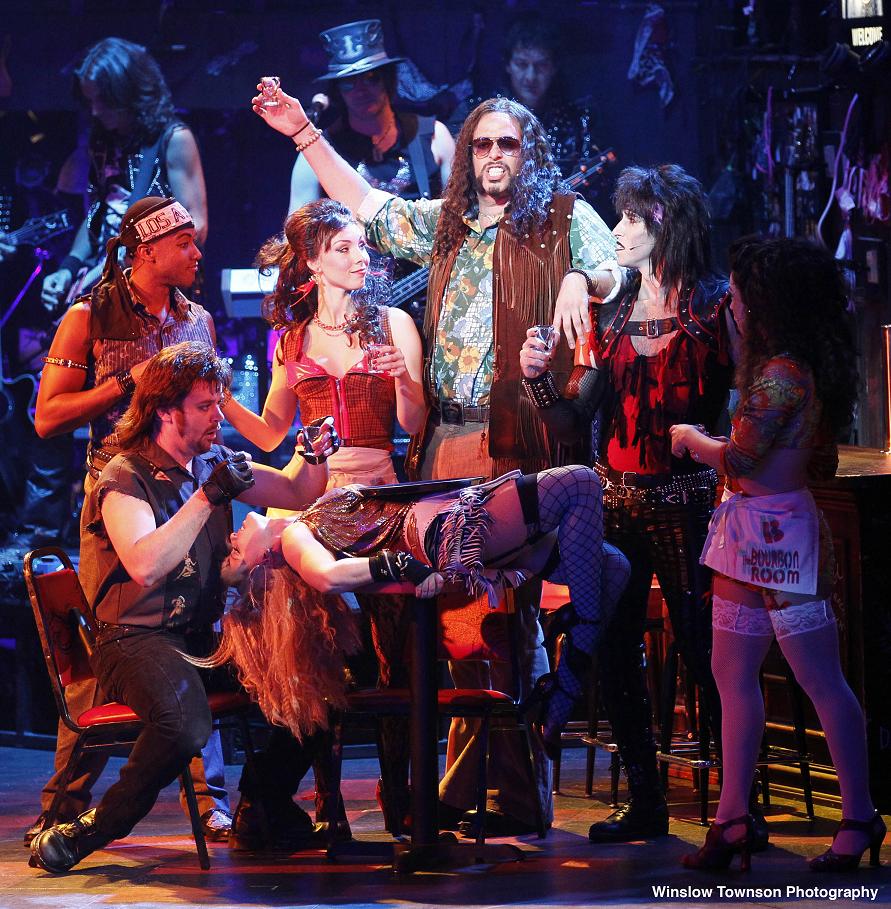
But nowadays stone-washed denim is the new sepia-tone, and don’t think the canny producers of the touring, glam-rock “jukebox musical” Rock of Ages don’t know it. Any show where scantily-clad beauties hand out custom-made lighters at the door (ok, little flashlights) to hold up at the appropriate moments, that is to say every five minutes, is staged quite emphatically to push your most embarrassingly sentimental buttons. But it’s such an eagerly goofy emphasis that you can’t really resent the blatant manipulation. You’ll probably even wind up singing along.


 Full of ear-worms and eye-candy, Rock of Ages has a classic “busbo/ aspiring rock star” meets “cocktail-waitress-stripper-actress waiting for a break” storyline straight out of an MTV music video on heavy rotation. I almost expected Beavis and Butthead to show up during the finale and give it their classic “this rocks/this sucks” treatment before heading over to Burger World to set things on fire. What rocked: the hard-working live band conducted by keyboard player Brandon Ethridge and not so subtly dominated by lead guitarist Chris Cicchino, the gleefully tacky Sunset Strip aesthetic that permeated every designer’s work from crimped wigs to paraphernalia-covered stage wings, the endless stream of frighteningly familiar songs you can barely even find in karaoke joints anymore—“Sister Christian,” “We’re not Gonna Take it,” “Cum on Feel the Noize,” “Every Rose has its Thorn”.

What sucked is what sucked back in the 1980s, namely where’re all the ladies at? Out of 30 songs, only Joan Jett and Pat Benetar (plus a smidge of Lita Ford) represented the women-in-rock, and most of the female cast members didn’t even get so much as a character name or a few good laugh lines, but instead got to settle for lap-dancing like they meant it. Couldn’t they have snuck just one Wendy O. Williams riff in there? And though Constantine Maroulis as Drew played one of the most sweetly affable lead roles in any musical since Seymour of “Little Shop of Horrors,” and has a great set of rock pipes to boot, I was reminded of the quote about Ginger Rogers doing everything Fred Astaire did “backwards and in high heels” when Elicia MacKenzie as Sherrie took the stage and belts out a show-stopping “High Enough,” by Damn Yankees. A good girl gone bad never sounded better.
 
Still, you can’t necessarily blame the boys that there just weren’t very many girl bands playing unapologetic cock rock back in the day, and not every nostalgia trip has to pack along a roadmap to political correctness. Like the proverbial fountain of youth, Rock of Ages has the magical ability to turn its audience into a pack of fourteen year-olds on an ephedrine-and-Aqua Net binge, which sounds pretty heinous, but somehow manages to be totally awesome instead.
 
Through April 9
Curran Theatre
445 Geary, SF
$30-$99
(888) 746-1799
www.shnsf.com

5 Things: March 24, 2011

0

>>BEES ARE BACK IN TOWN On March 24, Hayes Valley Farm welcomes back the bees. Hives previously kept at the urban farm were wiped out by a mysterious pesticide sabotage, but head beekeeper Karen Peteros, co-founder of San Francisco Bee-Cause, has stayed busy bringing the pollinators back. Tonight’s oddly matched Return of the Bees event at the Korean American Community Center will feature a discussion about the new hives, as well as a meet-and-greet with San Francisco Sups. Jane Kim (D-6) and Scott Wiener (D-8) and Ross Mirkarimi (D-5). Catching the buzz of urban farming politics? Become a budding apiarist by signing up for an urban beekeeping workshop.

>>A NEW KIND OF NINJA  A recent New York Times editorial by 24-year-old Matthew Klein started out by drawing a parallel between Western youth and those young people in the Arab world who keep fomenting uprisings. “We all enjoy speculating about which Arab regime will be toppled next, but maybe we should  be looking closer to home. High unemployment? Check. Out-of-touch elites? Check. Frustrated young people?” he wrote. “About one-fourth of Egyptian workers under 25 are unemployed, a statistic that is often cited as a reason for the revolution there. In the United States, the Bureau of Labor Statistics reported in January an official unemployment rate of 21 percent for workers ages 16 to 24.” What all these unemployed young’uns do with all their free time? Apparently, they re-imagine themselves as ninjas on YouTube.

>>GENDER MYSTIC Didik Nini Thowok, a popular dancer, choreographer and comedian from Indonesia, will be in San Francisco April 21 through 24. According to a post on the Asian Art Museum website, “Didik is one of the few remaining Indonesian dancers today who explores transgender culture and its historical connection with mystical practices in Indonesia.” Didik will give a short talk about his creative process and a dance performance, followed by audience Q&A, on Saturday, April 23 at the Asian Art Museum. The talk is free with museum admission. 

You know your spring closet is begging for this Dry Bones “Hep Cat” button-down from Self Edge. Buy it Saturday AND help out communities in Japan? Me-yow. 

>>LAND OF THE RISING CREDIT CARD BILL Bust out those pocketbooks, cause it’s time to lend a hand across the Pacific. Local retailers like Valencia Corridor holder-downers Five and Diamond, Self Edge, and The Summit are among those participating in Saturday’s worldwide Shop For Japan event. So open up that studded hand-tooled leather clutch, dive into the pocket of your artisan Japanese jeans, indulge your soy mocha addiction — whatever, just do it to it, moneybags.

>>UGLY DOG, PRETTY CAUSE Can’t hardly wait for this summer’s Petaluma Sonoma-Marin Fair ugliest dog contest? The O.G. ugly dog pagaent has spawned its share of imitation events and Associated Press kowtows, and now there’s a kooky little documentary about the bonkers owners that parade their boxers with underbites and Chinese crested with… well, the typical Chinese crested attributes, with a little extra wartage and askew tounge thrown into the mix. Assuage your barely contained anticipation with tonight’s Worst in Show screening in Berkeley. Bonus: half of your ticket price goes to help out East Bay furry friends! That’s enough to make us wanna grab some fuzzy hips and f’in conga:

5 Things: March 23, 2011

3

>>PILLOW TALK “Luxury-tech” home furnishings line DQtrs is releasing a really clever collection of limited edition tapestry wall hangings and pillows that links ancient Greco-Roman imagery and Sputnik-era space age fantasies. (Cue the gorgeous Apollo jokes.) Catch the launch tomorrow (3/24) at nifty Hayes Valley store Propeller, 6 p.m.-9 p.m. Plus: Food trucks!

>> SAFETY IN BURGERS? Thai didn’t fly, French didn’t fry, and now, after months of pondering grungy vacant windows, Greenburger’s burger joint has opened at 518 Haight Street. The latest entrant in this ill-fated spot, which looks out onto views of a Muni stop and Toronado street ruckus, is couple-run operation specializing in beef and veggie burgers, sweet potato fries and burger-y sides, milkshakes, salads, and so on, all with a greenish (grass fed, locally sourced, yadda, yadda, yadda) cast. The street has seen its share of flux lately — Pandora’s trunk, gone; Burger Joint, gone; RNM gone — so let’s hope that “sustainable” burgers are the elusive thing that Lower Haightians have been waiting for

>>CLAM-A-RAMA PART I This week’s issue of the Guardian captures the latest wave of Bay Area garage rock, with special attention to what makes it unique and even innovative. When she isn’t rocking the mic with Shannon and the Clams, current Guardian cover star Shannon Shaw is trading vocals with Hunx (a.k.a. Seth Bogart). The most recent addition to Hunx’s colorful music videos, directed by longtime collaborator Justin Kelly, “Too Young to Be in Love” provides an alternate, uptempo version of the title track on the group’s new album. Take a fateful trip to an endangered Coney Island and ride the Cyclone of love with Hunx, Shaw, and a fickle cutie. (Keep an eye out for a cameo by director Kelly — whose editing creates all kinds of architectural rhymes — at the very end.)

>>CLAM-A-RAMA PART II On the subject of Shaw, two YouTube preview clips showcase songs from Shannon and the Clams’ new album Sleep Talk, as well as amazing shots of the band by local photographer (and 2007 Guardian “Flaming Creator” honoree) Keith Aguiar. “The Cult Song” starts out with a harmonic reference to Tod Browning’s Freaks that doubles as a a nod to the Ramones before making a break from mind control. And then there’s Sleep Talk‘s hair-raising title track, which finds Shaw at her most sultry and powerful.

>>YOUCOLLAGE Youtube musical mosaic genius Kutiman just released another stunner …

http://www.youtube.com/watch?v=nIl4LkHYRkg

Live Shots: Whole Beast Supper Club Rabbit Tasting Dinner, 3/18/2011

0

Growing up, my best friend Suzy Q (then and now) used to raise bunny rabbits in her backyard in Pacifica. In the spring, there would sometimes be two or three new litters at the same time, and we would set up a tent on the lawn and let the dozens of fluff balls run around us in circles. Although many of the bunnies were sold once they got big enough, there were some extremely special ones, like Mr. Casey, who used to ride around on Suzy Q’s shoulder like a parrot and who I became the loving godmother of at a full-blown bunny baptism. So, you can imagine my tangle of emotions when I spent last Friday night at a pop-up rabbit tasting dinner at La Victoria Bakery, for a meal with the Whole Beast Supper Club.

The concept of this dining group is absolutely righteous. Eat the whole animal and also try out new parts of plants that you might not have thought of before as edible. The rabbits for the meal were provided by Devil’s Gulch Ranch in Nicasio. The farmer, Mark Pasternak, was also at the dinner to see for himself what an all rabbit meal would be like.


The evening started with a hearty offal stew, which contained livers, hearts, cheeks, etc, and heirloom beans, that was far from awful. It was delicious. Next came batter fried shoulders (read: southern fried chicken), topped with this amazing homemade pickled black mustard, which I could have eaten a vat of with just a spoon. Back in the kitchen, it was obvious that the chef, Kevin Bunnell, was totally enjoying himself. After chatting with him a bit, it’s clear that Bunnell is in the food business for the adventure aspect of it. One of their last dinners was all about pig, and Bunnell got the pig for the meal from a guy he knew that knew another guy who had a pig. It was dropped off at Bunnell’s house, on ice, still covered in hair, which meant Bunnell had to learn how to butcher a pig then and there. He loves getting creative with the different parts of meat and seems determined to really use the whole beast.

The rest of the dishes that evening included a delicious braised leg on a mound of fresh made pasta, topped with roasted baby artichokes, and then a seared loin on a bed of wild mushrooms. I loved Bunnell’s use of greens too, from delicate spring pea shoots to crisp fava leaves (who knew you could eat fava leaves? And they’re so yummy!). And to top it all off, there was a carrot sponge cake coated with a fluffy fennel-thyme bavarian cream custard that was over the top decadent and a delight to devour.

So, I made it through four courses of rabbit (and half a bottle of wine) and at the end of the night, I have to say I was pretty darn satisfied. Mr. Casey, you will always have a special place in my heart, but now, some of your peers have a special place on my palate, too.

Sister Liz : A loving look back at “Liz: Unhinged”

0

This review originally appeared (as “Liztrionics: Taylor blows hinges off YBCA!”) in the Dec. 5-11, 2001 issue of the Bay Guardian:

“Elizabeth Taylor is my sister. You might as well know it.”

So begins A Superficial Estimation, poet John Wieners‘s homage to the women in his life, including his aunt, Dorothy Lamour, and his mother, Bette Davis. Overtly conflating movie stars with family is A Superficial Estimation‘s gay masterstroke, one typical of the tiny tome’s undersung author. Liz gets the first chapter; Wieners lovingly notes that she “peruses her surroundings with dignity and harmony,” which leads one to believe that he’s describing his sister before the era — 1968 to 1973 — covered in film curator Joel Shepard‘s current Yerba Buena Center for the Arts series “Liz: Unhinged.” Beginning with a Boom! and ending with Ash Wednesday‘s on-screen plastic surgery, these were Liz’s Divine years: the period when she treated audiences to one throttlehold after another, angrily rubbing their faces into her larger-than-larger-than-life image.

This is star power as deadly weaponry. Daring to dive into Liz in the book Deeper Into Movies, Pauline Kael — reviewing X, Y, and Zee — deems Taylor “Beverley Hills Chaucerian,” a “great bawd” with upholstered hair who uses vulgarity as “a form of assault.” Actually, that movie is the sweetest concoction in “Liz: Unhinged”‘s liquored quartet. (Lore has it that Boom!‘s cast began each day with Bloody Marys.) X, Y, and Zee is a sort of Who’s Afraid of Virginia Woolf?-lite, with Michael Caine pinch-hitting for Richard Burton. “I just love eating between meals,” Liz proclaims, but the real bite is in her voice, a tone that translates to “Fuck you! All of you!” Caine and smug other woman Susanna York share precious mmoments (replete with silhouettes in sunset) on the glorious coast of Scotland, but who cares when they’re up against Liz, wearing a gold headband as she roars at her hairdresser, “Yes, I am a bitch! Open and straight!”

Yes, indeed — thank god. Bitchy Liz has been credited as the first major female star to use the word “fuck” in a movie (Boom!), a rather literal factoid; her line readings regularly translate sunny nicety into no-shit-Sherlock sarcasm. When she breaks free from the florid language of Tennessee Williams, Edna O’Brien, and other, less-esteemed screenwriters, unhinged Liz shoots off an arsenal of yuck-yucks, yoo-hoos, grunts, groans, seagull shrieks of panicky delight, and crying jags that mutate into laughing fits. She triumphs over blue eye shadow. She dons kaftans, cloaks, shawls, ponchos, and diaphanous nightgowns; at one point (in Boom!) her ensemble matches the lamps in her room. And then there’s the headwear, one fur hat after another, capped by a piece (also in Boom!) that transforms her cranium into a dangerous stalactite formation. Gorge your eyes before she gouges them out.

Elizabeth Taylor (with Noël Coward) in Boom!:

Other period details recur throughout “Liz: Unhinged.” Cannelloni is devoured, mineral water flows freely, Liz’s beauty is haunted by Parma violets in not one but two of these burnt offerings: Boom! and Ash Wednesday. Liz herself is a wilted flower in the latter, but then, full-body plastic surgery (captured in loving detail) is exhausting. Especially when it’s meant to win back the arthritic caresses of Henry Fonda. Now, Liz, we know you can do better than that — even if you aren’t sick and tired of wearing loose wraps.

Joseph Losey’s Secret Ceremony locks Liz and a wigged-out Mia Farrow in a mansion to play a fatal game of pseudo-profound, authentically pretentious hide-and-seek. The same director’s Boom!, made the same year (1968) is a sort of debauched Contempt; the film finds Liz dictating her memoirs over an elaborate intercom system and entertaining the Witch of Capri (played by Noël Coward, since Katherine Hepburn — cementing her snooty, uptight image — rejected the part). “Pain…injection!” Liz’s hypochondriac gulps at the outset, shortly before Losey’s portent-laden camera lands on her biggest diamond ring. (Another bit of lore: during this era, Taylor was paid for her jet-setting film roles in rare jewels rather than money.) “Bring me my menthol inhaler and tweezers!” she demands a little later, after coughing up a lung and comparing an X-ray machine to a “baby buggy from Mars.” Death comes in the bedroom, in the form of a bloated, red-eyed Richard Burton.

5 Things: March 22, 2011

0

>>SUPERMOON SUPERSOUND Miss the GIANT SUPERMOON this weekend? Hell, we all did – it  was storming cats and dogs (interestingly enough, Polish soulful techno DJ duo Catz ‘n Dogz were here this weekend as well, and they were magnificent, as always.) In any case, in memoriam and fantasy, here’s a special electronic “Supermoon Mix” by DJ Deevice, voted Best Radio DJ in our 2010 Best of the Bay Readers Poll:

DJ Deevice “Super Moon” mix by DJ Deevice

>>IN OTHER NATURE NEWS Octopi are storming the Embaracadero – and ready your barbed wire trucks, because they’re here to stop you from skateboarding. We don’t know how long these lovingly crafted, yet grind-deterring metal starfish, sea tortises, and eight-legged have been adorning the lips of concrete benches over by Waterbar and the Raygun Gothic Spaceship, but the fun police has arrived, and it is packing tentacles.

This week on octopus fun police… 

>>CAUTION: ANOTHER THING TO WASTE YOUR TIME ON THE INTERNET In a city that knows how to toe the line between fun and just plain foolish, it’s good to know that we have resources available to help keep safety, if not at the forefront, then at least in the marginalized auxilIary regions of everyone’s mind. So whether you’re planning on unleashing live bison at your next warehouse rager, upgrading your upcoming Critical Mass ride to include a contingent of flame-throwing robotic rhinoceroses, or setting up a road-side stand for DIY weld-on chastity belts, just remember: there’s a sign for that.

>>WHITE LINES FOR YOU AND FOR ME Two wags of our handlebars for the new Potrero Hill 17th street bike lanes! The Bike Coalition explains this was all part of their nefarious plan for 30 miles of (relatively) worry-free bike glory.

>>SADDLE UP YOUR BAY MARE … and ride out for an upcoming exploration of our outer neighborhood’s high-steppin’ pony days — the adorably monikered Woody LaBounty of the Western Neighborhood’s Association, purveyor of amazing snippets from San Franciscos past like the book about the Sunset’s boho gypsy street car roots, will be sharing the story of the neighborhood that’s the midway point between City College and SF State. His yarn takes place Tuesday, March 28 and will involve horsies, a turf rivalry with Bayview, and what it all said about the country’s developement at the time… go here for info. 

Beats the K-Ingleside any day


The Performant: Life is a BOA

0

Bay One Acts festival turns 10

“Life is like a Boa,” the random stranger at the bus station (Nicole Hammersla) announces to the sweetly bemused young man (Ray Hobbs) she has marked as her test subject. Cleverly referencing both the reptile and the Bay One Acts festival — through March 26 at Boxcar Theater — in which she is performing, Hammersla goes on to demonstrate the action of being constricted by a giant snake, first on herself, and then on Hobbs. It’s a reference that perhaps doesn’t stand up to close examination, but for a moment at least you go with it. Life is like a snake sometimes, and sometimes a play. Sometimes coiled around you, smothering, dangerous, and sometimes unfolding swiftly before you, like a message pulled from an unexpected bottle washed to shore. 

At the Bay One Acts festival, now in its tenth year, there’s plenty of the unexpected tucked inside the eleven shorts plays by local playwrights, running in repertory through March 26. Sunday I saw a lineup of six (“Program two”) as wildly divergent in tone and intention as a group of strangers in the bus station thrown together by chance—the shared goal is to survive the ride. In Daniel Heath’s  “Twice as Bright,” Nicole Hammersla’s bus station character, Jen, announces to Hobb her intention to have a fifteen-minute love affair with him before her bus comes. “All I want from life is an abundance of wonderful things,” she explains as she slinks around him with calculated insouciance, trying to avoid the afterburn of a relationship gone wrong by fanning the brief, bright flame of a new one.

Far removed from the slightly sordid staging ground of the bus station, Megan Cohen’s “A Three Little Dumplings Adventure” is set in the claustrophobic confines of a home in the ‘burbs, where three manic little dumplings dressed identically in baby pink and powder blue, blaze a trail of wreckage in search of the hidden world they know only as their mommy’s room. Unlike a lot of “updated” fairy tales that seek to show how it would be really literally possible to live in a shoe or a pumpkin, and suck the blood out of the scary bits, “Three little Dumplings” replaces blood with gleeful venom and madrigals with choreographed electropop numbers. Murderous, foul-mouthed, impossibly cute, whatever truth the dumplings are poised to reveal is sublimated by the hurricane force of their spontaneous safari, their inability to grow up the not-so-stealthy weapon of their appeal.

Yet another completely different chord is struck by the 11th Hour Ensemble’s newest movement-based work, “Cloud Flower”. Eerily apropos for this particular moment, much of the piece is set in and inspired by the bombing of Hiroshima, and includes a tableau of corpses, fires, a rescue, a song perched on the edge of a dream. Streaks of ash-black paint trickling down the faces and hands of ensemble members, recalling the effects of devastation. Especially in light of the looming possibility of a present-day nuclear crisis in Japan, the heart of the piece is almost too tender, too overwrought to bear, but in terms of life and art imitating each other, there may be no better time to see it than right now.

Through March 26
Boxcar Playhouse
505 Natoma, SF
$20-$32
www.bayoneacts.org

5 Things: March 22, 2011

2

>>1. MIGHTY BIG HEAD Definitely check out the new Olmec: Colossal Masterworks of Ancient Mexico exhibit at the de Young — the museum’s permanent Oceania collection is jutifiably famous (and controversial), and the level of expertise at showcasing indigenous culture and art bleeds perfectly into the realm of ancient Veracruzians as well … 

>>2. TEENAGE KICKS OFF Here’s a teaser and blog for Teenage, the new film by Matt Wolf, director of the beautiful Arthur Russell doc Wild Combination. Wolf’s new movie is based on a book by Jon Savage, and grew out of Wolf’s experience as a pubescent, zine-producing Smiths fan in the 1990s.

>>3. FALLOUT FREE (SO FAR) The Guardian’s systems administrator, Adam, fashioned a Geiger counter over the weekend, and today used it to measure the radioactivity on the dust collected in his car filter during his commute from the East Bay (apparently this is a good thing to measure.) The verdict? All is normal! Average count is 21 counts per minute.


>>4. ANCHOR GETS HEAVY Brit liquor mogul Keith Greggor is settling into his place at the helm of Anchor Brewery and now the 115 year old SF craft brewery looks to make waves in the future of the city’s booze tourism. The company’s looking to expand its distilling operations (currently occupying a forklift-guarded section behind the brewery’s bottle line) into a building across the street. More accesible, plus more room for making 125 proof 18th century-style whiskies.Below, a pic of the Anchor staff in 1978.

>>5. STEAM IT OUT OK the world seems crazy right now? If you have an extra $25 to spare (we don’t usually, either, but we scraped it up), a trip to the Kabuki Springs and Spa in Japantown for a couple hours of steaming, sauna, soaking, and meditation really does help.

EcoTuesday goes Free Range

0

If you’re one of the 12 million people whose enviro-mind was blown by the online video “The Story of Stuff,” you may have the opportunity to ask the film’s executive producer, Erica Priggen, for more insights into communicating the damage of global consumerism via viral animation.


Priggen will speak at tomorrow’s (3/22) San Francisco EcoTuesday event, a networking opportunity for sustainable business leaders held the fourth Tuesday of every month in nine cities across the nation – including communities like SF that have long been on the sustainability forefront, and cities like Cleveland and Detroit that are expanding their green horizons. The Tuesday talks supplement a website chock full of interesting news and blog posts, and speakers can be anyone with a new take on sustainable business.

http://www.youtube.com/watch?v=9GorqroigqM

Priggen is the executive producer at Free Range Studios in Berkeley, and oversees the company’s video and entertainment media department for clients such as 350.org and the Alliance for Climate Education. The creators of the award winning Story of Stuff series company’s mission is to “empower individuals to tranform society through the innovative use of digital media, storytelling, graphic design and strategy,” which is great. And their stuff is just plain amusing, which is also pretty nice.

San Francisco EcoTuesday
Tues/22, 6 p.m., $5 with online registration, $10 at the door
601 Townsend, SF
www.meetup.com/San-Francisco-EcoTuesday


Step-step-shamrock-step: Swing Goth takes a Paddy’s turn

0

Pretty much the only problem with mixing swing dancing and post-punk music – and Swing Goth founder Brian Gardner agrees – is knowing what kind of shoes to wear. Saturday night’s Steam Punktrick’s Day at 50 Mason Social House, a newcomer to the TL bar scene, saw all kinds: the heavy, thick-soled studded boots that are a staple for SF’s Goth crowd, the cute button-up Victorian high heels that are the trappings of steam punk-ettes, and the flat kicks that swing dancers wear to get a good mix of slide, support, and traction.

There were even a few tennis shoes looking like they wandered off the street to get some schoolin’: nearly all Swing Goth events include a quick guide for beginners before the dancing starts in earnest, and Saturday’s event was no different. Just a short session in the art of step-step-rock-step and newbies were off and running. One of the great things about social dancing (that’s social as in “partner dancing,” not as in “getting your grind on with the cutie in the corner”) is that swingers, even those who have their chops, all dance with everyone, including beginners. In addition to meeting new people, switching it up is the best way to swap slick moves.

That being said, Saturday’s crowd was all too happy to retreat to the sidelines when it came time for the real stars of the show. Sharing some sensuous maneuvers and showing a little skin were the lovely ladies of Standfire Collective. Heavy Sugar provided dulcet tunes laced with less-than-sweet undertones, and rockin’ out with some wild electric mandolin, to say nothing of the fiddle, was Nathaniel Johnstone of Abney Park

If you missed Steam Punktrick’s Day, worry not. Swing Goth has a whole slew of upcoming shows and events, including first, third and fifth Tuesday nights at El Rio.


5 Things: March 18, 2011

0

>>ANTIQUING IN THE DAMP This rainy weekend may be the perfect time to check out Hayes Valley’s new curiousity shop, Reliquary, holding it’s grand opening party at 5 p.m. today. Toddle past after work (with your cutest brolly in tow, of course) to check out the shop’s handmade Afghani dresses and antique Zippo lighters. Bonus: the shop’s Tumblr tipped us off to amazing afterlife art: a photo series of the turquoise, pink, and cardinal mineral deposits that have grown off tins of cremated ashes found in the Oregon asylum where One Flew Over the Cuckoo’s Nest was filmed.

>>BIG ASS MOON Just when we finally found out what the back of that big pizza pie in the sky looked like, here it comes again to hit our eyes with it’s closest and biggest showing in two decades — this weekend’s full moon is set to be a huge stunner

Hate to see you go, love to watch you leave

>>THE WEIRDEST SHOW IN TOWN Afrikaaner hip-hop freakouts Die Antwoord star in this short film in which they play animal-suited, wheelchair-bound, societally belittled, balloon-loving murderers. Of course. 

Wheelchairs: the new fixies?

>>o-O It had to happen sooner or later — an entire drag show devoted to Oprah. AND it’s actually a full comedy-drama, with music, lighting, ironic spiritual uplift, and probably some BBQ to boot. Suppositori Spelling and her merry band of sketchy queens has relocated their Sunday night dragstravaganza, Cocktailgate, from butch bar Truck to new big dance club Rebel. In honor of the move, they present OPRAH: THE DRAGSICAL, a one-time-only bonanza of something. Hie thee to 1760 Market at 10pm on Sun/19 and bring a tissue (or win a trip to Australia?).

>>PAWS ON DECK We were at City Hall for some politickin’ the other dusk, but were momentarily derailed by this magnificent skateboarding bulldog in Civic Center Plaza. Sorry for the hootin’ and hollerin’ towards the end of the clip – completely unavoidable.

Yes, we started Youtube account just to post this.

Enjoy Saturday’s extreme Super Worm moon

0

The Internet is buzzing with rumors that this month’s extreme SuperMoon might have caused last week’s earthquake and tsunami in Japan and the Pacific Ocean. But folks at the Farmer’s Alamanac note that, ”Most astronomers dismiss this line of thinking, though, arguing that the 2,000-mile difference is minimal in the grand scheme of things – less than 1 percent of the Moon’s total distance from the Earth – and unlikely to cause much disruption on Earth, beyond the usual proxigean spring tide.”
They note that proxigean spring tides are usually stronger when the Moon is new. “So the conventional wisdom is that the upcoming event will result only in slightly higher than normal spring tides.”

This month’s full moon, which rises on the eve of the first day of Spring, is historically known as the Full Worm Moon.

“As the temperature begins to warm and the ground begins to thaw, earthworm casts appear, heralding the return of the robins,” the Farmer’s Almanac notes. “The more northern tribes knew this Moon as the Full Crow Moon, when the cawing of crows signaled the end of winter; or the Full Crust Moon, because the snow cover becomes crusted from thawing by day and freezing at night. The Full Sap Moon, marking the time of tapping maple trees, is another variation. To the settlers, it was also known as the Lenten Moon, and was considered to be the last full Moon of winter.”

Whatever you call it, the moon that rises this Saturday will be the largest full moon in nearly 20 years, and could appear 14 percent larger and 30 percent brighter than usual.
This is because of the shape of the Moon’s orbit, which is oval in shape: as the moon orbits the Earth each month, it reaches a point furthest from the Earth, called apogee, and a point closest to the Earth, called perigee. An extreme SuperMoon occurs when the Moon is close to 100 percent perigee.

Or, as the Almanac notes, “When the Moon is full, it sits exactly on the opposite side of the Earth from the Sun. When it’s new, it sits between the Earth and the Sun. In both cases, the gravitational pull from the Moon and the Sun combine to create larger than normal tides, called “spring tides.” And when the Moon is also at perigee, the effect is magnified into what is called a “proxigean spring tide.”

This week’s extreme SuperMoon is the fourth since 2005, and the largest and brightest since 1992. The Moon will be 221,567 miles away, just a tiny bit closer than its average closest distance of about 223,500 (the Moon’s average distance from the Earth is 235,000, and its average furthest distance is 248,000 miles).
“Even though this particular full Moon is larger than normal and at its closest point to the Earth, it is unlikely to cause much disruption on Earth, beyond the usual proxigean spring tide. These tides are usually stronger when the Moon is new than when it’s full, so the conventional wisdom is that the upcoming event will result only in slightly higher than normal spring tides.”

Now, whether we’ll be able to see in between all the rain is another matter entirely.