Bay Guardian Archives

Out of the fog

0

cheryl@sfbg.com

FILM In movies, maybe more than in life, trouble awaits outsiders who poke into cults that don’t take kindly to outsiders. Sound of My Voice (2011) is a recent example, but The Wicker Man (1973) remains probably the gold standard of “Pardon me, but I’ll be infiltrating your society, passing judgment, and suffering the inevitable consequences” cinema. For every recruitment-happy group (step right up, young ladies, and throw your lot in with 2011’s Martha Marcy May Marlene), there are plenty more that would just as soon be left alone.

A new entry into this genre, Holy Ghost People, comes courtesy of Mitchell Altieri, half of the directing duo known as the Butcher Brothers (the other “brother,” Phil Flores, co-wrote and co-produced). You may remember the BBs from their 2006 breakout, The Hamiltons — about a family with a bloody secret. It’d make a perfectly nightmarish double-feature with another recent indie horror, Jim Mickle’s We Are What We Are. Holy Ghost People, which borrows its title and some archival footage from the 1967 documentary about Pentecostal churchgoers in West Virginia (now in the public domain, it’s viewable on YouTube), aims more for dread than gore, and represents an artistic step forward for the San Francisco-bred pair.

If certain choices don’t entirely work (a bookending voice-over feels unnecessary, given the film’s vivid visuals; the score can feel intrusive at times), Holy Ghost People is bolstered by some blistering performances, chiefly from co-writer Joe Egender as Brother Billy, the boyish leader of a church compound tucked into the Southern wilderness. (The film was shot at a summer camp — a setting not used so creepily since the first few Friday the 13th flicks.) Stumbling not-so-innocently into Billy’s lair are unlikely friends Wayne (Brendan McCarthy) and Charlotte (Emma Greenwell), who pretend to be spiritual wanderers when really they’re searching for Charlotte’s long-lost sister, last seen spiraling into junkie oblivion.

Anyone — but particularly Billy, whose tidy pompadour and welcoming words can’t hide the fact that he’s as sinister as the serpents he handles during sermons — can see that Wayne, a haunted alcoholic, and Charlotte, who’s battling her own demons, aren’t who they claim to be. Still, they’re cautiously accepted by lower-ranking members, including Sister Sheila (Cameron Richardson), a soft-spoken blonde whose beauty is marred by prominent facial scars.

As events get freakier in God’s country (or is it?), Holy Ghost People doesn’t quite offer a grand payoff to all that suspense — though it does establish a new clause to that old cinematic rule about guns: If you see a poisonous snake in the first act, damn certain it’ll bite someone by the end.

Holy Ghost People kicks off the San Francisco Film Society’s fifth annual Cinema By the Bay Festival, which showcases movies made “in or about the Bay Area,” as well as works made by artists with Bay Area connections. This agreeably loose thematic structure allows the Tennessee-shot Holy Ghost People to share marquee space with SF-centric doc American Vagabond, by Finnish director Susanna Helke.

American Vagabond, about homeless LGBT youth, is particularly timely in light of the SF Board of Supervisors’ recent vote to close parks overnight. Golden Gate Park is home for James and Tyler, a young couple who’ve fled their close-minded families, dreaming of a better life in the rainbow capital of California. Guided by James’ poetic, confessional narration — as well as other voices that chime in to share their experiences — American Vagabond is a specific, deeply personal story that also offers a broader comment on how gay youths and the homeless are treated, even in a city as progressive as SF. And it does take some unexpected turns, as when James reunites with the family that rejected him — though the reasons for the reconciliation are not happy ones.

Elsewhere in the fest, take note of Berry Minott’s The Illness and the Odyssey, a medical whodunit of sorts that explores the history and controversy surrounding Lytico-Bodig, a neurological disease found almost exclusively in Guam. For years, scientists have believed that finding its cause would be like “a Rosetta stone,” according to Dr. Oliver Sacks, resulting in cures for Alzheimer’s, Parkinson’s, and related illnesses. But since nobody can settle on a hypothesis — is it infectious? Caused by plants? The result of a curse? — and nobody really wants to share research (what, and let that Nobel Prize slip away?), there’s been little progress other than clashing speculation, to the great annoyance of those in Guam whose families are affected by the disease. Ultimately, The Illness and the Odyssey is more about the scientific process than anything else, with plenty of prickly personalities (in both current and vintage footage) stepping up to share their views.

Also worth a mention: In Hak Jang’s The Other Side of the Mountain, a Korean War-era romance (with musical numbers) that happens to be the first-ever North Korea/US cinematic co-production. And don’t miss “Street Smarts: YAK Films’ Dance Then and Now,” an Oakland-born phenomenon that has spawned a international array of films showcasing so-called urban dance — staged on subway cars, in intersections, and other unexpected places — of the most limber, slinky, sassy, acrobatic, and awe-inspiring varieties. *

CINEMA BY THE BAY FESTIVAL

Fri/22-Sun/24, $10-$25

Roxie Theater

3117 16th St, SF

www.sffs.org


Pop shop

0

arts@sfbg.com

DANCE For an event with a reputation for wall-shaking energy, the first program of the 15th Annual San Francisco International Hip Hop DanceFest turned out to be an oddly muted experience. The mix of acts — which in the past has always opened new perspectives on an art that has moved from the street onto the stage (and even reality TV) — simply wasn’t potent enough. Also, with only one company from abroad, the evening just barely warranted its claim of being “international.”

But even though the program disappointed as a totality, it did include individual acts of quality. In an aesthetic that so often emphasizes virtuosic use of the torso and the legs, Struggle for Pleasure — from a sextet of dancers of the London-based Far From the Norm Company — captivated because of its gentle and controlled employment of the arms. They snaked, embraced, and coiled into tendrils, perhaps embodying the human spirit, maybe with a sense of longing. Performed to violins, the choreography, much of it presented as a group endeavor, dipped the dancers into a hypnotic state in which they froze or tried to break open. One of them readied himself for a sprint that never happened. Another exploded into a whirlwind. Struggle felt subdued, dreamlike, and yet true.

In their first appearance at this festival, New York’s Bones the Machine and DJ Aaron sent gasps through the audience with the decidedly uncommon Bonebreakkings. It was a truly astounding contortionist act in which they pretzled their arms into joint-crunching positions — accompanied by appropriate sound effects. Even though the act has been widely circulated thanks to America’s Got Talent, to see these two dancers live was a pleasure, though a somewhat chilly one.

Another excellent first-timer was the Embodiment Project, one of the Bay Area’s most fascinating hip-hop troupes, in part because of the way it collaborates with MoonCandy LiveHouse’s fine musicians who, once again, performed on stage. In the sinister Dare To Love, choreographer Nicole Klaymoon and Michelle “Mystique” Lukmani slithered in and out of d. Sabella Grimes’ slippery embrace, paying what looked like a heavy price. Grimes, a former member of Rennie Harris Puremovement, and an extraordinarily sinewy and seductive popper, finally snared himself vocalist Shamont Hussey. This was hot theater, over so fast you hardly knew what hit you.

Also fun to watch was the return of four members from FootworKINGz. These speed demons developed a virtuosic style of footwork, based on one that originated in Chicago as a response to house and juke music. In addition to delivering razor-sharp attacks at dizzying tempos, the quartet performed with wit and charm.

It is understandable that the fest wants to honor the Bay Area’s diverse hip-hop community, which offers training in dozens of local studios and schools. These are also places where many youngsters find a welcoming environment to develop skills and in which to express themselves, so there has always been place for them at the annual Hip Hop Fest. But this year’s selection short-changed the audience. Whatever the curating process, it needs to be improved. Openers Funk Beyond Control is one of the largest and most well-established Bay Area schools, but the group did not look as good as they had at previous festivals. The choreography looked tired and lacked care.

The premise for After Hours was intriguing enough. It took a popular dance trope — the doll that acquires life — and translated it into mannequins that take over a department store once it closes its doors. After opened with a sextet of women fighting over some hats on sale before being kicked out. Then the black-clad ensemble descended from its pedestal for elastic group dancing, some modestly intriguing solos, including the compulsory tot — here cast as the janitor. But the whole thing felt dutiful and uninspired. Also, not waiting for the traditional community bow at the end of the evening was disrespectful to fellow artists and the festival’s producer, Micaya.

Another first appearance, by the Great House of Dance, showcased a huge company from Sacramento. It was big but not great. Its group sequences seemed strung together willy-nilly, and went on for much too long. There was nothing that held this presentation together besides the good will by the performers — some who had real talent.

Illstyle & Peace Productions Ain’t No Party Like a Illstyle Party, sent individual performers into competent, sometimes athletically-impressive solos, but this was a thrown-together, clumsy, applause-milking endeavor, unworthy of a group that has done much better work. Why?

Also part of the festival were San Francisco’s well known and solidly performing SoulForce Dance Company, and Oakland’s spunky, in your face, all-women Mix’d Ingrdnts. *

Parents under pressure

1

 In recent weeks, the San Francisco Unified School District held a series of community forums to ask parents what they think kids need in order to thrive in school. The meetings were held as part of a policymaking process leading up to next year’s renewal of two important funds — the Children’s Fund and the Public Education Enrichment Fund, which account for some $100 million in funding combined.

There were huge turnouts — a Chinatown forum, where Mayor Ed Lee was reportedly in attendance, attracted more than 180 participants, while a Nov. 14 meeting at Cesar Chavez Elementary in the Mission District drew a crowd of between 80 and 90.

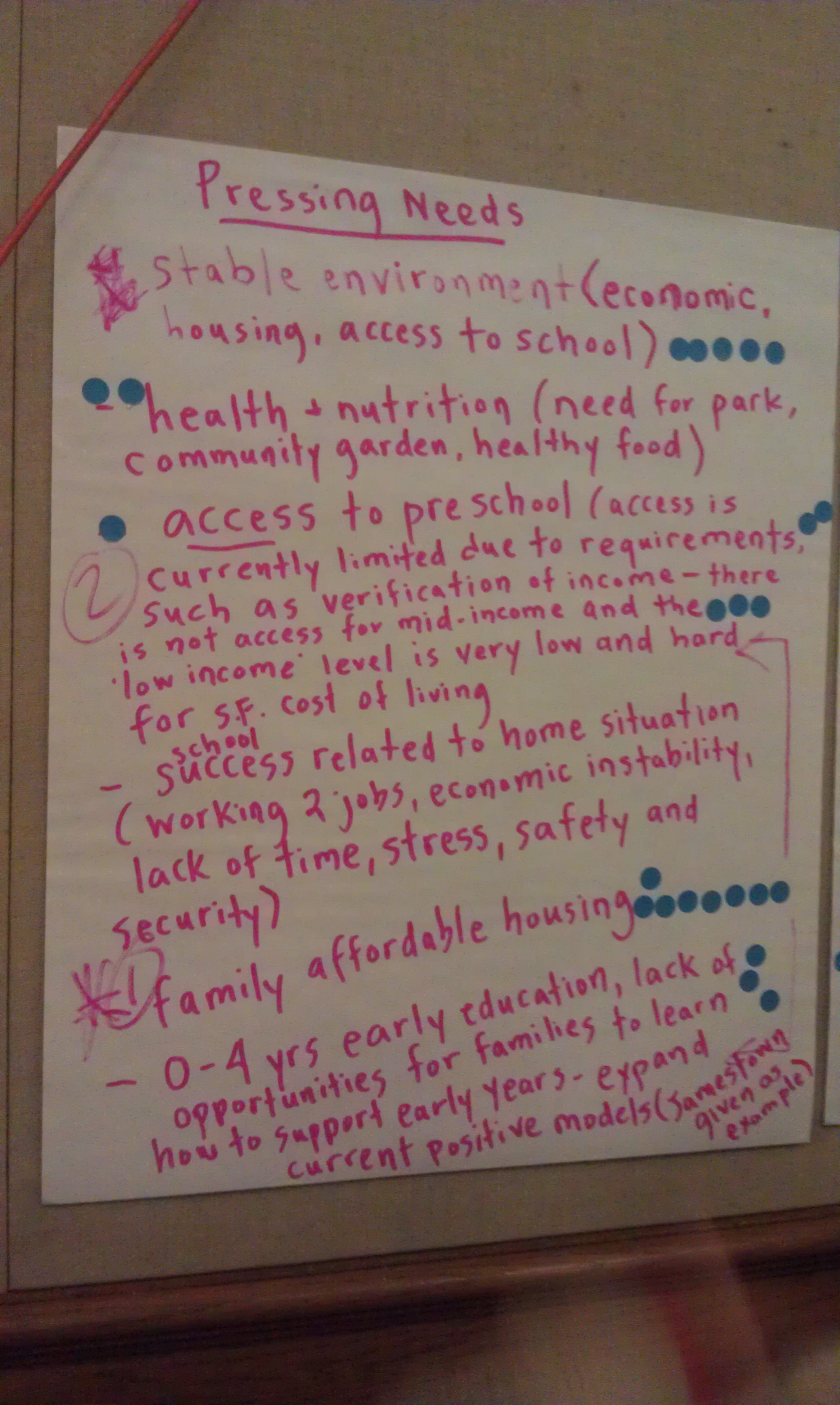
The parents weren’t exactly asking for more museum field trips for their kids. During breakout sessions where facilitators wrote group members’ concerns on flip pads, a few recurring themes emerged. “Job security for parents,” one read. “Affordable housing,” another stated. “It’s a shame to have to talk about lack of funds given wealth and corporations in SF,” more parent feedback stated.

Maria Su, director of the San Francisco Department of Children, Youth and their Families, thanked parents for coming and told them, “We know how hard it is and how challenging it is to survive in the city. But that doesn’t mean we should give up.”

The whole exercise provided a glimpse into just how tough it is for families to get by in a city where a hefty cost of living amounts to serious pressure. “The sacrifices they make is, their children will have access to resources you can’t get anywhere else,” said Mario Paz with the Good Samaritan Family Resource Center, who works with a lot of Latino immigrant families.

A report digesting the findings of stakeholder focus groups boiled it down. “Many participants commented on … the extraordinarily high cost of living in San Francisco,” it noted, which “contributes to both financial and emotional strain on the part of our many working class and lower income residents.” 


Eviction epidemic spurs legislative solutions

3

Tenants, organizers and residents impacted by Ellis Act evictions packed the Board of Supervisors Chambers at San Francisco City Hall Nov. 14 for a hearing on eviction and displacement in San Francisco. As more and more residents face ousters only to be priced out, lawmakers and advocates are floating legislative fixes to try and reverse the trend before it reaches the soaring levels of the displacement epidemic that impacted the city during the first dot-com boom.

“It seems to me that we have a tale of two cities,” Sup. David Campos, who requested the hearing, said at the start of the discussion, held at the Board of Supervisors’ Neighborhood Services and Safety Committee. “We must act urgently to address this crisis, which I believe is a crisis,” he added. “We are fighting, I think, for the soul of San Francisco.”

Fred Brousseau of the San Francisco Budget and Legislative Analyst’s office shared his recent analysis on eviction and displacement trends across the city.

Overall evictions in San Francisco rose from 1,242 to 1,716 over the past three years, he said, reflecting an increase of 38.2 percent. Ellis Act evictions rose by 169.8 percent in that same time frame.

Almost 42 percent of individuals impacted by eviction had some form of disability, Brousseau noted, while 49 percent had incomes at or below the federal poverty level. On the whole, a total of nearly 43 percent of San Francisco households are “rent-burdened,” a term that officially means devoting more than 30 percent of household income toward rent, the study found.

Ted Gullicksen of the San Francisco Tenants Union emphasized that tenant buyouts, frequently offered in lieu of an eviction, are also driving displacement, although those transactions aren’t reflected in city records. “There are about three of them for every Ellis Act eviction,” he said. “When you consider them in combination with Ellis, the numbers are very dramatic.”

Throughout the afternoon, tenants shared their stories and fears about getting frozen out of San Francisco by eviction. “I’m looking at shopping carts, and I’m terrified,” one woman told supervisors during public comment. “You have to do something. It might not be enough for me right now, but you can’t do this to any more people.”

Campos is working with Assembly Member Tom Ammiano on a proposal to grant San Francisco the authority to place a moratorium on Ellis Act evictions. He’s also pursuing legislation that would create a mechanism at the San Francisco Rent Board to allow tenants to register formal complaints about landlord harassment and other kinds of pressure.

“I am eager to introduce a bill in January,” Ammiano noted. “One option might be a law that will allow the local jurisdictions, like San Francisco, to suspend the Ellis Act or establish a moratorium, because of the emergency housing situation. Another possibility is working to make sure that landlords are not skirting Ellis eviction requirements by improperly pressuring tenants to leave. We must do something, but we have to work together to make it successful.”

Meanwhile, Mayor Ed Lee recently announced that he is working with Sen. Mark Leno on legislation to curb Ellis Act evictions by requiring additional permits or hearings before they proceed. They’re also contemplating floating more stringent regulations on the sale and resale of properties where tenants have been evicted under Ellis.

At the end of the day, it’s clear that housing advocates are gaining momentum as the spike in tenant ousters continues in pricey San Francisco, where rents are the highest in the nation.


Albany Bulb squatters lose in court and turn to direct action to resist evictions

4

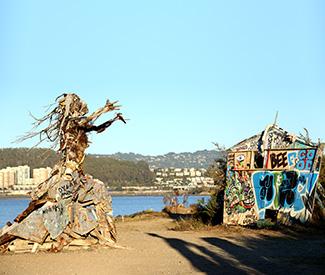
Yesterday marked a big day for Albany Bulb residents. The Bulb, a closed landfill turned homeless encampment, has been under the threat of eviction by the Albany City Council for the last month. 

After an afternoon in a San Francisco courtroom, Judge Charles Breyer of the US District Court for the Northern District of California denied a stay away order filed by the residents’ attorneys seeking to prevent an imminent eviction by the City of Albany. Later that day, after an Alban City Council meeting, residents and activists marched to the Bulb and set up a permanent occupation in protest of the impending eviction.

The stay away order was filed last week in order to prevent eviction during the winter. Osha Neumann, one of the residents’ attorneys and a longtime artist whose work is represented at the Bulb, said that it was unusually cruel to make the residents, some with severe disabilities and mental health issues, move off the Bulb without any homeless shelters or temporary housing available in Albany.

“They haven’t said what is the urgency or need to do it in the middle of winter,” Neumann said of the city, “It’s nonsense.”

Albany Housing Advocates was also a plaintiff, along with 10 of the Bulb residents in the lawsuit.  Julie Winklestein, the president of the AHA was in the court audience, said she hoped that the stay away order would be given: “We decided for a temporary restraining order to keep the conversation going.”

And while that conversation was put to a halt, another has started.

According to a press release issued by area activists and Bulb residents sent early this morning, “activists say they will be participating in trainings, hosting workshops, and planning more actions targeting the City of Albany, as well as the Sierra Club and Citizens for East Shore Parks, recreationalist organizations that are sponsoring the eviction.”

Based on information obtained in court documents, $570,000 was allocated to remove the Bulb residents, based on an Albany City Council decision made on October 21, with $171,000 spent on the cleanup of the campsites and the remainder spent on two portable trailers with bunk beds to serve as transitional housing for six months.

 Many of the campers, such as six-year resident Amber Lynn Whitson, believe that the transitional housing isn’t responsive enough for disabled people, as they believe it would not be open during the day.

“It’s ridiculous that they say they don’t know of any specific disabilities,” said Whitson about the city’s attempt provide transitional housing.

“If I’m not back there, I’m on the streets,” Kris Sullivan, an 18-month Bulb resident said about the encampment. “We’re safe back there.” 

After Prop 30, What’s Next? Reform Prop 13.

23


By Matt Haney

Proposition 30 was a big deal: It raised over $6 billion a year by increasing taxes on the wealthy, balanced the state budget, and allowed our K-12 and higher education systems to put an end to mass layoffs, exploding class sizes, and ballooning tuition.

But one year later, it’s about time we ask ourselves: What’s next?

Even after Prop 30, the under funding of education and essential services remains, with California still near the bottom nationally in K-12 per pupil funding. Prop 30 was a step forward, but we all knew that we ultimately would have to take on the “Godzilla” of California tax policy: Proposition 13.

Since its passage in 1978, Prop 13 has decimated public education and essential services in our state. Per pupil support in California plummeted from top 10 in the nation to bottom 10, and the tax burden shifted away from businesses and onto individuals. As state investments in services and education went down, poverty went up.

California voters originally passed Prop 13 mainly to protect homeowners. But due to loopholes in the law that prevent regular reassessment of commercial property, large commercial property owners are getting a multi-billion dollar public subsidy. Many commercial property owners are paying taxes at rates that are nearly unchanged from decades ago. Chevron alone is under-taxed by a billion dollars!

Reforming the commercial property tax loophole in Prop 13 could bring in over $7 billion dollars annually, most of which would go directly to education. Despite new funding from Prop 30, our schools desperately need greater investments if we are going to provide a 21st century education for all of our children.

Prop 13 has long been viewed as the “third rail” of California politics. Talk about reforming it, and risk your political career. Yet recent polls show an openness from Californians to reform Prop 13 to ensure more regular value reassessment of commercial property. Demographic change, voter education and registration, and the victory of Prop 30, have shifted the political landscape.

The San Francisco School Board recently joined dozens of School Boards, City Councils, and Board of Supervisors across the state in calling for the reform of Prop 13 through a statewide ballot initiative in 2016 or sooner. The strategy, led by organizations like Evolve California and California Calls, is to ramp up the pressure from the ground up. Cities, schools, and communities are the canaries in the mine. We have experienced Prop 13’s carnage firsthand, and we cannot be silent.

Just as we did with Prop 30, Californians deserve a choice: fully fund education and essential services, or maintain a broken and inequitable tax system. We can’t have both. Next time the stakes will be even higher, so it’s critical that we start preparing for this fight now. Let’s get to work.


Overstimulated

2

Environmentalists who oppose fracking in California are concerned about more than possible groundwater contamination or other hazards that could directly result from the fossil fuel drilling practice. They also want to save the planet.

The Monterey Shale, a massive underground geological formation spanning a large swath of California, contains approximately 15 billion barrels of hard-to-get oil that could technically be extracted in massive fracking operations, Kassie Siegel of the Center for Biological Diversity said during a Nov. 15 call with reporters.

All told, burning that quantity would eventually release six billion metric tons of carbon dioxide into the air. “That is a carbon bomb,” Siegel stated bluntly. Combined with methane that is released from the wells during the drilling operations, “a fracking boom in California could undo all the progress our state has made on greenhouse reductions,” she warned.

But for now, the debate on fracking in California is focused on newly drafted state regulations that would place controls on the practice for the first time. The proposed rules pertain to permitting and disclosure in the areas surrounding individual wells — yet they don’t contemplate the cumulative impact of fossil fuel combustion over time.

Fracking, formally known as hydraulic fracturing, is a technique used for extracting oil or natural gas. It involves injecting high-pressure fluids underground, often containing toxic chemicals, to break up bedrock in order to access the fossil fuel sources trapped within. The California Division of Oil, Gas, and Geothermal Resources (DOGGR) released a set of draft regulations Nov. 15 proposing new rules around what’s known as “well stimulation,” industry-speak for a type of drilling that includes fracking.

The new rules are slated to go into effect on Jan. 1, 2015. They’ll continue to be hashed out throughout next year, and DOGGR will accept public comment on the initial proposal until Jan. 14, 2014.

The regulations came about in response to Senate Bill 4, legislation enacted Sept. 30 after a statewide coalition of environmentalists launched a campaign to put a stop to fracking, which is already happening in some parts of California. Many groups within that coalition viewed the legislation as flawed, because it didn’t prohibit the practice outright.

“The only safe way forward for California is a halt to fracking in our state,” Siegel said.

Still, the draft regulations do seek to place new requirements on the oil and gas industry in an effort to protect public health where fracking occurs. According to DOGGR records, fracking is most common in Kern County.

“There are some good provisions in the regulations,” Bill Allayaud of the Environmental Working Group said in the briefing. “For the first time, all forms of well stimulation will require a permit from DOGGR. That’s a good thing.”

The rules will also require companies to conduct an analysis of groundwater and other wells nearby before proceeding with fracking operations, unlike before. The new regulations also establish a notification process to make nearby residents aware of new drilling operations.

Meanwhile, SB 4 calls for an environmental impact report and a study on the overall health and safety effects of fracking — but it’s unlikely that this study would result in a prohibition on the drilling practice, as environmentalists had initially called for.

“The Natural Resources Agency is currently developing the scope of the study and will begin the analysis in December 2013,” according to a fact sheet published by DOGGR.

“We don’t think we’ll be getting deep answers as to whether fracking and acidization and all forms of well stimulation are safe or not, for both protecting public health and the environment,” Allayaud said.

Meanwhile, he expressed concern that the public comment period for the initial set of proposed rules did not provide enough time for concerned Californians to respond, because people are being asked to weigh in over the course of the holiday season. The Environmental Working Group has requested an extension of that deadline, but it seems unlikely that DOGGR will grant one.

“The comment period was extended from the mandatory 45 days to 60 days for that reason,” California Department of Conservation Chief Deputy Director Jason Marshall said when asked whether the deadline extension would be granted in light of the holidays. “Additionally, we are anticipating an additional 45-day public comment period after the initial draft regulations are adjusted based on that initial public comment.”

Environmentalists also voiced the concern that while DOGGR plans to hold a series of public hearings on the proposed fracking regulations, none will be held in the Bay Area, despite its concentration of advocates who helped get the statewide opposition campaign off the ground.

“The law requires one public meeting, if requested. We are doing five, primarily in areas of the state where oil production is most common,” Marshall responded when asked why there weren’t any Bay Area meetings scheduled.

Asked whether any of the pending studies would take into account the six billion metric tons of CO2 that could potentially be released if the Monterey Shale were to be developed, Marshall seemed to suggest that the state was willing to go along with a regulated form of fracking even as it continues pursuing initiatives to curb greenhouse gas emissions.

“We still derive over 90 percent of our transportation fuels from hydrocarbons,” he wrote in an email. “With SB 4 and these regulations, California is acting now to ensure that extraction of those hydrocarbons happens in the safest way possible, even as we work to reduce our energy dependence on those hydrocarbons.”

Alerts: November 20 – 26, 2013

0

WEDNESDAY 20

Photographic journey through modern-day slavery The Commonwealth Club, 595 Market, SF. 5:30-7pm, $20. Photographer Lisa Kristine will share photographs from her travels to over a hundred countries on six different continents. The photographs document the daily lives of some of the millions of people who live in slavery around the world today. Kristine’s presentation will be preceded by a reception where attendees can connect with one another. The reception will be followed by a book signing.

Thu/21.  

Forum on America’s workers First Unitarian Universalist Society of San Francisco, 1187 Franklin, SF. tinyurl.com/WorkersFighting4Dignity. 7-9pm, free. Californian domestic workers recently won a landmark Domestic Bill of Rights after a long and trying struggle. This result, coupled with the nationwide fast-food strike in August, has launched the fight for livable wages into the realm of public debate. Join activists Katie Joaquin and Andrew Dadko as they discuss what’s next for some of our nation’s most exploited, lowest-paid workers. For more information, please email Dolores Priem at doloresmp@gmail.com.


SATURDAY 23


History of Market Street walking tour Plaza across from Ferry Building near southern Millennium Tower, SF. shaping@foundsf.org. 1-3pm, $5-10. RSVP required. Market Street has long been San Francisco’s most prominent boulevard. It’s where residents congregate in public, and has been the site of countless protests, celebrations, riots, festivals, and more. Uncover the hidden histories during this two-hour walk through the heart of the city. Tour ends at UN Plaza, Seventh and Market streets.

SUNDAY 24

Film Screening: The House I Live In Russian Center of San Francisco, 2450 Sutter, SF. 7-9:30pm, free. City Hope is screening the Sundance award-winning documentary on the War on Drugs. The film examines the forty-year war that our country has waged against narcotics and the results it has produced: 45 million arrests, making the U.S. the world’s largest jailer, and damaging poor, minority communities at home and abroad. Meanwhile, drugs have only become cheaper, stronger, and easier to obtain. By demonstrating how this war has been fueled by political and economic corruption and showcasing the individual lives that it affects, from the street dealer to the narcotics officer to the prison inmate, the film makes the case for the total failure of the War on Drugs. Refreshments will accompany the screening.

Subversive film screening on drones outside the San Francisco Jazz Center, 201 Franklin, SF. 6pm, free. CODEPINK, World Can’t Wait and others plan to host a film screening on drone strikes, projecting one or two films about drones outside the SF Jazz Center. It’s part of a protest against President Barack Obama, who is scheduled to visit the city and attend a luncheon at the Jazz Center on Nov. 25. Protesters plan to march to the Jazz Center at 11:30am on Mon/25 to protest drone strikes.

Single-payer is the cure

168

EDITORIAL We’re sorry to see all the problems surrounding President Obama’s Affordable Care Act, which has made some important improvements to the country’s healthcare system, such as helping those with preexisting conditions get coverage and preventing those who do have coverage from being arbitrarily dropped. Given a break from being exploited by the insurance industry, there’s no way this country’s citizens will want to go back to how things were.

But the convoluted Obamacare system was a foreseeable mess, one that is now causing unnecessary anxiety across the country and bringing right-wing extremists back from the political dead as the mid-term elections approach. Republicans may not be correct when they trumpet the old system as the best on the world, but their criticisms of Obamacare are already finding increasing resonance, and we haven’t even gotten to the point yet where it will be illegal not to have health insurance.

It doesn’t make sense to leave something as important as our healthcare system in the hands of for-profit corporations with the incentive to drive up costs. The New York Times has done some excellent work this year showing how US residents pay astronomically more for every procedure and drug than citizens of other countries. We should have all been suspicious when the insurance industry cooperated with enacting Obamacare and helped preclude a public option, leaving us with the insurance exchanges that have been so problematic.

There’s really only one remedy to this country’s ailing healthcare system, which we said at the time that Obamacare was being passed and we’ll repeat again now that there’s even more evidence supporting our position: We need socialized medicine in this country.

Conservatives who read that assertion are probably shaking their heads in disbelief right now, believing that Obamacare’s shortcomings prove that government can’t run a healthcare system. And the inexcusable technical problems with the federal healthcare.gov website and its related state exchanges unfortunately reinforce that view. But they’re wrong, and the single-payer advocates have been right all along, noting among other things that the government runs Medicare well and with far lower overhead than insurance companies.

The problems with Obamacare are similar to the problems it sought to address, and they stem from the fact that an insurance-based model is a terrible way to run a healthcare system. It’s too expensive and does too little to hold down medical costs, it’s confusing and stressful to people who are already wrestling with disease or injury, and it unjustly creates different standards of care for the rich and poor.

Socialized medicine — or a single-payer system, administered by either government or a private contractor, but paid for automatically through our taxes — works well in just about every other industrialized country, most of which are far less expensive and yet have better healthcare outcomes. A single-payer system could utilize the existing healthcare infrastructure, it would simply change how we pay for it and bring much-needed price controls and regulatory oversight.

Think about it: Healthcare coverage is something that every citizen needs in equal measure. We all need the right to see a doctor when we’re sick or injured. None of us should have to gamble with our health by weighing the cost of various monthly insurance premiums against our likelihood of ending up in the hospital. And it really shouldn’t be up to struggling small businesses to pay expensive health insurance premiums for their employees, even though that’s really the only way to make the fatally flawed insurance model work.

There’s infighting among congressional Democrats now about whether to roll back parts of Obamacare, such as hospital subsidies and whether to let people remain on minimal catastrophic coverage plans, and all that will do it upset the careful balance the plan tried to achieve to hold down long-term costs.

For now, we need to apply whatever bandages needed to stop the bleeding and limp the flawed Obamacare along for a little while. But we also need to immediately start the difficult work of transitioning to a socialized medicine system.


Richmond resident saved from deportation at the last moment

7

Felipe Valdes has lived and worked in the United States for 23 years. Two weeks ago, he received a letter ordering his deportation. Valdes reported to the Immigration and Customs Enforcement (ICE) office in downtown San Francisco yesterday (Mon/18) morning as he instructed and prepared to say his final goodbyes to his family before boarding one of ICE’s deportation buses at noon. Instead, he was released after five hours and allowed to return to his home in Richmond.

“It’s one in a million,” stated Marie Vincent, Valdes’ attorney. She had filed a stay of removal on her client’s behalf to delay his deportation, but such claims rarely get reviewed quickly. Vincent believes Valdes was awarded additional time in the US at the last moment because of media attention he received in recent weeks.

“His case was very compelling,” she explained. “He’s been here so long, and he has contributed greatly to the United States. He’s worked the whole time, he’s active at his church, his children are here. This is his country.”

While Valdes met with ICE officers inside, more than 50 local faith leaders, community members and reporters assembled on the street outside the office, with supporters there to protest the deportation. According to Vincent, this pressure was critical in influencing ICE’s decision to approve Valdes for a one-year work permit, temporarily halting his deportation.

That year may prove to be enough time for the currently pending residency visa application that Valdes recently submitted to be reviewed. His application is the latest in a long history of attempts to become a legal resident of the U.S. stretching back to 1997, seven years after he immigrated here from Mexico with his wife, their baby son, and their unborn daughter. Now, Vincent thinks he finally has a strong case that will earn him legal status in the US.

If Valdes is forced to return to Mexico, it could result in major consequences for his family. His wife, their three children, and their granddaughter all depend upon his wages as a plumber to survive.

“We would have really struggled just to buy food or make rent,” his daughter, Mayra Valdes, reflected after the family received the news that Valdes would not be deported that day.

Mayra’s younger brother suffers from severe scoliosis. The family does not have medical insurance and without Valdes’ earnings, they would be unable to afford the specialized chiropractic and medical care that he needs. With his father gone and no one to pay for his costly weekly treatments, there would be weeks when the boy would not even have been able to walk.

The family depends on Valdes for more than his income too.

“He really pushes me and my siblings to keep going to school,” says Mayra, a Contra Costa Community College student. Her older brother is at the University of California at Davis, and her younger brother is a senior at Richmond High School. With a four-year-old daughter and a second child on the way, Mayra relies on her father to babysit after he gets off work so that she can attend classes.

Valdes’ victory on Monday was a bright note in the sad story of deportation in this country. His single case may not mean much in the broader fight for immigration reform, but for his family, it has meant the world.

“I wanted today to disappear from the calendar,” Mayra recalls, “but now I feel like it was the happiest day of my life. My father was able to come home today—it’s the best present I’ve ever received.”

The Performant: Louder, faster, more!

4

When a friend of a friend held his 33 1/3rd birthday party, he filled the rooms of his apartment with turntables and stacks of LPs for his guests to play themselves. It was basically the best party ever, and a good argument for propagating the tradition of celebrating that particular milestone. And of course what better milestone to celebrate if you’re in the music business, like long-time independent label Alternative Tentacles? Particularly in a business climate unkind to independent anything, to be able to celebrate three-plus decades of sticking it to the establishment at all is some cause for jubilee.

Of course there are pitfalls to growing older, which I only discovered when I got to the Alternative Tentacles blowout anniversary show at Slims at the perfectly respectable club-going hour of 11pm, to discover that I had missed most of the show. Well, I never! Not only had a missed out the rare opportunity to see one of my personal musical heroes, Mojo Nixon, tear it up in his indomitable, breakneck way, but I didn’t really get a chance to soak in the atmosphere building up to the main event: headliners Jello Biafra and the Guantanamo School of Medicine.

Fortunately even if my flow was off, the band’s was not, and the fast and furious set punctuated by politicized bon-mots and observations was classic JB. Jello Biafra, of course, is the founder and overlord of Alternative Tentacles, former frontman of the Dead Kennedys, spoken-word raconteur extraordinaire, and occasional political candidate, and while he was sporting the unlikely trimmed beard and mustache combo of “The Most Interesting Man in the World,” his voice was still the strident, yodel of days of yore, and his stage persona full of ham.

Humor and politics have always been the hallmarks of Jello’s work, which songs like “Burgers of Wrath,” “Pets Eat Their Master,” and “Kill the Poor,” perfectly encapsulate, and except for an awkward stagedive that didn’t quite go anywhere, Biafra’s stage performance was as energetic as ever, thankfully proving that aging doesn’t have to be about being graceful, and a punk show that ends at midnight can still rock.

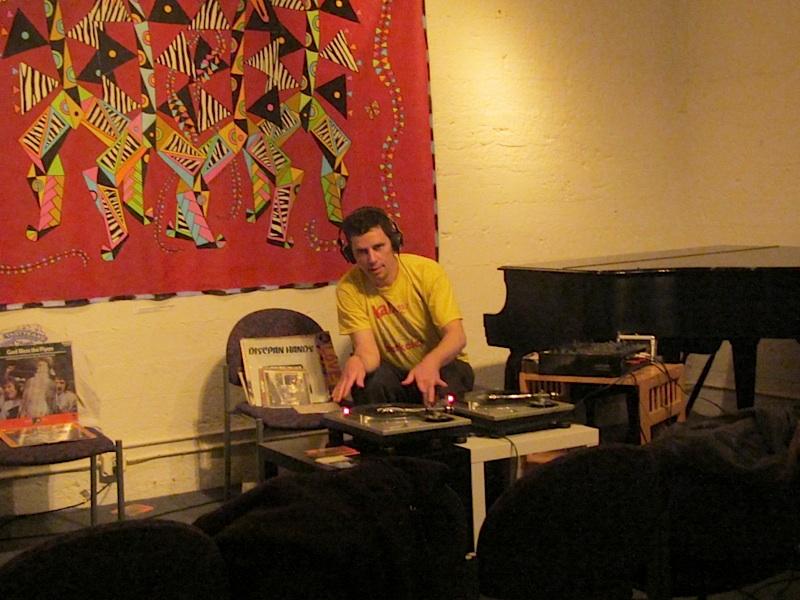
Meanwhile on the other side of the city, an unexpected Alternative Tentacles connection represented at the Emerald Tablet, where Philadelphian Joseph Gervasi held a screening of his Philly punk-scene archive project, Loud! Fast! Philly!, and his co-host/co-organizer turned out to be Jesse “Luscious” Townley, formerly of the Philly scene, and general manager of Alternative Tentacles, who DJ’d an eclectic set before the show.

Originally compiled in the earlier part of the year, Loud! Fast! Philly! was originally shown at the Cinedelphia Film Festival as an “interactive” audio-visual presentation combining old home movie-style footage of various Philly punk bands with live commentary from members in attendance. But in compiling the project, Gervasi realized it was the stories behind the videos he really wanted people to have access to. Thus began the second arm of the project: an audio archive of interviews with a variety of old school Philly punks, which lives in perpetuity online.

Truthfully the archive is probably the most fascinating part of the project. The video clips, while offering a fascinating peek at a particular time and place (and substandard quality of recording devices), don’t offer nearly the same breadth and depth of history as do the interviews. That said, rare footage of bands like More Fiends, Flag of Democracy, Dead Milkmen, and R.A.M.B.O. were unique and frankly humorous enough to transcend their shaky amateur quality and insider appeal, and provided a weirdly cohesive portrait of an ever-morphing scene, from the 80s to the present.

SF General will lose much of its federal subsidy under Obamacare

137

As President Obama’s Affordable Care Act is phased in over the next couple years, San Francisco General Hospital will lose at least 25 percent of the $123 million it receives from the federal government to offset costs of caring for the uninsured, but hopefully that will be offset by its expansion of those who will have health insurance.

General Hospital receives those funds for being a so-called “safety-net hospital,” a place where those without insurance can still get quality healthcare. Even though the need for such safety nets is supposed to diminish under Obamacare, SF General will remain a critically important safety-net hospital.

Many San Franciscans – including non-U.S. citizens who won’t qualify for coverage under the Affordable Care Act, as well as homeless individuals – will continue to rely on the hospital when in need of medical care.

Yet here and nationwide, concern is brewing about whether funding for safety-net hospitals could be impacted if enrollment in the new state health exchanges doesn’t reach anticipated levels.

“The financial question every state is asking is: What are the newly eligible patients going to do? What plan will they enroll in? Will they enroll?” Greg Wagner, CFO of the San Francisco Department of Public Health, told the Guardian, referring to the health insurance marketplaces created under the Affordable Care Act.

Most safety-net hospitals in the country are bolstered with federal subsidies, and are especially reliant on funds known as disproportionate share hospital payments, or DSH. However, those subsidies are about to be slashed with machete-like strokes.

All told, as much as $18 billion nationwide could be siphoned away from safety-net hospitals by 2020. Compounding that is another $22 billion that could be cut from Medicare subsidies, depending on the number of insured.

There’s an expectation that the looming safety-net budget cut will be offset by the burgeoning population of insured residents who would flock to state health exchanges. It makes sense: Instead of absorbing the entire cost of an uninsured patient, hospitals would be getting money from newly active insurance policies, and no money would be lost.

The New York Times recently ran a story detailing how low-income patients in Georgia may be put in a precarious position under federal healthcare reform because safety-net hospitals in Georgia might not be able to make up for lost funding once DSH payments evaporate.

California isn’t likely to experience this problem to the same degree, Wagner said, because the state chose to expand Medi-Cal, the state version of Medicaid, to include all low-income residents and not just those who previously qualified under a narrow set of criteria. Georgia had the same option to expand, but chose to keep its Medicaid qualifications in place, like many states led by Republicans looking to tweak President Obama.

As things stand, enrollment in Covered California – the state’s health insurance marketplace under the Affordable Care Act – remains low. Until enrollment closes at the end of March, it’s an open question whether it will reach the necessary levels to make up for pending cutbacks.

So far, 59,000 Californians had completed applications and enrolled in health insurance plans within the new marketplace as of Nov. 13. That’s a drop in the bucket, considering that 2.3 million are eventually expected to enroll. According to state data, 203,904 applications had been started online (reflecting an estimated 370,000 individuals). In addition to those applying for Covered California plans, another 72,000 people were determined eligible for Medi-Cal. 

“SF General operates on a huge amount of federal money,” Wagner explained. “Some comes directly from the federal government, and some comes from DSH.” He said the hospital received $123 million in DSH funds last year, “and not all of that will go away” once cuts go into effect.

“Healthy SF will still be around after March 31,” said Wagner. “We’re still retaining the program for anybody not eligible for Medi-Cal, and through Healthy SF those people can still access primary healthcare.”
He even said that under extreme circumstances, like the delivery of a child, for instance, some undocumented immigrants will have the opportunity to enroll in Medi-Cal. 
And it’s not all gloom-and-doom on the subsidy front, either. There is a safety-valve for the safety-net hospitals: If everyone who is expected to enroll in Covered California actually does so, the funding will be available without the need to rely on federal aid. 
But in order to achieve that idyllic plateau, a serious push is needed on the enrollment level. Granted, those enrollment figures should rise. But what if they don’t? 
“If people don’t enroll in the new programs, it will be a big problem,” said Wagner. “If we have a significantly lower enrollment number than we initially predicted, we will have some major financial issues. There’s still some uncertainty.”

He added, “We’ll still provide care for the uninsured at SF General. The money will decrease, but it won’t disappear. By no means will all of the money go away. The hope is that the newly enrolled will offset the decreasing number of uninsured, then the federal government could take the DSH payment and redirect it to the providers.” 

That being said, “we still have lots of optimism moving forward,” Wagner said. “We think people will enroll.”

[Correction: We corrected the amount of the reduction from 50 percent down to 25 percent].


Parents under pressure

In recent weeks, the San Francisco Unified School District has held a series of community forums to ask parents what they think kids need in order to thrive in school. The meetings were held as part of a policymaking process leading up to next year’s renewal of two important funds – the Children’s Fund and the Public Education Enrichment Fund, which account for some $100 million in funding combined.

There were huge turnouts – a Chinatown forum, where Mayor Ed Lee was reportedly in attendance, attracted more than 180 participants, while a Nov. 14 meeting at Cesar Chavez Elementary in the Mission District drew a crowd of between 80 and 90.

The parents weren’t exactly asking for more museum field trips for their kids. During breakout sessions where facilitators wrote group members’ concerns on flip pads, a few recurring themes emerged. “Job security for parents,” one read. “Affordable housing,” another stated. “It’s a shame to have to talk about lack of funds given wealth and corporations in SF,” more parent feedback stated.

Maria Su, director of the San Francisco Department of Children, Youth and their Families, thanked parents for coming and told them, “We know how hard it is and how challenging it is to survive in the city. But that doesn’t mean we should give up.”

The event provided a glimpse into just how tough it is for families to get by in a city where a hefty cost of living amounts to serious pressure. “The sacrifices they make is, their children will have access to resources you can’t get anywhere else,” said Mario Paz with the Good Samaritan Family Resource Center, who works with a lot of Latino immigrant families.

A report digesting the findings of stakeholder focus groups distilled the pressures facing families. “Many participants commented on … the extraordinarily high cost of living in San Francisco,” it noted, which “contributes to both financial and emotional strain on the part of our many working class and lower income residents.”

New movies: a great week for docs

1

This week, doc lovers are in luck: not only is Chris Marker’s seminal 1962 Le Joli Mai making a return to theaters (Sam Stander’s take here), but Oscar-winning director Alex Gibney delves into cycling’s greatest scandal in The Armstrong Lie (my review here).

Plus! The moving American Promise, filmed over 13 years; the latest from Lynne Sachs, Your Day Is My Night; and more, after the jump.

http://www.youtube.com/watch?v=knFReWtLkgc

American Promise This remarkable look at race, education, parenting, and coming-of-age in contemporary America is the result of 13 years spent following African American youths Seun and Idris (the latter the son of filmmakers Joe Brewster and Michèle Stephenson). At the beginning, the Brooklyn pals are both starting at the exclusive Dalton School, where most of their classmates are rich white kids. This translates into culture-clash experiences both comical (a 13-year-old Idris estimates he’s been to 20 bar mitzvahs) and distressing, as both boys struggle socially and academically for reasons that seem to have a lot to do with their minority status at the school. Culled from hundreds of hours of footage — a mix of interviews and cinéma vérité — Brewster and Stephenson’s film captures honest moments both mundane and monumental, sometimes simultaneously, as when Seun’s mother, driving the kids to school, discusses her battle with cancer as his younger siblings trill a Journey song in the back seat. (And even this seemingly light-hearted aside takes on heft later in the film.) Extra props to Brewster and Stephenson, who clearly made a conscious choice not to edit out any of their own foibles — for the most part, they’re caring, involved parents, but be warned: strident homework nagging is a recurrent theme. (2:20) Roxie. (Eddy)

The Best Man Holiday Taye Diggs and Sanaa Lathan lead an ensemble cast in this seasonal sequel to 1999 hit The Best Man. (2:00)

http://www.youtube.com/watch?v=0sPr4snZqcM

The Book Thief One of those novels that seems to have been categorized as “young adult” more for reasons of marketing than anything else, Markus Zusak’s international best seller gets an effective screen adaptation from director Brian Percival and scenarist Michael Petroni. Liesl (Sophie Nelisse) is an illiterate orphan — for all practical purposes, that is, given the likely fate of her left-leaning parents in a just-pre-World War II Nazi Germany — deposited by authorities on the doorstep of the middle-aged, childless Hubermanns in 1938. Rosa (Emily Watson) is a ceaseless nag and worrywart, even if her bark is worse than her bite; kindly housepainter Hans (Geoffrey Rush), who’s lost work by refusing to join “the Party,” makes a game of teacher Liesl how to read. Her subsequent fascination with books attracts the notice of the local Burgermeister’s wife (Barbara Auer), who under the nose of her stern husband lets the girl peruse tomes from her manse’s extensive library. But that secret is trivial compared to the Hubermanns’ hiding of Max Vandenburg (Ben Schnetzer), son of Jewish comrade who’d saved Hans’ life in the prior world war. When war breaks out anew, this harboring of a fugitive becomes even more dangerous, something Liesl can’t share even with her best friend Rudy (Nico Liersch). While some of the book’s subplots and secondary characters are sacrificed for the sake of expediency, the filmmakers have crafted a potent, intelligent drama whose judicious understatement extends to the subtlest (and first non-Spielberg) score John Williams has written in years. Rush, Watson, and newcomer Schnetzer are particularly good in the well-chosen cast. (2:11) (Dennis Harvey)

How I Live Now As 16-year-old Daisy (Saoirse Ronan) arrives to spend the summer with cousins she’s never met, England is on the brink of war with an unnamed adversary. Daisy wants nothing to do with her new family and their idyllic countryside home — she’s too caught up in self-loathing image and diet obsessions, which manifest in the movie as overwhelming voiceover chatter. Her eldest cousin, Eddie (George MacKay), begins to draw her out of her shell, but everything changes when a nuclear explosion hits the country. At first, the cousins’ post-apocalyptic life is a charming bucolic, soundtracked by British folk-rock. But the horrors of war soon find them, and the movie’s latter half takes on a quite different tone. Adapted from Meg Rosoff’s YA novel, How I Live Now is almost eager to tackle the ugliest aspects of wartime existence — mass graves, prisoner abuse, work camps — and this unflinching approach is compelling, despite some flaws in the acting and character development. (1:41) (Sam Stander)

Your Day Is My Night Multidisciplinary artist Lynne Sachs returns to SF with this feature set in the world of NYC’s Chinatown “shift bed” apartments — ones whose crowded tenants take turns using sleeping space, a phenomenon that exists in many US cities and immigrant communities. An experimental mix of documentary and staged narrative, Day’s cohabiting protagonists are primarily older émigrés from China with diverse current jobs and divergent memories of life back home — from fond family reminiscences to the horrors of the Cultural Revolution. The individual stories told here are related not just in verbiage (both scripted and improvised), but song, dance, theater, poetical imagery, and composer-sound designer Stephen Vitiello’s collage soundtrack. At Other Cinema, Sachs will also present several of her short film works, including 2006’s Three Cheers for the Whale, a collaboration with the late Chris Marker that revised his 1972 Viva la Baleine, which was co-directed with Mario Ruspoli. In addition to its ATA screening Sat/16, Your Day Is My Night also plays the Pacific Film Archive Nov 20. (1:03) Artists’ Television Access. (Dennis Harvey)

BART “mistake” threatens its contract agreement with workers UPDATED

35

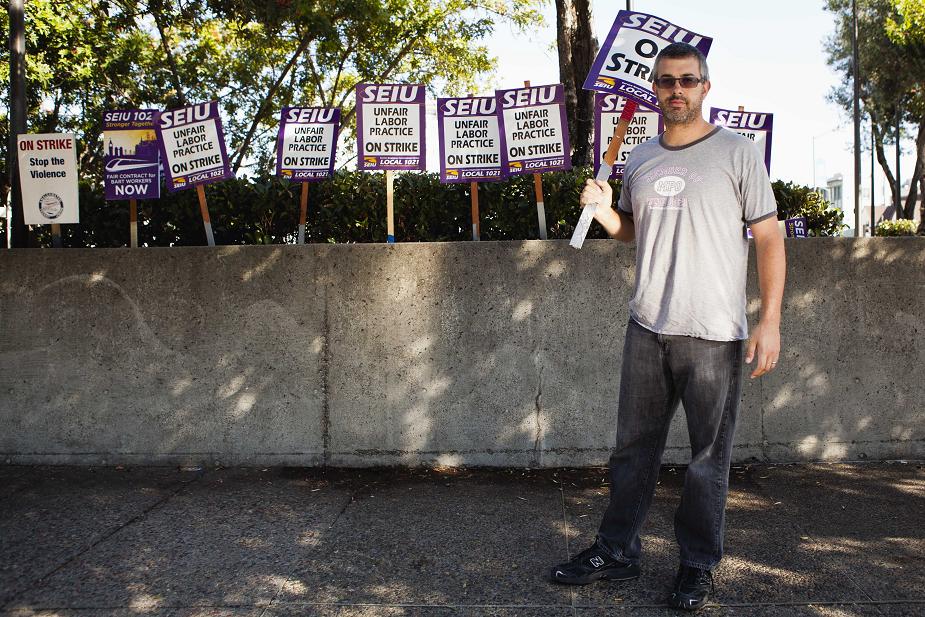
Just when it appeared the ugly contract impasse between BART management and workers was over — a divisive struggle that resulted in two debilitating four-day strikes and the Oct. 19 death of two workers struck by a train being used to train possible replacement drivers — BART management is threatening to scuttle the deal over a provision it says was mistakenly added to the contract.

At issue is a contract provision where BART workers from SEIU Local 1021 and ATU Local 1555 who go on leave under the federal Family and Medical Leave Act will be paid for six of the 12 weeks the law allows them to take unpaid, BART spokesperson Luna Salaver told the Guardian.

While BART management and its negotiators — including Assistant General Manager of Operations Paul Oversier and Thomas Hock, a contractor who the district paid $400,000 to lead its negotiations — signed off on the provision back in July and again when the final deal was reached last month, Salaver said BART didn’t mean to include it.

“It was a mistake that a provision rejected twice by BART management ended up in the stack of approved documents,” Salaver said, noting that it was caught this week as the district prepared to give the contract final approval on Nov. 21. It has already been approved by the two unions.

“We were never confused as to the status of the Family and Medical Leave Act agreement,” Local 1021 Political Director Chris Daly told the Guardian, calling the provision a reasonable benefit similar to one that he sponsored for city employees when he was on the San Francisco Board of Supervisors.

But Salaver said it could add tens of millions of dollars in costs (the district still isn’t sure how much) to a contact that will already cost the district an additional $67 million, so management is convening a special session of BART’s Board of Directors this afternoon (Fri/15) to discuss the issue, saying that management isn’t yet recommending the contract be rejected, as some had reported. [UPDATE: The BART board told administrators to re-open negotiations with the unions, but the unions are resisting a return to the bargaining table and urge the board to approve the contract on Thursday].

“There is an erroneous report that BART management is going to tell the BART board to reject the contract,” Salaver told us, inside calling the closed-session discussion a “fact-finding session.”

But Daly said BART management had told the unions that it would recommend rejection of the contract, and that it is now backpedaling because some directors are unhappy with the snafu. It also has a serious public relations problem on its hands, finding itself in a position to reignite the battle with workers while also contending with angry state legislators and an ongoing NTSB investigation into its culpability in the worker deaths.   


The complete prepared statement issued last night from SEIU 1021 Executive Director Pete Castelli follows:  

“BART Management has been in contact regarding the tentative agreement they reached with SEIU 1021 and ATU 1555 on October 21st and which our members unanimously ratified. We’ve been informed that they’ve scheduled a special meeting with the BART Board of Directors to discuss the terms of the contract and to clarify details regarding certain provisions for tomorrowafternoon.

“In July, BART Management and its unions reached a tentative agreement on family medical leave, which was signed by BART Management and their chief negotiator. During a thorough review of the final settlement last month, BART Management and their attorneys did not raise any concerns about how this tentative agreement or other provisions in the final settlement would prevent them from recommending the contract to the Board for approval.

“It’s disappointing to hear BART Management would recommend that the BART Board reject this agreement—a contract they negotiated with their workers for more than five months, signed, and praised in the public as a fair compromise.

“We expect the BART Board of Directors to vote on and approve this fair and reasonable contract.”

Young and talented: SFSU’s 26th Stillwell Student Exhibition

0

The Stillwell Student Exhibition is San Francisco State University’s annual showcase of undergraduate and second-year MFA artwork celebrated in the name of Leo D. Stillwell, an amateur artist who died at the young age of 22 in 1947.

But a Google search doesn’t even yield that small bit of information about Stillwell. So who was he, and why has SF State honored him for 26 years?

Mark Johnson, director of the Fine Arts Gallery at SF State, explained that the generosity of Stillwell’s mother, Josephine, created opportunities for student artists all in loving memory of her son.

“When Josephine herself was elderly and aware that her days were short, she contacted San Francisco State University to offer us the collection of about 500 works of her son that she had saved 40 years after his death,” said Johnson. “In 1988, the whole collection came to the university, and she bequeathed her house. It was sold in 1988 for $250,000, and that money endowed a scholarship.”

In return, Josephine asked that her son’s work be showcased every year. Stillwell had struggled with health issues and ultimately died of hypertension, but Josephine believed that had he had the chance to attend college, he likely would have chosen SF State. Thus, the student exhibition was named for him, and a small selection of his work is featured every year.

It’s fitting; Johnson said that because Stillwell died so young, his collection is essentially the work of a student. The four pieces displayed this year are watercolors depicting Roman gods, which Johnson feels are some of Stillwell’s strongest works. His entire collection ranges from family portraits to exploration of modernist iconography of surrealism. He was also the co-founder of the short-lived Antinous Gallery.

“Antinous is the name of the boy who the emperor Hadrian loved, so there is a sense that this was a code space for a gay art gallery,” Johnson explained. “For something like that to happen in the mid-1940s is certainly unusual and interesting.”

It is known that Stillwell’s lover was Russell Hartley, the founding collector of the Museum of Performance + Design, then the San Francisco Performing Arts Library and Museum. Recently, a website was discovered that contained letters between Stillwell and Hartley.

“We contacted that person and the site was taken down immediately, but we’re in the process of trying to get access to the letters, because it’s such an important social document of two young gay men interested in the arts from this very early historical period,” said Johnson.

Johnson’s exhibition design students all have this history in mind while organizing the annual show. And while it may be Stillwell’s name in the title, the exhibition very much belongs to the students, who provide the bulk of the work on display and put the gallery together. It’s a difficult, but rewarding experience, and among the bustle of preparing the show, there is a sense of excitement for what the students have to show.

“Different years, different things come to the surface,” said Johnson. “This year, we have, I would say, a number of very strong, large textile works.”

These colorful textiles, as well as stunning prints, paintings, and photography, sculptures, and so much more – all of them are the works of students, many of whom are young, rising artists like Stillwell had been, and they appreciate what it is to be in that position and have a place to display their art.

“[Stillwell’s] work is very cool. It’s visually appealing, it has a message. He was so young, and he could have had a lot more years,” said Karna Southall, a junior who researched Stillwell and put a video about him together for the class. “I think that it’s great that his mother took this unhappy thing that happened to her, and made it a positive experience for students. That’s admirable.”

Junior Lorraine Campos, whose art is displayed in the exhibit for the first time this year, feels that Stillwell remains a great inspiration to SF State’s great variety of talented art students.

“I think it’s an example of how you can be a young artist but still have a legacy,” said Campos. “By taking [exhibition design] class, I learned a lot more about Stillwell and how he was very diverse in his interests, and I think that’s like almost every student at State.”

26th Annual Stillwell Student Exhibition

Through Dec 5

Wed-Sat, 11am-4pm, free (gallery closed Nov 27-30)

Fine Arts Building, Rm 238

SF State University

1600 Holloway, SF

http://gallery.sfsu.edu

Hundreds attend hearing to call for action on evictions

Tenants, organizers and residents impacted by Ellis Act evictions packed the Board of Supervisors Chambers at San Francisco City Hall today, Thu/14, for a hearing called by Sup. David Campos on eviction and displacement in San Francisco.

“It seems to me that we have a tale of two cities,” Campos said at the outset of the hearing, which was held by the Board of Supervisors Neighborhood Services and Safety Committee. “The vast majority of individuals are struggling to stay in San Francisco. We must act urgently to address this crisis, which I believe is a crisis.” He added, “We are fighting, I think, for the soul of San Francisco.”

Tony Robles of Senior and Disability Action, who showed up at the hearing wearing a black hooded sweatshirt with pobre (the Spanish word for “poor”) printed across the front, expressed his frustration with the surge of evictions taking place in the booming economic climate. “We have been overlooked – the workers, communities of color … it’s almost as if we are an afterthought,” he said.

Fred Brousseau of the San Francisco Budget and Legislative Analyst’s office delivered a report on his recent analysis of eviction and displacement trends across the city.

Overall evictions in San Francisco rose from 1,242 in 2010 to 1,716 in 2013, reflecting an increase of 38.2 percent, according to San Francisco Rent Board Data highlighted in Brousseau’s report. 

Ellis Act evictions in particular increased by 169.8 percent in that same time frame, he said, with the most recent data showing a total of 162 Ellis Act evictions over the twelve months ending in September 2013. That number reflects units evicted, not how many tenants were impacted.

Ted Gullicksen of the San Francisco Tenants Union emphasized that tenant buyouts, frequently offered in lieu of an eviction, are also driving displacement even though these transactions aren’t reflected in city records.

“We need to get in control of these buyouts,” he said. “There are about three of them for every Ellis Act eviction. When you consider them in combination with Ellis, the numbers are very dramatic.”

Brousseau also showed a slide profiling the people who’ve been impacted by evictions citywide. Almost 42 percent had some form of disability, the data revealed, while 49 percent had incomes at or below the federal poverty level.

On the whole, Brousseau said, a total of nearly 43 percent of San Francisco households are “rent-burdened,” a term that officially means devoting more than 30 percent of household income to monthly rental payments.

Throughout the afternoon, tenants shared their stories and fears about getting frozen out of San Francisco by eviction. “I’m looking at shopping carts, and I’m terrified,” one woman told supervisors during public comment. “You have to do something. It might not be enough for me right now, but you can’t do this to any more people.”

Hene Kelly noted that elderly tenants are being disproportionately impacted by Ellis Act evictions. “They don’t have the reserves, they don’t have the jobs, and they don’t have the money to be able to move if they are evicted,” she said. Referencing landlords and speculators who are driving displacement, she added, “It makes me think of cabaret. Money, money, money, money, money makes the world go round.”

Campos noted that he is working with Assembly Member Tom Ammiano on a proposal to grant San Francisco the authority to place a moratorium on Ellis Act evictions.

He’s also working toward legislation that would create a mechanism at the San Francisco Rent Board allowing tenants to register complaints of harassment or other forms of pressure from landlords seeking to drive them out.

His proposal also envisions doubling the amount of relocation assistance that landlords would have to provide to tenants, in the case of no-fault evictions. He also mentioned the possibility of regulating buyouts, by requiring landlords to record these transactions with the rent board, and possibly prohibiting property owners from charging market-rate rent directly after completing a tenant buyout.

Meanwhile, Mayor Ed Lee recently announced that he is working with Sen. Mark Leno on legislation that is meant to reduce Ellis Act evictions. That proposal would require additional permits or hearings before an Ellis Act eviction could go forward, and place more stringent regulations on the sale and resale of properties where tenants have been evicted under the state law.

Just a couple weeks ago, a coalition of housing advocates proposed a sweeping package to turn the tide on evictions.

At the end of the day, it’s clear that housing advocates are gaining momentum as the spike in tenant ousters continues in pricey San Francisco, where rents are the highest in the nation.

“We’ve never been late on our rent,” noted Beverly Upton, executive director of the San Francisco Domestic Violence Consortium, who is battling an Ellis Act eviction. “We’ve paid for every improvement ever done in 25 years. And now we have to leave.” She appealed for legislators to take action for the sake of the city’s future, asking, “Once the advocates and the organizers and the people who care are gone, who will be left in our city?”

Get raucous with Los Rakas

4

One of our favorite local acts is Panamanian hip-hop duo Los Rakas, based in Oakland, who consistently tear it up. Bounce with them this Saturday at the New Parish — and try to get “Soy Raka” out of your head.

O+ Festival trades health care for music and art performances

0

Artists struggle for their art, but they shouldn’t also have to also sacrifice their health. That’s the basic premise behind this weekend’s three-day O+ Festival in San Francisco, where musicians and other artists will perform in exchange for medical, dental, and wellness services at a pop-up clinic at The Center SF art space on Fillmore Street and other offices around town.

“Bartering the art of medicine for the medicine of art,” is the tagline for a festival that is making its debut outside of New York, where it began. The lineup includes local folk rockers Papa Bear & Friends, soulful singer Quinn DeVeaux, mashup DJ Zack Darling, and many more, performing in venues that include Inner Mission and the Make-Out Room.

The festival began in 2010 in Kingston, NY, when painter Joe Concra had a dentist friend who had the idea of bringing a band he liked up from Brooklyn and paying them in free dental services. The idea resonated with Concra, who knew well how much New York’s artists struggled to make ends meet.

“Artists are not only being pushed out, but they’re not able to get the healing they deserve,” Concra told the Guardian, saying the first festival was such a hit that it took on a life of its own. “Once we do it, once people go, then they really get it. And it goes back to the age-old idea of trade.”

Long before modern health insurance debacles, doctors and dentists were members of their communities, and people would pay them with whatever they had to offer. But today, larger and larger companies providing care in collaboration with insurance companies, even the basic community clinic is becoming a thing of the past.

“We’re breaking down that access to care barrier, because some many people don’t know where to start,” Concra said, saying he was surprised at the flood gates opened by his simple idea. “Now, we’re at the point where we have 220 bands applies for 40 spots…We were not prepared for the amount of need in the artist community.”

Concra had started thinking about where to expand the festival when he was contacted by Deborah Gatiss, San Francisco-based artist and event coordinator, who had heard about the concept from a friend in the Burning Man Project.  

“It goes back to May of last year, and I was lamenting the fact that I have no health care, because I had a really bad toothache. I was talking with a friend of mine and we were discussing things people could do for health care when they have no dental insurance and this was one of the things that came up,” she told us.

Concra was already talking about a Bay Area event with Aimee Gardner, who he knew from an art gallery in Kingston before she moved to California, and Gardner and Gatiss ended up spearheading the creation of O+ Festival-San Francisco.

“Coming from New York, I feel like San Francisco is going a similar direction,” Gardner said of artists who can’t afford to live here. “I think it’s a really revolutionary idea. It’s activism in a very thoughtful way.”

The pair managed to line up sponsors and a list of volunteer health practioners from a variety of disciplines, people that Concra called “the real rock stars of this event.” So while the performers get free health care, those who buy the $25 tickets get three days of free music and art, discounted drinks at various venues, and even free yoga classes at Yoga Tree’s new Potrero Hill studio.

The festival opens tomorrow (Fri/15) at 6:15 at The Center SF, 548 Fillmore, with a health care panel discussion featuring Concra, Artist Xavi Panneton, Dan Kitowski of the Actors Fund, and me, Guardian Editor Steven T. Jones.

Gatiss said it’s been a challenge to pull together such an ambtious festival and she hopes that Bay Area residents — who love art and music and are accustomed to gift and barter economies through things like Burning Man — will turn out to show their support.

“I thought that people were used to that mindset, so they’d be up for the idea of bartering their musical talents for health care and vice versa,” Gatiss told us. “It’s been harder than I thought. But it’s been fulfilling and magical and I’m glad that I did it, and I think Aimee would say the same thing.”