Volumes

Government smackdown

1

arts@sfbg.com

THEATER The premise of Bay Area playwright Lauren Gunderson’s latest, The Taming (not to be confused with her other latest, I and You, running more or less simultaneously at Marin Theatre Company), felt riotously germane on opening night, less than a week into the recent shutdown of the federal government. But only at first.

With a vague nod to Shakespeare’s Taming of the Shrew, this ultimately superficial but consistently witty and rapid-fire political farce takes place in a Washington, DC, hotel room, where a crazed but seriously intelligent, professionally charming Miss America contestant named Katherine, aka Miss Georgia (a superlative Kathryn Zdan), holds hostage two political animals, one liberal and one conservative, while she tries to talk them into helping her bring about a new constitutional convention.

This Southern Liberty Belle is incensed by the status quo and aims at serious reform, seeing nothing short of a new constitution as the way past the political intransigence keeping America from living up to the vision of its Founding Fathers — especially the Constitution’s principal author, James Madison — as she understands it. And she’s willing to go to extreme lengths to see it happen, including drugging her captives and, worse, hiding their cellphones.

Initially, of course, her hostages will have none of it. They immediately wage a rapid-fire quip-war in which the usual stereotypes become so many grenades lobbed at either side of the room and the political aisle.

Bianca (Marilet Martinez) is a liberal blogger in braids, leggings, and hipster hat whose hatred of Republicans is matched by her passionate commitment to the salvation of a tiny, endangered mammal known as the North American Great Pygmy Panda Shrew — a veritable dog pile of qualifiers half-burying the allusion there to Shakespeare’s “taming” play.

Her Republican counterpart, Patricia (Marilee Talkington), is aid and brain to a powerful far-right senator from the South, predictably dim-witted and obsessively predatory on his nubile young interns. Her problems are initially geared to managing her loose cannon of a boss. “What if he actually says what he means? What if CNN asks him to spell something?” But soon we discover that Patricia’s passion lies in the legislation she has devoted her professional life to seeing come to life. It’s actually a jobs bill, in her fashioning, thus pitting ordinary American workers against Bianca’s furry charges in the political melee. Interestingly, the Republican character comes across as the more reasonable of the two.

A dream sequence returns all three to the good old days, 1789, for a brush with Washington and Madison, played amusingly as just two dudes with power in early America, as well as Martha and Dolly, forces in their own right if not always in their right mind. The gender confusion and the erotic charge between the characters throughout (especially, per the Bard’s original, Katherine and Patricia) adds a subversive sexual politics to the proceedings that makes for some interesting dynamics and reflections, if nothing too radical finally.

In artistic director Marissa Wolf’s sharply choreographed production for Crowded Fire (which produced Gunderson’s other Shakespeare-sprinkled contemporary comedy, Exit, Pursued by a Bear, in 2011), the play’s giddy speed also serves it well. While all three performances are strong, Zdan’s tiara-wearing revolutionary, with a fine Southern drawl and a wonderfully composed, perfectly modulated delivery, holds center stage from the first moment we see her — during an exuberant sound check on the pageant stage. Meanwhile, Talkington succeeds best at humanizing her own zany character, infusing her conflicted Republican operative with the hint of melancholic depths that makes her more interesting than the comparatively one-note liberal played by Martinez with punch but less subtlety (which is maybe inevitable given the character’s heavier burden of strained stereotype).

If the play’s timeliness also adds to its enjoyment, the initial frisson of righteous laughter at the expense of politics as usual ends up short-lived. The spectrum of possibilities represented here, political and otherwise, is just too narrow to allow real distance on the hopeless, hideous spectacle of Washington corruption. So resolutely does The Taming stay in the world of red-state, blue-state clichés that the play unintentionally reproduces that sense of hopelessness, in which the world at large comes bounded solely by Democrats and Republicans — a narrow spectrum of humanity that makes one identify more readily with that doomed shrew. *

THE TAMING

Wed/23-Sat/26, 8pm, $10-$35

Thick House

1695 18th St, SF

www.crowdedfire.org


Fame and blame

0

cheryl@sfbg.com

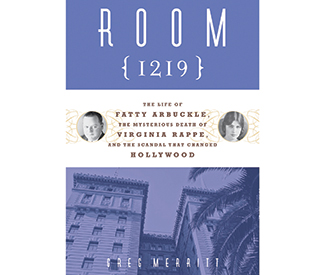
LIT Every student of salacious San Francisco history knows the tale of Roscoe “Fatty” Arbuckle. Over Labor Day weekend in 1921, the silent-film comedian hosted a rager at Union Square’s Hotel St. Francis (now known as the Westin St. Francis), the largest hotel on the West Coast at the time. Starlet Virginia Rappe fell ill at the party, and when she died days later as a result of internal injuries, Arbuckle went on trial (three times) for the crime.

The resulting media frenzy was the first of its kind, a show-biz scandal in the earliest days of movie stars. The public greeted it with both disgust and relentless curiosity. The industry reacted first by shunning Arbuckle — to this day, he’s rarely championed on the level of Buster Keaton or Charlie Chaplin — and then ushering in nearly four decades of the Motion Picture Production Code, “moral” guidelines by which studios self-censored film content.

Delving into l’affaire de Arbuckle is Room 1219: The Life of Fatty Arbuckle, the Mysterious Death of Virginia Rappe, and the Scandal that Changed Hollywood (430 pp., Chicago Review Press, $29.95), Greg Merritt’s page-turner that explores not just the trial, but the often-misunderstood lives of both Arbuckle and Rappe. I called him up to further discuss the book, a must-read for film-history buffs.

SF Bay Guardian Why were you drawn to this story?

Greg Merritt To me, it had always been the ultimate Hollywood scandal. And there just wasn’t a good book that really dealt fairly with the two principals, Arbuckle and Rappe.

SFBG How did Arbuckle’s fame impact his trial?

GM People were just getting to know these movie stars. They saw them in their little towns, up on the big screen. And suddenly, this character that people thought of as a friend — they changed their opinion of him basically overnight. There were headlines calling him a beast. That is paramount to this whole story, that he was one of the first people to experience what it was like to be a movie superstar, and then he was accused of rape and murder.

SFBG What bearing did the Arbuckle case have on the film industry?

GM It stopped his career in 1921, which is huge; we never got to see what he could have done, especially since [at that time] comedy features were a phenomenon that hadn’t really developed yet. And it changed the public’s whole relationship with movie stars. Suddenly, people wanted to know what these stars were really like, not just the PR from the studios. Not just the bad, but what they were really, truly like.

And then probably the most important way that it affected the industry was the wave of movie self-censorship [that followed in its wake]. [The case] received so much condemnation that Hollywood had to censor itself to avoid actual censorship.

SFBG What role did Prohibition play?

GM It was all part of the changing society. This was the beginning of the Jazz Age, a time when women were coming out to nightclubs — before that, public drinking had been kind of a guys’ thing. When this erupted in 1921, a lot of the [outrage] was about how Fatty was at a party with these women who weren’t his wife, and effectively breaking the Prohibition laws, although the laws were complicated about where or when you could drink. It was the Victorian Age versus the Jazz Age — it was kind of the first culture war.

SFBG Was it hard finding information on Virginia Rappe? Why has she been so misunderstood?

GM Surprisingly, it wasn’t hard to find out information about her. She was putting herself out there in the papers, doing interviews when she was a model and a costume designer, and I was able to find out so much about her story.

As for why she was treated so poorly, I think both sides just used her during the case. The press built her up as this innocent, and then the defense did the opposite. Decades afterwards, no one stood up for her, and she was called a slut or a prostitute or whatever. The case was eventually, essentially, blamed on her.

SFBG Why do you think history has distorted so many of the facts of this case?

GM I think the rumors were probably so spectacular that they eventually sort of replaced the facts. Now, when I talk to people, most haven’t heard of Fatty Arbuckle. Or if they have, they only know that he supposedly raped someone with a bottle. That story just took off, and now it seems to be the only thing people know about this case. It’s incredible, because he was the second-biggest movie star at the time after Charlie Chaplin. People ask me, “Can you imagine a scandal being this big today?” It’s really hard to imagine someone so hugely popular being accused of murder today. O.J. Simpson wasn’t Fatty Arbuckle, you know. It just doesn’t compare. *

Camp classic

0

cheryl@sfbg.com

FILM Daniel Farrands’ 400-minute documentary Crystal Lake Memories: The Complete History of Friday the 13th received coverage last month in an unlikely outlet: the New York Times. “A Seven-Hour Documentary About a Horror Franchise? The Director Explains,” read the skeptical headline.

“A seven-hour documentary about a horror franchise?” I said. “Gotta get my mitts on that!”

Seven and some odd hours later, I was on the phone with the Los Angeles-based Daniel Farrands for my own interview with the Crystal Lake Memories director. Farrands, whose previous docs include 2010’s Never Sleep Again: The Elm Street Legacy and 2009’s His Name Was Jason: 30 Years of Friday the 13th, was as stoked about the Times piece as you’d expect.

“I was really honored and sort of surprised that they were interested,” he says. “It’s a coup for our little slasher show that could.”

Any student of the Friday the 13th series can understand Crystal Lake Memories‘ running time. It covers the entire hockey-masked enchilada: 10 Friday films, late-1980s TV curio Friday the 13th: The Series, 2003’s Freddy vs. Jason, and the 2009 Friday remake. Frankly, it’s surprising Farrands was able to cram the whole thing into 400 minutes.

“It’s amazing to me that we got it down to that length,” he agrees. “We had hundreds of hours of interviews that we had to cut. And there are always those stories you wish you could have told, but for some reason they didn’t really work within the narrative as it’s developing.” (To that end, he adds, true diehards who early-ordered the straight-to-DVD/Blu-ray title through its official website — www.crystallakememories.net — got an additional disc containing four more hours of bonus material. You can still buy the film there, but not the bonus disc.)

It goes without saying that you should probably view the Friday series before checking out the doc. Why attempt the epic experience of watching Crystal Lake Memories if you’re not already a confirmed Jason Voorhees freak?

The Friday the 13th franchise has been around since 1980 and has amassed a huge and loyal fan following,” Farrands says. “[Crystal Lake Memories] is unabashedly intended for them. That being said, we really wanted it to be something that would be of interest even to the non-horror crowd — if you’re into cinema, and [interested in] what it takes to make a low-budget film. This film and our four-hour retrospective on the Nightmare on Elm Street series, Never Sleep Again, are kind of film-school courses in the form of horror documentaries. There’s so much interesting stuff in there in terms of being in the [low-budget filmmaking] trenches; our edict was to tell the real stories about making these kinds of films.”

Crystal Lake Memories tracks down some 160 cast and crew members spanning the Friday series (Betsy Palmer, the veteran actor who played Mrs. Voorhees in the original film, grins as she remembers reading the script and thinking “What a piece of junk!”). Many of the thespian interviewees are still unknowns, but several cult favorites — including special effects makeup pioneer Tom Savini, series creator Sean S. Cunningham, and prolific producer Frank Mancuso Jr. (Farrands’ longtime mentor) — stop by to share memories. Corey Feldman, who appeared in 1984’s Friday the 13th: The Final Chapter during the height of his child-star days, narrates the film.

One notable omission: Kevin Bacon, whose gruesome fate in the first Friday came years before he broke out in 1984’s Footloose.

“Recently, he appeared on the Tonight Show and he talked all about Friday the 13th,” Farrands says. “So he’s not ashamed of it, necessarily. But unfortunately, while we were conducting our interviews, we couldn’t make it work with his schedule. But we tried, and they tried! I think people have this misunderstanding that some of these bigger stars are embarrassed by it, and that’s just not true. I mean, Johnny Depp wasn’t ashamed that he was in A Nightmare on Elm Street (1984).”

Farrands’ own résumé is filled with horror-related credits. Just a smattering: he wrote the screenplay for 1995’s Halloween: The Curse of Michael Myers; directed multiple History’s Mysteries episodes on the Amityville phenomenon; and is developing a TV show set “in the universe of Jason Voorhees” called Crystal Lake Chronicles. His earlier Friday doc, His Name Was Jason, was a 90-minute work that “focused on Jason Voorhees as a pop-culture icon,” he says.

For Crystal Lake Memories, “we wanted to sequentially chronicle the making of the entire series.” It does make use of some Jason footage, particularly outtakes from interviews conducted for that film. But, “we did 60-some new interviews for this film that were not in Jason.

Fresh faces include Dana Kimmell, star of 1982’s Friday the 13th Part III, and Jennifer Cooke, star of Jason Lives: Friday the 13th Part VI. “[Cooke] has literally never spoken of her experience with the film other than, I think, one article back in 1986 when the film was made. It took a lot of convincing to get her to go on camera. But she was very nice and gave us a terrific, in-depth interview.”

As you might suspect, the actors’ recollections tend to revolve around their death scenes — achieved, in the pre-CG era, via the wizardry of artists like Savini, who made Friday‘s signature gore as outrageous as possible.

“The Friday the 13th violence was very in-your-face. The violence in Halloween (1978) was kind of subdued, and suggested, more like Psycho (1960). Friday the 13th took it to the next level. People walked out, like, ‘How did they do that?’ The audaciousness of what they pulled off, and the fact that the film was released by a major studio and put on 1,600 screens at the time — it just hadn’t been done. So I think that’s why Friday the 13th was kind of a watershed film.”


Spinning a precise web

0

arts@sfbg.com

DANCE Israeli-born choreographer Idan Sharabi pays meticulous attention to detail, but serendipity still has a place in his creative process. His Spider on a Mirror receives its world premiere as part of Zhukov Dance Theatre’s sixth season at the SFJAZZ Center this weekend. The work will be paired with Enlight, the latest piece by company artistic director Yuri Zhukov.

Take the way Sharabi chooses his music. For the last couple of years, romantic music — think Chopin — has “often been in the back of my mind when starting a new work,” he explains in a post-rehearsal conversation at the Zhukov studio space on Folsom Street. That’s how late 19th-century Russian maverick Alexander Scriabin popped up for Spider. But then Sharabi went clubbing and happened to encounter Robin Thicke’s “Blurred Lines.” The pop hit had good beat, melodies, and it was fun. “Besides,” he says, “it was all over the place.” So that’s how a Russian wild man met MTV.

Serendipity of a less entertaining kind also kicked in when Sharabi came to work with Zhukov’s dancers. On his first trip to San Francisco, he stayed in Pacific Heights. On his return, living south of Market Street, he got a much grittier vision of the streets of SF. Sharabi drew on this eye-opening experience for Spider. “I am not talking about the difference between rich and poor, but about not having a roof over your head, where people’s skins acquire the gray color of the streets,” he explains.

Trained at Juilliard, where he won the Zaraspe Prize for Best Juilliard Choreographer of 2006, Sharabi has spent his working life in Europe as a freelance choreographer, and as a dancer and choreographer for Nederlands Dans Theater and Israel’s Batsheva Dance Company.

Working on refining Spider — he put the bones together during a four-week residency in June — Sharabi is solicitous of, and aware of, the dancers’ individuality. Yet the process is very detail-oriented. Flailing on the floor, Doug Baum at first looks like a bug fallen on its back. But then trembles and shakes seem to throw him into death throes, tearing his body apart. Sharabi encourages a differently angled knee and fingers that extend into a line. Nick Korkos works on a dropping-wrist gesture that, as the choreographer demonstrates, releases energy to travel up the arm and down the side of the body to pull the dancer to the ground. A limb-entangling duet for Christopher Bordenave and Jeremy Neches finally breaks apart — except, as Sharabi insists, they stay glued together through their big toes.

The exactitude with which Sharabi puts Spider together seems to infuse a sinewy strength into fractured choreography that can look convulsive — sometimes to the point where one becomes conscious of how tenuously these wildly shaking body parts are connected to the skeletal structure.

At the end of the afternoon, the dancers are thoroughly spent. Yet they clearly have what Sharabi always looks for: passion and curiosity. Those are the qualities, he says, that allow superbly trained dancers to go beyond their training and step into unknown territory.

In his own life, Sharabi has encountered and worked with three choreographers who have inspired him to pursue his own path with passion and curiosity. In Jirí Kylián, Czech-born founder of Nederlands Dans Theater, he saw what he calls a “tragic vision.”

“Kylián’s choreography is often quite dark, dealing with death,” he says. “And yet it’s always so elegant. He can take garbage or cans being squashed on the floor, and make them look elegant.” Smiling broadly, he adds, “I am actually a dark person myself,” something he attributes to having suffered a serious injury, and one that may have affected his own perspective on the dancing body. One of the distinguishing marks of his choreography is the extensive and imaginative use of the floor. He views it as more than just something to hit and bounce off; instead, it offers a way to embrace what contact with the earth can offer.

The work of Ohad Naharin, the artistic director of Batsheva Dance Company, remains an intriguing puzzle. With just a touch of embarrassment, Sharabi admits “I still don’t know whether I am supposed to try to understand his work or just go with the sensations.” But about the American-born but Europe-based William Forsythe, who has been rethinking ballet’s fundamental principle, Sharabi is clear: “It’s the math. I love his mind, the clarity of his complex and never compromising thinking.”

What about artists outside dance? Without hesitation Sharabi answers “Quentin Tarantino.” While he is comfortable with Tarantino’s sense of time and even his films’ violence, Sharabi reveres the details (always the details), the sheen, the completeness of the design, the wholeness of the vision, and the absolute control Tarantino exerts over his product. “It’s not the amount of blood that counts,” he says. “It’s the way the blood flows.” *

ZHUKOV DANCE THEATRE

Oct 29-30, 8pm, $25-$55

SFJazz Center

201 Franklin, SF

www.zhukovdance.org

Vote “no” on everything

13

All this year’s candidates are unopposed incumbents, which is lame. It’s a sign of an unhealthy democracy that we don’t even have a choice. Why isn’t anyone running? The citywide races on this ballot have no term limits and no public financing, so we’re stuck with career politicians until they decide to move on. Even if they’re okay at their jobs, that’s problematic.

We aren’t necessarily opposed to Treasurer Jose Cisneros or City Attorney Dennis Herrera. They each have admirable accomplishments on their résumés, but they aren’t the type of pioneering progressive leaders that we’re comfortable endorsing in uncontested elections — and Herrera has a couple ugly marks on his record (gang injunctions and invalidating a people’s referendum on Bayview/Hunters Point development).

We are, however, strongly opposed to the Guardian’s endorsements of Carmen Chu and Katy Tang. Back in the day, they worked together in Mayor Gavin Newsom’s budget office. Then he appointed Chu as District 4 supervisor and Tang became her legislative aide. Then Mayor Ed Lee appointed Chu as Assessor and it was Tang’s turn to be District 4 supervisor.

Are you sensing a trend? If Tang goes on to serve two full terms, the Sunset will go from 2007 until 2022 without a contested election. That’s crazy pants!

Odds are that will also mean 15 years without the District 4 supe ever disagreeing with the mayor. Chu was on the opposite side of virtually every contested vote The League has ever cared about: free Muni for youth, the Sit-Lie law, increasing the hotel tax, Election Day voter registration, and CleanPowerSF.

Tang hasn’t been around long, but she’s already voted against CleanPowerSF and carried the mayor’s water by trying to weaken John Avalos’s Due Process for All ordinance. She attempted to insert exceptions that would’ve made undocumented San Franciscans unsure if they could call the police without risking family members’ deportation. When she used the fearmongering image of the city becoming a “safe haven for criminals,” she was rightfully booed by hundreds of immigration and domestic violence advocates in the audience.

And then there’s the golden rule of politics: Follow the money! Chu and Tang have racked up over $150,000 each. Huge chunks of that money come from developers, property managers, consultants, and others looking to strike it rich with land use deals approved by the new board.

That’s especially troubling for Assessor-Recorder Chu. She’s responsible for assessing property taxes, most of which come from skyscrapers downtown. She should be all up in the business of those corporations: Every time a building changes hands or a company’s ownership changes, the company owes a real estate transfer tax. But Chu is buddy-buddy with the Building Owners and Managers Association, taking piles of cash from the real estate industry. That sucks.

This business of the mayor appointing his buddies who then go on to win uncontested races has got to stop. It’s troubling that the mayor — our executive branch — unilaterally fills out our legislative branch. Hello? Did the folks writing our City Charter ever hear of “checks and balances?”

We think all mayoral appointees should be placeholders, legally prohibited from running in the following election. None of this pledging not to run and then “changing your mind” (we’re looking at you, Ed Lee). That reform would be a proposition we could say yes to — and a welcome change of pace from this November’s ballot.

The San Francisco League of Pissed Off Voters is an all-volunteer local chapter of the National League of Young Voters.

Lessons of the BART standoff

99

EDITORIAL BART and its unions reached a tentative deal on new contracts late Monday (10/21) night, the next day restoring service that had been disrupted by the second four-day strike this year. Now, it’s time for everyone to move on from this impasse — and the ugly demonization of workers that accompanied it — and try to heal the damage that was done.

Sadly, it appears to have taken the senseless deaths of two BART employees on Oct. 19 to reinforce the safety concerns that unions have raised from the beginning, undermine critics’ belittling claims that “the trains run themselves” and don’t need trained workers, and back the district down from its aggressive brinksmanship and preparations to run limited service during what could have been a long strike.

There are still many questions to be answered. Was the district forcing a strike with its “final offer” and last minute decision to seek more authority over work rules? Would it really have offered service to the public using scab drivers? Was the driver training that was happening on that ill-fated train a factor in the tragedy?

We may not have a definitive answer to that last question for quite awhile, but we already learned from the NTSB that BART officials were deceiving the general public when they claimed the train was simply on a maintenance run to remove graffiti and when they offered misleading answers to the Guardian’s direct questions about whether driver training was being done.

Unfortunately, that was just the latest example of a pattern of behavior unbefitting of officials in a public agency. It began with the decision to pay almost $400,000 to a notoriously anti-union contract negotiator. It continued through stall tactics and an aggressive public relations strategy. And it culminated with seeking sweeping authority over work rules at the 11th hour and following up with training new drivers as soon as a strike was underway, apparently hoping to run enough service that the unions would be forced to accept a bad contract.

None of that should have happened, and it was only possible because the financially healthy district played off of the conservative campaigns against public employee unions of recent years to undermine the public image of their workers and deny them reasonable raises and safety improvements.

The media is also culpable, particularly the editorial writers at the San Francisco Chronicle and Bay Area News Group, which ran vitriolic and false rants condemning workers and unions, even supporting Republican calls to outlaw strikes by transportation workers.

Only in the funhouse mirror they created was it possible to credibly push the ridiculous claim that unions were striking because they were afraid of using email. It’s not necessary to dehumanize and demean our adversaries. We in the progressive Bay Area are better than that, and maybe now we can act like it.

In charge … sort of

5

joe@sfbg.com

Former Compton Community College Special Trustee Dr. Arthur Q. Tyler was formally announced as City College of San Francisco’s new chancellor on Oct. 16. The decision ends a months-long search and comes at a time when CCSF is under state control and facing the loss of its accreditation.

As everyone fears for the future of City College, the key to understanding its new chancellor may lie in his history with similarly troubled community colleges, and to CCSF’s own turbulent history.

City College is in the fight for its life as the deadline of July 2014 looms, at which point the Accrediting Commission of Community and Junior Colleges says it will revoke CCSF’s accreditation. But Tyler has been in a similar position before, in Compton.

Tyler held the same position overseeing the troubled Compton Community College that Special Trustee Bob Agrella held as CCSF lost its accreditation. But more importantly, Tyler was at the helm when it was told its accreditation was revoked in 2005.

In a letter to the community, Compton’s Board of Trustees outlined what they’d need to do: regain their footing and win an appeal to the accreditation commission. They filed for review, much like City College of San Francisco recently did. And they lost.

Compton Community College never regained its accreditation. It was absorbed into a neighboring district, El Camino College, and is now known as The El Camino Compton College Center, essentially another campus in the El Camino system.

“They had problems with integrity,” he said at the Oct. 16 press conference, addressing Compton’s failure under his watch. “It was a different situation.”

Tyler is now tasked with saving San Francisco’s only community college. At the ceremony, Tyler was told that he’d be held liable for CCSF’s future.

“Dr. Tyler, you have many people here, whether they’re students, faculty, staff, and administrators… to stand behind you as you take on this important responsibility,” said Hydra Mendoza, Mayor Ed Lee’s education advisor. “We’re also here to hold you accountable.”

After CCSF was notified it would lose accreditation in a year, the state gave Agrella the full powers of City College’s Board of Trustees, leaving San Francisco’s elected board powerless.

Just exactly how much power and influence Tyler will have while the state-appointed trustee remains at City College is still a mystery. But then again, the history of leadership of CCSF has been cloaked in secrecy and dubious dealings.


DAY’S LEGACY


Former Chancellor Philip Day was head of City College in 1998, and he left under a criminal indictment, pleading guilty and later convicted of misuse of $100,000 of college funds. His chancellorship ended in 2008, but his scandal was not his only contribution to the school.

“In a lot of ways he was a great chancellor. He had some vision,” Fred Teti, who was City College’s Academic Senate president under Day, told the Guardian.

Day was a divisive figure, and the politics around him has split the college to this day. Teti said that rightly or wrongly, Day’s legacy was mainly tied to the construction boom at City College.

“When the state Legislature passed (a law allowing) bonds for schools, he jumped on it immediately. It was really him that got all those buildings up,” Teti said.

The construction boom built the college’s new Multi-Use Building, and the towering Chinatown Campus. Many we talked to attributed this to Day’s coalition style leadership, bringing together disparate groups of the college to a single purpose.

It was also what led him to falter, as Day’s misuse of funds conviction was directly centered around funding he was using to promote more bonds for City College. He put laundered district money into an ad campaign for a facility related bond measure, and he was caught.

Even after Day was gone, the legacy of bitter divisions among trustees and lack of proper fiscal checks-and-balances that Day fostered contributed to CCSF’s downward spiral — and now, the hiring of a hobbled new chancellor to try to pick up the pieces.

Tyler may not have the chance to enact his own City College vision for awhile, and when asked at his introduction to the school “What can and will you do here?” he said “I’ll make recommendations to the board, in this case to Dr. Agrella, on the things we believe… will heal and fix this institution.”

Former City College administrator Stephen Herman, who shared a criminal conviction with Day over the misuse of district funds, told us that Tyler will have few powers until Agrella steps aside.

“Dr. Tyler is going to be a little hamstrung to begin with,” Herman said. “Ultimately, if the college gets its accreditation and is able to survive, then (Tyler) can spread his wings and take over some policy decisions.”

But the history around Tyler’s policy decisions are equal parts heartening and worrisome.


TYLER’S HISTORY

Tyler was charming and self-effacing at his press conference, saying “I’m privileged to stand before you as your new chancellor,” building on what he called “the legacy” that the interim-chancellor Thelma Scott-Skillman will leave for him: “I know I’m filling a large pair of lady shoes.”

Tyler’s resume seems to glow. He’s an anti-terrorism expert who served in the US Air Force, was vice president at Los Angeles City College, and was in charge at Sacramento City College. He also speaks Farsi.

But it was his time as deputy chancellor of Houston Community College where he walked through fire, allegedly resisting bribes and sexual advances from contractors in the corruption-plagued district. Dave Wilson, 66, runs the investigative website “Inside HCCS” in Texas that’s a tell-all about alleged dirty dealings at Houston Community College.

One gold mine of documents he obtained came when the Harris County District Attorney’s Office was investigating alleged corruption at HCC. Family members and friends allegedly helped questionable construction contracts get approved by the HCC Board of Trustees, according to the Houston Chronicle’s stories at the time.

Ultimately, those accused had to take ethics training courses, but it’s the investigation itself that’s really revealing.

Law Firm Smyser Kaplan & Veselka interviewed college officials at the behest of HCC’s board in 2010. Its goal was to get to the bottom of who had anything to do with getting the dirty contracts passed. Houston Community College’s attorney turned investigator, Larry Veselka, interviewed Tyler as part of this investigation and Wilson obtained Veselka’s notes.

When looking into a construction project, Tyler told Veselka he found about $14 million in questionable spending. The interview details allegations that Tyler was receiving vague promises of sexual favors and bribes from a pair of would-be contractors, which he refused.

Veselka would not return phone calls from the Guardian, but the Harris County District Attorney’s Office, which was involved in the investigation of Houston Community College, confirmed that it had documents regarding the college from Veselka’s law firm but would not release them to the Guardian.

The documents paint a rosy picture of Tyler, who cleaned house, and even claimed to have shrugged off shady dealers at Houston Community College.

“I can tell you I did speak to the law firm,” Tyler said when the Guardian asked him about the alleged attempted bribe. “Because that was a violation of trust. Anyone who knows anything about me can confirm that I’ve been about trusting my own instincts about what’s right and what’s wrong. It’s a keynote of my value set that I will never compromise, now and in the future.” But in the same documents that confirmed Tyler talked to attorneys about the alleged bribe, one trustee was concerned enough about Tyler’s close relationship with another trustee that Tyler’s future authority regarding contracts was limited. And while different news outlets reported that Tyler resigned from Houston Community College, that’s not exactly the story the Houston Chronicle told in July. “The trustees agreed Thursday to a settlement with Deputy Chancellor Art Tyler for $600,000, confirmed his attorney, Vidal Martinez. Tyler relinquished all duties Friday,” the paper wrote. “Art is part of the old chancellor’s team. This was part of finishing the past,” Vidal Martinez, Tyler’s attorney, told the Houston Chronicle. Ultimately, they reported, the buyouts of the two administrator’s contracts cost Houston Community College over a million dollars. Tyler would not return follow-up phone calls on the matter. When asked if he was worried about Tyler’s history, CCSF Board President John Rizzo said that none of it came up in the chancellorship interviews — but even if there was truth to it, he wasn’t worried. “He’s going to have a lot of eyes on him,” Rizzo said. “He’ll have the state chancellor and special trustee looking over his shoulder, more than a normal chancellor would.”

On the line

31

rebecca@sfbg.com

Nobody knew exactly when the bus would leave. It was the afternoon of Oct. 17, and a group of about 60 immigrant rights activists were gathered in the shade of some tall trees in a park by the TransAmerica Pyramid in downtown San Francisco.

Many were young, Latino or Asian Pacific Islander, dressed in hooded sweatshirts, baseball caps, and slim-fitting jeans. They chatted and milled about, perhaps trying to ease a gnawing sense of anticipation over what was about to happen.

Half a block away and out of view, federal Immigration and Customs Enforcement officers were leading passengers onto a white bus, parked at the ICE building at 630 Sansome St., with a “Homeland Security” label inscribed on the front. All the passengers were ICE detainees; some were about to embark on long deportation journeys, while others were being sent to detention centers where they would remain in limbo until either being deported or exonerated.

Back at the park, organizer Jen Low was peering at her phone every 10 minutes. “They’re locking the bus!” she exclaimed after reading a text sent by someone on the lookout. That meant it was almost time to go. The activists started organizing themselves into two groups: Those willing to risk arrest, and those planning to rally in support.

The ones facing arrest were planning to engage in peaceful civil disobedience, by placing their bodies in front of the bus to prevent it from going anywhere. “About half of the people who will be blocking the bus are undocumented,” Low told the Guardian as they prepared to exit the park. “That’s why some of us are so on edge right now.”

They headed toward the ICE building en masse, slowly at first and then quickening their pace, some hastily peeling off top layers to reveal handmade T-shirts underneath proclaiming, “Not one more.” Others were already stationed at the bus, and as 10 protesters linked arms and settled onto the street in front of it, someone had already started up a chorus of “We Shall Not Be Moved.”


INTO ICE CUSTODY

They’d been inspired by a recent ICE bus blockade carried out by Arizona activists, organizer Jon Rodney said, and the civil disobedience was meant to send a message to President Barack Obama that it’s unfair to continue deporting undocumented people as long as a resolution on federal immigration reform remains stalled in Congress. Rodney’s organization, the California Immigrant Policy Center, has emphasized family unity as a guiding principle that should inform immigration reform efforts.

A variety of organizations had been involved in planning the action, including the California Immigrant Policy Center, Causa Justa/Just Cause, POWER (People Organized to Win Employment Rights), ASPIRE (Asian Students Promoting Immigrant Rights through Education), and the Asian Law Caucus.

Among the protesters was Dean Santos, a 23-year-old originally from the Philippines who had been brought to the US when he was 12. Not so long ago, he’d been transported out of San Francisco on a white deportation bus leaving from that very building. Faced with a trumped-up felony that was later downgraded to a misdemeanor, Santos was taken into federal custody in late 2010 because the initial serious charge triggered ICE involvement.

He was given the choice of voluntary deportation or indefinite detention while he fought his case. Santos chose the latter. He called his mother in San Bruno, where they lived, and apologized for what had happened.

Locked in a cramped cell in the San Francisco ICE building, he started to feel overcome with fear, but an elder man he was detained with offered comforting words. “He told me he had also decided to stay and fight, and he said he was doing it for the sake of his daughters,” Santos recalled.

That’s when it hit him that he wasn’t the only one whose life was potentially about to be upended due to deportation. The realization eventually fueled his activism, he said. He was inspired to participate in the undocumented youth movement to call for just and inclusive immigration reform, and he’d joined the ICE blockade as a member of ASPIRE and the Asian Pacific Islanders Undocumented Youth Group.


TWO MILLION DEPORTATIONS

In just a short time, the scene outside the ICE building had become zoo-like. Television news crews appeared, police cars raced up with lights flashing, and a few young ICE guards, sporting thick black vests and belts with holstered weapons, stood by the bus in wide defensive stances.

More than 100 supporters formed a procession and encircled the vehicle, waving signs and chanting as they went round and round. “Down, down with deportation! Up, up with liberation!” Some chants were in Spanish: “Obama, escucha, estamos en la lucha!” (Obama, listen, we’re in the struggle.)

Obama delivered comments that very day, as the federal government was reopening after being shut down by Congress, signaling that immigration reform was the next major agenda item.

“We should finish the job of fixing our broken immigration system,” the president said in a televised address from the Rose Garden. “There’s already a broad coalition across America that’s behind this effort — from business leaders to faith leaders to law enforcement. The Senate has already passed a bill with strong bipartisan support. Now the House should, too. It can and should get done by the end of this year.”

California has the largest immigrant population of any other state, with an estimated 2.8 million undocumented Californians. Advocates are calling for the creation of a path to citizenship that isn’t overly burdensome, and for immigration policy that doesn’t rely on detention and deportation as cornerstones of immigration enforcement.

“We were really hoping immigration reform would pass and reduce deportations,” Asian Law Caucus staff attorney Anoop Prasad told the Bay Guardian just before the protest got underway. Instead, “Obama is closing in on his two millionth deportation since becoming president,” he said, a higher number than those carried out under President George H.W. Bush when he’d been in office for the same duration.

Much of that steep increase has to do with technological capability and information sharing under Secure Communities (S-Comm), which has resulted in an estimated 90,000 deportations of undocumented people in California alone.

Prasad said he had reviewed the roster of detainees loaded onto the bus earlier that day. They’d been taken into ICE custody in various Northern California cities, including San Francisco, and they had origins in Russia, Mexico, Ethiopia, Vietnam, El Salvador, India, and other countries. Some had children, and a few were minors themselves.

“One guy has been here since he was 11 months old,” Prasad said. “Now he’s in his 40s.”

There are three immigration courts inside 630 Sansome. Undocumented detainees are transported there from ICE facilities in Richmond, Bakersfield, Sacramento, and Yuba County, often roused around 3am. They aren’t allowed any books or personal property when they’re locked up awaiting court appearances, Prasad said/

“In court,” he said, “a lot of times people have their legs and hands shackled.”

Sometimes the early-morning departures and daytime detentions can disrupt medication routines, he added. That’s a problem for people taking medication to combat mental illness — especially when they’re headed for anxiety-inducing appearances in court.


FALSE IMPRISONMENT, REAL CONSEQUENCES

Around 5:30pm at the ICE bus blockade, the SFPD closed off the intersection and told activists they would risk arrest if they didn’t move out of the way. The larger group of supporters squeezed onto the sidewalk, but those who had set out to perform civil disobedience stayed planted where they were.

It seemed the SFPD would arrest them at any time. A police officer crouched down and spoke with them in a conversational tone as they sat with their hands clasped. “I know what you guys are trying to do,” he said, adding that he wasn’t trying to stop them from speaking out about their cause. But he asked them to stand up and let the bus get on its way. They refused.

San Francisco has been a Sanctuary City since 1989, which means city employees are prohibited from helping Immigration and Customs Enforcement (ICE) with immigration investigations or arrests except in cases where it’s required by federal or state law, or a warrant.

If they were taken into custody by the SFPD and charged with misdemeanors, the activists had reason to believe they would be spared from deportation. Added protection for undocumented San Francisco residents will soon take effect under legislation recently approved by the San Francisco Board of Supervisors.

Authored by Sup. John Avalos, it prohibits local law enforcement from honoring ICE requests to hold detainees for an additional 48 hours, except in very narrow circumstances. Federal authorities issue those requests to allow enough time to take those undocumented individuals into custody — even if they lack probable cause showing that the person was involved in criminal activity. Their status is detected via S-Comm, an information-sharing program between federal agencies that links fingerprint databases.

But a debate had apparently started between the two agencies over whether the protesters were under SFPD’s jurisdiction, or ICE’s. Prasad said federal agents threatened the activists with charges of felony false imprisonment if they did not end their protest immediately. That charge essentially means holding someone against his or her will, but “they’re not blocking the door,” he pointed out. (Some armed ICE agents, meanwhile, did happen to be standing in front of the bus door.)

The prospect of facing federal felony charges carried potentially grave consequences. Just before the start of the protest, Santos described what his own ICE bus trip had been like. He’d boarded it with about 35 other passengers, mostly men. As they crossed the Bay Bridge, he felt a pit in his stomach as he looked back at the Ferry Building, wondering if he was going to be separated from his family for good.

Santos and the other detainees were transported to Oakland International Airport, brought through a special security area, and led onto a plane. The flight stopped in Bakersfield, Los Angeles, and San Bernardino, picking up more detainees at each location. Then the flight touched down in San Diego, where some were taken off the plane and sent across the border to Tijuana.

Santos’ journey ended at an ICE detention center in Florence, Ariz. He said there were 14 bunks in a room with a single toilet, which was not well maintained. He had no idea how long he was going to remain there, but it ultimately turned out to be two weeks.

Extended family on the East Coast helped his parents locate a lawyer in Arizona, and the lawyer helped him qualify for bail, which his parents posted. He was released, and finally returned to San Francisco after 16 hours on a Greyhound bus.

Eventually, the whole matter was dropped because he benefitted from prosecutorial discretion under Deferred Action for Childhood Arrivals, federal policy enacted in June 2012 directing ICE to give special consideration to individuals who immigrated illegally to the US as children.


STILL UNAFRAID

Protesters at the blockade were having an intense consultation with Prasad, the Asian Law Caucus attorney, as he explained what was potentially at stake. Heads together and eyes wide as they talked it out, they ultimately opted to hold firm.

“We will do whatever is necessary for our community!” Alex Aldana bellowed into a megaphone while the supporters cheered. The group erupted into wild chanting: “Undocumented, unafraid!”

Not long after that, all were brought to their feet and led away from the bus by men in uniforms — it was federal ICE officers who escorted them away, not SFPD officers.

They brought them past the crime tape and around the corner from where the bus was parked. Then they lined them up, wrote out tickets, and let them go. Prasad said he guessed that the agency was worried about the backlash it might receive had it gone through with taking them into custody and pressing charges. Energy was high as it dawned on the activists that they were getting Certificates of Release instead of handcuffs. Still in the line police had arranged them, they jumped up and down on the sidewalk, still chanting, while a federal officer filled out the forms and placed them into their hands. As evening fell, the bus passengers remained shackled in their seats, invisible to all but the driver. Once the activists had been cleared from the scene and the authorities regained control of the situation, the bus backed up and left.

Best of the Bay 2013: BEST READING REVIVAL

0

After a 25-year stint on 16th Street in the now-teeming Valencia Corridor, and years of rumors of impending closure, a steep rent increase nearly caused literary, cultural, and artistic hub Adobe Books to shut its doors for good. But supporters launched a fundraising campaign using crowd-funding platform Indiegogo and succeeded in raising $60,000, enough to secure a new home on 24th Street — which, along with the re-situated Modern Times Bookstore, has become somewhat of a haven for gentrification-fleeing libraries. “Adobe has been such an important part of our lives as artists, writers, book lovers, and Mission dwellers,” the bookstore and gallery’s boosters wrote, in what turned out to be a wildly successful pitch. “We couldn’t see the Mission without it.”

3130 24th St, SF. (415) 864-3936, www.adobebackroomgallery.com

Best of the Bay 2013: BEST 78s OFF HAIGHT

0

“I’ve had it with these cheap sons of bitches who claim they love poetry but never buy a book,” SF literary legend Kenneth Rexroth once supposedly said. Many share his sentiment when it comes to music — especially as our city rapidly empties itself of neighborhood record stores (and book stores, too, for that matter). Rexroth himself used to live above Jack’s Record Cellar, one of our longest-operating vinyl concerns — since 1951! — and also one of the most poetic spots in the city. Packed with the rarest of 33s, 45s, and, miraculously, stacks of so-desirable-we-can’t-stand-it 78s, Jack’s has all the jazz you want — plus soul, opera, country, doo-wop, standards, and classic pop. Memorabilia papers the walls, and piles of records spill out onto the aisles. Like many spots in the area, it’s more of a relaxed hangout than a capitalist venture. Conversation is prized over cash receipts. Open hours are spare and unpredictable. Saturday afternoons are a good bet, proprietor Wade Wright might be there to let you in. Unlike Rexroth, he values the love over the sale.

254 Scott, (415) 431-3047

Best of the Bay 2013: BEST FRESH FLOWERS

1

All over the news last year: Medical marijuana dispensaries in San Francisco and other cities were being shut down by a spasm of overzealous and anachronistic enforcement by the federal government (see “Why?” 8/14/12). But a wave of young clubs were undaunted by the headlines. Indeed, many went through the entirely navigable local approval process for cannabis clubs and threw open their doors, come what may from Kamala Harris, Eric Holder, and the rest of the “drug warriors.” Among the best of the bunch? Bloom Room, an elegant establishment just a stone’s throw from hoity-toity Mint Plaza and the Chronicle Building in the heart of downtown. “Where medicine blooms wellness follows” is its somewhat logically fuzzy yet totally cromulent motto. Bloom Rooms got great weed — strains like Grape Romulan (I), Girl Scout Cookies, Chem Dawg, Pink Lemonade, and a special Bloom Blend — at decent prices, weighed out by super-nice and knowledgeable employees, in a classy, exposed brick interior. Here’s hoping Bloom’s given enough room to put down some roots.

471 Jessie, SF. (415) 543-7666, www.bloomroomsf.com

Best of the Bay 2013: BEST TIP-TOP SPIFF UPS

1

It has been remarked that West Portal is quite the happy village in the middle of this teeming city. We concur. Tucked into the side of a hill topped by a Twin Peak, slung happily along a leafy central promenade, the neighborhood is not the worst model for Main Street, USA. Tip and Top Vacuum & Shoe Service, particularly seen in this light, is an all-American gem. Bring in your dirt sucker for a fix-me-up and the capable staff will get it back to dirt bunny-busting in two shakes of a dusty rug. And like any good member of a small community, Tip and Top is a multitasker, as evident from the boots in the window. The shop also repairs shoes, and will even custom-cobble you a boot or slipper. To recap: Tip and Top fixes vacuums and shoes, it’s cute as a button, and you kind of need to check it out.

173 W Portal, SF. (415) 664-9320

Best of the Bay 2013: BEST JUNK BONDS

0

Inside the massive American Steel building, a relic of Oakland’s industrial past repurposed and managed mostly for the Burning Man art world, there’s a beautifully intricate two-story Western saloon made from recycled materials, originally built as the Dustfish Bordello for Black Rock City in 2009. In the intervening years, the structure has matured into what is now known as American Steel’s Oaktown Hall, an art gallery and event space that became a hub this year for a variety of ventures within what its organizers call the salvage and reuse arts. Skate ramps! Haitian art tours! Crazy, old-timey auctions! The hall is a gathering place and focal point for those who would find creative reuses for so-called junk, and build relationships among West Oakland’s diverse communities.

1960 Mandela Parkway, Oakl. (415) 794-1827, www.oaktownhall.com

Best of the Bay 2013: BEST SF TO A TEE

0

Local artist Amos Goldbaum hand-draws and hand-prints some of the most recognizable, SF-centric t-shirts (and hoodies, tanks, and baby onesies) available on the streets — literally, on the streets, since he also hand-sells his wares from wire racks on Valencia, near the Ferry Building, at street fairs like the recent Castro Street Fair, and other open-air spots. Goldbaum’s complete repertoire goes far beyond the familiar tourist-friendly landscapes he’s known for: his web portfolio is packed with psychological, fantastical illustrated scenes you’d spot immediately in a gallery — but probably never witness out a Muni window. When it comes to uniquely Bay gifts, though, you won’t want to miss his quirky, amazingly detailed and vibrant line-drawing takes on local landmarks like Dolores Park, with old-school playground intact, and Bernal Hill — or his illo of the old-timey Sutro Baths, complete with Cliff House aflame in the background.

www.amosgoldbaum.com

Best of the Bay 2013: BEST HAVEN FOR HEARTS OF GLASS

0

Bolivian-born David Forte’s SoMa workshop has one mission: to light up your life, and colorfully at that. Opened in 1971, Forte’s San Francisco Stained Glass Works is the place to go for those who would have blooming lilies twinkling above a front door, or an Art Deco Emerald City to enliven the upper strata of one’s workspace. The shop turns out devotional works for pane-minded churches and synagogues and extravagantly lovely flatware sets. Others flock to learn the craft themselves. A course on glass fusing and a stained glass 101 are both offered by Forte’s staff, not to mention monthly space rentals for artists in need of a communal glass grinder, firing kiln, and place to indulge a penchant for transcendent translucents.

1246 Howard, SF. (415) 626-3592, www.sfsgw.com

Best of the Bay 2013: BEST CULINARY GEPETTO

0

Powerful chrome and polished enamel parts, operated by hand, executing a series of swift cuts and swooping motions. Classic design masterfully crafted, all building to — gasp! — the perfect slice of salami. Welcome to the world of Emilio Mitidieri, the man who brings the Bay Area’s venerable Emiliomiti “culinary toys” to life. Though his company is playfully named, Mitidieri’s creations mean business — wood fire and gas brick ovens that yield perfectly cooked pizza pies, pasta machines that extrude dreamy strands of fettuccini, and specimens like the Slicer Mito 300, an elegantly crafted meat slicer that mimics the classic designs of the deli of yesteryear. Mitidieri has been supplying restaurants and dedicated chefs with the tools needed for success for decades now, so chances are you’ve already sampled some of his playful perfection topped with marinara or nestled in a hoagie roll.

www.emiliomiti.com

Best of the Bay 2013: BEST DREAMY DRESSMAKER

1

Wiggle your bike down to this sweet little corner shop near Duboce Park for lessons in fine and lovely things. Aline’s Closet is the three-year-old queendom of a one Aline Dazogbo, a seamstress whose French-inflected takes on dresses, skirts, and blouses may just lead you to the customized wardrobe item of your dream. Dazogbo designs and creates nearly everything in the shop: yoga pants, handbags, column skirt-tube top combos, and more. Though many items are ready-to-wear, a rack along one wall of the sunny store showcases the garments she can tailor-make just for you: a lace-paneled velvet slip, a clingy, cap-sleeved onesie. Should her sweet, sassy patterns stray even one iota from your fantasy outfit, don’t fret: Dazogbo loves to help customers concoct one-of-a-kind wearables based out of nothing more than their own visions.

101 Pierce, SF. (415) 312-3468, www.alinescloset.com

Best of the Bay 2013: BEST RING-A-DING STYLE

0

When Cable Car Clothiers — venerable haberdasher to dashing gents since 1946 — announced it was vacating its Sansome and Bush location in 2012, our hearts sank. Was this incredible emporium of all things Mad Men-Rat Pack-Nautical Chic-Dressy Preppy about to vanish, like so many other San Francisco institutions? Where, oh where, would we get our crushable Trilby fedoras, handsomely polka-dotted navy blue ascots, and elaborate cherry-handled horsehair brush sets? Never fear: the relocation a few blocks away signaled a snazzy revamp. Jonathan Levin, grandson of original Clothier Charles Pivnick, had returned to the family business, determined to pump some classy 21st Century zazz into the joint. The large, handsome new showroom retains all the charm of the former space — but decks it out in voluminous racks and shelves of exquisite menswear treasures. Another reason to spend your entire afternoon here: the in-store barbershop with master barber Nicky and associates providing hot lather and straight razor shaves, hot toweling, scissor hair cuts, and more. You want full-service swank? This is the place, my man.

110 Sutter, SF. (415) 397-4740, www.cablecarclothiers.com

Best of the Bay 2013: BEST RIFFS KEPT REAL

1

If you’re looking for a vintage instrument with a personal touch, Panhandle Guitar hits all the right chords. Rock fiends will swoon for the intimate, nicely overstuffed shop’s collection of prime and shiny vintage guitars, basses, amps, and effects. Panhandle buys old instruments too — on consignment, or trade-in — and offers on-site repairs. Owner Robert Williams is known for his encyclopedic knowledge, and there’s a laid-back and welcoming vibe we dig, charmed by store windows cluttered with neon signs and a child mannequin in an oversized Panhandle Guitar T-shirt. Guitar Center this is not; the stated store hours seem more like vague suggestions of when it might be open, and Mondays are simply listed as “some times” open with a smiley face. This kind of store is sadly uncommon these days — a unique, owner-run vendor of rare instrumental goods, tuned into the needs of fellow artists.

1221 Fell, SF. (415) 552-1302, www.panhandleguitarsf.com

Best of the Bay 2013: BEST WAY TO THROW SHADE (LAMP EDITION)

0

And then there are times when you just need a retreat from harsh illumination. Perhaps the fluorescent bars at the office seared your retinas too deeply today, or maybe you wish to give your date a softly lit, haloed-in-shadow version of ever-romantical you. These are the moments in which you’ll be grateful for Lamp Shades SF and its colorfully appointed showroom, ready to shield you from the ever-burning light. A leopard topper for that candlestick fixture? Modern puce shades for the chandelier in the foyer? A pair of matching onyx horse head bedside numbers? You will find them all here. Bring the base or bulb for which you need a topper, ring the doorbell to be allowed entrance, and let the decidedly unshady staff help you select the level of lighting best suited for your look.

199 Potrero, SF. (415) 431-6720