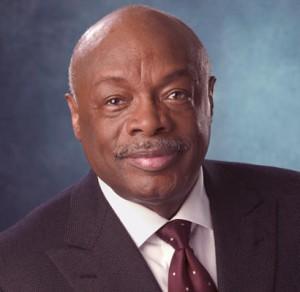
Willie Brown

D5 candidates and constituents scrutinize Olague

38

San Francisco’s political lines are in the process of being redrawn. That’s true literally, with the current reconstitution of legislative districts based on the latest census, but it’s also true figuratively: old alliances based on identity and ideology are being replaced with uncertain new political dynamics. And nowhere is that more true than in District 5.

In a recent Guardian, we explored the implications of Sup. Christina Olague’s dual (and potentially dueling) loyalties between Mayor Ed Lee, who appointed her to the job, and the progressive political community with which Olague has long identified. Those seemed to play out yesterday when Olague bucked progressives to be the sixth co-sponsor of Sup. Mark Farrell’s proposed charter amendment to repeal ranked-choice voting for citywide offices.

Already, many of her progressive constituents – even those who have strongly supported her – have been privately grumbling that Olague hasn’t been accessible and expressing doubts about her ability to lead one of the city’s most progressive districts. Olague, who initially returned our calls immediately but said she’d have to get back to us about supporting Farrell’s legislation (I’ll add an update if/when she calls back), adamantly denied that she’s had a slow start.

“We’ve been working with constituents constantly,” she said, rattling off a list of nightly meetings. “I’m in the community all the time, getting coffee with folks…We’re working on multiple issues here.”

Michael O’Connor – who owns The Independent and other businesses and who ran in D5 in 2004 and may run again this year – supports Olague but questions the conventional wisdom that her progressive roots and mayoral support make her a lock for reelection this year.

“Olague is an awesome person and she would be a great supervisor in District 9,” O’Connor said, citing her strong ties to the Mission District and work with the Mission Anti-Displacement Coalition. “But she’s very beatable in D5 because she doesn’t have the deep connections to the community.”

That’s a belief that is shared by others, including London Breed – the executive director of the African American Art & Cultural Center for the last 10 years – who jumped into the race last week and threatened to cut into Olague’s support among Mayor Lee’s supporters.

With Attorney General Kamala Harris and other Lee supporters by her side, Breed cast herself as a more authentic and grassroots representative for the district where she was raised. Or as Harris said, “London understands the challenges and strengths of the district. She is, bar none, the best voice for District 5.”

Left unsaid was the split that her candidacy created among supporters of Lee, whose ascension to Room 200 was engineered largely by former mayor Willie Brown and Chinatown power broker Rose Pak. Brown (along with some of the city’s most influential African American ministers) strongly backed Breed for the D5 appointment, while Pak wanted her ally Malcolm Yeung, although she reportedly got behind Olague in the end.

Breed told us that she was supportive of Olague and that “I’ve been adamant about people giving her a chance and working with her.” But she said that it’s already become “clear that she just doesn’t have what it takes and was probably not going to get there,” based on “the feedback and phone calls I got with the experience people had in meeting her.”

“She’s familiar with planning, but not necessarily with the neighborhood and all its community groups,” Breed said. As for crossing Mayor Lee with her decision to run, Breed told us, “This was a hard decision for me to make because I work with many of these people and have good relationship with him.”

Progressive D5 candidates, such as City College Board President John Rizzo, are waiting to take advantage of votes on which Olague breaks with the progressives to carry water for the mayor. As he told us, “The mayor doesn’t get to make this decision, it’s the voters of this district that will decide.”

Like Breed, Rizzo also emphasized his long ties to the district. “I respect Christina and like Christina, but my connections are very deep,” he said, citing his 26 years of living and working as an environmental activist in the district. “I have a record of going out and taking the initiative and making things happen.”

Thea Selby, president of the Lower Haight Merchants and Neighbors Association, has also been running an active campaign for the D5 job, including highlighting Olague’s split loyalties. “She literally switched camps to help chair the Run Ed Run committee,” she told us. Julian Davis, who ran for D5 supervisor in 2004 and has been rumored to be mulling another run, said that it’s disconcerting just how many elected officials in San Francisco started off with the advantage of being appointed to the office: “It’s not participatory democracy the way we envision it.”

Selby and others will be closely watching how Olague votes this year, and trying to differentiate when those votes are significant (such as being the swing vote to place the challenge to RCV on the ballot) or not (including Olague’s early vote to override Lee’s veto, which fell two votes short of the eight needed). “We need to look and see how she votes on things – and when it matters and when it doesn’t,” Selby said.

Yet already, even before the really big and controversial votes like the upcoming 8 Washington and CPMC projects, Olague is feeling the polar tugs on issues such as bicycling. Many bike advocates are mad that Lee has delayed promised bike lanes on Oak Street and with a rash of tickets that cyclists on the Wiggle have received.

“I’ve long been an advocate of biking, but I know there are issues related to parking in the neighborhood,” Olague told us, straddling the issue. “Parking for some reason is a very controversial issue in the city.”

And where does she come down on the stepped up enforcement of bikes rolling stop signs on the Wiggle? “I want to sit down with the Bike Coalition and see what they think,” Olague said.

Meanwhile, Breed – who is widely considered a political moderate, which could cause her problems winning in D5 – is also trying to position herself as more independent than Olague. “I’m about being progressive,” she told us, citing her recent hiring of a case worker at the AAACC to help young African Americans work through barriers to success. “To me, that’s what being progressive is.”

Breed readily acknowledged her early political support from Brown, who appointed her to the Redevelopment Commission when he was mayor, but said that she would still take a tough stand against Lennar and other developers to ensure the needs of current San Franciscans are being met by new projects.

“I’ve told people, this does not mean you have my support,” Breed said of her political contributors and her support of Lennar’s massive redevelopment of the southeast part of the city. “As my grandmother used to say, all money ain’t good money.”

On Breed’s entrance into the race, Olague told us, “It was expected, so I’m not surprised.” Olague said that she’s begun to set up her election campaign, but that most of her focus has been on getting up to speed at City Hall and in D5: “I’m just trying to focus on the work of the district.”

The ‘ruination’ of Peter Gleick

27

Oooh, sfgate has dropped climate scientist Peter Gleick’s column on the City Brights section of the site. Harsh, man; I guess that’s enough to “damage, if not ruin” the reputation of one of the world’s leading authorities on climate change. Fired by City Brights; I bet he feels as if he’s been unfriended by Garrison Keillor.

I continue to be amazed at the ethics of the San Francisco Chronicle, which can’t tolerate Gleick but still allows Willie Brown to write a column in the news section of the paper.

And I’m amazed at all the handwringing over this incident. I means, what, exactly did Gleick do that is going to destory his scientific reputation after years of unimpeachable work? Here’s what he did: He contacted the nuts at the Heartland Institute and asked them to send him some material. Oh, and he didn’t give his real name.

It doesn’t appear that he broke into the Heartland office, or hacked into the Heartland server, or went in under false pretenses and made a bogus video. In fact, I’d argue that, whatever the Chron’s legal sources say, it’s pretty hard to call this “stealing.”

Look, if my phone rang and the person on the line said his name was Warren Buffet and he asked me to send him confidential Guardian business information because he was thinking about investing $1 billion in the alternative press, I’d make a coupla phone calls first — wouldn’t you? If I ran a right-wing nonprofit and somebody called and said she was a board member and could you please send a package of sensitive internal documents to an address in Oakland, California, I’d call back at the number I had for her and ask if she’d move to crazyland — wouldn’t you? Who on Earth sends that kind of material out without making sure it’s going where it’s supposed to go — unless the vast majority of what Heartland sent Gleick was in fact the same sort of stuff that the loonies there regularly ship out to other loonies who they think might agree that Al Gore was born a thetan and is secretly plotting the United Nations takeover of the planet so that nobody can have round light bulbs any more.

I’m not condoning this sort of behavior — although the history of journalism (sometimes excellent, important journalism) is filled with examples of reporters using what some would call dubious methods to get through what Robert Scheer used to call “the palace guard.” But compared to shit the right wing pulls routinely, as a matter of practice, this is hardly a major crime. And you have to put some of the blame on whatever fool at the Heartland Institute mailed the company secrets off without checking where they were going.

And isn’t it good that we now know how the oil industry is trying to create a K-12 curriculum that denies climate change?


Lackluster finish to case that made serious political charges

9

A jury awarded the City and County of San Francisco $24,498 yesterday following its deliberations of a complicated civil case filed by the city in 2003 against a minority-owned computer services company accused of fraud and breach of contract, a company that countersued with a claim of being harmed by top city officials.

But that paltry sum and the jury’s verdict of shared responsibility in failing to root out corruption in city government belied the more politically significant accusations made through depositions in the case that Mayor Ed Lee and former Mayor Willie Brown overrode city staff to give contracts to a “fraudulent” yet politically connected company, which proved to be a tangential issue that was left largely unexplored at trial.

In CCSF vs. Cobra Solutions, the jury found that both the city and Cobra Solutions failed in their responsibilities to prevent a former Department of Building Inspection information technology manager, Marcus Armstrong, from fraudulently bilking the city out of at least $482,000 between 1999 and 2001. An alleged Armstrong accomplice, Government Computer Sales, Inc. – which witnesses said Brown and Lee improperly certified, and which they say they don’t remember – fled and was never brought to justice.

Cobra Solutions, which was awarded master contract status in 1998, was bound by a provision in its agreement with the city that required Cobra to “supervise” sub-contractors. The allegation of fraud against Cobra, however, was effectively dropped from the city’s complaint, but not until the end of the trial when consideration of fraud was omitted from the city’s closing arguments.

The award to the city was the difference between the monies paid by the city to Cobra Solutions ($269,739.93) and the monies paid by Cobra Solutions to Armstrong’s phony companies ($245,241.93), or the markup Cobra Solutions received from the city following the submission of several fraudulent invoices from two phony sub-contractor companies, Monarch Enterprises and Mindstorm technologies, set up by Armstrong.

Following the verdict announcement, a juror who did not want to be identified, said there wasn’t a single piece of evidence that was most compelling, but that, “the city proved its case. Cobra failed to prove its case.” The “vast majority” of jurors shared that opinion, the juror said. “It wasn’t even close.”

“The jury thought there was obviously a failure to supervise,” the juror continued. “[Cobra Solutions] took on work without even knowing who the party was that was working for them. Who was Monarch?”

Several invoices from Armstrong’s phony companies contained different addresses that the juror described as “a bit of a red flag.”

“If I’m in business, I’m not going to have someone working for me who I don’t know, and I’m not going to be paying them checks,” the juror said.

“The city also bore responsibility” in its failure to detect Armstrong’s kickback scheme, the juror said, mirroring the same sentiment echoed by then-City Controller Ed Harrington, who took the stand and conceded the city’s internal controls – as well as those of Cobra Solutions – failed to detect Armstrong’s kickback scheme.

Cobra had sought damages for breach of contract (the city’s failure to pay monies owed Cobra) and due process violations in connection with the city’s alleged debarment of Cobra from doing further business with the city.

“I’m disappointed,” said Cobra Solutions founder and president James Brady. “Life goes on. We’ll continue to move forward and repair our damaged reputation, raise our grandchildren, and focus on our families.”

Asked about the issue of sub-contractor supervision, Brady said, “I don’t think anybody could supervise a con man and the city was negligent in hiring this guy – they wouldn’t even bring him in the courtroom – so it’s just betrayal. And it’s a sad day that you hire con man and you won’t take any responsibility for his actions and you blame the small business. That’s not the American way.”

On the jurors finding that Cobra was not intentionally or defacto debarred from doing further business with the city, Brady said, “I think they got it wrong. I have no doubt about that.”

“The jury missed a lot of important facts,” said Mr. Brady’s wife, Deborah Brady, a co-founder of Telecon, the parent company of Cobra Solutions. The city had originally sued Telecon in its case-in-chief, but pursued no claims against Telecon at trial. “I don’t know how they missed them, but they missed them.”

Ms. Brady said the city gave another company, Desktop, the opportunity to defend itself against debarment, but “they never gave us that opportunity.”

“Judith Blackwell, she told the whole story in terms of Monique Zmuda saying they wanted us out, that we’re crooks,” Ms. Brady continued. “They accused us… and never gave us the opportunity to respond, ever.” Monique Zmuda is the deputy City Controller.

“I feel really betrayed by a city that I used to really love and [City Attorney] Dennis Herrera, who is our private attorney, betrayed us,” a tearful Ms. Brady said. “Ed Lee, who claims he barely knew us, betrayed us. Ed Harrington? I don’t know what that was all about, or Monique Zmuda… but Ed Lee and Dennis Herrera, they let down really good people who used to live in this city and loved this city and did all that we could to do good in the community and this city. “

“So I pretty much call it, ‘The City of Betrayal.’”

Cobra’s lead counsel in the case, Whitney Leigh, told us, “The jury made its decision. We’re concerned that the jury was allowed to find that Cobra could have breached the contract by refusing to submit to an audit by the City Attorney. So we believe there are some issues that need to be researched, so we’ll be looking at those issues.”

Asked if there would be post-trial motions, Leigh said, “Post trial motions and/or appeal.”

“Obviously we’re disappointed,” Leigh added, “but we’ll review the transcripts and see what options are available.”

Because of the possibility of an appeal, Herrera was unable to comment on the verdict or to discuss city’s costs in trying the case, said Herrera spokesperson Matt Dorsey.


How business was done

8

news@sfbg.com

A complicated civil lawsuit alleging corruption and fraud and involving several prominent current and former city officials — including Mayor Ed Lee, who took the witness stand to discuss actions he took as city purchaser a decade ago — could end up costing city taxpayers as much as $10 million.

City and County of San Francisco vs. Cobra Solutions and Telecon was being deliberated by jurors in Superior Court at press time. It centers on a fraud and kickback scheme engineered by convicted felon Marcus Armstrong, a former Department of Building Inspection information technology manager who bilked the city out of at least $482,000 between 1999 and 2001 (see “Dirty Business,” 2/8/11). His scheme was exposed by an FBI investigation following a whistleblower’s complaints in September 2001 that sub-contractors were not being paid.

The City Attorney’s Office accused Cobra Solutions of participating in Armstrong’s fraud, but Cobra’s owners denied being part of the scheme and they say their business was wrongfully damaged when their contracts were frozen by city officials.

Armstrong created two phony companies, Monarch Enterprises and Mindstorm Technologies, and ordered master contractor Cobra Solutions to use the phony sub-contractor companies to provide technology services to the city’s Computer Store (a list of approved contractors) under an agreement awarded to Cobra by the Committee on Information Technology (COIT). It also partnered with another company alleged by the city to be fraudulent, Government Computer Sales, Inc. (GCSI), whose principals fled and whose whereabouts are unknown.

Cobra Solutions founder and president James Brady had raised questions about Armstrong as early as 2000, questions that triggered an unfruitful investigation by the city. Brady maintained in court testimony that Cobra, unaware of Armstrong’s fraud, relied on him to sign off on work services that Armstrong’s phony companies were supposed to have supplied to the city.

The Computer Store was set up by then-Purchaser Ed Lee under the administration of then-Mayor Willie Brown to centralize technology procurement across departments. Now-Mayor Lee was deposed in the case and called to the witness stand on Feb. 6, where he said he awarded Cobra Solutions the highest-rated ranking among several vendors being evaluated by COIT for master contract award status. Each of the other city evaluators, including Deputy Controller Monique Zmuda, also ranked Cobra the top service provider.

According to Armstrong’s guilty plea agreement, GCSI partnered with Armstrong to defraud the City out of $240,000. Deborah Vincent James — then-director of COIT and now deceased — testified in a pre-trial deposition that GCSI was “fraudulent,” that city staffers recommended against certifying the company, and that it was only awarded master contract status because of its political ties to Brown, who directed Lee to overrule the staff recommendation. In his deposition, Lee claimed he could not remember GCSI.

Vincent-James and former Purchasing Directory Judith Blackwell forwarded whistleblower complaints about GCSI to the City Attorney’s Office in early 2001, but neither that office nor the Controller’s Office acted on the complaints until GCSI had gone bankrupt and GCSI’s owners, two foreign nationals, had disappeared.

Of note, Lee was not questioned about his and Brown’s involvement in awarding GCSI its master contract status in 1998. Time restrictions placed on attorneys by Judge James McBride limited the scope of witness examinations, so the most politically explosive charges went largely unexplored in court.

The city completed a subsequent investigation in January 2003 that resulted in stopped payments to Cobra, contract termination, and the city’s civil lawsuit filed by City Attorney Dennis Herrera against Cobra in April 2003. Following Herrera’s filing against Cobra, Herrera demanded an audit of Cobra which Cobra refused, citing a conflict of interest. Herrera had previously represented Cobra in private practice before he was elected City Attorney in 2001.

A trial court ruled in that Herrera had a conflict of interest, disqualifying Herrera and his office from participating in the Cobra case, a ruling later upheld by the California Supreme Court. Yet the suit alleges Herrera and his office continued to supply work to various City agencies and to effectively prevent Cobra from doing further business with city. By withholding the $2 million Cobra was owed by the City, COIT was able to disbar Cobra from entering into master contract agreements with the city, claiming Cobra was fiscally “non-responsible,” according to court testimony.

Blackwell, in her testimony at trial, said the determination of Cobra’s non-responsibility was used as a “pretext” for Cobra’s disbarment, a procedure that should have triggered a hearing to allow Cobra to defend itself against debarment. That never happened.

An FBI investigation into Armstrong’s kickback scheme resulted in Armstrong pleading guilty to mail fraud, wire fraud, and obstruction of justice in July 2003. No criminal charges were ever brought against Cobra Solutions or Telecon and yet the city’s outside law firm, Cotchett, Pitre & McCarthy LLP, which tried the case on behalf of the city, held on to the city’s allegation of fraud committed by Cobra and Telecon throughout the case and trial until closing arguments on Feb. 9.

In his closing arguments, attorney Ara Jabagchourian made no mention of Telecon, effectively dropping the city’s claims against Telecon, and constricted the city’s damage claims against Cobra. He asked the jury to award the city up to $266,000, money paid to Cobra for work authorized and signed-off by the city, via Armstrong, for breaching a provision in the contract agreement between the city and Cobra that requires the master contractor to “supervise” sub-contractors.

But Cobra’s lawyers — the firm of Gonzalez & Leigh, which includes former Board of Supervisors President Matt Gonzalez, who took a leave from his current job as deputy public defender to consult on the case — says it is the city that should pay for fatally harming a business without just cause.

“The City and City Attorney’s office falsely accused Cobra and Telecon of stealing $2.4 million dollars from the City, destroying these companies and ruining the lives of good, decent people who were the victims of a city tech official who should not have been hired in the first place,” said attorney Whitney Leigh. “Then the City Attorney made it worse, flatly defying an order disqualifying the City Attorney’s Office and instead driving efforts to run Cobra and Telecon out of business just because Cobra raised the issue of the conflict of interest. I’ve been unable to find any case in which an attorney has so flagrantly ignored a disqualification order.”

Herrera can’t comment on the case, but his office previously told the Guardian, “Immediately upon discovery of Cobra’s role, the office screened Herrera off from further involvement in the investigation and all matters related to it in accordance with a stringent ethical screening policy Herrera established when he took office.”

The-City Controller Ed Harrington, who exerted significant influence over contract awards and debarment proceedings as chair of COIT, conceded in court testimony that internal controls failed to detect Armstrong’s scheme.

“In the case of Marcus Armstrong, the control within the city failed and the control within Cobra failed,” Harrington, now head of the San Francisco Public Utilities Commission, told the court. “We had both controls in place. If they had worked, the city would have been protected. Both failed.”

Cobra is seeking damages for breach of contract (the city’s failure to pay monies owed Cobra), and civil rights due process violations in connection with the city’s apparent conspiracy to bar Cobra from doing further business with the city.

A business valuation expert testified Cobra Solutions was valued between $5.2 million and $8.8 million based on future lost profits from the city’s debarment. With attorney fees and court costs, the city could be on the hook for as much as $10 million.

The city has subsequently established more stringent controls as it relates to the authorization of work assigned to master contractors and sub-contractors. The jury was expected to resume deliberations on Feb. 14 and deliver its verdict by week’s end. Check the SFBG.com Politics blog for the latest.

Meet the new supervisor

10

Christina Olague, the newest member of the Board of Supervisors, faces a difficult balancing act. She was appointed by Mayor Ed Lee, whom she supported as co-chair of the controversial “Run Ed Run” campaign, to fill the vacancy in District 5, an ultra-progressive district whose voters rejected Lee in favor of John Avalos by a 2-1 margin.

So now Olague faces the challenge of keeping her district happy while staying on good terms with the Mayor’s Office, all while running in her first campaign for elected office against what could be a large field of challengers scrutinizing her every vote and statement.

Olague has strong progressive activist credentials, from working with the Mission Anti-Displacement Coalition to protect low-income renters during the last dot-com boom to her more recent community organizing for the Senior Action Network. She co-chaired the 2003 campaign that established the city’s minimum wage and has been actively involved in such progressive organizations as the Milk Club, Transit Riders Union, and the short-lived San Francisco People’s Organization.

“One of the reasons many of us are so supportive of Christina is she is grounded in the issues of low-income San Franciscans,” said Gabriel Haaland, who works with SEIU Local 1021 and accompanied Olague to a recent interview at the Guardian office.

She also served two terms on the Planning Commission — appointed by Board of Supervisors then-President Matt Gonzalez in 2004 and reappointed by then-President Aaron Peskin in 2008 — where she was known for doing her homework on complicated land use issues and usually landing on the progressive side of divided votes.

“Coming from the Planning Commission, she can do a lot of good,” said Tom Radulovich, executive director of Livable City and a supporter who has worked with Olague for 15 years. “We lost a lot of collective memory on land use issues,” he said, citing the expertise of Chris Daly and Aaron Peskin. “We do need that on the board. There is so much at stake in land use.”

Olague disappointed many progressives by co-chairing Progress for All, which was created by Chinatown power broker Rose Pak to push the deceptive “Run Ed Run” campaign that was widely criticized for its secrecy and other ethical violations. At the time, Olague told us she appreciated how Lee was willing to consider community input and she thought it was important for progressives to support him to maintain that open door policy.

In announcing his appointment of Olague, Lee said, “This is not about counting votes, it’s about what’s best for San Francisco and her district.” Olague also sounded that post-partisan theme, telling the crowd at her swearing-in, “I think this is an incredible time for our city and a time when we are coming together and moving past old political pigeonholes.”

With some big projects coming to the board and the working class being rapidly driven out of the city, progressives are hoping Olague will be a committed ally. There’s some concern, though, about her connections to Progress For All campaign’s secretive political consultant, Enrique Pearce.

Pearce has become a bit of a pariah in progressive circles for his shady campaign tactics on behalf of powerful players. In 2010, his Left Coast Communications got caught running an independent expenditure campaign partly funded by Willie Brown out of Pearce’s office, even though Sup. Jane Kim was both its beneficiary and his client — and that level of coordination is illegal. Last year, Pearce was hired by Pak to create the “Run Ed Run” campaign and write the hagiographic book, The Ed Lee Story, which also seemed to have some connections with Lee’s campaign. The Ethics Commission hasn’t fined Pearce for either incident, and he didn’t return a Guardian call for comment.

Olague told us not to worry. “He’s a friend…and I think it’s an exaggerated concern,” she said, confirming but minimizing his role so far. Yet she hired one of Pearce’s former employees, Jen Low, as one of her board aide. Olague’s other aides are Chris Durazo from South of Market Community Action Network (SOMCAN) and Dominica Henderson, formerly of the SF Housing Authority.

Debra Walker, a progressive activist who served on the Building Inspection Commission and has worked with Olague for decades, said she’s a reliable ally: “She’s from the progressive community and I have no equivocation about that.”

Olague makes no apologies for her alliances, saying that she is both independent and progressive and that she should be judged by her actions as a supervisor. “People will have to decide who I am based on how I vote,” she said, later adding, “I support the mayor and I’m not going to apologize for that.”


OLAGUE’S PRIORITIES

Olague was born in Merced in 1961 to a Mexican immigrant father who fixed farming equipment and a stay-at-home mother. She went to high school in Fresno and moved to the Bay Area in 1982. She attended San Francisco State University but had to drop out to help support her family, working at various stock brokerage firms in the Financial District. She later got a degree in liberal studies from California Institute of Integral Studies.

In 1992, Olague’s mother was in serious car accident that left her a quadriplegic, so Olague spent the next seven years caring for her. After her mother died, Olague left the financial services industry and became a community organizer for the Mission Anti-Displacement Coalition, battling the forces of gentrification and then-Mayor Brown and becoming an active player in the ascendant progressive movement.

But Olague never abided progressive orthodoxy. She backed Mark Leno over the more progressive Harry Britt in their 2002 Assembly race and backed Leno again in 2007 when he ran for state Senate against Carole Migden. She also voted for the Home Depot project on Bayshore Boulevard despite a progressive campaign against the project.

Olague worked with then-Sup. Chris Daly to win more community benefits and other concessions from developers of the Trinity Plaza and Rincon Tower projects, but now she is critical of Daly’s confrontational tactics. “Daly’s style isn’t what I agree with anymore,” Olague said, criticizing the deals that were cut on those projects to approve them with larger than required community benefits packages. “I think we romanticized what we got.”

So how does Olague plan to approach big development proposals, and is she willing to practice the brinksmanship that many progressives believe is necessary to win concessions? While she says her approach will be more conciliatory than Daly’s, she says the answer is still yes. “You push back, you make demands, and if you don’t think it’s going to benefit the city holistically, you just fucking say no,” Olague said.

Walker said Olague has proven she can stand up to pressure. “I think she’ll do as well as she did on the Planning Commission. She served as president and there is an enormous amount of pressure that is applied behind the scenes,” Walker said. “She’s already stood up to mayoral pressure on some issues.”

Yet even some of Olague’s strongest supporters say her dual — and perhaps dueling — loyalties to the Mayor’s Office and her progressive district are likely to be tested this year.

“It’ll be challenging for her to navigate,” Radulovich said. “The Mayor’s Office is going to say I want you to do X and Y, and it won’t always be progressive stuff, so it’ll be interesting to see how that plays out.”

But he said Olague’s land use expertise and progressive background will likely count for more than any bitter pills that she’s asked to swallow. “Sometimes, as a policy maker, you have to push the envelope and say we can get more,” he said. “It helps if you’re willing to say no to things and set boundaries.”

When we asked Olague to lay out her philosophy on dealing with land-use issues, she said that her approach will vary: “I have a very gray approach, project by project and neighborhood by neighborhood.”

Only a couple weeks into her new role, Olague said that she’s still getting a lay of the land: “I’m in information gathering mode, meeting with neighborhood groups to try to figure out what their issues are.”

But Olague said she understands that part of her job is making decisions that will disappoint some groups. For example, after Mayor Lee pledged to install bike lanes on Fell and Oak streets to connect the Panhandle to The Wiggle and lessen the danger to bicyclists, he recently stalled the project after motorists opposed the idea.

“I’m a transit-first person, for sure. I don’t even drive,” Olague said of her approach to that issue, which she has now begun to work on. “We’ll try to craft a solution, but then at some point you have to fall on one side or the other.”


THE “JOBS” FOCUS

One issue on which Olague’s core loyalities are likely to be tested is on the so-called “jobs” issue, which both Lee and Olague call their top priority. “Jobs and economic revitalization are very important,” she told us.

Progressives have begun to push back on Lee for valuing private sector job creation over all other priorities, such as workers’ rights, environmental safeguards, and public services. That came to a head on Jan. 26 at the Rules Committee hearing on Lee’s proposed charter amendment to delay legislation that might cost private sector jobs and require extra hearings before the Small Business Commission. Progressives and labor leaders slammed the proposal as unfair, divisive, unnecessary, and reminiscent of right-wing political tactics.

But when we interviewed Olague the next day, she was reluctant to criticize the measure on the record, even though it seemed so dead-on-arrival at the Board of Supervisors that Mayor Lee voluntarily withdrew it the next week.

Olague told us job creation is important, but she said it can’t squeeze out other priorities, such as protecting affordable rental housing.

“We always have to look at how the community will benefit from things. So if we want to incentivize for businesses, how do we also make it work for neighborhoods and for people so that we don’t end up with where we were in the Mission District in the ’90s?” she said.

Olague also said that she didn’t share Lee’s focus on jobs in the technology sector. “There’s a lot of talk of technology, and that’s fine and I’m not against that, and we can see how it works in the city. But at the same time, I’m concerned about folks who aren’t interested necessarily in working in technology. We need other types of jobs, so I think we shouldn’t let go of the small scale manufacturing idea.”

Conflicted Chron buries the lead in city corruption case

67

UPDATE 2/15: READ OUR CURRENT STORY ON THE CASE HERE. The San Francisco Chronicle’s Matier and Ross love to poke snarky fun at progressives such as Matt Gonzalez, as they did again today when they wrote about his work on the Cobra Solutions vs. San Francisco case, for the second time. But they waited until the last paragraph in this second-to-last item in their column to reveal the real news: Mayor Ed Lee was deposed in the case last week and may be called as a witness.

Wow, talk about burying the lead. Here you have a sitting mayor implicated in a major corruption scandal – acting on orders from then-Mayor Willie Brown, who last year helped elevate Lee into Room 200 (and who just happens to write a weekly column for the Chronicle) – in a case that could cost city taxpayers $16 million.

The Chron hasn’t really covered the substance of the case, but Guardian readers may remember our investigative report on it last year. That’s when we unearthed evidence that Ed Lee, who was the city purchaser at the time, approved a fraudulent city contract – overruling city staff in the process – allegedly on orders from Brown.

It’s a complicated case and a long story well worth reading, but essentially it involves a company called Government Computer Sales Inc. (GCSI) that had ties to Brown. It’s accused of improperly getting a multi-million-dollar city contract with Lee’s help and then soliciting kickbacks from its subcontractors, including Cobra Solutions.

Cobra claims it didn’t know payments to GCSI were kickbacks and that it was damaged by the accusations and being frozen out of its city work by the City Attorney’s Office (under Dennis Herrera, who has his own interesting conflicts in the case). Also implicated in the case are SFPUC Director (and then-Controller) Ed Harrington; Monique Zmuda, still a top official in the Controller’s Office; and Steve Kawa, the chief-of-staff for Lee, Brown, and Gavin Newsom, and a powerful player at City Hall.

In a deposition, a city computer operations manager named Deborah Vincent-James testified that she and other city staffers knew GCSI was a fraudulent company, but that they were placed in the Computer Store (a list of qualified city contractors) to do work for the Department of Building Inspection on orders from above: “[Lee] was directed by the Mayor’s Office and told to do an evaluation process. They evaluated them. They were put in the store.”

UPDATE 2/7: Mayor Lee took the witness stand in court yesterday, where he was questioned by attorney Whitney Leigh about overruling staff to certify GCSI, which the City Attorney’s Office has deemed a fraudulent company that has since left town and evaded justice. More on what he said later.

Why the public thinks government is fat

10

Polls from the PPIC are typically pretty accurate, so I have no reason to doubt the results of a recent one showing that a majority of Californnians still think government can be cut substantially without a reduction in services. It’s hard to fathom; as Brian at Calitics notes,


Cuts to government expenditures mean direct cuts to services. There is simply no way to provide the same level of services for an ever decreasing amount of money. Go take a look at your local government offices and then compare it to the offices of your local bank corporate office.  There are no fancy waterfalls and lavish breakrooms offering wide selections of Odwalla and Rice Krispies, there are just a dwindling level of state employees working ever harder to keep up.  


So, while most voters strongly support raising taxes on the rich, 59 percent also think that government can easily be cut just by eliminating waste. Even Arnold Schwarzenegger, who took office pledging the same thing, left saying there wasn’t much waste left to cut. And while I fully believe that any organization that spends $80 billion a year is going to have some things in the budget that don’t belong — it’s simply humanly impossible to run anything, public or private, that big without some employee sleeping in the supply room or somebody sneaking cookies on the company dime — it’s also the case that what’s missing in the California budget is more important than what’s being mis-spent.


Why don’t people get this? Part of the reason is a 30-year concerted campaign by the right wing to convince people that the public sector is a waste of money. But part of the reason is also that the news media, by its very nature, is much more likely to report on waste in government than similar (or worse) waste in the private sector.


For one thing, it’s easy: Government records are public. Figuring out how Enron, which kept its records private, stole $40 billion from the state of California is really, really hard. There’s also the (correct) notion that the government is spending OUR money, so we ought to watch where it goes.


And of course, corrupt politicians like Willie Brown give everyone in government a bad name, and there are plenty of them.


But remember: The government typically spends a lot of our money on private contracts with companies that don’t make their records public. How many employees of the contractors building the Central Subway are sleeping on the job, double-billing, charging fancy lunches and wasting the public’s dollars? That takes a lot more digging — weeks of investigative reporting — and it’s not the sort of stuff that can just pop up in a Matier and Ross column, the way a city worker who pulls in a lot of overtime can (and does).


I think there’s also a general lack of interest in exposing corporate wrongdoing. PG&E’s records are public, and all the money the company spends is OUR money (we’re ratepayers, and we have no choice). But how much do you see about overpaid PG&E executives compared to how much you see about (far less) overpaid city employees? PG&E has hundreds of executives making far more than the most bloated City Hall salaries, and they all have nice pensions — but you never hear about PG&E needing pension reform, or how the utility needs to tighten its belt to keep rates low in a recession.


When you’re bombarded day after day with stories about a deputy sheriff or a nurse who works a huge amount of overtime and takes home $150,000 a year, you can’t help but think that the public sector’s wasting your money. But the private sector does a lot worse.


And sure, under capitalism, a wasteful private company should pay the price in the marketplace — but we all know that a lot of the big private companies don’t really compete much (see: the financial sector), and when it comes to regulated utilities like PG&E, they don’t compete at all. You think ATM fees and checking account fees and all the other shit that banks hit us with isn’t in part a result of waste, fraud and bloated payrolls? Isn’t that my money, too?


Ed Lee’s 100 percent

26

I expected a lot of talk about togetherness at the mayor’s inauguration, but Ed Lee went a step further: He acually announced that he wants to be the mayor “for the 100 percent.” That’s a remarkable statement when you think about it, and it indicates to me that Lee doesn’t want to be, and isn’t going to be, and activist leader.

It’s nice to talk at political events about how we’re all in this together, how everyone in San Francisco is part of the same nice big city family, how we all really love each other and can hold hands and build a better city and all that happy horsehit. But the truth is, we aren’t, and we can’t.

San Francisco is a divided city, increasingly split between the rich and the poor, the powerful and the powerless. The politics are bitterly divided — and not because the progressives fought with former mayor Gavin Newsom. No: There are people who are used to getting their way in this town, and they have been for years, and they make up an oligarchy that stands with big landlords, and big developers, and big corporations, often using terms like “job creation”  to disguise an agenda of tax breaks, minimal regulation and a disdain for social justice.

That’s not conspiracy theory; it’s fact, and anyone who has been a part of this city for a long as me knows it.

It’s about political power. An activist, progressive mayor would acknowlege that fact — and the fact that power is never surrendered voluntarily. Sorry to spoil your spirit of togetherness, Ed, but Willie Brown and his clients, including Pacific Gas and Electric Company, have very little in common with me; I want to kick PG&E out of San Francisco and replace it with a publicly-owned utility. There is no compromise here, no middle ground — PG&E has to lose for us to win.

Not every issue in San Francisco is like that — some of the 1 percenters are all in favor of bicycle lanes and same-sex marriage and a lot of other wonderful things. There are plenty of areas where everyone in San Francisco can work together for the glory of our collective greatness.

But there are also issues that involve, yes, class warfare. Ed Lee must know that; he’s been around long enough, fought enough bad guys, stood up for the poor people. But he also apparently thinks he can be mayor and be pals with Brown and the billionaires — and still be on the side of the 99 percent. And it doesn’t work that way. Not if you want to make economic justice a part of the local agenda.

I think Lee’s going to be a lot better than Gavin Newsom, who was intractable and a jerk. But this notion that you never have to pick sides, that there is no 99 percent on one side up against a 1 percent on the other, is either cluelessness or bullshit. And I don’t think Lee is clueless.

OFFIES 2011

0

It was the year of the Rapture (oh, wait, maybe not), the year of the great Republican resurgence (oh wait, maybe not), the year of Anthony Weiner’s penis and Gerard Depardeiu’s piss, the year of the Kardashians and Charlie Sheen … and the Offies in-basket overflows. Here are our favorite choice moments of 2011.


ACTUALLY, HIS THUMBS ON THE PHONE WERE THE ONES DOING DAMAGE

Anthony Weiner, in a sexting conversation with a middle-aged Nevada Democratic volunteer, described his penis as “ready to do some damage.”


AT LEAST SOMEBODY’S DOING SOMETHING ABOUT THE UNEMPLOYMENT RATE

Hustler publisher Larry Flynt offered Weiner a job


GOOD THING EXPERTISE IN THE ENGLISH LANGUAGE HAS NEVER BEEN A PREREQUISITE OF THE JOB

Presidential candidate Herman Cain, in an interview, said he didn’t know the name of the president of Uzbekistan, which he called UBEKE BEKI KEIE BAH BAH STAND O BAN STAN SO WHAT WHAT?


CERTAINLY NOT THE KIND OF FOOD FOR A MIGHTY MAN WHO SEXUALLY HARASSES HIS SUBORDINATES

Cain said that too many vegetable toppings make a “sissy pizza.”


BECAUSE AN ELECTRIFIED CARTOON MOUSE IS AN INSPIRATION TO US ALL

Cain blamed “elites” for derailing his campaign, then quoted from the Pokemon theme song.


NICE TO SEE HERMAN CAIN HAS COMPANY IN THE DEPARTMENT OF QUALITY POLITICAL CANDIDATES

Joe the Plumber announced he would run for Congress


COULD IT BE — THE STUPIDEST REPUBLICAN CANDIDATE EVER?

Rick Perry couldn’t remember which federal agencies he wanted to shut down.


EXCEPT THAT THE ALMIGHTY HASN’T BEEN ABLE TO TELL US WHICH DEPARTMENTS HE WOULD CUT, EITHER

Michelle Bachman said that the East Coast earthquake and hurricane were signs that God thought the country was spending too much money on government services.


IT APPEARS THE CHRISTIAN RIGHT CAN’T GET ITS STORIES STRAIGHT

Rush Limbaugh said that the power of Hurricane Irene, which caused 53 deaths and $15 billion in property damage, was blown out of proportion to promote “the leftist agenda.”


HMMM… SINCE HERS MAKES A BUSINESS OF “CONVERTING” GAY PEOPLE, WE HAVE TO WONDER WHAT HE TELLS HER TO DO

Bachman said wives should be obedient to their husbands


BUT HEY — THOSE GUYS ALL LOOK ALIKE

Bachman praised Waterloo, Iowa as the home of John Wayne, when it’s actually the home of serial killer John Wayne Gacy


AN EXCEPTIONAL NEW INTERPRETATION OF THE INTELLECTUAL ROOTS OF THE SECOND AMENDMENT

Sarah Palin insisted that Paul Revere “warned the British that they weren’t going to be taking away our arms, by ringing those bells.”


UM, RICK, THE SCHOOLS ARE CLOSED ON CHRISTMAS

A Rick Perry campaign ad said that “something’s wrong with America” because “gays can serve openly in the military but our kids can’t openly celebrate Christmas or pray in school.”


DAMN — THAT MEANS HE REALLY IS A DUMB AS HE LOOKS

Perry insisted he wasn’t drunk when he delivered a rambling speech in New Hampshire


OR MAYBE A LITTLE LIKE FINDING OUT THAT SHE WAS JUST USING YOU ALL ALONG

Sup. David Chiu said meeting Mayor Lee — who he helped put in office — after he broke his promise not to run was “a little like meeting an ex-girlfriend after a breakup.”


AND TALK ABOUT BEING USED

Ed Lee said he didn’t want to run for mayor, but he had trouble saying no to Rose Pak and Willie Brown


IT DOESN’T MATTER — AS THE GREAT RONALD REAGAN ONCE SAID, “FACTS ARE STUPID THINGS.”

Sen. John Kyle announced that 90 percent of Planned Parenthood’s business was abortions, and when it turned out he was wrong by a factor of 30, he said his allegation “wasn’t meant to be factual.”


THE U.S. HAS DEPOSED PEOPLE FOR LESS THAN THAT. OH, WAIT …

Moammar Gadafi said his political opponents were on LSD and kept a stash of photos of Condoleeza Rice.


OH WELL, YOU KNOW HOW GOD IS; HE FLAKES OUT ON DATES ALL THE TIME

Oakland radio minister Harold Camping announced that the end of the world would come Oct. 21.


TOO BAD THAT WILL ONLY COVER THE FIRST SESSION OF THE POOR KID’S THERAPY

A woman who created a media frenzy when she said that she had given her young daughter botox admitted she made the story up so a tabloid would pay her $200.


WHEREAS, OBAMA HAS NEVER DEMANDED THAT TRUMP SHOW HIS REAL HAIR

Donald Trump demanded that Barack Obama show his birth certificate.


IF THE JAPANESE WOULD ONLY CUT GOVERNMENT SPENDING SOME MORE, THIS SORT OF THING WOULDN’T HAPPEN

Rush Limbaugh made fun of Japanese people after the earthquake and tsunami, saying “where Gaia blew up is right where they make all these electric cars.”


THE SCHOOL’S ESTEEMED NAMESAKE, ON THE OTHER HAND, HAD 27 WIVES, SOME AS YOUNG AS 15, AND AT LEAST 64 CHILDREN, SO HE WOULD NEVER HAVE APPROVED OF SUCH A THING

Brigham Young University suspended basketball star Brandon Davies because he sex with his girlfriend.


IT’S AWFUL, THE SACRIFICES OUR POLITICAL LEADERS HAVE TO MAKE IN THE NAME OF THE COUNTRY

Newt Gingrich told the Christian Broadcasting Network that he’d cheated on his wife because he loved America so much.


ON THE OTHER HAND, IF YOU WEREN’T SO FULL OF SHIT THE PLUMBING MIGHT FUNCTION A BIT BETTER

Sen. Rand Paul complained to an energy department official that he didn’t like appliance efficiency standards because “we have to flush the toilet 10 times before it works.”


NATURALLY — CLEANLINESS IS NEXT TO GODLINESS. SORT OF LIKE MARITAL FIDELITY

Gingrich told Occupy protesters to take a bath.


WHAT — HE DOESN’T CONSIDER HIMSELF A “FROTHY MIX OF FECAL MATTER AND LUBE THAT IS SOMETIMES THE BYPRODUCT OF ANAL SEX?”

Former Senator and presidential candidate Rick Santorum complained about what turns up when you put his name in a Google search.


AND NEXT, WE’LL REDEFINE “POOR” AND ELIMINATE FOOD STAMPS

House Republicans tried to redefine “rape” to eliminate funding for abortions


OH WELL, THERE GOES THE SEASON

Stanford University stopped giving student athletes special lists of easy classes


DONALD — YOU’RE FIRED

Donald Trump tried to host a presidential debate but gave up when nobody wanted to be there.


THIS FROM A MAN WITH “INVENTED” INTEGRITY

Gingrich called the Palestinians an “invented” people.


GOOD THING ABOUT THE CRACK — THAT SHIT FUCKS UP YOUR BRAIN

Charlie Sheen opened his Violent Torpedo of Truth Tour in Detroit, where he burned a Two and A Half Men T-shirt, told the crowd that he was “finally here to identify and train the Vatican assassin locked inside each and every one of you,” demanded “freedom from monkey-eyed&ldots;sweat-eating whores,” and said he doesn’t do crack anymore.


AT LEAST HE’S GOT ONE THING GOING FOR HIM: HE JOGS WITH A GUN AND SO FAR HASN’T SHOT HIS OWN BALLS OFF

Rick Perry told the Associated Press that he shot a coyote that had threatened him on his morning jog.


KILL ‘EM ALL AND LET GOD SORT ‘EM OUT

The crowd at a Republican debate cheered after moderator Brian Williams noted that Rick Perry had overseen 234 executions.


ANOTHER GREAT MOMENT IN THE ANNALS OF LAW ENFORCEMENT

A Davis police officer pepper sprayed a group of peaceful protesters who were sitting on the ground.


SINCE THERE’S NO NEWS IN THE WORLD OF THE 1 PERCENT

The New York Post investigated sex at Occupy Wall Street


GOOD THING IT DIDN’T WORK — THE WATER FROM HEAVEN WOULD HAVE MADE THE BUNS ALL SOGGY

Perry held a religious rally to pray for rain at Reliant Stadium in Houston, and urged people to fast, although the concession stands sold hot dogs.


BUT WAIT — IF WE SHUT DOWN THE GOVERNMENT, AREN’T WE … OH, NEVER MIND

Michelle Bachman said she opposes same-sex marriage because “the family is the fundamental unit of the government.”


THE FACT THAT WE’RE EVEN WRITING ABOUT A TEENAGER WHO CALLS HER TITS “SNOWBALLS” IS A SIGN OF THE END OF CIVILIZATION

Child bride Courtney Stodden was kicked out of a pumpkin patch for dressing in daisy dukes and making out with her 53-year old husband, Doug Hutchinson, and she madly tweets things like “Squeezing my snowballs inside of a seasonal sexy little lingerie as I begin to swing around the Christmas tree to hot rock ‘n roll hits!”


IT SELLS, BABY, IT’S SELLS

Kim Kardashian made $12 million for doing essentially nothing.


A NEW DEFINITION OF TERROR: WATCHING A 63-YEAR-OLD MAN WHIP OUT HIS DICK

Gerard Depardieu pissed on the floor of an Air France jet after flight attendants told him he’d have to wait to use the bathroom.


WE’RE GOING TO TAKE A BUNCH OF STEROIDS AND THEN LIE ABOUT IT AND MAYBE WE CAN SPEND A MONTH THERE, TOO

The U.S. Justice Department spent millions of dollars and eight years to convince a judge to sentence Barry Bonds to spend a month at his Beverly Hills estate.

Guardian editorial: City Hall’s 2012 agenda

20

EDITORIAL There’s so much on the to-do list for San Francisco in 2012 that it’s hard to know where to start. This is a city in serious trouble, with unstable finances, a severe housing crisis, increased poverty and extreme wealth, a shrinking middle class, crumbling and unreliable infrastructure, a transportation system that’s a mess, no coherent energy policy — and a history of political stalemate from mayors who have refused to work with progressives on the Board of Supervisors.

Now that Ed Lee has won a four-year term, he and the supervisors need to start taking on some of the major issues — and if the mayor wants to be successful, he needs to realize that he can’t be another Gavin Newsom, or Willie Brown, mayors who were an obstacle  to real reform.

Here are just a few of the things the mayor and the board should put on the agenda for 2012:

+Fill Sup. Ross Mirkarimi’s seat with an economic progressive. This will be one of the first and most telling moves of the new Lee administration — and it’s critical that the mayor appoint a District 5 supervisor who is a credible progressive, someone who supports higher taxes on the rich and better city services for the needy and is independent of Lee’s more dubious political allies.

+Make the local tax code more fair — and bring in some new revenue. Everybody’s talking about changing the payroll tax, which makes sense: Only a small fraction of city businesses even pay the tax (which is not a “job killer” but is far too limited). Sup. David Chiu had a good proposal last year that he abandoned; it called for a gross receipts tax combined with a commercial rent tax — a way to get big landlords and companies (like law firms) that pay no business tax at all to contribute their fair share. That’s a good starting point — but in the end, the city needs more money, and the new system should be set up to bring in at least $100 million more a year.

+Create a linkage between affordable and market-rate housing. This has to be one of the key priorities for the next year: San Francisco’s housing stock is way out of balance, and it getting worse. The city’s own General Plan mandates that 60 percent of all new housing should be available at below-market-rate prices; the best San Francisco ever gets from the developers of condos for the rich is 20 percent. The supervisors need to enact legislation tying the construction of new market-rate housing to an acceptable minimum level of affordable housing to keep the city from becoming a place where only the very rich can live.

+Demand a good community-benefits agreement from CPMC. The California Pacific Medical Center has a massive new hospital project planned for Van Ness Avenue — and so far, CPMC officials are refusing to provide the housing, transportation and public health mitigations that the city is asking for. This will be a key test of the new Lee administration — the mayor has to demonstrate that he’s willing to play hardball, and refuse to allow the project to move forward unless hospital officials reach agreement with community activists on an acceptable benefits agreement.

+Make CleanEnergySF work. A recent study by the website Energy Self-Reliant States shows that by 2017 — in just five years — the cost of solar energy in San Francisco will drop below the cost of Pacific Gas and Electric Company’s fossil-fuel and nuclear mix. So the city’s new electricity program, CleanEnergySF, needs to be planning now to build out both a large-scale solar infrastructure system and small-scale distributed generation facilities on residential and commercial roofs and set the agenda of offering clean, cheaper energy to everyone in the city. The money from the city’s generation can be used to purchase distribution facilities to phase out PG&E altogether.

+Don’t let Oracle Corp. take over even more of the waterfront. The America’s Cup continues to move forward — but at every step of the way, multibillionaire Oracle CEO Larry Ellison is trying to squeeze the city for more. Mayor Lee has to make it clear: We’ve given one of the richest people in the world vast amounts of valuable real estate already. He doesn’t need a giant TV screen in the Bay or more land swaps or more city benefits. Enough is enough.

There’s plenty more, but even completing part of this list would put the city on the right road forward. Happy new year.


High whore holy day: A San Francisco tradition turns nine

4

It was Saturday, December 17. A jazz funeral was being held for victims of violence against sex workers at the Center for Sex and Culture. Post-event, its message was still resonating in its attendees. “The holiday was beautiful,” sex activist and post-porn star Annie Sprinkle told the Guardian about the ninth year of the International Day to End Violence Against Sex Workers that she helped to found. 

The tradition goes back to 2003, when hundreds of sex workers and their allies came together on the steps of San Francisco’s City Hall. Gary Ridgeway, Seattle’s “Green River Killer,” had just been convicted, having confessed to murdering 90 women over 20 years before he was caught. Prostitutes, he said, “were easy to pick up without being noticed…I thought I could kill as many of them as I wanted without getting caught.”

Bay Area performance artist and long-time sex worker Sprinkle was incensed. She teamed up with Robyn Few of the Sex Workers Outreach Project (SWOP) to create an event that would raise awareness about the abuse experienced by workers in the sex industry. 

The event has now spread to the far corners of the earth. Last Saturday, vigils, marches, and educational events to commemorate the day took place from Chicago to Cape Town. 

Kitty Stryker, a local sex worker and performer who worked as stage manager for San Francisco’s event, said that the mood in 2011 was more celebratory this year. There were spoken word, humor and musical performances that “were celebratory and fierce and fighting back, and performances that were more introspective and hurt, understanding that these things come in balance,” she said.

“It wasn’t all angry activism or all sad crying,” continued Stryker. “We wanted the event to be a celebration of people who are still here with us, and support so we can continue to do this work.”

Sex workers rights groups decry coerced or forced prostitution, insisiting that many prostitutes have chosen their profession and deserve the same rights as other workers. This message conflicts with that of many anti-sex trafficking groups, who often conflate prostitution and sex trafficking, and depict all prostitutes as victims.

Sprinkle told the Guardian that the day is especially important because it is planned by and for sex workers and their allies. “It’s become a high holy day of whores. The one day that we all remember the real victims, not these made up situations. A lot of them are not victims, but people like to think we are.”

Sprinkle remembered the story of a friend who was raped and robbed while working as an escort in New York City. The friend reported the crime to the police, and the culprit was apprehended — along with the victim, who was arrested for being a prostitute. Many sex workers rights activists campaign for the decriminalization of sex work, arguing that if sex workers could report crimes against them to the police, it could help curb high rates of rape, robbery, assault and murder of sex workers. 

Sprinkle pointed out that sex work is not the only risky business out there. “Working in a convenience store or as a taxi driver is also very dangerous. Your risk being killed working at a 7/11.” 

The modern sex workers’ rights movement demanded the decrimalization of sex work, working to end the stigma against sex workers in the 1970s. San Francisco was the movement’s teeming center. Prostitutes marched on City Hall singing, “Everybody Needs a Hooker Once in Awhile.” Even Willie Brown attended the fabulous annual Hookers’ Ball.

And this year’s news stories provided a poignant reminder of the day’s importance. During last summer a serial killer targeting prostitutes in Long Island murdered eight women. He was the third Long Island-based serial killer in twenty years to target sex workers.

Sex workers may still be considered criminals. But if the now-decades-old sex workers rights movement has anything to say about it, that view will evolve in years to come. Hopefully someday we will all be able to walk the streets a little more safely.

Lots of buzz and politicking around D5 appointment

65

There is eager speculation – and lots of public and private pressure being applied to Mayor Ed Lee – over the question of who he will appoint to fill the District 5 seat on the Board of Supervisors that is being vacated by Sheriff-elect Ross Mirkarimi.

Anti-progressive entities from the San Francisco Chamber of Commerce to the San Francisco Chronicle are urging Lee to appoint a fellow moderate to the solidly progressive seat, despite the outrage that would trigger on the left and the difficulty that appointee would likely have keeping the seat after the November election.

Chron columnist CW Nevius today published a weird little puff piece plugging London Breed – a moderate who wants the D5 seat, a fact he strangely didn’t mention – and her leadership of the African American Art & Cultural Center. Chron columnist Leah Garchik also pumped up Breed as a D5 appointee last week. Nevius’ column in particular seemed to be a thinly veiled attempt to influence the decision, despite the regular insistence by Nevius and others at the Chron that they never have a political agenda or try to influence City Hall. Yeah, right – at least we at the Guardian are honest about our advocacy for more progressive city leadership.

Breed is being strongly pushed by Willie Brown, the former mayor and current Chron columnist, as well as most of the city’s African American ministers, such as Revs. Amos Brown and Arnold Townsend, who showed up at last week’s Board of Supervisors meeting and followed Lee back to his office after his appearance before the board.

Sources connected to the ministers told us that Lee hadn’t returned their phone calls in recent weeks and they were angry about the snub, so they showed up to let him know and mau-mau him into appointing Breed. Indeed, Brown did get a private meeting with Lee after his followers wedged their way into the office.

Reporters had asked Lee about the D5 appointment just moments before and he said that he was in no hurry to make a decision. “I want to pay my respects to many groups in District 5,” Lee said.

While many names have been floated as D5 contenders, there are a few that rise to the top. Malcolm Yeung, public policy director of the Chinatown Community Development Center, is being pushed by Rose Pak, the Chinatown power broker who worked with Brown to get Lee into Room 200.

But given Lee will probably avoid simply choosing between the Brown and Pak choices – unless they can privately coalesce around someone, which is certainly a possibility – most City Hall speculation these days falls on Christina Olague. The Planning Commission president comes from the progressive camp but she also served as a co-chair of Progress for All, creators of the Run, Ed, Run campaign that persuaded Lee to run for a full term.

Speaking to the Guardian in October, Olague denied that her early endorsement of Lee had anything to do with the D5 seat, which she said she wasn’t seeking but would take if offered. “If we get progressives to support him early on, maybe we’ll have a seat at the table,” was how she explained her support for Lee.

On Friday, Olague showed up for Mirkarimi’s art opening and holiday party in his City Hall office, and she chatted with other possible contenders for the D5 seat, including Quintin Mecke, Julian Davis, Gabriel Haaland, Jason Henderson, and Michael O’Connor. Asked by the Guardian if she had any insights into how the appointment was going, she said all she knows is what she’s read online and in the newspapers.

And so we wait.

Lowe’s: The anti-Muslim neighbor on Bayshore

9

I don’t shop at Lowe’s. Don’t go to Home Depot or Wal-Mart (those folks have enough money as it is), either. I don’t like big-box retail in general, and I was opposed to bringing a big-box, out-of-state chain to build a store on Bayshore Boulevard. I think shopping local and spending your money with small merchants who are part of the community is good for the economy. 

But thanks to lobbyist Jack Davis, who was hired at some vast sum of money to bring Home Depot to San Francisco, and then-Mayor Willie Brown, who bought Davis’s line, Home Depot won permission to build on Bayshore — and when the Georgia-based company decided not to bother and left the site vacant, Lowe’s (based in North Carolinia) stepped in.

And now we know what an excellent neighbor the giant retail outlet has turned out to be. Lowe’s has decided to pull its ads from the Discovery Channel’s All-American Muslim show because some right-wing Christian nut-group objects to anything that doesn’t demonize the Islamic religion and all who follow it.

What a fine, upstanding company to welcome to San Francisco.

The Phil Ting for Assembly campaign is under way

11

Just a few days after the race for mayor of San Francisco ended, Assessor-Recorder (and mayoral candidate) Phil Ting began his next campaign — for state Assembly.

The Westside district now represented by Fiona Ma opens up in 2012, when Ma will be termed out. And Ting was moving to set himself up as the frontrunner almost as soon as the ink had dried on on the final results from the mayoral election (where he finished a disappointing 11th, behind even Green Party candidate Terry Baum). Philting.com, which had been the official website for Phil Ting for Mayor, has been switched over to Phil Ting for state Assembly. I got an email Dec. 7 inviting me to a reception for his Assembly campaign; several prominent local politicians told me Ting had called even earlier than that to ask for support.

And he’s getting it — both state Sen. Mark Leno and Assemblymember Tom Ammiano are on his already-impressive list of endorsments.

Which is no surprise: The 12th District (which will become the 19th under the new redistricting) is the more conservative side of San Francisco, and by the standards of the state Assembly, Ting would be a pretty solid progressive. He actually understands tax policy, and he’s made a huge issue of removing the commercial property loophole from Prop. 13.

So now comes the interesting part: Who’s going to run against him?

Ting has a relatively cordial relationship with Mayor Ed Lee, and didn’t spend much time in the campaign attacking the appointed incumbent. He’s a former executive director of the Asian Law Caucus, where Lee worked in his early days as a tenant and civil-rights lawyer. There shouldn’t be any reason for the mayor or his pals to try to drum up a candidate to take on Ting … or should there?

Ting is not an enemy of the Willie Brown-Rose Pak folks. But he’s not a loyal ally, either. The most obvious conservative/pro-downtown candidate, one the mayor and his big-business pals could count on, would be Sup. Carmen Chu. I couldn’t get her on the phone, but in the past she’s been only lukewarm about running. The other strong potential candidate would be Sup Sean Elsbernd, but he told me he’s absolutely not running. “I was very interested during my first few years on the Board, but since my son was born, there’s no way I would consider it,” he said. “I am not a candidate and shouldn’t be talked about as a candidate.”

So will we see a “Run, Carmen, Run” campaign? Or will Brown and Pak think about it and realize that giving the mayor an appointment to Ting’s office might be a real advantage? Would they rather control a state Assemblymember — of the county assessor?

Stayed tuned to this one.


Sup. Elsbernd ducks more Impertinent Questions

4

Well, I am sad to report that my neighborhood supervisor, Sean Elsbernd, has once again refused to answer my Impertinent Questions and to say if he voted for Ed Lee for mayor. Perhaps I will tell you, he says, perhaps not and he chose to perhaps not. He has thus refused to shed light on his role in one of the most fateful nominations in San Francisco history.

 Here’s the latest version of the almost famous Que Syrah correspondence between Elsbernd and me on these critical Impertinent Questions. (As attentive readers of this blog know, I have been trying for months to get Elsbernd to meet me to talk about these questions at Que Syrah, a nifty little wine bar in the West Portal area of Elsbernd’s district. I am still trying.)

 When Willie Brown, Rose Pak, and the downtown gang were plotting their move  to outfox the progressives in City Hall in January  and install Ed Lee as the interim mayor, they chose Sean Elsbernd to take the lead and nominate Lee for this crucial job.

 He intoned at the time and later in writing to me that he was nominating Lee only on condition that Lee would serve as an interim mayor to fulfill the vacancy created by then Mayor Newsom who was off to Sacramento as the newly elected lieutenant governor. Lee, Elsbernd emphasized, thumping the lectern, would not run for mayor.

 Well, the Guardian and many progressives and I said at the time that this was just the Willie and Rose play, to get Lee in as interim mayor and then roll him over to run for mayor in the fall with the major advantage of incumbency.

 And so when Lee as we expected changed his mind and ran for mayor, Elsbernd was left in the position of being a key player in the plot to put Lee into the mayor’s office under false pretenses. And of course in the process he would ace out two more qualified candidates, former Mayor Art Agnos, and retiring sheriff Mike Hennessey.. Both were ready to serve as interim mayor and both pledged they would not run for mayor and most important neither would operate as enablers for Willie, Rose, and their undisclosed clients. (Willie, for starters, is on a  $200,000 plus a year retainer for PG&E, according to PG&E filings with the California Public Utilities Commission.)

 When the tide of sleaze started rising in the mayor’s office and Willie, Rose, and the gang were pounding on Lee to run, I asked Elsbernd another Impertinent Question: Would he have nominated Lee if he knew Lee was going to reverse field and run for mayor?

Elsbernd replied that he had not endorsed anyone, but that “I have been most attracted to the candidacies of City Attorney Dennis Herrera and former Supervisors Alioto-Pier and Bevan Dufty.” He said that these three have the “right combination of qualifications, experience, intelligence, skills and integrity to serve as mayor. Should Mayor Lee run for election, I would only consider endorsing his effort under one circumstance—if, and only if, I was convinced that without his candidacy, Sen. Leland Yee would be elected. That is, if I see that no one else can beat Sen, Yee other than Mayor Lee, then I would support a Mayor Lee campaign. At this point, I’m not convinced of that—I still think any one of the three I mentioned above could beat Sen.Yee.”

Just before election day when Lee was running solidly ahead in the polls, I posed more Impertinent Questions to Elsbernd: who did he support for mayor and why? He replied that he had not yet voted and had not endorsed a candidate and then stated, “Talk to me on November 9 and perhaps I’ll tell you who I voted for. Rest assured, the Bay Guardian’s endorsements will certainly influence my decision-making process.”

And again,  after Lee won handily thanks in large part to the decisive advantage that Elsbernd helped give him, I took Elsbernd up on his promises and emailed him more Impertinent Questions: Who  did he vote for and why? He ducked again and asked me to read his “original email” and to note the significance of the word “perhaps.”

Perhaps he would tell me, perhaps he wouldn’t tell me. He chose not to tell me, and the rest of his constituents,  why he made the nomination as a “neighborhood” supervisor  that helped return Willie, Rose, and the downtown gang to power in City Hall.

His explanation was classic Elsberndese and I quote it in full in all of its elegance.

”Another e-mail?  Another entry in your blog? And now a deadline?  At what point am I going to start receiving a byline in the “Guardian?” I am not going to share with you and your readers for whom I voted.  I’ll keep that one between me and my ballot.  I voted for 3 candidates who I believed had integrity, intelligence , and some grasp of the daunting fiscal challenges facing the State and the City.

“Am I happy with the results?  Again, I’m going to deflect that question because I have learned in the short time I’ve been around here, that focussing on wins and losses of past elections can take you down a rabbit hole from which you’ll never recover.  Rather, the most pragmatic thing I can do for my constituents, which is, after all, what I am here to do, is to recognize the result, accept it, and move forward with it.  Ed Lee is now San Francisco’s Mayor-elect, and I am very excited about being able to work with him during my remaining 13 months in office.  He and I worked extremely well together in developing Proposition C, which the voters overwhelmingly endorsed (and, yes, thank you to the Guardian for your endorsement – you actually got a few right this year).

“We have had some policy disagreements (e.g.  Proposition B), but I have always found him to be open to dialogue, extremely deliberate and thoughtful, and, most importantly, honest.  When we have disagreed, he has explained why and has done so with a logical argument.  While that may sound simple, I can assure you, that is a rare characteristic in this building and it is one I very much appreciate. Have fun parsing this e-mail apart.”

Final Impertinent Questions: If Elsbernd really finds Lee “open to dialogue, extremely deliberate and thoughtful and most importantly honest” and Lee explains his disagreements with Elsbernd with “a logical argument,” how in the world does Elsbernd explain the months of lies and deceptions by Lee before he decided, gosh, golly, gee, that he changed his mind and  was running for mayor after all? How does Elsbernd explain how the sleaze continues to rise in Lee’s office?  How does Elsbernd explain why, as a “neighborhood” supervisor, that he has once again followed the Willie Brown/RosePak/downtown gang agenda by introducing a June 2012 charter amendment to repeal rank choice voting, with public financing and perhaps even district elections in his gun sights? Wasn’t this all part of the master plan to gut progressive measures to level the playing field on local  elections?

Sean? Sean? Let’s talk about all of this this over flights of the wondrous wines from small, locally owned wineries and the Barcelona -style tapas served up  at Que Syrah. To that end, I will keep sending you the notices of Que Syrah special events. B3


Ed Lee’s challenges

2

EDITORIAL Mayor Ed Lee has always talked about bringing the city together, about avoiding division and harsh conflict. And how that he’s won a four-year term, he’s going to have to address a wide range of city problems that in the past haven’t responded well to consensus and compromise.

He’s going to have to do it in the wake of an election in which the centrist candidates all finished low in the pack — and the strongest progressive actually won more votes than anyone else on Election Day. And his victory comes at a time when there’s more concern over economic inequality than this country has seen since the 1930s — represented most visibly by the large and growing OccupySF encampment.

The mayor received huge financial support — in the hundreds of thousands of dollars — from some of the same people and businesses that the Occupy movement is targeting. Some of his campaign contributors have an conservative economic agenda that’s way to the right of the center of San Francisco politics. And some of his closest allies (and strongest supporters) are, to put it kindly, ethically challenged.

So it’s not going to be easy for the mild-mannered mayor to lead the city — and if he wants to be successful, he needs to work with and not ignore the left.

There are a few critical steps that would show the people who opposed him that he’s not a captive of big-business interests and that he can be trusted:

1. Appoint a real progressive to Sheriff-elect Ross Mirkarimi’s District Five supervisorial seat. If Lee is really a mayor who’s above petty politics, the chief criterion for the appointment shouldn’t be loyalty to Lee.

District Five supported Avalos over Lee by a solid margin (in the Haight, Avalos got twice as many votes as Lee). The district has been represented by two people, Matt Gonzalez and Mirkarimi, both of whom were elected as Green Party members. It’s almost certainly the most left-leaning district in the city, and deserves a supervisor who represents that political perspective. Most of the qualified people who fit that description supported a candidate other than Ed Lee for mayor.

2. Don’t send the cops to roust OccupySF. The movement has support all over the city and is making an historic statement. It’s probably the most important political demonstration in San Francisco since the 1960s. A mayor who has any shred of a progressive soul should recognize that the most important issue facing this city and this nation is the wealth and income gap and help OccupySF make its voice even louder.

3. Present a plan for more than a “cuts only” budget. Yes, the sales tax measure lost, putting a hole in the city budget, and yes, it will be a year before a credible new revenue measure can go on the ballot. But now is the time to start bringing people together to look at what comprehensive tax reforms might be more appealing than a regressive sales tax.

4. Don’t give away the city to the One Percent. A developer wants to build 160 condos for the very, very rich on the waterfront at 8 Washington. Mayoral ally Rose Pak supports the project. It’s about as blatant an example as possible of something that only benefits multimillionaires, and it will be one of the first major land-use decisions Lee will have to grapple with. Making his opposition clear would demonstrate his independence.

5. Run an open administration. Both previous mayors, Gavin Newsom and Willie Brown, were openly hostile to the press, hostile to open government and supremely arrogant. Lee has a different personal style — and he ought to show that he respect the Sunshine Ordinance by directing his departments to abide by the rulings of the Sunshine Task Force.

That’s what good government would look like.

Guardian editorial: Mayor Ed Lee’s challenges

21

 Mayor Ed Lee has always talked about bringing the city together, about avoiding division and harsh conflict. And now  that he’s won a four-year term, he’s must address a wide range of city problems that in the past haven’t responded well to consensus and compromise.
He’s going to have to do it in the wake of an election in which the centrist candidates all finished low in the pack — and the strongest progressive actually won more votes than anyone else on Election Day. And his victory comes at a time when there’s more concern over economic inequality than this country has seen since the 1930s — represented most visibly by the large and growing OccupySF encampment.
The mayor received huge financial support — in the hundreds of thousands of dollars — from some of the same people and businesses that the Occupy movement is targeting. Some of his campaign contributors have an conservative economic agenda that’s way to the right of the center of San Francisco politics. And some of his closest allies (and strongest supporters) are, to put it kindly, ethically challenged. So it’s not going to be easy for the mild-mannered mayor to lead the city — and if he wants to be successful, he needs to work with and not ignore the left.
There are a few critical steps that would show the people who opposed him that he’s not a captive of big-business interests and that he can be trusted:

1. Appoint a real progressive to Sheriff-elect Ross Mirkarimi’s District Five supervisorial seat. If Lee is really mayor who’s above petty politics, the chief criterion for the appointment shouldn’t be loyalty to Lee or Willie Brown or Rose Pak et al.  District Five supported Avalos over Lee by a solid margin (in the Haight, Avalos got twice as many votes as Lee). The district has been represented by two people, Matt Gonzalez and Mirkarimi, both of whom were elected as Green Party members. It’s almost certainly the most left-leaning district in the city, and deserves a supervisor who represents that political perspective. Most of the qualified people who fit that description supported a candidate other than Ed Lee for mayor.

2. Don’t send the cops to roust OccupySF. The movement has support all over the city and is making an historic statement. It’s probably the most important political demonstration in San Francisco since the 1960s. A mayor who has any shred of a progressive soul should recognize that the most important issue facing this city and this nation is the wealth and income gap and help OccupySF make its voice even louder.

3. Present a plan for more than a “cuts only” budget. Yes, the sales tax measure lost, putting a hole in the city budget, and yes, it will be a year before a credible new revenue measure can go on the ballot. But now is the time to start bringing people together to look at what comprehensive tax reforms might be more appealing than a regressive sales tax.4. Don’t give away the city to the One Percent. A developer wants to build 160 condos for the very, very rich on the waterfront at 8 Washington. Mayoral ally Rose Pak supports the project. It’s about as blatant an example as possible of something that only benefits multimillionaires, and it will be one of the first major land-use decisions Lee will have to grapple with. Making his opposition clear would demonstrate his independence.

5. Support public power and community chocie aggregation. And appoint SPUC commissioners with visible, credible public power credentials. PG&E has maintained its illegal private power monopoly in San Francisco for decades  by muscling  mayors to appoint only PG&E-friendly commissioners who keep City Hall safe for PG&E.

6.  Run an open administration. Both previous mayors, Gavin Newsom and Willie Brown, were openly hostile to the press, hostile to open government and and supremely arrogant. Lee has a different personal style and he ought to show that he respects the Sunshine Ordinance by directing his departments to abide by the rulings of the Sunshine Task Force. That’s what good government would look like.

The next D5 supervisor

21

Now that it appears Sup. Ross Mirkarimi will be the next sheriff — and Ed Lee will be mayor for the next four years — the speculation is starting over who Lee will name to replace Mirkarimi as District Five supervisor. There are an abundance of qualified candidates, but my sources tell me the Mayor’s Office is looking right now primarily at two people — London Breed, director of the African American Art and Culture Complex and a former redevelopment commissioner, and Malcolm Yeung, an attorney who is president of the Asian American Bar Association and longtime policy person at the Chinatown Comminity Development Center.

Both, of course, were Lee supporters.They have a history of working on progressive causes (Yeung, at CCDC) and strong ties to the community (Breed at AAACC). Breed has spent more time as an activist in D5 (and was appointed to her job by former mayor Willie Brown), but Yeung is reportedly popular with Rose Pak, who clearly has the mayor’s ear.

I don’t know who Lee will be taking to about the appointment, but you can be sure both Brown and Pak will be giving their advice. And so far — although it’s still early — nobody has been talking to the current supervisor.

I called Mirkarimi and asked him who he would suggest, and he told me there were plenty of people — although neither Breed nor Yeung would be on his short list. He didn’t want to name names, but I can: queer/labor activist Gabriel Halland and Community College Board Member John Rizzo are both eminently qualified for the job, and Julian Davis would also be on a lot of short lists. So would Christina Olague, a planning commissioner (and Lee supporter) — but one City Hall insider told me that “Willie would never let that happen.”

Mirkarimi did suggest that he ought to be consulted. “I would think after all the work I’ve done in the district over seven years and two administration that  Mayor Lee would at least want my input,” he said. We’ll see.

The low-turnout election

25

A factor that hasn’t been discussed much in the analysis of the election results is the very low turnout for a contested mayor’s race. The turnout without the provisionals and final absentees was about 30 percent; by my figures, when the 35,000 remaining ballots are counted, it will total about 37 percent.

That’s about the same level as the 2007 race, when Gavin Newsom had no serious opposition and the races for sheriff and district attorney were essentially uncontested.

The past two contested mayoral races had much higher turnout. In 1999, when Tom Ammiano ran against Willie Brown, 45 percent of the voters turned out; same for the 2003 race pitting Matt Gonzalez against Gavin Newsom.

It’s odd — the weather was good, there were three contested races, all of the candidates had and spent money … and even in traditionally high-turnout areas, not that many voters went to the polls.

In the Mission, where John Avalos won overwhelmingly, turnout was only 30 percent.

Clearly, one of the reasons that Ed Lee won is that he got his voters to the polls. Would higher turnout on election day have made a difference? Maybe. Lee had support all over the city, and he was going to be tough to beat. He also got most of the second-place votes from candidates like David Chiu and even Leland Yee, who had spent much of the fall attacking him. And although Avalos won on election day, Lee was so far ahead from the absentees that catching him would have been difficult.

Still: The race certainly would have been closer. And the low turnout is curious. Did people just assume Lee was going to win? It’s hard to imagine that voters had no appealing candidates — there were so many choices. And there was so much election hype — I got about 30 mail pieces in the last week.

By the way: Randy Shaw did his list of winner and losers, and he left out Avalos entirely. Avalos didn’t win the election, but his suprisingly strong finish established him as a progressive leader for the future and helped keep the left organized and in the game. He also left out Ross Mirkarimi, who is the first solid progressive to win a citywide office in quite a while — and he did it running for sheriff against two law-enforcement types. Mirkarimi has now established himself as someone who can win in all parts of town and has made crime and law-enforcement a progressive issue.

Then there’s OccupySF — and while a lot of the people there probably didn’t vote, the fact that that Avalos stood with the occupiers and contrasted himself to Ed Lee (who came very close to using the cops to evict the protesters) helped his campaign immensely.

Ed Lee, Leland Yee and the progressive vote

50

A couple of months ago, I got into an argument with Enrique Pearce, who runs Left Coast Communications, the firm that set up Run Ed Run and ran one of the independent expenditure committes for Ed Lee. I told him that his firm was misnamed, that Lee was not a “left” candidate; he told me that Lee was the best bet for progressives because he was the “only candidate who could stop Leland Yee.”

Now: We can all argue forever about Yee’s progressive credentials (I’ve done that in detail here). But if Pearce was telling the truth, he was wrong, so wrong, and the numbers show it. Leland Yee came in fourth. Lee didn’t prevent Yee from becoming mayor; he prevented John Avalos or Dennis Herrera from becoming mayor. Very different story, Mr. Pearce.

Willie Brown and his rich friends were all ecstatic at his party at the Palace Hotel, and why not? They’re back in the game, back in charge at City Hall. And if Brown — who, by the way, engineered this whole thing in one of the most brilliant political moves in San Francisco history — is that happy, there’s a reason for it. The wealthy and powerful interests in San Francisco think Lee is going to do what they want. That’s why they’re celebrating his election.

I’m not trying to be a downer here — it’s still possible that the ranked-choice voting system will put Avalos in first. But it’s not at all likely. The only way that could happen: If the “anybody but Ed” vote was so strong on election day that virtually all of the second-place votes from Bevan Dufty, Jeff Adachi, Yee, David Chiu and Dennis Herrera went to Avalos. Possible, but don’t be on it.

The reality is we’re probably facing four years of Mayor Ed Lee, and I hope he proves me wrong and shows that he’s willing to stand up to the people who put him in power. Possible, but don’t be on it.

The Chron’s Willie Brown problem

5

I’m glad someone else has noticed the problem with giving a political fixer his own newspaper column. I’ve been talking about this for years now, and the Chron doesn’t care. Brown is a walking conflict of interest — he represents clients who have business in the state and the city, and he can freely hype those clients in the Chronicle, and he can promote candidates who he is doing fundraisers for — and he never has to disclose anything.

Chronicle Editor Ward Bushee keeps saying that this is a celebrity, an-about-town column, but it’s really not. Brown mostly writes about politics, and he’s got a huge platform to help people who are paying him. It’s an embarassment.

I don’t expect the Chron to get rid of him, but at the very least, they ought to make him disclose when he has a financial interest in what he’s writing about.

The problem with the Lee investigations

55

Six major mayoral candidates, including John Avalos, Dennis Herrera and Leland Yee, have once again called on the Fair Political Practices Commission to investigate the Ed Lee voter-fraud charges. That’s what needs to happen, of course. And the district attorney should do a thorough investigation and file criminal charges if warranted.

But there’s a basic problem here, and it goes to the heart of what’s wrong with the Lee campaign and with his whole approach to running for office. See, even if the FPPC finds a problem, what’s going to happen? The campaign will have to pay a fine (which, given all of the rich supporters of Lee, will be easy to pay).  If the D.A. finds that laws have been broken, some low-level folks or people who solicited contributions improperly will face prosecution — and most likely cut a deal and pay a fine and get probation.

By then, of course, if all goes as predicted, Lee will have won the election. So as far as he and his key allies are concerned, none of this really matters.

Once he’s elected mayor, he figures (probably correctly) that this will all blow over. The FPPC investigation won’t be concluded for months. The D.A. clearly isn’t going to file charges against anyone before Election Day. Besides, according to the Department of Elections, 44,000 people had already voted by the time the latest stories broke Nov. 2. Many of them are Lee votes.

No matter how flawed the election, how much sleazy, inappropriate or criminal activity was involved, there’s no way the results will be thrown out. There’s no way the election of Ed Lee will be voided. If all of the tactics of Lee supporters work and he comes out on top, there will be no consequences for him. When it comes to San Francisco elections, cheating works — Willie Brown learned that long ago.

That’s why Ed Lee scares me: He’s allowing his supporters to use a corrupt playbook that assumes that the rules don’t matter, that winning at all costs is the only issue, that ethics and clean government can be dismissed as side issues. Once you start down that road, there’s no going back. Once you set that tone at City Hall, every half-assed crook and con artist will be convinced it’s open season. And I just don’t see Lee as strong enough to stop it.

UPDATE: Avalos just called and told me he wasn’t aware that the other candidates were calling on the FPPC to investigate and wasn’t at the press conference where that announcement was made. Sorry ’bout that, a miscommunication.


Anyone but Lee

198

tredmond@sfbg.com

Two weeks ago, the race for mayor of San Francisco seemed in the bag. Mayor Ed Lee was so far ahead in most polls that everyone else looked like an also-ran. A Bay Citizen simulation of ranked-choice voting showed Lee getting enough seconds and thirds to emerge easily as the winner. His approval rating with voters was above 70 percent. The money was pouring in to his campaign and to the coffers of independent expenditure committees promoting him.

But that was before the voter-fraud scandals, OccupySF, Sup. John Avalos appearing on national TV, a controversial veto, Sup. David Chiu getting the endorsement of the San Francisco Chronicle, and an attack on City Attorney Dennis Herrera backfiring.

“It’s changing,” Corey Cook, a political scientist at the University of San Francisco, told us. “I don’t know whether it’s tightening up, but it’s certainly changing.”

One campaign consultant, who asked not to be named, was more blunt: “The Lee campaign is one bad news story away from free-fall.”

That’s not to say Lee is going to lose, or even that he’s anything but the clear front-runner. But over the past week, as Lee has taken a series of hits, supporters of the other candidates — particularly Herrera and Avalos — are starting to wonder: Could somebody else really win?

The answer, of course, is yes — anything can happen in the week before an election. But defeating Mayor Lee will take a confluence of events and strategies that starts with a big progressive turnout — and with voters who don’t like the idea of an incumbent with ties to a corrupt old political machine carefully allocating their three ranked choices.


NO SURPRISE

So far, there’s been no crushing “October surprise” — no single event or revelation that can change the course of the election. And the impact of anything that happens in the next few days will be blunted by the fact that 27,000 absentee ballots have already arrived at the Department of Elections.

By all accounts, Lee’s campaign and the somewhat sketchy independent expenditure groups that are working in parallel, if not in concert, have done an impressive job of identifying and turning out absentee voters. Local consultants from most of the campaigns agree that at least 20 percent of the final turnout will be Chinese voters — and Lee will get at least 75 and as much of 90 percent of that vote.

But as Cook notes, there are still “huge undecideds” for this late in a race. And while Lee was polling above 30 percent a few weeks ago, by most accounts his numbers have been dropping steadily. One recent poll shows him falling 10 points in the past two weeks, leaving him closer to 20 percent than 30 percent.

“If the election were held three weeks from now, he’d lose,” said one consultant who asked not to be identified by name.

What’s happened? A confluence of factors have put the incumbent in a bad light.

The voter-fraud allegations have made headlines and the district attorney is discussing a criminal investigation. Although Lee and his campaign weren’t directly involved — the possibly illegal efforts to steer voters to Lee were run by one of the IEs — the last thing a politician wants to see in the waning days before an election are the words “voter fraud” and “criminal investigation.”

And the allegation — that Lee supporters in Chinatown filled out ballots for absentee voters then collected them for later delivery — play right into Lee’s weakness. While voters generally have good impressions of his work at City Hall, the fact that he’s connected to sleazy operators and tied to the old discredited Brown machine continues to haunt him. And this sort of activity simply re-enforces that perception.

The Leland Yee campaign has taken direct advantage of that perception, releasing a parody of the hagiographic Lee biography written by political consultant Enrique Pearce. “The Real Ed Lee story,” which repeatedly talks of his connections to unethical power brokers, hit the streets this past weekend.

Lee also sided with the San Francisco Chamber of Commerce over a coalition of labor and consumer groups with his veto of legislation by Sup. David Campos that would have prevented employers from draining $50 million per year from health savings accounts set up to comply with city law. Many restaurants even tack a 3-5 percent surcharge onto customers’ bills, making it essentially consumer fraud.

“It’s important for us to take a stance on the issue and say that what the mayor did was wrong,” Campos told us. “It’s a defining issue for us in City Hall.”

Then there’s OccupySF. Nobody knows for sure, but it’s likely that a majority of San Franciscans are at least somewhat sympathetic to the group’s message. And Lee has so far avoided the public relations disaster of Oakland’s crackdown.

But the left is unhappy with Lee’s constant threats to clear out the encampment, and the right is unhappy that he hasn’t sent in the cops already — and even the San Francisco Chronicle has denounced his lack of decisiveness.

Lee put the police on high alert and had them moving around in buses, ready to move in — than at the last minute changed his mind. “What this shows,” said former Supervisor Aaron Peskin, “is that we don’t have a mayor with a firm hand on the tiller.”

Most observers expected that the Chronicle would join the San Francisco Examiner and endorse Lee. But the paper came down on the side of Supervisor David Chiu. Chiu is still running well behind in the polls, and not that many voters follow the Chron’s advice, but the endorsement was a huge boost to his campaign.

“Ed Lee’s had a bad couple of weeks, and some of the others have had a good couple of weeks,” Cooks said.


RANKED CHOICE

Ranked-choice voting puts an interesting twist into all of this. Several consultants and election experts I talked to this week said that Lee would be far more vulnerable in a traditional election. “He would lose a runoff against almost any of the top challengers,” one person said.

But every poll that’s tested the ranked-choice scenario — even recent polls that show Lee faltering — still put him on top after the votes are all tallied and allocated. That’s in part because supporters of candidates who are lower in the pack — Chiu, for example — tend to put Lee as a second or third choice. The Bay Citizen/USF poll showed that when Chiu was eliminated, most of his votes wound up going to Lee.

“Ranked-choice voting clearly favors incumbents,” Cook told me.

And, people walking precincts say, there are still some Herrera and even Avalos voters who put Lee second or third. And the only way Avalos — or anyone other than Lee — can win the election is if progressive and independent voters stick to a clear “anyone but Lee” voting strategy.

Avalos is doing well in recent polls; in fact, one shows him ahead of Herrera in first-place votes. Herrera does better when seconds and thirds are counted. Michela Alioto-Pier gets a fair number of first-place votes, which isn’t surprising since she’s one of only three women in the race, the only woman with citywide name recognition — and the only real credible conservative.

Yee and Chiu are both in the running, and Yee has come out strong attacking Lee and is running hard for progressive votes. He showed up at OccupySF the night a police raid was threatened and has been the leading critic of the alleged voter fraud.

Cook says a scenario where somebody beats Lee is still “an inside straight” — but it’s not at all impossible.

If Lee gets 30 percent of the first-place votes, most observers (including his opponents) agree that he’s going to cruise to victory. But if his first-place total is closer to 20 percent, and one or more of the other candidates are within five points, it’s going to be a lot closer.

Here’s the bottom line: If you don’t want to see a repeat of the late 1990s, when Willie Brown was mayor and City Hall was for sale to the highest bidder, vote for anyone but Lee — and use your three votes strategically. If you like John Avalos, put him first — but give your second-place vote to Herrera, who seems positioned right now to be the other strongest challenger. If you like Herrera, give your second to Avalos. If you like Leland Yee or David Chiu, make sure that Avalos and Herrera are also on your slate.

Fill out all three votes. And get your friends and family to the polls. Because turnout is projected to be low, which helps Lee — and the race may well be decided on the basis of who shows up November 8th.