Willie Brown

Vote for three but not Ed Lee

16

OPINION Halloween 2011. Next week San Francisco will choose a new mayor. Is this a masquerade? Who is behind Mayor Ed Lee’s mask?

I’ll call it exactly how I see it: I am disappointed in Ed Lee. I’ve known him since before I was first elected to the Board of Supervisors in 2000. I wanted to be hopeful, but I actually can’t say that I’m surprised. Ed Lee has always been a go-along-to-get-along bureaucrat who has moved up the feeding chain by doing the bidding of former Mayor Willie Brown and Willie’s loyal lieutenant Rose Pak. I had a fantasy that maybe Ed would rise to the occasion, become his own person, and emerge as an independent leader free of those that orchestrated his appointment to “interim” mayor.

But in the first year since appointment (in one of the most masterful political plays since Abe Ruef got Eugene Schmitz installed as mayor in 1902), Ed has consistently sided with the powers and their “City Family” that “made” him. Even I was astounded when Ed moved legislation to displace hundreds of hotel workers at San Francisco’s Fairmont Hotel. And I was actually shocked when he did the bidding of the right-wing Restaurant Association and vetoed common-sense legislation to stop the exploitation of local restaurant workers.

His list of disappointments grow. He orchestrated the demolition of more than 1,500 units of rent controlled housing at Park Merced. Then he had the audacity to laud Pacific Gas and Electric Co. as a “great local corporation” on the anniversary of the lethal San Bruno pipeline explosion.

Several pols have been credited with the statement that “money is the mother’s milk of politics.” Well, Willie and Rose and their friends at the Chamber of Commerce got milk! Willie Brown is fundraising for three different committees to get Lee elected, Rose Pak started two different fundraising committees of her own, and right-wing Republican billionaires like Ron Conway and right wing corporations like Pacific Gas and Electric are lining up to throw money into the coffers.

Why? Because Ed is their guy.

The proof is right in front of us. All of Willie’s trademark slights of hand are resurfacing in Ed Lee’s friends’ bag of tricks: money laundering, pay to play politics, allegations of voter fraud. These are all hallmarks of Brown and his cronies, all executed under the visage of the supposedly humble Ed Lee. And voters shouldn’t fall for it. Because if we do, we’ll go back to the days before Gavin Newsom when backroom deals, self-dealing, cronyism and out-and-out corruption were the rule of the day.

It is no coincidence that in a year gripped by the divide between the 99 and 1 percent, the latter is working feverishly to elect Lee. If you don’t believe me, look it up on the Ethics Commission website (sfgov.org/ethics). PG&E alone has contributed at least $50,000 to one such “independent” committee.

I know this is the first race for mayor with ranked choice voting—and it is confusing. That’s a concern. But frankly, at this point all I care about is that voters understand not to mark Ed Lee anywhere on their ballot.

The good news? The outcome of the Mayor’s race is far from a foregone conclusion. San Franciscans are seeing through the millions of corporate dollars being spent on behalf of Lee.

You have a choice—three, in fact. And you should use them strategically, because you can make a difference by voting not just with your heart, but also with your mind. That means making sure you do your research and vote for three candidates who represent your values—and have a chance to win.

The Guardian has endorsed three candidates—Avalos, Herrera, and Yee—who have demonstrated enough of a commitment to progressive values and an aversion to the powers of the once-dormant machine that, like a vampire, is attempting to rise from the crypt. These three candidates also happen to have the best shot to beat Lee. Your votes for all three—in any order—are your best guarantee not to elect Ed Lee.

Vote for three and don’t vote for Lee!

Aaron Peskin chairs the San Francisco Democratic County Central Committee.


The Real Ed Lee story

14

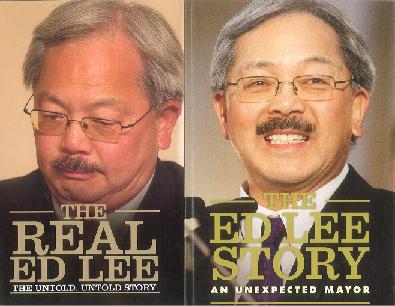
The Ed Lee Story has some much-needed competition. The boring, patronizing (to readers) and over-the-top hagiography of the interim mayor was just sitting there waiting for a parody, and now the Leland Yee campaign has obliged.

The Real Ed Lee, written by the Yee team, has a serious political point, but it’s actually funny, sometimes really funny, and it’s much easier to read than the plodding “Ed-Is-Greater-Than-God” prose of the original. A section titled “San Francisco’s Future, Ed Lee Style” notes that if the incumbent is elected to a full term

The Golden Gate Bridge will be now called the PG&E/Recology Golden Gateway to Corruptville. Make sure to show your employee badge at the the toll botth for your discounted rate (wink, wink).

HealthySF will be renamed the Endangered Restaurant Protection Act. You will be charged an additional 42 % on your bill. Please note — no health care will be provided.

Muni buses will now be operated by GO Lorries. Surprisingly, service will remain generally the same.

David Chiu is now District Attorney. Oh, wait ….

The book goes through the details of how Lee rose through the ranks at City Hall, along the way approving a couple of fraudulent vendors and getting caught up in Willie Brown’s sleaze. It discusses how his campaign is taking credit for other people’s work and ideas. It describes how he promised over an over not to run, then went ahead and did it anyway. It’s got a great picture of him steering a 139-foot yacht with the caption “I’m on a boat.”

I don’t know how well this will work, but it’s clear that Lee is falling in the polls and the cumulative impact of his mistakes and the attacks on him by the other campaigns is taking its toll. And for once, we have a campaign piece that made me laugh instead of crying.


Progressive group stands out as the lone Lee endorser

86

Mayor Ed Lee’s support by the wealthy power brokers and his checkered history with the Willie Brown administration has caused most progressive groups to shun him in this election, with one notable exception. San Francisco Rising Action Fund, a grassroots organization for working class people of color, gave Lee its second place endorsement, right after progressive favorite John Avalos. It’s the only slate that the two political opposites appear on together.

The San Francisco Democratic Party, Sierra Club, San Francisco Labor Council, the Bay Guardian, and other progressive groups have all issued endorsement slates that generally include Avalos, Dennis Herrera, and sometimes Leland Yee. But Lee has been almost entirely shut out on the left – except for a third place endorsement by the San Francisco Bicycle Coalition, which is generally left but mostly single issue – making SFRAF the rare exception.

Alex Tom, one of the directors of SFRAF, clarified that its endorsement “ is not about Ed, but about the larger progressive movement.” Going against the endorsement grain, he said SFRAF consolidates the Asian, Latino, and Black communities— a strategy to compensate the divided nature in the political left.

“We need to step back in general and have a conversation with how people of color engage with politics and the progressive movement,” Tom told us.

Like many liberal groups, SFRAF is at the front lines of OccupySF and supports progressive bills like the Health Care Security Ordinance, which was the subject of Lee’s first veto this week, angering progressive groups who sought to close a loophole that lets businesses raid the health savings accounts of their employees.

But Tom points out that “there is an assumption in SF that to get progressive things passed you need to go to District 5, 6, and 9— you don’t go to the Southeast,” or other lower income neighborhoods. SFRAF is trying to reframe the broad spectrum of progressives, to “civically engage [voters of color and lower incomes] and [include them] in the electorate.”

Voters of color don’t engage in the same spaces that other progressive do. “We are not insiders, we are not even inside the progressive circle,” Tom says.

SFRAF’s Board of Directors includes Joel Aguilar, who recently left SF Day Labor Program; Chelsea Boilard with Coleman Advocates for Children and Youth; Antonio Diaz of People Organized to Demand Environmental and Economic Rights; Ariana Gil of Mujers Unidas y Activas; Adam Gold of Causa Justa: Alex Tom with the Chinese Progressive Association; and Steve Williams of People Organized to Win Employment Rights (POWER).

The Directors promote Ed Lee’s platforms on local hire, summer school, fight against wage-theft, and facilitating equitable budget process. Lee’s a viable candidate for a new type of progressive, says SFRAF, who doesn’t “agree with the insider game” in regards to Rose Pak and Willie Brown, Lee’s closest associates.

SFRAF doesn’t believe the company Lee keeps makes him untrustworthy. While many progressives see a politician’s connections as good indicators of their future actions and allegiances, SFRAF doesn’t seem to place much emphasis on this. Indeed, Lee seems to be an obstacle to much of the group’s agenda.

Take the SFRAF’s 10-point platform, which is diametrically opposed to many of Lee’s recent actions. In the matters of health care, SFRAF’s promotes, “policies that require employers to provide quality, affordable healthcare coverage to their employees and their families,” something that Lee’s recent veto seemed to weaken, letting businesses take about $50 million per year that city law required them to set aside for employee health care.

The next day, Lee faced the same groups he voted against— at a labor union rally— and explained his veto was an act of diligence to protect jobs. But the sponsor of the vetoed legislation, Sup. David Campos, said the veto was an setback for workers’ rights and consumer protection. “It’s a defining issue for us at City Hall,” Campos told us.

But Tom disagrees with progressive assessments that “pay to play” is a major force in City Hall politics, although to did say it is important to “acknowledge your power structure.” To SFRAF, the progressive sector cannot duplicate a city run by a few insiders— a fear SFBG expects to be a reality with Ed Lee as mayor. Instead, he says a progressive City Hall must bring a “multi-sectored” people into the decision-making process.

And he think Lee will be an ally in doing so.

Steven T. Jones contributed to this report.

Editor’s notes

0

tredmond@sfbg.com

I say it over and over again, because some people clearly aren’t paying attention:

Corruption matters.

When the mayor of San Francisco surrounds himself with people who don’t show any respect for campaign finance or ethics regulations, who think it’s fine to skirt (and possibly break) election laws, it undermines faith in local government.

And at a time when conservatives at the national and state level are mounting a concerted campaign to shrink, weaken and ultimately burn down government, the last thing San Francisco needs is to give them fuel.

Listen: When Willie Brown was mayor, a tax lawyer named Ron Chun was running for assessor. Generally a good guy, generally progressive, full of creative ideas. But when I asked him about how to get more revenue into the city, he said:

“Why should we bring in more revenue? Willie Brown’s just going to waste it on his cronies anyway.”

He wasn’t alone. A lot of generally progressive people felt as if paying taxes was throwing money down the sewer. Because everyone knew that Brown was hiring unqualified people, pouring cash into contracts for his pals, handing out raises and benefits to city workers who supported him — and treating critics as if they were traitors to the nation.

Mayor Lee says he doesn’t approve of what looks an awful lot like voter fraud and doesn’t support what the independent expenditure committees are doing in his name. But anyone with any sense knows that the IE groups and the Lee campaign and the Lee administration are all parts of a permanent floating crap game where the players move around but everybody knows everybody else and there’s no way to keep communications completely shut off. If Lee wanted these “independent” groups to quit using stencils to make sure voters choose him for mayor, these operators would stop.

But he talks to people like Brown, people who have disdain for honest, open government, and they tell him not to worry. These things blow over. Once he wins the election, it won’t matter.

But when you have a mayor who invites corrupt actors into the house, it does matter. It matters a lot.

Ed Lee’s voter fraud problem

142

I realize that Mayor Ed Lee has denounced what appears to be clear voter fraud, but he has a problem and it’s not going to go away. Lee has allowed himself to be surrounded by the same sort of sleaze artists who circled around the administration of Willie Brown, doing the same sorts of things. And simply calling this crew and its actions “moronic” isn’t going to cut it.

Does anybody really believe that there’s no connection at all between Lee and the San Francisco Neighbors Alliance or the other independent expenditure committees working for Lee? No way that Rose Pak, Lee’s friend who meets with him regularly, is communicating with Enrique Pearce, the consultant for the IE, who worked with Pak on the Run Ed Run committee?

Does anybody really believe that this kind of activity would continue if Lee really wanted it to stop?

Lee’s supporters say the guy is new to this level of politics and is a little naive about the rules. Sorry — that’s not an excuse. The last thing we need is a mayor who doesn’t understand how important honest, open government is and who can’t figure out how to keep the likes of Enrique Pearce in line. Because then we get Willie Brown all over again.

Brown’s administration was full of lobbyists and so-called independent operators who had the mayor’s ear, got what they wanted — and had no accountability to anyone. Brown also had some problems with election laws.

This is a bad sign, and the district attorney ought to be investigating, fast — and releasing the results before Election Day.


The selling of Ed Lee

0

steve@sfbg.com

Ed Lee has gone through a remarkable makeover in the last year, transformed from the mild-mannered city bureaucrat who reluctantly became interim mayor to a political powerhouse backed by wealthy special interests waging one of the best-funded and least transparent mayoral campaigns in modern San Francisco history.

The affable anti-politician who opened Room 200 up to a variety of groups and individuals that his predecessor had shut out — a trait that won Lee some progressive accolades, particularly during the budget season — has become an elusive mayoral candidate who skipped most of the debates, ducked his Guardian endorsement interview, and speaks mostly through prepared public statements peppered with contradictions that he won’t address.

The old Ed Lee is still in there somewhere, with his folksy charm and unshakable belief that there’s compromise and consensus possible on even the most divisive issues. But the Ed Lee that is running for mayor is largely a creation of the political operatives who pushed him to break his word and run, from brazen power brokers Willie Brown and Rose Pak to political consultants David Ho and Enrique Pearce to the wealthy backers who seek to maintain their control over the city.

So we thought it might be educational to retrace the steps that brought us to this moment, as they were covered at the time by the Guardian and other local media outlets.

Caretaker mayor

The story begins quite suddenly on Jan. 4, when the Board of Supervisors convened to consider a replacement for Gavin Newsom, who had been elected lieutenant governor but delayed his swearing-in to prevent the board from choosing a progressive interim mayor who might then have an advantage in the fall elections. Newsom and other political centrists insisted on a “caretaker mayor” who pledged to vacate the office after serving the final year of the current term.

It was the final regular meeting of the old board, four days before the four newly elected supervisors would take office. What had been a bare majority of progressive supervisors openly talked about naming former mayor Art Agnos, or Sheriff Michael Hennessey, or maybe Democratic Party Chair Aaron Peskin as a caretaker mayor.

When then-Sup. Bevan Dufty said he would support Hennessey, someone Newsom had already said was acceptable, the progressive supervisors decided to coalesce around Hennessey. That was mostly because the moderates on the board had suddenly united behind a rival candidate who had consistently said didn’t want the job: City Administrator Ed Lee.

Board President David Chiu was the first in the progressive bloc to breaks ranks and back Lee, saying that had long been his first choice. Dufty became the swing vote, and he abstained from voting as the marathon meeting passed the 10 p.m. mark, at which point he asked for a recess and walked down to Room 200 to consult with Newsom.

At the time, Dufty said no deals had been cut and that he was just looking for assurances that Lee wouldn’t run for a full term (Dufty was already running for mayor) and that he would defend the sanctuary city law. But during his endorsement interview with the Guardian last month, he confessed to another reason: Newsom told him that Hennessey had pledged to get rid of Chief-of-Staff Steve Kawa, a pro-downtown political fixer from the Brown era who was despised by progressive groups but liked by Dufty.

Chiu and others stressed Lee’s roots as a progressive tenants rights attorney, the importance of having a non-political technocrat close the ideological gap at City Hall and get things done, particularly on the budget. So everyone just hoped for the best.

“Run, Ed, Run”

The drumbeat began within just a couple months, with downtown-oriented politicos and Lee supporters urging him to run for mayor in the wake of a successful if controversial legislative push by Lee, Chiu, and Sup. Jane Kim to give million of dollars in tax breaks to Twitter and other businesses in the mid-Market and Tenderloin areas.

In mid-May, Pak and her allies created Progress for All, registering it as a “general civic education and public affairs” committee even though its sole purpose was to use large donations from corporations with city contracts or who had worked with Pak before to fund a high-profile “Run, Ed, Run” campaign, which plastered the city with posters featuring a likeness of Lee.

Initially, that campaign and its promotional materials were created by Pak (who refuses to speak to the Guardian) and political consultant Enrique Pearce (who did not return calls for this article) of Left Coast Communications, which had just run Kim’s successful D6 victory over progressive opponent Debra Walker, along with Pak protégé David Ho.

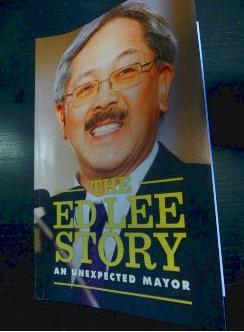
During that campaign, the Guardian and Bay Citizen discovered Pearce running an independent expenditure campaign called New Day for SF, funded mostly by Willie Brown, out of his office, despite bans of IEs coordinating with official campaigns. That tactic would repeat itself over the coming months, drawing criticism but never any sanctions from the toothless Ethics Commission. Pearce was hired by two more pro-Lee IEs: Committee for Effective City Management and SF Neighbor Alliance, for which he wrote the book The Ed Lee Story, a supposedly “unauthorized biography” filled with photos and personal details about Lee.

Publicly, the campaign was fronted by noted Brown allies such as his former planning commissioner Shelly Bradford-Bell, Pak allies including Chinatown Community Development Center director Gordon Chin, and a more surprising political figure, Christina Olague, a progressive board appointee to the Planning Commission. She had already surprised and disappointed some of her progressive allies on Feb. 28 when she endorsed Chiu for mayor during his campaign kickoff, and even more when she got behind Lee.

Olague recently told us the moves did indeed elicit scorn from some longtime allies, but she defends the latter decision as being based on Lee’s experience and willingness to dialogue with progressives who had been shut out by Newsom, noting that she had been asked to join the campaign by Chin. Olague also said the decision was partially strategic: “If we get progressives to support him early on, maybe we’ll have a seat at the table.”

Right up until the end, Lee told reporters that he planned to honor his word and not run. During a Guardian interview in July when we pressed him on the point, Lee said he would only run if every member of the Board of Supervisors asked him to, although about half the board publicly said that he shouldn’t, including Sup. Sean Elsbernd, who nominated him for interim mayor.

And then, just before the filing deadline in early August, Lee announced that he had changed his mind and was running for mayor, the powers of incumbency instant catapulting him into the frontrunner position where he remains today, according to the most recent poll by the Bay Citizen and University of San Francisco.

Lee the politician

With his late entry into the race and decision to forgo public financing and its attendant spending limits, one might think that Lee would have to campaign aggressively to keep his job. But most of the heavy lifting has so far been done by his taxpayer-financed Office of Communications (which issues press releases at least daily) and by corporate-funded surrogates in a series of coordinated “independent” groups (see Rebecca Bowe’s story, “The billionaires’ mayor”).

That has left Lee to simply act as mayor, where he’s made a series of decisions that favor the business community and complement the “jobs” mantra cited relentlessly by centrist politicians playing on people’s economic insecurities.

Yet Lee has been elusive on the campaign trail and to reporters who seek more detailed explanations about his stands on issue or contradictions in his positions, and his spokespersons sometimes offer only misleading doublespeak.

For example, Lee’s office announced plans to veto legislation by Sup. David Campos that would prevent businesses from meeting their city obligation to provide a minimum level of employee health benefits through health savings accounts that these businesses would then pocket at the end of the year, taking $50 million last year even though some of that money had been put in by restaurant customer’s paying 5 percent surcharges on their bills.

Although Campos, the five other supervisors who voted for the measure, four other mayoral candidates, and its many supporters in the labor and consumer rights movements maintained the money belonged to workers who desperately needed it to afford expensive health care, the San Francisco Chamber of Commerce said it was about “jobs” that would be protected only if businesses could keep that money.

Lee parroted the position but tried to push the political damage until after the election, issuing a statement entitled “Mayor Lee Convenes Group to Improve Health Care Access & Protect Jobs,” saying that he would seek to “develop a consensus strategy” on the divisive issue — one in which Campos said “we have a fundamental disagreement” — that would take weeks to play out.

After a frustrating back-and-forth with Lee Press Secretary Christine Falvey by email, it’s still unclear how to resolve the contradiction between whether businesses could seize these funds or whether they belonged to employees, with her latest statement being, “The Mayor absolutely wants these funds spent on providing access to quality primary and preventative health care because this is the business’s obligation under HCSO. Making sure that these funds go to pay for health care is the most important objective.”

Similarly, when police raided the OccupySF encampment on Oct. 5, Lee’s office issued a statement that was a classic case of politicians trying to have it both ways, expressing support for the movement and its goal to “occupy” public space, but also supporting the need to police to clear the encampment of those same occupiers.

But now, in the wake of a repeat raid on Oct. 16 that has inflamed passions on the issue, the question is whether Lee can run out the clock and retain the office he gained on the promise of being someone more than a typical politician.

The bad old days

0

tredmond@sfbg.com

Willie L. Brown, according to the Chronicle’s John Cote, is “a tremendously popular figure in the city, viewed by many as an avuncular man-about-town, elder statesman and a uniquely San Franciscan character.” The Ed Lee Story, a hagiographic campaign book, refers to Brown’s “characteristic showmanship and hypnotic charm.” Even Randy Shaw, the housing activist who clashed with Brown over gentrification once upon a time, now says in BeyondChron that Brown’s first term “was the most progressive of any mayor in modern San Francisco history.”

I feel as if I’m living in some sort of strange parallel universe, something out of Orwell or North Korea or the Soviet Union of the 1950s. It’s as if history never happened, as if the years between 1996 and 2004 have just vanished, have been deleted from San Francisco’s collective memory. It’s crazy.

I wonder:

What about the thousands and thousands of people who lost their homes and were tossed out of the city like refugees from a war? What about the rampant corruption at City Hall? What about the legions of unqualified political cronies who got good jobs and commission posts? What about the iron-fisted machine rule that kept local politics closed to all but the loyal insiders? Doesn’t any of that count?

Here are some things that absolutely, undeniable, demonstrably happened while Willie Brown was mayor:

Rents on the East Side of town, particularly in the Mission, tripled and sometimes quadrupled between 1996, when Brown took office, and 2004, when he left. Evictions more than tripled, too, and at one point more than 100 people a month were losing their homes. Most of those people were low-income, long-term tenants. They were forced out because richer people were moving into town during the dot-com boom and could pay more for those apartments. We called it the “Economic Cleansing of San Francisco.”

Every day, it seemed, we’d be out at another rally as the Tenants Union and the Mission Antidisplacement Coalition tried to save another family from the forces of gentrification. Every week, it seemed, another group house full of artists would be served an eviction notice. Everywhere you looked, nonprofits and small businesses were losing space to high-tech companies with plenty of money.

I watched the wrecking crew tear down a studio complex on Bryant Street, forcing more than 100 painters and photographers to leave, to make way for a high-tech office project that was approved even though it violated the local zoning laws — and then was never built. For two years, I walked to get my lunch past the empty hole in the ground that had once been a thriving community.

That was typical. Every developer who waved money in front of the mayor got a building permit, no matter how crazy, illogical or illegal the project was. The Planning Department and the Bureau of Building Inspection were little more than fronts for the lobbyists and Brown cronies who determined development policy in the city.

In October, 1999, the author Paulina Borsook wrote a famous piece in Salon called “How the Internet Ruined San Francisco.” I agreed with the sentiment; the influx of the dot-commers was wrecking all that was cool and weird about the city. But she got one point wrong: The Internet didn’t ruin anything. The Internet was, and is, a technology, a tool, something that, like most technological advances, can be used for good or evil.

Mayor Brown didn’t create the dot-com boom. Although he took credit for an awful lot of things, even Willie didn’t claim to have invented the Internet.

But what he did — and what ruined many San Francisco neighborhoods, and ruined the lives of many San Franciscans — was to let the economic cleansing of the city happen, without raising a finger to slow it down or prevent the evictions or protect the most vulnerable people in the city. Over and over, he encouraged it — by appointing commissioners and supervisors and department heads who allowed evictions and development and displacement in the name of growth and prosperity.

In fact, when reporters from the zine Maximum Rock ‘n’ Roll asked Brown about the problems facing poor people, he told them that the city had become so expensive that poor people would be better off living somewhere else.

Because he didn’t care about poor people, or tenants, or artists, or anyone who lacked money and flash and dazzle and clout. He was the worst kind of imperial mayor.

Here’s how we put in it in our 33rd anniversary issue in 1998:

“Let’s say the next major earthquake that hits San Francisco is of roughly the same magnitude of the Loma Prieta quake of 1989, or maybe just a bit stronger. Let’s say it wipes out right 1,000 houses and leave some 5,000 people homeless … and lets say a few unscrupulous profiteers take advantage of the shortages of critical supplies and charge desperate residents triple the normal rate for food, blankets and drinking water….

“The profiteers, speculators and charlatans would be exposed in the press and roundly, loudly denounced by every political and community leader in the city. The ones who didn’t wind up in jail would be forced to leave town in disgrace.”

Or else they wouldn’t. Because when an economic earthquake ravaged San Francisco during his term, Brown — the most powerful mayor in modern history, a guy who could have had an immense impact on what was happening — went to meet the speculators and profiteers with outstretched arms, welcomed them to the city and partied with them at night.

And when he ran for re-election, they thanked him by funding an astonishing $5 million campaign.

Then there was the corruption. Not only did Brown raise pay-to-play to a new art form, he filled the city payroll and key commissions with campaign workers, former political allies, and cronies, subverting the civil service system and undermining both the function of city agencies and public respect for local government. At least seven Brown appointees were indicted or investigated for criminal misconduct. While sentencing a Housing Authority official to five years in prison, U.S. District Judge Charles Legge decried what he called Third World-style corruption at San Francisco City Hall.

When Mayor Ed Lee, who is now seeking a full four-year term, was asked to give Brown a grade for his eight years in Room 200, Lee said: A-Plus.

Which makes us a little nervous. To say the least.

I’ve been going back through the Guardian archives over the past couple of weeks, picking out some great covers to reproduce (see page 18) and looking at four and a half decades of alternative news coverage of San Francisco. And if there’s one theme that emerges from the stacks and stacks and stacks of papers, it’s that local government matters.

In the 1960s, when the underground press was talking about sex, drugs and dropping out, the Guardian was talking about the ways big corporations were stealing the taxpayers’ money at City Hall. (Okay, the Guardian wrote about sex and drugs too. But sex and drugs and political scandals.)

The difference between the independent alternative press and the underground papers of the era was more than just thematic. The underground publishers were having a great time and celebrating culture, but none of those publications was built to last. From the day they published their first issue in October, 1966, Guardian founders Bruce Brugmann and Jean Dibble intended their paper to become a permanent part of San Francisco.

The Guardian quickly demonstrated that it had a different approach than a lot of the “New Left” — particularly when it came to electoral politics. At a time when some were saying that it made no difference whether Ronald Reagan or Pat Brown won the 1966 governor’s race, the Guardian made the key point about Reagan.

“California cannot afford the luxury of this kind of conservatism,” a Nov. 7, 1966 editorial stated. “Because of the millions of people coming to California, because San Francisco and Los Angeles soon will have the greatest concentration of urban power in history, because farm land and open space is vanishing at a suicidal rate, because technology is putting vast populations out of work, because of the social neglect of our cities and the uglification of our countryside, because we now have the knowledge to bridge the gap between the rich and the poor.”

And while the paper devoted considerable space to reporting on and opposing the war in Vietnam, it was also developing a reputation for local investigative reporting. One June 7, 1971 story showed how the city had all of its short-term deposits in local banks that paid no interest at all. The story parked an investigation by the city’s budget analyst, the resignation of the city treasurer — and a new investment policy that brought the city at least $1 million more revenue a year. (Adjusted for inflation, that’s about $5 million a year, times 40 years is a lot of money that the Guardian brought into the city coffers).

And from the start, the Guardian was a nonpartisan, independent foe of corruption, secrecy and undue influence at City Hall. So while the paper eagerly endorsed Phil Burton (and later his brother, John) for Congress and lauded their antiwar and environmental policies, the Guardian also blasted the Burtons for exercising undue influence back home. The paper strongly endorsed George Moscone for mayor — then denounced him when he fired Harvey Milk from a commission post after Milk had the gall to challenge the Moscone/Burton candidate for state Assembly.

The 1999 Sunshine Ordinance, which dramatically opened up City Hall records, was sponsored and promoted by the Guardian. Willie Brown and his cronies hated it.

It’s probably a misnomer to say that the Burtons, who were a dominant force in local politics in the 1970s and 1980s, ran an old-fashioned machine. They didn’t have the iron control over local politics and the patronage jobs system that the word “machine” implies.

But when Brown became mayor of San Francisco, he had all of that. Brown controlled eight solid votes on the Board of Supervisors (and through various political machinations, had managed to appoint most of them). “He ruled the building,” Assemblymember Tom Ammiano, who was a supervisor during those years, recalled. “If you defied him, you were radioactive.”

And one of the people who rose through the ranks as a loyal Brown appointee was Ed Lee. Who to this day thinks things in that administration were just dandy.


The Lee campaign complains about “guilt by association,” and that’s a legitimate point. Ed Lee isn’t Willie Brown. He’s a lot more open, a lot (a lot) more humble, and as numerous progressives have pointed out to us, his door is open. He doesn’t have the history of sleaze that pretty much defined Brown’s political career.

There will be no “Ed Lee Machine.” In fact, with district elections of supervisors pretty much guaranteeing more diffuse political power in the city, there will never be another mayor able to rule the way Brown did.

And these days, Brown’s clout could easily be overstated. Until he engineered the selection of Ed Lee as mayor, his power seemed to be waning. And even Mayor Lee hasn’t done everything that Brown wanted.

Of course, the Chronicle, which he helped immensely when Hearst Corp. bought the paper and had trouble with federal regulators, has helped Brown by giving him a column that created a new, sanitized persona.

But the important thing about the Brown administration was not so much who was in charge but who benefited. The landlords, the developers, the big corporations got pretty much what they wanted from City Hall. The rest of us got screwed.

And now those same interests — in some cases, the exact same people — who supported, promoted and worked with Willie Brown are backing Lee for mayor. If they thought he was going to be an independent progressive, that money and support wouldn’t be coming in. There are people who miss the machine days — and if they think Ed Lee is their guy, it’s reason to worry.

Corruption matters. When people lose faith in local government because they see the kind of sleaze that was daily business under Brown, then they stop wanting to pay taxes for public services. After all, the mayor is wasting our money already. Lee may be a decent guy — but some of the people he hangs out with, some of the people who are supporting him, have a long and very unpleasant history in this town. And all the time he was sitting there at City Hall, while Brown was running a corrupt operation that did lasting damage, Lee never raised a public finger in protest. I hate to see all the history forgotten when people decide who to support for mayor in November, 2011.

Editor’s notes

0

tredmond@sfbg.com

I feel like was just getting over the 40th anniversary party, and now here comes 45. Guardian anniversaries are like birthday parties; they keep creeping up on you. Except that, in this case, getting older isn’t something to worry about. It’s a sign of strength that a weekly paper founded with a little money scraped together by two Midwesterners in 1966 has survived, grown, and become a standard-bearer for the alternative press in America.

I missed 15, but I was here for 16, and 20, and 25, and 30, and 40, and I’ve watched the Guardian — and San Francisco — emerge and change. And I can say, after almost 30 years as a reporter and editor here, that the demise of the old Brown Machine and the advent of district elections in 2000 were the most important advances in modern local political history.

District elections diffused power at City Hall. You didn’t need a huge downtown-funded campaign war chest to get elected supervisor. You didn’t need the support of the power brokers. And all parts of the city were represented.

By the time Willie Brown left office in 2004 — mostly in political disgrace — a long era of corrupt machine politics was ending. He had lost control of the Board of Supervisors. Almost none of the candidates he endorsed got elected. His approach to running the city was utterly repudiated by the voters. It was like the city drew a collective breath of very fresh air.

Yeah, we had to fight with Gavin Newsom. Yeah, we lost some critical battles. Yeah, the city’s till building housing just for millionaires. But at least with Brown gone and district supervisors calling the shots, I always thought we had a chance.

And maybe we will with Mayor Ed Lee, too, if, as projected, he wins in November. Maybe he can show some independence. Maybe the Ed Lee who started as a tenant lawyer will arise again in Room 200.

But Brown doesn’t think so. Neither do the billionaires and lobbyists and a cast of dozens from the old Brown Machine. They think they’re coming back into power.

And these folks are savvy, experienced and clever. They don’t put this sort of money and personal clout into candidates unless they’re pretty damn sure they’ll get a return on their investment. That’s how it works in Willie’s World.

Two words Ed Lee doesn’t want to hear

13

There are two words no candidate wants to hear a month before Election Day:

“Criminal investigation.”

I give District Attorney George Gascon credit — I didn’t think he’d ever really go after municipal corruption, but he’s showing at least a bit of political spine here, launching an investigation into the dubious campaign contributions of Ed Lee. Lee’s campaign immediately said there would be full cooperation:

Last week, Mayor Lee’s campaign returned 23 contributions associated with Go Lorrie’s Shuttle company as a result of the campaign’s own concerns and compliance review. On Friday, the campaign reached out to the District Attorney’s Office, the U.S. Attorney’s Office, the Ethics Commission and the Fair Political Practices Commission to offer its full assistance in any investigation or review. It is important to note that there is nothing about the District Attorney’s statement or initiation of an investigation that suggests that Mayor Lee’s campaign is a target.

And at this point, there’s no way to know how far the investigation will go or what it will turn up. But the very fact that the D.A. is looking into all of this looks bad for Lee.

And if Gascon’s office scours not only the Go Lorrie’s money but the rest of Lee’s campaign contributions — and the independent expenditure committees that aren’t supposed to be coordinating with each other or the main campaign — he might find more.

Bill Barnes, who works with the Lee campaign, told me that he was doing everything possible to make sure the contributions were all on the up-and-up. “I can’t control the i.e.’s,” he said, “but we are very careful to follow the law.”

He also said that it’s possible there were mistakes, like the Go Lorrie’s money. “We’re raising a lot of money in a short period of time,” he said.

But you see, that’s part of the problem. You enter the race late, refuse to accept public financing (and abide by spending limits) and start trying to raise more than a million bucks in a few weeks, and it’s too easy to get sloppy. Add in the fact that people like Willie Brown, who never cared much for campaign contribution or ethics laws, are involved in the fundraising, and you have a recipe for real trouble.


The Ed Lee Story: Gack!

4

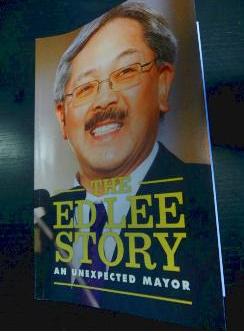
I finally got a copy of The Ed Lee Story — a 132-page paperback hagiography written by campaign flak Enrique Pearce — and it’s way, way over the top. I shouldn’t even compare it to the lives of the saints — I read that stuff in Catholic School, and none of it was a sappy, drippy and utterly lacking in perspective as this. The Ed Lee Story reads like what it is — a giant, extended campaign flier, produced by a supposedly independent group backing Lee for mayor.

Willie Brown appears in the first chapter, speaking with “characteristic showmanship and hypnotic charm.” Pearce once worked for Matt Gonzalez — who ran for supervisor as a strong opponent of Brown’s administration and was such a critic of the City Hall corruption that the mayor represented that he didn’t even return Brown’s call congratulating him on winning a seat on the board. But he has either forgotten or utterly sanitized that era.

Rose Pak appears a page later, described as a “community leader and Ed’s longtime friend,” which is one way of putting it.

I haven’t been able to reach Pearce; if he calls me I’ll update this post. But in other news accounts, Pearce insists that Lee had no role in the great work — it’s described as an “unauthorized biography,” and Tony Winnicker, the press spokesperson for the official Ed Lee for Mayor campaign, told me his crew had nothing to do with it. Pearce must have gone to great lengths to get all those high school and college photos.

Most of the footnotes cite the San Francisco Examiner and BeyondChron, but Pearce interviewed a number of Lee’s old friends. This was a fair amount of work, including a lot of research.

But here’s the thing: Pearce (who’s had problems with keeping independent campaigns independent in the past) supposedly wrote this book without any help or support from any of the people who are involved in the Lee adminstration or in his campaign. I don’t know, maybe he did. But that’s the problem with these “independent expenditure” committees — it’s hard to believe that there’s truly zero coordination between the various groups that are working to get Lee elected.

The Chron notes at least one indication that it’s not all as independent as it seems:

Pearce said he never spoke with Lee or his family for the book. However, at a golf tournament at the Olympic Club on Monday to benefit the nonprofit Chinese Hospital, Lee’s wife, Anita, beamed as she signed copies.

Plus, he clearly worked with Pak on the book:

Pearce swears all those family photos in the book were gleaned from various websites and family friends. And where did Pearce get Lee’s favorite recipe for “No-longer secret Poongaloong” (basically spaghetti with frozen peas, corn and a half-bottle of Del Monte ketchup thrown in)?

“The recipe was from Rose,” he said. Of course it was.

And we know that Pak meets with the mayor regularly.

Independent expenditure committees have a huge advantage — they can raise unlimited money, in unlimited amounts. In San Francisco, candidates for mayor can only take money in $500 chunks, and can’t accept contributions from corporations or entities that have contracts with the city. The folks who funded this book — and we still don’t know who they are — were under no such regulations.

The trade off is that the “real” campaign — the one financed with regulated money — can’t have any contact at all with the “independent” campaign.

Meantime, Enrique Pearce wrote 132 pages about Ed Lee, complete with childhood anecdotes, pictures, interviews with old friends and testimonial statements — and the mayor’s office and campaign had no input, connection, information, coordination or anything? Geez. Maybe Kitty Kelley’s got some competition.


The odd twist to the Chron’s Chiu endorsement

18

The most obvious interpretation of the San Francisco Chronicle’s endorsement of David Chiu is that the Chron thinks Chiu has completely left the progressive camp and is now aligned with the political wing the daily paper calls “moderates:”

What is impressive about Chiu is that “change” and “jobs” are not just campaign slogans for him. He can go into detail about the redundancies and red tape at City Hall that are holding back economic development: the 15 departments that regulate the private sector, the hundreds of fees that burden businesses big and small, a payroll tax that is a disincentive to hire … If elected, he would have a mandate to make city government more efficient and effective.

(I don’t know how many times I have to say this, but the payroll tax is NOT a disincentive to hire.)

The Chron — which, on economic issues like taxes and development, is a very conservative paper — clearly thinks Chiu can be trusted, which ought to make progressives nervous.

But here’s the other interesting twist.

Hearst Corporation bought the San Francisco Chronicle in 2000, at the top of the market, for more than $500 million. I guarantee the paper isn’t worth more than a tiny fraction of that today. It’s still losing money, and has been for years, and nobody’s buying daily newspapers any more, and if Hearst wanted to unload the Chron, the New York publishing chain would be lucky to get $50 million. Hell, they’d be lucky to get $25 million.

So the bean counters in New York have this nonperforming half-billion-dollar asset on their balance sheets, and there’s no way to recover that money — except for one thing: The Chron owns a bunch of land around Fifth and Mission, including its own historic building. And that property is potentially worth a whole lot of money. When the economy picks up, Hearst can develop the parking lots, old press facilities and even its HQ; turn it all into condos and office space, and suddenly there’s a real chance of recouping some of those deep losses.

The process is already underway — the Chron’s been moving tech firms into vacant space in its building, and is working with developers on the shape of what could be a major project still to come.

And guess what? In June, William Randolph Hearst III — heir to part of the Hearst fortune and a member of the Hearst Corp. board — made a rare campaign contribution to a San Francisco political candidate. He gave the maximum allowable $500 to … David Chiu. Around the same time, Michael Cohen and Jesse Blout, the partners in a firm called Strada that’s working on the redevelopment of the Chron’s property, also gave Chiu the maxiumum $500.

I figured the top people at the Chron would back Ed Lee because they figured he’d be down with whatever they wanted to do with that land — particularly since Lee’s good buddy Willie Brown is now a San Francisco Chronicle columnist. But it appears they’ve cast their lot with Chiu. As Mr. Spock would say, fascinating.

Louise Renne’s confused history

6

Wow, the Chron found a way to take a swipe at Dennis Herrera for getting involved in politics — and guess who the expert source is? Former City Attorney Louise Renne — who politicized her office so dramatically that the voters approved a measure barring city attorneys from endorsing candidates.

The Chron piece goes back and forth on whether Ed Lee properly disclosed city contracts. Then it quotes Tony Winnicker from Lee’s campaign:

They must get exhausted over there at that campaign throwing stones out of their glass house all day long,” Winnicker said. ”What’s really too bad is we can’t actually look to our legal counsel to get guidance on this. .. because the mayor’s only legal counsel is too busy attacking him.

Which apparently disturbed Renne:

“I think the city attorney has to be particularly careful  in what he or she says and in what he or she does,” Renne said. “I don’t know if that line has been crossed here. I’m trying to stay out of the mayor’s race. I’m extremely troubled that these questions are even being raised.”

Please, Louise.

First, Renne ran for mayor herself while she was city attorney, in 1987, against Art Agnos and John Molinari (who, as a supervisor, was her client). She didn’t get far. Over the next few years, she regularly supported candidates and took stands on propositions, even when her office was involved in evaluating those measures or giving advice to elected officials. In 1995, she endorsed Willie Brown for mayor — even though he was running against her client, incumbent Mayor Frank Jordan.

It was exactly that sort of conflict that led to the city law that now prevents the elected city attorney from making endorsements in local elections. And now she’s worried about Dennis Herrera?

Ed Lee’s funny money

33

The break on the big campaign news of the week goes to the Bay Citizen’s Gerry Shih, who tracked down a couple of employees of GO Lorrie’s and got them to admit that they had no idea who Ed Lee was and had given him $500 because their boss had agreed to reimburse them in cash. Now the other candidates are making an issue of it — Dennis Herrera has called for a criminal investigation, David Chiu has issued a somewhat weaker statement and Jeff Adachi’s campaign is calling the whole thing sleazy.

What makes this so interesting is not just that someone at GO Lorrie’s may have been laundering contributions — the airport shuttle company has been lobbying the city to try to change the rules around where the shuttle vans get to park. So it’s not just a funky operation to push money to the mayor — it’s money from a company that has a big financial stake in a decision made by city officials (and by the way, the airport commissioners are appointed by the mayor).

Matt Dorsey, a spokesperon for Herrera’s campaign, told us that “there’s a point where campaign activities stop being cute and questionable and become illegal.” He noted that Mayor Lee, while vowing to return the tainted money, hasn’t called for a further inquiry.

“If laundered campaign contributions came to the attention of the Herrera campaign, the first person to call for an investigation would be Dennis Herrera,” Dorsey said.

Chiu’s statement: “These revelations raise deeply troubling questions that merit a full investigation by state authorities.  City Hall cannot be for sale.  Pay-to-play politics has no place in San Francisco, and will have no place in a Chiu administration – you can count on that.”

More: “Incidents like these are a reminder of the backroom deals and crony politics that San Franciscans are sick of,” said Colin Dyer, field director for Jeff Adachi. “This is just another in a long line of questionable activities surrounding Ed Lee and his powerful special interest backers. He promised to be a different sort of mayor, Ed Lee is just more of the same.

The big question, of course, is whether this will finally start to take the edge off the Ed Lee Teflon. And that depends in part on the San Francisco Chronicle — which put a far less relevant story about Dennis Herrera (one that didn’t involve illegal money laundering) right on the front page in the lead space above the fold.

The Chron, weakened as it is, still helps define the daily news cycle in this town. But guess what? The Chron didn’t break this story. The Bay Citizen did. And it there’s one thing I’ve found to be consistent about the ol’ Chron over the years is that the paper tends to ignore stories broken by the competition.

But this ought to be front-page news everywhere, not just because it’s a potential felony but because it represents the side of Ed Lee that we’re all worried about. In the Bad Old Days, Willie Brown’s operation did stuff like this all the time. Money went in and out of shadow committees and independent expenditure groups and it was almost impossible to keep track of who was giving how much to Brown — except that anyone who wanted to do business with the city had to pay up.

If Ed Lee’s folks are starting to play those same games, then it’s a very bad sign.

City contractors plunk down for Lee

Representatives from Stellar Services, an IT infrastructure services provider that also does business as 4 U Services, contributed a total of $7,500 in support of Mayor Ed Lee’s bid for a full term, filings with the San Francisco Ethics Commission show. The New York-based company holds a contract with the San Francisco Public Utilities commission (SFPUC) and has been paid $91,737.80 to date for programming and coding services.

Lee also received a maximum $500 contribution from a senior vice president at AECOM, another city contractor. While the contributions may have squared with campaign finance law, significant support from companies doing business with the city nevertheless give the impression of businesses attempting to advance their own interests through political influence.

The majority of the contributions from Stellar came in the form of a $5,000 donation from 4 U Services to the Committee for Effective City Management, an independent expenditure committee created in support of Lee that recently hosted a Lee fundraiser in Millbrae honoring special guests Sup. Jane Kim and former Mayor Willie Brown.

4 U, according to its website, also does business as Stellar Services, a company based in New York that has an office in San Francisco. “Stellar is currently a sub-consultant that is working to develop our new online invoicing system called SOLIS,” SFPUC spokesperson Tyrone Jue told the Guardian. “The invoicing system centralizes and streamlines the invoicing process, makes invoicing transaction transparent to all users, increases reporting and transparency, and makes invoicing completely paperless.” Jue noted that the contract was signed in July 2009, and the SOLIS pilot program is underway.

The remainder of contributions from Stellar were made to Lee’s official mayoral campaign. Five individuals who listed Stellar Services or 4 U Services as their employer, including company founder and president Liang Chen, made maximum contributions of $500, according to a report filed with the San Francisco Ethics Commission.

Shaista Shaikh of the Ethics Commission noted that it is legal for city contractors to make contributions to independent expenditure committees formed in support of a candidate for public office. City contractors run afoul of ethics law if they make campaign contributions to an elected official who must approve the contract at any time during contract negotiations or until six months have passed from the date of contract approval, she explained. Since the contract with Stellar was approved in 2009, the contribution would have been made well past the six-month mark  — so it apparently squares with the campaign finance reform ordinance.

Reached by phone, Lee spokesperson Tony Winnicker told the Guardian that if the contract was approved in 2009, it would not be included in a database of city contractors maintained by the campaign, since “there’s no prohibition” against accepting campaign money after the six-month ban has passed. “So that should not be a concern to the Guardian,” he said.

On Sept. 17, Lee received a maximum $500 contribution from Joseph G. Moss, Jr., who listed his occupation as a senior vice president of AECOM in Atlanta, according to an Ethics filing. Lee received another $875 in contributions from AECOM employees, Ethics records show. According a press release on the AECOM website which seems to have been taken down since the Guardian highlighted it, an AECOM joint venture was awarded a $150 million contract for program management services for the SFPUC’s wastewater improvement program on Aug. 16. AECOM is also a partner in a joint venture working on construction of the controversial Central Subway project.   

Since the contractor contribution ban (Section 1.126 of the city’s campaign finance reform ordinance) sets a number of parameters for determining the legality of contributions, it wasn’t immediately clear whether the contributions from AECOM were in line with the ordinance.

Regardless of whether the campaign cash falls on the right side of the law, however, substantial support for Lee from city contractors is likely to raise eyebrows, especially in light of concerns progressives have raised that San Francisco is about to witness a resurgence of the pay-to-play politics that characterized City Hall under Brown.

Endorsement Interviews: David Chiu

131

Board President and mayoral candidate David Chiu could well be the person most directly hurt by Mayor Ed Lee’s decision to run for a full term. It’s ironic, since Chiu supported Lee — on the basis that the former city administrator would not be a candidate in November. And he has the inside story on why Lee is in the race: According to Chiu, Lee told him that he didn’t really want to run, but “was having trouble saying no to Willie Brown and Rose Pak.”

Chiu has been in the center of the current board, moving away from progressives on some key issues — but he’s talking very much a progressive line in his campaign. He’s promising business tax reforms, transit justice, affordable housing and new revenue. Audio and video after the jump.

Chiu by endorsements2011

On Guard!

0

news@sfbg.com

BART’S CRACKDOWN

For weeks now, protesters have descended on Bay Area Rapid Transit (BART) stations to denounce the fatal July 3 shooting of homeless passenger Charles Hill by a BART Police officer, and to call for the agency’s long-controversial police force to be disbanded. Commuters have had to contend with service disruptions and delays, and costs to the transit agency have exceeded $300,000. Yet it isn’t just bullhorn-wielding protesters who’ve been thrust into the spotlight — BART’s police force is also facing scrutiny for its conduct under pressure.

BART drew the ire of numerous media outlets after a Sept. 8 protest when transit cops detained members of the press along with protesters on suspected violation of California Penal Code Section 369i, which prohibits interfering with the operations of a railroad. Most journalists were eventually released, but the protest resulted in 24 arrests.

Although BART police later contended that they issued dispersal orders prior to closing in, many who were encircled and detained (including me) insisted they’d heard no such announcement. BART police also instructed San Francisco Police Department (SFPD) officers who were on hand to assist to seize reporters’ SFPD-issued press passes — a move that SFPD spokesperson Troy Dangerfield later told the Guardian was an error that went against normal SFPD protocol.

In a Sept. 10 editorial, the San Francisco Chronicle blasted BART police for placing Chronicle reporter Vivian Ho in handcuffs despite being informed that she was there as a journalist. Ho’s experience was mild compared with that of Indybay reporter David Morse (aka Dave Id), who told the Guardian he was singled out for arrest by BART Deputy Police Chief Daniel Hartwig and isolated from the scene — even though Hartwig is familiar with Morse and knows he’s been covering protests and BART board meetings for the free online publication. Asked why Morse was arrested when other journalists detained for the same violation were released, BART spokesperson Jim Allison told us, “The courts will answer that, won’t they?”

No Justice, No BART — a group that was instrumental in organizing the Sept. 8 protest — telegraphed to media and police at the outset that they intended to test BART’s assertions that people’s constitutionally guaranteed rights to free speech would be upheld as long as they remained outside the paid areas of the station, in what was dubbed a “free speech zone.” (Rebecca Bowe)


CHRON VS. WIENER(S)

Scott Wiener tried to do something eminently reasonable, and ask the naked guys in the Castro to put down a towel before they sit on public benches. Although the Department of Public Health hasn’t made any statements about the issue (and people put their naked butts on public toilet seats without creating major social problems), it’s pretty much an ick factor thing — and using a towel is an unwritten (sometimes written) rule at almost every nudist resort in the country.

The whole thing is a bit ironic, since it’s already illegal for fully clothed poor people to sit on the street — but so far, it’s not illegal for naked people to sit on benches. So far.

Wiener’s move set off an anti-nudity campaign at the San Francisco Chronicle, starting with columnist C.W. Nevius suggesting that the nudies are all perverts: “If these guys were opening a trench coat and exposing themselves to bystanders in a supermarket parking lot we’d call them creeps.” A Chron editorial called for a new law banning nudity in the city (an excellent use of time for a police department that already says it can’t afford community policing). The national (right-wing) press is having a field day. The commenters on sfbg.com are arguing about whether the pantsless men are shedding scrotal hair, or whether they’re mostly shaved. For the record, we haven’t checked.

And for the record, in a couple of months it’s going to get way too cold and rainy for this sort of thing anyway. (Tim Redmond)


HERRERA’S SMACKDOWNS

City Attorney Dennis Herrera has always been limited by his office’s neutral role in criticizing city policies and officials. But as a mayoral candidate, he seems to have really discovered his political voice, offering more full-throated criticisms of Mayor Ed Lee and his policies than any of the other top-tier candidates.

“I think it’s kind of liberating for him that he can talk policy instead of just about legal issues,” Herrera’s longtime spokesperson Matt Dorsey, who recently took a leave from his city job to work on the campaign full-time, told the Guardian.

Perhaps not surprisingly, Herrera’s shift began a little more than a month ago when Lee bowed to pressure from Willie Brown, Rose Pak, and other top power brokers to get into mayor’s race, prompting Herrera’s biting analysis that, “Ed Lee’s biggest problem isn’t that he’s a dishonest man — it’s that he’s not his own man. The fact is, if Ed Lee is elected mayor, powerful people will continue to insist on things. And I don’t think San Franciscans can be blamed for having serious doubts about whether Ed Lee would have the courage to say no.”

Herrera followed up last week by providing an example of something Lee and most other mayoral candidates don’t have the courage to say no to: the Central Subway project, with its runaway price tag and growing number of critics that say it’s a wasteful and inefficient boondoggle that will worsen Muni’s operating budget deficit.

“Fiascos aren’t born that way. They typically grow from the seeds of worthy idea, and their laudable promise is betrayed in subtle increments over time,” was how Herrera began a paper he released Sept. 8 called “It’s time to rethink the Central Subway,” in which he calls for a reevaluation of a project that he and the entire Board of Supervisors once supported.

He notes that the project’s costs have tripled and its design flaws have been criticized by the Civil Grand Jury and numerous transit experts. “Let’s look at this thing and see if it still makes sense,” Herrera told us, a stand that was greeted as blasphemy from the project’s supporters in Chinatown, who called at least two press conferences to decry that they called a “cheap political stunt.”

While the stand does indeed help distinguish Herrera from a crowded mayoral field, he insists that it was the grand jury report and other critiques that prompted him to raise the issue. “Good policy is good politics, so let’s have a debate on it and let the validity of the project stand or fall on its merits,” he said.

Herrera and fellow candidate John Avalos were also the ones who called out Lee on Sept. 2 for praising Pacific Gas & Electric Co. as “a great company that get it” for contributing $250,000 to a literacy program, despite PG&E’s deadly negligence in the San Bruno pipeline explosion and its spending of tens of millions of dollars to sabotage public power efforts and otherwise corrupt the political process.

“It shows insensitivity to victims’ families, and poor judgment for allowing his office to be used as a corporate PR tool. No less troubling, it ignores the serious work my office and others have done to protect San Franciscans from PG&E’s negligence,” Herrera said in a prepared statement.

Now, his rhetoric isn’t quite up to that of Green Party mayoral candidate Terry Baum, who last week called for PG&E executives to be jailed for their negligence, but it’s not bad for a lawyerly type. Herrera insists that he’s always wielded a big stick, expressed through filing public interest lawsuits rather than campaign missives, “but the motivation in how I do either is not really different.” (Steven T. Jones)


JACK IS BACK

The mayor’s race just got a new player, someone who is guaranteed to liven things up. His name is Jack Davis — and he’s already gone on the attack.

Davis, the infamous bad boy of political consulting who is so feared that Gavin Newsom paid him handsomely just to stay out of the 2003 mayor’s race, has been keeping a low profile of late. But he’s come out of semi-retirement to work for Jeff Adachi, the public defender who is both running for mayor and promoting Prop. D, his pension-reform plan.

Davis and Adachi first bonded when Adachi ran against appointed incumbent Kim Burton in 2002. Now, Davis has begun firing away at Mayor Ed Lee, with a new mailer that calls the competing Lee pension plan a “backroom deal.” The piece features a shadowy figure (who looks nothing like Ed Lee) slipping through a closing door, a fancy ashtray full of cigars and an allegation that Lee gave the cops a sweet pension deal in exchange for the police union endorsement.

Trust us, that’s just the start. (tr)


PENSION PALS

Meanwhile, Adachi sent Lee a letter on Sept. 8 challenging him to debate the merits of their rival pension measures — Lee spearheaded the creation of Prop. C, with input from labor unions and other stakeholders — sometime in the next month.

“I believe there is a vital need — if not an obligation — for us to ensure that the voters of San Francisco understand both the severity of our pension crisis as well as the significant differences between our two proposals,” Adachi wrote, later adding, “As the two principals behind the competing ballot measures, I hope that we can work together to increase awareness of this important issue and work toward a better future for our city.”

Lee’s campaign didn’t respond directly to Adachi, but Lee’s ever-caustic campaign spokesperson Tony Winnicker told the Guardian that the request was “the oldest political trick in book” and one they were rejecting, going on to say, “Voters deserve to hear from all the candidates on pension reform, not just two of them.”

Perhaps, but given the mind-numbing minutiae that differentiates the two measures, some kind of public airing of their differences might be good for all of us. Or I suppose we can just trust all those dueling mailers headed our way, right? (stj)

For more, visit our Politics blog at www.sfbg.com.

Deep-pocketed Lee supporter aims to take back S.F. from progressives

1

Power brokers Willie Brown and Rose Pak aren’t nearly the only influential backers working behind the scenes to help elect Mayor Ed Lee to a full term. Three different committees have been set up to support his candidacy and are fundraising independently from his official campaign, according to Ethics Commission filings.

The principal officer and treasurer of one of these independent expenditure committees are, respectively, a Republican Silicon Valley tech investor who’s spoken publicly about taking San Francisco back from progressives, and a political attorney who worked on Pacific Gas & Electric Co.’s failed yet stunningly expensive Proposition 16 campaign.

“San Franciscans for Jobs and Good Government, Supporting Ed Lee for Mayor 2011,” was created in late August with a San Rafael address, according to an Ethics filing. Its principal officer is Ron Conway, a Silicon Valley angel investor who made his fortune in the tech industry. Conway was quoted in a San Francisco Business Times article last year as saying “we must take our city back” from progressives, a rallying cry he delivered at a dinner hosted by the the Bay Area Council, a business association. A book written about Conway by Gary Rivlin dubs him “The Godfather of Silicon Valley.”

According to campaign finance records, Conway, a registered Republican, has donated more than $320,000 to Republican state and federal candidates since 1999. He also contributed $1,000 to a Draft Ed Lee for Mayor committee, a separate effort from Progress for All which was formed before Lee announced his candidacy to encourage him to run. Conway has made substantial contributions to Democratic hopefuls, too, but the majority of his campaign donations over the last decade have benefited GOP candidates.

The treasurer of “San Franciscans for Jobs and Good Government” is Elli Abdoli, a political attorney who works in the San Rafael office of Nielsen Merksamer Parrinello Mueller & Naylor, a heavyweight political firm based in Sacramento whose services were tapped last year by PG&E to advance the Proposition 16 ballot initiative that the company bankrolled. Prop 16 was designed to crush municipal power programs that threatened to compete with PG&E by requiring a supermajority approval of the voters before they could move forward. Despite sinking more than $45 million into that campaign, voters rejected Prop. 16.

Abdoli served as the assistant treasurer for the Yes on 16 committee, according to a form filed with the Fair Political Practices Commission. She was listed as a contact for the “San Franciscans for Jobs and Good Government” committee and had not returned calls by press time.


Brown the columnist: How long can this go on?

9

Well, the Chronicle didn’t have any problem when one of its columnists, Willie Brown, showed up at California Public Utilities Commission hearing representing PG&E. That was a stretch. Now Brown has hosted a fundraiser for the mayor — getting directly involved in an electoral campaign while writing about politics in a column in the daily paper.

And when an Examiner reporter asked for details about his fundraiser, Brown used his Chron job as an excuse to duck:

“I don’t talk to reporters. I am a reporter,” said Brown, now a columnist for the San Francisco Chronicle. “I write my own column. All right? Nothing personal.”

The Chron has fired other people for far less relevant conflicts of interest. At the very, very least, Brown ought to be disclosing in his column what campaigns he’s working on (and which private clients he’s representing).
I don’t know if the Chron has any rules at all for Brown (could he run for office again, as a columnist?) But if there are any rules that have any connection to the standards that the Chron forces all of its other employees to uphold, then this is over the line. Way over the line.
I emailed and called Chron editor Ward Bushee to ask him about this latest conflict, and if he gets back to me I’ll let you know.
UPDATE: Bushee emailed me. Here’s the verbatim transcript:

We’ve gone down this road before. Our position remains the same.  Willie Brown is not a member of the Chronicle news staff. Our reporters continue to cover the former mayor as a newsmaker and he has been the subject of scrutiny in our editorials. Willie’s World is highly popular with our readers who are well aware of his background and long history of involvement in local and state politics.

Actually, I’m not sure how many readers are aware of all of his background. The Chron’s much happier with good ol’ avuncular Willie. I suppose I shouldn’t be surprised.

Mayor Lee and PG&E

9

EDITORIAL Pacific Gas and Electric Company is the number one corporate criminal in San Francisco. The company’s malfeasance caused the deaths of eight people and destroyed an entire neighborhood in San Bruno last year. The National Transportation Safety Board, in a report issued August 30, denounced PG&E’s “integrity management program without integrity” and blasted the company’s efforts to “exploit weakness in a lax system of oversight.”

That doesn’t even address the fact that PG&E has been operating an illegal monopoly in San Francisco for more than 80 years, engaging in an ongoing criminal conspiracy to violate the federal Raker Act. Or the fact that the utility spent $50 million of ratepayer money on a ballot initiative aimed at eliminating consumer choice in the electricity market.

So why was Mayor Ed Lee out at a PG&E public relations event Sept. 1 praising the “great local corporation” as a “great company that gets it?”

Well, the mayor’s campaign press spokesperson, Tony Winnicker, says that PG&E was at the event to donate $250,000 to a program for at-risk youth, and that the mayor was only recognizing that, for all its flaws, the utility “also [does] something good for our public schools and low-income kids.”

That’s not enough, and that’s not acceptable — and the mayor should apologize to the residents of San Francisco, San Bruno and everyplace else in California where the giant corporation has done serious and lasting damage.

It’s nice that PG&E gave a contribution to a program that helps Soma kids learn to read and to play baseball. We support the RBI program and its goals. Never mind that the $250,000 is about 0.005 percent of the money that the utility spent trying to block public power in California. Never mind that PG&E pays such a low franchise fee that it robs of city of millions of annual tax dollars that could fund programs like this one. It still sounds like a large sum, and to the nonprofit program at Bessie Charmichael School, it is.

But there’s a reason PG&E gives money to community groups and programs like this all over town — it’s a way to buy support and respect. Corporate largess of this sort is a relatively cheap public relations strategy — and for the mayor not to see that is embarrassing.

It’s a particularly notable conflict of interest, too — Lee’s top patron and biggest political supporter, Willie Brown (who knows a bit about corruption himself) has been on PG&E’s payroll as a private attorney for the past several years, earning about $200,000 a year.

Most of the candidates for mayor have been taking a gentle approach to Lee, and that makes a certain amount of sense — in a ranked-choice voting environment, negative campaigning often backfires. But there’s nothing inappropriate about saying that the mayor of San Francisco has damaged his own reputation and the reputation of the city by allowing himself to be used at a PR tool by PG&E. Remember: He didn’t just show up and thank the utility for the money. He called PG&E a “great local corporation,” which is, quite simply, false. This ought to become an issue in the race, and Lee should be forced to explain his position on public power, his ties to Brown and PG&E and his willingness to put aside years of malfeasance in the name of a small contribution.

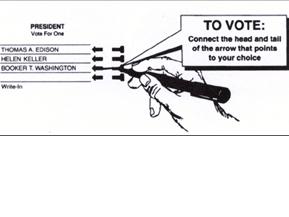
Abolish write-in space on ballots?

5

A bill quietly making its way through the Legislature would eliminate write-in space for some state and federal offices. It’s tucked down near the end of a bill that is supposed to clean up some language in the elections code. You have to scroll through a lot of dense stuff, but check out sections 49 and 54.


I don’t see any need for getting rid of write-in space. I mean, it doesn’t do any harm — and in some cases, write-in campaigns have been a huge deal. Witness Tom Ammiano’s 1999 campaign against Willie Brown — a miraculous, landmark effort that existed only as a write-in. I realize this bill wouldn’t affect local races, but the principle is the same. Why take away the rights of voters to choose a candidate who didn’t get a party nomination?

Editorial: Mayor Ed Lee: Keeping City Hall safe for PG&E

15

Mayoral candidates Dennis Herrera, John Avalos and Leland Yee blast Lee’s pro-PG&E comments (in postscript)

Pacific Gas and Electric Company is the number one corporate criminal in San Francisco. The company’s malfeasance caused the deaths of eight people and destroyed an entire neighborhood in San Bruno last year. The National Transportation Safety Board, in a report issued August 30, denounced PG&E’s “integrity management program without integrity” and blasted the company’s efforts to “exploit weakness in a lax system of oversight.”

That doesn’t even address the fact that PG&E has been operating an illegal monopoly in San Francisco for more than 80 years, engaging in an ongoing criminal conspiracy to violate the federal Raker Act. Or the fact that the utility spent $50 million of ratepayer money on a ballot initiative aimed at eliminating consumer choice in the electricity market.

So why was Mayor Ed Lee out at a PG&E public relations event Sept. 1 praising the “great local corporation” as a “great company that gets it?”

Well, the mayor’s campaign press spokesperson, Tony Winnicker, says that PG&E was at the event to donate $250,000 to a program for at-risk youth, and that the mayor was only recognizing that, for all its flaws, the utility “also [does] something good for our public schools and low-income kids.”

That’s not enough, and that’s not acceptable — and the mayor should apologize to the residents of San Francisco, San Bruno and everyplace else in California where the giant corporation has done serious and lasting damage.

It’s nice that PG&E gave a contribution to a program that helps Soma kids learn to read and to play baseball. We support the RBI program and its goals. Never mind that the $250,000 is about 0.005 percent of the money that the utility spent trying to block public power in California. Never mind that PG&E pays such a low franchise fee that it robs of city of millions of annual tax dollars that could fund programs like this one. It still sounds like a large sum, and to the nonprofit program at Bessie Charmichael School, it is.

But there’s a reason PG&E gives money to community groups and programs like this all over town — it’s a way to buy support and respect. Corporate largess of this sort is a relatively cheap public relations strategy — and for the mayor not to see that is embarrassing.

It’s a particularly notable conflict of interest, too — Lee’s top patron and biggest political supporter, Willie Brown (who knows a bit about corruption himself) has been on PG&E’s payroll as a private attorney for the past several years, earning about $200,000 a year.

Most of the candidates for mayor have been taking a gentle approach to Lee, and that makes a certain amount of sense — in a ranked-choice voting environment, negative campaigning often backfires. But there’s nothing inappropriate about saying that the mayor of San Francisco has damaged his own reputation and the reputation of the city by allowing himself to be used at a PR tool by PG&E. Remember: He didn’t just show up and thank the utility for the money. He called PG&E a “great local corporation,” which is, quite simply, false. This ought to become an issue in the race, and Lee should be forced to explain his position on public power, his ties to Brown and PG&E, his positon on  community choice aggregation, his willingness to kick  the PG&E-friendly  commissioners off the PUC and appoint credible public power advocates  and to put aside decades  of  City Hall malfeasance in the name of a small contribution.

P.S. As the Sept. 2 Examiner put it neatly in its headline, “Mayor, PG&E engage in baseball diplomacy, Utility donates to youth program in wake of NTSB criticism.”
Amy Crawford’s excellent heads-up  story noted that Lee “also heaped praise on PG&E, which announced a $250,000 loan to RBI “

Then she quoted Lee as saying without gulping or blushing, “Isn’t  that a wonderful contribution from a great local corporation? They’re a great company that gets it.”

Crawford put the quote in the proper context: “PG&E”s generosity came just two days after the National Transportation Safety Board blamed it for a deadly San Bruno gas line explosion one year ago.  The blast and subsequent fire destroyed a neighborhood, killing eight.”

As usual, PG&E downplayed the tragedy by calling it all just a “coincidence.”  She quoted Joe Molica, the PG&E spokesman, as saying,  “We’re really here to talk about kids.” Crawford wrote that Molica declined to “discuss the damning criticism.”  Three mayoral candiates promptly blasted Lee for his telling remarks. Three candidates for mayor promptly blasted Lee’s pro-PG&E remarks.

City Attorney Dennis Herrera  said the next day  that  “Ed Lee’s lavish praise for PG&E as ‘a great corporation’ on the eve of the one-year anniversary of the San Bruno tragedy, just days after federal regulators blamed the utility for a ‘litany of failures’ that claimed eight lives, is unconscionable,” said Herrera. “It shows insensitivity to victims’ families, and poor judgment for allowing his office to be used as a corporate PR tool. No less troubling, it ignores the serious work my office and others have done to protect San Franciscans from PG&E’s negligence, to prevent further explosions like those in San Bruno last year and in Cupertino on Wednesday. The interim Mayor should reassess his laudatory view of PG&E, and apologize to San Bruno victims’ families.”. http://herreraformayor.com/2011/09/herrera-criticizes-ed-lees-lavish-praise-pge-eve-oneyear-anniversary-san-bruno-blast/

Sup. John Avalos also  said the next day  that  “Ed Lee called PG&E a “great corporation” yesterday–a great corporation who spent $50 million last year trying to pass a ballot measure that would ensure their monopoly in places like San Francisco instead of repairing and inspecting pipes like the one that caused this terrible destruction.  Now this “great” corporation wants its customers to foot the bills for its negligence and bad practices?  Ed Lee says that this corporation “gets it.”  PG&E seem to “get” that a symbolic donation to a charity at the height of their unpopularity might help their rate-payers forget the catastrophic results of their negligence and bad practices ”  http://avalosformayor.org/2011/09/breaking-ed-lee-praises-pge-for-being-great-avalos-responds/s

State Sen. Leland Yee later  said that  “Obviously Ed Lee doesn’t understand that words matter. Eight of my constituents died and dozens lost their homes a year ago, and that is why I passed legislation to help those affected families try rebuilding their lives and why I am now pushing legislation to hold PG&E accountable. Rather than praising PG&E, the interim mayor should be calling on the Governor to sign the numerous bills to force the private utility to do what they have failed to do for decades – proper technology, inspection, and safety.”

And so Mayor  Lee has publicly demonstrated that he doesn’t get it and that he is poised to wallow in the Willie Brown sleaze of keeping City Hall safe for PG&E and its allies. Let’s keep the pressure on.  B3