Visual Arts

GOLDIES 2012: Anna Ishida

0

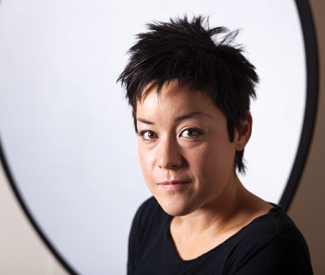
GOLDIES One of the very first things you’ll notice about Anna Ishida, onstage and off, is an aura of self-possession that simultaneously grounds her and yet sets her ever-so-subtly apart in a crowd. But she also has a chameleon-like quality, a way of blending seamlessly into her surroundings, whether it’s a 49-seat black box theater on Natoma Street, or the hip buzz of Farley’s East in Oakland, where we meet over coffee and sandwiches.

It’s this very quality that helps make her such a compelling actor to watch onstage. No matter what the role, Ishida appears born to it, whether appearing as an allegorical peasant in an imaginary land (in The Forest War at Shotgun Players), a horny Russian aristocrat with a mic (in Beardo, also at Shotgun), or a frustrated former drag queen forced to languish in the glitter-dusted shadow of her employer-lover (in Boxcar Theatre’s Hedwig and the Angry Inch).

Professionally, Ishida appeared first in The Color of Justice at Oakland’s TheatreFIRST in 2002, following up with roles with a miscellany of companies such as Woman’s Will and the San Francisco Shakespeare Festival, plus a long association with Shotgun Players. But this year, after a powerful performance as Tamora, Queen of the Goths, in Impact Theatre’s Titus Andronicus, Ishida’s been working to make herself even better-known as a triple threat: vocalist, actor, and independent film star. Her turn as Yitzhak in Boxcar’s summer production of Hedwig framed her trademark spiky hairdo in black leather and heartbreak, and matched her versatile vocals and formidable stage presence to the dozen glam-rock divas cast in the title role.

Her current show, Christopher Chen’s The Hundred Flowers Project with Crowded Fire Theater, casts her as an actor exploring the sprawling epic of China’s Cultural Revolution via the creative process. Earlier this year, she spent a week basically locked up in a room for 16 hours a day for her cinematic debut in HP Mendoza’s unsettling art house ode to the horror film genre, I Am a Ghost. The film — about a literal lost soul trapped in an unending routine — premiered at the 2012 San Francisco International Asian American Film Festival, and has been getting raves elsewhere on the festival circuit.

Ishida was born in Tokyo; her family moved to the East Bay when she was four, where she first attended a mostly all-black kindergarten followed by an almost all-white Catholic school, which naturally meant she fit into neither. Gravitating towards music at a young age, she narrowly escaped becoming a business major in college and instead attended the Pacific Conservatory of the Performing Arts in Southern California, where she connected on a deeper level to acting, and has mostly stuck with it ever since.

“The grass is always greener,” she confesses with a smile. “If I’m acting, I want to be singing; if I sing, I want to do Shakespeare; if I do Shakespeare, I want to dance. I’m fortunate I can do all three.”

Onstage, no matter what the role, Ishida never lets her focus flag, and her signature watchfulness gives her characters a feral, almost predatory depth. Perhaps most interestingly, in a climate of casting controversies particularly affecting Asian actors (such as a recent production of The Nightingale at La Jolla Playhouse, where a Caucasian actor played the Emperor of China), Ishida has successfully avoided being categorized by her racial makeup. With the exceptions of The Forest War and The Hundred Flowers Project, she’s been seen in roles she has successfully rendered colorblind.

“I’ve demanded that people see me as an actor, rather than as ‘Asian’ — and if I didn’t work, then so be it, but I was not going to be pigeonholed,” she emphasizes.

Then she laughs, considering some of her recent roles: a Russian tsaritsa, Poseidon (in Shotgun’s The Salt Plays, Part Two: Of the Earth), and Tamora. “I may have escaped being typecast as Asian,” she allows, “but now I’m typecast as the angry queen. The angry god-queen!”

GOLDIES 2012: The Mallard

3

GOLDIES You always hear of those artists that simply must keep creating, regardless of location, monetary resources, health, or free time. It’s the urge, the craving, something deep in the pit of their being. Idle hands and all that. I get the feeling this is just how it is for Greer McGettrick, the Mallard’s lead vocalist-guitarist. There’s a fire in her belly, and it burns from a sonic tinder.

Let’s take just this year as a case example. The Mallard released its psych-garage influenced debut full-length, Yes on Blood, in March on John Dwyer’s Castle Face Records to increasingly rave reviews. The band opened for Ty Segall, Thee Oh Sees, Shonen Knife, Hot Snakes, and countless others, at shows at places like the Verdi Club, Slim’s, and Bottom of the Hill. It toured with the Fresh and Onlys’ Wymond Miles. It put out a split seven-inch with Thee Oh Sees. It’ll have a plexi seven-inch out later this month. It contributed a stirring cover of the classicaly morose track “There She Goes Again” to Castle Face Records’ Velvet Underground and Nico tribute album. Oh, and McGettrick has had a few art shows around the city, showcasing her intricate woodcuts.

In addition to all that, the fuzzy San Francisco four-piece is now working on its follow-up to Blood. “I’m still writing a lot, but I feel like it’s more of a record for me,” says McGettrick, sitting outside the coffee shop-video store where she works. “I feel like Yes on Blood was more of a record for San Francisco, an homage, where it was like, ‘These are the bands that I love and I’m drawing from them’ — there’s the Thee Oh Sees song, the Ty Segall song, the Intelligence song.”

Or, as she’s been know to describe it, the band makes “inside-out-echo-laser-garage-psych-rock.”

“This is more of an album for me in that it’s a lot weirder, a lot darker, more personal,” she says. “I’m learning how to use my voice versus yelping.”

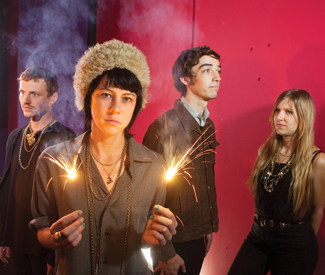
Live, that yelping comes across as more of a gritty punk plea, an emotional core tumbling out, backed by McGettrick’s noisy guitar work; “boy” Dylan Tidyman-Jones on guitar, keys, and backing vocals; “girl” Dylan Edrich on bass; and Miles Luttrell on drums.

This current formation of the Mallard is here after a few false starts. When McGettrick first moved to SF three years back, she gathered friends to start a new band, but it quickly fizzled. So she started again. “I just needed to keep playing songs, keep playing shows,” McGettrick says.

She’d already been in bands for years before her move to the Bay Area. The Studio City, Calif. native was part of the Fresno music scene for five years after college. “I kind of got stuck there, but it was good for me. There are some great people there, some really talented musicians, there’s just not a lot to do. A lot of people move away once they realize there’s something else out there.”

Once in SF, she clicked with the booming garage rock scene, and fortuitously met Dwyer. She played him some of her raw home recordings and he told her to go record more, and he’d put them out on Castle Face.

“It’s a really great scene,” McGettrick says. “Living in Fresno for five years — where it was just such a struggle to get other bands to play from out of town, and it was hard to get any momentum there. People moved away, bands broke up — it got me to work a lot harder. I moved to San Francisco and it kind of seemed easy. There’s all these bands, all these shows, people go to shows. It feels nourishing. We’re really lucky to live in this city.”

Our Weekly Picks: November 14-20

0

WEDNESDAY 14

outLOUD Radio 10th anniversary gala

It’s Saturday afternoon at the LGBT Community Center, and outLOUD Radio’s youth producers are interviewing queer elders about their fashion sense. The recording session was but one of many that the nonprofit has conducted, an amazing opportunity for baby gays and their elders to connect and preserve their stories for the future. Tonight, outLOUD is celebrating a decade of work with radio greats — NPR’s Ari Shapiro will take the stage for a Q&A with outLOUD youth leaders and KQED’s Scott Schafer. Come out to support the group’s efforts — because even with the nationwide advances made in last week’s elections, more LGBT stories must be told. (Caitlin Donohue)

7pm, $10–$100

Brava Theater Center

2781 24th St., SF

(415) 658-6010

gala.outloudradio.org


THURSDAY 15

“Everyday as History: Selections from Lost Landscapes of San Francisco by Rick Prelinger”

Prelinger Archives founder Rick Prelinger has a collection of over 60,000 so-called “ephemeral films” — including home movies and industrial clips (see: 1935’s “About Bananas,” an 11-minute, black-and-white bit of United Fruit Company propaganda hailing “one of America’s most important foods.”) Prelinger visits the Contemporary Jewish Museum in conjunction with the current exhibit “The Radical Camera: New York’s Photo League 1936-51,” where he’ll be presenting highlights from his popular “Lost Landscapes” series of San Francisco history caught on film. No bananas, probably — but Playland, a youthful Golden Gate Bridge, and post-1906 earthquake scenes will likely make appearances. (Cheryl Eddy)

6:30-8pm, $10 (includes museum admission)

Contemporary Jewish Museum

736 Mission, SF

www.thecjm.org


Crushed Out

Brooklyn-based band Crushed Out (formerly Boom Chick) mixes swirling, bluesy slide guitar riffs with reverb-laden surf fills, stomping honky tonk rhythms and a host of other early rock’n’roll influences into a truly tasty batch of infectious tunes. When listening to Crushed Out’s new album, Want To Give, it may be hard to believe that it’s just a duo making all that noise — but singer-guitarist Frank Hoier and drummer Moselle Spiller have no problem recreating the full sound when playing live. They’ve opened for fans such as Jon Spencer, and are playing with Social Distortion in the new year—catch them up close tonight while you still can. (Sean McCourt)

With the Lower 48, Halsted

9pm, $8

Hotel Utah

500 Fourth St., SF

(415) 546-6300

www.hotelutah.com


Tame Impala

Recording an LP alone, in Perth, Australia, the world’s most remote city, practically guarantees a finished product permeated by angsty solitude. Psych-rock, though? Not exactly the most common vehicle for the expression of existential dread. Still, Kevin Parker pulls it off brilliantly on Lonerism, the sophomore full-length from Tame Impala, and his first as a lone, multi-tracking solo artist under the moniker. The result is a golden pop album, stuck in limbo between Britney-esque bubblegum vapidity, and Lennon/McCartney’s wholesome pop transcendence. It should be fascinating to watch a full band reinterpret the bittersweet hooks floating around in Parker’s head. (Taylor Kaplan)

8pm, $22.50

Fillmore

1805 Geary, SF

(415) 346-6000

www.thefillmore.com


FRIDAY 16

SF International Hip Hop DanceFest

The SF International Hip Hop DanceFest is an extraordinary event. Always the same, it’s always new. The formula works. Over the years, curator Micaya has honed her sense of what is hot and what is even hotter without neglecting the vibrant local scene that give this love fest of urban dance its backbone. New this year is Blue Boy from London with two different shows; the Academy of Villains will be back with its competition style fierceness; so is Ill-Abilities whose members travel the world conquering physical challenges. Female crews Decadancetheatre (NY) and Mix’d Ingrdnts (Oakland) will be there. That’s just five of the 16 companies that will make a cheerful noise and shake up the Palace of Fine Arts. (Rita Felciano)

Also Sat/17, 8pm; Sun/18, 2 and 7pm, $39.99

Palace of the Fine Arts Theatre

3301 Lyon , SF

www.sfhiphopdancefest.com


Vladimir in Butterfly Country

Vladimir Nabokov’s love of butterflies is another example of the often deeply entwined relationship between art and science. His most famous work, Lolita, was composed on several butterfly-collecting trips and he even theorized a migration pattern for the Polyommatus blue butterfly that was later confirmed by scientists. Vladimir in Butterfly Country, hosted by the Old First Church, will begin with readings from the author’s writings about butterflies. These will be followed by an original, one act opera, written by Ann Callaway and Jaime Robles, which brings to life Nobokov’s love affair with the beautiful insect. And if that’s not enough, the group boasts some of the finest chamber musicians in the Bay; Soprano Erino Newkirk will lead, accompanied by flute, bass, piano, bassoon, and percussion. (Molly Champlin)

8pm, $14–$17

Old First Church

1751 Sacramento, SF

(415) 474-1608

www.oldfirstconcerts.org


Twin Peaks: The Beginning”

When it hit the airwaves in 1990, Twin Peaks caused a sensation — and despite the copycats that sprang up in its wake, remains a singular example of what can happen when a pair of crazily creative minds (David Lynch and Mark Frost) come together and test the boundaries of television. Watching it today, it’s no surprise it became a cult hit after its mainstream popularity waned. The characters! The settings! The bizarro plot twists and quotable lines! Brooklyn’s Silent Drape Runners (+100 for the name) visit the Vortex Room for a special “live re-sound-tracking” of episode one, adding a new score of both original and familiar songs to the adventures of Agent Cooper and company. Let’s rock! (Eddy)

10pm, $10

Vortex Room

1082 Howard, SF

Facebook: The Vortex Room


Anna and the Annadroids present “Clone Zone”

Acrobatics, dance, aerial silks, video game metaphors, and animation compromise Anna and the Annadroid’s latest wacky, philosophical performance,Clone Zone.” Anna Sullivan started the San Francisco based performance group in 2004, inspired by dark horror films, pop culture, technology, and a love of dolls (though a slightly atypical one that had her building Barbie colonies on her front porch as a child.) This performance will see the Annadroids battling their way through Carl Jung’s model of the human psyche in a video game format. Come for a night that promises a give-and-take exploration of the human condition through rule-breaking and genre-fusing dance. (Champlin)

Through Sat/17, 8pm; also Sun/18, 7pm, $20

Dance Mission Theater 3316 24th St., SF

(415) 826-4441

www.amerifluff.com


SATURDAY 17

BluePrint: “Danzas Breves”

“Tonight I can write the saddest lines,” begins Pablo Neruda’s famous, post-love “Poema XX.” That mainstay of brokenhearted lotharios has been set to music by local composer Chris Pratorius — and debuts alongside a number of other short, contemporary and traditional classical works in the Latin American tradition as part of the wonderful, forward-looking BluePrint series at the San Francisco Conservatory of Music. In the Conservatory’s gorgeous concert hall, you’ll also hear Gabriela Lena Fran’s “Manchay Tiempo,” Armando Luna’s “Graffiti,” Darius Milhaud’s “Saudades do Brasil, Op. 67,” and more. Conservatory artistic director Nicole Paiement conducts the New Music Ensemble, soprano Julia Metzler provides the vocals, and David Tanenbaum will shine on the essential guitar parts. (Marke B.)

San Francisco Conservatory of Music

8pm, $15-$20

50 Oak, SF

(415) 864-7326

www.sfcm.edu


The Faint

Has it really been a decade since the release of seminal dark wave album Danse Macabre? Released on Saddle Creek Records, the Faint’s crisp and flashy third studio full-length was a standout during the early electro-pop buzz of the Aughts, sounding like it was crafted by a dance-punk band with a heavy metal guitarist, which it pretty much was. Or, Duran Duran tweaked out and covered in blood. Do you remember “Agenda Suicide” pumping out of boomboxes at every party in 2001, and swallowing up goth club and new wave dancefloors? I do. The record got the so-so remix treatment in 2003 by Paul Oakenfold, Junior Sanchez, and more. This October, Saddle Creek released a deluxe edition of Danse Macabre, replete with unreleased tracks and a DVD of live footage from early shows. In conjunction with that news, the recently quiet Faint announced its return with a tour in which the five-piece will play the album in its entirety. (Emily Savage)

With Trust, Casket Girls

8pm, $25–$27

Regency Ballroom

1300 Van Ness, SF (415) 673-5716

www.theregencyballroom.com


Philistines

Energetic local growler-howler Colin Daly, formerly of Ex-Boyfriends (which won best local band in our 2008 Best of the Bay) and the super-diverse Lucky Jesus, is fronting a new band, the Philistines — and he’s got our indie-loving panties in a twist once again. Self-released debut album Therewolves! rips a page from the Replacements playbook, folds it into a power-pop origami swan, and sails it down a stream of catchy hooks and bouncy riffs. Let’s face it though, I’ve admired hottie Daly’s rad songwriting skills and charismatic onstage energy for years. The real news here that he has a twin brother from Chicago who is in the band with him. Twin brother! Swoon.They’ll be performing with expansive rock soundscapists MINOT, which includes Matthew Solberg from storied Bay Area band From Monument to Masses, who killed me with their live shows in the 2000s. (Marke B.)

9pm, $7

Hemlock Tavern

1131 Polk, SF

www.hemlocktavern.com


SUNDAY 18

Patchwork Indie Art and Craft Fair

With the holidays approaching, it’s about time to start thinking about gifts for loved ones. If you want something crafty, cute, or just made in California, check out the Patchwork Indie Art and Craft Fair. The fair was started by Los Angeles based painter, Nicole Stevenson, and Delilah Snell, owner of the environmentally friendly store, The Road Less Traveled. The basic concept was to help local artists, designers, and crafters sell their work in an inclusive environment. The biannual event brings vendors, musicians, food, and hands-on craft activities to four different cities in the state. In addition to beautiful ceramics, jewelry and on-the-spot, screen-printed clothing, you’ll likely find some quirkier items like knitted headphone covers (which can double as earmuffs) or whiskey flavored candles. (Champlin)

11am, free

Jack London Square Pavilion

98 Broadway, Oakl.

(510) 645-9292

www.patchworkshow.com

Stage Listings

0

Stage listings are compiled by Guardian staff. Performance times may change; call venues to confirm. Reviewers are Robert Avila, Rita Felciano, and Nicole Gluckstern. Submit items for the listings at listings@sfbg.com. For further information on how to submit items for the listings, see Picks.

THEATER

OPENING

History: The Musical Un-Scripted Theater, 533 Sutter, SF; www.un-scripted.com. $10-20. Opens Thu/15, 8pm. Runs Thu-Sat, 8pm (no show Nov 22). Through Dec 22. The Un-Scripted Theater Company performs "an unscripted romp through Western history."

ONGOING

Carmelina Eureka Theatre, 215 Geary, SF; www.42ndstmoon.org. $25-75. Wed/14, 7pm; Thu/15-Fri/16, 8pm; Sat/17, 6pm; Sun/18, 3pm. 42nd Street Moon performs the "forgotten musical" that inspired the Broadway hit Mamma Mia!

Elektra Geary Theater, 415 Geary, SF; www.act-sf.org. $20-110. Wed/14-Sat/17, 8pm (also Sat/17, 2pm); Sun/18, 2pm. Academy Award winner Olympia Dukakis stars in Sophocles’ Greek tragedy.

Foodies! The Musical Shelton Theater, 533 Sutter, SF; www.foodiesthemusical.com. $30-34. Fri-Sat, 8pm (no show Sat/17). Open-ended. AWAT Productions presents Morris Bobrow’s musical comedy revue all about food.

The Foreigner Mission Dolores Academy Auditorium, 3371 16th St, SF; (650) 952-3021. Free (donations requested). Fri/16, 7:30pm; Sat/17-Sun/18, 3pm. 16th Street Players perform Larry Shue’s comedy about an Englishman in the American South.

Geezer Marsh San Francisco, 1062 Valencia, SF; www.themarsh.org. $30-100. Sat/17, 8pm; Sun/18, 7pm. Geoff Hoyle’s popular solo show about aging returns.

The Hundred Flowers Project Thick House, 1695 18th St, SF; www.crowdedfire.org. $10-35. Wed/14-Sat/17, 8pm. Reinvention is as American as apple pie — allowing every individual to shed the limitations of the past and move constantly forward. Of course it’s not an exclusively American concept, a point Christopher Chen makes early on in his latest play, The Hundred Flowers Project. A group of Asian American actors gather to collaborate on a play about the Maoist Cultural Revolution, focusing first on the idea of China as a "country of only beginnings … built on the idea of no past," while wrestling with the implications of creating and recreating history as you go along, including, eventually, their own. Ultimately the ideal overtakes their earnest intentions and hijacks the play to serve its own dictatorial end, each actor reduced to an insubstantial shadow of their former "selves," from the over-eager Sam (Ogie Zulueta) to the penitent philanderer Mike (Wiley Naman Strasser) to his somewhat wary ex, Lily (Anna Ishida). Their identities gobbled up by the restless juggernaut the play has morphed into after a triumphal five-year world-tour they hover constantly just on the edges of a dangerous discovery, their once lively sense of purpose replaced by an almost willful inability to question their roles or their fate. Chen’s sprawling, Orwellian tour de force is further bolstered by an army of adroit designers and the competent hand of director Desdemona Chiang, who one hopes is a slightly more benign force than the director of the play-within-the-play, Mel (Charisse Loriaux). (Gluckstern)

Lost Love Mojo Theatre, 2940 16th St, Ste 217, SF; www.mojotheatre.com. $28. Wed/14-Sat/17, 8pm. Modern love and modern life: it’s all a wash in this very funny and smart play from playwright-director Peter Papadopoulos about two pairs of lost souls thrown together in the shoals of a soggy apocalypse. Mitzy (a sure Elena Spittler) is a stunned bride whose just lost her wedding party and everyone she knew — except the valet, Tito (a perfectly deadpan Carlos Flores, Jr.), a loose canon if ultimately goodhearted, who finds himself clinging to the same rock after some unmentioned catastrophe. Meanwhile, Jan (a brilliantly, manically articulate Kimberly Lester) has gone from just sexy crazy to all-out nuts for her girlfriend Barb (a sharp, sympathetic Jessica Risco), whose recent infidelity has apparently triggered Jan’s meltdown, key symptoms of which include an obsession with a certain downbeat French existentialist on the Discovery Channel (a spritely Roy Eikleberry in an outrageous French accent so mal it’s bon), and shedding all material possessions in their mutually decorated apartment. What happens when they all end up together? The possibilities, if not endless, spell end times for the old world. The welcome inaugural production by newcomers Mojo Theatre turns out to have preempted Hurricane Sandy with its own storm of the century, proving rather timely as well as dramatically very worthwhile. Director Papadopoulos makes excellent use of modest resources in staging the action with dynamic contrasts and choice detailing, across a set of finely tuned ensemble performances, as the eccentricities and common sense at war within and between his characters begin slowly and surely to unravel a life out of balance, merrily and mercifully making way for who knows what. (Avila)

Phaedra’s Love Bindlestiff Studios, 185 Sixth St, SF; www.doitliveproductions.com. $15. Wed/14-Sat/17, 8pm. Although she didn’t make it into the 21st century herself, British playwright Sarah Kane (1971-1999) left behind a small group of plays that continue to test the complacency of an age lulled into thinking itself ultimately rational and civilized. In Kane’s cutting, brutally funny reworking of Seneca’s play (itself an adaptation of Euripides’ Hippolytus), the titular lovelorn queen (an amiably tormented Whitney Thomas) throws herself shamelessly at her stepson, royal slob Hippolytus (a sharp yet low-key Michael Zavala, channeling mumblecore nihilism) despite, or because of, his pungent contempt for everyone around him. The play’s main action, however, takes place after Phaedra has killed herself, leaving a note accusing Hippolytus of rape and setting in motion a downfall that is his own perverse salvation. Despite occasionally flagging momentum, director Ben Landmesser and newcomers Do It Live! (in their second outing since last season’s debut, an agile staging of Sam Shepard’s Suicide in B Flat) deliver a worthy production of this clever gem. While a sporadic, low-murmuring sound design (by Hannah Birch Carl) infuses the atmosphere with a muffled libidinal menace, the thrust stage brings us close to the action, rubbing our noses in the fetid whisperings and fumblings of royal parasites and their dialectical kin, the infantilized, desensitized masses. Kane’s Hippolytus, meanwhile, turns from a sort of repellent Hamlet without motive to a Genet-like criminal-saint whose martyrdom is a solitary ecstasy of stark perception. (Avila)

The Rainmaker Shelton Theater, 533 Sutter, SF; www.sheltontheater.org. $38. Fri-Sat, 8pm. Through Dec 22. Shelton Theatre preforms N. Richard Nash’s classic drama.

"ReOrient 2012 Festival and Forum" Z Space, 450 Florida, SF; www.goldenthread.org. $20. Series A runs Thu/15-Sat/17, 8pm; Sun/18, 7pm. Series B runs Sat/17-Sun/18, 8pm. After a three-year hiatus, Golden Thread Productions’ ReOrient Festival of short plays from and about the Middle East is back (coupled with an impressive two-day forum of talks, panels, workshops, and performance around art and politics in the wake of the Arab Spring and other momentous developments across the region). The first of two series of plays, Series A, includes War & Peace, a short symbolical comedy by 20th-century Egyptian literary giant Tawfiq Al-Hakim (handily translated by May Jayyusi and David Wright) that distills imposing social forces into a three-way ménage between a smart, free-spirited woman (a vibrant Lena Hart), her secret suitor in a showman’s coattails and cane (a comically fervent Jesse Horne), and her jealous husband, a violent-tempered military officer (a suave yet stentorian Garth Petal). Sharply directed by Hafiz Karmali, it’s an effervescent little farce that in its power dynamics, and the elusive happiness of the characters, neatly limns bigger themes never timelier in Egypt (or here). It’s followed by Farzam Farrokhi’s 2012, directed by Sara Razavi, a low-key second-coming cum coffee klatch among three laid-back, cell phone-obsessed messiahs (Cory Censoprano, Horne, Roneet Aliza Rahamim) from the three Abrahamic religions that sets an unexpected tone but never really amounts to much. Far more dramatic is Birds Flew In by Yussef El Guindi (of Golden Thread hit Language Rooms, among others), a monologue by a single Arab American mother mourning her deceased soldier-son and wondering where she might have gone wrong. Delivered with unsentimental grit by Nora El Samahy, it’s a strongly voiced if familiar story that registers ambivalence with facile patriotism and violent nationalism, yet unconvincingly retreats at the last moment into a familiar red-white-and-blue corner. Silva Semericiyan’s Stalemate, directed by Desdemona Chiang, is a triptych of scenes between changing pairs of men (played by Censoprano and Horne) that aims at a transnational snapshot of ingrained patterns of male aggression (from Fleet Street to Red Light Amsterdam to war-torn Baghdad) but comes across too weakly and a little confusingly. Durected by Christine Young, Jen Silverman’s In the Days That Follow — set in Boston amid clichés of American openness, innocence and possibility (albeit charmingly personified by Censoprano) — is the longest piece and the most dramatically interesting, if also somewhat strained, positing a 22-year-old Jewish Israeli translator and IDF veteran (Rahamim) as the instigator of peaceful dialogue and mutual affection with an older and politically hardened Palestinian Lebanese poet (El Samahy). Finally, in Mona Mansour and Tala Manassah’s sweet but drifting meta-theatrical, The Letter, directed by Razavi, a Palestinian American physicist (Petal) and his philosopher daughter (Hart) mount an amateur theater piece to respond to the 2011 controversy over CUNY’s blocking of an honorary degree to Tony Kushner based on an attack by a CUNY board member on Kushner’s opposition to Israel’s occupation of Palestine. (Avila)

Roseanne: Live! Rebel, 1760 Market, SF; www.brownpapertickets.com. $25. Wed/14, 7 and 9pm. Lady Bear, Heklina, D’Arcy Drollinger, and more star in this tribute to the long-running sitcom.

Shocktoberfest 13: The Bride of Death Hypnodrome, 575 10th St, SF; www.thrillpeddlers.com. $25-35. Thu/15-Sat/17, 8pm. Thrillpeddlers’ seasonal assortment of yeasty Grand Guignol playlets is a mixed bag of treats, but it all goes so nicely with the autumnal slink into early nights and dark cravings. Fredrick Whitney’s Coals of Fire is lightly amusing, if far from smoking, as a two-hander about a blind older matron (Leigh Crow) who discovers her young companion (Zelda Koznofski, alternating nights with Nancy French) has been secretly schtupping her husband. I’m a Mummy is a short, not very effective musical interlude by Douglas Byng, featuring the bright pair of Jim Jeske and Annie Larson as Mr. and Mrs., respectively. The titular feature, The Bride of Death, written by Michael Phillis and directed by Russell Blackwood, proves a worthy centerpiece, unfolding an intriguing, well-acted tale about a reporter (Phillis) and his photographer (Flynn DeMarco) arriving at a stormy castle to interview a strangely youthful Grand Guignol stage star (Bonni Suval) making her film debut. After another, this time more rousing musical number, Those Beautiful Ghouls (with music and lyrics by Scrumbly Koldewyn; directed and choreographed by D’Arcy Drollinger), comes the evening’s real high point, The Twisted Pair by Rob Keefe, acted to the bloody hilt by leads Blackwood and DeMarco as the titular duo of scientists driven mad by an experimental batch of ‘crazy’ glue. All of it comes capped, of course, by the company’s signature lights-out spook show. (Avila)

Speed-the-Plow Actors Theatre of San Francisco, 855 Bush, SF; www.actorstheatresf.org. $26-38. Wed-Sat, 8pm. Extended through Dec 21. Actors Theatre of San Francisco performs the David Mamet drama.

"Strindberg Cycle: The Chamber Plays in Rep" Exit on Taylor, 277 Taylor, SF; www.cuttingball.com. $10-50 (festival pass, $75). Thu/15, 7:30pm; Fri/16-Sat/17, 8pm (also Sat/17, 2pm); Sun/18, 5pm. The first pair in the Cutting Ball Theater’s cycle of five newly-translated August Strindberg chamber plays, Storm and Burned House share much in common. Written in 1907, five years before Strindberg’s death, they are the most straightforward, least supernaturally-charged of the five, whose characters are haunted by memories rather than actual ghosts, and whose cloak and dagger domestic intrigues foreshadow Alfred Hitchcock as much as they do Harold Pinter. Both star a commanding pair of veteran Bay Area actors James Carpenter and Robert Parsons as elderly brothers, whose ability to move forward in the present is impeded by memories of past mistakes. In Storm, Carpenter plays the role of an elderly cuckold, whose wife left him five years previous and who, in the words of Parsons, "murdered" his reputation. In Burned House, Carpenter returns to his childhood home from America, a long-lost prodigal son, only to find it has burned to the ground, and with it, any hope of reconciling an unpleasant past. In both, an atmosphere of muted mendacity and stifling unease crowds the stage like an unnamed character whose presence is little acknowledged but felt acutely by all the principles. Gloomy and hostile, bereft of even the slightest glimmer of hopefulness, Storm and Burned House will appeal most to Strindberg completists, post-naturalists, and admirers of new translations (of which Paul Walsh has done a stellar job). (Gluckstern)

The Submission New Conservatory Theatre Center, 25 Van Ness, SF; www.nctcsf.org. $25-45. Wed-Sat, 8pm (no shows Nov 21-22); Sun, 2pm. Through Dec 16. New Conservatory Theatre Center performs Jeff Talbott’s drama about a playwright who falsifies his identity when he enters his latest work into a prestigious theater festival.

Superior Donuts Gough Street Playhouse, 1622 Gough, SF; www.custommade.org. $25-30. Thu-Sat, 8pm; Sun, 7pm. Through Dec 2. Custom Made Theatre performs Tracy Letts’ poignant, Chicago-set comedy.

Twelfth Night, or What You Will Phoenix Theatre, 414 Mason, Sixth Flr., SF; www.ninjazofdrama.com. $10. Thu/15-Sat/17, 8pm (also Sat/17, 3pm). Ninjaz of Drama perform the Shakespeare classic.

The Waiting Period Marsh San Francisco, 1062 Valencia, SF; www.themarsh.org. $15-50. Thu-Fri, 8pm; Sat, 5pm. Extended through Dec 8. Brian Copeland (comedian, TV and radio personality, and creator-performer of the long-running solo play Not a Genuine Black Man) returns to the Marsh with a new solo, this one based on more recent and messier events` in Copeland’s life. The play concerns an episode of severe depression in which he considered suicide, going so far as to purchase a handgun — the title coming from the legally mandatory 10-day period between purchasing and picking up the weapon, which leaves time for reflections and circumstances that ultimately prevent Copeland from pulling the trigger. A grim subject, but Copeland (with co-developer and director David Ford) ensures there’s plenty of humor as well as frank sentiment along the way. The actor peoples the opening scene in the gun store with a comically if somewhat stereotypically rugged representative of the Second Amendment, for instance, as well as an equally familiar "doood" dude at the service counter. Afterward, we follow Copeland, a just barely coping dad, home to the house recently abandoned by his wife, and through the ordinary routines that become unbearable to the clinically depressed. Copeland also recreates interviews he’s made with other survivors of suicidal depression. Telling someone about such things is vital to preventing their worst outcomes, says Copeland, and telling his own story is meant to encourage others. It’s a worthy aim but only a fitfully engaging piece, since as drama it remains thin, standing at perhaps too respectful a distance from the convoluted torment and alienation at its center. (Avila)

BAY AREA

Acid Test: The Many Incarnations of Ram Dass Marsh Berkeley, 2120 Allston, Berk; www.themarsh.org. $15-50. Thu-Fri, 8pm; Sat, 5pm. Through Nov 24. Lynne Kaufman’s new play stars Warren David Keith as the noted spiritual figure.

The Kipling Hotel: True Misadventures of the Electric Pink ’80s Marsh Berkeley, 2120 Allston, Berk; www.themarsh.org. $20-50. Sat, 8:30pm; Sun, 7pm. Extended through Dec 16. This new autobiographical solo show by Don Reed, writer-performer of the fine and long-running East 14th, is another slice of the artist’s journey from 1970s Oakland ghetto to comedy-circuit respectability — here via a partial debate-scholarship to UCLA. The titular Los Angeles residency hotel was where Reed lived and worked for a time in the 1980s while attending university. It’s also a rich mine of memory and material for this physically protean and charismatic comic actor, who sails through two acts of often hilarious, sometimes touching vignettes loosely structured around his time on the hotel’s young wait staff, which catered to the needs of elderly patrons who might need conversation as much as breakfast. On opening night, the episodic narrative seemed to pass through several endings before settling on one whose tidy moral was delivered with too heavy a hand, but if the piece runs a little long, it’s only the last 20 minutes that noticeably meanders. And even with some awkward bumps along the way, it’s never a dull thing watching Reed work. (Avila)

Richard the First: Part One, Part Two, Part Three Berkeley City Club, 2315 Durant, Berk; www.centralworks.org. $14-25. Thu/15-Sat/17, 8pm; Sun/18, three-part marathon, 2, 5, 8pm. This Central Works Method Trilogy presents a rotating schedule of three plays by Gary Graves about the king known as "the Lionheart."

Richard III Live Oak Theatre, 1301 Shattuck, Berk; www.aeofberkeley.org. $12-15. Fri/16-Sat/17, 8pm. Actors Ensemble of Berkeley performs the Shakespeare classic.

Sex, Slugs and Accordion Marsh Berkeley, 2120 Allston, Berk; www.themarsh.org. $10. Wed/14, 8pm. Jetty Swart, a.k.a. Jet Black Pearl, stars in this "wild and exotic evening of song."

The Sound of Music Julia Morgan Theatre, 2640 College, Berk; www.berkeleyplayhouse.org. $15-35. Thu-Sat, 7pm (also Sat, 2pm); Sun, noon and 5pm. Through Dec 2. Berkeley Playhouse opens its fifth season with the Rodgers and Hammerstein musical.

Toil and Trouble La Val’s Subterranean, 1834 Euclid, Berk; www.impacttheatre.com. $10-20. Thu-Sat, 8pm (no show Nov 22). Through Dec 8. Impact Theatre presents Lauren Gunderson’s world premiere comedy inspired by Macbeth.

The White Snake Berkeley Repertory Theatre, Roda Theatre, 2025 Addison, Berk; www.berkeleyrep.org. $29-99. Opens Wed/14, 8pm. Runs Tue and Thu-Sat, 8pm (also Nov 29, Dec 13, and Sat, 2pm; no matinee Dec 1; no show Nov 22); Sun, 2 and 7pm. Through Dec 23. Mary Zimmerman (Metamorphoses) returns to Berkeley Rep with this classic romance adapted from a Chinese legend.

Wilder Times Aurora Theatre, 2081 Addison, Berk; www.auroratheatre.org. $32-60. Tue, 7pm; Wed-Sat, 8pm; Sun, 2 and 7pm. Through Dec 9. Aurora Theatre performs a collection of one-acts by Thornton Wilder.

The World’s Funniest Bubble Show Marsh Berkeley, 2120 Allston, Berk; www.themarsh.org. $8-50. Sun, 11am; Nov 23-25, 11am. Through Nov 25. Louis "The Amazing Bubble Man" Pearl brings his lighter-than-air show back to the Marsh.

PERFORMANCE/DANCE

BATS Improv Bayfront Theater, B350 Fort Mason Center, SF; www.improv.org. $20. "Theatresports," Fri, 8pm, through Dec 21. "Family Drama," Sat, 8pm, through Nov 24.

"The Buddy Club Children’s Shows" Randall Museum Theater, 199 Museum Wy, SF; www.thebuddyclub.com. Sun/18, 11am. $8. Magician Timothy James performs.

"Clone Zone" Dance Mission Theater, 3316 24th St, SF; clonezone.brownpapertickets.com. Fri/16-Sat/17, 8pm; Sun/18, 7pm. $20. Anna and the Annadroids perform a multi-media dance theater piece inspired by video games and Carl Jung.

"Comedy Bodega" Esta Noche Nightclub, 3079 16th St, SF; www.comedybodega.com. Thu, 8pm. Ongoing. No cover (one drink minumum). This week: Caitlin Gill, Wonder Dave, and friends.

"The Comikaze Lounge: A Showcase of Smart Comedy" Café Royale, 800 Post, SF; www.comikazelounge.com. Wed/14, 8pm. Free. Comedy with Brendan Lynch, Griffin Daley, Drew Harmon, and more.

"Fauxgirls!" Infusion Lounge, 124 Ellis, SF; www.fauxgirls.com. Thu/15, 8pm. Free. Drag revue with Victoria Secret, Alexandria, Chanel, Maria Garza, and more.

"Illuminique Under the Dome" Westfield SF Centre, 865 Market, SF; westfield.com/sanfrancisco. Thu/15, 4:30pm. Free. Dancers from the San Francisco Ballet’s Nutcracker perform a demonstration for children at this launch event for the shopping center’s new 3D holiday light display.

International Taiko Festival Yerba Buena Center for the Arts Theater, 700 Howard, SF; www.ybca.org. Fri/16-Sat/17, 8pm (also Sat/17, 2pm). $32-38. With Grand Master Seiichi Tanaka and San Francisco Taiko Dojo, and more.

"Life with Laughter" Garage, 715 Bryant, SF; www.brownpapertickets.com. Fri/16, 8:30pm. $10-20. Variety show featuring comedy, storytelling, spoken word, and music.

"New Frequencies Fest 2012" Yerba Buena Center for the Arts, 701 Mission, SF; www.ybca.org. Fri/16-Sat/17, 8pm. $20-25. Fri/16: "Women, Strings, and Song" with women songwriters and composers performing live; Sat/17: Dafnis Prieto Proverb Trio and a lively celebration of the African Diaspora.

"Our Daily Bread" CounterPULSE, 1310 Mission, SF; www.counterpulse.org. Thu/15-Sun/18, 8pm. $20-30. Amara Tabor-Smith’s Deep Waters Dance Theater performs a work inspired by food traditions.

"Round One Cabaret" Alcove Theater, 414 Mason, Ste 502, SF; roundonecabaret.brownpapertickets.com. Fri/16-Sat/17, 8pm. $30. Not Quite Opera presents this showcase of new songs by Bay Area composers.

San Francisco International Hip Hop Festival Palace of Fine Arts Theater, 3301 Lyon, SF; www.cityboxoffice.com. Program A: Fri/16, 8pm and Sun/18, 2pm. Program B: Sat/17, 8pm and Sun/18, 7pm. $39.99 (combo tickets, $75). Sixteen hip-hop dance companies from the Bay Area, the East Coast, Europe, and more perform at this 14th annual event.

"San Francisco Magic Parlor" Chancellor Hotel Union Square, 433 Powell, SF; www.sfmagicparlor.com. Thu-Sat, 8pm. Ongoing. $40. Magic vignettes with conjurer and storyteller Walt Anthony.

"The Way Tomorrow Was: A Retro-Future Burlesque and Bellydance Revue" 50 Mason Social House, 50 Mason, SF; www.lightreclaimed.com. Sat/17, 10pm. $12-20. Retro space-age performances.

BAY AREA

Mills Repertory Dance Company Lisser Theatre, Mills College, 5000 Macarthur, Oakl; www.brownpapertickets.com. Fri/16-Sat/17, 8pm (also Fri/16, 1pm). Also Sun/18, 3pm at Dance Mission Theatre, 336 24th St., SF. $12-15. Fall concert with works by Sonya Delwaide, Shinichi Iova-Koga, Katie Faulkner, and others.

"Yes, Bay Area: The Selected Tweets of Lyrics Born: A Reading with Beats" Pegasus Books Downtown, 2349 Shattuck, Berk; (510) 649-1320. Sun/18, 7:30pm. Free. The musican shares his first book at this "musically enhanced literary reading" presented by First Person Singular’s On Book series.

Film Listings

0

Film listings are edited by Cheryl Eddy. Reviewers are Kimberly Chun, Dennis Harvey, Lynn Rapoport, and Sara Vizcarrondo. For rep house showtimes, see Rep Clock.

DOCFEST

The 11th San Francisco Documentary Film Festival runs through Nov 21 at the Brava Theater, 2781 24th St, SF; Roxie, 3117 16th St, SF; and Shattuck Cinema, 2230 Shattuck, SF. Tickets (most films $10-12) and complete schedule at www.sfindie.com.

OPENING

Anna Karenina Joe Wright broke out of British TV with the 9,000th filmed Pride and Prejudice (2005), unnecessary but quite good. Too bad it immediately went to his head. His increasing showiness as director enlivened the silly teenage-superspy avenger fantasy Hanna (2011), but it started to get in the way of Atonement (2007), a fine book didn’t need camera gymnastics to make a great movie. Now it’s completely sunk a certified literary masterpiece still waiting for a worthy film adaptation. Keira Knightley plays the titular 19th century St. Petersburg aristocrat whose staid, happy-enough existence as a doting mother and dutiful wife (to deglammed Jude Law’s honorable but neglectful Karenin) is upended when she enters a mutually passionate affair with dashing military officer Count Vronsky (Aaron Taylor-Johnson, miscast). Scandal and tragedy ensue. There’s nothing wrong with the screenplay, by Tom Stoppard no less. What’s wrong is Wright’s bright idea of staging the whole shebang as if it were indeed staged — a theatrical production in which nearly everything (even a crucial horse race) takes place on a proscenium stage, in the auditorium, or "backstage" among riggings. Whenever we move into a "real" location, the director makes sure that transition draws attention to its own cleverness as possible. What, you might ask, is the point? That the public social mores and society Anna lives in are a sort of "acting"? Like wow. Add to that another brittle, mannered performance by Wright’s muse Knightley, and there’s no hope of involvement here, let alone empathy — in love with its empty (but very prettily designed) layers of artifice, this movie ends up suffocating all emotion in gilded horseshit. The reversed-fortune romance between Levin (Domhall Gleeson) and Kitty (Alicia Vikander) does work quite well — though since Tolstoy called his novel Anna Karenina, it’s a pretty bad sign when the subsidiary storyline ends up vastly more engaging than hers. (2:10) (Harvey)

Brooklyn Castle Geeks rock — that much we all know in the science- and math-rich Bay Area. That doesn’t lessen the impact of this documentary about Brooklyn I.S. 318’s young chess players, who have won the most junior high chess championships in the country and were the first middle school team to win the US Chess Federation’s national high school championship. With 60-plus percent of the students below the federal poverty level, the players certainly aren’t rolling in privilege, especially during these budget-slashing times. Nonetheless, with the help of caring teachers and an intensive chess class, the school’s players, spanning a spectrum of skills with some surpassing even Einstein’s rating, have managed to bring home state and national championships for the school — and vastly improved their prospects along the way. They range from Rochelle, the shy girl who has the chance to become the first African American female chess master; Alexis, the boy who yearns to get into a good high school and college to care for his immigrant parents; Justus, the sixth-grade chess prodigy who’s already a master and suffers intensely when he loses; and Pobo, the sweet-faced son of Nigerian émigrés who says he probably wouldn’t even be in school if not for chess. Brooklyn Castle is about chess, yes, as director Katie Dellamaggiore takes the time to spell out the rating and tournament point systems, but it’s also just as importantly about the kids, who are smart, strategic, and getting primed to play the game of life. (1:42) Opera Plaza. (Chun)

Holy Motors Holy moly. Offbeat auteur Leos Carax (1999’s Pola X) and frequent star Denis Lavant (1991’s Lovers on the Bridge) collaborate on one of the most bizarrely wonderful films of the year, or any year. Oscar (Lavant) spends every day riding around Paris in a white limo driven by Céline (Edith Scob, whose eerie role in 1960’s Eyes Without a Face is freely referenced here). After making use of the car’s full complement of wigs, theatrical make-up, and costumes, he emerges for "appointments" with unseen "clients," who apparently observe each vignette as it happens. And don’t even try to predict what’s coming next, or decipher what it all means, beyond an investigation of identity so original you won’t believe your eyes. This wickedly humorous trip through motion-capture suits, graveyard photo shoots, teen angst, back-alley gangsters, old age, and more (yep, that’s the theme from 1954’s Godzilla you hear; oh, and yep, that’s pop star Kylie Minogue) is equal parts disturbing and delightful. Movies don’t get more original or memorable than this. (1:56) Embarcadero, Shattuck. (Eddy)

A Royal Affair At age 15 in 1766, British princess Caroline (Alicia Vikander) travels abroad to a new life — as queen to the new ruler of Denmark, her cousin. Attractive and accomplished, she is judged a great success by everyone but her husband. King Christian (Mikkel Boe Følsgaard) is just a teenager himself, albeit one whose mental illness makes him behave alternately like a debauched libertine, a rude two year-old, a sulky-rebellious adolescent, and a plain old abusive spouse. Once her principal official duty is fulfilled — bearing a male heir — the two do their best to avoid each other. But on a tour of Europe Christian meets German doctor Johann Friedrich Struenesse (Mads Mikkelsen), a true man of the Enlightenment who not only has advanced notions about calming the monarch’s "eccentricities," but proves a tolerant and agreeable royal companion. Lured back to Denmark as the King’s personal physician, he soon infects the cultured Queen with the fervor of his progressive ideas, while the two find themselves mutually attracted on less intellectual levels as well. When they start manipulating their unstable but malleable ruler to push much-needed public reforms through in the still basically feudal nation, they begin acquiring powerful enemies. This very handsome-looking history lesson highlights a chapter relatively little-known here, and finds in it an interesting juncture in the eternal battle between masters and servants, the piously self-interested and the secular humanists. At the same time, Nikolaj Arcel’s impressively mounted and acted film is also somewhat pedestrian and overlong. It’s a quality costume drama, but not a great one.(2:17) California, Clay, Smith Rafael. (Harvey)

Silver Linings Playbook David O. Russell follows up 2010’s The Fighter with this dark comedy about a troubled man (Bradley Cooper) attempting to piece his life back together. Jennifer Lawrence and Robert De Niro co-star. (2:01)

The Twilight Saga: Breaking Dawn – Part 2 The Twilight series ends. BUT IT WILL NEVER DIE. (1:55)

ONGOING

Argo If you didn’t know the particulars of the 1979 Iranian Revolution, you won’t be an expert after Argo, but the film does a good job of capturing America’s fearful reaction to the events that followed it — particularly the hostage crisis at the US embassy in Tehran. Argo zeroes in on the fate of six embassy staffers who managed to escape the building and flee to the home of the sympathetic Canadian ambassador (Victor Garber). Back in Washington, short-tempered CIA agents (including a top-notch Bryan Cranston) cast about for ways to rescue them. Enter Tony Mendez (Ben Affleck, who also directs), exfil specialist and father to a youngster wrapped up in the era’s sci-fi craze. While watching 1973’s Battle for the Planet of the Apes, Tony comes up with what Cranston’s character calls "the best bad idea we have:" the CIA will fund a phony Canadian movie production (corny, intergalactic, and titled Argo) and pretend the six are part of the crew, visiting Iran for a few days on a location shoot. Tony will sneak in, deliver the necessary fake-ID documents, and escort them out. Neither his superiors, nor the six in hiding, have much faith in the idea. ("Is this the part where we say, ‘It’s so crazy it just might work?’" someone asks, beating the cliché to the punch.) Argo never lets you forget that lives are at stake; every painstakingly forged form, every bluff past a checkpoint official increases the anxiety (to the point of being laid on a bit thick by the end). But though Affleck builds the needed suspense with gusto, Argo comes alive in its Hollywood scenes. As the show-biz veterans who mull over Tony’s plan with a mix of Tinseltown cynicism and patiotic duty, John Goodman and Alan Arkin practically burst with in-joke brio. I could have watched an entire movie just about those two. (2:00) Four Star, Marina, 1000 Van Ness, Presidio, SF Center, Sundance Kabuki. (Eddy)

Cloud Atlas Cramming the six busy storylines of David Mitchell’s wildly ambitious novel into just three hours — the average reader might have thought at least 12 would be required — this impressive adaptation directed (in separate parts) by Tom Twyker (1998’s Run Lola Run) and Matrix siblings Lana and Andy Wachowski has a whole lot of narrative to get through, stretching around the globe and over centuries. In the mid 19th century, Jim Sturgess’ sickly American notory endures a long sea voyage as reluctant protector of a runaway-slave stowaway from the Chatham Islands (David Gyasi). In 1931 Belgium, a talented but criminally minded British musician (Ben Whishaw) wheedles his way into the household of a famous but long-inactive composer (Jim Broadbent). A chance encounter sets 1970s San Francisco journalist Luisa (Halle Berry) on the path of a massive cover-up conspiracy, swiftly putting her life in danger. Circa now, a reprobate London publisher’s (Broadbent) huge windfall turns into bad luck that gets even worse when he seeks help from his brother (Hugh Grant). In the not-so-distant future, a disposable "fabricant" server to the "consumer" classes (Doona Bae) finds herself plucked from her cog-like life for a rebellious higher purpose. Finally, in an indeterminately distant future after "the Fall," an island tribesman (Tom Hanks) forms a highly ambivalent relationship toward a visitor (Berry) from a more advanced but dying civilization. Mitchell’s book was divided into huge novella-sized blocks, with each thread split in two; the film wastes very little time establishing its individual stories before beginning to rapidly intercut between them. That may result in a sense of information (and eventually action) overload, particularly for non-readers, even as it clarifies the connective tissues running throughout. Compression robs some episodes of the cumulative impact they had on the page; the starry multicasting (which in addition to the above mentioned finds many uses for Hugo Weaving, Keith David, James D’Arcy, and Susan Sarandon) can be a distraction; and there’s too much uplift forced on the six tales’ summation. Simply put, not everything here works; like the very different Watchmen, this is a rather brilliant "impossible adaptation" screenplay (by the directors) than nonetheless can’t help but be a bit too much. But so much does work — in alternating currents of satire, melodrama, pulp thriller, dystopian sci-fi, adventure, and so on — that Cloud Atlas must be forgiven for being imperfect. If it were perfect, it couldn’t possibly sprawl as imaginatively and challengingly as it does, and as mainstream movies very seldom do. (2:52) California, 1000 Van Ness, SF Center, Sundance Kabuki. (Harvey)

Dangerous Liaisons John Malkovich and Sarah Michelle Gellar may have already starred in pop culture’s favorite adaptations of this classic French novel, but since pretty people scheming never gets old, here’s a Chinese take on Les Liaisons dangereuses, complete with big-name cast and all the visual allure of 1930s Shanghai. "You are such a cad!" a woman shrieks at Xie Yifan (Jang Dong-gun) in the first scene, and indeed he is — though his heart belongs to "Miss Mo" (Cecilia Cheung). The malicious wager (if you seduce her and then horribly dump her, I’ll let you sleep with me … plus: incidental affairs along the way) is struck and things proceed on schedule, until Yifan finds himself actually falling for virtuous widow Fenyu (Zhang Ziyi). You know how it ends. Gorgeous costumes and mise-en-scène add visual interest to the familiar story, which also adds a little political flair in the form of Chinese students protesting the early days of Japanese occupation. (1:45) Metreon. (Eddy)

Diana Vreeland: The Eye Has to Travel The life of legendary fashion editor Diana Vreeland is colorfully recounted in Diana Vreeland: The Eye Has to Travel, a doc directed by her granddaughter-in-law, Lisa Immordino Vreeland. The family connection meant seemingly unlimited access to material featuring the unconventionally glamorous (and highly quotable) Vreeland herself, plus the striking images that remain from her work at Harper’s Bazaar, Vogue, and the Costume Institute of the Metropolitan Museum of Art. "Narrated" from interview transcripts by an actor approximating the late Vreeland’s husky, posh tones, the film allows for some criticism (her employees often trembled at the sight of her; her sons felt neglected; her grasp of historical accuracy while working at the museum was sometimes lacking) among the praise, which is lavish and delivered by A-listers like Anjelica Huston, who remembers "She had a taste for the extraordinary and the extreme," and Manolo Blahnik, who squeals, "She had the vision!" (1:26) Opera Plaza. (Eddy)

The Flat Arnon Goldfinger’s The Flat begins as the filmmaker’s family descends upon the Tel Aviv apartment of his recently-deceased grandmother, "a bit of a hoarder" who lived to 95 and seemingly never got rid of anything. This includes, as Goldfinger discovers, copies of the Joseph Goebbels-founded newspaper Der Angriff, containing articles about "the Nazi who visited Palestine." The Nazi was Leopold von Mildenstein, an SS officer with an interest in Zionism. Turns out he made the journey in 1933 with his wife and a Jewish couple named Kurt and Gerda Tuchler — Goldfinger’s grandparents. Understandably intrigued and more than a little baffled, Goldfinger investigates, finding letters and diary entries that reveal the unlikely traveling companions were close friends, even after World War II. His mother, the Tuchler’s daughter, prefers to "keep the past out," but curiosity (and the pursuit of a good documentary) presses Goldfinger forward; he visits von Mildenstein’s elderly daughter in Germany, digs through German archives, and unearths even more suprises about his family tree. Broader themes about guilt and denial emerge — post-traumatic coping mechanisms that echo through generations.

(1:37) Albany, Opera Plaza. (Eddy)

Flight To twist the words of one troubled balladeer, he believes he can fly, he believes he can touch the sky. Unfortunately for Denzel Washington’s Whip Whitaker, another less savory connotation applies: his semi-sketchy airline captain is sailing on the overconfidence that comes with billowing clouds of blow. Beware the quickie TV spot — and Washington’s heroic stance in the poster — that plays this as a quasi-action flick: Flight is really about a man’s efforts to escape responsibility and his flight from facing his own addiction. It also sees Washington once again doing what he does so well: wrestling with the demons of a charismatic yet deeply flawed protagonist. We come upon Whip as he’s rousing himself from yet another bender, balancing himself out with a couple lines with a gorgeous, enabling flight attendant by his side. It’s a checks-and-balances routine we’re led to believe is business as usual, as he slides confidently into the cockpit, gives the passengers a good scare by charging through turbulence, and proceeds to doze off. The plane, however, goes into fail mode and forces the pilot to improvise brilliantly and kick into hero mode, though he can’t fly from his cover, which is slowly blown despite the ministrations of kindred addict Nicole (Kelly Reilly) and dealer Harling (John Goodman at his most ebullient) and the defensive moves of his pilots union cohort (Bruce Greenwood) and the airline’s lawyer (Don Cheadle). How can Whip fly out of the particular jam called his life? Working with what he’s given, Washington summons reserves of humanity, though he’s ultimately failed by John Gatins’ sanctimonious, recovery-by-the-numbers script and the tendency of seasoned director Robert Zemeckis to blithely skip over the personal history and background details that would have more completely filled out our picture of Whip. We’re left grasping for the highs, waiting for the instances that Harling sails into view and Whip tumbles off the wagon. (2:18) 1000 Van Ness, Presidio, SF Center, Sundance Kabuki. (Chun)

Hotel Transylvania (1:32) Metreon.

A Late Quartet Philip Seymour Hoffman is fed up playing second fiddle — literally. He stars in this grown-up soap opera about the internal dramas of a world-class string quartet. While the group is preparing for its 25th season, the eldest member (Christopher Walken) is diagnosed with early stage Parkinson’s. As he’s the base note in the quartet, his retirement challenges the group’s future, not just his own. Hoffman’s second violinist sees the transition as an opportunity to challenge the first violin (Mark Ivanir) for an occasional Alpha role. When his wife, the quartet’s viola player (Catherine Keener), disagrees, it’s a slight ("You think I’m not good enough?") and a betrayal because prior to their marriage, viola and first violin would "duet" if you get my meaning. This becomes a grody aside when Hoffman and Keener’s violin prodigy daughter (Imogen Poots) falls for her mother’s old beau and Hoffman challenges their marriage with a flamenco dancer. These quiet people finds ways to use some loud instruments (a flamenco dancer, really?) and the music as well as the views of Manhattan create a deeply settled feeling of comfort in the cold —insulation can be a dangerous thing. When we see (real world) cellist Nina Lee play, and her full body interacts with a drama as big as vaudeville, we see what tension was left out of the playing and forced into the incestuous "family" conflicts. In A Late Quartet, pleasures are great and atmosphere, heavy. You couldn’t find a better advertisement for this symphonic season; I wanted to buy tickets immediately. And also vowed to stay away from musicians. (1:45) Albany, Embarcadero, Smith Rafael. (Vizcarrondo)

A Liar’s Autobiography: The Untrue Story of Monty Python’s Graham Chapman Blessed with recordings made by Monty Python member Graham Chapman (King Arthur in 1975’s Monty Python and the Holy Grail; Brian in 1979’s Life of Brian) before his death in 1989 from cancer, filmmakers Bill Jones, Jeff Simpson, and Ben Timlett recruited 14 different animation studios to piece together Chapman’s darkly humorous (and often just plain dark) life story. He was gay, he was an alcoholic, he co-wrote (with John Cleese) the legendary "Dead Parrot Sketch." A Liar’s Autobiography starts slowly — even with fellow Monty Python members Cleese, Terry Jones, Terry Gilliam, and Michael Palin lending their voices, much of the bone-dry humor falls disappointingly flat. "This is not a Monty Python film," the filmmakers insist, and viewers hoping for such will be disappointed. Stick with it, though, and the film eventually finds its footing as an offbeat biopic, with the pick-a-mix animation gimmick at its most effective when illustrating Chapman’s booze-fueled hallucinations. (1:22) Smith Rafael. (Eddy)

Lincoln Distinguished subject matter and an A+ production team (Steven Spielberg directing, Daniel Day-Lewis starring, Tony Kushner adapting Doris Kearns Goodwin, John Williams scoring every emotion juuust so) mean Lincoln delivers about what you’d expect: a compelling (if verbose), emotionally resonant (and somehow suspenseful) dramatization of President Lincoln’s push to get the 13th amendment passed before the start of his second term. America’s neck-deep in the Civil War, and Congress, though now without Southern representation, is profoundly divided on the issue of abolition. Spielberg recreates 1865 Washington as a vibrant, exciting place, albeit one filled with so many recognizable stars it’s almost distracting wondering who’ll pop up in the next scene: Jared Harris as Ulysses S. Grant! Joseph Gordon-Levitt as Robert Lincoln! Lena Dunham’s shirtless boyfriend on Girls (Adam Driver) as a soldier! Most notable among the huge cast are John Hawkes, Tim Blake Nelson, and a daffy James Spader as a trio of lobbyists; Sally Field as the troubled First Lady; and likely Oscar contenders Tommy Lee Jones (as winningly cranky Rep. Thaddeus Stevens) and Day-Lewis, who does a reliably great job of disappearing into his iconic role. (2:30) Presidio, SF Center, Shattuck. (Eddy)

Looper It’s 2044 and, thanks to a lengthy bout of exposition by our protagonist, Joe (Joseph Gordon-Levitt), here’s what we know: Time travel, an invention 30 years away, will be used by criminals to transport their soon-to-be homicide victims backward, where a class of gunmen called loopers, Joe among them, are employed to "do the necessaries." More deftly revealed in Brick writer-director Rian Johnson’s new film is the joylessness of the world in which Joe amorally makes his way, where gangsters from the future control the present (under the supervision of Jeff Daniels), their hit men live large but badly (Joe is addicted to some eyeball-administered narcotic), and the remainder of the urban populace suffers below-subsistence-level poverty. The latest downside for guys like Joe is that a new crime boss has begun sending back a steady stream of aging loopers for termination, or "closing the loop"; soon enough, Joe is staring down a gun barrel at himself plus 30 years. Being played by Bruce Willis, old Joe is not one to peaceably abide by a death warrant, and young Joe must set off in search of himself so that—with the help of a woman named Sara (Emily Blunt) and her creepy-cute son Cid (Pierce Gagnon)—he can blow his own (future) head off. Having seen the evocatively horrific fate of another escaped looper, we can’t totally blame him. Parsing the daft mechanics of time travel as envisioned here is rough going, but the film’s brisk pacing and talented cast distract, and as one Joe tersely explains to another, if they start talking about it, "we’re gonna be here all day making diagrams with straws" —in other words, some loops just weren’t meant to be closed. (1:58) 1000 Van Ness, Piedmont, Sundance Kabuki. (Rapoport)

The Man With The Iron Fists (1:36) 1000 Van Ness, SF Center.

The Other Son The plot of ABC Family’s Switched at Birth gets a politically-minded makeover in Lorraine Lévy’s The Other Son, in which the mixed-up teens represent both sides of the Israel-Palestine conflict. When mop-topped wannabe rocker Joseph (Jules Sitruk) dutifully signs up for Israeli military duty, the required blood test reveals he’s not the biological son of his parents. Understandably freaked out, his French-Israeli mother (Emmanuelle Devos) finds out that a hospital error during a Gulf War-era evacuation meant she and husband Alon (Pascal Elbé) went home with the wrong infant — and their child, aspiring doctor Yacine (Medhi Dehbi), was raised instead by a Palestinian couple (Areen Omari, Khalifia Natour). It’s a highly-charged situation on many levels ("Am I still Jewish?", a tearful Joseph asks; "Have fun with the occupying forces?", Yacine’s bitter brother inquires after his family visits Joseph in Tel Aviv), and potential for melodrama is sky-high. Fortunately, director and co-writer Levy handles the subject with admirable sensitivity, and the film is further buoyed by strong performances. (1:53) Opera Plaza, Smith Rafael. (Eddy)

Paranormal Activity 4 (1:21) Metreon.

The Perks of Being a Wallflower Move over, Diary of a Wimpy Kid series — there’s a new shrinking-violet social outcast in town. These days, life might not suck quite so hard for 90-pound weaklings in every age category, what with so many films and TV shows exposing, and sometimes even celebrating, the many miseries of childhood and adolescence for all to see. In this case, Perks author Stephen Chbosky takes on the directorial duties — both a good and bad thing, much like the teen years. Smart, shy Charlie is starting high school with a host of issues: he’s painfully awkward and very alone in the brutal throng, his only friend just committed suicide, and his only simpatico family member was killed in a car accident. Charlie’s English teacher Mr. Andersen (Paul Rudd) appears to be his only connection, until the freshman strikes up a conversation with feline, charismatic, shop-class jester Patrick (Ezra Miller) and his magnetic, music- and fun-loving stepsister Sam (Emma Watson). Who needs the popular kids? The witty duo head up their gang of coolly uncool outcasts their own, the Wallflowers (not to be confused with the deeply uncool Jakob Dylan combo), and with them, Charlie appears to have found his tribe. Only a few small secrets put a damper on matters: Patrick happens to be gay and involved with football player Brad (Johnny Simmons), who’s saddled with a violently conservative father, and Charlie is in love with the already-hooked-up Sam and is frightened that his fragile equilibrium will be destroyed when his new besties graduate and slip out of his life. Displaying empathy and a devotion to emotional truth, Chbosky takes good care of his characters, preserving the complexity and ungainly quirks of their not-so-cartoonish suburbia, though his limitations as a director come to the fore in the murkiness and choppily handled climax that reveals how damaged Charlie truly is. (1:43) Bridge, Embarcadero, Piedmont, Shattuck, Sundance Kabuki. (Chun)

Pitch Perfect As an all-female college a cappella group known as the Barden Bellas launches into Ace of Base’s "The Sign" during the prologue of Pitch Perfect, you can hear the Glee-meets-Bring It On elevator pitch. Which is fine, since Bring It On-meets-anything is clearly worth a shot. In this attempt, Anna Kendrick stars as withdrawn and disaffected college freshman Beca, who dreams of producing music in L.A. but is begrudgingly getting a free ride at Barden University via her comp lit professor father. Clearly his goal is not making sure she receives a liberal arts education, as Barden’s academic jungle extends to the edges of the campus’s competitive a cappella scene, and the closest thing to an intellectual challenge occurs during a "riff-off" between a cappella gangs at the bottom of a mysteriously drained swimming pool. When Beca reluctantly joins the Bellas, she finds herself caring enough about the group’s fate to push for an Ace of Base moratorium and radical steps like performing mashups. Much as 2000’s Bring It On coined terms like "cheerocracy" and "having cheer-sex," Pitch Perfect gives us the infinitely applicable prefix "a ca-" and descriptives like "getting Treble-boned," a reference to forbidden sexual relations with the Bellas’ cocky rivals, the Treblemakers. The gags get funnier, dirtier, and weirder, arguably reaching their climax in projectile-vomit snow angels, with Elizabeth Banks and John Michael Higgins as grin-panning competition commentators offering a string of loopily inappropriate observations. (1:52) Metreon. (Rapoport)

Searching for Sugar Man The tale of the lost, and increasingly found, artist known as Rodriguez seems to have it all: the mystery and drama of myth, beginning with the singer-songwriter’s stunning 1970 debut, Cold Fact, a neglected folk rock-psychedelic masterwork. (The record never sold in the states, but somehow became a beloved, canonical LP in South Africa.) The story goes on to parse the cold, hard facts of vanished hopes and unpaid royalties, all too familiar in pop tragedies. In Searching for Sugar Man, Swedish documentarian Malik Bendjelloul lays out the ballad of Rodriguez as a rock’n’roll detective story, with two South African music lovers in hot pursuit of the elusive musician — long-rumored to have died onstage by either self-immolation or gunshot, and whose music spoke to a generation of white activists struggling to overturn apartheid. By the time Rodriguez himself enters the narrative, the film has taken on a fairy-tale trajectory; the end result speaks volumes about the power and longevity of great songwriting. (1:25) Opera Plaza. (Chun)

The Sessions Polio has long since paralyzed the body of Berkeley poet Mark O’Brien (John Hawkes) from the neck down. Of course his mind is free to roam — but it often roams south of the personal equator, where he hasn’t had the same opportunities as able-bodied people. Thus he enlists the services of Cheryl (Helen Hunt), a professional sex surrogate, to lose his virginity at last. Based on the real-life figures’ experiences, this drama by Australian polio survivor Ben Lewin was a big hit at Sundance this year (then titled The Surrogate), and it’s not hard to see why: this is one of those rare inspirational feel-good stories that doesn’t pander and earns its tears with honest emotional toil. Hawkes is always arresting, but Hunt hasn’t been this good in a long time, and William H. Macy is pure pleasure as a sympathetic priest put in numerous awkward positions with the Lord by Mark’s very down-to-earth questions and confessions. (1:35) Embarcadero, Piedmont, Shattuck, Sundance Kabuki. (Harvey)

Seven Psychopaths Those nostalgic for 1990s-style chatty assassins will find much to love in the broadly sketched Seven Psychopaths. Director-writer Martin McDonough already dipped a pen into Tarantino’s blood-splattered ink well with his 2008 debut feature, In Bruges, and Seven Psychopaths reads as larkier and more off-the-cuff, as the award-winning Irish playwright continues to try to find his own discomfiting, teasing balance between goofy Grand Guignol yuks and meta-minded storytelling. Structured, sort of, with the certified lucidity of a thrill killer, Seven Psychopaths opens on Boardwalk Empire heavies Michael Pitt and Michael Stuhlbarg bantering about the terrors of getting shot in the eyeball, while waiting to "kill a chick." The talky twosome don’t seem capable of harming a fat hen, in the face of the Jack of Spades serial killer, who happens to be Psychopath No. One and a serial destroyer of hired guns. The key to the rest of the psychopathic gang is locked in the noggin of screenwriter Marty (Colin Farrell), who’s grappling with a major block and attempting the seeming impossible task of creating a peace-loving, Buddhist killer. Looking on are his girlfriend Kaya (Abbie Cornish) and actor best friend Billy (Sam Rockwell), who has a lucrative side gig as a dog kidnapper — and reward snatcher — with the dapper Hans (Christopher Walken). A teensy bit too enthusiastic about Marty’s screenplay, Billy displays a talent for stumbling over psychos, reeling in Zachariah (Tom Waits) and, on his doggie-grabbing adventures, Shih Tzu-loving gangster Charlie (Woody Harrelson). Unrest assured, leitmotifs from McDonough plays — like a preoccupation with fiction-making (The Pillowman) and the coupling of pet-loving sentimentality and primal violence (The Lieutenant of Inishmore) — crop up in Seven Psychopaths, though in rougher, less refined form, and sprinkled with a nervous, bromantic anxiety that barely skirts homophobia. Best to bask in the cute, dumb pleasures of a saucer-eyed lap dog and the considerably more mental joys of this cast, headed up by dear dog hunter Walken, who can still stir terror with just a withering gaze and a voice that can peel the finish off a watch. (1:45) Metreon, 1000 Van Ness, Sundance Kabuki. (Chun)

Silent Hill: Revelation 3D The husband and adopted daughter of Rosa (Radha Mitchell, star of the 2006 first film and seen briefly here), Harry (Sean Bean) and Heather (Adelaide Clemens) have been on the run from both police and ghouls since mom vanished into the titular nether land some years ago. When dad is abducted, Heather must follow him to you-know-where, accompanied by cute-boy-with-a-secret Vincent (Kit Harington). There she runs screaming from the usual faceless knife-wielding nuns and other nightmare nemeses while attempting to rescue Pa and puzzle out her place in resolving the curse placed on the ghost town. The original 2006 film adaptation of the video game was a mixed bag but, like the game, had splendid visuals; this cut rate sequel lacks even that, despite the addition of 3D (if you’re willing to pay for a premium ticket). It’s pure cheese with no real scares, much-diminished atmosphere, and laughable stretches of mythological mumbo-jumbo recited by embarrassed good actors (Martin Donovan, Deborah Kara Unger, Carrie-Anne Moss, a punishingly hammy Malcolm McDowell). There is one cool monster — a many-faced "tarantula" assembled from mannequin parts — but its couple minutes aren’t worth ponying up for the rest of a movie that severely disappoints already low expectations. (1:34) Metreon. (Harvey)

Sinister True-crime author Ellison Oswalt (Ethan Hawke) hasn’t had a successful book in a decade. So he uproots wife (Juliet Rylance) and kids (Michael Hall D’Addario, Clare Foley) for yet another research project, not telling them that they’re actually moving into the recent scene of a ghastly unsolved murder in which an entire family — save one still-missing child — was hanged from a backyard tree. He finds a box in the attic that somehow escaped police attention, its contents being several reels of Super 8 home movies stretching back decades — all of families similarly wiped out in one cruel act. Smelling best-sellerdom, Ellison keeps this evidence of a serial slayer to himself. It’s disturbing when his son re-commences sleepwalking night terrors. It’s really disturbing when dad begins to spy a demonic looking figure lurking in the background of the films. It’s really, really disturbing when the projector starts turning itself on, in the middle of the night, in his locked office. A considerable bounce-back from his bloated 2008 Day the Earth Stood Still remake, Scott Derrickson’s film takes the opposite tact — it’s very small in both physical scope and narrative focus, almost never leaving the Oswalt’s modest house in fact. He takes the time to let pure creepiness build rather than feeling the need to goose our nads with a false scare or goresplat every five minutes. As a result, Sinister is definitely one of the year’s better horrors, even if (perhaps inevitably) the denouement can’t fully meet the expectations raised by that very long, unsettling buildup. (1:50) Metreon. (Harvey)

Skyfall Top marks to Adele, who delivers a magnificent title song to cap off Skyfall‘s thrilling pre-credits chase scene. Unfortunate, then, that the film that follows squanders its initial promise. After a bomb attack on MI6, the clock is running out for Bond (Daniel Craig) and M (Judi Dench), accused of Cold War irrelevancy in a 21st century full of malevolent, stateless computer hackers. The audience, too, will yearn for a return to simpler times; dialogue about "firewalls" and "obfuscated code" never fails to sound faintly ridiculous, despite the efforts Ben Whishaw as the youthful new head of Q branch. Javier Bardem is creative and creepy as keyboard-tapping villain Raoul Silva, but would have done better with a megalomaniac scheme to take over the world. Instead, a small-potatoes revenge plot limps to a dull conclusion in the middle of nowhere. Skyfall never decides whether it prefers action, bons mots, and in-jokes to ponderous mythologizing and ripped-from-the-headlines speechifying — the result is a unsatisfying, uneven mixture. (2:23) California, Four Star, Marina, Metreon, 1000 Van Ness, Shattuck, Sundance Kabuki. (Ben Richardson)

Taken 2 Surprise hit Taken (2008) was a soap opera produced by French action master Luc Besson and designed for export. The divorced-dad-saves-daughter-from-sex-slavery plot may have nagged at some universal parenting anxieties, but it was a Movie of the Week melodrama made on a major movie budget. Taken 2 begins immediately after the last, with sweet teen Kim (Maggie Grace) talking about normalizing after she was drugged and bought for booty. Papa Neeson sees Kim’s mom (Famke Janssen) losing her grip on husband number two and invites them both to holiday in Istanbul following one of his high-stakes security gigs. When the assistant with the money slinks him a fat envelope, Neeson chuckles at his haul. This is the point when women in the audience choose which Neeson they’re watching: the understated super-provider or the warrior-dad whose sense of duty can meet no match. For family men, this is the breeziest bit of vicarious living available; Neeson’s character is a tireless daddy duelist, a man as diligent as he is organized. (This is guy who screams "Victory loves preparation!") As head-splitting, disorienting, and generally exhausting as the action direction is, Neeson saves his ex-wife and the show in a stream of unclear shootouts. Taken 2 is best suited for the small screen, but whatever the size, no one can stop an international slave trade (or wolves, or Batman) like 21st century Liam. Swoon. (1:31) Metreon, 1000 Van Ness. (Vizcarrondo)

The Waiting Room Twenty-four hours in the uneasy limbo of an ER waiting room sounds like a grueling, maddening experience, and that’s certainly a theme in this day-in-the-life film. But local documentarian Peter Nicks has crafted an absorbing portrait of emergency public health care, as experienced by patients and their families at Oakland’s Highland Hospital and as practiced by the staff there. Other themes: no insurance, no primary care physician, and an emergency room being used as a medical facility of first, last, and only resort. Nicks has found a rich array of subjects to tell this complicated story: An anxious, unemployed father sits at his little girl’s bedside. Staffers stare at a computer screen, tracking a flood of admissions and the scarce commodity of available beds. A doctor contemplates the ethics of discharging a homeless addict for the sake of freeing up one of them. And a humorous, ultra-competent triage nurse fields an endless queue of arrivals with humanity and steady nerves. (1:21) Shattuck. (Rapoport)

Wreck-It Ralph Wreck-It Ralph cribs directly from the Toy Story series: when the lights go off in the arcade, video game characters gather to eat, drink, and endure existential crises. John C. Reilly is likable and idiosyncratic as Ralph, the hulking, ham-fisted villain of a game called Fix-It-Felix. Fed up with being the bad guy, Ralph sneaks into gritty combat sim Hero’s Duty under the nose of Sergeant Calhoun (Jane Lynch), a blond space marine who mixes Mass Effect‘s Commander Shepard with a PG-rated R. Lee Ermey. Things go quickly awry, and soon Ralph is marooned in cart-racing candyland Sugar Rush, helping Vanellope Von Schweetz (a manic Sarah Silverman), with Calhoun and opposite number Felix (Jack McBrayer) hot on his heels. Though often aggressively childish, the humor will amuse kids, parents, and occasionally gamers, and the Disney-approved message about acceptance is moving without being maudlin. The animation, limber enough to portray 30 years of changing video game graphics, deserves special praise. (1:34) Metreon, 1000 Van Ness, Presidio, Shattuck, Sundance Kabuki. (Ben Richardson)

Protest — and run for office

1

OPINION Millions of Americans are eager, even desperate, for a political movement that truly challenges the power of Wall Street and the Pentagon. But accommodation has been habit-forming for many left-leaning organizations, which are increasingly taking their cues from the party establishment: deferring to top Democrats in Washington, staying away from robust progressive populism, and making excuses for the Democratic embrace of corporate power and perpetual war.

It’s true that many left-of-center groups are becoming more sophisticated in their use of digital platforms for messaging, fundraising and other work. But it’s also true that President Obama’s transactional approach has had demoralizing effects on his base. Even the best resources — mobilized by unions, environmental groups, feminist organizations, and the like — can do only so much when many voters and former volunteers are inclined to stay home.

For people fed up with bait-and-switch pitches from Democrats who talk progressive to get elected but then govern otherwise, the Occupy movement has been a compelling and energizing counterforce. Its often-implicit message: protesting is hip and astute, while electioneering is uncool and clueless. Yet protesters’ demands, routinely focused on government action and inaction, underscore how much state power really matters.

To escape this self-defeating trap, progressives must build a grassroots power base that can do more than illuminate the nonstop horror shows of the status quo. To posit a choice between developing strong social movements and strong electoral capacity is akin to choosing between arms and legs. If we want to move the country in a progressive direction, the politics of denunciation must work in sync with the politics of organizing — which must include solid electoral work.

Movements that take to the streets can proceed in creative tension with election campaigns. But even if protests flourish, progressive groups expand and left media outlets thrive, the power to impose government accountability is apt to remain elusive. That power is contingent on organizing, reaching the public and building muscle to exercise leverage over what government officials do — and who they are. Even electing better candidates won’t accomplish much unless the base is organized and functional enough to keep them accountable.

Politicians like to envision social movements as tributaries flowing into their election campaigns. But a healthy ecology of progressive politics would mean the flow goes mostly in the other direction. Election campaigns should be subsets of social movements, not the other way around.

For progressives, ongoing engagement with people in communities has vast potential advantages that big money can’t buy — and (we hope) can’t defeat. But few progressive institutions with election goals have the time, resolve, resources or patience to initiate and sustain relationships with communities. For the most part, precinct organizing is a lost art that progressives have failed to revitalize. Until that changes, the electoral future looks bleak.

Norman Solomon is founding director of the Institute for Public Accuracy and co-founder of rootsaction.org. A longer version of this piece appears in the Nov. 24 edition of The Nation.

The Latin dish

1

news@sfbg.com

San Francisco is a literate community, always has been. Bookstores abound, perhaps not as much as bars, but that’s fish for another soup. The literary scene is uber-vibrant, as highlighted by the recent Litquake Festival with more than 800 writers reading in hundreds of venues.

But looked at from another perspective, the most recent study on adult literacy reveals startling numbers: Nationwide one in seven adults is illiterate, about 14 percent of the adult population. The same study cited San Francisco with an adult illiteracy rate of 18 percent, or nearly one in five adults (National Assessment of Adult Literacy, 2003).

One out of five adults in San Francisco is illiterate and we have 11 supervisors—it’s scary, right? If I think too much about this it keeps me up at night.

So I am proposing that our elected officials, especially our supervisors, post their reading lists on their websites, for the electorate to view, perhaps to even offer comments or questions.

Nothing reveals more about the human heart—who you are, your world view, your interests—than what you’re reading. Where do they get the recipes for all the laws they cook up? Do they read newspapers—I mean community newspapers? Poetry? Fiction? Non-fiction? Adrian Rich? Isabel Allende? Machiavelli? I would like to see the list of their dictionaries, and I hope to see lots of bilingual ones—like Spanish-English, Cantonese-English, Tagalog-Spanish-English, Russian-English. Caló. Me entiendes, Méndez? Or is it English-only dictionaries?

In the best of worlds we would find on their reading lists poetry, novels, history, art, philosophy.

One way out of this morass of violence brought to us in burning color by the powers that be…might just be a poem. Something created by another human being, easy to hold in one hand, or folded in the pocket—sometimes the gift of peace is as simple as that.

It’s not just about books, but writing and stories that speaks to us, our sense of who we are, who we have been—and, if there’s any time left on this planet, where we might be going.

One of the biggest problems in our society right now is that too many politicos run around downplaying reading and writing—proud of the fact they’ve never read a book, don’t know cacahuates about poetry or literature, much less art or music, and could care less. But we live in one of the great literary cities, rich with song and poetry going way back before any Euro cats showed up trapping beavers or digging for gold. So to ignore this heritage would be foolish for any politician. After all—as the wise poet once said, “Poetry is the best word in the best place.”

If we are truly a literate city—the City of Poets — then it must be all of us, from four-year-olds to 100-year-olds. We must all be good readers: From the Rammaytush songs still drifting in the fog that sweeps over Twin Peaks, to Maria Amparo Ruíz de Burton to Oscar Zeta Acosta, the Brown Buffalo, to Roberto Frost. Or any of the past poet laureates will do just fine, Ferlinghetti, Mirikitani, major, Hirschman, di Prima, a virtual all-star lists of voices, styles, visions.

As part of a literacy campaign aimed at city officials and our elected leaders, two poets Virginia Barrett and Bobby Coleman, have put together an anthology Occupy SF: poems from the movement that includes more than 100 poets, from Lawrence Ferlinghetti, devorah major and Jack Hirschman to many emerging poets. The two editors have launched a campaign to place this anthology in the hands of every city bureaucrat and elected official. They are operating as a nonprofit, and all proceeds go to benefit the evolving Occupy movement. The anthology is published by Jambu Press/Studio Saraswati, which can be contacted via email: saraswati.sf@gmail.com or snail mail at PO Box 720050, SF 94172.

And please, political leaders — no excuses about how busy you are. If that’s the case maybe you should retire so you can take some time to read.


A POETIC PAELLA


All the ingredients can be found

At your local bookstore


Take the honey from many languages

The poetic juice from many cultures

The crying songs of many lands

The spices of diverse foods

The love a parent has for a child

The love a child has for the wind

Include an image of bound feet

Discovered in a 19th century photo book

Plus the history of war crimes

Seasoned with the salt of exile

The lovers’ caress before sex

Blend them together In any order You will find wisdom in every bite

Alejandro Murguía is San Francisco’s poet laureate. His column will appear regularly.

That special Christopher Owens show at the Lodge

0

The show was being filmed for a music video, and the crew told people in the front row that they might get photographed for reaction shots. When I mentioned to the couple next to me that a sure fire way to get on camera was to cry, the apparent director turned around from where he was kneeling near the stage and said, “I’ll pay $500 dollars if you do it,” before adding, “but I think you might cry anyway.” In his first performance since breaking up his former band, Girls, Christopher Owens was set to debut an entire album of new material, and it sounded like a tear-jerker.

Having never been to the room before – the “Lodge” at the Regency Ballroom – I arrived early, expecting a dark basement packed with 300 sweaty bodies jockeying for a spot up near the stage. Instead, what I found on the third floor was an experience similar to the Swedish American: a clean, well-lit room in which to listen to live music.

Seats were set out for the show, and on each one was a dated program for the evening, complete with a setlist and band credits, a special theatrical touch that invoked high-art rather than pop rock. Clearly, along with the taping, Owens meant for it to be a special – or at least different – occasion, and had special requirements of the crowd, which some people did not appreciate.

The stage was set with a large backdrop of a dusty road leading out between a forest. Lysandre is a concept album (which Owens has already explained) based around the first Girls tour in 2008. The backdrop signaled the travelogue aspect, as well as a classical element. It could have been a leftover from a community Shakespeare troupe, and when the show began with a theme that would repeat throughout, complete with Jethro Tull-esque flute from Vince Meghroni, there was a definite old world feel.

This theme alternated with roots rock Americana for the first half of the show, a rising energy that then mellowed out. On one track, Owens detailed the rush of arriving in NYC with the band, singing a chorus of “Here we are in New York City, everybody’s listened to me / Rock and roll in NYC” with a Banana Splits meet “New York, New York” upbeat simplicity.

As it switched over to one of the obviously sad songs, “A Broken Heart,” there was a definite comedown. On the first listen, Lysandre is beset with conflicting emotions, the highs of being on the road and meeting sudden popularity, compete with falling in love, and subsequent breakups occur with both. At times, it seems like personal issue ruined what should have been a great time.

On “Here We Go Again,” the album’s fight song, Owens warns, “Don’t try to get me down, don’t try to harsh my mellow” as the guitar player kicks the theme into its highest pitch, angrily stretching the notes out. But elsewhere, it’s the exact opposite: in closing the album, there are a succession of goodbyes, with the lament that there were always “a couple hundred people in the way.”

In the show’s encore, Owens resisted falling to his back catalogue, and instead played what seemed to be obvious influences on the sound and themes of Lysandre: into the great wide open of Cat Steven’s “Wild World,” the triumphant loneliness of NYC in Simon and Garfunkel’s “The Boxer,” pining for love with “Let It Be Me,” and breaking up on Bob Dylan’s “Don’t Think Twice, It’s All Right.”

Against these songs, Lysandre at times risked seeming overly saccharine. (“Kissing and hugging is the air that I breathe/ I’ll always make time for love,” was pushing it in this regard.) But the sunken-eyed Owens – who spoke with an endearing twinge of nervousness between songs – seemed well aware of the risk.

“What if everyone thinks I’m a phony? What if no one gets it? What if everyone gets sick of love songs?” he asks midway through Lysandre. But with a shrug he continues on to the chorus, “Beauty is in the eye of the beholder, love is in the ear of the listener.”

Critics urge caution on fast-moving Warriors arena deal

28

UPDATED The proposal to let the Golden State Warriors build a new sports arena complex at Piers 30-32 is moving forward quickly, with the Board of Supervisors Budget and Finance Committee considering approving its fiscal feasibility tomorrow (Wed/14), the Land Use Committee hearing its design and transportation aspects on Monday, and the full board scheduled to move it forward on Tuesday, two days before Thanksgiving. After that, it will undergo an environmental study and work on myriad fiscal and administrative details, coming back to the board for final approval, probably in the fall, with the goal of opening by the 2017 basketball season.

[UPDATE 11/14: The Finance Committee today voted 3-0 to approve findings of fiscal feasibility for the project after Sup. Jane Kim made amendments delaying the EIR scoping session until January and ensuring the Citizens Advisory Committee will be given more time to review the project and its term sheet. City officials and the Warriors also signed a deal this morning requiring that at least 25 percent of its construction jobs and half of its apprenticeship positions go to local residents or military veterans. We’ll have more details and analysis of what happened in the coming days.]

Critics of the project say it is being rammed through too quickly, with too little public notice or attention to blocking off views of the bay, and on terms that are too costly to city taxpayers. To some, Lee’s quest for a “legacy project” is reminiscent of the groupthink boosterism that characterized the initial America’s Cup proposal, before it was revealed to really be a lucrative waterfront real estate scheme that was great for developers but costly to the public, and later abandoned.

And just like last time, when the Guardian, then-Sup. Chris Daly, Budget Analyst Harvey Rose, and others forced a major scaling back of the developers’ ambitions, there are some prominent voices of caution now being raised about the Warriors arena deal and its potential to fleece city taxpayers, including concerns raised by someone with decades of experience shepherding some of San Francisco’s biggest public works projects.

Rudy Nothenberg, who served as city administrator and other level fiscal advisory roles to six SF mayors and currently serves as president of the city’s Bond Oversight Committee, yesterday wrote a letter to the Board of Supervisors urging it to reject the deal.

Among other things, he criticized the 13 percent interest that city taxpayers would pay on the $120 million in pier restoration work that the Warriors will do. “Quite simply, I would have been ashamed of such a recommendation,” Nothenberg wrote. “In today’s markets it is incomprehensible to have such a stunning recommendation brought to your honorable Board in such haste.”

Project spokesperson PJ Johnston and its main advocate City Hall, Office of Economic and Workforce Development head Jennifer Matz, each disputed Nothenberg’s characterization, citing a report by the project consultants, the Berkeley-based Economic and Planning Systems Inc. (EPS), that 13 percent is a “reasonable and appropriate market based return.”

Matz told us the rate was based on the risky nature of rebuilding the piers, for which the Warriors are responsible for any cost overruns. And she compared the project to the massive redevelopment projects now underway on Treasure Island and Hunters Point, from which the city is guaranteeing powerful developer Lennar returns on investment of 18.5 percent and 20 percent respectively.

Johnston, who was press secretary to former Mayor Willie Brown and worked with Nothenberg on building AT&T Park and other projects, told us “ I have great respect for Rudy.” But then he went on to criticize him for taking a self-interested stand to defend the views from the condo he owns nearby: “They don’t want anything built in their neighborhood. They would rather leave it a dilapidated parking lot.”

But Nothenberg told us his stand is consistent with the work he did throughout his public service career in trying to keep the waterfront open and accessible to the public, rather than blocking those views with a 14-story stadium and surrounding commercial and hotel complex.

“I have a self-interest as a San Franciscan, and after 20 years of doing the right thing, I don’t want to see this rushed through in an arrogant way that would have been unthinkable even a year ago,” Nothenberg told us. “I spent 20 years of my life trying to deal with waterfront issues.”

Among those also sounding the alarm about how quickly this project is moving is land use attorney Sue Hestor and former Mayor Art Agnos, who told us the supervisors should heed the input of Nothenberg and make sure this is a good deal for the city.

Agnos said, “Rudy Nothenberg stands apart from every other department head and CAO in the modern history of San Francisco for his financial and managerial expertise in bringing major projects with complex finances to completion that worked for our City. That is why the past six mayors…whether conservative or liberal…trusted him to advise them and administer the biggest projects in this city from Moscone Convention Center to the new main library to the Giants baseball park and Mission Bay. “

Legislative Analyst Harvey Rose released his initial analysis of the project on Friday. The $120 million plus interest that the city is paying to the Warriors would be partially offset by the $30 million the team would pay for Seawall Lot 330, a one-time payment of $53.8 million (mostly in development impact fees), annual rent of nearly $2 million on its 66-year lease of Piers 30-32, and annual tax and mitigation payments to the city of between $9.8 million and $19 million.

But the report also notes that many city departments and agencies – including the Department of Public Works, Municipal Transportation Agency, and the Police Department – have yet to estimate their costs. Both Johnston and Matz emphasized Rose’s conclusion that the project is “fiscally feasible” – the determination that supervisors will have to agree with to move the project forward – but the report also noted “the finding of ‘fiscal feasibility’ means only that the project merits further evaluation of environmental review.”

The full text of Nothenberg’s letter follows:

Dear Supervisors:

My experience as a high level financial advisor and city administrator for Mayors Moscone, Feinstein, Agnos, Jordan, Brown, and Newsom, and current President of the City’s Bond Oversight Committee cause me to write in the hope that you will reject the outrageous 13% interest rate that the developers of the waterfront arena are proposing to charge the City for their cost of replacing Piers 30/32. 

In my years as General Manager of Public Utilities, the Municipal Railway System, Water and Hetch Hetchy, and later as the Chief Administrative Officer for the City and County of San Francisco, I took probably more that a billion dollars worth of various debt instruments to the Board. 

Never…even in the worst days of highest modern era interest rates of the 1970’s hovering at 20% …never did I ever bring a 13% City borrowing to the Mayor and the Board of Supervisors for approval.  Quite simply, I would have been ashamed of such a recommendation.

In today’s markets it is incomprehensible to have such a stunning recommendation brought to your honorable Board in such haste. 

Even more remarkable is the fact that just weeks ago, Allentown, Pennsylvania has just procured a 4.78 % interest rate for $224.4 million of taxable bonds to help build with private contributions a hockey arena for 8500 seats. 

Yet, you are being told the best our city can do is 13% for $120 million.

No Board of Supervisors I ever appeared before would tolerate such dramatic discrepancy.

It is with this in mind, I would most respectfully urge you to send this proposed deal back to the developers, instructing the City’s negotiators not to bring it back without a far more favorable interest rate for City tax payers not to exceed a maximum of 7.5%.

And that would still be almost twice what the City would need to pay for City issued debt and more than amply compensate the developers for any risk premium that they allege that they are taking. 

Any such instruction from you to the City negotiators should also make it clear that they are not to make any new concessions to the developers in exchange for achieving a still high, but eminently more reasonable interest rate.

Thank you for your attention.

Rudy Nothenberg

Chief Administrative Officer (Ret.)

Documentation:

1.     The Warriors Arena negotiates 13% interest on $120 million from San Francisco when the City of Allentown in Pennsylvania just issued $224.4 million of taxable bonds for an arena at an average interest rate of 4.78%. 

13% for SF versus 4.78%  for Allentown

 http://www.allentownpa.gov/Home/AllentownCityNews/tabid/142/xmmid/636/xmid/2000/xmview/2/Default.aspx

City of Allentown – PA – Official Site

www.allentownpa.gov

The official website for the City of Allentown, PA. Learn about all the exciting events going on in the city of Allentown, from music, arts, theater, and sports. Allentown is the largest city in the 

2.     Allentown hockey arena bonds cost $4.2 million to issue 

www.lehighvalleylive.com/allentown/…/allentown_hockey_ar

Oct 10, 2012 – About $224.4 million in municipal bonds were sold last week to help finance arena construction. City officials say the issuance costs are about 


Ladies and gentleman, hip-hop 2012: Kitty Pryde, Main Attrakionz, Hottub

0

Concurrent downlow Rusty Lazer set across the bridge at Ruby Room notwithstanding, Y3K at DNA Lounge was the place to be for hip-hop in the Bay Area on Friday night. This is a disputable claim, given the hordes of Youtube haters that run amok over headliner Kitty Pryde’s channel. But a HottubMain Attrakionz-Pryde 1-2-3 punch will tell you more about where hip-hop is today than any number of shows by more universally-accepted rappers.

I got to the show after DJ sets by FRIENDZONE, Matrixxman, and Marco de la Vega opened it. Hottub, an Oakland group fronted by a triad of heartstoppingly perfect female emcees was the first live act of the night.

This group is one of those things I should have paid more attention to way, way earlier. Hottub is fire. Its music is high-energy stompfest, and I have never seen women fondle their boobs more self-assuredly on a stage. Hottub’s attitude has a lot to do with punk and funk, but there’s no denying that emcees Coco Machete, Ambr33zy, and Lolipop have mad hip-hop swagger and flow and the kind of self-confidence that says if you don’t like it they don’t really care anyway. 

At one point towards the end, Hottub called half of the audience up to party with them, and all of a sudden the stage was filled with a bunch of really hot females, a tall skater guy who assumed centerstage and began to make a “x” with his hands over his crotch. To the beat. Eventually he was tackled by one of the members of Hottub, because apparently he was a friend of theirs. Another guy hopped up there who was probably someone’s dad who really likes Wu Tang. He had a T-shirt with the names of the clan members on it.

Main Attrakionz played it a little more close to the traditional contours of the rap game, albeit with that hazy, promethazine-inflected lean of the cloud rap genre they helped kick off. Emcee MondreM.A.N. has made it clear that the duo’s beats aren’t club-party music, but someone forgot to tell the crowd at DNA, who remassed their cumulus around MondreM.A.N. and Squadda B everytime they swapped the DNA stage for a go-go platform and back again.

In case you were wondering, you can get girls on lean — the two turned a performance of “Take U There” off 2012’s Bossalinis and Foolyiones into a lover’s moment (“Thugs get lonely baby, that’s why I called ya.”) This was also the first concert in which I’ve seen someone drop and break their cellphone, an occurence that was not noticed by the performers until a song or two later. 

I feeling slightly jumbled by the time Kitty Pryde inched on stage after hanging around the edges of it during the Main Attrakionz set.

Pryde’s San Francisco debut was maybe the buzziest portion of the night. If you took a break from the Internet last week/summer, you may have missed that she’s a Daytona Beach teenager currently assuming the “ruining hip-hop” mantle with her geekiness, doodles, weird voices. But unlike say, Ke$ha, Kitty Pryde can rap and like a rapper, she combats haters with considerable grace and counter-aggresiveness.

She spent the first handful of songs breathily self-deprecating, comparing herself unfavorably with the opening acts and squeaking. Her EP is called haha i’m sorry, as befitting a rap parody of a teenage white girl.

At some point, Main Attrakionz came back out onstage, their motivations for doing so unclear. Did they feel the need to save her from a crowd unsure of what to do with all the performance art? Were they feeling the set and wanted to lend their energy? Kitty asked MondreM.A.N. if he could please get everybody bouncing because they weren’t listening to her. Hot Sugar, Kitty’s DJ and Internet boyfriend, looked on heavy-lidded from the back of the stage. 

But then Kitty hit her stride and started performing, and it turns out she can grind (on MondreM.A.N.’s back, in this case) in a way that is not white girl-embarassing. It turns out she’s actually a rapper, even if she wears bigass fake sunflowers in her hair, and flower print leggings with her oversize black tee. She wouldn’t sing her Justin Beiber song even though Hot Sugar started the beat because, she said, she was made at Beiber for getting an Ellen Degeneres haircut. Note to Kitty: all of his haircuts are Ellen Degeneres haircuts. (Kids!)

A lot going on in a single show. Even the flyer was a trippy, four-eyed kitten. It was like some kind of Internet collage where you can post videos, photos, rambling monologues, and hit on people obliquely. Someone should make a web platform like that. 

Is the tax revolt over?

46

The most optimistic piece I’ve read on the results of the November election is on Calitics, where Robert Cruikshank argues that the tax revolt that started with Prop. 13 in 1978 is finally over.

And while there is still a lot of work ahead to overturn the legal and constitutional legacies of the tax revolt, it no longer has political power. That in turn means the California Republican Party, and the California conservative movement, are as dead as Monty Python’s parrot.

That’s a pretty sweeping statement for a fairly modest tax package supported by the same governor who called himself a born-again tax-cutter in the wake of Prop. 13. But Cruikshank makes a good point:

This victory over the tax revolt happened because of years of progressive organizing against further tax cuts and for tax increases. Progressive voices and organizations completely rejected the post-1978 Democratic logic that the tax revolt had to be appeased. Instead, we insisted that the tax revolt had to be confronted and defeated. With Prop 30 that’s exactly what happened.

I know the Democrats in the Legislature are going to be nervous about more tax hikes, particularly since the two-thirds majority includes some folks from pretty conservative districts who are going to be scared of “overreaching.” But it’s not just about general tax hikes; we got one this year, and we may not get another. It’s about all of the long list of tax loopholes that art on the books that take a two-thirds majority to undo. It’s about a budget that includes addition as well as subtraction. And it’s about not being afraid to say that investment in the state has economic value.

Maybe the Dems don’t have to be afraid; maybe this two-thirds majority isn’t an anomaly and isn’t going to change. Maybe the state is getting so much more Democratic that supermajorities are the way of the future and people are sick of the GOP no-new-taxes nonsense. Maybe (as I’ve long said with same-sex marriage) it’s part of an inevitable demographic change:

Many of those angry white suburbanites convinced that people of color and their liberal allies were going to destroy their suburban paradise have left California, either by relocation or by the intervention of the Grim Reaper. In their place has grown up a native-born population that is diverse, that isn’t ideologically wedded to car-centric postwar suburbs, and that rejected the “I’ve got mine, screw you” mentality of Howard Jarvis.

In which case we really can start turning this state around.

Celebrate National Toy Store Day at some of our fave local shoppes

0

There’s perhaps nothing in your life that will ever get you as excited as when you a youngster with a toy trip trip on your schedule. Not even the Giants winning the World Series twice in three years or scoring free VIP tickets to Outside Lands can come close to eliciting that brain-paralyzing gush of euphoria and innocent bliss.

But since you can’t quantum leap back to being eight (get on it science!), the Guardian can offer you the next best thing, and that is the upcoming National Toy Store Day on Sat/10. 

In an effort coordinated by the American Specialty Toy Retailing Association — whose members include over 1400 locally-owned toy shops — over 500 independent centers of child-like joy across our glorious nation will be participating in Toy Store Day.

In the Bay, The Ark, which has locations in Presidio Heights, Noe Valley, and Berkeley, is planning to go all out for the occasion. A veritable carnival will be taking place inside the stores — there’s going to be prizes galore, an “I Spy” contest, and a meet-and-greet with several toy inventors (your mission: find out how to become a toy inventor.)

And definitely check out some of our other favorite independent toy stores: eternal Best of the Bay winner Jeffrey’s, West Portal classic Growing Up, the Mission’s rad place for organic, sustainably made gear Aldea Niños, and Clement Street action figure wonderland Heroes Club/Art of Toys. Should you need inspiration in your quest, totally-not-locally-owned Toys ‘R Us has released its “Fabulous 15” list of top toys for 2012 (we suggest finding the off brand equivalents to avoid having your gift recipients’ holiday hijacked by corporate advertising.) 

Saturday! It’s the perfect excuse to get your holiday shopping done early. Trust, you don’t want to get caught up in the December crush: 


Election got you all hot and bothered? For you, the week in SF sex

0

Yesterday morning I dug up my Obama mix, the CD that I made at this time four years ago when I was a wide-eyed political organizer and played for my team of adroit, grandmotherly union member-canvassers. Gah, my dislike for Will.i.am is well-known but this song gets me every time. Which is why I found myself on Election Day 2012 wearing a Moveon.org Obama T-shirt I donated $5 for, all abuzz with Obamastalgia. It’s like a drug, this resurgance of a younger, less jaded president — even if it’s only for the time it takes for all that confetti maelstrom to settle to the stage. 

If similar feelings of Oval Office lust have got you all hot and bothered (or just immensely bothered, in the case of some of the California races BOO LA’S PROP B BOO PROP 35), here’s a week full of sex events to help you blow off some steam, SF style.

Aural Sex: Seduction by Voice

Besides being skilled in the art of Japanese rope bondage, local sex educator Midori is skilled in the art of vocal seduction. Whether you are a sex writer gearing up for a spoken word event  (perhaps yesterday’s Bawdy Storytelling inspired you?) or merely looking to begin seducing your prey before they even see any skin, her class today promises to teach you the tricks of sultry 

Thu/8 7-9:30pm, $20

Center for Sex and Culture

1349 Mission, SF

www.sexandculture.org

Bawdy Storytelling: Who You Calling a Dirty Whore?

Boldly dubbed the night of “sure things” by Bawdy founder Dixie de la Tour’s press announcement, tonight’s pervy storytelling event explores the “appallingly erotic and emotionally appealing” lives of performers Carol Queen, Ginger Murray, Bunny Von Tail, and Dixon Mason. 

Wed/7 8pm, $12-15

Verdi Club

2424 Mariposa, SF

www.bawdystorytelling.com

Brunettes are the masters

“It’s done for charity, now do it for love” is not the least problematic website title we’ve heard — particularly as, in the case of WhatsYourPrice.com, what you’re “doing for love” is deciding whether you are “attractive” or “generous.” Such semantic acrobatics for good old fashioned sex work we’ve ne’er seen. Nonetheless, when the site sent us the results of its recent survey among members (over 5,000 SF hetero men surveyed!), this is what we read: 

Based on the results of this study, San Francisco’s perception of “The Perfect Woman” is brunette (+$140.54) with blue eyes (+$43.79), a social drinker (+$19.60) who doesn’t smoke (+$16.28), who is a college graduate with a Master’s Degree (+$35.31). Overall, San Francisco males are willing to spend an average of $255.52 to go on a first date with their definition of “The Perfect Woman.” 

We do love smart… 

Sex workers’ writing workshop

Gina de Vries, local sex worker scribe, SF State master in writing, and previous SFBG sex columnist offers this class for sex workers every second Saturday of the month at the Center for Sex and Culture. If this year’s election, with its doleful condom mandate in LA and likely-to-pass Prop. 35, which will further marginalize sex workers, is any gauge, then this is one sector of society that needs its voice heard at higher volumes. Pick up the pen (stylus, whatever), start writing. 

Sat/10 2-4pm, $10-20 sliding scale

Center for Sex and Culture

1349 Mission, SF

www.sexandculture.org

Playing Well With Others whistle stop tour

After reading Mollena and Lee Harrington’s user-friendly guide to joining the BDSM/kink community — and interviewing Mollena about it for this fall’s Sex Issue — I was convinced they’d written the practical counterpart to 50 Shades of Grey’s inspirational, if somewhat incomplete, smut story. Today, the duo post up to talk about some bonehead beginner’s moves that get made — and how to deal with “douchebag deviants.” You know.

Sun/11 5-7pm, $15

Center for Sex and Culture

1349 Mission, SF

www.sexandculture.org

Make an Impact: Pleasing Your Bottom with Impact Play

Last we heard from Kink.com actor and sex educator Chloe Camilla, she was doing a tear-jerking performance piece at the ASQEW Festival at YBCA on her parents’ reactions to discovering her life as a sex worker, her discovery of true love, and ensuing decision (based on her family’s feelings) to quit sex work altogether. That’s why we were so pleased to hear that the cheerful queer femme will be returning to sex ed — at least, partially

“[My parents would] much prefer I abandon the identity completely, of course,” Camilla told us via email when we contacted her to get the update on her work “but as my website and educational work is politically important to me (and the main way I get to be more complex than an object others control the images of), I’ve kept it up on a very part time basis. I mostly do other things at this point, but sometimes I’ll teach or perform when the opportunity presents.”

We’ll take it! Celebrate her conviction by signing up for this class in impact play for tops, in the depths of Kink.com’s porn palace. 

Sun/11 2pm, $35

Kink Armory

1800 Mission, SF

www.armorystudios.com


Goth-hmm city

0

arts@sfbg.com

FILM It is a rare but often hugely enlightening thing to know just how and why a particular movie got made, especially when the answer is something more complicated than “to make money.” In the case of This Must Be the Place, Sean Penn apparently saw Paolo Sorrentino’s third feature, 2008’s Il divo — a whirlwind dramatization of pint-sized lifelong Italian politician Giulio Andreotti’s rather contemptible career, during which he was suspected of nearly every possible corruption — and admired it very much, a reasonable response. He let the director know he would he interested in future collaboration. Sorrentino saw an opportunity not only to work with an Oscar-winning actor but also to make his English-language debut, so he set about writing a script. He had also wanted to make a movie about the hunt for surviving Nazi war criminals. Two birds, one stone, all very reasonable.

What resulted, though, is pretty unreasonable on any level, such that it might as well be called Cart: The Horse Movie for the way in which Penn’s role has been allowed (conceptually even more than in performance) to completely overshadow and even render somewhat irrelevant the whole hunting-Nazi-war-criminals angle. And because hunting Nazi war criminals is not something anyone in their right mind would use as a climactic yet ultimately disposable mere plot device for a quirky seriocomic road movie, This Must Be the Place becomes a movie whose perversity is sorta benign yet near-complete. Only making things weirder is the fact that it’s not the debacle you might expect as a result, but something not-bad — not quite good, but still.

Penn plays Cheyenne, a 1980s American rock star who apparently hasn’t performed or otherwise been in the spotlight for 20 years. He trundles around his mansion in Dublin — why, indeed, Dublin? did the high taxes appeal? or was filming there cheap? — doing practically nothing, occasionally taking a wheelie cart into town to go shopping and be stared at. And stare they do, not only because he’s famous but because he looks completely ridiculous: a middle-aged man in floppy black clothes, pancake makeup, lipstick and mascara, topped by a vast fright wig of ratted black hair. (He looks like Robert Smith of the Cure with even more of a drag angle.) His voice is a frail, high breathy thing that seems to apologize for itself save when it occasionally erupts in a loud but quickly doused rage. He is as mincy and peculiar and masochistically odd as Quentin Crisp, without being gay — he even has a wife (Frances McDormand), though she seems more a kind of paid best pal than anything else.

Cheyenne shows he’s good-hearted under all that gook by clumsily trying to get two youths of his acquaintance (Eve Hewson, Sam Keely) together, and worrying about a haunted woman (Olwen Fouere) who spends all day staring out her window, waiting for someone who may never return. This latter business remains pretty obscure, though it may have something to do with the “depressed songs for depressed kids” he once wrote, and which were actually cited as inspiration by a few suicidally depressed teens.

Though we’ve no indication he was ever anything else, Cheyenne now recognizes that he himself is perhaps “a tad” depressed. “There are too many things I don’t do anymore,” he says. One of them is flying, though he has to take that up again after 30 years in order to attend the New York funeral of the father he’d been estranged from for at least that long. It is there, amid many Orthodox Jewish relations, he discovers his late concentration-camp survivor dad had unfinished business with an Auschwitz “tormentor.” American heartland, here comes the world’s most conspicuous amateur investigator.

En route he meets an assortment of types played by Judd Hirsch, Kerry Condon, Harry Dean Stanton, Joyce Van Patten, and David Byrne as David Byrne. Place recalls in some respects the strained, condescendingly quirky Americana Exotica representation of Byrne’s only directorial feature, 1986’s True Stories. It, too, is one big private art project, with gratuitous “surreal” moments that Sorrentino’s undeniable skill as a filmmaker (and Luca Bigazzi’s as his inventive cinematographer) somehow render less sore-thumb inorganic than they ought to be.

But why are we watching this character, in this scenario? Both grab attention, but they never really connect. You could explain the irrelevancy and at least partial injustice in the ancient Nazi quarry’s final appearance if this movie turned out to be about forgiveness rather than vengeance — but then it isn’t really about either. In the end Penn’s character goes through a transformation that works as a final visual grace note, but doesn’t make any deeper sense given a couple seconds’ thought. Was being Cheyenne just a phase our hero had to go through? For 35 years or so?

This Must Be the Place is also an inexplicable digression, all the more so for costing 28 million dollars it will never remotely make back. Penn and Sorrentino bring all their considerable dedication to it, but wandering lost between poignance and oddity, their movie never locates the “home” of the titular Talking Heads song. It’s a deluxe but strange, pointless vacation they didn’t need to go on, let alone share.


THIS MUST BE THE PLACE opens Fri/9 in Bay Area theaters.

Hi-fidelity weather

0

emilysavage@sfbg.com

MUSIC Shellacked gummy worms, cherubic Ebay’d figurines, one of those ships in a glass bottle usually reserved for nautical-themed offices, a red bike reflector, a holarctic blue copper butterfly, a vintage stenograph. The physical items sit on separate pedestals as part of the release for Michael Zapruder’s newest album, Pink Thunder (www.michaelzapruder.com).

You have through Nov. 18 to visit the Curiosity Shoppe on Valencia in the Mission, stick some headphones on your ears, and press a small red button on a bubblegum-pink square circuit board affixed with a kitschy sculpture of a bear holding an empty pot attached, or that bowl of shellacked gummy worms, or that holarctic blue copper butterfly, and hear the single track encased within. Zapruder dubbed the structures “portmanteaus” after the linguistic term meaning two blended words.

These particular portmanteus are blends of vision and sound, sculpture and music. The objects, and the individual songs that pump out of them — Zapruder’s free-form pop built from poetry — force you, the listener, to think beyond your lazy current manner of music absorption.

“Just generally, I love the idea of a totally unconnected song. This is a song. That feels like an object that’s somewhere closer to the stature of the music, as opposed to a CD. This celebrates music. It dresses it up,” Oakland’s Zapruder says, smiling in the center of his portmanteaus.

Plus, it’s fun to touch the art.

“Imagine if you went into a record store and there weren’t that many things but each thing was really cool, you wanted to pick it up and play with it, and there was only one copy of each thing. Don’t you think that’d be cool?” He laughs after he says it. Could this be the future of the now-shuttered mega record stores? Could downsizing have saved the behemoths?

Of course, it all goes a bit deeper than that, the vision behind this multifaceted, six-year-long project.

“I think it’s good when people listen to stuff in an uncertain state. So many listening experiences are so familiar. You’re working on your computer and you’re listening, or you’re in a club. And it can be amazing. But you know what you’re going to get, you know the structure. [Pink Thunder] songs are all experimental, all free-composed. Hopefully they’re very listenable, but they’re odd, and I thought it’d be good for people to be in a ‘what is this?’ state.”

Though the songs are also being released through a few more traditional venues. Pink Thunder as a whole is the portmanteaus, each with one of 22 songs that are also compiled into CD form and 12-inch vinyl on The Kora Records (known for releasing records such as Philip Glass’ recent Reworked), seven-inches released by Howells Transmitter, which Zapruder helps run, and a bright pink poetry book, put out by Black Ocean.

The whole process took half a decade to create, completed with the Oct. 16 release on The Kora and the installation at Curiosity Shoppe, which opened in mid-October. Though clearly, the wider range of this project, beyond the physical objects, is the relationship between poetry and music.

It all began with a poetry tour organized by Seattle’s Wave Books; Zapruder’s renowned poet brother Matthew helps run the small publishing house. Zapruder jumped on the Green Tortoise poetry bus for a week of the 50-city tour and after a few false starts, he came up with the idea: “I wanted to see if songs could communicate those same kinds of things that these poets’ poems do.”

He gathered up poems by the likes of the Silver Jews’ David Berman, Carrie St. George Comer, Gillian Conoley, Noelle Kocot, Sierra Nelson, Hoa Nguyen, D. A. Powell, Mary Ruefle, James Tate, Joe Wenderoth, and his brother, and turned them into lyrics.

“The poets are such badasses,” Zapruder says, when asked if he sees the project as a way to deliver poetry to the masses. “Most of them are better known than me. The idea that I could give something to them, introduce people to their work, that’s incredible.”

As musician-writer Scott Pinkmountain says in the book’s introduction, “these are poets who understand that the big grabs — Love, Family, Confession, Death — can no longer be approached directly in a convincing way. Today’s audience is too savvy, too wary of manipulation and sentimentality. These poems instead stake their foundation on the minutia of accidental revelation, trusting the details of life to point out the bigger picture.”

We, as the music listener, hear this in the subtlety of a track like “Book of Life,” created from Noelle Kocot’s story about a monk and a phoenix meeting in the woods. At one point, the monk gives the phoenix a squirming worm — hence the shellacked bowl of gummy worms portmanteau at Curiosity Shoppe.

There are slightly more literal interpretations in songs such as the deceptively upbeat string-heavy “Storm Window,” based on the poem by Mary Ruefle, which tells a story of a sedentary couple — “She sat writing little poems of mist/he in his armchair/reading blood-red leather novels/their three-legged white cat wandering between them/24 champagne glasses sparkle on a shelf/never a one to be broken.” It’s about empty domestic harmony, so Zapruder created the portmanteau with that cheery Ebay bear holding an empty bowl. The found object is eerily revealing.

The project’s title came from Zapruder’s brother’s poem “Opera,” which ends with the line,”still riding your bike under pink hi-fidelity thunder.” (The object represented here is a red bicycle reflector.)

One of the more arresting combinations is for the song “John Lomax: I Work With Negroes.” The object is an old voltage meter. The poem, written by award-winning African-American author Tyehimba Jess, and subsequently the song, are about John Lomax, who “discovered” fabled blues musician Lead Belly in the 1930s.

The theme throughout is of the racism of exoticism, the way Lomax exoticized Lead Belly. “Racism that’s couched in admiration, this condescending accolade,” as Zapruder describes it. “So the idea [for the voltage meter] was that he’s constantly measuring and evaluating — but also, Lomax brought all this stuff in his car on tour, hundreds of pounds of equipment, so I thought maybe he had one of those.”

The piano-driven song is brief, just a minute and 35 seconds, but shifts from quiet plea to deep gravelly question mark, and back again, using multiple vocal backing tracks.

The songs often deviate, in tone, and in tempo. As a whole, it’s an impressive, if difficult listen. There are so many layers, so many twists and turns. They don’t have expected pop hooks, there isn’t a whole lot of repetition. Zapruder lets the songs wander, as if he’s creating a melodic new method of storytelling, occasionally dipping into child-like wonder. He builds songs in a Jon Brian-esque style, with Elliot Smith-like sensitivity and raw ache in his vocals, treading ever-so-lightly over tracks of electric guitar, drums, synthesizers, and in some cases, marimba or brass horns.

The actual songwriting process was quick. He wrote half of the them during a solo 10-day residency in a Napa cabin. The recording of said tracks took considerably longer — nearly three years, beginning in December of 2008. The Oakland resident hopped around with the songs in mind, recording some vocals in his own studio, some instruments at Closer Studios in San Francisco, and New, Improved in Oakland (where tUnE-yArDs and her ilk record), and mixed at Tiny Telephone.

He sang and played many of the instruments, but got backup musical help from dozens of fellow musicians, including Nate Brenner (aka Natronix) of tUnE-yArDs, bassist Mark Allen-Piccolo, and multi-instrumentalist Marc Capelle. An aside: Allen-Piccolo and his father are the ones who designed the music player circuit in all the wooden bases of the portmanteaus, as they have a circuit design business.

So Zapruder pieced together recordings from different studios and time periods in a situation he describes as a “free for all.”

“It took years,” Zapruder says with a shrug, “That’s what it’s like when you do something you’ve never done before. You make a lot of mistakes.”

And it is a relatively unique idea — there isn’t much to compare this project with. Zapruder mentions Tristan Perich’s 1-Bit Symphony on Bang on a Can Records, an electronic composition in five movements on a microchip in the jewel case. Also, a release from German ambient-experimental label tomlab that featured an album with an object (though the music wasn’t inside the object as with Pink Thunder).

In his own career, Zapruder’s recorded three well-received albums; Spin Magazine once called his work prolific, and described his compositions as “in the mold of Sufjan Stevens or Andrew Bird,” a pretty weighty and favorable comparison in the indie music world. But so far, he’s never done anything quite like Pink Thunder. The stunt for which he’s perhaps most well known is 1999’s 52 Songs, in which he wrote, recorded, and posted one new song a week for a full year; and this was back before the ease of the modern web with ubiquitous sites like Youtube, Bandcamp, or Soundcloud.

So while he’s dabbled in the avant garde, this was certainly the first time he Ebay’d and thrift-shopped physical items (he went to Urban Ore in Berkeley) to display and interlock with his music.

And now he’s back to his other undertakings. The married father of two also works part-time at Pandora (where he was the curator of the music collection for seven years), is in graduate school for music composition at California State University East Bay, and is making another record. He’s a third of the way through recording, and hopes to put it out next year. “I have a lot of songs that didn’t come out because I’ve been working on this,” he explains. He plans to release that in object form as well.

And he’ll be taking Pink Thunder on the road in the next year as well, stopping by the Mission Creek Festival in Iowa City, lecturing at New York University, and making an appearance with Wave Books and Black Ocean at the AWP (Association of Writers and Writing Programs) in Boston, which is “the SXSW for writers.” AWP is also where he first premiered Pink Thunder.

As he describes all this, he wonders aloud if he has dark circles around his eyes, worn from the general life trajectory, and perhaps from explaining his vision for the last hour plus while standing in the diminutive Mission store. He doesn’t have raccoon eyes today, munching on a health bar as he first describes the portmanteaus, but I can see why he’d be tired.

On the same day the Curiosity Shoppe installation closes — Nov. 18 — Zapruder will also perform Pink Thunder live at Amnesia. Earlier in the day, there will be a closing party at the store; that will be followed by the live performance down the street.

At Amnesia, it’ll be a duo with backing tracks and audience participation. “Honestly, I think it can be hard to listen to these one after another if you’ve never heard them before,” he explains. “It’s a lot of new information. Without the help of familiar forms, you’re dealing with new sounds but also like, ‘where is this thing going?'” To help with that, there will be samples and audience members will likely be invited to come up and trigger different sounds during the show. A mad scientist approach to live music.

“Even with everything that’s going on, the main thing is that I’m a musician, and that’s why I did this,” says Zapruder. “It’s to clear the way for these songs to get through to people. The music is the center. I want people to hear it and be affected by it. But that probably goes without saying.”

PINK THUNDER

Through Nov. 18

Curiosity Shoppe

855 Valencia, SF

www.michaelzapruder.com

MICHAEL ZAPRUDER CLOSING NIGHT SHOW

Nov. 18, 8pm

Amnesia

853 Valencia, SF

www.amnesiathebar.com


Weezy, take notes

0

caitlin@sfbg.com

STREET SEEN Bianca Starr has not only owned a club (222 Club), boutique (eponymous), and soon-to-be clothing brand (same) in these foggy blocks — she also grew up in San Francisco and now raises and, presumably, dresses two brilliant little boys here. So after our photoshoot in advance of her locally made Wed/7 Style From Within fashion show, I ask her what Bay Area style means to her. She doesn’t have a lot to say about color palette, designer influences, or silhouettes.

“We have become accustomed to layering and always preparing for weather changes,” she tells me. Practical, yes, but thanks to that fog monster, unpredictable meteorological happenings give us opportunity for mad flair. “With this we are able to really get away with a lot,” concludes Starr.

The layered look was represented by a few of the outfits Starr and Collage Clothing Lounge (3344 Lakeshore, Oakl. (510) 452-3344) owner Amanda Rae were pulling off the racks during our interview. Chunky sweaters, flowy tanks, maxi skirts, sheer blouses, and bangles on bangles on bangles poured out of Rae’s little shop, which the bashful businesswoman gamely donned for some quick photos behind the store.

This week, the city is somewhat deluged in fashion events (keep reading!), but this Starr’s second runway-club night is the one to check out for versatile local fashion. Three boutiques — Collage, Mission Statement, and Artillery Art Gallery — will be dressing the models. She’s invited her favorite “runway DJ” Ry Toast and Bayonics dreamboat Rojai to drop some tracks from his upcoming debut album.

In the future, Starr says the shows will be a great launching pad for that new clothes line. Expect it to drop by the time the next Style From Within rolls around. She also wanted to use this space to let Lil Wayne know her styling services are available next time he’s in town, and who am I to say I’ve got better things to write about?

Style From Within Vol. 2 Wed/7 9pm-2am, free before 10:30pm with RSVP to bianca@biancastarr.com; $5 at door. Harlot, 46 Minna, SF. www.biancastarr.com


THE BOLD ITALIC’S HABERDASH

Damn the men look good in this town. I thank the Bold Italic’s recent spread of fashionable FiDi fellows for proof that downtown does have soul, and I heartily recommend attending the website’s local malewear runway show. Looks from Lower Haight skate chic boutique D Structure, denim gods Self Edge, bespoke shirtsmiths The Artful Gentleman, and more — all soundtracked with a live set by LA’s sexy-breathless pop beatmakers Wildcat! Wildcat!

Wed/7 8-11pm, $30. Great American Music Hall, 859 O’Farrell, SF. www.thebolditalic.com


VIRGIE TOVAR

Only no one on this page has style like Virgie Tovar, fat activist. Tovar recently pulled together an inspirational collection of fat chick stories, musings, and manifestos in Hot and Heavy: Fierce Fat Girls on Life, Love, and Fashion. To read is to luxuriate in the notion that our bodies are beauty, regardless and because of their deviation from fashion mag norms. Tovar’s reading today with fellow Hot and Heavy will be a celebration of fatshion, self-acceptance, and sparkles.

Thu/8 7:30pm, free. The Booksmith, 1644 Haight, SF. (415) 863-8688, www.booksmith.com


RETROFIT REPUBLIC PRESENTS ADAPTATION

Attend this weekend’s Green Festival for its explosion of new, sustainable products and foodstuffs, lectures, and musical performances by enviro-leaning luminaries. But after Dolores Huerta’s main stage keynote address on Saturday, make sure you turn your fashionista side-eye at a Retrofit Republic-curated lineup of upcycled ‘fits by textile queen Jeanette Au, stylist duo the Bellwether Project, Mission vintage shop 31 Rax, and more.

Sat/10 6-7pm, free with $10 Green Festival day pass. Concourse Exhibition Center, 635 Eighth St., SF. www.greenfestivals.org


FASHION INCUBATOR SAN FRANCISCO WANTS YOU

… If you’ve got skills, I mean. Each year, the nonprofit picks six budding fashion designers upon which to lavish studio space in the Macy’s offices downtown. And you don’t just get access to a rad straight stitch machine: the program includes a year’s worth of classes on all the skills you need to become a ravishing entrepreneur.

Applications due Nov. 30. www.fashionincubatorsf.org

Rep Clock

0

Schedules are for Wed/7-Tue/13 except where noted. Director and year are given when available. Double and triple features marked with a •. All times pm unless otherwise specified.

ARTISTS’ TELEVISION ACCESS 992 Valencia, SF; www.atasite.org. $6-10. “Bruised Jewels: Films and Slide Works by Luther Price,” Thu, 7:30. With Price in person; presented by SF Cinematheque. “Bright Mirror: An Evening of Sound and Image,” with Jeff Surak, Sylvia Schedelbauer, Jefre Cantu-Ledesma, and Paul Clipson, Fri, 8. “Other Cinema:” “Live A/V” with works by Lori Varga, Kerry Laitala, Anne McGuire, and more, Sat, 8:30. “Small Press Traffic: A Reading and Conversation with kathryn l. pringle, Erin Moure, and Andrea Rexilius,” Sun, 5. “Alain LeTourneau and Pam Minty: Empty Quarter,” Sun, 7:30. With LeTourneau and Minty in person; presented by SF Cinematheque.

BALBOA 3630 Balboa, SF; www.cinemasf.com. $10. The Doors: Live at the Bowl ’68, Thu, 8.

CASTRO 429 Castro, SF; (415) 621-6120, www.castrotheatre.com. $8.50-11. •The Game (Fincher, 1997), Wed, 1:30, 7, and Zodiac (Fincher, 2007), Wed, 4, 9:25. “An Evening with Ken Burns:” The Dust Bowl (2012), Thu, 7:30. Advance tickets ($12-18) at www.cityboxoffice.com. “Forever Natalie Wood:” •Rebel Without a Cause (Ray, 1955), Fri, 2:30, 7, and This Property is Condemned (Pollack, 1966), Fri, 4:45, 9:15; •Gypsy (LeRoy, 1962), Sat, noon, and Love With the Proper Stranger (Mulligan, 1963), Sat, 3; Splendor in the Grass (Kazan, 1961), centerpiece event with Natalie Wood’s sister, Lana Wood, in person, Sat, 7:30; West Side Story (Robbins and Wise, 1961), presented sing-along style (this event, $10-15), Sun, 2; •Bob & Carol & Ted & Alice (Mazursky, 1969), Sun, 7, and Inside Daisy Clover (Mulligan, 1965), Sun, 9:05. •Lawless (Hillcoat, 2012), Tue, 7, and Killer Joe (Friedkin, 2011), Tue, 9:10.

CHRISTOPHER B. SMITH RAFAEL FILM CENTER 1118 Fourth St, San Rafael; (415) 454-1222, www.cafilm.org. $6.75-$10.25. All Together (Robelin, 2011), Wed-Thu, call for times. A Liar’s Autobiography: The Untrue Story of Monty Python’s Graham Chapman (Jones, Simpson, and Timlett, 2012), call for dates and times. The Other Son (Lévy, 2012), call for dates and times. “Johnny Legend’s TV in Acidland, Thu, 7 and Sun, 2. A Late Quartet (Zilberman, 2012), Nov 9-15, call for times. Sister (Meier, 2012), Nov 9-15, call for times. The Welcome (McMillan, 2011), Sun, 7. With Bill McMillan in person.

COUNTERPULSE 1310 Mission, SF; www.sftff.org. $12-15. San Francisco Transgender Film Festival: “Performance Extravaganza,” Thu, 8; films, Fri-Sat, 8; Sun, 7.

EMBARCADERO One Embarcadero Center, SF; www.sffs.org. $12-25. “New Italian Cinema:” “An Evening with Valeria Golino,” Sun, 5:30; Texas (Paravidino, 2005), Sun, 9; A Tale of Love (Maselli, 1986), Mon, 6:15; Respiro (Crialese, 2002); The Greatest of Them All (Virzi, 2011), Tue, 6:15; Kryptonite! (Cotroneo, 2011), Tue, 9. Series continues through Nov. 18.

FIRST UNITARIAN CHURCH OF SAN FRANCISCO 1187 Franklin, SF; www.billviola.com. $50-125. “Transformation from Within,” with video art pioneer Bill Viola and curator John Walsh, Fri, 7:30.

“NAPA VALLEY FILM FESTIVAL” Various North Bay venues; www.napavalleyfilmfest.org. First-run films and documentaries, plus tributes to Alan Cumming, James Marsden, and more, Wed-Sun.

NEW PEOPLE CINEMA 1746 Post, SF; www.sffs.org. $12-25. “Cinema By the Bay:” Trattoria (Wolos, 2012), Fri, 7 and 9:30; Casablanca mon amour (Slattery, 2012), Sat, 2:30; “Essential SF,” Sat, 5 (free admission); Jason Becker: Not Dead Yet (Vile, 2012), Sat, 7; Amity (Adams, 2012), Sat, 9:30; “Moving Image at the End of the World: Shorts from Headlands Center for the Arts,” Sun, 2; “A Conversation with Lucy Gray,” Sun, 4:15; The Revolutionary Optimists (Grainger-Monsen and Newnham, work in progress), Sun, 6; CXL (Gillane, 2011), Sun, 8:30.

PACIFIC FILM ARCHIVE 2575 Bancroft, Berk; (510) 642-5249, bampfa.berkeley.edu. $5.50-9.50. “Alternative Visions:” “The Films of John Smith,” Wed, 7. “Afterimage: The Films of Kidlat Tahimik, Indigenous:” Who Invented the Yoyo? Who Invented the Moon Buggy? (1979), Thu, 7; Perfumed Nightmare (1977), Tue, 7. “Grand Illusions: French Cinema Classics, 1928-1960:” Children of Paradise (Carné, 1945), Fri, 7; Grand Illusion (Renoir, 1937), Sat, 6:30; The Story of a Cheat (Guitry, 1936), Sat, 8:45; Toni (Renoir, 1934), Sun, 2. “Art for Human Rights: Ai Weiwei:” Ai Weiwei: Never Sorry (Klayman, 2012), Sun, 4:30.

ROXIE 3117 and 3125 16th St, SF; (415) 863-1087, www.roxie.com. $6.50-11. Bigfoot: The Lost Coast Tapes (Grant, 2012), Wed, 9:30; Thu, 9. Kiss Kiss Bang Bang (Black, 2005), Wed, 7:15. The Magnificent Pigtail Shadow (Cerio, 2012), Wed, 7:15. Miami Connection (Kim, 1986), Wed, 6:45. The Waiting Room (Nicks, 2012), Thu, 7. “City College’s Second Annual Festival of the Moving Image,” Thu, 7 and 9. San Francisco Documentary Film Festival, Nov 9-21. Visit www.sfindie.com for complete schedule.

VICTORIA 2961 16th St, SF; www.sfcult.org. $10. •Slaughter in San Francisco (Wei, 1974), Fri, 7, and The Warriors (Hill, 1979), Fri, 9.

YERBA BUENA CENTER FOR THE ARTS 701 Mission, SF; www.ybca.org. $10. “Animating Dark Dreams: The Films of Jan Svankmajer:” Alice (1989), Thu, 7:30; Lunacy (2006), Sun, 2; Little Otik (2000), Sun, 4:30. “Constancy of Change: Films of John Smith,” Fri, 7:30.

Our Weekly Picks: November 7-13

0

WEDNESDAY 7

Twin Sister

At times romantic and sultry but also plenty psychedelic, Twin Sister will bring its energetic, upbeat dream-pop back to San Francisco this week. Singer, Andrea Estella, an artist who also works in water color and sculpture, is decidedly nymph-like with her hypnotic voice and pixie features. And if that’s not entrancing enough, she’s backed by a collaboration of Brooklyn musicians who handle their instruments (keyboards, synths, and melodica to name a few) with thoughtful precision. If you’re lucky, they may throw in some acoustic versions, but you’ll have to come and find out for yourself. (Molly Champlin)

With Melted Toys, Some Ember, and Yalls (DJ set)

8pm, $10

Rickshaw Stop

115 Fell, SF

(415) 861-2011

www.rickshawstop.com


THURSDAY 8

San Francisco Transgender Film Festival

With Cloud Atlas co-director Lana Wachowski (and her fab pink hair) all over pop culture media these days, trans filmmakers have never enjoyed a higher profile. But the artists who’ve participated in the San Francisco Transgender Film Festival, now in its 11th year, don’t need Hollywood to assure them of their talent. The 2012 fest is the biggest ever, with three nights of globally-sourced short films (“enticing tales of defiance, bullying, relationships, sex, humor, enchantment, romance, and zombies”), plus a performance spectacular (with Sean Dorsey Dance, Eli Conley and the Transcendence Gospel Choir, and more). Previous fests have sold out lickety-split, so buy your tickets ASAP. (Cheryl Eddy)

Thu-Sat, 8pm; Sun, 7pm, $12–$15

CounterPulse

1310 Mission, SF

www.sftff.org


Wet Paint

Contrary to popular belief, the Beats were not just an old boys’ club. Bay Area painter Jay DeFeo stands as a contradiction to the flat female characters you’ll encounter in a Kerouac novel. She pushes boundaries alongside all persuasions of painters. Her work lays the paint thick, looking at light, nature, and the body to find the abstract in the real and vice versa. In conjunction with her retrospective at SFMOMA will be a performance of Wet Paint by Kevin Killian (maybe you know him as a poet, editor, and award-winning author of gay erotic fiction). The play about DeFeo’s life will be performed by the Poets’ Theater and should be a great way to learn the background of her art and ties with the beat movement. (Champlin)

7pm, $10

San Francisco Museum of Modern Art

151 Third St., SF

(415) 357-4000

www.sfmoma.org


Maya Jane Coles

If London producer and DJ Maya Jane Coles has made a statement in her so far short and rapid ascension in the dance music world, it was with the title of her 2011 EP, Don’t Put Me in Your Box. Whether under her own name, dubstep alias Nocturnal Sunshine, or as part of dub duo She Is Danger, Coles has resisted the contrived hooks and familiar samples that promise EDM success, instead forging a path through deep house, delivering independent productions with her personal stamp on everything from vocals to visual design. Noted in the press for being both a breakthrough artist and still quite young, Coles is worth paying attention to as she prepares her eagerly awaited full-length album. (Ryan Prendiville)

With Moniker, Brian Bejarano

9pm, $20

Monarch

101 Sixth St., SF

(415) 284-9774

www.monarchsf.com


FRIDAY 9

“Flamenco en Movimiento”

The emphatic swirl of voluminous skirts, the pounding of heels against the floorboards, the mesmerizing stop-start rhythms, the rose gripped in the teeth, the ache of tight pants … Spanish flamenco dancing and music, bursting with full-throated emotion and thrilling restraint, can be addictive. The Bay Area certainly loves it: flamenco has been eliciting hearty “olé!”s in a new wave of wine bars, beer halls, and Spanish restaurants over the last few years. We’re also home to some incredible flamenco troupes, especially Theatre Flamenco of San Francisco, led by brilliant director Carolyn Zertuche and celebrating its 46th year. Her company’s annual show (this year called “Flamenco in Motion” in English) blew me away last year: the passion, technique, and gorgeous live music emanating from the stage were spellbinding. And I’m no drama queen! If you need a shot of strings-free emotional beauty in these trying times, here’s your best bet. (Marke B.)

8pm (also Sat/10 at 8pm and Sun/11 at 2pm), $20–$40

Cowell Theater, Fort Mason

Marina Blvd, SF.

(415) 826-1305

www.theatreflamenco.org


Christopher Owens

It was only in July that with a few tweets Christopher Owens announced the break up of his breezy, garage rock infused pop band Girls. Owens cited personal reasons — as if there were any other kind — but promised that he would continue to make music in some other form. Just as quickly as that news came, the songwriter has turned around and scheduled a solo date, premiering an entirely new road-trip themed album called Lysandre, at an intimate performance above the Regency Ballroom. A special peek at the album due for release in January, this show will also be filmed for a music video. (Prendiville)

9pm, $20

The Lodge at the Regency Ballroom

1300 Van Ness, SF

(800) 745-3000

www.theregencyballroom.com


“Forever Natalie Wood”

Natalie Wood was a child star (1947’s Miracle on 34th Street) turned teenage Oscar nominee (1955’s Rebel Without a Cause) turned Hollywood legend (1961’s West Side Story; 1961’s Splendor in the Grass) turned celebrity tragedy (after her mysterious 1981 drowning death at age 43). Marc Huestis curates a special tribute to the gone-but-never-forgotten icon with three days of films (all of the above save Miracle, plus 1966’s This Property is Condemned; 1962’s Gypsy; 1963’s Love With the Proper Stranger; 1969’s Bob & Carol & Ted & Alice; and 1965’s Inside Daisy Clover), including an appearance by Natalie’s sister (and Bond girl) Lana Wood before the Saturday night centerpiece screening of Splendor. (Eddy)

Through Sun/11

Castro Theatre

429 Castro, SF

www.castrotheatre.com


SATURDAY 10

Jon Spencer Blues Explosion

Jon Spencer has been pushing the boundaries of modern rock for nearly 30 years now, first with Pussy Galore, which brought new meaning to the union of the words noise and art, and he has continued to light up stages with his electric live presence with several other projects, notably Boss Hog, Heavy Trash, and the Jon Spencer Blues Explosion. With its first new record in eight years, Meat and Bone, dropping earlier this year, Blues Explosion — which also features Judah Bauer and Russell Simins — is hitting the road once again to testify to the power of rock’n’roll. (Sean McCourt)

With Quasi.

9pm $21–$23

Great American Music Hall

859 O’Farrell St., SF

(415) 885-0750

www.slimspresents.com


La Sera

These jangly, melancholic pop songs might sound a bit familiar to you. Brooklyn singer-songwriter Katy Goodman, the woman behind La Sera, is also “Kickball Katy,” one third of the indie rock band Vivian Girls. This year’s Sees the Light is Goodman’s second solo release under the La Sera moniker. It’s a rollicking break-up album that leaves you, after many powerfully emotional highs and lows, feeling not downtrodden, but empowered. Layers of distorted sound create a dreamy, escapist pop landscape, at times blurring the lines between pop and punk rock. La Sera is one of the first indie artists to perform at the Chapel, the Mission’s brand new music venue. (Haley Zaremba)

9:30pm, $10

Preservation Hall West at the Chapel

777 Valencia, SF

www.thechapelsf.com


SUNDAY 11

“Animating Dark Dreams: The Films of Jan Svankmajer”

Some of the creatures by Czech animator and puppeteer, Jan Svankmajer, seem like they were plucked out of David Bowie’s Labyrinth. If you were into the flying gremlins in Magic Dance and Escher-world ending, this double feature should be a no-brainer. Svankmajer’s films are a bit more gruesome than stealing someone’s baby, though, and are deepened with inspiration from classic stories. Lunacy (2000), based on several shorts by Edgar Allen Poe, goes for the philosophical horror while Little Otik (2005), based on a Czech folktale, shockingly captures the gore of child-rearing. A few things to look forward to: dancing slabs of meat, hair eating, and a devious tree-stump baby. (Champlin)

2pm, 4:30 p.m., $10 each

Yerba Buena Center for the Arts

701 Mission, SF

(415) 978-2787

www.ybca.org


MONDAY 12

Titus Andronicus

Titus Andronicus stunned everyone in 2010 when The Monitor, a ridiculously ambitious civil war-themed concept album, turned out not to be meandering celebration of its own complexity, but a powerful, masterfully written opus. Now, with 2012’s Local Business, Titus Andronicus is eschewing high-brow theatrics and multi-instrumental recordings for a simple, down-and-dirty rock album, intended as a marriage of its recorded work and its remarkably energetic, guitar-heavy live sound. In Local Business singer and driving force Patrick Stickles howls about stigmatized subjects relevant to his own life, like deteriorating mental health, and male eating disorders. 2012’s Titus Andronicus may not be grandiose, but it’s definitely badass. (Zaremba)

With Ceremony

8pm, $19

Great American Music Hall

859 O’Farrell, SF

(415) 885-0750

www.slimspresents.com


Napalm Death

Hailing from Birmingham, England — the same industrial city that gave birth to Black Sabbath — British grindcore pioneer Napalm Death has been pummeling listeners since the mid 1980s. Though the band has gone through a multitude of lineup changes over the years, key members, including Shane Embury and Mark Greenway, continue to lead the group to success. Returning to the US in support of its new album, Utilitarian, its 15th release, the quartet joins local rockers Municipal Waste, Exumed, Attitude Adjustment, and Impaled at what is guaranteed to be a most brutal night of extreme music.(McCourt)

7pm, $12–$16

Oakland Metro

630 Third St., Oakl.

www.oaklandmetro.org

The Guardian listings deadline is two weeks prior to our Wednesday publication date. To submit an item for consideration, please include the title of the event, a brief description of the event, date and time, venue name, street address (listing cross streets only isn’t sufficient), city, telephone number readers can call for more information, telephone number for media, and admission costs. Send information to Listings, the Guardian, 225 Bush, 17th Flr., SF, CA 94105; or e-mail (paste press release into e-mail body — no attachments, please) to listings@sfbg.com. Digital photos may be submitted in jpeg format; the image must be at least 240 dpi and four inches by six inches in size. We regret we cannot accept listings over the phone.

Stage Listings

0

Stage listings are compiled by Guardian staff. Performance times may change; call venues to confirm. Reviewers are Robert Avila, Rita Felciano, and Nicole Gluckstern. Submit items for the listings at listings@sfbg.com. For further information on how to submit items for the listings, see Picks.

THEATER

OPENING

The Foreigner Mission Dolores Academy Auditorium, 3371 16th St, SF; (650) 952-3021. Free (donations requested). Opens Fri/9, 7:30pm. Runs Fri, 7:30pm; Sat-Sun, 3pm. Through Nov 18. 16th Street Players perform Larry Shue’s comedy about an Englishman in the American South.

The Submission New Conservatory Theatre Center, 25 Van Ness, SF; www.nctcsf.org. $25-45. Previews Wed/7-Fri/9, 8pm. Opens Sat/10, 8pm. Runs Wed-Sat, 8pm (no shows Nov 21-22); Sun, 2pm. Through Dec 16. New Conservatory Theatre Center performs Jeff Talbott’s drama about a playwright who falsifies his identity when he enters his latest work into a prestigious theater festival.

Superior Donuts Gough Street Playhouse, 1622 Gough, SF; www.custommade.org. $25-30. Opens Thu/8, 8pm. Runs Thu-Sat, 8pm; Sun, 7pm. Through Dec 2. Custom Made Theatre performs Tracy Letts’ poignant, Chicago-set comedy.

BAY AREA

The White Snake Berkeley Repertory Theatre, Roda Theatre, 2025 Addison, Berk; www.berkeleyrep.org. $29-99. Previews Fri/9-Sat/10 and Tue/13, 8pm; Sun/11, 2pm. Opens Nov 14, 8pm. Runs Tue and Thu-Sat, 8pm (also Nov 29, Dec 13, and Sat, 2pm; no matinee Dec 1; no show Nov 22); Sun, 2 and 7pm. Through Dec 23. Mary Zimmerman (Metamorphoses) returns to Berkeley Rep with this classic romance adapted from a Chinese legend.

ONGOING

Carmelina Eureka Theatre, 215 Geary, SF; www.42ndstmoon.org. $25-75. Wed, 7pm; Thu-Fri, 8pm; Sat, 6pm (family matinee Sat/10, 1pm); Sun, 3pm. Through Nov 18. 42nd Street Moon performs the “forgotten musical” that inspired the Broadway hit Mamma Mia!

Elektra Geary Theater, 415 Geary, SF; www.act-sf.org. $20-110. Opens Wed/31, 8pm. Runs Wed-Sat and Nov 13, 8pm (also Wed/7, Sat/10, and Nov 17, 2pm); Sun, 2pm. Through Nov 18. Academy Award winner Olympia Dukakis stars in Sophocles’ Greek tragedy.

Fat Pig Boxcar Theatre Studio, 125A Hyde, SF; www.brownpapertickets.com. $20. Thu/8-Sat/10, 8pm. Theater Toda presents Neil LaBute’s dark comedy about a man who faces scrutiny from his friends when he falls for a plus-sized woman.

Foodies! The Musical Shelton Theater, 533 Sutter, SF; www.foodiesthemusical.com. $30-34. Fri-Sat, 8pm (no show Nov 17). Open-ended. AWAT Productions presents Morris Bobrow’s musical comedy revue all about food.

Geezer Marsh San Francisco, 1062 Valencia, SF; www.themarsh.org. $30-100. Sat, 8pm; Sun, 7pm. Through Nov 18. Geoff Hoyle’s popular solo show about aging returns.

The Hundred Flowers Project Thick House, 1695 18th St, SF; www.crowdedfire.org. $10-35. Wed-Sat, 8pm. Through Nov 17. Reinvention is as American as apple pie — allowing every individual to shed the limitations of the past and move constantly forward. Of course it’s not an exclusively American concept, a point Christopher Chen makes early on in his latest play, The Hundred Flowers Project. A group of Asian American actors gather to collaborate on a play about the Maoist Cultural Revolution, focusing first on the idea of China as a “country of only beginnings … built on the idea of no past,” while wrestling with the implications of creating and recreating history as you go along, including, eventually, their own. Ultimately the ideal overtakes their earnest intentions and hijacks the play to serve its own dictatorial end, each actor reduced to an insubstantial shadow of their former “selves,” from the over-eager Sam (Ogie Zulueta) to the penitent philanderer Mike (Wiley Naman Strasser) to his somewhat wary ex, Lily (Anna Ishida). Their identities gobbled up by the restless juggernaut the play has morphed into after a triumphal five-year world-tour they hover constantly just on the edges of a dangerous discovery, their once lively sense of purpose replaced by an almost willful inability to question their roles or their fate. Chen’s sprawling, Orwellian tour de force is further bolstered by an army of adroit designers and the competent hand of director Desdemona Chiang, who one hopes is a slightly more benign force than the director of the play-within-the-play, Mel (Charisse Loriaux) (Gluckstern)

Lost Love Mojo Theatre, 2940 16th St, Ste 217, SF; www.mojotheatre.com. $28. Wed-Sat, 8pm. Through Nov 17. Modern love and modern life: it’s all a wash in this very funny and smart play from playwright-director Peter Papadopoulos about two pairs of lost souls thrown together in the shoals of a soggy apocalypse. Mitzy (a sure Elena Spittler) is a stunned bride whose just lost her wedding party and everyone she knew — except the valet, Tito (a perfectly deadpan Carlos Flores, Jr.), a loose canon if ultimately goodhearted, who finds himself clinging to the same rock after some unmentioned catastrophe. Meanwhile, Jan (a brilliantly, manically articulate Kimberly Lester) has gone from just sexy crazy to all-out nuts for her girlfriend Barb (a sharp, sympathetic Jessica Risco), whose recent infidelity has apparently triggered Jan’s meltdown, key symptoms of which include an obsession with a certain downbeat French existentialist on the Discovery Channel (a spritely Roy Eikleberry in an outrageous French accent so mal it’s bon), and shedding all material possessions in their mutually decorated apartment. What happens when they all end up together? The possibilities, if not endless, spell end times for the old world. The welcome inaugural production by newcomers Mojo Theatre turns out to have preempted Hurricane Sandy with its own storm of the century, proving rather timely as well as dramatically very worthwhile. Director Papadopoulos makes excellent use of modest resources in staging the action with dynamic contrasts and choice detailing, across a set of finely tuned ensemble performances, as the eccentricities and common sense at war within and between his characters begin slowly and surely to unravel a life out of balance, merrily and mercifully making way for who knows what. (Avila)

Phaedra’s Love Bindlestiff Studios, 185 Sixth St, SF; www.doitliveproductions.com. $15. Wed-Sat, 8pm. Through Nov 17. Although she didn’t make it into the 21st century herself, British playwright Sarah Kane (1971-1999) left behind a small group of plays that continue to test the complacency of an age lulled into thinking itself ultimately rational and civilized. In Kane’s cutting, brutally funny reworking of Seneca’s play (itself an adaptation of Euripides’ Hippolytus), the titular lovelorn queen (an amiably tormented Whitney Thomas) throws herself shamelessly at her stepson, royal slob Hippolytus (a sharp yet low-key Michael Zavala, channeling mumblecore nihilism) despite, or because of, his pungent contempt for everyone around him. The play’s main action, however, takes place after Phaedra has killed herself, leaving a note accusing Hippolytus of rape and setting in motion a downfall that is his own perverse salvation. Despite occasionally flagging momentum, director Ben Landmesser and newcomers Do It Live! (in their second outing since last season’s debut, an agile staging of Sam Shepard’s Suicide in B Flat) deliver a worthy production of this clever gem. While a sporadic, low-murmuring sound design (by Hannah Birch Carl) infuses the atmosphere with a muffled libidinal menace, the thrust stage brings us close to the action, rubbing our noses in the fetid whisperings and fumblings of royal parasites and their dialectical kin, the infantilized, desensitized masses. Kane’s Hippolytus, meanwhile, turns from a sort of repellent Hamlet without motive to a Genet-like criminal-saint whose martyrdom is a solitary ecstasy of stark perception. (Avila)

The Rainmaker Shelton Theater, 533 Sutter, SF; www.sheltontheater.org. $38. Fri-Sat, 8pm. Through Dec 22. Shelton Theatre preforms N. Richard Nash’s classic drama.

“ReOrient 2012 Festival and Forum” Z Space, 450 Florida, SF; www.goldenthread.org. $20. Series A runs Thu-Sat, 8pm; Sun, 7pm. Through Nov 18. Series B runs Nov 16-17, 8pm. After a three-year hiatus, Golden Thread Productions’ ReOrient Festival of short plays from and about the Middle East is back (coupled with an impressive two-day forum of talks, panels, workshops, and performance around art and politics in the wake of the Arab Spring and other momentous developments across the region). The first of two series of plays, Series A, includes War & Peace, a short symbolical comedy by 20th-century Egyptian literary giant Tawfiq Al-Hakim (handily translated by May Jayyusi and David Wright) that distills imposing social forces into a three-way ménage between a smart, free-spirited woman (a vibrant Lena Hart), her secret suitor in a showman’s coattails and cane (a comically fervent Jesse Horne), and her jealous husband, a violent-tempered military officer (a suave yet stentorian Garth Petal). Sharply directed by Hafiz Karmali, it’s an effervescent little farce that in its power dynamics, and the elusive happiness of the characters, neatly limns bigger themes never timelier in Egypt (or here). It’s followed by Farzam Farrokhi’s 2012, directed by Sara Razavi, a low-key second-coming cum coffee klatch among three laid-back, cell phone-obsessed messiahs (Cory Censoprano, Horne, Roneet Aliza Rahamim) from the three Abrahamic religions that sets an unexpected tone but never really amounts to much. Far more dramatic is Birds Flew In by Yussef El Guindi (of Golden Thread hit Language Rooms, among others), a monologue by a single Arab American mother mourning her deceased soldier-son and wondering where she might have gone wrong. Delivered with unsentimental grit by Nora El Samahy, it’s a strongly voiced if familiar story that registers ambivalence with facile patriotism and violent nationalism, yet unconvincingly retreats at the last moment into a familiar red-white-and-blue corner. Silva Semericiyan’s Stalemate, directed by Desdemona Chiang, is a triptych of scenes between changing pairs of men (played by Censoprano and Horne) that aims at a transnational snapshot of ingrained patterns of male aggression (from Fleet Street to Red Light Amsterdam to war-torn Baghdad) but comes across too weakly and a little confusingly. Durected by Christine Young, Jen Silverman’s In the Days That Follow — set in Boston amid clichés of American openness, innocence and possibility (albeit charmingly personified by Censoprano) — is the longest piece and the most dramatically interesting, if also somewhat strained, positing a 22-year-old Jewish Israeli translator and IDF veteran (Rahamim) as the instigator of peaceful dialogue and mutual affection with an older and politically hardened Palestinian Lebanese poet (El Samahy). Finally, in Mona Mansour and Tala Manassah’s sweet but drifting meta-theatrical, The Letter, directed by Razavi, a Palestinian American physicist (Petal) and his philosopher daughter (Hart) mount an amateur theater piece to respond to the 2011 controversy over CUNY’s blocking of an honorary degree to Tony Kushner based on an attack by a CUNY board member on Kushner’s opposition to Israel’s occupation of Palestine. (Avila)

Roseanne: Live! Rebel, 1760 Market, SF; www.brownpapertickets.com. $25. Wed, 7 and 9pm. Through Nov 14. Lady Bear, Heklina, D’Arcy Drollinger, and more star in this tribute to the long-running sitcom.

Shocktoberfest 13: The Bride of Death Hypnodrome, 575 10th St, SF; www.thrillpeddlers.com. $25-35. Thu-Sat, 8pm. Through Nov 17. Thrillpeddlers’ seasonal assortment of yeasty Grand Guignol playlets is a mixed bag of treats, but it all goes so nicely with the autumnal slink into early nights and dark cravings. Fredrick Whitney’s Coals of Fire is lightly amusing, if far from smoking, as a two-hander about a blind older matron (Leigh Crow) who discovers her young companion (Zelda Koznofski, alternating nights with Nancy French) has been secretly schtupping her husband. I’m a Mummy is a short, not very effective musical interlude by Douglas Byng, featuring the bright pair of Jim Jeske and Annie Larson as Mr. and Mrs., respectively. The titular feature, The Bride of Death, written by Michael Phillis and directed by Russell Blackwood, proves a worthy centerpiece, unfolding an intriguing, well-acted tale about a reporter (Phillis) and his photographer (Flynn DeMarco) arriving at a stormy castle to interview a strangely youthful Grand Guignol stage star (Bonni Suval) making her film debut. After another, this time more rousing musical number, Those Beautiful Ghouls (with music and lyrics by Scrumbly Koldewyn; directed and choreographed by D’Arcy Drollinger), comes the evening’s real high point, The Twisted Pair by Rob Keefe, acted to the bloody hilt by leads Blackwood and DeMarco as the titular duo of scientists driven mad by an experimental batch of ‘crazy’ glue. All of it comes capped, of course, by the company’s signature lights-out spook show. (Avila)

“Strindberg Cycle: The Chamber Plays in Rep” Exit on Taylor, 277 Taylor, SF; www.cuttingball.com. $10-50 (festival pass, $75). Thu, 7:30pm; Fri-Sat, 8pm (also Sat, 2pm); Sun, 5pm. Through Nov 18. Cutting Ball performs a festival of August Strindberg in three parts: The Ghost Sonata, The Pelican and The Black Glove, and Storm and Burned House.

The Waiting Period Marsh San Francisco, 1062 Valencia, SF; www.themarsh.org. $15-50. Thu-Fri, 8pm; Sat, 5pm. Extended through Dec 8. Brian Copeland (comedian, TV and radio personality, and creator-performer of the long-running solo play Not a Genuine Black Man) returns to the Marsh with a new solo, this one based on more recent and messier events` in Copeland’s life. The play concerns an episode of severe depression in which he considered suicide, going so far as to purchase a handgun — the title coming from the legally mandatory 10-day period between purchasing and picking up the weapon, which leaves time for reflections and circumstances that ultimately prevent Copeland from pulling the trigger. A grim subject, but Copeland (with co-developer and director David Ford) ensures there’s plenty of humor as well as frank sentiment along the way. The actor peoples the opening scene in the gun store with a comically if somewhat stereotypically rugged representative of the Second Amendment, for instance, as well as an equally familiar “doood” dude at the service counter. Afterward, we follow Copeland, a just barely coping dad, home to the house recently abandoned by his wife, and through the ordinary routines that become unbearable to the clinically depressed. Copeland also recreates interviews he’s made with other survivors of suicidal depression. Telling someone about such things is vital to preventing their worst outcomes, says Copeland, and telling his own story is meant to encourage others. It’s a worthy aim but only a fitfully engaging piece, since as drama it remains thin, standing at perhaps too respectful a distance from the convoluted torment and alienation at its center. (Avila)

BAY AREA

Acid Test: The Many Incarnations of Ram Dass Marsh Berkeley, 2120 Allston, Berk; www.themarsh.org. $15-50. Thu-Fri, 8pm; Sat, 5pm. Through Nov 24. Lynne Kaufman’s new play stars Warren David Keith as the noted spiritual figure.

An Iliad Berkeley Repertory Theatre, Roda Theatre, 2015 Addison, Berk; www.berkeleyrep.org. $14.50-77. Wed/7 and Sun/11, 7pm (also Sun/11, 2pm); Thu/8-Sat/10, 8pm (also Sat/10, 2pm). Director Lisa Peterson and actor Denis O’Hare’s adaptation of the Homeric epic poem (in Robert Fagles’ translation) puts the narrative of the Trojan War in the hands of a Homeric storyteller (played by an indefatigable but somewhat histrionic Henry Woronicz) who, finding himself backstage before an audience, reluctantly warms to yet another retelling of the ninth year of the ten-year battle. The narrative comes underscored by bassist Brian Ellingsen (as a shy hipster Muse, arriving late to the theater on his bicycle), and comes peppered with contemporary analogies to drive home, in a rather stock and limited way, the “timeliness” of such a timeless story. This can be heavy-handed (as in a long chronological listing of foreign wars from ancient to modern delivered with a strained intensity) or even jarringly banal (as when entry into battle is described with reference to everyday road rage). Indeed, the whole production is likely to bring to mind one of those special-assembly days in grade school, where a traveling actor delivers an accessible amount of good-for-you classics to a half-bored auditorium of children. Meanwhile, the story’s over-the-top patriarchal and class biases and general authoritarianism mostly get a pass. The complacency of it all simply belies the war-is-hell message. (Avila)

The Kipling Hotel: True Misadventures of the Electric Pink ’80s Marsh Berkeley, 2120 Allston, Berk; www.themarsh.org. $20-50. Sat, 8:30pm; Sun, 7pm. Extended through Dec 16. This new autobiographical solo show by Don Reed, writer-performer of the fine and long-running East 14th, is another slice of the artist’s journey from 1970s Oakland ghetto to comedy-circuit respectability — here via a partial debate-scholarship to UCLA. The titular Los Angeles residency hotel was where Reed lived and worked for a time in the 1980s while attending university. It’s also a rich mine of memory and material for this physically protean and charismatic comic actor, who sails through two acts of often hilarious, sometimes touching vignettes loosely structured around his time on the hotel’s young wait staff, which catered to the needs of elderly patrons who might need conversation as much as breakfast. On opening night, the episodic narrative seemed to pass through several endings before settling on one whose tidy moral was delivered with too heavy a hand, but if the piece runs a little long, it’s only the last 20 minutes that noticeably meanders. And even with some awkward bumps along the way, it’s never a dull thing watching Reed work. (Avila)

Richard the First: Part One, Part Two, Part Three Berkeley City Club, 2315 Durant, Berk; www.centralworks.org. $14-25. Thu-Sat, 8pm; Sun, 5pm (three-part marathon Sun/11 and Nov 18, 2, 5, 8pm). Through Nov 18. This Central Works Method Trilogy presents a rotating schedule of three plays by Gary Graves about the king known as “the Lionheart.”

Richard III Live Oak Theatre, 1301 Shattuck, Berk; www.aeofberkeley.org. $12-15. Fri-Sat, 8pm. Through Nov 17. Actors Ensemble of Berkeley performs the Shakespeare classic.

Sex, Slugs and Accordion Marsh Berkeley, 2120 Allston, Berk; www.themarsh.org. $10. Wed, 8pm. Through Nov 14. Jetty Swart, a.k.a. Jet Black Pearl, stars in this “wild and exotic evening of song.”

The Sound of Music Julia Morgan Theatre, 2640 College, Berk; www.berkeleyplayhouse.org. $15-35. Thu-Sat, 7pm (also Sat, 2pm); Sun, noon and 5pm. Through Dec 2. Berkeley Playhouse opens its fifth season with the Rodgers and Hammerstein musical.

Toil and Trouble La Val’s Subterranean, 1834 Euclid, Berk; www.impacttheatre.com. $10-20. Thu-Sat, 8pm (no show Nov 22). Through Dec 8. Impact Theatre presents Lauren Gunderson’s world premiere comedy inspired by Macbeth.

Wilder Times Aurora Theatre, 2081 Addison, Berk; www.auroratheatre.org. $32-60. Previews Wed/7, 8pm. Opens Thu/8, 8pm. Runs Tue, 7pm; Wed-Sat, 8pm; Sun, 2 and 7pm. Through Dec 9. Aurora Theatre performs a collection of one-acts by Thornton Wilder.

The World’s Funniest Bubble Show Marsh Berkeley, 2120 Allston, Berk; www.themarsh.org. $8-50. Sun, 11am; Nov 23-25, 11am. Through Nov 25. Louis “The Amazing Bubble Man” Pearl brings his lighter-than-air show back to the Marsh.

PERFORMANCE/DANCE

BATS Improv Bayfront Theater, B350 Fort Mason Center, SF; www.improv.org. $20. “Theatresports,” Fri, 8pm, through Dec 21. “Family Drama,” Sat, 8pm, through Nov 24.

“Comedy Bodega” Esta Noche Nightclub, 3079 16th St, SF; www.comedybodega.com. Thu, 8pm. Ongoing. No cover (one drink minumum). This week: Pippi Lovestocking.

“Comedy Returns to El Rio” El Rio, 3158 Mission, SF; www.brownpapertickets.com. Mon/12, 8pm. $7-20. Stand-up with David Hawkins, Samson Koletkar, Stefani Silverman, Kate Willett, and host Lisa Geduldig.

“Dr. Zebrovski’s Hour of Power” Garage, 715 Bryant, SF; zebrovski.brownpapertickets.com. Fri/9-Sat/10, 8pm. $9.99-19.99. Commercial and infomercial parodies.

“Literary Death Match: All Jew Review” Contemporary Jewish Museum, 736 Mission, SF; www.thecjm.org. Thu/8, 7pm. $10. A read-off with celebrity judges Nato Green, Ayelet Waldman, and Josh Kornbluth.

“Numb” Z Space, 450 Florida, SF; www.simonamstell.com. Fri/9-Sat/10, 8pm. $20. British comedian Simon Amstell performs his new show.

“Passion and Soul: Direct from Spain” Brava Theater Center, 2781 24th St, SF; www.brava.org. Sun/11, 7pm. $30-40. Flamenco de Raiz performs.

“Round One Cabaret” Alcove Theater, 414 Mason, Ste 502, SF; roundonecabaret.brownpapertickets.com. Fri-Sat, 8pm. Through Nov 17. $30. Not Quite Opera presents this showcase of new songs by Bay Area composers.

“San Francisco Magic Parlor” Chancellor Hotel Union Square, 433 Powell, SF; www.sfmagicparlor.com. Thu-Sat, 8pm. Ongoing. $40. Magic vignettes with conjurer and storyteller Walt Anthony.

“Show/Off” Box Factory, 865 Florida, SF; www.underthegoldengate.com. Thu/8, 9pm. $5 suggested donation. Live taping of Under the Golden Gate’s new internet program, a drag and variety show starring Pristine Condition and DJ Dank.

“SF International Festival Lounge Cabaret” Joe Goode Annex, 401 Alabama, SF; www.sfiaf.org. Sat/10, 8pm. $25-50. Performance cabaret with Rhodessa Jones, Paul Flores, inkBoat, and more.

“Take 5” and “Unplugged” ODC Dance Commons Studio B, 351 Shotwell, SF; www.odctheater.org. Fri/9, 5pm (“Take 5”); Fri/9, 7pm (“Unplugged.”) $5-20. A showcase of five minutes’ worth of three new works, followed by discussion, precedes ODC/Dance’s popular in-progress series.

Film Listings

0

Film listings are edited by Cheryl Eddy. Reviewers are Kimberly Chun, Dennis Harvey, Lynn Rapoport, and Sara Vizcarrondo. For rep house showtimes, see Rep Clock.

DOCFEST

The 11th San Francisco Documentary Film Festival runs Nov 8-21 at the Brava Theater, 2781 24th St, SF; Roxie, 3117 16th St, SF; and Shattuck Cinema, 2230 Shattuck, SF. Tickets (most films $10-12) and complete schedule at www.sfindie.com.

OPENING

Dangerous Liaisons John Malkovich and Sarah Michelle Gellar may have already starred in pop culture’s favorite adaptations of this classic French novel, but since pretty people scheming never gets old, here’s a Chinese take on Les Liaisons dangereuses, complete with big-name cast and all the visual allure of 1930s Shanghai. "You are such a cad!" a woman shrieks at Xie Yifan (Jang Dong-gun) in the first scene, and indeed he is — though his heart belongs to "Miss Mo" (Cecilia Cheung). The malicious wager (if you seduce her and then horribly dump her, I’ll let you sleep with me … plus: incidental affairs along the way) is struck and things proceed on schedule, until Yifan finds himself actually falling for virtuous widow Fenyu (Zhang Ziyi). You know how it ends. Gorgeous costumes and mise-en-scène add visual interest to the familiar story, which also adds a little political flair in the form of Chinese students protesting the early days of Japanese occupation. (1:45) Metreon. (Eddy)

The Details One of the hardest hurdles to clear in watching Jacob Aaron Estes’s The Details might be the sight of Tobey Maguire, erstwhile boy-man and Spider-Man, inelegantly proposing to Elizabeth Banks (playing his character’s wife) that they put their small child to bed and F-U-C-K. On paper, or perhaps under the right mood lighting, that could work, but it’s not a sexy sight here, and it’s almost a relief when she turns him down. Far less appetizing intimacies lie ahead, though, as Maguire’s gynecologist and family man Jeffrey Lang triggers a sticky, unsalutary domino effect involving marauding raccoons, marital infidelity, enabling friends (Kerry Washington), unstable neighbors (Laura Linney), planning codes, pesticides, and kidney disease. Like Estes’s 2004 film Mean Creek, which he also wrote and directed, The Details shows us what can happen when baser human impulses meet unforeseen circumstances. There, it was children making painfully bad decisions. Here, we squeamishly watch Lang get caught, but the drama has a glossy, dark-comedy finish to it that prevents us from suffering too much as we witness his domestic life imploding. Dennis Haysbert plays a pickup basketball buddy/better human being drawn inexorably into the mess our protagonist has made; Ray Liotta, a husband made irate by Lang’s misjudgments. (1:31) (Rapoport)

Lincoln No vampires in this one. (2:30)

Sister Twelve-year-old Simon (Kacey Mottet Klein) looks like any other kid vacationing with a family on the slopes of a Swiss ski resort. That’s a big plus, because he’s not one of them — he’s a local living "downhill" in an anonymous high-rise apartment block, sustaining himself and his pretty but irresponsible older sister Louise (Léa Seydoux) by stealing expensive sports equipment and clothes from the oblivious guests. He has no guilt about what he does, but then why should he? Those people are rich, he’s not, and sis’ short attention span toward jobs and boyfriends isn’t going to pay the rent. Ursula Meier’s French-language second feature isn’t heavily plot-driven, though it doesn’t feel like a second is wasted. The casual, somewhat furtive relationships that develop between Simon and stray adults who glean enough to worry about him — a seasonal restaurant worker (Martin Compston), a maternal resort guest (Gillian Anderson), Louise’s better-than-usual new beau (Yann Tregouet) — come and go but are toeholds on stability for him. It’s the contrast between Simon’s aggressively take-charge premature adulthood and his unaddressed needs as a child that ultimately make Sister rather devastating. It’s been aptly compared to the Dardenne Brothers’ similar dramas, but Meier lets her film’s heart beat a little more in open empathy with its protagonist while aping those Belgians’ brisk surface objectivity. (1:37) Clay, Smith Rafael. (Harvey)

Skyfall Bond is back! (2:23) California, Four Star, Marina, Shattuck.

This Must Be the Place See "Goth-hmm City." (1:58) Bridge, Shattuck.

ONGOING

Argo If you didn’t know the particulars of the 1979 Iranian Revolution, you won’t be an expert after Argo, but the film does a good job of capturing America’s fearful reaction to the events that followed it — particularly the hostage crisis at the US embassy in Tehran. Argo zeroes in on the fate of six embassy staffers who managed to escape the building and flee to the home of the sympathetic Canadian ambassador (Victor Garber). Back in Washington, short-tempered CIA agents (including a top-notch Bryan Cranston) cast about for ways to rescue them. Enter Tony Mendez (Ben Affleck, who also directs), exfil specialist and father to a youngster wrapped up in the era’s sci-fi craze. While watching 1973’s Battle for the Planet of the Apes, Tony comes up with what Cranston’s character calls "the best bad idea we have:" the CIA will fund a phony Canadian movie production (corny, intergalactic, and titled Argo) and pretend the six are part of the crew, visiting Iran for a few days on a location shoot. Tony will sneak in, deliver the necessary fake-ID documents, and escort them out. Neither his superiors, nor the six in hiding, have much faith in the idea. ("Is this the part where we say, ‘It’s so crazy it just might work?’" someone asks, beating the cliché to the punch.) Argo never lets you forget that lives are at stake; every painstakingly forged form, every bluff past a checkpoint official increases the anxiety (to the point of being laid on a bit thick by the end). But though Affleck builds the needed suspense with gusto, Argo comes alive in its Hollywood scenes. As the show-biz veterans who mull over Tony’s plan with a mix of Tinseltown cynicism and patiotic duty, John Goodman and Alan Arkin practically burst with in-joke brio. I could have watched an entire movie just about those two. (2:00) Four Star, Marina, 1000 Van Ness, Presidio, SF Center, Sundance Kabuki. (Eddy)

The Bay Top-quality (i.e., realistically repulsive) special effects highlight this otherwise unremarkable disaster movie that’s yet another "found footage" concoction, albeit maybe the first one from an Oscar-winning director. But it’s been a long time since 1988’s Rain Man, and the Baltimore-adjacent setting is the only Barry Levinson signature you’ll find here. Instead, parasites-gnaw-apart-a-coastal-town drama The Bay — positioned as a collection of suppressed material coming to light on "Govleaks.org" — is a relentlessly familiar affair, further hampered by a narrator (Kether Donohue) with a supremely grating voice. Rising star Christopher Denham (Argo) has a small part as an oceanographer whose warnings about the impending waterborne catastrophe are brushed aside by a mayor who is (spoiler alert!) more concerned with tourist dollars than safety. (1:25) Sundance Kabuki. (Eddy)

Chasing Mavericks Sidestepping the potential surf-porn impact of influential docs like The Endless Summer (1966) and Step Into Liquid (2003), Chasing Mavericks directors Curtis Hanson and Michael Apted instead focus on the coming-of-age back story of Santa Cruz surf legend Jay Moriarity, who landed on the cover of Surfer magazine at the very unripe age of 16 while attempting the way-challenging waves at Half Moon Bay’s Mavericks. How did the teenager manage to tackle the mythically massive, highly dangerous 25- to 80-plus-foot waves that have killed far more seasoned surfers? It all started at an early age, a starting point that’s perhaps a nod to Apted’s lifetime-spanning Up documentaries, as Moriarity (Jonny Weston) learned to gauge the size of the waves on his own and grew up idolizing neighbor and surfing kahuna Frosty Hesson (Gerard Butler). After tailing Hesson on a Mavericks surfing jaunt, Moriarity becomes enthralled with the idea of tackling those killer waves — an obsession that could kill the kid, Hesson realizes with the help of his wife Brenda (Abigail Spencer). So the elder puts him through a makeshift big-wave rider academy, developing him physically by having the teen, say, paddle from SC to Monterey and mentally by putting him through a series of discipline-building challenges. The result is a riptide of inspiration that even Moriarity’s damaged mom (Elisabeth Shue) can appreciate, that is if the directors hadn’t succumbed to an all-too-predictable story arc, complete with random bullying and an on-again-off-again love interest (Leven Rambin), plus the depthless performance of a too-cute, cherubic Weston. Too bad Butler, who tasted the ocean’s wrath when he got injured during the production, aged out of the Moriarity role: he brings the fire — and the fury that fuels a drive to do the physically unthinkable — that would have given Moriarity’s story new life. (1:45) Metreon, 1000 Van Ness. (Chun)

Cloud Atlas Cramming the six busy storylines of David Mitchell’s wildly ambitious novel into just three hours — the average reader might have thought at least 12 would be required — this impressive adaptation directed (in separate parts) by Tom Twyker (1998’s Run Lola Run) and Matrix siblings Lana and Andy Wachowski has a whole lot of narrative to get through, stretching around the globe and over centuries. In the mid 19th century, Jim Sturgess’ sickly American notory endures a long sea voyage as reluctant protector of a runaway-slave stowaway from the Chatham Islands (David Gyasi). In 1931 Belgium, a talented but criminally minded British musician (Ben Whishaw) wheedles his way into the household of a famous but long-inactive composer (Jim Broadbent). A chance encounter sets 1970s San Francisco journalist Luisa (Halle Berry) on the path of a massive cover-up conspiracy, swiftly putting her life in danger. Circa now, a reprobate London publisher’s (Broadbent) huge windfall turns into bad luck that gets even worse when he seeks help from his brother (Hugh Grant). In the not-so-distant future, a disposable "fabricant" server to the "consumer" classes (Doona Bae) finds herself plucked from her cog-like life for a rebellious higher purpose. Finally, in an indeterminately distant future after "the Fall," an island tribesman (Tom Hanks) forms a highly ambivalent relationship toward a visitor (Berry) from a more advanced but dying civilization. Mitchell’s book was divided into huge novella-sized blocks, with each thread split in two; the film wastes very little time establishing its individual stories before beginning to rapidly intercut between them. That may result in a sense of information (and eventually action) overload, particularly for non-readers, even as it clarifies the connective tissues running throughout. Compression robs some episodes of the cumulative impact they had on the page; the starry multicasting (which in addition to the above mentioned finds many uses for Hugo Weaving, Keith David, James D’Arcy, and Susan Sarandon) can be a distraction; and there’s too much uplift forced on the six tales’ summation. Simply put, not everything here works; like the very different Watchmen, this is a rather brilliant "impossible adaptation" screenplay (by the directors) than nonetheless can’t help but be a bit too much. But so much does work — in alternating currents of satire, melodrama, pulp thriller, dystopian sci-fi, adventure, and so on — that Cloud Atlas must be forgiven for being imperfect. If it were perfect, it couldn’t possibly sprawl as imaginatively and challengingly as it does, and as mainstream movies very seldom do. (2:52) California, 1000 Van Ness, Presidio, SF Center, Sundance Kabuki. (Harvey)

The Dark Knight Rises Early reviews that called out The Dark Knight Rises‘ flaws were greeted with the kind of vicious rage that only anonymous internet commentators can dish out. And maybe this is yet another critic-proof movie, albeit not one based on a best-selling YA book series. Of course, it is based on a comic book, though Christopher Nolan’s sophisticated filmmaking and Christian Bale’s tortured lead performance tend to make that easy to forget. In this third and "final" installment in Nolan’s trilogy, Bruce Wayne has gone into seclusion, skulking around his mansion and bemoaning his broken body and shattered reputation. He’s lured back into the Batcave after a series of unfortunate events, during which The Dark Knight Rises takes some jabs at contemporary class warfare (with problematic mixed results), introduces a villain with pecs of steel and an at-times distractingly muffled voice (Tom Hardy), and unveils a potentially dangerous device that produces sustainable energy (paging Tony Stark). Make no mistake: this is an exciting, appropriately moody conclusion to a superior superhero series, with some nice turns by supporting players Gary Oldman and Joseph Gordon-Levitt. But in trying to cram in so many characters and plot threads and themes (so many prisons in this thing, literal and figural), The Dark Knight Rises is ultimately done in by its sprawl. Without a focal point — like Heath Ledger’s menacing, iconic Joker in 2008’s The Dark Knight — the stakes aren’t as high, and the end result feels more like a superior summer blockbuster than one for the ages. (2:44) Metreon. (Eddy)

Diana Vreeland: The Eye Has to Travel The life of legendary fashion editor Diana Vreeland is colorfully recounted in Diana Vreeland: The Eye Has to Travel, a doc directed by her granddaughter-in-law, Lisa Immordino Vreeland. The family connection meant seemingly unlimited access to material featuring the unconventionally glamorous (and highly quotable) Vreeland herself, plus the striking images that remain from her work at Harper’s Bazaar, Vogue, and the Costume Institute of the Metropolitan Museum of Art. "Narrated" from interview transcripts by an actor approximating the late Vreeland’s husky, posh tones, the film allows for some criticism (her employees often trembled at the sight of her; her sons felt neglected; her grasp of historical accuracy while working at the museum was sometimes lacking) among the praise, which is lavish and delivered by A-listers like Anjelica Huston, who remembers "She had a taste for the extraordinary and the extreme," and Manolo Blahnik, who squeals, "She had the vision!" (1:26) Opera Plaza. (Eddy)

The Flat Arnon Goldfinger’s The Flat begins as the filmmaker’s family descends upon the Tel Aviv apartment of his recently-deceased grandmother, "a bit of a hoarder" who lived to 95 and seemingly never got rid of anything. This includes, as Goldfinger discovers, copies of the Joseph Goebbels-founded newspaper Der Angriff, containing articles about "the Nazi who visited Palestine." The Nazi was Leopold von Mildenstein, an SS officer with an interest in Zionism. Turns out he made the journey in 1933 with his wife and a Jewish couple named Kurt and Gerda Tuchler — Goldfinger’s grandparents. Understandably intrigued and more than a little baffled, Goldfinger investigates, finding letters and diary entries that reveal the unlikely traveling companions were close friends, even after World War II. His mother, the Tuchler’s daughter, prefers to "keep the past out," but curiosity (and the pursuit of a good documentary) presses Goldfinger forward; he visits von Mildenstein’s elderly daughter in Germany, digs through German archives, and unearths even more suprises about his family tree. Broader themes about guilt and denial emerge — post-traumatic coping mechanisms that echo through generations.

(1:37) Albany, Embarcadero. (Eddy)

Flight To twist the words of one troubled balladeer, he believes he can fly, he believes he can touch the sky. Unfortunately for Denzel Washington’s Whip Whitaker, another less savory connotation applies: his semi-sketchy airline captain is sailing on the overconfidence that comes with billowing clouds of blow. Beware the quickie TV spot — and Washington’s heroic stance in the poster — that plays this as a quasi-action flick: Flight is really about a man’s efforts to escape responsibility and his flight from facing his own addiction. It also sees Washington once again doing what he does so well: wrestling with the demons of a charismatic yet deeply flawed protagonist. We come upon Whip as he’s rousing himself from yet another bender, balancing himself out with a couple lines with a gorgeous, enabling flight attendant by his side. It’s a checks-and-balances routine we’re led to believe is business as usual, as he slides confidently into the cockpit, gives the passengers a good scare by charging through turbulence, and proceeds to doze off. The plane, however, goes into fail mode and forces the pilot to improvise brilliantly and kick into hero mode, though he can’t fly from his cover, which is slowly blown despite the ministrations of kindred addict Nicole (Kelly Reilly) and dealer Harling (John Goodman at his most ebullient) and the defensive moves of his pilots union cohort (Bruce Greenwood) and the airline’s lawyer (Don Cheadle). How can Whip fly out of the particular jam called his life? Working with what he’s given, Washington summons reserves of humanity, though he’s ultimately failed by John Gatins’ sanctimonious, recovery-by-the-numbers script and the tendency of seasoned director Robert Zemeckis to blithely skip over the personal history and background details that would have more completely filled out our picture of Whip. We’re left grasping for the highs, waiting for the instances that Harling sails into view and Whip tumbles off the wagon. (2:18) 1000 Van Ness, Presidio, SF Center, Sundance Kabuki. (Chun)

Frankenweenie Tim Burton’s feature-length Frankenweenie expands his 1984 short of the same name (canned by Disney back in the day for being too scary), and is the first black and white film to receive the 3D IMAX treatment. A stop-motion homage to every monster movie Burton ever loved, Frankenweenie is also a revival of the Frankenstein story cute-ified for kids; it takes the showy elements of Mary Shelley’s novel and morphs them to fit Burton’s hyperbolic aesthetic. Elementary-school science wiz Victor takes his disinterred dog from bull terrier to gentle abomination (when the thirsty Sparky drinks, he shoots water out of the seams holding his body parts together). Victor’s competitor in the school science fair, Edgar E. Gore, finds out about Sparky and ropes in classmates to scrape up their dead pets from the town’s eerily utilized pet cemetery and harness the town’s lightning surplus. The film’s answer to Boris Karloff (lisp intact) resurrects a mummified hamster, while a surrogate for Japanese Godzilla maker Ishiro Honda, revives his pet turtle Shelley (get it?) into Gamera. As these experiments aren’t borne of love, they don’t go as well at Victor’s. If you love Burton, Frankenweenie feels like the at-last presentation of a story he’s been dying to tell for years. If you don’t love him, you might wonder why it took him so long to get it out. When Victor’s science teacher leaves the school, he tells Victor an experiment conducted without love is different from one conducted with it: love, he implies, is a variable. If that’s the variable that separates 2003’s Big Fish (heartbreaking) from 2010’s Alice In Wonderland (atrocious), it’s a large one indeed. The love was there for 29 minutes in 1984, but I can’t say it endures when stretched to 87 minutes 22 years later. (1:27) Metreon. (Vizcarrondo)

Fun Size (1:45) Metreon, 1000 Van Ness.

Here Comes the Boom The makers of September’s Won’t Back Down might quibble with this statement, but the rest of us can probably agree that nothing (with the possible exception of Trapper Keepers) says "back to school" like competitive steel-cage mixed martial arts — particularly if the proceeds from the matches go toward saving extracurriculars at a down-at-the-heels public high school. Kevin James plays Scott Voss, a 42-year-old biology teacher at the aforementioned school, whose lack of vocational enthusiasm is manifested by poor attendance and classroom observations about how none of what the students are learning matters. He’s jolted from this criminally subpar performance of his academic duties, however, when budget cuts threaten the school’s arts programs, including the job of an earnest and enthusiastic music teacher (Henry Winkler) whose dedication Scott lazily admires. It seems less than inevitable that this state of affairs would lead to Scott’s donning his college wrestling singlet and trundling into the ring to get pummeled and mauled for cash, but it seems to work better than a bake sale. Less effective and equally unconvincing are Scott’s whiplash arc from bad apple to teacher-of-the-year; a percolating romance between him and the school nurse, played by Salma Hayek; and the script’s tortuous parade of rousing statements celebrating the power of the human spirit, seemingly cribbed from a page-a-day calendar of inspirational quotes. (1:45) SF Center. (Rapoport)

Hotel Transylvania (1:32) Metreon.

A Late Quartet Philip Seymour Hoffman is fed up playing second fiddle — literally. He stars in this grown-up soap opera about the internal dramas of a world-class string quartet. While the group is preparing for its 25th season, the eldest member (Christopher Walken) is diagnosed with early stage Parkinson’s. As he’s the base note in the quartet, his retirement challenges the group’s future, not just his own. Hoffman’s second violinist sees the transition as an opportunity to challenge the first violin (Mark Ivanir) for an occasional Alpha role. When his wife, the quartet’s viola player (Catherine Keener), disagrees, it’s a slight ("You think I’m not good enough?") and a betrayal because prior to their marriage, viola and first violin would "duet" if you get my meaning. This becomes a grody aside when Hoffman and Keener’s violin prodigy daughter (Imogen Poots) falls for her mother’s old beau and Hoffman challenges their marriage with a flamenco dancer. These quiet people finds ways to use some loud instruments (a flamenco dancer, really?) and the music as well as the views of Manhattan create a deeply settled feeling of comfort in the cold —insulation can be a dangerous thing. When we see (real world) cellist Nina Lee play, and her full body interacts with a drama as big as vaudeville, we see what tension was left out of the playing and forced into the incestuous "family" conflicts. In A Late Quartet, pleasures are great and atmosphere, heavy. You couldn’t find a better advertisement for this symphonic season; I wanted to buy tickets immediately. And also vowed to stay away from musicians. (1:45) Albany, Embarcadero, Smith Rafael. (Vizcarrondo)

A Liar’s Autobiography: The Untrue Story of Monty Python’s Graham Chapman Blessed with recordings made by Monty Python member Graham Chapman (King Arthur in 1975’s Monty Python and the Holy Grail; Brian in 1979’s Life of Brian) before his death in 1989 from cancer, filmmakers Bill Jones, Jeff Simpson, and Ben Timlett recruited 14 different animation studios to piece together Chapman’s darkly humorous (and often just plain dark) life story. He was gay, he was an alcoholic, he co-wrote (with John Cleese) the legendary "Dead Parrot Sketch." A Liar’s Autobiography starts slowly — even with fellow Monty Python members Cleese, Terry Jones, Terry Gilliam, and Michael Palin lending their voices, much of the bone-dry humor falls disappointingly flat. "This is not a Monty Python film," the filmmakers insist, and viewers hoping for such will be disappointed. Stick with it, though, and the film eventually finds its footing as an offbeat biopic, with the pick-a-mix animation gimmick at its most effective when illustrating Chapman’s booze-fueled hallucinations. (1:22) Smith Rafael. (Eddy)

The Loneliest Planet Travel broadens, they say — and has a way of foregrounding anxiety and desire. So the little tells take on a larger, much more loaded significance in The Loneliest Planet when contextualized by the devastatingly beautiful Caucasus Mountains in Georgia. In this film by Russian American director and video artist Julia Loktev, adventuring, engaged Westerners Nica (an ethereal Hani Furstenberg) and Alex (Gael García Bernal) hire a local guide and war veteran (Bidzina Gujabidze) to lead them on a camping trip through the wilderness. They’re globe-trotting blithe spirits, throwing themselves into new languages and new experiences, though the harsh, hazardous, and glorious Georgian peaks and crevasses have a way of making them seem even smaller while magnifying their weaknesses and naiveté. One small, critical stumble on their journey is all it takes for the pair to question their relationship, their roles, and the solid ground of their love. Working with minimal dialogue (and no handlebar subtitles) from a Tom Bissell short story, Loktev shows a deliberate hand and thoughtful eye in her use of the space, as well as her way of allowing the silences to speak louder than dialogue: she turns the outdoor expanses into a quietly awe-inspiring, albeit frightening mirror for the distances between, and emptiness within, her wanderers, uncertain about how to quite find their way home. (1:53) Opera Plaza. (Chun)

Looper It’s 2044 and, thanks to a lengthy bout of exposition by our protagonist, Joe (Joseph Gordon-Levitt), here’s what we know: Time travel, an invention 30 years away, will be used by criminals to transport their soon-to-be homicide victims backward, where a class of gunmen called loopers, Joe among them, are employed to "do the necessaries." More deftly revealed in Brick writer-director Rian Johnson’s new film is the joylessness of the world in which Joe amorally makes his way, where gangsters from the future control the present (under the supervision of Jeff Daniels), their hit men live large but badly (Joe is addicted to some eyeball-administered narcotic), and the remainder of the urban populace suffers below-subsistence-level poverty. The latest downside for guys like Joe is that a new crime boss has begun sending back a steady stream of aging loopers for termination, or "closing the loop"; soon enough, Joe is staring down a gun barrel at himself plus 30 years. Being played by Bruce Willis, old Joe is not one to peaceably abide by a death warrant, and young Joe must set off in search of himself so that—with the help of a woman named Sara (Emily Blunt) and her creepy-cute son Cid (Pierce Gagnon)—he can blow his own (future) head off. Having seen the evocatively horrific fate of another escaped looper, we can’t totally blame him. Parsing the daft mechanics of time travel as envisioned here is rough going, but the film’s brisk pacing and talented cast distract, and as one Joe tersely explains to another, if they start talking about it, "we’re gonna be here all day making diagrams with straws" —in other words, some loops just weren’t meant to be closed. (1:58) 1000 Van Ness, Piedmont, SF Center, Sundance Kabuki. (Rapoport)

The Man With The Iron Fists (1:36) 1000 Van Ness, SF Center.

Masquerade (2:11) Metreon.

The Master Paul Thomas Anderson’s much-hyped likely Best Picture contender lives up: it’s easily the best film of 2012 so far. Philip Seymour Hoffman stars as Lancaster Dodd, the L. Ron Hubbard-ish head of a Scientology-esque movement. "The Cause" attracts Freddie Quell (Joaquin Phoenix, in a welcome return from the faux-deep end), less for its pseudo-religious psychobabble and bizarre personal-growth exercises, and more because it supplies the aimless, alcoholic veteran — a drifter in every sense of the word — with a sense of community he yearns for, yet resists submitting to. As with There Will Be Blood (2007), Anderson focuses on the tension between the two main characters: an older, established figure and his upstart challenger. But there’s less cut-and-dried antagonism here; while their relationship is complex, and it does lead to dark, troubled places, there are also moments of levity and weird hilarity — which might have something to do with Freddie’s paint-thinner moonshine. (2:17) Shattuck. (Eddy)

The Other Son The plot of ABC Family’s Switched at Birth gets a politically-minded makeover in Lorraine Lévy’s The Other Son, in which the mixed-up teens represent both sides of the Israel-Palestine conflict. When mop-topped wannabe rocker Joseph (Jules Sitruk) dutifully signs up for Israeli military duty, the required blood test reveals he’s not the biological son of his parents. Understandably freaked out, his French-Israeli mother (Emmanuelle Devos) finds out that a hospital error during a Gulf War-era evacuation meant she and husband Alon (Pascal Elbé) went home with the wrong infant — and their child, aspiring doctor Yacine (Medhi Dehbi), was raised instead by a Palestinian couple (Areen Omari, Khalifia Natour). It’s a highly-charged situation on many levels ("Am I still Jewish?", a tearful Joseph asks; "Have fun with the occupying forces?", Yacine’s bitter brother inquires after his family visits Joseph in Tel Aviv), and potential for melodrama is sky-high. Fortunately, director and co-writer Levy handles the subject with admirable sensitivity, and the film is further buoyed by strong performances. (1:53) Opera Plaza, Smith Rafael. (Eddy)

Paranormal Activity 4 (1:21) Metreon.

The Perks of Being a Wallflower Move over, Diary of a Wimpy Kid series — there’s a new shrinking-violet social outcast in town. These days, life might not suck quite so hard for 90-pound weaklings in every age category, what with so many films and TV shows exposing, and sometimes even celebrating, the many miseries of childhood and adolescence for all to see. In this case, Perks author Stephen Chbosky takes on the directorial duties — both a good and bad thing, much like the teen years. Smart, shy Charlie is starting high school with a host of issues: he’s painfully awkward and very alone in the brutal throng, his only friend just committed suicide, and his only simpatico family member was killed in a car accident. Charlie’s English teacher Mr. Andersen (Paul Rudd) appears to be his only connection, until the freshman strikes up a conversation with feline, charismatic, shop-class jester Patrick (Ezra Miller) and his magnetic, music- and fun-loving stepsister Sam (Emma Watson). Who needs the popular kids? The witty duo head up their gang of coolly uncool outcasts their own, the Wallflowers (not to be confused with the deeply uncool Jakob Dylan combo), and with them, Charlie appears to have found his tribe. Only a few small secrets put a damper on matters: Patrick happens to be gay and involved with football player Brad (Johnny Simmons), who’s saddled with a violently conservative father, and Charlie is in love with the already-hooked-up Sam and is frightened that his fragile equilibrium will be destroyed when his new besties graduate and slip out of his life. Displaying empathy and a devotion to emotional truth, Chbosky takes good care of his characters, preserving the complexity and ungainly quirks of their not-so-cartoonish suburbia, though his limitations as a director come to the fore in the murkiness and choppily handled climax that reveals how damaged Charlie truly is. (1:43) Embarcadero, Piedmont, Shattuck, Sundance Kabuki. (Chun)

Pitch Perfect As an all-female college a cappella group known as the Barden Bellas launches into Ace of Base’s "The Sign" during the prologue of Pitch Perfect, you can hear the Glee-meets-Bring It On elevator pitch. Which is fine, since Bring It On-meets-anything is clearly worth a shot. In this attempt, Anna Kendrick stars as withdrawn and disaffected college freshman Beca, who dreams of producing music in L.A. but is begrudgingly getting a free ride at Barden University via her comp lit professor father. Clearly his goal is not making sure she receives a liberal arts education, as Barden’s academic jungle extends to the edges of the campus’s competitive a cappella scene, and the closest thing to an intellectual challenge occurs during a "riff-off" between a cappella gangs at the bottom of a mysteriously drained swimming pool. When Beca reluctantly joins the Bellas, she finds herself caring enough about the group’s fate to push for an Ace of Base moratorium and radical steps like performing mashups. Much as 2000’s Bring It On coined terms like "cheerocracy" and "having cheer-sex," Pitch Perfect gives us the infinitely applicable prefix "a ca-" and descriptives like "getting Treble-boned," a reference to forbidden sexual relations with the Bellas’ cocky rivals, the Treblemakers. The gags get funnier, dirtier, and weirder, arguably reaching their climax in projectile-vomit snow angels, with Elizabeth Banks and John Michael Higgins as grin-panning competition commentators offering a string of loopily inappropriate observations. (1:52) Metreon. (Rapoport)

Searching for Sugar Man The tale of the lost, and increasingly found, artist known as Rodriguez seems to have it all: the mystery and drama of myth, beginning with the singer-songwriter’s stunning 1970 debut, Cold Fact, a neglected folk rock-psychedelic masterwork. (The record never sold in the states, but somehow became a beloved, canonical LP in South Africa.) The story goes on to parse the cold, hard facts of vanished hopes and unpaid royalties, all too familiar in pop tragedies. In Searching for Sugar Man, Swedish documentarian Malik Bendjelloul lays out the ballad of Rodriguez as a rock’n’roll detective story, with two South African music lovers in hot pursuit of the elusive musician — long-rumored to have died onstage by either self-immolation or gunshot, and whose music spoke to a generation of white activists struggling to overturn apartheid. By the time Rodriguez himself enters the narrative, the film has taken on a fairy-tale trajectory; the end result speaks volumes about the power and longevity of great songwriting. (1:25) Opera Plaza, Shattuck. (Chun)

The Sessions Polio has long since paralyzed the body of Berkeley poet Mark O’Brien (John Hawkes) from the neck down. Of course his mind is free to roam — but it often roams south of the personal equator, where he hasn’t had the same opportunities as able-bodied people. Thus he enlists the services of Cheryl (Helen Hunt), a professional sex surrogate, to lose his virginity at last. Based on the real-life figures’ experiences, this drama by Australian polio survivor Ben Lewin was a big hit at Sundance this year (then titled The Surrogate), and it’s not hard to see why: this is one of those rare inspirational feel-good stories that doesn’t pander and earns its tears with honest emotional toil. Hawkes is always arresting, but Hunt hasn’t been this good in a long time, and William H. Macy is pure pleasure as a sympathetic priest put in numerous awkward positions with the Lord by Mark’s very down-to-earth questions and confessions. (1:35) Embarcadero, Piedmont, Shattuck, Sundance Kabuki. (Harvey)

Seven Psychopaths Those nostalgic for 1990s-style chatty assassins will find much to love in the broadly sketched Seven Psychopaths. Director-writer Martin McDonough already dipped a pen into Tarantino’s blood-splattered ink well with his 2008 debut feature, In Bruges, and Seven Psychopaths reads as larkier and more off-the-cuff, as the award-winning Irish playwright continues to try to find his own discomfiting, teasing balance between goofy Grand Guignol yuks and meta-minded storytelling. Structured, sort of, with the certified lucidity of a thrill killer, Seven Psychopaths opens on Boardwalk Empire heavies Michael Pitt and Michael Stuhlbarg bantering about the terrors of getting shot in the eyeball, while waiting to "kill a chick." The talky twosome don’t seem capable of harming a fat hen, in the face of the Jack of Spades serial killer, who happens to be Psychopath No. One and a serial destroyer of hired guns. The key to the rest of the psychopathic gang is locked in the noggin of screenwriter Marty (Colin Farrell), who’s grappling with a major block and attempting the seeming impossible task of creating a peace-loving, Buddhist killer. Looking on are his girlfriend Kaya (Abbie Cornish) and actor best friend Billy (Sam Rockwell), who has a lucrative side gig as a dog kidnapper — and reward snatcher — with the dapper Hans (Christopher Walken). A teensy bit too enthusiastic about Marty’s screenplay, Billy displays a talent for stumbling over psychos, reeling in Zachariah (Tom Waits) and, on his doggie-grabbing adventures, Shih Tzu-loving gangster Charlie (Woody Harrelson). Unrest assured, leitmotifs from McDonough plays — like a preoccupation with fiction-making (The Pillowman) and the coupling of pet-loving sentimentality and primal violence (The Lieutenant of Inishmore) — crop up in Seven Psychopaths, though in rougher, less refined form, and sprinkled with a nervous, bromantic anxiety that barely skirts homophobia. Best to bask in the cute, dumb pleasures of a saucer-eyed lap dog and the considerably more mental joys of this cast, headed up by dear dog hunter Walken, who can still stir terror with just a withering gaze and a voice that can peel the finish off a watch. (1:45) Metreon, 1000 Van Ness, Sundance Kabuki. (Chun)

Silent Hill: Revelation 3D The husband and adopted daughter of Rosa (Radha Mitchell, star of the 2006 first film and seen briefly here), Harry (Sean Bean) and Heather (Adelaide Clemens) have been on the run from both police and ghouls since mom vanished into the titular nether land some years ago. When dad is abducted, Heather must follow him to you-know-where, accompanied by cute-boy-with-a-secret Vincent (Kit Harington). There she runs screaming from the usual faceless knife-wielding nuns and other nightmare nemeses while attempting to rescue Pa and puzzle out her place in resolving the curse placed on the ghost town. The original 2006 film adaptation of the video game was a mixed bag but, like the game, had splendid visuals; this cut rate sequel lacks even that, despite the addition of 3D (if you’re willing to pay for a premium ticket). It’s pure cheese with no real scares, much-diminished atmosphere, and laughable stretches of mythological mumbo-jumbo recited by embarrassed good actors (Martin Donovan, Deborah Kara Unger, Carrie-Anne Moss, a punishingly hammy Malcolm McDowell). There is one cool monster — a many-faced "tarantula" assembled from mannequin parts — but its couple minutes aren’t worth ponying up for the rest of a movie that severely disappoints already low expectations. (1:34) Metreon, 1000 Van Ness. (Harvey)

Sinister True-crime author Ellison Oswalt (Ethan Hawke) hasn’t had a successful book in a decade. So he uproots wife (Juliet Rylance) and kids (Michael Hall D’Addario, Clare Foley) for yet another research project, not telling them that they’re actually moving into the recent scene of a ghastly unsolved murder in which an entire family — save one still-missing child — was hanged from a backyard tree. He finds a box in the attic that somehow escaped police attention, its contents being several reels of Super 8 home movies stretching back decades — all of families similarly wiped out in one cruel act. Smelling best-sellerdom, Ellison keeps this evidence of a serial slayer to himself. It’s disturbing when his son re-commences sleepwalking night terrors. It’s really disturbing when dad begins to spy a demonic looking figure lurking in the background of the films. It’s really, really disturbing when the projector starts turning itself on, in the middle of the night, in his locked office. A considerable bounce-back from his bloated 2008 Day the Earth Stood Still remake, Scott Derrickson’s film takes the opposite tact — it’s very small in both physical scope and narrative focus, almost never leaving the Oswalt’s modest house in fact. He takes the time to let pure creepiness build rather than feeling the need to goose our nads with a false scare or goresplat every five minutes. As a result, Sinister is definitely one of the year’s better horrors, even if (perhaps inevitably) the denouement can’t fully meet the expectations raised by that very long, unsettling buildup. (1:50) Metreon, 1000 Van Ness. (Harvey)

Taken 2 Surprise hit Taken (2008) was a soap opera produced by French action master Luc Besson and designed for export. The divorced-dad-saves-daughter-from-sex-slavery plot may have nagged at some universal parenting anxieties, but it was a Movie of the Week melodrama made on a major movie budget. Taken 2 begins immediately after the last, with sweet teen Kim (Maggie Grace) talking about normalizing after she was drugged and bought for booty. Papa Neeson sees Kim’s mom (Famke Janssen) losing her grip on husband number two and invites them both to holiday in Istanbul following one of his high-stakes security gigs. When the assistant with the money slinks him a fat envelope, Neeson chuckles at his haul. This is the point when women in the audience choose which Neeson they’re watching: the understated super-provider or the warrior-dad whose sense of duty can meet no match. For family men, this is the breeziest bit of vicarious living available; Neeson’s character is a tireless daddy duelist, a man as diligent as he is organized. (This is guy who screams "Victory loves preparation!") As head-splitting, disorienting, and generally exhausting as the action direction is, Neeson saves his ex-wife and the show in a stream of unclear shootouts. Taken 2 is best suited for the small screen, but whatever the size, no one can stop an international slave trade (or wolves, or Batman) like 21st century Liam. Swoon. (1:31) Metreon, 1000 Van Ness. (Vizcarrondo)

The Waiting Room Twenty-four hours in the uneasy limbo of an ER waiting room sounds like a grueling, maddening experience, and that’s certainly a theme in this day-in-the-life film. But local documentarian Peter Nicks has crafted an absorbing portrait of emergency public health care, as experienced by patients and their families at Oakland’s Highland Hospital and as practiced by the staff there. Other themes: no insurance, no primary care physician, and an emergency room being used as a medical facility of first, last, and only resort. Nicks has found a rich array of subjects to tell this complicated story: An anxious, unemployed father sits at his little girl’s bedside. Staffers stare at a computer screen, tracking a flood of admissions and the scarce commodity of available beds. A doctor contemplates the ethics of discharging a homeless addict for the sake of freeing up one of them. And a humorous, ultra-competent triage nurse fields an endless queue of arrivals with humanity and steady nerves. (1:21) Roxie, Shattuck. (Rapoport)

Wreck-It Ralph Wreck-It Ralph cribs directly from the Toy Story series: when the lights go off in the arcade, video game characters gather to eat, drink, and endure existential crises. John C. Reilly is likable and idiosyncratic as Ralph, the hulking, ham-fisted villain of a game called Fix-It-Felix. Fed up with being the bad guy, Ralph sneaks into gritty combat sim Hero’s Duty under the nose of Sergeant Calhoun (Jane Lynch), a blond space marine who mixes Mass Effect‘s Commander Shepard with a PG-rated R. Lee Ermey. Things go quickly awry, and soon Ralph is marooned in cart-racing candyland Sugar Rush, helping Vanellope Von Schweetz (a manic Sarah Silverman), with Calhoun and opposite number Felix (Jack McBrayer) hot on his heels. Though often aggressively childish, the humor will amuse kids, parents, and occasionally gamers, and the Disney-approved message about acceptance is moving without being maudlin. The animation, limber enough to portray 30 years of changing video game graphics, deserves special praise. (1:34) Metreon, 1000 Van Ness, Presidio, Shattuck, Sundance Kabuki. (Ben Richardson)