Video

The Performant: Roll Out the Barrel

2

At Nerd Nite, beer + nerds = fun

One of beer’s most intriguing qualities is that it’s an incredibly easy elixir to get nerdy about. In fact, it’s almost like a double gateway — attracting regular folk to the wide wonderful world of microbiology and science-minded folk to the bar scene. What’s more, beer as a social catalyst has been bringing people together for possibly over 10,000 years and is the third most popular beverage in the world after water and tea, providing plenty of opportunity for historical insight and cultural exchange.  All of which made hosting a beer-tasting event at San Francisco’s 38th edition of Nerd Nite kind of a no-brainer … except with brains.

Nerd Nite San Francisco has been running strong at the Rickshaw Stop since its local inception in 2010 (Nerd Nite as a phenomenon having been founded in Boston in 2003 by Chris Balakrishnan), regularly packing the place to the literal rafters with fans who flock to witness talks on such phenomena as “The World’s Weirdest Fungus,” the science behind circus sideshow acts, the inevitability of the zombie apocalypse, and the intricacies of video game design. But this month, beer. Ok, and video game design. But mostly beer.

After an informative lecture on the history of beer delivered by Jim Withee of GigaYeast (a company producing and packaging a variety of beer yeast strains for professional and home-brewers) came the beer-tasting portion of the evening. An ingrained beer-brewing rivalry between the Bay Area Science Festival and the Philadelphia Science Festival led to three experimental batches being brewed by local craft brewer (and scientist), Bryan Hermannsson of Pacific Brewing Laboratory, the winner voted on by the crowd to become the beer entered into the official 2013 competition. So not just tasting for the sake of tasting, but a group experiment to determine the beer with the best flavor and presentation. Yay for science!

What made the experiment even more intriguing from a beer science standpoint was the fact that all three batches were brewed with the same base recipe of two-row malt and simcoe hops, and under the same temperature conditions, what made the flavor of each different was strictly the yeast strain used in each (courtesy of GigaYeast, natch).  The first was a pale ale, so reminiscent of the Bay Area they even called it the “Norcal”. This one was my personal favorite, the way it embodied both the beer style and the region that brews some of the best of that style in the country, possibly the world. People were less enthusiastic about the Kölsch-style beer, which one member of the oddience likened to “cat pee” and one of the panel judges, Ken Wever, to “Band-Aids”. I just found the flavor and body flat, uninteresting. But the third brew, a Belgian-style with pear, was definitely more inspired. The nose was the best — fruity, rich, and herbal — plus a creamy mouthfeel and a lingering note of bramble and spice. It was a little sweeter than I usually like, but the crowd response to it was generally positive.

The taster cups were generous and the crowd response to free boozing was as enthusiastic as you might expect. But calling the winner was less easy, although the Bay Area Science Festival’s Kishore Hari attempted to do just that (in favor of the Belgian-style) amid loud protesting coming from the back of the room where votes were still rolling in. So clearly some bugs still remain in the scientific process of vote tallying, but you’ll be glad to know that as far as the science of beer-brewing goes, things appear to be better than ever.

Run, Chewie, run: Star Wars fashions fly at ‘Run the Course’

0

Many people say that the Star Wars movies are phenomenal, and I’m sure that if I’d seen any of them, I’d agree. Although I don’t know much about the series, there is one thing I do know – the fashion of Star Wars fans is vastly underrated.

A couple Wednesdays ago, die-hard fans ran in Course the Force, an Olympic-style torch relay benefitting the Make-A-Wish Foundation. They started at Pier 50, and ran across the Golden Gate Bridge, and then joined “Conival” at Justin Herman Plaza for games, food, expo booths, and live music.

Thirteen year-old Morgan McCarthy sported an outfit resembling Barriss Offee. “Barriss was a background character in the movies, but became a major player in the cartoon,” McCarthy said. McCarthy may have worn a new costume, but her sister, ten year-old Isabel, proved that hipsters come in all shapes and sizes as she wore a thrifted costume, handed down by her older sister.

One of the most talked about costumes of the event came from Traci Degerman, who dresses as a Jedi knight of the old republic. Not only did Degerman put in more elbow grease in dressing up by doing her own engravements on her outfit, but she still looked fierce and ready to kick ass even after participating in the Course the Force Relay. “Well, it was only half a mile,” Degerman said modestly of her triumph. “I’m just excited to see the video of us running.” I guess you can’t look fine and run gracefully.

I wish we could focus only on the cute children and over achievers, but with the bad always tags along with the good. “In all fairness, I’m dressed as myself,” Leif Bryor said. Bryor was technically dressed as a Jedi, as his robe had an official emblem on it. He described his attire choice as “Just a way to find granny,” as he handed over a business card and walked away. Bryor didn’t put any effort into his look but, Sith happens.

Silent films, racing snails, haunted houses, and more in weekend movies!

2

Those long, well-dressed lines wrapping around the Castro Theatre signal the advent of the annual San Francisco Silent Film Festival, now in its 18th year and popular as ever. Though the fest opened last night, programming continues through the weekend; check out my take on some of the films (including one of tonight’s selections, 1928 rom-com The Patsy) here.

Elsewhere, in first-run and rep theaters, it’s a robust week for openings. There’s something for nearly every age and appetite (plus a few recommendations on what to avoid) in the short reviews below.

Big Star: Nothing Can Hurt Me The ultimate pop-rock cult band’s history is chronicled in Drew DeNicola and Olivia Mori’s documentary. Alex Chilton sold four million copies of 1967 Box Tops single “The Letter,” recorded when he was 15 years old. After years of relentless touring, he quit that unit and returned home just as fellow Memphis native and teenage musical prodigy Chris Bell was looking to accentuate his own as-yet-unnamed band. Big Star’s 1973 debut LP #1 Record, like subsequent years’ follow-ups Radio City and Third/Sister Lovers, got great reviews — but won no commercial success whatsoever, in part due to distribution woes, record-company politics, and so forth. The troubled Bell struggled to get a toehold on a solo career, while barely-more-together Chilton changed his style drastically once invigorated by the punk invasion. At the least the latter lived long enough to see Big Star get salvaged by an ever-growing worshipful cult that includes many musicians heard from here, including Robyn Hitchcock, Matthew Sweet, and Tav Falco, plus members of the Posies, Flaming Lips, Teenage Fanclub, Yo La Tengo, R.E.M., Mitch Easter, the dB’s, and Meat Puppets. Unfortunately the spoken input from Chilton and Bell is mostly limited to audio (didn’t anyone actually film interviews back then?) Still, this semi-tragic story of musical brilliance, commercial failure, and belated “legendary” beknighting is compelling — not to mention a must for anyone interested in the annals of power pop. Now, would somebody please make documentaries about Emitt Rhodes, Game Theory, and SF’s own Oranger? (1:53) Roxie. (Dennis Harvey)

http://www.youtube.com/watch?v=Vjk2So3KvSQ

The Conjuring Irony can be so overrated. Paying tribute to those dead-serious ‘70s-era accounts of demonic possession — like 1973’s The Exorcist, which seemed all the scarier because it were based on supposedly real-life events — the sober Conjuring runs the risk of coming off as just more Catholic propaganda, as so many exorcism-is-the-cure creepers can be. But from the sound of the long-coming development of this project — producer Tony DeRosa-Grund had apparently been wanting to make the movie for more than a dozen years — 2004’s Saw and 2010’s Insidious director James Wan was merely applying the same careful dedication to this story’s unfolding as those that came before him, down to setting it in those groovy VW van-borne ‘70s that saw more families torn apart by politics and cultural change than those ever-symbolic demonic forces. This time, the narrative framework is built around the paranormal investigators, clairvoyant Lorraine Warren (Vera Farmiga) and demonologist Ed Warren (Patrick Wilson), rather than the victims: the sprawling Perron family, which includes five daughters all ripe for possession or haunting, it seems. The tale of two families opens with the Warrens hard at work on looking into creepy dolls and violent possessions, as Carolyn (Lili Taylor) and Roger Perron (Ron Livingston) move into a freezing old Victorian farmhouse. A very eerie basement is revealed, and hide-and-seek games become increasingly creepy, as Carolyn finds unexplained bruises on her body, one girl is tugged by the foot in the night, and another takes on a new invisible pal. The slow, scary build is the achievement here, with Wan admirably handling the flow of the scares, which go from no-budg effects and implied presences that rely on the viewer’s imagination, to turns of the screws that will have audiences jumping in their seats. Even better are the performances by The Conjuring’s dueling mothers, in the trenches of a genre that so often flirts with misogyny: each battling the specter of maternal filicide, Farmiga and Taylor infuse their parts with an empathetic warmth and wrenching intensity, turning this bewitched horror throwback into a kind of women’s story. (1:52) (Chun)

http://www.youtube.com/watch?v=expPMt-TX_k

Crystal Fairy Mysteriously given a tepid reception at Sundance this year, Chilean writer-director Sebastián Silva’s new film is — like his 2009 breakout The Maid — a wickedly funny portrait of repellent behavior that turns unexpectedly transcendent and emotionally generous in its last laps. Michael Cera plays a Yank youth living in Santiago for unspecified reasons, tolerated by flatmate Champa (José Miguel Silva) and his brothers even less explicably — as he’s selfish, neurotic, judgmental, hyper, hyper-annoying, and borderline-desperately in endless pursuit of mind-altering substances. At a party he meets a spacey New Age chick who calls herself Crystal Fairy (Gaby Hoffman). The next morning he’s horrified to discover he’d invited her on a road trip whose goal is to do drugs at an isolated ocean beach, but despite their own discomfort, Champa and company insist he honor his obligation. What ensues is near-plotless, yet always lively and eventually rather wonderful. If you have an allergy to Cera, beware — he plays a shallow (if possibly redeemable) American brat all too well here. But it would be a shame to miss a movie as spontaneous and surprising as this primarily English-language one, which underlines Silva’s stature as a talent likely well worth following for the long haul. (1:40) (Dennis Harvey)

http://www.youtube.com/watch?v=NqNgrsxcwiY

Girl Most Likely Even an above-average cast (Kristen Wiig, Annette Bening, Matt Dillon) can’t elevate this indie entry from Shari Springer Bergman and Robert Pulcini (2003’s American Splendor) above so many life-crisis comedies that have come before. Blame the script by Michelle Morgan (who also cameos), which never veers from the familiar, except when it dips into cliché. After she’s dumped by her suit-wearing boyfriend, failed playwright Imogene (Wiig) realizes her life is superficial and meaningless. Oopsies! A faux suicide attempt forces her to leave the cold sparkle of NYC for the neon glimmer of the Jersey shore, where her batty mother (Bening, in “tacky broad” mode) lives with her says-he’s-a-CIA-agent boyfriend (Dillon) and Imogene’s older brother (Christopher Fitzgerald), an Asperger’s-y sort obsessed with hermit crabs. Also in the mix — because in a movie like this, the adorably depressed lead can only heal with the help of a new romance — is Glee‘s Darren Criss; by the time you realize his character is a Backstreet Boys impersonator who also happens to be a fluent-in-French Yale grad with the patience and kindness to help a bitchy stranger work through her personal drama, you’re either gonna be OK with Girl Most Likely‘s embrace of the contrived, or you’ll have given up on it already. The takeaway is a fervent hope that the talented Wiig will write more of her own scripts in the future. (1:43) (Cheryl Eddy)

http://www.youtube.com/watch?v=JtdYdT17Vuk

The Look of Love Though his name means little in the US, in the UK Paul Raymond was as famous as Hugh Hefner. Realizing early on that sex does indeed sell, he (played by Steve Coogan) began sticking half-naked girls in 1950s club revues, then once the Sexual Revolution arrived, helped pull down a prudish country’s censorship barriers with a variety of cheesy, nudie stage comedies, “members-only” clubs, and girly mags. En route he abandoned a first wife (Anna Friel) for a bombshell actress-model (Tamsin Egerton), all the while continuing to play the field mightily. Nothing — lawsuits, police raids, public denunciations of his smutmongering — seemed to give him pause, save the eventually tragic flailing about of a daughter (Imogen Poots) who was perhaps the only person he ever loved in more than a physical sense. This fourth collaboration between director Michael Winterbottom and actor Coogan is one of those biopics about a driven cipher; if we never quite learn what made Raymond tick, that may be because he was simply an unreflective man satisfied with a rich (he was for a time Britain’s wealthiest citizen), shallow, hedonistic life. But all that surface excess is very entertainingly brought to life in a movie that’s largely an ode to the tackiest decor, fashions, and music of a heady three-decade period. (1:41) Smith Rafael. (Dennis Harvey)

Only God Forgives Julian (Ryan Gosling) and Billy (Tom Burke) are American brothers who run a Bangkok boxing club as a front for their real business of drug dealing. When the latter kills a young prostitute for kicks, then is killed himself, this instigates a chain reaction bloodbath of retribution slayings. Their primary orchestrators: police chief Chang (Vithaya Pansingarm), who always has a samurai-type sword beneath his shirt, pressed against his spine, and incongruously sings the most saccharine songs to his cop subordinates at karaoke; and Crystal (Kristin Scott Thomas, doing a sort of Kabuki Cruella de Vil), who flies in to avenge her son’s death. (When told he’d raped and slaughtered a 16-year-old girl, she shrugs “I’m sure he had his reasons.”) Notoriously loathed at Cannes, this second collaboration between director-scenarist Nicolas Winding Refn and star-producer Gosling certainly isn’t for those who found their 2011 Drive insufferably pretentious and mannered. But that movie was downright gritty realism compared to this insanely stylized action abstraction, which blares its influences from Walter Hill and Michael Mann to Suzuki and Argento. The last-named particularly resonates in Suspira-level useage of garishly extreme lighting effects, much crazy wallpaper, and a great score by Cliff Martinez that duly references Goblin (among others). The performances push iconic-toughguy (and toughmutha) minimalism toward a breaking point; the ultraviolence renders a term like “gratuitous” superfluous. But there’s a macabre wit to all this shameless cineaste self-indulgence, and even haters won’t be able to deny that virtually every shot is knockout gorgeous. Haters gonna hate in the short term, but God is guaranteed a future of fervent cult adoration. (1:30) (Dennis Harvey)

http://www.youtube.com/watch?v=COpJwAeuWHo

An Oversimplification of Her Beauty Terence Nance’s original, imaginative feature is a freeform cinematic essay slash unrequited-love letter. He and Namik Minter play fictionalized versions of themselves — two young, African American aspiring filmmakers in Manhattan, their relationship hovering uneasily between “just friends” and something more. To woo her toward the latter, he makes an hour-long film called How Would You Feel?, and the movie incorporates that as well as following what happens after he’s shown it to Minter. En route, there’s a great deal of animation (in many different styles), endless ruminative narration, and … not much plot. The ephemeral structure and general naval-gazing can get tiresome, but Beauty‘s risk-taking plusses outweigh its uneven qualities. (1:24) Roxie. (Dennis Harvey)

Red 2 Sequel to the 2010 action hit starring Bruce Willis about a squad of “retired, extremely dangerous” secret agents. (1:56)

http://www.youtube.com/watch?v=X07xNrVd7DU

R.I.P.D. Expect to see many reviews of R.I.P.D. calling the film “D.O.A.” — with good reason. This flatly unfunny buddy-cop movie hijacks elements from Ghost (1990), Ghostbusters (1984), and the Men in Black series, but even 2012’s lackluster third entry in the MIB franchise had more zest and originality than this sad piece of work. Ryan Reynolds plays Boston police officer Nick, recruited into the afterlife’s “Rest In Peace Department” after he’s gunned down by his crooked partner (Kevin Bacon). His new partner is Wild West casualty Roy, embodied by a scenery-chomping Jeff Bridges in an apparent parody of both his own turn in 2010’s True Grit and Sam Elliott’s in 1998’s The Big Lebowski. Tasked with preventing ghosts who appear to be human (known as “deados”) from assembling an ancient artifact that’ll empower a deado takeover, Nick and Roy zoom around town cloaked by new physical identities that only living humans can see. In a joke that gets old fast, Roy’s earthly form resembles a Victoria’s Secret supermodel, while Nick is stuck with “Chinese grandpa.” That the latter’s avatar is portrayed by James Hong — deliciously villainous as Lo Pan in 1986’s Big Trouble in Little China, a vastly superior supernatural action comedy — is one bright spot in what’s otherwise the cinematic equivalent of a shoulder shrug. (1:36) (Cheryl Eddy)

http://www.youtube.com/watch?v=Mv_Rl0CBPNs

Still Mine Canadian production Still Mine is based on the true story of Craig Morrison (James Cromwell), an elderly man whose decision to build a new house on his own land — using materials he’d harvested himself, and techniques taught to him by his shipwright father — doesn’t go over well with local bureaucrats, who point out he’s violating nearly every building code on the books. But Craig has a higher purpose than just challenging the system; he’s crafting the home for the comfort of his physically and mentally ailing wife of 61 years (Geneviève Bujold). It’s pretty clear from the opening courtroom scene how Still Mine will end; though it’s well-crafted — and boasts moving turns by Cromwell and Bujold — it ultimately can’t overcome its sentimental, TV-movie vibe. A heartfelt tale, nonetheless. (1:43) (Cheryl Eddy)

http://www.youtube.com/watch?v=ADuKkRTiCfI

Turbo It’s unclear whether the irony of coupling racing — long the purview of white southern NASCAR lovers — with an animated leap into “urban” South Central LA is lost on the makers of Turbo, but even if it is, they’re probably too busy dreaming of getting caught in the drift of Fast and Furious box office success to care much. After all, director David Soren, who came up with the original idea, digs into the main challenge — how does one make a snail’s life, before and after a certain magical makeover, at all visually compelling? — with a gusto that presumes that he’s fully aware of the delicious conundrums he’s set up for himself. Here, Theo (voiced by Ryan Reynolds) is your ordinary garden snail with big, big dreams — he wants to be a race car driver like ace Guy Gagne (Bill Hader). Those reveries threaten to distract him dangerously from his work at the plant, otherwise known as the tomato plant, in the garden where he and brother Chet (Paul Giamatti) live and toil. One day, however, Theo makes his way out of the garden and falls into the guts of a souped-up vehicle in the midst of a street race, gobbles a dose of nitrous oxide, and becomes a miraculous mini version of a high-powered race car. It takes a meeting with another dreamer, taco truck driver Tito (Michael Pena), for Theo, a.k.a. Turbo, to meet up with a crew of streetwise racing snails who overcome their physical limitations to get where they want to go (Samuel L. Jackson, Snoop Dogg, Maya Rudolph, Michael Bell). One viral video, several Snoop tracks, and one “Eye of the Tiger” remix later, the Indianapolis 500 is, amazingly, in Turbo’s headlights — though will Chet ever overcome his doubts and fears to get behind his bro? The hip-hop soundtrack, scrappy strip-mall setting, and voice cast go a long way to revving up and selling this Cinderella tall/small tale about the bottommost feeder in the food chain who dared to go big, and fast; chances are Turbo will cross over in more ways than one. (1:36) (Kimberly Chun)

http://www.youtube.com/watch?v=o2i6gJjzX2Y

V/H/S/2 This surprisingly terrific sequel to last year’s just-OK indie horror omnibus rachets up the tension and energy in each of its four segments, again connected by a thread involving creepy “home videos” found in a seemingly abandoned house. Adam Wingard and Simon Barrett’s Phase 1 Clinical Trials is a straightforwardly scary tale in which the former stars as a wealthy slacker who finds himself victim to predatory ghosts after surgery changes his physiological makeup. Reunited Blair Witch Project (1999) alumni Eduardo Sanchez and Gregg Hale’s A Ride in the Park reinvigorates zombie clichés with gleefully funny bad taste. The most ambitious narrative, Timo Tjahjanto and Gareth Huw’s Safe Haven, wades into a Jonestown type cult and takes it a few steps beyond mere mass suicide. Finally, Hobo With a Shotgun (2011) auteur Jason Eisener’s Slumber Party Alien Abduction delivers on that title and then some, as hearty-partying teens and their spying little brothers face something a whole lot more malevolent than each others’ payback pranks. The found-footage conceit never gets old in this diverse and imaginative feature. Plus, kudos to any horror sequel that actually improves upon the original. V/H/S/3? Bring it on. (1:36) Clay. (Dennis Harvey)

Music Listings: July 17-23, 2013

0

WEDNESDAY 17

ROCK

Bottom of the Hill: 1233 17th St., San Francisco. Joyce Manor, Merry Christmas, Tony Molina, 9 p.m., $10-$12.

DNA Lounge: 375 11th St., San Francisco. Six Feet Under, Decrepit Birth, Dealey Plaza, Cannabis Corpse, Saint Vernon, 7:30 p.m., $15-$20.

El Rio: 3158 Mission, San Francisco. Will Crum, Husband, Impuritan, 8 p.m., $5.

Elbo Room: 647 Valencia, San Francisco. Owl Paws, Cold Eskimo, Dogcatcher, The Crux, 9 p.m., $8.

Hemlock Tavern: 1131 Polk, San Francisco. Kirby Krackle, H2Awesome!, DJ Real, 8:30 p.m., $8.

The Knockout: 3223 Mission, San Francisco. Kids in Heat, The Dead Shakes, The Pentagraham Crackers, DJ Ryan Smith, 9:30 p.m., $6.

Milk Bar: 1840 Haight, San Francisco. Down Dirty Shake, Buffalo Tooth, Grill Cloth, The Spiral Electric, DJ Dahmer, 8 p.m., $2.

Monarch: 101 6th St., San Francisco. Strawberry Girls, These Colors, Oranges, Tommy Boys, 8 p.m.

DANCE

The Cafe: 2369 Market, San Francisco. “Sticky Wednesdays,” w/ DJ Mark Andrus, 8 p.m., free.

Cat Club: 1190 Folsom, San Francisco. “Bondage A Go Go,” w/ DJs Damon, Tomas Diablo, & guests, 9:30 p.m., $5-$10.

The Cellar: 685 Sutter, San Francisco. “Eye Candy Wednesdays,” 9 p.m., free.

Club X: 715 Harrison, San Francisco. “Electro Pop Rocks,” 18+ dance party with Mightyfools, more, 9 p.m., $10-$20.

DNA Lounge: 375 11th St., San Francisco. Die Sektor, Frontal Boundary, Techniker Sektion, DJs Decay & Unit 77, 8 p.m., $8-$12.

F8: 1192 Folsom St., San Francisco. “Housepitality,” w/ Terry Mullan, Ben Vallery, Buckner, Derek Opperman, 9 p.m., $5-$10.

Harlot: 46 Minna, San Francisco. “Qoöl,” 5 p.m.

Infusion Lounge: 124 Ellis, San Francisco. “Indulgence,” 10 p.m.

Lookout: 3600 16th St., San Francisco. “What?,” 7 p.m.

MatrixFillmore: 3138 Fillmore, San Francisco. “Innov8,” 8 p.m.

Q Bar: 456 Castro, San Francisco. “Booty Call,” w/ Juanita More, Joshua J, guests, 9 p.m., $3.

Showdown: 10 Sixth St., San Francisco. “Nokturnal,” w/ DJs Coyle & Gonya, Third Wednesday of every month, 9 p.m., free.

HIP-HOP

Double Dutch: 3192 16th St., San Francisco. “Cash IV Gold,” w/ DJs Kool Karlo, Roost Uno, and Sean G, 10 p.m., free.

Skylark Bar: 3089 16th St., San Francisco. “Mixtape Wednesday,” w/ resident DJs Strategy, Junot, Herb Digs, & guests, 9 p.m., $5.

ACOUSTIC

Cafe Divine: 1600 Stockton, San Francisco. Craig Ventresco & Meredith Axelrod, 7 p.m., free.

Fiddler’s Green: 1333 Columbus, San Francisco. Terry Savastano, Every other Wednesday, 9:30 p.m., free/donation.

JAZZ

Amnesia: 853 Valencia, San Francisco. Gaucho, Eric Garland’s Jazz Session, The Amnesiacs, 7 p.m., free.

Burritt Room: 417 Stockton St., San Francisco. Terry Disley’s Rocking Jazz Trio, 6 p.m., free.

Club Deluxe: 1511 Haight, San Francisco. The Techtonics, Every other Wednesday, 8:30 p.m., free.

Jazz Bistro At Les Joulins: 44 Ellis, San Francisco. Charles Unger Experience, 7:30 p.m., free.

Le Colonial: 20 Cosmo, San Francisco. The Cosmo Alleycats featuring Ms. Emily Wade Adams, 7 p.m., free.

Oz Lounge: 260 Kearny, San Francisco. Hard Bop Collective, 6 p.m., free.

Rasselas Ethiopian Cuisine & Jazz Club: 1534 Fillmore, San Francisco. M.B. Hanif & The Sound Voyagers, 8 p.m.

Revolution Cafe: 3248 22nd St., San Francisco. Michael Parsons Trio, Every other Wednesday, 8:30 p.m., free/donation.

Savanna Jazz Club: 2937 Mission, San Francisco. “Cat’s Corner,” 9 p.m., $10.

Top of the Mark: One Nob Hill, 999 California, San Francisco. Ricardo Scales, Wednesdays, 6:30-11:30 p.m., $5.

Zingari: 501 Post, San Francisco. Brenda Reed, 7:30 p.m., free.

INTERNATIONAL

Bissap Baobab: 3372 19th St., San Francisco. Timba Dance Party, w/ DJ WaltDigz, 10 p.m., $5.

Cafe Cocomo: 650 Indiana, San Francisco. “Bachatalicious,” w/ DJs Good Sho & Rodney, 7 p.m., $5-$10.

Cigar Bar & Grill: 850 Montgomery, San Francisco. Brazilian Night, 8 p.m.

Pachamama Restaurant: 1630 Powell, San Francisco. “Cafe LatinoAmericano,” 8 p.m., $5.

Union Square Park: 333 Post, San Francisco. Ilan Bar-Lavi, 12:30 p.m., free.

Yoshi’s San Francisco: 1330 Fillmore, San Francisco. Debo Band, Young Ethio Jazz Band, 8 p.m., $17-$22.

BLUES

Biscuits and Blues: 401 Mason, San Francisco. MoFo Party Band, 8 & 10 p.m., $15.

The Royal Cuckoo: 3202 Mission, San Francisco. Big Bones & Chris Siebert, 7:30 p.m., free.

The Saloon: 1232 Grant, San Francisco. Leah Tysse, 9:30 p.m.

SOUL

Boom Boom Room: 1601 Fillmore, San Francisco. “Soul Train Revival,” w/ “Ziek” McCarter, Third Wednesday of every month, 9:30 p.m., $5.

The Cellar: 685 Sutter, San Francisco. “Color Me Badd,” w/ DJ Matt Haze, Wednesdays, 5-9 p.m.

THURSDAY 18

ROCK

Bottom of the Hill: 1233 17th St., San Francisco. Apogee Sound Club, Death Cheetah, Sex Snobs, 9 p.m., $9.

Brick & Mortar Music Hall: 1710 Mission, San Francisco. Cool Ghouls, Wyatt Blair, Meat Market, Corners, Froth, DJ Al Lover, 9 p.m., $8.

S.F. Eagle: 398 12th St., San Francisco. Thursday Nite Live: Hollow Mirrors, Winter Teeth, Illusion of Self, 9 p.m., $7.

The Independent: 628 Divisadero, San Francisco. Futurebirds, Diarrhea Planet, The Ecstatics, 8 p.m., $12-$14.

Light Rail Studios: 672 Toland, San Francisco. Hungry Skinny, Andre Thierry & Zydeco Magic, The Surgeon Generals, The Campbell Apartment, 8 p.m., $5.

Monarch: 101 6th St., San Francisco. Tall Fires, Tall Sheep, Cash for Gold, Coo Coo Birds, 8 p.m., $8.

DANCE

Abbey Tavern: 4100 Geary, San Francisco. DJ Schrobi-Girl, 10 p.m., free.

Aunt Charlie’s Lounge: 133 Turk, San Francisco. “Tubesteak Connection,” w/ DJ Bus Station John, 9 p.m., $5-$7.

The Cafe: 2369 Market, San Francisco. “¡Pan Dulce!,” 9 p.m., $5.

Cat Club: 1190 Folsom, San Francisco. “All ‘80s Thursdays,” w/ DJs Damon, Steve Washington, Dangerous Dan, and guests, 9 p.m., $6 (free before 9:30 p.m.).

The Cellar: 685 Sutter, San Francisco. “XO,” w/ DJs Astro & Rose, 10 p.m., $5.

Club X: 715 Harrison, San Francisco. “The Crib,” 9:30 p.m., $10, 18+.

Elbo Room: 647 Valencia, San Francisco. “Afrolicious,” w/ DJs Pleasuremaker, Señor Oz, and live guests, 9:30 p.m., $5-$7.

The EndUp: 401 Sixth St., San Francisco. EDMSF Thursdays, 10 p.m., $10 (free before midnight).

F8: 1192 Folsom St., San Francisco. “Beat Church,” w/ resident DJs Neptune & Kitty-D, Third Thursday of every month, 10 p.m., $10.

Harlot: 46 Minna, San Francisco. 2000 and One, Pedro Arbulu, MFYRS, 9 p.m., free with RSVP.

Infusion Lounge: 124 Ellis, San Francisco. “I Love Thursdays,” 10 p.m., $10.

Laszlo: 2532 Mission, San Francisco. “Werk It,” w/ DJ Kool Karlo, Third Thursday of every month, 9 p.m., free.

Madrone Art Bar: 500 Divisadero, San Francisco. “Night Fever,” 9 p.m., $5 after $10 p.m.

MatrixFillmore: 3138 Fillmore, San Francisco. “Fusion,” w/ DJ Big Bad Bruce, 9 p.m., $5.

Mighty: 119 Utah, San Francisco. “Ritual,” w/ Irie Cartel & guests, 10 p.m., $5-$10.

Q Bar: 456 Castro, San Francisco. “Throwback Thursday,” w/ DJ Jay-R, 9 p.m., free.

Raven: 1151 Folsom St., San Francisco. “1999,” w/ VJ Mark Andrus, 8 p.m., free.

Rickshaw Stop: 155 Fell, San Francisco. “Popscene,” w/ Le Youth, Touch Sensitive, DJs Aaron & Omar, 9:30 p.m., $12-$15.

Ruby Skye: 420 Mason, San Francisco. “Awakening,” w/ DJ Bl3nd, 9 p.m., $15-$20 advance.

The Tunnel Top: 601 Bush, San Francisco. “Tunneltop,” DJs Avalon and Derek ease you into the weekend with a cool and relaxed selection of tunes spun on vinyl, 10 p.m., free.

Underground SF: 424 Haight, San Francisco. “Bubble,” 10 p.m., free.

Vessel: 85 Campton, San Francisco. “Base,” w/ Navid Izadi, 10 p.m., $5-$10.

HIP-HOP

Eastside West: 3154 Fillmore, San Francisco. “Throwback Thursdays,” w/ DJ Madison, 9 p.m., free.

Park 77 Sports Bar: 77 Cambon, San Francisco. “Slap N Tite,” w/ resident Cali King Crab DJs Sabotage Beats & Jason Awesome, free.

The Parlor: 2801 Leavenworth, San Francisco. “Locals Night Out,” w/ DJ Illy D, 9 p.m., free.

Project One: 251 Rhode Island, San Francisco. Paint the Night: Action Jackson, Young Audiences of Northern California fundraiser featuring free paints and brushes to help you unleash your inner Jackson Pollock, plus music by DJs Mr. E, Max Kane, The Whooligan, and Ry Toast., 6-10 p.m., $25.

Showdown: 10 Sixth St., San Francisco. “Tougher Than Ice,” w/ DJs Vin Sol, Ruby Red I, and Jeremy Castillo, Third Thursday of every month, 10 p.m.

Skylark Bar: 3089 16th St., San Francisco. “Peaches,” w/lady DJs DeeAndroid, Lady Fingaz, That Girl, Umami, Inkfat, and Andre, 10 p.m., free.

ACOUSTIC

Amnesia: 853 Valencia, San Francisco. Zoe Muth & The Lost High Rollers, Miwa Gemini, Margaret Glasby, 9 p.m., $10.

Atlas Cafe: 3049 20th St., San Francisco. Pat Campbell & His Buds, 8 p.m., free.

Plough & Stars: 116 Clement, San Francisco. Tipsy House, Third Thursday of every month, 9 p.m., free.

JAZZ

Blush! Wine Bar: 476 Castro, San Francisco. Doug Martin’s Avatar Ensemble, 7:30 p.m., free.

Bottle Cap: 1707 Powell, San Francisco. The North Beach Sound with Ned Boynton, Jordan Samuels, and Tom Vickers, 7 p.m., free.

Cafe Claude: 7 Claude, San Francisco. Shelley MacKay, 7:30 p.m., free.

Cafe Du Nord: 2170 Market, San Francisco. MegaFlame Big Band & Cabaret, The John Brothers Piano Company, Miss Kay & Eva D’Luscious, 8:30 p.m., $12-$15.

Cafe Royale: 800 Post, San Francisco. West Side Jazz Club, 9 p.m.

Club Deluxe: 1511 Haight, San Francisco. Michael Parsons, 8:30 p.m., free.

The Emerald Tablet: 80 Fresno St., San Francisco. Mark Levine & The Latin Tinge, 7:30 p.m., $10.

Le Colonial: 20 Cosmo, San Francisco. Steve Lucky & The Rhumba Bums, 7:30 p.m.

The Royal Cuckoo: 3202 Mission, San Francisco. Chris Siebert, 7:30 p.m., free.

Savanna Jazz Club: 2937 Mission, San Francisco. Savanna Jazz Jam with Eddy Ramirez, 7:30 p.m., $5.

Top of the Mark: One Nob Hill, 999 California, San Francisco. Stompy Jones, 7:30 p.m., $10.

Yoshi’s San Francisco: 1330 Fillmore, San Francisco. NaJe, in Yoshi’s lounge, Third Thursday of every month, 6:30 p.m., free.

Zingari: 501 Post, San Francisco. Barbara Ochoa, 7:30 p.m., free.

INTERNATIONAL

Bissap Baobab: 3372 19th St., San Francisco. “Pa’Lante!,” w/ Juan G, El Kool Kyle, Mr. Lucky, 10 p.m., $5.

Pachamama Restaurant: 1630 Powell, San Francisco. “Jueves Flamencos,” 8 p.m., free.

Rasselas Ethiopian Cuisine & Jazz Club: 1534 Fillmore, San Francisco. Latin Breeze, 8 p.m.

Verdi Club: 2424 Mariposa, San Francisco. The Verdi Club Milonga, w/ Christy Coté, DJ Emilio Flores, guests, 9 p.m., $10-$15.

Yerba Buena Gardens: Fourth St. & Mission, San Francisco. Ilan Bar-Lavi, 12:30 p.m., free.

Yoshi’s San Francisco: 1330 Fillmore, San Francisco. The Raghu Dixit Project, 8 p.m., $25-$35.

REGGAE

Pissed Off Pete’s: 4528 Mission St., San Francisco. Reggae Thursdays, w/ resident DJ Jah Yzer, 9 p.m., free.

BLUES

Biscuits and Blues: 401 Mason, San Francisco. Alvon Johnson, 8 & 10 p.m., $15.

Jazz Bistro At Les Joulins: 44 Ellis, San Francisco. Bohemian Knuckleboogie, 7:30 p.m., free.

The Saloon: 1232 Grant, San Francisco. Chris Ford, 4 p.m.; Wendy DeWitt, 9:30 p.m.

EXPERIMENTAL

Hemlock Tavern: 1131 Polk, San Francisco. Grex, Alto!, Efft, Street Priest, 8:30 p.m., $7.

The Luggage Store: 1007 Market, San Francisco. Heroic Trio, Dunkelpeck, 8 p.m., $6-$10.

FRIDAY 19

ROCK

Bottom of the Hill: 1233 17th St., San Francisco. Mister Loveless, Transfer, Dante Elephante, 9:30 p.m., $10.

Cafe Du Nord: 2170 Market, San Francisco. Bonnie & The Bang Bang, French Cassettes, Down & Outlaws, 9:30 p.m., $10-$12.

Neck of the Woods: 406 Clement St., San Francisco. California Wives, My Gold Mask, on the upstairs stage, 9 p.m., $10; Unruly Things, Fast Piece of Furniture, Spider Garage, on the downstairs stage, 9 p.m., $5-$7.

Slim’s: 333 11th St., San Francisco. Orchid, The Saint James Society, Hell Fire, 9 p.m., $15.

Sub-Mission Art Space (Balazo 18 Gallery): 2183 Mission, San Francisco. Them Creatures, Lucabrazzi, The Yes Go’s, Andrea & The Bad Sugar Daddies, 8 p.m.

Thee Parkside: 1600 17th St., San Francisco. Captured! By Robots, Elephant Rifle, Pins of Light, 9 p.m., $10.

DANCE

Cafe Flore: 2298 Market, San Francisco. “Kinky Beats,” w/ DJ Sergio, 10 p.m., free.

The Cafe: 2369 Market, San Francisco. “Boy Bar,” w/ DJ Matt Consola, 9 p.m., $5.

Cat Club: 1190 Folsom, San Francisco. “The Witching Hour vs. Strangelove,” w/ DJ Sage, Daniel Skellington, Joe Radio, and Tomas Diablo, 9:30 p.m., $7 ($3 before 10 p.m.).

The Cellar: 685 Sutter, San Francisco. “F.T.S.: For the Story,” 10 p.m.

The EndUp: 401 Sixth St., San Francisco. “Fever,” 10 p.m., free before midnight.

F8: 1192 Folsom St., San Francisco. “Vintage,” w/ DJ Toph One & guests, 5 p.m., free; “Freeform vs. Dubalicious,” w/ resident DJs Floorcraft, Jonboy, and guests, Third Friday of every month, 9 p.m., $5 (free before 10 p.m.).

The Grand Nightclub: 520 4th St., San Francisco. “We Rock Fridays,” 9:30 p.m.

The Independent: 628 Divisadero, San Francisco. Big Black Delta, Breakdown Valentine, 9 p.m., $12.

Infusion Lounge: 124 Ellis, San Francisco. “Escape Fridays,” 10 p.m., $20.

The Lab: 2948 16th St., San Francisco. “Goth Prom,” Decades magazine issue #2 release party with Some Ember, Galaxy Radio DJs Smac & Holly B, readings, art, food, more, 9 p.m., $5-$8.

Lookout: 3600 16th St., San Francisco. “HYSL,” 9 p.m., $3.

Madrone Art Bar: 500 Divisadero, San Francisco. “That ‘80s Show,” w/ DJs Dave Paul & Jeff Harris, Third Friday of every month, 9 p.m., $5.

MatrixFillmore: 3138 Fillmore, San Francisco. “F-Style Fridays,” w/ DJ Jared-F, 9 p.m.

Mighty: 119 Utah, San Francisco. “Lights Down Low,” w/ Cajmere, Harvard Bass, Matrixxman, 9 p.m., $15-$20.

Monarch: 101 6th St., San Francisco. Safety Scissors, Kit n’ C.L.A.W.S., Jason Kendig, 10 p.m., $10 advance.

Q Bar: 456 Castro, San Francisco. “Pump: Worq It Out Fridays,” w/ resident DJ Christopher B, 9 p.m., $3.

Ruby Skye: 420 Mason, San Francisco. Torro Torro, 9 p.m., $20 advance.

Slate Bar: 2925 16th St., San Francisco. “Darling Nikki,” w/ resident DJs Dr. Sleep, Justin Credible, and Durt, Third Friday of every month, 8 p.m., $5.

Temple: 540 Howard, San Francisco. “Trap City: 1-Year Anniversary,” w/ heRobust, UltraViolet, Napsty, WolfBitch, Thizz Markie, Lé Swndle, Teleport, Smasheltooth, Nebakaneza, Johnny5, Mr. Kitt, more, 10 p.m., $20.

Wish: 1539 Folsom, San Francisco. “Bridge the Gap,” w/ resident DJ Don Kainoa, Fridays, 6-10 p.m., free; “Depth,” w/ resident DJs Sharon Buck & Greg Yuen, Third Friday of every month, 10 p.m., free.

HIP-HOP

Elbo Room: 647 Valencia, San Francisco. “The Social,” w/ Mars Today, Sayknowledge, Cait La Dee, Ryan Nicole, Do D.A.T., Dynamic, The Whooligan, Mikos Da Gawd, 10 p.m.

EZ5: 682 Commercial, San Francisco. “Decompression,” Fridays, 5-9 p.m.

John Colins: 138 Minna, San Francisco. “Juicy,” w/ DJ Ry Toast, Third Friday of every month, 10 p.m., $5 (free before 11 p.m.).

Showdown: 10 Sixth St., San Francisco. “Fresh to Def Fridays: A Tribute to Yo! MTV Raps,” w/ resident DJs Boom Bostic, Inkfat, and Hay Hay, Third Friday of every month, 10 p.m.

Yoshi’s San Francisco: 1330 Fillmore, San Francisco. “Yoshi’s First Annual White & Pink Affair,” w/ DJs Mind Motion & D-Sharp (in Yoshi’s lounge), 10:30 p.m., $15-$25.

ACOUSTIC

Amnesia: 853 Valencia, San Francisco. Indianna Hale, Small Souls, 7 p.m., $5-$7.

Bazaar Cafe: 5927 California, San Francisco. Sweet Hayah, Jean Marc, Tommy P, 7 p.m.

Brick & Mortar Music Hall: 1710 Mission, San Francisco. Kelly McFarling, Cave Clove, Laura Benitez & The Heartache, DJs Mish Mosh & KillyKill, 9 p.m., $9-$12.

The Chapel: 777 Valencia St., San Francisco. Jolie Holland, Mark Olson, 9 p.m., $20.

Mercury Cafe: 201 Octavia, San Francisco. Toshio Hirano, Third Friday of every month, 7:30 p.m., free, all ages.

The Sports Basement: 610 Old Mason, San Francisco. “Breakfast with Enzo,” w/ Enzo Garcia, 10 a.m., $5.

JAZZ

Beach Chalet Brewery & Restaurant: 1000 Great Highway, San Francisco. Johnny Smith, 8 p.m., free.

Bird & Beckett: 653 Chenery, San Francisco. The Third Quartet, Third Friday of every month, 5:30 p.m., free.

Biscuits and Blues: 401 Mason, San Francisco. Lavay Smith & Her Red Hot Skillet Lickers, 8 & 10 p.m., $20.

Cafe Claude: 7 Claude, San Francisco. Steve Lucky & The Rhumba Bums, 7:30 p.m., free.

Cafe Royale: 800 Post, San Francisco. Cyril Guiraud Trio, 9 p.m.

Jazz Bistro At Les Joulins: 44 Ellis, San Francisco. Charles Unger Experience, 7:30 p.m., free.

Revolution Cafe: 3248 22nd St., San Francisco. Emily Anne’s Delights, Third Friday of every month, 8:45 p.m., free/donation.

Savanna Jazz Club: 2937 Mission, San Francisco. Ann Marie Santos, $10.

Top of the Mark: One Nob Hill, 999 California, San Francisco. Black Market Jazz Orchestra, 9 p.m., $10.

Zingari: 501 Post, San Francisco. Joyce Grant, 8 p.m., free.

INTERNATIONAL

1015 Folsom: 1015 Folsom St., San Francisco. “A Celebration of Fela Kuti,” w/ Tony Allen, Najite & Olokun Prophecy, Lagos Roots, Afrolicious, Rich Medina, Damon Bell, King Most, DJ Leydis, Izzy*Wise, 9 p.m., $15-$20.

Bissap Baobab: 3372 19th St., San Francisco. Qumbia Qrew, Third Friday of every month, 8 p.m.

Cafe Cocomo: 650 Indiana, San Francisco. Taste Fridays, featuring local cuisine tastings, salsa bands, dance lessons, and more, 7:30 p.m., $15 (free entry to patio).

Cigar Bar & Grill: 850 Montgomery, San Francisco. Montuno Swing, 8 p.m.

Little Baobab: 3388 19th St., San Francisco. “Paris-Dakar African Mix Coupe Decale,” 10 p.m.

Pachamama Restaurant: 1630 Powell, San Francisco. Cuban Night with Fito Reinoso, 7:30 & 9:15 p.m., $15-$18.

Verdi Club: 2424 Mariposa, San Francisco. “Café Flamenco,” w/ Yaelisa & Caminos Flamencos, Third Friday of every month, 8 & 9:30 p.m., $18-$22 ($10 for kids under 12).

Yerba Buena Gardens: Fourth St. & Mission, San Francisco. Crosspulse Percussion Ensemble, 11 a.m. & 12:15 p.m., free.

REGGAE

Gestalt Haus: 3159 16th St., San Francisco. “Music Like Dirt,” 7:30 p.m., free.

BLUES

Boom Boom Room: 1601 Fillmore, San Francisco. Bill Phillippe, 6 p.m., free.

The Saloon: 1232 Grant, San Francisco. Highwater Blues, 4 p.m.; Steve Freund, 9:30 p.m.

FUNK

Amnesia: 853 Valencia, San Francisco. “Hella Tight,” w/ resident DJs Vinnie Esparza, Jonny Deeper, & Asti Spumanti, Third Friday of every month, 10 p.m., $5.

Boom Boom Room: 1601 Fillmore, San Francisco. Turkuaz, July 19-20, 9:30 p.m., $15 advance.

Make-Out Room: 3225 22nd St., San Francisco. “Loose Joints,” w/ DJs Centipede, Damon Bell, & Tom Thump, 10 p.m., $5.

SOUL

Edinburgh Castle: 950 Geary, San Francisco. “Soul Crush,” w/ DJ Serious Leisure, 10 p.m., free.

The Knockout: 3223 Mission, San Francisco. “Oldies Night,” W/ DJs Primo, Daniel, Lost Cat, and friends, Third Friday of every month, 10 p.m., $5.

Milk Bar: 1840 Haight, San Francisco. The Peach Kings, The St. Valentinez, Baby & The Luvies, 9 p.m., $10.

Public Works: 161 Erie, San Francisco. M.O.M. DJs Gordo Cabeza, Timoteo Gigante, and Malachi, in the OddJob loft, 10 p.m., $5.

Yoshi’s San Francisco: 1330 Fillmore, San Francisco. The Stylistics, July 19-20, 8 & 10 p.m., $35-$42.

SATURDAY 20

ROCK

Bender’s: 806 S. Van Ness, San Francisco. The Butlers, 10 p.m., $5.

Bottom of the Hill: 1233 17th St., San Francisco. Papa, Wardell, Luke Sweeney & Wet Dreams Dry Magic, 9:30 p.m., $12.

Cafe Du Nord: 2170 Market, San Francisco. SMiLE! Progressive Rock Festival, w/ Dominique Leone, Matti Bye & This Forgotten Land, Corima, Once & Future Band, Inner Ear Brigade, DJ Neil Martinson, 8 p.m., $10-$12.

El Rio: 3158 Mission, San Francisco. The Meat Sluts, Bad Cop/Bad Cop, Jabber, 10 p.m., $7.

Hemlock Tavern: 1131 Polk, San Francisco. Wild Hunt, Ionophore, Ephemeros, Thoabath, 9:30 p.m., $7.

The Independent: 628 Divisadero, San Francisco. The BoDeans, The Luke Mulholland Band, 9 p.m., $25.

The Knockout: 3223 Mission, San Francisco. Qui, Feral Ohms, Pigs, 5 p.m., $7.

Neck of the Woods: 406 Clement St., San Francisco. Water District, The Insufferables, 9 p.m., $8-$10.

Thee Parkside: 1600 17th St., San Francisco. Luicidal, Oppressed Logic, Nihilist Cunt, 9 p.m., $10.

DANCE

Amnesia: 853 Valencia, San Francisco. “O.K. Hole,” w/ Painted Caves, Little Debbie, Inhalt, C.L.A.W.S., Tom Sellect, Keith Slogan, 9 p.m., $5.

Brick & Mortar Music Hall: 1710 Mission, San Francisco. Conte, Seatraffic, 9 p.m., $10-$13.

Cafe Flore: 2298 Market, San Francisco. “Bistrotheque,” w/ DJ Ken Vulsion, 8 p.m., free.

Cat Club: 1190 Folsom, San Francisco. “New Wave City: Soundtrack Night,” w/ DJs Skip, Shindog, Low-Life, and Prince Charming, 9 p.m., $7-$12.

DNA Lounge: 375 11th St., San Francisco. “Bootie S.F.,” w/ Meikee Magnetic, Mixtress ShiZaam, WolfBitch, Speakerbomb, Reyka, Tommy Arcade, DJ Tripp, David X, Purple Crush, more, 9 p.m., $10-$15.

The EndUp: 401 Sixth St., San Francisco. “The Show,” w/ The Junkies, Ben Seagren, Dean Samaras, Alessandro, Marija Dunn, 10 p.m., $10-$20 (free before 11 p.m.).

Infusion Lounge: 124 Ellis, San Francisco. “Social Addiction,” Third Saturday of every month, 10 p.m., $20.

The Lab: 2948 16th St., San Francisco. “R U That Some Body?,” w/ MicahTron, Sevrinn, Jocquese Whitfield, DJs Jaqi Sparrow & Essex, 9 p.m., $7.

Lookout: 3600 16th St., San Francisco. “Bounce!,” 9 p.m., $3.

Madrone Art Bar: 500 Divisadero, San Francisco. “Fringe: 4-Year Anniversary Bash,” w/ DJs Blondie K & subOctave, 9 p.m., $5 (free before 10 p.m.).

Mighty: 119 Utah, San Francisco. The Twelves, Wool, Nolan Gray, 9 p.m., $18 advance.

Milk Bar: 1840 Haight, San Francisco. “The Queen Is Dead: A Tribute to the Music of Morrissey and the Smiths,” w/ DJ Mario Muse & guests, Third Saturday of every month, 9 p.m.

Powerhouse: 1347 Folsom, San Francisco. “Beatpig,” Third Saturday of every month, 9 p.m.

Public Works: 161 Erie, San Francisco. 2 Live Crews, Benefit for Project HOPE Art and Peter Hudson featuring DJs from Brass Tax and Space Cowboys., 9 p.m., $10-$20 sliding scale.

Rickshaw Stop: 155 Fell, San Francisco. “Gameboi S.F.,” w/ VJ LaRock, 9:30 p.m., $12-$15.

Ruby Skye: 420 Mason, San Francisco. “World Town,” w/ Cold Blank, Tyler Sherritt, Trevor Simpson, 9 p.m., $20 advance.

Slate Bar: 2925 16th St., San Francisco. “Smiths Night S.F.: Madonna vs. Blondie,” w/ The Certain People Crew, 10 p.m., $5.

The Stud: 399 Ninth St., San Francisco. “Squrrrl: Underrr the Sea,” w/ DJs Papa Tony, Trevor Sigler, and Joe Pickett, 9 p.m., $5.

Sub-Mission Art Space (Balazo 18 Gallery): 2183 Mission, San Francisco. “Batcave S.F.,” w/ The Tunnel, New Happiness, plus DJs Agitator, Burning Skies, Lori Lust, and Decoffinated, 9:30 p.m., $6.

Underground SF: 424 Haight, San Francisco. “Deep Crates,” w/ DJ Jenö, Bones, Matt Holland, JD, 9 p.m., $5 (free before 10 p.m.).

Vessel: 85 Campton, San Francisco. Tall Sasha, Jason Kwan, Ks Thant, 10 p.m., $10-$30.

HIP-HOP

111 Minna Gallery: 111 Minna St., San Francisco. “Shine,” Third Saturday of every month, 10 p.m.

John Colins: 138 Minna, San Francisco. “The Bump,” w/ The Whooligan, Third Saturday of every month, 10 p.m., free.

The Knockout: 3223 Mission, San Francisco. “The Booty Bassment,” w/ DJs Dimitri Dickinson & Ryan Poulsen, Third Saturday of every month, 10 p.m., $5.

Showdown: 10 Sixth St., San Francisco. “Purple,” w/ resident DJs ChaunceyCC & Party Pablo, Third Saturday of every month, 10 p.m.

ACOUSTIC

Amnesia: 853 Valencia, San Francisco. Eric Friedmann & The Lucky Rubes, Porkchop Express, 7 p.m.

Atlas Cafe: 3049 20th St., San Francisco. Craig Ventresco & Meredith Axelrod, Saturdays, 4-6 p.m., free.

The Chapel: 777 Valencia St., San Francisco. Lia Rose, We Became Owls, Annie & The Beekeepers, 9 p.m., $12-$15.

The Lucky Horseshoe: 453 Cortland, San Francisco. Slow Motion Cowboys, 9 p.m.

Plough & Stars: 116 Clement, San Francisco. The Shelby Foot Three, 9 p.m.

JAZZ

Cafe Claude: 7 Claude, San Francisco. Vijay Anderson Quartet, 7:30 p.m., free.

Club Deluxe: 1511 Haight, San Francisco. Saturday Afternoon Jazz, w/ Danny Brown, Danny Grewen, Eugene Warren, & Beth Goodfellow, 4:30 p.m., free.

Jane Warner Plaza: Market, San Francisco. Kitten on the Keys, 3 p.m., free.

Jazz Bistro At Les Joulins: 44 Ellis, San Francisco. Bill “Doc” Webster & Jazz Nostalgia, 7:30 p.m., free.

Rasselas Ethiopian Cuisine & Jazz Club: 1534 Fillmore, San Francisco. The Robert Stewart Experience, 9 p.m., $7.

The Rite Spot Cafe: 2099 Folsom, San Francisco. Project: Pimento, 9 p.m., free.

The Royal Cuckoo: 3202 Mission, San Francisco. Jules Broussard, Danny Armstrong, and Chris Siebert, 7:30 p.m., free.

Savanna Jazz Club: 2937 Mission, San Francisco. Jazz Combustion Uprising, 7:30 p.m., $10.

Zingari: 501 Post, San Francisco. Lisa Lindsley, 8 p.m., free.

INTERNATIONAL

1015 Folsom: 1015 Folsom St., San Francisco. “Pura,” 9 p.m., $20.

Artists’ Television Access: 992 Valencia, San Francisco. An Evening with Sublime Frequencies and Filmmaker Hisham Mayet, Seattle record label Sublime Frequencies presents two documentaries about North African music and culture: Palace of the Winds and Folk Music of the Sahara: Among the Tuareg of Libya., 8 p.m., $9.

Cigar Bar & Grill: 850 Montgomery, San Francisco. Orquesta Borinquen, 8 p.m.

Little Baobab: 3388 19th St., San Francisco. “Paris-Dakar African Mix Coupe Decale,” 10 p.m.

Make-Out Room: 3225 22nd St., San Francisco. “El SuperRitmo,” Latin dance party with DJs Roger Mas & El Kool Kyle, 10 p.m., $5.

OMG: 43 6th St., San Francisco. “Bollywood Blast,” Third Saturday of every month, 9 p.m., $5 (free before 10:30 p.m.).

Pachamama Restaurant: 1630 Powell, San Francisco. Peña Eddy Navia & Pachamama Band, 8 p.m., free.

Revolution Cafe: 3248 22nd St., San Francisco. Go Van Gogh, Third Saturday of every month, 9 p.m., free/donation.

REGGAE

Slim’s: 333 11th St., San Francisco. Radical Something, The Holdup, 8 p.m., $15.

BLUES

Biscuits and Blues: 401 Mason, San Francisco. Andy T & Nick Nixon Band, 7:30 & 10 p.m., $20.

The Saloon: 1232 Grant, San Francisco. Tony Perez & Second Hand Smoke, Third Saturday of every month, 4 p.m.; Ron Thompson, 9:30 p.m.

EXPERIMENTAL

Center for New Music: 55 Taylor St., San Francisco. 11th Annual Festival of Contemporary Music, 7:30 p.m., $10-$20.

FUNK

Boom Boom Room: 1601 Fillmore, San Francisco. Turkuaz, July 19-20, 9:30 p.m., $15 advance.

SOUL

Elbo Room: 647 Valencia, San Francisco. “Saturday Night Soul Party,” w/ DJs Lucky, Phengren Oswald, and Paul Paul, Third Saturday of every month, 10 p.m., $10 ($5 in formal attire).

Mezzanine: 444 Jessie, San Francisco. “Soul Slam S.F. VIII: Prince & Michael Jackson,” w/ DJs Spinna, Proof, Hakobo, and King Most, 9 p.m., $20-$25.

Yoshi’s San Francisco: 1330 Fillmore, San Francisco. The Stylistics, July 19-20, 8 & 10 p.m., $35-$42. “The R&B House Party,” w/ Carl Thomas, plus DJs Pos Red, Supreme, and C.J. Flash (in Yoshi’s lounge), 10:30 p.m., $25.

SUNDAY 21

ROCK

Cafe Du Nord: 2170 Market, San Francisco. Tijuana Panthers, GRMLN, The She’s, 9 p.m., $10.

El Rio: 3158 Mission, San Francisco. Turkey Swamp, Fresh Juice Party, Brentando, 8 p.m., $5.

Make-Out Room: 3225 22nd St., San Francisco. Scraper, 7:30 p.m., $8.

DANCE

The Cellar: 685 Sutter, San Francisco. “Replay Sundays,” 9 p.m., free.

The Edge: 4149 18th St., San Francisco. “’80s at 8,” w/ DJ MC2, 8 p.m.

Elbo Room: 647 Valencia, San Francisco. “Dub Mission,” w/ DJ Sep & Vinnie Esparza, 9 p.m., $6 (free before 9:30 p.m.).

The EndUp: 401 Sixth St., San Francisco. “T.Dance,” 6 a.m.-6 p.m.; “Soul Affair,” w/ Atnarko, Cuervo, Mario Dubbz, Roger Moorehouse, 8 p.m.

F8: 1192 Folsom St., San Francisco. “Stamina Sundays: 2-Year Anniversary,” w/ Gridlok, Lukeino, Jamal, 10 p.m., free.

Holy Cow: 1535 Folsom, San Francisco. “Honey Sundays,” w/ Honey Soundsystem & guests, 9 p.m., $5.

The Knockout: 3223 Mission, San Francisco. “Sweater Funk,” 10 p.m., free.

Lookout: 3600 16th St., San Francisco. “Jock,” Sundays, 3-8 p.m., $2.

Otis: 25 Maiden, San Francisco. “What’s the Werd?,” w/ resident DJs Nick Williams, Kevin Knapp, Maxwell Dub, and guests, 9 p.m., $5 (free before 11 p.m.).

The Parlor: 2801 Leavenworth, San Francisco. DJ Marc deVasconcelos, 10 p.m., free.

Q Bar: 456 Castro, San Francisco. “Gigante,” 8 p.m., free.

Showdown: 10 Sixth St., San Francisco. “The Dark Wave Rises,” w/ DJ Xtine Noir & DJ From Full House, Third Sunday of every month, 10 p.m.

Slate Bar: 2925 16th St., San Francisco. “She Said…: A Queer Affair,” Third Sunday of every month, 4 p.m., $3-$5.

Temple: 540 Howard, San Francisco. “Sunset Arcade,” 18+ dance party with bar games and video arcade, 7 p.m., $5.

HIP-HOP

Yoshi’s San Francisco: 1330 Fillmore, San Francisco. The Coup, 8 p.m., $22-$26.

ACOUSTIC

Bottom of the Hill: 1233 17th St., San Francisco. Roadkill Ghost Choir, Shady Maples, Anju’s Pale Blue Eyes, 9 p.m., $10.

Club Deluxe: 1511 Haight, San Francisco. Musical Mayhem with the Dimestore Dandy, 5:30 p.m., free.

The Lucky Horseshoe: 453 Cortland, San Francisco. Sunday Bluegrass Jam, 4 p.m., free.

Milk Bar: 1840 Haight, San Francisco. The Kentucky Twisters, The Righteous Uprights, 4 p.m., free.

Neck of the Woods: 406 Clement St., San Francisco. “iPlay,” open mic with featured weekly artists, 6:30 p.m., free.

Plough & Stars: 116 Clement, San Francisco. Seisiún with Darcy Noonan, Richard Mandel, and Jack Gilder, 9 p.m.

St. Luke’s Episcopal Church: 1755 Clay, San Francisco. “Sunday Night Mic,” w/ Roem Baur, 5 p.m., free.

JAZZ

Club Deluxe: 1511 Haight, San Francisco. Jay Johnson, 9 p.m., free.

Jazz Bistro At Les Joulins: 44 Ellis, San Francisco. Bill “Doc” Webster & Jazz Nostalgia, 7:30 p.m., free.

Madrone Art Bar: 500 Divisadero, San Francisco. “Sunday Sessions,” 10 p.m., free.

Revolution Cafe: 3248 22nd St., San Francisco. Jazz Revolution, 4 p.m., free/donation.

The Riptide: 3639 Taraval, San Francisco. The Cottontails, Third Sunday of every month, 7 p.m., free.

The Royal Cuckoo: 3202 Mission, San Francisco. Lavay Smith & Chris Siebert, 7:30 p.m., free.

Savanna Jazz Club: 2937 Mission, San Francisco. Vocal Jam with Kelly Park, 7 p.m., $5.

SFJAZZ Center: 205 Franklin St., San Francisco. Laurie Antonioli & The American Dreams Band: The Music of Joni Mitchell, 7:30 & 9 p.m., $20.

Zingari: 501 Post, San Francisco. Kitt Weagant, 7:30 p.m., free.

INTERNATIONAL

Atmosphere: 447 Broadway, San Francisco. “Hot Bachata Nights,” w/ DJ El Guapo, 5:30 p.m., $10 ($15-$20 with dance lessons).

Bissap Baobab: 3372 19th St., San Francisco. “Brazil & Beyond,” 6:30 p.m., free.

Oasis Bar & Grill: 401 California Ave., San Francisco. “El Vacilón,” 4 p.m., $10.

Thirsty Bear Brewing Company: 661 Howard, San Francisco. “The Flamenco Room,” 7:15 & 8:30 p.m.

BLUES

Biscuits and Blues: 401 Mason, San Francisco. Jules Leyhe, 7 & 9 p.m., $15.

Lou’s Fish Shack: 300 Jefferson St., San Francisco. A.C. Myles, 4 p.m.

Revolution Cafe: 3248 22nd St., San Francisco. HowellDevine, 8:30 p.m., free/donation.

The Saloon: 1232 Grant, San Francisco. Blues Power, 4 p.m.; Silvia C, 9:30 p.m.

Sheba Piano Lounge: 1419 Fillmore, San Francisco. Bohemian Knuckleboogie, 9 p.m., free.

EXPERIMENTAL

Center for New Music: 55 Taylor St., San Francisco. Crissy Broadcast: Participatory Site-Specific Music Making, Panel discussion and event preview moderated by KDFC’s Jeffrey Freymann-Weyr., 5 p.m., free.

The Lab: 2948 16th St., San Francisco. MSHR, Rubber O Cement, Waxy Tomb, 8 p.m., $8.

San Francisco Community Music Center: 544 Capp, San Francisco. 12th Annual Outsound New Music Summit: Communications Workshop for Independent Musicians, 3-5 p.m., free; 12th Annual Outsound New Music Summit: Touch the Gear Expo, 7-10 p.m., free.

FUNK

Pier 23 Cafe: Pier 23, San Francisco. Hot Pocket, Third Sunday of every month, 4 p.m., $5.

SOUL

Boom Boom Room: 1601 Fillmore, San Francisco. “Deep Fried Soul,” w/ DJs Boombostic & Soul Sauce, 9:30 p.m., $5.

Delirium Cocktails: 3139 16th St., San Francisco. “Heart & Soul,” w/ DJ Lovely Lesage, 10 p.m., free.

MONDAY 22

ROCK

Amoeba Music: 1855 Haight, San Francisco. Bastille, 5 p.m., free.

Cafe Du Nord: 2170 Market, San Francisco. Colleen Green, Sisu, Burnt Palms, 8 p.m., $9-$12.

El Rio: 3158 Mission, San Francisco. Au Dunes, Rustangs, Sandy’s, 7 p.m., $5.

The Knockout: 3223 Mission, San Francisco. Vampire Circus, Das Fluff, Facts on File, The Tempers, DJ Neil Martinson, 9 p.m., $8.

DANCE

DNA Lounge: 375 11th St., San Francisco. “Death Guild,” 18+ dance party with DJs Decay, Joe Radio, Melting Girl, & guests, 9:30 p.m., $3-$5.

Q Bar: 456 Castro, San Francisco. “Wanted,” w/ DJs Key&Kite and Richie Panic, 9 p.m., free.

Underground SF: 424 Haight, San Francisco. “Vienetta Discotheque,” w/ DJs Stanley Frank and Robert Jeffrey, 10 p.m., free.

ACOUSTIC

Amnesia: 853 Valencia, San Francisco. The Pick Bluegrass Jam, Fourth Monday of every month, 6 p.m., free; The Earl Brothers, Fourth Monday of every month, 9 p.m., free.

The Chieftain: 198 Fifth St., San Francisco. The Wrenboys, 7 p.m., free.

Fiddler’s Green: 1333 Columbus, San Francisco. Terry Savastano, 9:30 p.m., free/donation.

Hotel Utah: 500 Fourth St., San Francisco. Open mic with Brendan Getzell, 8 p.m., free.

The Independent: 628 Divisadero, San Francisco. Shooter Jennings, Scott H. Biram, Shovelman, 8 p.m., $22-$25.

Osteria: 3277 Sacramento, San Francisco. “Acoustic Bistro,” w/ Jason Berk, Michael Shoup, Josh Hoke, Katie Garibaldi, 7 p.m., free.

JAZZ

Le Colonial: 20 Cosmo, San Francisco. Le Jazz Hot, 7 p.m., free.

Rasselas Ethiopian Cuisine & Jazz Club: 1534 Fillmore, San Francisco. Open Mic Jazz Jam with Tod Dickow, 8 p.m.

The Union Room at Biscuits and Blues: 401 Mason, San Francisco. “The Session: A Monday Night Jazz Series,” pro jazz jam with Mike Olmos, 7:30 p.m., $12.

Zingari: 501 Post, San Francisco. Nora Maki, 7:30 p.m., free.

INTERNATIONAL

Elbo Room: 647 Valencia, San Francisco. Bachaco, DJ El Kool Kyle, 9 p.m., $5.

REGGAE

Skylark Bar: 3089 16th St., San Francisco. “Skylarking,” w/ I&I Vibration, 10 p.m., free.

BLUES

Jazz Bistro At Les Joulins: 44 Ellis, San Francisco. Bohemian Knuckleboogie, 7:30 p.m., free.

The Saloon: 1232 Grant, San Francisco. The Bachelors, 9:30 p.m.

EXPERIMENTAL

San Francisco Community Music Center: 544 Capp, San Francisco. 12th Annual Outsound New Music Summit Composers Symposium: Compositional Trace Medium & Traditional Strata, 7-9 p.m., free.

SOUL

Madrone Art Bar: 500 Divisadero, San Francisco. “M.O.M. (Motown on Mondays),” w/ DJ Gordo Cabeza & Timoteo Gigante, 8 p.m., free.

TUESDAY 23

ROCK

Bottom of the Hill: 1233 17th St., San Francisco. Sweetwater Black, Lee Gallagher & The Hallelujah, Slow Season, 9 p.m., $8.

Brick & Mortar Music Hall: 1710 Mission, San Francisco. Hydrophonic, Soule Faction, Overland, 9 p.m., $5-$8.

Cafe Du Nord: 2170 Market, San Francisco. Midnight Cinema, Sentinel, 8 p.m., $10-$12.

El Rio: 3158 Mission, San Francisco. Mortar & Pestle, The Tempers, Diesel Dudes, 8 p.m., $6.

DANCE

Aunt Charlie’s Lounge: 133 Turk, San Francisco. “High Fantasy,” w/ DJ Viv, Myles Cooper, & guests, 10 p.m., $2.

MatrixFillmore: 3138 Fillmore, San Francisco. “TRL,” w/ DJ Big Bad Bruce, 10 p.m.

Monarch: 101 6th St., San Francisco. “Soundpieces,” 10 p.m., free-$10.

Q Bar: 456 Castro, San Francisco. “Switch,” w/ DJs Jenna Riot & Andre, 9 p.m., $3.

Underground SF: 424 Haight, San Francisco. “Shelter,” 10 p.m., free.

Wish: 1539 Folsom, San Francisco. “Tight,” w/ resident DJs Michael May & Lito, 8 p.m., free.

HIP-HOP

Double Dutch: 3192 16th St., San Francisco. “Takin’ It Back Tuesdays,” w/ DJs Mr. Murdock and Roman Nunez, Fourth Tuesday of every month, 10 p.m., free.

Elbo Room: 647 Valencia, San Francisco. The Life and Times Tour, w/ Self Jupiter, Spank Pops, L*Roneous, Dregs One, AgentStrike9, DJ Pause, host Michael Marshall, 9 p.m., $10.

Skylark Bar: 3089 16th St., San Francisco. “True Skool Tuesdays,” w/ DJ Ren the Vinyl Archaeologist, 10 p.m., free.

ACOUSTIC

Bazaar Cafe: 5927 California, San Francisco. Songwriter-in-Residence: Alan Monasch, 7 p.m. continues through July 30.

Cafe Royale: 800 Post, San Francisco. Toshio Hirano, 9 p.m.

Plough & Stars: 116 Clement, San Francisco. Sean O’Donnell & John Caulfield, 9 p.m.

JAZZ

Beach Chalet Brewery & Restaurant: 1000 Great Highway, San Francisco. Gerry Grosz Jazz Jam, 7 p.m.

Burritt Room: 417 Stockton St., San Francisco. Terry Disley’s Rocking Jazz Trio, 6 p.m., free.

Cafe Divine: 1600 Stockton, San Francisco. Chris Amberger, 7 p.m.

Club Deluxe: 1511 Haight, San Francisco. Eugene Warren Trio, 8:30 p.m., free.

Jazz Bistro At Les Joulins: 44 Ellis, San Francisco. M.B. Hanif & The Sound Voyagers, 7:30 p.m., free.

Oz Lounge: 260 Kearny, San Francisco. Emily Hayes & Mark Holzinger, 6 p.m., free.

Revolution Cafe: 3248 22nd St., San Francisco. West Side Jazz Club, 5 p.m., free.

Verdi Club: 2424 Mariposa, San Francisco. “Tuesday Night Jump,” w/ Stompy Jones, 9 p.m., $10-$12.

Yoshi’s San Francisco: 1330 Fillmore, San Francisco. Cherry Poppin’ Daddies, 8 p.m., $22.

Zingari: 501 Post, San Francisco. Amanda King, 7:30 p.m., free.

INTERNATIONAL

Bissap Baobab: 3372 19th St., San Francisco. “Underground Nomads,” w/ rotating resident DJs Cheb i Sabbah, Amar, Sep, and Dulce Vita, 10 p.m., $5.

The Cosmo Bar & Lounge: 440 Broadway, San Francisco. “Conga Tuesdays,” 8 p.m., $7-$10.

El Rio: 3158 Mission, San Francisco. “Balkan Brass & Eastern Grüve,” w/ DJ Baron Von East-Infection, Fourth Tuesday of every month, 9 p.m., free.

REGGAE

Milk Bar: 1840 Haight, San Francisco. “Bless Up,” w/ Jah Warrior Shelter Hi-Fi, 10 p.m.

BLUES

Biscuits and Blues: 401 Mason, San Francisco. Rich DelGrosso, 8 & 10 p.m., $15.

Rasselas Ethiopian Cuisine & Jazz Club: 1534 Fillmore, San Francisco. Bohemian Knuckleboogie, 8 p.m., free.

The Saloon: 1232 Grant, San Francisco. Powell Street Blues Band, 9:30 p.m.

EXPERIMENTAL

Center for New Music: 55 Taylor St., San Francisco. sfSoundSalonSeries, w/ Boris Baltschun & Serge Baghdassarians, sfSoundGroup, 7:49 p.m., $7-$10.

Hemlock Tavern: 1131 Polk, San Francisco. NegativWobblyLand, Mitchell Brown, Ecstatic Music Band, 8:30 p.m., $7.

FUNK

Madrone Art Bar: 500 Divisadero, San Francisco. “Boogaloo Tuesday,” w/ Oscar Myers & Steppin’, 9:30 p.m., $2.

SOUL

Make-Out Room: 3225 22nd St., San Francisco. “Lost & Found,” w/ DJs Primo, Lucky, and guests, 9:30 p.m., free. 2

Kiwis score points as Oracle regroups

0

After a week of one-boat “races,” an argument over rules, and an angry sponsor making waves in international media, it would be easy to write off the America’s Cup as the lamest party in town (so lame, in fact, that the organizers have ceased broadcasting the one-boat shows on YouTube).

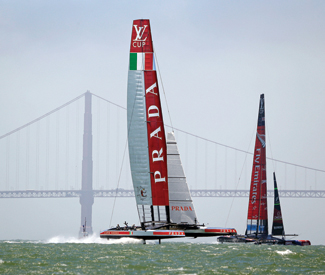
But, it was a week of wins for Emirates Team New Zealand, most obviously the solid drubbing they delivered to Luna Rossa on Saturday (7/13) during the first race at which two boats actually showed. A smart “hook” by ETNZ blocked Luna Rossa from the start line and gave the Kiwis a five second advantage that stretched to over five minutes during the seven legs of the race. Unfortunately, that was the peak of the action as the gap between the boats grew so great and Luna Rossa officially earned a “did not finish” result for exceeding the five minutes allowed to cross the finish line after ETNZ. Overall, the match was almost as boring to watch as the single-boat snoozefests of earlier in the week, however it did show off the capabilities of the Kiwi crew, who are clearly mastering foiling while jibing, a key move for maintaining high speeds downwind. Which brings us to the other big win for the New Zealanders this week. On Thursday, the international jury ruled in favor of ETNZ and Luna Rossa, who protested a new rule requiring larger, symmetrical rudder elevators as a matter of safety. The jury decided that allowing the larger rudder elevators — which Oracle have been using on their boat since they relaunched in April after a pitch-pole in October destroyed their wing sail — would violate the AC72 Class Rule that governs the design specifications of the boats.

They said regatta director Iain Murray couldn’t change this rule without buy-in from all the competitors and that voluntary compliance of the other safety rules would appease the Coast Guard, which permitted the event based on the additional safety measures made after Andrew Simpson died. The rudder elevators help stabilize the lightweight boats while foiling, or lifting off the surface of the water to hit speeds of over 40 knots — ETNZ saw 42.3 on the speedometer on Saturday while Luna Rossa maxed out at 39.9 knots. The crew that masters this move and can maintain it over the course of a race will likely come out ahead. ETNZ is doing it now and will likely get better and better at it over the coming weeks as they continue to race the course through the multiple round robins of the Louis Vuitton Cup.

Meanwhile, Oracle will have to return to the drawing board and Ellison’s crew will need to get out on the water and re-learn how to handle their boat with a new rudder that complies with the Class Rule. Oracle has been tight-lipped on the subject, with just a brief statement from general manager Grant Simmer on the jury’s decision. “We continue to support the Regatta Director and we believe all teams have benefited from his review. We don’t have an issue complying with the Class Rule, and we will be ready to race under the rules affirmed by the Jury.” However, they may have an issue playing catch-up to the Kiwis, who have a lot on the line. If they aren’t able to wrest the Auld Mug from Larry Ellison’s hands, it’s likely the New Zealand government won’t chip in for a future campaign — especially if high-tech, billion-dollar boats remain the name of the game. The Kiwis have already chalked up four points and will need to win just one more of the next three bouts with Italy to advance to the Louis Vuitton Cup semifinals, during which the Swedish team, Artemis, should be back on the water. Spectators won’t see Oracle on the course until September 7, when the America’s Cup final matches commence, however there should be plenty of opportunities to observe their practice sessions with a newly rule-compliant boat. To that end, it’s worth noting that situating the race close to land for the first time in the Cup’s history, and with a short course completed in multiple laps, was supposed to draw crowds to the shoreline and the television screen. Now that I’ve seen the boats live and on television, I have to admit that so far it’s still a pretty boring sport to watch. Standing near the start line at Marina Green or the finish line at Piers 27/29 may get you flashes of action and watching it on television is like watching a video game.

The best of both worlds is to park as near as possible to the water and get your hands on a portable marine VHF radio tuned to channel 20, which transmits the official America’s Cup broadcast. Then you can hear details on speed and tactics while actually seeing the most unforgettable part of this race — the boats jibing downwind, hitting freeway speeds while foiling with spray flying and crewmembers bouncing from one hull to the other.

That’s still drawing gasps and cheers from the crowd.

Rep Clock: July 17 – 23, 2013

0

Schedules are for Wed/17-Tue/23 except where noted. Director and year are given when available. Double and triple features marked with a •. All times pm unless otherwise specified.

ARTISTS’ TELEVISION ACCESS 992 Valencia, SF; www.atasite.org. $6-9. “Periwinkle Cinema: Reality Check,” short films, Wed, 8. The Space Invaders: In Search of Lost Time (Von Ward, 2012), Fri, 8. “An Evening with Sublime Frequencies and filmmaker Hisham Mayet,” Sat, 8.

CASTRO 429 Castro, SF; (415) 621-6120, www.castrotheatre.com. $8.50-11. •Mystery Train (Jarmusch, 1989), Wed, 7, and Night on Earth (Jarmusch, 1991), Wed, 9:05. San Francisco Silent Film Festival: Prix de Beauté (Genina, 1930), Thu, 7; “Amazing Tales from the Archives,” Fri, 11am (free screening); The First Born (Mander, 1928), Fri, 2; Tokyo Chorus (Ozu, 1931), Fri, 4:30; The Patsy (Vidor, 1928), Fri, 7; The Golden Clown (Sandberg, 1926), Fri, 9:30; “Winsor McCay: His Life and Art,” presentation by John Canemaker, Sat, 10am; The Half-Breed (Dwan, 1916), Sat, noon; Legong: Dance of the Virgins (de la Falaise, 1935), Sat, 2:15; Gribiche (Feyder, 1926), Sat, 4; The House on Trubnaya Square (Barnet, 1928), Sat, 6:30; The Joyless Street (Pabst, 1925), Sat, 8:30; “The Kings of (Silent) Comedy,” Sun, 10am; The Outlaw and His Wife (Sjöström, 1918), Sun, 1; The Last Edition (Johnson, 1925), Sun, 3:30; The Weavers (Zelnik, 1927), Sun, 6; Safety Last! (Taylor and Newmeyer, 1923), Sun, 8:30. Tickets (most shows $15) and more info, including accompanists for each program, at www.silentfilm.org. The Great Gatsby (Luhrmann, 2013), Mon-Tue, 6, 9 (also Tue, noon, 3).

CHILDREN’S CREATIVITY MUSEUM 221 Fourth St, SF; www.artsanddialogue.org. Free (space is limited, so RSVP to info@ybcbd.org). “Arts and Dialogue presents the Yerba Buena Mini-Film Festival,” Thu, 6.

CHRISTOPHER B. SMITH RAFAEL FILM CENTER 1118 Fourth St, San Rafael; (415) 454-1222, www.cafilm.org. $6.75-$10.25. Augustine (Winocour, 2012), call for dates and times. Frances Ha (Baumbach, 2012), call for dates and times. One Track Heart: The Story of Krishna Das (Frindel, 2012), call for dates and times. Rebels With a Cause (Kelly, 2012), call for dates and times. Storm Surfers 3D (McMillan and Nelius, 2012), call for dates and times. 20 Feet From Stardom (Neville, 2013), call for dates and times. The Hunt (Vinterberg, 2012), July 19-25, call for times. The Oyster Princess (Lubitsch, 1919) with “Cops” (Cline and Keaton, 1922), Mon, 7:15. With live musical accompaniment; this event, $12.

CLAY 2261 Fillmore, SF; www.landmarktheatres.com. $10. “Midnight Movies:” V/H/S 2 (Various directors, 2013), Fri-Sat, midnight.

“FILM NIGHT IN THE PARK” This week: Creek Park, 400 Sir Francis Drake, San Anselmo; www.filmnight.org. Free (donations appreciated). The School of Rock (Linklater, 2003), Fri, 8; Brave (Andrews and Chapman, 2012), Sat, 8.

518 VALENCIA SF; www.laborfest.net. Donations accepted . International Working Class Film and Video Festival: •Strike (Eisenstein, 1925), and Even the Heavens Weep: The Mine Wars of West Virginia (McGuire, 1985), Thu, 7.

HUMANIST HALL 390 27th St, Oakl; www.humanisthall.org. $5. RiP!: A Remix Manifesto (Gaylor, 2008), Wed, 7:30.

NIMBY’S 8410 Amelia, Oakl; www.brainwashm.com. $10. Brainwash Drive-In/Bike-In/Walk-In Festival, Fri-Sat through July 27, 9 (music at 8). All shows broadcast in FM stereo.

PACIFIC FILM ARCHIVE 2575 Bancroft, Berk; (510) 642-5249, bampfa.berkeley.edu. $5.50-9.50. “Dark Nights: Simenon and Cinema:” The Man on the Eiffel Tower (Meredith, 1949), Wed, 7; La Marie du port (Carné, 1950), Fri, 7; The Brothers Rico (Karlson, 1957), Sat, 8:30. “A Call to Action: The Films of Raoul Walsh:” Objective Burma (1945), Thu, 7. “From the Archive: Treasures of Eastern European and Soviet Cinema:” And Give My Love to the Swallows (Jires, 1971), Fri, 8:45; The Maple and Juliana (Uher, 1972), Sat, 6:30. “Castles in the Sky: Masterful Anime from Studio Ghibli:” Spirited Away (Miyazaki, 2001), Sun, 4:30.

REDSTONE BUILDING 2940 16th St, SF; www.laborfest.net. Donations accepted. International Working Class Film and Video Festival: •Living As Brothers (Fraser, 2012), with “Newspeak” (Fero, 2011) and Mothers of Fukushima (Torii, 2013), Fri, 7.

ROXIE 3117 and 3125 16th St, SF; (415) 863-1087, www.roxie.com. $6.50-11. How to Make Money Selling Drugs (Cooke, 2013), Wed-Thu, 7, 9. An Oversimplification of Her Beauty (Nance, 2012), Fri-Sun, 9:15; July 22-25, 7. Big Star: Nothing Can Hurt Me (DiNicola and Mori, 2012), Fri-Sun, 6:45; July 22-25, 9. “Pictoclik Film Festival,” local film festival competition, Fri-Sat, 9. This event, $30-50.

YERBA BUENA CENTER FOR THE ARTS 701 Mission, SF; www.ybca.org. $8-10. Band of Sisters (Fishman, 2012), Thu-Sun, 6, 8 (also Fri, 4; Sat-Sun, 2, 4). *


Labors of love

0

Los Angeles’s Teatro Jornalero Sin Fronteras makes common cause with Santa Rosa’s the Imaginists

(Note: what follows is an extended version of a story and interview that appears in this week’s Guardian.)

A white passenger van pulls to the curb in a largely residential Spanish-speaking neighborhood in Santa Rosa, discharging a group of Latino men and women at the door of a converted warehouse. The visitors vary by age, class, and education. All hail from Mexico or Central America, but more recently Los Angeles, where they’re among the cities thousands of jornaleros, or day laborers, making their way job by job, often without secure documentation, or much security of any kind.
Standing beside the warehouse on this quiet street, they could be mistaken for an ad hoc work crew. But the warehouse is a theater, and this sunny afternoon in June is the culmination of a precious week off. Not that these men and women aren’t here in Santa Rosa to work — just this time it’s on a play.

Brent Lindsay and Amy Pinto, founders and artistic directors of the Imaginists, greet the visitors warmly as they collect outside the theater and slowly saunter in, joining other members and friends of the Santa Rosa company inside its spacious single room, together with their small children. The two groups have known each other barely a week, but already seem more than colleagues — more like extended family.

It’s the final day of a weeklong artistic exchange between the Imaginists and Teatro Jornalero Sin Fronteras (Day Laborer Theater without Borders), a Los Angeles–based Spanish-language ensemble theater created by and for the immigrant day laborer population. The ten-member troupe, founded in 2008 under the umbrella of LA’s Cornerstone Theater and led by co-artistic directors Juan José Mangandi and Lorena Moran, has so far created 15 short plays that they perform mostly at day laborer centers across Los Angeles — although this last year saw TJSF tour both Northern California and El Salvador. The plays examine everything from the legal and human rights of immigrant workers to health issues to the transnational cultures migrant workers share and foster.

After some socializing over a light breakfast of coffee and pan dulce, the two companies gather in a circle for some warm up exercises led by both Lindsay and Moran. One particular challenging memory game provokes mild frustration and laughter. “This is why we do this exercise,” explains Moran to her actors, all amateurs and volunteers united by the unique opportunities their theater has offered them. “We need to connect to another person and remember details about them.”

Then they all get back to work on a playlet they’ve been developing from improvisations. It begins with two workers who alternately pay off and slip by a snoozing guard (played by Imaginists company member Eliot Fintushel) to dump toxic waste into a nearby stream. When this causes an environmental disaster, a government spokesperson (played by Pinto) assures people in the audience that their organic produce is safe. Meanwhile, a cleanup crew of migrant workers is slowly poisoned to death. A news team rushes to the scene of the eco-disaster, but seems to take no notice of the brown bodies sprawled over it. Left alone onstage, the workers rise as ghosts — beginning with one who sings, “They’re carrying me off to the cemetery. Don’t anyone cry for me. Just sing my favorite song…” — and one by one exit the stage.

Throughout, Lindsay directs from a chair audience-side, giving advice or suggestions at various points. All, however, are welcome to chime in with comments and do. An elderly woman named Adela Palacios, for instance, suggests that before departing the stage each ghost can simply state their name and what they did for a living, a suggestion readily embraced by all. Soon the form of the scene has a solid arc, and the action gains many subtleties, as well as a tone that makes a virtue of the mix of amateur and professional actors. Combining slapstick, winking asides, an eerie sense of tragedy, and a moving use of direct address, it’s a surprisingly affecting bit of work.

“We come to the theater as older people,” explains Moran. “But we feel we’ve found a company [in the Imaginists] like us. We share the same path.” A native of Guatemala who worked in business administration before fleeing domestic abuse and the country, Moran (translated by Gustavo Servin, a young member of the Imaginists) speaks eloquently about the company she joined five years ago amid a dangerous working life that was both foreign and alienating to her. She acknowledges frankly, “Theater saved my life.”

TJSF is currently developing its first full-length play, Caminos al Paraíso (Paths to Paradise), written by Mangandi and directed by Moran. This exchange in Santa Rosa, made possible by a grant from the Network of Ensemble Theaters, has offered TJSF the opportunity to learn important technical aspects of crafting a full evening’s production from their more experienced colleagues. At the same time, it’s offered the Imaginists, which has grown into a bilingual company since rooting itself in Santa Rosa, a chance to advance their own mission through contact with a deeply community-driven Latino theater. But neither motive really captures the personal ties and mutual respect that have been forming here, the subtle and profound reciprocity of influence, and the solidarity emerging from it all.

“TJSF is a brave, important theater company that is telling stories that we don’t usually hear,” reflected Amy Pinto recently by email. “They tell them with humor, with heartache, in a group, in Spanish. Coming together for a week, we were able to strengthen our own resolve to tell these stories, not to be afraid of being deemed ‘political.’ For the Latino members of the Imaginists, the exchange was a catalyst to take ownership and be empowered by their histories and stories. This exchange reinforced how necessary it is to have comrades, to share experiences and methods, to have a network of support throughout the country for this work.”

The Imaginists plan to travel to Los Angeles for another face-to-face meeting with TJSF over next steps. Together they hope to develop something that can tour to labor centers across the country.

In the meantime, inspired by the exchange, the Imaginists are concocting a new play, based on a famous children’s story, which will address the plight of undocumented people. Working title: REAL.

“For Teatro Jornalero there is no division,” notes Pinto. “They are telling the stories of their lives. They are humanizing a ‘political’ situation. We have to let that sit in us, that uncomfortability — can we turn our politics off and on? No. Everything in art is a choice.”

She adds that the encounter held surprises for them too. “To have an encounter where all your expectations are turned upside down,” she marvels, “theater can do that. We are changed. There was so much laughter the entire week. And a fare share of tears.”

Voices from Teatro Jornalero Sin Fronteras

The following excerpts are from conversations that took place on Saturday, June 22, at the warehouse theater of the Imaginists in Santa Rosa. Members of the Imaginists and Teatro Jornalero Sin Fronteras had just completed their rehearsal, ahead of a public performance that evening, and were seated in a semi-circle to answer a few questions about their collaboration. Translation was provided by Julie Kaiser.

SF Bay Guardian Can I ask a general question of the members of Teatro Jornalero? Anyone who would like to answer please do. What brought you to the company, and why did you join? What does being in the company offer you?

Teatro Jornalero Sin Fronteras My name is Alberto Scareño. I found out about this when some of my friends told me about it. It was really interesting, so I called them up to see if there was a spot for me. They said, sure, come that day. And I went in. I’ve never been an actor. We started with exercises. It was really interesting and relaxing. Sometimes I have a lot of stress, or I’m just mad, and to come to this place that relaxes me — it relieves my stress, and time flies. Now what I hope for is to work with even more verve and learn more about the theater.

SFBG What kind of work do you do to make a living?

TJSF Every morning I go out and look for work at a corner in central Los Angeles. I’m a day laborer.

SFBG And you still find energy after a long day’s work for theater?

TJSF The deal is, I don’t get work everyday. So if I don’t work one day, then I have energy to go. When I work, I’m tired, but I get there, and I get my friends, and we do the exercises and I relax. And it’s fascinating.

SFBG Anyone else?

TJSF My name is Xico [pronounced “Chico”] Salvador Paredes. I was on a workers’ corner in California — I’d joined a battle to have a [day laborer] center made — and the first person that [I met] was Juan José. He had participated in theater as an actor, and he was starting to work on his play about illegals. Then he invited me and Lorena [Paredes is married to artistic director Lorena Moran], and other guys, to work in theater. At first I didn’t like it, because I’m a worker: I just get work, get work, get work — I’m not interested in anything else. I send money [home]. That was my only vision, to have a day of work.

But after I came in, I realized, it’s a weapon for communication and understanding, a means of connecting with other people. We started to create pieces out of our own experience, and to recreate our experience. It serves to take out of us what’s inside of us, and to let us know that we’re not alone. The best part of being in this theater is that we’re getting together with people who don’t know what a day laborer is. A day laborer stands on a corner. In the morning he’s cold. He doesn’t have anything to eat. He doesn’t have the security he’s going to actually get work. People walk by and say, “Oh what a lazy guy,” or they pass by as if you’re just a tree, because you’re just standing there all the time. Nobody understands what you’re doing standing there. But a day laborer has huge hope. And he doesn’t know if he’s going to get work. And that’s us.

With the theater, we’ve told many people about what a day laborer is, and shared with those who don’t know anything about their rights. Now we can say, “This is what it is.” It’s really difficult. I just got into a situation where I’ve gotten into the deportation process. I’m in the struggle, but I also have to go to court. I have to do lots of things. And I might get deported. I came here not just to work; I came here to tell my story. And my story’s big. No bigger than anybody else’s. But it’s very positive for people to hear: Here we are.

TJSF I’m Mario Rivera, and I’m very happy to be here sharing with you all. I’m also, like my friends here, a day laborer and I work in central Los Angeles. I came into the theater because I was invited by Lorena. What I like is learning from my compañeros. I had nerves when people looked at me, and I lost that. I lost that fear, and I really like being here. I’d like to learn more from everybody. And I like the play that we’re doing here [with the Imaginists]. This all suits me. I like all of this.

TJSF I’m Adela Palacios. And I’m not very good for talking. The reason why I’m in the theater is because I don’t have work. I studied nursing. Two times I graduated in nursing. I am a nurse. But I had an accident. Now I can’t find work. In this country there’s a lot of discrimination about age. I looked for work for two years. The only opportunity I’ve found, that opened doors for me without discrimination, was this theater. We are volunteers. We don’t have work. They help us. Sometimes they give us food. I am very grateful to this great person, Lorena. And I’m very grateful to Cornerstone Theater. We have some understanding there. We are not heard as we should be [in society], but they do a little, what they can. They give us a little bit of a normal life. My stress is better than it was. And they’ve done everything possible. They do what they can. They can’t do more. I’m really grateful. You have to accept what there is and not ask for much.

TJSF I’m Heidi Guevara. My problem is I have a fear of being in front of people. But now it’s gone. I didn’t think I’d ever do something like this, because I’m really embarrassed easily. Now I have the courage to be in front of people. Lorena gives us exercises. And they help you to use your voice and express yourself, to overcome your shame. It’s a little complicated, but I’m learning more little by little. And here we go! I’ve been with them one year — you have to keep learning and learning. You know this. You have to keep going and learning. Little by little, but I’m going. Thank you, Lorena.

TJSF My name is Raul Salinas. I’m from northern Mexico. Chihuahua. I have six kids. I’ve been ten years here. Now I’m in the Centro Jornalero for work. I don’t have full-time work. I’ve been with the theater three months. How did I get here? I don’t know. It was just chance. One day Lorena came to the work center. She came to do casting for a play that they’re doing called Ways to Paradise. I wasn’t going to do it. No. But there was another person who wanted to go and I helped him with directions to the place where they were doing the casting. And then I got involved. Now I’m involved with Ways to Paradise, about the problems facing migrant workers, explaining who we are, what we’re doing: Yeah, we’re undocumented, we’re from Central America, Mexico … I started thinking about the work, and I really like it. So I stayed. That’s it. There’s not much more to tell.

SFBG I’d like to ask Lorena: How did you become involved in the theater, and how has your relationship with it evolved over the years?

Lorena Moran I would like to tell you the story of Teatro Jornalero, how the project got created. In 2006, Michael John Garcés, the director of Cornerstone Theater, wrote a play called The Illegals. He went and did castings at all the day laborer centers. [Co–artistic director] Juan José [Mangandi] came out of that. He participated in the work, along with other workers from day laborer centers at the national level. And they were invited to a national congress of day laborers. One day they were bored, just hanging out. And Juan José said, “You know what? I have the script of The Illegals. Why don’t we just do a little piece of it and present it to the congress?” It was a marvelous idea.

We have lots of ideas that are marvelous. We need a reason to do it and we also need people to help us. Nothing is possible without that. This was a great idea of Juan José. And we got a lot of help from Michael Garcés and Cornerstone Theater. Roberta Uno of the Ford Foundation gave us our first grant, a big grant of several thousand dollars for two years. And right now, we’re working on a small grant of $25,000 for two years. It’s not much — it’s a big deal to maintain 21 people on $25,000. But it would not have been possible at all if we didn’t have these workers — gardeners, housekeepers, bouncers, day laborers, nurses — they all have stories and voices. And they can educate others, and educate themselves about the rules of this country, the laws, their status as undocumented people.

In 2008, I was invited to participate in a casting for the first company of Teatro Jornalero Sin Fronteras. We were 12 members, two directors. Ethan Sawyer, an American graduate of Northwestern, helped train Juan José, who didn’t know anything about the technical part of theater but had a big spirit for it. They helped us, and the other 12 members of the company.

And that’s how my story starts. I’d had just a year here. I’m from Guatemala. I suffered domestic violence; that’s something I don’t want to remember. They even have my three kids; they’re still there now. But I’m here. And I’m growing a better life. And my dream is that when I’m a citizen I can bring my kids here. But nevertheless, I’ve had five years in this country, and the theater saved my life. And if I’m well, I want my friends to be well, in spite of the traumas, the economic problems. I was this close to getting deported once. I was this close to getting deported once. I was working on a corner with my husband, Xico. I was working gardening, in construction, cleaning houses. I spent five months making six houses. Twelve men, one woman. I was the only woman building houses.

All that showed me the world of day laborers from the roots up. We’d get up at 5:00 in the morning and be standing next to Home Depot. And somebody would drive up and say, “I need somebody,” and we’d run. It was like trying to play the raffle. In my country I’m actually a business administrator. I have a university degree. It’s a totally different life. And there I am, standing on the day laborer corner. I’ve had to clean bathrooms, deal with sexual harassment, I’ve had to clean, and change floors out, and paint — it was a completely different thing for my life. And I realized this is the moment to find a sense of what it’s like to be a migrant. Separated from our families, from our countries; we’re not raking in money, we just want to live with dignity.

So we did a casting. We had some administrative help from Michael John Garcés. And I was named the managing director. It was a whole process. It didn’t happen immediately. But from the beginning I was a part of this group. There’s a moment when you’re present, and there’s a moment when you leave. I don’t know when I’ll leave. But I want people to love this group. We have a voice, and we have a story. We ourselves are part of this story, and we’re writing it.

For today, I’m grateful for my life, and I share with Brent and Amy and their group. I haven’t stop writing, because each day I want to get down every word that drops out of their mouths. For me, it’s part of my learning. That’s what this exchange is all about. We’re training in technical ways with a group that has a lot of similarity with us. They’re helping our community of day laborers and house cleaners. We’re talking. Not in the same idiom, but the same language. And I’m very grateful.

SFGB Can you say a little more about what it’s been like to work with the Imaginists?

LM This is a dream. It’s a dream. To think it all started those years again with Juan José and Sergio in Washington, DC. Juan José Mangandi, the other artistic director, he dreams all the time. He thinks of all these big ideas. For four years we’ve been looking for funds to do this. And we found a grant. And here we are. And we’re dreaming of a second one. We don’t know when or how, but we have a dream, we’re going to keep going, we want to build a network of theaters nationally in the same line as [Teatro Jornalero]. But even so, we have to talk more. This coming together now is a first pass.

We’re just dreaming — some groups in a bus, in a van, connecting with each other from different cities. We’re empowering our voice as immigrants with respect to the larger population of whites, African American, and other groups. This is the story that we have. We’re trying to remove the barriers to our opportunities. It’s huge that we came together.

SFBG What about for the Imaginists?

Amy Pinto For us, the kind of work we’re doing — in bringing Spanish and English together, the issues of the day laborers, and bringing people who are day laborers and professionals together to perform — sometimes the community doesn’t understand, and we’re not always supported. So you [Teatro Jornalero] coming here gives us strength. You teach us how to be strong and to come together to make this kind of work. I think for [Imaginists company members] Zahira [Diaz], and Sergio [Zavala], and Marcela [Mejia], and Gustavo [Servin], who is young, meeting all of you — they see the road then; and it can empower them to take more leadership.

Brent Lindsay It reminds us of why we do theater.

LM I have one question for Amy and Brent. How did it come about that two white people decided to come so close to our community, and do such magic things and help empower us? There’s migrants and Latinos — how did two white people decide to tell our stories, to live our stories?

BL There was a gentleman in the video that you showed. Close to the end, he said, I want to be proud of what I do in life. Like you, Lorena, theater saved me. And it became my religion because it saved me. My investment in theater now is the investment of human beings, what theater can give to others. Because what it did for us, that gift — now we should become its messenger. We have to invite every person into this art form. For the reasons that you’re finding: It heals us. It’s too easy to let fear divide us. We have to worker harder, to overcome fear and come together. Because so much of that fear is based on nothing. It’s nonsense. And the best way we learn that is to do what we’re doing now.

A conversation with co–artistic director Juan José Magandi [translation by Marcela Mejia]

SFBG Can you tell me about Caminos al Paraíso and your part in the production?

Juan José Mangandi As the dramaturg, I try to put the stories together in a cohesive way, drawing from the experience of the actors and my own — as a day laborer, as a community organizer, as an undocumented person. There was a lot of pressure of impose specific themes or stories, but in the end I put in what I felt was the most appropriate for the story as a whole. I was tempted to tell my own personal story, but I tried to tell the story of our community. it’s the first full-length play of Teatro Jornalero since I’ve been working with them, seven years now.

SFBG What was the starting point for this new project?

JJM I’ve worked for many years on behalf of day laborers, and have heard many stories, experiences, tragedies, dreams, songs. So Caminos al Paraíso is the story of the breakdown of connection, of what it feels like for people to lose their home, their town, their country. For example, Chronic Stress Disorder is something that affects many immigrants. Every time you cross a border, and then another, the syndrome grows worse. You don’t get rid of it. It manifests in the way you behave — in anxiety, fear, even the change in the diet has an effect, in addition to the intrinsic dangers that a journey like that implies.

So we speak about these things, so people know what happens when one cross the border, including the abuses on the Mexican side of the border. Everybody talks about the US and the racism and the discrimination of an imperialistic government, but what happens when our own people are the ones that are doing the discriminating? So the governments from Mexico and Central American countries say they want to protect the rights of our emigrants and yet they are often the first ones to commit abuses. So it’s a critique of the economic, political, and social conditions. It’s an industry, an industry of immigrants, not only here but there as well, where for the ones that benefit — the government, the traffickers, the narcos, everybody — it’s a business, it creates a lot of employment for people.

So there are a lot of tragic events that immigrants experience before they arrive in the US. And then what happens when we arrive in “paradise”? That will be the second half, and that’s a totally different story. We start to mix with other races, and we start to change. I mentioned already the diet, but also the culture, the values, the sense of belonging to a community, not necessarily a country. And chronic health problems can ensue. Many become bipolar or diabetic, suffer from high cholesterol, high blood pressure. It’s like the body is not prepared for all of this processed food. It’s a big shock physically, in addition to all the other aspects impacting the humanity of the immigrant.

We are escaping because we are old, victims of the corruption, the lack of opportunities. But we come here and there are no jobs really, and we don’t have a social identity — just the paper itself makes such a difference. It’s like being invisible. Besides doing dangerous work, we are also breaking with our cultures, with our identities, who we were and where we came from. Some people get really uptight about clinging to their past identities. It can become a big obstacle to making bridges to connection with each other, to understand each other.

SFBG Do you see the theater you’re making as a means of helping forge a new culture, bridging those divides?

JJM I think that the theater is a weapon of social struggle and transformation—not only for the people that are out in the audience but also for the actors themselves. The government teaches us about political borders, and then the poverty and the ignorance help us create another border, another barrier. We want to be different, we want to be better than the other, we want to separate form each other—a Salvadoran has to be better than a Mexican, a Mexican has to be better than a Guatemalan, and so on. For me, in my experience, the great problem is, and my big question is: Why can’t we integrate? This is what Teatro Jornalero is searching and striving for, to break these separations. We’ve had people from Cuba, Mexico, Salvador, Guatemala… Sometimes it gets heavy between the actors. There’s an inner racism. All of these themes that hurt so much, that we don’t want to talk about, are in Caminos al Paraíso. But then there is also a message for the community. That we should get ready to integrate. That we like this country. That we have adopted it as our own. Now we want them to adopt us as well, as members, and let us taste the good of this country so we can practice compassion for the ones that come after us.

Inmates on hunger strike win support from California legislators

The largest prison hunger strike in California history officially began on July 8, and though some California legislators have voiced support for state prison inmates, the California Department of Corrections and Rehabilitation (CDCR) won’t cede an inch. Prisoners are in for a long battle.

Estimates indicate that over 29,000 inmates have joined ranks to refuse meals in 24 of the state’s 33 prisons and all four of the private, out-of-state facilities where California sends offenders. Additionally, thousands of inmates have declined to attend work and educational assignments since the strike commenced a week ago.

The CDCR released its own tally July 11, stating that there were only 12,421 participants. Asked about the discrepancy between numbers, CDCR Deputy Press Secretary Terry Thornton said, “we have inmates who skip a meal here and skip a meal there,” and clarifying that the estimate included only inmates who had met the CDCR’s official metric of nine consecutive missed meals up to that point. 

State Assemblyman Tom Ammiano, who authored a 2012 senate bill aimed at increasing media access in prisons which was vetoed by Governor Jerry Brown, issued a statement last week “join[ing] the protesters in urging prison officials to make more progress in establishing fair and humane policies in the prisons paid for by California taxpayers. We should not be the focus of international human rights concerns.”

This hunger strike, and an earlier pair that took place in 2011, was orchestrated by the Short Corridor Collective, a group of four inmates confined to security housing units (SHUs) at Pelican Bay State Prison, a supermax facility 15 minutes south of the Oregon border.

A network of legal advisers and prisoners’ rights advocates facilitated communication between participating inmates, and the Prisoner Hunger Strike Solidarity Coalition is serving as the main conduit for information traveling from prisons to the public. The Coalition has summarized the goals of the strike in this video and mobilized support across the state. This past Saturday, July 13, several hundred activists participated in a rally at Corcoran, a California State Prison in the Central Valley.

In the Guardian last week, Toshio Meronek reported on the motivations behind the strike. The Short Corridor Collective’s five core demands include ending group punishment and long-term solitary confinement, abolishing a “debriefing policy” that encourages prisoners to exchange information about other inmates in return for favorable treatment, providing more nutritious food, and allowing for weekly phone calls and annual photographs. Inmate groups outside of Pelican Bay have documented separate sets of grievances, also published on the Solidarity Coalition’s website.

The 2011 strikes ended when the CDCR promised to create a formal “step down” process, through which SHU inmates could be vetted and prepared for reintroduction into general prison populations.

That program got underway last fall and, by all accounts, progressed slowly with limited success. In a press release issued Thursday, the CDCR disclosed that “since last October, [it] has conducted 382 case-by-case reviews of [gang] validated inmates housed indefinitely in SHUs. As of June 28, 208 inmates housed in SHUs have either been transferred or are approved for transfer to a general population facility and 115 inmates were placed in various phases of the Step-Down Program.”

At this rate, it would take nearly 20 years to conduct reviews of the over 10,000 inmates presently held in solitary confinement in California. Completion of the step down process, meanwhile, could take an additional four years for inmates enrolled in the first phase.

In a statement circulated shortly after the CDCR’s on Thursday, State Senator Mark Leno wrote, “I have concerns that this review process is moving too slowly and I would like to see it accelerated.” 

Leno stated “grave concerns about the Department’s over-reliance on the use of solitary confinement and in particular on a policy in which suspicion of gang affiliation is sufficient grounds for keeping an inmate in solitary confinement indefinitely.”

In a KALW radio interview Thursday morning, Thornton asserted that the CDCR doesn’t “negotiate with people who are trying to hold the prison system hostage. We don’t condone these types of disturbances. We will keep the lines of communication open. And we will manage the prisons as safely as possible with as little interruption to normal programming as possible.”

Also on Thursday, Corrections Secretary Jeffrey Beard’s confirmation was pushed through after being in limbo since Governor Brown appointed him in December 2012. Almost immediately, Beard declared all step-down reviews suspended, in what may well be the first official retaliatory action by the state against the hunger strikers.

Beard inherits not only the hunger strike, but a prison system long plagued by severe overcrowding, high recidivism rates, gross mismanagement of inmate health services, and a Supreme Court order to release close to 46,000 low-risk offenders.

“The prisoners are complaining about indeterminate solitary sentences not based on findings of misbehavior, but on alleged gang associations,” explained Rachel Meeropol, a Senior Staff Attorney at the Center for Constitutional Rights (CCR), which filed a class action lawsuit against the state and CDCR last May alleging inhumane treatment of Pelican Bay prisoners through the use of security housing units. “California is an outlier in the number of prisoners that it holds in indeterminate solitary confinement.” In the CDCR system, inmates can spend decades in SHUs, sometimes without ever understanding what landed them there in the first place.

The hunger strikers seek a binding, written agreement from the CDCR that commits to a maximum sentence of five years in solitary confinement. Given the UN Human Rights Council’s recent judgment that “any imposition of solitary confinement beyond 15 days constitutes torture or cruel, inhuman or degrading treatment” and “should be subject to an absolute prohibition,” the Short Corridor representatives think their demand is reasonable.

In his statement last week, Ammiano indicated that he “continue[s] to be concerned about the policies being used to segregate prisoners who are deemed – often on weak public grounds – to be gang leaders.”

Donna Willmott, a member of the media committee for the Prison Hunger Strike Solidarity Coalition, said the vast majority of inmates in SHUs are there because they have received validation of gang affiliation from the CDCR. She described a “fundamentally flawed and corrupt” process, in which validating evidence is often scant.

“People have been sent to the SHU for indefinite terms for having Aztec art on their walls or a George Jackson book in their cells. And there’s no appeal process,” Willmott explained. “The way you get out of the SHU is parole, snitch, or die.”

Kiwis win first real America’s Cup race as Oracle adapts to rejected rule change

9

After a week of one-boat “races,” an argument over rules, and an angry sponsor making waves in international media, it would be easy to write off the America’s Cup as the lamest party in town (so lame, in fact, that the organizers have ceased broadcasting the one-boat shows on YouTube).

But, it was a week of wins for Emirates Team New Zealand, most obviously the solid drubbing they delivered to Luna Rossa on Saturday (7/13) during the first race at which two boats actually showed.

A smart “hook” by ETNZ blocked Luna Rossa from the start line and gave the Kiwis a five second advantage that stretched to over five minutes during the seven legs of the race. Unfortunately, that was the peak of the action as the gap between the boats grew so great and Luna Rossa officially earned a “did not finish” result for exceeding the five minutes allowed to cross the finish line after ETNZ. Overall, the match was almost as boring to watch as the single-boat snoozefests of earlier in the week, however it did show off the capabilities of the Kiwi crew, who are clearly mastering foiling while jibing, a key move for maintaining high speeds downwind.

Which brings us to the other big win for the New Zealanders this week. On Thursday, the international jury ruled in favor of ETNZ and Luna Rossa, who protested a new rule requiring larger, symmetrical rudder elevators as a matter of safety. The jury decided that allowing the larger rudder elevators – which Oracle have been using on their boat since they relaunched in April after a pitch-pole in October destroyed their wing sail – would violate the AC72 Class Rule that governs the design specifications of the boats.

They said regatta director Iain Murray couldn’t change this rule without buy-in from all the competitors and that voluntary compliance of the other safety rules would appease the Coast Guard, which permitted the event based on the additional safety measures made after Andrew Simpson died.

The rudder elevators help stabilize the lightweight boats while foiling, or lifting off the surface of the water to hit speeds of over 40 knots – ETNZ saw 42.3 on the speedometer on Saturday while Luna Rossa maxed out at 39.9 knots. The crew that masters this move and can maintain it over the course of a race will likely come out ahead. ETNZ is doing it now and will likely get better and better at it over the coming weeks as they continue to race the course through the multiple round robins of the Louis Vuitton Cup.

Meanwhile, Oracle will have to return to the drawing board and Ellison’s crew will need to get out on the water and re-learn how to handle their boat with a new rudder that complies with the Class Rule.

Oracle has been tight-lipped on the subject, with just a brief statement from general manager Grant Simmer on the jury’s decision. “We continue to support the Regatta Director and we believe all teams have benefited from his review. We don’t have an issue complying with the Class Rule, and we will be ready to race under the rules affirmed by the Jury.”
However, they may have an issue playing catch-up to the Kiwis, who have a lot on the line. If they aren’t able to wrest the Auld Mug from Larry Ellison’s hands, it’s likely the New Zealand government won’t chip in for a future campaign – especially if high-tech, billion-dollar boats remain the name of the game.

The Kiwis have already chalked up four points and will need to win just one more of the next three bouts with Italy to advance to the Louis Vuitton Cup semifinals, during which the Swedish team, Artemis, should be back on the water. Spectators won’t see Oracle on the course until September 7, when the America’s Cup final matches commence, however there should be plenty of opportunities to observe their practice sessions with a newly rule-compliant boat.

To that end, it’s worth noting that situating the race close to land for the first time in the Cup’s history, and with a short course completed in multiple laps, was supposed to draw crowds to the shoreline and the television screen. Now that I’ve seen the boats live and on television, I have to admit that so far it’s still a pretty boring sport to watch. Standing near the start line at Marina Green or the finish line at Piers 27/29 may get you flashes of action and watching it on television is like watching a video game.

The best of both worlds is to park as near as possible to the water and get your hands on a portable marine VHF radio tuned to channel 20, which transmits the official America’s Cup broadcast. Then you can hear details on speed and tactics while actually seeing the most unforgettable part of this race – the boats jibing downwind, hitting freeway speeds while foiling with spray flying and crewmembers bouncing from one hull to the other.

That’s still drawing gasps and cheers from the crowd.

So fresh, so clean

2

MUSIC In 1992, when Pavement released its seminally crusty, DIY masterstroke Slanted and Enchanted, tape hiss and low fidelity were inherent, unavoidable side-effects of recording on the cheap. As much as that fuzzy production sound complemented the band’s shambolic, punk sensibility, clean recording techniques were only attainable through studios, spendy gear, and other resources unavailable to most garage slackers in Stockton.

Since then, home recording standards have improved dramatically. Professional-quality software like Ableton is easily obtainable via piracy, as is an infinite sea of music-as-source-material, waiting to be lifted, sampled, and recontextualized. in 2013, this increased accessibility has rendered lo-fi recording an aesthetic choice, and no longer an intrinsic property of DIY-ism.

Yet, despite the advent of clean, sterile recording as the “default mode” of DIY music in the age of the laptop-as-recording-studio, a sizable chunk of modern, computer-based music is still permeated by the cultural signifiers and trappings of tape-based lo-fi, from the warped perversion of Ariel Pink, to the fuzzy obfuscation of Dirty Beaches, to the chillwave movement’s heavy-handed reliance on effects and filters. Ostensibly, this lo-fi aesthetic is kept intact partially in order to communicate the sort of subversion-from-the-margins that we associate with punk-rock, and other dissenting art-forms, but over the past few years, a new approach has developed, which not only embraces the stylistic properties of clean recording, but uses that sterility in a fringe context, subverting the order of the music-world similarly to the lowest of lo-fi.

James Ferraro’s Far Side Virtual (2011) was a watershed moment in this marriage of anemic production qualities, and the left-field approach of the DIY movement. Whereas Ferraro’s previous albums, such as On Air (2010), presented a fairly standard, Ariel Pink-indebted take on hypnagogic pop, (refracting a broad palette of samples from both high-art and trash-culture through a reverberatious, dreamlike haze of outmoded recording sensibilities), Far Side Virtual opted for a brighter, cleaner more limited set of source material, keeping the dryness of those samples intact. By co-opting stock commercial muzak, cheesy MIDI synths, and a jumble of ringtones, startup chimes, and Siri robot-speak, Ferraro was able to place these sounds into a new cultural framework, without significantly altering their sonic integrity, resulting in an approach now known as vaporwave.

What might resemble generic, innocuous, (yet tastelessly compiled) stock-music, when presented without context, sounds like a scathing attack on the vapidity of techno-capitalism, and our docile complicity as consumers, given the knowledge of Ferraro’s outsider status, and the subversive reputation of the Hippos In Tanks label to which he is signed. The vaporwave trend has expanded since the release of Far Side Virtual, birthing #HDBoyz (a Mountain Dew chugging, Best Buy-patronizing boy-band whose cultural position is complicated by having performed at MoMA in NYC), and even Dis Magazine, a self-described “post-Internet lifestyle” publication that embraces and/or lampoons fashion, commerce, and garish product placement.

Vaporwave, however, is a mere component of the larger, comparatively apolitical movement towards clean, dry textures and production techniques in the DIY context. Laurel Halo’s Quarantine (2012) staged dry, unadorned vocals against a dense, muddled wall of electronica, forcing two sound-worlds to compete for the same space. Ariel Pink’s Mature Themes (2012) marked a Ween-like jump from the murkiness of his earlier work to an unsettlingly arid production aesthetic. This year’s Don’t Look Back, That’s Not Where You’re Going, from Inga Copeland (half of hypnagogic pop duo Hype Williams) rejected the messy, fuzzy jumble of her previous output in favor of a streamlined, Madonna-esque pop approach. Halo, Pink, and Copeland, like Ferraro, are known for operating from the margins of culture and taste, and that’s precisely what renders their use of clean, dry sounds so provocative.

Dean Blunt, the other half of Hype Williams, made an especially striking statement with this year’s debut solo endeavor,The Redeemer, an LP that maintained the scattershot, indiscriminate sampling tactics of Hype Williams’ One Nation (2011) and Blunt and Copeland’s Black is Beautiful (2012), while doing away with the grimy, resinous sonic impurities that permeated those records. Just as Black is Beautiful jumped impulsively between snippets of free-jazz drumming, inept MIDI-flute noodling, underwater video-game music, and other disparate ideas, The Redeemer trades off between K-Ci & JoJo string samples, John Fahey-esque guitar impressionism, intimate voicemail messages, and theatrical piano hammering a la Tori Amos. However, the absence of sonic fuzz presents a novel tension between the album’s haphazard composition, and its clarity of presentation, deeming Blunt’s intentions far more ambiguous this time around.

Whereas Black is Beautiful‘s lo-fi approach placed its component samples squarely in the domain of weirdo art, fulfilling expectations of what DIY music “should” sound like,The Redeemer forces its listeners to consider each snippet at face value. “Imperial Gold,” a twee, brightly produced folk tune towards the end of the album, would fit comfortably in a Portlandia episode, but what are we supposed to make of it, coming from Dean Blunt, the outsider? Does it present a moment of sincerity, a tongue-in-cheek jab against the art-world, or both? Much like Ferraro with Far Side Virtual, Blunt subverts the meaning of his musical gestures with simple shifts of context.

Similarly to Pavement’s initiation of the lo-fi movement,using the limited resources at their disposal, this emerging trend of cleanly-produced laptop music represents the confluence of modest means and radical ideas. If anyone in the ’90s could start a three-chord garage band, surely anyone in 2013 with a laptop can compose original music from the scraps of their sample library. However, like punk, the lo-fi approach has lost much of its potency in the last 20 years, and simply cannot provoke the same bewilderment that it used to. By using sterile, dry sounds for subversive effect, provocateurs like Blunt and Ferraro have inflamed the art-world all over again. This is the punk rock of the Internet age.

‘Fruitvale Station’ opens! Plus, giant monsters, giant robots, and more new movies!

1

This week marks the opening of Ryan Coogler’s Fruitvale Station, a moving look at Oscar Grant’s final hours; it’s an especially important film for Bay Area residents, but will likely have nationwide impact. Check out my interview with rookie writer-director Ryan Coogler here.

And, as always, there’s more. SO MUCH MORE. Emily Savage writes about Peaches Christ‘s campy, vampy, celeb-filled tribute (Sat/13 at the Castro!) to 1996 cult classic The Craft here.

PLUS! Pacific Rim‘s giant robot vs. giant monster smackdown, a 3D surfing doc, and all the rest, after the jump.

http://www.youtube.com/watch?v=cFRC3sF3Md4

Grown Ups 2 Adam Sandler, Kevin James, Chris Rock, and David Spade reunite for another round of dad comedy. (1:42)

http://www.youtube.com/watch?v=THu4E99uvYw

How to Make Money Selling Drugs Want to see a deeply thought-provoking, well-made documentary (with commentary by The Wire‘s David Simon, among others) about America’s War on Drugs? Seek out last year’s The House I Live In, and give Matthew Cooke’s more superficial distillation of the same subject (does David Simon ever turn down a talking-head request?) a pass. That’s not to say How to Make Money Selling Drugs is a total fail, but its slick production values and gimmicky premise (complete with video game style “levels” tracing the rise through the drug trade) wear thin after awhile. However, Drugs does offer a lively viewing experience, with an array of colorful characters — former dealers and law enforcement officers, with some celebrities sprinkled in — holding forth on, and sometimes bragging about, how drug empires are built and dismantled. Speaking of celebrities, the film’s biggest coup is an eerie interview with Eminem, in which he candidly discusses the depths of his prescription-drug addiction. It’s a rare moment of killer honesty amid Drugs‘ short-attention-span flash. (1:34) Roxie. (Cheryl Eddy)

http://www.youtube.com/watch?v=6CJ570hqy0c

One Track Heart: The Story of Krishna Das Born Jeffrey Kagel, “average neurotic Long Island kid,” the man now known as Grammy nominee Krishna Das underwent a spiritual transformation after trying acid, dropping out of college, meeting Be Here Now author Ram Dass, and becoming a follower of Hindu guru Neem Karoli Baba, a.k.a. Maharaj-ji. A rock ‘n’ roller who declined the chance to join the band that became Blue Oyster Cult, KD’s talents became entwined with his religion years after Maharaj-ji’s death — an emotionally devastating event that led to a brief but raging coke habit. He began performing kirtan, or call-and-response chants, at yoga studios, and (unwittingly or not) became part of a suddenly trendy movement to “make enlightenment accessible,” per the New York Times. Now he’s recorded multiple albums with Rick Rubin and tours the country, playing to rapt audiences at venues as big as the Warfield. Whether or not you can stomach New Age music or philosophy (or share the opinion that Krishna Das once overheard about himself: that he’s “an American burger with Indian ketchup”), Jeremy Frindel’s One Track Heart keeps its running time brief (just over an hour) and avoids deifying its subject — someone who clearly digs the spotlight, but who has also enough done soul-searching to keep his ego mostly in check and a higher power in mind. (1:12) (Cheryl Eddy)

http://www.youtube.com/watch?v=5guMumPFBag

Pacific Rim The fine print insists this film’s title is actually Warner Bros. Pictures and Legendary Pictures Pacific Rim (no apostrophe, guys?), but that fussy studio demand flies in the face of Pacific Rim‘s pursuit of pure, dumb fun. One is tempted to picture director/co-writer Guillermo del Toro plotting out the battle scenes using action figures — Godzillas vs. Transformers is more or less what’s at play here, and play is the operative word. Sure, the end of the world seems certain, thanks to an invading race of giant “Kaiju” who’ve started to adapt to Earth’s decades-long countermeasures (giant robot suits, piloted by duos whose minds are psychically linked), but there’s far too much goofy glee here for any real panic to accumulate. Charlie Hunnam is agreeable as the wounded hunk who’s humankind’s best hope for salvation, partnered with a rookie (Rinko Kikuchi) who’s eager, for her own reasons, to kick monster butt. Unoriginal yet key supporting roles are filled by Idris Elba (solemn, ass-kicking commander); Charlie Day (goofy science type); and Ron Perlman (flashy-dressing, black-market-dealing Kaiju expert). Pacific Rim may not transcend action-movie clichés or break much new ground (drinking game idea: gulp every time there’s an obvious reference or homage, be it to Toho or Bruckheimer), but damn if it doesn’t pair perfectly with popcorn. (2:11) (Cheryl Eddy)

http://www.youtube.com/watch?v=n0FFV5yGXd4

Storm Surfers 3D With 3D being slapped indiscriminately on too many interchangeable Hollywood flicks these days, it’s easy to forget that there are some subjects that practically beg for the format. Incredibly, it seems no one thought to make a 3D film about surfing, the sport and spectacle to which stereoscopic cinema is ideally suited. Christopher Nelius and Justin McMillan’s movie (actually the third Storm Surfers entry so far) follows best-friend Australian surfing legends Ross Clarke-Jones and Tom Carroll as, guided by surf forecaster Ben Matson, they race off on short notice to various locations where huge storm-fed waves can be expected. This is risky business, and there’s human interest in the two riders’ different ways of struggling with aging (they’re both nearing 50), possibly mortal danger, and family responsibilities. These way heavily on Carroll; nothing does on Clarke-Jones, who is your basic “fuck it, let’s go” thrill junkie. Their genial personalities help spark what’s otherwise a solid if unremarkable surfing doc — albeit one that does indeed look great in 3D. (1:35) (Dennis Harvey)

Our Weekly Picks: July 10-16, 2013

0

WEDNESDAY 10


Botany’s Breath

Even if you are a plant lover, the Conservatory of Flowers in Golden Gate Park can intimate you. Taking but a few steps from the Highland to the Lowland Tropics, places that on the outside are hundreds of miles apart, is decidedly weird. But choreographer Kim Epifano loves it. Her Epiphany Productions Sonic Dance Theater’s Botany’s Breath is both a tribute to the natural world and a wake-up call to be mindful of our position within in. Joining Epifano’s eight dancers are excellent collaborators Norman Rutherford and Peter Whitehead (music) Allen Willner (lighting design), and Ellen Bromberg and Ben Estabrook (video design). Space is tight so only 40 people at a time can take in the show.(Rita Felciano)

Through Sat/13, 7:30pm and 9pm, $25–$30

Conservatory of Flowers

100 John F. Kennedy Drive, Golden Gate Park, SF.

conservatoryofflowers.org/special-events


The Melodic

The Melodic is like a flavorful snack that hits all the right spots. Pegged as experimental Afro-folk-pop, the London quartet’s delicious harmonies alone are enough to back this, but only one part of its allure — the group is inspired by sounds around the world. While the West African folk is brought by instruments like the Kora, and the Latin influence is evident in the acoustic guitar picking and charango, the songs are also chockfull of poppy melodies and whimsical lyrics. Just as readily though, the group cranks out a song like “Ode to Victor Jara,” with such a heavy tone and earnest lyrics, you’d swear you’re hearing some kind of beautiful eulogy. The point is, the band is mighty versatile, dipping between South American and African influences with a pop edge — and how can that not translate into a great live performance? (Hillary Smith)

With Song Preservation Society and Dyllan Hersey

8:30pm, $12

Rickshaw Stop

155 Fell, SF

(415) 861-2011

www.rickshawstop.com


The Flamin’ Groovies

Influential 1960s rockers the Flamin’ Groovies — who delivered wailing cult classics like “Slow Death,” “You Tore Me Down,” and “Shake Some Action” (you know this last one from its resurrection in the film Clueless) — have gone through some serious band changes over the past four decades, with more than 15 members rotating through the legendary group and some legendary rifts in the mix as well. Roy Loney has moved on to Roy Loney and the Phantom Movers. This current lineup is a circle back to Cyril Jordan, Chris Wilson, and George Alexander, who all overlapped in the group from 1971 through ’80. That power-pop lineup played a hastily arranged show in SF earlier this year, its first time together since ’81, but now it’s given you more advance notice. The current crew is rounded out by drummer Victor Penalosa. Don’t miss it again. (Emily Savage)

With Deniz Tek (Radio Birdman), Chuckleberries, DJ Sid Presley

9pm, $25

Chapel

777 Valencia, SF

www.thechapelsf.com


THURSDAY 11


Molly Ringwald

While Molly Ringwald might be best known for her acting career, having starred in several 1980s hit movies, she has recently returned to her first love, singing. She started performing with her father, a jazz pianist, when she was just a few years old, and recorded and released several songs before turning her attention to acting. Her latest album, Except Sometimes was released earlier this year, and showcases her sultry vocals, along with her love for the classics and a desire to mesh those styles with more contemporary material — such as a jazz rendition of “Don’t You (Forget About Me),” from her film The Breakfast Club. (Sean McCourt)

Through Fri/12, 8pm (also 4pm, Sat/13), $50–$125

Starlite Room, Sir Francis Drake Hotel

450 Powell Street, SF

www.societycabaret.com


FRIDAY 12


“New Works by Emily Glaubinger // Sean Newport”

This in-store exhibit takes the one-dimensional and make it pop in 3-D. It brings together noted local graphic designer/jewelry-maker Emily Glaubinger’s colorful illustrations of bold patterns and textiles and Sean Newport’s carefully crafted sculptures, “turning her intricate illustrations into 3-D pieces of art.” The “New Works by Emily Glaubinger // Sean Newport” opening event at Mission apparel store Nooworks includes live musical performances by Wild Hum and Philip Manley Life Coach (Glaubinger created the eye-popping album cover for Life Coach’s newest record, Alphawaves). As Glaubinger mentions in the invite, this will be her last local event, for now — she’s moving to Philadelphia. So it will indeed be your final opportunity (in the foreseeable future) to witness the homespun talent of one of SF’s favorite illustrators. (Savage)

Through Sept. 15

Opening tonight, 6-10pm, free

Nooworks

395 Valencia, SF

www.nooworks.com


Suspiria and The Exorcist double feature

If there’s anything horror movies of the 1970s taught us, it’s that evil lurks in unexpected places — a comfortable brick manse in Georgetown, or a ballet school in Germany, for example. Tonight, immerse yourself in a double-feature that presents two of the decade’s spookiest standouts. First up is the 1973 film that launched Catholic nightmares galore (and probably just as many head-rotation jokes): William Friedkin’s The Exorcist, presented in director’s-cut form for maximum Captain Howdy thrills. It’s paired with Italian genre master Dario Argento’s 1977 Suspiria, which is still crazy after all these years — and is the perfect flick to get you pumped for soundtrack artist Goblin’s October tour stop in San Francisco. (Cheryl Eddy)

The Exorcist, 7pm; Suspiria, 9:30pm, $8.50–$11

Castro Theatre

429 Castro, SF

www.castrotheatre.com


“David King’s Odd Alcove”

Iconography and graphic design have long been integral to the ethos of punk. For a certain sect, there’s no stronger symbol than the iconic, anarcho-punk Crass logo (once explained by the designer David King as “a cross and a diagonal, negating serpent, formed into a circle.” This week, Needles and Pens will present “David King’s Odd Alcove,” a solo show and book release for The Secret Origins of the Crass Symbol, which will include Crass graphics, photographs, wood constructions, “hi-art, lo-art, and more.” King, who grew up in London, met Crass’ Penny Rimbaud and Gee Vaucher in art school, lived with the band at Dial House, created illustrations for Crass and other acts, formed his own bands, and migrated to San Francisco during the early 1980s punk explosion. He’s remained here ever since, and now brings an assortment of personal treasures for this show. (Savage)

Through Aug. 12

Opening tonight, 7-9pm, free

Needles and Pens

3253 16th St., SF

(415) 255-1534

www.needlesandpens.com


Winfred E. Eye

Rough around the edges but smooth when he wants to be, Winfred E. Eye frontperson Aaron Calvert crafts compelling tunes no matter where he takes them. From blues to folk to rock, Calvert’s haggard, sing-talk style surprisingly doesn’t get old. “Moonlight touches on the snow, moonlight touches on my soul,” yelps Calvert in “Money in Bank,” a hybrid tune of country and rock’n’roll. The group’s songs work on low frequencies, never using volume as a crutch to get listeners pumped. Instead, it employs eloquent yet accessible lyrics, smooth vocals, and tight rhythms to draw a crowd. (Smith)

With Glacier and Beware of Safety

9:30pm, $12

Bottom of the Hill

1233 17th St., SF

(415)626-4455

www.bottomofthehill.com


Acid Pauli

Punk bands, Bjork productions, hip-hop projects, an ambient album on Nicolas Jaar’s label, mixes for Crosstown Rebels: Martin Gretschmann has many musical roles and aliases. In DJ mode as Acid Pauli, the guy sends me Googling every time, re-energizing my excitement for new sounds. Half the time it’s something I’ve never heard like the wonky jazz romp of Der Dritte Raum’s “Swing Bop,” or tectonically teutonic deep house of Gunther Lause’s “Mountain.” (Where the school children astral pop on Jan Turkenburg’s “In My Spaceship” came from I. Just. Don’t. Know.) Even when it’s as familiar as Nancy Sinatra or Johnny Cash, Gretschmann reworkings are something else entirely. At this debut three+ hour set, I expect to see at least few cell phones on the dance floor, Shazam-ing to keep up. (Ryan Prendiville)

With Eduardo Castillo (Crosstown Rebels/Voodoo),

9pm-3:30am, $12 presale

Public Works

161 Erie St., SF

(415) 932-0955

www.publicsf.com


SATURDAY 13

Creepy KOFY Movie Time: The Golem

Keeping the tradition of the old-school local late-night horror host TV show alive and well — or perhaps undead and twisted would be better terms — the ghouls, er, guys behind “Creepy KOFY Movie Time” are getting out of their cave/studio and hosting a special party at one of the oldest theaters in the city. Featuring a screening of the classic 1920 horror flick The Golem (with new music by Hob Goblin) co-hosts Balrok, Webberly, and Slob will be on hand for the festivities that will also include live music from their house band the Deadlies, a bevy of beautiful Cave Girls, beer, prizes, and more. (McCourt)

9pm, $7.50–$10

Balboa Theater

3630 Balboa, SF

cinemasf.com/balboa


MONDAY 15

Langhorne Slim and the Law

Langhorne Slim and the Law is jumpy, chipper, and a whole lot of fun on stage — which is par for the course because it doesn’t need any of that. The group’s raw energy and commitment to its songs is seen in the stand-up bassist’s wriggly plucking, in the way Sean Scolnick approaches the mic like he’s communicating an urgent truth, and in the obvious connection they all share on stage. The group’s acoustic sound jumps as easily into foot-stomping folk as it does to soul and dirty rock. And Scolnick’s dynamic vocals thread it all together. One thing you can be sure of is there will never be a lack of energy or zeal at a Langhorne show. And with Easy Leaves on the bill, this show might just have double. (Smith)

With Easy Leaves

8pm, $20

Independent

628 Divisadero, SF

(415)771-1421

www.theindependentsf.com


TUESDAY 16

The Jazz Coffin Emergency Ensemble

If the free jazz sets on Wednesdays at Amnesia have taught us anything, it’s that hipsters can A) swing dance surprisingly well and B) appreciate music un-ironically when it comes without a price tag. The Jazz Coffin Emergency Ensemble promises standards from the 1950s and ’60s, a period when jazz was really evolving its own sub-genres. The band describes its set as verging on funk and march/dirge-heavy. This is the group’s second concert at El Rio and the price is certainly right. Hell, if that’s not enticing enough, for just $4 at 6:30pm before the show, Science, Neat, a monthly science happy hour that pairs short talks with live demos, will be on the patio with this month’s theme “Brains! Brains! Brains?” It’s the perfect opportunity to get your mind blown during a bustling happy hour at a colorful bar before enjoying some old favorites and a cheap buzz. (Ilan Moskowitz)

With Science, Neat (6:30 p.m. on the patio, $4 donation)

8pm, free

El Rio

3158 Mission, SF

(415) 800-8782

www.elriosf.com


Rep Clock

0

Schedules are for Wed/10-Tue/16 except where noted. Director and year are given when available. Double and triple features marked with a •. All times pm unless otherwise specified.

ARTISTS’ TELEVISION ACCESS 992 Valencia, SF; www.atasite.org. $5-6. “OpenScreening,” Thu, 8. For participation info, contact programming@atasite.org. “Re-Inventing the Reel,” artist-made works from Elements of Image Making, Fri, 8. “Your Skin is the Fourth Wall,” video and performance work, Sat, 8.

CASTRO 429 Castro, SF; (415) 621-6120, www.castrotheatre.com. $8.50-11. •The Night of the Hunter (Laughton, 1955), Thu, 7, and Cape Fear (Scorsese, 1991), Thu, 8:45. •The Exorcist (Friedkin, 1973), Fri, 7, and Suspiria (Argento, 1977), Fri, 9:30. The Craft (Fleming, 1996), Sat, 3, 8. With a “witch-tacular” performance starring Peaches Christ, Sharon Needles, Alaska Thunderfuck, and Honey Mahogany. This event, $30-80; more details at www.peacheschrist.com. “Ray Harryhausen Tribute:” The 7th Voyage of Sinbad (Juran, 1958), Sun, 3:05, 7, and Jason and the Argonauts (Chaffey, 1963), Sun, 1, 4:55, 8:45. Diana Vreeland: The Eye Has to Travel (Immordino Vreeland, 2011), Tue, 7, and Renoir (Bourdos, 2012), Tue, 8:45.

CHRISTOPHER B. SMITH RAFAEL FILM CENTER 1118 Fourth St, San Rafael; (415) 454-1222, www.cafilm.org. $6.75-$10.25. Augustine (Winocour, 2012), call for dates and times. Frances Ha (Baumbach, 2012), call for dates and times. Rebels With a Cause (Kelly, 2012), call for dates and times. 20 Feet From Stardom (Neville, 2013), call for dates and times. One Track Heart: The Story of Krishna Das (Frindel, 2012), July 12-18, call for times. Storm Surfers 3D (McMillan and Nelius, 2012), July 12-18, call for times.

CLAY 2261 Fillmore, SF; www.landmarktheatres.com. $10. “Midnight Movies:” The Room (Wiseau, 2003), Fri, midnight. Hosted by Sam Sharkey.

“FILM NIGHT IN THE PARK” This week: Creek Park, 400 Sir Francis Drake, San Anselmo; www.filmnight.org. Free (donations appreciated). Footloose, Fri, 8. Union Square, Geary at Powell, SF. Vicky Cristina Barcelona (Allen, 2008), Sat, 8.

518 VALENCIA SF; www.laborfest.net. Donations accepted . International Working Class Film and Video Festival: •Shift Change (Dwarkin and Young, 2012), and One Shot, One Kill (Fujimoto, 2009), Wed, 7. Also ILWU Local 34 Hall, 801 Second St, SF. •The Contis: The Struggle Continues (Clatot, 2010), and On the Art of Water (Luzi and Bellino, 2012), Fri, 7.

JACK LONDON SQUARE Market lawn, Harrison at Water, Oakl; www.jacklondonsquare.com. Free. Hitchcock (Gervasi, 2012), Thu, sundown.

PACIFIC FILM ARCHIVE 2575 Bancroft, Berk; (510) 642-5249, bampfa.berkeley.edu. $5.50-9.50. “A Call to Action: The Films of Raoul Walsh:” Regeneration (1915), Fri, 7; The Yellow Ticket (1931), Fri, 8:30; The Big Trail (1930), Sun, 6:30. “From the Archive: Treasures of Eastern European and Soviet Cinema:” Pastorale (Iosseliani, 1975), Wed, 7; Five Evenings (Mikhalkov, 1979), Sat, 6:30. “Dark Nights: Simenon and Cinema:” La tête d’un homme (Duvivier, 1933), Thu, 7; Stray Dog (Kurosawa, 1949), Sat, 8:30. “Castles in the Sky: Masterful Anime from Studio Ghibli:” Porco Rosso (Miyazaki, 1992), Sun, 4:30.

ROXIE 3117 and 3125 16th St, SF; (415) 863-1087, www.roxie.com. $6.50-11. A Band Called Death (Covino and Howlett, 2013), Wed-Thu, 7, 9. Maniac (Khalfoun, 2012), Wed-Thu, 7:15, 9:15. San Francisco Frozen Film Festival, indie films, Fri-Sat. More details at www.frozenfilmfestival.com. How to Make Money Selling Drugs (Cooke, 2013), July 12-18, 7, 9 (also Sat-Sun, 3, 5).

VOGUE 3290 Sacramento, SF; www.wordsondance.org. $20. “Words on Dance:” Maria Tallchief in Conversation with Evelyn Cisneros (1998), Mon, 7.

YERBA BUENA CENTER FOR THE ARTS 701 Mission, SF; www.ybca.org. $8-10. André Gregory: Before and After Dinner (Kleine, 2012), Thu and Sat, 7:30pm; Sun, 2.

Summer ghouls

0

emilysavage@sfbg.com

TOFU AND WHISKEY In these past three years, Phono Del Sol has built itself up into a tastemaker midsummer’s indie music fest — and it’s one to watch. It makes sense: the one-day fest is curated by on-the-pulse local blog, the Bay Bridged.

And beyond the interesting (and mostly local) band choices — the first year featured Aesop Rock and Mirah, last year the Fresh and Onlys and Mwahaha, and this year Thee Oh Sees, YACHT, Bleached, and K. Flay will headline — there’s something about the approach and atmosphere that calms the nerves.

It’s in the Mission’s Potrero Del Sol park, a hilly, grassy area bordered by an active skate park. During the fest, skaters whizz by near the bands, and street food vendors offer salty snacks on the other side of the stage.

The event tends to inhabit a particular San Francisco garage scene vibe of yesteryear, apart from current complications brewing in the nearby neighborhood between the old and new, the tech workers and SF lifers.

One of the newest bands on this year’s bill fits this feeling as well, the young garage pop four-piece Cool Ghouls. The psych-inflected group is relaxed and gracious, perhaps not yet jaded by the outlying music community or industry. And they’ll be bringing a horn section to Phono Del Sol this year. (Sat/13, 11:30am-7pm, $20. Potrero Del Sol Park, 25th Street at Utah, SF. www.phonodelsol.com).

Cool Ghouls, named after a phrase George Clinton used in a Parliament Funkadelic concert film, are a bit giggly during our conversation from lead guitarist Ryan Wong’s Duboce Park area apartment. They seem new to this whole recognition thing, and thusly, speak candidly, and nearly in circles. Singer Pat McDonald, bassist Pat Thomas, and Wong all grew up in the Bay Area, attending high school in Benicia together, and met up again in San Francisco after college. Alex Fleshman met the others when he went to San Francisco State University.

They formed in early 2011 and began playing shows almost immediately — in early spring of that year, showing up at brick-and-mortar spots, house shows, even Serra Bowl before it closed, and at Noise Pop. That’s where they first crossed my path, as they began popping up at shows on a frequent basis. “Now, we’re being asked to play more local shows then we can play,” Thomas says. “Pat McDonald seems to know a lot of people somehow, maybe it’s his hair? Or he’s just like, really nice.”

Their self-titled debut full-length, recorded by Tim Cohen of Fresh and Onlys and Magic Trick, saw release this April on Empty Cellar Records. “We thought we could record a whole album by ourselves, so we recorded 90 percent of it on an eight-track recorder,” Wong says. “We showed Arvel [Hernandez], who runs Empty Cellar Records…he told us ‘the songs are really good but the recording is just shitty.'”

He enlisted Cohen to record it, and said he’d release it on Empty Cellar. They were ecstatic with the revelation, and excited to work with the talented Cohen. They spent a few days in his Western Addition home, rerecording the full album while crammed in Cohen’s bedroom at the top of a towering Victorian near Alamo Square.

Cohen’s since become a de facto advocate for the band, writing a glowing press release about Cool Ghouls and the album, in which he defiantly explains “First things first: Cool Ghouls are not a retro act… Truth be told, this being their first official release, they may even be a bit naïve in their dogged pursuit of the true-blue, home-spun, rock and roll lifestyle.”

Though he later concedes, “If one were to ascribe to them a ’60s-reverent description, as one often does in the case of San Francisco bands, one would most likely find an artistic kinship with some of the most inimitable, idiosyncratic, yet unmistakably influential bands of the retro-fitting oeuvre. The Troggs, The Monks, Sir Douglas Quintet come to mind immediately. (Save your Kinks and Rolling Stones references.) Like the aforementioned, the Ghouls are natural heirs to the folkloric lineage which precedes them, adding dashes of weirdness where needed.”

The group laughs when I bring up the Cohen praise, “it’s so funny things people take away from press releases…but he did a really good job of writing that, I didn’t even know he understood us that well,” Thomas says. “He doesn’t give you that much in person, he’s a pretty stoic guy, so it’s been really cool to see that through all of that, he was digging us.”

“We were all kind of intimidated, then that came out, and I didn’t have any idea he was even writing anything,” Wong adds.

The Ghouls are democratic, and all are multi-instrumentalists, with each group member writing songs and bringing the skeletons to the group to flesh out. And many of the tracks on the album do evoke that garage pop weirdness Cohen identified, and also a casual self-awareness.

Thomas wrote joyful first single “Natural Life” quickly and brought it to the band. The perfectly corresponding video by his film student brother Rob Thomas features the band frolicking in the Marin Headlands and Sutro Baths. “That whole organic approach, natural approach, putting your pieces in place and then just winging it, is something that we generally do — it keeps it collaborative,” Thomas says.

Another standout, is mid-tempo “Witches Game,” which singer McDonald wrote, starting with the fuzzy guitar riff that rides strong through the track.

Woozy, surfy “Grace” was one of the first songs they ever played together, and usually closes out their live sets. And they agree that jangly psych-pop “Queen Sophie” was one of the more collaborative songs. There’ll be a proper video for that one out soon too.

“The whole album was a group effort. I think of it as a specific piece of where we were at when we recorded it,” Wong says.

The album artwork is worth noting as well, a collage-painting made by Thomas with a big glittery sun, swirly watercolor images of clouds, snowy mountaintops, red-yellow fire, and a colorful rooster. The images weren’t meant necessarily to reflect the songs on the album, but ended up having some meaning after the fact.

“I was just trying to represent what I lean toward anyway, like if it’s a painting I make, it’ll probably evoke the music I make, just because I’m making both of them,” Thomas says. “But liked the rooster image because I was thinking about the way roosters strut, and this is our first album.”

Wong pipes up, “I feel the way the album is with these songs, [it’s about] the morning, and the ideas of the natural life. It’s appropriate because it’s our first album, but maybe I’m looking too much into it?”

Cool Ghouls will move on soon anyway — they’re currently prepping new songs and plan to record a second album this August.


DAVINCI

Fillmore District-raised emcee DaVinci plays this free show alongside fellow burgeoning local rap duo Main Attrakionz, Young Gully, Shady Blaze, Ammbush, and Sayknowledge. DaVinci has been releasing tracks for a few years, in late 2012 dropping full-length The MOEna Lisa with an ode to SF in track “In My City” with the telling lyric, “Trying to push us out of the city/but we ain’t leaving,” in a hoarse whisper, but also referencing favorite spots like the waffle house at Fillmore and Eddy (Gussies).

Wed/10, 9pm, free. Brick and Mortar Music Hall, 1710 Mission, SF; www.brickandmortarmusic.com.


JAPONIZE ELEPHANTS

The elegant yet spooky old-world-carnival act Japonize Elephants — noted for drawing sounds from eclectic styles like gypsy jazz, bluegrass, and klezmer — will celebrate the vinyl release party for newest album Mélodie fantastique, this week at Amnesia. Go, and witness all the instrumentation you can handle (fiddle, banjo, glockenspiel, vibraphone, accordion, percussion, surf guitar), along with four-part vocal harmonies. A group of waltzing ghosts, like the ones you find on the Haunted Mansion ride, wouldn’t seem out of place here.

Thu/11, 9:30pm, $7–$10. Amnesia, 853 Valencia, SF. www.amnesiathebar.com.


Stage Listings

0

Stage listings are compiled by Guardian staff. Performance times may change; call venues to confirm. Reviewers are Robert Avila, Rita Felciano, and Nicole Gluckstern. Submit items for the listings at listings@sfbg.com.

THEATER

OPENING

Endgame Royce Gallery, 2901 Mariposa, SF; www.itetheater.org. $18-24. Previews Thu/11, 8pm. Opens Fri/12, 8pm. Runs Thu-Sat, 8pm. Through July 20. International Theater Ensemble performs Samuel Beckett’s Theatre of the Absurd classic.

Keith Moon: The Real Me Eureka Theatre, 215 Jackson, SF; www.brownpapertickets.com. $40. Opens Wed/10, 8pm. Runs Thu-Sat, 8pm; Sun, 7pm. Through July 28. Mick Berry performs the world premiere of his solo play about the Who drummer.

Wunderworld Creativity Theater, 221 Fourth St, SF; www.wunderworld.net. $10-15. Opens Sat/13, 11am and 2pm. Runs Sat-Sun, 2pm (also Sat, 11am; Sun, 5pm). Through Aug 11. Sara Moore and Michael Phillis wrote and star in this “world-premiere human cartoon,” a pantomime about an elderly Alice going back down the rabbit hole.

BAY AREA

The Loudest Man on Earth Lucie Stern Theatre, 1305 Middlefield, Palo Alto; www.theatreworks.org. $19-73. Previews Wed/10-Fri/12, 8pm. Opens Sat/13, 8pm. Runs Tue-Wed, 7:30pm; Thu-Sat, 8pm (also Sat, 2pm); Sun, 2 and 7pm. Through Aug 4. TheatreWorks presents the world premiere of Catherine Rush’s unconventional romantic comedy starring acclaimed actor Adrian Blue, who is deaf.

The Spanish Tragedy Forest Meadows Amphitheater, 890 Bella, Dominican University of California, San Rafael; www.marinshakespeare.org. $20-37.50. Opens Fri/12, 8pm. Presented in repertory Fri-Sun through Aug 11; visit website for performance schedule. Marin Shakespeare Company performs Thomas Kyd’s Elizabethan revenge tragedy.

The Wiz Julia Morgan Theater, 2640 College, Berk; www.berkeleyplayhouse.org. $17-60. Previews Thu/11, 7pm; Sat/13, 2pm. Opens Sat/13, 7pm. Runs Wed-Thu and Sat, 7pm (also Sat, 2pm); Sun, noon and 5pm. Through Aug 25. Berkeley Playhouse travels to Oz with the Tony-winning musical.

ONGOING

Betrayal Phoenix Theatre, 414 Mason, Sixth Flr, SF; www.offbroadwaywest.org. $40. Thu-Sat, 8pm. Through July 20. Off Broadway West Theatre Company performs Harold Pinter’s out-of-sequence drama about an unfaithful married couple.

Can You Dig It? Back Down East 14th — the 60s and Beyond Marsh San Francisco, 1062 Valencia, SF; www.themarsh.org. $15-50. Sat, 8:30pm; Sun, 7pm. Through Aug 25. Solo performer Don Reed returns with a prequel to his autobiographical coming-of-age hits, East 14th and The Kipling Hotel.

Chance: A Musical Play About Love, Risk, and Getting it Right Alcove Theater, 415 Mason, Fifth Flr, SF; www.thealcovetheater.com. $40-60. Thu-Sat, 8pm (also Sat, 3pm); Sun, 5pm. Through July 28. New Musical Theater of San Francisco presents Richard Isen’s world premiere work inspired by the writings of Oscar Wilde.

Dark Play, or Stories for Boys Exit Theatre, 156 Eddy, SF; www.theexit.org. $5-20. Fri/12-Sat/13, 9pm. Do It Live! Productions offers a steadily engrossing production of this slippery play from Chicago playwright Carlos Murillo, wherein a less-then-trusty teenage narrator, Nick (a clever, tightly wound, darkly charming Will Hand), addicted to “making shit up,” recounts his fateful internet-baiting of a fellow teen upon whom he had become fixated. As the unwitting object of Nick’s desire, sweet guy Adam (Adam Magil) gets pulled into an online love affair with Rachel (Amy Nowak), his first love, and — as fate and Nick would have it — Nick’s sister. But Rachel exists only online. And her equally fantastical evil stepdad (Nathan Tucker) soon intercedes, throwing Nick and Adam closer together. All of this disembodied desire floating around the ether leads to a physical climax even Freud might find a bit much, but the way there proves increasingly tense and interesting — if also a little frustrating itself at times in some strained plot points and, especially, its overwrought psychopathologizing of homoerotic desire. (Erik LaDue’s awkward set design also takes a little getting over.) But despite various flaws, the story intrigues, thanks to the solid performances from director Logan Ellis’s sure cast. Tucker and Kelly Rauch are dependable throughout in a varied range of sharp and often hilarious supporting roles. Nowak’s take on the vital (albeit imaginary) teen heroine is refreshingly straightforward. And Hand, while slightly slower to catch fire, ends up a persuasively complex figure at the center of it all. (Avila)

Foodies! The Musical Shelton Theater, 533 Sutter, SF; www.foodiesthemusical.com. $30-34. Fri-Sat, 8pm. Open-ended. AWAT Productions presents Morris Bobrow’s musical comedy revue all about food.

God of Carnage Shelton Theater, 533 Sutter, SF; www.sheltontheater.com. $26-38. Thu-Sat, 8pm. Through Sept 7. Shelton Theater peforms Yasmina Reza’s award-winning play about class and parenting.

Hedwig and the Angry Inch Boxcar Theatre, 505 Natoma, SF; www.boxcartheatre.org. $27-43. Thu-Sat, 8pm. Open-ended. John Cameron Mitchell’s cult musical comes to life with director Nick A. Olivero’s ever-rotating cast.

In A Daughter’s Eyes Brava Theater Center, 2781 24th St, SF; www.brava.org. $15. Thu/11-Sat/13, 8pm; Sun/14, 3pm. Brava! for Women in the Arts and Black Artists Contemporary Cultural Experience present the award-winning 2011 play by A. Zell Williams. It’s a tense, sophisticated exploration of the politics of class and race in the story of two daughters drawn together in uneasy alliance over a legal case that forever scarred each of their families. Based on the story of journalist-activist Mumia Abu-Jamal, placed on death row in 1982 for allegedly killing a Philadelphia police officer (he was removed form death row in 2012 but remains in prison), Williams’s well written and unpredictable two-hander takes place in the legal office of Rahema Abu-Salaam (a tough, tightly wound Britney Frazier), the young Stanford law graduate trying to get a new trial for her father, a well known Black Panther, author, and death row political prisoner. To this end, she’s convinced Katherine Tinney (a quietly forlorn, conflicted Lisa Anne Porter), daughter of the murdered white police officer with a checkered past, to craft a statement to the court requesting admittance of heretofore unexamined evidence. Director Edris Cooper-Anifowoshe and her excellent cast astutely draw out the subtleties and mounting tension in a timely and involving political play, convincingly re-set in West Oakland, that forgoes easy answers for a complicated portrait of competing filial claims to justice. (Avila)

Sex and the City: LIVE! Rebel, 1760 Market, SF; trannyshack.com/sexandthecity. $25. Wed, 7 and 9pm. Open-ended. It seems a no-brainer. Not just the HBO series itself — that’s definitely missing some gray matter — but putting it onstage as a drag show. Mais naturellement! Why was Sex and the City not conceived of as a drag show in the first place? Making the sordid not exactly palatable but somehow, I don’t know, friendlier (and the canned a little cannier), Velvet Rage Productions mounts two verbatim episodes from the widely adored cable show, with Trannyshack’s Heklina in a smashing portrayal of SJP’s Carrie; D’Arcy Drollinger stealing much of the show as ever-randy Samantha (already more or less a gay man trapped in a woman’s body); Lady Bear as an endearingly out-to-lunch Miranda; and ever assured, quick-witted Trixxie Carr as pent-up Charlotte. There’s also a solid and enjoyable supporting cast courtesy of Cookie Dough, Jordan Wheeler, and Leigh Crow (as Mr. Big). That’s some heavyweight talent trodding the straining boards of bar Rebel’s tiny stage. The show’s still two-dimensional, even in 3D, but noticeably bigger than your 50″ plasma flat panel. Update: new episodes began May 15. (Avila)

So You Can Hear Me Marsh San Francisco, 1062 Valencia, SF; www.themarsh.org. $15-50. Thu-Fri, 8pm; Sat, 5pm. Through July 20. A 23-year-old with no experience, just high spirits and big ideals, gets a job in the South Bronx teaching special ed classes and quickly finds herself in over her head. Safiya Martinez, herself a bright young woman from the projects, delivers this inspired accounting of her time not long ago in perhaps the most neglected sector of the public school system — a 60-minute solo play that makes up for its relatively slim plot with a set of deft, powerful, lovingly crafted characterizations. These complex portraits, alternately hysterical and startling, offer their own moving ruminations on a violent but also vibrant stratum of American society, deeply fractured by pervasive poverty and injustice and yet full of restive young personalities too easily dismissed, ignored, or crudely caricatured elsewhere. An effervescent, big-hearted, and very talented performer, Martinez’s own bounding personality and contagious passion for her former students (as complicated as that relationship was), makes this deeply felt tribute all the more memorable. (Avila)

Steve Seabrook: Better Than You Marsh San Francisco, 1062 Valencia, SF; www.themarsh.org. $15-50. Sat, 8:30pm. Extended through August 24. Self-awareness, self-actualization, self-aggrandizement — for these things we turn to the professionals: the self-empowerment coaches, the self-help authors and motivational speakers. What’s the good of having a “self” unless someone shows you how to use it? Writer-performer Kurt Bodden’s Steve Seabrook wants to sell you on a better you, but his “Better Than You” weekend seminar (and tie-in book series, assorted CDs, and other paraphernalia) belies a certain divided loyalty in its own self-flattering title. The bitter fruit of the personal growth industry may sound overly ripe for the picking, but Bodden’s deftly executed “seminar” and its behind-the-scenes reveals, directed by Mark Kenward, explore the terrain with panache, cool wit, and shrewd characterization. As both writer and performer, Bodden keeps his Steve Seabrook just this side of overly sensational or maudlin, a believable figure, finally, whose all-too-ordinary life ends up something of a modest model of its own. (Avila)

Tinsel Tarts in a Hot Coma: The Next Cockettes Musical Hypnodrome, 575 10th St, SF; www.thrillpeddlers.com. $30-35. Thu-Sat, 8pm. Extended through July 27. Thrillpeddlers and director Russell Blackwood continue their Theatre of the Ridiculous series with this 1971 musical from San Francisco’s famed glitter-bearded acid queens, the Cockettes, revamped with a slew of new musical material by original member Scrumbly Koldewyn, and a freshly re-minted book co-written by Koldewyn and “Sweet Pam” Tent — both of whom join the large rotating cast of Thrillpeddler favorites alongside a third original Cockette, Rumi Missabu (playing diner waitress Brenda Breakfast like a deliciously unhinged scramble of Lucille Ball and Bette Davis). This is Thrillpeddlers’ third Cockettes revival, a winning streak that started with Pearls Over Shanghai. While not quite as frisky or imaginative as the production of Pearls, it easily charms with its fine songs, nifty routines, exquisite costumes, steady flashes of wit, less consistent flashes of flesh, and de rigueur irreverence. The plot may not be very easy to follow, but then, except perhaps for the bubbly accounting of the notorious New York flop of the same show 42 years ago by Tent (as poisoned-pen gossip columnist Vedda Viper), it hardly matters. (Avila)

The World’s Funniest Bubble Show Marsh San Francisco, 1062 Valencia, SF; www.themarsh.org. $8-50. Sun, 11am. Through July 21. Louis “The Amazing Bubble Man” Pearl returns after a month-long hiatus with his popular, kid-friendly bubble show.

BAY AREA

Oil and Water This week: Rhythmix Cultural Works, 2513 Blanding, Alameda; www.sfmt.org. $15-25. Also Cedar Rose Park, 1300 Rose, Berk; www.sfmt.org. Free. Sat/13-Sun/14, 2pm. At various NorCal venues through Sept. 2. It’s a rough year for mimes, or at any rate for the San Francisco Mime Troupe who, after presenting 53 seasons of free theater in the parks of San Francisco (and elsewhere), faced a financial crisis in April that threatened to shut down this season before it even started. The resultant show, funded by an influx of last-minute donations, is one cut considerably closer to the bone than in previous years. With a cast of just four actors and two musicians, plus a stage considerably less ornate then usual, even the play has shrunk in scale, from one two-hour musical to two loosely-connected one-acts riffing on general environmentalist themes. In Deal With the Devil, a surprisingly sympathetic (not to mention downright hawt) Devil (Velina Brown) shows up to help an uncertain president (Rotimi Agbabiaka) regain his conscience and win back his soul, while in Crude Intentions adorable, progressive, same-sex couple Gracie (Velina Brown) and Tomasa (Lisa Hori-Garcia) wind up catering a “benefit” shindig for the Keystone XL Pipeline giving them the opportunity to perpetrate a little guerilla direct action on a bombastic David Koch (Hugo E Carbajal) with a “mole de petróleo” and a smartphone. Throughout, the performers remain upbeat if somewhat over-extended as they sing, dance, and slapstick their way to the sobering conclusion that the time to turn things around in the battles over global environmental protection is now — or never. (Gluckstern)

Sea of Reeds Ashby Stage, 1901 Ashby, Berk; www.shotgunplayers.org. $20-35. Wed-Thu, 7pm; Fri-Sat, 8pm; Sun, 5pm. Through Aug 18. Josh Kornbluth’s brand new comedy — it involves atheism, oboes, and the Book of Exodus — opens at Shotgun Players “before it goes on Torah.”

Superior Donuts Pear Avenue Theatre, 1220 Pear, Mtn View; www.thepear.org. $10-30. Thu/11-Sat/13, 8pm; Sun/14, 2pm. Pear Avenue Theatre performs Tracy Letts’ comedy about the redemptive power of friendship.

This Is How It Goes Aurora Theatre, 2081 Addison, Berk; www.auroratheatre.org. $32-60. Tue and Sun, 7pm (also Sun, 2pm); Wed-Sat, 8pm. Extended through July 28. An awkward love triangle between former high school classmates gets the caustic Neil LaBute treatment in Aurora Theatre Company’s production of This is How it Goes. Not content to merely skewer the familiar battles between the sexes, LaBute further prods his captive audience with the big stick of race relations, and the often unacknowledged prejudices that lurk in the hearts of men. And women. There are no innocents in this play, though each character certainly has moments where they play upon audience sympathies, only to betray them a few inflammatory lines later. As the marriage between the successful yet self-conscious African American alpha male Cody (Aldo Billingslea) and his neurotically placating Caucasian wife Belinda (Carrie Paff) erodes, the mostly affable (and former fat kid) “Man” (Gabriel Marin) insinuates himself in the middle of their troubled relationship, obviously still carrying the torch for Belinda he did 15 years ago — as well as the same wary animosity an unpopular kid carries for the star of the track team, in this case, Cody. All three actors do a very good job of shape-shifting between their middle-class Jekyll and Hyde selves, assisted in part by Marin’s amiable asides, which don’t so much lull the audience as tease them with the idea that things are about to get better, when they can only get worse. (Gluckstern)

PERFORMANCE/DANCE

BATS Improv Bayfront Theater, B350 Fort Mason, SF; www.improv.org. Fri, 8pm. Through July 26. $20. BATS Improv performs spontaneous shows based on current events.

“Botany’s Breath” Conservatory of Flowers, 100 JFK Dr, Golden Gate Park, SF; www.conservatoryofflowers.org. Wed/10-Sat/13, 7:30-8:30pm and 9-10pm (short, free outdoor video/dance performances take place each night from 8:30-9pm). $30. Epiphany Productions Sonic Dance Theater performs a site-specific contemporary dance work.

Caroline Lugo and Carolé Acuña’s Ballet Flamenco Peña Pachamama, 1630 Powell, SF; www.carolinalugo.com. Sat/13, July 21, and 27, 6:15pm. $15-19. Flamenco performance by the mother-daughter dance company, featuring live musicians.

“Courage” CounterPULSE, 1310 Mission, SF; www.counterpulse.org. Fri/12-Sat/13, 8pm. $10-15. Rasika Kumar presents a solo Bharatanatyam performance.

“Mission Position Live” Cinecave, 1034 Valencia, SF; www.missionpositionlive.com. Thu, 8pm. Ongoing. $10. Stand-up comedy with rotating performers.

“Randy Roberts: Live!” Alcove Theater, 414 Mason, Ste 502, SF; www.thealcovetheater.com. Tue, 9pm. Through July 23. $30. The famed female impersonator takes on Cher, Better Midler, and other stars.

“The Rape of Lucretia” Everett Auditorium, 450 Church, SF; www.merola.org. Thu/11, 7:30pm; Sat/13, 2pm. $25-60. Merola Opera Program presents Britten’s chamber opera.

Red Hots Burlesque El Rio, 3158 Mission, SF; www.redhotsburlesque.com. Wed, 7:30-9pm. Ongoing. $5-10. Come for the burlesque show, stay for OMG! Karaoke starting at 8pm (no cover for karaoke).

“San Francisco Magic Parlor” Chancellor Hotel Union Square, 433 Powell, SF; www.sfmagicparlor.com. Thu-Sat, 8pm. Ongoing. $40. Magic vignettes with conjurer and storyteller Walt Anthony.

“Union Square Live” Union Square, between Post, Geary, Powell, and Stockton, SF; www.unionsquarelive.org. Through Oct 9. Free. Music, dance, circus arts, film, and more; dates and times vary, so check website for the latest.

“Yerba Buena Gardens Festival” Yerba Buena Gardens, Mission between 3rd and 4th Sts, SF; www.ybgfestival.org. Through Oct 15. Free. This week: AXIS Dance Company, inMotion Dance Workshop (Sun/14, 1-2pm).

Independence/Movement: extended interview with Oakland’s SALTA dance collective

1

Note: this is an extended version of an article in this week’s Guardian.

The crowd outside the Niebyl-Proctor Marxist Library in Oakland was hopping. Fidgeting, really. Almost imperceptibly at first, while above it a bulging moon hung in the temperate June sky, just itching to go super as it would the following night. But soon enough bodies were bouncing and flailing, until finally the scrum of dancers packed shoulder-to-front-to-back on the sidewalk morphed their collective way through the front door.

We followed the dancers (choreographed by Abby Crain) inside, swept along by their momentum, and were deposited around the perimeter of the main reading room like dust mice by a strong breeze. On that same floor, a few hours later, choreographer Ronja Ver would be sending her supine audience into dreamland with a couple of Finnish lullabies. Before that, a bowl of liquid nitrogen would send a delicate fog creeping over its wooden surface as the spectators (temporarily wrapped in reflective emergency blankets) braced themselves for a performance by Daniel Stadulis that was part science experiment, part detailed meditation on the fragility of the body.

Much else went on during the event’s roughly four hours, which ended with a dance party. No one stayed put the whole time. Some wandered off to the back rooms to the free bar, or to partake in the desultory clothing swap at the free boutique (both the bar and boutique are voluntarily stocked by the guests). Upstairs, meanwhile, the ebb and flow offered other attractions — a mother and daughter did a duet; a young writer read her first novel aloud for the first time, offering each completed page to anyone who paused to listen…

June 22 marked one year’s worth of PPP, the monthly performance series instigated by Oakland-based dance collective SALTA. As much a scene as a performance platform, PPP has been building a platform for serious, unbridled experimentation in a low-key setting where failure is as valid as success, and no one ever encounters a price tag, a door charge, or a gate keeper.

As an attribute of its headlong dive into experimentation and openness, PPP never sits still but moves restlessly and freely from one donated space to another. Among these have been the Foundry, The Vulcan, The Public School, Subterranean Arthouse, Sri Louise’s Underground Yoga Parlour, private homes, Ellen Webb’s studio, and Zach Houston’s poemstore gallery (site of the inaugural PPP in June 2012). With each space come new networks as well as a growing number of PPP diehards.

Providing room for experimentation and cross-fertilization among artists — from the well known to the unknown, and as disparate as Tere O’Connor (interviewed by Monique Jenkinson), Jmy James Kidd, Peter Max Lawrence, Miriam Wolodorski, Keith Hennessy, Ethan Cowan, Laura Arrington, and Philip Huang, among many others — PPP has also been building a unique audience for contemporary dance/performance, while inspiring dialogue about the nature of art-making in the Bay Area.

The anniversary installment of PPP marked the beginning of a summer hiatus for the series, so that the collective can focus on advancing other projects — all geared to creating space, in the widest sense, for dance in Oakland.

SALTA is very much the restive and searching reflection of its monthly series. What began as necessity — a space for dance — has been embraced as ethic. Not that the two were entirely strangers to begin with. As suggested by the conversation below with the seven women who currently make up SALTA, the realities of dance today imply, more than ever, a confrontation with the values of the dominant culture.

Note: the dancers preferred to speak as members of the collective rather than use their individual names.

SF Bay Guardian Did PPP come first, or SALTA, and what’s the relationship?

SALTA It’s funny, we were just talking about this earlier — it’s so confusing!

SALTA I guess we, as a collective, came first.

SALTA And we named that SALTA.

SALTA But the name SALTA didn’t come until after we had the name PPP.

SALTA We all came together in the idea of making space for dance. We were talking a lot about having an actual space and, in the meantime, [we said] let’s do a performance series. So that came second, and then it eclipsed a lot of what we’d been doing. We’re actually going to take a break over the summer and focus on some other stuff.

SALTA We want to have classes. We would really like a dance publication. We want to work on networking. We’ve had some out of town people, but just because the West Coast can be very isolating. So that’s one of our goals, we’d really like to figure out some way to connect.

SFBG What’s the most urgent or exciting project you’re discussing now?

SALTA I think building a floor.

SALTA And also exploring what it might look like to do a pop-up for one or two months. That would then allow us to do classes and hold performance.

SALTA Yeah, I think classes and workshops and stuff. Not only us — we have a lot of things we’re interested in exploring in teaching — but also, again, people we might invite in from out of town who could come do a workshop and perform. So that kind of thing.

SALTA In that vein of dialogue, it’s important to mention that a lot of our work is multi-generational in curation. We try to reach out to people who have paved pathways for us. And we’ve been a little brazen about cold-emailing, cold-calling people who are in town, like Jeremy Wade.

SFBG I saw his performance at CounterPULSE at that time; really great. What did he do at PPP?

SALTA He tried something new!

SALTA Yeah, he took advantage.

SALTA He did a kind of magic act. He had a crazy magician’s outfit on. Yeah, it was pretty awesome.

SALTA But even he, who is touring at that time with specific ideas, still adhered to this idea of coming and experimenting with us.

SALTA That’s something we’re trying to work more. Inviting people, colleagues, or people whose work we’re interested in that we don’t actually know, from other places but also from the Bay Area. I think last month was a pretty harmonious example of that because we had Ellen Webb. She runs a space for so long and had a company in the ’80s. We didn’t really know her work. We use her space all the time — we’ve actually used it for PPP as well. So we had her come and just share. She showed some video of an amazing piece she did with a hundred dancers on Mandela Parkway, right after the [1989] earthquake. She was there, and then Keith [Hennessy] was there — who’s kind of the next [generation] — and then Jmy [Leary, a.k.a. James Kidd] from LA, who is just a little bit older than us.

SFBG How did you start working together?

SALTA We’re all based in Oakland, and we wanted to have a space for dance to happen here — there are not a lot of venues that are really open for experimental work. That was the big thing: we’re sick of going to San Francisco all the time, and we want to figure out what the community is in Oakland and see what we can build. Something that’s been really cool from the beginning is that a lot of non-dancers come to PPP, a lot of Oakland people who hear about it from different arenas.

SALTA We were also not interested in institutionalizing art, in the way that it’s done. Also, financially, making it a free event — no one is paid, free boutique, free bar  —that was really important to us as artists and the way we want to make art. Not having to play this whole [who do you know] game. It was modeled, or got a lot of guidance from Jmy in LA, who started [dance organizers/activists] AUNTS in New York. That’s been a model that we’ve been in dialogue with.

SALTA She’s a mentor of ours, and a benefactor actually, through the Yellow House fund. So we’ve been working with her. We originally wanted to create a space here in Oakland similar to Pieter Pasd in LA, but the realities of being who we are as artists and where we are in our lives, as transient people, we thought we’d keep the space moving. We figured out that that worked over the past year. We actually made a list before you got here of all the [12] spaces we’ve been in, here in Oakland.

SFBG I like this ethic of moving around, of asking for a free space each time. It seems a good thing to encourage, and it really pushes back against the spirit of the times.

SALTA It’s interesting who has said no, at the proposal, and who has been really willing to donate space and time and their art.

SALTA I feel as we continue to exist and assert ourselves into spaces, it opens up more. We have to find a space, and ask for a free space, because as dancers we don’t have the resources to be renting all the time. So where there’s this huge scene of First Friday or whatever — “art’s happening all the time in Oakland” — we’re not a part of that. It would be interesting at some point. Well, we WILL be a part of that. [Laughter.] But what does that mean? And how much more legit, in a certain sense, do we have to become?

SFBG How did your thinking about a physical space evolve into this broader idea of creating space for dance?

SALTA I live between here and LA. And when I’m in LA I spent a lot of time at Pieter, and I kept asking Jmy questions about how she runs it and how the funding worked. About a year and half ago she asked me to have coffee with her and said, ‘It seems like you really just want to run a space.’ So that planted the seed. I’d danced with some of the people here, so I just brought up the conversation, “Should we start something?” And Ethan [a founding member not currently with SALTA] used to live in New York and we would go to AUNTS events. I think Ethan had an idea to start an event series. So we thought, let’s start an events series and hopefully that will snowball into something bigger.

SALTA Into an actual space.

SALTA Before we even talked about having a performance series, it was very much, “We want a space in Oakland that is about dance/experimental performance.” But, soon we found out: that’s hard!

SALTA I think, too, we like going to different spaces, and we like how that pulls in different people. [We realized] we want to actually make space, however that can happen. One of our ideas — there have been these pop-up spaces; different people have gotten subsidies from the city and empty buildings. We want to see if we can do that kind of thing. Build a moveable floor. So, yeah, it’s just kind of expanded.

SALTA I think too there’s something about the impermanence about it that’s special and that we like. So instead of focusing on the brick-and-mortar — “We’re going to have a space. That’s our jam” — opening it up and being a bit more flexible has allowed us to think a bit more creatively about, “What does it mean to really promote dance and make space for dance in Oakland?”

SALTA All of us are dancers. But something that feels important to us in creating this event is that it’s really not about us, or our agenda as dancers. All of us at some point have performed at a PPP. There’ve been 12, so we’ve all at some point done something. We’ve talked about doing a group dance — there’s this event called Oakland Nights Live that happens once a month. They invited SALTA to perform at it, even though we’ve never made a dance together before. We thought, OK, we’ll go do something there. So there is that fluidity and it definitely feeds into the work that we do, and we’re doing other projects too. But PPP is really about creating space for dance and really trying to open it up to the community.

SFBG It sounds like you’re really creating an audience too. Do you have a lot of return people?

SALTA Yeah! We have diehards.

SALTA We have a following! It’s crazy.

SALTA Our first PPP: Zach Houston had a space in downtown Oakland. It was a poetry space, specifically; he’s a poet…

SALTA That was our first one. And I think because of that we’ve had this nice relationship with the poetry community. And so we’ve had a lot of people from that community that come and watch. So people who are around the arts, or friends of friends — I mean one of the great thing about inviting all these performers is that they bring their people. And their people maybe bring someone else. And they go to the next one. Someone last night was like, “I feel like the more I come to these I get it more, I know how to watch it better.” I thought, wow, that’s a really cool thing.

SALTA It’s very unassuming. We don’t demand a lot. People can come and leave.

SALTA There’s literally an open door policy. Like at Niebyl-Proctor last night, the front door is open and people from the street walk in. That’s happened at a lot of the events we do. And that’s really nice, to have people that are called to it.

SALTA People come to it from so many different places too, which is exciting.

SALTA I think it’s important to us all as dancers, that it is a richer audience with various interests. Because we as dancers are like that, as people, we have varied interests outside of dance that informs our dancing.

SFBG Is performing in this kind of event is more satisfying in some ways? What are the advantages to you and others, as performers, with this kind of format?

SALTA We’ve had performers who are performing on the same night together who maybe have never met each other. There have been connections that have been made there between their work and their interests that might not have happened otherwise.

SALTA It’s a space for experimentation. I think that’s one thing we’re trying to be really intentional about it, how to create a space where people will take experimentation seriously. Not just come do whatever and don’t give a shit. That’s why we were really excited about what Keith [Hennessy] did [at the May PPP at Berkeley’s Subterranean Arthouse]. He was actually late to the pre-performer meeting, saying, “I’m sorry I was late. I was rehearsing!” People come with that mindset often. Not necessarily that they’re creating their masterwork — how can they? We’re not funding them. We don’t have any money. But it’s just a chance to try things out and be able to fail or do something absolutely spectacular, and everything in between. Really, most months, there is something that’s like oh god and also something that’s so inspiring …

SALTA I like that: take experimentation seriously.

SALTA And also it’s not like a critique. We didn’t want that. It’s just a time to try something out, and then you can have conversations about it afterward if you want.

SALTA That said, whenever I’ve performed at PPP there’s always someone who comes up to me who has a really interesting, deep perspective because it’s not your typical dance, performance audience member.

SALTA And I think too that there’s something freeing in that there’s not a whole lot at stake. Oh, you finally got a show at CounterPULSE and you have to make it good if you want to show anywhere else. I think there’s a lot of freedom in knowing that everyone’s there to do the same kind of experiment.

SFBG What’s the financial model that makes possible bringing artists in from out of town, and the other projects you’re looking at?

SALTA I think, at this point, we’re trying to go for the free and grant-supported. That might not be something we continue with.

SFBG So you’ve been getting grants.

SALTA Well, we got one. [Laughter.]

SALTA That’s how it started. It was from Jmy…

SALTA But that’s what we’ve talked about — more than trying to make it a viable business.

SALTA I think it’s really important for it to stay free and non-commodified. [SALTA] has lots of thoughts about the realm of recreation, and dance as recreation rather than something you make money off of.

SALTA One more thing about the name. We had a deadline to submit a fiscal sponsorship application. So there was one meeting where we had to come up with a name. I had the idea of wanting it to be a name, like Pieter, so it could be like a sister or brother [to Pieter Pasd]. But then no one else really liked that idea. So PPP was this compromise where it would be like initials but it wouldn’t refer to a name. But then I was reading a book by Marx and I came across the term, Hic Rhodus, hic salta, which is from an Aesop fable. But Marx translates it as, “Here is the rose, dance here.” Salta is a Latin term that means both to leap and to dance. The way Marx uses it, [the phrase means], “You want to do something? OK, do it. Show the dance. Do the leap.”

So for me it was this nice metaphor for what we were doing. And it’s also something about the dance world, and the disintegration of what it means to be a professional dancer; the eclipse of a company model, where you train and then suddenly there’s this company that will employ you to dance. So it’s also part of this question: What does it mean to dance in this post-Fordist moment when it’s not financially viable to dance? (And also everyone else seemed to like the name SALTA.)

SALTA She even put that on our website: “Hic Oakland, hic salta!”

SFBG In this one year since starting, has the collective or vision changed in ways you didn’t foresee?

SALTA I feel the main change is we’ve let go of trying to have an actual, permanent space. Because a year ago we were looking at Craigslist, and biking around to different buildings, and trying to figure out square footage — and that’s — just the logistics of everyone’s lives …

SALTA And the reality of the rental market right now, it’s insane.

SALTA We were like, “How can we do that with our grant?” The grant is generous but it’s not enough to last over a year of rent.

SALTA And a lot of us do travel a lot, or live in various cities, and we all have different creative projects…

SALTA Originally we had a little flyer saying SALTA is looking for a space. We said that a lot: “PPP is this, a project of SALTA. We are looking for a space. Please contact us.” And we’ve decided we’re just always looking for a space. That’s going to be our new flyer.

So now what?

0

EDITORIAL The scene at City Hall on Friday, June 28 could have been a video rewind of 2004’s Winter of Love: a surprise announcement granting same-sex marriage licenses; a breathless rush of couples to the civic altar, led by two brave, symbolic women (lesbian groundbreakers Del Martin and Phyllis Lyon in 2004 and anti-Prop 8 plaintiffs Kris Perry and Sandy Stier in 2013), a city erupting with good will and cheer, dazed by the speed of luck and history. Earlier, Lt. Gov. Gavin Newsom, teeth and hair and all, was making grand pronouncements, strutting about like he was mayor of the place again.

Back in 2004, the city was scarred and drained from the first great Internet bust, and still reeling from the losses of AIDS. San Francisco was a mess, but it was starting to recover. People who had been forced to move out by the city’s skyrocketing rents and evictions in the early 2000s were beginning to trickle back in, and many of those beached by the boom’s collapse were turning into the very freaks, artists, and innovators they had helped displace. When Newsom launched SF’s same-sex marriage rebellion, it was an act of great civic uplift, burnishing SF’s progressive image in the eyes of the world, while boosting the city’s self-confidence. (Not to mention its economy, which benefited greatly from the wedding explosion.)

The act also burnished Newsom’s own reputation. Previously reviled for his “Care Not Cash” policies that demonized the poor and homeless, a significant percentage of LGBTQ people among them, he was suddenly a posterboy for civil rights. Now of course, San Francisco is supposedly on the arc of an economic boom, skyrocketing evictions included, and not in the dregs of a bust. So it was with a regretful shudder that we noticed some more ominous similarities between 2004 and 2013.

A week before this year’s Pride, and right before the wave of marriage elation overtook the festivities, the city’s homeless census was released. Out of the total count of 6,436 homeless people, a figure emerged that stunned many: 29 percent of 1000 people specifically asked identified themselves as LGBTQ, and it’s assumed that the actual percentage of queer homeless people is in fact higher, due to factors like closeting and mental health. A large portion of LGBTQ homeless are youth, still drawn here by San Francisco’s promise of inclusion and shelter from abusive and rejective backgrounds.

While the city celebrates the achievement of grand ideals of equality, we are failing the very people for whom those ideals may be most valuable. Currently, Dolores Street Services, along with help from Sup. David Campos and the city’s “homeless czar” Bevan Dufty, is working towards the building of a 24-bed shelter specific aimed to service LGBTQ homeless people. But that’s just a drop in the bucket. We need much more.

Now that DOMA has been overturned and Prop. 8 kicked to the curb, there’s a lot of discussion about what the powerful, energized “gay lobby” should take on next. Righting the horrible Supreme Court decision gutting the Voting Rights Act and achieving marriage equality in 37 more states are valiant, necessary goals. But turning toward the actual problems in our own backyard is another imperative.

As the Pride celebration in the Civic Center was winding down on the evening of Sunday, June 30, a group of young women emerged seemingly out of nowhere among the trash-strewn streets and beeping trucks being loaded with the party’s massive detritus. The women quietly dispersed among the leftover crowd, hauling sacks of bread on their shoulders. They made their way toward those lying on the street or huddled in doorways, distributing loaves in a matter-of-fact manner to people in need. It was a perfect reminder of the real spirit of Pride — an inclusivity that benefits all, empowered by actions on a one-to-one, human scale.

From around the Internet: San Franciscans celebrate marriage equality

All around San Francisco yesterday, gay couples, city leaders, and street revelers celebrated the Supreme Court’s rulings striking down Proposition 8 and the Defense of Marriage Act. Here’s a glimpse of the how the city reacted to the news on June 26, as told by San Franciscans who uploaded videos to YouTube (video after the jump):

Our video mashup features (in order of appearance) Jay and Bryan Leffew with their two kids, Daniel and Selena; a crowd reacting with cheers as they attended an early-morning gathering at San Francisco City Hall (video uploaded by Will Kivinski); San Francisco City Attorney Dennis Herrera, Lt. Gov. Gavin Newsom, and District 9 Supervisor David Campos (all featured in a video of the press conference produced by the city); Cindy Sunshine and friends (uploaded by Prana Fitte); and scenes of a street-party celebration in the Castro uploaded by HiWorld798 and Elena Olzark.

HOT PINK LIST 2013: DRAG PHANTASMS

1

Hip-hop swagger meets goth-electro darkness, with the specters of legendary club disturber Leigh Bowery and e-art wunderkind Ryan Trecartin shimmering over the proceedings. But why stop there? Add in agitating performance art hijinks and a fundamental decontextualization of drag practices rooted in the shivery, negative emotions that the Internet pukes up on our screens. The new drag generation isn’t interested in conventional beauty or humor; instead it’s guided by hyperreal thrills, out-of-body chills, and post-Tumblr spills. SF’s most prominent phantasmagorian, boychild, is now hopping the globe as a fashion and video sensation, while seminal Dia Dear is blazing a performance “happening” trail in established venues, and godmother VivvyAnne ForeverMore is rising in art circles. Phantasmic supergroup Daddies Plastik and Persia produced sardonic anti-gentrification anthem “Google Google Apps Apps.” Spooky.

Phantasms: boychild, Daddies Plastik, Dick Van Dick, Rheal’Tea, Persia, Jem Jehova, VivvyAnne Forevermore, Julez Hale Mary, Amoania, Dia Dear, Craig Calderwood