TV

Film Listings

0

Film listings are edited by Cheryl Eddy. Reviewers are Kimberly Chun, Dennis Harvey, Lynn Rapoport, and Sara Vizcarrondo. For rep house showtimes, see Rep Clock.

Opening

Chasing Mavericks The Bay Area’s big-wave spot hits the big screen, with Gerard Butler and Jonny Weston as real-life surfers Rick “Frosty” Hesson and Jay Moriarity. (1:45)

Cloud Atlas Cramming the six busy storylines of David Mitchell’s wildly ambitious novel into just three hours — the average reader might have thought at least 12 would be required — this impressive adaptation directed (in separate parts) by Tom Twyker (1998’s Run Lola Run) and Matrix siblings Lana and Andy Wachowski has a whole lot of narrative to get through, stretching around the globe and over centuries. In the mid 19th century, Jim Sturgess’ sickly American notory endures a long sea voyage as reluctant protector of a runaway-slave stowaway from the Chatham Islands (David Gyasi). In 1931 Belgium, a talented but criminally minded British musician (Ben Whishaw) wheedles his way into the household of a famous but long-inactive composer (Jim Broadbent). A chance encounter sets 1970s San Francisco journalist Luisa (Halle Berry) on the path of a massive cover-up conspiracy, swiftly putting her life in danger. Circa now, a reprobate London publisher’s (Broadbent) huge windfall turns into bad luck that gets even worse when he seeks help from his brother (Hugh Grant). In the not-so-distant future, a disposable “fabricant” server to the “consumer” classes (Doona Bae) finds herself plucked from her cog-like life for a rebellious higher purpose. Finally, in an indeterminately distant future after “the Fall,” an island tribesman (Tom Hanks) forms a highly ambivalent relationship toward a visitor (Berry) from a more advanced but dying civilization. Mitchell’s book was divided into huge novella-sized blocks, with each thread split in two; the film wastes very little time establishing its individual stories before beginning to rapidly intercut between them. That may result in a sense of information (and eventually action) overload, particularly for non-readers, even as it clarifies the connective tissues running throughout. Compression robs some episodes of the cumulative impact they had on the page; the starry multicasting (which in addition to the above mentioned finds many uses for Hugo Weaving, Keith David, James D’Arcy, and Susan Sarandon) can be a distraction; and there’s too much uplift forced on the six tales’ summation. Simply put, not everything here works; like the very different Watchmen, this is a rather brilliant “impossible adaptation” screenplay (by the directors) than nonetheless can’t help but be a bit too much. But so much does work — in alternating currents of satire, melodrama, pulp thriller, dystopian sci-fi, adventure, and so on — that Cloud Atlas must be forgiven for being imperfect. If it were perfect, it couldn’t possibly sprawl as imaginatively and challengingly as it does, and as mainstream movies very seldom do. (2:52) Balboa, California, Presidio. (Harvey)

Fun Size When a teen (Victoria Justice) is forced to baby-sit her brother the night of the social event of the Halloween season, PG-13 chaos ensues. (1:45) Shattuck.

Masquerade A king hires an actor from the local village (both portrayed by Korean megastar Byung-hun Lee) to be his body double in this historical drama. (2:11) Metreon.

Nobody Walks In Ry Russo-Young’s LA-set film, from a screenplay co-written with Lena Dunham, an alluring young woman named Martine (Olivia Thirlby) is welcomed into the Silver Lake home of psychotherapist Julie (Rosemarie DeWitt) and sound engineer Peter (John Krasinski), who has agreed to help Martine with the soundtrack for her film, destined for a gallery installation back in New York. While Martine’s film constructs a fiction around the fevered activities of the insect world, Russo-Young’s drifts quietly through the lives of its human household, offering glimpses of the romantic preoccupations of a teenage daughter (India Ennenga) and Julie’s interactions with one of her patients (Justin Kirk), and revealing a series of relationships hovering tensely on the border of unsanctioned behavior. The uncomfortable centerpiece is the intimacy that develops between Peter and Martine; tracking their progress through the family’s sprawling home as the two collect sounds for her project, the camera zooms in toward the sources, making the spaces the pair inhabit seem ominously small. Their eventual collision is unsurprising, but Peter hardly comes across as a besieged, frustrated family man. He tells Martine that “marriage is complicated,” but against the warm, appealing backdrop of his and Julie’s home life, it sounds like a pretty flimsy excuse for kissing a pretty, proximal 23-year-old. As for Martine, she seems not to need any rationale. But even factoring out the callousness of youth (or at least the genre of youth presented here), the film offhandedly suggests that the tipping point away from domestic happiness is depressingly easy to reach. (1:22) Bridge, Shattuck. (Rapoport)

Pusher A pusher has been pushed to the limit—this time around in a charm-free, deal-driven London. This remake of the Nicolas Winding Refn’s 1996 hit was given the seal of approval by the Drive (2011) auteur, who took a role here as an executive producer, with Luis Prieto in the director’s seat. Prieto does his best to keep the pressure on at all moments, as small-time heroin dealer Frank (Richard Coyle, resembling Dominic West in urban-hustler safari mode) undergoes the worst week of his life. He appears to have a tidy little existence with goofy, floppy-haired cohort Tony (Bronson Webb) by his side and delicately beautiful stripper Flo (Agyness Deyn) providing sexual healing and safe harbor for his dough. He has just hooked up drug mule Danaka (Daisy Lewis) to bring back a batch from Amsterdam when acquaintance Marlon (Neil Maskell) hits him up for a large order. Frank goes to his supplier Milo (Zlatko Buric, reprising his role in the original), an avuncular sort who pushes baklava in space sprinkled with wedding-cake-like gowns. Frank already owe him money and can’t cover the heroin’s cost, but this is a business built on trust, as fragile as it is, and Milo likes him, so he goes along, provided Frank returns the money immediately. Those tenuous ties of understanding are tested when cops bust Frank and Marlon and the former must dump the dope in a park pond. He refuses to give up his connections to the cops but finds that the loyalty of others is being tested when it comes to threats, cash, and even love. Prieto is a more self-consciously lyrical moviemaker than Refn, choosing to a vaguely Trainspotting-style cocktail of lite surrealism and slightly cheesy low-budg effects like vapor-trail headlights to replicate the highs and lows of Frank’s joyless clubland hustle. Still, he makes us feel Frank’s stress, amid the fatalistic undertow of the narrative, and his sense of betrayal when Pusher’s players turn, despite a smalltime pusher’s workman efforts to shore up against the odds. (1:29) Presidio. (Chun)

Question One Question One goes behind the scenes of the 2009 campaign concerning the referendum which reversed legislature granting same-sex couples the right to marry in Maine. The film investigates both sides of the story, including marriage dreams of queer families and confessions of regret from the appointed leader for the Yes on One Campaign, Marc Mutty. Though listening to preachers and activists devalue love between two men or two women might make you cringe, the inclusion of these moments creates an emotionally tense experience that will remind you how important it is to bounce back from defeat. It shows that the next step will have to be more than just rallying voters, it will require a change in ideology — an understanding that gays who wish to marry deserve equal rights, not religious salvation. As Darlene Huntress, the director of field operations for the No on One Campaign says, “I want to sit down and break bread with these people. I want to sit down and say get to know me — open your mind up enough to get to know me.” (1:53) Vogue. (Molly Champlin)

The Sessions Polio has long since paralyzed the body of Berkeley poet Mark O’Brien (John Hawkes) from the neck down. Of course his mind is free to roam — but it often roams south of the personal equator, where he hasn’t had the same opportunities as able-bodied people. Thus he enlists the services of Cheryl (Helen Hunt), a professional sex surrogate, to lose his virginity at last. Based on the real-life figures’ experiences, this drama by Australian polio survivor Ben Lewin was a big hit at Sundance this year (then titled The Surrogate), and it’s not hard to see why: this is one of those rare inspirational feel-good stories that doesn’t pander and earns its tears with honest emotional toil. Hawkes is always arresting, but Hunt hasn’t been this good in a long time, and William H. Macy is pure pleasure as a sympathetic priest put in numerous awkward positions with the Lord by Mark’s very down-to-earth questions and confessions. (1:35) Embarcadero. (Harvey)

Silent Hill: Revelation 3D Game of Thrones reunion! Sean Bean and Kit Harington both star in this video game adaptation, which may be its only bragging point. (1:34)

Wake in Fright See “Points Of No Return.” (1:54) Opera Plaza, Shattuck. 

Ongoing

Alex Cross (1:41) 1000 Van Ness, SF Center, Shattuck.

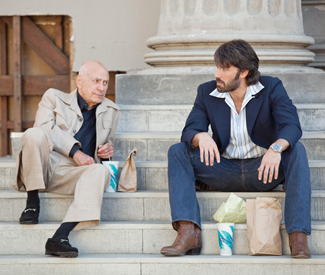
Argo If you didn’t know the particulars of the 1979 Iranian Revolution, you won’t be an expert after Argo, but the film does a good job of capturing America’s fearful reaction to the events that followed it — particularly the hostage crisis at the US embassy in Tehran. Argo zeroes in on the fate of six embassy staffers who managed to escape the building and flee to the home of the sympathetic Canadian ambassador (Victor Garber). Back in Washington, short-tempered CIA agents (including a top-notch Bryan Cranston) cast about for ways to rescue them. Enter Tony Mendez (Ben Affleck, who also directs), exfil specialist and father to a youngster wrapped up in the era’s sci-fi craze. While watching 1973’s Battle for the Planet of the Apes, Tony comes up with what Cranston’s character calls “the best bad idea we have:” the CIA will fund a phony Canadian movie production (corny, intergalactic, and titled Argo) and pretend the six are part of the crew, visiting Iran for a few days on a location shoot. Tony will sneak in, deliver the necessary fake-ID documents, and escort them out. Neither his superiors, nor the six in hiding, have much faith in the idea. (“Is this the part where we say, ‘It’s so crazy it just might work?'” someone asks, beating the cliché to the punch.) Argo never lets you forget that lives are at stake; every painstakingly forged form, every bluff past a checkpoint official increases the anxiety (to the point of being laid on a bit thick by the end). But though Affleck builds the needed suspense with gusto, Argo comes alive in its Hollywood scenes. As the show-biz veterans who mull over Tony’s plan with a mix of Tinseltown cynicism and patiotic duty, John Goodman and Alan Arkin practically burst with in-joke brio. I could have watched an entire movie just about those two. (2:00) Four Star, Marina, 1000 Van Ness, SF Center, Sundance Kabuki. (Eddy)

Beasts of the Southern Wild Six months after winning the Grand Jury Prize at Sundance (and a Cannes Camera d’Or), Beasts of the Southern Wild proves capable of enduring a second or third viewing with its originality and strangeness fully intact. Magical realism is a primarily literary device that isn’t attempted very often in U.S. cinema, and succeeds very rarely. But this intersection between Faulkner and fairy tale, a fable about — improbably — Hurricane Katrina, is mysterious and unruly and enchanting. Benh Zeitlin’s film is wildly cinematic from the outset, as voiceover narration from six-year-old Hushpuppy (Quvenzhané Wallis) offers simple commentary on her rather fantastical life. She abides in the Bathtub, an imaginary chunk of bayou country south of New Orleans whose residents live closer to nature, amid the detritus of civilization. Seemingly everything is some alchemical combination of scrap heap, flesh, and soil. But not all is well: when “the storm” floods the land, the holdouts are forced at federal gunpoint to evacuate. With its elements of magic, mythological exodus, and evolutionary biology, Beasts goes way out on a conceptual limb; you could argue it achieves many (if not more) of the same goals Terrence Malick’s 2011 The Tree of Life did at a fraction of that film’s cost and length. (1:31) Shattuck. (Harvey)

Bel Borba Aqui “The People’s Picasso” and “Brazil’s Pied Piper of Street Art” are both apt descriptions of veteran artist Bel Borba, who has spent decades bringing color and imagination to the streets of Salvador — his seaside hometown, and a place already graced with the nickname “Brazil’s Capital of Happiness.” It’s not a stretch to imagine that Borba’s commitment to public art (a giant Christmas tree made of plastic Coke bottles, a rhinoceros sculpture crafted from old boat planks, hundreds of large-scale mosaics, even a painted airplane) has done its share to lift spirits. Bel Borba Aqui isn’t the sort of doc to delve into its mustachioed subject’s history or personal life (despite a few angry cell phone conversations randomly captured along the way); instead, it’s much like Borba himself — freewheeling and spontaneous, and most alive when it’s showing art being created. Great soundtrack, too. (1:34) Roxie. (Eddy)

The Dark Knight Rises Early reviews that called out The Dark Knight Rises’ flaws were greeted with the kind of vicious rage that only anonymous internet commentators can dish out. And maybe this is yet another critic-proof movie, albeit not one based on a best-selling YA book series. Of course, it is based on a comic book, though Christopher Nolan’s sophisticated filmmaking and Christian Bale’s tortured lead performance tend to make that easy to forget. In this third and “final” installment in Nolan’s trilogy, Bruce Wayne has gone into seclusion, skulking around his mansion and bemoaning his broken body and shattered reputation. He’s lured back into the Batcave after a series of unfortunate events, during which The Dark Knight Rises takes some jabs at contemporary class warfare (with problematic mixed results), introduces a villain with pecs of steel and an at-times distractingly muffled voice (Tom Hardy), and unveils a potentially dangerous device that produces sustainable energy (paging Tony Stark). Make no mistake: this is an exciting, appropriately moody conclusion to a superior superhero series, with some nice turns by supporting players Gary Oldman and Joseph Gordon-Levitt. But in trying to cram in so many characters and plot threads and themes (so many prisons in this thing, literal and figural), The Dark Knight Rises is ultimately done in by its sprawl. Without a focal point — like Heath Ledger’s menacing, iconic Joker in 2008’s The Dark Knight — the stakes aren’t as high, and the end result feels more like a superior summer blockbuster than one for the ages. (2:44) Metreon. (Eddy)

Diana Vreeland: The Eye Has to Travel The life of legendary fashion editor Diana Vreeland is colorfully recounted in Diana Vreeland: The Eye Has to Travel, a doc directed by her granddaughter-in-law, Lisa Immordino Vreeland. The family connection meant seemingly unlimited access to material featuring the unconventionally glamorous (and highly quotable) Vreeland herself, plus the striking images that remain from her work at Harper’s Bazaar, Vogue, and the Costume Institute of the Metropolitan Museum of Art. “Narrated” from interview transcripts by an actor approximating the late Vreeland’s husky, posh tones, the film allows for some criticism (her employees often trembled at the sight of her; her sons felt neglected; her grasp of historical accuracy while working at the museum was sometimes lacking) among the praise, which is lavish and delivered by A-listers like Anjelica Huston, who remembers “She had a taste for the extraordinary and the extreme,” and Manolo Blahnik, who squeals, “She had the vision!” (1:26) Embarcadero. (Eddy)

End of Watch Buddy cop movies tend to go one of two ways: the action-comedy route (see: the Rush Hour series) or the action-drama route. End of Watch is firmly in the latter camp, despite some witty shit-talking between partners Taylor (a chrome-domed Jake Gyllenhaal) and Zavala (Michael Peña from 2004’s Crash) as they patrol the mean streets of Los Angeles. Writer-director David Ayer, who wrote 2001’s Training Day, aims for authenticity by piecing together much of (but, incongruously, not all of) the story through dashboard cameras, surveillance footage, and Officer Taylor’s own ever-present camera, which he claims to be carrying for a school project, though we never once see him attending classes or mentioning school otherwise. Gyllenhaal and Peña have an appealing rapport, but End of Watch’s adrenaline-seeking plot stretches credulity at times, with the duo stumbling across the same group of gangsters multiple times in a city of three million people. Natalie Martinez and Anna Kendrick do what they can in underwritten cop-wife roles, but End of Watch is ultimately too familiar (but not lawsuit-material familiar) to leave any lasting impression. Case in point: in the year 2012, do we really need yet another love scene set to Mazzy Star’s “Fade Into You”? (1:49) 1000 Van Ness, SF Center. (Eddy)

Fat Kid Rules the World It really does suck to be Troy (Jacob Wysocki from 2011’s Terri). An XXL-sized high schooler, he’s invisible to his peers, derided by his little brother (Dylan Arnold), and has lived in general domestic misery since the death of his beloved mother under the heavy-handed rule of his well-meaning but humorless ex-military dad (Billy Campbell). His only friends are online gamers, his only girlfriends the imaginary kind. But all that begins to change when chance throws him across the path of notorious local hellraiser Marcus (Matt O’Leary), who’s been expelled from school, has left the band he fronts, and is equal parts rebel hero to druggy, lyin’ mess. But he randomly decrees Troy is cool, and his new drummer. Even if he’s just being used, Troy’s world is headed for some big changes. Actor Matthew Lillard’s feature directorial debut, based on K.L. Going’s graphic novel, is familiar stuff in outline but a delight in execution, as it trades the usual teen-comedy crudities (a few gratuitous joke fantasy sequences aside) for something more heartfelt and restrained, while still funny. O’Leary from last year’s overlooked Natural Selection is flamboyantly terrific, while on the opposite end of the acting scale Campbell makes repressed emotion count for a lot — he has one wordless moment at a hospital that just might bring you to the tears his character refuses to spill. (1:38) Metreon, Smith Rafael. (Harvey)

Frankenweenie Tim Burton’s feature-length Frankenweenie expands his 1984 short of the same name (canned by Disney back in the day for being too scary), and is the first black and white film to receive the 3D IMAX treatment. A stop-motion homage to every monster movie Burton ever loved, Frankenweenie is also a revival of the Frankenstein story cute-ified for kids; it takes the showy elements of Mary Shelley’s novel and morphs them to fit Burton’s hyperbolic aesthetic. Elementary-school science wiz Victor takes his disinterred dog from bull terrier to gentle abomination (when the thirsty Sparky drinks, he shoots water out of the seams holding his body parts together). Victor’s competitor in the school science fair, Edgar E. Gore, finds out about Sparky and ropes in classmates to scrape up their dead pets from the town’s eerily utilized pet cemetery and harness the town’s lightning surplus. The film’s answer to Boris Karloff (lisp intact) resurrects a mummified hamster, while a surrogate for Japanese Godzilla maker Ishiro Honda, revives his pet turtle Shelley (get it?) into Gamera. As these experiments aren’t borne of love, they don’t go as well at Victor’s. If you love Burton, Frankenweenie feels like the at-last presentation of a story he’s been dying to tell for years. If you don’t love him, you might wonder why it took him so long to get it out. When Victor’s science teacher leaves the school, he tells Victor an experiment conducted without love is different from one conducted with it: love, he implies, is a variable. If that’s the variable that separates 2003’s Big Fish (heartbreaking) from 2010’s Alice In Wonderland (atrocious), it’s a large one indeed. The love was there for 29 minutes in 1984, but I can’t say it endures when stretched to 87 minutes 22 years later. (1:27) Balboa, Metreon, 1000 Van Ness. (Vizcarrondo)

Here Comes the Boom The makers of September’s Won’t Back Down might quibble with this statement, but the rest of us can probably agree that nothing (with the possible exception of Trapper Keepers) says “back to school” like competitive steel-cage mixed martial arts — particularly if the proceeds from the matches go toward saving extracurriculars at a down-at-the-heels public high school. Kevin James plays Scott Voss, a 42-year-old biology teacher at the aforementioned school, whose lack of vocational enthusiasm is manifested by poor attendance and classroom observations about how none of what the students are learning matters. He’s jolted from this criminally subpar performance of his academic duties, however, when budget cuts threaten the school’s arts programs, including the job of an earnest and enthusiastic music teacher (Henry Winkler) whose dedication Scott lazily admires. It seems less than inevitable that this state of affairs would lead to Scott’s donning his college wrestling singlet and trundling into the ring to get pummeled and mauled for cash, but it seems to work better than a bake sale. Less effective and equally unconvincing are Scott’s whiplash arc from bad apple to teacher-of-the-year; a percolating romance between him and the school nurse, played by Salma Hayek; and the script’s tortuous parade of rousing statements celebrating the power of the human spirit, seemingly cribbed from a page-a-day calendar of inspirational quotes. (1:45) 1000 Van Ness, SF Center. (Rapoport)

Hotel Transylvania (1:32) Metreon, 1000 Van Ness, Shattuck.

The House I Live In Much like he did in 2005’s Why We Fight, filmmaker Eugene Jarecki identifies a Big Issue (in that film, the Iraq War) and strips it down, tracing all of the history leading up to the current crisis point. Here, he takes on America’s “war on drugs,” which I put quotes around not just because it was a phrase spoken by Nixon and Reagan, but also because — as The House I Live In ruthlessly exposes — it’s been a failure, a sham, since its origins in the late 1960s. Framing his investigation with the personal story of his family’s housekeeper — whose dedication to the Jarecki family meant that she was absent when her own son turned to drugs — and enfolding a diverse array of interviews (a sympathetic prison guard, addicts and their families, The Wire’s David Simon) and locations (New York City, Sioux City), Jarecki has created an eye-opening film. Particularly well-explained are segments on how drug laws correlate directly to race and class, and how the prison-industrial complex has played a part in making sure those laws remain as strict as possible. (1:48) Shattuck, Sundance Kabuki. (Eddy)

Looper It’s 2044 and, thanks to a lengthy bout of exposition by our protagonist, Joe (Joseph Gordon-Levitt), here’s what we know: Time travel, an invention 30 years away, will be used by criminals to transport their soon-to-be homicide victims backward, where a class of gunmen called loopers, Joe among them, are employed to “do the necessaries.” More deftly revealed in Brick writer-director Rian Johnson’s new film is the joylessness of the world in which Joe amorally makes his way, where gangsters from the future control the present (under the supervision of Jeff Daniels), their hit men live large but badly (Joe is addicted to some eyeball-administered narcotic), and the remainder of the urban populace suffers below-subsistence-level poverty. The latest downside for guys like Joe is that a new crime boss has begun sending back a steady stream of aging loopers for termination, or “closing the loop”; soon enough, Joe is staring down a gun barrel at himself plus 30 years. Being played by Bruce Willis, old Joe is not one to peaceably abide by a death warrant, and young Joe must set off in search of himself so that—with the help of a woman named Sara (Emily Blunt) and her creepy-cute son Cid (Pierce Gagnon)—he can blow his own (future) head off. Having seen the evocatively horrific fate of another escaped looper, we can’t totally blame him. Parsing the daft mechanics of time travel as envisioned here is rough going, but the film’s brisk pacing and talented cast distract, and as one Joe tersely explains to another, if they start talking about it, “we’re gonna be here all day making diagrams with straws” —in other words, some loops just weren’t meant to be closed. (1:58) 1000 Van Ness, Piedmont, SF Center, Sundance Kabuki. (Rapoport)

The Master Paul Thomas Anderson’s much-hyped likely Best Picture contender lives up: it’s easily the best film of 2012 so far. Philip Seymour Hoffman stars as Lancaster Dodd, the L. Ron Hubbard-ish head of a Scientology-esque movement. “The Cause” attracts Freddie Quell (Joaquin Phoenix, in a welcome return from the faux-deep end), less for its pseudo-religious psychobabble and bizarre personal-growth exercises, and more because it supplies the aimless, alcoholic veteran — a drifter in every sense of the word — with a sense of community he yearns for, yet resists submitting to. As with There Will Be Blood (2007), Anderson focuses on the tension between the two main characters: an older, established figure and his upstart challenger. But there’s less cut-and-dried antagonism here; while their relationship is complex, and it does lead to dark, troubled places, there are also moments of levity and weird hilarity — which might have something to do with Freddie’s paint-thinner moonshine. (2:17) Albany, 1000 Van Ness, Sundance Kabuki. (Eddy)

Middle of Nowhere All the reasons why movie publicist turned filmmaker Ava DuVernay scored the best director award at the Sundance Film Festival are up here on the screen. Taking on the emotionally charged yet rarely attempted challenge of picturing the life of the loved one left behind by the incarcerated, DuVernay furthers the cause of telling African American stories — she founded AaFFRM (African-American Film Festival Releasing Movement) and made her directorial debut with 2008 LA hip-hop doc This Is The Life — with Middle of Nowhere. Medical student Ruby (the compelling Emayatzy Corinealdi) appears to have a bright future ahead of her, when her husband Derek (Omari Hardwick) makes some bad choices and is tossed into maximum security prison for eight long years. She swears she’ll wait for him, putting her dreams aside, making the long bus ride out to visit him regularly, and settling for any nursing shift she can. How will she scrape the money together to pay the lawyer for Derek’s parole hearing, cope with the grinding disapproval of her mother (Lorraine Toussaint), support the increasingly hardened and altered Derek, and most importantly, discover a new path for herself? All are handled with rare empathy and compassion by DuVernay, who is rewarded for her care by her cast’s powerful performances. Our reward might be found amid the everyday poetry of Ruby’s life, while she wraps her hair for bed, watches Ali: Fear Eats the Soul (1974), and fantasizes about love in a life interrupted. (1:41) Shattuck. (Chun)

Paranormal Activity 4 (1:21) Metreon, 1000 Van Ness, Presidio.

The Perks of Being a Wallflower Move over, Diary of a Wimpy Kid series — there’s a new shrinking-violet social outcast in town. These days, life might not suck quite so hard for 90-pound weaklings in every age category, what with so many films and TV shows exposing, and sometimes even celebrating, the many miseries of childhood and adolescence for all to see. In this case, Perks author Stephen Chbosky takes on the directorial duties — both a good and bad thing, much like the teen years. Smart, shy Charlie is starting high school with a host of issues: he’s painfully awkward and very alone in the brutal throng, his only friend just committed suicide, and his only simpatico family member was killed in a car accident. Charlie’s English teacher Mr. Andersen (Paul Rudd) appears to be his only connection, until the freshman strikes up a conversation with feline, charismatic, shop-class jester Patrick (Ezra Miller) and his magnetic, music- and fun-loving stepsister Sam (Emma Watson). Who needs the popular kids? The witty duo head up their gang of coolly uncool outcasts their own, the Wallflowers (not to be confused with the deeply uncool Jakob Dylan combo), and with them, Charlie appears to have found his tribe. Only a few small secrets put a damper on matters: Patrick happens to be gay and involved with football player Brad (Johnny Simmons), who’s saddled with a violently conservative father, and Charlie is in love with the already-hooked-up Sam and is frightened that his fragile equilibrium will be destroyed when his new besties graduate and slip out of his life. Displaying empathy and a devotion to emotional truth, Chbosky takes good care of his characters, preserving the complexity and ungainly quirks of their not-so-cartoonish suburbia, though his limitations as a director come to the fore in the murkiness and choppily handled climax that reveals how damaged Charlie truly is. (1:43) Balboa, California, Embarcadero, Piedmont, Presidio, Sundance Kabuki. (Chun)

Pitch Perfect As an all-female college a cappella group known as the Barden Bellas launches into Ace of Base’s “The Sign” during the prologue of Pitch Perfect, you can hear the Glee-meets-Bring It On elevator pitch. Which is fine, since Bring It On-meets-anything is clearly worth a shot. In this attempt, Anna Kendrick stars as withdrawn and disaffected college freshman Beca, who dreams of producing music in L.A. but is begrudgingly getting a free ride at Barden University via her comp lit professor father. Clearly his goal is not making sure she receives a liberal arts education, as Barden’s academic jungle extends to the edges of the campus’s competitive a cappella scene, and the closest thing to an intellectual challenge occurs during a “riff-off” between a cappella gangs at the bottom of a mysteriously drained swimming pool. When Beca reluctantly joins the Bellas, she finds herself caring enough about the group’s fate to push for an Ace of Base moratorium and radical steps like performing mashups. Much as 2000’s Bring It On coined terms like “cheerocracy” and “having cheer-sex,” Pitch Perfect gives us the infinitely applicable prefix “a ca-” and descriptives like “getting Treble-boned,” a reference to forbidden sexual relations with the Bellas’ cocky rivals, the Treblemakers. The gags get funnier, dirtier, and weirder, arguably reaching their climax in projectile-vomit snow angels, with Elizabeth Banks and John Michael Higgins as grin-panning competition commentators offering a string of loopily inappropriate observations. (1:52) Metreon, 1000 Van Ness. (Rapoport)

Samsara Samsara is the latest sumptuous, wordless offering from director Ron Fricke, who helped develop this style of dialogue- and context-free travelogue with Koyaanisqatsi (1982) and Baraka (1992). Spanning five years and shooting on 70mm film to capture glimmers of life in 25 countries on five continents, Samsara, which spins off the Sanskrit word for the “ever-turning wheel of life,” is nothing if not good-looking, aspiring to be a kind of visual symphony boosted by music by the Dead Can Dance’s Lisa Gerrard and composers Michael Stearns and Marcello De Francisci. Images of natural beauty, baptisms, and an African woman and her babe give way to the madness of modern civilization — from jam-packed subways to the horrors of mechanized factory farming to a bizarre montage of go-go dancers, sex dolls, trash, toxic discarded technology, guns, and at least one gun-shaped coffin. After such dread, the opening and closing scenes of Buddhist spirituality seem almost like afterthoughts. The unmistakable overriding message is: humanity, you dazzle in all your glorious and inglorious dimensions — even at your most inhumane. Sullying this hand wringing, selective meditation is Fricke’s reliance on easy stereotypes: the predictable connections the filmmaker makes between Africa and an innocent, earthy naturalism, and Asia and a vaguely threatening, mechanistic efficiency, come off as facile and naive, while his sonic overlay of robot sounds over, for instance, an Asian woman blinking her eyes comes off as simply offensive. At such points, Fricke’s global leap-frogging begins to eclipse the beauty of his images and foregrounds his own biases. (1:39) Opera Plaza, Shattuck. (Chun)

Searching for Sugar Man The tale of the lost, and increasingly found, artist known as Rodriguez seems to have it all: the mystery and drama of myth, beginning with the singer-songwriter’s stunning 1970 debut, Cold Fact, a neglected folk rock-psychedelic masterwork. (The record never sold in the states, but somehow became a beloved, canonical LP in South Africa.) The story goes on to parse the cold, hard facts of vanished hopes and unpaid royalties, all too familiar in pop tragedies. In Searching for Sugar Man, Swedish documentarian Malik Bendjelloul lays out the ballad of Rodriguez as a rock’n’roll detective story, with two South African music lovers in hot pursuit of the elusive musician — long-rumored to have died onstage by either self-immolation or gunshot, and whose music spoke to a generation of white activists struggling to overturn apartheid. By the time Rodriguez himself enters the narrative, the film has taken on a fairy-tale trajectory; the end result speaks volumes about the power and longevity of great songwriting. (1:25) Opera Plaza, Shattuck. (Chun)

Seven Psychopaths Those nostalgic for 1990s-style chatty assassins will find much to love in the broadly sketched Seven Psychopaths. Director-writer Martin McDonough already dipped a pen into Tarantino’s blood-splattered ink well with his 2008 debut feature, In Bruges, and Seven Psychopaths reads as larkier and more off-the-cuff, as the award-winning Irish playwright continues to try to find his own discomfiting, teasing balance between goofy Grand Guignol yuks and meta-minded storytelling. Structured, sort of, with the certified lucidity of a thrill killer, Seven Psychopaths opens on Boardwalk Empire heavies Michael Pitt and Michael Stuhlbarg bantering about the terrors of getting shot in the eyeball, while waiting to “kill a chick.” The talky twosome don’t seem capable of harming a fat hen, in the face of the Jack of Spades serial killer, who happens to be Psychopath No. One and a serial destroyer of hired guns. The key to the rest of the psychopathic gang is locked in the noggin of screenwriter Marty (Colin Farrell), who’s grappling with a major block and attempting the seeming impossible task of creating a peace-loving, Buddhist killer. Looking on are his girlfriend Kaya (Abbie Cornish) and actor best friend Billy (Sam Rockwell), who has a lucrative side gig as a dog kidnapper — and reward snatcher — with the dapper Hans (Christopher Walken). A teensy bit too enthusiastic about Marty’s screenplay, Billy displays a talent for stumbling over psychos, reeling in Zachariah (Tom Waits) and, on his doggie-grabbing adventures, Shih Tzu-loving gangster Charlie (Woody Harrelson). Unrest assured, leitmotifs from McDonough plays — like a preoccupation with fiction-making (The Pillowman) and the coupling of pet-loving sentimentality and primal violence (The Lieutenant of Inishmore) — crop up in Seven Psychopaths, though in rougher, less refined form, and sprinkled with a nervous, bromantic anxiety that barely skirts homophobia. Best to bask in the cute, dumb pleasures of a saucer-eyed lap dog and the considerably more mental joys of this cast, headed up by dear dog hunter Walken, who can still stir terror with just a withering gaze and a voice that can peel the finish off a watch. (1:45) Marina, Metreon, 1000 Van Ness, Piedmont, Sundance Kabuki. (Chun)

Simon and the Oaks Despite being gripping or heartwarming at times, Simon and the Oaks, based on the novel by Marianne Fredricksson, fails to cohere, serving as another reminder of the perennial dilemma of converting literature to film. It tells the story of Simon (Bill Skarsgard — son of Stellan, younger brother of Alexander), a boy coming of age in World War II Sweden. He befriends Isak, son of a Jewish bookkeeper who fled Nazi Germany, and their families become close when Isak’s father nurtures Simon’s love of books and Isak begins to heal his emotional scars by diving into carpentry work with Simon’s father. The moments of true human compassion between the two families begin to falter as the story jumps around to follow Simon’s search for love and identity. More missteps: Simon’s discovery of classical music is conveyed via a series of “artsy” montages, and his brief affair with a fiery Auschwitz victim — problematic, to say the least. (2:02) Albany, Clay. (Molly Champlin)

Sinister True-crime author Ellison Oswalt (Ethan Hawke) hasn’t had a successful book in a decade. So he uproots wife (Juliet Rylance) and kids (Michael Hall D’Addario, Clare Foley) for yet another research project, not telling them that they’re actually moving into the recent scene of a ghastly unsolved murder in which an entire family — save one still-missing child — was hanged from a backyard tree. He finds a box in the attic that somehow escaped police attention, its contents being several reels of Super 8 home movies stretching back decades — all of families similarly wiped out in one cruel act. Smelling best-sellerdom, Ellison keeps this evidence of a serial slayer to himself. It’s disturbing when his son re-commences sleepwalking night terrors. It’s really disturbing when dad begins to spy a demonic looking figure lurking in the background of the films. It’s really, really disturbing when the projector starts turning itself on, in the middle of the night, in his locked office. A considerable bounce-back from his bloated 2008 Day the Earth Stood Still remake, Scott Derrickson’s film takes the opposite tact — it’s very small in both physical scope and narrative focus, almost never leaving the Oswalt’s modest house in fact. He takes the time to let pure creepiness build rather than feeling the need to goose our nads with a false scare or goresplat every five minutes. As a result, Sinister is definitely one of the year’s better horrors, even if (perhaps inevitably) the denouement can’t fully meet the expectations raised by that very long, unsettling buildup. (1:50) Metreon, 1000 Van Ness. (Harvey)

Smashed A heartbreaking lead performance from Mary Elizabeth Winstead drives this tale of a marriage tested when one partner decides to get sober. And it’s time: after an epic night of boozing, first-grade teacher Kate (Winstead) pukes in front of her class, then lies and says she’s pregnant, not anticipating the pushy delight of the school’s principal (Megan Mullally). Plus, Kate’s gotten into the habit of waking up in strange, unsafe places, not really remembering how she stumbled there in the first place. Husband Charlie (Breaking Bad’s Aaron Paul) sees no reason to give up partying; he’s a music blogger whose “office” is the home his wealthy parents bought for the couple, and his problem isn’t quite as unmanageable as hers (at least, we never see him peeing in a convenience store). After Kate joins AA, she realizes she’ll have to face her problems rather than drinking them away — a potentially clichéd character arc that’s handled without flashy hysterics by director and co-writer (with Susan Burke) James Ponsoldt, and conveyed with grace and pain by Winstead —an actor probably best-known for playing Ramona Flowers in 2010’s Scott Pilgrim vs. the World, but just now revealing the scope of her talent. (1:25) Opera Plaza, Shattuck. (Eddy)

Tai Chi Zero A little boy dubbed “the Freak” for the curious, horn-like growth on his forehead grows up to be Lu Chan (Jaydan Yuan), who becomes a near-supernatural martial arts machine when the horn is punched, panic-button style. But activating the “Three Blossoms of the Crown,” as it’s called, takes a toll on the boy’s health, so he’s sent to the isolated Chen Village to learn their signature moves, though he’s repeatedly told “Chen-style kung fu is not taught to outsiders!” Stephen Fung’s lighthearted direction (characters are introduced with bios about the actors who play them, even the split-second cameos: “Andrew Lau, director of the Infernal Affairs trilogy”), affinity for steampunk and whimsy, engagement of Sammo Hung as action director, and embracing of the absurd (the film’s most-repeated line: “What the hell?”) all bring interest to this otherwise pretty predictable kung-fu tale, with its old-ways-versus-Western-ways conflict and misfit hero. Still, there’s something to be said for batshit insanity. (Be warned, though: Tai Chi Zero is the first in a series, which means one thing: it ends on a cliffhanger. Argh.) (1:34) Metreon. (Eddy)

Taken 2 Surprise hit Taken (2008) was a soap opera produced by French action master Luc Besson and designed for export. The divorced-dad-saves-daughter-from-sex-slavery plot may have nagged at some universal parenting anxieties, but it was a Movie of the Week melodrama made on a major movie budget. Taken 2 begins immediately after the last, with sweet teen Kim (Maggie Grace) talking about normalizing after she was drugged and bought for booty. Papa Neeson sees Kim’s mom (Famke Janssen) losing her grip on husband number two and invites them both to holiday in Istanbul following one of his high-stakes security gigs. When the assistant with the money slinks him a fat envelope, Neeson chuckles at his haul. This is the point when women in the audience choose which Neeson they’re watching: the understated super-provider or the warrior-dad whose sense of duty can meet no match. For family men, this is the breeziest bit of vicarious living available; Neeson’s character is a tireless daddy duelist, a man as diligent as he is organized. (This is guy who screams “Victory loves preparation!”) As head-splitting, disorienting, and generally exhausting as the action direction is, Neeson saves his ex-wife and the show in a stream of unclear shootouts. Taken 2 is best suited for the small screen, but whatever the size, no one can stop an international slave trade (or wolves, or Batman) like 21st century Liam. Swoon. (1:31) Metreon, 1000 Van Ness, Sundance Kabuki. (Vizcarrondo)

The Waiting Room Twenty-four hours in the uneasy limbo of an ER waiting room sounds like a grueling, maddening experience, and that’s certainly a theme in this day-in-the-life film. But local documentarian Peter Nicks has crafted an absorbing portrait of emergency public health care, as experienced by patients and their families at Oakland’s Highland Hospital and as practiced by the staff there. Other themes: no insurance, no primary care physician, and an emergency room being used as a medical facility of first, last, and only resort. Nicks has found a rich array of subjects to tell this complicated story: An anxious, unemployed father sits at his little girl’s bedside. Staffers stare at a computer screen, tracking a flood of admissions and the scarce commodity of available beds. A doctor contemplates the ethics of discharging a homeless addict for the sake of freeing up one of them. And a humorous, ultra-competent triage nurse fields an endless queue of arrivals with humanity and steady nerves. (1:21) Shattuck, Sundance Kabuki. (Rapoport) 

 

Avast ye

3

CHEAP EATS Crawdad called me on speakerphone, like she does: in the car, with the childerns. “Will you tell us the story of Moby Dick?” she said.

“Moby Dick,” I said, about as meaningfully as one can say, into an Android, Moby Dick. As it happens, I had just hung up with my dad, who (as it further happens) is an actual, dyed-in-the-whale Melville scholar. Me, no. Not so much. I’ve read it, of course, but . . .

“Dang, is traffic that bad over there?” I asked.

“No. We’re going to get ice cream,” she said. As if that explained everything.

“OK,” I said. “Ice cream.”

I said, “Kids . . . listen up: Moby Dick.”

And while clearing the dishes I proceeded to abridge one of the substantialest-ever works of American literature into four sentences:

“This guy Ahab goes out in a boat to get some whales, and in particular this big old one name a Moby Dick. But Moby Dick is so big and so old that he outsmarts Ahab. Anyway, he outsizes him. He busts up Ahab’s boat and most if not all of his crew, The End.”

I forgot to mention Queemquack, or whatever his name was, but — no worries — I’m de la Cootersitting tomorrow, so I’ll have all day to bring them up to speed.

Poor kids. Even without any knowledge of Queemquack, they were speechless.

“Why did people fish for whales?” Crawdad asked.

“I think maybe they made lamp oil out of their fat, or something,” I said, rendering the kids even speechlesser.

“You have to understand, Chunks,” I added, “this was before the age of light bulbs. People couldn’t just flip a switch and see things; they had to go out and kill giant whales and split their heads open. There was this oil in there that they needed for their lamps, so they could stay up late and read Moby Dick.”

Without which — a century and a half later — my father would never have been able to feed his family. Which reminds me: I would love to tell you about the not-great hashbrowns and sold out “Millionaire’s bacon” at my new favorite restaurant in the Tenderloin, but after all I’m on strike, so …

CHEAP SPORTS

by Hedgehog

It’s been hard to rally any interest in the Giants lately in the Chicken Farmer and Hedgehog household, I’ll admit. It’s not that we wouldn’t be thrilled to hug and high five strangers on the street should they go All The Way, but it seems we left our baseball hearts in Oakland this season — somewhere under the cheap seats in the Coliseum.

It’s been looking like the Giants lost theirs somewhere other than San Francisco, too. Maybe in St. Louis? We went out tonight in search of a TV screen with 49ers on it, and at Hogs and Rocks on 19th they had two screens: one for the 49ers and one for the Giants.

By way of play-by-play, I eavesdropped on a conversation between a father and his small son, sitting across from us.

“The Giants have given up,” declared Father.

“What do you mean?” asked Son in an innocent little voice.

“They’re playing like a team that’s lost its heart,” Father said.

“There’s still time to win I know,” said Son (bottom of the seventh, Giants trailing 8-1). “I have never gaven up in baseball. Ever. I can steal home, it’s so easy. It’s how I make runs!”

I think maybe this kid has figured something out that grown-assed men who get paid way too much to play games haven’t. At least on this side of the bay.

Cheap Eats continued…

Yes, my dear, I just hope your cute little eavesdropee doesn’t grow up to be a whaler. Because in life as in Moby Dick, sometimes it is better to give up than to fight. Call me chicken.

No …

Call me Chicken Farmer.

TAYLOR STREET COFFEE HOUSE

Daily: 7am-2pm

375 Taylor St., SF

(415) 567-4031

MC,V

No alcohol


Life-and-death decision

7

news@sfbg.com

Proposition 34, the initiative to end the death penalty in California, is trailing in the polls, but proponents are focusing on a surprisingly large voting block that could still put it over the top: undecided voters.

“Anything can happen on Election Day,” said Natasha Minsker, campaign manager for Yes on 34. “I think what this election comes down to is who’s able to reach the undecided voter.”

The Los Angeles Times reports the race is 38-51 against the measure, while the Field Poll survey has it at 42-45 against. Both polls report that 11-13 percent of voters were undecided, and a more recent poll conducted by SurveyUSA shows the undecided vote may have grown to 20 percent.

Those large numbers, with less than two weeks until the election, raise an interesting and troubling question: on a decision as serious as whether we allow the state to kill someone in our name — a practice that is as costly to state finances as it may be to our very souls — why have so many voters failed to form an opinion?

REACHING VOTERS

Leading the charge to win over these ambivalent voters is a coalition of justice organizations, supported by prominent individuals and groups such as the American Civil Liberties Union (ACLU) and Amnesty International.

The campaign has raised more than $6 million in less than a year, outspending the opposition 35-to-1. Minsker told us the campaign is focusing hard on undecided minority voters, devoting most of its resources to an area they believe will help them win.

“We have more of a focus on young Latino, Asian, and African American voters, specifically in LA County,” she said. “These are voters who, once they hear about the facts of the proposition, they vote for it.”

Prop. 34 would replace California’s death penalty with a maximum sentence of life in prison with no chance of parole. The proposition would also make convicted felons work to pay restitution to their victims’ families.

The Field Poll reports that of all the regions surveyed, Los Angeles County contains the highest percentage of undecided voters, at 17 percent. Once voters learn that executions don’t prevent murders (numerous studies show it doesn’t act as a deterrent to crime) or save money (life-in-prison is cheaper than housing someone on Death Row and hearing legal appeals), support for capital punishment falls.

The Field Poll reports that 15 percent of voters aged18-39 are undecided, while minority voters (Latino, Asian and African American) contain even higher rates of undecided voters, ranging from 16-19 percent, higher than undecided white voters, at 11 percent.

Unlike on many liberal-leaning campaigns, this one also has strong support from the Catholic Church.

“The energy the Catholic community has brought to the initiative has been fantastic,” Minsker said. “It is certainly one of the few issues to bring together the ACLU and the Catholic Church, but it’s just wonderful to see.”

But in order for the proposition to pass, undecided voters must decide soon.

Field Poll Director Mark Dicamillo said that at this stage in the contest, the team that is leading in the polls usually wins.

“In our experience, with [two] weeks left, undecided voters usually vote no, if they haven’t figured out where they stand yet,” he said.

But Jeanne Woodford, executive director of Death Penalty Focus, a nonprofit group dedicated to educating the public about capital punishment, says these undecided voters are taking their time to get the facts straight before they decide.

“I think that [undecided voters] are very thoughtful voters who are not going to vote on this issue from a moral perspective,” she said. “Those are voters who are going to want to know the facts.”

DECIDING ISSUES

With the election just around the corner, why are so many “thoughtful voters” still undecided about ending the death penalty?

UC Berkeley Public Policy Professor Bruce Cain attributes the undecided electorate to the state’s inconsistency toward capital punishment.

“Historically, the state of California has flipped on its [death penalty] policy,” he said. “My guess is that it is a little bit hard for voters to navigate through now.”

But at a time when California is in a fiscal crisis and federal judges have ordered the state to substantially reduce the population in its overcrowded prison system, Prop. 34 proponents have been making fiscal arguments more than moral ones.

According to the state’s Legislative Analyst’s Office, ending the Death Penalty would save taxpayers $130 million a year, and set aside a $100 million annual fund for law enforcement agencies to use in solving homicide and rape cases.

Prop 36, reform of the harsh Three Strikes and You’re Out law, is the other big sentencing reform initiative on the ballot. Prop 36 would save taxpayers about $100 million a year, yet it is a 3-1 favorite in the polls, a stark contrast to Prop 34.

“The death penalty has been overshadowed by the Three Strikes prop, and that’s possibly another aspect of the undecided voters,” Cain said. “But remember people that are undecided at the end are the people that only get information from their TV.”

That’s something that Yes on 34 is well aware of and about to address.

The campaign has reported spending more than $3 million since July producing television and cable ads, which are launching this week.

“You’ll be seeing TV and radio which will provide much more information to the public, and when they have that information, the facts speak for themselves,” Woodford said.

But No of 34 campaign has fear and emotional arguments on its side. Spokesperson Peter Demarco told us, “Prop 34 isn’t about saving money. It’s the centerpiece of the liberal ACLU’s agenda to weaken California’s public safety laws.”

Cain thinks Prop 34 has a chance, but the real test is yet to come.

“If indeed the no people plan to throw money into this and really land some hard-hitting emotional ads, then you could see voters being moved dramatically,” he said. “If people see these emotional ads and don’t move, then that tells you that the electorate has changed.”

LONG ROAD

Executions in California go back to its earliest settlements, and it was first authorized in the state’s penal code in 1872.

In 1972, the California Supreme Court ruled the death penalty cruel and unusual punishment in violation of the state’s constitution, commuting more than 100 death sentences to life in the prison without the possibility of parole.

Cain says that during the 1970s and ’80s, when California’s rising crime rate was making big news, the public began to embrace capital punishment.

“There were more violent murders, there was crack cocaine, there was a sense that people were going way over the line, and it was very much a moral issue,” he said.

In 1977, the California Legislature re-enacted the death penalty in first-degree murders only. In 1978, California voters broadened the number of crimes eligible for the death penalty. But polls show the pendulum swinging back.

“We haven’t seen a vote like this to abolish the death penalty in about 40 years,” said Richard Dieter, executive director of Death Penalty Information Center. “Just the fact that it’s happening is indicative to the growing skepticism toward the death penalty.”

The number of countries that have abolished the death penalty has doubled to more than 120 the past 25 years. In the US, Connecticut recently became the 17th state to abolish the death penalty, not including the District of Columbia. Will California be next?

“Ten years ago, it was 70-30 against ending the death penalty in California, but that’s changed and it’s closer now. The information is going to make a difference for undecided voters,” said Dieter.

Among that information, Minsker said, is the fact that “with the death penalty, we sometimes sentence innocent people.”

The University of Michigan Law School and the Center on Wrongful Convictions at Northwestern University School of Law reports that in the last 23 years, more than 2,000 people convicted of serious crimes were exonerated in the US.

The Innocence Project, which assists prisoners using DNA testing, found that 18 people previously sentenced to death in the US have been exonerated.

“We have learned that innocent people have been sentenced to death,” said Innocence Project Policy Director Stephen Saloom. “States are increasingly abolishing the death penalty because it’s just not worth it.” According to the Death Penalty Information Center, since 1978 California has executed 13 out of 725 death row inmates, costing California taxpayers $4 billion. “It’s not worth keeping this lengthy, costly process any longer,” Saloom said, “and I think people are more likely to see that it’s not a very good government program.”

Dick Meister: Labor’s wise election choices

2

By Dick Meister

Dick Meister, former labor editor of the SF Chronicle and KQED-TV Newsroom, has covered labor and politics for more than a half-century. Contact him through his website, www.dickmeister.com, which includes more than 350 of his columns.

No issue on the November election ballot anywhere is of greater importance to working people and their unions than Proposition 32 on the California ballot.

As the State AFL-CIO notes in its call for an all-out campaign against Prop 32, it’s “a brazen power play” by billionaire corporate interests and other anti-union forces to all but silence labor’s political voice, while at the same time greatly increasing the political strength of labor’s wealthy opponents.

Prop 32’s corporate sponsors deceptively call their measure an even-handed attempt to limit campaign spending. Yet it would only limit – and severely limit – the political spending of unions. There would be no limit on the political spending of corporations and other wealthy interests.

A Prop 32 victory would have a serious national impact, since passage of the measure in the country’s largest state would certainly lead to attempts to enact similar measures elsewhere.

California Propositions 30 and 38 also could have major, though less direct, effects nationally.  Both measures would raise badly needed new funds for education.

Prop 30, which is widely supported by unions and a broad base of community organizations, would do it through a tax increase that would be levied on wealthy Californians with annual incomes of $250,000 or more.

But Prop 38, bankrolled by some of the same billionaire interests that are contributing heavily to the Yes on 32 campaign, would raise money by taxing everyone, including the poor. And while Prop 30 specifically calls for added education funds to go to schools at all levels, including the community colleges that train workers for jobs that are heavily unionized, Prop 38 does not apply to community colleges.

There are, of course, other state as well as local and national issues and candidates that are of particular interest to labor. That includes, as it very well should, labor-friendly President Obama and just about any other Democrat.

Although the odds are heavily against Democrats regaining control of the House or adding to their narrow margin in the Senate, that has not kept labor and its supporters from trying to beat the odds.

National Democratic strategists are relying on California to be a leader in raising funds to make that happen. They’re sending out an unprecedented barrage of requests to Californians for money for Democratic candidates in general and especially for candidates in battleground states.

Unions are playing an important role in that effort and in many local elections as well. That naturally includes the voting in San Francisco, long one of the country’s premier labor cities and national pacesetter for labor.

As usual, the SF Labor Council and SF unions generally have endorsed all of the Democrats running for national and state offices. It would be hard to quarrel with that or with most of labor’s other choices of who and what to back and oppose on the city’s election ballot.

Locally, labor is backing incumbent Supervisors Eric Mar (District One) and David Campos (District Nine) and newcomer F.X. Crowley, a longtime union leader and activist who’s running in District Seven. All have consistently supported labor.

Labor is rightly eager to defeat Crowley’s opponent, Mike Garcia, a candidate of the downtown interests that have consistently opposed labor.

Voters would be wise to follow the guidance of the teachers union on candidates for the SF Board of Education. The union has endorsed Matt Haney, Beverly Popek, Sam Rodriguez and Shamann Walton. All would be new to the board.

The teachers union and the Service Employees Union local that represent SF City College workers agree that the best candidates for the Community College Board that governs City College are Hanna Leung, Rafael Mandelman and incumbents Natalie Berg and Chris Jackson.

As far as local propositions go, labor’s support for a parcel tax to raise badly needed funds for City College (Prop A) and for a trust fund to help lower and middle income families secure affordable housing (Prop C) makes very good sense.

Unfortunately, labor did not take an official position on Prop G, the policy statement that calls for a Constitutional amendment to reverse the U.S. Supreme Court’s Citizens United decision that has allowed unlimited political spending by corporations and wealthy individuals.

Otherwise, however, labor has provided voters with an invaluable election guide.

Dick Meister, former labor editor of the SF Chronicle and KQED-TV Newsroom, has covered labor and politics for more than a half-century. Contact him through his website, www.dickmeister.com, which includes more than 350 of his columns.

Crucial sounds

0

MUSIC Can the declining sales from physical albums ever be replaced by digital music apps and services? Can an independent artist make a decent living from services such as Pandora radio, BAMM.TV, or SoundCloud? Will the starving musician finally get a good meal?

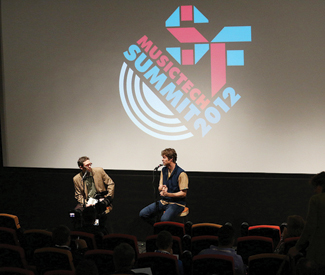
These questions may be answerless for now, but they maintained a heavy presence at the SF Musictech Summit hosted by the Hotel Kabuki — a semiannual conference dedicated to establishing a network among entrepreneurs, developers, record industry figures, and musicians in order to promote digital music business and find solutions for the issues plaguing the modern music industry.

Last week’s installment of the summit featured five talks — in panels with labels like “How Technology Destroyed the Music Industry” and “Artist Revenue Streams.”

It also brought some star power. Actor-musician Jared Leto’s interest with this budding industry brought him to the summit too. And despite the formal nature of the occasion, the 30 Seconds to Mars front person was besieged by attendees eager to get his take on the event, and his autograph. He told me that he’s “curious as to what solutions are being presented.”

But as the summit carried on, it became very became apparent that there are perhaps too many of these solutions being offered. In one of the early morning talks entitled “Artist Tools” moderator Hisham Dahud from Hypebot and Fame House kicked off the conversation by mentioning many of the new ways bands can distribute and promote their music and interact with their fans but also opined that “with new tools comes new responsibilities.”

http://www.youtube.com/watch?v=f7EaMxpKZZU

These new tools were well represented by David Dufresne of Bandzoogle, which designs web pages for bands, Matt Mason of file distributor BitTorrent, and David Haynes of the online audio platform SoundCloud. CEO of Global Digital Impact Taynah Reis and music industry veteran and Incubus manager Steve Rennie rounded out the panel.

During the discussion, Rennie’s stance was welcoming of the technological development, but later, when I asked him if the new digital music business could provide substantial income for the artist, he said, “I sure hope so. The fact is that more people are listening to music than ever but they are doing it different ways, including listening without buying…as people move to other formats like digital downloads and streaming services, we need more people to get comfortable with the idea that music has value and is worth paying for…We need to convince people that their favorite music is worth buying just as much as the beer they’ll spend $10 on at a concert or sporting event.”

The motivation and excitement to transform nearly every aspect of the music business was palpable at the summit. Elevator pitches were as ubiquitous as iPhones and Macbooks. However the fresh idealism was notably absent at the “Artist Revenue Streams” talk where musician Erin McKeown took center stage detailing the sobering situation independent musicians face, explaining that some obvious solutions aren’t so great

“Everyone keeps telling me to tour but the reality is that live performance revenue gets mostly eaten up by the costs and not to mention it’s also extremely taxing on my health”

But more importantly, McKeown emphatically addressed the one crucial issue that was sorely lacking attention throughout the conference: how are musicians suppose to keep up with and derive income from the rapidly evolving environment of music technology? Others on the panel brought up the fact that a lot of artists are unaware of nonprofits such as SoundExchange — an organization with the main goal of compensating artists for their royalties.

The Internet has been lauded as the great democratizer of this generation, and the adage was especially poignant for this specific realm of the digital world. Cellist and composer Zoë Keating, who spoke at the “Artists, Entrepreneurs & Technology,” panel expressed that digital music business caused her to be optimistic and it’s a more level playing field that’s “better for indie artists.” Keating has posted her 2011 income streams on her Tumblr to give her fans a glimpse of the financial situation her and other independent artists are grappling with.

No one seemed more interested in seeing the old music business vanquished than TuneCore founder (and former CEO) Jeff Price, who emphatically declared, “Artists never made any fucking money! What fucking world are you living in?!…The music industry is not collapsing, the traditional music industry is collapsing!” *


Live Shots: David Byrne and St. Vincent at the Orpheum

2

David Byrne opened his show with St. Vincent on Monday night by thanking the Orpheum for breaking its run of The Lion King for their performance. The David Byrne-St. Vincent show wasn’t too far off from the theater’s regular selection though. The eight piece brass band doing choreographed marching behind the duo had a theatrical effect, feeling somewhere between a Stop Making Sense-themed halftime show and an instrument-bearing ensemble in West Side Story.

The 60-year-old musical giant and 30-year-old indie star brought out a diverse crowd. Byrne was carrying on the legacy of art-school punk-turned-pop band, the Talking Heads, but some in the crowd seemed to be wondering “who is this pretty young talent helping espouse his eccentric philosophies?” The scalpers outside were only selling Byrne’s name on the tickets and there was an overabundant amount of “we love you David” cries from the audience.


You’d figure, though, that St. Vincent’s three studio albums of incredibly independent and experimental style, projects with diverse artists including Andrew Bird and Kid Cudi, and wide eyes on the cover of Spin magazine might have tipped these guys off as to who she is. Though St. Vincent did call Byrne at one point, “the resident preacher of the evening,” it was clear they were in equal limelight.

The two took turns performing songs from their collaboration, Love This Giant, as well as their own numbers, occasionally fitting their voices in for the harmony. The songs they picked from their respective catalogs carried themes from their joint album, including Byrne’s dilemma of trying to be human in modern America and St. Vincent’s struggles for freedom.

Though at times incredibly personal, the show had a broader message to its audience; one about people coming together despite their differences to figure out the strangeness of life. This was clearly illuminated in Byrne’s lines, “maybe someday we can stand together/ not afraid of what our eyes may see/ maybe someday I’ll understand it better/weird things inside of me.” Byrne even mimed some of these lyrics from “I Should Watch TV” so you couldn’t miss the point.

http://www.youtube.com/watch?v=DWZpX5dQYkA

Everything about the show fit together like the perfect duet: each one had a distinct personality when you tried to focus on them but usually they flowed together seamlessly. When St. Vincent dropped her voice to fit with Byrne on the album and they gave it the egocentric sounding title, Love This Giant, (a reference to Byrne) a lot of the indie fans might have panicked that she would be overshadowed, but in fact this created really great tension.

It allowed St. Vincent to show off her tough core, like when she stood alone, legs apart, rocking on guitar and belting a cry for help in the song “Marrow” from her album Actor. Meanwhile, the band kept the energy up by standing behind her in two opposing lines, bobbing like the Sharks and Jets preparing to rumble.

Surprisingly, the two didn’t use their collaboration to develop from each other musically in the experimental way that Byrne has worked with others, like with Brian Eno. Aside from the brass band, which functioned more as a fun, symbolic decision, we saw the two employing a lot of styles from their previous work. It seemed like they knew already what they wanted their relationship to be: two people standing together despite their differences. And they pulled it off well (thankfully, without a hint of sexual tension).

In this nature, the two swapped soul-sharing moments throughout the show. It began with St. Vincent’s cries for support among flashing lights and dramatic staging while Byrne’s numbers were much more casual, with the musicians lounging around the stage.

As St. Vincent stepped into a more confident role later in the evening, Byrne began to open up with his self-mocking, “Lazy.” By the end though, both performers emerged from their calls to action and got the house on its feet for a small dance party to a few Talking Heads and St. Vincent solo hits, a rare treat in the formal theater setting.


All photos by Bennett Cox.

Stage Listings

0

Stage listings are compiled by Guardian staff. Performance times may change; call venues to confirm. Reviewers are Robert Avila, Rita Felciano, and Nicole Gluckstern. Submit items for the listings at listings@sfbg.com. For further information on how to submit items for the listings, see Picks.

THEATER

OPENING

And That’s What Little Girls Are Made Of Tides Theatre, 533 Sutter, SF; www.whatgirlsaremadeof.com. $20-30. Opens Thu/19, 8pm. Runs Thu-Sat, 8pm; Sun, 2pm. Through Nov 4. Jennifer Wilson’s multimedia play chronicles her attempts to break into the male-dominated world of venture capital funds.

Fat Pig Boxcar Theatre Studio, 125A Hyde, SF; www.brownpapertickets.com. $20. Opens Thu/18, 8pm. Runs Thu-Sat, 8pm. Through Nov 10. Theater Toda presents Neil LaBute’s dark comedy about a man who faces scrutiny from his friends when he falls for a plus-sized woman.

Fierce Love: Stories From Black Gay Life New Conservatory Theatre Center, 25 Van Ness, SF; www.nctcsf.org. $25-37. Previews Wed/17-Thu/18, 8pm. Opens Fri/19, 8pm. Runs Wed-Sat, 8pm; Sun, 2pm. Through Oct 28. Pomo Afro Homos performs a revival of of its 1991 hit about the struggles of African American gay men in America.

BAY AREA

Richard III Live Oak Theatre, 1301 Shattuck, Berk; www.aeofberkeley.org. $12-15. Opens Fri/19, 8pm. Runs Fri-Sat, 8pm. Through Nov 17. Actors Ensemble of Berkeley performs the Shakespeare classic.

Within the Wheel Live Oak Park, 1301 Shattuck, Berk; www.raggedwing.org. Free. Previews Wed/17, 6pm. Opens Thu/18, 6pm. Runs Thu-Sat, 6pm (last entry 7:30pm; special Halloween show Oct 31). Through Nov 3. Ragged Wing Ensemble presents an immersive performance experience inspired by the Tibetan Book of the Dead.

ONGOING

Bound By Blood Boxcar Theatre Playhouse, 505 Natoma, SF; www.ianiroproductions.com. $20. Thu-Sat, 8pm. Through Oct 27. Opening on the heels of ACT’s production of The Normal Heart, local theater-maker Eric Inman’s Bound By Blood also explores the devastating human fallout of the AIDS crisis as experienced by the two families — one of blood relations and one of chosen friends — of a young gay man, whose death affects them all. Appearing onstage both as a ghost and in a series of flashbacks, Justin Walker (played by Inman) deals with his fear of dying by ditching his meds in favor of drink, and his fear of coming out to his conservative family by postponing the inevitable until it’s too late, leaving his friends holding the burden of his inconvenient truth in their unwilling hands. Awkward moments abound as Justin’s buddies ponder the ethics of outing him posthumously, as his mother (Sally Hogarty) and sister (CC Sheldon) bicker incessantly and his erstwhile "beard" Alice (Abigail Edber) pluckily spearheads the funeral planning. This is Inman’s first full-length play, which helps to explain the often-clunky dialogue and under-developed characters that unfortunately obscure the play’s dramatic potential, but the ideals he champions within — tolerance, self-acceptance, integrity, loyalty, love — are ones well worth exploring, even imperfectly. (Gluckstern)

Elect to Laugh Marsh San Francisco, 1062 Valencia, SF; www.themarsh.org. Tue, 8pm. Through Nov 6. $15-50. Veteran political comedian Will Durst emphasizes he’s watching the news and keeping track of the presidential race "so you don’t have to." No kidding, it sounds like brutal work for anyone other than a professional comedian — for whom alone it must be Willy Wonka’s edible Eden of delicious material. Durst deserves thanks for ingesting this material and converting it into funny, but between the ingesting and out-jesting there’s the risk of turning too palatable what amounts to a deeply offensive excuse for a democratic process, as we once again hurtle and are herded toward another election-year November, with its attendant massive anticlimax and hangover already so close you can touch them. Durst knows his politics and comedy backwards and forwards, and the evolving show, which pops up at the Marsh every Tuesday in the run-up to election night, offers consistent laughs born on his breezy, infectious delivery. One just wishes there were some alternative political universe that also made itself known alongside the deft two-party sportscasting. (Avila)

The Fifth Element: Live! Dark Room Theater, 2263 Mission, SF; www.darkroomsf.com. Fri-Sat, 8pm. Through Oct 27. Comedic adaptation of the 1997 Luc Besson sci-fi epic.

Foodies! The Musical Shelton Theater, 533 Sutter, SF; www.foodiesthemusical.com. $30-34. Fri-Sat, 8pm (no show Nov 17). Open-ended. AWAT Productions presents Morris Bobrow’s musical comedy revue all about food.

Geezer Marsh San Francisco, 1062 Valencia, SF; www.themarsh.org. $30-100. Sat, 8pm; Sun, 7pm. Through Nov 18. Geoff Hoyle’s popular solo show about aging returns.

Love in the Time of Zombies Café Royale, 800 Post, SF; sftheaterpub.wordpress.com. Free ($5 donation suggested). Mon-Tue, 8pm. Through Oct 30. San Francisco Theater Pub performs Kirk Shimano’s "rom-zom-com."

Of Thee I Sing Eureka Theatre, 215 Jackson, SF; www.42ndstmoon.org. $25-75. Wed, 7pm; Thu-Fri, 8pm; Sat, 6pm; Sun, 3pm. Through Oct 21. 42nd Street Moon performs George and Ira Gershwin’s classic political satire.

The Real Americans Marsh San Francisco, 1062 Valencia, SF; www.themarsh.org. $25-50. Fri, 8pm; Sat, 8:30pm. Extended through Oct 27. Dan Hoyle’s hit show, inspired by the people and places he encountered during his 100-day road trip across America in 2009, continues.

Roseanne: Live! Rebel, 1760 Market, SF; www.brownpapertickets.com. $25. Wed, 7 and 9pm (no shows Oct 31). Through Nov 14. Lady Bear, Heklina, D’Arcy Drollinger, and more star in this tribute to the long-running sitcom.

The Scotland Company Exit Theatre, 156 Eddy, SF; www.thunderbirdtheatre.com. $15-25. Thu-Sat, 8pm; Sun, 3pm. Through Oct 27. Thunderbird Theatre Company performs Jake Rosenberg’s new comedy.

Shocktoberfest 13: The Bride of Death Hypnodrome, 575 10th St, SF; www.thrillpeddlers.com. $25-35. Thu-Sat, 8pm. Through Nov 17. Thrillpeddlers’ seasonal assortment of yeasty Grand Guignol playlets is a mixed bag of treats, but it all goes so nicely with the autumnal slink into early nights and dark cravings. Fredrick Whitney’s Coals of Fire is lightly amusing, if far from smoking, as a two-hander about a blind older matron (Leigh Crow) who discovers her young companion (Zelda Koznofski, alternating nights with Nancy French) has been secretly schtupping her husband. I’m a Mummy is a short, not very effective musical interlude by Douglas Byng, featuring the bright pair of Jim Jeske and Annie Larson as Mr. and Mrs., respectively. The titular feature, The Bride of Death, written by Michael Phillis and directed by Russell Blackwood, proves a worthy centerpiece, unfolding an intriguing, well-acted tale about a reporter (Phillis) and his photographer (Flynn DeMarco) arriving at a stormy castle to interview a strangely youthful Grand Guignol stage star (Bonni Suval) making her film debut. After another, this time more rousing musical number, Those Beautiful Ghouls (with music and lyrics by Scrumbly Koldewyn; directed and choreographed by D’Arcy Drollinger), comes the evening’s real high point, The Twisted Pair by Rob Keefe, acted to the bloody hilt by leads Blackwood and DeMarco as the titular duo of scientists driven mad by an experimental batch of ‘crazy’ glue. All of it comes capped, of course, by the company’s signature lights-out spook show. (Avila)

"Strindberg Cycle: The Chamber Plays in Rep" Exit on Taylor, 277 Taylor, SF; www.cuttingball.com. $10-50 (festival pass, $75). Previews Oct 25, 7:30pm and Oct 26, 8pm (part two); Nov 1, 7:30pm and Nov 2, 8pm (part three). Opens Thu/18, 7:30pm (part one); Oct 27, 8pm (part two); and Nov 3, 8pm (part three). Runs Thu, 7:30pm; Fri-Sat, 8pm (also Sat, 2pm); Sun, 5pm. Through Nov 18. Cutting Ball performs a festival of August Strindberg in three parts: The Ghost Sonata, The Pelican and The Black Glove, and Storm and Burned House.

The Waiting Period Marsh San Francisco, 1062 Valencia, SF; www.themarsh.org. $15-50. Thu-Fri, 8pm; Sat, 5pm. Extended through Oct 27. Brian Copeland (comedian, TV and radio personality, and creator-performer of the long-running solo play Not a Genuine Black Man) returns to the Marsh with a new solo, this one based on more recent and messier events` in Copeland’s life. The play concerns an episode of severe depression in which he considered suicide, going so far as to purchase a handgun — the title coming from the legally mandatory 10-day period between purchasing and picking up the weapon, which leaves time for reflections and circumstances that ultimately prevent Copeland from pulling the trigger. A grim subject, but Copeland (with co-developer and director David Ford) ensures there’s plenty of humor as well as frank sentiment along the way. The actor peoples the opening scene in the gun store with a comically if somewhat stereotypically rugged representative of the Second Amendment, for instance, as well as an equally familiar "doood" dude at the service counter. Afterward, we follow Copeland, a just barely coping dad, home to the house recently abandoned by his wife, and through the ordinary routines that become unbearable to the clinically depressed. Copeland also recreates interviews he’s made with other survivors of suicidal depression. Telling someone about such things is vital to preventing their worst outcomes, says Copeland, and telling his own story is meant to encourage others. It’s a worthy aim but only a fitfully engaging piece, since as drama it remains thin, standing at perhaps too respectful a distance from the convoluted torment and alienation at its center. (Avila)

BAY AREA

Acid Test: The Many Incarnations of Ram Dass Marsh Berkeley, 2120 Allston, Berk; www.themarsh.org. $15-50. Thu-Fri, 8pm; Sat, 5pm. Through Nov 24. Lynne Kaufman’s new play stars Warren David Keith as the noted spiritual figure.

Assassins Ashby Stage, 1901 Ashby, Berk; www.shotgunplayers.org. $20-30. Wed-Thu, 7pm; Fri-Sat, 8pm; Sun, 5pm. Through Nov 4. Shotgun Players interrupts this season of dreary electoral debates with an important announcement about the country you live in, as the sure and provocative 1990 musical by Stephen Sondheim (music and lyrics) and John Weidman (book) stitches together American history’s odd assortment of successful and failed presidential assassins to explore the darker recesses of the national mythos. Through an eclectic score of deft period-specific songs and the narrative framework of a feverish carnival shooting gallery — overseen by a nefarious proprietor (Jeff Garrett) — a pageant of kooks and rebels parades, beginning with pioneer assassin John Wilkes Booth (an aptly imposing Galen Murphy-Hoffman). He, in turn, acts as a sort of patron saint to those that follow in his footsteps — including Charles Guiteau (Steven Hess), Leon Czolgosz (Dan Saski), Giuseppe Zangara (Aleph Ayin), John Hinckley (Danny Cozart), Sam Byck (Ryan Drummond), Sara Jane Moore (Rebecca Castelli), Squeaky Fromme (Cody Metzger), and of course Lee Harvey Oswald (Kevin Singer, in a part that doubles with that of the Balladeer). Throughout, director Susannah Martin’s strong cast and musical director David Möschler’s lively eight-piece band insure a raucous, thoughtful, and intimate American fever dream. (Avila)

An Iliad Berkeley Repertory Theatre, Roda Theatre, 2015 Addison, Berk; www.berkeleyrep.org. $14.50-77. Opens Wed/17, 8pm. Runs Tue and Thu-Sat, 8pm (also Sat, 2pm); Wed and Sun, 7pm (also Sun, 2pm). Through Nov 11. Berkeley Rep performs Lisa Peterson and Denis O’Hare’s Homer-inspired tale.

The Kipling Hotel: True Misadventures of the Electric Pink ’80s Marsh Berkeley, 2120 Allston, Berk; www.themarsh.org. $20-50. Sat, 8:30pm; Sun, 7pm. Extended through Dec 16. This new autobiographical solo show by Don Reed, writer-performer of the fine and long-running East 14th, is another slice of the artist’s journey from 1970s Oakland ghetto to comedy-circuit respectability — here via a partial debate-scholarship to UCLA. The titular Los Angeles residency hotel was where Reed lived and worked for a time in the 1980s while attending university. It’s also a rich mine of memory and material for this physically protean and charismatic comic actor, who sails through two acts of often hilarious, sometimes touching vignettes loosely structured around his time on the hotel’s young wait staff, which catered to the needs of elderly patrons who might need conversation as much as breakfast. On opening night, the episodic narrative seemed to pass through several endings before settling on one whose tidy moral was delivered with too heavy a hand, but if the piece runs a little long, it’s only the last 20 minutes that noticeably meanders. And even with some awkward bumps along the way, it’s never a dull thing watching Reed work. (Avila)

Richard the First: Part One, Part Two, Part Three Berkeley City Club, 2315 Durant, Berk; www.centralworks.org. $14-25. Opens Thu/18, 8pm (part one); Fri/19, 8pm (part two); and Sat/20, 8pm (part three). Runs Thu-Sat, 8pm; Sun, 5pm (three-part marathon Sundays, Nov 11 and 18, 2, 5, 8pm). Through Nov 18. This Central Works Method Trilogy presents a rotating schedule of three plays by Gary Graves about the king known as "the Lionheart."

Sex, Slugs and Accordion Marsh Berkeley, 2120 Allston, Berk; www.themarsh.org. $10. Wed, 8pm. Through Nov 14. Jetty Swart, a.k.a. Jet Black Pearl, stars in this "wild and exotic evening of song."

33 Variations TheatreWorks at the Mountain View Center for the Performing Arts, 500 Castro, Mtn View; www.theatreworks.org. $23-73. Tue-Wed, 7:30pm; Thu-Sat, 8pm (also Sat, 2pm); Sun, 2 and 7pm. Through Oct 28. TheatreWorks performs Moisés Kaufman’s drama about a contemporary musicologist struggling to solve one of Beethoven’s greatest mysteries, and a connecting story about the composer himself.

Topdog/Underdog Marin Theatre Company, 397 Miller, Mill Valley; www.marintheatre.org. $36-57. Wed/17, 7:30pm; Thu/18-Sat/20, 8pm (also Sat/20, 2pm); Sun/21, 2 and 7pm. Marin Theatre Company performs Suzan-Lori Parks’ Pulitzer Prize winner about a contentious pair of brothers.

The World’s Funniest Bubble Show Marsh Berkeley, 2120 Allston, Berk; www.themarsh.org. $8-50. Sun, 11am; Nov 23-25, 11am. Through Nov 25. Louis "The Amazing Bubble Man" Pearl brings his lighter-than-air show back to the Marsh.

PERFORMANCE/DANCE

Alonzo King LINES Ballet Yerba Buena Center for the Arts Theater, 700 Howard, SF; www.ybca.org. Fri/19-Sat/20 and Oct 24-27, 8pm; Sun, 5pm. Through Oct 28. The company celebrates 30 years with its fall home season.

BATS Improv Bayfront Theater, B350 Fort Mason Center, SF; www.improv.org. Fri, 8pm, through Oct 26: "This Just In!," $20. Sat, 8pm, through Oct 27: "Improvised Horror Musical," $20.

"Comedy Bodega" Esta Noche Nightclub, 3079 16th St, SF; www.comedybodega.com. Thu, 8pm. Ongoing. No cover (one drink minumum). This week: Amy Miller, Kurt Weitzmann, Martini Paratore, and Jessica Sele.

"Comikaze Lounge" Café Royale, 800 Post, SF; www.comikazelounge.com. Wed/17, 8pm. Free. Stand-up with Casey Ley and more.

"Crooked Little Hearts" Dance Mission Theater, 3316 24th St, SF; www.brownpapertickets.com. Fri/19-Sat/20, 8pm. $20. The Ananta Project’s home season includes a world premiere that uses dance to explore the nuances of human intimacy.

"Gravity (and other large things)" NOHspace, 2840 Mariposa, SF; www.performancelab.org. Fri/19-Sat/20, 8pm; Sun/21, 4pm. $12-25. Right Brain Performancelab present this evening-length dance-theater piece.

"Halloween! The Ballad of Michele Myers" CounterPULSE, 1310 Mission, SF; michelemyers2012.eventbrite.com. Fri-Sun and Oct 31, 8pm. Through Oct 31. $25. Drag superstar Raya Light returns in the seasonally-appropriate horror musical.

"The Hula Show 2012" Palace of Fine Arts, 3301 Lyon, SF; www.naheihulu.org. Sat/20 and Oct 26-27, 8pm; Sun/21 and Oct 28, 8pm (children’s matinee Oct 28, noon). $35-90. Na Lei Hulu I Ka Wekiu performs its annual show, featuring a hula satirizing President Obama’s birth certificate controversy.

"Let Us Find the Words" Contemporary Jewish Museum, 736 Mission, SF; www.thecjm.org. Thu/18, 6:30pm; Fri.19, 1pm. Free with museum admission ($5-12). Actors Dominique Frot and Alexander Muheum present a dramatic reading of letters between poets Ingeborg Bachmann and Paul Celan.

"Perverts Put Out: The Election Erection Edition" Center for Sex and Culture, 1369 Mission, SF; www.sexandculture.org. Sat/20, 7:30. $10-20. Dr. Carol Queen and Simon Sheppard host performances by Jen Cross, Greta Cristina, Gina de Vries, and more.

"San Francisco Magic Parlor" Chancellor Hotel Union Square, 433 Powell, SF; www.sfmagicparlor.com. $40. Thu-Sat, 8pm. Ongoing. Magic vignettes with conjurer and storyteller Walt Anthony.

"San Francisco Trolley Dances 2012" 925 Mission, SF; www.epiphanydance.org. Sat/20-Sun/21, tours leave at 11am, 11:45am, 12:30pm, 1:15pm, 2pm, and 2:45pm. Free with Muni fare ($2). Climb aboard Muni for a unique performance experience at this annual event presented by Kim Epifano’s Epiphany Productions.

ShadowLight Theatre St. Cyprian’s Church, 2097 Turk, SF; www.noevalleymusicseries.com. Sat/20, 8pm. $15. Balinese shadow puppet theater with live gamelan accompaniment.

"Smack Dab" Magnet, 4122 18th St, SF; www.magnetsf.org. Wed/17, 8pm. Free. Open mic featuring local authors Belo Cipriani and Jim Provenzano.

"Times Bones" Kanbar Hall, Jewish Community Center of San Francisco, 3200 California, SF; www.mjdc.org. Thu/18-Sat/20, 8pm; Sun/21, 7pm. $18-31. Margaret Jenkins Dance Company previews a new work that will premiere in 2013.

Darker than dark

0

arts@sfbg.com

FILM It is one of those hard truths one must learn to live with: Quentin Tarantino will always have seen more obscure exploitation movies than you. His new Django Unchained will arrive just in time for Christmas like a gift wrapped severed limb, leaving dedicated fanboy/fangirl types just weeks yet to immerse themselves in the world of spaghetti westerns to which it pays homage.

That makes two features in a row he’s made inspired by 1960s and 70s Euro trash cinema, following 2009’s Inglourious Basterds, which tipped hat to the era’s myriad international-coproduction war flicks. If you saw the obscure 1978 Italian film that was based on (and named after), you also probably already know who and what a Django is, how to pronounce him, and maybe even the factoid that countless (seriously, no one knows how many) ersatz Django “sequels” were made to cash in on the 1966 original’s success.

If not, join the more innocent multitudes at the multiplex come December, many of whom will no doubt be asking for one ticket to “Duh-jango,” please. There’s no shame in knowing nothing about such cultural marginalia. But what even faintly hipster-identifying person would admit to not knowing everything there is to know — even being bored with that knowledge — behind Reservoir Dogs (1992), the now 20-year-old Citizen Kane of indie meta guy flicks? How many people can not only quote its every line, but quote the every line of at least a few amongst its own umpteen mostly lousy imitations (yep, that includes you, 1999’s Boondock Saints)?

http://www.youtube.com/watch?v=QvoKT481EmU

In the gradual groundswell of attention that greeted Dogs back then, viewers confidently cited Tarantino’s inspirations (as did he himself), noting the imprint of everything from classic noir titles to Kurosawa. Yet one movie that had a very direct influence was almost completely absent from those discussions, failing to rise from its prior two decades of complete obscurity even in the two decades post-Dogs.

Together at last in one canine-throwdown double bill is Day of the Wolves, that forgotten 1971 thriller — thanks of course to the Roxie Cinema and Elliot Lavine, themselves reunited for the latest installment in “Not Necessarily Noir,” that catch-all occasional series encompassing all things cool and (mostly) celluloid which don’t fit the loose strictures of their long-running actual noir retrospectives. Wolves and Dogs tussle to kick off the two-week schedule this weekend.

Day of the Wolves‘ low profile is somewhat explicable: it was never released theatrically in the US, and for years withheld from legal exhibition due to copyright issues. Still, one marvels how such a flamboyant relic of pure Seventies-ness could have remained under the radar for so long. TV and Vegas comedian Jan Murray is improbably cast as the mastermind who orchestrates the assembly of six career criminals in a secret desert location. All strangers, they’re instructed to call one another only by assigned number, wear identical outfits, and sport full facial hair (some obviously glued-on). Their mission is to “hit a whole town and peel it like an orange” — sealing off a “model community” in the Southwest, emptying every till, then scramming via private plane.

It’s an ingenious plan that counts on the complacent vulnerability of such burgs. In fact, Wellerton’s city council has just demonstrated ideal small-mindedness by firing its police chief (late, SF-born Richard Egan, a second tier 1950s star gone to flab) for the crime of actually enforcing laws on some of its more irresponsible A-list citizens. Thus the population of 7,000 or so is woefully under prepared when they find the power cut off, exit routes blocked, and seven armed desperados in charge.

The early going bears closest resemblance to Reservoir Dogs, and is the most inspired. (Later when the film gets to its prolonged actual climax, it devolves into a more ordinary Western-style shoot-’em-up between the raiders and Egan’s cop-turned vigilante, though there’s a doozy of a final twist.) Writer-director Ferde Grofe Jr., whose career in features sprawled sparsely from the early 60s to the late 80s, demonstrates a real flair for memorable idiosyncrasy, if less so for action. In style and content, Wolves is a perfect time capsule: groovy rock score (with “acid” guitar, bongos, and flute), very wide lapels, and a dune buggy chase. This near-classic B movie will be shown in one mightily color-faded, “pinked-out” 35mm print, an ostensible flaw that plays more like a finishing touch.

“Not Necessarily Noir III” mixes more such rediscoveries with fairly well known cult faves of the last decades, from neo-noirs to Hong Kong action to 70s New Hollywood questing (exceptional 1978 drama Who’ll Stop the Rain with Nick Nolte and Tuesday Weld; the seldom-seen ’71 Cisco Pike with Kris Kristofferson, Gene Hackman, and Warhol superstar Viva). Among its more rarefied titles are two Me Decade Franco-noirs with Jean-Paul Belmondo (who performs some amazing stunts himself in 1971’s The Burglars); 1968’s very disturbing crime thriller Night of the Following Day (wherein white-blond Marlon Brando is the good guy), and a supernatural blaxploitation double bill of very odd, arty 1973 vampire tale Ganja and Hess and the next year’s wacky, tacky voodoo revenge saga Sugar Hill.

Particularly worth checking out is Darker Than Amber, an attempt to launch a James Bond-style series featuring John D. MacDonald’s best-selling Florida sleuth Travis McGee. Unfortunately this 1970 maiden effort flopped, and the film has seldom been seen — especially without cuts — since. Admittedly it has pedestrian TV-style direction from Robert Clouse (who’d hit his sole career peak later with Bruce Lee’s 1973 Enter the Dragon), and the production values are just B-plus. But it’s an ideal vehicle for Rod Taylor, the brawny, wry, relaxed Aussie who should have been a huge star in the 60s and 70s, but despite a couple memorable films (1963’s The Birds, 1960’s The Time Machine) never got the right break. He’s surrounded by a memorable gallery of MacDonald characters, with two body-builder villains (William Smith, Robert Philips) in addition to the frequently shirtless star making this an notably homoerotic entry for the era in a macho action genre.

“NOT NECESSARILY NOIR III”

Oct. 19-31, $6.50-$10

Roxie Theater

3117 16th St., SF

www.roxie.com


Happy hunting

0

cheryl@sfbg.com

TV Stainless steel appliances. Hardwood floors. Walk-in closets. The House Hunters drinking game, which lovingly mocks the HGTV program’s predictability, will have even a seasoned lush drunk before the first commercial break. “But there’s nowhere for my man cave!” DRINK.

Brian Balthazar, who is HGTV’s Director of Programming, has a sense of humor about the drinking game (“If I ever played it, I’d be hammered, because I watch a lot of House Hunters!”), and also about some recent online muckraking that revealed that what you see on House Hunters isn’t one hundred percent real. “We’re making a television show, so we manage certain production and time constraints, while honoring the home-buying process,” he explained in a statement to Entertainment Weekly this summer. “To maximize production time, we seek out families who are pretty far along in the process. Often everything moves much more quickly than we can anticipate, so we go back and revisit some of the homes that the family has already seen and we capture their authentic reactions.”

Wait, so reality TV isn’t actually real? Shut the custom-painted front door! “Mostly I was happy that people cared that much about House Hunters,” Balthazar says of the controversy. He’s currently promoting the latest House Hunters spin-off, House Hunters Renovation, which follows buyers as they pursue remodeling projects in their just-purchased homes. The next new episode airs Oct. 21 at 11pm; it follows a couple whose “dream house” (DRINK) contains a pink-and-gold nightmare of a bathroom.

“On this show, we see them buying the homes, and then making all these changes to them. So it’s exciting to be able to show that,” Balthazar says. “But I’m always excited that people are talking about House Hunters and that it has had such longevity. It’s nearing its 1,000th episode this year. That’s more than Law and Order!”

And like Law and Order, every episode of House Hunters is basically the same. “The concept is very clear. You know what’s going to happen on the show,” Balthazar says. “They’re going to see three homes, and we’ll see which one they choose. But what is always different are the homeowners and the homes. That voyeuristic, play-along quality of the show changes every time, which I love. We have some really interesting characters that come along, and everyone has a different reaction to different aspects of a home. I think that’s what makes it such a guilty pleasure among people who love to spy on the real estate process.”

House Hunters International follows the same basic formula, with an obvious difference: instead of a new construction in Indianapolis with a three-car garage (DRINK), the buyer (or renter) is seeking an apartment in a slightly more exotic locale. Like, say, Cambodia. Or Serbia. Or the Arctic Circle.

“I’m amazed at some of the stories the production company we work with on International finds. They’ve developed relationships with real estate agencies all over the world,” Balthazar says. “For a long time we didn’t go to some countries simply because it was too complicated. In some countries, you can’t actually buy a home if you’re not a resident. In others, you have to pay cash completely up front, in full. That was really a daunting thing for us to tackle. And now that the show’s been around for so long a lot of people write in to be on the show. It’s like this grassroots effort in some regards.”

Of course, being so popular has a slight downside. “Everyone that I run into, whether I’m on an airplane or at a party, if I say I work on House Hunters or House Hunters International, inevitably there will be someone saying they want to be on,” Balthazar says. “I actually love that! Though I will admit that occasionally when someone asks me what I do, I just say I’m a writer. [Laughs.] But I’m ultimately so grateful that people want to be on the show.”

Balthazar’s main distraction from an endless parade of buyers seeking open-concept floor plans (DRINK) is his pop-culture website, popgoestheweek.com. He’ll be melding his two interests on a special he’s hosting on HGTV in December.

“It’s called I Bought a Famous House. I go around to homes in Hollywood that were once owned by celebrities,” he says. “It’s interesting see what [the non-famous new owners have] done with them since. In one case, someone kept the house exactly the same as it was when the celebrity owned it. And in another case, with Madonna’s former house in the Hollywood Hills, a guy came in and literally changed almost everything, with the exception of the kitchen. But I think when you buy a seven million dollar house, you probably aren’t as concerned about the kitchen as the rest of the house, because you aren’t doing your own cooking when you have that kind of money!”

Of course, Madonna’s kitchen probably already had granite countertops. DRINK!

www.hgtv.com


Live Shots: Treasure Island Music Festival 2012

0

Music nerds talk lineups the way sports fans manage fantasy teams, particularly with festivals, where suddenly strategy becomes a part of catching a show. Treasure Island Music Festival, is sort of an exception, since in theory you can catch every single act, given the two alternating stages. At the same time, this means that unless you head to the silent disco or take a nap, one of those geeks will be standing behind you during a set, obsessively talking about how the lineup should be slotted differently.

Day 1
SF’s Dirty Ghosts had the challenging task of being a rock band opening the festival on the traditional hip-hop/electronic day. K. Flay followed, and told the crowd “I know it’s early, but we can still party,” and the local MC proceeded to give a hair tossing performance that had her drummer breaking a snare. It was a decent lead in for Oakland’s the Coup. Boots Riley has been off my radar for a bit, but it appears our ambassador of P-funked rap has been keeping more than his afro tight – pulling from now-more-appropriate-than-ever classics like “5 Million Ways to Kill a C.E.O” and the upcoming Sorry to Bother You.

At 2:31pm, a guy in a tie-dye Quicksilver shirt was vomiting near where Grimes was playing: the festival had started. Like Matthew Dear and Porter Robinson, Grimes is a returning acts from this year’s Noise Pop. Maybe it was just her bandmate’s flowing iridescent ponchos, but Grimes’ sound seemed lighter than at the Rickshaw Stop. I decided I preferred this side of Grimes, but the Euro bubblegum quality of the creepily infantile “Phone Sex” was pushing it. Matthew Dear seemed out of place in full sun on the Bridge Stage, fog machines pumping. His set was similar to what I heard at Public Works, but progressed slowly. Nearing the end of his set the band got into a groove with “You Put a Smell on Me” but it’ was a little late.

Toro y Moi sounded just like when I saw it a couple years back, but would probably have fit in better somewhere on Sunday. Near the end you could hear a DJ on the other stage playing snippets and raising the crowd, partly using soundcheck to hype for Public Enemy. When actually starting, Chuck D arrived on stage, introducing the whole support crew but saved Flavor Flav for last.

The hyperbolic performance took me back to a time before reality TV. Chuck D was outspoken (Fuck BET. Fuck urban radio. Fuck Viacom.) but used time well. Flavor was Flavor, and rambled for five minutes after his time is up. AraabMusik, waiting on the Tunnel Stage didn’t seem to mind: he gave an impressive, sample stuttering finger drumming MPC performance, after having a smoke with his crew.

At 6:01 I saw the guy who’d been throwing up earlier, walking arm in arm with a girl, both smiling and probably holding each other up.

Things started to blur, the time between switching stages seemed to decrease. Porter Robinson left no impression on me. Tycho sounded like a person making slow, thoughtful love to a synthesizer, but whereas it could have been a great lead-in to the xx, suffered from being between Robinson and a high energy performance from the Presets.

Speaking of which, I’ve had an aversion to the Presets (largely stemming from issues I have with Australian pop), but their performance, particularly “If I Know You” won me over. An awkward soundcheck delay for the following band, SBTRKT, meant the worst thing I could say about it is that it felt too short. Producer Aaron Jerome and singer Sampha played to their strengths, closing with “Wildfire” and having what seemed like the whole crowd leaning back and strutting like they were the sexiest, smoothest motherfuckers on the field.

Girl Talk opened with the awesome (and oft utilized) “International Player’s Anthem” by UGK before quickly triggering “Dancin’ in the Dark.” I hear the Boss at least once more before I leave twenty minutes later. I’m sure there was confetti.  

Day 2

Between openers Imperial Teen and Joanna Newsom, things were rather low-key, just all around relaxing, emotional, sunny music (including my returning favorites, Hospitality.) The crowd trickled in steadily and the field fills up with blankets faster than the day before. It’s a rather sedate afternoon, aside from one thing.

Who scheduled Ty Segall – noted garage thrasher, guitar mangler, and kick drum stomper – in that mid-afternoon slot? Love the dude, he sounded great, but he was not much appreciated outside the pit. The blanket crowd? It didn’t dig that. Particularly right between Youth Lagoon’s indie emo Bob Dylan and Gavin’s second cousin. That’s prime time nap time, especially when the first half of Joanna Newsom’s performance can’t be heard past the soundbooth. (Seriously, can Nap Time with Joanna Newsom be a real thing? On Nick Jr. after Yo Gabba Gabba?) The collective bombast of Los Campesinos picked things up – back to back with Segall would have been a hell of a way to wake up.

And bake up. Because Best Coast was playing with the sun going down. When this festival is at its best, the music and the environment seem to play into one another, and from there out, it basically went perfect. I haven’t seen the band since a sloppy show at Regency Ballroom with Wavves a few years back. The basic sound is still the same – beachy guitar pop with a stony edge – but has developed since then. Part of it’s lineup changes, as the new drummer is a lot tighter than before (and has easily the loudest snare of the weekend), part of it’s just improvement. Bethany Consentino apologized for singing a slow song, but there’ was no reason. She can definitely carry a ballad now.

Anticipation iwas high for Divine Fits, the “supergroup” featuring Dan Boeckner, Britt Daniels, and Sam Brown. Mainly I’m sure because a lot of fans were there for the Bay Area debut, but also because of the glorious, Hollywood matte painting skyline waiting for them behind the Tunnel Stage. As soon as they hit the chorus of “Baby Get Worse,” complete with the ’80s throwback keyboard, I was sold. Halfway through the set someone up front was apparently amped enough for Boeckner to ask, “Dude, are you on PCP?” Elsewhere in the crowd people pleasantly remarked, “Hey, this sounds like Spoon.”

Previously I’d thought the crowd seemed thicker due to all the blankets, but when I walked back towards the Bridge Stage, I realizes that simply way more people turned out for some combination of the last three bands.

M83 – returning to the Bay for the first time since their sold out Fillmore shows in the spring – opened with an alien, had lots of lasers, and played that one song. One thing I now know for sure: it is possible to play percussion while doing the running man.

The last act on the Tunnel Stage, Gossip was one of the only real surprises for me this festival. Punk diva Beth Ditto opened by welcoming the audience to comedy night, later commenting that the band hadn’t toured the US in three years, because the Euro is stronger. Crowded at the front of the stage were possibly the most intense fans I saw all weekend, clearly attached not only to Ditto’s vocal talent, but also her empowering, Aretha Franklin-esque sense of Pride. Pointing to the already crowded photo pit, Ditto said cruelly, “I wish there was a lot less space. And a lot more photographers.”

You couldn’t really have more photographers than there were in the pit at the end of the night for the xx, stopping in the Bay Area for the last festival date on their current tour, supporting the sophomore album Coexist.

It was clear that in their live performance the xx tries to capture the same sort of intimacy as their albums, with a stark and stripped down stage and singers Romy Madley Croft and Oliver Sim in the front. Either singer could do well alone, but together there’s an undeniable chemistry, like lovers in dialogue.

In their live show they definitely play into that, while producer Jamie XX stays literally more in the shadows; Sunday night he was up a level behind the pair, manning a series of controllers, cymbals, and drum pads to creates the fundamental beats that the guitars wash over. The resulting music takes its time – I’d call it shoegaze dance if that weren’t such an idiotic concept – and the xx did as well, opening with the enrapturing “Angels,” setting a sensual mood that stayed till then end.

Earlier Ditto had called them, obviously, the Sex Sex. Anyone who really felt that way – or just wanted to get to John Talabot and Jamie XX at Public Works – hopefully caught a cab, as the wait for shuttles off the island at the end of the night were upwards of an hour and a half. Note to self: work that factor into the TIMF strategy next year.

The Helium Safari: The Astonishing Collage Art of Sean Mackaoui

0

Sean Mackaoui likes to cut and paste in his much-loved adopted hometown of Madrid, Spain. His work has adorned newspapers and magazines (El Mundo, The Herald Tribune, Courrier International, The Sunday Times Magazine, El Canto de la Tripulacion, and La Folha de Sao Paulo), dripped off posters (Centro Dramatico Nacional, Spain or Biennale du Cinéma Espagnol de Annecy, France), graced wine labels, adorned book covers, dressed up T-shirts, sold shoes, animated TV spots…. basically anywhere they let him put a collage!

He has exhibited his personal work in galleries around Europe, and occasionally pieces have been known to cross the Atlantic to the shores of the American continent. His proudest recent achievement was to be awarded an Honorary Director’s roll on the board of the San Francisco Collage Centre. For more information, please visit mackaoui.com.

Sean will be in attendance of this one night only event at Grant’s Tomb Gallery in North Beach, with additional montage art by Winston Smith, also in attendance.

Friday, October 19 from  7-11pm @ Grant’s Tomb, 50-A Bannam Alley,  SF | FREE

The rescuer

1

cheryl@sfbg.com

FILM A decade or so ago, Ben Affleck was drowning in Bennifer mania and starring in schlock like Daredevil (2003) and Gigli (2003). Rumors percolated that Affleck and Matt Damon hadn’t really written that Oscar-winning script for 1997’s Good Will Hunting — though Damon’s career was bearing more fruit at the time (see: 2002’s The Bourne Identity), the “Jenny From the Block” video was nauseating enough to make anyone question the authenticity of anything Affleck-associated up to that point.

But in 2012, it’s clear the guy who was able to balance being a Kevin Smith muse with getting pumped up to star in Armageddon (1998) was all along plotting the oldest show biz career trajectory in the book: he really wanted to direct. And thank goodness for that.

Argo opens with a vintage Warner Bros. logo and offers a quick history lesson via storyboards and old news footage. If you don’t know the particulars of the 1979 Iranian Revolution, you won’t be an expert after Argo, but the film does a good job of capturing America’s fearful reaction to the events that followed it — particularly the hostage crisis at the US embassy in Tehran. Argo zeroes in on the fate of six embassy staffers who managed to flee to the home of the sympathetic Canadian ambassador (Victor Garber).

Back in Washington, short-tempered CIA agents (including a top-notch Bryan Cranston) cast about for ways to rescue them. Most of the standby “exfil” tactics (give ’em fake identities as English teachers!) are out of the question given the political climate in Iran. Crazier ideas begin to surface. Could the staffers, uh, ride bikes to the Turkish border, maybe? Three hundred miles…in the winter?

Enter Tony Mendez (Affleck), exfil specialist and father to a youngster wrapped up in the era’s sci-fi craze (21st century Jedi will weep at the boy’s mint-condition toy collection). It’s while watching 1973’s Battle for the Planet of the Apes on TV that Tony comes up with what Cranston’s character calls “the best bad idea we have:” the CIA will fund a phony Canadian movie production (corny, intergalactic, and titled Argo) and pretend the six are part of the crew, visiting Iran for a few days on a location shoot. Tony will sneak in, deliver the necessary fake-ID documents, and escort them out. Neither his superiors, nor the six in hiding, have much faith in the idea. (“Is this the part where we say, ‘It’s so crazy it just might work?'” someone asks, beating the cliché to the punch.)

Argo never lets you forget that lives are at stake; we see the Ayatollah’s men scrambling to piece together the identities of the embassy workers even as Tony arrives in Tehran, where he observes a victim of mob justice swinging from a noose over a main street. Every painstakingly forged form, every bluff past a checkpoint official, the anxiety increases, to the point of being laid on a bit thick by the end.

The film has the benefit of being both timely (with US-Iran relations stormy as ever) and entertaining, and though it’s not a masterpiece, it’s Affleck’s best directorial effort to date. He’s capable with the secret-agent suspense stuff, and is careful not to make generalizations about the Iranians depicted in the film. But, appropriately enough given the source, Argo comes alive in its Hollywood scenes. As show-biz veterans who mull over Tony’s plan with a mix of Tinseltown cynicism and patriotic duty, John Goodman and Alan Arkin practically burst with in-joke brio. I could have watched an entire movie just about those two.

Argo is Affleck’s third film — the first not set in Boston, and the second that Affleck himself stars in. Though he cast his brother, Casey Affleck, in 2007’s Gone Baby Gone, he gave himself the lead in 2010’s The Town, a decision that ended up being one of the film’s weak links. (“Oh look,” my movie going companion pointed out during The Town‘s forced-soulful denouement. “He escaped to Beardlandia!”) But his turn in Argo is, refreshingly, more or less vanity-free — just one gratuitous shirtless scene! — a hopeful sign that Affleck the actor may finally be giving Affleck the director the upper hand.


ARGO opens Fri/12 in Bay Area theaters.

Stage Listings

0

Stage listings are compiled by Guardian staff. Performance times may change; call venues to confirm. Reviewers are Robert Avila, Rita Felciano, and Nicole Gluckstern. Submit items for the listings at listings@sfbg.com. For further information on how to submit items for the listings, see Picks.

THEATER

OPENING

Love in the Time of Zombies Café Royale, 800 Post, SF; sftheaterpub.wordpress.com. Free ($5 donation suggested). Opens Mon/15, 8pm. Runs Mon-Tue, 8pm. Through Oct 30. San Francisco Theater Pub performs Kirk Shimano’s “rom-zom-com.”

The Scotland Company Exit Theatre, 156 Eddy, SF; www.thunderbirdtheatre.com. $15-25. Opens Thu/12, 8pm. Runs Thu-Sat, 8pm; Sun, 3pm. Through Oct 27. Thunderbird Theatre Company performs Jake Rosenberg’s new comedy.

“Strindberg Cycle: The Chamber Plays in Rep” Exit on Taylor, 277 Taylor, SF; www.cuttingball.com. $10-50 (festival pass, $75). Previews Fri/12-Sat/13, 8pm; Sun/14, 5pm (part one); Oct 25, 7:30pm and Oct 26, 8pm (part two); Nov 1, 7:30pm and Nov 2, 8pm (part three). Opens Oct 18, 7:30pm (part one); Oct 27, 8pm (part two); and Nov 3, 8pm (part three). Runs Thu, 7:30pm; Fri-Sat, 8pm (also Sat, 2pm); Sun, 5pm. Through Nov 18. Cutting Ball performs a festival of August Strindberg in three parts: The Ghost Sonata, The Pelican and The Black Glove, and Storm and Burned House.

BAY AREA

An Iliad Berkeley Repertory Theatre, Roda Theatre, 2015 Addison, Berk; www.berkeleyrep.org. $14.50-77. Previews Fri/12-Sat/13 and Tue/16, 8pm; Sun/14, 7pm. Opens Oct 17, 8pm. Runs Tue and Thu-Sat, 8pm (also Sat, 2pm); Wed and Sun, 7pm (also Sun, 2pm). Through Nov 11. Berkeley Rep performs Lisa Peterson and Denis O’Hare’s Homer-inspired tale.

Richard the First: Part One, Part Two, Part Three Berkeley City Club, 2315 Durant, Berk; www.centralworks.org. $14-25. Previews Fri/12, 8pm (part one); Sat/13, 8pm (part two); and Sun/14, 5pm (part three). Opens Oct 18, 8pm (part one); Oct 19, 8pm (part two); and Oct 20, 8pm (part three). Runs Thu-Sat, 8pm; Sun, 5pm (three-part marathon Sundays, Nov 11 and 18, 2, 5, 8pm). Through Nov 18. This Central Works Method Trilogy presents a rotating schedule of three plays by Gary Graves about the king known as “the Lionheart.”

ONGOING

Elect to Laugh Marsh San Francisco, 1062 Valencia, SF; www.themarsh.org. Tue, 8pm. Through Nov 6. $15-50. Veteran political comedian Will Durst emphasizes he’s watching the news and keeping track of the presidential race “so you don’t have to.” No kidding, it sounds like brutal work for anyone other than a professional comedian — for whom alone it must be Willy Wonka’s edible Eden of delicious material. Durst deserves thanks for ingesting this material and converting it into funny, but between the ingesting and out-jesting there’s the risk of turning too palatable what amounts to a deeply offensive excuse for a democratic process, as we once again hurtle and are herded toward another election-year November, with its attendant massive anticlimax and hangover already so close you can touch them. Durst knows his politics and comedy backwards and forwards, and the evolving show, which pops up at the Marsh every Tuesday in the run-up to election night, offers consistent laughs born on his breezy, infectious delivery. One just wishes there were some alternative political universe that also made itself known alongside the deft two-party sportscasting. (Avila)

Family Programming: An Evening of Short Comedic Plays Shelton Theater, 533 Sutter, SF; www.brownpapertickets.com. $20. Thu/11-Sat/13, 8pm. Left Coast Theatre Company performs short plays about gay and alternative families.

The Fifth Element: Live! Dark Room Theater, 2263 Mission, SF; www.darkroomsf.com. Fri-Sat, 8pm. Through Oct 27. Comedic adaptation of the 1997 Luc Besson sci-fi epic.

Foodies! The Musical Shelton Theater, 533 Sutter, SF; www.foodiesthemusical.com. $30-34. Fri-Sat, 8pm (no show Nov 17). Open-ended. AWAT Productions presents Morris Bobrow’s musical comedy revue all about food.

Geezer Marsh San Francisco, 1062 Valencia, SF; www.themarsh.org. $30-100. Sat, 8pm; Sun, 7pm. Through Nov 18. Geoff Hoyle’s popular solo show about aging returns.

Of Thee I Sing Eureka Theatre, 215 Jackson, SF; www.42ndstmoon.org. $25-75. Wed, 7pm; Thu-Fri, 8pm; Sat, 6pm (also Sat/13, 1pm); Sun, 3pm. Through Oct 21. 42nd Street Moon performs George and Ira Gershwin’s classic political satire.

The Play About the Baby Gough Street Playhouse, 1620 Gough, SF; www.custommade.org. $30. Thu/11-Sat/13, 8pm; Sun/14, 7pm. Custom Made Theatre presents Edward Albee’s devilishly funny 1998 play, an intriguing and gleefully idiosyncratic work about the brutality to which innocence is invariably subjected in this world. In a formal and thematic reshuffling of the Albee deck (from which he drew earlier gems like Who’s Afraid of Virginia Woolf? or The American Dream), the play offers two couples: Boy (Shane Rhoades) and Girl (Anya Kazimierski) — two innocents in the blush of first love who have just had a baby — and Man (Richard Aiello) and Woman (Linda Ayres-Frederick), a quippy, slightly sinister pair who intrude on the younger couple for initially undisclosed reasons. As much propositions as people (albeit lively ones), the characters move around a stage backed by a wall-full of assorted chairs (in Sarah Phykitt’s somewhat enigmatic scenic design) addressing each other and the audience by turns, the older ones prone to digressive monologues, the younger to ingenuous rapture, confusion, and finally (as their predicament becomes clear) anguish. The play’s oddball dialogue and intentional repetition demand a lot from a cast, however, and director Brian Katz gets uneven results from his. While Kazimierski offers a sure, buoyant performance as Girl, Rhodes wavers in his delivery, proving only occasionally convincing as Boy. Ayres-Frederickson exudes a nice, saucy, indomitable air as Woman, and Aiello is a pretty good match for her, despite a somewhat stilted start. But the effect overall is a little too erratic to avoid turning the play’s intentional repetitions into a slow-growing tedium. (Avila)

The Real Americans Marsh San Francisco, 1062 Valencia, SF; www.themarsh.org. $25-50. Fri, 8pm; Sat, 8:30pm. Extended through Oct 27. Dan Hoyle’s hit show, inspired by the people and places he encountered during his 100-day road trip across America in 2009, continues.

Roseanne: Live! Rebel, 1760 Market, SF; www.brownpapertickets.com. $25. Wed, 7 and 9pm (no shows Oct 31). Through Nov 14. Lady Bear, Heklina, D’Arcy Drollinger, and more star in this tribute to the long-running sitcom.

Shocktoberfest 13: The Bride of Death Hypnodrome, 575 10th St, SF; www.thrillpeddlers.com. $25-35. Thu-Sat, 8pm. Through Nov 17. Thrillpeddlers’ annual Halloween horror extravaganza features a classic Grand Guignol one-act and two world premiere one-acts, plus a blackout spook show finale.

The Strange Case of Citizen de la Cruz Bindlestiff Studio, 185 Sixth St, SF; www.bindlestiffstudio.org. Thu/11-Sat/13, 8pm. Bindlestiff Studio presents Luis Francia’s political thriller.

Twelfth Night San Francisco Maritime National Historic Park, Hyde Street Pier, 2905 Hyde, SF; www.weplayers.org. $30-80. Sat/13, 5:30pm. After spending the summer on Angel Island with their epic-scale production of The Odyssey, the We Players have scaled back with a lo-key rendition of Shakespeare’s Twelfth Night on Hyde Street Pier. Of course when it comes to the We Players, “scaled-back” still means a two-and-a-half hour long participatory jaunt taking place mainly along the length of the pier and aboard the historic ferryboat, the Eureka, which serves primarily as the residence of the grieving Illyrian Countess, Olivia (Clara Kamunde) around whose favors much of the plot revolves. Highlights of the experience include the opportunity to visit historic Hyde Street Pier, a gypsy-jazzy score directed by Charlie Gurke (who also plays the lovelorn Duke Orsino), and the rascally quartet of the prankish Maria (Caroline Parsons), jocular drunk Toby Belch (Dhira Rauch), clueless doofus Andrew Augecheek (Benjamin Stowe), and wise fool Feste (John Hadden). But as We Players productions go, this one feels less inspired in its staging, and much of the action merely shuffles back and forth on the Eureka without incorporating many of the intriguing nooks and views the Hyde Street Pier offers, despite a promising opening scene involving a beach and a rowboat. Also, uncharacteristically for We, the comic timing seemed to be off the evening I saw it, although both Stowe and Hadden ably conveyed their wit without a flaw. Dress warmly, carry a big flask, and you’ll be fine. (Gluckstern)

The Waiting Period Marsh San Francisco, 1062 Valencia, SF; www.themarsh.org. $15-50. Thu-Fri, 8pm; Sat, 5pm. Extended through Oct 27. Brian Copeland (comedian, TV and radio personality, and creator-performer of the long-running solo play Not a Genuine Black Man) returns to the Marsh with a new solo, this one based on more recent and messier events` in Copeland’s life. The play concerns an episode of severe depression in which he considered suicide, going so far as to purchase a handgun — the title coming from the legally mandatory 10-day period between purchasing and picking up the weapon, which leaves time for reflections and circumstances that ultimately prevent Copeland from pulling the trigger. A grim subject, but Copeland (with co-developer and director David Ford) ensures there’s plenty of humor as well as frank sentiment along the way. The actor peoples the opening scene in the gun store with a comically if somewhat stereotypically rugged representative of the Second Amendment, for instance, as well as an equally familiar “doood” dude at the service counter. Afterward, we follow Copeland, a just barely coping dad, home to the house recently abandoned by his wife, and through the ordinary routines that become unbearable to the clinically depressed. Copeland also recreates interviews he’s made with other survivors of suicidal depression. Telling someone about such things is vital to preventing their worst outcomes, says Copeland, and telling his own story is meant to encourage others. It’s a worthy aim but only a fitfully engaging piece, since as drama it remains thin, standing at perhaps too respectful a distance from the convoluted torment and alienation at its center. (Avila)

BAY AREA

Acid Test: The Many Incarnations of Ram Dass Marsh Berkeley, 2120 Allston, Berk; www.themarsh.org. $15-50. Thu-Fri, 8pm; Sat, 5pm. Through Nov 24. Lynne Kaufman’s new play stars Warren David Keith as the noted spiritual figure.

Assassins Ashby Stage, 1901 Ashby, Berk; www.shotgunplayers.org. $20-30. Wed-Thu, 7pm; Fri-Sat, 8pm; Sun, 5pm. Through Nov 11. Shotgun Players performs the Sondheim musical about John Wilkes Booth, Lee Harvey Oswald, and other famous Presidential killers (and would-be killers).

Hamlet Bruns Amphitheater, 100 California Shakespeare Theater Way, Orinda; www.calshakes.org. $35-71. Wed/10-Thu/11, 7:30pm; Fri/12-Sat/13, 8pm; Sun/14, 4pm. Liesl Tommy directs this season closer for Cal Shakes, a decidedly uneven and overall surprisingly bland production of one of Shakespeare’s most fascinating, affecting, and endlessly rich works. The best part of Tommy’s less-than-inspired hodgepodge production (summed up by the dry and cluttered swimming-pool set, albeit very nicely designed by Clint Ramos) is lead Leroy McClain, whose Hamlet is a vibrantly intelligent and charismatic force most of the time. He gets some fine support from Dan Hiatt as a comically pedantic but still sympathetically paternal Polonius, but there is precious little chemistry with either Ophelia (a nonetheless striking Zainab Jah) or faithless queen mother Gertrude (Julie Eccles). The rest of the cast is rarely more than dutiful. Meanwhile, the staging comes laden with some awkward and/or tired conceits: a small fish tank-like landscape inset into the back wall for an unraveling Ophelia; a gore-covered zombie-esque ghost (a flat Adrian Roberts, who also plays Claudius); or guards sporting submachine guns, which always looks ridiculous. Moreover, the language comes awkwardly modernized in places —substituting “dagger” for “bodkin” in a rather famous soliloquy, for example, seems unnecessary and is definitely distracting. Why not “submachine gun”? (Avila)

The Kipling Hotel: True Misadventures of the Electric Pink ’80s Marsh Berkeley, 2120 Allston, Berk; www.themarsh.org. $20-50. Sat/13, 8:30pm; Sun/14, 7pm. This new autobiographical solo show by Don Reed, writer-performer of the fine and long-running East 14th, is another slice of the artist’s journey from 1970s Oakland ghetto to comedy-circuit respectability — here via a partial debate-scholarship to UCLA. The titular Los Angeles residency hotel was where Reed lived and worked for a time in the 1980s while attending university. It’s also a rich mine of memory and material for this physically protean and charismatic comic actor, who sails through two acts of often hilarious, sometimes touching vignettes loosely structured around his time on the hotel’s young wait staff, which catered to the needs of elderly patrons who might need conversation as much as breakfast. On opening night, the episodic narrative seemed to pass through several endings before settling on one whose tidy moral was delivered with too heavy a hand, but if the piece runs a little long, it’s only the last 20 minutes that noticeably meanders. And even with some awkward bumps along the way, it’s never a dull thing watching Reed work. (Avila)

Sex, Slugs and Accordion Marsh Berkeley, 2120 Allston, Berk; www.themarsh.org. $10. Wed, 8pm. Through Nov 14. Jetty Swart, a.k.a. Jet Black Pearl, stars in this “wild and exotic evening of song.”

33 Variations TheatreWorks at the Mountain View Center for the Performing Arts, 500 Castro, Mtn View; www.theatreworks.org. $23-73. Tue-Wed, 7:30pm; Thu-Sat, 8pm (also Sat, 2pm); Sun, 2 and 7pm. Through Oct 28. TheatreWorks performs Moisés Kaufman’s drama about a contemporary musicologist struggling to solve one of Beethoven’s greatest mysteries, and a connecting story about the composer himself.

Topdog/Underdog Marin Theatre Company, 397 Miller, Mill Valley; www.marintheatre.org. $36-57. Tue and Thu-Sat, 8pm (also Thu/11, 1pm; Oct 20, 2pm); Wed, 7:30pm; Sun, 2 and 7pm. Through Oct 21. Marin Theatre Company performs Suzan-Lori Parks’ Pulitzer Prize winner about a contentious pair of brothers.

The World’s Funniest Bubble Show Marsh Berkeley, 2120 Allston, Berk; www.themarsh.org. $8-50. Sun, 11am; Nov 23-25, 11am. Through Nov 25. Louis “The Amazing Bubble Man” Pearl brings his lighter-than-air show back to the Marsh.

PERFORMANCE/DANCE

“Bi Curious Comedy Night” Deco Lounge, 510 Larkin, SF; www.decosf.com. Sun/14, 8pm. $10. With Nick Leonard, Kate Willet, Nicole Calasich, and more.

“Comedy Bodega” Esta Noche Nightclub, 3079 16th St, SF; www.comedybodega.com. Thu, 8pm. Ongoing. No cover (one drink minumum). This week: the San Francisco Comedy Burrito Festival.

“Gravity (and other large things)” NOHspace, 2840 Mariposa, SF; www.performancelab.org. Wed/10, Fri/12-Sat/13, and Oct 19-20, 8pm; Sun/14 and Oct 21, 4pm. $12-25. Right Brain Performancelab present this evening-length dance-theater piece.

“A New Anthropology of Asian-Black Relations” Garage, 715 Bryant, SF; www.brownpapertickets.com. Wed-Thu, 8pm. $10-20. Mash-up poetry installation, plus performance, by Kevin Simmonds.

Smuin Ballet Palace of Fine Arts Theatre, 3301 Lyon, SF; www.smuinballet.org. Thu/11-Sat/13, 8pm (also Sat/13, 2pm); Sun/14, 2pm. $25-65. The company performs its fall program, including West Coast premiere Cold Virtues.

“The Spooky Cabaret” Stage Werx, 446 Valencia, SF; www.wilywestproductions.com. Wed/10, 7:30pm. $10. ‘Tis the season for this fest of three full-length and five one-act plays with horror themes.

“Theatecture on UN Plaza” Civic Center, UN Plaza, Seventh St at Market, SF; www.ftloose.org. Tue/16, noon-2pm. Free. Outdoor performance of Mary Alice Fry’s Honeycomb Zone as part of the “24 Days of Central Market Arts Festival.”

Today’s gathering of the music apps

2

The music industry — as we all know — has reached the nadir of its financial situation after a dozen or so years of file sharing. The Internet, many would say, hasn’t been too kind to the business. But if the Web taketh it also giveth, as evidenced by the plethora of music apps and Internet-based services (Spotify, Turntable.FM, Shazam, etc.) that are competing to transform the industry.

One of the driving forces behind this development is Brian Zisk, the executive producer of today’s SF Musictech Summit. The Summit is a biannual conference that aims to advance the profile of the digital music business by providing a space where entrepreneurs, developers, and music industry reps can come together, build networks, learn from one another. In addition, Michael Franti, of Spearhead fame, and composer Zoë Keating will be giving talks. The two will be in attendance through the conference, holding it down for the actual musicmakers.

Musicians testify about Musictech.

Zisk is the perfect person to facilitate such a gathering, due to this extensive career in digital media. He founded the production company Buzzmakers, Inc., which produces this event and the Future of Money and Technology Summit. He is also the co-founder and technologies director of the Future of Music Coalition, a non-profit that advocates on the behalf of musicians in the digital and legal spheres.

In a recent email interview with the Guardian, Zisk remarked on what sets his conference apart from others.

“Many conferences are all about showcasing the heads of sales and marketing. If given the choice, they tend to leave their tech guys at home. Our event specifically brings together the developers and CTOs to share knowledge and promote new ideas innovation. With these technically savvy folks leading the way, everyone else comes along.”

Some of the more recognizable names in the field will be in attendance today — DJ favorite Soundcloud, the so-called Youtube of mp3s, and top-selling radio app Tunein Radio. One of the more intriguing companies at the summit will be BAMM.tv, which uses its web platform to produce and distribute music videos for emerging musicians. And just like any gathering of tech-minded people, you won’t be able to walk two feet without hearing someone’s elevator pitch about his or her hot new app. In years past, the conference has also included seminars dedicated to helping attending developers perfect the elevator pitch.

Founded in 2008, the summit has made significant inroads in elevating this once-niche industry’s profile. In the finance realm, funding for digital music companies this year has increased 26.5 percent from last year. Zisk is also quick to point out that the summit has “helped people better realize that the goal is to better connect artists and fans, and helped show how the Internet has enabled musicians to do so.”

The summit now regularly features speeches from people such as Pandora CEO and founder Tim Westergren, and has even grabbed the attention of the big labels (representatives from companies like Universal Music Group will be in attendance.) It is possible to envision the startups that will be featured next week full on rescuing the music industry, but it remains to be seen whether or not they can return the music business back to its peak revenue earning days of the roaring 1990s.

SF MusicTech Summit
Tue/9 9am-6pm, $400
Hotel Kabuki
1625 Post, SF
www.sfmusictech.com

Win free tickets! American Conservatory Theater Presents: 8

0

A.C.T. presents a one-night-only all-star presentation of 8 – the landmark marriage equality play about Proposition 8. Written by Dustin Lance Black, the Academy Award–winning screenwriter of Milk, this exciting event features Black, as well as Luke Macfarlane and Patricia Wettig (TV’s Brothers & Sisters), Holland Taylor (TV’s Two and a Half Men), Neil Giuliano (CEO of SF AIDS Foundation), legendary LGBT activist Cleve Jones, Jonathan Moscone (artistic director of Cal Shakes), John A. Pérez (Speaker of the Assembly), and many more.

Proceeds benefit the American Foundation for Equal Rights and LGBTQ youth participating in A.C.T.’s ACTsmart education programs. Tickets are available here or by calling (415) 749-2228. To win a pair of tickets, email your full name to sfbgpromos@sfbg.com with “Prop 8” in the subject. Winners will be notified on Fri/6 at 5pm.

Sunday, October 7 at 7pm @ A.C.T.’s Geary Theater, 415 Geary, SF

Film Listings

0

Film listings are edited by Cheryl Eddy. Reviewers are Kimberly Chun, Dennis Harvey, and Lynn Rapoport. For rep house showtimes, see Rep Clock.

MILL VALLEY FILM FESTIVAL

The 35th Mill Valley Film Festival runs Oct. 4-14 at the Christopher B. Smith Rafael Film Center, 1118 Fourth St, San Rafael; Cinéarts@Sequoia, 25 Throckmorton, Mill Valley; and 142 Throckmorton Theatre, Mill Valley. For additional venues, full schedule, and tickets (most shows $13.50), visit www.mvff.com. For commentary, see Film.

OPENING

Bitter Seeds Just what we all needed: more incontrovertible evidence of the bald-faced evil of Monsanto. This documentary on destitute Indian cotton farmers follows an 18-year-old girl named Manjusha, a budding journalist who investigates the vast numbers of farmer suicides since the introduction (and market stranglehold) of "BT" cotton — which uses the corporation’s proprietary GMO technology — in the region of Vidarbha. Before BT took over in 2004, these cotton farmers relied on cheap heritage seed fertilized only by cow dung, but the largely illiterate population fell prey to Monsanto’s marketing blitz and false claims, purchasing biotech seed that resulted in pesticide reliance, failing crops, and spiraling debt. It’s a truly heartbreaking and infuriating story, but much of the action feels stagy and false. Should Indian formality be blamed? Considering the same fate befell Micha X. Peled’s 2005 documentary China Blue, probably not. Still, eff Monsanto. (1:28) Roxie. (Michelle Devereaux)

Butter Jennifer Garner, Olivia Wilde, and Hugh Jackman star in this Iowa-set satirical comedy about competitive butter carving. (1:32)

Frankenweenie Wee Victor Frankenstein brings his dog back from the dead in Tim Burton’s black-and-white, 3D animated tale. (1:27) Presidio.

The Mystical Laws As The Master gathers Oscar buzz for its Scientology-inspired tale, another movie based on the teachings of a similarly-named religion, Japanese fringe sect Happy Science, opens this weekend. But that analogy is incorrect, for The Mystical Laws way more resembles 2000’s Battlefield Earth, demonstrating and preaching its source material’s tenants rather than questioning them. Visit Happy Science’s website and you’ll find a New Age mix of Christianity and Buddhism, with woo-woo about truth and love. Its founder, Ryuho Okawa, claims to the reincarnation of "El Cantare," sort of an über-god who controls all spiritual activity on Earth. Anyway, now there’s an anime flick based on one of Okawa’s hundreds of books; it’s about an evil overlord with planet-ruling aspirations who gets smacked down by the powerful combo of aliens, a guy who realizes he’s humanity’s "light of hope" (basically a Jesus-Buddha combo, with psychic powers to boot), and an eight-headed flying dragon. There is Nazi iconography; there are Star Wars-inspired plot points. At one point, the hero preaches directly to the camera. It’s all very heavy-handed. A far more amusing use of your time would be to go to Happy Science’s website and click the tab marked "Astonishing Facts" to learn the spiritual fates of historical figures: "Currently Beethoven lives in the lower area of the Bodhisattva Realm of the 7th dimension in the Spirit world, and aims to transcend the sadness evident in parts of his music and become an expert in the music of joy," while proponent o’ evolution Darwin "is now serving a penance in Abysmal Hell." Hey, wait a minute! Isn’t science supposed to be "happy?" (2:00) New People, 1746 Post, SF; www.newpeopleworld.com. (Eddy)

The Oranges In director Julian Farino’s tale of two families, the Wallings and the Ostroffs are neighbors and close friends living in the affluent New Jersey township of West Orange. We meet David Walling (Hugh Laurie), his wife Paige (Catherine Keener), his best friend Terry Ostroff (Oliver Platt), and Terry’s wife, Carol (Allison Janney), during a period of domestic malaise for both couples — four unhappy people who enjoy spending time together — that is destined to be exponentially magnified over the Thanksgiving and Christmas festivities. We learn much of this in voice-over courtesy of stalled-out 24-year-old design school grad Vanessa (Alia Shawkat), a second-generation Walling whose narrative subjectivity the film makes plain. No one will fault Vanessa for editorializing, however, when her Ostroff counterpart, onetime BFF and present-day nemesis Nina (Leighton Meester), returns home after a five-year absence and, amid maternal pressure to date Vanessa’s visiting brother, Toby (Adam Brody), instead embarks on an affair with their father. The ick factor is large, particularly because it takes a while to keep straight all the spouses, offspring, and houses they belong in. But Farino works to convince us that the romantic spark between David and Nina should be judged on its merits rather than with a gut-level revulsion, a reaction we can leave to the film’s principals. To the extent that this is possible, it’s possible to enjoy The Oranges‘ intelligent writing and fine cast, whose sympathetic characters (perhaps excluding Nina, whose heedlessness regarding the feelings of others verges on sociopathic) we wish the best of luck in surviving the holidays. (1:30) Albany, Clay. (Rapoport)

The Paperboy Lee Daniels scored big with Precious (2009), but this follow-up is so off-kilter in tone and story it will likely polarize critics and confuse audiences, despite its A-list cast. I happened to enjoy the hell out of this tacky, sweat-drenched, gator-gutting, and generally overwrought adaptation of Peter Dexter’s novel (Dexter and Daniels co-wrote the screenplay); it’s kind of a Wild Things-The Help-A Time to Kill mash-up, with the ubiquitous Matthew McConaughey starring as Ward Jansen, a Florida newspaper reporter investigating what he thinks is the wrongful murder conviction of Hillary Van Wetter (a repulsively greasy John Cusack). But the movie’s not really about that. Set in 1969 and narrated by Macy Gray, who plays the veteran housekeeper for the Jansens — a clan that also includes college dropout Jack (Zac Efron) — The Paperboy is neither mystery nor thriller. It’s more of a swamp cocktail, with some odd directorial choices (random split-screen here, random zoom there) that maybe seem like exploitation movie homages. As a Southern floozy turned on by "prison cock" (but not, to his chagrin, by the oft-shirtless Jack), Nicole Kidman turns in her trashiest performance since 1995’s To Die For. (1:46) Embarcadero. (Eddy)

V/H/S See "Gruesome Discovery." (1:55) Bridge, Shattuck.

Taken 2 It’s kidnapping season again, and Liam Neeson is pissed. (1:31) Marina.

ONGOING

Arbitrage As Arbitrage opens, its slick protagonist, Robert Miller (Richard Gere), is trying to close the sale of his life, on his 60th birthday: the purchase of his company by a banking goliath. The trick is completing the deal before his fraud, involving hundreds of millions of dollars, is uncovered, though the whip-smart daughter who works for him (Brit Marling) might soon be onto him. Meanwhile, Miller’s gaming his personal affairs as well, juggling time between a model wife (Susan Sarandon) and a Gallic gallerist mistress (Laetitia Casta), when sudden-death circumstances threaten to destroy everything, and the power broker’s livelihood — and very existence — ends up in the hands of a young man (Nate Parker) with ambitions of his own. It’s a realm that filmmaker Nicholas Jarecki is all too familiar with. Though like brothers Andrew (2003’s Capturing the Friedmans) and Eugene (2005’s Why We Fight), Jarecki’s first love is documentaries (his first film, 2006’s The Outsider, covered auteur James Toback), his family is steeped in the business world. Both his parents were commodities traders, and Jarecki once owned his own web development firm and internet access provider, among other ventures. When he started writing Arbitrage‘s script in 2008, he drew some inspiration from Bernard Madoff — but ultimately, the film is about a good man who became corrupted along the way, to the point of believing in his own invincibility. (1:40) Metreon, Presidio, Smith Rafael, Shattuck. (Chun)

Backwards Athletic disappointment is not a new feeling for Abi (Sarah Megan Thomas, who also wrote the script), who has just learned she’s been named the alternate for the Olympic crew team — a bench warming role she was also relegated to in the last Olympics. But after she quits the team in a huff and moves home, it’s not long before she realizes that her life off the water is pretty depressing, too. Enter former boyfriend Geoff (James Van Der Beek), now the athletic director at the high school where Abi honed her rowing talents, who gives her a job coaching the talented but undisciplined girls who make up the current team. Will this new venture help Abi finally grow up and regain her self-confidence? Will she re-ignite her spark with Geoff? Will there be a last-act conflict involving yet another chance at the Olympics? Will there be multiple training montages? As directed by Ben Hickernell, Backwards hits all of the expected themes about following one’s heart and Doing the Right Thing. Thomas, a former rower herself, has an ordinary-girl appeal, but even Backwards’ attention to authenticity can’t elevate what’s essentially a very predictable sports drama. (1:29) Sundance Kabuki. (Eddy)

Beasts of the Southern Wild Six months after winning the Grand Jury Prize at Sundance (and a Cannes Camera d’Or), Beasts of the Southern Wild proves capable of enduring a second or third viewing with its originality and strangeness fully intact. Magical realism is a primarily literary device that isn’t attempted very often in U.S. cinema, and succeeds very rarely. But this intersection between Faulkner and fairy tale, a fable about — improbably — Hurricane Katrina, is mysterious and unruly and enchanting. Benh Zeitlin’s film is wildly cinematic from the outset, as voiceover narration from six-year-old Hushpuppy (Quvenzhané Wallis) offers simple commentary on her rather fantastical life. She abides in the Bathtub, an imaginary chunk of bayou country south of New Orleans whose residents live closer to nature, amid the detritus of civilization. Seemingly everything is some alchemical combination of scrap heap, flesh, and soil. But not all is well: when "the storm" floods the land, the holdouts are forced at federal gunpoint to evacuate. With its elements of magic, mythological exodus, and evolutionary biology, Beasts goes way out on a conceptual limb; you could argue it achieves many (if not more) of the same goals Terrence Malick’s 2011 The Tree of Life did at a fraction of that film’s cost and length. (1:31) Four Star, Shattuck, Smith Rafael. (Harvey)

Beauty is Embarrassing You may not recognize the name Wayne White offhand, but you will know his work: he designed and operated many of the puppets on Pee-Wee’s Playhouse, including Randy (the blockheaded bully) and Dirty Dog (the canine jazzbo). Neil Berkeley’s Beauty Is Embarrassing — named for a mural White painted on the side of a Miami building for Art Basel 2009 — charts the life of an artist whose motto is both "I want to try everything I can!" and "Fuck you!" The Southern-born oddball, who came of age in the early-1980s East Village scene, is currently styling himself as a visual artist (his métier: painting non-sequitur phrases into landscapes bought from thrift stores), but Beauty offers a complex portrait of creativity balanced between the need to be subversive and the desire to entertain. (1:27) Roxie. (Eddy)

The Bourne Legacy Settle down, Matt Damon fans — the original Bourne appears in The Bourne Legacy only in dialogue ("Jason Bourne is in New York!") and photograph form. Stepping in as lead badass is Jeremy Renner, whose twin powers of strength and intelligence come courtesy of an experimental-drug program overseen by sinister government types (including Edward Norton in an utterly generic role) and administered by lab workers doing it "for the science!," according to Dr. Rachel Weisz. Legacy‘s timeline roughly matches up with the last Damon film, The Bourne Ultimatum, which came out five years ago and is referenced here like we’re supposed to be on a first-name basis with its long-forgotten plot twists. Anyway, thanks to ol’ Jason and a few other factors involving Albert Finney and YouTube, the drug program is shut down, and all guinea-pig agents and high-security-clearance doctors are offed. Except guess which two, who manage to flee across the globe to get more WMDs for Renner’s DNA. Essentially one long chase scene, The Bourne Legacy spends way too much of its time either in Norton’s "crisis suite," watching characters bark orders and stare at computer screens, or trying to explain the genetic tinkering that’s made Renner a super-duper-superspy. Remember when Damon killed that guy with a rolled-up magazine in 2004’s The Bourne Supremacy? Absolutely nothing so rad in this imagination-free enterprise. (2:15) 1000 Van Ness, SF Center. (Eddy)

The Campaign (1:25) 1000 Van Ness.

Celeste and Jesse Forever Married your best friend, realized you love but can’t be in love with each other, and don’t want to let all those great in-jokes wither away? Such is the premise of Celeste and Jesse Forever, the latest in what a recent wave of meaty, girl-centric comedies penned by actresses — here Rashida Jones working with real-life ex Will McCormack; there, Zoe Kazan (Ruby Sparks), Zoe Lister Jones (Lola Versus), and Lena Dunham (Girls) — who have gone the DIY route and whipped up their own juicy roles. There’s no mistaking theirs for your average big-screen rom-com: they dare to wallow harder, skew smarter, and in the case of Celeste, tackle the thorny, tough-to-resolve relationship dilemma that stubbornly refuses to conform to your copy-and-paste story arc. Nor do their female protagonists come off as uniformly likable: in this case, Celeste (Jones) is a bit of an aspiring LA powerbitch. Her Achilles heel is artist Jesse (Andy Samberg), the slacker high school sweetheart she wed and separated from because he doesn’t share her goals (e.g., he doesn’t have a car or a job). Yet the two continue to spend all their waking hours together and share an undeniable rapport, extending from Jesse’s encampment in her backyard apartment to their jokey simulated coitus featuring phallic-shaped lip balm. Throwing a wrench in the works: the fact that they’re still kind of in love with each other, which all their pals, like Jesse’s pot-dealer bud Skillz (McCormack), can clearly see. It’s an shaggy, everyday breakup yarn, writ glamorous by its appealing leads, that we too rarely witness, and barring the at-times nausea-inducing shaky-cam under the direction of Lee Toland Krieger, it’s rendered compelling and at times very funny — there’s no neat and tidy way to say good-bye, and Jones and McCormack do their best to capture but not encapsulate the severance and inevitable healing process. It also helps that the chemistry practically vibrates between the boyish if somewhat one-note Samberg and the soulful Jones, who fully, intelligently rises to the occasion, bringing on the heartbreak. (1:31) Shattuck. (Chun)

The Dark Knight Rises Early reviews that called out The Dark Knight Rises‘ flaws were greeted with the kind of vicious rage that only anonymous internet commentators can dish out. And maybe this is yet another critic-proof movie, albeit not one based on a best-selling YA book series. Of course, it is based on a comic book, though Christopher Nolan’s sophisticated filmmaking and Christian Bale’s tortured lead performance tend to make that easy to forget. In this third and "final" installment in Nolan’s trilogy, Bruce Wayne has gone into seclusion, skulking around his mansion and bemoaning his broken body and shattered reputation. He’s lured back into the Batcave after a series of unfortunate events, during which The Dark Knight Rises takes some jabs at contemporary class warfare (with problematic mixed results), introduces a villain with pecs of steel and an at-times distractingly muffled voice (Tom Hardy), and unveils a potentially dangerous device that produces sustainable energy (paging Tony Stark). Make no mistake: this is an exciting, appropriately moody conclusion to a superior superhero series, with some nice turns by supporting players Gary Oldman and Joseph Gordon-Levitt. But in trying to cram in so many characters and plot threads and themes (so many prisons in this thing, literal and figural), The Dark Knight Rises is ultimately done in by its sprawl. Without a focal point — like Heath Ledger’s menacing, iconic Joker in 2008’s The Dark Knight — the stakes aren’t as high, and the end result feels more like a superior summer blockbuster than one for the ages. (2:44) Metreon. (Eddy)

Detropia Those of us from Detroit, once-glamorous capital of American manufacturing and symbol of the triumph of capitalism, often feel like we were born with the history of the city in our bones. Another common feeling is that of dread upon hearing that yet another arty documentary (or brow-furrowing article, or glossy photo book) is coming down the pipe. The narrative arc of such things is usually this: remember Motown? Cars were amazing. Then there were scary riots, probably out of thin air. Then the jobs left. Isn’t Detroit sad now? Look how spooky this abandoned train station from the 1930s is! America is over. Wait! Some hipsters are starting a farm downtown! There may be hope after all. But who knows? Detropia, directed by Heidi Ewing, who grew up near Detroit, and Rachel Grady, doesn’t exactly deconstruct that crusty storyline (non-spoiler alert: the hipster-farmers become performance artists). But this important and beautiful film shows how much more of the Detroit tale takes on meaning and shape when told through the voices of people who actually live there, with a cinematic eye that doesn’t shy away from reality, even as it bends it to narrative ends. (1:30) Elmwood, Roxie, Smith Rafael. (Marke B.)

Diana Vreeland: The Eye Has to Travel The life of legendary fashion editor Diana Vreeland is colorfully recounted in Diana Vreeland: The Eye Has to Travel, a doc directed by her granddaughter-in-law, Lisa Immordino Vreeland. The family connection meant seemingly unlimited access to material featuring the unconventionally glamorous (and highly quotable) Vreeland herself, plus the striking images that remain from her work at Harper’s Bazaar, Vogue, and the Costume Institute of the Metropolitan Museum of Art. "Narrated" from interview transcripts by an actor approximating the late Vreeland’s husky, posh tones, the film allows for some criticism (her employees often trembled at the sight of her; her sons felt neglected; her grasp of historical accuracy while working at the museum was sometimes lacking) among the praise, which is lavish and delivered by A-listers like Anjelica Huston, who remembers "She had a taste for the extraordinary and the extreme," and Manolo Blahnik, who squeals, "She had the vision!" (1:26) Embarcadero, Shattuck. (Eddy)

Dredd 3D Cartoonishly, gleefully gruesome violence abounds in Dredd 3D, a pretty enjoyable comic-book adaptation thanks to star Karl Urban’s deadpan zingers. This is not a remake of the 1995 Sly Stallone flop Judge Dredd, by the way, though it might as well be a remake of 2011 Indonesian import The Raid: Redemption. The stories are identical. Like, lawsuit material-identical: supercop infiltrates (and then becomes trapped in, and must battle his way out of) a high-rise apartment tower run by a ruthless crime boss. Key difference is that Dredd has futuristic weapons, and The Raid had badass martial arts. Also Dredd‘s villain is played by Lena "Cersei Lannister" Headey, so there’s that. (1:38) Metreon, 1000 Van Ness. (Eddy)

End of Watch Buddy cop movies tend to go one of two ways: the action-comedy route (see: the Rush Hour series) or the action-drama route. End of Watch is firmly in the latter camp, despite some witty shit-talking between partners Taylor (a chrome-domed Jake Gyllenhaal) and Zavala (Michael Peña from 2004’s Crash) as they patrol the mean streets of Los Angeles. Writer-director David Ayer, who wrote 2001’s Training Day, aims for authenticity by piecing together much of (but, incongruously, not all of) the story through dashboard cameras, surveillance footage, and Officer Taylor’s own ever-present camera, which he claims to be carrying for a school project, though we never once see him attending classes or mentioning school otherwise. Gyllenhaal and Peña have an appealing rapport, but End of Watch‘s adrenaline-seeking plot stretches credulity at times, with the duo stumbling across the same group of gangsters multiple times in a city of three million people. Natalie Martinez and Anna Kendrick do what they can in underwritten cop-wife roles, but End of Watch is ultimately too familiar (but not lawsuit-material familiar) to leave any lasting impression. Case in point: in the year 2012, do we really need yet another love scene set to Mazzy Star’s "Fade Into You"? (1:49) Marina, 1000 Van Ness, SF Center. (Eddy)

Finding Nemo 3D (1:40) 1000 Van Ness, SF Center.

For a Good Time, Call&ldots; Suffering the modern-day dilemmas of elapsed rent control and boyfriend douchebaggery, sworn enemies Katie (Ari Graynor) and Lauren (Lauren Miller) find themselves shacking up in Katie’s highly covetable Manhattan apartment, brought together on a stale cloud of resentment by mutual bestie Jesse (Justin Long, gamely delivering a believable version of your standard-issue young hipster NYC gay boy). The domestic glacier begins to melt somewhere around the time that Lauren discovers Katie is working a phone-sex hotline from her bedroom; equipped with a good head for business, she offers to help her go freelance for a cut of the proceeds. Major profitability ensues, as does a friendship evoking the pair bonding at the center of your garden-variety romantic comedy, as Katie trains Lauren to be a phone-sex operator and the two share everything from pinkie swears and matching pink touch-tone phones to intimate secrets and the occasional hotline threesome. Directed by Jamie Travis and adapted from a screenplay by Miller and Katie Anne Naylon, the film is a welcome response to the bromance genre, and with any luck it may also introduce linguistic felicities like "phone-banging" and "let’s get this fuckshow started" into the larger culture. The raunchy telephonic interludes include cameos by Kevin Smith and Seth Rogen (Miller’s husband) as customers calling from such unfurtive locations as a public bathroom stall and the front seat of a taxicab. But the two roomies supply plenty of dirty as Katie, an abashed wearer of velour and denim pantsuits, helps the more restrained Lauren discover the joys of setting free her inner potty mouth. (1:25) SF Center. (Rapoport)

Hotel Transylvania (1:32) Metreon, 1000 Van Ness, Shattuck.

House At the End of the Street Tight T-shirts, a creepy cul-de-sac, couples in cars on lonely lanes, and the cute but weird loner kid — all the stuff of classic drive-in horror fare, revisited in this ambitious tribute of sorts. Don’t mistake House at the End of the Street for genre-reviving efforts by super fans like Eli Roth and Rob Zombie; Mark Tonderai’s mash up of Psycho (1960) and Last House on the Left (1972) lacks the rock ‘n’ roll brio and jet-black humor of, say, Cabin Fever (2002) or The Devil’s Rejects (2005). Instead House reads like an earnest effort to add a thin veneer of psychological realism and even girl power sincerity to a blood-spattered back catalog. Teenage musician Elissa (Jennifer Lawrence) and her overwhelmed mom Sarah (Elisabeth Shue) have found themselves quite a deal of a new rental home — a bit too good, since their next door neighbors were both brutally killed by their brain-damaged offspring who was obviously afflicted with the same greasy hair issues as the ghoulish gal in The Ring. Ryan (Bay Area native Max Thieriot), the boy who continues to live in the house where his parents were murdered, is ostracized, attractive, and much like his home, a fixer — making him mighty attractive to Elissa. A hearty, artistic soul who likes to venture where others fear to tread, she’s drawn to him despite the fact that she feels like she’s being watched from the woods that separate their homes. Switching back and forth between various perspectives — like that of a sputtering, spasmodically edited psychopath-cam and the steady, thoughtful gaze of a rebellious yet empathetic girl — House manages to effectively throw a few curveballs your way, while toying with genre conventions and upsetting your expectations. Shoring up its efforts is a talented cast, headed up by Lawrence’s feisty heroine and Shue’s sad-eyed struggling mom. (1:43) Metreon, 1000 Van Ness. (Chun)

Lawless Lawless has got to be the most pretentiously humorless movie ever made about moonshiners — a criminal subset whose adventures onscreen have almost always been rambunctious and breezy, even when violent. Not here, bub. Adapting Matt Bondurant’s fact-inspired novel The Wettest County in the World about his family’s very colorful times a couple generations back, director John Hillcoat and scenarist (as well as, natch, composer) Nick Cave have made one of those films in which the characters are presented to you as if already immortalized on Mount Rushmore — monumental, legendary, a bit stony. They’ve got a crackling story about war between hillbilly booze suppliers and corrupt lawmen during Prohibition, and while the results aren’t dull (they’re too bloody for that, anyway), they’d be a whole lot better if the entire enterprise didn’t take itself so gosh darned seriously. The Bondurant brothers of Franklin County, Va. are considered "legends" when we meet them in 1931, having defied all and sundry as well as survived a few bullets: mack-truck-built Forrest (Tom Hardy); eldest Howard (Jason Clarke), who tipples and smiles a lot; and "runt of the litter" Jack (Shia LeBeouf), who has a chip on his shoulder. The local law looks the other way so long as their palms are greased, but the Feds send sneering Special Deputy Charlie Rakes (Guy Pearce), it’s an eye for an eye for an eye, etc. The revenge-laden action in Lawless is engaging, but the filmmakers are trying so hard to make it all resonant and folkloric and meta-cinematic, any fun you have is in spite of their efforts. (1:55) 1000 Van Ness, SF Center. (Harvey)

Liberal Arts Against his better judgment, 35-year-old Jesse (How I Met Your Mother‘s Josh Radnor, who also wrote and directed) falls for 19-year-old Zibby (Elizabeth Olsen), a student at the leafy Ohio university he graduated from years before (never named, but filmed at Kenyon College, Radnor’s own alma matter). The two meet when Jesse, now a jaded Brooklynite, visits to celebrate the retirement of Professor Hoberg (Richard Jenkins). Letter-writing, classical-music appreciation, a supremely awkward follow-up visit, and much white-boy angst follows. Liberal Arts is at its best when delineating a specific type of collegiate experience — as safe, privileged bubble where, as Jesse explains, you can announce "I’m a poet!" without anyone punching you in the face. It can also be an oppressive space, as illustrated by a cranky prof who feels trapped by academia (a razor-sharp Lucinda Janney), and a morose classmate of Zibby’s who identifies a little too closely with David Foster Wallace. And it’s stuff like the Wallace references (again, never named — just identified via heavily dropped hints, for all the cool viewers to pick up on) that’re ultimately Liberal Arts‘ undoing. Radnor explores some interesting themes, but the film is full of indie-comedy tropes — the friendly stoner (Zac Efron) who randomly appears to dispense life lessons; an anti-Twilight rant that’s a bit too pleased with itself; the unusually attractive character who appears in the first act and is obviously destined for inclusion in the inevitable happy ending. (1:37) Shattuck. (Eddy)

Looper It’s 2044 and, thanks to a lengthy bout of exposition by our protagonist, Joe (Joseph Gordon-Levitt), here’s what we know: Time travel, an invention 30 years away, will be used by criminals to transport their soon-to-be homicide victims backward, where a class of gunmen called loopers, Joe among them, are employed to "do the necessaries." More deftly revealed in Brick writer-director Rian Johnson’s new film is the joylessness of the world in which Joe amorally makes his way, where gangsters from the future control the present (under the supervision of Jeff Daniels), their hit men live large but badly (Joe is addicted to some eyeball-administered narcotic), and the remainder of the urban populace suffers below-subsistence-level poverty. The latest downside for guys like Joe is that a new crime boss has begun sending back a steady stream of aging loopers for termination, or "closing the loop"; soon enough, Joe is staring down a gun barrel at himself plus 30 years. Being played by Bruce Willis, old Joe is not one to peaceably abide by a death warrant, and young Joe must set off in search of himself so that—with the help of a woman named Sara (Emily Blunt) and her creepy-cute son Cid (Pierce Gagnon)—he can blow his own (future) head off. Having seen the evocatively horrific fate of another escaped looper, we can’t totally blame him. Parsing the daft mechanics of time travel as envisioned here is rough going, but the film’s brisk pacing and talented cast distract, and as one Joe tersely explains to another, if they start talking about it, "we’re gonna be here all day making diagrams with straws" —in other words, some loops just weren’t meant to be closed. (1:58) Four Star, 1000 Van Ness, Piedmont, Presidio, SF Center, Sundance Kabuki. (Rapoport)

The Master Paul Thomas Anderson’s much-hyped likely Best Picture contender lives up: it’s easily the best film of 2012 so far. Philip Seymour Hoffman stars as Lancaster Dodd, the L. Ron Hubbard-ish head of a Scientology-esque movement. "The Cause" attracts Freddie Quell (Joaquin Phoenix, in a welcome return from the faux-deep end), less for its pseudo-religious psychobabble and bizarre personal-growth exercises, and more because it supplies the aimless, alcoholic veteran — a drifter in every sense of the word — with a sense of community he yearns for, yet resists submitting to. As with There Will Be Blood (2007), Anderson focuses on the tension between the two main characters: an older, established figure and his upstart challenger. But there’s less cut-and-dried antagonism here; while their relationship is complex, and it does lead to dark, troubled places, there are also moments of levity and weird hilarity — which might have something to do with Freddie’s paint-thinner moonshine. (2:17) Albany, Embarcadero, 1000 Van Ness, Presidio, Sundance Kabuki. (Eddy)

Moonrise Kingdom Does Wes Anderson’s new film mark a live-action return to form after 2007’s disappointingly wan Darjeeling Limited? More or less. Does it tick all the Andersonian style and content boxes? Indubitably. In the most obvious deviation Anderson has taken with Moonrise, he gives us his first period piece, a romance set in 1965 on a fictional island off the New England coast. After a chance encounter at a church play, pre-teen Khaki Scout Sam (newcomer Jared Gilman) instantly falls for the raven-suited, sable-haired Suzy Bishop (Kara Hayward, ditto). The two become pen pals, and quickly bond over the shared misery of being misunderstood by both authority figures and fellow kids. The bespectacled Sam is an orphan, ostracized by his foster parents and scout troop (much to the dismay of its straight-arrow leader Edward Norton). Suzy despises her clueless attorney parents, played with gusto by Bill Murray and Frances McDormand in some of the film’s funniest and best scenes. When the two kids run off together, the whole thing begins to resemble a kind of tween version of Godard’s 1965 lovers-on the-lam fantasia Pierrot le Fou. But like most of Anderson’s stuff, it has a gauzy sentimentality more akin to Truffaut than Godard. Imagine if the sequence in 2001’s The Royal Tenenbaums where Margot and Richie run away to the Museum of Natural History had been given the feature treatment: it’s a simple yet inspired idea, and it becomes a charming little tale of the perils of growing up and selling out the fantasy. But it doesn’t feel remotely risky. It’s simply too damn tame. (1:37) Shattuck. (Michelle Devereaux)

ParaNorman (1:32) Metreon.

The Perks of Being a Wallflower Move over, Diary of a Wimpy Kid series — there’s a new shrinking-violet social outcast in town. These days, life might not suck quite so hard for 90-pound weaklings in every age category, what with so many films and TV shows exposing, and sometimes even celebrating, the many miseries of childhood and adolescence for all to see. In this case, Perks author Stephen Chbosky takes on the directorial duties — both a good and bad thing, much like the teen years. Smart, shy Charlie is starting high school with a host of issues: he’s painfully awkward and very alone in the brutal throng, his only friend just committed suicide, and his only simpatico family member was killed in a car accident. Charlie’s English teacher Mr. Andersen (Paul Rudd) appears to be his only connection, until the freshman strikes up a conversation with feline, charismatic, shop-class jester Patrick (Ezra Miller) and his magnetic, music- and fun-loving stepsister Sam (Emma Watson). Who needs the popular kids? The witty duo head up their gang of coolly uncool outcasts their own, the Wallflowers (not to be confused with the deeply uncool Jakob Dylan combo), and with them, Charlie appears to have found his tribe. Only a few small secrets put a damper on matters: Patrick happens to be gay and involved with football player Brad (Johnny Simmons), who’s saddled with a violently conservative father, and Charlie is in love with the already-hooked-up Sam and is frightened that his fragile equilibrium will be destroyed when his new besties graduate and slip out of his life. Displaying empathy and a devotion to emotional truth, Chbosky takes good care of his characters, preserving the complexity and ungainly quirks of their not-so-cartoonish suburbia, though his limitations as a director come to the fore in the murkiness and choppily handled climax that reveals how damaged Charlie truly is. (1:43) Albany, California, Embarcadero, Sundance Kabuki. (Chun)

Pitch Perfect As an all-female college a cappella group known as the Barden Bellas launches into Ace of Base’s "The Sign" during the prologue of Pitch Perfect, you can hear the Glee-meets-Bring It On elevator pitch. Which is fine, since Bring It On-meets-anything is clearly worth a shot. In this attempt, Anna Kendrick stars as withdrawn and disaffected college freshman Beca, who dreams of producing music in L.A. but is begrudgingly getting a free ride at Barden University via her comp lit professor father. Clearly his goal is not making sure she receives a liberal arts education, as Barden’s academic jungle extends to the edges of the campus’s competitive a cappella scene, and the closest thing to an intellectual challenge occurs during a "riff-off" between a cappella gangs at the bottom of a mysteriously drained swimming pool. When Beca reluctantly joins the Bellas, she finds herself caring enough about the group’s fate to push for an Ace of Base moratorium and radical steps like performing mashups. Much as 2000’s Bring It On coined terms like "cheerocracy" and "having cheer-sex," Pitch Perfect gives us the infinitely applicable prefix "a ca-" and descriptives like "getting Treble-boned," a reference to forbidden sexual relations with the Bellas’ cocky rivals, the Treblemakers. The gags get funnier, dirtier, and weirder, arguably reaching their climax in projectile-vomit snow angels, with Elizabeth Banks and John Michael Higgins as grin-panning competition commentators offering a string of loopily inappropriate observations. (1:52) Metreon. (Rapoport)

The Possession (1:31) Metreon.

Resident Evil: Retribution (1:35) Metreon, 1000 Van Ness.

Samsara Samsara is the latest sumptuous, wordless offering from director Ron Fricke, who helped develop this style of dialogue- and context-free travelogue with Koyaanisqatsi (1982) and Baraka (1992). Spanning five years and shooting on 70mm film to capture glimmers of life in 25 countries on five continents, Samsara, which spins off the Sanskrit word for the "ever-turning wheel of life," is nothing if not good-looking, aspiring to be a kind of visual symphony boosted by music by the Dead Can Dance’s Lisa Gerrard and composers Michael Stearns and Marcello De Francisci. Images of natural beauty, baptisms, and an African woman and her babe give way to the madness of modern civilization — from jam-packed subways to the horrors of mechanized factory farming to a bizarre montage of go-go dancers, sex dolls, trash, toxic discarded technology, guns, and at least one gun-shaped coffin. After such dread, the opening and closing scenes of Buddhist spirituality seem almost like afterthoughts. The unmistakable overriding message is: humanity, you dazzle in all your glorious and inglorious dimensions — even at your most inhumane. Sullying this hand wringing, selective meditation is Fricke’s reliance on easy stereotypes: the predictable connections the filmmaker makes between Africa and an innocent, earthy naturalism, and Asia and a vaguely threatening, mechanistic efficiency, come off as facile and naive, while his sonic overlay of robot sounds over, for instance, an Asian woman blinking her eyes comes off as simply offensive. At such points, Fricke’s global leap-frogging begins to eclipse the beauty of his images and foregrounds his own biases. (1:39) Opera Plaza, Shattuck. (Chun)

Searching for Sugar Man The tale of the lost, and increasingly found, artist known as Rodriguez seems to have it all: the mystery and drama of myth, beginning with the singer-songwriter’s stunning 1970 debut, Cold Fact, a neglected folk rock-psychedelic masterwork. (The record never sold in the states, but somehow became a beloved, canonical LP in South Africa.) The story goes on to parse the cold, hard facts of vanished hopes and unpaid royalties, all too familiar in pop tragedies. In Searching for Sugar Man, Swedish documentarian Malik Bendjelloul lays out the ballad of Rodriguez as a rock’n’roll detective story, with two South African music lovers in hot pursuit of the elusive musician — long-rumored to have died onstage by either self-immolation or gunshot, and whose music spoke to a generation of white activists struggling to overturn apartheid. By the time Rodriguez himself enters the narrative, the film has taken on a fairy-tale trajectory; the end result speaks volumes about the power and longevity of great songwriting. (1:25) Opera Plaza. (Chun)

Sleepwalk with Me Every year lots of movies get made by actors and comedians who want to showcase themselves, usually writing and often directing in addition to starring. Most of these are pretty bad, and after a couple of festival appearances disappear, unremembered by anyone save the credit card companies that vastly benefited from its creation. Mike Birbiglia’s first feature is an exception — maybe not an entirely surprising one (since it’s based on his highly praised Off-Broadway solo show and best-seller), but still odds-bucking. Particularly as it’s an autobiographical feeling story about an aspiring stand-up comic (Mike as Matt) who unfortunately doesn’t seem to have much natural talent in that direction, but nonetheless obsessively perseveres. This pursuit of seemingly fore destined failure might be causing his sleep disorder, or it might be a means of avoiding taking the martial next step with long-term girlfriend (Lauren Ambrose, making something special out of a conventional reactive role) everyone else agrees is the best thing in his life. Yep, it’s another commitment-phobic man-boy/funny guy who regularly talks to the camera, trying to find himself while quirky friends and family stand around like trampoline spotters watching a determined clod. If all of these sounds derivative and indulgent, well, it ought to. But Sleepwalk turns a host of familiar, hardly foolproof ideas into astute, deftly performed, consistently amusing comedy with just enough seriousness for ballast. Additional points for "I zinged him" being the unlikely most gut-busting line here. (1:30) Opera Plaza, Piedmont, Shattuck. (Harvey)

Solomon Kane Conceived by Conan the Barbarian creator Robert E. Howard, this 16th-century hero is cut from the same sword-and-sorcery cloth, being a brawny brute of slippery but generally sorta-kinda upright morals. Solomon (James Purefoy) is slaughtering his way to a North African treasure trove when demons swallow up his likewise greedy, conscience-free cohorts and damn his soul for a lifetime of bad deeds. Suddenly committed to the greater good, he returns homeward to cold gray England, where Jason Flemyng’s evil sorcerer soon imperils both our protagonist and the Puritan family (complete with love interest) he’s befriended. This movie has been around a while — since 2009, to be exact, yet barely beating director Michael J. Bassett’s new Silent Hill: Revelation 3D to U.S. theaters — and is a good illustration of what can happen when you make a fairly expensive ($45 million) fantasy-action adventure without major stars nor any marketable novelty. Which is to say: not much. There is absolutely nothing wrong with the good-looking, watchable but generic-feeling Solomon Kane, save that nothing about it feels remotely original or inspired. It’s the perfectly okay, like-a-thousand-others mall flick you’ll forget you saw by Thanksgiving, despite being peopled with such normally interesting actors as Max Von Sydow, Alice Krige, and the late Pete Postlethwaite. (1:54) Metreon. (Harvey)

Somewhere Between Five years ago, when filmmaker Linda Goldstein Knowlton adopted a baby girl from China, she was inspired to make Somewhere Between, a doc about the experiences of other Chinese adoptees. The film profiles four teenage girls, including Berkeley resident Fang "Jenni" Lee, whose American lives couldn’t be more different (one girl has two moms and attends a fancy prep school; another, raised by devout Christians, dreams of playing her violin at the Grand Ole Opry) but who share similar feelings about their respective adoptions. The film follows the girls on trips to London (as part of an organized meeting of fellow adoptees), Spain (to chat with people interested in adopting Chinese babies, and where the question "What does it feel like to be abandoned?" is handled with astonishing composure), and China (including one teen’s determined quest to track down her birth family). Highly emotional at times, Somewhere Between benefits from its remarkably mature and articulate subjects, all of whom have much to say about identity and personal history. (1:28) Shattuck. (Eddy)

"Stars In Shorts" Outside of the festival circuit, it’s an uncommon feat for shorts to make it to the big screen, so it can’t hurt to make name recognition a prerequisite for selection. In writer-director Rupert Friend’s Steve, Keira Knightley plays an embattled Londoner under siege by her lonely, pathologically odd neighbor (Colin Firth). Written by Neil LaBute, Jacob Chase’s After School Special sets up a semi-flirtation between two strangers (Sarah Paulson and Wes Bentley) at a playground, only to deliver the kind of gut-level punch you might expect from the writer-director of 1998’s Your Friends and Neighbors. LaBute’s own Sexting is an entertaining exercise in stream-of-consciousness monologuing by Julia Stiles. As with most shorts programs, "Stars" is a mixed bag. Robert Festinger’s The Procession, in which Lily Tomlin and Modern Family‘s Jesse Tyler Ferguson play reluctant participants in a funeral procession, sounds promising, but the conversation palls during the 10-plus minutes we’re stuck in the car with them. Benjamin Grayson’s sci-fi thriller Prodigal, starring Kenneth Branagh, reaches its predictable crisis points several minutes after the viewer has arrived. More successful are Jay Kamen’s musical comedy Not Your Time, starring Seinfeld‘s Jason Alexander as an old Hollywood hand whose writing career has stalled out, and Chris Foggin’s Friend Request Pending, which treats viewers to the sight of Dame Judi Dench gamely wading into the social network in search of a date. (1:53) Opera Plaza. (Rapoport)

Trouble with the Curve Baseball scout Gus (Clint Eastwood) relies on his senses to sign players to the Atlanta Braves, and his roster of greats is highly regarded by everyone — save a sniveling climber named Sanderson (Matthew Lillard), who insists his score-keeping software can replace any scout. Gus’ skill in his field are preternatural, but with his senses dwindling, his longtime-friend Pete (a brilliant John Goodman) begs Gus’ daughter Mickey (Amy Adams) to go with him — to see how bad the situation is and maybe drive him around. Ultimately, the film’s about the rift between career woman Mickey, and distant dad Gus, with some small intrusions from Justin Timberlake as Mickey’s romantic interest. Trouble with the Curve is a phrase used to describe batters who can’t hit a breaking ball and it’s a nuance — if an incontrovertible one — unobservable to the untrained eye. While Mickey and Gus stumble messily toward a better relationship (with a reasonable amount of compromise), Curve begins to look a bit like The Blind Side (2009), trading the church and charity for therapy and baggage. But what it offers is sweet and worthwhile, if you’re tolerant of the sanitized psychology and personality-free aesthetics. But it’s a movie about love and compromise — and if you love baseball you won’t have trouble forgiving some triteness, especially when Timberlake, the erstwhile Boo-Boo, gets to make a Yogi Berra joke. (1:51) Metreon, 1000 Van Ness, Sundance Kabuki. (Sara Vizcarrondo)

Vulgaria (1:32) Metreon.

Won’t Back Down If talk of introducing charter schools into the public education mix tends to give you collective-bargaining-related hives, Daniel Barnz’s Won’t Back Down is unlikely to appeal, unless perhaps as the object of a boycott or a picket line. Two embattled mothers, Jamie Fitzpatrick (Maggie Gyllenhaal) and Nona Alberts (Viola Davis), both with children at a failing Pittsburgh elementary school and the latter a teacher there, join forces to change the institutional culture by leading a parent-teacher takeover, with the goal of creating a charter school. As the bureaucratic process for doing so is described by a school district employee, it should take them three to five years to discover that they’ve been hurling themselves at a brick wall; Jamie, an efficient combination of fireball and pit bull, is determined to pulverize the wall in about two months. Watching her and Nona try to secure more than a third-rate, treading-water education for their kids, it’s hard not to root for the possibility of a transformation, and even an upper-level teachers’ union staffer played by Holly Hunter finds herself climbing the fence. The details of what lies on the other side (and inside Jamie and Nona’s 400-page proposal) stay fairly fuzzy, though. And while Barnz lets his warring factions—desperate mothers and educators, a union boss (Ned Eisenberg) watching the deterioration of the labor movement, a pro-union teacher (Oscar Isaac) ambivalently engaged in the chartering project—impassionedly debate their way through the film, a little more wonkiness might have clarified the arguments of those done waiting for Superman. (2:00) Metreon, 1000 Van Ness, Sundance Kabuki. (Rapoport)

The Words We meet novelist Rory Jansen (Bradley Cooper) as he’s making his way from a posh building to a cab in the rain; it’s important the shot obscures his generally shiny exterior, because we’re meant to believe this guy’s a sincere and struggling novelist. Jeremy Irons, aged with flappy eye makeup, watches him vengefully. Seems Rory fell upon the unpublished novel Irons’ character wrote in sadness and loss — and feeling himself incapable of penning such prose, transcribed the whole thing. When his lady friend (Zoe Saldana) encourages him to sell it, he becomes the next great American writer. He’s living the dream on another man’s sweat. But that’s not the tragedy, exactly, because The Words isn’t so concerned with the work of being a writer — it’s concerned with the look and insecurity of it. Bradley and Irons aren’t "real," they’re characters in a story read by Clay Hammond (Dennis Quaid) while the opportunistic, suggestive Daniella (Olivia Wilde) comes onto him. She can tell you everything about Clay, yet she hasn’t read the book that’s made him the toast of the town — The Words, which is all about a young plagiarist and the elderly writer he steals from. "I don’t know how things happen!", the slimy, cowering writers each exclaim. So, how do you sell a book? Publish a book? Make a living from a book? How much wine does it take to bed Olivia Wilde? Sure, they don’t know how things happen; they only know what it looks like to finish reading Hemingway at a café or watch the sun rise over a typewriter. Rarely has a movie done such a trite job of depicting the process of what it’s like to be a writer — though if you found nothing suspect about, say, Owen Wilson casually re-editing his 400-page book in one afternoon in last year’s Midnight in Paris, perhaps you won’t be so offended by The Words, either. (1:36) SF Center. (Vizcarrondo)

Gruesome discovery

0

cheryl@sfbg.com

FILM In the summer of 1999, horror fans hungered for something, anything, that wasn’t a Scream-inspired self-aware slasher.

Though it had no stars, a microscopic budget, and was filmed in nausea-inducing shaky-cam, The Blair Witch Project burst into cinemas with a novel set-up — filmmakers lost in the woods record supernatural goings-on before falling victim to evil themselves — and scares galore. Towering box-office receipts, a Time magazine cover, and legions of rip-offs ensued.

“We just wanted to scare people,” Blair Witch co-director Daniel Myrick told me when I interviewed him for the Guardian back in 1999. He couldn’t have known that Blair Witch‘s influence would still be felt over a decade later, in movies like the blockbuster Paranormal Activity series — and even outside the horror genre, where stories constructed from characters filming themselves have become commonplace.

Now there’s V/H/S, an energetically exploitative take on the trend that reaches past Blair Witch to high-five the granddaddy of them all, 1980’s legendarily nasty Cannibal Holocaust. V/H/S also nods to vintage horror’s fondness for the anthology format, setting up the action with a frame story, Tape 56: hooligans film themselves behaving badly, then prowl a house in search of a mysterious VHS tape.

The apparently abandoned dwelling is creepy enough, with a dead body just hangin’ out in the TV room. But each tape they watch contains material so shocking (a woman turns flesh-tearingly monstrous after a drunken hookup; a student Skyping with her boyfriend suspects her apartment is haunted; and a road trip, a camping trip, and a Halloween party all go very, very wrong) it unsettles even tough guys who, earlier in the day, were grabbing women on the street in service of their budding “reality porn” business.

http://www.youtube.com/watch?v=Iv6S3RGMGw8

Each “tape” is directed by a different filmmaker or filmmaking team, all of whom were directed to use the found-footage format. So yes, V/H/S is a movie about people filming themselves watching other people who are also filming themselves.

“With a found-footage anthology, you could make a found-footage movie about people finding footage, and that seemed like such an obvious idea,” explains Simon Barrett, who worked on both the wraparound and haunted-apartment tale The Sick Thing That Happened to Emily When She Was Younger. “A lot of found-footage [features] become ludicrous; after two hours, you run into all the clichés of characters screaming at each other to turn the camera off. But you can believe that someone would leave the camera on for, say, 14 minutes of something scary happening to them.”

Adds Adam Wingard, whose multiple V/H/S credits include directing Tape 56, “Found footage is the most modern, new way to tell stories that we’ve seen before. We’ve seen vampires and ghosts. It puts it in a whole new context and framework for modern audiences — it basically spices up the genre.”

The biggest name on V/H/S‘s roster is probably Ti West, who made cult hit The House of the Devil (2009) and last year’s The Innkeepers.

“Some of my favorite movies are documentaries, so documentary-style filmmaking isn’t something that I have a problem with,” West says. “It’s that mostly [these kinds of films are] really derivative of the ones that came before them, which is frustrating.”

West, whose V/H/S segment is styled like a vacation video, prefers to shoot his films traditionally, though “I don’t think found footage is going to go away,” he says. “All of us in our daily lives [consume] found footage. We’re so accustomed to recording videos like it’s no big deal, and seeing videos recorded by amateurs. We’re so conditioned by the news and reality TV. It’s now just part of us, and part of our media.”

He’s right, of course. And when the found-footage aspect is no longer the film’s biggest novelty, like it was in the Blair Witch era, there’s room for other themes to emerge. V/H/S is — to use a word that doesn’t exist — “bro-y.” There are multiple scenes of male characters pointing the camera at clothed women, naked women, naked women who don’t know they’re being filmed, women the men are trying to have sex with, etc. (All of the filmmakers were male, though some female producers did work behind the scenes.)

V/H/S played multiple festivals, including Sundance, ahead of its theatrical debut this week. “I’m very curious about how mainstream audiences are going to respond,” Barrett says. “I feel like in the festival world, audiences come at these films ready to find some kind of political subtext to them, which I think our film overall kind of lacks at times. And when they’re trying to find out what it might be, that’s when segments get accused of being misogynistic.

He adds, “I think it’s an instinctive reaction to a horror film that touches on these subjects but doesn’t stop to tell the audience that these things are wrong, which — by the way, I think that actually is sexist, feeling you have to stop and tell the audience that women are empowered. That’s actually pretty condescending. I would rather just make a movie that does those things and hope that people get it. Which, you know, happens about half the time.”

The theme of voyeurism that runs through the film was a coincidence, though Barrett thinks that once the other filmmakers saw the frame story — inspired, he says, by Romain-Gavra’s “Stress” video for the band Justice, Harmony Korine’s 2009 Trash Humpers, and “sharking” videos — they might have been inspired in that direction.

“It is interesting that four of the six shorts could be interpreted as having some kind of failed sex tape element to them,” he says. “But I think that also just kind of organically came up, because we realized that we had total creative freedom to address the things that most found footage movies normally have to avoid. I think this was an opportunity for us to touch on these serious subjects in a goofy way. Ultimately, we just wanted to make a fun horror movie.”

West, who had a tight window to make Second Honeymoon, was the first to finish his short, turning it in before Tape 56 was completed.

“[V/H/S] turned out to have this really intense, misogynistic theme that kind of just came out of nowhere. It wasn’t planned,” he says. “Since I was first, I wonder: if I had gone last, would I have made something different? It sounds really stupid to say we didn’t know [the theme] was going on, but really everyone was very removed from each other.”

Also, West points out, “The filmmakers are not like the people they depict. In a way, the movie is presenting these awful dudes and they’re getting their comeuppance. So it may seem misogynistic, but actually it’s kind of this feminist revenge thing. I don’t know why it happened. I didn’t realize it until Sundance, when I was watching it and going, ‘There are some weird threads going on in this movie.'”


V/H/S opens Fri/5 in Bay Area theaters.

Stage Listings

0

Stage listings are compiled by Guardian staff. Performance times may change; call venues to confirm. Reviewers are Robert Avila, Rita Felciano, and Nicole Gluckstern. Submit items for the listings at listings@sfbg.com. For further information on how to submit items for the listings, see Picks.

THEATER

OPENING

The Fifth Element: Live! Dark Room Theater, 2263 Mission, SF; www.darkroomsf.com. Opens Fri/5. Runs Fri-Sat, 8pm. Through Oct 27. Comedic adaptation of the 1997 Luc Besson sci-fi epic.

Geezer Marsh San Francisco, 1062 Valencia, SF; www.themarsh.org. $30-100. Opens Sat/6, 8pm. Runs Sat, 8pm; Sun, 7pm. Through Nov 18. Geoff Hoyle’s popular solo show about aging returns.

Of Thee I Sing Eureka Theatre, 215 Jackson, SF; www.42ndstmoon.org. $25-75. Previews Wed/3, 7pm; Thu/4-Fri/5, 8pm. Opens Sat/6, 6pm. Runs Wed, 7pm; Thu-Fri, 8pm; Sat, 6pm (also Oct 13, 1pm); Sun, 3pm. Through Oct 21. 42nd Street Moon performs George and Ira Gershwin’s classic political satire.

BAY AREA

Acid Test: The Many Incarnations of Ram Dass Marsh Berkeley, 2120 Allston, Berk; www.themarsh.org. $15-50. Opens Thu/4, 8pm. Runs Thu-Fri, 8pm; Sat, 5pm. Through Nov 24. Lynne Kaufman’s new play stars Warren David Keith as the noted spiritual figure.

Sex, Slugs and Accordion Marsh Berkeley, 2120 Allston, Berk; www.themarsh.org. $10. Opens Wed/3, 8pm. Runs Wed, 8pm. Through Nov 14. Jetty Swart, a.k.a. Jet Black Pearl, stars in this “wild and exotic evening of song.”

33 Variations TheatreWorks at the Mountain View Center for the Performing Arts, 500 Castro, Mtn View; www.theatreworks.org. $23-73. Previews Wed/3-Fri/5, 8pm. Opens Sat/6, 8pm. Runs Tue-Wed, 7:30pm; Thu-Sat, 8pm (also Sat, 2pm); Sun, 2 and 7pm. Through Oct 28. TheatreWorks performs Moisés Kaufman’s drama about a contemporary musicologist struggling to solve one of Beethoven’s greatest mysteries, and a connecting story about the composer himself.

The World’s Funniest Bubble Show Marsh Berkeley, 2120 Allston, Berk; www.themarsh.org. $8-50. Opens Sun/7, 11am. Runs Sun, 11am; Nov 23-25, 11am. Through Nov 25. Louis “The Amazing Bubble Man” Pearl brings his lighter-than-air show back to the Marsh.

ONGOING

Elect to Laugh Marsh San Francisco, 1062 Valencia, SF; www.themarsh.org. Tue, 8pm. Through Nov 6. $15-50. Veteran political comedian Will Durst emphasizes he’s watching the news and keeping track of the presidential race “so you don’t have to.” No kidding, it sounds like brutal work for anyone other than a professional comedian — for whom alone it must be Willy Wonka’s edible Eden of delicious material. Durst deserves thanks for ingesting this material and converting it into funny, but between the ingesting and out-jesting there’s the risk of turning too palatable what amounts to a deeply offensive excuse for a democratic process, as we once again hurtle and are herded toward another election-year November, with its attendant massive anticlimax and hangover already so close you can touch them. Durst knows his politics and comedy backwards and forwards, and the evolving show, which pops up at the Marsh every Tuesday in the run-up to election night, offers consistent laughs born on his breezy, infectious delivery. One just wishes there were some alternative political universe that also made itself known alongside the deft two-party sportscasting. (Avila)

Family Programming: An Evening of Short Comedic Plays Shelton Theater, 533 Sutter, SF; www.brownpapertickets.com. $20. Thu-Sat, 8pm. Through Oct 13. Left Coast Theatre Company performs short plays about gay and alternative families.

Foodies! The Musical Shelton Theater, 533 Sutter, SF; www.foodiesthemusical.com. $30-34. Previews Fri/5, 8pm. Opens Sat/6, 8pm. Runs Fri-Sat, 8pm (no show Nov 17). Open-ended. AWAT Productions presents Morris Bobrow’s musical comedy revue all about food.

The Normal Heart American Conservatory Theater, 415 Geary, SF; www.act-sf.org. $25-95. Wed/3-Sat/6, 8pm (also Sat/6, 2pm); Sun/7, 2pm. Three decades after the onset of the AIDS epidemic — today affecting and killing millions across the globe — playwright and ACT UP founder Larry Kramer’s 1985 autobiographical docudrama of the first years and victims of the crisis in New York City proves still relevant and powerful in this spirited 2011 Tony Award–winning Broadway revival, under direction by George C. Wolfe, now up at American Conservatory Theater in an ACT-Arena Stage co-presentation. Centering on the grassroots response to official inaction amid the homophobic status quo — in particular, the founding of a small but determined HIV advocacy group by Ned Weeks (Kramer’s stand-in, played brilliantly by Patrick Breen) and others — The Normal Heart also roots itself in a set of characters and fraught personal relationships as Weeks’s brash, confrontational style progressively alienates him from his brethren and more accommodating (or closeted) allies. It’s a play that really shouldn’t work so well, given its message-driven and inevitably self-serving structure, but it nevertheless does — in part because the urgency behind it remains, and the eerie confusion and unforgivable official neglect of those early years carry even more weight with tragedy-laden hindsight. Kramer also crafts some affecting scenes and some rousingly fiery monologues (not just for Weeks, and all expertly delivered by the sharp cast) that underscore a time when history, as it is wont to do, put forward fervent loudmouths and nonconformists as the necessary agents of resistance and change. (Avila)

The Other Place Magic Theatre, Fort Mason Center, Bldg D, Third Flr, SF; www.magictheatre.org. $22-62. Wed/3-Sat/6, 8pm (also Wed/3, 2:30pm); Sun/7, 7pm. A middle-aged scientist named Juliana (Henny Russell) finds herself marooned inside her own rapidly unraveling mind in the West Coast premiere of this occasionally intriguing but finally unconvincing psychological drama of madness and grief by Sharr White (Annapurna). Describing an “episode” she suffered while presenting a major new dementia treatment to an audience of doctors and sales reps in the Bahamas, Juliana soon proves an unreliable narrator, as estranged husband Ian (Donald Sage Mackay) challenges her on some basic facts — including her claim to be in phone contact with their long-lost daughter (Carrie Paff) and Juliana’s disgraced former post-doc (Patrick Russell). The mystery here has to do with another “episode” altogether, one that took place at the couple’s Cape Cod summer home years before, which has left Juliana and Ian bereft and now on the verge of divorce. As Juliana slides back and away to “the other place,” we understand the mistakes this supposedly brilliant but also flawed woman has made, and the emotional logic of her mind’s drift. Not a bad premise, but it also feels contrived, with dialogue straining after tension and wit that are too often not there. Helmed by artistic director Loretta Greco, the action unfolds at almost too regular a clip, leaving little room for rumination — no doubt a stylistic choice but one which undercuts what modest force there is in the play’s dynamics, which anyway serve a rather sentimental storyline about loss and forgiveness. (Avila)

The Real Americans Marsh San Francisco, 1062 Valencia, SF; www.themarsh.org. $25-50. Fri, 8pm; Sat, 8:30pm. Extended through Oct 27. Dan Hoyle’s hit show, inspired by the people and places he encountered during his 100-day road trip across America in 2009, continues.

Roseanne: Live! Rebel, 1760 Market, SF; www.brownpapertickets.com. $25. Wed, 7 and 9pm (no shows Oct 31). Through Nov 14. Lady Bear, Heklina, D’Arcy Drollinger, and more star in this tribute to the long-running sitcom.

Shocktoberfest 13: The Bride of Death Hypnodrome, 575 10th St, SF; www.thrillpeddlers.com. $25-35. Thu-Sat, 8pm. Through Nov 17. Thrillpeddlers’ annual Halloween horror extravaganza features a classic Grand Guignol one-act and two world premiere one-acts, plus a blackout spook show finale.

The Strange Case of Citizen de la Cruz Bindlestiff Studio, 185 Sixth St, SF; www.bindlestiffstudio.org. Thu-Sat, 8pm; Sun/7, 2pm. Through Oct 13. Bindlestiff Studio presents Luis Francia’s political thriller.

Twelfth Night San Francisco Maritime National Historic Park, Hyde Street Pier, 2905 Hyde, SF; www.weplayers.org. $30-80. Fri/5-Sun/7 and Oct 13, 5:30pm. After spending the summer on Angel Island with their epic-scale production of The Odyssey, the We Players have scaled back with a lo-key rendition of Shakespeare’s Twelfth Night on Hyde Street Pier. Of course when it comes to the We Players, “scaled-back” still means a two-and-a-half hour long participatory jaunt taking place mainly along the length of the pier and aboard the historic ferryboat, the Eureka, which serves primarily as the residence of the grieving Illyrian Countess, Olivia (Clara Kamunde) around whose favors much of the plot revolves. Highlights of the experience include the opportunity to visit historic Hyde Street Pier, a gypsy-jazzy score directed by Charlie Gurke (who also plays the lovelorn Duke Orsino), and the rascally quartet of the prankish Maria (Caroline Parsons), jocular drunk Toby Belch (Dhira Rauch), clueless doofus Andrew Augecheek (Benjamin Stowe), and wise fool Feste (John Hadden). But as We Players productions go, this one feels less inspired in its staging, and much of the action merely shuffles back and forth on the Eureka without incorporating many of the intriguing nooks and views the Hyde Street Pier offers, despite a promising opening scene involving a beach and a rowboat. Also, uncharacteristically for We, the comic timing seemed to be off the evening I saw it, although both Stowe and Hadden ably conveyed their wit without a flaw. Dress warmly, carry a big flask, and you’ll be fine. (Gluckstern)

The Waiting Period Marsh San Francisco, 1062 Valencia, SF; www.themarsh.org. $15-50. Thu-Fri, 8pm; Sat, 5pm. Extended through Oct 27. Brian Copeland (comedian, TV and radio personality, and creator-performer of the long-running solo play Not a Genuine Black Man) returns to the Marsh with a new solo, this one based on more recent and messier events` in Copeland’s life. The play concerns an episode of severe depression in which he considered suicide, going so far as to purchase a handgun — the title coming from the legally mandatory 10-day period between purchasing and picking up the weapon, which leaves time for reflections and circumstances that ultimately prevent Copeland from pulling the trigger. A grim subject, but Copeland (with co-developer and director David Ford) ensures there’s plenty of humor as well as frank sentiment along the way. The actor peoples the opening scene in the gun store with a comically if somewhat stereotypically rugged representative of the Second Amendment, for instance, as well as an equally familiar “doood” dude at the service counter. Afterward, we follow Copeland, a just barely coping dad, home to the house recently abandoned by his wife, and through the ordinary routines that become unbearable to the clinically depressed. Copeland also recreates interviews he’s made with other survivors of suicidal depression. Telling someone about such things is vital to preventing their worst outcomes, says Copeland, and telling his own story is meant to encourage others. It’s a worthy aim but only a fitfully engaging piece, since as drama it remains thin, standing at perhaps too respectful a distance from the convoluted torment and alienation at its center. (Avila)

BAY AREA

Assassins Ashby Stage, 1901 Ashby, Berk; www.shotgunplayers.org. $20-30. Previews Wed/3-Thu/4, 7pm. Opens Fri/5, 8pm. Runs Wed-Thu, 7pm; Fri-Sat, 8pm; Sun, 5pm. Through Nov 11. Shotgun Players performs the Sondheim musical about John Wilkes Booth, Lee Harvey Oswald, and other famous Presidential killers (and would-be killers).

Chinglish Berkeley Repertory Theatre, Roda Theatre, 2015 Addison, Berk; www.berkeleyrep.org. $14.50-99. Wed/3 and Sun/7, 7pm (also Sun/7, 2pm); Thu/4 and Sat/6, 2 and 8pm. Tony Award-winning playwright David Henry Hwang (M. Butterfly) delivers this inconsistent but generally lively and fascinatingly au courant comedy about a down-on-his-luck American businessman (Alex Moggridge) who visits China hoping to win a contract for English-language signage. Hiring a British expat (Brian Nishii) to smooth the way for him, he enters negotiations with a local official (Larry Lei Zhang). Although things seem to be going well (across some hilarious scenes of half-assed simultaneous translation), he finds the deal running inexplicably aground, then finds unexpected help from a hard-nosed, initially hostile, and beautiful Party official (a standout Michelle Krusiec), with whom he soon begins an extramarital affair. But the American (who has a past of his own that eventually comes to light with surprising consequences) has no idea of the machinations taking place behind the formal business meetings and other confused cross-cultural encounters. What unfolds is a sometimes stretched but generally shrewd and laugh-out-loud funny assessment of has-been American delusions through the prism of rising Chinese ambitions and clout, cultural and otherwise. If the central dynamic between the lovers is not always convincing on the individual or metaphorical level, Leigh Silverman directs for Berkeley Rep a super slick production, complete with rotating sets and precisely timed entrances, featuring an enjoyable cast rounded out by Vivian Chiu, Celeste Den, and Austin Ku. (Avila)

Hamlet Bruns Amphitheater, 100 California Shakespeare Theater Way, Orinda; www.calshakes.org. $35-71. Tue-Thu, 7:30pm; Fri-Sat, 8pm; Sun, 4pm. Through Oct 14. Liesl Tommy directs this season closer for Cal Shakes, a decidedly uneven and overall surprisingly bland production of one of Shakespeare’s most fascinating, affecting, and endlessly rich works. The best part of Tommy’s less-than-inspired hodgepodge production (summed up by the dry and cluttered swimming-pool set, albeit very nicely designed by Clint Ramos) is lead Leroy McClain, whose Hamlet is a vibrantly intelligent and charismatic force most of the time. He gets some fine support from Dan Hiatt as a comically pedantic but still sympathetically paternal Polonius, but there is precious little chemistry with either Ophelia (a nonetheless striking Zainab Jah) or faithless queen mother Gertrude (Julie Eccles). The rest of the cast is rarely more than dutiful. Meanwhile, the staging comes laden with some awkward and/or tired conceits: a small fish tank-like landscape inset into the back wall for an unraveling Ophelia; a gore-covered zombie-esque ghost (a flat Adrian Roberts, who also plays Claudius); or guards sporting submachine guns, which always looks ridiculous. Moreover, the language comes awkwardly modernized in places —substituting “dagger” for “bodkin” in a rather famous soliloquy, for example, seems unnecessary and is definitely distracting. Why not “submachine gun”? (Avila)

The Kipling Hotel: True Misadventures of the Electric Pink ’80s Marsh Berkeley, 2120 Allston, Berk; www.themarsh.org. $20-50. Sat, 8:30pm; Sun, 7pm. Extended through Oct 14. This new autobiographical solo show by Don Reed, writer-performer of the fine and long-running East 14th, is another slice of the artist’s journey from 1970s Oakland ghetto to comedy-circuit respectability — here via a partial debate-scholarship to UCLA. The titular Los Angeles residency hotel was where Reed lived and worked for a time in the 1980s while attending university. It’s also a rich mine of memory and material for this physically protean and charismatic comic actor, who sails through two acts of often hilarious, sometimes touching vignettes loosely structured around his time on the hotel’s young wait staff, which catered to the needs of elderly patrons who might need conversation as much as breakfast. On opening night, the episodic narrative seemed to pass through several endings before settling on one whose tidy moral was delivered with too heavy a hand, but if the piece runs a little long, it’s only the last 20 minutes that noticeably meanders. And even with some awkward bumps along the way, it’s never a dull thing watching Reed work. (Avila)

Topdog/Underdog Marin Theatre Company, 397 Miller, Mill Valley; www.marintheatre.org. $36-57. Tue and Thu-Sat, 8pm (also Sat/6 and Oct 20, 2pm; Oct 11, 1pm); Wed, 7:30pm; Sun, 2 and 7pm. Through Oct 21. Marin Theatre Company performs Suzan-Lori Parks’ Pulitzer Prize winner about a contentious pair of brothers.

PERFORMANCE/DANCE

“Comedy Bodega” Esta Noche Nightclub, 3079 16th St, SF; www.comedybodega.com. Thu, 8pm. Ongoing. No cover (one drink minumum). Stand-up comedy.

“Comedy Returns to El Rio” El Rio, 3158 Mission, SF; www.brownpapertickets.com. Mon/8, 8pm. $7-20. With Maureen Langan, Sammy Obeid, Dhaya Lakshminarayanan, Bobby Golden, and guest host Nick Leonard.

Dance Elixir Kunst-Stoff Arts, One Grove, SF; www.danceelixirlive.org. Thu/4-Sat/6, 8:30pm. $10. Performing Destroy// with Tiberius and Ava Mendoza.

“Hot Mess 3: Third Time, No Charm” New Conservatory Theatre Center, 25 Van Ness, SF; www.nctcsf.org. Thu/4-Sat/6, 8pm. $15. San Francisco’s newest sketch comedy group performs.

Shazia Mirza Punchline, 444 Battery, SF; www.punchlinecomedyclub.com. Wed/3, 8pm. $15. The British comedian performs, with opening acts Kevin Camia and Samson Koletkar.

Smuin Ballet Palace of Fine Arts Theatre, 3301 Lyon, SF; www.smuinballet.org. Fri/5-Sat/6 and Oct 11-13, 8pm (also Oct 13, 2pm); Oct 14, 2pm. $25-65. The company performs its fall program, including West Coast premiere Cold Virtues.

“Spaceholder Festival” ODC Theater, 3153 17th St, SF; www.odctheater.org. Fri/5-Sat/6, 8pm; Sun/7, 7pm. $25-45. Choreographer Morgan Thorson spearheads this evening-length performance that transforms the stage into “an archeological dig, an auction block, and a museum.”

“The Spooky Cabaret” Stage Werx, 446 Valencia, SF; www.wilywestproductions.com. Sun/7, 5:30pm; Oct 8-10, 7:30pm. $10. ‘Tis the season for this fest of three full-length and five one-act plays with horror themes.

“Theatecture on UN Plaza” Civic Center, UN Plaza, Seventh St at Market, SF; www.ftloose.org. Tue, noon-2pm. Through Oct 16. Free. Outdoor performance of Mary Alice Fry’s Honeycomb Zone as part of the “24 Days of Central Market Arts Festival.”

Northern promises

0

On the Road (Walter Salles, US/France/UK/Brazil, 2012) Walter Salles (2004’s The Motorcycle Diaries) engages Diaries screenwriter Jose Rivera to adapt Jack Kerouac’s Beat classic; it’s translated to the screen in a streamlined version, albeit one rife with parties, drugs, jazz, danger, reckless driving, sex, philosophical conversations, soul-searching, and “kicks” galore. Brit Sam Riley (2007’s Control) plays Kerouac stand-in Sal Paradise, observing (and scribbling down) his gritty adventures as they unfold. Most of those adventures come courtesy of charismatic, freewheeling Dean Moriarty (Garrett Hedlund of 2010’s Tron: Legacy), who blows in and out of Sal’s life (and a lot of other people’s lives, too, including wives played by Kristen Stewart and Kirsten Dunst). Beautifully shot, with careful attention to period detail and reverential treatment of the Beat ethos, the film is an admirable effort but a little too shapeless, maybe simply due to the peripatetic nature of its iconic source material, to be completely satisfying. Among the performances, erstwhile teen dream Stewart is an uninhibited standout. Thu/4, 6:30 and 6:45pm, Smith Rafael. (Cheryl Eddy)

Road North (Mika Kaurismäki, Finland) Mika Kaurismäki’s films are generally much more broadly accessible than the dryly minimalist ones of his brother Aki, yet the latter has by far the larger international audience. That might change a bit with this likable seriocomic road trip. Emotionally recessive concert pianist Timo (Samuli Edelmann) is less than delighted one day to find an uninvited guest slumped outside his apartment: the father who abandoned him 30-odd years earlier. Far from having improved himself in the interim, Leo (Vesa-Matti Loiri) is a corpulent slob, convenience store robber, and car thief. But he is insistent in dragging his son on a journey whose full purpose he won’t reveal until its end. Actually, you can guess where it’s headed — but getting there is full of surprises, some touching and some very funny. Fri/5, 9pm, Smith Rafael; Sun/7, 6pm, Sequoia. (Dennis Harvey)

Fat Kid Rules the World (Matthew Lillard, US) It really does suck to be Troy (Jacob Wysocki from 2011’s Terri). An XXL-sized high schooler, he’s invisible to his peers, derided by his little brother (Dylan Arnold), and has lived in general domestic misery since the death of his beloved mother under the heavy-handed rule of his well-meaning but humorless ex-military dad (Billy Campbell). His only friends are online gamers, his only girlfriends the imaginary kind. But all that begins to change when chance throws him across the path of notorious local hell raiser Marcus (Matt O’Leary), who’s been expelled from school, has left the band he fronts, and is equal parts rebel hero to druggy, lyin’ mess. But he randomly decrees Troy is cool, and his new drummer. Even if he’s just being used, Troy’s world is headed for some big changes. Actor Matthew Lillard’s feature directorial debut, based on K.L. Going’s graphic novel, is familiar stuff in outline but a delight in execution, as it trades the usual teen-comedy crudities (a few gratuitous joke fantasy sequences aside) for something more heartfelt and restrained, while still funny. O’Leary from last year’s overlooked Natural Selection is flamboyantly terrific, while on the opposite end of the acting scale Campbell makes repressed emotion count for a lot — he has one wordless moment at a hospital that just might bring you to the tears his character refuses to spill. Sat/6, 3pm, Sequoia; Oct. 11, 7pm, Smith Rafael. (Harvey)

The Central Park Five (Ken Burns, US) Acclaimed documentarian Ken Burns takes on the 1989 rape case that shocked and divided a New York City already overwhelmed by racially-charged violence. The initial crime was horrible enough — a female jogger was brutally assaulted in Central Park — but what happened after was also awful: cops and prosecutors, none of whom agreed to appear in the film, swooped in on a group of African American and Latino teenagers who had been making mischief in the vicinity (NYC’s hysterical media dubbed the acts “wilding,” a term that became forever associated with the event). Just 14 to 16 years old, the boys were questioned for hours and intimidated into giving false, damning confessions. Already guilty in the court of public opinion, the accused were convicted in trials — only to see their convictions vacated years after they’d served their time, when the real assailant was finally identified. Using archival news footage (in one clip, Gov. Mario Cuomo calls the crime “the ultimate shriek of alarm that says none of us are safe”) and contemporary, emotional interviews with the Five, Burns crafts a fascinating study of a crime that ran away with itself, in an environment that encouraged it, leaving lives beyond just the jogger’s devastated in the process. Sat/6, 3:30pm, Smith Rafael; Mon/8, 3:15pm, Smith Rafael. (Eddy)

Rebels with a Cause (Nancy Kelly, US) The huge string of parklands that have made Marin County a jewel of preserved California coastline might easily have become wall-to-wall development — just like the Peninsula — if not for the stubborn conservationists whose efforts are profiled in Nancy Kelly’s documentary. From Congressman Clem Miller — who died in a plane crash just after his Point Reyes National Seashore bill became a reality — to housewife Amy Meyer, who began championing the Golden Gate National Recreation Area because she “needed a project” to keep busy once her kids entered school, they’re testaments to the ability of citizen activism to arrest the seemingly unstoppable forces of money, power and political influence. Theirs is a hidden history of the Bay Area, and of what didn’t come to pass — numerous marinas, subdivisions, and other developments that would have made San Francisco and its surrounds into another Los Angeles. Sat/6, 6:15pm, Sequoia; Tue/9, 4pm, Smith Rafael. (Harvey)

The Sessions (Ben Lewin, US) Polio has long since paralyzed the body of Berkeley poet Mark O’Brien (John Hawkes) from the neck down. Of course his mind is free to roam — but it often roams south of the personal equator, where he hasn’t had the same opportunities as able-bodied people. Thus he enlists the services of Cheryl (Helen Hunt), a professional sex surrogate, to lose his virginity at last. Based on the real-life figures’ experiences, this drama by Australian polio survivor Ben Lewin was a big hit at Sundance this year (then titled The Surrogate), and it’s not hard to see why: this is one of those rare inspirational feel-good stories that doesn’t pander and earns its tears with honest emotional toil. Hawkes is always arresting, but Hunt hasn’t been this good in a long time, and William H. Macy is pure pleasure as a sympathetic priest put in numerous awkward positions with the Lord by Mark’s very down-to-Earth questions and confessions. Sat/6, 7pm, Smith Rafael; Sun/7, noon, Sequoia. (Harvey)

Flicker (Patrik Eklund, Sweden) The provincial HQ of behind-the-times, inept telecommunications company Unicom is locus to a whole bunch of weirdness during the eventful work week chronicled by Swedish writer-director Patrik Eklund’s first feature. To wit: sterility by electrocution, tarantula therapy, grade-school performances of Frankenstein, Ted Danson fixations, workplace application of dunce caps, blind dates, domestic terrorism cults, and scented candle making. If you only see one Scandinavian comedy this year, make it Klown. If you only see two, however, this is definitely the other one. It’s a goofy, lightly surreal delight. Sat/6, 9pm, Smith Rafael; Mon/8, 3:15pm, Smith Rafael. (Harvey)

Jayne Mansfield’s Car (Billy Bob Thornton, US) Billy Bob Thornton’s first directing gig in over a decade is an ensemble piece set in small-town 1969 Alabama — like every U.S. town at the time, a hotbed of generational conflict over the Vietnam War and the generally changin’ times. Particularly defining that gap is the squabbling relationship between hawkish patriarch Jim Caldwell (Robert Duvall) and youngest son Carroll (Kevin Bacon), who — though a World War II veteran, like brother Skip (Thornton) — has appointed himself a sort of elder to the local hippie population. That alone is enough to set Jim’s teeth on edge; he’s put in an even crustier mood upon hearing that his ex-wife has died, and her corpse is being brought back from England by the new family (John Hurt, Ray Stevenson, Frances O’Connor) she’d acquired after leaving him. The awkward meeting between two very different clans quickly thaws in various ways, however, some sexual, some comradely. Dismissed as a garrulous mess in its other festival showings to date, this Car is indeed one rusty, leaky, wayward vehicle at times, with some forced situations and way too much speechifying in the director’s script (co-written with Tom Epperson). But the thematically over ambitious, structurally clumsy movie is watchable nonetheless, with some real strengths: most notably strong performances (especially Thornton’s own) and a real feel for a particular high-Southern Brahmin milieu that hasn’t changed much more in the last 40 years than it did in the prior 40. Thornton will receive the MVFF Award and be interviewed onstage at the film’s screening. Sun/7, 6:30pm, Smith Rafael; Oct. 14, 5pm, Smith Rafael. (Harvey)

Ricky on Leacock (Jane Weiner, France/US) Shot over the last 40 years, since she was her subject’s student, Jane Weiner’s film about globe trotting director-cinematographer Richard Leacock is a fond tribute that pays due respect to the latter’s innovations in the documentary form. Dismayed by the lack of spontaneity that cumbersome equipment forced on the genre, he began devising a series of lightweight, synch-sound cameras that could unobtrusively travel with and capture events as they occurred. While his own mostly TV-targeted fruits of that labor are relatively little-known today, their impact on nonfiction cinema was enormous — and Leacock, who died last year at 89, was clearly charming company. Sun/7, 7pm, Smith Rafael; Mon/8, 9:15pm, 142 Throckmorton. (Harvey)

In Another Country (Hong Sang-soo, Korea) This latest bit of gamesmanship from South Korea’s Hong Sang-soo (2000’s Virgin Stripped Bare by Her Bachelors) has Isabelle Huppert playing three Frenchwomen named Anne visiting the same Korean beachside community under different circumstances in three separate but wryly overlapping stories. In the first, she’s a film director whose presence induces inapt overtures from both her married colleague-host and a strapping young lifeguard. In the more farcical second, she’s a horny spouse herself, married to an absent Korean man; in the third, a woman whose husband has run away with a Korean woman. The same actors as well as variations on the same characters and situations appear in each section, their rejiggered intersections poking fun at Koreans’ attitudes toward foreigners, among other topics. Airy and amusing, In Another Country is a playful divertissement that’s shiny as a bubble, and leaves about as much of a permanent impression. Tue/9, 4:15pm, Sequoia; Oct. 12, 9:45pm, Smith Rafael. (Harvey)

To Kill A Beaver (Jan Jakub Kolski, Poland) Furtive, paranoid, solitary Eryk (Eryk Lubos) returns from places unknown to prepare his dilapidated farmhouse for a mission that, for a long time, remains equally unclear. Veteran Polish director Jan Jakub Kolski’s enigmatic drama takes its time unfolding the mysteries of Eryk’s traumatic past, unstable present, and future purpose. He’s all suspicion when he finds local teen Bezi (Agnieszka Pawelkiewicz) trespassing on his property, but her brazen come-on and hidden vulnerabilities chip away at his ample defenses. This intricate character study in the guise of a thriller puzzle is offbeat and absorbing, thanks in large part to Lubos’ prickly performance as a man as damaged as he is dangerous. Oct. 10, 6:30pm, Smith Rafael; Oct. 11, 9:30pm, Sequoia. (Harvey)

Holy Motors (Leos Carax, France) Holy moly. Offbeat auteur Leos Carax (1999’s Pola X) and frequent star Denis Lavant (1991’s Lovers on the Bridge) collaborate on one of the most bizarrely wonderful films of the year, or any year. Oscar (Lavant) spends every day riding around Paris in a white limo driven by Céline (Edith Scob, whose eerie role in 1960’s Eyes Without a Face is freely referenced here). After making use of the car’s full complement of wigs, theatrical make-up, and costumes, he emerges for “appointments” with unseen “clients,” who apparently observe each vignette as it happens. And don’t even try to predict what’s coming next, or decipher what it all means: this wickedly humorous trip through motion-capture suits, graveyard photo shoots, teen angst, back-alley gangsters, old age, and more (yep, that’s the theme from 1954’s Godzilla you hear; oh, and yep, that’s pop star Kylie Minogue) is equal parts disturbing and delightful. Movies don’t get more original or memorable than this. Oct. 11, 6pm, Sequoia; Oct. 12, 3:15pm, Smith Rafael. (Eddy)

The 35th Mill Valley Film Festival runs Oct. 4-14 at the Christopher B. Smith Rafael Film Center, 1118 Fourth St, San Rafael; Cinéarts@Sequoia, 25 Throckmorton, Mill Valley; and 142 Throckmorton Theatre, Mill Valley. For additional venues, full schedule, and tickets (most shows $13.50), visit www.mvff.com. Additional short reviews at www.sfbg.com.


Why the debate will be meaningless

3

Other than not making any stupid mistakes, the presidential candidates have one goal for the Oct. 3: “debate” — and it’s the reason not much of substance is going to come out of either one’s mouth.

See, this isn’t a national campaign at this point; it’s all about winning over a few hundred thousand undecided voters in about nine states. Which means that Romney and Obama are going to be talking to a few hundred thousand people mostly in Pennsylvania, Florida, and Ohio.

And who, exactly, are “undecided voters” at this point? Who, after everthing that’s been said and done in a campaign that features two very different candidates with completely different visions for the country, still can make up his or her mind?

Think about that. Think about what kind of a cautious, all-things-to-all-people, America-is-great-if-we-all-work-together kind of message Obama and Romney have to craft to reach the tiny and politically bizarre group that could still change this election. That’s what you’re going to see on the TV screen.

Oh, you’ll see Romney try to knock Obama off balance with some sort of attack or quip or zinger. Not likely to work. You’ll see Obama try to be as presidential as possible, and Romney trying to look august and presidential, too. A lot of it’s visuals.

But really, there won’t be much “debate,” since both candidates have memorized canned responses to every possible question.

It’s a show for a micro-audience. Just remember that when you tune in.