Tech

Kiwis win first real America’s Cup race as Oracle adapts to rejected rule change

9

After a week of one-boat “races,” an argument over rules, and an angry sponsor making waves in international media, it would be easy to write off the America’s Cup as the lamest party in town (so lame, in fact, that the organizers have ceased broadcasting the one-boat shows on YouTube).

But, it was a week of wins for Emirates Team New Zealand, most obviously the solid drubbing they delivered to Luna Rossa on Saturday (7/13) during the first race at which two boats actually showed.

A smart “hook” by ETNZ blocked Luna Rossa from the start line and gave the Kiwis a five second advantage that stretched to over five minutes during the seven legs of the race. Unfortunately, that was the peak of the action as the gap between the boats grew so great and Luna Rossa officially earned a “did not finish” result for exceeding the five minutes allowed to cross the finish line after ETNZ. Overall, the match was almost as boring to watch as the single-boat snoozefests of earlier in the week, however it did show off the capabilities of the Kiwi crew, who are clearly mastering foiling while jibing, a key move for maintaining high speeds downwind.

Which brings us to the other big win for the New Zealanders this week. On Thursday, the international jury ruled in favor of ETNZ and Luna Rossa, who protested a new rule requiring larger, symmetrical rudder elevators as a matter of safety. The jury decided that allowing the larger rudder elevators – which Oracle have been using on their boat since they relaunched in April after a pitch-pole in October destroyed their wing sail – would violate the AC72 Class Rule that governs the design specifications of the boats.

They said regatta director Iain Murray couldn’t change this rule without buy-in from all the competitors and that voluntary compliance of the other safety rules would appease the Coast Guard, which permitted the event based on the additional safety measures made after Andrew Simpson died.

The rudder elevators help stabilize the lightweight boats while foiling, or lifting off the surface of the water to hit speeds of over 40 knots – ETNZ saw 42.3 on the speedometer on Saturday while Luna Rossa maxed out at 39.9 knots. The crew that masters this move and can maintain it over the course of a race will likely come out ahead. ETNZ is doing it now and will likely get better and better at it over the coming weeks as they continue to race the course through the multiple round robins of the Louis Vuitton Cup.

Meanwhile, Oracle will have to return to the drawing board and Ellison’s crew will need to get out on the water and re-learn how to handle their boat with a new rudder that complies with the Class Rule.

Oracle has been tight-lipped on the subject, with just a brief statement from general manager Grant Simmer on the jury’s decision. “We continue to support the Regatta Director and we believe all teams have benefited from his review. We don’t have an issue complying with the Class Rule, and we will be ready to race under the rules affirmed by the Jury.”
However, they may have an issue playing catch-up to the Kiwis, who have a lot on the line. If they aren’t able to wrest the Auld Mug from Larry Ellison’s hands, it’s likely the New Zealand government won’t chip in for a future campaign – especially if high-tech, billion-dollar boats remain the name of the game.

The Kiwis have already chalked up four points and will need to win just one more of the next three bouts with Italy to advance to the Louis Vuitton Cup semifinals, during which the Swedish team, Artemis, should be back on the water. Spectators won’t see Oracle on the course until September 7, when the America’s Cup final matches commence, however there should be plenty of opportunities to observe their practice sessions with a newly rule-compliant boat.

To that end, it’s worth noting that situating the race close to land for the first time in the Cup’s history, and with a short course completed in multiple laps, was supposed to draw crowds to the shoreline and the television screen. Now that I’ve seen the boats live and on television, I have to admit that so far it’s still a pretty boring sport to watch. Standing near the start line at Marina Green or the finish line at Piers 27/29 may get you flashes of action and watching it on television is like watching a video game.

The best of both worlds is to park as near as possible to the water and get your hands on a portable marine VHF radio tuned to channel 20, which transmits the official America’s Cup broadcast. Then you can hear details on speed and tactics while actually seeing the most unforgettable part of this race – the boats jibing downwind, hitting freeway speeds while foiling with spray flying and crewmembers bouncing from one hull to the other.

That’s still drawing gasps and cheers from the crowd.

Dailies miss the backstory on the America’s Cup ruling

5

Yesterday’s ruling against a last minute rule change in the America’s Cup was duly reported in today’s Chronicle and Examiner. But as with much of the reporting presented in the mainstream media these days, it was tough to discern what’s really going on here or why the ruling came down as it did.

Luckily for Guardian readers, they’ve been privy to the excellent reporting by Amanda Witherell, who understands both boats and bullshit and set up this decision with an insightful backstory report in this space a couple days ago, “Is Larry Ellison cheating?” with an assist by Guardian staff writer Rebecca Bowe, who is also quite familiar with boats and bullshit.

Here’s the key thing that both papers missed or glossed over: Ellison’s team has been training with this new rudder design on one of its two boats since April, back when it wasn’t even allowed by the rules. And when an Artemis Racing sailor tragically died in May, the home team slipped the rudder design allowance into new “safety precautions,” although it didn’t require it of the New Zealand and Luna Rossa teams, which one would think they would have if it was really about life and death.  

Which it isn’t, say Witherell’s sailing sources. In fact, these longer rudder stabilizers could even be more dangerous because they extend beyond the side of the hull and could run a greater risk of seriously injuring a sailor who slips over the side. What this was really about is changing the rules at the last minute in a way that would benefit Ellison’s team, and that effort has now been struck down by a international jury that oversees the sport.

Ellison is now presiding over these races from his ridiculously large personal yacht docked at Pier 23, a vessel the size of a small cruise ship. His people have booked big name entertainers for him to enjoy, as is customary for events thrown by tech gazillionaires. And he’s created a race using boats that are more expensive and faster — and therefore more inherently dangerous — than any in America’s Cup history, which has been roundly criticized in the sailing world for promoting elitism in the sport.

So it’s good to see that Ellison’s wealth and power can’t buy every single thing he wants, with his initial waterfront real estate deal rejected by progressive San Franciscans, and now his gambit to seek a competitive advantage on the water rejected by the sailing community.

BTW, grab next week’s Guardian to catch Amanda’s latest report on the America’s Cup as competitive sailing finally gets underway in the San Francisco Bay this weekend. And one more thing: Go New Zealand!

Solomon: Denouncing NSA surveillance isn’t enough–we need the power to stop it!

1

By Norman Solomon

Norman Solomon is co-founder of RootsAction.org and founding director of the Institute for Public Accuracy. His books include “War Made Easy: How Presidents and Pundits Keep Spinning Us to Death.”

For more than a month, outrage has been profuse in response to news about NSA surveillance and other evidence that all three branches of the U.S. government are turning Uncle Sam into Big Brother.

Now what?

Continuing to expose and denounce the assaults on civil liberties is essential. So is supporting Bradley Manning, Edward Snowden and other whistleblowers — past, present and future. But those vital efforts are far from sufficient.

For a moment, walk a mile in the iron-heeled shoes of the military-industrial-digital complex. Its leaders don’t like clarity about what they’re doing, and they certainly don’t like being exposed or denounced — but right now the surveillance state is in no danger of losing what it needs to keep going: power.

The huge digi-tech firms and the government have become mutual tools for gaining humungous profits and tightening political control. The partnerships are deeply enmeshed in military and surveillance realms, whether cruise missiles and drones or vast metadata records and capacities to squirrel away trillions of emails

At the core of the surveillance state is the hollowness of its democratic pretenses. Only with authentic democracy can we save ourselves from devastating evisceration of the First, Fourth and Fifth Amendments.

The enormous corporate leverage over government policies doesn’t change the fact that the nexus of the surveillance state — and the only organization with enough potential torque to reverse its anti-democratic trajectory — is government itself.

The necessity is to subdue the corporate-military forces that have so extensively hijacked the government. To do that, we’ll need to accomplish what progressives are currently ill-positioned for: democratic mobilization to challenge the surveillance state’s hold on power.

These days, progressives are way too deferential and nice to elected Democrats who should be confronted for their active or passive complicity with abysmal policies of the Obama White House. An example is Al Franken, senator from Minnesota, who declared his support for the NSA surveillance program last month: “I can assure you, this is not about spying on the American people.”

The right-wing Tea Party types realized years ago what progressive activists and groups are much less likely to face — that namby-pamby “lobbying” gets much weaker results than identifying crucial issues and making clear a willingness to mount primary challenges.

Progressives should be turning up the heat and building electoral capacities. But right now, many Democrats in Congress are cakewalking toward re-election in progressive districts where they should be on the defensive for their anemic “opposition” to — or outright support for — NSA surveillance.

Meanwhile, such officials with national profiles should encounter progressive pushback wherever they go. A step in that direction will happen just north of the Golden Gate Bridge this weekend, when House Democratic Leader Nancy Pelosi appears as guest of honor to raise money for the party (up to $32,400 per couple) at a Marin County reception. There will also be a different kind of reception that Pelosi hadn’t been counting on — a picket line challenging her steadfast support for NSA surveillance.

In the first days of this week, upwards of 20,000 people responded to a RootsAction.org action alert by sending their senators and representative an email urging an end to the Insider Threat Program — the creepily Orwellian concoction that, as McClatchy news service revealed last month, “requires federal employees to keep closer tabs on their co-workers and exhorts managers to punish those who fail to report their suspicions.”

Messages to Congress members, vocal protests and many other forms of public outcry are important — but they should lay the groundwork for much stronger actions to wrest control of the government away from the military-industrial-digital complex. That may seem impossible, but it’s certainly imperative: if we’re going to prevent the destruction of civil liberties. In the long run, denunciations of the surveillance state will mean little unless we can build the political capacity to end it.

Norman Solomon is co-founder of RootsAction.org and founding director of the Institute for Public Accuracy. His books include “War Made Easy: How Presidents and Pundits Keep Spinning Us to Death.”

(Bruce B. Brugmann, who signs his name B3 in his emails and blogs, writes and edits the Bruce blog at SFBG.com. He is the editor at large of the Bay Guardian and the former editor and the former co-founder and co-publisher  with his wife Jean Dibble, 1966-2012. He can be reached at bruce@sfbg.com.)


Summer ghouls

0

emilysavage@sfbg.com

TOFU AND WHISKEY In these past three years, Phono Del Sol has built itself up into a tastemaker midsummer’s indie music fest — and it’s one to watch. It makes sense: the one-day fest is curated by on-the-pulse local blog, the Bay Bridged.

And beyond the interesting (and mostly local) band choices — the first year featured Aesop Rock and Mirah, last year the Fresh and Onlys and Mwahaha, and this year Thee Oh Sees, YACHT, Bleached, and K. Flay will headline — there’s something about the approach and atmosphere that calms the nerves.

It’s in the Mission’s Potrero Del Sol park, a hilly, grassy area bordered by an active skate park. During the fest, skaters whizz by near the bands, and street food vendors offer salty snacks on the other side of the stage.

The event tends to inhabit a particular San Francisco garage scene vibe of yesteryear, apart from current complications brewing in the nearby neighborhood between the old and new, the tech workers and SF lifers.

One of the newest bands on this year’s bill fits this feeling as well, the young garage pop four-piece Cool Ghouls. The psych-inflected group is relaxed and gracious, perhaps not yet jaded by the outlying music community or industry. And they’ll be bringing a horn section to Phono Del Sol this year. (Sat/13, 11:30am-7pm, $20. Potrero Del Sol Park, 25th Street at Utah, SF. www.phonodelsol.com).

Cool Ghouls, named after a phrase George Clinton used in a Parliament Funkadelic concert film, are a bit giggly during our conversation from lead guitarist Ryan Wong’s Duboce Park area apartment. They seem new to this whole recognition thing, and thusly, speak candidly, and nearly in circles. Singer Pat McDonald, bassist Pat Thomas, and Wong all grew up in the Bay Area, attending high school in Benicia together, and met up again in San Francisco after college. Alex Fleshman met the others when he went to San Francisco State University.

They formed in early 2011 and began playing shows almost immediately — in early spring of that year, showing up at brick-and-mortar spots, house shows, even Serra Bowl before it closed, and at Noise Pop. That’s where they first crossed my path, as they began popping up at shows on a frequent basis. “Now, we’re being asked to play more local shows then we can play,” Thomas says. “Pat McDonald seems to know a lot of people somehow, maybe it’s his hair? Or he’s just like, really nice.”

Their self-titled debut full-length, recorded by Tim Cohen of Fresh and Onlys and Magic Trick, saw release this April on Empty Cellar Records. “We thought we could record a whole album by ourselves, so we recorded 90 percent of it on an eight-track recorder,” Wong says. “We showed Arvel [Hernandez], who runs Empty Cellar Records…he told us ‘the songs are really good but the recording is just shitty.'”

He enlisted Cohen to record it, and said he’d release it on Empty Cellar. They were ecstatic with the revelation, and excited to work with the talented Cohen. They spent a few days in his Western Addition home, rerecording the full album while crammed in Cohen’s bedroom at the top of a towering Victorian near Alamo Square.

Cohen’s since become a de facto advocate for the band, writing a glowing press release about Cool Ghouls and the album, in which he defiantly explains “First things first: Cool Ghouls are not a retro act… Truth be told, this being their first official release, they may even be a bit naïve in their dogged pursuit of the true-blue, home-spun, rock and roll lifestyle.”

Though he later concedes, “If one were to ascribe to them a ’60s-reverent description, as one often does in the case of San Francisco bands, one would most likely find an artistic kinship with some of the most inimitable, idiosyncratic, yet unmistakably influential bands of the retro-fitting oeuvre. The Troggs, The Monks, Sir Douglas Quintet come to mind immediately. (Save your Kinks and Rolling Stones references.) Like the aforementioned, the Ghouls are natural heirs to the folkloric lineage which precedes them, adding dashes of weirdness where needed.”

The group laughs when I bring up the Cohen praise, “it’s so funny things people take away from press releases…but he did a really good job of writing that, I didn’t even know he understood us that well,” Thomas says. “He doesn’t give you that much in person, he’s a pretty stoic guy, so it’s been really cool to see that through all of that, he was digging us.”

“We were all kind of intimidated, then that came out, and I didn’t have any idea he was even writing anything,” Wong adds.

The Ghouls are democratic, and all are multi-instrumentalists, with each group member writing songs and bringing the skeletons to the group to flesh out. And many of the tracks on the album do evoke that garage pop weirdness Cohen identified, and also a casual self-awareness.

Thomas wrote joyful first single “Natural Life” quickly and brought it to the band. The perfectly corresponding video by his film student brother Rob Thomas features the band frolicking in the Marin Headlands and Sutro Baths. “That whole organic approach, natural approach, putting your pieces in place and then just winging it, is something that we generally do — it keeps it collaborative,” Thomas says.

Another standout, is mid-tempo “Witches Game,” which singer McDonald wrote, starting with the fuzzy guitar riff that rides strong through the track.

Woozy, surfy “Grace” was one of the first songs they ever played together, and usually closes out their live sets. And they agree that jangly psych-pop “Queen Sophie” was one of the more collaborative songs. There’ll be a proper video for that one out soon too.

“The whole album was a group effort. I think of it as a specific piece of where we were at when we recorded it,” Wong says.

The album artwork is worth noting as well, a collage-painting made by Thomas with a big glittery sun, swirly watercolor images of clouds, snowy mountaintops, red-yellow fire, and a colorful rooster. The images weren’t meant necessarily to reflect the songs on the album, but ended up having some meaning after the fact.

“I was just trying to represent what I lean toward anyway, like if it’s a painting I make, it’ll probably evoke the music I make, just because I’m making both of them,” Thomas says. “But liked the rooster image because I was thinking about the way roosters strut, and this is our first album.”

Wong pipes up, “I feel the way the album is with these songs, [it’s about] the morning, and the ideas of the natural life. It’s appropriate because it’s our first album, but maybe I’m looking too much into it?”

Cool Ghouls will move on soon anyway — they’re currently prepping new songs and plan to record a second album this August.


DAVINCI

Fillmore District-raised emcee DaVinci plays this free show alongside fellow burgeoning local rap duo Main Attrakionz, Young Gully, Shady Blaze, Ammbush, and Sayknowledge. DaVinci has been releasing tracks for a few years, in late 2012 dropping full-length The MOEna Lisa with an ode to SF in track “In My City” with the telling lyric, “Trying to push us out of the city/but we ain’t leaving,” in a hoarse whisper, but also referencing favorite spots like the waffle house at Fillmore and Eddy (Gussies).

Wed/10, 9pm, free. Brick and Mortar Music Hall, 1710 Mission, SF; www.brickandmortarmusic.com.


JAPONIZE ELEPHANTS

The elegant yet spooky old-world-carnival act Japonize Elephants — noted for drawing sounds from eclectic styles like gypsy jazz, bluegrass, and klezmer — will celebrate the vinyl release party for newest album Mélodie fantastique, this week at Amnesia. Go, and witness all the instrumentation you can handle (fiddle, banjo, glockenspiel, vibraphone, accordion, percussion, surf guitar), along with four-part vocal harmonies. A group of waltzing ghosts, like the ones you find on the Haunted Mansion ride, wouldn’t seem out of place here.

Thu/11, 9:30pm, $7–$10. Amnesia, 853 Valencia, SF. www.amnesiathebar.com.


In tech-dominated Mid-Market, arts center beats the odds

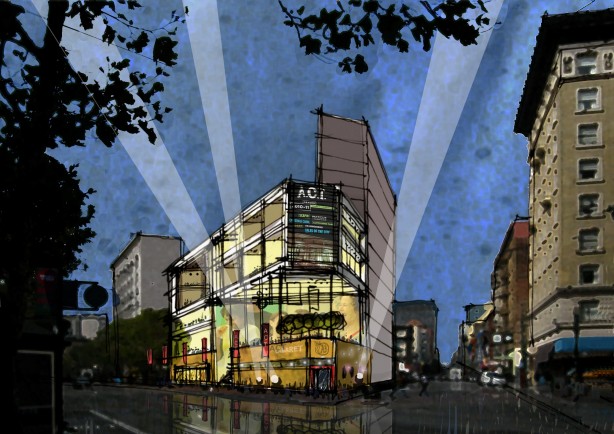
Is there a place for community theaters and nonprofit arts and education programs in pricey San Francisco? The 950 Center for Art and Education, a project that will be housed on the corner of Market and Turk streets in San Francisco, has gained a foothold against the odds.

Two years in the making, the center will provide permanently affordable performance facilities for the Lorraine Hansberry and Magic theaters, and create affordable space for art education organizations including Youth Speaks, the American Conservatory Theater and All Stars Project. Other groups, such as Lines Ballet, the Tenderloin Boys and Girls Club and others previously unsure whether they could continue to rent in the Tenderloin/SoMa area will get the chance to expand their performance and programming capabilities at the center.

Because the neighborhood is in such high demand in the wake of recent tax breaks and incentives designed to bring tech businesses to SF, it took the Tenderloin Economic Development Project, a part of the North of Market Neighborhood Improvement Corporation, at least two years to secure the property for the arts and education complex. Until very recently, the project’s fate was hanging in the balance, with many groups uncertain whether they would be able to remain in the city.

Three-quarters of the project space that TEDP had long set its sites on is located at 970 Market, and was initially owned by Lone Star, a Texas-based hedge fund. The remaining project space, at 950 Market, was under the ownership of the Thatcher family, known for philanthropy.

Initially, TEDP “had a deal with the hedge fund,” says TEDP director Elvin Padilla, but after property values rose, “they basically walked away from the negotiating table. The crisis moment was, who’s going to control the land – and will they collaborate with us?”

Padilla credits Gladys Thatcher, founder of the San Francisco Education Fund, as “the reason we decided to make the attempt [to acquire these spaces for the 950 Center] in the first place.” 

When TEDP first pitched the idea to her several years ago, “she gave us her blessing we decided to make a go of it,” he explained.

Thatcher is trustee and former board member of the San Francisco Foundation, which worked alongside TEDP and the Rainin Foundation to secure the lion’s share of the land needed for the 950 Center, by facilitating a purchase of the 970 Market Parcel from Lone Star.

On June 7, the property was transferred from Lone Star to Group I, a San Francisco-based real estate development firm that Thatcher is friendly with. Now that the sale has gone through, the space will be devoted to the arts and education programming that TEDP had long envisioned. The San Francisco Foundation plans to facilitate development of the center through the creation of a new sponsoring organization that will be housed at Community Initiatives, a nonprofit. 

While he is grateful for the community support, Padilla likened their quest to gain 970 Market to a climb up Mt. Everest.

A 2011 payroll tax exclusion zone introduced by Mayor Ed Lee vastly increased the property value in the mid-Market area. Although Lee had a soft spot for the 950 Arts and Education Center and even organized events to support bringing that use to mid-Market, his new policy left the project facing an uncertain future in a suddenly pricey strip along Market Street. “He doesn’t have any real authority over private sector transactions,” Padilla says, so all the Mayor could do was stipulate the city’s interest in using this land for “arts and education.”

The city doesn’t offer public funding for projects like 950 Center for Arts and Education. To “subsidize on the front end,” as Padilla puts it, the center will have to rely on the backing of individual investors, philanthropic groups and new market tax credits to reduce and eliminate the debt entirely, so the organizations that will be housed at the center don’t have to carry a mortgage.

In the end, it was only through the efforts of wealthy and connected individuals that plans for the center were nailed down rather than extinguished. “Mid-Market is going through a very rapid transformation,” says Dr. Sandra R. Hernández, Chief Executive Officer of the San Francisco Foundation. “We’re just lucky that Group I, the developer, shares this vision with us for an arts center.”

Looking back on the years of effort it took to piece the plan together, Padilla noted, “When we started this, it was before the tech boom. Now, the pressure on the real estate is many times what it was when we conceptualized the 950 project.” 

That uncertainty finally came to an end for Padilla’s organization when Group I closed the deal with Lone Star on June 7. “That really [did] start the project officially,” Hernández says. “We’re now working with a number of the organizations that have expressed interest in having permanent space or accessible space for their programming or rehearsals for their theater production.”

Anti-gentrification activists “GET OUT” with Pride

A group of activists used the Pride Parade to make a political statement by marching with a faux Google bus, an action meant to call attention to gentrification in San Francisco. They rented a white coach and covered it with signs printed up in a similar font to Google’s coroporate logo, proclaiming: “Gentrification & Eviction Technologies (GET) OUT: Integrated Displacement and Cultural Erasure.”

Some trailed the faux Google bus with an 8-foot banner depicting a blown-up version of an Ellis Act evictions map.

Others donned red droplets stamped with “evicted” to signify Google map markers, while a few toted suitcases to represent tenants who’d been sent packing.

However, their ranks were thin in comparison with the parade contingents surrounding them, which included crowds of workers representing eBay, DropBox, and, of course, Google.

A member of the small anti-gentrification contingent gazes in the direction of the Google contingent, where a crowd of tech workers is bursting with energy and carrying balloons.

A member of the anti-gentrification part of the march gazes in the direction of the Google contingent, where a huge crowd of tech workers was bursting with energy.


Google workers clad in identical tees wore colorful sunglasses, carried balloons and held a banner.

Activist Leslie Dreyer was one of six activists who put together the faux Google bus contingent. She used crowd-funding to raise roughly $2,000 for parade registry, bus rental, and custom-made decals.

“All of us have either been affected, or are in a position where we wouldn’t be able to afford to stay in the Bay Area if something were to happen to our housing situations,” Dreyer said. “There’s really no security to stay here.”

They selected the Google bus as a symbol because “we think the tech boom is directly responsible for creating a population of people who can actually afford these market-rate rents,” while also fueling real-estate speculation and giving rise to a deep-pocketed political lobby. “It’s not targeting tech workers individually,” Dreyer added.

Zeph Fishlyn, a sculptor and activist who earns a living as a tattoo artist, also helped launch the Pride Parade action. “My communities that I’m a part of – not just the queer community, but also artists and activists – are being forced out,” said Fishlyn, who suffered through two separate evictions in 2012. “I know 34 people who got evicted last year.”

Housing advocates are gearing up for a campaign targeting landlords that are infamous for gobbling up rental properties and serially evicting long-term San Francisco renters. Dubbed Eviction Free Summer, the campaign could get underway in coming weeks.

Activists handed out fliers encouraging people to join them by visiting heart-of-the-city.org.

Netroots Nation: How to make a comeback

At Netroots Nation the central focus on the how, and not so much the why. Everyone here knows why austerity is devastating, why women need ready access to birth control, and why blank-industrial complex is morally reprehensible. But not everyone necessarily knows how marriage equality made a comeback in 2012, or how one goes about convincing your Nebraska Republican farmer father to believe in climate change. At Netroots, your network is your net worth. 

A noteworthy panel of the day was “Moving the Needle: How We Won the Gay Marriage Fight,” spotlighting an issue where the left has made considerable progress. Remember the days when Feinstein was trying to stop Newsom from issuing gay marriage licenses? That was less than a decade ago; today, even Republican senators from Alaska endorse gay marriage.

In 2009, the pro-gay marriage team lost at the ballot by 33,000 votes, three years later the good guys won by 38,000. Ian Grady, communications director for Equality Maine, explained “that their main message of ‘equal rights for all’” lacked the emotional resonance to persuade swing voters and “left the LGBT community vulnerable to the civil unions argument.” In 2012 when Equality Maine pivoted to showcasing a marine talking about his two moms and a grandfather’s emotional speech about wanting to see his granddaughter get married, their research overwhelmingly showed that the impact of emotional persuasion. PR pro tip for liberals and progressives: evaluate and reevaluate ideas that look like no-brainers to you and know that style (communication) is just about as important as substance (ideas).

Closing out the first day was the pep rally! Liberal stalwarts Howard Dean and Barney Frank, activist Sandra Fluke, Speaker of the California House John Perez, Senator Jeff Merkeley, and a video appearance from Obama all reiterated the message, and provided a much-needed respite from the dysfunctional state of our government by reminding us of the progress our issues have made and inspired us to keep on keeping on.

Netroots Nation Stats:

# of Google Glass Sightings: 2

# of White people flubbing “Si Se Puede!”: 3

# of Ignored interview requests sent from me to Congresswoman Pelosi’s office: 4

# of Times I heard “The president is not perfect” or some variation there of: 6

# of Times some crazy guy called the American people slaves to Congressman Mike Honda’s staff: I lost count after 6.

# of points Chris Bosh and Mike Miller scored in game 7 of the NBA Finals: 0

# of New media/tech-oriented panels on day one: 12

Netrootin’: Dispatches from the progressive tech networking confab

4

George McIntire is reporting live from Netroots Nation ’13 in San Jose

Good morning all you liberals, progressives, socialists, leftists, environmentalists, civil libertarians, feminists, queer activists, radical freegan communists and everyone else! Today is the first day of the 8th annual running of the liberals more commonly know as the Netroots Nation Conference and your correspondent for the three-day liberalchella (I promise that’s the only time I’ll use that term) has just arrived in beautiful San Jose.


Everyone is buzzing about the issues du jour of gay marriage (SCOTUS ruling coming soon), immigration (the one issue Congress might actually work on), and civil liberties (all your phone calls are belong to NSA). Will there be a schism due to the Obama’s administration’s abhorrent record on civil liberties? Or perhaps a new era of progressivism will ignite? Maybe Pride will just kick in and everyone will throw on a wig and rainbow boa. Stay tuned to find out!

For the next 60 hours I will be reporting, blogging, and tweeting on the panels, talks, keynote speeches, attendees, and anything else I see fit to report (in addition to photographing the event). Unfortunately for me the paradox of choice will be in full effect and I do not have a way to clone myself. There are 14 events to choose from during the 3-4:15pm time slot and 16 events during the 4:30-5:45 slot, not to mention all the after parties. Here is the schedule.

So I call on you Guardian faithful to help me decide which events to cover. Should I check out “Moving the Needle: How We Won Gay Marriage in 2012” or “Smoke Signals: The Next Steps in Marijuana Reform” or “Beating Back Mansplaining & Sexism in Politics & Organizing”. Please let me know in the comments or you can tweet at me at @gorejusgeorge.

Father’s day

0

arts@sfbg.com

LIT In late-1980s San Francisco, Steve Abbott hosted a gay writer’s workshop at his small apartment at the fabled corner of Haight and Ashbury. One fleeting but reliable occurrence was an appearance by Alysia, the daughter he’d raised since his wife died in a car accident years earlier.

Each week, the teenager stormed about just long enough so we could feel her wrath before slamming the bedroom door. It was funny, but also understandable: at that age, who wants their personal space regularly invaded by strangers? Let alone gay male adults, reinforcing your separation from the heterosexual family norm?

Steve was a significant presence in SF’s literary scene for nearly two decades, publishing his own adventuresome small-press books in various idioms (poems, essays, fiction). He edited small magazines including the influential Poetry Flash; was first to promote such edgy “postmodernist” voices as Kathy Acker and Dennis Cooper; and was an idiosyncratic cultural commentator for local weeklies (including the Bay Guardian). He was unfailingly generous with other fledgling writers, myself included.

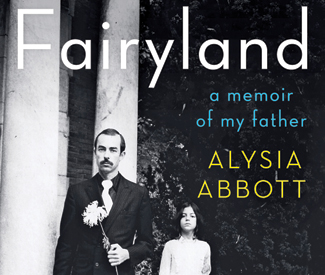
He barely kept the rent paid via rote day jobs, while raising a child alone — an awkward match to the carefree gay community he joined upon moving to SF (and coming out) in 1974. As Alysia Abbott writes in her acclaimed new release Fairyland: A Memoir of My Father (W.W. Norton and Company, 352pp., $25.95), there were no role models then for gay single parents. Their very close but turbulent relationship amplified the clash between her often-peevish parental needs and his belated self-discovery in a sexual-artistic bohemia. They found balance as she found her own identity upon leaving for college. But then the AIDS epidemic swept both up in its devastation.

Abbott, now living in Boston with a husband and two children, answered questions in advance of two local appearances this week.

San Francisco Bay Guardian You had an unconventional childhood with an unconventional parent. Has that influenced your own parenting?

Alysia Abbott My father was raised in a strict Catholic household where family members rarely showed affection. He kept his feelings bottled up. By the time he had me, he wanted a completely different family experience, transparent and open. He often shared his romantic and professional woes, sometimes seeking my advice.

I absorbed a lot of my dad’s worry, and sometimes found myself in situations where I had to be more adult than I was ready to be. I want to be my true self with my children. But I also want to protect their innocence to some degree.

SFBG You’re frank about having been an “obnoxious” unhappy teenager. Are there things you or your father could have done differently? Was it a phase you just had to work through?

AA We were trying to create a life with a lot of setbacks, sharing a cramped one-bedroom in the Haight with little money or family help. My father was lonely, and trying to get sober just when I discovered drugs and alternative culture. We did our best under the circumstances. But as often as we clashed, there was a lot of love. This was a period we needed to go through.

SFBG Your father identified so strongly as a writer, but Fairyland doesn’t address how you became one yourself.

AA I’d always wanted to be a writer, or an artist. But after watching him struggle financially, I pursued steady-paycheck work in cushy corporate structures (which I now hate). I also didn’t know if I had his native talent, or could be as intellectually rigorous and pure. I always had our story to tell, but worried I wasn’t worthy of it. The idea of writing Fairyland and having it not meet my own expectations was unbearable. Now I realize perfectionism is the enemy of creativity. To succeed, you have to be willing to fail.

SFBG When Steve was facing mortality, he wrote that you’d probably better appreciate his writing after he’d passed on. What do you think about his literary legacy now?

AA I’m embarrassed to admit I really didn’t read my father’s books until ten years after he died. During his lifetime, the work’s weirdness, its attraction to transgressive figures and ideas threatened me. I accused him of not being a “real writer” because no one had heard of him and he didn’t make any “real money.” What a terrible thing for a daughter to say!

Researching for Fairyland, I came to respect his contributions and integrity. All the writers I know today have to be such master self-promoters. My father was almost embarrassingly naïve in this regard. That may be why few people know his work today. But he was so devoted to writing, and supporting writers that impressed him, even if that effort did nothing for his own career.

I now really love several of his poems and books, especially Lives of the Poets — but some still make me uncomfortable. I’m not sure if it’s because they aren’t good, or still too “out there” for me.

SFBG After so many years, how do you feel about returning to SF? Many of your father’s creative generation are dead. It’s a much yuppie-er burg.

AA San Francisco is very different from the city I knew in 1974, or even 1994. I’ve worried that those who remember the old San Francisco, or appreciate its history, are dwindling — they’ve died or been forced out by Ellis laws. But new residents are attracted by the city’s beauty just as we were. And though much better-heeled, these tech workers and professional types are also trying to reinvent culture, if with much greater odds of profit — and interest in profit.

ALYSIA ABBOTT

Wed/19, 7pm, free

City Lights Books

261 Columbus, SF

www.citylights.com


Thu/20, 6:30pm, free

San Francisco Public Library

100 Larkin, SF

www.sfpl.org

You can’t see me

0

caitlin@sfbg.com

SURVEILLANCE It’s all a mess: the government is suddenly (to those of us waking from our Twinkie nap) spying on us. Mulder and Scully were right, trust is for the foolish and undisturbed sleep is for the ignorant.

All the more reason to go out. Authoritarian regime is no excuse for poor style, says New York high tech fashion designer Adam Harvey. And armed with his projects, drone-defeating tactics can look damn good.

Even before Edward Snowden’s heroic leak of documents laid bare the NSA’s wide-ranging surveillance of American citizens, Harvey was busying himself merging privacy rights with fashion. Witness his LED-aided clutches that deflected the flash of cameras — the ultimate accessory for A-list independents (“Camoflash”, 2009).

But perhaps you are more of the sporty type? Harvey’s newest collection, “Stealth Wear” includes a half-hoodie that deflects thermal imaging surveillance. Heat-seeking systems won’t be able to see you, but that babe in the club sure will. His designs have an anti-colonial gaze: two “Stealth Wear” garments take the form of burqa and hijab. He’s also developed “CV Dazzle”, a series of makeup looks that foil facial recognition software and “OFF Pocket”, a sleek envelope that blocks one’s cell phone from sending or receiving signals.

We caught up with him through an insecure email account.

SFBG “CV Dazzle”‘s look seems very of-the-moment when it comes to the avant-garde fashion you see in clubs. What’s the inspiration? 

Adam Harvey The first look, with the black-and-white makeup, developed from my fascination with the Boombox scene in London. I studied party photographs as well as tribal face painting, especially from Pacific Islands. What I found was that only one of these styles worked, club fashion. Tribal body decoration does more to enhance key facial features which make a face easier to detect. The bold, ambiguous looks of the club scene were more algorithmically resistant. From there, I worked with Pia Vivas, a hair stylist to create the first look. And then collaborated with DIS Magazine to create the second and third looks.

SFBG How have the recent NSA revelations informed your work? 

AH The news struck while my collaborator and I were planning production for the “OFF Pocket.” It’s the first time I’m taking an art project and turning it into a marketable product. A lot of my work in privacy arts is speculative and provocative, but I think some concepts can be even more provocative when they’re accessible to more people. What happens when countersurveillance goes mainstream? That’s a discussion we need to have because if the government doesn’t respect privacy, then I think we should have the right to countersurveillance.

SFBG Where is “OFF Pocket” at in the production process? Have you sent one to Edward Snowden? 

AH It’s very close. I’ve gone through a lot of prototyping and testing to ensure that the product works well. Once a phone is inside and the case is properly closed, you really can’t access any part of it. If I knew where Edward Snowden was, I would send him a thankful dozen.


The end of an era, but not of a legacy

47

Tim Redmond has a big heart. He cares deeply about this city and he cared deeply about this newspaper. But last Thursday was Tim’s last day at the Bay Guardian, the place where he worked for the bulk of the past three decades. In typical fashion, he stuck to his principles to the end.

The Guardian is not as economically healthy as it once was, and 2013 has not been kind to the paper. Revenues are down and many issues lose money, a trend that threatens our mission if left unchecked. During the past month, Guardian management had been contemplating some painful but necessary changes that included layoffs. Tim participated in these discussions, but in the end he chose to resign rather than downsize a staff he loved like family.

I understand Tim’s decision, but believe it was shortsighted. During the past year and a half, the Guardian’s two sister papers — the San Francisco Examiner and SF Weekly — have undergone similar restructuring, which included layoffs. The goal was not to extract obscene profits — a mission I wouldn’t support even if it were still possible in 2013 — but rather to ensure both papers’ survival and recovery. It was an unpleasant process, and one that Tim could not abide.

But today, the Examiner and Weekly are both significantly healthier than they used to be. The Examiner is no longer the mouthpiece of right-wing buffoons, and in recent months has expanded its Peninsula coverage and enlarged its editorial staff. And the Weekly boasts significantly more new coverage, listings and advertising than it did just six months ago.

I want the Guardian’s future as a progressive voice to be similarly assured. So now, 32 years after selling my first freelance news article to the paper — a brief about BART’s effort to evict the Ashby Flea Market — I find myself replacing Tim as publisher. Longtime Managing Editor Marke Bieschke, aka Marke B., is filling his shoes as interim editor.

I know some Guardian readers assume that this means the end of progressive journalism in the paper. Please let me assure you that will not occur. I have spent the bulk of my career editing investigative newsweeklies and have no intention of going down in history as the guy who dumbed-down the Guardian.

The very night before Tim told me he was leaving, he presided over a packed forum on the topic of economic dislocation in San Francisco. At the height of a tech boom that has inflated rents and led to a wave of migration and evictions, it’s hard to imagine few other topics of greater importance. Tim and the Guardian have reported extensively on this issue in the year since the paper was acquired by the San Francisco Print Media Company. Of course, the Guardian was already writing about evictions long before Tim’s predecessor assigned me to write that 1981 article about the flea market.

Under Tim’s successor, that emphasis will not change.


Tale of two cities

25

Interesting piece in the LA Times a few days ago, Our new mayor, Eric Garcetti, wants to bring raves back to Los Angeles. After the death of a 15 year old that snuck into the Electric Daisy Carnival event at the Coliseum, the raves have gone to Vegas, where they’re pulling in 100K in attendance. The mayor sees dollar signs in those numbers, not to mention OT for city employees that have been hurting the last five years from budget cuts. A sensible idea.

It got me to thinking, as these things do, about a more general policy of bringing lucrative businesses and events to LA. After all, downtown business rents are cheaper than New York or Tokyo and there is far more space here as well. The city’s soon to be highest high rise will be a Korean owned hotel, so LA has already demonstrated a cooperation with Asian interests that cannot be matched. Not by New York or any other American city, even those on the West Coast. Like Seattle, Portland or erm, San Francisco.

If Garcetti and the city council decided to offer up better deals for high-tech than exist 390 miles to the Northwest, there is precious little Mayor Lee could do to match. LA has a lot more money and of greater importance, much more space. 49 square miles cannot compete with 480 square miles. And with the Internet making high tech jobs doable anywhere, why wouldn’t tech start ups decide to opt for LA?

Let’s face it, San Francisco has priced itself right off the grid. For all of Mayor Lee’s tax incentives, the city is incredibly expensive to rent or buy in. It is still possible to find a decent 1 BR in Silver Lake or Eagle Rock or Highland Park for under 1200 a month–where is that in SF, Bayview (if at all)? And no 82K parking spaces or multi million dollar Manhattan sized condos either–for 3 million bucks, you can buy a reasonable property in the West Side’s swankest hoods–what does that get you in Pacific Heights?

LA is a very expensive city to live in by dint of car ownership as necessity and driving distances. It’s also nowhere near as pretty as San Francisco is. But as SF approaches Tokyo-like exclusivity, it would take very little to pry high tech firms south–where it’s always warm, the beaches and ski resorts both near and best of all–the entertainment business and its attendant pleasures and power are nearby. 

Let’s face it, SF has screwed up–their biggest business for eons is tourism and that would never change were the city not so insistant on wrecking same with crack downs on clubs and “1984”-like scare tactics. Los Angeles–with its money and power can offer incentives that Mr. Lee and his cromies could only dream of–and with a forward thinker like Garcetti at the wheel, this may be inevitable.


Everyone but Mayor Lee sees SF’s worsening “housing affordability crisis”

43

There was a clear theme that ran through yesterday’s Board of Supervisors meeting from beginning to end, something understood equally by renters, homeowners, and politicians from across the political spectrum: San Francisco has a crisis of housing affordability that is forcing people from the city.

And the only person who doesn’t seem to understand or care about that is the person with the most power to deal with the situation, Mayor Ed Lee, who opened the meeting by essentially dismissing both short- and long-term gentrification forces and claiming “our city has some of the toughest anti-displacement laws in the country.”

It was a claim that Lee made twice, first in response to a question by Sup. Eric Mar about Plan Bay Area and the massive displacement of current San Franciscans that it would create by 2040. And it was also how he answered a question by Sup. John Avalos about rents that are now skyrocketing beyond what most San Franciscans can afford.

I followed Mayor Lee back to his office, asking him to explain his claim, and he cited the city’s “elaborate” rent control laws and the Rent Board recently hiring new personnel as he briskly retreated toward his office. But surely he’s aware that displacement is already happening and getting worse, I told him, citing Rent Board figures showing that evictions are now at a 12-year high.

Lee looked at me dubiously and said, “I’ll have to check the figures on that.” I followed up today with Press Secretary Christine Falvey to ask whether Lee did check those figures — which show 1,757 evictions in the last year, up from 1,395 the previous, both numbers representing returns to the mass displacement of the last dot-com boom — and I’ll update this post if/when I hear back.

“It shows he’s out of touch with what’s happening in San Francisco,” Avalos told me in response to the mayor’s remarks.

Lee seemed to bristle at the suggestion that his aggressive economic development policies might have a downside that he’s going to have to deal with at some point. He touts the 44,000 jobs the city has added during his mayoral tenure, even deflecting criticism that he’s too focused on the technology industry by citing estimates that every tech job creates at least four other jobs (seemingly oblivious to the fact that most of these are low-wage service sector jobs, the very people who are being forced from the city).

“I’m just hoping you’re not blaming the 44,000 jobs we helped created,” Lee told Avalos, saying that he understands the concern about the rising cost of living, “but those are 44,000 people drawing a paycheck and taking care of their families.”

Yes, Mr. Mayor, but those paychecks are having an increasingly tough time paying for housing in San Francisco. That concern animated the condo conversion debate that took place later in the meeting, voiced by those focused on the lack of affordable homeownership opportunities and those focused on reducing the city’s rental stock to create those opportunities.

“I don’t think saying ‘it’s good that we have a growing economy’ is enough to address the issue,” Sup. David Campos said during the condo debate, referring to Lee’s earlier remarks.

Speaking near the end that discussion, Campos summarized the concerns expressed by both sides and sought to put the legislation into perspective: while important, the condo deal is a drop in the anti-displacement bucket. “We are only dealing with the issue of affordability in San Francisco on the margins,” he said, later adding, “I don’t think we’re doing enough to deal with the fundamental issue of who gets to live in San Francisco.”

The debate on the condo conversion began with its original author — Sup. Mark Farrell, who represents District 2, the wealthiest and most conservative in the city — explaining his desire to help middle class people who want to own homes remain in the San Francisco.

“This is the most affordable form of home ownership in San Francisco today,” Farrell said of tenancies-in-common, the fiscally and legally precarious middle step between an apartment and condominium. Later, he said, “We need more affordable homeownership opportunities and not less.”

Farrell argued that “this didn’t need to be a zero sum game,” but that’s exactly what the stock of rent-controlled apartments is in San Francisco, where only housing built before 1979 is protected from the market forces that can drive rents up to whatever a landlord demands.

“We have a fixed rent control stock. Every apartment that converts to a a condo is one less unit,” said Board President David Chiu, who worked with Sups. Jane Kim and Norman Yee and tenant group to amend Farrell’s legislation to help both renters and homeowners.  

“These units were once the homes of tenants who were displaced,” Kim said, objecting to the notion that one person’s apartment should be another person’s affordable homeownership opportunity and arguing that the city should be building more condos for first-time homebuyers instead of cannabalizing the homes of the nearly two-thirds of city residents who rent.

Like Chiu and Kim, Yee said that he wanted to help the TIC owners of today without simply clearing out of the backlog and letting the condo lottery continue unabated, which would green-light even more conversion of apartments. “We want to curb the speculation,” Yee said.

That idea that the city should help people who live in the city, without simply feeding the speculative investors who profiteer off of housing in San Francisco, was a strong theme among critics of condo conversion.

A pro-tenant crowd packed the Board Chambers. Although barred by board rules from addressing the condo legislation directly (that occurred at the committee level), one commenter said, “Giving any more power to the real estate market in San Francisco should be considered a crime.”

To help ward off real estate speculators once the annual condo conversion lottery resumes in 2024, the legisation also limited future conversions to buildings of less than four units, instead of the current cap of six units, a change that Farrell resisted.

“This is not an academic exercise anymore,” Farrell said of the condo conversion restrictions that were added to the legislation. “This will negatively impact thousands of TIC owners in the city.”

Farrell’s original co-sponsor, Sup. Scott Wiener, had a more pro-tenant point-of-view, objecting to the changes that Chiu inserted on more narrow grounds. In his comments, he noted how close the two sides were and how they share the same basic goal: preventing displacement of current city residents.  

“The one thing we can all agree with is we have a housing affordability crisis,” Wiener said, praising the city’s rent control and tenant protection laws, but adding, “TIC owners are also part of this city.”

The price of dealing with the rapid growth in the city — whether it comes to infrastructure or housing affordability — was also a point that Wiener made earlier in the meeting as the board approved the term sheet for a massive office and residential development project proposed at Pier 70.

“We are not doing what we need to do to support the public transportation needed for those projects,” Wiener said, also referring to other projects along the waterfront (the Warrior Arena at Pier 30 and the Giants/Anchor Steam project at Pier 46) and in the southeastern part of the city. “We don’t have the transit infrastructure to support our current population, let alone new growth.”

It’s about striking a balance, as Chiu said he did with the condo legislation, and not just a balance between renters and TIC owners. It’s about striking a balance between how to protect the San Francisco of today while planning for the San Francisco of tomorrow.

Yes, that means working with market rate housing developers, and it also means diverting some of their would-be profits into the city’s affordable housing fund and its infrastructure needs. Yes, it means private-sector job creation, but it also means more public sector jobs and providing a safety net for people without jobs or who work as artists or social workers or other professions that are being driven from the city. And it means beefing up our public housing and turning around the exodus of African-Americans, concerns raised at the meeting by Sup. Malia Cohen.

We at the Guardian last year looked at how Oakland has become cooler than San Francisco, largely because of the displacement from here. And now, even many people within the tech community have begun to decry the gentrifiction that is being driven by Mayor Lee’s narrow economic development vision.

“Plan Bay Area is an opportunity to think regionally and strategically about planned growth,” Lee said when addressing Mar’s question, sidestepping the direct answer that Mar sought on a set of specific proposals for mitigating some of the displacement planned for San Francisco and maintaining this city’s diversity.

Yes, we do have an opportunity to think strategically about the city we’re becoming and who gets to live in it, but only if we don’t think “jobs” is the answer to every question.

The Mission ‘douchebags’

88

Okay, you have to read this. When a 1990s tech-startup guy who admits he was part of the last generation of gentrification is now so fed up with the new arrival of high-paid techies that he’s ready to leave, it’s pretty serious.

Chris Tacy makes an excellent point: When you move into the Mission, you need to understand that there are already other people living there, some of whom have been there a long time, and that it isn’t just you’re rich-kids playground:

Be considerate. That little old hispanic lady at the bus stop? Help her onto the bus instead of loudly bitching about how she’s going to make you late to your meeting at The Creamery. Be respectful. This neighborhood was here before you and will be here after you leave. It’s not your trashcan, your toilet or your playground. Understand the history and the culture and the people and act in a manner that isn’t stupidly offensive. Be sensitive. The traditional residents of this neighborhood are not rich and never will be. Flaunting your wealth and your opportunities is a douche move.

A guy I knew in college came from a very wealthy family, and his parents set up a trust fund for him. But he wasn’t going to get a penny until he was 30, and most of it would come to him later in life. His dad’s rationale: People who have a lot of money in theirs 20s become assholes. They don’t have enough life experience to handle the sudden riches. Get a job, live like a normal person, find out what life is like.

That’s how riches used to happen — the great industrial fortunes of the previous American generations tended to come to people who had worked for a while first; there weren’t a lot of 20-something millionaires. I think that’s a big change in the current economy. Some people are just too young to be rich.

I know, I’m an old fart who is not rich and never will be. Sometimes I feel like a curmudgeon. But if you’re lucky enough to be rich in your 20s, show some respect.

In his footsteps

0

arts@sfbg.com

DANCE If you are even tangentially connected to San Francisco’s dance community, one name will pop up again and again: Ed Mock. He was part of San Francisco’s awakening as a center for arts on the edge before his death from an AIDS-related illness in 1986.

African American and gay, the performer-choreographer was, above all, a free spirit throughout the two decades he lived in SF. During that time, he influenced and shaped a generation of young artists. For dancers like Wayne Hazzard, Victoria Mata, Shakiri, Joanna Haigood, and Pearl Ubungen, he was crucial to who they became. Mock also collaborated with the young Rhodessa Jones; Ntozake Shange’s For Colored Girls Who Have Considered Suicide When the Rainbow Is Enuf premiered in his studio.

One of the dancers whom Mock profoundly marked is Amara Tabor-Smith. To honor him, she created the multi-venue He Moved Swiftly But Gently Down the Not Too Crowded Street: Ed Mock and Other True Tales in a City That Once Was. The piece will wander through the city Sat/15 and June 21-23.

The SF-born Tabor-Smith encountered Mock when, at 14, she tagged along with a friend who had been told that classes with Mock were a must. She joined his Ed Mock Dance Company at 17 and stopped dancing for a year when he died. Eventually, she joined New York’s Urban Bush Women for a decade before returning to her much-changed hometown in 2006.

Talking with her after a rehearsal in early June, it quickly becomes clear that she not only mourns the passing of a pioneering artist but also a period when San Francisco was place for experimentation, openness, and a sense of the possible. The Beats and the hippies may have put their own stamp on the city, but in the 1970s the gay pride movement filled the air with champagne-like effervescence and expectations — until the AIDS epidemic cut it down. Lately, the tech boom has had a negative effect on SF’s artist population.

“Ed was the most fearless person I ever knew,” Tabor-Smith says, “He was the embodiment of freedom, courage, and mischief. I loved the way he embraced the risk of failure and the way he could create on the spot because the spirit moved him. He knew who he was and where he came from. He was an old soul, and he walked with the ancestors.”

Mock left his primary legacy through his classes, teaching wherever he could find studio space. Tabor-Smith remembers them as always packed with all sizes, colors, body shapes, and orientations — unusual for a time when teaching was much more compartmentalized than it is today.

He choreographed for his company, but as a dancer he improvised — a pioneering act in itself. Unfortunately, little documentation has survived. A YouTube search does turn up a video of Possum Slim, an astounding solo from 1979 performed by a naked and body-painted Mock.

Tabor-Smith (in collaboration with Ellen Sebastian Young) conceived of He Moved — part of Dancers’ Group ONSITE Series — as 11 site-specific performances that journey through Mock’s life. Among others, she is working with Jose Navarette on a section about memory; Jesse Hewitt and Laura Arrington will perform “acts of disruption” for Valencia Street’s 24/7 connected crowd.

Hayes Valley’s Salle Pianos and Events — where Tabor-Smith is rehearsing He Moved‘s “A Room of Black Men” section — happens to be next door to one of the studios in Mock’s peripatetic teaching career. She sees its funky elegance, with crystal chandeliers hanging over metal folding chairs, as “an Ed kind of place.” In stark contrast to the traffic roaring by on Market Street, the nine dancers bring a statuesque dignity and stillness to what is a tribute to black manhood. But they also explode into individual solos and help each other find community. At one point the dance becomes what looks like a ceremonial blessing around a seated elder, whose eloquence emanates simply from his presence.

Tabor-Smith also likes the Salle space because it’s located across the alley from Zuni Café, where her piece’s “Window Seat” section will be shown. Appropriately, “Ed was a fixture there. The people who ran it were wonderful. He never paid for a meal. Or a bottle of wine.” *

HE MOVED SWIFTLY BUT GENTLY DOWN THE NOT TOO CROWDED STREET: ED MOCK AND OTHER TRUE TALES IN A CITY THAT ONCE WAS…

Sat/15 and June 21-23, 3:30-8:30pm, free

Various locations (starts at 32 Page), SF

www.dancersgroup.org


Supervisors pose tough but important questions to Mayor Lee

6

There’s a full agenda at the San Francisco Board of Supervisors meeting today, from the condo conversion lottery bypass legislation to approval of the term sheet from the massive development project at Pier 70, but some of the most interesting and potentially newsworthy items are at the very beginning of the agenda, when Mayor Ed Lee will answer questions posed by the supervisors.

Unfortunately, if past is prologue, Lee won’t give direct, substantive answers to the vitally important questions that he’s being asked, just as he dodged a question on the condo conversion debate in February and has kept everyone in the dark of which of the rival measures he supports and which he may veto. Mayoral leadership was desperately needed on that protracted debate, just as it’s needed today on some of the questions he’s being asked.

The first question, posed by Sup. Eric Mar, concerns Plan Bay Area and how it plans to pack 280,000 more people into San Francisco by 2040, which was the subject of a May 28 Bay Guardian cover story and panel dicussion that we’re sponsoring at the LGBT Center tomorrow night.

Mar lays out the massive displacement of existing residents and the traffic gridlock that the plan will create in San Francisco and how the approval process from much of this streamlined development may be given waivers from California Environmental Quality Act review.

Mar notes more than 40 regional groups have come together to try to improve the plan and mitigate its damage, and he plans to ask Lee:

“A consensus has formed around the following recommendations for making Plan Bay Area better:

– Provide $3 billion in additional operating revenue for local transit service and commit to a long-range ‘Regional Transit Operating Program’ to boost transit operating subsidies by another $9 billion over the coming years.

– Move 5 percent of the housing growth from low-income communities (mainly San Francisco, Oakland, and San Jose) to transit-connected suburban job centers.

– Incorporate strong anti-displacement policies for community stabilization measures, such as land banking and preservation of affordable housing in at-risk neighborhoods.

– Director the Planning Department to analyze the impacts of potential CEQA streamling as soon as possible and create strong mitigation measures.

Do you support these measure, and are you committed to a plan with lower displacement level than the current proposal? If you do not support these ideas, why not?”

Excellent  question, and definitely an appropriate one for our chief executive officer, who would have more clout to push for these changes than any of the supervisors.

The second question comes from Board President David Chiu, who makes news by noting that Mayor Lee has continued his predecessor’s underhanded practice of refusing to fill city positions to provide services that the supervisors have decided to fund in the budget, undermining the city’s balance of power and Lee’s rhetoric on collaboration.

“In recent months, Controller data indicates that positions allocated by the Board for librarians, recreation and park staff, building inspection, health and labor enforcement, urban agriculture and other Board priorities were either not filled or only recently hired. Will you commit to ensuring that when the FY 13-14 budget is approved, our Board of Supervisors’ priorities are treated equally to your Administration’s, with positions filled as soon as possible?”

Again, great question about an important current issue, the kind of thing that voters created this question time for, to ensure that there was communication and collaboration between these two branches of government.

The last two questions concern San Francisco’s housing crisis. Sup. David Campos cites the scatching report that he commissioned from the Budget and Legislative Analyst on the dysfunctional and mordibund Housing Authority, which Lee controls, asking “what is your long term vision to save public housing — a significant public asset to San Francisco?”

Sup. John Avalos cites data on the skyrocketing rents in San Francisco and asks, “Are you concerned that your administration’s policies to stimulate economic activity, especially supporting the tech industry, have created one-sided development and only job for high-income ‘appsters,’ and have exacerbated the already extremely limited housing market? Do you have any plans to address the increasing rents, and increasing rate of evictions and displacement of long-time San Francisco renters?”

These are tough questions, but they are central to what kind of city San Francisco is becoming. They were all submitted last week, so the mayor has had time to think about them and he should provide answers and show leadership on these difficult issues. That is his job.

Will he? Check back later and I’ll let you know. The meeting starts at 2pm.