taxes

The failure of Lee’s business tax plan

16

The Mayor’s Office and city finance officials are circulating drafts of a new business tax plan that would largely abolish the payroll tax and replace it with a levy on gross receipts.

Ben Rosenfield, the city controller, and Ted Egan, the chief economist, have been meeting with business groups and presenting what’s described in the documents they’re circulating as “one possible idea.” And there’s some very positive news about the proposal: It would greatly broaden the tax base (only about 10 percent of the city’s businesses are hit by the payroll tax) and it’s designed to be somewhat progressive: Businesses with higher gross receipts would pay a higher percentage tax.

The plan is complicated — since some types of industries (retailers, for example) have high gross receipts compared to payroll, and some (financial services) have high payrolls compared to gross receipts, the levies are broken down into four schedules. At the lowest end, companies with comparatively large gross reciepts would pay between 0.05 percent and 0.125 percent. At the highest end, the tax would go from 0.220 to 0.535.
But there’s one central — and simple — element of the proposal: At this point, it’s entirely revenue neutral. In fact, finance officials say, over time the total tax burden paid by local businesses would go down, since payroll tends to rise slightly faster than gross receipts.

That, sources say, is something the mayor has made clear he doesn’t want to budge on. He’s not willing to accept a plan that raises the total amount of money the city gets from business taxes.

Which puts him in synch with what some business groups want: “The business community thinks this should be revenue-neutral,” Scott Hauge, who runs Small Business California, told me.

But in a city that faces a large structural budget deficit, some supervisors have other ideas. “I want to look at new revenue possibilities,” Sup. John Avalos said.

And even the current proposals would let banks, which are exempt from local business taxes, escape without paying anything.
In reality, the proposals are less then revenue-neutral. Rosenfield and Egan project that the new tax system would lead to the creation of 2,500 jobs a year — mostly because businesses over time would be paying lower taxes.

Hague told me that he’s not sure exactly how business leaders feel about this. “We don’t know yet how it will affect people,” he noted. But some political leaders have been clamoring for years for the elimination of the payroll tax, which, by taxing employment, appears to be a damper on job growth.

That’s actually a myth. The payroll tax is so minor that it can’t possibly influence any individual hiring decision. It’s true that if city business taxes in general are reduced, companies will have more money — and some might spend that on new hiring. But San Francisco, like most major cities, has to have some kind of business tax — and I can already hear some downtown types complaining that a gross receipts tax “punishes growth and success.”

This proposal is a long way from what Sup. David Chiu suggested a year ago. His plan would have included a commercial rent tax — ensuring that financial institutions that get away with paying nothing would have to contribute like other businesses. Like most local taxes, it wasn’t perfect — state law bars cities from imposing corporate income taxes and limits what else municipalities can do — but together with a reworked gross receipts tax, it was projected to bring $28 million more dollars into the city treasury — without any job loss.

But the Chamber of Commerce and crew fought bitterly against that idea, and Chiu withdrew it.

At this point, Chiu said, he’s working with the mayor and trying to get the business community to accept the idea of a change in the tax structure. But this is a rare opportunity to do two things — to make the local tax system more fair, and to raise taxes on the biggest companies to bring additional revenue into the city.

The plan will probably have to go to the ballot anyway, so why not do it right?

SF Chamber poll distorts the facts…again

61

The San Francisco Chamber of Commerce this week released its annual City Beat poll – promoting its results at the top of its website and feeding it to media outlets such as the San Francisco Examiner, which faithfully reported its finding, apparently without seeking underlying data – and once again the poll was marred by distortions and hidden agendas.

For example, the Chamber claims that 58 percent of the poll’s 500 respondents prefer runoff elections (up from 52 percent in 2011) and 31 percent prefer ranked-choice voting (down from 42 percent last year), with the balance refusing to answer or saying they don’t know. But what the Chamber doesn’t say is that voters were read a series of arguments for each system first, and the anti-RCV statement contained a flat-out inaccuracy.

“Critics of ranked choice voting say that it is a confusing system that results in lower voter turnout – as the last Mayoral election had the lowest overall voter turnout in more than 35 years. They say candidates are getting elected with extremely low number of votes which doesn’t represent the true will of the voters. Instead of ranked choice voting, they propose having run-off elections so that voters have a clear choice on something as important as Mayor,” the statement read.

Yet it’s simply not true that November’s 42.47 percent turnout was the lowest in 35 years (as you can see here). Off-year elections have far lower turnouts, as did the last mayoral election in 2007, which had a turnout of 35.6 percent. Even the hotly contested, pre-RCV November mayoral election of 2003 had a turnout of 45.67 percent, just a few percentage points higher that the low turnout that the question implies that RCV causes.

But Jim Lazarus, the Chamber’s vice president of public policy, won’t concede the error, telling the Guardian that respondents understand the statement to apply to only closely contested mayoral elections. “We believe the average voter realizes a competitive race is what we’re talking about,” Lazarus said, dismissing the 2007 mayor’s race as uncompetitive.

Yet Rob Richie, executive director of FairVote, which supports RCV, said the poll was deceptive and seems designed to achieve results that are consistent with public policy stands that the Chamber has taken. “I think they do a better job of making their arguments than the RCV arguments,” he said.

“Supporters of ranked choice voting say it gives voters more choices and does not force voters to vote twice in just five weeks on the same contest. They say it has resulted in more diverse representatives for the city. They also say that it encourages campaigns to find common ground and ways to work together because they must win supporters of other candidates,” reads the polling statement.

Richie concedes that supporters of RCV have made these statements, but he said they aren’t the strongest arguments or the ones they generally tend to lead with, such as how big spending by well-funded independent expenditure groups tend to dominate the low-turnout runoff elections, which more conservative candidates win every time in San Francisco.

But Lazarus claims the Chamber was trying to honestly gauge public opinion, not influence it in favor of Chamber positions. “We didn’t skew it, we’re trying to get honest answers,” he told us. “It doesn’t do us any good to fake the outcomes. We aren’t doing this for PR reasons or press releases.”

Yet many of the issues the poll dealt with are active campaigns in which the Chamber is trying to influence the decisions made at City Hall, such as its longstanding crusade to repeal the city’s payroll tax. In the poll results, 57 percent of respondents said the supported a “payroll tax decrease from 1.5 percent to 1 percent, making up the difference with other revenues.” In the Examiner story, the paper even deleted that last crucial clause.

Yet what neither the Chamber nor the Examiner told readers was that the question was set up with this statement: “It has also been suggested that reforming the city’s payroll tax system could spur job growth. I would like to read you some potential tax reforms that have been suggested to help spur job growth.”

But even with that repetition of “spur job growth” as a prompt, only 25 percent of respondents agree with the crusade of the Chamber and its allies in City Hall to “Eliminate the payroll tax all together, replacing lost revenue with higher license fees and taxes on businesses.”

On the half-dozen tax measures the poll asked about, none of which received majority support, the questions were set up with this statement, “Some members of the Board of Supervisors have suggested a vote on new taxes may be necessary to help solve this budget deficit,” referring to the oft-demonized legislative body that enjoyed 45 percent in this poll, rather than Mayor Ed Lee, who has made similar suggestions and enjoys 68 percent support.

The poll was conducted by David Binder Research, and Binder was out-of-town and unavailable to answer questions. Lazarus said the language in the questions was jointly developed by Binder and the Chamber.

Teachers, students demand funding for education

9

People across the Bay Area joined in the National Day of Action to Defend Public Education March 1, with rallies at Berkeley City Hall, UC Berkeley, Oakland City Hall, SF State, and at the State Building on Golden Gate Ave.  Demonstrators at UC Santa Cruz shut down the campus for the day demanding well-funded and quality public education.

At the State building, about 100 engaged in civil disobedience, entering the building’s large lobby for a teach-in on the importance of public education. Speakers included teachers and students from several local schools, including City College of San Francisco, San Francisco State University, and Mission High School.

Around 4 p.m, most left the building to go two blocks down the street to Civic Center Plaza, where about 400 converged to share stories of hardship in affording education and voice demands.

Students from local elementary schools express their concerns at the Civic Center rally to defend public education. Video by Carol Harvey

The day of action was supported and shaped in part by Occupy groups throughout the country, including, here in the city, Occupy SF, Occupy SF State and Occupy CCSF. But unlike most occupy-affiliated demonstrations, speakers March. 1 urged the crowd to support specific policies; initiatives that may go to the ballot in November.

Specifically, the group expressed support for the Millionaire’s Tax measure. If the measure passes, California residents earning $1 million per year would pay an additional three percent in income taxes; those making $2 million or make per year would add five percent. 60 percent of funds raised would go towards education.

There are several competing ballot initiatives to fund education, including one proposed by Governor Jerry Brown. According to a recent Field Poll, the Millionaire’s Tax polls the highest, with 63 percent support.

Some protesters also expressed support for the Tax Oil to Fund Education Initiative.

Support for both measures was one of the demands on a demand letter distributed throughout the events. Activists began the protest with lobbying at the offices of state legislators, and convinced four aides to fax the demand letter to their representatives, including Leland Yee, Mark Leno, Fiona Ma, and Tom Ammiano.

However, some protesters at the State Building teach-in emphasized that legislation would not solve the whole problem.

“This issue is bigger than just taxes. The same power structure that is causing the destruction of our educational system is also destroying the face of the planet that we live on. It’s destroying our personal relationships with one another and all of our brothers and sisters around the world,” said Ivy Anderson, a 2011 SF State graduate and organizer with the environmental group Deep Green Resistance.

The event was peaceful and lasted only a few hours. When the state building closed at 6 p.m., 14 remained inside, continuing to “occupy.” Police issued a dispersal order shortly after six o’ clock, and by 6:40, 13 had been cited on-site and released, according to SF occupier Joshua.

At that point, several raced to board buses down the block, joining about 100 others who began a march to Sacramento. Known as the “99 Mile March for Education,” protesters plan to walk about 20 miles a day until arriving in Sacramento March 5 to take their demands for accessible education to the governor.

According to Joshua, the conflict-free day was a success.

“We had a great rally, and I thought it was an excellent lead-up to Sacramento,” said Joshua.

“But the capitol is obviously going to be a bigger fish.”

The 8 Washington disaster goes to Planning

100

The urban planning disaster that is 8 Washington goes before the San Francisco City Planning Commission March 8 amid a long list of questions — including Mayor Lee’s position on the project and how it could screw up the America’s Cup.

Developer Simon Snellgrove wants to build the most expensive condos in San Francisco history on the waterfront, 145 units that will be far out of reach to anyone who makes less than half a million dollars a year. And many of the units will require income far higher than that. It’s not just housing for the 1 percent; it’s housing for the top half of the 1 percent.

There’s no need for this kind of housing in SF; the very rich have no problem finding places to live. And the spot zoning violates every standard of good waterfront planning practice.

The project will benefit the Port of San Francisco, which stands to take a cut of the money since some of the project is on Port land. But more than half of the land is owned by Golden Gateway and is a former redevelopment area, so the supervisors and the Port are going to have to fight over who gets the property tax increments and how that’s all financed.

More interesting, 8 Washington will be a boon to Golden Gateway, which as the landowner is a partner in the deal. And Golden Gateway is one of those big properties that are paying far too little in city taxes. When the complex changed hands several years ago, the owners used a stock-swap deal to transfer it, avoiding the Prop. 13 reassessment that could have substantially raised its taxes. So the city’s losing millions of dollars — and now Timothy Foo, who is the principal owner of Golden Gateway, will be getting a nice favor from the city he’s been screwing.

Oh, and by the way — a lot of Golden Gateway units are being advertised as short-term (that is, hotel) rentals — something that violates at least the spirit of city law. This is an outfit that deserves special zoning treatement from San Francisco?

Then there’s the fact that this could be a serious problem for the big America’s Cup party. Project critic Brad Paul has been analyzing the impacts of the development, and noticed some new language in the comments and responses to the Environmental Impact Report suggesting that excavation could lead to something like 200 dump-truck trips a day along the Embarcadero — roughly one trip every two minutes. In an email to Paul, Paul Matltzer in the Planning Department confirmed that the likely construction process could, indeed, involve that many dump trucks, rumbling along the Embarcadero during the peak construction period, which will also be the peak period for America’s Cup tourism.

Dump trucks, Paul (who used to drive one) notes, start slowly and brake slowly. The Embarcadero is already crowded — and will be far more crowded during the Cup races, so much so that city officials are thinking of closing traffic lanes to all but bicyles and transit. How, exactly, will that work out with 200 trucks a day fighting for room?

I’ve called and emailed the America’s Cup people, but they haven’t gotten back to me. I’ll keep you posted.

Lee’s office hasn’t gotten back to me, either, but I’m hearing that the mayor is telling people he hasn’t made up his mind — on a project that’s a week away from the Planning Commission and that one of his close allies, Rose Pak, is strongly promoting.


The war is over. Fun won.

1

steve@sfbg.com

>>Read Sup. Scott Weiner’s op-ed on SF nightlife here

Two years ago, the war on fun that the Bay Guardian had been chronicling and decrying since 2006 — involving overzealous cops, NIMBY neighbors complaining about noise, escalating fees on outdoor events, and politicians scapegoating nightclubs for urban violence –- seemed to be reaching a peak of official intolerance.

The San Francisco Police Department and California Department of Alcoholic Beverage Control were running amok, with an especially troublesome pair of enforcers harassing disfavored club owners and guests, getting rough with patrons at private parties, and seizing laptop computers from DJs and cameras from those who documented the abuses (see “The new War on Fun,” 3/23/10). Then-Mayor Gavin Newsom and then-Police Chief Heather Fong and their underlings only fed the conflict with brash statements and by refusing to support the nightlife industry.

But today, all involved say the situation has turned completely around, with the nightlife industry asserting its importance to San Francisco’s culture and economy and getting key support from a new generation of political leaders. It may be too early to say the war on fun is over, but everyone is certainly enjoying a welcome cease-fire.

Police Chief Greg Suhr has longstanding relationships with many leaders in the nightlife community -– and he’s someone who says that he goes out regularly and has a son who plays drums for a local band.

“I consider many of the people in the entertainment community to be personal friends,” Suhr told us. “And if there’s a problem, I don’t think anyone has been shy about approaching me personally.”

At the same time, the industry has taken on a higher political profile in town since forming the California Music and Culture Association two years ago during the height of the conflicts with the city and the ABC. The group now has monthly meetings with a nightlife liaison that Suhr has assigned to work through issues.

“The lines of communication are open. Despite some differences in opinion, there is a growing sense of trust and respect that is developing in these meetings,” CMAC co-chair Alix Rosenthal told us.

Rather than bashing the nightclubs as a source of trouble, political officials have been openly courting CMAC, which holds regular public events and forums on nightlife issues, including an “Industry Cocktail Hour with Mayor Ed Lee” on the evening Feb. 29 from 5-7 p.m. at The Grand, a club owned by the newest Entertainment Commission member, Steven Lee.

Sup. Scott Wiener has also been a strong advocate for nightlife issues, and has commissioned a city study on the economic benefits of the nightlife industry, which he discusses in this week’s Guardian Op-ed and which will be the subject of March 5 rally and hearing at City Hall.

Preliminary results in the study, with was conducted by City Economist Ted Egan, show that the nightlife industry generates $4.2 billion in annual spending, $55 million in taxes, and employs 48,000 people. And those figures don’t include outdoor events such as street fairs or the Outside Lands Festival, which another recent study by concert organizers found generated $60.6 million in San Francisco and $6.6 million in surrounding communities last year.

“People coming into the city to enjoy themselves is our number one industry,” Suhr said, noting how important it is to balance public safety concerns with support for the city’s cultural and entertainment offerings.

Rosenthal said CMAC was happy that Wiener commissioned the study. “This study is going to be helpful,” she said. “We’ll have hard data to show how much the entertainment economy contributes to San Francisco’s entire economy.”

Nightlife: Fun plus jobs

8

By Supervisor Scott Weiner

OPINION We all know the cultural benefits of nightlife. It’s fun. We get to meet people — friends, lovers, and all the rest. We build community. We hear great music. We dance. We spend time outside on our streets. For LGBT people, we meet other LGBTs and keep our community strong. The list goes on: Without a strong entertainment scene, including bars, clubs, live music venues, arts venues, night-time restaurants, and street fairs, our city would be a less interesting and less diverse place.

But the undisputed cultural importance of nightlife isn’t the whole story. Nightlife is a significant economic contributor to San Francisco. It creates jobs, particularly for working-class and young people. It generates tax revenue that helps fund Muni, health clinics, and parks. It allows creative entrepreneurs to start businesses. It generates tourism. It draws foot traffic into neighborhoods to the benefit of other neighborhood businesses.

This is all pretty intuitive. Yet, as a city, we’ve never actually measured the economic impact of our nightlife scene. One of my first acts a member of the Board of Supervisors was to request the city economist to conduct an economic impact study doing just that.

The study is almost done, and we already have a few preliminary results. Nightlife in San Francisco generates $4.2 billion a year in spending, with $1 billion of that amount coming from bars, clubs, performance venues, and art spaces. Some 48,000 people are employed in nightlife businesses, and these businesses contribute $55 million a year in local taxes. On March 5, we’ll announce the full results of the study at a hearing of the Land Use and Economic Development Committee.

This data will help us make smart public policy around nightlife. In the past, those decisions frequently have been driven by anecdote and over-reaction to isolated events. Trouble near a small number of nightclubs? The city responds by making it difficult for all nightclubs to operate, even those with excellent safety records and despite the dramatic improvement in the Entertainment Commission’s oversight. Or, the city goes even further and proposes requiring all clubs, even small ones, to scan ID cards of everyone who enters. (That proposal, thankfully, was roundly rejected.)

When we make these decisions, we should do so with a full understanding not just of the downsides of nightlife but of the positives, including cultural and economic benefits.

Entertainment is under pressure in San Francisco. There are neighborhoods with significant friction between housing and nightlife. Some of that friction results from a small number of problem venues. Other times, a good venue is jeopardized for simply conducting its business within the limits of San Francisco law — for example, a single neighbor got Slim’s shut down for a few weeks for noise, despite the club’s compliance with our noise ordinance.

We also continue to have bizarre Planning Code restrictions that undermine entertainment, such as the Mission Alcohol Special Use District, which makes it difficult or impossible to start creative new businesses in the Mission if alcohol is involved. This provision almost prevented a new bowling alley from locating at 17th and South Van Ness. Similarly, some are concerned that the Western SoMa Plan, as currently written, will undermine nightlife on 11th Street by surrounding clubs with new housing and by reducing the number of venues.

A thriving nightlife scene is key to our city’s cultural identity and economic future. Now that we have the data on its benefits, we can take a more balanced and thoughtful approach.

Supervisor Scott Wiener represents District 8 on the Board of Supervisors. The March 5 hearing will start with a noon rally on the steps of City Hall followed by the hearing at 1 p.m. in City Hall Room 263.


Compressing the press

6

Journalism in the Bay Area has been in decline for many years, with corporate consolidations, shrinking newsrooms, declining print readership, and struggles with how to pay full-time reporters when content is offered free-of-charge on the Internet. And with its waning institutional strength, the Fourth Estate has lost some of its ability to watchdog the powerful, creating a dangerous situation in a country founded on the belief that a free press is an essential safeguard of liberty and fairness.

One countervailing trend during this time was the creation of robust nonprofit newsrooms, with the two largest ones in the Bay Area being the Berkeley-based Center for Investigative Reporting (CIR) and the Bay Citizen in San Francisco. But now those two entities have announced that they’re in merger talks — and that the combined newsrooms would be led by Phil Bronstein, who presided over the decline of San Francisco’s two major daily newspapers.

Whether this merger bodes well or ill for a journalistic resurgence remains unclear. Both entities have their strengths and flaws, and both of their boards are in the middle of a 30-day review period to determine whether the merger makes sense and what the combined operations would look like.

As the exclusive Bay Area content provider for The New York Times, Bay Citizen made a big splash when it was launched with $5 million in seed money from billionaire financier Warren Hellman in late 2009. As Hellman (who died in December) told me at the time, he was seeking to create an independent, local, public interest alternative to the San Francisco Chronicle, which was being gutted by its New York-based owners, Hearst Corp., and even threatened with closure if its unions hindered the downsizing.

Many were skeptical that a newsroom funded and overseen by Hellman and other uber-wealthy San Franciscans would deliver the kind of public interest journalism that the city needed, but under the leadership of veteran Editor Jonathan Weber, it produced many strong stories, starting on launch day with an investigation of how the richest home owners in the city avoid paying property taxes the city once relied on. And last year, Bay Citizen broke some important stories and created valuable databases on campaign contributions and danger spots for bicyclists, for which it recently won a Society of Professional Journalists award for computer-assisted reporting.

Acting CEO Brian Kelley told us the Bay Citizen has succeeded in creating a strong “three-legged stool” balancing solid journalism, a sustainable business model, and technological innovation. After raising about $17 million in three years, ranging from small donations to the $6 million Hellman contributed, “we’re in a very healthy state from a financial standpoint.”

But sources say the operation has had some tough internal divisions, some of it propagated by an out-of-touch board and an overpaid CEO, Lisa Frazier, who took a reported $457,000 salary to run an operation that she had served as Hellman’s consultant in launching. They say Frazier clashed with Weber and the reporting staff, particularly after it voted to unionize last year, and then with Weber’s successor, Steve Fainaru. Both Weber and Fainaru resigned in the last month, creating a leadership vacuum that was one of the factors that triggered the merger talks.

Meanwhile, CIR has experienced the most dynamic growth period in its 30-year history since 2008, when veteran editor Robert Rosenthal took over as executive director after leaving the Chronicle, where he served directly under Bronstein, who also later left the Chronicle and now serves as president of CIR’s board.

CIR has traditionally had a small staff working on a shoestring budget to produce a handful of big investigative journalism projects per year, including award-winning broadcast segments for “Frontline” and “60 Minutes.” But Rosenthal focused on securing millions of dollars in foundation funding and creating collaborations with media outlets around the state (such as KQED), launching California Watch to beef up coverage of statewide issues, as he describes in his 24-page essay “Reinventing Journalism: An unexpected journey from journalist to publisher” (www.californiawatch.org/project/reinventing-journalism).

“I was deeply frustrated by a lack of vision, ambition, and passion on the business side that was throttling creativity and undermining the crucial role that journalism, and especially investigative reporting, play in our democracy,” Rosenthal wrote in the report that was requested by the John S. and James L. Knight Foundation, one of three foundations that provided more than $1.2 million each to launch California Watch (the others are Irvine and Hewlett foundations).

The Guardian has long raised questions about the trend of foundations increasingly stepping in to fill journalism’s funding voids, arguing that it can compromise journalistic independence and allow wealthy interests to determine what issues get investigative scrutiny (see “Buying the news: How private foundations are quietly underwriting — and shaping — local news coverage of major issues,” 10/8/97).

But in an era when most California newspapers are clinging to life, Rosenthal had used the funding to augment CIR’s investigative reporting staff and get impactful, award-winning stories to run simultaneously in outlets around the state, challenging old journalistic norms about competition and exclusivity.

Rosenthal admits the model has its shortcomings, including the unreliability and often-narrow focus of foundation funding and how CIR’s successes have done little to backfill the loss of local beat reporting (such as covering City Hall or keeping the cops and local power brokers in check), but he thinks the merger might help in those areas.

“It’s exciting for us to be able to address what has been a vacuum in San Francisco for a long time,” Rosenthal told us about reviving local coverage. And on the funding model, he said, “If we can do this right, it’s about creating a local base of people who believe in accountability journalism to give small donations.”

Bronstein told us that many of the shortcomings at his old newspapers were the result of business decisions Hearst made and general trends in the industry. But he acknowledged people’s concerns about whether someone with such a long local history is the best person to turn things around: “I don’t know that I’m the best person to take it over. That’s something other people should determine, not me.”

Both admit that the Chronicle under their tenure could have better covered the consolidation of wealth and power and other economic justice issues, long a Guardian focus and one that the Occupy movement helped highlight. “The Bay Area media could have been a lot more effective on those issues,” Rosenthal said.

But Bronstein said he’s committed to supporting more accountability journalism in the Bay Area, supporting the work of the Bay Citizen, and supplementing work done at papers like the Guardian: “The weeklies do a fine job of writing some in-depth stories and we need more of that, providing context.”

Both said that even if the merger takes place, Bay Citizen would continue to provide local coverage under the brand and model it’s developed, although the New York Times has not yet determined whether it would continue to run its content if it’s not exclusive. The two newsrooms wouldn’t initially be merged, although Bronstein has said that achieving savings of up to $1.9 million is one of his goals, something he’d try to accomplish without reducing journalistic content or quality.

The two entities have slightly different cultures and areas of focus, so the question now is whether they’re compatible. Bay Citizen’s Kelley said he thinks they are: “I personally feel they are very complimentary.”


A taxing situation

1

HERBWISE It’s happening again. Last autumn when your favorite dispensary got shut down in the wake of receiving a threatening cease-and-desist letter from the Department of Justice — well there’s warning signs that the remaining 21 cannabis collectives in San Francisco won’t be 21 for much longer. The DOJ requested the Department of Public Health records for 12 dispensaries in January, a move that preceded its last round of forced dispensary shut-downs.

It’s a time of a lot of uncertainty for the medical marijuana (although you could make a compelling argument that it’s never been on completely solid footing). Various tactics are being taken to shore up its legality, including a passel of proposed ballot initiatives that have varying chances of presenting themselves to California voters in November, from bids to legalize weed entirely to proposals for a statewide regulatory body for the existing medical system. Hey, there’s even reality TV shows (the Discovery Channels Weed Wars, which focused on Oakland’s Harborside Health Center) out there on which earnest dispensary staffers let the United States public in on just how above-board working in a cannabis center can be.

Henry Wykowski is not a signature collector. Nor is he a television producer. Wykowski is actually a San Francisco-based trial attorney, one that specializes in the field of cannabis tax law. This fact makes him the perfect candidate for the endeavor he is currently embarking on: to kickstart a nationwide campaign to convince the federal government to change a part of the national tax code that disallows cannabis dispensaries from deducting business expenses on their taxes — a tactic recently harnessed by the IRS to demand $2.4 million from Harborside in “owed” taxes (Wykowski represented Californians Helping to Alleviate Medical Problems in a similar case in 2007, in which a court decided that business expenses were deductible for cannabis dispensaries except where they pertained to the actual dispensing of marijuana).

How does Wykowski hope to enthuse a nation over tax code quibbles? The Guardian contacted him via email to find out. His answers were somewhat tax lawyerly — which definitely doesn’t mean we don’t applaud his efforts. 

San Francisco Bay Guardian: What’s the goal of the 280E reform campaign?

Henry Wykowski: To have IRS Section 280E modified to exclude state authorized medical cannabis dispensaries. 280E was instituted to deprive drug dealers from being able to deduct their business expenses before any states passed laws authorizing the sale of medical marijuana. There are now 16 states and the District of Columbia that have authorized the use of medical marijuana. It was not intended to deprive dispensaries of the right to deduct ordinary and necessary expenses and should not be used to do so.

SFBG: How do you plan to make this campaign go forward?

HW: By letting people know that there is an organized effort to change this punitive provision and enlisting their support in doing so.

SFBG: Do you imagine it’ll be difficult to get people behind an imitative to change the tax code?

HW: No. The majority of people support the legalization of medical cannabis. Once the patients and other supporters learn that the unfair application of 280E could tax dispensaries out of business, the support will come. Right now most people aren’t aware of Section 280E or its potential consequences.

SFBG: How will you activate people that aren’t cannabis’ traditional base? Will you need to?

HW: By getting the message out. We welcome everyone’s support.

Find out more about Wykowski’s campaign at www.280ereform.org


Why is this not a structural budget deficit?

30

The economy’s improving. Tax revenue is up. So why is the city still facing a budget deficit of more than $200 million? Easy: San Francisco has, and will continue to have, a structural budget deficit. The amount of money that comes in from taxes in all but an unusual boom year isn’t enough to cover the cost of providing the services the city has taken on. Some of those services are things that the state and feds used to provide. Some are things that San Francisco does because it’s a decent and humane city. All of those things cost money, and our tax base doesn’t generate enough to pay for them.

It’s easy to blame the problem, as the Examiner does, on “employee costs.” But city employees have already taken significant pay cuts and layoffs. The pension-reform plan passed last year reduced costs further. The reality is that the city has never taken seriously the need to raise enough revenue to cover its operating costs. That’s why we see headlines like this every single year, and it’s not going to change.

And that’s why city officials who deny that there’s a structural problem are kidding themselves.

By the way: The economy’s improving around the nation. It’s not just because of Ed Lee.

The Obama budget, beyond the politics

3

Man, the way the president’s talking it sounds as if he’s appointed the General Assembly of OccupySF to write his budget plans. He’s going to make everyone pay a fair share of taxes. He’s going to invest in affordable higher education. He’s going to spend $350 billion on jobs programs. Just about everyone in the news media is calling it a “populist budget.

I love the politics. It’s the year Occupy will dominate the national political debate, and for Obama to decide that he wants to hitch his wagon to the tax-the-rich star can only be a positive development. Washington is listening, and is starting to talk. We’re making progress.

But we haven’t made that much. Because the actual Obama budget isn’t such a radical departure from what he and his predecessors have been doing for years: Spending far too much on the military, cutting tax rates for high incomes and leaving largely intact the class divide.

There’s a good NYT analysis here but you have to go through it carefully. Here’s what our populist leader wants to do:

1. He’s going to spend $613.9 billion on the military, more than most other departments combined. When you add in the $64 billion we’re spending to clean up the human costs of former wars (which isn’t enough) and the $40 billion we’re spending on Homeland Security, that’s a big, big number. Yeah, it’s about 2 percent less than last year. It’s still far too large, dwarfing all other federal spending. And we’re supposed to be winding down wars.

2. He’s not going to raise the marginal tax rate on the rich. In fact, he’s talking about lowering it. That’s crazy, that’s criminal, that’s a recipe for continued deficits and increased wealth disparity. All he’s proposing is to raise the tax rate on stock dividends — yeah, that’s something that mostly benefits the wealthy (although also some middle-class retired people), but it’s a tiny fraction of the money that would be available if the top bracket was raised just a little bit. His goal for new taxes? About $20 billion a year. Peanuts.

3. He’s not investing heavily in critical transportation priorities like high-speed rail. The funding for the transpo system of the nation’s future: $47 billion over six years. That’s less than $8 billion a year, which won’t build much track. His annual commitment to a project that would create tens of thousands of jobs and go a long way to end fossil-fuel reliance? About what the Pentagon will spend every four days. Whoopee.

So while I get the rhetoric, and it demonstrates that he’s going to make a few nods to the left during the campaign, I wouldn’t get too excited about this budget. It’s really business as usual.


Coit Tower battle: How do we fund the parks?

59

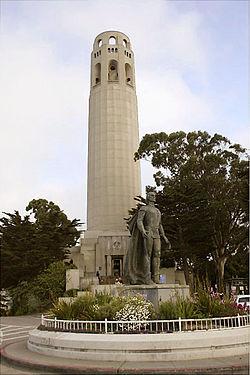
The emerging battle over whether San Francisco should allow private parties at Coit Tower is really part of a much larger political debate: How do we fund public parks? Is public space something that resources are put into, something that’s paid for by tax money and preserved and made available for everyone — or should part of the role of parks be to generate cash?

The Republicans in Congress, with the help of San Francisco’s own Rep. Nancy Pelosi, came down clearly on the side of self-funding around the Presidio, and it’s been a disaster.

I have friends who work at Rec-Park, and they tell me that at least the new revenue initiatives have prevented layoffs and kept some programs going. Which is true. But it’s the wrong question.

Parks are public commons. They’re not supposed to be private space (yeah, they rent out space for weddings in the park, but that’s a pretty minor deal). The city ought to be funding the parks. The city ought to be raising taxes enough to do it. Yeah, I know — you’re bored. I’m tired of saying it, too.


Some reality about the jobs report

6

The Obama Administration is thrilled with the new employment figures, and it’s clear the president will use this as a key part of his campaign (as long as the recovery keeps going and doesn’t sputter again). The Republicans, of course, are complaining that it’s not enough, that “we could do better,” but that sounds awfully hollow and fits into the narrative that the GOP doesn’t want anything to improve this year because the entire goal of the party is to defeat Obama in the fall.

But really, while it’s encouraging, the new unemployment figures are still bogged down by two things: The labor force is growing faster than the nation is creating jobs — and layoffs in the public sector are still a drag on the recovery.

There’s a pretty good analysis on DailyKos, talking about the labor force issue. But there’s more: Among people without a college education, the jobs picture is still really bleak. Same for people who have been unemployed for a while now and for youth. I could go on and on about the failure of trickle-down spending, but the reality is that the economy is still far too top heavy to all for a real recovery. Income inequality isn’t just a political and moral issue; it’s an economic downer. The U.S. economy depends overwhelmingly on consumer spending, and since all of the new new wealth of the past 20 years has gone to the very rich, most consumers don’t have enough money to spend enough to keep the economy buzzing. And a few new IPOs that make a few more people rich isn’t going to solve the problem.

Note that the one sector of the economy that is still losing jobs is government. That’s a result of low taxes that can’t fund public services (and can’t provide the generally decent unionized jobs, including jobs for people without college degrees, that exist in the public sector).

I was intrigued by the Congressional Budget Office report comparing federal and private-sector workers, which the Republicans (and, I’m sure, some of my beloved trolls on this blog) will use as evidence that government is bloated and public-sector workers are overpaid. But that’s not exactly what the report says:

CBO found that those without a college degree fared better as federal employees, since their pay was 36% higher than that of private-sector employees–particularly when it came to benefits. Those with advanced degrees such as doctorates, however, were generally better off in private industry, strictly from a monetary viewpoint–government pay was 18% lower than that of comparable individuals in the private sector.

In other words, federal pay is a lot more like the private sector used to be, back before the United States became one of the most socially stratifed societies in the developed world. The folks at the bottom do better, and the folks at the top don’t get as rich, and the gap between the highest paid and the lowest paid is a lot smaller.

Which is one reason that Republicans hate public-sector unions and government employment — it’s better for the 99 percent.

Gavin Newsom (suddenly) cares about economic justice

37

I was eating my (late) breakfast as I was listening to Gavin Newsom on KQED’s Forum this morning, and at first it was just the usual lofty rhetoric about education … and then Michael Krasny asked the lieutenant governor about the Occupy movement, and I almost threw up my whole wheat bagel and peanut butter.

Cuz Gav — the mayor who would never even consider asking the city’s wealthiest to pay more taxes, who ran for governor and then lite gov on a platform that he’d balanced the city budget without raising taxes, the guy who was a great friend of the city’s 1 percent, had the nerve to sing the praises of Occupy and complain about economic injustice.

Seriously: Gav ranted on for about five minutes about how low the taxes are on rich people. He announced that his company just set up a new winery and hired a bunch of people — and taxes were never an issue. He acted like someone who reads my shit.

One of the messages of Occupy — and one of the reasons that the movement exists not just in Washington and Manhattan but in cities all over the country — is that economic injustice needs to be addressed everywhere. It’s not just about the Bush tax cuts or even Jerry Brown’s tax-hike initiative; it’s also about local government trying to address the wealth and income gap and the impacts of 1 percent domination — at home.

Gavin had seven years to do that. He didn’t even try. Worse, when the progressives on the board tried, he’d veto anything that remotely smacked of a tax hike on the rich or a way to force the 1 percent to share the wealth with the 99 percent. (Does anyone think he would have allowed Occupy to stay at Justin Herman Plaza as long as Ed Lee did? Not a chance.) Now he wants to take advantage of the popularity of the movement for his own advancement.

Fucking sick.

Transfer of power

4

yael@sfbg.com

Feb. 1 marks the first day that San Francisco and other California cities no longer have redevelopment as a tool for building affordable housing or dealing with urban blight, but questions remain about how the power and functions of the San Francisco Redevelopment Agency (SFRA) will now be used.

On Dec. 29, the California Supreme Court upheld the validity of Assembly Bill 26, which dissolved all redevelopment agencies throughout the state and redirected the property tax revenue they accumulated to prevent deep cuts to public schools.

Redevelopment agencies, established in California in 1948, were charged with revitalizing “blighted” areas of cities. There were 400 such agencies throughout California, funded by incremental increases in property taxes within a redevelopment zone. Agencies could borrow against that revenue source to subsidize development projects.

AB 26 mandated that all cities dissolve their redevelopment agencies by Feb. 1 and transfer assets to successor agencies meant to “expeditiously wind down the affairs of the dissolved redevelopment agencies,” according the bill’s text.

A resolution passed by the Board of Supervisors on Jan. 24 authorized the transfer of SFRA affordable housing assets to the Mayor’s Office of Housing (MOH) and its non-housing assets to the city’s Department of Administrative Services. It also created a board to oversee the implementation of the SFRA’s ongoing projects.

Now, San Francisco is faced with the task of continuing to fund affordable housing projects and other development without the SFRA, and the board’s resolution laid out some of the terms for how the city will do that, although much remains to be determined.

Mayor Ed Lee appointed all members of the oversight board, which includes Planning Director John Rahaim; MOH Director Olson Lee; Nadia Sesay, director of the Mayor’s Office of Public Finance; and Bob Muscat, director of International Federation of Professional and Technical Engineers, Local 21.

In recent weeks, some groups have raised concerns that these appointees are not representative of the communities impacted by the ongoing redevelopment projects that they will be entrusted with overseeing, and that too much power is concentrated in the Mayor’s Office.

“One of our biggest concerns is that the oversight body could be made much more accountable and democratic,” said Jeron Browne of People Organized to Win Employment Rights (POWER)-Bayview. Much of Bayview-Hunters Point is no longer under the authority of the Planning Commission or any regular zoning laws since it was declared a redevelopment project site in 2000.

Sup. Malia Cohen, who represents the area, added an amendment to the board’s resolution that would impose term limits on oversight board positions. “I understand that there are a number of concerns that have been raised about the composition of the board. However, given the short time frame and the technical nature of the board and its obligations, I’m very comfortable with these appointees that they will be able to make decisions necessary to make the projects move forward. Additionally, with the inclusion of staggering terms we will be able to ensure that there is ample opportunity to include representation from affected communities,” Cohen said at the meeting.

The board also passed an amendment to “clarify that the land use controls granted by the oversight board are consistent with previous land use authority granted by the Board of Supervisors and the redevelopment commission,” as a response to concerns that the oversight board will have too much power over land use in project areas.

Tiffany Bohee, interim director of the SFRA, said that the court’s ruling was the “least desirable possible outcome.” Bohee said the SFRA has spent recent weeks analyzing all enforceable obligations outlined by the ruling to make sure that the transition complies with the law and is as fair as possible to SFRA employees.

The positions that these 101 workers filled at the SFRA will no longer exist as of Feb. 1, and layoffs are underway. However, most will remain employed throughout a transition period that ends March 31, and Bohee said that many will find work in city agencies that will be charged with continuing the work of the SFRA, such as MOH and the Planning Department.

MOH was historically responsible for allocating federal housing grants to city agencies. In past decades, federal budget cuts have severely limited the grants to build affordable housing. Now, although MOH has some power over city housing policy and allocation of funds to build housing, many of those responsibilities had been transferred to the Planning Department — or, until recently, the Redevelopment Agency.

The Planning Department is governed by the Planning Commission with four mayor-appointed members and three members appointed by the Board of Supervisors. The Planning Department implements planning standards and signs off on structural changes to the city, ranging from homeowner requests to alter houses to developer requests to build high-rises.

In many ways, the Redevelopment Agency was redundant, shadowing work done by the Planning Department. When an area was designated an SFRA project area, the planning code and zoning restrictions no longer applied, and developers working in partnership with the city had the power to define new land-use regulations.

Many critics of the SFRA said that private developers were able to use this lack of regulation to take advantage of the significant amount of money reserved for the agency. Deepening this concern was the fact that the Redevelopment Commission, which oversaw the SFRA, was composed entirely of mayoral appointees, which some felt were less accountable to the public interest than the Planning Commission.

Some feel that the oversight board, composed entirely of mayoral appointees, will repeat the same lack of accountability to neighborhoods.

“The city is setting up a planning commission for the 1 percent. And the Planning Commission that we have is the for the 99 percent,” said Tom Radulovich, executive director of Livable City, which works on land use issues. He said that with the dissolution of the SFRA, the city has an opportunity to facilitate the construction of affordable housing in a more democratic fashion. His organization expressed concerns to the Board of Supervisors, cautioning that the Oversight Board should not have undue power over land-use in development project areas and that the new structure in city government for facilitating development projects should be created with the input of communities. The Board of Supervisors made clear Jan. 24 that the Oversight Board and its appointees are a temporary measure to comply with AB26 by the Feb. 1 deadline. As Sup. Christina Olague said, “I just want to assure the public that this isn’t the end-all, be-all of this discussion, that it will be ongoing, and we welcome any of your concerns at any time.”

After the tear gas clears

3

yael@sfbg.com

After a chaotic day of marches and confrontations between police and protesters Jan 28, I was arrested along with about 400 others who were trapped by police in front of the downtown Oakland YMCA. Seven of us were journalists.

The goal of the march was to take over an abandoned building — an the vacant Kaiser Convention Center, a city-owned building that’s been closed since 2005, was a prime target.

I have not yet been able to retrieve my property, including my recorder and notebook, which is being held by the Oakland Police Department. What follows is a pieced-together account and a perspective on what the events of Jan. 28.

I spend 20 hours behind bars, and missed the later parts of the action. But I was able to observe what happened in jail and make some sense of what happened.

Occupy people are constantly debating tactics and goals, and for many, the idea of occupying a vacant building made sense. When Occupy Oakland had a camp in Frank Ogawa Plaza, also known as Oscar Grant Plaza, and commonly shortened to OGP, it created a strong community. That community bridged divides between the homeless and the housed, between students and labor organizers, and between Oakland residents of different races, genders and levels of ability in an unprecedented fashion.

The camp had a kitchen that fed hundreds of people everyday and a network of shared tents and blankets which welcomed in hundreds who otherwise would have slept on the streets, often feeling isolated from other residents of their city and made to feel inferior.

The camp was repeatedly raided, Occupiers were tear gassed and shot with rubber bullets, and when OGP was cleared out, the community no longer had a home. And the police started that violence.

That was the practical reason for wanting to occupy a vacant building: to have a social center for Occupy Oakland.

Of course, there are other reasons. There’s the question that many squatters and homeless advocacy groups have been making for decades: why let buildings lie vacant while people freeze on the street?

Remember: The building that Occupy wanted to occupy is public property, and right now nobody is using if for anything.

In one exchange in jail, a guard asked a protester why the activists thought they had the right to take over a vacant building. “I mean, it’s not yours,” he insisted. The protester replied that many vacant buildings are government-owned and therefore public.

“So it’s the government’s,” the cop said.

“But I pay taxes,” the protester responded.

“Me too!” replied the cop. “It’s mine!”

“It’s both of ours,” smiled the protester. “It’s all of ours.”

That’s what made the convention center action such a clear and easy political decision.

A lot of people in Occupy would go further, saying that at a time of a severe housing crisis, it’s perfectly legitimate to take over privately owned buildings that are sitting there vacant. It’s part of the central argument of Occupy — that corporations and the rich unfairly own and continue to acquire much more wealth than the majority of people. For many people, owning a vacant building and doing nothing with it, while hundreds freeze on the streets, is a crime itself.


UP AGAINST THE COPS

Then there’s the question of the police — and violence.

The word “nonviolent” has a specific meaning in the history of political movements. Martin Luther King Jr. defined it in his essay “The Meaning of Non-Violence”: “If you are hit you must not hit back; you must rise to the heights of being able to accept blows without retaliating … But it also means that you are constantly moving to the point where you refuse to hate your enemy. You are constantly moving to the point where you love your enemy.”

It’s a philosophy but also, in political terms, a tactic.

Many of the people who make up Occupy Oakland get their start as activists organizing against police brutality in a city that has longstanding problems with violent and undisciplined officers.

Police Chief Howard Jordan said in a press release that “It became clear that the objective of this crowd was not to peacefully assemble and march, but to seek opportunity to further criminal acts, confront police, and repeatedly attempt to illegally occupy buildings.”

It was certainly clear that the intent of the crowd was to illegally occupy a building. And any honest assessment of Occupy Oakland would have to acknowledge that some members are not wedded to King-style nonviolent civil disobedience. (Neither, by the way, were a lot of the protest movements of the 1960s.) Many protesters wore masks and bandanas to disguise their identities and protect them from tear gas and pepper spray, and the march was led by protesters with makeshift shields, which suggests that they expected to be attacked. You could certainly argue that what those people were doing wasn’t confrontation; it was self-defense.

Frankly, it made sense to be prepared: In other Occupy Oakland actions, police have attacked with batons, tear gas, pepper spray, flash-bang grenades, and smoke bombs. And for quite a few Oakland residents, the police have always been seen as an outside force that can’t be trusted.

In fact, violence did break out. Many, including myself, have eyes still stinging from tear gas. I saw several wounds caused by rubber bullets shot at protesters. I spoke individually to at least a dozen people — one of them a pregnant woman — who were struck with police batons.

And protesters did not remain peaceful while this violence was being used against them.

Some picked up tear gas canisters and threw them back towards police; that much I saw. I also saw protesters throw empty plastic bottles at police.

According to the police, they also threw metal pipes, rocks and bricks. According to the protesters, they threw mainly empty plastic bottles and fruit at police. But as protesters often say of the police, “They’re the ones who showed up with the guns.” If the cops didn’t want violence, why unleash such an arsenal of weapons?

People got hurt, protesters and police alike. Several bystanders who had nothing to do with the situation were swept up in the mass arrest.

The city of Oakland, already in dire financial straits, likely spent hundreds of thousands of dollars reacting to the protests. Police claim that they were unable to sufficiently respond to violent crimes over the weekend, including five murders, because they were overwhelmed with Occupy troublemakers.

Of course, city officials were the ones who decided to arrest 400 people — with all the expense that involves.

There are, at this point, no reports of serious injuries to any police officers. However, at least a dozen protesters had welts on their faces or bodies from being beaten by clubs or shot with rubber bullets. One woman was shot in both arms with rubber bullet; one man was shot in the face with rubber bullets while holding a video camera to document the events. Several protesters were shoved to the ground and received wounds on their faces while being arrested. Police raised their rubber-bullet rifles to the faces of protesters throughout the day, threatening attacks. A rubber bullet to the face can cause brain damage and blindness.


DID IT HAVE TO HAPPEN?

How could this have been prevented?

Police say that “while peaceful forms of expression and free speech rights will be facilitated, acts of violence, trespassing, property destruction and overnight lodging will not be tolerated.” But 40 people were arrested during an ongoing Occupy Oakland vigil in the first weeks of January for having “illegal property” at OGP in what many saw as clearly a peaceful expression of First Amendment rights.

On KGO radio Jan. 29, Chief Jordan said that he has allowed Occupy Oakland to protest without a permit and would continue to do so, but those early January raids were ostensibly due to permit violations — violations of the terms of a permit that Occupy Oakland did in fact have.

There’s no question: The police response to Occupy Oakland over the past few months has caused some people in the movement to get more radical.

Many Occupy Oakland-affiliated medics condemned those who threw objects at police, saying that they provoked a backlash that caused more injuries. Many Oakland residents who might be in line with the socio-economic critique presented by the Occupy movement feel endangered and confused by marches that result in the massive use of police weapons in broad daylight. A lot of people would rather protest in a lot of ways that less resemble urban warfare.

On the other hand, there are also ways that Oakland officials could have prevented the consequences of weapons deployed and 400 arrested Jan. 28. They could, for example, have allowed protesters to occupy the vacant building.

When protesters seized a building Jan. 20 in San Francisco, police first attempted to prevent them. They lined up in front of the targeted building. They deployed pepper spray and struck several protesters with batons. When they were unsuccessful, and protesters entered the building from the back, they opted to block the surrounding streets and wait until the time seemed right to enter the situation and make arrests. Police spokesperson Carlos Manfredi told me that the cops were not going to rush into the situation and were trying to prevent injury and violence.

The Kaiser Convention Center has been vacant for years. The city of Oakland recently made plans to sell it to its Redevelopment Agency, but that plan fell into legal limbo when Gov. Jerry Brown signed AB26, a bill that dissolved all California redevelopment agencies.

At this point, nobody at Oakland City Hall has any plans whatsoever for the big, empty structure.

Why not allow Occupy to use the convention center? It’s not downtown, where Mayor Quan says businesses have been adversely affected by Occupy Oakland’s presence. It would give the movement a chance to stop focusing on trying to occupy spaces and start focusing on benefiting the community with food, shelter, and community programs that they provided when they had a camp. It would give the building tenants who could be held responsible for maintaining it. It might even help get Occupy Oakland and the Oakland Police Department out of the cycle of violence that they have been spiraling into for months.

Each time arrests occur, each time violence occurs, both sides blame the other. Both sides are correct that they were provoked. Both sides are correct that something that they think is worth defending was violated — for the cops, it’s the law. For the protesters, it’s the right of the people to assemble.

In fact, many Oakland residents have experienced violence at the hands of the Oakland Police Department for years before Occupy began. There was already a mass movement formed around the murder of Oscar Grant, and thousands of people fed up with police murders of unarmed, often black, suspects.

In recent decades, other radical groups, notably the Black Panthers, insisted that their community lacked basic needs because the city of Oakland refused to prioritize them. The Black Panther free breakfast program served food in a strikingly similar way to Occupy Oakland. Black Panthers were also notorious for carrying guns to defend themselves against police violence.

Occupy Oakland protesters (unlike Tea Party members) certainly don’t carry guns. But, more and more, they cry “fuck the pigs” as much as any Panther.

For much of the Occupy movement’s 99 percent, unjust actions by banks, corporations, and the government officials that they have often bought and paid for are the worst problems facing the United States today. For others, particularly the poor and people of color, these problems are magnified and exacerbated by the fact that they feel the threat of police harassment every day. For years, they’ve understood that police disproportionately do not investigate or solve crimes that happen to them and their families.


THE RADICALS AND THE BROADER MOVEMENT

The Oakland General Assembly Jan. 29 was the biggest it’s been in weeks. While there were still over 300 people in jail, 300 more came out to get involved with the meeting. That happened at the same time that many who felt that inexcusable violence and property destruction occurred Jan. 28 and concluded they could no longer have anything to do with Occupy Oakland.

It’s a challenge for the movement nationally, too: How do you accept and encourage the people whose legitimate anger at economic injustice and police abuse turns them toward more radical responses — and at the same time make room for a people who want nothing to do with the black bloc Fs, vandalism, and confrontation with the police?

There are tactical issues with the way the building occupation was planned. Many who were completely in line with the concept felt unsafe and uncomfortable with the secretive nature of the organizers who planned it. The location of the building targeted for occupation was kept secret for practical reasons; police could easily prevent a successful takeover. Supporters must often be led to the locations of planned takeovers without knowing where the action is and how they’ll get there. But how do you reconcile this with the transparency required when organizers are leading more than 1,000 people who want to use tactics they feel comfortable with and make their own choices?

Occupy Oakland is asking the people to imagine a world where property rights wouldn’t prevent them from doing all the good that they could do with a building like the Kaiser Convention Center. They must also ask themselves to imagine a world in which goals like a building occupation can be achieved in a way that everyone involved is able to consent to their involvement.

These debates continue to occur at Occupy Oakland. Some will leave the movement, some will join. Some will take the ideas and try to manifest them in new and different ways. Participants in Occupy Oakland desperately want basic needs of food and shelter met for their community members, and for the system that governs the city to do so in a way that allows people to thrive when it comes to health, education, and opportunities for creativity and growth. They think that they have the beginnings of a community and a process that can achieve those visions, better than the city government ever has, and they care more about achieving it than respecting the property rights of the owners of abandoned buildings.

Why the public thinks government is fat

10

Polls from the PPIC are typically pretty accurate, so I have no reason to doubt the results of a recent one showing that a majority of Californnians still think government can be cut substantially without a reduction in services. It’s hard to fathom; as Brian at Calitics notes,


Cuts to government expenditures mean direct cuts to services. There is simply no way to provide the same level of services for an ever decreasing amount of money. Go take a look at your local government offices and then compare it to the offices of your local bank corporate office.  There are no fancy waterfalls and lavish breakrooms offering wide selections of Odwalla and Rice Krispies, there are just a dwindling level of state employees working ever harder to keep up.  


So, while most voters strongly support raising taxes on the rich, 59 percent also think that government can easily be cut just by eliminating waste. Even Arnold Schwarzenegger, who took office pledging the same thing, left saying there wasn’t much waste left to cut. And while I fully believe that any organization that spends $80 billion a year is going to have some things in the budget that don’t belong — it’s simply humanly impossible to run anything, public or private, that big without some employee sleeping in the supply room or somebody sneaking cookies on the company dime — it’s also the case that what’s missing in the California budget is more important than what’s being mis-spent.


Why don’t people get this? Part of the reason is a 30-year concerted campaign by the right wing to convince people that the public sector is a waste of money. But part of the reason is also that the news media, by its very nature, is much more likely to report on waste in government than similar (or worse) waste in the private sector.


For one thing, it’s easy: Government records are public. Figuring out how Enron, which kept its records private, stole $40 billion from the state of California is really, really hard. There’s also the (correct) notion that the government is spending OUR money, so we ought to watch where it goes.


And of course, corrupt politicians like Willie Brown give everyone in government a bad name, and there are plenty of them.


But remember: The government typically spends a lot of our money on private contracts with companies that don’t make their records public. How many employees of the contractors building the Central Subway are sleeping on the job, double-billing, charging fancy lunches and wasting the public’s dollars? That takes a lot more digging — weeks of investigative reporting — and it’s not the sort of stuff that can just pop up in a Matier and Ross column, the way a city worker who pulls in a lot of overtime can (and does).


I think there’s also a general lack of interest in exposing corporate wrongdoing. PG&E’s records are public, and all the money the company spends is OUR money (we’re ratepayers, and we have no choice). But how much do you see about overpaid PG&E executives compared to how much you see about (far less) overpaid city employees? PG&E has hundreds of executives making far more than the most bloated City Hall salaries, and they all have nice pensions — but you never hear about PG&E needing pension reform, or how the utility needs to tighten its belt to keep rates low in a recession.


When you’re bombarded day after day with stories about a deputy sheriff or a nurse who works a huge amount of overtime and takes home $150,000 a year, you can’t help but think that the public sector’s wasting your money. But the private sector does a lot worse.


And sure, under capitalism, a wasteful private company should pay the price in the marketplace — but we all know that a lot of the big private companies don’t really compete much (see: the financial sector), and when it comes to regulated utilities like PG&E, they don’t compete at all. You think ATM fees and checking account fees and all the other shit that banks hit us with isn’t in part a result of waste, fraud and bloated payrolls? Isn’t that my money, too?