Style

Generation cork

0

virginia@sfbg.com

BEER AND WINE It’s a unique time in Bay Area winemaking. We see more California winemakers finding harmony between New and Old World-style production, laying off heavier-handed extremes of overly-oaked or high alcohol wines, honing in on our region’s true terroir. While global love for big, bold California wines isn’t going anywhere, it’s ever more apparent that our range is far beyond what might be assumed.

Small, family-run wineries have long undergirded our region’s greatness, and today there are many new wines, from Sonoma to Napa, adding nuance to the landscape. As is the case historically, many wineries are a family affair where parents and children share in the work, from production to business operations. Here are a few we felt you should know about; you can order most of their wines through their websites.


SUTTON CELLARS, SAN FRANCISCO

San Francisco holds a treasure in the person of Carl Sutton of Sutton Cellars. He walks the fine line of approachability and Old World-influenced production style. At 22nd Street and Illinois sits a funky warehouse winery where he throws Jug Sundays, tapping barrels and selling jugs or liters of wine (email directly through its website — www.suttoncellars.com — to be added to the event email list). Carl corrals Dogpatch neighbors to supply grub, like Olivier’s Butchery or the TomKat Asian street food truck. His wife Sharon often pours and works with him, both of them wine aficionados and passionate global travelers.

His grapes grow mostly in Sonoma County (with a little Mendocino in the mix), and are often single vineyard wines. At a time when many claim personal care, Sutton’s brown label wines are actually filled and corked by hand. Often this kind of care implies high costs, but Sutton stays amazingly affordable at $14–<\d>$21 a bottle.

Sutton is heavily influenced by France and Spain. He offers a full-bodied Rattlesnake Rosé ($15), but also the stunning Fizé, a 2010 rosé of organic Carignane grapes. It unfolds with each sip: tart cranberry and pomegranate notes, and a crisp effervescence. With no yeast or sulfites added, fermentation actually happens in the bottle. It possess a bready nose, with a profile far beyond typical rosés on either end of the sweet/dry spectrum (find this beauty at the winery, Bi-Rite, Rainbow Grocery, D&M). As of last week, he has keg preview of the 2010 Rattlesnake Rosé on tap at Magnolia Pub and Brewery.

His 2007 Carignane is an acidic, balanced, food-friendly red (barrel fermented in neutral oak). The aged La Solera is an elegant after-dinner imbibement and one of Sutton’s best creations. A blend of syrah, zin, and carignane wines from 1999-2006, it at turns evokes Madeira, Banyuls, sherry, even whiskey, with whispers of burnt orange, and a golden richness from its time resting in the sun, a classic method he picked up in Spain. La Solera is at the top of his price range at a mere $30, a steal for such a complex wine.

Sutton’s Brown Label Vermouth (unaged brandy-fortified neutral white wine, infused with 17 botanicals, bottled fresh weekly) is a winner. The Alembic was the first place to serve this refreshing aperitif on tap, enjoyed on the rocks, Italian-style. Sutton bubbles over with visions for a wide range of wines and liqueurs, including at least one new aperitif/digestif wine due before year’s end.


KELLY FLEMING WINES, CALISTOGA

Head off Silverado Trail, past vines and olive trees, onto a dirt road that leads to a gate. Beyond a sea of cabernet vines, lies Kelly Fleming’s stone winery (www.kellyflemingwines.com), evoking an Italian villa, similar to many I explored in Tuscany. The winery’s stone walls and wood shutters imbue the space with a rustic character far beyond its years.

In an open-air dining room, I sat under stone arches at a handmade wood table crafted from one tree off the 300-acre property. Kelly and her daughter Colleen, who also works for the company, served a Mediterranean-style spread for lunch, using ingredients from their garden (like a silky jam from their fig trees).

We sipped Fleming’s 2009 Sauvignon Blanc (50 percent French oak, 50percent stainless steel), representative of the Oakville soil from which these grapes grow. It’s a balanced white with a floral and fruity (pear, pineapple) profile, rounded out by a hint of vanilla. 2007 Cabernet is 100 percent estate and CCOF organically grown, rested in 85 percent new French oak. Though fruit plays prominently (warm, dusty raspberries), hints of wood, nuts and spice give it contrast.

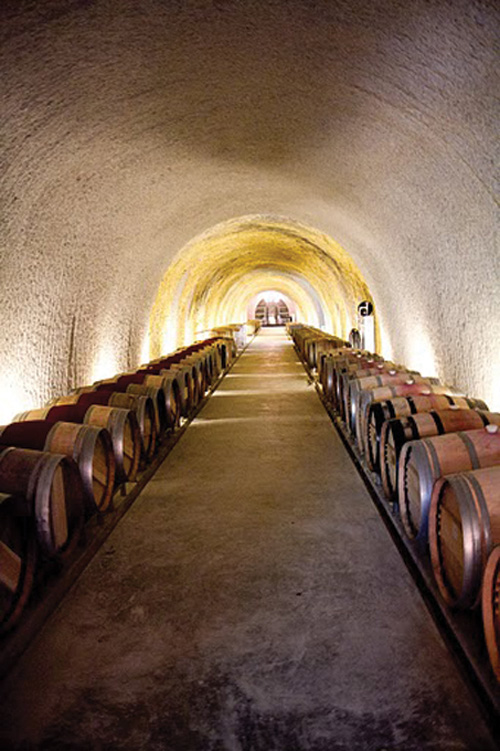
Winemaker Celia Welch works with the region’s terroir (this is cabernet country, after all), from vines planted in 1999. The wild beauty of the property’s forests and creeks is kept intact with only 12 of the 300 acres planted with vines. Inside limestone caves, the air is naturally cool, storing barrels and bottles of past vintages (unreleased but which they’ve been perfecting for nearly a decade). At a mere 850 cabernet and 675 sauvignon blanc cases a year, these are truly small production wines.

Kelly is hands-on in so many aspects from harvesting to forklift operation. She and Colleen both were recently certified in forklift driving, highlighting the involved, familial nature of the winery. They are gracious hosts, welcoming guests by appointment.


SWANSON VINEYARDS, RUTHERFORD

Think Parisian carnival, classic French estate, Napa’s rich nature, New Orleans’ roots, and you’ll begin to get an idea of the influences on Swanson Vineyards (www.swansonvineyards.com). The winemaker is Chris Phelps — Clarke Swanson founded the winery back in 1985, planting his first merlot grapes. His daughter, Alexis, works as the winery’s creative director. Wife Elizabeth buzzed about as we sipped wine in their enchanting garden, greeting each guest.

The first sign Swanson is different comes when you enter the Sip Shoppe, with red-and-white striped tented walls, Old World French artwork, and Billie Holiday playing soothingly in the background. Elizabeth and Alexis designed the shop themselves, imparting a playful Parisian spirit to what could just be another tasting room. One wants to linger for flights like “Some Like it Red,” paired with the likes of warm pistachios, Alexis bonbons (made by Vosges with curry and Swanson’s Alexis Cabernet), or a potato chip topped with creme fraiche and Hackleback sturgeon caviar (lovely with their Chardonnay).

The 2010 Chardonnay was my favorite, and a complete surprise as a mineral, French-inspired chardonnay, reminiscent of Chablis. Neutral oak allows crisp, green apple notes to shine, while honey adds a tinge of cream to the finish. At a pricey $45, this one is only available at the winery or to wine club members.

Of the reds, Swanson’s signature 2007 Merlot offers the best price-to-taste ratio at $38 per bottle. It’s unexpectedly balanced with tart tannins, hints of black cherry, currant and mocha. On the pricier end, the 2007 Alexis Cabernet ($75) is bold and layered, while a 2006 Petite Syrah ($70) goes the earthier, spice and gentle black pepper route.

Make an appointment to visit the winery for a Salon tasting ($65) or Sip Shoppe flight (around $25), then finish by lingering in the garden. You can taste at dozens of wineries but the Swanson’s chic shoppe and salon deliver a fun, Parisian spirit to the Napa countryside. *

Virginia Miller writes about the latest food and drink news at The Perfect Spot, www.theperfectspotsf.com

Write what you know

8

arts@sfbg.com

LIT Most fans probably associate Will “The Thrill” Viharo with Thrillville, the awesomely cool series of B movie screenings he hosted at the Parkway (now closed) and Cerrito (now operating under new ownership) theaters. But in recent years, Viharo’s become “The Quill,” shifting his focus to his first love: writing. He’s written several novels and numerous short projects in a retro, neo-pulp vein; he’s currently working on new material as well as publishing several of his older novels, some of which go back decades. He started his first novel, Chumpy Walnut — about a foot-tall boy lost in a world of macabre make-believe — when he was only 16.

“I am a born writer, as pretentious as that may sound. I’m basically unemployable, possess no other marketable or practical skills, and so realistically, my career options are severely limited. It’s a matter of simple survival: sink or swim, write or die,” the 48-year-old Alameda resident explains. “Once I started writing, I just couldn’t stop. It’s how I respond to life and the world in general, my natural mode of expression. I really have no choice.”

Viharo’s first published novel, Love Stories Are Too Violent For Me, was released in 1995 by Wild Card Press. Movie rights to the book, which introduced recurring character Vic Valentine, have been owned by the actor Christian Slater for the past ten years — though Valentine, a San Francisco private eye, has yet to make his big-screen debut. Undeterred, Viharo has penned a slew of other killer, colorfully-titled books, including A Mermaid Drowns in the Midnight Lounge, Fate is My Pimp, Romance Takes a Rain Check, and Diary of a Dick. All are written in a feverish style that recalls not only the hard-boiled detective novels of authors like Raymond Chandler, but also a wide variety of cinematic influences.

“My work has always been informed and creatively inspired by films, particularly exploitation cinema, and all kinds of ‘mood music,’ even more so than my sundry literary influences,” Viharo says. “I think that’s why my stuff has a keen visual sense and fluent rhythm unique to the form, kind of like graphic novels, sans the graphics.”

It makes perfect sense then that Viharo has made a book trailer to help promote his work. The clip, posted on his website (www.thrillville.net), recalls a classic film noir narrated by tempting excerpts from Viharo’s books. The brand-newest Viharo tome, Freaks That Carry Your Luggage Up To The Room, is a blistering tale he describes as “gonzo bizarro pulp;” it’s due out in November. He’s self-releasing it, as he has all his works since Love Stories.

“My stuff is good, I know it, and I’m taking it directly to the audience I know is already out there, bypassing the corporate middleman,” Viharo says. He’s learned that the mainstream publishing industry is a conservative, fickle beast — and he’s done trying to win the hearts of corporate titans. “I’m actually riding a new wave since digital publishing has usurped the marketplace, opening doors for many neglected talents at both ends of the scale.”

Viharo’s novels are available online through Lulu as eBooks or print-on-demand paperbacks, and he recently got approval to sell Down a Dark Alley on iTunes after a period of “special review” — it seems his more lurid material had triggered an additional vetting before being given the green light.

“Basically, after several decades of self-exploration, I have no more inhibitions, at least artistically,” Viharo says. “My brain has been irrevocably damaged over the years, via sustained exposure to the insanity of our world as well as endless viewings of seriously fucked-up movies, and it shows, but I’m shameless by nature.”

Although his books can feature sensationalistic and savage settings, events, and characters, they are still meant to be simply entertaining — a goal that they exceedingly achieve, thanks to Viharo’s artistic outlook.

“Even the most graphic depictions of XXX kinky sex and ultra-violence are presented in a satirical, cartoonish context, not meant to be taken too seriously,” says Viharo. “I’m a softie at heart; my hard-boiled veneer is pretty transparent, I think. It’s impossible for me to remove my tongue from my cheek no matter how twisted my subject matter happens to be.”

Mayor Lee likes Question Time just the way it is: scripted and boring

26

Mayor Ed Lee appeared before the Board of Supervisors today for his fifth monthly Question Time session, where he was asked by Sup. John Avalos – and subsequently by reporters – whether he would be willing to “change the format to make it a truly interactive, substantive, and dynamic exchange?”
But Lee disagreed with the widespread perception that the scripted nature of these exchanges – a condition that Lee’s office insisted on during negotiations with the board earlier this year, with questions submitted in writing a week before the meeting – is a contrived and dull departure from what San Francisco voters intended when they twice voted to establish Question Time.
“Supervisor Avalos, this is substance, and I think it’s exactly what the voters had in mind with Proposition C,” Lee said, reading from a prepared text. Later, he added, again reading from his script, “I think these are very substantial and dynamic exchanges.”
But apparently, that view isn’t widely shared, as the format has been criticized by a wide variety of media outlets in town, and it was the main topic that the pack of reporters who intercepted Lee in the hallway afterwards wanted to discuss. He was asked whether the session would still be as civil as they are if they were less scripted, and Lee responded that he thought they would still be civil.
“But I like a little more structure to it,” Lee said, adding that he likes to have prepared notes to address the questions that supervisors might ask. “If we don’t set boundaries, it could be a free-for-all.”
But a bit more of a free-for-all is certainly what former Sup. Chris Daly intended when he drafted the legislation, which voters approved as a binding measure last year after first approving it as an advisory measure two years early, only to have then-Mayor Gavin Newsom refuse to come.
For example, when Sup. Sean Elsbernd asked Lee for a status report on the Central Subway project, it’s possible that Lee’s recitation of the project’s benefits might have been followed up with questions asking him to address recent criticisms or the tripling of the project’s costs, which he didn’t mention.
Or perhaps Sup. Eric Mar might have asked a follow-up question when Lee answered the question “Are you willing to require that CPMC enter into a Community Benefits Agreement before their proposal is approved by the city?” by saying, “These community benefits will be incorporated into a Developer Agreement,” reminding the mayor of the premise of his question that many of the benefits that the community is seeking cannot legally be included in the Developer Agreement.
Similarly, Lee also avoided directly answering Sup. David Campos’ question about whether the mayor intends to support legislation by Campos and Sup. Mark Farrell that would require city departments to return to the board for approval of budget supplements when overtime costs are significantly exceeding those that the department budgeted for.
But there is some wiggle room in the exchanges for supervisors who want to freestyle, as long as they are within the narrow confines of civility being practiced at City Hall these days. Elsbernd embellished his approved Central Subway question, calling it an “opportunity to move beyond the clichés and one-liners of political campaigns.”
And when Lee closed his answer to Avalos by inviting him to take part in an upcoming benefit ping-pong match in Chinatown, Avalos asked the mayor, with a slight taunt in his voice, “How is your game?”
To which Lee – perhaps reaching new heights in conflict aversion – said his style of play is “diplomatic and friendship first.” To which Avalos responded, again with an air of challenge, “I used to work at the Boys and Girls Club and played everyday.”
And that, I suppose, is what passes for political conflict and debate at City Hall these days.

Localized Appreesh: The Jaunting Martyrs

1

Localized Appreesh is our weekly thank-you column to the musicians that make the Bay. Each week a band/music-maker with a show, album release, or general good news during those seven days is highlighted and spotlit. To be considered, contact emilysavage@sfbg.com.

The Jaunting Martyrs were chosen for Localized Appreesh because the seven-piece band has a great, thoroughly San Franciscan in spirit, show this week and it could use your attention: Kimo’s tonight (Tuesday) with Fierce Bad Rabbit, Wesley Woo, Halftime Heros.

Plus, have you heard its music? It’s like an Eastern European circus took a folky Appalachian holiday.  It’s both quiet, classical bedtime story and traveling, rambling, carnival party.  The song “Surfin Tzigane” off last year’s self-titled EP is probably the most telling. With initially delicate Spanish-style strumming, it leads eventually to rowdy wet reverb –  not out of place within a true-blue American surf rock Dick Dale track – and, laid over that, Bulgarian drumming and Turkish horn. It’s world traveling from the ground-pillow comfort of your own intimate local music venue.

Year and location of origin: 2008, San Francisco, Calif.
Band name origin: Originally, it began as the random name of the track of space music Justine was sending off in the mail when she met Brendan on the BART train, but has come to mean something deeper, communicated in some of the characters in our songs, such as Mickey, Lila, and Bonnie Blue. Basically, A Jaunting Martyr is one who has moved past anger and angst into acceptance of their plight, and is able to laugh and dance in the face of hopelessness.
Band motto: “Never mind the baby faces, this is a savage band.”
Description of sound in 10 words or less: A sound that tells a story, fluttering from intimate to intense.
Instrumentation: Electric guitar, bass, banjo, mandolin, trumpet, tapan (Bulgarian drum), fiddle, charango, kaval.
Most recent release: A self-titled self-released, self-mixed self-published EP.
Best part about life as a Bay Area band: This is simply the most beautiful, spiritually powerful place in the world. We are all natives here, we all consider it home. (Except for Ivan, he’s from Bulgaria, which I’m sure he digs as well).
Worst part about life as a Bay Area band: Those folks with the tightly crossed arms at shows.
First record/cassette tape/or CD ever purchased: The Mermen – A Glorious Lethal Euphoria.
Most recent record/cassette tape/CD/or Mp3 purchased/borrowed from the Web: Spirits of The Red City – Hunter Moon.
Favorite local eatery and dish: Lucca Foods on Irving and 20th.  Best deli in SF, baby. Get the Billy Filly. (You can only get it when Billy’s working).

With Fierce Bad Rabbit, Wesley Woo, Halftime Heros
Tues/13, 9 p.m., $6
Kimo’s
1351 Polk, SF
www.kimosbarsf.com

Try not to fall in love: http://www.youtube.com/watch?v=uOC31u1GzxU&feature=related

Spontaneous Victorian combustion: “Jane Austen Unscripted” returns to the Bay Area

1

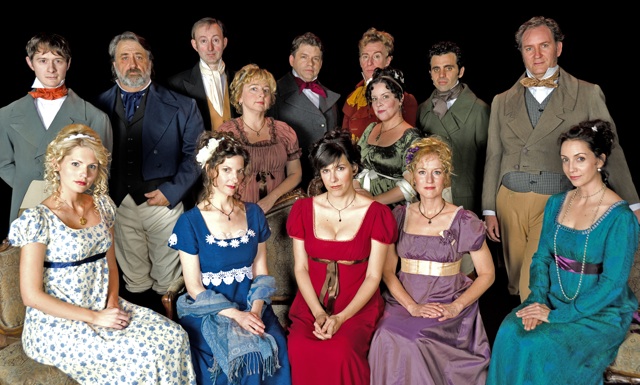
More signs of gentrification in the Bay Area, this time sanguine, as Los Angeles-based Impro Theatre’s acclaimed show, Jane Austen Unscripted, returns starting tonight (Wed/7) for gigs at 142 Throckmorton Theatre (Mill Valley) and BATS’ Bayfront Theater (SF). If you saw Jane Austen Unscripted in one of its two previous local engagements over the last few years, you already know the group sports some of the quickest wits in the Western canon. Jane Austen Unscripted is directed by BATS cofounder Dan O’Connor and comedian-writer Paul Rogan and features an amazing cast of improvisers, fully capable of creating a full-length play in the style of Jane Austen spontaneously each night, with a theme suggested by the audience. Improv fans, Austen fans, ceiling fans: this stuff is hot. A funnier, sharper assemblage of off-the-cuff maestros is hard to come by, especially in cuffs like these.

For those left hankering for more by Jane Austen Unscripted, know that one of its cast members, Stephen Kearin, returns to the Bayfront stage the following week as one-third of 3 For All, in its final two shows of the year. 3 For All is comprised of Kearin, Rafe Chase, and Tim Orr, but this trio contains multitudes. Pick your genre, call out a topic; these improv comedy veterans are always worth seeing: utterly distinctive and never the same. You can check out some recent insta-masterpieces here.
 
Jane Austen Unscripted

Wed/7-Thurs/8, 8 p.m., $25-30

142 Throckmorton Theatre

142 Throckmorton, Mill Valley

(415) 383-9600

www.142throckmortontheatre.org

Fri/8-Sat/10, 8 p.m.; Sun/11, 2 p.m., $20-30

Bayfront Theater

Fort Mason Center

Building B, Third Floor, SF

www.improv.org 


3 For All

Sept.16-17, 8 p.m., $25-28

Bayfront Theater

www.improv.org

Ativanitude

0

le.chicken.farmer@gmail.com

CHEAP EATS Some people wanted closure, so we went around the circle and each said what we got out of our 10 days of writerly camaraderie, intense productivity, and snorkeling. OK, chicken farmer, here’s where you thank the people who brought you here and lick the asses of all the new, important writerly friends you’ve made, I thought. Which should have been easy, because I did love my new friends and got a shitload of good work done in Mexico; but exhaustion and head problems got the better of me, and by the time my turn came the circle was already aslosh with gratitude, spinning its wheels in good vibes and wonderfulness. I was suffocating. I was drowning. I was dizzy. And it was my turn to say what I got out of it.

“An ear infection!” I said.

If I’d have stopped there it would have been funny, but I’d been out of my stomach for four days and couldn’t stop bitching and whining: My head felt like it was going to explode every time I nodded, the smell of toast made me want to puke, and if I bent down to scratch a mosquito bite I would pass out, I was so dizzy. How the hell was I supposed to get in the van that was taking us all to the airport next morning, let alone fly in an airplane at 39,000 feet with entirely clogged ears? Did anyone have any decongestants?

Heads shook in sympathy. People promised to check their pill collections before going to bed.

“The food was really really good,” I added.

Then it wasn’t my turn to speak anymore, and the circle continued to gush toward closure. Hard to say how many enemies I’d made, but — since everything else in the world is hard to say too –hey, who’s counting?

At the airport, I wasn’t the only one having a nervous breakdown. Irene was scheduled to land in New York at the same time some of us were. The East Coast was closed. Flights to other places were full.

And, worse, the Starbucks where we awaited our fates was playing squirrely jazz.
I set up a little Ativan dispensary at our table. See, here’s where being a complete spaz comes in handy: I’d been tracking the hurricane for half a week, and had already changed my return trip from JFK to Pittsburgh. So alls I had to worry about was my head exploding before reaching cruising altitude.

It didn’t!

Hedgehog was waiting for me at the bottom of the escalator by baggage claim, big smile. She’d left her
stupid movie one day early, drove to Pittsburgh, and got us a nice hotel room near the airport and even nearer to one of the satellite Primanti Bros. To which she immediately whisked me for a pastrami and French fry sandwich and a romaine salad, also with French fries. As if I weren’t loopy enough already.

“Not as good as Giordano’s,” I declared, “but better than the original Primanti.”

The fizzy water did not have French fries in it.

Hedgehog set a half-full bottle of West Indies Creole habanero sauce on the table between us. “I didn’t know what you’re supposed to take with you in an evacuation,” she said, “but I grabbed this.”

“I like your style,” I said, putting it mildly while pouring my favorite hot sauce all over everything.

“You did the right thing.”

She liked my ativanitude, she said.

And we went to our hotel room, made category 4 love,
and in the morning drove back to New York where we had dinner plans and US Open tickets. After this we head back west, finally, stopping only for nephewish weddings, state fairs and I guess gas and shit.

We might go to a Steelers game.

Meanwhile, in time for football season, Giordano’s has opened a restaurant in the Mission, without me.

It’s where Ti Couz used to be, on 16th Street at Valencia, and rumor has it they have pieroghis.

So my question to you, Mr. Earl Butter, is why the hell are you still eating at Valencia Pizza & Pasta?

Keep it raw

0

emilysavage@sfbg.com

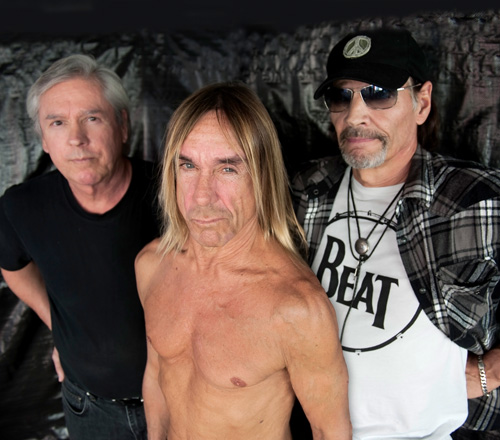
MUSIC Does the Godfather of Punk really need an introduction? It’s Iggy Pop. He’s been doing this — this meaning spitting out underground ethos in a signature growl and writhing shirtless — for nearly 50 years. With the untimely death of original Stooge guitarist Ron Asheton, Pop regrouped and tapped Raw Power-era player James Williamson to rejoin the band a couple of years back.

I spoke to Pop in Paris over the phone — his current world tour was supposed to land in San Francisco on Sept. 12 and 13. As we were going to press, however, we were informed that the ever-wild Pop broke his foot and his appearance here will be rescheduled, with new dates TBA Dec. 4 and 6 at the Warfield. We wish him a speedy recovery!

SFBG: What songs are you playing this tour?

Iggy Pop: All of Raw Power, some of Funhouse, some songs from the eponymous debut the Stooges, and some stuff that was too hot to handle, too raw for the times — stuff that came out on bootlegs in the ’70s like “Cock in My Pocket,” “Open Up and Bleed,” “Head on the Curve.”

SFBG: And James Williamson is on guitar?

Iggy Pop: Yeah, it’s James. The three principles in the group are James, myself and [drummer] Scott Asheton, — [Scott] had a medical emergency…after our appearance at the Hellfest. He’s now home — he’s benched for the rest of the year. I expect he’ll fully recover and be back next year. His replacement on drums is somebody that grew up listening to our records — Toby Dammit. And Mike Watt is with us, and Steve Mackay. Mike’s there being Mike, you know?

SFBG: I do. At this point in your career do feel pressure to maintain this ‘Wild Child’ image?

Iggy Pop: You mean you’ve noticed my style? [Laughs]. It’s interesting. I feel a desire to — [screams] “still do that, BABY!” — at certain times when it’s going to do me good. And I can’t think of a better time than when the Stooges are cranking, and there are a bunch of people who are sick of this shit-soup that white rock has become and want to see some action. I let some of those elements live and breath, and I always feel good about it.

I don’t think there’s so much an image I have to live up to because one of the beautiful things about being me and about being the Stooges is that we never, ever received any legitimate or uncontested exposure from either the official music industry, when it existed, or the official media. We’re more popular now than we ever were. I’m 64 and I’m just starting to hit a career peak. I consciously try to introduce as many new things as I can into what I do and try to keep moderating it. My hair’s not gray, I haven’t lost interest in life.

SFBG: So what are you looking forward to in the future? The future being later tonight, and six months down the line?

Iggy Pop: [Laughs] well, later tonight, my wife’s with me, and I’m going to open half a bottle of Bordeaux, watch the French news, and practice my French. I’ve made a small album of my own [Existence] that’s along the lines of [2009’s] Préliminaires so I’m working on seeing if I can bamboozle some record company into putting that out. But I’m also working on [Stooges] stuff with James. He’s a real prolific talent, and wasn’t playing music for something like 37 years — he’s got a lot of pent-up energy. It’s funny because he’s an eminently sane, responsible family man who has become a very successful tech executive in San Jose. But he has still reserved his unreasoning, adolescent, spiteful side for our group — so out it comes!

SFBG: How did you end up on American Idol?

Iggy Pop: Well, my agent was begging and threatening — and I’m the sort of person that likes to take a dare. I don’t know how many times I’ve slunk past the television set when that thing was on fuming, “this stinks, what a bunch of shit this is, look at these people — they might as well be parrots!” Yet, behind all that you’re always thinking, “I can do better than that.” I thought of all 102 reasons why I shouldn’t do it, but you’re being offered a chance to do one of your own songs…on the same stage, with the chance to do it your way. I did it for that. To give four minutes of my life and put that on the record in America.

SFBG: On that same note, what was the Rock and Roll Hall of Fame experience like for you, finally getting inducted in 2010?

Iggy Pop: It always reminds me of that movie Carrie. She didn’t start out wanting to be homecoming queen, did she? They keep nominating you, and I didn’t ask, nobody asked me if I wanted to be nominated. So then with every nomination comes the rejection, so you start feeling all like, “fuck!” Then you start looking around and think, “well there’s a silly-ass prick and he’s in the Hall of Fame” and “there’s a no-talent weasel and he’s in the Hall of Fame” — why the hell can’t I be in the Hall of Fame?

Shortly after Ron and Scott and I started working together again I said, “are there any specific things you want to accomplish?” And both said, “well, I want to be in the Rock and Roll Hall of Fame. That would be the big thing.” So at that point I started doing things that would tend to let that happen. I did a couple of Grammy-related events. And then we did Madonna’s [induction]. I figured if the voters for this thing didn’t know who we were before, they’d know now. It’s a shame, Ron was really pissed when they didn’t induct us the next year — he hated doing the Madonna song but I didn’t mind. Hell, we could do “Happy Birthday” and it would sound good, too. It would sound like us. 

Roeg, warrior

0

arts@sfbg.com

FILM It’s grown obvious in ways it couldn’t have been originally that from 1970 to 1980 Nicolas Roeg was the most adventuresome English director, even if then as now his work seems less “British” than just about any colleague you could name. Perhaps not quite knowing where he was coming from — in any sense — made Performance (1970), Walkabout (1971), Don’t Look Now (1973), The Man Who Fell to Earth (1976), and Bad Timing (1980) messy, strange, and interesting in ways that then felt borderline gimmicky, as disjointed as they were deliberately dislocative. Yet all those qualities have helped the films age beautifully. In fact they’ve scarcely dated at all, perhaps because their lateral rather than linear storytelling, seemingly contrary audio and visual cues, and pervasive cultural unease reflect a mindset familiar enough now but very strange those decades ago.

That remarkable run comes to mind because of Earth‘s return in a newly struck 35th anniversary print that offers the complete 139-minute “director’s cut.” That version has in fact been available for years — the heavily-cut original U.S. theatrical release is doubtless harder to find now — but remains full of surprises. Even after so long a span, it’s a science fiction movie unconventional enough to annoy the hell out of many professed sci-fi film fans. But then their template was formed the next year by Star Wars (1977), then shortly thereafter by Alien (1979) — two expressions of sci-fi rooted in comic books and ’50s monster movies respectively, spawning innumerable imitations since equally focused on action over ideas.

The Man Who Fell to Earth, stubbornly, has no interest in spaceships, let alone battles or creatures. Instead, its subject is human society, which from the title character’s viewpoint really is nothing for our planet to brag about. It’s still an alien piece of filmmaking because Roeg wants us to view earthly life with fresh eyes that gradually dim from amused curiosity to the cynicism of a reluctant émigré forced into permanent residency in a land he despises.

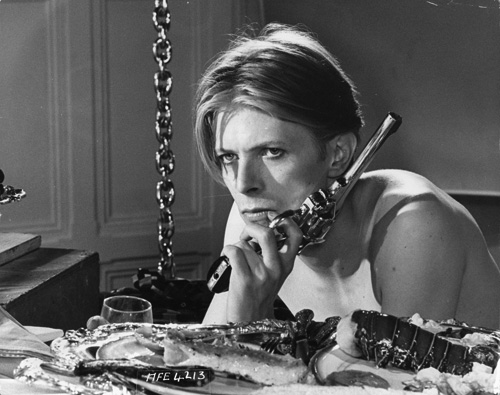
In his first major film role, David Bowie plays Thomas Newton, who turns up in the American Southwest out of the blue — no one realizes at first quite how literally — with ideas for “toys” of extraordinary technological advancement that quickly make him a very, very wealthy man. Amassing money seems to be his only real interest, toward a goal he eventually reveals to hand-picked confederates including patent attorney Buck Henry and technician Rip Torn, plus singularly dim companion Mary-Lou (Candy Clark). That goal is constructing a space vehicle capable of returning Newton to his planet, which is dying from drought. (Our protagonist’s decline is charted in his changing beverage choices, from precious water to the cheap consolation of alcohol.) He intends no harm. But despite all efforts at evading notice, he inevitably attracts invasive government attention as a freak of potential scientific, capitalist, or militaristic use.

Taking considerable liberties with Walter Tevis’ novel, Paul Mayerberg’s screenplay and Roeg’s direction enlarge several subsidiary characters, add a number of new incidents, and minimize Newton’s backstory. Yet when Earth was first released in the U.S., its 20-minutes-shorter edit removed much of the more outré inventions — including a whole lotta sex scenes, mostly between college prof Torn and myriad female students — oddly re-asserting the story’s science-fiction emphasis. Yet what remains fascinating about the film, beyond Bowie’s silvery performance and Roeg’s arresting stylistic strategies, is that it’s every bit as much a stunned observation of mid-decade middlebrow Americana as the same year’s Nashville. Like a Tibetan monk transplanted to a papier-mâché dinosaur theme park, Newton is agog at a vigorous garishness that’s as invasive as the probes eventually stuck into his body. Chocolate chip cookies, evangelical hysteria, Elvis musicals, and Mary-Lou’s ever-changing hairdos are all an equal amazement to him. The people around him age decades, but he never does, and strangely neither does the culture; when Clark and Torn visit a record store in their twilight years, it’s still selling Jim Croce records to Me Decade longhairs. Newton’s tragic fate is to be trapped in a space-time warp of alien triviality.

Famously crossing over to direction from cinematography (on movies like 1967’s Far From the Madding Crowd and 1968’s Petulia), Roeg brought a sensibility to his own projects that owed less to film and theater than to modern still photography, experimental cinema, and the literary avant-garde. Before anyone else thought likewise, his soundtracks felt like wildly unpredictable (but apt) mix tapes.

None of his features strictly fit any genre they’re aligned to, when there is one. Don’t Look Now is less interested in the supernatural than the psychological deterioration of a marriage. Bad Timing is still under appreciated as the decade’s more disturbing follow-up to Last Tango in Paris (1972), wherein male control of the female sex object grows increasingly desperate and destructive. Performance, co-directed with the late Donald Cammell, was supposed to be a Swinging London snapshot a la Blow-Up (1966) — fashionable, arty, a little kinky, with Mick Jagger acting as lure. It turned out such a druggy, gender-bending mindfuck that Warner Bros. initially refused to release it. A processing lab destroyed some “obscene” footage without permission; even without that, audiences walked out, demanded refunds, even vomited. Performance no longer shocks, but it’s still subversive.

After 1980, Roeg’s output grew steadily less compelling. After years of silence suddenly there was 2007’s Puffball: The Devil’s Eyeball, a seriocomic semi-fantasy curio based on a Fay Weldon novel. No one saw it; they didn’t miss much. At 82, it’s quite possible Roeg won’t make another feature. Yet that single decade of remarkable work still points forward, and has influenced many of the more interesting younger directors’ approaches to style and storytelling since.


THE MAN WHO FELL TO EARTH opens Fri/9 in Bay Area theaters.

Team Avalos

63

When Supervisor John Avalos chaired the Budget & Finance Committee in 2009 and 2010, his office became a bustling place in the thick of the budget process. To gain insight on the real-life effects of the mayor’s proposed spending cuts, Avalos and his City Hall staff played host to neighborhood service providers, youth workers, homeless advocates, labor leaders, and other San Franciscans who stood to be directly impacted by the axe that would fall when the final budget was approved. They camped out in City Hall together for hours, puzzling over which items they could live without, and which required a steadfast demand for funding restoration.

“One year, we even brought them into the mayor’s office,” for an eleventh-hour negotiating session held in the wee morning hours, recounted Avalos’ legislative aide, Raquel Redondiez. That move came much to the dismay of Steve Kawa, mayoral chief of staff.

Avalos, the 47-year-old District 11 supervisor, exudes a down-to-earth vibe that’s rare in politicians, and tends to display a balanced temperament even in the heat of high-stakes political clashes. He travels to and from mayoral debates by bicycle. He quotes classic song lyrics during full board meetings, keeps a record player and vinyl collection in his office, and recently showed up at the Mission dive bar El Rio to judge a dance competition for the wildly popular Hard French dance party.

Yet casual observers may not be as familiar with the style Avalos brings to conducting day-to-day business at City Hall, an approach exemplified that summer night in 2010 when he showed up to the mayor’s office flanked by grassroots advocates bent on preserving key programs.

“My role is, I’m an insider, … but it’s really been about bringing in the outside to have a voice on the inside,” Avalos said in a recent interview. “People have always been camped out in my office. These are people who represent constituencies — seniors, recipients of mental health care, unions, people concerned about violence. It’s how we change things in City Hall. It’s making government more effective at promoting opportunities, justice, and greater livelihood.” Part of the thrust behind his candidacy, he added, is this: “We want to be able to have a campaign that’s about a movement.”

That makes Avalos different from the other candidates — but it also raises a crucial question. Some of the most important advances in progressive politics in San Francisco have come not just from electoral victories, but from losing campaigns that galvanized the left. Tom Ammiano in 1999 and Matt Gonzalez in 2003 played that role. Can Avalos mount both a winning campaign — and one that, win or lose, will have a lasting impact on the city?

Workers and families

No budget with such deep spending cuts could have left all stakeholders happy once the dust settled, but Avalos and other progressive supervisors did manage to siphon some funding away from the city’s robust police and fire departments in order to restore key programs in a highly controversial move.

“There’s a Johnny Cash song I really like, written by Tom Petty, called ‘I Won’t Back Down.’ I sang it during that time, because I didn’t back down,” Avalos said at an Aug. 30 mayoral forum hosted by the Potrero Hill Democratic Club. “We made … a symbolic cut, showing that there was a real inequity about how we were doing our budgets. Without impacting public safety services, we were able to get $6 million from the Fire Department. A lot of that went into Rec & Park, and health care programs, and to education programs, and we were able to … find more fat in the Police Department budget than anybody had ever found before, about $3 million.”

Last November, Avalos placed a successful measure on the ballot to increase the city’s real-estate transfer tax, which so far has amassed around $45 million in new revenue for city coffers, softening the blow to critical programs in the latest round of budget negotiations. “Without these measures that community groups, residents, and labor organizations worked for, Mayor Ed Lee would not have been able to balance the budget,” Avalos said.

More recently, he emerged as a champion of the city’s Local Hire Ordinance, designed as a tool for job creation that requires employers at new construction projects to select San Francisco residents for half their work crews, to be phased in over the next several years. That landmark legislation was a year in the making, Redondiez said, describing how union representatives, workers, contractors, unemployed residents of Chinatown and the Bayview, and others cycled through Avalos’ City Hall office to provide input.

His collaborative style stems in part from his background. Avalos formerly worked for Service Employees International Union Local 1877, where he organized janitors, and served as political director for Coleman Advocates for Children & Youth. He was also a legislative aide to former District 6 Sup. Chris Daly, who remains a lightning rod in the San Francisco political landscape.

Before wading into the fray of San Francisco politics, Avalos earned a masters degree in social work from San Francisco State University. But when he first arrived in the city in 1989, with few connections and barely any money to his name, he took a gig at a coffee cart. He was a Latino kid originally from Wilmington, Calif. whose dad was a longshoreman and whose mom was an office worker, and he’d endured a climate of discrimination throughout his teenage years at Andover High in Andover, Mass.

Roughly a decade ago, Avalos and a group of youth advocates were arrested in Oakland following a protest against Proposition 21, which increased criminal penalties for crimes committed by youth. Booked into custody along with him was his wife, Karen Zapata, whom he married around the same time. She is now a public school teacher in San Francisco and the mother of their two children, ages 6 and 9, both enrolled in public schools.

“John has consistently been a voice for disenfranchised populations in this city,” said Sharen Hewitt, who’s known Avalos for more than a decade and serves as executive director of The Community Leadership Academy & Emergency Response Project (CLAER), an organization formed to respond to a rash of homicides and alleviate violence. “He understands that San Francisco is at a major turning point in terms of its ability to keep families and low-income communities housed. With the local hiring ordinance, most of us who have been working around violence prevention agree — at the core of this horrible set of symptoms are root causes, stemming from economic disparity.”

Asked about his top priorities, Avalos will invariably express his desire to keep working families rooted in San Francisco. District 11, which spans the Excelsior, Ingleside, and other southeastern neighborhoods, encompasses multiracial neighborhoods made up of single-family homes — and many have been blunted with foreclosure since the onset of the economic crisis.

“Our motto for building housing in San Francisco is we build all this luxury housing — it’s a form of voodoo economics,” Avalos told a small group of supporters at a recent campaign stop in Bernal Heights. “I want to have a new model for how we build housing in San Francisco. How can we help [working-class homeowners] modify their loans to make if more flexible, so they can stay here?” He’s floated the idea of creating an affordable housing bond to aid in the construction of new affordable housing units as well as loan modifications to prevent foreclosures.

“That’s what is the biggest threat to San Francisco, is losing the working-class,” said community activist Giuliana Milanese, who previously worked with Avalos at Coleman Advocates for Youth and has volunteered for his campaign. “And he’s the best fighter. Basically, economic justice is his bottom line.”

Tenants Union director Ted Gullicksen gave Avalos his seal of approval when contacted by the Guardian, saying he has “a 100 percent voting record for tenants,” despite having fewer tenants in his district than some of his colleagues. “David Chiu, had he not voted for Parkmerced, could have been competitive with John,” Gullicksen said. “But the Parkmerced thing was huge, so now it’s very difficult to even have David in same ballpark. Dennis [Herrera] has always taken the right positions — but he’s never had to vote on anything,” he said. “After that, nobody comes close.”

Cash poor, community rich

There’s no question: The Avalos for Mayor campaign faces an uphill climb. Recent poll figures offering an early snapshot of the crowded field peg him at roughly 4 percent, trailing behind candidates with stronger citywide name recognition like City Attorney Dennis Herrera or the incumbent, Mayor Ed Lee, who hasn’t accepted public financing and stands to benefit from deep-pocketed backers with ties to big business.

Yet as Assembly Member Tom Ammiano phrased it, “he’s actually given progressives a place to roost. He doesn’t pussy-foot around on the issues that are important,” making him a natural choice for San Francisco voters who care more about stemming the tides of privatization and gentrification than, say, rolling out the red carpet for hi-tech companies.

One of Avalos’ greatest challenges is that he lacks a pile of campaign cash, having received less than $90,000 in contributions as of June 30, according to an Ethics Commission filing. “He can’t call in the big checks,” said Julian Davis, board president of Booker T. Washington Community Service Center, “because he hasn’t been doing the bidding of big business interests.” A roster of financial contributions filed with the Ethics Commission shows that his donor base is comprised mainly of teachers, nonprofit employees, health-care workers, tenant advocates, and other similar groups, with almost no representatives of real-estate development interests or major corporations.

Despite being strapped for cash, he’s collected endorsements ranging from the Democratic County Central Committee, to the Harvey Milk Democratic Club, to the city’s largest labor union, SEIU 1021; he’s also won the backing of quintessential San Francisco characters such as renowned author Rebecca Solnit; San Francisco’s radical bohemian poet laureate, Diane di Prima; and countercultural icon Diamond Dave.

While some of Avalos’ core supporters describe his campaign as “historic,” other longtime political observers have voiced a sort of disenchantment with his candidacy, saying it doesn’t measure up to the sweeping mobilizations that galvanized around Gonzalez or Ammiano. Ammiano has strongly endorsed Avalos, but Gonzalez — who now works for Public Defender (and mayoral candidate) Jeff Adachi — has remained tepid about his candidacy, stating publicly in an interview on Fog City Journal, “I like [Green Party candidate Terrie Baum] and John fine. I just don’t believe in them.”

Ironically, Sup. Sean Elsbernd, often Avalos’ political opposite on board votes, had kinder words for him. “John is intelligent, John is honest, and John has integrity,” Elsbernd told the Guardian. “I don’t think he knows the city well enough to serve as chief executive … but I’ve seen the good work he’s done in his district.”

Meanwhile, Avalos is still grappling with the fallout from the spending cut he initiated against the police and fire departments in 2009. Whereas those unions sent sound trucks rolling through his neighborhood clamoring for his recall from office during that budget fight, the San Francisco Police Officers Association (SFPOA), the San Francisco Fire Fighters union, and the plumbers’ union, Local 38, have teamed up now that Avalos is running for mayor to form an independent expenditure committee targeting him and Public Defender Jeff Adachi, a latecomer to the race.

“We’ll make sure we do everything we can to make sure he never sees Room 200,” SFPOA President Gary Delagnes told the Guardian. “I would spend as much money as I could possibly summon to make sure neither ever takes office.” Delagnes added that he believes the political makeup of San Francisco is shifting in a more moderate direction, to Avalos’ disadvantage. “People spend a lot of money to live here,” he said, “and they don’t want to be walking over 15 homeless people, or having people ask them for money.”

If it’s true that the flanks of the left in San Francisco have already been supplanted with wealthy residents whose primary concern is that they are annoyed by the sight of destitute people, then more has already been lost for the progressive movement than it stands to lose under the scenario of an Avalos defeat.

The great progressive hope?

Despite these looming challenges, the Avalos campaign has amassed a volunteer base that’s more than 1,000 strong, in many cases drawing from grassroots networks already engaged in efforts to defend tenant rights, advance workplace protections for non-union employees, create youth programs that aim to prevent violence in low-income communities, and advance opportunities for immigrants. According to some volunteers, linking these myriad grassroots efforts is part of the point. Aside from the obvious goal of electing Avalos for mayor, his supporters say they hope his campaign will be a force to re-energize and redefine progressive politics in San Francisco.

“All the candidates that are running are trying to appeal to the progressive base,” Avalos said. But what does it really mean? To him, being progressive “is a commitment to a cause that’s greater,” he offered. “It’s about how to alter the relationship of power in San Francisco. My vision of progressivism is more inclusive, and more accountable to real concerns.”

N’Tanya Lee, former executive director of Coleman Advocates, was among the people Avalos consulted when he was considering a run for mayor. “The real progressives in San Francisco are the folks on the ground every day, like the moms working for public schools … everyday families, individual people, often people of color, who are doing the work without fanfare. They are the unsung heroes … and the rising progressive leaders of our city,” she said. “John represents the best of what’s to come. It’s not just about race or class. It’s about people standing for solutions.”

When deciding whether to run, Avalos also turned to his wife, Zapata, who has held leadership positions in the San Francisco teacher’s union in the past. She suggested rounding up community leaders and talking it through. “The campaign needed to be a movement campaign,” Zapata told the Guardian. “John Avalos was not running because he thought John Avalos was the most important person in the world to do this job. Our question was, if John were to do this, how would it help people most affected by economic injustice?”

Hewitt, the executive director of CLAER, also weighed in. “My concern is that he has been painted as a leftist, rooted in some outdated ideology,” she said. “I think [that characterization] is one-dimensional, and I think he’s broader than that. My perception of John is that he’s a pragmatist — rooted in listening, and attempting to respond.”

Others echoed this characterization. “He doesn’t need to be the great progressive hope,” said Rafael Mandelman, an attorney who ran as a progressive in District 8 last year. “If people are looking for the next Matt Gonzalez, I’m not sure that’s what John is about. He’s about the communities he’s representing.”

As to whether or not he has a shot at victory, Mandelman said, “It’s a very wide field, and I think John is going to have a very strong base. I think he will get enough first-choice votes to be one of the top contenders. And with ranked choice voting, anything can happen.”


Our Weekly Picks: September 7-13

0

WEDNESDAY 7

MUSIC

The Jim Jones Revue

On its new album, Burning Your House Down, the Jim Jones Revue has seemingly perfected its rowdy mix of 1950s rock ‘n’ roll and MC5-esque blues-punk. The London five-piece debuted in 2004 with a ramshackle garage rock style and a series of blistering live sets that won over the likes of Liam Gallagher and Jim Sclavunos (Nick Cave & The Bad Seeds, Grinderman) — Sclavunos produced the group’s new LP. The band’s relentless Jerry Lee Lewis-style piano twinkling, punk rock guitars, and rockabilly drumming, coupled with Jones’ intense vocal delivery (an endearing mix of Little Richard yelps and Motorhead gravitas) has earned it a reputation as one of the UK’s can’t miss live acts. (Landon Moblad)

With the Sandwitches

8 p.m., $13–$15 The Independent

628 Divisadero, SF (415) 771-1421

www.theindependentsf.com


THURSDAY 8

MUSIC

SF Symphony Free 100th Birthday Celebration

Ghirardelli chocolate squares, an afternoon party outside City Hall, and Michael Tilson Thomas conducting the SF Symphony with superstar Chinese pianist Lang Lang — all free? Yep, it’s the centennial celebration of our own musical starship, with two can’t fail crowd-pleasers, Franz Liszt’s Piano Concerto No. 1 in E-flat major and Benjamin Britten’s The Young Person’s Guide to the Orchestra, on the menu. The engaging Lang Lang has a way with Liszt’s Concerto No. 1 — his twinkling flourishes on both its silent-movie villain and John-and-Mary romantic passages can call to mind another flashy Liszt lover, Liberace, but Lang Lang’s technical enthusiasm is all his own. (Marke B.)

11:30 a.m., free

San Francisco City Hall

1 Dr. Carlton B. Goodlett Place, SF

(415) 864-6000

www.sfsymphony.org


FRIDAY 9

MUSIC

Christian Marclay

The mad genius-artist-composer-filmmaker who recently unleashed The Clock, an astonishingly well made 24-hour-long film collage on Los Angeles, is one of the highlights of an already awesome San Francisco Electronic Music Festival this year. Marclay, who was actually born just outside of San Francisco in San Rafael, before emigrating to Switzerland as a child, is a master of mezmerization. The sonic tapestries he creates with records were the precursors to turntablism, albeit a more avant-garde version than what has been popularized by DJs in the past several decades, and continue to transgress the boundaries of music and performance. The collage of sounds rendered by Marclay may seem cacophonous, but a hypnotizing rhythm always lurks just below the surface, ready to suck you in if you only let it. (Cooper Berkmoyer)

With Shelley Hirsch, Zachary Watkins, and Jessica Rylan

8 p.m., $16

Brava Theater

2781 24th St., SF

(415) 641-7657

www.sfemf.org


MUSIC

Iris DeMent

Sweet is the voice of Iris DeMent, whose Pentecostal parents kept her singing gospel even after they moved from Arkansas to Orange County. DeMent rolled her complex feelings towards the old time religion into one of the finest opening shots of any debut album: “Let the Mystery Be,” a Marilynne Robinson novel in the shape of a country song. She’s only recorded three albums since that first Infamous Angel (1992), but her songs still radiate hard-won wisdom and calm in concert. She kept the Hardly Strictly Bluegrass hillside hushed a few years ago, and one imagines tonight’s show at the Great American will be far more intimate. (Max Goldberg)

With Kiyoshi Foster

8 p.m., $35

Great American Music Hall

859 O’Farrell, SF

(415) 885-0750

www.gamh.com


MUSIC

Down

When Hurricane Katrina hit New Orleans in 2005, the devastation was near total. In the wake of the storm, different people coped in different ways. Down used the harrowing experience as inspiration for its most recent album, III: Over the Under, soulful slab of stoner metal that helped excise some of the emotional pain. Drawing on the talents of NOLA metal stalwarts Kirk Weinstein, Phil Anselmo, Pepper Keenan, and Jimmy Bower, the super-group has stayed on tour, shouting out its heavy, Southern Rock-influenced sound in defiance of disaster. (Ben Richardson)

With In Solitude, Ponykiller

8 p.m., $25

The Regency Ballroom

1300 Van Ness, SF

www.theregencyballroom.com

(415) 673-5716


SATURDAY 10

EVENT

Ghirardelli Chocolate Festival

With a name that is among the most synonymous in the world for delicious chocolate, Ghirardelli has been making tasty treats in San Francisco since 1852 — a long standing tradition that has been joined in recent years by the annual Ghirardelli Square Chocolate Festival, a two-day fete where visitors can sample a wide variety of scrumptious confections from both the famous host company, along with more than 30 other vendors and producers. A variety of cooking demonstrations and live entertainment are also on tap for this sweet event that benefits Project Open Hand. (Sean McCourt)

Through Sun/11, noon-5 p.m., $20 for 15 tastings

Ghirardelli Square

900 North Point St., SF

(415) 775-5500

www.ghirardellisq.com


MUSIC

Rancid

Now twenty years into an impressively steady career, Rancid continues to make a uniquely identifiable version of punk rock that sounds entirely uninterested in modern spins on the genre. The East Bay-born group flirted with the mainstream with hits like “Ruby Soho” and “Time Bomb,” but its catalog goes far deeper than those pop-punk radio gems. From the early skate punk of Let’s Go, to the late period Clash-aping Life Won’t Wait, to the fiery hardcore influences of its self-titled release in 2000, Rancid has cemented itself over the years as one of the essential bands to emerge from the punk revival of the 1990s.(Landon Moblad)

With H20 and DJ J & Nicki Bonner

8 p.m., $24 The Warfield 982 Market, SF (415) 354-0900 www.thewarfieldtheatre.com


MUSIC

Balkans

The swallow-hard, pleading vocals of Balkans — which invoke the Strokes’ Julian Casablancas — occasionally sounds slurred, like perhaps the singer who owns those pipes knocked back a few. And who know, maybe he did. The band is after all said to be influenced by its Atlanta-hometown compatriots the Black Lips — known for destructive antics at live shows. And in a recent interview with video platform Noisey (curated by VICE), Balkans and fans did claim the band has set off fireworks, thrown raw meat, and bled on guitars during shows. Regardless of such stories, it doesn’t get in the way of the music. The fresh-faced 20-somethings, buddies since childhood, spin fuzzy ’60s pop-infused garage rock with jangly guitars — gaining comparisons to both the Walkmen and Television. Those equivalences alone are enough to want to grab a beer. (Emily Savage)

With PS I Love You

9:30 p.m., $10

Hemlock Tavern

1131 Polk, SF

(415) 923-0923

www.hemlocktavern.com


MUSIC

Totimoshi

Totimoshi has always defied categorization. The band, led by the baleful singing and scrabbling guitar of Antonio Aguilar, relies on a rock-solid rhythm section comprised by bassist Meg Castellanos and drummer Chris Fugitt to round out its idiosyncratic hard-rock sound. New album Avenger includes guest spots by Mastodon’s Brent Hinds, the Melvin’s Dale Crover, and Neurosis’ Scott Kelly, which should give you some idea of what’s in store. Catching them in El Rio’s intimate back room will be a great opportunity to see the band putting it’s best foot forward for a hometown crowd. (Richardson)

With Hot Fog, Belligerator

9 p.m., $8

El Rio

3158 Mission, SF

415-282-3325

www.elriosf.com


SUNDAY 11

MUSIC

Slim Cessna’s Auto Club

After a week-long, whiskey-fueled bender that leaves you half dead and nearly broke in a seedy motel room just outside of New Orleans, a sudden concern for your spiritual well being drives you into the dusky sunlight in search of salvation. Bleary eyed and still drunk, you stumble across a small Pentecostal church on an empty street populated by shuttered storefronts and a lone dog. A sign outside reads: “DIVINE HEALING. LIVE MUSIC. SNAKES.” Figuring you’ve got nothing to loose, really, you open the door. The healing is neat, you guess, and hey, who doesn’t love snakes, but the music is like nothing you’ve ever heard before. It’s like Johnny Cash performing an exorcism on Spencer Moody: Slim Cessna’s Auto Club (that’s who played, you later find out) put on one of the best damn shows you’ve ever seen and leaves you grinning . . . but still damned. (Berkmoyer)

With the Ferocious Few and Tiny Televisions

9 p.m., $12

Bottom of the Hill

1233 17th Street

San Francisco, CA

(415) 621-4455

www.bottomofthehill.com


TUESDAY 13

MUSIC

Teen Daze

Ambient pop can go one of two ways; this one goes the right way. True to its name, Teen Daze, sounds as if it he creates music under the lush and youthful haze of teenage emotion. Stretched out in bed, it’s music for you to toss and turn to, giant headphones attached to your head, wrapped in heady thoughts of loves gone by, slight trickles of keyboard optimism bursting over pillowy ambient clouds and pangs of sorrow. Presented by Epicsauce.com and Yours Truly, the show marks the release of the Vancouver, British Columbia-based synth musician’s newest record, A Silent Planet on Waaga Records. Throw on an oversized sweatshirt and let your thoughts get the better of you. (Savage)

With Yalls, Speculator

8 p.m. $6

Public Works

161 Erie, SF

(415) 932-0955

www.publicsf.com


MUSIC

The Vibrators

It’s the Vibrators! The 16-year-old with a safety pin though his cheek and Clorox in his hair that lives at the center of all that is still good in your heart demands that you go see them! Formed in London in 1976, the Vibrators was one of Britain’s first punk bands and 35 years later it’s also one of the longest lasting. Although numerous line-up changes have reduced the band to only one original member, drummer John ‘Eddie’ Edwards, the current three-piece line up can still tear through classics like “Baby, Baby” and “Whips and Furs” with the energy of the good ol’ days of punk and the precision that comes with three odd decades of practice. (Berkmoyer)

With the Meat Sluts, Sassy!!! and Elected Officials

9 p.m., $8

The Knockout

3223 Mission, SF

(415) 550-6994

www.theknockoutsf.com


The Guardian listings deadline is two weeks prior to our Wednesday publication date. To submit an item for consideration, please include the title of the event, a brief description of the event, date and time, venue name, street address (listing cross streets only isn’t sufficient), city, telephone number readers can call for more information, telephone number for media, and admission costs. Send information to Listings, the Guardian Building, 135 Mississippi St., SF, CA 94107; fax to (415) 487-2506; or e-mail (paste press release into e-mail body — no text attachments, please) to listings@sfbg.com. Digital photos may be submitted in jpeg format; the image must be at least 240 dpi and four inches by six inches in size. We regret we cannot accept listings over the phone.

Film Listings

0

OPENING

The Apparition Genre-movie vets Ashley Greene and Tom Felton star in this supernatural thriller set on a college campus. (runtime not available)

Bucky Larson: Born to Be a Star Comedian Nick Swardson stars as a wannabe porn star in this comedy from the director of The Hot Chick (2002). (runtime not available)

Chasing Madoff Doc about the investigators who brought down the notorious Ponzi scammer. (1:31)

Circumstance Thirteen (2003) goes to Tehran? The world of sex, drugs, and underground nightclubs in Iran provides the backdrop for writer-director Maryam Keshavarz’s lusty, dreamy take on the passionate teenagers behind the hijabs. Risking jail and worse are the sassy, privileged Atafeh (Nikohl Boosheri) and the beautiful, orphaned Shireen (Sarah Kazemy), who, much like young women anywhere, just want to be free — to swim, sing, dance, test boundaries, lose, and then find themselves. The difference here is that they’re under constant, unnerving surveillance, in a country where more than 70 percent of the population is less than 30 years old. Nevertheless, within their mansion walls and without, beneath graffitied walls and undulating at intoxicating house parties, the two girls begin to fall in love with each other, as Atafeh’s handsome, albeit creepy older brother Mehran (Palo Alto-bred Reza Sixo Safai) gazes on. The onetime musical talent’s back from rehab, has returned to the mosque with all the zeal of the prodigal, and has hooked up with the Morality Police that enforces the nation’s cultural laws. Filmed underground in Beirut, with layers that permit both pleasure and protest (wait for the hilarious moment when 2008’s Milk is dubbed in Farsi), Circumstance viscerally transmits the realities and fantasies of Iranian young women on the verge. (1:45) (Chun)

Contagion Steven Soderbergh directs every movie star on the planet (Matt Damon, Marion Cotillard, Gwyneth Paltrow, Kate Winslet, Jude Law, Laurence Fishburne, and about 67 others) in this thriller about a worldwide disease epidemic. (1:42)

Creature From Wikipedia: “The group decides to stop at a roadside convenience store owned by Chopper (Sid Haig), who tells them the tale of Lockjaw, a fabled god-like creature who is half-man, half-alligator.” Ergo, this is either gonna be terrible or the greatest movie ever made. (1:33)

Little Rock When the rental car driven by Atsuko (Atsuko Okatsuka) and Rintaro Sakamato (Rintaro Sawamoto) breaks down in nowheresville, California (actually, a small town called Little Rock), an air of disillusion hangs between the siblings, on vacation to “see America.” Holed up in a motel room, their disappointment is palpable, until a chance encounter with some locals sucks the pair into exurban American life. By the time their car is again roadworthy, Atsuko can’t bear to leave and decides to stay behind as her brother, the only one of the two who speaks a word of English, continues ahead without her. Communication is the driving force behind Little Rock and the language barrier somehow never gets stale; it certainly allows Okatsuka the opportunity for some superb acting. Despite some directorial flourishes (by Mike Ott), however, the story doesn’t really hold many surprises, and its inevitable conclusion is glimpsed long before it’s reached. (1:25) Roxie. (Cooper Berkmoyer)

*Love Crime See “Original Sin.” (1:46)

*The Man Who Fell To Earth See “Roeg, Warrior.” (2:19)

Puzzle A middle-aged housewife finds herself through jigsaw competitions in this Argentina-France co-production. (1:29) SFFS New People Cinema.

Shaolin Jackie Chan and Andy Lau star in Benny Chan’s historical kung fu extravaganza. (2:11) Four Star.

*Warrior Those wondering why the mixed martial arts scene has captured the imagination of so many can finally understand what the fuss is all about, now that it comes filtered through a melodramatic narrative akin to The Fighter (2010). Warrior‘s mis-en-scene is immediately recognizable: a prodigal returns, in the form of Tom Conlon (Tom Hardy). Once a talented teenage wrestler, the now-battered man is the damaged youngest son of alcoholic ex-boxer Paddy Conlon (Nick Nolte). Tom wants his father to train him for a major mixed martial arts tournament with a multimillion-dollar purse, though the two obviously still have a deadly hold on each other — the repentant Paddy is on the wagon and the emotionally bruised Tom harbors secrets he won’t reveal — and battle with cutting comments rather than fists. Tom isn’t the only prodigal in the house: Paddy has lost the trust of Tom’s bro, Brendan (Joel Edgerton), a former fighter and present-day physics high school teacher who’s struggling to make ends meet with an underwater mortgage. Though Warrior is no Raging Bull (1980), it almost outdukes The Fighter in terms of its brutal bouts, conveying the swift, no-holds-barred action of MMA in the ring, while giving actors plenty of drama to wrap their jowls ’round — particularly in Nolte’s case. His tore-up turn as an all-excuses patriarch is as heartbreaking as a solid kick to the jaw. (2:19) (Chun)

ONGOING

Apollo 18 (1:26)

*Beginners There is nothing conventional about Beginners, a film that starts off with the funeral arrangements for one of its central characters. That man is Hal (Christopher Plummer), who came out to his son Oliver (Ewan McGregor) at the ripe age of 75. Through flashbacks, we see the relationship play out — Oliver’s inability to commit tempered by his father’s tremendous late-stage passion for life. Hal himself is a rare character: an elderly gay man, secure in his sexuality and, by his own admission, horny. He even has a much younger boyfriend, played by the handsome Goran Visnjic. While the father-son bond is the heart of Beginners, we also see the charming development of a relationship between Oliver and French actor Anna (Mélanie Laurent). It all comes together beautifully in a film that is bittersweet but ultimately satisfying. Beginners deserves praise not only for telling a story too often left untold, but for doing so with grace and a refreshing sense of whimsy. (1:44) (Peitzman)

*Bellflower Picture Two Lane Blacktop (1971) drifters armed with “dude”-centric vocabulary and an obsession with The Road Warrior (1981) and its apocalypse-wow survivalist chic. There are so many pleasures in this janky, so-very-DIY, heavy-on-the-sunblasted-atmosphere indie that you’re almost willing to overlook the clichés, the dead zones, and the annoying characters. Seeming every-dudes Woodrow (director-writer-producer Evan Glodell) and Aiden (Tyler Dawson) are far too obsessed with tricking out their cars and building a flamethrower for their own good — the misfits must force themselves out of the metal shop of the mind to meet women. So when Woodrow goes up against Milly (Jessie Wiseman) in a cricket-eating contest at a bar, it’s love at first bite. Their meet-gross morphs into a road trip and eventually a relationship, while the flamethrower nags, unexplained, in the background, like an unfired gun — or an unconsummated, not-funny bromance. These manifestations of male fantasy — muscle cars, weapons, and tough chicks — are cast in a dreamy, saturated, and burnt-at-the-edges light, as Glodell and company weave together barely articulated reveries and bad-new-west imagery with a kind of fuck-all intelligence, culminating in a finale that will either haunt you with its scattershot machismo-romanticism or leave you scratching your noggin wondering what just happened. (1:46) (Chun)

Brighton Rock Writer Rowan Joffe (2010’s The American) moves into the director’s chair for this Graham Greene adaptation, previously filmed in 1947 with an early-career star turn by Richard Attenborough. Joffe’s version updates Greene’s 1938 story to 1964, allowing the brutal actions of small-time hood Pinkie Brown to unfold as Britain’s mods vs. rockers youth riots boil in the background. Don’t get too excited, though — despite a cool premise and even cooler setting, and the presence of veterans Helen Mirren and John Hurt in supporting roles, Brighton Rock rages without a rudder. Pinkie is played by Sam Riley (so good as Ian Curtis in 2007’s Control), who snarls like a sociopathic James Dean and is so transparently hateful it’s hard to root for anything other than his hastened demise. Brighton Rock‘s most memorable element is probably Andrea Riseborough, an on-the-verge young Brit who’s being touted as the next Carey Mulligan. She has the thankless (yet showy) role of Rose, a naïve waitress who becomes entangled in Pinkie’s web after being in the wrong place at the wrong time. A far-from-storybook ending awaits, and you’ll experience little enjoyment watching the characters claw their way there. (1:51) (Eddy)

Buck This documentary paints a portrait of horse trainer Buck Brannaman as a sort of modern-day sage, a sentimental cowboy who helps “horses with people problems.” Brannaman has transcended a background of hardship and abuse to become a happy family man who makes a difference for horses and their owners all over the country with his unconventional, humane colt-starting clinics. Though he doesn’t actually whisper to horses, he served as an advisor and inspiration for Robert Redford’s The Horse Whisperer (1998). Director Cindy Meehl focuses generously on her saintly subject’s bits of wisdom in and out of a horse-training setting — e.g. “Everything you do with a horse is a dance” — as well as heartfelt commentary from friends and colleagues. In the harrowing final act of the film, Brannaman deals with a particularly unruly horse and his troubled owner, highlighting the dire and disturbing consequences of improper horse rearing. (1:28) (Sam Stander)

Captain America: The First Avenger OK, Marvel. I could get behind 2008’s Iron Man (last year’s Iron Man 2, not so much), but after Thor and now Captain America, I’m starting to get cynical about this multi-year build-up to the full-on Avengers movie, due in May 2012. Can even a superhero-stuffed movie directed by Joss Whedon live up to all this hype? There’s plenty of time to ponder, and maybe worry a little, with Captain America’s backstory-explaining picture now in theaters. Chris Evans stars as the 90-pound weakling who morphs into a supersoldier, thanks to the World War II-era tinkerings of a scientist (Stanley Tucci) and an inventor (Dominic Cooper as Howard Stark, a.k.a. Iron Man’s dad). The original plan for the musclebound shield-bearer (fighting Nazis, natch) gets waylaid a bit when the newly famous Captain America becomes a PR prop for the U.S. government; it’s abandoned entirely when a worse-than-Hitler foe, in the guise of power-obsessed Red Skull (Hugo Weaving), threatens the world. Directed by Spielberg cohort Joe Johnston, Captain America is gee-whiz enjoyable enough, but it’s very nearly the same movie as Thor, which no amount of Tommy Lee Jones (as a sarcastic army colonel) wisecracks can conceal. And here’s an anti-spoiler: there’s no post-credits surprise in this one, so you can bolt as soon as they start to roll. (2:09) (Eddy)

Colombiana (1:47)

Conan the Barbarian Neither 3D (unnecessary) nor Game of Thrones‘ Jason Momoa (beefcake-y) are enough to make this Conan the Barbarian competition for the 1982 Schwarzenegger classic. This new take is a barely adequate adventure movie helped along by Rose McGowan’s leering turn as an evil witch with Freddy Krueger claws. Would that everyone involved (including frequent remake director Marcus Nispel) had McGowan’s razor-sharp grasp of tone; as a whole, the film is never quite sure if it’s a camp-tastic voyage (the prologue, containing Conan’s birth and much Ron Perlman nostril-flaring, suggests what might have been) or a semi-straightforward fantasy actioner. A totally forgettable female lead (Rachel Nichols), a he-was-scarier-in-Avatar villain (Stephen Lang), a blah mixture of two tired plots (revenge + “chosen one”) — there’s just not a lot here, aside from a few hilarious lines of dialogue and Momoa’s muscles. He was so great in Game of Thrones, though, I suspect this dud won’t keep his career from skyrocketing. (1:42) (Eddy)

Cowboys and Aliens Here ’tis in a nutshell: the movie’s called Cowboys and Aliens — and that’s exactly, entirely what you’ll get. Director Jon Favreau may never best 2008’s Iron Man (actor Jon Favreau will prob never top 1996’s Swingers, but that’s a debate for another time), but that doesn’t mean he won’t have a good time trying. Cowboys is a genre mash-up in the most literal sense; as the title suggests, it pits Wild West gunslingers (Harrison Ford as a crabby cattleman, Daniel Craig as an amnesiac outlaw) against gold-seeking space invaders who also delight in kidnapping and torturing humans. As stupidly entertaining as it is, this is a textbook example of a pretty OK movie that could have been so much better … if only. If only the alien characters had a little bit more District 9-style personality. If only the story had a shred of suspense — look ye not here for “spooky” and “mysterious;” this shit is 100 percent full-on explosions. If only Craig’s comically fine-tooled physique didn’t outshine his wooden acting. And so forth. (1:58) (Eddy)

Crazy, Stupid, Love Keep the poster’s allusion to 1967’s The Graduate to one side: there aren’t many revelations about midlife crises in this cleverly penned yet strangely flat ensemble rom-com, awkwardly pitched at almost every demographic at the cineplex. There’s the middle-aged romance that’s withered at the vine: nice but boring family man Cal (Steve Carell) finds himself at a hopeless loss when wife and onetime teenage sweetheart Emily (Julianne Moore) tells him she wants a divorce and she’s slept with a coworker (Kevin Bacon). He ends up waxing pathetic at a slick nightclub where he catches the eye of the well-dressed, spray-tanned smoothie Jacob (Ryan Gosling), who appears to have taken his ladies man stance from the Clooney playbook. It’s manly makeover time: GQ meets Pretty Woman (1990)! Cut to Cal and Emily’s babysitter Jessica (Analeigh Tipton), who is crushing out on Cal, while the separated couple’s tween Robbie (Jonah Bobo) hankers for Jessica. Somehow Josh Groban worms his way into the mix as the dullard suitor of Hannah (Emma Stone) in a hanging chad of a storyline that must somehow be resolved in this mad, mad, mad, mad — actually, the problem with Crazy, Stupid, Love is that it isn’t really that crazy. It tries far too hard to please everybody in the theater to its detriment, reminding the viewer of a tidy, episodic TV series (albeit a quality effort) like Modern Family more than an actual film. Likewise I yearned for a way to fast-forward through the too-cute Jessica-Robbie scenes in order to get back to the sleazy-smart, punchy complexity of Gosling, playing adeptly off both Carrell and Stone. (1:58) (Chun)

The Debt On paper, The Debt has a lot going for it: captivating history-based plot, “it” actor Jessica Chastain, Helen Mirren vs. Nazis. And while the latest from John Madden (1998’s Shakespeare in Love) is fairly entertaining, the film is ultimately forgettable. Chastain plays Rachel, a member of an Israeli team tasked with capturing a Nazi war criminal and bringing him to justice. Mirren is the older Rachel, who is haunted by the long-withheld true story of the mission. Although The Debt traffics in spy secrets, it’s actually rather predictable: the big reveal is shrug-worthy, and the shocking conclusion is expected. So while the entire cast — which also includes Tom Wilkinson, Sam Worthington, and Ciaran Hinds — turn in admirable performances, the script is lacking what it needs to make The Debt an effective drama or thriller. Like 2008’s overrated The Reader, the film tries to hide its inadequacies under heavy themes and the dread with which we remember the Holocaust. (1:54) (Peitzman)

The Devil’s Double Say hello to my little friend, again— and rest assured, it’s not a dream and you’re seeing double. New Zealand filmmaker Lee Tamahori gets back to his potboiler roots with this campy, claustrophobic look back at the House of Saddam Hussein, based on a true story and designed to win over fans of Scarface (1983) with its portrait of mad excess and deca-dancey ’80s-ish soundtrack. The craziest poseur of all is Hussein’s son Uday (Dominic Cooper), a petty dictator-in-the-making — and, according to this film, a full-fledged murderous pedophile — who chomps cigars and wraps his jaws around schoolgirls while Cooper happily chews scenery. Uday needs a double to sidestep all those troublesome assassination attempts, so he enlists look-alike childhood friend Latif (also Cooper) to get the surgery, pop in the overbite, bray like a madman, make appearances in his stead, and function as a kind of pet human. Never mind Ludivine Sagnier, glassy-eyed and absurd in the role of Uday’s favorite sex kitten Sarrab — Double is completely Cooper’s, who seizes the moment, investing the morally upstanding Latif with a serious sincerity with just his eyes and body language and infusing evil odd job Uday with a dangerous, comic-book unpredictability. To his credit, Cooper imbues such cult-ready, blow-the-doors-off lines as “I love cunt! I love cunt more than god!” with, erm, believability, even as the denouement rings somewhat false. (1:48) (Chun)

Don’t Be Afraid of the Dark If you’re expecting a traditional haunted house story, Don’t Be Afraid of the Dark might be a disappointment. The film, which was co-written by Guillermo del Toro, has a lot in common with his Pan’s Labyrinth (2006) — both movies are more dark fairy tale than horror. They follow a young girl who discovers a mystical world around her, much to the disbelief of the adults around her. It’s worth noting that Don’t Be Afraid of the Dark is lighter fare: despite all the peril involved, it’s actually pretty fun. Young Bailee Madison, who made such an impression in 2009’s Brothers, is a charming lead, precocious but believable. And Katie Holmes is surprisingly sympathetic in her role as the caring stepmother, a nice switch from the standard fairy tale trope. As with Fright Night, the ad campaign for Don’t Be Afraid of the Dark is misleading, so here’s hoping audience members looking for a gory slasher will appreciate a whimsical fable instead. (1:40) (Peitzman)

Fright Night Don’t let the spooky trailer fool you: the Fright Night remake is almost as silly as the original. In fact, it follows the 1985 film closely, as young Charley Brewster (Anton Yelchin) comes to realize that his neighbor Jerry (Colin Farrell) is a vampire. The biggest change is a smart one — this Fright Night transforms late-night TV host Peter Vincent into Criss Angel-type illusionist Peter Vincent (David Tennant). The casting is spot on all-around, and frankly, Farrell is a lot more believable than Chris Sarandon as the seductive bad boy. The only real problem with the new Fright Night — other than the unnecessary 3D — is that it never fully commits to camp the way the original did. There’s a bit too much back-and-forth between serious scares and goofy blood splatters. Luckily, it’s still an entertaining remake that doesn’t crap all over a classic. It’s also a great reminder that vampires don’t have to be moody — remember, they used to be fun. (2:00) (Peitzman)

*The Future Dreams and drawings, cats and fantasies, ambition and aimlessness, and the mild-mannered yet mortifying games people play, all wind their way into Miranda July’s The Future. The future’s a scary place, as many of us fully realize, even if you hide from it well into your 30s, losing yourself in the everyday. But you can’t duck July’s collection of moments, objects, and small gestures transformed into something strangely slanted and enchanted, both weird and terrifying, when viewed through July’s looking glass. Care and commitment — to oneself and others — are two vivid threads running through The Future. Cute couple Sophie (July) and Jason (Hamish Linklater) — unsettling look-alikes with their curly crops — appear at first to be sailing contently, aimlessly toward an undemanding unknown: Jason works from home as a customer-service operator, and Sophie attempts to herd kiddies as a children’s dance instructor. But enormous, frightening demands beckon — namely the oncoming adoption of a special-needs feline named Paw-Paw (voiced by July as if it’s a traumatized, innocent child). Lickety-splitsville, they must be all they can be before Paw-Paw’s arrival. The weirdness of the familiar, and the kindness of strangers, become ways into fantasy and escape when the couple bumps up against the limits of their imagination. This ultra-low-key horror movie of the banal is obviously remote territory for July (2005’s Me and You and Everyone We Know). The Future is her best film to date and finds her tumbling into a kind of magical realism or plastic fantastic, embodied by a talking cat that becomes the conscience of the movie. (1:31) (Chun)

A Good Old Fashioned Orgy (1:35)

The Guard Irish police sergeant Gerry Boyle (Brendan Gleeson) is used to running his small town on his own terms — not in a completely Bad Lieutenant (1992) kind of way, though he’s not afraid to sample drugs and hang with hookers. More like, he’s been running the show for years, and would prefer that big-city cops stay the hell out of his village. Alas, a gang of drug smugglers is doing business in the area, so an officious group of investigators from Dublin (horrors!) and America (in the form of an FBI agent played by Don Cheadle) soon descend. His mother’s dying, his brand-new partner’s missing, and between all the interlopers on both sides of the law, Boyle’s having a hard time having a pint in peace. Good thing he’s not as simple-minded as all who surround him think he is. Writer-director John Michael McDonagh (brother of playwright Martin, who directed 2008’s In Bruges — also starring Gleeson) puts an affable Irish spin on what’s essentially a pretty typical indie comedy, with some pretty typical crime-drama elements layered atop. Boyle’s character is memorably clever, but the film that contains him never quite elevates to his level. (1:36) (Eddy)

Gun Hill Road Though the visibility of gays and lesbians in cinema remains (largely) confined to independent film, Rashaad Ernesto Green, in his debut feature Gun Hill Road, uses the creative freedom afforded by that closeting to explore issues of race and confused sexuality amid the Latino population of the Bronx. Esai Morales is Enrique, a former drug dealer returning from prison to his wife Angela (Judy Reyes) and teenage son Michael (Harmony Santana). But everyone seems to have moved on with their lives. Angela is having an affair, and Michael has created a new persona, Vanessa. Green’s film focuses on the relationship between the damaged Enrique and Michael, whose cross-dressing and budding transsexuality puts the family members at odds. Nominated for the Grand Jury Prize at Sundance and an entry in this year’s Frameline Film Festival, Gun Hill Road is one in a recent spate of films that deals with coming out in an urban setting. Like Green’s film, Peter Bratt’s La Mission (2009) offered a picture of homophobia in the Latino community. But Gun Hill Road, despite its bulging dramatic heft, shirks the after-school-special formula of La Mission by imagining complex characters rather than hewing them from instantly recognizable, sympathetic archetypes. (1:28) (Ryan Lattanzio)

*Harry Potter and the Deathly Hallows Part 2 Chances are you aren’t going to jump into the Harry Potter series with Harry Potter and the Deathly Hallows Part 2. So while the movie is probably the best Harry Potter film yet, it’s more a fitting conclusion than a standalone film. For fans of the books, there are no real surprises — this is a close adaptation. And for those Harry Potter movie fans who haven’t read the books, shame on you, and kudos if you managed to not get spoiled. It’s hard for me to offer a serious critical analysis of Part 2, because it represents the end of a long and very emotional journey. (Everyone in that audience was crying. Everyone.) I will say that, as was the case in the book, there are a few overdone, schmaltzy moments that aren’t really necessary. But in the context of the series, they’re forgivable — this may not be the great cinematic event of our generation, but Harry Potter as a whole is sure to be one of our most enduring cultural icons. (2:10) (Peitzman)

*The Hedgehog You needn’t possess the rough, everyday refinement of the characters of The Hedgehog to appreciate this debut feature by director-screenwriter Mona Achache — just an appreciation for a delicate touch and a tender heart. Eleven-year-old Paloma (the wonderful Garance Le Guillermic) is too smart for her own good, bored, neglected by her parents, and left to fend for herself with only her considerable imagination and a camcorder. She drifts around her fishbowl of privilege, a deluxe art nouveau-style apartment building in Paris, leveling her all-too-wise gaze on its denizens and plotting certain suicide on her 12th birthday — that is until a new resident appears in her viewfinder: a kindly Japanese gentleman Kakuro Ozu (Togo Igawa). He has as much of a connoisseur’s eye as Paloma — the proof is in his unlikely focus of attention, the building’s concierge Renée Michel (Josiane Balasko, resembling a burly Gertrude Stein), who hides her cultured and bookish inclinations behind a gruff, drab exterior. They recognize in each other a reverence for an almost monkish life of the mind, the austere elegance of wabi-sabi, and the transient beauty of rough-hewn imperfection, even in the sleek, well-heeled heart of the City of Light. To the credit of Achache, working with Muriel Barbery’s novel, these unlikely fragile friendships between outsiders take hold in a way that sidesteps preciousness and stays with you long after its pages have turned. (1:40) Smith Rafael. (Chun)

The Help It’s tough to stitch ‘n’ bitch ‘n’ moan in the face of such heart-felt female bonding, even after you brush away the tears away and wonder why the so-called help’s stories needed to be cobbled with those of the creamy-skinned daughters of privilege that employed them. The Help purports to be the tale of the 1960s African American maids hired by a bourgie segment of Southern womanhood — resourceful hard-workers like Aibileen (Viola Davis) and Minny (Octavia Spencer) raise their employers’ daughters, filling them with pride and strength if they do their job well, while missing out on their own kids’ childhood. Then those daughters turn around and hurt their caretakers, often treating them little better than the slaves their families once owned. Hinging on a self-hatred that devalues the nurturing, housekeeping skills that were considered women’s birthright, this unending ugly, heartbreaking story of the everyday injustices spells separate-and-unequal bathrooms for the family and their help when it comes to certain sniping queen bees like Hilly (Bryce Dallas Howard). But the times they are a-changing, and the help get an assist from ugly duckling of a writer Skeeter (Emma Stone, playing against type, sort of, with fizzy hair), who risks social ostracism to get the housekeepers’ experiences down on paper, amid the Junior League gossip girls and the seismic shifts coming in the civil rights-era South. Based on the best-seller by Kathryn Stockett, The Help hitches the fortunes of two forces together — the African American women who are trying to survive and find respect, and the white women who have to define themselves as more than dependent breeders — under the banner of a feel-good weepie, though not without its guilty shadings, from the way the pale-faced ladies already have a jump, in so many ways, on their African American sisters to the Keane-eyed meekness of Davis’ Aibileen to The Help‘s most memorable performances, which are also tellingly throwback (Howard’s stinging hornet of a Southern belle and Jessica Chastain’s white-trash bimbo-with-a-heart-of-gold). (2:17) (Chun)

*Higher Ground Higher Ground does not bite off more than it can chew. I guess that should go without saying, but it’s striking how comfortably Vera Farmiga (in her directorial debut) tackles this story of devotion and doubt. Based on the memoirs of Carolyn S. Briggs, who co-wrote the screenplay, this deeply personal film follows Corrine Walker (Vera Farmiga) from her adolescence through the trials of youth and middle age, her marriage to high school sweetheart Ethan (Joshua Leonard), and their lives as members of a small hippie Christian community. Although religion serves as a backdrop for Higher Ground, it doesn’t suffocate the human element of the story; it’s less a film about Christianity than it is about the challenges one woman faces as she tries to find room for herself amidst faith. Farmiga treats her subjects with empathy and humor and crafts a thoughtful, tender slice of sixties Midwest Americana. (1:49) (Cooper Berkmoyer)

*The Interrupters With concern from society and government as a whole at low ebb, communities at greater risk of violence from within than ever have had to come up with their own peace-making solutions. The Interrupters, the latest documentary by Steve James (1994’s Hoop Dreams), shows dedicated efforts to help one of the nation’s worst centers of such bloodshed: Chicago. “Violence is like the great infectious diseases of all history,” says epidemiologist Gary Slutkin, in that it can be stopped from spreading to epidemic proportions by numerous “initial interruption(s) of transmission” at its source. He translated that perspective into the founding of CeaseFire, an organization that doesn’t aim to summarily end the existence of gangs and drug trade. Instead, its plain but hardly simple mission is to stop the shootings, stabbings, etc. which are exacerbated by unemployment, broken families, and other sources of stress whose cumulative effect can rapidly escalate a casual dis to a mortal confrontation. Under CeaseFire’s auspices, Tio Hardiman created the Violence Interrupters program, which drafts people from the community — many former gangbangers themselves — as mediators wading into conflicts to defuse them before things get out of hand. It takes considerable will and nerves of steel; “interrupters” have been shot at, and during the course of this documentary’s year-long span one volunteer lands in the hospital for his trouble. But The Interrupters makes a powerful case against the inevitability of hopelessness turning into violence. (2:05) (Harvey)

*Love Exposure Sion Sono’s Love Exposure opens with the claim that it’s “based on a true event,” which is no doubt its first joke. After the death of his saintly mother, youthful protagonist Yu (Takahiro Nishijima) adapts to the adoption of the priesthood by his father (Atsuro Watabe), though it’s harder to accept the eventual intrusion of an insanely needy new parishioner (a memorable Makiko Watanabe), a crackhead-acting real-life succubus who swiftly destroys dad’s faith and vocation. As a result Yu falls in with a bad crowd, becoming its Jesus in a weird pseudo spiritual observance of taking “peek-a-boo panty photos” while remaining otherwise chaste in anticipation of meeting his own personal Madonna — Holy Virgin and Ciccone personae inclusive. High school heartache, martial arts, Ravel’s Boléro, female impersonation, and the insidious manipulations of an agent (Sakura Ando) from the mysterious, Scientology-like Zero Church all factor prominently in a careening story whose takes on religion, sin, and redemption are nothing if not antic. Just what Sono is saying, however, tends to get lost in the blur. Exposure‘s sheer onslaught, not to mention its scale, have made bowled-over converts out of many viewers. Whether its crazy quilt requires 237 minutes, or 90, or 900 for that matter, is an open question — is the writer-director really going somewhere here, or just going and going and going? (3:57) Roxie. (Harvey)

Midnight in Paris Owen Wilson plays Gil, a self-confessed “Hollywood hack” visiting the City of Light with his conservative future in-laws and crassly materialistic fiancée Inez (Rachel McAdams). A romantic obviously at odds with their selfish pragmatism (somehow he hasn’t realized that yet), he’s in love with Paris and particularly its fabled artistic past. Walking back to his hotel alone one night, he’s beckoned into an antique vehicle and finds himself transported to the 1920s, at every turn meeting the Fitzgeralds, Gertrude Stein (Kathy Bates), Dali (Adrien Brody), etc. He also meets Adriana (Marion Cotillard), a woman alluring enough to be fought over by Hemingway (Corey Stoll) and Picasso (Marcial di Fonzo Bo) — though she fancies aspiring literary novelist Gil. Woody Allen’s latest is a pleasant trifle, no more, no less. Its toying with a form of magical escapism from the dreary present recalls The Purple Rose of Cairo (1985), albeit without that film’s greater structural ingeniousness and considerable heart. None of the actors are at their best, though Cotillard is indeed beguiling and Wilson dithers charmingly as usual. Still — it’s pleasant. (1:34) (Harvey)

Motherland When Raffi Tang (Francoise Yip) learns of her estranged mother’s death, the prodigal-daughter returns to her hometown, San Francisco, only to discover that nothing is as first supposed. Forced to contend with the protracted legal battle between her late mother and re-married father (Kenneth Tsang) as well as an incompetent (and poorly acted) police detective (Jason Payne), Tang drifts, looking distracted, lost, and maybe vaguely concerned throughout the first two thirds of the film. Yip does little to enliven a flat script rife with stock phrases and worn cinematic conventions, and while her emotional distance seems genuine, it’s boring nonetheless. Motherland is, to its credit, an angry movie — director Doris Yeung drew on her own experience with the murder of her mother — but the rage fizzles when it finally does erupt, smothered by uninspired acting and a directionless screenplay. (1:33) (Berkmoyer)

*My Perestroika Robin Hessman’s very engaging documentary takes one very relatable look at how changes since glasnost have affected some average Russians. The subjects here are five thirtysomethings who, growing up in Moscow in the 70s and 80s, were the last generation to experience full-on Communist Party indoctrination. But just as they reached adulthood, the whole system dissolved, confusing long-held beliefs and variably impacting their futures. Andrei has ridden the capitalist choo-choo to considerable enrichment as the proprietor of luxury Western menswear shops. But single mother Olga, unlucky in love, just scrapes by, while married schoolteachers Lyuba and Boris are lucky to have inherited an apartment (cramped as it is) they could otherwise ill afford. Meanwhile Ruslan, once member of a famous punk band (which he abandoned on principal because it was getting “too commercial”), both disdains and resents the new order just as he did the old one. Home movies and old footage of pageantry celebrating Soviet socialist glory make a whole ‘nother era come to life in this intimate, unexpectedly charming portrait of its long-term aftermath. (1:27) Balboa. (Harvey)

*The Names of Love Arthur (Jacques Gamblin) is a 40-ish scientist being interviewed about the threat of a bird flu epidemic when his radio broadcast is interrupted by 20-something Baya (Sara Forestier), who denounces him on-air as a “fascist” for frightening the public. But then, Baya tends to use that label rather indiscriminately, applying it to anyone who might conceivably have views to the right of the dial — and Arthur is in fact a solid liberal, which means she can bed him for love. As opposed to the many, many other men she beds as a self-described “political whore,” seeking out conservative types in order to seduce them and hopefully induce an idealogical shift by whispering sweet nothings (“Not all Arabs are thieves,” etc.) as they orgasm. Raised by parents whose emotions are so tightly wound his mother won’t acknowledge her parents were Jews killed at Auschwitz, Arthur has a hard time adjusting to a relationship with a lover who is faithful emotionally but sees promiscuity as her propagandic gift to the world. Meanwhile Baya’s largely Algerian family treats garrulous political argument as the very air they breathe. This odd-couple story written by Baya Kasmi and director Michel Leclerc deals with serious issues in both humorous and respectful fashion, making for one of the more novel, delightful and depthed French romantic comedies in a long time. Added plus: lots of antic gratuitous nudity. (1:42) Smith Rafael. (Harvey)

*One Day Why do romantic comedies get such a bad rap? Blame it on the lame set-up, the contrived hurdles artificially buttressed by the obligatory chorus of BFFs, the superficial something-for-every-demographic-with-ADD multinarrative, and the implausible resolutions topped by something as simple as a kiss or as conventional as marriage, but often no deeper, more crafted, or heartfelt than an application of lip gloss. Yet the lite-as-froyo pleasures of the genre don’t daunt Danish director Lone Scherfig, best known for her deft touch with a woman’s story that cuts closer to the bone, with 2009’s An Education. Her new film, One Day, based on the best-selling novel by David Nicholls, flirts with the rom-com form — from the kitsch associations with Same Time, Next Year (1978) to the trailer that hangs its love story on a crush — but musters emotional heft through its accumulation of period details, a latticework of flashbacks, and collection of encounters between its charming protagonists: upper-crusty TV presenter Dexter (Jim Sturgess) and working-class aspiring writer Emma (Anne Hathaway). Their quickie university friendship slowly unfolds, as they meet every St. Swithin’s Day, July 15, over a span of years, into the most important relationship of their lives. Despite the blue-collar female lead and UK backdrop that it shares with An Education, One Day feels like a departure for Scherfig, who first found international attention for her award-winning Dogme 95-affiliated Italian for Beginners (2000). (1:48) (Chun)

*Our Idiot Brother If you thought 1998’s The Big Lebowski had eked all the humor that it could from the Dude, well, screenwriter (and Vanity Fair contributor) Evgenia Peretz, her not-so-idiotic brother (director Jesse Peretz), and star Paul Rudd would differ. They correctly guessed that there are still laughs to be wrung from a shaggy stoner in floral jams, only this time with less fuuuck-s and more benevolent, idiot-savant good vibrations. Dazed and confused broheim 2.0 (Rudd) is glimpsed through the jaded, harried prism of his three dysfunctional, supposedly normal sisters: frumpadelic mom Liz (Emily Mortimer), queen-bitch Vanity Fair writer Miranda (Elizabeth Banks), and slatternly would-be comedian Natalie (Zooey Deschanel). A good-hearted naïf who’s easily entrapped by a uniformed police officer claiming to need some pity doobage, Ned has just emerged from the joint and is now couch-surfing among his sibs, exposing the hypocrisies of bourgie-hipster Brooklyn, as well as the infidelities and vanities of family, friends, and partners (Steve Coogan, Rashida Jones, Adam Scott, and Hugh Dancy) as he goes, in his own good-natured, aw-shucks way. As innocuous (and desexualized) as Andy Griffith beneath the hippie trappings, this dude-with-a-little-d knows where his real family is — with his dog, Willie Nelson, who loves him just as unconditionally. Beastie besties have never seemed so innocent as they are in this proudly feel-good comedy, and despite a cringe-y, saccharine soundtrack and lackadaisical pacing, Rudd’s charismatic sunny slacker and some pointed jabs at the follies of the cooler-than-thou save this indie-that-could. (1:36) (Chun)

*Point Blank Not for nothing did Hollywood remake French filmmaker Fred Cavaye’s last film, Anything for Her (2008) as The Next Three Days (2010) — Cavaye’s latest, tauter-than-taut thriller almost screams out for a similar rework, with its Bourne-like handheld camera work, high-impact immediacy, and noirish narrative economy. Point Blank — not to be confused with the 1967 Lee Marvin vehicle —kicks off with a literal slam: a mystery man (Roschdy Zem) crashing into a metal barrier, on the run from two menacing figures until he is cornered and then taken out of the action by fate. His mind mainly on the welfare of his very pregnant wife Nadia (Elena Anaya), nursing assistant Samuel (Gilles Lellouche) has the bad luck to stumble on a faux doctor attempting to make sure that the injured man never rises from his hospital bed. As police wrangle over whose case this exactly is — the murder of an industrialist seems to have expanded the powers of the stony-faced, monolithic Commandant Werner (Gerard Lanvin) — Samuel gets sucked into the mystery man’s lot, a conspiracy that allows them to trust no one, and seemingly impossibly odds against getting out of the mess alive. Cavaye never quite stops applying the pressure in this clever, unrelenting cat-and-mouse and mouse-and-his-spouse game, topping it with a nerve-jangling search through a messily chaotic police station. (1:24) (Chun)

*Rise of the Planet of the Apes “You gotta love a movie where the animals beat up on the humans,” declared my Rise of the Planet of the Apes companion. Indeed, ape must not kill ape, and this Planet of the Apes prequel-cum-remake of Conquest of the Planet of the Apes (1972) takes the long view, back to the days when ape-human relations were still high-minded enough to forbid smart apes from killing those well-armed, not-so-bright humanoids. I was a fan of the original series, but honestly, I approached Rise with trepidation: I dreaded the inevitable scenes of human cruelty meted out to exploited primates — the current wave of chimp-driven films seems focused on holding a scary, shaming mirror up to the two-legged mammalian violence toward their closest living genetic relatives. It’s a contrast to the original series, which provided prisms with which to peer at race relations and generational conflict. But I needn’t have feared this PG-13 “reboot.” There’s little CGI-driven gore, apart from the visceral opening and the showdown, though the heartbreak remains. Scientist Will (James Franco, brow perpetually furrowed with worry) is working to find a medicine designed to supercharge the brain in the wake of Alzheimer’s — a disease that has struck down his father (John Lithgow). When the experimental chimp that responds to his serum becomes violently aggressive, the project is shut down, although the primate leaves behind a surprise: a baby chimp that Will and his father name Caesar and raise like a beloved child in their idyllic Bay Area Victorian. Growing in intelligence as he matures, Caesar finds himself torn by an existential dilemma: is he a pet or a mammal with rights that must be respected? Rise becomes Caesar’s story, rendered in heart-wrenching, exhilarating ways — to director Rupert Wyatt and his team’s credit you don’t miss the performance finesse of Roddy McDowell and Kim Hunter in groundbreaking prosthetic ape face in the original movies — while resolving at least one question about why humans gave up the globe to the primates. One can only imagine the next edition will take care of the lingering question about how even the cleverest of apes will feed themselves in Muir Woods. (1:50) (Chun)

Sarah’s Key (1:42)

*Senna When Ayrton Senna died in 1994 at the age of 34, he had already secured his legacy as one of the greatest and most beloved Formula One racers of all time. The three-time world champion was a hero in his native Brazil and a respected and feared opponent on the track. This eponymous documentary by director Asif Kapadia is nearly as dynamic as the man himself, with more than enough revving engines and last minute passes to satisfy your lust for speed and a decent helping Ayrton’s famous personality as well. Senna was a champion, driven to win even as the sometimes-backhanded politics of the racing world stood in his way. A tragic figure, maybe, but a legend nonetheless. You don’t have to be an F1 fan to appreciate this film, but you may wind up one by the time the credits roll. (1:44) Smith Rafael. (Berkmoyer)

Seven Days in Utopia (1:38)

Shark Night 3D (1:31)

Sholem Aleichem: Laughing in the Darkness This documentary cuts to the chase right at the beginning: yeah, Sholem Aleichem was the guy who wrote the Tevye stories that inspired Fiddler on the Roof. But filmmaker Joseph Dorman isn’t trying to make Fiddler: Behind the Musical. Instead, he takes an in-depth look at the life, writing career, and cultural significance of “one of the great modern Jewish writers — and our greatest Yiddish writer,” per the film’s press notes. Fans of Jewish lit will be particularly engaged by Sholem Aleichem’s tale; raised in a shtetl in what’s now the Ukraine, he moved around Europe and to the United States pursuing various careers, but always writing the popular stories that addressed not just Jewish life, but broader issues facing turn-of-the-last-century Jews, including the cross-generational conflicts that make up much of Fiddler‘s plot and humor. That said, this film does rely an awful lot on PBS-style slow pans over black-and-white photos and intellectual talking heads; one suspects the subject himself (so devoted was he to entertaining the regular folk who gobbled up his tales) would’ve preferred his life story to unfold in a livelier fashion. (1:33) (Eddy)

*Shut Up Little Man! An Audio Misadventure Once upon a time (1987 to be exact), two young men moved to San Francisco from the Midwest. Eddie Lee “Sausage” and Mitchell “Mitch D” Deprey wound up living in a somewhat derelict apartment in the Lower Haight. The paint was peeling and the walls were thin, but the rent was cheap. What Eddie and Mitch didn’t count on was having Peter J. Haskett and Raymond Huffman as their neighbors. “You blind cocksucker. You wanna fuck with me? You try to touch me and I will kill you in a fucking minute.” “Shut up! Shut up! Shut up! Shut up little man!” The insults, tantrum throwing, and threats of violence coming from next door were constant. Eddie and Mitch started to lose sleep; after one failed attempt at complaining to Raymond’s face (he threatened death), they started tape-recording the endless geyser of vitriol — first, as possible future evidence, but also out of a growing voyeuristic fascination with these two seniors who had to be the world’s oddest and angriest odd couple. The rest is history. Mitch and Eddie started including snippets of Peter and Ray’s bickering on mix tapes for friends. Somehow, the editor of the now-defunct SF noise music zine Bananafish heard a snippet and approached Mitch and Eddie about distributing compilations of the recordings to a large network of found sound fans. Gradually “Peter and Raymond” became known and much-beloved characters. Their warped repartee inspired several theatrical adaptations, short animated films, pages of comic book panels by artists such as Dan Clowes, and even a one-off single from Devo side project the Wipeouters. Matthew Bate’s documentary Shut Up Little Man! An Audio Misadventure is much an attempt to comprehensively recount the above long, strange trip from start to finish; it is also the newest chapter in the now 20-year saga of Peter, Raymond, Mitch, and Eddie. (1:30) Roxie. (Sussman)

30 Minutes or Less In some ways, 30 Minutes or Less is reminiscent of 2008’s Pineapple Express: both are stoner action comedies about normal people shoved into high-stakes criminal activity. But while Pineapple Express was an exciting addition to the genre, 30 Minutes or Less is a flimsy 80-minute diversion that still feels like a waste of time. Jesse Eisenberg plays Nick, a pizza delivery boy who is forced to rob a bank after two would-be criminals strap a bomb to his chest. Strangely, Eisenberg was more charming as Mark Zuckerberg in The Social Network (2010) — and his buddy Chet (Aziz Ansari) doesn’t exactly up the likability factor. There’s actually the potential for an interesting story here: something darker seems appropriate, given that 30 Minutes or Less was inspired by a true story with a very unhappy ending. But the film completely fumbles, delivering an action comedy that’s neither tense nor funny. That means the pizza’s free, right? (1:29) (Peitzman)

The Tree of Life Mainstream American films are so rarely adventuresome that overreactive gratitude frequently greets those rare, self-conscious, usually Oscar-baiting stabs at profundity. Terrence Malick has made those gestures so sparingly over four decades that his scarcity is widely taken for genius. Now there’s The Tree of Life, at once astonishingly ambitious — insofar as general addressing the origin/meaning of life goes — and a small domestic narrative artificially inflated to a maximally pretentious pressure-point. The thesis here is a conflict between “nature” (the way of striving, dissatisfied, angry humanity) and “grace” (the way of love, femininity, and God). After a while Tree settles into a fairly conventional narrative groove, dissecting — albeit in meandering fashion — the travails of a middle-class Texas household whose patriarch (a solid Brad Pitt) is sternly demanding of his three young sons. As a modern-day survivor of that household, Malick’s career-reviving ally Sean Penn has little to do but look angst-ridden while wandering about various alien landscapes. Set in Waco but also shot in Rome, at Versailles, and in Saturn’s orbit (trust me), The Tree of Life is so astonishingly self-important while so undernourished on some basic levels that it would be easy to dismiss as lofty bullshit. Its Cannes premiere audience booed and cheered — both factions right, to an extent. (2:18) (Harvey)

*The Trip Eclectic British director Michael Winterbottom rebounds from sexually humiliating Jessica Alba in last year’s flop The Killer Inside Me to humiliating Steve Coogan in all number of ways (this time to positive effect) in this largely improvised comic romp through England’s Lake District. Well, romp might be the wrong descriptive — dubbed a “foodie Sideways” but more plaintive and less formulaic than that sun-dappled California affair, this TV-to-film adaptation displays a characteristic English glumness to surprisingly keen emotional effect. Playing himself, Coogan displays all the carefree joie de vivre of a colonoscopy patient with hemorrhoids as he sloshes through the gray northern landscape trying to get cell reception when not dining on haute cuisine or being wracked with self-doubt over his stalled movie career and love life. Throw in a happily married, happy-go-lucky frenemy (comic actor Rob Brydon) and Coogan (TV’s I’m Alan Partridge), can’t help but seem like a pathetic middle-aged prick in a puffy coat. Somehow, though, his confused narcissism is a perverse panacea. Come for the dueling Michael Caine impressions and snot martinis, stay for the scallops and Brydon’s “small man in a box” routine. (1:52) (Devereaux)

The Whistleblower (1:58) Smith Rafael.

*!Women Art Revolution Bay Area artist and filmmaker Lynn Hershman Leeson’s vibrant look back at the first waves of feminist art in the ’60s and ’70s is an extremely necessary and impassioned recounting of a history that perpetually seems to be on the edge of erasure. Mixing old and new interviews with artists, critics, and scholars — many of which are from Hershman Leeson’s own personal archive — !W.A.R. lets those who stood at the frontlines of one the most significant movements in contemporary art tell their own stories. Seeing and hearing the testimonies of the likes of Yoko Ono, Cindy Sherman, B. Ruby Rich, Judy Chicago, Carolee Scheeman, Rachel Rosenthal, and Ingrid Sischy, one after another, is dazzling — like being in the presence of an Olympian summit — even as their overlapping tales of pushback, casual misogyny and outright ridicule from critics, the art establishment, and in some cases, their colleagues, paint a damning picture of just how endemic sexism was, and as the need for a film such as !WAR attests to, in many ways still is. (1:23) (Sussman)

Film listings are edited by Cheryl Eddy. Reviewers are Kimberly Chun, Michelle Devereaux, Max Goldberg, Dennis Harvey, Louis Peitzman, Lynn Rapoport, Ben Richardson, and Matt Sussman. For rep house showtimes, see Rep Clock. Due to the Labor Day holiday, theater information was incomplete at presstime.


The Fillmore’s facelift: Independent Artists Week fills the street

1

Bayview native Meaghan Mitchell first started working in the neighborhood as a hostess at 1300 on Fillmore. Not anymore – now she co-owns a pop-up neighborhood art gallery across the street from the restaurant and is organizing an entire week of events geared towards filling the historic neighborhood’s streets again (Independent Artists Week, now through Sun/11).

The Fillmore’s the kind of neighborhood that inspires creative growth, famous for its days as a cultural hub where African Americans celebrated the arts, succeeded in the business arena, and solidified community. This week’s lineup of IAW events hopes to highlight that legacy, with speed networking for creative types, free art walks, and more. 

Because right now, the area definitely needs some shine.

“We’re struggling with the identity of the Fillmore right now,” says Mitchell, who sits in her small gallery space surrounded by paintings and sculptures done by local artists during her interview with the Guardian. Sisters Melorra and Melonie Green co-own the space, and Mitchell gives us a tour of the neighborhood art the three have filled their gallery with, from elaborate metal wall sculptures to small drawings by local grade-schoolers. The Greens are the other two lead organizers of Independent Artists Week. 

Mitchell gestures to the towering condo and apartment buildings visible through the gallery’s front windows. “Look at all those apartment buildings. Where do those people go?”

Despite its history of locally-owned businesses, Fillmore is far from bustling during the daytime, when the street’s renowned jazz clubs are closed. There’s a handful of black-owned businesses (including New Chicago Barbershop, which we profiled earlier this summer) that are still standing, but you see a lot of empty storefronts when you walk down the sidewalk. 

Mitchell and her partners would like to reverse that trend. “There’s so much potential for African American people to take back our neighborhood,” she says. “Facilitating our own events is a part of that.”

She should know – she learned from an event-planner extraordinaire. Mitchell says she owes her organizing skills to Ave Montague, the woman who was in charge of public relations at 1300 when Mitchell was first hired on. 

“She made this neighborhood poppin’,” remembers Mitchell. Montague organized the Black Film Festival, and took Mitchell under her wing, training her to help coordinate a slew of other events that were important to the Fillmore community – and the country. Montague passed away shortly after she threw the official West Coast inauguration party for Barack Obama in 2008. 

“When she died, this neighborhood was in a different place,” says Mitchell. “It was grey.”

There was some question about who would take up Montague’s crusade to make Fillmore Street a vibrant center of black Bay Area culture once again. But not for long – soon Mitchell and the other neighborhood business-owners and advocates from the Fillmore Community Benefit District were back in talks with the Mayor’s Office, which is now once again subsidizing their event-planning efforts. 

Of course, Mitchell says, there are challenges to this kind of city government-funded community organizing in a neighborhood that was gutted by “redevelopment” campaigns in the past. Long-time residents are less than thrilled to put the future of the neighborhood in the hands of organizations responsible for driving out black families in the first place. She’s attended CBD meetings that ended in shouting and finger-pointing over who did and didn’t deserve a piece of the $800,000 the Mayor’s Office had contributed to their work. 

“You’ve got to check in with folks.” Mitchell says that even though she is a San Francisco native, she’s still a newcomer to the Fillmore scene – and that a big part of her work is involving the long-time movers and shakers in the area. She now holds monthly merchant meetings that started out with three and now generally attract 11 participants. 

But it’s worth it to become a part of a neighborhood this unique. “[Working in] the Fillmore, it was the first time I worked in a place where I really felt appreciated,” she says. “I met all these prestigious African American people who helped me and who I could look up to.” 

Hopefully this week’s events will provide similar opportunities for other up-and-comers – check out the schedule below to see what’s on offer for artists, art lovers, wannabe yogis, and anyone who is into the idea of a new, brighter Fillmore. 

Photo above right: Mitchell has joined Fillmore’s entrepreneurs with a gallery space of her own on the strip. Photo by Caitlin Donohue


“Opportunity Knocks” speed-networking event

Local music scenesters, public relations experts, and other sources of knowledge on making a living off of art in the Bay Area will be available to chat with artists on those topics and more. 

Tues/6 7-9 p.m., $15. Yoshi’s, 1330 Fillmore, SF. 


Sustainable fashion fair-clothing swap

Trade in your clothes for other people’s hand-me-downs – style on a budget (and with a low carbon profile, hell yeah). 

Wed/7 7-10 p.m. African American Cultural Arts Center, 762 Fulton, SF. 


Thank You Awards

Honorees will include filmmaker Kevin Epps, Sup. Ross Mirkarimi, and other supporters of the local arts community. 

Thu/8 7-9 p.m., $15. African American Cultural Arts Center. 


Fillmore Art Walk

Art in the streets! Tour the neighborhood’s galleries and businesses (including Mitchell’s space at 

Fri/9 6 p.m.-midnight, free. Fillmore between Post and McAllister, SF. 


Healing arts demonstration

The perfect, low-commitment intro to tai chi, yoga, acupuncture, meditation, and more. Swing through to ask about body and soul woes with experienced practitioners in the sunshine. 

Sat/10 9 a.m.-1 p.m., free. Fillmore Center Plaza, Fillmore and O’Farrell, SF. 


Western Addition Sunday Streets

A huge swath of Fillmore, Divisadero, and the Panhandle will be blessed with a free roller disco, break dancing lessons, free bike repair and rental, and of course lots of car-free asphalt for walking, biking, boarding, and blading community members. 

Sun/11 11 a.m.-4 p.m., free. Various streets in Western Addition, SF. www.sundaystreetssf.com


Street Threads: Downtown Edition

0

Today’s Look: Christopher, Seventh Street and Market

What’s your style philosophy? “Do what works for you.”


Craving more Street Threads? Check out Ariel’s official Street Threads book and blog.

Street Threads: Downtown Edition

0

Today’s Look: Min, Taylor and O’Farrell

What’s your style philosophy? “Don’t match.”

Craving more Street Threads? Check out Ariel’s official Street Threads book and blog.


Analytics

0

caitlin@sfbg.com

MUSIC “I know I don’t speak English good, but I make music. So fuck it.”

Half the audience can’t understand a word of her songs, but it hardly seems to matter — Chilean emcee Ana Tijoux is killing it onstage at her recent show at Moe’s Alley in Santa Cruz. The tiny rapper stalks around confidently in an outfit you’d probably read about in M.I.A.’s style book; an oversized blue T-shirt, athletic high-tops, and psychedelic, geometric black-and-white tights that I promise you cannot be found in this country.

The band surges behind her as she launches into her breakout single “1977,” about the year she was born, living with politically exiled Chilean parents in Europe during Augusto Pinochet’s brutal dictatorship. “Todo lo que cambia lo hará diferente,” she chants in the song’s chorus — that was the year that everything changed.

Tijoux’s banter is in English (don’t believe the self-deprecation, she speaks it rather well), but her flow is español puro, tight verses that, when you’re unable to keep up with their meaning, impress anyway with their complex structures. When she slyly throws out that “fuck it,” the crowd kind of freaks out. They love her, they get her.

It doesn’t make sense, really. The power of hip-hop — the most verbal of all musical genres — is in the meaning of the lyrics. How many non-English-speaking emcees make it big in the United States? Even Dizzee Rascal had trouble over crossover appeal and his first language, at least, was English. How do we interpret an emcee like Tijoux appealing to music fans who can’t possibly be tracing the metaphors in her verses? I Skyped Tijoux last week to get her take on things.

“The music industry convinces you that you’ll never be popular [performing] in another language — and in rap, even more,” Tijoux says, sounds of children playing in the background of her phone call. “But it’s about music in the end. Hip-hop is international, it’s the language of flow.” She says she was nervous before her US debut at South By Southwest in 2010, she thought that maybe people wouldn’t have the patience for an emcee that spat in another language.

But experience has calmed her doubts. Tijoux has since played stages from New York to Outside Lands 2011 — not to mention gigs across the world. She says she finds common threads of hip-hop counterculture wherever she goes, but is still surprised by regional variances, like Cuba’s cumbia inflected music.

Tijoux returns to the Bay next Sunday, September 11, a show at the Regency Ballroom with Venezuelan disco rockers Los Amigos Invisibles and members of Tijuana electronica-norteño group Nortec Collective.

“Sometimes it’s frustrating not being able to communicate with some people. It’s not about trying to have more crowd or market, it has to do with the number of people you can share a message with. If that means rapping in Chinese, fuck I will do it.” Sounds good — so when are her verses in English dropping?

“When it’s natural I will do it.” She’s freestyled in English before she says, but it’s not a pretty picture. I guess her monolingual California fans are going to have to wait for the next tour to be able to sing along with Ana.

But in place of new English cuts she’s keen, it turns out, on lending her flair to another crew who could use some help these days, um, communicating. What’s up, United Nations?

“Yeah! Contract me right now,” she laughs. “I’ll do all the translations in rapping.”

ANA TIJOUX

With Los Amigos Invisibles and the Nortec Collective’s Bostich and Fussible

Sun/11 8 p.m., $20

Regency Ballroom

1290 Sutter, SF

www.theregencyballroom.com


5 Things: August 31, 2011

0

>>SEPHARDIC LINES Gorgeous and wide-ranging contemporary dance company Alonzo King LINES Ballet just announced its new season, taking place at the Yerba Buena Center for the Arts, Oct. 14-23. Among its offering will be an as-yet-unnamed (it’s that fresh) world premiere set to the music of the Sephardic Jewish tradition. We can’t wait to see the bodies in motion accompanying this description: “After the Expulsion of the Jews from Spain and Portugal at the end of the fifteenth century, the ensuing Sephardic diaspora reached North Africa, the Ottoman Empire, and other parts of Western Europe, as well as the Americas. Sephardic music developed according to region … In Morocco, we hear the explosion of Arab-Andalusian rhythms set to Judeo-Spanish and Hebrew lyrics, while in Turkey the sounds of Middle-Eastern a capella singing are infused with the santoor, ‘oud, and nei. Solo voices and subtle instrumental accompaniments hint at the music’s medieval roots in Spain. Sephardic music continues to be a living manifestation of the idea of convivencia: a fluid, creative, vibrant place of cultural crossing, which shows that art knows no boundaries.”

>>HAPPIER LATER We did not know that there was a happy hour every midnight at  beer-heaven Gestalt Haus in the Mission! From 12am-1am you get $1 off all drafts. With a draft menu that includes imports like Weihenstephan and Leffe Blonde, and microbrews like  Hunterspoint Porter and White Lightning, we’ll be able to afford to broaden our p(br)alate.

>>CANNABIS CALL Two bummer bills passed through the California state legislature today: SB 847, which would ban cannabis co-ops within 600 feet of a residential zone and AB 130, which would make it legal for cities and counties to ban dispensaries entirely. Way harsh for tokers in rural areas. Americans For Safe Access has an easy way you can speak out against the bills, and the organization is suggesting you take action today. 

This what your SF autumn-summer could look like. Yes, like a PowerPoint presentation

>>SKIP THE BROWN BAGGED TECATE, YOU DESERVE IT With Mexican Independence Day right around the corner (September 16), this may be a good time to start thinking celebratory tequila. We got a very nice email from SF-based distiller Don Julio‘s camp today encouraging us to consider the pomegrante. Well really, to consider this, which comes just in the nick of time for the start of sunny season in Dolores Park:

1 1/2 ounces Don Julio blanco tequila

2 1/2 ounces pomegrante juice

2 teaspoons sugar 

1/2 ounce lime juice

>>YOUNG BREEZEE Yesterday, Mission Mission posted this video of a former local rapping about bikes. The song is by Breezee One, who wrote the blog Mission Boyfriends (about her sexual exploits amongst the hipper class). After returning to her native Detroit, Breezee One made this video for her song “Bike Chase.” It lacks in lyrics and flow, but makes up for it in style and sentiment. She raps about “Bianchis, Peugeots, Cinellis, Fujis” and declares that she, “cruise[s] past Ferraris” later adding, “bikes are the only transportation we use.”


BREEZEE ONE – BIKE CHASE (Directed by GAREN.) from BREEZEE ONE on Vimeo.

Our weekly picks: Aug. 31-Sept. 6

0

WEDNESDAY 31

FILM

“Bernal Heights Outdoor Cinema”

Don’t let all those school supplies in Walgreens fool you — summer in San Francisco is still going strong. Hope for one (or more!) of those rare fog-free nights during Bernal Heights Outdoor Cinema, a showcase of over 70 shorts made by residents of the ‘hood and points beyond. Tonight’s way-out-east opening party previews the whole shebang with live music by Stoo Odom and the Odom Poles; other events include a block party on Tiffany Avenue (runs parallel to Mission; access it from 29th St.), a “film crawl” down Cortland Avenue (get drunk on HD videos!), a screening in Precita Park, and a finale party at El Rio. The kick-off has a suggested donation to benefit Bernal History Project, but the rest of the fest is free. (Cheryl Eddy)

6:30 p.m., suggested donation $15

Old Clam House

299 Bayshore, SF

(415) 641-0324

www.bhoutdoorcine.org


FILM

“Cary Grant: Definitive Star”

Cary Grant was the prototypical total-package leading man: suave and dapper, gruff yet dreamy, totally manly (could kick ass atop Mount Rushmore) yet sensitive (could sweep a starlet off her feet without rumpling his hairdo). George Clooney wishes he could measure up. Show your appreciation for one of cinema’s all-time greats — and hey, the films themselves are pretty special, too — during this weeklong appreciation of the Divine Mr. Grant. Selections hew toward his 1930s-40s output of rapid-fire Howard Hawks comedies (1938’s Bringing Up Baby, which screens in a brand-new 35mm print; 1940’s His Girl Friday), but his Hitchcock turns (including 1959’s North By Northwest and, drool, 1946’s Notorious) and 1940’s classic The Philadelphia Story are also represented. (Eddy)

Through Tues/6, $7.50–$10

Castro Theatre

429 Castro, SF

(415) 621-6120

www.castrotheatre.com


THURSDAY 1

MUSIC

Uzi Rash

If your friendly neighborhood punk house grew arms and legs, developed vocal chords, and started a band, said band would probably sound a lot like Uzi Rash. A mad jangle, barely held together by grit and charm, Uzi Rash flourishes on the edge of collapse. No two songs sound the same, and band membership constantly mutates, but the appeal remains. Uzi Rash is Oakland’s answer to the Urinals, bolstered by the avant-garde weirdness of bands like Chrome or Pere Ubu, a combination that has earned a dedicated following in the bay and beyond. Lest you be surprised, an Uzi Rash show is hardly predictable; the energy is organic and the ride is free. Or six bucks. Or something like that. (Cooper Berkmoyer)

With King Lollipop, Buffalo Tooth, and Cool Ghouls

9 p.m., $6

Thee Parkside

1600 17th St., SF

(415) 252-1330

www.theeparkside.com


MUSIC

Peaches

What can you learn from the teaches of Peaches? That sex is good, all types of body hair should be adored not shorn, and if you don’t like her style, you can get the fuck out of the club. Berlin-based artist Peaches (not be confused with our own priestess, Peaches Christ) rose from the ranks during electroclash’s heyday in the early 2000s with a far more distinctive style than others that claimed the genre. She was fierce with taboo lyrics, confusing sexuality, and throbbing beats — and is still nails-tough with followup albums such as 2009’s I Feel Cream. And of that now-rubble of electrocrash, she proudly still remains, standing atop it with arms akimbo, gleaming in shiny gold spandex hotpants, the gender-bending mistress of futuristic trash pop. (Emily Savage)

With Maluca

9 p.m., $20

Mezzanine

444 Jessie, SF

(415) 625-8880

www.mezzaninesf.com


FRIDAY 2

FILM

“Love Exposure”

Sion Sono, the groundbreaking, prolific, and perhaps mad writer/director/poet who notably brought the world Suicide Circle (2001) — a movie that after having watched twice I still can’t really tell you what it’s about — has once again dropped jaws across the globe with his most ambitious feature to date. Love Exposure is a nearly four-hour-long epic about a love smitten devoutly Catholic teenager named Yu Honda as he masters the art of upskirt photography, chases the object of his obsessive desire, and eludes a violent cultist. Released in Japan over three years ago to widespread acclaim, it has only recently made its way to our shores; Sept. 2 will be your first chance to catch this beast of a film in San Francisco but hopefully not your last. (Berkmoyer)

Fri/2 — 9/8

$10

Roxie Theater

3117 16th St., SF

(415) 863-1087

www.roxie.com


MUSIC

Chelsea Wolfe

It’s been one full year since the beginning of based goth club night 120 minutes. As the club puts it: “a year of darkness and based goth… lasers and fog… thizzed out thugz in black throwin’ up occult signs and goth kids sippin’ sizzurp and screamin’ along to waka flocka flame.” To celebrate the anniversary of such mayhem, Los Angeles-based musician Chelsea Wolfe is coming in for a live set, arriving on the heels of her exquisitely haunting new release, Ἀποκάλυψις (pronounced “apokalypsis”). It touches both darkness and light, pain and ecstasy. From the opening beastly howl to the more subdued ethereal end, the album plays out like a black veil-laced journey on-foot through punishing natural elements. Which should fit nicely with the 120 Minutes crowd. (Savage)

120 Minutes anniversary

With DJ Todd Pendu, DJs Nako, and Whitch

10 p.m., $10

Elbo Room

647 Valencia, SF

(415) 552-7788.

www.elbo.com


SATURDAY 3

MUSIC

Dreamdate

What’s your dream date? Perhaps the night would start off with beers, then move on to pizza . . . then more beers? You and your date could take a stroll and talk about life. “You know what I hate?” . . . “Me too!” Maybe you would broach the subject of early-to-mid 90s indie pop. What d’ya know, you both like Cub and Go Sailor! The Popguns too! A match made in heaven. “Hey, have you heard of Dreamdate?” “Who?” “It’s new. It’s a three piece from the bay. It’s sweet and catchy without making you feel like you’re choking on a cube of sugar that’s boring its way into your brain.” “I hate that.” “Me too. But I love Dreamdate.” (Berkmoyer)

With Lilac, the Ian Fays and Wild Assumptions

6 p.m., $6

423 40th St., Oak.

(510) 985-0325

www.1234gorecords.com


DANCE

RawDance Concept Series 9 Why overpay for a 3D movie when you can get live action art with free popcorn to boot? Dance artists Wendy Rein and Ryan Smith of RawDance host Concept Series 9, an intimate salon featuring works-in-progress and dance repertory by Bay Area dance artists. In addition to pieces by RawDance, this installment includes a new solo by former Martha Graham Dance Company performer David Martinez who has crowdsourced content to fold into his choreography, the darkly humorous 13th Floor Dance Theater directed by Jenny McAllister, Tanya Bello’s project.b, Gretchen Garnett and Dancers and punkkiCo, led by Finnish import Raisa Punkki. (Julie Potter)

Sat/3, 8 p.m. and Sun/4, 3 and 8 p.m.9 p.m., $8

66 Sanchez, SF

(415) 686-0728

www.rawdance.org


MUSIC

RTX

With the demise of ’90s indie rock heavyweights Royal Trux in 2001, longtime creative partners Neil Hagerty and Jennifer Herrema parted ways with Hagerty founding Howling Hex and Herrema adopting the name RTX for her own project. Since then, RTX has released scores of records, solidifying Herrema’s reputation as a songwriter and badass of renown while reaching out to a legion of fans, young and old(er) alike, with a lurching amalgam of everything that rocks, from skate punk to old school psychedelia and everything in between; it’s a mystical trip in the desert with nothing but torn jeans, cowboy boots, and a stick-n-poke Camero on your bicep. It makes you want to drink whiskey and say “fuck.” I miss my long hair. (Berkmoyer)

With White Fence, Heavy Cream and Burnt Ones

9 p.m., $8

Thee Parkside

1600 17th St., SF

(415) 252-1330

www.theeparkside.com


SUNDAY 4

EVENT

Star Wars Day

Having won their first World Series title since moving to San Francisco last season, the Giants seemed, as Master Yoda would say, “at one with the Force.” In a fitting tribute to their victory, the team is hosting “Star Wars Day” at the ballpark, complete with a pre-game costume contest and party, a post-game screening of The Empire Strikes Back, and a special “Brian Wilson in Carbonite” giveaway. With his awesome, Jedi-like command of the ball when pitching, Wilson is a most appropriate pick — not to mention the fact that with his epic beard, he’s starting to look a little bit like Obi-Wan Kenobi! (Sean McCourt)

11 a.m.; Pricing varies; see website for current availability

AT&T Park

24 Willie Mays Plaza, SF

(415) 972-2000

www.sfgiants.com/specialevents


MUSIC

Twin Sister Twin Sister makes funky pink frosted cake-making, pinata-swinging, casual party music. Just check out the Brooklyn-via-Long Island band’s video for “Bad Street” off its forthcoming album In Heaven. Shot on location at breathy, sweet-voiced singer Andrea Estella’s family home, the video captures a pretty epic celebratory affair, replete with balloons and metallic streamers. Estrella’s family is made up of Salvadorians and Puerto Ricans, and she says the the video and the lyrics of the song are about Latin American life in New York. While other Twin Sister tunes expose a dreamy ’80s pop bent, this particular track sounds like a funked out ’70s block party. Just pray you get the invite.(Savage)

With Devon Williams, Library Voices

8 p.m., $12 Rickshaw Stop

155 Fell, SF

(510) 861-2011

www.rickshawstop.com


TUESDAY 6

MUSIC

The Mummies

There will only be 40 tickets sold at the door to this notably awesome, already pre-sold out show at the Knockout — I mean, these are the godparents of San Francisco surf punk we’re talking about here. Beginning in 1988, the gauzy white-cloth-wrapped band mixed 1960s-style surf rock riffs with the more modern sounds of clattering garage punk. All the Mummies have since joined other acts, but the band still occasionally regroups for live SF shows. Of course, Russell Quan is most often seen these days behind the DJ booth at twist-crazy club night Teenage Dance Craze at the Knockout, so what better place to host the show? And it should be a good one. The flier teases “Wear white shoes for a special surprise treat. Things will get out of hand.” (Savage)

With the Hondettes, DJ Russell Quan

10 p.m., $15 Knockout

3223 Mission, SF

(415) 550-6994

www.theknockoutsf.com 


The Guardian listings deadline is two weeks prior to our Wednesday publication date. To submit an item for consideration, please include the title of the event, a brief description of the event, date and time, venue name, street address (listing cross streets only isn’t sufficient), city, telephone number readers can call for more information, telephone number for media, and admission costs. Send information to Listings, the Guardian Building, 135 Mississippi St., SF, CA 94107; fax to (415) 487-2506; or e-mail (paste press release into e-mail body — no text attachments, please) to listings@sfbg.com. Digital photos may be submitted in jpeg format; the image must be at least 240 dpi and four inches by six inches in size. We regret we cannot accept listings over the phone.

Film Listings

0

Film listings are edited by Cheryl Eddy. Reviewers are Kimberly Chun, Michelle Devereaux, Max Goldberg, Dennis Harvey, Louis Peitzman, Lynn Rapoport, Ben Richardson, and Matt Sussman. For rep house showtimes, see Rep Clock.

OPENING

Apollo 18 Faux-found-footage horror flick about a top-secret moon landing gone terribly awry. (1:26)

The Debt On paper, The Debt has a lot going for it: captivating history-based plot, “it” actor Jessica Chastain, Helen Mirren vs. Nazis. And while the latest from John Madden (1998’s Shakespeare in Love) is fairly entertaining, the film is ultimately forgettable. Chastain plays Rachel, a member of an Israeli team tasked with capturing a Nazi war criminal and bringing him to justice. Mirren is the older Rachel, who is haunted by the long-withheld true story of the mission. Although The Debt traffics in spy secrets, it’s actually rather predictable: the big reveal is shrug-worthy, and the shocking conclusion is expected. So while the entire cast — which also includes Tom Wilkinson, Sam Worthington, and Ciaran Hinds — turn in admirable performances, the script is lacking what it needs to make The Debt an effective drama or thriller. Like 2008’s overrated The Reader, the film tries to hide its inadequacies under heavy themes and the dread with which we remember the Holocaust. (1:54) (Peitzman)

Film Socialisme For the record, Jean-Luc Godard is alive and well and still making thought-provoking films. (1:41) SFFS New People Cinema.

A Good Old Fashioned Orgy Thirtysomethings in the Hamptons do the darndest things. (1:35)

*Higher Ground Higher Ground does not bite off more than it can chew. I guess that should go without saying, but it’s striking how comfortably Vera Farmiga (in her directorial debut) tackles this story of devotion and doubt. Based on the memoirs of Carolyn S. Briggs, who co-wrote the screenplay, this deeply personal film follows Corrine Walker (Vera Farmiga) from her adolescence through the trials of youth and middle age, her marriage to high school sweetheart Ethan (Joshua Leonard), and their lives as members of a small hippie Christian community. Although religion serves as a backdrop for Higher Ground, it doesn’t suffocate the human element of the story; it’s less a film about Christianity than it is about the challenges one woman faces as she tries to find room for herself amidst faith. Farmiga treats her subjects with empathy and humor and crafts a thoughtful, tender slice of sixties Midwest Americana. (1:49) (Cooper Berkmoyer)

*The Interrupters See “Chicago Hope.” (2:05)

*Love Exposure See Trash. (3:57) Roxie.

Seven Days in Utopia If the sports sub-sub-genre “existential golf drama” is your idea of a good time, you’re in luck this week. (1:38)

Shark Night 3D Just realized this movie is rated PG-13. DISLIKE. (1:31)

ONGOING

*Beginners There is nothing conventional about Beginners, a film that starts off with the funeral arrangements for one of its central characters. That man is Hal (Christopher Plummer), who came out to his son Oliver (Ewan McGregor) at the ripe age of 75. Through flashbacks, we see the relationship play out — Oliver’s inability to commit tempered by his father’s tremendous late-stage passion for life. Hal himself is a rare character: an elderly gay man, secure in his sexuality and, by his own admission, horny. He even has a much younger boyfriend, played by the handsome Goran Visnjic. While the father-son bond is the heart of Beginners, we also see the charming development of a relationship between Oliver and French actor Anna (Mélanie Laurent). It all comes together beautifully in a film that is bittersweet but ultimately satisfying. Beginners deserves praise not only for telling a story too often left untold, but for doing so with grace and a refreshing sense of whimsy. (1:44) (Peitzman)

*Bellflower Picture Two Lane Blacktop (1971) drifters armed with “dude”-centric vocabulary and an obsession with The Road Warrior (1981) and its apocalypse-wow survivalist chic. There are so many pleasures in this janky, so-very-DIY, heavy-on-the-sunblasted-atmosphere indie that you’re almost willing to overlook the clichés, the dead zones, and the annoying characters. Seeming every-dudes Woodrow (director-writer-producer Evan Glodell) and Aiden (Tyler Dawson) are far too obsessed with tricking out their cars and building a flamethrower for their own good — the misfits must force themselves out of the metal shop of the mind to meet women. So when Woodrow goes up against Milly (Jessie Wiseman) in a cricket-eating contest at a bar, it’s love at first bite. Their meet-gross morphs into a road trip and eventually a relationship, while the flamethrower nags, unexplained, in the background, like an unfired gun — or an unconsummated, not-funny bromance. These manifestations of male fantasy — muscle cars, weapons, and tough chicks — are cast in a dreamy, saturated, and burnt-at-the-edges light, as Glodell and company weave together barely articulated reveries and bad-new-west imagery with a kind of fuck-all intelligence, culminating in a finale that will either haunt you with its scattershot machismo-romanticism or leave you scratching your noggin wondering what just happened. (1:46) (Chun)

Brighton Rock Writer Rowan Joffe (2010’s The American) moves into the director’s chair for this Graham Greene adaptation, previously filmed in 1947 with an early-career star turn by Richard Attenborough. Joffe’s version updates Greene’s 1938 story to 1964, allowing the brutal actions of small-time hood Pinkie Brown to unfold as Britain’s mods vs. rockers youth riots boil in the background. Don’t get too excited, though — despite a cool premise and even cooler setting, and the presence of veterans Helen Mirren and John Hurt in supporting roles, Brighton Rock rages without a rudder. Pinkie is played by Sam Riley (so good as Ian Curtis in 2007’s Control), who snarls like a sociopathic James Dean and is so transparently hateful it’s hard to root for anything other than his hastened demise. Brighton Rock‘s most memorable element is probably Andrea Riseborough, an on-the-verge young Brit who’s being touted as the next Carey Mulligan. She has the thankless (yet showy) role of Rose, a naïve waitress who becomes entangled in Pinkie’s web after being in the wrong place at the wrong time. A far-from-storybook ending awaits, and you’ll experience little enjoyment watching the characters claw their way there. (1:51) (Eddy)

Buck This documentary paints a portrait of horse trainer Buck Brannaman as a sort of modern-day sage, a sentimental cowboy who helps “horses with people problems.” Brannaman has transcended a background of hardship and abuse to become a happy family man who makes a difference for horses and their owners all over the country with his unconventional, humane colt-starting clinics. Though he doesn’t actually whisper to horses, he served as an advisor and inspiration for Robert Redford’s The Horse Whisperer (1998). Director Cindy Meehl focuses generously on her saintly subject’s bits of wisdom in and out of a horse-training setting — e.g. “Everything you do with a horse is a dance” — as well as heartfelt commentary from friends and colleagues. In the harrowing final act of the film, Brannaman deals with a particularly unruly horse and his troubled owner, highlighting the dire and disturbing consequences of improper horse rearing. (1:28) (Sam Stander)

Captain America: The First Avenger OK, Marvel. I could get behind 2008’s Iron Man (last year’s Iron Man 2, not so much), but after Thor and now Captain America, I’m starting to get cynical about this multi-year build-up to the full-on Avengers movie, due in May 2012. Can even a superhero-stuffed movie directed by Joss Whedon live up to all this hype? There’s plenty of time to ponder, and maybe worry a little, with Captain America’s backstory-explaining picture now in theaters. Chris Evans stars as the 90-pound weakling who morphs into a supersoldier, thanks to the World War II-era tinkerings of a scientist (Stanley Tucci) and an inventor (Dominic Cooper as Howard Stark, a.k.a. Iron Man’s dad). The original plan for the musclebound shield-bearer (fighting Nazis, natch) gets waylaid a bit when the newly famous Captain America becomes a PR prop for the U.S. government; it’s abandoned entirely when a worse-than-Hitler foe, in the guise of power-obsessed Red Skull (Hugo Weaving), threatens the world. Directed by Spielberg cohort Joe Johnston, Captain America is gee-whiz enjoyable enough, but it’s very nearly the same movie as Thor, which no amount of Tommy Lee Jones (as a sarcastic army colonel) wisecracks can conceal. And here’s an anti-spoiler: there’s no post-credits surprise in this one, so you can bolt as soon as they start to roll. (2:09) (Eddy)

Colombiana (1:47)

Conan the Barbarian Neither 3D (unnecessary) nor Game of Thrones‘ Jason Momoa (beefcake-y) are enough to make this Conan the Barbarian competition for the 1982 Schwarzenegger classic. This new take is a barely adequate adventure movie helped along by Rose McGowan’s leering turn as an evil witch with Freddy Krueger claws. Would that everyone involved (including frequent remake director Marcus Nispel) had McGowan’s razor-sharp grasp of tone; as a whole, the film is never quite sure if it’s a camp-tastic voyage (the prologue, containing Conan’s birth and much Ron Perlman nostril-flaring, suggests what might have been) or a semi-straightforward fantasy actioner. A totally forgettable female lead (Rachel Nichols), a he-was-scarier-in-Avatar villain (Stephen Lang), a blah mixture of two tired plots (revenge + “chosen one”) — there’s just not a lot here, aside from a few hilarious lines of dialogue and Momoa’s muscles. He was so great in Game of Thrones, though, I suspect this dud won’t keep his career from skyrocketing. (1:42) (Eddy)

Cowboys and Aliens Here ’tis in a nutshell: the movie’s called Cowboys and Aliens — and that’s exactly, entirely what you’ll get. Director Jon Favreau may never best 2008’s Iron Man (actor Jon Favreau will prob never top 1996’s Swingers, but that’s a debate for another time), but that doesn’t mean he won’t have a good time trying. Cowboys is a genre mash-up in the most literal sense; as the title suggests, it pits Wild West gunslingers (Harrison Ford as a crabby cattleman, Daniel Craig as an amnesiac outlaw) against gold-seeking space invaders who also delight in kidnapping and torturing humans. As stupidly entertaining as it is, this is a textbook example of a pretty OK movie that could have been so much better … if only. If only the alien characters had a little bit more District 9-style personality. If only the story had a shred of suspense — look ye not here for “spooky” and “mysterious;” this shit is 100 percent full-on explosions. If only Craig’s comically fine-tooled physique didn’t outshine his wooden acting. And so forth. (1:58) (Eddy)

Crazy, Stupid, Love Keep the poster’s allusion to 1967’s The Graduate to one side: there aren’t many revelations about midlife crises in this cleverly penned yet strangely flat ensemble rom-com, awkwardly pitched at almost every demographic at the cineplex. There’s the middle-aged romance that’s withered at the vine: nice but boring family man Cal (Steve Carell) finds himself at a hopeless loss when wife and onetime teenage sweetheart Emily (Julianne Moore) tells him she wants a divorce and she’s slept with a coworker (Kevin Bacon). He ends up waxing pathetic at a slick nightclub where he catches the eye of the well-dressed, spray-tanned smoothie Jacob (Ryan Gosling), who appears to have taken his ladies man stance from the Clooney playbook. It’s manly makeover time: GQ meets Pretty Woman (1990)! Cut to Cal and Emily’s babysitter Jessica (Analeigh Tipton), who is crushing out on Cal, while the separated couple’s tween Robbie (Jonah Bobo) hankers for Jessica. Somehow Josh Groban worms his way into the mix as the dullard suitor of Hannah (Emma Stone) in a hanging chad of a storyline that must somehow be resolved in this mad, mad, mad, mad — actually, the problem with Crazy, Stupid, Love is that it isn’t really that crazy. It tries far too hard to please everybody in the theater to its detriment, reminding the viewer of a tidy, episodic TV series (albeit a quality effort) like Modern Family more than an actual film. Likewise I yearned for a way to fast-forward through the too-cute Jessica-Robbie scenes in order to get back to the sleazy-smart, punchy complexity of Gosling, playing adeptly off both Carrell and Stone. (1:58) (Chun)

The Devil’s Double Say hello to my little friend, again— and rest assured, it’s not a dream and you’re seeing double. New Zealand filmmaker Lee Tamahori gets back to his potboiler roots with this campy, claustrophobic look back at the House of Saddam Hussein, based on a true story and designed to win over fans of Scarface (1983) with its portrait of mad excess and deca-dancey ’80s-ish soundtrack. The craziest poseur of all is Hussein’s son Uday (Dominic Cooper), a petty dictator-in-the-making — and, according to this film, a full-fledged murderous pedophile — who chomps cigars and wraps his jaws around schoolgirls while Cooper happily chews scenery. Uday needs a double to sidestep all those troublesome assassination attempts, so he enlists look-alike childhood friend Latif (also Cooper) to get the surgery, pop in the overbite, bray like a madman, make appearances in his stead, and function as a kind of pet human. Never mind Ludivine Sagnier, glassy-eyed and absurd in the role of Uday’s favorite sex kitten Sarrab — Double is completely Cooper’s, who seizes the moment, investing the morally upstanding Latif with a serious sincerity with just his eyes and body language and infusing evil odd job Uday with a dangerous, comic-book unpredictability. To his credit, Cooper imbues such cult-ready, blow-the-doors-off lines as “I love cunt! I love cunt more than god!” with, erm, believability, even as the denouement rings somewhat false. (1:48) (Chun)

Don’t Be Afraid of the Dark If you’re expecting a traditional haunted house story, Don’t Be Afraid of the Dark might be a disappointment. The film, which was co-written by Guillermo del Toro, has a lot in common with his Pan’s Labyrinth (2006) — both movies are more dark fairy tale than horror. They follow a young girl who discovers a mystical world around her, much to the disbelief of the adults around her. It’s worth noting that Don’t Be Afraid of the Dark is lighter fare: despite all the peril involved, it’s actually pretty fun. Young Bailee Madison, who made such an impression in 2009’s Brothers, is a charming lead, precocious but believable. And Katie Holmes is surprisingly sympathetic in her role as the caring stepmother, a nice switch from the standard fairy tale trope. As with Fright Night, the ad campaign for Don’t Be Afraid of the Dark is misleading, so here’s hoping audience members looking for a gory slasher will appreciate a whimsical fable instead. (1:40) (Peitzman)

Fright Night Don’t let the spooky trailer fool you: the Fright Night remake is almost as silly as the original. In fact, it follows the 1985 film closely, as young Charley Brewster (Anton Yelchin) comes to realize that his neighbor Jerry (Colin Farrell) is a vampire. The biggest change is a smart one — this Fright Night transforms late-night TV host Peter Vincent into Criss Angel-type illusionist Peter Vincent (David Tennant). The casting is spot on all-around, and frankly, Farrell is a lot more believable than Chris Sarandon as the seductive bad boy. The only real problem with the new Fright Night — other than the unnecessary 3D — is that it never fully commits to camp the way the original did. There’s a bit too much back-and-forth between serious scares and goofy blood splatters. Luckily, it’s still an entertaining remake that doesn’t crap all over a classic. It’s also a great reminder that vampires don’t have to be moody — remember, they used to be fun. (2:00) (Peitzman)

*The Future Dreams and drawings, cats and fantasies, ambition and aimlessness, and the mild-mannered yet mortifying games people play, all wind their way into Miranda July’s The Future. The future’s a scary place, as many of us fully realize, even if you hide from it well into your 30s, losing yourself in the everyday. But you can’t duck July’s collection of moments, objects, and small gestures transformed into something strangely slanted and enchanted, both weird and terrifying, when viewed through July’s looking glass. Care and commitment — to oneself and others — are two vivid threads running through The Future. Cute couple Sophie (July) and Jason (Hamish Linklater) — unsettling look-alikes with their curly crops — appear at first to be sailing contently, aimlessly toward an undemanding unknown: Jason works from home as a customer-service operator, and Sophie attempts to herd kiddies as a children’s dance instructor. But enormous, frightening demands beckon — namely the oncoming adoption of a special-needs feline named Paw-Paw (voiced by July as if it’s a traumatized, innocent child). Lickety-splitsville, they must be all they can be before Paw-Paw’s arrival. The weirdness of the familiar, and the kindness of strangers, become ways into fantasy and escape when the couple bumps up against the limits of their imagination. This ultra-low-key horror movie of the banal is obviously remote territory for July (2005’s Me and You and Everyone We Know). The Future is her best film to date and finds her tumbling into a kind of magical realism or plastic fantastic, embodied by a talking cat that becomes the conscience of the movie. (1:31) (Chun)

The Guard Irish police sergeant Gerry Boyle (Brendan Gleeson) is used to running his small town on his own terms — not in a completely Bad Lieutenant (1992) kind of way, though he’s not afraid to sample drugs and hang with hookers. More like, he’s been running the show for years, and would prefer that big-city cops stay the hell out of his village. Alas, a gang of drug smugglers is doing business in the area, so an officious group of investigators from Dublin (horrors!) and America (in the form of an FBI agent played by Don Cheadle) soon descend. His mother’s dying, his brand-new partner’s missing, and between all the interlopers on both sides of the law, Boyle’s having a hard time having a pint in peace. Good thing he’s not as simple-minded as all who surround him think he is. Writer-director John Michael McDonagh (brother of playwright Martin, who directed 2008’s In Bruges — also starring Gleeson) puts an affable Irish spin on what’s essentially a pretty typical indie comedy, with some pretty typical crime-drama elements layered atop. Boyle’s character is memorably clever, but the film that contains him never quite elevates to his level. (1:36) (Eddy)

Gun Hill Road Though the visibility of gays and lesbians in cinema remains (largely) confined to independent film, Rashaad Ernesto Green, in his debut feature Gun Hill Road, uses the creative freedom afforded by that closeting to explore issues of race and confused sexuality amid the Latino population of the Bronx. Esai Morales is Enrique, a former drug dealer returning from prison to his wife Angela (Judy Reyes) and teenage son Michael (Harmony Santana). But everyone seems to have moved on with their lives. Angela is having an affair, and Michael has created a new persona, Vanessa. Green’s film focuses on the relationship between the damaged Enrique and Michael, whose cross-dressing and budding transsexuality puts the family members at odds. Nominated for the Grand Jury Prize at Sundance and an entry in this year’s Frameline Film Festival, Gun Hill Road is one in a recent spate of films that deals with coming out in an urban setting. Like Green’s film, Peter Bratt’s La Mission (2009) offered a picture of homophobia in the Latino community. But Gun Hill Road, despite its bulging dramatic heft, shirks the after-school-special formula of La Mission by imagining complex characters rather than hewing them from instantly recognizable, sympathetic archetypes. (1:28) (Ryan Lattanzio)

*Harry Potter and the Deathly Hallows Part 2 Chances are you aren’t going to jump into the Harry Potter series with Harry Potter and the Deathly Hallows Part 2. So while the movie is probably the best Harry Potter film yet, it’s more a fitting conclusion than a standalone film. For fans of the books, there are no real surprises — this is a close adaptation. And for those Harry Potter movie fans who haven’t read the books, shame on you, and kudos if you managed to not get spoiled. It’s hard for me to offer a serious critical analysis of Part 2, because it represents the end of a long and very emotional journey. (Everyone in that audience was crying. Everyone.) I will say that, as was the case in the book, there are a few overdone, schmaltzy moments that aren’t really necessary. But in the context of the series, they’re forgivable — this may not be the great cinematic event of our generation, but Harry Potter as a whole is sure to be one of our most enduring cultural icons. (2:10) (Peitzman)

*The Hedgehog You needn’t possess the rough, everyday refinement of the characters of The Hedgehog to appreciate this debut feature by director-screenwriter Mona Achache — just an appreciation for a delicate touch and a tender heart. Eleven-year-old Paloma (the wonderful Garance Le Guillermic) is too smart for her own good, bored, neglected by her parents, and left to fend for herself with only her considerable imagination and a camcorder. She drifts around her fishbowl of privilege, a deluxe art nouveau-style apartment building in Paris, leveling her all-too-wise gaze on its denizens and plotting certain suicide on her 12th birthday — that is until a new resident appears in her viewfinder: a kindly Japanese gentleman Kakuro Ozu (Togo Igawa). He has as much of a connoisseur’s eye as Paloma — the proof is in his unlikely focus of attention, the building’s concierge Renée Michel (Josiane Balasko, resembling a burly Gertrude Stein), who hides her cultured and bookish inclinations behind a gruff, drab exterior. They recognize in each other a reverence for an almost monkish life of the mind, the austere elegance of wabi-sabi, and the transient beauty of rough-hewn imperfection, even in the sleek, well-heeled heart of the City of Light. To the credit of Achache, working with Muriel Barbery’s novel, these unlikely fragile friendships between outsiders take hold in a way that sidesteps preciousness and stays with you long after its pages have turned. (1:40) Smith Rafael. (Chun)

The Help It’s tough to stitch ‘n’ bitch ‘n’ moan in the face of such heart-felt female bonding, even after you brush away the tears away and wonder why the so-called help’s stories needed to be cobbled with those of the creamy-skinned daughters of privilege that employed them. The Help purports to be the tale of the 1960s African American maids hired by a bourgie segment of Southern womanhood — resourceful hard-workers like Aibileen (Viola Davis) and Minny (Octavia Spencer) raise their employers’ daughters, filling them with pride and strength if they do their job well, while missing out on their own kids’ childhood. Then those daughters turn around and hurt their caretakers, often treating them little better than the slaves their families once owned. Hinging on a self-hatred that devalues the nurturing, housekeeping skills that were considered women’s birthright, this unending ugly, heartbreaking story of the everyday injustices spells separate-and-unequal bathrooms for the family and their help when it comes to certain sniping queen bees like Hilly (Bryce Dallas Howard). But the times they are a-changing, and the help get an assist from ugly duckling of a writer Skeeter (Emma Stone, playing against type, sort of, with fizzy hair), who risks social ostracism to get the housekeepers’ experiences down on paper, amid the Junior League gossip girls and the seismic shifts coming in the civil rights-era South. Based on the best-seller by Kathryn Stockett, The Help hitches the fortunes of two forces together — the African American women who are trying to survive and find respect, and the white women who have to define themselves as more than dependent breeders — under the banner of a feel-good weepie, though not without its guilty shadings, from the way the pale-faced ladies already have a jump, in so many ways, on their African American sisters to the Keane-eyed meekness of Davis’ Aibileen to The Help‘s most memorable performances, which are also tellingly throwback (Howard’s stinging hornet of a Southern belle and Jessica Chastain’s white-trash bimbo-with-a-heart-of-gold). (2:17) (Chun)

Midnight in Paris Owen Wilson plays Gil, a self-confessed “Hollywood hack” visiting the City of Light with his conservative future in-laws and crassly materialistic fiancée Inez (Rachel McAdams). A romantic obviously at odds with their selfish pragmatism (somehow he hasn’t realized that yet), he’s in love with Paris and particularly its fabled artistic past. Walking back to his hotel alone one night, he’s beckoned into an antique vehicle and finds himself transported to the 1920s, at every turn meeting the Fitzgeralds, Gertrude Stein (Kathy Bates), Dali (Adrien Brody), etc. He also meets Adriana (Marion Cotillard), a woman alluring enough to be fought over by Hemingway (Corey Stoll) and Picasso (Marcial di Fonzo Bo) — though she fancies aspiring literary novelist Gil. Woody Allen’s latest is a pleasant trifle, no more, no less. Its toying with a form of magical escapism from the dreary present recalls The Purple Rose of Cairo (1985), albeit without that film’s greater structural ingeniousness and considerable heart. None of the actors are at their best, though Cotillard is indeed beguiling and Wilson dithers charmingly as usual. Still — it’s pleasant. (1:34) (Harvey)

Motherland When Raffi Tang (Francoise Yip) learns of her estranged mother’s death, the prodigal-daughter returns to her hometown, San Francisco, only to discover that nothing is as first supposed. Forced to contend with the protracted legal battle between her late mother and re-married father (Kenneth Tsang) as well as an incompetent (and poorly acted) police detective (Jason Payne), Tang drifts, looking distracted, lost, and maybe vaguely concerned throughout the first two thirds of the film. Yip does little to enliven a flat script rife with stock phrases and worn cinematic conventions, and while her emotional distance seems genuine, it’s boring nonetheless. Motherland is, to its credit, an angry movie — director Doris Yeung drew on her own experience with the murder of her mother — but the rage fizzles when it finally does erupt, smothered by uninspired acting and a directionless screenplay. (1:33) (Berkmoyer)

*My Perestroika Robin Hessman’s very engaging documentary takes one very relatable look at how changes since glasnost have affected some average Russians. The subjects here are five thirtysomethings who, growing up in Moscow in the 70s and 80s, were the last generation to experience full-on Communist Party indoctrination. But just as they reached adulthood, the whole system dissolved, confusing long-held beliefs and variably impacting their futures. Andrei has ridden the capitalist choo-choo to considerable enrichment as the proprietor of luxury Western menswear shops. But single mother Olga, unlucky in love, just scrapes by, while married schoolteachers Lyuba and Boris are lucky to have inherited an apartment (cramped as it is) they could otherwise ill afford. Meanwhile Ruslan, once member of a famous punk band (which he abandoned on principal because it was getting “too commercial”), both disdains and resents the new order just as he did the old one. Home movies and old footage of pageantry celebrating Soviet socialist glory make a whole ‘nother era come to life in this intimate, unexpectedly charming portrait of its long-term aftermath. (1:27) Balboa. (Harvey)

*The Names of Love Arthur (Jacques Gamblin) is a 40-ish scientist being interviewed about the threat of a bird flu epidemic when his radio broadcast is interrupted by 20-something Baya (Sara Forestier), who denounces him on-air as a “fascist” for frightening the public. But then, Baya tends to use that label rather indiscriminately, applying it to anyone who might conceivably have views to the right of the dial — and Arthur is in fact a solid liberal, which means she can bed him for love. As opposed to the many, many other men she beds as a self-described “political whore,” seeking out conservative types in order to seduce them and hopefully induce an idealogical shift by whispering sweet nothings (“Not all Arabs are thieves,” etc.) as they orgasm. Raised by parents whose emotions are so tightly wound his mother won’t acknowledge her parents were Jews killed at Auschwitz, Arthur has a hard time adjusting to a relationship with a lover who is faithful emotionally but sees promiscuity as her propagandic gift to the world. Meanwhile Baya’s largely Algerian family treats garrulous political argument as the very air they breathe. This odd-couple story written by Baya Kasmi and director Michel Leclerc deals with serious issues in both humorous and respectful fashion, making for one of the more novel, delightful and depthed French romantic comedies in a long time. Added plus: lots of antic gratuitous nudity. (1:42) Smith Rafael. (Harvey)

*One Day Why do romantic comedies get such a bad rap? Blame it on the lame set-up, the contrived hurdles artificially buttressed by the obligatory chorus of BFFs, the superficial something-for-every-demographic-with-ADD multinarrative, and the implausible resolutions topped by something as simple as a kiss or as conventional as marriage, but often no deeper, more crafted, or heartfelt than an application of lip gloss. Yet the lite-as-froyo pleasures of the genre don’t daunt Danish director Lone Scherfig, best known for her deft touch with a woman’s story that cuts closer to the bone, with 2009’s An Education. Her new film, One Day, based on the best-selling novel by David Nicholls, flirts with the rom-com form — from the kitsch associations with Same Time, Next Year (1978) to the trailer that hangs its love story on a crush — but musters emotional heft through its accumulation of period details, a latticework of flashbacks, and collection of encounters between its charming protagonists: upper-crusty TV presenter Dexter (Jim Sturgess) and working-class aspiring writer Emma (Anne Hathaway). Their quickie university friendship slowly unfolds, as they meet every St. Swithin’s Day, July 15, over a span of years, into the most important relationship of their lives. Despite the blue-collar female lead and UK backdrop that it shares with An Education, One Day feels like a departure for Scherfig, who first found international attention for her award-winning Dogme 95-affiliated Italian for Beginners (2000). (1:48) (Chun)

*Our Idiot Brother If you thought 1998’s The Big Lebowski had eked all the humor that it could from the Dude, well, screenwriter (and Vanity Fair contributor) Evgenia Peretz, her not-so-idiotic brother (director Jesse Peretz), and star Paul Rudd would differ. They correctly guessed that there are still laughs to be wrung from a shaggy stoner in floral jams, only this time with less fuuuck-s and more benevolent, idiot-savant good vibrations. Dazed and confused broheim 2.0 (Rudd) is glimpsed through the jaded, harried prism of his three dysfunctional, supposedly normal sisters: frumpadelic mom Liz (Emily Mortimer), queen-bitch Vanity Fair writer Miranda (Elizabeth Banks), and slatternly would-be comedian Natalie (Zooey Deschanel). A good-hearted naïf who’s easily entrapped by a uniformed police officer claiming to need some pity doobage, Ned has just emerged from the joint and is now couch-surfing among his sibs, exposing the hypocrisies of bourgie-hipster Brooklyn, as well as the infidelities and vanities of family, friends, and partners (Steve Coogan, Rashida Jones, Adam Scott, and Hugh Dancy) as he goes, in his own good-natured, aw-shucks way. As innocuous (and desexualized) as Andy Griffith beneath the hippie trappings, this dude-with-a-little-d knows where his real family is — with his dog, Willie Nelson, who loves him just as unconditionally. Beastie besties have never seemed so innocent as they are in this proudly feel-good comedy, and despite a cringe-y, saccharine soundtrack and lackadaisical pacing, Rudd’s charismatic sunny slacker and some pointed jabs at the follies of the cooler-than-thou save this indie-that-could. (1:36) (Chun)

*Point Blank Not for nothing did Hollywood remake French filmmaker Fred Cavaye’s last film, Anything for Her (2008) as The Next Three Days (2010) — Cavaye’s latest, tauter-than-taut thriller almost screams out for a similar rework, with its Bourne-like handheld camera work, high-impact immediacy, and noirish narrative economy. Point Blank — not to be confused with the 1967 Lee Marvin vehicle —kicks off with a literal slam: a mystery man (Roschdy Zem) crashing into a metal barrier, on the run from two menacing figures until he is cornered and then taken out of the action by fate. His mind mainly on the welfare of his very pregnant wife Nadia (Elena Anaya), nursing assistant Samuel (Gilles Lellouche) has the bad luck to stumble on a faux doctor attempting to make sure that the injured man never rises from his hospital bed. As police wrangle over whose case this exactly is — the murder of an industrialist seems to have expanded the powers of the stony-faced, monolithic Commandant Werner (Gerard Lanvin) — Samuel gets sucked into the mystery man’s lot, a conspiracy that allows them to trust no one, and seemingly impossibly odds against getting out of the mess alive. Cavaye never quite stops applying the pressure in this clever, unrelenting cat-and-mouse and mouse-and-his-spouse game, topping it with a nerve-jangling search through a messily chaotic police station. (1:24) (Chun)

*Rise of the Planet of the Apes “You gotta love a movie where the animals beat up on the humans,” declared my Rise of the Planet of the Apes companion. Indeed, ape must not kill ape, and this Planet of the Apes prequel-cum-remake of Conquest of the Planet of the Apes (1972) takes the long view, back to the days when ape-human relations were still high-minded enough to forbid smart apes from killing those well-armed, not-so-bright humanoids. I was a fan of the original series, but honestly, I approached Rise with trepidation: I dreaded the inevitable scenes of human cruelty meted out to exploited primates — the current wave of chimp-driven films seems focused on holding a scary, shaming mirror up to the two-legged mammalian violence toward their closest living genetic relatives. It’s a contrast to the original series, which provided prisms with which to peer at race relations and generational conflict. But I needn’t have feared this PG-13 “reboot.” There’s little CGI-driven gore, apart from the visceral opening and the showdown, though the heartbreak remains. Scientist Will (James Franco, brow perpetually furrowed with worry) is working to find a medicine designed to supercharge the brain in the wake of Alzheimer’s — a disease that has struck down his father (John Lithgow). When the experimental chimp that responds to his serum becomes violently aggressive, the project is shut down, although the primate leaves behind a surprise: a baby chimp that Will and his father name Caesar and raise like a beloved child in their idyllic Bay Area Victorian. Growing in intelligence as he matures, Caesar finds himself torn by an existential dilemma: is he a pet or a mammal with rights that must be respected? Rise becomes Caesar’s story, rendered in heart-wrenching, exhilarating ways — to director Rupert Wyatt and his team’s credit you don’t miss the performance finesse of Roddy McDowell and Kim Hunter in groundbreaking prosthetic ape face in the original movies — while resolving at least one question about why humans gave up the globe to the primates. One can only imagine the next edition will take care of the lingering question about how even the cleverest of apes will feed themselves in Muir Woods. (1:50) (Chun)

Sarah’s Key (1:42)

*Senna When Ayrton Senna died in 1994 at the age of 34, he had already secured his legacy as one of the greatest and most beloved Formula One racers of all time. The three-time world champion was a hero in his native Brazil and a respected and feared opponent on the track. This eponymous documentary by director Asif Kapadia is nearly as dynamic as the man himself, with more than enough revving engines and last minute passes to satisfy your lust for speed and a decent helping Ayrton’s famous personality as well. Senna was a champion, driven to win even as the sometimes-backhanded politics of the racing world stood in his way. A tragic figure, maybe, but a legend nonetheless. You don’t have to be an F1 fan to appreciate this film, but you may wind up one by the time the credits roll. (1:44) Smith Rafael. (Berkmoyer)

Sholem Aleichem: Laughing in the Darkness This documentary cuts to the chase right at the beginning: yeah, Sholem Aleichem was the guy who wrote the Tevye stories that inspired Fiddler on the Roof. But filmmaker Joseph Dorman isn’t trying to make Fiddler: Behind the Musical. Instead, he takes an in-depth look at the life, writing career, and cultural significance of “one of the great modern Jewish writers — and our greatest Yiddish writer,” per the film’s press notes. Fans of Jewish lit will be particularly engaged by Sholem Aleichem’s tale; raised in a shtetl in what’s now the Ukraine, he moved around Europe and to the United States pursuing various careers, but always writing the popular stories that addressed not just Jewish life, but broader issues facing turn-of-the-last-century Jews, including the cross-generational conflicts that make up much of Fiddler‘s plot and humor. That said, this film does rely an awful lot on PBS-style slow pans over black-and-white photos and intellectual talking heads; one suspects the subject himself (so devoted was he to entertaining the regular folk who gobbled up his tales) would’ve preferred his life story to unfold in a livelier fashion. (1:33) (Eddy)

*Shut Up Little Man! An Audio Misadventure Once upon a time (1987 to be exact), two young men moved to San Francisco from the Midwest. Eddie Lee “Sausage” and Mitchell “Mitch D” Deprey wound up living in a somewhat derelict apartment in the Lower Haight. The paint was peeling and the walls were thin, but the rent was cheap. What Eddie and Mitch didn’t count on was having Peter J. Haskett and Raymond Huffman as their neighbors. “You blind cocksucker. You wanna fuck with me? You try to touch me and I will kill you in a fucking minute.” “Shut up! Shut up! Shut up! Shut up little man!” The insults, tantrum throwing, and threats of violence coming from next door were constant. Eddie and Mitch started to lose sleep; after one failed attempt at complaining to Raymond’s face (he threatened death), they started tape-recording the endless geyser of vitriol — first, as possible future evidence, but also out of a growing voyeuristic fascination with these two seniors who had to be the world’s oddest and angriest odd couple. The rest is history. Mitch and Eddie started including snippets of Peter and Ray’s bickering on mix tapes for friends. Somehow, the editor of the now-defunct SF noise music zine Bananafish heard a snippet and approached Mitch and Eddie about distributing compilations of the recordings to a large network of found sound fans. Gradually “Peter and Raymond” became known and much-beloved characters. Their warped repartee inspired several theatrical adaptations, short animated films, pages of comic book panels by artists such as Dan Clowes, and even a one-off single from Devo side project the Wipeouters. Matthew Bate’s documentary Shut Up Little Man! An Audio Misadventure is much an attempt to comprehensively recount the above long, strange trip from start to finish; it is also the newest chapter in the now 20-year saga of Peter, Raymond, Mitch, and Eddie. (1:30) Roxie. (Sussman)

30 Minutes or Less In some ways, 30 Minutes or Less is reminiscent of 2008’s Pineapple Express: both are stoner action comedies about normal people shoved into high-stakes criminal activity. But while Pineapple Express was an exciting addition to the genre, 30 Minutes or Less is a flimsy 80-minute diversion that still feels like a waste of time. Jesse Eisenberg plays Nick, a pizza delivery boy who is forced to rob a bank after two would-be criminals strap a bomb to his chest. Strangely, Eisenberg was more charming as Mark Zuckerberg in The Social Network (2010) — and his buddy Chet (Aziz Ansari) doesn’t exactly up the likability factor. There’s actually the potential for an interesting story here: something darker seems appropriate, given that 30 Minutes or Less was inspired by a true story with a very unhappy ending. But the film completely fumbles, delivering an action comedy that’s neither tense nor funny. That means the pizza’s free, right? (1:29) (Peitzman)

The Tree of Life Mainstream American films are so rarely adventuresome that overreactive gratitude frequently greets those rare, self-conscious, usually Oscar-baiting stabs at profundity. Terrence Malick has made those gestures so sparingly over four decades that his scarcity is widely taken for genius. Now there’s The Tree of Life, at once astonishingly ambitious — insofar as general addressing the origin/meaning of life goes — and a small domestic narrative artificially inflated to a maximally pretentious pressure-point. The thesis here is a conflict between “nature” (the way of striving, dissatisfied, angry humanity) and “grace” (the way of love, femininity, and God). After a while Tree settles into a fairly conventional narrative groove, dissecting — albeit in meandering fashion — the travails of a middle-class Texas household whose patriarch (a solid Brad Pitt) is sternly demanding of his three young sons. As a modern-day survivor of that household, Malick’s career-reviving ally Sean Penn has little to do but look angst-ridden while wandering about various alien landscapes. Set in Waco but also shot in Rome, at Versailles, and in Saturn’s orbit (trust me), The Tree of Life is so astonishingly self-important while so undernourished on some basic levels that it would be easy to dismiss as lofty bullshit. Its Cannes premiere audience booed and cheered — both factions right, to an extent. (2:18) (Harvey)

*The Trip Eclectic British director Michael Winterbottom rebounds from sexually humiliating Jessica Alba in last year’s flop The Killer Inside Me to humiliating Steve Coogan in all number of ways (this time to positive effect) in this largely improvised comic romp through England’s Lake District. Well, romp might be the wrong descriptive — dubbed a “foodie Sideways” but more plaintive and less formulaic than that sun-dappled California affair, this TV-to-film adaptation displays a characteristic English glumness to surprisingly keen emotional effect. Playing himself, Coogan displays all the carefree joie de vivre of a colonoscopy patient with hemorrhoids as he sloshes through the gray northern landscape trying to get cell reception when not dining on haute cuisine or being wracked with self-doubt over his stalled movie career and love life. Throw in a happily married, happy-go-lucky frenemy (comic actor Rob Brydon) and Coogan (TV’s I’m Alan Partridge), can’t help but seem like a pathetic middle-aged prick in a puffy coat. Somehow, though, his confused narcissism is a perverse panacea. Come for the dueling Michael Caine impressions and snot martinis, stay for the scallops and Brydon’s “small man in a box” routine. (1:52) (Devereaux)

The Whistleblower (1:58) Smith Rafael.

*!Women Art Revolution Bay Area artist and filmmaker Lynn Hershman Leeson’s vibrant look back at the first waves of feminist art in the ’60s and ’70s is an extremely necessary and impassioned recounting of a history that perpetually seems to be on the edge of erasure. Mixing old and new interviews with artists, critics, and scholars — many of which are from Hershman Leeson’s own personal archive — !W.A.R. lets those who stood at the frontlines of one the most significant movements in contemporary art tell their own stories. Seeing and hearing the testimonies of the likes of Yoko Ono, Cindy Sherman, B. Ruby Rich, Judy Chicago, Carolee Scheeman, Rachel Rosenthal, and Ingrid Sischy, one after another, is dazzling — like being in the presence of an Olympian summit — even as their overlapping tales of pushback, casual misogyny and outright ridicule from critics, the art establishment, and in some cases, their colleagues, paint a damning picture of just how endemic sexism was, and as the need for a film such as !WAR attests to, in many ways still is. (1:23) (Sussman)


Desolation angels

0

arts@sfbg.com

FILM Wanda (1970) takes a long time to settle into anything resembling a plot, but the wayward scenes at the start of the film have a remarkable exactness to them. In one, the title character (played by director Barbara Loden) walks into a dingy bar looking to end the day early. She’s fresh from divorce court, where she lost her kids, merely acceding to the judgments of her ex-husband and the court. As the bartender puts a bottle of beer and glass on her table, a greasy lump at the bar says he’ll take care of the drink. The unsolicited offer clouds Wanda’s face; she sips her drink resigned to what it means. A rude cut takes us to a spent motel room where Wanda sleeps naked alone in pale afternoon light. The guy from the bar tiptoes around the room to leave, but he makes a noise setting Wanda to hurriedly dress herself, pointlessly calling after him to wait. The plainness of the scene’s despair tells us it’s nothing new for her.

Characterization emerges in the fluidity of situation and behavior, melancholy in an unanchored camera and stark ellipses. Once its protagonist takes up with an amateur thief who radiates nervous energy, Wanda unspools as an inverted Gun Crazy (1950), its unsentimental portrait of a female drifter looking ahead to films like Jeanne Dielman (1975), Vagabond (1985), Safe (1995), and Kelly Reichardt’s River of Grass (1994) and Wendy and Lucy (2008). Wanda screens in a restoration print as part of a bountiful overview at the Pacific Film Archive called “The Outsiders: New Hollywood in the Seventies.”

Drawing inspiration from The Last Great American Picture Show, an excellent anthology edited by Alexander Horwath to accompany an earlier retrospective at the Austrian Film Museum, the PFA series shifts the historical narrative of New Hollywood from movie brats to unnamed margins. Celebrity-driven surveys of the same period (like Peter Biskind’s Easy Riders, Raging Bulls) miss the congruence of by-the-teeth filmmaking and borderline characters that helps to define the PFA series. Ample room is made for those filmmakers whose careers couldn’t hold a straight line (Loden’s career as a director began and ended with Wanda), and familiar landmarks like Mean Streets and Badlands (both 1973) are considered alongside lesser known but no less groundbreaking character studies like Dusty and Sweets McGee (1971), Ice (1970) and The Heartbreak Kid (1972).

The swift scene of Wanda getting picked up at the bar establishes a few leitmotifs for “The Outsiders.” You notice right away that the crummy motel rooms and bars are the real thing, and that an actor’s vanity is never spared a frank look at a character’s worn down body and face. The incidental nature of the camera placement, long duration of scenes, and dispersive spread of sound deepen the melancholy reality of these appearances. A verité-style handheld camera takes single measure of the scene, registering the immediacy of behavior but stopping short of slicing up the conflict into easy points of identification (Wanda cinematographer Nicholas T. Proferes cut his teeth with Robert Drew’s pioneering documentary crew in the early 1960s). Also borrowed from observational documentary is an interest in private, semi-coherent forms of speech; the stories are as much told through gesture and movement. You constantly feel on the precipice of emotions, watching as they form and stagnate in a languid real time that makes a character’s exhaustion palpable in the theater.

Most of these movies are indeed populated by outsiders, though the meaning of the word shifts from film to film. There are plenty of figures of hedonism (memorably, Rip Torn’s hard-driving country western singer in 1972’s Payday), but so too are there close portraits of the lived differences of gender, race, class and age — Wanda, but also Killer of Sheep (1977), Bush Mama (1975), and Over the Edge (1979). Unlike Easy Rider (1969), the film typically cited as launching a hundred New Hollywood productions, these movies don’t valorize the outsider towards an obvious political morality. A film like Killer of Sheep is delicate because it recognizes the social constraints of the central character’s life while at the same time respecting the fullness of his winnowed existence. The same long-take camera style which expresses pessimism is also left open to moments of ragged beauty that escape political allegory.

The exciting vision of radical heroism offered by Sweet Sweetback’s Baadasssss Song (1971) is the exception that makes it easier to imagine how Wanda‘s brittle poetry of despair might have disappointed feminists at the time. Wanda is left alone again at the end of the film, seemingly unable to live with or without a man. There’s a glimmer of hope when another woman invites her inside a raucous roadhouse where mixed company drink and smoke and laugh as a string duo stomp out a joyful sound. But through it all Wanda remains withdrawn, eating and drinking as if someone might at any moment snatch the food out of her hands. The film ends with a freeze frame of her blank face as the music slowly drains away on the soundtrack. The shot holds a mirror up to our desire for her story to mean something, our wish for the succor of tragedy or redemption. Loden’s film instead narrows in on the insoluble nature of the character’s existence, holding the wreckage of her life in view with both pitiless reserve and tender regard.

THE OUTSIDERS: NEW HOLLYWOOD CINEMA IN THE SEVENTIES

Sept. 2-Oct.27, $5.50–<\d>$9.50

Pacific Film Archive

2575 Bancroft, Berk.

(510) 642-5249

bampfa.berkeley.edu

Street Threads: Downtown Edition

0

Today’s Look: Natalia, O’Farrell and Powell

Describe your fashion philosophy: “Natural style.”

J-Pop Summit 2011: Style shots

0

Outside on Post Street and in the Japantown Peace Plaza, pastel-colored babydoll dresses flounce past homemade space-samauri hoods. Everyone’s wearing really long turquoise wigs (they’re clones of the Vocaloid character Hatsune Miku, try to stay with us here), gaudy plastic baubles glued to their fingernails. A judge at the Baby The Stars Shine Bright runway contest is pleased with one contestant’s canny use of a plush llama as accessory. “I like how you incorporated alpaca — that’s really ‘in’ in Japan these days.”

Whimsy was a central characteristic at the heart of this year’s J-Pop Summit Festival. But it wasn’t all eye-popping plastic and the gluing of themed objects to your pigtail hairpiece. Inside the welcome cool of the New People mall’s top-floor Superfrog Gallery, a more sober form of fashion was being explored. Sou Sou‘s Takeshi Wakabayashi was explaining his brand’s commitment to blending traditional forms of Japanese clothing with modern textiles.

“Downstairs there are a lot of people excited about Lolita fashions,” Wakabayashi says. “I hope next time they come they will be excited about Sou Sou fashions.”

Sharing the stage with the designer was five of his looks — handsome, dark colored kimonos, some with bold, geometrically patterned scarves and sashes would about. At their feet, the clothing items that the company is perhaps best known for: cloven-foot sneakers in vivid color combinations. 

They look a little space age, these shoes. They perhaps wouldn’t be out of place with the anime royalty strutting to the next Danceroid show on the Peace Pagoda stage. But Wakabayashi explains that the design is meant to be functional.

“You can actually get a very stable grip on the ground,” he says. He recommends the split-toe shoes for everything from sports to carpentry to mining and traditional festivals, his slide show clicking through photo examples of individuals using them for just those things. 

“We’re helping preserve traditions in Japan,” he tells the audience. He might just be right on that — his own outfit, flowing and kimono-y though it is, smacks of urbanity. The patterns are sleek, even if the profile is a bit billowing. He shows a slideshow of his production facilities, where textiles are designed on 100-year old looms made by Toyota (the designer tells us that a representative from the car company visited the factory once — now one of the looms are in the corporation’s musem for posterity).

New People founder Seiji Horibuchi introduced Wakabayashi to the audience assembled at Superfrog. He says he had trouble at first convincing the designer to open his mini-store in his San Francisco Japanese pop culture mall at first. But after a little convincing, he’s been there since day one of New People’s opening. Now, Wakabayashi says “simply put, it just thrills me [to see Americans wearing our designs]. I think that the craftsmen, they really get a kick out of seeing our designs in the States.”

Sou Sou’s textile designs are the true center of its traditional-modern aesthetic blend. Many of the colorful prints are modeled off of old patterns. One line is based around traditional Japanese sweets. At the reception hosted by the Japanese consulate following Wakabayashi’s presentation, these make an appearance on the refreshment table: candies placed carefuly on top of decorative postcards, meant to be souvenirs of culture sampled. 

Which is not to say that the circus-themed Lolita fashion show outside was any less cultural. “A” for inclusive, J-Pop Summit. 

Kreayshawn gets some lady love at Slim’s

5

It was just fine, really. Oakland-bred rapper Kreayshawn’s big, sold-out show at Slim’s last night was amusing, mildly enjoyable, and packed with good people watching. Rapping over prerecorded beats, elfin Kreayshawn and her Chipmunks White Girl Mob (V-Nasty and Lil Debbie) ran through what I suspect is the gamut of their songs in a brief, hyper set.

This likely ages me, but if I’m being honest, I don’t totally get the appeal after seeing it live. Sure, “Gucci Gucci” and “Rich Whores” are fun romps through anti-consumerist hipsterdom, and, perhaps conversely, the rapper clearly has a unique aesthetic, but other than that, it felt almost false, even silly — and unsustainable.

For the first few tracks last night, Kreayshawn and Lil Debbie monster-walked back and forth across the stage in non-choreographed unison, casually shouting duel lyrics and yet somehow still revving up the crowd of mostly young women. This is another aspect about Kreayshawn that’s at least interesting – her followers. They dress like her in a pop culture mishmash of ’80s ripped punk, horn-rimmed glasses, and door-knocker earrings. Maybe I’m just seeing the ripped up shirts/shorts as reverential to punk because Kreayshawn’s mom was there last night – the very awesome Elka Zolot of the Trashwomen.

After a prerecorded “V-Nasty!” screamed through the speakers,  Kreayshawn was all, “what’s that? A special guest?” and V-Nasty, who has been at the center of her own controversies, bounded out and rapped with the others. And then there were three; similarly paced, mousy high-pitched voices stalking across stage. It must have been an intense night, she earlier tweeted “Doing home shows are hella stressful.”

However I might feel about the quality of music, as mentioned above, it is pretty cool to see teen girls and 20-somethings adopting this attitude of “fuck you” and aping Kreayshawn’s style of dress. They clearly adore her and were screaming along with every song. One climbed up on someone’s shoulders and whipped her shirt over her head. At least they’re not being submissive; I was jostled hard by a number of excited young people in light-up glasses throughout the night.

Who knows if Kreayshawn will stand the test of time. A nominee for “best new artist,” it was announced yesterday that she’ll be hosting the 2011 VMA Red Carpet Report for MTV.com, so that’s something. In some ways, I can see the early Madonna factor – sidenote: both have now rocked fishnets half-shirts –  if only based on the fans’ obvious obsession with this peculiar new pop culture figure. She could also go the way of so much niche hip-hop before her and disappear after the Next Big Thing. No more swag.

She’s definitely inspired an onslaught of parody videos, including these food-themed takes on “Gucci Gucci”:

Pizza Pizza:

http://www.youtube.com/watch?v=yi9Gfy52J7s

Fishy Fishy:


Good girls inhale

16

caitlin@sfbg.com

HERBWISE This is the image that could very well legalize weed in the United States, if not on the books then in our national subconscious: a be-curlered, white-bathrobed housewife ducking behind the backyard clothesline for a quick toke before her adolescent son comes to ask her to wash his gear for the Little League championship tomorrow.

Dee Dee Kirkwood thinks so. The playwright behind Toke places the image at the center of an opening scene in her semi-autobiographical play about a woman and her weed.

“It’s all positives, there are no negatives about marijuana,” chirped Kirkwood over the phone the day after the friends and family preview performance of Toke. “I wanted to focus my writing on making a change, helping cannabis smokers, and helping people come out of the closet.”

Out of the closet? Kirkwood does put much truck in marijuana as a libido-enhancer, and noted Bay sexologist Carol Queen is slated to step into the pointy high heels of Toke‘s pot fairy character for the second two weeks of the play. Sexuality is in the air of Ashby Theatre as much as smoke, in fact — but Kirkwood’s talking about an entirely different kind of self-realization here.

The climactic scene of Toke takes place after protagonist Wee Dee (get it!) has surfed the seas of kitchen table abortions, Post Traumatic Stress Disorder-having Vietnam vet first loves, radical European commune life, and a confining marriage to the father of her two children — happenings that Kirkwood’s script manage to make touching and madcap in turns. The character is plucky, likable, fun, so it makes sense when her second hubby encourages her to take that indomitable Wee Dee spirit and channel it towards marijuana activism.

So she organizes an event. It’s not important what the event is, because it’s at the end of an already-wacky play and if you’re not stoned by that point, it’s not clear why you at a production called Toke to begin with.

What is important is that after Wee Dee has listened to the This is Your Life-style cassette tape of various blasts from the past wishing her well, she emerges onstage with a glittering, Beach Blanket Babylon-esque cannabis headdress. She announces “I’m coming out of the closet! I’m green!”

And boy does the audience cheer. Wee Dee is a hero.

Toke is Kirkwood’s raison d’être. She doesn’t consider herself a career activist, just wants to lead people to more morality-based look at marijuana’s outlaw status, even though the unjust incarceration issue doesn’t get much play in Toke. As a wife and mother, she wants others to share in the happiness that the dro has brought to her life.

And — if it ever makes it out of Berkeley’s green hills — one could see Toke performing similar feats for weed that Eat, Pray, Love enacted on Middle America’s acceptance of yoga and women traveling solo.

“If it ever makes it out of Berkeley” being the key phrase there, of course.

TOKE

Fri/26 – Sept. 11, Thu.-Sat, 8 p.m.; Sun., 5 p.m., $25

Ashby Theatre

1901 Ashby, Berk.

www.toketheplay.com