Style

Fall Beer and Wine Events

0

caitlin@sfbg.com


NORTHERN CALIFORNIA RENAISSANCE FAIR

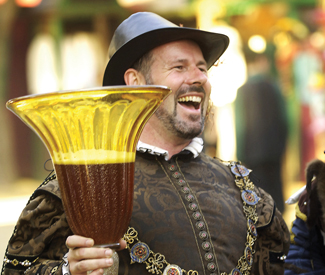
What better pairing for your mug of ale than a feisty joust? Oct. 6-7 at the NorCal Ren Fair means the arrival of the St. Hubertus German mercenaries, costumed troops-for-hire who wear tight colored pants. That weekend is also Oktoberfest at the fair — though of course mead, beer, and four types of cider are available throughout the four-week entirety of the bodice-busting. Just make sure you dodge the roving pack of Puritans who will be roaming ye olde paths and pubs.

Saturdays and Sundays, Sat/15 through Oct.1. 10am-6pm, $25/day, $35/weekend, $150/10-day pass. 10021 Pacheco Pass Hwy 152, Gate 6, Hollister. (408) 847-FAIR, www.norcalrenfaire.com


BREWS ON THE BAY

Because if anywhere is a good place to get drunk on nice beer, a World War II liberty ship is a fantastic place to get drunk on nice beer. After all, the S.S. Jeremiah O’Brien is too large to succumb to the rocking waves of the Bay. Even if it bobbed like a dinghy, this is worth getting wet for: 15 member breweries of the SF Brewer’s Guild pouring all-you-can-drink allotments of over 50 beers, from the companies’ best-sellers to seldom-seen seasonals. Plus live music and food trucks. Ahoy, well-worth-it hangover!

Sat/15, noon-5pm, $50. S.S. Jeremiah O’Brien, Pier 45, SF. www.sfbrewersguild.org


SF COCKTAIL WEEK

Ask anyone –- this town has serious cocktailian chops. That’s why (if you’ve got the cash, admission for most events starts around $45) it’s worth checking out this week of artisan tastings, bartender contests, and classes that’ll leave you shaking like a star.

Mon/17-Sun/23, various SF venues. www.sfcocktailweek.com


GRENACHE DAY

In the 1980s, a group of NorCal wine producers got together to celebrate the excellency of varietals from France’s Rhone Valley. They called themselves the Rhone Rangers, and set about recreating the wines’ majesty here in the Golden State. Today, they celebrate work well done on internationally-celebrated Grenache Day. Check out the special vino in its red, white, and rose forms through free tastings at 15 wineries in Paso Robles, Santa Cruz’s Bonny Doon Vineyard, Santa Rosa’s Sheldon Wines, and Sacramento’s Caverna 57.

Sept. 21, various venues, free. www.rhonerangers.org


EAT REAL FESTIVAL

You know you can nosh away at this fest, which celebrates the best in local, sustainable nourishment — but be sure you wash it down in style. Eat Real offers a chance to sample 20 Bay beers, like sustainable Berkeley pourers Bison Brewing and its beer garden co-curator Adam Lamoreaux’s Oakland-born Linden Street Brewery. 15 NorCal wineries will be represented as well. And no festival markups here — all adult beverages go for $5 per cup.

Sept. 21 1-9pm; Sept. 22, 10:30am-9pm; Sept. 23, 10:30am-5pm; free. Jack London Square, First St. and Broadway, Oakl. www.eatrealfest.com


TOUR DE FAT

The beer and bike carnival of the year is back, with all its usual circus magic and a costumed bike parade under the trees of GGP. Onstage, Fat Tire beer has another full musical line-up planned: Los Amigos Invisibles, He’s My Brother She’s My Sister, Yo-Yo People, and more. Sip the Colorado brand’s brews, and stick around for the end, when a lucky car owner trades their wheels in for a bike during a elaborate yearly ritual.

Sept. 22, 10:30-5pm, free. Lindley Meadow, Golden Gate Park, SF. www.newbelgium.com/events/tour-de-fat


LAGUNITAS DAYTIME PARTY

Retire to the sunny patio of downtown Oakland’s best beer store-pub to meet the masterminds behind Marin’s Lagunitas Brewing Co. They’re not coming empty-handed, either — the label’s new session IPA, named for the time in which such things are best drunk (Daytime) will be on the pour, lubricating what is sure to be a fascinating conversation with local beer greats.

Sept. 22, 1-6pm, free. Beer Revolution, 464 Third St., Oakl. (510) 452-2337, www.beer-revolution.com


OKTOBERFEST BY THE BAY

Snap them lederhosen and rub your belly — you’ll need all the digestive help you can get after this perfectly pleasant weekend of steins, sausages, and oompah. Now with two sessions on Saturday to avoid beer gut overcrowding!

Sept.28, 5pm-midnight; Sept. 29, 11am-5pm and 6pm-midnight; Sept. 30, 11am-6pm, $25-75/session. Pier 49, SF. (888) 746-7522, www.oktoberfestbythebay.com


DRINK GREAT BEERS TASTING PARTY

Beer Connoisseur magazine sponsors this all-you-can-taste Saturday extravaganza in the swanky climes of Blu Restaurant. Taste little-known brews against old favorites, and discover which flavor ways really fill your pint.

Sept. 29, 3-6pm, $60-85. Blu Restaurant, 747 Market, fourth floor, SF. www.drinkgreatbeers.com


LOCA UNCORKED

Because the Blue Angels will be less (?) terrifying with a bellyful of California wine in you, head out to this Bay Area exploration of the wines of Lodi, a small town tucked just between Sacramento and Stockton that is flush with wine producers. Your admission gets you tastes of 200 (!) Lodi wines, tons of snacks, and a front row seat for Fleet Week’s aerial shenanigans.

Oct. 6, 1-5pm, $55-65. 291 Avenue of the Palms, Treasure Island, SF. www.locauncorked.com


Fall wine, uncorked

0

virginia@sfbg.com

WINE Recommended bottles, fall events in Sonoma, urban wine classes … here are a few wine tips for true autumn flight. Check out my online Appetite column on the Pixel Vision blog at SFBG.com this week for restaurants making some of Napa’s best cocktails, a family vineyards wine-tasting report, and more Wine Country dining reviews.


URBAN EXPLORATIONS

An in-house wine club with storage facilities and a wine school launched in April, SF Wine Center (757 Bryant, SF. 415-655-7300, www.sfwinecenter.com) hosts intimate classes, held in owners Brian and Hillary McGonigle’s inviting City Room. With kitchen, library, and comfy leather chairs, it feels more like a friend’s home than a classroom. This room is available for private parties, as is a wood-lined, speakeasy-like room tucked away above the wine storage area — it feels ready for a cigar, a glass of Pinot, and a round of cards and good friends.

Recently, a class led by James Beard award-winning writer and Burgundy expert Jordan Mackay was a walk through regions and wines of Burgundy in the best way possible: by tasting a wide range side-by-side. We discussed styles and regions as we sipped nine different wines — a steal considering class price (generally $60-75) vs. costs of wines poured. Tastes ranged from a meaty 2009 Dujac Fils & Pere Cambolle Musigny ($65 a bottle) boasting excellent acidity and earthiness, to a rare 1976 Domaine Leroy Romanee St. Vivant Grand Cru ($500), with sediment and funkiness (it’s a whole cluster wine, after all), and notes of black tea, mushroom, leather, smoke, moss, tart cherry. Fall classes start up September 25th and sell out quickly. Watch the website for the fall schedule.

********

Bluxome Street Winery (53 Bluxome, SF. 415-543-5353, www.bluxomewinery.com) wins cool points just for being an urban winery whose product is actually made right here in the city with grapes from various Sonoma plots. It’s already a wine-tasting respite, and some change is afoot with new winemaker Web Marquez, who is also one of three winemakers at Anthill Farms and one of two at C. Donatiello. His early days interning at the excellent Williams Selyem — and in New Zealand and France — give him a balanced perspective on Old and New World wine styles.

While we have to wait until next year’s bottling to see the results of his approach with Bluxome’s wines, in the meantime we can enjoy a tart 2011 Rose of Pinot Noir, or the acidic, balanced 2010 Sauvignon Blanc, or a Chardonnay and three Pinots (all bottles under $45). Taste in the candlelit space while watching winemaking through glass windows under a projected movie (shining on a brick wall) showcasing San Francisco in pre-1906 quake days when winemaking in the city was common — there were no less than 120 wineries and commercial cellars in SoMa alone. Here’s to Bluxome reviving our rich urban wine history.


SUNNY SONOMA EVENTS

A foodie’s dream event: Slow Food’s Fresh Food Picnic (Sun/15, 11am-6pm, $40–$125. Rancho Mark West, Santa Rosa, www.slowfoodrr.org) is a picnic and then some. Carlo Petrini, the founder of Slow Food himself, flies out from Italy for a rare appearance, while Alice Waters and Nikki Henderson (of Oakland’s People’s Grocery) join him as speakers for the event. Then there’s the chef line-up. A family-style picnic will be served by Christopher Kostow (Meadowood), Dennis Lee (Namu Gaji), Ryan Farr (4505 Meats), Christopher Kronner (formerly Bar Tartine, Slow Club), Thomas McNaughton (flour+water, Central Kitchen), Christopher Thompson (A16), and more There will be tastes from farmers, food artisans and winemakers, local bands, a petting zoo, guided hikes and tours of Rancho Mark West, the event’s farm setting. Proceeds benefit A Thousand Gardens in Africa, a Slow Food International project, and California-based Slow Food initiatives focused on food and farm education. As a zero waste event, bring your own plates, flatware, and napkins — provide glassware will be provided.

********

Jordan Winery (1474 Alexander Valley Road, Healdsburg. www.jordanwinery.com) is a pioneer in Sonoma’s wine history, started by Tom and Sally Jordan in 1972. These Bordeaux wine lovers built a Bordelais inspired chateau on their 275-acre Alexander Valley vineyard in 1976, a gorgeous structure overseeing the winery’s soothing grounds (tastings by appointment only). With spectacular chateau apartments reserved for overnight guests, the 1100 acre grounds go beyond winery to full working ranch with cattle, chickens, gardens, olive oil groves, and fishing lake with Tiki bar and hammock. As from the beginning, Jordan stays refreshingly focused on only two varietals, a green apple-inflected Chardonnay ($29) and elegant Cabernet ($52 for a bold but balanced 2008 Cab). It’s a family business with son John as CFO, while Rob Davis has been Jordan’s head winemaker for 35 years, since the inaugural vintage in 1976.

Now is the time to shop for your holiday wine with them to earn a fabulous Jordan Winery harvest lunch. You must sign up for their email newsletter and purchase wines to earn the points which can be used towards winemaker tours, Christmas library tastings, and the coveted harvest lunches, which begin this week and run through mid-October. Harvest season is the most enchanting time in Wine Country, ideal for a family-style, weekday feast alongside winemaking staff and a tour of the grounds during crush season.


FALL BOTTLE RECOMMENDS

Where to shop for the below? K&L Wines, Jug Shop, Bi-Rite, Arlequin, Ferry Plaza Wine Merchant, SF Wine Trading Co., and D&M offer excellent wine selections in the city.

CALIFORNIA

Au Bon Climat “Hildegard” White Table Wine, Santa Maria Valley

Au Bon Climat’s is one of the state’s great, small wineries, and Hildegard ($35) is one of my top California whites. A blend of 55 percent Pinot Gris, 40 percent Pinot Blanc, 5 percent Aligoté, it’s layered and complex, unfolding with apple, almond, violet.

www.aubonclimat.com

Heitz Cellar Cabernet and Sauvignon Blanc, St. Helena

Heitz Cellar is one of my longtime Napa favorites for a beautifully balanced, lively Sauvignon Blanc ($19.75), and splurge-worthy Martha’s Vineyard Cabernet Sauvignon ($110-200) — the far more affordable 2007 Napa Valley Cab ($45) is a worthy substitution. This family-run winery has been going strong since 1964 with Old World balance, one of Napa’s true gems.

www.heitzcellar.com

Lucia Vineyards LUCY, Santa Lucia Highlands

Lucia Vineyards’ LUCY ($18) is a a beauty of a rosé boasting zippy acidity pairs well with a wide range of dishes — another Santa Lucia treasure.

www.luciavineyards.com

Tatomer Riesling Vandenberg, Santa Barbara

2008 Tatomer Riesling Vandenberg ($24.99), named for the neighboring air force base, is easily one of the best wines in the Santa Barbara region. Maintaining an Old World ethos, dry, crisp, it still boasts a New World uniqueness. Incredibly balanced, pear and apple skins shine with minerality that’s gorgeous with food.

www.tatomerwines.com

Amapola Creek’s 2009 Cuvee Alis, Sonoma Valley

Glen Ellen’s Amapola Creek, from Richard Arrowood (who founded Arrowood Winery), is a small, boutique winery. Cuvee Alis ($48) is named after Richard’s wife, a hand-harvested, unfined and unfiltered blend of 55 percent Syrah, 45 percent Grenache, organically grown on a slope of the Mayacamas Mountains on the Arrowood’s 100-acre ranch. The wine gives of a nose of cherry pie, gentle pepper, smoke, tasting of dark berries, spicy meat, with silky tannins and acidic balance.

www.amapolacreek.com

EUROPE

Viña Tondonia Rosé Gran Reserva Rosado, Rioja, Spain One of the best rosés I’ve ever had, 2000 Viña Tondonia Rosé Gran Reserva ($30) is not for novices. At 12 years of age, this blend of 60 percent Garnacha, 30 percent Tempranillo, 10 percent Viura exhibits a velvety, rosy hue, unfolding with damp, funky, mushroom notes dancing alongside bright blood orange, berries, hazelnuts, rhubarb. It’s so unusual, it pairs beautifully with spicy foods from a range of cuisines. Thanks to sommelier Ted Glennon of Restaurant 1833 in Monterey for introducing me to this stunner, available through K&L Wines. Every time I have it, it’s a pleasure.

www.lopezdeheredia.com

Vidal-Fleury Saint Joseph & Muscat, Rhone Valley, France

Vidal-Fleury is produced by winemaker and managing director Guy Sarton du Jonchay, who understands the balance between New and Old World having made wine in France, Chile, Argentina and Australia. “Old world is terroir… New World is winemakers”, he says, as he pursues a balance of both. Stand-outs are a 2007 Vidal-Fleury Saint Joseph Syrah ($28.99), full, bright, earthy, with dark berry, black tea, pepper, and meaty notes (he only releases best vintages so there will not be a 2008 — 2009 releases next); and 2009 Vidal-Fleury Muscat de Beaumes-de-Venise ($18.99), tasting of elderflower, dried apricot, lychee, nuts, with a balanced sweetness and minerality.

www.vidal-fleury.com


Film Listings

0

Film listings are edited by Cheryl Eddy. Reviewers are Kimberly Chun, Dennis Harvey, and Lynn Rapoport. For rep house showtimes, see Rep Clock. Due to the Labor Day holiday, theater information was incomplete at presstime.

CINE+MAS

The San Francisco Latino Film Festival runs Sept. 13-28 at various Bay Area venues. For tickets (most shows $12) and schedule, visit www.sflatinofilmfestival.com. For commentary, see "Got Movie Fever?"

OPENING

Arbitrage See "All in the Game." (1:40) Shattuck, Smith Rafael.

Bangkok Revenge After witnessing the murder of his parents as a child (and suffering an injury that renders him incapable of feeling emotions), a man (Jon Foo) grows up with one thing on his mind: payback. First he gets insanely good at martial arts, though. (1:20) Metreon.

Beauty is Embarrassing See "Got Movie Fever?" (1:27) Roxie.

Cane Toads: The Conquest See "See Got Movie Fever?" (1:25) Smith Rafael.

Finding Nemo 3D Pixar’s Oscar-winning undersea tale returns, spiffed-up from its 2003 version with 3D. (1:40) Presidio, Shattuck.

Girl Model Everyone wants to be special — though of course that only works if other people aren’t. The disturbingly instructive new documentary Girl Model makes a good case for not encouraging such desires in your child, because the likelihood is that someone will come along to exploit that desire, convincingly promise them fame, then leave them worse off than before. "The first secret to a successful modeling career is to start modeling at five or ten years old," says an emcee at a cattle-call showcase early on in David Redmond and Ashley Sabin’s film. It’s Russia, where the relatively new capitalism trickles down even less than here, so the families are even more eager to turn little Svetlana into a moneymaker. But that way lies madness, or at least deceit and disappointment. Plucked from a couple hundred pretty, rail-thin girls, 13-year-old wide-eyed blonde Nadya Vall is yanked from her rural Siberian village and mother and sent to Japan, where she fits a general type sought there. The younger the better, as talent scout Ashley Arbaugh tells us, qualifying that it’s not her taste, but she’s learned to see through the clients’ eyes. An ex-model herself, Ashley gives off disillusioned, compromised vibes. (It takes a while for us to realize that she’s a user and a hypocrite — not a buffer between the girls and harsh reality but a key part of the problem herself.) Needless to say, Nadya ends up owing rather than making money. Meanwhile Ashley lounges around the immaculate, expansive, coldly all-white house her job as middleman has earned; at the end of the film, she’s telling a new group of parents "Every model has success in Japan, unlike other markets where they might go into debt. They never do in Japan." For a longer version of this review, visit sfbg.com/pixel_vision. (1:17) Lumiere, Shattuck. (Harvey)

Keep The Lights On See "Dark and Stormy." (1:42) Embarcadero, Shattuck.

ONGOING

Ai Weiwei: Never Sorry Unstoppable force meets immovable object — and indeed gets stopped — in Alison Klayman’s documentary about China’s most famous contemporary artist. A larger than life figure, Ai Weiwei’s bohemian rebel persona was honed during a long (1981-93) stint in the U.S., where he fit right into Manhattan’s avant-garde and gallery scenes. Returning to China when his father’s health went south, he continued to push the envelope with projects in various media, including architecture — he’s best known today for the 2008 Beijing Olympics’ "Bird’s Nest" stadium design. But despite the official approval implicit in such high-profile gigs, his incessant, obdurate criticism of China’s political repressive politics and censorship — a massive installation exposing the government-suppressed names of children killed by collapsing, poorly-built schools during the 2008 Sichuan earthquake being one prominent example — has tread dangerous ground. This scattershot but nonetheless absorbing portrait stretches its view to encompass the point at which the subject’s luck ran out: when the film was already in post-production, he was arrested, then held for two months without official charge before he was accused of alleged tax evasion. (He is now free, albeit barred from leaving China, and "suspected" of additional crimes including pornography and bigamy.) (1:31) Smith Rafael. (Harvey)

The Apparition Does this horror flick stand a ghost of a chance against its predecessors? So many bodies, so many mysteriously slammed doors, so many girl ghouls — they all surface in this obviously low-budget cash-in on the coattails of the Paranormal Activity franchise. Look to the signs: the slow build of zero-CGI/bucks tension-building devices like flung-open doors that are supposed to be locked, scarily grainy, nausea-inducing handheld video footage and spastic editing, and screams in pitch blackness—with a dash of everything from 1979’s Phantasm to Fulci to J-Horror. Prefaced by the story of psychics’ attempts to rouse a spirit, then a flashback to a group of college students’ try at recreating the séance by magnifying their brainwaves, The Apparition opens on the cute, perfectly made-up, and way-too-glamorous-for-suburbia Kelly (Ashley Greene) and her boyfriend Ben (Sebastian Stan), who have just moved into a new faceless development in the middle of nowhere, into a house her family has bought as an investment. Turns out they aren’t the only ones playing house, as the building’s alarm is continually bypassed, mysterious mold appears, and the neighbor’s adorable pup whimpers at thin air and obligingly dies in their laundry room. Matters go from bad to worst, as some invisible force does in Kelly’s cactus, messes up her closet, and blows the lights — all of which also sounds like the antics of a lousy roommate. Add in choppy, continuity-destroying editing; throwaway dialogue; music that sounds like it came from Kelly’s favorite store, Costco; overt appropriations like a slithery, long-haired ghoul girl that slimes her way out of a cardboard box; and that important, indelibly spooky image that comes far too late to count — and you’ll find yourself rooting for the fiend to put these kids out of their misery. (1:22) Metreon. (Chun)

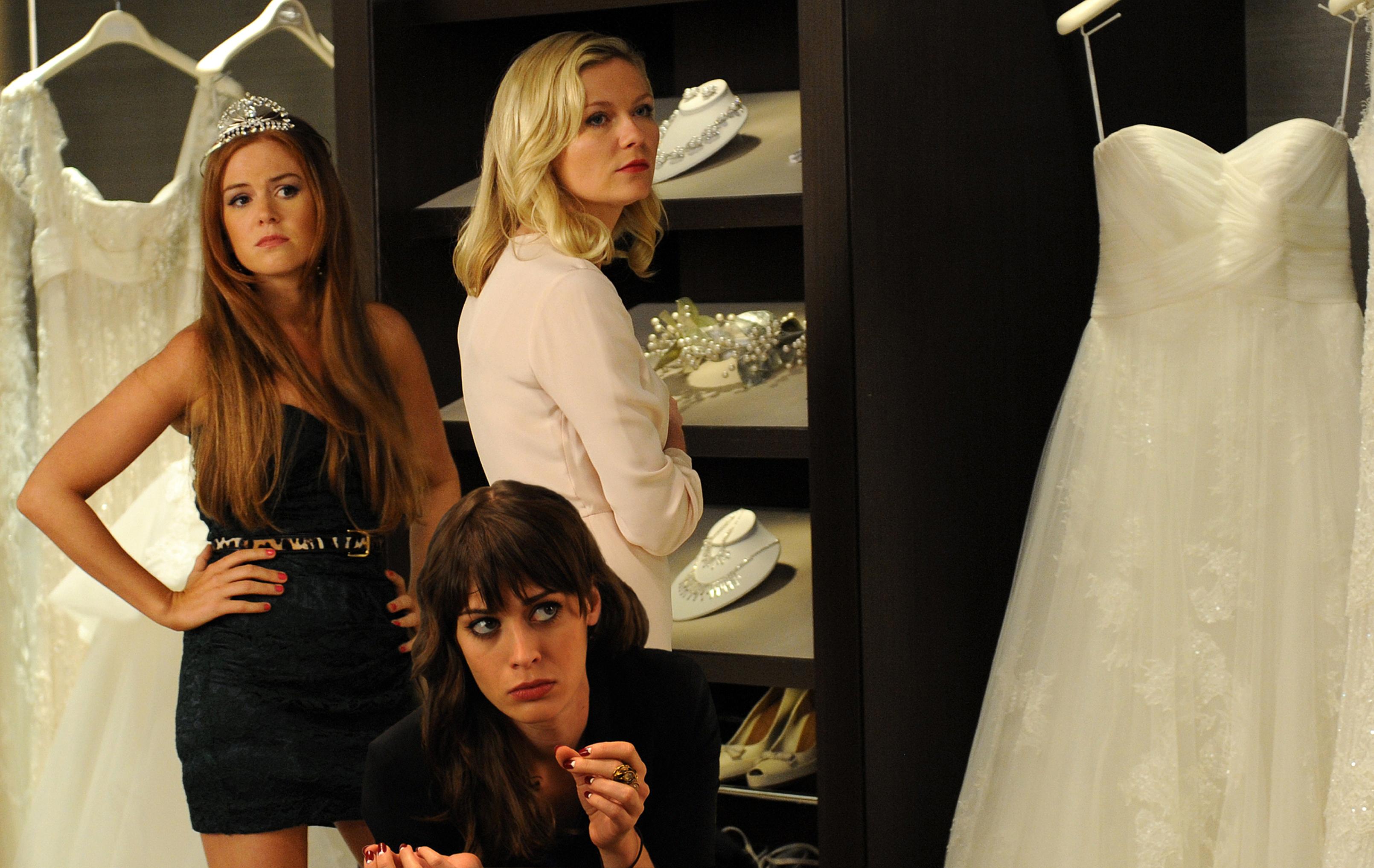
Bachelorette A movie called Bachelorette is inevitably going to be accused of riding Bridesmaids‘ coattails, even if — as it happens — Bachelorette‘s source-material play was written years before the 2011 comedy hit theaters. (That said, there are inevitable similarities, what with the shared wedding themes and all.) Playwright turned scriptwriter-director Leslye Headland does a good job of portraying women who are repulsive in realistic ways: a decade ago, Regan (Kirsten Dunst), Gena (Lizzy Caplan), Katie (Isla Fisher) were the popular "B-Faces" at their high school and haven’t matured much since. Competitive Regan is a Type A blonde; Gena’s the queen of one-night stands; and Katie’s a self-destructive party girl. All of them are pushing 30, and though Regan’s the most functional among them, she’s the hardest-hit when she learns that Becky (Bridesmaids‘ Rebel Wilson), always treated as a second-tier B-Face by virtue of being plus-sized, is engaged. "I was supposed to be first," Regan wails via three-way cell call to Gena and Katie, who’re sympathetic to this sense of entitlement. The wedding is a fancy New York City affair, so the B-Faces reunite for what they think will be a bachelorette party for the ages. Most of the film takes place during that single night, a madcap, coke-fueled, mean-spirited spiral into chaos. It’s raunchy and funny, but every character is utterly unlikable, which becomes more of a problem and less of an amusement as the movie trundles onward toward the expected happy ending. Bachelorette would’ve been better served by sticking with its rallying cry — "Fuck everyone!" — to the bitter end. (1:34) Metreon, Presidio. (Eddy)

Beasts of the Southern Wild Six months after winning the Grand Jury Prize at Sundance (and a Cannes Camera d’Or), Beasts of the Southern Wild proves capable of enduring a second or third viewing with its originality and strangeness fully intact. Magical realism is a primarily literary device that isn’t attempted very often in U.S. cinema, and succeeds very rarely. But this intersection between Faulkner and fairy tale, a fable about — improbably — Hurricane Katrina, is mysterious and unruly and enchanting. Benh Zeitlin’s film is wildly cinematic from the outset, as voiceover narration from six-year-old Hushpuppy (Quvenzhané Wallis) offers simple commentary on her rather fantastical life. She abides in the Bathtub, an imaginary chunk of bayou country south of New Orleans whose residents live closer to nature, amid the detritus of civilization. Seemingly everything is some alchemical combination of scrap heap, flesh, and soil. But not all is well: when "the storm" floods the land, the holdouts are forced at federal gunpoint to evacuate. With its elements of magic, mythological exodus, and evolutionary biology, Beasts goes way out on a conceptual limb; you could argue it achieves many (if not more) of the same goals Terrence Malick’s 2011 The Tree of Life did at a fraction of that film’s cost and length. (1:31) California, Embarcadero, Presidio, Smith Rafael, Vogue. (Harvey)

The Bourne Legacy Settle down, Matt Damon fans — the original Bourne appears in The Bourne Legacy only in dialogue ("Jason Bourne is in New York!") and photograph form. Stepping in as lead badass is Jeremy Renner, whose twin powers of strength and intelligence come courtesy of an experimental-drug program overseen by sinister government types (including Edward Norton in an utterly generic role) and administered by lab workers doing it "for the science!," according to Dr. Rachel Weisz. Legacy‘s timeline roughly matches up with the last Damon film, The Bourne Ultimatum, which came out five years ago and is referenced here like we’re supposed to be on a first-name basis with its long-forgotten plot twists. Anyway, thanks to ol’ Jason and a few other factors involving Albert Finney and YouTube, the drug program is shut down, and all guinea-pig agents and high-security-clearance doctors are offed. Except guess which two, who manage to flee across the globe to get more WMDs for Renner’s DNA. Essentially one long chase scene, The Bourne Legacy spends way too much of its time either in Norton’s "crisis suite," watching characters bark orders and stare at computer screens, or trying to explain the genetic tinkering that’s made Renner a super-duper-superspy. Remember when Damon killed that guy with a rolled-up magazine in 2004’s The Bourne Supremacy? Absolutely nothing so rad in this imagination-free enterprise. (2:15) 1000 Van Ness, SF Center, Sundance Kabuki. (Eddy)

Branded (1:46) SF Center.

The Bullet Vanishes Veteran Hong Kong actor Lau Ching-wan stars as a Sherlock Holmes type in 1930s Shanghai, bumped up from prison-guard detail to homicide detective by top brass impressed with his talent, if not his unusual methods. Good timing, since there’s been a series of killings at the local munitions factory, an operation run by a Scooby Doo-ish villain — in cahoots with corrupt cops — who’s prone to snappy hats and checkered overcoats. Adding to the mystery: a tragic back story involving Russian roulette and blood-written graffiti promising "The phantom bullets will kill you all!" Helping solve the crimes is Nicholas Tse as "the fastest gun in Tiancheng," no slouch of an investigator himself; together, the sleuths compile evidence and recreate scenes of murders, including one that seemingly transpired in a locked room with only one exit. The Bullet Vanishes contains more plot twists, slightly fewer steampunk flourishes, and way less slo-mo fist action than Guy Ritchie’s recent attempts at Holmes; though it’s no masterpiece, it’s a fun enough whodunit, with a reliably great and quirky performance from Lau. (2:00) Metreon. (Eddy)

The Campaign (1:25) 1000 Van Ness, SF Center.

Celeste and Jesse Forever Married your best friend, realized you love but can’t be in love with each other, and don’t want to let all those great in-jokes wither away? Such is the premise of Celeste and Jesse Forever, the latest in what a recent wave of meaty, girl-centric comedies penned by actresses — here Rashida Jones working with real-life ex Will McCormack; there, Zoe Kazan (Ruby Sparks), Zoe Lister Jones (Lola Versus), and Lena Dunham (Girls) — who have gone the DIY route and whipped up their own juicy roles. There’s no mistaking theirs for your average big-screen rom-com: they dare to wallow harder, skew smarter, and in the case of Celeste, tackle the thorny, tough-to-resolve relationship dilemma that stubbornly refuses to conform to your copy-and-paste story arc. Nor do their female protagonists come off as uniformly likable: in this case, Celeste (Jones) is a bit of an aspiring LA powerbitch. Her Achilles heel is artist Jesse (Andy Samberg), the slacker high school sweetheart she wed and separated from because he doesn’t share her goals (e.g., he doesn’t have a car or a job). Yet the two continue to spend all their waking hours together and share an undeniable rapport, extending from Jesse’s encampment in her backyard apartment to their jokey simulated coitus featuring phallic-shaped lip balm. Throwing a wrench in the works: the fact that they’re still kind of in love with each other, which all their pals, like Jesse’s pot-dealer bud Skillz (McCormack), can clearly see. It’s an shaggy, everyday breakup yarn, writ glamorous by its appealing leads, that we too rarely witness, and barring the at-times nausea-inducing shaky-cam under the direction of Lee Toland Krieger, it’s rendered compelling and at times very funny — there’s no neat and tidy way to say good-bye, and Jones and McCormack do their best to capture but not encapsulate the severance and inevitable healing process. It also helps that the chemistry practically vibrates between the boyish if somewhat one-note Samberg and the soulful Jones, who fully, intelligently rises to the occasion, bringing on the heartbreak. (1:31) Marina, Shattuck, Sundance Kabuki. (Chun)

Chicken With Plums Steeped in whimsy — and a longing for love, beauty, and home — this latest effort from brilliant Persian-French cartoonist-filmmaker Marjane Satrapi and director Vincent Paronnaud flaunts the odd contours of its eccentric narrative, enchants with its imaginative tangents, sprawls like an unincapsulated life, and then takes off on aching, campy romantic reverie—a magical realistic vision of one Iranian artist’s doomed trajectory. Master violinist Nasser Ali Khan (Mathieu Amalric) is seeking the ineffable — a replacement for his destroyed instrument — and otherwise he’s determined to die. We trace the mystery of his passing, backward, with wanders through the life of his family and loved one along the way in this playful, bittersweet feast. Despite Amalric’s glazed-eyed mugging, which almost spoils the dish, Satrapi’s wonderfully arch yet lyrical visual sensibility and resonant characters — embodied by Maria de Medeiros, Jamel Debbouze, Golshifteh Farahani, and Isabella Rossellini, among others — satisfy, serving up so much more than chicken with plums. (1:31) Opera Plaza. (Chun)

The Cold Light of Day (1:33) 1000 Van Ness, SF Center.

Compliance No film at this year’s Sundance Film Festival encountered as much controversy as Craig Zobel’s Compliance. At the first public screening, an all-out shouting match erupted, with an audience member yelling "Sundance can do better!" You can’t buy that kind of publicity. Every screening that followed was jam-packed with people hoping to experience the most shocking film at Sundance, and the film did not disappoint. (Beware: every review I have happened upon has unnecessarily spoiled major plots in the film, which is based on true events.) What is so impressive about Zobel’s film is how it builds up a sense of ever-impending terror. In fact, I would go as far as to say that the film steps into Psycho (1960) terrain, as it boldly aims to confront a society filled with people who are trained to follow rules without questioning them. Magnolia Pictures, which previously collaborated with Zobel on his debut film Great World of Sound (which premiered at Sundance in 2007), picked up the film for theatrical release; if you dare to check it out, prepare to be traumatized as well as intellectualized. You’ll be screaming about one of the most audacious movies of 2012 — and that’s exactly why the film is so brilliant. For an interview with Zobel, visit www.sfbg.com/pixel_vision. (1:30) Lumiere. (Jesse Hawthorne Ficks)

Cosmopolis With end times nigh and the 99 percent battering the gates of the establishment, it’s little wonder David Cronenberg’s rendition of the Don DeLillo novel might rotate, with the stately rhythm of a royal funeral and deliciously tongue-in-cheek humor, around one of the most famed vampire heartthrobs at the cineplex. Sadly, a recent paparazzi scandal threatens to eclipse this latest, enjoyably blighted installment in the NYC urban nightmare genre. Robert Pattinson’s billionaire asset manager Eric Packer takes meetings with his new wife Elise (Sarah Gadon) and staffers like his monetary theorist Vija (Samantha Morton) in his moving office: a white, leather-bound stretch limo that materializes like a sleek, imposing extension of his pale frame. Seriously disassociated from reality on multiple levels, Eric is a 28-year-old boy in a bubble, speaking of himself in third person and willing to spend all day making his way across town to get a haircut at his father’s old barbershop, even though his head of security (Kevin Durand) warns him that at least one "credible threat" has designs on his life. The passing of his favorite Sufi rapper (K’Naan), a possible Rothko for sale, a mad pie-thrower, and an asymmetrical prostate all threaten to capsize those, as it turns out, not-so-humble plans. Warning: the brainier members of Team Edward might plan on finding their minds blown by this thoughtful and mordantly humorous meditation on this country’s cult of money, while Cronenberg watchers will be gratified to pluck out his recurring themes, here dealt with a lighter hand than usual. At this date, rather than telegraphing how one might feel about a scene by way of, say, music, the director is increasingly comfortable with the ambiguity — and the uneasy, pleasing mix of sneaking repulsion and gimlet-eyed humor, of these scenes and their language. Thus the autoerotic-car fetishism of Crash (1996) and hallucinatory culture grazing of Naked Lunch (1991) — and that fascination with how a body intersects sexually or otherwise with a machine or "other" — seems completely natural here. Or perhaps it’s a measure of how much Cronenberg’s preoccupations and cinematic language have made themselves at home in the vernacular. (1:49) Opera Plaza. (Chun)

The Dark Knight Rises Early reviews that called out The Dark Knight Rises‘ flaws were greeted with the kind of vicious rage that only anonymous internet commentators can dish out. And maybe this is yet another critic-proof movie, albeit not one based on a best-selling YA book series. Of course, it is based on a comic book, though Christopher Nolan’s sophisticated filmmaking and Christian Bale’s tortured lead performance tend to make that easy to forget. In this third and "final" installment in Nolan’s trilogy, Bruce Wayne has gone into seclusion, skulking around his mansion and bemoaning his broken body and shattered reputation. He’s lured back into the Batcave after a series of unfortunate events, during which The Dark Knight Rises takes some jabs at contemporary class warfare (with problematic mixed results), introduces a villain with pecs of steel and an at-times distractingly muffled voice (Tom Hardy), and unveils a potentially dangerous device that produces sustainable energy (paging Tony Stark). Make no mistake: this is an exciting, appropriately moody conclusion to a superior superhero series, with some nice turns by supporting players Gary Oldman and Joseph Gordon-Levitt. But in trying to cram in so many characters and plot threads and themes (so many prisons in this thing, literal and figural), The Dark Knight Rises is ultimately done in by its sprawl. Without a focal point — like Heath Ledger’s menacing, iconic Joker in 2008’s The Dark Knight — the stakes aren’t as high, and the end result feels more like a superior summer blockbuster than one for the ages. (2:44) Metreon, 1000 Van Ness, Sundance Kabuki. (Eddy)

The Expendables 2 (1:43) Metreon, 1000 Van Ness.

Farewell, My Queen (Benoît Jacquot, France, 2012) Opening early on the morning of July 14, 1789, Farewell, My Queen depicts four days at the Palace of Versailles on the eve of the French Revolution, as witnessed by a young woman named Sidonie Laborde (Léa Seydoux) who serves as reader to Marie Antoinette (Diane Kruger). Sidonie displays a singular and romantic devotion to the queen, while the latter’s loyalties are split between a heedless amour propre and her grand passion for the Duchess de Polignac (Virginie Ledoyen). These domestic matters and other regal whims loom large in the tiny galaxy of the queen’s retinue, so that while elsewhere in the palace, in shadowy, candle-lit corridors, courtiers and their servants mingle to exchange news, rumor, panicky theories, and evacuation plans, in the queen’s quarters the task of embroidering a dahlia for a projected gown at times overshadows the storming of the Bastille and the much larger catastrophe on the horizon. (1:39) Opera Plaza, Shattuck. (Rapoport)

For a Good Time, Call&ldots; Suffering the modern-day dilemmas of elapsed rent control and boyfriend douchebaggery, sworn enemies Katie (Ari Graynor) and Lauren (Lauren Miller) find themselves shacking up in Katie’s highly covetable Manhattan apartment, brought together on a stale cloud of resentment by mutual bestie Jesse (Justin Long, gamely delivering a believable version of your standard-issue young hipster NYC gay boy). The domestic glacier begins to melt somewhere around the time that Lauren discovers Katie is working a phone-sex hotline from her bedroom; equipped with a good head for business, she offers to help her go freelance for a cut of the proceeds. Major profitability ensues, as does a friendship evoking the pair bonding at the center of your garden-variety romantic comedy, as Katie trains Lauren to be a phone-sex operator and the two share everything from pinkie swears and matching pink touch-tone phones to intimate secrets and the occasional hotline threesome. Directed by Jamie Travis and adapted from a screenplay by Miller and Katie Anne Naylon, the film is a welcome response to the bromance genre, and with any luck it may also introduce linguistic felicities like "phone-banging" and "let’s get this fuckshow started" into the larger culture. The raunchy telephonic interludes include cameos by Kevin Smith and Seth Rogen (Miller’s husband) as customers calling from such unfurtive locations as a public bathroom stall and the front seat of a taxicab. But the two roomies supply plenty of dirty as Katie, an abashed wearer of velour and denim pantsuits, helps the more restrained Lauren discover the joys of setting free her inner potty mouth. (1:25) SF Center. (Rapoport)

Hit and Run Annie (Kristen Bell) has a Stanford doctorate but is treading in the academic backwaters until the prospect is raised of an ideal department-heading position at UCLA. She’s thrilled, but also conflicted, because live-in beau Charlie (Dax Shepard) is in the Federal Witness Protection program, and can’t leave the nowhere burg he lives in incognito — particularly for Los Angeles — without risking serious personal harm. However, for love he decides he’ll risk everything so she can take the job. Unfortunately, this fast attracts the attention of various people very much interested in halting this exodus, for various reasons: notably Charlie’s inept U.S. Marshall "protector" (Tom Arnold), Annie’s psycho ex (Smallville’s Michael Rosenbaum), and a guy with an even more serious grudge against Charlie (Bradley Cooper in a dreadlock wig). A whole lot of wacky chases and stunt driving ensues. The second feature Shepard’s co-directed (with David Palmer) and written, this aims for a cross between 1970s drive-in demolition derbies (1977’s Smokey and the Bandit, 1974’s Dirty Mary, Crazy Larry, etc.) and envelope-pushing comedy thrillers like 1993’s True Romance. There’s a lot of comic talent here, including some notable cameos, yet Hit and Run is one of those cases where the material is almost there, but not quite. It moves breezily enough but some of the characters are more annoying than funny; the dialogue is an awkward mix of bad taste and PC debates about bad taste; and some ideas that aim to be hilarious and subversive (naked old people, a long discussion about jailhouse rape) just sit there, painfully. Which makes this only the second-best Dax Shepard movie with incarceration rape jokes, after 2006’s Let’s Go to Prison. (1:38) Metreon, 1000 Van Ness. (Harvey)

Hope Springs Heading into her 32nd year of matrimony with aggressively oblivious Arnold (Tommy Lee Jones), desperate housewife Kay (Meryl Streep) sets aside her entrenched passivity in a last-ditch effort to put flesh back on the skeleton of a marriage. Stumbling upon the guidance of one Dr. Bernard Feld (Steve Carell) in the self-help section of a bookstore, Kay (barely) convinces Arnold to accompany her to a weeklong session at Feld’s Center for Intensive Couples Counseling, in Hope Springs, Maine. The scenes from a marriage leading up to their departure, as well as the incremental advances and crippling setbacks of their therapeutic sojourn, are poignant and distressing and possibly familiar. Some slow drift, long ago set in motion, though we don’t know by what, has settled them in concrete in their separate routines — and bedrooms. It’s the kind of thing that, if it were happening in real life — say, to you — might make you weep. But somehow, through the magic of cinema and the uncomfortable power of witnessing frankly depicted failures of intimacy, we laugh. This is by no means a wackiness-ensues sort of sexual comedy, though. Director David Frankel (2006’s The Devil Wears Prada and, unfortunately, 2008’s Marley & Me) and Jones and Streep, through the finely detailed particularities of their performances, won’t let it be, while Carell resists playing the therapeutic scenes for more than the gentlest pulses of humor. More often, his empathetic silences and carefully timed queries provide a place for these two unhappy, inarticulate, isolated people to fall and fumble and eventually make contact. (1:40) Piedmont, SF Center, Sundance Kabuki. (Rapoport)

The Imposter A family tragedy, an international thriller, a Southern-fried mystery, and a true story: The Imposter is all of these things. This unique documentary reveals the tale of Frédéric Bourdin, dubbed "the Chameleon" for his epic false-identity habit. His ballsiest accomplishment was also his most heinous con: in 1997, he claimed to be Nicholas Barclay, a San Antonio teen missing since 1994. Amazingly, the impersonation worked for a time, though Bourdin (early 20s, brown-eyed, speaks English with a French accent) hardly resembled Nicholas (who would have been 16, and had blue eyes). Using interviews — with Nicholas’ shell-shocked family, government types who unwittingly aided the charade, and Bourdin himself — and ingenious re-enactments that borrow more from crime dramas than America’s Most Wanted, director Bart Layton weaves a multi-layered chronicle of one man’s unbelievable deception. (1:39) Lumiere. (Eddy)

The Inbetweeners The bro-bacchanal never stops being funny in some circles, and those acolytes might want to attempt to penetrate the thick, juicy UK accents in this writ-large version of the English sitcom of the same name. The deliciously awkward teenage boy gang’s all here — with an added dose of ultragross-out humor that one-ups the American Pie gang. Brainy Will (Simon Bird), aggressively gelled Simon (Joe Thomas), super-horndog Jay (James Buckley), and lanky oddity Neil (Blake Harrison) are off on summer break before "uni" on a booze- and sex-swathed Greek isle. The goal: to get soundly laid and eradicate Simon’s heartbreak over recently departed girlfriend Carli (Emily Head). As luck would have it, the bunch even stumble over some nubile, nice cuties — including doll-faced blonde Allison (Laura Haddock) and far-too-accommodating brunette Lucy (Tamla Kari) — in their quest for "fit" slatterns. In between them and a very certain happy ending, in more ways than one, are plenty of excess, barf, poo, blackouts on ant hills — what’s not to love, provided you can overlook the very un-PC rumblings from this dude-a-rama? A self-fellatio interlude even takes on the Jackass posse on their own physically challenging turf. (1:37) Metreon. (Chun)

The Intouchables Cries of "racism" seem a bit out of hand when it comes to this likable albeit far-from-challenging French comedy loosely based on a real-life relationship between a wealthy white quadriplegic and his caretaker of color. The term "cliché" is more accurate. And where were these critics when 1989’s Driving Miss Daisy and 2011’s The Help — movies that seem designed to make nostalgic honkies feel good about those fraught relationships skewed to their advantage—were coming down the pike? (It also might be more interesting to look at how these films about race always hinge on economies in which whites must pay blacks to interact with/educate/enlighten them.) In any case, Omar Sy, portraying Senegalese immigrant Driss, threatens to upset all those pundits’ apple carts with his sheer life force, even when he’s shaking solo on the dance floor to sounds as effortlessly unprovocative, and old-school, as Earth, Wind, and Fire. In fact, everything about The Intouchables is as old school as 1982’s 48 Hrs., spinning off the still laugh-grabbing humor that comes with juxtaposing a hipper, more streetwise black guy with a hapless, moneyed chalky. The wheelchair-bound Philippe (Francois Cluzet) is more vulnerable than most, and he has a hard time getting along with any of his nurses, until he meets Driss, who only wants his signature for his social services papers. It’s not long before the cultured, classical music-loving Philippe’s defenses are broken down by Driss’ flip, somewhat honest take on the follies and pretensions of high culture — a bigger deal in France than in the new world, no doubt. Director-writer Olivier Nakache and Eric Toledano aren’t trying to innovate —they seem more set on crafting an effervescent blockbuster that out-blockbusters Hollywood — and the biggest compliment might be that the stateside remake is already rumored to be in the works. (1:52) Lumiere. (Chun)

Kumaré Just as there was a certain bullying pride of snark that made Bill Maher and Larry Charles’ Religulous (2008) more mean-spirited than necessary, Kumaré leaves a sour, smug aftertaste. Raised in New Jersey by a first-generation immigrant family of Hindus, Vikram Gandhi proclaims himself a skeptic who started out wanting to make a documentary about the opportunistic charlatans one can find passing as spiritually enlightened gurus in both India and around the booming US yoga industry. "I wanted to prove to others looking for answers that no one is more spiritual than anyone, that spiritual leaders are just illusions," he tells us. A noble impulse. Yet somehow this took the form of growing his hair and beard out, wearing saffron robes, and posing as Sri Kumaré, a fresh-off-the-boat guru who arrives in Phoenix, Ariz. to open up shop as a one-stop spiritual guide for the gullible. He asks "Could people find the same peace in a made-up religion that they would in a real one?" But too often the real question here seems to be "How silly can I make these chumps look while starring in my very own nonfiction version of The Love Guru?" The comedy Kumaré has been primarily compared to is 2006’s Borat, another Larry Charles joint. As unhappy as their portraiture in Borat made its duped participants, it was hard to feel sorry for them — given enough rope they gladly hung themselves expressing racism, homophobia, sexism, and sheer Ugly Americanism. But those who fall under Kumaré‘s farcical spell don’t deserve to be exposed and ridiculed; they’re just people with real-world issues — financial struggles, low self-esteem, empty-nest loneliness, etc. — looking for somebody to tell them what to do. (1:24) Roxie. (Harvey)

Lawless Lawless has got to be the most pretentiously humorless movie ever made about moonshiners — a criminal subset whose adventures onscreen have almost always been rambunctious and breezy, even when violent. Not here, bub. Adapting Matt Bondurant’s fact-inspired novel The Wettest County in the World about his family’s very colorful times a couple generations back, director John Hillcoat and scenarist (as well as, natch, composer) Nick Cave have made one of those films in which the characters are presented to you as if already immortalized on Mount Rushmore — monumental, legendary, a bit stony. They’ve got a crackling story about war between hillbilly booze suppliers and corrupt lawmen during Prohibition, and while the results aren’t dull (they’re too bloody for that, anyway), they’d be a whole lot better if the entire enterprise didn’t take itself so gosh darned seriously. The Bondurant brothers of Franklin County, Va. are considered "legends" when we meet them in 1931, having defied all and sundry as well as survived a few bullets: mack-truck-built Forrest (Tom Hardy); eldest Howard (Jason Clarke), who tipples and smiles a lot; and "runt of the litter" Jack (Shia LeBeouf), who has a chip on his shoulder. The local law looks the other way so long as their palms are greased, but the Feds send sneering Special Deputy Charlie Rakes (Guy Pearce), it’s an eye for an eye for an eye, etc. The revenge-laden action in Lawless is engaging, but the filmmakers are trying so hard to make it all resonant and folkloric and meta-cinematic, any fun you have is in spite of their efforts. (1:55) California, Four Star, Marina, 1000 Van Ness, SF Center, Sundance Kabuki. (Harvey)

Little White Lies In the wake of a serious accident that puts magnetic Ludo (Jean Dujardin, just briefly seen) in the hospital, his circle of closest friends go without him on their annual vacation at a beachfront summer home, courtesy of well-off restaurateur Max (Francois Cluzet) and wife Vero (Valerie Bonneton). But this year they’ve all got a lot of drama going on. Marie (Marion Cotillard) is suffering the uncomfortable consequences of all the lovers (male and female) she’s run out on when "commitment" reared its head. Similarly, the roving eye of actor Eric (Gilles Lellouche) threatens the stable relationship he’s finally sorta settled on. Hapless boy-man Antoine (Laurent Lafitte) obsesses over the longtime girlfriend who’s dumping him. And Vincent (Benoit Magimel) endangers his marriage to Isabelle (Pascale Arbillot) by privately proclaiming more-than-platonic love for best friend Max — whose discomfort manifests itself in hostile behaviors that threaten to ruin everyone’s stay. Actor Guillaume Canet’s third film as writer-director (following the 2006 hit thriller Tell No One) has been compared, even by himself, to 1983’s The Big Chill. But while that slick, somewhat glib seriocomedy’s characters had 1960s activist pasts and faded ideals to square with encroaching midlife, this slicker, glibber ensemble piece is about people who’ve never shared much more than good times and mutual self-absorption. Though Canet has worked with most of these actors before, and developed Lies in collaboration with them, the thinly amusing, often contrived results hardly tax anyone’s resources. (Nor are they equal-opportunity: star attraction Cotillard aside, he barely seems interested in the women here.) It takes two and a half hours for this overblown fluff to arrive at a group-hug freeze frame (ugh), aiming for emotional heft it still hasn’t earned. (2:34) Albany. (Harvey)

Moonrise Kingdom Does Wes Anderson’s new film mark a live-action return to form after 2007’s disappointingly wan Darjeeling Limited? More or less. Does it tick all the Andersonian style and content boxes? Indubitably. In the most obvious deviation Anderson has taken with Moonrise, he gives us his first period piece, a romance set in 1965 on a fictional island off the New England coast. After a chance encounter at a church play, pre-teen Khaki Scout Sam (newcomer Jared Gilman) instantly falls for the raven-suited, sable-haired Suzy Bishop (Kara Hayward, ditto). The two become pen pals, and quickly bond over the shared misery of being misunderstood by both authority figures and fellow kids. The bespectacled Sam is an orphan, ostracized by his foster parents and scout troop (much to the dismay of its straight-arrow leader Edward Norton). Suzy despises her clueless attorney parents, played with gusto by Bill Murray and Frances McDormand in some of the film’s funniest and best scenes. When the two kids run off together, the whole thing begins to resemble a kind of tween version of Godard’s 1965 lovers-on the-lam fantasia Pierrot le Fou. But like most of Anderson’s stuff, it has a gauzy sentimentality more akin to Truffaut than Godard. Imagine if the sequence in 2001’s The Royal Tenenbaums where Margot and Richie run away to the Museum of Natural History had been given the feature treatment: it’s a simple yet inspired idea, and it becomes a charming little tale of the perils of growing up and selling out the fantasy. But it doesn’t feel remotely risky. It’s simply too damn tame. (1:37) Four Star, Piedmont, Sundance Kabuki. (Michelle Devereaux)

The Odd Life of Timothy Green (2:05) Four Star, SF Center.

ParaNorman (1:32) Metreon, 1000 Van Ness.

The Possession (1:31) Metreon, 1000 Van Ness.

Premium Rush "Fixed gear. Steel frame. No brakes. Can’t stop … don’t want to." Thus goes the gear breakdown and personal philosophy of New York City bike messenger Wilee (Joseph Gordon-Levitt), an aggro rider who uses his law school-refined brain to make split-second decisions regarding which way to dart through Midtown traffic. Though bike messengers had a pop culture moment in the 1990s, Premium Rush is set in the present day, with one of Wilee’s numerous voice-overs explaining the job’s continued importance even in the digital era. One such example: a certain envelope he’s tasked with ferrying across the city, given to him by the troubled roommate (Jamie Chung) of the pretty fellow messenger (Dania Ramirez) he’s romantically pursuing. The contents of the envelope, and the teeth-gnashingly evil-cop-with-a-gambling-problem (Michael Shannon, adding some weird flair to what’s essentially a stock villain) who would dearly love to get his mitts on it, are less crucial to Premium Rush than the film’s many, many chase scenes featuring Wilee outwitting all comers with his two-wheeled Frogger moves. Silly fun from director David Koepp (2008’s Ghost Town), but not essential unless you’re a fixie fanatic or a JGL completist. (1:31) Metreon, 1000 Van Ness. (Eddy)

The Queen of Versailles Lauren Greenfield’s obscenely entertaining The Queen of Versailles takes a long, turbulent look at the lifestyles lived by David and Jackie Siegel. He is the 70-something undisputed king of timeshares; she is his 40-something (third) wife, a former beauty queen with the requisite blonde locks and major rack, both probably not entirely Mother Nature-made. He’s so compulsive that he’s never saved, instead plowing every buck back into the business. When the recession hits, that means this billionaire is — in ready-cash as opposed to paper terms — suddenly sorta kinda broke, just as an enormous Las Vegas project is opening and the family’s stupefyingly large new "home" (yep, modeled after Versailles) is mid-construction. Plugs must be pulled, corners cut. Never having had to, the Siegels discover (once most of the servants have been let go) they have no idea how to run a household. Worse, they discover that in adversity they have a very hard time pulling together — in particular, David is revealed as a remote, cold, obsessively all-business person who has no use for getting or giving "emotional support;" not even for being a husband or father, much. What ultimately makes Queen poignantly more than a reality-TV style peek at the garishly wealthy is that Jackie, despite her incredibly vulgar veneer (she’s like a Jennifer Coolidge character, forever squeezed into loud animal prints), is at heart just a nice girl from hicksville who really, really wants to make this family work. (1:40) Opera Plaza, Smith Rafael. (Harvey)

Red Hook Summer It seems like lifetimes ago that Michelle and Barack found each other beneath the flicker of filmmaker Spike Lee’s Do the Right Thing (1989), so the director-cowriter’s cameo in his now-graying, still-pizza-delivering Mookie guise, in this hot, bothered return to Brooklyn, reverberates with meaning. Less polemical and now complicated by an acute, confused love and loathing for certain places and faces, Red Hook Summer takes a different tact — the Red Hook projects rather than the streets of Bedford-Stuyvesant — and narrows its focus on Flik Royale (Jules Brown), the reluctant young visitor to the humble home of his grandfather, Da Good Bishop Enoch Rouse (Clarke Peters from Treme and The Wire). A true child of his time and place, the introverted, rebellious Atlanta kid would rather hide behind his favorite screen, a.k.a. the iPad that he’s using to document his world, than engage with reality, even when it’s raging in his face by way of his grandfather’s fiery sermons or threats from the glowering rapper Box (Nate Parker). Only a charismatic girl his age, Chazz Morningstar (Toni Lysaith), seems to get through, despite the Bishop’s passionate efforts to bond with the boy. Alas, Lee himself doesn’t seem to quite get his youthful protagonist — one who’s predisposed to turn inward rather than turn a politicized lens outward — and instead casts about restlessly to the detriment of this supposed coming-of-age narrative. No shock that somehow Red Hook Summer gets caught in the undertow of the magnetic Peters, who will turn heads with his take on a tormented believer, eager to forgive and equally hopeful for forgiveness. (2:01) Roxie. (Chun)

Robot and Frank Imagine the all-too-placid deadpan of Hal from 2001: A Space Odyssey (1968) coming out of a home-healthcare worker, and you get just part of the appeal of this very likable comedy debut with a nonrobotic pulse directed by Jake Schreier. Sometime in the indeterminate near future, former jewel thief and second-story man Frank (Frank Langella) can be found quietly deteriorating in his isolated home, increasingly forgettable and unable to care for himself and assemble a decent bowl of Cap’n Crunch (though he can still steal fancy soaps from the village boutique). In an effort to cover his own busy rear, Frank’s distracted son (James Marsden) buys him a highly efficient robotic stand-in (voiced by Peter Sarsgaard), much to his father’s grim resistance ("That thing is going to murder me in my sleep") and the dismay of crunchy sibling Madison (Liv Tyler). The robot, however, is smarter than it looks, as it bargains with Frank to eat better, get healthier, and generally reanimate: it’s willing to learn to pick locks, participate in a robbery, and even plan a jewel heist, provided, say, Frank agrees to a low-sodium diet. Frank flourishes, like the garden the robot nurtures in a vain attempt to interest his human charge, and even goes on a date with his librarian crush (Susan Sarandon), though can the self-indulgent idyll last forever? A tale about aging as much as it is about rediscovery, Robot tells an old story, but one that’s wise beyond its years and willing to dress itself up in some of the smooth, sleek surfaces of an iGeneration. (1:30) Albany, Embarcadero, Shattuck, Sundance Kabuki. (Chun)

Samsara Samsara is the latest sumptuous, wordless offering from director Ron Fricke, who helped develop this style of dialogue- and context-free travelogue with Koyaanisqatsi (1982) and Baraka (1992). Spanning five years and shooting on 70mm film to capture glimmers of life in 25 countries on five continents, Samsara, which spins off the Sanskrit word for the "ever-turning wheel of life," is nothing if not good-looking, aspiring to be a kind of visual symphony boosted by music by the Dead Can Dance’s Lisa Gerrard and composers Michael Stearns and Marcello De Francisci. Images of natural beauty, baptisms, and an African woman and her babe give way to the madness of modern civilization — from jam-packed subways to the horrors of mechanized factory farming to a bizarre montage of go-go dancers, sex dolls, trash, toxic discarded technology, guns, and at least one gun-shaped coffin. After such dread, the opening and closing scenes of Buddhist spirituality seem almost like afterthoughts. The unmistakable overriding message is: humanity, you dazzle in all your glorious and inglorious dimensions — even at your most inhumane. Sullying this hand wringing, selective meditation is Fricke’s reliance on easy stereotypes: the predictable connections the filmmaker makes between Africa and an innocent, earthy naturalism, and Asia and a vaguely threatening, mechanistic efficiency, come off as facile and naive, while his sonic overlay of robot sounds over, for instance, an Asian woman blinking her eyes comes off as simply offensive. At such points, Fricke’s global leap-frogging begins to eclipse the beauty of his images and foregrounds his own biases. (1:39) Embarcadero, Shattuck. (Chun)

Searching for Sugar Man The tale of the lost, and increasingly found, artist known as Rodriguez seems to have it all: the mystery and drama of myth, beginning with the singer-songwriter’s stunning 1970 debut, Cold Fact, a neglected folk rock-psychedelic masterwork. (The record never sold in the states, but somehow became a beloved, canonical LP in South Africa.) The story goes on to parse the cold, hard facts of vanished hopes and unpaid royalties, all too familiar in pop tragedies. In Searching for Sugar Man, Swedish documentarian Malik Bendjelloul lays out the ballad of Rodriguez as a rock’n’roll detective story, with two South African music lovers in hot pursuit of the elusive musician — long-rumored to have died onstage by either self-immolation or gunshot, and whose music spoke to a generation of white activists struggling to overturn apartheid. By the time Rodriguez himself enters the narrative, the film has taken on a fairy-tale trajectory; the end result speaks volumes about the power and longevity of great songwriting. (1:25) Clay. (Chun)

Sleepwalk with Me Every year lots of movies get made by actors and comedians who want to showcase themselves, usually writing and often directing in addition to starring. Most of these are pretty bad, and after a couple of festival appearances disappear, unremembered by anyone save the credit card companies that vastly benefited from its creation. Mike Birbiglia’s first feature is an exception — maybe not an entirely surprising one (since it’s based on his highly praised Off-Broadway solo show and best-seller), but still odds-bucking. Particularly as it’s an autobiographical feeling story about an aspiring stand-up comic (Mike as Matt) who unfortunately doesn’t seem to have much natural talent in that direction, but nonetheless obsessively perseveres. This pursuit of seemingly fore destined failure might be causing his sleep disorder, or it might be a means of avoiding taking the martial next step with long-term girlfriend (Lauren Ambrose, making something special out of a conventional reactive role) everyone else agrees is the best thing in his life. Yep, it’s another commitment-phobic man-boy/funny guy who regularly talks to the camera, trying to find himself while quirky friends and family stand around like trampoline spotters watching a determined clod. If all of these sounds derivative and indulgent, well, it ought to. But Sleepwalk turns a host of familiar, hardly foolproof ideas into astute, deftly performed, consistently amusing comedy with just enough seriousness for ballast. Additional points for "I zinged him" being the unlikely most gut-busting line here. (1:30) Embarcadero, Piedmont, Shattuck. (Harvey)

Ted Ah, boys and their toys — and the imaginary friends that mirror back a forever-after land of perpetual Peter Pans. That’s the crux of the surprisingly smart, hilarious Ted, aimed at an audience comprising a wide range of classes, races, and cultures with its mix of South Park go-there yuks and rom-commie coming-of-age sentiment. Look at Ted as a pop-culture-obsessed nerd tweak on dream critter-spirit animal buddy efforts from Harvey (1950) to Donnie Darko (2001) to TV’s Wilfred. Of course, we all know that the really untamable creature here wobbles around on two legs, laden with big-time baggage about growing up and moving on from childhood loves. Young John doesn’t have many friends but he is fortunate enough to have his Christmas wish come true: his beloved new teddy bear, Ted (voice by director-writer Seth MacFarlane), begins to talk back and comes to life. With that miracle, too, comes Ted’s marginal existence as a D-list celebrity curiosity — still, he’s the loyal "Thunder Buddy" that’s always there for the now-grown John (Mark Wahlberg), ready with a bong and a broheim-y breed of empathy that involves too much TV, an obsession with bad B-movies, and mock fisticuffs, just the thing when storms move in and mundane reality rolls through. With his tendency to spew whatever profanity-laced thought comes into his head and his talents are a ladies’ bear, Ted is the id of a best friend that enables all of John’s most memorable, un-PC, Hangover-style shenanigans. Alas, John’s cool girlfriend Lori (Mila Kunis) threatens that tidy fantasy setup with her perfectly reasonable relationship demands. Juggling scary emotions and material that seems so specific that it can’t help but charm — you’ve got to love a shot-by-shot re-creation of a key Flash Gordon scene — MacFarlane sails over any resistance you, Lori, or your superego might harbor about this scenario with the ease of a man fully in touch with his inner Ted. (1:46) Metreon. (Chun)

To Rome with Love Woody Allen’s film legacy is not like anybody else’s. At present, however, he suffers from a sense that he’s been too prolific for too long. It’s been nearly two decades since a new Woody Allen was any kind of "event," and the 19 features since Bullets Over Broadway (1994) have been hit and-miss. Still, there’s the hope that Allen is still capable of really surprising us — or that his audience might, as they did by somewhat inexplicably going nuts for 2011’s Midnight in Paris. It was Allen’s most popular film in eons, if not ever, probably helped by the fact that he wasn’t in it. Unfortunately, he’s up there again in the new To Rome With Love, familiar mannerisms not hiding the fact that Woody Allen the Nebbish has become just another Grumpy Old Man. There’s a doddering quality that isn’t intended, and is no longer within his control. But then To Rome With Love is a doddering picture — a postcard-pretty set of pictures with little more than "Have a nice day" scribbled on the back in script terms. Viewers expecting more of the travelogue pleasantness of Midnight in Paris may be forgiving, especially since it looks like a vacation, with Darius Khondji’s photography laying on the golden Italian light and making all the other colors confectionary as well. But if Paris at least had the kernel of a good idea, Rome has only several inexplicably bad ones; it’s a quartet of interwoven stories that have no substance, point, credibility, or even endearing wackiness. The shiny package can only distract so much from the fact that there’s absolutely nothing inside. (1:52) Albany, Sundance Kabuki. (Harvey)

Total Recall Already the source material for Paul Verhoeven’s campy, quotable 1990 film (starring the campy, quotable Arnold Schwarzenegger), Philip K. Dick’s short story gets a Hollywood do-over, with meh results. The story, anyway, is a fine nugget of sci-fi paranoia: to escape his unsatisfying life, Quaid (Colin Farrell) visits a company capable of implanting exciting memories into his brain. When he chooses the "secret agent" option, it’s soon revealed he actually does have secret agent-type memories, suppressed via brain-fuckery by sinister government forces (led by Bryan Cranston) keeping him in the dark about his true identity. Shit immediately gets crazy, with high-flying chases and secret codes and fight scenes all over the place. The woman Quaid thinks is his wife (Kate Beckinsale) is actually a slithery killer; the woman he’s been seeing in his dreams (Jessica Biel) turns out to be his comrade in a secret rebel movement. Len Wiseman (writer and sometimes director of the Underworld films) lenses futuristic urban grime with a certain sleek panache, and Farrell is appealing enough to make highly generic hero Quaid someone worth rooting for — until the movie ends, and the entire enterprise (save perhaps the tri-boobed hooker, a holdover from the original) becomes instantly forgettable, no amnesia trickery required. (1:58) Metreon, 1000 Van Ness. (Eddy)

2 Days in New York Messy, attention-hungry, random, sweet, pathetic, and even adorable — such is the latest dispatch from Julie Delpy, here with her follow-up to 2007’s 2 Days in Paris. It’s also further proof that the rom-com as a genre can yet be saved by women who start with the autobiographical and spin off from there. Now separated from 2 Days in Paris‘s Jake and raising their son, artist Marion is happily cohabiting with boyfriend Mingus (Chris Rock), a radio host and sometime colleague at the Village Voice, and his daughter, while juggling her big, bouncing bundle of neuroses. Exacerbating her issues: a visit by her father Jeannot (Delpy’s real father Albert Delpy), who eschews baths and tries to smuggle an unseemly selection of sausages and cheeses into the country; her provocative sister Rose (Alexia Landeau), who’s given to nipple slips in yoga class and Marion and Mingus’ apartment; and Rose’s boyfriend Manu (Alexandre Nahon), who’s trouble all around. The gang’s in NYC for Marion’s one-woman show, in which she hopes to auction off her soul to the highest, and hopefully most benevolent, bidder. Rock, of course, brings the wisecracks to this charming, shambolic urban chamber comedy, as well as, surprisingly, a dose of gravitas, as Marion’s aggrieved squeeze — he’s uncertain whether these home invaders are intentionally racist, cultural clueless, or simply bonkers but he’s far too polite to blurt out those familiar Rock truths. The key, however, is Delpy — part Woody Allen, if the Woodman were a maturing, ever-metamorphosing French beauty — and part unique creature of her own making, given to questioning her identity, ideas of life and death, and the existence of the soul. 2 Days in New York is just a sliver of life, but buoyed by Delpy’s thoughtful, lightly madcap spirit. You’re drawn in, wanting to see what happens next after the days are done. (1:31) Bridge, Shattuck, Smith Rafael. (Chun)

The Words We meet novelist Rory Jansen (Bradley Cooper) as he’s making his way from a posh building to a cab in the rain; it’s important the shot obscures his generally shiny exterior, because we’re meant to believe this guy’s a sincere and struggling novelist. Jeremy Irons, aged with flappy eye makeup, watches him vengefully. Seems Rory fell upon the unpublished novel Irons’ character wrote in sadness and loss — and feeling himself incapable of penning such prose, transcribed the whole thing. When his lady friend (Zoe Saldana) encourages him to sell it, he becomes the next great American writer. He’s living the dream on another man’s sweat. But that’s not the tragedy, exactly, because The Words isn’t so concerned with the work of being a writer — it’s concerned with the look and insecurity of it. Bradley and Irons aren’t "real," they’re characters in a story read by Clay Hammond (Dennis Quaid) while the opportunistic, suggestive Daniella (Olivia Wilde) comes onto him. She can tell you everything about Clay, yet she hasn’t read the book that’s made him the toast of the town — The Words, which is all about a young plagiarist and the elderly writer he steals from. "I don’t know how things happen!", the slimy, cowering writers each exclaim. So, how do you sell a book? Publish a book? Make a living from a book? How much wine does it take to bed Olivia Wilde? Sure, they don’t know how things happen; they only know what it looks like to finish reading Hemingway at a café or watch the sun rise over a typewriter. Rarely has a movie done such a trite job of depicting the process of what it’s like to be a writer — though if you found nothing suspect about, say, Owen Wilson casually re-editing his 400-page book in one afternoon in last year’s Midnight in Paris, perhaps you won’t be so offended by The Words, either. (1:36) 1000 Van Ness, Presidio, SF Center, Sundance Kabuki. (Sara Vizcarrondo)


Beer for dinner

0

virginia@sfbg.com

BEER + WINE Craft beers are in their heyday, alongside craft everything else — it only makes sense that they would begin to take prominence on local menus next to intricately prepared and finely sourced dishes. San Francisco beer luminary Dave McLean has been brewing Magnolia beers, among my favorites anywhere, at his Upper Haight brewpub for nearly 15 years, now expanding to a new Dogpatch location. Like Magnolia, modern classic Monk’s Kettle in the Mission has focused since its 2007 opening on serving food to match its beer offerings, and new Maven in Lower Haight is innovative in its extensive beer-food pairings menu. (And we haven’t forgotten more casual beer-and-sausage options like Gestalt and Toronado-Rosamunde.) Now, two new restaurants arrive where food is equally important to beverage, with exciting beer slants.


ST. VINCENT

Opened in May with great wine world buzz, St. Vincent is owned by sommelier David Lynch, known for his impeccable wine list at Quince. Accordingly, the wine list at St. Vincent (named not for the popular indie musician but for a third-century Spanish deacon known as the patron saint of winemakers) is global and excellent, with many bottles in the $30–$50 range, plus affordable by-the-glass pours like a crisp, floral 2011 Domaine de Guillemarine Picpoul de Pinet.

Wisely, Lynch brought on beer director (and certified cicerone) Sayre Piotrkowski, whose brings his beer knowledge and keen eye for the unusual from his former position at Monk’s Kettle. Piotrkowski has made spot-on drink recommendations on every visit, and the friendly staff are well-versed on the menu. I’ve tasted many of the eight rotating beers on draft, like those from Oakland’s Linden Street and Dying Vines breweries, or delightful beers from tiny Pasadena micro-brewery Craftsman Brewing Co., including a Triple White Sage Belgian-Style Tripel or a 1903 Lager, pre-Prohibition style. Splurge for a $22 bottle of fascinating Birrificio del Ducato’s Verdi Russian Imperial Stout, spicy with hot chile from Parma, Italy. ($11 if you can find it at liquor store extraordinaire Healthy Spirits, btw.)

New Jersey native Chef Bill Niles (most recently of Bar Tartine) exhibits a strong dose of New Southern in his California cooking. Although dishes like she-crab soup ($14), utilizing sea urchin, sugar snap peas and Carolina gold rice in a corn-lobster chowder, or rabbit burgoo ($24), a mélange of white turnips, baby green okra, white corn grits, and rabbit loin sausage with unusual lamb’s quarter herb, are nothing like the she-crab soups I’ve loved in South Carolina or the burgoo stews I’ve dined on in Kentucky, Niles has reinterpreted the regional dishes with care — and a distinctly West Coast ethos.

Beet-horseradish or curry pickled eggs ($3 each) are a predictably a good time, while a hand-rolled pretzel with mustard and butter ($5) is a bit small and forlorn. I searched for the listed clothbound cheddar in the baked Vidalia onion soup ($9), where even onions didn’t impart the hoped-for flavor intensity. Rarely-seen, ultra-salty Welsh laverbread ($18) is a hunk of Tartine wheat bread lathered in Pacific sea laver (seaweed), Manila clams, and hen of the woods mushrooms, ideal with beer. Entrees like roasted duck leg ($22), surrounded by buttered rye berries, griddled stonefruit, celery, and pickled mustard are heartier, but, unexpectedly, I preferred a vegetarian entree: an herb-laden spring succotash ($18) of butter beans, white corn, and dandelion, perfected with padron peppers.

Though St. Vincent’s food voice feels like it’s still finding itself, I appreciate that it is not the same iteration of gastropub food we’ve seen a thousand times over.

1270 Valencia, SF. 415-285-1200, www.stvincentsf.com


THE ABBOT’S CELLAR

Abbot’s Cellar opened in July and is Monk’s Kettle sister restaurant. The Lundberg Design (Moss Room, Quince, Slanted Door) space immediately impresses with 24-foot ceilings illuminated by skylights, and a long, 3000-square-foot dining room marked by reclaimed woods for a rustic, urban barn feel. A two-story stone cellar houses beer at proper temperatures, listed in a book that pulls out from the side of each table.

The volume lists more than 120 rotating beers — curated by co-owner and cellarmaster Christian Albertson with co-beer director Mike Reis — grouped by style (sours, saisons, etc.), with two pages dedicated to drafts. There’s a wall of glassware suited to every type of beer served, whether Jolly Pumpkin’s Madrugada Obscura Sour Stout from Dexter, MI, or Italian 2004 Xyauyu Etichetta Rame. A pricey ($14.50 for a six-ounce pour) Belgian Brouwerij De Landtsheer Malheur Brut is a dry, elegant Champagne-style beer served on the stem, one of ten offerings in a by-the-glass selection from large beer bottles rarely available by the pour.

As a temple dedicated to beer, the Cellar succeeds immediately. The bar and chef’s counter are ideal perches from which to sip, accompanied by hand-pump cask engines (sample Firestone Walker’s Unfiltered Double Barrel Ale from these classic pumps), and a reading shelf lined with Dulye’s collection of cookbooks.

Chef, co-owner, and experienced craft beer restaurateur Adam Dulye explores flavors optimal to brews. Dishes — a la carte options or tasting menus: three course $45, $60 with pairing; 5 course $65, $90 with pairing — are well-crafted and artful. As at St. Vincent, some dishes stand well above others, although there’s generally promising possibility. A coon-striped shrimp salad ($11) makes a dramatic presentation but, similar to crawfish, you’ll struggle to pull a tiny bite of meat from the shrimp. Cumin-roasted heirloom carrots ($11), elegantly displayed with quinoa, oyster mushrooms and sprouts, lack distinctive flavor.

Alternately, braised rabbit on tender handkerchief pasta ($23), dotted with English peas and hen of the woods mushrooms, is heartwarming, particularly with beer. “Wow factor” is in play with a unique beef bone marrow ($12) dish. The bone is topped with crispy house pastrami, alongside spicy greens, more pastrami, pickled mustard seeds, and rye croutons — one of the more exciting of countless bone marrow dishes I’ve had. While roast pheasant ($24) with lacinato kale and non-existent (but listed) cauliflower puree was too dry, a generous pork chop ($25) is insanely juicy and satisfying over chewy caraway spaetzle, topped with grilled peaches. A dessert of warm, roasted parsnip cake ($9), co-mingling with whipped cream cheese and a ginger molasses cookie, is a homey highlight, lovely with the coffee-almond malt of Great Divide’s Yeti Imperial Stout.

742 Valencia, SF. 415-626-8700, www.abbotscellar.com


UPCIDER: SF’S FIRST CIDER BAR

Ever since savoring a fantastic New England cider pairing with each course of a fall dinner at NYC’s Gramercy Tavern years ago, I’ve wondered when we might witness the arrival of urban cider bars. SF’s new Upcider and Bushwhacker in Portland are it thus far.

Two aspects of Upcider jump out immediately: Ozgun (Ozzie) Gundogdu and his sister’s warm welcome — Ozzie opened the bar with former roommate and co-worker Omer Cengiz — and a second story upstairs space with floor to ceiling windows overlooking Polk Street. One can sit at the windows, gazing below at a busy street scene, enveloped by low-ceilings and a cozy glow, transported to a European bar or maybe even one in Turkey, Ozzie and Omer’s homeland.

The bar, lined with rustic, reclaimed wood, houses a range of bottled ciders — 19 producers, 40 varieties of cider (and growing) at $5–$26 a bottle, the most expensive being a 750ml of Etienne Dupont Brut De Normandie from Victot-Pontfol, France. You’ll find big brands like Magners or ones we’ve seen often in SF like Fox Barrel, Crispin, and Two Rivers. But you’ll also discover three ciders from Wandering Aengus Ciderworks in Salem, OR, or J.K. Scrumpy Organic, a sweeter cider from Flushing, MI. On the dry side (there’s also a medium-dry option), I liked Hogan’s Cider from Worcestershire, England. A new discovery was Julian Hard Cider from Julian, CA, a small Gold Rush town inland from Escondido and San Diego.

Its tart, dry Cherry Bomb ($11 for 22 oz. bottle) is a fascinating cider with a funky finish. There are Basque ciders, mead, wines, and beers, and bar food from chef Tony Carracci (Cha Cha Cha). For the time being there are no ciders on tap, but that is due to the intensive plumbing rebuild necessary to meet city requirements. Hopefully, there will be a way to provide draft ciders in the future.

Whiling away summer evenings in Upcider feels like traveling. I noticed the neighborhood’s Middle Eastern community gathering below for friendly banter, a refreshing alternative side of a street lined with raucous partiers and bar-hoppers.

1160 Polk, SF. 415-931-1797, www.upcidersf.com

Subscribe to Virgina’s twice-monthly newsletter, The Perfect Spot, www.theperfectspotsf.com

The Tallest Man on Earth throws down his pick

0

On a long BART ride to Oakland after a longer day at school, I thought I probably couldn’t stay awake at a punk show, much less an acoustic folk concert. When I arrived at the Fox and saw that the Tallest Man on Earth show was seated, I was sure that I was doomed.

The stage setup was minimal, with one chair, a circle of monitors, and one keyboard. I stifled a yawn as Kristian Matsson, a.k.a the Tallest Man on Earth, skipped onto the stage in a white tank top and black skinny jeans, looking ironically small on the large, sparse stage. Matsson picked up his guitar, strummed, and wailed out his first note, sending the audience into hysterics.

As Matsson began to bounce and stomp around the stage, I perked up. By the halfway point of the first song, sleep was the furthest thing from my mind. Matsson’s fiery body language matches the incredible dynamics of his songwriting. He filled the stage with kinetic energy, crouching, hopping, and skipping as his voice, at once full-bodied and reedy, soared over his deft finger-picking.

Playing with an incredible degree of comfort and ease, Matsson handled the guitar like an extension of himself, looking as though his body was crafted just to hold the instrument. As he sang and stomped, Matsson strummed with enough vigor to break strings. At the end of each song, he threw his pick down as if to punctuate the end of the song not with an ellipse but with the exclamation point it deserves.

The extent of Matsson’s guitar prowess makes it strange that he has taken a turn to piano on significant portions of his most recent album There’s No Leaving Now. When Matsson set down the guitar in favor of the keyboard, the songs lacked an energy and ingenuity essential to Matsson’s style.

The second that Matsson sat down at the piano bench, my fatigue returned. The songs are no less beautifully written and his voice is no less compelling, but tied down to one location and without the lush instrumentation of his masterful guitarwork, the Tallest Man on Earth takes a sharp decline from folk deity to average singer-songwriter.

Sadly, Matsson seems to be unaware of this effect. The last song of the night was scored by the keyboard, leaving a lot to be desired. Despite the milquetoast conclusion, Matsson remains one of the most exciting players in contemporary folk. If he can stick to his strengths, Matsson will have something truly great on his hands.

Single ladies, fake gurus, ponderous authors, and more: new flicks!

0

Bachelorette A movie called Bachelorette is inevitably going to be accused of riding Bridesmaids‘ coattails, even if — as it happens — Bachelorette‘s source-material play was written years before the 2011 comedy hit theaters. (That said, there are inevitable similarities, what with the shared wedding themes and all.) Playwright turned scriptwriter-director Leslye Headland does a good job of portraying women who are repulsive in realistic ways: a decade ago, Regan (Kirsten Dunst), Gena (Lizzy Caplan), Katie (Isla Fisher) were the popular “B-Faces” at their high school and haven’t matured much since. Competitive Regan is a Type A blonde; Gena’s the queen of one-night stands; and Katie’s a self-destructive party girl.

http://www.youtube.com/watch?v=X4U_kt2h-Sc

All of them are pushing 30, and though Regan’s the most functional among them, she’s the hardest-hit when she learns that Becky (Bridesmaids‘ Rebel Wilson), always treated as a second-tier B-Face by virtue of being plus-sized, is engaged. “I was supposed to be first,” Regan wails via three-way cell call to Gena and Katie, who’re sympathetic to this sense of entitlement. The wedding is a fancy New York City affair, so the B-Faces reunite for what they think will be a bachelorette party for the ages. Most of the film takes place during that single night, a madcap, coke-fueled, mean-spirited spiral into chaos. It’s raunchy and funny, but every character is utterly unlikable, which becomes more of a problem and less of an amusement as the movie trundles onward toward the expected happy ending. Bachelorette would’ve been better served by sticking with its rallying cry — “Fuck everyone!” — to the bitter end.  (1:34) (Cheryl Eddy)

Chicken With Plums Steeped in whimsy — and a longing for love, beauty, and home — this latest effort from brilliant Persian-French cartoonist-filmmaker Marjane Satrapi and director Vincent Paronnaud flaunts the odd contours of its eccentric narrative, enchants with its imaginative tangents, sprawls like an unincapsulated life, and then takes off on aching, campy romantic reverie—a magical realistic vision of one Iranian artist’s doomed trajectory. Master violinist Nasser Ali Khan (Mathieu Amalric) is seeking the ineffable — a replacement for his destroyed instrument — and otherwise he’s determined to die. We trace the mystery of his passing, backward, with wanders through the life of his family and loved one along the way in this playful, bittersweet feast. Despite Amalric’s glazed-eyed mugging, which almost spoils the dish, Satrapi’s wonderfully arch yet lyrical visual sensibility and resonant characters — embodied by Maria de Medeiros, Jamel Debbouze, Golshifteh Farahani, and Isabella Rossellini, among others — satisfy, serving up so much more than chicken with plums. (1:31) (Kimberly Chun)

http://www.youtube.com/watch?v=OXUzG6YKuvo

Kumaré Just as there was a certain bullying pride of snark that made Bill Maher and Larry Charles’ Religulous (2008) more mean-spirited than necessary, Kumaré leaves a sour, smug aftertaste. Raised in New Jersey by a first-generation immigrant family of Hindus, Vikram Gandhi proclaims himself a skeptic who started out wanting to make a documentary about the opportunistic charlatans one can find passing as spiritually enlightened gurus in both India and around the booming US yoga industry. “I wanted to prove to others looking for answers that no one is more spiritual than anyone, that spiritual leaders are just illusions,” he tells us. A noble impulse. Yet somehow this took the form of growing his hair and beard out, wearing saffron robes, and posing as Sri Kumaré, a fresh-off-the-boat guru who arrives in Phoenix, Ariz. to open up shop as a one-stop spiritual guide for the gullible. He asks “Could people find the same peace in a made-up religion that they would in a real one?” But too often the real question here seems to be “How silly can I make these chumps look while starring in my very own nonfiction version of The Love Guru?” The comedy Kumaré has been primarily compared to is 2006’s Borat, another Larry Charles joint. As unhappy as their portraiture in Borat made its duped participants, it was hard to feel sorry for them — given enough rope they gladly hung themselves expressing racism, homophobia, sexism, and sheer Ugly Americanism. But those who fall under Kumaré‘s farcical spell don’t deserve to be exposed and ridiculed; they’re just people with real-world issues — financial struggles, low self-esteem, empty-nest loneliness, etc. — looking for somebody to tell them what to do. (1:24) Roxie. (Dennis Harvey)

http://www.youtube.com/watch?v=P0xVp3N-M84

Samsara Samsara is the latest sumptuous, wordless offering from director Ron Fricke, who helped develop this style of dialogue- and context-free travelogue with Koyaanisqatsi (1982) and Baraka (1992). Spanning five years and shooting on 70mm film to capture glimmers of life in 25 countries on five continents, Samsara, which spins off the Sanskrit word for the “ever-turning wheel of life,” is nothing if not good-looking, aspiring to be a kind of visual symphony boosted by music by the Dead Can Dance’s Lisa Gerrard and composers Michael Stearns and Marcello De Francisci. Images of natural beauty and African women cradling their babies give way to the madness of modern civilization — from jam-packed subways to the horrors of mechanized factory farming to a bizarre montage of go-go dancers, sex dolls, trash, toxic discarded technology, guns, and at least one gun-shaped coffin. After such dread, the closing scenes of Jewish, Muslim, and Buddhist spirituality seem almost like afterthoughts. The unmistakable overriding message is: humanity, you dazzle in all your glorious and inglorious dimensions — even at your most inhumane. Sullying this handwringing, selective meditation is Fricke’s reliance on easy stereotypes: the predictable connections the filmmaker makes between Africa and an innocent, earthy naturalism, and Asia and a vaguely threatening, mechanistic efficiency, come off as facile and naive, while his sonic overlay of robot sounds over, for instance, an Asian woman blinking her eyes comes off as simply offensive. At such points, Fricke’s global leap-frogging begins to eclipse the beauty of his images and foregrounds his own biases. (1:39) (Kimberly Chun)

http://www.youtube.com/watch?v=gjmrDDD9o_k

The Words We meet novelist Rory Jansen (Bradley Cooper) as he’s making his way from a posh building to a cab in the rain; it’s important the shot obscures his generally shiny exterior, because we’re meant to believe this guy’s a sincere and struggling novelist. Jeremy Irons, aged with flappy eye makeup, watches him vengefully. Seems Rory fell upon the unpublished novel Irons’ character wrote in sadness and loss — and feeling himself incapable of penning such prose, transcribed the whole thing. When his lady friend (Zoe Saldana) encourages him to sell it, he becomes the next great American writer. He’s living the dream on another man’s sweat. But that’s not the tragedy, exactly, because The Words isn’t so concerned with the work of being a writer — it’s concerned with the look and insecurity of it. Bradley and Irons aren’t “real,” they’re characters in a story read by Clay Hammond (Dennis Quaid) while the opportunistic, suggestive Daniella (Olivia Wilde) comes onto him. She can tell you everything about Clay, yet she hasn’t read the book that’s made him the toast of the town — The Words, which is all about a young plagiarist and the elderly writer he steals from. “I don’t know how things happen!”, the slimy, cowering writers each exclaim. So, how do you sell a book? Publish a book? Make a living from a book? How much wine does it take to bed Olivia Wilde? Sure, they don’t know how things happen; they only know what it looks like to finish reading Hemingway at a café or watch the sun rise over a typewriter. Rarely has a movie done such a trite job of depicting the process of what it’s like to be a writer — though if you found nothing suspect about, say, Owen Wilson casually re-editing his 400-page book in one afternoon in last year’s Midnight in Paris, perhaps you won’t be so offended by The Words, either. (1:36) (Sara Vizcarrondo)

Snap Sounds: Midnite Snaxxx

0

MIDNITE SNAXXX
S/T
(RED LOUNGE RECORDS)

Midnite Snaxxx are like the quintessential cool girls of high school, in an alternate garage-punk universe. Clad in tough leather jackets, singing with a Nikki and the Corvettes-cherry-topped snarl (they even played with Nikki Corvette this summer), creating rock’n’roll Ramone-esque pop hooks, and hitting the shit out of those drums — they positively explode on their debut self-titled LP in tracks like “Spend the Night,” and slow things down sweet on noisy rock ballads such as “In Your Eyes.”

And why shouldn’t they? The budget rock trio is made up of musicians who’ve played previously in Trashwomen, Bobbyteens, Cyclops, and Loudmouths (and, full disclosure: Guardian staffer Dulcinea Gonzalez). The album cover already deserves a slot next to iconic covers of yore: the Who’s The Who Sell Out, or, more to the style, Bowie’s vibrant Aladdin Sane. The pop art illustration of a hot dog with a dripping ice cream scoop plopped in the center looks satisfying, sugary, and messy, much like the act itself. Snacktastic.

https://www.youtube.com/watch?v=X3tQOVcrN34

Tasty reads

2

virginia@sfbg.com

LIT A harvest of cookbooks, some set for release in the fall, some ready for your shelf, cupboard, or bar hot off the press.

THE BLUE BOTTLE CRAFT OF COFFEE: GROWING, ROASTING, AND DRINKING, WITH RECIPES

By James Freeman, Caitlin Freeman, and Tara Duggan

Ten Speed Press

240 pp, paper $24.95

Since its first kiosk opened in January 2005, Blue Bottle has been my first choice in coffee, from ethos (served immediately, individually brewed, beans sold fresh after roasting) to taste. Musician James Freeman dove into coffee after being laid off from a corporate job post-9/11: the inspiring story of how he began is detailed in this book. Written with his wife, Caitlin, and James Beard-nominated food writer Tara Duggan, with photography by Clay McLachlan, Craft contains sections on global growing regions, roasting, cupping, pour-over, siphon, espresso machines, and multiple techniques. Caitlin, resident Blue Bottle pastry chef and former owner of Miette, contributes more than 75 pages of recipes — not so much utilizing coffee itself, but including breakfast recipes to go with morning coffee from Blue Bottle cafés, desserts and treats for dunking, and recipes from chef friends like Stuart Brioza of State Bird Provisions’ tuna melt with piquillo peppers. Although Blue Bottle has now gone nationwide with New York locations, these pages allow one to wax nostalgic over this Bay Area success story bringing us all better coffee. To be released October 9.

DESTINATION COCKTAILS: THE TRAVELER’S GUIDE TO SUPERIOR LIBATIONS

By James Teitelbaum

Santa Monica Press

408 pp, paper $19.99

Chicago resident James Teitelbaum wrote the kind of book I would happily pen, the first I’ve seen to detail the world’s best craft cocktail bars. Destination Cocktails (www.destinationcocktails.com) is a cocktail aficionado’s trusty guide to destinations both obvious (NYC and SF) and overlooked (Reno and Cleveland). As for the international scene, the book runs the gamut from Wellington to Edinburgh. While there are a few missing great drinks and bartenders — and info can change so quickly, even since Destination‘s September 1 release date — Teitelbaum’s book offers a comprehensive collection that would set any budding or well-traveled cocktailian on the right path. From London (Worship St. Whistling Shop, 69 Colebrooke Row) to Denver (Williams & Graham), many of my global tops are highlighted, alongside cities and bars I’ve been hankering visit (ah, Tokyo!)

SPQR: MODERN ITALIAN FOOD AND WINE

By Shelley Lindgren and Matthew Accarrino with Kate Leahy

Ten Speed Press

304 pp, hardcover $35

A beautiful, visual tribute to Italy, local restaurant SPQR releases a book by its wine director, Shelley Lindgren (also of A16), and executive chef Matthew Accarrino with Kate Leahy. The book features eight regions of Italy, each influencing creative recipes from SPQR’s kitchen and from which Lindgren chooses wines. Her essays explore lesser-known producers and varietals succinctly but with depth. Accarrino’s artful skill with Italian cuisine may not appear easy for most of us, but there are tips and photo breakdowns of recipes, small animal butchery, and pasta-making. Photos by Sara Remington inspire with a romantic eye tempered by realism. To be released October 16.

FORAGED FLAVOR: FINDING FABULOUS INGREDIENTS IN YOUR BACKYARD OR FARMER’S MARKET

By Tama Matsuoka Wong with Eddy Leroux

Clarkson Potter

224 pp, hardcover $25

At a recent intimate gathering at Coi, I was privileged to spend time with Tama Matsuoka Wong, forager for Daniel restaurant in NYC (Daniel Boulud wrote this book’s forward), sampling bites made with ingredients she’d foraged with Coi staff while visiting the Bay Area. We celebrated Foraged Flavor, released earlier this summer. I learned of her career change from lawyer to forager in New Jersey (my former stomping grounds), where her three daughters are involved in her foraging and cooking lifestyle. The book’s clean, classic layout includes botany-style plant diagrams, seasonal groupings, and approachable gourmet recipes like dandelion leaves with poached eggs and bacon. There are foraging and growth tips and info on key characteristics of each wild plant.

COOKING OFF THE CLOCK: RECIPES FROM MY DOWNTIME

By Elizabeth Falkner

Ten Speed Press

224 pp, hardcover $29.99

Longtime local favorite and Top Chef Master star Elizabeth Falkner recently moved to NYC and released her second book August 28. As a James Beard-nominated pastry chef, her first book, Demolition Desserts, focused on the sweet side, while new Cooking Off the Clock is a volume of everyday, accessible recipe favorites. There are sections on condiments (kimchee, tahini sauce), flavorful salads, playful snacks (three types of hot wings: Moroccan, Tabasco-honey, black bean-sesame-ginger), a few of her beloved desserts (two versions of cherry pie), and pizzas, including her amazing pastrami version — like a Reuben pie, with Russian dressing, shredded cabbage, and thinly-sliced pastrami — which I never forgot from her restaurant Orson.

DAILY DECADENCE: THE ART OF SENSUAL LIVING

By Sherri Dobay

Flying Archer Press

231 pp, paper $14.99

Sherri Dobay feels like a kindred spirit… although young, her romantic, sensual verbiage communicates that “old soul,” the kind of view with which I’ve seen the world since girlhood. Food, wine, art, nature, horses (she’s a rider) are her subject, and she is as inspiring as she is comforting. More memoir than cookbook — and published in a format that’s hard to open while working in the kitchen — the book’s draw is its tone, not its recipes. Sections are grouped around themes of decadence (Divine Decadence, Decadent Simplicity, Decadence of the Seasons, Decadence of Letting Go), and wine recommendations are explored from a right-brain perspective rather than thorough analytical tasting notes. Reading bits of the book at a time is like a sip of crisp, refreshing wine.

Subscribe to Virgina’s twice-monthly newsletter, The Perfect Spot, www.theperfectspotsf.com

Beyond the Pink

2

marke@sfbg.com

LIT Molly Ringwald is 44, fabulous, and living a dream life in Santa Monica with her gorgeous husband and three daughters. She’s also far from shy when it comes to talking about her storied past as an 1980s movie legend, the red-headed dream girl of choice for a generation of disaffected teens.

No, she didn’t have anything to do with designing Andie’s prom dress in Pretty in Pink (1986). Yes, director John Hughes almost fired Judd Nelson from The Breakfast Club (1985) for being mean to her (Nelson was staying in character). And — sorry those of us who spent hours pushing our boobs together — she cannot put lipstick on with her cleavage. That was “movie magic.”

Also? The quote she gets most on the street is “What’s a-happenin’, hot stuff?”

Ringwald is hot stuff for something else right now. She’s just released When It Happens to You: A Novel in Stories (It Books, 256 pp., $24.99), a debut novel comprised of linked short stories that’s been garnering raves. (She’ll be appearing courtesy of Litquake at the Verdi Club, Thu/6.)

The book deals with the dissolution of the marriage of Phillip and Greta, and the unsettledness that ripples through their family and friends. It’s a naturalistic mosaic of betrayals, full of lovely observations of contemporary human behavior and well-wrought passages that jibe with her love of Gustave Flaubert, Raymond Carver, and poet Mary Oliver — yet still reveal a voice distinctly her own.

The promotion she’s been doing for the book has been revealing too: her sharp wit and playful literary intelligence have had many realizing how much they’ve missed her. (Example: She basically slayed all of Reddit during a community interview when she casually mentioned that she drinks the blood of Kristen Stewart to stay young.) Ringwald called me during a tumultuous morning at her household: her twins were starting their first day of preschool, and she was getting them ready to go. She briefly put one of them on the phone with me, who told me she was excited about her “new backpack and pink nail polish.”


San Francisco Bay Guardian Um, I just talked to one of Molly Ringwald’s kids — that’s kind of a weird time warp for me.

Molly Ringwald Ha, I can see that. Are you OK?


SFBG A bit dazzled, but I’ll survive. Another time warpy thing is finding out how much you’re a self-described “Internet junkie.” I feel that I and so many others connected with your ’80s movies because we were so isolated as weirdos and outsiders. Those movies were like the social networking of the time — not in terms of actually communicating with others like ourselves, but just knowing there were people like us out there …

MR I’ve never thought about it that way, but I certainly know how the presence of the Internet has changed the lives of young people now, which has so much to do with reaching out but also moving forward, always going on to the next thing. My children are Internet natives. And I have to limit myself because I can just dive in to all the distractions. I’m fascinated by the effect it’s having on movies, the opening up, the distribution. I’m working to adapt my book to a screenplay right now, but I could see writing a Web series someday.


SFBG I’m curious how your book took on the form of linked stories. One of the most famous examples of that form is John Steinbeck’s Pastures of Heaven, set in Monterey. Did you model When It Happens to You on any particular linked story collections?

MR You know, the form came about on its own — I wrote one story, and then I was so curious about what was happening with some of the other characters, another came out, then another. I was thinking about all the ways people betray each other, and that theme guided me forward. I didn’t want to do a lot of reading research while I was writing, I was afraid it would overly influence me. After it was all done, I found other linked story collections, like Elizabeth Strout’s Olive Kittredge, which I loved. But there were no intentional influences on the book.


SFBG Themes of motherhood pervade the book — from Greta’s chemical fertility rituals and presence of the super harvest moon in the first story, through the maternal ambivalence of Betty later on, and in between, Marina’s surprise at how much she loves her child Olivia, and her struggle to accept that child’s transgender identity.

MR Motherhood is obviously a huge part of my life right now, and in a way those characters define themselves by their reactions to it. Especially with Marina, I could never understand growing up how anyone could imagine a fulfilling life without wanting or having children — but of course people do. So that character lead me to live in that perspective for a while, so different from what I feel. And society really does judge women through the prism of motherhood.


SFBG You mentioned how much you admire Michel Houllebecq and love Georges Perec — both considered radical experimentalists. Would you ever write something outright experimental?

MR I would love to explore everything I can with my writing, and I do love challenging things. But I feel it still has to retain an emotional component that I can interact with — otherwise it’s like super-abstract jazz fusion [Ringwald is putting out a jazz album next spring], and my brain can’t handle it. I’m reading D.T. Max’s biography of David Foster Wallace right now, and I can totally see where his style was coming from, but that might not be my individual path. But this is my first fiction book, so who knows? *

LITQUAKE: MOLLY RINGWALD IN CONVERSATION

Thu/6, 8pm, $12–$15

Verdi Club

2424 Mariposa, SF

www.litquake.org

Our Weekly Picks: August 29-September 4

0

WEDNESDAY 5

Daughn Gibson

James Blake goes country? Nicolas Jaar with a bolo tie? Daughn Gibson’s All Hell is one of the most unexpected, quietly subversive records of the year so far, treating lovelorn trucker anthems with the chopped and screwed mentality of the 21st century laptop scene. Though it might not make sense on paper, Gibson’s Scott Walker-meets-Johnny Cash croon meshes intuitively with his loop-based backing productions. Just a week ago, upon signing to Seattle’s Sub Pop Records, he Soundclouded a new track, featuring samples lifted from the label’s own Shabazz Palaces and Tiny Vipers, that somehow remains as country-esque as any of his previous output. A true maverick in a scene overflowing with uninspired, rehashed ideas. (Taylor Kaplan)

With the Reckless Kind, the Emily Anne Band

9pm, $10

Elbo Room

647 Valencia, SF

(415) 552-7788

www.elbo.com


Fucked Up

If you’re looking for some blood and possibly a little nudity on a Wednesday night (who isn’t?) Fucked Up has got you covered. Famous for bizarre and unpredictable onstage antics, these Toronto-based punk rockers are all about pushing the boundaries. Whether it’s choosing an unprintable band name, getting moshing banned from MTV Live (Canada) after causing thousands of dollars in damage to the set, or releasing a sprawling rock opera that SPIN Magazine named as the best album of 2011, Fucked Up have proven their fearlessness and artistic ambition with every move they’ve made since they’re formation in 2001. Legendary live shows, intelligent and inventive lyric content, and notable contributions to women’s shelters are just a few of the elements that make Fucked Up one of the most exciting and deeply respected bands on the scene today. (Haley Zaremba)

With Ceremony

9pm, $19

Slim’s

333 11th St, SF

(415) 255-0333

www.slimspresents.com


THURSDAY 6

“MADison Avenue Party”

Celebrating the diamond anniversary of the iconic humor publication, the Cartoon Art Museum has been hosting the “What, Me Worry?: 60 Years of MAD Magazine” exhibit this summer, featuring a variety of original, hilarious artwork. Help say goodbye to Alfred E. Neuman and cohorts at a special swingin’ sixties style event tonight, “MADison Avenue Party: Cocktails, Cartoons and Tunes,” which invites fans to dress up in their “Dapper Don” best, sip some “MADhattans,” listen to live music, and pose for a sketch from a local cartoonist. Don’t be a schmuck! This is your chance to join “the usual gang of idiots!” (Sean McCourt)

7-9pm; $5–$500

Cartoon Art Museum

655 Mission, SF

(415) 227-8666

www.cartoonart.org


Tallest Man on Earth

Kristian Matsson, a.k.a the Tallest Man on Earth, is not particularly tall, but the name takes on greater meaning when the Swedish folk singer takes the stage. Matsson’s incredible presence and charisma transform him into something larger when he begins to play. Shallow Grave, his debut album, was praised by Pitchfork and featured on NPR. And he continued to garner stateside attention when fellow indie-folker Bon Iver brought him on tour. In his albums, which are both unassuming and enchanting, the influence of Bob Dylan, one of Matsson’s earliest heroes, is clear. His recordings — created in whatever home Matsson is currently living in — possess a warmth and charm so often lacking in the current era of overproduction. (Zaremba)

With Strand of Oaks

8pm, $30

Fox Theater

1807 Telegraph, Oakl.

(510) 302-2250

www.thefoxoakland.com


FRIDAY 7

“Studio Ghibli Animation Retrospective”

It’s a fantasy — filled with forest spirits, girl power, talking animals, imagination, magic charms, enchanted trees, and budding witches — come true: a 14-film restrospective showcasing the visually luscious, thematically complex works of Japan’s Studio Ghibli. Spanning the years 1984-2008, the kid-friendly-but-also-adult-worthy series is heavy on the works of Ghibli co-founder and most-prominent director Hayao Miyazaki, including Princess Mononoke (1997), Kiki’s Delivery Service (1989), My Neighbor Totoro (1988), and the Oscar-winning Spirited Away (2001). Even better, each film screens in new, 35mm print form, and all are shown in original Japanese with English subtitles, with a few screenings of Totoro‘s English-dubbed version thrown in for good measure. (Cheryl Eddy)

Through Sept. 13, $8–$10.50

Bridge Theatre

3010 Geary, SF

Sept. 14-26, $8–$10.50

California Theatre

2113 Kittredge, Berk.

www.landmarktheatres.com


Port Out, Starboard Home

Slap a bottle of champagne on its ass, it’s done! Four years in the making, the new play collaboratively wrought by acclaimed New York playwright Sheila Callaghan (That Pretty Pretty; or, The Rape Play) and SF-based foolsFURY finally launches its cruise ship, Crown of the Seas, packed with an oddball set of seekers in sneakers whose spiritual enlightenment comes anchored in a decadent, vaguely sinister bed of ritual. The very brief Bay Area run takes place at co-producers Z Space, before transfer to New York’s La Mama in November for the second half of a bicoastal world premiere. Set a course for adventurous ensemble-driven physical theater. (Robert Avila)

Through Sept. 23, 8pm, $12–$30

Z Space (at Theater Artaud)

450 Florida, SF

www.zspace.org

www.foolsfury.org


Defeater

Massachusetts hardcore band Defeater has a way of creating thoughtful, dynamic albums in a genre that often feel formulaic and stagnant. They have ambitiously committed themselves not just to a concept album, but to a concept career, with each record picking up the story arc where the previous one left off. Defeater’s music is set in the broken home of a WWII-era family living on the Jersey Shore. Continuity is only one of the band’s tenets — Defeater is dedicated to an environmentally-friendly lifestyle and music career. It prints all of its merchandise on recycled materials and tours in a Greenvan, a vehicle that runs on vegetable oil and bio-diesel. (Zaremba)

With Rotting Out, Hundredth, Silver Snakes, Broken Ties, Troubled Coast

6:30pm, $12

924 Gilman, Berkeley

(510) 525-9926

www.924gilman.org


SATURDAY 8

Anané and Louie Vega

Anané is a singer hailing from West Africa Cape Verde whose musical style blends dance, reggae, and Caribbean influences. She found her way to New York and teamed up with “Little” Louie Vega, one of New York’s premier DJs and one half of legendary house music production team Masters At Work. Now wife-and-husband, the Vegas make up a dance music power couple and collaborated together on 2010’s ANANÉSWORLD , which clearly displays the vocal and musical range of Anané. They’ve since been trotting the globe, making stops in club-heavy Ibiza in Spain and Miami’s prominent Winter Music Conference. During live sets, the Vegas tag team the decks, switching from soulful, groovy tracks to percussion and horns-heavy Latin house to full on Afro-jack cuts. (Kevin Lee)

With David Harness

10pm, $15–$20

Mighty

119 Utah

(415) 762-0151

www.mighty119.com


SUNDAY 9

KUSF’s Rock-n-Swap

Is there one movie, album (vinyl or CD), poster, or book that you have been looking to buy everywhere, but just haven’t yet had that stroke of luck? KUSF’s Rock-n-Swap may be the place for you — known as a Giant Music Lover’s Fair, the event features vendors selling rare music-related gems. Admission is free for USF students, otherwise $3, which you can feel good about because the money benefits KUSF (who has been undergoing a battle for the airwaves and campus support). This is one of the biggest music swaps in California, going strong for more than 20 years. So hunt for that one rare record you’ve been yearning for, while supporting local, independent broadcasting. (Shauna C. Keddy)

10am-3pm, $3 (free for students)

McLaren Hall at USF

2130 Fulton, SF

(415) 386-KUSF(5873)

kusf.org/rocknswap


MONDAY 10

Swans

Swans, led by Michael Gira, announced their return after a 14-year absence in 2010 with the bleak yet forceful My Father Will Guide Me A Rope To The Sky. Gira and co. use an expansive, cinematic approach with their latest album The Seer, a two-hour long assemblage that flips between meditative drizzle and crashing thunderstorm. Penultimate cut “A Piece of the Sky” blends the spiritual pop feel of the Polyphonic Spree with the studious, methodical post-rock of Tortoise. Following up is “The Apostate,” where Swans build a dreadful and disorderly tone and turn primal with noise and curses and yelping. In a good way. San Jose’s Xiu Xiu, out with new album Always, opens. (Lee)

With Xiu Xiu

8pm,$30–$34

Regency Ballroom

1290 Sutter

(888) 929-7849

www.theregencyballroom.com


TUESDAY 11

Michael Chabon

Though Chabon was born in DC, the award-winning author found his way to Berkeley in the mid-’90s and has remained in the Bay Area since. The East Bay acts as both setting and muse in his latest work. Telegraph Avenue: A Novel delves into the lives of both a black family and a white family and their relationships within and between each other in modern Oakland. While Chabon typically constructs fantastic fictional worlds, he grounds his novels in social and political realities. Tonight, the author talks with witty special effects designer Adam Savage of Mythbusters fame, with proceeds going toward college scholarships administered through Dave Eggers’ writing school 826 Valencia. (Lee).

With Adam Savage

7:30pm, $22–$27

Herbst Theatre

401 Van Ness

(415) 392-4400

www.sfwmpac.org


Film Listings

0

Film listings are edited by Cheryl Eddy. Reviewers are Kimberly Chun, Dennis Harvey, and Lynn Rapoport. For rep house showtimes, see Rep Clock. Due to the Labor Day holiday, theater information was incomplete at presstime.

OPENING

Bachelorette See "Goodbye to Romance." (1:34)

Chicken With Plums Steeped in whimsy — and a longing for love, beauty, and home — this latest effort from brilliant Persian-French cartoonist-filmmaker Marjane Satrapi and director Vincent Paronnaud flaunts the odd contours of its eccentric narrative, enchants with its imaginative tangents, sprawls like an unincapsulated life, and then takes off on aching, campy romantic reverie—a magical realistic vision of one Iranian artist’s doomed trajectory. Master violinist Nasser Ali Khan (Mathieu Amalric) is seeking the ineffable — a replacement for his destroyed instrument — and otherwise he’s determined to die. We trace the mystery of his passing, backward, with wanders through the life of his family and loved one along the way in this playful, bittersweet feast. Despite Amalric’s glazed-eyed mugging, which almost spoils the dish, Satrapi’s wonderfully arch yet lyrical visual sensibility and resonant characters — embodied by Maria de Medeiros, Jamel Debbouze, Golshifteh Farahani, and Isabella Rossellini, among others — satisfy, serving up so much more than chicken with plums. (1:31) (Chun)

The Inbetweeners Horny teens on holiday — what could go wrong? Based on the British sitcom, not the recent MTV remake. (1:37).

Kumaré See "False Idol." (1:24) Roxie.

Samsara Samsara is the latest sumptuous, wordless offering from director Ron Fricke, who helped develop this style of dialogue- and context-free travelogue with Koyaanisqatsi (1982) and Baraka (1992). Spanning five years and shooting on 70mm film to capture glimmers of life in 25 countries on five continents, Samsara, which spins off the Sanskrit word for the "ever-turning wheel of life," is nothing if not good-looking, aspiring to be a kind of visual symphony boosted by music by the Dead Can Dance’s Lisa Gerrard and composers Michael Stearns and Marcello De Francisci. Images of natural beauty, baptisms, and an African woman and her babe give way to the madness of modern civilization — from jam-packed subways to the horrors of mechanized factory farming to a bizarre montage of go-go dancers, sex dolls, trash, toxic discarded technology, guns, and at least one gun-shaped coffin. After such dread, the opening and closing scenes of Buddhist spirituality seem almost like afterthoughts. The unmistakable overriding message is: humanity, you dazzle in all your glorious and inglorious dimensions — even at your most inhumane. Sullying this hand wringing, selective meditation is Fricke’s reliance on easy stereotypes: the predictable connections the filmmaker makes between Africa and an innocent, earthy naturalism, and Asia and a vaguely threatening, mechanistic efficiency, come off as facile and naive, while his sonic overlay of robot sounds over, for instance, an Asian woman blinking her eyes comes off as simply offensive. At such points, Fricke’s global leap-frogging begins to eclipse the beauty of his images and foregrounds his own biases. (1:39) (Chun)

The Words A writer (Bradley Cooper) faces the consequences of passing off the work of another man (Jeremy Irons) as his own. (1:36)

ONGOING

Ai Weiwei: Never Sorry Unstoppable force meets immovable object — and indeed gets stopped — in Alison Klayman’s documentary about China’s most famous contemporary artist. A larger than life figure, Ai Weiwei’s bohemian rebel persona was honed during a long (1981-93) stint in the U.S., where he fit right into Manhattan’s avant-garde and gallery scenes. Returning to China when his father’s health went south, he continued to push the envelope with projects in various media, including architecture — he’s best known today for the 2008 Beijing Olympics’ "Bird’s Nest" stadium design. But despite the official approval implicit in such high-profile gigs, his incessant, obdurate criticism of China’s political repressive politics and censorship — a massive installation exposing the government-suppressed names of children killed by collapsing, poorly-built schools during the 2008 Sichuan earthquake being one prominent example — has tread dangerous ground. This scattershot but nonetheless absorbing portrait stretches its view to encompass the point at which the subject’s luck ran out: when the film was already in post-production, he was arrested, then held for two months without official charge before he was accused of alleged tax evasion. (He is now free, albeit barred from leaving China, and "suspected" of additional crimes including pornography and bigamy.) (1:31) Smith Rafael. (Harvey)

The Amazing Spider-Man A mere five years after Sam Raimi and Tobey Maguire’s Spider-Man 3 — forgettable on its own, sure, but 2002’s Spider-Man and especially 2004’s Spider-Man 2 still hold up — Marvel’s angsty web-slinger returns to the big screen, hoping to make its box-office mark before The Dark Knight Rises opens in a few weeks. Director Marc Webb (2009’s 500 Days of Summer) and likable stars Andrew Garfield (as the skateboard-toting hero) and Emma Stone (as his high-school squeeze) offer a competent reboot, but there’s no shaking the feeling that we’ve seen this movie before, with its familiar origin story and with-great-power themes. A little creativity, and I don’t mean in the special effects department, might’ve gone a long way to make moviegoers forget this Spidey do-over is, essentially, little more than a soulless cash grab. Not helping matters: the villain (Rhys Ifans as the Lizard) is a snooze. (2:18) (Eddy)

The Ambassador Mads Brügger’s Danish documentary might be considered a cross between Borat (2006) and Jackass — its subject impersonates a fictional character to interact with real people in a series of reckless stunts that could conceivably be fatal. But the journalist-filmmaker-protagonist is up to something considerably more serious, and dangerous, than showing Americans doing stupid pet tricks. He buys a (fake) international diplomatic credential from a European broker, then uses his status as an alleged ambassador representing Liberia to set up a gray-market trade smuggling blood diamonds under the thin cover of building a never-to-be matchstick factory in the Central African Republic. What surprises is not so much how corrupt officials make that possible at every step, but how confoundedly easy it is — even if Brügger might well be in mortal peril from time to time. Clearly, leeching money out of Africa into First World hands is everyday big business, with few questions asked and no risk of having to share the spoils with those invisible ordinary citizens whose toil (in, for instance, diamond mines) makes it all possible. All the above is filmed by hidden cameras, offering damning proof of
a trade many know about but few will actually admit exists. This amusing, appalling expose is "controversial," of course — the Liberian government and that purveyor of instant diplo-cred have already threatened legal action against Brügger for his "ethical violations" posing as someone he’s not to reveal their own very real ethical violations. Which underlines that truly corrupted people seldom have any sense of humor, or irony. (1:37) Roxie. (Harvey)

The Apparition Does this horror flick stand a ghost of a chance against its predecessors? So many bodies, so many mysteriously slammed doors, so many girl ghouls — they all surface in this obviously low-budget cash-in on the coattails of the Paranormal Activity franchise. Look to the signs: the slow build of zero-CGI/bucks tension-building devices like flung-open doors that are supposed to be locked, scarily grainy, nausea-inducing handheld video footage and spastic editing, and screams in pitch blackness—with a dash of everything from 1979’s Phantasm to Fulci to J-Horror. Prefaced by the story of psychics’ attempts to rouse a spirit, then a flashback to a group of college students’ try at recreating the séance by magnifying their brainwaves, The Apparition opens on the cute, perfectly made-up, and way-too-glamorous-for-suburbia Kelly (Ashley Greene) and her boyfriend Ben (Sebastian Stan), who have just moved into a new faceless development in the middle of nowhere, into a house her family has bought as an investment. Turns out they aren’t the only ones playing house, as the building’s alarm is continually bypassed, mysterious mold appears, and the neighbor’s adorable pup whimpers at thin air and obligingly dies in their laundry room. Matters go from bad to worst, as some invisible force does in Kelly’s cactus, messes up her closet, and blows the lights — all of which also sounds like the antics of a lousy roommate. Add in choppy, continuity-destroying editing; throwaway dialogue; music that sounds like it came from Kelly’s favorite store, Costco; overt appropriations like a slithery, long-haired ghoul girl that slimes her way out of a cardboard box; and that important, indelibly spooky image that comes far too late to count — and you’ll find yourself rooting for the fiend to put these kids out of their misery. (1:22) (Chun)

The Awakening In 1921 England Florence Cathcart (Rebecca Hall) is a best-selling author who specializes in exposing the legions of phony spiritualists exploiting a nation still grieving for its World War I dead. She’s rather rudely summoned to a country boys’ boarding school by gruff instructor Robert (Dominic West), who would be delighted if she could disprove the presence of a ghost there — preferably before it frightens more of his young charges to death. Borrowing tropes from the playbooks of recent Spanish and Japanese horror flicks, Nick Murphy’s period thriller is handsome and atmospheric, but disappointing in a familiar way — the buildup is effective enough, but it all unravels in pat logic and rote "Boo!" scares when the anticlimactic payoff finally arrives. The one interesting fillip is Florence’s elaborate, antiquated, meticulously detailed arsenal of equipment and ruses designed to measure (or debunk) possibly supernatural phenomena. (1:47) (Harvey)

Beasts of the Southern Wild Six months after winning the Grand Jury Prize at Sundance (and a Cannes Camera d’Or), Beasts of the Southern Wild proves capable of enduring a second or third viewing with its originality and strangeness fully intact. Magical realism is a primarily literary device that isn’t attempted very often in U.S. cinema, and succeeds very rarely. But this intersection between Faulkner and fairy tale, a fable about — improbably — Hurricane Katrina, is mysterious and unruly and enchanting. Benh Zeitlin’s film is wildly cinematic from the outset, as voiceover narration from six-year-old Hushpuppy (Quvenzhané Wallis) offers simple commentary on her rather fantastical life. She abides in the Bathtub, an imaginary chunk of bayou country south of New Orleans whose residents live closer to nature, amid the detritus of civilization. Seemingly everything is some alchemical combination of scrap heap, flesh, and soil. But not all is well: when "the storm" floods the land, the holdouts are forced at federal gunpoint to evacuate. With its elements of magic, mythological exodus, and evolutionary biology, Beasts goes way out on a conceptual limb; you could argue it achieves many (if not more) of the same goals Terrence Malick’s 2011 The Tree of Life did at a fraction of that film’s cost and length. (1:31) Smith Rafael. (Harvey)

The Bourne Legacy Settle down, Matt Damon fans — the original Bourne appears in The Bourne Legacy only in dialogue ("Jason Bourne is in New York!") and photograph form. Stepping in as lead badass is Jeremy Renner, whose twin powers of strength and intelligence come courtesy of an experimental-drug program overseen by sinister government types (including Edward Norton in an utterly generic role) and administered by lab workers doing it "for the science!," according to Dr. Rachel Weisz. Legacy‘s timeline roughly matches up with the last Damon film, The Bourne Ultimatum, which came out five years ago and is referenced here like we’re supposed to be on a first-name basis with its long-forgotten plot twists. Anyway, thanks to ol’ Jason and a few other factors involving Albert Finney and YouTube, the drug program is shut down, and all guinea-pig agents and high-security-clearance doctors are offed. Except guess which two, who manage to flee across the globe to get more WMDs for Renner’s DNA. Essentially one long chase scene, The Bourne Legacy spends way too much of its time either in Norton’s "crisis suite," watching characters bark orders and stare at computer screens, or trying to explain the genetic tinkering that’s made Renner a super-duper-superspy. Remember when Damon killed that guy with a rolled-up magazine in 2004’s The Bourne Supremacy? Absolutely nothing so rad in this imagination-free enterprise. (2:15) (Eddy)

Brave Pixar’s latest is a surprisingly familiar fairy tale. Scottish princess Merida (voiced by Kelly Macdonald) would rather ride her horse and shoot arrows than become engaged, but it’s Aladdin-style law that she must marry the eldest son of one of three local clans. (Each boy is so exaggeratedly unappealing that her reluctance seems less tomboy rebellion than common sense.) Her mother (Emma Thompson) is displeased; when they quarrel, Merida decides to change her fate (Little Mermaid-style) by visiting the local spell-caster (a gentle, absent-minded soul that Ursula the Sea Witch would eat for brunch). Naturally, the spell goes awry, but only the youngest of movie viewers will fear that Merida and her mother won’t be able to make things right by the end. Girl power is great, but so are suspense and originality. How, exactly, is Brave different than a zillion other Disney movies about spunky princesses? Well, Merida’s fiery explosion of red curls, so detailed it must have had its own full-time team of animators working on it, is pretty fantastic. (1:33) (Eddy)

The Bullet Vanishes Veteran Hong Kong actor Lau Ching-wan stars as a Sherlock Holmes type in 1930s Shanghai, bumped up from prison-guard detail to homicide detective by top brass impressed with his talent, if not his unusual methods. Good timing, since there’s been a series of killings at the local munitions factory, an operation run by a Scooby Doo-ish villain — in cahoots with corrupt cops — who’s prone to snappy hats and checkered overcoats. Adding to the mystery: a tragic back story involving Russian roulette and blood-written graffiti promising "The phantom bullets will kill you all!" Helping solve the crimes is Nicholas Tse as "the fastest gun in Tiancheng," no slouch of an investigator himself; together, the sleuths compile evidence and recreate scenes of murders, including one that seemingly transpired in a locked room with only one exit. The Bullet Vanishes contains more plot twists, slightly fewer steampunk flourishes, and way less slo-mo fist action than Guy Ritchie’s recent attempts at Holmes; though it’s no masterpiece, it’s a fun enough whodunit, with a reliably great and quirky performance from Lau. (2:00) (Eddy)

The Campaign (1:25)

Celeste and Jesse Forever Married your best friend, realized you love but can’t be in love with each other, and don’t want to let all those great in-jokes wither away? Such is the premise of Celeste and Jesse Forever, the latest in what a recent wave of meaty, girl-centric comedies penned by actresses — here Rashida Jones working with real-life ex Will McCormack; there, Zoe Kazan (Ruby Sparks), Zoe Lister Jones (Lola Versus), and Lena Dunham (Girls) — who have gone the DIY route and whipped up their own juicy roles. There’s no mistaking theirs for your average big-screen rom-com: they dare to wallow harder, skew smarter, and in the case of Celeste, tackle the thorny, tough-to-resolve relationship dilemma that stubbornly refuses to conform to your copy-and-paste story arc. Nor do their female protagonists come off as uniformly likable: in this case, Celeste (Jones) is a bit of an aspiring LA powerbitch. Her Achilles heel is artist Jesse (Andy Samberg), the slacker high school sweetheart she wed and separated from because he doesn’t share her goals (e.g., he doesn’t have a car or a job). Yet the two continue to spend all their waking hours together and share an undeniable rapport, extending from Jesse’s encampment in her backyard apartment to their jokey simulated coitus featuring phallic-shaped lip balm. Throwing a wrench in the works: the fact that they’re still kind of in love with each other, which all their pals, like Jesse’s pot-dealer bud Skillz (McCormack), can clearly see. It’s an shaggy, everyday breakup yarn, writ glamorous by its appealing leads, that we too rarely witness, and barring the at-times nausea-inducing shaky-cam under the direction of Lee Toland Krieger, it’s rendered compelling and at times very funny — there’s no neat and tidy way to say good-bye, and Jones and McCormack do their best to capture but not encapsulate the severance and inevitable healing process. It also helps that the chemistry practically vibrates between the boyish if somewhat one-note Samberg and the soulful Jones, who fully, intelligently rises to the occasion, bringing on the heartbreak. (1:31) (Chun)

Compliance No film at this year’s Sundance Film Festival encountered as much controversy as Craig Zobel’s Compliance. At the first public screening, an all-out shouting match erupted, with an audience member yelling "Sundance can do better!" You can’t buy that kind of publicity. Every screening that followed was jam-packed with people hoping to experience the most shocking film at Sundance, and the film did not disappoint. (Beware: every review I have happened upon has unnecessarily spoiled major plots in the film, which is based on true events.) What is so impressive about Zobel’s film is how it builds up a sense of ever-impending terror. In fact, I would go as far as to say that the film steps into Psycho (1960) terrain, as it boldly aims to confront a society filled with people who are trained to follow rules without questioning them. Magnolia Pictures, which previously collaborated with Zobel on his debut film Great World of Sound (which premiered at Sundance in 2007), picked up the film for theatrical release; if you dare to check it out, prepare to be traumatized as well as intellectualized. You’ll be screaming about one of the most audacious movies of 2012 — and that’s exactly why the film is so brilliant. For an interview with Zobel, visit www.sfbg.com/pixel_vision. (1:30) (Jesse Hawthorne Ficks)

Cosmopolis With end times nigh and the 99 percent battering the gates of the establishment, it’s little wonder David Cronenberg’s rendition of the Don DeLillo novel might rotate, with the stately rhythm of a royal funeral and deliciously tongue-in-cheek humor, around one of the most famed vampire heartthrobs at the cineplex. Sadly, a recent paparazzi scandal threatens to eclipse this latest, enjoyably blighted installment in the NYC urban nightmare genre. Robert Pattinson’s billionaire asset manager Eric Packer takes meetings with his new wife Elise (Sarah Gadon) and staffers like his monetary theorist Vija (Samantha Morton) in his moving office: a white, leather-bound stretch limo that materializes like a sleek, imposing extension of his pale frame. Seriously disassociated from reality on multiple levels, Eric is a 28-year-old boy in a bubble, speaking of himself in third person and willing to spend all day making his way across town to get a haircut at his father’s old barbershop, even though his head of security (Kevin Durand) warns him that at least one "credible threat" has designs on his life. The passing of his favorite Sufi rapper (K’Naan), a possible Rothko for sale, a mad pie-thrower, and an asymmetrical prostate all threaten to capsize those, as it turns out, not-so-humble plans. Warning: the brainier members of Team Edward might plan on finding their minds blown by this thoughtful and mordantly humorous meditation on this country’s cult of money, while Cronenberg watchers will be gratified to pluck out his recurring themes, here dealt with a lighter hand than usual. At this date, rather than telegraphing how one might feel about a scene by way of, say, music, the director is increasingly comfortable with the ambiguity — and the uneasy, pleasing mix of sneaking repulsion and gimlet-eyed humor, of these scenes and their language. Thus the autoerotic-car fetishism of Crash (1996) and hallucinatory culture grazing of Naked Lunch (1991) — and that fascination with how a body intersects sexually or otherwise with a machine or "other" — seems completely natural here. Or perhaps it’s a measure of how much Cronenberg’s preoccupations and cinematic language have made themselves at home in the vernacular. (1:49) (Chun)

The Dark Knight Rises Early reviews that called out The Dark Knight Rises‘ flaws were greeted with the kind of vicious rage that only anonymous internet commentators can dish out. And maybe this is yet another critic-proof movie, albeit not one based on a best-selling YA book series. Of course, it is based on a comic book, though Christopher Nolan’s sophisticated filmmaking and Christian Bale’s tortured lead performance tend to make that easy to forget. In this third and "final" installment in Nolan’s trilogy, Bruce Wayne has gone into seclusion, skulking around his mansion and bemoaning his broken body and shattered reputation. He’s lured back into the Batcave after a series of unfortunate events, during which The Dark Knight Rises takes some jabs at contemporary class warfare (with problematic mixed results), introduces a villain with pecs of steel and an at-times distractingly muffled voice (Tom Hardy), and unveils a potentially dangerous device that produces sustainable energy (paging Tony Stark). Make no mistake: this is an exciting, appropriately moody conclusion to a superior superhero series, with some nice turns by supporting players Gary Oldman and Joseph Gordon-Levitt. But in trying to cram in so many characters and plot threads and themes (so many prisons in this thing, literal and figural), The Dark Knight Rises is ultimately done in by its sprawl. Without a focal point — like Heath Ledger’s menacing, iconic Joker in 2008’s The Dark Knight — the stakes aren’t as high, and the end result feels more like a superior summer blockbuster than one for the ages. (2:44) (Eddy)

The Expendables 2 (1:43)

Farewell, My Queen (Benoît Jacquot, France, 2012) Opening early on the morning of July 14, 1789, Farewell, My Queen depicts four days at the Palace of Versailles on the eve of the French Revolution, as witnessed by a young woman named Sidonie Laborde (Léa Seydoux) who serves as reader to Marie Antoinette (Diane Kruger). Sidonie displays a singular and romantic devotion to the queen, while the latter’s loyalties are split between a heedless amour propre and her grand passion for the Duchess de Polignac (Virginie Ledoyen). These domestic matters and other regal whims loom large in the tiny galaxy of the queen’s retinue, so that while elsewhere in the palace, in shadowy, candle-lit corridors, courtiers and their servants mingle to exchange news, rumor, panicky theories, and evacuation plans, in the queen’s quarters the task of embroidering a dahlia for a projected gown at times overshadows the storming of the Bastille and the much larger catastrophe on the horizon. (1:39) (Rapoport)

Flying Swords of Dragon Gate The wuxia film is as integral to China’s cinema as the Western is to America’s — though the tradition of the "martial hero" in literature and other art forms dates back well before Clint Eastwood ever donned a serape. Still, the two genres have some notable similarities, a fact acknowledged by Tsui Hark’s Flying Swords of Dragon Gate, which adopts "the good, the bad, and the ugly" as a tagline in the splashy trailer for its American release. Hardcore fans of flying swordsmen and their ilk will recognize the (ill-) fated locale of the title, previously seen in the 1962 King Hu classic Dragon Gate Inn and the 1992 Tsui-produced New Dragon Gate Inn. Flying Swords is less remake, more continuation, and it’s also the first time the dusty desert way station has been rendered in 3D IMAX. Tsui, whose trademark mix of martial arts and special FX wizardry goes back to 1983’s Zu Warriors from the Magic Mountain, is a prolific filmmaker who’s worked often with Flying Swords star Jet Li. Li plays Zhao Huai’an, crusading fly in the ointment of powerful eunuchs who’ve injected mass corruption into Ming Dynasty-era China. Chief among them is Eunuch Yu (Chen Kun), a preening, eyeliner’d villain intent on capturing both Zhao and a pregnant maid (Mavis Fan) who’s escaped from palace clutches. The cast expands to include a taciturn woman in disguise (Zhou Xun, as butched up here as her Painted Skin: The Resurrection co-star Chen is camp-ified) and multiple ne’er-do-wells, all of whom descend upon Dragon Gate Inn as a massive sandstorm looms on the horizon. Alliances form (and are betrayed), schemes are launched (and botched), and the fight scenes — acrobatic and dynamic, with airborne tables, snapping chains, razor-sharp wires, and clashing swords — are mind- and eardrum-blowing. (2:01) (Eddy)

For a Good Time, Call&ldots; Suffering the modern-day dilemmas of elapsed rent control and boyfriend douchebaggery, sworn enemies Katie (Ari Graynor) and Lauren (Lauren Miller) find themselves shacking up in Katie’s highly covetable Manhattan apartment, brought together on a stale cloud of resentment by mutual bestie Jesse (Justin Long, gamely delivering a believable version of your standard-issue young hipster NYC gay boy). The domestic glacier begins to melt somewhere around the time that Lauren discovers Katie is working a phone-sex hotline from her bedroom; equipped with a good head for business, she offers to help her go freelance for a cut of the proceeds. Major profitability ensues, as does a friendship evoking the pair bonding at the center of your garden-variety romantic comedy, as Katie trains Lauren to be a phone-sex operator and the two share everything from pinkie swears and matching pink touch-tone phones to intimate secrets and the occasional hotline threesome. Directed by Jamie Travis and adapted from a screenplay by Miller and Katie Anne Naylon, the film is a welcome response to the bromance genre, and with any luck it may also introduce linguistic felicities like "phone-banging" and "let’s get this fuckshow started" into the larger culture. The raunchy telephonic interludes include cameos by Kevin Smith and Seth Rogen (Miller’s husband) as customers calling from such unfurtive locations as a public bathroom stall and the front seat of a taxicab. But the two roomies supply plenty of dirty as Katie, an abashed wearer of velour and denim pantsuits, helps the more restrained Lauren discover the joys of setting free her inner potty mouth. (1:25) (Rapoport)

Hermano As a child, Julio (Eliu Armas) discovered foundling Daniel (Fernando Moreno) abandoned in a dumpster; taken in by the former’s mom (Marcela Giron), the two boys are raised as brothers. They’re close as can be, even if Julio is physically slight, shy, and straight-arrow, while strapping Daniel is a born leader and survivor quite willing to cross the legal line when it serves his purposes. One area in which they’re of the same mind is the soccer field, where both (especially Daniel) are talented players with hopes of going pro. But that seems a remote dream in their violence-ridden slum. Marcel Rasquin’s Venezuelan sports-crime drama is built on some hoary clichés — the "good" brother/"bad" brother dynamic, the tragedy that sparks revenge that sparks more tragedy, etc. — but is so unpretentious, energetic, sincere. and well-cast that skeptical resistance is futile. It’s a modest movie, but a true, satisfying pleasure. (1:37) (Harvey)

Hit and Run Annie (Kristen Bell) has a Stanford doctorate but is treading in the academic backwaters until the prospect is raised of an ideal department-heading position at UCLA. She’s thrilled, but also conflicted, because live-in beau Charlie (Dax Shepard) is in the Federal Witness Protection program, and can’t leave the nowhere burg he lives in incognito — particularly for Los Angeles — without risking serious personal harm. However, for love he decides he’ll risk everything so she can take the job. Unfortunately, this fast attracts the attention of various people very much interested in halting this exodus, for various reasons: notably Charlie’s inept U.S. Marshall "protector" (Tom Arnold), Annie’s psycho ex (Smallville’s Michael Rosenbaum), and a guy with an even more serious grudge against Charlie (Bradley Cooper in a dreadlock wig). A whole lot of wacky chases and stunt driving ensues. The second feature Shepard’s co-directed (with David Palmer) and written, this aims for a cross between 1970s drive-in demolition derbies (1977’s Smokey and the Bandit, 1974’s Dirty Mary, Crazy Larry, etc.) and envelope-pushing comedy thrillers like 1993’s True Romance. There’s a lot of comic talent here, including some notable cameos, yet Hit and Run is one of those cases where the material is almost there, but not quite. It moves breezily enough but some of the characters are more annoying than funny; the dialogue is an awkward mix of bad taste and PC debates about bad taste; and some ideas that aim to be hilarious and subversive (naked old people, a long discussion about jailhouse rape) just sit there, painfully. Which makes this only the second-best Dax Shepard movie with incarceration rape jokes, after 2006’s Let’s Go to Prison. (1:38) (Harvey)

Hope Springs Heading into her 32nd year of matrimony with aggressively oblivious Arnold (Tommy Lee Jones), desperate housewife Kay (Meryl Streep) sets aside her entrenched passivity in a last-ditch effort to put flesh back on the skeleton of a marriage. Stumbling upon the guidance of one Dr. Bernard Feld (Steve Carell) in the self-help section of a bookstore, Kay (barely) convinces Arnold to accompany her to a weeklong session at Feld’s Center for Intensive Couples Counseling, in Hope Springs, Maine. The scenes from a marriage leading up to their departure, as well as the incremental advances and crippling setbacks of their therapeutic sojourn, are poignant and distressing and possibly familiar. Some slow drift, long ago set in motion, though we don’t know by what, has settled them in concrete in their separate routines — and bedrooms. It’s the kind of thing that, if it were happening in real life — say, to you — might make you weep. But somehow, through the magic of cinema and the uncomfortable power of witnessing frankly depicted failures of intimacy, we laugh. This is by no means a wackiness-ensues sort of sexual comedy, though. Director David Frankel (2006’s The Devil Wears Prada and, unfortunately, 2008’s Marley & Me) and Jones and Streep, through the finely detailed particularities of their performances, won’t let it be, while Carell resists playing the therapeutic scenes for more than the gentlest pulses of humor. More often, his empathetic silences and carefully timed queries provide a place for these two unhappy, inarticulate, isolated people to fall and fumble and eventually make contact. (1:40) (Rapoport)

The Imposter A family tragedy, an international thriller, a Southern-fried mystery, and a true story: The Imposter is all of these things. This unique documentary reveals the tale of Frédéric Bourdin, dubbed "the Chameleon" for his epic false-identity habit. His ballsiest accomplishment was also his most heinous con: in 1997, he claimed to be Nicholas Barclay, a San Antonio teen missing since 1994. Amazingly, the impersonation worked for a time, though Bourdin (early 20s, brown-eyed, speaks English with a French accent) hardly resembled Nicholas (who would have been 16, and had blue eyes). Using interviews — with Nicholas’ shell-shocked family, government types who unwittingly aided the charade, and Bourdin himself — and ingenious re-enactments that borrow more from crime dramas than America’s Most Wanted, director Bart Layton weaves a multi-layered chronicle of one man’s unbelievable deception. (1:39) (Eddy)

The Intouchables Cries of "racism" seem a bit out of hand when it comes to this likable albeit far-from-challenging French comedy loosely based on a real-life relationship between a wealthy white quadriplegic and his caretaker of color. The term "cliché" is more accurate. And where were these critics when 1989’s Driving Miss Daisy and 2011’s The Help — movies that seem designed to make nostalgic honkies feel good about those fraught relationships skewed to their advantage—were coming down the pike? (It also might be more interesting to look at how these films about race always hinge on economies in which whites must pay blacks to interact with/educate/enlighten them.) In any case, Omar Sy, portraying Senegalese immigrant Driss, threatens to upset all those pundits’ apple carts with his sheer life force, even when he’s shaking solo on the dance floor to sounds as effortlessly unprovocative, and old-school, as Earth, Wind, and Fire. In fact, everything about The Intouchables is as old school as 1982’s 48 Hrs., spinning off the still laugh-grabbing humor that comes with juxtaposing a hipper, more streetwise black guy with a hapless, moneyed chalky. The wheelchair-bound Philippe (Francois Cluzet) is more vulnerable than most, and he has a hard time getting along with any of his nurses, until he meets Driss, who only wants his signature for his social services papers. It’s not long before the cultured, classical music-loving Philippe’s defenses are broken down by Driss’ flip, somewhat honest take on the follies and pretensions of high culture — a bigger deal in France than in the new world, no doubt. Director-writer Olivier Nakache and Eric Toledano aren’t trying to innovate —they seem more set on crafting an effervescent blockbuster that out-blockbusters Hollywood — and the biggest compliment might be that the stateside remake is already rumored to be in the works. (1:52) (Chun)

Killer Joe William Friedkin made two enormously popular movies that have defined his career (1971’s The French Connection and 1973’s The Exorcist), but his resumé also contains an array of lesser films that are both hit-and-miss in critical and popular appeal. Most have their defenders. After a couple biggish action movies, it seemed a step down for him to be doing Bug in 2006; though it had its limits as a psychological quasi-horror, you could feel the cracking recognition of like minds between cast, director, and playwright Tracy Letts. Letts and Friedkin are back in Killer Joe, which was a significant off-Broadway success in 1998. In the short, violent, and bracing film version, Friedkin gets the ghoulish jet-black-comedic tone just right, and his actors let themselves get pushed way out on a limb to their great benefit — including Matthew McConaughey, playing the title character, who’s hired by the Smith clan of Texas to bump off a troublesome family member. Needless to say, almost nothing goes as planned, escalating mayhem to new heights of trailer-trash Grand Guignol. Things get fugly to the point where Killer Joe becomes one of those movies whose various abuses are shocking enough to court charges of gratuitous violence and misogyny; unlike the 2010 Killer Inside Me, for instance, it can’t really be justified as a commentary upon those very entertainment staples. (Letts is highly skilled, but those looking for a message here will have to think one up for themselves.) Still, Friedkin and his cast do such good work that Killer Joe‘s grimly humorous satisfaction in its worst possible scenarios seems quite enough. (1:43) (Harvey)

Lawless Lawless has got to be the most pretentiously humorless movie ever made about moonshiners — a criminal subset whose adventures onscreen have almost always been rambunctious and breezy, even when violent. Not here, bub. Adapting Matt Bondurant’s fact-inspired novel The Wettest County in the World about his family’s very colorful times a couple generations back, director John Hillcoat and scenarist (as well as, natch, composer) Nick Cave have made one of those films in which the characters are presented to you as if already immortalized on Mount Rushmore — monumental, legendary, a bit stony. They’ve got a crackling story about war between hillbilly booze suppliers and corrupt lawmen during Prohibition, and while the results aren’t dull (they’re too bloody for that, anyway), they’d be a whole lot better if the entire enterprise didn’t take itself so gosh darned seriously. The Bondurant brothers of Franklin County, Va. are considered "legends" when we meet them in 1931, having defied all and sundry as well as survived a few bullets: mack-truck-built Forrest (Tom Hardy); eldest Howard (Jason Clarke), who tipples and smiles a lot; and "runt of the litter" Jack (Shia LeBeouf), who has a chip on his shoulder. The local law looks the other way so long as their palms are greased, but the Feds send sneering Special Deputy Charlie Rakes (Guy Pearce), it’s an eye for an eye for an eye, etc. The revenge-laden action in Lawless is engaging, but the filmmakers are trying so hard to make it all resonant and folkloric and meta-cinematic, any fun you have is in spite of their efforts. (1:55) (Harvey)

Little White Lies In the wake of a serious accident that puts magnetic Ludo (Jean Dujardin, just briefly seen) in the hospital, his circle of closest friends go without him on their annual vacation at a beachfront summer home, courtesy of well-off restaurateur Max (Francois Cluzet) and wife Vero (Valerie Bonneton). But this year they’ve all got a lot of drama going on. Marie (Marion Cotillard) is suffering the uncomfortable consequences of all the lovers (male and female) she’s run out on when "commitment" reared its head. Similarly, the roving eye of actor Eric (Gilles Lellouche) threatens the stable relationship he’s finally sorta settled on. Hapless boy-man Antoine (Laurent Lafitte) obsesses over the longtime girlfriend who’s dumping him. And Vincent (Benoit Magimel) endangers his marriage to Isabelle (Pascale Arbillot) by privately proclaiming more-than-platonic love for best friend Max — whose discomfort manifests itself in hostile behaviors that threaten to ruin everyone’s stay. Actor Guillaume Canet’s third film as writer-director (following the 2006 hit thriller Tell No One) has been compared, even by himself, to 1983’s The Big Chill. But while that slick, somewhat glib seriocomedy’s characters had 1960s activist pasts and faded ideals to square with encroaching midlife, this slicker, glibber ensemble piece is about people who’ve never shared much more than good times and mutual self-absorption. Though Canet has worked with most of these actors before, and developed Lies in collaboration with them, the thinly amusing, often contrived results hardly tax anyone’s resources. (Nor are they equal-opportunity: star attraction Cotillard aside, he barely seems interested in the women here.) It takes two and a half hours for this overblown fluff to arrive at a group-hug freeze frame (ugh), aiming for emotional heft it still hasn’t earned. (2:34) Smith Rafael. (Harvey)

Moonrise Kingdom Does Wes Anderson’s new film mark a live-action return to form after 2007’s disappointingly wan Darjeeling Limited? More or less. Does it tick all the Andersonian style and content boxes? Indubitably. In the most obvious deviation Anderson has taken with Moonrise, he gives us his first period piece, a romance set in 1965 on a fictional island off the New England coast. After a chance encounter at a church play, pre-teen Khaki Scout Sam (newcomer Jared Gilman) instantly falls for the raven-suited, sable-haired Suzy Bishop (Kara Hayward, ditto). The two become pen pals, and quickly bond over the shared misery of being misunderstood by both authority figures and fellow kids. The bespectacled Sam is an orphan, ostracized by his foster parents and scout troop (much to the dismay of its straight-arrow leader Edward Norton). Suzy despises her clueless attorney parents, played with gusto by Bill Murray and Frances McDormand in some of the film’s funniest and best scenes. When the two kids run off together, the whole thing begins to resemble a kind of tween version of Godard’s 1965 lovers-on the-lam fantasia Pierrot le Fou. But like most of Anderson’s stuff, it has a gauzy sentimentality more akin to Truffaut than Godard. Imagine if the sequence in 2001’s The Royal Tenenbaums where Margot and Richie run away to the Museum of Natural History had been given the feature treatment: it’s a simple yet inspired idea, and it becomes a charming little tale of the perils of growing up and selling out the fantasy. But it doesn’t feel remotely risky. It’s simply too damn tame. (1:37) (Michelle Devereaux)

The Odd Life of Timothy Green (2:05)

The Oogieloves in the Big Balloon Adventure (1:28)

ParaNorman (1:32)

The Possession (1:31)

Premium Rush "Fixed gear. Steel frame. No brakes. Can’t stop … don’t want to." Thus goes the gear breakdown and personal philosophy of New York City bike messenger Wilee (Joseph Gordon-Levitt), an aggro rider who uses his law school-refined brain to make split-second decisions regarding which way to dart through Midtown traffic. Though bike messengers had a pop culture moment in the 1990s, Premium Rush is set in the present day, with one of Wilee’s numerous voice-overs explaining the job’s continued importance even in the digital era. One such example: a certain envelope he’s tasked with ferrying across the city, given to him by the troubled roommate (Jamie Chung) of the pretty fellow messenger (Dania Ramirez) he’s romantically pursuing. The contents of the envelope, and the teeth-gnashingly evil-cop-with-a-gambling-problem (Michael Shannon, adding some weird flair to what’s essentially a stock villain) who would dearly love to get his mitts on it, are less crucial to Premium Rush than the film’s many, many chase scenes featuring Wilee outwitting all comers with his two-wheeled Frogger moves. Silly fun from director David Koepp (2008’s Ghost Town), but not essential unless you’re a fixie fanatic or a JGL completist. (1:31) (Eddy)

The Queen of Versailles Lauren Greenfield’s obscenely entertaining The Queen of Versailles takes a long, turbulent look at the lifestyles lived by David and Jackie Siegel. He is the 70-something undisputed king of timeshares; she is his 40-something (third) wife, a former beauty queen with the requisite blonde locks and major rack, both probably not entirely Mother Nature-made. He’s so compulsive that he’s never saved, instead plowing every buck back into the business. When the recession hits, that means this billionaire is — in ready-cash as opposed to paper terms — suddenly sorta kinda broke, just as an enormous Las Vegas project is opening and the family’s stupefyingly large new "home" (yep, modeled after Versailles) is mid-construction. Plugs must be pulled, corners cut. Never having had to, the Siegels discover (once most of the servants have been let go) they have no idea how to run a household. Worse, they discover that in adversity they have a very hard time pulling together — in particular, David is revealed as a remote, cold, obsessively all-business person who has no use for getting or giving "emotional support;" not even for being a husband or father, much. What ultimately makes Queen poignantly more than a reality-TV style peek at the garishly wealthy is that Jackie, despite her incredibly vulgar veneer (she’s like a Jennifer Coolidge character, forever squeezed into loud animal prints), is at heart just a nice girl from hicksville who really, really wants to make this family work. (1:40) Smith Rafael. (Harvey)

Red Hook Summer It seems like lifetimes ago that Michelle and Barack found each other beneath the flicker of filmmaker Spike Lee’s Do the Right Thing (1989), so the director-cowriter’s cameo in his now-graying, still-pizza-delivering Mookie guise, in this hot, bothered return to Brooklyn, reverberates with meaning. Less polemical and now complicated by an acute, confused love and loathing for certain places and faces, Red Hook Summer takes a different tact — the Red Hook projects rather than the streets of Bedford-Stuyvesant — and narrows its focus on Flik Royale (Jules Brown), the reluctant young visitor to the humble home of his grandfather, Da Good Bishop Enoch Rouse (Clarke Peters from Treme and The Wire). A true child of his time and place, the introverted, rebellious Atlanta kid would rather hide behind his favorite screen, a.k.a. the iPad that he’s using to document his world, than engage with reality, even when it’s raging in his face by way of his grandfather’s fiery sermons or threats from the glowering rapper Box (Nate Parker). Only a charismatic girl his age, Chazz Morningstar (Toni Lysaith), seems to get through, despite the Bishop’s passionate efforts to bond with the boy. Alas, Lee himself doesn’t seem to quite get his youthful protagonist — one who’s predisposed to turn inward rather than turn a politicized lens outward — and instead casts about restlessly to the detriment of this supposed coming-of-age narrative. No shock that somehow Red Hook Summer gets caught in the undertow of the magnetic Peters, who will turn heads with his take on a tormented believer, eager to forgive and equally hopeful for forgiveness. (2:01) (Chun)

Robot and Frank Imagine the all-too-placid deadpan of Hal from 2001: A Space Odyssey (1968) coming out of a home-healthcare worker, and you get just part of the appeal of this very likable comedy debut with a nonrobotic pulse directed by Jake Schreier. Sometime in the indeterminate near future, former jewel thief and second-story man Frank (Frank Langella) can be found quietly deteriorating in his isolated home, increasingly forgettable and unable to care for himself and assemble a decent bowl of Cap’n Crunch (though he can still steal fancy soaps from the village boutique). In an effort to cover his own busy rear, Frank’s distracted son (James Marsden) buys him a highly efficient robotic stand-in (voiced by Peter Sarsgaard), much to his father’s grim resistance ("That thing is going to murder me in my sleep") and the dismay of crunchy sibling Madison (Liv Tyler). The robot, however, is smarter than it looks, as it bargains with Frank to eat better, get healthier, and generally reanimate: it’s willing to learn to pick locks, participate in a robbery, and even plan a jewel heist, provided, say, Frank agrees to a low-sodium diet. Frank flourishes, like the garden the robot nurtures in a vain attempt to interest his human charge, and even goes on a date with his librarian crush (Susan Sarandon), though can the self-indulgent idyll last forever? A tale about aging as much as it is about rediscovery, Robot tells an old story, but one that’s wise beyond its years and willing to dress itself up in some of the smooth, sleek surfaces of an iGeneration. (1:30) (Chun)

Ruby Sparks Meta has rarely skewed as appealingly as with this indie rom-com spinning off a writerly version of the Pygmalion and Galatea tale, as penned by the object-of-desire herself: Zoe Kazan. Little Miss Sunshine (2006) directors Jonathan Dayton and Valerie Faris helm this heady fantasy about a crumpled, geeky novelist, Calvin (Paul Dano), who’s suffering from the sophomore slump — he can’t seem to break his rock-solid writers block and pen a follow-up to his hit debut. He’s a victim of his own success, especially when he finally begins to write, about a dream girl, a fun-loving, redheaded artist named Ruby (scriptwriter Kazan), who one day actually materializes. When he types that she speaks nothing but French, out comes a stream of the so-called language of diplomacy. Calvin soon discovers the limits and dangers of creation — say, the hazards of tweaking a manifestation when she doesn’t do what you desire, and the question of what to do when one’s baby Frankenstein grows bored and restless in the narrow circle of her creator’s imagination. Kazan — and Dayton and Faris — go to the absurd, even frightening, limits of the age-old Pygmalion conceit, giving it a feminist charge, while helped along by a cornucopia of colorful cameos by actors like Annette Bening and Antonio Banderas as Calvin’s boho mom and her furniture-building boyfriend. Dano is as adorably befuddled as ever and adds the crucial texture of every-guy reality, though ultimately this is Kazan’s show, whether she’s testing the boundaries of a genuinely codependent relationship or tugging at the puppeteer’s strings. (1:44) (Chun)

Searching for Sugar Man The tale of the lost, and increasingly found, artist known as Rodriguez seems to have it all: the mystery and drama of myth, beginning with the singer-songwriter’s stunning 1970 debut, Cold Fact, a neglected folk rock-psychedelic masterwork. (The record never sold in the states, but somehow became a beloved, canonical LP in South Africa.) The story goes on to parse the cold, hard facts of vanished hopes and unpaid royalties, all too familiar in pop tragedies. In Searching for Sugar Man, Swedish documentarian Malik Bendjelloul lays out the ballad of Rodriguez as a rock’n’roll detective story, with two South African music lovers in hot pursuit of the elusive musician — long-rumored to have died onstage by either self-immolation or gunshot, and whose music spoke to a generation of white activists struggling to overturn apartheid. By the time Rodriguez himself enters the narrative, the film has taken on a fairy-tale trajectory; the end result speaks volumes about the power and longevity of great songwriting. (1:25) (Chun)

Sleepwalk with Me Every year lots of movies get made by actors and comedians who want to showcase themselves, usually writing and often directing in addition to starring. Most of these are pretty bad, and after a couple of festival appearances disappear, unremembered by anyone save the credit card companies that vastly benefited from its creation. Mike Birbiglia’s first feature is an exception — maybe not an entirely surprising one (since it’s based on his highly praised Off-Broadway solo show and best-seller), but still odds-bucking. Particularly as it’s an autobiographical feeling story about an aspiring stand-up comic (Mike as Matt) who unfortunately doesn’t seem to have much natural talent in that direction, but nonetheless obsessively perseveres. This pursuit of seemingly fore destined failure might be causing his sleep disorder, or it might be a means of avoiding taking the martial next step with long-term girlfriend (Lauren Ambrose, making something special out of a conventional reactive role) everyone else agrees is the best thing in his life. Yep, it’s another commitment-phobic man-boy/funny guy who regularly talks to the camera, trying to find himself while quirky friends and family stand around like trampoline spotters watching a determined clod. If all of these sounds derivative and indulgent, well, it ought to. But Sleepwalk turns a host of familiar, hardly foolproof ideas into astute, deftly performed, consistently amusing comedy with just enough seriousness for ballast. Additional points for "I zinged him" being the unlikely most gut-busting line here. (1:30) (Harvey)

Sparkle What started as a vehicle for American Idol‘s Jordin Sparks will now forever be known as Whitney Houston’s Last Movie, with the fallen superstar playing a mother of three embittered by her experiences in the music biz. Her voice is hoarse, her face is puffy, and her big singing moment ("His Eye Is on the Sparrow" in a church scene) is poorly lip-synced — but dammit, she’s Whitney Houston, and she has more soul than everything else in Sparkle combined and squared. The tale of an aspiring girl group in late-60s Detroit, Sparkle‘s other notable points include flawless period outfits, hair, and make-up (especially the eyeliner), but the rest of the film is a pretty blah mix of melodrama and clichés: the sexpot older sister (Carmen Ejogo) marries the abusive guy and immediately starts snorting coke; the squeaky-clean youngest (Sparks, sweet but boring) is one of those only-in-the-movie songwriters who crafts intricate pop masterpieces from her diary scribblings. As far as Idol success stories go, Dreamgirls (2006) this ain’t; Houston fans would do better to revisit The Bodyguard (1992) and remember the diva in her prime. (1:56) (Eddy)

Ted Ah, boys and their toys — and the imaginary friends that mirror back a forever-after land of perpetual Peter Pans. That’s the crux of the surprisingly smart, hilarious Ted, aimed at an audience comprising a wide range of classes, races, and cultures with its mix of South Park go-there yuks and rom-commie coming-of-age sentiment. Look at Ted as a pop-culture-obsessed nerd tweak on dream critter-spirit animal buddy efforts from Harvey (1950) to Donnie Darko (2001) to TV’s Wilfred. Of course, we all know that the really untamable creature here wobbles around on two legs, laden with big-time baggage about growing up and moving on from childhood loves. Young John doesn’t have many friends but he is fortunate enough to have his Christmas wish come true: his beloved new teddy bear, Ted (voice by director-writer Seth MacFarlane), begins to talk back and comes to life. With that miracle, too, comes Ted’s marginal existence as a D-list celebrity curiosity — still, he’s the loyal "Thunder Buddy" that’s always there for the now-grown John (Mark Wahlberg), ready with a bong and a broheim-y breed of empathy that involves too much TV, an obsession with bad B-movies, and mock fisticuffs, just the thing when storms move in and mundane reality rolls through. With his tendency to spew whatever profanity-laced thought comes into his head and his talents are a ladies’ bear, Ted is the id of a best friend that enables all of John’s most memorable, un-PC, Hangover-style shenanigans. Alas, John’s cool girlfriend Lori (Mila Kunis) threatens that tidy fantasy setup with her perfectly reasonable relationship demands. Juggling scary emotions and material that seems so specific that it can’t help but charm — you’ve got to love a shot-by-shot re-creation of a key Flash Gordon scene — MacFarlane sails over any resistance you, Lori, or your superego might harbor about this scenario with the ease of a man fully in touch with his inner Ted. (1:46) (Chun)

To Rome with Love Woody Allen’s film legacy is not like anybody else’s. At present, however, he suffers from a sense that he’s been too prolific for too long. It’s been nearly two decades since a new Woody Allen was any kind of "event," and the 19 features since Bullets Over Broadway (1994) have been hit and-miss. Still, there’s the hope that Allen is still capable of really surprising us — or that his audience might, as they did by somewhat inexplicably going nuts for 2011’s Midnight in Paris. It was Allen’s most popular film in eons, if not ever, probably helped by the fact that he wasn’t in it. Unfortunately, he’s up there again in the new To Rome With Love, familiar mannerisms not hiding the fact that Woody Allen the Nebbish has become just another Grumpy Old Man. There’s a doddering quality that isn’t intended, and is no longer within his control. But then To Rome With Love is a doddering picture — a postcard-pretty set of pictures with little more than "Have a nice day" scribbled on the back in script terms. Viewers expecting more of the travelogue pleasantness of Midnight in Paris may be forgiving, especially since it looks like a vacation, with Darius Khondji’s photography laying on the golden Italian light and making all the other colors confectionary as well. But if Paris at least had the kernel of a good idea, Rome has only several inexplicably bad ones; it’s a quartet of interwoven stories that have no substance, point, credibility, or even endearing wackiness. The shiny package can only distract so much from the fact that there’s absolutely nothing inside. (1:52) (Harvey)

Total Recall Already the source material for Paul Verhoeven’s campy, quotable 1990 film (starring the campy, quotable Arnold Schwarzenegger), Philip K. Dick’s short story gets a Hollywood do-over, with meh results. The story, anyway, is a fine nugget of sci-fi paranoia: to escape his unsatisfying life, Quaid (Colin Farrell) visits a company capable of implanting exciting memories into his brain. When he chooses the "secret agent" option, it’s soon revealed he actually does have secret agent-type memories, suppressed via brain-fuckery by sinister government forces (led by Bryan Cranston) keeping him in the dark about his true identity. Shit immediately gets crazy, with high-flying chases and secret codes and fight scenes all over the place. The woman Quaid thinks is his wife (Kate Beckinsale) is actually a slithery killer; the woman he’s been seeing in his dreams (Jessica Biel) turns out to be his comrade in a secret rebel movement. Len Wiseman (writer and sometimes director of the Underworld films) lenses futuristic urban grime with a certain sleek panache, and Farrell is appealing enough to make highly generic hero Quaid someone worth rooting for — until the movie ends, and the entire enterprise (save perhaps the tri-boobed hooker, a holdover from the original) becomes instantly forgettable, no amnesia trickery required. (1:58) (Eddy)

2 Days in New York Messy, attention-hungry, random, sweet, pathetic, and even adorable — such is the latest dispatch from Julie Delpy, here with her follow-up to 2007’s 2 Days in Paris. It’s also further proof that the rom-com as a genre can yet be saved by women who start with the autobiographical and spin off from there. Now separated from 2 Days in Paris‘s Jake and raising their son, artist Marion is happily cohabiting with boyfriend Mingus (Chris Rock), a radio host and sometime colleague at the Village Voice, and his daughter, while juggling her big, bouncing bundle of neuroses. Exacerbating her issues: a visit by her father Jeannot (Delpy’s real father Albert Delpy), who eschews baths and tries to smuggle an unseemly selection of sausages and cheeses into the country; her provocative sister Rose (Alexia Landeau), who’s given to nipple slips in yoga class and Marion and Mingus’ apartment; and Rose’s boyfriend Manu (Alexandre Nahon), who’s trouble all around. The gang’s in NYC for Marion’s one-woman show, in which she hopes to auction off her soul to the highest, and hopefully most benevolent, bidder. Rock, of course, brings the wisecracks to this charming, shambolic urban chamber comedy, as well as, surprisingly, a dose of gravitas, as Marion’s aggrieved squeeze — he’s uncertain whether these home invaders are intentionally racist, cultural clueless, or simply bonkers but he’s far too polite to blurt out those familiar Rock truths. The key, however, is Delpy — part Woody Allen, if the Woodman were a maturing, ever-metamorphosing French beauty — and part unique creature of her own making, given to questioning her identity, ideas of life and death, and the existence of the soul. 2 Days in New York is just a sliver of life, but buoyed by Delpy’s thoughtful, lightly madcap spirit. You’re drawn in, wanting to see what happens next after the days are done. (1:31) Smith Rafael. (Chun)

On the Cheap Listings

0

Submit items for the listings at listings@sfbg.com. For further information on how to submit items for the listings, see Picks.

WEDNESDAY 5

Humpday happy hour Good Vibrations, 2504 San Pablo, Berk.; 1620 Polk, SF. www.goodvibes.com. 6:30-7:30pm, free. The strap-on: a necessity to many, mind-boggling to others, both to some. In Berkeley, tool over to your local Good Vibes for this guided shopping event where experts will talk to you about what you need to look for in a falsie friend. At the chain’s Polk Street location, GV employees will demystify the 50 Shades of Grey phenomenon. What will it take for you to recreate a scene with your own Christian Grey? Chances are, you’ll find the tools you need here.

THURSDAY 6

"Captured: Specimens in Contemporary Art" Bedford Gallery, Lesher Center for the Arts, 1601 Civic Dr., Walnut Creek. (925) 295-1417, www.bedfordgallery.org. Through Nov. 18. Opening reception 6-8pm, $5. Trend watch! Throughout our history, humans have appropriated the natural world as raw material for our bizarre artistic impulses. Nowhere is this more true than in Walnut Creek, where a new exhibit opens showcasing reassembled taxidermy, curiosity cabinets, and specimen boxes.

Geoff Manaugh talks applied topology Banatao Auditorium, Sutardja Dai Hall, UC Berkeley. (510) 495-3505, bcnm.berkeley.edu. 5-7pm, free. Things we know: Manaugh used to be a senior editor at Dwell Magazine, and a contributing editor at Wired UK. Currently, he runs a think tank for the Columbia University architecture department. Today’s UC Berkeley talked will be, according to the press release, about "burglary, tunneling, and urban perforation." In other news, UC Berkeley can sometimes create really confusing press releases.

Fillmore Fashion Night

MADison Avenue party Cartoon Art Museum, 655 Mission, SF. www.cartoonart.org. 7-9pm, $5-500. Celebrate the closing of "What, Me Worry?: 60 Years of Mad Magazine" at this little downtown shrine to the drawn and funny. Early 1960s attire is encouraged – in fact, you’ll get your date in for free if you’re both wearing Mad Men-style flair.

FRIDAY 7

Paralympics viewing party LightHouse for the Blind, 214 Van Ness, SF. (415) 694-7350, www.lighthouse-sf.org. 6-8pm, free. RSVP recommended. This center for the visually-impaired is celebrating its brand-new entertainment center with this party for the London 2012 Paralympic Games. Yes, there will be pizza.

"Party Like It’s 1906" One City One Book launch party The Green Arcade, 1687 Market, SF. www.sfpl.org. 7pm, free. It’s always a good idea to celebrate author-sociologist Rebecca Solnit, and no day better than today, when the SF Public Library launches a citywide reading of her community-forged-in-disaster book A Paradise Built in Hell. It’s the eighth time the library’s encouraged the city to read together, and today Solnit will be on hand, and snacks they were noshing around the time of the 1906 SF earthquake will be available like oysters, sourdough bread, and beer.

Night Market Public Works, 161 Erie, SF. www.publicsf.com. 5-9:30pm, $5. "Bacon Crack" chocolates, vegan soul food, and champagne funnel cakes go fabulously with a ukulele chanteuse — as any attendee of Forage SF’s upcoming Night Market will be able to attest. The organization dedicated to promoting ultra-local nourishment has been striking gold with this recurring nightlife-snack event, at which local small vendors rub elbows with the Bay’s musicos, DJs, and of course, party-hard foodies. Check out Uni and Her Ukulele, the 29th Street Swingtet, and Izzy*Wise.

KALX 50th anniversary art exhibit opening Rock Paper Scissors Collective, 2278 Telegraph, Berk. kalx.berkeley.edu. 6-9pm, free. For a half-century, UC Berkeley’s been home to 90.7 FM, a.k.a. KALX, where John Lennon talked People’s Park riots and Green Day crashed when they came to town. Come tonight to check out a collection of KALX paraphernalia, flyers, and historic photos.

SATURDAY 8

All You Can Dance Alonzo King Lines Dance Center, 26 Seventh St., SF. dancecenter.linesballet.org. 1-5pm, $5. Don’t know jack about dancing? Take a four-hour crash course today, with a sampling of mini-courses on ballet, flamenco, Chinese movement, hip-hop, modern, and more. Teachers will be on hand to possibly turn you on to a whole new beat of your heart.

Babylon Salon Cantina, 580 Sutter, SF. www.babylonsalon.com. 7pm, free. Explore the Bay at this evening of readings – you’ll hear tales from a special education classroom, from assassinated journalist Chauncey Bailey’s finals days and ensuing trial, plus words from the "refreshingly off-kilter" (according to the NY Times Book Review) Lysley Tenorio. Cash bar on-site.

SUNDAY 9

The Last Picture Show free screening Berkeley Underground Film Society, The Tannery, 708 Gillman, Berk. berkeleyundergroundfilms.blogspot.com. 7:30, donations suggested. Small town life examined, in this film about Anarene, Texas, and a bunch of kids just trying to get along. High school honey Jacey is the babe every one wants, but will the perfect sweetheart be enough to counteract the slow death of the town she calls home?

TUESDAY 11

Jefferson Graham’s "Video Nation: A DIY Guide to Planning, Shooting, and Sharing Great Video" The Booksmith, 1644 Haight, SF. (415) 863-8688, www.booksmith.com. 7:30pm, free. These days, it’s all about video. Author Graham knows it – that’s why he compiled this book on how to create the best footage for bloggers, web show hosts, and small business owners. The USA Today columnist and tech video host shares how to get your clip to go viral.

Women’s comedy night The Layover, 1517 Franklin, Oakl. www.feelmore510.com. 7pm, free. Sponsored by downtown Oakland’s sex-positive community shop Feelmore510 (a Best of the Bay 2012 winner!), this evening is for female-focused yucksters. Grab a drink, peruse the art that covers the Layover’s walls, and ready yourself for quips.

The SFPUC’s cool new building

12

I finallly got a tour of the San Francisco Public Utilities Commission’s cool new building at 525 Golden Gate. It’s about as green as an urban building can be, with solar panels, wind turbines, a wastewater recycling system using the underground root structure of street gardens to clean sewage … the energy use is about 30 percent below a typical building that size, and water use is even lower; the PUC projects about a 60 percent savings, which is a good thing for a water agency that wants to promote conservation. So far, it’s gotten pretty good press.

For a 13-story office building done in a very modern style (not my favorite type of structure), it looks pretty cool, too, with polycarbonate panels that wave in the wind and light up at night. Inside, it’s open and full of light. There’s lots of space for bicycles and an on-site child-care center.

There’s also $4 million worth of public art — most of it purchased or commissioned from local artists. I love the painting and photos, and the cafe on the first floor has a pretty wild giant computerized display that shows the entire water and power system, with interactive popups as you approach different areas.

Nice.

I was a little disappointed that Ed Harrington, the SFPUC general manager, and Barbara Hale, the assistant general manager for power enterprise, had no idea why the power lines from the city’s hydroelectric facilities in the Sierra end in Fremont, where the city’s power gets plugged into the Pacific Gas and Electric system. “I’ve never heard that story,” Hale said. You’d think that I’d written enough about that tale; you’d think P&E’s role in denying the city its legal right to public power would be part of the official history of the Hetch Hetchy system.

But I forgive them; the story is long and complicated, and very rarely told or taught in San Francisco, which has been scrambling for more than 80 years to duck the Congressional mandate that should force us to kick out PG&E. Because here’s the thing: As he heads for retirement, I think Harrington now gets it.

We sat and talked on the top floor of his new building, in an oddly-shaped conference room with a stunning view, and I got the distinct impression that Harrington and Hale want to move the city toward public ownership of the local electrical system. They’re pushing Clean Power SF, which is a critical step down the path to energy independence; Harrington wants this to be part of his legacy. He’s careful not to say anything that sounds like he wants to fully replace PG&E and create a fully municipalized electric utility in San Francisco, but he can’t ignore the facts: The only way this city is going to get to a sustainable energy future is if we own the infrastructure.

Of course, even if we started today, that would happen long after Harrington’s tenure is over.

But when we talked about the city’s water system, he noted that there are all sorts of important policy decisions that we have only been able to make becuase we own the entire system, soup to nuts, water storage, pipes, delivery. And he didn’t try to argue with me when I said that the same clearly applies to power.

Harrington has made his peace with the energy activists who want to make sure that part of the Clean Power SF program involves buidling our own generation facilities. Even with a full build-out of solar and wind on all the land the city has access to, and with the Hetchy Hetchy hydro system, a municipal utility could probably only generate about 40 percent of the city’s current needs. But knock the current needs down by 20 percent (through better efficiency and conservation) and get every homeowner and commercial building to put solar on the roof, and look at wave energy down the road … and it’s not hard to imagine that 25 years from now San Francisco would have no need to buy electricity from PG&E, Shell Energy, or anyone else.

I know, I know, that’s a long time from now. But I wrote my first story about PG&E in 1982. If we’d started back then, we’d be well on our way by now.

So here’s to hoping that this slick $200 million building is the start of a new era for SF’s PUC, which in the past has been openly hostile to public power. Let’s hope that when I’m 80 years old I can write my last PG&E/Raker Act story and move on to something else.


King Khan shares his spiritual side, hosts tarot reading contest

1

After talking to Arish “King” Khan over the phone last Friday, I got a sense of a more spiritual and sympathetic side as opposed to the notorious showman he’s become over the years. Along with his band — the Shrines, he’ll bring his traveling stage show to the Great American Music Hall on Tuesday. He spoke to me from Berlin, his residence for more than a decade, where he raises his family (yes, the man we’ve seen prance around on stage in sequined undies and flashy, feathery costume is also a father) in what continues to become a rapidly “hipster-fied” artists’ mecca.

Khan touched on his musical roots in Montréal where he was a 17-year-old-punk doing interviews with the likes of Napalm Death and the equally teenaged and “obnoxious” Jay Reatard  for a magazine known in the late 1990s as “Voice of Montréal.” It would later be renamed Vice. In fact one of his earlier bands, the Spaceshits (featuring Mark Sultan, a.k.a. BBQ) had a guitarist who designed the magazine’s current logo.

But it was this environment that would also serve as his training ground, where he’d learn his craft; absorb his antics and prepare to launch his own ritualistic rock and soul experience.

“When I was a kid, I’d be like 10 and watching infomercials for oldies music collections and saw Otis Redding, James Brown, Chuck Berry, and Bo Diddley. That’s really something essential to rock and roll — people who are characters.”

Character is one thing the ostentatious one isn’t short on, but his backing musicians in the Shrines are nothing to scoff at either. One of them, Ron Streeter, is a veteran percussionist who previously worked for Curtis Mayfield and Stevie Wonder.

Khan told some of Streeter’s story, how he became somewhat estranged from his family; not having seen his brother, a Vietnam vet, for over 25 years. He mentions Streeter had a stroke a few years before joining the band and lost power in half of his body. Khan said he’s always upbeat and that in the beginning, when they were touring, sleeping on floors, doing it “punk style,” that the elder was always fine with it.

“It was like he was reliving his past. Ron has been with us for 12 years. He’s like the grandpa of the band,” Khan said. “I found him when he started playing with people [because he wasn’t doing much anymore] and so I invited him to join. I think the Shrines thing is a big family.”

And for Streeter it would be a family reunion when lo and behold his family finally saw him in Texas on Current TV performing with the Shrines. Khan called it a miracle.

He said while every religion has something to offer, music is his salvation.

“It’s a pretty simple formula. You’re giving off a ritual. A lot of bands forget to do that.” He said some concertgoers revel in what he called an orgiastic, orgasmic experience of uncontainable energy. And he loves that younger people come out to his shows. “It’s great that kids aren’t hypnotized by bullshit,” he said.

While it’s not exactly hypnotism, Khan does partake in reading tarot cards. He learned about this after meeting surrealist filmmaker Alejandro Jodorowsky in Paris a few years back. The maker of Holy Mountain, a film Khan considers one of the most psychedelic ever made, gave him a pack of cards and he considers it an honor (he took it to heart and wrote a tarot column for a French fashion magazine).

Are you a big fan of King Khan & The Shrines and tarot cards? Want King Khan to read your tarot? If so, please email info@gamh.com describing why you want King Khan to do your personal reading. It’ll take place on Tuesday, Sept. 4 before their Great American Music Hall show in SF. All entries must be received by noon this Friday, Aug. 31.

King Khan and the Shrines
With Apache
Tues/4, 8pm, $16
Great American Music Hall
859 O’Farrell, SF
www.slimspresents.com

Film Listings

0

Film listings are edited by Cheryl Eddy. Reviewers are Kimberly Chun, Dennis Harvey, and Lynn Rapoport. For rep house showtimes, see Rep Clock.

OPENING

The Ambassador Mads Brügger’s Danish documentary might be considered a cross between Borat (2006) and Jackass — its subject impersonates a fictional character to interact with real people in a series of reckless stunts that could conceivably be fatal. But the journalist-filmmaker-protagonist is up to something considerably more serious, and dangerous, than showing Americans doing stupid pet tricks. He buys a (fake) international diplomatic credential from a European broker, then uses his status as an alleged ambassador representing Liberia to set up a gray-market trade smuggling blood diamonds under the thin cover of building a never-to-be matchstick factory in the Central African Republic. What surprises is not so much how corrupt officials make that possible at every step, but how confoundedly easy it is — even if Brügger might well be in mortal peril from time to time. Clearly, leeching money out of Africa into First World hands is everyday big business, with few questions asked and no risk of having to share the spoils with those invisible ordinary citizens whose toil (in, for instance, diamond mines) makes it all possible. All the above is filmed by hidden cameras, offering damning proof of a trade many know about but few will actually admit exists. This amusing, appalling expose is “controversial,” of course — the Liberian government and that purveyor of instant diplo-cred have already threatened legal action against Brügger for his “ethical violations” posing as someone he’s not to reveal their own very real ethical violations. Which underlines that truly corrupted people seldom have any sense of humor, or irony. (1:37) Roxie. (Harvey)

The Bullet Vanishes Veteran Hong Kong actor Lau Ching-wan stars as a Sherlock Holmes type in 1930s Shanghai, bumped up from prison-guard detail to homicide detective by top brass impressed with his talent, if not his unusual methods. Good timing, since there’s been a series of killings at the local munitions factory, an operation run by a Scooby Doo-ish villain — in cahoots with corrupt cops — who’s prone to snappy hats and checkered overcoats. Adding to the mystery: a tragic back story involving Russian roulette and blood-written graffiti promising “The phantom bullets will kill you all!” Helping solve the crimes is Nicholas Tse as “the fastest gun in Tiancheng,” no slouch of an investigator himself; together, the sleuths compile evidence and recreate scenes of murders, including one that seemingly transpired in a locked room with only one exit. The Bullet Vanishes contains more plot twists, slightly fewer steampunk flourishes, and way less slo-mo fist action than Guy Ritchie’s recent attempts at Holmes; though it’s no masterpiece, it’s a fun enough whodunit, with a reliably great and quirky performance from Lau. (2:00) Metreon. (Eddy)

Flying Swords of Dragon Gate See “Live By the Sword.” (2:01) Bay Street 16 Emeryville, Mercado 20 Santa Clara.

For a Good Time, Call&ldots; Suffering the modern-day dilemmas of elapsed rent control and boyfriend douchebaggery, sworn enemies Katie (Ari Graynor) and Lauren (Lauren Miller) find themselves shacking up in Katie’s highly covetable Manhattan apartment, brought together on a stale cloud of resentment by mutual bestie Jesse (Justin Long, gamely delivering a believable version of your standard-issue young hipster NYC gay boy). The domestic glacier begins to melt somewhere around the time that Lauren discovers Katie is working a phone-sex hotline from her bedroom; equipped with a good head for business, she offers to help her go freelance for a cut of the proceeds. Major profitability ensues, as does a friendship evoking the pair bonding at the center of your garden-variety romantic comedy, as Katie trains Lauren to be a phone-sex operator and the two share everything from pinkie swears and matching pink touch-tone phones to intimate secrets and the occasional hotline threesome. Directed by Jamie Travis and adapted from a screenplay by Miller and Katie Anne Naylon, the film is a welcome response to the bromance genre, and with any luck it may also introduce linguistic felicities like “phone-banging” and “let’s get this fuckshow started” into the larger culture. The raunchy telephonic interludes include cameos by Kevin Smith and Seth Rogen (Miller’s husband) as customers calling from such unfurtive locations as a public bathroom stall and the front seat of a taxicab. But the two roomies supply plenty of dirty as Katie, an abashed wearer of velour and denim pantsuits, helps the more restrained Lauren discover the joys of setting free her inner potty mouth. (1:25) (Rapoport)

Lawless See “Heavy Drinking.” (1:55) California, Four Star, Marina, Vogue.

Little White Lies In the wake of a serious accident that puts magnetic Ludo (Jean Dujardin, just briefly seen) in the hospital, his circle of closest friends go without him on their annual vacation at a beachfront summer home, courtesy of well-off restaurateur Max (Francois Cluzet) and wife Vero (Valerie Bonneton). But this year they’ve all got a lot of drama going on. Marie (Marion Cotillard) is suffering the uncomfortable consequences of all the lovers (male and female) she’s run out on when “commitment” reared its head. Similarly, the roving eye of actor Eric (Gilles Lellouche) threatens the stable relationship he’s finally sorta settled on. Hapless boy-man Antoine (Laurent Lafitte) obsesses over the longtime girlfriend who’s dumping him. And Vincent (Benoit Magimel) endangers his marriage to Isabelle (Pascale Arbillot) by privately proclaiming more-than-platonic love for best friend Max — whose discomfort manifests itself in hostile behaviors that threaten to ruin everyone’s stay. Actor Guillaume Canet’s third film as writer-director (following the 2006 hit thriller Tell No One) has been compared, even by himself, to 1983’s The Big Chill. But while that slick, somewhat glib seriocomedy’s characters had 1960s activist pasts and faded ideals to square with encroaching midlife, this slicker, glibber ensemble piece is about people who’ve never shared much more than good times and mutual self-absorption. Though Canet has worked with most of these actors before, and developed Lies in collaboration with them, the thinly amusing, often contrived results hardly tax anyone’s resources. (Nor are they equal-opportunity: star attraction Cotillard aside, he barely seems interested in the women here.) It takes two and a half hours for this overblown fluff to arrive at a group-hug freeze frame (ugh), aiming for emotional heft it still hasn’t earned. (2:34) Albany, Bridge, Smith Rafael. (Harvey)

The Oogieloves in the Big Balloon Adventure Strictly for kids and parents, this comedy starring costumed characters encourages audience members to sing and dance along with the action. (1:28)

The Possession What kind of an asshole sells an antique box filled with supernatural evil to a child at a yard sale? Ticked-off father Jeffrey Dean Morgan would like to have a word with you. (1:31) Shattuck.

Red Hook Summer It seems like lifetimes ago that Michelle and Barack found each other beneath the flicker of filmmaker Spike Lee’s Do the Right Thing (1989), so the director-cowriter’s cameo in his now-graying, still-pizza-delivering Mookie guise, in this hot, bothered return to Brooklyn, reverberates with meaning. Less polemical and now complicated by an acute, confused love and loathing for certain places and faces, Red Hook Summer takes a different tact — the Red Hook projects rather than the streets of Bedford-Stuyvesant — and narrows its focus on Flik Royale (Jules Brown), the reluctant young visitor to the humble home of his grandfather, Da Good Bishop Enoch Rouse (Clarke Peters from Treme and The Wire). A true child of his time and place, the introverted, rebellious Atlanta kid would rather hide behind his favorite screen, a.k.a. the iPad that he’s using to document his world, than engage with reality, even when it’s raging in his face by way of his grandfather’s fiery sermons or threats from the glowering rapper Box (Nate Parker). Only a charismatic girl his age, Chazz Morningstar (Toni Lysaith), seems to get through, despite the Bishop’s passionate efforts to bond with the boy. Alas, Lee himself doesn’t seem to quite get his youthful protagonist — one who’s predisposed to turn inward rather than turn a politicized lens outward — and instead casts about restlessly to the detriment of this supposed coming-of-age narrative. No shock that somehow Red Hook Summer gets caught in the undertow of the magnetic Peters, who will turn heads with his take on a tormented believer, eager to forgive and equally hopeful for forgiveness. (2:01) Metreon, Shattuck. (Chun)

Sleepwalk with Me Every year lots of movies get made by actors and comedians who want to showcase themselves, usually writing and often directing in addition to starring. Most of these are pretty bad, and after a couple of festival appearances disappear, unremembered by anyone save the credit card companies that vastly benefited from its creation. Mike Birbiglia’s first feature is an exception — maybe not an entirely surprising one (since it’s based on his highly praised Off-Broadway solo show and best-seller), but still odds-bucking. Particularly as it’s an autobiographical feeling story about an aspiring stand-up comic (Mike as Matt) who unfortunately doesn’t seem to have much natural talent in that direction, but nonetheless obsessively perseveres. This pursuit of seemingly fore destined failure might be causing his sleep disorder, or it might be a means of avoiding taking the martial next step with long-term girlfriend (Lauren Ambrose, making something special out of a conventional reactive role) everyone else agrees is the best thing in his life. Yep, it’s another commitment-phobic man-boy/funny guy who regularly talks to the camera, trying to find himself while quirky friends and family stand around like trampoline spotters watching a determined clod. If all of these sounds derivative and indulgent, well, it ought to. But Sleepwalk turns a host of familiar, hardly foolproof ideas into astute, deftly performed, consistently amusing comedy with just enough seriousness for ballast. Additional points for “I zinged him” being the unlikely most gut-busting line here. (1:30) Embarcadero, Shattuck. (Harvey)

ONGOING

Ai Weiwei: Never Sorry Unstoppable force meets immovable object — and indeed gets stopped — in Alison Klayman’s documentary about China’s most famous contemporary artist. A larger than life figure, Ai Weiwei’s bohemian rebel persona was honed during a long (1981-93) stint in the U.S., where he fit right into Manhattan’s avant-garde and gallery scenes. Returning to China when his father’s health went south, he continued to push the envelope with projects in various media, including architecture — he’s best known today for the 2008 Beijing Olympics’ “Bird’s Nest” stadium design. But despite the official approval implicit in such high-profile gigs, his incessant, obdurate criticism of China’s political repressive politics and censorship — a massive installation exposing the government-suppressed names of children killed by collapsing, poorly-built schools during the 2008 Sichuan earthquake being one prominent example — has tread dangerous ground. This scattershot but nonetheless absorbing portrait stretches its view to encompass the point at which the subject’s luck ran out: when the film was already in post-production, he was arrested, then held for two months without official charge before he was accused of alleged tax evasion. (He is now free, albeit barred from leaving China, and “suspected” of additional crimes including pornography and bigamy.) (1:31) Smith Rafael. (Harvey)

Alps Yorgos Lanthimos is well on his way to a reputation for sick yet oddly charming high-concept spectacles. Here, a group calling themselves Alps offers substitution services for the recently bereaved — that’s right, they’ll play your dead loved one to fill that hole in your life. Pitch-black comic moments abound, and the sensibility that made 2009’s Dogtooth so thrilling is distinctly present here, if not quite as fresh. Beyond the absurd logline, the plot is rather more conventional: things get out of hand when Alps member Anna (Aggeliki Papoulia, the eldest daughter from Dogtooth) gets too invested in one of her assignments, and the power structure of Alps turns on her. If Alps is not exactly a revelation, it’s still a promising entry in a quickly blossoming auteur’s body of work. (1:33) Roxie. (Sam Stander)

The Amazing Spider-Man A mere five years after Sam Raimi and Tobey Maguire’s Spider-Man 3 — forgettable on its own, sure, but 2002’s Spider-Man and especially 2004’s Spider-Man 2 still hold up — Marvel’s angsty web-slinger returns to the big screen, hoping to make its box-office mark before The Dark Knight Rises opens in a few weeks. Director Marc Webb (2009’s 500 Days of Summer) and likable stars Andrew Garfield (as the skateboard-toting hero) and Emma Stone (as his high-school squeeze) offer a competent reboot, but there’s no shaking the feeling that we’ve seen this movie before, with its familiar origin story and with-great-power themes. A little creativity, and I don’t mean in the special effects department, might’ve gone a long way to make moviegoers forget this Spidey do-over is, essentially, little more than a soulless cash grab. Not helping matters: the villain (Rhys Ifans as the Lizard) is a snooze. (2:18) Metreon. (Eddy)

The Apparition Does this horror flick stand a ghost of a chance against its predecessors? So many bodies, so many mysteriously slammed doors, so many girl ghouls — they all surface in this obviously low-budget cash-in on the coattails of the Paranormal Activity franchise. Look to the signs: the slow build of zero-CGI/bucks tension-building devices like flung-open doors that are supposed to be locked, scarily grainy, nausea-inducing handheld video footage and spastic editing, and screams in pitch blackness—with a dash of everything from 1979’s Phantasm to Fulci to J-Horror. Prefaced by the story of psychics’ attempts to rouse a spirit, then a flashback to a group of college students’ try at recreating the séance by magnifying their brainwaves, The Apparition opens on the cute, perfectly made-up, and way-too-glamorous-for-suburbia Kelly (Ashley Greene) and her boyfriend Ben (Sebastian Stan), who have just moved into a new faceless development in the middle of nowhere, into a house her family has bought as an investment. Turns out they aren’t the only ones playing house, as the building’s alarm is continually bypassed, mysterious mold appears, and the neighbor’s adorable pup whimpers at thin air and obligingly dies in their laundry room. Matters go from bad to worst, as some invisible force does in Kelly’s cactus, messes up her closet, and blows the lights — all of which also sounds like the antics of a lousy roommate. Add in choppy, continuity-destroying editing; throwaway dialogue; music that sounds like it came from Kelly’s favorite store, Costco; overt appropriations like a slithery, long-haired ghoul girl that slimes her way out of a cardboard box; and that important, indelibly spooky image that comes far too late to count — and you’ll find yourself rooting for the fiend to put these kids out of their misery. (1:22) Metreon, 1000 Van Ness. (Chun)

The Awakening In 1921 England Florence Cathcart (Rebecca Hall) is a best-selling author who specializes in exposing the legions of phony spiritualists exploiting a nation still grieving for its World War I dead. She’s rather rudely summoned to a country boys’ boarding school by gruff instructor Robert (Dominic West), who would be delighted if she could disprove the presence of a ghost there — preferably before it frightens more of his young charges to death. Borrowing tropes from the playbooks of recent Spanish and Japanese horror flicks, Nick Murphy’s period thriller is handsome and atmospheric, but disappointing in a familiar way — the buildup is effective enough, but it all unravels in pat logic and rote “Boo!” scares when the anticlimactic payoff finally arrives. The one interesting fillip is Florence’s elaborate, antiquated, meticulously detailed arsenal of equipment and ruses designed to measure (or debunk) possibly supernatural phenomena. (1:47) Sundance Kabuki. (Harvey)

Beasts of the Southern Wild Six months after winning the Grand Jury Prize at Sundance (and a Cannes Camera d’Or), Beasts of the Southern Wild proves capable of enduring a second or third viewing with its originality and strangeness fully intact. Magical realism is a primarily literary device that isn’t attempted very often in U.S. cinema, and succeeds very rarely. But this intersection between Faulkner and fairy tale, a fable about — improbably — Hurricane Katrina, is mysterious and unruly and enchanting. Benh Zeitlin’s film is wildly cinematic from the outset, as voiceover narration from six-year-old Hushpuppy (Quvenzhané Wallis) offers simple commentary on her rather fantastical life. She abides in the Bathtub, an imaginary chunk of bayou country south of New Orleans whose residents live closer to nature, amid the detritus of civilization. Seemingly everything is some alchemical combination of scrap heap, flesh, and soil. But not all is well: when “the storm” floods the land, the holdouts are forced at federal gunpoint to evacuate. With its elements of magic, mythological exodus, and evolutionary biology, Beasts goes way out on a conceptual limb; you could argue it achieves many (if not more) of the same goals Terrence Malick’s 2011 The Tree of Life did at a fraction of that film’s cost and length. (1:31) California, Embarcadero, Presidio, Smith Rafael. (Harvey)

The Bourne Legacy Settle down, Matt Damon fans — the original Bourne appears in The Bourne Legacy only in dialogue (“Jason Bourne is in New York!”) and photograph form. Stepping in as lead badass is Jeremy Renner, whose twin powers of strength and intelligence come courtesy of an experimental-drug program overseen by sinister government types (including Edward Norton in an utterly generic role) and administered by lab workers doing it “for the science!,” according to Dr. Rachel Weisz. Legacy‘s timeline roughly matches up with the last Damon film, The Bourne Ultimatum, which came out five years ago and is referenced here like we’re supposed to be on a first-name basis with its long-forgotten plot twists. Anyway, thanks to ol’ Jason and a few other factors involving Albert Finney and YouTube, the drug program is shut down, and all guinea-pig agents and high-security-clearance doctors are offed. Except guess which two, who manage to flee across the globe to get more WMDs for Renner’s DNA. Essentially one long chase scene, The Bourne Legacy spends way too much of its time either in Norton’s “crisis suite,” watching characters bark orders and stare at computer screens, or trying to explain the genetic tinkering that’s made Renner a super-duper-superspy. Remember when Damon killed that guy with a rolled-up magazine in 2004’s The Bourne Supremacy? Absolutely nothing so rad in this imagination-free enterprise. (2:15) 1000 Van Ness, Presidio, SF Center, Sundance Kabuki. (Eddy)

Brave Pixar’s latest is a surprisingly familiar fairy tale. Scottish princess Merida (voiced by Kelly Macdonald) would rather ride her horse and shoot arrows than become engaged, but it’s Aladdin-style law that she must marry the eldest son of one of three local clans. (Each boy is so exaggeratedly unappealing that her reluctance seems less tomboy rebellion than common sense.) Her mother (Emma Thompson) is displeased; when they quarrel, Merida decides to change her fate (Little Mermaid-style) by visiting the local spell-caster (a gentle, absent-minded soul that Ursula the Sea Witch would eat for brunch). Naturally, the spell goes awry, but only the youngest of movie viewers will fear that Merida and her mother won’t be able to make things right by the end. Girl power is great, but so are suspense and originality. How, exactly, is Brave different than a zillion other Disney movies about spunky princesses? Well, Merida’s fiery explosion of red curls, so detailed it must have had its own full-time team of animators working on it, is pretty fantastic. (1:33) Shattuck. (Eddy)

The Campaign (1:25) California, 1000 Van Ness, Presidio, SF Center.

Celeste and Jesse Forever Married your best friend, realized you love but can’t be in love with each other, and don’t want to let all those great in-jokes wither away? Such is the premise of Celeste and Jesse Forever, the latest in what a recent wave of meaty, girl-centric comedies penned by actresses — here Rashida Jones working with real-life ex Will McCormack; there, Zoe Kazan (Ruby Sparks), Zoe Lister Jones (Lola Versus), and Lena Dunham (Girls) — who have gone the DIY route and whipped up their own juicy roles. There’s no mistaking theirs for your average big-screen rom-com: they dare to wallow harder, skew smarter, and in the case of Celeste, tackle the thorny, tough-to-resolve relationship dilemma that stubbornly refuses to conform to your copy-and-paste story arc. Nor do their female protagonists come off as uniformly likable: in this case, Celeste (Jones) is a bit of an aspiring LA powerbitch. Her Achilles heel is artist Jesse (Andy Samberg), the slacker high school sweetheart she wed and separated from because he doesn’t share her goals (e.g., he doesn’t have a car or a job). Yet the two continue to spend all their waking hours together and share an undeniable rapport, extending from Jesse’s encampment in her backyard apartment to their jokey simulated coitus featuring phallic-shaped lip balm. Throwing a wrench in the works: the fact that they’re still kind of in love with each other, which all their pals, like Jesse’s pot-dealer bud Skillz (McCormack), can clearly see. It’s an shaggy, everyday breakup yarn, writ glamorous by its appealing leads, that we too rarely witness, and barring the at-times nausea-inducing shaky-cam under the direction of Lee Toland Krieger, it’s rendered compelling and at times very funny — there’s no neat and tidy way to say good-bye, and Jones and McCormack do their best to capture but not encapsulate the severance and inevitable healing process. It also helps that the chemistry practically vibrates between the boyish if somewhat one-note Samberg and the soulful Jones, who fully, intelligently rises to the occasion, bringing on the heartbreak. (1:31) Balboa, Marina, Metreon, Shattuck, Sundance Kabuki. (Chun)

Compliance No film at this year’s Sundance Film Festival encountered as much controversy as Craig Zobel’s Compliance. At the first public screening, an all-out shouting match erupted, with an audience member yelling “Sundance can do better!” You can’t buy that kind of publicity. Every screening that followed was jam-packed with people hoping to experience the most shocking film at Sundance, and the film did not disappoint. (Beware: every review I have happened upon has unnecessarily spoiled major plots in the film, which is based on true events.) What is so impressive about Zobel’s film is how it builds up a sense of ever-impending terror. In fact, I would go as far as to say that the film steps into Psycho (1960) terrain, as it boldly aims to confront a society filled with people who are trained to follow rules without questioning them. Magnolia Pictures, which previously collaborated with Zobel on his debut film Great World of Sound (which premiered at Sundance in 2007), picked up the film for theatrical release; if you dare to check it out, prepare to be traumatized as well as intellectualized. You’ll be screaming about one of the most audacious movies of 2012 — and that’s exactly why the film is so brilliant. For an interview with Zobel, visit www.sfbg.com/pixel_vision. (1:30) Lumiere. (Jesse Hawthorne Ficks)

Cosmopolis With end times nigh and the 99 percent battering the gates of the establishment, it’s little wonder David Cronenberg’s rendition of the Don DeLillo novel might rotate, with the stately rhythm of a royal funeral and deliciously tongue-in-cheek humor, around one of the most famed vampire heartthrobs at the cineplex. Sadly, a recent paparazzi scandal threatens to eclipse this latest, enjoyably blighted installment in the NYC urban nightmare genre. Robert Pattinson’s billionaire asset manager Eric Packer takes meetings with his new wife Elise (Sarah Gadon) and staffers like his monetary theorist Vija (Samantha Morton) in his moving office: a white, leather-bound stretch limo that materializes like a sleek, imposing extension of his pale frame. Seriously disassociated from reality on multiple levels, Eric is a 28-year-old boy in a bubble, speaking of himself in third person and willing to spend all day making his way across town to get a haircut at his father’s old barbershop, even though his head of security (Kevin Durand) warns him that at least one “credible threat” has designs on his life. The passing of his favorite Sufi rapper (K’Naan), a possible Rothko for sale, a mad pie-thrower, and an asymmetrical prostate all threaten to capsize those, as it turns out, not-so-humble plans. Warning: the brainier members of Team Edward might plan on finding their minds blown by this thoughtful and mordantly humorous meditation on this country’s cult of money, while Cronenberg watchers will be gratified to pluck out his recurring themes, here dealt with a lighter hand than usual. At this date, rather than telegraphing how one might feel about a scene by way of, say, music, the director is increasingly comfortable with the ambiguity — and the uneasy, pleasing mix of sneaking repulsion and gimlet-eyed humor, of these scenes and their language. Thus the autoerotic-car fetishism of Crash (1996) and hallucinatory culture grazing of Naked Lunch (1991) — and that fascination with how a body intersects sexually or otherwise with a machine or “other” — seems completely natural here. Or perhaps it’s a measure of how much Cronenberg’s preoccupations and cinematic language have made themselves at home in the vernacular. (1:49) Embarcadero, Shattuck. (Chun)

The Dark Knight Rises Early reviews that called out The Dark Knight Rises‘ flaws were greeted with the kind of vicious rage that only anonymous internet commentators can dish out. And maybe this is yet another critic-proof movie, albeit not one based on a best-selling YA book series. Of course, it is based on a comic book, though Christopher Nolan’s sophisticated filmmaking and Christian Bale’s tortured lead performance tend to make that easy to forget. In this third and “final” installment in Nolan’s trilogy, Bruce Wayne has gone into seclusion, skulking around his mansion and bemoaning his broken body and shattered reputation. He’s lured back into the Batcave after a series of unfortunate events, during which The Dark Knight Rises takes some jabs at contemporary class warfare (with problematic mixed results), introduces a villain with pecs of steel and an at-times distractingly muffled voice (Tom Hardy), and unveils a potentially dangerous device that produces sustainable energy (paging Tony Stark). Make no mistake: this is an exciting, appropriately moody conclusion to a superior superhero series, with some nice turns by supporting players Gary Oldman and Joseph Gordon-Levitt. But in trying to cram in so many characters and plot threads and themes (so many prisons in this thing, literal and figural), The Dark Knight Rises is ultimately done in by its sprawl. Without a focal point — like Heath Ledger’s menacing, iconic Joker in 2008’s The Dark Knight — the stakes aren’t as high, and the end result feels more like a superior summer blockbuster than one for the ages. (2:44) Metreon, 1000 Van Ness, Sundance Kabuki. (Eddy)

The Expendables 2 (1:43) Metreon, 1000 Van Ness.

Farewell, My Queen (Benoît Jacquot, France, 2012) Opening early on the morning of July 14, 1789, Farewell, My Queen depicts four days at the Palace of Versailles on the eve of the French Revolution, as witnessed by a young woman named Sidonie Laborde (Léa Seydoux) who serves as reader to Marie Antoinette (Diane Kruger). Sidonie displays a singular and romantic devotion to the queen, while the latter’s loyalties are split between a heedless amour propre and her grand passion for the Duchess de Polignac (Virginie Ledoyen). These domestic matters and other regal whims loom large in the tiny galaxy of the queen’s retinue, so that while elsewhere in the palace, in shadowy, candle-lit corridors, courtiers and their servants mingle to exchange news, rumor, panicky theories, and evacuation plans, in the queen’s quarters the task of embroidering a dahlia for a projected gown at times overshadows the storming of the Bastille and the much larger catastrophe on the horizon. (1:39) Opera Plaza, Shattuck. (Rapoport)

Hermano As a child, Julio (Eliu Armas) discovered foundling Daniel (Fernando Moreno) abandoned in a dumpster; taken in by the former’s mom (Marcela Giron), the two boys are raised as brothers. They’re close as can be, even if Julio is physically slight, shy, and straight-arrow, while strapping Daniel is a born leader and survivor quite willing to cross the legal line when it serves his purposes. One area in which they’re of the same mind is the soccer field, where both (especially Daniel) are talented players with hopes of going pro. But that seems a remote dream in their violence-ridden slum. Marcel Rasquin’s Venezuelan sports-crime drama is built on some hoary clichés — the “good” brother/”bad” brother dynamic, the tragedy that sparks revenge that sparks more tragedy, etc. — but is so unpretentious, energetic, sincere. and well-cast that skeptical resistance is futile. It’s a modest movie, but a true, satisfying pleasure. (1:37) Metreon. (Harvey)

Hit and Run Annie (Kristen Bell) has a Stanford doctorate but is treading in the academic backwaters until the prospect is raised of an ideal department-heading position at UCLA. She’s thrilled, but also conflicted, because live-in beau Charlie (Dax Shepard) is in the Federal Witness Protection program, and can’t leave the nowhere burg he lives in incognito — particularly for Los Angeles — without risking serious personal harm. However, for love he decides he’ll risk everything so she can take the job. Unfortunately, this fast attracts the attention of various people very much interested in halting this exodus, for various reasons: notably Charlie’s inept U.S. Marshall “protector” (Tom Arnold), Annie’s psycho ex (Smallville’s Michael Rosenbaum), and a guy with an even more serious grudge against Charlie (Bradley Cooper in a dreadlock wig). A whole lot of wacky chases and stunt driving ensues. The second feature Shepard’s co-directed (with David Palmer) and written, this aims for a cross between 1970s drive-in demolition derbies (1977’s Smokey and the Bandit, 1974’s Dirty Mary, Crazy Larry, etc.) and envelope-pushing comedy thrillers like 1993’s True Romance. There’s a lot of comic talent here, including some notable cameos, yet Hit and Run is one of those cases where the material is almost there, but not quite. It moves breezily enough but some of the characters are more annoying than funny; the dialogue is an awkward mix of bad taste and PC debates about bad taste; and some ideas that aim to be hilarious and subversive (naked old people, a long discussion about jailhouse rape) just sit there, painfully. Which makes this only the second-best Dax Shepard movie with incarceration rape jokes, after 2006’s Let’s Go to Prison. (1:38) Metreon, 1000 Van Ness. (Harvey)

Hope Springs Heading into her 32nd year of matrimony with aggressively oblivious Arnold (Tommy Lee Jones), desperate housewife Kay (Meryl Streep) sets aside her entrenched passivity in a last-ditch effort to put flesh back on the skeleton of a marriage. Stumbling upon the guidance of one Dr. Bernard Feld (Steve Carell) in the self-help section of a bookstore, Kay (barely) convinces Arnold to accompany her to a weeklong session at Feld’s Center for Intensive Couples Counseling, in Hope Springs, Maine. The scenes from a marriage leading up to their departure, as well as the incremental advances and crippling setbacks of their therapeutic sojourn, are poignant and distressing and possibly familiar. Some slow drift, long ago set in motion, though we don’t know by what, has settled them in concrete in their separate routines — and bedrooms. It’s the kind of thing that, if it were happening in real life — say, to you — might make you weep. But somehow, through the magic of cinema and the uncomfortable power of witnessing frankly depicted failures of intimacy, we laugh. This is by no means a wackiness-ensues sort of sexual comedy, though. Director David Frankel (2006’s The Devil Wears Prada and, unfortunately, 2008’s Marley & Me) and Jones and Streep, through the finely detailed particularities of their performances, won’t let it be, while Carell resists playing the therapeutic scenes for more than the gentlest pulses of humor. More often, his empathetic silences and carefully timed queries provide a place for these two unhappy, inarticulate, isolated people to fall and fumble and eventually make contact. (1:40) 1000 Van Ness, Piedmont, Presidio, SF Center, Shattuck, Sundance Kabuki. (Rapoport)

Ice Age: Continental Drift (1:27) Metreon.

The Imposter A family tragedy, an international thriller, a Southern-fried mystery, and a true story: The Imposter is all of these things. This unique documentary reveals the tale of Frédéric Bourdin, dubbed “the Chameleon” for his epic false-identity habit. His ballsiest accomplishment was also his most heinous con: in 1997, he claimed to be Nicholas Barclay, a San Antonio teen missing since 1994. Amazingly, the impersonation worked for a time, though Bourdin (early 20s, brown-eyed, speaks English with a French accent) hardly resembled Nicholas (who would have been 16, and had blue eyes). Using interviews — with Nicholas’ shell-shocked family, government types who unwittingly aided the charade, and Bourdin himself — and ingenious re-enactments that borrow more from crime dramas than America’s Most Wanted, director Bart Layton weaves a multi-layered chronicle of one man’s unbelievable deception. (1:39) Lumiere. (Eddy)

The Intouchables Cries of “racism” seem a bit out of hand when it comes to this likable albeit far-from-challenging French comedy loosely based on a real-life relationship between a wealthy white quadriplegic and his caretaker of color. The term “cliché” is more accurate. And where were these critics when 1989’s Driving Miss Daisy and 2011’s The Help — movies that seem designed to make nostalgic honkies feel good about those fraught relationships skewed to their advantage—were coming down the pike? (It also might be more interesting to look at how these films about race always hinge on economies in which whites must pay blacks to interact with/educate/enlighten them.) In any case, Omar Sy, portraying Senegalese immigrant Driss, threatens to upset all those pundits’ apple carts with his sheer life force, even when he’s shaking solo on the dance floor to sounds as effortlessly unprovocative, and old-school, as Earth, Wind, and Fire. In fact, everything about The Intouchables is as old school as 1982’s 48 Hrs., spinning off the still laugh-grabbing humor that comes with juxtaposing a hipper, more streetwise black guy with a hapless, moneyed chalky. The wheelchair-bound Philippe (Francois Cluzet) is more vulnerable than most, and he has a hard time getting along with any of his nurses, until he meets Driss, who only wants his signature for his social services papers. It’s not long before the cultured, classical music-loving Philippe’s defenses are broken down by Driss’ flip, somewhat honest take on the follies and pretensions of high culture — a bigger deal in France than in the new world, no doubt. Director-writer Olivier Nakache and Eric Toledano aren’t trying to innovate —they seem more set on crafting an effervescent blockbuster that out-blockbusters Hollywood — and the biggest compliment might be that the stateside remake is already rumored to be in the works. (1:52) Lumiere. (Chun)

Killer Joe William Friedkin made two enormously popular movies that have defined his career (1971’s The French Connection and 1973’s The Exorcist), but his resumé also contains an array of lesser films that are both hit-and-miss in critical and popular appeal. Most have their defenders. After a couple biggish action movies, it seemed a step down for him to be doing Bug in 2006; though it had its limits as a psychological quasi-horror, you could feel the cracking recognition of like minds between cast, director, and playwright Tracy Letts. Letts and Friedkin are back in Killer Joe, which was a significant off-Broadway success in 1998. In the short, violent, and bracing film version, Friedkin gets the ghoulish jet-black-comedic tone just right, and his actors let themselves get pushed way out on a limb to their great benefit — including Matthew McConaughey, playing the title character, who’s hired by the Smith clan of Texas to bump off a troublesome family member. Needless to say, almost nothing goes as planned, escalating mayhem to new heights of trailer-trash Grand Guignol. Things get fugly to the point where Killer Joe becomes one of those movies whose various abuses are shocking enough to court charges of gratuitous violence and misogyny; unlike the 2010 Killer Inside Me, for instance, it can’t really be justified as a commentary upon those very entertainment staples. (Letts is highly skilled, but those looking for a message here will have to think one up for themselves.) Still, Friedkin and his cast do such good work that Killer Joe‘s grimly humorous satisfaction in its worst possible scenarios seems quite enough. (1:43) Opera Plaza, Shattuck, Sundance Kabuki. (Harvey)

Moonrise Kingdom Does Wes Anderson’s new film mark a live-action return to form after 2007’s disappointingly wan Darjeeling Limited? More or less. Does it tick all the Andersonian style and content boxes? Indubitably. In the most obvious deviation Anderson has taken with Moonrise, he gives us his first period piece, a romance set in 1965 on a fictional island off the New England coast. After a chance encounter at a church play, pre-teen Khaki Scout Sam (newcomer Jared Gilman) instantly falls for the raven-suited, sable-haired Suzy Bishop (Kara Hayward, ditto). The two become pen pals, and quickly bond over the shared misery of being misunderstood by both authority figures and fellow kids. The bespectacled Sam is an orphan, ostracized by his foster parents and scout troop (much to the dismay of its straight-arrow leader Edward Norton). Suzy despises her clueless attorney parents, played with gusto by Bill Murray and Frances McDormand in some of the film’s funniest and best scenes. When the two kids run off together, the whole thing begins to resemble a kind of tween version of Godard’s 1965 lovers-on the-lam fantasia Pierrot le Fou. But like most of Anderson’s stuff, it has a gauzy sentimentality more akin to Truffaut than Godard. Imagine if the sequence in 2001’s The Royal Tenenbaums where Margot and Richie run away to the Museum of Natural History had been given the feature treatment: it’s a simple yet inspired idea, and it becomes a charming little tale of the perils of growing up and selling out the fantasy. But it doesn’t feel remotely risky. It’s simply too damn tame. (1:37) Four Star, Piedmont, SF Center, Shattuck, Sundance Kabuki. (Michelle Devereaux)

The Odd Life of Timothy Green (2:05) 1000 Van Ness, SF Center.

ParaNorman (1:32) Balboa, Metreon, 1000 Van Ness.

Premium Rush “Fixed gear. Steel frame. No brakes. Can’t stop … don’t want to.” Thus goes the gear breakdown and personal philosophy of New York City bike messenger Wilee (Joseph Gordon-Levitt), an aggro rider who uses his law school-refined brain to make split-second decisions regarding which way to dart through Midtown traffic. Though bike messengers had a pop culture moment in the 1990s, Premium Rush is set in the present day, with one of Wilee’s numerous voice-overs explaining the job’s continued importance even in the digital era. One such example: a certain envelope he’s tasked with ferrying across the city, given to him by the troubled roommate (Jamie Chung) of the pretty fellow messenger (Dania Ramirez) he’s romantically pursuing. The contents of the envelope, and the teeth-gnashingly evil-cop-with-a-gambling-problem (Michael Shannon, adding some weird flair to what’s essentially a stock villain) who would dearly love to get his mitts on it, are less crucial to Premium Rush than the film’s many, many chase scenes featuring Wilee outwitting all comers with his two-wheeled Frogger moves. Silly fun from director David Koepp (2008’s Ghost Town), but not essential unless you’re a fixie fanatic or a JGL completist. (1:31) Metreon, 1000 Van Ness. (Eddy)

The Queen of Versailles Lauren Greenfield’s obscenely entertaining The Queen of Versailles takes a long, turbulent look at the lifestyles lived by David and Jackie Siegel. He is the 70-something undisputed king of timeshares; she is his 40-something (third) wife, a former beauty queen with the requisite blonde locks and major rack, both probably not entirely Mother Nature-made. He’s so compulsive that he’s never saved, instead plowing every buck back into the business. When the recession hits, that means this billionaire is — in ready-cash as opposed to paper terms — suddenly sorta kinda broke, just as an enormous Las Vegas project is opening and the family’s stupefyingly large new “home” (yep, modeled after Versailles) is mid-construction. Plugs must be pulled, corners cut. Never having had to, the Siegels discover (once most of the servants have been let go) they have no idea how to run a household. Worse, they discover that in adversity they have a very hard time pulling together — in particular, David is revealed as a remote, cold, obsessively all-business person who has no use for getting or giving “emotional support;” not even for being a husband or father, much. What ultimately makes Queen poignantly more than a reality-TV style peek at the garishly wealthy is that Jackie, despite her incredibly vulgar veneer (she’s like a Jennifer Coolidge character, forever squeezed into loud animal prints), is at heart just a nice girl from hicksville who really, really wants to make this family work. (1:40) Opera Plaza, Smith Rafael. (Harvey)

Robot and Frank Imagine the all-too-placid deadpan of Hal from 2001: A Space Odyssey (1968) coming out of a home-healthcare worker, and you get just part of the appeal of this very likable comedy debut with a nonrobotic pulse directed by Jake Schreier. Sometime in the indeterminate near future, former jewel thief and second-story man Frank (Frank Langella) can be found quietly deteriorating in his isolated home, increasingly forgettable and unable to care for himself and assemble a decent bowl of Cap’n Crunch (though he can still steal fancy soaps from the village boutique). In an effort to cover his own busy rear, Frank’s distracted son (James Marsden) buys him a highly efficient robotic stand-in (voiced by Peter Sarsgaard), much to his father’s grim resistance (“That thing is going to murder me in my sleep”) and the dismay of crunchy sibling Madison (Liv Tyler). The robot, however, is smarter than it looks, as it bargains with Frank to eat better, get healthier, and generally reanimate: it’s willing to learn to pick locks, participate in a robbery, and even plan a jewel heist, provided, say, Frank agrees to a low-sodium diet. Frank flourishes, like the garden the robot nurtures in a vain attempt to interest his human charge, and even goes on a date with his librarian crush (Susan Sarandon), though can the self-indulgent idyll last forever? A tale about aging as much as it is about rediscovery, Robot tells an old story, but one that’s wise beyond its years and willing to dress itself up in some of the smooth, sleek surfaces of an iGeneration. (1:30) Albany, Embarcadero, Piedmont, Sundance Kabuki. (Chun)

Ruby Sparks Meta has rarely skewed as appealingly as with this indie rom-com spinning off a writerly version of the Pygmalion and Galatea tale, as penned by the object-of-desire herself: Zoe Kazan. Little Miss Sunshine (2006) directors Jonathan Dayton and Valerie Faris helm this heady fantasy about a crumpled, geeky novelist, Calvin (Paul Dano), who’s suffering from the sophomore slump — he can’t seem to break his rock-solid writers block and pen a follow-up to his hit debut. He’s a victim of his own success, especially when he finally begins to write, about a dream girl, a fun-loving, redheaded artist named Ruby (scriptwriter Kazan), who one day actually materializes. When he types that she speaks nothing but French, out comes a stream of the so-called language of diplomacy. Calvin soon discovers the limits and dangers of creation — say, the hazards of tweaking a manifestation when she doesn’t do what you desire, and the question of what to do when one’s baby Frankenstein grows bored and restless in the narrow circle of her creator’s imagination. Kazan — and Dayton and Faris — go to the absurd, even frightening, limits of the age-old Pygmalion conceit, giving it a feminist charge, while helped along by a cornucopia of colorful cameos by actors like Annette Bening and Antonio Banderas as Calvin’s boho mom and her furniture-building boyfriend. Dano is as adorably befuddled as ever and adds the crucial texture of every-guy reality, though ultimately this is Kazan’s show, whether she’s testing the boundaries of a genuinely codependent relationship or tugging at the puppeteer’s strings. (1:44) Four Star, Piedmont. (Chun)

Searching for Sugar Man The tale of the lost, and increasingly found, artist known as Rodriguez seems to have it all: the mystery and drama of myth, beginning with the singer-songwriter’s stunning 1970 debut, Cold Fact, a neglected folk rock-psychedelic masterwork. (The record never sold in the states, but somehow became a beloved, canonical LP in South Africa.) The story goes on to parse the cold, hard facts of vanished hopes and unpaid royalties, all too familiar in pop tragedies. In Searching for Sugar Man, Swedish documentarian Malik Bendjelloul lays out the ballad of Rodriguez as a rock’n’roll detective story, with two South African music lovers in hot pursuit of the elusive musician — long-rumored to have died onstage by either self-immolation or gunshot, and whose music spoke to a generation of white activists struggling to overturn apartheid. By the time Rodriguez himself enters the narrative, the film has taken on a fairy-tale trajectory; the end result speaks volumes about the power and longevity of great songwriting. (1:25) Clay. (Chun)

Sparkle What started as a vehicle for American Idol‘s Jordin Sparks will now forever be known as Whitney Houston’s Last Movie, with the fallen superstar playing a mother of three embittered by her experiences in the music biz. Her voice is hoarse, her face is puffy, and her big singing moment (“His Eye Is on the Sparrow” in a church scene) is poorly lip-synced — but dammit, she’s Whitney Houston, and she has more soul than everything else in Sparkle combined and squared. The tale of an aspiring girl group in late-60s Detroit, Sparkle‘s other notable points include flawless period outfits, hair, and make-up (especially the eyeliner), but the rest of the film is a pretty blah mix of melodrama and clichés: the sexpot older sister (Carmen Ejogo) marries the abusive guy and immediately starts snorting coke; the squeaky-clean youngest (Sparks, sweet but boring) is one of those only-in-the-movie songwriters who crafts intricate pop masterpieces from her diary scribblings. As far as Idol success stories go, Dreamgirls (2006) this ain’t; Houston fans would do better to revisit The Bodyguard (1992) and remember the diva in her prime. (1:56) Metreon, 1000 Van Ness. (Eddy)

Ted Ah, boys and their toys — and the imaginary friends that mirror back a forever-after land of perpetual Peter Pans. That’s the crux of the surprisingly smart, hilarious Ted, aimed at an audience comprising a wide range of classes, races, and cultures with its mix of South Park go-there yuks and rom-commie coming-of-age sentiment. Look at Ted as a pop-culture-obsessed nerd tweak on dream critter-spirit animal buddy efforts from Harvey (1950) to Donnie Darko (2001) to TV’s Wilfred. Of course, we all know that the really untamable creature here wobbles around on two legs, laden with big-time baggage about growing up and moving on from childhood loves. Young John doesn’t have many friends but he is fortunate enough to have his Christmas wish come true: his beloved new teddy bear, Ted (voice by director-writer Seth MacFarlane), begins to talk back and comes to life. With that miracle, too, comes Ted’s marginal existence as a D-list celebrity curiosity — still, he’s the loyal “Thunder Buddy” that’s always there for the now-grown John (Mark Wahlberg), ready with a bong and a broheim-y breed of empathy that involves too much TV, an obsession with bad B-movies, and mock fisticuffs, just the thing when storms move in and mundane reality rolls through. With his tendency to spew whatever profanity-laced thought comes into his head and his talents are a ladies’ bear, Ted is the id of a best friend that enables all of John’s most memorable, un-PC, Hangover-style shenanigans. Alas, John’s cool girlfriend Lori (Mila Kunis) threatens that tidy fantasy setup with her perfectly reasonable relationship demands. Juggling scary emotions and material that seems so specific that it can’t help but charm — you’ve got to love a shot-by-shot re-creation of a key Flash Gordon scene — MacFarlane sails over any resistance you, Lori, or your superego might harbor about this scenario with the ease of a man fully in touch with his inner Ted. (1:46) Metreon. (Chun)

To Rome with Love Woody Allen’s film legacy is not like anybody else’s. At present, however, he suffers from a sense that he’s been too prolific for too long. It’s been nearly two decades since a new Woody Allen was any kind of “event,” and the 19 features since Bullets Over Broadway (1994) have been hit and-miss. Still, there’s the hope that Allen is still capable of really surprising us — or that his audience might, as they did by somewhat inexplicably going nuts for 2011’s Midnight in Paris. It was Allen’s most popular film in eons, if not ever, probably helped by the fact that he wasn’t in it. Unfortunately, he’s up there again in the new To Rome With Love, familiar mannerisms not hiding the fact that Woody Allen the Nebbish has become just another Grumpy Old Man. There’s a doddering quality that isn’t intended, and is no longer within his control. But then To Rome With Love is a doddering picture — a postcard-pretty set of pictures with little more than “Have a nice day” scribbled on the back in script terms. Viewers expecting more of the travelogue pleasantness of Midnight in Paris may be forgiving, especially since it looks like a vacation, with Darius Khondji’s photography laying on the golden Italian light and making all the other colors confectionary as well. But if Paris at least had the kernel of a good idea, Rome has only several inexplicably bad ones; it’s a quartet of interwoven stories that have no substance, point, credibility, or even endearing wackiness. The shiny package can only distract so much from the fact that there’s absolutely nothing inside. (1:52) SF Center, Shattuck, Sundance Kabuki. (Harvey)

Total Recall Already the source material for Paul Verhoeven’s campy, quotable 1990 film (starring the campy, quotable Arnold Schwarzenegger), Philip K. Dick’s short story gets a Hollywood do-over, with meh results. The story, anyway, is a fine nugget of sci-fi paranoia: to escape his unsatisfying life, Quaid (Colin Farrell) visits a company capable of implanting exciting memories into his brain. When he chooses the “secret agent” option, it’s soon revealed he actually does have secret agent-type memories, suppressed via brain-fuckery by sinister government forces (led by Bryan Cranston) keeping him in the dark about his true identity. Shit immediately gets crazy, with high-flying chases and secret codes and fight scenes all over the place. The woman Quaid thinks is his wife (Kate Beckinsale) is actually a slithery killer; the woman he’s been seeing in his dreams (Jessica Biel) turns out to be his comrade in a secret rebel movement. Len Wiseman (writer and sometimes director of the Underworld films) lenses futuristic urban grime with a certain sleek panache, and Farrell is appealing enough to make highly generic hero Quaid someone worth rooting for — until the movie ends, and the entire enterprise (save perhaps the tri-boobed hooker, a holdover from the original) becomes instantly forgettable, no amnesia trickery required. (1:58) Metreon, 1000 Van Ness. (Eddy)

2 Days in New York Messy, attention-hungry, random, sweet, pathetic, and even adorable — such is the latest dispatch from Julie Delpy, here with her follow-up to 2007’s 2 Days in Paris. It’s also further proof that the rom-com as a genre can yet be saved by women who start with the autobiographical and spin off from there. Now separated from 2 Days in Paris‘s Jake and raising their son, artist Marion is happily cohabiting with boyfriend Mingus (Chris Rock), a radio host and sometime colleague at the Village Voice, and his daughter, while juggling her big, bouncing bundle of neuroses. Exacerbating her issues: a visit by her father Jeannot (Delpy’s real father Albert Delpy), who eschews baths and tries to smuggle an unseemly selection of sausages and cheeses into the country; her provocative sister Rose (Alexia Landeau), who’s given to nipple slips in yoga class and Marion and Mingus’ apartment; and Rose’s boyfriend Manu (Alexandre Nahon), who’s trouble all around. The gang’s in NYC for Marion’s one-woman show, in which she hopes to auction off her soul to the highest, and hopefully most benevolent, bidder. Rock, of course, brings the wisecracks to this charming, shambolic urban chamber comedy, as well as, surprisingly, a dose of gravitas, as Marion’s aggrieved squeeze — he’s uncertain whether these home invaders are intentionally racist, cultural clueless, or simply bonkers but he’s far too polite to blurt out those familiar Rock truths. The key, however, is Delpy — part Woody Allen, if the Woodman were a maturing, ever-metamorphosing French beauty — and part unique creature of her own making, given to questioning her identity, ideas of life and death, and the existence of the soul. 2 Days in New York is just a sliver of life, but buoyed by Delpy’s thoughtful, lightly madcap spirit. You’re drawn in, wanting to see what happens next after the days are done. (1:31) Embarcadero, Shattuck, Smith Rafael. (Chun)

Graffiti, now: Guerrero Gallery shows USDA prime street writers

0

There was no wine and cheese at the opening of “Leave the Beef on the BBQ.” There were massive slabs of meat though, onto which Guerrero Gallery owner Andres Guerrero slathered sauce and tried to look inconspicuous.

The crowd, which spilled out onto the sunny Saturday streets of San Francisco on August 25, was mainly there to see art anyhow. The exhibit was the most diverse graffiti-themed assemblage Guerrero had shown to date, and the graff heads in attendance had a lot to look at — not to mention reflect on. Graffiti, if the works inside were anything to judge by, is at the junction of, about 70 different artistic directions. 

“We’ve got your standard graffiti piecers, you also have guys that focus on tag style, we also have real, true bombers,” Guerrero told me on the phone a few days later. The walls of the ex-White Walls gallerist’s vast, skylit gallery held clusters of works: some framed, some on canvas, some pieces seemingly translated direct from the side of a Muni bus, some a bit harder to connect to the underground art legacy that birthed them. To name all the artists assembled would take up a lot of space here (see the gallery’s website for a full list, obviously), but a few stand-outs include: Richard Simmons and Lil’ Kim album covers, artfully bubble-lettered by Pez, looping tentacles straight out of the TWS style book by Estria, and a carefully-drawn urban jumblescape by Gorey. 

The mishmash highlighted graffiti’s progression into the fine art world — and its complicated, give-and-take relationship with the rest of contemporary art, Guerrero says. A dog smokes a cigarrette in an otherwise classically-themed piece. This would be the work of Kuma, who you can also find tagging over animal portraiture street art in Brooklyn. Complicated, no?

If it all seemed of somewhat dissimilar provenance on the walls, that was the point. Guerrero culled “Beef” participants from across the country, across the world — and across generations. “We have 1970 pioneers, the leaders and originators of this format,” he said. “Then there’s the current graff guys who are really taking it to another level.” Some have been showing in galleries for years, for others, Saturday marked the first time their work had popped up indoors. 

It was challenging to pull it all together, Guerrero says. For chrissakes, there’s over 70 artists represented in the show. But the work was a labor of love. 

“What prompted [the show], or really moved me to do it is that I really want to have fun,” he reflects. “I felt out of touch with the culture.” He reverts back to shout-out mode. “It was more to honor these guys. They’re the ones who lead the way right now in terms of a lot of contemporary works and influence.”

“Leave the Beef on the BBQ”

Through Sept. 3

Guerrero Gallery 

2700 19th St., SF

(415) 400-5168

www.guerrerogallery.com


Shoot to thrill

0

FALL ARTS At some point in the last 30 years game publishers decided that releasing in the summer was financial suicide. Maybe these publishers were under the mistaken impression that everyone is out enjoying the sun and, I don’t know, hiking? But as those of us who also enjoy gaming will tell you, you make time for video games.

So it’s been a pleasure to see the fall gaming season inch ever earlier into August, where it can leverage gamers’ anticipation about autumn releases and avoid being subjected to the intense scrutiny of a more competitive schedule. Two games released last week teeter on that precipice and officially ring in what looks to be another big season of gaming.

Darksiders II is a tad rough but an immense undertaking for a still-unproven license. Playing as Death himself, you must undo the end of the world and save your brother, one of the Four Horsemen of the Apocalypse. Dabbling in light heaven-hell mythology, the art style of Darksiders II is vigorously heavy metal, but it’s the game play homages to Zelda, God of War, and even Portal that make this epic game a pleasure. Dungeons and puzzles are faintly familiar but that’s part of the charm, and the series’ new RPG elements and abundance of treasure chests make the game irresistibly fun to play.

Similarly rugged, Sleeping Dogs sometimes struggles to match the fluidity and detail of Rockstar’s best efforts, like Grand Theft Auto and Red Dead Redemption, but it’s also not nearly as self-serious and has one of the best open-world environments the genre has seen. In this sandbox game set in Hong Kong, you play an undercover cop working his way up the ranks of the triads, playing both sides of the law. In terms of sheer delight, few games this year can match the unique experience of cruising through a neon city listening to traditional Chinese string music while vendors call to you to try their pork buns. And then running them over with your SUV.

Of course, the months of true autumn are still where you’ll find the big titles, and it’s impossible to list upcoming games without acknowledging that there is another Call of Duty game coming out this November, and it will undoubtedly sell more copies than any other game in 2012. The first sequel from odd-year, back-up developer Treyarch, Call of Duty: Black Ops II occurs partly in the Cold War era and partly in the near future, where the PRC have taken control of US revolutionary drone warfare technology and are using it against us.

In lieu of a new Battlefield game, publisher Electronic Arts hopes a new Medal of Honor will fill the shooter-sized hole in their schedule this year, but Medal of Honor Warfighter seems unlikely to compete with Black Ops, considering the player reaction to its 2010 prequel.

No, the Call of Duty franchise’s nearest competitor this year is 343 Studios’ Halo 4. It’s been five years since the last numbered entry in the Halo series and a new developer aims to repeat the mammoth sales of Halo 3 (a game with such crossover appeal that I picked up my copy at 7-11) with another blockbuster. Halo 4 will once again star iconic space soldier Master Chief, and promises a renewed focus on exploration and discovery over straightforward alien bombast.

http://www.youtube.com/watch?v=Ca3Y8Ws3plI

Fan favorite Resident Evil has slowly evolved from its deliberately-paced survival horror roots into an action series — resulting in both uproar and increased sales. And we all know which result matters more to publishers. But in an effort to satisfy fans new and old, Resident Evil 6 has two protagonists, and for all intents and purposes two separate storylines. One plays it slow and scary while the other delivers on the explosions and firefights that likely mean big sales this October.

Another series that developed a new identity based on fan feedback, Assassins Creed III brings the time-traveling franchise to the USA during the American Revolution. Playing as a Native American assassin, you hobnob with the likes of George Washington and Thomas Jefferson in a dynamic recreation of 18th century Boston and New York. You’ll probably also murder a lot of redcoats. Like Call of Duty, Assassins Creed has a new entry each year, and its dependable quality is its greatest asset.

Then there are games whose futures are less certain. New IP Dishonored looks to take BioShock’s steampunk aesthetic one generation earlier, into the Victorian era, with a stealthy first-person-shooter soaked in atmosphere. Borderlands 2 takes its predecessor’s successful basic characteristics — a boatload of loot, focus on cooperation and tongue in cheek humor — and ratchets them up to 11. Also, releasing in the typically untouchable month of December, Far Cry 3 explores an entire tropical island, complete with psychedelic mushrooms and a very nasty pirate villain.

All of the above for the new season, without even touching Nintendo’s new Wii U. We know it’s coming, but no release date, price, or game lineup yet. It wouldn’t surprise me to learn that Nintendo’s slow approach to starting the next generation of hardware may be a case of wanting to fully size up the competition before committing. With games like these, it’s never been clearer that people crave good games above new hardware.

Dear SFW: HST is dead. And you’re not him

6

Note to SF Weekly (and the other Village Voice Media papers that are running the same story this week):

Hunter Thompson is dead. He shot himself in 2005, in Woody Creek, Colorado. His remains, per his wishes, were fired out of a cannon.

Many have tried to copy his style; all have failed, each effort more pathetic than the one before. You’re failing, too. Give it up.

Styles for miles

0

arts@sfbg.com

FALL ARTS Most folks going to dance performances have a sense of how they want to spend their time and dollars. For some, a show must be conceptually edgy. For others, it’s got to be ballet. Still others want choreography that resonates with socio-political implications — or they only want to see choreography grounded in indigenous traditions. I’m more of an omnivore: show me a piece, no matter its style, in which the forces at work arise from some internal necessity and play off each other convincingly, and I’m in.

The next three months are bursting with dance offerings. In downtown San Francisco, many are free. Zaccho Dance Theatre reprises its hauntingly poetic Sailing Away (Sept. 13-16, Powell and Market, SF; www.zaccho.org); it pays tribute to the exodus of a remarkable group of African Americans. In only three years, the Central Market Arts Festival (Sept. 28-Oct. 21, various locations, SF; www.centralmarketarts.org) has exploded into a major event with dozens of performances that have probably contributed just as much to the area’s revitalization as those high-rent dot coms. Not to be missed is the world premiere of Jo Kreiter and Flyaway Productions’ Niagara Falling (Sept. 26-29, Seventh St. and Market, SF; www.flyawayproductions.com), projected and danced on an exterior wall of the Renoir Hotel. And how about the easy-riding Trolley Dances (Oct. 20-21, various locations, SF; www.epiphanydance.org) that offer unexpected site-specific encounters?

If you are willing to take another look at what may be already familiar, and your budget allows it, the Mariinsky Ballet and Orchestra (Oct. 10-14, Zellerbach Hall, Berk; www.calperformances.org) brings Swan Lake to Berkeley. It may be the most popular ballet in the world, and it is also one of the greats. Another old-timer, the 40-year-old Mummenschanz (Nov. 23-23, Zellerbach Hall, Berk; www.calperformances.org), can’t be beat for its skill, magic, and gentle humor. Take a kid. If your taste oscillates between new and old, check out Na Lei Hulu I Ka Wekiu (Oct. 20-28, Palace of Fine Arts, SF; www.naleihulu.org); its mix of traditional and new-style hula — which this year includes hip-hop — will be time and money well spent.

Keith Hennessy, probably the Bay Area’s most radical theatrical thinker, moves his pulverizing Turbulence (a dance about the economy) from COUNTERPulse to Yerba Buena Center for the Arts (Sept. 27-29, YBCA Forum, SF; www.ybca.org). There you will be invited to participate in the concept’s actualization.

Ticket-buying decision time kicks into high gear in October, with the season’s most intense concentration of big-time artists both local and visiting. Making its Bay Area premiere with the full-evening After Light (Oct. 13-14, YBCA, SF; www.performances.org) will be another of San Francisco Performances’ finds, Britain’s Russell Maliphant Company. The work, set on three performers to Erik Satie’s Gnossiennes, is inspired by dance genius Vaslav Nijinsky’s photographs, choreography, and drawings. Margaret Jenkins Dance Company (Oct. 18-21, Kanbar Hall, Jewish Community Center of San Francisco, SF; www.mjdc.org) presents a first look at Times Bones, for which the choreographer excavated ideas in her rep to re-examine for new content.

Alonzo King LINES Ballet‘s collaboration with musicians and lighting designer Axel Morgenthaler are well known. Increasingly, King seems to be searching also for innovative scenic collaborators to contextualize his mythic choreography. A preview last spring of the as yet un-named premiere (Oct. 19-28, YBCA, SF; www.linesballet.org), at the very least, promised that Jim Campbell’s set of hundreds of LED globes will create its own rhythmic motion.

African and African American voices will be heard at YBCA as part of its commitment to showcasing contemporary dance from that continent. Voices of Strength (Oct. 19-20, YBCA, SF; www.ybca.org) is a quartet of four African women — among them Mozambique’s well-known Maria Helena Pinto — who will show one work each. New YBCA Program Director Marc Bamuthi Joseph concocted “Clas/sick Hip Hop” (Nov.30-Dec.1, YBCA, SF; www.ybca.org) for which he matches a violinist with five radically different hip-hop artists, including the legendary Rennie Harris, who 20 years ago pioneered the art’s theatrical potential.

Others I will try not to miss: smart dance with RAWDance‘s Burn In/Fall Out, (Nov. 2-4, ODC Theater, SF; www.rawdance.org); Deborah Slater’s in progress collaboration with dancer-vet Private Freeman, Private Live (Nov. 2-3, CounterPULSE, SF; www.deborahslater.org); and Sebastian Grubb‘s Workout (Dec. 14-15, CounterPULSE, SF; www.counterpulse.org). At the Garage (Garage, SF; www.715bryant.org), it will be Human Creature Dance Theatre for Halloween (Oct. 31), neo-Finnish punkkiCo (Nov. 16-17), and contemporary Congolese, now SF-based dancer Byb Chanel-Bibene (Dec. 5-6). Perhaps I’ll also return to the Garage for Burlesque Basquiat, Dorian Faust‘s birthday tribute to the late painter (Dec. 21-22).

Drug peace

0

HERBWISE Author Doug Fine’s last book, Farewell My Subaru, is about the year he moved to a secluded New Mexico farm and attempted to live without petroleum. He’s just as creative about advocating against the War on Drugs as is his against fossil fuel dependency — for his new book Too High To Fail: Cannabis and the New Green Economic Revolution Fine spent a cannabis season living in a Mendocino grow town. He’s been getting love from his recent appearance on Conan, but we caught up with him via email for some real talk while he was en route from his home, a.k.a. the Funky Butte Ranch, “hurtling toward live events in Colorado in an ’87 RV.” He’ll be in town this week doing readings, so read up here and bring him questions to his Booksmith reading on Wed/22 and his event for cannabis patients at Harborside Health Center on Fri/24. 

SFBG: What are you adding to the discussion on cannabis legalization with Too High To Fail?

Doug Fine: I relocated to Mendocino County, and for 10 months covered the county’s successful efforts to permit sustainable cannabis farmers. I followed one flower named Lucille — for reasons that have to do with the neighbor of a farmer I followed — from farm to liver cancer battler. 

Mendocino’s “zip-tie” [cannabis farm permit] program was so successful in 2011 that it was about to be emulated in several other counties in the Emerald Triangle. With 100 tax-paying American small farmers coming above ground to declare themselves legitimate, the county raised $600,000 and saved seven deputy sheriff positions. The practitioners of a profession that generates 80 percent of the county’s revenue could now be part of society. Then, just before harvest, the DEA raided the most prominent zip-tie farmer, and the US Attorney threatened the county Board of Supervisors with arrest if they didn’t effectively cancel the program. Which they did. 

SFBG: Would you say you have a different writing style than others who have tackled the War on Drugs?

DF: It’s kind of comedic investigative journalism. Since I don’t only want to preach to the converted on any issue, I think the humor draws people in as they see I’m a regular guy, a dad, an American, and not some kind of radical pushing an agenda. I try to laugh my way to the truth. 

SFBG: In your opinion, why isn’t cannabis legal today?

DF: Pat Robertson wants to end the Drug War, my cowboy hat-wearing senior ladies at the post office in my New Mexico canyon want to end it. Everyone’s ready except Congress. Even a DEA spokesman said when I asked why the zip-tied farmer was raided, “If you don’t like the Controlled Substances Act ask Congress to change it.” And it’s up to us as voters to do just that: get cannabis out of the CSA and allow states to regulate it like alcohol. It’s win-win: a $30 billion infusion into the economy annually that will cripple the cartels. 

SFBG: Do you smoke weed?

DF: I have used it. I think it’s a good plant. My general take on it is a spiritual one. The Bible isn’t vague on this. It’s in Genesis, not bured way back in Numbers. Chapter 1, Verse 29 says: “You shall have all the plants and seed-bearing herbs to use.” Not “unless one day Richard Nixon decides he doesn’t like one of them.”

SFBG: I hear you live with goats?

DF: Yep, I generally see as many goats on a given day as I do humans. I meditate with my goats and live on their yogurt, cheese, and, most importantly, their honey-cardamom ice cream.


DOUG FINE

Wed/22 7:30pm, free

The Booksmith

1644 Haight, SF

www.thebooksmith.com


Fri/24 2-5pm, free, medical marijuana patients only

Harborside Health Center

1840 Embarcadero, Oakl.

www.harborsidehealthcenter.com

Our Weekly Picks: August 22-28

0

WEDNESDAY 22

Time Stands Still

The Tony-nominated (Best Play 2010) play Time Stands Still comes to Theatreworks Mountain View, after the hugely successful Broadway run starring Laura Linney. The play, written by Pulitzer Prize winner Donald Margulies, is the intriguing story of a couple traumatized by their work in Afghanistan — one as a photojournalist, one as a print journalist. Margulies explores how they attempt, through their professions, to bring insight into the US occupation. The central theme explored is the division between the professional and personal, and how nonexistent the line between the two can become, when a journalists’ foreign correspondent work is so emotionally taxing. While the play works on a larger political scope about the implications of US foreign policy, soldiers, and civilian deaths, the perspective is told through the couple, exploring what drives them to this dangerous profession. (Shauna C. Keddy)

8pm, $31–$51

Mountain View Center for the Performing Arts

500 Castro, Mountain View

(650)- 903- 6000

www.theatreworks.org


AM and Shawn Lee

London-based musician-producer Shawn Lee has established himself as one of the foremost retro-futurists currently in on the scene. Recalling the prolificacy of John Zorn, the aesthetic consistency of Stereolab, and the endearingly hokey escapism of a Martin Denny record, Lee has stumbled upon a winning balance between exotica and funk. Based in LA, indie-popster AM takes a similarly exotic approach, and having toured with Air and Caetano Veloso, he seems due for a Lee collaboration. So, things should get interesting when the two join forces on the Cafe Du Nord stage, cranking out space-age-bachelor-pad music with a singer-songwriter’s touch. (Taylor Kaplan)

With Nina Moschella

8pm, $12

Cafe Du Nord

2170 Market, SF

(415) 861-5016

 www.cafedunord.com


THURSDAY 23

Kool A.D.

Victor Vazquez, a.k.a. Kool A.D., represents one third of Das Racist, the politico-rap genius group that brought us the viral hit “Combination KFC and Taco Bell” in 2008. Though Das Racist hails from Queens, Kool A.D. grew up in San Francisco, and lately he’s been getting back to hit roots on the best coast. 51, Kool A.D.’s brand new mixtape, was recorded in Oakland and features an impressive array of local talent, including budding rap duo Main Attraktionz and longtime artist and activist Boots Riley. The lyrics, which continue Das Racist’s tradition of quick wit and scathing sociopolitical criticism, are peppered with Bay-centric references. Victor, it’s good to have you back. (Haley Zaremba)

With Fat Tony, Main Attraktionz, Trackademics, Kech Phrase

9pm, $20

New Parish

579 18th St., Oakl.

(510) 444-7474

www.thenewparish.com


The Iguanas

Formed in New Orleans back in 1989, the Iguanas quickly started blending a host of musical and cultural influences, drawing inspiration from each of the members’ backgrounds, ranging from Latin and Mexican sounds to the deep rooted styles of Southern blues and country, all boiled together in a rockin’ gumbo befitting their adopted hometown. Their latest record, Sin To Sin, came out this past April, full of the same fiery spirit and attitude that kept them going even after having to leave the Big Easy for a time after Hurricane Katrina. (Sean McCourt)

With Beso Negro

8pm, $16

Great American Music Hall

859 O’Farrell, SF

(415) 885-0750

www.slimspresents.com


FRIDAY 24

Mica Sigourney’s Work MORE! #5

This latest iteration of the searching, always surprising drag performance event curated by VivvyAnne ForeverMORE! (drag alter ego of artist Mica Sigourney) promises to be one of the coziest, most unusual, maybe least comfortable, maybe more exciting yet. Again blurring the line between nightlife and theater realms, this weekend’s show divides the stage into quadrants, in each of which unfolds a distinct time-based performance as audiences press in and rotate through sort of haunted-house style. In addition to ForeverMORE!, the drag queens, dancers, visual artists, and designers participating include Diamanda Callas, John Foster Cartwright, Liz Tenuto, Mona G. Hawd, Tessa Wills, and Martha T. Lipton (the failed actress). (Robert Avila)

Fri/24-Sun/26, 8pm, $15–$20

CounterPULSE

1310 Mission Street, San Francisco

(415) 626-2060

www.counterpulse.org


Cannibal Corpse

Buffalo, New York’s death metal deity Cannibal Corpse is about to celebrate 25 years of brutality, and the band is gearing up for the anniversary with the Summer Slaughter tour, a national run that includes a laundry list of some of death metal’s biggest and blackest names. The tour coincides with the release of its 12th album Torture, a seamless continuation of the group’s signature pounding cacophony and ultra-violent lyrical content. Cannibal Corpse’s flair for all things horrific has lead to its music being banned in several countries throughout its career. So metal. (Zaremba)

With Between the Buried and Me, The Faceless, Periphery, Veil of Maya, Job for a Cowboy, Goatwhore, Exhumed, Cerebral Bore

2:30pm, $32.50

Fillmore

1805 Geary, SF

(415) 346-6000

www.thefillmore.com


The Very Best

The Very Best’s latest album MTMTMK represents the first time the band recorded as a duo, following the departure of original member, Parisian producer Etienne Tron. If anything, Malawian singer Esau Mwamwaya and London-based producer Johan Hugo have turned up the intensity, setting an uplifting tone throughout the album. Mwamwaya alternates between English and his native Chewan, and his ascending vocals provide a sharp contrast to Hugo’s quick and bass-heavy club beats. Hugo adds in enough Afrobeat and reggae to keep listeners engaged. Renowned African musicians K’Naan, Baaba Maal and Amadou a Mariam all make supportive cameos. (Kevin Lee)

With Seye, Palner, Miles the DJ

9pm, $15

Mezzanine

444 Jessie, SF

(415) 625-8880

www.mezzaninesf.com


SATURDAY 25

Foreverland

Michael Jackson might be moonwalking around the giant amusement park in the sky, but Foreverland won’t stop ’til we get enough. This time, SF’s premiere tribute act to the King of Pop is going all out, adding a string section to its 14-piece lineup, and for good reason; this August marks not only MJ’s 54th birthday, but the 25th anniversary of Bad (1987), as well. Ever wanted to hear “Smooth Criminal,” embellished by a team of six percussionists? Or, “The Way You Make Me Feel,” with the dynamics of a live band replacing the, arguably, dated ’80s production sound? (Sorry, Quincy Jones.) Then, jump on it! (Kaplan)

9pm, $22

Bimbo’s 365 Club

1025 Columbus, SF

(415) 474-0365

www.bimbos365club.com


Rock the Bells

With an impressive list of both up-and-coming acts and long prevailing hip-hop royalty, this weekend’s Rock the Bells fest is bound to be a titillating conglomerate of endless styles and sounds. Look to A$AP Rocky chanting effortless swag while transforming the typical rhythm and rhyme in to a codeine-infused fusion of his favorite regional influences. Or J Cole to worry earnestly aloud about 21st-century problems, set to 1990s jazz beats. But at the end of the night, leave it to masters like DMX and Bone Thugs-n-Harmony, who have stood the test of the Internet boom and Tumblr rap-craze, to show how certain thematic and lyrical concerns have continued to stay in focus throughout the last decade in hip-hop. (Soojin Chang)

11am, $265 for two-day tickets

Shoreline Amphitheatre

1 Amphitheatre, Mountain View

www.rockthebells.net


Slaughter By The Water

Looking for a real “heavy metal” festival? How about one that takes place on 33,000 tons of floating steel? Hosted by Testament’s Chuck Billy, Slaughter By The Water 3 features Bay Area thrash legends Exodus, along with Autopsy, Impaled, Philm, Fog of War, Severed Fifth and more, all performing on the USS Hornet, a World War II era aircraft carrier that is now a museum in Alameda. In addition to the Hornet’s legendary combat service, it is also purportedly one of the most haunted ships in the world — will a day and night of blasting metal be enough to wake and raise the dead? Find out at one of the most unique shows to come along in some time. (Sean McCourt)

Pier Stage: noon-9pm, free

Main Stage: 5:30-12:30am, $35–$45

USS Hornet

707 W. Hornet Ave., Pier 3, Alameda

www.slaughterbythewater.com


SUNDAY 26

Theophilus London

The charismatic and eclectic Theophilus London gained notoriety by splicing together a few clever bootleg compilations. The Trinidad-born, New York-based emcee rhymes over Bill Withers and Kraftwerk while slipping in some original works on 2009’s “This Charming Mixtape.” In last year’s debut LP “Timez Are Weird These Days,” (Warner Bros.) London crooned over indie pop, new wave, and electro-tinged productions. Latest mixtape “Rose Island Vol. 1” sees London switch back to rhymes, while borrowing from Wang Chung, Marvin Gaye and Big Boi. Confused yet? Outside of music, London is setting trends and foraying into fashion design. London’s recently released $360 rose-embroidered velvet slippers could describe the tastemaker himself — smooth, stylish, and perhaps just a touch showy. (Lee)

With Iamsu and Antwon

8pm, $20 Mezzanine

444 Jessie, SF

(415) 625-8880

www.mezzaninesf.com


MONDAY 27

Maurya Kerr/tiny pistol

This coming Monday at Z Space will be both depressing and exhilarating. Maurya Kerr, a 12-year Alonzo King Lines Ballet dancer whose career in 2006 prematurely ended due to injury, will present the first full evening of her own choreography. At the same time, her concert will be the curtain call for San Francisco’s long running WestWave Dance Festival, which, during its 21 years, presented 523 choreographers, 393 world premieres and 2,092 performances. Kerr, who has been choreographing around the country, made her WestWave debut last year with “Billy Tate,” a finely crafted solo whose thrust strongly communicated Kerr’s artistic intent. For this concert she and her nine tiny pistol dancers are preparing three works: “Buck” (2011), “Sick with Joy” (2011), and the world premiere of “FreakShow”, an exploration of otherness. (Rita Felciano)

8pm, $18–$23

Z Space

450 Florida, SF

www.zspace.org

www.brownpapertickets.com


Bomb the Music Industry!

New York’s Bomb the Music Industry! likes to do things its own way. Since 2004, the band has been recording its spastic ska-punk in basements and bedrooms, releasing it for free, encouraging fans to make their own T-shirts and bring their own instruments to shows, and generally just doing its best to stir things up. Beyond the DIY charm, Bomb the Music Industry! produces some of the funniest, most poignant music you’ll never hear. The songs are a little too heavy on inside jokes and the recordings a little too raw for the band to ever reach mass appeal, making it one of independent music’s best-kept secrets. Sadly, being this underground is not exactly lucrative. The band has announced that this summer likely marks its final tour. You won’t want to miss it. (Zaremba)

With Classics of Love, Street Eaters, Point of View

8:30pm, $9

Bottom of the Hill

1233 17th St., SF

(415) 626-4455

www.bottomofthehill.com


Clipd Beaks

Post-punk? Indie rock? Industrial? Like TV on the Radio, or Liars, Oakland’s Clipd Beaks like to keep us guessing, and for that reason, they’re one of the most fascinating outfits the Bay Area has to offer. Taking thorny, decidedly un-hooky hooks, and drowning them in dense layers of reverb and noise, Clipd Beaks is much more production-focused than your average five-piece rock band. (Kaplan)

With Creepers, Feral Kizzy, Disappearing People, DJ Longhairs

9pm, $5

Elbo Room

647 Valencia, SF

(415) 552-7788

www.elbo.com


The Guardian listings deadline is two weeks prior to our Wednesday publication date. To submit an item for consideration, please include the title of the event, a brief description of the event, date and time, venue name, street address (listing cross streets only isn’t sufficient), city, telephone number readers can call for more information, telephone number for media, and admission costs. Send information to Listings, the Guardian Building, 135 Mississippi St., SF, CA 94107; fax to (415) 487-2506; or e-mail (paste press release into e-mail body — no text attachments, please) to listings@sfbg.com. Digital photos may be submitted in jpeg format; the image must be at least 240 dpi and four inches by six inches in size. We regret we cannot accept listings over the phone.

Film Listings

0

Film listings are edited by Cheryl Eddy. Reviewers are Kimberly Chun, Max Goldberg, Dennis Harvey, and Lynn Rapoport. For rep house showtimes, see Rep Clock.

OPENING

Alps Yorgos Lanthimos is well on his way to a reputation for sick yet oddly charming high-concept spectacles. Here, a group calling themselves Alps offers substitution services for the recently bereaved — that’s right, they’ll play your dead loved one to fill that hole in your life. Pitch-black comic moments abound, and the sensibility that made 2009’s Dogtooth so thrilling is distinctly present here, if not quite as fresh. Beyond the absurd logline, the plot is rather more conventional: things get out of hand when Alps member Anna (Aggeliki Papoulia, the eldest daughter from Dogtooth) gets too invested in one of her assignments, and the power structure of Alps turns on her. If Alps is not exactly a revelation, it’s still a promising entry in a quickly blossoming auteur’s body of work. (1:33) Roxie. (Sam Stander)

The Apparition A couple with a ghost problem (Ashley Greene and Sebastian Stan) hire Slytherin’s own Tom Felton to help clean house. (1:22)

Compliance No film at this year’s Sundance Film Festival encountered as much controversy as Craig Zobel’s Compliance. At the first public screening, an all-out shouting match erupted, with an audience member yelling "Sundance can do better!" You can’t buy that kind of publicity. Every screening (public and press) that followed was jam-packed with people hoping to experience the most shocking film at Sundance, and the film does not disappoint. (Beware: every review I have happened upon has unnecessarily spoiled major plots in the film, which is based on true events.) What is so impressive about Zobel’s film is how it builds up a sense of ever-impending terror. In fact, I would go as far as to say that the film steps into Psycho (1960) terrain, specifically in the final act of the film. Compliance aims to confront a society filled with people who are trained to follow rules without questioning them. Magnolia Pictures, which previously collaborated with Zobel on his debut film Great World of Sound (which premiered at Sundance in 2007), picked up the film for theatrical release; if you dare to check it out, prepare to be traumatized. You’ll be screaming about one of the most audacious movies of 2012 — and that’s exactly why the film is so brilliant. For an interview with Zobel, visit www.sfbg.com/pixel_vision. (1:30) Bridge, Shattuck. (Jesse Hawthorne Ficks)

Cosmopolis David Cronenberg directs Robert Pattinson in this Don DeLillo adaptation. (1:49) Embarcadero, Shattuck.

"Global Threats Film Series" The San Francisco Film Society’s "Global Threats" series continues with a double dose of stuff that’ll kill ya. Though separated by six decades, both features are remarkably similar for their matter-of-fact, location-shot, non-pulp treatment of a prime (if infrequently used) thriller topic: the desperate attempts by health officials to contain a deadly virus before it spreads to the whole population. While in some quarters it was criticized for being too docu-drama-esque and not "thriller" enough, Steven Soderbergh’s Contagion last year was admirably cool-headed in its depiction of various global, national, and local authorities (played by an all-star cast) frantically coping with an outbreak of something that yuppie slut Gwyneth Paltrow brought home from a business trip. A year before A Streetcar Named Desire (which was, contrastingly, almost entirely shot on studio soundstages), Elia Kazan ventured to the real New Orleans for Panic in the Streets (1950), in which another traveler imports an actual plague to the Big Easy. US Public Health Service physician Richard Widmark is tasked with tracking down the rapidly growing number of the infected, which is complicated by the fact that several of them (including Jack Palance and Zero Mostel) are criminal-underground types naturally averse to cooperating with the cops or any other governmental representative. If Contagion irked some for being a little too nuts-and-bolts procedural, the brilliantly black-and-white-shot Panic excited audiences and critics at the time for its unusual realism. That extends to the warmly credible marital relationship between workaholic Widmark (very appealing in one of his few nice-guy leads) and neglected but understanding spouse Barbara Bel Geddes. SF Film Society Cinema. (Harvey)
Hermano As a child, Julio (Eliu Armas) discovered foundling Daniel (Fernando Moreno) abandoned in a dumpster; taken in by the former’s mom (Marcela Giron), the two boys are raised as brothers. They’re close as can be, even if Julio is physically slight, shy, and straight-arrow, while strapping Daniel is a born leader and survivor quite willing to cross the legal line when it serves his purposes. One area in which they’re of the same mind is the soccer field, where both (especially Daniel) are talented players with hopes of going pro. But that seems a remote dream in their violence-ridden slum. Marcel Rasquin’s Venezuelan sports-crime drama is built on some hoary clichés — the "good" brother/"bad" brother dynamic, the tragedy that sparks revenge that sparks more tragedy, etc. — but is so unpretentious, energetic, sincere. and well-cast that skeptical resistance is futile. It’s a modest movie, but a true, satisfying pleasure. (1:37) Metreon. (Harvey)

Hit and Run Annie (Kristen Bell) has a Stanford doctorate but is treading in the academic backwaters until the prospect is raised of an ideal department-heading position at UCLA. She’s thrilled, but also conflicted, because live-in beau Charlie (Dax Shepard) is in the Federal Witness Protection program, and can’t leave the nowhere burg he lives in incognito — particularly for Los Angeles — without risking serious personal harm. However, for love he decides he’ll risk everything so she can take the job. Unfortunately, this fast attracts the attention of various people very much interested in halting this exodus, for various reasons: notably Charlie’s inept U.S. Marshall "protector" (Tom Arnold), Annie’s psycho ex (Smallville’s Michael Rosenbaum), and a guy with an even more serious grudge against Charlie (Bradley Cooper in a dreadlock wig). A whole lot of wacky chases and stunt driving ensues. The second feature Shepard’s co-directed (with David Palmer) and written, this aims for a cross between 1970s drive-in demolition derbies (1977’s Smokey and the Bandit, 1974’s Dirty Mary, Crazy Larry, etc.) and envelope-pushing comedy thrillers like 1993’s True Romance. There’s a lot of comic talent here, including some notable cameos, yet Hit and Run is one of those cases where the material is almost there, but not quite. It moves breezily enough but some of the characters are more annoying than funny; the dialogue is an awkward mix of bad taste and PC debates about bad taste; and some ideas that aim to be hilarious and subversive (naked old people, a long discussion about jailhouse rape) just sit there, painfully. Which makes this only the second-best Dax Shepard movie with incarceration rape jokes, after 2006’s Let’s Go to Prison. (1:38) (Harvey)

Premium Rush Joseph Gordon-Levitt stars as a New York City bike messenger who accidently runs (cycles?) afoul of some dirty cops. (1:31)

Robot and Frank Imagine the all-too-placid deadpan of Hal from 2001: A Space Odyssey (1968) coming out of a home-healthcare worker, and you get just part of the appeal of this very likable comedy debut with a nonrobotic pulse directed by Jake Schreier. Sometime in the indeterminate near future, former jewel thief and second-story man Frank (Frank Langella) can be found quietly deteriorating in his isolated home, increasingly forgettable and unable to care for himself and assemble a decent bowl of Cap’n Crunch (though he can still steal fancy soaps from the village boutique). In an effort to cover his own busy rear, Frank’s distracted son (James Marsden) buys him a highly efficient robotic stand-in (voiced by Peter Sarsgaard), much to his father’s grim resistance ("That thing is going to murder me in my sleep") and the dismay of crunchy sibling Madison (Liv Tyler). The robot, however, is smarter than it looks, as it bargains with Frank to eat better, get healthier, and generally reanimate: it’s willing to learn to pick locks, participate in a robbery, and even plan a jewel heist, provided, say, Frank agrees to a low-sodium diet. Frank flourishes, like the garden the robot nurtures in a vain attempt to interest his human charge, and even goes on a date with his librarian crush (Susan Sarandon), though can the self-indulgent idyll last forever? A tale about aging as much as it is about rediscovery, Robot tells an old story, but one that’s wise beyond its years and willing to dress itself up in some of the smooth, sleek surfaces of an iGeneration. (1:30) Albany, Embarcadero, Piedmont. (Chun)

Sinister A true-crime writer (Ethan Hawke) encounters a demon who looks an awful lot like a refugee from Norway’s 1990 black metal scene. (1:50)

$upercapitalist Greed is good … fodder for cinematic drama these days as all assembled struggle to get out from under the Great Recession and look to immerse themselves in the boardroom battlefields of films like 2011’s Margin Call. Spinning off his time working for CNN in Hong Kong in the halcyon mid-’00s, lead actor, writer, and producer Derek Ting stars as a bright, eager-to-please hedge fund trader from New York, transplanted in the wild, wild East, and forced to learn a lesson about unchecked, profit-driven gamesmanship. In Hong Kong, Conner (Ting) only looks as Chinese as the rest — otherwise he’s American through and through. Unlike, say, the old-fashioned family-run corporation he’s assigned to take down, Conner is estranged from his family and has few loyalties, apart from Quentin (Darren E. Scott), the fellow trader who shows him the ropes and gets him hooked on hand-tailored suits, flash cars, and attractive arm candy, and Natalie (Kathy Uyen), a publicist who’s as brainy as she is beautiful. Unfortunately the game Conner’s playing has real costs for the people around him — and he finds himself questioning his loyalties. Ting and director Simon Yin have the makings of a compelling thriller — nothing is more tempting than a peep behind the curtain of a closed world like Chinese big business — and though the overall narrative pulls you in, they get tripped up on the details, namely easy clichés like $upercapitalist‘s pampered, playboy son of a business dynasty, or the rote devices like the middle-class family rigged to reveal that Conner does indeed have a soul. Much like their hero, Ting and company take a bit for granted, from the viewer’s patience with tired Hollywood conventions to the very system — capitalist, supercapitalist, or socialist market economy — that supports them. (1:36) Opera Plaza. (Chun)

ONGOING

Ai Weiwei: Never Sorry Unstoppable force meets immovable object — and indeed gets stopped — in Alison Klayman’s documentary about China’s most famous contemporary artist. A larger than life figure, Ai Weiwei’s bohemian rebel persona was honed during a long (1981-93) stint in the U.S., where he fit right into Manhattan’s avant-garde and gallery scenes. Returning to China when his father’s health went south, he continued to push the envelope with projects in various media, including architecture — he’s best known today for the 2008 Beijing Olympics’ "Bird’s Nest" stadium design. But despite the official approval implicit in such high-profile gigs, his incessant, obdurate criticism of China’s political repressive politics and censorship — a massive installation exposing the government-suppressed names of children killed by collapsing, poorly-built schools during the 2008 Sichuan earthquake being one prominent example — has tread dangerous ground. This scattershot but nonetheless absorbing portrait stretches its view to encompass the point at which the subject’s luck ran out: when the film was already in post-production, he was arrested, then held for two months without official charge before he was accused of alleged tax evasion. (He is now free, albeit barred from leaving China, and "suspected" of additional crimes including pornography and bigamy.) (1:31) Shattuck, Smith Rafael. (Harvey)

The Amazing Spider-Man A mere five years after Sam Raimi and Tobey Maguire’s Spider-Man 3 — forgettable on its own, sure, but 2002’s Spider-Man and especially 2004’s Spider-Man 2 still hold up — Marvel’s angsty web-slinger returns to the big screen, hoping to make its box-office mark before The Dark Knight Rises opens in a few weeks. Director Marc Webb (2009’s 500 Days of Summer) and likable stars Andrew Garfield (as the skateboard-toting hero) and Emma Stone (as his high-school squeeze) offer a competent reboot, but there’s no shaking the feeling that we’ve seen this movie before, with its familiar origin story and with-great-power themes. A little creativity, and I don’t mean in the special effects department, might’ve gone a long way to make moviegoers forget this Spidey do-over is, essentially, little more than a soulless cash grab. Not helping matters: the villain (Rhys Ifans as the Lizard) is a snooze. (2:18) Metreon. (Eddy)

The Awakening In 1921 England Florence Cathcart (Rebecca Hall) is a best-selling author who specializes in exposing the legions of phony spiritualists exploiting a nation still grieving for its World War I dead. She’s rather rudely summoned to a country boys’ boarding school by gruff instructor Robert (Dominic West), who would be delighted if she could disprove the presence of a ghost there — preferably before it frightens more of his young charges to death. Borrowing tropes from the playbooks of recent Spanish and Japanese horror flicks, Nick Murphy’s period thriller is handsome and atmospheric, but disappointing in a familiar way — the buildup is effective enough, but it all unravels in pat logic and rote "Boo!" scares when the anticlimactic payoff finally arrives. The one interesting fillip is Florence’s elaborate, antiquated, meticulously detailed arsenal of equipment and ruses designed to measure (or debunk) possibly supernatural phenomena. (1:47) Sundance Kabuki. (Harvey)

Beasts of the Southern Wild Six months after winning the Grand Jury Prize at Sundance (and a Cannes Camera d’Or), Beasts of the Southern Wild proves capable of enduring a second or third viewing with its originality and strangeness fully intact. Magical realism is a primarily literary device that isn’t attempted very often in U.S. cinema, and succeeds very rarely. But this intersection between Faulkner and fairy tale, a fable about — improbably — Hurricane Katrina, is mysterious and unruly and enchanting. Benh Zeitlin’s film is wildly cinematic from the outset, as voiceover narration from six-year-old Hushpuppy (Quvenzhané Wallis) offers simple commentary on her rather fantastical life. She abides in the Bathtub, an imaginary chunk of bayou country south of New Orleans whose residents live closer to nature, amid the detritus of civilization. Seemingly everything is some alchemical combination of scrap heap, flesh, and soil. But not all is well: when "the storm" floods the land, the holdouts are forced at federal gunpoint to evacuate. With its elements of magic, mythological exodus, and evolutionary biology, Beasts goes way out on a conceptual limb; you could argue it achieves many (if not more) of the same goals Terrence Malick’s 2011 The Tree of Life did at a fraction of that film’s cost and length. (1:31) California, Embarcadero, Smith Rafael. (Harvey)

Beloved There is a touch of Busby Berkeley to the first five or so minutes of Christophe Honoré’s Beloved — a fetishy, mid-’60s-set montage in which a series of enviably dressed Parisian women stride purposefully in and out of a shoe shop, trying on an endless array of covetable pumps. As for the rest, it’s a less delightful tale of two women, a mother and a daughter, and the unfathomable yet oft-repeated choices they make in their affairs of the heart. It helps very little that the mother is played by Ludivine Sagnier and then Catherine Deneuve — whose handsome Czech lover (Rasha Bukvic) is somewhat unkindly but perhaps deservedly transformed by the years into Milos Forman — or that the daughter, as an adult, is played by Deneuve’s real-life daughter, Chiara Mastroianni. And it helps even less that the film is a musical, wherein one character or another occasionally takes the opportunity, during a moment of inexplicable emotional duress, to burst into song and let poorly written pop lyrics muddy the waters even further. The men are sexist cads, or children, or both, and if they’re none of those, they’re gay. The women find these attributes to be charming and irresistible. None of it feels like a romance for the ages, but nonetheless the movie arcs through four interminable decades. When tragedy strikes, it’s almost a relief, until we realize that life goes on and so will the film. (2:15) Opera Plaza. (Rapoport)

Bernie Jack Black plays the titular new assistant funeral director liked by everybody in small-town Carthage, Tex. He works especially hard to ingratiate himself with shrewish local widow Marjorie (Shirley MacLaine), but there are benefits — estranged from her own family, she not only accepts him as a friend (then companion, then servant, then as virtual "property"), but makes him her sole heir. Richard Linklater’s latest is based on a true-crime story, although in execution it’s as much a cheerful social satire as I Love You Philip Morris and The Informant! (both 2009), two other recent fact-based movies about likable felons. Black gets to sing (his character being a musical theater queen, among other things), while Linklater gets to affectionately mock a very different stratum of Lone Star State culture from the one he started out with in 1991’s Slacker. There’s a rich gallery of supporting characters, most played by little-known local actors or actual townspeople, with Matthew McConaughey’s vainglorious county prosecutor one delectable exception. Bernie is its director’s best in some time, not to mention a whole lot of fun. (1:39) Smith Rafael. (Harvey)

The Bourne Legacy Settle down, Matt Damon fans — the original Bourne appears in The Bourne Legacy only in dialogue ("Jason Bourne is in New York!") and photograph form. Stepping in as lead badass is Jeremy Renner, whose twin powers of strength and intelligence come courtesy of an experimental-drug program overseen by sinister government types (including Edward Norton in an utterly generic role) and administered by lab workers doing it "for the science!," according to Dr. Rachel Weisz. Legacy‘s timeline roughly matches up with the last Damon film, The Bourne Ultimatum, which came out five years ago and is referenced here like we’re supposed to be on a first-name basis with its long-forgotten plot twists. Anyway, thanks to ol’ Jason and a few other factors involving Albert Finney and YouTube, the drug program is shut down, and all guinea-pig agents and high-security-clearance doctors are offed. Except guess which two, who manage to flee across the globe to get more WMDs for Renner’s DNA. Essentially one long chase scene, The Bourne Legacy spends way too much of its time either in Norton’s "crisis suite," watching characters bark orders and stare at computer screens, or trying to explain the genetic tinkering that’s made Renner a super-duper-superspy. Remember when Damon killed that guy with a rolled-up magazine in 2004’s The Bourne Supremacy? Absolutely nothing so rad in this imagination-free enterprise. (2:15) Balboa, 1000 Van Ness, Presidio, SF Center, Sundance Kabuki. (Eddy)

Brave Pixar’s latest is a surprisingly familiar fairy tale. Scottish princess Merida (voiced by Kelly Macdonald) would rather ride her horse and shoot arrows than become engaged, but it’s Aladdin-style law that she must marry the eldest son of one of three local clans. (Each boy is so exaggeratedly unappealing that her reluctance seems less tomboy rebellion than common sense.) Her mother (Emma Thompson) is displeased; when they quarrel, Merida decides to change her fate (Little Mermaid-style) by visiting the local spell-caster (a gentle, absent-minded soul that Ursula the Sea Witch would eat for brunch). Naturally, the spell goes awry, but only the youngest of movie viewers will fear that Merida and her mother won’t be able to make things right by the end. Girl power is great, but so are suspense and originality. How, exactly, is Brave different than a zillion other Disney movies about spunky princesses? Well, Merida’s fiery explosion of red curls, so detailed it must have had its own full-time team of animators working on it, is pretty fantastic. (1:33) 1000 Van Ness, Shattuck. (Eddy)

The Campaign (1:25) California, 1000 Van Ness, Presidio, SF Center, Vogue.

Celeste and Jesse Forever Married your best friend, realized you love but can’t be in love with each other, and don’t want to let all those great in-jokes wither away? Such is the premise of Celeste and Jesse Forever, the latest in what a recent wave of meaty, girl-centric comedies penned by actresses — here Rashida Jones working with real-life ex Will McCormack; there, Zoe Kazan (Ruby Sparks), Zoe Lister Jones (Lola Versus), and Lena Dunham (Girls) — who have gone the DIY route and whipped up their own juicy roles. There’s no mistaking theirs for your average big-screen rom-com: they dare to wallow harder, skew smarter, and in the case of Celeste, tackle the thorny, tough-to-resolve relationship dilemma that stubbornly refuses to conform to your copy-and-paste story arc. Nor do their female protagonists come off as uniformly likable: in this case, Celeste (Jones) is a bit of an aspiring LA powerbitch. Her Achilles heel is artist Jesse (Andy Samberg), the slacker high school sweetheart she wed and separated from because he doesn’t share her goals (e.g., he doesn’t have a car or a job). Yet the two continue to spend all their waking hours together and share an undeniable rapport, extending from Jesse’s encampment in her backyard apartment to their jokey simulated coitus featuring phallic-shaped lip balm. Throwing a wrench in the works: the fact that they’re still kind of in love with each other, which all their pals, like Jesse’s pot-dealer bud Skillz (McCormack), can clearly see. It’s an shaggy, everyday breakup yarn, writ glamorous by its appealing leads, that we too rarely witness, and barring the at-times nausea-inducing shaky-cam under the direction of Lee Toland Krieger, it’s rendered compelling and at times very funny — there’s no neat and tidy way to say good-bye, and Jones and McCormack do their best to capture but not encapsulate the severance and inevitable healing process. It also helps that the chemistry practically vibrates between the boyish if somewhat one-note Samberg and the soulful Jones, who fully, intelligently rises to the occasion, bringing on the heartbreak. (1:31) Metreon, Shattuck, Sundance Kabuki. (Chun)

The Dark Knight Rises Early reviews that called out The Dark Knight Rises‘ flaws were greeted with the kind of vicious rage that only anonymous internet commentators can dish out. And maybe this is yet another critic-proof movie, albeit not one based on a best-selling YA book series. Of course, it is based on a comic book, though Christopher Nolan’s sophisticated filmmaking and Christian Bale’s tortured lead performance tend to make that easy to forget. In this third and "final" installment in Nolan’s trilogy, Bruce Wayne has gone into seclusion, skulking around his mansion and bemoaning his broken body and shattered reputation. He’s lured back into the Batcave after a series of unfortunate events, during which The Dark Knight Rises takes some jabs at contemporary class warfare (with problematic mixed results), introduces a villain with pecs of steel and an at-times distractingly muffled voice (Tom Hardy), and unveils a potentially dangerous device that produces sustainable energy (paging Tony Stark). Make no mistake: this is an exciting, appropriately moody conclusion to a superior superhero series, with some nice turns by supporting players Gary Oldman and Joseph Gordon-Levitt. But in trying to cram in so many characters and plot threads and themes (so many prisons in this thing, literal and figural), The Dark Knight Rises is ultimately done in by its sprawl. Without a focal point — like Heath Ledger’s menacing, iconic Joker in 2008’s The Dark Knight — the stakes aren’t as high, and the end result feels more like a superior summer blockbuster than one for the ages. (2:44) Metreon, 1000 Van Ness, Sundance Kabuki. (Eddy)

Diary of a Wimpy Kid: Dog Days (1:34) Metreon.

The Expendables 2 (1:43) Metreon, 1000 Van Ness.

Farewell, My Queen (Benoît Jacquot, France, 2012) Opening early on the morning of July 14, 1789, Farewell, My Queen depicts four days at the Palace of Versailles on the eve of the French Revolution, as witnessed by a young woman named Sidonie Laborde (Léa Seydoux) who serves as reader to Marie Antoinette (Diane Kruger). Sidonie displays a singular and romantic devotion to the queen, while the latter’s loyalties are split between a heedless amour propre and her grand passion for the Duchess de Polignac (Virginie Ledoyen). These domestic matters and other regal whims loom large in the tiny galaxy of the queen’s retinue, so that while elsewhere in the palace, in shadowy, candle-lit corridors, courtiers and their servants mingle to exchange news, rumor, panicky theories, and evacuation plans, in the queen’s quarters the task of embroidering a dahlia for a projected gown at times overshadows the storming of the Bastille and the much larger catastrophe on the horizon. (1:39) Albany, Opera Plaza. (Rapoport)

Hope Springs Heading into her 32nd year of matrimony with aggressively oblivious Arnold (Tommy Lee Jones), desperate housewife Kay (Meryl Streep) sets aside her entrenched passivity in a last-ditch effort to put flesh back on the skeleton of a marriage. Stumbling upon the guidance of one Dr. Bernard Feld (Steve Carell) in the self-help section of a bookstore, Kay (barely) convinces Arnold to accompany her to a weeklong session at Feld’s Center for Intensive Couples Counseling, in Hope Springs, Maine. The scenes from a marriage leading up to their departure, as well as the incremental advances and crippling setbacks of their therapeutic sojourn, are poignant and distressing and possibly familiar. Some slow drift, long ago set in motion, though we don’t know by what, has settled them in concrete in their separate routines — and bedrooms. It’s the kind of thing that, if it were happening in real life — say, to you — might make you weep. But somehow, through the magic of cinema and the uncomfortable power of witnessing frankly depicted failures of intimacy, we laugh. This is by no means a wackiness-ensues sort of sexual comedy, though. Director David Frankel (2006’s The Devil Wears Prada and, unfortunately, 2008’s Marley & Me) and Jones and Streep, through the finely detailed particularities of their performances, won’t let it be, while Carell resists playing the therapeutic scenes for more than the gentlest pulses of humor. More often, his empathetic silences and carefully timed queries provide a place for these two unhappy, inarticulate, isolated people to fall and fumble and eventually make contact. (1:40) Four Star, Marina, 1000 Van Ness, Piedmont, SF Center, Shattuck, Sundance Kabuki. (Rapoport)

Ice Age: Continental Drift (1:27) Metreon.

The Imposter A family tragedy, an international thriller, a Southern-fried mystery, and a true story: The Imposter is all of these things. This unique documentary reveals the tale of Frédéric Bourdin, dubbed "the Chameleon" for his epic false-identity habit. His ballsiest accomplishment was also his most heinous con: in 1997, he claimed to be Nicholas Barclay, a San Antonio teen missing since 1994. Amazingly, the impersonation worked for a time, though Bourdin (early 20s, brown-eyed, speaks English with a French accent) hardly resembled Nicholas (who would have been 16, and had blue eyes). Using interviews — with Nicholas’ shell-shocked family, government types who unwittingly aided the charade, and Bourdin himself — and ingenious re-enactments that borrow more from crime dramas than America’s Most Wanted, director Bart Layton weaves a multi-layered chronicle of one man’s unbelievable deception. (1:39) Lumiere, Shattuck. (Eddy)

The Intouchables Cries of "racism" seem a bit out of hand when it comes to this likable albeit far-from-challenging French comedy loosely based on a real-life relationship between a wealthy white quadriplegic and his caretaker of color. The term "cliché" is more accurate. And where were these critics when 1989’s Driving Miss Daisy and 2011’s The Help — movies that seem designed to make nostalgic honkies feel good about those fraught relationships skewed to their advantage—were coming down the pike? (It also might be more interesting to look at how these films about race always hinge on economies in which whites must pay blacks to interact with/educate/enlighten them.) In any case, Omar Sy, portraying Senegalese immigrant Driss, threatens to upset all those pundits’ apple carts with his sheer life force, even when he’s shaking solo on the dance floor to sounds as effortlessly unprovocative, and old-school, as Earth, Wind, and Fire. In fact, everything about The Intouchables is as old school as 1982’s 48 Hrs., spinning off the still laugh-grabbing humor that comes with juxtaposing a hipper, more streetwise black guy with a hapless, moneyed chalky. The wheelchair-bound Philippe (Francois Cluzet) is more vulnerable than most, and he has a hard time getting along with any of his nurses, until he meets Driss, who only wants his signature for his social services papers. It’s not long before the cultured, classical music-loving Philippe’s defenses are broken down by Driss’ flip, somewhat honest take on the follies and pretensions of high culture — a bigger deal in France than in the new world, no doubt. Director-writer Olivier Nakache and Eric Toledano aren’t trying to innovate —they seem more set on crafting an effervescent blockbuster that out-blockbusters Hollywood — and the biggest compliment might be that the stateside remake is already rumored to be in the works. (1:52) Clay. (Chun)

Jiro Dreams of Sushi Celebrity-chef culture has surely reached some kind of zeitgeist, what with the omnipresence of Top Chef and other cooking-themed shows, and the headlines-making power of people like Paula Deen (diabetes) and Mario Batali (sued for ripping off his wait staff). Unconcerned with the trappings of fame — you’ll never see him driving a Guy Fieri-style garish sports car — is Jiro Ono, 85-year-old proprietor of Sukiyabashi Jiro, a tiny, world-renowned sushi restaurant tucked into Tokyo’s Ginza station. Jiro, a highly-disciplined perfectionist who believes in simple, yet flavorful food, has devoted his entire life to the pursuit of "deliciousness" — to the point of sushi invading his dreams, as the title of David Gelb’s reverential documentary suggests. But Jiro Dreams of Sushi goes deeper than food-prep porn (though, indeed, there’s plenty of that); it also examines the existential conflicts faced by Jiro’s two middle-aged sons. Both were strongly encouraged to enter the family business — and in the intervening years, have had to accept the soul-crushing fact that no matter how good their sushi is, it’ll never be seen as exceeding the creations of their legendary father. (1:21) Four Star. (Eddy)

Killer Joe William Friedkin made two enormously popular movies that have defined his career (1971’s The French Connection and 1973’s The Exorcist), but his resumé also contains an array of lesser films that are both hit-and-miss in critical and popular appeal. Most have their defenders. After a couple biggish action movies, it seemed a step down for him to be doing Bug in 2006; though it had its limits as a psychological quasi-horror, you could feel the cracking recognition of like minds between cast, director, and playwright Tracy Letts. Letts and Friedkin are back in Killer Joe, which was a significant off-Broadway success in 1998. In the short, violent, and bracing film version, Friedkin gets the ghoulish jet-black-comedic tone just right, and his actors let themselves get pushed way out on a limb to their great benefit — including Matthew McConaughey, playing the title character, who’s hired by the Smith clan of Texas to bump off a troublesome family member. Needless to say, almost nothing goes as planned, escalating mayhem to new heights of trailer-trash Grand Guignol. Things get fugly to the point where Killer Joe becomes one of those movies whose various abuses are shocking enough to court charges of gratuitous violence and misogyny; unlike the 2010 Killer Inside Me, for instance, it can’t really be justified as a commentary upon those very entertainment staples. (Letts is highly skilled, but those looking for a message here will have to think one up for themselves.) Still, Friedkin and his cast do such good work that Killer Joe‘s grimly humorous satisfaction in its worst possible scenarios seems quite enough. (1:43) Lumiere, Shattuck, Sundance Kabuki. (Harvey)

Love in the City By 1953 Italian cinema had begun to export bombshells (Silvana Mangano from 1949’s Bitter Rice, then Sophia Loren and Gina Lollobrigida); soon would come the sword and sandal epics and international coproductions that would make Rome a crazy hive of commercial filmmaking. Neorealism was on its way out, but as a brand it still had familiarity and a certain market appeal. Ergo a "second generation" of directors were introduced via Love in the City (1953), a recently restored six-part omnibus feature opening for a week at the San Francisco Film Society Cinema. It isn’t a great film so much as a great curio, and a crystal ball forecasting where the local industry would be head for the next 20 years or more. Little of that was immediately apparent, but just months later Federico Fellini (the sole director here who’d already made several well-received features) would cause a sensation with La Strada (1954). The others, including Michelangelo Antonioni, would eventually follow with breakthroughs of their own. The two surviving today are still active — in fact Francesco Maselli and Carlo Lizzani just contriburted to a new omnibus feature last year. (1:45) SF Film Society Cinema. (Harvey)

Moonrise Kingdom Does Wes Anderson’s new film mark a live-action return to form after 2007’s disappointingly wan Darjeeling Limited? More or less. Does it tick all the Andersonian style and content boxes? Indubitably. In the most obvious deviation Anderson has taken with Moonrise, he gives us his first period piece, a romance set in 1965 on a fictional island off the New England coast. After a chance encounter at a church play, pre-teen Khaki Scout Sam (newcomer Jared Gilman) instantly falls for the raven-suited, sable-haired Suzy Bishop (Kara Hayward, ditto). The two become pen pals, and quickly bond over the shared misery of being misunderstood by both authority figures and fellow kids. The bespectacled Sam is an orphan, ostracized by his foster parents and scout troop (much to the dismay of its straight-arrow leader Edward Norton). Suzy despises her clueless attorney parents, played with gusto by Bill Murray and Frances McDormand in some of the film’s funniest and best scenes. When the two kids run off together, the whole thing begins to resemble a kind of tween version of Godard’s 1965 lovers-on the-lam fantasia Pierrot le Fou. But like most of Anderson’s stuff, it has a gauzy sentimentality more akin to Truffaut than Godard. Imagine if the sequence in 2001’s The Royal Tenenbaums where Margot and Richie run away to the Museum of Natural History had been given the feature treatment: it’s a simple yet inspired idea, and it becomes a charming little tale of the perils of growing up and selling out the fantasy. But it doesn’t feel remotely risky. It’s simply too damn tame. (1:37) Four Star, Metreon, 1000 Van Ness, Piedmont, Shattuck, Sundance Kabuki. (Michelle Devereaux)

The Odd Life of Timothy Green (2:05) 1000 Van Ness, Presidio, SF Center.

Painted Skin: The Resurrection A sort-of sequel to 2008’s Painted Skin (which one need not have seen to enjoy Resurrection), this lavish fantasy stars two of China’s most glamorous leading ladies and follows the adventures of fox demon Xiaowei (Xun Zhou), who can become human only if someone voluntarily offers up his or her heart (as in, the actual blood-pumping muscle). Though she’s been rampaging cross-country trying to find a suitable man-donor, she spots a likelier candidate in Princess Jing (Vicki Zhao), who wears a delicate gold mask to conceal her scarred face. Jing has fled her royal duties to confront her true love, General Huo (Chen Kun), who is a generally nice guy and most excellent archer, but not a huge fan of the messed-up face. But wait! Supernaturally pretty Xiaowei has just the solution, and it definitely involves swapping bodies (and all-important internal organs). But Huo is secondary here. Less a love story than the tale of a toxic friendship, Resurrection adds levity with a subplot about a demon hunter (William Feng) who falls for Xiaowei’s bird-demon sidekick (Mini Yang), and has plenty of over-the-top flair, with abundantly obvious CG and Kris Phillips’ campy performance as an evil wizard. It was a huge hit in China but will probably only reach a small audience here, so don’t miss your chance. (2:11) Metreon. (Eddy)

ParaNorman (1:32) Balboa, Metreon, 1000 Van Ness, Presidio.

The Queen of Versailles Lauren Greenfield’s obscenely entertaining The Queen of Versailles takes a long, turbulent look at the lifestyles lived by David and Jackie Siegel. He is the 70-something undisputed king of timeshares; she is his 40-something (third) wife, a former beauty queen with the requisite blonde locks and major rack, both probably not entirely Mother Nature-made. He’s so compulsive that he’s never saved, instead plowing every buck back into the business. When the recession hits, that means this billionaire is — in ready-cash as opposed to paper terms — suddenly sorta kinda broke, just as an enormous Las Vegas project is opening and the family’s stupefyingly large new "home" (yep, modeled after Versailles) is mid-construction. Plugs must be pulled, corners cut. Never having had to, the Siegels discover (once most of the servants have been let go) they have no idea how to run a household. Worse, they discover that in adversity they have a very hard time pulling together — in particular, David is revealed as a remote, cold, obsessively all-business person who has no use for getting or giving "emotional support;" not even for being a husband or father, much. What ultimately makes Queen poignantly more than a reality-TV style peek at the garishly wealthy is that Jackie, despite her incredibly vulgar veneer (she’s like a Jennifer Coolidge character, forever squeezed into loud animal prints), is at heart just a nice girl from hicksville who really, really wants to make this family work. (1:40) Lumiere, Smith Rafael. (Harvey)

Ruby Sparks Meta has rarely skewed as appealingly as with this indie rom-com spinning off a writerly version of the Pygmalion and Galatea tale, as penned by the object-of-desire herself: Zoe Kazan. Little Miss Sunshine (2006) directors Jonathan Dayton and Valerie Faris helm this heady fantasy about a crumpled, geeky novelist, Calvin (Paul Dano), who’s suffering from the sophomore slump — he can’t seem to break his rock-solid writers block and pen a follow-up to his hit debut. He’s a victim of his own success, especially when he finally begins to write, about a dream girl, a fun-loving, redheaded artist named Ruby (scriptwriter Kazan), who one day actually materializes. When he types that she speaks nothing but French, out comes a stream of the so-called language of diplomacy. Calvin soon discovers the limits and dangers of creation — say, the hazards of tweaking a manifestation when she doesn’t do what you desire, and the question of what to do when one’s baby Frankenstein grows bored and restless in the narrow circle of her creator’s imagination. Kazan — and Dayton and Faris — go to the absurd, even frightening, limits of the age-old Pygmalion conceit, giving it a feminist charge, while helped along by a cornucopia of colorful cameos by actors like Annette Bening and Antonio Banderas as Calvin’s boho mom and her furniture-building boyfriend. Dano is as adorably befuddled as ever and adds the crucial texture of every-guy reality, though ultimately this is Kazan’s show, whether she’s testing the boundaries of a genuinely codependent relationship or tugging at the puppeteer’s strings. (1:44) California, Four Star, Piedmont. (Chun)

Searching for Sugar Man The tale of the lost, and increasingly found, artist known as Rodriguez seems to have it all: the mystery and drama of myth, beginning with the singer-songwriter’s stunning 1970 debut, Cold Fact, a neglected folk rock-psychedelic masterwork. (The record never sold in the states, but somehow became a beloved, canonical LP in South Africa.) The story goes on to parse the cold, hard facts of vanished hopes and unpaid royalties, all too familiar in pop tragedies. In Searching for Sugar Man, Swedish documentarian Malik Bendjelloul lays out the ballad of Rodriguez as a rock’n’roll detective story, with two South African music lovers in hot pursuit of the elusive musician — long-rumored to have died onstage by either self-immolation or gunshot, and whose music spoke to a generation of white activists struggling to overturn apartheid. By the time Rodriguez himself enters the narrative, the film has taken on a fairy-tale trajectory; the end result speaks volumes about the power and longevity of great songwriting. (1:25) Embarcadero. (Chun)

Sparkle What started as a vehicle for American Idol‘s Jordin Sparks will now forever be known as Whitney Houston’s Last Movie, with the fallen superstar playing a mother of three embittered by her experiences in the music biz. Her voice is hoarse, her face is puffy, and her big singing moment ("His Eye Is on the Sparrow" in a church scene) is poorly lip-synced — but dammit, she’s Whitney Houston, and she has more soul than everything else in Sparkle combined and squared. The tale of an aspiring girl group in late-60s Detroit, Sparkle‘s other notable points include flawless period outfits, hair, and make-up (especially the eyeliner), but the rest of the film is a pretty blah mix of melodrama and clichés: the sexpot older sister (Carmen Ejogo) marries the abusive guy and immediately starts snorting coke; the squeaky-clean youngest (Sparks, sweet but boring) is one of those only-in-the-movie songwriters who crafts intricate pop masterpieces from her diary scribblings. As far as Idol success stories go, Dreamgirls (2006) this ain’t; Houston fans would do better to revisit The Bodyguard (1992) and remember the diva in her prime. (1:56) Marina, Metreon, 1000 Van Ness. (Eddy)

Ted Ah, boys and their toys — and the imaginary friends that mirror back a forever-after land of perpetual Peter Pans. That’s the crux of the surprisingly smart, hilarious Ted, aimed at an audience comprising a wide range of classes, races, and cultures with its mix of South Park go-there yuks and rom-commie coming-of-age sentiment. Look at Ted as a pop-culture-obsessed nerd tweak on dream critter-spirit animal buddy efforts from Harvey (1950) to Donnie Darko (2001) to TV’s Wilfred. Of course, we all know that the really untamable creature here wobbles around on two legs, laden with big-time baggage about growing up and moving on from childhood loves. Young John doesn’t have many friends but he is fortunate enough to have his Christmas wish come true: his beloved new teddy bear, Ted (voice by director-writer Seth MacFarlane), begins to talk back and comes to life. With that miracle, too, comes Ted’s marginal existence as a D-list celebrity curiosity — still, he’s the loyal "Thunder Buddy" that’s always there for the now-grown John (Mark Wahlberg), ready with a bong and a broheim-y breed of empathy that involves too much TV, an obsession with bad B-movies, and mock fisticuffs, just the thing when storms move in and mundane reality rolls through. With his tendency to spew whatever profanity-laced thought comes into his head and his talents are a ladies’ bear, Ted is the id of a best friend that enables all of John’s most memorable, un-PC, Hangover-style shenanigans. Alas, John’s cool girlfriend Lori (Mila Kunis) threatens that tidy fantasy setup with her perfectly reasonable relationship demands. Juggling scary emotions and material that seems so specific that it can’t help but charm — you’ve got to love a shot-by-shot re-creation of a key Flash Gordon scene — MacFarlane sails over any resistance you, Lori, or your superego might harbor about this scenario with the ease of a man fully in touch with his inner Ted. (1:46) Metreon. (Chun)

To Rome with Love Woody Allen’s film legacy is not like anybody else’s. At present, however, he suffers from a sense that he’s been too prolific for too long. It’s been nearly two decades since a new Woody Allen was any kind of "event," and the 19 features since Bullets Over Broadway (1994) have been hit and-miss. Still, there’s the hope that Allen is still capable of really surprising us — or that his audience might, as they did by somewhat inexplicably going nuts for 2011’s Midnight in Paris. It was Allen’s most popular film in eons, if not ever, probably helped by the fact that he wasn’t in it. Unfortunately, he’s up there again in the new To Rome With Love, familiar mannerisms not hiding the fact that Woody Allen the Nebbish has become just another Grumpy Old Man. There’s a doddering quality that isn’t intended, and is no longer within his control. But then To Rome With Love is a doddering picture — a postcard-pretty set of pictures with little more than "Have a nice day" scribbled on the back in script terms. Viewers expecting more of the travelogue pleasantness of Midnight in Paris may be forgiving, especially since it looks like a vacation, with Darius Khondji’s photography laying on the golden Italian light and making all the other colors confectionary as well. But if Paris at least had the kernel of a good idea, Rome has only several inexplicably bad ones; it’s a quartet of interwoven stories that have no substance, point, credibility, or even endearing wackiness. The shiny package can only distract so much from the fact that there’s absolutely nothing inside. (1:52) Opera Plaza, Shattuck, Sundance Kabuki. (Harvey)

Total Recall Already the source material for Paul Verhoeven’s campy, quotable 1990 film (starring the campy, quotable Arnold Schwarzenegger), Philip K. Dick’s short story gets a Hollywood do-over, with meh results. The story, anyway, is a fine nugget of sci-fi paranoia: to escape his unsatisfying life, Quaid (Colin Farrell) visits a company capable of implanting exciting memories into his brain. When he chooses the "secret agent" option, it’s soon revealed he actually does have secret agent-type memories, suppressed via brain-fuckery by sinister government forces (led by Bryan Cranston) keeping him in the dark about his true identity. Shit immediately gets crazy, with high-flying chases and secret codes and fight scenes all over the place. The woman Quaid thinks is his wife (Kate Beckinsale) is actually a slithery killer; the woman he’s been seeing in his dreams (Jessica Biel) turns out to be his comrade in a secret rebel movement. Len Wiseman (writer and sometimes director of the Underworld films) lenses futuristic urban grime with a certain sleek panache, and Farrell is appealing enough to make highly generic hero Quaid someone worth rooting for — until the movie ends, and the entire enterprise (save perhaps the tri-boobed hooker, a holdover from the original) becomes instantly forgettable, no amnesia trickery required. (1:58) California, Metreon, 1000 Van Ness. (Eddy)

2 Days in New York Messy, attention-hungry, random, sweet, pathetic, and even adorable — such is the latest dispatch from Julie Delpy, here with her follow-up to 2007’s 2 Days in Paris. It’s also further proof that the rom-com as a genre can yet be saved by women who start with the autobiographical and spin off from there. Now separated from 2 Days in Paris‘s Jake and raising their son, artist Marion is happily cohabiting with boyfriend Mingus (Chris Rock), a radio host and sometime colleague at the Village Voice, and his daughter, while juggling her big, bouncing bundle of neuroses. Exacerbating her issues: a visit by her father Jeannot (Delpy’s real father Albert Delpy), who eschews baths and tries to smuggle an unseemly selection of sausages and cheeses into the country; her provocative sister Rose (Alexia Landeau), who’s given to nipple slips in yoga class and Marion and Mingus’ apartment; and Rose’s boyfriend Manu (Alexandre Nahon), who’s trouble all around. The gang’s in NYC for Marion’s one-woman show, in which she hopes to auction off her soul to the highest, and hopefully most benevolent, bidder. Rock, of course, brings the wisecracks to this charming, shambolic urban chamber comedy, as well as, surprisingly, a dose of gravitas, as Marion’s aggrieved squeeze — he’s uncertain whether these home invaders are intentionally racist, cultural clueless, or simply bonkers but he’s far too polite to blurt out those familiar Rock truths. The key, however, is Delpy — part Woody Allen, if the Woodman were a maturing, ever-metamorphosing French beauty — and part unique creature of her own making, given to questioning her identity, ideas of life and death, and the existence of the soul. 2 Days in New York is just a sliver of life, but buoyed by Delpy’s thoughtful, lightly madcap spirit. You’re drawn in, wanting to see what happens next after the days are done. (1:31) Embarcadero, Shattuck, Smith Rafael. (Chun)

Heads Up: 7 must-see concerts this week

0

On one end of the spectrum, there are the exquisite singer-songwriters such as Eleni Mandell and Dana Falconberry; on the other end, there’s massive metal mayhem aboard the USS Hornet, at an event dubbed Slaughter by the Water. And then there are the Go-Going-Gone Girls, go-go dancing in between the disparate acts. 

Let your mood ring guide you this week. Here are your must-see Bay Area concerts this week/end:

Dana Falconberry
Texas-based singer-songwriter Dana Falconberry just premiered a new video for the lush orchestral folk-pop track “Lake Charlevoix,” off her forthcoming Antenna Farm Records LP, Leelanau. And then there’s her pinch-your-cheeks cute ditty “Petoskey Stone.” If all the tracks are this dreamy, and wide-eyed innocent in nature, Leelanau could just be the soundtrack of fall.
With Emily Jane White, Night Hikes
Tue/21, 9pm, $8
Hemlock Tavern
1131 Polk, SF
(415) 923-0923
www.hemlocktavern.com
http://vimeo.com/46158541

Night Beats
So-called masters of the “perfect three-minute” pop song, Seattle’s Night Beats go further and fuzzier than traditional pop purists, and layer on psychedelic guitar work, a lo-fi garage aesthetic, plenty of reverb, and bluesy soul (a la former tourmates, the Black Lips) – making a sound that wouldn’t be out of place in a Hunter S. Thompson-created drug trip. 
With Terry Malts
Thu/23, 9pm, $7
Thee Parkside
1600 17th St., SF
(415) 252-1330
www.theeparkside.com
http://www.youtube.com/watch?v=HQwu3EmaJ3k

Eleni Mandell
Eleni Mandell is another singer-songwriter (recently described as “honey-throated) with sophisticated arrangements, though her insouciant persona is deeply rooted in the warm asphalt and beachy breezes of Los Angeles. While she’s known for a gentle and laid-back approach, she recently gained more responsibility. Her eighth and most recent album, I Can See the Future, is an ode to her experiences picking out a sperm donor and giving birth to twins, solo.
Thu/23, 8pm, $14
Café Du Nord
2170 Market, SF
(415) 861-5016
www.cafedunord.com
https://www.youtube.com/watch?v=3cH_ELG2Obw

The Very Best
“The Very Best’s latest album MTMTMK represents the first time the band recorded as a duo, following the departure of original member, Parisian producer Etienne Tron. If anything, Malawian singer Esau Mwamwaya and London-based producer Johan Hugo have turned up the intensity, setting an uplifting tone throughout the album. Mwamwaya alternates between English and his native Chewan, and his ascending vocals provide a sharp contrast to Hugo’s quick and bass-heavy club beats.”   — Kevin Lee
With Seye, Palner, Miles the DJ
Fri/24, 9pm, $15
Mezzanine
444 Jessie, SF
(415) 625-8880
www.mezzaninesf.com
http://www.youtube.com/watch?v=PE7c0WYIAJs

Slow Club
Here’s one surefire way to get eyeballs on your music video: nab Harry Potter to star in it and to lip-sync along to your soulful harmonies. The charming (non-obnoxious) boy-girl British indie pop duo knows how to cause a stir. Side note: Slow Club is also one of two bands on this list (the other being the Very Best) that is playing the totally sold-out “Gentlemen of the Road Stopover” in Monterey this weekend. So, lucky us. We get ’em first and there are still tickets available at press time.
With Echo Twin
Fri/24, 7:30pm, $10-$13
Brick and Mortar Music Hall
1710 Mission, SF
(415) 371-1631
www.brickandmortarmusic.com
http://www.youtube.com/watch?v=c0tTp25txOE

Slaughter by the Water
“Hosted by Testament’s Chuck Billy, Slaughter By The Water 3 features Bay Area thrash legends Exodus, along with Autopsy, Impaled, Philm, Fog of War, Severed Fifth and more, all performing on the USS Hornet, a World War II era aircraft carrier that is now a museum in Alameda.” — Sean McCourt
Sat/25
Pier Stage: noon-9pm, free
Main Stage: 5:30-12:30am, $35–$45
USS Hornet
707 W. Hornet Ave., Pier 3, Alameda
www.slaughterbythewater.com
http://www.youtube.com/watch?v=u95JTXzyHyA

Go-Going-Gone Girls, the Boars, and the Aquamen
It’s hard to beat a raucous 1960s-esque girl group with matching outfits, high hair, and noisy garage-punk fits (backed by guitarist Klaus Flouride of Dead Kennedys fame). But if anyone can raise the bar to threat level chaos, it’s likely primal surf rock’n’rollers, the Aquamen or ”’60s-style frat rockers” the Boars. Let this be a battle to the head-banging, hip-swiveling death.
Sat/25, 10pm, $7
El Rio
3158 Mission, SF
(415) 282-3325
www.elriosf.com
http://www.youtube.com/watch?v=rFRlARZ2zfg
http://www.youtube.com/watch?v=6c4uniNLNF0

Tony Scott: a tribute in trailers

0

Director Tony Scott — the man who brought us fast cars and fighter planes piloted by Tom Cruise, runaway trains, vengeance (Denzel-style and Anthony Quinn-style), and magical spirit-guide Elvis in the bathroom mirror — died yesterday in an apparent suicide.

Though he never achieved the critical-darling status of his Oscar-nominated brother Ridley, Tony Scott’s contributions to that most entertaining of movie genres, the popcorn blockbuster, cannot be overstated (unsuprisingly, many of his films were produced by the like-minded Jerry Bruckheimer). Herewith, a tribute in trailers. Explosions ahoy!

The Hunger (1983): vampires David Bowie and Catherine Deneuve sink their fangs into ingenue Susan Sarandon. “A modern classic of perverse fear” (and sunglasses. So many sunglasses … so awesomely ’80s).

Top Gun (1986): Speaking of awesomely ’80s, do you feel the need … the need for speed?

Days of Thunder (1990): This is the movie where Tom Cruise (as a NASCAR driver named … Cole Trickle) met Nicole Kidman (playing … a brain surgeon). Plus, Robert Duvall as The Gruff Trainer/Coach Dude Who Makes All The Inspirational Speeches.

True Romance (1993): Scott directs hot new thang Quentin Tarantino’s gritty script about lovers on the run (Christian Slater and Patricia Arquette, never better), now a classic. A highly enjoyable, highly imitated example of edgy 1990s style, with a killer supporting cast. (Brad Pitt playing a couch-dwelling stoner at the height of his early hunk-dom = brilliant.)

Crimson Tide (1995): Speaking of QT, Scott’s hugely successful submarine thriller (starring Denzel Washington, who would go on to star in many more Scott films) featured uncredited script-doctoring by the then-hottest talent in Hollywood. Gene Hackman is the other lead. Also, nukes! Missile keys! Mutiny!

Enemy of the State (1998): Hackman returns in this Will Smith vehicle. Smith was post-Men in Black (yeah!) but pre-Wild Wild West (noooo!). Contains the ultimate action-movie line: “You’re either incredibly smart, or incredibly stupid.”

http://www.youtube.com/watch?v=9dvvLzNC3hE

Man on Fire (2004): Washington again, as bodyguard to precocious kidnap risk Dakota Fanning.

http://www.youtube.com/watch?v=6s_-O4HglGI

Deja Vu (2006): Washington yet again, in maybe Scott’s most mind-bendy movie. The government totally has time-travel technology, y’all.

The Taking of Pelham 1 2 3  (2009): Denzel returns, this time in a remake of the 1974 subway thriller, with John Travolta as the baddie.

http://www.youtube.com/watch?v=SIYGrhXg0aI

Unstoppable (2010): Scott’s last completed film stars, yes, Denzel, and Chris Pine as hero conductors tasked with stopping a runaway train (which is actually A MISSILE THE SIZE OF THE CHRYSLER BUILDING!)

Ok, and just for fun: 1991’s The Last Boy Scout (early-period Bruce Willis FTW) and 1987’s Beverly Hills Cop II. RIP Tony Scott.

http://www.youtube.com/watch?v=5LatLghA9Ig