SF

Theater Listings: October 9 – 15, 2013

0

Stage listings are compiled by Guardian staff. Performance times may change; call venues to confirm. Reviewers are Robert Avila, Rita Felciano, and Nicole Gluckstern. Submit items for the listings at listings@sfbg.com.

THEATER

OPENING

BooKKeepers: A True Fiction Southside Theatre, Fort Mason Center, Marina at Laguna, SF; www.generationtheatre.com. $20-35. Opens Thu/10, 8pm. Runs Thu-Sat, 8pm; Sun, 3pm. Through Oct 27. GenerationTheatre presents Roland David Valayre’s Kafka-inspired fantasy.

Dirty Little Showtunes New Conservatory Theatre Center, 25 Van Ness, SF; www.nctcsf.org. $25-45. Opens Fri/11, 8pm. Runs Wed-Sat, 8pm; Sun, 2pm. Through Nov 10. New Conservatory Theatre Center presents the return of Tom Orr’s bawdy Broadway parody.

First Stage Werx, 446 Valencia, SF; www.firsttheplay.com. $25-35. Opens Sat/12, 8pm. Runs Thu-Sat, 8pm; Sun, 2pm. Through Nov 3. Altair Productions, the Aluminous Collective, and PlayGround present the world premiere of Evelyn Jean Pine’s play, which imagines a 20-year-old Bill Gates’ experiences at a 1976 personal computer conference.

Gruesome Playground Injuries Tides Theatre, 533 Sutter, SF; www.tidestheatre.org. $20-40. Previews Thu/10, 8pm. Opens Fri/11, 8pm. Runs Wed-Sat, 8pm. Through Nov 9. Tides Theatre performs Rajiv Joseph’s drama about two people who first meet as eight-year-olds in the school nurse’s office.

Randy Roberts Live! Alcove Theatre, 414 Mason, SF; www.randyroberts.net. $40. Opens Thu/10, 9pm. Runs Thu-Sat, 9pm. Through Nov 2. The famed female impersonator performs. He will also perform a different show with jazz pianist Tammy L. Hall: Mon/14, Oct 21, and 28, 7pm, $20, Martuni’s, 4 Valencia, SF.

BAY AREA

I and You Marin Theatre Company, 397 Miller, Mill Valley; www.marintheatre.org. $37-58. Previews Thu/10-Sat/12, 8pm; Sun/13, 2pm. Opens Tue/15, 8pm. Runs Tue, Thu-Sat, 8pm (also Oct 19 and Nov 2, 2pm; Oct 24, 1pm); Wed, 7:30pm; Sun, 2 and 7pm. Through Nov 3. Lauren Gunderson’s world premiere explores how Walt Whitman’s words affect the lives of two teenagers.

Rich and Famous Dragon Theatre, 2120 Broadway, Redwood City; www.dragonproductions.net. $15-35. Previews Thu/10, 8pm. Opens Fri/11, 8pm. Runs Thu-Sat, 8pm; Sun, 2pm. Through Nov 3. Dragon Theatre performs John Guare’s surreal musical comedy.

strangers, babies Ashby Stage, 1901 Ashby, Berk; www.shotgunplayers.org. $20-35. Previews Oct 15-17, 8pm. Opens Oct 18, 8pm. Runs Wed-Thu, 7pm; Fri-Sat, 8pm; Sun, 5pm. Through Nov 17. Shotgun Players present Linda McLean’s drama about a woman confronting her past.

Warrior Class Mountain View Center for the Performing Arts, 500 Castro, Mtn View; www.theatreworks.org. $19-73. Previews Wed/9-Fri/11, 8pm. Opens Sat/12, 8pm. Runs Tue-Wed, 7:30pm; Thu-Sat, 8pm (also Sat, 2pm); Sun, 2 and 7pm. Through Nov 3. TheatreWorks performs Kenneth Lin’s incisive political drama.

ONGOING

Acid Test: The Many Incarnations of Ram Dass Marsh San Francisco, 1062 Valencia, SF; www.themarsh.org. $15-50. Fri/11, 8pm; Sat/12, 8:30pm. Playwright Lynne Kaufman invites you to take a trip with Richard Alpert, aka Ram Dass (Warren David Keith) — one of the bigwigs of the psychedelic revolution and (with his classic book, Be Here Now) contemporary Eastern-looking spirituality — as he recounts times high and low in this thoughtful, funny, and sometimes unexpected biographical rumination on the quest for truth and meaning in a seemingly random life. Directed by Joel Mullennix, the narrative begins with Ram Dass today, in his Hawaiian home and partly paralyzed from a stroke, but Keith (one of the Bay Area’s best stage actors, who is predictably sure and engagingly multilayered in the role) soon shakes off the stiff arm and strained speech and springs to his feet to continue the narrative as the ideal self perhaps only transcendental consciousness and theater allow. Nevertheless, Kaufman’s fun-loving and extroverted Alpert is no saint and no model of perfection, which is the refreshing truth explored in the play. He’s a seeker still, ever imperfect and trying for perfection, or at least the wisdom of acceptance. As the privileged queer child of a wealthy Jewish lawyer and industrialist, Alpert was both insider and outsider from the get-go, and that tension and ambiguity make for an interesting angle on his life, including the complexities of his relationships with a homophobic Leary, for instance, and his conservative but ultimately loving father. Perfection aside, the beauty in the subject and the play is the subtle, shrewd cherishing of what remains unfinished. Note: review from an earlier run of this show. (Avila)

Beautiful: The Carole King Musical Curran Theatre, 445 Geary, SF; www.shnsf.com. $55-210. Tue-Sat, 8pm (also Sat, Wed/9, and Oct 16, 2pm); Sun, 2 and 7:30pm (no evening show Sun/13 or Oct 20). Through Oct 20. Pre-Broadway premiere of the musical about the legendary songwriter.

Band Fags! New Conservatory Theatre Center, 25 Van Ness, SF; www.nctcsf.org. $25-45. Wed/9-Sat/12, 8pm; Sun/13, 2pm. New Conservatory Theatre Center performs the West Coast premiere of Frank Anthony Polito’s coming-of-age tale, set in 1980s Detroit.

BoomerAging: From LSD to OMG Marsh San Francisco, 1062 Valencia, SF; www.themarsh.org. $15-50. Tue, 8pm. Extended through Oct 29. Will Durst’s hit solo show looks at baby boomers grappling with life in the 21st century.

Buried Child Magic Theatre, Fort Mason Center, Bldg D, Third Flr, SF; www.magictheatre.org. $20-60. Wed/9-Sat/12, 8pm; Sun/13, 2:30. A rural family in slow free-fall finally sees the ground rushing up to meet it in Sam Shepard’s raucous, solemn, and spooky American gothic. The 1978 Pulitzer Prize-winner not only secured a place for Shepard in the upper echelons of American playwrights but helped remake the theatrical landscape when it first premiered, 35 years ago, at the Magic Theatre. The Magic’s current revival tends to show the ways in which the play has aged, however, rather than the ways in which it endures. Loretta Greco’s perfunctory direction inadvertently underscores what has since become formula in the resolutely surreal undercurrent beneath its surface naturalism. Meanwhile her cast —though it includes some normally dependable actors like Patrick Alparone, Rod Gnapp and James Wagner — never comes together as a cohesive ensemble, further distancing us from the still vital dynamism in the text (more of that was captured last year in Boxcar Theatre’s admittedly rocky but overall more persuasive production). Alparone (as long-lost son Vince) and Patrick Kelly Jones (as his belligerent one-legged brother Bradley) manage to infuse some momentary energy, but from the opening lines, delivered offstage by chattering matriarch Halie (Denise Balthrop Cassidy), the tension remains mostly slack, the acting haphazard, and the themes muted. (Avila)

Carrie: The Musical Victoria Theatre, 2961 16th St, SF; www.rayoflighttheatre.com. $25-36. Wed-Sat, 8pm (also Oct 26, 11:30pm; Nov 2, 2pm). Through Nov 2. Just in time to complement the Carrie film remake, Ray of Light Theatre performs the musical adaptation (initially a Broadway flop, then a re-tooled off-Broadway hit) of the Stephen King horror novel.

The Disappearance of Mary Rosemary Phoenix Theatre, 414 Mason, SF; secondwind.8m.com. $15-25. Thu-Sat, 8pm; Sun, 2pm. Through Oct 26. Script-wise, Second Wind Production’s J.M. Barrie adaptation The Disappearance of Mary Rosemary might well be the most unique ghost story of the season. But in contrast to their masterfully suspenseful The Woman in Black (staged in 2009), Disappearance falls to sustain that charged atmosphere of unease that defines the best terror tales. It begins promisingly enough in a purportedly haunted parlor being shown to a young soldier (Ryan Martin) by its taciturn caretaker (Juanita Wyles). After she leaves him alone in the room, lights flicker, his video camera spontaneously begins to play, and a mysterious light emerges from under a locked door, all evidence pointing to either a supernatural event, or to a PTSD-style mental breakdown. Cutting to the same parlor 29 years before, where domestic tranquility prevails, a lot of that initial tension gets lost, and even though the equally unexplainable events which ensue prove to be much bigger in actual scale, they don’t quite manage to scare so much as to puzzle. Of the performances, Gigi Benson’s matter-of-fact matriarch is by far the most nuanced, and her chemistry with her stage husband (Dave Sikula) is far more convincing than that of their daughter and son-in-law (Caroline Elizabeth Doyle and Brian Martin). Finally, a very unexpected twist turns this story of a young woman who never grows old into one who has grown perhaps too fast, uncomfortably invoking V.C. Andrews rather than J.M. Barrie, and not for the better. (Gluckstern)

Foodies! The Musical Shelton Theater, 533 Sutter, SF; www.foodiesthemusical.com. $32-34. Fri-Sat, 8pm. Open-ended. AWAT Productions presents Morris Bobrow’s musical comedy revue all about food.

Forbidden Fruit Garage, 715 Bryant, SF; www.brownpapertickets.com. $25. Fri-Sat and Mon, 8pm. Through Oct 28. Back Alley Theater and Footloose present the West Coast premiere of Jeff Bedillion’s stylized love story that takes on social and religious conformity.

Geezer Marsh San Francisco, 1062 Valencia, SF; www.themarsh.org. $25-50. Wed-Thu, 8pm; Sat, 5pm. Through Oct 26. Geoff Hoyle’s hit solo show, a comedic meditation on aging, returns to the Marsh.

Hedwig and the Angry Inch Boxcar Theatre, 505 Natoma, SF; www.boxcartheatre.org. $27-43. Thu-Sat, 8pm. Open-ended. John Cameron Mitchell’s cult musical comes to life with director Nick A. Olivero’s ever-rotating cast.

An Indian Summer Exit Theatre, 156 Eddy, SF; www.wehavemet.org. $20-40. Thu-Sat, 8pm. Through Oct 19. Multi Ethnic Theater performs Charles Johnson’s drama set in the 1980s Deep South.

It’s a Bird … It’s a Plane … It’s Superman Eureka Theatre, 215 Jackson, SF; www.42ndstmoon.org. $25-75. Wed-Thu, 7pm; Fri, 8pm; Sat, 6pm (also Sat/12, 1pm); Sun, 3pm. Through Oct 20. 42nd Street Moon kicks off its 21st season with this 1966 musical homage to the Man of Steel.

The Scion Marsh San Francisco, 1062 Valencia, SF; www.themarsh.org. $15-100. Fri, 8pm; Sat, 8:30pm. Through Oct 26. Popular solo performer Brian Copeland (Not a Genuine Black Man, The Waiting Period) performs a workshop production of his latest, “a tale of privilege, murder, and sausage.” The show has its official world premiere Jan. 9, 2014.

Sex and the City: LIVE! Rebel, 1760 Market, SF; trannyshack.com/sexandthecity. $25. Wed, 7 and 9pm. Open-ended. It seems a no-brainer. Not just the HBO series itself — that’s definitely missing some gray matter — but putting it onstage as a drag show. Mais naturellement! Why was Sex and the City not conceived of as a drag show in the first place? Making the sordid not exactly palatable but somehow, I don’t know, friendlier (and the canned a little cannier), Velvet Rage Productions mounts two verbatim episodes from the widely adored cable show, with Trannyshack’s Heklina in a smashing portrayal of SJP’s Carrie; D’Arcy Drollinger stealing much of the show as ever-randy Samantha (already more or less a gay man trapped in a woman’s body); Lady Bear as an endearingly out-to-lunch Miranda; and ever assured, quick-witted Trixxie Carr as pent-up Charlotte. There’s also a solid and enjoyable supporting cast courtesy of Cookie Dough, Jordan Wheeler, and Leigh Crow (as Mr. Big). That’s some heavyweight talent trodding the straining boards of bar Rebel’s tiny stage. The show’s still two-dimensional, even in 3D, but noticeably bigger than your 50″ plasma flat panel. (Avila)

“Shocktoberfest 14: Jack the Ripper” Hypnodrome, 575 10th St, SF; www.thrillpeddlers.com. $25-35. Thu-Sat and Oct 29-30, 8pm. Through Nov 23. Thrillpeddlers presents their 14th annual Grand Guignol show, “a evening of horror, madness, spanking, and song.”

The Taming Thick House, 1695 18th St, SF; www.crowdedfire.org. $10-35. Wed-Sat, 8pm (no show Wed/9). Through Oct 26. Crowded Fire Theater presents the world premiere of Lauren Gunderson’s modern farce.

The Voice: One Man’s Journey into Sex Addiction and Recovery EXIT Theatre, 156 Eddy, SF; www.theexit.org. $15-25. Fri-Sat, 8pm. Through Oct 26. David Kleinberg performs his autobiographical solo show.

The World’s Funniest Bubble Show Marsh San Francisco, 1062 Valencia, SF; www.themarsh.org. $8-11. Sun, 11am. Through Oct 27. Soapy, kid-friendly antics with Louis Pearl, aka “The Amazing Bubble Man.”

BAY AREA

Can You Dig It? Back Down East 14th — the 60s and Beyond Marsh Berkeley, 2120 Allston, Berk; www.themarsh.org. $15-50. Sat, 8:30pm; Sun, 7pm. Through Oct 27. Don Reed’s new show offers more stories from his colorful upbringing in East Oakland in the 1960s and ’70s. More hilarious and heartfelt depictions of his exceptional parents, independent siblings, and his mostly African American but ethnically mixed working-class community — punctuated with period pop, Motown, and funk classics, to which Reed shimmies and spins with effortless grace. And of course there’s more too of the expert physical comedy and charm that made long-running hits of Reed’s last two solo shows, East 14th and The Kipling Hotel (both launched, like this newest, at the Marsh). Can You Dig It? reaches, for the most part, into the “early” early years, Reed’s grammar-school days, before the events depicted in East 14th or Kipling Hotel came to pass. But in nearly two hours of material, not all of it of equal value or impact, there’s inevitably some overlap and indeed some recycling. Reed, who also directs the show, may start whittling it down as the run continues. But, as is, there are at least 20 unnecessary minutes diluting the overall impact of the piece, which is thin on plot already — much more a series of often very enjoyable vignettes and some painful but largely unexplored observations, wrapped up at the end in a sentimental moral that, while sincere, feels rushed and inadequate. (Avila)

Ella, the Musical Center REPertory Company, 1601 Civic, Walnut Creek; (925) 943-SHOW. $37-64. Wed/9, 7:30pm; Thu/10-Sat/12, 8pm (also Sat/12, 2:30pm). Yvette Cason portrays the legendary Ella Fitzgerald in this Center REP presentation.

Vanya and Sonia and Masha and Spike Roda Theatre, 2015 Addison, Berk; www.berkeleyrep.org. $35-89. Tue and Thu-Sat, 8pm (also Sat, 2pm); Wed, 7pm; Sun, 2 and 7pm. Extended through Oct 25. Berkeley Rep performs Christopher Durang’s comedy about a dysfunctional family in rural Pennsylvania.

A Winter’s Tale Bruns Amphitheater, 100 California Shakespeare Theater Way, Orinda; www.calshakes.org. $35-72. Tue-Thu, 7:30pm; Fri-Sat, 8pm (also Oct 19, 2pm); Sun, 4pm. Through Oct 20. Cal Shakes concludes its 2013 season with the Bard’s fairy tale, directed and choreographed by sister team Patricia and Paloma McGregor.

PERFORMANCE/DANCE

BATS Improv Bayfront Theater, B350 Fort Mason Center, SF; www.improv.org. $20. “Horror Super Scene,” Fri, 8. Through Oct 25. “Improvised Farce,” Sat, 8pm. Through Oct 26.

Bill T. Jones/Arnie Zane Dance Company CounterPULSE, 1310 Mission, SF; www.ybca.org. Wed/9, 8pm. $50. The company performs the world premiere of /Time: Study I. Yerba Buena Center for the Arts, Lam Research Theater, 700 Howard, SF; www.ybca.org. Fri/11-Sat/12, 8pm; Sun/13, 3pm. The company, with SITI Company, presents the West Coast premiere of A Rite.

“Broadway Bingo” Feinstein’s at the Nikko, Hotel Nikko, 222 Mason, SF; www.feinsteinssf.com. Wed, 7-9pm. Ongoing. Free. Countess Katya Smirnoff-Skyy and Joe Wicht host this Broadway-flavored night of games and performance.

Caroline Lugo and Carolé Acuña’s Ballet Flamenco Peña Pachamama, 1630 Powell, SF; www.carolinalugo.com. Sat/12, Oct 20, and 26, 6:15pm. $15-19. Flamenco performance by the mother-daughter dance company, featuring live musicians.

Margaret Cho Nob Hill Masonic Center, 1111 California, SF; www.livenation.com. Sat/12, 8pm. $41.50-74. The acclaimed comedian performs her new show, Mother.

“Comedy Returns to El Rio” El Rio, 3158 Mission, SF; www.brownpapertickets.com. Mon/14, 8pm. $7-20. With Jabari Davis, Eloisa Bravo, Stefani Silverman, Howard Stone, and Lisa Geduldig.

Dance Theatre of San Francisco ODC Theater, 3153 17th St, SF; www.odctheater.org. Fri/11-Sat/12, 8pm; Sun/13, 7pm. $25-27. The new contemporary dance company founded by Annabelle Henry presents “Debut,” with works by Erik Wagner, Sandrine Cassini, and others.

“The Kepler Story” Morrison Planetarium, California Academy of Sciences, 55 Music Concourse Dr, SF; www.calacademy.org. Sun, 6:30pm. Through Oct 27. $15. Cal Academy and Motion Institute team up to produce this “immersive performance work” about astronomer Johannes Kepler.

“Mission Position Live” Cinecave, 1034 Valencia, SF; www.missionpositionlive.com. Thu, 8pm. Ongoing. $10. Stand-up comedy with rotating performers.

“Mongrels and Objects” CounterPULSE, 1310 Mission, SF; www.counterpulse.org. Fri/11-Sat/12, 8pm; Sun/13, 7pm. $20-30. Headmistress — Amara Tabor-Smith and Sherwood Chen — presents solo and duo dance work.

“Mortified” DNA Lounge, 375 11th St, SF; www.getmortified.com. Fri/11, 7:30pm. $21. Also Sat/12, 7:30pm, $20. Uptown, 1928 Telegraph, Oakl. Embarrassing tales told by those who lived them as teenagers.

“MythBusters: Behind the Myths Tour” Orpheum Theatre, 1192 Market, SF; www.shnsf.com. Sat/12, 2 and 8pm. $45-95. Adam Savage and Jamie Hyneman bring their Discovery Channel show to the stage.

Davy Rothbart Jewish Community Center of San Francisco, 3200 California, SF; www.myheartisandidiotbook.com. Thu/10, 8pm. $12. The Found magazine editor and “This American Life” contributor shares his latest finds and reads from his new book, My Heart is an Idiot.

“San Francisco Magic Parlor” Chancellor Hotel Union Square, 433 Powell, SF; www.sfmagicparlor.com. Thu-Sat, 8pm. Ongoing. $40. Magic vignettes with conjurer and storyteller Walt Anthony.

Smuin Ballet Palace of Fine Arts Theatre, 3301 Lyon, SF; www.smuinballet.org. Thu/10-Sat/12, 8pm. $25-72. Smuin Ballet kicks off its 20th anniversary season with its “Xxtremes” fall program, including Jiri Kylian’s Return to a Strange Land and Amy Seiwert’s Dear Miss Cline.

BAY AREA

Paufve Dance Hillside Swedenborgian Community Church, 1422 Navallier, El Cerrito; www.brownpapertickets.com. Fri/11-Sat/12, 6pm. $15-20. Randee Paufve and company present Soil, a quintet of new and revised solo works.

“The Shout: Life’s True Stories” Grand Lake Coffee House, 440 Grand, Oakl; www.theshoutstorytelling.com. Mon/14, 7:30pm. $5-20. Amazing but true short storytelling. *

 

Film Listings: October 9 – 15, 2013

0

Film listings are edited by Cheryl Eddy. Reviewers are Kimberly Chun, Dennis Harvey, Lynn Rapoport, Sam Stander, and Sara Maria Vizcarrondo. For rep house showtimes, see Rep Clock.

OPENING

A.C.O.D. When happy-go-lucky Trey (Clark Duke) announces rather suddenly that he’s getting married, cranky older bro Carter (Adam Scott), the Adult Child of Divorce of the title, is tasked with making peace between his parents (Richard Jenkins and Catherine O’Hara). Trouble is, they haaaate each other (Jenkins: “If I ever see that woman, I’m gonna kick her in the balls”) — or so Carter thinks, until he discovers (to his horror) that there’s long-dormant passion lurking beneath all the insults. He also discovers that he was part of a book about kids of divorce written by a nutty PhD (Jane Lynch), and is drawn into her follow-up project — through which he meets fellow A.C.O.D Michelle (Jessica Alba, trying way too hard as a bad girl), a foil to his level-headed girlfriend (Mary Elizabeth Winstead). As the life he’s carefully constructed crumbles around him, Carter has to figure out what really matters, blah blah. Stu Zicherman’s comedy (co-scripted with Ben Karlin; both men are TV veterans) breaks no new ground in the dysfunctional-family genre — but it does boast a cast jammed with likable actors, nimble enough to sprinkle their characters’ sitcom-y conflicts with funny moments. Amy Poehler — Scott’s Parks and Recreation boo — is a particular highlight as Carter’s rich-bitch stepmother, aka “the Cuntessa.” (1:27) Metreon. (Eddy)

American Jerusalem: Jews and the Making of San Francisco Documentary about the Jewish experience in San Francisco. (:57) Vogue.

Captain Phillips See “Survival Mode.” (2:14) Four Star, Marina.

Escape From Tomorrow See “Exile on Main St. USA.” (1:43) Roxie.

Machete Kills Danny Trejo returns as the non-texting antihero in the sequel to Robert Rodriguez’s 2010 flick based on one of the fake trailers in 2007’s Grindhouse. (1:47)

Mother of George Fashion photographer and music video director Andrew Dosunmu’s second feature opens with one of the most rapturous set pieces in recent cinematic memory: a wedding ceremony and banquet in Brooklyn’s Nigerian expat community so sensuously rich it washes over the viewer like a scented bath. Afterward, restaurateur Adoydele (Isaach De Bankole) and his younger immigrant bride Adenike (Danai Gurira) live in a connubial bliss increasingly compromised by the pressure on her to bear children. When that doesn’t happen, it could be either party’s biological “fault;” but tradition and an imperious mother-in-law (Bukky Ajayi) place blame firmly on Adenike’s shoulders, till the latter considers a desperate, secret solution to the problem. Like Dosunmu and his cinematographer Bradford Young’s 2011 prior feature Restless City, this follow-up is so aesthetically transfixing (not least its Afropop soundtrack) you can easily forgive its lack of equally powerful narrative impact. Someday they’ll make a movie that works on both levels — but meanwhile, Mother of George is gorgeous enough to reward simply as an object of sumptuous beauty. (1:47) Opera Plaza, Shattuck. (Harvey)

Muscle Shoals Hard on the heels of Dave Grohl’s Sound City comes another documentary about a legendary American recording studio. Located in the titular podunk Northern Alabama burg, Fame Studio drew an extraordinary lineup of musicians and producers to make fabled hits from the early 1960s through the early ’80s. Among them: Percy Sledge’s “When a Man Loves a Woman,” a slew of peak era Aretha Franklin smashes, the Rolling Stones’ “Brown Sugar,” and those cornerstones of Southern rock, Lynyrd Skynyrd’s “Freebird” and “Sweet Home Alabama.” Tales of how particular tracks came about are entertaining, especially when related by the still-lively likes of Etta James, Wilson Pickett, and Keith Richards. (Richards is a hoot, while surprisingly Mick Jagger doesn’t have much to say.) Director Greg Camalier’s feature can be too worshipful and digressive at times, and he’s skittish about probing fallouts between Fame’s founder Rick Hall and some long-term collaborators (notably the local in-house session musicians known as the Swampers who were themselves a big lure for many artists, and who left Fame to start their own successful studio). Still, there’s enough fascinating material here — also including a lot of archival footage — that any music fan whose memory or interest stretches back a few decades will find much to enjoy. (1:51) Opera Plaza, Shattuck. (Harvey)

Romeo and Juliet Every director sees the star-crossed lovers differently: Zefferelli’s approach was sensuous, while Luhrmann’s was hip. Carlo Carlei, director of the British-Swiss-Italian production hitting theaters this week, is so hamstrung by the soapy mechanics of the Twilight series and the firmament of high school productions he fails to add much vision — what he does instead is pander to tweens as much as possible. Which means tweens might like it. Hailee Steinfeld makes Juliet’s foolishness seem like the behavior of a highly functional teenager, while Douglas Booth’s chiseled Romeo can’t help resembling a cheerful Robert Pattinson. Juliet’s maid has never been more memorable than Leslie Mansfield and Paul Giamatti is occasionally not self-consciously Paul Giamatti as the cunning friar. Yet the syrupy score is miserably persistent, and the sword fights are abundant and laughable. Tybalt (Gossip Girl‘s Ed Westwick) leads a group that walks in slo-mo, hats flopping behind them. Carlei wrong-headedly stages the double suicide to resemble Michelangelo’s Pietà, but Romeo and Juliet aren’t martyr for our fantasies, they’re the Adam and Eve of young love. Cinematic adaptations should remind you they’re original, but this Romeo and Juliet simply doesn’t know how. (1:58) Shattuck. (Vizcarrondo)

The Summit See “Survival Mode.” (1:39)

ONGOING

Baggage Claim Robin Thicke may be having the year of a lifetime, but spouse Paula Patton is clearly making a bid to leap those “Blurred Lines” between second banana-dom and Jennifer Aniston-esque leading lady fame with this buppie chick flick. How competitive is the game? Patton has a sporting chance: she’s certainly easy on the eyes and ordinarily a welcome warm and sensual presence as arm candy or best girlfriend — too bad her bid to beat the crowd with Baggage Claim feels way too blurry and busy to study for very long. The camera turns to Patton only to find a hot, slightly charming mess of mussed hair, frenetic movement, and much earnest emoting. I know the mode is single-lady desperation, but you’re trying too hard, Paula. At least the earnestness kind of works — semi-translating in Baggage Claim as a bumbling ineptitude that offsets Patton’s too-polished-and-perfect-to-be-real beauty. After all, we’re asked to believe that Patton’s flight attendant Montana can’t find a good man, no matter how hard she tries. That’s the first stretch of imagination, made more implausible by pals Sam (Adam Brody) and Janine (singer-songwriter Jill Scott), who decide to try to fix her up with her old high-flying frequent-flier beaus in the quest to find a mate in time for her — humiliation incoming — younger sister’s wedding. Among the suitors are suave hotelier Quinton (Djimon Hounsou), Republican candidate Langston (Taye Diggs), and hip-hop mogul Damon (Trey Songz), though everyone realizes early on that she just can’t notice the old bestie (Derek Luke) lodged right beneath her well-tilted nose. Coming to the conclusion that any sane single gal would at the end of this exercise, Patton does her darnedest to pour on the quirk and charm — and that in itself is as endearing as watching any beautiful woman bend over backwards, tumbling as she goes, to win an audience over. The strenuous effort, however, seems wasted when one considers the flimsy material, played for little more than feather-light amusement by director-writer David E. Talbert. (1:33) Metreon, 1000 Van Ness. (Chun)

Battle of the Year Nothing burns Americans more than getting beat at their own culture game. Hence the premise of this 3D dance movie named after the international b-boy competition that regularly shuts out US teams. Diddy-like hip-hop kingpin Dante (Laz Alonso) is feeling the softness of the market, never mind that the trend cycles have spun the other way — we gotta win the b-boy crown back from the Koreans and Russians! So he enlists his old friend and now-down-and-out coach Jason (Lost‘s Josh Holloway) to assemble a winning crew from ragtag talents pulled from across the country, among them the strutting Rooster (Chris Brown). How does one put together a real team from this loose gathering of testosterone-saturated, ever-battling egos? Korean American director Benson Lee twirls off his own documentary Planet B Boy with this fictitious exercise that begs this question: why aren’t there more 3D dance movies? Probably because, much like porn, everything surrounding the money shots usually feels like filler. Leave aside the forced drama of bad news unbearables like Brown and his frenemies — the moments when Battle really lives up to the hype are when the movie’s many hyperathletic, gravity-defying b-boys like Ivan “Flipz” Velez, Jon “Do Knock” Cruz, and David “Kid” Shreibman show off their moves. (1:49) SF Center. (Chun)

Blue Jasmine The good news about Blue Jasmine isn’t that it’s set in San Francisco, but that it’s Woody Allen’s best movie in years. Although some familiar characteristics are duly present, it’s not quite like anything he’s done before, and carries its essentially dramatic weight more effectively than he’s managed in at least a couple decades. Not long ago Jasmine (a fearless Cate Blanchett) was the quintessential Manhattan hostess, but that glittering bubble has burst — exactly how revealed in flashbacks that spring surprises up to the script’s end. She crawls to the West Coast to “start over” in the sole place available where she won’t be mortified by the pity of erstwhile society friends. That would be the SF apartment of Ginger (Sally Hawkins), a fellow adoptive sister who was always looked down on by comparison to pretty, clever Jasmine. Theirs is an uneasy alliance — but Ginger’s too big-hearted to say no. It’s somewhat disappointing that Blue Jasmine doesn’t really do much with San Francisco. Really, the film could take place anywhere — although setting it in a non-picture-postcard SF does bolster the film’s unsettled, unpredictable air. Without being an outright villain, Jasmine is one of the least likable characters to carry a major US film since Noah Baumbach’s underrated Margot at the Wedding (2007); the general plot shell, moreover, is strongly redolent of A Streetcar Named Desire. But whatever inspiration Allen took from prior works, Blue Jasmine is still distinctively his own invention. It’s frequently funny in throwaway performance bits, yet disturbing, even devastating in cumulative impact. (1:38) Clay, Metreon. (Harvey)

Cloudy With a Chance of Meatballs 2 (1:35) Balboa, Metreon, 1000 Van Ness, Presidio.

Don Jon Shouldering the duties of writer, director, and star for the comedy Don Jon, Joseph Gordon-Levitt has also picked up a broad Jersey accent, the physique of a gym rat, and a grammar of meathead posturing — verbal, physical, and at times metaphysical. His character, Jon, is the reigning kingpin in a triad of nightclubbing douchebags who pass their evenings assessing their cocktail-sipping opposite numbers via a well-worn one-to-10 rating system. Sadly for pretty much everyone involved, Jon’s rote attempts to bed the high-scorers are spectacularly successful — the title refers to his prowess in the art of the random hookup — that is, until he meets an alluring “dime” named Barbara (Scarlett Johansson), who institutes a waiting period so foreign to Jon that it comes to feel a bit like that thing called love. Amid the well-earned laughs, there are several repulsive-looking flies in the ointment, but the most conspicuous is Jon’s stealthy addiction to Internet porn, which he watches at all hours of the day, but with a particularly ritualistic regularity after each night’s IRL conquest has fallen asleep. These circumstances entail a fair amount of screen time with Jon’s O face and, eventually, after a season of growth — during which he befriends an older woman named Esther (Julianne Moore) and learns about the existence of arty retro Swedish porn — his “Ohhh&ldots;” face. Driven by deft, tight editing, Don Jon comically and capably sketches a web of bad habits, and Gordon-Levitt steers us through a transformation without straining our capacity to recognize the character we met at the outset — which makes the clumsy over-enunciations that mar the ending all the more jarring. (1:30) Four Star, Marina, 1000 Van Ness, SF Center, Sundance Kabuki. (Rapoport)

Elysium By the year 2154, the one percent will all have left Earth’s polluted surface for Elysium, a luxurious space station where everyone has access to high-tech machines that can heal any wound or illness in a matter of seconds. Among the grimy masses in burned-out Los Angeles, where everyone speaks a mixture of Spanish and English, factory worker Max (Matt Damon) is trying to put his car-thief past behind him — and maybe pursue something with the childhood sweetheart (Alice Braga) he’s recently reconnected with. Meanwhile, up on Elysium, icy Secretary of Defense Delacourt (Jodie Foster, speaking in French and Old Hollywood-accented English) rages against immigration, even planning a government takeover to prevent any more “illegals” from slipping aboard. Naturally, the fates of Max and Delacourt will soon intertwine, with “brain to brain data transfers,” bionic exo-skeletons, futuristic guns, life-or-death needs for Elysium’s medical miracles, and some colorful interference by a sword-wielding creeper of a sleeper agent (Sharlto Copley) along the way. In his first feature since 2009’s apartheid-themed District 9, South African writer-director Neill Blomkamp once again turns to obvious allegory to guide his plot. If Elysium‘s message is a bit heavy-handed, it’s well-intentioned, and doesn’t take away from impressive visuals (mercifully rendered in 2D) or Damon’s committed performance. (2:00) Metreon. (Eddy)

Enough Said Eva (Julia Louis-Dreyfus) is a divorced LA masseuse who sees naked bodies all day but has become pretty wary of wanting any in her bed at night. She reluctantly changes her mind upon meeting the also-divorced Albert (James Gandolfini), a television archivist who, also like her, is about to see his only child off to college. He’s no Adonis, but their relationship develops rapidly — the only speed bumps being provided by the many nit-picking advisors Eva has in her orbit, which exacerbate her natural tendency toward glass-half-empty neurosis. This latest and least feature from writer-director Nicole Holofcener is a sitcom-y thing of the type that expects us to find characters all the more adorable the more abrasive and self-centered they are. That goes for Louis-Dreyfus’ annoying heroine as well as such wasted talents as Toni Colette as her kvetching best friend and Catherine Keener as a new client turned new pal so bitchy it makes no sense Eva would desire her company. The only nice person here is Albert, whom the late Gandolfini makes a charming, low-key teddy bear in an atypical turn. The revelation of an unexpected past tie between his figure and Keener’s puts Eva in an ethically disastrous position she handles dismally. In fact, while it’s certainly not Holofcener’s intention, Eva’s behavior becomes so indefensible that Enough Said commits rom-com suicide: The longer it goes on, the more fervently you hope its leads will not end up together. (1:33) Presidio, SF Center, Sundance Kabuki. (Harvey)

The Family It’s hard to begrudge an acting monolith like Robert De Niro from cashing out in his golden years and essentially going gently into that good night amid a volley of mild yuks. And when his mobster-in-witness-protection Giovanni Manzoni takes a film-club stage in his Normandy hideout to hold forth on the veracity of Goodfellas (1990), you yearn to be right there in the fictional audience, watching De Niro’s Brooklyn gangster take on his cinematic past. That’s the most memorable moment of this comedy about an organized criminal on the lam with his violent, conniving family unit. Director-cowriter Luc Besson aims to lightly demonstrate that you can extract a family from the mob but you can’t expunge the mob from the family. There’s a $20 million bounty on Giovanni’s head, and it’s up to his keeper Stansfield (Tommy Lee Jones) to keep him and his kin quiet and undercover. But the latter has his hands full with Gio penning his memoirs, wife Maggie (Michelle Pfeiffer) blowing up the local supermarket, daughter Belle (Dianna Agron, wrapped in bows like a soft-focus fantasy nymphet) given to punishing schoolyard transgressors with severe beatings, and son Warren (John D’Leo) working all the angles in class. Besson plays the Manzoni family’s violence for chuckles, while painting the mob family’s mayhem with more ominous colors, making for a tonal clash that’s as jarring as some of his edits. The pleasure here comes with watching the actors at play: much like his character, De Niro is on the run from his career-making albeit punishing past, though if he keeps finding refuge in subpar fare, one wonders if his “meh” fellas will eventually outweigh the Goodfellas. (1:51) SF Center. (Chun)

Gravity “Life in space is impossible,” begins Gravity, the latest from Alfonso Cuarón (2006’s Children of Men). Egghead Dr. Ryan Stone (Sandra Bullock) is well aware of her precarious situation after a mangled satellite slams into her ship, then proceeds to demolition-derby everything (including the International Space Station) in its path. It’s not long before she’s utterly, terrifyingly alone, and forced to unearth near-superhuman reserves of physical and mental strength to survive. Bullock’s performance would be enough to recommend Gravity, but there’s more to praise, like the film’s tense pacing, spare-yet-layered script (Cuarón co-wrote with his son, Jonás), and spectacular 3D photography — not to mention George Clooney’s warm supporting turn as a career astronaut who loves country music almost as much as he loves telling stories about his misadventures. (1:31) Balboa, Metreon, 1000 Van Ness, Presidio, Sundance Kabuki. (Eddy)

Inequality for All Jacob Kornbluth’s Inequality for All is the latest and certainly not the last documentary to explore why the American Dream is increasingly out of touch with everyday reality, and how the definition of “middle class” somehow morphed from “comfortable” to “struggling, endangered, and hanging by a thread.” This lively overview has an ace up its sleeve in the form of the director’s friend, collaborator, and principal interviewee Robert Reich — the former Clinton-era Secretary of Labor, prolific author, political pundit, and UC Berkeley Professor of Public Policy. Whether he’s holding forth on TV, going one-on-one with Kornbluth’s camera, talking to disgruntled working class laborers, or engaging students in his Wealth and Poverty class, Inequality is basically a resourcefully illustrated Reich lecture — as the press notes put it, “an Inconvenient Truth for the economy.” Fortunately, the diminutive Reich is a natural comedian as well as a superbly cogent communicator, turning yet another summary of how the system has fucked almost everybody (excluding the one percent) into the one you might most want to recommend to the bewildered folks back home. He’s sugar on the pill, making it easier to swallow so much horrible news. (1:25) California, Metreon. (Harvey)

Insidious: Chapter 2 The bloodshot, terribly inflamed font of the opening title gives away director James Wan and co-writer and Saw series cohort Leigh Whannell’s intentions: welcome to their little love letter to Italian horror. The way an actor, carefully lit with ruby-red gels, is foregrounded amid jade greens and cobalt blues, the ghastly clown makeup, the silent movie glory of a gorgeous face frozen in terror, the fixation with 1981’s The Beyond — lovers of spaghetti shock will appreciate even a light application of these aspects, even if many others will be disappointed by this sequel riding a wee bit too closely on its financially successful predecessor’s coattails. Attempting to pick up exactly where 2011’s Insidious left off, Chapter 2 opens with a flashback to the childhood of demonically possessed Josh Lambert (Patrick Wilson), put into a trance by the young paranormal investigator Elise. Flash-forward to Elise’s corpse and the first of many terrified looks from Josh’s spouse Renai (Rose Byrne). She knows Josh killed Elise, but she can’t face reality — so instead she gets to face the forces of supernatural fantasy. Meanwhile Josh is busy forcing a fairy tale of normalcy down the rest of his family’s throats — all the while evoking a smooth-browed, unhinged caretaker of the Overlook Hotel. Subverting that fiction are son Dalton (Ty Simpkins), who’s fielding messages from the dead, and Josh’s mother Lorraine (Barbara Hershey), who sees apparitions in her creepy Victorian and looks for help in Elise’s old cohort Carl (Steve Coulter) and comic-relief ghost busters Specs (Whannell) and Tucker (Angus Sampson). Sure, there are a host of scares to be had, particularly those of the don’t-look-over-your-shoulder variety, but tribute or no, the derivativeness of the devices is dissatisfying. Those seeking wickedly imaginative death-dealing machinations, or even major shivers, will curse the feel-good PG-13 denouement. (1:30) Metreon, 1000 Van Ness. (Chun)

The Institute In 2008, mysterious flyers began popping up around San Francisco that touted esoteric inventions such as “Poliwater” and the “Vital-Orbit Human Force Field” and included a phone number for the curiously-monikered Jejuene Institute. On the other side of the phone line, a recording would direct callers to a Financial District office building where they would undergo a mysterious induction process, embarking on an epic, multi-stage, years-long alternate reality game, designed primarily to reveal the magic in the mundane. In Spencer McCall’s documentary The Institute, viewers are introduced to the game in much the same way as prospective inductees, with few clues as to what lies in store ahead. A handful of seemingly random interviewees offer a play-by-play recap of their own experiences exploring rival game entities the Jejune Institute and Elsewhere Public Works Agency — while video footage of them dancing in the streets, warding off ninjas, befriending Sasquatches, spelunking sewers, and haunting iconic Bay Area edifices gives the viewer a taste of the wonders that lay in store for the intrepid few (out of 10,000 inductees) who made it all the way to the end of the storyline. Frustratingly, however, at least for this former inductee, McCall’s documentary focuses on fleshing out the fictions of the game, barely scratching the surface of what must surely be an even more intriguing set of facts. How did a group of scrappy East Bay artists manage to commandeer an office in the Financial District for so long in the first place? Who were the artists behind the art? And where am I supposed to cash in these wooden “hobo coins” now? (1:32) New Parkway, Roxie. (Gluckstern)

Lee Daniels’ The Butler (1:53) 1000 Van Ness.

Metallica: Through the Never The 3D IMAX concert film is lurching toward cliché status, but at least Metallica: Through the Never has more bite to it than, say, this summer’s One Direction: This is Us. Director Nimród Antal (2010’s Predators) weaves live footage of the Bay Area thrash veterans ripping through hits (“Enter Sandman,” “For Whom the Bell Tolls,” etc.) into a narrative (kinda) about one of the band’s roadies (The Place Beyond the Pines‘ Dane DeHaan). Sent on a simple errand, the hoodie-wearing hesher finds himself caught in a nightmarish urban landscape of fire, hanging bodies, masked horsemen, and crumbling buildings — more or less, the dude’s trapped in a heavy metal video, and not one blessed with particularly original imagery. The end result is aimed more at diehards than casual fans — and, R-rated violence aside, there’s nothing here that tops the darkest moments of highly personal 2004 documentary Metallica: Some Kind of Monster. (1:32) Metreon, 1000 Van Ness. (Eddy)

Parkland Timed to tie in with the 50th anniversary of the JFK assassination, writer-director Peter Landesman’s sprawling ensemble drama takes that tragedy as its starting point and spirals outward, highlighting ordinary folks who were caught up in the drama’s aftermath by virtue of their jobs or circumstance. There’s a lot going on here, with a huge cast of mostly-recognizable faces (Billy Bob Thornton as Secret Service Agent Forest Sorrells; Paul Giamatti as amateur filmmaker Abraham Zapruder; Ron Livingston as an FBI agent; hey, there’s Oscar winner Marcia Gay Harden in two scenes as a stern nurse!), but the events depicted are so familiar that the plot never becomes confusing. Landesman — who favors scenes of breakneck-paced action punctuated by solemn moments of emotion — might’ve done better to narrow his focus a bit, perhaps keeping just to the law-enforcement characters or to Lee Harvey Oswald’s family (James Badge Dale plays his shell-shocked brother, while Jackie Weaver hams it up as his eccentric mother). But paired with 2006’s Bobby, Parkland — named for the hospital where both JFK and Oswald died — named for the hospital where both JFK and Oswald died — could make for an interesting, speculative-history double-feature for Camelot buffs. That said, Oliver Stone fans take note: Parkland is strictly Team Lone Gunman. (1:33) 1000 Van Ness. (Eddy)

Prisoners It’s a telling sign of this TV-besotted times that the so-called best-reviewed film of the season so far resembles a cable mystery in line with The Killing and its ilk — in the way that it takes its time while keeping it taut, attempts to stretch out beyond the perimeters of the police procedural, and throws in the types of envelope-pushing twists that keep easily distractible viewers coming back. At two and a half hours plus, Prisoners feels like a hybrid, more often seen on a small screen that has borrowed liberally from cinema since David Lynch made the Twin Peaks crossing, than the large, as it brings together an art-house attention to detail with the sprawl and topicality of a serial. Incendies director Denis Villeneuve carefully loads the deck with symbolism from the start, opening with a shot of a deer guilelessly approaching a clearing and picking at scrubby growth in the cold ground, as the camera pulls back on two hunters: the Catholic, gun-toting Keller (Hugh Jackman) and his son (Dylan Minnette), intent on gathering a Thanksgiving offering. Keller and his fragile wife Grace (Maria Bello) are coming together with another family — headed up by the slightly more yuppified Franklin (Terence Howard) and his wife Nancy (Viola Davis) — for Thanksgiving in what seems like a middle-class East Coast suburb. The peace is shattered when the families’ young daughters suddenly disappear; the only clues are the mysterious RV that rumbles slowly through the quiet neighborhood and ominous closeups from a predator’s perspective. Police detective Loki (Jake Gyllenhaal) is drawn into the mystery when the RV is tracked down, along with its confused driver Alex (Paul Dano). That’s no consolation to the families, each grieving in their own way, with Keller perpetually enraged and Franklin seemingly on the brink of tears. When Alex’s aunt (an unrecognizable Melissa Leo) comes forward with information about her nephew, Keller decides to take matters into his own hands in ways that question the use of force during interrogation and the very definition of imprisonment. Noteworthy performances by Jackman, Gyllenhaal, and Dano highlight this elegant, wrenching thriller — while Villeneuve’s generally simple, smart choices might make the audience question not only certain characters’ morality but perhaps their own. (2:33) 1000 Van Ness, SF Center, Shattuck, Sundance Kabuki. (Chun)

Runner Runner Launching his tale with a ripped-from-the-headlines montage of news reports and concerned-anchor sound bites, director Brad Furman (2011’s The Lincoln Lawyer) attempts to argue his online-gambling action thriller’s topicality, but not even Anderson Cooper can make a persuasive case for Runner Runner‘s cultural relevance. Justin Timberlake plays Richie Furst, a post-2008 Wall Street casualty turned Princeton master’s candidate, who is putting himself through his finance program via the morally threadbare freelance gig of introducing his fellow students to Internet gambling. Perhaps in the service of supplying our unsympathetic protagonist with a psychological root, we are given a knocked-together scene reuniting Richie with his estranged gambling addict dad (John Heard). By the time we’ve digested this, plus the image of Justin Timberlake in the guise of a grad student with a TAship, Richie has blown through all his savings and, in a bewildering turn of events, made his way into the orbit of Ben Affleck’s Ivan Block, a shady online-gambling mogul taking shelter from an FBI investigation in Costa Rica, along with his lovely adjutant, Rebecca (Gemma Arterton). Richie’s rise through the ranks of Ivan’s dodgy empire is somewhat mysterious, partly a function of the plot and partly a function of the plot being piecemeal and incoherent. The dialogue and the deliveries are also unconvincing, possibly because we’re dealing with a pack of con artists and possibly because the players were dumbfounded by the script, which is clotted with lines we’ve heard before, from other brash FBI agents, other sketchily drawn temptresses, other derelict, regretful fathers, and other unscrupulous kingpins. (1:31) Metreon, 1000 Van Ness, Presidio, Sundance Kabuki. (Rapoport)

Rush Ron Howard’s Formula One thriller Rush is a gripping bit of car porn, decked out with 1970s period details and goofily liberated camera moves to make sure you never forget how much happens under (and around, and on top of) the hood of these beastly vehicles. Real life drivers James Hunt and Niki Lauda (played by Chris Hemsworth and Daniel Brühl, respectively) had a wicked rivalry through the ’70s; these characters are so oppositional you’d think Shane Black wrote them. Lauda’s an impersonal, methodical pro, while Hunt’s an aggressive, undisciplined playboy — but he’s so popular he can sway a group of racers to risk their lives on a rainy track, even as Lauda objects. It’s a lovely sight: all the testosterone in the world packed into a room bound by windows, egos threatening to bust the glass with the rumble of their voices. I’m no fan of Ron Howard, but maybe the thrill of Grand Theft Auto is in Rush like a spirit animal. (The moments of rush are the greatest; when Lauda’s lady friend asks him to drive fast, he does, and it’s glorious.) Hunt says that “being a pro kills the sport” — but Howard, an overly schmaltzy director with no gift for logic and too much reliance on suspension of disbelief, doesn’t heed that warning. The laughable voiceovers that bookend the film threaten to sink some great stuff, but the magic of the track is vibrant, dangerous, and teeming with greatness. (2:03) 1000 Van Ness, SF Center, Shattuck, Sundance Kabuki. (Vizcarrondo)

Short Term 12 A favorite at multiple 2013 festivals (particularly SXSW, where it won multiple awards), Short Term 12 proves worthy of the hype, offering a gripping look at twentysomethings (led by Brie Larson, in a moving yet unshowy performance) who work with at-risk teens housed in a foster-care facility, where they’re cared for by a system that doesn’t always act with their best interests in mind. Though she’s a master of conflict resolution and tough love when it comes to her young chargers, Grace (Larson) hasn’t overcome her deeply troubled past, to the frustration of her devoted boyfriend and co-worker (John Gallagher, Jr.). The crazy everyday drama — kids mouthing off, attempting escape, etc. — is manageable enough, but two cases cut deep: Marcus (Keith Stanfield), an aspiring musician who grows increasingly anxious as his 18th birthday, when he’ll age out of foster care, approaches; and 16-year-old Jayden (Kaitlyn Dever), whose sullen attitude masks a dark home life that echoes Grace’s own experiences. Expanding his acclaimed 2008 short of the same name, writer-director Destin Daniel Cretton’s wrenchingly realistic tale achieves levels of emotional honesty not often captured by narrative cinema. He joins Fruitvale Station director Ryan Coogler as one of the year’s most exciting indie discoveries. (1:36) Roxie. (Eddy)

Wadjda Hijabs, headmistresses, and errant fathers fall away before the will and wherewithal of the 11-year-old title character of Wadjda, the first feature by a female Saudi Arabian filmmaker. Director Haifaa al-Mansour’s own story — which included filming on the streets of Riyadh from the isolation of a van because she couldn’t work publicly with the men in the crew — is the stuff of drama, and it follows that her movie lays out, in the neorealist style of 1948’s The Bicycle Thief, the obstacles to freedom set in the path of women and girls in Saudi Arabia, in terms that cross cultural, geographic, and religious boundaries. The fresh star setting the course is Wadjda (first-time actor Waad Mohammed), a smart, irrepressibly feisty girl practically bursting out of her purple high-tops and intent on racing her young neighborhood friend Abudullah (Abdullrahman Algohani) on a bike. So many things stand in her way: the high price of bicycles and the belief that girls will jeopardize their virginity if they ride them; her distracted mother (Reem Abdullah) who’s worried that Wadjda’s father will take a new wife who can bear him a son; and a harsh, elegant headmistress (Ahd) intent on knuckling down on girlish rebellion. So Wadjda embarks on studying for a Qu’ran recital competition to win money for her bike and in the process learns a matter or two about discipline — and the bigger picture. Director al-Mansour teaches us a few things about her world as well — and reminds us of the indomitable spirit of girls — with this inspiring peek behind an ordinarily veiled world. (1:37) Opera Plaza, Shattuck. (Chun)

We Are What We Are The title of Jim Mickle’s latest film sums up the attitude of the Parker family: We Are What We Are. We eat people. Our human-flesh cravings go back generations. Over the years, our dietary habits have become our religion. And that’s just the way it is — until teen sisters Iris (Ambyr Childers) and Rose (Julia Garner) start to have some doubts. As We Are (a remake of Mexican director Jorge Michel Grau’s 2010 film) begins, the girls’ mother has suddenly died amid a punishing rainstorm — and their grief-stricken Dad (Bill Sage) has become awfully twitchy. As the local police, a suspicious doctor (Michael Parks), and a curious neighbor (Kelly McGillis) begin to poke into their business, the Parkers prep for “Lambs Day,” a feast that most definitely involves whoever is chained up in the basement. Though not all of the dots connect in the Parkers’ elaborate backstory (how do Mom and Dad have an obscure variation on mad-cow disease if they’re only eating man-meat once a year?), We Are still offers a refreshing change from indie horror’s most recent common denominators — no found-footage tricks here. The last-act dinner scene is required viewing for any self-respecting cannibal-flick connoisseur. (1:45) California, SF Center. (Eddy)

When Comedy Went to School This scattershot documentary by Ron Frank and Mevlut Akkaya is about two big subjects — the Catskill Mountains resorts that launched a couple generations of beloved Jewish entertainers, and mid-to-late 20th century Jewish comedians in general. There’s a lot of overlap between them, but the directors (and writer Lawrence Richards) can’t seem to find any organizing focus, so their film wanders all over the place, from the roles of resort social directors and busboys to clips from History of the World Part I (1981) and Fiddler on the Roof (1971) to the entirely irrelevant likes of Larry King. That said, there’s entertaining vintage performance footage (of Totie Fields, Woody Allen, etc.) and interview input from the still-kicking likes of Sid Ceasar, Jackie Mason, Mort Sahl, Jerry Stiller, and Jerry Lewis. For some this will be a welcome if not particularly well crafted nostalgic wallow. For others, though, the pandering tone set by one Lisa Dawn Miller’s (wife of Sandy Hackett, who’s son of Buddy) cringe-worthy opening rendition of “Make ‘Em Laugh” — to say nothing of her “Send in the Clowns” at the close — will sum up the pedestrian mindset that makes this doc a missed opportunity. (1:23) Opera Plaza, Shattuck. (Harvey)

The World’s End The final film in Edgar Wright’s “Blood and Ice Cream Trilogy” finally arrives, and the TL:DR version is that while it’s not as good as 2004’s sublime zombie rom-com Shaun of the Dead, it’s better than 2007’s cops vs. serial killers yarn Hot Fuzz. That said, it’s still funnier than anything else in theaters lately. Simon Pegg returns to star and co-write (with Wright); this time, the script’s sinister bugaboo is an invasion of body snatchers — though (as usual) the conflict is really about the perils of refusing to actually become an adult, the even-greater perils of becoming a boring adult, and the importance of male friendships. Pegg plays rumpled fuck-up Gary, determined to reunite with the best friends he’s long since alienated for one more crack at their hometown’s “alcoholic mile,” a pub crawl that ends at the titular beer joint. The easy chemistry between Pegg and the rest of the cast (Nick Frost, Paddy Considine, Martin Freeman, and Eddie Marsan) elevates what’s essentially a predictable “one crazy night” tale, with a killer soundtrack of 1990s tunes, slang you’ll adopt for your own posse (“Let’s Boo-Boo!”), and enough hilarious fight scenes to challenge This is the End to a bro-down of apocalyptic proportions. (1:49) Metreon. (Eddy) *


Blitzkrieg what?

14

arts@sfbg.com

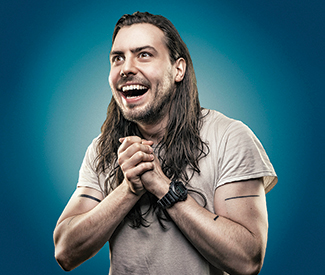
MUSIC The progression of party-rock champion Andrew W.K.’s career reads less like a linear trajectory than a whirlwind of bizarre, hilarious, and downright enviable undertakings. After he started out as a keyboardist in New York’s avant-garde circles, and built his reputation with a handful of ecstatic butt-rock records (most notably 2001’s I Get Wet, featuring that iconic nosebleed on its cover), W.K.’s biography plunged into full-on chaos mode.

From new-age piano improviser on 2009’s 55 Cadillac, to kids’ game-show host on Cartoon Network’s Destroy Build Destroy, to celebrity ambassador of Playtex Fresh + Sexy Wipes, to valiant record-setter for Longest Drum Session in a Retail Store after this year’s much-blogged 24 Hour Drum Marathon, predicting W.K.’s next move over the past decade has proved futile. Yet, his latest gig might be the most wonderfully surprising of all: assuming the bandleader role in the latest incarnation of punk-rock legends, the Ramones.

Marky Ramone’s Blitzkrieg, featuring W.K. on lead vocals, will hit the Independent this Saturday night, introducing a new twist in the Ramones’ storied legacy.

Speaking to the Bay Guardian over the phone from St. Louis, on his second US tour stop as the band’s de-facto Joey figure, W.K. sets his zany, carefree party persona aside, revealing himself as both humbled and starstruck at the reality of leading the band he’s idolized for so many years.

“It’s a combination of feeling on top of the world, because dreams just keep coming true, and terrified by the magnitude of how fantastic the opportunity is, and also, not embarrassed, but just aware, of how many other people would like to have this chance to sing these songs with Marky. Why do I get it?” W.K. ponders.

“I feel very, very lucky, like I want to represent all my friends and all the people around the world that love this music so much. I feel like I’m doing this on [their] behalf, and that this opportunity is to be shared as much as possible, at least in spirit.”

Most famously led by Joey, Dee Dee, Johnny, and Tommy, the most iconic quadfecta of first names in rock since the Beatles, the Ramones forever changed the course of pop music, as one of the formative outfits of the punk rock movement. The songs, from “Blitzkrieg Bop,” to “Rock ‘n’ Roll High School,” to “Bonzo Goes to Bitburg,” were hedonistic in their intent, and radically economical in their structure and duration, feeding directly into the party mindset W.K. would adopt decades afterward.

Their records, from the skeletal beginnings of Leave Home and Rocket to Russia in 1977, to the Phil Spector-produced technicolor pop of End of the Century in 1980, certainly marked an artistic progression, but W.K. thinks of it differently.

“All the albums are just this big explosion of inspired genius. It’s hard to even break it apart. I don’t want to break it apart, actually. I just like thinking of the whole thing as just this one phenomenon.

“[The Ramones are] so singular. They’re so completely self-actualized, that just them standing there screams this certain feeling, and no one else has it… When we play live, it almost feels as if the show is one song.”

While Marky Ramone didn’t join the band until partway through its creative explosion (he took over for Tommy on drums in ’78, after several stints with the Misfits and Richard Hell & the Voidoids), he continues to keep the Ramones legacy alive, as its last remaining member after the deaths of Joey, Johnny, and Dee Dee, from lymphoma, prostate cancer, and a heroin overdose, respectively. W.K. is clearly inspired by Marky’s resilience, through tumultuous times that would’ve rendered positive, joyful music a near impossibility for many musicians moving forward.

“One of the most inspiring parts is his conviction to keep on going and doing all that he can to do this music, which is a cheerful kind of music,” W.K. explains. “No matter how dark aspects of the whole adventure have been, or how challenging, or how sad, or how frustrating, there was always a cheerful effort. The end result was to feel good, not bad.”

W.K. might not be the most intuitive choice to assume Joey’s position as lead singer, yet he contends that his feel-good reputation, and outspoken promotion of partying as way of life, is what captured Marky’s attention, eventually resulting in the current touring lineup.

“Marky, right away when we first met, had done some amount of research into my vibe, or whatever, and said he definitely enjoyed and appreciated the party philosophy,” W.K. says. “[However], at our first dinner together, he explained that he doesn’t want someone who would even attempt to replicate [Joey’s persona]. The shoes are impossible to fill.”

“The thing is, the music is so good, that as long as you sing the best you can, it takes care of itself. No one could ever sing like Joey, even if they tried. It’s futile. There’s no singer like him. But, the songs, as Marky says, deserve to still be played. I just serve him, serve the legacy, and most of all, the music, as best I can.”

On Saturday night, Ramones fans can expect a 30+ song set, borrowing from each of the band’s albums, from its 1976 self-titled debut, to 1995’s farewell effort, ¡Adios Amigos!. Upon W.K.’s request, Marky agreed to include a rendition of “Bonzo Goes to Bitburg,” from 1986’s Animal Boy, a song he heard in a NYC record store as a teenager, in the moment that cemented his Ramones fandom.

“That’s the moment during the show when I can connect all these different times,” W.K. explains, “from the first time I ever saw the Ramones, to the first time I ever heard that song, and now I’m singing it with Marky onstage. Those are the kind of moments that make life worth living. Even if you just get a few of them in your life, you’re lucky.”

MARKY RAMONE’S BLITZKRIEG WITH ANDREW W.K.

With FIGO, the Meat Sluts

Sat/12, 9pm, $25

Independent

628 Divisadero, SF

(415) 771-1421

www.theindependentsf.com


Survival mode

0

cheryl@sfbg.com.

FILM Eye of the tiger, baby. The fight for survival is a dominant theme this season at the movies, with astronaut Sandra Bullock grappling for her life in Gravity; lone sailor Robert Redford piloting a leaky boat in All Is Lost; and Tom Hanks battling Somali pirates in Captain Phillips. (More on that film — directed with trademark urgency by Paul Greengrass — in a moment.)

No movie stars appear in The Summit, a documentary from Irish filmmaker Nick Ryan, but that doesn’t lessen its power. In fact, this tale of a staggeringly tragic mountaineering accident — in which 11 people perished in a 48-hour period atop K2, the second-highest peak in the world — might be the most terrifying of the bunch. Along with the expected historical context, talking heads, and some stunning aerial footage, The Summit crafts its tale using a seamless blend of re-enactments and archival footage shot during the deadly 2008 expedition. Editor Ben Stark picked up two awards at the 2013 Sundance Film Festival, and you can see why — it’s difficult at times to pick out what’s real and what’s not.

“Only 18 percent of the footage is reconstructed. I actually did the calculation, because it was coming up a lot,” Ryan explained on a recent visit to San Francisco. In this era of obsessive self-documentation, it’s not surprising that many of the climbers happened to be carrying cameras. “I was always aware, though, that perhaps once things started to go bad, there wasn’t going to be much footage there. People were going to be too busy surviving, and filming was probably the last thing on their minds. As a director, the reconstructions were a very conscious choice — I knew how complex the story was. The best method would be to tie [its fragments] together with a strong narrative structure.”

Accompanying Ryan to SF was Pemba Gyalje Sherpa, a professional climber who was a hero amid the chaos in 2008. Though K2 claimed the life of his teammate and close friend, charismatic Irishman Ger McDonnell, he didn’t hesitate when Ryan asked him to participate in the film.

“The documentary allowed us to show the public what happened on the mountain,” Sherpa explained. “But the reconstructions did bring up some difficult feelings.”

The Summit has been compared to Kevin Macdonald’s 2003 Touching the Void — a documentary enhanced by re-enactments that’s also about a controversial climb. Ryan said he saw the movie when it came out, but he’s avoided other obvious touchstones, like Jon Krakauer’s Into Thin Air, about the 1996 Mount Everest disaster. “You don’t want to be influenced. But though they’re substantially different, I was always envious of the simplicity of Touching the Void as a story. The Summit was the polar opposite of that, because of its complexity.”

The Summit also delves into the more metaphysical aspects of climbing, including “summit fever” — sharing the startling statistic that for every four people who attempt K2, one will die. “As a non-climber, I was fascinated by that,” Ryan said. “Why would anyone take worse odds than Russian roulette?”

Those who do must understand the sport’s unwritten rule of self-preservation. “Morality is skewed when you get above the [high-altitude] death zone. The morally right thing to do isn’t necessarily the actual right thing to do,” Ryan said. “If you climb these mountains, I think you have to realize that when things go wrong you can only rely on yourself. You can’t expect anyone to help you — when you’re stuck there, you might as well be stuck on the moon. Nobody is coming to help you.”

Fortunately for cargo ship captain Richard Phillips, the Gulf of Aden is neither K2 nor the moon. In 2009, Phillips was taken hostage by pirates who’d hijacked the Kenya-bound Maersk Alabama. His subsequent rescue by Navy SEALs came after a standoff that ended in the death of three pirates; a fourth, Abduwali Abdukhadir Muse, surrendered and is serving a hefty term in federal prison.

A year later, Phillips penned a book about his ordeal, and Hollywood pounced. Hanks is perfectly cast as Phillips, an everyman who runs a tight ship but displays an admirable ability to improvise under pressure.

“He was essentially trying anything to shake them off his path. [The pirates] let him hold onto his radio, and he was able to communicate with everybody else on the ship that way,” Hanks said, in town to promote the film with Greengrass and co-star Barkhad Abdi. “[Phillips] had so much knowledge as a merchant mariner. Prior in his career, he’d been in a hurricane in the middle of the Pacific, in which he was helpless — so he’d experienced a different type of terror at sea. With [the pirates], he had somebody he could interact with. It was a different type of fear and anxiety.”

Abdi, cast from an open call among Minneapolis’ large Somali community, plays pirate leader Muse. Captain Phillips focuses mostly on Hanks’ character, but it takes the time to emphasize that piracy is one of few grim career options for Somali youths. The first-time actor, who left Somalia at a young age, brings nuance to what could’ve been a one-note villain.

“I relate to that character, because that could have been me,” he said. “I was lucky enough to have parents that took me to another country, where I could be a better person. But what if my parents had been killed? I don’t excuse [Muse’s] actions, but I understand his motives.”

With a résumé full of intelligent, doc-inspired thrillers (2006’s United 93, 2007’s The Bourne Ultimatum), director Greengrass has mastered the art of fast-paced action filmmaking. He’s especially known for his use of handheld cameras, and Captain Phillips is no exception.

“Ships rock around. How do you shoot on a lifeboat and keep it steady? It’s impossible. You want the images that you’re capturing to authentically arise out of the environment that you’re shooting in,” Greengrass explained, with a caveat. “The faster-moving your sequence, and the more intensely complicated your action is, it [becomes] imperative to render detail. Detail is what gives you acceleration and focus. You’ve got to be inside the action, and your filmmaking must unlock the inner dynamics in a way that’s clear. With this film, you’ve got a very simple, unbelievably dramatic, stark story. If we render it as authentically as we can, we’ll find out what it means — which you couldn’t have found from the news, because you’re looking at it from the outside. You can only find out by being in it.” *


THE SUMMIT and CAPTAIN PHILLIPS open Fri/11 in Bay Area theaters.

Justice for cyclists

54

OPINION

It was heartbreaking to hear their stories.

Sarah was hit while riding her bike. Then she was wrongly faulted for the collision, despite multiple witnesses’ testimony and photo evidence to the contrary. A police officer verbally harassed her after the incident.

“The crash was awful,” she said. “But the way I was treated by the police … absolutely compounded the trauma. I was treated, at every turn, like a criminal.”

Dorie was hit from behind while biking in Golden Gate Park with her son in a rear child seat. Thankfully he was fine, but she was injured seriously enough to spend two weeks in the hospital. She was blamed for the incident, despite witnesses’ statements claiming otherwise.

And after Sandrine was hit while biking, she was treated with hostility by police officers while she lay in pain at the hospital. She was shocked to learn witness statements were not included in her incident report, which faulted her. Thousands of dollars in debt later, Sandrine says she is “disheartened and completely disgusted with the attitude and bias of the police” toward people on bikes.

Nearly 40 people spoke up last Thursday at a Board of Supervisors committee hearing into the SF Police Department’s response to traffic incidents involving people biking and walking.

The spotlight is on the SFPD after it botched an investigation last month of a 24-year-old woman who was hit and killed while biking to work on Folsom Street. Police failed to look for video footage in the area, and a police sergeant blocked the bike lane at the memorial to publicly blame the victim for her own death, while forcing bike riders into high speed traffic.

I’m sorry to say that I was not surprised by the sergeant’s “blame the victim” attitude in that recent tragedy. Nor in the dozens of cases people shared at last week’s hearing.

Sadly, we regularly hear about experiences like these: people refused incident reports, despite injuries. Reports being taken inaccurately or incompletely, time and time again blaming the person biking, despite witness statements to the contrary. And officers being ignorant of the law, such as not understanding that people can leave a bike lane to avoid an obstruction or to make a turn.

I believe our police chief when he insists that all road users should be treated fairly, but that message is not being heard by all in the force.

The chief needs to make certain that all collisions resulting in injuries are fully and fairly documented; that training is significantly stepped up to ensure officers’ understanding of bicyclists’ rights and responsibilities on the road; and, finally, that the SFPD uses a data-driven approach to focus limited traffic enforcement resources on the locations and behaviors that are most dangerous.

We are not asking for special treatment for the growing number of people on bikes, but rather fair and equal treatment for all road users.

Leah Shahum is executive director of the San Francisco Bicycle Coalition.

Friends in the shadows

36

rebecca@sfbg.com, joe@sfbg.com

It’s a simple fact of life: Money buys influence. But in San Francisco, despite strict sunshine laws to illuminate donations to city agencies and gifts to the regulators from the regulated, money still circulates in the shadows when it flows through the coffers of “Friends” in high places.

Major real estate developers, city contractors, and large corporations often lend financial support to San Francisco city departments, to the tune of millions of dollars every year. But the money doesn’t just flow directly to city agencies, where it’s easily tracked by disclosure laws. Instead, it goes through private nonprofits that sometimes label themselves as “Friends Of…” these departments.

They include Friends of City Planning, Friends of the Library, a foundation formerly known as Friends of the San Francisco Department of Public Health, Friends of SF Environment, and Friends of San Francisco Animal Care and Control.

The Friends pay for programs the departments supposedly cannot cover on their own. Bond money can build a skyscraper, but sometimes not fill it with furniture. Agencies are barred by law from funding an employee mixer or a conference trip, so departments turn to their Friends to fill in the gaps. Adding bells and whistles to city websites, holding lunchtime lectures, hiring a grant writer — or, in the case of the Department of Public Health, bolstering health services for vulnerable populations — these are all examples of what gets funded.

The extra help can clearly be a good thing, but the lack of transparency around who’s giving money raises questions — especially if it’s a business gunning for a major contract or a permit to build a high-rise.

City agencies receive outside funding from a wide variety of sources. Sometimes grants are made by the federal government, or a well-established philanthropic foundation — and according to city law, gifts of $10,000 or higher must be approved by the Board of Supervisors. But in the case of organizations like Friends, which are created specifically to assist city government agencies, the original funders aren’t always identifiable. And the collaboration is frequently much closer, with city staff members serving on Friends boards in a few cases.

the circle of donations to "friends of" foundations

Friends board members told the Guardian that their partnership with government helps bolster city agencies in a time of increasing austerity, in service of the public good. But do the special relationships these influential insiders hold with high-ranking city officials come into play when awarding a contract, issuing a permit, making a hiring decision, or determining whether a developer’s request for a rule exemption should be honored? Without more transparency, it’s tough to tell.

City disclosure rules state that any gift to a department must be prominently displayed on that department’s website, along with any financial interest the donor has involving the city. But Friends and other outside funders are under no obligation to share their supporters’ names, much less financial ties, when they distribute grants. Meanwhile, the disclosure rules that are on the books seem to be frequently ignored, misunderstood, or unenforced, our investigation discovered.

How are donors repaid for their support? Consider the controversy earlier this year around Pet Food Express, which won approval in June for another store in the Marina District despite opposition from four locally owned pet stores in the area that fear competing with a large national chain. Pet Food Express won the unlikely support of the city’s Small Business Commissioners, some of whom reversed their 2009 positions opposing the chain’s previous application.

SF Animal Care and Control Director Rebecca Katz personally lobbied the commission to support Pet Food Express, at least partially because the company has donated pet supplies valued at $50,000 to $70,000 per year to the department. That’s a lot of money for a cash-strapped city department, but a pittance compared to the profits of an expanding national chain.

It’s moments of clarity like those, when the public can easily trace the line from donations to political influence, that show why disclosure is so crucial. But those moments are few and far between when trying to trace the funders of private foundations and Friends organizations, where deals often happen in the dark.


WHEN DEVELOPERS ARE FRIENDS

At the Merchant Exchange Building in May, a crowd of high-profile real-estate developers mixed and mingled with city planners, commissioners, and even Mayor Ed Lee, wine glasses in hand. Sources told the Guardian that most of the planning staff was present, and not all were happy about having ribbons and name tags affixed to their shirts, as if they were being auctioned off.

With around 500 in attendance, the event was an annual fundraiser hosted by the Friends of San Francisco City Planning, a nonprofit organization that accepts contributions of up to $2,500 per individual to lend a helping hand to the Planning Department. This year’s event was titled “Incubator Startups, New Jobs for the Future,” hinting that the development community shares the mayor’s affinity for new tech startups and the droves of high-salaried IT professionals they’ve attracted to the city.

Some Friends of City Planning board members are major real-estate developers who routinely seek approval for major construction projects. Others are former planning commissioners, or have a background in community advocacy.

Amid widespread concern about displacement, gentrification, and the overall character of San Francisco’s built environment, no city department has greater influence than Planning. An individual’s interpretation of the Planning Code can carry tremendous weight; it’s a series of small decisions that shape a project’s profits and the look and feel of San Francisco’s future. And with cranes dotting the city’s skyline and market-rate construction catering to the wealthy while middle income residents get priced out, the amount of capital flowing through the development sector these days is astonishing.

In this dizzy climate, there might seem to be something askew about affluent developers and land-use attorneys rubbing elbows with city regulators, all eager to pass the hat for the Planning Department. Whiff of impropriety or no, the fundraiser appears to be totally legal.

“We aren’t violating the law — that I know,” Friends of City Planning Chair Dennis Antenore told the Guardian. “We’ve had legal advice on that for years.”

There is close collaboration between Friends of San Francisco City Planning and the Planning Department — a partnership so entrenched that it’s almost as if the nonprofit is an unofficial, private-sector branch of the agency.

“We are certainly thankful and appreciative,” Planning spokesperson Joanna Linsangan told the Guardian. “They’ve helped us for many, many years.” The additional funding is needed, she said, because “there isn’t a lot of wiggle room” in the departmental budget.

Each year, Planning Director John Rahaim submits a wish list to the Friends, outlining projects he wants funding for. This year, he requested $122,000 for a variety of initiatives, including training support to help planners assess proposals for formula retail (read: chain stores). That’s a hot-button issue lately, and one that shows how seemingly small decisions by planners can have big impacts.

When the department’s zoning administrator ruled that Jack Spade, a high-end clothing chain that opened up in the old Adobe Books location on 16th Street, wasn’t considered formula retail and therefore didn’t need a conditional use permit, neither widespread community outrage nor a majority vote by the Board of Appeals could reverse that flawed decision. It was a similar story with the Planning Commission’s Oct. 3 approval of the 555 Fulton mixed use project, where Planning Department support for exempting the grocery store for the area’s formula retail ban made it happen, to the delight of that developer.

Even though the planning director makes specific funding requests each year to the Friends and pitches the projects in person at their meetings — and the Friends publishes a list of the grants it awards to the department online — the Planning Department is not reporting those gifts to the Board of Supervisors.

“I confirm that the Planning Department did not receive any gifts,” Finance and IT Manager Keith DeMartini wrote in official gift reports submitted to the Board of Supervisors for the years 2011-12 and 2012-13. Those reports were sent to the board on Oct. 7 and Oct. 4, respectively, well after the July filing deadline and after the Guardian requested the missing reports.

The Friends typically funds two-thirds of the requests, said board member Alec Bash, totaling around $80,000 a year. In 2012, the Friends awarded a $25,000 grant to make the department’s new online permit-tracking system more user-friendly, making life a lot easier for developers.

When asked what safeguards are in place to prevent undue influence when the director is soliciting funding from a nonprofit partially controlled by developers, Linsangan responded, “those are two very separate things. One does not influence the other.”

She stated repeatedly that planners are not privy to information about individual contributors — but the fundraisers are organized by a board that includes identifiable developers, and anyone who attends can plainly see the donors in attendance. Nevertheless, Linsangan insisted that planners would not be swayed by this special relationship, saying, “That’s simply not the way we do things around here. We do things according to the Planning Code.”

But as the ruling on Jack Spade shows, as well as countless rulings by planners on whether a project is categorically exempt from the California Environmental Quality Act, interpreting the codes can involve considerable discretion.

The public can’t review a list of who wrote checks to the Friends of San Francisco City Planning for the May fundraiser. Since the organization waits a year between collecting the money and disbursing grants, donors stay shielded from required annual disclosures in tax filings.

But Antenore says the system was established with the public interest in mind. “We don’t reveal the contributors, because we don’t want anybody to have increased influence by a donation,” he insisted. Bash echoed this idea, saying the delay was to “allow for some breathing room.”

Unlike some of his fellow board members from the high-end development sector, Antenore has a history of being aligned with neighborhood interests on planning issues, helping author a 1986 ballot measure limiting downtown high-rise development. He emphasized that the developers on the Friends board are balanced out by more civic-minded individuals.

Still, developers who regularly submit permit applications for major construction projects sit on the Friends board. Among them are Larry Nibbi, a partial owner of Nibbi Bros.; Clark Manus, CEO of Heller Manus Architects; and Oz Erikson, CEO of the Emerald Fund development firm.

“We’re not making use of [the funding] in a way that benefits these people,” Antenore said. “I wouldn’t do this if I thought otherwise. I have been careful to maintain the integrity of this organization.” The money is meant to facilitate better planning, he added. “I don’t think there’s any conspiracy,” he said. “We’re not financing anything evil.”

Both the Planning Department and its Friends dismissed the idea that the donations could open the door to favoritism or undue influence. So why isn’t the department reporting gifts it receives from the Friends to the Board of Supervisors, or disclosing them on its website, as required by city law?

According to a 2008 City Attorney memo on reporting gifts to city departments, when an agency receives a gift of $100 or more, it “must report the gift in a public record and on the department’s website. The public disclosure must include the name of the donor(s) and the amount of the gift [and] a statement as to any financial interest the contributor has involving the city.”

John St. Croix, director of the San Francisco Ethics Commission, confirmed that’s the current standard, telling us, “The actual disclosure should be on the website of the department that received the gift.”

Linsangan said records of the gifts are indeed available — listed as “grants” in the department’s Annual Report. But while the 2011-12 report lists grants from sources such as the Metropolitan Transportation Commission and the Environmental Protection Agency, there was no mention of Friends of City Planning.

The memo also says any gift of $10,000 and above must first be approved by a resolution of the Board of Supervisors. But last year, when the Friends provided $25,000 to upgrade the permit-tracking system, it wasn’t sanctioned by a board resolution. Asked why, Linsangan made it clear that she was not aware of any such requirement.

As is common, when it comes to adhering to disclosure laws, confusion abounds. And sometimes, only sometimes, politicos get caught.


READING UP ON DISCLOSURE LAWS

When the head of a city agency fails to report gifts totaling $130,000, how much do you think he is fined?

City Librarian Luis Herrera failed to report receiving that amount in gifts and he was fined exactly $600 by the California Fair Political Practices Commission on Sept. 19. Specifically, Herrera had to file a form 700 with the FPPC to state the gifts he received. From 2008-2010, the forms he turned in had the “no reportable interests” box checked.

The money was used in what he calls the City Librarian’s Fund, which is the money he keeps on hand to pay for office parties and giving honorariums to poets and speakers who perform at the library’s branches, money that wasn’t disclosed on the very forms designed for reporting it.

There are two stories of how the fine came about. Longtime library advocate James Chaffee said that it was the result of a complaint he filed with the FPPC in April, and indeed, he sought and obtained many public documents revealing the money trail. San Francisco Public Library spokesperson Michelle Jeffers disagreed, saying that the fine was the result of an ongoing conversation with the FPPC to figure how exactly to file the gifts appropriately.

“The law wasn’t clear around these forms and it wasn’t clear if he had to report them,” she told the Guardian. “For amending the reports you have to pay a $200 fine for every year it was proposed. We keep scrupulous records on every pizza party we have.”

When government officials receive “gift of cash or goods,” they must report them annually in statements of economic interest, known as a Form 700, to the city Controller’s Office. The form is kind of a running tally of who is receiving gifts from whom, a way for the public to track money’s influence in government.

The gifts came from the Friends of the San Francisco Public Library, another nonprofit that bolsters city agency funding. Now Herrera has to list the $130,000 gifts from fiscal years 2008-09 and 2009-10 on his website.

What exactly does that accomplish? As it turns out, not a whole lot.

City Administrative Code 67.29-6 defines the reporting of gifts to city departments, and one of those requirements is to make a statement of “any financial interest the contributor has involving the city.” Now that Herrera lists the Friends of the San Francisco Public Library as donors on the department website, the statement of financial interest by the friends group is this: “none.”

There are myriad donors to the Friends of the SFPL, and the group doesn’t have to state the economic interests of its donors, or even mention who its donors are. The code requires gifts be reported to the controller, and the deputy city controller told us this doesn’t apply to the “friends of” organizations, or any nonprofit foundation arms of city departments.

“If gifts are made to a department, yes, they have to disclose, so people don’t get preferential interest in getting city contracts,” Deputy Controller Monique Zmuda told us. “I know it’s a fine line. The foundations don’t provide us with anything.”

Friends of the SFPL doesn’t provide money just for pizza parties. A breakdown of a funding request from the library to its Friends shows requests up to $750,000 to advertise the library on Muni and in newspapers, funding for permanent exhibits, and the City Librarian’s personal fund. That’s just the money it gives to the library. Other monies are spent directly on activities supporting the library.

As Jeffers pointed out to the Guardian, the money isn’t spent on “trips to Tahiti.” Friends of the SPL do good city works, from a neighborhood photo project in the Bayview branch library to providing books for children. But the question is: Who’s buying that goodwill and why?

The millions of dollars in donations made to the Friends of the SFPL don’t need to be approved by the Board of Supervisors, like gifts to departments do. They’re not checked for conflicts of interest or financial interest by any governmental body. Donors give and the Friends of SFPL spend freely, financial interest or not.

When our research for this story began, no financial statements were available of the Friends of the SFPL website. After a few days of inquiries, the most recent year’s financial statements from 2011-12 were posted to the website.

Ultimately, the San Francisco Public Library is one of the smaller city departments, with an annual budget that hovers around $86 million. The Department of Public Health is a much bigger beast, with a 2011-12 budget of around $1.5 billion.

One of its main foundations, the San Francisco General Hospital Foundation, is also one of the largest nonprofits that supplements city spending. In many ways, it could be described as the model of disclosure for city foundations, although its disclosures are not by law, but by choice.


FOUNDATION OF FRIENDS

The Department of Public Health relies on a few entities that fundraise on its behalf: the San Francisco Public Health Foundation, the Friends of Laguna Honda Hospital, and the San Francisco General Hospital Foundation.

“They’re private nonprofit entities that are separate from the department,” CFO Greg Wagner told us. “But their roles are to support the department in its efforts.” He cited examples such as sending its staff to conferences or hosting meetings, “things that we don’t have the budget for or don’t have the staff or resources.”

The lion’s share of the DPH’s gifts are funneled through the SFGHF. Unlike many of the assorted Friends groups or foundations that support city services, the SFGHF extensively reports the sources of its $5 million in donations. The donors include a veritable who’s who of San Francisco: the Giants, Sutter Health, Xerox, Pacific Union, and Kohl’s all donated between $1,000 and $10,000 in the past two years.

But the largest gifts to the SFGHF came from Kaiser Permanente, and its financial interests in the city run deep. Kaiser came into the city’s crosshairs in July, when the Board of Supervisors passed a resolution calling on Kaiser to disclose its pricing model after a sudden, unexplained increase in health care costs for city employees. Kaiser holds a $323 million city contract to provide health coverage, and supervisors took the healthcare giant to task for failing to produce data to back up its rate hikes.

In the meantime, Kaiser has also been a generous donor. It contributed $364,950 toward SFGHF and another $25,000 to SFPHF in fiscal year 2011-12.

The funding from Kaiser and a host of other contributors — which include Chevron, Intel, Genentech, Macy’s, Wells Fargo (another city contractor), and a pharmaceutical company called Vertex — does support needed programs. They include research into the health of marginalized communities, services through Project Homeless Connect, screening for HIV, and immunization shots for travelers.

But because DPH doesn’t count much of this support as “gifts” formally received by the city, it isn’t subject to prior approval by the Board of Supervisors, or posted on the department’s website along with the contributors’ financial interests. Major contributions are disclosed in a report to the Health Commission, something Wagner described as a voluntary gesture in response to commissioners’ requests.

“Most gifts to foundations are donations to a nonprofit and do not come through the city or DPH at all,” he noted.

This distance is maintained on paper despite close collaboration with the department. In the case of Project Homeless Connect, a program that holds a bimonthly event to aid the homeless, it supports programs headquartered in city facilities. Penny Eardley, executive director of SFPHF— which used to be called Friends of San Francisco Public Health — noted that her organization occasionally makes grants or seeks funding in response to department requests. And Deputy Director of Health Colleen Chawla is a foundation board member. It’s almost like these foundations are extensions of the department, except they’re not.

SFPHF also earns revenue as a city contractor. When DPH received a grant from the Centers for Disease Control, it contracted with SFPHF to manage subcontracts with about a dozen community-based organizations.

The web gets even more tangled. The president of SFPHF is Randy Wittorp — who’s also Director of Public Affairs for Kaiser Permanente’s San Francisco Service Area. It’s a similar story with SFGHF, whose board includes several General Hospital administrators, including CEO Susan Currin.

Former Health Commissioner James Illig said people shouldn’t worry, that hospital the staff would never direct foundation funds to pet projects or mishandle funds. They maintain a separation and a firewall,” he said, for example noting, “Sue Currin is not directing funds to her own hospital.”

But he did admit that since SFGHF’s minutes are not public documents, that “raises a few concerns,” arguing the public should be able to inspect financial documents to decide if the foundations are directing funds lawfully to city departments.

Even when the public by law has a right to access financial records of a city department, rooting out corruption can be like pushing a boulder up a San Francisco hill.


FROM PATIENTS TO PARTIES

In 2010 and 2011, Laguna Honda Hospital administrators and staff used money from the hospital’s patient gift fund to throw a party. And then they spent it on airfare. And then they gave laser-engraved pedometers to the staff. All told, they spent nearly $350,000 meant for the dying and the infirm, nearly half of the total funds.

The incident was big, messy, and out in the public eye. It was an all-too-rare glimpse into the shady use of public funds by public officials. But when hospital staff members Dr. Derek Kerr and Dr. Maria Rivero blew the whistle on Laguna Honda’s misuse of patient funds in 2010, they were drummed out of their jobs.

Eventually litigation on behalf of the whistleblowers and their complaints of corruption were found to have merit.

Kerr’s vindication came at a meeting of the Health Commission in April 2013. In the packed City Hall meeting room, the public watched as Laguna Honda Executive Director Mivic Hirose read her apology to Kerr and Rivero aloud, even announcing a plaque in Kerr’s honor.

“The hospital will install the plaque in the South 3 Hospice,” she read, stiltedly, from a written statement, surrounded by microphones at the podium. “The plaque will say: In recognition of Derek Kerr MD of his contributions to the Laguna Honda’s hospice and palliative care program 1989-2010.”

Kerr received a settlement of $750,000 and something more important: His good name cleared.

But that conflict of interest was rooted out only after years of litigation that revealed the financial abuse through legal discovery of the department’s documents — documents that should’ve been public in the first place. ABC 7’s I-Team broke the story and did much of the reporting at the time, otherwise the entire affair may have been swept under the rug.

The misuse of funds was only brought to light with the revelation of public documents — revelations not possible with most Friends groups. The Laguna Honda Hospital Foundation has also had financial dealings with potential conflicts and a lack of transparency.

The now-defunct LHHF’s board chair, former City Attorney Louise Renne, made an interesting choice for her vice chair after she formed the nonprofit in 2003. Derek Parker was vice chair of the LHHF while simultaneously heading architecture firm Anshen-Allen, with a $585 million city contract to rebuild the hospital.

So he was not only rebuilding Laguna Honda under city contract, but soliciting and spending donations meant to supplement his project. Renne wrote to the Health Commission in December 2011 that LHHF’s purpose was to manage over $15 million in donations meant to furnish the hospital with beds, chairs, and other necessities. Eventually, then-Mayor Willie Brown found funding for the hospital, reducing the foundation’s role.

In a phone interview with the Guardian, Renne said the goals of the LHHF were only ever to furnish the newly christened hospital. “Our purpose was to fill the void, if you will, for what the city and its services could not do,” she said.

But in her letter, Renne advocated for LHHF to take an active role in fundraising for the hospital for years to come. “Today, the members of the Board of Directors of the Foundation continue to assist the hospital in various phases of its new projects and operations with projects approved by the City and/or the hospital administration,” she wrote to the Health Commission.

And Parker would have potentially managed millions of dollars flowing through donations for countless other hospital projects, while heading an architectural firm with contracts to build in San Francisco. We were unable to reach Parker for comment.

“I never saw Derek use his position as an architect or position for any political gain, I never saw it,” Renne told us. But no one else would see it either, because organizations like the now closed Laguna Honda Hospital Foundation operate without public oversight.

The Health Commission itself even noted this in its March 2012 meeting, the minutes describing then-commissioner James Illig as critiquing the foundation for not being open about its source of funding.

“Commissioner Illig thanks Ms. Renne and Mr. Parker for coming to the Commission,” the minutes read. “Because (LHHF) is a project of Community Initiatives, a fiscal sponsor for nonprofits, it is not possible to find basic financial information about the Foundation or its activities.”

Divided interests on hospital board

Due to a quirk of her foundation being under the “umbrella” of a separate entity, Community Initiatives, Illig was never able to even get the LHHF’s IRS forms, he told us. “We tried to get information and reports, and the Community Initiatives [Form] 990 was giant,” Illig said. “It didn’t separate anything out.”

Illig told us that it made sense to have Parker on the board because he is monied and well connected, making it easier to solicit donations. But insiders close to the board told us that Parker’s position may have made it easier to swing getting other contracts for his firm.

Parker got another city contract building the UCSF Benioff Children’s Hospital at Mission Bay, slated to open in 2015. No doubt his firm got the job partly due to his reputation as pioneering architecture that leads to healthy patient outcomes — but then again, the board he served on also approved donations to research at UCSF.

Laguna Honda Hospital Foundation may now be defunct, but it serves to illustrate the lack of controls and oversight of the foundations beyond even gift disclosure.


OFF THE BOOKS

It might be characterized as a web of influence, cronyism, or just the way business is done. But is there something improper about all of this?

Private funding often represents a needed boost that allows for important work to take place beyond what could happen under ordinary budgeting. At the same time, it smacks of privatization. While departments and funders point to lean times in the public sector to justify the need for this help, the funding continues to flow whether it’s a good year or a bad year for city government. And at the end of the day, the most glaring issue of all seems to be the lack of transparency.

Are city departments ever tempted to bend the rules to lend a little help to their Friends? As long as the funding is in the dark, the public has no way of knowing.

Ethics chief St. Croix told us his office lacks the resources to visit every city website and check up on whether departments are following the disclosure rules. “If someone brought it to my attention that a department received a gift and didn’t post it [on the website],” he said, “we would look into it.”

But if the watchdogs need watchdogs, citizens who can’t even review documents that should be publicly available, then these quasi-governmental functions and the people who fund them will remain in the shadows.  

Danielle Parenteau contributed to this report.  

ADDENDUM  

When city funders operate in the dark, one of the best ways to learn about corrupt influence, misuse of funds, and other transgressions is from whistleblowers. If you have a tip for us, send us snail mail at SAN FRANCISCO BAY GUARDIAN, 225 Bush, 17th Floor, San Francisco, CA 94104. Or email us at news@sfbg.com. Just make sure not to use an email address provided by your workplace, which is less secure.

Alerts: October 9 – 15, 2013

0

WEDNESDAY 9

March against evictions Bayanihan Center, 1010 Mission, SF. www.sdaction.org. 12:30-2pm, free. “Soma Time, and the Livin Ain’t Easy: Walk of Shame” will start at the Bayanihan Center near Sixth and Mission. The march is intended to call attention to and protest matters such as ever-increasing rents and unfair evictions of senior citizens and other long-term residents by profit seekers. This demonstration is a joint effort of local residents, Senior and Disability Action, the Bill Sorro Housing Program and the Housing Rights Committee. For more information, contact Senior and Disability Action at (415) 546-1333. SATURDAY 12


Ohlone Big Time Cultural Event Crissy Field Center, 603 Mason, SF. www.ohloneprofiles.org. 12-6pm Saturday; 12-5pm Sunday, free. This festival will feature tribal dances, music, traditional skills demos, discussions, vendors and camping. It coincides with Fleet Week and Indigenous People’s Weekend. Several California Indian tribes will be participating. Organizers hope to make this an annual event. The Ohlone are a Native American tribe indigenous to Northern California but not currently recognized by the federal government, and the event is meant to raise awareness about their presence in the Bay Area.


Help find the way forward The Way Christian Center, 1305 University, Berk. tinyurl.com/whichwayforwardCA. Contact@ellabakercenter.org. 9:30-noon, free. Donations accepted. The Oakland-based Ella Baker Center has been empowering low-income populations in the Bay Area since 1996. Its latest effort — Which Way Forward California? — is pushing for state funds to be spent on education, job training and other helpful services — rather than prisons. Join the center at this inaugural community strategy session, and give your input on ways to achieve this change. RSVP at tinyurl.com/whichwayforwardCA.

SUNDAY 13  

Book reading: The Great Sioux Nation Eric Quezada Community Center, 518 Valencia, SF. tinyurl.com/518columbusdaytalk. 4-6 p.m., free. Author Roxanne Dunbar Ortiz and Sioux elder Bill Means will discuss the new edition of the important book, “The Great Sioux Nation: Sitting in Judgment on America,” originally published in 1977. Join them the day before Columbus Day as they discuss both the impact of the book and the present-day attitude toward a holiday that many perceive as nothing more than an endorsement of genocide.

Party Radar: Tiara Sensation Pageant, Body and Soul, Peter Kruder, Castro Street Fair, Octo Octa, more

1

According to recent findings, it would take 4.85×10(15) years to teleport a complete human at 30GHz. That’s 350,000 times longer than the universe has existed. And almost as long as the clothes check line at the Powerhouse. 

How will I ever get to all these parties???

Darn you, science. I’m guessing I’ll still at least have one or two out of body experiences at the following, howevs.

>>MAXXI SOUNDSYSTEM

If you’re any kind of dance maven, you’d know Brit Sam Watts’ 2011 hit “Criticize” in three notes, probably — but I adore his remix work and DJ prowess. Hit him up at the neat, super-affordable-for-this-kind-of-talent  weekly Base party, which seems to have reemerged after a little hiatus.

Thu/3, 10pm, $5-$10. Vessel, 85 Campton Pl., SF. www.vesselsf.com


>>TIARA SENSATION PAGEANT

All the glorious queens forever! This beloved little underground drag tradition, brought to us by the creators of the great Some Thing party every Friday at the Stud, is going BIGTIME. This year it’s being held at the De Young Museum’s fun Friday evenings (there will be kids there! and a bar!) Of course, it’s a freakishly lovely runway pageant for freakishly freakish queens — and I’ll be one of the celebrity judges, so you know it will be, er, drinky. My fellow judges, far more legendary than I could ever be, are Candis Cayne, Gina La Divina, Lil Miss Hot Mess, and Honey Mahogany. Expect a raucous, wiggy crowd.

Fri/4, 6pm-10pm, FREEEEE. de Young Museum, 50 Hagiwara tea Garden, Golden Gate Park, SF. Info here


>>BODY & SOUL

Three of the world’s greatest house (and Latin, and electrofunk, and disco, and soul) DJs return to resurrect the feeling of their NYC party — wihch changed my life, and the lives of pretty much everyone else on the scene 10 years ago. Golly, I love them! Welcome back, Francois, Joe, and Danny.

Fri/4, 10pm-late, $25. Mighty, 119 Utah, SF. www.mighty119.com


>>PETER KRUDER

One half of infamous Austrian sophiticated house duo Kruder and Dorfmeister, Peter headlines the giant Public Works third anniversary. But wait there’s so much more! Also there: Christian Martin, Jackie House, Afrolicious, J-Boogie, Josh Vincent and a hot-hot crowd. Here’s one of my favorite remixes of all time, btw:

Sat/5, 8:30pm-3:30am, $10. Public Works, 161 Erie, SF. www.publicsf.com 


>>OCTO OCTA

100% Silk label cutie blends dreamy classic house sounds with effusive but totally danceable concepts at the ever-awesome Push The Feeling party. (Love the track “His Kiss” of his lovely Between Two Selves LP.) He’ll be joined by Matrixxman (who made me dance till I cried at the deviants party last week) and Yr Skull and Epicsauce DJs. Good times. 

http://www.youtube.com/watch?v=6Cz6PkRs4QM

Sat/5, 9pm, $5 advance. UndergroundSF, 424 Haight, SF. octoocta.eventbrite.com


>>#ENDHIV DRAG BALL

Balls are all the rage! This one, MCed by Sister Roma and Pat N Leather and DJed by Guy Ruben, raises money for a possible HIV vaccine — and of course will be loaded with colorful characters.It has an “animal” theme!

Sat/5, 7pm-10pm, $40. Beatbox, 314 11th St, SF. itrulycare.com/events/endhiv-sf-drag-ball


>>CASTRO STREET FAIR

This 40th edition of the fair has an INSANE nightlife focus: Peaches (yes that Peaches) is doing a Sylvester tribute! There is a Legends dance stage featuring David Harness, Pete Avila, Rolo, Blackstone, and Page Hodel. And Cookie Dough will bring her kookielicious Monster Show drag party as well. It’ll be nuts + dancing + cute.OH! And don’t miss one of the best things ever that happens in SF — the two-step line–dance stage behind Castro Theatre.

Sun/5, 11am-6pm, donatiion requested. 18th Street and Castro, SF. www.castrostreetfair.org

The Performant: I’m With the Banned

0

Since practically every single calendar day of the year has been appropriated by some cause or another (in this month alone we celebrated Labor Day, Patriot Day, National IPA Day, National Seat Check Day, World Rabies Day, and National Grandparents Day, to say nothing of Suicide Prevention Week, Constitution Week, and National Emergency Preparedness Week), it can be hard to keep them all straight. But one week that stands out, at least for myself is Banned Books Week (Sept 22-28), a 30 year-old tradition spearheaded by the American Library Association.

A celebration of free speech and the free exchange of ideas, especially in regards to minors and schoolchildren, Banned Books Week events range from readings to panel discussions to virtual “hangouts” across the nation. And lest you think that banned books are an anachronism of unenlightened school boards past, consider this list of the most challenged books of 2012, which includes such well-known works of obscenity such as Khaled Hosseini’s The Kite Runner, Toni Morrison’s Beloved, and the gleefully irreverent Captain Underpants series. Lists like these are practically an invitation to read, and the persistence of certain books such as Brave New World, The Chocolate War, and I Know Why the Caged Bird Sings on the list over the past 10 years only speak to their enduring ability to provoke, to embolden, and to inform.

Since the single best way to celebrate Banned Books Week is solitary in nature, I opted for the second-best way, which was to head over to the Emerald Tablet for their flagship reading series: “Under the Influence.” Not a celebration of Banned Books per se, what “Under the Influence” offers is a mash-up of influential works alongside works written that were somehow inspired by them. In last Friday’s edition, excerpts of Antoine de Saint-Exupéry, Paula Vogel, William S. Burroughs, and Maggie Nelson were presented side by side with essays, poems, and plays about deserts, identity, pending apocalypse, and fibromyalgia, speaking less perhaps to the manufactured exile created by banning books, but instead to literature’s overarching resilience and penchant for freedom.

Colleen Hubbard was first, and immediately won me over by reading an excerpt from Antoine de Saint-Exupéry’s Wind, Sand and Stars (Reynal and Hitchcock, 1939), and then an excerpt of her own writing about Denmark’s Råbjerg Mile, the largest Wanderdüne in Northern Europe. The next reader, Abe Becker, read an excerpt from Paula Vogel’s Desdemona (Dramatists Play Service, 1994) with a friend filling in the role of Desdemona while he took on Emilia, her maid. His work that was inspired by Vogel was also a play: a retelling of the play-outside-the-play in Shakespeare’s Taming of the Shrew, in which local drunk Christopher Sly is taken in by an aristocrat to be made sport of, performed by a cast of three volunteer readers.

Clint Flippen read excerpts from notable banned book Naked Lunch (Grove Press, 1962), by William S. Burroughs, then proceeded to read poems of his own that flirted with that enduring obsession we have with the apocalypse while likening the destruction of ant farms to that of destroying whole civilizations — certainly an accurate observation from the POV of the ants. Wrapping it up was Amy Berkowitz, who channeled Maggie Nelson, first in a few excerpts from her short prose meditations on a color, “Bluets” (Wave Books, 2009), and then delved into a piece of her own entitled “Tender Points,” about living with fibromyalgia.

Co-created-and-curated by local literary wrangler Evan Karp, the event’s comfy living room vibe was that of anything goes, and past readings have included influential works such as films, songs, and Shakespeare (see Becker) along with the usual prose. Last Friday of the month at 7:30, if you’d like to check it out. Snacks are provided, and donations cheerfully accepted.

“Under the Influence”
The Emerald Tablet
80 Fresno St, SF
(415) 500-2323
www.emtab.org

Honey Soundsystem ending Sunday parties: SF so over now :/

20

That sound you hear right now? Every cool gay and/or techno nerd in the city rending their exquisitely positioned garments. Honey Soundsystem has just announced via newsletter that Oct. 20 will see the end of its weekly Sunday party at Holy Cow, one of the best overall club nights in the world. 

“We started out wanting to make house and techno a regular thing for queens — and we did that and now it’s time to move on,” DJ P-Play of the collective told me. “We’re glad the party is so good right now, and we’re stopping it while it’s hot.

“We’re confident enough to move in a direction where people have to think again. Where we’re going with the music, together and individually, is too complicated for a weekly night.

“Now it’s up to the queens of SF to decide if they want to continue to keep this city interesting, or if they’re going to settle for the same top 40 bullshit.”

The importance of the five-year-old Honey Sundays can’t be overstated — starting with the fact that they filled the gaping hole in SF Sunday nightlife left by the End Up’s death spiral, and climaxing with an absolutely insane weekly lineup of challenging international underground artists, gay and straight, brought to a hungry, globally hooked-in audience here. Basically, you’re nothing if you don’t play Honey now.

The weekly family affair also introduced a new generation to the intellectual art of throwing a party: the soundsystem was unafraid to get hyperconceptual and subversively arty with its promotional material, themes, decor, and one-off locations. And the sheer diversity of the people behind the decks each week was almost single-handedly holding up SF’s rep as a cultural Mecca. (I’m kidding about SF being totally over — there are still some great parties. Look, though, we are getting a bit same-y in the nightlife department.) 

Honey Sundays took the effort. But yeah, maybe it’s time to move on. “Jason Kendig is being recognized on an international level,” P-Play says, rattling off the Honey members’ accomplishments. “Robot Hustle is touring live as Bezier. Josh Cheon runs one of the most respected labels in the world right now. And my work with Luther and as Jackie House is taking off.” (P-Play’s being modest — he was actually behind about five of the biggest and best Folsom parties this year.) He also compared the ending to the finale of Kontrol, SF’s mainstay techno party, some of whose promoters went on to become world-famous DJs. 

Plus Honey’s ending on a high note. “It’s an inevitable, poetic idea that we want to give back, give something really back,” P-Play said. “Our last night is the release party of our double album of Patrick Cowley’s lost gay porn soundtracks, School Daze, something we feel really completes a kind of journey for us. We’re going until 4am. It’s the day after what would have been our idol Cowley’s 63rd birthday — it won’t be sad, it will be a celebration.”

Breathe, queens, Honey’s not totally dispersing — they promise to be back soon with great things. And they’ll be teaming up with the No Way Back crew to bring in Norwegian heavy hitter Rodhad for Halloween, and then in November are doing something big for Bear Pride Weekend, which is an actual thing happening.

“We’re not giving people their weekly fix anymore, they’re going to have to stir the pot,” P-Play said.

And what of the poor souls who show up the Sunday after Honey’s ended? “They’re idiots,” P-Play declares. “They’re not our crowd, and not the people we want to play for anyway.”

Get the memo, honey. I’m gonna go cry now. Here’s the full release from Honey HQ:

Dear Honey Bee,

It is without regret we inform you that the next 3 Sundays will see the end of our 5 years as a weekly party.

In our 7 year history as a crew we tasked ourselves with reinventing queer nightlife for all our friends, allies and supporters. We have and will continue to bring the highest quality sounds from the underground and create a safe space for people of all walks to mingle, dance and be free.

But in order for us to grow even further, we need to shed our old skin to create a new one. The party itself – whether at the Holy Cow, the Paradise Lounge or those that can recall back to our days at The Transfer or the Mineshaft Basement Parties – has always been a party on the move. We will be going back to our roots, but with a more direct line to the future. This is not a disappearing act, this is taking ownership of the destinies of everyone who has participated, supported and danced at our parties. This farewell is quite temporary, for you will soon be transported back to our dance floor as though it were all a dream…

For the final Honey Soundsystem experience at Holy Cow on October 20th, 2013 we pay tribute to Patrick Cowley’s life in our third installment of Megatron Man to celebrate the release of the 2×12” “School Daze”! The release features soundtracks to John Coletti’s pornographic films from FOX Studio that were long forgotten but now resurrected for your listening pleasure. Restoring these tapes to our fans marks the full cycle of what Honey has strived to achieve – bringing you timeless sounds from all eras of dance music, grounded in foundations of queer history.

See you on the dancefloor,

Honey Soundsystem


Weekly Picks: October 2 – 8, 2013

0

Among the undead.

WEDNESDAY 10/2


“How to Survive the Zombie Apocalypse”

Who hasn’t thought about who they would want on their zombie apocalypse team, how they would escape the city, or where they would go if they got out? But that’s just the first 24 hours. What about some oh, 28 days later? What about 28 weeks? What about doing more than just surviving? The collection of workshops offered by Curiosity Atlas this fall could be the key to your happy post-apocalypse. Join Curiosity Atlas on opening night to preview such workshops as “Defending Against Multiple Attackers,” “MacGyver Night,” “DIY Herbal Apothecary,” “Aging and Collecting Beer,” “Apocalypse Baking,” and other essential skills for living the good life among the undead. The night will feature hands-on demonstrations, live performances, and human-friendly refreshments. (Nina Glasov)

7-10pm, $10

Verdi Club

2424 Mariposa, SF

www.curiosityatlas.com

THURDAY 10/3


The Drunken Botanist

For most drinkers, the word “booze” ignites cerebral images of fluorescently-lit bars and the night, however wild or relaxing, to follow. But for Amy Stewart, author of 2013 New York Times bestseller The Drunken Botanist (Algonquin Books), the sloppy story begins much earlier, as the plants involved evolve, grow, reproduce, ferment, and distill in the days, weeks, and even millennia leading up to liquor’s transformation. Amid overhanging vines and tropic air in the Conservatory of Flowers, Stewart will discuss these diverse herbs, flowers, fungi, and fruit that end up our cups, as well as global drinking practices, comical anecdotes, gardening tips, and some of her favorite razzed recipes. After grabbing cocktails mixed by Amanda Victoria of Lillet and Mark Stoddard of Hendrick’s Gin, don’t leave the event wasted — get your own signed copy of The Drunken Bontanist. (Kaylen Baker)

7pm, $35–$40

Conservatory of Flowers

100 John F Kennedy, SF

(415) 831-2090

www.conservatoryofflowers.org

THURDAY 10/3


Father John Misty

It’s easy for musicians to hide behind personas, but when Joshua Tillman (formerly of Fleet Foxes) stopped recording under his real name and released an album — last year’s Fear Fun — as Father John Misty, it was a moment of revelation. Contrary to the faux-sincerity that has made the revivalist strain of folk rock damn near unlistenable in the last few years, Misty embraces a vivid self-awareness that avoids the usual mix of solemn preciousness and vain humility, humorously detailing his own mushroom tripping genesis (“I’m Writing a Novel”) and possible legacy (“Now I’m Learning to Love the War”). This solo show, with support from comedian Kate Berlant, should showcase the real Father John Misty. (Ryan Prendiville)

9pm, $25–$30

Slim’s

333 11th St, SF

(415) 255-0333

www.slimspresents.com

FRIDAY 10/4


The Wicker Man

Just to get it out of the way: Yeah, the 40th anniversary “definitive new restoration” of British cult-horror classic The Wicker Man (1973) — we shall not speak of the 2006 bee-laden remake — owes its crisp clarity to digital projection. But if the not-on-actual-film tradeoff means seeing the movie uncut, as director Robin Hardy intended, perhaps it’s worth it. A stodgy, Jesus-loving Scottish cop (Edward Woodward) is in for the shock of his life when he travels to pagan stronghold Summerisle, with residents including Christopher Lee (as flamboyant Lord Summerisle) and sexy-dancin’ Britt Ekland. The eerie folk-song soundtrack, which will presumably sound better than ever, is reason enough to catch this DCP event. (Cheryl Eddy)

Through Sat/5, 7 and 9:30pm (also Sat/5, 4:30pm), $8.50–$11

Castro Theatre

429 Castro, SF

www.castrotheatre.com

SATURDAY 10/5


WestWave Festival

Balancing ingredients and flavors is a good way to plan a menu. It seems to work in dance as well. At least that’s what the five-member panel, which chose the artists to be commissioned for the second of this year’s West Wave programs, seems to have had in mind. All the choreographers are women but they bring a huge range of tastes to their practice. Moving here after 20 years in the other dance capital, modern dancer Anne-René Petrarca is creating a quartet about the power of female energy. Anandha Ray calls her fusion piece “tribal belly dance,” remembering its birthplace in India. Gorgeous Flamenco artist Holly Shaw is translating her passion into choreography that considers the figure of the outsider. And finally, ballet dancer Casey Lee Thorne is using the kinetic power of light in her contemporary vision of an old language. Bon appétit everyone. (Rita Felciano)

8pm, $15–$20

West Wave Dance Festival

ODC Dance Commons, Studio B

351 Shotwell, SF

www.westwavedance.org

SATURDAY 10/5


It’s a Bird… It’s a Plane… It’s Superman

42nd Street Moon kicks off its 2013-2014 season in celebration of 75 years of the Man of Steel. From the songwriters of Bye Bye Birdie and Annie comes the 1966 musical It’s a Bird… It’s a Plane… It’s Superman, opening this month at the Eureka Theatre. Starring Lucas Coleman as the man himself, Jen Brooks as Lois Lane, and Darlene Popovic as Dr. Agnes Sedgwick, the show follows Clark Kent/Superman as he juggles heroics and romance. With such lively tunes as “You’ve Got Possibilities” and “Pow! Bam! Zonk!” audiences are in for some riotous fun featuring one of the most prolific superheroes of all time. (Kirstie Haruta)

Through Oct. 20 (Wed-Thu, 7pm; Fri, 8pm; Sat, 6pm; Sun, 3pm), $21–$75

Eureka Theatre

215 Jackson, SF

(415) 255-8207

www.42ndstmoon.org

SATURDAY 10/5


Billy Bragg

British folk-punk rocker Billy Bragg’s debut album, Life’s A Riot With Spy Vs. Spy, came out 30 years ago. If anything, time has only strengthened his writing and resolve, as well as his social activism bent, as evidenced on the troubadour’s latest release, Tooth and Nail, on Essential Music. Fans have two chances to see Bragg this weekend in the city, one at the annual Hardly Strictly Bluegrass festival in Golden Gate Park — and for others who prefer to skip the crowds and dust, you can see him up close and personal tonight, appearing with his friend Jon Langford. (Sean McCourt)

9pm, $35

Great American Music Hall

859 O’Farrell, SF

(415) 885-0750

www.slimspresents.com

SUNDAY 10/6


“Bikes to Books”

You admired the artful, informative “Bikes to Books” map, created by Bay Guardian contributor Nicole Gluckstern and local-history buff Burrito Justice, in our Sept. 11 issue. Now comes the map’s official release party. Begin with a group bike tour that visits all 12 San Francisco streets named for notable artists and authors (Jacks London and Kerouac, Isadora Duncan, etc.) with local ties. And since City Lights founder Lawrence Ferlinghetti helped mastermind the street-naming project back in 1988, it’s fitting that the party portion of the day (complete with literary reading hosted by Evan Karp) takes place in Jack Kerouac Alley, just outside the famed bookstore. (Eddy)

Bike tour: 10:30am-2pm, free

Meet at Jack London (north side) and South Park, SF

Reading: 2-4pm, free

Jack Kerouac Alley (near Broadway and Columbus), SF

www.burritojustice.com

MONDAY 10/7


Iconic Hair Movie Night

When you think of memorable ‘dos in classic horror films, who else but Elsa Lanchester comes to mind? To honor her famous style, Morphic Salon is screening Bride of Frankenstein for free as part of its Iconic Hair Movie Nights series. Watch as Dr. Frankenstein, revealed to be alive by Mary Shelley, builds a bride for his first monstrous creation. And while you’re at it, perhaps you’ll be inspired to get a shock of white in your own hair to match the leading lady! RSVP for this event at info@morphicbeauty.com. (Haruta)

Free, 7 p.m.

Morphic Salon

660 Market, SF

(415) 789-6682

www.morphicbeauty.com

MONDAY 10/7


Tom Odell

Singer-songwriter Tom Odell tends to capture powerful if fleeting feelings of young love and wistfulness, yet with a cheerful energy. Perhaps thanks to bouncy piano chords and Odell’s robust vocals, the British singer’s performances manage to escape the deep, tormented-soul identity adapted by many young acoustic soloists. His 2013 debut album A Long Way Down reached No. 1 on the UK Official Chart earlier this year. And the musician hit an even higher note last month when he reimagined Elton John’s “Tiny Dancer” at the annual BRITs awards program to honor John as the first ever recipient of the BRITs’ Icon Award. This charming singer makes his way to the Chapel tonight, where he’ll share the stage with Australian Vance Joy. (Hillary Smith)

9pm, $15

Chapel

777 Valencia, SF

www.thechapelsf.com

TUESDAY 10/8


Fucked Up

Toronto-based hardcore punk outfit Fucked Up has made a career of being unapologetically over-the-top. Look no further than its borderline-corny name (how can it be the first punk band to come up with that one?), its insanely ambitious concept albums, and the unparalleled insanity of its live shows. Always on the verge of taking things too far, Fucked Up flirts with that fine line between insanity and brilliance, and occupies the space between with authority. No other band can create high-minded, multi-instrumental rock operas of this magnitude and get away with it (although Titus Andronicus is sure trying). As if its fervent, fearless creativity wasn’t cause enough to go see this band (co-headlining with Terror) also know that frontperson Damian Abraham is seriously the nicest dude in the entire world. (Haley Zaremba)

With Power Trip, Code Orange Kids

7pm, $16

Oakland Metro Operahouse

630 Third St, Oakl.

(510) 763-1146

www.oaklandmetro.org

TUESDAY 10/8


La Tigre e la Neve

Somehow, Italian screenwriter Vincenzo Cerami always succeeded in capturing beauty in his films, through the highs as well as the lowest lows of life. The third and final screening of the IIC’s series “A tribute to Vincenzo Cerami,” features actor Roberto Benigni in Cerami’s La Tigre e la Neve (2005) as Attilio de Giovanni, a besotted Italian poetry teacher. Though Giovanni’s children and students adore him, the woman of his heart, Vittoria, spurns him, leaving Italy with another poet for Iraq. When the second Gulf War erupts and Giovanni hears that Vittoria has been injured, he chases after in an attempt to bring Vittoria to safety. Expect hope, despair, laughs, and underlining it all, a sense of utter, expanding beauty. (Baker)

6:30pm, free

Italian Cultural Institute

814 Montgomery, SF

(415) 788-7142

iicsanfrancisco.esteri.it

TUESDAY 10/8


The Babies

The Babies have been pegged as a super-band of sorts from the start, with Cassie Ramone from Vivian Girls on guitar and Kevin Morby from Woods on bass. In their latest release, 2012’s Our House on the Hill, the Babies strive to break free from their lo-fi attachments in previous bands and experiment more with country, blues, and folk elements. The Babies aren’t a side project, as much as an entirely new entity with something different to offer. San Francisco’s Tony Molina, hardcore frontperson turned “punky” indie act also plays this show. His newest record, Dissed and Dismissed, released by Melters this year, is impressive. Loaded with undeniably catchy, fuzzy tunes, the album at times harkens back to an era when bands like Guided by Voices and Pavement were king. Get some drinks and get fuzzed out in more ways than one at the Hemlock Tavern tonight. (Erin Dage)

With Alex Bleeker and the Freaks

8:30pm, $8

Hemlock Tavern

1131 Polk, SF

(415) 923-0923

www.hemlocktavern.com

Theater Listings: October 2 – 8, 2013

0

Stage listings are compiled by Guardian staff. Performance times may change; call venues to confirm. Reviewers are Robert Avila, Rita Felciano, and Nicole Gluckstern. Submit items for the listings at listings@sfbg.com.

THEATER

OPENING

Carrie: The Musical Victoria Theatre, 2961 16th St, SF; www.rayoflighttheatre.com. $25-36. Opens Fri/4, 8pm. Runs Wed-Sat, 8pm (also Oct 26, 11:30pm; Nov 2, 2pm). Through Nov 2. Just in time to complement the Carrie film remake, Ray of Light Theatre performs the musical adaptation (initially a Broadway flop, then a re-tooled off-Broadway hit) of the Stephen King horror novel.

The Disappearance of Mary Rosemary Phoenix Theatre, 414 Mason, SF; secondwind.8m.com. $15-25. Opens Fri/4, 8pm. Runs Thu-Sat, 8pm; Sun, 2pm. Through Oct 26. Writer-director Ian Walker’s ghost story is adapted from J.M. Barrie’s Mary Rose.

Forbidden Fruit Garage, 715 Bryant, SF; www.brownpapertickets.com. $25. Previews Thu/3, 8pm. Opens Fri/4, 8pm. Runs Fri-Sat and Mon, 8pm. Through Oct 28. Back Alley Theater and Footloose present the West Coast premiere of Jeff Bedillion’s stylized love story that takes on social and religious conformity.

An Indian Summer Exit Theatre, 156 Eddy, SF; www.wehavemet.org. $20-40. Opens Fri/4, 8pm. Runs Thu-Sat, 8pm. Through Oct 19. Multi Ethnic Theater performs Charles Johnson’s drama set in the 1980s Deep South.

It’s a Bird … It’s a Plane … It’s Superman Eureka Theatre, 215 Jackson, SF; www.42ndstmoon.org. $25-75. Previews Wed/2-Thu/3, 7pm; Fri/4, 8pm. Opens Sat/5, 8pm. Runs Wed-Thu, 7pm; Fri, 8pm; Sat, 6pm (also Oct 12, 1pm); Sun, 3pm. Through Oct 20. 42nd Street Moon kicks off its 21st season with this 1966 musical homage to the Man of Steel.

The Scion Marsh San Francisco, 1062 Valencia, SF; www.themarsh.org. $15-100. Opens Fri/4, 8pm. Runs Fri, 8pm; Sat, 8:30pm. Through Oct 26. Popular solo performer Brian Copeland (Not a Genuine Black Man, The Waiting Period) performs a workshop production of his latest, “a tale of privilege, murder, and sausage.” The show has its official world premiere Jan. 9, 2014.

The Taming Thick House, 1695 18th St, SF; www.crowdedfire.org. $10-35. Previews Thu/3-Sat/5, 8pm. Opens Mon/7, 8pm. Runs Wed-Sat, 8pm (no show Oct 9). Through Oct 26. Crowded Fire Theater presents the world premiere of Lauren Gunderson’s modern farce.

The Voice: One Man’s Journey into Sex Addiction and Recovery EXIT Theatre, 156 Eddy, SF; www.theexit.org. $15-25. Opens Fri/4, 8pm. Runs Fri-Sat, 8pm. Through Oct 26. David Kleinberg performs his autobiographical solo show.

ONGOING

Acid Test: The Many Incarnations of Ram Dass Marsh San Francisco, 1062 Valencia, SF; www.themarsh.org. $15-50. Fri, 8pm; Sat, 8:30pm. Through Oct 12. Playwright Lynne Kaufman invites you to take a trip with Richard Alpert, aka Ram Dass (Warren David Keith) — one of the bigwigs of the psychedelic revolution and (with his classic book, Be Here Now) contemporary Eastern-looking spirituality — as he recounts times high and low in this thoughtful, funny, and sometimes unexpected biographical rumination on the quest for truth and meaning in a seemingly random life. Directed by Joel Mullennix, the narrative begins with Ram Dass today, in his Hawaiian home and partly paralyzed from a stroke, but Keith (one of the Bay Area’s best stage actors, who is predictably sure and engagingly multilayered in the role) soon shakes off the stiff arm and strained speech and springs to his feet to continue the narrative as the ideal self perhaps only transcendental consciousness and theater allow. Nevertheless, Kaufman’s fun-loving and extroverted Alpert is no saint and no model of perfection, which is the refreshing truth explored in the play. He’s a seeker still, ever imperfect and trying for perfection, or at least the wisdom of acceptance. As the privileged queer child of a wealthy Jewish lawyer and industrialist, Alpert was both insider and outsider from the get-go, and that tension and ambiguity make for an interesting angle on his life, including the complexities of his relationships with a homophobic Leary, for instance, and his conservative but ultimately loving father. Perfection aside, the beauty in the subject and the play is the subtle, shrewd cherishing of what remains unfinished. Note: review from an earlier run of this show. (Avila)

Beautiful: The Carole King Musical Curran Theatre, 445 Geary, SF; www.shnsf.com. $55-210. Tue-Sat, 8pm (also Sat and Oct 9 and 16, 2pm); Sun, 2 and 7:30pm (no evening show Oct 13 or 20). Through Oct 20. Pre-Broadway premiere of the musical about the legendary songwriter.

Band Fags! New Conservatory Theatre Center, 25 Van Ness, SF; www.nctcsf.org. $25-45. Wed-Sat, 8pm; Sun, 2pm. Through Oct 13. New Conservatory Theatre Center performs the West Coast premiere of Frank Anthony Polito’s coming-of-age tale, set in 1980s Detroit.

“Bay One Acts Festival” Tides Theatre, 533 Sutter, SF; www.bayoneacts.org. $20-40. Programs One and Two run in repertory Wed/2-Sat/5, 8pm. The 2013 BOA fest presents the world premieres of 13 short plays in partnership with 13 Bay Area theater companies.

BoomerAging: From LSD to OMG Marsh San Francisco, 1062 Valencia, SF; www.themarsh.org. $15-50. Tue, 8pm. Extended through Oct 29. Will Durst’s hit solo show looks at baby boomers grappling with life in the 21st century.

Buried Child Magic Theatre, Fort Mason Center, Bldg D, Third Flr, SF; www.magictheatre.org. $20-60. Tue, 7pm; Wed-Sat, 8pm (also Wed/2, 2:30pm); Sun, 2:30. Extended through Oct 13. A rural family in slow free-fall finally sees the ground rushing up to meet it in Sam Shepard’s raucous, solemn, and spooky American gothic. The 1978 Pulitzer Prize-winner not only secured a place for Shepard in the upper echelons of American playwrights but helped remake the theatrical landscape when it first premiered, 35 years ago, at the Magic Theatre. The Magic’s current revival tends to show the ways in which the play has aged, however, rather than the ways in which it endures. Loretta Greco’s perfunctory direction inadvertently underscores what has since become formula in the resolutely surreal undercurrent beneath its surface naturalism. Meanwhile her cast —though it includes some normally dependable actors like Patrick Alparone, Rod Gnapp and James Wagner — never comes together as a cohesive ensemble, further distancing us from the still vital dynamism in the text (more of that was captured last year in Boxcar Theatre’s admittedly rocky but overall more persuasive production). Alparone (as long-lost son Vince) and Patrick Kelly Jones (as his belligerent one-legged brother Bradley) manage to infuse some momentary energy, but from the opening lines, delivered offstage by chattering matriarch Halie (Denise Balthrop Cassidy), the tension remains mostly slack, the acting haphazard, and the themes muted. (Avila)

Foodies! The Musical Shelton Theater, 533 Sutter, SF; www.foodiesthemusical.com. $32-34. Fri-Sat, 8pm. Open-ended. AWAT Productions presents Morris Bobrow’s musical comedy revue all about food.

Geezer Marsh San Francisco, 1062 Valencia, SF; www.themarsh.org. $25-50. Wed-Thu, 8pm; Sat, 5pm. Through Oct 26. Geoff Hoyle’s hit solo show, a comedic meditation on aging, returns to the Marsh.

Hedwig and the Angry Inch Boxcar Theatre, 505 Natoma, SF; www.boxcartheatre.org. $27-43. Thu-Sat, 8pm. Open-ended. John Cameron Mitchell’s cult musical comes to life with director Nick A. Olivero’s ever-rotating cast.

Macbeth Fort Point, end of Marine Dr, Presidio of San Francisco, SF; www.weplayers.org. $30-60. Thu/3-Sun/6, 6pm. We Players perform the Shakespeare classic amid Fort Point’s Civil War-era fortress.

1776 ACT’s Geary Theater, 415 Geary, SF; www.act-sf.org. $20-160. Wed/2-Sat/5, 8pm (also Wed/2 and Sat/5, 2pm); Sun/6, 2pm. American Conservatory Theater performs the West Coast premiere of Frank Galati’s new staging of the patriotic musical.

Sex and the City: LIVE! Rebel, 1760 Market, SF; trannyshack.com/sexandthecity. $25. Wed, 7 and 9pm. Open-ended. It seems a no-brainer. Not just the HBO series itself — that’s definitely missing some gray matter — but putting it onstage as a drag show. Mais naturellement! Why was Sex and the City not conceived of as a drag show in the first place? Making the sordid not exactly palatable but somehow, I don’t know, friendlier (and the canned a little cannier), Velvet Rage Productions mounts two verbatim episodes from the widely adored cable show, with Trannyshack’s Heklina in a smashing portrayal of SJP’s Carrie; D’Arcy Drollinger stealing much of the show as ever-randy Samantha (already more or less a gay man trapped in a woman’s body); Lady Bear as an endearingly out-to-lunch Miranda; and ever assured, quick-witted Trixxie Carr as pent-up Charlotte. There’s also a solid and enjoyable supporting cast courtesy of Cookie Dough, Jordan Wheeler, and Leigh Crow (as Mr. Big). That’s some heavyweight talent trodding the straining boards of bar Rebel’s tiny stage. The show’s still two-dimensional, even in 3D, but noticeably bigger than your 50″ plasma flat panel. (Avila)

“Shocktoberfest 14: Jack the Ripper” Hypnodrome, 575 10th St, SF; www.thrillpeddlers.com. $25-35. Opens Thu/3, 8pm. Runs Thu-Sat and Oct 29-30, 8pm. Through Nov 23. Thrillpeddlers presents their 14th annual Grand Guignol show, “a evening of horror, madness, spanking, and song.”

To Sleep and Dream Z Below, 470 Florida, SF; www.therhino.org. $15-30. Wed/2-Sat/5, 8pm; Sun/6, 3pm. Theatre Rhinoceros performs writer-director John Fisher’s North Bay-set drama about the challenges of love.

The World’s Funniest Bubble Show Marsh San Francisco, 1062 Valencia, SF; www.themarsh.org. $8-11. Sun, 11am. Through Oct 27. Soapy, kid-friendly antics with Louis Pearl, aka “The Amazing Bubble Man.”

BAY AREA

After the Revolution Aurora Theatre, 2081 Addison, Berk; www.auroratheatre.org. $32-60. Wed/2-Sat/5, 8pm; Sun/6, 2 and 7pm. Emma (Jessica Bates) is a left-wing lawyer from a lefty Jewish family of Communist Party members and fellow travelers who heads an important defense fund for incarcerated Black Panther Mumia Abu-Jamal. When Emma learns that a book is coming out that pins her revered late grandfather (a CP martyr to McCarthyism for whom the fund is named) as a spy for Stalin, she collapses into an incapacitating personal crisis exacerbated by the revelation that her adored father (an expansive Rolf Saxon) already knew and kept the secret from her. The crisis leads to Emma’s severing ties with her father and, eventually, alienating her boyfriend (Adrian Anchondo) as the rest of the family do their best to negotiate the new dynamic, including her uncle Leo (Victor Talmadge), her rehab habitué of a sister (Sarah Mitchell), and her mother (Pamela Gaye Walker). Meanwhile, Emma faces the fraught temptation of a large donation to the fund by a wealthy old lefty (a fine Peter Kybart). Almost above the fray, by virtue of her unwavering devotion to the political legacy she shared with her husband, is Emma’s unreconstructed Stalinist of a grandmother, Vera (a jarringly affected Ellen Ratner in fakey-fakey old-lady makeup). Aurora Theater’s production of Amy Herzog’s After the Revolution offers another look at the celebrated American playwright whose Obie Award-winning 4000 Miles recently premiered at ACT. But just as the ACT production left one wondering what all the fuss was about, After the Revolution disappoints in its promise of exploring political commitment through the complexities of modern history and familial bonds. Instead, director Joy Carlin marshals a mostly strong cast to little effect against an unconvincing and strained dramatic narrative that seems oddly out of touch with today’s political currents. (Avila)

Can You Dig It? Back Down East 14th — the 60s and Beyond Marsh Berkeley, 2120 Allston, Berk; www.themarsh.org. $15-50. Sat, 8:30pm; Sun, 7pm. Through Oct 27. Don Reed’s new show offers more stories from his colorful upbringing in East Oakland in the 1960s and ’70s. More hilarious and heartfelt depictions of his exceptional parents, independent siblings, and his mostly African American but ethnically mixed working-class community — punctuated with period pop, Motown, and funk classics, to which Reed shimmies and spins with effortless grace. And of course there’s more too of the expert physical comedy and charm that made long-running hits of Reed’s last two solo shows, East 14th and The Kipling Hotel (both launched, like this newest, at the Marsh). Can You Dig It? reaches, for the most part, into the “early” early years, Reed’s grammar-school days, before the events depicted in East 14th or Kipling Hotel came to pass. But in nearly two hours of material, not all of it of equal value or impact, there’s inevitably some overlap and indeed some recycling. Reed, who also directs the show, may start whittling it down as the run continues. But, as is, there are at least 20 unnecessary minutes diluting the overall impact of the piece, which is thin on plot already — much more a series of often very enjoyable vignettes and some painful but largely unexplored observations, wrapped up at the end in a sentimental moral that, while sincere, feels rushed and inadequate. (Avila)

Ella, the Musical Center REPertory Company, 1601 Civic, Walnut Creek; (925) 943-SHOW. $37-64. Wed, 7:30pm; Thu-Sat, 8pm (also Oct 12, 2:30pm); Sun, 2:30pm. Through Oct 12. Yvette Cason portrays the legendary Ella Fitzgerald in this Center REP presentation.

The Tempest Pear Avenue Theatre, 1220 Pear, Mtn View; www.thepear.org. $10-35. Thu/3-Sat/5, 8pm; Sun/6, 2pm. Pear Avenue Theatre performs Shakespeare’s play in a new staging by director Jeanie K. Smith.

A Winter’s Tale Bruns Amphitheater, 100 California Shakespeare Theater Way, Orinda; www.calshakes.org. $35-72. Tue-Thu, 7:30pm; Fri-Sat, 8pm (also Oct 19, 2pm); Sun, 4pm. Through Oct 20. Cal Shakes concludes its 2013 season with the Bard’s fairy tale, directed and choreographed by sister team Patricia and Paloma McGregor.

PERFORMANCE/DANCE

“Bay Area Flamenco Festival” Brava Theater, 2781 24th St, SF; www.bayareaflamencofestival.com. Fri/4, 8pm. $25-65. Also Sat/5, 8pm, $30-75, Thrust Stage, Berkeley Repertory Theatre, 2025 Addison, Berk. Spain’s Gema Moneo performs gypsy flamenco dance.

Bill T. Jones/Arnie Zane Dance Company CounterPULSE, 1310 Mission, SF; www.ybca.org. Oct 8-9, 8pm. $50. The company performs the world premiere of /Time: Study I.

“Broadway Bingo” Feinstein’s at the Nikko, Hotel Nikko, 222 Mason, SF; www.feinsteinssf.com. Wed, 7-9pm. Ongoing. Free. Countess Katya Smirnoff-Skyy and Joe Wicht host this Broadway-flavored night of games and performance.

“Brutal Sound Effects Festival #76” Lab, 2948 16th St, SF; www.thelab.org. Fri/4, 7:30-10pm. $7-40. Performances by Blue Sabbath, Black Cheer, Magnetic Stripper, Dental Work, and more.

Caroline Lugo and Carolé Acuña’s Ballet Flamenco Peña Pachamama, 1630 Powell, SF; www.carolinalugo.com. Sun/6, Oct 12, 20, and 26, 6:15pm. $15-19. Flamenco performance by the mother-daughter dance company, featuring live musicians.

Dimensions Dance Theater Yerba Buena Center for the Arts, 701 Mission, SF; www.ybca.org. Sat/5, 8pm. $25-30. The company celebrates its 40th anniversary with highlights from past years, as well as the world premiere of Rhythms of Life: Down the Congo Line.

“First Annual @endHIV SF Drag Ball” BeatBox SF, 314 11th St, SF; www.endhiv.com. Sat/5, 7-10pm. $50. Drag competitions (including an “animal fashion” category, in keeping with the event theme: “The Animal Inside”) to raise money for testing a new AIDS vaccine.

“HeART of Market: Dance, Create, Connect” Mint Plaza, 2 Mint Plaza, SF; www.mintplazasf.org. Sat/5, noon-3pm. Free. Alonzo King LINES Dance Center presents a free, participatory, family-friendly performance.

“The Kepler Story” Morrison Planetarium, California Academy of Sciences, 55 Music Concourse Dr, SF; www.calacademy.org. Sun, 6:30pm. Through Oct 27. $15. Cal Academy and Motion Institute team up to produce this “immersive performance work” about astronomer Johannes Kepler.

“The King of Hearts is Off Again” Joe Goode Performance Annex, 401 Alabama, SF; www.sfiaf.org. Wed/2-Fri/4, 8pm. $18-25. Also Sat/5, 8pm, $18-25, University Theatre, CSU East Bay, 25800 Carlos Bee, Hayward. Poland’s Studium Teatralne performs the stage adaptation of Hannah Krall’s novel Chasing the King of Hearts, set in the Warsaw ghetto during World War II.

“Mission Position Live” Cinecave, 1034 Valencia, SF; www.missionpositionlive.com. Thu, 8pm. Ongoing. $10. Stand-up comedy with rotating performers.

“Rotunda Dance Series: Ballet Folklórico Costa de Oro” San Francisco City Hall, 1 Dr Carlton B Goodlett Pl, SF; www.dancersgroup.org. Fri/4, noon. Free. Traditional Mexican dances.

“San Francisco Magic Parlor” Chancellor Hotel Union Square, 433 Powell, SF; www.sfmagicparlor.com. Thu-Sat, 8pm. Ongoing. $40. Magic vignettes with conjurer and storyteller Walt Anthony.

Smuin Ballet Palace of Fine Arts Theatre, 3301 Lyon, SF; www.smuinballet.org. Fri/4-Sat/5 (also Sat/5, 2pm); Sun/6, 2pm; Oct 10-12, 8pm. $25-72. Smuin Ballet kicks off its 20th anniversary season with its “Xxtremes” fall program, including Jiri Kylian’s Return to a Strange Land and Amy Seiwert’s Dear Miss Cline.

“Union Square Live” Union Square, between Post, Geary, Powell, and Stockton, SF; www.unionsquarelive.org. Through Oct 9. Free. Music, dance, circus arts, film, and more; dates and times vary, so check website for the latest.

BAY AREA

“Angel Heart” Hertz Hall, UC Berkeley, Berk; calperfs.berkeley.edu. Sun/6, 5pm. $36. This family-friendly Cal Performances “musical storybook” is written by best-selling children’s author Cornelia Funke, with a score by Luna Pearl Woolf and narration by Malcolm McDowell.

Paufve Dance Hillside Swedenborgian Community Church, 1422 Navallier, El Cerrito; www.brownpapertickets.com. Fri-Sat and Oct 6, 6pm. Through Oct 12. $15-20. Randee Paufve and company present Soil, a quintet of new and revised solo works. *


Film Listings: October 2 – 8, 2013

0

Film listings are edited by Cheryl Eddy. Reviewers are Kimberly Chun, Dennis Harvey, Lynn Rapoport, Sam Stander, and Sara Maria Vizcarrondo. For rep house showtimes, see Rep Clock.

MILL VALLEY FILM FESTIVAL

The 36th Mill Valley Film Festival runs Oct. 3-13 (most shows $12.50-$14). Major venues are the Christopher B. Smith Rafael Film Center, 1118 Fourth St, San Rafael; Cinéarts@Sequoia, 25 Throckmorton, Mill Valley; Lark Theater, 549 Magnolia, Larkspur; and 142 Throckmorton Theater, 142 Throckmorton, Mill Valley. Complete schedule at www.mvff.com; for commentary, see “Go North, Film Fan.”

OPENING

Blind Detective Johnnie To’s latest makes its local debut as part of the San Francisco Film Society’s “Hong Kong Cinema” series, hot on the heels of his Drug War, which had a theatrical run earlier this year. Blind Detective shares Drug War‘s crime theme and moody palette, but it also has — whimsy alert! — an accordion-inflected score. The cute quotient is further upped by Andy Lau and Sammi Cheng, who’ve been frequently paired in To’s lighter fare (perhaps most memorably in 2001’s Love on a Diet, which attired its attractive stars in fat suits). Lau plays a former cop who left the force after losing his vision, yet continues to solve crimes (in pursuit of reward money) using, among other unorthodox methods, his superior sense of smell. Cheng plays a scrappy policewoman who admires his investigative skills and asks him to track down a long-lost childhood friend. He agrees, but not before slyly tricking her into helping him pursue lucrative paydays on unrelated cases. Lau’s wannabe-Sherlock antics and Cheng’s lovelorn flailings wear thin after two-plus hours, but Blind Detective still manages to entertain despite its odd blend of broad comedy and serial-killer thrills. (2:10) Vogue. (Eddy)

Gravity “Life in space is impossible,” begins Gravity, the latest from Alfonso Cuarón (2006’s Children of Men). Egghead Dr. Ryan Stone (Sandra Bullock) is well aware of her precarious situation after a mangled satellite slams into her ship, then proceeds to demolition-derby everything (including the International Space Station) in its path. It’s not long before she’s utterly, terrifyingly alone, and forced to unearth near-superhuman reserves of physical and mental strength to survive. Bullock’s performance would be enough to recommend Gravity, but there’s more to praise, like the film’s tense pacing, spare-yet-layered script (Cuarón co-wrote with his son, Jonás), and spectacular 3D photography — not to mention George Clooney’s warm supporting turn as a career astronaut who loves country music almost as much as he loves telling stories about his misadventures. (1:31) Balboa, Cerrito, Presidio. (Eddy)

The Institute In 2008, mysterious flyers began popping up around San Francisco that touted esoteric inventions such as “Poliwater” and the “Vital-Orbit Human Force Field” and included a phone number for the curiously-monikered Jejuene Institute. On the other side of the phone line, a recording would direct callers to a Financial District office building where they would undergo a mysterious induction process, embarking on an epic, multi-stage, years-long alternate reality game, designed primarily to reveal the magic in the mundane. In Spencer McCall’s documentary The Institute, viewers are introduced to the game in much the same way as prospective inductees, with few clues as to what lies in store ahead. A handful of seemingly random interviewees offer a play-by-play recap of their own experiences exploring rival game entities the Jejune Institute and Elsewhere Public Works Agency — while video footage of them dancing in the streets, warding off ninjas, befriending Sasquatches, spelunking sewers, and haunting iconic Bay Area edifices gives the viewer a taste of the wonders that lay in store for the intrepid few (out of 10,000 inductees) who made it all the way to the end of the storyline. Frustratingly, however, at least for this former inductee, McCall’s documentary focuses on fleshing out the fictions of the game, barely scratching the surface of what must surely be an even more intriguing set of facts. How did a group of scrappy East Bay artists manage to commandeer an office in the Financial District for so long in the first place? Who were the artists behind the art? And where am I supposed to cash in these wooden “hobo coins” now? (1:32) New Parkway, Roxie. (Gluckstern)

Parkland Timed to tie in with the 50th anniversary of the JFK assassination, writer-director Peter Landesman’s sprawling ensemble drama takes that tragedy as its starting point and spirals outward, highlighting ordinary folks who were caught up in the drama’s aftermath by virtue of their jobs or circumstance. There’s a lot going on here, with a huge cast of mostly-recognizable faces (Billy Bob Thornton as Secret Service Agent Forest Sorrells; Paul Giamatti as amateur filmmaker Abraham Zapruder; Ron Livingston as an FBI agent; hey, there’s Oscar winner Marcia Gay Harden in two scenes as a stern nurse!), but the events depicted are so familiar that the plot never becomes confusing. Landesman — who favors scenes of breakneck-paced action punctuated by solemn moments of emotion — might’ve done better to narrow his focus a bit, perhaps keeping just to the law-enforcement characters or to Lee Harvey Oswald’s family (James Badge Dale plays his shell-shocked brother, while Jackie Weaver hams it up as his eccentric mother). But paired with 2006’s Bobby, Parkland — named for the hospital where both JFK and Oswald died — named for the hospital where both JFK and Oswald died — could make for an interesting, speculative-history double-feature for Camelot buffs. That said, Oliver Stone fans take note: Parkland is strictly Team Lone Gunman. (1:33) Elmwood, 1000 Van Ness. (Eddy)

Runner Runner Justin Timberlake is a gambler who runs afoul of con man Ben Affleck in this action drama from Brad Furman (2011’s The Lincoln Lawyer). (1:31) Elmwood, Presidio.

We Are What We Are See “Eat Your Meat.” (1:45) California.

When Comedy Went to School This scattershot documentary by Ron Frank and Mevlut Akkaya is about two big subjects — the Catskill Mountains resorts that launched a couple generations of beloved Jewish entertainers, and mid-to-late 20th century Jewish comedians in general. There’s a lot of overlap between them, but the directors (and writer Lawrence Richards) can’t seem to find any organizing focus, so their film wanders all over the place, from the roles of resort social directors and busboys to clips from History of the World Part I (1981) and Fiddler on the Roof (1971) to the entirely irrelevant likes of Larry King. That said, there’s entertaining vintage performance footage (of Totie Fields, Woody Allen, etc.) and interview input from the still-kicking likes of Sid Ceasar, Jackie Mason, Mort Sahl, Jerry Stiller, and Jerry Lewis. For some this will be a welcome if not particularly well crafted nostalgic wallow. For others, though, the pandering tone set by one Lisa Dawn Miller’s (wife of Sandy Hackett, who’s son of Buddy) cringe-worthy opening rendition of “Make ‘Em Laugh” — to say nothing of her “Send in the Clowns” at the close — will sum up the pedestrian mindset that makes this doc a missed opportunity. (1:23) Opera Plaza, Shattuck. (Harvey)

ONGOING

Baggage Claim Robin Thicke may be having the year of a lifetime, but spouse Paula Patton is clearly making a bid to leap those “Blurred Lines” between second banana-dom and Jennifer Aniston-esque leading lady fame with this buppie chick flick. How competitive is the game? Patton has a sporting chance: she’s certainly easy on the eyes and ordinarily a welcome warm and sensual presence as arm candy or best girlfriend — too bad her bid to beat the crowd with Baggage Claim feels way too blurry and busy to study for very long. The camera turns to Patton only to find a hot, slightly charming mess of mussed hair, frenetic movement, and much earnest emoting. I know the mode is single-lady desperation, but you’re trying too hard, Paula. At least the earnestness kind of works — semi-translating in Baggage Claim as a bumbling ineptitude that offsets Patton’s too-polished-and-perfect-to-be-real beauty. After all, we’re asked to believe that Patton’s flight attendant Montana can’t find a good man, no matter how hard she tries. That’s the first stretch of imagination, made more implausible by pals Sam (Adam Brody) and Janine (singer-songwriter Jill Scott), who decide to try to fix her up with her old high-flying frequent-flier beaus in the quest to find a mate in time for her — humiliation incoming — younger sister’s wedding. Among the suitors are suave hotelier Quinton (Djimon Hounsou), Republican candidate Langston (Taye Diggs), and hip-hop mogul Damon (Trey Songz), though everyone realizes early on that she just can’t notice the old bestie (Derek Luke) lodged right beneath her well-tilted nose. Coming to the conclusion that any sane single gal would at the end of this exercise, Patton does her darnedest to pour on the quirk and charm — and that in itself is as endearing as watching any beautiful woman bend over backwards, tumbling as she goes, to win an audience over. The strenuous effort, however, seems wasted when one considers the flimsy material, played for little more than feather-light amusement by director-writer David E. Talbert. (1:33) Metreon, 1000 Van Ness. (Chun)

Battle of the Year Nothing burns Americans more than getting beat at their own culture game. Hence the premise of this 3D dance movie named after the international b-boy competition that regularly shuts out US teams. Diddy-like hip-hop kingpin Dante (Laz Alonso) is feeling the softness of the market, never mind that the trend cycles have spun the other way — we gotta win the b-boy crown back from the Koreans and Russians! So he enlists his old friend and now-down-and-out coach Jason (Lost‘s Josh Holloway) to assemble a winning crew from ragtag talents pulled from across the country, among them the strutting Rooster (Chris Brown). How does one put together a real team from this loose gathering of testosterone-saturated, ever-battling egos? Korean American director Benson Lee twirls off his own documentary Planet B Boy with this fictitious exercise that begs this question: why aren’t there more 3D dance movies? Probably because, much like porn, everything surrounding the money shots usually feels like filler. Leave aside the forced drama of bad news unbearables like Brown and his frenemies — the moments when Battle really lives up to the hype are when the movie’s many hyperathletic, gravity-defying b-boys like Ivan “Flipz” Velez, Jon “Do Knock” Cruz, and David “Kid” Shreibman show off their moves. (1:49) 1000 Van Ness, SF Center. (Chun)

Blue Jasmine The good news about Blue Jasmine isn’t that it’s set in San Francisco, but that it’s Woody Allen’s best movie in years. Although some familiar characteristics are duly present, it’s not quite like anything he’s done before, and carries its essentially dramatic weight more effectively than he’s managed in at least a couple decades. Not long ago Jasmine (a fearless Cate Blanchett) was the quintessential Manhattan hostess, but that glittering bubble has burst — exactly how revealed in flashbacks that spring surprises up to the script’s end. She crawls to the West Coast to “start over” in the sole place available where she won’t be mortified by the pity of erstwhile society friends. That would be the SF apartment of Ginger (Sally Hawkins), a fellow adoptive sister who was always looked down on by comparison to pretty, clever Jasmine. Theirs is an uneasy alliance — but Ginger’s too big-hearted to say no. It’s somewhat disappointing that Blue Jasmine doesn’t really do much with San Francisco. Really, the film could take place anywhere — although setting it in a non-picture-postcard SF does bolster the film’s unsettled, unpredictable air. Without being an outright villain, Jasmine is one of the least likable characters to carry a major US film since Noah Baumbach’s underrated Margot at the Wedding (2007); the general plot shell, moreover, is strongly redolent of A Streetcar Named Desire. But whatever inspiration Allen took from prior works, Blue Jasmine is still distinctively his own invention. It’s frequently funny in throwaway performance bits, yet disturbing, even devastating in cumulative impact. (1:38) Clay, Metreon, 1000 Van Ness. (Harvey)

Cloudy With a Chance of Meatballs 2 (1:35) Balboa, Cerrito, Elmwood, Metreon, 1000 Van Ness, Presidio.

Don Jon Shouldering the duties of writer, director, and star for the comedy Don Jon, Joseph Gordon-Levitt has also picked up a broad Jersey accent, the physique of a gym rat, and a grammar of meathead posturing — verbal, physical, and at times metaphysical. His character, Jon, is the reigning kingpin in a triad of nightclubbing douchebags who pass their evenings assessing their cocktail-sipping opposite numbers via a well-worn one-to-10 rating system. Sadly for pretty much everyone involved, Jon’s rote attempts to bed the high-scorers are spectacularly successful — the title refers to his prowess in the art of the random hookup — that is, until he meets an alluring “dime” named Barbara (Scarlett Johansson), who institutes a waiting period so foreign to Jon that it comes to feel a bit like that thing called love. Amid the well-earned laughs, there are several repulsive-looking flies in the ointment, but the most conspicuous is Jon’s stealthy addiction to Internet porn, which he watches at all hours of the day, but with a particularly ritualistic regularity after each night’s IRL conquest has fallen asleep. These circumstances entail a fair amount of screen time with Jon’s O face and, eventually, after a season of growth — during which he befriends an older woman named Esther (Julianne Moore) and learns about the existence of arty retro Swedish porn — his “Ohhh&ldots;” face. Driven by deft, tight editing, Don Jon comically and capably sketches a web of bad habits, and Gordon-Levitt steers us through a transformation without straining our capacity to recognize the character we met at the outset — which makes the clumsy over-enunciations that mar the ending all the more jarring. (1:30) Four Star, Marina, 1000 Van Ness, SF Center, Sundance Kabuki. (Rapoport)

Elysium By the year 2154, the one percent will all have left Earth’s polluted surface for Elysium, a luxurious space station where everyone has access to high-tech machines that can heal any wound or illness in a matter of seconds. Among the grimy masses in burned-out Los Angeles, where everyone speaks a mixture of Spanish and English, factory worker Max (Matt Damon) is trying to put his car-thief past behind him — and maybe pursue something with the childhood sweetheart (Alice Braga) he’s recently reconnected with. Meanwhile, up on Elysium, icy Secretary of Defense Delacourt (Jodie Foster, speaking in French and Old Hollywood-accented English) rages against immigration, even planning a government takeover to prevent any more “illegals” from slipping aboard. Naturally, the fates of Max and Delacourt will soon intertwine, with “brain to brain data transfers,” bionic exo-skeletons, futuristic guns, life-or-death needs for Elysium’s medical miracles, and some colorful interference by a sword-wielding creeper of a sleeper agent (Sharlto Copley) along the way. In his first feature since 2009’s apartheid-themed District 9, South African writer-director Neill Blomkamp once again turns to obvious allegory to guide his plot. If Elysium‘s message is a bit heavy-handed, it’s well-intentioned, and doesn’t take away from impressive visuals (mercifully rendered in 2D) or Damon’s committed performance. (2:00) Metreon, 1000 Van Ness. (Eddy)

Enough Said Eva (Julia Louis-Dreyfus) is a divorced LA masseuse who sees naked bodies all day but has become pretty wary of wanting any in her bed at night. She reluctantly changes her mind upon meeting the also-divorced Albert (James Gandolfini), a television archivist who, also like her, is about to see his only child off to college. He’s no Adonis, but their relationship develops rapidly — the only speed bumps being provided by the many nit-picking advisors Eva has in her orbit, which exacerbate her natural tendency toward glass-half-empty neurosis. This latest and least feature from writer-director Nicole Holofcener is a sitcom-y thing of the type that expects us to find characters all the more adorable the more abrasive and self-centered they are. That goes for Louis-Dreyfus’ annoying heroine as well as such wasted talents as Toni Colette as her kvetching best friend and Catherine Keener as a new client turned new pal so bitchy it makes no sense Eva would desire her company. The only nice person here is Albert, whom the late Gandolfini makes a charming, low-key teddy bear in an atypical turn. The revelation of an unexpected past tie between his figure and Keener’s puts Eva in an ethically disastrous position she handles dismally. In fact, while it’s certainly not Holofcener’s intention, Eva’s behavior becomes so indefensible that Enough Said commits rom-com suicide: The longer it goes on, the more fervently you hope its leads will not end up together. (1:33) 1000 Van Ness, SF Center. (Harvey)

The Family It’s hard to begrudge an acting monolith like Robert De Niro from cashing out in his golden years and essentially going gently into that good night amid a volley of mild yuks. And when his mobster-in-witness-protection Giovanni Manzoni takes a film-club stage in his Normandy hideout to hold forth on the veracity of Goodfellas (1990), you yearn to be right there in the fictional audience, watching De Niro’s Brooklyn gangster take on his cinematic past. That’s the most memorable moment of this comedy about an organized criminal on the lam with his violent, conniving family unit. Director-cowriter Luc Besson aims to lightly demonstrate that you can extract a family from the mob but you can’t expunge the mob from the family. There’s a $20 million bounty on Giovanni’s head, and it’s up to his keeper Stansfield (Tommy Lee Jones) to keep him and his kin quiet and undercover. But the latter has his hands full with Gio penning his memoirs, wife Maggie (Michelle Pfeiffer) blowing up the local supermarket, daughter Belle (Dianna Agron, wrapped in bows like a soft-focus fantasy nymphet) given to punishing schoolyard transgressors with severe beatings, and son Warren (John D’Leo) working all the angles in class. Besson plays the Manzoni family’s violence for chuckles, while painting the mob family’s mayhem with more ominous colors, making for a tonal clash that’s as jarring as some of his edits. The pleasure here comes with watching the actors at play: much like his character, De Niro is on the run from his career-making albeit punishing past, though if he keeps finding refuge in subpar fare, one wonders if his “meh” fellas will eventually outweigh the Goodfellas. (1:51) Metreon, 1000 Van Ness, Sundance Kabuki. (Chun)

In a World… (1:33) Presidio, Sundance Kabuki.

Inequality for All Jacob Kornbluth’s Inequality for All is the latest and certainly not the last documentary to explore why the American Dream is increasingly out of touch with everyday reality, and how the definition of “middle class” somehow morphed from “comfortable” to “struggling, endangered, and hanging by a thread.” This lively overview has an ace up its sleeve in the form of the director’s friend, collaborator, and principal interviewee Robert Reich — the former Clinton-era Secretary of Labor, prolific author, political pundit, and UC Berkeley Professor of Public Policy. Whether he’s holding forth on TV, going one-on-one with Kornbluth’s camera, talking to disgruntled working class laborers, or engaging students in his Wealth and Poverty class, Inequality is basically a resourcefully illustrated Reich lecture — as the press notes put it, “an Inconvenient Truth for the economy.” Fortunately, the diminutive Reich is a natural comedian as well as a superbly cogent communicator, turning yet another summary of how the system has fucked almost everybody (excluding the one percent) into the one you might most want to recommend to the bewildered folks back home. He’s sugar on the pill, making it easier to swallow so much horrible news. (1:25) California, Metreon. (Harvey)

Insidious: Chapter 2 The bloodshot, terribly inflamed font of the opening title gives away director James Wan and co-writer and Saw series cohort Leigh Whannell’s intentions: welcome to their little love letter to Italian horror. The way an actor, carefully lit with ruby-red gels, is foregrounded amid jade greens and cobalt blues, the ghastly clown makeup, the silent movie glory of a gorgeous face frozen in terror, the fixation with 1981’s The Beyond — lovers of spaghetti shock will appreciate even a light application of these aspects, even if many others will be disappointed by this sequel riding a wee bit too closely on its financially successful predecessor’s coattails. Attempting to pick up exactly where 2011’s Insidious left off, Chapter 2 opens with a flashback to the childhood of demonically possessed Josh Lambert (Patrick Wilson), put into a trance by the young paranormal investigator Elise. Flash-forward to Elise’s corpse and the first of many terrified looks from Josh’s spouse Renai (Rose Byrne). She knows Josh killed Elise, but she can’t face reality — so instead she gets to face the forces of supernatural fantasy. Meanwhile Josh is busy forcing a fairy tale of normalcy down the rest of his family’s throats — all the while evoking a smooth-browed, unhinged caretaker of the Overlook Hotel. Subverting that fiction are son Dalton (Ty Simpkins), who’s fielding messages from the dead, and Josh’s mother Lorraine (Barbara Hershey), who sees apparitions in her creepy Victorian and looks for help in Elise’s old cohort Carl (Steve Coulter) and comic-relief ghost busters Specs (Whannell) and Tucker (Angus Sampson). Sure, there are a host of scares to be had, particularly those of the don’t-look-over-your-shoulder variety, but tribute or no, the derivativeness of the devices is dissatisfying. Those seeking wickedly imaginative death-dealing machinations, or even major shivers, will curse the feel-good PG-13 denouement. (1:30) Metreon, 1000 Van Ness. (Chun)

Instructions Not Included (1:55) Metreon.

Inuk Though the Greenlandic-language Inuk takes its name from its troubled Inuit protagonist, ice is arguably its central character. And the lyrical sweep and striking beauty of the icy expanses in Uummannaq Bay and Nuuk, Greenland, threaten to upstage the adventure story at Inuk‘s heart. Seeking refuge from his alcoholic mother and her abusive friends and escaping into hip-hop, the teenage Inuk (Gaaba Petersen) has been found battered and sleeping his car far too often, so he’s taken to a in the north by teacher and foster care worker Aviaaja (Rebekka Jorgensen) to learn about the old ways of hunters and an ancient wisdom that is melting away with the polar icecap. A journey by dogsled with local hunters turns into a rite of passage when bear hunter Ikuma (Ole Jørgen Hammeken) takes Inuk under his damaged wing and attempts to reconnect him to his heritage. “The ice is no place for attitude,” he declares, as Inuk makes foolish choices, kills his first seal, and learns the hard way about survival north of the Arctic Circle. You can practically feel the freezing cold seeping off the frames of this gorgeous-looking film — a tribute to director Mike Magidson and his crew’s skills, even when the overt snow-blinding symbolism blots out clarity and threatens to swallow up Inuk. (1:30) Roxie. (Chun)

Lee Daniels’ The Butler (1:53) 1000 Van Ness, SF Center, Sundance Kabuki, Vogue.

Metallica: Through the Never The 3D IMAX concert film is lurching toward cliché status, but at least Metallica: Through the Never has more bite to it than, say, this summer’s One Direction: This is Us. Director Nimród Antal (2010’s Predators) weaves live footage of the Bay Area thrash veterans ripping through hits (“Enter Sandman,” “For Whom the Bell Tolls,” etc.) into a narrative (kinda) about one of the band’s roadies (The Place Beyond the Pines‘ Dane DeHaan). Sent on a simple errand, the hoodie-wearing hesher finds himself caught in a nightmarish urban landscape of fire, hanging bodies, masked horsemen, and crumbling buildings — more or less, the dude’s trapped in a heavy metal video, and not one blessed with particularly original imagery. The end result is aimed more at diehards than casual fans — and, R-rated violence aside, there’s nothing here that tops the darkest moments of highly personal 2004 documentary Metallica: Some Kind of Monster. (1:32) Metreon, 1000 Van Ness. (Eddy)

Morning (1:30) Metreon.

Museum Hours Feature documentaries Benjamin Smoke (2000) and Instrument (2003) are probably Jem Cohen’s best-known works, but this prolific filmmaker — an inspired choice for SFIFF’s Golden Gate Persistence of Vision Award, honoring “a filmmaker whose main body of work is outside the realm of narrative feature filmmaking” — has a remarkably diverse resumé of shorts, music videos, and at least one previous narrative film (albeit one with experimental elements), 2004’s Chain. Cohen appears in person to discuss his work and present his latest film, Museum Hours, about a guard at Vienna’s Kunsthistorisches Museum (“the big old one,” the man calls it) who befriends a Montreal woman visiting her comatose cousin. It’s a deceptively simple story that expands into a deeply felt, gorgeously shot rumination on friendship, loneliness, travel, art history and appreciation, and finding the beauty in the details of everyday life. (1:46) Opera Plaza. (Eddy)

On the Job Filipino director Erik Matti’s gritty crime thriller has such a clever hook that Hollywood is already circling it for a remake. No shock there. It is surprising, however, that On the Job is based on true events, in which prisoners were temporarily sprung to work as hired guns for well-connected politicos. (Kinda genius, if you think about it.) The big-screen version has veteran inmate Tang (Joel Torre) dreading his imminent parole; he’d rather have the steady income from his grisly gig than be unable to provide for his wife and daughter. As he counts down to his release, he trains volatile Daniel (Gerald Anderson) to take his place. Poking around on the other side of the law are world-weary local cop Acosta (Joey Marquez) and hotshot federal agent Francis (Piolo Pascual), who reluctantly team up when a hit cuts close to home for both of them. The case is particularly stressful for Francis, whose well-connected father-in-law turns out to be wallowing in corruption. Taut, thrilling, atmospheric, and graphic, On the Job makes up for an occasionally confusing storyline by offering bang-up (literally) entertainment from start to finish. Groovy score, too. (2:00) Metreon. (Eddy)

Planes Dane Cook voices a crop duster determined to prove he can do more than he was built for in Planes, the first Disney spin-off from a Pixar property. (Prior to the film’s title we see “From The World of Cars,” an indicator the film is an extension of a known universe — but also not quite from it.) And indeed, Planes resembles one of Pixar’s straight-to-DVD releases as it struggles for liftoff. Dreaming of speed, Dusty Crophopper (Cook) trains for the Wings Around the World race with his fuel-truck friend, Chug (Brad Garrett). A legacy playing Brewster McCloud and Wilbur Wright makes Stacy Keach a pitchy choice for Skipper, Dusty’s reluctant ex-military mentor. Charming cast choices buoy Planes somewhat, but those actors are feathers in a cap that hardly supports them — you watch the film fully aware of its toy potential: the race is a geography game; the planes are hobby sets; the cars will wind up. The story, about overcoming limitations, is in step with high-value parables Pixar proffers, though it feels shallower than usual. Perhaps toys are all Disney wants — although when Ishani (a sultry Priyanka Chopra) regrets an integrity-compromising choice she made in the race, and her pink cockpit lowers its eyes, you can feel Pixar leaning in. (1:32) 1000 Van Ness. (Vizcarrondo)

Populaire Perhaps if it weren’t set in the 1950s, this would be the fluorescent-lit story of a soul-sucking data entry job and the office drone who supplements it with a moonlighting gig. But it is the ’50s — a cheery, upbeat version of the era — and director Régis Roinsard’s Populaire reflects its shiny glamour onto the transformation of small-town girl Rose Pamphyle (Déborah François) from an incompetent but feisty secretary with mad hunting-and-pecking skills into a celebrated and adored speed-typing champion. Her daffy boss, Louis Échard (Romain Duris), is a handsome young insurance salesman who bullies her (very charmingly) into competing against a vast secretarial pool in a series of hectic, nail-biting tourneys, which treat typing as a sporting event for perhaps the first time in cinematic history. (See also: scenes of Rose cranking up her physical endurance with daily jogs and cross-training at the piano.) The glamour slips a touch when Populaire starts to delve into psychological motivations to rationalize some of Louis’s more caddish maneuvers. But meanwhile, back in the arena, bets are made, words-per-minute stats are quoted by screaming, tearful fans in the bleachers, hearts are won and bruised, a jazz band performs that classic tune “Les Secrétaires Cha Cha Cha,” and we find ourselves rooting passionately for Rose to best the reigning champ’s 512(!)-wpm record. (1:51) Smith Rafael. (Rapoport)

Prisoners It’s a telling sign of this TV-besotted times that the so-called best-reviewed film of the season so far resembles a cable mystery in line with The Killing and its ilk — in the way that it takes its time while keeping it taut, attempts to stretch out beyond the perimeters of the police procedural, and throws in the types of envelope-pushing twists that keep easily distractible viewers coming back. At two and a half hours plus, Prisoners feels like a hybrid, more often seen on a small screen that has borrowed liberally from cinema since David Lynch made the Twin Peaks crossing, than the large, as it brings together an art-house attention to detail with the sprawl and topicality of a serial. Incendies director Denis Villeneuve carefully loads the deck with symbolism from the start, opening with a shot of a deer guilelessly approaching a clearing and picking at scrubby growth in the cold ground, as the camera pulls back on two hunters: the Catholic, gun-toting Keller (Hugh Jackman) and his son (Dylan Minnette), intent on gathering a Thanksgiving offering. Keller and his fragile wife Grace (Maria Bello) are coming together with another family — headed up by the slightly more yuppified Franklin (Terence Howard) and his wife Nancy (Viola Davis) — for Thanksgiving in what seems like a middle-class East Coast suburb. The peace is shattered when the families’ young daughters suddenly disappear; the only clues are the mysterious RV that rumbles slowly through the quiet neighborhood and ominous closeups from a predator’s perspective. Police detective Loki (Jake Gyllenhaal) is drawn into the mystery when the RV is tracked down, along with its confused driver Alex (Paul Dano). That’s no consolation to the families, each grieving in their own way, with Keller perpetually enraged and Franklin seemingly on the brink of tears. When Alex’s aunt (an unrecognizable Melissa Leo) comes forward with information about her nephew, Keller decides to take matters into his own hands in ways that question the use of force during interrogation and the very definition of imprisonment. Noteworthy performances by Jackman, Gyllenhaal, and Dano highlight this elegant, wrenching thriller — while Villeneuve’s generally simple, smart choices might make the audience question not only certain characters’ morality but perhaps their own. (2:33) Four Star, Marina, 1000 Van Ness, SF Center, Sundance Kabuki. (Chun)

Riddick This is David Twohy’s third flick starring Vin Diesel as the titular misunderstood supercriminal. Aesthetically, it’s probably the most interesting of the lot, with a stylistic weirdness that evokes ’70s Eurocomix in the best way — a pleasing backdrop to what is essentially Diesel playing out the latest in a series of Dungeons & Dragons scenarios where he offers his wisecracking sci-fi take on Conan. Gone are the scares and stakes of Pitch Black (2000) or the cheeseball epic scale of The Chronicles of Riddick (2004); this is a no-nonsense action movie built on the premise that Riddick just can’t catch a break. He’s on the run again, targeted by two bands of ruthless mercenaries, on a planet threatened by an oncoming storm rather than Pitch Black‘s planet-wide night. One unfortunate element leaves a bitter taste: the lone female character in the movie, Dahl (Katee Sackhoff), is an underdeveloped cliché “Strong Female Character,” a violent, macho lesbian caricature who is the object of vile sexual aggression (sometimes played for laughs) from several other characters, including Riddick. (1:59) Metreon. (Stander)

Rush Ron Howard’s Formula One thriller Rush is a gripping bit of car porn, decked out with 1970s period details and goofily liberated camera moves to make sure you never forget how much happens under (and around, and on top of) the hood of these beastly vehicles. Real life drivers James Hunt and Niki Lauda (played by Chris Hemsworth and Daniel Brühl, respectively) had a wicked rivalry through the ’70s; these characters are so oppositional you’d think Shane Black wrote them. Lauda’s an impersonal, methodical pro, while Hunt’s an aggressive, undisciplined playboy — but he’s so popular he can sway a group of racers to risk their lives on a rainy track, even as Lauda objects. It’s a lovely sight: all the testosterone in the world packed into a room bound by windows, egos threatening to bust the glass with the rumble of their voices. I’m no fan of Ron Howard, but maybe the thrill of Grand Theft Auto is in Rush like a spirit animal. (The moments of rush are the greatest; when Lauda’s lady friend asks him to drive fast, he does, and it’s glorious.) Hunt says that “being a pro kills the sport” — but Howard, an overly schmaltzy director with no gift for logic and too much reliance on suspension of disbelief, doesn’t heed that warning. The laughable voiceovers that bookend the film threaten to sink some great stuff, but the magic of the track is vibrant, dangerous, and teeming with greatness. (2:03) 1000 Van Ness, SF Center, Sundance Kabuki. (Vizcarrondo)

Short Term 12 A favorite at multiple 2013 festivals (particularly SXSW, where it won multiple awards), Short Term 12 proves worthy of the hype, offering a gripping look at twentysomethings (led by Brie Larson, in a moving yet unshowy performance) who work with at-risk teens housed in a foster-care facility, where they’re cared for by a system that doesn’t always act with their best interests in mind. Though she’s a master of conflict resolution and tough love when it comes to her young chargers, Grace (Larson) hasn’t overcome her deeply troubled past, to the frustration of her devoted boyfriend and co-worker (John Gallagher, Jr.). The crazy everyday drama — kids mouthing off, attempting escape, etc. — is manageable enough, but two cases cut deep: Marcus (Keith Stanfield), an aspiring musician who grows increasingly anxious as his 18th birthday, when he’ll age out of foster care, approaches; and 16-year-old Jayden (Kaitlyn Dever), whose sullen attitude masks a dark home life that echoes Grace’s own experiences. Expanding his acclaimed 2008 short of the same name, writer-director Destin Daniel Cretton’s wrenchingly realistic tale achieves levels of emotional honesty not often captured by narrative cinema. He joins Fruitvale Station director Ryan Coogler as one of the year’s most exciting indie discoveries. (1:36) Opera Plaza, Roxie. (Eddy)

Thanks for Sharing (1:52) Metreon, Sundance Kabuki.

20 Feet From Stardom Singing the praises of those otherwise neglected backup vocalists who put the soul into that Wall of Sound, brought heft to “Young Americans,” and lent real fury to “Gimme Shelter,” 20 Feet From Stardom is doing the rock ‘n’ roll true believer’s good work. Director Morgan Neville follows a handful of mainly female, mostly African American backing vocal legends, charts their skewed career trajectories as they rake in major credits and keep working long after one-hit wonders are forgotten (the Waters family) but fail to make their name known to the public (Merry Clayton), grasp Grammy approval yet somehow fail to follow through (Lisa Fischer), and keep narrowly missing the prize (Judith Hill) as label recording budgets shrivel and the tastes, technology, and the industry shift. Neville gives these industry pros and soulful survivors in a rocked-out, sample-heavy, DIY world their due on many levels, covering the low-coverage minis, Concert for Bangladesh high points, gossipy rumors, and sheer love for the blend that those intertwined voices achieve. One wishes the director had done more than simply touch in the backup successes out there, like Luther Vandross, and dug deeper to break down the reasons Fischer succumbed to the sophomore slump. But one can’t deny the passion in the voices he’s chosen to follow — and the righteous belief the Neville clearly has in his subjects, especially when, like Hill, they are ready to pick themselves up and carry on after being told they’re not “the Voice.” (1:30) Smith Rafael. (Chun)

Wadjda Hijabs, headmistresses, and errant fathers fall away before the will and wherewithal of the 11-year-old title character of Wadjda, the first feature by a female Saudi Arabian filmmaker. Director Haifaa al-Mansour’s own story — which included filming on the streets of Riyadh from the isolation of a van because she couldn’t work publicly with the men in the crew — is the stuff of drama, and it follows that her movie lays out, in the neorealist style of 1948’s The Bicycle Thief, the obstacles to freedom set in the path of women and girls in Saudi Arabia, in terms that cross cultural, geographic, and religious boundaries. The fresh star setting the course is Wadjda (first-time actor Waad Mohammed), a smart, irrepressibly feisty girl practically bursting out of her purple high-tops and intent on racing her young neighborhood friend Abudullah (Abdullrahman Algohani) on a bike. So many things stand in her way: the high price of bicycles and the belief that girls will jeopardize their virginity if they ride them; her distracted mother (Reem Abdullah) who’s worried that Wadjda’s father will take a new wife who can bear him a son; and a harsh, elegant headmistress (Ahd) intent on knuckling down on girlish rebellion. So Wadjda embarks on studying for a Qu’ran recital competition to win money for her bike and in the process learns a matter or two about discipline — and the bigger picture. Director al-Mansour teaches us a few things about her world as well — and reminds us of the indomitable spirit of girls — with this inspiring peek behind an ordinarily veiled world. (1:37) Opera Plaza. (Chun)

We’re the Millers After weekly doses on the flat-screen of Family Guy, Modern Family, and the like, it’s about time movieland’s family comedies got a little shot of subversion — the aim, it seems, of We’re the Millers. Scruffy dealer David (Jason Sudeikis) is shambling along — just a little wistful that he didn’t grow up and climb into the Suburban with the wife, two kids, and the steady 9-to-5 because he’s a bit lonely, much like the latchkey nerd Kenny (Will Poulter) who lives in his apartment building, and neighboring stripper Rose (Jennifer Aniston), who bites his head off at the mailbox. When David tries to be upstanding and help out crust punk runaway Casey (Emma Roberts), who’s getting roughed up for her iPhone, he instead falls prey to the robbers and sinks into a world of deep doo-doo with former college bud, and supplier of bud, Brad (Ed Helms). The only solution: play drug mule and transport a “smidge and a half” of weed across the Mexican-US border. David’s supposed cover: do the smuggling in an RV with a hired crew of randoms: Kenny, Casey, and Rose&sdquo; all posing as an ordinary family unit, the Millers. Yes, it’s that much of a stretch, but the smart-ass script is good for a few chortles, and the cast is game to go there with the incest, blow job, and wife-swapping jokes. Of course, no one ever states the obvious fact, all too apparent for Bay Area denizens, undermining the premise of We’re the Millers: who says dealers and strippers can’t be parents, decent or otherwise? We may not be the Millers, but we all know families aren’t what they used to be, if they ever really managed to hit those Leave It to Beaver standards. Fingers crossed for the cineplex — maybe movies are finally catching on. (1:49) Metreon. (Chun)

The World’s End The final film in Edgar Wright’s “Blood and Ice Cream Trilogy” finally arrives, and the TL:DR version is that while it’s not as good as 2004’s sublime zombie rom-com Shaun of the Dead, it’s better than 2007’s cops vs. serial killers yarn Hot Fuzz. That said, it’s still funnier than anything else in theaters lately. Simon Pegg returns to star and co-write (with Wright); this time, the script’s sinister bugaboo is an invasion of body snatchers — though (as usual) the conflict is really about the perils of refusing to actually become an adult, the even-greater perils of becoming a boring adult, and the importance of male friendships. Pegg plays rumpled fuck-up Gary, determined to reunite with the best friends he’s long since alienated for one more crack at their hometown’s “alcoholic mile,” a pub crawl that ends at the titular beer joint. The easy chemistry between Pegg and the rest of the cast (Nick Frost, Paddy Considine, Martin Freeman, and Eddie Marsan) elevates what’s essentially a predictable “one crazy night” tale, with a killer soundtrack of 1990s tunes, slang you’ll adopt for your own posse (“Let’s Boo-Boo!”), and enough hilarious fight scenes to challenge This is the End to a bro-down of apocalyptic proportions. (1:49) Metreon, 1000 Van Ness. (Eddy) *


On the Cheap: October 2 – 8, 2013

0

On the Cheap listings are compiled by Guardian staff. Submit items for the listings at listings@sfbg.com. For further information on how to submit items for the listings, see Selector.

WEDNESDAY 2

Nicholson Baker Booksmith, 1644 Haight, SF; www.booksmith.com. 7:30pm, free. The author reads from his new novel Traveling Sprinkler, featuring the same protagonist as his previous best-seller, The Anthologist.

Marty Brounstein Northbrae Community Church, 941 the Alameda, Berk; (510) 526-3805. 7:30pm, $5 suggested donation. The author speaks about his book Two Among the Righteous Few: A Story of Courage in the Holocaust.

Cory Doctorow SF Main Library, 100 Larkin, SF; www.sfpl.org. 6pm, free. The noted author appears in conjunction with “One City One Book: San Francisco Reads,” discussing his novel Little Brother.

LGBT Career Fair SF LGBT Center, 1800 Market, SF; register at lgbtcareerfair30.eventbrite.com. Noon-3pm, free. The nation’s largest LGBT career fair unites job seekers with leading Bay Area employers.

THURSDAY 3

Bob Shacochis Booksmith, 1644 Haight, SF; www.booksmith.com. 7:30pm, free. The author reads from his new thriller The Woman Who Lost Her Soul.

FRIDAY 4

St. Vartan Armenian Church Bazaar and Food Festival St. Vartan Armenian Church, 650 Spruce, Oakl; www.stvartanoakland.org. 5:30pm-midnight (also Sat/5, noon-midnight), $1-3. Calling all Armenian food fans: this fest is your jam for authentic cuisine, with full meals available until 8pm. Also on tap are cultural displays, dancing, games for kids, and more.

SATURDAY 5

Arab Cultural Festival Union Square, Powell at Geary, SF; www.arabculturalcenter.org. Noon-6pm, free. This year’s theme is “Celebrating the Golden Era of Arabic Music,” so expect to see an array of traditional music (including Algerian singer Fella Oudane and Palestine hip-hop crew DAM), theater, and folkloric dance performances taking the stage. Between acts, browse a bazaar featuring jewelry, crafts, and other artwork — plus spices, teas, traditional foods, and more.

Berkeley Indigenous Peoples Day Pow Wow and Indian Market Civic Center Park, Allston at MLK, Berk; www.ipdpowwow.org. 10am-6pm, free. A full day of indigenous culture, with Native California and Aztec dancers, drumming, dance contests, Native American food and crafts, and more.

SF SPCA’s 145th Anniversary Carnival SF SPCA, 201 Alabama, SF; www.sfspca.org. 11am-6pm, free. Adoption fees are waived all weekend in honor of the organization’s landmark anniversary, which will be celebrated with a carnival-themed street fair. Food trucks, a Steve Silver’s Beach Blanket Babylon cast performance, and a doggie costume contest (registration begins at 11am; contest at 1:15pm) are sure to be among the highlights.

“Star Wars Reads Day!” Books Inc., 601 Van Ness, SF; (415) 776-1111. 7pm, free. With authors Pablo Hidalgo (of starwars.com) and Steven Sansweet (“head of fan relations” at Lucasfilm), plus movie trivia, giveaways, and “members of the Golden Gate Garrison of the 501st Legion,” which means you’re pretty likely to see at least one fantastically realistic R2-D2 rolling around.

SUNDAY 6

“Bikes to Books” tour and reading For bike tour, meet at Jack London (north side) and South Park, SFl www.burritojustice.com. 10:30am-2pm, free. Reading, Jack Kerouac Alley (near Broadway and Columbus), SF; www.burritojustice.com. 2-4pm, free. Follow the “Bikes to Books” literary street map (created by Guardian contributor Nicole Gluckstern and local-history buff Burrito Justice) from Jack London to Jack Kerouac, then settle in for a City Lights Bookstore-adjacent reading hosted by Evan Karp.

“A Day on the Water” Cesar Chavez Park, Berkeley Marina, Berk; tennrlw.wix.com/a-day-on-the-water. 11am-6pm, free. Free waterfront music festival heavy on the reggae and classic-rock genres, with Zulu Spear, Rock Candy, Caesar Myles and the Dreaded Truth, and more.

Coit Tower 80th Birthday Celebration News conference at Coit Tower, 1 Telegraph Hill, SF; www.protectcoittower.org. 10am, free. Party and art show, Live Worms Gallery, 1345 Grant, SF; www.sflivewormsgallery.com. 6-9pm, free. Celebrate the SF landmark and its benefactor, Lillie Hitchcock Coit, with a Coit Tower birthday cake in the morning. In the evening, head to Live Worms to check out artwork by muralists who worked on the original project, plus new works by San Francisco artists inspired by Coit Tower.

MONDAY 7

Lily Brett Booksmith, 1644 Haight, SF; www.booksmith.com. 7:30pm, free. The NY-based author reads from her new book, Lola Bensky, about a teenage rock journalist covering London’s late-1960s scene.

TUESDAY 8

Colin Winnette Booksmith, 1644 Haight, SF; www.booksmith.com. 7:30pm, free. The author reads from Fondly, a tale of a Texas family comprising two linked novellas. *


City chicken

0

marke@sfbg.com

SUPER EGO Where are the monkeys? Where are all the freakin’ monkeys?

If you’re a fan of Claude Vonstroke and his prolific dirtybird label — and there are millions of us now — that question might come howling to the fore after your first listen to nifty new album Urban Animal, his third. Vonstroke’s subversively relatable sound is so distinct that as soon as one of the tones of his sui generis sonic palette drops out — hooting monkeys, timpani rolls, zippy whistles, jungle beats, brass interjections, goofy bird puns, calliope synths, sly drops — you begin to wonder if bass music’s über-huggable jester has gotten all introspective on us.

No fear of that, although he has adopted a new way of working: “I didn’t even notice the chimps were missing,” Claude told me with a laugh on the phone from LA, where he’s currently staying (although he still considers SF his home). “But I did make this album in different way in general. Before, I would obsess about one track at a time until it was finished. But now I put down ideas as they come to me and mix them all together — a bass line from here, a drum track from there — from about 20 open folders. It worked out so much better that way.”

Thanks goddess for Vonstroke: he’s our biggest DJ export after Kaskade and Bassnectar — huge enough to play more mainstream gigs like Electric Daisy and HARD, yet his sound is so singular (and brilliant) that massive fest promoters don’t quite know what to do with him. “They usually give us our own space,” Vonstroke chuckles. “So much better than being sandwiched between a post-dubstep duo and a pop-EDM act and wondering what the hell to play.”

But more than that, he and his dirtybird crew bring an almost perfect version of the one thing dance music often gets horribly wrong: wit. They have an endlessly inventive way of mixing booty music’s delicious vulgarity with gorgeous production and a smart dose of melancholy to create a thoughtful, monumental running joke on the dance floor.

The sense of humor remains intact on Urban Animal. Despite lovely cover art collaging the industrial buildings of his Detroit youth into beautiful beasts, and pretty, spaced-out tracks like “The Bridge” and “Can’t Wait,” Vonstroke still buffs your funny bone.

Consider the pumping, woozy, operatic chipmunk-climaxing “Dood”: “I wanted to make a stoned California surfer track, but then the aliens got in there, and it went this kind of ‘beam me up’ way. Like that one friend on the couch at parties always saying ‘Dude, you won’t believe this thing that happened…’ and it’s actually a crazy thing that happened,” Claude told me.

Even the lilting, expansive “Can’t Wait” has its origins in a funny, familiar club moment. “I was outside a party in Ibiza” — where dirtybird just wrapped up a longtime party residency — “and this absolutely breathtaking track started to play as the sun came up. I still don’t know, don’t really want to know, the name of the track. But I resolved I would create something like it if I could. Kind of as a way of passing on that feeling.” (If it weren’t such a part of his DJ repertoire, I’d say that track was Andre Lodemann’s “Where Are You Now?”)

After wrapping up in Ibiza — an endeavor which, added to his monthly parties here at Mezzanine, a hectic appearance schedule, label duties, and mucho recording, sounds exhausting — Claude’s taking a break with his new family down south before hitting town to kick off the Urban Animal tour Fri/4 at the Regency Ballroom (9pm-late, $25–$30. 1290 Sutter, SF. www.theregencyballroom.com), and to spin at SF’s first installment of the great Boiler Room streaming live DJ series.

Expect no bells and whistles beyond those found in the stunning music, however. “Don’t worry, I’m not going to parachute in during a storm of lasers and fire canons,” Claude assures me. “We’re not the kind of ‘big DJs’ who have all these ’90s cartoons or my own name scrolling across humungous screens. I never really understood why you would want to make your party like watching a giant television. It should be about dancing.”


Whales protected from ships in SF Bay

0

Whales and marine mammals in the San Francisco Bay and along the California coast are being protected by new policies that will help prevent them from being struck by ships, including new shipping policies and a whale tracker application.

An increasing number of deadly interactions between whales and ships drew attention in 2010 when at least five whales that had been struck by ships beached themselves and died. But that is thought to be only a small indicator of a much larger problem.

“According to experts, only about 10 percent of whales killed by strikes show up on beaches,” lead researcher Dr. Jamie Jahncke of Point Blue Conservation Society, which has been working with the Coast Guard on ways to make the bay safer for whales, told us.

The Coast Guard implemented narrower and longer shipping lanes beginning June 1 in San Francisco Bay, as well as in Los Angeles and Long Beach, in an attempt to reduce the number of whale strikes in these regions. The Coast Guard has also begun directing ships to reduce their speed when entering and exiting the bay to no more than 10 knots.

The purpose of the change in the shipping lanes is to keep ships out of primary whale habitats and other areas where they are typically found. Jahncke believes these changes will reduce the interaction between whales and ships by 70 percent.

Both Jahncke and Melissa Pitkin, also of Point Blue, see these new policies as a good thing.

Jahncke called the changes “very positive” and added they are good “for human safety and benefit wildlife as well.”

Pitkin says the Coast Guard “has been a great participant” and part of a “great collaborative effort” to make waters like San Francisco Bay safer for the whales.

While the new shipping lanes keep ships out of areas in which whales are most commonly found, the animals do not confine themselves to only those parts of the bay. Researchers go out on the bay to collect information on where the whales go and congregate, but they are only out there three to five weeks out of the year.

This is why, Jahncke says, they “need additional help… [and] eyes out on the water.”

Researchers have been seeking ways to further reduce the chances of ships striking whales in San Francisco Bay. They have recently decided to enlist the public’s help with the implementation of the new Whale Spotter app, which will allow anyone out on the water to report where they see whales.

The hope is that whale watchers, recreational fishers, and others will use the app to report any whale sightings. Point Blue will then be able to use the information provided via the app to “make maps and represent the data in a way NOAA can use it,” says Jahncke.

Pitkin said, “The goal is to get information available in real-time to mariners about where whale concentrations are so they know” how to alter their course or speed.

The app is not the only way members of the public can join in the efforts to protect local whales. Point Blue is seeking financial contributions to aid its effort to raise funds for the app and ongoing marine research. People can visit www.prbo.org to make a donation.

Meanwhile, on Sept. 25, a federal judge ruled the National Marine Fisheries Service failed to protect thousands of whales, dolphins, sea lions, seals, and porpoises from US Navy training exercises along the Pacific coast. It requires the agency to reconsider permits and whether exercises violated the Endangered Species Act. The case was filed by Earthjustice, whose attorney Steve Mashuda said, “This is a victory for dozens of protected species of marine mammals, including critically endangered Southern Resident orcas, blue whales, humpback whales, dolphins, and porpoises.”

Industrial hemp legalized in California

0

After being stuck in legislative limbo for 14 years, industrial hemp will soon be a legally sanctioned agricultural crop in the state of California.

The California Industrial Hemp Farming Act (SB 566) was signed into law by Gov. Jerry Brown on Sept. 25, ending years of deliberation dating back to 1999, a process that included multiple gubernatorial vetoes. The freshly signed law will allow approved California residents to grow hemp for industrial purposes by reclassifying the once-felonious plant as a “fiber or oilseed crop.”

SB 566, a bill championed since 2005 by Sen. Mark Leno (D-SF), defines industrial hemp as the “nonpsychoactive types of the plant Cannabis saliva L. and the seed produced therefrom, having no more than 3/10 of 1 percent of tetrahydrocannabinol (THC) contained in the dried flowering tops.”

In simpler terms: It doesn’t protect marijuana, but rather marijuana’s less mind-bending cousin, which is far more useful as a raw industrial material.

“We are very pleased to have the signature,” Sen. Leno told the Guardian. “It’s been a 10-year effort to get here. It’s a job still, but [the passing of SB 566] will help sustain family farms in California for the future and likely create more job opportunities. Hemp is a $500 million a year industry in California, and it’s growing at 10 percent annually.”

California now follows in the footsteps of nine other states and 30 other countries that have reclassified the innocuous plant as a crop with agricultural and commercial value. And it is quite valuable.

“This is a miracle plant that has served the planet Earth well for, literally, millennia, and that we currently legally manufacture and sell thousands of hemp products including food, clothing, shelter, paper, fuel, all biodegradable products,” said Leno. “It’s renewable every 90 days, grows without herbicides, pesticides and fungicides, and needs less water than corn. It is the definition of sustainability.”

But the reputation of hemp hasn’t always had champions like Leno. Since the initial proposal of Assembly House Resolution 32 back in 1999, the legislation has been vetoed four times by three different governors. Former Gov. Arnold Schwarzenegger cited a “false sense of security” he feared would be cultivated among the growers of the crop, due to its illegality at a federal level.

Gov. Brown had previously shot down the proposed legislation in 2011, citing a gap in state and federal law as the reason. However, he did remark in his veto message at the time that “it is absurd that hemp is being imported into the state, but our farmers cannot grow it.”

And it would seem that Brown’s recognition of hemp’s merits finally outweighed his concern over the potential for California growers to face federal prosecution, which is a major relief for the architects of SB 566. Now Californians can stop relying on imported hemp from Mexico and Canada (among other places) and start legally manufacturing their own.

“We currently manufacture literally thousands of [hemp] products — legally — and sell them,” said Leno. “This is why this issue has been so nonsensical.”

The “nonsensical” issue has had deep roots, given hemp’s historically ambiguous federal standing. As Brown’s 2011 veto message noted, “federal law clearly establishes that all cannabis plants, including industrial hemp, are marijuana, which is a federally regulated controlled substance.”

But that isn’t a universally held assertion. Back in 1970, the Ninth Circuit Court of Appeals ruled that the federal Controlled Substances Act of 1970 “explicitly excludes nonpsychoactive hemp from the definition of marijuana,” a decision that the federal government never appealed. It’s a decision that Leno agrees with.

“We’ve always believed that there is no federal preemption, because we believe that that court case ruled that Congress had knowingly exempted industrial hemp from the Controlled Substances Act of 1970 –because it’s not a drug,” said Leno.

Now the state of California can do what more than 30 countries (including Canada, Great Britain, France, Germany, and China) and nine states are already doing: cultivating and processing a plant that many have touted as the “miracle plant.”

Now that SB 566 has passed, however, the looming question still remains as to how the federal government will respond. But Leno is confident that it will respect the will of California lawmakers.

“I have great confidence in a recent statement by Attorney General Eric Holder,” said Leno. “He’s said that if a state puts into place a legal allowance and regulatory scheme, that the federal government would not interfere with marijuana. Now, we need clarification between hemp and marijuana, but there’s no sensical way that that could be interpreted that hemp is excluded, given that hemp’s not a drug.”

Either way, hemp is on the horizon here in California.

Community not criminalization

8


By María Poblet

OPINION San Francisco is poised to break ground in defense of immigrants, an important step towards turning the tide against the criminalization of communities of color.

In a unanimous vote on September 24, the Board of Supervisors supported a due process ordinance that, after final approval, will reduce deportations by setting strict limits on collaboration between federal immigration enforcement and local authorities. Our city will make history by refusing to implement the federal Secure Communities program, which allows US Immigration and Customs Enforcement (ICE) to request an immigration hold detention without cause, regardless of immigration status, at local expense.

This victory didn’t trickle down like fog from the “progressive Bay Area bubble.” It was hard fought, from the bottom up. Immigrant and undocumented people most impacted by the problems led the fight, and they built a movement too strong to ignore. Causa Justa::Just Cause helped organize the groundswell, as part of the San Francisco Immigrant Rights Defense Committee, a broad grassroots collaboration. We had support from progressive champions John Avalos, Eric Mar, David Campos, and five additional co-sponsors on the board.

This movement builds on the fights in the 1980s to make San Francisco a Sanctuary City, welcoming survivors of the wars in Central America. We build on the fights in the ’90s to re-commit to those values in the face of a new wave of migration, when economic refugees arrived, fleeing the hunger caused by US-imposed Free Trade Agreements. We build on the very personal fights of everyday people, like a woman we’ll call Silvia, a domestic violence survivor who met with the District Attorney repeatedly, demanded that he lead those meetings in Spanish so she could participate fully, advocated for herself and her community, and ultimately won his commitment of support for this ordinance. This victory belongs to the hundreds of community leaders who, like Silvia, overcame intimidation, organized their families and neighbors, and showed our elected officials the way forward.

In a national context, where states like Georgia, Alabama and Arizona hunt down immigrants, we in California, a majority immigrant, majority people of color state, have the opportunity, and the responsibility, to follow Silvia’s leadership. It’s time to reject criminalization, and build community.

Every time there’s a new way to label someone a “criminal,” more families and communities are torn apart. Millions of black and Latino people are behind bars already, thanks to criminalization policies like the war on drugs, structural unemployment, decades of divestment from working class communities, and racial discrimination. Creating new immigration violations only makes that problem worse, trapping whole new sectors of our society in the prison dragnet. This advance in San Francisco should inspire our state as a whole not only to reject S-Comm, but also to take bold action to address the profoundly problematic prison system, and challenge the racism and poverty it depends on.

But, for our state to stand up like that is going to take a serious transformation. Gov. Jerry Brown recently announced plans to expand the prison system with revenues from Prop. 30 — the grassroots progressive tax passed last year to support public schools and social services. Causa Justa::Just Cause, as part of California Calls, through SF Rising and Oakland Rising, was one of hundreds of community groups that helped pass this progressive tax. We are outraged to see the governor literally betting on the criminalization of the next generation, with money that was supposed to support their success.

Policies like S-Comm manufacture the need for more detention facilities, ultimately benefitting corporate interests like the GEO private prison group. Its lucrative business depends on criminalization, and a culture of fear. If politicians aren’t brave enough to survive the accusation that they are “soft on crime” in order to champion real change, then we the people will have to take it into our own hands. Immigrant communities, black communities, communities of color, and poor communities need to keep building the solidarity and the movement that will allow us to win, from San Francisco to Sacramento to DC. There is much more to be done, and we can only do it together.  

María Poblet is executive director of Causa Justa::Just Cause.

Alerts: October 2 – 8, 2013

0

THURSDAY 3

Storytelling tools for change The Eric Quezeda Center for Culture and Politics, 518 Valencia, SF. www.518valencia.org. 7-8:30pm, free. Come join Immigrant Nation for a workshop and community event focusing on the power of storytelling within the immigrant community, and the ways in which those stories are shared. There will be an open discussion forum, with refreshments served. Featuring two short films: The Caretaker, a seven minute film on the life of an undocumented immigrant from Fiji providing home support for a 95-year old woman who has lost the ability to speak; and The Mayor, a 10-minute film on Paul Bridges, bilingual mayor of Uvalda, Georgia.


FRIDAY 4

March for Elephants 733 Kearny, SF. www.marchforelephants.org. 11am-2pm, free. There will be a march from Portsmouth Square at 733 Kearny to Union Square to peacefully protest the poaching of elephants and the illegal ivory trade. This will be one of several marches held globally in conjunction with World Animal Day. Participants are asked to arrive at 10am, and can register in advance on the website. Questions should be directed to march4elephants@gmail.com.


SATURDAY 5

San Francisco Veterans Film Festival 2013 Mission Cultural Center for Latino Arts, 2868 Mission St., SF. at eduardo.ramirez@att.net. tinyurl.com/sfvetsfilm. Noon-6pm screenings, 6-9 p.m. fundraiser, donations requested. Join the MCCLA for the 2nd Annual San Francisco Veterans Film Festival and Fundraiser and experience more than just great filmmaking. The SFVFF is a wonderful opportunity to learn about the issues facing our returning vets, especially here in San Francisco. Films and discussion will touch on the “Salute to Women,” women in combat, same sex marriage in the military and the Don’t Ask, Don’t Tell policy.

A Night for the Last Wild Buffalo Ecology Center, 2350 San Pablo, Berk. tinyurl.com/buffalonight. 7-10pm, $5-25 on sliding scale; no one will be denied entry for lack of funds. Come for a night of storytelling, poetry, music and videos in honor of wild buffalo. This event is meant to raise awareness about the relationship between the buffalo and native peoples, threats buffalo face and how people can do their part for this cause. The night’s special guest will be John Trudell, a Santee Sioux poet, actor and activist. Goodshield Aguilar and Mignon Geli, Native American musicians/activists, will perform. This event is one stop of a West Coast tour by the Buffalo Field Campaign.