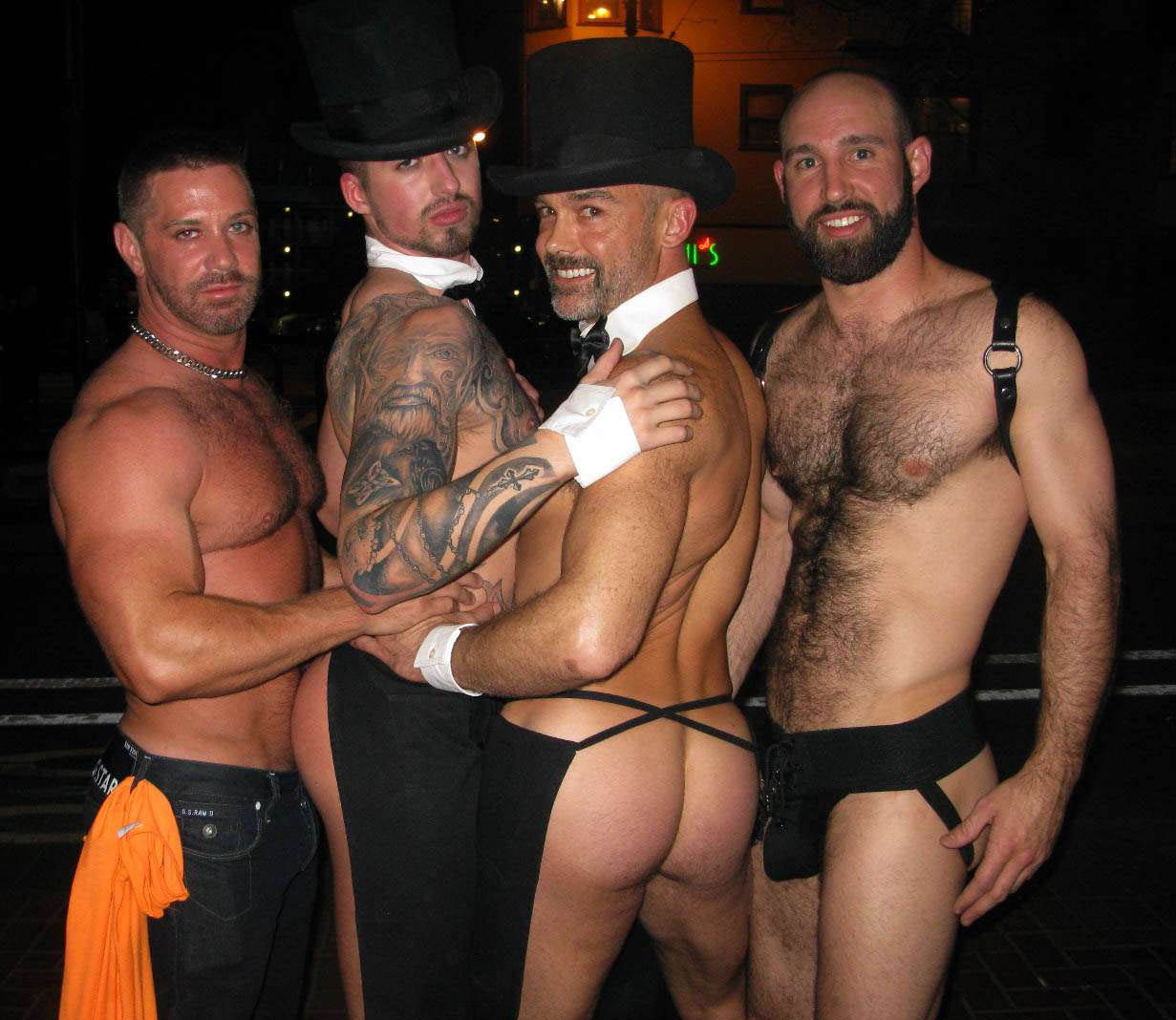
Screw on your drinking hats, cheapos — we tracked down 15 watering holes that’ll leave you toasted, in a financially stable kind of way.
1. Tempest Bar’s $5 boilermaker
A shot of Jim Beam in a pint of PBR. Is this a terrible idea? Yes. Should you do it anyways? Yes.
431 Natoma. (415) 495-1863
2. Phone Booth’s $4 tequila sunrise
It’s a small place, but is embellished with awesome décor, cute bartenders, an eclectic mix of people, and really strong, cheap drinks. Their jukebox will have you coming back for more.
1398 S. Van Ness, SF. (415) 648-4683
3. Moby Dick’s $6 2-for-1 margaritas
Put both straws in your mouth, ease in to your brain freeze, and distract yourself with any of the three music videos playing on the screen overhead — a flawless solution for the worst of dates.
It kind of looks like a barn — and this isn’t necessarily a bad thing. It’s a dive bar with a second floor, and is a fun place to go with a big group of friends.
The back patio here makes you forget you’re in a bar and feel like you’re in someone else’s backyard. The bartenders are sweet, the regulars always have a crazy story or four to share, and there’s free books in the back.
1569 Haight, SF. (415) 626-1112
6. Butter’s $5 trailer tea
Trailer tea, for those who were wondering, is sweet tea vodka. Butter also serves Prom Night punch in mason jars and has deep-fried Twinkies and SpaghettiOs.
There’s not as much blue light as you think there would be, which is kind of disappointing. But their SF Giant’s shot — Harlem liqueur mixed with orange soda — will make you forget all of that anyway.
A wonderful breath of dive bar air away from the typical Marina bars. Fully quipped with a jukebox, popcorn machine, and a Galaga/Pacman sit-down video game.
2241 Chestnut, SF. (415) 931-8529
10. Tornado’s $5 pomegranate cider
This is a no-nonsense kind of bar. Know what you’re going to order, grab your drink, and gulp it down with a sausage from Rosamunde next door.
Localized Appreesh is our weekly thank-you column to the musicians that make the Bay. To be considered, contact emilysavage@sfbg.com.
It’s hard to imagine a better fit to experimental film than psychedelic drone. The brief images on screen take you away to darkened unknown landscapes, the multitracked tape manipulation of sound mimics the calm yet uneasy mood in a segmented rhythm.
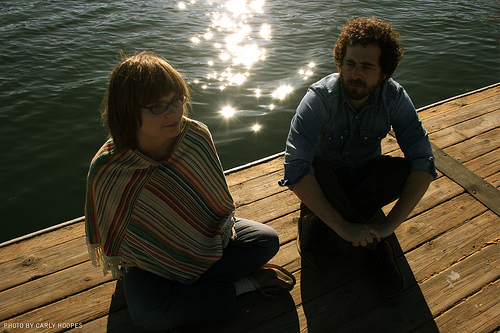
It’s with this symbiosis in mind that I recommend Date Palms – the Oakland band, made up of veteran droners Gregg Kowalsky and Marielle Jakobsons – and its double-feature this weekend. The duo will perform its soothing/unsettling, lost-in-the-rippling-barren-desert, music during two nights (one in SF, one in Oakland) of Super 8 films by Paul Clipson, himself a recipient of last year’s GOLDIES.
http://www.youtube.com/watch?v=yEknV_BW-bg
Year and location of origin: Jingletown, Oakland, 2009.
Band name origin: I grew up in South Florida.
Band motto: Slow and Low.
Description of sound in 10 words or less: Psychedelic minimalism with Eastern tinged melodies driven by cyclical, distorted bass patterns.
Instrumentation: Bass, Violin, Tanpura, Fender Rhodes, various analog synths, tapes.
Most recent release: Four-way split double LP on Immune Records for Record Store Day with Date Palms, Expo 70, Pulse Emitter, and Faceplant (one half of Peaking Lights).
Best part about life as a Bay Area band: An open minded audience.
Worst part about life as a Bay Area band: Pacific Coast isolation, makes it difficult to tour East Coast and Europe.
First album ever purchased:Kiss – Dynasty (cassette).
Most recent album purchased/downloaded: Miles Davis – Live Evil LP (reissue).
Favorite local eatery and dish: Cholita Linda, Fish Tacos
Date Palms With Barn Owl, Ensemble Economique, and Super 8 films by Paul Clipson Fri/9, 8 p.m. Lab 2948 16th St., SF www.thelab.org
With Barn Owl, Ensemble Economique, and Super 8 films by Paul Clipson Sat/10, 8 p.m., $7-$10 donation Liminal Space 950 54th St., Oakl. www.liminal-space.org
When Al Shawa, founder of Shambhala Healing Center, was asked about what he was going to do now that the federal government is trying to shut down his business, he was (understandably) irresolute.
“I have no idea. Who comes first, the chicken or the egg? Do I blame the federal government or the city? Somebody did me wrong.”
Shawa opened his medical cannabis dispensary one short year ago on Mission Street. He knew he was close to Jose Coronado Playground, but that’s why he underwent an 18-month permitting process with the city, which assured him that the playground’s clubhouse was not being used. In late February, his landlord received a letter from US attorney Melinda Haag that asserted illegal trafficking of drugs were taking place near a children’s playground. His landlord, Haag informed, risked criminal prosecution, imprisonment, fines, and civil forfeiture if Shawa’s business wasn’t out of the space in 40 days. Similar letters were sent out to roughly 12 dispensaries last autumn. Those dispensaries are now closed.
But on Saturday morning, Shawa seemed confused, and not entirely hopeless that his small business could be saved. He sat in his back office, a man trimming weed one room over. “I would hope the city would stand firm and protect these entities,” he said from behind his desk, next to a bank of security cameras. “I don’t understand where it stands on this – it should be taking a leading role.”
Posted: these signs now greet patients at the Shambhala Healing Center. Guardian photos by Caitlin Donohue
Though the SF Board of Supervisors passed a resolution in support of cannabis dispensaries’ right to operate without federal persecution last October, Mayor Ed Lee has yet to speak out on the federally-compelled closures, besides to comment that he’ll kow-tow to the authorities on the matter of marijuana’s medicinal efficacy. We asked Lee’s office for comment when the Department of Justice requested Department of Public Health records for 12 Bay Area dispensaries in February (a move that preceded the previous round of letters from Haag), to no avail.
Shawa had previously operated a clothing store named Privilege at the address, but opened up Shambala when a fire damaged his inventory. Since opening, he said he’s become attached to many of the regular patients. “You feel like your responsible for their wellbeing,” he said, before talking about how his dispensary passed out 200 turkeys to the community on Thanksgiving, and gave the nearby Folsom Street firehouse $5,000 worth of toys to distribute during the holiday season.
Throughout the recent travails of the medical cannabis industry, one of the more frustrating issues has been the seemingly random way businesses have been targeted by federal agencies. Shawa’s is a case in point. While he grapples with the notion of shutting his doors, the owner of a restaurant across the street, Gus Murad of Medjool Restaurant and Lounge, is applying for a permit to open a new dispensary on the same block (as reported by Mission Local).
Lupe Ruiz, who has been floor manager at Shambala since the dispensary opened, seemed likewise shaken and frustrated with the city’s lack of response in the matter.
“I’m kind of devastated,” she told me in between helping patients. “How do you allow someone to open and then when things get hot you don’t say anything about it?” She recalled a picnic in Dolores Park Shambala recently organized for its patients at which people played ball games and got to meet each other.
The dispensary does seem to be a gathering place of sorts – on the morning I interviewed Ruiz and Shawa, patients consulted budtenders about the right strain of cannabis for them, joking and friendly-like. Shawa says that more than one patient has teared up when he told them that the dispensary’s future was uncertain.
“Who listens to these stories?” Ruiz concludes sadly, with a sentiment that the rest of the medical marijuana community can surely sympathize with. “People are not being heard.”
Activist ire need a jump start? The Green Film Festival takes over Japantown’s San Francisco Film Society Cinema now through Wed/7. Go for tidings on the fight for our planet around the world — documentaries, expert panel presentations, and short films will be taking place. Check out Ali Lane’s previous reviews from the festival here.
Just Do It
In this intimate peek inside the world of “Environmental Direct Action,” viewers will marvel at the organization and cooperation displayed by the film’s English subjects. Occupy Oakland could really learn a thing or two from these self-proclaimed “domestic extremists,” champions against climate change, who the filmmakers followed for a year. The film starts off in the lead-up to “Climate Camp,” a literal camp-out of protesters in a secret location on a hill above London. From here, the protesters plan an “action.” Their actions seem pretty harmless and whimsical: gluing their hands together and invading the trade floor of RBS to sing songs; putting up posters at the entrance of a bank that says “Undergoing Ethical Renovation”; handcuffing themselves to the front gate of an MP’s home in order to publicly berate his policies. But these protests work. They get the news media to cover topics that were previously ignored.
The subjects of this film are mainly photogenic young people, with a few seasoned veterans as well, like . Some are Cambridge educated. All are uniformly anti-capitalist, as they believe capitalism inevitably leads to exploitation of the environment. They designate spokespeople, meticulously map out their “actions,” and memorize the legal consequences and potential charges faced, making sure to minimize any criminal property damage along the way. Before going out on an action, they write the phone number of their organization’s legal counsel on their forearms. What they’re doing is certainly risky, disobedient, and outside the margins of normal behavior, but the viewer gets the sense that these people have their act together and aren’t much of a threat to civil society.
This is a very sympathetic portrait of a movement, and it’s clear where director Emily James’s heart is. Her subjects’ enthusiasm for the cause, and for activism in general, is infectious. By the end it’s hard not to feel like a lazy bum as one subject intones, “Anyone out there thinking, ‘I wanna do more,’ just do it!” Indeed, this film doesn’t just give an impetus, but also a blueprint for how such things can be done.
The lingering question I had while watching the film, however, remained unanswered: where did these people get their money, for camp tents, and massive amounts of food, and buses, and superglue, and d-locks, and ladders: everything that it takes to protest, and live full-time as a protestor. Where do those funds come from? Perhaps this is a question to ask the filmmakers at the closing night party.
Green Film Festival closing night film and party
Wed/7 7:30 p.m., $12 for film, $15 for film and party
The San Francisco Chamber of Commerce this week released its annual City Beat poll – promoting its results at the top of its website and feeding it to media outlets such as the San Francisco Examiner, which faithfully reported its finding, apparently without seeking underlying data – and once again the poll was marred by distortions and hidden agendas.
For example, the Chamber claims that 58 percent of the poll’s 500 respondents prefer runoff elections (up from 52 percent in 2011) and 31 percent prefer ranked-choice voting (down from 42 percent last year), with the balance refusing to answer or saying they don’t know. But what the Chamber doesn’t say is that voters were read a series of arguments for each system first, and the anti-RCV statement contained a flat-out inaccuracy.
“Critics of ranked choice voting say that it is a confusing system that results in lower voter turnout – as the last Mayoral election had the lowest overall voter turnout in more than 35 years. They say candidates are getting elected with extremely low number of votes which doesn’t represent the true will of the voters. Instead of ranked choice voting, they propose having run-off elections so that voters have a clear choice on something as important as Mayor,” the statement read.
Yet it’s simply not true that November’s 42.47 percent turnout was the lowest in 35 years (as you can see here). Off-year elections have far lower turnouts, as did the last mayoral election in 2007, which had a turnout of 35.6 percent. Even the hotly contested, pre-RCV November mayoral election of 2003 had a turnout of 45.67 percent, just a few percentage points higher that the low turnout that the question implies that RCV causes.
But Jim Lazarus, the Chamber’s vice president of public policy, won’t concede the error, telling the Guardian that respondents understand the statement to apply to only closely contested mayoral elections. “We believe the average voter realizes a competitive race is what we’re talking about,” Lazarus said, dismissing the 2007 mayor’s race as uncompetitive.
Yet Rob Richie, executive director of FairVote, which supports RCV, said the poll was deceptive and seems designed to achieve results that are consistent with public policy stands that the Chamber has taken. “I think they do a better job of making their arguments than the RCV arguments,” he said.
“Supporters of ranked choice voting say it gives voters more choices and does not force voters to vote twice in just five weeks on the same contest. They say it has resulted in more diverse representatives for the city. They also say that it encourages campaigns to find common ground and ways to work together because they must win supporters of other candidates,” reads the polling statement.
Richie concedes that supporters of RCV have made these statements, but he said they aren’t the strongest arguments or the ones they generally tend to lead with, such as how big spending by well-funded independent expenditure groups tend to dominate the low-turnout runoff elections, which more conservative candidates win every time in San Francisco.
But Lazarus claims the Chamber was trying to honestly gauge public opinion, not influence it in favor of Chamber positions. “We didn’t skew it, we’re trying to get honest answers,” he told us. “It doesn’t do us any good to fake the outcomes. We aren’t doing this for PR reasons or press releases.”
Yet many of the issues the poll dealt with are active campaigns in which the Chamber is trying to influence the decisions made at City Hall, such as its longstanding crusade to repeal the city’s payroll tax. In the poll results, 57 percent of respondents said the supported a “payroll tax decrease from 1.5 percent to 1 percent, making up the difference with other revenues.” In the Examiner story, the paper even deleted that last crucial clause.
Yet what neither the Chamber nor the Examiner told readers was that the question was set up with this statement: “It has also been suggested that reforming the city’s payroll tax system could spur job growth. I would like to read you some potential tax reforms that have been suggested to help spur job growth.”
But even with that repetition of “spur job growth” as a prompt, only 25 percent of respondents agree with the crusade of the Chamber and its allies in City Hall to “Eliminate the payroll tax all together, replacing lost revenue with higher license fees and taxes on businesses.”
On the half-dozen tax measures the poll asked about, none of which received majority support, the questions were set up with this statement, “Some members of the Board of Supervisors have suggested a vote on new taxes may be necessary to help solve this budget deficit,” referring to the oft-demonized legislative body that enjoyed 45 percent in this poll, rather than Mayor Ed Lee, who has made similar suggestions and enjoys 68 percent support.
The poll was conducted by David Binder Research, and Binder was out-of-town and unavailable to answer questions. Lazarus said the language in the questions was jointly developed by Binder and the Chamber.
Chins up, enviros — this week there’s a slew of movies showing that prove that you’re not alone in fighting the good fight. The Green Film Festival takes over Japantown’s San Francisco Film Society Cinema now through Wed/7, and includes looks at exciting new forms of activism, as well as the film work from intrepid whistleblowers the earth over. Drop through for tidings on the fight for our planet around the world — documentaries, expert panel presentations, and short films. And be sure to check out the rest of Ali Lane’s reviews of Green Fest flicks.
Sushi: The Global Catch
The opening of this film shows Tokyo chef Mamoru Sugiyama carefully placing gorgeous transparent and artistically sliced pieces of nigiri atop perfectly formed mounds of vinegar rice, in his Michelin-starred restaurant kitchen. If you’re the kind of person who loves sushi, this scene makes your mouth water. It’s such a cruel tease. The film proceeds to tell you all the reasons why your San Franciscan appetite for sushi, so geographically remote from the land of its creation, is actually a very destructive thing.
The construction of sushi, in classical Japanese style, is a precise and elegant process, that this film does a beautiful job of exploring. It takes aspiring chefs two years of apprenticeship just to learn how to properly prepare the rice. But sushi is now being mass-produced all over the world, to feed a growing international taste for this once esoteric Japanese delicacy. Elegance and precision have fallen by the wayside, in favor of quantity and expediency. As with most such trade-offs, the environment is suffering for it. Of course the story revolves around money – as the demand has exploded, Bluefin Tuna has become a piscine gold for fisherman. At legendary Tsukiji fish market in Tokyo, tuna can be auctioned for as much as $1200 per pound. Tuna has been so overfished that at this point, some propose to put it on the endangered species list.
This is a story of global food trends, an intimate cultural portrait of a revered Japanese tradition, and a conservationist’s field guide to seafood. The message is clear: don’t eat more than the earth can comfortably provide. But if, after watching, you still can’t help but crave a bite of sushi, head over to Tataki, San Francisco’s first sustainable sushi bar, profiled in the film and located in Pacific Heights.
Screening followed by panel: “Sushi, Sustainability, and the Fate of Fish”
Activist ire need a jump start? The Green Film Festival takes over Japantown’s San Francisco Film Society Cinema now through Wed/7. Go for tidings on the fight for our planet around the world — documentaries, expert panel presentations, and short films will be taking place for the next six days. Check out Ali Lane’s review of Blood in the Mobile (screening Sun/4), and stay tuned for more Green Film Fest reviews next week.
You’ve Been Trumped
If you needed another reason to hate Donald Trump, besides the crazy hair and enormous ego, this is the film to watch. Turns out he’s destroying Scotland! The documentary follows the land preservation efforts of the town of Aberdeen in Scotland, in the face of the development of Trump’s new multi-million dollar golf resort. The entire project is based on international tourism, bound to generate huge carbon costs associated with jetting people to what Trump claims will be the “world’s greatest golf course.”
This is the story of a big, rich bully and a small, plucky town determined to stare him down. Of course, since it’s nonfiction, it’s actually more complicated than that. It’s also the story of sheep farmers and sand dunes, of neighbors and fences, and a country divided by a single issue. Trump’s initial plan to develop the land in Aberdeen was rejected due to sustainability concerns, but later the Scottish National government overturned these objections, lured by the smell of Trump’s money. The film is a vivid portrait of American greed, and how it warps the local culture of Aberdeenshire, turning its police against its people and stirring up a lot of anger. People are arrested on their own property for “trespassing,” reporters are thrown in jail for covering the story, and the townspeople are forced to suffer thousands of small indignities in order to appease the land appetite of this prototypical tycoon. Even though we live very far away from Aberdeen, the righteous ire that this film generates feels very close to home. We’re all part of that 99 percent Trump so gleefully tramples over.
People across the Bay Area joined in the National Day of Action to Defend Public Education March 1, with rallies at Berkeley City Hall, UC Berkeley, Oakland City Hall, SF State, and at the State Building on Golden Gate Ave. Demonstrators at UC Santa Cruz shut down the campus for the day demanding well-funded and quality public education.
At the State building, about 100 engaged in civil disobedience, entering the building’s large lobby for a teach-in on the importance of public education. Speakers included teachers and students from several local schools, including City College of San Francisco, San Francisco State University, and Mission High School.
Around 4 p.m, most left the building to go two blocks down the street to Civic Center Plaza, where about 400 converged to share stories of hardship in affording education and voice demands.
Students from local elementary schools express their concerns at the Civic Center rally to defend public education. Video by Carol Harvey
The day of action was supported and shaped in part by Occupy groups throughout the country, including, here in the city, Occupy SF, Occupy SF State and Occupy CCSF. But unlike most occupy-affiliated demonstrations, speakers March. 1 urged the crowd to support specific policies; initiatives that may go to the ballot in November.
Specifically, the group expressed support for the Millionaire’s Tax measure. If the measure passes, California residents earning $1 million per year would pay an additional three percent in income taxes; those making $2 million or make per year would add five percent. 60 percent of funds raised would go towards education.
There are several competing ballot initiatives to fund education, including one proposed by Governor Jerry Brown. According to a recent Field Poll, the Millionaire’s Tax polls the highest, with 63 percent support.
Some protesters also expressed support for the Tax Oil to Fund Education Initiative.
Support for both measures was one of the demands on a demand letter distributed throughout the events. Activists began the protest with lobbying at the offices of state legislators, and convinced four aides to fax the demand letter to their representatives, including Leland Yee, Mark Leno, Fiona Ma, and Tom Ammiano.
However, some protesters at the State Building teach-in emphasized that legislation would not solve the whole problem.
“This issue is bigger than just taxes. The same power structure that is causing the destruction of our educational system is also destroying the face of the planet that we live on. It’s destroying our personal relationships with one another and all of our brothers and sisters around the world,” said Ivy Anderson, a 2011 SF State graduate and organizer with the environmental group Deep Green Resistance.
The event was peaceful and lasted only a few hours. When the state building closed at 6 p.m., 14 remained inside, continuing to “occupy.” Police issued a dispersal order shortly after six o’ clock, and by 6:40, 13 had been cited on-site and released, according to SF occupier Joshua.
At that point, several raced to board buses down the block, joining about 100 others who began a march to Sacramento. Known as the “99 Mile March for Education,” protesters plan to walk about 20 miles a day until arriving in Sacramento March 5 to take their demands for accessible education to the governor.
According to Joshua, the conflict-free day was a success.
“We had a great rally, and I thought it was an excellent lead-up to Sacramento,” said Joshua.
“But the capitol is obviously going to be a bigger fish.”
The SF Symphony’s awesome-looking American Mavericks festival — which will present a “wild side” of contemporary and modernist classical works not often heard on a Davies Hall scale (Meredith Monk! Jessye Norman singing John Cage!) — kicks off next week with a host of edgy aural goodies.
And this Sun/4, in a kind of pre-fest wallop, Quebecoise organist Isabelle Demers will take advantage of the enormous Davies pipes to play a number of neat pieces, including one by SF’s electronic-adventurous Mason Bates, entitled “Digital Loom,” (hear a sample here). “Digital Loom,” from 2009, embodies Bates’ signature fusion of techno-ambient effects, often laptop generated, with symphonic elements to create something not quite Sci-Fi, not quite rave, not quite Stravinsky at his most cosmic-colorful, but all quite cool.
http://www.youtube.com/watch?v=bin545LXrRY
The Symphony has featured Bates before, you could spot him with his laptop in the midst of the players on one particular brain-tickling, multi-media occasion, generating drum patterns and swoops and swooshes for his major piece “The B-Sides” in 209. He also DJs around town as DJ Masonic, and hosts his occasional dancefloor-meets-classical party with young conductor Benjamin Schwarz, Mercury Soul.
It will be a total treat to hear the super-dextrous Demers take on “Digital Loom” on a Sunday afternoon (partly to see how she actually performs it), in the midst of an ambitious program that also includes Bach, Prokofiev, Henry Martin, and Rachel Laurin. Organ and electronica fanatics unite!
Dick Meister, former labor editor of the SF Chronicle and KQED-TV Newsroom, has covered labor and politics for more than a half-century. Contact him through his website, www.dickmeister.com, which includes more than 300 of his columns.
Apple’s position as a worldwide leader in technological innovation has brought huge rewards to those who run the company or own stock in it, and has raised co-founder Steve Jobs to demigod status. But the men and women who manufacture Apple’s highly profitable products are not doing well – and the AFL-CIO wants very much for that to change.
“When it comes to technology,” notes AFL-CIO President Richard Trumka, ” Apple has revolutionized its industry and set a standard other companies aspire to meet . It is now the biggest publicly traded company in the world, worth a whopping $465 billion.”
But, adds Trumka, “Apple’s record-breaking success comes at a back-breaking price.”
He cites news reports that workers who assemble iPhones, iPads and iPods at Foxconn, Apple’s major supplier in China, “have needlessly suffered lifelong injuries, and even died from avoidable tragedies, including suicides, explosions and exhaustion from 30- to 60- hour shifts.” There also have been reports of some workers suffering repetitive motion injuries that caused them to permanently lose use of their hands. Others have suffered from exposure to chemical toxins.
The manufacturing plants run by Foxconn clearly are sweatshops of the worst sort, relying heavily on child labor and rampant violation of basic labor rights. The working conditions are truly horrendous and brutal.
So what to do? For starters, the AFL-CIO is joining a global movement aimed at presenting hundreds of thousands of petitions from activists worldwide to Apple CEO Tim Cook. The petitions tell Cook to make sure that the workers who manufacture Apple’s products are treated fairly and ethically. Their work, after all, is essential to Apple’s success and its development of products happily bought and used by millions of people.
Trumka himself is one of those satisfied Apple customers. He uses an Apple iPhone, which he describes as “intuitive and powerful – an incredible piece of machinery.”
But the AFL-CIO insists that Apple “transform its industry by being ethical and innovative . . . to ensure the quality of its working conditions matches the quality of its products.”
The AFL-CIO wants Apple “to immediately allow genuine unions, with truly independent factory inspections and worker trainings” in its plants in China and elsewhere.
Apple obviously could afford the reforms demanded – and then some. Manufacturing costs, as the AFL-CIO’s Trumka notes, “are only a very small portion of Apple’s expenses. Chinese workers are paid just $8 to manufacture a $499 iPad, for example, while Apple pockets $150 of the retail price. And the company is sitting on nearly $100 billion in cash.”
Apple also could tell suppliers to improve their working conditions or lose Apple’s business. As one anonymous Apple executive told the New York Times recently, “suppliers would change everything tomorrow if Apple told them they didn’t have another choice.”
The Times cited another revealing quote from another anonymous Apple executive, which contradicts the AFL-CIO contention that Apple could be both innovative and ethical. The executive claimed there’s a trade-off between working conditions and innovation: “You can either manufacture in comfortable, worker-friendly factories,” or you can “make it better and faster and cheaper, which requires factories that seem harsh by American standards.”
Apple’s choice, of course, has been to move its manufacturing to overseas facilities where it can indeed get work done “faster and cheaper” by highly exploited and easily manipulated workers under conditions that would not be tolerated in the United States.
Apple has been trying to fend off complaints by joining an employer group, the Fair Labor Association (FLA) to arrange for inspection of Apple suppliers’ factories. That’s unlikely to change anything, however, since the FLA is funded and controlled by the multinational corporations that it’s charged with investigating.
As Richard Trumka points out, “What leaders do matters. And Apple is now the leader in its industry. That’s why the AFL-CIO will be watching Apple closely to make sure the company does right by the workers who make its products – no matter where they live.”
Dick Meister, former labor editor of the SF Chronicle and KQED-TV Newsroom, has covered labor and politics for more than a half-century. Contact him through his website, www.dickmeister.com, which includes more than 300 of his columns.
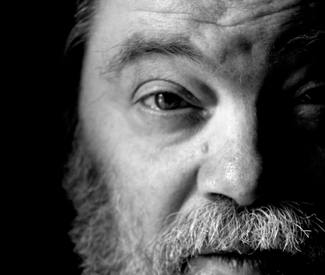
MUSIC Roky Erickson spent much of the past few decades as the subject of endlessly rehearsed cautionary tales about the dangers of mind-altering drugs and mental illness, and romantic anecdotes framing him as a quasi-oracle, gifted and cursed with a second hearing into the weirder vistas of rock ‘n’ roll.
Following the release of Keven McAlester’s You’re Gonna Miss Me in 2005, Erickson reemerged as a subject of a different kind, as McAlester’s documentary dispelled some of the more profound biographical shadows, shedding light on the catalogue of ghosts and demons that haunt Erickson’s expansive body of recorded work.
Now 64, Roky Erickson has had such an indelible influence on psychedelic music, many would call him an architect. In the 1970s he reappeared, Rip Van Winkle-like, to a changed pop music landscape, where he would take a nascent approximation of punk and run it through his own esoteric sensibilities (“horror rock,” he called it), stumbling upon a lo-fi home recording aesthetic in the interstices of this period, though largely out of necessity, mind.
Most recently, Erickson carved out a provisional home in windswept and country-inflected indie. Never permanent, these dwellings serve as temporary shelters — motel rooms — for a restless and untethered voice, part Hank Williams, part Howlin’ Wolf, but even this doesn’t do it justice, and the veritable grimoire of demonic (lately divine) lyrical figures through which it moves.
His most recent record, True Love Cast Out All Evil (2010, ANTI-) — his first new material in more than a decade — saw collaborating band Okkervil River orchestrate a ghostly kind of folk rock capable of tracing the unpredictable contours of Erickson’s musical ideas. But the most memorable moments occur when the smooth continuity of the record is punctuated by intimate and acoustically frayed sounds emphasizing the fragile nuances of Roky’s performance.
The music dissociates into a field of droning harmonies, interspersed with snatches of studio banter, of singing birds and rapidly cycling TV channels. It’s hard not to hear these fragmentary moments as consciously referencing the intrusive sounds and voices that partially characterized his mental illness, yet here they have the feel of an exorcism, casting out, as it were an insistent static.
If there’s an underlying consistency to his immense and scattered catalogue, it’s that Erickson is a consummate blues singer, keenly attuned to the expressive potentials of rock n’ roll, and moreover, preternaturally skilled in reaching his listeners. Roky built up a rich lyrical world of vampire bats and B-movie extraterrestrials, and intangible vibrations that, in the minds and ears of listeners, came to stand in for a wealth of emotional timbres.
We feel, however faint or garbled, a connection through the cadences and inflections of Erickson’s voice. Like reading a novel written in a language you only half understand, you experience his music through these shifts in tone, through his alternating waves of anger and frustration and sadness, and the rare moment of contentment where Erickson retires into a sonic labyrinth of his own design.
When Elvis Presley died, Lester Bangs made the observation that we were all, effectively, saying goodbye to one another, having lost a figure whose music we could all come to a tentative agreement. Bangs’ fantasy of a capacity for a radical and far-reaching empathy encoded rock ‘n’ roll is one that we’ll most likely never stop repeating to ourselves.
Presently, it’s an invitation to patiently listen as the haunting and singular voice of the 13th Floor Elevators, of Roky Erickson & the Aliens, and a vast catalogue of hotel tapes and live recordings and rarities drifts from Austin to San Francisco.
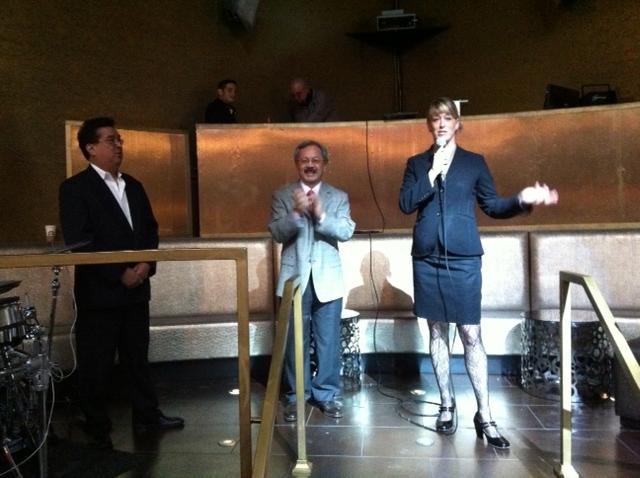
Addressing a gathering of nightlife advocates at a California Music and Culture Association event last night, Mayor Ed Lee praised the economic and cultural role that the entertainment industry plays in San Francisco, announced plans to add a “nightlife unit” in the Mayor’s Office of Economic and Workforce Development, and even hinted that Halloween in the Castro might be returning after being shut down during the city’s so-called “war on fun.”
“If I’m going to be about jobs,” he said, referring to his near-constant emphasis on economic development, “it should be both for the day and for the night…I do recognize this as a business, as a serious contributor to the economic engine of city.”
Lee referenced the new Controller’s Office report that was requested by Sup. Scott Wiener, which concludes that the nightlife industry generates about $4.2 billion in annual economic activity in the city (that report will be the subject of a rally and hearing on Monday at City Hall starting on the steps at noon). And he said that the benefits of a vibrant nightlife scene also help make San Francisco an appealing city for other businesses, an indirect economic benefit.
“You’re all part of a great part of the city that keeps everyone refreshed,” Lee said, later adding, “I think we can do more at night. The young people who work gobs of hours need to have an entertaining evening.”
As he announced plans to add a nightlife unit to OEWD, the office that works with private companies looking to locate or expand here, he said, “We, as government, need to fast-track things that are successful.” Yet he also said that public safety is still a challenge and called for the industry to work closely with police to keep everyone safe.
Yet Lee spoke positively about Halloween in the Castro, a once-popular event that was canceled because Mayor Gavin Newsom and then-Sup. Bevan Dufty (who Lee recently hired as his new homeless czar) feared the city couldn’t control it, and Lee alluded to plans being developed to revive it in some form. “I hate to see any event that brought so many people to the city gone,” he said.
San Francisco is, famously, home to film festivals that wanna make a difference. The Transgender Film Festival, the Anti-Corporate Film Festival, the Bicycle Film Festival — the list and cameras roll on. There’s a reason for all these cinematic communes. The power of a film festival to make people sit down and hang out with open eyes and enough snacks to keep them in one place is formidable. It’s prime time to absorb information — or just catch that activist flame that the whipping winds of a presidential election year can threaten to extinguish.
This week, the second annual Green Film Festival hits the big screen starting today, from Thu/1-Wed/7, taking over the must-see-if-you-haven’t-yet SF Film Society Cinema in the basement of Japantown’s New People mall. So thrilled were we by its enviro-conscious, better world-making fervor (and its capable, enjoyable program of films) that we will be running brief reviews of its offerings for the next four — business, c’mon now — days. Here’s the first of these, a Sun/4 screening that explains the connection between conflict and Africa and your cell phone. Blood in the Mobile‘s screening will be followed by a panel discussion on how consumer products can be made more sustainably, and built to last.
Blood in the Mobile
Social consciousness rises to a whole new level in Danish director Frank Poulsen’s film about the minerals used in mobile phones. Poulsen goes deep into the mines of the Democratic Republic of the Congo in a first-person investigation that implicates the viewer along its dark and frightening course. The film manages to be both extremely informative, as well as thrilling in a way that is usually curtailed to the domain of Hollywood action films. Gorgeous camera work accentuates the intimacy of Poulson’s revealing interviews. One example: the Congo colonel who shows off his collection of combat uniforms with a childlike pride. Poulsen and his camera get to know his subjects in a three-dimensional way, capturing many real spontaneous moments of connection. The viewer comes away shocked by both how cell phones are made, and by how other people must live in order for such things to continue to be made. A beautiful, intense, and emotionally draining film, Blood in the Mobile literally takes you to hell and back. The inside of those mines are pitch-dark, and crammed with sweating bodies; children as young as 12 hammer away so that we can all text our friends.
We’re not usually ones for product placement, but Red Bull has been making some serious roads into quality nightlife. Tonight (Thu/1) the always impressive annual Red Bull Thre3style DJ competition comes to Ruby Skye, pitting several local DJs — and two from farther up the Coast — of various styles against each other for regional championships that could lead them to glory in Vegas later this year. (The “thre3style” refers to the requirement that DJs mix at least three different genres of music into their 15 minute sets.)
Red Bull Music Academy Radio is a go-to for dance music lovers who want to get clued in to what some of the best techno, house, hip-hop, and global bass DJs and producers are doing. And last month, the Red Bull Music Academy itself came to San Francisco to kick off the open-to-all Academy application period, participating in an excellent series of talks and performances by some music greats. What is the Red Bull Music Academy, you ask? (Don’t worry, there’s no quidditch involved.) You can actually be a part of it!
The Academy is a “world-traveling symposium” consisting of DJs, vocalists, producers, musicmakers, and super-fans who’ve been selected based on their applications to attend workshops, training sessions, and parties that are, well, rad. The Academy season culminates in a huge weeklong nightlife and music extravaganza in New York City. From what we saw, Academy members are a really diverse international crowd that benefits from all this networking and exposure (and energy drink?). In any case — apply already, applications are due April 2. Find out more details here.
Meanwhile, here are recordings of the interviews with the musicians who blitzkrieged SF for the application kick-off.
>>Saxophone deity (and Black Panthers soundtracker) Gary Bartz, who later appeared for a stylish, jazzy, super-diverse and nattily dressed evening at Yoshi’s with Bilal and Aloe Blacc as “The Gary Bartz Project featuring Bilal and Special Guest Aloe Blacc produced by Jill Newman Productions” (branding!)
>>Stretch and Bobbito, groundbreaking hip-hop hosts on Columbia University’s WKCR radio in the early ’90s — our friend texted us from their talk: “Their spilling all their secrets about cutting up vinyl and shit!” — who later rocked Mighty.
>>Absolutely spot-on house legends Masters at Work, aka Kenny Dope and Lil Louie Vega, spilled a few secrets of their own in their lively discussion, and then went on to play a bonkers-packed 1015 Folsom for an adoring crowd that stuck with them til 4 a.m., through Latin jazz, some R&B twists, and plenty of classics.
We’re excited to see what happens at the big Academy summit in NYC — sign up and tell us how it goes.
It’s unsettling how the first track off Cloud Nothings’ new LP makes one want to drop everything and flop on the ground in an arrested development expression of perma-teen angst. It’s hard to even type these words when the song is playing. It’s hard to lift my hands. I just want to listen to the melancholic chug-chug of dangling chords, bursts of crashing cymbals, and singer-guitarist Dylan Baldi’s stretched-out moan, “No Future/No Past.” I don’t want to do anything.
But that first track is something of a subterfuge as the rest of the album truly picks up beat-and-tone-wise, though the lyrics remain similarly restless. The second song off Attack on Memory peels me off the floor. By track four, “Stay Useless,” I’m nearly dancing, it’s nearing popped traditional emo, though still in that morose, everything-is-fucked clattering noise – recorded, as breathlessly reported in every story on the band, by the legendary musician-producer Steve Albini (Shellac, forever linked to Nirvana).
And that’s when I realize I love this record, I love everything about it: the trick start, the nouveu-grunge milieu, Baldi’s struggling vocals, suburban angst at its best. And the kicker: dude is only 20. He was maybe 2-years-old when Kurt Cobain died. And, perhaps even more surprising, he’s totally likeable, offering stoney laughs during our chat, and affably answering surely oft-repeated queries:
SFBG: How’s it going?
Dylan Baldi: Hey, I’m fine.
SFBG: How tired are you of talking about Steve Albini?
DB: I’m pretty tired of that [laughs], but if you have questions I don’t mind it.
SFBG:I can imagine, but people are obsessed with him. So I here I go – just wondering what your experience was like working with him?
DB: We were only there for four days and he’s a nice guy. He was pretty hands-off in terms of actually coming up with things to do but I kind of like that. I wasn’t looking for someone to tell us what to do with our songs, I just wanted someone to make the record sound good, and he did.
SFBG:The first Cloud Nothings record you recorded alone, correct?
DB: Yep.
SFBG:So when you recorded that first album was it almost an accident? Were you intentionally making a new project?
DB: Yeah it was sort of an accident, I just made two songs and put them online and someone liked it and wanted to put out a tape, so I made some more songs. It’s spiraled from there yeah. [This] started about two years ago.
SFBG:How long was the gap between putting it up on the Web and an interest being generated?
DB: It was literally two or three days. Super fast. It was on Myspace and a couple of blogs picked it up right away.
SFBG:Pretty awesome. So when did you start writing ‘Attack on Memory?’ What influenced you during that time?
DB: Last June pretty much. One of the big influences musically is a band called the Wipers. I was listening to them a lot over the year, between the two records. I guess musically also I wanted to do something that wasn’t like the last record, so it was a conscious effort to make something a little different.
SFBG:How did you discover the Wipers?
DB: A friend first told me about them, and I got their first couple records and I really like them and I couldn’t stop listening to them.
SFBG: They’re such an underrated punk band, it’s weird that people don’t talk about them more.
DB: They totally are! I was going to say exactly what you’re saying, it’s weird that more people don’t know about them. They’re amazing.
SFBG: What was the first record you ever bought with your own money?
DB: Oh! Um, I think it was probably Apollo 18 by They Might Be Giants. I was into them, I’m still into them.
SFBG:What are the some of the records you’ve guys have been listening to on this tour?
DB: You know that song by Ozzy Osbourne, “Mr. Crowley” – it goes like [singing] “Miiiister Crooowley” [laughs]. It starts off with this crazy keyboard thing? We listen to that song a lot. As far as full-length records, our goal today is to listen to Death Magnetic by Metallica because we have a 12-hour drive and that’s a good album. I guess we don’t listen to a lot of like, “good” music.
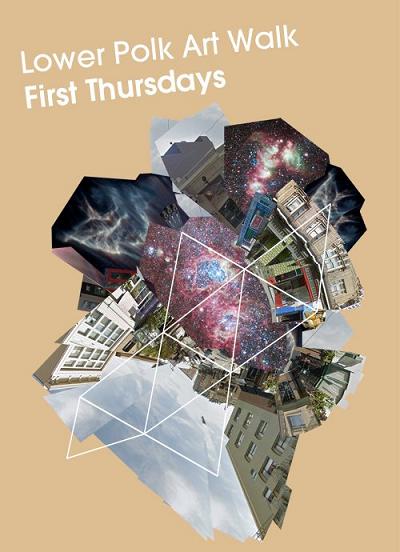
Lower Polk has surged forth as one of the city’s more exciting hubs of gallery art. So it’s no surprise that the neighborhood is expanding its quarterly art walk into a monthly event — the Lower Polk Art Walk, which will take over the sidewalks every first Thursday, starting today.
The beauty of an art walk is that there is no start point or end point — and there’s plenty of chin-scratching and ah-oohing to be done at galleries up and down Larkin and Polk Streets. So throw away your itinerary and let your feet do the planning for you as you peruse the participating eight galleries. Just make sure to meander into the showing by Larkin Street Youth Services, a collection of works by the young people who are participants in its programs geared towards homeless youth. Here’s three other gallery spaces that’ll be worth a look:
Art installation in former “Leftovers” furniture store
Pretty much, there it is. Chad Hasegawa and other artists are rumored to be involved in this pop-up art exhibit in an old furniture store, repurposing the Polk Street milieu for the debut of this new monthly art event.
1300 Polk, SF
“Calamity” a solo show by Mary Iverson at Shooting Gallery
Iverson’s exhibit includes five large-scale oil paintings and six to ten smaller acrylic on panel works, and feature shipping containers superimposed on sublime landscapes. She critiques the tolls that have been taken on the environment for the sake of private profit by integrating cutouts from environmental magazines and basing much of her paintings off views of national parks. Her signature marks are the measurement lines that she leaves sprawling to the edges of the canvas.
Sun, surf, boxing kangaroos — sorry, that’s reductive, but you do get the general sense of youth and devil-may-care-ity when you think of Australia. Time to move beyond the stereotypes? Check out what is being created Down Under at this group show, which highlights the work of 13 of Oz’s most talented “urban” (the new term for art traditionally on the street that’s being shown into gallery) creatives.
The urban planning disaster that is 8 Washington goes before the San Francisco City Planning Commission March 8 amid a long list of questions — including Mayor Lee’s position on the project and how it could screw up the America’s Cup.
Developer Simon Snellgrove wants to build the most expensive condos in San Francisco history on the waterfront, 145 units that will be far out of reach to anyone who makes less than half a million dollars a year. And many of the units will require income far higher than that. It’s not just housing for the 1 percent; it’s housing for the top half of the 1 percent.
There’s no need for this kind of housing in SF; the very rich have no problem finding places to live. And the spot zoning violates every standard of good waterfront planning practice.
The project will benefit the Port of San Francisco, which stands to take a cut of the money since some of the project is on Port land. But more than half of the land is owned by Golden Gateway and is a former redevelopment area, so the supervisors and the Port are going to have to fight over who gets the property tax increments and how that’s all financed.
More interesting, 8 Washington will be a boon to Golden Gateway, which as the landowner is a partner in the deal. And Golden Gateway is one of those big properties that are paying far too little in city taxes. When the complex changed hands several years ago, the owners used a stock-swap deal to transfer it, avoiding the Prop. 13 reassessment that could have substantially raised its taxes. So the city’s losing millions of dollars — and now Timothy Foo, who is the principal owner of Golden Gateway, will be getting a nice favor from the city he’s been screwing.
Oh, and by the way — a lot of Golden Gateway units are being advertised as short-term (that is, hotel) rentals — something that violates at least the spirit of city law. This is an outfit that deserves special zoning treatement from San Francisco?
Then there’s the fact that this could be a serious problem for the big America’s Cup party. Project critic Brad Paul has been analyzing the impacts of the development, and noticed some new language in the comments and responses to the Environmental Impact Report suggesting that excavation could lead to something like 200 dump-truck trips a day along the Embarcadero — roughly one trip every two minutes. In an email to Paul, Paul Matltzer in the Planning Department confirmed that the likely construction process could, indeed, involve that many dump trucks, rumbling along the Embarcadero during the peak construction period, which will also be the peak period for America’s Cup tourism.
Dump trucks, Paul (who used to drive one) notes, start slowly and brake slowly. The Embarcadero is already crowded — and will be far more crowded during the Cup races, so much so that city officials are thinking of closing traffic lanes to all but bicyles and transit. How, exactly, will that work out with 200 trucks a day fighting for room?
I’ve called and emailed the America’s Cup people, but they haven’t gotten back to me. I’ll keep you posted.
Lee’s office hasn’t gotten back to me, either, but I’m hearing that the mayor is telling people he hasn’t made up his mind — on a project that’s a week away from the Planning Commission and that one of his close allies, Rose Pak, is strongly promoting.
Normally, when the white-hot energy that first surrounds a music project fades, there is drama to be had. Obviously. You’re sneaking around on the group with that guitarist? Do you really think your lyrics will hit the same notes with that other emcee? Maybe it’s because Bayonics have been around the block, but apparently this local funk-hip-hop-soul-R&B mega-group has few jealousy issues: the collective will be showcasing its members’ next steps tonight (Wed/29) at “Leapstock 2012” a showcase taking over the top floor of Elbo Room.
Here’s some of the crew that’ll be fanning out tonight:
Starship Connection: Intergalactic badmen? Now that’s good press release language. Starship Connection is a future-forward electronic-leaning project headed by DJ B. Bravo, who has enjoyed commercial success with the Red Bull Music Academy in the past. Starship carries on the grand tradition of space funk. Blast off, hey.
Shamilah Ivory: This lady has PIPES. Normally supplying vocals for Bayonics, she’s taking centerstage tonight for a solo set.
Hot Pocket: By my count, there are few things more crowd-pleasing than a Hot Pocket set. HP is Bayonics minaturized: four of the original group’s members play covers of classics, usually from the ’90s, usually R&B. I think the term is panty-dropping for the effect this group has on the 20-something to 60-something female contingent.
Roja and Elive: Bayonics drummer and founding member Pedro Gomez describes the collaboration between Bayonics’ frontman and El Hurwitz as “electro boogie dance funk.” We’ll see what they have to bring — this is one of the duo’s first public performances.
Plus there will be rumored sets by DJ Teeko, Batucci Brothers, and Fog City Mavericks. The only thing: how the hell are they going to get this many groups onstage in four hours? Bless, Bayonics.
Leapstock 2012: Bayonics showcase
Feat. Hot Pocket, Shamilah Ivory, Roja and Elive, Fog City Mavericks, Analog Starship, Starship Connection, and Batuci Brothers
So at Public Works this Thursday you can: watch veteran SF DJ Mophono and beat-driven gothsters Water Borders* live, learn about innovative advancements in music-making, peep some short films and new local art, and nibble tasty vegan treats. All in one event, from the safety of your own neighborhood club.
We all know there are overlapping circles between the arts – even the edible arts – and this is the belief that drives Overlap.org, a hyphen organization (music-arts-technology) that also has been hosting parties since 2006. In prep for the next installment of Overlap – which goes down Thursday – I spoke with Ghostly International’s Christopher Willits (Overlap.org’s founder, experimental SF-based musician) about music, food, and fostering local creativity:
SFBG: What will you be doing during the designing process workshop?
Christopher Willits: I’ll be covering a popular music-making and production tool called Ableton Live. I’ll be talking about the basics of this software system and how you can make expressive creative art with this digital tool.
SFBG:What are some other activities that will take place during this installment of Overlap?
CW: We have some great live music and a diverse lineup with Mophono, Water Borders, and Danny Paul Grody. Local films will be shown, we’ll have local vegan food from Freedom Kitchen, food by Rocky’s Fry Bread, and more local vendors announced the day of. We’ll have an info booth for our friends at Mission Creek Festival, and this time we also have very cool art vendors – Dave Marcoullier, The Heated, and more. SFBG: Can you describe the vibe? What has been most surprising about previous Overlaps?
CW: I connected with Public Works after a SF Forage event I performed at, and we found that we shared a common vision of where the Overlap event could go. Our first event with [them] was last October, it proved the concept and set the tone – a relaxed evening of diverse art and some really awesome people hanging out and meeting. It’s cool to see people coming out of their usual scene and connecting with this idea of greater creative community overlapping, a community made from unique but interrelated groups.
SFBG:Why incorporate local food into a music event?
CW: We support the localization of food. Our last events have featured permaculture discussions about decentralizing our food sources. We can do this in SF. Plus we just want people to be comfortable with some delicious clean food and feature these hard-working culinary artists. They are so much a part of the creativity of this city.
SFBG: Do you see any connections in the art of cuisine and the art of music? If so, what?
CW: Absolutely, the process, texture, flavor, color, history. Music, just like food, is woven in the very fabric of our culture. I don’t know of two other things that bring people together better than food and music.
SFBG: What are your personal favorite local places to eat?
CW: I’m really into Gracias Madre right now. Ask for the hot sauce, it’s this paste-like mixure of a couple different chiles. Yum. I think you need to ask for it.
SFBG:Future goals for Overlap.org and Overlap parties?
CW: Our goal is simple – to grow creative community in San Francisco. The rest will fall into place. We want to provide that place and time for people to come together and strengthen new bonds.
I have this feeling that we’re within a new creative wave in SF. We’re living in an amazing place and time, we’re all redefining how art and community interact and grow together. We have so much imagination and creativity. Together we are redesigning how our local communities can connect, come together and ultimately incite creative change.
Overlap With Christopher Willits, Danny Grody, Mophono, Water Borders Thurs/1, 7 p.m., $5-$10 Public Works 161 Eerie, SF (415) 932-0955 www.publicsf.com
*An absolute aside: Water Borders’ Amitai Heller once casually told me he’d want to do a TED talk on the intersection of goth and baseball, and I think about this often, joke or not.
Peter Case and Paul Collins will play songs of The Nerves, Plimsouls, Breakaways, and The Beat on Monday, March 5 at Red Devil Lounge.
To win a free pair of tickets to this event, like the Bay Guardian on Facebook and write “Don’t Leave Me Hanging on the Telephone” (or your favorite Nerves, Beat, Breakaways, or Plimsoles song) on our wall. Four winners will be chosen at random and notified via Facebook on Friday, March 2 at noon.
I like Sup. David Chiu’s idea of giving indigent plaintiffs in civil cases the right to a lawyer. It’s one of those legal and political issues that’s been hanging around for decades: Everyone accused of a crime has the Constitutional right to counsel, but if you’re sued and have no money, you could very well be SOL.
Now, there are a few places that some people can get help — nonprofit legal groups that help seniors, tenants, and others, but there aren’t enough of those lawyers to meet the need, and some people don’t qualify for any of the available help. Under the law, a poor person who gets sued has no guaranteed right to any assistance at all, and can wind up representing him- or herself in court, even if he or she has no legal background or experience.
That’s one reason landlords tend to win eviction cases against low-income people: If the tenant can’t find free legal help, it’s high-priced landlord lawyer who knows all the tricks against poor tenant who has no idea how to respond to a summons and complaint.
The supervisors have approved Chiu’s resolution, which asserts than San Francisco is a “right to civil counsel” city, but there’s not a whole lot of money around to fund it. He’s asking for a modest pilot program costing no more than $100,000 and focusing on eviction defense, which is a great place to start. His idea is to get the big law firms in the city to help out — to devote some of their time and money to pro bono work in the city’s indigent civil defense program.
And some of them will, and that’s great. But what we really need is a funding source for this — and it seems to me that the lawyers of the city are a logical place to start.
Yes, there are unemployed lawyers and lawyers who barely make rent. But as a whole, the class of people licensed to practice law in San Francisco is better off than most of the rest of us. The state bar hits every lawyer up for about $400 a year to fund bar operations, and the interest that lawyers earn on client trust funds has to go to indigent legal defense.
So why not set up a San Francisco lawyer’s fee — say, $50 a year for everyone practicing in the city — to fund the city’s civil legal defense program? I don’t know exactly how many lawyers we have, and I can’t find anyone at the state bar who can answer that, but I’ve seen published reports in the past suggesting that the city has more lawyers per-capita than anywhere else except Washington, D.C. One story that ran years ago in the Examiner put it at one per 70 residents — which would mean more than 10,000 lawyers in the city. So a $50 fee would bring in half a million dollars –plenty to set up an office and hire a couple of lawyers and have a director who could spend time running down pro bono counsel to help.
I have no idea if the city can legally do that; I checked with the folks in the City Attorney’s Office, and they have no simple answer. So Chiu would have to request a legal opinion on the question.
But if it’s possible, it’s a great idea, and I suspect even most lawyers in the city would support it.
UPDATE: The state bar folks pointed me to the right place on the bar website, and it turns out there are 17,000 lawyers in SF. That’s $850,000 a year.
MVP for Noise Pop coverage this year goes to Ryan Prendiville. See below to find out why – Ed. TUESDAY: The Flaming Lips at Bimbo’s
Time, for the Flaming Lips, is important. Because as a band — one that has been through all sorts of well documented shit — the Flaming Lips know the value of time (particularly borrowed) and have made it their work to not just create music but get into the complete manufacture of moments. Which is a tricky business, because moments are bastards.
Take all the pictures you want of the blinding lights, the beautiful costumed kids, the confetti cannons or all the other individual weapons that the Flaming Lips use to wage musical psychedelic war on time, and the moment still might not fit in a shutter, no matter how you slice a second. Full review here.
WEDNESDAY: Grimes, Born Gold, oOoOO, and Yalls at Rickshaw Stop
Cecil Frena described the lineup at Rickshaw Stop last night simply as “weird music.” He should know. Performing with his synth-fueled electronic dance trio, Born Gold (formerly Gobble Gobble,) Frena stood in front of a camera-slash-iPad pulpit, singing and conducting a third of the group’s sound via a motion-captured, clearly homemade, Janet Jackson Rhythm Nation era-esque military jacket. Full review here.
THURSDAY: Surf Club and FIDLAR at Cafe Du Nord, New Diplomat and Big Black Delta at Rickshaw Stop
“This song is called ‘Stoked and Broke,’” the band’s most talkative, spastic member introduced the first song, explaining, “because we’re stoked and broke.” What followed was a frenetic set of punk fueled, stripped down rock. With a rollicking tightness that reminded me of Thee Oh Sees, FIDLAR shot along, keeping the energy up by alternating singers. Full review here.
I left Cafe Du Nord after FIDLAR, hoping to catch at least some of Big Black Delta at the Rickshaw Stop. When I arrived another band was just starting. A local five piece, New Diplomat reminds me of the kind of groups that dominated the alternative rock airwaves in the late ’90s after grunge and pop-punk stopped being exciting. Since it was about the same time period when I stopped listening to the radio, and New Diplomat’s spiky haired singer had that emo/screamo edge that I have a hard time tolerating, it makes sense that the band put me off.
But then when Jonathan Bates, a.k.a. Big Black Delta started to perform, and I felt almost nothing, a more alarming possibility came to mind: maybe I’m burnt out. On record, I’ve liked what I’ve heard of Big Black Delta’s droned, vocally distorted hard electronic tracks. And performance-wise, Bates kept things appropriately dark, moody, and atmospheric, bumping up the sound with two drummers, each banging away on their side of the stage for some heavy hitting percussion. That whole stereo kit thing is usually the easy way to pull me in, but in this case all I could do was recognize it with cheap approval. Between New Diplomat and Big Black Delta the crowd thinned out a bit, and I leave early too, hoping to reset my baseline by the next day.
FRIDAY: Brilliant Colors, Bleached, and Veronica Falls at Rickshaw Stop, Matthew Dear at Public Works
My plan for the night was to see Veronica Falls at Brick and Mortar, and then hopefully run across the street to catch Matthew Dear at Public Works. But when I showed up at Brick and Mortar, the man at the door told me I had the wrong venue, their Noise Pop show was the night before. I apologized and, checking my schedule, saw that I was indeed an idiot. So much for that plan, at least I wore a coat.
The show was underway at Rickshaw. I didn’t know any of the bands opening for Veronica Falls. The androgynous singer onstage had a bowl cut and was wearing a collared button up that was the most over-sized fashion piece since Stop Making Sense. I couldn’t make out the words, but it was a nice voice – a little deep and dreamy – that mixed in with some catchy guitar riffs. The band was playing melodic pop, and having fun by all appearances. I found out later they are SF’s Brilliant Colors.
The next band, Bleached, had a sound that reminded of the Dum Dum Girls with a lo-fi punk edge. Two of the girls are blondes and the other two aren’t even girls. Bleached was more energetic on stage than Brilliant Colors, but I found their songs didn’t really hook me in. (It also didn’t help that there was a camera crew onstage with them.) The group harmonized a lot and decently, but too often spent a lot of time singing vowels (oohs, ahhs, and ohhs), which started to wear on me. They played a Ramones cover. I think it’s “When I Was Young.”
Still, it was good lineup leading into Veronica Falls, a UK band that has a retro pop sound as well. VF’s sound live was as clean and distinctive as it is on record, with nice guitar work over a signature drum sound that has an ever-present jangle that’s accomplished by little more than taping a tambourine to the floor tom. The band’s vocal style has some nice contrast, between Roxanne Clifford’s usual lead with backing from James Hoare and Patrick Doyle, but really I think it’s its structure and a Belle and Sebastian-like sense of lyrical imagery on songs like “Stephen” or “Bad Feeling” that sets the group apart.
So much so that on “Crimson and Clover”-referencing song, “Come on Over” VF can bust out some oohs and ohhs without it seeming like a shortcut. It was a good set, with a lot of new material as well, for the band that canceled its earlier SF debut due to visa issues. If anything, Veronica Falls was overly apologetic, drummer Patrick politely stated before the encore, “I know I keep saying it, and I feel like a bit of a dick saying it, but thanks.”
http://www.youtube.com/watch?v=bE6BFAwzwLU
It was before midnight when Veronica Falls finished, so I hurried to Public Works, where they were still setting the stage. While waiting for Matthew Dear to come on, however, I had the misfortune of standing in front of someone explaining to everyone within earshot how terrible the venue was, how it was a warehouse that they just put equipment in but never fixed up, how if she just got a warehouse for a weekend she could fix it up nicer, how there was a bare two-by-four nailed to the beam above the stage for no apparent reason, how they charged club prices but it was “not really a club.” (Sort of the reason I actually like it, that last part).
When Matthew Dear started performing, with a live band – his second night with the lineup – it all sounded more loud and abrasive than I had expected. I think my attitude, and my tired ears had been switched to bitch mode by the girl behind me. The show was sweaty and chaotic, it being a weekend late night at Noise Pop, but I called it a night while it was still going on.
SATURDAY: Noise Pop Culture Club at Public Works, Built Like Alaska, Hospitality, The Big Sleep, and Archers of Loaf at Great American Music Hall
This would be my last day of Noise Pop, I was convinced. As much as I would’ve liked to, I started the day knowing that I would not make it to Sunday’s Dodos show. Between my day job, covering Noise Pop, and pet-sitting three cats (who operate in a binary of meowing or vomiting) back in the East Bay, I may have taken on too much last week. That said, somehow, Saturday at noon I found myself back at Public Works, for the Noise Pop Culture Club, a six-hour-long block of workshops, screenings, interviews, performances, and something called the Seagate Remix Lounge that I didn’t really understand.
When I got to PW they were screening selections of Petites Planètes, another musical documentary series by the guy behind the Take-Away Shows on YouTube. The videos were cool, but the director, Vincent Moon, wasn’t there for the Q&A. Something about being a “nomad.” Dude bailed. Disappointing. Since I was sitting 20 feet from a bartender with nothing to do, I decided to get a drink, but the shaky feeling in my stomach reminded me that I hadn’t had the right ratio of solid food to alcohol in my diet last week. Some spicy noodles from the food truck outside created a buffer on which I began to add of few layers of bourbon, while watching the restored, color version of Méliès A Trip to the Moon, with soundtrack by AIR.
http://www.youtube.com/watch?v=6Nx8hVGzSO4
The main plan was to see Zigaboo Modeliste of the Meters play the drums. Modeliste was there as part of a Q&A with the makers of Re:Generation Music Project, a documentary-slash-Hyundai promotion in which he appeared. The clips made the recently released film (which apparently no one in the audience had seen) seem interesting, if only for scenes with whipper snapper EDM artists like Skrillex and Pretty Lights attempting to work with established musicians in other genres, awkwardly. At the end Modeliste played the drums for a bit, and the snare was so loud that each time he smacked it everyone in the audience blinked. A walk outside in the sun and a Bloody Mary later, I returned for a how-to session on using Ableton, and realized I am un-Able ton stay awake.
Clearly, when I made it to the Great American Music Hall, I was in bad shape. Nearly asleep on my feet, with quite a bit of time to go, and not thinking clearly, I made a bad strategic move that combines Red Bull and vodka, two things I don’t like anymore together than apart. When the first band, Built Like Alaska went onstage, I was in a fairly vile mood, my head hanging limp over the balcony while I wrote down petty things about the drummer that I didn’t like: his hat (a fedora indoors) his shirt (vintage Mickey Mouse) his facial hair (Tom Selleck meets Mario Brothers). All this, when his consistently irregular drumming was actually my favorite part of the band who I really had no problem with. Clearly, I was hating hard that night.
Until the next band, Hospitality played. I’d never heard Hospitality before – it was the band’s first time playing in San Francisco – but the sound pulled me in almost immediately, led by the charming, identifiable lilt in guitarist and lead singer Amber Papini’s voice. The songs were light and bouncy, and Papini performed with a slight disaffected edge, always looking up and off to something above the crowd, making strange faces and rolling her eyes at no one in particular. When I got home later, I went online almost immediately to listen to its album and find the song “Friends of Friends.”
Likewise, I tried to find music from the final opener, the Big Sleep, but that’s more of a band to see in concert form, as the trio’s main attraction is a Jack White-like guitarist, who has a lively style of playing and a way of alternating his sound between growling and loud to Jesus Christ, where did I put my ear plugs, I can feel my cochlear hair cells dying.
Now I’m not the biggest Archers of Loaf fan – the band’s actually only been on my radar since a number of high profile reissues last year – but other people at the Great American were clearly eager to see the reformed act live. When a few random notes came out of bassist Matt Gentling’s instrument during the band’s set-up a woman above stage in the balcony yelped, jumping to her feet and clapping her hands together excitedly.
Launching into “Harnessed in Slums,” the band played with an easy energy that gave no suggestion of their hiatus or age, and people in the crowd were shouting “I want waste! We want waste!” along with the chorus. Gentling in particular was electric. He leapt around stage and struck every hard rock guitar god stance imaginable but did it with a physicality that actually pulled them off. (Dude is ripped, FYI.)
At one point early on, struggling with some technical issues, Gentling looked at singer-guitarist Eric Bachmann and joked, “It’s just like the old days, everything is breaking.” Not quite getting the kink out of his bass, Gentling asked the crowd if it’d be ok if the band just kept playing through the difficulty, and Archers of Loaf continued on, powering through a long set. The place wasn’t full, but the crowd made up for it, and was still shaking the floorboards fifteen or so songs later when Archers play “Wrong” and shred a version of “Nostalgia”, making an encore completely obvious.
Ten minutes later – when I headed for BART to wait for a train alongside a couple of giggling guys laying on the platform surrounded by what must have been a dozen empty nitrous canisters – I was no longer tired and sent a text that read: “Okay. That was a good show. Worth it.”
Once upon a time in New York City, on the intersection of Broadway and Bleecker, there used to be a club where the lights never shone. In the cavernous dark, Marc Jacobs’ Black Book of desperate, disposable, beautiful boys could blindly bump into one of club goddess Amanda Lepore’s naked body parts. But when you’re in one of the steamiest, most-crowded gay hotspots in the world with candlelit backrooms, a scandalous vibe, and servers in top hats and backless aprons, such concepts as personal space become fantasy.
This week, gay partygoers in San Francisco will get to experience the iconic Mr. Black nightclub thanks to a likely alliance between Mr. Black founder Luke Nero and SF party promoter Joshua J. Cook. On Thursday, motorcycle-themed club Rebel will host the launch of the monthly Mr. Black SF night with Stanley Frank of Viennetta Discotheque opening up for DJs Aaron & Aaron, Mr. Black’s original, signature DJs. The party will recur the first Thursday of each month.
“I’ve never worked on a party that so effortlessly promoted itself,” said Cook, promoter and creator of Big Top and Stallion Saturdays. “Everyone I’ve told about it wants to be involved.” (Representing the party with stereotypical-looking, half-naked go-go boys on the cover of the advertorial Gloss gay party magazine, however, may belie his statement.)
Not surprisingly. Mr. Black, the NYC version, was the well-kept secret everyone was talking about. A twisted funhouse for eccentric socialites and underground club kids, it was too perfect to last. In 2007, the brick-walled club was forced to shut down after NYPD conducted an undercover, in-drag drug raid and arrested two employees (including Nero) and 15 patrons. The club relocated shortly after to Hell’s Kitchen but failed to recapture much of its relevance. Recently the party started once again, this time in Webster Hall.
“When Stuart Black and I started it in New York there was nothing like it,” said Nero. “It’s as if we had created our own Studio 54.”
Proving that a great ass can take you places, Nero went from the infamously bare-bottomed bartender in New York to creative director of all things Black.
After the raid, Mr. Black, the brand, followed Nero to Hollywood, where he is currently the promoter of the LA version at Bardot. The cross-country relocation has kept the party “fresh” for Nero who enjoys seeing each city’s reinterpretation.
“In L.A. it’s more youthful fashion. It’s where the cool hipster kids go,” he said.
And as for San Francisco’s reinterpretation? Cook expects a crowd of “art people, fashion people, those who want to be seen. The crowd will be the main attraction.”
The promoter has already enlisted a circus of characters to liven-up his version, including Los Angeles-based Andres Rigal, Lenora Claire and William Cullen and from San Francisco, Lady Bear and Miss Terry T. Earlier this month, Rebel held a contest looking for a slew of bare asses to prance around for Mr. Black SF.
With such noted scenester talent, the Mr. Black allure, and Cook’s own connections, the party is sure to be a huge hit, although perhaps for a less cutting-edge gay crowd. The original Mr. Black club had a capacity of 162. For the SF launch, there are already more people RSVPs on Facebook.
The move out of New York, however, has smeared Mr. Black in some edgier eyes. The party once held in an unassuming basement in NoHo is now at a V.I.P. lounge in Hollywood. The party that once took great pride in not having bottle service and hosting the likes of Naomi Campbell, Chloe Sevigny and Boy George without much fuss now has a photo blog, a Facebook page, and hundreds of fans, including every contestant on RuPaul’s Drag Race.
“Those are my greatest memories, says Nero of the original Mr. Black. “Sneaking in all those people into the party and no photographic proof that they were there.”
Now, with the expansion to SF, some bristle at the idea of outside promoters coming into the city when there are already many native parties that appeal to art and fashion crowds, utilizing much of the same local talent.
Ultimately, though, and however fun this iteration may prove to be, Mr. Black itself is not really a brand, but a memory. For even if all the lights are turned off at legal venue Rebel on Thursday night, the camera flashes will probably reveal none of the spontaneous scandal or Marc Jacobs exes the original could brew up. Despite all the name-dropping, no party will ever be Mr. Black at its underground, unpretentious, dirty prime.
Perhaps it is the Internet, that word of mouth now travels faster than the click of a mouse. Perhaps it is the promoters, who realized that there is more money to be made when there’s a line out the door. Perhaps it is the crowd, who wants to not only be seen but also immortalized via a mobile device. Perhaps it is our fault, that we now confuse reality show contestants for true stars.
Perhaps it is fate, that all great underground parties reach their capacity, die, and come back, bigger and sleeker. But not as Black.
Oscar Raymundo is a freelance writer and fabulous book club leader who blacked out plenty of times at the original Mr. Black.
MR. BLACK SF Thu/1 and first Thursdays, 9 p.m.-3 a.m. $5 before 10:30 p.m., $8 after Rebel 1760 Market, SF. Facebook invite
Two years ago, the war on fun that the Bay Guardian had been chronicling and decrying since 2006 — involving overzealous cops, NIMBY neighbors complaining about noise, escalating fees on outdoor events, and politicians scapegoating nightclubs for urban violence –- seemed to be reaching a peak of official intolerance.
The San Francisco Police Department and California Department of Alcoholic Beverage Control were running amok, with an especially troublesome pair of enforcers harassing disfavored club owners and guests, getting rough with patrons at private parties, and seizing laptop computers from DJs and cameras from those who documented the abuses (see “The new War on Fun,” 3/23/10). Then-Mayor Gavin Newsom and then-Police Chief Heather Fong and their underlings only fed the conflict with brash statements and by refusing to support the nightlife industry.
But today, all involved say the situation has turned completely around, with the nightlife industry asserting its importance to San Francisco’s culture and economy and getting key support from a new generation of political leaders. It may be too early to say the war on fun is over, but everyone is certainly enjoying a welcome cease-fire.
Police Chief Greg Suhr has longstanding relationships with many leaders in the nightlife community -– and he’s someone who says that he goes out regularly and has a son who plays drums for a local band.
“I consider many of the people in the entertainment community to be personal friends,” Suhr told us. “And if there’s a problem, I don’t think anyone has been shy about approaching me personally.”
At the same time, the industry has taken on a higher political profile in town since forming the California Music and Culture Association two years ago during the height of the conflicts with the city and the ABC. The group now has monthly meetings with a nightlife liaison that Suhr has assigned to work through issues.
“The lines of communication are open. Despite some differences in opinion, there is a growing sense of trust and respect that is developing in these meetings,” CMAC co-chair Alix Rosenthal told us.
Rather than bashing the nightclubs as a source of trouble, political officials have been openly courting CMAC, which holds regular public events and forums on nightlife issues, including an “Industry Cocktail Hour with Mayor Ed Lee” on the evening Feb. 29 from 5-7 p.m. at The Grand, a club owned by the newest Entertainment Commission member, Steven Lee.
Sup. Scott Wiener has also been a strong advocate for nightlife issues, and has commissioned a city study on the economic benefits of the nightlife industry, which he discusses in this week’s Guardian Op-ed and which will be the subject of March 5 rally and hearing at City Hall.
Preliminary results in the study, with was conducted by City Economist Ted Egan, show that the nightlife industry generates $4.2 billion in annual spending, $55 million in taxes, and employs 48,000 people. And those figures don’t include outdoor events such as street fairs or the Outside Lands Festival, which another recent study by concert organizers found generated $60.6 million in San Francisco and $6.6 million in surrounding communities last year.
“People coming into the city to enjoy themselves is our number one industry,” Suhr said, noting how important it is to balance public safety concerns with support for the city’s cultural and entertainment offerings.
Rosenthal said CMAC was happy that Wiener commissioned the study. “This study is going to be helpful,” she said. “We’ll have hard data to show how much the entertainment economy contributes to San Francisco’s entire economy.”