SF

Maven

0

virginia@sfbg.com

APPETITE Enter through a corner door into a restaurant lined with high communal tables, upstairs seating area, and a redwood bar backed by a stone wall overflowing with plant life. Formerly RNM, Maven is a sleek new cocktail haven in Lower Haight. I knew the drinks would be good, but I was pleasantly surprised at how strong the food is. Maven opened as a “drink with food pairing” concept venue: the menu lists three pairing columns. In the middle are generously-sized “small” plates, a couple entrées and dessert. To the left is a “distilled” column of cocktails, to the right, “fermented” beer and wine offerings.

While co-owners Jay Bordeleau and David Kurtz (Kurtz is also executive chef) have worked in numerous fine dining and popular establishments like Michael Mina, Saison, Beretta, in keeping with the times, Maven is decidedly casual yet chic, focused on quality over pomp. Sous chef Matt Brimer, formerly of Maverick, works with Kurtz on dishes more interesting than they read on paper.

Wise they were to bring on Kate Bolton to oversee the cocktail menu. Elegant restraint is something she honed during her days at Michael Mina. Working my way through each of her balanced drinks, there was little down time.

Jamie Pait, who worked in pastry at Slanted Door, made the slew of house syrups, like ginger and five spice, which Bolton uses in her recipes. Pait’s hazelnut orgeat simply rocks. Orgeat is a creamy, nutty almond syrup. With hazelnuts instead of almonds it is equally silky — fantastic even on its own. In Nauti’ Mermaid ($10), it adds sexy layers of nuttiness to Jamaican rum, lime, orange and coconut juices. Thai spirit shines in the cocktail’s vacation-like smoothness as it cools a dish of Monterey Calamari ($9) laden with Thai chilies, ginger, coriander. The calamari cleverly comes two ways: fried and grilled.

Another happy match occurs in braised fennel and watercress ($9), again far more satisfying than it sounds. Grilled fennel works beautifully with creamy burrata cheese and charred cherry tomatoes — a twist on a Caprese — over grilled toast. Its cocktail match is International Mistress ($11), a soft but powerful mix of Nonino amaro and Sombra mezcal, luxurious with orgeat and grapefruit, with just a hint of mezcal smoke. Also more exciting than the overwrought sliders category would suggest are Chinatown duck sliders ($9), like a gourmet Chinatown sandwich with tender duck, shiitake mushrooms, bitter greens and a smack of bacon. Its cocktail pairing is the 5 Spot ($10), a bright blend of La Favorite rhum agricole, lime, maple, and house ginger and five spice syrups, crowned with a Thai basil leaf.

Lush and subtle co-exist on the menu — and Bolton generally keeps cocktails light enough on alcohol so as not to overwhelm the food. Global Warming ($11) is a unique aperitif. Not only do you get dry riesling, but sake, even a splash of Ransom’s Old Tom Gin. Tart with lemon, a little scoop of absinthe sorbet permeates the drink as it melts. Brilliant. Its food spouse is a superior scallop crudo ($12), silken paired with hazelnut, shiso, and tart apple.

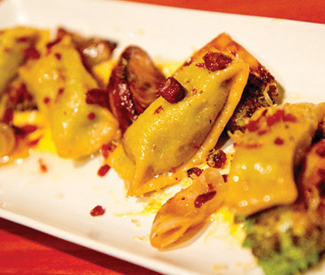
Contrast raw scallop freshness with rich broccoli agnolotti ($11/$18), a pasta meaty with southern Tasso ham, savory with orange-hued mimolette cheese and cipollini onions. Its drink mate is a full-bodied, but not overwhelming, Hometown Vixen ($9). Bolton infused black pepper in Four Roses bourbon, mixing it with lemon and two house syrups: gomme and a luxurious roasted pistachio.

The only dish I wasn’t as taken with is still well-executed: seared arctic char ($23) swimming in smoked fume broth with carrots and turnips. There’s nothing wrong with the soft white fish — it just lacked the flavor punch found in its accompanying pickled PEI mussels. Its match was one of the best cocktails on the menu, Hibiki Highball ($12), showcasing Japanese whisky — Hibiki 12-year in this case — with a giant ice cube, house ginger syrup, bitters, and soda water. Wine and beer pairings are likewise thoughtful: Hennepin, Ommegang’s farmhouse saison beer, with a mushroom tart, or Poco a Poco’s funky, fun Chardonnay with the arctic char.

Dessert could easily be Beach & Hyde, an off-menu cocktail named after the cross streets of legendary bar Buena Vista. Inspired by Buena Vista’s famed Irish coffees, the drink is Evan Williams bourbon, coffee brewed with cocoa nibs and vanilla, plus egg white and orange zest. If you want to actually eat dessert, you won’t suffer with dark Mayan chocolate in brownie-reminiscent slices, accented by black cardamom ice cream.

In fact, you won’t suffer here at all.

MAVEN

598 Haight, SF.

415-829-7982

www.maven-sf.com

Subscribe to Virgina’s twice-monthly newsletter, The Perfect Spot, www.theperfectspotsf.com


Agrarian visions

0

By Cynthia Salaysay

arts@sfbg.com

VISUAL ART Artists are makers, though rarely of history. But Fernando García-Dory and Amy Franceschini, two internationally recognized artists, seem to have a gift for it. “Perhaps,” García-Dory says, “when you start with a long perspective on history, you start to make history as well.”

At the David Brower Center’s Hazel Wolf Gallery, their joint show “Land, Use” presents work that is whimsical and futuristic, yet rooted in traditional agricultural values. It’s like Disney’s Tomorrowland — but on an urban farm, where wheelbarrows are pedal-powered. Or on the rolling green pastures of Spain, where sheep wear GPS transmitters around their necks.

Franceschini is one of San Francisco’s own. Her Victory Garden project in 2007 caught the fancy of SF City Hall, with pieces like Trike — a part-cycle, part-wheelbarrow, designed to contain all the supplies necessary to build a small garden. Soon the city began encouraging its residents to grow food, as it did in World War II. City Hall was decked out in raised garden beds, and residents throughout the city began their own vegetable patches.

García-Dory, from Madrid, has worked extensively with the dwindling Basque shepherds of the Pyrenees, where they have lived for centuries. His images and films portray white-haired men stacking golden cheese in ancient caves, or facing the wind, shearing one of their grim-faced flock.

The images come from the Shepherds School he created, and from his World Gathering of Nomadic Peoples (2005), in which shepherds and goatherds around the world came together to talk about their way of life, which has become so rarified in these modern times.

García-Dory’s work, in part, uses new technology to protect mobile pastoralism, as it’s called. His piece Bionic Sheep sits in the foyer of the gallery. The device emits ultrasound waves to repel wolves, as shepherds in Spain are no longer allowed to kill them to protect their flock. It also has a GPS so shepherds can keep track of their flock without being chained to the pasture. “They can stay at the bar, and have another beer,” Dory explains.

Adds Franceschini, “The role of art for us is, in part, utility. It has this negative connotation in the art world, but I think for us it’s important for the work we’re doing to be useful.”

Their first collaboration, Shepherd’s Wagon, a Blueprint, is “like the blueprint for a molecule that was sent on the Voyager shuttle to Jupiter,” says García-Dory. “It’s a way of saying, ‘Here, it’s a model, and it can be reproduced.'”

A canopy reaches out over the gallery, mimicking the awning of a shepherd’s wagon, where they sleep. Wooden chairs and a communal table fold down from the wall. As part of the installation, Franceschini and García-Dory invited young farmers, shepherds, and naturalists to sit together beneath their fragile roof. The forum’s purpose: to discuss how to balance the environmental concerns of naturalists with those of farmers and pastoralists, and forge a new network for social activism.

The gallery still holds some of the collective energy of the group. Remnants of their brainstorm litter the gallery like leaves blown over a sidewalk — a chaos of hopeful thoughts and ideas. Phrases like “We all need to come back to understanding the Farm Bill,” and “Let’s Shadow Each Other Voluntary Exchange Program” hang from the walls.

“Promoting a gathering as we did, it’s a way for us to be close to the people and have the direct communication that very often we lack in our lives,” says García-Dory.

“I haven’t been involved in food politics and land use in the last two years in the Bay Area,” Franceschini says. “For me, it’s a check in. Here’s all the people I’ve met from the Victory Gardens, here’s people I’d like Fernando to meet.”

Although the Bay Area is a hotbed of environmentalism and the slow food movement, awareness of pastoralism is low. “Dory’s reminding us of the history of the Basque sheepherders and the culture that brought shepherding to the American West,” says Brittany Cole Bush of Star Creek Ranch.

In the East Bay hills, Basque and Peruvian shepherds, along with young shepherds like Bush, use sheep and goats to reduce fire hazard, target invasive plants, and encourage native grasses to grow. “These animals are helping to revitalize the lands, and at the same time they’re producing a local grass-fed product that can be taken to market,” explains Bush.

Adds García-Dory, “Maybe sheep are the new celebrity, or should be.”

The Blueprint isn’t finished yet. “The people [at the gathering] said they would like to keep meeting and working, and that was really very encouraging for us,” says García-Dory. “We hope that the heritage of small farmers and shepherds can be a point of anchor for a new movement.”

Such a hope, though ambitious, seems realistic, given their past work. García-Dory’s World Gathering of Nomadic Peoples created an international, politically active community of shepherds that continues to work together. His Shepherds School has graduated 100 people. And Franceschini’s Victory Gardens live on — 10 of the gardens planted from the original 18 still exist. The city of San Francisco, which discovered through the project that people needed to learn how to grow food again, continues to fund educational programs like Hayes Valley Farm.

Although their pieces have created a lasting impact, Franceschini insists that much of that impact is due to the people around her. “An important part of what Fernando and I do is using the community around you to organize and activate ideas. That’s a message I’m always trying to tell my students. Your friends and your closest colleagues are your allies. I think sometimes you don’t see the potential in front of your nose.”

Other pieces on display include Franceschini’s This is Not a Trojan Horse, as well as short films and other artifacts documenting the Victory Garden, Shepherds School, and World Gathering.

LAND/USE

Through May 9

Hazel Wolf Gallery

David Brower Center

2150 Allston, Berk.

(510) 809-0900

www.browercenter.org

Rep Clock

0

Schedules are for Wed/29-Tues/6 except where noted. Director and year are given when available. Double features are marked with a •. All times p.m. unless otherwise specified.

BALBOA 3630 Balboa, SF; www.balboamovies.com. $7.50-10. “Balboa Birthday Bash:” Safety Last! (Newmeyer and Taylor, 1923), Sun, 7. Balboa’s 86th birthday party, with cake, vaudeville performers, and more.

CALIFORNIA COLLEGE OF THE ARTS 1111 Eighth St, SF; www.sfcinematheque.org. $5-10. “The Filming of Modern Life: Cinema, Modernity, and the Avant-Garde,” a lecture by Malcolm Turvey, Tues, 7.

CASTRO 429 Castro, SF; (415) 621-6120, www.castrotheatre.com. $7.50-10. •Stairway to Heaven (Powell and Pressburger, 1946), Wed, 2:35, 7, and The Music Lovers (Russell, 1970), Wed, 4:35, 9. •Funny Face (Donen, 1957), Thurs, 2:25, 7, and Love Streams (Cassavetes, 1984), Thurs, 4:25, 9. •Planet of the Apes (Schaffner, 1968), Fri, 2:30, 7, and Beneath the Planet of the Apes (Post, 1970), Fri, 4:40, 9:10. “Scary Cow Short Film Festival,” Sat, 3. More info and tickets (this event, $15-40) at www.scarycow.com. The Girl With the Dragon Tattoo (Fincher, 2011), Sun, 1, 4:30, 8. Lou Harrison: A World of Music (Soltes, 2012), Tues, 7. More info and tickets (this event, $25; benefits Harrison House Music and Arts) at www.harrisondocumentary.com.

CHRISTOPHER B. SMITH RAFAEL FILM CENTER 1118 Fourth St, San Rafael; (415) 454-1222, www.cafilm.org. $6.75-10.25. Chico and Rita (Trueba, 2010), call for dates and times. “2012 Oscar Nominated Short Films,” narrative and documentary (separate admission), call for dates and times. Crazy Horse (Wiseman, 2011), March 2-8, call for times. The Apartment (Wilder, 1960), Sun, 6:30. Introduced by film historian Joseph McBride.

PACIFIC FILM ARCHIVE 2575 Bancroft, Berk; (510) 642-5249, bampfa.berkeley.edu. $5.50-9.50. “Film 50: History of Cinema, Film, and the Other Arts:” Pather Panchali (Ray, 1955), Wed, 3:10. With lecture by Marilyn Fabe. “African Film Festival 2012:” You Are All Captains (Laxe, 2010), Wed, 7. “Dark Past: Film Noir by German Emigrés:” The Dark Past (Maté, 1948), Thurs, 7; Shockproof (Sirk, 1949), Thurs, 8:40. “The Library Lover: The Films of Raúl Ruiz:” Mysteries of Lisbon (Ruiz, 2010), Fri, 7; Three Lives and Only One Death (1996), Sat, 8:30. “Afterimage: James Ivory, Three Films from Novels:” Mr. and Mrs. Bridge (Ivory, 1990), Sat, 6. “Howard Hawks: The Measure of Man:” Ball of Fire (Hawks, 1941), Sun, 2; To Have and Have Not (Hawks, 1944), Tues, 7. “A Tribute to José Saramago (1922-2010)”: José and Pilar (Mendes, 2010), Sun, 4:30.

ROXIE 3117 and 3125 16th St, SF; (415) 863-1087, www.roxie.com. $6.50-10. Straight Outta Hunters Point 2 (Epps, 2012), Wed-Thurs, 7, 8:45. “Hollywood Before the Code: Nasty-Ass Films for a Nasty-Ass World!:” •Three on a Match (LeRoy, 1932), Fri, 6:45, 9:45, and Scarface (Hawks, 1932), Fri, 8, 10; •Freaks (Browning, 1932), Sat, 2:15, 5, 8, 11, and Island of Lost Souls (Kenton, 1932), Sat, 3:30, 6:30, 9:30; •The Bitter Tea of General Yen (Capra, 1933), Sun, 1:15, 4:30, 8, and The Cheat (Abbott, 1931), Sun, 3, 6:20, 9:45; •Sensation Hunters (Vidor, 1933), Mon, 6:20, 9:45, and Murder at the Vanities (Leisen, 1934), Mon, 8; •Blondie Johnson (Enright, 1933), Tues, 6:30, 9:35, and Ladies of the Big House (Gering, 1931), Tues, 8.

SF FILM SOCIETY CINEMA 1746 Post, SF. Roadie (Cuesta, 2011), Wed-Thurs, 2:30, 5, 7, 9:15. This event, $10-11; more info at www.sffs.org. “San Francisco Green Film Festival,” features and shorts with environmental themes, March 1-7. This event, $10-50; more info at www.sfgreenfilmfest.org.

SF PUBLIC LIBRARY 100 Larkin, SF; www.sfpl.org. Free. Vincent Who? (Lam, 2008), Sun, 12:30. With community activist Curtis Chin in person.

YERBA BUENA CENTER FOR THE ARTS 701 Mission, SF; (415) 978-2787, www.ybca.org. $6-8. “Human Rights Watch Film Festival:” Salaam Dunk (Fine, 2011), Thurs, 7:30.

Our Weekly Picks: February 29-March 6

0

WEDNESDAY 29

Jacques Lu Cont

Stuart Price is a mixmaster of mystery. The British producer-DJ goes by many aliases, including Paper Faces, Thin White Duke, Jacques Lu Cont, and Les Rythmes Digitales. How could a Brit use French pseudonyms? Well, after you’ve won three Grammy Awards and worked with an entire spectrum of musicians ranging from Madonna to Miike Snow, from the Killers to Kylie Minogue, from Seal to the Scissor Sisters, then you’re off the hook for that faux pas. Price, the son of two classically trained pianists, developed his version of French electro house after hearing the sounds of the Human League. Expect Price and his trusty synthesizers to give guilty-pleasure makeovers to familiar songs and vocals (Kevin Lee).

With Robb Green

10 p.m., $5

Vessel

85 Campton, SF

(415) 433-8585

www.vesselsf.com


Nellie McKay in “I Want To Live!”

From the get-go, Nellie McKay has bucked against the typical musical confines: releasing her first album in 2004 as a double CD when it might have fit in one, calling it Get Away From Me in a jab at Norah Jones and to avoid being lumped in as just another female jazz singer. One listen to her actual music then and since, a maddening blend of pop, calypso, hip-hop, rock, reggae and (yes) vocal jazz, with maddening humor and reassuring warmth, assured that one label would simply never work. “I Want To Live!” showcases all McKay’s uncaged skill as performer as she reinvents the story of San Quentin death row inmate Barbara Graham as noir cabaret. (Ryan Prendiville)

8 p.m., $30

Rrazz Room

222 Mason, SF

(415) 394-1189

www.therrazzroom.com


THURSDAY 1

It Came From Hangar 18 book party

Two men, one brand-new sci-fi epic: It Came From Hangar 18 touches down from Planet Pulp this week at the Forbidden Island Tiki Lounge, which is actually one of the book’s settings, and serves a mighty tasty array of exotic cocktails to boot. Written by noted B-movie film programmer and author Will Viharo (A Mermaid Drowns in the Midnight Lounge) and software-engineer-with-a-dark-side Scott Fulks, Hangar 18 is self-described as “the most action-packed, erotic science fiction epic since the Bible — but with even more sex and violence!” Also: vampires, mobsters, and (I’m guessing) umbrella drinks galore. The release party features live surf music by retro-futurists Tomorrowmen. Whatever you do, keep watching the skies! (Cheryl Eddy)

7 p.m., free

Forbidden Island Tiki Lounge

1304 Lincoln, Alameda

(510) 749-0332

www.forbiddenislandalameda.com


RED BULL Thre3STYLE DJ COMPETITION

Every year, Red Bull pops in to provide a swell showcase of our current nightlife scene, inviting a variety of local disc jocks to compete for the chance to advance to national and international levels — and possibly win an enormous golden calf that squirts endless supplies of energy drink from its nipples. KIDDING. I’m sure they win something, but the real reward is ours, watching fine hometown talent display some flexibility on the decks. (The “Thre3style” part means competitors must include three different genres of music in their 15-minute sets.) This year’s amped qualifiers are KingMost, Zita, Theory, Just, Miles Medina, and John Beaver, as well as Seattle winner Four Color Zack and Portland winner Playtime. If last year’s wonderfully diverse crowd and hyper energy are anything to go by, this will be the party.

9 p.m. (show at 9:30 p.m.), $12, 18+

Ruby Skye

420 Mason, SF.

(415) 693-0777

www.redbullusa.com/thre3style


Zola Jesus

Russian-American Nika Roza Danilova grew up in Wisconsin, which is pretty much as close to Russia, climate-wise, as you’re going to get in the continental U.S. In the bitter cold of the Midwest, young Danilova sang opera before transitioning into rock, nabbing a keyboard here and a drum machine there. A few EPs, studio albums, and a critically acclaimed LP later, Danilova’s Zola Jesus is preaching to the masses, belting and wailing while electronic glitch samples and piano chords crash against each other. Most recent release Conatus (Sacred Bones Records) is something akin to industrial sprinkled with a pinch of classical, culled together by Danilova’s haunting, resonant voice. (Lee)

With Wymond Miles of the Fresh & Onlys, Talk Normal

9 p.m., $21

Great American Music Hall

859 O’Farrell, SF

(415) 885-0750

www.slimspresents.com


FRIDAY 2

O’ Brother

A brutally captivating four-piece out of Atlanta, O’ Brother combines industrial, screaming metal, and the hard edge of Southern rock. A barrage of guitars —grounded by drummer Michael Martens, with shifting vocals by Tanner Merritt —results in a sound that’s syrupy and sludgy one moment, airy the next. Released in late 2011, O’ Brother’s first full length album, Garden Window, recalls the drive of Queens of the Stone Age, the atmosphere of Sigur Ros, and the march of Tool, without being too heavily indebted to any one part. (Prendiville)

With Junius, Happy Body Slow Brain

9 p.m., $12

Bottom of the Hill

1233 17th St., SF

(415) 621-4455

www.bottomofthehill.com


Prizehog

Don’t let the lack of a bassist fool you — Prizehog gets heavy. The San Francisco trio deploys a keyboard alongside large-gauge drums and down-tuned guitar to create music that veers effortlessly between tectonic post-rock, thundering doom blues, and Hawkwind-style, spaceship-launch psychedelia. Patience and an open mind are two necessary virtues; they’ll prepare you for the band’s shuddering builds, non-traditional arrangements, and sudden stylistic shifts. Concertgoers looking for a potent dose of local, experimental volume should look to get high on the ‘Hog. (Ben Richardson)

With Bobb Saggeth, Hell Ship

9 p.m., $8

Thee Parkside

1600 17th St., SF

(415)-252-1330

www.theeparkside.com


Ty Segall

Ty Segall has managed to produce ecstatic, psychedelic lo-fi garage punk rock that retains the catchiest elements of rock’n’roll — seductive drumbeats, wailing guitars, and arresting lyrics — really quickly. Last year he released full-length album Goodbye Bread, along with three EPs. This spring he’s touring with Tim Presley of White Fence to promote their collaborative LP, Hair, out April 28. Hair features Segall’s brand of bright and fuzzy electric doo-wop and Lucy-in-the-Sky-with-Diamonds-inspired melodic distortion. Segall rocked the Great American Music Hall last year with his curly blonde head-banging antics and returns this week to shake it out some more. (Mia Sullivan)

With White Fence, Mikal Cronin, the Feeling of Love

8:30 p.m., $15

Great American Music Hall

859 O’Farrell, SF

(415) 885-0750

www.gamh.com


SATURDAY 3

Bad Weather California

Let’s start a new religion. Let’s start a cult. Let’s go to bed. Let’s get high. Let’s get fucked up. Let’s start a band. Let’s get a van. Let’s make some music. Whatever its problems may be, Denver-based freaked out rocker band Bad Weather California offers a lot of simple solutions, without falling into the typical pratfalls of musical contrivance. It’s a rebellious rock streak without being punk, hippy utopian idealism without being a jam band, spiritual fervor without preachy religiosity. The Akron/Family label-mates have a sunny optimism in the face of bad shit and a sound that might have you going along. Maybe even that cult part. (Ryan Prendiville)

With He’s My Brother She’s My Sister

9 p.m., $8–$11

Brick and Mortar Music Hall

1710 Mission, SF

(415) 800-8782

www.brickandmortarmusic.com


SUNDAY 4

“Balboa Birthday Bash”

Hey, jazz baby: between 2011 hits The Artist, Hugo, and Midnight in Paris, the 1920s are the cinematic decade du jour. What better way to re-live the flapper era than at a movie theater that’s been around since 1926? Cheer the Balboa’s 86th birthday — yep, it’s older than the Oscars — at a fiesta co-presented by the San Francisco Silent Film Festival. On tap are a screening of Harold Lloyd classic Safety Last! (1923) on 35mm with piano accompaniment by Frederick Hodges; a screening of shorts by Georges Méliès (a.k.a. Ben Kingsley’s character in Hugo); a live vaudeville show; an illustrated lecture by author and Safety Last! expert John Bengtson; birthday cake; and more. As they said in the ’20s (or at least, they always say in movies set in the ’20s), it’ll be the cat’s pajamas. (Eddy)

7 p.m., $7.50–$10

Balboa Theatre

3630 Balboa, SF

(415) 221-8184

www.balboamovies.com


MONDAY 5

The Driftwood Singers

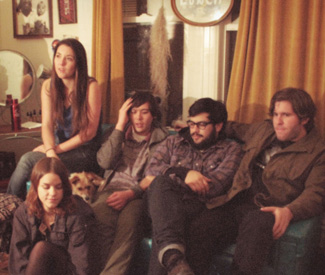
Listening to the Driftwood Singers makes you feel like you’re ambling down a dusty country road toward something that might not exist anymore. This lo-fi folk duo of Pearl Charles and Kris Hutson writes foreboding, bluesy love ballads laden with longing nostalgia. Charles’ warm, milky vocals blend seamlessly with Hutson’s slightly twangy voice as Charles picks her autoharp and Hutson strums his guitar (or mandolin/banjo, depending on the number). This pair hails from LA (no, really) and recorded their debut EP, Look!, with a Sony Walkman. Their upcoming seven-inch, out March 27, was recorded a bit more expertly, but channels the same raw honesty. (Sullivan)

With Birdhouse, Lauren Shera, and Infantree

8:30 p.m., $12

Café Du Nord

2170 Market, SF

(415) 861-5016

www.cafedunord.com


TUESDAY 6

Mia Doi Todd

Los Angeles singer-songwriter Mia Doi Todd’s latest offering, Cosmic Ocean Ship (City Zen Records), was inspired by journeys into Cuba, Brazil, France, Mexico, and India. Her lilting, reflective vocals relay tones of nostalgia, affection, and optimism. Opening track “Paraty” refers to a Brazilian coastal town and brings in some lighthearted samba, while “Under the Sun” sees Todd turn tropical island chanteuse; her romantic crooning bringing to mind a couple taking a post-luau stroll on the beach. The take-away message might best be encapsulated by Cosmic‘s last track, a touching cover of Chilean Folk artist Violeta Parra’s “Gracias a la vida.” (Lee)

With Bells

8 p.m., $16–$26

Yoshi’s

1330 Fillmore

(415) 655-5600

www.yoshis.com


Romeo and Juliet

Romeo and Juliet is the only 20th century ballet that can give a run to the 19th century biggies Nutcracker and Swan Lake. No matter who choreographs, it will find an audience. Fortunately, you have to be really good to keep control of the subject matter’s complexity, not to speak of an audience’s expectation about a beloved story and, of course, the music. Helgi Tómasson has the chops. His 1994 version is gorgeous, sumptuously choreographed and designed. The depth of the company is such that it has any number of first-rate dancers to fill the roles, not just the major ones of the lovers, but minor characters — the villain and the best friend, the gypsy girls and the rejected suitor. (Rita Felciano)

Through March 11, 8 p.m., $36–$285

War Memorial Opera House

301 Van Ness, SF

(415) 865-2000

www.sfballet.org


The Guardian listings deadline is two weeks prior to our Wednesday publication date. To submit an item for consideration, please include the title of the event, a brief description of the event, date and time, venue name, street address (listing cross streets only isn’t sufficient), city, telephone number readers can call for more information, telephone number for media, and admission costs. Send information to Listings, the Guardian Building, 135 Mississippi St., SF, CA 94107; fax to (415) 487-2506; or e-mail (paste press release into e-mail body — no text attachments, please) to listings@sfbg.com. Digital photos may be submitted in jpeg format; the image must be at least 240 dpi and four inches by six inches in size. We regret we cannot accept listings over the phone.

Stage Listings

0

Stage listings are compiled by Guardian staff. Performance times may change; call venues to confirm. Reviewers are Robert Avila, Rita Felciano, and Nicole Gluckstern. Submit items for the listings at listings@sfbg.com. For further information on how to submit items for the listings, see Picks.

THEATER

OPENING

Maurice New Conservatory Theatre Center, 25 Van Ness, SF; (415) 861-8972, www.nctcsf.org. $25-45. Previews Wed/29-Fri/2, 8pm. Opens Sat/3, 8pm. Runs Wed-Sat, 8pm; Sun, 2pm. Through March 25. New Conservatory Theatre Center presents a play about two young men who fall in love in pre-World War I England, adapted from E.M. Forster’s novel.

Merchants Exit Stage Left, 156 Eddy, SF; www.brownpapertickets.com. $10-25. Previews Thurs/1-Fri/2, 8pm. Opens Sat/3, 8pm. Runs Thurs-Sat, 8pm. Through March 24. No Nude Men Productions performs Susan Sobeloff’s tale of two sisters trying to balance financial stability and career satisfaction.

ONGOING

*Blue/Orange Lorraine Hansberry Theatre, 450 Post, SF; (415) 474-8800, www.lhtsf.org. $43-53. Thurs-Sat, 8pm (also Sat, 2pm). Through March 18. Lorraine Hansberry Theater offers an uneven but worthwhile production of British playwright Joe Penhall’s sardonic comedy of ideas and institutional racism, an intriguingly frustrating three-hander about a young doctor (a bright Dan Clegg) at a psychiatric teaching hospital who begins a battle royal with his suave and pompous supervising physician (a comically nimble Julian Lopez-Morillas) over the release of a questionably-sane black patient. Originally brought in by police for creating a disturbance, Christopher (the excellent Carl Lumbly) still exhibits signs of psychosis and his ability to care for himself seems doubtful to the young doctor treating him. The older physician appeals to the patient’s general competence, hospital procedures, the shortage of beds, and the exigencies of career advancement in countering the younger doctor’s insistence on keeping the patient beyond the mandatory 28-day period required by law. For his part, Christopher, nervous and rather manic, is at first desperately eager to be released back to his poor London neighborhood. Competing interviews with the two doctors complicate his perspective and ours repeatedly, however, as a heated debate about medicine, institutionalization, cultural antecedents to mental “illness,” career arcs, and a “cure for black psychosis,” leave everyone’s sanity in doubt. Although our attention can be distracted by a too-pervading sound design and less than perfect British accents, Edris Cooper-Anifowoshe directs a strong and engaging cast in a politically resonant not to say increasingly maddening play. (Avila)

52 Man Pick Up Brava Theater, 2781 24th St, SF; (415) 647-2822, www.brava.org. $10-25. Thurs/1-Sat/3, 8pm. Desiree Butch performs her solo show about a deck of cards’ worth of sexual encounters.

Geezer Marsh San Francisco, MainStage, 1062 Valencia, SF; (415) 282-3055, www.themarsh.org. $25-100. Thurs and Sat, 8pm; Sun, 5pm. Through March 18. Geoff Hoyle’s hit solo show returns.

Glengarry Glen Ross Actors Theatre of San Francisco, 855 Bush, SF; (415) 345-1287, www.brownpapertickets.com. $26-40. Fri-Sat, 8pm. Through March 24. David Mamet’s cutthroat comedy, courtesy of the Actors Theatre of San Francisco.

The Pirates of Penzance Julia Morgan Center for the Arts, 2640 College, Berk; (510) 845-8542, www.juliamorgan.org. $17-35. Fri-Sat, 7pm (also Sat, 2pm); Sun, noon and 5pm. Through April 1. Berkeley Playhouse performs the Gilbert and Sullivan classic, with the setting shifted to a futuristic city.

The Real Americans Marsh Studio Theater, 1062 Valencia, SF; (415) 282-3055, www.themarsh.org. $25-50. Fri, 8pm; Sat, 5pm; Sun, 2pm. Through March 18. Dan Hoyle revives his hit solo show about small-town America.

Scorched American Conservatory Theater, 415 Geary, SF; (415) 749-2228, www.act-sf.org. $10-85. Tues-Sat, 8pm; Wed, Sat-Sun, 2pm. Through March 11. Lebanese-Canadian playwright Wajdi Mouawad bites off a little more than he can chew, and ACT thus offers a less than satisfying three-hour feast with its stilted production of Mouawad’s 2008 epic about a brother and sister (Babak Tafti and Annie Purcell) sent by their estranged, recently deceased mother’s executor (David Strathairn) on a hunt for her past in her unnamed civil war-torn Middle Eastern homeland. At that point, the story of their mother, Nawal (Marjan Neshat), comes center stage — or rather crisscrosses it with that of her children in a mash-up that only undercuts the potential tension or interest in either plot strand. Director Carey Perloff’s cast also proves unevenly compelling. Strathairn’s Alphonse is a compassionate, slyly wise man who nervously rambles to make up for the extremely laconic and resentful mood of Nawal’s children. But he is of peripheral importance, and his malapropisms are laid on a little thicker than his endearing Quebecois accent, as if betraying the limits of his function onstage. The other characters meanwhile feel too thinly sketched to occupy the middle. As the sad and horrifying details of this Sophocles-inspired tale unfold, there is surprisingly little sense of authentic experience, and much more the feeling of over-indulgence it certain dramatic devices. Between the sententious and ponderous dialogue, strained characterization, and unwieldy storyline is a play flailing away at something beyond its ken or capacity. (Avila)

Three’s Company Live! Finn’s Funhouse, 814 Grove, SF; www.brownpapertickets.com. $20. Fri/2-Sat/3, 7 and 9pm. Cat Fights and Shoulder Pads Productions (best production company name ever?) brings the classic sitcom to the stage.

Tontlawald Exit on Taylor, 277 Taylor, SF; (415) 525-1205, www.cuttingball.com. $10-50. Thurs, 7:30pm; Fri-Sat, 8pm (also Sat, 2pm); Sun, 5pm. Through March 11. Entering the theater space thought the back door, squeezing alongside a giant fishing net motif, which wraps the entire stage in a fabric grid, almost imperceptibly skews one’s perspective in advance of the show, just a brief twist that sets the tone for this abbreviated epic of abuse, friendship, and revenge. The heroine, an earthy yet somehow fragile maid (Marilet Martinez), inadvertently manages to rile her evil stepmother (Madeline H. D. Brown) for what seems to be the umpteenth time before fleeing into the mysterious wooded Tontlawald, inhabited by joyously frolicking beasts (or boys) and a preternaturally beautiful princess (Rebecca Frank) who immediately adopts her as a friend. Told through snatches of repetitive text, solemnly-intoned and ecstatically sung, and moments of engagingly acrobatic, hyper-stylized movement, Cutting Ball’s Tontlawald meanders through an Estonian fairy tale-hero’s quest, as if told from the perspective of the child protagonist — light on detail, heavy on drama. Inspired by TeatrZAR, the resident company of Poland’s Grotowski Centre, co-directors Paige Rogers and Annie Paladino and choreographer Laura Arrington worked to emulate certain characteristics of its style, notably the emphasis on song. But while there are some gorgeously transcendent moments of musical direction courtesy of Rogers, and of choreography courtesy of Arrington, the work plays out mostly as a disjointed series of striking tableaux, which intrigue the intellect, but somehow fail to inflame the soul. (Gluckstern)

*Tree City Legends Intersection for the Arts, 925 Mission, SF; (415) 626-2787, www.theintersection.org. $20-25. Thurs/1-Sat/3, 8pm. The three surviving Kane brothers — Sum (Juan Amador), Min (Taiyo Na), and Denizen (Sean San José) — come together to remember in pain and ecstasy the life of their fallen fourth, Junie Kane (Dennis Kim), whose voice and shadow come back now and then through a materializing recording session with his band (Dirty Boots: James Dumalo and Rachel Lastimosa). Set in the violent, drug-addled, but tenacious streets of an imaginary Bay Area inner-city neighborhood called Tree City, Campo Santo’s production of Kim’s new play transforms the daytime office space at Intersection for the Arts into an all-embracing mise-en-scene that feels, intentionally, like a memorial service, a concert, a dreamy almost hallucinatory reverie, and an incipient rebellion. The shadow-filled, ritual-like atmosphere (lit by Darl Andrew Packard amid Joan Osato’s lush, all-pervading video installation) suits well the play’s roiling mix of grief, restive anger, defiant humor, and communion — given exquisite expression in both song and extended, persuasive monologues by the fine trio of actors. Directed by Marc Bamuthi Joseph, the production’s ability to envelop the audience in this raucous ceremony lends just the right support to Kim’s strong, flowing, eloquent, and earthy ruminations on the fractious but soulful lives of the oppressed among us. (Avila)

*True West Boxcar Studios, 125A Hyde, SF; (415) 967-2227, www.boxcartheatre.org. $25. Thurs-Sat, 8pm. Through April 7. The first installment of Boxcar Theatre’s four-play Sam Shepard repertory project, True West ushers in the ambitious run with a bang. This tale of two brothers who gradually assume the role of the other is one of Shepard’s most enduring plays, rich with humorous interludes, veering sharply into dangerous terrain at the drop of a toaster. In time-honored, True West tradition, the lead roles of Austin, the unassuming younger brother, and Lee, his violent older sibling, are being alternated between Nick A. Olivero and Brian Trybom, and in a new twist, the role of the mother is being played by two different actresses as well (Adrienne Krug and Katya Rivera). The evening I saw it, Olivero was playing Austin, a writer banging away at his first screenplay, and Trybom was Lee, a troubled, alcoholic drifter who usurps his brother’s Hollywood shot, and trashes their mother’s home while trying to honor his as yet unwritten “contract”. The chemistry between the two actors was a perfect blend of menace and fraternity, and the extreme wreckage they make of both the set (designed by both actors), and their ever-tenuous relationship, was truly inspired. (Gluckstern)

*Vice Palace: The Last Cockettes Musical Thrillpeddlers’ Hypnodrome, 575 10th St, SF; (415) 377-4202, www.thrillpeddlers.com. $30-35. Fri/2-Sat/3, 8pm. Hot on the high heels of a 22-month run of Pearls Over Shanghai, the Thrillpeddlers are continuing their Theatre of the Ridiculous revival with a tits-up, balls-out production of the Cockettes’ last musical, Vice Palace. Loosely based on the terrifyingly grim “Masque of the Red Death” by Edgar Allan Poe, part of the thrill of Palace is the way that it weds the campy drag-glamour of Pearls Over Shanghai with the Thrillpeddlers’ signature Grand Guignol aesthetic. From an opening number set on a plague-stricken street (“There’s Blood on Your Face”) to a charming little cabaret about Caligula, staged with live assassinations, an undercurrent of darkness runs like blood beneath the shameless slapstick of the thinly-plotted revue. As plague-obsessed hostess Divina (Leigh Crow) and her right-hand “gal” Bella (Eric Tyson Wertz) try to distract a group of stir-crazy socialites from the dangers outside the villa walls, the entertainments range from silly to salacious: a suggestively-sung song about camel’s humps, the wistful ballad “Just a Lonely Little Turd,” a truly unexpected Rite of Spring-style dance number entitled “Flesh Ballet.” Sumptuously costumed by Kara Emry, cleverly lit by Nicholas Torre, accompanied by songwriter/lyricist (and original Cockette) Scrumbly Koldewyn, and anchored by a core of Thrillpeddler regulars, Palace is one nice vice. (Gluckstern)

The Waiting Period MainStage, Marsh San Francisco, 1062 Valencia, SF; (415) 282-3055, www.themarsh.org. $15-50. Fri, 8pm; Sat, 5pm. Through March 24. Brian Copeland returns with a new solo show about his struggles with depression.

BAY AREA

*Body Awareness Aurora Theatre, 2081 Addison, Berk; (510) 843-4822, www.auroratheatre.org. $30-48. Tues, 7pm; Wed-Sat, 8pm; Sun, 2 and 7pm. Through March 11. In Annie Baker’s new comedy, receiving a top-notch Bay Area premiere at Aurora Theatre, peppy psychology prof Phyllis (Amy Resnick) hosts “Body Awareness Week” at her small Vermont college, while back home partner Joyce (Jeri Lynn Cohen) talks to her 21-year-old son Jared (Patrick Russell) about the porn pay-per-view bill he’s racked up. Phyllis contends that Joyce’s introverted, somewhat explosive virgin son (who in addition to bouts of violent anger soothes himself compulsively with an electric security toothbrush) has Asperger’s Syndrome — a diagnosis that Jared, a budding not too say obsessive lexicographer, hotly contests. That same week, the couple hosts a guest artist, Frank (Howard Swain), a breezy man’s man whose career stands squarely on a series of photographs of nude women and girls. The young man seeks sexual advice from the older one, much to Phyllis’s disgust and Joyce’s relief, while also tempting Joyce with the notion of posing for a nude portrait and “reclaiming her body image,” in a well-used phrase. An already delicate balance thus goes right off kilter as, between the poles of Phyllis and Frank, Joyce and Jared chase competing notions and definitions of themselves and the world. In the volatile tension between perspectives, power trips, and extreme personalities, playwright Baker initially pushes a comic form toward an unsettling edge, only to retreat in the end for safer ground and a family-friendly resolution. While that feels like a lost opportunity, Body Awareness is still a stimulating and solidly entertaining evening, brought to life by a warm and dexterous ensemble under fine, lively direction by Joy Carlin. (Avila)

Counter Attack! Ashby Stage, 1901 Ashby, Berk; (510) 444-4755, ext. 114, www.stagebridge.org. $18-25. Wed/29-Thurs/1, 7:30pm; Fri/2-Sat/3, 8pm; Sun/4, 2pm. Stagebridge presents the world premiere of Joan Holden’s waitress-centric play.

A Doctor in Spite of Himself Berkeley Repertory Theatre, Roda Theatre, 2015 Addison, Berk; (510) 647-2949, www.berkeleyrep.org. $14.50-73. Tues and Thurs-Sat, 8pm (no show March 23); Wed and Sun, 7pm (also Sun, 2pm). Through March 25. Berkeley Rep performs a contemporary update of the Molière comedy.

*The Kipling Hotel: True Misadventures of the Electric Pink ’80s New venue: Marsh Berkeley, 2120 Allston, Berk; (415) 282-3055, www.themarsh.org. $20-50. Sat, 8:30pm; Sun, 7pm. Extended through March 25. This new autobiographical solo show by Don Reed, writer-performer of the fine and long-running East 14th, is another slice of the artist’s journey from 1970s Oakland ghetto to comedy-circuit respectability — here via a partial debate-scholarship to UCLA. The titular Los Angeles residency hotel was where Reed lived and worked for a time in the 1980s while attending university. It’s also a rich mine of memory and material for this physically protean and charismatic comic actor, who sails through two acts of often hilarious, sometimes touching vignettes loosely structured around his time on the hotel’s young wait staff, which catered to the needs of elderly patrons who might need conversation as much as breakfast. On opening night, the episodic narrative seemed to pass through several endings before settling on one whose tidy moral was delivered with too heavy a hand, but if the piece runs a little long, it’s only the last 20 minutes that noticeably meanders. And even with some awkward bumps along the way, it’s never a dull thing watching Reed work. (Avila)

Mesmeric Revelation Berkeley City Club, 2315 Durant, Berk; (510) 558-1381, www.centralworks.org. Thurs-Sat, 8pm; Sun, 5pm. Through March 18. Central Works opens its season of world premieres with Aaron Henne’s Edgar Allen Poe-inspired drama.

Titus Andronicus La Val’s Subterranean, 1834 Euclid, Berk; www.impacttheatre.com. $10-20. Thurs-Sat, 8pm. Through March 31. Impact Theatre takes on the Bard’s bloodiest tragedy.

The World’s Funniest Bubble Show Marsh Berkeley, TheaterStage, 2120 Allston, Berk; (415) 826-5750, www.themarsh.org. $8-50. Extended run: March 11 and 18, 11am. Louis “The Amazing Bubble Man” Pearl returns with this kid-friendly, bubble-tastic comedy.

PERFORMANCE/DANCE

“The Abduction from the Seraglio (Yanked from the Harem)” Marines Memorial Theater, 609 Sutter, SF; www.pocketopera.org. Sun/4 and March 11, 2pm. Also March 18, 2pm, Berkeley Hillside Club, 2286 Cedar, Berk. $15-39. Pocket Opera performs artistic director Donald Pippin’s witty translation of Mozart’s classic work.

“Alice Superbrain/The Twin Section” Garage, 975 Howard, SF; www.975howard.com. Fri/2-Sat/3, 8pm. $10-20. Andrea Lanza’s multidisciplinary perfomance is inspired by Lewis Carroll’s Alice adventures.

“Arthur in Underland” CounterPULSE, 1310 Mission, SF; www.counterpulse.org. Previews Fri/2-Sun/4, 8pm. Opens March 8, 8pm. Runs Fri-Sun, 8pm. Through March 24. $15-24. Dandelion Dancetheater performs a new work about a young man whose life is changed when he becomes part of a rock group’s entourage.

“Elect to Laugh” Studio Theater, Marsh San Francisco, 1062 Valencia, SF; (415) 282-3055, www.themarsh.org. Tues, 8pm. Ongoing through Nov 6. $15-50. Will Durst and friends perform in this weekly political humor show that focuses on the upcoming presidential election.

“The Eric Show” Milk Bar, 1840 Haight, SF; www.milksf.com. Tues, 8pm (ongoing). $5. Local comedians perform with host Eric Barry.

“Finding the Michaels” Shotwell Studios, 3252-A 19th St, SF; www.brownpapertickets.com. Sat/3 and March 9-10, 8pm; Sun/4, 3pm. Footloose presents Cassie Angley’s solo play about her experiences in post-9/11 New York City.

Nina Haft & Company and Facing East Dance and Music ODC Theater, 3153 17th St, SF; www.odcdance.org. Fri/2-Sat/3, 8pm; Sat/3-Sun/4, 3pm. $18-24. The companies perform this.placed, a dance and multimedia performance about what the body remembers.

“The Whole Megillah 2: Uncut” Jewish Theatre, 470 Florida, SF; www.jccsf.org. Thurs-Fri, 8pm; Sat, 7 and 10pm. Through March 10. Also March 7, 8pm, Kanbar Hall, Jewish Community Center of San Francisco, 3200 California, SF. $15-20. The Hub and Killing My Lobster present this Purim-themedsketch comedy show.

Film Listings

0

Film listings are edited by Cheryl Eddy. Reviewers are Kimberly Chun, Max Goldberg, Dennis Harvey, Lynn Rapoport, and Matt Sussman. For rep house showtimes, see Rep Clock.

OPENING

*Crazy Horse Does the documentary genre need an injection of sex appeal? Leave it to ground-breaking documentarian Frederick Wiseman to do just that, with this hilarious, keenly-observed look into Paris’s rightfully legendary Crazy Horse Paris cabaret. For 10 weeks, the filmmaker immersed himself in all aspects of preparation going into a new show, Désirs, by choreographer Philippe Decouflé, and uncovers the guts, discipline, organizational entanglements, and genuine artistry that ensues backstage to produce the at-times laugh-out-loud OTT (e.g., the many routines in which the perky, planet-like posterior is highlighted), at-times truly remarkable numbers (the girl-on-girl spaceship fantasia; the subtle, surreal number that bounces peek-a-boo body parts off a mirrored surface) onstage — moments that should inspire burlesque performers and dance aficionados alike with the sheer imaginative possibilities of dancing in the buff, with a side of brain-teasing titillation, of course. Always silently commenting on the action, Wiseman pokes quiet fun (at the dancer vigorously brushing the horse-hair tail attached to her rear, the obsessed art director, and the sound guy who’s a ringer for Philip Seymour Hoffman’s Boogie Nights nebbish) while patiently paying respect to the mechanics behind the magic (Decouflé, among others, arguing with management for more time to improve the show, despite the beyond-rigorous seven-days-a-week, twice- to thrice-daily schedule). Crazy Horse provides marvelous proof that the battle of seduction begins with the brain. (2:08) Embarcadero, Shattuck, Smith Rafael. (Chun)
Dr. Seuss’ The Lorax Dr. Seuss’ environmental fable comes to (3D, CG-animated) life, with Danny DeVito voicing the iconic title creature. (1:26) Balboa, Presidio, Shattuck.

Project X Nope, not a remake of the 1987 Matthew-Broderick-befriends-a-chimp flick. This one’s a comedy about a chaotic high school party. (1:28) California.

*Tim and Eric’s Billion Dollar Movie See Trash. (1:32) Lumiere, Shattuck.

Undefeated Daniel Lindsay and T.J. Martin, who previously teamed up on a 2008 doc about beer pong, have a more serious subject for their latest tale: the unlikely heroics of an inner-city Memphis, Tenn. high school football team. The title refers more to the collective spirit rather than the (still pretty damn good) record of the Manassas Tigers, a team comprised of youths challenged by less-than-ideal home lives and anti-authority attitude problems that stem from troubles running deeper than typical teenage rebellion. Into an environment seemingly tailored to assure the kids’ failure steps coach Bill Courtney. He’s white, they’re all African American; he’s fairly well-off, while most of them live below the poverty line. Still, he’s able to instill confidence in them, both on and off the field, with focus on three players in particular: the athletically-gifted, academically-challenged O.C., who gets a Blind Side-style boost from one of Courtney’s assistant coaches; sensitive brain Money, sidelined by a devastating injury; and hot-tempered wild card Chavis, who eventually learns the importance of teamwork. With the heavy-hitting endorsement of celebrity exec producer Sean Combs, Undefeated is a high-quality entry into the "inspiring sports doc" genre: it offers an undeniably uplifting story and sleek production values. But it’s a little too familiar to be called the best documentary of the year, despite its recent anointing at the Oscars. If it was gonna be a sports flick, why not the superior, far more complex (yet not even nominated) Senna? (1:53) SF Center. (Eddy)

*We Need to Talk About Kevin It’s inevitable — whenever a seemingly preventable tragedy occurs, there’s public outcry to the tune of "How could this happen?" But after the school shooting in We Need to Talk About Kevin, the more apt question is "How could this not happen?" Lynne Ramsay (2002’s Morvern Callar) — directing from the script she co-adapted from Lionel Shriver’s novel — uses near-subliminal techniques to stir up atmospheric unease from the very start, with layered sound design and a significant, symbolic use of the color red. While other Columbine-inspired films, including Elephant and Zero Day (both 2003), have focused on their adolescent characters, Kevin revolves almost entirely around Eva Khatchadourian (a potent Tilda Swinton) — grief-stricken, guilt-riddled mother of a very bad seed. The film slides back and forth in time, allowing the tension to build even though we know how the story will end, since it’s where the movie starts: with Eva, alone in a crappy little house, working a crappy little job, moving through life with the knowledge that just about everyone in the world hates her guts. Kevin is very nearly a full-blown horror movie, and the demon-seed stuff does get a bit excessive. But it’s hard to determine if those scenes are "real life" or simply the way Eva remembers them, since Kevin is so tightly aligned with Eva’s point of view. Though she’s miserable in the flashbacks, the post-tragedy scenes are even thicker with terror; the film’s most unsettling sequence unfolds on Halloween, horror’s favorite holiday; Eva drives past a mob of costumed trick-or-treaters as Buddy Holly’s "Everyday" (one of several inspired music choices) chimes on the soundtrack. Masked faces are turn to stare — accusingly? Coincidentally? Do they even know she’s Kevin’s mother? — with nightmarish intensity heightened by slow motion. And indeed, "Everyday" Eva deals with accepting her fate; the film is sympathetic to her even while suggesting that she may actually be responsible. For a longer review of this film, and an interview with director Ramsay, visit www.sfbg.com/pixel_vision. (1:52) (Eddy)

ONGOING

Act of Valor (1:45) 1000 Van Ness, Sundance Kabuki.

Albert Nobbs The titular character in Rodrigo Garcia’s film is a butler of ideal bone-stiff propriety and subservience in a Dublin hotel whose well-to-do clients expect no less from the hired help. Even his fellow workers know almost nothing about middle aged Albert, and he’s so dully harmless they don’t even notice that lack. Yet Albert has a big secret: he is a she, played by Glenn Close, having decided this cross dressing disguise was the only way out of a Victorian pauper’s life many years ago. Chance crosses Albert’s path with housepainter Hubert (Janet McTeer), who turns out to be harboring precisely the same secret, albeit more merrily — "he" has even found happy domesticity with an understanding wife. Albert dreams of finding the same with a comely young housemaid (Mia Wasikowska), though she’s already lost her silly head over a loutish but handsome handyman (Aaron Johnson) much closer to her age. This period piece is more interesting in concept rather than in execution, as the characters stay all too true to mostly one-dimensional types, and the story of minor intrigues and muffled tragedies springs very few surprises. It’s an honorable but not especially rewarding affair that clearly exists mostly as a setting for Close’s impeccable performance — and she knows it, having written the screenplay and produced; she’s also played this part on stage before. Yet even that accomplishment has an airless feel; you never forget you’re watching an actor "transform," and for all his luckless pathos, Albert is actually a pretty tedious fellow. (1:53) Opera Plaza, Presidio. (Harvey)

*The Artist With the charisma-oozing agility of Douglas Fairbanks swashbuckling his way past opponents and the supreme confidence of Rudolph Valentino leaning, mid-swoon, into a maiden, French director-writer Michel Hazanavicius hits a sweet spot, or beauty mark of sorts, with his radiant new film The Artist. In a feat worthy of Fairbanks or Errol Flynn, Hazanavicius juggles a marvelously layered love story between a man and a woman, tensions between the silents and the talkies, and a movie buff’s appreciation of the power of film — embodied in particular by early Hollywood’s union of European artistry and American commerce. Dashing silent film star George Valentin (Jean Dujardin, who channels Fairbanks, Flynn, and William Powell — and won this year’s Cannes best actor prize) is at the height of his career, adorable Jack Russell by his side, until the talkies threaten to relegate him to yesterday’s news. The talent nurtured in the thick of the studio system yearns for real power, telling the newspapers, "I’m not a puppet anymore — I’m an artist," and finances and directs his own melodrama, while his youthful protégé Peppy Miller (Bérénice Béjo) becomes a yakky flapper age’s new It Girl. Both a crowd-pleasing entertainment and a loving précis on early film history, The Artist never checks its brains at the door, remaining self-aware of its own conceit and its forebears, yet unashamed to touch the audience, without an ounce of cynicism. (1:40) Balboa, California, Embarcadero, Marina, 1000 Van Ness, Piedmont, Sundance Kabuki. (Chun)

*Chico and Rita This Spain-U.K. production is at heart a very old-fashioned musical romance lent novelty by its packaging as a feature cartoon. Chico (voiced by Eman Xor Oña) is a struggling pianist-composer in pre-Castro Havana who’s instantly smitten by the sight and sound of Rita (Limara Meneses, with Idania Valdés providing vocals), a chanteuse similarly ripe for a big break. Their stormy relationship eventually sprawls, along with their careers, to Manhattan, Hollywood, Paris, Las Vegas, and Havana again, spanning decades as well as a few large bodies of water. This perpetually hot, cold, hot, cold love story isn’t very complicated or interesting — it’s pretty much "Boy meets girl, generic complications ensue" — nor is the film’s simple graphics style (reminiscent of 1970s Ralph Bakshi, minus the sleaze) all that arresting, despite the established visual expertise of Fernando Trueba’s two co directors Javier Mariscal and Tono Errando. When a dream sequence briefly pays specific homage to the modernist animation of the ’50s-early ’60s, Chico and Rita delights the eye as it should throughout. Still, it’s pleasant enough to the eye, and considerably more than that to the ear — there’s new music in a retro mode from Bebo Valdes, and plenty of the genuine period article from Monk, Mingus, Dizzy Gillespie, Chano Pozo and more. If you’ve ever jones’d for a jazzbo’s adult Hanna Barbera feature (complete with full-frontal cartoon nudity — female only, of course), your dream has come true. (1:34) Opera Plaza, Smith Rafael. (Harvey)

*Chronicle A misfit (Dane DeHaan) with an abusive father and an ever-present video camera, his affable cousin (Matt Garretty), and a popular jock (Michael B. Jordan) discover a strange, glowing object in the woods; before long, the boys realize they are newly telekinetic. At first, it’s all a lark, pulling pranks and — in the movie’s most exhilarating scene — learning to fly, but the fun ends when the one with the anger problem (guess which) starts abusing the ol’ with-great-power-comes-great-responsibilities creed. Chronicle is a pleasant surprise in a time when it’s better not to expect much from films aimed at teens; it grounds the superhero story in a (mostly) believable high-school setting, gently intellectualizes the boys’ dilemma ("hubris" is discussed), and also understands how satisfying it is to see superpowers used in the service of pure silliness — like, say, pretending you just happen to be really, really, really, good at magic tricks. First-time feature director Josh Trank and screenwriter Max "son of John" Landis also find creative ways, some more successful than others, to work with the film’s "self-shot" structure. The technique (curse you, Blair Witch) is long past feeling innovative, but Chronicle amply justifies its use in telling its story. (1:23) 1000 Van Ness. (Eddy)

*Coriolanus For his film directing debut, Ralph Fiennes has chosen some pretty strong material: a military drama that is among Shakespeare’s least popular works, not that adapting the Bard to the screen has ever been easy. (Look how many times Kenneth Branagh, an even more fabled Shakespearean Brit on stage than Ralph, has managed to fumble that task.) The titular war hero, raised to glory in battle and little else, is undone by political backstabbers and his own contempt for the "common people" when appointed to a governmental role requiring some diplomatic finesse. This turn of events puts him right back in the role he was born for: that of ruthless, furious avenger, no matter that now he aims to conquer the Rome he’d hitherto pledged to defend. The setting of a modern city in crisis (threadbare protesting masses vs. oppressive police state) works just fine, Elizabethan language and all, as does Fiennes’ choice of a gritty contemporary action feel (using cinematographer Barry Ackroyd of 2006’s United 93 and 2008’s The Hurt Locker). He’s got a strong supporting cast — particularly Vanessa Redgrave as Coriolanus’ hawkish mother Volumnia — and an excellent lead in one Ralph Fiennes, who here becomes so warped by bloodthirst he seems to mutate into Lord Voldemort before our eyes, without need of any prosthetics. His crazy eyes under a razored bald pate are a special effect quite alarmingly inhuman enough. (2:03) Bridge. (Harvey)

*The Descendants Like all of Alexander Payne’s films save 1996 debut Citizen Ruth, The Descendants is an adaptation, this time from Kaui Hart Hemmings’ excellent 2007 novel. Matt King (George Clooney) is a Honolulu lawyer burdened by various things, mostly a) being a haole (i.e. white) person nonetheless descended from Hawaiian royalty, rich in real estate most natives figure his kind stole from them; and b) being father to two children by a wife who’s been in a coma since a boating accident three weeks ago. Already having a hard time transitioning from workaholic to hands-on dad, Matt soon finds out this new role is permanent, like it or not — spouse Elizabeth (Patricia Hastie, just briefly seen animate) will not wake up. The Descendants covers the few days in which Matt has to share this news with Elizabeth’s loved ones, mostly notably Shailene Woodley and Amara Miller as disparately rebellious teen and 10-year-old daughters. Plus there’s the unpleasant discovery that the glam, sporty, demanding wife he’d increasingly seemed "not enough" for had indeed been looking elsewhere. When has George Clooney suggested insecurity enough to play a man afraid he’s too small in character for a larger-than-life spouse? But dressed here in oversized shorts and Hawaiian shirts, the usually suave performer looks shrunken and paunchy; his hooded eyes convey the stung joke’s-on-me viewpoint of someone who figures acknowledging depression would be an undeserved indulgence. Payne’s film can’t translate all the book’s rueful hilarity, fit in much marital backstory, or quite get across the evolving weirdness of Miller’s Scottie — though the young actors are all fine — but the film’s reined-in observations of odd yet relatable adult and family lives are all the more satisfying for lack of grandiose ambition. (1:55) Four Star, Piedmont, Presidio, SF Center, Shattuck, Sundance Kabuki. (Harvey)

Ghost Rider: Spirit of Vengeance (1:36) 1000 Van Ness, SF Center.

*The Girl With the Dragon Tattoo The meeting of Stieg Larsson’s first "Millennium" book and David Fincher promised fireworks, as he’s a director who can be equally vivid and exacting with just the elements key to the series: procedural detail, obsession, violence, tweaked genre conventions, mind games, haunted protagonists, and expansive story arcs. But perhaps because this possible franchise launch had to be rushed into production to ride the Larsson wave, what should have been a terrific matchup turns out to be just a good one — superior in some stylistic departments (notably Trent Reznor and Atticus Ross’ pulsing score), but overall neither an improvement nor a disappointment in comparison to the uninspired but effective 2009 Swedish film version. Daniel Craig plays Mikael Blomkvist, the muckraking Stockholm journalist whose public disgrace after a failed expose of a suspect corporate tycoon makes him the perfect candidate for an unexpected assignment: staying sequestered in the wealthy, warring Vanger clan’s island home to secretly investigate a teenage girl’s disappearance and presumed murder 40 years ago. His testy helpmate is the singular Lisbeth Salander (Rooney Mara), antisocial hacker, researcher, and ex-mental patient par excellence. Nearly three hours long, the compressed, slightly altered (get over it) storyline nonetheless feels rushed at times; Fincher manages the rare feat of making mostly internet research exciting in filmic terms, yet oddly the book’s more shocking episodes of sex and/or mayhem don’t have the memorable impact one might expect from him. The leads are fine, as is the big support cast of recognizable faces (Christopher Plummer, Stellan Skarsgård, Robin Wright, etc.) But the knockout suspense, atmosphere, and urgency one hoped for isn’t present in this intelligent, not entirely satisfying treatment. On the other hand, maybe those who’ve already read the books and seen the prior films have already had so much exposure to this material that a revelatory experience is no longer possible. (2:38) Castro. (Harvey)

Gone Still-shaky if now highly self-defensive Jill (Amanda Seyfried) was abducted from her bed a year ago, thrown into a deep hole in a forest outside Portland, Ore., and escaped death only by overcoming her barely-glimpsed captor. Or so she insists — the police never found any corroborating evidence, and given Jill’s history of mental instability, wrote off her whole purported adventure as delusional. When sister Molly (Emily Wickersham) goes inexplicably missing the morning of an important exam, however, Jill is convinced the serial kidnapper-killer has struck again, going off on a frantic manhunt of her own with no help from the authorities. There is nothing spectacularly wrong with Gone, but nothing right, either — to justify the ponying up of cash money at a theater these days you have to offer something a little more than the routine execution of a derivative, uninspired script with little suspense but plenty of plot holes. That sort of thing is best experienced at a sleepless 2 a.m. on cable, for free. (1:34) 1000 Van Ness, SF Center. (Harvey)

Hugo Hugo turns on an obviously genius conceit: Martin Scorsese, working with 3D, CGI, and a host of other gimmicky effects, creates a children’s fable that ultimately concerns one of early film’s pioneering special-effects fantasists. That enthusiasm for moviemaking magic, transferred across more than a century of film history, was catching, judging from Scorsese’s fizzy, exhilarating, almost-nauseating vault through an oh-so-faux Parisian train station and his carefully layered vortex of picture planes as Hugo Cabret (Asa Butterfield), an intrepid engineering genius of an urchin, scrambles across catwalk above a buzzing station and a hotheaded station inspector (Sacha Baron Cohen). Despite the special effects fireworks going off all around him, Hugo has it rough: after the passing of his beloved father (Jude Law), he has been stuck with an nasty drunk of a caretaker uncle (Ray Winstone), who leaves his duties of clock upkeep at a Paris train station to his charge. Hugo must steal croissants to survive and mechanical toy parts to work on the elaborate, enigmatic automaton he was repairing with his father, until he’s caught by the fierce toy seller (Ben Kingsley) with a mysterious lousy mood and a cute, bright ward, Isabelle (Chloe Grace Moretz). Although the surprisingly dark-ish Hugo gives Scorsese a chance to dabble a new technological toolbox — and the chance to wax pedantically, if passionately, about the importance of film archival studies — the effort never quite despite transcends its self-conscious dazzle, lagging pacing, diffuse narrative, and simplistic screenplay by John Logan, based on Brian Selznick’s book. Even the actorly heavy lifting provided by assets like Kingsley and Moretz and the backloaded love for the fantastic proponents at the dawn of filmmaking fail to help matters. Scorsese attempts to steal a little of the latters’ zeal, but one can only imagine what those wizards would do with motion-capture animation or a blockbuster-sized server farm. (2:07) Four Star, Presidio, Shattuck, Sundance Kabuki. (Chun)

*In Darkness Agnieszka Holland is that kind of filmmaker who can become a well known, respectable veteran without anyone being quite sure what those decades have added up to. Her mentor was Andrzej Wadja, the last half-century’s leading Polish director (among those who never left). He helped shape a penchant for heavy historical drama and a sometimes clunky style not far from his own. She commenced her international career with 1985’s Angry Harvest, about the amorous relationship between a Polish man and the Austrian, a Jewish woman, he hides during Nazi occupation. Her one indispensable feature is 1990’s Europa, Europa, an ideal vehicle for her favored mix of the grotesque, sober, and factual — following a Jewish boy who passed as Aryan German. The new In Darkness is her best since then, and it can’t be chance that this too dramatizes a notably bizarre case of real-life peril and survival under the Nazis. Its protagonist is Leopold Socha (Robert Wieckiewicz), an ordinary family man in Lvov (Poland then, Ukraine now) who’s not above exploiting the disarray of occupation and war to make ends meet. A sewer inspector, he uses his knowledge of underground tunnels to hide Jews who can pay enough when even the fenced-off ghetto is no longer safe. For such a long, oppressive, and literally dark film, this one passes quickly, maintaining tension as well as a palpable physical discomfort that doubtlessly suggests just a fraction what the refugees actually suffered. In Darkness isn’t quite a great movie, but it’s a powerful experience. At the end it’s impossible to be unmoved, not least because the director’s resistance toward Spielbergian exaltation insists on the banal and everyday, even in human triumph. (2:25) Embarcadero. (Harvey)

The Iron Lady Curiously like Clint Eastwood’s 2011 J. Edgar, this biopic from director Phyllida Lloyd and scenarist Abi Morgan takes on a political life of length, breadth and controversy — yet it mostly skims over the politics in favor of a generally admiring take on a famous narrow-minded megalomaniac’s "gumption" as an underdog who drove herself to the top. Looking back on her career from a senile old age spent in the illusory company of dead spouse Denis (Jim Broadbent), Meryl Streep’s ex-British Prime Minister Margaret Thatcher steamrolls past hurdles of class and gender while ironically re-enforcing the fustiest Tory values. She’s essentially a spluttering Lord in skirts, absolutist in her belief that money and power rule because they ought to, and any protesting rabble don’t represent the "real England." That’s a mindset that might well have been explored more fruitfully via less flatly literal-minded portraiture, though Lloyd does make a few late, lame efforts at sub-Ken Russell hallucinatory style. Likely to satisfy no one — anywhere on the ideological scale — seriously interested in the motivations and consequences of a major political life, this skin-deep Lady will mostly appeal to those who just want to see another bravura impersonation added to La Streep’s gallery. Yes, it’s a technically impressive performance, but unlikely to be remembered as one of her more depthed ones, let alone among her better vehicles. (1:45) Albany, Marina, Vogue. (Harvey)

My Week With Marilyn Statuette-clutching odds are high for Michelle Williams, as her impersonation of a famous dead celebrity is "well-rounded" in the sense that we get to see her drunk, disorderly, depressed, and so forth. Her Marilyn Monroe is a conscientious performance. But when the movie isn’t rolling in the expected pathos, it’s having other characters point out how instinctive and "magical" Monroe is onscreen — and Williams doesn’t have that in her. Who could? Williams is remarkable playing figures so ordinary you might look right through them on the street, in Wendy and Lucy (2008), Blue Valentine (2010), etc. But as Monroe, all she can do is play the little-lost girl behind the sizzle. Without the sizzle. Which is, admittedly, exactly what My Week — based on a dubious true story — asks of her. It is true that in 1956 the Hollywood icon traveled to England to co-star with director Sir Laurence Olivier (Kenneth Branagh) in a fluff romance, The Prince and the Showgirl; and that she drove him crazy with her tardiness, mood swings, and crises. It’s debatable whether she really got so chummy with young production gofer Colin Clark, our wistful guide down memory lane. He’s played with simpering wide-eyed adoration by Eddie Redmayne, and his suitably same-aged secondary romantic interest (Emma Watson) is even duller. This conceit could have made for a sly semi-factual comedy of egos, neurosis, and miscommunication. But in a rare big-screen foray, U.K. TV staples director Simon Curtis and scenarist Adrian Hodges play it all with formulaic earnestness — Marilyn is the wounded angel who turns a starstruck boy into a brokenhearted but wiser man as the inevitable atrocious score orders our eyes to mist over. (1:36) Clay, Four Star, Shattuck. (Harvey)

Norwegian Wood Haruki Murakami’s global best-seller — a melancholic, late-1960s love story — hits the big screen thanks to Tran Anh Hung (1993’s The Scent of the Green Papaya). Kenichi Matsuyama (2011’s Gantz, 2005’s Linda Linda Linda) and Rinko Kikuchi (2006’s Babel) play Watanabe and Naoko, a young couple who reconnect in Tokyo after the suicide of his best friend, who was also her childhood sweetheart. There’s love between them, but Naoko is mentally fragile; she flees town suddenly after they sleep together for the first time. Meanwhile, Watanabe meets the vivacious Midori (Kiko Mizuhara) — who is also already involved, though not quite so deeply as he — and they spark, though he’s devoted to Naoko, and visits her at the rural hospital where she’s (sort of) working through her emotional issues. Tran is an elegant filmmaker, and Radiohead’s Jonny Greenwood contributes an appropriately moody score. But amid all the breathless encounters, the uber-emo Norwegian Wood drags a bit at over two hours, and the film never quite crystallizes what it was about Murakami’s book that inspired such international rapture. (2:13) Four Star. (Eddy)

*Pina Watching Pina Bausch’s choreography on film should not have been as absorbing and deeply affecting of an experience as it was. Dance on film tends to disappoint — the camera flattens the body and distorts perspective, and you either see too many or not enough details. However, improved 3D technology gave Wim Wenders (1999’s Buena Vista Social Club; 1987’s Wings of Desire) the additional tools he needed to accomplish what he and fellow German Bausch had talked about for 20 years: collaborating on a documentary about her work. Instead of making a film about the rebel dance maker, Wenders made it for Bausch, who died in June 2009, two days before the start of filming. Pina is an eloquent tribute to a tiny, soft-spoken, mousy-looking artist who turned the conventions of theatrical dance upside down. She was a great artist and true innovator. Wenders’ biggest accomplishment in this beautifully paced and edited document is its ability to elucidate Bausch’s work in a way that words probably cannot. While it’s good to see dance’s physicality and its multi dimensionality on screen, it’s even better that the camera goes inside the dances to touch tiny details and essential qualities in the performers’ every gesture. No proscenium theater can offer that kind of intimacy. Appropriately, intimacy (the eternal desire for it) and loneliness (an existential state of being) were the two contradictory forces that Bausch kept exploring over and over. And by taking fragments of the dances into the environment — both natural and artificial — of Wuppertal, Germany, Wenders places them inside the emotional lives of ordinary people, subjects of all of Bausch’s work. (1:43) Shattuck, Sundance Kabuki. (Rita Felciano)

Rampart Fans of Dexter and a certain dark knight will empathize with this final holdout for rogue law enforcement, LAPD-style, in the waning days of the last century. And Woody Harrelson makes it easy for everyone else to summon a little sympathy for this devil in a blue uniform: he slips so completely behind the sun- and booze-burnt face of David "Date Rape" Brown, an LAPD cop who ridicules young female cops with the same scary, bullying certainty that he applies to interrogations with bad guys. The picture is complicated, however, by the constellation of women that Date Rape has sheltered himself with. Always cruising for other lonely hearts like lawyer Linda (Robin Wright), he still lives with the two sisters he once married (Cynthia Nixon, Anne Heche) and their daughters, including the rebellious Helen (Brie Larson), who seems to see her father for who he is — a flawed, flailing anti-hero suffering from severe testosterone poisoning and given to acting out. Harrelson does an Oscar-worthy job of humanizing that everyday monster, as director Oren Moverman (2009’s The Messenger), who cowrote the screenplay with James Ellroy, takes his time to blur out any residual judgement with bokeh-ish points of light while Brown — a flip, legit side of Travis Bickle — just keeps driving, unable to see his way out of the darkness. (1:48) Embarcadero. (Chun)

*Roadie Michael Cuesta’s first film as both director and writer (again co-authoring with brother Gerald) since 2001’s startling debut feature L.I.E. is also his best work since then. After nearly a quarter-centurty spent schlepping equipment for Blue Oyster Cult — the arty metal band ("Don’t Fear the Reaper," i.e. "more cowbell!") that was already sliding from the spotlight when he signed on — Jimmy Testergross (Ron Eldard) is fired, the reasons unknown to us. With nowhere else to go, he lands on the doorstep of his childhood home in Queens, where he hasn’t been seen in at least 20 years. Mom (Lois Smith) is going senile, though somehow her disapproval comes through with perfect clarity (and hasn’t changed in all that time). Seeking a liquid solace at a bar, our hero instead runs into Randy (Bobby Cannavale), who bullied him mercilessly way back when — and is now married to "Jimmy Testicle’s" still-hot former girlfriend Nikki (Jill Hennessey), who has rock-star aspirations of her own. Taking place over less than 24 hours’ span, Roadie is a very small character study, but a well-observed one. "Developmentally stunted by rock ‘n’ roll," as one character puts it (when it emerges 40-something Jimmy has never learned to make coffee for himself), its protagonist is the kind of likable boy-man loser usually found in Fountains of Wayne songs, an aging lifelong air guitarist pining over good old days that probably weren’t even that good. His nostalgia is as touchingly hapless as his dubious future. (1:35) SF Film Society Cinema. (Harvey)

Safe House Frankly, Denzel Washington watchers are starved for another movie in which he’s playing the smartest guy in the room. Despite being hampered by a determinedly murky opening, Safe House should mostly satisfy. Washington’s Tobin Frost is well-used to dwelling into a grayed-out borderland of black ops and flipped alliances — a onetime CIA star, he now trades secrets while perpetually on the run. Fleeing from killers of indeterminate origin, Tobin collides headlong with eager young agent Matt (Ryan Reynolds), who’s stuck maintaining a safe house in Cape Town, South Africa. Tasked with holding onto Tobin’s high-level player by his boss (Brendan Gleeson) and his boss’s boss (Sam Shepard), Matt is determined to prove himself, retain and by extension protect Tobin (even when the ex-superspy is throttling him from behind amid a full-speed car chase), and resist the magnetic pull of those many hazardous gray zones. Surrounded by an array of actorly heavies, including Vera Farmiga, who collectively ratchet up and invest this possibly not-very-interesting narrative — "Bourne" there; done that — with heart-pumping intensity, Washington is magnetic and utterly convincing as the jaded mouse-then-cat-then-mouse toying with and playing off Reynolds go-getter innocent. Safe House‘s narrative doesn’t quite fill in the gaps in Tobin Frost’s whys and wherefores, and the occasional ludicrous breakthroughs aren’t always convincing, but the film’s overall, familiar effect should fly, even when it’s playing it safe (or overly upstanding, especially when it comes to one crucial, climactic scrap of dialogue from "bad guy" Washington, which rings extremely politically incorrect and tone-deaf). (2:00) 1000 Van Ness, SF Center, Sundance Kabuki. (Chun)

*A Separation Iran’s first movie to win Berlin’s Golden Bear (as well as all its acting awards), this domestic drama reflecting a larger socio-political backdrop is subtly well-crafted on all levels, but most of all demonstrates the unbeatable virtue of having an intricately balanced, reality-grounded screenplay — director Asghar Farhadi’s own — as bedrock. A sort of confrontational impartiality is introduced immediately, as our protagonists Nader (Peyman Moadi) and Simin (Leila Hatami) face the camera — or rather the court magistrate — to plead their separate cases in her filing for divorce, which he opposes. We gradually learn that their 14-year wedlock isn’t really irreparable, the feelings between them not entirely hostile. The roadblock is that Simin has finally gotten permission to move abroad, a chance she thinks she must seize for the sake of their daughter, Termeh (Sarina Farhadi). But Nader doesn’t want to leave the country, and is not about to let his only child go without him. Farhadi worked in theater before moving into films a decade ago. His close attention to character and performance (developed over several weeks’ pre-production rehearsal) has the acuity sported by contemporary playwrights like Kenneth Lonergan and Theresa Rebeck, fitted to a distinctly cinematic urgency of pace and image. There are moments that risk pushing plot mechanizations too far, by A Separation pulls off something very intricate with deceptive simplicity, offering a sort of integrated Rashomon (1950) in which every participant’s viewpoint as the wronged party is right — yet in conflict with every other. (2:03) Albany, Embarcadero. (Harvey)

*The Secret World of Arrietty It’s been far too long between 2008’s Ponyo, the last offering from Studio Ghibli, and this feature-length adaptation of Mary Norton’s children’s classic, The Borrowers, but the sheer beauty of the studio’s hand-drawn animation and the effortless wonder of its tale more than make up for the wait. This U.S. release, under the very apropos auspices of Walt Disney Pictures, comes with an American voice cast (in contrast with the U.K. version), and the transition appears to be seamless — though, of course, the background is subtly emblazoned with kanji, there are details like the dinnertime chopsticks, and the characters’ speech rhythms, down to the "sou ka" affirmative that peppers all Japanese dialogue. Here in this down-low, hybridized realm, the fearless, four-inches-tall Arrietty (voiced by Bridgit Mendler) has grown up imaginative yet lonely, believing her petite family is the last of their kind: they’re Borrowers, a race of tiny people who live beneath the floorboards of full-sized human’s dwellings and take what they need to survive. Despite the worries of her mother Homily (Amy Poehler), Arrietty begins to embark on borrowing expeditions with her father Pod (Will Arnett) — there are crimps in her plans, however: their house’s new resident, a sickly boy named Shawn (David Henrie), catches a glimpse of Arrietty in the garden, and caretaker Hara (Carol Burnett) has a bit of an ulterior motive when it comes to rooting out the wee folk. Arrietty might not be for everyone — some kids might churn in their seats with ADD-style impatience at this graceful, gentle throwback to a pre-digital animation age — but in the care of first-time director Hiromasa Yonebayashi and Ghibli mastermind Hayao Miyazaki, who wrote co-wrote the screenplay, Arrietty will transfix other youngsters (and animation fans of all ages) with the glorious detail of its natural world, all beautifully amplified and suffused with everyday magic when viewed through the eyes of a pocket-sized adventurer. (1:35) California, 1000 Van Ness, Sundance Kabuki. (Chun)

*Shame It’s been a big 2011 for Michael Fassbender, with Jane Eyre, X-Men: First Class, Shame, and A Dangerous Method raising his profile from art-house standout to legit movie star (of the "movie stars who can also act" variety). Shame may only reach one-zillionth of X-Men‘s audience due to its NC-17 rating, but this re-teaming with Hunger (2008) director Steve McQueen is Fassbender’s highest achievement to date. He plays Brandon, a New Yorker whose life is tightly calibrated to enable a raging sex addiction within an otherwise sterile existence, including an undefined corporate job and a spartan (yet expensive-looking) apartment. When brash, needy, messy younger sister Cissy (Carey Mulligan, speaking of actors having banner years) shows up, yakking her life all over his, chaos results. Shame is a movie that unfolds in subtle details and oversized actions, with artful direction despite its oft-salacious content. If scattered moments seem forced (loopy Cissy’s sudden transformation, for one scene, into a classy jazz singer), the emotions — particularly the titular one — never feel less than real and raw. (1:39) Lumiere. (Eddy)

Star Wars: Episode 1: The Phantom Menace 3D (2:16) SF Center, Sundance Kabuki.

*Straight Outta Hunters Point 2 In 2001, filmmaker Kevin Epps turned a camera on his own neighborhood: Bayview-Hunters Point, the southeastern San Francisco community best-known by outsiders for Candlestick Park, toxic pollution, and gang violence. Straight Outta Hunters Point was an eye-opener not just locally but internationally, as its runaway success opened doors for Epps to travel with the film and establish his career. These days, Epps is no longer an emerging talent — he’s a full-time independent filmmaker with multiple credits (including The Black Rock, a documentary about Alcatraz’s African American inmates, and hip-hop film Rap Dreams), collaborations (with Current TV and others), and an artist fellowship at the de Young Museum under his belt. For his newest project, he returns to the scene of his first work. He no longer resides in Bayview-Hunters Point, but he still lives close by, and he’s never lost touch with the community that inspired the first film and encouraged him to make its follow-up. Described by Epps as a "continuation of the conversation" launched by the first film, SOHP 2 investigates the community as it stands today, with both external (redevelopment) and internal (violence) pressures shaping the lives of those who live there. It’s a raw, real story that unspools with urgency and the unvarnished perspective of an embedded eyewitness. (1:20) Roxie. (Eddy)

*Tinker Tailor Soldier Spy Tomas Alfredson (2008’s Let the Right One In) directs from Bridget O’Connor and Peter Straughan’s sterling adaptation of John le Carré’s classic spy vs. spy tale, with Gary Oldman making the role of George Smiley (famously embodied by Alec Guinness in the 1979 miniseries) completely his own. Your complete attention is demanded, and deserved, by this tale of a Cold War-era, recently retired MI6 agent (Oldman) pressed back into service at "the Circus" to ferret out a Soviet mole. Building off Oldman’s masterful, understated performance, Alfredson layers intrigue and an attention to weird details (a fly buzzing around a car, the sound of toast being scraped with butter) that heighten the film’s deceptively beige 1970s palette. With espionage-movie trappings galore (safe houses, code machines), a returned-to flashback to a surreal office Christmas party, and bang-on supporting performances by John Hurt, Mark Strong, Colin Firth, Toby Jones, and the suddenly ubiquitous Benedict Cumberbatch, Tinker Tailor epitomizes rule one of filmmaking: show me, don’t tell me. A movie that assumes its audience isn’t completely brain-dead is cause for celebration and multiple viewings — not to mention a place among the year’s best. (2:07) Piedmont, Shattuck, Sundance Kabuki. (Eddy)

Tyler Perry’s Good Deeds (1:51) 1000 Van Ness, Shattuck.

"2011 Oscar-Nominated Short Films, Live Action and Animated" Lumiere, Opera Plaza, Shattuck, Smith Rafael.

The Vow A rear-ender on a snowy Chicago night tests the nuptial declarations of a recently and blissfully married couple, recording studio owner Leo (Channing Tatum) and accomplished sculptor Paige (Rachel McAdams). When the latter wakes up from a medically induced coma, she has no memory of her husband, their friends, their life together, or anything else from the important developmental stage in which she dropped out of law school, became estranged from her regressively WASP-y family, stopped frosting her hair and wearing sweater sets, and broke off her engagement to preppy power-douchebag Jeremy (Scott Speedman). Watching Paige malign her own wardrobe and "weird" hair and rediscover the healing powers of a high-end shopping spree is disturbing; she reenters her old life nearly seamlessly, and the warm spark of her attraction to Leo, which we witness in a series of gooey flashbacks, feels utterly extinguished. And, despite the slurry monotone of Tatum’s line delivery, one can empathize with a sense of loss that’s not mortal but feels like a kind of death — as when Paige gazes at Leo with an expression blending perplexity, anxiety, irritation, and noninvestment. But The Vow wants to pluck on our heartstrings and inspire a glowing, love-story-for-the-ages sort of mood, and the film struggles to make good on the latter promise. Its vague evocations of romantic destiny mostly spark a sense of inevitability, and Leo’s endeavors to walk his wife through retakes of scenes from their courtship are a little more creepy and a little less Notebook-y than you might imagine. (1:44) 1000 Van Ness, SF Center. (Rapoport)

*Wanderlust When committed Manhattanites George (Paul Rudd) and Linda (Jennifer Aniston) find themselves in over their heads after George loses his job, the two set off to regroup in Atlanta, with the reluctantly accepted help of George’s repellent brother Rick (Ken Marino). Along the way, they stumble upon Elysium, a patchouli-clouded commune out in the Georgia backcountry whose members include original communard Carvin (Alan Alda), a nudist novelist-winemaker named Wayne (Joe Lo Truglio), a glowingly pregnant hippie chick named Almond (Lauren Ambrose), and smarmy, sanctimonious, charismatic leader Seth (Justin Theroux). After a short, violent struggle to adapt to life under Rick’s roof, the couple find themselves returning to Elysium to give life in an intentional community a shot, a decision that George starts rethinking when Seth makes a play for his wife. Blissed-out alfresco yoga practice, revelatory ayahuasca tea-induced hallucinations, and lectures about the liberating effects of polyamory notwithstanding, the road to enlightenment proves to be paved with sexual jealousy, alienation, placenta-soup-eating rituals, and group bowel movements. Writer-director David Wain (2001’s Wet Hot American Summer, 2008’s Role Models) — who shares writing credits with Marino — embraces the hybrid genre of horror comedy in which audience laughter is laced with agonized embarrassment, and his cast gamely partake in the group hug, particularly Theroux and Rudd, who tackles a terrifyingly lengthy scene of personal debasement with admirable gusto. (1:38) 1000 Van Ness, SF Center, Shattuck. (Rapoport)

W.E. Madonna’s first directorial feature, 2008’s Filth and Wisdom, was so atrocious, and the early word on this second effort so vitriolic, that there’s a temptation to give W.E. too much credit simply for not being a disgrace. Co-written by Madge and Alek Keshishian, it’s about two women in gilded cages. One is Wallis Simpson (the impressive Andrea Riseborough), a married American socialite who scandalized the world by divorcing her husband and running about with Edward, Prince of Wales (James D’Arcy), who had to abdicate the English throne in order to marry her in 1936. The other is fictive Wally Winthrop (Abbie Cornish), a childless Manhattan socialite in the late 1990s who’s neglected by her probably-unfaithful husband (Richard Coyle). Over-eagerly intertwined despite their trite-at-best overlaps (the main one being Wally’s obsession with Wallis), these two strands hold attention for a while. But eventually they grow turgid. We’re presumably meant to be carried away by their True Love, but the film doesn’t succeed in making Wallis and Edward seem more than two petulant, shallow snobs who were fortunate to find each other, but didn’t necessarily make one another better or more interesting people. (It also alternately denies and glosses over the couple’s fascist-friendly politics, which became an embarrassment as England fought Germany in World War II.) Meanwhile, Wally is a mopey blank too easily belittled by her spouse, and too handily rescued by a Prince Charming, or rather "Russian intellectual slumming as a security guard" (Oscar Isaac) working at Sotheby’s during an auction of the late royal couple’s estate. As is so often the case with Madonna, she seems to be saying something here, but precisely what is murky and probably not worth sussing
out. Likewise, the attention to showy surface aesthetics — in particular Arianne Phillips’ justifiably Oscar-nominated costumes — is fastidious, revealing, and to an extent satisfying in itself. Somewhat ambitious and in several ways quite well crafted, the handsomely appointed W.E. isn’t bad (surely it wouldn’t have attracted such hostility if directed by anyone else), but the flaws that finally suffocate it reach right down to its conceptual gist. There is, however, one lovely moment toward the end: Riseborough’s Wallis, a well-preserved septuagenarian, dancing an incongruous yet supremely self-assured twist on request for her bedridden husband. (1:59) Opera Plaza. (Harvey)

The Woman in Black Daniel Radcliffe (a.k.a. Harry Potter) plays a grieving young widower in an old-fashioned ghost story, set in the era of spirit hands and other visitations from beyond the veil. But while Victorian séances were generally aimed at the dearly departed, the titular visitant (Liz White), who haunts the isolated estate of Eel Marsh House and its environs, is a vindictive, mean-spirited creature, avenging the long-ago loss of her child by wreaking havoc and heartbreak among the families of the nearby village, among them a local landowner (Ciarán Hinds) and his wife (Janet McTeer). Radcliffe’s character, a lawyer named Arthur Kipps, has been tasked with settling the affairs of the mansion’s recently deceased owner, an assignment that requires sifting through mounds of dusty, crumpled ephemera in one of the creakiest, squeakiest buildings ever constructed. Set at the end of a narrow spit of land that disappears into the surrounding wetlands when the tide is high, Eel Marsh House is a charming place to be marooned after dark. But no amount of horrified screams from the audience will keep Kipps from his duties, though it’s hard to make much headway amid the unrelenting creepiness. Nearly every moment brings a fresh inexplicable thumping noise from an upper floor; a new room full of dead-eyed dolls that Kipps has no business wandering into; another freakishly screaming face next to his as he gazes out the window. The house is a richly textured set piece; the horror is of the sort that makes you jump and then laugh, both at the filmmakers, for springing the same tricks on you over and over, and at yourself, for falling prey to them every time. (1:36) 1000 Van Ness. (Rapoport)

On the Cheap Listings

0

On the Cheap listings are compiled by Soojin Chang. Submit items for the listings at listings@sfbg.com. For further information on how to submit items for the listings, see Picks.

WEDNESDAY 29

Nutrition class for cyclists Sport Basement, 1881 Ygnacio Valley, Walnut Creek. (925) 941-6100, www.sportbasement.com. 7 p.m.-8 p.m., free with RSVP. It is the worst when you’re still 20 minutes away from your destination and your energy decides to crash on you. In this nutrition class, experts give perspectives on quality food choices, review specific bars and powders, and provide simple and delicious recipes for on and off the bike.

Radical Directing lecture series with Terry Zwigoff San Francisco Art Institute, 800 Chestnut, SF. (415) 771-7020, www.sfai.edu. 7:30 p.m., free. Long-time San Franciscan Terry Zwigoff makes feature films out of underground comic strips and turns down corporate project offers in favor of ‘tooning for smaller outfits. Join Zwigoff as he discusses his experience writing screenplays and making documentaries.

THURSDAY 1

“After Dark: Vinyl” interactive presentation Exploratorium, 3601 Lyon, SF. (415) 561-0360, www.exploratorium.edu. 6 p.m.-10 p.m., free with museum admission. In the heyday of vinyl, records were made of fragile materials such as wax and shellac. Experimental physicist Carl Haber recovers the sweet tunes that we once believed were gone forever.

The End of Money: Counterfeiters, Preachers, Techies, Dreamers—and the Coming Cashless Society author discussion The Booksmith, 1644 Haight, SF. (415) 863-8688, www.booksmith.com. 7:30 p.m., free. These days, you can get far without the greenbacks — as long as you’ve got dough on your plastic. In his newest book, David Wolman embarks on a paper cash-less journey around the world, encountering people and technologies whose alternatively embrace and fear the end of tangible money.

“So You Think You Can Paint?” SoMa art party Club Six, 60 Sixth St., SF. (415) 863-1221, www.clubsix1.com. 7 p.m.-11 p.m., free. Your task is to complete as many eight-foot art pieces as you possibly can. If you have any doubts to your skills or just want to learn more, there will be a free art class from 6 p.m. to 7 p.m. Huge walls, paint, brushes, and tunes will be provided.

Nightlife’s Darkroom photography event California Academy of Sciences, 55 Music Concourse, SF. (415) 379-8000, www.calacademy.org/nightlife. 6 p.m.-10 p.m., $12. Come meet the folks from Instagram for a night dedicated to the recent transmutations of photography. Enjoy live music and images of beautiful coral reef while checking out the innovations of Lytro’s light field camera, artist Genevieve Quick’s hand-made cameras, Lomography’s analog cameras, and aerial photographer Michael Layesfsky’s balloon camera.

FRIDAY 2

True Stories Lounge story telling performance The Make-out Room, 3225 22nd St., SF. (415) 647-2888, www.makeoutroom.com. 7:30 p.m., $10. Telling a good story is a particularly difficult art to master. Join seven professional storytellers who’ll be keeping this oral tradition alive by divulging their memoirs, essays, reportages, and narrative column writings.

SATURDAY 3

Origami club San Francisco Public Library, 500 Cortland, SF. (415) 355-2810, www.sfpl.org. 2 p.m.-4 p.m., free. Ah, the progressive addiction of origami. First you’re making a crane, and then you’re drinking out of an ornate paper teacup. Not surprising at all that there is a local club devoted to the art — now where’s the 12-step program?

“Zeke Greenwald, Potential Roommate” comedy show 222 Hyde, SF. (415) 345-8222, www.222hyde.com. 8 p.m.-10 p.m., free. Anyone who has ever searched Craigslist for housing in San Francisco know of the comedic horror that lies within each potential roommate. Five local comedians stand up to share their stories.

Dr. Seuss’s birthday celebration Playland-Not-at-the-Beach, 10979 San Pablo, El Cerrito. (510) 592-3002, www.playland-not-at-the-beach.org. Through Sunday. 10 a.m.-5 p.m., $10 children; $15 general admission. Celebrate the birthday of the guy who reminded us all that crazy is awesome and the imagination is limitless. There will be penny arcades, haunted houses, interactive exhibits, and magic sideshows. High-fives for everyone who dresses up.

Sperm Whale Soiree art and science reception Randall Museum, 199 Museum, SF. (415) 561-6622, www.randallmuseum.org. 7 p.m.-10 p.m., $15 advance tickets. Moby Dick gave sperm whales a bad rep. But the truth is they’re extremely interesting animals that nowadays, are sadly endangered (no thanks to you, Captain Ahab). Learn about their amazing diving skills and their even more intriguing sex lives.

SUNDAY 4

Actual Jazz Series with the John Schott Trio and special guests Actual Cafe, 6334 San Pablo, Oakl. (510) 653-8386, www.actualcafe.com. 5 p.m., free. Actual Cafe’s new house band plays twice a month on first and third Sundays. Its set list includes everything from standard jazz to obscure Ukrainian songs. First Sundays feature younger jazz musicians from the Bay Area, guest singers, and spoken word collaborators.

MONDAY 5

Mental Aerobics San Francisco Public Library, 100 Larkin, SF. (415) 355-2822, www.sfpl.org. 1 p.m.-3:30 p.m., free. Feeling a little brain-dead lately? You can do something about that, y’know. Come work out your cerebral organs and spark your cognitive vitality in this class designed to get your synapses firing.

TUESDAY 6

Andy Warhol: Polaroids/Matrix 240 Berkeley Art Museum, 2626 Bancroft, Berk. (510) 642-0808, bampfa.berkeley.edu. Through May 20. Gallery hours Wed.-Sun. 11 a.m.-5 p.m., $7–$10. Long before Instagram, there was Polaroid. The Prince of Pop Andy Warhol took thousands of snapshots that were never shown to the public until now. Come check out photos of O.J. Simpson, Daryl Lillie, Diane von Furstenberg, and of course, bananas.

Alerts

0

yael@sfbg.com

WEDNESDAY 29

Funeral for capitalism

Occupy Oakland declares capitalism dead with a funeral procession with New Orleans style brass band, eulogy, and “dancing on the grave to follow.” Organizers want you to “use your extra day to bid farewell to a system that brings us meaningless jobs, billionaires, shopping malls, structural poverty, and ecological collapse.” After all, this is a leap year, so celebrate it right!

6 p.m., free

Oscar Grant/ Frank H. Ogawa Plaza

Broadway and 14th, Oakl

www.leapdayaction.org/event/funeral-capitalism


THURSDAY 1

Occupy Education Part 1

As part of a national day of action, join Occupy City College of SF, Occupy SF State, and the Occupy SF Action Council for a teach-in and occupation at the California State Office Building. The event will be followed by a rally at Civic Center Plaza, with speeches and discussions about the causes and effects of deep cuts to the higher education system.

3 p.m., free

California State Office Building

455 Golden Gate, SF

www.occupyed.org


Occupy 4 Prisoners benefit

Legendary activist and professor Angela Davis, along with fellow prison-reform activists Elaine Brown and Barbara Becnel, will speak about the prison-industrial complex, followed by a film screening of Broken on all sides: Race, Mass Incarceration, and New Visions for Criminal Justice in the US.

7 p.m., $10 suggested donation

Grand Lake Theater

3200 Grand, Oakl

www.occupyoakland.org


SATURDAY 3

The Future of Palestine

Dr. Mustafa Barghouti, general secretary of the Palestinian National Initiative and president of the Union of Palestinian Medical Relief Committees, comes to Berkeley. His talk will center on the impact of the Arab Spring on Palestinian politics, and how non-violent struggle there has succeeded in recent years. Proceeds from the event will benefit medical relief for children in Palestine.

7:30 p.m., $10

Martin Luther King Middle School

1781 Rose, Berk.

www.mecaforpeace.org


MONDAY 5

Occupy Education Part 2

Every year, students, teachers and supporters march on Sacramento to demand better access to education. This year, fueled by Occupy momentum, promises to be a big one. Hundreds of protesters plan to march from San Francisco to Sacramento—a four-day journey—for this day of rallies, a general assembly, and non-violent action trainings at California’s Capitol building. Join them, sign up for a seat on the bus, or head to Sacramento yourself.

10 a.m., free

Southside Park

2115 Sixth St, Sacra

www.occupyeducationca.org/wordpress

Guardian editorial: SF should go after mortgage criminals

16

EDITORIAL The mortgage crisis in San Francisco isn’t just devastating to homeowners and to the southeast neighborhoods where foreclosures are most common — it’s clear evidence that lenders and their affiliates are and have been acting illegally. This city ought to be taking the lead on pressing civil and criminal charges against the mortgage outfits.

City Assessor Phil Ting commissioned a report in February that showed that nearly every one of 382 foreclosures actions in the city between January 2009 and October 2011 had at least some irregularities. In more than 80 percent of the cases, the report identified direct violations of law.

It’s a stunning revelation: In nearly 100 percent of the cases studied, the mortgage companies did something wrong. Homeowners were not notified that they were in default. Properties were seized and sold by companies that didn’t have the proper title to them. Documents were backdated or signed by an entity that didn’t have the authority to sign. In some cases, it wasn’t clear who actually owned the mortgage, because the corporation that filed for foreclosure had never property taken title to the loan.

The report comes as Occupy protesters in San Francisco are moving aggressively to target banks that are tossing people out of their homes and at a time when county sheriffs in other parts of the country are refusing to execute foreclosure orders.

There may not be much San Francisco Sheriff Ross Mirkarimi can do — mortgage foreclosures in California can be done with almost no oversight and by the time the sheriff is called in there’s nothing left but an eviction. But the report makes clear that there were both violations of business regulations and crimes, in some cases felony crimes — and the San Francisco city attorney and district attorney should be moving as quickly as possible to take legal action.

Both City Attorney Dennis Herrera and District Attorney George Gascon have asked for more material from Ting’s office, although neither has announced a formal investigation. But every day that this goes on, more people lose their homes and more crimes are committed — and both offices should move as quickly as possible to take action.

There’s nothing in the federal settlement over fraudulent mortgage activity that prevents local officials from taking this sort of action. There’s nothing preventing Herrera from seeking an injunction against further foreclosures or preventing Gascon from indicting the lenders and their executives.

Meanwhile, Ting told us that he’s asking Attorney General Kamala Harris to investigate, because the pattern of violations almost certainly goes beyond San Francisco.

State Sen. Mark DeSaulnier has introduced a bill that would mandate transparency in foreclosures, so at least homeowners would know who to contact to seek a modification. That’s a good start. But holding these sleazy operators accountable would send a message that San Francisco isn’t going to let this sort of behavior continue.

Localized Appreesh: The Shants

0

Localized Appreesh is our weekly thank-you column to the musicians that make the Bay. To be considered, contact emilysavage@sfbg.com.

The Shants have done something curiously rare these days: created an authentically Southern and categorically enjoyable stompy blues and folk record in the heart of garage punk and hip-hop obsessed Oakland. That authenticity come from real roots, as these sorts of things often do – the new record, Beautiful was the Night, is said to be a “haunted love letter” to singer Skip Allum’s youth in the South Louisiana delta pines.

The resulting record is a lively mix of Americana, twanged vocals, bluesy riffs, bits of piano and violin, and steel guitar, with guest appearances by the likes of multi-instrumentalist/horn player Ralph Carney, Blue Bone Express, and vocalist Quinn DeVeaux. I think singer Brianna Lea Pruett, who also guests on the record, describes the music best when she says in the short documentary on the making of the album, “Even in the dark parts, there’s a sweet treatment to it.”

With the long-awaited release of its debut full-length record finally here, the quartet will play Cafe Du Nord this Thursday.

You can watch the making of the new album here:
http://www.youtube.com/watch?v=WaPdF3T8UZs

Year and location of origin: Oakland, 2009

Band name origin: Its a reference to the Gaelic word, shiant, meaning blessed or charmed… and the Shiant Isles of Scotland. Skip came across it while doing some research on his Scottish family origins, which can be traced to those islands. That’s the short version, anyway.

Band motto: “Is the pedal steel too loud? How ’bout now?”

Description of sound in 10 words or less: A dusty, slow blend of Southern folk, and country blues.

Instrumentation: 1954 Harmony archtop guitar, Emmons double-neck pedal steel guitar, 1970s Peavey bass guitar, drums. May soon have a new fella on many other instruments. Stay tuned!

Most recent release: Beautiful Was The Night, our first full-length! Available now at live shows, our website, iTunes, Bandcamp, Spotify, etc. and all Rasputin Records locations. It was recorded with all analog gear over at the Rec Center (formerly Bakesale Betty’s storage space) and at Tones on Tail Studios in Oakland, with Mr. Eliot Curtis.

Best part about life as a Bay Area band: The diverse musical community is pretty inspiring. We may not sound like a lot of other bands coming out of Oakland and the city… but we are all very DIY-focused & often looking to expand our sound with new textures.

Worst part about life as a Bay Area band: Tolls and parking tickets are a bitch, man. After shelling out this much money, we should get board seats with Caltrans and Alameda County.

First album ever purchased:
Skip: Matthew Sweet – Girlfriend
Carver: Nirvana – Nevermind
Adam: The Police – Synchronicity
Sam: Son Volt – Trace

Most recent album purchased/downloaded:
Skip: Samantha Crain – You (Understood)
Carver: Etta James – Etta James Rocks the House
Adam: Keith Jarret – Shostakovich 24 Preludes and Fugues
Sam: Calexico – Feast of Wire

Favorite local eatery and dish:

Skip: Aslam’s Rosoi on Valencia. I love their lamb Madras.
Adam: Lo Coco’s on Piedmont Ave in Oakland. Their Maria and Suzanne pizzas so good.
Carver: Brown Sugar Cafe in Emeryville. Get the chicken & waffles.
Sam: Bakesale Betty’s in Oakland. Fried chicken sandwich, of course.

The Shants
With Chadwick Stokes
Thurs/1, 8 p.m., $17
Cafe Du Nord
2170 Market, SF
(415) 861-5016
www.cafedunord.com

Muralation: Swoon’s wheatepaste is reborn, in color this time

4

Swoon’s work has been haunting me. On a recent trip to DJ Rusty Lazer’s house in New Orleans it was there, bedecking a rundown Bywater neighborhood fence that concealed a village of homes that can be played as a symphony (she also designed a structure for the mini-city, a dream tree house atop stilts). As one strolls though the world one sees it here, there – fairy webs of delicate wheatpaste strands on city walls. 

So it’s no surprise that the Mission’s been eager to replace the wheatpaste Swoon (also known as Caledonia Curry) installed on Tony’s Market at 24th Street and Hampshire. Rejoice: after the original was defaced in August 2011, the female street artist’s new piece will finally adhere to Tony’s on Tue/28.

Goddess knows there are superlative female street artists based in San Francisco. Mona Caron, Juana Alicia — but here as in other places in the world women still (still!) haven’t gained the firmest of footholds in the street art world. Swoon is probably the best-known XX-chromosoned public artist out there, along with NYC’s Lady Pink.

So it was nice to have her around the city. Mission Local’s Molly Oleson penned a rather lovely little account of how Swoon’s piece — originally an image of a woman who had been kidnapped in Mexico’s spates of femicide — came to be on 24th Street and Hampshire. It has to do with Chicken John’s house, says Chicken John. 

The neighborhood liked it very much. But in one of the more bizarre cases of vandalism I’ve heard of, someone wrote the word ‘VOTE’ over it in big, artless red letters last August. Subsequent efforts to scrub off the letters half-obliterated Swoon’s work, so a team of concerned creative types including street art book editor Annice Jacoby, Lesley Freeman, and Chicken John contacted Swoon for a replacement, which she was reportedly happy to make. Oleson’s story includes a slightly humorous retelling of the moment when the team realized the replacement piece Swoon had sent wasn’t going to work out — happily for San Francisco, she was happy to create a second version of the replacement. 

This version, Swoon says in an artist’s statement, is a commentary on water issues surrounding the Gulf disaster in New Orleans. And the rendering that’s been done of the piece shows that its in color, not always the case in Swoon’s body of work. You’re welcome to go check out the piece getting put up tomorrow, and hear more about the inspiration behind the design in the video Swoon shot for Time Out New York below: 

Swoon mural re-installation

Tue/28 noon, free

Tony’s Market

24th Street and Hampshire, SF


What’s wrong with the America’s Cup deal? A lot

21

Let’s start out with a premise that even Larry Ellison’s minions have come to accept: The race is happening here. Too late now to move it to another city. Worst-case scenario, according to Stephen Barclay, the point person for the world’s sixth-richest man: “If we don’t meet those dates, the teams will be forced to relocate to other places around the bay.”

That’s right — the teams will relocate to other places around the bay. The host city will still, for all practical purposes, be San Francisco; the races will happen off SF’s waterfront (where the Coast Guard is willing to allow them and the conditions are right) and the rich tourists will stay here, not in Burlingame or Fremont.

If Ellison decides the city’s not giving him enough, he won’t put up $55 million to fix up some of the waterfront piers. The city may decide that a development deal of some sort with him makes economic sense. But it’s a real-estate deal at this point, not a deal for the race. At least, that’s what the Ellison team seems to be confirming.

And I fear that the real-estate deal that the Board of Supervisors Finance Committee sent forward yesterday, 2-1, is a bad deal for the city.

The terms are really complicated, and it makes my head hurt just trying to figure it all out — and still, the supes are expected to vote on the 120-plus-page document Feb. 28. Here’s what we do know, though:

The supervisors originally came to a deal with the America’s Cup Event Authority back in December. The concept was — and is — pretty straightforward, the same sort of deal the city has done (or, certainly, the Redevelopment Agency has done) many times in the past. In exchange for putting cash into renovating several piers, Ellison’s group would get long-term leases and development rights on the property. The idea: The city can’t afford to fix the piers. Ellison’s organization can. And once the property is renovated, the developer can make back that initial investment, and a profit, by building commercial space, condos and whatever else the Port decides to allow.

In a perfect world, San Francisco (and the state and the feds) would tax the hell out of people like Ellison, and there’d be public money to rebuild the waterfront as public open space, recreational facilities and the like. And wouldn’t that be utterly cool? Wouldn’t this city have the most awesome waterfront in the world?

But no: The only way the piers are going to anything but a place to park cars until they fall into the bay is if some private developer gets the rights to build something that I won’t like.

Supervisors Jane Kim and Mark Farrell, who don’t agree on a lot of things, both agreed with my basic analysis of the politics here: We shouldn’t let the excitement over the prospect of a boat race get in the way of analyzing this for what it is: A financing tool for the Port to get its infrastructure fixed up. Without a private investor, “they just don’t have the capacity to do that,” Kim told me.

So let’s just stipulate for a moment that this is the best, maybe the only way the city can restore the Port. Then it comes down to the real issue: Has the Mayor’s Office negotiated a good enough deal? Is San Francisco getting enough out of this? Or is everyone so hyper-buzzed about fancy carbon-fiber boats in the water (and I admit, they’re pretty cool) and free-spending tourists in the hotels and restaurants that we’re letting Mr. Ellison — who didn’t get so stinky rich by being a weak negotiator — walk away with most of the cookies?

Remember: Ellison’s not doing the city any favors. He’s only fixing up the piers that he will effectively own (as least for most of the rest of this century).

Back in December, the rough outlines looked like this: A corporation set up by Oracle, called the America’s Cup Event Authority, would put $55 million into repairing and renovating piers, then would get  66-year leases and development rights on piers 30-32, 26 and 28, as well as seawall lot 330, across the Embarcadero, which Ellison’s team wants to turn into more condos for rich people. If that’s not enough to pay for Ellison’s investment, Ellison’s heirs or successors get half the rent for the piers for another 15 years. That’s 81 years.

The original deal mandated that the city would collect a 1 percent fee on the re-sale of the new condos. It also had a requirement that Ellison share with the city any profits he made by flipping the long-term leases.

That’s a big deal, because almost nobody in the city actually holds onto development entitlements anymore. A developer wins the right to build an office building — and next week, he or she sells that right to somebody else. It’s almost certain that at some point, Ellison — whose sole goal here is going to be making a profit off city land — will decide that the best way to make money is to cash out. He’ll keep his 66-year leases for a few years, maybe lobby his way to approvals for office, condos, time-shares (gasp! yeah, they’ll do that if it’s legal) restaurants or whatever — then sell the remaining time on the leases, plus the development rights, to somebody else. And because he’s Larry Ellison, he’ll wind up making a nice tidy profit.

That used to be what happened with Port property (see: Pier 39) but lately, the Port’s gotten a bit wiser and has, in some cases, insisted that part of the profit from flipping a lease goes back to the city. In the original discussions, Ellison was going to have to pay the Port 15 percent of any net gains he made from the almost inevitable sale of the valuable leases.

But that’s gone now. After the board approved Newsom’s deal, the former mayor — who was always terrible at negotiation with the rich and powerful and always gave away the store — went back and monkeyed around with it. He and Sup. David Chiu insisted that the changes were just technical, not substantive enough to require a new board vote — but the current deal has no 15 percent cut for the Port, and the 1 percent levy on condo sales only applies after the second owner sells — which will be years down the road.

Then there’s the part where the city has to reimburse Ellison if the cost of renovating the piers exceeds what’s expected (oh, and we have to pay him 11 percent interest, which is about ten times what I get on my bank account; how about you?) There’s no cap on what the city might have to pay. And Ellison gets to develop a new marina.

And while Pier 29 is no longer a part of the deal, the city has to give Ellison $12 million — or rights to a pier to be named later. (Maybe Ellison figures that in a few years the people who opposed Pier 29 development will be out of office and he can convince the new mayor and supervisors to give Pier 29 back. It’s not legally excluded.)

Kim told me she’s going to insist that the final deal include a local-hire provision, which the rest of the board would be crazy not to support (and which Ellison, despite his company’s problems with local labor laws in the past, would be crazy not to accept).

But overall, Kim — who with Sup. Carmen Chu was part of the 2-1 majority sending the package to the full board — told me she thought the city got a good deal. “It took me a while,” she said. “But [Port Director] Monique Moyer convinced me that this was good for them.”

Sup. John Avalos, the dissenting vote on the Finance Committee, isn’t convinced. He’s got a long list of concerns, starting with the fact that he thinks the projected attendance and economic benefits are a bit delusional. “The figures seem farfetched,” he told me. “I’m seeing a lot of pumped up numbers. And those numbers drive whether this is a good deal for the city or not.”

He’d like to see the 1 percent rule apply to the second condo sale, not the third. He’d like to see the Port get 15 percent of the profits from any sale. And he’d like a cap on the reimbursements the city has to give to Ellison.

But here’s the problem: When the development agreement comes before the board, sitting as a Committee of the Whole Feb. 28, it will be hard to put any of that back in the agreement. This is a contract, and while the board can pass a resolution asking for more, in the end, it’s a matter of voting it up or down.

Vote yes and it’s done — more or less as is — although Kim says there will be another chance to make changes down the road, since the board and the Planning Commission will have to sign off on whatever type of development Ellison wants to do. The problem with that scenario? Ellison’s lawyers will wave this development agreement around like a Giants victory towel and proclaim that it binds the city and limits any ability to demand any more changes later. That’s how these people operate.)

Vote no and the ball goes back to Larry’s Court: His group can sit down with the Mayor’s Office and make some changes, or they can walk away (and build their boat sheds in …. where? Oakland? Foster City? Who’s got waterfront that can handle this?)

When the Finance Committee send the package to the full board, Avalos said, “we pretty much lost our ability to influence the agreement. Now we have to decide if we want to call [Ellison’s] bluff.”

PS: One of the lingering issues is whether the America’s Cup Organizing Committee can raise the $30 million-odd that is needed to make the numbers pencil out. If I were a rich person and Mark Buell, the ACOC point person, called me for money, here’s what I’d say:

How much is Larry Ellison contributing?

See, Ellison’s improvements on the waterfront aren’t charity. He’s looking to make a buck off everything he does. In past eras, the great robber baron capitalists would donate civic monuments — libraries and museums and stuff — and by any traditional standard of great wealth, Ellison ought to be writing a personal check for that $30 million. Or at least for some of it.

But so far, he hasn’t given a penny. The sixth richest man in the world isn’t actually donating anything to San Francisco. Yeah, he’s gracing us with his lordly presence, but cash? Nada.

Good luck with that one, Mark.

PPS: This whole concept that the city needs to fix the “crumbling” piers ought to be examined. First of all, nobody’s ever said that Pier 29 was in anything but fine shape. But beyond that, the Bay Conservation and Development Commission considers piers to be bay fill, and in the long term, wants San Francisco to get rid of some of them. “Maybe it’s a good thing if some of the piers fall into the bay,” former Sup. Aaron Peskin told me. “Then we’ll have more leeway with BCDC when we want to fix up some of the others.”

Research assistance by Royce Kurmelovs

Dick Meister: The IWW Legacy

0

By Dick Meister

Dick Meister, former labor editor of the SF Chronicle and KQED-TV Newsroom, has covered labor and politics for more than a half-century. Contact him through his website, www.dickmeister.com, which includes more than 350 of his columns.

The Occupy Wall Street Movement and the other anti-capitalist forces of today could find no greater inspiration than the Industrial Workers of the World – the IWW, one of the most influential organizations in U.S. history, that was founded in Chicago in 1905 by a band of fiercely dedicated idealists.

The Wobblies, as they were called, battled against overwhelming odds. Their only real weapon was an utter refusal to compromise in a single-minded march toward a Utopia that pitted them against the combined forces of government and business.

Their weapon, their goals, the power of their opponents, the imperfect world about them made it inevitable that they would lose. But this is not to say the Wobblies failed because they didn’t reach their goal of creating “One Big Union” to wage a general strike that would put all means of production in the hands of workers and transform the country into a “Cooperative Commonwealth of Workers.”

To say the Wobbles failed would be to misinterpret the history of the Wobbly battle that left the world, as few battles leave it, a little less imperfect.

You need not believe in the simple Marxism and direct action techniques of the Wobblies to appreciate their great contribution to democracy, to union theory and practice, to folk music and literature, to the American idiom.

The IWW was founded by a group of socialists and dissident union organizers as an alternative to the American Federation of Labor, which they saw as an elitist and racist handmaiden of the capitalist class that controlled the economy. They denounced the AFL for ignoring the racially and ethnically mixed mass of unskilled workers in favor of the far fewer skilled and semi-skilled white craftsmen who were organized into separate unions according to their crafts.

The Wobblies would bring all workers, all of them members of the working class, into the “One Big Union” regardless of their race, nationality, craft or work skills.

Wobbly organizers crisscrossed the country on freight trains to spread their message. They mounted street corner soapboxes in many cities, often battling police and vigilantes who tried to silence them. They organized lumberjacks, mine workers, farm workers, factory and mill hands. They led strikes.

The speeches, the written statements and the songs of the Wobblies were powerful, simple, direct and moving. So were the cartoons, posters and other material that filled the IWW’s tremendous outpouring of publications, among them a dozen foreign-language newspapers that were distributed among the many unskilled immigrants from European nations where unions had goals similar to those of the IWW.

Much of what was said and sung and written is still with us, a century later. Probably most important are the brilliant insights of the IWW’s chief leaders, Bill Haywood and Elizabeth Gurley Flynn, and the songs of famed IWW martyr Joe Hill, those simple satirical rhymes set to familiar melodies that focused workers on a common body of ideals.

You’ve probably heard at least one of Hill’s songs. Remember? “You will eat, bye and bye/ In that glorious land above the sky/ Work and pray, live on hay/You’ll get pie in the sky when you die.”

The IWW legacy goes far beyond words and song. There’s still much of value that we can draw from its history, sadly including what the IWW’s ultimate fate tells us about how excessively undemocratic our government can be if left unchecked.

The Wobblies’ refusal to support U.S. entry into World War I and their refusal to abandon strikes and other organizational activities during the war were used as an excuse by officials at all levels of government to side with employers. They called out troops and police to attack non-violent IWW strikers and raid IWW offices. They encouraged vigilantism and lynchings and generally raised public hysteria against “IWW terror” that allegedly hampered the war effort.

After the war ended in 1918, officials seized on the IWW’s open support for the Bolshevik revolutionaries in Russia as an excuse to crush Wobbly strikes and organizing efforts by mass arrests and imprisonment of strikers and IWW leaders for engaging in “Bolshevik conspiracies.”

The IWW was all but destroyed. Membership shrank steeply and steadily, to the point that today the organization has only a relative handful of members, most of them employed at coffee shops, bookstores and other small businesses, their message spread primarily via websites.

Make no mistake, though. Employers did make some concessions in response to the IWW, and the very example of the Wobblies, their spirit of protest, their tactics, their history, and their courage continue to inspire labor and political activists worldwide.

As author Joyce Kornbluh notes in her magnificent IWW anthology, “Rebel Voices,” the Wobblies made “an indelible mark on the American labor movement and American society” – laying the groundwork for later mass unionization, inspiring the formation of groups to protect the civil liberties of dissidents, prompting prison and farm labor reforms and leaving behind “a genuine heritage … industrial democracy.”

Dick Meister, former labor editor of the SF Chronicle and KQED-TV Newsroom, has covered labor and politics for more than a half-century. Contact him through his website, www.dickmeister.com, which includes more than 350 of his columns.


Buy local: yoga edition

1

YOGA Walking into Bay Area yoga studios can sometimes feel like being subsumed into a cult of Lululemon, Yogitoes, and Gaiam. Yoga means big bucks these days, and most everyone seems to be sporting the same few brands while getting their warrior on. Yogic ideology espouses non-materialism and self-acceptance, yet it’s hard not want to fit in. Fortunately, there are lots of options that can get you out of big brand conformity and into stylie yoga gear that supports local vendors and designers. Follow these tips and in no time flat your yoga-related footprint won’t extend much farther than the four corners of your mat!


BLUE CANOE

Inspired by a homemade canoe that once sat on the shores of Humboldt County’s Benbow Lake, Blue Canoe’s name highlights its dedication to homegrown, yet stylish organic clothing. All its clothes are made in San Francisco and most use organic cotton in comfy blends. The company has been in business for more that 16 years and is known for its decidedly “un-granola” pieces that make as much sense in a yoga class as they do on Valencia Street.  

Hot item: boot cut pant

www.bluecanoe.com


LEOM DESIGNS

Born of designer Margaret Leom’s own need for good yoga and dance wear, Leom Designs has been operating out of Santa Cruz for six years. The clothes have a uniquely organic feel to them, taking inspiration from the environment and employing a deliberative creative process. Though initially Leom just made clothes for herself, she was always asked where she got her outfits. So she jumped at the chance to create designs in her vision and hasn’t looked back.  

Hot item: elfarrow men’s yoga top

www.leomdesigns.com


SWIRL SPACE

Since 2000 Swirl Space has been producing movement friendly, hemp-based clothes in San Francisco. As a business that’s committed to fair local labor, sustainable business practices, and educating the public about the benefits of Hemp, Swirl Space’s lofty ideals are an integral part of its goods.

Hot item: hemp hottie short

www.swirlspace.com


ZOBHA

Headquartered in Mill Valley, Zobha produces dreamy, high-end yoga wear that rivals Lululemon in fit and durability — yet the two companies’ trajectories couldn’t be more different. While Vancouver-based Lululemon seems to court controversy at every turn, Zobha directly supports Bay Area community initiatives like Headstand, which teaches yoga to at-risk youth. Bottom line, Zobha makes your butt look good while hitting the sweet spot between transcendent and trendy.

Hot item: Paige tank

www.zobha.com


KLEAN KANTEEN

Hydration is key while practicing yoga, but not every water bottle is created equal. It goes without saying that conscious yogis should eschew disposable plastic bottles in favor of refillables, and since 2004 Chico-based Klean Kanteen has been preaching the benefits of BPA-free, stainless steel bottles.  

Hot item: Klean Kanteen Reflect

www.kleankanteen.com


YOGA PROPS

Operating out of a warehouse in the Mission District, Yoga Props has been in business for 32 years. It sells a very wide range of items including blocks fashioned in the Props woodshop and locally made bolsters. In addition to online orders, Yoga Props welcomes walk-in customers who call ahead to its Mission HQ.  

Hot item: cylindrical bolster

www.yogaprops.net


YOGA MATS

Yoga Mats is another SF-based prop purveyor that’s been in town for decades, nearly three to be exact. While it participates in occasional Dogpatch neighborhood trunk sales, the bulk of Yoga Mats’ business is done online.

Hot item: kapok-filled zafu crescent

www.yogamats.com


TADASANA FESTIVAL

No need to fly to remote spots like Tulum or Bali to get your OM on en masse. Taking place on the beach in Santa Monica, the Tadasana Festival will pair classes by master teachers like Seane Corne and Elena Brower with performances by global music luminaries like Karsh Kale, Cheb i Sabbah, and Vieux Farka Touré. No passport necessary, just gather your yogi posse and carpool to LaLa Land come late-April.  

Can’t miss: Mandala vinyasa with Shiva Rea and the Touré-Raichel Collective

www.tadasanafestival.com 


6 great author readings in the next 12 days

0

Opt for a night sans sloppy drunks, covers, reality TV, or morning-after regret. Opt for a book reading — here, we’ll get you started with a list of upcoming page-turners. 

Joshua Foer: Moonwalking with Einstein

Foer investigates the inner workings of our brain by drawing on scientific research, cultural history of memory, and personal explorations of different memory techniques.  

Fri/5 7:30 p.m., free. The Booksmith, 1644 Haight, SF. (415) 863-8688, www.booksmith.com.

Karen Joy Fowler: The Jane Austen Book Club 

Fowler is an American science fiction and fantasy author who writes mostly about the lives of women. Her readings will be a part of Babylon Salon’s Spring 2012 reading and Performance event. 

Sat/ 3 7 p.m., free. Cantina SF, 580 Sutter, SF. (415) 398-1095, www.cantinasf.com. 

Joy Wilson: Joy the Baker Cookbook

Wilson loves butter, sugar, and dark chocolate, and shares her creative and delicious baking methods in her cookbook. We’re hoping she’s bringing brownies. 

Sun/4 3 p.m., free. Omnivore Books, 3885 Caesar Chavez, SF. (415) 282-4712, www.omnivorebooks.com. 

Kim Harrison: Perfect Blood

Harrison’s newest book is centered on a witch turned day-walking demon who is fleeing from human hate groups. She has fought against vampires and werewolves before, but humans are turning out to be the trickiest opponent of all.  

Mon/5 7 p.m., free. Borderlands Cafe, 870 Valencia, SF. (415) 970-6988, www.borderlands-cafe.com. 

Aaron Shurin: Citizen

Shurin uses lyrical prose and visceral language as he explores the nuances of civic and domestic life in his collection of poems. 

Mon/5 7:30 p.m., free. Moe’s Books, 2476 Telegraph, Berk. (510) 849-2133, www.moesbooks.com. 

Pamela Druckerman: Bringing Up Bebe

Druckerman investigates cultural differences involved in American and Parisian childbearing. 

Tues/6 7 p.m., free. Bookshop West Portal, 80 West Portal, SF. (415) 564-8080, www.bookshopwestportal.com


Whither indie?

4

MUSIC How does one trace the warp and woof of Bay Area indie rock’s silky, sick, multihued tapestry — with ticket stubs to long-ago shows, holey concert T’s, or grainy snapshots of sweat-swathed guitar players, red eyes gleaming in a haze of smoke machine emissions? Perhaps one way is to chart SF indie’s course from the first Noise Pop to the latest 20th anniversary edition, teasing out the tenuous connections between the first fest’s headliner Overwhelming Colorfast, reunited this year, and newish local poobah Young Prisms.

The pinging, ringing unifier might be found in the cascades of distortion, the buzzsaw guitars, used to drastically different ends. Fighting it out, too, beneath Overwhelming Colorfast’s fleet-footed crunch and Young Prisms’ smoggy overhang of echo-chamber shoegaze are clearly discernible, sensitive hearts, pulsing through the dulcet vocal lines and delivered with perfectly imperfect, threadbare falsettos. You can hear the ties that bind the two bands in the tide of romanticism and even sentimentality running under OC’s onslaught, YP’s haze.

Back in their 1991 to ’96 day, I confess I lost track of Overwhelming Colorfast: I don’t think I even saw them during their brief lifetime, although the music-snob friends respectfully granted that OC were kind of OK. So it feels thoroughly weird to play catch up with the most praised recording, Moonlight and Castanets (Headhunter/Cargo, 1996), by Antioch’s finest. Just as Overwhelming Colorfast was breaking up (only to reassemble, in time, as Oranger), Moonlight came along. Sprawling and ambitious with a bit of everything, it evokes the exploding mind of a particularly imaginative punk/rock fan, stuck in the suburbs and succored on chicken-fried ’70s and ’80s FM rock and moshpit-ready Amerindie hardcore bands that could be your life.

http://www.youtube.com/watch?v=C7xH5axRHM4

Of course, much like Young Prisms, accusations of derivativeness dogged Overwhelming Colorfast, whose inspiration and albatross was Hüsker Dü. Founding vocalist-guitarist Bob Reed couldn’t help it — he had clearly ingested far too much SST, with a very special emphasis on 1984’s Zen Arcade and Double Nickels on a Dime and 1985’s I Don’t Want to Grow Up. But listening to Moonlight now —particularly its forward-thrust first side — those snap dismissals and facile comparisons seem unfair.

The side starts “Starcrunch” with its heavy-outta-the-gate guitars that match Bob Mould and J. Mascis lick for lick, moves through “Mickey’s Lament,” which goes Weezer one better with its smart-kid, enjambed vocal delivery, rhythm guitar chug, and Stooges-y impaired piano drone, and closes the tender, breathy “Last Song” with a back-and-forth guitar line that captures the indecision as Reed sings, “Got a stupid note here / It’s from me to you. It’s all I could do / Thought I might just toss it / But it took so long. Tell me if it’s wrong.” Eventually a way-too-exuberant fusillade of guitars busts in, attempting to obliterate uncertainty: it’s as if Reed peered into the overwhelming darkness— wondering whether he should hold this awkward note and whether Colorfast could last—then decided, “Fuck it.”

The precarious, ground-shifting nature of SF indie — so often fielding copy-cat accusations, so far from the so-called music industry centers — also touches Young Prisms, also reared in SF’s bedroom communities yet looking to influences further afield, across the Atlantic, in the form of My Bloody Valentine and the Jesus and Mary Chain. Like Colorfast, the outfit has also coped with its share of membership switcheroos: the title of debut Friends For Now might have foretold the departure of guitarist Jason Hendardy and the arrival of vocalist-guitarist Ashley Thomas, whose vocals along with vocalist-keyboardist Stephanie Hodapp’s, pushes Prisms further toward the vaguely feminized, sonically diffuse space of the Cocteau Twins.

Songs like “Gone,” off YP’s upcoming second LP, In Between (Kanine), hinge on nursery rhyme-like vocal lines and a fluid wall of rhythm guitars against which a singular New Order-like guitar line dances. Guitars are used as pretty, pointillistic devices, seamlessly incorporated with washes of synth. People come and go, but here, sonic elements coexist in a more generalized, less personalized harmony, where lyrics are obscured and vocals are used as effects, rejecting the jolts — and listen-to-me force — of Reed’s more intimate, ungainly urgency. Do the Prisms reflect a kind of indie progressiveness — an evolution from the punky and individualistic to the ambient and collective? For answers, revisit In Between in 15 years.


YOUNG PRISMS

With Melted Toys, Tambo Rays, Preteen

Weds/22, 7 p.m., $14

Cafe Du Nord

2170 Market, SF

(415) 861-5016

2012.noisepop.com

OVERWHELMING COLORFAST

With Oranger, Slouching Stars, Peppercorn

Sat/25, 8 p.m., $12

Bottom of the Hill

1233 17th St., SF

(415) 621-4455

2012.noisepop.com

Spanning time with the Flaming Lips

0

I ran into a temporal anomaly while driving. My first warning sign was the police cruiser with one headlight flashing its sirens behind me. Wrong place at the wrong time? Well, I was getting pulled over in Sebastopol on the way to Richmond from SF, but when the cop told me I was doing 78 in a 55, it suggested one thing —speeding.

And speeding isn’t spatial — location is irrelevant — you are precisely where you should be, just too fucking soon. The cop seemed hopeful that he could help me, but as he took my papers and ran back to his car I knew he had abandoned me to the crush of an impending temporal singularity, as time began to move in slow motion.

Slow motion. Some refer to it as time dilation. The sensation that a certain duration lasts longer than it should. The Flaming Lips have a song about it, called, obviously, “Slow Motion.” It goes like this:

Hey, come on over.

You know the day is going slower.

It takes a year, to make a day.

And I’m feeling like a float in the Macy’s Day parade.

Or like a boat, out on the ocean. 
I’m drifting round in slow motion.

LSD and other narcotics aside, time generally doesn’t work that way. Compared to your life so far, each additional day is a smaller proportion. Time telescopes, you speed up, it goes faster. Slowing down is the opposite, unnatural. Sitting in a car waiting for the cop to come back (Is he going to search me?) or laying on a couch with friends trying not to cry — whenever time slows down — it’s unnerving.

You only know this much about “Slow Motion” — an alternate track from The Soft Bulletin not released in the US — because you saw the Flaming Lips play it once. But which time? Not at that fair in Santa Rosa. That one had a rave after. Not at the Fox Theater. That was the one where you slow danced with your girlfriend (at the time) until the staff asked you to leave. At Sasquatch, there in the Gorge? They did play The Soft Bulletin then, but it was rushed. That guy stood behind you — when Wayne Coyne was recounting Steven Drozd almost losing his hand and Michael Ivins being in a car crash — screaming “Play-a-song!” No, there just hadn’t been time.

And time, for the Flaming Lips, is important. Because as a band — one that has been through all sorts of well documented shit — the Flaming Lips know the value of time (particularly borrowed) and have made it their work to not just create music but get into the complete manufacture of moments. Which is a tricky business, because moments are bastards. Take all the pictures you want of the blinding lights, the beautiful costumed kids, the confetti cannons or all the other individual weapons that the Flaming Lips use to wage musical psychedelic war on time, and the moment still might not fit in a shutter, no matter how you slice a second.

It was at Bimbo’s. Not the time they played Noise Pop a few years back, but more recently. They were playing The Soft Bulletin, and taking their time. Hitting every single track from every single version of the album. Not quite slow motion, but close. When was that?

It was the night after the couch. When you were watching Blade Runner on TV, just the end part. Where the maniac with white hair is running around, trying to knock some sense into the other idiot character, who hardly even realizes he’s alive most of the time. And it starts getting heavy. Meaningless inevitability; the crushing force of time. Fucking tears in the rain. Before you know it, you’re happy it’s basic cable, because sometimes a commercial interruption is all that’s keeping you from crying.

It was the night after that. The Lips were going slower for sure, but still way too fast. The moments going by before you’re ready. Before you know it, they are on to other songs, and “Slow Motion” is somewhere in the past, back there with your best friends on the couch, never to return.

The band is getting ready to play something else, Steven readying both miraculous hands on another instrument while Michael stands ready, as ever, on the bass. You want to reach into your bag to take the camera out again, but you resist the urge. It won’t capture the cold press of the air canisters at your back anyway. Or, for that matter, the hookah scented air from the smoke machines. And anyway, if you’re taking pictures during “Feeling Yourself Disintegrate,” you’re probably irretrievably lost.

And suddenly, everything has changed. The cop comes back to the car. Tells me my record is clear, that he just marked 65 on the ticket, because I was didn’t know where I was. He gives me some directions, regarding the roads. I don’t really listen (but do thank him and let him know about his broken headlight.) I drive forward, knowing exactly where I am. I was at a Flaming Lips show, and now I’m driving home.  

Krushin’ on

0

SUPER EGO I’ve only a wee bit of space this week before I rush off back into the Mardi Gras of my mind, but I’ve got to three times diagonal-snap for local fashion designer Jeanette Au (jeanetteau.carbonmade.com) who tore it up for SF on the NY Fashion Week runways last week with her debut collection of 3-D knit fantasias. Ruling!


RED BARAAT

The Non Stop Bhangra (www.nonstopbhangra.com) monthly party’s return two weeks ago was beautiful-insane — if you missed it, or must fulfill your yearning for incredible Indian-inspired dance music sounds before the next installment, check out this live act featuring irrepressible bandleader Sunny Jain on the dhol drum, backed by a high-stepping nine-piece brass band. Bollywood meets Mardi Gras is the shorthand, but the ringing grooves transcend categorization.

Thu/23, 7:30 p.m., $12–$15, all ages. Slim’s, 333 11th St., www.slimspresents.com


ROLLER DISCO

Oh man, David Miles Jr., our patron saint of skate — “The Godfather of Skate,” actually, who founded the essential Black Rock Roller Disco and keeps peeps rollin’ from the Embarcadero to Golden Gate Park — lost everything in a tragic fire. He and his family are OK, but here’s a great event to help get them back on their (wheeled) feet. Skate rental available: Lots of good DJs.

Thu/23, 9 p.m., donations at the door. Mighty, 119 Utah, SF. www.mighty119.com


CUTE FANGS 4EVER!

It’s no secret that hyper-productive tech-breaks player and Cute Fang label owner Forest Green is one of my favorite people. It’s hard not to leave her parties with a smile plastered on your face — partly from the room-wobbling beats, partly from her pure positivity transmission. This is her two-room blowout birthday party, with a slew of bonkers local guests like DJ Denise, Dragn’fly, Raydeus, Tek 9, and Base Hed. And it will be cute!

Fri/24, 9 p.m.-4 a.m., $5 before 10 p.m., $10 after. Icon, 1192 Folsom, SF. www.forestgreen.org


SITUATION

Part of the reason door fees have risen so much in San Francisco is our insistence on relying on foreign or guest DJs to bring something interesting to the table. Flights are expensive, cover rises. Well here comes Situation, a free party deliberately designed to showcase local talent and some snappy grooves: “the new disco sound of New York, bangin’ house joints, 12-inch dance versions, and more than a few non-sequitors to keep things interesting,” quoth host DJ (along with Eug and Ash Williams) Derek Opperman, my nightlife critic counterpart at the Weekly, who’s basically an adorable human Shazam. Move out, yazoo.

Fri/24, 10 p.m., free. 222 Hyde, SF. www.222hyde.com


DJ KRUSH

Let’s just admit that future bass was the trip-hop revival, OK? And while Flying Lotus et al. took the sound to unfathomable new highs/lows (and old hands like Amon Tobin sizzled retinae with his ISAM stage-show comeback), there’s sometimes no beating the originals. After 20 years, Tokyoite chill-wizard DJ Krush can still gently ride those intelli-stoned waves into the stratosphere: a three-hour set should do you quite solid.

Sat/25, 9 p.m., $17.50 advance. Mezzanine, 444 Jessie, SF. www.blasthaus.com

Campaign cash roundup and questions about our sleeping watchdog

3

Oliver Luby – the last true public-spirited employee at the Ethics Commission (a campaign lapdog when it should be a watchdog) before being forced out in 2010 – has written an insightful and comprehensive analysis of spending by candidates and outside groups during last year’s election. It’s published by CitiReport.

Among his findings are that the largely unregulated spending by supposedly independent third-party groups totaled $3.6 million, with $1.4 million of that going to support Mayor Ed Lee, and much of it coming so late in the race that voters weren’t able to factor its sources into their decisions.

Those outside groups spent almost as much to elect Lee as the campaign itself raised, which was almost $1.6 million. When those two figures are combined, and one subtracts the $419,891 in independent expenditure (IE) spending in opposition to Lee, the appointed mayor and his supporters spent $33.87 for each first place vote he received, or about 2.5-times that of second-place finisher John Avalos, whose $757,327 in “supportive financing” works out to $13.25 per vote.

Luby has long called for Ethics to get tougher on violators of campaign finance law, playing whistleblower at several key points in his career, starting in 2004 when he and then-staffer Kevin DeLiban exposed notorious campaign attorney Jim Sutton’s alleged scheme to illegally launder unregulated funds being collected for then-Mayor Gavin Newsom’s inauguration into paying off some of his $550,000 campaign debt.

In his latest piece, Luby again calls out his old bosses at Ethics for ignoring local laws against maxing out donations to many candidates in order to buy influence at City Hall. Donors are limited to an “overall contribution limit” that equals the maximum individual donation of $500 times the number of offices open, which was three in this election. It allows the city recoup from the campaigns money collected in excess of that, which Luby said totals $29,111 in this election.

“The SF Ethics Commission does not enforce this law. Supervisor Scott Wiener wants to help them get rid of it,” Luby wrote. Ethics Commission Executive Director John St. Croix was out of the office and hasn’t returned a Guardian call for comment.

Among those whose excessive contributions would be diverted to city coffers are Planning Commissioner Michael Antonini (perhaps the city’s most powerful Republican), PR powerhouse Sam Singer, medical marijuana activist Kevin Reed, political fundraiser Wade Randlett, city staffer-turned-developer Michael Cohen, moderate Democrat Mary Jung, and Coalition for Responsible Growth (a pro-development group) President Rodrigo Santo. Not surprisingly, they all contributed to Lee, whose campaign would be on the hook for the most in givebacks, $7,725, followed by David Chiu’s mayoral campaign at $4,700.

Finally, for all their talk about fiscal responsibility, Lee and his supporters couldn’t seem to live within their means in this election. Lee’s campaign finished about $275,000 in debt, while two of the pro-Lee IEs also finished in the red: SF Neighbor Alliance ($11,338) and Progress for All ($35,890), the ethically challenged creators of the “Run Ed Run” campaign that purported to talk Lee out of his pledge not to run for a full term in the office he’d been appointed to.

These are just some of the findings in Luby’s voluminous reporting, so check it.

Kicky kitty

0

le.chicken.farmer@gmail.com

CHEAP EATS There was a soccer game on TV. There was a cat on the pitch. It was running around, stopping, staring, licking, looking not-at-all confused and very much in every way like a cat. Except that millions of people were watching it, tens of thousands of them right there: laughing, clapping, and carrying on.

And who were all these sweaty men in striped shirts and high socks?

None of the players tried to help with the corralling of the cat. They appreciated the chance to catch their breath, I guess, while stadium officials and trained cat-corralling professionals did their bit. Or tried to. Let the record show: in its own sweet time, the cat trotted off the field the same way it had trotted on: of its own volition. And play resumed.

The stadium was not in our country. The television was. It was in my new favorite restaurant, Haltun, which is on 21st and Treat, just around the corner from the Mission Rec Center, where Hedgehog and me play our racquetball.

I love cats. I love soccer. I am a drooling idiot in the glow of any television set no matter what’s on, no matter how far away. Thus, I found it hard to undividedly pay attention to my dining companions, but did manage to catch a conversation between Coach and Hedgehog in which it was posited (by Coach) that I was the least queer person in the world (because I move in mostly-straight circles) and counter-posited (by Hedgehog) that I was the most queer person in the world (because I move in straight circles, and queer ones, and have slept with every kind of person there is including both flavors of trans ones, including gay men and now straight ones, and straight women and now gay ones).

“Bisexual isn’t less queer than homosexual,” argued my homosexual girlfriend. “It’s arguably queerer.”

“Yeah, but declaring yourself bisexual plays into the binary. What about genderqueers?”

“Oh, I’ve slept with them too,” I interjected, without looking away from the TV because someone (a human being, not a cat) was making a beautiful run. And: “Goaaaaalllll!!!!”

Here’s my rant: You can’t even watch TV with just an antenna anymore! TV antennas are exactly as obsolete as black-and-white. But did you know that every program used to broadcast separate signals for black-and-white and color TVs?

As I understand it.

They had to do a color “Get Smart” and a black-and-white “Get Smart,” and sling them both out over the treetops, I guess, or twist them both through one cable at the same exact time — and that all ended just two, three years ago, so I could as easily have said “Cheers,” or “Friends,” or, I don’t know, “Arrested Development.” By the way.

Probably I have this wrong.

But there are seven colors in a rainbow flag. My skirt has more colors than that! And, though there are a gazillion shades of gray, there is also black, and there is white. No doubt, gender — even genitalia — is a spectrum. Yet: There would appear to be penises. And vaginas! And, as hormonally altered trans people (not-always-willing poster children for in-betweenitude) can attest without even opening our mouths, testosterone and estrogen are two different things.

If you can, without saying a word, both refute and support the exact same argument … I’m not saying it’s queerer or less queer. The word I would use is bacon. It’s bacon.

Now, cochinita pibil is pork — just pork! — in a greasy red broth, with a flap of banana leaf hanging over it. What the hell am I supposed to do with that? Well, it came with tortillas, which the server took great care to point out were “hand made” — and I’m sure they were, but they didn’t taste very special.

Hedgehog had something with turkey meat and a disk of pork meatloaf afloat, with an egg, in a nice broth. Simple, and exotic. At the same time!

Coach had a sampler plate of all things vegetarian. Come to think of it, her meal did have the most variety and color to it, so …

There’s that.


HALTUN

Daily 10 a.m.-10 p.m.

2948 21st St., SF.

(415) 643-6411

MC/V

Beer & Wine

Rep Clock

0

Schedules are for Wed/22-Tues/28 except where noted. Director and year are given when available. Double features are marked with a •. All times p.m. unless otherwise specified.

ARTISTS’ TELEVISION ACCESS 992 Valencia, SF; www.atasite.org. $6-10. “Mad Dance,” films by Nina Fonoroff, Ken Paul Rosenthal, and Lewis Klahr, Sat, 8. “Short Sharp Shock: 3rd I International Shorts,” Sun, 1:30.

BAY THEATER Aquarium of the Bay, Embarcadero at Beach, SF; www.aquariumofthebay.org. $10-20. “An Evening of Sailing Films,” Fri, 6.

CASTRO 429 Castro, SF; (415) 621-6120, www.castrotheatre.com. $7.50-10. “Two Sides of a Coin: Kirk Douglas:” •Paths of Glory (Kubrick, 1957), Wed, 3, 7; Ace in the Hole (Wilder, 1951), Wed, 4:45, 8:45. Melancholia (von Trier, 2011), Thurs, 2:30, 5:15, 8. Fantasia (Walt Disney Productions, 1940), Fri-Sun, 2, 5, 8.

CHRISTOPHER B. SMITH RAFAEL FILM CENTER 1118 Fourth St, San Rafael; (415) 454-1222, www.cafilm.org. $6.75-10.25. “Rafael Film Club” with guest Ruthe Stein, Thurs, 1. Chico and Rita (Trueba, 2010), call for dates and times. “2012 Oscar Nominated Short Films,” narrative and documentary (separate admission), call for dates and times.

HERBST THEATRE 301 Van Ness, SF; www.sfopera.com. Free (advance registration requested at www.sfopera.com/girlmovie). The Girl of the Golden West — The Movie!, performed by the San Francisco Opera (2010), Sat-Sun, 1:30, 3:30.

JEWISH COMMUNITY CENTER OF THE EAST BAY 1414 Walnut, Berk; (510) 848-0237. $6-8. Joanna (Falk, 2010), Thurs, 7:30.

MECHANICS’ INSTITUTE 57 Post, SF; (415) 393-0100, rsvp@milibrary.org. $10. “CinemaLit Film Series: Hollywood Dames: Beauty and Brains:” The Barefoot Contessa (Mankiewicz, 1954), Fri, 6.

“NOISE POP FILM SERIES” Artists’ Television Access, 992 Valencia, SF; 2012.noisepop.com/film. $8-10. Bob and the Monster (Bahruth, 2011), Wed, 7; Hit So Hard (Ebersole, 2011), Wed, 9; Blank City (Danhier, 2010), Thurs, 7; N.A.S.A.: The Spirit of Apollo (Garon and Spiegel, 2009), Thurs, 9. Also AMC Loews Metreon 16, Fourth St at Mission, SF. $11.50. Re: Generation Music Project (Bar-Lev, 2011), Thurs, 8. Also Roxie, 3117 16th St, SF. $10. Cure for Pain: The Mark Sandman Story (Bralver and Ferino, 2011), Fri, 7; Andrew Bird: Fever Year (Aranda, 2011), Fri, 9; Upside Down: The Creation Records Story (O’Connor, 2010), Sat, 7; Dragonslayer (Petterson, 2011), Sat, 9:15.

PACIFIC FILM ARCHIVE 2575 Bancroft, Berk; (510) 642-5249, bampfa.berkeley.edu. $5.50-9.50. “Documentary Voices:” “”Making It (Un)Real: Animated Documentary Shorts,” Wed, 7. “Dizzy Heights: Silent Cinema and Life in the Air:” A Trip to Mars (Holger-Madsen, 1918), Thurs, 7; High Treason (Elvey, 1929), Fri, 7; The Mystery of the Eiffel Tower (Duvivier, 1927), Sat, 6; “Fantasies of Flight: Animation and Comedy Shorts,” Sun, 2. “Howard Hawks: The Measure of Man:” Barbary Coast (1935), Fri, 8:45; His Girl Friday (1940), Tues, 7. “Austere Perfectionism: The Films of Robert Bresson:” L’argent (1983), Sat, 8:35.

ROXIE 3117 and 3125 16th St, SF; (415) 863-1087, www.roxie.com. $6.50-10. SF IndieFest, Wed-Thurs. Visit www.sfindie.com for complete schedule. Straight Outta Hunters Point 2 (Epps, 2012), Feb 24-March 1, 7, 8:45 (also Sat-Sun, 3:15, 5). “Up the Oscars!”, Academy Awards viewing party, Sun, 3:45. This event, $15.

SF FILM SOCIETY CINEMA 1746 Post, SF; www.sffs.org. $10-11. Margaret (Lonergan, 2011), Wed-Thurs, 2, 5:30, 8:30. Roadie (Cuesta, 2011), Feb 24-March 1, 2:30, 5, 7, 9:15.

VORTEX ROOM 1082 Howard, SF; www.myspace.com/thevortexroom. $7 donation. “The Second Coming of the Vortex Room:” Privilege (Watkins, 1967), and The Devils (Russell, 1971), Thurs, 8.

YERBA BUENA CENTER FOR THE ARTS 701 Mission, SF; (415) 978-2787, www.ybca.org. $6-8. “Bros Before Hos: Sex in the Shadows,” presented by Albert Steg, Thurs, 7:30.