SF

O, queso! Delectable slices of Spain and Portugal

0

“Don’t. Eat. The. Cheese.”

I kept telling myself this as I stared down at my plate during the Cheeses of Spain and Portugal Class at the Cheese School on May 23. Nine slices of sweating, salty, pungent wonderfulness looked back at me, taunting. Thankfully, there were endless glasses of delicious white wine to drink before the class started.

Juliana Uruburu (imagine this name pronounced with a beautiful Spanish accent) was our teacher for the evening, guiding us through the diverse and tremendous flavors of Spanish cheese. “Cheese chose me,” exclaimed Uruburu, who has been working in cheese for decades and is an obvious fanatic from the way she talks about it. How can you not be a fanatic when you spend your days doting over wheels of cheese like majon — a sheep cheese with cajones! — and visiting Paris every year for the Salon du Fromage, the equivalent of the World’s Fair of cheeses.

Eventually we were able to eat the cheese… but first we had to smell it first, then break it in half, before tasting the creamy subtle center and slowly sampling outwards to the funky rind. Uruburu explained that Spain is one of the most innovative and exciting places when it comes to food. This year at the Salon in Paris, Spain presented over 50 new varieties of cheese. Así que mucha innovación! So much innovation!

Uruburu taught us a bunch of geeky tidbits about cheese-making and tasting. For example, those little crunchy crystals in some cheeses like Manchego aren’t made from salt, but a protein called tyrosine that develops in certain curds. Another fact for gluten-conscious eaters: blue cheese may contain wheat gluten because the culture is often made with moldy bread. Who knew? After devouring a large plate of cheese (and several glasses of wine), there was one queso that stood out the most to me. Cadi urgelia. Soft but stinky.

Four couples in the room had trips planned to Spain, thinking it would be a fun idea to get a little cheese primer first. For me, I was able to satisfy some of my travel lust through this class by letting my palate transport me back to Spain, with their countless tapas bars, colorful flamenco music, and beautiful mid-day siestas.

The Cheese School hosts a variety of fun cheese classes and events, including cheese-making classes with the SF Milk Maid.

The Performant: All you can eat

0

Wild Food Walks and Bal Littéraire satisfy imaginative appetites.

“First, the bad news,” says our guide and frequent forager Kevin Feinstein. “Foraging in the Bay Area is illegal.”

Well, swell, I guess it’s a good thing that I packed snacks. “If the land is private, and you have permission from the owners, you can forage,” Feinstein amends, which still doesn’t help me in planning my lunch, but good to know for future reference. I’m attending one of ForageSF’s “Wild Food Walks,” along with about 15 others, hoping to graze upon that freest of foodstuffs, the weeds in our backyards — and yours.

The tour kicks off on the perimeter of Golden Gate Park, and without even taking a step, we’re summarily introduced to common mallow, miner’s lettuce, and stinging nettles. After another reminder about the illegality of *picking* the plants in the park, Feinstein exhaustively details each plant’s properties — their nutritional content, the edible parts of each, identification and preparation tips. Mallow is mucilaginous and anti-inflammatory, and the seed pods or “cheese wheels” can be eaten as well as the leaves, stalks, and everything else. Miner’s lettuce, which looks a bit like a land-locked lily-pad, is native to California, high in Omega-3s, and never gets bitter, even when older. Nettles do sting (which one curious child found out the hard way), but not when crushed or cooked. Extremely high in various minerals and vitamins, nettles are also easily cultivated, making them a good bet for amateur urban farmers as well as foragers.

“One five-gallon nursery pot grows more nettle than one person can handle,” promises Feinstein as visions of pestos and cream soups begin to creep into our collective consciousness.

Two hours and a dozen plants later, we’re all a little overwhelmed, but there’s excitement in it, like people are going to go home immediately and weed the garden, not for the usual reasons, but to make a salad. It almost makes one want to trade one’s wallet for a foraging basket, until reminded that urban foraging has its share of downsides — legal issues, contaminated soil, plant misidentification. Even so, I’m betting that hardly anyone in that group will be able to pass by a big clump of hilltop-dwelling nasturtiums or wild radish without checking for their crunchy, spicy seed pods, or slipping a few leaves in their bag for later.

Another new taste I was introduced to over the weekend was San Francisco’s first ever “Bal Littéraire,” a Parisian concept imported over as part of the French-American translation exchange, the Des Voix Festival. Though I’d been given an idea of the concept ahead of time — an ephemeral, collaborative work created by six playwrights, using pop songs to tie the scenes together and turning the floor into a giant dance party — nothing could have prepared me for the high-spirited spectacle it became.

Seeing a “typical” Bay Area theatre crowd getting down and dirty to hyphy hit “Fast (Like a Nascar)” in the middle of a French-accented, surrealistic serial romantic comedy featuring Liz Duffy Adams as a tough-talking, Jackie-of-all-trades stalking a middle-aged French divorcee, and Marcus Gardley as an octogenarian in drag, was a taste of contemporary France mixed with a Bay Area spice that titillated a cosmic palate, and won’t soon be forgotten. Here’s hoping that either Playwrights Foundation or the Consulate General of France find a way to keep this new theatrical tradition going in SF for years to come.

Save Adobe Books?

2

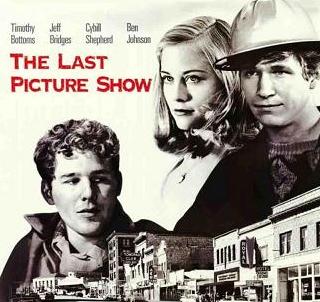
Adobe Books owner Andrew McKinley didn’t have to think long when I asked him the corniest question of our interview, occasioned by the announcement that his store was in serious danger of having to close. Question: if you had to choose one book to describe your situation, what would it be? “It reminds me of The Last Picture Show by Larry McMurty,” McKinley gamely responded. “It’s about a movie theater in a small Texas town that’s dying out.”

But! ask Mission District bibliophiles. Can Adobe Books be saved? The answer, according to McKinley, lies in whether you have a buddy with $60,000 to save the future of SF books — or better yet, $3 million.

McKinley has owned the store for the past 24 years, originally with a business partner. “I always dreamed of having a store filled with artists, poets, and writers,” he told me. “Meeting people who want to be artists has been the best part.” For decades, that’s what he did — he even opened a gallery space in the back that hosted near-monthly art openings. But times, they are a’changin’ — and rising real estate costs in the area have made it impossible for the bookstore to continue to exist in its prime location astride Valencia and 16th Streets. Granted, this isn’t the first time the alarm has been sounded, but McKinley forsees having to close his doors for good at some point over the next few months. 

Unless… and on this point he’s almost reluctant to give us hope. Unless some “angel” descends from heaven (or the hills south of Dolores Park perhaps) to pluck Adobe from its doom. With $60,000, McKinley reckons he could keep the shop open for three more years — that amount is approximately a year’s rent on the space. With $3 million, said “golden angel” could buy the building and ensure that the inner Mission continues to have a place to buy dog-eared paperbacks and browse well-curated banks of sweet, sweet literature. 

But. “I don’t want to be a charity,” says McKinley. “I feel that closure might be the best solution if no one can step into save it.” The bookshopkeep allows that he hasn’t exactly bent over backwards to adjust our times of Amazon.com and 140-character attention spans. He could have added a cafe to augment the business, he posits. Maybe started selling new and remaindered volumes. 

But. There it is, he didn’t, and now we’re faced with losing yet another Mission bookstore to the march of time. (Granted, it’s not all bad news for bookworms — Modern Times Bookstore Collective was able to relocate to a gorgeous new location on 24th Street and the Dog-Eared Books family recently had a new baby not too far away in the form of Phoenix Books.) 

Unless. McKinley says the notion of re-starting Adobe as a member-based collective has been thrown around by some of the shop’s super fans. But that could be just the well-wishing of the community members he’s held so dear over the years. 

Just remember. “The knowledge in books is not as important to get by in this modern world,” says McKinley. “People don’t put together large collections of books as much. It is funny, more books have been created in the last few decades and more people can read than ever before.” We read you, sir.

P.S., massive sale going on right now at Adobe Books. 

Adobe Books

3166 16th St., SF

(415) 864-3936

adobebooksbackroomgallery.blogspot.com

Oaxacan surrealism hits the SF Mexican consulate

2

Approximately 500 people pass through SoMa’s Mexican consulate building each day, processing visas and civil registration, generally making it possible for themselves to live in the United States legally. The consulate’s cultural affairs attache Marimar Suárez Peñalva sees these moments of bureaucracy as an opportunity. She wants expats to connect to their nationality not only through signatures and stamps, but by reacquainting themselves with its brushstrokes and creative underpinnings.

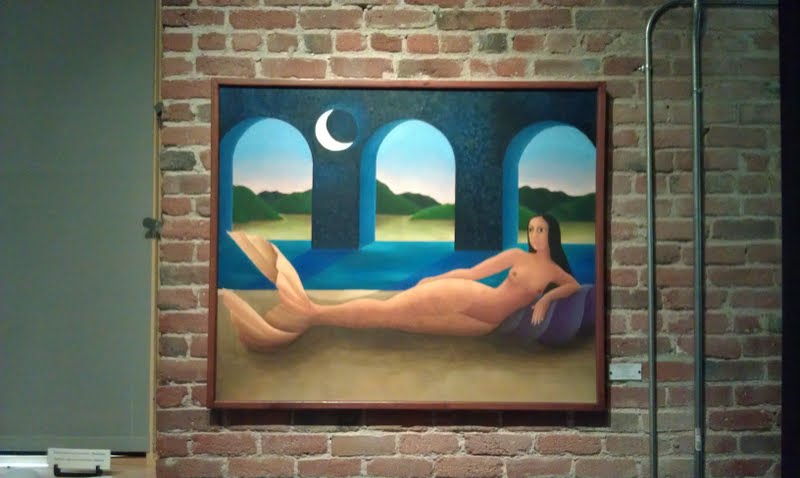
Hence, this art lesson. “The Zapotec origin is really relevant in surrealism,” Peñalva tells me on the Friday afternoon that I visit her carefully-curated gallery, located on the second floor of the Folsom Street consulate.We’re surrounded by canvases of floating watermelon, a reclining woman with a fish tail, vividly colored fish, and a bright red woman’s skirt. Peñalva explains that the current exhibit is based around two seminal artists from the Mexican state of Oaxaca: Rufino Tamayo and Francisco Toledo.

Francisco Toledo’s aquatint etching “Self Portrait” 

The two pioneered the art of mixography, a style of painting that uses molded paper and mixed media to create a textural appearance. Peñalva points to the artists’ ceremonial use of animals as one sign of their pre-Colombian heritage. The Zapotec identity, she says, is one of the unifiers of the exhibit, which contains the works of not only Tamayo and Toledo but also artists who were inspired by their work like Justina Fuentes Zárate, she of the reclining mermaid and arresting red dress. Perhaps the works don’t look similar, but they represent the diversity and breadth of the work to come out of the surrealist Zapotec tradition in Oaxaca.

Last year Peñalva filled this space with the work of contemporary Latina artists. Though “Numina Feminina” was critically acclaimed — a gallery patron who perused while we chatted interrupted us to tell Peñalva how compelling he’d found the show — she says that the Oaxacan surrealism exhibit has done a better job of enthralling the Mexicans who come to process paperwork one floor down. Since the show’s opening on Thursday, she says there’s been a constant stream of visitors coming upstairs to check out the gallery.

“Birth of Spring” by Jorge Lopez Garan

Maybe this work is more immediately identifiable as Mexican than that of the modern female show. But whatever the reason, she’s glad that it resonates. That’s the reason why the gallery is up here, after all.

“We want to make art available and show people what’s happening in Mexico. Art people, they always come to shows like this, but our daily public is harder to get upstairs.” The surrealist works were donated by Bay Area collecters Gina Bray and Russell Herrman.

Do you feel the magic? The consulate is screening El Informe Toledo July 26, a documentary made by Diego Luna and Gael Garcia Bernal’s production companay based on the life of the mixography master. 

 “The Magic Surrealists of Oaxaca”

Through Aug. 9, free

Gallery open Mon.-Fri. 10am-6pm; Sat.-Sun., 10am-3pm


El Informe Toledo screening 

July 26 6pm-8pm, free

Consulate General of Mexico

532 Folsom, SF

www.mexicoinsf.com

Vote yes on Prop A for competitive bidding for garbage and against Recology monopoly

12

As a reporter for the old Redwood City Tribune in 1965 or so, I got a call one day from the late  Luman Drake, then an indefatigable environmental activist in Brisbane.  “Bruce,” he said, “you are good at exposing scandals on the Peninsula, but you have missed the biggest scandal of them all. Garbage, garbage in the Bay off Brisbane, garbage alongside the Bay Shore going into San Francisco.”

He then outlined for me, his voice rising in anger, how the scavengers of an early era had muscled through a longtime contract to dump San Francisco’s garbage into the bay alongside the Bay Shore freeway.  And, he said, they are still doing it. Why can’t you fight it? I asked naively.

“Fight it, fight it,” he replied. “The scavengers are the most powerful political force in San Francisco and there’s not a goddamn thing we can do about it.” I checked out his story, then and through the years, and he was right.  Everyone driving in and out of San Francisco could watch with horror  for years as the scavengers kept dumping San Francisco garbage into a big chunk of the bay.  (Note the oral history from Drake and then Mayor Paul Goercke and others who fought the losing fight for years to kick out the scavengers from Brisbane.) http://legendarymarketingenius.com/oralhistorySBMW.html)

Five decades later, the scavengers are still a preeminent political power in San Francisco. The scavengers (now Recology) have operated since 1932 without competitive bidding, without regulation of its high residential and commercial rates, without a franchise fee, and without any real oversight. Finally, after all these years as king of the hill, Recology’s monopoly is being challenged by Proposition A, an initiative aimed at forcing Recology for the first time to undergo competitive bidding and thereby save city residents and businesses millions of dollars  in rates and service.

Let me say up front that I salute former State Senator and retired Judge Quentin Kopp and Tony Kelly, president of the Potrero Hill Boosters and the Guardian’s candidate for District l0 election (Potrero Hill/BayView/Hunters Point). They have taken this measure on when nobody else would, without much money or resources, and up against  a $l.5 million campaign by Recology and enormous, nasty political pressure.  I also salute those who publicly signed on to their brochure: Coalition for San Francisco Neighborhoods, San Francisco Tomorrow, SF Human Services Network, David Bisho,Walter Farrell, George Wooding, Irene Creps, Alexa Vuksich, the San Francisco Examiner, SF Appeal.com, and the Guardian. 

I was delighted to get a Yes on A brochure at my house in West Portal and find that Kopp and Kelly et al had money enough to make a strong statement in a strong  campaign mailer.  Kopp and Kelly persuasively summarized the key points for A and against more galloping  Recology monopoly in the brochure.  Meanwhile, the  Recology forces have been  using  gobs of money, a massive mail campaign, robot calls, and deploying the kind of political muscle their predecessors used to keep dumping garbage in the bay off Brisbane for decades. Since the Yes on A camp has trouble cutting through the cannonading and the flak, let me lay out the A  arguments verbatim from its brochure.

Question in the brochure:  “Why is Recology spending millions to buy this election? Recology has contributed $l,580,292.70 against Prop A. (Form 460 SF Ethics Commission.” Answer in the brochure;  “So they can raise your garbage rates after the election! ‘San Francisco Prepares For Recology to Raise Garbage Rates’ (Contract is Proof Recology Plans to Hike Garbage Rates Following Election’”) Then they laid out l0 reasons to vote Yes on A.

1. “71 Bay Area cities have competitive bidding or franchise agreements for garbage services. Because San Francisco doesn’t, residential trash collection rates have increased 136% in the last 11 years, with another massive increase coming after the election! We pay more than twice as much for garbage and recycling as San Jose, a city with twice the land and about 400,000 more people.

2. “The garbage collection/recycling monopoly now grosses about $220 million per year from the city’s residents and businesses, without any regulation of commercial rates.

3. “How did we end up paying so much? In 2001 the monopoly requested a 52% rate increase, Department of Public Works staff recommended 20% and the then DPW director (now Mayor) Ed Lee granted a 44 %rate increase. That’s why the Examiner said: ‘no-bid contracts generally make for dirty public policy, and this includes…The City’s garbage collection monopoly…’

4. “Don’t believe the monopoly’s 78% recycling rate claim backed only by its puppet city department. A former Recology recycling manager has testified under oath that fraudulent reporting, excessive state reimbursements and even kickbacks to and from Recology employees are behind this bogus claim.  Another ‘whistleblower’ has revealed that even sand removal from the Great Highway was included in this 78%.

5. “With a far smaller population, Oakland receives $24 million each year as a franchise fee, which supports city services and prevents other tax and fee increases.  San Francisco receives zilch from the monopoly holder in franchise fees for our General Fund.

6. “Proposition A is on the ballot through citizen/ratepayer time and effort, in the face of intimidation and harassment by the monopoly’s agents and its multi-million dollar campaign against it.

7. “Proposition A is simple: it authorizes the Director of Public Works and the Board of Supervisors’ Budget Analyst to prepare competitive bidding regulations for residential and commercial collection, recycling, and disposal, by modifying an outdated 1932 ordinance.

8. “Like all other competitive-bid city contracts, the winning garbage service bid will be ratified by the Board of Supervisors without any political tinkering.  The winning bid will contain the best deal for city ratepayers.

9. “If the monopoly is truly the corporation portrayed in its expensive campaign to defeat Prop A, it would easily win every bid.  As the Examiner stated last year, ‘…contracts won by competitive bidding are always better for the public in the long run.’

10. And then the list of endorsers ‘and tens of thousands of other ratepayers.’”

Kopp and Kelly et al are providing a major public service by challenging an arrogant monopoly of an essential public service and keeping alive the concept of competitive bidding on city contracts in San Francisco.   I drink to them from a pitcher of Potrero Hill martinis. Vote early and often for Prop A.  B3

Dick Meister: Two big tests for labor

1

By Dick Meister

 Dick Meister, former labor editor of the SF Chronicle and KQED-TV Newsroom, has covered labor and politics for more than a half-century. Contact him through his website, www.dickmeister.com, which includes more than 350 of his columns.

Helping get President Obama re-elected tops organized labor’s political agenda. But for now, unions are rightly focusing on special elections this month in Wisconsin and Arizona, where other labor-friendly Democrats are being challenged by labor foes.

Coming up first, on June 5, is the Wisconsin election to recall Republican Gov. Scott Walker, who’s been labor’s public enemy No. 1 for his blatant anti-union policies. He’s been acclaimed by anti-labor forces nationwide and as widely attacked by labor.

Both sides see the election as highly symbolic, a possible guide for those seeking to limit the union rights of public employees and other workers or, conversely, for those attempting to halt the spread of Walker-like attacks on collective bargaining in private and public employment alike.

There are many reasons for replacing Walker with his recall election opponent, Democratic Mayor Thomas Barrett of Milwaukee. The AFL-CIO has come up with about a dozen reasons, headed by Walker’s severe limiting of the bargaining  rights of Wisconsin’s 380,000 public employees – a key action that helped trigger what Obama has described as a national “assault on unions.”

The AFL-CIO also complains that Walker has:

*”Led Wisconsin to last place in the nation in job creation.”

*”Disenfranchised tens of thousands of young voters, senior citizens and minority voters with voter suppression and voter ID laws.”

*”Put the health care coverage of 17,000 people at risk with unfair budget cuts.”

*”Allowed the extremist, corporate-backed American Legislative Council to exercise extraordinary influence.”

*”Made wage discrimination easier by repealing Wisconsin’s Equal Pay enforcement law.”

*”Attacked public workers’ retirement security.”

*”Blocked the path of young workers to middle class jobs by repealing rules on state apprenticeship programs.”

*”Killed the creation of more than 15,000 jobs when he rejected $810 million in federal  funds to construct a passenger rail system between Milwaukee and Madison.”

*”Sponsored new tax breaks for the wealthy and corporations that will cost the state $2.4 billion over the next 10 years.”

*”Proposed cuts to the state’s earned income tax credit that will raise taxes on 145,000 low-income families with children.”

Despite all that – and more – polls show the recall vote could go either way, with lots of campaign funding for Walker flooding in from  corporations and other union opponents across the country.

Unions have lots of tough campaigning ahead, as they do in Arizona. There, on June 12, a special election will determine who will serve in the Congressional seat held for three terms by Democrat Gabrielle Giffords. She resigned in mid-term this year while still recovering from the serious wounds she suffered during a 2011 shooting in Tucson in which six people were killed.

Ron Barber, a Giffords’ staffer who was wounded in the Tucson attack, will challenge Republican Jesse Kelly in the race to elect a representative to serve the rest of Giffords’ term. Kelly, who ran a close losing race against Giffords in 2010 , opposes  much of what the AFL-CIO supports.

The labor federation is especially unhappy with Kelly’s support for GOP proposals in Congress “which would turn Medicare into a voucher system,” and for getting $68 million in federal stimulus funds for his family’s construction firm while at the same time attacking Obama for creating the stimulus program.

Apparently, says the AFL-CIO, “Kelly lining his own pockets with stimulus dollars is proper. Everything else is socialism.” The AFL-CIO is likewise unhappy with Kelly’s endorsement by organizations considered “extremist and racist” by civil rights groups.

Like labor, Barber is a strong supporter of Social Security and Medicare. But Kelly says that Social Security is a “giant Ponzi scheme” and that Medicare recipients are “on the public dole.”

He’s said health care is a “privilege” and so presumably should not be a government-guaranteed right, and claimed that “the highest quality and lowest cost can only be delivered without the government.”

Kelly wants to reduce the Federal Drug Administration “as much as humanly possible.” He’s also advocated an end to government food safety inspections, leaving individuals to do their own inspections rather than rely on “the nanny state” to do it for them.

No wonder labor is mounting major campaigns against Kelly in Arizona and Walker in Wisconsin. Labor victories are needed there to help protect unions, their members and many others from attempts to weaken the rights, protections and other essential aid provided through government.

Dick Meister, former labor editor of the SF Chronicle and KQED-TV Newsroom, has covered labor and politics for more than a half-century. Contact him through his website, www.dickmeister.com, which includes more than 350 of his columns.

Dick Meister: Make it a truly happy graduation day

0

By Dick Meister


Dick Meister, former labor editor of the SF Chronicle and KQED-TV Newsroom, has covered labor and politics for more than a half-century. Contact him through his website, www.dickmeister.com, which includes more than 350 of his columns.

It’s that grand time of the year for high school and college seniors. Time for graduation. Time for them to enter the world of full-time work.  Conventional wisdom insists their education will enable them to find good job opportunities and financial rewards.

 A new report by the Economic Policy Institute (EPI) shows, however, that recent graduates are generally having far more problems with the job market than conventional wisdom would  suggest.

 The basic economic facts make that all too clear. Consider these EPI findings :

*About one-third of high school graduates aged 17 to 20 are unemployed and more than half are underemployed – involuntarily working only part time or holding jobs that don’t require skills they’ve learned in school. The rates for African-American and Latino graduates are particularly high.

*As for college graduates, about 10 percent of them are jobless, about one-fifth of them underemployed.

College and high school graduates alike may find that their lack of on-the-job experience will cause employers to bypass them, regardless of their academic background.

Even if they do manage to find full-time jobs, graduates’ lack of seniority, as the EPI studies note, “makes them likely candidates for being laid off when the firm falls on hard times.”

Graduates aren’t the only young workers unable to find secure jobs. The unemployment rate for workers under 25, whether graduates or not, has remained at about 16 percent, or twice the rate for workers generally. That’s higher than it has been in nearly 30 years.

Unemployment is but one of the serious economic problems facing graduates. Wages for the jobs that are available to them have been steadily declining to barely adequate levels. For instance: In 2011 wages paid college graduates aged 21 to 24 averaged only about $17 an hour or roughly $35,000 for the year.

Between 2000 and 2011, college graduates’ pay dropped an average of more than 5 percent, less than 2 percent for men, 8.5 percent for women. High school graduates’ pay overall dropped by about 11 percent.

There are state and federal assistance programs that could help poorly paid graduates. But the programs often don’t cover young workers because the workers do not meet such eligibility requirements as having previously had significant work experience.

Many of the college graduates have the added burden of trying to pay back college loans. As the EPI report notes, “The cost of higher education has grown far more than median family income, leaving students with little choice but to take out loans” which they may spend years trying to repay.

What’s needed above all – and needed quickly – are government policies that, as EPI economist Heidi Shierholz says, are new policies “that will generate strong job growth overall, such as fiscal relief to states, substantial additional investment in infrastructure, expanded safety net measures, and direct job creation programs in communities particularly affected by unemployment.”

She’s right. Such government action will be essential if the promise of their education is to be fully realized by the young people who are about to graduate from America’s high schools and colleges, if all young Americans are to reach their full potential, and if the nation is to reach true prosperity.

Dick Meister, former labor editor of the SF Chronicle and KQED-TV Newsroom, has covered labor and politics for more than a half-century. Contact him through his website, www.dickmeister.com, which includes more than 350 of his columns.

Destroyer’s Dan Bejar on Orson Welles, desert island records, and more

0

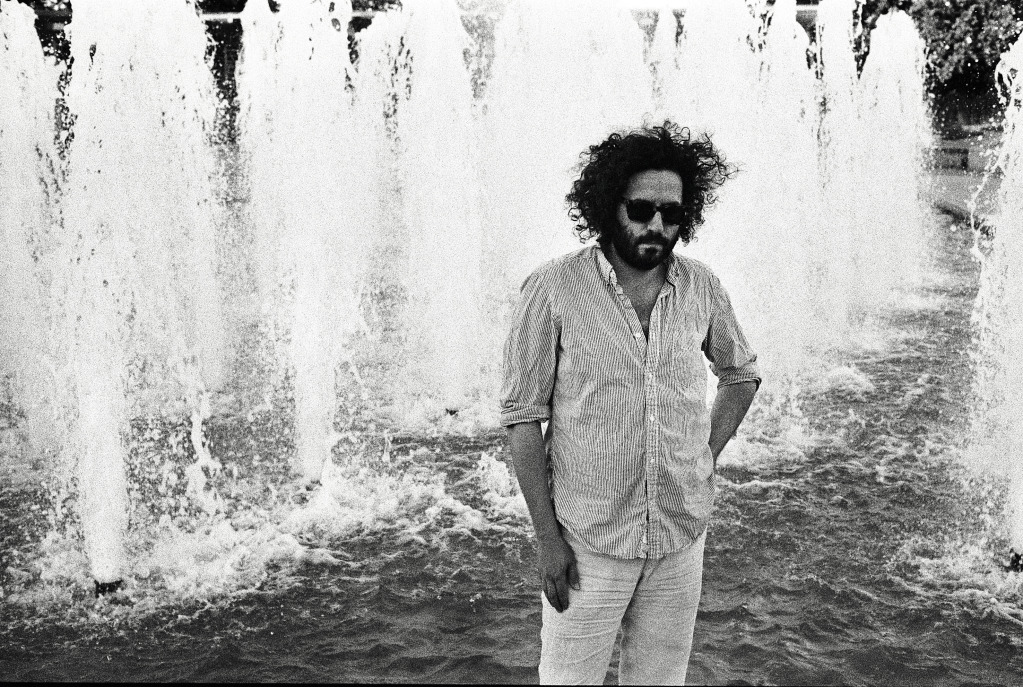
Destroyer’s Dan Bejar is a songwriter’s songwriter, revered within indie rock circles for his dense, erratic lyric sheets, and sharp, confrontational vocal delivery. So, naturally, when he dove head-first into synth-laden yacht-rock on last year’s Kaputt, the Interwebs went abuzz.

The current Destroyer lineup is set to grace the Fillmore next Tuesday, for their second SF appearance since the album’s release. I interviewed Bejar about the upcoming tour over the phone last week, and unsurprisingly, he’s quite a talker. So much so, that my Destroyer feature in this week’s issue only scratched the surface.

For more juice on Kaputt, musings on Dean Martin and Orson Welles, and an impulsive list of desert island records, read on:

SFBG Your lyrics and your vocal delivery on Kaputt evoke this really strong sense of personality and point of view that I haven’t quite heard on another Destroyer record. I’ve read comparisons to Humphrey Bogart, to Bill Murray, to Dean Martin. Any way you cut it, there’s this sense of cool detachment at the center that makes people think of specific personalities. Were the lyrics on Kaputt, written and delivered with an established personality in mind?

Dan Bejar That’s kind of an interesting question. I think of them as kind of the most natural and least constructed lyrics and vocal turns that I’ve ever done. So, it’s funny that they evoke a strong sense of persona, because what I was trying to evoke was as much blankness as possible.

Just like, iterate the words, and try and hit the notes, and leave as much room for the music, you know? And, the sense of space was always very important. There’s probably half the word count that there is on any other Destroyer album.

It’s kinda like… that’s actually the exact opposite of how I picture it, but you never know when your intentions and when the reality of what you’re doing match up. I just tried to keep it real natural and simple. Maybe I am a Dean Martin character and I just don’t know it. Which would be cool, but you’d think someone would have told me by now.

http://www.youtube.com/watch?v=puu3IvKnSb4&ob=av2e

SFBG Another big talking point in discussing your career is these transitions, namely Kaputt and Your Blues in 2004. Are there any artists, musicians, you take inspiration from when you’re making a stylistic shift with your career?

DB You mean, like people who have jumped around a lot, and not fallen on their face completely, doing it?

SFBG Right.

DB I don’t know… I don’t really think of it as that, that forest, or like me putting on different Halloween costumes. I just think the traditional rock-band model didn’t really fit, you know? I think, if you look at the career of most singer-songwriter types, any of them who’ve managed to last more than ten years, they’ve probably jumped around a fair bit.

I think, for the most part Kaputt‘s an exception, the writing and the singing is fairly consistent. If you scroll the credits of Destroyer records, all nine of them, you’ll probably find a lot of the same names, you know, but just doing different stuff, or in different formations.

I kind of like the jazz model, where everyone plays on different records, and it’s just more like, session based, as opposed to everyone having to dress up in leather jackets and act like a gang. Most of my inspiration comes from Miles Davis, on a daily basis, anyway.

SFBG There’s a rhythm and a density to your lyrics, that people compare to… Bob Dylan’s thrown around a lot, Joni Mitchell sometimes. But, beyond songwriters, are there any authors, or actors, or public figures, whose patterns of speech and word choice you take inspiration from in your work?

DB Beyond authors?

SFBG Authors included.

DB Oh, authors included. Just beyond songwriters, yeah. There’s too many to choose from. That was the entire project of Destroyer, from the first record up until Kaputt, where the project kind of shifted to become, like I said before, like a singer, and not a chest with poetry.

But, before then, the entire thing was to try and insert words that you would find from outside of a typical rock song, into a typical rock song. That was, kind of, half the thing… Whether it was, like, Orson Welles, or Shakespeare. Or, actually, specifically, Orson Welles’ Shakespeare. That’d be a good one. [Laughs].

Actually, most of Destroyer is inspired by Orson Welles’ take on Shakespeare… [but] I will say that Kaputt is the first record to take most of its inspiration from nonverbal things.

SFBG When you come through San Francisco to tour, hang out, whatever, what do you like doing here?

DB Man, I’d love to have an actual free day in San Francisco, just to walk around. Generally, when I’m on tour, I don’t take too much advantage of where I am. I’m more like a gladiator who paces the bus, or a dank back-room and then is let out of his cage to go onstage. I might hit a bookstore or something.

Finally, Bejar’s impulsive list of five records he finds inspiring, right now. In no particular order:

The Tony Bennett / Bill Evans Album (1975)
– Bark Psychosis: Hex (1994)
– Charlie Haden: Liberation Music Orchestra (1969)
– The Church: Priest=Aura (1992)
– Cliff Martinez: Solaris OST (2002)

Destroyer
With Sandro Perri, Colossal Yes
Tue/5, 9pm, $25
Fillmore
1805 Geary, SF
(415) 346-6000
www.thefillmore.com

Bikes and business, a new and evolving union in SF

3

Building Owners and Managers Association of San Francisco (BOMA) is being honored by the San Francisco Bicycle Coalition at next week’s annual Golden Wheel Awards, recognizing BOMA’s help earlier this year in passing a city law requiring commercial landlords to let workers bring their bikes indoors or another secure bike parking area.

It is a strange and noteworthy honor for BOMA, a downtown force that is usually at odds with SFBC and progressive political entities, including opposing an effort to pass similar bikes-in-buildings legislation a decade ago. But this time, BOMA was an early partner on legislation sponsored by progressive Sup. John Avalos, an indicator of just how much the politics surrounding urban cycling have changed in recent years, particularly in San Francisco.

In the city where Critical Mass was born 20 years ago this fall – since then exported to dozens of cities around the world, globalizing urban cyclists’ demand for the equal right to use roadways often built mainly for automobiles – the bicycle has moved from the preferred mode of rebels, children, and the poor into a mainstream transportation option recognized even by the suits in the corner offices.

“They’re responding to a market demand. They see lots of employees looking for bike access in their buildings,” San Francisco Bicycle Coalition Executive Director Lean Shahum said BOMA.

It was a point echoed by John Bozeman, BOMA’s government and public affairs manager and a regular cyclist. “Ten years ago, our members didn’t see it as something their tenants were asking of them,” Bozeman told us. “With the rise of young workers coming into our buildings, there was a greater demand for better bike access.”

But there are different ways of looking at this switch, which could undermine the progressive movement in San Francisco as SFBC increasingly adopts a more neoliberal approach of reliance on corporate support, rather than relying primarily on the political strength of their 12,000-plus members. For example, the Sunday Streets road closures that SFBC helped initiate are sponsored by a long list of corporations looking to improve their public image, including Bank of America (whose representative recently joined SFBC and city officials at a press conference announcing an expansion of the program), California Pacific Media Center, and Clear Channel, and in the past PG&E and Lennar.

“It reflects that bicycling sells real estate, and that’s a recent trend in hip, tech-focused cities,” says Jason Henderson, a San Francisco State University geography professor now finishing up a book on the politics of transportation, which explores these shifting dynamics.

The relationship with and dependence upon the business community could diminish SFBC’s willingness to champion bold reforms to our transportation system, such as congestion pricing charges for cars entering the city core during peak hours or demanding public transit mitigation fees of downtown corporations.

“On the other hand, it’s helping legitimize the bike as a legitimate form of transportation when the power elite accept it,” Henderson said.

Whatever the case, SFBC decision to honor BOMA with an award – which will be presented on the evening of June 5 during an event at the swank War Memorial Building – represents a new and evolving political dynamic for San Francisco.

“San Francisco has become a very different place in terms of embracing bicycling,” Shahum said. “There is a strong understanding that biking is good for the economy.”

Heads Up: 6 must-see concerts this week

0

How is it already today, today? I mean, how is this week already so present? Long weekends really mess with that standard five in, two out routine, flipping the days on their side, and giving you enough time to buy new shoes and clean out the sock drawer (literally) without feeling like you’re missing out on all that day-drinking at the park. It’s already time to slip on those fresh kicks and catch Kurt Vile, Wet Illustrated, Xiu Xiu, and Mogwai live in venues around this city and its outlying counties.

Last weekend, we as a community fêted the Golden Gate Bridge and all its 75-years-of-burnt-orange glory with super loud fireworks, hidden only partially by rolling fog. We danced in the streets of the Mission for Carnaval. We celebrated tiny sonic explosions with SF Pop Fest. We barbecued tofu and waved flags with the best of ‘em.

And next weekend, friends, is only so close. And there are a whole lot of worthy shows in that short time period in between, up to, and including. Here are your must-see Bay Area concerts this week/end:

Kurt Vile and the Violators
In asking a friend to recount his recent experience at a Kurt Vile and the Violators show last week up north on this current tour (taking the mumbly, guitar-slinging troubadour and his killer rock’n’roll backing band to SF tonight), I was treated to this concise description: “loud epic jammy amazingness.” Yeah, what he said.
With Black Bananas
Wed/30, 8pm, $22.50
Fillmore
1805 Geary, SF
www.thefillmore.com

http://www.youtube.com/watch?v=Dcg9tA0H0zY

Wet Illustrated
Bay Area garage rock band Wet Illustrated — which features members of Ty Segall’s band, and Lilac — clears a path to so many throwaway descriptors: weirdo, homegrown, pop, punk ethos. Okay, a few more: swirly, moody, silly, psychedelic, Nuggets box set-esque, hip-shaking good times. I’m out of adjectives and buzz phrases. It’s everything.
With the Mallard, Swiftumz, Chris Thayer
Thu/31, 8pm
Verdi Club
2424 Mariposa, SF
(415) 861-9199
www.verdiclub.net
http://www.youtube.com/watch?v=bcQt6DawrRI

Xiu Xiu
The video for Xiu Xiu’s “Honeysuckle” off recently released LP Always is a rather representative bid into the decade-old Jamie Stewart project. It’s airy and dreamy, art-pop and creepy as hell. Watch the blood pour out of current bandmate Angela Seo’s forbidden fruit and try to eat an apple any time later in the day, I dare you.
With Yamantaka Sonic Tita, Father Murphy
Thu/31, 9pm, $14
Bottom of the Hill
1233 17th St., SF
(415) 621-4455
www.bottomofthehill.com
http://www.youtube.com/watch?v=hYKGR8Er4vM

Little Barrie
For some seriously evil, reverb-drenched surf guitar riffs, try this early Aughts-born UK garage trio, lead by Primal Scream guitarist Barrie Cadogan . And if you’ve yet to catch the Little Barrie wave, check it out recorded pre-show; the band released jangly new full-length King of the Waves — with horrorcore-lite single “Surf Hell” — this spring on Tummy Touch Records.
With Mamas Cookin’
Thu/31, 9pm, $5
Vitus
201 Broadway, Oakl.
(510) 452-1620
www.vitusoakland.com
http://www.youtube.com/watch?v=eHmsblNnnGM

Mogwai
Classic ’90s post-rock act Mogwai makes ample use of distortion and effects, layering endless swelling guitar instrumentals in a hypnotic, uneasy curtain of fog  – maybe rock’n’roll is actually cyclical, because the Scottish quintet still sounds up to that modern-retro slow, pulsating speed. Once upon a time it made for great studying-with-headphones ambiance, tonight it makes for the perfect stoney date.
Fri/1, 9pm, $25
Regency Ballroom
1300 Van Ness, SF
(415) 673-5716
www.theregencyballroom.com
http://www.youtube.com/watch?v=oHO6pbjQ9ec&feature=fvst

Slough Feg
Named “Best Lord of Metal” in last year’s Best of the Bay awards, Slough Feg’s Mike Scalzi is still at it, still raising classic metal hell, much to the delight of Bay Area metal fans and beyond. All hail the Lord Weird.
With Cormorant, Young Hunter
Sat/2, 9:30pm, $8
Thee Parkside
1600 17th St., SF
(415) 252-1330
www.theeparkside.com
http://www.youtube.com/watch?v=PxmaOJcASD4&feature=fvst

Fit as a fig

0

le.chicken.farmer@gmail.com

CHEAP EATS On my birthday I saw a lot of water. I took a bath. I drove over the longest continuous bridge over water in the world. It was 90 degrees on the North Shore. I drank a lot of water, used water to wash the fish sauce out of my skirt, and bought a new car.

The Honda Fit! It’s not only the best kind of car to have if you live in a city, it’s the best kind of car. Period. It’s such a good car, I have now bought one twice! And I’ve only ever bought two new cars in my life.

This time it’s a different kind of blue. Less subtle, less sexy, but intensely fun, and even more lickable — in a cotton-candy-y way — than my last Honda Fit.

I left our rental car behind and drove this very shade of blue back onto the Causeway, and back over Lake Pontchartrain. Nothing to look at. Nothing but water, and the road seems to just float on it for 25 miles. It’s like the Salt Flats: terrifyingly boring. And beautiful in its relentlessness, drive drive drive drive drive.

For my birthday, Hedgehog went to wd-50 without me. What the hell, she was in New York, spotting sessions or sessioning spots or some such, and she and her co-writer have to eat, too, don’t they? So while I was eating leftover bad North Shore Vietnamese for dinner, she was sending along pictures of plate after plate after plate of fancy high-falutin’ dishes. I never felt more like a chicken farmer than I did on my 49th birthday.

After dinner I made some popcorn and found Chelsea vs. Bayern Munich on TV. Mother fucking molecular tom-chef-ery, who needs it you got popcorn? Hot dogs …

Vietnamese leftovers.

Egg sandwich.

Oh, hey, this reminds me about Blue Fig, on Valencia Street. Well, technically it was my li’l friend Hoolibloo who reminded me. She and her even li’l’er sis are holding down our Mission digs while Hedgehog and me crash bang boom our way through the home stretch here in New Orleans.

Before I left this last time, Hooli and me dropped onto Blue Fig for lunch or some such. I don’t remember anything. I remember the coffee was good.

I remember we talked about Life, and Careers, how Hooli hoped to produce the theater one day, and I’m pretty sure I encouraged her in this. I’m pretty sure I said, Do what is in your heart, at all costs. Never mind rent.

She wasn’t asking for advice, but — for the record — people do. These days. Me being 49 and all. Maybe this is just the chicken shit talking, but I think I might even have an air of wisdom about me, when there isn’t hay in my hair.

But after the accident, all my memories got erased — except how to make frittatas, oddly enough, since I didn’t know I knew how to make them before the accident. Also worth noting: I didn’t hit my head. At all. So apparently my memories were being stored in my left arm.

Anyway, when wind got back to SF that we were hurting down here, and how, Hooli wrote and said, “Can I help?”

“You can write my review!” I said. “Remember that meal?”

“Blue Fig?” she said.

I said tell me.

“You got the egg sandwich,” she said.

She wrote: I like Blue Fig because the food is very fresh and flavorful. I’ve always been greeted by a smile, she wrote.

She wrote: they cook the food right there in the tiny kitchen behind the counter. It’s all open. It’s fun to watch them. They make the eggs for the egg sandwich on the little burner right behind the cash register.

The first time we went there, she wrote, they were sugaring the pecans for one of the salads, which made the whole restaurant smell so —

Thank you, I wrote. That’ll be enough. I have me a new favorite restaurant. *

BLUE FIG

Mon-Fri 7am-7pm; Sat-Sun 7:30am-7pm

990 Valencia St., SF

(415) 875-9622

Cash only

No alcohol


Destroy build destroy

0

arts@sfbg.com

MUSIC “Harsh urban space, with a light misting.” That’s how Dan Bejar describes 2011’s Kaputt, his ninth full-length under the Destroyer moniker; listen to it with headphones, on a foggy day in San Francisco, and you just might agree.

Much has been made of the stylistic shift the Vancouver singer-songwriter has initiated on this record. Awash with fretless bass, lite-jazz sax noodling, and a syrupy synth-haze reminiscent of Avalon by Roxy Music, Kaputt comes across as subdued and wistful, in contrast to the baroque, acerbic tone of his previous output.

Bejar spoke with me over the phone from his home in Vancouver, detailing the second Destroyer lineup since the release of Kaputt, and their renewed approach to the material, as, “more dynamic and muscular than the aesthetic of the production… it’s mostly just a disco band, really,” he explains, with a tinge of sarcasm. “Yeah, hard-rock disco.”

However, while the previous tour was almost exclusively concerned with translating Kaputt to the stage, Bejar suggests that his current octet has, “probably learned twice as much material as any other Destroyer band before it.” The upcoming tour will find Destroyer approaching older, guitar and piano-based songs with trumpet, sax, and mega-synths for the first time. “We’ve not necessarily Kaputtified [the older material],” he explains, “but definitely given things a new sound.”

Kaputtified? Bejar wouldn’t likely be using this word if the album didn’t possess such a distinct, consistent atmosphere. The production aesthetic of Kaputt has inspired countless nerd-debates over the past year or so, largely concerning the merits of tributing a musical era — the early 1980sthat some listeners find questionable these days.

“I think there’s some things on the record that, some people might find repellent,” Bejar observes. “Not necessarily younger people so much as people my age, or a bit older, who maybe lived through the late ’70s and the ’80s, and were kind of just bludgeoned with really bad examples of production techniques and instrumentation that went down.”

That said, Bejar himself is hesitant to slap the “’80s” tag on Kaputt, despite this strong reaction from the blogosphere. “You never know when your intentions, and when the reality of what you’re doing, match up,” he admits, “[but] I always just think the songs are distinct enough that they can just grab hold of whatever style they feel like, and still come out sounding like their own voice.”

Another common misconception about Kaputt is the suggestion that it was written and recorded from a nostalgic perspective. After all, Bejar was a mere nine years of age when Avalon came out. “I don’t think it’s really nostalgic,” he insists. “I’ve always thought of it more as, say, someone on their deathbed, pumped full of morphine, maybe seeing what visions go wafting by.”

This deathbed image sheds some light on what Bejar describes as a “blankness” at the heart of Kaputt‘s songwriting and vocal delivery. “The sense of space was always important,” he contends. “There’s probably half the word count than there is on any other Destroyer album.” This relative economy of words is reflected in Kaputt‘s relaxed, unhurried pacing, which provides a stark contrast to the freewheeling energy of, say, 2006’s Destroyer’s Rubies.

In describing his aesthetic influences, Bejar mentions, “most of my inspiration comes from Miles Davis, on a daily basis, anyway,” Thinking within that context, Kaputt very well might be Destroyer’s In a Silent Way: a deeply transitional affair steeped in lush ambiance, with the ability to go hog-wild, but the class, restraint, and wisdom to keep things at a simmer.

It’s an ideal soundtrack to this city at its grayest. A light misting, indeed.

DESTROYER

With Sandro Perri, Colossal Yes

Tue/5, 9pm, $25

Fillmore

1805 Geary, SF

(415) 346-6000

www.thefillmore.com


Trans-formation

0

arts@sfbg.com

MUSIC After touring on 2009’s Words of the Knife with his band Os Beaches, Mark Matos’ world fell crashing from the cosmos. Internal struggles compelled him to fire his producer and his guitarist; Os Beaches’ practice space that doubled as a crash pad burned down (relegating the fresh-off-the-road group back to van sleeping); and Matos began to develop a destructive relationship with drugs.

When I meet up with him over an extremely tall glass of weizen beer at German restaurant Suppenküche, Matos — an eloquent, bearded 30-something who comes off as much like a shaman as the front person of a psychedelic rock collective — explains how he somewhat-recently hit rock bottom; and how psychedelics enabled him to climb out of a debilitating death hole and build a mountain on top of it.

“I was up all night on cocaine. I hate cocaine. I felt it all slipping away. And I was like, ‘I’m going to take the heroic dose’ — five grams of mushrooms,” Matos recalls. “It’s what the shamans of South America say is the proper dose. It’s not fun.”

Matos says after he emerged from his heroic experience, he felt completely reborn. “I didn’t want to do coke. I didn’t care about being famous, and I really, really felt high. I was so high that people thought I was losing it.”

He says his consumption of the heroic dose, coupled with a series of vision quests, spawned the creation of his enlightened self — Trans Van Santos — and drew him toward the concept of communal musicianship.

The Trans Van Santos identity came to Matos during a vision quest in the desert. He remembers big hands lifting him onto a pyramid, and voices beckoning him to embrace his spirit name, Trans Van Santos.

“Santos is my grandmother’s maiden name, and in our [Portuguese] tradition we often take the matriarch’s name. When I think ‘Santos,’ it reminds me to honor the feminine.”

Coyote and the Crosser, Mark Matos & Os Beaches’ recent release, tells the story of Matos’ transformation into Trans Van Santos and his quest for “the ball of light” — a metaphor for illumination and enlightenment. The band will debut the Coyote and the Crosser live show this week at the Rickshaw Stop.

“This show will be a rock’n’roll extravaganza: loud, psychedelic, and very electric,” Matos says. “The album is a malleable rock opera, so it’s a rock opera in a sense that there’s a narrative structure — a group of [six songs] — but there are other [songs] too. There’s a mythological universe coming across, so certain songs of mine fit into that world.”

With the help of Joel Dean (who’s built sets for Phil Lesh and extravagant art pieces for Burning Man), Matos has constructed visually compelling stage props for his performance, including “the Spirit Molecule Sound Chambers with spinning disco balls hovering inside,” eight-foot tall glowing cacti, and a 13-foot tall dream catcher.

“I think having intention in the visual aspect of [Coyote and the Crosser] will bring people to the point where we can have a shared experience,” Matos anticipates.

Matos’ cosmic alter-ego Trans Van Santos will perform at Starry Plough the following night, which should be a calmer, quieter ceremony. Trans, along with his Trans Band, will explore “Americalia”: a synthesis of American folk and Brazilian Tropicalia.

For his Trans Van Santos other self and Trans Band, Matos says he “kept the direction to a minimum, focusing on the spiritual approach to the material. I want to hear the choices these folks make, to feel the spirit of discovery between us.”

Matos’ mystical transformation has compelled him to share his “acid gospel” with the community. “What I am trying to do with my little corner of rock’n’roll is to treat it as a new psychedelic ceremony,” Matos explains. “That and throw a birthday party for the whole galaxy!”

MARK MATOS & OS BEACHES’ COYOTE AND THE CROSSER

With Zodiac Death Valley, Little Owl, Ash Reiter

Fri/1, 8pm, $10

Rickshaw Stop

155 Fell, SF

(415) 861-2011

www.rickshawstop.com

TRANS VAN SANTOS

With the Bottlecap Boys, The Know Nothings

Sat/2, 9:30 p.m., $7-10 sliding scale

Starry Plough

3101 Shattuck, Berkeley

(510) 841-2082

www.starryploughpub.com


Reduce, re-use, replace

1

yael@sfbg.com

Greg Gaar knows the names, characteristics, and birds and butterflies attracted by every plant in the native plant nursery that he tends. Last week, he proudly toured me through the garden, pointing out plants like Yarrow ("great for bees and butterflies") and the beautiful flowers of the Crimson Columbine, of which Gaar believes there are "only two others left in San Francisco."

Gaar has been working at 780 Frederick St., where he now tends the garden, for decades. His mother went to high school on the same block, the old site of Polytechnic High. Before Gaar became the gardener, he ran the recycling center that Haight Ashbury Neighborhood Council (HANC) operates next to the garden. Now, the pioneering green operation he helped build may shut down.

At the center, people can recycle their bottles, cans, paper products, and even used vegetable oil, and make some cash along the way. Those who use the center say it's a green and dignified way to make some money.

But residents in the surrounding area have complained for years that the center is loud and attracts homeless people. They also say that, due to their proximity to the recycling center, the chance that their trash will get rifled through at night is greater than in other parts of the city.

Citing these concerns, the center's landlord, the San Francisco Recreation and Parks Department (RPD), has spent the past few years trying to evict the HANC recycling center. The center got an eviction notice in December 2010. HANC's lawyer, Robert DeVries, successfully challenged the eviction. RPD sued for eviction again in June 2011, and that matter may finally come to a close June 6 when it will be heard by a three-judge panel in SF Superior Court.

DELIVERING THE GARDEN


RPD officials cite neighbor concerns, claims that the recycling center's services are outdated and obsolete, and the idea of planting a community garden in its place. In fact, the Planning Commission approved a community garden in the place of the recycling center last year.

Since then, HANC staff got to work building its own community garden. In just a year, they erected 50 beds from recycled wood, and according to Gaar, about 100 neighbors have plots that they currently tend.

As the recycling center's director, Ed Dunn, tells it, the infrastructure already in place at the recycling center made building the garden come naturally. HANC was able to fund it with income from the recycling operation, and plant it with seeds from the native plant nursery.

Dunn emphasizes that no city money was used to build the current community garden. The city had laid out a $250,000 budget for the garden after it was approved and designed in 2010.

A bundle of documents containing arguments against HANC, provided by RPD, includes details of the Golden Gate Park Master Plan, surveys indicating a great need for community gardens in San Francisco, and letters and statements from neighbors complaining about the recycling center.

A 2004 survey discussed in the documents found that community gardens are among the top "recreation facilities most important to respondent households." Community gardens came in fifth in importance, after walking and biking trails, pools, fitness facilities, and running and walking tracks. The documents include a detailed map of the "Golden Gate Park community garden preliminary plan," imagined at HANC's current site.

The map was drawn up in November 2010, the same month that a meeting of the Recreation and Parks Commission laid out the reasons that HANC had to go. Minutes from the meeting include the city's need for community gardens as well as some neighbors' disdain for the recycling center in that site. It argues that the needs of recyclers can be well met with other recycling centers in the city.

Seventeen other recycling centers operate in San Francisco. Most are located in neighborhoods on the city's edges, with a few in the Outer Sunset and Excelsior, although most are located in Bayview-Hunters Point.

But the commission doesn't seem concerned with potential nuisance to neighbors in directing more traffic to these other recycling centers, or with the difficulty poor recyclers have in getting out there. "The San Francisco Department of the Environment is confident that recyclers that use the facility will take their material to another existing site for proper handling," according to the meeting's minutes.

The commission is, however, concerned about a nuisance that the recycling center creates for Haight-Ashbury neighbors, according to the minutes. The notes cite "neighborhood noise, truck traffic, litter, and public safety concerns as negative impacts related to continuing operations at the site."

AGAINST THE POOR?


But is this really just another case of resentment against people who are poor and homeless?

HANC's Dunn argues that, in fact, much of the material that those who use the center bring in isn't taken from residential waste bins. Besides, it's not technically "HANC's CRV redemption program" that encourages recycling as a revenue source for the less fortunate. State law requires that consumers be able to redeem bottles and cans for cash.

The meeting minutes argue that the recycling center "enables illegal camping and illicit and unhealthy behavior in Golden Gate Parks' eastern end and in neighborhoods in close proximity to the site."

Supposed evidence for the position cites letters to the editor published in the San Francisco Chronicle, a frequent outlet for anger at the homeless. One concerned resident, Karen Growney, asserts that the center "provides no benefit to people living in Haight/Cole Valley."

HANC disputes this, saying that many neighbors use the center. They have beneficial relationships with many nearby businesses, including New Ganges restaurant just across the street. Its website, kezargardens.com, shows many smiling neighbors who use the center to recycle.

Notable among them is actor/activist Danny Glover, a Haight resident since 1957. In a video on the website, Glover — interviewed while in his car dropping off recycling at the center — says, "I would be dismayed and not happy if we close this wonderful recycling center down…It would be a tragedy, and a great loss to this city and this community."

In her letter, Growney also laments that her family "had to pay a considerable amount to build a wrought-iron, locked gate to keep people out of our trash." Another letter, written by neighborhood resident Curtis Lee, asks that the city "eliminate the Haight Ashbury Recycling Center," saying that, "It is a blight on the neighborhood and an attraction to rodents and homeless carts."

Of course, those carts come with people. HANC takes issue with the assertion that their services "enable" or "encourage" homelessness, as well as the assumption that the recycling center only serves the homeless.

Dunn says that many of the recycling center' clientele are elderly immigrants, often housed, who contribute to their family income with cash from recyclables. He also insists that "most of the people that use the recycling center don't camp in the park."

Homeless people certainly do use the center, but it's not clear whether its presence truly "enables illegal camping and illicit and unhealthy activity." Dunn finds it laughable to say that "the center creates homelessness." It's a lot of work to cart around recyclables all day, he says, and the dedicated recyclers are generally not the same people that ask tourists on Haight Street for spare change.

THE RECYCLERS


There is a great diversity in how homeless San Franciscans spend their days, and recycling is in many ways a specialized, committed way of life. In her 2010 ethnography of homeless San Franciscans, Hobos, Hustlers and Backsliders, Teresa Gowan focuses on the "recyclers," the segment of the homeless population who have made a habit of collecting bottles and cans as a way of getting by.

"The phenomenon that captured my interest was the steady stream of shopping carts loaded high with glass, cans, cardboard, and scrap metal rolling past my door," she wrote.

Some of her interview subjects show disdain for the recyclers, who work hard all day and don't get much cash out of it. Dealing drugs, stealing, or panhandling can be more lucrative and less backbreaking. One subject, a man named Del who, according to Gowan, mostly stayed in the Tenderloin, thought the "20, 25 bucks on a big load" that recyclers usually made was pathetic. "'And that's for heaving around a big old rattling buggy all day,' Del said pityingly. 'I can make 15 bucks inside'a two minutes.'"

But many of her interview subjects prefer to recycle anyway. Gowan describes another subject, Sam, as "a champion recycler, muscular and persistent, who often put in nine, ten hours on the trot." She quotes Sam saying, "Without this, I'd kill myself. Couple a days, I'd do myself in…. You get some guys, seems like they can deal with homelessness. I'm not one of them."

The book argues that "pro recyclers" included a "large core group who had created an intense web of meaning around their work as a kind of blue-collar trade."

PIONEERING HANC


Recycling for cash may not be a respected or taxed job "blue collar" job. But it's certainly green.

Since the center began operating in the 1970s, mainstream attitudes towards environmentalism and sustainability have shifted dramatically. The HANC recycling center was a product of the environmental movement, and helped usher in the widespread support for recycling.

Now, with curbside recycling fully functional in San Francisco, many call the recycling center's work obsolete. But HANC argues that the city needs all the help it can get if it is to reach its goal for zero waste in 2020. It also employs 10 people, and Dunn argues that it would be foolish of the city to eliminate those stable green jobs.

HANC has also helped move along the trend towards community gardens that RPD is now embracing so thoroughly that, ironically, it could lead to the recycling center's demise. HANC helped underwrite the Garden for the Environment project as well as the Victory Garden planted outside City Hall in 2008. Dunn says that the staff enjoyed the challenge of building the garden, and would be interested in helping the city by creating more gardens without city money.

Gaar says he's committed to continuing to work for a healthier planet, regardless of what happens to the center. He and the other HANC staff have come to see the eviction process as symbolic of a direction in which the city's heading, that also includes last year's Sit-Lie Ordinance: decisions designed to shuffle homeless people out of wealthy neighborhoods.
The arguments for the community garden, however, seem to indicate a strong desire for a greener city. It's not easy balancing environmental initiatives with NIMBY woes — especially when your backyard is Golden Gate Park.

Tricky sings

0

MUSIC Compared with the smooth operator currently installed in the Oval Office, how nervous Richard Nixon looks now as a representative of America abroad, all stiff grins, rumpled shiftiness, outbursts of awkward rhetoric. Reviewing vintage footage of him recently, I half expected a rappin’ granny to suddenly appear, and goofy Uncle Dick to start “breaking it down.” And yet, 40 years after California’s second-most problematic political progeny (pace, zombie Reagan) went to Beijing to “open China” — ending 25 years of separation and going on to win re-election in a landslide, despite the growing Watergate scandal — might it be time to look past the jerky, jowly image of Tricky Dick and reassess the character of the man and the moment, to keep us on our toes?

“Nixon was an incredibly complicated man, whose intellect constantly got in his way,” Canadian opera director Michael Cavanagh told me over the phone during a wide-ranging interview. “And it’s especially relevant to examine him now in that light, with a certain distance of history. We tend to stop at the jowls, the scandal, and the Republicanism. But it’s often been remarked during this election cycle that there’s no way in hell Nixon would ever be considered for the Republican ballot now. He was too small ‘r’ republican, too centrist. So there’s this complexity to him that confronts lefties with their own stereotypes, assuming most patrons of the arts lean left. That’s something I really like.”

Cavanagh’s complexifying occasion will be his production of John Adams’ 1987 Nixon in China, part of the San Francisco Opera’s nifty-looking summer season. The opera, with a luminescent libretto by poet Alice Goodman and an engrossing, fever-dream score by Adams, whose melodies, time signatures, and musical reference points churn and shift like memory itself, takes us from the moment Nixon’s Spirit of ’76 touches down on the tarmac (Kissinger in tow), through his historic meetings with Chou En-Lai and Mao Tse-Tung, along with First Lady Pat on an eventful factory tour, and finally into the major characters’ bedrooms, memories, and fantasies. It’s a sensually intoxicating work, full of barnstorming arias sung by a multi-ethnic cast (you will have “I am the wife of Mao Tse-Tung” stuck in your head for days) that examines media spectacle, modern myth-making, and cultural difference on a truly, well, operatic scale.

San Francisco Bay Guardian Nixon was Californian, Adams is a longtime Bay Area resident. It’s the 40th anniversary of the China visit, and also an insanely contentious election year. The Bay Area as a huge Chinese population — many families escaped Mao’s Cultural Revolution. Do you feel any particular pressure bringing this production here, now? 

Michael Cavanagh I feel a tremendous amount of responsibility, but I also feel a lot of freedom. Of course, the events the opera depicts and its roots in the Bay Area will resonate, and that’s hugely exciting. But this isn’t a documentary, it’s a rumination, more of a poem. As Nixon says in the beginning of the opera, “News has a kind of mystery” — and I feel that’s what Adams and Goodman were really expanding upon with this.

I do think that this production, especially, will bring up memories for a lot of people. I myself had an inkling of this whole thing happening when I was really young — it’s something that a lot of the world shares, a memory of this iconic moment, even if that memory is only a glimpse of pavement or a handshake, kind of like my own. The opera works with that abstraction, those fuzzy frames of memory that overlay images of the past, while still sharpening some of the more historically relevant moments. I hope people can relate to it on all of those levels.

SFBG Twenty-five years separate us from the opera’s premiere in Houston in 1987 — and yet China remains, to use a slightly loaded term, as inscrutable as ever to many Americans, yet as enmeshed in their daily lives as ever. What relevance do you think the opera may hold today?

MC I think it has an eerie relevance. Even back when Nixon in China premiered, China was still remote and threatening to many, and this was before the reform machine revved into life, before China’s emerging economic dominance. In one scene, in Mao’s library, Mao goes off quite poetically about the revolution, and how things were changing, and he plays fast and loose with the concepts of capitalism and communism, almost as if he foresees the necessary reforms ahead, that came to pass.

Beyond that, the opera is very prescient about the evolution of the media — this was one of the first major world events to be broadcast on a global scale, to be covered as the kind of spectacle we base much of our opinions and thoughts on today. We think of Nixon as shifty-eyed, but he was really just trying to figure out where the cameras were most of the time, trying to acclimate to this new kind of fishbowl environment in which political figures were treated like movie characters. The opera records the beginnings of all that, and ends with them reviewing their memories of everything that’s occurred as if it was all this footage, which it is quite actually on stage.

Basically, though, the deepest relevance a work can have is by connecting to the audience through its characters. Take Pat Nixon. We hurt for Pat Nixon. She’s been betrayed. Nixon promised her a simple home life, the comforts of family and a man at home, and here she is traveling all the way to China! She’s bewildered, but as First Lady there’s really no place for that, so she forges her own, I think very American kind of resolve that cracks a couple times, but still gets her through.

It’s a very poignant psychological and emotional study, projected on the world stage, and amplified as only opera can. That’s what opera does better than any other art form: it amplifies life.

SFBG You’re a Canadian — have you caught any flack for interpreting these events that are so associated with the US?

MC You know, despite appeals to the contrary, our two countries really share the same history. This version of the opera was premiered in Vancouver during the Olympic Festival — it’s what Canada chose to represent itself will to the entire world. And when it comes down to it, really, everything you do effects us Canadians just as much. We sleep with the elephant. *

NIXON IN CHINA

June 8-July 3, times and prices vary

War Memorial Opera House

301 Van Ness, SF.

(415) 861-4008

www.sfopera.com


Deep dish

0

SUPER EGO Ooh, she's windy! And everybody knows it. I'm writing you from Chicago, specifically and improbably from the Hard Rock Hotel in the gorgeous old Union Carbide building. It's not so tacky (I'm staying on the Prince Floor, displaying several of his blouses), even though it's brimming with hopefuls for the International Mr. Leather Competition-related "Grabbys," the big annual gay porn awards. Someone please tell their hairdressers that 2005 was seven years ago! No more gay porn cockatoos, please. It is also big, hairy bear week here — officially called Bearpawcalypse 2012, I shit you not — so everything is thuper-thuper-gay.

I'll be back to join you at the following ragers, but right now I'm off to "grabby" me some drinks in the stunning Second City. First stop: a strong sidecar and some live Latin jazz at Al Capone's favorite hang, the Green Mill. Straight mobbin', y'all.

OMAR SOULEYMAN


Are you ready to completely lose it, hypnotic synth-groove hi-NRG Syrian folk-pop style? Even just thinking of how this hyper-energetic, legendary Middle Eastern singer somehow came to be embraced by Western ravers makes me smile — but we'll all be too busy bouncing and trying to sing along to deconstruct all that.

Fri/1, 8pm doors, $20 advance. Mezzanine, 444 Jessie, SF. www.mezzaninesf.com

STOMPY 20-YEAR REUNION


The Stompy label, party crew, and music production powerhouse has helped keep the chunky, funky, banging SF house sound alive (DJ Deron, Stompy's honcho, is one of my favorites when I just wanna let loose). To celebrate its second decade, Berlin's sunny tech-house wiz Ian Pooley is joining Jonene, Tasho, Sweet P, and Deron to stomp us good.

Fri/1, 9pm, $10 before 11pm, $20 after. Monarch, 101 Sixth St., SF. www.stompy.com

DOPPLEREFFEKT


Keepers of the true mad scientist techno flame, this mysterious, essential group — headed by mental lab technician Heinrich Mueller, a.k.a. Gerald Donald, a.k.a. Rudolf Klorzeiger — was all the rage, and one of the actual quality offspring, of the electro clash scene, which is now experiencing a full-blown revival. Dark thoughts and porn dreams burble up through insanely catchy melodies and sci-fi Kraftwerk affect. With C.L.A.W.S., Robot Hustle, Josh Cheon, Caltrop, and the No Way Back crew.

Sat/2, 10pm, $25. Monarch, 101 Sixth St., SF. www.monarchsf.com

KONTROL GRAND FINALE


What would the city's techno scene be like without Kontrol? Ace new crews like As You Like It and Rocket might not be around if it hadn't been for the seven-year-old monthly blast of live news from the global techno underground. Originally started at the storied Rx Gallery as a clean, minimal-pumping break from all the baroque, bombastic clutter that was techno in the early 2000s (and as a showcase for the burgeoning international touring circuit created by the Internet and advancing digital technology), Kontrol grew at the EndUp into one of our invaluable electronic faces to the world. Now the Kontrollers — Greg Bird, Alland Byallo, Sammy D, Nokloa Baytala, and Craig Kuna — have way too much going on, damn their popular talents! This seventh anniversary event is also the end of the line for the monthly party, although Kontrol will live on in other forms, including, I'm sure, one day, a 21st anniversary party, at which I will be raving in my hover-wheelchair. Berlin master Heiko Laux performs. Danke and aufweidersehn!

Sat/2, 10pm-6am, $20. EndUp, 401 Sixth St., SF. www.tinyurl.com/kontrolbye

WICKED 21-YEAR ANNIVERSARY


After last year's incredible reunion (and a hugely successful world tour) one of SF's original rave crews — the one that brought a tasty touch of pagan British psychedelia to its eclectic productions — gathers again to howl. DJs Garth, Jeno, Thomas, and Markie, plus a signature cast of beloved characters, get devilish all night. *

Sat/2, 10pm-7am, $20. Mighty, 119 Utah, SF. www.mighty119.com

Seafaring

0

APPETITE Fish makes me happy. Raw, grilled, seared, any which way. One new restaurant and one established favorite are glorifying the fish, and seafood in general, in many formats.

LOCAL'S CORNER


Local's Corner just opened in March on a mellow corner of the Mission's east side. The sunny space is mostly white, evoking a cozy-chic New England seafood restaurant serving exquisite California fare. Dinner service was just launched mid-April, a delicate array of tastes of the mostly seafaring kind, though the menu simultaneously lists a "land" section.

Prior to opening, I was excited for this new seafood restaurant offering the likes of sardines and smaller, more sustainable fish, and they do deliver. The immediate downside is how quickly dishes add up. Small plates hover in the low teens while no dish tops more than the mid-20s, but as you finish each plate, hunger is not exactly satiated. There is little in terms of heartier fare, which is fine — you don't come here for "hearty." But $100 later (for two with a glass of wine), I left a couple dishes away from satisfied.

Crisp and bright as the equally crisp, bright space, a nice range of rosés and white wines pair ideally with fish offerings and rotating oysters ($2.50-3.50 each). A small plate of uni ($14) is alluringly punctuated by English peas, preserved Meyer lemon, and mint leaves, while Dungeness crab ($13) arrives glistening with snap peas, Cara Cara oranges, and spring onion. Cured halibut ($13) dances with radishes, grapefruit, and dill. Each is delicate, slight, tickling the taste buds.

Two flavorsome bites are cured anchovies and guanciale (Italian bacon made from pig's jowl or cheek) on toasts ($10), or a dollop of smoked trout rillettes and crème fraîche ($12), also with toasts. Both delight, but are so small-portioned, one is just hooked when they're gone. For $22, an entree of black cod on top of leeks, carrots, and watercress is likewise minimal and subdued. I was more satisfied with a "land" offering of beef tartare in a small pot, topped with quail egg ($15). Bread is (again) the filler, while the raw beef is glisteningly fresh.

Brunch is such a pleasant experience in the sunny space, it is tough having few seafood choices (just one currently) and a prix fixe only: now $18 for toast, two courses, and coffee or juice. Weekday lunch offers more seafood, which is primarily what one comes here for, though still few options compared to dinner.

Local's Corner is still in its infancy, exhibiting promising meticulousness and fresh tastes. I realize upping portions of the likes of uni and abalone is a costly thing while maintaining delicacy is crucial with such ingredients. It seems a worthy mission: satisfying appetite alongside artistry.

2500 Bryant, SF. (415) 800-7945, www.localscornersf.com

BAR CRUDO


One place that has long cornered artistry and appetite in my estimation is Bar Crudo, one of my top SF restaurants since its early days in the tiny Bush Street space, where Bouche is located now. Though the cavernous but narrow Divisadero space lacks the quirky charm and warm glow of the original location, service remains such that even as the place is packed nightly and waits are common, staff comes by offering wine, keeping me informed of the wait time.

The crudo, essentially Italian-style sashimi, are small and delicate (a sampler is $13 for 4 pieces, $25 for eight) but so uniquely delightful, they're worth every dollar. A visit here would not be complete without a bite of raw arctic char, lively with horseradish crème fraîche, wasabi tobiko and dill, or creamy butterfish crudo topped with apples, pear vinaigrette, and beet saffron caviar.

One easily fills up here, supplementing ethereal crudo with whole-roasted fish. Recently, I enjoyed a branzino ($26) with two friends. With the large fish, two smaller shared plates and a crudo sampler, we left full. The fish is generously sized, buttery, flaky. We devoured the cheeks, the head, every part, resting in butter beans, Swiss chard, oyster mushrooms, poblano peppers, and orange oil.

A flavor explosion comes in large head-on Louisiana prawns ($14) swimming in a spicy red brood, vivid and savory with shishito peppers and fresno chilies. I nearly drank it up. To fill up, there's always Bar Crudo's classic seafood chowder ($7/$14), a creamy, rich bowl of fish, mussels, squid, shrimp, potatoes, and applewood smoked bacon that elicits a moan of pleasure at first spoonful.

Coupled with a strong wine list (by glass or bottle) and equally strong craft and Belgian beer list, Bar Crudo remains not only one of San Francisco's seafood treasures. *

655 Divisadero, SF. (415) 409-0679, www.barcrudo.com

Subscribe to Virgina's twice-monthly newsletter, The Perfect Spot, www.theperfectspotsf.com

A different world

0

arts@sfbg.com

DANCE Moving, especially when it’s not by choice, is never fun. Losing your home after some 30 years of relative comfort and security is really the pits. That’s how I felt when I heard that the San Francisco Ethnic Dance Festival — my first encounter with the Bay Area’s voluptuous dance culture — would not be able to continue performing at the Palace of Fine Arts because of the Doyle Drive reconstruction.

Yet EDF has survived; the new, smaller, more varied venues have encouraged the re-thinking of what had become a comfortable format. One more time EDF is taking its shows on the road — to Fort Mason Center’s Cowell Theater and Firehouse, and to the de Young Museum, the Asian Art Museum, and the Novellus Theater at Yerba Buena Center for the Arts. Presentations range from intimate lecture formats to full-throttle multi-company performances.

Unlike previous years, however, the popular January auditions (where you could get your fill, or a least a taste of what world dance is all about, for a $10 day pass) had to be cancelled for financial reasons. Like other arts organizations, EDF is struggling, though the 34-year-old fest has been hit particularly hard. “We were forced into an expansion of projects at a time when the economy was contracting,” says Carlos Carvajal, EDF’s co-artistic director along with CK Ladzepko. The Novellus Theater also seats 200 fewer people than the Palace, a significant loss of earned income.

The Ghana-born Ladzekpo founded his African Music and Dance Festival in 1973 and has introduced generations of artists into the intricacies of African rhythms and traditions. Carvajal started folk dancing when he was in high school in San Francisco and has performed with SF Ballet and European and South American companies. Both men have been closely involved with the Festival for years — as adjudicators and observers and now as artistic directors.

The absence of auditions allowed the two curators to go for the best and the brightest for this year’s 30 slots. They were particularly looking for innovation because, as Carvajal quotes Ladzekpo, “We can’t hide behind tradition.” Master artists whose primary concern was the preservation and dissemination of specific traditions started many of these ensembles. But more and more, this generation of ethnic dancers feels free to reinterpret and experiment what used to be considered inviolate practices.

Today’s artistic directors very likely have not only encountered other global dance forms but probably have studied modern dance, choreography, and even ballet. Many of them are as willing to test the boundaries of their fields as their colleagues in other art forms. This year’s line-up, while still offering plenty of what we all have come to love — Chinese Dragon dance, Native American hoop dance, rites of passages rituals from Liberia, temple ceremonies from Bali — offers plenty of contemporary choreography grounded in specific cultural traditions. It’s global dance in all its complexity.

Two different gamelans working together — as the Balinese Gamelan Sekar Jaya and the Sundanese Pusaka Sunda are for the new Bayangan Jiwa — would have been unheard of two decades ago (not to speak of them using very cutting-edge shadow-light technology). Neither would you have had an Uzbek percussionist (Abbos Kosimov) pair up with a Tajikistani dancer (Mariam Gaibova). And, “We specifically asked Abhinaya Dance Company to return with San Jose Taiko,” Carvajal says. It took guts and imagination to bring (successfully) together Japanese Taiko and Indian Bharata Natyam.

Carvajal is also delighted by how Carola Zertuche has revitalized Theatre Flamenco of San Francisco. For EDF, the Company will perform flamenco barefoot, milonga style, reconnecting the dance with its Moorish and Gypsy roots and also reminding us that flamenco’s percussive qualities originated in a musician’s use of a cane and not the dancer’s heels.

Maybe OngDance Company personifies EDF at its most sophisticated. At Dance Mission Theater in January they showed themselves profoundly steeped in Korean tradition, absolutely contemporary in their perspective and brilliant in the art of stagecraft. They’ll present Shadow of Cheoyong during the festival’s third weekend of performances. *

SAN FRANCISCO ETHNIC DANCE FESTIVAL

June 2-July 1, $12-$20

Various venues, SF

www.worldartswest.org


Music Listings

0

Music listings are compiled by Emily Savage. Since club life is unpredictable, it’s a good idea to call ahead or check the venue’s website to confirm bookings and hours. Prices are listed when provided to us. Visit www.sfbg.com/venue-guide for venue information. Submit items for the listings at listings@sfbg.com. For further information on how to submit items for the listings, see Picks.

WEDNESDAY 30

ROCK/BLUES/HIP-HOP

Rome Balestrieri vs. Randy Johnny Foley’s Dueling Pianos. 9:30pm.

Tim Barry, Kevin Seconds, Julie Karr, Travis Hayes Thee Parkside. 8pm, $10.

Chris James and the Showdowns, Adversary, Cello Street Quartet, Real Brick and Mortar Music Hall. 9pm, $5-$8.

James McCarthy, Jetty Swart Cafe Du Nord. 8pm, $17.

Nico Vega, Fake Your Own Death, Death Valley High Rickshaw Stop. 8pm, $10.

Pro Blues Jam with Keith Crossan Biscuits and Blues. 8 and 10pm, $15.

Terry Savastano Johnny Foley’s. 9pm, free.

Sir Lord Von Raven, Hussy, Big Drag Hemlock Tavern. 9pm, $6.

Wintersleep, French Cassettes, Love Axe Bottom of the Hill. 9pm, $10.

JAZZ/NEW MUSIC

Cat’s Corner with Nathan Dias Savanna Jazz. 9pm, $10.

Cosmo AlleyCats Le Colonial, 20 Cosmo Place, SF; www.lecolonialsf.com. 7-10pm.

Dink Dink Dink, Gaucho, Michael Abraham Amnesia. 7pm, free.

Ricardo Scales Top of the Mark, 999 California, SF; www.topofthemark.com. 6:30pm, $5.

DANCE CLUBS

Aisle 45 Elbo Room. 9pm, $5. DJS Mauby, Mo-Luxx, and Romanowski spin vinyl soul, funk, rare grooves.

Booty Call Q-Bar, 456 Castro, SF; www.bootycallwednesdays.com. 9pm. Juanita MORE! and Joshua J host this dance party.

Coo-Yah! Som., 2925 16th St, SF; (415) 558-8521. 10pm, free. DJs Daneekah and Green B spin reggae and dancehall with weekly guests.

Mary Go Round Lookout, 3600 16th St, SF; www.lookoutsf.com. 10pm, $5. Drag with Suppositori Spelling, Mercedez Munro, and Ginger Snap.

Megatallica Fiddler’s Green, 1333 Columbus, SF; www.megatallica.com. 7pm, free. Heavy metal hangout.

Southern Fried Soul Knockout. 9:30pm, $3. With selectors Medium Rare and Psychy Mikey spinning greasy southern soul.

THURSDAY 31

ROCK/BLUES/HIP-HOP

Annie Bacon and Her Oshen, Adios Amigo, Al Lover & the Haters, My Second Surprise Cafe Du Nord. 9pm, $10.

Ape Machine, Symbolick Jews, Rosa Grande Knockout. 9pm, $5.

“Cash’d Out: Tribute to Johnny Cash” Yoshi’s. 8pm, $18.

Daughtry, Safetysuit, Mike Sanchez Warfield. 7:30pm, $34.50-$44.50.

Ferocious Few, Lawlands, City Tribe Amnesia. 9pm, $8-$10.

Michael “Hawkeye” Herman Biscuits and Blues. 8 and 10pm, $15.

Hospitality, Waterstider, popscene DJs Rickshaw Stop. 9:30pm, $13.

Daniel Krass vs. Rome Balestrieri Johnny Foley’s Dueling Pianos. 9:30pm.

Secret Secretaries, Mark Nelsen, Fleeting Trance, Spiral Electric Thee Parkside. 9pm, $7.

Stripminers, Gram Rabbit, Dirty Hand Family Band Brick and Mortar Music Hall. 9pm, $7-$10.

Steve Taylor-Ramirez Johnny Foley’s. 9pm, free.

Xiu Xiu, Yamantaka // Sonic Titan, Father Murphy Bottom of the Hill. 9pm, $14.

Waiting Room, Collin Ludlow-Mattson and the Folks, Arabs Hemlock Tavern. 9pm, $6.

Wet Illustrated, Mallard, Swiftumz, Chris Thayer Verdi Club. 8pm, $7.

JAZZ/NEW MUSIC

Stompy Jones Top of the Mark, 999 California, SF; www.topofthemark.com. 7:30pm, $10.

Ned Boynton Trio Bottle Cap, 1707 Powell, SF; www.bottlecapsf.com. 7-10pm.

FOLK/WORLD/COUNTRY

Twang! Honky Tonk Fiddler’s Green, 1330 Columbus, SF; www.twanghonkytonk.com. 5pm. Live country music, dancing, and giveaways.

DANCE CLUBS

Afrolicious Elbo Room. 9:30pm, $5. DJ-host Pleasuremaker spins Afrobeat, Tropicália, electro, samba, and funk

Arcade Lookout. 9pm, free. Indie dance party.

BASE: Number 19 Showcase Vessel, 85 Campton, SF; www.vesselsf.com. 10pm, $10-$15. With Art Department, Tone of Arc.

Get Low Som., 2925 16th St, SF; (415) 558-8521. 10pm, free. Jerry Nice and Ant-1 spin Hip-Hop, 80’s and Soul with weekly guests.

Thursdays at the Cat Club Cat Club. 9pm, $6 (free before 9:30pm). Two dance floors bumpin’ with the best of 80s mainstream and underground with DJ’s Damon, Steve Washington, Dangerous Dan, and guests.

Tropicana Madrone Art Bar. 9pm, free. Salsa, cumbia, reggaeton, and more with DJs Don Bustamante, Apocolypto, Sr. Saen, Santero, and Mr. E.

FRIDAY 1

ROCK/BLUES/HIP-HOP

Rome Balestrieri, Daniel Krass, Jason Marion Johnny Foley’s Dueling Pianos. 9pm.

Jer Ber Jones, Mini Pearl, Necklace, Vain Hein Thee Parkside. 9pm, $15. With MC Crumbsnatcher, DJ Dingbat.

Tom Jonesing 50 Mason Social House, SF; www.50masonsocialhouse.com. 7pm.

Greg Laswell, Elizabeth Ziman, Callow Bottom of the Hill. 9pm, $15.

Billy Martin & Will Blades Duo, On the Spot Trio Great American Music Hall. 9pm, $18-$20.

Leighton Meester & Check in the Dark, Dana Williams Slim’s. 8:30pm, $21.

Minibosses, crashfaster, Matthew Joseph Payne Hemlock Tavern. 9:30pm, $10.

Mogwai, Chad VanGaalen Regency Ballroom. 9pm, $27.

Poor Man Brick and Mortar Music Hall. 9pm, $10-$12.

Ron Thompson & the Resistors Biscuits and Blues. 8 and 10pm, $20.

Ticket to Ride Johnny Foley’s. 9pm, free.

Zodiac Death Valley, Mark Matos & Os Beaches, Little Owl, Ash Reiter Rickshaw Stop. 8pm, $10.

JAZZ/NEW MUSIC

Audium 1616 Bush, SF; www.audium.org. 8:30pm, $20. Theater of sound-sculptured space.

Black Market Jazz Orchestra Top of the Mark, 999 California, SF; www.topofthemark.com. 9pm, $10.

Terry Disely Bottle Cap, 1707 Powell, SF; www.bottlecapsf.com. 5:30-8:30pm, free.


FOLK/WORLD/COUNTRY

Bamboleo Yoshi’s. 8 and 10pm, $25.

Taste Fridays 650 Indiana, SF; www.tastefridays.com. 8pm, $18. Salsa and bachata dance lessons, live music.

DANCE CLUBS

Balam Acab Elbo Room. 10pm, $8. 120 Minutes presents, with resident DJs S4NtA_MU3rTe, Nako, and Planet Death.

Braza! Som., 2925 16th St, SF; (415) 558-8521. 10pm, $5-$10. DJs Sabo, Kento, Elan spin Brazilian, Batucada, Samba.

Duniya Dancehall Bissap, 3372 19th St, SF; (415) 826 9287. 10pm, $10. With live performances by Duniya Drum and Dance Co. and music by Wontanara Revolution. DJ Juan Data spins bhangra, bollywood, dancehall, African, and more.

Joe Lookout, 3600 16th St.,SF; www.lookoutsf.com. 9pm. Eight rotating DJs, shirt-off drink specials.

Old School JAMZ El Rio. 9pm. Fruit Stand DJs spinning old school funk, hip-hop, and R&B.

Paris to Dakar Little Baobab, 3388 19th St, SF; (415) 643-3558. 10pm, $5. Afro and world music with rotating DJs including Stepwise, Steve, Claude, Santero, and Elembe.

Strangelove: Wax Trax! Vs Metropolis Records Cat Club. 9:30pm, $3-$7. Classic industrial with DJs Tomas Diablo and Joe Radio, and new goth with DJs Ronin and Daniel Skellington.

Strategik Four-Year with Colombo Public Works. 9pm, $15-$20.

Toolroom Knights: Gina Star Vessel, 85 Campton, SF; www.vesselsfcom. 10pm.

SATURDAY 2

ROCK/BLUES/HIP-HOP

Apogee Sound Club, My Name is Joe, True Mutants Thee Parkside. 3pm, free.

Audiofauna, Whiskerman, Lila Rose Amnesia. 9pm, $7-$10.

Barn Owl, Suishou no Fune, Tone Volt Hemlock Tavern. 9:30pm, $7.

Bay Area Heat Johnny Foley’s. 9pm, free.

Elektrik Sunset Riptide, 3639 Taraval, SF; www.com. 9:30pm, free.

Rick Estrin & the Nightcats Biscuits and Blues. 8 and 10pm, $20.

Grieves & Budo, Sol, So Timeless Slim’s. 9pm, $15.

Hundred Days, Frail, Cires Bottom of the Hill. 9pm, $10.

Indigenous, Plateros Brick and Mortar Music Hall. 9pm, $12-$15.

Ernest Ranglin’s 80th Birthday Celebration Great American Music Hall. 9pm, $20-$24. With Vinyl and Ernest Ranglin, DJ Dukey.

JC Rockit, Rome Balestrieri, Daniel Krass Johnny Foley’s Dueling Pianos. 9pm.

Slough Feg, Cormorant, Young Hunter Thee Parklside. 9:30pm, $8.

Started-Its, Worth Taking, Glass Gavel, Posole Cafe Du Nord. 9:30pm, $10-$12.

JAZZ/NEW MUSIC

Audium 1616 Bush, SF; www.audium.org. 8:30pm, $20. Theater of sound-sculptured space.

FOLK/WORLD/COUNTRY

Americana Jukebox Plough and Stars. 9:30pm, $6-$10. With American Nomad, Melody Walker, Jacob Groopman.

Bamboleo Yoshi’s. 8 and 10pm, $25.

Devine’s Jug Band 50 Mason Social House, SF; www.50masonsocialhouse.com. 7pm.

Craig Ventresco & Meredith Axelrod Atlas Cafe, 3049 20th St, SF; www.atlascafe.net. 4-6pm, free.

DANCE CLUBS

Bootie SF: Mashup Hologram Show DNA Lounge. With DJ Tyme, Nathan Scott, aerialist Marina Luna, Sample This, and more. 9pm, $10-$20.

Cockfight Underground SF, 424 Haight, SF; (415) 864-7386. 9pm, $7. Rowdy dance night for gay boys .

Foundation Som., 2925 16th St, SF; (415) 558-8521. 10pm, $5-$10. DJs Shortkut, Apollo, Mr. E, Fran Boogie spin Hip-Hop, Dancehall, Funk, Salsa.

Haceteria: Etbonz & Ash Williams Deco Lounge, 510 Larkin, SF; www.decosf.com. 9pm, free before 10:30pm, $5 after. With residents Tristes Tropiques, Smac, and Jason P.

Kontrol: Seven Year Anniversary and Grand Finale Endup. 10pm; free before 11pm, $20 after. With Heiko Laux. Pillowtalk (live), Alland Byallo, Craig Kuna, Sammy D, and Nikola Baytala.

Neon Vinyl Loft Party Public Works Loft. 10pm, $10. Future-retro disco with ENSO, B-Love, and IYLA.

Paris to Dakar Little Baobab, 3388 19th St, SF; (415) 643-3558. 10pm, $5. Afro and world music with rotating DJs including Stepwise, Steve, Claude, Santero, and Elembe.

Saturday Night Soul Party Elbo Room. 10pm, $5-$10. DJs Lucky, Paul Paul, and Phengren Oswald spin ’60s soul 45s.

SUNDAY 3

ROCK/BLUES/HIP-HOP

Broadway Calls, Hear the Sirens, Arteries Thee Parkside. 8pm, $10.

G.B.H., Far From Finished, Attitude Adjustment Independent. 8pm, $20.

Kally Price Old Blues and Jazz Band Amnesia. 8pm, $5.

Rocket Summer, Scene Aesthetic, States Slim’s. 7:30pm, $15-$17.

Terry Savastano Johnny Foley’s. 9pm, free.

Spot 1019, Blank Stares, Verms Bottom of the Hill. 1pm, $10.

Viking Moses, Nouveller, Plates of Cake Hemlock Tavern. 9pm, $7.

Zero Pop, Scintillant, Hurricane Thursday Brick and Mortar Music Hall. 8pm, free.

JAZZ/NEW MUSIC

Bella Trio SF Community Music Center, 544 Capp, SF; www.sfcmc.org. 7:30pm, $10.

Obstreperous Doves SIMM New Music Series, Musicians Union Hall, 116 Ninth St., SF; www.noertker.com. 7:30pm, $8-$10.

FOLK/WORLD/COUNTRY

San Francisco Mandolin Orchestra Mission Dolores, SF; www.sfmandolin.org. 5pm.

Twang Sunday Thee Parkside. 4pm, free. With Tiny Television.

DANCE CLUBS

Dub Mission Elbo Room. 9pm, $6. DJs Sep and Maneesh the Twister spin dub, dubstep, and roots. With guest Bumps.

Jock Lookout, 3600 16th St, SF; www.lookoutsf.com. 3pm, $2. Raise money for LGBT sports teams while enjoying DJs and drink specials.

La Pachanga Blue Macaw, 2565 Mission, SF; www.thebluemacawsf.com. 6pm, $10. Salsa dance party with live Afro-Cuban salsa bands.

MONDAY 4

ROCK/BLUES/HIP-HOP

Alright, Speak Friend, Oh No Joe, Moonlight Orchestra Elbo Room. 9pm, $5.

Theresa Anderson Swedish American Hall. 8pm, $14.

Crystal Fighters, Is Tropical Independent. 8pm, $15.

Damir Johnny Foley’s. 9pm, free.

Duke Spirit, Hacienda Slim’s. 8pm, $18.

JAZZ/NEW MUSIC

Bossa Nova Tunnel Top, 601 Bush, SF; (415) 722-6620. 8-11:30pm, free. Live acoustic Bossa Nova.

“Resounding Compassion: A Concert for Peace” SF Conservatory of Music, 50 Oak, SF; www.com. 8pm, $30. With Shinja Eshima, voilinist Chihiro Fukuda, butoh dance performance, and more.

FOLK/WORLD/COUNTRY

Bluegrass Mondays Amnesia. 9pm. With Belle Monroe and Her Brewglass Boys.

DANCE CLUBS

Death Guild DNA Lounge. 9:30pm, $3-5. Gothic, industrial, and synthpop with Joe Radio, Decay, and Melting Girl.

Krazy Mondays Beauty Bar, 2299 Mission, SF; www.thebeautybar.com. 10pm, free. Hip-hop and other stuff.

M.O.M. Madrone Art Bar. 6pm, free. DJs Timoteo Gigante, Gordo Cabeza, and Chris Phlek playing all Motown every Monday.

Vibes’N’Stuff El Amigo Bar, 3355 Mission, SF; (415) 852-0092. 10pm, free. Conscious jazz and hip-hop from 1960s-early ’90s with DJs Luce Lucy, Vinnie Esparza, and more.

TUESDAY 5

ROCK/BLUES/HIP-HOP

A Silent Film Cafe Du Nord. 8pm, $12.

Between the Cities Are Stars, Objects/Animals, Waking Wander Bottom of the Hill. 9pm, $8.

Blammos, Re-Volts, Gravys Drop, Mr. Elevator & the Brain Hotel Knockout. 9pm, $7.

Nicki Bluhm and the Gramblers, Brothers Comatose, DJ Britt Govea Rickshaw Stop. 7:30pm, $10.

Each Other, Hags Hemlock Tavern. 9pm, $6.

“Give the Drummer Some: The Best Drummer-Led Bands Around” Yoshi’s. 8pm, $22. With Steve Smith & Vital Information.

John Garcia Band Biscuits and Blues. 8 and 10pm, $15.

Juan Perro Slim’s. 8pm, $26.

Melted Toys, Survival Guide, 8TH Grader Brick and Mortar Music Hall. 9pm, free.

Ming & Ping, Mike Diva, NVR-NDR Elbo Room. 9pm, $10.

Shook Twins Hotel Utah. 8pm, $7.

JAZZ/NEW MUSIC

Gaucho Bottle Cap, 1707 Powell, SF; www.bottlecapsf.com. 7-10pm, free.

Candace Roberts 50 Mason Social House, SF; www.50masonsocialhouse.com. 7pm.

FOLK/WORLD/COUNTRY

Old Tire Swingers Grant and Green. 9pm, free.

DANCE CLUBS

Eclectic Company Skylark, 9pm, free. DJs Tones and Jaybee spin old school hip hop, bass, dub, glitch, and electro. Post-Dubstep Tuesdays Som., 2925 16th St, SF; (415) 558-8521.10pm, free. DJs Dnae Beats, Epcot, Footwerks spin UK Funky, Bass Music. * *