San Francisco

Income gap

4

news@sfbg.com

It seems like San Francisco may surpass itself as the city with the highest minimum wage in the country, as labor activists and business groups are each pitching their own fall ballot measures to raise wages for the lowest paid workers.

The city’s current minimum wage of $10.74 is the highest in the country, but that still isn’t enough, according the labor activists, not in the city with the most expensive rent in the US and one of the largest income gaps.

“We have the highest growing gap between the rich and the poor, and the economic disparity is so high right now,” said José Argüelles of Young Workers United. He said the raising the minimum wage “isn’t the whole solution, but it’s part of it. Folks working full time in San Francisco should be able to afford to live in San Francisco.”

But sometimes even working full time in San Francisco isn’t enough to live here. A 2012 study by the San Francisco Department of Health found that even in the most inexpensive neighborhoods of the city, one would have to work 3.4 full-time minimum wage jobs to afford rent in a two-bedroom market rate apartment. In the priciest neighborhoods, one would have to work up to eight full-time jobs to afford rent.

All of this is occurring at a time when minimum wage debates are taking place across the country. President Obama has suggested raising the federal minimum wage from the current $7.25/hour to $10.10/hour, although Congress has been less receptive. Here in California, the state minimum wage of $8/hour will rise to $9/hour this July, and $10/hour by 2016.

The San Francisco ballot measure favored by labor activists is an initiative to raise the hourly minimum wage to $15 by 2017, with a sliding time frame depending on the size of the business. Proponents of the measure, dubbed the Minimum Wage Act of 2014, are just beginning to collect the necessary 9,702 signatures to qualify for the November ballot, and a recent poll found that 59 percent of likely voters supported the increase, while only 36 percent were opposed.

Business groups are usually the first ones to object to higher wages, but the San Francisco Chamber of Commerce and other small business-leaders are working with Mayor Ed Lee to craft their own, albeit more watered-down, ballot measure to increase pay. Despite their efforts, the $15/hour initiative took them by surprise and they are “outraged,” according to a statement released by the Chamber.

“This initiative is nothing more than a thinly veiled attempt to influence the outcome of the consensus-building process that will begin this week under the leadership of Mayor Ed Lee,” Chamber President Bob Linscheid said in the statement.

But many small businesses actually want to see the minimum wage increased, said John Eller of Alliance of Californians for Community Empowerment, one of the labor groups sponsoring the $15/hour initiative.

“What we heard when we talked to small businesses was that big money is coming in to buy up properties, that prices are getting jacked up, and that they are getting displaced, just like the residents of San Francisco,” Eller said. “But genuine interest in San Francisco, supporting young people, getting people out of poverty, and dealing with displacement were the themes that kept coming up.”

The business community wants to see the higher minimum wage phased in over a longer period of time and supports a more “moderate” wage, although an exact rate has not been decided, according to an email sent by Henry Karnilowicz, president of the San Francisco Council of District Merchants Associations. Other concessions that business leaders ask for include a separate, lower minimum wage for tipped servers and new hires in-training.

Raising the minimum wage “is about being fair and being reasonable,” said Karnilowicz. “It’s not true that small businesses are making a fortune, and I’d hate to see a big Walmart or Target coming into town to take their place.”

But Argüelles says that including special exceptions and a piecemeal law is a step in the wrong direction.

“In the past, San Francisco has led the way [with fair labor laws],” he said. “I think we can set a higher standard than that.”

Opponents to raising the minimum wage often claim that doing so hurts jobs and the economy, but a study from economists at UC Berkeley says otherwise. Unemployment in San Francisco has dropped since the last major minimum wage increase, and businesses absorb the extra labor costs through reduced employee turnover and improved efficiency.

The study also found that affected workers are largely adults and disproportionately women and people of color, two groups for whom the income gap is especially vast.

A measure qualifies for the ballot in one of two ways: either by garnering enough signatures through the initiative process, or being placed on the ballot directly by the mayor or a group of four or more supervisors. As of now, it seems plausible that San Franciscans will have two minimum wage measures to choose from this year, one from signatures and another from Mayor Lee.

On May 7, the Chamber released a press release stating that it’s seeking a single, consensus measure rather than two competing ordinances. Labor activists also hope to see one measure, Argüelles said.

There are no details yet on what Lee’s minimum wage ordinance would look like, if he sponsors one. There’s potential for a compromise between labor activists and business leaders, meaning one ballot measure with wide support. Otherwise, it will likely be one measure pitted against the other.

The deadline for Lee to submit his ordinance to the Department of Elections is June 17.

Stored power

0

rebecca@sfbg.com

BASED ON EARTH

For this second installment of our environmental news column, we’re looking at climate change from wildly different perspectives. We’ll explore whether local green-tech manufacturing firms can help wean California off fossil fuels, highlight some key data from the National Climate Assessment, and hear from an Amazonian shaman who’s fed up with white people making a mess of the planet and his home territory.


STASHING ELECTRONS

A new green technology sector in the Bay Area could help find the missing puzzle piece needed to establish a sustainable clean-energy mix for the state’s future.

Californians continue to rely on a majority of electricity sources that are environmentally unfriendly: natural gas, nuclear power, and even coal. Generating electricity by burning fossil fuels contributes to air pollution, consumes vast quantities of freshwater, and releases greenhouse-gas emissions, exacerbating global climate change.

But this is all starting to change. Since California requires utilities to convert one-third of their energy mix to renewable sources by 2020, there’s incentive for investment in carbon-free alternatives, such as wind and solar. Meanwhile, procurement decisions at the California Public Utilities Commission have pushed utilities to purchase more renewable power.

“Solar is succeeding beyond people’s expectations around the world,” because pricing has come down, said Julie Blunden, a consultant and energy-sector expert who formerly served as vice president at SunPower. “California set itself up to say, ‘we’re for changes to our power sector.'”

But renewables have an inherent problem — the power they produce can’t always be tapped just when it’s needed. Without some way to store the electricity generated by a wind or solar array, to be kept on hand for when demand hits a peak, wind and solar are unreliable for primary energy generation because they’re subject to fluctuations in wind and natural light. This is where energy storage comes in.

Throughout the Bay Area, companies specializing in battery manufacturing are starting to gain traction, with 11 regional battery manufacturers enrolling in CalCharge, an accelerator program for energy storage created with help from the U.S. Department of Energy and the California Clean Energy Fund.

CalCharge gives regional energy-storage companies access to national laboratories such as Lawrence Berkeley National Lab, facilities described by DOE renewables expert David Danielson as “science and engineering powerhouses at the forefront of clean energy innovation.”

One of the first grid-scale energy storage firms to join CalCharge is EnerVault, a flow battery manufacturer that’s working on a major installation in Turlock that will be co-located with a tracking solar system and an electric irrigation pump.

“The little dark secret about solar is that it’s intermittent,” explained Tom Steipen, CEO of Primus Power, a flow battery manufacturing firm based in Hayward that recently joined CalCharge.

On cloudy days, solar arrays won’t produce as much power. Wind presents similar challenges: “Wind in North America is stronger at night — but we don’t need it at night, we need it in the afternoon. So anything you can do to de-couple the instantaneous supply from demand is good for the environment, good for the economy, and that’s what energy storage does. … I like to describe it as a warehouse of electrons.”

Primus makes energy pods — an array of batteries that stand about six feet tall, placed in two rows within a shipping container — fed by renewable power arrays and tied in with the grid.

The pods can be stacked in Lego-like fashion, enabling more energy storage. They are then positioned beside a second shipping container, outfitted with equipment to convert stored DC power to AC power that can be sent over transmission lines.

Primus Power plans to make one of its first energy pod shipments to Miramar, the site of a marine base near San Diego where the movie Top Gun was filmed. The base is powered with its own contained micro-grid, but it was impacted by brownouts a couple years ago. With this project, Primus faces a test for its energy pods, which are estimated to last up to 20 years: Can the flow batteries, in combination with solar, produce reliable electricity for three full days?

If the pods can supply a smooth power supply, Primus wins — but more importantly, it will be a vote of confidence for carbon-free energy sources as significant sources of electricity generation.


“MONEY WON’T SAVE THE WORLD”

Davi Kopenawa is sometimes called the “Dalai Lama of the Rainforest.” He’s a shaman, activist, and spokesperson for his Yanomami tribe, the largest relatively isolated tribe in South America, which lives according to traditional indigenous ways in territory located within the Brazilian Amazon.

After years of battling the Brazilian government, Kopenawa and his people won a successful campaign for demarcation of the Yanomami territory in 1992. He co-wrote a book, The Falling Sky, with French anthropologist Bruce Albert, recently published by the Harvard University Press.

Today, the Yanomami are facing new pressures. Mining speculators are encroaching into their indigenous territory, causing fears of displacement, environmental destruction, and disease. In the past, exposure to disease brought dire consequences, resulting in widespread fatalities.

Kopenawa recently made a rare visit to San Francisco, giving talks at the Presidio Trust, UC Berkeley, and City Lights Books — and we got the chance to interview him while he was here.

Speaking via translation provided by Fiona Watson, research director of the human rights organization Survival International, Kopenawa talked about the Yanomami’s looming worries of environmental destruction and displacement that could be ushered in by mining companies.

“People are returning, invading it again, and repeating exactly what happened 20 years ago,” he told us. “These people are mainly gold miners who are looking for the riches of the Earth … They’re looking for oil, diamonds, and other precious materials, which is what white people want.”

He travels in part to seek support from the international community. “The majority of Yanomami have never left their land — they haven’t come out like I have,” he said. “So they don’t really see at close quarters how we are fighting against the politicians. However, the Yanomami and I, we continue to fight.”

Kopenawa had a lot to say about climate change and what has been done so far to address it: “All of you, the governments, the white people, need to listen to us, if you want to control the rich people who are always there … seeking raw materials from the earth, cutting down the forests, destroying the rivers.”

Indigenous leaders have spoken out internationally on the issue of climate change, he added, but the message has fallen on deaf ears. “They had the big UN climate meeting in Copenhagen,” he said. “But that didn’t result in anything. They only wasted money. They made us think that the city people would resolve things, but they couldn’t. The problem is the governments don’t listen. … The problem really is about capitalism, that’s at the root of the problem.”

Kopenawa’s perspective as a shaman in an indigenous culture is radically different from the world of government and politics, and he shakes his head at what he sees as utter complacency when it comes to implementing meaningful change.

“They’re only interested in the Internet, in paper, building more roads, stripping out the riches of the earth, destroying the trees,” he said. “We are different. We see the dangers, and we see that they are getting nearer. The cities are growing, the population is growing, and so the pollution is growing. There’s a lot of money in the world…But money won’t save the world.”

He advocates a new way of thinking about human progress.

“People have to stop thinking about ‘progress,’ which is pulling out the riches of the earth, and negotiating and doing business and having money all the time,” he said. “This is the error of the city people. I’ve tried to tell the city people, you need to minimize this problem of the climate, or else it will stop raining. And it will keep getting hotter.”


MORE WILDFIRES, LESS WATER

The Obama Administration unveiled the third National Climate Assessment on May 6, a hefty document detailing climate change impacts facing every region of the U.S.

Unsurprisingly, California’s own climate-related woes stem from water scarcity. Here are some details:

More money needed for drinking water. “Climate change will increase the cost of maintaining and improving drinking water infrastructure [estimated at $4.6 billion annually as things stand], because expanded wastewater treatment and desalinating water for drinking are among the key strategies for supplementing water supplies.”

Market impacts on delicious agricultural products. “California produces about 95 percent of U.S. apricots, almonds, artichokes, figs, kiwis, raisins, olives, cling peaches, dried plums, persimmons, pistachios, olives, and walnuts, in addition to other high-value crops. Drought and extreme weather affect the market value of fruits and vegetables more than other crops because they have high water content.”

More wildfires. “Numerous fire models project more wildfire as climate change continues. Models project … up to a 74 percent increase in burned area in California, with northern California potentially experiencing a doubling under a high emissions scenario toward the end of the century.”

Based on Earth is a monthly column by Guardian News Editor Rebecca Bowe.

Stop wiggling around the bike debate

118

EDITORIAL

Our blog post last week about traffic cops ticketing bicyclists riding the Wiggle on Bike to Work Day (see “Bike sting on BTWD,” page 13) triggered heated reader reactions on both sides, as stories about bikes often do. Many are angry that cyclists routinely run stop signs, while cyclists argue police should focus enforcement on motorists who present a far greater danger to the public.

When we finally heard back from the San Francisco Police Department this week, a spokesperson said that targeted enforcement on the Wiggle is being driven by complaints, and that the SFPD is compelled to act on those complaints and can’t selectively enforce traffic laws. A few people in the neighborhood have pledged in online forums to put a stop to the scofflaw behavior of cyclists there.

This presents an ideal opportunity for San Francisco to finally have a long-overdue discussion about traffic safety and how to encourage more people to ride bikes, which is official city policy — and for good reason in this era of global warming, fiscal austerity, and increasing traffic congestion.

The Wiggle — a series of city-posted turns snaking their way through Lower Haight — is a crucial east-west connection that is one of the most well-traveled bike routes in the city. But it also includes stop signs at the end of every block, six in all, that almost every cyclist slowly rolls through.

Rather than let a few people undermine the city’s voter-approved policies promoting cycling, we should see this standoff as an opportunity to use intersection designs and traffic enforcement strategies that recognize it unnecessarily clogs up intersections for everyone when cyclists lose their momentum and have to start pedaling from a full stop.

So as part of the study of Wiggle intersections that is now underway, the city should give serious consideration to installing traffic circles at each of these intersections, something it should then consider for intersections throughout the city that have high volumes of cyclist traffic.

San Francisco should also start pushing statewide reforms like Idaho-style laws allowing cyclists to treat stop signs as yield signs and red lights as stop signs, which wouldn’t change when motorists or pedestrians have the right-of-way, simply enshrining into law how cyclists already ride.

In the meantime, the SFPD should focus on dangerous intersections and behaviors, as Police Chief Greg Suhr has already pledged, and clearly communicate that priority to traffic cops. As it does with marijuana laws, San Francisco should make a deliberate decision to not make criminals of otherwise law-abiding citizens.

If thousands of San Franciscans are breaking the same law everyday, in the same intersections that actually have low collision rates, perhaps the problem is systemic. We should make changes that foster a respect for the law, not pursue crackdowns that will only feed division and hostility on our streets.

Mayor Lee faces question on minimum wage

San Francisco Mayor Ed Lee will attend the Board of Supervisors meeting today [Tue/13] to participate in “question time” – that exhilarating moment where the city’s highest-ranking official responds to pre-submitted questions with carefully crafted answers.

Today, Lee faces a question about raising the minimum wage, per District 1 Sup. Eric Mar:

“Mayor Lee, San Francisco is now the city with the fastest-growing gap between rich and poor. Yet, we have not raised our minimum wage in a decade. Washington, D.C., Seattle, and Oakland, among other cities, have recently moved to raise their minimum wage. … Some labor groups in the City have proposed to increase the city’s minimum wage to $15 an hour. … Can you share what level you are currently considering increasing the minimum wage to and how you plan on mitigating impacts on small businesses and non-profits?”

Which makes us wonder, will Lee name an actual dollar amount that he and a group of stakeholders he’s convened are considering increasing the minimum wage to?

Or will he stick to the vague answer he gave radio host Michael Krasny in a recent interview on KQED’s Forum? (“I said I was open to up to $15 an hour,” the mayor said in that interview, “and I didn’t state a number at the beginning.”)

Lawsuit claims SROs owned by city contractors are unsafe, moldy, rodent-infested

It’s often rumored that housing conditions in certain single-room occupancy hotels, or SROs, throughout San Francisco are atrocious. And when it comes to SROs under ownership of one family in particular, a lawsuit filed today by City Attorney Dennis Herrera now alleges not only that conditions are unhealthy and inhospitable – they’re also illegal.

Hotel owners, managers and operators Balvantsinh “Bill” Thakor, his wife Lataben B. Thakor, and their sons Kiransinh and Bahavasinh Thakor are all named in Herrera’s suit, which alleges that the business owners are renting uninhabitable residential rooms to vulnerable occupants, depriving SRO occupants of tenancy rights, maintaining public nuisances, doing construction work without required permits or contractors’ licenses, and making false claims for payment from the city.

The SRO owners hold contracts with the city. Herrera’s complaint alleges that taxpayer dollars are flowing into the hands of landlords who have allowed their properties to remain moldy, rodent-infested, and unsafe to occupants who are too poor to seek out other options.

We left a message for Balvantsihn “Bill” Thakor and will update this post if we receive a response.

Under the city contracts, homeless people who are pulled off the street by the Department of Public Health’s Homeless Outreach Team are temporarily placed in stabilization beds in SROs under the Thakor’s ownership. DPH rents out blocks of rooms to provide this temporary transitional housing, while low-income residents may live permanently in other units in the same buildings under their own private arrangements.

“San Francisco’s response to our affordable housing crisis must include aggressively protecting our most vulnerable residents — and that’s exactly what this case is about,” said Herrera. “The Thakor family has exploited low‐income residents by denying them tenancy rights. They’ve defiantly thumbed their noses at city inspectors over pervasive code violations, which endanger residents and neighbors alike. And they’ve billed taxpayers for providing clients of city programs with ‘clean, safe, habitable’ housing, when it was anything but clean, safe, or habitable.”

A litany of charges in Herrera’s complaint gives an idea of what conditions in some of these properties are like: “[Health and safety code violations include] rampant cockroach and bedbug infestations, failure to provide adequate fire protection and safety, failure to provide adequate security, failure to provide plumbing adequate to avoid repeated sewage leaks, failure to provide safe and functional wiring, failure to provide residential rooms and bathrooms free of mold and mildew, and failure to provide adequate heat.”

City Attorney spokesperson Matt Dorsey noted that there had been a host of health and building code violations issued against the hotel operators, but that fines and notices of violation still had not resulted in necessary repairs. With all administrative avenues exhausted, the city is now moving forward with a lawsuit.

“With litigation,” Dorsey said, “we have the ability to bring a level of fear that the administrative process cannot.”

Meanwhile, a quick search for court records revealed that this isn’t the first time Balvantsinh “Bill” Thakor has been named in a lawsuit brought by the City Attorney against SRO hotel owners.

In 2002, records show, then-City Attorney Louise Renne named him along with a host of other defendants in a suit relating to the ownership and operation of the Warfield Hotel, a 63-unit Tenderloin SRO where defendants had allegedly “failed to correct life-safety hazards … thereby forcing residents to live in substandard conditions in violation of applicable state and local housing laws.” According to this 2003 editorial in the San Francisco Chronicle, that particular SRO later went “from horrible to habitable.”

But even back then, Thakor was described in the Chronicle as “not known for his quick response to code violations.” All of which begs the question: With such a terrible track record, how do these hotel owners manage to land city contracts?

Tune in to Alternative Ink, the Guardian’s radio show LISTEN NOW

8

Greetings, Guardianistas, we’re making the leap from your eyeballs to your earholes with Alternative Ink, our new radio show on BFF.fm, San Francisco’s best Internet radio station. Tune in this Sunday, May 11, from 6-8pm for a blend of music, talk, and random musings that is uniquely Guardian. [UPDATE: You can listen to last night’s show by clicking here.”]

Actually, our first show was two weeks ago, but we decided to call it a soft launch while we found our voice and learned how all knobs and buttons work. But we quickly found our groove and now we’re ready to get into some trouble with a larger audience.

This week’s crew includes Editor-in-Chief Steven T. Jones, Music Editor Emma Silvers, News Editor Rebecca Bowe, Reporter Joe Fitzgerald Rodriguez, and a special guest appearance by Street Fight columnist Jason Henderson. Art Director Brooke Ginnard says she’s sitting this one out after producing our first show, but you never know.  

We’ll be talking about bikes, buses, and the implications of how people get around; our new BayLeaks encrypted tip system and the city scandals it’s exposing; Kink.com and controversial threats it faces; promising new clean energy technologies and related issues from the upcoming Based on Earth column; and the local music scene, from a solo street trumpteer to the hottest up-and-coming local bands. And if we get drunk enough, we might even dish on the evolving situation with our corporate overlords, who knows?

You can hear Alternative Ink every other week as we tag-team this time slot with our colleagues down the hall at SF Weekly, but trust us, ours is the one you wanna hear. So tune in Sunday. 

Bike to Work Day marred by another Wiggle police sting UPDATED

114

City officials and the San Francisco Bicycle Coalition hailed yesterday’s Bike to Work Day as a success, with the official SFMTA count finding 76 percent of vehicles along Market Street during the morning commute were bikes. But a pair of motorcycle cops ticketing cyclists that afternoon on the Wiggle put a damper on the celebration.

As we reported in this week’s paper, cycling has come to enjoy almost universal support in City Hall, at least in terms of political rhetoric, although the Mayor’s Office and SFMTA have committed only a small fraction of the funding needed to meet official city goals for increasing ridership. And yesterday’s bike sting on the Wiggle, a key east-west bike corridor in Lower Haight, felt like a slap in the face to the SFBC.

Since another series of police stings targetting cyclists on the Wiggle last fall, SFBC Executive Director Leah Shahum has been working closely with the San Francisco Police Department on its goal of focusing traffic enforcement resources on intersections with the most collisions, none of which include the Wiggle (the SFPD’s Focus on the Five initiative pledges traffic enforcement resources to the five most dangerous intersections in each police district and the five most dangerous traffic violations).

On Wednesday night, Shahum was even at the Police Commission hearing discussing the issue, and she says that Police Chief Greg Suhr and other top brass in the department have offered their assurances that such arbitrary stings on the Wiggle weren’t a good use of SFPD resources.

After recent hearings on how SFPD officers have refused to give citations to motorists who hit cyclists, Suhr and the department have also pledged to do so. But Shahum said she also heard from a cyclist on Bike to Work Day who was the victim of a hit-and-run by an impatient, road-raging motorist on 18th Street, and he told her that police refused to take a report even though he took down the license plate number.

Shahum said she’s disheartened by that story and those of the half-dozen cyclists she heard from who were ticketed on the Wiggle for not coming to a complete stop at a stop sign on the Wiggle.    

“I’m not confident the commitments from the chief and the commission are making it down to the officers. They are still pursuing very outdated traffic enforcement policies,” Shahum told us.

Shahum said she spoke to Capt. Greg Corrales, whose Park Station precinct includes the Wiggle, and Cmndr. Mikail Ali, who heads traffic enforcement, and both said they had no knowledge of any enforcement stings on the Wiggle. We left a message for SFPD spokesperson Albie Esparza, and we’ll update this post if and when we hear back. [UPDATE 5/12: Esparza just told us these citywide traffic enforcement officers were there based on citizen complaints about people running stop signs, but that the timing on BTWD wasn’t intentional: “It was a random thing they happened to be there that day.” He also noted that just 1 percent of traffic citations from April went to cyclists, and 93 percent to motorists, but he said officers can’t ignore traffic violations. “We cannot say as an agency do not cite pedestrians, do not cite bicyclists, that would be selective enforcement,” he said, while also agreeing that if officers that day on the Wiggle ignored motorist violations to focus on cyclists, that would also be selective enforcement.”] 

One of the cyclists ticketed on the Wiggle yesterday wrote this account to Shahum: “I suspect you will be hearing from a lot of cyclists in the next few days regarding the 2 cops who decided to hang out at Waller and Steiner Sts. yesterday to nail riders ‘running the stop sign.’ I was there at 4:51pm yesterday and I approached that intersection as I always do everyday braked with my right hand and signaled with my left arm to make that left turn onto Waller. I know for a fact I stopped as there was a car opposite me heading south on Steiner and I had to make sure which direction it might go. Once I made my left turn, there to greet me was a man in blue telling me to stop and present my driver’s license to him. He said that I failed to stop and I quote ‘your pedals were still moving at the stop sign.’… So,  a great 20th anniversary of bike to work day turned out to be a real downer for myself and I would guess for dozens more of riders. What a scheme to do this on a bike to work day with so many more riders out there.”

At the Bike to Work Day rally outside City Hall yesterday morning, where a broad cross-section of local political leaders and city officials spoke after riding their bikes to the event, Chief Suhr talked about the importance of making the streets safer for pedestrians and cyclists: “We are all in this together. Under the leadership of the mayor and the supervisors, all the department heads, we are committed to Vision Zero that in 10 years there are no fatalities in San Francisco.” 

Mayor Lee, who also rode to work, said: “I was proud to celebrate the 20th anniversary of Bike to Work Day by riding this morning from my neighborhood, Glen Park, accompanied by a growing number of bike commuters, including families, who are taking advantage of the benefits of a fun, healthy, affordable way to move around our City. With innovative bikeways like the new contraflow bike lane on lower Polk Street that connects Market Street to the Tenderloin and City Hall, we continue to improve and enhance our City’s bike network to connect our residents, neighborhoods, and businesses. But in order to do even more to make our streets safe, we must invest in our aging transportation infrastructure.” 

‘Neighbors,’ ‘Belle,’ and more new movies!

0

Not to detract from the drawing power of Seth Rogen’s comic chops (or Zac Efron’s abs, pecs, etc.) in this week’s Neighbors, but it seems Hollywood is taking a little blockbuster breather between last week’s Spider-Man cash grab and next week’s Godzilla onslaught. So now’s a great time to catch up on some smaller films that might’ve otherwise escaped your radar, including brains-and-beauty costume drama Belle, opening theatrically after its recent bow at the San Francisco International Film Festival. Reviews, trailers, and links below!

https://www.youtube.com/watch?v=9Qx90wdRD2I

Belle See “Skin Deep.” (1:45) 

Legends of Oz: Dorothy’s Return Computer-animated musical which does not look to resemble 1985’s spooky-great Return to Oz. Case in point: Dorothy is voiced by Glee‘s Lea Michele. (1:28) 

Neighbors Seth Rogen and Zac Efron star in this comedy about a family with a newborn forced to live next door to a frat house. (1:37) 

Now: In the Wings on a World Stage In 2011, a production of Richard III starring Kevin Spacey played SF’s Curran Theatre; it was but one stop on a dreamy world tour (London, Istanbul, Beijing, Sydney, Doha, Brooklyn, and Epidaurus, Greece) for an American and British company and crew directed by Brit Sam Mendes, who guided Spacey to an Oscar (and earned one himself) for 1999’s American Beauty. This backstage doc — fully endorsed by Spacey and co., so don’t expect any juicy spats or diva routines — follows this rambling troupe around the world as they work through one of Shakespeare’s most iconic history plays. Initially, some of the younger actors feel intimidated (and some of the Americans feel nervous about interpreting the Bard alongside Brits, despite the fact that superstar Spacey is spearheading the whole thing), but gradually the group becomes close-knit. Pretty scenery aside, most of the travel stuff is featherweight (“The culture [in Istanbul] is just crazy!” is one typically shallow insight), but watching the show from the inside out offers an intriguing look at the dramatic process. Still, as Mendes and others point out, “the thrill of theater is the fact that it’s live” and “ephemeral” — qualities not captured by this rather conventional doc. If you’re an aspiring actor, however, Now is probably essential viewing nonetheless. (1:33) Roxie. (Cheryl Eddy)

Young and Beautiful The titular attributes may be obvious surface ones, but they’re pretty much all we can take for granted in the character of Isabelle (Marine Vacth), a 17-year-old Parisian first met on a summer beach vacation with her family. With younger brother Victor (Fantin Ravat) as confidante, she methodically if haltingly sets out to shed her virginity, choosing as the lucky deflowerer a nice, very handsome German tourist (Lucas Prisor). The experience seems to leave her ambivalent, however, and a certain cool psychological opacity lingers after the clan goes home, and Isabelle returns to school while commencing a secret life so outré and baffling we would dearly love to understand her motivations. (Suffice it to say that the obvious reasons, love and/or need of money and/or sex, do not appear applicable in her case.) Is she rebelling? If so, against what? Probably not her easygoing mother and stepfather, played by Geraldine Pailhas and Frederic Pierrot. Reminiscent of Belle de Jour (1967) not just in premise but in dispassionate treatment of it, François Ozon’s latest sports his usual crisp directorial authority and eye for telling detail. But it’s built around a cipher, requiring an 11th-hour appearance by his past muse Charlotte Rampling in order to suddenly snap into focus — even as Isabelle remains something of a blur. (1:35) (Dennis Harvey)

Drivers protest fare breaks, fee hikes at Uber HQ

25

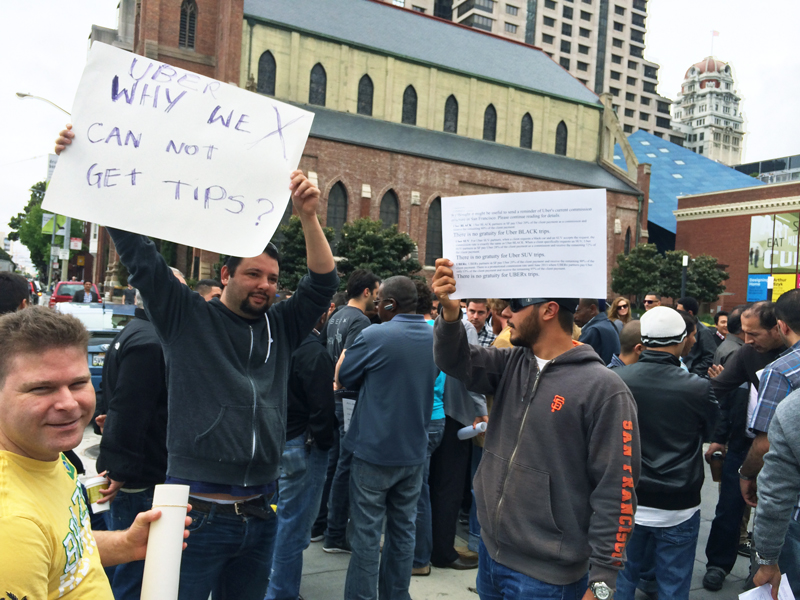
Uber drivers protested the company outside its San Francisco headquarters today, and their complaint was simple: They feel Uber is picking their pockets. 

“They tricked us!” shouted Ramzi Reguii, an Uber driver and one of the lead speakers at the protest. 

The crowd of about 40 or so drivers held signs reading “Uber Exploitation” and “Uber workers are blue collar.” 

At issue is an email Uber sent to drivers (known as “partners,” in Uber parlance) in January. Uber warned it planned to decrease fares for riders by 20 percent to boost sales during the slow winter months. To offset this, the company also promised to reduce its own commission from 15 percent to 5 percent in order to help shoulder the decreased profits drivers may face.

In the email to its partners, the company promised “this is a test we are running during a traditionally slow period in January and possibly into February and March,” noting “depending on the results, we can best determine how long to do the promotion.”

In April, Uber boosted its commission up to 20 percent, but did not adjust fares, creating a double whammy Reguii called “ridiculous.”

uber_pricing

The drivers contend Uber is stringing them along, telling them fare cuts are only temporary only to later renege on its promises. 

“Right now it’s very hard to make money working at Uber,” a driver, Eugene Vinnikov, told us at the protest. He quit his job to work for Uber full-time, favoring the flexible work hours. But he told us the lowered fares means he must work excess work hours, which eat away at the flexibility that made Uber so attractive in the first place.

For its part, Uber was out at the protest listening to concerns. A team of Uber employees mingled with the crowd, listening to drivers’ complaints and explaining reasons behind certain decisions.

Uber San Francisco General Manager Ilya Abyzov stood toe to toe with drivers, coffee in hand, and deep shadows under his eyes. 

uberdriver

He said he understands where the drivers are coming from.

“These drivers are running a business,” Abyzov told the Guardian. Uber has to make sure its drivers are as well cared for as their customers, he said. “Our business doesn’t exist without both sides.”

Lane Kasselman, an Uber spokesperson, also noted Uber is offering a $1 trip incentive through the summer to offset driver costs. 

But most of that is too little, too late for some drivers. 

“I love Uber, we all do,” one driver shouted at Abyzov, just a foot from his face. “But now I have to work sixteen hours to make what I was making in a day before.” 

Abyzov simply stood there, listening.

Marcus Books of San Francisco evicted

For months, we’ve been covering the story of Marcus Books, the nation’s oldest continuously operating black-owned, black-themed bookstore located in San Francisco’s Fillmore District. Facing eviction from the purple Victorian where the bookstore had operated since 1981, the family that owns it had launched an ambitious fundraising campaign in an effort to remain in place.

Widespread community support for the culturally significant bookstore even led to the Board of Supervisors granting landmark status for the bookstore’s Fillmore Street address, on account of “its long-term association with Marcus Books … and for its association with Jimbo’s Bop City, one of the City’s most famous, innovative and progressive jazz clubs.”    

But as the Bay Guardian has just learned, the bookstore was evicted on May 6. Now it seems the family is in the process of packing up the books and determining what the next step is.

In the meantime, here’s an open letter sent to supporters via email by bookstore co-owners Tamiko, Greg, and Karen Johnson.

Dear Supporters: 
It was difficult to know what to tell you about our struggle to stay in our building, its winding path of lawyers and judges and protests and promises, hopes and gravities made it difficult to report our status on a curved road. But the current property owner has changed the locks to the door of 1712 Fillmore Street.

Marcus Books missed a couple of rent payments (not such a rare thing considering that at the same time the largest US banks and even our government asked taxpayers to give them hundreds of billions of dollars of assistance). However, the mortgage holder, PLM Lender, foreclosed on the building that housed Marcus Books of San Francisco since 1981. It was sold to the Sweis family (realtors and owners of Royal Taxi in San Francisco). The Johnson family (co-owners of Marcus Books of San Francisco) has been trying to buy the building back for a year and half.   

The Sweis’ bought this building in a bankruptcy “auction” (apparently, they were the only bidder) for $1.6 million. The Johnsons offered $1.8 million; the Sweis set their price at $3.20 million, hoping to double their purchase price after a few months ownership. After some public outrage resulting in public protests against the Sweis, a negotiation brought their asking price down to $2.6 million, adding a million dollar profit to their purchase without adding any improvements to the property and adding a stipulation that the entire $2.6 million be raised within 90 days.

Marcus Books supporters, including the local chapter of the NAACP; ACCE (Alliance of Californians for Community Empowerment; Japantown activists; Westside Community Services; Julian Davis, our fearless legal council; Carlos Levexier’s “Keep It Lit” campaign committee; local literary community including writers and other bookstores; people from all over the world: friends, family, customers, churches and unions took a stand against the bulldozing of community. Individuals, unions, and churches donated $25,000. The Community Land Trust of San Francisco garnered loan pledges of $200,000 and Westside Community Services offered a loan of $1.60 million. Though by any standards that would have been more than enough for a down payment, the Sweiss’ refused the $1.85 million start and filed for eviction.

Concurrently, the San Francisco Board of Supervisors unanimously passed a resolution requiring every division of city government make it a priority that they each use their “powers” to help Marcus Books stay in its location. In addition, and after 5 years of efforts by John Templeton (the leader in Black California history), and Greg Johnson (co-owner of Marcus Books of San Francisco), London Breed and Malia Cohen, two San Francisco Supervisors, initiated the Board of Supervisors’ unanimous vote granting landmark status.

With the numerous speeches of San Francisco Mayor Ed Lee stating his commitment to righting the wrongs of the San Francisco Redevelopment Agency’s slaughter of the thriving African American Fillmore District, we at Marcus Books believed the City would take some affirmative action on our behalf, since Marcus Books is the only surviving Black business since the Redevelopment devastation. Maybe that support is around the next bend? Well the locks have been changed, the cavalry is not in sight, and it’s time to pack up the books and store them till we find another space.

You might ask yourself, why bother? Materialism rules the day. That is not news. More often than not, we take it for granted that the “bottom line” is the only line worth respecting, though it respects no one. This is a common conception, but not right. Right is the vertical line that runs through all levels: from its spiritual top to its earthly roots. This verticality is manifested only by integrity. Integrity defies gravity in its perpetual longing for truth. Millions of people have been put out of their homes by bottom-line-feeders. It’s common, but it’s not okay, now or at any other time. Sometimes you just have to take a stand. Integrity is a verb.

In 1970, I had a vision bout rebirth. A segment of that vision informs this struggle. In this particular scene, the spirit is climbing the Tree of Humanity, being lifted higher and higher by those entwined in The Tree. The spirit never steps on anyone’s face or heart. It just carries their dreams up with it. Because it is growing towards rebirth, it gets younger with each step up. Though there are thousands of supporters at the bottom of The Tree, there are fewer at the top and the helping hands are fewer and far between. At the top of The Tree, at the stratum of the clouds, quantity has morphed in into quality. Here a storm of wind and rain rages, lightning strikes and a mad dog spirals up The Tree, snapping at the heels of the now, infant spirit. Teetering on a limb, the spirit sees a man face down in the mud at the bottom of The Tree. Seems he got there from letting go of his faith in The Tree. The surrounding clouds urge the spirit fall.
 
“Cross Section”
The rumors, that were whispered,
            Here, the silence screams,
            And branches battle shadows
            To defend their dreams.
 
            Where Black is cut in pieces,
            Can’t hold myself together.
            Time cuts me down,
            Life me brought up,
            But lead me to this weather.
 
            The Time says, ‘Fall
            To soulless ease.
            To struggle is disgrace.
            The gravity will grant you peace,
            And hide your shameful face.’
 
            But I am born of honor:
            Descendent from above.
            My Father’s name is Wisdom
            And my Mother’s name is Love.
            And I have strength of purpose.
            That’s what my climb’s about.
            As I’m cut off,
            I will hold ON
            And trustingly Black-out.”
 
(Copyright 1997, Karen Johnson)
 
 For the hundreds of people who have lent their time, money, and prayers, we are truly grateful.
 
–Tamiko, Greg, and Karen Johnson, co-owners Marcus Books of San Francisco
 
 . . . to be continued

Pow! Zap! Free comic book day with Ace of Geeks

0

Saturday’s Free Comic Book Day was like Christmas morning for comic lovers, and San Francisco is blessed with an abundance of comic book stores to celebrate from. Luckily for us, podcast Ace of Geeks decided to take a video tour of a few of SF’s most beloved dens of geekery on the beloved nerd holiday.  

Watching the Ace of Geeks crew (Mike, Jarys and Mae Linh) tour some of our city’s comic shops is a reminder of our bounty of nerdy-goodness, as each store has a distinct flavor.

Reflecting the Richmond district neighborhood, Cards and Comics Central has almost as many toys and collectibles as they do comics. Their anime and manga figurine collection alone is worth checking out (Neon Genesis Evangelion! Naruto!), and it’s one of the few places in the city you can find a stuffed Yoshi outside of Japantown.  

Ace of Geeks tours some of SF’s comic book shops.

The salesperson the Ace of Geeks crew talked to, Darrel, even has a Spider-Man themed New Era 59-50 flat brimmed hat (something a b-boy might wear before breakin’) that feels right at home in a neighborhood with schools like Washington High, attended by SF natives from the ‘hood. 

On the flipside, Hayes Valley is home to the ever-hilarious James Sime’s Isotope Comic Lounge, a comic shop with a hip, indie feel to it. Luckily, it predates the gentrification of the Hayes Valley ‘hood, and keeps the San Franciscan weird flavor alive (check out Sime’s hair, whoo!). But past its looks, Isotope is awesome because Sime is always trying something new. As he says in the video: “I get bored easily.” 

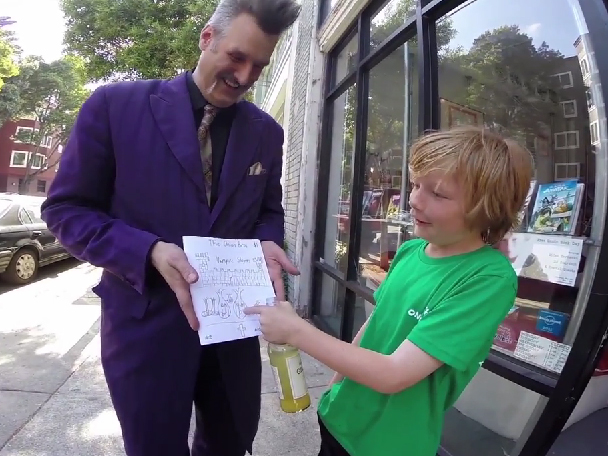
Two surprises on comic book day made Sime’s shop the one to beat. Firstly Isotope’s “featured” comic book artist was an adorable 11-year-old named Aidan Hernacki, who sat a table signing copies of his comic Onion Bros

But that’s Isotope, always trying to help out the little guy. 

The second surprise was a visit from J.J. Willliams III, the ultra-talented artist behind Promethea, Batwoman, and the new Sandman: Overture. Williams III donned a vest and was a hidden “shop boy” at Isotope, helping people find comics and answering questions. When a customer happened to actually buy a copy of Sandman: Overture, he whipped out his permanent marker and gave it a free autograph. 

Two Cats Comics in West Portal, Amazing Fantasy in the Inner Sunset and Comix Experience on Divisadero also made the tour. Check out the video to see the flavors of SF’s comic shops for yourself. 

Toyota work methods applied at General Hospital

San Francisco’s Department of Public Health has a $1.3 million contract with Seattle-based Rona Consulting Group to implement the Toyota Management System, a workflow methodology based on the auto-manufacturing model, at San Francisco General Hospital.

This new model, which aims for greater workflow efficiency, is being implemented just as healthcare staffers raise concerns that staffing levels at SFGH are dangerously low.

“Nurses often work through their breaks, and they stay after their shifts to get charting done,” said David Fleming, a registered nurse who has been at SFGH for 25 years. “I think nurses are getting the job done – but they’re at the edge.”

A group of healthcare workers spoke out at the May 7 Budget & Finance Committee meeting, during which supervisors discussed the DPH budget. Public employee union SEIU 1021, which represents healthcare workers, is in the midst of contract negotiations but Fleming said they had been grappling with reduced staffing for awhile.

According to a contract request to the Health Commission sent anonymously to the Bay Guardian, DPH entered into a 24-month contract with Rona totaling just over $1.3 million, for the purpose of implementing the Toyota Management System methodology as part of the transition to the new SFGH acute care facility, scheduled to open in December 2015.

The Bay Guardian received a copy of the contract request via BayLeaks, which uses encryption software known as SecureDrop to enable sources to anonymously submit documents.

The $1.3 million came from “General Funds (Rebuild Funds)”, according to the contract request. In 2008, voters approved Prop. A, funding the $887.4 million General Hospital rebuild through general obligation bonds. Use of the voter-approved, taxpayer-supported funds is restricted to hospital construction under a state law that limits the use of bond money to specified purposes.

However, Iman Nazeeri-Simmons, chief operating officer at DPH, said funding for the Rona contract came from a “hospital rebuild transition budget,” which she said provides for needs beyond construction costs.

Specialized consulting to educate hospital staff in the ways of the Toyota Management System doesn’t come cheap. A single meeting between the consultant and “key leaders” to “discuss needs and develop operational project plans” cost $25,225, the document showed. A one-day “visioning session” facilitated by the contractor was priced at $16,814. Five-day workshops fetch Rona $42,032 each. Based on estimates included in the contract request, the consulting firm would earn the equivalent of $4,707 per day.

The $1.3 million consulting contract was awarded even as unions remind city officials of staffing cuts during the economic downturn in 2008 that still have not been restored.

Here’s some video testimony from hospital staffer Heather Bollinger regarding how tough things can get at the General Hospital’s trauma center. “We do have staffing issues, and they do affect patient safety,” she said in public comment to the Health Commission on April 15.

Nato Green, who is representing nurses as a negotiator on behalf of public employee union SEIU 1021, described the staffing levels at SFGH as “unsafe and unsustainable.” There are currently 90 vacancies for nurses that haven’t been filled, he said. That’s a 14 percent vacancy rate, Green noted — typically substituted with traveling nurses, temps, and overtime labor.

Nazeeri-Simmons said the consulting was necessary for the transition to the new SFGH facility, for “doing it in the best way, and understanding there’s a completely different physical environment over there.” Rona is a pioneer in healthcare performance improvement, she said, and they are “leading us in very interactive workflow designs that are simulation-based,” geared toward “maximizing value and driving out waste.”

But does “driving out waste” translate to staffing cuts? “It certainly hasn’t happened here,” Nazeeri-Simmons responded when asked about that. Instead, the consultants have helped management to “right-size services to meet the demand,” she said, noting that wait times in urgent care had been significantly reduced as a result. Decisions such as using a portable X-Ray machine that eliminated the need for patients to walk ten minutes across the hospital grounds had dramatically reduced wait times, she added.

“We need to make sure the staff are working to the highest of their capability,” she added.

Heidi Gehris-Butenschoen, a spokesperson for Rona, said the goal of transforming work practices under the Toyota Management System is to improve patient care. Asked whether the consulting tends to affect staffing levels, Gehris-Butenschoen said, “That’s really up to the hospital. It’s definitely in our workshop not something we focus on. The Toyota system is not about cutting heads at all.”

SFGH has been working with Rona since July 2012. One of the company partners was formerly the CEO of Productivity, Inc., which advised “large-scale transformations for Fortune 100 companies,” according to the contract request. The workflow methodology is rooted in Lean principles, integrating a “just in time” staffing concept that’s been applied in corporate settings such as Walmart.

The Health Commission approved the $1.3 million contract at its Dec. 17, 2013 meeting as part of the consent calendar, which is summarily approved by a single vote.

Fleming, the RN, was skeptical of how much the Lean system had actually accomplished. They had literally “rearranged the furniture” since the program was implemented, he said, and observers had silently monitored staffers’ activities.

“When we work with anyone, we go out to the gemba, and we observe,” Rona’s Gehris-Butenschoen explained, noting that gemba refers to “the place where work happens.” The observations help hospitals identify where waste can be reduced, she added, such as moving a supply cabinet if time is being taken up by crossing the room to get to it.

But Fleming said he wasn’t convinced that applying a corporate efficiency method, borrowed from manufacturing, would provide the greatest benefit in a healthcare setting.

“We are not taking care of cars on an assembly line,” he said. “When it comes to another human being’s body, I don’t know that faster is necessarily better.”

Carmageddon cometh

42

news@sfbg.com

STREET FIGHT

San Francisco — already overwhelmed with private automobiles — faces a grim future of gridlock unless there is a radical change in how we think about city streets, parking, and regional transportation.

The facts are clear. Every day there are 1.7 million private car trips to, from, or within the city, according to the city’s transportation plan. Coupled with almost 10,000 vehicles registered per square mile, San Francisco today has one of the densest concentrations of cars on the planet, more than any peer city in the United States. In the business-as-usual scenario, the streets are forecast to absorb another half-million car trips. By 2040 there will be 2.2 million car trips on the exact same street grid we have today.

This is madness and it is dysfunctional for everyone. If you think Muni is unreliable now, it will be useless in 2040 as it stalls in the morass of 2.2 million car trips jammed onto city streets. Pedestrian injuries and deaths will rise with another 160 cars hitting pedestrians annually, simply due to oversaturation of automobiles. Cyclists might be able to weave around the stalled traffic, but it will be an ugly scene that fouls the air. Motorists will be stuck in their own gridlock, evermore impatient, distracted, honking, lurching through blocked intersections, sneaking through yellow lights, blocking crosswalks, double parking, and irritated with fellow drivers and everyone around. No one will be happy

This does not have to be. The city’s transportation agency hopes to reduce car trips from 1.7 to 1.6 million by 2018, a modest goal but barely holding the line. Reducing existing car trips by 100,000 while also adding thousands upon thousands of housing units and jobs, most coming with more parking, will quickly undo this humble ambition. The city can do more and the data shows us that there are many opportunities.

Consider that 68 percent of car trips within San Francisco are less than three miles. That’s 650,000 car trips per day that are generally pretty short — with a bicycle it’s less than a half-hour ride on relatively even terrain. If the city were able to get half of those car trips to switch to bicycle trips, it would be well on its way to averting carmageddon.

A more ambitious goal, increasing cycling to 20 percent of all trips, is the official city policy adopted by the Board of Supervisors. That’s 500,000-600,000 trips by bicycle every day, most of which can take place within that three-mile range, especially if cleverly arranged “wiggles” (level routes circumventing steeper hills) are laid out on the most logical corridors. But to carry that many cyclists, real space has to be allocated for them.

Out at San Francisco State University, where I teach a new Bicycle Geographies course that aims to increase cycling to the campus, there is tremendous opportunity to shift these kinds of short trips to bicycling. For students, faculty, and staff, bicycling is compatible with rapid transit, particularly for the “last mile” segments, such as between BART and SF State.

Bicycling is also a way to relieve local bus and light rail transit crowding — the 28 bus line on 19th Avenue, for example, is often jam packed and the city has only modest goals to improve that key line. Unlike transit or highways, bicycles do not require costly, long-term capital investment or operating funds and so can be deployed much more quickly.

It will be decades and cost hundreds of millions to improve the M-line, only now in the planning phase. We can lay down cycletracks much more quickly. Bicycling is also among the most equitable forms of urban transportation because it is affordable and accessible to almost everyone. This is obviously relevant to working-class students at SF State.

SF State has a memorandum of understanding with the city that obliges the university to reduce drive-alone automobile trips to campus, and the campus will not build any more car parking. With 4 percent of commute trips to SF State by bicycle (and only 2 percent among faculty) there is potential to increase the mode-share of bicycling as a path to reducing greenhouse gas emissions and auto trips.

The spatial proximity to Daly City and Balboa Park BART stations, as well as the Excelsior and Sunset, all under three miles from campus, means that the bicycle is well-suited to be a substitute for many short-range automobile trips and help the campus meet its goals. Yet what my students have found this semester is that it is all but impossible to bike safely to and from SF State, and the southwestern quadrant of San Francisco is largely left out of current bicycle planning in the city.

Taking multiple bicycle field trips over the past few months, we surveyed the opportunities for making safe routes to campus and envisioned what it would take to increase cycling to 20 percent of trips to and from SF State. Starting with the Balboa Park station, which is next to a deplorable tangle of freeway ramps, we ask what it would look like if fully-separated cycletracks were built on Geneva or Ocean avenues. These could connect City College and the Excelsior, and by way of a westward and southward jog, to a bicycle boulevard on Holloway Avenue, enabling a safe and convenient, 1.7-mile, 15-minute bike ride to SF State. Expanding the nascent Bay Area Bike Share to connect SF State and Balboa Park BART would create even more opportunity for cycling.

To the south of SF State, Daly City BART is a 1.4-mile, 10-minute bike ride that is daunting and poorly signed. It could be made safe and inviting with bicycle boulevards on streets parallel to traffic-clogged 19th Avenue and Junipero Serra. Borrowing from signature bicycle and pedestrian bridges in Pleasant Hill and Berkeley, perhaps there is an opportunity to build a bridge across Brotherhood Way toward the BART station, leveling an otherwise steep climb that discourages cycling.

To the north of campus, describing the designated 20th Avenue bicycle route as “a bit of a challenge” is an understatement. Cyclists must thread a cluttered shopping mall parking lot and overbuilt wide streets, and then confront a median blockading the way across Sloat Boulevard. While the megaproject to improve the M-line could include a cycletrack on this stretch of 19th Avenue, we should not wait a generation to increase cycling between SF State and the Sunset. The 20th Avenue route can be made welcoming now, with a fully-separated cycletrack and fixes on the Sloat intersection.

SF State, probably one of the most diverse campuses in the nation, has highly motivated students seeking real solutions to the huge problems society faces. The students are coming of age under extreme pressure of economic inequity and ecological duress, but they also see ways out of the mess created by the wasteful car culture and its linkages to ecological and social problems. They want to act now, and unlike past generations, they are shunning driving and many of them desire to reside in livable cities that offer choices for how they get around.

But what we have found this semester is that the campus is extremely isolated, difficult to access by bicycle, and walled-off by car sewers. Older, uninviting bicycle lanes are fragmented, disjointed, and seem to be an afterthought. With imagination, ingenuity, and political will, this can be remedied with bicycle improvements that cost far less than adding more car lanes and parking to the campus or surrounding area. And this would go much further at improving quality of life for neighbors who now have to put up with campus-generated traffic. Keeping the status quo, which means even more car trips but within the same space, is a dead end.


TRANSBAY DREAMS

Speaking of dead ends, San Francisco seems to specialize in dead-end train projects. The Central Subway, which is experiencing cost overruns and possible mismanagement, is one of these dead ends. There is no current option to have trains exiting to Geary or onto Columbus and possibly running on Lombard into the Marina, and that is a shame. Having the subway exit to the surface is probably the only way to make this project worthwhile.

There’s another dead end train project at the Transbay Terminal in downtown San Francisco. Yet unlike the Central Subway quagmire, I am impressed with the scale and possibilities for the Transbay Terminal project and there is opportunity to fix this dead end. Going back to the city’s business-as-usual traffic forecast, in 2040 car trips into the city from the Bay Bridge would increase 18 percent, and by 21 percent from San Mateo County. Aside from scratching my head wondering where exactly all of these cars are supposed to go, we simply need to stop this onslaught before the city becomes too dumb to move.

BART cannot solve it alone, as it will probably approach half a million riders per day by 2016, placing many downtown stations at or near capacity. BART also does not run all the way down the peninsula. Sometimes there are back-of-the envelope proposals to build a second BART tunnel under the bay, but this idea should be weighed against another idea. Rather than build a second BART tunnel to Oakland, how about a joint Amtrak California/Caltrain tunnel under the bay, and creating a true Grand Central Station of the West at Transbay? Let’s punch through the dead end currently planned for the east end of the Transbay Terminal “train box” and truly connect Northern California by rail.

This does not need to be high-speed rail, but rather the conventional, off-the-shelf electric rail already planned for Caltrain, of the variety that operates in the Northeastern US and much of Europe — efficient, high capacity trains that can travel 100-120 mile per hour comfortably and safely. In conjunction with a new transbay rail tunnel, the Capitol Corridor should be electrified and right of way captured from the freight railroads. One could take an electrified “baby bullet” from San Jose, through San Francisco, and continue to the East Bay and Sacramento. As Caltrain is electrified to the south, let’s also electrify the Altamonte Commuter Express trains, bring them across a rebuilt Dumbarton Bridge, and run high-frequency rail service into the new Transbay Terminal.

Understanding that this will take time to build, in the short term the Bay Bridge should be reconfigured to have bus-only lanes (and a bicycle lane on the bottom deck of the west span) and a greatly expanded AC Transit service that can relieve the looming BART crowding to the East Bay.

How to pay for these transbay dreams? A transbay rail project could get funding from Amtrak and other federal sources, requiring our congressional delegation to work for it. The state gasoline tax or eventual carbon taxes, and revenue from tolling Bay Area freeways, should be in the mix. The 101 and 280 should be tolled as well as the Caldecott Tunnel and I-80 in the East Bay, with revenue directed at electric rail in the long term and regional buses short term. And while people are talking about reforming Proposition 13 to end the artificially low property taxes on commercial land, let’s remember that transit — whether Muni, BART, or Caltrain — brings massive value to commercial property owners. They should be realistically expecting to pay in. In short, there are possibilities and ways to do this.

Here’s one small additional idea for raising seed money: In the wake of the Google bus controversy, the SFCTA, SFMTA, SF Planning Department, and City Attorney’s Office should assemble a crack team of California Environmental Quality Act experts and send them (on Caltrain and bike share!) down to comment on every large-scale suburban office project proposed in Silicon Valley. For example, Mountain View, where Google has its campus, is effectively displacing part of its transportation and housing responsibility to San Francisco.

As part of the CEQA mitigation for these suburban office projects, San Francisco ought to be demanding that Google/ Mountain View contribute to paying for the Transbay Terminal and electrifying Caltrain (a separate fund would be directed to affordable housing as mitigation for displacement). This is a similar line of reasoning to the May 1 lawsuit against the Google bus pilot, but it draws in those responsible for the poor planning in suburban sprawl. Regardless, the city ought to take a look at a CEQA mitigation angle for addressing the impacts these suburban decisions are having on the city.


PRAYING FOR ENLIGHTENMENT

One last point about transit finance: I sure hope Mayor Ed Lee, his political advisors, and all those religious ministers who complained about paying for metered parking on Sundays (see “Politics over policy,” April 22) have a plan to advocate for the November ballot proposals to help finance Muni.

They sold out sustainable transit advocates, their biggest ally on the November ballot initiatives, and have offered no rational explanation for their strategy, just an emotional hunch that somehow some people can’t cope with Sunday metering, and that making it free again will convince them to support increased public transit funding.

I imagine there is a well-thought-out campaign strategy, whereby every Sunday between now and November, the mayor is visiting all the churches in the city, and cajoling the ministers to use their pulpits to enthusiastically preach the merits of increasing the vehicle license fee (as well as approving a related general obligation bond).

After all, the VLF is a progressive tax — the more expensive your car, the more you pay. The older and cheaper your car, the less you pay. And bringing in $73 million annually would contribute to making God’s green earth cleaner, and help transport God’s children safely to work and on their errands. Praise the Lord and free parking on Sunday! Amen.

Street Fight is a monthly column by Jason Henderson, a geography professor at SF State and the author of Street Fight: The Politics of Mobility in San Francisco.

Ownership in Guardian’s parent company may shift

18

Greetings, Guardianistas. Almost a year ago, when we went through a management struggle here the newspaper, I promised to let readers know if we encountered any threats to our editorial independence from our San Francisco Print Media Co. owners.

Frankly, we haven’t. We’re still calling events as we see them, bringing you the best emerging artists, and making endorsements from the same independently progressive perspective that we’ve been operating from since we were founded in 1966.

Principal owner Todd Vogt has kept his word and let us handle editorial content while he helps improve our revenues and grow the paper. Both have been on the upswing in recent months, and we’re grateful for his role in keeping the Guardian alive and thriving.

But as our colleagues down the hall reported last night, Vogt may be on his way out. This week, he informed the staff of the three San Francisco Print Media newspapers — the Bay Guardian, San Francisco Examiner, and SF Weekly — that he will be parting ways with his partners at Black Press Ltd., which also owns Oahu Press, Inc., by the end of the month.

Vogt has been talking to potential investment partners around San Francisco about exercising his option to take full ownership control of San Francisco Print Media Co. in the next couple weeks, but he said that he considers it unlikely given the high cost of buying out his partners.

Representatives from Black Press and Oahu Press were in the office yesterday and they told us they will be conducting a search for a new president of the company over the next few months, and they don’t expect to make any major changes in the operations of the Guardian or the other two papers before then.

Don Kendall with Black Press, who will be assessing the operations of all three papers during the search for a new president, called the papers “editorially solid.” A long-planned move by the three papers into new office space — into the top floor of the Westfield Mall, in a former SFSU Downtown Campus space — will also proceed as scheduled next month.

Spirits here at the Guardian are strong, we appreciate the role that Vogt has played in helping the Guardian mount a comeback after some tough financial times, and we’re hopeful that the new ownership team will appreciate the Guardian’s history and role it plays in the city — and that it will see us through our 50th anniversary and beyond.

And most of all, we appreciate the support of our readers and community, without whom we wouldn’t be able to do what we do. So thanks, and keep reading.  


P.S. We’ll be continuing the soft-launch of our new radio show, Alternative Ink, this Sunday from 6-8pm on bff.fm. The Guardian alternates Sundays with the SF Weekly, with both papers featuring music and talk. This week, we’ll have some great audio clips for the week’s news events, music from local bands, and we might even get into the topic of this post and let some secrets slip, so don’t miss it.   

Tech in Transit

1

Transit of today is looking more futuristic every day. From Google Buses that look like UFOs to driverless Uber cars, the future really is now. But what will the actual future of transit have in store for San Francisco? Will the gadget-obsessed disruptions of the future abandon our congested streets? Most importantly: In the future, how will I get my favorite coffee?!

Guardian illustrations by Matthew Smith.


Coffee Delivery Drone


drone

The real-life Amazon will soon deliver by drone, but why would companies stop there? Coffee drones would let fog-laden western ‘hoods, or techies trapped in cubicles everywhere, taste their hipster coffee concoction of choice without having to interact with people. And thanks to a splash of surveillance with your java, these drones will anticipate your next delivery need, too!


Driverless Rideshare Hovercrafts


uber_driverless

Uber recently announced purchasing 2,500 Google driverless cars, but in a hundred years they’ll undoubtedly trade those in for driverless – and street traficless – hovercrafts. We trust our robot overlords to fly us home safe from our latest drunken escapade in SoMa, right?


Citishare Hoverboards


hover

SF Citi Bikeshare is so 21st century. The 22nd century will undoubtedly give rise to Citi Hovershare. Just remember McFly, those boards don’t work on water. (Unless you’ve got POWER!)


Google Orb


googleOrb

No matter what, don’t tell tech employees of the 22nd century their floating commuter Orb (invisible to protesters) resembles a Death Star. They’ll cry ‘TECH PREJUDICE!’ and blow up Alderaan just to spite you.


The SFMTA (Muni)


bandage_muni

Every time a rider flocks to private transit, one less person gives a damn about funding Muni. By the 22nd century “the people’s transit” will be held together with spit, tape, and carefully arranged bandages. Like today… but even worse.

Out of focus

0

THE WEEKNIGHTER  Weekends are for amateurs. Weeknights are for pros. That’s why each week Broke-Ass Stuart (www.brokeassstuart.com) will be exploring a different San Francisco bar, bringing you stories about the places and people who make San Francisco one of the most phenomenal cities in the world. Who wants a drink?

I was standing at the bar ordering a round of drinks for my friends when I noticed something slowly creeping in and out of my peripheral vision. It was just on the edge of my consciousness, like the very beginnings of a psychedelic trip, and for a split second I thought, “Jesus Christ! One of these strange bastards dosed my drink. This night is about to get really fucking weird.”

And then I saw the movement again and I focused on it. Reflected in the mirror of the back bar was an animatronic rat sliding up and down the wall. It was around Halloween and Mission Bar (2695 Mission St, SF. 415-647-2300) was completely decked out like the Spirit Halloween store had sneezed all over the walls.

Needless to say, I was relieved that no one had slipped LSD into one of my vodka sodas. The last thing I wanted to deal with was 12 hours of getting confused by the way a Muni bus’s hydraulics sound like Chewbacca. Plus the vibes over in that part of the Mission can be a bit sinister sometimes, and Mission Bar reflects this perfectly, which is exactly why I like it.

This may be too on the nose, but Mission Bar is the quintessential Mission dive bar. It’s dark, there’s a pool table, and dogs are always scurrying around. Plus the booze is exceptionally cheap; if I’m not mistaken, well drinks are $3.50, possibly $4. DO YOU HEAR ME EVERY NEW BAR IN SAN FRANCISCO?!?! I always forget how cheap it is until I go in and order a drink, then when I hear what the total is, I smile with all my teeth, tell the bartender how much I love him or her, and then wonder why I bother going to any other bars.

That night I collected the round of drinks and sloshed them over to the table where a bunch of my favorite people in the world were sitting. “Guess what guys,” I said as I handed them their beverages, “nobody dosed my drink!” They all looked like I was nuts and like maybe someone had actually dosed me. They obviously had no idea what I was talking about. I decided to drop the subject.

I wish I could tell you exactly which of my favorite people in the world were having a mellow night of drinks with me at Mission Bar that night. But the truth is, many of the stories I write for The Weeknighter are amalgamations of multiple evenings spent in a single bar, spread out through my dozen or so years in San Francisco.

Was it the first night we drank at Mission Bar after Marina got back from the Peace Corps? Maybe. Was it one of the last nights before Jeremy and Erin started keeping grown-up hours because they had a baby on the way? That could be it too. Truthfully it doesn’t matter; the great thing about spending a third of your life in a city is that the places you go become the stories themselves, and all the things that happen in them are just the decorations, kinda like the animatronic rat scooting along the wall.

These things creep into the peripheral of your memory and you need to focus on them to remember which parts were real. The unfortunate part about Mission Bar (read: fortunate part) is, considering how strong and cheap the drinks are, it’s pretty hard to focus on anything once you’ve been there for an hour. So the stories blend together and you just leave happy that no one dosed your drink with LSD.

Stuart Schuffman, aka Broke-Ass Stuart, is a travel writer, poet, and TV host. You can find is online shenanigans at www.brokeassstuart.com.

This Week’s Picks: May 7 – 13, 2014

0

WEDNESDAY 7


Science Talk: “The Mysteries of Sleep”

Wonderfest, “the Bay Area Beacon of Science,” is a nonprofit that has been organizing fun, funky science events and meet-ups for nearly two decades, and best of all, most of them are free. This talk, presented at the SoMa StrEat Food Park (with all of the delectable food truck and beer options that entails) will tackle one of the last great biological mysteries — something we spend one-third of our lives doing, yet something scientists still understand very little about. Matthew P. Walker, an associate professor of psychology at Cal, will describe the latest research that suggests sleep is actually a highly active process, necessary for improving our learning processes, memory, creativity, and emotions. So grab a friend, grab some grub and get your education on, then go home and get a good night’s rest — you’ll be smarter for it. (Emma Silvers)

7pm, free

SoMa StrEat Food Park

428 11th St, SF

www.wonderfest.org


THURSDAY 8


Bike to Work Day 20th Anniversary

Got a bike? Ride it. Today marks the 20th anniversary of San Francisco’s Bike to Work Day, and it’s never been more rewarding to be a two-wheeled commuter. With thousands of cyclists on the road today, not only do tailpipe emissions decrease dramatically, but the visible presence of cyclists encourages motorists to share the road. What’s more, many small businesses will have special treats for bikers, and the SF Bicycle Coalition will have safety classes, workshops, parties, raffles, and energizer stations (snacks, beverages, and goodie bags) throughout the city. If you’re a two-wheeling newbie, don’t fret. The Coalition will also have Commuter Convoys leading you through the city. Keep an eye out for bike-friendly businesses: Yoga Tree is offering a free class to anyone who shows up on two wheels. Don’t forget your helmet! (Laura B. Childs)

All day, free

Various locations throughout SF

www.sfbike.org


“The New Forty-Niners” and “Scavenger: Adventures in Treasure-Hunting”

For centuries, stories of treasure hunters and great explorers have dominated American history. From the Gold Rush millionaire Samuel Brannan to Huck Finn to Lewis and Clark, the thirst for adventure and wealth is a building block of the American Dream. Tonight, Rayko Photo Center presents two exhibits based on this dream. “Scavenger: Adventures in Treasure Hunting,” by Jenny Riffle, documents one man’s treasure hunt, accompanied by his metal detector. Riffle romantically captures the mythical adventurer as he ventures out into rural Washington like a 21st century Mark Twain character. The second exhibit, Sarina Finklestein’s “The New Forty-Niners,” is a four year-long photo project chronicling modern-day gold prospectors in California. In gritty and rugged photographs, the exhibit reveals a small self-sustaining society dependent on gold mining, reminiscent of the original Gold Rush. (Childs)

Opening reception 6pm-8pm, free

Exhibits on display through June 21, 2014

Rayko Photo Center

428 Third St, SF

(415) 496-3775

www.raykophotocenter.com


FRIDAY 9


Katherine Hawthorne’s ‘The Escapement’

Last November choreographer Katharine Hawthorne premiered Timepiece at the Joe Goode Annex. Bringing a background in physics and dance to her artistic practice, she had created an intricately structured and intriguing piece of choreography in which she explored the concept of time — not just dance as a time-based art, but time as a way of structuring the way we live our lives and think about the world. In the new The Escapement, she continues that process by examining the way clocks have enabled us to divide time into regular intervals. The invention of the “escapement” mechanism, apparently, was central to the process. Performing with Hawthorne will be Jesse L. Chin, Katherine Disenhof, Suzette Sagisi, and Megan Wright. (Rita Felciano)

May 9-10, 8pm, $15-25

Joe Goode Annex

401 Alabama St., SF

www.theescapement.eventbrite.com


#GIRLBOSS book signing with Sophia Amoruso

With advice like “money looks better in the bank than on your feet,” #GIRLBOSS is one giant kick in the butt. The CEO, founder, and self-proclaimed “chief troublemaker” at the online fashion retailer NastyGal, Sophia Amoruso isn’t your typical CEO. Before reaching meteoric fame with her $100 million brand, Amoruso was an anarchist who survived off dumpster-diving and shoplifting. Dubbed the “Cinderella of tech,” Amoruso started an eBay store while living in San Francisco, selling old clothes; some eight years later, it’s a global marketplace specializing in scandalous and trendy clothing for 20-somethings. Filled with quick-whips and snarky illustrations, #GIRLBOSS covers all the nitty-grittiness of owning a company, and demystifies any ideas that because you were popular in high school, you’re guaranteed success — you have to work for it. (Childs)

7pm-9pm, free

Books Inc. Bookstore Opera Plaza

601 Van Ness, SF

(415) 776-1111

www.booksinc.net


Kadavar

Black Sabbath may be past their prime, but Berlin’s Kadavar is keeping the ’70s heavy metal dream alive — psychedelic, snarling, seething, dope-smoking, and very hairy. Drawing heavily —very heavily— from Sabbath and Pentagram (with some nods to Zeppelin), Kadavar have joined the time-travelling ranks of Electric Wizard and Uncle Acid and the Deadbeats in producing some seriously killer heavier metal tunes. Though Kadavar wears its influences on its sleeve, as these guys are singing through their prodigious facial hair about wizards, witchcraft, and lost souls, they are undeniably genuine. Their love for the music is clear, and entirely impossible not to headbang to. (Zaremba)

With The Shrine, Mondo Drag, DJ Rob Metal

9:30pm, $12

Bottom of the Hill

1233 17th St, SF

(415) 626-4455

www.bottomofthehill.com


SATURDAY 10


Cat fight: Battle of the feline film fests

If you are a cat fan — or simply fond of Internet kitty videos — today is basically Christmas, Hanukkah, your birthday, Talk Like a Pirate Day, and every other awesome holiday rolled into one. In SF, the Roxie rolls out its “First Annual San Francisco Intergalactic Feline Film and Video Festival for Humans,” a meow-thful of a name befitting a fest that promises “a two-week film festival in the span of 12 hours.” In Oakland, OakCatVidFest presents an entire day of pussy magic; in addition to outdoor screenings, there will be cat-themed bands and dance performances, plus adoptable cats and the chance to sign up to be a kitten foster parent. Superstar Internet feline Lil Bub (of documentary, talk-show, and tongue-wagging fame) will appear at both events. And so should you! (Cheryl Eddy)

Intergalactic Feline Film and Video Fest

Noon, $12 ($30, all-access badge)

Roxie

3125 16th St, SF

www.roxie.com


20th Anniversary Serial Mom Tribute with Ricki Lake

“I don’t like to read about movies. They’re so violent,” picture-perfect suburban hausfrau Beverly R. Sutphin (Kathleen Turner) tells a couple police officers during a brief non-lethal moment in Serial Mom. John Waters’ 1994 comedy about a secretly demented wife and mother with very, very high etiquette standards — you really do not want to wear white after Labor Day around he r— remains his personal best since the breakthrough of Hairspray (1988). That film’s discovery Ricki Lake, cast as Sutphin daughter Misty, will appear in person for Peaches Christ’s “Mother’s Day celebration to die for,” also featuring a pre-show performance with D’Arcy Drollinger and “the erotic dance stylings of SexiTude.” There will be blood. (Dennis Harvey)

8pm, $35-55

Castro Theatre

429 Castro, SF

(415) 621-6120

www.peacheschrist.com


Old 97’s

Reassuring us all that growing up doesn’t mean you have to lose your sense of humor, the Old 97’s — the solid, steady fathers of alt-country, who never quite exploded (or imploded) like some of mid-’90s their counterparts did — are currently touring the country with their tenth studio album, Most Messed Up. The tour also functions as a 20th anniversary party for the band, and the record serves as perfect accompaniment: Never have songs about the ravages of road life and the slights of middle age sounded so fun. The band’s die-hard fans know they’re in for a helluva rocking live show, too, though the guys claim to never rehearse; if you’ve only heard a few radio singles, this is your chance to see what the fuss is actually all about. (Silvers)

With Nikki Lane

8pm, $25

The Fillmore

1805 Geary, SF

www.thefillmore.com


SUNDAY 11


RiFF RAFF

Let’s start with the burning question: Is this guy for real? Part of the intrigue of Riff Raff’s over-the-top, ultra-campy hip-hop persona is that it might be totally genuine. This caricature-like white guy from Houston with a BET tattoo, a grill, and cornrows, who raps about Dolce and Gabbana, could be an elaborate joke. Nut authentic or not, Riff Raff is a hot commodity; “Feat. Riff Raff” seems to be the most popular phrase on iTunes. He’s tight with Drake, Justin Bieber, has over 50 million views on YouTube, and scored some seriously solid guests for his upcoming record Neon Icon — Action Bronson, Childish Gambino, and Diplo, to name just a few. Love him or hate him (it’s one or the other) Riff is undeniably fascinating, and this performance won’t be one you forget any time soon. (Zaremba)

With Grandtheft

8pm, $25

Regency Ballroom

1290 Sutter, SF

www.theregencyballroom.com


MONDAY 12


The San Francisco Moth StorySLAM

You know the upside to life’s hideously embarrassing moments, right? Like that time you broke your ankle by slipping on a banana at the Muni station, at rush hour, and had to have Muni employees help you off the platform while covered in banana mush? And also you were headed to a job interview? (Note: this recently happened to an actual friend.) The upside, of course, is that you have an awesome story to tell, and this monthly “story slam,” based on the award-winning New York-based series The Moth, rewards naked honesty as much as it does storytelling flair. Fact-checkers won’t be on hand, but stories must be true and take five minutes or less to tell; contestants can’t use notes or cheat-sheets of any kind. But beyond that, anything goes, so start your storytelling engines.(Silvers)

7:30pm, $8

The Rickshaw Stop

155 Fell St, SF

www.rickshawstop.com


Ms. Lauryn Hill

Sure, she’s had her share of troubles over the years: prison time for tax evasion, comments about race that gave PR people across the nation simultaneous heart attacks, a laundry list of tardiness and other diva-tastic behaviors. But at the end of the day, Lauryn Hill is still among the most gifted musicians of the last two decades; her Grammy-sweeping album The Miseducation of Lauryn Hill, which turns 16 this August, still graces many a Top 10 list (this critic’s included). Live, she’s been experimenting with a more reggae-fied and big band sound over the last few years, giving hits like “Doo Wop (That Thing)” the weight of a pseudo-religious revival experience. And if the new music she dropped following her release from prison in the fall of last year is any indication, this tour should be a good one. She might be late, she might be ornery — she won’t be boring. (Silvers)

With Daniel Bambaata Marley

8pm, $49.50-82.50

The Warfield

982 Market, SF

www.thewarfieldtheatre.com


The Guardian listings deadline is two weeks prior to our Wednesday publication date. To submit an item for consideration, please include the title of the event, a brief description of the event, date and time, venue name, street address (listing cross streets only isn’t sufficient), city, telephone number readers can call for more information, telephone number for media, and admission costs. Send information to Listings, the Guardian, 225 Bush, 17th Flr., SF, CA 94105; or e-mail (paste press release into e-mail body — no attachments, please) to listings@sfbg.com. Digital photos may be submitted in jpeg format; the image must be at least 240 dpi and four inches by six inches in size. We regret we cannot accept listings over the phone.

Rep Clock: May 7 – 13, 2014

0

Schedules are for Wed/7-Tue/13 except where noted. Director and year are given when available. Double and triple features marked with a •. All times pm unless otherwise specified.

ARTISTS’ TELEVISION ACCESS 992 Valencia, SF; www.atasite.org. $6-10. “Other Cinema:” The Uprising (Snowdon, 2013), Sat, 8:30.

BALBOA THEATRE 3630 Balboa, SF; cinemasf.com/balboa. $7.50-10. “Popcorn Palace:” Pee-Wee’s Big Adventure (Burton, 1985), Sat, 10am. Matinee for kids.

CASTRO 429 Castro, SF; (415) 621-6120, www.castrotheatre.com. $8.50-11. Frozen (Buck and Lee, 2013), Sun, 1. Presented sing-along style; advance tickets ($10-16) at www.ticketweb.com.

CENTER SF 548 Fillmore, SF; www.brownpapertickets.com. $10-15. Radical Faerie Film Festival, short films “that embody radical queer sensibilities,” Sat, 7:30.

CHRISTOPHER B. SMITH RAFAEL FILM CENTER 1118 Fourth St, San Rafael; (415) 454-1222, www.cafilm.org. $6.50-$10.75. times. Super Duper Alice Cooper (Dunn, Harkema, and McFadyen, 2014), Thu, 7. For No Good Reason (Paul, 2013), call for dates and times. Locke (Knight, 2014), call for dates and times. Private Lives (Kent), Sun, 1 and May 15, 7. Theatrical performance filmed live in London’s West End. Love and Demons (Allen, 2014), Sun, 7. With director JP Allen and cast members in person.

CLAY 2261 Fillmore, SF; www.landmarktheatres.com. $10. “Midnight Movies:” The Room (Wiseau, 2003), Sat, midnight.

GREAT WALL OF OAKLAND West Grand between Telegraph and Broadway, Oakl; www.oaklandcatvidfest.com. $5-10. “OakCatVidFest,” cat-themed performances, bands, and more, plus kitty adoption opportunities and a film festival, Sat, 3-10.

MECHANICS’ INSTITUTE 57 Post, SF; milibrary.org/events. $10. “CinemaLit Film Series: Comedy Tonight:” Road to Morocco (Butler, 1942), Fri, 6.

PACIFIC FILM ARCHIVE 2575 Bancroft, Berk; (510) 642-5249, bampfa.berkeley.edu. $5.50-9.50. “Film 50: History of Cinema:” The Five Obstructions (Von Trier and Leth, 2003), Wed, 3:10. San Francisco International Film Festival, Wed-Thu. See complete schedule and ticket info at festival.sffs.org. “Film and Video Makers at Cal: Works from the Eisner Prize Competition,” Fri, 7.

PARAMOUNT THEATRE 2025 Broadway, Oakl; www.ticketmaster.com. $5. Saturday Night Fever (Badham, 1977), Fri, 8.

ROXIE 3117 and 3125 16th St, SF; (415) 863-1087, www.roxie.com. $6.50-11. Quake (Malley, 2014), plus other dance films, Wed, 7, 9. The M Word (Jaglom, 2013), Wed-Thu, 6:45, 9:15. Under the Skin (Glazer, 2014), Thu, 9:15. “Bay Area Docs:” Impossible Light (Ambers, 2014), Thu, 7. With director Jeremy Ambers in person. NOW: In the Wings on the World Stage (Whelehan, 2014), May 9-16, check website for times. First Annual San Francisco Intergalactic Feline Film and Video Festival for Humans, celebrating “the cinematic feline in all forms,” Sat, noon, 4, 8. Beyond Right and Wrong: Stories of Justice and Forgiveness (Singh, 2012), Mon, 7. Breeders: A Subclass of Women? (Lahl and Eppinette, 2014), Tue, 7.

SUNDANCE KABUKI 1881 Post, SF; www.sundancecinemas.com. $8.75-14. Godzilla (Honda, 1954), May 9-15. New restoration of Japanese original.

UNITY IN MARIN 600 Palm, Novato; www.unityinmarin.org. $10. Waste Land (Walker, Harley, and Jardim, 2010), Fri, 7.

YERBA BUENA CENTER FOR THE ARTS 701 Mission, SF; www.ybca.org. $8-10. “Astonishing Animation: The Films of Hayao Miyazaki and Studio Ghibli:” Princess Mononoke (Miyazaki, 1997), Thu, 7:30 and Sat, 4:30; The Cat Returns (Morita, 2002), Sat, 7:30 and Sun, 3:30; Ponyo (Miyazaki, 2008), Sun, 1. *


Theater Listings: May 7 – 13, 2014

0

Stage listings are compiled by Guardian staff. Performance times may change; call venues to confirm. Reviewers are Robert Avila, Rita Felciano, and Nicole Gluckstern. Submit items for the listings at listings@sfbg.com.

THEATER

OPENING

Chasing Mehserle Intersection for the Arts, 925 Mission, SF; chasingmehserle.brownpapertickets.com. $25. Opens Thu/8, 8pm. Runs Thu-Sun and Mon/12, 8pm. Through May 24. Also May 29-31, 8pm, $15-25, Z Space, 450 Florida, SF; www.zspace.org. Intersection for the Arts, Campo Santo, and the Living Word Project present Chinaka Hodge’s performance piece about Oakland in the aftermath of the Oscar Grant killing.

Lovebirds Marsh San Francisco Studio, 1062 Valencia, SF; www.themarsh.org. $20-100. Opens Sat/10, 8:30pm. Runs Fri, 8pm; Sat, 8:30pm. Through May 31. Award-winning solo theater artist Marga Gomez brings her hit comedy back for a limited run before taking it to New York in June.

BAY AREA

The Color Purple Hillbarn Theatre, 1285 East Hillsdale, Foster City; www.hillbarntheatre.org. $23-38. Previews Thu/8, 8pm. Opens Fri/9, 8pm. Runs Thu-Sat, 8pm; Sun, 2pm. Through June 1. Hillbarn Theatre closes its 73rd season with the musical adaptation of Alice Walker’s classic novel.

ONGOING

Communiqué N°10 Exit on Taylor, 277 Taylor, SF; www.cuttingball.com. $10-50. Thu, 7:30; Fri-Sat, 8pm (also Sat, 2pm); Sun, 5pm. Through May 25. Amid a fractious band of young rebels from the urban underclass and ongoing rioting in the streets, a young immigrant named Hassan (Damien Seperi) searches for the man who killed his 16-year-old brother. French playwright Samuel Gallet’s Communiqué N°10 draws immediate inspiration from the Paris riots of 2005, but the tinder box of extreme inequality and anti-immigrant policies are hardly a French monopoly (indeed, the stand-off last year between immigrant rights demonstrators and French police following the deportation of a Roma student, snatched off a school bus in front of her classmates, sounds all too familiar to Americans living through Obama’s unprecedented wave of deportations and incarcerations of undocumented people and the popular protest rising against it). Cutting Ball Theater’s US premiere of Gallet’s play, however, strains after its subject, timely though it is. Presented in association with Golden Thread Productions as part of the second biennial Des Voix&ldots; festival of new French plays and cinema, director and translator Rob Melrose’s production sets the action on a spare set (designed by Michael Locher) ringed by a two-tier framework of metal piping, about which some of the seven-member cast climb and roost. But the sparse setting is in fact overwhelmed with altogether too much stage business, including Emma Jaster’s somewhat labored choreography and Cliff Caruthers’ often distracting soundscape, which only detracts from the already difficult-to-follow plot points and further undermines an ensemble that never really coheres. Add to this contrived dialogue such as Hassan’s retort to having his picture snapped by love-interest Marlene (Maura Halloran) — “Images. We never know what purposes they serve in the end” — and what should be a tense and dynamic drama instead becomes a dreary, vaguely didactic ball of confusion. (Avila)

“DIVAfest” Exit Theatre, 156 Eddy, SF; www.divafest.info. Prices and showtimes vary. Through May 24. This 13th annual festival celebrates the work of women artists, with performances including the premiere of Rat Girl (adapted from the memoir by rocker Kristin Hersh), Margery Fairchild’s ballet comedy The Pas De Quatre, a reading by acclaimed poet Diane di Prima, and more.

Dracula Shelton Theater, 533 Sutter, SF; sfdracula.blogspot.com. $35. Thu-Sat, 8pm. Through May 31. Kellerson Productions presents a new adaptation of the Bram Stoker classic.

Du Barry Was a Lady Eureka Theatre, 215 Jackson, SF; www.42ndstmoon.org. $25-75. Wed-Thu, 7pm; Fri, 8pm; Sat, 6pm (also Sat/10 and May 17, 1pm); Sun, 3pm. Through May 18. 42nd Street Moon presents Cole Porter’s saucy musical comedy, with comedian and writer Bruce Vilanch starring.

E-i-E-i-OY! In Bed with the Farmer’s Daughter NOHSpace, 2840 Mariposa, SF; www.vivienstraus.com. $20. Fri/9-Sat/10, 8pm. Vivien Straus performs her autobiographical solo show.

Feisty Old Jew Marsh San Francisco Main Stage, 1062 Valencia, SF; www.themarsh.org. $25-100. Sat, 8pm; Sun, 7pm. Starting May 17, performance schedule changes to Sat-Sun, 5pm. Extended through July 13. Charlie Varon performs his latest solo show, a fictional comedy about “a 20th century man living in a 21st century city.”

Foodies! The Musical Shelton Theater, 533 Sutter, SF; www.foodiesthemusical.com. $32-34. Fri-Sat, 8pm. Open-ended. AWAT Productions presents Morris Bobrow’s musical comedy revue all about food.

Pearls Over Shanghai Hypnodrome Theatre, 575 10th St, SF; www.thrillpeddlers.com. $30-35. Thu-Sat, 8pm. Through May 31. Five years ago, Thrillpeddlers breathed new life into a glitter-dusted piece of Sixties flotsam, beautifully reimagining the Cockettes’ raunchy mock-operetta Pearls Over Shanghai (in collaboration with several surviving members of San Francisco’s storied acid-drag troupe) and running it for a whopping 22 months. Written by Cockette Link Martin as a carefree interpretation of a 1926 Broadway play, the baldly stereotyped Shanghai Gesture, it was the perfectly lurid vehicle for irreverence in all directions. It’s back in this revival, once again helmed by artistic director Russell Blackwood with musical direction by Cockette and local favorite Scrumbly Koldewyn. But despite the frisson of featuring some original-original cast members — including “Sweet Pam” Tent (who with Koldewyn also contributes some new dialogue) and Rumi Missabu (regally reprising the role of Madam Gin Sling) — there’s less fire the second time around as the production straddles the line between carefully slick and appropriately sloppy. Nevertheless, there are some fine musical numbers and moments throughout. Among these, Zelda Koznofsky, Birdie-Bob Watt, and Jesse Cortez consistently hit high notes as the singing Andrews Sisters-like trio of Americans thrown into white slavery; Bonni Suval’s Lottie Wu is a fierce vixen; and Noah Haydon (as the sultry Petrushka) is a class act. Koldewyn’s musical direction and piano accompaniment, meanwhile, provide strong and sure momentum as well as exquisite atmosphere. (Avila)

Romeo and Juliet Phoenix Theatre, 414 Mason, Ste 601, SF; www.eventbrite.com. $20. Thu-Sat, 8pm; Sun/11 and May 24, 3pm. Through May 24. Ninjaz of Drama performs Shakespeare’s tragic romance.

Seminar San Francisco Playhouse, 450 Post, Second Flr, SF; www.sfplayhouse.org. $20-100. Tue-Thu, 7pm; Fri-Sat, 8pm (also Sat, 3pm); May 18 and June 1 and 8, 2pm. Through June 14. San Francisco Playhouse performs Theresa Rebeck’s biting comedy.

Shit & Champagne Rebel, 1772 Market, SF; shitandchampagne.eventbrite.com. $25. Fri-Sat, 8pm. Open-ended. D’Arcy Drollinger is Champagne White, bodacious blond innocent with a wicked left hook in this cross-dressing ’70s-style white-sploitation flick, played out live on Rebel’s intimate but action-packed barroom stage. Written by Drollinger and co-directed with Laurie Bushman (with high-flying choreography by John Paolillo, Drollinger, and Matthew Martin), this high-octane camp send-up of a favored formula comes dependably stocked with stock characters and delightfully protracted by a convoluted plot (involving, among other things, a certain street drug that’s triggered an epidemic of poopy pants) — all of it played to the hilt by an excellent cast that includes Martin as Dixie Stampede, an evil corporate dominatrix at the head of some sinister front for world domination called Mal*Wart; Alex Brown as Detective Jack Hammer, rough-hewn cop on the case and ambivalent love interest; Rotimi Agbabiaka as Sergio, gay Puerto Rican impresario and confidante; Steven Lemay as Brandy, high-end calf model and Champagne’s (much) beloved roommate; and Nancy French as Rod, Champagne’s doomed fiancé. Sprawling often literally across two buxom acts, the show maintains admirable consistency: The energy never flags and the brow stays decidedly low. (Avila)

Sleeping Cutie: A Fractured Fairy Tale Musical Thick House, 1695 18th St, SF; sleepingcutiemusical.tix.com. $30-40. Thu/8-Sat/10, 8pm; Sun/11, 2pm. Off a Cliff Productions and PlayGround present Diane Sampson and Doug Katsaros’ world-premiere musical.

The Speakeasy Undisclosed location (ticket buyers receive a text with directions), SF; www.thespeakeasysf.com. $70 (gambling chips, $5-10 extra; after-hours admission, $10). Thu-Sat, 7:40, 7:50, and 8pm admittance times. Extended through May 24. Boxcar Theater’s most ambitious project to date is also one of the more involved and impressively orchestrated theatrical experiences on any Bay Area stage just now. An immersive time-tripping environmental work, The Speakeasy takes place in an “undisclosed location” (in fact, a wonderfully redesigned version of the company’s Hyde Street theater complex) amid a period-specific cocktail lounge, cabaret, and gambling den inhabited by dozens of Prohibition-era characters and scenarios that unfold around an audience ultimately invited to wander around at will. At one level, this is an invitation to pure dress-up social entertainment. But there are artistic aims here too. Intentionally designed (by co-director and creator Nick A. Olivero with co-director Peter Ruocco) as a fractured super-narrative — in which audiences perceive snatches of overheard stories rather than complete arcs, and can follow those of their own choosing — there’s a way the piece becomes specifically and ever more subtly about time itself. This is most pointedly demonstrated in the opening vignettes in the cocktail lounge, where even the ticking of Joe’s Clock Shop (the “cover” storefront for the illicit 1920s den inside) can be heard underscoring conversations (deeply ironic in historical hindsight) about war, loss, and regained hope for the future. For a San Francisco currently gripped by a kind of historical double-recurrence of the roaring Twenties and dire Thirties at once, The Speakeasy is not a bad place to sit and ponder the simulacra of our elusive moment. (Avila)

The Suit ACT’s Geary Theater, 415 Geary, SF; www.act-sf.org. $20-120. Wed-Sat, 8pm (also Sat, Wed/7, and May 14, 2pm); Sun, 2pm (May 18, show at 1pm); Tue, 7pm (Tue/13, show at 8pm). Through May 18. ACT performs Peter Brook, Marie Hélène Estienne, and Franck Krawcyzk’s music-infused drama about betrayal and resentment adapted from the short story by South African author Can Themba.

Tipped & Tipsy Marsh Studio Theater, 1062 Valencia, SF; www.themarsh.org. $20-50. Sat, 5pm; Sun, 7pm. Extended through May 17. Last fall’s San Francisco Fringe Festival began on a high note with Jill Vice’s witty and deft solo, Tipped & Tipsy, and the Best of Fringe winner is now enjoying another round at solo theater outpost the Marsh. Without set or costume changes, Vice (who developed the piece with Dave Dennison and David Ford) brings the querulous regulars of a skid-row bar to life both vividly and with real quasi-Depression-Era charm. She’s a protean physical performer, seamlessly inhabiting the series of oddball outcasts lined up each day at Happy’s before bartender Candy — two names as loaded as the clientele. After some hilarious expert summarizing of the dos and don’ts of bar culture, a story unfolds around a battered former boxer and his avuncular relationship with Candy, who tries to cut him off in light of his clearly deteriorating health. Her stance causes much consternation, and even fear, in his barfly associates, while provoking a dangerous showdown with the bar’s self-aggrandizing sleazeball owner, Rico. With a love of the underdog and strong writing and acting at its core, Tipsy breezes by, leaving a superlative buzz. (Avila)

“Des Voix: Found in Translation Biennial 2014” Various venues, SF; www.desvoixfestival.com. Prices vary. Through May 25. In addition to Communiqué N°10 (listed above), this festival of contemporary French playwrights and cinema includes four new play translations, a “New Play Nightclub,” film screenings, and more. Presented by Playwrights Foundation, Tides Theatre, Cutting Ball Theater, French International School, and the French Consulate of San Francisco.

Waxing West Brava Theater Center, 2781 24th St, SF; www.brava.org. $20. Thu-Sat, 8pm; Sun, 3pm. Through May 18. Brava! For Women in the Arts and RasaNova Theater present the West Coast premiere of Saviana Stanescu’s tale of a Romanian mail-order bride haunted by her country’s past.

The World’s Funniest Bubble Show Marsh San Francisco, 1062 Valencia, SF; www.themarsh.org. $8-11. Sun, 11am. Extended through May 25. The popular, kid-friendly show by Louis Pearl (aka “The Amazing Bubble Man”) returns to the Marsh.

BAY AREA

Fences Marin Theatre Company, 397 Miller, Mill Valley; www.marintheatre.org. $37-58. Wed/7, 7:30pm; Thu/8-Sat/10, 8pm (also Sat/10, 2pm); Sun/11, 2 and 7pm. Marin Theatre Company performs August Wilson’s Pulitzer- and Tony-winning drama, with an all-star cast of Bay Area talent: Carl Lumbly, Steven Anthony Jones, and Margo Hall.

Geezer Marsh Berkeley, 2120 Allston, Berk; www.themarsh.org. $25-50. New show schedule: Wed, 8pm; Sat, 3pm. Extended through May 24. Geoff Hoyle moves his hit comedy about aging to the East Bay.

The Letters Harry’s UpStage, Aurora Theatre Company, 2081 Addison, Berk; www.auroratheatre.org. $28-32. Wed-Sat, 8pm; Sun, 2pm. Through June 1. American playwright John W. Lowell’s The Letters harkens back to Stalinist days and some unspecified ministry, where a dutiful staff goes about censoring the personal and openly homoerotic correspondence of an iconic Russian composer (Tchaikovsky). Directed by Mark Jackson for Aurora Theater’s new upstairs black box, the two-hander unfolds in the small but tidy and dignified office belonging to the ministry’s director (an imposing Michael Ray Wisely). He has summoned one of his employees, a widow named Anna (a taut Beth Wilmurt), for reasons not immediately clear to her or us. A careful dance around a minefield of protocol, sexual innuendo, and hidden agendas ensues, as a dangerous and deadly scandal surrounding the aforementioned letters makes itself felt. Given the Ukraine crisis, the ramping up of Cold War II, and Russia’s increasing authoritarianism — including its new law against homosexual “propagandizing” in the cultural realm, and a Ministry of Culture vowing to withhold funding from art lacking in “spiritual or moral content” — it’s all a remarkably timely little time warp. And Lowell’s story is cleverly crafted for the most part. Unfortunately, the production’s two capable actors have a hard time conveying a lifelike (if however strained) relationship or the perspiration-inducing tension the drama purports to carry. At the same time, the drama’s dialogue, at least as played here, can stretch the bounds of verisimilitude by veering from flinty, cagey ducks and jabs to outright insubordination, sarcasm, and ineffectual blustering — the latter outbursts seeming to leave the pressure pot of the Great Terror far behind. It’s still a long way from Tom and Jerry, but as a cat and mouse game the stakes, and the arc of the story, feel more fantastical then pressingly contemporary. (Avila)

Mutt: Let’s All Talk About Race La Val’s Subterranean, 1834 Euclid, Berk; www.impacttheatre.com. $10-20. Thu-Sat, 8pm; Sun, 7pm. Through June 8. Impact Theatre and Ferocious Lotus Theatre Company present the world premiere of Christopher Chen’s political satire.

Nantucket Marsh Berkeley MainStage, 2120 Allston, Berk; www.themarsh.org. $25-100 (all tickets include a picnic dinner). Thu and Sat, 7pm. Through June 14. Acclaimed solo performer Mark Kenward presents his “haunting yet hilarious” autobiographical show about growing up on Nantucket.

Not a Genuine Black Man Osher Studio, 2055 Center, Berk; www.berkeleyrep.org. $30-45. Wed, 7pm (no shows May 14, 21, or 28); Thu-Sat, 8pm (no shows Fri/9-Sat/10). Through May 31. Brian Copeland brings his acclaimed, long-running solo show to Berkeley Rep for a 10th anniversary limited run.

“Pear Slices” Pear Avenue Theatre, 1220 Pear, Mtn View; www.thepear.org. $10-35. Thu-Sat, 8pm; Sun, 2pm. Through May 25. Original short plays from the Pear Playwrights Guild.

Tribes Berkeley Repertory Theatre, Roda Theatre, 2015 Addison, Berk; www.berkeleyrep.org. $29-99. Tue and Thu-Sat, 8pm (also Sat, 2pm); Wed and Sun, 7pm (also Sun, 2pm; no 2pm show May 18). Through May 18. Berkeley Rep performs Nina Raine’s family drama about a young deaf man who comes of age.

Wittenberg Aurora Theatre, 2081 Addison, Berk; www.auroratheatre.org. $32-60. Wed/7-Sat/10, 8pm; Sun/11, 2 and 7pm. Aurora Theatre Company performs David Davalos’ comedy about reason versus faith.

PERFORMANCE/DANCE

“Alien Citizen: An Earth Odyssey” Mission Cultural Center, 2868 Mission, SF; cargocollective.com/aliencitizen. Sat/10, 8pm. $12. Elizabeth Lang performs her solo show about her mixed heritage. Part of the United States of Asian America Festival 2014.

“Asian American StoryFest” Mission Cultural Center, 2868 Mission, SF; ww.ethnohtec.org. Fri/9, 8pm. Also Sat/10, 1:30pm, 3:30pm, 7pm (panel), 8pm, $10-20, Oakland Asian Cultural Center, 388 Ninth St, Oakl. Seven nationally-recognized storytellers take the stage to perform Asian folk tales, myths, and contemporary stories. Part of the United States of Asian America Festival 2014.

Caroline Lugo and Carolé Acuña’s Ballet Flamenco Peña Pachamama, 1630 Powell, SF; www.carolinalugo.com. Sat/10, May 17, 25, June 17, 22, and 29, 6:15pm; Sun/11, 1pm. $15-19 (Sun/11, call for price). Flamenco performance by the mother-daughter dance company, featuring live musicians.

Company C Contemporary Ballet Lesher Center for the Arts, 1601 Civic, Walnut Creek; www.lesherartscenter.org. Thu/8-Sat/10, 8pm; Sun/11, 2pm. $25-48. With two world premieres by Maurice Causey and Charles Moulton.

“The Escapement” Joe Goode Annex, 401 Alabama, SF; theescapement.eventbrite.com. Fri/9-Sat10, 8pm. $15-25. Emerging choreographer Katharine Hawthone presents a new, evening-length work.

Feinstein’s at the Nikko 222 Mason, SF; www.feinsteinssf.com. This week: Wesla Whitfield, Thu/8-Fri/9, 8pm, $30-45; Kim Nalley, Sat/10-Sun/11, 7pm, $30-45.

“The Fifth String: Ziryab’s Passage to Cordoba” Brava Theatre Center, 2781 24th St, SF; www.goldenthread.org. May 15-17, 8pm; May 18, 3pm. $15-22. Golden Thread continues its “Islam 101” performance series with this family-friendly play with live music.

“Golden Gate Dreams and Evil Schemes: Short Plays by Short People” Brava Theater, 2781 24th St, SF; www.brava.org. Thu/8, 6:30pm; Fri/9, 7pm. $10-25. Professional actors and musicians perform six short plays written by fifth graders at Starr King Elementary School.

“Indulge” ODC Theater, 3153 17th St, SF; www.odctheater.org. Tue/13, 8-10pm. $50-150. This ODC Theater benefit features dinner with artists and choreographers, pop-up performances, and more.

“Jackie Beat: If You See Something, Say Something” Rebel, 1760 Market, SF; www.brownpapertickets.com. Sat/10, 7 and 10pm. $25-30. Drag superstar Jackie Beat performs “hilarious new material and a sprinkling of tacky classics.”

“Let’s Get Nautical: A Mother’s Day Yacht Rock Extravaganza” Supperclub, 657 Harrison, SF; (415) 637-3386. Sun/11, 7-11pm. $10. Nautical-themed burlesque and disco-funk jams.

“Magic at the Rex” Hotel Rex, 562 Sutter, SF; www.magicattherex.com. Sat, 8pm. Ongoing. $25. Magic and mystery with Adam Sachs and mentalist Sebastian Boswell III.

“Mortified” DNA Lounge, 375 11th St, SF; www.getmortified.com. Fri/9, 7:30pm. $21. Also Sat/10, 7:30pm, $20, Uptown, 1928 Telegraph, Oakl. Fearless storytellers share their most adorably embarrassing childhood writings.

“Out of Line Improv” Stage Werx, 446 Valencia, SF; outoflineimprov.brownpapertickets.com. Sat, 10:30pm. $12. Ongoing. A new, completely improvised show every week.

“San Francisco Comedy College” Purple Onion at Kells, 530 Jackson, SF; www.purpleonionatkells.com. $5-10. “New Talent Show,” Wed-Thu, 7. Ongoing. “The Cellar Dwellers,” stand-up comedy, Wed-Thu, 8:15pm and Fri-Sat, 7:30pm. Ongoing.

Sara Bush Dance Project Dance Mission Theater, 3316 24th St, SF; www.dancemission.com. Fri/9-Sat/10, 8pm; Sun/11, 4 and 7pm. $23-50. The company performs Rocked By Women, an homage to the feminist movement.

Summation Dance and The Thick Rich Ones Z Space, 450 Florida, SF; www.zspace.org. Fri/9-Sat/10, 8pm. $15-25. The two companies — from New York, all-female troupe Summation Dance, and from Oakland, performance collective the Thick Rich Ones — join forces to present “Three.”

“They Call Me Q” Stage Werx, 446 Valencia, SF; www.theycallmeq.com. Thu/8, 8pm; Sat/10, 2pm. $20-25. Qurrat Ann Kadwani performs her solo show, comprised of 13 characters. Part of the United States of Asian America Festival 2014.

“Thou Swell! Thou Witty! The Rodgers and Hart Salon” Eureka Theatre, 215 Jackson, SF; www.42ndstmoon.org. Mon/12-Tue/13, 7pm. $45-70. Tony winner Faith Prince stars in 42nd Street Moon’s celebration of the Rodgers and Hart songbook.

“Unbecoming MILF: Confessions of a Bi Butch Breeder” Center for Sex and Culture, 1349 Mission, SF; www.sexandculture.org. Sat/10, 7:30pm. $5-20. Lori Selke debuts her solo show.

“Uncertain Weather” ODC Theater, 3153 17th St, SF; www.odctheater.org. Sat/10-Sun/11, 1 and 4pm. ODC School/Rhythm and Motion Dance program presents this youth performance showcasing a variety of dance styles.

“Yerba Buena Gardens Festival” Yerba Buena Gardens, 760 Howard, SF; www.ybgfestival.org. Sun/10, 1pm. Free. Through Oct 26. This week: San Jose Taiko.

BAY AREA

“Asian Pacific American Comedy” Pacific Pinball Museum, 1510 Webster, Alameda; www.pacificpinball.org. Sat/10, 7:30pm. $15. Stand-up comedy for adults with Josef Anolin, Lilybeth Helson, Justin Lucus, and Molly Sokhom.

Diablo Ballet Shadelands Arts Center Auditorium, 111 N. Wiget Lane, Walnut Creek; www.diabloballet.org. Fri/9-Sat/10, 8pm (also Sat/10, 2pm). $24-39. The company performs works by Val Caniparoli and George Balanchine, among others.

“First Annual Contemporary Performance Diasporas Festival” South Berkeley Community Church, 1802 Fairview, Berk; www.infernotheatre.org. Fri/9-Sat/10, 8pm; Sun/11, 6pm, $10-35 (festival pass, $30-50). Interdisciplinary and multi-cultural live ensemble and solo performances, presented by Inferno Theatre.

“MarshJam Improv Comedy Show” Marsh Berkeley, 2120 Allston, Berk; www.themarsh.org. Fri, 8pm. Ongoing. $10. Improv comedy with local legends and drop-in guests.

“3 Still Standing” Throckmorton Theatre, 142 Throckmorton, Mill Valley; www.throckmortontheatre.org. Fri/9, 8pm. $23-35. Stand-up with Will Durst, Larry “Bubbles” Brown, and Johnny Steele.

*

 

The shaman, the oracle, and the engineer

0

arts@sfbg.com

MUSIC Two bra-clad figures peek through a shroud of fog onstage that’s every bit as thick as the shrieking white noise at Oakland’s Night Light. The sound is a perfect accompaniment for the sadomasochistic display before the audience. One woman’s lips press against another’s flesh, but if you lower your glance, you’ll notice among the chaos that one is slicing a blade across the other’s stomach like a ritualistic-looking sacrifice. Blood is drawn, even though they seem to be intimately embraced.

This was how Replicant, the live music/performance/visual art series with a penchant for the weird, chose to kick off the new year at their January showcase; Bad News, an industrial duo consisting of Sarah Bernat and Alex Lukas from Los Angeles and San Francisco, respectively, headlined. On this night, they had also invited experimental conspirators Greer McGettrick (formerly of The Mallard) and Shannon Madden (Chasms) to join them during the performance. Madden said just a day before this gig that her relationship with Bernat had ended.

So was this arousal, anguish, or both? The audience, mostly in frozen silence by this point, was left to their own devices and had to interpret the definitive sensory overload for themselves. “We were bouncing a lot of ideas off each other, like ‘What can you do besides karaoke to your own music; make it transformative?'” said Madden, referring to conversations with Bernat, during a recent interview.

Bernat writes lyrics and plays guitar in her band and is usually tethered by her instrument, but she seemed possessed enough to become unleashed during this set. Somehow she maintained a straight-faced gaze throughout the cutting, even if she trembled a bit.

“It was totally emotional. We both knew that the only way to say goodbye was to do it on stage. I think there’s a reason why Chasms and Bad News are connected and I think it has something to do with suffering.”

pMadden said this was her last real interaction with her ex, but the two bands (who are on the same labels) will share a bill May 10 at Thee Parkside when Sleep Genius, the independent record label “born of the San Francisco fog” throws a showcase of its acts: Five mostly-local bands will give their own intimate and brooding examples of how new music is emerging from the underground — and what they’re doing to manifest a new direction.

There was nothing subtle about the bodies on stage that night in Oakland, nor the heavily-processed sound that came with it. Along with her collaborator, Jess Labrador, Chasms has a new LP, Subtle Bodies, due this June. Their live show is taking on a slightly different direction, sounding more blown-out and less concerned with pop-song sensibility time constraints. They’ve upped the ante on noise elements and are beefing up on drone.

“I’m using Alex [Lukas]’s gear. There’s a reason,” Madden said. “Alex is my shaman, oracle, and engineer.” She explained that the pedals she’s been using are not meant for her bass guitar. “It’s the first time Jess has ever kept a live take of mine and not edited it.” Labrador is the songwriter, vocalist, guitarist, and sometime drum programmer in this dark duo. “I could never do any of that without experiencing Alex or Sarah.”

Alongside a DX7ii synthesizer and other assorted gear, we’re huddled — Lukas, Madden, and I — inside his tidy Bayview District trailer. Other like-minded artists reside on the property, but his studio hasn’t been completely set up since he was priced out of his old 18th and Mission space, after his landlord raised the rent by 40 percent.

“The cost of living here is so high. People funnel so much of their money into rent,” he said. Having weathered two tech booms as an artist in the Bay Area — he’s been here since 1998 — Lukas knows what it’s like to sell CDs at Amoeba for “a brick of cheese.”

His dwelling is, nevertheless, a cozy hideaway, well-stocked with cassettes and a pretty chill black cat. We chat about how his ties with Madden run deeper than just his influence over how she plays. For one, they spent much of 2013 together at the helm of The Lab, a long-standing visual and performance art space near 16th & Mission that has seen many incarnations over the years.

“There aren’t a lot of spaces like [The Lab] in San Francisco anymore. When Sarah and then [Shannon] kept it active with shows and performances, it sort of compromised The Lab’s role as a venue for visual art, but made it more important than ever as a performance space,” he said.

Under their collective watch, The Lab hosted a variety of underground or emerging acts, like Wreck & Reference, Some Ember, Austin Cesear, Marshstepper, Disappearing People, and Dorian Wood.

Madden claimed the types of shows she was booking weren’t “artsy enough” for a visual arts space to be left alone by the city’s Entertainment Commission. Finding a platform for these types of acts is, she says, the bigger concern in the current “cultural economy” in San Francisco.

“People work high-paying jobs that require their brain. When they get off work, they wanna get shitfaced and hear Toro Y Moi. They don’t wanna go deep in some experimental avant, industrial shit. They want their brains to be massaged and they want to go to sleep, wake up, do it again and eat some fuckin’ food-truck food.”

She notes Oakland is sustaining as an impressive platform for the underbelly of electronic music. “They have a fortified interest in outsider stuff.” She hopes the culture in San Francisco shifts underground again, but in the meantime is happy to book at more traditional venues including Brick & Mortar, The Night Light and Elbo Room.

“It’s not about the space, even as intimate as it was. I want to give the local bands the best deal that I can and not risk it getting broken up. Lots of rad shit’s going to have to happen in a bar space.”

Sleep Genius Presents: Ringo Deathstarr with Sleep Genius artists Bad News, Chasms, Never Knows, and Cry

May 10, 9pm, $10-12

Thee Parkside

1600 17th St, SF

www.theeparkside.com

A musician grows on Market Street

0

esilvers@sfbg.com

If you’ve spent time in downtown San Francisco, chances are you’ve seen him: thin as a rail but dressed to kill, light on his feet in squeaky-clean dress shoes amidst the grey monotone of Market Street, he takes a deep breath in — and when he breathes out, into the mouthpiece of his trumpet, the sound is pure confidence, come to sonic life.

Then he starts tap-dancing while he plays, using the staccato clack of his feet as a rhythm section, swinging his trumpet like a baton every now and then just for show. Depending on the day, he might stop after a few songs and take out a microphone and, armed with the backing tracks of some current Top 40 favorites, belt out a tune or two, all while dancing, grooving, jumping; it’s a rarity to catch him being still. Busy businessmen stop and stare and listen despite themselves. He winks at women and they get the giggles.

Gabriel Angelo is the ultimate entertainer, and he is 14 years old. Known as “the Trumpet Kid,” Angelo, an Oakland native, been playing trumpet and dancing since he was six, at a level that earned him an appearance on the Ellen Degeneres show in 2012, among other publicity, as well as the adoration of one of the toughest audiences in the city: harried FiDi pedestrians.

In honor of our “streets” issue, on a recent Thursday afternoon, I caught up with Angelo when he was playing on the traffic island outside the Ferry Building, serenading appreciative tourists and farmer’s market-goers. His voice has changed. There’s a whiff of cologne about him. Look out, San Francisco, the Trumpet Kid is growin’ up.

https://www.youtube.com/watch?v=C3trqITIf

San Francisco Bay Guardian How did you get your start in music?

Gabriel Angelo My mom sent me to take piano lessons when I was six years old, but when I set foot in the music room, a few feet away from me there was this shiny brass trumpet. And I reached out and grabbed it and it was love at first sight.

Since I was really young, I always wanted to be an entertainer — my family watched a lot of old movies, like with Fred Astaire, and they inspired me a lot. My two older sisters were also very musical — they sang, danced, played the cello, piano, and violin. Our church was very heavy on the arts.

SFBG How often are you out here? Are you in school? 

GA I’m out here most Thursdays, Fridays, Saturdays and Sundays, more if my schedule allows it. I try to get at least four hours of practice a day, usually more like six or eight. I’ve been home-schooled my whole life, and I actually already completed high school. Now I’m working on degrees in music and business through a program called CollegePlus.

SFBG What do you think you’ve gained from performing on the street from such a young age opposed to going the academic route with studying music?

GA This is my stage. There are so many people here, and I get to practice my stage and speaking skills, make connections, meet awesome people. I’ve learned a lot by talking to the homeless people in San Francisco, especially — they tell me their stories and experiences and that’s given me a whole new understanding. And I like feeling like I can help people with music. I’ve had people come up to me and say ‘Oh, I just had a person close to me die, and you put a smile on my face.’ With singing, my goal is just to inspire people. And also to make women feel beautiful.

SFBG To make women feel beautiful?

GA Yeah, because a lot of people don’t have fathers to tell them that, parents who make them feel good, and that one little thing affects their whole life. I know I wouldn’t have achieved anything without my mother’s support, without mentors in my life. And life comes from women.

SFBG Amen. Are you tight with other street musicians downtown? Are there turf wars?

GA No, we all have a lot of respect for each other. It’s whoever gets there first. But if someone ever really wanted me to move, that wouldn’t be [a big deal].

SFBG How much do you make on a given day?

GA It really depends. Anywhere from a penny to $100. It’s all going to help fund my career: paying for costumes, music videos, etc.

SFBG Any big projects coming up?

GA Well, I’m excited that I just signed with Journey’s manager. And I’m going to be playing the 2015 Super Bowl halftime show in Arizona. And I met someone who wants to make a movie about me, called “Swaggy.” (I’m Swaggy.) So yeah, it should be a fun year.