San Francisco

Events: May 7 – 13, 2014

0

Listings are compiled by Guardian staff. Submit items for the listings at listings@sfbg.com. For further information on how to submit items for the listings, see Selector.

WEDNESDAY 7

“The Gulf of Guinea Island Expeditions: Academy Adventures at the Center of the World” California Academy of Sciences, Tusher African Hall, 55 Music Concourse Dr, Golden Gate Park, SF; www.calacademy.org. 7pm, $10-12. Cal Academy biologist Robert Drewes discusses the latest Academy research in Africa’s Gulf of Guinea Islands.

THURSDAY 8

Kim Bancroft Mechanics’ Institute, 57 Post, SF; www.milibrary.org. 6pm, $15. Bancroft presents a performance inspired by her new, abridged edition of early 20th century historian (and Bancroft’s great-great-grandfather) Hubert Howe Bancroft’s Literary Industries: Chasing a Vanishing West.

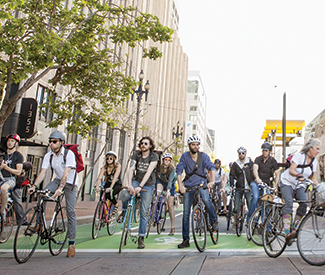
“Bike to Work Day” Citywide, SF; sfbike.org/btwd. All day, free. Celebrate the 20th anniversary of Bike to Work Day by pedaling to work. The SF Bicycle Coalition hosts 26 “Energizer Stations,” as well as bike safety classes and other related events.

“Frankly Speaking: A Book Party!” Take 5 Café, 3130 Sacramento, Berk; www.eroplay.com. 7-9pm, free. A celebration of the life and work of performance artist Frank Moore.

“The Secret Lives of Microbes: Amoeba in the Room” Koret Auditorium, SF Public Library, 100 Larkin, SF; www.calacademy.org. 6pm, free. Botanist Nicholas P. Money discusses microbial biodiversity.

FRIDAY 9

Sophia Amoruso Books Inc., Opera Plaza, 601 Van Ness, SF; www.booksinc.net. 7-9pm, free. The founder and CEO of popular online fashion retailer Nasty Gal shares her debut book, #GIRLBOSS.

SATURDAY 10

“Fillmore Spring Fling” Check in at Kiehl’s, 1971 Fillmore, SF; fillmoreparty.eventbrite.com. 1-5pm, $20. Fillmore Street’s merchants (including boutiques like Alexis Bittar, Benefit, James Perse, Steven Alan, etc.) combine forces for this raffle giving away gift certificates, wine tastings, yoga classes, and more.

“I Was a Teenage Zombie Prom” El Rio, 3158 Mission, SF; www.sfzombiebar.com. 9pm, $10. Get gussied up in your finest zombie-prom attire (tiaras, pouffy gowns, brrraaaaiiiinnnsss) and raise money for AIDS LifeCycle by enjoying performances by Ana PocaLips, Johnny Rockitt, Rita Dambook, Florence Frightengale, and others.

“Red Bull Ride + Style” Justin Herman Plaza, Embarcadero at Market, SF; redbull.com/ridenstyle. 11am-4pm, free. Fifty of the world’s best fixed gear racers and freestylers compete in this annual battle, a spectator-friendly event which also makes use of custom-built, artistically-designed race courses and ramps.

“Valencia Corridor Sidewalk Sale” Valencia St, SF; www.valenciastsf.com. All day, free. The merchants of Valencia and its adjacent streets (826 Valencia, BellJar, Mission Bicycle Company, Paxton Gate, etc.) offer deals and specials.

“Writers with Drinks” Make-Out Room, 3225 22nd St, SF; www.writerswithdrinks.com. 7:30pm, $5-10. With Bich Minh Nguyen, Ariel Gore, David Winter, and Baruch Porras-Hernandez.

SUNDAY 11

Nike missile site tour Park at Marin Headlands Visitors’ Center (meet at missile site gate), 948 Fort Barry, Sausalito; RSVP required to ragtiming@comcast.net. 11:15am, free. Congregation Kol Shofar presents this private tour by a Golden Gate National Recreation Area ranger, visiting the historic, Cold War-era Nike missile site. All ages and nonmembers welcome.

MONDAY 12

“Anarchism: Its Past, Present, and Future” Global Exchange, 2017 Mission, SF; (510) 776-2127. 6:15pm, free. Panel discussion with Ramsey Kanaan (AK Press and PM Press), Liz Highleyman (journalist and historian), and Joey Cain (Bound Together Bookstore, LGBT activist).

“The Story of the Human Body” California Academy of Sciences, Tusher African Hall, 55 Music Concourse Dr, Golden Gate Park, SF; www.calacademy.org. 7pm, $12-15. Biologist Daniel Lieberman discusses the major evolutionary transformations that have shaped the human body.

TUESDAY 13

“Brown vs. Board of Education at 60: Examining Racial Equity in SF in Education” California Historical Society, 678 Mission, SF; www.californiahistoricalsociety.org. 6-8pm, free. San Francisco Human Rights Commission, Lawyers’ Committee for Civil Rights, USF School of Education, and Coleman Advocates present this conversation honoring the 60th anniversary of the Brown v. Board of Education court decision.

“Litquake’s Epicenter: Kaui Hart Hemmings and Michelle Richmond” Hotel Rex, 562 Sutter, SF; www.litquake.org. 7pm, $5-15. Hemmings (The Descendants) discusses her latest book, The Possibilities, with Michelle Richmond, author of Golden State.

“Odd Salon Presents: Evolve” DNA Lounge, 375 11th St, SF; www.oddsalon.com. 7pm, $15. Speakers Danielle Vincent, Chris Ventor, Chris Carrico, and Chris Reeves share stories of change and adaptation. *


Needs salt

0

cheryl@sfbg.com

FILM Foodie movies — a perennially popular genre, thanks to standard-bearers like 1996’s Big Night and 1994’s Eat Drink Man Woman — are having a particularly heady moment. There’s Steve Coogan and Rob Brydon’s travelogue The Trip to Italy — as full of hilarious impressions as it is delectable pasta dishes — which screened to appreciative crowds at the San Francisco International Film Festival; and Jon Favreau’s food-truck comedy, Chef, poised to open locally May 16 after taking the audience award at Tribeca.

Beyond narrative films and documentaries (see: 2011’s hugely popular Jiro Dreams of Sushi), there’s intense interest in celebrity chef culture, which has crossed over into pop culture with the success of shows like Top Chef and Anthony Bourdain: Parts Unknown, not to mention gossip sites’ breathless reporting on food trends (is the cronut craze over yet, or what?). In late April, Copenhagen’s Noma was named numero uno among the San Pellegrino World’s 50 Best Restaurants, aka “the Oscars of fine dining,” per CNN. But no restaurant was more lauded in its lifespan than Ferran Adrià’s legendary El Bulli, which closed in 2011. Naturally, someone made a documentary about the joint — on Spain’s Costa Brava — and now there’s Tasting Menu, an ensemble Euro-comedy that takes place at “Chakula,” a 30-seat restaurant on Spain’s Costa Brava that’s about to serve its final meal.

Why is the apparently successful Chakula closing? Gorgeous chef Mar (Vicenta N’Dongo) isn’t saying, nor is she revealing the final menu — and neither is director and co-writer Roger Gual (2002’s Smoking Room). We catch glimpses of artfully plated dishes as they’re assembled in the kitchen and whisked around the seaside dining room (and get one descriptor: “Snail caviar”), but this ain’t Like Water for Chocolate-level cooking porn. Gual is mostly concerned with the diners themselves, all of whom are rich, well-connected, or lucky enough to have scored the most exclusive reservation on the planet. Alas, there’s not a truly compelling personality among them, though an impish widow (Fionnula Flanagan) who dines with an urn containing her husband’s ashes, and a mysteriously morose man (Stephen Rea) who may or may not be a food critic, come the closest. (The Spain-set movie was mostly filmed in Ireland, hence the presence of these Irish stars.)

Elsewhere, there’s estranged couple Rachel and Marc (Claudia Bassols and Jan Cornet, the latter last seen undergoing an epic transformation in 2011’s The Skin I Live In) whose passion is reignited in the presence of snail caviar; a nervous maître d’ (Andrew Tarbet) charged with overseeing the top-secret surprise dessert; a pair of grouchy Japanese businessmen who are competing to take over the restaurant after Mar steps aside; and assorted other stereotypes and rivals tossed in to bring tension to what’s essentially a pleasant-yet-woefully-unexciting dinner party, filled with guests who linger much longer than they should. Last-act excitement enters, kinda, when a boat sinks just offshore and the assembled company rushes to help, but by then there’s no saving Tasting Menu, whose blandness comes into face-slapping focus when Flanagan’s character counsels the romantically confused Rachel to “just follow your heart” and that “there’s nothing more precious than freedom.” Burrrrp. *


TASTING MENU opens May 16 in San Francisco.

Skin deep

1

arts@sfbg.com

FILM A 1779 painting commissioned by the First Earl of Mansfield (and now owned by the present one) portrays two young women near a lake. One faces us formally, composedly, suggesting the posture held over hours of sitting in the (unknown) artist’s studio; but the other, whose arm she grasps, is tilted forward in motion, wears an exotic feathered turban and plunging neckline, with one hand rakishly cradling a cheek. The contrast is all the more striking because the former lady is white and the latter black, yet the image lacks any typical indicator that their relationship was a master-servant one. Indeed, they give every appearance of simply being friends.

Without that canvas, history might have entirely forgotten Dido Elizabeth Belle, who’d been born 18 years earlier in the West Indies to Sir John Lindsay, an admiral of the British Navy, and Maria Belle — who may have been an African slave captured from the Spanish in Havana. At some early point Dido was deposited in England, to the care of Lindsay’s childless aunt and uncle. Little is known about the decades she spent in their household, during which time her father passed away. But interestingly, the great-uncle she was primarily raised by was also Lord Chief Justice at a time when there was increasing public pressure for the Empire to end its participation in the lucrative global slave trade. He eventually made court decisions that at least began turning the English legal tide against that cruel institution.

His life is much better chronicled than that of illegitimate ward Dido, so in focusing on her experience, the new costume drama Belle is by necessity largely an imaginative fiction. This handsome piece directed by former actress Amma Asante and written by Misan Sagay offers all the conventional satisfactions of Masterpiece Theatre-type cinema, involving as it does well-dressed aristocratic intrigue in fabulous settings. But while Belle is just a thoroughly satisfying rather than truly inspired example of the genre, it benefits from having more on its mind than romance and royalty: Taking place in an almost absurdly rarefied, privileged circumstance, particularly as compared to the institutionalized brutality shown in something like 2013’s 12 Years a Slave, it nonetheless also makes us confront the injustice of rating one class of person beneath another.

Entrusted with all naive good intentions by dashing, kind Lindsay (Matthew Goode) to previously unmet relatives after her mother’s death, young Dido (Lauren Julien-Box) suffers the inevitable culture shock. But she’s not half as shocked as her new minders, who sputter “But … she’s black!” before dad promptly sails off again. Nonetheless, Lord Mansfield (Tom Willkinson), Lady Mansfield (Emily Watson) and live-in spinster sibling Lady Murray (Penelope Wilton) endeavor to raise this child as they would any other — like Elizabeth (Cara Jenkins), another illegitimate family offspring they’ve been stuck with. The two girls become inseparable, and so long as they stay within the enormous estate’s bounds, they are equals.

But once they reach marriageable age, their differently disabled social statuses become hard to ignore. Both are beautiful and well-bred, yes. But quiet, intelligent Dido (Gugu Mbatha-Raw) is heiress to a fortune, one that might tempt suitors even as her skin color makes her very existence a sordid scandal for some. Meanwhile, Elizabeth (Sarah Gadon) is blonde, vivacious, and penniless, which makes her pretty well useless in this milieu where blue blood is prized, yet in reality held less valuable than cash money. Undesirable to their alleged peers, and barred by propriety from marrying “beneath” them, they seemingly cannot marry at all — and what other role is left them in this era, besides the unhappy spinster-housekeeper one Lady Murray endures? Among those dangling possible solutions — albeit sometimes treacherously — are two bachelor sons (James Norton, Harry Potter villain Tom Felton) of the icy Lady Ashford (Miranda Richardson), and a more humbly born legal apprentice (Sam Reid) who hopes to sway Judge Mansfield toward the abolitionist cause.

Belle does indeed sometimes commit the sin of forcing post-Civil Rights morality and other very modern mindsets on characters who would hardly be so advanced in the late 1700s. But that seems forgivable in this context, given that a movie that fully internalized Dido’s perceived racial inferiority would be too bleak to provide any of this one’s Jane Austen-esque pleasures. (Besides, there is some admittedly sketchy evidence that the real Dido was educated and otherwise treated as an equal within her immediate family circle, not to mention unthinkingly obeyed by their servants.)

There’s a fairy-tale appeal to the lovely, deft leads, a familiar satisfying dastardliness to their foes, and of course no end of scene-stealing from the support-cast veterans. Unlike a movie such as 1999’s Mansfield Park or the awful Reese Witherspoon Vanity Fair (2004), the weightier external historical issues aren’t clumsily shoehorned into existing texts. Belle gets to address both fancy-dress love stuff and the grotesque injustice of a “civilized” world built on slavery because, in this stranger-than-fiction instance, the two are more or less evenly relevant. Which makes this a guilt-free teacake of its type, one you can have and eat, too. *


BELLE opens Fri/9 in San Francisco.

The fight for a higher minimum wage: SF vs. Seattle

On May Day, Seattle Mayor Ed Murray proposed raising the city’s minimum wage to $15 an hour.

As a point of comparison, this proposal would put Seattle minimum-wage earners in the position of only having to devote 46 percent of their total pre-tax income toward rent (based on median monthly rental prices) instead of 63 percent.

Here in San Francisco, the Coalition for a Fair Economy is also seeking to raise the municipal minimum wage, by filing for a measure for the November ballot. The proposal would raise the minimum wage from the current $10.74 per hour to $15 an hour, increasing minimum wage earners’ annual salaries from $22,339 per year to $31,200.

“With the growing national movement to lift up wages in our poorest communities, now is the time to be fighting for a $15 minimum wage in San Francisco,” said Political Action Chair Alysabeth Alexander of SEIU 1021, the service workers’ union that is backing the measure. “I am especially fueled by stories of my co-workers facing homelessness despite working full-time jobs as service providers housing the homeless.”

Median rent in Seattle is $1,190. Median rent in San Francisco is $3,200.

Returning again to these median rental price listings, this $15 an hour proposal on the San Francisco ballot would make it so that San Francisco minimum wage earners would only have to work 1.23 minimum-wage jobs to in order to devote 100 percent of their pre-tax income toward rent, versus 1.7 minimum wage jobs under the current rate.

Er, wait. In order to pay for frills (like food), they would probably have to pick up a second job after all. That does sound a bit exhausting, doesn’t it?

Now the Seattle mayor’s propsal is pretty damn complicated, and socialist City Councilmember Kshama Sawant, whose successful campaign was based on the idea of raising the minimum wage to $15, is working with a group to gather signatures for an initiative to pass an immediate increase to $15 for the November ballot. But it’s worth noting that when Murray floated his $15 an hour proposal, he identified the growing gap between the rich and poor as a major societal problem, saying this increase would “improve the lives of workers who can barely afford to live” in Seattle.

While San Francisco Mayor Ed Lee has expressed support for a minimum wage increase, he’s not backing the idea of a $15 per hour minimum wage per se.

“I said I was open to up to $15 an hour,” Lee said in a recent interview on KQED’s Forum to clarify his stance, “and I didn’t state a number at the beginning.”

Instead, Lee has convened a task force with groups such as the San Francisco Chamber of Commerce, small business, nonprofits, and others to discuss a minimum wage increase. Calls to the SFCOC, to find out what other (presumably lower) hourly wage amounts are being discussed, haven’t yet been returned. But stay tuned as we continue to follow the issue.

When Krasny asked Lee about whether he would invite SEIU 1021 to the table, Lee responded, “They’re invited! They’re the ones who actually put a number out and then told everybody to catch up with it. I don’t think that’s the way to get it done.”

Take to the sky

0

arts@sfbg.com

DANCE With world premieres by Amy Seiwert and Val Caniparoli, and the late Michael Smuin’s affectionate tribute to George Gershwin, Smuin Ballet closed its 20th anniversary season with fine choreography, good music, excellent performances, and, most of all, an intelligent perspective of what ballet in the 21st century has to offer. Today Smuin is a thoroughly contemporary troupe with a promising vision of what it wants to be.

Caniparoli set his full ensemble piece, Tutto Eccetto il Lavandino (everything but the kitchen sink), to a number of Vivaldi scores, including at least one for pipe organ. The work is accurately named. The emotional range slithered between goofy and poignant, refined and raucous. At times, the attempts to be clever and amusing at all costs could have been a little more restrained. But as a whole, the variety of approaches Caniparoli took made for an appealing new work.

Still a character dancer with the San Francisco Ballet despite his 30 years of experience choreographing all over the country, Caniparoli created a lively, unpretentious romp for 16 dancers, balancing smaller, more emotionally-flavored sections with full ensemble numbers. Unlike other contemporary ballet choreographers, who seem to feel that the toe shoe is hopelessly passé, Caniparoli put his women on point. They were completely at ease engaging in his more complex approach to working feet.

Some of the gestural language — stepping through a ring created by arms, crawling between legs, covering ears, torso shakes, flailing arms — looked like movie silliness, but mostly still charmed because everything grew so clearly out of the music.

Caniparoli has a nuanced touch with duets and trios. He also takes full advantage of today’s athletically trained dancers; the women are lifted, slid, and turned over and upside down in every way. The ever-shifting relationship between Terez Dean, Aidan DeYoung, and Weston Krukow felt congenial. More romantic was the duet for the long-limbed and beautifully matched Jane Rehm and Joshua Reynolds. Another, for Ben Needham-Wood and Christian Squires, initially seemed contentious, but ended by looking toward a possibly common future.

Seiwert’s But Now I Must Rest is an exquisite and embracing tribute to the late Cape Verde singer Cesária Évora. It is a work in which Seiwert takes a more theatrical dramatic approach to dance making than usual. But Now is a beautifully realized piece of choreography, performed by dancers in tune with Seiwert’s vision. It showcases the very fine Susan Roemer, one of Smuin’s longtime dancers, in the role of the “barefoot diva” who, by choosing to perform without shoes, paid tribute to the millions of women who cannot afford them. The solicitous Reynolds partnered her sometimes lovingly, sometimes just by holding her up. He seemed a friend, a lover, a guide.

Using as raw material gestures and movements from Évora’s performances — researched with the help of dancer Katherine Wells — Seiwert created wave after wave of lush and sensuous dancing that flooded the stage. Sometimes it enveloped Roemer and Reynolds; sometimes it served as a foil, much the way backup musicians might function; and sometimes the dancers embraced each other as a community. And everything was performed to those lilting beats and rocking rhythms.

A lightly skipping trio (Dean, Jonathan Dummar and Krukow) streaking across the stage suggested happier times, but Christian Squires’ ashen solo dragged him down with grief. It was a risk to actually have him weep, but he brought it off.

The production values were excellent. Sandra Woodall’s earth-toned costumes, with bustiers for the women and, for everyone, floor-length skirts with slits to the hip, allowed for freedom of movement and highlighted working legs. Brian Jones’ azure lighting suggested a view one might glimpse, gazing out from an island.

The excerpts from Smuin’s full-evening Dancin’ with Gershwin threw a spotlight on a man of the theater, at home in ballet but also in love with Broadway. When he created the work in 2001, Smuin commissioned the still impressive costumes from the excellent Willa Kim; lighting from Sara Linnie Slocum; and serviceable sets by Rick Goodwin. Dancin’ opened with video posters from the shows by the redoubtable Gershwins; they elicited both sighs and cheers from the audience.

It’s a rare company that offers its performers opportunities in ballroom, ballet, tap, jazz, modern, and show dancing. Smuin’s troupe took to the challenge with obvious glee. Erin Yarbrough swooned and triumphed with Krukow. Supported by guys with strippers’ fans, Erica Felsch relished being the vamp, though she was no competition to Marilyn Monroe. A poignant Rehm’s pained but resilient “Summertime,” as sung by Peter Gabriel, recalled the whole of the composer’s glorious Porgy and Bess. With Shannon Hurlbut, still a respectable tapper, at the helm, the dancers click-clacked through the final “Shall We Dance.” If that was a question, the answer was a resounding “Yes!” *

XXCENTRICS SPRING DANCE SERIES

Wed/7-Sat/10, 8pm (also Sat/10, 2pm); Sun/11, 2pm, $24-$64

Yerba Buena Center for the Arts

700 Howard, SF

smuinballet.org/xxcentric

Performances continue through June 7 at various Northern California venues.


Political power play unseats SF Police Commissioner

0

Police Commissioner Angela Chan fought the federal government as they unjustly tried to deport undocumented San Franciscans who were guilty of no crimes, and won. She fought to arm the SFPD with de-escalation tactics instead of Tasers, and won again.

But at the April 30 Board of Supervisors meeting, Chan lost. The board denied her reappointment to the Police Commission, and seven supervisors voted to appoint her opponent, Victor Hwang, instead.

The decision came after heated backdoor politicking by Chinatown political leader Rose Pak, insiders told us. Politicians involved would only speak on background, for fear of reprisal from Pak, yet indicated that Pak felt Chan did not consult often enough with Chinatown interests and focused too broadly on issues of concern to other communities.

Chan gained national recognition for her work against Secure Communities, challenging a provision that allows U.S. Immigration and Customs Enforcement to call for illegal holds of undocumented persons they’d later like to deport. Pak came out swinging against Chan in the wake of those battles, we were told.

“It’s a sad day for the immigrant rights movement when a strong leader cannot be reappointed,” Sup. Eric Mar said just before the vote.

After Sup. Katy Tang introduced the motion to strike Chan’s name from the appointment, and replace it with Hwang’s, other supervisors noted the obvious elephant in the room — there was not only one vacant seat on the police commission, but two.

Supervisor John Avalos suggested the Board of Supervisors make a motion to request the mayor appoint Hwang himself, allowing for both Chan and Hwang to be appointed.

But Board of Supervisors President David Chiu said he’d asked Mayor Lee that very question to no avail. “It is not something that will happen,” he said. “It is not the practice of the mayor to solve difficult decisions of the board. It’s up to us.”

Sups. Mark Farrell, Scott Wiener, Malia Cohen, London Breed, Jane Kim, Tang and Chiu voted to strike Chan’s name from the appointment, and to vote to appoint Hwang instead. (Joe Fitzgerald Rodriguez)

LAWSUIT FILED TO HALT TECH SHUTTLE PILOT

The road to regulating Google Buses has a new pothole: a lawsuit.

A lawsuit filed in San Francisco Superior Court May 1 demands the San Francisco Municipal Transportation Agency’s commuter shuttle pilot program be put on hold while a full environmental review is conducted under the California Environmental Quality Act.

“We know that these buses are having devastating impacts on our neighborhoods, driving up rents and evictions of long-time San Francisco residents,” said Sara Shortt, executive director of the Housing Rights Committee of San Francisco and one of the lawsuit petitioners. “We’ve protested in the streets and taken our plea to City Hall to no avail. We hope to finally receive justice in a court of law.”

The suit was filed against the City and County of San Francisco, Mayor Ed Lee, the Board of Supervisors, the SFMTA, Google, Genentech, Apple, and a handful of private transportation providers. It alleges the tech shuttle pilot project is in violation of the California Vehicle Code, which prohibits any vehicle — except common carriers (public buses) — to pull into red zones that are designated as bus stops. It also alleges the city abused its discretion and violated the CEQA by exempting the Shuttle Project from environmental review. (Joe Fitzgerald Rodriguez)

ILLEGAL ANTI-CAMPOS FLYERS TARGETED IN ETHICS COMPLAINT

Several San Francisco neighborhoods over the last week have been targeted with illegal campaign flyers against Assembly candidate David Campos — breaking both state election laws requiring the group and its funding source to be identified and local laws against placing political flyers on utility poles and other surfaces.

Former Ethics Commission Eileen Hansen this week filed a complaint about the guerilla campaigning with the California Fair Political Practices Commission, which has jurisdiction over state races.

“I am asking for the intervention of your office into what appears to be a blatant and arrogant violation of campaign finance reporting and disclosure laws in California’s 17th Assembly District Primary Election,” Hansen wrote in the April 30 letter. “As you well know, the political climate in San Francisco is quite sensitive, and nerves are raw. If this violation is allowed to continue, it will have a chilling effect on the entire election and further alienate voters, and potential voters.”

The race between Campos and David Chiu has indeed gotten more heated in recent weeks, but Chiu campaign manager Nicole Derse denies that the campaign has any knowledge or involvement with the illegal campaigning: “We think everyone in this race should be transparent.”

In her letter, Hansen casts doubt on the Chiu campaign’s claims of innocence: “The wide distribution, professional design, and overnight appearance in distant locations strongly suggest that these flyers have been produced and distributed by a funded political organization aligned with Assembly candidate David Chiu, whose aim is to attack and discredit Chiu’s opponent David Campos.”

And she even identifies a leading suspect in this illegal campaigning: Enrique Pearce and his Left Coast Communications firm, which has a history of dirty tricks campaigning on behalf of Mayor Ed Lee and other establishment politicians. Hansen notes that the flyers appeared right after the registration of a new campaign committee, San Franciscans for Effective Government to Support David Chiu. Although the group hasn’t reported any fundraising yet, its contact phone number goes to Left Coast Communications and Pearce, who hasn’t yet returned our calls on the issue.

This campaign stunt in reminiscent of an “independent expenditure” effort in the District 6 supervisorial race in 2010, when Pearce was connected to a mailer supporting Sup. Jane Kim that was funded partially by Willie Brown, again because the supposedly independent group listed his phone number even though he was worked directly for Kim.

The anti-Campos mailers include some nasty and misleading charges, labeling Campos “City Hall’s Hypocrite” by falsely claiming Campos ignored rising evictions until he decided to run for the Assembly and that he was concerned about Google buses but wanted to charge them less than $1 per stop. A third flyer claims Campos “lets wifebeater sheriff keep his job” for his vote against removing Sheriff Ross Mirkarimi from office for official misconduct.

“This is a secretly funded shadow organization aligned with David Chiu, committing a desperate move that is as illegal and it is false in its claims,” Campos told us, saying he hopes the FPPC is able to stop and punish those involved. (Steven T. Jones)

SUPES CALL FOR INCREASED YOUTH FUNDING

José-Luis Mejia says he’s seen a little bit of everything in his work with transitional-age youth.

A few have died suddenly; others wound up incarcerated. Then there are those who beat the odds by attending top-level universities, opening up their own businesses, or dedicating themselves to public service.

As associate director of Transitional Age Youth San Francisco, Mejia was part of a grassroots coalition that has been working for about two years on crafting a measure that aims to increase funding for youth programs, seeking to give a boost to transitional-age youth services in particular.

It culminated with the April 30 introduction at the Board of Supervisors of a suite of new proposals to support youth programs, including a pair of charter amendments that will appear on the November ballot.

An amendment sponsored by Sup. John Avalos would renew the existing Children’s Fund, renaming it the Children and Youth Fund, and increasing the property-tax set-aside that supports it from three cents per $100 of assessed valuation to five cents. Funding would be designated for programs set up to aid “disconnected transitional-aged youth,” including homeless or disabled youth, unmarried parents, those who identify as LGBTQ or are aging out of foster care, and other specified categories. The amendment would also create a Commission on Children, Youth, and Their Families, to oversee the Department of Children Youth and their families. A second charter amendment would extend the Public Education Enrichment Fund (PEEF), another source of funding for youth programs.

Avalos has strong support on the Board, but the mayor’s office has reportedly been pressuring supervisors not to support Avalos’ measure.

“As we all know, San Francisco is experiencing incredible economic activity,” Avalos noted April 30. “We’re experiencing growth and speculation that is lifting many boats, but not lifting all boats. And some of the people who are not doing so well are children and families.”

The Children’s Fund, and PEEF currently set aside over $100 million for children and youth in San Francisco. The funding sources would sunset if action were not taken to extend them. (Rebecca Bowe)


Alerts: May 7 – 13, 2014

0

THURSDAY 8


12th Annual Human Rights Awards

Palace of Fine Arts, 3301 Lyon, SF. www.humanrightsaward.org. 6-8:30pm, $115. Each year, the Human Rights Awards honors the inspiring individuals and organizations who create radical change and real democracy. This year, we are honoring the 50 year anniversary of the Freedom Schools, anti-GMO activist María Estela Barco Huerta, and the Cuban Five, Cuban intelligence agents arrested in the United States while infiltrating anti-Castro organizations openly plotting attacks against the Cuban people. The evening will feature dining, dancing, and a presentation of the awards.


Wise Latinas: Writers on Higher Education

Modern Times Bookstore, 2919 24th St., SF. www.moderntimesbookstore.com. 7-9pm, free. For some Latinas, college, where they are vastly underrepresented, is the first time they are immersed in American culture outside their homes—and where the values of two cultures often clash. Wise Latinas: Writers on Higher Education is an anthology exploring this experience. This event will feature four Bay Area based contributors to anthology — Blanca Torres, Ingrid Rojas Contreras, Erika Martinez and Yalitza Ferreras. Join us to hear more about the anthology and a discussion.


FRIDAY 9


Dirty Energy, Clean Solutions: Climate Conference 2014

Unitarian Universalist Church, 1187 Franklin, SF. www.350bayarea.org. 7-9:30pm, $30 or $23 for students. Friday night will be the kick-off event for a three day interactive conference that will feature activists and leading scientists addressing technical and political climate topics in the Bay Area and beyond. Topics to be addressed include fracking, fossil fuels, and clean energy solutions, plus workshops and training sessions on how to live green. Expert scientists and activists will present cutting-edge information that will significantly raise our effectiveness as climate activists.


SATURDAY 10


Public Update and Open House on Ocean Beach Projects

County Fair Building, 1199 9th Ave., SF. www.spur.org. 9am-12pm, free. The Ocean Beach Master Plan, a vision for San Francisco’s western coast, recommends ways to improve coastal access, restore ecological function and protect critical infrastructure in the face of chronic erosion and sea level rise. Three projects — addressing coastal management, transportation, and open space — are currently underway to carry those recommendations forward. The project teams will be on hand to discuss their work and get your ideas and feedback.


TUESDAY 13

Examining Racial Equity in SF Education

California Historical Society, 678 Mission, SF. brownvboardat60.eventbrite.com. 5-8pm, free. Join the San Francisco Human Rights Commission, the Lawyers’ Committee for Civil Rights, the University of San Francisco School of Education and Coleman Advocates for Children and Youth for a conversation honoring the 60th Anniversary of the Brown v. Board of Education court decision. The event will focus on the continuing legacy of Brown v. Board of Education and the successes and continued challenges of achieving racial equity in the San Francisco schools. The evening will include historical context, student reflections, and an interactive panel discussion.

Chiu for Assembly

106

OPINION

San Francisco is at a crossroads. While some residents benefit from prosperity, an affordable housing crisis coupled with income inequality make this a time of struggle for other San Franciscans.

Our inclusive, diverse culture that has historically made San Francisco a haven for artists, immigrants, and innovators is at stake. Given this, effective progressive leadership is critical to ensuring that our city remains a place where all San Franciscans can afford to live and prosper. That’s why I urge you to vote for my friend, President of the Board of Supervisors David Chiu, to represent San Francisco in the California State Assembly.

As president, David has demonstrated an inclusive, unifying leadership style that has had a transformative impact at City Hall. He really listens to everyone, and brings people together to address our city’s most critical challenges. He combines rock solid progressive values with a fervent drive to do more than talk — to actually get the big stuff done.

The proof is in the pudding: he’s passed more pieces of legislation than any other current supervisor in every major policy arena, and his colleagues have elected him president three times.

David has delivered consistently on our city’s most critical issue: affordable housing. A tenant in San Francisco himself for the past 18 years, David has fought to protect and expand affordable housing across the city, leading efforts to build more housing for homeless veterans, transitional age youth, and seniors.

He supported rebuilding dilapidated public housing projects that have been in total disrepair. He has supported the strengthening of habitability standards in housing across the board. He led the charge to create a 10-year moratorium on condo conversions and to prioritize victims of Ellis Act evictions for our city’s affordable housing opportunities.

After multiple failed attempts by supervisors over two decades, he passed legislation to finally legalize in-law units, preserving one of our city’s largest existing stocks of affordable housing. David will continue to work to stem San Francisco’s affordable housing crisis in the Assembly, including pushing hard to reform the Ellis Act.

David has been a leader on a host of other important issues. An avid biker who doesn’t own a car, David has spearheaded groundbreaking environmental legislation, banning the sale of plastic water bottles on city property, expanding urban agriculture, and prohibiting the delivery of unwanted Yellow Pages. He’s increased funding for community arts, an issue close to my heart as an artist. He has championed language access for our city’s immigrants, and fought for the reunification of LGBT immigrant families.

Under his leadership, San Francisco is the first city in the country to establish the right to civil counsel for low-income residents being denied basic human rights such as housing, as well as to give workers the right to request flexible and predictable working arrangements to take care of their families. He passed progressive business tax reform that will bring $300 million of new revenues over the next decade.

When it comes down to it, we have two Assembly candidates, David Chiu and David Campos, who share the strongly held progressive values of the Guardian’s readers. I am a longtime supporter of the Guardian and have valued its endorsement in my previous races. The difference lies in style and effectiveness.

I know how urgently San Francisco needs a leader in the Assembly who can bring people together to get significant things done. The challenges and opportunities our city faces demand it. I know David Chiu can do this because he has done it, over and over again, in five and a half remarkably effective years of progressive leadership on the Board of Supervisors.

Please join me in supporting David Chiu for State Assembly.

Debra Walker is an artist who serves on the Building Inspection Commission, recently reappointed to that seat by David Chiu.

Watching the police

2

rebecca@sfbg.com

Nearly two years ago, on July 18, 2012, on-duty San Francisco police officer Mary Godfrey fired her weapon twice, killing 32-year-old Oakland resident Pralith Pralourng in an encounter at Washington and Davis streets.

Following the incident, police said Pralourng was mentally ill and had lunged at Godfrey with a box cutter, prompting her to fire in defense of her own life. Just before it happened, Pralourng had slashed his coworker at Tcho chocolate factory and fled.

Last September, the San Francisco Police Department honored Godfrey with a silver medal of valor for her conduct in that incident. The second-highest possible honor, silver medals are awarded in cases where an officer exhibits “outstanding bravery in the performance of duty,” according to a definition on the SFPD website, and “risks his or her life with full and unquestionable knowledge of the danger involved.”

However, an internal affairs investigation into the officer-involved shooting remained open at the time that the medal was awarded. In fact, in a May 5 voicemail, police spokesperson Albie Esparza confirmed to the Bay Guardian: “That case is still open, so there is no more information that we are going to release at this time.”

More than eight months have passed since Godfrey was honored — and yet the shooting is still under investigation.

The San Francisco Police Commission voted to approve Godfrey’s silver medal, along with a list of other medal of valor recipients, at its June 26, 2013 meeting. But it was Commissioner Angela Chan, who was recently denied reappointment to her post in a 7-4 vote by the Board of Supervisors, who cast the lone dissenting vote (See “SFBG Wrap” in this issue).

Chan was later quoted in press reports as saying she believed that awarding Godfrey with a medal of valor before the formal investigative process had concluded seemed to undermine that process. Internal affairs investigations are part of the city’s formal process to ensure police accountability. San Francisco also has an independent city department, the Office of Citizen Complaints, which provides civilian oversight by making determinations about citizen complaints alleging officer misconduct.

Chan’s dissenting vote prompted a backlash from the San Francisco Police Officers Association. In a blistering letter dated September 11, 2013, President Martin Halloran informed police commissioners of the POA’s “extreme disappointment” in the dissenting vote, also sending a copy of the letter to Mayor Ed Lee.

“Officer Godfrey was extremely upset when I met with her and immediately voiced her regret at having to take the life of another human being,” Halloran wrote. “It is every officer’s worst nightmare. The emotional and psychological trauma following an officer involved shooting can be severe, and it is absolutely essential that officers involved in these types of incidents receive positive reinforcement, as well as counseling, to reassure them that they did nothing wrong.”

Counseling seems appropriate, but Halloran’s blanket statement that officers involved in deadly use of force incidents should be reassured that “they did nothing wrong” seems to discount the city’s process for determining whether or not an officer’s action was justified.

The SFPOA president went on to note that his organization has long complained that “officers are left hanging for months, and in some cases years, before being recognized for their heroic acts, sometimes making them feel more insecure and raising more self-doubts about their actions.”

The SFPOA’s overt condemnation of Chan for her dissent suggests that the police commissioner faced strong opposition from a politically powerful entity when she came up for reappointment.

More importantly, it suggests that the SFPOA won’t hesitate to exert pressure on police commissioners who question the department’s actions — and raises questions about why top brass would ignore an open investigation that had yet to establish whether Godfrey “did nothing wrong.”

Internal affairs investigators weren’t the only ones looking into this fatal shooting of Pralourng. The OCC, the civilian police oversight board, was also investigating the incident when Godfrey was honored. Almost two years after the fact, the OCC investigation also remains open.

The OCC’s annual report, released March 12, was slated for presentation at the Police Commission on May 7. The 179-page report shines a light on the allegations filed against police officers, the process by which these complaints are investigated and addressed, and the rate at which complaints are sustained and followed up with disciplinary action.

Being a police officer isn’t easy, and can be very dangerous — even costing officers their lives in extreme circumstances. The OCC report notes that 75 percent of San Francisco police officers did not have any complaints filed against them in 2013. But of the remaining 25 percent, the report noted that 131 officers had been named in two or more complaints, while another 405 officers had each been flagged in a single complaint.

If the OCC determines that a complaint about officer misconduct is valid, then it is counted as “sustained.”

In 2013, according to the report, the OCC received 727 complaints, and closed 722 complaints. Of the 722 that were closed, 43 — or about 6 percent — were sustained. Of those sustained cases, 91 percent resulted in corrective or disciplinary action by the SFPD, the report noted, ranging from a verbal admonishment to a suspension.

Of the 43 cases that were sustained, 56 percent were for “neglect of duty,” the majority of which was issued for failure to collect traffic stop data. That was followed by “unwarranted action” at 24 percent, “conduct reflecting discredit represented” at 10 percent, “unnecessary force” at 7 percent, and “discourtesy” at 3 percent.

A synopsis of the “unnecessary force” findings provides examples, such as an incident in which “a sergeant and officers used unnecessary force when without cause, they entered a residence, grabbed, detained, arrested and removed an occupant from the residence, and took him to the ground.”

But according to the report, “By far the most frequent finding in all allegations was ‘not sustained,'” reflecting the outcome of 61 percent of allegations in OCC complaints.

The determination “not sustained” isn’t the same as finding that an officer acted appropriately, nor does it mean a complainant made false allegations. Instead, the finding is issued when “there is not a preponderance of evidence to prove or disprove,” the allegation, OCC Executive Director Joyce Hicks told us.

Put more simply: An officer responds to a complainant with a contradictory account, and since there isn’t enough evidence to prove otherwise, the case is closed.

“Officers were found to have engaged in proper conduct in 25 percent of the allegations,” the breakdown continued. “Complainants’ allegations were ‘unfounded,’ or not true, in 2 percent of the allegations.”

A chart of “findings closed” in 2013 (a separate measure from complaints) showed that out of 2,183 findings, just 72 — or 3 percent — were sustained. The vast majority, 1,337 were “not sustained.”

A breakdown showing the nature of complaints filed reveals that five allegations of unnecessary use of force were sustained in 2013, while 167 were not sustained, out of a total of 208 complaints alleging unnecessary use of force.

At the end of 2013, according to the OCC report, the civilian oversight board “continued to investigate three officer-involved shootings. Two of these shootings resulted in the death of the suspect. In 2013, the OCC closed two 2011 officer involved shooting cases with no sustained findings.”

Hicks noted that she faces budgetary constraints that have prevented her from hiring more investigators, an ongoing problem at the OCC. “We still don’t have the best practices number of cases,” she said, noting that the City Controller had issued a 2007 audit stating that investigators should be handling no more than 16 cases at once, while “my investigators’ caseloads have never fallen below 21.”

Aside from its investigations into citizen complaints, the OCC also makes policy recommendations. Following a number of officer-involved shootings in 2012 involving mentally ill individuals, the OCC issued a set of recommendations on handling responses to individuals experiencing mental crisis — the exact sort of situation that led to Pralourng’s death in 2012.

Samara Marion, an attorney with the OCC, noted that one recommendation pertains to how the Firearm Discharge Review Board, which evaluates whether a shooting was justified, performs its analysis. Rather than merely relying on the internal affairs and homicide reports, Marion said, the OCC recommendation is to “have the training division do an analysis that’s point by point,” so that the determination is made taking into account “all of the decision-making and tactical steps leading up to the officer-involved shooting.”

That work is expected to continue, but as far as the Police Commission is concerned, it will have to go forward without input from Chan, who had planned to take a close look at officer-involved shootings in her next term.

“It was shameful and outrageous what happened, because I was targeted for doing what I believe in,” Chan said later. But she said political pressures has thwarted that goal.

“What happened was not really about me,” she continued. “It was about whether something as important as a civilian police oversight body should be politicized.”


Politics trumps police oversight

4

EDITORIAL

A proven advocate for the public interest was removed from the San Francisco Police Commission last week. Not only was this a missed opportunity for stronger civilian oversight at a time when the San Francisco Police Department is under federal scrutiny, it raises disturbing implications about how things get done in City Hall.

The Board of Supervisors voted to oust Police Commissioner Angela Chan, voting 7-4 to strike Chan’s name from the appointment and replace it with contender Victor Hwang instead. City Hall insiders privately explained that Chinatown power broker Rose Pak, a friend of Mayor Ed Lee who wields great political influence, pressured supervisors to vote for Hwang specifically because she and her allies wanted Chan to be ousted. Supervisors who could not be relied upon to vote for Hwang were even reportedly cautioned that they shouldn’t be too vocal about their positions.

A civil rights attorney who proved effective and independent as a commissioner, Chan often directed pointed questions at police, for example drilling down on the finer details of officer-involved shootings.

Hwang, also a civil rights attorney, is qualified and respected, but he didn’t need to replace Chan. There’s another vacant seat on the commission — up to Mayor Ed Lee to appoint — so this vote was never about Hwang’s qualifications versus Chan’s. There was room for both.

This was about political patronage, pure and simple. It was about getting rid of an independent voice and replacing her with the former chair of the “Run Ed Run” committee, which urged Lee to break his pledge and run for mayor — a tradeoff that hurts police accountability.

Having two civil rights attorneys on the Police Commission would have sent a strong signal that the city is serious about addressing police misconduct at a time when the SFPD officers are facing federal charges for alleged civil rights violations (see “Crooked cops, March 4).

Supervisors should have called upon Lee to appoint Hwang rather than ousting Chan. Instead, the board majority was unwilling to challenge the consolidated power of Lee and his well-connected allies, who conducted an anti-democratic closed-door lobbying effort.

Board President David Chiu, who is running for Assembly, stated at the meeting that he’d asked Lee about appointing Hwang to the vacant seat, only to be told: “It is not something that will happen.”

So Chiu was unwilling to question the mayor’s bizarre refusal to appoint a candidate that Lee’s own allies were furiously advocating for. Instead of pushing for stronger civilian oversight of police, Chiu and six other supervisors voted to oust a commissioner with a proven track record.

If elected officials are casting votes for personal advancement, or out of fear that they’ll be rendered ineffective as punishment for pissing off the wrong people, then San Franciscans have a big problem: Their local government is beholden to the whims of entrenched power.


Waiting for transit

21

joe@sfbg.com

Transit options for wheelchair users and people with disabilities are under threat in the Bay Area, and riders are losing ground on multiple transit fronts.

In late April and early May, hundreds of advocates for those with disabilities took to the streets, protesting BART’s Fleet of the Future, a touring mockup of a new BART trains slated to roll out in 2017.

The trains are a step backward in wheelchair accessibility, among other issues, advocates said.

Just last month, advocates for senior and those with disabilities stormed a San Francisco Municipal Transportation Agency Board of Directors meeting, asking for free Muni for the most economically disadvantaged among them. They were denied based on dollar amounts, while drivers were given an $11 million giveback restoring free Sunday parking meters.

The SFMTA promised to revisit the issue in January. Meanwhile, San Francisco’s wheelchair accessible taxi fleet has seen its drivers flee to so-called “rideshare” companies — whose cars aren’t equipped to carry wheelchairs — causing what officials say is a record low number of wheelchair accessible taxi trips.

Compounding that decision was the SFMTA’s March adoption of its Transit Effectiveness Project, which the agency billed as expanding service by 12 percent and improving the system’s efficiency, but some advocates for seniors and the disabled noted it removed some bus stops, requiring longer walks by those who have a hard time getting around.

The transit troubles cover most of the transportation options available to San Franciscans with disabilities, and that’s the problem.

“We’re one of the most transit-dependent populations,” Peter Mendoza, a community organizer with the Independent Living Resource Center, told the Guardian. He also uses a wheelchair. “Everything we do in our everyday life, we mostly do with public transportation.”

Their needs are simple: getting groceries, seeing a movie, picking up their kids from school. People with disabilities are now in a multi-pronged fight for their right to everyday mobility, and to do so with dignity.


BART’S FLAWED NEW FLEET

A walking tour of BART’s Fleet of the Future shows much is new: computer screens with live GPS updates of the train’s location, triple-bike racks, and redesigned seats. BART Vehicle Systems Engineer Brian Bentley proudly showed us the new touch screens in the driver’s cockpit.

For people with disabilities, the Fleet of the Future is a step backward. Their first beef with BART’s new trains is a simple one: there’s a pole in the way of the door.

Hundreds of disability advocates protested BART’s public tour of its newly redesigned trains just last week, with more protests planned for the future. All they want is the damned pole moved.

The handhold in question features a triple-pronged design: what begins as one vertical metal column branches into three partway off the ground.

“Where the pole is now is in the path of travel for the accessible seating area,” Mendoza said. “People holding onto the poles and the power wheelchairs will be in a sense be trying to occupy the same space.”

BART’s Fleet of the Future will arrive in limited numbers in 2015, and fully roll out by 2017, according to the BART website. BART plans to use the new trains for decades. So will BART move the pole to a different location in the car before then?

“It’s too soon to say,” BART spokesperson Alicia Trost told the Guardian. “That’s why we’re doing outreach.”

Trost told us BART did its due diligence by garnering feedback from the BART Disability Task Force. But the DTF, a volunteer body serving like a consistent focus group, informed BART of the pole-problem years ago.

“From day one, they identified the pole as being a problem,” BART Access Coordinator Ike Nnaji told us. Now, he said, “the pole has been moved slightly.”

The triple column handhold has also been raised since the initial outcry. But advocates say the changes still haven’t solved mobility problems. And lack of BART access would be especially poignant, as the trains are now one of the most seamless public transit trips a wheelchair rider can take, advocates told us.

Unlike a Muni or AC Transit bus, no one needs to strap in a wheelchair user on a BART train. After an elevator ride to the train platform (assuming they’re working), they easily roll onto the train: no muss, no fuss.

“On BART, I can be a regular customer,” longtime disability rights activist Corbett O’Toole told the Guardian. “I can ride it with dignity.”

The wheelchair-using community isn’t the only one with BART concerns. Emergency intercoms have long been an issue with the deaf community, O’Toole told us. The BART train’s new video screen would be a natural place to integrate visual emergency communication, she said.

Trost told us BART is trying to balance the needs of many communities, from bicyclists to folks not tall enough to reach the handholds.

“It’s public transit, you try to help everyone,” she said. But people with disabilities are a group with federal law mandating consideration of their access, Mendoza said.

We asked BART if the agency had specific employees (besides the DTF) in charge of ensuring American with Disabilities Act compliance. BART spokesperson Luna Salaver told us the agency doesn’t have an ADA compliance officer, but its engineering staff and consultants are well-versed in ADA compliance issues.

BART’s board may take a direct vote on disability access modifications to the Fleet of the Future at its May 22 meeting, but that may be subject to change.

While the wheelchair accessibility of the Fleet of the Future is hotly contested, the future of rideshare disability access remains a mystery to most.


RIDESHARE TROUBLES

Regulations task the taxi industry with providing wheelchair accessible cabs, something the rideshares don’t do, at least not yet. And as taxi drivers flee to the more profitable rideshare industry, fewer and fewer wheelchair accessible taxis are being driven in San Francisco.

Worryingly, the newest numbers from the SFMTA paint a portrait of hundreds of stranded wheelchair users. In January 2013, there were 1,379 wheelchair trips via taxi cab, according to numbers provided by the SFMTA, which regulates taxis. This January, that number plummeted to nearly half that.

The drivers just weren’t there. The SFMTA Board of Directors voted in January to offer a $10-per-trip cash incentive for drivers that pick up wheelchair users. But it was like a bandage on a gaping wound: the number of taxis picking up wheelchair users in San Francisco has not yet increased.

And Uber, Lyft, and Sidecar aren’t yet equipped to pick up wheelchair users.

As we’ve previously reported, Lyft, Sidecar, and Uber were recently required to file disability access plans with the California Public Utilities Commission. Some mention researching wheelchair access in the future, but most of the one-page plans tout their apps’ ability to speak to visually impaired users. None promise wheelchair-accessible cars.

The SFMTA is trying to lure taxi drivers back from these Transportation Network Companies through waived permit fees. Deputy Director of Taxi Services Christiane Hayashi said, “the total cost to the public of the TNC phenomenon is over $3 million and counting.”

Despite the stark numbers offered by the SFMTA, the CPUC doesn’t see the situation as a crisis. At a hearing on accessible transit, Marzia Zafar, the director of policy and planning division at the CPUC, told the Guardian there isn’t enough data at this point to say why the disabled community isn’t riding taxis as often as they did before.

“The commission will step in once we have information, verifiable information, that there’s a divide between the disabled and abled communities,” she said. “If there is such discrimination (on part of the TNCs), we will step in and bridge that divide.”

The CPUC could require TNCs to provide access, BART may modify its Fleet of the Future, and the SFMTA can still provide free Muni for seniors and people with disabilities in January.

And in the meanwhile, people with disabilities are waiting for a ride which may or may not ever arrive.

Cycling to City Hall

56

steve@sfbg.com

When the first Bike to Work Day was held in San Francisco 20 years ago, cyclists had little support in City Hall. But on May 8, almost every one of the city’s top political leaders will take part in Bike to Work Day, pledging their support to an increasingly popular and important transportation option.

In fact, Bike to Work Day has become such an anticipated event in San Francisco that city officials and cycling advocates in recent years have used it as the deadline to unveil the latest high-profile bike project to demonstrate the city’s commitment to cycling.

This year, it’s the new contraflow bike lanes on lower Polk Street, an important connection from Market Street to City Hall that helps cyclists avoid dangerous, car-centric Van Ness Avenue or Larkin Street — without having to illegally cut up the one-way section of Polk.

When that $2.5 million bike and pedestrian project — with its attractive landscaping, pedestrian bulb-outs, pretty green lanes, and trio of special bike-only signal lights — was officially opened on May 2, bike activists kept circling the new lanes as if they were doing victory laps.

“I cannot think of a better way to kick off Bike Month in the Bay Area and the 20th anniversary of Bike to Work Day, coming up May 8, than to celebrate what I think is the most beautiful, functional, well-designed, and what is probably going to be the best used piece of bike infrastructure in our city,” San Francisco Bicycle Coalition Director Leah Shahum said at the ribbon-cutting ceremony.

She and the others who spoke at the event praised the city officials who moved quickly to complete this project, calling it a testament to the growing political will to make streets safer and more welcoming for cyclists.

“I will be honest, we put a lot of pressure on to get this done by Bike to Work Day,” Shahum said. “We really wanted to make sure you all and the folks throughout this city could, this year, for the first time in San Francisco’s history, make a safe and comfortable and direct link from Market Street…to City Hall.”

Building high-profile, separated cycletracks to the steps of City Hall seems to symbolically mark the arrival of cyclists into the political mainstream.


TIMES HAVE CHANGED

Twenty years ago, California Bicycle Coalition Director Dave Snyder was the head of SFBC, and he was able to persuade only one member of the Board of Supervisors to participate in that first Bike to Work Day.

“I should give a shout-out to Tom Ammiano because he was the first supervisor to care enough to ride on Bike to Work Day, back when the Board of Supervisors didn’t really care about cycling,” Snyder told us. “These days, it’s not uncommon for supervisors to ride for transportation, but back then none did.”

Shahum remembers it as well, back before the SFBC was one of the city’s largest member-based political advocacy organizations.

“Twenty years ago, Bike to Work Day was a fun but sort of lonely event,” Shahum told us, noting how the number of cyclists on the road has exploded in recent years. “Riding on a regular Thursday during rush hour feels like Bike to Work Day used to feel 20 years ago.”

But both Snyder and Shahum said the universal statements of support for cycling that emanate from City Hall these days are only half the battle.

“It’s a good idea to promote bicycling as a mainstream activity, and we won that battle,” Snyder said. “Now, we have to get them to put their money where their mouth is.”

With cycling projects receiving less than 1 percent of the city’s transportation funding, and city officials so far unwilling to pay for the projects that would allow the city to meet its official goal of 20 percent of all vehicle trips being by bike by the year 2020, Snyder said, “We haven’t accomplished that second goal yet.”

“We hear them all talk about investing money in bike infrastructure,” Shahum told us, “but now the decision makers need to do it.”

A report released in December by the Budget and Legislative Analyst’s Office shows that San Francisco spends less per capita on bike infrastructure, at just over $9 annually, than other bike-friendly US cities such as Portland, Minneapolis, and Seattle. And it found the city would need to spend about $580 million to reach its official goal of 20 percent bike mode-share by 2020.

Even meeting the SFMTA’s more moderate Strategic Plan Scenario — which aims to reach 8-10 percent mode-share by 2018 by creating 12 miles of new bike lanes and upgrading 50 existing miles and 50 intersections — would require $191 million. That’s $142 million more than the SFMTA now has budgeted for the work.


FUNDING PITCH

At the May 2 event on Polk Street, city officials used the new project to call on voters to approve a pair of transportation funding measure proposed by Mayor Ed Lee for the November ballot — an increase in the vehicle license fee and a $500 million general obligation bond — which the Board of Supervisors will consider later this month.

“Do you guys like what you see here?” SFMTA Director Ed Reiskin told the crowd, eliciting a rousing response. “Would you like to see more of this kind of work all over San Francisco?”

Then Reiskin connected that goal to the fall ballot measures, the lion’s share of which will go to Muni improvements.

“With the funds we have, there’s only so much of this we can do and we know the need is so great to make biking and walking a safer and more attractive means of getting around the city. If we want to do more of this, we’re going to need more support in November,” Reiskin said.

The city has make significant progress on new bike infrastructure in recent years, after a legal challenge of the city’s Bicycle Plan stalled projects for four years. Ben Jose, a spokesperson for the SFMTA, told us the Polk project is the 52nd of 60 bike improvement projects from the Bike Plan.

“And those that are left are signature projects like this one,” Jose said at the event, referring to high-profile bike lanes along Bayshore and Masonic boulevards, on upper Polk Street, and along Second Street that are among the bike projects now in the pipeline. But the city hasn’t yet devoted the resources to completing the city’s bike network.

“We want to do more projects like this with money from the fall ballot measure,” Rachel Gordon, a spokesperson for the Department of Public Works, told us. “We don’t have enough money in our general fund to do these projects and we hear loud and clear the streets need to be safer for bicyclists and pedestrians.”


LITTLE PROJECT, BIG GAIN

The new bikes lanes on Polk are only a few blocks, but it is those kinds of small but critical connections that determine whether cycling in the city is safe or scary.

“I want to know that I can bike safety going north and south on Polk Street, which is why I strongly, strongly support our protected bike lanes on Polk Street, so this is super exciting. As a beginning cyclist, these are the kinds of routes I need to see to get out of my car and onto a bike, so I’m really excited this is the direction our city is moving in,” Sup. Jane Kim said at the event.

Reiskin noted how awkward and unsafe it has been to get from Market Street to City Hall or up Polk Street: “Physically, it’s a pretty small project, but it’s so critically important for those of us who do get around by bike.”

Cyclist Shannon Dodge also spoke at the event, describing her previously awkward commute to work from the Mission District to Russian Hill: “It might look like a tiny stretch of bike lanes to most people, but to me and lots of other people it will make a huge difference. It means we can turn now directly onto Polk Street and we can do it safely.”

She also compared cycling in San Francisco today to the days just before Bike to Work Day began.

“Twenty-one years ago this month, I moved to San Francisco from the East Coast. I came in a van with three friends, so I didn’t bring a lot of possessions. But I did bring my bike and I’ve been biking in San Francisco ever since,” Dodge said.

Back then, in her younger days, she didn’t mind battling for space on the streets of San Francisco.

“When I first moved here, just out of college, safety was not that important to me. I kind of enjoyed the adrenaline rush of being out on a bike in traffic,” she said. “But now I’m a mom. I have a 3-year-old son, and my husband and I bike our son to and from his preschool everyday. And on the weekends we explore the city, which usually means he’s on one of our two bikes. Pretty soon, he’ll be riding his own bike out on San Francisco streets. So safety is incredibly important to me, as it is to all families.”

Swing away — Urban Putt opens today!

24

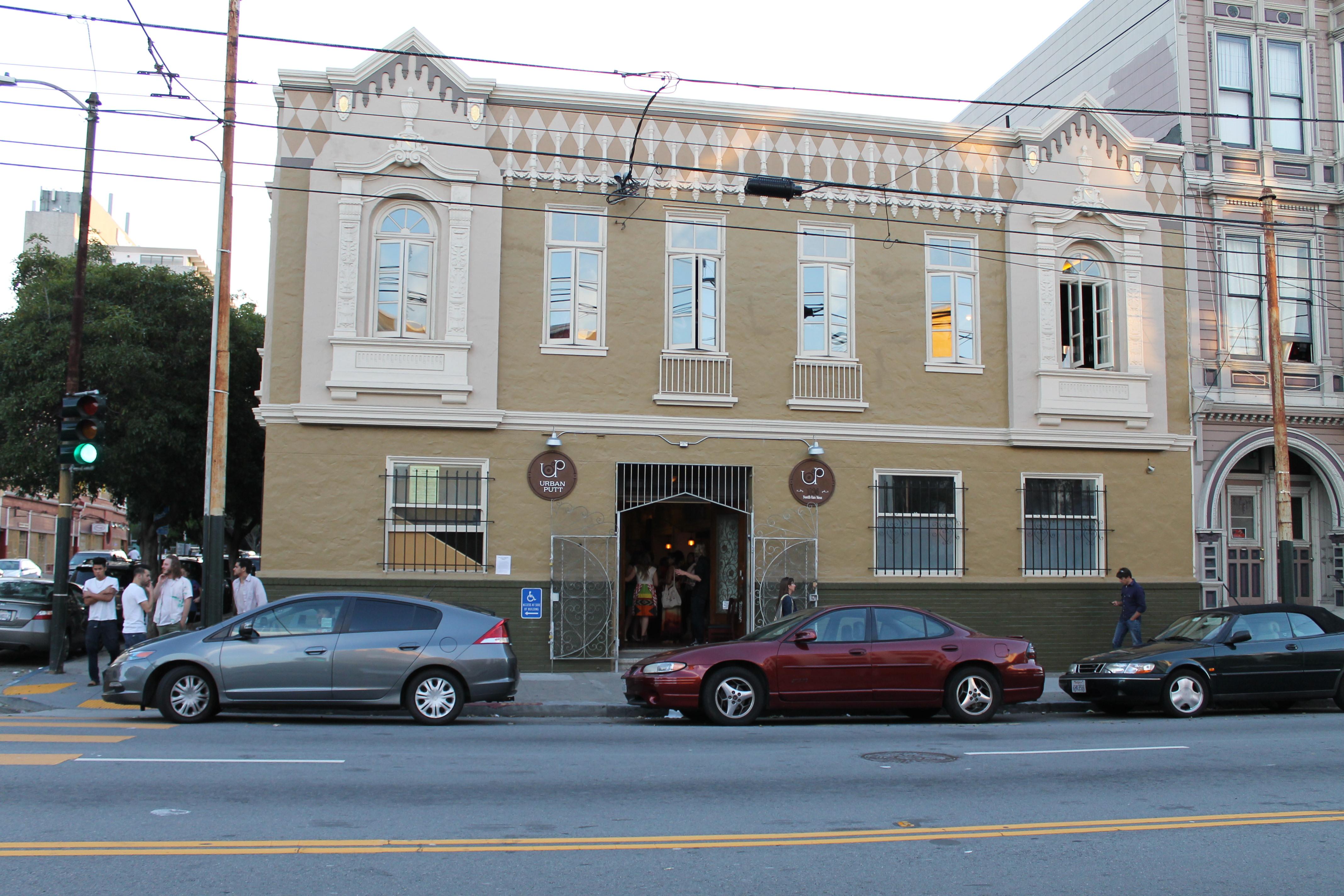
After a sneak peek and a couple of delays, Urban Putt finally opens at 4pm today. The high concept mini-golf course, restaurant, and bar combination arrives just in time for some Cinco de Drinko fiesta time.

The former mortuary at South Van Ness and 22nd Streets is freshly coated with a new paint job that seamlessly blends with the neighborhood. There’s nothing flashy about Urban Putt from the outside but as you step inside, you’re transported into a gadgety, steampunk world — a techie’s Disneyland.

The elaborate 14-hole golf course designed by the guys behind Mission Bowling Club can hold 40 golfers at a time, so expect a wait list as long as Nopa’s on a Friday night. Golfers start out at the Earthquake Hole where they navigate around Lotta’s Fountain and moving buildings into a fire hydrant hole. Expect kitschy San Francisco references scattered around the course: a Transamerica windmill, the Day of the Dead hole, and a robot hole built by the people from Make Magazine. Several other of our city’s landmarks also make an appearance.

While it’s a tad cramped, the course’s beauty remains in the details. A lot of the course was built by Urban Putt’s in-house 3-D printing machine. With custom ironwork, wood designs, and digital features, there are many surprises! At the Music Hole, the golf ball is lifted 10 feet in the air and dropped down an elaborate chute bouncing on drums, tambourines, and xylophones before making its way back onto the turf. In the left corner is a dark room resembling something out of Jules Verne’s 20,000 Leagues Under the Sea. The two-hole underwater course includes an LED-lit floor, a moving octopus, and an interactive submarine decked out in bells and whistles, levers, and buttons. 

If mini-golf isn’t for you, the building’s second floor is entirely dedicated to a different kind of sport: eating and drinking. The full bar and restaurant UP @ Urban Putt is run by chef Dane Boryta, formerly of Bottle Cap. The restaurant will serve up traditional Americana dishes that include burgers, pizza, salads, and desserts — basically what you’d find at any mini-golf course. Guests can eat at communal wooden picnic tables or private high tables. Other upstairs divertissements include skee ball and Caddyshack on repeat. Expect weekend brunch offerings in the near future, because what new restaurant is complete without the city’s favorite weekend pasttime?

Urban Putt is basically every eight-year-old’s birthday party dream. Pizza, ice cream, mini golf … what more can a kid ask for? Moreover, later in the night, adults can have their own fun. No one under 21 will be admitted onto the course after 8pm. While the restaurant stops serving food at 11pm on weekends, drinking and golfing is available until 2am, and putters can sip drinks designed by the Bon Vivants  strong and tasty enough to decrease your chances of getting a hole in one. Pro-tip: the Duck Shooting hole is exceptionally difficult to master, even while sober. Fore!

Urban Putt

Mini-golf: Mon-Thu, 4pm-midnight; Fri, 4pm-2am; Sat, 10am-2am; Sun, 10am-midnight, $8-10

Restaurant: Sun-Thu, 5:30-10pm; Fri-Sat, 5:30-11pm

1096 South Van Ness, SF

(415) 341-1080

www.urbanputt.com

SFIFF 57: Strange love, Varda, Swedish grrrls, and more!

2

The 57th San Francisco International Film Festival runs through May 8; all the details are here. Guardian correspondent and confirmed film fest addict Jesse Hawthorne Ficks checks in with his mid-SFIFF picks and reactions.

Charlie McDowell’s The One I Love (screens tomorrow; ticket info here) showcases exceptional performances by Mark Duplass and Elisabeth Moss and should be a multiple Independent Spirit Award nominee come next statuette season. This unique genre fluster-cluck digs much deeper into marital problems than you would ever expect (audiences seemed quite flipped upside down after the film’s world premiere at Sundance). Similar to films like Darren Araonfsky’s Pi (1998), Christopher Nolan’s Memento (2000), and Shane Caruth’s Primer (2004), this will be a film that’ll spark conversations and inspire repeat viewings.

Mexican auteur Fernando Eimbcke, who directed Duck Season (2004) and Lake Tahoe (2008) is back with another coming-of-age stunner: Club Sandwich. The director’s slow-burning method of sticking two people in a room and allowing life’s natural moments to unfold is as precise as the tiny moustache on the protagonist’s upper lip. Rewarding to those who are patient, Club Sandwich is the perfect reminder of that pre-adolescent summer that changed just about everything.  

Agnes Varda’s latest opus, From Here to There, is a 225 minute, five-part miniseries originally made for French television. It casually chronicles her guest appearances at film festivals and cinematheques around the world with numerous asides and melancholic moments that have made Varda one of the most likable icons of cinema. In fact, the episodes work similarly to her earliest films Cleo From 5-7 (1962) and La Pointe Courte (1955), gracefully moving the viewer through moments that seem minor at first, but are in fact profound. (Listening to an 85-year-old Varda get distracted and start talking about the history of chairs brought me to tears.) Like her 2008 film The Beaches of Agnes (2008), this is a must see.

Swedish auteur Lukas Moodysson is back and he may have just created one of the most riotous punk rock extravaganzas ever. We Are the Best! (Sweden/Denmark), which takes place in the early 1980s and is based on wife Coco Moodysson’s graphic novel, allows the all-grrrl band to blossom into real-life punk rockers. Evoking passionate punk portrayals like 1980’s Times Square and 1981’s Ladies & Gentleman, The Fabulous Stains (fun fact: Moodysson was unaware of the latter film until I interviewed him!), this drama seems to capture Stockholm circa 1982 in perfect detail. The soundtrack was a major part of discussion during the Q&A, becoming the perfect entry point for those of us desiring an history lesson on the Swedish punk scene. But what I found most exciting about We Are the Best! is its approach to gender roles, as its young female characters attempt to cast aside pressures to look pretty. Either way, Moodysson has created a film just as enjoyable as his debut feature, 1998’s Show Me Love. It has the potential to become a worldwide hit in the same vein as Trainspotting (1996) and Run Lola Run (1999). (Info on screenings today and May 7 here!)

https://www.youtube.com/watch?v=nL-0RLaFcSg

In the 1990s, Tsai Ming-liang’s films were often mentioned alongside works by Hirokazu Kore-eda and Hou Hsiao-hsien. But two decades later, only Tsai has stayed the determined course of creating endurance-driven, contemplative cinema. Presenting his tenth feature (and showcasing yet again his alter ego, actor Lee Kang-sheng), Stray Dogs (Taiwan) is a breathtaking meditation on a homeless Taiwanese family, who are quietly doing what they can to get by. With this film, Tsai has almost abandoned story completely, instead favoring long, drawn-out, surreal, one-shot sequences — next-level abstractness that will either send you running for the hills or leave you unblinkingly glued to the screen.

The film is made to be watched more than once and upon multiple viewings you gain not only patience for Tsai’s masterful aesthetic but an appreciation for how futuristically meditative it is. Someone should program Stray Dogs with his 2012 short Sleepwalk, which follows a monk as he walks, and his follow-up film Journey to the West (2014) which stars Lee and Denis Lavant(!) Whether that would equal absolute transcendence or absolute boredom depends on the viewer, of course. I can’t think of a more emotionally implosive filmmaker working today. 

https://www.youtube.com/watch?v=vnvSUGgF2R0

Rewatching Hong Sang-soo’s Our Sunhi (South Korea) is in fact as monumentally enjoyable as viewing his previous film, In Another Country (2012). This new film represents another solid entry for the director. The succinct ways in which his male characters are emotionally self-destructive with one another can and should be compared to best of Eric Rohmer and Woody Allen’s films. And this time out, he has created a female protagonist (played by hilariously by Jung Yoo-mi) that adds a complexity to his alcoholic-ridden world. If you were a fan of Hong’s films and stopped watching them, it’s time to come back and enjoy one of the funniest films of the festival circuit.

The surprise documentary hit at this year’s SFIFF most definitely has to be Julie Bertuccelli’s School of Babel (France). Simple catalogue description: “The film details a year in the life of a Parisian class of immigrant youth from countries around the globe — boys and girls ages 11 to 15 — who have come to France to seek asylum, escape hardship or simply better their lives.” What is so overwhelming about this personal journey is how the film not only showcases the student-teacher relationships, but the parent-student dynamics. It culminates in a devastating filmmaker-audience relationship.

Exploring pedagogy as a whole caught me off guard so intensely that I, like many in the theater, felt we were back in school trying to figure out all of life’s problems in between breaks for recess. The film ties in perfectly to the San Francisco Film Society’s Education program, which serves more than 11,000 students and teachers every year, from kindergarten through college, to develop media literacy, cultural awareness, global understanding, as well as a lifelong appreciation of cinema. Do whatever it takes to see this film yourself, and if you’re a teacher, share it with your own students.

Happy Hour: The week in music

0

— The 2014 Music Video Race, the competition that pairs local bands with filmmakers for the 48-hour speed-creation of music video magic, is now accepting applications from musicians and filmmakers. The filmmaking weekend is July 11-13, and the screening/party, due to popular demand, has been upgraded to The Independent on July 20. Yours truly will be one of the judges, so, er, make this tough for me.

— The Stern Grove Festival, AKA one of the few summer festivals that delivers killer live performances without killing your hopes of ever sending your unborn kids to college, announced this year’s lineup of Sunday afternoon shows. For the low price of zero dollars, you’ll get such heavy hitters as Smokey Robinson, Rufus Wainwright, Andrew Bird, Darlene Love, Allen Stone, and plenty of other local stars, like LoCura, Vetiver, and, of course, the SF Symphony. Pack a picnic, bring a jacket (this is summer in San Francisco, after all) and get there early if you actually want to see the stage.

— Here is an insane new video from A Million Billion Dying Suns:

— The women of Warpaint stuck their feet in their pretty mouths, calling out Beyoncé and Rihanna for dressing like “sluts,” then they apologized. Some people had some smart things to say about it.

— Best rap feud ever.

Dick Meister: The real May Day

2


By Dick Meister

May Day. A day to herald the coming of Spring with song and dance, a day for
children with flowers in their hair to skip around beribboned maypoles, a
time to crown May Day queens.

But it also is a day for demonstrations heralding the causes of working
people and their unions such as are being held on Sunday that were crucial
in winning important rights for working people. The first May Day
demonstrations, in 1886,  won the  most important of the rights ever won by
working people ­ the right demanded above all others by the labor activists
of a century ago:

“Eight hours for work, eight hours for rest, eight hours for what we will!”

Winning the eight-hour workday took years of hard struggle, beginning in the
mid-1800s. By 1867, the federal government, six states and several cities
had passed laws limiting their employees’ hours to eight per day. The laws
were not effectively enforced and in some cases were overturned by courts,
but they set an important precedent that finally led to a powerful popular
movement.

The movement was launched in 1886 by the Federation of Organized Trades and
Labor Unions, then one of the country’s major labor organizations. The
federation called for workers to negotiate with their employers for an
eight-hour workday and, if that failed, to strike on May 1 in support of the
demand.

Some negotiated, some marched and otherwise demonstrated.  More than 300,000
struck. And all won strong support, in dozens of cities ­ Chicago, New York,
Baltimore, Boston, Milwaukee, St. Louis, San Francisco, Pittsburgh, Denver,
Indianapolis, Cincinnati, Detroit, Washington, Newark, Brooklyn, St. Paul
and others.

More than 30,000 workers had won the eight-hour day by April. On May Day,
another 350,000 workers walked off their jobs at nearly 12,000
establishments, more than 185,000 of them eventually winning their demand.
Most of the others won at least some reduction in working hours that had
ranged up to 16 a day.

Additionally, many employers cut Saturday operations to a half-day, and the
practice of working on Sundays, also relatively common, was all but
abandoned by major industries.

“Hurray for Shorter Time,” declared a headline in the New York Sun over a
story describing a torchlight procession of 25,000 workers that highlighted
the eight-hour-day activities in New York. Never before had the city
experienced so large a demonstration.

Not all newspapers were as supportive, however. The strikes and
demonstrations, one paper complained, amounted to “communism, lurid and
rampant.” The eight-hour day, another said, would encourage “loafing and
gambling, rioting, debauchery, and drunkenness.”

The greatest opposition came in response to the demonstrations led by
anarchist and socialist groups in Chicago, the heart of the eight-hour day
movement. Four demonstrators were killed and more than 200 wounded by police
who waded into their ranks, but what the demonstrators¹ opponents seized on
were the events two days later at a protest rally in Haymarket Square. A
bomb was thrown into the ranks of the police who had surrounded the square,
killing seven and wounding 59.

The bomb thrower was never discovered, but eight labor, socialist and
anarchist leaders ­ branded as violent, dangerous radicals by press and
police alike ­ were arrested on the clearly trumped up charge that they had
conspired to commit murder.  Four of them were hanged, one committed suicide
while in jail, and three were pardoned six years later by Illinois Gov. John
Peter Altgeld.

Employers responded to the so-called Haymarket Riot by mounting a
counter-offensive that seriously eroded the eight-hour day movement’s gains.
But the movement was an extremely effective organizing tool for the
country’s unions, and in 1890 President Samuel Gompers of the American
Federation of Labor was able to call for “an International Labor Day” in
favor of the eight-hour workday. Similar proclamations were made by
socialist and union leaders in other nations where, to this day, May Day is
celebrated as Labor Day.

Workers in the United States and 13 other countries demonstrated on that May
Day of 1890 ­ including 30,000 of them in Chicago. The New York World hailed
it as “Labor’s Emancipation Day.” It was. For it marked the start of an
irreversible drive that finally established the eight-hour day as the
standard for millions of working people.

Bay Guardian columnist Dick Meister, formerly labor editor of the SF
Chronicle and KQED-TV, has covered labor and politics for a half-century as
a reporter, editor, author and commentator. Contact him through his website,
dickmeister.com, which includes several hundred of his columns.

(The Bruce blog is written and edited by Bruoe B. Brugmann, editor at large of the Guardian. He is the former editor of the Guardian and with his wife Jean Dibble the co-founder and co-publisher of the Guardian,1966-2012.)

Air district unveils new wind-powered ferry

3

San Francisco, the city with the highest concentration of hybrid cars, may soon be the first city to boast a hybrid ferry as well. Officials today at Pier 1 ½ unveiled a vessel that runs on both wind and engine power, significantly reducing fuel use and air pollution.

The design, called the WingSail, involves a carbon fiber sail that resembles an airplane wing standing up vertically. The sail uses wind to efficiently propel the boat when available, but also works with the engine to keep the vessel moving if gusts die down, much like how a hybrid car switches between fuel and electricity. 

“The idea with wind technology is that we could use this every day, with more or less the same propulsion power [as an engine], depending on where you are,” said Damian Breen of the Bay Area Air Quality Management District. “Literally with the flick of a switch, you can go between wind power and fuel power.”

Already existing ferries that are retrofitted to include the WingSail can save up to 40 percent on fuel costs, and ferries that are designed and built with windpower in mind would be even more efficient. Currently, a motorized ferry that travels between San Francisco and Sausalito spends $250 million annually on fuel, according to Jay Gardner, president of Wind+Wing Technologies.

“My vision is to see a bay full of wind-powered ferries,” Gardner said. “I think that could be as iconic as the San Francisco cable cars.”

The trimaran on display today — a smaller scale model of would might eventually be full-sized ferries — just completed three months of test voyages around the Bay Area. Researchers at UC Berkeley will now begin to analyze that data to find the potential improvements in air quality and fuel cost savings. That study will be an important factor in how this technology is implemented in the future, and the results should be published sometime this summer.

The WindSail technology is already being used in racing for both land and water events — most prominently in the America’s Cup sailing championships here on the bay last summer — but this would be the first use of hybrid wind power in a passenger boat. The Wind+Wing Technologies webpage already shows designs for ferries that can hold either 149 or 400 travelers.

All of the builders and officials there today emphasized that the Bay Area is the perfect place to roll out this technology. Not only is it one of the most environmentally conscious regions in the world, but the bay is also windy enough to power the WindSail without relying too heavily on the engine.

One of the attendees asked when you would want to use wind power over fuel, and Breen immediately stepped forward to answer the question.

“Wind is zero emissions,” he said. “Wind is always better.”

Lawsuit filed to halt “Google bus” shuttle pilot program

17

The road to regulating Google Buses has a new pothole: a lawsuit. 

A lawsuit filed in San Francisco Superior Court today demands the San Francisco Municipal Transportation Agency’s commuter shuttle pilot program be set aside while a full environmental review is conducted under the California Environmental Quality Act.

“We know that these buses are having devastating impacts on our neighborhoods, driving up rents and evictions of long-time San Francisco residents,” Sara Shortt, executive director of the Housing Rights Committee of San Francisco and one of the lawsuit petitioners, said in a press statement. “We’ve protested in the streets and taken our plea to City Hall to no avail. We hope to finally receive justice in a court of law.”

The suit was filed against the City and County of San Francisco, Mayor Ed Lee, the Board of Supervisors, the SFMTA, Google, Genentech, Apple, and a handful of private transportation providers. It alleges the tech shuttle pilot project is in violation of the California Vehicle Code which prohibits any vehicle, except common carriers (public buses), to pull into red zones that are designated as bus stops. It also alleges the city abused its discretion and violated the CEQA by exempting the Shuttle Project from environmental review.

The Coalition for Fair, Legal and Environmental Transit, Service Employees International Union Local 1021, the union’s Alysabeth Alexander, and Shortt are the petitioners of the suit. In early April, they also petitioned the Board of Supervisors to vote for an environmental review of the tech shuttles.

The contentious meeting lasted over 7 hours, with housing advocates and tech workers firing shots from both sides into the night. Ultimately the supervisors voted 8-2 against the environmental review, a move seen as driven by a deferential attitude towards the technology industry in San Francisco. 

Paul Rose, a spokesperson for the SFMTA, responded to the lawsuit in an email to the Guardian.

“The agency developed this pilot proposal to help ensure the most efficient transportation network possible by reducing Muni delays and congestion on our roadways,” Rose wrote.  “We have not yet had a chance to review the lawsuit and it would not be appropriate to comment on any pending litigation.”

The early April vote was only the latest in the city’s alleged deferential treatment towards the commuter shuttles. 

The SFMTA allowed the shuttles to use Muni bus stops for years without enforcing illegal use of red zones, the suit alleges. A study by the city’s Budget and Legislative analyst revealed that out of 13,000 citations written to vehicles in red zones in the last three years only 45 were issued to tech shuttles — despite the SFMTA’s knowledge of 200 “conflicting” bus stops between Muni and the tech shuttles. 

Much has been made of those startling numbers, with petitioners alleging a “handshake deal” on the part of the SFMTA to tech company shuttles, allowing them to park at red zones at will.

But emails the Guardian obtained by public records request show Carli Paine, head of the tech shuttle pilot program, followed up complaints on illegal stops made by tech shuttles since 2010, but to no avail. 

“Know that I have made clear to the shuttle providers that the law says that it is not legal to stop in the Muni Zones,” Paine wrote in a July 2012 email to a colleague who was in contact with tech companies. “Participating in this process does not mean that they are guaranteed not to get tickets–especially if they are doing things that create safety concerns or delay Muni.”

Paine also attempted to clarify enforcement policies around the shuttles with enforcement officers from the SFPD and SFMTA, also to no avail, the emails show.

The deferential treatment to shuttles may not have originated from the SFMTA then, but from higher up the political ladder. 

“There are a number of our supervisors who do not want to buck the tech industry,” Shortt told the Guardian. “They feel there may be more to gain from allowing illegal activity to continue by these corporations than support.”

But does the suit call for the tech shuttles to stop running? We asked Richard Drury, the attorney filing the suit, to explain the specific asks of the suit.

“Not technically no,” Drury said. “They’ve operated illegally for years and the city turned a blind eye. They could continute to do that while the city runs an environmental review, but if the SFMTA or Police Department decided to start ticketing them for $271, they could.” 

So the lawsuit wouldn’t stop the shuttles. It just asks for them to be reviewed. 

Among issues regarding air quality the shuttles’ heavy weight damages city streets at much higher rates than cars, studies by the city’s Budget Legislative Analyst showed. Studies conducted by students and other interested individuals revealed increased rents near shuttle stops, which the filers of the lawsuit say leads to a displacement of residents.

Displacement is a consideration in CEQA reviews, a recent addition to state law.  

“We’re just asking for the city to study the impacts,” Drury said. “Maybe that means the shuttles get clean fuel, or corporations pay to offset displacement of residents.”

Below is a downloadable PDF of the lawsuit.

Google Bus Commuter Shuttle Lawsuit by FitztheReporter

Happy May Day, San Francisco

53

Happy May Day, comrades, and what a fine May day it is even if the urgent mayday spirit on this International Workers Day doesn’t seem as strong as some recent years past in the Bay Area.

While Russia seems to be rediscovering its previous practice of massive May Day marches marked by anti-Western propaganda, spurred on by renewed nationalism from the standoff in Ukraine, May Day has never been very big in the US.

The holiday celebrated throughout the world with workers showing their strength and demanding their fair share of our collective wealth marks the anniversary of a labor demonstration that turned violent and triggered a harsh crackdown in Chicago in 1886. While the socialists of the Second International adopted the May Day holiday in 1889, the American holiday of Labor Day was adopted as a bland alternative meant to take the radical edge off of workers movements.

But many leftists in the US retained an affinity for May Day, and it was infused with a renewed spirit and radical energy by supporters of immigration reform and an end to deportations that divide up families, with massive marches in major US cities in 2006 catching the media and political establishment off-guard.

 Then, two years ago, fresh off of the Occupy Wall Street (and Occupy San Francisco, Occupy Oakland, etc.), some young anarchists rampaged through the Mission District, breaking windows, spray painting luxury cars, attacking a police station, and generally targeting what they saw as the forces of wealth and gentrification, albeit in a misguided and widely condemned way.

Today’s big May Day march in San Francisco starts at the 24th Street BART Plaza, again strongly emphasizing the need for immigration reform, but also marrying that cause with the anti-displacement and anti-eviction activism that are roiling San Francisco these days. [The poster for the event even features a photo of a recent Google bus blockade CORRECTION: The photo is actually of immigration activists blocking a deportation bus.]

Meanwhile, in the East Bay, the main May Day march begins at 3:30pm at the Fruitvale BART Street, also with a focus on social justice and immigration reform. So get on out there, comrades, you have nothing to lose but your chains.  

Rec & Park cancels meeting on controversial renaming of Golden Gate Park building

The Guardian has learned that today’s [May 1] meeting of the Operations Committee of the San Francisco Recreation and Park Commission has been cancelled. Commissioners were going to discuss a single item on the agenda, the renaming of a Golden Gate Park facility at 811 Stanyan Street as the Jake Sigg Stewardship Center.

That item was controversial. This is why.