San Francisco

Still hungry

1

arts@sfbg.com

THEATER A figure wanders into the void — a pristine wooden stage, that is, pinpointed by four delicate weights hovering pendulum-like at the corners, alive to the slightest ripple of air. In the back, behind a scrim and awash in crepuscular light, a large and blooming tree floats exquisitely in space. For the wanderer, the time (if such a thing can be said to exist here) is ripe. “This must be bardo, then,” thinks the ghost. “I’m cool with that. I was beginning to think I’d live forever.”

The bardo, the in-between state between one life and another in the Buddhist cycle of reincarnation, affects different people in different ways — our wanderer is only one of 28 characters we come across — but throughout New York playwright Chiori Miyagawa’s witty, dreamy, and discerning Bay Area debut, the bardo becomes a supreme vantage on a reality burdened by desire and that transubstantial baggage known as karma.

Now enjoying a splendid world premiere (in a limited two-week run) as part of Theatre of Yugen’s 35th anniversary season, Miyagawa’s This Lingering Life freely adapts nine 14th-century Noh plays, infusing them with a decidedly present-day sensibility. Under artistic director Jubilith Moore’s expert touch, the production amounts to an exceptional blend of modern Western dramatic style and traditional Noh influences. And at its best, it strikes one as some of the more contemporary theater around.

Miyagawa’s astute grasp of the human comedy of living and dying does not always translate with equal force across the various plots — which include, for instance, a mad woman’s desperate search for her abducted son; a Romeo and Juliet–like tragedy involving two drowned lovers; the suicide of an old man who falls in love with a spoiled young princess; and the fallout between a rich father and his disinherited son, in which the impoverished younger man goes blind but ultimately grows wiser than his father. Nevertheless, the majority of the scenes (underscored by a transporting sound design from Michael Gardiner, sitting with laptop offstage right) are remarkably successful, and cumulatively powerful as characters rub shoulders in the afterlife.

Moreover, the nine-member ensemble (composed of Theatre of Yugen’s Moore, Sheila Berotti, Sheila Devitt, Alexander Lydon, Norman Munoz, and Lluis Valls; joined here by Nick Ishimaru, Hannah Lennett, and Ryan Marchand) does fine work running the gamut of earthbound emotions, from visceral anguish to driving lust and petty cruelty, while freely trading genders too in a hint of the promiscuous cycle of rebirth. Particularly fine comedic performances make the most of the playwright’s hilariously down-to-earth dialogue, while expert Noh-inflected vocal modulations and movement add a frisson to decisive moments.

San Francisco’s dedicated practitioners of classical Noh and Kyogen styles, Theatre of Yugen has long been adept at channeling Western stories in these ancient Japanese dramatic forms, setting them in a highly ritualized context that can set off their content with surprising intensity. In fact, Yugen (which takes its name from the Japanese word meaning “mysterious elegance”) led off its anniversary season last November with a Noh-inspired staging of an enduring American tragedy and Civil Rights Era–case: a beautifully composed, movingly effective meditation entitled Emmett Till, a river. The hour-long poetical-musical treatment by co-writer Judy Halebsky and lead writer and composer Kevin Simmonds not only explored the role of individual action, or inaction, in the perpetuation of systemic racism, but also opened up a space for reflection, communion, and an unsettled yet pointed act of reconciliation with the past.

This Lingering Life in a way takes the opposite tack, and thus is something of a departure for the company, since it mines the contemporary in a Westernized, interlocking set of ancient Japanese stories — supporting it all with a few choice elements of the Noh aesthetic. The hybrid creation, spread over 24 scenes, retains a Buddhist worldview, however, in which a person’s actions in one life determine the nature of the next. This lends a particular moral force to what we see, including an abiding sympathy with the dead that is both affecting and thought provoking. But, as the play suggests, karma is not always destiny. In the in-between space of the bardo, clarity and free will can penetrate the hazy sleepwalking of existence, and even fate can be renegotiated.

THIS LINGERING LIFE

Wed/11-Thu/12, 7pm; Fri/13-Sat/14, 8pm, $15-50

Z Space

450 Florida, SF

www.theatreofyugen.org

SFMTA launches “Google Bus” pilot program map, promises increased enforcement

11

The Google Bus plan is now rolling forward. Last night [Mon/9] the San Francisco Municipal Transportation Agency released a map of shuttle stops to be studied in the contentious commuter shuttle pilot program, and proposed new means of cracking down on shuttle scofflaws.

The released map shows a peppering of dots representing what the SFMTA is calling “pilot network zones,” essentialy bus stops to be shared by Muni and commuter shuttles alike. The SFMTA will study those pilot network zones, measure impacts to Muni shuttles, and the zones will soon be marked up with signage denoting them as a commuter shuttle stops. 

The site of the first and many subsequent Google Bus protests, Valencia and 24th street, is included among the proposed stops. Many of those protesters highlighted the lack of enforcement around the shuttle stops highlighted by a glaring set of numbers: Since January, San Francisco issued over 13,000 citations against double-parkers in red zones, but only 45 went to commuter shuttles. The shuttles use of those stops were, at the time (and even now) illegal, protesters said. 

Carli Paine, the head of the commuter shuttle pilot program at SFMTA, told us now there’ll be increased enforcement.

“Implementation will include placards on the vehicles, signage at the zones that are in the pilot network, and additional enforcement,” she confirmed for us, in an email. The SFMTA also launched a special web form for lodging complaints about the commuter shuttles.

SFMTA surveyed tech companies, citizens, and government to decide which stops to study. Per SFMTA:

In February, the SFMTA collected requests from shuttle service providers and resident suggestions on what stops should be included in the pilot through an interactive website and open houses.  We reviewed requests from shuttle service providers and suggestions from residents to develop a pilot network of zones that is a combination of:

Zones requested by shuttle service providers

Zones requested by residents

Alternative zones within a few blocks of requested zone locations

New white zones in locations where demand is high but sharing with Muni would likely disrupt Muni service for inclusion in the pilot network

Zones with Muni service every 10 minutes or less, most zones along Muni’s busiest routes and lines, and flag stops (stops that are in the street, away from the curb) on the bicycle network were not included in the proposed pilot network of shared bus zones.

The website that SFMTA referred to crowdsourced feedback from San Franciscans, an interactive map where anyone could place pinpoints proposing shuttle stops. Some jokers pinned proposed shuttle stops in the San Francisco Bay and the ocean. Some had reasoned arguments against corporate shuttles. “There should be a designed [sic] bus stop for the big corporate buses and not public bus stops,” read one post. Others were more flip, like the push-pin on Alcatraz, reading “Make ’em swim!” 


SFMTA’s Proposed Commuter Shuttle Network 140609 by Joe Fitzgerald Rodriguez


Above we’ve embedded the commuter shuttle map. 

Interestingly, the hotly contested tax that the SFMTA planned to levy against commuter shuttle companies of $1 per stop, per day may be revised. 

The permit and use fee will be updated based on actual project costs and actual stop events proposed as part of the permitting process,” the SFMTA stated in an email announcement of the new commuter shuttle project map. “The SFMTA Board will hold a public hearing to adopt the adjusted fee, if different from earlier calculations.”

The Guardian obtained a cost breakdown of the shuttle program from the SFMTA, and the numbers do seem to be fairly rough.


Cost Breakdown of SFMTA “Google Bus” commuter shuttle pilot program by Joe Fitzgerald Rodriguez


Above we’ve embedded the cost estimate of the commuter shuttle program, obtained through a public records request under the Sunshine Ordinance.

The shuttle pilot program proposed to fund 312 hours of work for transit planners and engineers each, annually. Notably, 4,000 hours are slated for a parking control officer, and 520 for a senior parking control officer annually. The two officers together are estimated to cost $300,000 annually. Double that estimate, as the project is slated to run two years. 

The SFMTA board will meet to approve any new fees for the program during its July 15 meeting. There will also be a public SFMTA engineering meeting on June 20 (10am, City Hall, Room 416) to discuss changes to the commuter shuttle pilot program.

The map also denotes sidewalk white zones for shuttle use for commuter hours, between 6-10am and 4-8pm. 

The shuttle pilot program will officially begin August 1. It’s still an open question what effect, if any, the current lawsuit concerning environmental review of the shuttle stops will have on the program.

Campos wins veto-proof support for closing the city healthcare coverage loophole UPDATED

20

Sup. David Campos appears to have finally succeeded in his years-long quest to prevent San Francisco employers from pocketing money the city requires them to use for employee health care costs after winning over two key supervisors to secure a veto-proof majority at today’s [Tues/10] Board of Supervisors meeting.

His reform legislation on today’s agenda will be amended by Campos, he told us, to win the support of Sups. Mark Farrell and London Breed. The changes phase out the loophole over three years, making 60 percent of the money in employee health savings accounts off limits to employers next year, 80 percent the following year, and not letting employers reclaim any of these funds by 2017.

“Even if we don’t get to 100 percent right away, once you get past 50 percent it’s a done deal, so I feel good about it,” Campos told us, explaining that even the phased-in legislation will immediately discourage employers from using health savings accounts and to instead put that money toward private insurance or city-run programs such as Healthy San Francisco.

The veto-proof majority is key given that Mayor Ed Lee vetoed similar legislation in 2011, later signing a watered down compromise measure by Board of Supervisors President David Chiu that required employers to maintain the funds for two years before taking them back.

Campos said that reform clearly didn’t work, with that total funding left over in the health savings accounts rising from about $60 million two years ago to about $90 million now. That outcome was predicted by Campos at the time, noting that employers had a disincentive to encourage employees to tap the funds.

“It didn’t work. The numbers showed the money still wasn’t being spent, which is what we said would happen,” Campos told us.

Exacerbating the problem was the fact that the federal Affordable Care Act (aka Obamacare) placed new restrictions on how health savings accounts may be used, fro example banning their use on insurance premiums. Health savings accounts are widely considered far inferior to private insurance at providing quality healthcare, but federal law (ERISA) precluded the city from banning their use by employers to satisfy the city’s health coverage requirement.

Supervisors who haven’t yet committed to supporting Campos’ legislation are Chiu, Scott Wiener, and Katy Tang, but Campos predicted they may sign on now that the measure has a veto-proof majority: “We’re hopeful that with a veto-proof majority, it may be a unanimous vote at the board.”  

UPDATE 6/10: The board unanimously passed the measure on first reading, prompting a sustained standing ovation from the workers and labor advocates who filled the board chambers for the hearing. 

Transportation funding faces key test after Mayor Lee flips on VLF increase UPDATED

31

Facing a deadline of tomorrow’s [Tues/10] San Francisco Board of Supervisors meeting to introduce measures for the November ballot, advocates for addressing the city’s massive long-term transportation funding gap still hope to introduce an increase in the local vehicle license fee, even though the once-supportive Mayor Ed Lee has gotten cold feet.

While Lee and all 11 of the supervisors support a $500 million general obligation bond that would mostly go toward capital improvements for Muni — a measure almost certain to be approved by its July 22 deadline — the local VLF was originally presented by Lee as a companion measure to fund Muni, street resurfacing, and bike and pedestrian safety improvements.

But when Lee got spooked by a poll in December showing 44 percent voter approval for increasing the VLF and the need to actually do some campaigning for the measure, he withdrew his support and left cycling, streets, and safety all severely underfunded. A report last year by the Mayor’s Transportation Task Force pegged the city’s transportation infrastructure needs at $10.1 billion over 15 years, recommending just $3 billion in new funding to meet that need, including the embattled VLF measure.

“It’s important for us to move forward with the local VLF,” Sup. Scott Wiener, who has taken the lead on ensuring local term transportation funding, told the Guardian. “If this is not the right election, then we have to say which election we will move this forward.”

But so far, Wiener hasn’t gotten a commitment from the Mayor’s Office, with which he says he’s still in active talks. The Mayor’s Office also hasn’t returned Guardian calls on the issue. If Wiener doesn’t get an assurance that the VLF will go before voters, then he says that he’ll push another fall ballot measure that he introduced May 20, which would increase the city General Fund contribution to Muni as the population increases, retroactive to 10 years ago (thus creating an initial increase of more than $20 million annually).

“It would be in lieu of the VLF, not in addition to it,” Wiener said the rival measure, noting that he prefers the local VLF, a stable and equitable funding source that wouldn’t cut into other city priorities. [UPDATE 6/10: Wiener said he received a commitment from Lee to place the VLF increase on the 2016 ballot, so he is dropping his measure to increase Muni funding as the population increases].

Sen. Mark Leno spent about 10 years winning approval for the authorizing state legislation that authorizes San Franciscans to increase the VLF, enduring two governors’ vetoes along the way before getting Gov. Jerry Brown to sign it into law last year.

Wiener notes that the measure would increase the VLF in San Francisco to 2 percent, restoring it its longtime level before Arnold Schwarzenegger used a VLF reduction as a campaign issue to get elected governor, slashing it to 0.65 percent in 2003.

“That action by Gov. Schwarzenegger has deprived California of about $8 billion per year,” Wiener told us. “This is not some newly minted fee, it restores the VLF to what it was going back to the ‘50s.”

San Francisco Bicycle Coalition Director Leah Shahum said she was disappointed that Lee didn’t follow through on his commitment to fund bike and pedestrian safety improvements through the local VLF, but she said there is wide support on the board for the measure.

“Tomorrow is the big day, but we’re hearing real strong support for the measure,” Shahum told us. “I feel strongly there will be eight supervisors committed to introducing the measure.”

That two-thirds vote threshold is part of the legislation that enabled San Francisco to increase its VLF, but Shahum said she believes there is that level of support on the board for doing the VLF increase this year, which the SFBC would actively campaign for.

“The whole idea was these things would go as a package,” Shahum told us. “This is a huge deal for us. Give the voters a chance to vote for safe and smooth streets.”   

Lee’s abandonment of the VLF comes in the wake of his SFMTA appointees’ repeal of Sunday parking meters, which Lee said was driven by a desire to win over car-driving voters for his transportation measures. Last month on Bike to Work Day, Lee and other city officials also touted the measures as important for bike project, although Shahum said the general obligation bond does little for cyclists, except for an allocation for renovating Market Street. 

“There is not a desigination for bike safety and infrastructure, that was goign to be all in the VLF measure,” Shahum said. 

Wiener cited the long road that Leno traveled to give San Franciscans that opportunity as a reason to move forward with increasing the VLF, a progressive tax that charges more for luxury cars than old beaters used by the working class, but Leno was a bit more circumspect about the situation.

“If it taught me anything, it’s patience,” Leno told us about the long road to let San Francisco authorize a higher VLF. “As with anything in the world, timing is everything.”

Leno said support from labor, the business community, and all of City Hall’s top leaders are all necessary to win voter support for increasing the VLF, so it’s crucial that everyone is enthusiastically on board. “I think we may only have one shot, so when we go to the ballot, we need to have our coalition intact.”

Without commenting on the wisdom of delaying the vote this year, Leno said that if that happens, it’s crucial to get everyone to commit to passing it in 2016, a position Wiener also supports.

“There are times when we need to have a long view,” Leno told us. “But one way or the other, we have to get serious about identifying dedicated revenue to invest in Muni or we will all pay a serious price.”


To participate in a public forum on this and related matters, please join us this Thursday evening for “Bikes, Buses, & Budgets: How to create the transportation system San Franciscans needs.” This Bay Guardian community forum, from 6-8pm at the LGBT Center (1800 Market), will feature Wiener; SFBC community organizer Chema Hernandez Gil; Jason Henderson, an urban geography professor at SFSU who writes the Guardian’s monthly Street Fight column; and others, moderated by yours truly. It’ll be fun, informative, and one lucky attendee will leave with a A2B electric bike as part of a free raffle at this free event.    

Party Radar: Daybreaker gets you moving – on a Tuesday morning

0

Back in 1988, I hung out for a summer in West Berlin. Yep, this was before the wall fell, when West Berlin was a roiling, hyperactive, neon-crazy island in a sea of Communist repression — kind of like the most exclusive nightclub in the world.

One of the things that took my breath away: high school kids and college students went to clubs before school. At least the few I knew would met their friends around 5-6am at the all-night club du jour and dance it out for a while before heading to class. “This is the best place in the world!” I thought at the time.

Also: “Why can’t we have this?” Well, now we kinda do. Welcome to San Francisco, Daybreaker.

OK, OK, it has no alcohol, and you still have to be 21 to get in. (And it’s $15-$20, so you may have to save up that pocket change.)

HOWEVER, this 8am-10am Tue/10 morning dance party at the beautiful Audio Discotech — hello, morning skylight! — looks incredibly promising for what organizers Radha, Brimer, Steph, and Mustafa call “a little mischief.” You get music from cutie pie DJ Bradley P. Plus it sounds like a damn fun morning workout! So much better than a gym.

See you there, bright and bleary. Press release:

Over a late-night falafel in Williamsburg a few months back, we mused over an idea. An idea about dancing before the day broke with people we love. About cultivating a community that values camaraderie, self-expression, wellness, immediacy… and mischief. About going to work with our brows slightly dewed from moving our bodies with reckless abandon, sans alcohol but with so much spirit, surrounded by the most amazing people we know.

DAYBREAKER is a morning dance party and community of good-hearted people, and on Tues, June 10th, DAYBREAKER SF will commence.
No more dreary treadmills. No more lackluster mornings. No more dancing only when the sun is down.
With your ticket, you get:
+ good beats by DJ Bradley P
+ fresh Philz coffee
+ delicious smoothies
+ live musicians & performers
+ occasional costumes
+ (no booze)
Be a part of something new and different. Daybreaker will set the tone for your day unlike anything has before 🙂
// Tuesday, June 10th @ Audio — 316 11th St. (btw Folsom and Harrison)
// Dance Party: 8 am – 10 am

Norman Solomon: Obama escalates his war on journalism

2

By Norman Solomon

 (Norman Solomon is executive director of the Institute for Public Accuracy and co-founder of RootsAction.org. His books include “War Made Easy: How Presidents and Pundits Keep Spinning Us to Death.” Information about the documentary based on the book is at www.WarMadeEasyTheMovie.org.)

In a memoir published this year, the CIA’s former top legal officer John Rizzo says that on the last day of 2005 a panicky White House tried to figure out how to prevent the distribution of a book by New York Times reporter James Risen. Officials were upset because Risen’s book, State of War, exposed what — in his words — “may have been one of the most reckless operations in the modern history of the CIA.”

The book told of a bungled CIA attempt to set back Iran’s nuclear program in 2000 by supplying the Iranian government with flawed blueprints for nuclear-bomb design. The CIA’s tactic might have actually aided Iranian nuclear development.

When a bootlegged copy of State of War reached the National Security Council, a frantic meeting convened in the Situation Room, according to Rizzo. “As best anyone could tell, the books were printed in bulk and stacked somewhere in warehouses.” The aspiring censors hit a wall. “We arrived at a rueful consensus: game over as far as any realistic possibility to keep the book, and the classified information in it, from getting out.”

But more than eight years later, the Obama White House is seeking a different form of retribution. The people running the current administration don’t want to pulp the book — they want to put its author in jail.

The Obama administration is insisting that Risen name his confidential source — or face imprisonment. Risen says he won’t capitulate.

The Freedom of the Press Foundation calls the government’s effort to force Risen to reveal a source “one of the most significant press freedom cases in decades.”

Pentagon Papers whistleblower Daniel Ellsberg says: “The pursuit of Risen is a warning to potential sources that journalists cannot promise them confidentiality for disclosing Executive Branch criminality, recklessness, deception, unconstitutional policies or lying us into war. Without protecting confidentiality, investigative journalism required for accountability and democracy will wither and disappear.”

A recent brief from the Obama administration to the nation’s top court “is unflinchingly hostile to the idea of the Supreme Court creating or finding protections for journalists,” Politico reported. The newspaper added that Risen “might be sent to jail or fined if he refuses to identify his sources or testify about other details of his reporting.”

This threat is truly ominous. As Ellsberg puts it, “We would know less than we do now about government abuses, less than we need to know to hold officials accountable and to influence policy democratically.”

So much is at stake: for whistleblowers, freedom of the press and the public’s right to know. For democracy.

That’s why five organizations — RootsAction.org, The Nation, the Center for Media and Democracy / The Progressive, Fairness & Accuracy In Reporting (FAIR) and the Freedom of the Press Foundation — have joined together to start a campaign for protecting the confidentiality of journalists’ sources. So far, in May, about 50,000 people have signed a petition telling President Obama and Attorney General Eric Holder to end legal moves against Risen.

Charging that the administration has launched “an assault on freedom of the press,” the petition tells Obama and Holder: “We urge you in the strongest terms to halt all legal action against Mr. Risen and to safeguard the freedom of journalists to maintain the confidentiality of their sources.”

The online petition — “We Support James Risen Because We Support a Free Press” — includes thousands of personal comments from signers. Here’s a sampling of what they had to say:

“Freedom of the press and freedom of speech are the cornerstones of our democracy. Stop trying to restrict them.”  Jim T., Colorado Springs, Colorado

“Protected sources are essential to a real democracy. Without whistleblowers, there is no truth.”  Jo Ellen K., San Francisco, California

“Enough of the government assault on freedom of the press! Whistleblowers are heroes to the American people.”  Paul D., Keaau, Hawaii

“It seems our government is out of control. The premise of deriving power from the people would appear to be a quaint notion to most within the three branches. Instead they now view us as subjects that must bend to their will rather than the other way around.”  Gary J., Liberty Township, Ohio

“‘Journalism is printing what someone else does not want printed. Everything else is public relations.’ — George Orwell”  Todd J., Oxford, Michigan

“As a writer, I support freedom of the press around the world as a vital first step toward regaining control of our compromised democracies.”  Patricia R., Whitehorse, YT, Canada

“You promised an open and transparent administration. Please keep that promise.”  Willard S., Cary, North Carolina

“Without a free press, we really have nothing.”  Robin H., Weehawken, New Jersey

“The Obama administration’s attack on press freedom is an issue of grave concern. Why are we spending billions of dollars going after supposed ‘terrorists’ when the greatest threat to democracy resides right here in Washington, DC.”  Karen D., Detroit, Michigan

“Damn you, Obama! You become more like Nixon daily!”  Leonard H., Manchester, Michigan

“Congratulations, Mr. Risen!”  Marian C., Hollister, California

“The U.S. is becoming an increasingly frightening place to live, more than a little like a police state. President Obama, you have been a huge disappointment. I expected better from you.”  Barbara R., Newport, Rhode Island

“Come on, President Obama… you’re a Constitutional scholar. You know better than this. Knock it off.”  James S., Burbank, California

“There can be no true freedom of the press unless the confidentiality of sources is protected. Without this, no leads, informants or whistleblowers will be motivated to come forward. Reporters should not be imprisoned for doing their job.”  Chris R., North Canton, Ohio

“You took an oath to ‘preserve, protect and defend the Constitution of the United States,’ freedom of the press!”  Diane S., San Jose, California

“Whatever became of the progressive Obama and the change you promised? Evidently it was a load of campaign bull puckey, making you just another politician who says whatever it takes to get elected. In other words, you and your administration are a complete sham. As for your constitutional scholarship, it would appear to be in the service of undermining the Constitution a la Bush and Cheney.”  Barry E., Bryn Mawr, Pennsylvani

“Without a free press, our republic is paper-mache. Remember John Peter Zenger! We must not shoot the messenger — we must raise the bar for conduct and probity!”  Lance K., Chelsea, Massachusetts

“A free press is the only counterbalance to crony capitalism, corrupt legislators, and a pitifully partisan Supreme Court, that continues to destroy our Constitutional protections.”  Dion B., Cathedral City, California

“I implore you to RESPECT THE FIRST AMENDMENT.”  Glen A., Lacey, Washington

“Did you not learn in grade school that freedom of the press is essential to a free country?”  Joanne D., Colorado Springs, Colorado

“We’ve been down this road before. What amazes me is that we condemn other countries for stifling freedom of the press, then turn around and do the same thing to advance our own purposes. Are we proponents of democracy and a free press or not?”  William M., Whittier, California

“Journalism is a vital component of a democracy, and it is a core function protected by the freedom of expression enshrined in both international and domestic law. You must stop harassing and persecuting journalists and their sources who are providing a vital public service in prying open the activities of governments that are illegitimately concealed from the public. If the public is not informed of state actions executed in their name, they cannot evaluate and render consent to those actions through the vote. This secrecy therefore subverts democracy, and you must stop using police powers to destroy the whistleblowers who enable government accountability to the public.”  Jim S., Gatlinburg, Tennessee

“I support freedom of the press, not the attorney general’s vicious abuse of his position!”  Bettemae J., Albuquerque, New Mexico

“Compelling reporters to reveal their sources just means that sources will stop talking to reporters. That will cripple the free press. If you think that’s not important, please resign immediately.”  Stephen P., Gresham, Oregon

“As an old woman who remembers the lies of Lyndon Johnson, Richard Nixon, Ronald Reagan, Bill Clinton, George W. Bush (especially) and the current administration, I do not trust my own government to tell me the truth anymore.  Freedom of the press is my only chance [to] find out what the truth is. Protect reporters’ sources!”  Monica O., Lomita, California

“Without freedom of the press, we might as well kiss democracy goodbye!”  Melvin M., Vashon, Washington

“I am ashamed of this administration, its policies and its Department of Justice — what a travesty of criminal turpitude and mass media complicity. ‘Transparency’ — hah! Cheap campaign rhetoric.”  Mitch L., Los Altos Hills, California

“Walk the walk or stop talking about democracy. Free press is the basis of our constitution.”  Carl D., Manassas, Virginia

“No free press, no democracy!”  James F., Moab, Utah

“If you force the media to reveal its sources, no one will ever come forth with a news story or lead again. I’m sure this is precisely what the politicians and big business want. Then there’d be absolutely no accountability. We need an effective shield law rather than persecuting journalists and news organizations for reporting the news.”  Jim S., Ladera Ranch, California

“Freedom of the Press is the hallmark of a free society. Your administration has done everything in its power to subvert Freedom of the Press by jailing whistleblowers and reporters who uncover wrong doing. This must stop!”  Ed A., Queens, New York

“We have very few real journalists left. Let’s not jail them!”  Karen H., West Grove, Pennsylvania

“As the press goes, so goes citizens’ rights.”  Kathy F., West Bend, Wisconsin

“I have been shocked at how this administration has treated the American people’s right to know, prosecuting reporters, whistleblowers, and others who have had the temerity to cast light into the dark corners of our government. You bring the whole concept of democracy into disrepute and set a bad example for the rest of the world.”  Marjorie P., Montpelier, Vermont

“We need our investigative reporters more now than ever in history. Keep our press free.”  Joan R., Novato, California

“Investigative reporting is becoming too rare in the U.S., and compelling J. Risen to reveal his sources will only make such reporting even rarer. Is this your deliberate intent?”  Elaine L., Elk Grove, California

“I am responding in support of James Risen. Freedom of the press is one of the cornerstones of our democracy and should never be trampled on by government.”  Lois D., San Jacinto, California

“Freedom of the press is more important than some stinking government attempt to find out how bad shenanigans made it into the press. Quit this crap about trying to make a reporter reveal his or her sources. We need good reporting a lot more than lousy stinking politicians trying to shut up the truth.”  Ralph M., Bakerstown, Pennsylvania

“Without a free press tyranny will ensue.”  Bob P., Holland, Pennsylvania

“I thought Mr. Obama was supposed to be a Constitutional lawyer and swore to uphold it. I thought the Attorney General was supposed to also protect the Constitution. It seems you both have abandoned those duties. Prove you hold the Constitution as the authority from which you derive your own and cease this persecution of a reporter who epitomizes one of the crucial things the Constitution stands for — a truly free press.”  Michael S., Tukwila, Washington

“I’ve seen mud more transparent than the Obama admin.”  Paul H., Carlton, Oregon

“Wow, this coming from the Obama administration who supposedly is for open govt. Isn’t it a police state when the govt cracks down on reporters for telling the truth? James Risen is a hero who will go to jail before revealing his source and the fact that you want to throw him in jail is the real crime here.”  Gayle J., Seattle, Washington

“Shocking.”  Peggy K., Soldiers Grove, Wisconsin

“You have way overstepped your authority. I consider myself a moderate, but your aggressive pursuit of journalists and whistleblowers strikes fear in my heart. Your use of intimidation to weaken the press is contributing to the dismantling of our democracy.”  Marcia B., Pittsburgh, Pennsylvania

“Quit trying to silence journalists! This is a Vladimir Putin approach to government. Hope and Change? Get Real!”  Rich W., Grass Valley, California

“Stop destroying our heroes, the courageous whistleblowers and journalists, including Risen and others who should be thanked, not prosecuted! You know damn well that the People want these people honored!”  Nancy G., Palm Desert, California

“Please recognize the need for a journalist to be free of coercion to reveal confidential sources. Bravo to James Risen for having the courage to resist this onerous government intimidation.”  Thomas S., Pittsburgh, Pennsylvania

“We are already seeing freedom of the press undermined by consolidation of media ownership. The founding fathers believed that we could only keep this republic if we have free press and an informed public. Stop the suppression of information. Free access to information is not an optional ingredient.”  Janelle J., Buffalo, Missouri

“Stop persecuting journalists and whistleblowers. Information is the lifeblood of a democracy.”  William C., Sherman Oaks, California

“Our government has become big brother. Journalists must not be forced to name their sources if we are to know the truth.”  Carolyn S., Los Angeles, California

“A free press is gone if confidential sources are revealed.”  Vincent H., Rutledge, Tennessee

“Frankly, Mr. President, I’m surprised at you, and I have to say, disappointed. This seems like something that happens in totalitarian countries.”  Karen B., Felton, California

“Freedom of the press is already under siege because big business controls so much of the message. The Obama administration must respect James Risen’s right to withhold his source.”  Patricia B., Marco Island, Florida

“Whistleblowers are vital to keeping our democracy from turning into a police state. And a free press is vital to keeping us informed. Drop this case, and uphold the principles of our Constitution.”  Cynthia D., E. Boston, MA

“The press should be free to do its job! How about some of that ‘most transparent administration’ stuff. If an administration has nothing to hide it has nothing to fear.”  Mike H., Terre Haute, Indiana

“James Risen is an investigative reporter of high repute who should not be subjected to state harassment and punishment for upholding his pledge of confidentiality to his sources. These encroachments on our Fourth Estate’s watchdog function as a check on the abuse of power must not stand.”  Barbara K., Santa Fe, New Mexico

“You both have to stop talking out of both sides of your mouth, i.e. lying. We are fighting for freedom of the press. Stop being enemies to us people.”  Judith N., North Bonneville, Washington

“Please don’t trash the Bill of Rights. Protect the freedom and independence of the press. Drop the case against James Risen.”  Andrew M., Lower Gwynedd, Pennsylvania

“Daniel Ellsberg was right. James Risen is right.”  Leonore J., Toledo, Ohio

“When the light of free press is no more, darkness prevails and evildoers flourish. I know this is what this corrupt government wants but over our dead bodies.”  Felix C., San Antonio, Texas

“What Mr. Risen did in this instance, was not criminal. Rather it was EXACTLY what a free press should do, without fear of reprisal. Stop the strong arm tactics.”  John S., Trumbull, Connecticut

“The investigative work of journalists sheds light on the world and what is happening. The increasing punishment of journalists is pushing our world and news into a scary age of non-information. Safeguard the confidentiality of journalists and their sources.”  Christin B., Barnegat Light, New Jersey

“Stop persecuting journalists and truth tellers.”  Phyllis B., Desert Hot Springs, California

Norman Solomon is executive director of the Institute for Public Accuracy and co-founder of RootsAction.org. His books include “War Made Easy: How Presidents and Pundits Keep Spinning Us to Death.” Information about the documentary based on the book is at www.WarMadeEasyTheMovie.org.

(The Bruce blog is written and edited by Bruce B. Brugmann, editor at large of the San Francisco Bay Guardian. He is the former co-founder and co-publisher with his wife Jean Dibble, 1966-2012.)

James Risen is printing the news and raising hell for a damn good cause in the best jounalistic tradition. He needs our support. B3

Tune in to SFBG’s Alternative Ink, sickout edition! LISTEN NOW

0

Spend your Sunday night with the dedicated staff here at the Bay Guardian, for two hours of local music and lively, information talk during our bi-weekly Alternative Ink radio show from 6-8pm Sunday, June 8, on BFF.fm. UPDATE: Listen to the show here

This week will be our sickout labor edition, where we talk Muni and the Bay Area labor movement. We’ll probably toast a few brews to Harry Bridges while we’re at it. 

Music Editor Emma Silvers will be laying down the tracks and checking our levels, so to speak, while News Editor Rebecca Bowe and Staff Writer Joe Fitzgerald Rodriguez provide the inside scoops.

We’ll also be talking about the newest developments with Ryan Chamberlain, who allegedly posessed explosives, the brewing battle between Uber and SFO, as well as the big fight over City College of San Francisco. And whatever else springs to mind. So tune in or check back later to this post to listen to the audio link. 

New historical hipster photos showcase big-wheeled bikes from San Francisco to Oakland circa 1880

0

Hipsters and bikes are as close as Instagram posts of five dollar cups of organic, free trade, Japanese drip coffee. Historical photos recently posted to the California Historical Society’s Flickr page show cycling clubs of the late 19th-century riding around the Bay Area. Yes this includes Oakland, more than a century before Oakland was cool (just kidding, Oakland was always cool).

The photos show the famous (and very dangerous) bikes known as “High Wheelers,” “Penny Farthings,” and “Bone Shakers,” at the height of early bike craze. These are the bikes with the tall leading wheel and a tiny rear wheel. Since these bikes were limited to direct-drives, the bigger leading wheels meant the rider could fly faster.

But falling off an old-timey five foot bike led to quite the kerfuffle (especially since it wasn’t customary to wear helmets). “Safety bicycles” became the norm, the missing link between Penny Farthings and modern bicycles. Safety bicycles had gears, a technological innovation replacing the need of the five foot wheel to achieve respectable speeds.

Also included in the gallery are scans of pages of cycling catalogs, showcasing attire every respectable cyclist from the 1880s could need — include a four dollar “extra-heavy jacket” and a “extra heavy stockings.” (Because riding atop a five foot bike with no brakes isn’t quite dangerous enough, you should also wear trendy, movement restricting, heavy wool apparel while doing it!)

If anything, these beautiful and historic pictures show that everything old is new and ironic today. That silly and incoherent trends have their time in the limelight but ultimately die off. Except for mustaches. Mustaches are awesome.

Thanks to Slate for the original find.

bikes 1

Undated photograph showing a high wheel bicyclist at Lake Merritt, Oakland, California.

bikes 2

Tights and men on bikes are a historical match. Undated.

bikes 3

O.G. Mission cyclists. Photo shot by George R. Butler on June 1, 1890. Taken at 21st and Capp streets, looking toward Mission Street.

bike 4

A group of gentleman after a long ride from Oakland to Mission San Jose.

bike 5

The gentlemen of the San Francisco Bicycle club on San Leandro Road near Milpitas. Note the abundant mustaches (and lack of helmets).

bike 6

Page 55 from the J. J. Pfister Knitting Co., San Francisco. Dated 1882.

bike pamphlet

Find the full photo gallery here.

Get some: ‘This Is What I Want’ fest continues through June 21

0

This Is What I Want — the Bay Area’s fifth annual performance festival devoted to performing and investigating desire — seems to want it all this year, with no less than three weeks of far-flung programming. It all started last Sunday with TIWIW’s first-ever film festival, Left Eye/Right Eye, an evening of short subjects curated by San Francisco and Kansas artist Peter Max Lawrence. It continues this weekend with a performance installation and party at the Dollhouse (CounterPULSE’s new space at 80 Turk) for female-identified audience members (a category TIWIW organizers say they’re prepared to interpret liberally), followed by performances through the weekend for the all and sundry.

The impressive Dollhouse lineup of artists includes Mara Poliak and Maryanna Lachman (of the SALTA collective), Elizabeth Cooper, Minna Harri, Ronja Ver, Pearl Marill, Kat Yoas, Montreal’s VK Preston, and SF-based arts collective the Lost Season.

There are also workshops, symposia, and fringe events throughout the festival — including (for anyone in Bristol, England, this month) My Favorite Auntie by Bristol-based performance artist Tom Marshman. A bit closer to home is a community discussion and video-share investigating the relation between feminism and dance, hosted by Oakland’s SALTA collective at the Underground Yoga Parlour for Self Knowledge & Social Justice.

Find information on all TIWIW events here!

Cruise into the weekend (oh yes we did) with new flicks!

0

Dudes! The (lucky) 13th San Francisco Documentary Film Festival, aka DocFest to those in the know, is underway now, running through June 19 with all kinds of weird and wonderful docs. Check out Dennis Harvey’s recommendations here

From the spangly tentacles of Hollywood, we’ve got Shailene “I Am Not the Poor Man’s Jennifer Lawrence” Woodley in a certified tearjerker, and Tom “Still a Big Enough Star to Avoid Being Cast in an Expendables Flick Just Yet” Cruise fighting aliens (and, surprisingly, his own ego). Plus: indie picks, including the latest from Kelly Reichardt and Lukas Moodysson. Read on for more.


Edge of Tomorrow Is it OK to root for Tom Cruise again? (The Oprah thing was almost a decade ago, after all.) The entertaining Edge of Tomorrow, crisply directed by Bourne series vet Doug Liman, takes what’s most irritating about Cruise’s persona (he’s so goddamn earnest) and uses it to great advantage, casting him as military PR guru Cage — repping our armed forces on talk shows amid battles with alien invaders dubbed “Mimics” — whose oiliness masks the fact that he’s terrified of actual combat. When he’s forced to fight by a no-nonsense superior (Brendan Gleeson), he’s gruesomely killed, along with nearly every other human soldier. But wait! Thanks to a particularly close encounter with outer-space pixie dust, he awakens, unharmed, to re-live the day, over and over again (yep, shades of a certain Bill Murray comedy classic). Each “reset” offers Cage a chance to work his way closer to changing the course of the war in humanity’s favor, with key help from a badass (Emily Blunt) whose heroics on the battlefield have earned her the nickname “Full Metal Bitch.” Nothing groundbreaking here — but Edge of Tomorrow manages to make its satisfying plot as important as its 3D explosions, which means it automatically rises above what passes for popcorn fun these days. (1:53) (Cheryl Eddy)

The Fault in Our Stars Shailene Woodley stars in this based-on-a-best-seller romance about two teens who meet at a cancer support group. (2:05)

Night Moves Not to be confused with Arthur Penn’s same-named 1975 Gene Hackman thriller, Kelly Reichardt’s latest film nonetheless is also a memorably quiet, unsettling tale of conspiracy and paranoia. It takes us some time to understand what makes temporary allies of jittery Josh (Jesse Eisenberg), Portland, Ore.-style alterna-chick Dena (Dakota Fanning) and genial rural recluse Harmon (Peter Sarsgaard), beyond it being a mission of considerable danger and secrecy. When things don’t go exactly as planned, however, the three react very differently to the resulting fallout, becoming possibly greater threats to one another than the police or FBI personnel pursuing them. While still spare by mainstream standard, this is easily Reichardt’s most accessible work, carrying the observational strengths of 2010’s Meek’s Cutoff, 2008’s Wendy and Lucy, and 2006’s Old Joy over to a genuinely tense story that actually goes somewhere. (1:52) (Dennis Harvey)

Rigor Mortis Spooky Chinese folklore (hopping vampires) meets J-horror (female ghouls with long black hair) in this film — directed by Juno Mak, and produced by Grudge series helmer Takashi Shimizu — inspired by Hong Kong’s long-running Mr. Vampire comedy-horror movie series. Homage takes the form of casting, with several of Vampire’s key players in attendance, rather than tone, since the supernatural goings-on in Rigor Mortis are more somber than slapstick. Washed-up film star Chin Siu-ho (playing an exaggerated version of himself) moves into a gloomy apartment building stuffed with both living and undead tenants; his own living room was the scene of a horrific crime, and anguished spirits still linger. Neighbors include a frustrated former vampire hunter; a traumatized woman and her white-haired imp of a son; a kindly seamstress who goes full-tilt ruthless in her quest to bring her deceased husband back to life; and an ailing shaman whose spell-casting causes more harm than good. Shot in tones so monochromatic the film sometimes appears black-and-white (with splashes of blood red, natch), Rigor Mortis unfortunately favors CG theatrics over genuine scares. That said, its deadpan, world-weary tone can be amusing, as when one old ghost-chaser exclaims to another, “You’re still messing around with that black magic shit?” (1:45) (Cheryl Eddy)

Test Writer-director Chris Mason Johnson sets his film at a particular moment in the early years of the AIDS epidemic — when the first HIV blood test became publicly available, in 1985 — within a milieu, the world of professional modern dance, that rarely makes an appearance in narrative films. Test’s protagonist, Frankie (Scott Marlowe), is a young understudy in a prestigious San Francisco company, and the camera follows him on daily rounds from a rodent-infested Castro apartment, where he lives with his closeted roommate, to the dance studio, where he marks the steps of the other performers and waits anxiously for an opportunity to get onstage. Larger anxieties are hovering, moving in. We get a rehearsal scene in which a female dancer recoils from her male partner’s embrace, lest his sweat contaminate her; conversations about the virus in changing rooms and at parties; a sexual encounter between Frankie and a stranger, after which he stares at the man as if he might be a mortal enemy; a later, aborted encounter in which the man sits up in bed, appalled and depressed, after Frankie hesitantly proffers a condom, remarking, “They say we should use these…” A neighbor watches Frankie examine himself for skin lesions. Rock Hudson dies. Frankie warily embarks on a friendship with a brash, handsome fellow dancer (Matthew Risch) who offers a counterpoint to his cerebral, watchful reserve. And throughout, the company rehearses and performs, in scenes that beautifully evoke the themes of the film, a quiet, thoughtful study of a person, and a community, trying to reorient and find footing amid a cataclysm. (1:29) Elmwood (director in person Sat/7, 7:15pm show), Presidio (director in person Fri/6, 8:30pm; Sat/7, 3:50pm; and Sun/8, 6:15pm shows). (Lynn Rapoport)

We Are the Best! Fifteen years after Show Me Love, Lukas Moodysson’s sweet tale of two girls in love in small-town Sweden, the writer-director returns to the subject of adorably poignant teen angst. Set in Stockholm in 1982, and adapted from a graphic novel by Moodysson’s wife, Coco Moodysson, We Are the Best! focuses on an even younger cohort: a trio of 13-year-old girls who form a punk band in the interest of fighting the power and irritating the crap out of their enemies. Best friends Bobo (Mira Barkhammar) and Klara (Mira Grosin) spend their time enduring the agonies of parental embarrassment and battling with schoolmates over personal aesthetics (blond and perky versus chopped and spiked), nukes, and whether punk’s dead or not. Wreaking vengeance on a group of churlish older boys by snaking their time slot in the local rec center’s practice space, they find themselves equipped with a wealth of fan enthusiasm, but no instruments of their own and scant functional knowledge of the ones available at the rec center. Undaunted, they recruit a reserved Christian classmate named Hedvig (Liv LeMoyne), whose objectionable belief system — which they vow to subvert for her own good — is offset by her prodigious musical talents. Anyone who was tormented by the indignities of high school PE class will appreciate the subject matter of the group’s first number (“Hate the Sport”). And while the film has a slightness to it and an unfinished quality, Moodysson’s heartfelt interest in the three girls’ triumphs and trials as both a band and a posse of friends suffuses the story with warmth and humor. (1:42) (Lynn Rapoport)

Muni sickout: Q&A with transit union president

65

It’s fair to say San Francisco is sick of the sickout.

Three days after hundreds of Muni workers called in sick to work, crippling the city’s transit system, City Attorney Dennis Herrera filed a legal action against Muni workers’ union to end the pseudo-strike. 

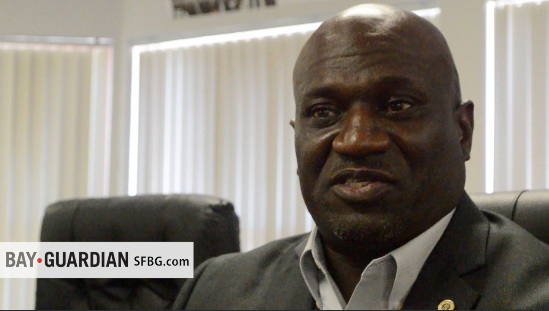
Just as Herrera announced his intentions, the Bay Guardian sat down at the Transit Workers Unit local 250-A for an interview with Eric Williams, president of Muni’s worker union. 

Here are William’s answers to our questions. Pick up a copy of next week’s paper for a broader story on the Muni sickout and union backlash in San Francisco.

San Francisco Bay Guardian: Thanks for sitting down with me. This is obviously a contentious time for Muni workers. But let’s hear how this all started: What’s the nitty-gritty contract disagreement between the SFMTA and the union?

Eric Williams: We don’t have a problem paying our pension, despite what’s being said. We would like a fair even swap, just like everyone else had. The police, the fire department, every union in this city got a fair swap to help pay their own pension. Right now they want to offer us a bump to pay our own pension, but once we got our CPA to crunch the numbers, it’s all negative.

The city wants you to beleive it’s cost-neutral, but that’s not the case. Our members will be making $1.10 less an hour due to this negotiation. 

SFBG So you’ve said before that certain laws and codes have “stacked the deck” in negotiations against the union, in favor of the SFMTA. How does that work?

EW You have to read Prop G [regarding Muni operators’ salaries] and code A8.409 [prohibiting strikes] and say “is this fair?” 

We’re struggling, we’re coming into a negoatiaion with our hands tied behind our back. The beauracracy and the spinning of the words and statements is alive in the agency. 

It’s unfortunate the public thinks it’s the common workers’ fault on any of these issues. Our members have to take care of our families, our children, paying for college, just like you. 

[Proponents of Prop. G said] “Well, it will make everything fair.” Actually, it’s not.

A ten-minute video interview with TWU Local 255-A President Eric Williams, as he explains the motivations behind the sickout.

SFBG Let’s get into that a bit more. So you walk into a negotiation, you bring a proposal. The way most union negotiations work is two parties sit down and present proposals, but the Muni worker/SFMTA negotiation is unique. You have to prove something to the arbitrator. What do you have to prove?

EW Basically, we have to show we’re not going to be costly to the agency. But inflation is going up, how could we not be costly?

 We just want restrooms, but those are costly. We want raises, those are costly. We want better parking, that’s costly.

The arbitrator must side with the city if they feel the cost burden will be too high on the city. All SFMTA employees are under the same deal. I’ve been at four tables in the past few months and negotiated two contracts with parties other than the SFMTA. We had to go to mediation, those mediators told us to talk it over again (offering compromise). You take this proposal, you take this one. That’s not the case with the SFMTA negotiations.

SFBG Can Muni workers afford to live in San Francisco?

EW Definitely not. The only members that live inside the city are those who purchased a home 20 or so years ago. The majority of our members live outside the city. That’s what leads to the issue of transportation and parking. If you’re pulling a bus run at 5:30 in the morning, guess what, there’s no bus at 4am to get them there. They need parking. It’s poor or rich in this city, there’s no in between. That’s no secret.

SFBG How far back would you have to go to say a good strong bloc of members lived in the city?

EW At least 20-30 years. Early ’90s, ’80s. 

SFBG Let’s talk about the atmosphere with riders out there. We recently saw a BART strike, did you take a read on the reaction? The sickout, which seems similar … people seem to not be siding with the union on this. There’s a lot of animosity.

EW We thought people understood who were in charge of the economics. It’s unfortunate the public may believe it’s the common workers’ fault on the issues. 

If you look at the bargaining with BART, yes it caused frustration. Yes it did. But when you see them empathizing with the power, “yes we know this hurts, but we have a family too.” The only thing we can do is ring the bell and say “this is unfair.”

SFBG Do you feel there is a backlash against Muni workers for the sickout?

EW Honestly i couldn’t tell the difference, we’ve been drug over the coals for so long. The frustration you’ve seen the past few days, not brought by the union itself, but by the members, is real. 

But in reality our members encounter something different with the everyday riders. The mothers, the fathers, [they have] a different attitude. Of course we have that 10, 20 percent that no matter what we do, who say we’re wrong. But we have to take a stand as well. We’re important here. We take our jobs seriously, and we should be treated as such. 

[Those who disagree with us] need to challenge the agency on everything the agency tells them. The system is still not on time, you still don’t have enough employees to drive the buses on the ground. The SFMTA spends all this money but we’re not on time, we don’t have enough people. 

Those 10-20 percent [who disagree with the workers] need to read the charter. Any person with common sense, any person with a heart, ask themselves if that process is fair. 

SFBG You don’t think part of it is the view that Muni workers make much more than private sector workers?

EW There’ve always been good private sector employers out there. But unions got us weekends, unions got us better working hours, unions got you sick leave. But go out and ask how they feel, what they think the public’s issue with us because we’re making $60,000 a year, and you went to college for four years. Maybe it’s because we’re making a living, and you’re struggling. Well hey, come get a job as a bus driver if it’s that bad out there.


The pedestrian pop of Sylvan Esso

0

Upon first listen, Sylvan Esso kind of takes hold of you. Nick Sanborn’s melodic, layered, driving electronic beats pair perfectly with Amelia Meath’s blissful voice and artful lyrics. The way Sylvan Esso — the band’s self-titled debut album, which dropped May 13 — is wrapped together feels so intuitive, so ethereal, that it will likely bring you to your feet for an impromptu dance session.

“Hey Mami” will loop in your head; “Dress” will become your jam. And you’ll be in good company this Fri/6 at the Fillmore, when Sylvan Esso open for Oakland’s own tUnE-yArDs.

I had the pleasure of speaking with Meath from the Free Press Summer Festival in Houston on Sunday. She posted up in her trailer for our call after seeing Lauryn Hill’s performance – which, she assured me, was awesome.

So how did Sylvan Esso come to be? Well, for starters, lyricist Amelia Meath and electronic producer Nick Sanborn fortuitously found themselves playing on the same bill at the Cactus Club in Milwaukee one night. They became instant friends. When Meath needed a remix for “Play It Right” — a song she wrote and played with her indie folk trio, Mountain Man — she asked Sanborn to make it and was very pleased with the product.

After collaborating on “Play It Right,” Meath and Sanborn both felt like they should collaborate some more. And then, after some tweeting and planning, Sylvan Esso was born. “It almost feels like magic how good we are at working together,” Meath says.

When I first listened to Sylvan Esso, I felt hard-pressed to assign it a genre. Meath’s lyrics are deep and introspective, and Sanborn’s arrangements are incredibly inventive; but I think the undeniable catchiness of their songs makes Sylvan Esso, essentially, pop. Meath likes to call it “pedestrian pop”: pop music that illustrates universal human experiences and makes you “shake your butt” — and feel emotion — simultaneously.

Meath feels that electronic music has a marketed effect on people; she loves pairing her lyrics and melodies with Sanborn’s electronic arrangements. “I always wanted to make electronic music because I really like that electronic music shakes people; it actually vibrates people at the same rate at the same time,” Meath says.

The duo has many varied sound influences, such as They Might Be Giants, Aliyah, John Lurie/Marvin Pontiac, and Stina Nordenstam. Meath also looked to pop goddesses like Beyoncé and Rihanna while writing the lyrics to Sylvan Esso. “When you write a pop song, you’re trying to make something that’s going to sink into the brain of someone and stay with them after hearing it once,” Meath says.

The duo will be opening for tUnE-yArDs at the Fillmore on Friday, June 6. (They’re in the Bay Area for one night only.) Meath is no stranger to San Francisco, as she used to spend summers here during her teens while training with a Chinese contortionist. (Yes, Meath also happens to be a badass.)

“We have to be in Pasadena the next morning,” Meath says, “but if I were going to be in San Francisco for the weekend, I would walk up Russian Hill, and eat some really delicious food — that’s for sure! Oh, I also always really like to go to Tartine, and then I go to Bi-Rite and spend way too much money on groceries, and then sit in Dolores Park all day long!” She’s an honorary San Franciscan for sure.

When asked what she enjoys most about performing, Meath stressed the communal aspect of live music. “My favorite thing about performing is that you get to be the hinge for the whole room to become a small community,” Meath says.

Sylvan Esso opening for tUnE-yArDs on Fri/6
9 pm, $26
The Fillmore
1805 Geary, SF
www.thefillmore.com

No Wall on the Waterfront wins big, Chiu prevails in Assembly race by slim margin

113

Developers looking to build high-end luxury condos on the waterfront lost big last night. 

Proposition B, backed by a campaign committee known as No Wall on the Waterfront, won handily with a 19 percentage point lead at the polls. 

At the Yes on B campaign party at Sinbad’s, former Mayor Art Agnos described the outcome as a win for the people of San Francisco.

“I think this vote is a decisive vote,” Agnos said, “that sends a message to City Hall that people in San Francisco want to protect the waterfront.

The ballot measure will require voter approval for waterfront development projects that exceed established building height limits.

Most political experts predicted last night’s June primary election would result in record-low turnouts, since Governor Jerry Brown’s expected win meant no big-ticket votes on the ballot. The prediction was correct. All told, 22 percent of San Francisco registered voters cast ballots in the June 3 election. And though some provisional ballots and mail-in ballots will be counted over the next few days, the initial counts have Yes on B miles ahead.

At Oddjob, a SoMa cocktail bar, opponents of Prop B backers were in a grim mood on election night.

Patrick Valentino, a No on B spokesperson, said his camp had a “more complex message” to convey. He felt their thesis, arguing luxury condos take pressure off the housing market, wasn’t heard by voters.

Meanwhile, in the Assembly race for soon-to-be termed out Tom Ammiano’s seat, Board President David Chiu and Sup. David Campos emerged as the first- and second-place primary winners, respectively, setting them up to face off against one another in November as expected.

Chiu prevailed, with 48 percent to Campos’ 43 percent, a five percentage point lead. But from the start of the night to the end, Campos was able to close a gap that was initially larger, setting the stage for a close race in November

At his celebration, Chiu told supporters: “It feels good.” When early polling results showed Chiu much farther ahead, a finance staffer told the Guardian, “We’re surprised by the gap, we expected to be up, but not by this much.”

David’s father, Han Chiu, said “we are so proud.

But as more results came in, Campos was able to narrow the gap, finally trailing by a margin of about 3,000 votes.

Campos adressed his supporters at Virgil’s Sea Room, and as the crowd whooped and hollered, he took note of a few milestones.

Firstly, few progressive campaigns for Assembly had ever raised as much money as his had, which he thanked his staffers for.

And the numbers should make Chiu nervous, Campos said, because fewer voters turn out to the polls in the primaries.

“We’ve been very clear,” he boomed to the bustling crowd. “If Chiu doesn’t win by double digits [in June], we win in November.”

Reed Nelson contributed to this report.

Bay Guardian News Editor Rebecca Bowe, Staff Writer Joe Fitzgerald Rodriguez and freelancer Reed Nelson live-tweeted campaign parties throughout last night. Check out their tweets in a curated timeline, below.


The Damned on playing small venues, headgear that protects you from spit, and why they won’t stop ’til the Stones do

7

For nearly four decades now, legendary British rockers The Damned have been haunting stages around the world with their brand of gothic-inspired punk.

Since storming onto the London punk scene in 1976, the band has evolved and survived multiple line-up changes over the years, with the group now led by founding members Dave Vanian and Captain Sensible, who are keeping the original spirit of The Damned alive and well.

Today, Vanian’s punk-meets-rockabilly crooner vocals and Sensible’s wildly blistering guitar are backed up by the jackhammer rhythm section of drummer Pinch and bassist Stu West, along with keyboardist Monty Oxy Moron, who often looks like a possessed version of Beethoven, his hands flailing wildly about when not pounding the keys.

Bay Area fans are in for a treat this week as The Damned play two shows in Northern California ahead of their appearance at the Ink-N-Iron festival in Long Beach — and these are the only U.S. gigs on the books for the year.

“I love visiting San Francisco, it’s the most European city in North America and a vegetarian’s paradise. My home is in Brighton, the gay capital of the UK and a lot of the relaxed liberal attitude we have there is over here too,” says Captain Sensible, via email. “I like the way the Bay Area is a collection of villages all with their different vibe, but mainly it’s the smart, friendly people here that make a visit such fun.”

Looking back over almost 40 years of on and off history as a band, Sensible offers a candid assessment of what life has been like as a member of The Damned.

“I’m not one for regrets, we’ve had a splendid crack as a band. A lot of things that went pear shaped was our own stupid fault — and how we survived the mania of the 70s / 80s without anyone dropping dead I’ve no idea. But as you can imagine it was bloody good fun in a time when bands could pretty much do what ever they wanted in the studio without label types breathing down our necks; in fact, when they did turn up we always put on a little show for them, band splitting up, drummer climbing in a grand piano to add nonsensical avant-garde overdubs on a straightforward punk tune, food fights. They got the idea in the end and left us alone, and we actually made a few decent records despite all the chaos.”

The Damned were the first punk band from the UK to release a single — “New Rose” — and an album, Damned Damned Damned.

https://www.youtube.com/watch?v=rTfyUqVqX-0&feature=kp

They also broke ground as the first to cross the pond and tour the United States, a jaunt that saw them play the infamous Mabuhay Gardens in San Francisco back in 1977.

“It’s all a blur as you can imagine, but we met loads of young upstarts who told us they were getting their bands together. It was a great time, a clean slate if you like. And it felt good to give the jaded stadium rock stars of the time a kick up the arse.”

“I also remember American beer being universally appalling. In fact I would cram my suitcase with as much booze as possible, if you can believe that. Now, of course Californian craft beer is the cutting edge of brewing and we intend to visit a few breweries this trip.”

As for Sensible’s now-signature stage attire — a red beret and crazy sunglasses — it turns out it had nothing to do with trying to make a fashion statement: It was born from the environment that came to epitomize live shows in the early days of the punk movement.

“The truth is that at first I only wore a beret to stop the ‘gob’ (spit) getting in my hair. After Johnny Rotten and Rat Scabies had their famous spitting incident at a Pistols gig in ’76 it became part of the punk scene for a year or so. The problem was the hot stage lights baked the gob in your hair and it was almost impossible to remove the hard lumps afterwards, so I wore a beret and sunglasses to stop it getting into my eyes. That’s the true story, it wasn’t fashion — it was self preservation!”

Fans will be able to hear all sorts of first-hand accounts and behind the scenes stories in the near future when a documentary film about The Damned is released, made by Wes Orshoski, the filmmaker behind “Lemmy,” the award-winning portrait of the iconic Motorhead frontman.

“I took Wes to do an interview outside the former home of my parents — where I spent my school years — and no sooner was the camera rolling than a drug crazed mugger made a grab for it and a good old fashioned punch up ensued in which $50,000 worth of film equipment got completely trashed. Wes ended up being rushed to hospital. He probably needed a rabies antidote,” says Sensible.

“I should have mentioned to him that I was born and raised in the roughest part of South London — where one person’s posh movie gear is someone else’s years supply of crack cocaine.”

Despite difficulties such as that jarring incident, Sensible says that the rest of the project has been proceeding along well.

“He’s captured some very funny footage already as the Damned are quite a strange bunch these days. People think they know us, but I reckon there will be a few surprised faces when the film is released.”

One fact that casual fans of The Damned might not know is that Captain Sensible is a huge train buff — he’s driven steam engines in England, and even had a diesel locomotive named after him.

“There was a company that had a punk fan as boss and he named his locos after his heroes. John Peel, Joe Strummer — mine was originally going to be called Morrissey but it came to the guy’s attention that he made a point NEVER to travel by train. Whereas I do all the time, so I got it instead!”

Unfortunately, Cotswold Rail went out of business a few years ago, and when the engine was sold, a disgruntled employee that was owed money stole the nameplates.

“I’d maybe buy ‘em if he offered, gotta be worth a fiver, eh?” says Sensible.

While the Damned often perform at large music festivals around the world these days, Sensible still favors smaller shows, like the one the band will play at Slim’s on Wed/4.

“I prefer the club gigs, the closeness to the audience. And when I see bands, that’s also the environment I prefer. Festivals with screens and the musicians half a mile away on a distant stage is not great is it? The problem is that now we are a certain age, and there’s not likely to be another club tour as it’s a bit knackering.”

Although Sensible mentions that the members of The Damned aren’t exactly spring chickens anymore, he’s adamant that they have no intention of hanging it up anytime soon.
 
“The Damned ain’t going to quit while the Stones are still lurching on,” he says. “We’re not gonna be beat by a bunch of old Tories.”

https://www.youtube.com/watch?v=8m2JyiggwAU

The Damned, with Koffin Kats and Stellar Corpses
Wednesday, June 4
8pm, $30
Slim’s
333 11th St., SF
(415) 255-0333
www.slimspresents.com

Listen: Katie Day’s anti-tech bro jam “San Francisco (Before the West Falls)”

79

Between POW!’s “Hi-Tech Boom,” the schticky “Google Bus Song” from Cachebox, and Violent Vickie’s “Fuck You!!!!!”, it’s safe to say San Francisco musicians — the ones that are left here, haha! sorry — are currently leading the nation in anti-gentrification music.

This is a good thing, of course. It means the city still has a pulse. You know what we’ve been sorely lacking, however? As Emma Goldman basically said, give the people a summery, socially conscious anthem we can fucking dance to.

Enter Katie Day, who self-released her new EP, Burn It to the Ground, yesterday. There’s a lot to like here, including a love song for the Lower Haight, but the instant earworm is a semi-tongue-in-cheek indie-electro-pop jam called “San Francisco (Before the West Falls),” with shimmery, bubble-gum synths and keys layered with lyrics that lament the bygone days when coffee was 80 cents, and give serious side-eye to the tech bros moving into her neighborhood: “Someone told me about the boys next door/They put the boards on the window of the record store/And now the kids don’t get to play no more…”

“The extreme wealth disparity we’re experiencing in SF as a result of tech can make living here as an artist straight-up oppressive, but I think having a song that speaks to that oppression and makes you want to get up and dance anyway can negate any feeling of self-pity, even if you’re living under constant threat of eviction while there’s trained German Shepherd acting as an elevator operator at the Google office,” Day wrote me when I asked about her inspirations. “It’s something they can’t take away from you.”

Get your un-gentrifiable dance on when she plays with Stages of Sleep, New Spell, and Memory Motel this Sat/7, 8pm at Amnesia.


Secret passages

0

culture@sfbg.com

THE WEEKNIGHTER Weekends are for amateurs. Weeknights are for pros. That’s why each week Broke-Ass Stuart (www.brokeassstuart.com) will be exploring a different San Francisco bar, bringing you stories about the places and people who make San Francisco one of the most phenomenal cities in the world. Who wants a drink?

It was weird that Anthony wanted to go to Bourbon & Branch (501 Jones St, SF. 415-346-1735) for his birthday. “But you don’t drink,” I said, hoping to find out why someone who’d never had a drop of booze in his life, due to being born with a bum liver, would want to go to a fancy bar. “I know that, dummy,” he told me. “But I heard they have a secret room that opens up when you pull a book!”

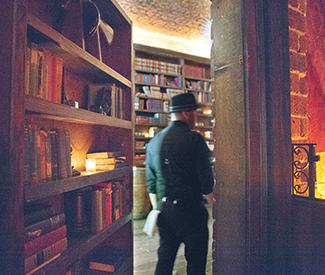
He had me there. Bourbon & Branch has a few secret rooms that open up when you do various Hardy Boys-esque actions. It’s one of the bar’s many charms. When it opened in 2006, there were no mustache bars in San Francisco. You know what I mean by mustache bars — the ones where a bow tie and suspender wearing, mustachioed man squeezes tiny tinctures into your drink from a utensil clearly invented by alchemists. They are omnipresent in current-day San Francisco but when Bourbon & Branch opened, it was the first one in the city.

At this point, anyone who spends a lot of time in bars is pretty tired of cocktails that are too precious and take too much time, and most of us are waiting for the backlash when places go back to specializing in a shot and a beer. But the thing that makes Bourbon & Branch great is that, while it can take a lot of credit for kicking off the pre-Prohibition cocktail craze in San Francisco, it still does it better than any of them. Why? Because of it’s attention to detail.

They say you’ll always remember your first one. But often times your second one is far better. The first speakeasy style bar I went to was Little Branch back when I lived in NYC, and it was cool. But it wasn’t until I moved back to San Francisco that I saw the trope played out to its full potential. Walking into Bourbon & Branch that first time in 2008 made the history nerd in me squeal. It felt like a real speakeasy. It was full of dark wood and was low lit by candles and a chandelier. Bartenders in ties and fedoras shook things vigorously while making cocktails that hadn’t been popular in half a century. People were only served if they were seated and they were encouraged to speak quietly.

And then I got to the backroom where suddenly the bookshelf opened and an entire other bar was laid out before me, filled with people drinking similarly well-made drinks while laughing and talking loudly. “Where the fuck am I,” I asked myself before realizing I couldn’t afford the place and leaving out the backdoor.

So a few years ago when Anthony said he wanted to go here for his birthday my first reaction was, “Motherfucker, why are we gonna go somewhere with $12 cocktails when you don’t even drink?” His answer was relatable to any of us who have ever dreamed of traveling through time or going on the kind of adventures you only see in movies or read about in books. He wanted to go through the secret passageway and spend time in a San Francisco that no longer exists.

So do I.

Stuart Schuffman aka Broke-Ass Stuart, is a travel writer, poet, and TV host. You can find his online shenanigans at www.brokeassstuart.com


Ethics complaint says chair of DCCC deliberately tried to confuse voters

NOTE: This post has been updated from an earlier version.

Right down to the wire, a complaint filed with the San Francisco Ethics Commission today [Tue/3] – election day – alleges that Democratic County Central Committee elected chair Mary Jung authorized phone calls that were meant to deliberately confuse voters on Proposition B.

The ballot measure, which would require voter approval for waterfront height limit increases, is officially backed by a committee called “No Wall on the Waterfront, Yes on B.”

But according to the Ethics Commission complaint, opponents of Prop. B falsely portrayed No Wall on the Waterfront as being against Prop. B in a bid to confuse voters.

A transcript of the call included in the complaint notes that a live caller opened the communication by saying, “I’m calling about the No Wall on the Waterfront Campaign,” without saying they were calling in opposition to that campaign, and seemingly posing as being affiliated with it. Callers also made statements such as, “Prop B is about environmental loopholes, against affordable housing,” and “No on B endorsements — the Democratic Party, Alice Toklas democratic club, labor.”

“This act by Ms. Jung was a devious and deceptive plan to trick San Francisco voters,” complainant Geraldine Crowley, formerly a DCCC member herself, charged in the filing. “While I realize she employed as a highly paid lobbyist for the San Francisco Association of Realtors – who oppose Prop. B – it crosses the line for Ms. Jung to violate the ethical codes and San Francisco law in this manner.”

We reached Jung by leaving a message on her phone line, listed on the San Francisco Association of Realtors website, next to her job title: “Director of Government and Community Relations.” (Which is really a very convenient arrangement for the real-estate crowd, when you think about it. Who better to relate to the “community” and the “government” than the chair of one of the most politically influential organizations in town, which endorses candidates for elected office?)

When she called us back, Jung confirmed, “We were calling people to vote No on Prop. B.” But what about the allegation that those calls were intentionally deceptive, falsely painting No Wall on the Waterfront as being against Prop. B? “I have not seen the complaint,” Jung told us. She added, “I don’t have a copy of the script” used by callers when they contacted voters. To get a copy of the script, she said, we would have to call political consultant Eric Jaye, who is handling communications for the opposition to Prop. B. We tried calling Jaye but couldn’t reach him.

[UPDATE: Jaye just returned our call. He said Crowley’s complaint is “frivolous” because the callers said they were calling “about” the No Wall on the Waterfront Campaign. “This was what they named their campaign,” Jaye said repeatedly. “It’s not deceptive.” But we asked him multiple times if he would provide a copy of the full call script, and he refused to do so, without offering any reason why he couldn’t.]

What’s more, according to Crowley’s complaint, is that the paid phone calls to DCCC members appear to have originated with venture capitalist Ron Conway, who made a $25,000 donation to the DCCC on May 30. A few days later, Ethics Commission filings show, Jung authorized expenditures totaling $12,281.13 for “membership communication calls.”

Jung denied having had any conversation with Conway about it, and said “the Democratic Party has done a lot of fundraising in the past three months,” and that she could not link a specific donation with a specific DCCC expenditure. She then said she had to go.

Officially, “you can’t give to the party and officially say the donation is for some purpose, but anyone who’s worked in San Francisco politics knows … it’s designed to make something happen,” said Jon Golinger, who heads up the “No Wall on the Waterfront, Yes on B” committee.

He added, “They’re literally using our name to further an agenda that is the opposite” of what the Yes on B campaign has been organizing for.

Some members of the DCCC are reportedly seeking copies of that script, since there seems to have been little awareness of what was being told to voters in the Democratic committee’s name.

But the idea that Jung herself did not know what was being said in the calls, when she authorized the expenditure for membership calls and works in the same office as Prop. B opponents, raises questions about what sort of leadership she’s actually providing.

In the meantime, here’s the Ethics Commission complaint.

Ethics Complaint Against Mary Jung by Rebecca Bowe