San Francisco

Film Listings

0

Film listings are edited by Cheryl Eddy. Reviewers are Kimberly Chun, Max Goldberg, Dennis Harvey, Lynn Rapoport, and Matt Sussman. For rep house showtimes, see Rep Clock.

OPENING

Another Happy Day You’d think that if your entire extended family treated you like a waste of space, you’d avoid all unnecessary contact. Seems this strategy never occurred to Lynn (Ellen Barkin), who shows up a few extra days early for her son’s wedding to stay with her aging parents (Ellen Burstyn, George Kennedy) and spend time with her obnoxious sisters (Diana Scarwid, Siobhan Fallon). Furthering the unpleasantries are Lynn’s ex-husband (Thomas Haden Church) and his wife (Demi Moore, in catty Real Housewives mode) and Lynn’s other children, a troubled bunch that includes Kate Bosworth as a self-mutilating waif and Ezra Miller as a depressed, jerky outcast (basically, a milder version of the character he plays, to much greater effect, in the upcoming We Need to Talk About Kevin). No wonder Lynn is a screechy, hysterically-crying mess — “toxic” barely begins to describe the situation. Writer-director Sam Levinson won a Sundance Film Festival award for his script, a fine example of indie-film misery at its most unbearable. (1:55) Balboa. (Eddy)

Golf in the Kingdom Golfers, apparently, worship Michael Murphy’s 1971 best-seller Golf in the Kingdom for its explorations of the sport’s more mystical qualities (for context, Murphy also co-founded Big Sur’s Esalen Institute). It’s unlikely there’ll be any new converts via director Susan Streitfeld’s low-budget attempt to translate the cult novel to the big screen — supply your own “sand trap” joke here, but this movie is a mess: murky night scenes, strange editing choices, and pretentious new age dialogue (“Keep asking questions. The best ones don’t have answers!”) that might’ve felt deep on the page, but is hilariously woo woo when spoken aloud. In fact, if you pretend Golf in the Kingdom — the tale of a young American golfer who encounters a meditating, is-it-wisdom-or-is-it-bullshit-spouting teacher during a stopover in Scotland — is a comedy, you’ll be better off. Not as well off as if you just watched Caddyshack (1980) instead, though. (1:26) Roxie, Smith Rafael. (Eddy)

Magic to Win The latest from Wilson Yip (2008’s Ip Man) is a fantasy about dueling magicians starring Louis Koo and Raymond Wong. (runtime not available) Metreon.

New Year’s Eve Remember when movies named after holidays were slasher flicks, not cheesy, star-studded rom-coms? (1:58) Presidio.

*Outrage The title definitely works: not only is this the most violent Takeshi Kitano film in a stretch, but the shameless, strangely off-key caricatures, especially that of a corrupt African diplomat, veer into offensiveness. Then again, what isn’t offensive, broadly sketched-out, and nasty about this yakuza crime drama-cum-jet-black comedy concerning a particularly code-less, amoral band of modern-day ronin? Chaos reigns, sucking even the beautiful and the charismatic into its quicksand. Kitano here is stony-faced Otomo, the chief bully for boss Kato (Miura Tomokazu) and underboss Ikemoto (Kunimura Jun). Kato is being screwed with by his own godfather, and must distance himself from ex-con brethren, or “brother,” Murase (Renji Ishibashi), then offend him, and finally do much worse. Otomo and his own crew of tough guys, headed up by the wickedly handsome Mizuno (Kippei Shiina) are charged with enacting the twisted plan, which is nihilistically comical in its Byzantine politics and back-stabbing switchbacks — the U.S. Congress will see much that’s familiar in Outrage‘s gaming of an already-decaying system. The shameless caricature of the mob’s African gambling cohort, which succeeds in making him the only vaguely sympathetic character of the lot, only demonstrates how irredeemable and decadent the so-called system — one filled with criminals obsessed with hierarchy and equally preoccupied with wrecking disorder within a very rotten order — has become, especially in the context of the interracial crime-brethren bonding of Kitano’s Brother (2000), the director’s last yakuza flick. Using Japan’s mafia as a cruel funhouse mirror through which to peer at his culture, Kitano finds much wanting with this, his 15th film, and much like Takashi Miike and his recent 13 Assassins, the filmmaker questions the core Japanese notions of duty, conformity, and loyalty and finds that, much like trickle-down economics, power corrupts from the top down. (1:49) Lumiere, Shattuck. (Chun)

*Saxon: Heavy Metal Thunder — The Movie At last, the gritty NWOBHM band gets its Behind the Music — except two hours long and created, tellingly, with fan-raised funding. What Craig Hooper’s doc lacks in technical slickness (for U.S. audiences, subtitles might’ve been a good idea) it more than makes up for in enthusiasm, not to mention thoroughness; though the band has gone through countless members in its 30-plus years, nearly all are interviewed at length, especially singer Biff Byford, who’s still part of the band, and bassist Steve “Dobby” Dawson, who is not. Though Saxon never quite conquered America — despite its best efforts, some of which are kind of regrettable in hindsight — the band enjoyed considerable success in Europe and was on the front lines for some of metal’s most exciting years, storming stages with Motörhead on the Bomber tour and mixing it up with a very young Metallica. Though the band’s overall story arc is a familiar one, anecdotes and asides (and the addressing of those “We inspired Spinal Tap” rumors!) make Saxon essential viewing for any metalhead. (2:00) Yerba Buena Center for the Arts. (Eddy)

The Sitter Indie darling-turned-stoner auteur David Gordon Green (Your Highness) directs Jonah Hill in this R-rated babysitting comedy. (1:21) Shattuck.

A Warrior’s Heart This movie stars secondary Twilight dreamboats Kellan Lutz and Ashley Greene, and its tagline is “In the twilight of their youth … her love gave him the courage to win.” Ah, I see what you did there, A Warrior’s Heart. Very subtle. An improbably buff, infuriatingly cocky lacrosse player (Lutz, who is 26 and in no way resembles a high schooler) wreaks havoc on and off the field, with anger management issues that go totally Krakatoa after his father is killed in Iraq. (Not a spoiler. Like I said, this movie is hardly subtle.) Dad’s gruff-yet-kind military buddy (Adam Beach) takes the troubled lad under his wing, spiriting him from jail to a work camp run by Native Americans. Did you know, as A Warrior’s Heart explains earnestly and often, that Native Americans invented lacrosse? Lessons are learned, the comely daughter (Greene) of the distrustful lacrosse coach (William Mapother) is wooed, and … well, I’ll let you figure out who scores the deciding goal in the national championship game. (1:38) Opera Plaza, Shattuck. (Eddy)

*Young Adult We first meet Mavis Gary (Charlize Theron) passed out next to last night’s bar pickup, whose name she won’t remember upon waking. You get the feeling this scenario happens a lot to Mavis — she’s the aging Manhattan model who seems like a trophy until the guy realizes she’s an even bigger asshole than he is. Plus, she’s in Minneapolis, on a house-grade scotch budget, where the denizens of the Midwestern home town she’s long abandoned assume she’s living a relatively glittering existence as swinging single and published author (albeit ghost author, of a petering-out tween fiction franchise). But no, her life is empty. Save your sympathy, however — Mavis might feel she’s missing something, but her consumerist values and incredible selfishness aren’t going to be sacrificed in finding it. After getting a courtesy baby announcement from old boyfriend Buddy (Patrick Wilson), she makes a determination as arbitrary as it is adamant: they were always meant to be together, and she needs to reclaim him so they can re-live their glory as King Jock and Queen Bitch of high school. Never mind that Buddy is quite happy where he is — let alone that new baby, and a wife (Elizabeth Reaser) less glam but cooler than Mavis will ever be. Acting as her confidant on this kamikaze mission is ex-classmate Matt (Patton Oswalt), who wants to reverse time about two decades for very different reasons. This reunion for the Juno (2007) duo of director Jason Reitman and writer Diablo Cody puts the latter’s facile wit to more complex, mature, organic use — though this ruthless yet quiet black character comedy is no uptempo crowd-pleaser. Rather, it’s an insidious, incisive commentary on such entertainments, as well as on juvie fiction like Sweet Valley High, whose adaptation is what Cody was developing before this tangent trumped it. It’s a surprisingly nervy movie, more like a 20-years-later sequel to Heathers (1988) than to Juno. (1:34) (Harvey)

ONGOING

Answers to Nothing The first scene is of Dane Cook getting a blow job. If you don’t run screaming from the room after that, you’ll be mildly rewarded by this ensemble drama tracing the lives of several Los Angeles residents trapped in various states of quiet desperation. At least director and co-writer Matthew Leutwyler (2010’s The River Why) has the sense to cast Cook (2007’s Good Luck Chuck) as a character you’re supposed to hate; he’s a therapist who’s cheating on his trying-to-get-pregnant wife (Elizabeth Mitchell) with a hipster singer (Aja Volkman) inexplicably hung up on a married dude who treats her like an afterthought. Barbara Hershey has a few understated scenes as Cook’s lonely mother; Julie Benz plays his sister-in-law, a no-nonsense detective investigating the disappearance of a young girl. Probably the most unexpected plot thread — in a film that remains more or less identical to all others cast in the Crash (2004) mode — follows a guilt-ridden woman (Miranda Bailey) determined to help her paralyzed brother complete a marathon. These characters could’ve been the whole movie, no blow job required. (2:03) Metreon. (Eddy)

Arthur Christmas (1:37) 1000 Van Ness, Shattuck.

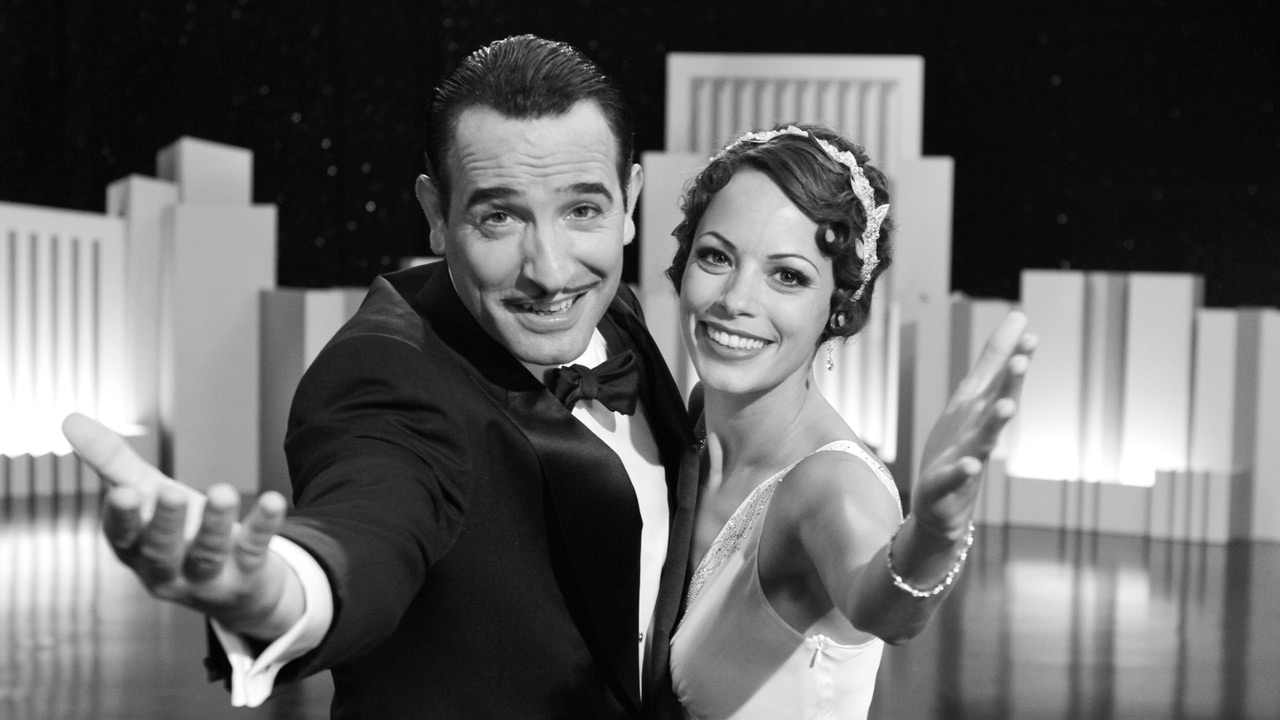
*The Artist With the charisma-oozing agility of Douglas Fairbanks swashbuckling his way past opponents and the supreme confidence of Rudolph Valentino leaning, mid-swoon, into a maiden, French director-writer Michel Hazanavicius hits a sweet spot, or beauty mark of sorts, with his radiant new film The Artist. In a feat worthy of Fairbanks or Errol Flynn, Hazanavicius juggles a marvelously layered love story between a man and a woman, tensions between the silents and the talkies, and a movie buff’s appreciation of the power of film — embodied in particular by early Hollywood’s union of European artistry and American commerce. Dashing silent film star George Valentin (Jean Dujardin, who channels Fairbanks, Flynn, and William Powell — and won this year’s Cannes best actor prize) is at the height of his career, adorable Jack Russell by his side, until the talkies threaten to relegate him to yesterday’s news. The talent nurtured in the thick of the studio system yearns for real power, telling the newspapers, “I’m not a puppet anymore — I’m an artist,” and finances and directs his own melodrama, while his youthful protégé Peppy Miller (Bérénice Béjo) becomes a yakky flapper age’s new It Girl. Both a crowd-pleasing entertainment and a loving précis on early film history, The Artist never checks its brains at the door, remaining self-aware of its own conceit and its forebears, yet unashamed to touch the audience, without an ounce of cynicism. (1:40) Embarcadero, Smith Rafael. (Chun)

*The Descendants Like all of Alexander Payne’s films save 1996 debut Citizen Ruth, The Descendants is an adaptation, this time from Kaui Hart Hemmings’ excellent 2007 novel. Matt King (George Clooney) is a Honolulu lawyer burdened by various things, mostly a) being a haole (i.e. white) person nonetheless descended from Hawaiian royalty, rich in real estate most natives figure his kind stole from them; and b) being father to two children by a wife who’s been in a coma since a boating accident three weeks ago. Already having a hard time transitioning from workaholic to hands-on dad, Matt soon finds out this new role is permanent, like it or not — spouse Elizabeth (Patricia Hastie, just briefly seen animate) will not wake up. The Descendants covers the few days in which Matt has to share this news with Elizabeth’s loved ones, mostly notably Shailene Woodley and Amara Miller as disparately rebellious teen and 10-year-old daughters. Plus there’s the unpleasant discovery that the glam, sporty, demanding wife he’d increasingly seemed “not enough” for had indeed been looking elsewhere. When has George Clooney suggested insecurity enough to play a man afraid he’s too small in character for a larger-than-life spouse? But dressed here in oversized shorts and Hawaiian shirts, the usually suave performer looks shrunken and paunchy; his hooded eyes convey the stung joke’s-on-me viewpoint of someone who figures acknowledging depression would be an undeserved indulgence. Payne’s film can’t translate all the book’s rueful hilarity, fit in much marital backstory, or quite get across the evolving weirdness of Miller’s Scottie — though the young actors are all fine — but the film’s reined-in observations of odd yet relatable adult and family lives are all the more satisfying for lack of grandiose ambition. (1:55) California, Marina, 1000 Van Ness, Piedmont, SF Center, Sundance Kabuki. (Harvey)

*Drive Such a lovely way to Drive, drunk on the sensual depths of a lush, saturated jewel tone palette and a dreamlike, almost luxurious pacing that gives off the steamy hothouse pop romanticism of ’80s-era Michael Mann and David Lynch — with the bracing, impactful flecks of threat and ultraviolence that might accompany a car chase, a moody noir, or both, as filtered through a first-wave music video. Drive comes dressed in the klassic komforts — from the Steve McQueen-esque stances and perfectly cut jackets of Ryan Gosling as the Driver Who Shall Remain Nameless to the foreboding lingering in the shadows and the wittily static, statuesque strippers that decorate the background. Gosling’s Driver is in line with Mann’s other upstanding working men who hew to an old-school moral code and are excellent at what they do, regardless of what side of the law they’re working: he likes to keep it clear and simple — his services as a wheelman boil down to five minutes, in and out — but matters get messy when he falls for sweet-faced neighbor Irene (Carey Mulligan), who lives down the hall with her small son, and her ex-con husband (Oscar Isaac) is dragged back into the game. Populated by pungent side players like Albert Brooks, Bryan Cranston, Ron Perlman, and Christina Hendricks, and scattered with readily embeddable moments like a life-changing elevator kiss that goes bloodily wrong-right, Drive turns into a real coming-out affair for both Danish director Nicolas Winding Refn (2008’s Bronson), who rises above any crisis of influence or confluence of genre to pick up the po-mo baton that Lynch left behind, and 2011’s MVP Ryan Gosling, who gets to flex his leading-man muscles in a truly cinematic role, an anti-hero and under-the-hood psychopath looking for the real hero within. (1:40) Lumiere. (Chun)

*Eames: The Architect and the Painter Mad Men would boast considerably fewer sublime lines without the design impact of postwar masters Charles and Ray Eames. Touching on only the edges of the wide net cast by the couple and the talented designers at their Venice, Calif., studio, Eames attempts to sum up the genius behind the mid-century modern objets that brought a sophisticated new breed of beauty and glamour to an American middle class. Narrated by James Franco and chock-full of interviews with everyone from grandson Eames Demetrios to director Paul Schrader, this debut feature documentary by Jason Cohn opens on the then-married would-be architect Charles and sidetracked painter Ray meeting and swooning at the Cranbook Academy of Art in Michigan, all while working with Eero Saarinen on a prize-winning molded-wood chair for a MOMA competition. Their personal and design lives would remain intertwined forever more — through their landmark furniture designs (who doesn’t drool for that iconic Eames lounge and ottoman, one of many pieces still in production today); their whimsical, curious, and at-times-brilliant films; their exuberant propaganda for the US government and assorted corporations; and even those Mad Men-like indiscretions by the handsome Charles (Cohn drops one bombshell of an interview with a girlfriend). Throughout, in a way that faintly reflects the industrial design work at Apple today, the Eameses made selling out look good — even fun. One only wishes Cohn, who seems to get lost in the output, delved further into the specific furniture designs and films themselves (only 1968’s Powers of Ten is given adequate play), but perhaps that’s all fated to be sketched out for a sequel on the powers of two. (1:24) Smith Rafael. (Chun)

Happy Feet Two (1:40) 1000 Van Ness.

Le Havre Aki Kaurismäki’s second French-language film (following 1992’s La Vie de Boheme) offers commentary on modern immigration issues wrapped in the gauze of a feel good fairy tale and cozy French provincialism a la Marcel Pagnol. Worried about the health of his hospitalized wife (Kaurismäki regular Kati Outinen), veteran layabout and sometime shoe shiner Marcel (Andre Wilms) gets some welcome distraction in coming to the aid of Idrissa (Blondin Miguel), a young African illegally trying to make way to his mother in London while eluding the gendarmes. Marcel’s whole neighborhood of port-town busybodies and industrious émigrés eventually join in the cause, turning Le Havre into a sort of old-folks caper comedy with an incongruously sunny take on a rising European multiculturalism in which there are no real racist xenophobes, just grumps deserving comeuppance. Incongruous because Kaurismäki is, of course, the king of sardonically funny Finnish miserabilism — and while it’s charmed many on the festival circuit, this combination of his usual poker-faced style and feel-good storytelling formula may strike others as an oil-and-water mismatch. (1:43) Opera Plaza. (Harvey)

House of Boys Amsterdam, 1984: a hot young thing named Frank (Layke Anderson) stumbles out of a rainstorm and into the House of Boys, an only-in-the-movies establishment with a cabaret stage downstairs and a boarding house of sorts for taut-torso’d dancers upstairs. At its helm are Cher … er, Madame (Udo Kier, dazzling in drag), who tut-tuts and dispenses world-weary advice, and earthy mother figure Emma (Eleanor David). As Frank finds himself onstage and off — he’s run away from a middle-class home with a father who insists he remove the “I Heart Boys” bumper sticker from his car — he falls in love with go-go star Jake (Benn Northover). But by the film’s third act, House of Boys’ dance-club melodrama has given way to a far less glitter-infused look at the frightening early days of the AIDS epidemic, with Stephen Fry playing a kindly doctor who snarls when he sees Ronald Reagan on TV. Director and co-writer Jean-Claude Schlim’s film shifts wildly in tone, dips its toes in narrative cheese, and contains lines like “You didn’t have sex — you made love” and “Don’t dream your life, live your dreams!”, but it’s vividly atmospheric throughout, and unexpectedly heartfelt at the finish. (1:53) Roxie. (Eddy)

Hugo Hugo turns on an obviously genius conceit: Martin Scorsese, working with 3D, CGI, and a host of other gimmicky effects, creates a children’s fable that ultimately concerns one of early film’s pioneering special-effects fantasists. That enthusiasm for moviemaking magic, transferred across more than a century of film history, was catching, judging from Scorsese’s fizzy, exhilarating, almost-nauseating vault through an oh-so-faux Parisian train station and his carefully layered vortex of picture planes as Hugo Cabret (Asa Butterfield), an intrepid engineering genius of an urchin, scrambles across catwalk above a buzzing station and a hotheaded station inspector (Sacha Baron Cohen). Despite the special effects fireworks going off all around him, Hugo has it rough: after the passing of his beloved father (Jude Law), he has been stuck with an nasty drunk of a caretaker uncle (Ray Winstone), who leaves his duties of clock upkeep at a Paris train station to his charge. Hugo must steal croissants to survive and mechanical toy parts to work on the elaborate, enigmatic automaton he was repairing with his father, until he’s caught by the fierce toy seller (Ben Kingsley) with a mysterious lousy mood and a cute, bright ward, Isabelle (Chloe Grace Moretz). Although the surprisingly dark-ish Hugo gives Scorsese a chance to dabble a new technological toolbox — and the chance to wax pedantically, if passionately, about the importance of film archival studies — the effort never quite despite transcends its self-conscious dazzle, lagging pacing, diffuse narrative, and simplistic screenplay by John Logan, based on Brian Selznick’s book. Even the actorly heavy lifting provided by assets like Kingsley and Moretz and the backloaded love for the fantastic proponents at the dawn of filmmaking fail to help matters. Scorsese attempts to steal a little of the latters’ zeal, but one can only imagine what those wizards would do with motion-capture animation or a blockbuster-sized server farm. (2:07) 1000 Van Ness, Presidio, Shattuck, Sundance Kabuki. (Chun)

Immortals Arrow time (comin’ at ya, in 3D), blood lust, fascinating fascinators, and endless seemingly-CGI-chiseled chests mark this rework of the Theseus myth. Tarsem Singh flattens out the original tale of crazy-busy hero who founded Athens yet seems determined to outdo the Lord of the Rings series with his striking art direction (so chic that at times you feel like you’re in a perfume ad rather than King Hyperion’s torture chamber). As you might expect from the man who made the dreamy, horse-slicing Cell (2000), Immortals is all sensation rather than sense. The proto-superhero here is a peasant (Henry Cavill), trained in secret by Zeus (John Hurt and Luke Evans) and toting a titanic chip on his shoulder when he runs into the power-mad Cretan King Hyperion (Mickey Rourke, struggling to gnash the sleek scenery beneath fleshy bulk and Red Lobster headgear). Hyperion aims to obtain the Epirus Bow — a bit like a magical, preindustrial rocket launcher — to free the Titans, set off a war between the gods, and destroy humanity (contrary to mythology, Hyperion is not a Titan — just another heavyweight grudge holder). To capture the bow, he must find the virgin oracle Phaedra (Freida Pinto), massacring his way through Theseus’ village and setting his worst weapon, the Beast, a.k.a. the Minotaur, on the hero. Saving graces amid the gory bluster, which still pays clear tribute to 1963’s Jason and the Argonauts, is the vein-bulging passion that Singh invests in the ordinarily perfunctory kill scenes, the avant-garde headdresses and costumes by Eiko Ishioka, and the occasional edits that turn on visual rhymes, such as the moment when the intricate mask of a felled minion melts into a seagoing vessel, which are liable to make the audience gasp, or laugh, out loud. (1:50) 1000 Van Ness. (Chun)

In Time Justin Timberlake moves from romantic comedy to social commentary to play Will Salas, a young man from the ghetto living one day at a time. Many 12-steppers may make this claim, but Salas literally is, because in his world, time actually is money and people pay, say, four minutes for a cup of coffee, a couple hours for a bus ride home from work, and years to travel into a time zone where people don’t run from place to place to stay ahead of death. In writer-director Andrew Niccol’s latest piece of speculative cinema, humans are born with a digitized timepiece installed in their forearm and a default sell-by date of 25 years, with one to grow on — though most end up selling theirs off fairly quickly while struggling to pay rent and put food on the table. Time zones have replaced area codes in defining social stature and signaling material wealth, alongside those pesky devices that give the phrase “internal clock” an ominous literality. Niccol also wrote and directed Gattaca (1997) and wrote The Truman Show (1998), two other films in which technological advances have facilitated a merciless, menacing brand of social engineering. In all three, what is most alarming is the through line between a dystopian society and our own, and what is most hopeful is the embattled protagonist’s promises that we don’t have to go down that road. Amanda Seyfried proves convincible as a bored heiress to eons, her father (Vincent Kartheiser) less amenable to Robin Hood-style time banditry. (1:55) Four Star, Shattuck. (Rapoport)

*Into the Abyss: A Tale of Death, a Tale of Life How remarkable is it that, some 50-plus features along, filmmaker Werner Herzog would become the closest thing to a cinema’s conscience? This time the abyss is much closer to home than the Amazon rainforest or the Kuwaiti oil fields — it lies in the heart of Rick Perry country. What begins as an examination of capital punishment, introduced with an interview with Reverend Richard Lopez, who has accompanied Texas death row inmates to their end, becomes a seeming labyrinth of human tragedy. Coming into focus is the execution of Michael Perry, convicted as a teenager of the murder of a Conroe, Tex., woman, her son, and his friend — all for sake of a red Camaro. Herzog obtains an insightful interview with the inmate, just days before his execution, as well as his cohort Jason Burkett, police, an executioner, and the victims’ family members, in this haunting examination of crime, punishment, and a small town in Texas where so many appear to have gone wrong. So wrong that one might see Into the Abyss as more related to 1977’s Stroszek and its critical albeit compassionate take on American life, than Herzog’s last tone poem about the mysterious artists of 2010’s Cave of Forgotten Dreams (and it’s also obviously directly connected to next year’s TV documentary, Death Row). The layered tragedies and the strata of destroyed lives stays with you, as do the documentary’s difficult questions, Herzog’s gentle humanity as an interviewer, and the fascinating characters that don’t quite fit into a more traditional narrative — the Conroe bystander once stabbed with a screwdriver who learned to read in prison, and the dreamy woman impregnated by a killer whose entire doomed family appears to be incarcerated. (1:46) Opera Plaza. (Chun)

J. Edgar The usual polished, sober understatement of Clint Eastwood’s directing style and the highlights-compiling CliffsNotes nature of Dustin Lance Black’s screenplay turn out to be interestingly wrong choices for this biopic about one of the last American century’s most divisive figures. Interesting in that they’re perhaps among the very few who would now dare viewing the late, longtime FBI chief with so much admiration tempered by awareness of his faults — rather than the other way around. After all, Hoover (played by Leonardo DiCaprio) strengthened his bureau in ways that, yes, often protected citizens and state, but at what cost? The D.C. native eventually took to frequently “bending” the law, witch-hunting dubious national enemies (he thought the Civil Rights movement our worst threat since the bomb-planting Bolshevik anarchists of half a century earlier), blackmailing personal ones, weakening individual rights against surveillance, hoarding power (he resented the White House’s superior authority), lying publicly, and doing just about anything to heighten his own fame. A movie that internalized and communicated his rising paranoid megalomania (ironically Hoover died during the presidency of Nixon, his equal in that regard) might have stood some chance of making us understand this contradiction-riddled cipher. But J. Edgar is doggedly neutral, almost colorless (literally so, in near-monochrome visual presentation), its weird appreciation of the subject’s perfectionism and stick-to-it-iveness shutting out almost any penetrating insight. (Plus there’s Eastwood’s own by-now-de rigueur soundtrack of quasi-jazz noodling to make what is vivid here seem more dull and polite.) The love that dare not speak its name — or, evidently, risk more than a rare peck on the cheek — between Hoover and right-hand-man/life companion Clyde Tolson (Armie Hammer, very good if poorly served by his old-age makeup) becomes both the most compelling and borderline-silly thing here, fueled by a nervous discretion that seems equal parts Black’s interest and Eastwood’s discomfort. While you might think the directors polar opposites in many ways, the movie J. Edgar ultimately recalls most is Oliver Stone’s 1995 Nixon: both ambitiously, rather sympathetically grapple with still-warm dead gorgons and lose, filmmaker and lead performance alike laboring admirably to intelligent yet curiously stilted effect. (2:17) Four Star, 1000 Van Ness, SF Center, Shattuck, Sundance Kabuki. (Harvey)

*Like Crazy Jacob (Anton Yelchin) and Anna (Felicity Jones) meet near the end of college; after a magical date, they’re ferociously hooked on each other. Trouble is, she’s in Los Angeles on a soon-to-expire student visa — and when she impulsively overstays, then jets home to London for a visit months later, her re-entry to America is stopped cold at LAX. (True love’s no match for homeland security.) An on-and-off long-distance romance ensues, and becomes increasingly strained, even as their respective careers (he makes furniture, she’s a magazine staffer) flourish. Director and co-writer Drake Doremus (2010’s Douchebag) achieves a rare midpoint between gritty mumblecore and shiny Hollywood romance; the characters feel very real and the script ably captures the frustration that settles in when idealized fantasies give way to the messy workings of everyday life. There are some contrivances here — Anna’s love-token gift from Jacob, a bracelet engraved “Patience,” breaks when she’s with another guy — but for the most part, Like Crazy offers an honest portrait of heartbreak. (1:29) California, Piedmont, SF Center, Sundance Kabuki. (Eddy)

*Love Crime Early this year came the announcement that Brian De Palma was hot to do an English remake of Alain Corneau’s Love Crime. The results, should they come to fruition, may well prove a landmark in the annals of lurid guilty-pleasure trash. But with the original Love Crime finally making it to local theaters, it’s an opportune moment to be appalled in advance about what sleazy things could potentially be done to this neat, dry, fully clothed model of a modern Hitchcockian thriller. No doubt in France Love Crime looks pretty mainstream. But here its soon-to be-despoiled virtues of narrative intricacy and restraint are upscale pleasures. Ludivine Sagnier plays assistant to high-powered corporate executive Christine (Kristin Scott Thomas). The boss enjoys molding protégée Isabelle to her own image, making them a double team of carefully planned guile unafraid to use sex appeal as a business strategy. But Isabelle is expected to know her place — even when that place robs her of credit for her own ideas — and when she stages a small rebellion, Christine’s revenge is cruelly out of scale, a high-heeled boot brought down to squash an ant. Halfway through an act of vengeance occurs that is shocking and satisfying, even if it leaves the remainder of Corneau and Nathalie Carter’s clever screenplay deprived of the very thing that had made it such a sardonic delight so far. Though it’s no masterpiece, Love Crime closes the book on his Corneau’s career Corneau (he died at age 67 last August) not with a bang but with a crisp, satisfying snap. (1:46) Four Star. (Harvey)

*The Man Nobody Knew: In Search of My Father, CIA Spymaster William Colby A man who dove straight from college into intelligence work — joining the CIA after World War II, and working against communism in Italy (successfully) and Vietnam (not so much) — William Colby became head of the CIA amid the organization’s most tumultuous years; he was called before an angry Congress multiple times in the mid-1970s to answer questions about the agency’s top-secret “Family Jewels” documents, among other cover-ups. This documentary, made by his son, Carl, combines archival footage with contemporary insights from politicians (Donald Rumsfeld, James Schlesinger) and journalists (Bob Woodward, Seymour Hersh), as well as Colby’s first wife (and Carl’s mother) Barbara Heinzen. The Man Nobody Knew is an apt title; in the beginning, at least, William Colby was perfectly suited for covert work — able to square his Roman Catholic beliefs with the shifty moral ground that comes with, say, allegedly ordering assassinations. But he was so closed-off in other aspects that his own son remembers him as a total enigma. Colby’s mysterious death, officially due to a boating accident, adds one more unknowable layer to the film, which intriguingly frames a controversial segment of American history through a very personal lens. (1:44) Lumiere, Shattuck. (Eddy)

*Margin Call Think of Margin Call as a Mamet-like, fictitious insider jab at the financial crisis, a novelistic rejoinder to Oscar-winning doc Inside Job (2010). First-time feature director and writer J.C. Chandor shows a deft hand with complex, writerly material, creating a darting dance of smart dialogue and well-etched characters as he sidesteps the hazards of overtheatricality, a.k.a. the crushing, overbearing proscenium. The film opens on a familiar Great Recession scene: lay-off day at an investment bank, marked by HR functionaries calling workers one by one into fishbowl conference rooms. The first victim is the most critical — Eric Dale (Stanley Tucci), a risk-management staffer who has stumbled on an investment miscalculation that could potentially trigger a Wall Street collapse. On his way out, he passes a drive with his findings to one of his young protégés, Peter (Zachary Quinto), setting off a flash storm over the next 24 hours that will entangle his boss Sam (Kevin Spacey), who’s agonizing over his dying dog while putting up a go-big-or-go-home front; cynical trading manager Will (Paul Bettany); and the firm’s intimidating head (Jeremy Irons), who gets to utter the lines, “Explain to me as you would to a child. Or a Golden Retriever.” Such top-notch players get to really flex their skills here, equipped with Chandor’s spot-on script, which manages to convey the big issues, infuse the numbers with drama and the money managers with humanity, and never talk down to the audience. (1:45) Four Star, Presidio, Sundance Kabuki. (Chun)

*Melancholia Lars von Trier is a filmmaker so fond of courting controversy it’s like he does it in spite of himself — his rambling comments about Hitler (“I’m a Nazi”) were enough to get him banned from the Cannes Film Festival earlier this year, where Melancholia had its debut (and star Kirsten Dunst won Best Actress). Oops. Maybe after the (here’s that word again) controversy that accompanied 2009’s Antichrist, von Trier felt like he needed a shocking context for his more mellow latest. Pity that, for Melancholia is one of his strongest, most thoughtful works to date. Split into two parts, the film follows first the opulent, disastrous, never-ending wedding reception of Justine (Dunst) and Michael (Alexander Skarsgard), held at a lavish estate owned by John (Kiefer Sutherland), the tweedy husband of Justine’s sister, Claire (Charlotte Gainsbourg). Amid the turmoil of arguments (John Hurt and Charlotte Rampling as Justine and Claire’s divorced parents), pushy guests (Stellan Skarsgard as Justine’s boss), livid wedding planner (Udo Kier, amazing), and hurt feelings (Michael is the least-wanted groom since Kris Humphries), it’s clear that something is wrong with Justine beyond just marital jitters. The film’s second half begins an unspecified amount of time later, as Claire talks her severely depressed, near-catatonic sister into moving into John’s mansion. As Justine mopes, it’s revealed that a small planet, Melancholia — glimpsed in Melancholia‘s Wagner-scored opening overture — is set to pass perilously close to Earth. John, an amateur astronomer, is thrilled; Claire, fearful for her young son’s future and goaded into high anxiety by internet doomsayers, is convinced the planets will collide, no matter what John says. Since Justine (apparently von Trier’s stand-in for himself) is convinced that the world’s an irredeemably evil place, she takes the news with a shrug. Von Trier’s vision of the apocalypse is somber and surprisingly poetic; Dunst and Gainsbourg do outstanding work as polar-opposite sisters whose very different reactions to impending disaster are equally extreme. (2:15) Albany, Bridge. (Eddy)

Midnight in Paris Owen Wilson plays Gil, a self-confessed “Hollywood hack” visiting the City of Light with his conservative future in-laws and crassly materialistic fiancée Inez (Rachel McAdams). A romantic obviously at odds with their selfish pragmatism (somehow he hasn’t realized that yet), he’s in love with Paris and particularly its fabled artistic past. Walking back to his hotel alone one night, he’s beckoned into an antique vehicle and finds himself transported to the 1920s, at every turn meeting the Fitzgeralds, Gertrude Stein (Kathy Bates), Dali (Adrien Brody), etc. He also meets Adriana (Marion Cotillard), a woman alluring enough to be fought over by Hemingway (Corey Stoll) and Picasso (Marcial di Fonzo Bo) — though she fancies aspiring literary novelist Gil. Woody Allen’s latest is a pleasant trifle, no more, no less. Its toying with a form of magical escapism from the dreary present recalls The Purple Rose of Cairo (1985), albeit without that film’s greater structural ingeniousness and considerable heart. None of the actors are at their best, though Cotillard is indeed beguiling and Wilson dithers charmingly as usual. Still — it’s pleasant. (1:34) Opera Plaza, Shattuck. (Harvey)

The Muppets Of course The Muppets is a movie appropriate for small fry, with a furry cast (supplemented by human co-stars Jason Segel and Amy Adams) cracking wise and conveying broad themes about the importance of friendship, self-confidence, and keeping dreams alive despite sabotage attempts by sleazy oil tycoons (Chris Cooper, comically evil in the grand Muppet-villain tradition). But the true target seems to be adults who grew up watching The Muppet Show and the earliest Muppet movies (1999’s Muppets from Space doesn’t count); the “getting the gang back together” sequence takes up much of the film’s first half, followed by a familiar rendition of “let’s put on a show” in the second. Interwoven are constant reminders of how the Muppets’ brand of humor — including Fozzie Bear’s corny stand-up bits — is a comforting throwback to simpler times, even with a barrage of celeb cameos and contemporary gags (chickens clucking a Cee-Lo Green tune — I think you can guess which one). Co-writer Segal pays appropriate homage to the late Jim Henson’s merry creations, but it remains to be seen if The Muppets will usher in a new generation of fans, or simply serve as nostalgia fodder for grown-ups like, uh, me, who may or may not totally still own a copy of Miss Piggy’s Guide to Life. (1:38) Balboa, 1000 Van Ness, Presidio. (Eddy)

My Week With Marilyn Statuette-clutching odds are high for Michelle Williams, as her impersonation of a famous dead celebrity is “well-rounded” in the sense that we get to see her drunk, disorderly, depressed, and so forth. Her Marilyn Monroe is a conscientious performance. But when the movie isn’t rolling in the expected pathos, it’s having other characters point out how instinctive and “magical” Monroe is onscreen — and Williams doesn’t have that in her. Who could? Williams is remarkable playing figures so ordinary you might look right through them on the street, in Wendy and Lucy (2008), Blue Valentine (2010), etc. But as Monroe, all she can do is play the little-lost girl behind the sizzle. Without the sizzle. Which is, admittedly, exactly what My Week — based on a dubious true story — asks of her. It is true that in 1956 the Hollywood icon traveled to England to co-star with director Sir Laurence Olivier (Kenneth Branagh) in a fluff romance, The Prince and the Showgirl; and that she drove him crazy with her tardiness, mood swings, and crises. It’s debatable whether she really got so chummy with young production gofer Colin Clark, our wistful guide down memory lane. He’s played with simpering wide-eyed adoration by Eddie Redmayne, and his suitably same-aged secondary romantic interest (Emma Watson) is even duller. This conceit could have made for a sly semi-factual comedy of egos, neurosis, and miscommunication. But in a rare big-screen foray, U.K. TV staples director Simon Curtis and scenarist Adrian Hodges play it all with formulaic earnestness — Marilyn is the wounded angel who turns a starstruck boy into a brokenhearted but wiser man as the inevitable atrocious score orders our eyes to mist over. (1:36) Albany, Clay, 1000 Van Ness, Piedmont. (Harvey)

Puss in Boots (1:45) 1000 Van Ness.

*Shame It’s been a big 2011 for Michael Fassbender, with Jane Eyre, X-Men: First Class, Shame, and the upcoming A Dangerous Method raising his profile from art-house standout to legit movie star (of the “movie stars who can also act” variety). Shame may only reach one-zillionth of X-Men‘s audience due to its NC-17 rating, but this re-teaming with Hunger (2008) director Steve McQueen is Fassbender’s highest achievement to date. He plays Brandon, a New Yorker whose life is tightly calibrated to enable a raging sex addiction within an otherwise sterile existence, including an undefined corporate job and a spartan (yet expensive-looking) apartment. When brash, needy, messy younger sister Cissy (Carey Mulligan, speaking of actors having banner years) shows up, yakking her life all over his, chaos results. Shame is a movie that unfolds in subtle details and oversized actions, with artful direction despite its oft-salacious content. If scattered moments seem forced (loopy Cissy’s sudden transformation, for one scene, into a classy jazz singer), the emotions — particularly the titular one — never feel less than real and raw. (1:39) Embarcadero, Sundance Kabuki. (Eddy)

The Skin I Live In I’d like to think that Pedro Almodóvar is too far along in his frequently-celebrated career to be having a midlife crisis, but all the classic signs are on display in his flashy, disjointed new thriller. Still mourning the death of his burn victim wife and removed from his psychologically disturbed daughter, brilliant-but-ethically compromised plastic surgeon Robert (played with smoldering creepiness by former Almodóvar heartthrob Antonio Banderas) throws himself into developing a new injury-resistant form of prosthetic skin, testing it on his mysterious live-in guinea pig, Vera (the gorgeous Elena Anaya, whose every curve is on view thanks to an après-ski-ready body suit). Eventually, all hell breaks loose, as does Vera, whose back story, as we find out, owes equally to 1960’s Eyes Without a Face and perhaps one of the Saw films. And that’s not even the half of it — to fully recount every sharp turn, digression and MacGuffin thrown at us would take the entirety of this review. That’s not news for Almodóvar, though. Much like Rainer Werner Fassbinder before him, Almodóvar’s métier is melodrama, as refracted through a gay cinephile’s recuperative affections. His strength as a filmmaker is to keep us emotionally tethered to the story he’s telling, amidst all the allusions, sex changes and plot twists torn straight from a telenovela. The real shame of The Skin I Live In is that so much happens that you don’t actually have time to care much about any of it. Although its many surfaces are beautiful to behold (thanks largely to cinematographer José Luis Alcaine), The Skin I Live In ultimately lacks a key muscle: a heart. (1:57) Lumiere, Shattuck. (Sussman)

*Sutro’s: The Palace at Land’s End Filmmaker Tom Wyrsch (2008’s Watch Horror Films, Keep America Strong and 2009’s Remembering Playland) explores the unique and fascinating history behind San Francisco’s Sutro Baths in his latest project, an enjoyable documentary that covers the stories behind Adolph Sutro, the construction of his swimming pools, and the amazingly diverse, and somewhat strange collection of other attractions that entertained generations of locals that came to Land’s End for amusement. Told through interviews with local historians and residents, the narrative is illustrated with a host of rarely-seen historic photographs, archival film footage, contemporary video, and images of old documents, advertisements and newspapers. The film should appeal not only to older viewers who fondly remember going to Sutro’s as children, and sadly recall it burning down in 1966, but also younger audiences who have wandered through the ruins below the Cliff House and wondered what once stood there. (1:24) Balboa, Smith Rafael. (Sean McCourt)

*Tomboy In her second feature, French filmmaker Céline Sciamma (2007’s Water Lilies) depicts the brave and possibly perilous gender experimentations of a 10-year-old girl. Laure (Zoé Héran) moves with her family to a new town, falls in with the neighborhood gang during the summer vacation, and takes the stranger-comes-to-town opportunity to adopt a new, male persona, Mikael, a leap of faith we see her consider for a moment before jumping, eyes open. Watching Mikael quietly observe and then pick up the rough mannerisms and posturing of his new peers, while negotiating a shy romance with Lisa (Jeanne Disson), the sole female member of the gang, is to shift from amazement to amusement to anxiety and back again. As the children play games in the woods and roughhouse on a raft in the water and use a round of Truth or Dare to inspect their relationships to one another, all far from the eyes of the adults on the film’s periphery, Mikael takes greater and greater risks to inhabit an identity that he is constructing as he goes, and that is doomed to be demolished sooner, via accidental discovery, or later, when fall comes and the children march off to school together. All of this is superbly handled by Sciamma, who gently guides her largely nonprofessional young cast through the material without forcing them into a single precocious situation or speech. The result is a sweet, delicate story with a steady undercurrent of dread, as we wait for summer’s end and hope for the best and imagine the worst. (1:22) Opera Plaza, Shattuck. (Rapoport)

Tower Heist The mildest of mysteries drift around the edges of Tower Heist — like, how plausible is Ben Stiller as the blue-collar manager of a tony uptown NYC residence? How is that Eddie Murphy’s face has grown smoother and more seamless with age? And how much heavy lifting goes into an audience member’s suspension of disbelief concerning a certain key theft, dangling umpteen floors above Thanksgiving parade, in the finale? Yet those questions might not to deter those eager to escape into this determinedly undemanding, faintly entertaining Robin Hood-style comedy-thriller. Josh Kovacs (Stiller) is the wildly competent manager of an upscale residence — toadying smoothly and making life run perfectly for his entitled employers — till Bernie Madoff-like penthouse dweller Arthur Shaw (Alan Alda) is arrested for big-time financial fraud, catching the pension fund of Josh’s staffers in his vortex. After a showy standoff gets the upstanding Josh fired, he assembles a crew of ex-employees Enrique (Michael Peña) and Charlie (Casey Affleck), maid Odessa (Gabourey Sidibe), and foreclosed former resident Mr. Fitzhugh (Matthew Broderick), as well as childhood friend, neighbor, and thief Slide (Murphy). Murphy gets to slink effortlessly through supposed comeback role — is he vital here? Not really. Nevertheless, a few twists and a good-hearted feel for the working-class 99 percent who got screwed by the financial sector make this likely the most likable movie Brett Ratner has made since 2006’s X-Men: The Last Stand — provided you can get over those dangles over the yawning gaps in logic. (1:45) 1000 Van Ness. (Chun)

Twilight Saga: Breaking Dawn — Part One Some may have found Robert Pattinson’s stalker-suitor Edward Cullen sufficiently creepy (fits of overprotective rage, flirtatious comments about his new girlfriend’s lip-smackingly narcotic blood) in 2008’s first installment of the Twilight franchise. And nothing much in 2009’s New Moon (suicide attempt) or 2010’s Eclipse (jealous fits, poor communication) strongly suggested he was LTR material, to say nothing of marriage for all eternity. But Twilight 3.5 is where things in the land of near-constant cloud cover and perpetually shirtless adolescent werewolves go seriously off the rails — starting with the post-graduation teen nuptials of bloodsucker Edward and his tasty-smelling human bride, Bella Swan (Kristen Stewart), and ramping up considerably when it turns out that Edward’s undead sperm are, inexplicably, still viable for baby-making. One of the film’s only sensible lines is uttered at the wedding by high school frenemy Jessica (Anna Kendrick), who snidely wonders whether Bella is starting to show. Of course not, in this Mormon-made tale, directed by Bill Condon (1998’s Gods and Monsters, 2004’s Kinsey). And while Bella’s dad, Charlie (Billy Burke), seems slightly more disgruntled than usual, no one other than lovesick werewolf Jacob Black (Taylor Lautner) seems to question the wisdom of this shotgun-free leap from high school to honeymoon. The latter, however, after a few awkward allusions to rough sex, is soon over, and Bella does indeed start showing. Suffice it to say, it’s not one of those pregnancies that make your skin glow and your hair more lustrous. What follows is like a PSA warning against vampire-bleeder cohabitation, and one wonders if even the staunchest members of Team Edward will flinch, or adjust their stance of dewy-eyed appreciation. (1:57) Marina, 1000 Van Ness, SF Center, Sundance Kabuki. (Rapoport)


Stage Listings

0

Stage listings are compiled by Guardian staff. Performance times may change; call venues to confirm. Reviewers are Robert Avila, Rita Felciano, and Nicole Gluckstern. Submit items for the listings at listings@sfbg.com. For further information on how to submit items for the listings, see Picks.

THEATER

ONGOING

Absolutely San Francisco Alcove Theater, 414 Mason, Ste 502, SF; (415) 992-8168, www.thealcovetheater.com. $32-50. Schedule varies, through Dec 29. Not Quite Opera Productions presents Anne Nygren Doherty’s musical about San Francisco, with five characters all portrayed by Mary Gibboney.

Cinderella Buriel Clay Theater, African American Art and Culture Complex, 762 Fulton, SF; 1-800-838-3006, www.african-americanshakes.org. $10-35. Fri-Sat, 8pm (also Sat/10, 3pm); Sun, 3pm. Through Dec 18. African-American Shakespeare Company opens its season with a re-telling of the fairy tale set in the bayous of Louisiana.

Dr. Strangelove: LIVE Dark Room, 2263 Mission, SF; www.darkroomsf.com. $20. Thurs-Sat, 8pm. Through Dec 17. Stage adaptation of Stanley Kubrick’s classic cold war comedy.

*Fela! Curran Theatre, 445 Geary, SF; www.shnsf.com. $31-200. Wed/7-Sat/10, 8pm (also Wed/7 and Sat/10, 2pm); Sun/11, 2pm. Director-choreographer Bill T. Jones’s highly successful Off-Broadway to Broadway musical (with book by Jones and Jim Lewis; additional lyrics by Lewis; and additional music by Aaron Johnson and Jordan McLean) proves worth the hype. With a prodigious performance at the center of it all by Sahr Ngaujah (rotating in the title role with Adesola Osakalumi), this is less a biography than euphoric and vehement musical party, sermon, and political rally at once. At the same time, enough of the career and times of Fela Anikulapo-Kuti (1938–1997) come through — amid a gorgeous video-enhanced street-art design scheme, and ecstatic live music and choreography deployed with contagious bravado — that there is no missing the contemporary relevance in the Nigerian Afrobeat legend and popular activist-outlaw who stood up for a devastated population against the Western imperialism and international corporate tyranny fronted by Nigeria’s oil-trading military regime. The only thing that would make this show better would be seeing it down at an Occupy encampment. (Avila)

The Golden Girls: The Christmas Episodes Victoria Theatre 2961 16th St, SF; www.trannyshack.com. $30. Thurs-Sat, 8pm. Through Dec 23. Despite the unseasonably warm weather last week, it was beginning to feel a lot like Christmas, circa 1987, thanks to the return of four luminous drag queens and a little TV-to-stage holiday special that, after six years, can safely be called a San Francisco tradition. Heklina (Dorothy), Pollo Del Mar (Rose), Matthew Martin (Blanche), and Cookie Dough (Sophia) are the older ladies of Miami, delivering verbatim two episodes of the famed sitcom, each with a special gay yuletide theme — fleshed out by special guests Laurie Bushman (as Blanche’s gay kid brother Clayton) and Manuel Caneri (as thinly disguised lesbian Jean). (Opening night also saw special appearances by morning-radio personalities and emcees Fernando Ventura and Greg Sherrell.) Of course, a Word for Word production this isn’t. Knowing drag mischief and unflappable performances allow a certain welcome latitude in attitude, not to mention costuming, which is wonderful in that Pasadena estate sale way: a veritable bazaar of ’80s bizarre. (Avila)

*The Kipling Hotel: True Misadventures of the Electric Pink ’80s Marsh San Francisco, 1062 Valencia, SF; (415) 282-3055, www.themarsh.org. $15-50. Sat, 8:30pm; Sun, 7pm. Extended through Dec 18. This new autobiographical solo show by Don Reed, writer-performer of the fine and long-running East 14th, is another slice of the artist’s journey from 1970s Oakland ghetto to comedy-circuit respectability — here via a partial debate-scholarship to UCLA. The titular Los Angeles residency hotel was where Reed lived and worked for a time in the 1980s while attending university. It’s also a rich mine of memory and material for this physically protean and charismatic comic actor, who sails through two acts of often hilarious, sometimes touching vignettes loosely structured around his time on the hotel’s young wait staff, which catered to the needs of elderly patrons who might need conversation as much as breakfast. On opening night, the episodic narrative seemed to pass through several endings before settling on one whose tidy moral was delivered with too heavy a hand, but if the piece runs a little long, it’s only the last 20 minutes that noticeably meanders. And even with some awkward bumps along the way, it’s never a dull thing watching Reed work. (Avila)

Ladies in Waiting Exit Stage Left, 156 Eddy, SF; www.horrorunspeakable.com. $20. Thurs-Sat, 8pm. Through Dec 17. No Nude Men Productions presents three one-acts by Alison Luterman, Claire Rice, and Hilde Susan Jaegtnes.

Language Rooms Thick House, 1695 18th St, SF; www.brownpapertickets.com. $20-28. Thurs/8-Sat/10, 8pm; Sun/11, 7pm. The immigrant experience has some familiar familial dynamics across the board. Parents, for instance, can easily discover their Americanized children becoming embarrassed by the older generation’s “foreign” ways. Allegiances potentially strain much further, however, when the immigrant story gets entwined with a little narrative called the “war on terror.” That’s the volatile mixture at the center of Yussef El Guindi’s Language Rooms, a somewhat uneven but ultimately worthwhile new play that leverages absurdist comedy to interrogate the perversion of basic human sympathies post-9/11. Seattle-based playwright El Guindi (whose other Bay Area productions include Back of the Throat and the hilarious Jihad Jones and the Kalashnikov Babes) well knows that the transformation of nightmare into bureaucratic routine is a reality sometimes best broached in a comic vein. (Avila)

The Last Five Years Boxcar Playhouse, 505 Natoma, SF; www.brownpapertickets.com. $20-35. Thurs-Sat, 8pm; Sun, 2pm. Through Dec 18. Poor Man’s Players performs Jason Robert Brown’s relationship drama as its inaugural production.

Mommy Queerest Bindlestiff Studio, 185 Sixth St, SF; www.brownpapertickets.com. $15-25. Thurs-Sat, 8pm. Through Dec 17. Kat Evasco performs her autobiographical show about being the lesbian daughter of a lesbian mother.

Not Getting Any Younger Marsh San Francisco, Studio Theater, 1062 Valencia, SF; (415) 826-5750, www.themarsh.org. $15-50. Thurs-Fri, 8pm; Sat, 8:30pm; Sun, 3pm. Extended through Dec 17. Marga Gomez is back at the Marsh, a couple of too-brief decades after inaugurating the theater’s new stage with her first solo show — an apt setting, in other words, for the writer-performer’s latest monologue, a reflection on the inevitable process of aging for a Latina lesbian comedian and artist who still hangs at Starbucks and can’t be trusted with the details of her own Wikipedia entry. If the thought of someone as perennially irreverent, insouciant, and appealingly immature as Gomez makes you depressed, the show is, strangely enough, the best antidote. (Avila)

*On the Air Pier 29 on the Embarcadero (at Battery), SF; (415) 438-2668, love.zinzanni.org. $117 and up (includes dinner). Showtimes vary, through Dec 31. Teatro ZinZanni’s final production at its longtime nest on Pier 29 is a nostalgia-infused banquet of bits structured around an old-time radio variety show, featuring headliners Geoff Hoyle (Geezer) and blues singer Duffy Bishop. If you haven’t seen juggling on the radio, for instance, it’s pretty awesome, especially with a performer like Bernard Hazens, whose footing atop a precarious tower of tubes and cubes is already cringingly extraordinary. But all the performers are dependably first-rate, including Andrea Conway’s comic chandelier lunacy, aerialist and enchanting space alien Elena Gatilova’s gorgeous “circeaux” act, graceful hand-balancer Christopher Phi, class-act tapper Wayne Doba, and radio MC Mat Plendl’s raucously tweeny hula-hooping. Add some sultry blues numbers by raunchy belter Bishop, Hoyle’s masterful characterizations (including some wonderful shtick-within-a-shtick as one-liner maestro “Red Bottoms”), a few classic commercials, and a healthy dose of audience participation and you start to feel nicely satiated and ready for a good cigar. Smoothly helmed by ZinZanni creative director Norm Langill, On the Air signals off-the-air for the popular dinner circus — until it can secure a new patch of local real estate for its antique spiegeltent — so tune in while you may. (Avila)

*Period of Adjustment SF Playhouse, 533 Sutter, SF; (415) 677-9596, www.sfplayhouse.org. $20-50. Tues-Thurs, 7pm (also Dec 21-22, 2pm); Fri-Sat, 9pm (also Sat, 3pm; no show Dec 24). Through Jan 14. A nervous young man with an unaccountable tremor, George Haverstick (a compellingly manic Patrick Alparone) has waited until his honeymoon to finally call on his old Korean War buddy, Ralph (a stout but tender Johnny Moreno) — only to drop his new bride, Isabel (the terrifically quick and sympathetic MacKenzie Meehan), at the doorstep and hurry away. As it happens, Ralph’s wife of five years, Dorothea (an appealing Maggie Mason), has just quit him and taken their young son with her, turning the family Christmas tree and its uncollected gifts into a forlorn monument to a broken home — which, incidentally, has a tremor of its own, having been built atop a vast cavern. Tennessee Williams calls his 1960 play “a serious comedy,” which is about right, since although things end on a warm and cozy note, the painful crises of two couples and the lost natures of two veterans — buried alive in two suburbs each called “High Point” — are the stuff of real distress. SF Playhouse artistic director Bill English gets moving but clear-eyed, unsentimental performances from his strong cast — bolstered by Jean Forsman and Joe Madero as Dorothea’s parents—whose principals do measured justice to the complex sexual and psychological tensions woven throughout. If not one of Williams’s great plays, this is an engaging and surprisingly memorable one just the same, with the playwright’s distinctive blend of the metaphorical and concrete. As a rare snowfall blankets this Memphis Christmas Eve, 1958, something dark and brooding lingers in the storybook cheer. (Avila)

A Tale of Two Genres SF Playhouse, 533 Sutter, SF; (415) 869-5384, www.un-scripted.com. $10-20. Thurs-Sat and Dec 20-21, 8pm (also Sat, 3pm). Through Dec 21. Un-Scripted Theater Company presents an improvised musical inspired by Charles Dickens.

The Temperamentals New Conservatory Theatre Center, 25 Van Ness, SF; (415) 861-8972, www.nctcsf.org. $25-45. Wed-Sat, 8pm; Sun, 2pm. Through Dec 18. New Conservatory Theatre Center performs Jon Marans’ drama about gay rights during the McCarthy era.

Three Sisters Eureka Theatre, 215 Jackson, SF; (415) 255-8207, www.42ndstmoon.org. $20-50. Wed, 7pm; Thurs-Fri, 8pm; Sat, 6pm (also Sat/10, 1pm); Sun, 3pm. Through Dec 18. 42nd Street Moon performs Jerome Kern and Oscar Hammerstein II’s World War I-set musical.

Totem Grand Chapiteau, AT&T Park, Parking Lot A, 74 Mission Rock, SF; cirquedusoleil.com/totem. $58-248.50. Tues-Sun, schedule varies. Extended through Dec 18. Cirque Du Soleil returns with its latest big-top production.

The Treasure of the Himawari Shrine: Another Mr. YooWho Adventure NOHspace, 2840 Mariposa, SF; 1-800-838-3006, www.brownpapertickets.com. $5-18. Fri-Sat, 7pm; Sun, 3pm. Through Dec 18. Master clown Moshe Cohen’s creation Mr. YooWho returns with a Japan-set adventure.

*Working for the Mouse Exit Theatre, 156 Eddy, SF; www.brownpapertickets.com. $22. Thurs-Sat, 8pm. Through Dec 17. It might not come as a surprise to hear that even “the happiest place on earth” has a dark side, but hearing Trevor Allen describe it during this reprise of 2002’s Working for the Mouse will put a smile on your face as big as Mickey’s. With a burst of youthful energy, Allen bounds onto the tiny stage of Impact Theatre to confess his one-time aspiration to never grow up — a desire which made auditioning for the role of Peter Pan at Disneyland a sensible career move. But in order to break into the big time of “charactering,” one must pay some heavy, plush-covered dues. As Allen creeps up the costumed hierarchy one iconic cartoon figure at a time, he finds himself unwittingly enmeshed in a world full of backroom politics, union-busting, drug addled surfer dudes with peaches-and-cream complexions, sexual tension, showboating, job suspension, Make-A-Wish Foundation heartbreak, hash brownies, rabbit vomit, and accidental decapitation. Smoothly paced and astutely crafted, Mouse will either shatter your blissful ignorance or confirm your worst suspicions about the corporate Disney machine, but either way, it will probably make you treat any “Casual Seasonal Pageant Helpers” you see running around in their sweaty character suits with a whole lot more empathy. (Note: review from the show’s recent run at La Val’s Subterranean in Berkeley.) (Gluckstern)

Xanadu New Conservatory Theatre Center, 25 Van Ness, SF; (415) 861-8972, www.nctcsf.org. $25-45. Previews Wed/7-Fri/9, 8pm. Opens Sat/10, 8pm. Runs Wed-Sat, 8pm; Sun, 2pm. Through Jan 15. New Conservatory Theatre Center performs the retro roller-skating musical.

BAY AREA

*The Glass Menagerie Marin Theatre Company, 397 Miller, Mill Valley; www.marintheatre.org. $34-55. Runs Tues, Thurs-Sat, 8pm (also Dec 17, 2pm); Wed, 7:30pm; Sun, 2 and 7pm. Through Dec 18. Marin Theatre Company performs the Tennessee Williams classic.

God’s Plot Ashby Stage, 1901 Ashby, Berk; (510) 841-6500, www.shotgunplayers.org. $18-27. Thurs, 7pm; Fri-Sat, 8pm; Sun, 5pm (starting Dec 15, also runs Wed, 7pm). Through Jan 15. Writer-director Mark Jackson’s historical drama, set in 1665 Virginia, closes out Shotgun Players’ 20th anniversary season.

Rambo: The Missing Years Cabaret at Marsh Berkeley, 2120 Allston, Berk; (415) 282-3055, www.themarsh.org. $15-50. Thurs/8-Fri/9, 7pm; Sat/10, 8:30pm. Howard “Hanoi Howie” Petrick presents his solo show about being an anti-war demonstrator — while also serving in the Army.

The Secret Garden TheatreWorks at Lucie Stern Theatre, 1305 Middlefield, Palo Alto; (650) 463-1960, www.theatreworks.org. $19-72. Tues-Wed, 7:30pm; Thurs-Sat, 8pm (also Sat, 2pm; Dec 24, shows at 1 and 6pm); Sun, 2 and 7pm. Through Dec 31. TheatreWorks performs the Tony Award-winning musical adaptaion of Frances Hodgson Burnett’s novel.

The Soldier’s Tale Aurora Theatre, 2081 Addison, Berk; (510) 843-4822, www.auroratheatre.org. $10-55. Tues, 7pm; Wed-Sat, 8pm; Sun, 2 and 7pm. Through Dec 18. It has all the hallmarks of greatness: puppetry, finely-honed chamber music, a noteworthy composer, a fresh translation, a prima ballerina, a note-worthy cast and crew, and an enviable collaboration with one of the consistently pitch-perfect directors in the Bay Area. Even so “The Soldier’s Tale,” at the Aurora Theatre, doesn’t quite feel like a fully-realized theatrical production, but rather an highly-ambitious workshop. The relatively straightforward storyline, narrated by L. Peter Callender—a soldier strikes an ill-fated Faustian bargain with the smooth-talking Devil, a gleefully wicked Joan Mankin—becomes bogged down in its staging, principally between the soldier, a four-foot tall puppet, and his mostly-puppeteer Muriel Maffre, a six-foot tall dancer. Not only does it become quickly apparent that Maffre’s puppeting skills, while earnest, don’t impart the vital spark of life into her shuffling charge, but she then abandons him to the  stage crew halfway through the show in order to portray the ailing daughter of the king. Her short but sweet, balletic interpretation of the role is definitely the evening’s highlight, and while it is commendable for her to also choose to serve in the role of puppeteer, it doesn’t quite transport the imagination. However, the Stravinsky score, inventively performed by a quartet of Earplay ensemble players, directed by Mary Chun, does. (Gluckstern) The Wild Bride Berkeley Repertory Theatre, Roda Theatre, 2015 Addison, Berk; (510) 647-2949, www.berkeleyrep.org. $14.50-73. Opens Wed/7, 8pm. Runs Tues, Thurs-Sat, 8pm (also Thurs and Sat, 2pm; no matinees Thurs/8 or Dec 15); Wed and Sun, 7pm (also Sun, 2pm; no matinee Jan 1). Through Jan 1. Britain’s Kneehigh Theatre Company returns to Berkeley Rep with the American premiere of Emma Rice’s grown-up fairy tale.

The World’s Funniest Bubble Show Marsh Berkeley, TheaterStage, 2120 Allston, Berk; (415) 826-5750, www.themarsh.org. $8-50. Sun and Dec 26-30, 11am (no show Dec 25). Through Dec 31. Louis “The Amazing Bubble Man” Pearl returns with this kid-friendly, bubble-tastic comedy.

PERFORMANCE/DANCE

“Cut the Crap! With Semi-Motivational Guru, Clam Lynch” Dark Room, 2263 Mission, SF; www.darkroomsf.com. Dec 16, Jan 6, Jan 13, 10:30pm. $15. Get motivated with self-help-guru-satirizing comedian Clam Lynch.

“Dance-Along Nutcracker: Clara’s Magical Mystery Tour” Yerba Buena Center for the Arts, 701 Mission, SF; (415) 978-ARTS, www.dancealongnutcracker.org. Sat, 7pm; Sun, 11am and 3pm. $16-50. The annual tradition returns, as the San Francisco Lesbian/Gay Freedom Band presents a tribute to the Summer of Love.

“The Dog Show” Z Space, 450 Florida, SF; www.brownpapertickets.com. Thurs-Sun, 8pm. $20. New performance work by Laura Arrington and Jesse Hewit/Strong Behavior.

Kunst-Stoff Kunst-Stoff Arts, One Grove, SF; www.kunst-stoff.org. Thurs-Sat, 8:30pm. $15. The contemporary dance company performs its home season, divided into three programs featuring guests and multiple premieres.

Mark Foehringer Dance Project | SF Children’s Creativity Museum, 221 Fourth St, SF; www.brownpapertickets.com. Sat-Sun, 11am, 2pm, 4pm; Dec 20-23, 11am and 2pm. Through Dec 23. $20-35. The contemporary ballet company performs Mark Foehringer’s Nutcracker Sweets.

“The Nutcracker” Palace of Fine Arts Theater, 3301 Lyon, SF; www.cityboxoffice.com. Sat-Sun, 2pm (also Sat, 7). $20-35. City Ballet School, featuring performers ages 6-19, presents the holiday classic.

ODC/Dance Novellus Theater, Yerba Buena Center for the Arts, 700 Howard, SF; (415) 978-2787, www.odcdance.org. Thurs-Fri, 11am; Sat, 1 and 4pm; Sun, 2pm. $15-45. The company presents the 25th

anniversary of KT Nelson’s The Velveteen Rabbit.

“Previously Secret Information” Stage Werx, 445 Valencia, SF; www.brownpapertickets.com. Sun, 7pm, $15. Joel Selvin, Will and Deb Durst, Sammy Obeid, and Joe Klocek tell true tales.

“The Revolutionary Nutcracker Sweetie: The Kidz Version” Brava Theater, 2781 24th St, SF; www.brownpapertickets.com. Sat, 2 and 6pm; Sun, 1 and 5pm. $15-17. The traditional ballet performed with a twist: Taiko drumming, hip-hop, trapeze artists, and more. Presented by Dance Brigade.

“Why Is the Fat One Always Angry” Dark Room, 2263 Mission, SF; www.kellidunham.com. Sat, 10pm, $10-20. The genderqueer Brooklynite performs her solo comedy show.

On the Cheap Listings

0

Submit items for the listings at listings@sfbg.com. For further information on how to submit items for the listings, see Picks.

THURSDAY 8

Drag Queens on Ice Union Square Ice Rink, 333 Post, SF. www.unionsquareicerink.com. 8-9:30 p.m., $10. Mutha Chucka, Anna Conda, Lil’ Hot Mess and other dazzlingly-named lovelies gleefully speed and twirl through the Union Square ice skater crowd.

Archie Green: the Making of a Working-Class Hero talk Green Arcade, 1680 Market, SF. 7 p.m., free. Historian Sean Burns captured foundational labor activist Archie Green’s story over years of interviews and conversations. Now he shares how Green became a tireless and radical advocate for the preservation of American folklore.


FRIDAY 9

Winter Wunderkammer holiday art sale The Lab, 2948 16th St., SF. www.thelab.org. 6-11 p.m. Also Sat/10, 11 a.m.-4 p.m., free. For the 15th year, the Lab hosts a jewel of a holiday sale where it’s possible to spend anything from one buckaroo to 50. Up for grabs: small-format work by local artists.

OCCUPY! screening Artists’ Television Access, 992 Valencia, SF. www.atasite.org. 6:30 p.m., donation requested. ATA hosts a multimedia collage of the Occupy movement. Poetry, videos, history, aerial maps, and performance art relating to the massive protest are on the docket; all donations directly benefit Occupy San Francisco.

Luke Warm Water and Jim Barnard poetry reading Nefeli Caffe, 1854 Euclid, Berk. (510) 841-6374. 7 p.m., free. Stirring poets Luke Warm Water (a virtuoso of spoken word hailing from Rapid City, South Dakota) and Jim Barnard (cofounder of Berkeley’s Poetry Express readings) join forces for a colorful finger-snapper.


SATURDAY 10

End of Semester show Mission Cultural Center for Latino Arts, 2868 Mission, SF. www.missionculturalcenter.org. 2-5 p.m., $5. Mission Cultural Center showcases the multitudinous and fine community talents it has worked to cultivate this semester, from Afro-Peruvian dancers to Samba Jam Brazilian percussion artists.

Writers with Drinks Make Out Room, 3225 22nd St., SF. www.makeoutroom.com. 7:30-9:30 p.m., $5-10 sliding scale. Gail Carriger, Sean Baby, Mike Jung, and Diana Salier have between them a prestigious prize for young adult lit, a balls-out comic strip, MTV appearances, and a new poetry chapbook on heartache and Wikipedia. The Center for Sex and Culture reaps the proceeds from this all-star reading.

Vagabond Indie Craft Fair Urban Bazaar, 1371 9th Ave., SF. www.vagabondsf.wordpress.com. 12:30-6 p.m., free. Independent artisans and the SF Etsy street team unite amongst Urban Bazaar’s backyard succulents for a small-scale, high-quality local craft fair.

1901 Maritime Christmas Hyde Street Pier, SF. www.nps.gov/safr. 6-9 p.m., free with reservation to (415) 447-5000. If the idea of riding the waves circa 1900 brings to mind scurvy and mishaps with icebergs, you’ve got it wrong. The National Park Service trots out costumed actors and historic ships for a warm, watery Christmas performance by lamplight.

East Bay Alternative Press Book Fair Berkeley City College, 2050 Center, Berk. www.berkeleycitycollege.edu. 10 a.m.-4 p.m., free. Local independent writers, publishers, zinesters and craftspeople flood downtown Berkeley to showcase boundlessly-inventive bookworks.


SUNDAY 11

Christine Schmidt book signing Museum Store, SFMOMA, 151 Third St., SF. www.sfmoma.org. 2 p.m., free. Christine Schmidt, the artist behind Yellow Owl Workshop and those ubiquitous, beautifully-printed California poppy postcard sets, demonstrates a project and signs her recent how-to printmaking book meant for, she says, those with “low budgets and high ambition.”


MONDAY 12

Occupy Phoenix Books readings Phoenix Books, 3957 24th St., SF. www.dogearedbooks.com. 6:30 p.m., free. Young ‘uns from 826 Valencia join Denise Sullivan, author of Keep on Pushing: Black Power Music from Blues to Hip Hop for a night of Occupy-oriented readings. Accompanying the shindig is local Americana act McCabe and Mrs. Miller.

Editor’s notes

0

tredmond@sfbg.com

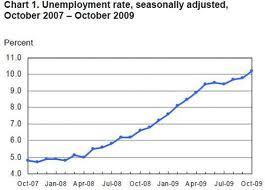
The private sector that Republicans see as our economic savior has been creating jobs. Not a lot, a few hundred thousand a month, but some. And yet the unemployment rate remains stubbornly high.

There’s a reason for that, one politicians from San Francisco to Washington D.C. don’t want to talk about. But the New York Times put it nicely in a Dec. 5 editorial:

“While the private sector has been adding jobs since the end of 2009, more than half a million government positions have been lost since the recession…”

“The cutbacks hurt more than just services. As Timothy Williams of the Times reported last week, they hit black workers particularly hard. Millions of African Americans — one in five who are employed — have entered the middle class through government employment, and they tend to make 25 percent more than other black workers. Now tens of thousands are leaving both their jobs and the middle class.”

Remember: Most of the biggest employers in this city are not corporations; they’re government agencies. The City and County of San Francisco, the University of California, the State of California, the United States Postal Service, City College and the San Francisco Unified School District drive the local economy more than any one private company. Between them, those public-sector operations employ more than 60,000 people. The largest single private employer, Wells Fargo, has fewer than one sixth of that number.

Most of the those public-sector jobs are unionized and offer decent benefits. They are such an important part of the city’s economic development future that it’s impossible to talk about jobs in San Francisco unless you start the conversation with the public sector.

Mayor Ed Lee is about to enter negotiations with unions representing 24,000 city employees. His office is already indicating that cost savings will be a big part of the discussion. I know there are cost savings out there — you can’t spend $2 billion on payroll and not have some waste somewhere in the package.

But if he’s serious about his campaign mantra — jobs, jobs, jobs — I hope he remembers what the Republicans don’t: Government jobs count, too.

A new name in District 5

73

There’s a new name popping up in the cattle call that is the District Five supervisorial appointment. He’s not terribly well known in city political circles (his chief claim to local fame is serving on the Library Commission), but he’s got a powerful patron: U.S. Senator Dianne Feinstein.

His name is Michael Breyer. Yes, from that Breyer family.

In a Nov 30 letter to Mayor Ed Lee, Feinstein lauds Breyer and says he has her endorsement for the job. You can read the letter here (pdf).

Feinstein notes that Breyer’s grandfather, Irving, was chief counsel for the San Francisco Unified School District and that his aunt was a president of SEIU. She doesn’t mention his closer, and better-known, political connections. Nor does she mention that his uncle was a partner in a law firm that was once among the most politically connected in the city, run by William Coblentz, who when Feinstein was mayor was routinely considered one of the two or three most powerful people in San Francisco.

Among the great qualities the senator sees in Michael Breyer? He can raise money. “He can count on financial support from the high tech community and others,” Feinstein notes.

Would Ed Lee seriously consider someone who has this little local political experience and no real history of activism in the district — but really, really strong family political ties? I can’t imagine it. But Senator Feinstein isn’t doing this just for fun.

Homeless families still waiting for a meeting … and housing

San Francisco Mayor Ed Lee still has not met with homeless parents organized by the Coalition on Homelessness to discuss their proposed solutions to combat the growing problem of youth homelessness. Nor has the mayor’s office responded to multiple Guardian phone calls inquiring why a meeting hasn’t been scheduled.

Homeless parents organized by the Coalition entered City Hall last Wednesday to raise awareness about a growing problem of San Francisco families lacking a permanent home, and to request a meeting with mayor, whom advocates first contacted Oct. 26.

Coalition on Homeless executive director Jennifer Friedenbach said the mayor’s office had offered to schedule a meeting with a mayoral representative, but not with Lee. “Why would we meet with a representative?” she asked. “We want a meeting with the mayor himself. It should be important for the mayor to meet with parents in a crisis.”

As the Guardian reported last week, the number of homeless families on shelter waitlists citywide has risen to an unprecedented high of 267, while the number of homeless students in public schools identified by San Francisco Unified School District stands at a high of 2,167. Both figures suggest homelessness is on the rise in a city where rents are well above average and the recession has given rise to job loss, evictions, and foreclosures. A nationwide Occupy Our Homes day of action scheduled for today, Dec. 6, is meant to draw attention to tenant evictions and homeowners losing their properties to bank foreclosure.

Part of the problem facing newly homeless families in San Francisco is the lack of availability in public housing and other housing assistance programs such as Section 8 rental assistance vouchers. The waitlist for public housing units in San Francisco stands at between 24,000 and 25,000 — enough would-be tenants to fill the roughly 6,500 units in the city’s public housing system nearly four times over. The San Francisco Housing Authority closed its waitlist for public housing several years ago. The waitlist for Section 8, a separate program administered by the federal government, is also closed.

“Why do waiting lists close? The demand for low-income housing so far outweighs the available vacancy,” said San Francisco Housing Authority (SFHA) spokesperson Rose Dennis. “A number of housing authorities have had to close their waitlists, because we cannot serve the people who are not on the waitlist right now. This is not unique to San Francisco.”

Nevertheless, advocates with the Coalition on Homelessness say part of their strategy is to pressure the mayor to revamp units sitting empty in housing authority properties so they can be used for housing.

Asked about this, Dennis responded that there are relatively few vacancies, and that all vacant units are already in the process of being prepared for new tenants — some of whom have already been identified and promised a unit, and others who are part of a pool of applicants undergoing a screening and selection process.

Housing Rights Committee executive director Sara Shortt, however, told the Guardian public housing tenants she’s worked with have long observed boarded-up units on SFHA properties. She added that they’ve raised concerns about the tendency for empty units to attract rodents, graffiti, or squatters engaged in drug sales or use, which can lead to violence.

Friedenbach said she’d heard from multiple people seeking public housing units who said they’d been promised a unit only to experience delay after delay, for weeks on end. Dennis said it takes SFHA between one and 45 days to move a tenant into a unit once the housing has become available, depending on the status of the tenant.

In addition to the conflicting accounts, another complicating factor is that the actual number of vacancies in housing authority property seems difficult to pin down. Dennis told the Guardian that the occupancy rate in SFHA property typically stands at around 93 percent. Since there are roughly 6,500 units total, this would imply that there are about 450 vacant units. Yet Dennis also stressed that the number of vacant units is always around 225, give or take, and has hovered consistently around that level without any dramatic spikes in vacancy.

A SFHA report to its federal parent agency, the Housing and Urban Development (HUD), which housing advocates received as part of a Freedom of Information request, listed a total of 847 vacant public housing units as of May 2011. That’s nearly twice as high as a 7 percent vacancy rate, and almost four times as high as the 225 vacant units Dennis said the authority consistently has in its system.

“That’s not a vacancy rate,” Dennis explained after we sent her a copy of the document. “That’s a cumulative, historic count that HUD has that is different from day-to-day management. These are not numbers that accurately represent what you would go out and see on a site. These numbers have a lot of other aspects to them.” She added, “The numbers that I gave you are accurate and true.”

The Guardian has placed a call to the Human Services Agency, as well, in hopes of sorting out some of these issues. We’ll update this post if we hear back.

Skew your perceptions: Lomography’s new gallery store opens Thursday

1

Almost as cryptic as some of their warped, blurred, color-drenched photos is the Lomography Society’s 10th rule: “Don’t worry about any rules.” For an artistic movement as commercially successful (the fantastically cheap cameras sell at Urban Outfitters worldwide) and historically important (the LOMO LC-A, the first lomographic camera, was mass produced in Soviet Russia for the enjoyment of the proletariat masses) as Lomography, it sure is hard to pin down.

The term at this point encompasses a photographic style, loose and experimental, centered upon the  purposely faulty cameras that produce wildly unexpected results. But Lomography is also a broad, inclusive movement that hosts a massive website on which “Lomographers” can display their work – not to mention a magazine emphasizing the “analogue lifestyle” and gallery stores the world over.

San Francisco gets its own hub of lomographic activity December 8 with the opening of a gallery store at 309 Sutter. 

Our city is already home to quite a bit of Lomogramania; any foray into the geotagged-recesses of the expansive website yields glimpses of our bridge pillars and telephone wires, delightfully skewed. 

The new gallery store will serve as as a kind of colorful, artistically-bent Apple store, chockful of products, sure, but just as much about the tactile, try-out experience. Veterans and the uninitiated alike can participate in workshops, snag items from the entire Lomography product line, and check out local work on display. 

The gallery store, the latest of more than 30 from Guangzhou to Cologne, opens Thu/8 with a party that seems fittingly eclectic, featuring barbeque, moonshine punch, bluegrass, and the soul stylings of Hard French’s DJ Carnita. The store’s regular hours will be Mon.-Sat., 10 a.m.-9 p.m.; Sun. 11 a.m.-7 p.m.


Lomography San Francisco gallery store opening

Thu/8 7 p.m., free

309 Sutter

(415) 248-0083

RSVP to shopsf@lomography.com

www.lomography.com


Burning Man attendees anxious over new ticketing system

7

Burning Man attendees are feeling anxious over a new lottery-based ticketing system set up this year to address the growing popularity of the event, so much so that an unprecedented number of them are now registering for pre-sale tickets – which were originally intended as holiday gifts – that are being sold at the top-tier price of $420.

Black Rock City LLC, the San Francisco-based company that stages the annual late-summer event in Nevada’s Black Rock Desert, announced the new system last month, setting off a cascade of online denunciations and expressions of anxiety over whether burners will be able to secure enough tickets for their friends, family, and project partners.

“There’s been a strong reaction for all the reasons we thought would happen,” said Marian Goodell, one of six LLC board members responsible for the decision, who said they searched in vain for a better label for the new system. “The word ‘lottery’ is highly charged and unfortunately people equate a lottery with one in a million odds to win a fortune.”

But she said they needed to try something new after last year’s problems, when strong demand for tickets on the first day of sales repeatedly crashed the online ticketing system, and when the event sold out in late July for the first time in its 25-year history, causing scalpers to sell tickets for double-face-value in many cases.

The first round of ticket sales aren’t likely to ease people’s concerns – it could make them more nervous. As in previous years, the LLC is selling 3,000 tickets in December, and their high prices have previously kept demand at around that level. But not this year, as several thousand people have already registered for a lottery-based sale whose registration period ends Dec. 11.

“If 10,000 people apply for 3,000 tickets, I’ve got more unhappy people than I want,” Goodell said.

Those who don’t get tickets will automatically be registered for the main ticket sale in January, when everyone else will register at either the $240, $320, and/or $390 tiered pricing levels to buy up to two tickets from the 40,000 being sold then (10,000 at the lowest tier and 15,000 each at the next two). Notifications will go out on Feb. 1.

Then, in March, about 10,000 more tickets will be sold on a first come, first served basis. Goodell said the exact number of tickets sold then will depend on the permit that is issued by the U.S. Bureau of Land Management for next year’s Burning Man. The LLC has been seeking the negotiate a five-year permit that will allow the event to gradually grow up to 70,000 people.

“We’re looking at a five-year permit and the five-year permit has the potential to grow bigger. What that looks like in the first year isn’t clear yet,” Goodell said.

There are mixed views in the Burning Man community to growing Black Rock City far beyond its current size of just over 50,000 people. It would open the event to more people, but that presents challenges to acculturation and the logistics of getting people to and from a far-flung locale accessed only by a narrow highway with one lane in each direction.

Earlier this year, the LLC moved into a more high-profile headquarters space on mid-Market and set up a nonprofit called the Burning Man Project, which will eventually supplant the LLC in running the event and which is intended to pursue more projects off the playa.

“We’re all for Burning Man culture continuing to grow, and fortunately we have other avenues to grow, including the nonprofit and the regional events,” Goodell said. “The city has all kinds of other constraints.”

Critics last year complained about scalpers reselling Burning Man tickets at high prices, something frowned on in the community and discouraged by the LLC, although it did little to address the problem. An analysis done by the online ticket site Seat Geek found that the average resale price of $350 before the sellout increased to almost $700 afterward, with the highest price ticket going for $1,120.

Goodell said that the only way to minimize the scalping of Burning Man tickets would have been to create a system in which all buyers were identified by name and after-market ticket sales were regulated by the organization, “and that’s more than we were willing to do.” Instead, the LLC will be creating an online system for reselling tickets and guarding against counterfeits, with details to be announced later.

But she predicted the new system will work better than the old one and that most people’s anxieties are unfounded.

“Most people who think ahead are going to get a ticket,” Goodell said, later adding, “It’s a lot less scary than people think.”


Bay Guardian City Editor Steven T. Jones is the author of The Tribes of Burning Man: How an Experimental City in the Desert is Shaping the New American Counterculture (2011, CCC Publishing)

Localized Appreesh: Uni & Her Ukelele

0

Localized Appreesh is our weekly thank-you column to the musicians that make the Bay. Each week a band/music-maker with a show, album release, or general good news is highlighted and spotlit. To be considered, contact emilysavage@sfbg.com.

This is the time of year when sparkly holiday affairs are everywhere. Depending on your current state of mind, these tinsel-coated, candy-caned, dreidal-spun affairs can stink like commercial biz abominations, or warm like twinkling, nostalgia-inducing winter shindigs. With San Francisco act Uni & Her Ukelele opening up for the Yule Logs (a band that just released an album called You Ruined Christmas) at Amnesia, the evening is bound for greatness. It’s the seventh annual “Christmas is the Best” show, and both holiday-loving acts play clever and folky power-pop with tongue-planted-firmly-in-cheek sweetness.

Uni & Her Ukelele can’t avoid the sugar, given the doe-eyed, oft-frilly skirted uke mistress at the band’s helm, Heather Marie Ellison. She writes songs (and records) like 2006’s “My Favorite Letter is U” and a covers album that includes “Tonight You Belong to Me” (which brings to mind the best ever use of uke in film   – Steve Martin and Bernadette Peters strolling the beach in The Jerk). She even uses her signature sign-off (Ding!) to end emails. It’s giving me a toothache.

Year and location of origin: 2005. Uni & Her Ukelele began in Hollywood.
Band name origin: Uni is short for Unicorn.
Band motto: Light Rock Less Talk!
Description of sound in 10 words or less: Dreamy, melodic, folk-pop that is emotional and melancholy, but also funny.
Instrumentation: Vocals and ukelele, although on the album there’s a full band.
Most recent release: I’m doing a Kickstarter right now to finish my fourth full length album, Lover’s Cliché.
Best part about life as a Bay Area band: There are many places to play and good bands/acts to share the bill with.
Worst part about life as a Bay Area band: At the end of the show, it’s hard walking away without money.
First record/cassette tape/or CD ever purchased: Wham Make It Big.
Most recent record/cassette tape/CD/or Mp3 purchased/borrowed from the Web: I just bought Tom Petty’s Tom Petty and the Heartbreakers.
Favorite local eatery: Green Chili Kitchen.

Seventh Annual Christmas is the Best
Uni and her Ukelele
With Yule Logs
Sun/11, 9pm, $7
Amnesia
853 Valencia, SF
www.amnesiathebar.com

A tender portrait:
http://www.youtube.com/watch?v=zJArwBjWoEc

Castro residents clash over proposed restrictions in public spaces

37

UPDATE: This article has been changed to include three corrections.

Community activists in the Castro District of San Francisco have been riled up by recent legislation proposed to limit public use of the Harvey Milk and Jane Warner plazas.

The ordinance proposes to ban “wheeled equipment” and prevent people from sleeping, camping, or selling merchandise. Further, the ordinance limits the time that seating will be available to 9 a.m. to 9 p.m. 

“Poor people and low income people can’t live in the neighborhood anymore,” said community activist and Housing Rights Committee member Tommi Avicolli Mecca. “This ordinance is a response to people’s discomfort with people who look homeless in the plaza.”

Mecca believes that this legislation was pushed forward by the Castro/Upper Market Community Benefit District and the Merchants of Upper Market and Castro (MUMC) as a way to privatize the public spaces and, in effect, prevent homeless people from occupying them.

“(The legislation) talks about sleeping and camping. Who is doing that other than homeless people and what printed materials are being distributed other than the Street Sheets?” said Bob Offer-Westort human rights organizer for the Coalition for Homelessness. “All of this really clearly targets homeless people.”

Other community activists, such as blogger Mike Petrelis, believe that this legislation is a preemptive act against the Occupy movement and that meetings discussing the ordinance intentionally excluded activists like himself. “This new legislation is part of a downtown agenda to prevent an Occupy encampment set up,” said Petrelis.

Petrelis wrote about the legislation on his blog, and among his arguments he states that preventing tents to be present in Harvey Milk and Jane Warner plazas expresses direct disapproval of the movement.

“I read this and hear fear on the part of [Sup. Scott] Wiener, MUMC and the CBD that an Occupy the Castro encampment could take root at the top of Market Street,” he said.

Wiener, who is sponsoring the legislation, says that it was drafted under the Pavement to Parks effort to transform the space into park land and that the provisions are standard for that use. 

“We’re trying to have usable vibrant public space and this legislation will help us have it,” Wiener told us. “This legislation provides what we already have in our parks. It’s pretty basic provisions.”

Wiener says that many local merchants and advocates, such as the Sisters of Perpetual Indulgence, have been involved in discussions around of this legislation, but the Sisters have not taken a stand on the measure.

“The Sisters, as far as I know, have not made a collective effort one way or another on the legislation at this time,” said Sister Barbi Mitzvah in an email. “The Sisters individually can comment, but coming from the organization takes a majority vote as we are a 501c3 non profit.”

Whether this legislation addresses homelessness, an attempt to prevent an Occupy Castro movement, or if it is to create a “usable vibrant public space,” the community is demanding participation in this decision.

“Both plazas play a vital role in the Castro community,” Petrelis said. “So why won’t he hold a public meeting?”


Period Piece: A walk in the (man-made) woods

1

It’s easy to get a little romantic standing in a beam of filtered sunlight inside Mount Sutro Open Space Reserve. The 61-acre expanse of ivy and eucalyptus feels like a remnant of an earlier, wilder San Francisco. 

But the densely tangled forest backing UCSF’s medical campus is actually man-made. It harkens back to the heyday of good old Adolph Sutro, bathman, silver magnate, and forest enthusiast. Sutro covered the mountain on his sandy property with many of the trees standing today.

Hoofing the Historic Trail, a mild romp of an urban hike, is a little bizarre. The behemoth mass of the UCSF Medical Center glints steadily through the trees, and yet it’s hard to shake the feeling that you’re deep in a damp cloud forest.

Today’s eucalyptus trees obscure a view that Craig Dawson, founder of the Mt. Sutro Stewards, says was once one of the best around. “Imagine roaming here on horseback and seeing these vistas,” said Dawson. “You could see both Angel Island and Alcatraz.” 

A 1950s aerial view of Mt. Sutro. Photo courtesy San Francisco Public Library

Nowadays, you have to be willing to brave major poison oak and a steep off-trail grade if it’s an unfettered view you’re hankering for. 

Dawson and his crew of volunteer trailworkers accidently uncovered the trail in 2006, and Dawson’s best guess is that it served joyfully meandering equestrians in the 1880s. 

Now, the narrow footpath stretches from an unassuming Cole Valley gate to the lofty summit of Mount Sutro, where, strangely enough, the Cold War managed to make its mark. Rotary Meadow, the ending point of the Historic Trail, housed a Nike radar site – a high vantage point from which it was possible to order the launch of deadly anti-aircraft missiles a few miles away. 

To access the Historic Trail, most people start in Cole Valley, on the west side of Stanyan where it meets 17th Street. A green sign on a small gate indicates the trailhead. The hike will gradually climb up through Woodland Canyon before reaching Medical Center Way, the large thoroughfare cutting through and around Mt. Sutro. The trail continues directly across the road and is marked with with two orange flags. For maps, check out www.sutrostewards.org


Sup. Elsbernd ducks more Impertinent Questions

4

Well, I am sad to report that my neighborhood supervisor, Sean Elsbernd, has once again refused to answer my Impertinent Questions and to say if he voted for Ed Lee for mayor. Perhaps I will tell you, he says, perhaps not and he chose to perhaps not. He has thus refused to shed light on his role in one of the most fateful nominations in San Francisco history.

 Here’s the latest version of the almost famous Que Syrah correspondence between Elsbernd and me on these critical Impertinent Questions. (As attentive readers of this blog know, I have been trying for months to get Elsbernd to meet me to talk about these questions at Que Syrah, a nifty little wine bar in the West Portal area of Elsbernd’s district. I am still trying.)

 When Willie Brown, Rose Pak, and the downtown gang were plotting their move  to outfox the progressives in City Hall in January  and install Ed Lee as the interim mayor, they chose Sean Elsbernd to take the lead and nominate Lee for this crucial job.

 He intoned at the time and later in writing to me that he was nominating Lee only on condition that Lee would serve as an interim mayor to fulfill the vacancy created by then Mayor Newsom who was off to Sacramento as the newly elected lieutenant governor. Lee, Elsbernd emphasized, thumping the lectern, would not run for mayor.

 Well, the Guardian and many progressives and I said at the time that this was just the Willie and Rose play, to get Lee in as interim mayor and then roll him over to run for mayor in the fall with the major advantage of incumbency.

 And so when Lee as we expected changed his mind and ran for mayor, Elsbernd was left in the position of being a key player in the plot to put Lee into the mayor’s office under false pretenses. And of course in the process he would ace out two more qualified candidates, former Mayor Art Agnos, and retiring sheriff Mike Hennessey.. Both were ready to serve as interim mayor and both pledged they would not run for mayor and most important neither would operate as enablers for Willie, Rose, and their undisclosed clients. (Willie, for starters, is on a  $200,000 plus a year retainer for PG&E, according to PG&E filings with the California Public Utilities Commission.)

 When the tide of sleaze started rising in the mayor’s office and Willie, Rose, and the gang were pounding on Lee to run, I asked Elsbernd another Impertinent Question: Would he have nominated Lee if he knew Lee was going to reverse field and run for mayor?

Elsbernd replied that he had not endorsed anyone, but that “I have been most attracted to the candidacies of City Attorney Dennis Herrera and former Supervisors Alioto-Pier and Bevan Dufty.” He said that these three have the “right combination of qualifications, experience, intelligence, skills and integrity to serve as mayor. Should Mayor Lee run for election, I would only consider endorsing his effort under one circumstance—if, and only if, I was convinced that without his candidacy, Sen. Leland Yee would be elected. That is, if I see that no one else can beat Sen, Yee other than Mayor Lee, then I would support a Mayor Lee campaign. At this point, I’m not convinced of that—I still think any one of the three I mentioned above could beat Sen.Yee.”

Just before election day when Lee was running solidly ahead in the polls, I posed more Impertinent Questions to Elsbernd: who did he support for mayor and why? He replied that he had not yet voted and had not endorsed a candidate and then stated, “Talk to me on November 9 and perhaps I’ll tell you who I voted for. Rest assured, the Bay Guardian’s endorsements will certainly influence my decision-making process.”

And again,  after Lee won handily thanks in large part to the decisive advantage that Elsbernd helped give him, I took Elsbernd up on his promises and emailed him more Impertinent Questions: Who  did he vote for and why? He ducked again and asked me to read his “original email” and to note the significance of the word “perhaps.”

Perhaps he would tell me, perhaps he wouldn’t tell me. He chose not to tell me, and the rest of his constituents,  why he made the nomination as a “neighborhood” supervisor  that helped return Willie, Rose, and the downtown gang to power in City Hall.

His explanation was classic Elsberndese and I quote it in full in all of its elegance.

”Another e-mail?  Another entry in your blog? And now a deadline?  At what point am I going to start receiving a byline in the “Guardian?” I am not going to share with you and your readers for whom I voted.  I’ll keep that one between me and my ballot.  I voted for 3 candidates who I believed had integrity, intelligence , and some grasp of the daunting fiscal challenges facing the State and the City.

“Am I happy with the results?  Again, I’m going to deflect that question because I have learned in the short time I’ve been around here, that focussing on wins and losses of past elections can take you down a rabbit hole from which you’ll never recover.  Rather, the most pragmatic thing I can do for my constituents, which is, after all, what I am here to do, is to recognize the result, accept it, and move forward with it.  Ed Lee is now San Francisco’s Mayor-elect, and I am very excited about being able to work with him during my remaining 13 months in office.  He and I worked extremely well together in developing Proposition C, which the voters overwhelmingly endorsed (and, yes, thank you to the Guardian for your endorsement – you actually got a few right this year).

“We have had some policy disagreements (e.g.  Proposition B), but I have always found him to be open to dialogue, extremely deliberate and thoughtful, and, most importantly, honest.  When we have disagreed, he has explained why and has done so with a logical argument.  While that may sound simple, I can assure you, that is a rare characteristic in this building and it is one I very much appreciate. Have fun parsing this e-mail apart.”

Final Impertinent Questions: If Elsbernd really finds Lee “open to dialogue, extremely deliberate and thoughtful and most importantly honest” and Lee explains his disagreements with Elsbernd with “a logical argument,” how in the world does Elsbernd explain the months of lies and deceptions by Lee before he decided, gosh, golly, gee, that he changed his mind and  was running for mayor after all? How does Elsbernd explain how the sleaze continues to rise in Lee’s office?  How does Elsbernd explain why, as a “neighborhood” supervisor, that he has once again followed the Willie Brown/RosePak/downtown gang agenda by introducing a June 2012 charter amendment to repeal rank choice voting, with public financing and perhaps even district elections in his gun sights? Wasn’t this all part of the master plan to gut progressive measures to level the playing field on local  elections?

Sean? Sean? Let’s talk about all of this this over flights of the wondrous wines from small, locally owned wineries and the Barcelona -style tapas served up  at Que Syrah. To that end, I will keep sending you the notices of Que Syrah special events. B3


Government jobs are jobs, too

81

The New York Times weighed in Dec. 4 on an economic fact of life that I’ve been harping about for years now: Jobs in the public sector are … jobs. In many cases, they’re good jobs. And when conservatives and business leaders talk about reducing the size of government — and then complain about the unemployment rate — they’re stuck in doublespeak.

I know the Times has a paywall now, so if you can’t get in from that link I’ll give you the main points of the editorial:

While the private sector has been adding jobs since the end of 2009, more than half a million government positions have been lost since the recession. … The cutbacks hurt more than just services. As Timothy Williams of The Times reported last week, they hit black workers particularly hard. Millions of African-Americans — one in five who are employed — have entered the middle class through government employment, and they tend to make 25 percent more than other black workers. Now tens of thousands are leaving both their jobs and the middle class. Chicago, for example, is laying off 212 employees in the upcoming fiscal year, two-thirds of whom are black.

That’s one reason the black unemployment rate went up last month, to 15.5 percent from 15.1. The effect is severe, destabilizing black neighborhoods and making it harder for young people to replicate their parents’ climb up the economic ladder. …

Many Republicans, however, don’t regard government jobs as actual jobs, and are eager to see them disappear. Republican governors around the Midwest have aggressively tried to break the power of public unions while slashing their work forces, and Congressional Republicans have proposed paying for a payroll tax cut by reducing federal employment rolls by 10 percent through attrition. That’s 200,000 jobs, many of which would be filled by blacks and Hispanics and others who tend to vote Democratic, and thus are considered politically superfluous.

But every layoff, whether public or private, is a life, and a livelihood, and a family. And too many of them are getting battered by the economic storm.

Something to think about as city officials try to eliminate the latest defict and negotiate new union contracts. Because Repbulicans aren’t the only ones who don’t regard government jobs as actual jobs; a lot of Democratic officials and business leaders in liberal San Francisco seem to feel the same way.J


Live Shots: Iggy Pop at the Warfield

2

It had been a long wait to see Iggy Pop live (not like, Morrissey-long, but more like three months later than anticipated). When I spoke with Pop back in September, he was ecstatic to be out on the road again.

He was in France at the time, prepping in his hotel room before a big show – a concert he’d planned to follow up with an evening of wine and French television with his lady friend. We talked about cartoons, his image, the Rock and Roll Hall of Fame, and American Idol.

He told me that on this tour, he’d be playing, “All of Raw Power, some of Fun House, some songs from the eponymous debut The Stooges, and some stuff that was too hot to handle, too raw for the times — stuff that came out on bootlegs in the ’70s like ‘Cock in My Pocket,’ ‘Open Up and Bleed,’ ‘Head on the Curve.’” So I was, understandably, equally ecstatic to see him live. Shortly thereafter, he broke his foot (after seeing him last night at the Warfield, I now realize how easily that could happen) and the tour was cut short.

Finally in San Francisco, on a windy  December evening, Pop tore the paint off the walls with the sheer enormity of his stage presence, pumping with rock’n’roll energy and yes, raw power. These were my favorite moments from the night:

10 great bits about Iggy Pop’s show at the Warfield (hint: the band plays the venue again Tuesday night):
1. Pop and Co. running out on stage and immediately launching into a frenzied “Raw Power.” No opening chit-chat, no fuss.
2. The quick-fire follow-up to that first song was ultimate punk anthem, “Search and Destroy.” Fist pumps.
3. Seeing guitarist James Williamson and saxophonist Steve Mackay a.k.a “Mr. Fun House” (as Pop described him) in the flesh.
4. Mike Watt’s cherry red bass, forever-entertaining facial expressions, and jerky movements.
5. Speaking of movement, Pop’s taut, brown leathered skin, and the noodling snake contortions he does with it.
6. Pop writhing “like a cat!” (as the couple behind me kept shouting), on top of one of the speakers, posing.
7. The band inviting “99 percenters” – and every one else – from the crowd on stage for one song, and Pop instructing them to “shake a little,” adding, “I would!”
8. The threatening, heart-pumping, supersexy guitar riff in “I Wanna Be Your Dog.”
9. Pop stage-diving during “I Wanna Be Your Dog.”
10. Pop stage-diving during “I Wanna Be Your Dog” and not breaking his foot.

BART adopts policy on cutting cell phone service

1

 The Bay Area Rapid Transit (BART) Board of Directors has adopted the nation’s first policy outlining the circumstances under which cell phone service can be suspended. The policy comes in the wake of BART’s disruption of cell service in a bid to preempt an August 11 anti-police brutality protest that was called to highlight the July 4 police slaying of Charles Hill by BART police at San Francisco’s Civic Center station.

That cell service cut thrust BART into the middle of a national debate over if and when it is appropriate for government agencies to cut cell service to the public. The fallout included multiple rush hour protests against BART this summer led by activists with No Justice, No BART and supporters of the hacker group Anonymous. In the wake of the controversy, BART directors set out to create a policy outlining the circumstances under which BART would cut cell service in the future.

“The intent of this cell phone interruption policy is to balance free speech rights with legitimate public safety concerns,” BART Board President Bob Franklin said. “This policy, with input from the Federal Communications Commission and the American Civil Liberties Union, will serve as a pioneering model for our nation, as a reference to other public agencies that will inevitably face similar dilemmas in the future.”

The policy was quickly adopted yesterday at the BART board’s regular meeting by a vote of 7-0, with directors Lynette Sweet and Joel Keller absent for the vote. The policy states cell service will be “interrupted only in the most extraordinary circumstances that threaten the safety of District passengers, employees and other members of public, the destruction of District property, or the substantial disruption of public transit service.”

What remains unclear is if BART’s controversial decision to cut cellphone service in order to prevent protest would have been justified under the new policy. In the lead up to the policy, BART directors said their aim was to craft a policy to be used in the most extreme emergencies, and not against the free speech rights.

“If we were faced with the exact same situation, we would not shut off cell phone service,” Franklin said, “we would arrest people.”

However, in the wake of the action, BART asserted in an official statement that, “Organizers planning to disrupt BART service on August 11, 2011 stated they would use mobile devices to coordinate their disruptive activities and communicate about the location and number of BART Police. A civil disturbance during commute times at busy downtown San Francisco stations could lead to platform overcrowding and unsafe conditions.”

BART would seemingly be justified in a disruption cell service in these circumstances under the new policy, as the planned protest represented in the eyes of BART officials both a perceived risk to safety and a potential for service disruption – the stated strategy in the announcement of the August 11 anti-police brutality protest.

The judgment call on where to draw the line in emergency circumstances will rest with predesignated top BART officials. Those officials will be obligated to immediately inform BART’s directors of any disruption of cell service.

Federal Communications Commission Chairman Julius Genachowski said BART’s policy was an important step towards responding to the incident, but he cautioned, “the legal and policy issues raised by the type of wireless service interruption at issue here are significant and complex.”

He said that the FCC will be undertaking a review of the issue and will “consider the constraints that the Communications Act, First Amendment, and other laws and policies place upon potential service interruptions.”

The FCC regulates cellphone service as part of its broader regulation of the nation’s airwaves. BART’s new policy outlining when to cut cellphone service will take effect immediately.

A link to download the new policy can be found here. http://www.bart.gov/news/articles/2011/news20111201.aspx.


Students forage in SF park for weekend Fungus Fair

0

Late fall is the time for the fleshy bodies of fungi to find their way to the moist, earthy surface.

This time of year, mushroom specialist and biology teacher JR Blair can be found at McClaren Park with students from San Francisco State University collecting hundreds of species of mushrooms for the much-anticipated Fungus Fair (check Caitlin Donohue’s piece on last year’s fair here). 

“All of the mushrooms are collected the Friday before the fair,” Blair said. ”Between 100 and 200 species of mushrooms are sorted and brought to (the exhibit) by Friday night.”

Blair was featured on KQED’s video series Science on the Spot, foraging around McClaren Park sniffing, tasting, and delicately handling the mushrooms to identify the species.

“It’s like an Easter egg hunt,” said Blair in the Quest video. “You hear squeals of delight off in the woods.”

The collected mushrooms are spread over several tables and meticulously labeled, providing an elaborate mushroom gallery of all shapes, sizes, colors and smells.

The Fungus Fair has been an annual event for 41 years with exhibits that show mushroom hunters how to identify edible species and workshops that demonstrate how to grow your own on pieces of wet newspaper.

Around 200 volunteers, comprised of UC Berkeley and SF State students, help to gather mushrooms and run the different exhibit stations. The fair includes live cooking demonstrations, informational exhibits on poisonous, hallucinogenic, medicinal, and microscopic mushrooms and family-friendly workshops on how to make spore prints.

“I think everyone should go to the fungus fair,” said volunteer coordinator Stephanie Wright. “But I’m biased.”

This is Wright’s fourth year helping out with the Fungus Fair and her job wrangling college students is not one she takes lightly. An incredible amount of planning goes into the fair each year, but the rewards of the fair are worth it to those dedicated to spreading the mushroom love.

“Foraging for mushrooms puts me in touch with nature, slows me down,” said mushroom enthusiast and Fungus Fair coordinator Lisa Gorman. “I’m stopping, breathing more deeply and observing. The process compels me to attend to a world and kingdom other than my own.”

The fair takes place Dec. 3 and 4 at the Lawrence Hall of Science in the Oakland Hills from 10 a.m. to 5 p.m. and costs $15 at the door. For more information you can visit the Mycological Society of San Francisco website or the museum event site.


Silence is golden

0

FILM With the charisma-oozing agility of Douglas Fairbanks swashbuckling his way past opponents and the supreme confidence of Rudolph Valentino leaning, mid-swoon, into a maiden, French director-writer Michel Hazanavicius hits a sweet spot, or beauty mark of sorts, with his radiant new film The Artist.

In a feat worthy of Fairbanks or Errol Flynn, Hazanavicius juggles a marvelously layered love story between a man and a woman, tensions between the silents and the talkies, and a movie buff’s appreciation of the power of film — embodied in particular by early Hollywood’s union of European artistry and American commerce. Dashing silent film star George Valentin (Jean Dujardin, who channels Fairbanks, Flynn, and William Powell — and won this year’s Cannes best actor prize) is at the height of his career, adorable Jack Russell by his side, until the talkies threaten to relegate him to yesterday’s news. The talent nurtured in the thick of the studio system yearns for real power, telling the newspapers, “I’m not a puppet anymore — I’m an artist,” and finances and directs his own melodrama, while his youthful protégé Peppy Miller (Bérénice Béjo) becomes a yakky flapper age’s new It Girl.

Both a crowd-pleasing entertainment and a loving précis on early film history à la Martin Scorsese’s Hugo, The Artist never checks its brains at the door, remaining self-aware of its own conceit and its forebears, yet unashamed to touch the audience, without an ounce of cynicism. And if you blink, you might miss the allusion to The Artist‘s backstory: in the opening film-within-a-film, Valentin dons a mask and a top hat in a swift tip of the topper to iconic French villain-antihero Fantômas, which provided the initial inspiration for producer Thomas Langmann to approach Hazanavicius.

Langmann wanted the director to do a remake of the 1960s Fantômas movies starring Jean Marais. “I said, ‘No, I can’t do that. It doesn’t interest me,'” recalls the director on a recent visit to San Francisco. Langmann, however, insisted on a movie with the director, who had made the Bond-parody OSS 117 series with Dujardin. “So I said, OK, I’ll do your Fantômas — not your high-tech one, but the 1905 one, the real one, and I’ll do it in black-and-white, and silent.”

In the end, Langmann gave the go-ahead for a silent movie untethered to the Fantômas franchise — “I knew when we met that he was crazy enough to follow me and to support me,” quips Hazanavicius — and with the Valentin character on his mind and two scripts on hand, one for The Artist as it stands and one for the adventure comedy that materializes as the initial film-within-a-film, the director made the silent he had dreamed of, shooting at Hollywood locales such as the Paramount Studio and Mary Pickford’s mansion and utilizing far-from-analog technology when needed (for example, the Hollywood sign is transformed into its original “Hollywoodland” state digitally, and the film’s luminous black-and-white was rendered using 500 ASA color film to get a grainier look).

One of the keys to casting the period spell was keeping everything simple, rather than highlighting obvious tropes. “I put a lot of things out of the frame, always,” Hazanavicius explains, “because when there are too many things, it’s just too much. You show the audience, ‘Look it’s the ’20s! It’s so ’20s! Did you not know we were in the ’20s?’ Sometimes you have to just show a white wall, and that’s enough. The audience is there to believe, so the more you let them believe, the better it is.”

Likewise the lightest touch was required with the actors, who worried about replicating the silent era’s performances and were tasked with conveying everything with the briefest flicker of emotion dancing across the face, or body language (which Béjo memorably plays with in a scene when she mimes an embrace with her would-be heartthrob’s jacket). “I know it was stressful for the actors in the beginning because they wanted to know if I asked for something very special, but I didn’t,” says the director. “They don’t play silent, really — they play ’20s, and I think it’s different. We think [silent film players] overact not because the movies are silent but because the codes of the ’20s are very different from the codes of acting today.

“So what I said to [Dujardin] was very simple: ‘Don’t be upset with the silent thing,'” Hazanavicius continues. “‘You don’t have anything special to do. You have to do what you usually do — you come with your face, your body, your smile, your charm, and you embody the character, and you respect the situation, and everything will be fine.'” Also fueling the feel was the fact that The Artist was shot at 22 frames a second, rather than the standard 24. “It gave us a very small acceleration in the gesture so the way they move is a little bit too fast, so that gives a flavor of the ’20s,” adds the filmmaker.

For Hazanavicius, the draw to make a silent was multipronged. “I wanted to share my experience as an audience member because I love the way the story is told to you in a silent movie,” he says. “There’s a lot of room for you. You can make your own movie. You participate in the storytelling process. I really like it because you’re very close to the story — it’s your voices, your dialogue, your sound design — you’re part of the process, so I really love that.”

Another enticement was the formal challenge of not only assembling the narrative about early film stars, which incidentally echoes that of John Gilbert and Greta Garbo, but shooting in a silent style, playing with era’s visual codes. To that end, Hazanavicius and leading lady (and romantic partner) Béjo did enormous amounts of research, poring through the period’s films and actors and directors’ biographies. “I hope my future movies will be better thanks to this one,” says the director.

“When I wrote the script, I sent it to the script supervisor, and she said to me, ‘You really want to, I don’t know how to say, show off!'” he remembers. “‘You really want to be remarked [upon].’ I said, ‘Yes!’ I think we all want to be remarked [upon]. I don’t want to make a discreet movie that nobody wants to see.”

Sounds like the words of a real artist.


THE ARTIST opens Fri/2 in San Francisco.

The She’s on Girls, Women’s Audio Mission, and soccer practice

0

The She’s have opened for Girls, played with Thao with the Get Down Stay Down, and this month, released an infectious, surfy garage-pop debut album, Then It Starts To Feel Like Summer (the record release show is this Saturday at Bottom of the Hill).

Oh, and the band members – bassist Samantha Perez, vocalist Hannah Valente, guitarist Eva Treadway, and drummer Sinclair Riley – are all juniors in high school. But don’t diminish their talent by seeing She’s as a novelty, “young, all-girl band.” They’ve got the chops. I got the lowdown from the Bay Area quartet after school this week, discussing playing against stereotypes, life with punk parents, dream shows (hint: they’ve already played theirs), and kindergarten enemies.

San Francisco Bay Guardian: What were the first concerts you attended?
Hannah Valente: One of the first concerts we attended as a group was Blondie at the Fillmore. It was really inspiring to see a woman with such a powerful voice.
Samantha Perez: For me, I went to a lot of punk shows with my parents growing up because they were in the punk scene. It inspired me to begin playing music because I love the atmosphere and energy at shows.
SFBG: When did you start playing music and what influenced that?
Eva Treadway: We all grew up with music around us, both from our parents and also from growing up in SF. I was raised on a mix of old country blues records from my dad and Grateful Dead jams from my mom, which, come to think of it, is an interesting mix. As a kid I was crazy about the Beatles, and that was what really sparked my interest in picking up a guitar. I asked my parents for lessons and I had my first few lessons when I was about 10. When I started songwriting with the other members of the band, making music got really exciting for me again. Because we all come from different musical backgrounds – there was by no means Grateful Dead in Sami’s household growing up – but we also share really similar ideas and tastes in music.
Sinclair Riley: I started playing piano when I was about seven, then a few other classical instruments, but I didn’t start playing drums until the beginning of The She’s. My dad had a Beach Boys CD that he would always play in the car when he was driving, and I always liked driving with him so that I could listen to it because it was so much more interesting to me, I loved it so much more than anything I was playing on piano.
SP: I started playing guitar when I was seven years old. I was really resistant to play guitar, but my dad bought me a pink daisy-shaped one, so I got into it. As the years went on, I liked it more and more and then I started to sing in the San Francisco Girls Chorus, but I really wanted to start writing songs and start preforming.
HV: I was really influenced by my dad. He always seemed to be playing guitar around the house, so I just started singing with him. When I was like, three, I would sing with him while I took baths. I always liked music because it helped me connect to people. I’m shy, so it’s nice to have another way to communicate.
SFBG: How did you meet?
SP: We all met in kindergarten, and we were really close friends except me and Eva. We were enemies. In fifth grade we started playing music together and through that we became closer friends. It all started one day after soccer practice when Hannah said she had learned to play the Aly & AJ version of “Walking on Sunshine.” Eventually, the whole soccer team was in the band, but in the end it came down to just us four.
SFBG: Can you tell me a little about the process of making Then it Starts to Feel Like Summer?
SR: It was a pretty long yet satisfying process. About half the songs we already had written, and the others we wrote during the process of recording. It was so wonderful to get the opportunity to record at Women’s Audio Mission. It was really fun being in the studio and getting to take our time on this one. On this album we tried to capture the sound of what we play live. The ladies there are so nice and also taught us a bout the engineering aspect as well.
SFBG: What influences your sound? Who influences you personally?
HV: We are said to be a cross between the Ramones and the Ronettes, we really like the Beach Boys and other ’60s garage music. We’re always listening to new types of music, like ’60s country, local bands, and of course, pop.
ET: We’re influenced by going places and walking around San Francisco.
From listening to great songs, Lennon/McCartney of course, Brian Wilson, George Harrison, Phil Spector, even Britney Spears. Pretty much everything Christopher Owens from Girls writes I find inspiring.
SFBG: Where do you write music? Is it a group effort?
SR: Normally what happens is someone will bring in a guitar part or a melody or some part of a song, and we’ll all work together in our practice area (Hannah’s basement) to finalize the song – add lyrics, harmonies.
SFBG:  What’s been the most surreal experience thus far in the band? The weirdest?
HV: Hand’s down the most surreal show was playing with Girls at the Fillmore. Not only did we get to play with one of our favorite bands to listen to, but we also got to play on a stage where so many inspirational artists have performed.
SP: Playing at such a historic venue was unbelievable. The audience was great, the sound was great, the food backstage was great…it just really couldn’t have turned out any better. On the other hand, the weirdest experience we’ve had was probably when we were asked to play on TV on an early news broadcasting at like, 5 a.m.. We stayed the night in San Jose on a school night so that we could get to the studio at 3 a.m. and still be on time for school. However, we just happened to be there the same day that the San Bruno pipelines exploded, which meant our segment was canceled. It was a long, sleepy ride to school that morning, but at least we looked TV ready for all our peers!
SFBG. Who would play your dream show?
HV: Our first dream show would be to play with Girls, but then that actually happened. Then I would say to play with Magic Kids, but that also happened. After that, it would be the Morning Benders, but yes, that happened, too.
SP: Perhaps now our dream show would be with the early Beach Boys, once we build a time traveling machine, maybe that will be possible.
SFBG: Is it difficult working as an underage band in the San Francisco music scene?
EV: I think the most difficult part about being an underage musician (apart from sometimes not being allowed into to our own shows) is being treated as some sort of novelty act. It seems like a lot of times people feel that it is enough to describe our band as a “young all-girl band”, which really says nothing about our music. When people write reviews I wish they would remember that our age and gender are facts, and it doesn’t really go much deeper than that. It is true that being teenagers in the SF music scene is exciting for us. We’ve gotten to meet and even perform with some of our idols, and I know that that is something most teenagers don’t have the opportunity to do. I am proud of what we’ve done at this point in our lives, both as a band and as individuals and I feel fortunate to know what I am passionate about early on. The way I see it, it only leaves us time to grow.
SFBG: Is the She’s an intentionally all-female band?
SR: Not really, it just happened. We formed the band at that age when boys have cooties, and it’s been no boys ever since. We get treated differently since we’re a young all-girl teenage band though, and it’s made us stronger. We can go against the stereotype that girls and teenagers aren’t as capable as others.
SFBG: Do you consider yourselves feminists?
HV: We want women to be taken more seriously in the whole music industry. Every step of the way, our album was made by women. We hope to inspire other girls to get involved in this industry because women are way underrepresented.

The She’s
With Tijuana Panthers, Melted Toys
Sat/3, 10 p.m., $10
Bottom of the Hill
1233 17th St., SF
(415) 621-4455
www.bottomofthehill.com

Win FREE TICKETS to the Great Dickens Christmas Fair

0

While supplies last, visit the quaint streets of Victorian London right here is San Francisco for FREE. Drop of any non-perishable food item – canned haggis perhaps? – for donation to the Guardian building @ 135 Mississippi and receive two (2) tickets!

The original Great Dickens Christmas Fair is the only event of its kind anywhere and is celebrating its 33rd year. The winding lanes of Victorian London come to life in over three indoor acres magically transformed into music halls, pubs, dance parties and charming shops overflowing with hand-made holiday treasures. Enticing aromas of roasted chestnuts and hearty foods fill the air.  It’s a lamp-lit city brimming with lively and colorful characters from the pages of history and the imaginations of Charles Dickens, Jules Verne & Lewis Carroll.

Friday, November 25 and every Saturday-Sunday until December 18 from 11am-1pm @ The Cow Palace, 2600 Geneva, SF | free-$25 | Free Bart Shuttle from Glen Park station

Rep Clock

0

Schedules are for Wed/30-Tues/6 except where noted. Director and year are given when available. Double and triple features are marked with a •. All times p.m. unless otherwise specified.

ARTISTS’ TELEVISION ACCESS 992 Valencia, SF; www.atasite.org. $6-10. “Frequency Structures: Works with Sound and Film,” featuring Paul Clipson and John Davis, Madison Brookshire and Tashi Wada, and John Davis and Ben Bracken, Fri, 8. “Other Cinema:” Films about Muzak by Dale Hoyt and others, Sat, 8:30.

BALBOA 3630 Balboa, SF; www.brownpapertickets.com. $17.50-20. “Opera and Ballet at the Balboa Theatre:” Sleeping Beauty, performed by the Bolshoi Ballet, Sat/3-Sun/4, 10am; Dec 7, 7:30.

CASTRO 429 Castro, SF; (415) 621-6120, www.castrotheatre.com. $7.50-10. The Sound of Music (Wise, 1965), Wed-Sun, 7 (also Sat-Sun, 1). Presented sing-along style; this event, $10-15.

CHRISTOPHER B. SMITH RAFAEL FILM CENTER 1118 Fourth St, San Rafael; (415) 454-1222, www.cafilm.org. $6.75-10.25. “The Films of John Korty:” Alex and the Gypsy (1976), Thurs, 7; Farewell to Manzanar (1976), Sun, 1; Twice Upon a Time (1983), Sun, 7. Seducing Charlie Barker (Glazer, 2010), Fri-Sat, call for times. Eames: The Architect and the Painter (Cohn and Jersey, 2011), Sun, 4:15.

DE ANZA COLLEGE 21250 Stevens Creek, Cupertino; (415) 810-2892. “De Anza Experimental Film Exhibition,” Fri, 7:30.

“OCEAN AVENUE FILM FESTIVAL” 1649 Ocean, SF; artsconn@comcast.net. $5-10. Short films in all genres. Sat, 6-9.

PACIFIC FILM ARCHIVE 2575 Bancroft, Berk; (510) 642-5249, bampfa.berkeley.edu. $5.50-9.50. “Alternative Visions:” “Flotsam and Jetsam: The Spray of History,” films by Lewis Klahr, Wed, 7:30. “Kino-Eye: The Revolutionary Cinema of Dziga Vertov:” The Fall of the Romanov Dynasty (Shub, 1927), Thurs, 7. “Afterimage: The Films of Nicolás Pereda:” Together (2009), Fri, 7; Perpetuum Mobile (2010), Fri, 8:45; Summer of Goliath (2010), Sat, 6:30; All Things Were Now Overtaken By Silence (2010), Sun, 3; Where Are Their Stories? (2007), Sun, 5. “Southern (Dis)comfort: The American South in Cinema:” Baby Doll (Kazan, 1956), Sat, 9.

ROXIE 3117 and 3125 16th St, SF; (415) 863-1087, www.roxie.com. $5-9.75. Sigur Rós: Inni (Morisset, 2011), Wed-Thurs, 7, 8:30. “World AIDS Day:” “Still Around,” short films, Thurs, 7; Sex in an Epidemic (Carlomusto, 2010), Thurs, 8:45. These screenings, $12; a portion of proceeds benefits the UCSF Health Project. House of Boys (Schlim, 2010), Dec 2-8, 7, 9:15 (also Sat/3-Sun/4, 2:30, 4:30). Star Udo Kier in person Fri/2. “Midnites for Maniacs: More Fun Than Games, A Tribute to Greydon Clark:” •Hi-Riders (1978), Fri, 7:30; Joysticks (1983), Fri, 9:20; Wacko (1981), Fri, 11:15. All three films, $12. “An Evening With Amy Sedaris,” Sun, 7:30. This event, a benefit for the Roxie, $100. “Christmas in Acidland! Presented by Johnny Legend:” “Christmas in Acidland (Part One),” Yuletide TV insanity, Mon, 6, 9:15; “Christmas Noir,” classic original TV episodes, Mon, 7:30; “Christmas in Acidland (Part Two),” more “in-Santa-ty” from TV, Tues, 6, 9:30; Christmas in Hell (Cardona, 1959), Tues, 7:15.

SFFS | NEW PEOPLE CINEMA 1746 Post, SF; www.sffs.org. $10-15. The Swell Season (August-Perna, Mirabella-Davis, and Dapkins, 2011), Wed-Thurs, 1, 5, 7, 9. “The Dardy Family Home Movies By Stephen Sondheim By Erin Markey,” Fri/2-Sat/3 and Dec 9-10, 8; Sun/4 and Dec 11, 6. The City Dark (Cheney, 2011), Tues, 3, 5, 7, 9.

YERBA BUENA CENTER FOR THE ARTS 701 Mission, SF; (415) 978-2787, www.ybca.org. $6-10. “From Muppets to Metal: Music Movies:” Chico and Rita (Trueba, Mariscal, and Errando, 2010), Thurs, 7:30; Coleman-Rollins-Kirk-Cage (Fontaine, 1966-68), Sun, 2. San Francisco Cinematheque presents: “Lewis Klahr’s Prolix Satori,” Fri 7:30.

Our Weekly Picks: November 30-December 6

0

WEDNESDAY 30

“Flotsam and Jetsam: The Spray of History”

The ceaselessly inventive Los Angeles filmmaker Lewis Klahr comes to town for two shows this week. Joseph Cornell’s boxes are perhaps the most convenient reference point for Klahr’s richly emotional collage animation, though his handmade films’ range of tones and complex interlacing of pop culture and personal sentiment really merits stand-alone consideration. This PFA program samples Klahr’s recent short films, while the SF Cinematheque show at Yerba Buena Center for the Arts on Friday focuses on Klahr’s ongoing series of sublime musical memory pieces, Prolix Satori. The two shows have no overlapping films, which among other things means you get to appreciate Klahr’s Brill Building ear for titles (A Thousand Julys, False Aging, Wednesday Morning Two A.M., Daylight Moon, Well Then There Now). (Max Goldberg)

7:30 p.m., $9.50

Pacific Film Archive Theater

2575 Bancroft, Berk.

(510) 642-1412

www.bampfa.berkeley.edu

www.sfcinematheque.org


Lemuria

You would think that a band called Lemuria — a hypothetical continent said to have submerged into the depths of the Indian Ocean — would sound along the lines of Vangelis or Tangerine Dream. But the trio from Buffalo, NY, takes after alternative pop-punk predecessors like Superchunk and the Breeders. Sheena Ozella and Alex Kerns started Lemuria in 2004, taking on bass player Jason Draper a year later. Since then, Lemuria has matured into a band that’s at once frisky and endearing, dynamic and biting. On Lemuria’s newest album, Pebble (Bridge 9), Ozella and Kerns alternate on vocals in such a way that inspires deep sighs, like you’ve just spotted an adorable little dog. But when Ozella’s tough and vivacious guitar playing takes a front-seat, you realize that dog can bite. (James H. Miller)

With the Pillowfights!, Matsuri

9 p.m., $10

Bottom of the Hill

1233 17th St., SF

(415) 621-4455

www.bottomofthehill.com


FRIDAY 2

“Danzón”

It’s hard to imagine contemporary dance and performance without the seminal influence of German choreographer-performer Pina Bausch, whose work was so different when it started in the 1970s that it spawned its own genre: dance theater. Bausch’s gorgeous visual aesthetic, wildly eclectic movement, incorporation of speech and unbridled emotion, and her collaborative, searching process all contributed to a remaking of the landscape. The subject of a recent 3D documentary tribute by Wim Wenders, Bausch (who died in 2009) left behind a supreme body of work that her company continues to perform around the world. This weekend, Tanztheater Wuppertal Pina Bausch offers Danzón, Bausch’s poignant, humor-filled celebration of life’s journey in the teeth of death. No 3D specs required. (Robert Avila)

Through Dec. 3, 8 p.m., $30

Zellerbach Hall, Berk.

(510) 642-9988

www.calperformances.org


“True Stories Lounge”

As the cliché goes, truth is stranger than fiction — and knowing that a story is true (or at least somewhat “based on a true story,” Texas Chainsaw Massacre-style) makes it all the more fascinating. The ongoing series “True Stories Lounge” brings together a varied slate of word-wranglers to spin compelling non-fiction tales. This edition’s storytellers include spoken word artist Alan Kaufman, who’ll read from his new memoir, Drunken Angel; comedian Marilyn Pittman, talking through a family tragedy; Salon.com founder David Talbot, reading from his soon-to-be-released book of San Francisco history; Bay Citizen editor Steve Fainaru, a 2008 Pulitzer winner, discussing Iraq; and Brando biographer Peter Manso, reading from his latest Cape Cod-set true crime book. (Cheryl Eddy)

7:30 p.m., $10

Make-Out Room

3225 22nd St., SF

www.makeoutroom.com


Benoit & Sergio

“Sergio used to be my English teacher,” reads a YouTube comment for “Walk and Talk.” How hard it would be to explain a lyric like “My baby does K all day” at a parent-teacher conference? In 2009 Sergio quit the D.C. prep school racket to make music full-time with French expatriate Benoit. The electronic duo has quickly built a reputation on less than a dozen tracks released across Ghostly International, Visionquest, and DFA. With an original sound that mixes ecstatic techno house, melancholic late-night soul, and playfully barbed vocals, this will be the SF debut of the pair’s live show. (Ryan Prendiville)

With No Regular Play and DJ sets by Pillowtalk, Thee Mike B, Rich Korach, and more

9 p.m., $15-20

Public Works

161 Erie, SF

(415) 932-0955

www.publicsf.com


SATURDAY 3

Papercuts

Founder and lead songwriter of Papercuts, Jason Robert Quever, has a knack for softly wooing listeners into his songs. Part of the seductiveness is Quever’s voice. You tend to follow its breathiness until you’re deep in his weightless and roomy dream pop. On Papercuts’ Fading Parade, the band’s debut album on Subpop, which came out earlier this year, Quever can sound like a love sick ghost, padding around and whispering pleas in your ear. His vocals hover over a lulling swathe of reverb, but drums and guitars retain enough crispness so as not to become a colorless drone. It’s a carefully weighted balance, and one that’s well worth witnessing live. (Miller)

With Dominant Legs, Tim Cohen’s Magic Trick

9 p.m., $12

Rickshaw Stop

155 Fell, SF

(415) 861-2011

www.rickshawstop.com


“In the Red — Flaming Lotus Girls Gallery Show”

The Flaming Lotus Girls always go big, pushing the envelope on fire arts innovation every year at Burning Man and other festivals. That’s a big reason why I profiled them in my book, The Tribes of Burning Man: How an Experimental City in the Desert is Shaping the New American Counterculture. And it’s also why they’re in debt, now more than most years. So come mingle, marvel at their fiery artworks, dance to DJs from Space Cowboys and the Ambient Mafia, buy some art (including photo prints of FLG projects) or shwag (from the FLG’s autographed and lipstick-kissed calendar to copies of my book that I’ll be selling and signing there), and help the Flaming Lotus Girls get out of the red and into active preparations for its next big project. (Steven T. Jones)

With Deckward, 8Ball, Olde Nasty, and more

6 p.m.-2a.m., free but donations accepted

SomArts

934 Brannan, SF

(415) 552-1770

www.flaminglotus.com


“The Bay Brewed: A Rock and Roll Beer Festival”

Live music and drinking clearly go well with together. Unfortunately, beer festivals too often conjure up images of boring C list jam bands or old-timers working their way through a bunch of Creedence covers. Not the case with The Bay Brewed, a beer festival and music showcase mash-up put on by the folks over at The Bay Bridged blog. Along with unlimited tastings from 21st Amendment, Anchor Steam, Lagunitas, and Magnolia, among others, admission includes performances by some great local bands. Pick up a complimentary mug and catch the shoegaze-y post-punk of Weekend, the psychedelic rock of Sleepy Sun, the dub-tinged Extra Classic, and the punky power pop of Terry Malts. (Landon Moblad)

2-7 p.m., $55

Verdi Club

2424 Mariposa, SF

(415) 861-9199

www.thebaybridged.com/the-bay-brewed


SUNDAY 4

Cass McCombs

Similar to the nomadic lifestyle he’s maintained over the years, Cass McCombs creates music that can be tough to pin down. Though he was born in Concord and has considered the Bay Area home at various points in his career, the indie singer-songwriter has bounced all over the country, eschewing traditional genre expectations in the process. Wit’s End and Humor Risk, McCombs’ two 2011 albums, fully demonstrate his maturing take on sparse folk, dreamy pop, and melancholic rock spiked with just the right amount of humor.(Moblad)

With White Magic, Liza Thorn

8 p.m., $16

Great American Music Hall

859 O’Farrell, SF

(415) 885-0750

www.slimspresents.com


MONDAY 5

The Sea and Cake

Merely listening to indie veteran the Sea and Cake’s extensive catalog of material is an exhausting feat. With jazz, Brazilian, and African influences, this band has been generating a unique sound for more than 20 years. Characterized by Sam Prekop’s breathy vocals and delicate guitar work, the Sea and Cake has long provided the perfect soundtrack for mellowing out with your friends. The group embraced a more experimental sound for this year’s The Moonlight Butterfly (Thrill Jockey), its first release since 2008. Timelessly hip, yet approachable, start your week off right with the effervescent jams of the Sea and Cake. (Frances Capell)

With Lia Ices

8 p.m., $21

Great American Music Hall

859 O’Farrell, SF

(415) 885-0750

www.slimspresents.com


TUESDAY 6

Jeffrey Lewis & the Junkyard

Jeffrey Lewis is a jack of all trades. His style encompasses both cerebral folk and grungy, distorted garage rock. Though his lyrics may come across as stream-of-conscience tangents, Lewis’ witty songs are brimming with clever and heartbreaking observations. The musician is also an accomplished comic book artist, and his illustrations often accompany his live performances. Topics of discussion include LSD, farm animals, and the history of Communism. Is there anything Lewis can’t do? (Capell)

With the Yellow Dress, Tortured Genies

8 p.m., $10

Rickshaw Stop

155 Fell, SF

(415) 861-2011

www.rickshawstop.com


Other Lives

Other Lives is building a lot of momentum in the wake of Tamer Animals (TBD Records), the band’s latest album. The five-piece from Stillwater, Okla., supported Bon Iver on tour, and afterward, played headline shows across Europe. Eclipsing its recent successes, though, was the announcement that it will support Radiohead on its U.S. Tour, beginning in February. The momentum is certainly deserved. Tamer Animals is dim folk-rock that builds on robust orchestration — violins, cellos, clarinets, and horns all have a grand presence on the record. Once an instrumental collaboration called Kunek, Other Lives still has an appreciation for the slightest sonic details, so that nearly every moment has something to call surprising, if not riveting. (Miller)

With JBM

9 p.m., $12

Cafe Du Nord

2170 Market, SF

(415) 861-5016

www.cafedunord.com


Anna Calvi

Praised by Brian Eno as “the best thing since Patti Smith,” dark songstress Anna Calvi also exudes the fierce swagger and edgy sex appeal of predecessors PJ Harvey and Pat Benatar. Calvi’s flamenco and blues-tinged debut earned her critical acclaim and a Mercury Prize nomination for best album of 2011. A backing band consisting of Mally Harpaz on harmonium and percussion and Daniel Maiden-Wood on drums heightens the drama of Calvi’s cinematic anthems. Armed with a guitar and a voice that’s both sultry and operatic, the fiery Calvi seduces everything in her path. (Capell)

8 p.m., $17 Great American Music Hall 859 O’Farrell, SF (415) 885-0750 www.slimspresents.com 

The Guardian listings deadline is two weeks prior to our Wednesday publication date. To submit an item for consideration, please include the title of the event, a brief description of the event, date and time, venue name, street address (listing cross streets only isn’t sufficient), city, telephone number readers can call for more information, telephone number for media, and admission costs. Send information to Listings, the Guardian Building, 135 Mississippi St., SF, CA 94107; fax to (415) 487-2506; or e-mail (paste press release into e-mail body — no text attachments, please) to listings@sfbg.com. Digital photos may be submitted in jpeg format; the image must be at least 240 dpi and four inches by six inches in size. We regret we cannot accept listings over the phone.