San Francisco

Stage Listings

0

Stage listings are compiled by Guardian staff. Performance times may change; call venues to confirm. Reviewers are Robert Avila, Rita Felciano, and Nicole Gluckstern. Submit items for the listings at listings@sfbg.com. For further information on how to submit items for the listings, see Picks.

THEATER

OPENING

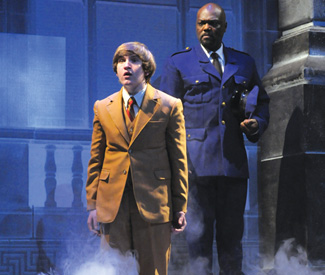
Vice Palace: The Last Cockettes Musical Thrillpeddlers’ Hypnodrome, 575 10th St, SF; (415) 377-4202, www.thrillpeddlers.com. $30-35. Opens Fri/27, 8pm. Runs Fri-Sat, 8pm. Through March 3. Thrillpeddlers revives the Cockettes’ 1972 musical extravaganza.

BAY AREA

Arms and the Man Lesher Center for the Arts, Margaret Lesher Theater, 1601 Civic, Walnut Creek; (925) 943-7469, www.centerrep.org. $38-43. Previews Fri/27-Sat/28, 8pm; Sun/29, 2:30pm. Opens Tues/31, 7:30pm. Runs Wed, 7:30pm; Thurs-Sat, 8pm; Sun, 2:30pm. Through Feb 25. Center REPertory Company presents George Bernard Shaw’s classic romantic comedy.

Body Awareness Aurora Theatre, 2081 Addison, Berk; (510) 843-4822, www.auroratheatre.org. $34-55. Previews Fri/28-Sat/28 and Feb 1, 8pm; Sun/29, 2pm; Tues/31, 7pm. Opens Feb 2, 8pm. Runs Tues, 7pm; Wed-Sat, 8pm; Sun, 2 and 7pm. Through March 4. Aurora Theatre performs Annie Baker’s comedy.

ONGOING

Cabaret Young Performers Theatre, Fort Mason Center, Bldc C, Room 300, Marina at Laguna, SF; (415) 381-1638, cabaretsf.wordpress.com. $25-45. Thurs-Sat, 8pm; Sun, 7pm. Through Feb 19. Shakespeare at Stinson and Independent Cabaret Productions perform the Kander and Ebb classic in an intimate setting.

Food Stories: Pleasure is Pleasure Z Space, Theater Artaud, 450 Florida, SF; www.brownpapertickets.com. $20-55. Wed-Thurs, 7pm; Fri-Sat, 8pm; Sun, 2pm. Through Feb 5. Word for Word presents performances of short stories by T.C. Boyle and Alice McDermott.

Future Motive Power Old Mint, 88 Fifth St, SF; www.mugwumpin.org. $15-30. Fri/27-Sun/29, 8pm. Mugwumpin takes on the life of Nikola Tesla in its latest performance piece.

*Humor Abuse American Conservatory Theater, 415 Geary, SF; (415) 749-2228, www.act-sf.org. $10-85. Tues-Sat, 8pm (also Wed and Sat, 2pm); Sun, 2pm. Through Feb 5. “This is a show about clowning,” Lorenzo Pisoni advises his audience at the outset of his graceful solo performance, “and I’m the straight man.” It’s a funny line, actually — funny because it’s true, and not true. In the deft routines that follow, as well as in the snapshots cast on the atmospherically dingy curtain hung center stage, the career of this Pickle Family Circus brat (already alone in the spotlight by age two) never veers far from the shadow of his father. That fact remains central to the winning comedy and wistful reflection in Humor Abuse. Reared in the commotion and commitment of the famed San Francisco circus founded by his parents Larry Pisoni and Peggy Snider, Lorenzo had a childhood both enviable and unusually challenging. The fact that he shares his name with both a grandfather and his dad’s famous clown persona is instructive. His trials and his triumphs are further conflated — along with his father’s —in such elegant catastrophes as falling down a long flight of stairs. And in his good-humored and honest reflections, the existential poignancy at the heart of such artful buffoonery begins to rise to the surface. The spoken narrative feels a little pinched or abbreviated, in truth, but there are no shortcuts to the skill or wider perspective inculcated by the charming Pisoni and (under direction of co-creator Erica Schmidt) set enthralling in motion. (Avila)

*New Fire: To Put Things Right Again Brava Theater, 2781 24th St, SF; (415) 647-2822, www.brava.org. $10-30. Thurs/26-Sat/28, 8pm; Sun/29, 3pm. You hear a lot of lip service these days to “community-building,” even when that community might represent the merest sliver, unable to reach out or expand beyond its own narrow parameters. That is not the kind of community playwright Cherríe Moraga is interested in paying lip service to, and her latest work New Fire reaches out in all possible directions, most notably digging deep into sacred spaces frequently left out of the conversation altogether. Structured not as a conventional (by Western standards) play, but as a healing ceremony centered around the story’s single protagonist, Vero (Dena Martinez), Celia Herrera Rodriguez’ staging and design blend seamlessly with Alleluia Panis’ ecstatic choreography to create a world where the sacred and the mundane coexist, almost unremarked, but certainly remarkably. Combining new media such as video by Emily Encina, with ancient ritual, the most electrifying moments are those rendered wholly without spoken words — the steady heartbeat of percussion, the ululation of Charlene O’Rourke’s magnificent chanting, the stealthy creeping of spirit figures whose faces are hidden by the wide brims of vibrantly painted hats. But don’t go in expecting a woo-woo, earth mother love fest: New Fire, is heavy with dark moments. But as El Caminante (Robert Owens-Greygrass) points out, such darkness can be beautiful too. (Gluckstern)

Not Getting Any Younger Marsh San Francisco, Studio Theater, 1062 Valencia, SF; (415) 826-5750, www.themarsh.org. $15-50. Fri, 8pm; Sat, 5 and 8:30pm. Extended through Feb 25. Marga Gomez is back at the Marsh, a couple of too-brief decades after inaugurating the theater’s new stage with her first solo show — an apt setting, in other words, for the writer-performer’s latest monologue, a reflection on the inevitable process of aging for a Latina lesbian comedian and artist who still hangs at Starbucks and can’t be trusted with the details of her own Wikipedia entry. If the thought of someone as perennially irreverent, insouciant, and appealingly immature as Gomez makes you depressed, the show is, strangely enough, the best antidote. (Avila)

Olivia’s Kitchen Exit Theatre, 156 Eddy, SF; www.generationtheatre.com. $20-40. Fri-Sat, 8pm; Sun, 3pm. Through Feb 19. GenerationTheatre offers this “remix” of Shakespeare’s Twelfth Night.

“SF Sketchfest” Various venues, SF; www.sfsketchfest.com. $10-75. Through Feb 4. The 11th San Francisco Comedy Festival invades 15 venues in 17 days with local and celebrity-packed (and local-celebrity-packed) performances, film events, improv shows, and more.

Waiting for Godot Royce Gallery, 2901 Mariposa, SF; (415) 336-3522, www.tidestheatre.org. $20-38. Thurs-Sat, 8pm. Through Feb 18. Tides Theatre Company debuts with a bold interpretation of the Beckett classic.

BAY AREA

Ghost Light Berkeley Repertory Theatre, Thrust Stage, 2025 Addison, Berk; (510) 647-2949, www.berkeleyrep.org. $14.50-73. Tues, Thurs-Sat, 8pm (also Sat and Feb 16, 2pm); Wed and Sun, 7pm (also Sun, 2pm). Through Feb 19. Berkeley Rep performs Tony Taccone’s world-premiere play about George Moscone’s assassination, directed by the late San Francisco mayor’s son, Jonathan Moscone.

*The Kipling Hotel: True Misadventures of the Electric Pink ’80s New venue: Marsh Berkeley, 2120 Allston, Berk; (415) 282-3055, www.themarsh.org. $20-50. Sat, 8:30pm; Sun, 7pm. Through Feb 12. This new autobiographical solo show by Don Reed, writer-performer of the fine and long-running East 14th, is another slice of the artist’s journey from 1970s Oakland ghetto to comedy-circuit respectability — here via a partial debate-scholarship to UCLA. The titular Los Angeles residency hotel was where Reed lived and worked for a time in the 1980s while attending university. It’s also a rich mine of memory and material for this physically protean and charismatic comic actor, who sails through two acts of often hilarious, sometimes touching vignettes loosely structured around his time on the hotel’s young wait staff, which catered to the needs of elderly patrons who might need conversation as much as breakfast. On opening night, the episodic narrative seemed to pass through several endings before settling on one whose tidy moral was delivered with too heavy a hand, but if the piece runs a little long, it’s only the last 20 minutes that noticeably meanders. And even with some awkward bumps along the way, it’s never a dull thing watching Reed work. (Avila)

The Pitmen Painters TheatreWorks at Mountain View Center for the Arts, 500 Castro, SF; (650) 463-1960, www.theatreworks.org. $19-69. Tues-Wed, 7:30pm; Thurs-Sat, 8pm (also Sat, 2pm); Sun, 2 and 7pm. Through Feb 12. TheatreWorks performs a new comedy from the author of Billy Elliot about a group of British miners who become art world sensations.

The World’s Funniest Bubble Show Marsh Berkeley, TheaterStage, 2120 Allston, Berk; (415) 826-5750, www.themarsh.org. $8-50. Extended run: Feb 12, 19, 26, March 11, and 18, 11am. Louis “The Amazing Bubble Man” Pearl returns with this kid-friendly, bubble-tastic comedy.

PERFORMANCE/DANCE

“The Best of Times” Alcazar Theatre, 650 Geary, SF; www.42ndstmoon.org. Thurs/26, 7pm. $70. 42nd Street Moon salutes Tony-winning Broadway composer-lyricist Jerry Herman.

“The Eric Show” Milk Bar, 1840 Haight, SF; www.milksf.com. Tues, 8pm (ongoing). $5. Local comedians perform with host Eric Barry.

“Father Panic!” Garage, 975 Howard, SF; (415) 518-1517, www.975howard.com. Fri/27-Sat/28, 8pm, $15. Dan Carbone’s latest autobiographical performance piece.

“Hidden Classics Reading Series” Exit on Taylor, 277 Taylor, SF; www.cuttingball.com. Sun/29, 3pm. Free. Cutting Ball Theater presents two August Strindberg readings: Miss Julie and A Dream Play.

“Loved By You: A Self-Love Story” TJT, 470 Florida, SF; www.brownpapertickets.com. Sat/28-Sun/29, 8pm. $15. Lori Shantzis performs her solo show about self-acceptance.

“Musicircus” Walt Disney Family Museum, 104 Montgomery, the Presidio, SF; www.calartsf.net. Sat/28, 1:30-5:30pm and 6-9pm. Free. CalArts Alumni and the Walt Disney Family Museum present this marathon performance event and showcase concert.

Paufve Dance Dance Mission Theater, 3316 24th St, SF; www.brownpapertickets.com. Fri/27-Sat/28, 8pm; Sun/29, 7pm. $15-18. The company premieres the dance theater work So I Married Abraham Lincoln.

“The Rivalry” Kanbar Hall, Jewish Community Center of San Francisco, 3200 California, SF; www.jccsf.org. Sun/29, 4pm. $42-55. LA Theaterworks presents this performance of Norman Corwin’s depiction of the Lincoln-Douglas debates.

“The XXX Factor” Eureka Theater, 215 Jackson, SF; www.ticketweb.com. Tues/31, 8pm, $15. Comedy Noir performs a new show satirizing televised talent contests (with “mentors” Sarah Palin and John Wayne Gacy, among others).

BAY AREA

Company C Contemporary Ballet Castro Valley Center for the Arts, 19501 Redwood, Castro Valley; (510) 889-8961. Sat/28, 7:30pm and Sun/29, 2pm. $15-27. Also Feb 17, 8pm; Feb 18, 6:30pm (gala benefit); and Feb 19, 3pm, $23-175. Yerba Buena Center for the Arts, 701 Mission, SF; (415) 978-2787. The company opens its 10th anniversary season.

“The Gondoliers” Lesher Center for the Arts, 1601 Civic, Walnut Creek; www.lamplighters.org. Fri/27-Sat/28, 8pm (also Sat/28, 2pm); Sun/29, 2pm. $20-53. Lamplighters Music Theatre performs the Gilbert and Sullivan operetta.

“Lycanthropos: The Werewolf in Story and Song” Parish Hall, St. Alban’s Church, 1501 Washington, Albany; (510) 528-1685. Sun/29, 7pm. $25-30. Tim Rayborn uses spoken word, song, and exotic instruments to illuminate the werewolf legend, from the Middle Ages to the Renaissance.

“Saturday Night Special: Broken Resolutions” Nick’s Lounge, 3218 Adeline, Berk; www.nickslounge.com. Sat/28, 7-9:30pm. Free. Open mic featuring LJ Moore and Chanel Timmons.

“What’s Strunk and White, and Read All Over?: The Elements of Style” Pegasus Books Solano, 1855 Solano, Berk; www.1stpersonsingular.com. Wed/25, 7:30pm. Free. Calling all copy editors: First Person Singular dramatizes The Elements of Style.

Too much in the son

1

arts@sfbg.com

THEATER The Berkeley Rep’s thrust stage sinks to floor-level down front where a simply furnished living room freely communicates with the audience seated nearby, while to the back rises the imposing façade of San Francisco City Hall. The impressive jumble of a set (by Todd Rosenthal) ensures the jarring conflation of private and public life strikes us palpably before a single line is uttered in Ghost Light. As it happens, the first words are those famous ones spoken by Dianne Feinstein from City Hall on November 27, 1978, announcing the assassination of Mayor George Moscone and Supervisor Harvey Milk by former supervisor Dan White. They come over the television to a 14-year-old boy (Tyler James Myers) home sick from school the day his father died.

The dream play that follows is not realistic, but it is also more than fiction. A unique collaboration between Bay Area–based director and California Shakespeare Theater artistic director Jon Moscone (real-life youngest son of the slain mayor) and Berkeley Rep’s Tony Taccone, Ghost Light is an at times promising but otherwise laden attempt to explore the stifled grief of a man haunted by the death of a murdered father — a father who was also a public figure, a political leader whose legacy is in some sense embattled (or at least seriously overshadowed by the subsequent apotheosis of Harvey Milk).

The complex feelings this entails for the son of such a man — whose career in the state senate and as mayor was arguably more important than Milk’s to the legal and social battle for gay rights — are only heightened by the fact that the son is also gay, with a public profile of his own and the mixed blessing of a prominent family name.

If the son in this situation-turned-scenario sounds a little like Hamlet, the comparison was not lost on Taccone either, who penned the script while drawing on hours of freewheeling conversations with Jon Moscone, initiator of the project and the play’s director. (Ghost Light had its world premiere last year in Ashland at the Oregon Shakespeare Festival, where it was commissioned as part of its “American Revolutions: The United States History Cycle.”) Director-turned-playwright Taccone has the character “Jon” (played with manic energy and sudden introspection by a sympathetic Christopher Liam Moore) stuck midway through the preparations for a production of Hamlet, unable to decide what to do with the Ghost — indeed, haunted by the whole idea. This unusual block has his best friend and collaborator Louise (a lively if slightly affected Robynn Rodriguez) frustrated and worried.

Jon’s block also feeds a dream life populated by several characters — a Loverboy (Danforth Comins) spun from an online flirtation; his perennially 14-year-old self (Myers) locked in a battle of wills with some cosmic undertaker cum grief councilor named Mister (a sure, larger-than-life Peter Macon); the silent image of his black-veiled widow mother (Sarita Ocón); and a menacing prison guard in a soiled shirt (a sharp Bill Geisslinger), who turns out to be the grandfather he never knew.

It’s suggested more than once in the dialogue that all of these characters stalking his sleep (and often arriving onstage through the portal of Jon’s bed, pitch atop the shiny black granite steps of City Hall) are merely the dreamer himself in various disguises and aspects. This much, of course, we are already primed to assume. In fact, the fundamental problem facing the main character — namely, his inability to properly let go of his own grief and suffering around the death of his father, which appears here as an inability to let his own father’s “perturbed spirit” rest at last — is equally a condition readily recognizable to a modern audience in a therapeutic age. It may be grounds to build on in terms of character development, but the lack of mystery here also undercuts any suspense in the plot, as the increasingly blurred line between Jon’s dreaming and waking lives points toward nervous collapse and the threat of some self-inflicted disaster (personified by the foul-mouthed, homophobic, and gun-toting prison guard stalking his unconscious).

Taccone makes a valiant attempt to draw together a complicated and wrenchingly personal yet all-too-public story with a set of interrelated subplots and quick-moving dialogue (filled with as much quippy humor and menace as pathos). But the results are uneven. Although Geisslinger makes a serviceable villain, the danger he represents never feels palpable. Likewise, the underworld subplot involving boyhood Jon (played a little too typically “boyishly” by Myers to be readily believed) comes across as vague and treacly.

Perhaps unsurprisingly, it is the more realistic, down-to-earth scenes that play best and are most evocative. The intricacy of a life divided painfully between public and private personas, public and private pain and loyalties too, comes across best when the character of Jon is operating in the “real” world. To this end, Moscone the director shrewdly brings the audience in at key points as well, raising the houselights for an acting master class led by his onstage character. Meta-theater, town hall meeting, group therapy — the lines begin to blur here in a lively, resonant discussion of “acting” as social action.

Another interesting scene takes place in a bar, where Jon finally meets Basil (Ted Deasy), the man with whom he’s been having an online fling for weeks (and the inspiration for the Loverboy of his increasingly intrusive dream world). The awkwardness, defensiveness, and barely contained rage revealed here — as Jon discovers that Basil’s own fantasy projection incorporates his public familial tragedy — speak more eloquently to the messy particulars of the main character’s dilemma then perhaps any other scene in the play.

In the end, the thematic aptness of the mise-en-scène — which forces Jon, for instance, to open the front doors of City Hall just to retrieve a beer from the fridge — speaks also to the monumental task this play has set itself. If the results prove very mixed, they are all the more discomfiting because the root story is so fascinating, the dramatic project itself audacious and strange, and the insight to be potentially gleaned so tantalizing — speaking to our collective intersections with history in the deepest recesses of the psyche.


GHOST LIGHT

Through Feb. 19

Tues., Thurs.-Sat., 8 p.m. (also Sat. and Feb. 16, 2 p.m.); Wed. and Sun., 7 p.m. (also Sun., 2 p.m.), $14.50-$73

Berkeley Repertory Theatre, Thrust Stage, 2025 Addison, Berk.

(510) 647-2949

www.berkeleyrep.org

On the Cheap Listings

0

Submit items for the listings at listings@sfbg.com. For further information on how to submit items for the listings, see Picks.

WEDNESDAY 25

Bring Me Men: Military Masculinity and the Benign Facade of American Empire author presentation University Press Books, 2430 Bancroft Way, Berk. (510) 548-0585, www.universitypressbooks.com. 6-7:30 p.m., free. Author Aaron Belkin explores the hyper-masculine construction of our armed forces, and the glaring contradictions that lie therein.

Ryan Boudinot’s Blueprints of the Afterlife reading Booksmith, 1644 Haight, SF. (415) 863-8688, www.booksmith.com. 7:30 p.m., free. The apocalypse is undeniably white-like-fire hot these days, what with it being about to happen in 11 months and all. Author Ryan Boudinot is happy to get your cognitive juices flowing on the matter – his new book Blueprints of the Afterlife takes place during the days when glaciers are ravaging the United States’ landscape and human beings’ nervous systems can be hacked.

THURSDAY 26

Author reading: James Martel on Walter Benjamin’s anti-sovereignty theories University Press Books, 2430 Bancroft Way, Berk. (510) 548-0585, www.universitypressbooks.com. 6-7:30 p.m., free. SF State associate professor of political science Martel has written a pair of books that look to dismantle the false choice we are presented between anarchy and sovereignty. His solution to these limited options: the divine game-changing forces presented in the works of German-Jewish intellectual Walter Benjamin.

“Picturing the Contemporary Arts in Ms. Magazine: A Chronological Journey” art exhibit Yerba Buena Center for the Arts, 701 Mission, SF. (415) 978-2700, www.ybca.org. Through Sun/29. Thu-Sat, noon-8 p.m.; Sun, noon-6 p.m. Since founding editor Gloria Steinham’s talk at Stanford University today is sold out, get your 40 years of Ms. Magazine fix at this free art exhibit, for which YBCA has bedecked its lobby with iconic images from the last four decades of the seminal feminist publication.

“Sex Work and Consent” conversation Center for Sex and Culture, 1349 Mission, SF. www.sexandculture.org. 8 p.m., $10 suggested, no one turned away for lack of funds. Sex workers and community leaders will gather round to discuss consent-rape culture in our society – and there will be a Good Vibrations swag raffle to boot.

Lily Renée, Escape Artist: From Holocaust Survivor to Comic Book Pioneer author presentation Cartoon Art Museum, 655 Mission, SF. (415) CAR-TOON, www.cartoonart.org. 7-9 p.m., free. Trina Robbins wrote (and drew) the book on Renée, a 14-year-old Austrian Jewish girl who fled the Nazis, only to become a dynamic member of the 1960s underground comic scene.

SATURDAY 28

“The Wisdom of Compassion: Teachings with Patrick Gaffney” Rigpa San Francisco Center, 111 New Montgomery, SF. (866) 200-5876, www.rigpabayarea.org. 10 a.m.-5 p.m., free-$50 sliding scale. Sogyal Rinpoche’s most senior student (co-editor of Rinpoche’s The Tibetan Book of Living and Dying) teaches on how to get meditation and compassion into your life in a meaningful way.

“All You Can Dance For $5” Alonzo King LINES dance marathon Alonzo King LINES Dance Center, 26 Seventh St., SF. (415) 863-3040 x221, www.linesballet.org. 1-5 p.m., $5. Never mind lapsed New Year’s resolutions: this afternoon-long event will get you sweating without all that silly gym-angst (or sign-up fees). The well-loved dance company is offering a sampling of its classes – from hip-hop and ballet, to modern and jazz.

Treasure Island Flea Market One Avenue of the Palms, Treasure Island. www.treasureislandflea.com. Also Sun/29. 10 a.m.- 5 p.m., free. Though it’s moved indoors until March, Treasure Island’s oasis of all things old and unique continues to be your go-to monthly spot for quirky home furnishings, bike, clothes, and all kinds of more.

Golden Gate Kennel Club Dog Show Cow Palace, 2600 Geneva, Daly City. www.goldengatekc.com. Also Sun/29. 8:30 a.m.-5 p.m., $12. A plethora of historic events fill the Cow Palace each year — the Grand National Rodeo, weed expos galore, Cirque Du Soliel – but few feature arenas full of fluffy yappers. This dog show is over 100 years old, but still has new tricks. Among the breeds that will be featured for the first time in 2012 are the Swedish valihund and the cane corso.

Good Vibrations Lakeshore Avenue opening party Good Vibrations, 3219 Lakeshore, Oakl. www.goodvibes.com. 6-9 p.m., free. If the born-in-SF sex toy brand’s continued world domination — and new Oakland store — isn’t enough cause for celebration, know that Kani Burress of Real Housewives of Atlanta will be in attendance today, hyping her toy line Bedroom Kandi.

SUNDAY 29

Oakland Museum of California’s Lunar New Year celebration Oakland Museum of California, 1000 Oak, Oakl. (510) 238-2200, www.museumca.org. Noon-4:30 p.m., free with $12 museum admission. Learn to pound mochi, take in Korean drumming and storytelling performances, and get educated on the meaning of Fred Korematsu Day through a presentation by the daughter of the civil rights activist who fled when the US government ordered all Japanese-Americans placed in internment camps during WWII. It’s all here at this event to celebrate the entering of (the year of) the dragon.

MONDAY 30

[SSEX BBOX] sexuality documentary premiere Center For Sex and Culture, 1349 Mission, SF. www.sexandculture.org. 7:30-10 p.m., free. Witness the culmination of this international film project’s world travels, in which its team talked about living and loving outside the box with sex educators, writers, and just plain old hotties. You’ll have the opportunity to meet the director and crew after the film’s screening.

Public TV, for sale

2

OPINION The San Mateo Community College District Board of Trustees has announced the upcoming sale of its independent public television station, KCSM-TV. Some potential new owners are cause for alarm.

A January 10th walk-though for potential bidders was attended by the Christian broadcasting giant Daystar Television. The fastest-growing faith-based network in the country, Daystar’s mission is to reach souls with the good news of Jesus Christ as one of a “new breed of televangelists.”

While the prospect of San Mateo Community College bringing Daystar to the Peninsula is the most dramatic possible outcome of the district’s decision to sell, some of the other bidders present challenges as well.

Public Media Company, controlled by radio brokers Public Radio Capital and much in the news for its role in the still-contested sale of KUSF’s radio license to the formerly commercial station KDFC, also toured the station on Jan. 10.

Public Media Company/Public Radio Capital is based in Boulder, Colorado. The intertwined family of limited liability companies has been buying up college radio stations at fire-sale prices all over the country and folding them into tight National Public Radio classical or jazz-only formats. Independent musicians have expressed alarm at the loss of accessible college radio outlets, and the San Francisco Board of Supervisors denounced the loss of KUSF to San Francisco’s cultural fabric in a 2011 resolution.

Other possible bidders included the mysterious Locust Point Networks, a website without a definition beyond “an early stage telecommunications company,” and Cheifet Productions, which produced programming on Silicon Valley for the PBS Nightly Business Report. Also in the potential market are Independent Public Media, a satellite TV service created by one of the founders of Free Speech TV, and KAXT, a South-Bay based family of foreign-language stations founded by a former KGO reporter.

In the Bay Area, public broadcasting is dominated by the vast KQED, which owns television and radio stations from Sacramento to Salinas to San Jose. KQED has long been criticized for a paucity of local programming and news, and a fondness for cooking shows.

The absorption of independent outlets into the KQED structure promises more standardization and less variety for peninsula residents.

The district claims the sale of the educational, noncommercial TV license is a necessity because operating an independent public television station is not compatible with the core mission of educating students. But the district will continue to operate the radio station Jazz 91 radio station.

District officials also said that the TV station was losing money. But a financial statement posted with bid materials seemed to include many shared radio/TV expenses.

The district trustees meet Jan. 25 at 6:00 p.m. at the College of San Mateo, 3401 College of San Mateo Drive. They should be told in no uncertain terms that a sale to a Christian broadcaster is unacceptable — and that that any sale must protect the public interest in localism, independence, and a diversity of points of view. 

Tracy Rosenberg is the executive director of Media Alliance, a Bay Area nonprofit that advocates for democratic communications. www.media-alliance.org


Plazas are public spaces

3

EDITORIAL The attack on public space has been underway for years now in San Francisco. Parks and recreation centers have been turned into pay-to-enter facilities rented out to private organizations. The sit-lie law restricts the use of public sidewalks. Occupy protesters have been evicted from a public plaza. And now, Supervisor Scott Wiener wants to put new restrictions on the mini-parks and plazas that have been a rare bright spot in the battle to reclaim the streets.

Wiener has introduced legislation that would ban camping, cooking, four-wheeled shopping carts, and the sale of merchandise in Harvey Milk Plaza and Jane Warner Plaza, near Market and Castro. He argues that the two parklets — one reclaimed from what had been roadway — are in legal limbo: They aren’t parks, so the city’s park codes don’t apply, and they aren’t sidewalks, so rules like the sit-lie law don’t apply, either.

But there are serious problems with the Wiener legislation. For one thing, it’s clearly directed at homeless people — the ban on shopping carts makes no sense at all except for the fact that a lot of homeless people carry their possessions in those carts. And the ban on camping (which isn’t a problem right now in the two plazas) could be used to prevent an Occupy-style action in the Castro.

The ACLU says there are serious constitutional issues with the bill. In a Jan. 21 letter, ACLU staff attorney Linda Lye notes that the ban on the sale of merchandise without a permit could “burden expressive activity.” And she explains that the shopping cart rules have exceptions for bicycles, strollers, and two-wheeled carts, but “it is wholly unclear why some but not other wheeled conveyances are singled out for prohibition, other than to restrict the activities of an unpopular group.”

A letter signed by 21 members of the Harvey Milk Club, including co-founders Harry Britt and Cleve Jones, Assemblymember Tom Ammiano, and eight past club presidents, points out that “the interests of the LGBT community have always been united with the interests of public space. As a community that is forced—far too often and for far too long—to spend much of our collective lives ‘in the closet,’ the ability to be free in public spaces has been tremendously liberating. Harvey Milk knew that liberation was only possible if we escaped the shadows of anonymity and invisibility. When we restrict these spaces—even when those restrictions are meant, initially, to be applied to another group of people—we damage ourselves.”

The issue goes far beyond the Castro. There are a growing number of small plazas in the city, part of the popular and successful Pavement to Parks Program — and the last thing the city should be doing is putting undue restrictions on their use.

Wiener, to his credit, has been in touch with the ACLU, and amended his original proposal to exempt the sale of newspapers and other printed material. But that doesn’t solve the First Amendment issues — for example, would the sale of t-shirts with political slogans be banned? Could the city decide which political candidates or causes could get a permit and which couldn’t?

The whole thing seems like a solution in search of a problem. The plazas, like most of the city’s parklets, are for the most part clean and well-maintained community gathering spots that don’t need new rules or restrictions. The supervisors should reject the Wiener legislation.

Alerts

0

yael@sfbg.com

WEDNESDAY 25

Pity the Billionaire

Best-selling author Thomas Frank will discuss his new book Pity the Billionaire: The Hard Times Swindle and the Unlikely Resurgence of the American Right. Frank set out in 2009 to research expressions of American discontent after the financial collapse — and he found the Tea Party. A frank discussion on why this recession led to “loud demands that the economic system be made even harsher on the recession’s victims and that society’s traditional winners be given even grander shares.”

7:30 p.m., $12

Berkeley Hillside Club

2286 Cedar, Berk

www.kpfa.org/events


FRIDAY 27

Occupy the UN

A rally, march, and educational forum on the rights of indigenous people. Meet at the Human Rights Commission office and march to UN Plaza to “demand repatriations for the theft of tribal lands, gold, and other natural resources and address issues of civil rights violations, hate crimes, broken treaties, and the human rights inherent to all indigenous people.”

10:30 a.m., free

Human Rights Commission

25 Van Ness, SF

(510) 672-7187


SATURDAY 28

Community response to homelessness

A panel discussion featuring homeless advocates with the Homeless Outreach Team, Project Homeless Connect, and Veterans Connect.

2 p.m., free

Koret Auditorium

San Francisco Public Library main branch

100 Larkin, SF

www.sfpl.org


Love Balm for My Spirit Child

A four-part “healing performance workshop” celebrating the importance of mothers’ memory in resistance and justice movements. An innovative mix of testimony, spirituality, rally, and theater that will end in a candlelight vigil.

3 p.m., $5-$20

Eastside Cultural Center

2277 International Blvd, Oakl.

Legal, not legal

4

caitlin@sfbg.com

HERBWISE It’s been a weird year to start a marijuana column. Shortly after we started Herbwise, which was intended to be our weekly look at marijuana culture and events, politics reared its ugly head, rendering it necessary to go to hearings at the State Building, call up California Assembly members, and occasionally wade through seas of legalese. Such is the state of cannabis under ongoing federal prohibition, but it’s been a particularly dramatic year.

And in some moments, news and culture reporting melded together in the marijuana world. Take, for example, the case of Oakland’s Harborside Health Center, which is often called the largest dispensary in the world (it is certainly the largest in California). After years of painstakingly crafting a working relationship with city government, the business was heavily audited by the IRS. The federal agency decided Harborside — and 40 other California dispensaries — fell under the jurisdiction of Section 280E of the Internal Revenue Code, which denies the right for businesses involved in illegal drug trafficking to claim standard business expenditures. The collective now owes $2.4 million in back taxes, an amount that founder Steve DeAngelo asserts will bankrupt it if his business is forced to pay up.

Despite the ever-growing acceptance of the plant in the United States — a Gallup poll put the number at 50 percent in the fall of 2011 — medical marijuana is under attack by the federal government. Last fall, US Attorney for Northern California Melinda Haag sent out letters to the landlords of roughly a dozen Bay Area dispensaries threatening them with civil forfeiture, or possibly four decades in prison, if they failed to move this “trafficking” off their property within 45 days. The letters targeted dispensaries considered to be in a school zone.

Most left without a fight. In San Francisco, the Tenderloin’s Divinity Tree Patients Wellness Cooperative, the Market Street Collective on Upper Market, and the Mission District’s Medithrive and Mr. Nice Guy were among the businesses that shut their doors, some completely and some to transition into delivery-only services. [UPDATE: Attorney Matt Kumin tells the Guardian that Divinity Tree and Medithrive have filed a “coordinated federal lawsuit” through his office in protestation of the closures]

Fairfax’s sole dispensary, Marin Alliance for Medical Marijuana, was forced to close after 15 years of legal operation overseen by long-time cannabis activist Lynette Shaw. The 7,500-person Marin County berg’s town council passed a resolution supporting the Alliance, which served as a symbol of popular support for legal cannabis in a county beset with some of the highest breast cancer rates in the country.

Assemblymember Tom Ammiano and Sen. Mark Leno have been the most outspoken California politicians in coming out against the federal government’s meddling with the state’s cannabis. At a press conference at San Francisco’s State Building in October 2011, Ammiano announced his frustration that the feds would “upset the will of the people” by curtailing safe patient access. Proud to be an elected gay official, he promised to continue to crusade for an issue that he says disproportionately affects the LGBTQ community.

One of the steps Ammiano took was to meet with Haag to discuss what could be done to assuage her concerns with the industry. “That was very, very disappointing,” Ammiano commented on this initial talk. In a recent phone interview with the Guardian, he remembered that Haag implied that the order was coming from above, from high up in the Obama Administration.

Ammiano doubts her assertion that she had little discretion in the matter. “She said she was only doing what the boss was telling her to do. We had a hard time with that.”

He does think that the Obama Administration is sending its attorneys mixed messages — case in point, US Attorney General Eric Holder’s repeated comments that federal interference in state-legal marijuana operations would be “a low priority.” Ammiano also makes the connection between the attacks on cannabis and the self-sustaining industries behind the War on Drugs. “The DEA, some of the diehards, this is like a jobs program for them,” he said.

His meeting with California Attorney General Kamala Harris went more smoothly. Ammiano says Harris, who voiced cautious support for the industry last fall, was eager for a more comprehensive regulatory system to be put into place, but she supported Proposition 215 — the 1996 measure that legalized medical marijuana in California — on principle.

Faced with an ambiguous future, medical cannabis’ proponents — politicians, activists, entrepreneurs, and patients — are putting forth plans for just such a system. This year will be the playing field for a passel of campaigns to take medical marijuana out of the under-supervised arena in which it’s found itself.

Three ballot initiative campaigns seek to address the issue. Two — Regulate Marijuana Like Wine and Repeal Prohibition — would legalize cannabis use for adults across the board. Another, which has perhaps the most likely chance to succeed in the $2 million process of getting onto the ballot, is being put forth by patient advocacy group Americans for Safe Access, the United Food and Commercial Workers (the union that represents many cannabis workers in California), and marijuana collectives. It’s called the Medical Marijuana Regulation, Control, and Taxation Act.

“We decided to focus on medical because we figured that taking that further step at this point is unwise given the federal government’s actions over the last months,” said attorney George Mull, who is part of the team that proposed the measure. If passed, the initiative would establish a 21-member state regulatory board comprised of doctors, industry folk, patients, activists, government officials, and others. A state supplemental tax on cannabis would be levied and local governments would be required to allow one dispensary per 50,000 residents. Ammiano said that he and Leno were also working on proposing legislation that would provide regulations.

But the future of medical marijuana in California remains somewhat cloudy. “I’m worried that even if we come up with the regulations, the feds will find something else,” said Ammiano. Complicating the matter, the California Supreme Court moved unanimously on Jan. 18 to review the power that cities and counties have to make their own laws concerning cannabis accessibility — plus, it plans to look at the old disconnect between state and federal law on the matter..

So much for the politics of marijuana in 2012. Away from the headlines, it’s plain to see that the plant is increasingly accepted in popular culture. On a local level, East Bay YouTube stoner Coral Reefer continues to tweet to thousands of followers every time she sparks a bowl, and on the national stage, Miley Cyrus admits to smoking “way too much fucking weed,” after seeing the birthday cake friends had gotten her. (It had Bob Marley’s face on it.)

On television, the United States is learning about Harborside’s travails — but not just from the news shows. Discovery Channel shot a season of reality TV following DeAngelo and his staff, telling the stories of patients and about the reality of running a dispensary for a show they entitled Weed Wars even before the final $20 million IRS ruling. As the collective is being persecuted by the feds, its fan base across the country grows.

Will Discovery Channel renew Weed Wars for a second season? Regardless of the network’s views on the protagonists’ profession, if the cameras are kept rolling they’re sure to capture another year of interesting times for California cannabis.


Ben Gibbard pops up at Cobb’s, plays the theme from “Mannequin”

0

It was well past midnight when a surprise musical guest was announced Saturday night at Cobb’s. “Jon,” the host of the Delocated Witness Protection Program Variety Show, which swung through SF Sketchfest last weekend (and airs on Adult Swim as simply Delocated), came back out to the stage after the last of a thrilling round of comedians – Eugene Mirman, David Cross, Paul Rudd. Approaching the modified mic in a ski mask, baby pink 49ers jersey, and gold lamé bootie shorts, “Jon” introduced (and I’m totally paraphrasing here, because I can’t recall his exact joke) “Sven Jibberd of Meth Cat for Tootie.”

Out came Ben Gibbard of Death Cab for Cutie in a yellow makeshift ski mask and his traditional collared shirt and jeans. With modded mic still buzzing, Gibbard picked up an acoustic guitar and played his Postal Service hit, “Such Great Heights.” Why was Gibbard there? I know he was one of the noted musical guests at SF Sketchfest this year, but I still just wonder what drew him here? Or at least, why he keeps popping up unannounced at additional shows. Perhaps to mend his ailing Deschanel heart? Or most likely, he’s just an entertaining guy who wanted to play a few smaller clubs in San Francisco for fun and hang out with some friends.

Even despite the jokey nature of the set-up, with the the ski mask and the weird Witness Protection Program augmented deep voice, “Such Great Height” still sent nostalgic chills down my spine. It was the closest I’ve ever come to seeing him live. And while he had all that comedic accoutrement, he performed with the same profoundness as his usual gig, he still squeezed his eyes shut and hollered out the lyrics of lasting lovers. It was still Gibbard, just encased in a makeshift comedic costume.

But then things got even weirder, by which I mean better. He next announced he’d be playing the theme from the 1980s flick Mannequin – you know, the one where Kim Cattrall  comes to life and there’s a great sidekick named Hollywood – and he launched into an inspired version of Jefferson Starship’s “Nothing’s Gonna Stop Us Now.” During this Delocated’s “Jon” was miming sensual acts on a molded plastic woman. She quick-changed into a real live person as in the aforementioned film, this time played wordlessly on the Cobb’s stage by Maria Thayer, a.k.a Tammi Littlenut or “Copperhead” from Strangers With Candy. But “Jon” preferred the mannequin. Gibbard kept playing through this entire scene and by the end of it all, my stomach hurt from laughing. Where else but SF Sketchfest?

http://www.youtube.com/watch?v=NRZ1fzGWQz4

Incidentally, Jefferson Starship kicks off a five-day long residency at the Rrazz Room tomorrow. Though I doubt it’ll play that particular hit as only a few members of the band actually played on it. Best to stick to “Wild Again” from Cocktail (thanks Wikipedia!).

SF Sketchfest
Through Feb. 4, various times and prices
sfsketchfest.com

Jefferson Starship
Wed/25-Sun/29, 8 p.m., $45
Rrazz Room
222 Mason, SF
(415) 394-1189
therrazzroom.com

Dim the lights: sad news for local film fans

0

It’s been a sad few weeks for the local film community. First came the news that film critic Rossiter Drake — who wrote for the SF Examiner and 7×7 among other publications, and was a fellow member of the San Francisco Film Critics Circle — passed away in his Alameda home. He was only 34. SFFCC peer Omar Moore wrote a moving tribute to Drake, touching on not just his love of movies (and Boston sports teams), but also what a good-hearted person he was. Check out Drake’s top ten films of 2011, topped by War Horse, here.

Today, even more tragic news, with the announcement that the newly-appointed San Francisco Film Society Executive Director Bingham Ray died following a stroke he suffered while attending the Sundance Film Festival in Park City, Utah. (Read his impressive bio as part of SFFS’ official press release here.) Only on the job since November, Ray came to San Francisco after the previous Executive Director, Graham Leggat, died after a battle with cancer in August.

As the 55th San Francisco International Film Festival approaches (opening night is April 19), SFFS year-round programming continues at the SF Film Society Cinema in Japantown, and Hollywood ramps up its annual Oscar frenzy, the show goes on — but short a pair of passionate film fans, who turned their love of movies into their respective careers, and will be missed.

The bad kind of pain: Kitty Stryker talks sexual abuse in the BDSM community

35

In a culture where pain equates to pleasure and sexual power is deliberately manipulated for ecstatic highs, how far is too far? Kitty Stryker and Maggie Mayhem are two local activists who are confronting rape and abuse within the BDSM community. The two are gearing up to take a workshop they’ve prepared on the subject called “Safe/Ward” on the road. You can support their educational tour at a Center for Sex and Culture fundraising event on Tue/24.

Stryker and Mayhem have been spreading word about their efforts through blogs and online confessionals, which — Stryker was proud to tell the Guardian in recent interview — has helped to open up a dialouge about these issues in the sex-positive community. The workshop Kitty and Maggie hosted locally in August was a huge success, and the duo have been invited to present their project at Momentum, a feminist sexuality conference taking place March 30 through April 1 in Washington, D.C. 

On Tuesday, the sextivists will be hosting a mini-workshop-party to help raise funds for the big journey. They promise nothing short of titillating raffles, awesome art and performances, tasty drinks — there’s even rumors of a kissing-spanking booth. Read on to learn more about what inspired the “Consent Culture” tour, and what it’s like to bring up these issues in the sex-positive community.


San Francisco Bay Guardian: What is “Safe/Ward” and inspired this project? 

Kitty Stryker: “Safe/Ward” is a workshop that Maggie Mayhem and I put together. The purpose is to talk about consent culture. Basically, we realized that we have had very similar negative experiences in the BDSM scene. When we started talking about these abusive situations more, we realized this was more of a widespread problem. It wasn’t just us. So we started a workshop talking about consent and abuse in the BDSM community and how to promote a more consensual environment. 


SFBG: What goes on in these workshops? 

KS: We generally like to ask the people who come to talk about their experiences.  We also watch a lot of videos regarding consent and we discuss how abuse is generally never seriously confronted. For example, consent — especially in regards to kinky sex — is joked about and made a punch line. These jokes about safe-wording have a darker undercurrent since essentially we are laughing about the lack of consent. We like to talk about why this is problematic. And one of the main issues we’ve noticed is that many people don’t feel comfortable going to their community leader or dungeon monitors about their sexual assaults. In the workshop, we provide some actual steps that party hosts can make to make their space safer.


SFBG: What is a major issue that you find important to address?

KS: The concept of safe-wording. I wrote a piece called “I Never Called it Rape,” and the responses were very intense. There’s this “victim blaming attitude” people like to take. Many people responded saying that maybe if I safe-worded, I wouldn’t have been abused. But there’s not always a definite time to safe-word sometimes, because such unexpected and out of the ordinary situations come up. And who really is going to safe-word in a culture where the person who safe-words is called a wimp?  Sex is supposed to be fun. It’s not a competition. And there’s this attitude that if you are a submissive who safe-words, you’re a difficult submissive. When it should be that you are a better submissive because you are communicating. It’s kind of surreal that people are being so defensive about it. 


SFBG: What is one crucial aspect of consent culture that “Safe/Ward” encourages people to become aware of from the workshop? 

KS: That BDSM is not about who is the most able to withstand torture. It’s about consent and respect. We talk about consent all the time, but it’s a little bit more nuanced within the BDSM community. We’re playing with sex and power, and neglecting the possibility of rape and abuse is symptomatic of our unwillingness to talk about consent and the reality that it’s not always there. 


“Consent Culture” fundraiser 

Tue/24 7-10 p.m., donation suggested

Center for Sex and Culture

1349 Market, SF

(415) 902-2071

www.sexandculture.org

Protesters “occupy” vacant building

38

After a long day of protest that began at 6 a.m., 1200 joined a march affiliatiated with Occupy SF  last night. The march aimed to “liberate the commons”; organizers said they succeeded when they were able to enter a vacant building, the former Cathedral Hill Hotel at 1101 Van Ness.

The march left from Justin Herman Plaza just after 5 p.m. and arrived at the former hotel around 7 p.m. after rallying at several sites along the way.

There, protesters were greeted by a police line and barricades protecting the buildings.

SFPD Officer Carlos Manfredi reports that protesters tried to remove barricades with the hooks of their umbrellas, and then threw “rocks, bottle and bricks” at police. Police responded by pepper spraying a dozen protesters.

Many eyewitness reports confirm manipulation of barricades, but deny that anything was thrown at police, instead attributing the pepper spray usage to anti-police slogans chanted by the crowd.

After the confrontation, the march turned down Van Ness. Some protesters broke windows at a Bentley dealership at 999 Van Ness.

The march soon turned back around, and protesters regrouped near the building’s back entrance on Franklin between Geary and Post.

There, the crowd looked up to see figures on the roof unfurl a banner reading “Liberate the Commons.” The back door was then opened from the inside by activists, largely from Homes Not Jails, who had broken into the building.

Soon after, demonstrators began streaming into the building.

Police arrived around 8 p.m. and redirected traffic, blocking Geary between Van Ness and Franklin, while a mass of several hundred protesters continued to block Franklin street between Post and Geary.

At 8:30, Manfredi said that police had no plans to rush into the “occupied” building.

“RIght now officer safety is our number one priority so we’re not going to go in there and rush into this event. Obviously Van Ness and Geary is a very busy street…We’re monitoring the situation, we’re talking with the owner, and we’re going to come up with a game plan…We’re going to see if we can open up some line of communication and speak to them, and see if we can come to some form of resolution,” Said Manfredi.

Manfredi also discussed the difficulties police find in communicating with Occupy SF protesters, noting that “a lot of times with these protesters, there’s not one single person responsible for leading the pack. So it’s very difficult, when you talk to one person they may not agree with the other ten. So that’s where the problem comes in.”

This “leaderless” quality, as well as privileging immediate human needs like shelter and food over some aspects of capitalism such as property rights, has been a running theme in the Occupy movement. Homeless advocacy was a large part of the Occupy SF focus in past months, as the encampment at Justin Herman Plaza created a community of homeless and housed activists.

Homes Not Jails, an organization that has been working with Occupy SF, was crucial in planning the “liberate the commons” protest. The group insists that the 30,000 vacant housing units in San Francisco should be used to shelter the city’s homeless, which they estimate at 10,000. San Francisco’s Human Services Agency reports the number of homeless at 6,455.

The cold rain pouring down throughout the night’s events increased the urgency many felt to find shelter for homeless colleagues. Said one demonstrator, “if we can prevent just one homeless person from dying of exposure in the rain tonight, the building takeover was worth it.”

The former Cathedral Hill Hotel, which has been vacant since it closed in 2009, is now owned by Sutter Health and California Pacific Medical Center, with plans to open a hospital at the site in 2015.

The project has been a target of several protests campaigns, including opposition from SEIU-United Healthcare Workers West, UNITE HERE Local 2, and the California Nurses Association (CNA). They also say the hospital will not cater to patients with medicare and medicaid.

At a press conferenece Jan. 18, CNA member Pilar Schiavo announced a protest at the site for the afternoon of Jan. 20.

Said Schiavo, “A huge hospital is being planned which is being likened by Sutter to a five-star hotel. At the same time, Sutter is gutting St. Lukes Hospital, which is essential to providing health care for residents in the Mission, the Excelsior and Bayview-Hunter’s Point. We know that the five-star hospital’s not aimed at serving the 99 percent, and we must hold Sutter accountable to all communities, not just those fortunate enough to have private insurance.”

Police cleared the street of protesters and entered the building around 9:30. Those who wished to were allowed to leave; several did, while about 15 remained. Protesters discussed plans to continue the building occupation through the night.

But most protesters providing support from the outsid had left by midnight, and those inside decided to leave voluntarily, according to organizer Craig Rouskey.

This post has been updated.

We want the airwaves

12

MUSIC It was written in an email exchange more than two months before 90.3 FM, better known as KUSF, was abruptly taken off the air. “We expect there will be a vocal minority that will be unhappy with the sale.” That cold-corporate speak delivered plainly from one of the involved entities was an ominous and understated prediction.

One year has passed since Jan. 18, 2011, when the station eventually was silenced in a shrouded and complex deal involving conglomerates, brokers, and non-disclosure agreements. However, the University of San Francisco’s attempt to sell the station’s broadcast license to Public Radio Capital and the University of Southern California’s Classical Public Radio Network (CPRN) for $3.75 million is not a done deal.

The Federal Communications Commission (FCC) has yet to approve the sale that has thus far been thwarted by a collective of volunteers who secured legal counsel in order to preserve over 33 years of independent, community radio and to resume broadcasting at the 90.3 frequency.

According to attorney Peter Franck, co-counsel for Friends of KUSF, a hearing would be the next step in the flurry of legal action if all goes well in the effort to save the station. He’s optimistic that the chances are greater with every day that passes that the sale will be denied and is confident the FCC is taking the situation seriously.

“I think it’s a very important case and the trend of college stations disappearing isn’t good. It’s about keeping the airwaves public,” he said.

CPRN initially said the move to acquire the frequency was out of a genuine desire to preserve classical music. But according to the group Save KUSF, Entercom — one of the top five largest radio broadcasting companies in the U.S., is a for-profit entity that was instrumental in orchestrating the deal. Classical and formerly commercial programming, previously heard on KDFC 102.1, took over 90.3 while the ubiquitous sounds of classic rock (KFOX) began emanating from 102.1 and Entercom’s studios.

Dorothy Kidd, a media studies professor at USF, who has adamantly opposed the sale because the university kept faculty and students in the dark, speculated that Entercom is footing the bill to keep KDFC afloat, presumably losing hundreds of thousands of dollars.

The much larger issue of media consolidation of course goes beyond KUSF. Tracy Rosenberg from Oakland-based Media Alliance noted that colleges and universities are selling their non-commercial educational licenses for millions of dollars.

WRVU (Vanderbilt University, Nashville) and KTRU (Rice University, Houston) are going through similar struggles with corporate radio lusting after their licenses. But on a positive note, Rosenberg said smaller, independent stations are banding together and that a coalition has emerged from this issue. “San Francisco is not the same city or as culturally vital without KUSF,” she said.

The absence of the station immediately sparked the ire of the community who felt deceived by USF. The man in the middle of it all who claimed responsibility for the decision and took some heat for it was USF President Father Stephen A. Privett. A day after the deal was made public; he held an uncomfortable public meeting on campus. There he repeated that KUSF would continue in an “online only” format. In addition, a promise was made that a “teaching lab” would be put in place for students. Though he couldn’t guarantee the full $3.75 million in would-be revenue was going to the department.

After talking to faculty, students, and alumni it became clear that no such media lab for students was in place. “The online station is not up and running and most likely will not be until the legal battle is over,” said Chad Heimann, a graduate from the Media Studies Department who was also a KUSF volunteer. He added that he thinks USF doesn’t want to invest in the online station until they know that the station will be sold.

“As far as I know, students are not getting an equivalent educational experience. The new digital studio has not been set up,” Professor Kidd concurred. She called any lab offers “rhetoric” on the school’s part, and that the money has been held up, while USF spends on legal fees. According to Friends of KUSF lawyers, CPRN and USF are using FCC lawyers in Washington for their joint response to legal action.

With costly litigation involved in the pending decision, there are claims that CPRN and USF didn’t comply with FCC law and that KUSF’s studios were dismantled prematurely in May. Additionally, questions have been raised about the operating agreement between the potential buyer and seller and the legality of their fundraising practices.

When the FCC asked for copies of emails from the University’s President regarding the sale, they were told Father Privett deletes his emails. “The IT department keeps backup copies. Their claim that they’re gone is ridiculous,” Franck said.

Father Privett could not be reached for comment as he was in Africa on business, but according to USF’s media relations department, they, along with CPRN, maintain commitment to the transaction and await FCC action, hoping the matter is resolved in the near future.

The legalese may leave you asking, where have all the DJs gone? “One of the issues moving forward is going beyond a grass-roots effort,” said Friends of KUSF treasurer Damin Esper. They did reach the milestone of fundraising $50,000 by November, mostly by holding benefits, like their upcoming DJ night at Bender’s.

Last spring KUSF- in- Exile emerged as a web stream coming out of the Bayview District’s Light Rail Studios with assistance from WFMU. With roughly 80 volunteers, and a music library being re-built from scratch, they remain committed to the cause, protesting in front of Entercom and playing local music, cultural and independent programming in a nonprofit, commercial-free format, all in the name of community.

Andre Torrez is a longtime volunteer and DJ with KUSF and now KUSF-in-Exile.


SAVE KUSF BENEFIT

Fri/20, 9 p.m., $5–$10 donation

Bender’s Bar and Grill

806 S. Van Ness, SF

(415) 824-1800

www.savekusf.org

Plenty of drama at the Mirkarimi hearing

69

I’m glad I got to the courtroom early; by the time Judge Susan Breall called the case of People v. Ross Mirkarimi, there wasn’t a single seat available, and Her Honor wasn’t allowing standing room.

What followed was a quick “not guilty” plea to three misdemeanor charges – and then a session that lasted more than two hours, with a long interruption, as the prosecution and defense argued over whether Mirkarimi was such a threat to his wife and two-year-old son that he should be forced to stay away from them and avoid any form of contact until after what is expected to be an early March trial.

In the process, Mirkarimi’s wife, Eliana Lopez, made a passionate plea against the restraining order and Deputy District Attorney Elizabeth Aguilar-Tarchi introduced new evidence to support her claims that the newly elected Sheriff is not only guilty of domestic violence but too dangerous to allow into his own home.

In the end, Breall – who once worked as a prosecutor in domestic violence cases – issued the order forbidding the sheriff from any contact with his wife and child, and told Mirkarimi and his attorney, Robert Waggener, to return to court Jan. 23 to set a trial date.

Breall angered Lopez – and some courtroom observers – by saying she was concerned that the 36-year-old Venezuelan soap opera star was new to the country and lacked fluency in English and a family support system. Waggener noted that the length of time Lopez had lived in the United States and her language skills weren’t part of the evidence in the case and had nothing to do with the need for a protective order. He later told me that it was unusual for a judge to mention or consider that sort of information in a restraining order.

In fact, Breall noted that she had learned about Lopez’ background from reading the newspapers, leading Waggener to insist that the judge stick to the facts before her and not rely on news accounts that the attorney said were inaccurate.

At times, the proceedings turned bizarre: After Lopez had been identified by her full name and discussed at some length, her attorney noted that the last name and address of a domestic violence victim should not be in the public record. Breall agreed, and from then on referred to her only as “Eliana L.”

A little late for that, of course: The local news media have put her picture and full name on the front pages and the airwaves repeatedly in the past week.

Early in the proceedings, Breall asked if Lopez had seen a victim advocate in the District Attorney’s Office, noting that such a visit was part of standard procedure in these kinds of cases. Shortly afterward, Lopez left the courtroom; we later learned she had walked down the hall to the D.A.’s Office and met with the advocate.

Waggener asked repeatedly during the afternoon that statements from Lopez be taken in a closed courtroom, citing her privacy rights. Breall declined, and refused to put any documents under court seal.

After delaying the case for roughly an hour while Lopez had her meeting and Waggener read over the documents that had already been published in local newspapers but had only that day been provided to him, the judge came back and heard arguments on the stay-away order – and we learned more about the evidence that the D.A. will be presenting in the case.

Waggener noted that after reading the documents he had received, he saw nothing that would justify barring Mirkarimi from seeing his family. Aguilar-Tarchi started to discuss what the now-famous videotape that neighbor Ivory Madison made of Lopez showing a bruise and discussing a confrontation with her husband, but Lopez’s lawyer interrupted with an interesting new claim: She said that when Lopez had met with Madison, who is a lawyer, she believed that everything she said would be protected by attorney-client privilege and thus shouldn’t be admitted as evidence.

That will no doubt come up later – but for now, Breall wasn’t interested.

Then Lopez took the stand.

Speaking in English – relatively fluent English – she first chided the judge for the comments about her language skills and her residency in the U.S. “This idea that I’m a poor little immigrant is insulting,” she said. “It’s a little racist.”

She said that, rather than being adrift without a support system, she was someone who had been living on her own for 16 years, had her own career and her own apartment in Venezuela (one larger and nicer than her home in San Francisco). She said she’s spent time in Los Angeles and New York and had traveled in Mexico, London, Tibet, Europe and all over Latin America.

“I don’t need the support of my (extended) family,” she said. “I support my family.”

She also said that the press coverage, while unfair, was nothing she couldn’t handle: “I’ve been working in TV for 15 years,” she noted. “Check out the press in Venezuela. This is nothing.”

Then she got into her point: She saw no need for a protective order, didn’t fear her husband and found the whole idea abhorrent. “The violence against me is that I don’t have my family together,” she said. “This country is trying to pull my family apart, and that is the real violence.”

Aguilar-Tarchi wasn’t done, though. After Lopez finished, she repeated some of the allegations in the video, but then described text messages that Lopez had allegedly sent to Madison. “She told a neighbor that she was afraid,” the prosecutor said. “She asked if she could change the locks on the door. She asked if she would have to go to the police or if the police would come to her.”
The text messages also stated, Aguilar-Tarchi said, that Mirkarimi was scared and didn’t want the story to come out and that he had taken Lopez and their son, Theo, on a vacation to Monterey in an effort to prove that everything was fine. “My little Theo is so confused,” one of the messages allegedly said.

Waggener argued that the case wasn’t yet on trial and that much of the evidence was hearsay. And, he said, “in terms of what this court sees all the time, broken bones etc., this is on the low end.” He explained that the couple had been together from the day of the incident – New Year’s Eve – until the day the original protective order was issued, “with no complaints or evidence of violence.” He called the description of the videotape (which hasn’t been shown in court) “highly distorted.”

Breall said some nice (if somewhat condescending) things about Lopez, who she called “charming,” but wasn’t swayed. “I am going to treat this case like any other case,” she said, issuing the order that would keep Mirkarimi away from his wife and child until the end of the trial. Waggener later said he would come back to Breall to seek a modification in that order next week. Breall said the trial would start no later than March 5.

(In an interesting side note, the prosecution demanded that Mirkarimi give up the three guns in his possession. I never knew he kept guns in his house. At any rate, they’ve already been turned over to the authorities.)

I walked out thinking: This is just awful. There’s really nothing positive you can say about it.

I’ve known Ross Mirkarimi for years; I’ve never seen any hint of violence in his behavior. Of course, I’m not that close to him, and I don’t know anything about his marriage. Still, somebody who has been part of the progressive community for a long time has been accused of something really terrible, and it has a lot of us shaking our heads and, frankly, wondering what to think. You want to stand by a friend who’s in trouble (and lord knows, I have plenty of friends who’ve been arrested and charged with all manner of crimes, and some of them were guilty as sin, and they’re still my friends).

But I’ve also helped a close friend through episodes of domestic violence, and I can tell you it isn’t a minor deal, or a private family affair (as Mirkarimi foolishly and inappropriately stated). It’s a serious crime, and for many years, the cops and the courts didn’t treat it that way. And because it used to be really hard for women to get stay-away orders (and in some areas, it still is), women have been badly hurt and sometimes killed.

It’s only because progressive political leaders (the same progressives my blog trolls love trash at the slightest provocation) demanded changes in the law that the rules now allow for prosecution even if the alleged victim doesn’t cooperate. It’s only because of progressive reforms that a case like this is even in court.

And I agree with those reforms. As I’ve said before, there’s no excuse for intentionally injuring anyone – and there’s less than no excuse for injuring your spouse. If that’s what Mirkarimi did, he should be held accountable. It doesn’t matter what side of the political divide he’s on. If he’s guilty of domestic violence, I’m not going to make excuses for him.

More than a misdemeanor charge is on the line. All Mirkarimi has done professionally is progressive politics and law-enforcement, and by most accounts, neither one has much room for someone who has a DV rap. (Although I have to say – there are an awful lot of cops who have DV allegations against them and are still on duty.)

If Mirkarimi weren’t the elected sheriff, this case might well have been handled a lot differently. He could have accepted a misdemeanor plea, taken DV courses, gone into therapy, tried to put his marriage back together. That’s pretty standard in first-offense cases. But to do that would be to admit something he can’t easily admit to and remain in office.

So Mirkarimi knows his only real chance is to win a “not guilty” verdict and then try to rebuild his reputation. Given the stakes, I can’t imagine that he would so much as raise his voice half an octave against Lopez over the next few weeks; one more allegation it would be the end of everything. But Breall must be worried (as any modern judge would be in any prominent DV case) that if she refused to issue the restraining order and something bad did happen, her ass would be very much on the line. So she did the obvious thing.

And the media circus continues.

The only possible bright side (and I always look for a bright side) is that a lot of people who weren’t talking about domestic violence are now discussing it, on the front pages. They’re talking about how a lot of women are trapped by batterers, how they’re afraid to testify and can’t (or don’t want to) leave, how all of us, particularly the police and the courts, are responsible for protecting victims who can’t find a way to escape. And that’s a whole lot of women.

All of that said, we have to remember that Mirkarimi is still innocent until proven guilty. The mayor has no business removing him from office at this point; he hasn’t been convicted of anything. It’s only a few weeks until his trial (Mirkarimi has made it clear he wants this over as quickly as possible, so by law he has to face a jury within 45 days). After that, if he’s guilty, the mayor and the supervisors can worry about whether to vacate the Sheriff’s Office – unless Mirkarimi makes that decision himself.

SF defends cops who killed an unarmed innocent

3

San Francisco is denying responsibility and aggressively defending the police officers who shot an unarmed man in the darkened attic of a Parkmerced home they entered without a warrant and where no crime had been committed. But the Ninth Circuit Court of Appeals this week rejected arguments that they were immune from responsibility and allowed the family’s civil lawsuit over the 2006 incident to move forward.

Compounding the fact that the city is pushing hard in the courts in what seems to be a tragic and obviously wrongful shooting is the fact that the officers who did it are still on the streets, with their guns on active patrols, even though one of them was also later indicted for stealing cash from a police evidence locker.

The shooting of 25-year-old Asa Sullivan by Officers Michelle Alvis and John Keesor has been covered extensively by the Guardian, from the early days when police refused to explain why they busted into the home where Sullivan lived to later coverage of communications in which Alvis and Keesor were told to back off by SFPD colleagues but didn’t, instead cornering Sullivan in a dark attic and shooting him 16 times because they say they mistakenly thought he had a gun.

We also covered the criminal indictment of Alvis two years later on charges of stealing $2,000 from a police evidence locker. A San Francisco jury later deadlocked on the case and it was dropped by the DA’s office. SFPD spokesperson Sgt. Michael Andraychak said he can’t comment on any internal discipline actions against the pair or on the current court case, but he did confirm that they are currently assign to Operations, which includes patrol and investigations.

Deputy City Attorney Peter Keith disputed the notion that the city is defending an inexcusable shooting. “We don’t think the shooting was wrongful, we think it was lawful,” he told us. Police were responding to a trespassing call from a security guard in the condo complex when they entered Sullivan’s home, and Keith said that seeing a shirt with blood on it gave them the right to enter the home, where they say Sullivan refused to surrender and threatened police.

But attorneys for Sullivan’s family dispute the police version of events and their story that the dead man threatened the cops that had cornered him, saying that the officers had no right to enter the house and that they attacked aggressively and didn’t heed the recommendation of fellow officers that they back off and de-escalate the situation.

And the court seemed to agree. As Judge Procter Hug wrote in the majority opinion: “Sullivan had not been accused of any crime. He was not a threat to the public and could not escape. He had not initially caused this situation. He had not brandished a weapon, spoken of a weapon or threatened to use a weapon.”

But as the Chronicle reported, the San Francisco Police Officers Association and other police groups fear the ruling will make officers liable for mistakes made during split second decisions. Well guess what, guys: It’s a tough job, for which you’re very well paid, and there need to be consequences when you murder innocent, unarmed civilians. And frankly, I think this precedent is just great because it will hopefully make cops think twice before they err on the side of just opening fire when things get tense.

“Occupy Wall Street West” hopes to see massive protest

14

A coalition from across San Francisco is hoping to make tomorrow – Friday, Jan. 20 – a monumental day in the history of Bay Area activism, the Occupy movement, and the fight against home foreclosures and other manifestations of corporate greed.Organizers call the day of protests, marches, street theater, pickets, and more “Occupy Wall Street West.”

Those that urged Occupy protesters to focus in on a list of demands should be pleased, as the day includes a list of demands on banks, including a moratorium on foreclosures and an end to predatory and speculative loans.


Organizers note that Occupy SF Housing, the coalition that planned the day, is separate from OccupySF. In fact, a subset of the group known best for its months-long tent city at Justin Herman Plaza was only one part of a substantial coalition that planned this day of action. Among others, the coalition includes the SF Housing Rights Committee, Homes Not Jails, Alliance of Californians for Community Empowerment (ACCE), and Occupy Bernal, a neighborhood-focused Occupy group specifically aimed at preventing evictions and foreclosures.

Justin Herman Plaza – or Bradley Manning Plaza, as many in OccupySF like to refer to the park just across from the Ferry Building – will be a crucial meeting point. A press spokesperson said that “down at Bradley Manning Plaza at 6 a.m.,12 p.m., and 5 p.m., we’re going to be launching various segments of the protests, and there will be information desks and education all for those who are interested.”

Organizers hope to culminate the day with a mass march at 5 p.m. A map of the planned actions can also be found here.

Many of the groups in the coalition have focused on specific cases of homeowners and tenants facing eviction and foreclosure; tomorrow, they bring their power to the Financial District.

Vivian Richardson, a member of the coalition who has also worked with ACCE and the newer Foreclosure Fighters group in Bayview, says that she remains in her home after being threatened with foreclosure due to community support.

“On my own, I tried everything to get out of this bad loan… I fought for two years on my own, only to have my home foreclosed on and taken away,” Richardson said at a press conference held yesterday.

“With the help of my community, unions, and ACCE members throughout the state, we generated over 1,400 emails and a few hundred calls to the CEO of [lender] Aurora Bank, and within one hour they called me to reopen my case,” she said. “As of today, the bank has voided the sale of my home and rescinded the foreclosure.”

Groups hoping to prevent foreclosures have had many success stories like Richardson’s. But tomorrow, they will put pressure on large corporate banks.

As SF Housing Rights Committee Executive Director Sarah Shortt said at the rally, “What we’re trying to do here is draw connections between some of those issues and the banking industry… I think that’s one of the most important pieces of the Occupy movement: starting to educate ourselves and each other about how ubiquitous the toll that’s been taken on cities, neighborhoods, communities by banking industry and the one percent.”

The focus is on housing, but in typical Occupy fashion, protesters will draw connections between all kinds of concerns that they see as abuses by banks and corporations.

According to OccupySF member Lisa Guide, the day is about “war profiteering, unjust foreclosures and evictions for profits by the big banks, exploitation of labor and union workers, and liberation of the commons for public good, among many other [issues].”

Guide also mentioned that Jan. 20 is “the eve of the Citizens United Supreme Court case, the court case that gave corporations the power to buy our government.” Simultaneous actions are planned to protest Citizens United, including an Occupy the Courts action at the Ninth District Court of Appeals at noon, to coincide with a national call to “Occupy the Courts

More than 55 organizations are involved in the day of action, and their focuses go beyond housing rights. These include students from Occupy SF State, Occupy Modesto Junior College, and other campus Occupy groups; anti-war organizations such as Iraq Veterans Against the War; environmental organizations such as the Rainforest Action Network; several unions, including UNITE HERE Local 2 and the California Nurses Association; the Chinese Progressive Alliance; and the Interfaith Allies of Occupy, which will be hosting an all-day “respite area” at Saint Patrick’s Roman Catholic Church at 756 Mission.

The array of events planned for Friday is overwhelming. There are demonstrations, pickets, and occupations planned at dozens of banks and corporations throughout the Financial District. Street theater is planned in several places, including an adaptation of A Christmas Carol by the San Francisco Mime Troupe at Justin Herman Plaza at noon and a show from Iraq Veterans Against the War that, according to IVAW member Jason Matherne, a Navy veteran who served in Qatar, “is called Operation First Casualty, because the first casualty of war is the truth.”

Matherne said, “corporations are profiting off the war at the expense of the 99 percent. Specifically, the Bechtel Corporation is using–misusing–billions of dollars to rebuild the infrastructure in Iraq.”

Tomorrow should be big. In a press release, organizers claim that “this is predicted to be the largest street protest of the Financial District since anti-war protests in 2003.”

Whatever the turnout, the Saint Patrick’s “respite” should be a boon, as weather reports indicate rain for tomorrow. Luckily, as Vicki Gray, a Deacon in the Episcopal Diocese of California, Occupy supporter and Interfaith Organizer, said of the sanctuary: “All are welcome. It will be warm, it will be quiet, and you will be loved.”

Supervisors make the Chamber of Commerce happy

7

You want a sense of what’s happened to politics at City Hall? Here you go: the San Francisco Chamber of Commerce is thrilled.


The Chamber just released its 2011 voting scorecard on the Board of Supervisors (which it calls the “Paychecks and Pink Slips Scorecard,” as if most of the stuff the Chamber supports had anything to do with actual job creation), and guess what? The board is more pro-downtown than it has been in a while:


The 2011 year-end scorecard reveals marked improvement in city’s efforts to create jobs and grow the economy. Overall, the Board of Supervisors received a score of 82 percent (equivalent to a B – grade), up from 60 percent (or a D – grade) in 2010. Individual rankings also improved, with five supervisors increasing their scores by at least 15 percent since last year. In 2011, a solid majority of supervisors voted in favor of jobs, the economy and government efficiency more than 75 percent of the time.


The top performer: Sup. Scott Wiener, who voted with the Chamber 88 percent of the time. Second best: Supervisor David Chiu (82%). The worst (or best, depending how you see downtown’s agenda of low taxes, reduced public services and minimual regulations) was Sup. John Avalos, who scored 56%.


The reality is that some of the Chamber’s key votes were relatively noncontroversial things that everone on the board supported — for example, a law sponsored by Sups. Ross Mirkarimi, Eric Mar, David Campos and Wiener making it easier for small cafes and restaurants to host live music and a measure restricting restaurant waste, both of which passed unanimously. There were some votes where nearly everyone opposed the Chamber — the cell phone disclosure requirements and the ban on yellow pages. And on a couple of them, even Chamber darlings Sean Elsbernd and Mark Farrell were on the wrong side — they voted against a tax exclusion for stock options because they wanted even greater tax reductions.


But on the key votes, you can see where the majority of the board lies: Six, sometimes seven votes with downtown, five, sometimes four with the rest of us. Not exactly a progressive majority. 

Firing bad teachers

8

Diane Ravich, who used to be on the wrong side of school reform but has pretty much come around, was on Forum Jan. 18 talking about education policy. For the most part, she was right on target, explaining that too much of a focus on testing (as a measure of school and teacher accomplishment, not as a diagnostic tool) and too narrow an emphasis on math and reading has damaged public schools.


Neither she nor host Michael Krasny spent much time talking about the bigger problem — money — or the fact that other nations that are eclipsing the United State in education actually tax people and spend that money on schools. California has already cut the number of classroom days, and may cut as much as a week out of the school year. That’s a huge deal, one that’s directly related to the intransigence of a few state legislators who can hold the entire budget hostage — and to the unwillingness of California residents to amend Prop. 13 and allow reasonable property taxes.


But one of the things that struck me was a caller who complained that tenure was making it impossible to fire bad teachers.


Tenure, Ravich noted, is badly misunderstood. At the college level, it’s essentially a lifetime commitment; a college professor gets tenure and he or she understands that, for the most part, it means a career at an institution — with minimal job requirements. Tenured professors teach a few classes, but are free to spend a lot of time on academic research (without any set requirement for success or publication.)


For K-12 teachers, tenure is just a word meaning that they get due process in employment. It’s basically the same as the civil-service rules that San Francisco city employees have — the right to a hearing on discipline and freedom for arbitrary actions on the part of management.


You think it’s hard to fire a teacher? Try firing a cop. The police, who have nothing called “tenure,” have more and broader rights than any other public-sector employees, including the right to have all disciplinary matters kept completely secret. And police officers are armed and given the ability to arrest and even shoot people.


So yeah, let’s blame the inability to fire teachers. That’ll fix the problems. 

In the realms of the unreal

3

FILM/DANCE Watching Pina Bausch’s choreography on film should not have been as absorbing and deeply affecting of an experience as it was. Dance on film tends to disappoint — the camera flattens the body and distorts perspective, and you either see too many or not enough details. Avatar (2009) certainly didn’t convince me that 3D was the answer.

However, improved technology gave Wim Wenders (1999’s Buena Vista Social Club; 1987’s Wings of Desire) the additional tools he needed to accomplish what he and fellow German Bausch had talked about for 20 years: collaborating on a documentary about her work. Instead of making a film about the rebel dance maker, Wenders made it for Bausch, who died in June 2009, two days before the start of filming.

Pina is an eloquent tribute to a tiny, soft-spoken, mousy-looking artist who turned the conventions of theatrical dance upside down. She was a great artist and true innovator whose thinking was crucially shaped by her work in the 1960s with Antony Tudor and the team of Donya Feuer and Paul Sanasardo.

Wenders’ great accomplishment in this beautifully paced and edited document is its ability to elucidate Bausch’s work in a way that words probably cannot. While it’s good to see dance’s physicality and its multi dimensionality on screen, it’s even better that the camera goes inside the dances to touch tiny details and essential qualities in the performers’ every gesture. No proscenium theater can offer that kind of intimacy.

Appropriately, intimacy (the eternal desire for it) and loneliness (an existential state of being) were the two contradictory forces that Bausch kept exploring over and over. There is something absurd about the way her dancers never tire of being curious, silly, cruel, childish, hysterical, loving, and angry. The nobility and desperation comes from not giving up.

By taking fragments of the dances into the environment — both natural and artificial — of Wuppertal, Germany, Wenders places them inside the emotional lives of ordinary people (subjects of all of Bausch’s work), where there is room for a man with rabbit ears to ride public transportation and couples make love at intersections.

In Bausch’s work, sets — deluges, walls that crumble, hippos, mountains, floors made from dirt, grass, and carnations — are the obstacles that challenge and dwarf the dancer. Wenders chose his outside “sets” brilliantly to similar effect. Many locations are huge: gyms, factories, convention halls, and quarries — and the performers are clearly strangers.

The 3D technology Wenders uses rarely jumps out at the viewer. Instead, his space has a sheen and glassy quality that is non-realistic; it seems to pervade the whole film even in its more conventionally-shot sequences. While it’s good to see dance’s physical multidimensionality, perhaps even more satisfying is Wenders’s juxtaposing of different senses of dimensionality into a coherent whole that I suspect Bausch would have approved of. It’s the artifice and not the realism that makes Pina the fine work it is.

Before her death, Bausch had chosen four choreographies as the film’s core material. They were excellent picks, though it’s curious that three of them are quite early while Vollmond is her last complete work, more in the genre of her later “travel-inspired” pieces. Perhaps she meant to tell us something. Café Mueller shows a young Bausch in a dreamy, nightmarish labyrinthine environment; The Rite of Spring starts her investigation of male-female struggles; and Kontakthof is a work about the eternal mating frenzy as danced by her own company, a group of seniors, and an ensemble of teenagers.

Not pre-planned, however, was Wenders’ brilliant decision to include “interviews” with the dancers. They silently look at the camera but their grief-stricken faces speak of loss, loneliness, and a sense of abandonment. They were thinking about Bausch’s death, but perhaps also about her work. *

PINA opens Fri/20 in San Francisco.