San Francisco

Live Shots: Burger Boogaloo 2014, Take #1

3

About 30 minutes into this year’s Burger Boogaloo, I noticed a guy walking around in a Tool shirt. Ten minutes later, I saw another dude walking around in a Meshuggah shirt. This wouldn’t be so remarkable at most concerts, but it’s worth keeping in mind that this was ostensibly an indie rock concert. Most fans of progressive metal wouldn’t dare enter that often rigid and snobbish universe, just as most indie fans would consider those heavy-but-impeccably-produced bands well outside the accepted parameters of “cool.”

But Burger Babes, Burger Boppers, Burger Bitches, Burger Boys, and Burger Heads are not most indie fans. This is a community that has room for 5-year-olds and 70-year-olds, for classic-rock bar bands and summery beach-pop groups, for queer-as-fuck punk rockers and dudes with handlebar mustaches and chain-link guitar straps. In the often overly cool-conscious world of indie rock, it was not only refreshing but relieving to see a community this accepting. Messrs.Tool and Meshuggah might have been wearing those shirts ironically, but at an event like Burger Boogaloo, it would have been less cool to do so than to wear them with pride and earnesty.

boo

Burger seemed to be willing to throw anything at the audience. And at a single-stage festival with ample seating and few extraneous distractions (a “music & arts festival” this was not), there wasn’t much reason to ignore any of the bands. Given how few of these artists were recognized names outside of very underground regional circles, it seemed like the primary purpose of such a diverse lineup was to introduce the audience to as much new music as possible.

The most striking thing about the Burger Boogaloo lineup was how much older the artists were than at most indie showcases. Of the four headliners, none had a frontperson under 30.  Shannon Shaw of Shannon & The Clams is 31; Thee Oh Sees’ John Dwyer is 39; OFF!’s Keith Morris is 58; Ronnie Spector is 70. Milk ‘n’ Cookies have been around since 1973, The Gizmos since 1976, Phantom Surfers since 1988, the Muffs since 1991, and Bananas since 1993. Danny James’ Pear and Reigning Sound both seemed like middle-aged ensembles stuck in the rock era, and they could have as easily opened for Santana as Thee Oh Sees — yet this was not to their detriment, as they were all incredible musicians.

But with the exception of Spector (and Morris to some extent — more on this later), these artists weren’t cross-generational juggernauts or revered influences but rather veteran bands who had honed their craft in obscurity for years.  Though the audience could roughly be split into hip kids and older music-scene stalwarts, it was interesting to see both sides of the audience devour such unhip music with equal relish.  This indicated to me that Burger fans aren’t looking for the coolest, most cutting-edge music.  They’re just looking for a solid supply of rock ‘n’ roll to dance and party to, and Burger Boogaloo provided that and more.

* * *
DAY 1

The first day opened with White Fang, who were either the best or the worst festival opener I’ve ever seen. Frontman Erik Gage walked out in an American flag T-shirt, kissing his guns like the most cartoonish male lover imaginable, before tearing into a short set of songs chiefly about partying and marijuana.  Though they were sloppy and lacked any semblance of self-seriousness, they all but blew the two bands that followed offstage. Though Terry Malts and the Trashies were both competent bands with fine instrumentalists, their singers lacked any of White Fang’s charisma.

Wand upped the energy substantially; though they were a good band, I could not get past their uncanny sonic resemblance to Ty Segall, particularly his Fuzz project. But it was Thunderroads that pumped the energy back into the festival. Hailing from Japan, the trio rolled through a set of unhinged, ’50s-style rockabilly songs sung through thick accents that rendered most words incomprehensible except for rock’s great buzzwords — “rock ‘n’ roll,” “tonight,” “everybody.” Needless to say, they didn’t need much more to get their point across.

thunderroads

Next came the aforementioned bar band Reigning Sound, the extremely good surf band Phantom Surfers, and Sacramento punk band Bananas, whose caterwauling vocalist culled the crowd enough to secure me a prime audience position for Nobunny. Though his spirits were significantly lowered by the audience’s refusal to catch him were he to jump from the amplifier stack, the man in the bunny mask still put on one of the best shows of the night. He more than made up for his admittedly lacking vocal skills through a menacingly cartoonish stage presence, ample crotch-bulge display, and above all else, a set of great rock songs.

nobunny

Next came Milk ‘n’ Cookies, a ’70s power-pop band who could not distinguish themselves from the festival’s more pedestrian pop acts despite their clout. Finally, the big two headliners: OFF! and Thee Oh Sees.

OFF!, the current project of Circle Jerks frontman and founding Black Flag member Keith Morris, was by far the most interesting act at the festival. Morris has long given up adhering (or pretending to adhere) to punk’s staunch anti-commercial aesthetic, evident in his recent promotions with major brands like AOL and Vans (and Burger — OFF! isn’t actually on the label).  But he plays punk because it’s the music he loves — and he performs it with as much fury as in any of his previous projects.

And what fury. Despite his short stature, Morris seemed to tower over the sea of moshing kids at which he directed his harangues. It was an invigorating performance in part because of how tight the band was and in part because of how in love with the music Morris seemed — as pissed-off as his songs were, he looked genuinely happy to be up there.

off

Even better were Thee Oh Sees, whose recent departure for L.A. sent waves of dismay through the Bay Area music community but who are showing no signs of abandoning their hometown fans. Bar none, Thee Oh Sees were the best live band I’ve seen all year. Despite being a relatively new incarnation of the band (singer/lead guitarist John Dwyer being the only constant), they rocked as hard as ever, with Dwyer’s almost Hendrix-like guitarwork carrying the bulk of the sound this time around. But the true star of the show was Dwyer’s voice, a tiny coo that can nonetheless hold an entire crowd captive. He can scream as well as anyone, but why would he need to when he can do so much with so little?

thee

Thee Oh Sees’ music seemed to transcend genre. It was hard to say exactly where the roots of such music lay — there were elements of punk, metal, garage rock, and grunge, but none seemed like an apt signifier. Rather, the hallmarks of each genre combined into a monolithic slab of rock ‘n’ roll that encouraged the audience to move and engage with it rather than analyze it. This focus on rock as a form of music rather than an aesthetic or a concept unified all the bands of the day. At Burger Boogaloo, it didn’t matter how old or how uncool a band was — at the end of the day, it was all about getting down. And isn’t that what a rock show is supposed to be about?
 
DAY 2
 
After the head rush of Day One, it was hard not to be a bit disappointed with Day Two. The lineup pulled a lot of the same tricks to diminished effect. A lot of the bands seemed to be the equivalents of bands from the first day. Pookie & The Poodlez played White Fang’s role as the silly, punky opening act; Meatbodies played Wand’s role as the heavy, grooving jam band; The Gizmos filled Milk ‘n’ Cookies’ role as obscure power-pop legends unearthed from the annals of history. But the day also brought with it some pleasant surprises — not least of which was Ronnie Spector, whose dynamite set ran completely contrary to my expectations.

Pookie, a member of Nobunny, showed up onstage still brushing his teeth. (Apparently he’d overslept but luckily lived a few blocks away–though this is a fun story, the aesthetic appeal of a cute, skinny man walking out onstage with a toothbrush in his mouth to open a festival is just a little bit too good.)  His set was brief but fun, though the similarities to White Fang’s set were a bit obvious — especially after he introduced one of the songs as being about “Slurpees and kissing and marijuana cigarettes.”

The next run of bands was thoroughly disappointing. Summer Twins were, if possible, even more generic than their name suggests. Though my friend theorized they would sound like “Best Coast but less mainstream,” they sounded more like a Best Coast ripoff hastily assembled for a commercial by someone whose grasp on indie aesthetics was limited to 500 Days Of Summer. I was surprised a label like Burger (or any label) would sign such a band. The beach-rock fad has been over for over three years, and it’s easy to tell when a band is still clinging to it — usually they have words like “Summer” or “Twins” in their name.

Dirty Ghosts were interesting only because they were difficult to pin down in a genre — their music wasn’t quite funk, rock, punk, or psychedelia, but it was largely forgettable and didn’t benefit from its implacability. Danny James was similar to the previous day’s Reigning Sound but a lot tighter. La Sera was essentially a better version of Summer Twins. Meatbodies sounded like a less heavy Wand, while the Gizmos played with little effort or enthusiasm and could only have been there because of their clout as an obscure but veteran protopunk band.

Of the mid-day acts, folk singer Juan Wauters was the most enjoyable, but it was hard to tell if it was because of the quality of his music or because he was by far the most unique attraction of the day — he initially performed as a solo artist before being augmented by a bassist, a guitarist, and a percussionist. San Francisco band Personal & the Pizzas were likewise entertaining, but their schtick–pop songs about pizza and brass knuckles played by three tough-looking dudes–got old very quickly.
 
The Muffs ramped up the energy substantially. Fronted by Kim Shattuck (best-known these days for her brief stint in the Pixies), the group started out playing tough yet grooving pop songs driven by Shattuck’s ferocious voice. (She screamed an average of about 10 times per song.)  Yet their set never recovered from an ill-advised mid-performance slow song, which disrupted what could have evolved into full-on moshing but never progressed beyond a lot of enthusiastic bouncing and head-nodding.

shannon

Shannon & The Clams were a fine act, but they were disappointingly low-energy for their late placement in the lineup.  Their show was better because the crowd, desperate to mosh, took it upon themselves to have a good time. The result was a bizarre sort of mix of moshing and slow-dancing that mainly entailed a bunch of people shoving into each other at very deliberate speeds.  Being in the mosh enhanced the performance substantially; the Clams’ girl-group balladry was best suited for slow dancing, and brushing up against a bunch of random strangers with romantic music in the air is pretty much the second-best thing to that. Nonetheless, the fast-paced “The Cult Song” was the undoubted highlight.

I was expecting Ronnie Spector‘s set to be mostly just a glorified celebrity appearance from the woman whose run of Sixties records with the Ronettes inspired a substantial chunk of the festival’s acts.  Instead, I was surprised to be treated to the night’s most electrifying performance.  Over a top-caliber band of stern, professional-looking musicians, Spector let loose with her vocals in a way she was never able to do as part of the homogeneous Wall of Sound her ex-husband/producer Phil Spector pioneered.  Some of her vocal turns were absolutely haunting.  Though she may not sound like the twenty-year-old starlet she once was, she sounds now like what she is–an incredibly gifted vocalist with a natural presence as an entertainer and a long and tumultuous life behind her.

ronnie

But the true star of Spector’s set wasn’t her or her beehive hairdo but the songs, and one song in particular.  The words “Be My Baby” had been placed over the stage in gold balloons hours before, and the inevitability that she would perform it created a natural climax to the festival.  Either directly or indirectly, that song had inspired nearly every act there.  Its maelstrom production practically launched psychedelic rock, while its unmistakable drum opening has become an obvious way for backwards-looking pop acts from The Jesus And Mary Chain to Girls to pay tribute to their influences.

True, that drum opening was the most scream-inducing moment of the entire festival.  But I felt she played it too soon.  Her set was much shorter than it should have been, and deploying the ultimate weapon after only five songs ruined a bit of the song’s climactic nature.  Furthermore, her shout of “my favorite part!” over the reprise of the drum opening defused its impact. But I forgive her — I don’t know if she realizes how revered that song is in the indie community. 

ronnie

Furthermore, treating that song like a sacred artifact would be incongruous with what made Spector’s set so effective — that she wasn’t treated like a sacred artifact. As massive as her influence pop music is, I believe she was there because of her skills as a performer, not for the baggage her name carries. It would be contradictory to Burger’s ethos to bring such a revered artist on if she wasn’t a great performer. Burger Boogaloo isn’t about the mythology of old-school rock ‘n’ roll, but about the sound — and just how great it is to hear that sound live.

crowd

Supervisors reject Pinterest proposal, protect PDR businesses from eviction

5

A spirited hearing before the Board of Supervisors Land Use and Economic Development Committee yesterday [Mon/7] on the San Francisco Design Center’s application for landmark status kept social networking site Pinterest out of the building, for now.

A number of tenants facing eviction from the building appeared before the committee, with a large contingent voicing its opposition and concern over the application and a separate group favoring the proposal for its alleged revitalization of the Showplace Square district.

The proposal — which was tabled by the committee, effectively killing it unless district Sup. Malia Cohen has a change of heart — would have declared the Design Center a landmark, which would have allowed the new owner to get around its Production, Distribution, and Repair zoning and allow in more lucrative office tenants, ostensibly to fund renovations with their higher rents. But with the committee rejected the application, with Cohen in particular expressing concerns about the loss of PDR-zoned properties in her district and around the city.

Prior to the lengthy public comment period, members of Bay West Development, the management firm representing building owner RREEF Property Trust, spoke to the committee about the support that would be put in place for the evicted tenants, conceding, “We recognize the communication with the tenants has not been perfect.”

That support would include relocation funding, lease extensions, and hiring commercial realty brokers for the evictees, according to Bay West. When asked by Chair Scott Wiener how realistic it would be for evicted tenants to stay in the district, Bay West didn’t provide specifics, assuring the committee, “There is good quality space in this district and there are tenants who will find homes in adjacent properties.”

That response didn’t satisfy many worried tenants, including Jim Gallagher, who called the Design Center a “shining example of what PDR services should be.”

Though one speaker mentioned Pinterest’s unfairly negative portrayal in the issue, the overwhelming message from the tenants and Cohen was that the “virtual pinboard” company wasn’t necessarily at fault. Rather, the displacement of longtime residents and the loss of PDR space was the main concern for many.

Former Mayor Art Agnos also made an appearance at the hearing, calling the ordinance a “commercial version of the Ellis Act,” the state law that allows residential building owners to evict tenants. Agnos said the proposed ordinance was “replacing people working in blue and white collar jobs” and urged the committee to “close the loophole, kill it, and come back to the issue.”

Some tenants voiced support for the measure, reasoning the addition of Pinterest—and the elimination of what one supporter called the “exclusivity of high-end design”—would revitalize the district and be the “best of both worlds,” with new and old economies coming together.

But Nancy Morgan, a tenant who was previously evicted elsewhere, opined that displacing the tenants would mean that the same customers wouldn’t continue to come back. She also noted that some would be displaced under the nearby freeway, which could be dangerous in addition to driving away customers, although a Dogpatch resident scoffed at this claim.

Cohen gave her own thoughts, saying she ultimately agreed that the Design Center deserves landmark status because it was “impeccably maintained through the downturn,” but she felt uncomfortable going forward with the plans to displace the longtime tenants. She believed the decision wasn’t necessarily about the designation of the building, and that displacing long-term residents wasn’t in the spirit of the code or the landmark legislation.

“This decision today sets an important precedent,” Cohen said, calling it “an added layer of certainty in a world of uncertainty.”

Hearing called for on sudden closure of elder care facility

It’s been several weeks since we reported on the pending closure of San Francisco’s University Mound Ladies Home, a nonprofit elder care facility that has been in operation for 130 years, serving seniors of modest means.

In May, residents – mostly in their 80s or 90s – received eviction notices informing them that they would need to leave by July 10, an announcement that blindsided the elders and their families and caused great concern throughout the broader community. The timeline has since been extended to July 31.

The facility’s administrators, who hired a crisis consultant shortly before announcing the closure, have indicated in meetings with family members and residents that the move was triggered by financial woes.

Sup. David Campos has been working behind the scenes to intervene on residents’ behalf since the announcement, but he’s now called for a public hearing that should finally bring some answers to light. Scheduled for Thu/10, the hearing will take place at the Board of Supervisors’ Neighborhood Services and Safety Committee meeting at 10am.

On July 1, University Mound announced it had reached an agreement with Alta Vista School to sell its facility.

Campos hopes to address the University Mound board regarding plans for residents’ continued care, and on how it envisions helping residents transition out of the facility.

“Closure of this facility places the lives of these residents in jeopardy,” Campos said. “I am gravely concerned with the access to care for these individuals. The closure of the University Mound Ladies Home is endemic of the economic crisis and widening affordability gap that is eroding the values of San Francisco.”  

Anna Stratton, whose mother resides at University Mound and will turn 87 on July 10, is one of many concerned family members affected by the sudden closure.

“I’m concerned that my mother may be one of the residents that does not survive the change from one residence to another,” Stratton said.

She added that when her mother began living in the assisted-care home, they were never given a reason to doubt that University Mound would stay in operation. Stratton’s mother, who has lived in San Francisco since 1957 and volunteered there for 35 years, wanted to live the rest of her life in the city – but won’t be able to do so due to the home’s sudden closure.

“We were not informed of anything,” Stratton said. “It’s very upsetting, not only for my mother, but for all the elders. We have been kept in the dark.”

The Fourth of July: Remembering the good old days in Rock Rapids, Iowa

3

By Bruce B. Brugmann

(Note: In July of 1972, when the Bay Guardian was short a Fourth of July story, I sat down and cranked out this one for the front page on my trusty Royal Typewriter. I now reprint it each year by popular demand on the Bruce blog, with some San Francisco updates and postscripts.)

Back where I come from, a small town beneath a tall standpipe in northwestern Iowa, the Fourth of July was the best day of a long, hot summer.

The Fourth came after YMCA camp and Scout camp and church camp, but before the older boys had to worry about getting into shape for football. It was welcome relief from the scalding, 100-degree heat in a town without a swimming pool and whose swimming holes at Scout Island were usually dried up by early July. But best of all, it had the kind of excitement that began building weeks in advance.

The calm of the summer dawn and the cooing of the mourning doves on the telephone wires would be broken early on July Fourth: The Creglow boys would be up by 7 a.m. and out on the lawn shooting off their arsenal of firecrackers. They were older and had somehow sent their agents by car across the state line and into South Dakota where, not far above the highway curves of Larchwood, you could legally buy fireworks at roadside stands.

Ted Fisch, Jim Ramsey, Wiener Winters, the Cook boys, Hermie Casjens, Jerry Prahl, Elmer Menage, and the rest of the neighborhood gang would race out of  their houses to catch the action. Some had cajoled firecrackers from their parents or bartered from the older boys in the neighborhood: some torpedoes (the kind you smashed against the sidewalk); lots of 2 and 3-inchers, occasionally the granddaddy of them all, the cherry bomb (the really explosive firecracker, stubby, cherry red, with a wick sticking up menacingly from its middle; the kind of firecracker you’d gladly trade away your best set of Submariner comics for.)

Ah, the cherry bomb. It was a microcosm of excitement and mischief and good fun. Bob Creglow, the most resourceful of the Creglow boys, would take a cherry bomb, set it beneath a tin can on a porch, light the fuse, then head for the lilac bushes behind the barn.

“The trick,” he would say, imparting wisdom of the highest order, “is to place the can on a wood porch with a wood roof. Then it will hit the top of the porch, bang, then the bottom of the porch, bang. That’s how you get the biggest clatter.”

So I trudged off to the Linkenheil house, the nearest front porch suitable for cherry bombing, to try my hand at small-town demolition. Bang went the firecracker. Bang went the can on the roof. Bang went the can on the floor. Bang went the screen door as Karl Linkenheil roared out in a sweat, and I lit out for the lilacs behind the barn with my dog, Oscar.

It was glorious stuff – not to be outdone for years, I found out later, until the Halloween eve in high school when Dave Dietz, Ted Fisch, Ken Roach, Bob Babl, Jerry Prahl, Jack McBride, and the  rest of the Hermie Casjens gang and I made the big time and twice pushed a boxcar loaded with lumber across Main Street and blocked it for hours. But that’s another story for my annual Halloween blog.

Shooting off fireworks was, of course, illegal in Rock Rapids, but Chief of Police Del Woodburn and later Elmer “Shene” Sheneberger used to lay low on the Fourth. I don’t recall ever seeing them about in our neighborhood and I don’t think they ever arrested anybody, although each year the Lyon County  Reporter would carry vague warnings about everybody cooperating to have “a safe and sane Fourth of July.”

Perhaps it was just too dangerous for them to start making firecracker arrests on the Fourth – on the same principle, I guess, that it was dangerous to do too much about the swashbuckling on Halloween or start running down dogs without leashes (Mayor Earl Fisher used to run on the platform that, as long as he was in office, no dog in town would have to be leashed. The neighborhood consensus was that Fisher’s dog, a big, boisterous boxer, was one of the few that ought to be leashed).

We handled the cherry bombs and other fireworks in our possession with extreme care and cultivation; I can’t remember a single mishap. Yet, even then, the handwriting was on the wall. There was talk of cutting off the fireworks supply in South Dakota because it was dangerous for young boys. Pretty soon, they did cut off the cherry bomb traffic and about all that was left, when I came back from college and the Roger boys had replaced the Creglow boys next door, was little stuff appropriately called ladyfingers.

Fireworks are dangerous, our parents would say, and each year they would dust off the old chestnut about the drugstore in Spencer that had a big stock of fireworks and they caught fire one night and much of the downtown went up in a spectacular shower of roman candles and sparkling fountains.

The story was hard to pin down, and seemed to get more gruesome every year – but, we were told, this was why Iowa banned fireworks years before, why they were so dangerous and why little boys shouldn’t be setting them off. The story, of course, never made quite the intended impression; we just wished we’d been on the scene.  My grandfather was the town druggist (Brugmann’s Drugstore, “Where drugs and gold are fairly sold, since 1902″) and he said he knew the Spencer druggist personally. Fireworks put him out of business and into the poorhouse, he’d say, and walk away shaking his head.

In any event, firecrackers weren’t much of an issue past noon – the Fourth celebration at the fairgrounds was getting underway and there was too much else to do. Appropriately, the celebration was sponsored by the Rex Strait post of the American Legion (Strait, so the story went, was the first boy from Rock Rapids to die on foreign soil during World War I); the legionnaires were a bunch of good guys from the cleaners and the feed store and the bank who sponsored the American Legion baseball team each summer.

There was always a big carnival, with a ferris wheel somewhere in the center for the kids, a bingo stand for the elders, a booth where the ladies from the Methodist Church sold homemade baked goods, sometimes a hootchy dancer or two, and a couple of dank watering holes beneath the grandstand where the VFW and the Legion sold Grainbelt and Hamms beer  at 30¢ a bottle to anybody who looked of age.

Later on, when the farmboys came in from George and Alvord, there was lots of pushing and shoving, and a fist fight or two.

In front of the grandstand, out in the dust and the sun, would come a succession of shows that made the summer rounds of the little towns. One year it would be Joey Chitwood and his daredevil drivers. (The announcer always fascinated me: “Here he comes, folks, rounding the far turn…he is doing a great job out there tonight…let’s give him a big, big hand as he pulls up in front on the grandstand…”)

Another year it would be harness racing and Mr. Hardy, our local trainer from Doon, would be in his moment of glory. Another year it was tag team wrestling and a couple of barrel-chested goons from Omaha, playing the mean heavies and rabbit-punching their opponents from the back, would provoke roars of disgust from the grandstand. ( The biggest barrel-chest would lean back on the ropes, looking menacingly at the crowd and yell, “ Aw, you dumb farmers. What the hell do you know anyway? I can beat the hell out of any of you.”   And the crowd  would roar back in glee.)

One year, Cedric Adams, the Herb Caen of Minneapolis Star-Tribune, would tour the provinces as the emcee of local  variety shows. “It’s great to be in Rock Rapids,” he would say expansively, “because it’s always been known as the ‘Gateway to Magnolia.” (Magnolia, he didn’t need to say, was a little town just over the state line in Minnesota which was known throughout the territory for its liquor-by-the-drink roadhouses. It was also Cedric Adams’ hometown: his “Sackamenna,” as Caen would say.  Adams kissed each girl (soundly) who came on the platform to perform and, at the end, hushed the crowd for his radio broadcast to the big city “direct from the stage of the Lyon County Fairgrounds in Rock Rapids, Iowa.”

For a couple of years, when Rock Rapids had a “town team,” and a couple of imported left-handed pitchers named Peewee Wenger and Karl Kletschke, we would have some rousing baseball games with the best semi-pro team around, Larchwood and its gang of Snyder brothers: Barney the eldest at shortstop, Jimmy the youngest at third base, John in center field, Paul in left field, another Snyder behind the plate and a couple on the bench. They were as tough as they came in Iowa baseball.

I can remember it as if it were yesterday at Candlestick, the 1948 game with the Snyders of Larchwood. Peewee Wenger, a gawky, 17-year-old kid right off a high school team, was pitching for Rock Rapids and holding down the Snyder artillery in splendid fashion. Inning after inning he went on, nursing a small lead, mastering one tough Larchwood batter after another, with a blistering fastball and a curve that sliced wickedly into the bat handles of the right-handed Larchwood line-up.

Then the cagey Barney Snyder laid a slow bunt down the third base line. Wenger stumbled, lurched, almost fell getting to the ball, then toppled off balance again, stood helplessly holding the ball. He couldn’t make the throw to first. Barney was safe, cocky and firing insults like machine gun bullets at Peewee from first base.

Peewee, visibly shaken, went back to the mound. He pitched, the next Larchwood batter bunted, this time down the first base line. Peewee lurched for the ball, but couldn’t come up with it. A couple more bunts, a shot through the pitcher’s mound, more bunts and Peewee was out. He could pitch, but, alas, he was too clumsy to field. In came Bill Jammer, a farmer now in his late 30’s, but in his day the pitcher who beat the University of Iowa while playing for a small Iowa college called Simpson.

Now he was pitching on guts and beer, a combination good enough for many teams and on good days even good enough  to take on the Snyders. Jammer did well for a couple of innings, then he let two men on base, then came a close call at the plate. Jammer got mad. Both teams were off the bench and onto the field and, as Fred Roach wrote in the Reporter, “fisticuffs erupted at home plate.” When the dust cleared, Jammer had a broken jaw, and for the next two weeks had to drink his soup through a straw at the Joy Lunch cafe, John Snyder, it was said later, came all the way in from center field to throw the punch, but nobody knew for sure and he stayed in the game. I can’t remember the score or who won the game, but I remember it as the best Fourth ever.

At dusk, the people moved out on their porches or put up folding chairs on their lawns. Those who didn’t have a good view drove out to the New Addition or parked out near Mark Curtis’ place or along the river roads that snaked out to the five-mile bridge and Virgil Hasche’s farm.

A hush came over the town. Fireflies started flickering in the river bottom and, along about 8:30, the first puff of smoke rose above the fairgrounds and an aerial bomb whistled into the heavens. BOOM! And the town shook as if hit by a clap of thunder.

Then the three-tiered sky bombs – pink, yellow, white, puff, puff, puff. The Niagara Falls and a gush of white sparks.

Then, in sudden fury, a dazzling display of sizzling comets and aerial bombs and star clusters that arched high, hung for a full breath and descended in a cascade of sparks that floated harmlessly over the meadows and cornfields. At the end, the flag – red, white and blue – would burst forth on the ground as the All-American finale in the darkest of the dark summer nights. On cue, the cheers rolled out from the grandstand and the cars honked from the high ground and the people trundled up their lawn chairs and everybody headed for home. b3

.

Jury rejects civil claim of Oscar Grant III’s imprisoned father

20

When a jury in San Francisco this week rejected the civil lawsuit claims of Oscar Grant Jr., the imprisoned father of Oscar Grant III — who was shot to death by then-BART Police Officer Johannes Mehserle on the platform of Fruitvale Station on New Year’s Day 2009 — were jurors exhibiting a bias against convicted criminals?

That’s the contention of Grant’s attorney, Waukeen McCoy, who tells the Guardian, “I think they were trying to find something to not give him anything because he’s in prison,” adding that, “The jury clearly did not understand the evidence.”

The elder Grant is in prison in Solano County for a 1985 murder in Oakland, and McCoy said he could be granted parole as soon as next year. McCoy said any financial gain in the case would have gone to restitution for the family of Grant’s victim, to help his granddaughter, and to help ease his own transition into civilian life if paroled.

Grant was divorced from his son’s mother, Wanda Johnson, but McCoy said both the mother and son visited Grant regularly in prison. The civil suit and its “loss of familial relations” standard required Grant Jr. to show he was affected by Mehserle killing his son and that the shooting wasn’t justified, as the courts have already concluded.

“The mom clearly wanted her son to bond with the father, and one reason was to keep him out of trouble,” McCoy said, who said prison logs showed Johnson visiting Grant 82 times.

But McCoy said Mehserle’s attorney, Michael Rains, used the log — which didn’t contain the younger Grant’s name — to sow doubts about the father-and-son relationship and deny Grant joined the visits, even though McCoy say Grant III was along on every visit and that was the purpose of Johnson visiting her ex-husband.  

“There was a relationship there,” McCoy said.

That prison log was one of a few possible grounds for appeal, McCoy told us, although they haven’t yet made the decision whether to appeal. Another was possible jury bias after jurors were told of previous civil settlements totaling about $3 million that Johnson and the slain man’s girlfriend, daughter, and friends received from BART and Mehserle, who was convicted of involutary manslaughter in the killing and served about a year in prison.

“There were a lot of things going on here. I think the jury knew about the previous settlements,” McCoy said, “and they didn’t want to award any more.”

Barring a successful appeal, this verdict would seem to end the emotionally wrenching saga involving Mehserle killing Grant, which was dramatized in the film Fruitvale Station and which led to several raucous street demonstrations against police abuse and racism in Oakland, some of which turned into riots (and some of which resulted in their own civil settlements), and state legislation finally creating limited civilian oversight over BART Police

Inspiring doc ‘Keeper of the Beat: A Woman’s Journey into the Heart of Drumming’ airs on KQED

0

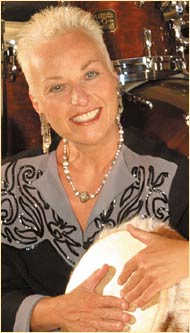
“I would get the comment ‘Gosh, you play really good for a girl,’” Barbara Borden admits in the introduction of Keeper of the Beat, which chronicles her lifelong passion for drumming. The documentary, by San Francisco’s David L. Brown, airs Sun/6 on KQED

The Always brand’s empowering #LikeAGirl ad campaign made the rounds on the internet this week, but Borden’s musical sojourn, discouraged for a female at the time, is decidedly more inspiring (especially since it’s delivered by a badass drummer and not a corporation). 

https://www.youtube.com/watch?v=2aABBZ1fl7M&feature=kp

Borden is aptly described in the film as a “drumbeat diplomat” — she bypasses the language barrier (cultural, too, as the film highlights the universality of music during the Yugoslavia Civil War and in a remote part of Siberia) between her and people she meets by quickly finding a way to communicate in the language of drums and punchy beats.

Clips from her past performances are cleanly weaved between interviews, showcasing both Borden and director Brown’s strengths: her story and his storytelling. Lavish camerawork and breathtaking shots are noticeably absent from the film; they’d really only detract from the unadulterated music and dialogue. It’s a shame the documentary only clocks in at a little under an hour long, as the poignant montage of vignettes whizzes right by you. 

Reinstate the 42: SF protest in solidarity with Brazilian transit workers

7

Hey there, lovers and haters of the World Cup, if you missed out on the protest of Google and FIFA at Pride, there’s still time on the clock to score that goal: there will be another protest tomorrow [Thu/3] to support Brazilian transit workers and their quest for higher wages.

In solidarity with Brazilian protestors, a group of queer anarchists blocked the joint Google/FIFA float in the SF Pride Parade on Sunday. The group saw the float protest as an opportunity to draw together two issues linking San Francisco and Brazil: gentrification in the Bay Area and the displacement of Brazilians in order to make this year’s World Cup possible.

As the protestors said, “We couldn’t pass up the opportunity to connect issues of gentrification and evictions in the Bay Area with the violent displacement of Brazilians who live in the Favelas. The Google/FIFA float was a perfect target for direct action to raise awareness about these issues!”

According to Al Jazeera and Solidar Suisse, more than 150,000 people were evicted from their homes to create the World Cup arenas, including parking lots. Following the Brazilian government’s pacification initiative, Brazilian police occupied multiple favelas, or slums, housing around 1.5 million people total, near the airport and roads leading to the World Cup stadiums in order to make the communities more presentable. Besides minimizing gang activity temporarily, there are no programs implemented to help favela residents in the long run.

Brazilian transit workers also felt cheated by World Cup preparations. Despite Brazil’s underfunded transit system and low wages for workers, Brazil’s government poured $11.5 billion into World Cup preparations. Protestors with the Subway Workers Union of Sao Paulo were beaten and attacked with tear gas by police during a five-day strike for higher wages.

Brazilian Justice Ministry declared the strike illegal and implemented a $250,000 per day fee, and allowed the Brazilian government to fire employees that continue to strike. The workers suspended the strike before the Cup, but the 42 transit workers fired during the strike have not been reinstated.

The SF protest joins the Subway Workers Union in asking for the 42 fired workers to be reinstated. You can root for that goal Thu/3 outside the Brazilian Consulate, 300 Montgomery, SF. 4-5pm.

Workers’ new website demands: Hey, Tech, do better

8

Can Silicon Valley tech companies “do better?” With the launch of a new website, the tech industry’s security guards are coming forward with tales of inequality in Silicon Valley, and asking Google and other big tech companies to do just that.

Protesting security guards outside Google’s IO conference last week used the annual developers’ conference to demand tech companies pay them living wages — as well as to broadcast their new website, TechCanDoBetter.org.

“We’re trying to change the conversation, because so much of the narrative is around tech and what good it’s doing,” said Alfredo Fletes, communications specialist for Service Employees International Union. “Our website is a safe space to learn more about workers who face the challenge of making it.”

Fletes said a Google spokesperson recently agreed to meet with SEIU to address the security guards’ concerns, but also mentioned this was the first the union heard from the spokesperson since last year.

Google hasn’t yet addressed the issue head on. The tech giant’s spokesperson wrote in press statement: “Thousands of Googlers call the Bay Area home, and we want to be good neighbors. Since 2011 we’ve given more than $70 million to local projects and employees have volunteered thousands of hours in the community. We’re excited to be expanding that work in 2014 with the recent Bay Area Impact Challenge winners – several of them have even joined us at I/O!”

The spokesperson added, in reference to the protestors’ Darth Vader-themed attire, “May the force be with them.”

Google’s Bay Area Impact Challenge means that Hack the Hood, Health Trust, Bring Me a Book, and Center for Employment Opportunities will all be receiving awards of $500,000 each. But donations aren’t the same as fair pay: The average Silicon Valley Security guard, Fletes said, will be receiving $22,000 this year.


Charles Justin Wilson, a security guard in Silicon Valley, speaks out about pay equity at the Google I/O conference last week. Photo by Joe Fitzgerald Rodriguez.

In TechCanDoBetter.org’s video game (aptly named Dream Crushers), users are invited to play the role of a struggling security guard. The gameplay forces the player to make tough budget choices. Maybe, for instance, you’d like your security guard to eat. Maybe you’d like him to pay his utility bills. But if you try to do all the basic necessities – transportation, food, utilities, child care – you lose.

“You’re not meant to win. Security officers who played the game said it was frustrating,” Fletes explained. “But they also said their lives were way more difficult.”

It’s not just about wages, either. “Look at at Apple and Google’s security contractor record of harrassment, discrimination, and surveillance,” Fletes said. Those are the kinds of stories security guards are invited to send to TechCanDoBetter.org. Workers can also fill in surveys on the website to help SEIU advocate for them, and sign up to receive text message alerts from SEIU.

Charles Justin Wilson, 31, moved from Chicago to Silicon Valley to build a life for himself. Now he’s a security guard, and he spends his days “dealing with everything from giving someone directions to a [fighting a] knife-carrying nut job.” He said he’d like to see Silicon Valley tech workers “even try to do” what he does. Like many security guards, he makes $12 an hour.

“Anyone who thinks you can survive on $12 in Silicon Valley is either out of touch, really stupid, or just plain evil,” he said.

Google has been the center of a series of protests since January when San Francisco residents began blocking the company’s buses. Google’s profits rose 36.5 percent to $2.9 billion last fall. The average worker wages in Silicon Valley dropped 3 percent even as the cost of basic needs for a family of four in Silicon Valley rose by nearly 20 percent between 2008 and 2012.

“They’re not doing a lot,” Samuel Kehinde, another security guard, said outside Google’s conference. “So, we are just asking them to pay attention to their home and to give back to their community. They cannot turn a blind eye on the community.”

Maybe they can. Or, they could do better. For tech giants, there are options.

Joe Fitzgerald Rodriguez contributed to this report.

Protect light industrial businesses from Big Tech sprawl

15

[Editor’s Note: With the San Francisco Board of Supervisors Land Use Committee scheduled on Monday, July 7, to act on a proposal to allow the new owner of the San Francisco Design Center to evict existing tenants to accommodate tech company Pinterest, Jim Gallagher of Garden Court Antiques, one of those tenants, wrote the following guest editorial for the Guardian.]

The San Francisco Design Center has been a doing business at 2 Henry Adams street for the last 40 years.  During that time it has created thousands of good paying jobs in the city.  We are currently at risk of losing the majority of the building to tech office space.  The building is zoned for PDR-Design but a loophole in the law is being exploited by the new owners, a Chicago based investment firm.  This would lead to the loss of SF based small businesses and the jobs that they create.

 We have worked with countless interior design firms, architects and contractors as a resource for their projects.  In addition, we are an intrinsic part of a network of the PDR(Production, Distribution and Repair) businesses here in San Francisco.  These are the upholsterers, fabrication workrooms, cabinet makers, finishers, metal workers, installers and movers that make up our industry.  This industry offers above average paying jobs to a variety of people from different cultural and ethnic backgrounds that don’t necessarily have college degrees.  These jobs and those that work at them are being squeezed out of this city and when they are gone, we lose yet another piece of the soul of San Francisco.

There is no question that PDR space is being lost in San Francisco.  A recent study of PDR space in SF, showed that we currently have the lowest available PDR space of any major American city at less than 7 percent.  Mayor Lee along with Supervisors Cohen and Campos introduced legislation at the end of last year to expand the amount of PDR space and shore up the manufacturing and light industrial sector in the city.  Why then, would the Board of Supervisors even consider giving up a quarter of a million square feet of PDR space that is currently 90% occupied with viable PDR businesses?

The sad reality is that it is a simple matter of corporate greed.  The new owners of the Showplace Building at 2 Henry Adams bought the building as a PDR building, knowing the use limitations of designated PDR building and immediately began to find ways around the laws.  The loophole that they discovered was the Landmark designation.

The Landmark designation was an exception put into the PDR protections in order to help with the cost maintaining some of the historic architecture that is often found in these PDR buildings.  The idea being that PDR rents do not always bring in enough income to retrofit and maintain these old buildings.  The Landmark status would allow the owners of PDR buildings to rent out part of the building as higher paying office space in order to offset the retrofit and maintenance cost.  This sounds like a good idea until you bring in the greed factor.  This Landmark exception has become the favorite loophole for corporate investors and greedy landlords to move out PDR businesses all over the city.

In the case of the Showplace Building, it is currently 90 percent occupied by PDR-Design businesses.  According to the building owers, there are approximately 262,000 square feet of rentable space in the building.  The Common Area Maintenance or CAM fees that tenants of the building pay beyond their monthly rent is $1.25 per square foot per month.  This would mean that the owners of the Showplace building are currently bringing in nearly $3,500,000 just in Common Area Maintenance fees annually.  In what universe is this not enough money to maintain a building that was fully retrofitted 15 years ago and is only five stories high?

The idea that this building needs to granted Landmark status from the city in order to create enough revenue to maintain the building just does not pass the smell test!  This is a case of simple greed on the part of a Chicago based investment company.  They believe that they can skirt the laws that are in place to protect San Francisco based small businesses and San Francisco workers.  They do not have the best interest of our city or our workers in mind.  They simply want to exploit this Landmark loophole in the PDR protections to line their own pockets.

I would hope that the members of the Board of Supervisors and Mayor Ed Lee do not let this happen.  Please consider the consequences to our city.  Do not choose to allow a Chicago based investment company to skirt our laws and exploit this loophole.  Do not allow this greed to put several San Francisco small businesses out of business. 

This building is 90 percent full of viable PDR businesses.  We pay nearly $3.5 million dollars a year to maintain this building.  This is the perfect example of what a well-run PDR building should look like.  This building is this beautiful and well-maintained because of us.  Please don’t allow the exploitation of the Landmark status to kick us out.  We built our businesses here because we love this place and we want to continue to work and thrive here.

The warm-up

0

culture@sfbg.com

THE WEEKNIGHTER Weekends are for amateurs. Weeknights are for pros. That’s why each week Broke-Ass Stuart (www.brokeassstuart.com) will be exploring a different San Francisco bar, bringing you stories about the places and people who make San Francisco one of the most phenomenal cities in the world. Who wants a drink?

There’s something romantic about San Francisco’s summertime fog. Those damp and chilly nights belong only to us, and the atmosphere they create is what dreams are made of. While the rest of the country simultaneously shares the same experience of panting and sweltering, we bundle up in scarves and coats and hoodies and boots just to run to the store. Maybe that’s the real reason San Francisco feels like a bubble. Maybe it’s not just that we’re this bedrock of progressivism and technological innovation. Maybe it’s that, like living inside a shaken snow globe, our lives are defined by the fact that the rest of the world is obscured from us by the mists floating in the air.

I’ve been telling Noah for a while that I’m gonna go visit him at the Fireside Bar (603 Irving, SF. 415-731-6433). We used to work Thursday nights together at the Golden Gate Tap Room until we didn’t anymore, and I’ve been meaning to catch up with him during one of his shifts at the Fireside. Situated at the corner of Seventh and Irving, the Fireside may be the perfect neighborhood bar. It’s got a dive bar feel without being rundown and smelly, the drinks are stiff and cheap, and the regulars are friendly enough. But most importantly it’s got a motherfucking fireplace.

Imagine this: You’ve decided to get out of your regular routine and go explore somewhere else. Maybe you wandered around Golden Gate Park or decided to check out the Inner Sunset. Or you just walked to the end of Upper Haight and decided to keep on going into the unknown. It’s July in San Francisco, and the sun is starting to go down, and you’ve been wandering around all day with someone who makes you feel all warm and gooey inside. Let’s grab a drink, one of you says as your feet start to hurt and your mouth feels parched and the top of the ear where you just kissed your special person is cold to the touch. And then you see the Fireside Bar. While San Francisco summers have been around far longer than the Fireside, it’s weird to imagine one without the other. You think about this as the two of you order drinks before sitting down to make love-eyes at each other near the fireplace.

I first moved to San Francisco in the summertime, and considering I lived in the Upper Haight, the fog was like a visitor who showed up towards the end of each day. My friend Maria lived a block down from me so one night we got drunk at her place and decided to go on an adventure. I grabbed my skateboard, she put on her roller skates and we headed west to explore parts of SF neither of us was familiar with. Cutting through the fog and the shadows of UCSF we eventually found our way to the Fireside, where we stopped for drinks and so Maria could clean up the scrapes she received from falling repeatedly on her skates. We got warm by the fire and then managed to get our drunk asses back to our respective homes without either of us cracking our heads open. It was a romantic night, not in a sexual way, but in a way where we both knew we were two people falling in love with San Francisco and its foggy ways.

I think it’s time I finally get my shit together and go visit Noah. Maybe I need a little fog and the Fireside to remind me of all the reasons I fell in love with this city in the first place.

Stuart Schuffman aka Broke-Ass Stuart is a travel writer, poet, and TV host. You can find his online shenanigans at www.brokeassstuart.com

Making waves

1

arts@sfbg.com

THEATER The Fourth of July kicked off a revolution once; could it happen again? Each year in Dolores Park the San Francisco Mime Troupe gives it a shot, kicking off its touring season of free outdoor shows with a musical-comical call to arms — an appeal to popular solidarity against the very real forces of oppression on a holiday gleefully synonymous with keg-tapping.

It’s a task the legendary 55-year-old artist-run collective pursues with passion and its own unique flair: a larger-than-life mix of Italian commedia dell’arte storytelling and American-style melodrama, with a smattering of original songs thrown in for good measure. It’s an eye and ear catching spectacle that this year hits close to home, wading into the conflicts and displacement churned by a rapidly transforming high-tech, high-cost city.

Ripple Effect is set in present-day San Francisco, or just offshore in the bay, in a small tour boat where three women of very different backgrounds reckon with one another. The boat’s captain is an ardent but paranoid Lefty activist (played by Velina Brown). Her passengers are a Vietnamese beautician and all-American immigrant (Keiko Shimosato Carreiro) and a newbie tech worker from small-town Nebraska (Lisa Hori-Garcia) whose popular app landed her a corporate job in the big city.

Against the backdrop of a yawning wealth gap, real estate speculation, an epidemic of evictions, Google bus protests, and diminishing diversity, Ripple Effect‘s three protagonists (all played by longtime Mime Troupe members) explore the tensions that divide them and the common ground beneath them. (The Mime Troupe is also linking the play to a series of community forums, at its Mission studio and after select performances, in which various community leaders will facilitate public dialogue around the show’s themes and the growing divide in the city.)

“It’s always tough because we do tour the shows, so we don’t want to make them too specific to San Francisco,” says Mime Troupe actor-writer Michael Gene Sullivan, who plays several secondary roles in Ripple Effect, including a certain wily CEO. “But we feel like there are so many issues going on within the city that people around the state, really around the country, will be able to relate to — not just housing and how the cities are changing, but also the struggle within the working class, the way people are being pitted against each other while the incredibly rich are getting incredibly richer. It’s just that it’s more pointed here.”

There is precedent for SF-centric plays in past Mime Troupe offerings. In fact, the company’s 1999 show, City For Sale, took on the housing crisis of the last real estate and dot-com bubble. But Sullivan says the issue has also changed. “This show, while it touches on [housing], is much more about a change in the culture of the city. Not just what does it mean to be living in San Francisco, but what is San Francisco now?”

Ripple Effect is a departure in some other ways too. It’s a more concentrated drama, less concerned with a particular impending disaster to push the plot than in the precise relationship between the main characters. “In this show the dilemma is, to a large extent, how the characters see each other,” notes Sullivan. To this end, Sullivan, head writer for the collective since 2000, shared the writing this time around with Bay Area playwrights Eugenie Chan and Tanya Shaffer, each of whom explored specific aspects of the characters’ back stories. The show also sports two directors (Hugo E. Carbajal and Wilma Bonet) and comes with a new musical team: composer-lyricist Ira Marlowe and musical director Michael Bello, who together fill roles covered in recent years by Pat Moran.

The Mime Troupe has not been immune to the financial upheaval shaking the city. Last year, the collective had to launch an emergency fundraising campaign called the Cost of Free to make up for a serious budget shortfall that jeopardized its ability to offer its annual show. Velina Brown, Sullivan’s life partner as well as fellow artist, explains that the 2008 economic downturn had reduced the offerings of arts foundations by as much as 40 percent. “Being already a really lean organization anyway, 40 percent going away is huge.” But where another theater might have folded up shop, the Mime Troupe, with help from its audience, bounced back.

“One of the things that’s helped us over the years with all these ups and downs is that we are a collective,” says Brown. “It’s not all on one or two people and if they feel like that’s it, then that’s it — there’s a larger group of people that have to agree that that’s it before the doors close. We also own our building, and that has definitely saved our behinds. We haven’t had to be at the mercy of a landlord — who says, “Hey, I could get 10 times what you people are paying” — and kicked to the curb.”

“Because we’re a collective it takes people a lot longer to get burned out,” agrees Sullivan. “Because we’re worker-owners of our company we are willing to put in more time, do things for a little less pay, come to meetings when we’re not paid to be there. We do get paid; it’s an [Actors] Equity company. But we have a sense of ownership you don’t get at other places, and that also helps the company in the most difficult times.” *


THE RIPPLE EFFECT

Through Sept. 1 at various NorCal venues

Fri/4-Sat/5, 2pm, free

Dolores Park

19th St at Dolores, SF

Also Sun/6, 2pm, free

Yerba Buena Gardens

760 Howard, SF

www.sfmt.org

This Week’s Picks: July 2 – 8, 2014

0

WEDNESDAY 2


Be Calm Honcho

As Be Calm Honcho’s lead singer croons about her love of California on the band’s debut album, differences between the SF-based band and an LA-based band quickly emerge. (Yes, LA. You can stop bragging about being able to bath in sunshine at the beach 365 days a year.) Be Calm Honcho recorded the album in Stinson Beach, where Karl the Fog must’ve frequently drifted in, comfortably settling into his guest role on the album. The tunes sound effortlessly dreamy — even a little gloomily hopeful. The band is joined, fittingly, by fellow local bands, The She’s and Owl Paws, at its record release show tonight. (Amy Char)

With The She’s and Owl Paws

8pm, $10

Rickshaw Stop

155 Fell, SF

(415) 861-2011

www.rickshawstop.com


Deafheaven

For the past three years, these hometown heroes have managed to charm the pants off of critics and fans alike with their powerfully emotive mixture of black metal and shoegaze. The band’s most recent album, Sunbather, a sad, seething record about the melancholy of perfectionism and unattainable ideals, was a critical darling that brought Deafheaven onto the national stage in a flood of gushing reviews and end-of-the-year best-of lists. Though they are a relatively new band, with only a few years and two albums under their belt, Deafheaven both record and perform with a masterful confidence and unabashed willingness to break the rules, creating a sound that has been described as “post-everything.” You don’t want to miss the chance to see them shred on their home turf. (Haley Zaremba)

With Wreck & Reference

8pm, $16

Great American Music Hall

859 O’Farrell, SF

(415) 885-0750

www.slimspresents.com


Answer Me! A Comedy Game Show

A thick layer of dust covers your high school quiz bowl trophy in your childhood bedroom. Between Netflix marathons of Orange Is the New Black, you sort of yearn for an intellectually stimulating challenge. Take everything you know about Piper Chapman and head over to the Mission for tonight’s pop culture game show. (While you’re at it, consider renting a video or two to support Lost Weekend Video before the competition begins.) Two teams, each comprised of two local comedians and one randomly selected audience member, duke it out for frivolous fame and useless trinkets. Plus, your teammates are sure to be more entertaining than that awkward mouth-breather back in high school. (Amy Char)

8pm, $10

The Cinecave at Lost Weekend Video

1034 Valencia, SF

(415) 643-3373

www.lostweekendvideo.com


THURSDAY 3


Legendary Stardust Cowboy

Inspired by his obsession with space travel, Norman Carl Odam became the Legendary Stardust Cowboy in 1961 and has been honing his maniacal psychobilly style ever since. “The Ledge” is as interested in cars and girls as he is in sci-fi, toilet humor, and the political issues of whatever era he happens to find himself in (“They signed the treaty in Kyoto, Japan!” he screams on “Global Warming,” as if a UN conference was as exciting as a sockhop.) His absurd subject matter and often incomprehensible vocals have earned him fans from outsider-music guru Irwin Chusid to David Bowie, who covered “I Took A Ride On A Gemini Spacecraft” on his album Heathen. The Ledge’s upcoming Stork Club show should demonstrate why he’s considered one of America’s best — or at least most polarizing — touring musicians. (Daniel Bromfield)

9:30pm, $5

Stork Club

2330 Telegraph, Oakland

(510) 444-6174

www.storkcluboakland.com


FRIDAY 4


Venetian Snares

Winnipeg-based electric music artist Andy Funk, better known as Venetian Snares, has been releasing bass-heavy odysseys of albums since the early 1990s. His artistic diversity and tendency to reinvent himself has led to a scattered but unbelievably prolific output — he’s put out 26 formal full-lengths for 8 different labels since 1998 alongside hundreds of EPs, singles, and mixes. While Venetian Snare’s time signatures, samples, and equipment are constantly in flux, his music stays abrasive and challenging no matter the set-up. His newest album, My Love, is a Bulldozer, released two weeks ago, juxtaposes modern classical elements — particularly strings — with extended drum machine and bass breakdowns and irreverent, often hilarious lyrics. Known for his live mixing and aggressive sets, expect both IDM aficionados and raging moshers to be showing up in full force. Avoid the trite fireworks and head to the Independent for some real explosives. (David Kurlander)

8pm, $15

Independent

628 Divisadero, SF

(415) 771-1421

www.theindependentsf.com


Gilman Benefit

924 Gilman has gotten some flak recently for hiking up the prices of its shows, deviating from its original $5-a-show credo in order to satisfy the demands of its $4,500 rent. Luckily, Gilman will will be hosting not one, but two benefit concerts in the first two weeks of June — and both will only set you back a paper Lincoln. The first will take place on the 4th of July and features a host of local bands, including The SoundWaves (San Leandro), Flip & The European Mutts (San Jose), and Black Dream (San Francisco) — plus Drinking Water, an Arizona ska-punk trio that’s toured in the US and Mexico. Though benefit No. 2 features a higher proportion of indie rockers, this one is as punk as anything the Gilman’s ever put on. (Daniel Bromfield)

7pm, $5

924 Gilman

924 Gilman, Berkeley

(510) 524-8180

www.924gilman.org


SATURDAY 5


The Fresh & Onlys

Though they rose to fame with the San Francisco garage-rock explosion of a few years back, the Fresh & Onlys eschew the punky pulp-horror aesthetic of many of their contemporaries in favor of a romantic sound that’s more Heart Shaped World than “Heart Shaped Box.” Though their early recordings (Grey Eyed Girls, Play It Strange) are as fuzzy as anything Ty Segall or John Dwyer’s ever done, the Fresh & Onlys have always been more pop than rock, more brain than body, more introverted than extroverted. But that doesn’t mean they can’t hold it down live — whether as an opener or headliner, they can bend their style to suit just about any live setting and keep the party going. (Daniel Bromfield)

9pm, $15

The Chapel

777 Valencia, San Francisco

(415) 551-5157

www.thechapelsf.com


SUNDAY 6


“Brakhage, Brakhage, Brakhage!”

Add about 397 more “Brakhages” to the title of this Yerba Buena Center of the Arts tribute to the late, great experimental filmmaker, and you’ll have the approximate number of films he created over the span of his career. Three programs highlight both familiar and rare works from the celluloid wizard. Up first is today’s “Self and Other,” films from 1974-86 that examine “how autobiography and portraiture can be represented with motion pictures.” Later programs are “Sound Films” (1962-74), spotlighting some of the oft-silent artist’s soundtracked pieces; and a vivid, gorgeous array of late-career works represented in “Hand-Painted Films” (1993-2002). (Cheryl Eddy)

2pm, $8-$10

Also July 10, 7:30pm; July 13, 2pm

Yerba Buena Center for the Arts

701 Mission, SF

www.ybca.org


The San Francisco Symphony

The San Francisco Symphony heads west to the Sunset on Sunday for its annual appearance at the free Stern Grove Festival. The outdoor affair, picturesquely located in a green basin of rocks and picnic tables, will feature a mostly 20th-century program conducted by charismatic former Symphony Resident Conductor Edwin Outwater. More unconventional programming, including several offerings from Howard Hansons 1930s opera Merry Mount, join standard overtures and waltzes by Bernstein and Richard Rodgers. A potential second-half highlight comes in the form of Ravel’s heartbreakingly gorgeous “Pavane Pour Une Infante Defunte” and exhilarating “Bolero,” both presented with jazz improvisations from prolific pianist Makoto Ozone — the reworking of these iconic classics into new styles should lead to striking new modalities and moods. Pack up a cheese plate and your best white capris and head down to the Grove for an alternately meditative and rousing journey through the modern classical canon. (David Kurlander)

2pm, free

Sigmund Stern Grove

19th Ave. and Sloat, SF

(415) 252-6252

www.sterngrove.org


MONDAY 7


Cloud Nothings

Cleveland’s Cloud Nothings have been indie darlings since the band’s formation in 2009, but have received special praise for April’s Here and Nowhere Else. The new work sees the group embracing a punchier punk aesthetic — lead singer and rhythm guitarist Dylan Baldi spins confused, remarkably catchy choruses over staccato guitar lines and astonishing drum fills by hitherto unknown new addition Jayson Gerycz. Their present tour, which winds around iconic mid-size theaters in the West and Midwest before a European leg, promises a taut, kinetic setlist that includes all of their new album and a few scattered cuts from their three preceding LPs. These guys may be melodic, but they embrace involved and improvised instrumental interludes onstage that lend each show unpredictability and showcase Gerycz, Baldi, and excellent bassist TJ Duke. The stately Great American Music Hall provides an ideal locale for the group’s blend of flash and homage. (David Kurlander)

8pm, $20

859 O’Farrell, SF

(415) 885-0750

www.gamhtickets.com


TUESDAY 8

Nick Cave and the Bad Seeds

Eccentric doesn’t really being to cover it. Nick Cave is a madman with a burning spark of genius propelling his frenetic presence and unparalleled career, careening from genre to genre, turntable to page to screen, and implanting his gritty, unmistakable thumbprint into everything he touches. With an almost four-decade career, the onetime frontman of Australian punk and post-punk bands the Lost Boys and the Birthday Party, and current frontman of Grinderman and the Bad Seeds, Nick Cave is a legendary force of nature. Everything about Cave’s musical style is unique, but it is his lyrics that set him apart as one of the most imaginative and unapologetically confrontational artists in the industry. Stained pink with blood, sweat, and semen, his songs are a visceral journey that only Cave, one of the most energetic and impassioned performers alive, could properly deliver. His sneer and snarl are a sight to behold. (Haley Zaremba)

With Jonathan Richman

8pm $53

The Warfield

982 Market, SF

(415) 673-4653

www.thewarfieldtheatre.com

The Guardian listings deadline is two weeks prior to our Wednesday publication date. To submit an item for consideration, please include the title of the event, a brief description of the event, date and time, venue name, street address (listing cross streets only isn’t sufficient), city, telephone number readers can call for more information, telephone number for media, and admission costs. Send information to Listings, the Guardian, 225 Bush, 17th Flr., SF, CA 94105; or e-mail (paste press release into e-mail body — no attachments, please) to listings@sfbg.com. Digital photos may be submitted in jpeg format; the image must be at least 240 dpi and four inches by six inches in size. We regret we cannot accept listings over the phone.

Events: July 2 – 8, 2014

0

Listings are compiled by Guardian staff. Submit items for the listings at listings@sfbg.com. For further information on how to submit items for the listings, see Selector.

WEDNESDAY 2

Jean Kwok Book Passage, 1 Ferry Bldg, SF; www.bookpassage.com. 6pm, free. The author discusses her new novel, Mambo in Chinatown.

Craven Rock Long Haul Info Shop, 3124 Shattuck, Berk; www.thelonghaul.org. 7pm, free. The author reads from cultural-studies tome Days and Nights in a Dark Carnival. Yes, it’s about Juggalos.

Judy Wells and Dale Jensen Books Inc, 1344 Park, Alameda; (510) 522-2226. 7pm, free. The poets read as part of the Last Word Reading Series, followed by an open mic.

THURSDAY 3

“Target Independence Day Celebration” Craneway Pavilion, 1414 Harbour Way South, Richmond; www.oebs.org. 6:30pm, free. Oakland East Bay Symphony performs patriotic works to celebrate Independence Day, followed by a fireworks display.

FRIDAY 4

Fourth of July at the Berkeley Marina Berkeley Marina, 201 University, Berk; www.anotherbullwinkelshow.com. Noon-10pm, $15. Family-friendly fun with live entertainment, pony rides, arts and crafts, and fireworks (9:30pm).

July 4th Festival of Family Fun Jack London Square, Broadway and Embarcadero, Oakl; www.jacklondonsquare.com. 11am-4pm, free. Fun activities for families including a petting zoo, balloon artists, face paint, bubble wrangling, and more.

Pier 39 Fourth of July Pier 39, SF; www.pier39.com. Noon, free. The family-friendly fun begins at noon with live music from the USAF Band of the Golden West, followed by Tainted Love. At 9:30pm, enjoy the traditional fireworks display over the bay.

SATURDAY 5

Fillmore Jazz Festival Fillmore between Jackson and Eddy, SF. www.fillmorejazzfestival.com. 10am-6pm, free. Also Sun/6. The largest free jazz fest on the West Coast fills 12 blocks with music, arts and crafts, gourmet food, and more.

LaborFest 2014 Redstone Building, 2940 16th St, SF; www.laborfest.net. 11am-5pm, free. Street fair in honor of the 100th anniversary of the San Francisco Labor Temple. Also today: Noon, meet at 518 Valencia, SF. Free. Labor bike tour with Chris Carlsson (ends at Spear and Market). 2pm, meet at Harry Bridges Plaza Tower, Embarcadero at Market, SF. Free. SF General Strike walk led by retired ILWU longshoreman Jack Heyman and others. 7pm, ILWU Local 34 Hall, 801 Second St, SF. Donations accepted. “FilmWorks United” screening of Miners Shot Down (Desai, 2014).

SUNDAY 6

LaborFest 2014 First Unitarian Universalist Church, 1187 Franklin, SF; www.laborfest.net. 9:30am, free. “Working Class Housing, Ethnic Housing: Hunters Point and Bayview” panel discussion. Also today: 9:45am, meet at Coit Tower entrance, One Telegraph Hill, SF. Free. Coit Tower mural walk with Peter O’Driscoll, Gray Brechin, and Harvey Smith. 11am, meet at 18th St and Tennessee, SF. Free. Dogpatch and Potrero Point walk with Nataly Wisniewski of SF City Guides. Noon, meet at One Market St, SF. Free. Labor history and Market St. walk with Chuck Schwartz of SF City Guides. 2pm, Bird and Beckett Bookstore, 653 Chenery, SF. Free. Author Zeese Papanikolas discusses the Ludlow Massacre. 7pm, 518 Valencia, SF. Free. “Labor, Privatization, and How to Defend Public Education” discussion.

Temescal Street Fair Telegraph between 40th and 51st Sts, Oakl; www.temescaldistrict.org. Noon-6pm, free. Three food courts and multiple stages showcasing local performers (including an entire stage just for kids with magicians, jugglers, and more), plus 150 booths with local crafts, artworks, and more.

MONDAY 7

LaborFest 2014 Meet at Portsmouth Square, Washington St, SF; www.laborfest.net. 10am, free. Chinatown walk with Mae Schoeing of SF City Guides. Also today: 7pm, Bird and Beckett Bookstore, 653 Chenery, SF. Free. Poetry reading by Nellie Wong and Alice Rogoff.

TUESDAY 8

LaborFest 2014 Meet at the corner of Stockton and Maiden Lane, SF; www.laborfest.net. 10am, free. “Rising Steel: Two Centuries of San Francisco Architecture” walking tour. Also today: 6-9pm, Pacific Media Workers Guild, 433 Natoma, SF. Free. “Méndez Rising: Spotlight on the Revolutionary Works of an Artist for Social Justice,” tribute to the art of Leopoldo Méndez. *


It’s alive!

2

arts@sfbg.com

FILM There’s a T-shirt that’s achieved must-have status in record time, even though as yet it may just be an idea for a T-shirt: A picture of Al Gore gesticulating at the podium, with the words “If you don’t believe in climate change just look at San Francisco … only a few years ago that city was still cool.” Haha. Sob. The temperature drift from cool to tepid (and expensive) registers in a thousand ways, big and small, with the shuttering of cultural venues now a predictable minor-key prelude to the ka-ching symphony of condo construction.

Not yet axed, but with head positioned above the bucket, is the Vortex Room — that SOMA venue so cool you need to know the address (there’s no sign), as if it were a Prohibition speakeasy or something. Spawn of the late, beloved Werepad, the Vortex was threatened with eviction last fall. After a few months of legal skirmishing the landlord backed down, but then served notice again not long afterward. “We are currently fighting it out in, I guess, a battle of resources. They appear to just want to wear us down. This new real estate marketing is just too tempting, I suppose,” says founder Scott Moffett.

Aptly, July’s Film Cult series at the Vortex takes as its theme “Bad Vibrations.” The bounty of five Thursdays this month allows plenty of room for programmer Joe Niem to mine a collection of largely 16mm exploitation obscurities in which “Summer is spelled with a ‘B’.” As in, you know, bummer! — but more about that film title later.

Things kick off with a double dose of female imperilment from the golden age of TV movies. A Vacation in Hell (1979) has one would-be playa (Michael Brandon) arranging a day trip from a Club Med-type resort with four women so he can hit on the dumb blonde (Priscilla Barnes). The others are Andrea Marcovicci as Embittered Neurotic Man-Hating Possible Lesbian, Get Smart!‘s Barbara Feldon as an insecure divorcee still looking for love, and erstwhile Marcia Brady Maureen McCormick as the teenage daughter she’s dragged along as security blanket.

Upon reaching an isolated beach, their inflatable boat gets a puncture. They attempt to dither their way back to civilization cross-country, and in pure idiot panic incur the wrath of a strapping native hunter (Ed Ka’ahea) whom Marcovicci dubs “you murderous savage.” Under the silly, talky circumstances, this ABC Movie of the Week has some surprisingly good acting. Which cannot be said, perhaps thankfully, for the prior year’s Summer of Fear, aka Stranger in Our House. Fully exorcised then-telepic queen Linda Blair plays a seriously bratty SoCal teen who grows suspicious of the freshly orphaned cousin (Lee Purcell) who comes to live with her family, and who in record time goes from twangy wallflower to usurping seductress. This (eventually) Satanic thriller was the first mainstream Hollywood project for a Wes Craven fresh from Last House on the Left (1972) and The Hills Have Eyes (1977), and remains the tamest thing he ever directed — yes, tamer than Meryl Streep inspiring Harlem youth in 1999’s Music of the Heart.

Fear not, stronger meat is ahead. July 10 brings two theatrical horrors, 1980’s Blood Beach and 1976’s Who Can Kill a Child?, aka Island of the Damned. The first is a late entry in the cycle of Jaws (1975) rip-offs, which it winks at by having one character quip, “Just when you thought it as safe to get back in the water, you can’t get to it” — because something unseen is pulling Santa Monica beachgoers down screaming, right through the sand. It turns out to be an all-too-briefly seen monster in this lethargic chiller by the future director of Flowers in the Attic (1987 version, not the recent made-for-Lifetime version), with the highlight being a surprising political speech by John Saxon’s police chief about how taxpayers want the sun and the moon in city services … they just don’t want to pay for it.

Who Can Kill a Child? is something else: a beautifully atmospheric Spanish nightmare by underrated Uruguayan Narcisco Ibáñez Serrador, in which two English tourists row to a quaint village off the mainland. When they arrive, however, everyone appears to be gone save a few children — with whom something has gone very, very wrong. Quiet and slow-building, it’s a striking parable that really pays off once ominousness turns to terror at the completely irrational crisis these visitors have stumbled into. Equally memorable and shocking is 1978’s US Blue Sunshine, a tale of a government LSD experimentation that the Vortex (and the Werepad before it) has shown so many times it might as well be its filmic mascot.

The rest of the schedule is obscure even by Vortex standards. English-language 1972 Eurotrash hostage drama Summertime Killer stars Christopher Mitchum, one of two (with sibling Jim) Robert Mitchum offspring who experienced moderate movie fame — despite dad’s oddly dismissive public statements about their B-list careers. Aussie One Night Stand (1984) has New Wave youth in Sydney acting like mildly New Wave cut-ups in a John Hughes movie as they await nuclear holocaust. It’s less fun than it sounds. More fun than it sounds is 1990’s direct-to-video Punk Vacation, in which mildly “punk” miscreants slumming in the sticks wage war against local hicks.

Lastly there’s 1973’s Bummer!, a sobering film about the groupie lifestyle — even before the fat misogynist drummer no one will have sex with goes postal. Offering further proof the rock ‘n’ roll lifestyle leads to Hades is Down Beat, a feature so obscure imdb.com doesn’t know it exists. Even the few to note Christian film “pioneer” Ken Anderson’s passing in 2006 made no mention of this 1967 warning against all that was then groovy and ungodly. If and when the Vortex goes away for keeps, who will unearth such treasures for us henceforth? That’s right: Nobody. *

“THURSDAY NIGHT FILM CULT: BAD VIBRATIONS”

Thursdays in July, 9 and 11pm, $10

Vortex Room

1082 Howard

Facebook: The Vortex Room


Key of twee

0

cheryl@sfbg.com

FILM The joke’s been made elsewhere that Begin Again, the latest from writer-director John Carney (2007’s Once), should have been dubbed Twice. There are undeniable similarities. Though Begin Again takes place in New York City, not Dublin, it’s another musical tale of a romantically-challenged artist whose life is changed by a chance encounter. However, unlike Once, Begin Again has an A-list cast, with Mark Ruffalo, Keira Knightley, and Catherine Keener, plus big-name musicians like Adam Levine and CeeLo Green.

Carney eases us into this tale of Big Apple heartbreak and redemption by playing its opening moments multiple times from different perspectives. Jolly busker Steve (scene-stealer James Corden) puts his bummed-out buddy Greta (Knightley) on the spot at an open-mic night, where she croons a song she’s just written about jumping in front of a subway train. (Knightley does her own singing, but careful camerawork ensures we never get a good look at her guitar skills.) Dan (Ruffalo), a down-on-his-luck music-biz professional whose career status is nearly as dismal as his personal life — he’s estranged from his music-journalist wife (Keener) and teenage daughter (Hailee Steinfeld) — happens to stumble into the joint as Greta takes the stage.

He’s enthralled by her performance, and the film does an “earlier that day” rewind to let us know why Dan is so drunk. Truth is, he woke up wasted, to the annoyance of his longtime business partner (Mos Def), who’s laser-focused on keeping their record label profitable (one idea: bands doing “audio commentary” on their own records…ugh). Dan, whose job is in serious danger, dreamily clings to the old-school “fostering talent” model. His ideals may be sky-high, but his dignity’s sloshing at the bottom of the flask he keeps stashed in his aging Jaguar — a status symbol of a lifestyle he hasn’t been able to afford for some time.

After he introduces himself to Greta, certain she’s his ticket to creative rebirth, he’s surprised to learn she’s packing a fully-operational bullshit detector. She also doesn’t take compliments well — “Music is about ears, not eyes,” she insists, when Dan says she has the looks to make it big. But there’s an easy chemistry between them, and once she Googles him and checks his bona fides (Harvard, Grammys), she softens. A little.

We see why Greta is so angry at the world in another rewind. She’s a recent arrival in NYC, tagging along with boyfriend and songwriting partner Dave (Levine). He’s a hotshot rising star who soon morphs into a lying, cheating, trendy facial hair-growing rock ‘n’ roll cliché. (If you have a built-in aversion to the “Moves Like Jagger” singer, this is, needless to say, perfect casting.) These scenes are so overdone — Rob Morrow cameos as a sleazy record-company exec — that Carney’s point of view is abundantly clear: tailoring one’s music to please the basic-bitch demographic and achieving overnight success is bad; while penning personally meaningful tunes and recording them on one’s own terms is good.

Fine. On principle, who doesn’t agree with that? Of course, it’s rad that Greta and Dan decide to take to the streets, NYPD be damned, and record an entire outdoor album with a rag-tag band that signs on thanks to Dan’s fading reputation and, it would seem, Greta’s talent, although for all its emphasis on musical integrity, Begin Again doesn’t bother fleshing out any of the other musician characters. Playing a former client of Dan’s, Green materializes to command a scene or two and undermine the film’s “it shouldn’t be about the money” message, since he sure makes living in a fancy mansion look like a good time.

Another point of contention: Greta never claims to be a great singer, but Knightley’s wispy pipes hardly suggest the glorious potential that perks Dan’s golden ears. Her tunes are forgettable folk-pop, and while some of the same songwriters worked on Begin Again, there’s nothing here that telegraphs the emotional weight of “Falling Slowly,” Once‘s Oscar winner. Begin Again‘s broader themes of music as a healing balm (the film’s original title, as subtle as an anvil to the skull: Can A Song Save Your Life?) are equally generic, illustrated by a scene that has Dan and Greta soothing their sadness by bopping all over the city with a headphone splitter listening to soul jams.

Begin Again strives, with obvious effort, to Make a Statement about an industry struggling to find its identity amid such troubling inventions as revenue-sapping free downloads, YouTube as a career launching pad, and shows like Levine’s own The Voice, which bring instant stardom to artists without the benefit of record-company nurturing. These are worthy issues, but they also make for some heavy-handed dialogue: “We need vision, not gimmicks!”

Fortunately, Begin Again fares better with its explorations of complicated relationships. Nobody does rumpled and wounded better than Ruffalo, and his connections with Keener and Steinfeld feel lived-in and authentic. Knightley has the most obvious character arc, as well as the biggest burden in having to sing — easily the film’s primo curiosity factor, aside from the stunt casting of Levine — but she’s likable as a hipster scorned, determined to figure out her next move even as her world crumbles around her. (Carney does a good job keeping the breakup storyline from getting too maudlin; witness a musical fuck-you drunk dial to Dave’s voice mail, in which an outpouring of emotion is livened up by an impromptu kazoo solo.) It’s also a surprisingly relaxed performance, given her predilection for films like 2012’s overstuffed Anna Karenina. Bonus: despite those wistful song lyrics, she doesn’t end up jumping in front of a train in this one. *


BEGIN AGAIN opens Wed/2 in San Francisco.

Google Bus sewers

131

STREET FIGHT With most city officials supporting the accommodation of private transit in some form, the San Francisco Municipal Transportation Agency is now vetting where tech workers should board and egress the private corporate commuter buses that ply the 101 and I-280 between San Francisco and Silicon Valley suburbs. A list of proposed bus stops was circulated in June, and the first round of bus stop proposals is set for approval in August.

Short of a proper environmental study, which is the subject of ongoing litigation, the list deserves more scrutiny and deliberation because certain areas of the city — such as Hayes Street in the Western Addition and 18th Street in the Mission — might be effectively made into Google Bus sewers.

I hope SFMTA is open to reconsidering some of these proposed bus stops.

Rather than jamming oversized interstate highway-scale coaches on human-scaled, walkable, and bikeable streets with important Muni routes, SFMTA ought to steer them where they are more appropriate: on the wider, car-oriented streets that bifurcate the city.

For example, the current proposal for private commuter buses in the Western Addition is to have these mammoth and incongruent buses running on Hayes Street using Muni stops at Clayton, Steiner, Laguna, and Buchanan.

This is bad news for passengers on the 21-Hayes, a key neighborhood-serving electric trolley bus that has gotten short shrift in the city planning process. With 12,500 boardings daily, the 21-Hayes is often at capacity every morning before it crosses Van Ness.

Just last week, I was on a packed 21 that was blocked (illegally) by a huge corporate bus on Hayes. With an already dense and slow traffic situation, this added at least 30 seconds to the trip before the 21 could access its stop. Repeat that multiple times in the morning and afternoon and you can see that this will be a mess. It’s not worth the dollar the SFMTA collects for such stops, that’s for sure.

Concentrating the private buses on the 21 line (or the 33 in the Mission) will block Muni where Muni is already slow, unreliable, and overcrowded. It will also diminish walkability and bicycle safety on Hayes and other streets identified in the current list (including the commercial corridors on Divisadero and 18th Street in the Mission.)

Rather than streets such as Hayes, SFTMA should redirect the private buses to the multilane, one-way couplet on Fell and Oak streets, only one block south. Along the corridor, SFMTA could collaborate with the private systems to establish new bus stops (red paint) at Clayton, Masonic, Divisadaro, Fillmore, and near Octavia. This scheme would limit clunky turn movements onto neighborhood streets by oversized buses and contribute to traffic calming.

In the mornings, the buses would pick up passengers on Oak Street, starting along the Panhandle, then travel towards Octavia Boulevard before swinging onto the freeway southbound. In the evenings the buses would exit the freeway at Octavia, and stop at drop-off hubs on Fell, between Octavia and Laguna, and then stop incrementally toward Golden Gate Park.

Additionally, the city needs to consider a space for the underpaid, nonunionized drivers to pull over and rest before and after long segments of freeway driving. We want these buses to be safe.

Similar arrangements should be made to spare 18th Street in the Mission from reverting to a Google bus sewer, with emphasis on private corporate bus stops on South Van Ness or Guerrero-San Jose. Surely there are other examples in other parts of the city.

The urgent affordable housing crisis aside, this could be a win-win from a transportation perspective. Tech workers would no longer get blamed for blocking Muni and they can know that while waiting for their bus, they are contributing to calming erstwhile hazardous streets.

There’s a lot of opportunity to combine these new bus stops with traffic calming at dangerous intersections such as Fell and Masonic or Oak and Octavia, all without mucking up Muni or diminishing the walkable human scale of nearby neighborhood commercial streets. And hey, since this is all a “pilot program,” no pesky and expensive EIR is needed — right?

Thinking long-term, this scheme could be a template to jumpstart making this ridiculous private transit system into a regional public bus system modeled on AC transit or Golden Gate Transit, a service open to all. Our car-centric streets are ripe for express bus service and this would help relieve parallel lines like the N-Judah, while enabling the city to attain its aspiration of 30 percent mode share on transit.

And for Mayor Ed Lee and pro-tech-bus members of the Board of Supervisors, it helps with their “vision zero” rhetoric of increasing pedestrian safety because placing the buses on car-centric one-way couplets can help calm traffic.

With a little cajoling by the mayor, he could get his tech sponsors to underwrite streetscape and beautification at the bus stops along these kinds of streets.

After all, Mayor Lee needs to find the money, because last month he betrayed pedestrian and bicycle safety and Muni when he abandoned support for increasing the Vehicle License Fee locally this fall, all the while misleading the public about the important role of Sunday metering. Perhaps it’s time for a tax or license fee on the ad hoc private transit system?

SLOWING DOWN

Speaking of vision zero, Sup. Eric Mar deserves hearty thanks for proposing to reduce speed limits citywide. This is one of the most effective ideas to come from the progressive wing of the Board of Supervisors in a long time and should be implemented yesterday. Higher speeds maim and kill, and the faster cars go the more voracious the appetite for both fuel and urban space.

With reduced speed, the motorist would still be able to drive, just more slowly, perhaps with less convenience than now. But over time the options of cycling, of walkable shopping, and improved public transit would synchronize more seamlessly as car space is ceded to separated cycletracks and transit lanes.

My suggestion is to make the city navigable by car at no greater than 15 miles per hour, a speed deemed not only to be comfortable on calmed pedestrian streets, but also to minimize injury and fatalities when there are collisions. Ultimately, our efforts to curb global warming, reduce injury and death from automobility, and make the city more livable obliges us to slow down, so looking at speeds is a step forward.

Street Fight is a monthly column by Jason Henderson, a geography professor at San Francisco State University and the author of Street Fight: The Politics of Mobility in San Francisco.

Solving the housing crisis takes all San Franciscans, even big tech

56


By Joseph Tobener


OPINION This week, San Franciscans learned that they will not be able to rely on Sacramento to fix the housing crisis. State lawmakers voted down Senate Bill 1439, which would have stopped speculators from using the Ellis Act to evict and convert buildings to upscale offices and TICs. One Assembly Democrat said that San Franciscans were “exaggerating the problem.” That same day, my office received Ellis Act eviction notices for 21 tenants from an artist building at 16th and Mission streets. The building has a new buyer, and it will soon be a high-end commercial space.

I was a tenant rights attorney during the first dot-com boom, and without question, this new housing crisis is much worse. The gentrification is more widespread and permanent. This time around, the evicted teachers, musicians, and artists are not simply moving down the street to smaller units, they are being priced out of San Francisco altogether.

We need to decide now, as San Franciscans, what we want our city to feel like in a decade. Here are five things I believe we need to do now to address the crisis:

1. Collaborate with tech leaders, rather than vilify them. I have been as guilty as the next person in blaming and berating big tech, ignoring the fact that many of my neighbors, clients, and friends are long-time San Franciscans who work in the tech industry. Enough blaming. We need to somehow bring tech to the table to help create large-scale solutions to the housing crisis. It may not be easy to do.

Earlier this year, Marc Benioff, the CEO of Salesforce, criticized tech companies for being “stingy” in giving to their communities, and I have heard nonprofit fundraisers echo this. If true, we need to find out why. On the other side, our healthy anti-corporate, ‘us and them’ mindset, which is deeply rooted in San Francisco’s political tradition, is not serving us in collaboratively addressing the housing crisis.

While there are a handful of high-profile examples of tech workers wrongfully displacing tenants, tech workers are not the real problem. It is true that tech money drives up prices, but the real villains are the predatory speculators who are profiting from our shared crisis. The bottom line is, like it or not, tech is here to stay, and tech leaders have the resources to fund the arts, help our schools, and yes, help us address the housing crisis.

2. Stop illegal mergers of multi-unit buildings into single-family mansions. It is not enough to have regulations in place to prevent mergers. Real estate speculators are merging units surreptitiously, without permits. The Department of Building Inspection needs to actively police projects. And all San Francisco residents need to share in the responsibility of ensuring that speculators are not doing major construction without permits in our neighborhoods.

3. Support legislation to stop landlords from renting their units as hotel rooms. It is estimated that more than a 1,000 units in San Francisco are being rented out full-time for short-term corporate or tourist use. We need a law to get these units back into the permanent housing stock.  

4. Donate to the Community Land Trust and the Community Arts Stabilization Trust. Community land trusts are buying property to permanently preserve residential housing and art space. We need to do more to support these organizations. Other cities do a much better job than San Francisco in partnering with corporations to preserve culture.  

5. Support an anti-speculation tax. Tenant activists have introduced an anti-speculation tax designed to stop real estate flipping. Our office sees the same LLCs flip properties time and time again.

Ultimately it is up to all San Franciscans to embrace this cause if we hope to preserve the diverse and complex character of our city. One thing is sure: We cannot wait to add our voices, or it will be too late.

Joseph Tobener is a tenant rights attorney.

Guardian Intelligence: July 2 – 8, 2014

0

GUARDIAN ON THE MOVE

There were a couple of big changes for the Bay Guardian this week. We and our sister newspapers within San Francisco Media Company — San Francisco Examiner and SF Weekly — moved into the Westfield Mall. Yes, the mall, but in the fifth floor business offices formerly occupied by the San Francisco State University School of Business extension program. The company, owned by Black Press in Canada and Oahu Publications in Hawaii, also named Glenn Zuehls as the new publisher and Cliff Chandler, who worked for the Examiner for years, as the senior vice president of advertising. Zuehls, who comes from Oahu Publications, replaces Todd Vogt as the head of SFMC. Zuehls and Chandler told the staff of all three papers that their primary goal is to grow the company’s revenues.

QUEER SPIRIT ROILS PRIDE

Even as an awareness of the ever-growing commercialization of SF Pride dawned on younger participants, a spirit of activism also took flight. Community grand marshal Tommi Avicolli Mecca led a fiery parade contingent (above) of housing activists in Sunday’s parade, protesting skyrocketing evictions in San Francisco. The anti-eviction brigade staged a die-in in front of the official parade observation area. Friday’s Trans March was the biggest so far, and Saturday’s Dyke March featured a huge contingent marching under the banner “Dykes Against Landlords.” Meanwhile, hundreds of protestors targeted a Kink.com prison-themed party, saying it glorified a prison-industrial complex, which “destroys the lives of millions of people.” Seven of the protestors were arrested, and charges of police brutality are being investigated.

LESBIANS BASHED AT PRIDE

While there were some disturbing anecdotal reports of homophobic slurs and queer bashing at Pride this year (including one of a Sister of Perpetual Indulgence and her husband being attacked at Pink Saturday), San Francisco Police Department spokesperson Albie Esparza said police are only investigating one incident so far as an actual hate crime. It occurred on June 28 around 5:30pm near the intersection of Mission and Ninth streets when two young lesbians were subjected to homophobic taunts and then severely beaten by five young male suspects, all of whom remain at large. They’re described at 16 to 20 years old, two black, three Hispanic. Esparza said hate crimes are defined as attacks based solely on being a protected classes, so that doesn’t include robbery or assaults in which racism or homophobic slurs are used, if that doesn’t seem to be the motivation for the attacks.

LIFE’S A STAGE

Hark! It must be summer, because all the companies dedicated to outdoor theater are opening new productions in parks across the Bay Area. Aside from the San Francisco Mime Troupe’s Ripple Effect (see feature in this issue; www.sfmt.org), Marin Shakespeare is presenting As You Like It in San Rafael (pictured), with Romeo and Juliet opening later in July (www.marinshakespeare.org); Free Shakespeare in the Park brings The Taming of the Shrew to Pleasanton and beyond (www.sfshakes.org); and Actors Ensemble of Berkeley goes stone-cold Austen with Pride and Prejudice in John Hinkel Park (www.aeofberkeley). AS YOU LIKE IT PHOTO BY STEVEN UNDERWOOD

TEN YEAR GRIND

Kids and pro skaters from One Love boards tore up “the island” — between the Ferry Building and the Embarcadero — with flips, kick tricks and plants June 29, celebrating the tenth anniversary of the much loved skate spot. Local Hunters Point pro skater Larry Redmon sat watching the new generation of skaters and offering pointers. Sure downtown has more grind blockers then it did a decade ago, but as Redmon says, “We out here.” PHOTO BY PAUL INGRAM

THE WILLIE CONNECTION

Muni’s workers and the SFMTA reached a final labor deal over the final weekend of June, but Mayor Ed Lee is telling news outlets the real dealmaker was former mayor Willie Brown. “He’s someone who understands the city, understands labor, the underlying interests,” SFMTA Director Ed Reiskin told various news outlets. Reports say Brown went unpaid by the city for the deed. That’s hard to believe: Anyone who knows Slick Willie knows he seldom does anything for free.

WAXING NOSTALGIC

The new Madame Tussauds wax museum attraction opened June 26 at Fisherman’s wharf — and includes SF-specific figure replicas like Mark Zuckerberg, Harvey Milk, and, of course, our real mayor, Nicolas Cage (pictured). See the Pixel Vision blog at SFBG.com for more creepy-ish pics and a review.

SHARON SELLS OUT (THE INDEPENDENT)

Despite her catalog full of confessional songs about nasty breakups and other dark subject matter, Sharon Van Etten was all smiles during two sold-out shows at the Independent June 29 and June 30. Leaning heavily on songs from her new album, Are We There, Van Etten and her four-piece band even led the adoring crowd in a cheerful sing-along at one point. On her next pass through town, we expect to be seeing her on a much bigger stage.

UNION PROUD

If BBQ and black-market fireworks aren’t your idea of showing civic pride, make your way over to the Mission’s Redstone Building (2940 16th St. at Capp) for a street fair Sat/5 with local musicians, poets, visual artists, and more, to mark the 100th anniversary of the SF Labor Temple and call attention to current labor issues like the fight for a $15 minimum wage. Built by the city’s Labor Council in 1914, the building formerly housed SF’s biggest labor unions and was the planning center for the famous 1934 General Strike. This celebration is part of Labor Fest, now in its 20th year, which runs throughout July around the Bay Area — for more: www.laborfest.net


Pumping up awareness

7

Warning! This is just a friendly reminder that your petroleum habit is hurting us all.

Berkeley’s Community Environmental Advisory Commission recently approved the concept of stickers to be placed on gas pump handles that warn drivers that greenhouse gases such as those emitted from automobile tailpipes contribute to global warming. If it makes sense to warn that cigarette smoking increases the likelihood of developing lung cancer, then hey, why not remind drivers that by using fossil fuels, they’re increasing the planet’s temperature and volatility.

The campaign is led by 350 Bay Area, a grassroots environmental organization affiliated with 350.org, a global climate movement. The name reflects its main goal: follow scientists’ warnings to reduce the amount of C02 in the atmosphere from its current level of 392 parts per million to below 350 ppm, a crucial threshold of climate instability.

While Berkeley has gained the most political traction for 350 Bay Area’s “Beyond the Pump” campaign, 350 Bay Area is also working on getting San Francisco to adopt the gas pump stickers and other planet-saving tactics.

Since last year, advocates with 350 Bay Area worked in collaboration with Sup. John Avalos on a 10-Point Climate Action Work Plan that was officially adopted in April. This plan commits the Bay Area Air Quality Management District to reducing greenhouse gas emissions to 80 percent of 1990 levels by 2050. The group has also been in contact with Avalos and his legislative aide Jeremy Pollack about sponsoring an ordinance to place the warning stickers on gas pumps in San Francisco.

“I think it’s great. We need reminders about the impact of fossil fuels on an individual basis,” Avalos told the Guardian. “We have choices, and this is a great way to build awareness of those choices.”

Avalos said that his office has already started looking into the idea of putting stickers on gas pumps. Right now, he’s still waiting on enough research to ensure the stickers can pass legal muster against any challenges by the petroleum industry.

“Hopefully it will work out. The City Attorney is looking into it, and we’re waiting to see what happens with Berkeley,” Pollack told the Guardian. “We tried something similar with warnings about cell phone radiations, but the court struck it down.”

He’s referring to the nearly three years of legal battles with the mobile phone industry group CTIA over a San Francisco law passed in 2011 that had required every store selling cell phones in the city to display the specific absorption rate of radiation expected from each phone model.

CTIA took San Francisco all the way to the 9th Circuit US Court of Appeals, saying the law interfered with their free speech rights. And, it won. Finally, last May, San Francisco gave in and killed the warning law. Those legal battles are not something San Francisco is likely to forget, no matter what environment-happy warning labels come along.

Yet the San Francisco public might not mind a gentle push. According to a recent poll by the Yale Project on Climate Change Communication, 77 percent of San Franciscans think that residents should be doing more to address climate change. The stickers could serve as a gentle push in that direction, and though Avalos is confident his city will get stickers eventually, it looks like Berkeley residents will get their warnings first.

“We’re not going to stop at Berkeley,” Jack Lucero Fleck, 350 Bay Area Steering Committee member, told us. “Right now, there’s no clues in gas stations that fossil fuels might be a problem. But advertising works. That’s why corporations spend billions on it. The human mind can’t ignore it.”

The campaign — the only one in the country with political fraction — is parallel to a Toronto campaign called Our Horizon. But unlike the stark, graphic warnings in Canada, 350 Bay Area takes heed from failed attempts by the US Food and Drug Administration to pursue graphic cigarette warning labels.

Right now, thanks to tobacco advocates who’ve aggressively protected their free speech rights, warnings on US cigarette packaging are tame. But if you go to Canada for a smoke, you’ll find packaging that reads, “This is what dying of lung cancer looks like,” followed by the image of an emancipated, corpse-like body. The least graphic image is of a gentle crib, but even that’s followed by information about the connection between smoking and Sudden Infant Death Syndrome.

Berkeley could opt for similar, hardcore carbon emission warning graphics (picture it now: baby polar bears balancing on ice, fish washed up on shores, massive dust clouds about to drown villages), but 350 Bay Area is more mindful of the legal fallout that would likely follow.

Instead, the Berkeley warning sticker samplers are downright peppy. In hot pink, the sticker shouts, “Global warming alert!” followed by a pastel blue that informs drivers, with the gentle nudge of a concerned parent, “Burning gasoline emits C02. The City of Berkeley cares about global warming.” Then there’s a picture of a cute little car emitting a cloud of murky C02.

“We wanted the language to be careful and the facts noncontroversial,” 350 Bay Area Campaign Manager Jamie Brooks told us. “We have to be as gentle as possible. It’s tough love.”

One sticker sampler reads, “The State of California has determined that global warming caused by C02 emissions poses a serious threat to the economic well-being, public health, natural resources, and the environment of California.”

You can’t really argue with that, it’s even enshrined in California law. Plus, the stickers aren’t anywhere near the gruesome Canadian samples that show famine in deserts and unhappy kids suffering from smog-induced asthma.

Berkeley City Council member Kriss Worthington, who sponsored the council item in support of the stickers, said, “We made sure we had language that wasn’t questionable and that it wasn’t pre-emptive to state or federal law. The language in the stickers is language already law in the state of California.”

Sure enough, the California Global Warming Solutions Act, adopted in 2006 as Assembly Bill 32, already states that emissions are harmful to humans and the environment.

Yet Western States Petroleum Association’s President Catherine H. Reheis-Boyd isn’t pleased. She issued what Brooks called a “love letter” to the advisory committee. Just as tobacco lobbyists argued that cigarette warnings are forced — and therefore not free — speech, Rheis-Boyd ignores the global warming debate and instead focuses on the US Constitution.

“Far less restrictive means exist to disseminate this information to the general public without imposing onerous restrictions on businesses and forcing unwanted speech in violation of the First Amendment,” she wrote.

Reheis-Boyd goes on to appeal to Berkeley’s history in the Free Speech Movement: “Perhaps no city in our nation has as rich a tradition in the exercise of the First Amendment right to freedom of speech as the City of Berkeley.” She also accuses 350 Bay Area of advancing messages that are not “purely factual” but a “policy determination by the State of California.”

This is true; the stickers do reflect policy determination from AB 32, which mandates the state to reduce greenhouse gas emissions, and that’s why they’re likely to stick.

Besides, the stickers will likely only appeal to global warning believers; they’re meant to remind drivers that there are ways to curb their appetite for gas, such as by choosing public transit or other alternatives modes of transportation. The campaign’s technical advisor, Dr. Kirk R. Smith, said, “The cigarette analogy isn’t perfect, because gas is only one factor in climate change. But individual decisions are important.”

The question is whether or not such peppy stickers can get drivers thinking about the implications of their transportation choices.

The campaign in Berkeley isn’t done yet. After the Energy Commission votes in July, the sticker proposal will head to the Berkeley City Council in September. And from there, 350 Bay Area will see if those in San Francisco might like some friendly warning stickers on their gas pumps.

Don’t weaken protections against chain stores

5

EDITORIAL As we reported two weeks ago (“Breaking the chains,” June 17), the San Francisco Planning Commission will soon consider rival measures to modify the city’s decade-old policies regulating chain stores (aka formula retail businesses) and giving neighborhoods the ability to reject them. This should be viewed as a chance to strengthen protections, not to weaken them at a time when small businesses need all the help they can get.

There are a number of important reforms in both the formula retail proposal by Sup. Eric Mar and the one developed by the Planning Department in coordination with the Mayor’s Office. Both expand on the types of businesses covered by the regulations, they close key loopholes, and they require more detailed economic studies to give the public and policymakers more information on how chain stores impact neighborhood commercial districts.

But in exchange for those protections, the Planning Department measure also makes concessions that are unacceptable and inconsistent with the formula retail standards that voters adopted through Prop. G in 2006. Specifically, planners are making the dubious claim that they have the authority to increase the threshold of what’s considered a chain from 11 stores now up to 20 stores, unilaterally rejecting a compromise number negotiated at the time between progressive leaders and the business community.

The logic offered for that change is equally questionable. The planners and backers of the change in the Mayor’s Office and business community say local businesses that grow beyond 11 outlets — such as Philz Coffee, Lee’s Deli, and San Francisco Soup Company — shouldn’t be “punished for their success” by enduring a lengthy and expensive conditional use permit process.

But gathering information and letting the community have a voice isn’t punishment. Larger businesses have more resources to go through the approval process, and the city rarely rejects formula retail applications anyway. Planners argue that the conditional use process is onerous and can take six months or more — but that’s an argument for reforming the process, not bypassing it. The Mayor’s Office should devote more resources to hiring more Planning Department staff to speed up this process, raising the fees on applicants to do so if necessary.

The Planning Department proposal also makes no effort to determine who owns the business that want to open here, allowing corporations to create endless subsidiaries and spinoffs to bypass the formula retail controls, something the city already has seen with the controversial Jack Spade application in the Mission District and other projects.

Corporations can be wily and predatory as the seek to endlessly expand into new markets, and if San Francisco’s nationally recognized controls are to have any relevance, they’ll need to adapt to changing circumstances. That means we need to strengthen and not weaken them.

It’s a trap

10

joe@sfbg.com

As City College of San Francisco struggles to loosen the noose around its neck, this week its accreditors are slated to offer the college a new way out. But some skeptics are sounding the alarm: it’s a trap.

The Accrediting Commission of Community and Junior Colleges is scheduled to vote on and announce a newly revised version of its “restoration policy,” which some journalists have called City College’s salvation.

Huge CCSF Win: College Won’t Close,” one San Francisco Chronicle headline read. Bay Area TV stations and others echoed the jubilant headline, saying City College was saved. Chancellor Art Tyler told the Chronicle he would “absolutely” apply for restoration status. But many are calling the restoration policy a poor choice for the college’s future.

“Rumors of City College being saved are premature,” Alisa Messer, political director for the American Federation of Teachers Local 2121, told us.

The college’s faculty union isn’t the only one worried. A report released this month by the California State Auditor shows ACCJC has operated against its own bylaws and without full transparency in threatening CCSF’s accreditation.

“To allow community colleges flexibility in choosing an accreditor,” the state auditor’s report wrote, “the chancellor’s office should remove language from its regulations naming the commission as the sole accreditor of California community colleges while maintaining the requirement that community colleges be accredited.”

In the staid and stuffy bureaucratic language, the auditor essentially wrote the accreditor group was so dysfunctional it should be closed. The 75-plus page report scathingly tears down ACCJC staff, board selection, decisions, and policies. There are few areas in which they did not find fault.

“The report draws conclusions about accreditation without the necessary context and facts related to institutional evaluations,” ACCJC President Barbara Beno told the Guardian via email. “ACCJC is reviewed and approved by the United States Department of Education and its recognition was renewed in January 2014. That is the appropriate body to review the ACCJC’s practices.”

The DOE found many faults with the accreditors as well, but the scope of its review was limited to complaints made by the unions. The auditor viewed the accreditors in a fuller context, alleging the ACCJC decided to terminate CCSF’s accreditation “after allowing only one year to come into compliance,” while simultaneously allowing 15 other colleges two years and another six institutions to up to five years to reach compliance.

Such accusations of bias are also alleged in City Attorney Dennis Herrera’s lawsuit against ACCJC, charging CCSF was targeted with harsher penalties due to its political views.

Meanwhile, a closer look at restoration status shows it’s less like a lifeline and more like a tightrope suspended over flames.

The policy would give CCSF two years to come into compliance with all of the so-called “defects” ACCJC identified. If the college addresses these issues in two years, the commission would rescind the notice to terminate the college’s accreditation.

But buried in the legalese is a frightening clause noting that if CCSF isn’t found to comply with everything, “the termination implementation will be reactivated and the effective date will be immediate,” with “no further right to request a review or appeal in this matter.”

Beno said she heard the college community’s concerns around these clauses, during a two-week public comment period regarding the proposed policy that ended June 25.

“The Commission received a good deal of feedback,” she wrote, saying a revised “final version” of the restoration policy has been sent to the commissioners, who will vote remotely over the next week. “If it is approved, the ACCJC will post the final policy on its web page, the policy will be effective immediately.”

But the auditor found Beno hasn’t followed existing bylaws. This has long been an open secret in the community college world that’s referenced to in a 2010 public letter from the former California Community College Chancellor Jack Scott to the Department of Education. His immediate successor, Brice Harris (who also served on the ACCJC as a commissioner for seven years), did not heed this knowledge. He trusted Beno.

He met her for coffee, he talked to her on the phone. These interactions led him to believe replacing the college’s leadership would appease Beno, he said in his declaration (under penalty of perjury) in Herrera’s lawsuit against the ACCJC.

So on July 3, 2013, Harris released a video announcing he stripped the college’s elected Board of Trustees of all of its powers and promoted Special Trustee Bob Agrella to take its place. The college community was in an uproar, but Harris maintained publicly it was the right thing to do.

Privately, he received an email from Beno. “Dear Brice, Beautiful job,” she wrote to him, about his decision to whack the board. “The college may survive, with the right leadership.”

Harris wrote in his declaration: “Based on this email, which was consistent with all my prior interactions with Dr. Beno, I believed that City College could maintain its accreditation… if City College took extraordinary steps to comply with the ACCJC’s recommendations.”

But the accreditors did just the opposite. Just this month, it denied CCSF’s accreditation appeal, telling the college they it not review any evidence of progress it made after they voted to terminate its accreditation. This took Harris by surprise.

“If I had known on July 8, 2013, that the rules of the commission were later going to be interpreted to preclude any progress made by City College after June 2013,” he wrote in his declaration, “I would not have asked the Board of Governors to take the extraordinary step of setting aside the locally elected Board of Trustees.”

Harris was burned by the ACCJC. Now City College faces the choice to trust Beno and the accreditors again.


Above, California Community Colleges Chancellor Brice Harris explains why he pushed state entities to remove the City College’s Board of Trustees and replace them with Special Trustee Bob Agrella. Should City College of San Francisco trust the ACCJC?

Painting with more colors

6

joe@sfbg.com

Not many plays feature an all-Latino cast, let alone all El Salvadoran. But Paul Flores’ Placas placed brown actors and a brown experience center stage. The 2012 production explored a father and ex-gang member’s struggle, leading his son out of a hard life of drugs, violence, and perhaps death.

The play garnered favorable but mixed reviews from critics, but among Salvadorans, it was a huge hit.

“You had older generations coming to see the play right alongside their grandkids,” Flores told the Guardian. The play’s premiere venue packed its 500-seat capacity, and sold out seven out of its eight nights in San Francisco. “We tapped a community thirsty to hear its stories told.”

Placas is the kind of creative work not being funded often enough by the city’s largest arts grant organization, critics are saying. At a contentious San Francisco Board of Supervisors Budget and Finance Committee hearing on June 20, artists told supervisors that programs serving diverse communities were severely underfunded, and alleged the city’s major arts funder, Grants for the Arts, awards money disproportionately to art forms favored by white audiences.

Spurred by public outcry and city studies, Sups. Eric Mar and London Breed recommended the transfer of $400,000 in unused funding from GFTA to another city arts funder, the Cultural Equity Grants (which funded Placas), to direct arts money to people of color.

The transfer won’t be approved until it goes before the full Board of Supervisors next month. But as San Francisco studio and housing rents soar, Mar said this was vital to keeping diverse artists in the city.

“I think the crisis for arts groups now is many of them are being displaced,” he told the Guardian. “How can the city subsidize groups with low rent or free rent, and how could we support small groups [to prevent them from] being displaced?”

"Arts inequity": San Francisco Budget and Legislative Analyst Report by Joe Fitzgerald Rodriguez

Above is a PDF of the Budget Legislative Analyst’s report, as it breaks down lack of funding to diverse programs. The report has relevant sections highlighted.

The Guardian reached out to City Administrator Naomi Kelly for comment (her office ultimately directs arts grants funding). She was unavailable for an interview before we went to press, but her spokesperson Bill Barnes told us, “I don’t think we should be in a position of having governments regulate artistic content.”

But in a way, the government already does. The GFTA funding is made up of city dollars, and for decades its funding priorities have scarcely changed, favoring many of the largest mainstream organizations.

GFTA funds many arts organizations, but a recent report by the Budget and Legislative Analyst’s Office found it awarded about 70 percent of grants to organizations with mostly white artists who mostly cater to white audiences. The San Francisco Symphony, San Francisco Ballet, San Francisco Opera, City Arts, the Exploratorium, the Museum of Modern Art, and the American Conservatory Theater received over one-third of GFTA funding over the past five years, the report found.

“The Bay [Area] will soon be 70 percent people of color,” Andrew Wood, director of the SF International Arts Festival, told the Guardian. “Why invest so heavily in organizations that are such a minority of the population?”

Taken on its face, the findings show a stark divide between funding for smaller, struggling minority arts groups and large, independently funded arts groups with predominantly white patrons. The report divided the diversity of GFTA arts funding into three categories: people of color (Asians, African Americans, and Latinos), ethnic minorities (Arab/Middle Eastern/Jewish), and LGBT organizations. The funding for these categories remained steady at about 20, 2, and 5 percent of arts funding, respectively, since 1989.

The lack of funding is one thing, but critics say the pattern indicates an outright dismissal of the broader community. In a mass email entitled “The State of the Arts in San Francisco” sent to the arts community from a group calling itself Arts Town Hall Organizing Committee said the outcry against critiques of GFTA’s diversity funding was “advanced by fringe members of the arts community.”

Realizing it called Black, Asian, and Latino artists a “fringe community,” the San Francisco Arts Alliance (a signatory to the email comprised of San Francisco’s symphony, opera, and other GFTA funded organizations) quickly backpedaled. It said the email was sent on their behalf by the public relations firm Barnes Mosher Whitehurst Lauter & Partners, a group that often runs astroturf campaigns for mainstream organizations.

One reason for GFTA’s inability to fund diverse arts groups may be a lack of trying: The BLA found the GFTA “does not have a definition or criteria for granting funds to people of color organizations.”

This color blindness is a problem, Wood told us. “[The money] the city invests in the War Memorial Opera House compared to the Bayview Opera House, also city owned, is completely out of whack,” he said. The Bayview Opera House was one among six “cultural institutions” to receive a portion of a $400,000 GFTA award, according to the organization’s 2013/14 annual report. Conversely, GFTA awarded the San Francisco Opera $653,000 the same year.

“They’re two different universes,” Wood said.

Allocating more funding for the Cultural Equity Grants was an oft-mentioned method for better supporting disadvantaged artists, the report found, even though GFTA and CEG share many of the same grantees.

Some say the report’s numbers don’t add up. San Francisco Arts Commission Director of Cultural Affairs Tom DeCaigny, a longtime local artist, disagreed with how the BLA defined which groups were white, ethnic, or otherwise.

“The methodology in the report assigns people an identity, and I know some of our grantees were referred to as white when they’re not,” DeCaigny told the Guardian. “We would want to see organizations self identify.”

Those faults undermine the value of the BLA’s findings, although he said, “I’m hesitant to comment on the value of that report.”

But some in the arts community felt DeCaigny’s opinion aligns suspiciously closely to the mayor’s priorities: funding the preferred arts organizations of his wealthy donors (like the symphony). We reached out to the San Francisco Symphony for comment but its representatives told us it would be unable to respond before our deadline.

DeCaigny defended the symphony, noting its annual Lunar New Year and Day of the Dead concerts serve diverse audiences. For the economically disadvantaged, he said, the symphony offers free concerts open to the public in Dolores Park, and that the symphony’s “artists are very diverse.”

DeCaigny pointed out the San Francisco Symphony Orchestra’s youth programs (shown above) are notably very diverse.

The donors are mostly white, he said, “but that’s true in other sectors as well. It has more to do with how wealth is distributed in our society.”

But Flores, Placas’ director, explained the need for ethnically diverse art was not just about who consumes it, but what message the art is sending to the audience. Nothing revealed this more, he said, then when he took Placas on tour across the United States. While in New York City, he conducted an informal poll.

“I asked ‘when I say San Francisco, what do you think of?’ They said the 49ers, the San Francisco Giants, the Golden Gate Bridge. They didn’t think gangs, pupusa, cumbia,” he said. That’s why Placas, which told the story of gang life among San Francisco Salvadorans, had such impact in the city and even beyond its borders.

“I love telling stories about San Francisco,” Flores told us. “The symphony doesn’t do that, the opera doesn’t do that. What does that? Locally generated art.”

The Board of Supervisors Budget and Finance committee is tentatively slated to hold a hearing on allegations made in the BLA report on July 16.  

Jasper Scherer contributed to this report.