San Francisco

The Performant: Further

0

You’re either on the bus, or you’re off the bus at Popcorn Anti-Theater’s Fringe Festival revival

As lovers of art, adventure, and reckless shenanigans might recall, the monthly Popcorn Anti-Theater bus shows last rolled about eight years ago, and while plenty of other groups have used buses as vehicles to drive a performance since, none have managed it with the same regularity and broadness of scope.

The aggressively anything-goes vibe of Popcorn events of yore combined theatrics, live music, dance, poetry, gibberish, urban exploration, and plenty of oddience participation into a series of unpredictable occurrences. Since the shows were pulled together by different collaborators each month, it wasn’t always necessarily “good” art (a specious qualifier at best), but it was almost always good fun, so when I hear that Popcorn is making a rare appearance at the San Francisco Fringe Festival, I immediately resolve to check it out.


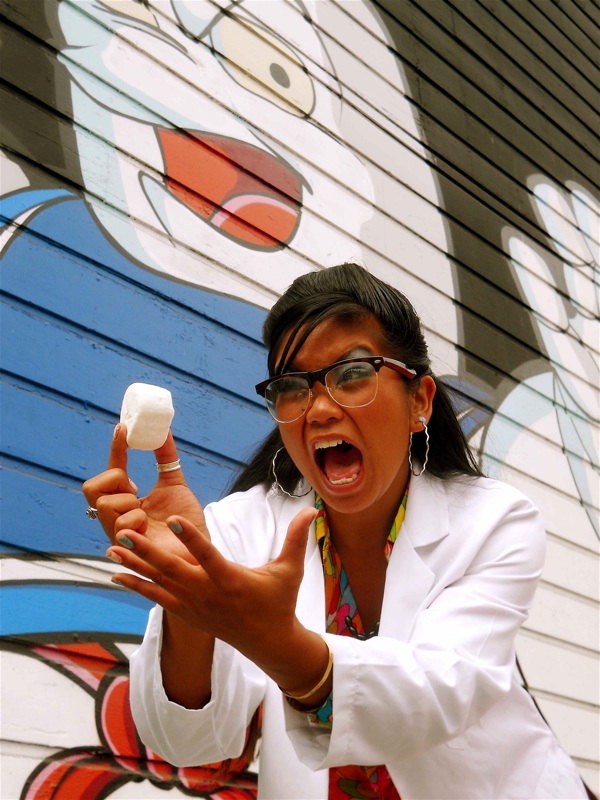
Although the pristine white rent-a-bus is only half full as we pull away from the EXIT Theatre, the morale is high. As we settle into our seats, an attractive young woman in a lab coat, Assistant J (Crystelle Reola) passes out index cards and pens and instructs us to write down our deepest desires as the grey-wigged Professor Murnau (V.N. Von Boom Boom) introduces herself as dead. As the bus noses along, en route to our secret destination, we are treated to video footage of a group of cute kids undergoing a test of their willpower ala the 1972 Stanford Marshmallow Experiment. We also receive marshmallows of our own, which some folks eat immediately, and others save for later.

We wind up on Treasure Island where we encounter the rest of the cast who, according to the script, were mysteriously instructed to show up at a secret location for undisclosed reasons. An unlikely trio, a wealthy businessman, a self-important socialite, and an aging radical, they fuss and squabble, their action framed by a bright string of distant city lights. Gradually they come to realize that they were all part of the original Stanford Marshmallow Experiment, and that the dead professor and the beguiling Assistant J. have brought them back together to “conclude” the experiment. The world, it seems, is divided into “Gobblers” and “Resisters”. The marshmallow still tucked warm in my pocket attests to my abilities in impulse control, but *what does it all mean?*

Written and directed by Patricia Miller, “Sugar High: The Four Marshmallows of the Apocalypse,” heralds Popcorn’s return to the (very) small stage and monthly social calendar. Originator and ringleader Hernan Cortez promises to roll out the bus rides every first Friday of the month, with an emphasis on unconventional performance structure and scenic site-specificity, or what he calls “the diesel-driven processional spirit of adventure.”

“The idea is to be short, sweet, and mobile,” he explains of the hit-and-run style of Popcorn’s “thea-tours”. “Most performance (can be) executed in less than five minutes, seven tops. Basically if you can’t communicate in a short time span, you can’t communicate.” But he emphasizes that almost any artistic discipline can be a part of Popcorn. “If anyone musician, comedian, actor, scientist , cook, burlesque , variety act  has had a hard time finding a stage to perform on, you may find a home here.”

As we pull back up to the EXIT Theatre, left to ponder the concepts communicated to us during our brief sojourn to a parallel universe, I realize I still have my marshmallow and look forward to my reward. Sadly it appears that the reward for not eating my marshmallow early is only the opportunity to eat it late. Fair enough, I suppose. Marshmallows don’t grow on trees. But I’m not entirely sure the experiential portion of the show can be called complete without the possibility to win a second. Maybe next time.

Committee approves CleanPowerSF over downtown opposition

51

The question of whether San Francisco creates a renewable energy program that offers an alternative to Pacific Gas & Electric got its first major hearing at City Hall today, with the business community claiming it’s too expensive and supporters arguing that the time has come for the city to address climate change and the long-term energy needs of city residents and businesses.

The Board of Supervisors Budget & Finance Committee voted 2-1 in favor creating CleanPowerSF, entering into a contract with Shell Energy Northern California to administer the program, and devoting $19.5 million from the San Francisco Public Utility Commission’s water fund to help launch it and buy clean power for city residents.

Sups. John Avalos and Jane Kim supported the project, while Sup. Carmen Chu was opposed. It now goes to the full Board of Supervisors next week, where it is expected to have progressive support and be opposed by the fiscal conservatives.

“I do think we will have the necessary majority to get this through,” the measure’s sponsor, Sup. David Campos, told us. But one open question is whether Mayor Ed Lee will veto a measure that his SFPUC appointees developed but his downtown allies are trying to kill, and if so, whether there are eight supervisors willing to override a veto.

But Campos noted that SFPUC officials testified today that CleanPowerSF is the only way they’ve identified to meet the city’s ambitious official goals for reducing greenhouse gas emissions, which call for a reduction of 20 percent below 1990 levels by the end of this year and an 80 percent reduction by 2050.

Supporters who testified today included environmentalists, progressive groups, and young people who cast addressing climate change as the defining struggle of their generation. “This, not to go overboard, is the most important vote you’ll ever do,” said the Sierra Club’s Arthur Feinstein.

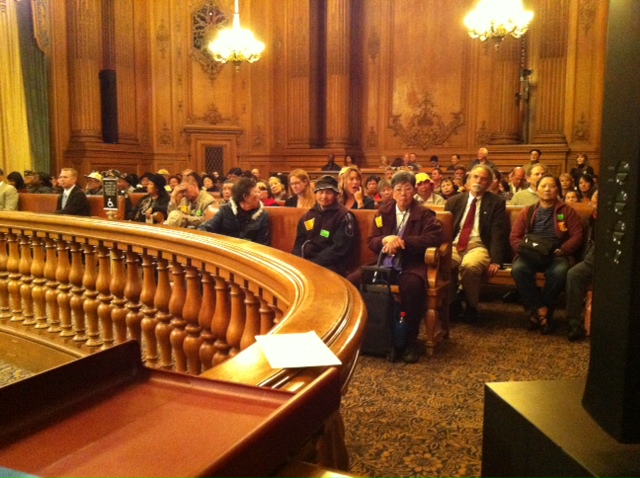
Those who spoke against the program included the usual array of downtown groups that have traditionally defended PG&E’s interests – including the Committee on Jobs, Golden Gate Restaurant Association, and Plan C – and they were joined by an unusually large number of elderly Asian individuals wearing stickers opposing the project.

“It’s a bad program that doesn’t meet even the basic elements of its original promise,” said Chris Wright, executive director of the Committee on Jobs, which PG&E has helped fund since its inception. Like most CleanPowerSF opponents, they have long opposed even the concept of community choice aggregation (CCA), the state law that allowed the city to create CleanPowerSF.

PG&E’s longtime support by local politicians has eroded in recent years because of its overkill campaigns against public power initiatives and supporters and its negligence in the deadly San Bruno pipeline explosion.

Even GGRA Executive Director Rob Black told the committee, “PG&E, a local company, candidly has its problems.” But he and other project opponents – and even a few supporters of the project – centered much of their opposition on the involvement of Shell, which has a bad reputation and environmental record, like almost every other multinational energy company.

“I have the same qualms about Shell that everyone else does,” said Katherine Roberts, who said that she nonetheless supports the project, calling it the only way for most San Franciscans to directly support the development of renewable energy sources. Shell was the sole bidder on a project that requires enormous financial wherewithal.

Campos calls the focus on Shell a diversionary tactic: “PG&E already buys energy from Shell. To the extent people don’t want Shell in the picture, Shell is already in the picture.”

Both the supervisors and the mayor will be under intense pressure to derail CleanPowerSF, with that campaign led by downtown groups and IBEW Local 1245, the union that represents PG&E workers. Sup. Scott Wiener, who says he’s still undecided, told us that his office was flooded with phone calls today, mostly in opposition to the project.

Localized Appreesh: Permanent Collection

0

Localized Appreesh is our thank-you column to the musicians that make the Bay. To be considered, contact emilysavage@sfbg.com.

What began life as the solo side project of Young Prisms’ Jason Hendardy is now a fully functioning local shoegaze operation. Permanent Collection, just last month released debut full-length Newly Wed Nearly Dead on San Francisco’s Loglady Records (another entity Hendardy is a part of).

Swathed in hazy guitars with on-point murmuring vocals, Newly Wed Nearly Dead is a package that should be presented to angsty teens upon puberty. Here, listen to this and then go back to study its influences from the late 1980s for a map of underground pop and the origins of shoegaze.

Also, doesn’t the below video for “It’s Alright” kind of weirdly remind you of a modern San Francisco version of Smashing Pumpkin’s video for “1979?” Just me? Either way, it’s a fun shoot, the band cruising through the rain-slick city, drinking 40s and stopping by local diners (It’s Tops?) for fried food and condiment slurping.

http://www.youtube.com/watch?v=mnTJ3U_hdeo

Clearly, the band’s off to a good start. Now go see it live. Permanent Collection plays the daytime street party, Rock Make this weekend and Milk Bar with Ringo Deathstarr next Wednesday, Sept. 19. But first, it gave us the rundown on a few favorites (MTV in ’93, California girls, free sunday barbecue at Molotovs) and the things it could live without (the San Francisco garage rock bubble).

Year and location of origin:
Late 2010 as a single person band, 2011 as a full band.

Band name origin: A name to make songs under.

Band motto: No one likes it when bands play more than 25 minutes.

Instrumentation: Jason – Guitar/vocals, Megan – Bass, Brenden – Guitar, Mike – Drums.

Description of sound in 10 words or less: 
Jason – some kind of pop songs.
Brenden – MTV in ’93.
Megan – drowning in the ocean.
Mike – Loud.

Most recent release: Newly Wed, Nearly Dead.

Best part about life as a Bay Area band:
Jason – Everyone is an artist.
Brenden – California girls.
Megan – Weather.
Mike – Learning about the awesome Bay Area bands that came before us.

Worst part about life as a Bay Area band:
Jason – Everyone is an artist
Brenden – The San Francisco garage rock bubble
Megan – Tourist
Mike – It’s getting hard to set up house shows in SF

First album ever purchased:
Jason – Please Hammer Don’t Hurt Em by MC Hammer on cassette from Tower Records.
Brenden – Nevermind by Nirvana.
Megan – Crazy Sexy Cool by TLC.
Mike – I think it was Green by REM.

Most recent album purchased/downloaded:

Jason – Beyond Living by Milk Music.
Brenden – Love Tara by Eric’s Trip.
Mike – S/T by Happy Noose.

Favorite local eatery and dish:
Jason – Tacos from La Taqueria on Mission.
Brenden – California Burrito and a Budweiser from Los Coyotes Taqueria.
Megan – Free sunday BBQ at Molotovs.
Mike – Pizza from Serrano’s.

http://www.youtube.com/watch?v=mnTJ3U_hdeo

Rock Make Street Festival with Permanent Collection, John Vanderslice, Exray’s, Burnt Ones, Metal Mother, and more
Sat/15, noon-7pm, $3-$5 donation
Treat and 18th Street, SF
www.rockmake.com

PG&E union mounts attack on Clean Power SF

31

The union that represents PG&E workers — and has opposed every single public-power initiative in modern San Francisco history — just launched an attack on Clean Power SF. And the union’s business representative is having a hard time explaining exactly why he’s working with PG&E to try to undermine this modest step toward public power.

Hunter Stern, with IBEW Local 1245, sent a press release out Sept. 11 announcing the start of a campaign to convince the supervisors not to approve the Clean Power SF plan. The line of attack: Shell Energy, which got the contract to supply sustainable energy to customers in the city, in competition with PG&E. The pitch:

San Francisco city government is considering a proposal to partner with Shell Energy of North America to inaugurate SF’s so-called “clean power” program. If the Board of Supervisors approves the proposal, San Francisco would pay millions to Shell, one of the most notorious environmental violators in business today.

Shell’s a pretty bad company. So is PG&E. So is just about everyone in the energy business. Not justifying Shell’s behavior, just noting: If you want a contractor to deliver electricty to San Francisco, you aren’t going to get a cool independent small business. You aren’t even going to get Google. These folks are evil, all of them.

Oh, and by the way: Shell Energy also sells power to PG&E (pdf). Stern’s boss has a contract similar to what the city is going to get. So the PG&E power we all pay for today is in part Shell power. And as Sup. David Campos points out, it wasn’t as if the city chose Shell over some better competitors: There was no other company out there anywhere in the world that responded to the city’s bid process and offered to work with Clean Power SF.

The key point here is that Clean Power SF is going to use Shell as a bridge — the private outfit will deliver power generated at renewable facililities to the city’s power operation, which will resell it to customers … for a while. The goal is to use the revenue stream from the sales of power to back bonds that will allow the city to build its own renewable energy system. Five, maybe ten years down the road, San Francisco will have solar generators on city property (including large swaths of Public Utilities Commission property in the East Bay), wind generators, maybe at some point tidal generators, and will be able to sell cheap, clean, local power to customers. Shell will be gone.

Let’s face it: this is a step on the path to creating a city-owned and city-run power system — that is, a step to eliminating PG&E as a player in San Francisco’s energy future. Public power will be cheaper and cleaner — and it’s going to take a while to get there. Which is why we need to start now.

PG&E knows this, too, and is fighting to block Clean Power SF, which comes before the board’s Budget and Finance Committee Sept. 12. Now IBEW is allied, as usual, with the giant company.

The Stern press release talks about how Clean Power SF will be expensive:

The average home can expect to see a rate increase of 77% over their current PG&E electricity generation rates. That comes out to an increase of over $200 per year.  The higher cost of power would eat up more and more of the City budget, forcing service reductions and costing San Francisco vitally needed jobs. Our local economy would take a multi-million dollar hit.

Actually, not true: The only people who will pay for Clean Power SF are the ones who want it. The idea is that a significant number of San Franciscans will be willing to pay a little more — maybe $10 a month — to help save the planet. The ones who want to stick with PG&E wil have every opportunity to do so. The city budget isn’t taking a hit — municipal services already use the city’s Hetch Hetchy hydropower. This doesn’t cost the city money or jobs.

It will, of course, hurt PG&E.

I called Hunter Stern to talk about all of this, and we had a long conversation. He was polite and answered all of my questions. Sort of.

He insisted that IBEW isn’t against community choice aggregation, that he’s only worried about the city budget and the impacts on ratepayers. And Shell. So we started going around in circles, like this:

Me: So you don’t oppose Clean Power SF?

Stern: We are not opposed to community choice aggregation. Just to this contract with Shell.

Me: I’m told Shell is the only contractor willing to fulfill this role.

Stern: That’s what I’m told, too.

Me: So if you support CCA, what should the city do?

Stern: Find somebody else.

Me: The city has made it clear there IS nobody else.

Stern: We should put this on hold and wait around until there is.

Me: Why is IBEW unhappy with Shell?

Stern: This is contracting out.

Me: Is Shell Energy a nonunion company?

Stern: They don’t generate power, they just buy and sell, so they don’t really have any employees who could be in IBEW.

Me: So what if they city can use this revenue to build its own renewables, with union labor?

Stern: We aren’t opposed to the city building its own renewables.

Me: But the idea here is to use the revenue stream from Clean Power SF to raise money for local renewables.

Stern: You don’t need revenue to build local renewables. Just creativity.

Me: But the city has a huge budget problem now. There’s no money to build local generation unless you have a revenue stream to bond against.

Stern: There are creative ways to do it.

Me: So you support CCA. You support building local renewables.Clean Power SF is a CCA program to build local renewables. Shell is the only company that answered the city’s call for bids for this project. You don’t have any labor issues with Shell. I don’t understand where you’re coming from.

Stern: I don’t disagree with your checklist.

Me: So why are you against this project?

Stern: We don’t think this is good for the city or for the ratepayers.

Me: But the ratepayers don’t have to be a part of it if they don’t want to.

Stern: I think the way the city is approaching that is a good strategy.

Round and round and round. It was making my head hurt. I wish I’d put it on tape so you could all listen.

I passed the press release along to Tyrone Jue at the SFPUC. He had a pretty clear response:

This attack is not surprising. IBEW is one of the largest unions at PG&E. They historically side with PG&E on all their issues. The fact is CleanPowerSF will not cost IBEW workers jobs. Ironically, the local renewable build out phase will be creating even more green union jobs. This happens while we weaning ourselves off dirty fossil fuel sources.San Franciscans want the choice to embrace a clean energy future. While PG&E shareholders stand to lose with CleanPowerSF, the consumer and environment stand to win.

He added:

Our ‘little creativity’ involves reinvesting revenue into aggressive energy efficiency and local renewable generation projects.  We’re simply not motivated to maximize profit at the expense of our customers or the environment.   Our common sense goal is to reinvest revenue into real projects that will reduce San Francisco’s carbon footprint, create local jobs, and build a sustainable energy future that is better for the environment and our customers.

Ugh. This is going to be a battle royal. I hope there are six votes on the board for Clean Power SF, which is imperfect but important. And then Mayor Lee will have to decide whether to side with his highly respected SFPUC general manager, Ed Harrington, who wants to make this happen, and PG&E, which doesn’t.

Oh, by the way: PG&E pays Willie Brown about $250,000 a year as a “legal retainer.” And I hear the mayor takes his phone calls.

Words and deeds

4

steve@sfbg.com

When Mayor Ed Lee appointed engineer and pro-development activist Rodrigo Santos to fill a vacant seat on the City College of San Francisco Board of Trustees, both men talked about the urgent need to save this troubled but vitally important institution.

“Our economic future is directly tied to the success of City College,” Lee said at a press conference, touting the school’s critical job-training role.

But when you cut through all the politics and hyperbole, the school’s biggest single problem is a lack of money — and the mayor and his new trustee aren’t doing much to help.

Neither Lee nor Santos have yet endorsed or publicly supported Proposition A, the $79-per-parcel tax that would stave off deep cuts to a district whose accreditation has been threatened over its anemic cash reserves and reluctance to scale back its course offerings (see “City College fights back,” July 17).

Nor have they appealed for support from their deep-pocketed allies in the business community, which City College supporters say should be doing more to support the district.

And while some say Lee is finally getting ready to endorse Prop. A, he’s done nothing to help the campaign.

“It’s a shame because [the mayor] has pledged to support City College,” John Rizzo, president of the Board of Trustees and a supervisorial candidate from District 5.

Lee also refused a request the trustees made last year to ease the more than $2.5 million in rent and fees that the district pays annually to the city. That’s a stark contrast to the city’s generous support of the San Francisco Unified School District, which gets an annual subsidy from the city of around $25 million, thanks to a ballot measure pushed by city officials of various ideological stripes.

“K-12 is important, but when we try to get help from the city, it falls on deaf ears and I don’t know why. Maybe little kids are cuter,” Rizzo told us.

Sup. Eric Mar said that dichotomy is a real problem, particularly given City College’s current challenges and the important role it plays in providing low-cost training to local workers. Mar has called for a hearing this month before the Joint City and School District Select Committee, which oversees SFUSD’s relationship with the city.

“I support stronger city support for City College,” Mar told us.

Asked about Lee’s unwillingness to help with City College’s fiscal situation, mayoral Press Secretary Christine Falvey said Lee has offered logistical support from city officials to help City College overcome the threats to its accreditation and has been carefully monitoring the situation, but she didn’t directly address why he has withheld financial support or endorsed Prop. A.

“The mayor has not taken a position on the parcel tax and is focusing his efforts on supporting the college’s need for serious fiscal and management changes and protecting its accreditation,” she told us by email Sept. 7. “The mayor knows it is more important than ever that the City support City College to make sure they get back on their feet for the sake of current and future City College students and for all San Francisco residents.”

But City College officials aren’t buying it. “Talk and nice words don’t mean anything anymore,” Rizzo said.

Other Prop. A supporters agree.

“The mayor needs to step up and support this,” Trustee Chris Jackson told the Guardian, arguing that most of the district’s problems stem from steadily declining financial support from the state. “We have a revenue problem.”

“It is the workforce training vehicle for the city,” said Rafael Mandelman, a candidate for trustee who has been actively supporting Prop. A. “Maybe now is the time when the city shouldn’t say no to that.”

Falvey responded by saying, “The City supports all of our public education institutions in some capacity. Each public education institution also pays the city for some of the required services it is provided.”

Other Prop. A supporters say they are hopeful that Lee may still come around. Alisa Messer, president of American Federation of Teachers Local 2121, which represents City College faculty, told us, “The mayor says he supports City College and we’re hoping he will support the measure soon.”

Gabriel Haaland, who has been working on the measure for SEIU Local 1021, also told us as we were going to press on Sept. 10, that Lee seems to be coming around: “From what I understand, the mayor is about to endorse it.”


PROMISE OF SUPPORT

When Lee appointed Santos — who has raised an unprecedented amount of money for his race, $113,153 as for July 1, mostly from the real estate and development interests he represents as president of Coalition for Responsible Growth — some argued that it would bring needed financial support for the district and the Prop. A campaign.

“He is expected to bring his allies in these fields into the fight to save City College, which faces a critical 2/3 vote on a parcel tax this November,” Tenderloin Housing Clinic Director Randy Shaw wrote on his Beyond Chron blog on Aug. 22, a day after telling the Guardian how the parcel tax was essential to City College’s future and Santos was uniquely positioned to support it.

But Santos, whose campaign didn’t return Guardian calls on the issue, hasn’t appeared at any Yes on A campaign events or offered any discernible support for the measure, whose supporters had only raised a little over $20,000 as of July 1. While there is little organized opposition to Prop. A, the fact that it needs approval by two-thirds of voters is a challenge that requires strong support.

Rizzo said Shaw’s argument doesn’t hold up. “It’s a nice theory,” he said, “but I haven’t seen evidence of that, and I haven’t seen Rodrigo at any Prop. A events.”

Santos hadn’t been involved with City College or educational issues before deciding to run for trustee, and he’s widely perceived as an ambitious politico setting himself up to run for the Board of Supervisors. At his press conference, Santos pledged to aggressively fight for City College.

“I join an institution that must be saved, and I’m absolutely committed to that goal,” Santos said.

Lee assembled a variety of representatives from “the city family” at his press conference, including trustees Natalie Berg and Anita Grier, Interim Chancellor Pamila Fisher, representatives from the Controller’s Office, Board of Education, Department of Children Youth and their Families, and the Mayor’s Budget Office.

“They, after all, need our help, need our support and they will not be able to accomplish it all by themselves,” said Lee, who pointedly didn’t say anything about the parcel tax at the event, even though he sang the praises of the district. “It empowers those economic sectors that we consider most valuable to our future, especially in the area of health care, hospitality, biotech, and now technology in general. We have become dependent on City College for their ability to prepare future workforces.”

Lee also sounded a tough love theme, saying “any improvement means a change from the status quo” and praising Santos as “someone who shares my vision of reform and will support the tough decisions ahead.”

Indeed, the board members face a number of tough decisions in the coming weeks, from whether to abdicate some of their authority to a special trustee empowered to make unilateral decisions about what programs to cut or campuses to close. The college is responding to a threat from the Accrediting Commission for Community and Junior Colleges to live within its means or lose its accreditation.

Santos didn’t mention Prop. A during the press conference that followed his swearing in, instead offering vague platitudes and promises that he’s willing to work hard and make tough decisions, while also making some puzzling statements about the district’s current situation.

“We must support the interim chancellor, Pamila Fisher,” he said. “Our primary duty is to ensure she enjoys the support and tools needed to implement difficult reforms. At the same time, we will hold her accountable, we will help her, we will challenge her.”

He appeared unaware that Fisher’s tenure ends in just a few weeks, well before any reforms could possibly be approved or implemented.

Some Prop. A supporters are hoping Santos will also challenge his allies in the business community to open their wallets and support both Prop. A and ongoing operations at City College.

“It would be great for the businesses to step up in a big way because they are really benefiting from our workforce training programs,” Messer said. “It’s clear to me the business community understands how important City College is to this city.”

Now, City College’s biggest supporters say it’s time for the city and the business community to put their money where their mouths are.

“City College certainly gives back to the people of San Francisco,” Rizzo said, “and it’s time for the city to give back to City College.”

Symptom of the universe

0

cheryl@sfbg.com

TRASH Get ready, Damon Packard fans — the mad genius behind underground cult sensations Reflections of Evil (2002) and SpaceDisco One (2007) unfurls his latest, Foxfur, at Other Cinema’s fall season kickoff (also on the bill: Marcy Saude with a slideshow on ufologist George Van Tassel, free champagne and VHS tapes, and more). I spoke with the Los Angeles-based Packard, who hopes to attend in person, ahead of the event.

San Francisco Bay Guardian How long did it take you to make Foxfur?

Damon Packard A little less than two years. I mean, it should have taken a week, because there were so few shooting days. It just took that long because it’s so difficult when you’re working with no money. I was adding little bits right up to the last minute [before the film’s July 21 premiere in SoCal]. Shots of cats, stuff like that.

SFBG Is that why you have something like six different women playing the lead role?

DP Yes. There were always these short windows of time when we had to shoot, and I had to get whoever was available. It became an experiment in the end, with the multiple actresses.

SFBG When people ask you what Foxfur is about, how do you explain it?

DP It’s difficult to sum it up. I would say it’s a UFO sci-fi fantasy, mostly about the Billy Meier Pleiadian contacts of the 1970s. That was the inspiration.

SFBG Many of your previous films made use of non-original footage, like Carpenters videos and old commercials, but Foxfur is all original, isn’t it?

DP Well, I do use music from Tangerine Dream scores: Firestarter, Wavelength (both 1984), things like that. Also some ambient tracks by Steve Roach and Michael Stearns.

SFBG In addition to Foxfur‘s Billy Meier references, the film also has actors portraying David Icke and Bob Lazar. Why conspiracy theorists?

DP Well, they’re part of the Foxfur universe — I like taking real-life characters and incorporating them into a story. Foxfur is obsessed with New Age elements — crystals, dolphins, the Pleiadians — which includes people like David Icke and Richard Hoagland. She’s an avid Coast to Coast AM listener. So yeah, it was supposed to be about her disillusionment. She’s so devastated when she discovers that it’s not real.

SFBG There’s a line in Foxfur about how “everyone is operating in their own vacuum of reality,” and scenes depicting people zoned out on their phones, unhelpful store clerks, and so on. Were those your 21st century frustrations coming out?

DP It happens a lot in real life — everywhere you go, you sort of run into that. Nobody knows anything about anything and nobody wants to help anyone. It’s a kind of apathetic, clueless, state of mind. Or if you need to call your bank, for example, you’re gonna get transferred to all these different worthless departments where people won’t be able to help you. There are always problems, errors, computer systems going down. You can’t get any answers to anything.

SFBG You’ve said in the past that you’re anti-CGI, and Foxfur (which contains the line “I hate Peter Jackson!”) suggests you still feel this way.

DP I do think there’s room for a good balance between practical and digital effects — there’s no reason not to use modern technology. For the most part, though, I hate it. It usually looks awful. I don’t know why other filmmakers, including veteran filmmakers, don’t see that.

I think practical effects are better and always will be, but there aren’t any companies set up to do practical effects anymore. It’s incredibly difficult to do and there aren’t any filmmakers pushing for it. But real explosions, real pyro, always looks better than any kind of digital explosion.

SFBG Is there any hope for the future of film? Or — since Foxfur takes place on the eve of the apocalypse — of humanity?

DP One of the themes of Foxfur is about the “dead zone” — in the film, it’s the time we’re in now, where everything is revolving in circles. It’s a time that wasn’t meant to exist. We’re in the end of the world already.

To me, it feels like music, fashion, it’s all reaching to the past. There’s no new movements going on. It’s a strange time. And movies feel that way too; it seems like everything’s been done already. Everything is an updated variation. I wanted Foxfur to be really pressing in that sense: that there’s no hope, there’s no point in anything. I can’t imagine there’s any future to cinema, or what movies will be like in even five to ten years from now. Are we going to see reboots of reboots? How many reboots can they keep going on with? If it’s not a reboot or a sequel, it’s a reboot or a sequel in disguise.

OTHER CINEMA

Sat/15, 8:30pm (reception at 8pm), $6

Artists’ Television Access

992 Valencia, SF

www.othercinema.com

Dream of the ’90s

5

emilysavage@sfbg.com

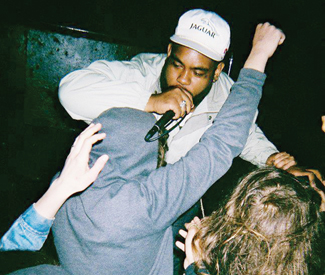
MUSIC By now, Antwon’s mug has probably nestled somewhere in your brain. It’s hard to take your eyes off him in the Brandon Tauszik-directed video for Antwon’s song “Helicopter,” slowly spitting rhymes over a screaming alarm of a beat, wandering Oakland, drinking on porches, pouring hot sauce on breakfast in between scenes from the classic film, Bullit (1968). Or as one media outlet breathlessly noted, “Malt liquor, Steve McQueen, and Sriracha!”

There he is in the Mission District, in the flesh, taking time out to chat with me; the San Jose-based rapper (who’s more often found in Oakland) travels to the city twice a week to work at vintage clothing shop New Jack City, an eye-popping gem of a store, stuffed with letterman’s jackets, button-downs, and gently worn Mickey Mouse sweatshirts, mostly plucked from the 1980s and ’90s.

Now here’s his sturdy frame — which, along with his voice, has inspired not-inaccurate comparisons to Biggie — in a warped movie clip run through a VHS player in yet another music video, this time looking straight out of a ’90s positive hip-hop video for his song “Living Every Dream.”

The track, produced by witch house term-coiner Pictureplane, is on Antwon’s newest mixtape, End of Earth. It’s his third since last September’s Fantasy Beds, which produced “Helicopter.”

“Living Every Dream,” the wobbly reworking of Suzanne Vega’s a capella cinematic earworm, “Tom’s Diner” (Christian Slater with the baboon heart!) is doubtless one of the standout tracks on End of Earth, an album frankly full of surprising turns.

“I had been wanting to sample that song to make a hip-hop song for really as long as I can remember, [since] high school maybe,” says Travis Egady a.k.a Pictureplane. “It is just a great tempo and loop. I wanted to hear Antwon’s voice on it.”

“He is really relatable… no bullshit artist,” Pictureplane says of Antwon. “[He’s] a rapper you want to be friends with. He is a hip-hop everyman.”

Another side of the everyman comes out on End of Earth‘s more playful “Diamond and Pearls,” produced by his longtime DJ Sex Play (formerly Bad Slorp), who produced all of Antwon’s December 2011 release, My Westside Horizon.

Other tracks on End of Earth such as “Laugh Now,” produced by Wounderaser, and Rpldghsts-produced “Cold Sweat” more recall the hardcore scene Antwon grew up in. A scene he credits with teaching him how to perform. “I learned how to play shows by going to hardcore shows,” he says from his post in New Jack City. There are indeed mosh pits and sweaty dogpiles at his shows, which is unexpected at traditional hip-hop club nights, though those lines seem to be blurring across the board.

In particular “Laugh Now” blurs genre and scene, with themes of isolation, anxiety, and personal demons, tethered by actual howls and dragged out vocals growling “La-a-a-gh now,” and lyrics like “This for the people that talk shit about you/But when they see you they walk around you.”

Antown grew up in Sunnyvale — his mom’s from the Philippines and his dad is from Fresno. In middle school he recorded mixtapes with a friend through a karaoke machine, and sold them at school.

He later performed as his own one-man noise act, warping sound on a SP-303 and running his vocals through distortion pedals. In 2009 he traveled to Philadelphia to join the punk band Leather, but he then returned to his roots. He had rapped before, but really got started again when he came back to California. “It really kind of like, took on a life of its own.”

While for now he’s still based in San Jose, he’s most often found in Oakland, where he hangs out with Trill Team 6 (a loose crew of Oakland DJs, producers, and musicians, including figurehead Mike Melero) who rifle through jackets at New Jack City as we talk. He points to the shoppers and says he’s a part of the East Bay scene, “because of those dudes.”

“I played shows in San Jose, but it was really boring,” he adds, eyes widening. “I like the energy more in Oakland. It feels like when I was younger and just threw parties and it was about having fun and shit. It seems like that same energy is in Oakland now.”

While he’s clearly more connected to the East Bay, some of his biggest and most memorable shows yet have been in San Francisco — he opened last month for Theophilus London at the Mezzanine (flashiest) and played in the sandy Sutro Baths caves earlier this summer (unforgettable) as part of the Ormolycka Cave Series.

“That was my favorite,” he says of the beach cave show. “It was real crazy.”

Up next is his first ever show with Pictureplane — the two will play a Future | Perfect and #Y3K-presented show at Public Works. (The first time they met in person was at a massive EDM fest in the Bay Area, says Pictureplane: “We walked around and took pictures of all the teenage ravers. We watched David Guetta along with like, 50 thousand people together”).

After that Public Works date, a Mission Creek show at the Uptown in Oakland with Cities Aviv, Friendzone, and Chippy Nonstop. But then he may go back underground, or at least, play less frequently in the Bay Area for a bit. His mug might be less on your radar for a hot minute, while he gathers tracks for another full-length, just him and DJ Sexplay this time around.

ANTWON

With Pictureplane, Chippy Nonstop

Fri/14, 9pm, $15-$20

Public Works

161 Erie, SF (415) 932-0955

www.publicsf.com


A studied approach

2

caitlin@sfbg.com

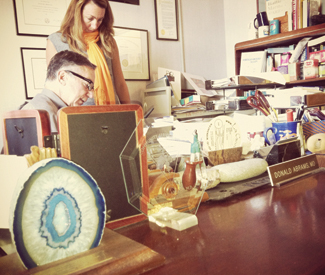
HERBWISE In 1992, Donald Abrams was in an Amsterdam hotel room watching the arrest of a volunteer at his hospital, SF General, on TV. 73-year old Mary Jane “Brownie Mary” Rathburn was being taken to jail for providing AIDS patients with THC-infused pastries.

The fact that Abrams, an oncologist who had turned his attention to HIV/AIDS in the midst of the virus’ attack on San Francisco, learned of Rathburn’s plight via international news was particularly biting, given the circumstances. He was in the Netherlands attending the International AIDS Conference, which was originally slated to be held in Boston. The conference had to be moved when it became apparent that many of its most important participants would be unable to attend — in 1987, the US Senate unanimously passed a ban that prevented HIV-positive people from getting into the country. (Kudos to the government, by the way, for lifting that ban. Ahem, last year.)

One can imagine the questions that arose for Abrams regarding his country’s commitment to fighting the disease.

So later, when Rick Doblin of the Multidisciplinary Association for Psychedelic Studies (MAPS) wrote to General’s AIDS program suggesting that “Brownie Mary’s institution” take the lead in researching the effect of cannabis on AIDS wasting syndrome, Abrams swung into action.

He was watching his community waste away from the disease. And he wasn’t happy with existing treatments. The data supporting AZT’s efficacy was faulty, he thought, a quick fix by a government under pressure to come up with a solution to an epidemic.

In the pre-Proposition 215 era, large numbers of AIDS patients were getting pot from illegal cannabis clubs to combat the nausea and vomiting caused by AIDS wasting syndrome. The substance had to be studied, reasoned Abrams.

But organizing investigations into a federally-controlled substance is no easy matter. Since marijuana is a Schedule I drug with no officially-acknowledged medicinal use, research facilities have to get the go-ahead from several different government agencies (which focus on preventing drug abuse, not finding ways to use them to medical advantage) to be able to run experiments that use the stuff.

The process was interminable, though finally Abrams managed to complete important experiments with the drug which suggest marijuana is a useful tool in counteracting painful nerve damage, and that vaporization is just as effective a way to consume THC as smoking, among other findings.

After taking a break from researching pot for years, Abrams has once again submitted grant proposals for a few cannabis-related studies. He’s one half of a pot power couple — his husband, cannabis activist Clint Werner, is the author of 2011’s Marijuana: Gateway to Health and suggested at a June Commonwealth Club lecture that cannabis be as prevalent as ice packs in NFL locker rooms, so useful is the drug in ameliorating brain damage.

Of course, regardless of whether Abrams — who has since stepped down from AIDS research to focus on oncology — secures funding and permission for these new studies, and regardless of his findings thereafter, he hardly thinks his work will convince the government to legalize marijuana. He’s been a little disappointed with our elected officials lack of “backbone” in standing up to federal agencies that are making it harder for his older patients to access dispensaries.

Because see, the War on Drugs isn’t about the drugs at all, but politics. The man who has been researching the power of pot for decades is, sadly, resigned to the fact. Says Abrams one Thursday afternoon, sitting in his office in the SF General oncology ward: “It’s clear to me after doing this for 15 years that science is not driving the train.”

Even if the general public is of the 215-supporting sort — after all, he quips, “more people [in California] voted for marijuana than Meg Whitman.”

Dark and stormy

1

arts@sfbg.com

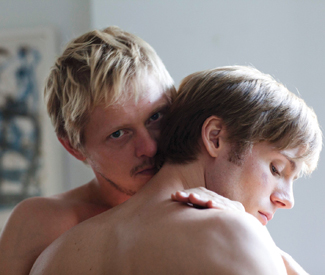
FILM In Ira Sachs’ intensely discomfiting Keep the Lights On, Erik (Thure Lindhardt) is a Danish documentarian in late-1990s New York City, prodding his career along, spending time with friends, having casual sex with strangers. One of the latter is Paul (Zachary Booth), a publishing-house lawyer who first tells him “I have a girlfriend, so don’t get your hopes up.” Yet some time later they’ve become a tentative couple, then a live-in one.

Erik is patient and easygoing, but Paul has secrets and problems all the more difficult to deal with because he denies, hides, or lies about them. He disappears for days at a time, then turns up wrecked. Crack is just the addiction we see; there are evidently others. Erik tries everything — group interventions, rehab, endless attempts at frank conversation that invariably turn into Paul accusing him of being unreasonable — but nothing sticks. On some level, Paul doesn’t want to be saved; drugs are like a bad old boyfriend he can’t help keep going back to, when not crawling back to the current one for forgiveness.

It takes Erik a decade to come to terms with, and extricate himself from, a relationship in which all his best efforts only bring torment, grief, and exasperation. “I have no idea who you are, I have no idea what you’re doing,” he cries during one argument. “I don’t know why you’re focusing on me,” Paul snaps, instinctively trying to shift the blame. Near the end, he questions out loud if Erik ever loved him — the fact that he isn’t doing what Paul wants that very second somehow negating years of sacrifice and worry that could only have been sustained by love.

Keep the Lights On is the kind of excellent movie a lot of people don’t like: it’s not just depressing in the sense of having downbeat, difficult subject matter, it actually sets out to be unpleasant and succeeds. There is a point to that. Leaping forward a couple years at a time, leaving us to figure out how things have shifted in the interim, Sachs’ script (co-written with Mauricio Zacharias) induces in the viewer the disoriented helplessness of dealing with a loved one who can’t or won’t tell the full truth — it’s his best defense.

The film’s somewhat squirm-inducing intimacy comes naturally, as the writer-director lived this story, however much it’s been tweaked into fictive dramatic form. “Paul” is a stand-in for a long-term boyfriend who wrestled with similar demons while somehow sustaining a high-profile career in the publishing industry. (He’s also since written a couple of memoirs about his addiction struggles, though despite that public self-exposure, the film still “created a wedge” between them, according to Sachs.)

“I think all of my films are autobiographical — I only feel excited to tell a story when I’ve lived an experience and have some analytical understanding of what took place,” Sachs said while in San Francisco for the movie’s screening at Frameline 2012.

Still, Lights is clearly a more jarringly personal project than his unsettling coming-out tale debut The Delta (1996) or the Sundance prize winner Forty Shades of Blue (2005), let alone 1950s heterosexual infidelity seriocomedy Married Life (2007). Nonetheless he now “sees them all as the same film — they’re all about people arriving at a point where they’re comfortable with who they are.”

Saying that he himself was “uncomfortable with who I [was, up] until the events in this film,” he now lives “an open life” with husband Boris Torres, a painter whose work is seen under the opening titles. “That’s a consequence of work I’ve done on my own,” Sachs said. “I really feel that secrets almost killed me. It’s very empowering to claim your secrets. I intended to make a film about shame and to do so shamelessly.”

In some ways, “this film is less about addiction than obsession, which is a very comfortable place for many of us to be — it cuts out the rest of the world and narrows the challenges. It’s very addicting to engage in this kind of relationship.” Some nonexploitative but explicit sexual content made Lights hard to cast (one major agency told him not a single one of their actors were “available”), but wound up with bilingual rising star Lindhardt. It’s an extraordinary performance that carries the whole film; by contrast Booth, to the frustration of some reviewers, plays a character deliberately kept somewhat furtive and unknowable.

While making Keep the Lights On afforded Sachs a cathartic way to “free myself from inhibitions around the story itself,” the consequence has been that “in the aftermath of these events I chose to live an honest life, and the result is that the dishonest and illicit is less interesting to me. So having made four films about deceit within a romantic relationship, that is no longer how I live or a story I’m interested in telling.”

He says his next project will be “about a 30-year relationship based on love and complexity between two men who decide to get married at ages 60 and 70.” Lights also pays homage to gay elders: Erik is working on a documentary about real-life photographer and filmmaker Avery Willard (whose still little-known work comprises “a visual anthropology of gay life in New York from the ’40s to the ’90s”), and the score consists of slippery songs by Arthur Russell, the enigmatic cult cellist-composer who died of AIDS 20 years ago. *


KEEP THE LIGHTS ON opens Fri/14 in Bay Area theaters.

All in the game

0

arts@sfbg.com

FILM How might filmmaker Nicholas Jarecki measure the success of Arbitrage, his debut feature about a hedge fund honcho’s attempt to sell his way out of desperate circumstances? Perhaps a gauge can be found in the response the writer-director received at a recent East Hampton screening for a roomful of magnates such as John Paulson, figures who provided some of the initial inspiration for Arbitrage.

"I think the net worth of the room was somewhere around $20 or $30 billion," recalls Jarecki on recent visit to San Francisco. "They came up to me after the screening and said, ‘You know, we really liked the film and we just have to tell you — it made us uneasy from beginning to end. Really, what you put up there is our nightmare.’ I said, ‘Well, thank you.’"

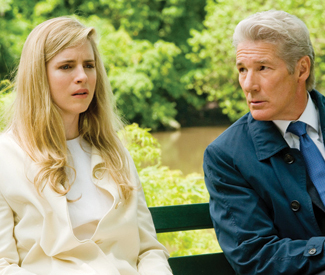
The boyish Jarecki looks as pleased as a high-roller who has just bought low and sold high; he’s crafted a capitalist all-American horror story of sorts, for billionaires as well as the fascinated and repulsed 99 percent. As Arbitrage opens, its slick protagonist, Robert Miller (Richard Gere), is trying to close the sale of his life, on his 60th birthday: the purchase of his company by a banking goliath. The trick is completing the deal before his fraud, involving hundreds of millions of dollars, is uncovered, though the whip-smart daughter who works for him (Brit Marling) might soon be onto him.

Meanwhile, Miller’s gaming his personal affairs as well, juggling time between a model wife (Susan Sarandon) and a Gallic gallerist mistress (Laetitia Casta), when sudden-death circumstances threaten to destroy everything, and the power broker’s livelihood — and very existence — ends up in the hands of a young man (Nate Parker) with ambitions of his own.

It’s a realm that Jarecki is all too familiar with. Though like brothers Andrew (2003’s Capturing the Friedmans) and Eugene (2005’s Why We Fight), Jarecki’s first love is documentaries (his first film, 2006’s The Outsider, covered auteur James Toback), his family is steeped in the business world. Both his parents were commodities traders, and Jarecki, who describes himself as a "computer geek in my youth," once owned his own web development firm and internet access provider, among other ventures. Nonetheless, the filmmaker —who graduated from New York University film school at 19, served as a technical adviser on the 1995 film Hackers, and co-wrote the script 2008’s The Informers — continued to hear the siren call of feature film.

"I had knowledge of venture capital and the markets, but at the same time it was, what’s a credit default? What is this?" he remembers of the time he started writing Arbitrage‘s script in 2008. Bernard Madoff interested him less than "someone who was a good guy but who became corrupted along the way and started to believe in his own invincibility and his own press releases."

Jarecki found his "King Lear-esque" nouveau robber baron in Richard Gere, after convincing the actor to take a chance on a first-time director. He ended up digging in deep with Gere and the rest of the cast during a month of rehearsals, research, and rewrites. "I was doing my own mad arbitrage and putting the film together — the voluminous amounts of documents they make you sign, and I borrowed many millions of dollars from a major bank," Jarecki explains. "So it was rehearsing in one room and calling the wire desk on the other."

As a result, the moviemaker found himself understanding Miller’s part only too well: "When I was writing and the characters had to do something, the person I modeled the decision on was myself. What would I do? And the more surprising and frightening the answers, the more I felt I was onto something."

There’s a memorable moment when Miller’s daughter confronts him on his transgressions and he explains, in a moment of startling, almost lamely ineffectual self-consciousness, that he’s a patriarch simply playing his part. Still, Miller doesn’t believe it’s the end of days for those men gathering in East Hampton screening rooms.

"There was a joke I had with the distributor, ‘Will this still be relevant when it comes out?’" he muses. "Yet every week there’s a new revelation of a new fraud: MF Global losing billions of dollars in customer funds in unauthorized trading. A Knight Financial computer glitch and they lose $420 million — I think that’s the exact number lost in the movie — and it just happened two weeks ago. And now it’s, ‘Where’s my morning coffee?’"


ARBITRAGE opens Fri/14 in Bay Area theaters.

East Bay buzz

0

caitlin@sfbg.com

BEER I will not re-enter the one-sided debate of whether the East Bay is cooler than San Francisco (we covered that in our much hullabalooed April 11 cover story, helpfully titled “San Francisco’s loss”) But I will tell you this: one side of the Bay Bridge has less hills. Less hills being a boon for the drunk biker in us all.

If that is not enough motivation to embark upon a self-guided cycling tour of the East Bay beer scene, then I don’t know what is. Let me tell you about a recent, successfully-completed jaunt from which my team and I emerged with double IPA paunches, and a newfound appreciation for the San Francisco Bay Trail (of which you can find maps here: baytrail.abag.ca.gov).

EL CERRITO

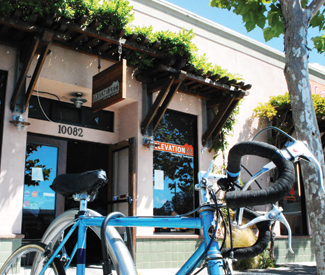
Hook up your handlebars for a pleasant BART ride out to this north-of-Berkeley, family-friendly area, where a cruise of mere blocks will take you to the airy brewpub of Elevation 66 (10082 San Pablo, El Cerrito. (510) 525-4800, www.elevation66.com). Stainless steel fermentation tanks make for tasty eye candy from the bar, where we wound up setting our messenger bags and ordering a sampler flight of seven beers. For such a tiny operation, Elevation 66 offers a swath of pours: on tap the day we visited were seven of its in-house brews, including a heavenly Contra Costa kölsch, the perfect light beverage with which to begin a day of exercising and drinking, and five guest pours, of which we tried a bubbly, sweet Two Rivers blood orange cider. Important matters settled, we tackled the extensive food menu, which stocks homemade potato chips, a Peruvian causa made with poached prawns, avocados, Yukon potatoes, and habanero, and more.

Now, leave the brewery (I know, but there’s lots to see.) Take the beautiful, wetlands-lined Bay Trail south, feeling free to jump off at the overpass when you see the Golden Gate Fields (1100 Eastshore Frontage Road, Berk. (510) 559-7300, www.goldengatefields.com). If it’s Sunday, all the better — $1 entry, $1 beers, $1 hot dogs.

BERKELEY

Note the USDA community garden that will zip by on your right (at 800 Buchanan, Berk.) as you emerge from the Bay Trail into the Albany-Berkeley area, home to some of the largest breweries in the East Bay, besides of course the mega-fermenters at the Budweiser factory in Fairfield.

Your first stop will be at Pyramid Alehouse (91 Gillman, Berk. (510) 528-9880, www.pyramidbrew.com), and though you may find the quality of some of the beers at this Seattle-born chain brewery to be just about what you’d expect from a space tinged with notes of T.G.I. Friday’s, you can make a game of counting the pyramids incorporated into the décor for extra stimulation. If you dare, embark upon a 40-minute free tour given every day at 4pm by a bartender who may or may not include gems like: “if you like metaphors, you’ll love this one.” At any rate, it’s a good primer for people who have no idea how beer is made and it includes tons of free booze at the end. Check out Trumer Pils Braueri (1404 Fourth St., Berk. (510) 526-1160, www.trumer-international.com) a few blocks away for another free tour that runs daily at 3:45pm.

Head back to the Bay Trail, unless you feel like a trip further inland to Berkeley’s two fun brewpubs Jupiter (2181 Shattuck, Berk. (510) 843-8277, www.jupiterbeer.com) and Triple Rock Brewery (1920 Shattuck, Berk. (510) 843-2739, www.triplerock.com). Between Berkeley and Oakland you have three lovely miles of trail ride, and if I’m not mistaken we are in the thick of blackberry season, which means the indigo clumps you’ll see on your right just past Sea Breeze Market and Deli (598 University, Berk.) are ripe for picking.

OAKLAND

You could while away a day within just a few blocks in downtown Oakland, such a prime sitting-out-with-a-microbrew kinda neighborhood it is.

In terms of places that make their own brew, there is none better than the 1890s warehouse building that houses Linden Street Brewery (95 Linden, SF. (510) 812-1264, www.lindenbeer.com), the little brewery that could. There’s only a few meters in between tank and tap here, and on weekdays you can sit in the joint’s tap room and suck down golden pints of its Urban Peoples’ Common Lager, while hearing the story from the bartender of how it came to the forefront of Oakland’s craft beer scene.

You may not even guess, right off the bat, that Pacific Coast Brewing Company (906 Washington, Oakl. (510) 836-2739, www.pacificcoastbrewing.com) is brewing the suds that wind up in your $9/five beer sampler — but it is. The charming brick pub has all the fried pickles one has come to expect from a solid bar menu, and a latticed patio that provides a little privacy from the Oakland cityscape. Out front, you can park your steed and walk it out — the rest of your stops are within stumbling distance, unless you’re trying to really make a day of it and head south to Drake’s Brewing (1933 Davis, San Leandro. (510) 568-2739, www.drinkdrakes.com) and its tucked-away pint parlor.

You may just have saved the best for last. The Trappist (460 Eighth St., Oakl. (510) 238-8900, www.thetrappist.com) and Beer Revolution (464 Third St., SF. (510) 452-2337, www.beer-revolution.com) are two of my favorite Bay beer bars, regardless of area code. Both have superlative selection and cute, sunny patios, but considerably different vibes.

The Trappist is a classy, under-lit place with two bars and an elegant rotating list of beers at each, some local and some from far-flung locales. On our visit, we tried a trio of superb sour beers, including the transcendent red-brown Belgian Rodenbach Grand Cru. Trappist’s food menu is full of elegantly spare, small plates packed with big flavors, like a recent Mahon Reserva cheese platter with truffled almonds and shisito peppers. I’m no meat eater, but I heard rave reviews of the comparatively proletarian Trappist dog, which was studded with bacon and seemed an apt pairing for a beer that may out-class you.

Beer Revolution, as the name would imply, is a populist place — local brewers regularly roll through to share their fermentation philosophies. Though their draft menu is impressively large, the beauty of this place is variety. Inside the bar there is a vast refrigerator land where bottles await for your to-go/for-here fancy. We vote for-here, because you’ll want to savor every drop of your East Bay booze cruise.

Pi in the sky, fig leaf optional

1

arts@sfbg.com

THEATER Aficionados of the San Francisco Fringe Festival, now in its 21st year, know that sorting out the clowns, puppets, relationships, rock operas, and foreskin on display or under consideration across 12 days and roughly 40 shows can be a real crapshoot. But that’s the deal — and at least part of the appeal — with a curator-free, lottery-based program in which anybody with an act and the luck of the draw can set up shop for an hour on one of the handful of stages in operation at the Exit Theatre complex and participating venues.

Invariably ranging widely across (to borrow a title from this year’s lineup) "the good, the bad, and the stupid," the whole usually proves greater than the sum of the parts, private or otherwise. There’s just no event quite like the Fringe. And a really good show can make up for a lot of boredom and horrified silence.

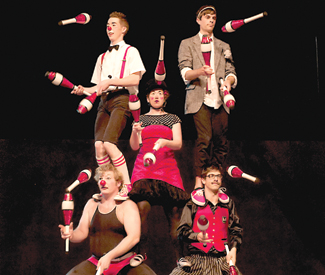
Take, for instance, that title just borrowed above: the Pi Clowns’ latest show may not be perfect in every respect, but you can’t help respecting their perfect portrayal of our general fallibility. The Bay Area–based six-clown physical comedy troupe wowed in 2008 at their Fringe debut (After-Party), and they wow again in The Good, the Bad, and the Stupid, with expert chops, serious smarts, and an undiminished instinct for the ridiculous. Highlights of said lowlights include a horse race on broomstick stallions, a feast of acrobatic juggling, and another delicious slo-mo melee. (Meanwhile, on the significantly darker end of the clown spectrum, there’s Naked Empire Bouffon Company, raucous devotees of the grotesque, whose You Killed Hamlet, or Guilty Creatures Sitting at a Play was not caught in time for review but remains on the must-see list.)

Moving right down the alphabet from clowns, one will find several Christian-themed plays among this year’s offerings. Granted, most of these involve an ironic or satirical approach — like San Francisco–based David Caggiano’s deft and witty solo play, Jurassic Ark, which I caught in an earlier version elsewhere and which concerns an evangelical preacher Hollywood-bound with an idea for a major motion picture selling Creationism to the heathen evolution-swilling masses.

Then there’s Bible-Not: Stories for Grown Ups, which sounds like it sports a subversive edge to its advertised retellings of popular Bible stories, from Adam and Eve to Noah and the Flood. In fact, the play, written by retired journalist and clergyman Charley Lerrigo, is a lifeless resuscitation of ye old adages in a flatfooted comedic-dramatic vein, wherein, for instance, God appears to Noah as a beautiful woman in a silk gown — but still carries out the genocidal flood because she loves people. The last of the proselytizing play’s four dreary episodes (bridged by overtly thoughtful narration from a "showgirl" played by Karen Biscopink) is the second coming of Christ (Tristan Cunningham) to a San Francisco pastor named Bob (Charlie Shoemaker), who is naturally converted from disbelief to rapturous wonder in the face of the ingenuous, miracle-wielding stranger. Overall decently acted by a dutiful cast, the preachy play nevertheless reaches only the choir at best.

In the realm of puppetry, The Collector, by San Diego’s Animal Cracker Conspiracy, begins promisingly, with delicately designed maquette sets featuring a humble debt collector overseen by a tyrannical monkey-manager, simultaneous video projections and animations on a screen above, and a dreamy, clinking, wistful musical soundscape. But the wordless plot is sometimes challenging to decipher, the pace sluggish, and the action repetitive enough that, by the end, you realize it’s just a nifty installation that thought it was a play.

Meanwhile, Legacy of the Tiger Mother, by Las Vegas–based Angela Chan and Michael Manley, manages to pack a very clear, funny, and compellingly heartfelt storyline about intergenerational tensions between a Chinese American mother and daughter succinctly into a very agreeable hour — with music and witty lyrics for good measure. Chan’s semi-autobiographical musical may have formulaic elements, but they’re executed with winning skill and verve by a smart team fronted by the fine duo of Satomi Hofmann and Lynn Craig, accompanied by Chan on a piano that segues slyly between erratic keyboard exercises, controlled classical recitals, and expressive Broadway-style outbursts. (Meanwhile, on the darker and definitely weirder end of the cabaret spectrum, there’s SF’s Dan Carbone and Andrew Goldfarb in The Wounded Stag & Other Cloven-Footed Tales of Enchantment, whose archness is so arch as to be uncomfortably sincere.)

915 Cayuga’s SF Fringe Fest Extravaganza is a more promising title than show, but the radio-style variety piece, recorded as a podcast before its "live" Fringe audience, has a low-key charm despite often clunky or corny writing thanks to a fairly personable and adroit cast.

Among the more misleading titles is Aerial Allusions — at least if, like me, you picture some serious acrobatic work happening on and/or over the stage at some point. True, there’s a little able and lithesome wriggling around a ladder near the outset, but this meandering and semi-inept duet by a Canadian couple is lopsided in talent and altogether rambling. It took only a few seconds for one gentleman at the back to clear a path through some empty chairs and burst out of the theater. My date followed him a few minutes later. *

SAN FRANCISCO FRINGE FESTIVAL

Through Sun/16, most shows $10 or less

Exit Theatreplex

156 Eddy, SF

www.sffringe.org

CEQA: We Need It

0

OPINION Big business interests in California are waging a full-scale assault on the California Environmental Quality Act, known as CEQA, which has been loudly blamed for the slowdown in new construction in recent years.

But sluggish construction has been problematic nationwide and is far beyond CEQA’s reach. The exaggerated attacks on CEQA parallel extreme Tea Party politics, where facts don’t seem to matter and well-funded voices drown out reason. Attackers unfairly scapegoat a law that instead deserves great credit for far-reaching good.

The truth is that while environmental review takes time and costs money, the CEQA process usually moves quickly. In terms of litigation, a recent report recounted 11 CEQA lawsuits filed against San Francisco last year, while many hundreds of projects were approved in the city without CEQA challenges. A Natural Resources Defense Council study in Los Angeles similarly found 18 cases filed after 1182 approvals. A more in-depth analysis by the Public Policy Institute of California found that only one CEQA lawsuit is filed per 354 projects, a fraction of a percent.

So — what good does CEQA do? It assures citizens that they can participate in identifying and solving environmental problems alongside self–interested project applicants and City Hall insiders. The concept is simple and results in tangible benefits to California’s environment via better, smarter projects. The Planning and Conservation League, in a publication aptly entitled “Everyday Heroes,” assembled more than 70 examples of CEQA success. If space permitted I could describe scores of happy endings attributable to CEQA review that I have personally seen and celebrated.

CEQA assures environmental quality for present and future generations. Californians count on being informed about projects with environmental impacts — before their approval. In every California community, citizens organize and volunteer their time to offer comments and problem-solving suggestions. Applicants in turn know that their projects’ environmental impacts must be both disclosed and mitigated.

Attempts to weaken CEQA have also been around for decades. They always fail as Californians continue to champion their unique neighborhoods, cities, farmland, beaches, and wilderness areas. Most developers, even if preferring that their own projects not be subjected to CEQA review, do not want the law waived for all other projects.

Still, the national economic slowdown has given new life to the overblown claims of CEQA critics. A few weeks ago in Sacramento, a last-minute “gut and amend” bill would have taken away key protections. The public responded and the effort, again, failed. But the push to gut CEQA continues in cynical barrage.

What should happen? While well-orchestrated attacks on CEQA in the press and in Sacramento are largely opportunistic and misdirected, there is room for improvement. Over the past five years CEQA has been revised to prevent alleged abuses — including a $10,000 penalty for anyone filing a frivolous suit — and to streamline environmental review. Other positive changes are now being discussed among experts — without sacrificing citizen participation or substantial environmental protections.

Any CEQA amendments should occur only after a broad-based public process with full review by the Senate and Assembly Committees on Natural Resources.

Surely we do not want to regress to back-room planning and development without accountability. Benefiting all Californians in the long run, this profound law must itself be protected. As we continue to welcome millions to our beautiful state, we need CEQA’s protections more than ever.

Attorney Susan Brandt-Hawley represents public-interest environmental preservation groups statewide. In the last 15 years her work has been recognized with state and national awards and her cases have contributed to CEQA precedent in all six districts of the California Court of Appeal and in the Supreme Court.

Still soaring

3

yael@sfbg.com

“I was 18 years old the first time they locked me up in a psych ward.”

So begins “The Bipolar World,” an article published in the Bay Guardian‘s literature section 10 years ago, on September 18, 2002. The writer, Sascha Altman DuBrul, tells the story of his life. He’d been arrested walking on New York subway tracks after the year he first experienced what would later be diagnosed as bipolar disorder.

In the article, DuBrul wrote that the ideas shooting through his head were like a pinball game and he was convinced the radio was talking to him and that the CIA was recording his thoughts via secret neurotransmitters under his skin. But when he was diagnosed and told that he would need to take daily pills for the rest of his life, he wrote“I wasn’t convinced, to say the least, that gulping down a handful of pills every day would make me sane.”

“I think it’s really about time we start carving some more of the middle ground with stories from outside the mainstream and creating a new language for ourselves that reflects all the complexity and brilliance that we hold inside,” the article concludes.

DuBrul was right—the time was ripe.

“Within a couple of days of it being out on the street, I got about 40 emails from strangers,” DuBrul told me. “And it wasn’t just one or two line emails that were,’ hey, great article.’ It was people pouring out their stories to me.”

One of those people was Oakland artist Jacks McNamara, and the two instantly connected.

“You know the myth of Icarus, right? It’s the boy who flies too close to the sun. It’s from Greek mythology. So we were two people who had been diagnosed with bipolar disorder, and we were like, instead of seeing ourselves as diseased or disordered, we see ourselves as having dangerous gifts, like having wings,” DuBrul said. “And so, we put up a website that said, ‘The Icarus Project, navigating the space between brilliance and madness.'”

The Icarus Project began as a website, whose forums quickly filled with discussions as more people shared their stories and connected. Today, The Icarus Project has published three books, including a guide to starting support groups, dozens of which have sprung up around the country. More than 14,000 people have registered on the website.

The Bay Area-born radical mental health project celebrates its 10 year anniversary this year. An art show, concerts, spoken word, film screening, and skill share will take place this coming week. “Icaristas” will do what they do best: share their stories in language that feels right, building connections and community.

“When Sascha and I started it, we’d never seen anything written about bipolar that we could relate to. Everything was sterile and clinical and very mainstream, and didn’t really situate these sort of struggles within a larger political context,” McNamara recalls.

Now, there are Icarus Project books translated into six languages, and a huge collection of writing and art in what one zine editor, Jonah Bossewitch, calls the Icarus “sphere of influence and inspiration.”

“Our lives are made of fleeting moments, and to create documentation — whether in print or online or on canvas — is to make a fleeting moment into something to be shared. The Icarus Project and others who share similar ideas of liberation need to live our lives of beautiful fleeting moments, but also need to create documentation so that we can be heard,” said Laura-Marie Taylor, creator of Functionally Ill, an Icarus-inspired mental health zine now in its 13th edition.

We’re in competition with the loud voices of psychiatry, advertising, governments, and other forces that want to tell us who we are. We need to broadcast our stories far and wide in order to counteract the forces that want to tell us who we are,” Taylor said.

That was also the view of Ken Paul Rosenthal, whose film, Crooked Beauty, will be screened at the 10-year anniversary celebration.

“She who does not write is written upon,” Rosenthal told me. “Society’s narratives will overwrite your authentic self.”

“I think more than anything, Icarus is about hearing stories,” he said.

And that story telling is intimately connected to the building of community and networks.

Rosenthal first got acquainted with Icarus when he read a line Mcnamara had written: “The world seemed to hit me so much harder and fill me so much fuller than anyone else I knew. Slanted sunlight could make me dizzy with its beauty and witnessing unkindness filled me with physical pain.”

“We really wanted to create materials that were beautiful and inspiring and that people actually wanted to read,” said McNamara. “And that they could relate to if they came from more of a subcultural perspective or just had suspicions about the mental health industry and the ways that it diagnoses people and treats them. “

Icarus concepts also spread through means other than their support groups and publications.

“A lot of long-term Icarus members have gone on to become social workers, or to become therapists, or in various ways to have careers that are based in mental health and are bringing alternative perspectives,” McNamara said.

One such Icarista is Kathy Rose. She met McNamara at a screening of Crooked Beauty in 2010, and began participating in support groups and volunteering with Icarus. A teacher at Five Keys Charter School, which operates in San Francisco county jails, Rose said that the understanding and language of mental health she got from Icarus have been useful in her classroom.

“I see how many of my students are struggling with their own mental health, how they are treated, and how so much is related to the trauma they’ve experienced in their lives and lack of support,” said Rose. She said that she has used Icarus materials in the classroom and screened Crooked Beauty.

Those materials explore questions of over-medication and independence and autonomy in decision-making and question the role of institutions like psychiatric hospitals and prisons.

“Institutionalization in prisons and mental hospitals isn’t helping anyone and isn’t getting us anywhere,” Rose said.

The Icarus Project isn’t the first effort to resist the mental health establishment. The Mental Patients Liberation Front, and the larger Psychiatric Survivors movement grew out of civil rights efforts of the 1960s and 70s, as patients demanded an end to coerced and forced psychiatric interventions like electroshock. Today, Mind Freedom International and other groups continue that pressure; most recently, hundreds protested an American Psychiatric Associations meeting discussing new definitions for the Diagnostic and Statistical Manual of Mental Disorders Fifth Edition on May 5.

The Icarus Project is also intimately connected to activist movements, but plays a unique role.

“There’s support networks that get started in activist communities, but there’s a lot of ways that people have a really hard time being supportive of each other if they haven’t done the work themselves to be able to be supportive of themselves,” said DuBrul. “What happens in activist communities is that people burn out, which is kind of the ultimate Icarus project. I mean, that’s the Icarus myth.”

He called the Occupy movement, with its distinctive tent cities packed with people, many of whom were hurting financially and emotionally, a “test case” for implementing Icarus concepts.

In fact, Occupy has led to yet another Icarus-inspired book, Mindful Occupation, due to be released this year. The book “aims to address the need for attention to mental health, healing, and emotional first aid within Occupy and other movement groups.”

Mental health professionals, along with other non-professionals who were a part of Occupy Wall Street, formed the Support working group to intervene when people seemed to be in crisis and patrol the park at night. But Jonah Bossewitch, a member of the working group and one of the editors of Mindful Occupation, said that the broad critique of society and authority present in most of Occupy didn’t always extend to Support.

“Nobody was going to go to the cops after people got into a fight. Yet people were getting forced treatment and psych evaluations, ” Bossewitch said. “Folks are ready to critique the outside world — capitalism, banks — but it’s way harder to look in at their own profession.”

For DuBrul, the emotional tensions that played out at Occupy, as well as the trauma of police beatings, jail, and exposure to chemicals, proved the need to continue and grow The Icarus Project.

“If you know how you are when you’re well, it’s much easier to get back there,” said DuBrul said. “I’m telling you, a movement full of people, an Occupy movement full of people that have a sense of how they are when they’re well, then it’s much easier to work towards what it is that you want. If you’re operating from a place where you’re having a really hard time, it’s much harder to get to where you’re going.”

So where is Icarus going? They hope to formalize the mentorship and education that has already happened, borrowing in some ways from the “sponsorship” approach that groups like Alcoholics Anonymous take.

“We started with a vision of creating a new language and culture about what gets considered mental illness,” DuBrul said. “It’s alright to be ‘mad’ and still be brilliant.”

The schedule of Icarus anniversary events is available at www.theicarusproject.net/10thanniversary

The unregulated cabs

43

EDITORIAL Yeah, the shared economy. Yeah, high tech. Yeah, there’s an app for that. Yeah, the San Francisco cab industry is screwed up and you can never get a cab when you need one.

But that’s not an excuse for the city to stand by and allow a whole cottage industry of unregulated, unlicensed cabs hit the streets, using a business model that everyone knows is fake and undermining decades of painstakingly crafted rules that govern this critical part of the city’s transportation infrastructure.

Over the past year, at least five new companies have opened that offer what the taxi industry offers — rides around the city for money. They do it in a cool new way — you send a message from your phone requesting a ride, you follow where the driver is with a GPS app, and when you get to the destination, you make a “voluntary” payment through a Pal-Pal-style system.

It sounds great: Fast service that the existing industry can’t always offer, an easier way to pay (a lot of drivers still demand cash only, in part because the cab companies charge drivers an extraordinary fee for credit-card transactions) and — more important to a lot of us — a way to know exactly when your ride will arrive. (Ever call a major cab dispatcher to ask when the car will be there? “As soon as he gets there,” is the usual gruff response. Sorry we asked.)

But there’s a reason that the city regulates taxis. Drivers are in constant contact with the public — with vulnerable people who may be tourists with limited English, seniors or others who could easily be exploited, or in the worst case scenario, harmed — so a background check is required for anyone who gets behind the wheel of a cab. Cabs have to carry extra insurance to cover passengers. There’s a city office where you can file complaints against unethical drivers. Companies won’t hire anyone with a serious infraction on his or her license.

There’s nothing, not a single rule or regulation, to protect customers of the new startups.

The city also controls the number of cabs on the streets — in part because too many cabs chasing too few fares leads to problems. You can’t legally drive a cab in the city — that is, pick up and discharge passengers for hire — without a city medallion.

The new companies, like Lyft and Sidecar, get around that rule by claiming the fare is just a “suggested donation” — which everyone knows is bogus. The companies would have no business model without charging money for rides.

The emergence of these new companies demonstrates how far behind the city and the taxi industry is — easier payment and more reliable service is such a mandate that customers are willing to go elsewhere when they don’t get it. But the idea that the free market and tech-savvy entrepreneurs will solve every problem clashes with the longtime, demonstrated need for regulations in the taxi industry.

City officials need to make it clear that they won’t allow these rogue cabs to keep operating. If the new outfits want to offer their services, they need to do what every other cab company does — line up medallions, follow the rules, get the proper insurance and operate within the law.

Alerts

0

Thursday 13

Coalition on Homelessness 25 years SomArts Cultural Center, 934 Brannan, SF; www.cohsf.org. 5:30pm, $25-75. The Coalition on Homelessness has been working for the rights on the homeless for 25 years, always with a focus on people defining for themselves what their needs are and how to meet them. San Francisco has the Coalition on Homelessness to thank for more than a thousand supportive housing units, an expanded substance abuse treatment system, rental subsidy programs for poor families to access housing, and so much more. Show them some love back at their anniversary celebration., an art auction and benefit for the organization.

Friday 14

Human be-in Kezar Gardens, 780 Frederick, SF; www.humanbein.org. 3pm, free. Beginning Friday and spanning three days leading up the anniversary of Occupy on Sept. 17, this festival in Golden Gate Park celebrates coming together in pubic spaces and the commons. Musical performances are booked all weekend, a film festival will be screened in the evening, and workshops and skill-shares ranging from rainwater harvesting basics to bread baking to living without conventional currency fill the weekend, as well as yoga and meditation. But don’t just come to check out what the organizers and participants offer. As they put it, “you are invited to teach a workshop, facilitate a discussion, share a skill, play music, make art, cook a meal, or simply be.” They did it in 1967 — come create the modern Human Be-in this weekend.

Saturday 15

Odd couples Modern Times. Author Anna Muraco’s has done loads of interviews with “odd couples” — friends who don’t fit the norms of what genders go with which platonic and romantic relationships. “Odd Couples” examines friendships between gay men and straight women, and also between lesbians and straight men, and shows how these “intersectional” friendships serve as a barometer for shifting social norms, particularly regarding gender and sexual orientation,” say event organizers. So come here Muraco speak and examine the relationships and norms in your life.

Monday 17

Fight foreclosure Spear Tower, 1 Market Plaza, SF; www.occupybernal.org. 3pm, free. Occupy Bernal, Occupy Noe, and foreclosure fighters will rally at the offices of Peter Briger, board co-chair at Fortress Investment Group. These anti-foreclosure occupiers have zeroed in on Briger for involvement buying up distressed mortgage bond debt and selling it to turn a profit, a process Briger calls “Financial Services Garbage Collection.” As people resisting foreclosure with these Occupy groups put it, “we’re not garbage!”

Occuanniversary 555 California, SF; www.occupyactionsf.org. 5pm, free. One year ago, “Occupy the Financial District San Francisco” met at this spot, the massive Bank of America San Francisco headquarters and Goldman Sachs offices. The meeting was called in solidarity with Occupy Wall Street, and the first San Francisco occupiers began camping out at 555 that night. Celebrate a year of resisting the 1 Percent and taking back power with a debt burning. Organizers ask that participants bring copies of debt papers to burn symbolically, and pots and pans for a loud casserole march. There will also be music and guerrilla movie screenings.

Community Not Commodity 18th and Castro, SF; www.bayoccupride.com. 2pm, free. Community Not Commodity came together to protest commercialization and corporate greed at Gay Pride this year. Join the group today to celebrate the one-year anniversary of Occupy Wall Street. Protesters will march on the banks, hold a sit-in at Harvey Milk Plaza to protest the sit-lie ordinance that forbids San Franciscans from sitting or lying on sidewalks during the daylight hours, then meet up with other occupy anniversary events at 555 California at 5pm.

Tuesday 18

Connie Rice book reading Prevention Institute, 221 Oak, Oakl; preventioninstitute.org. 4:30-6:30 p.m., free. Civil rights attorney Connie Rice worked to reform the Los Angeles Police Department, filing case after case in an attempt to end police brutality against LA’s communities of color. She’s also Condoleezza Rice’s cousin. She will speak and read from her book, Power Concedes Nothing: One Woman’s Quest for Social Justice in America, from the Courtroom to the Kill Zones.

Rep Clock

0

Schedules are for Wed/12-Tue/18 except where noted. Director and year are given when available. Double and triple features marked with a •. All times pm unless otherwise specified.

ARTISTS’ TELEVISION ACCESS 992 Valencia, SF; www.othercinema.com. $6. "Other Cinema:" works by Damon Packard, Marcy Saude, and more, Sat, 8:30.

BRIDGE 3010 Geary, SF; www.landmarktheatres.com. $8-10.50. "Studio Ghibli Animation Retrospective:" Ponyo (Miyazaki, 2008), Wed, 2:45, 7, English language version; The Cat Returns (Morita, 2002), Wed, 5:10, 9:25, in Japanese with English subtitles; Howl’s Moving Castle (Miyazaki, 2004), Thu, 2, 7, English language version; My Neighbors the Yamadas (Takahata, 1999), Thu, 4:30, 9:35, in Japanese with English subtitles.

CALIFORNIA 2113 Kittredge St, SF; www.landmarktheatres.com. $8-10.50. Nausicaä of the Valley of the Wind (Miyazaki, 1984), Fri-Sat, 1:50, 4:25, 7, 9:35; Kiki’s Delivery Service (Miyazaki, 1989), Sun-Mon, 1:55, 7; Castle in the Sky (Miyazaki, 1986), Sun-Mon, 4:15, 9; Porco Rosso (Miyazaki, 1992), Tue, 2:50, 7; The Cat Returns (Morita, 2002), Tue, 5, 9:10. All films in Japanese with English subtitles.

CASTRO 429 Castro, SF; (415) 621-6120, www.castrotheatre.com. $8.50-11. •The Breakfast Club (Hughes, 1985), Wed, 7, and Animal House (Landis, 1978), Wed, 8:55. •Bad Day at Black Rock (Sturges, 1955), Thu, 2:30, 7, and The Wild Bunch (Peckinpah, 1969), Thu, 4:10, 8:35. "Midnights for Maniacs: Trix Are For Kids" •The Iron Giant (Bird, 1999), Fri, 7:30; Labyrinth (Henson, 1986), Fri, 9:20; Phenomena: Unrated Director’s Cut (Argento, 1985), Fri, 11:30. One or all three films, $13. Sutro’s: The Palace at Lands End (Wyrsch, 2011), Sat, 2. Remembering Playland At the Beach (Wyrsch, 2010), Sat, 3:30. Kill Bill: Vol. 1 (Tarantino, 2003), Sat, 7. Kill Bill: Vol. 2 (Tarantino, 2004), Sat, 9:10. Willy Wonka and the Chocolate Factory (Stuart, 1971), Sun, 2. Punch-Drunk Love (Anderson, 2002), Sun, 5, 8:45. Death Proof (Tarantino, 2007), Sun, 7. Moonrise Kingdom (Anderson, 2012), Mon-Tue, 7, 9:05 (also Tue, 2:30, 4:45).

CHRISTOPHER B. SMITH RAFAEL FILM CENTER 1118 Fourth St, San Rafael; (415) 454-1222, www.cafilm.org. $6.75-$10.25. Ai Weiwei: Never Sorry (Klayman, 2012), call for dates and times. Beasts of the Southern Wild (Zeitlin, 2012), call for dates and times. The Queen of Versailles (Greenfield, 2012), call for dates and times. 2 Days in New York (Delpy, 2012), call for dates and times. Arbitrage (Jarecki, 2012), Sept 14-20, call for times. Cane Toads: The Conquest 3D (Lewis, 2012), Sept 14-20, call for times. This event, $10-12.

"CINE + MAS SAN FRANCISCO LATINO FILM FESTIVAL" Various Bay Area locations; www.sflatinofilmfestival.com. Most shows $12. Forty features, documentaries, and shorts from Latin America, Spain, and the United States. Sept 13-28.

"FILM NIGHT IN THE PARK" This week: Dolores Park, 19th Ave and Dolores, SF; www.filmnight.org. Donations accepted. The Graduate (Nichols, 1967), Sat, 8.

GOETHE-INSTITUT SAN FRANCISCO 530 Bush, SF; (415) 263-8760. $5 suggested donation. "Homage to Romy Schneider:" The Swimming Pool (Dery, 1969), Wed, 7:30.

MANDELA VILLAGE ARTS CENTER 1357 Fifth St, Oakl; www.ticketweb.com. $10. Brainwash Drive-In/Bike-In/Walk-In Movie Festival, Sat and Sept 21-22, 9. Outdoor screenings with live music and food trucks.

PACIFIC FILM ARCHIVE 2575 Bancroft, Berk; (510) 642-5249, bampfa.berkeley.edu. $5.50-9.50. "Alternative Visions:" "Nights and Days: A Decade of Lebanese Short Films," Wed, 7. "LA Rebellion: Creating a New Black Cinema:" Bush Mama (Gerima, 1975), Thu, 7. "Grand Illusions: French Cinema Classics, 1928-1960:" La jour se lève (Carné, 1939), Fri, 7; Casque d’or (Becker, 1952), Fri, 8:50; Hôtel du Nord (Carné, 1938), Sat, 8:20. "Life is Short: Nikkatsu Studios at 100:" Hometown (Mizoguchi, 1930), Sat, 6:30. "A Theater Near You:" Once Upon a Time in Anatolia (Bilge Ceylan, 2011), Sun, 5.

ROXIE 3117 and 3125 16th St, SF; (415) 863-1087, www.roxie.com. $6.50-10. Kumaré (Gandhi, 2011), Wed, 6:45, 8:45. Red Hook Summer (Lee, 2012), Wed, 6:45, 9. Freedom House: Street Saviors (Starzenski, 2009), Thu, 7:30. "Projector Magazine Screening," Thu, 8. Beauty is Embarrassing (Berkeley, 2012), Sept 14-20, 7, 8:45 (also Sun, 3:15, 5).

SIBLEY AUDITORIUM Bechtel Engineering Center, UC Berkeley, Berk; nature.berkeley.edu. Free (limited seating). California Forever: The Future of Our State Parks (Vassar, 2012), Thu, 5:30. Followed by a panel discussion with filmmakers and environmentalists.

TANNERY 708 Gilman, Berk; berkeleyundergroundfilms.blogspot.com. Donations accepted. "Berkeley Underground Film Society:" Sixteen Candles (Hughes, 1984), Sun, 7:30.

2969 MISSION 2969 Mission, SF; www.answersf.org. $5-10. Attica (Firestone, 1974), Wed, 7.

YERBA BUENA CENTER FOR THE ARTS 701 Mission, SF; www.ybca.org. $8-10. "Femina Potens’ Askew Film and Performance Festival:" "Intersections: LOVE:SEX:PORN:ART: Our Intimate Identity," Thu, 7; "The Birth of Something New: Explorations of Queer Home, Family, and Community," Fri, 7; "In/Visible: Women fighting for visibility and survival in a world that doesn’t always celebrate difference," Sat, 7. Guest-curated by Madison Young of Femina Potens Gallery. *

You’re drinking Air

0

marke@sfbg.com

AIR Know that for this article I just spent an ungodly amount of time popping the Youtube replay button on Biggie’s 1995 30-second TV spot for St. Ides malt liquor, “Big Poppa” shoutouts from passing flygirls and all. Why besides the fashion tips, you ask? Turns out St. Ides is from good ol’ San Francisco, created by the McKenzie River Corporation, a somewhat overlooked party beverage marketing powerhouse that also brought us Steele Reserve, Black Star, and the one, the only Sparks, truly the hipster runoff off the ’00s.

But this is about the future, not the past — and what could be more “future is now” than McKenzie’s new product, Air (www.drinkair.com), the “alcohol inspired beverage” that’s started popping up in cuter nightclubs and sublebrity paws. A clear, carbonated, deflavored, de-aromatized malt product with 95 calories and four percent alcohol content per can, and available in berry and citrus flavors, Air is packaged in sleek, thin silver cans, and has variously been described to me as “sparkling alcohol water,” “flavored alcoholic club soda,” “diet vodka,” and “Not Redbull, more like clearbuzz.” All of those are kind of true — and we’re obviously through the cocktail-in-a-can looking class, people.

“We like to describe Air as a more healthy, less filling alternative to regular cocktails — although it tastes pretty great when mixed with vodka like club soda,” McKenzie’s marketing director, Ashley Garver told me over the phone. “It’s for people who want to keep the party going without all the sugar highs and lows or, shall we say, any overestimation of their own limits.”

Air had a pretty auspicious launch — thousands of San Francisco sports fans may remember the dude in the hydraulic jet pack zooming up over McCovey Cove this summer during a particularly iconic moment. “Here we were all excited to try out this brand new jetpack technology,” Garver said with a laugh, “and it turned out to be right when Matt Cain pitches a perfect game for the Giants.

Word’s still out on whether sports fans, notoriously fussy about their beverages, will take to Air. One target audience, smartly, is the electronic dance music crowd, whose booze buzz is a little tricker to uphold than that of the average couch potato’s. “I just got back from the Video Music Awards in LA where we had some great interactions with EDM stars,” Ashley told me. “I got to hang out with Kaskade.” An avowed Mormon, Kaskade might abstain, but his legions of complexly inebriated fans may appreciate Air’s quick refreshment. Probably, too, will the more discerning and diverse crowds at local venues like Mezzanine, 222 Hyde, and 1015 Folsom, where Air is now served. And a team up with the awesome Lights Down Low party at Public Works on September 22 should spread more indie and underground dance-fan Air.

Which brings us to the legendary Sparks saga, which McKenzie marketed to indie and hardcore electro types so well that it pretty much branded a generation and was snapped up by Miller for hundreds of millions of dollars — only to be pulled from shelves due to objections over its deliciously killer combo of sugar, caffeine, taurine, and alcohol. What could possibly ever go wrong with that?

Garver laughs at the memory of Sparks, but stays positively on message: “The country came back to us looking for something lighter, more refreshing, less high octane and more innovative. We’d honestly been wanting to do something like Air for a while, but the technology wasn’t yet available to completely take the taste and smell out of malt liquor and leave something lighter.” (For the record, there still is a very, very slight beery mouth-feel of malt that’s not quite covered up by the carbonation or natural flavoring, but if you’ve ever woken up on a 40 oz. pillow, this mouth-feel is of infinitely minuscule concern.)

And what about that effete forerunner of Air, the clear malt liquor drink of the ’90s that became a famous running joke? Is Air just a zombie Zima? Or is it zomething different?

Garver laughs again. “I can certainly see where that comes from, but Air has like one third the calories and alcohol content of Zima, and it’s much more versatile. We have no added sugar so we’re a lot more healthy.

“Well, I guess I don’t know if you can ever get healthy drinking an alcoholic product. But we’re certainly aiming to make you feel lighter.”


Our Weekly Picks: September 12-18

0

WEDNESDAY 12

Zero1 Biennial

This week, when the weather is right, SF designer Ishky will coordinate a massive 3.14-ecetera to be written by five planes over the Bay’s skyscape. The work heralds the arrival of Zero1 Biennial, sure to be a different look at Silicon Valley. SFMOMA, Headlands Center for the Arts, and Stanford will all be participating in the tech-art fest, but “Seeking Silicon Valley” is a good place to start exploring. Artists from 11 countries have created innovative odes to computerlandia at Zero1 Garage, a specially-designed new permanent art space in San Jose. Expect virtual tunnels connecting cross-Atlantic museums and the first dot com rise and fall, as interpreted through shots of a vertiginous Argentinian mountain. (Caitlin Donohue)

Through Dec. 8, Various times and Bay Area venues

“Seeking Silicon Valley”

Zero1 Garage

439 First St., San Jose

www.zero1biennial.org


Chelsea Wolfe

Like a gloomier incarnation of Julia Holter, or PJ Harvey with a stoner-goth edge, Chelsea Wolfe has a knack for sounding like everyone and no-one else, all at once. On last year’s Apokalypsis, her wispy, high-pitched vocals stood in stark opposition to the record’s sonic atmosphere: robust, foreboding drums and guitars a la Slint, wrapped up in lush electronics, layers upon layers of reverb, and the vague ethos of the hypnagogic pop movement. One of those “weird” records whose weirdness is rendered highly palatable by its confident execution, Wolfe’s debut was one of last year’s most compelling rock statements. (Taylor Kaplan)

With Crypts, Dia Dear, DJ S4NtA_MU3rTE, DJ Nako

8pm, $12

Rickshaw Stop

155 Fell, SF

(415) 861-2011

www.rickshawstop.com


THURSDAY 13

Femina Potens’ ASKEW Film and Performance Festival

Should your post-convention feminist outrage still be clouding the edges of your vision, mark your calendars for a weekend of smart, sex-positive female-made films and readings at YBCA. Tonight, take in multimedia memoir presentations by adult industry stars-authors Oriana Small and Lorelei Lee, then a documentary on SF strippers’ fight for justice in the workplace by Hiwa B., an ex-dancer herself. Later this weekend, Madison Young’s doc on her first year as a mama in SF sex culture awaits (Sat/14), and Mollena Williams’ interactive short on the ways racism can emerge in the world of BDSM play (Sun/15). Forget “legitimate rape,” it’s time to start developing our own vision of the way we want the world to work. (Donohue)

Through Sun/15, $10/screening

Yerba Buena Center for the Arts

701 Mission, SF

(415) 978-2787

www.ybca.org


Nommo Ogo

The Bay Area is overloaded with ambient electronic acts inviting you to lose yourself in their Pink Floyd-on-codeine haze, but Nommo Ogo’s attention to detail sets it apart from the pack. Balancing old-school, Cluster-meets-Zelda synth tones with live guitars, field recordings, jittery percussion, and the occasional buried vocal track, its records are unusually dynamic, and compositionally advanced, for “ambient” fare. This Thursday, the Oakland-via-Anchorage outfit will unleash some new material, as it celebrates the release of its forthcoming LP, Endless Dream, at Bottom of the Hill. Will the new album follow the sturdy progression of the back catalogue, or will it present a bold change of direction? (Kaplan)

With Candle Labra, Secret Sidewalk

9pm, $10

Bottom of the Hill

1233 17th St., SF

(415) 621-4455

www.bottomofthehill.com


FRIDAY 14

John Cage Celebration: PICO

You have one chance this weekend to wish John Cage a Happy 100th Birthday. With a razor mind, often barely visible behind his affable façade, Cage and Merce Cunningham turned inside out cherished traditions about listening and seeing. A European composer once asked Cage whether it was not difficult for him write music so far away from the Tradition. His reply: “it must be hard for you write music so close to the Tradition.” PICO: Performance Indeterminate Cage Opera, based on Cage’s Fontana Mix — less a score than a manual for proceeding — is a very Cagean enterprise with live and recorded music, three channels of video, 20 plus dancers, and audience participation (should you be so inclined). PICO also pays tribute to kindred spirits Marcel Duchamp and Nam June Paik (Rita Felciano).

7:30pm, $7

Berkeley Art Museum

2626 Bancroft Way, Berk.

www.bampfa.berkeley.edu


Rustie

Who needs restraint, or tastefulness, when you’ve got Rustie? Like fellow producers Hudson Mohawke and Lone, the Glasgow-based beatmaker specializes in a high-gloss brand of dubstep-tinged electronica that overwhelms with its kitchen-sink approach. Much like an alternate Sonic the Hedgehog soundtrack, as envisioned by the venerable Warp imprint, his debut LP, Glass Swords, was one of 2011’s most ecstatically go-for-broke records. Garish, fluorescent synths compete relentlessly for the spotlight, anchored (just barely) by grooving, thrashing percussion, on a hugely celebratory record with the irresistible energy of a basketful of puppies. One can only imagine the potential of Rustie’s maximalist approach in a live setting. (Kaplan)

With Kode9, Obey City, Anna Love, Dreams, Dials vs. Bogi, The Slayers Club Crew

10pm, $20

1015 Folsom, SF

(415) 264-1015

www.1015.com/onezerothree


Phenomena

Everyone’s heard of 1977’s Suspiria, but Dario Argento’s filmography is full of should-be horror classics — including 1985’s Phenomena, which returns to Suspiria‘s boarding-school milieu but shifts the action to Switzerland, where the new girl in class is the troubled daughter (Jennifer Connelly) of a movie star. She sleepwalks, she communicates with insects, she befriends a local professor (Donald Pleasence, Halloween‘s Dr. Loomis) and his chimpanzee companion, she runs afoul of the local murderer … man, growing up is tough! With lamé’d costumes by Giorgio Armani and songs by Iron Maiden, Motörhead, and Argento faves Goblin, Phenomena is a gloriously ’80s relic. It screens with animated classic The Iron Giant (1999) and young Connelly’s Muppet-tastic breakout film, 1986’s Labyrinth. (Cheryl Eddy)

“Midnites for Maniacs: Trix Are For Kids Triple Bill”

7:30pm, $13

Castro Theatre

429 Castro, SF

www.midnitesformaniacs.com


J.B. Smoove

After starting his career on Russell Simmons’s Def Comedy Jam in the ’90s, J.B. Smoove has since solidified his status as a foolproof secret weapon within the comedy world. Uncredited appearances and writing work on Saturday Night Live, in addition to scene-stealing supporting roles in films such as Pootie Tang, helped land him his current role as Leon (“Pepitone, Pepitone!”), Larry David’s opportunistic house guest/sidekick on recent seasons of Curb Your Enthusiasm. As a stand-up performer, Smoove combines physical comedy with hilarious storytelling, courtesy of his unmistakable vocal delivery. (Landon Moblad)

8 and 10:15pm; Sat/15, 7:30 and 9:45pm, $25

Cobb’s Comedy Club

915 Columbus, SF

(415) 928-4320

www.cobbscomedyclub.com


SATURDAY 15

Los Straitjackets

Nashville, Tenn.’s Los Straitjackets have been pairing genuine musicianship with over-the-top gimmick for more than 20 years and 11 studio albums. True, quality songwriting and matching costumes sounds oxymoronic, but Los Straitjackets defy common sense. The foursome plays instrumental, surf-inspired rock music, with an extensive list of covers, including “Deck the Halls” and “Smells Like Teen Spirit,” but their original material is where the band shines. During performances, they dress identically in all black with gold Aztec-inspired medallions, differentiated only by customized luchador masks. Not to worry, they also have synchronized choreography. (Haley Zaremba)

With Daddy-O Grande, Big Sandy and His Fly-Rite Boys

9pm, $20

Great American Music Hall

859 O’Farrell, SF

(415) 885-0750

www.slimspresents.com


SUNDAY 16

Faux Queen Pageant: The Next Generation

Now, San Francisco cherishes an exceptional portion of the world’s most glamorous and inventive faux queens. But in 1995, when Diet Popstitute and Ruby Toosday unleashed the Faux Queen Pageant, there were few outlets for “drag queens trapped in women’s bodies.” The doors FQP helped throw open make its 2012 reincarnation all the more intriguing, as SF’s big and brassy faux queen contest returns under the auspices of Bea Dazzler, Holy McGrail, and the Klubstitute Kollective. With MCs Leigh Crow (as Captain Kirk) and Trixxie Carr at the helm, and a firmament of local star judges (Heklina, Fauxnique, Birdie Bob Watt, Cricket Bardot, Ruby Toosday, L. Ron Hubby and Deena Davenport), Faux Queen Pageant: The Next Generation promises to take you where no woman has gone before. (Robert Avila)

8pm, $15

DNA Lounge

375 Eleventh St., SF

(415) 626-1409

www.fauxqueenpageant.com


TUESDAY 18

Mark Bittman

Veteran New York Times opinion and food columnist Mark Bittman claims he’s not a chef and he’s never been professionally trained. Yet, his How to Cook Everything is recognized as a veritable recipe bible for curious home chefs. Bittman, nicknamed “The Minimalist” for his unfussy approach to cooking, delves even further into the fundamentals with this year’s updated How to Cook Everything: The Basics. The newest edition is an encyclopedia of tips, ranging from how to set up a pantry to how to tell when particular foods are done cooking (always important for those house parties). As if writing for the Times and authoring more than a dozen cookbooks was not enough, The Minimalist debuted his new Cooking Channel show of the same name earlier this fall. (Kevin Lee)

In conversation with Jessica Battilana

7:30pm, $22–$27

Herbst Theatre

401 Van Ness

(415) 392-4400

www.cityboxoffice.com


TUESDAY 18

Paloma Faith

Thanks to a string of hit singles such as “Do You Want The Truth or Something Beautiful?” along with starring roles in several films, including Terry Gilliam’s The Imaginarium of Doctor Parnassus, acting opposite Tom Waits, British singer Paloma Faith is a noted star over in her native UK. Fusing modern pop with sultry ’50s rock sensibilities and a classy, retro-inspired look, the 27-year-old Faith is hitting the United States for her first ever tour, in support of her new album, Fall To Grace. Fans can be sure that next time she comes around, it will be in a much bigger venue. (Sean McCourt)

8pm, $15

Rickshaw Stop

155 Fell St., SF

(415) 861-2011

www.rickshawstop.com


The Guardian listings deadline is two weeks prior to our Wednesday publication date. To submit an item for consideration, please include the title of the event, a brief description of the event, date and time, venue name, street address (listing cross streets only isn’t sufficient), city, telephone number readers can call for more information, telephone number for media, and admission costs. Send information to Listings, the Guardian, 71 Stevenson, Second Floor, SF, CA 94105; or e-mail (paste press release into e-mail body — no attachments, please) to listings@sfbg.com. Digital photos may be submitted in jpeg format; the image must be at least 240 dpi and four inches by six inches in size. We regret we cannot accept listings over the phone.

Fall wine, uncorked

0

virginia@sfbg.com

WINE Recommended bottles, fall events in Sonoma, urban wine classes … here are a few wine tips for true autumn flight. Check out my online Appetite column on the Pixel Vision blog at SFBG.com this week for restaurants making some of Napa’s best cocktails, a family vineyards wine-tasting report, and more Wine Country dining reviews.


URBAN EXPLORATIONS

An in-house wine club with storage facilities and a wine school launched in April, SF Wine Center (757 Bryant, SF. 415-655-7300, www.sfwinecenter.com) hosts intimate classes, held in owners Brian and Hillary McGonigle’s inviting City Room. With kitchen, library, and comfy leather chairs, it feels more like a friend’s home than a classroom. This room is available for private parties, as is a wood-lined, speakeasy-like room tucked away above the wine storage area — it feels ready for a cigar, a glass of Pinot, and a round of cards and good friends.

Recently, a class led by James Beard award-winning writer and Burgundy expert Jordan Mackay was a walk through regions and wines of Burgundy in the best way possible: by tasting a wide range side-by-side. We discussed styles and regions as we sipped nine different wines — a steal considering class price (generally $60-75) vs. costs of wines poured. Tastes ranged from a meaty 2009 Dujac Fils & Pere Cambolle Musigny ($65 a bottle) boasting excellent acidity and earthiness, to a rare 1976 Domaine Leroy Romanee St. Vivant Grand Cru ($500), with sediment and funkiness (it’s a whole cluster wine, after all), and notes of black tea, mushroom, leather, smoke, moss, tart cherry. Fall classes start up September 25th and sell out quickly. Watch the website for the fall schedule.

********

Bluxome Street Winery (53 Bluxome, SF. 415-543-5353, www.bluxomewinery.com) wins cool points just for being an urban winery whose product is actually made right here in the city with grapes from various Sonoma plots. It’s already a wine-tasting respite, and some change is afoot with new winemaker Web Marquez, who is also one of three winemakers at Anthill Farms and one of two at C. Donatiello. His early days interning at the excellent Williams Selyem — and in New Zealand and France — give him a balanced perspective on Old and New World wine styles.

While we have to wait until next year’s bottling to see the results of his approach with Bluxome’s wines, in the meantime we can enjoy a tart 2011 Rose of Pinot Noir, or the acidic, balanced 2010 Sauvignon Blanc, or a Chardonnay and three Pinots (all bottles under $45). Taste in the candlelit space while watching winemaking through glass windows under a projected movie (shining on a brick wall) showcasing San Francisco in pre-1906 quake days when winemaking in the city was common — there were no less than 120 wineries and commercial cellars in SoMa alone. Here’s to Bluxome reviving our rich urban wine history.


SUNNY SONOMA EVENTS

A foodie’s dream event: Slow Food’s Fresh Food Picnic (Sun/15, 11am-6pm, $40–$125. Rancho Mark West, Santa Rosa, www.slowfoodrr.org) is a picnic and then some. Carlo Petrini, the founder of Slow Food himself, flies out from Italy for a rare appearance, while Alice Waters and Nikki Henderson (of Oakland’s People’s Grocery) join him as speakers for the event. Then there’s the chef line-up. A family-style picnic will be served by Christopher Kostow (Meadowood), Dennis Lee (Namu Gaji), Ryan Farr (4505 Meats), Christopher Kronner (formerly Bar Tartine, Slow Club), Thomas McNaughton (flour+water, Central Kitchen), Christopher Thompson (A16), and more There will be tastes from farmers, food artisans and winemakers, local bands, a petting zoo, guided hikes and tours of Rancho Mark West, the event’s farm setting. Proceeds benefit A Thousand Gardens in Africa, a Slow Food International project, and California-based Slow Food initiatives focused on food and farm education. As a zero waste event, bring your own plates, flatware, and napkins — provide glassware will be provided.

********

Jordan Winery (1474 Alexander Valley Road, Healdsburg. www.jordanwinery.com) is a pioneer in Sonoma’s wine history, started by Tom and Sally Jordan in 1972. These Bordeaux wine lovers built a Bordelais inspired chateau on their 275-acre Alexander Valley vineyard in 1976, a gorgeous structure overseeing the winery’s soothing grounds (tastings by appointment only). With spectacular chateau apartments reserved for overnight guests, the 1100 acre grounds go beyond winery to full working ranch with cattle, chickens, gardens, olive oil groves, and fishing lake with Tiki bar and hammock. As from the beginning, Jordan stays refreshingly focused on only two varietals, a green apple-inflected Chardonnay ($29) and elegant Cabernet ($52 for a bold but balanced 2008 Cab). It’s a family business with son John as CFO, while Rob Davis has been Jordan’s head winemaker for 35 years, since the inaugural vintage in 1976.

Now is the time to shop for your holiday wine with them to earn a fabulous Jordan Winery harvest lunch. You must sign up for their email newsletter and purchase wines to earn the points which can be used towards winemaker tours, Christmas library tastings, and the coveted harvest lunches, which begin this week and run through mid-October. Harvest season is the most enchanting time in Wine Country, ideal for a family-style, weekday feast alongside winemaking staff and a tour of the grounds during crush season.


FALL BOTTLE RECOMMENDS

Where to shop for the below? K&L Wines, Jug Shop, Bi-Rite, Arlequin, Ferry Plaza Wine Merchant, SF Wine Trading Co., and D&M offer excellent wine selections in the city.

CALIFORNIA

Au Bon Climat “Hildegard” White Table Wine, Santa Maria Valley

Au Bon Climat’s is one of the state’s great, small wineries, and Hildegard ($35) is one of my top California whites. A blend of 55 percent Pinot Gris, 40 percent Pinot Blanc, 5 percent Aligoté, it’s layered and complex, unfolding with apple, almond, violet.

www.aubonclimat.com

Heitz Cellar Cabernet and Sauvignon Blanc, St. Helena

Heitz Cellar is one of my longtime Napa favorites for a beautifully balanced, lively Sauvignon Blanc ($19.75), and splurge-worthy Martha’s Vineyard Cabernet Sauvignon ($110-200) — the far more affordable 2007 Napa Valley Cab ($45) is a worthy substitution. This family-run winery has been going strong since 1964 with Old World balance, one of Napa’s true gems.

www.heitzcellar.com

Lucia Vineyards LUCY, Santa Lucia Highlands

Lucia Vineyards’ LUCY ($18) is a a beauty of a rosé boasting zippy acidity pairs well with a wide range of dishes — another Santa Lucia treasure.

www.luciavineyards.com

Tatomer Riesling Vandenberg, Santa Barbara

2008 Tatomer Riesling Vandenberg ($24.99), named for the neighboring air force base, is easily one of the best wines in the Santa Barbara region. Maintaining an Old World ethos, dry, crisp, it still boasts a New World uniqueness. Incredibly balanced, pear and apple skins shine with minerality that’s gorgeous with food.

www.tatomerwines.com

Amapola Creek’s 2009 Cuvee Alis, Sonoma Valley

Glen Ellen’s Amapola Creek, from Richard Arrowood (who founded Arrowood Winery), is a small, boutique winery. Cuvee Alis ($48) is named after Richard’s wife, a hand-harvested, unfined and unfiltered blend of 55 percent Syrah, 45 percent Grenache, organically grown on a slope of the Mayacamas Mountains on the Arrowood’s 100-acre ranch. The wine gives of a nose of cherry pie, gentle pepper, smoke, tasting of dark berries, spicy meat, with silky tannins and acidic balance.

www.amapolacreek.com

EUROPE

Viña Tondonia Rosé Gran Reserva Rosado, Rioja, Spain One of the best rosés I’ve ever had, 2000 Viña Tondonia Rosé Gran Reserva ($30) is not for novices. At 12 years of age, this blend of 60 percent Garnacha, 30 percent Tempranillo, 10 percent Viura exhibits a velvety, rosy hue, unfolding with damp, funky, mushroom notes dancing alongside bright blood orange, berries, hazelnuts, rhubarb. It’s so unusual, it pairs beautifully with spicy foods from a range of cuisines. Thanks to sommelier Ted Glennon of Restaurant 1833 in Monterey for introducing me to this stunner, available through K&L Wines. Every time I have it, it’s a pleasure.

www.lopezdeheredia.com

Vidal-Fleury Saint Joseph & Muscat, Rhone Valley, France

Vidal-Fleury is produced by winemaker and managing director Guy Sarton du Jonchay, who understands the balance between New and Old World having made wine in France, Chile, Argentina and Australia. “Old world is terroir… New World is winemakers”, he says, as he pursues a balance of both. Stand-outs are a 2007 Vidal-Fleury Saint Joseph Syrah ($28.99), full, bright, earthy, with dark berry, black tea, pepper, and meaty notes (he only releases best vintages so there will not be a 2008 — 2009 releases next); and 2009 Vidal-Fleury Muscat de Beaumes-de-Venise ($18.99), tasting of elderflower, dried apricot, lychee, nuts, with a balanced sweetness and minerality.

www.vidal-fleury.com


Film Listings

0

Film listings are edited by Cheryl Eddy. Reviewers are Kimberly Chun, Dennis Harvey, and Lynn Rapoport. For rep house showtimes, see Rep Clock. Due to the Labor Day holiday, theater information was incomplete at presstime.

CINE+MAS

The San Francisco Latino Film Festival runs Sept. 13-28 at various Bay Area venues. For tickets (most shows $12) and schedule, visit www.sflatinofilmfestival.com. For commentary, see "Got Movie Fever?"

OPENING

Arbitrage See "All in the Game." (1:40) Shattuck, Smith Rafael.

Bangkok Revenge After witnessing the murder of his parents as a child (and suffering an injury that renders him incapable of feeling emotions), a man (Jon Foo) grows up with one thing on his mind: payback. First he gets insanely good at martial arts, though. (1:20) Metreon.

Beauty is Embarrassing See "Got Movie Fever?" (1:27) Roxie.

Cane Toads: The Conquest See "See Got Movie Fever?" (1:25) Smith Rafael.

Finding Nemo 3D Pixar’s Oscar-winning undersea tale returns, spiffed-up from its 2003 version with 3D. (1:40) Presidio, Shattuck.

Girl Model Everyone wants to be special — though of course that only works if other people aren’t. The disturbingly instructive new documentary Girl Model makes a good case for not encouraging such desires in your child, because the likelihood is that someone will come along to exploit that desire, convincingly promise them fame, then leave them worse off than before. "The first secret to a successful modeling career is to start modeling at five or ten years old," says an emcee at a cattle-call showcase early on in David Redmond and Ashley Sabin’s film. It’s Russia, where the relatively new capitalism trickles down even less than here, so the families are even more eager to turn little Svetlana into a moneymaker. But that way lies madness, or at least deceit and disappointment. Plucked from a couple hundred pretty, rail-thin girls, 13-year-old wide-eyed blonde Nadya Vall is yanked from her rural Siberian village and mother and sent to Japan, where she fits a general type sought there. The younger the better, as talent scout Ashley Arbaugh tells us, qualifying that it’s not her taste, but she’s learned to see through the clients’ eyes. An ex-model herself, Ashley gives off disillusioned, compromised vibes. (It takes a while for us to realize that she’s a user and a hypocrite — not a buffer between the girls and harsh reality but a key part of the problem herself.) Needless to say, Nadya ends up owing rather than making money. Meanwhile Ashley lounges around the immaculate, expansive, coldly all-white house her job as middleman has earned; at the end of the film, she’s telling a new group of parents "Every model has success in Japan, unlike other markets where they might go into debt. They never do in Japan." For a longer version of this review, visit sfbg.com/pixel_vision. (1:17) Lumiere, Shattuck. (Harvey)

Keep The Lights On See "Dark and Stormy." (1:42) Embarcadero, Shattuck.

ONGOING

Ai Weiwei: Never Sorry Unstoppable force meets immovable object — and indeed gets stopped — in Alison Klayman’s documentary about China’s most famous contemporary artist. A larger than life figure, Ai Weiwei’s bohemian rebel persona was honed during a long (1981-93) stint in the U.S., where he fit right into Manhattan’s avant-garde and gallery scenes. Returning to China when his father’s health went south, he continued to push the envelope with projects in various media, including architecture — he’s best known today for the 2008 Beijing Olympics’ "Bird’s Nest" stadium design. But despite the official approval implicit in such high-profile gigs, his incessant, obdurate criticism of China’s political repressive politics and censorship — a massive installation exposing the government-suppressed names of children killed by collapsing, poorly-built schools during the 2008 Sichuan earthquake being one prominent example — has tread dangerous ground. This scattershot but nonetheless absorbing portrait stretches its view to encompass the point at which the subject’s luck ran out: when the film was already in post-production, he was arrested, then held for two months without official charge before he was accused of alleged tax evasion. (He is now free, albeit barred from leaving China, and "suspected" of additional crimes including pornography and bigamy.) (1:31) Smith Rafael. (Harvey)

The Apparition Does this horror flick stand a ghost of a chance against its predecessors? So many bodies, so many mysteriously slammed doors, so many girl ghouls — they all surface in this obviously low-budget cash-in on the coattails of the Paranormal Activity franchise. Look to the signs: the slow build of zero-CGI/bucks tension-building devices like flung-open doors that are supposed to be locked, scarily grainy, nausea-inducing handheld video footage and spastic editing, and screams in pitch blackness—with a dash of everything from 1979’s Phantasm to Fulci to J-Horror. Prefaced by the story of psychics’ attempts to rouse a spirit, then a flashback to a group of college students’ try at recreating the séance by magnifying their brainwaves, The Apparition opens on the cute, perfectly made-up, and way-too-glamorous-for-suburbia Kelly (Ashley Greene) and her boyfriend Ben (Sebastian Stan), who have just moved into a new faceless development in the middle of nowhere, into a house her family has bought as an investment. Turns out they aren’t the only ones playing house, as the building’s alarm is continually bypassed, mysterious mold appears, and the neighbor’s adorable pup whimpers at thin air and obligingly dies in their laundry room. Matters go from bad to worst, as some invisible force does in Kelly’s cactus, messes up her closet, and blows the lights — all of which also sounds like the antics of a lousy roommate. Add in choppy, continuity-destroying editing; throwaway dialogue; music that sounds like it came from Kelly’s favorite store, Costco; overt appropriations like a slithery, long-haired ghoul girl that slimes her way out of a cardboard box; and that important, indelibly spooky image that comes far too late to count — and you’ll find yourself rooting for the fiend to put these kids out of their misery. (1:22) Metreon. (Chun)

Bachelorette A movie called Bachelorette is inevitably going to be accused of riding Bridesmaids‘ coattails, even if — as it happens — Bachelorette‘s source-material play was written years before the 2011 comedy hit theaters. (That said, there are inevitable similarities, what with the shared wedding themes and all.) Playwright turned scriptwriter-director Leslye Headland does a good job of portraying women who are repulsive in realistic ways: a decade ago, Regan (Kirsten Dunst), Gena (Lizzy Caplan), Katie (Isla Fisher) were the popular "B-Faces" at their high school and haven’t matured much since. Competitive Regan is a Type A blonde; Gena’s the queen of one-night stands; and Katie’s a self-destructive party girl. All of them are pushing 30, and though Regan’s the most functional among them, she’s the hardest-hit when she learns that Becky (Bridesmaids‘ Rebel Wilson), always treated as a second-tier B-Face by virtue of being plus-sized, is engaged. "I was supposed to be first," Regan wails via three-way cell call to Gena and Katie, who’re sympathetic to this sense of entitlement. The wedding is a fancy New York City affair, so the B-Faces reunite for what they think will be a bachelorette party for the ages. Most of the film takes place during that single night, a madcap, coke-fueled, mean-spirited spiral into chaos. It’s raunchy and funny, but every character is utterly unlikable, which becomes more of a problem and less of an amusement as the movie trundles onward toward the expected happy ending. Bachelorette would’ve been better served by sticking with its rallying cry — "Fuck everyone!" — to the bitter end. (1:34) Metreon, Presidio. (Eddy)

Beasts of the Southern Wild Six months after winning the Grand Jury Prize at Sundance (and a Cannes Camera d’Or), Beasts of the Southern Wild proves capable of enduring a second or third viewing with its originality and strangeness fully intact. Magical realism is a primarily literary device that isn’t attempted very often in U.S. cinema, and succeeds very rarely. But this intersection between Faulkner and fairy tale, a fable about — improbably — Hurricane Katrina, is mysterious and unruly and enchanting. Benh Zeitlin’s film is wildly cinematic from the outset, as voiceover narration from six-year-old Hushpuppy (Quvenzhané Wallis) offers simple commentary on her rather fantastical life. She abides in the Bathtub, an imaginary chunk of bayou country south of New Orleans whose residents live closer to nature, amid the detritus of civilization. Seemingly everything is some alchemical combination of scrap heap, flesh, and soil. But not all is well: when "the storm" floods the land, the holdouts are forced at federal gunpoint to evacuate. With its elements of magic, mythological exodus, and evolutionary biology, Beasts goes way out on a conceptual limb; you could argue it achieves many (if not more) of the same goals Terrence Malick’s 2011 The Tree of Life did at a fraction of that film’s cost and length. (1:31) California, Embarcadero, Presidio, Smith Rafael, Vogue. (Harvey)

The Bourne Legacy Settle down, Matt Damon fans — the original Bourne appears in The Bourne Legacy only in dialogue ("Jason Bourne is in New York!") and photograph form. Stepping in as lead badass is Jeremy Renner, whose twin powers of strength and intelligence come courtesy of an experimental-drug program overseen by sinister government types (including Edward Norton in an utterly generic role) and administered by lab workers doing it "for the science!," according to Dr. Rachel Weisz. Legacy‘s timeline roughly matches up with the last Damon film, The Bourne Ultimatum, which came out five years ago and is referenced here like we’re supposed to be on a first-name basis with its long-forgotten plot twists. Anyway, thanks to ol’ Jason and a few other factors involving Albert Finney and YouTube, the drug program is shut down, and all guinea-pig agents and high-security-clearance doctors are offed. Except guess which two, who manage to flee across the globe to get more WMDs for Renner’s DNA. Essentially one long chase scene, The Bourne Legacy spends way too much of its time either in Norton’s "crisis suite," watching characters bark orders and stare at computer screens, or trying to explain the genetic tinkering that’s made Renner a super-duper-superspy. Remember when Damon killed that guy with a rolled-up magazine in 2004’s The Bourne Supremacy? Absolutely nothing so rad in this imagination-free enterprise. (2:15) 1000 Van Ness, SF Center, Sundance Kabuki. (Eddy)

Branded (1:46) SF Center.

The Bullet Vanishes Veteran Hong Kong actor Lau Ching-wan stars as a Sherlock Holmes type in 1930s Shanghai, bumped up from prison-guard detail to homicide detective by top brass impressed with his talent, if not his unusual methods. Good timing, since there’s been a series of killings at the local munitions factory, an operation run by a Scooby Doo-ish villain — in cahoots with corrupt cops — who’s prone to snappy hats and checkered overcoats. Adding to the mystery: a tragic back story involving Russian roulette and blood-written graffiti promising "The phantom bullets will kill you all!" Helping solve the crimes is Nicholas Tse as "the fastest gun in Tiancheng," no slouch of an investigator himself; together, the sleuths compile evidence and recreate scenes of murders, including one that seemingly transpired in a locked room with only one exit. The Bullet Vanishes contains more plot twists, slightly fewer steampunk flourishes, and way less slo-mo fist action than Guy Ritchie’s recent attempts at Holmes; though it’s no masterpiece, it’s a fun enough whodunit, with a reliably great and quirky performance from Lau. (2:00) Metreon. (Eddy)

The Campaign (1:25) 1000 Van Ness, SF Center.

Celeste and Jesse Forever Married your best friend, realized you love but can’t be in love with each other, and don’t want to let all those great in-jokes wither away? Such is the premise of Celeste and Jesse Forever, the latest in what a recent wave of meaty, girl-centric comedies penned by actresses — here Rashida Jones working with real-life ex Will McCormack; there, Zoe Kazan (Ruby Sparks), Zoe Lister Jones (Lola Versus), and Lena Dunham (Girls) — who have gone the DIY route and whipped up their own juicy roles. There’s no mistaking theirs for your average big-screen rom-com: they dare to wallow harder, skew smarter, and in the case of Celeste, tackle the thorny, tough-to-resolve relationship dilemma that stubbornly refuses to conform to your copy-and-paste story arc. Nor do their female protagonists come off as uniformly likable: in this case, Celeste (Jones) is a bit of an aspiring LA powerbitch. Her Achilles heel is artist Jesse (Andy Samberg), the slacker high school sweetheart she wed and separated from because he doesn’t share her goals (e.g., he doesn’t have a car or a job). Yet the two continue to spend all their waking hours together and share an undeniable rapport, extending from Jesse’s encampment in her backyard apartment to their jokey simulated coitus featuring phallic-shaped lip balm. Throwing a wrench in the works: the fact that they’re still kind of in love with each other, which all their pals, like Jesse’s pot-dealer bud Skillz (McCormack), can clearly see. It’s an shaggy, everyday breakup yarn, writ glamorous by its appealing leads, that we too rarely witness, and barring the at-times nausea-inducing shaky-cam under the direction of Lee Toland Krieger, it’s rendered compelling and at times very funny — there’s no neat and tidy way to say good-bye, and Jones and McCormack do their best to capture but not encapsulate the severance and inevitable healing process. It also helps that the chemistry practically vibrates between the boyish if somewhat one-note Samberg and the soulful Jones, who fully, intelligently rises to the occasion, bringing on the heartbreak. (1:31) Marina, Shattuck, Sundance Kabuki. (Chun)

Chicken With Plums Steeped in whimsy — and a longing for love, beauty, and home — this latest effort from brilliant Persian-French cartoonist-filmmaker Marjane Satrapi and director Vincent Paronnaud flaunts the odd contours of its eccentric narrative, enchants with its imaginative tangents, sprawls like an unincapsulated life, and then takes off on aching, campy romantic reverie—a magical realistic vision of one Iranian artist’s doomed trajectory. Master violinist Nasser Ali Khan (Mathieu Amalric) is seeking the ineffable — a replacement for his destroyed instrument — and otherwise he’s determined to die. We trace the mystery of his passing, backward, with wanders through the life of his family and loved one along the way in this playful, bittersweet feast. Despite Amalric’s glazed-eyed mugging, which almost spoils the dish, Satrapi’s wonderfully arch yet lyrical visual sensibility and resonant characters — embodied by Maria de Medeiros, Jamel Debbouze, Golshifteh Farahani, and Isabella Rossellini, among others — satisfy, serving up so much more than chicken with plums. (1:31) Opera Plaza. (Chun)

The Cold Light of Day (1:33) 1000 Van Ness, SF Center.

Compliance No film at this year’s Sundance Film Festival encountered as much controversy as Craig Zobel’s Compliance. At the first public screening, an all-out shouting match erupted, with an audience member yelling "Sundance can do better!" You can’t buy that kind of publicity. Every screening that followed was jam-packed with people hoping to experience the most shocking film at Sundance, and the film did not disappoint. (Beware: every review I have happened upon has unnecessarily spoiled major plots in the film, which is based on true events.) What is so impressive about Zobel’s film is how it builds up a sense of ever-impending terror. In fact, I would go as far as to say that the film steps into Psycho (1960) terrain, as it boldly aims to confront a society filled with people who are trained to follow rules without questioning them. Magnolia Pictures, which previously collaborated with Zobel on his debut film Great World of Sound (which premiered at Sundance in 2007), picked up the film for theatrical release; if you dare to check it out, prepare to be traumatized as well as intellectualized. You’ll be screaming about one of the most audacious movies of 2012 — and that’s exactly why the film is so brilliant. For an interview with Zobel, visit www.sfbg.com/pixel_vision. (1:30) Lumiere. (Jesse Hawthorne Ficks)

Cosmopolis With end times nigh and the 99 percent battering the gates of the establishment, it’s little wonder David Cronenberg’s rendition of the Don DeLillo novel might rotate, with the stately rhythm of a royal funeral and deliciously tongue-in-cheek humor, around one of the most famed vampire heartthrobs at the cineplex. Sadly, a recent paparazzi scandal threatens to eclipse this latest, enjoyably blighted installment in the NYC urban nightmare genre. Robert Pattinson’s billionaire asset manager Eric Packer takes meetings with his new wife Elise (Sarah Gadon) and staffers like his monetary theorist Vija (Samantha Morton) in his moving office: a white, leather-bound stretch limo that materializes like a sleek, imposing extension of his pale frame. Seriously disassociated from reality on multiple levels, Eric is a 28-year-old boy in a bubble, speaking of himself in third person and willing to spend all day making his way across town to get a haircut at his father’s old barbershop, even though his head of security (Kevin Durand) warns him that at least one "credible threat" has designs on his life. The passing of his favorite Sufi rapper (K’Naan), a possible Rothko for sale, a mad pie-thrower, and an asymmetrical prostate all threaten to capsize those, as it turns out, not-so-humble plans. Warning: the brainier members of Team Edward might plan on finding their minds blown by this thoughtful and mordantly humorous meditation on this country’s cult of money, while Cronenberg watchers will be gratified to pluck out his recurring themes, here dealt with a lighter hand than usual. At this date, rather than telegraphing how one might feel about a scene by way of, say, music, the director is increasingly comfortable with the ambiguity — and the uneasy, pleasing mix of sneaking repulsion and gimlet-eyed humor, of these scenes and their language. Thus the autoerotic-car fetishism of Crash (1996) and hallucinatory culture grazing of Naked Lunch (1991) — and that fascination with how a body intersects sexually or otherwise with a machine or "other" — seems completely natural here. Or perhaps it’s a measure of how much Cronenberg’s preoccupations and cinematic language have made themselves at home in the vernacular. (1:49) Opera Plaza. (Chun)

The Dark Knight Rises Early reviews that called out The Dark Knight Rises‘ flaws were greeted with the kind of vicious rage that only anonymous internet commentators can dish out. And maybe this is yet another critic-proof movie, albeit not one based on a best-selling YA book series. Of course, it is based on a comic book, though Christopher Nolan’s sophisticated filmmaking and Christian Bale’s tortured lead performance tend to make that easy to forget. In this third and "final" installment in Nolan’s trilogy, Bruce Wayne has gone into seclusion, skulking around his mansion and bemoaning his broken body and shattered reputation. He’s lured back into the Batcave after a series of unfortunate events, during which The Dark Knight Rises takes some jabs at contemporary class warfare (with problematic mixed results), introduces a villain with pecs of steel and an at-times distractingly muffled voice (Tom Hardy), and unveils a potentially dangerous device that produces sustainable energy (paging Tony Stark). Make no mistake: this is an exciting, appropriately moody conclusion to a superior superhero series, with some nice turns by supporting players Gary Oldman and Joseph Gordon-Levitt. But in trying to cram in so many characters and plot threads and themes (so many prisons in this thing, literal and figural), The Dark Knight Rises is ultimately done in by its sprawl. Without a focal point — like Heath Ledger’s menacing, iconic Joker in 2008’s The Dark Knight — the stakes aren’t as high, and the end result feels more like a superior summer blockbuster than one for the ages. (2:44) Metreon, 1000 Van Ness, Sundance Kabuki. (Eddy)

The Expendables 2 (1:43) Metreon, 1000 Van Ness.

Farewell, My Queen (Benoît Jacquot, France, 2012) Opening early on the morning of July 14, 1789, Farewell, My Queen depicts four days at the Palace of Versailles on the eve of the French Revolution, as witnessed by a young woman named Sidonie Laborde (Léa Seydoux) who serves as reader to Marie Antoinette (Diane Kruger). Sidonie displays a singular and romantic devotion to the queen, while the latter’s loyalties are split between a heedless amour propre and her grand passion for the Duchess de Polignac (Virginie Ledoyen). These domestic matters and other regal whims loom large in the tiny galaxy of the queen’s retinue, so that while elsewhere in the palace, in shadowy, candle-lit corridors, courtiers and their servants mingle to exchange news, rumor, panicky theories, and evacuation plans, in the queen’s quarters the task of embroidering a dahlia for a projected gown at times overshadows the storming of the Bastille and the much larger catastrophe on the horizon. (1:39) Opera Plaza, Shattuck. (Rapoport)

For a Good Time, Call&ldots; Suffering the modern-day dilemmas of elapsed rent control and boyfriend douchebaggery, sworn enemies Katie (Ari Graynor) and Lauren (Lauren Miller) find themselves shacking up in Katie’s highly covetable Manhattan apartment, brought together on a stale cloud of resentment by mutual bestie Jesse (Justin Long, gamely delivering a believable version of your standard-issue young hipster NYC gay boy). The domestic glacier begins to melt somewhere around the time that Lauren discovers Katie is working a phone-sex hotline from her bedroom; equipped with a good head for business, she offers to help her go freelance for a cut of the proceeds. Major profitability ensues, as does a friendship evoking the pair bonding at the center of your garden-variety romantic comedy, as Katie trains Lauren to be a phone-sex operator and the two share everything from pinkie swears and matching pink touch-tone phones to intimate secrets and the occasional hotline threesome. Directed by Jamie Travis and adapted from a screenplay by Miller and Katie Anne Naylon, the film is a welcome response to the bromance genre, and with any luck it may also introduce linguistic felicities like "phone-banging" and "let’s get this fuckshow started" into the larger culture. The raunchy telephonic interludes include cameos by Kevin Smith and Seth Rogen (Miller’s husband) as customers calling from such unfurtive locations as a public bathroom stall and the front seat of a taxicab. But the two roomies supply plenty of dirty as Katie, an abashed wearer of velour and denim pantsuits, helps the more restrained Lauren discover the joys of setting free her inner potty mouth. (1:25) SF Center. (Rapoport)

Hit and Run Annie (Kristen Bell) has a Stanford doctorate but is treading in the academic backwaters until the prospect is raised of an ideal department-heading position at UCLA. She’s thrilled, but also conflicted, because live-in beau Charlie (Dax Shepard) is in the Federal Witness Protection program, and can’t leave the nowhere burg he lives in incognito — particularly for Los Angeles — without risking serious personal harm. However, for love he decides he’ll risk everything so she can take the job. Unfortunately, this fast attracts the attention of various people very much interested in halting this exodus, for various reasons: notably Charlie’s inept U.S. Marshall "protector" (Tom Arnold), Annie’s psycho ex (Smallville’s Michael Rosenbaum), and a guy with an even more serious grudge against Charlie (Bradley Cooper in a dreadlock wig). A whole lot of wacky chases and stunt driving ensues. The second feature Shepard’s co-directed (with David Palmer) and written, this aims for a cross between 1970s drive-in demolition derbies (1977’s Smokey and the Bandit, 1974’s Dirty Mary, Crazy Larry, etc.) and envelope-pushing comedy thrillers like 1993’s True Romance. There’s a lot of comic talent here, including some notable cameos, yet Hit and Run is one of those cases where the material is almost there, but not quite. It moves breezily enough but some of the characters are more annoying than funny; the dialogue is an awkward mix of bad taste and PC debates about bad taste; and some ideas that aim to be hilarious and subversive (naked old people, a long discussion about jailhouse rape) just sit there, painfully. Which makes this only the second-best Dax Shepard movie with incarceration rape jokes, after 2006’s Let’s Go to Prison. (1:38) Metreon, 1000 Van Ness. (Harvey)

Hope Springs Heading into her 32nd year of matrimony with aggressively oblivious Arnold (Tommy Lee Jones), desperate housewife Kay (Meryl Streep) sets aside her entrenched passivity in a last-ditch effort to put flesh back on the skeleton of a marriage. Stumbling upon the guidance of one Dr. Bernard Feld (Steve Carell) in the self-help section of a bookstore, Kay (barely) convinces Arnold to accompany her to a weeklong session at Feld’s Center for Intensive Couples Counseling, in Hope Springs, Maine. The scenes from a marriage leading up to their departure, as well as the incremental advances and crippling setbacks of their therapeutic sojourn, are poignant and distressing and possibly familiar. Some slow drift, long ago set in motion, though we don’t know by what, has settled them in concrete in their separate routines — and bedrooms. It’s the kind of thing that, if it were happening in real life — say, to you — might make you weep. But somehow, through the magic of cinema and the uncomfortable power of witnessing frankly depicted failures of intimacy, we laugh. This is by no means a wackiness-ensues sort of sexual comedy, though. Director David Frankel (2006’s The Devil Wears Prada and, unfortunately, 2008’s Marley & Me) and Jones and Streep, through the finely detailed particularities of their performances, won’t let it be, while Carell resists playing the therapeutic scenes for more than the gentlest pulses of humor. More often, his empathetic silences and carefully timed queries provide a place for these two unhappy, inarticulate, isolated people to fall and fumble and eventually make contact. (1:40) Piedmont, SF Center, Sundance Kabuki. (Rapoport)

The Imposter A family tragedy, an international thriller, a Southern-fried mystery, and a true story: The Imposter is all of these things. This unique documentary reveals the tale of Frédéric Bourdin, dubbed "the Chameleon" for his epic false-identity habit. His ballsiest accomplishment was also his most heinous con: in 1997, he claimed to be Nicholas Barclay, a San Antonio teen missing since 1994. Amazingly, the impersonation worked for a time, though Bourdin (early 20s, brown-eyed, speaks English with a French accent) hardly resembled Nicholas (who would have been 16, and had blue eyes). Using interviews — with Nicholas’ shell-shocked family, government types who unwittingly aided the charade, and Bourdin himself — and ingenious re-enactments that borrow more from crime dramas than America’s Most Wanted, director Bart Layton weaves a multi-layered chronicle of one man’s unbelievable deception. (1:39) Lumiere. (Eddy)

The Inbetweeners The bro-bacchanal never stops being funny in some circles, and those acolytes might want to attempt to penetrate the thick, juicy UK accents in this writ-large version of the English sitcom of the same name. The deliciously awkward teenage boy gang’s all here — with an added dose of ultragross-out humor that one-ups the American Pie gang. Brainy Will (Simon Bird), aggressively gelled Simon (Joe Thomas), super-horndog Jay (James Buckley), and lanky oddity Neil (Blake Harrison) are off on summer break before "uni" on a booze- and sex-swathed Greek isle. The goal: to get soundly laid and eradicate Simon’s heartbreak over recently departed girlfriend Carli (Emily Head). As luck would have it, the bunch even stumble over some nubile, nice cuties — including doll-faced blonde Allison (Laura Haddock) and far-too-accommodating brunette Lucy (Tamla Kari) — in their quest for "fit" slatterns. In between them and a very certain happy ending, in more ways than one, are plenty of excess, barf, poo, blackouts on ant hills — what’s not to love, provided you can overlook the very un-PC rumblings from this dude-a-rama? A self-fellatio interlude even takes on the Jackass posse on their own physically challenging turf. (1:37) Metreon. (Chun)

The Intouchables Cries of "racism" seem a bit out of hand when it comes to this likable albeit far-from-challenging French comedy loosely based on a real-life relationship between a wealthy white quadriplegic and his caretaker of color. The term "cliché" is more accurate. And where were these critics when 1989’s Driving Miss Daisy and 2011’s The Help — movies that seem designed to make nostalgic honkies feel good about those fraught relationships skewed to their advantage—were coming down the pike? (It also might be more interesting to look at how these films about race always hinge on economies in which whites must pay blacks to interact with/educate/enlighten them.) In any case, Omar Sy, portraying Senegalese immigrant Driss, threatens to upset all those pundits’ apple carts with his sheer life force, even when he’s shaking solo on the dance floor to sounds as effortlessly unprovocative, and old-school, as Earth, Wind, and Fire. In fact, everything about The Intouchables is as old school as 1982’s 48 Hrs., spinning off the still laugh-grabbing humor that comes with juxtaposing a hipper, more streetwise black guy with a hapless, moneyed chalky. The wheelchair-bound Philippe (Francois Cluzet) is more vulnerable than most, and he has a hard time getting along with any of his nurses, until he meets Driss, who only wants his signature for his social services papers. It’s not long before the cultured, classical music-loving Philippe’s defenses are broken down by Driss’ flip, somewhat honest take on the follies and pretensions of high culture — a bigger deal in France than in the new world, no doubt. Director-writer Olivier Nakache and Eric Toledano aren’t trying to innovate —they seem more set on crafting an effervescent blockbuster that out-blockbusters Hollywood — and the biggest compliment might be that the stateside remake is already rumored to be in the works. (1:52) Lumiere. (Chun)

Kumaré Just as there was a certain bullying pride of snark that made Bill Maher and Larry Charles’ Religulous (2008) more mean-spirited than necessary, Kumaré leaves a sour, smug aftertaste. Raised in New Jersey by a first-generation immigrant family of Hindus, Vikram Gandhi proclaims himself a skeptic who started out wanting to make a documentary about the opportunistic charlatans one can find passing as spiritually enlightened gurus in both India and around the booming US yoga industry. "I wanted to prove to others looking for answers that no one is more spiritual than anyone, that spiritual leaders are just illusions," he tells us. A noble impulse. Yet somehow this took the form of growing his hair and beard out, wearing saffron robes, and posing as Sri Kumaré, a fresh-off-the-boat guru who arrives in Phoenix, Ariz. to open up shop as a one-stop spiritual guide for the gullible. He asks "Could people find the same peace in a made-up religion that they would in a real one?" But too often the real question here seems to be "How silly can I make these chumps look while starring in my very own nonfiction version of The Love Guru?" The comedy Kumaré has been primarily compared to is 2006’s Borat, another Larry Charles joint. As unhappy as their portraiture in Borat made its duped participants, it was hard to feel sorry for them — given enough rope they gladly hung themselves expressing racism, homophobia, sexism, and sheer Ugly Americanism. But those who fall under Kumaré‘s farcical spell don’t deserve to be exposed and ridiculed; they’re just people with real-world issues — financial struggles, low self-esteem, empty-nest loneliness, etc. — looking for somebody to tell them what to do. (1:24) Roxie. (Harvey)

Lawless Lawless has got to be the most pretentiously humorless movie ever made about moonshiners — a criminal subset whose adventures onscreen have almost always been rambunctious and breezy, even when violent. Not here, bub. Adapting Matt Bondurant’s fact-inspired novel The Wettest County in the World about his family’s very colorful times a couple generations back, director John Hillcoat and scenarist (as well as, natch, composer) Nick Cave have made one of those films in which the characters are presented to you as if already immortalized on Mount Rushmore — monumental, legendary, a bit stony. They’ve got a crackling story about war between hillbilly booze suppliers and corrupt lawmen during Prohibition, and while the results aren’t dull (they’re too bloody for that, anyway), they’d be a whole lot better if the entire enterprise didn’t take itself so gosh darned seriously. The Bondurant brothers of Franklin County, Va. are considered "legends" when we meet them in 1931, having defied all and sundry as well as survived a few bullets: mack-truck-built Forrest (Tom Hardy); eldest Howard (Jason Clarke), who tipples and smiles a lot; and "runt of the litter" Jack (Shia LeBeouf), who has a chip on his shoulder. The local law looks the other way so long as their palms are greased, but the Feds send sneering Special Deputy Charlie Rakes (Guy Pearce), it’s an eye for an eye for an eye, etc. The revenge-laden action in Lawless is engaging, but the filmmakers are trying so hard to make it all resonant and folkloric and meta-cinematic, any fun you have is in spite of their efforts. (1:55) California, Four Star, Marina, 1000 Van Ness, SF Center, Sundance Kabuki. (Harvey)

Little White Lies In the wake of a serious accident that puts magnetic Ludo (Jean Dujardin, just briefly seen) in the hospital, his circle of closest friends go without him on their annual vacation at a beachfront summer home, courtesy of well-off restaurateur Max (Francois Cluzet) and wife Vero (Valerie Bonneton). But this year they’ve all got a lot of drama going on. Marie (Marion Cotillard) is suffering the uncomfortable consequences of all the lovers (male and female) she’s run out on when "commitment" reared its head. Similarly, the roving eye of actor Eric (Gilles Lellouche) threatens the stable relationship he’s finally sorta settled on. Hapless boy-man Antoine (Laurent Lafitte) obsesses over the longtime girlfriend who’s dumping him. And Vincent (Benoit Magimel) endangers his marriage to Isabelle (Pascale Arbillot) by privately proclaiming more-than-platonic love for best friend Max — whose discomfort manifests itself in hostile behaviors that threaten to ruin everyone’s stay. Actor Guillaume Canet’s third film as writer-director (following the 2006 hit thriller Tell No One) has been compared, even by himself, to 1983’s The Big Chill. But while that slick, somewhat glib seriocomedy’s characters had 1960s activist pasts and faded ideals to square with encroaching midlife, this slicker, glibber ensemble piece is about people who’ve never shared much more than good times and mutual self-absorption. Though Canet has worked with most of these actors before, and developed Lies in collaboration with them, the thinly amusing, often contrived results hardly tax anyone’s resources. (Nor are they equal-opportunity: star attraction Cotillard aside, he barely seems interested in the women here.) It takes two and a half hours for this overblown fluff to arrive at a group-hug freeze frame (ugh), aiming for emotional heft it still hasn’t earned. (2:34) Albany. (Harvey)

Moonrise Kingdom Does Wes Anderson’s new film mark a live-action return to form after 2007’s disappointingly wan Darjeeling Limited? More or less. Does it tick all the Andersonian style and content boxes? Indubitably. In the most obvious deviation Anderson has taken with Moonrise, he gives us his first period piece, a romance set in 1965 on a fictional island off the New England coast. After a chance encounter at a church play, pre-teen Khaki Scout Sam (newcomer Jared Gilman) instantly falls for the raven-suited, sable-haired Suzy Bishop (Kara Hayward, ditto). The two become pen pals, and quickly bond over the shared misery of being misunderstood by both authority figures and fellow kids. The bespectacled Sam is an orphan, ostracized by his foster parents and scout troop (much to the dismay of its straight-arrow leader Edward Norton). Suzy despises her clueless attorney parents, played with gusto by Bill Murray and Frances McDormand in some of the film’s funniest and best scenes. When the two kids run off together, the whole thing begins to resemble a kind of tween version of Godard’s 1965 lovers-on the-lam fantasia Pierrot le Fou. But like most of Anderson’s stuff, it has a gauzy sentimentality more akin to Truffaut than Godard. Imagine if the sequence in 2001’s The Royal Tenenbaums where Margot and Richie run away to the Museum of Natural History had been given the feature treatment: it’s a simple yet inspired idea, and it becomes a charming little tale of the perils of growing up and selling out the fantasy. But it doesn’t feel remotely risky. It’s simply too damn tame. (1:37) Four Star, Piedmont, Sundance Kabuki. (Michelle Devereaux)

The Odd Life of Timothy Green (2:05) Four Star, SF Center.

ParaNorman (1:32) Metreon, 1000 Van Ness.

The Possession (1:31) Metreon, 1000 Van Ness.

Premium Rush "Fixed gear. Steel frame. No brakes. Can’t stop … don’t want to." Thus goes the gear breakdown and personal philosophy of New York City bike messenger Wilee (Joseph Gordon-Levitt), an aggro rider who uses his law school-refined brain to make split-second decisions regarding which way to dart through Midtown traffic. Though bike messengers had a pop culture moment in the 1990s, Premium Rush is set in the present day, with one of Wilee’s numerous voice-overs explaining the job’s continued importance even in the digital era. One such example: a certain envelope he’s tasked with ferrying across the city, given to him by the troubled roommate (Jamie Chung) of the pretty fellow messenger (Dania Ramirez) he’s romantically pursuing. The contents of the envelope, and the teeth-gnashingly evil-cop-with-a-gambling-problem (Michael Shannon, adding some weird flair to what’s essentially a stock villain) who would dearly love to get his mitts on it, are less crucial to Premium Rush than the film’s many, many chase scenes featuring Wilee outwitting all comers with his two-wheeled Frogger moves. Silly fun from director David Koepp (2008’s Ghost Town), but not essential unless you’re a fixie fanatic or a JGL completist. (1:31) Metreon, 1000 Van Ness. (Eddy)

The Queen of Versailles Lauren Greenfield’s obscenely entertaining The Queen of Versailles takes a long, turbulent look at the lifestyles lived by David and Jackie Siegel. He is the 70-something undisputed king of timeshares; she is his 40-something (third) wife, a former beauty queen with the requisite blonde locks and major rack, both probably not entirely Mother Nature-made. He’s so compulsive that he’s never saved, instead plowing every buck back into the business. When the recession hits, that means this billionaire is — in ready-cash as opposed to paper terms — suddenly sorta kinda broke, just as an enormous Las Vegas project is opening and the family’s stupefyingly large new "home" (yep, modeled after Versailles) is mid-construction. Plugs must be pulled, corners cut. Never having had to, the Siegels discover (once most of the servants have been let go) they have no idea how to run a household. Worse, they discover that in adversity they have a very hard time pulling together — in particular, David is revealed as a remote, cold, obsessively all-business person who has no use for getting or giving "emotional support;" not even for being a husband or father, much. What ultimately makes Queen poignantly more than a reality-TV style peek at the garishly wealthy is that Jackie, despite her incredibly vulgar veneer (she’s like a Jennifer Coolidge character, forever squeezed into loud animal prints), is at heart just a nice girl from hicksville who really, really wants to make this family work. (1:40) Opera Plaza, Smith Rafael. (Harvey)

Red Hook Summer It seems like lifetimes ago that Michelle and Barack found each other beneath the flicker of filmmaker Spike Lee’s Do the Right Thing (1989), so the director-cowriter’s cameo in his now-graying, still-pizza-delivering Mookie guise, in this hot, bothered return to Brooklyn, reverberates with meaning. Less polemical and now complicated by an acute, confused love and loathing for certain places and faces, Red Hook Summer takes a different tact — the Red Hook projects rather than the streets of Bedford-Stuyvesant — and narrows its focus on Flik Royale (Jules Brown), the reluctant young visitor to the humble home of his grandfather, Da Good Bishop Enoch Rouse (Clarke Peters from Treme and The Wire). A true child of his time and place, the introverted, rebellious Atlanta kid would rather hide behind his favorite screen, a.k.a. the iPad that he’s using to document his world, than engage with reality, even when it’s raging in his face by way of his grandfather’s fiery sermons or threats from the glowering rapper Box (Nate Parker). Only a charismatic girl his age, Chazz Morningstar (Toni Lysaith), seems to get through, despite the Bishop’s passionate efforts to bond with the boy. Alas, Lee himself doesn’t seem to quite get his youthful protagonist — one who’s predisposed to turn inward rather than turn a politicized lens outward — and instead casts about restlessly to the detriment of this supposed coming-of-age narrative. No shock that somehow Red Hook Summer gets caught in the undertow of the magnetic Peters, who will turn heads with his take on a tormented believer, eager to forgive and equally hopeful for forgiveness. (2:01) Roxie. (Chun)

Robot and Frank Imagine the all-too-placid deadpan of Hal from 2001: A Space Odyssey (1968) coming out of a home-healthcare worker, and you get just part of the appeal of this very likable comedy debut with a nonrobotic pulse directed by Jake Schreier. Sometime in the indeterminate near future, former jewel thief and second-story man Frank (Frank Langella) can be found quietly deteriorating in his isolated home, increasingly forgettable and unable to care for himself and assemble a decent bowl of Cap’n Crunch (though he can still steal fancy soaps from the village boutique). In an effort to cover his own busy rear, Frank’s distracted son (James Marsden) buys him a highly efficient robotic stand-in (voiced by Peter Sarsgaard), much to his father’s grim resistance ("That thing is going to murder me in my sleep") and the dismay of crunchy sibling Madison (Liv Tyler). The robot, however, is smarter than it looks, as it bargains with Frank to eat better, get healthier, and generally reanimate: it’s willing to learn to pick locks, participate in a robbery, and even plan a jewel heist, provided, say, Frank agrees to a low-sodium diet. Frank flourishes, like the garden the robot nurtures in a vain attempt to interest his human charge, and even goes on a date with his librarian crush (Susan Sarandon), though can the self-indulgent idyll last forever? A tale about aging as much as it is about rediscovery, Robot tells an old story, but one that’s wise beyond its years and willing to dress itself up in some of the smooth, sleek surfaces of an iGeneration. (1:30) Albany, Embarcadero, Shattuck, Sundance Kabuki. (Chun)

Samsara Samsara is the latest sumptuous, wordless offering from director Ron Fricke, who helped develop this style of dialogue- and context-free travelogue with Koyaanisqatsi (1982) and Baraka (1992). Spanning five years and shooting on 70mm film to capture glimmers of life in 25 countries on five continents, Samsara, which spins off the Sanskrit word for the "ever-turning wheel of life," is nothing if not good-looking, aspiring to be a kind of visual symphony boosted by music by the Dead Can Dance’s Lisa Gerrard and composers Michael Stearns and Marcello De Francisci. Images of natural beauty, baptisms, and an African woman and her babe give way to the madness of modern civilization — from jam-packed subways to the horrors of mechanized factory farming to a bizarre montage of go-go dancers, sex dolls, trash, toxic discarded technology, guns, and at least one gun-shaped coffin. After such dread, the opening and closing scenes of Buddhist spirituality seem almost like afterthoughts. The unmistakable overriding message is: humanity, you dazzle in all your glorious and inglorious dimensions — even at your most inhumane. Sullying this hand wringing, selective meditation is Fricke’s reliance on easy stereotypes: the predictable connections the filmmaker makes between Africa and an innocent, earthy naturalism, and Asia and a vaguely threatening, mechanistic efficiency, come off as facile and naive, while his sonic overlay of robot sounds over, for instance, an Asian woman blinking her eyes comes off as simply offensive. At such points, Fricke’s global leap-frogging begins to eclipse the beauty of his images and foregrounds his own biases. (1:39) Embarcadero, Shattuck. (Chun)

Searching for Sugar Man The tale of the lost, and increasingly found, artist known as Rodriguez seems to have it all: the mystery and drama of myth, beginning with the singer-songwriter’s stunning 1970 debut, Cold Fact, a neglected folk rock-psychedelic masterwork. (The record never sold in the states, but somehow became a beloved, canonical LP in South Africa.) The story goes on to parse the cold, hard facts of vanished hopes and unpaid royalties, all too familiar in pop tragedies. In Searching for Sugar Man, Swedish documentarian Malik Bendjelloul lays out the ballad of Rodriguez as a rock’n’roll detective story, with two South African music lovers in hot pursuit of the elusive musician — long-rumored to have died onstage by either self-immolation or gunshot, and whose music spoke to a generation of white activists struggling to overturn apartheid. By the time Rodriguez himself enters the narrative, the film has taken on a fairy-tale trajectory; the end result speaks volumes about the power and longevity of great songwriting. (1:25) Clay. (Chun)

Sleepwalk with Me Every year lots of movies get made by actors and comedians who want to showcase themselves, usually writing and often directing in addition to starring. Most of these are pretty bad, and after a couple of festival appearances disappear, unremembered by anyone save the credit card companies that vastly benefited from its creation. Mike Birbiglia’s first feature is an exception — maybe not an entirely surprising one (since it’s based on his highly praised Off-Broadway solo show and best-seller), but still odds-bucking. Particularly as it’s an autobiographical feeling story about an aspiring stand-up comic (Mike as Matt) who unfortunately doesn’t seem to have much natural talent in that direction, but nonetheless obsessively perseveres. This pursuit of seemingly fore destined failure might be causing his sleep disorder, or it might be a means of avoiding taking the martial next step with long-term girlfriend (Lauren Ambrose, making something special out of a conventional reactive role) everyone else agrees is the best thing in his life. Yep, it’s another commitment-phobic man-boy/funny guy who regularly talks to the camera, trying to find himself while quirky friends and family stand around like trampoline spotters watching a determined clod. If all of these sounds derivative and indulgent, well, it ought to. But Sleepwalk turns a host of familiar, hardly foolproof ideas into astute, deftly performed, consistently amusing comedy with just enough seriousness for ballast. Additional points for "I zinged him" being the unlikely most gut-busting line here. (1:30) Embarcadero, Piedmont, Shattuck. (Harvey)

Ted Ah, boys and their toys — and the imaginary friends that mirror back a forever-after land of perpetual Peter Pans. That’s the crux of the surprisingly smart, hilarious Ted, aimed at an audience comprising a wide range of classes, races, and cultures with its mix of South Park go-there yuks and rom-commie coming-of-age sentiment. Look at Ted as a pop-culture-obsessed nerd tweak on dream critter-spirit animal buddy efforts from Harvey (1950) to Donnie Darko (2001) to TV’s Wilfred. Of course, we all know that the really untamable creature here wobbles around on two legs, laden with big-time baggage about growing up and moving on from childhood loves. Young John doesn’t have many friends but he is fortunate enough to have his Christmas wish come true: his beloved new teddy bear, Ted (voice by director-writer Seth MacFarlane), begins to talk back and comes to life. With that miracle, too, comes Ted’s marginal existence as a D-list celebrity curiosity — still, he’s the loyal "Thunder Buddy" that’s always there for the now-grown John (Mark Wahlberg), ready with a bong and a broheim-y breed of empathy that involves too much TV, an obsession with bad B-movies, and mock fisticuffs, just the thing when storms move in and mundane reality rolls through. With his tendency to spew whatever profanity-laced thought comes into his head and his talents are a ladies’ bear, Ted is the id of a best friend that enables all of John’s most memorable, un-PC, Hangover-style shenanigans. Alas, John’s cool girlfriend Lori (Mila Kunis) threatens that tidy fantasy setup with her perfectly reasonable relationship demands. Juggling scary emotions and material that seems so specific that it can’t help but charm — you’ve got to love a shot-by-shot re-creation of a key Flash Gordon scene — MacFarlane sails over any resistance you, Lori, or your superego might harbor about this scenario with the ease of a man fully in touch with his inner Ted. (1:46) Metreon. (Chun)

To Rome with Love Woody Allen’s film legacy is not like anybody else’s. At present, however, he suffers from a sense that he’s been too prolific for too long. It’s been nearly two decades since a new Woody Allen was any kind of "event," and the 19 features since Bullets Over Broadway (1994) have been hit and-miss. Still, there’s the hope that Allen is still capable of really surprising us — or that his audience might, as they did by somewhat inexplicably going nuts for 2011’s Midnight in Paris. It was Allen’s most popular film in eons, if not ever, probably helped by the fact that he wasn’t in it. Unfortunately, he’s up there again in the new To Rome With Love, familiar mannerisms not hiding the fact that Woody Allen the Nebbish has become just another Grumpy Old Man. There’s a doddering quality that isn’t intended, and is no longer within his control. But then To Rome With Love is a doddering picture — a postcard-pretty set of pictures with little more than "Have a nice day" scribbled on the back in script terms. Viewers expecting more of the travelogue pleasantness of Midnight in Paris may be forgiving, especially since it looks like a vacation, with Darius Khondji’s photography laying on the golden Italian light and making all the other colors confectionary as well. But if Paris at least had the kernel of a good idea, Rome has only several inexplicably bad ones; it’s a quartet of interwoven stories that have no substance, point, credibility, or even endearing wackiness. The shiny package can only distract so much from the fact that there’s absolutely nothing inside. (1:52) Albany, Sundance Kabuki. (Harvey)

Total Recall Already the source material for Paul Verhoeven’s campy, quotable 1990 film (starring the campy, quotable Arnold Schwarzenegger), Philip K. Dick’s short story gets a Hollywood do-over, with meh results. The story, anyway, is a fine nugget of sci-fi paranoia: to escape his unsatisfying life, Quaid (Colin Farrell) visits a company capable of implanting exciting memories into his brain. When he chooses the "secret agent" option, it’s soon revealed he actually does have secret agent-type memories, suppressed via brain-fuckery by sinister government forces (led by Bryan Cranston) keeping him in the dark about his true identity. Shit immediately gets crazy, with high-flying chases and secret codes and fight scenes all over the place. The woman Quaid thinks is his wife (Kate Beckinsale) is actually a slithery killer; the woman he’s been seeing in his dreams (Jessica Biel) turns out to be his comrade in a secret rebel movement. Len Wiseman (writer and sometimes director of the Underworld films) lenses futuristic urban grime with a certain sleek panache, and Farrell is appealing enough to make highly generic hero Quaid someone worth rooting for — until the movie ends, and the entire enterprise (save perhaps the tri-boobed hooker, a holdover from the original) becomes instantly forgettable, no amnesia trickery required. (1:58) Metreon, 1000 Van Ness. (Eddy)

2 Days in New York Messy, attention-hungry, random, sweet, pathetic, and even adorable — such is the latest dispatch from Julie Delpy, here with her follow-up to 2007’s 2 Days in Paris. It’s also further proof that the rom-com as a genre can yet be saved by women who start with the autobiographical and spin off from there. Now separated from 2 Days in Paris‘s Jake and raising their son, artist Marion is happily cohabiting with boyfriend Mingus (Chris Rock), a radio host and sometime colleague at the Village Voice, and his daughter, while juggling her big, bouncing bundle of neuroses. Exacerbating her issues: a visit by her father Jeannot (Delpy’s real father Albert Delpy), who eschews baths and tries to smuggle an unseemly selection of sausages and cheeses into the country; her provocative sister Rose (Alexia Landeau), who’s given to nipple slips in yoga class and Marion and Mingus’ apartment; and Rose’s boyfriend Manu (Alexandre Nahon), who’s trouble all around. The gang’s in NYC for Marion’s one-woman show, in which she hopes to auction off her soul to the highest, and hopefully most benevolent, bidder. Rock, of course, brings the wisecracks to this charming, shambolic urban chamber comedy, as well as, surprisingly, a dose of gravitas, as Marion’s aggrieved squeeze — he’s uncertain whether these home invaders are intentionally racist, cultural clueless, or simply bonkers but he’s far too polite to blurt out those familiar Rock truths. The key, however, is Delpy — part Woody Allen, if the Woodman were a maturing, ever-metamorphosing French beauty — and part unique creature of her own making, given to questioning her identity, ideas of life and death, and the existence of the soul. 2 Days in New York is just a sliver of life, but buoyed by Delpy’s thoughtful, lightly madcap spirit. You’re drawn in, wanting to see what happens next after the days are done. (1:31) Bridge, Shattuck, Smith Rafael. (Chun)

The Words We meet novelist Rory Jansen (Bradley Cooper) as he’s making his way from a posh building to a cab in the rain; it’s important the shot obscures his generally shiny exterior, because we’re meant to believe this guy’s a sincere and struggling novelist. Jeremy Irons, aged with flappy eye makeup, watches him vengefully. Seems Rory fell upon the unpublished novel Irons’ character wrote in sadness and loss — and feeling himself incapable of penning such prose, transcribed the whole thing. When his lady friend (Zoe Saldana) encourages him to sell it, he becomes the next great American writer. He’s living the dream on another man’s sweat. But that’s not the tragedy, exactly, because The Words isn’t so concerned with the work of being a writer — it’s concerned with the look and insecurity of it. Bradley and Irons aren’t "real," they’re characters in a story read by Clay Hammond (Dennis Quaid) while the opportunistic, suggestive Daniella (Olivia Wilde) comes onto him. She can tell you everything about Clay, yet she hasn’t read the book that’s made him the toast of the town — The Words, which is all about a young plagiarist and the elderly writer he steals from. "I don’t know how things happen!", the slimy, cowering writers each exclaim. So, how do you sell a book? Publish a book? Make a living from a book? How much wine does it take to bed Olivia Wilde? Sure, they don’t know how things happen; they only know what it looks like to finish reading Hemingway at a café or watch the sun rise over a typewriter. Rarely has a movie done such a trite job of depicting the process of what it’s like to be a writer — though if you found nothing suspect about, say, Owen Wilson casually re-editing his 400-page book in one afternoon in last year’s Midnight in Paris, perhaps you won’t be so offended by The Words, either. (1:36) 1000 Van Ness, Presidio, SF Center, Sundance Kabuki. (Sara Vizcarrondo)